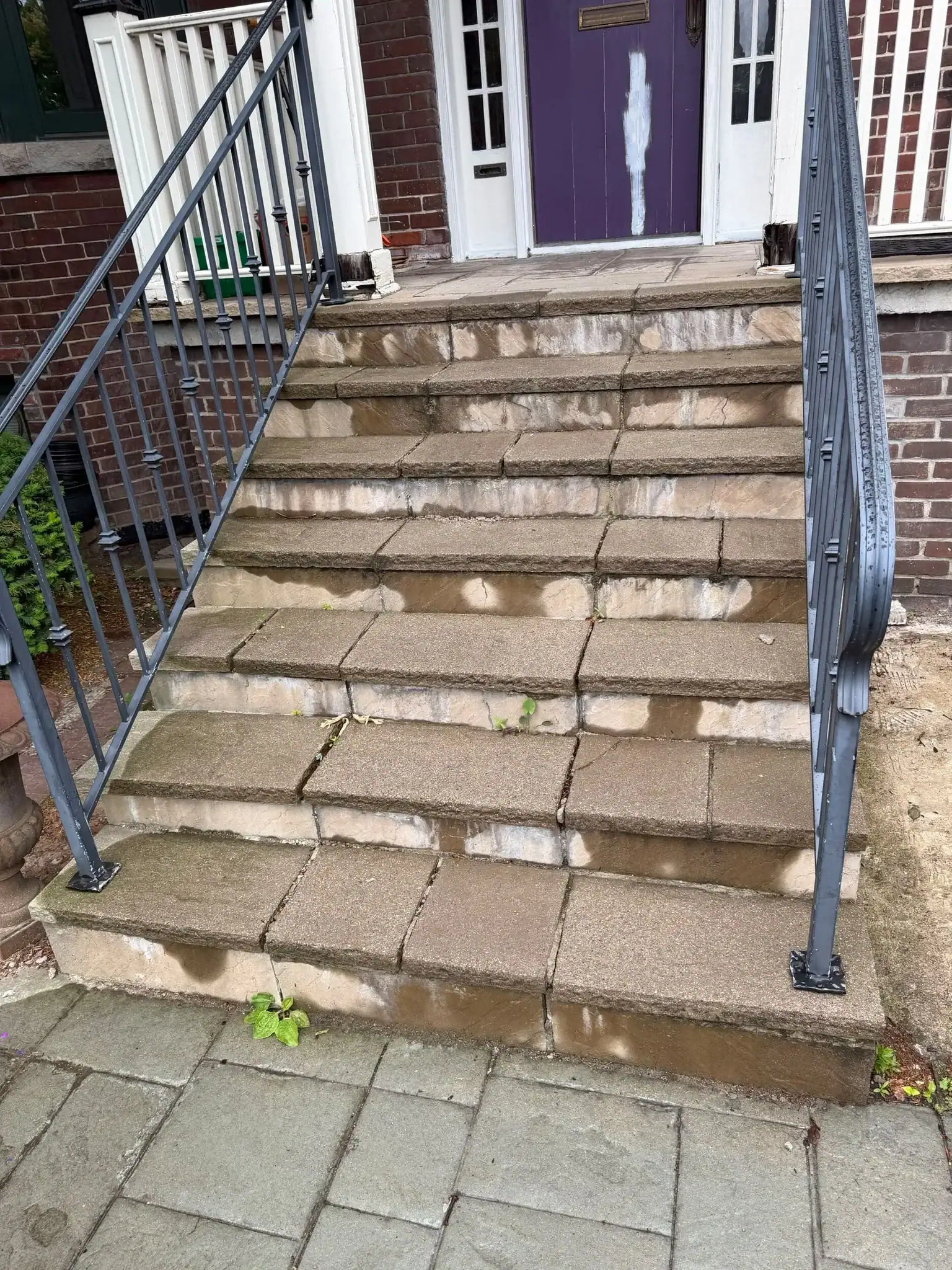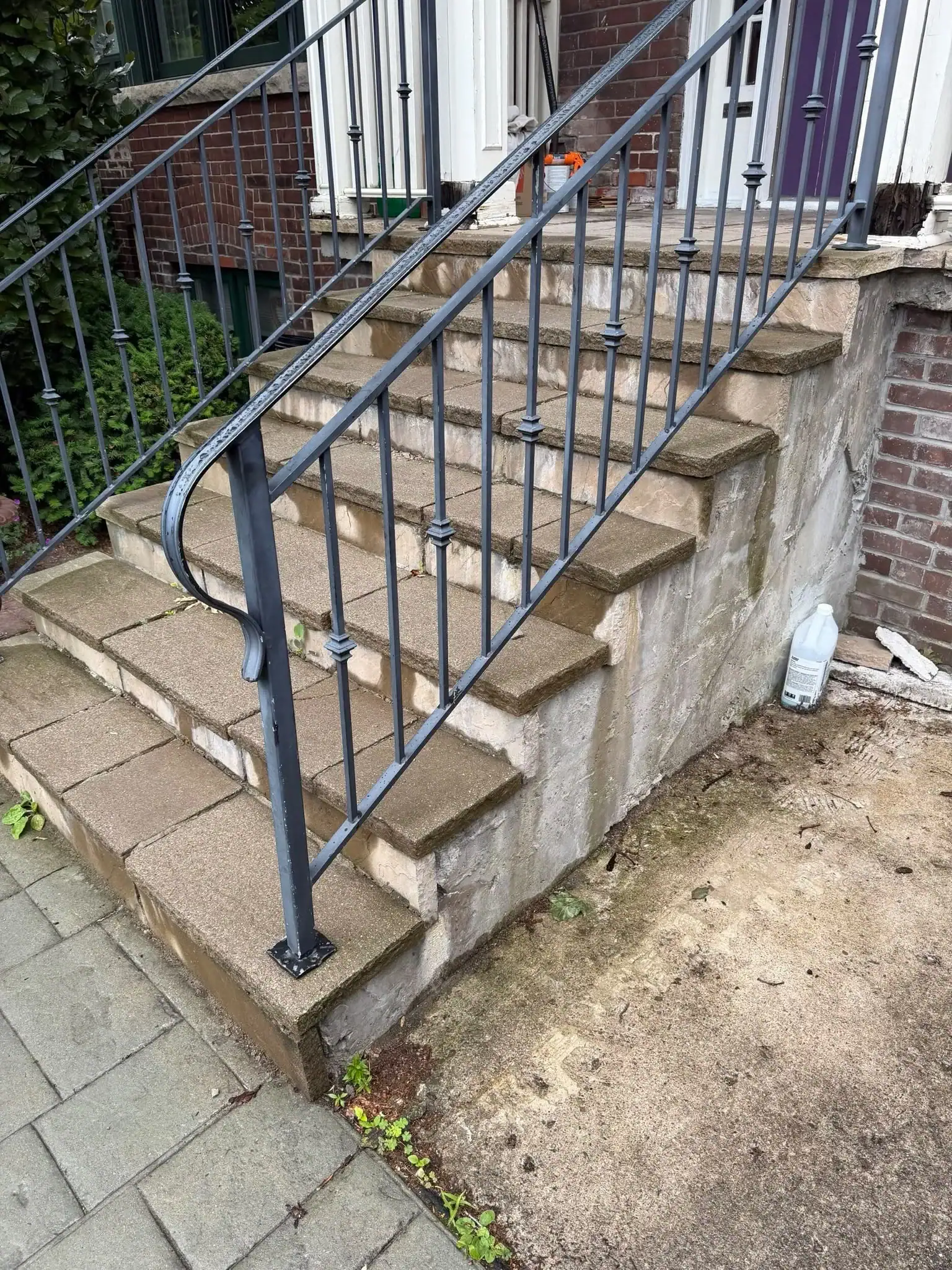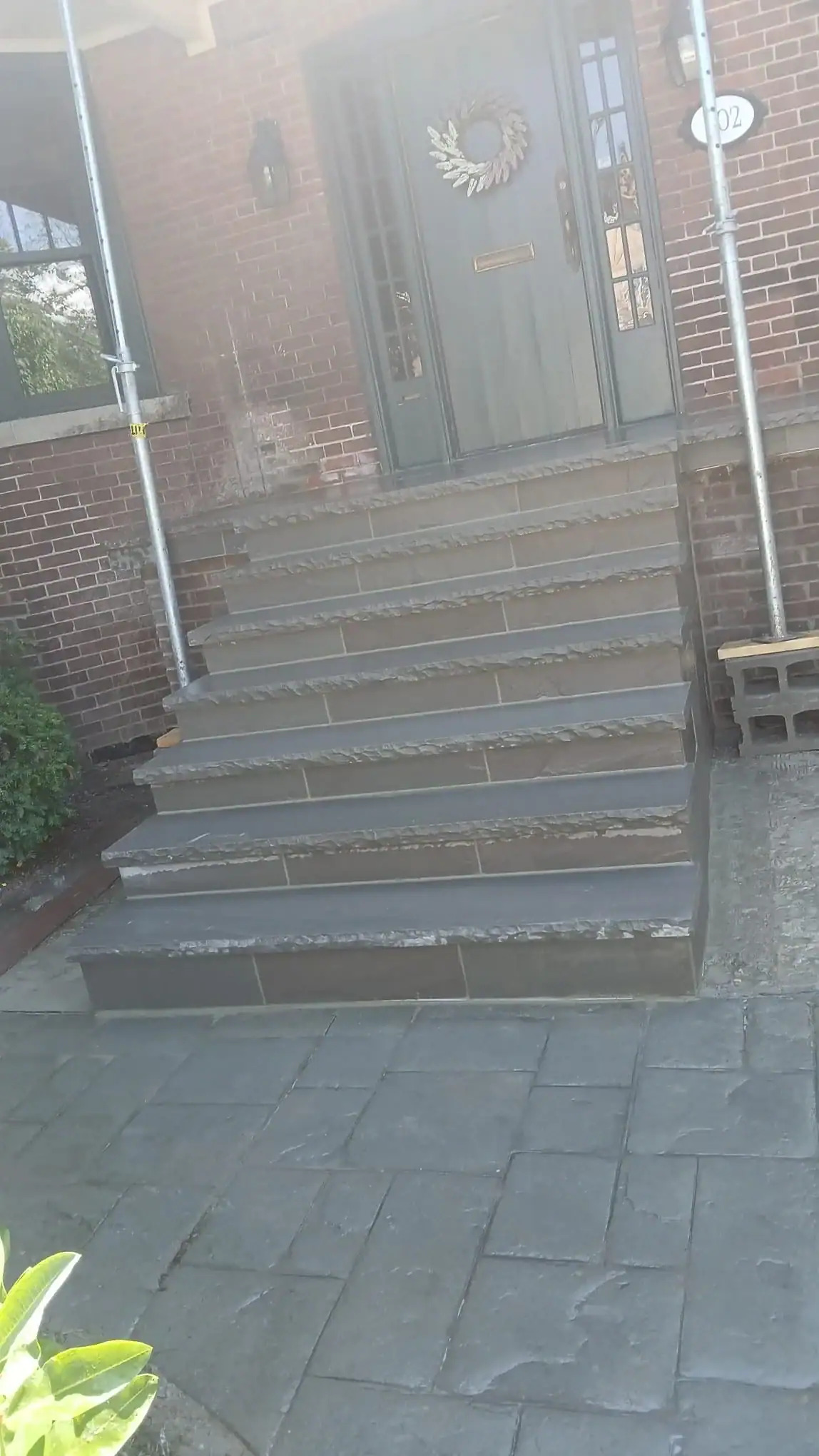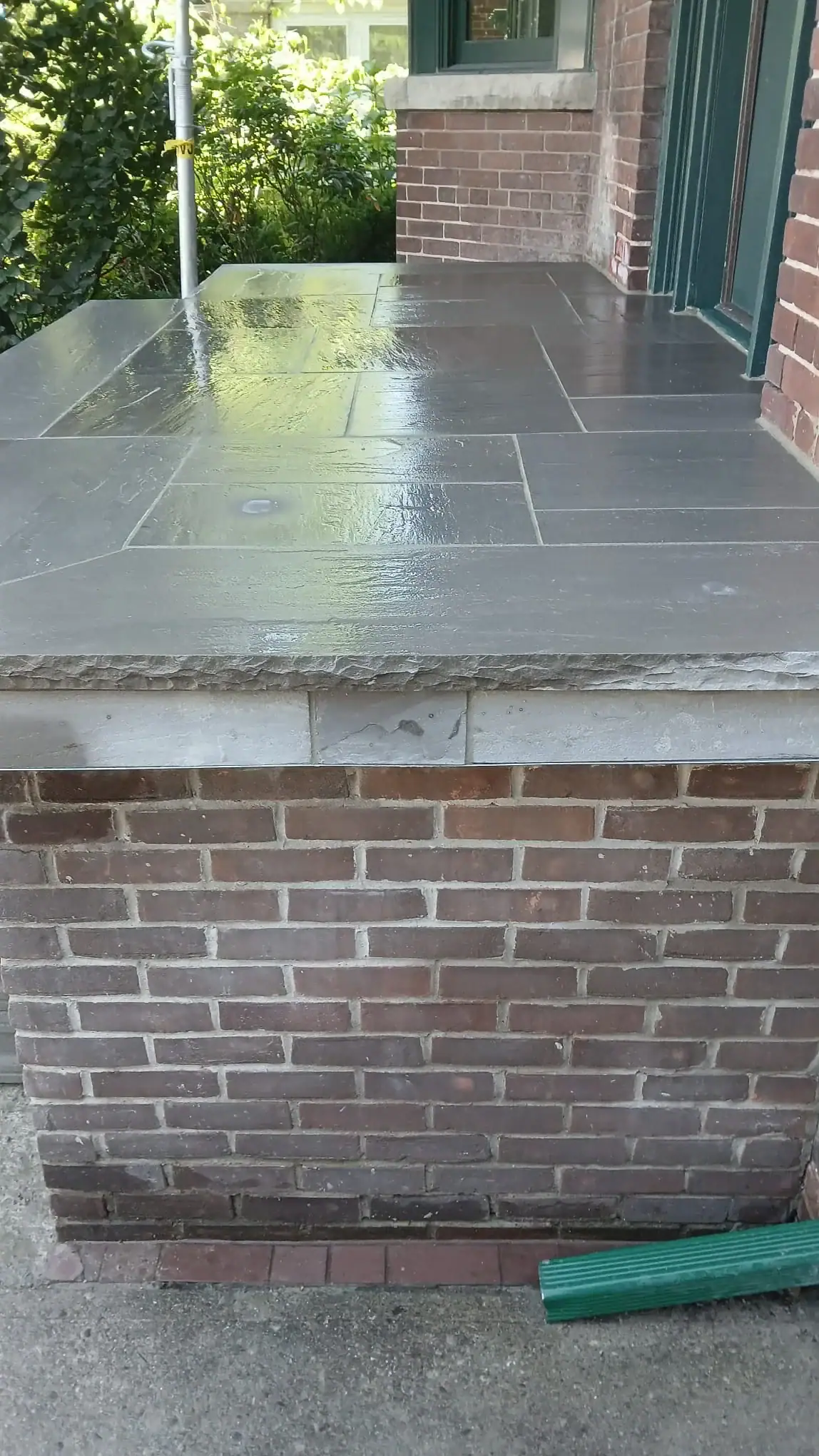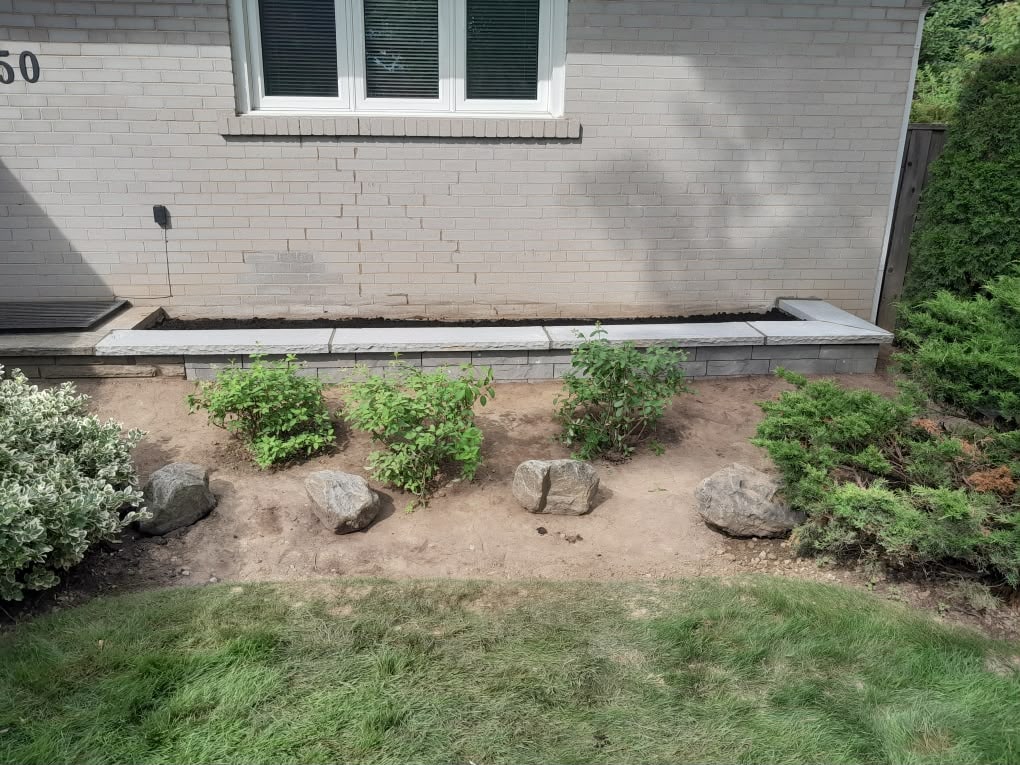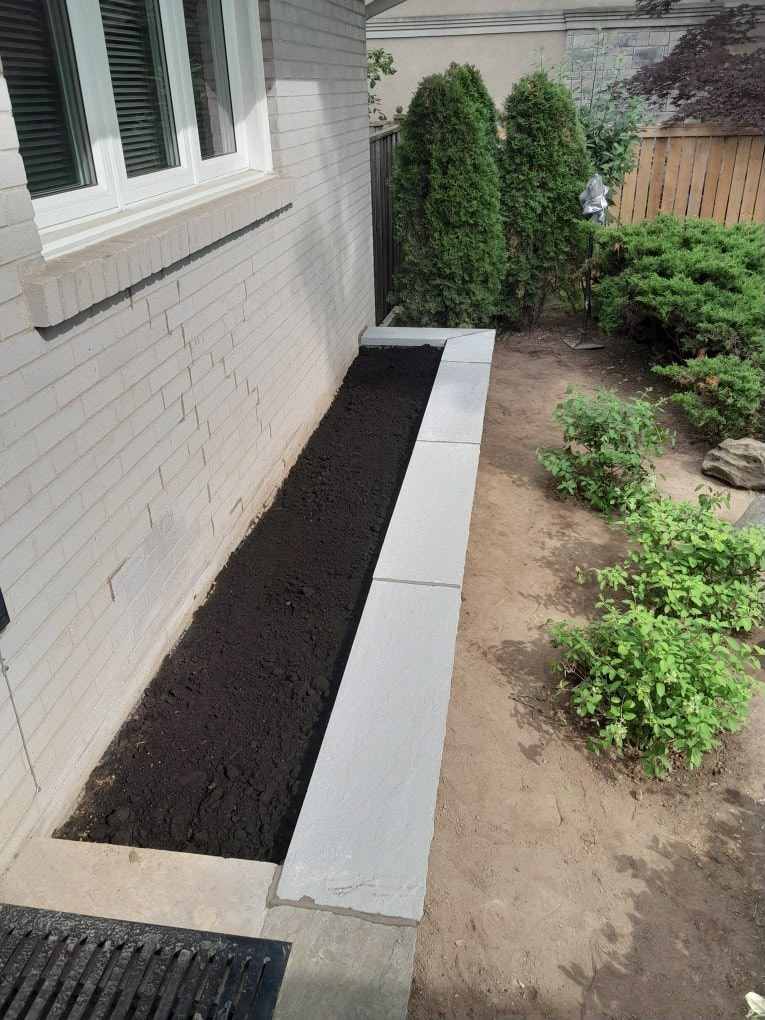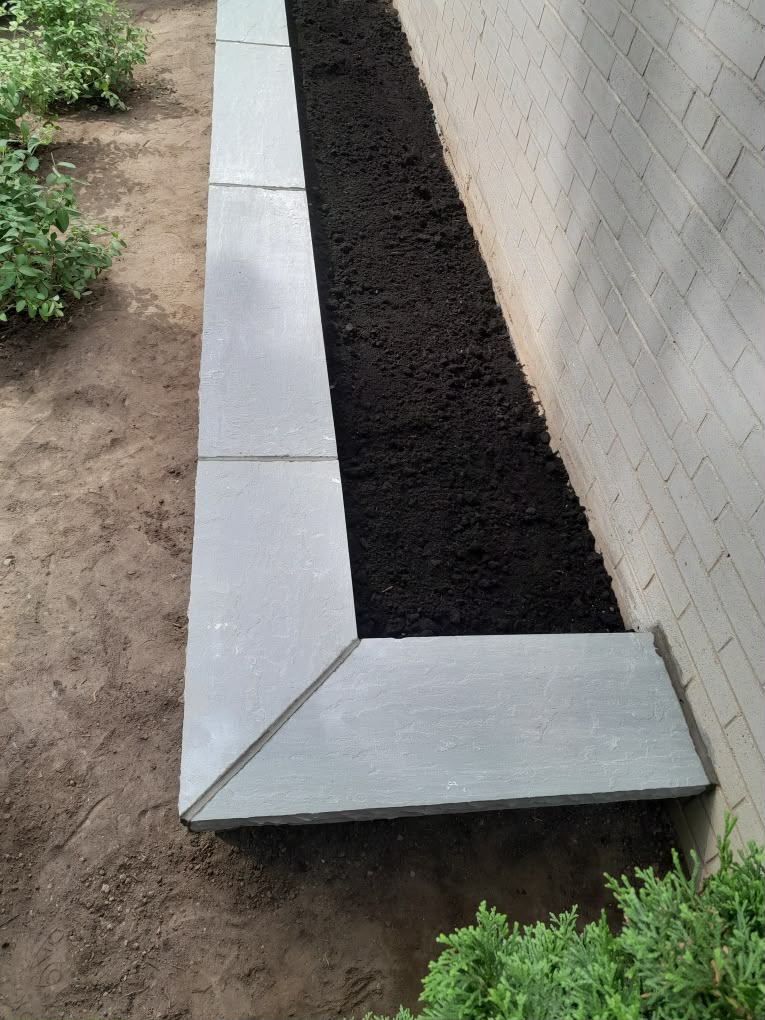
Water Management Toronto
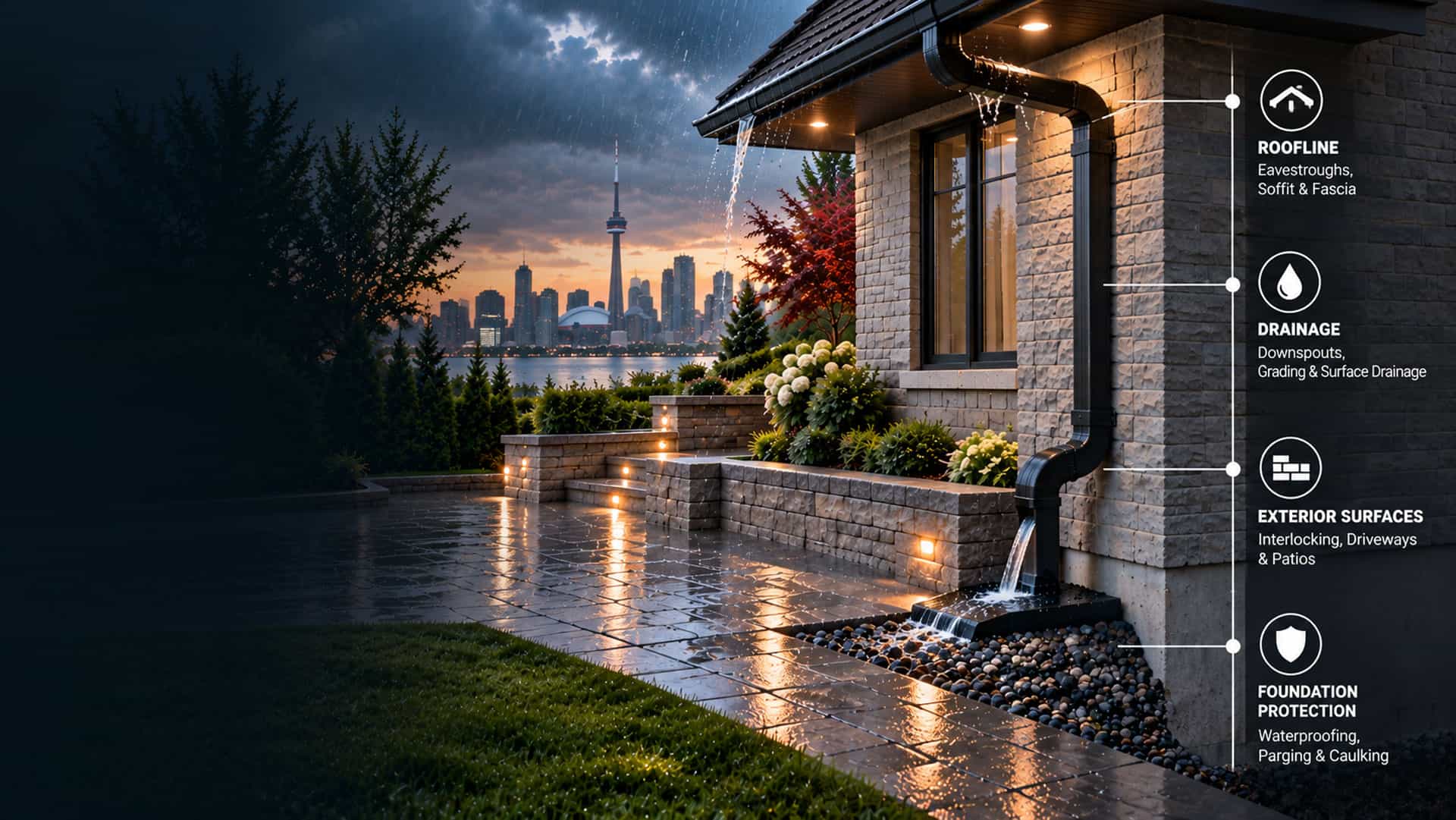
Protecting Your Home From the Roofline to the Foundation
Water is one of the biggest threats to a home’s exterior.
It can enter from above, collect beside the foundation, run toward basement walls, penetrate deteriorated joints, undermine interlocking stone and repeatedly saturate masonry and concrete.
The solution isn’t always simply waterproofing.
Proper water management means controlling where water goes before it causes damage.
A&A Masonry provides professional water management solutions in Toronto and the GTA, helping homeowners control rainwater and snowmelt from the roofline all the way to the foundation and surrounding property.
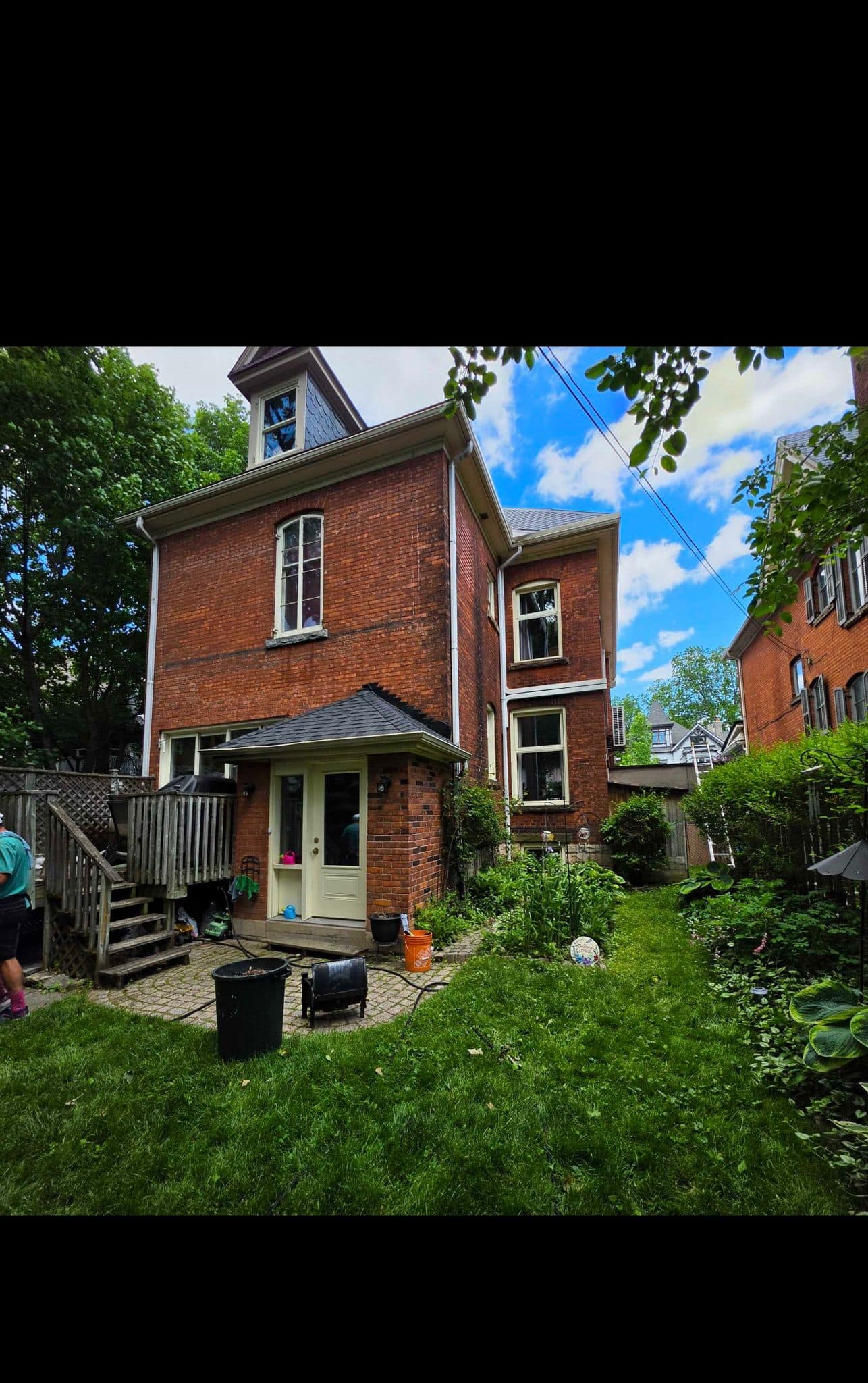
Our approach may involve eavestroughs and downspouts, grading and drainage, interlocking stone, foundation waterproofing, exterior caulking, masonry repairs and other exterior improvements working together as one system.
What Is Water Management?
Controlling Water Before It Becomes a Problem
Every time it rains, thousands of litres of water can move across and around a home.
The roof collects it.
The eavestroughs receive it.
The downspouts discharge it.
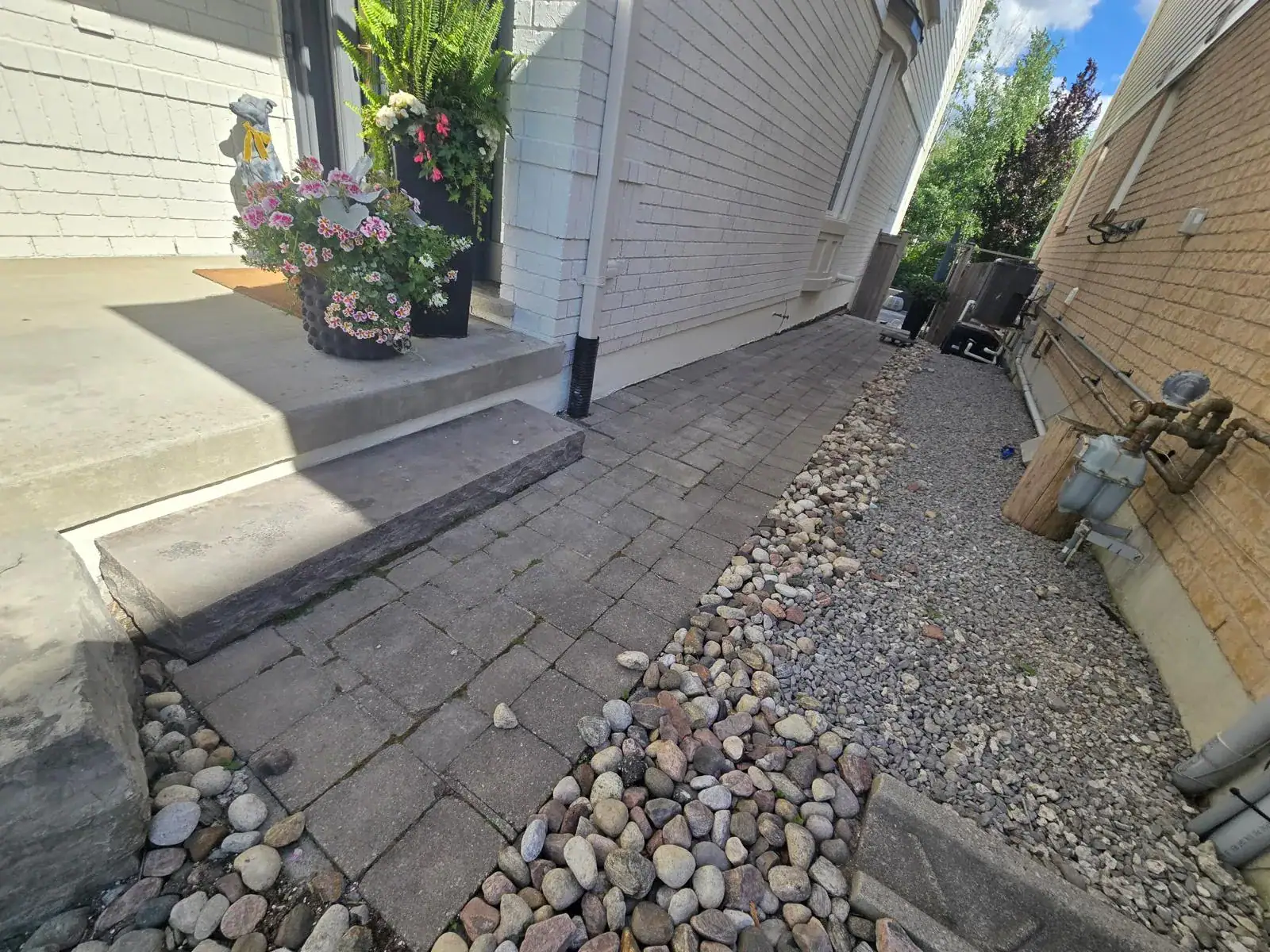
The ground, driveway, walkways and patios determine where it travels next.
And ultimately, that water either moves safely away from the house — or it finds somewhere you don’t want it to go.
Effective residential water management considers the entire path water takes around the property.
That may include:
- Roof drainage
- Eavestroughs
- Downspouts
- Ground grading
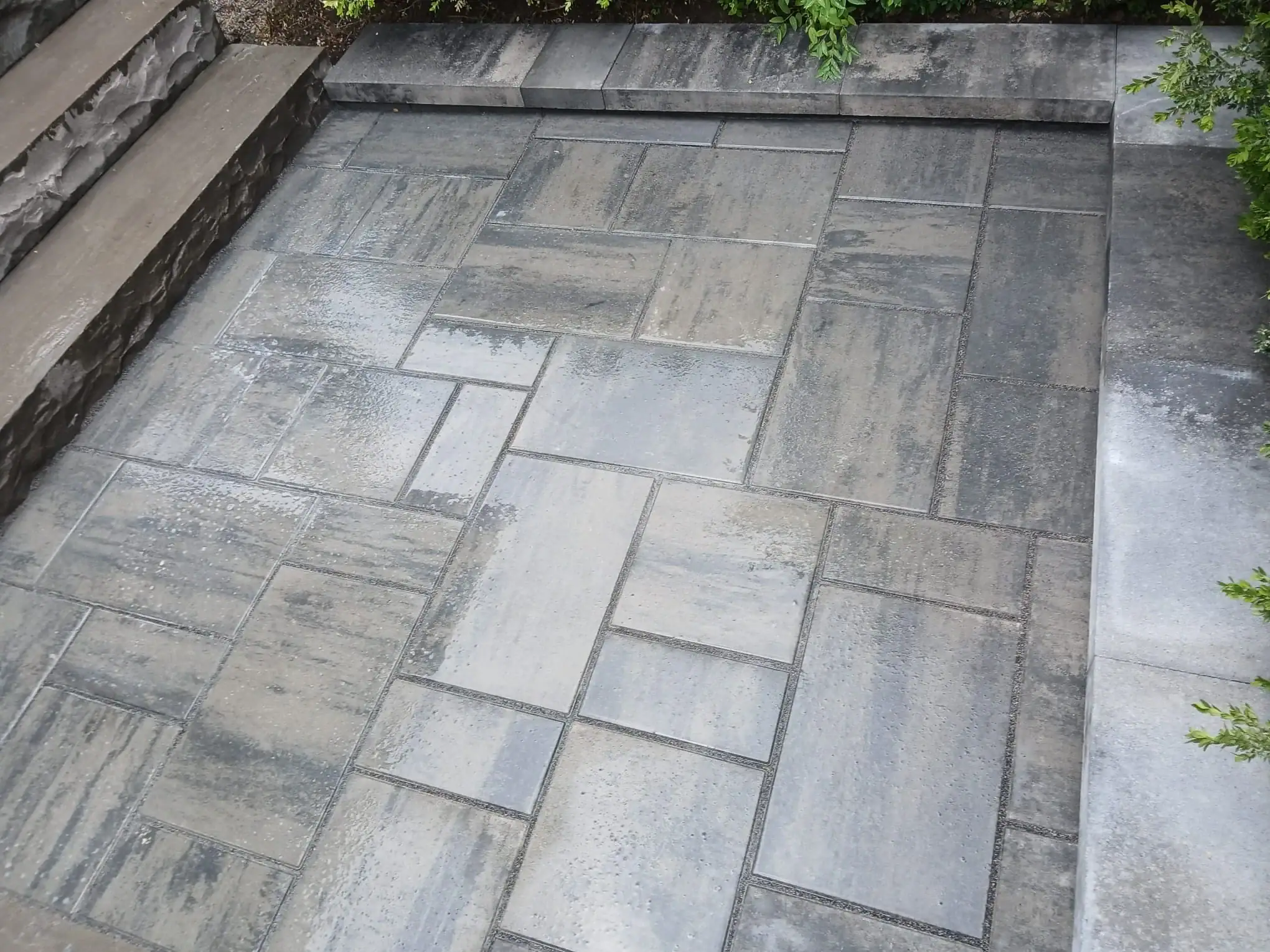
- Interlocking stone
- Driveway and walkway slopes
- Patios
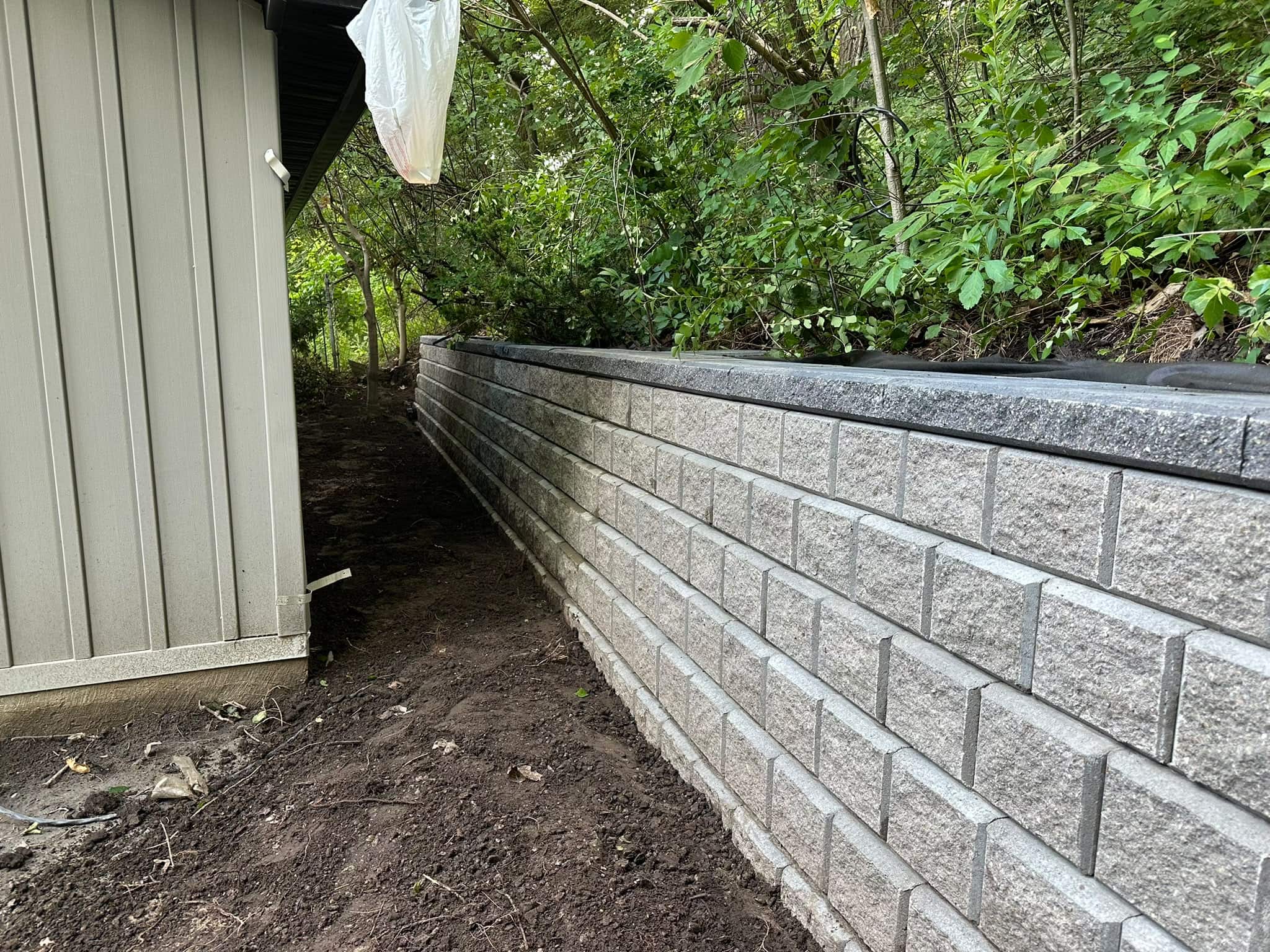
- Retaining walls
- Foundation drainage
- Waterproofing
- Exterior caulking
- Window and door joints
- Masonry
- Concrete
- Parging
A&A looks at these areas as connected parts of the home’s exterior rather than unrelated individual projects.
From the Roofline to the Foundation
A Complete Approach to Exterior Water Management
A waterproofing membrane can help protect a foundation.
But if an overflowing eavestrough dumps water beside that foundation every time it rains, the underlying water-management problem hasn’t disappeared.
The same principle applies throughout the property.
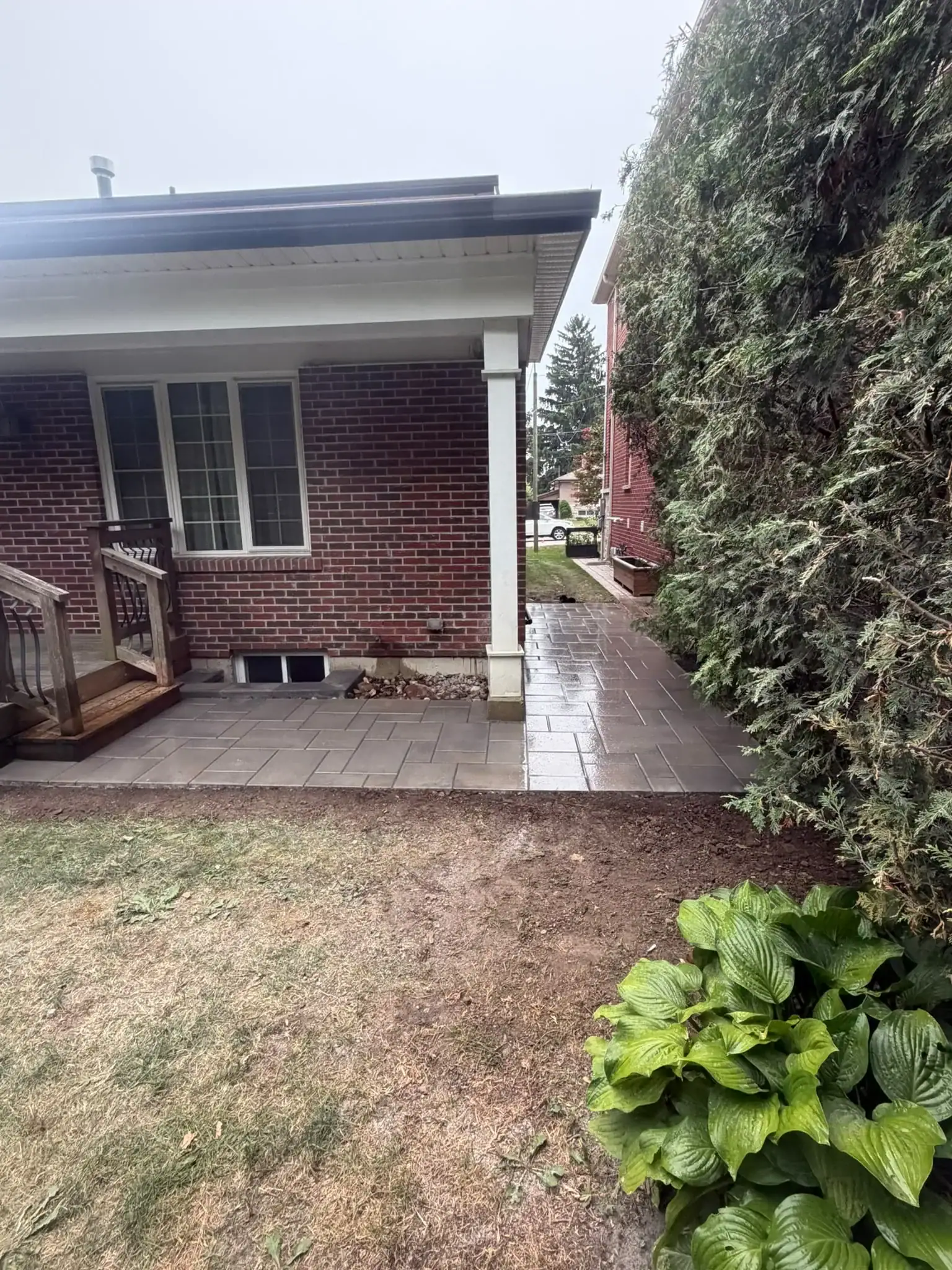
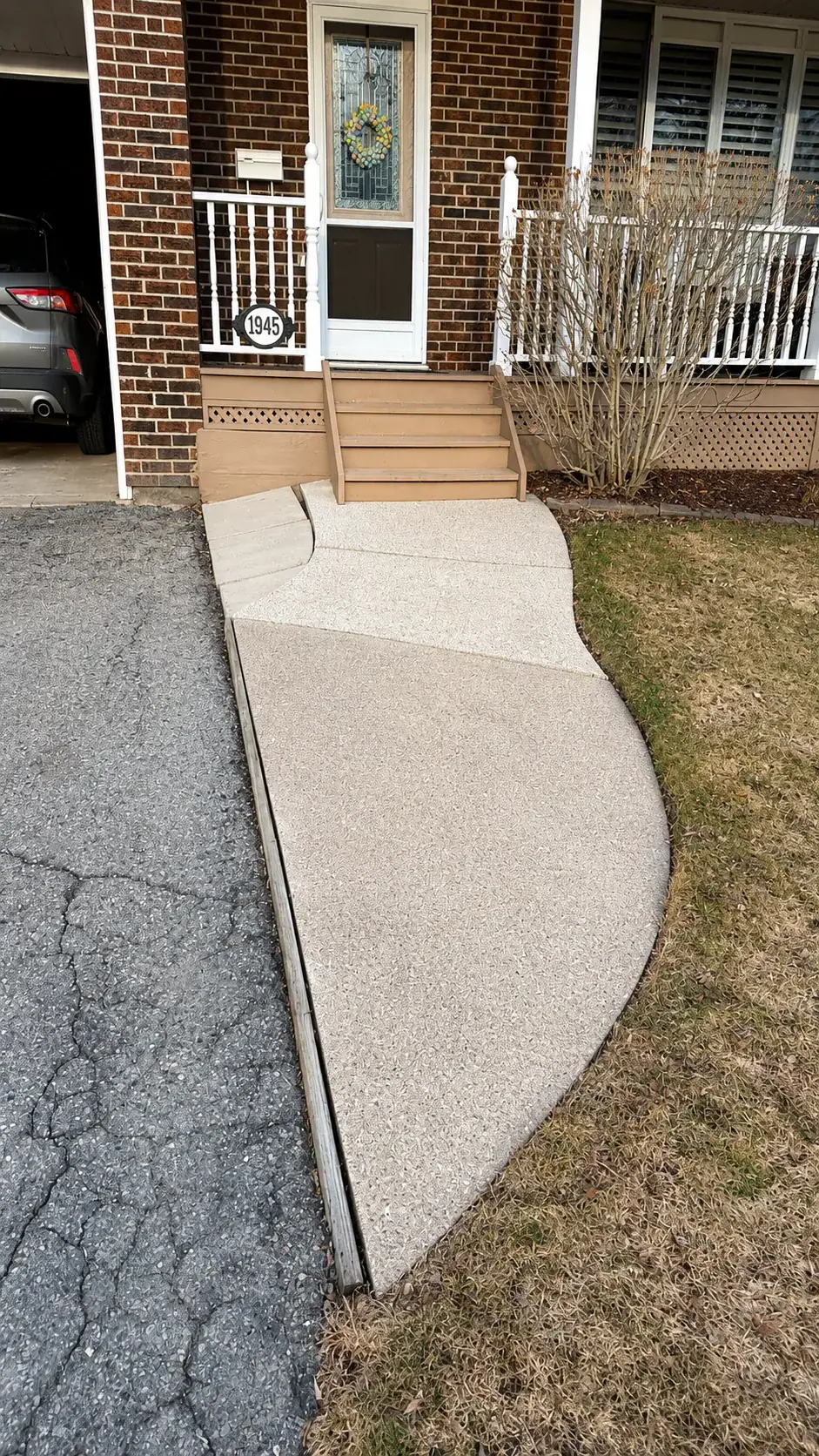
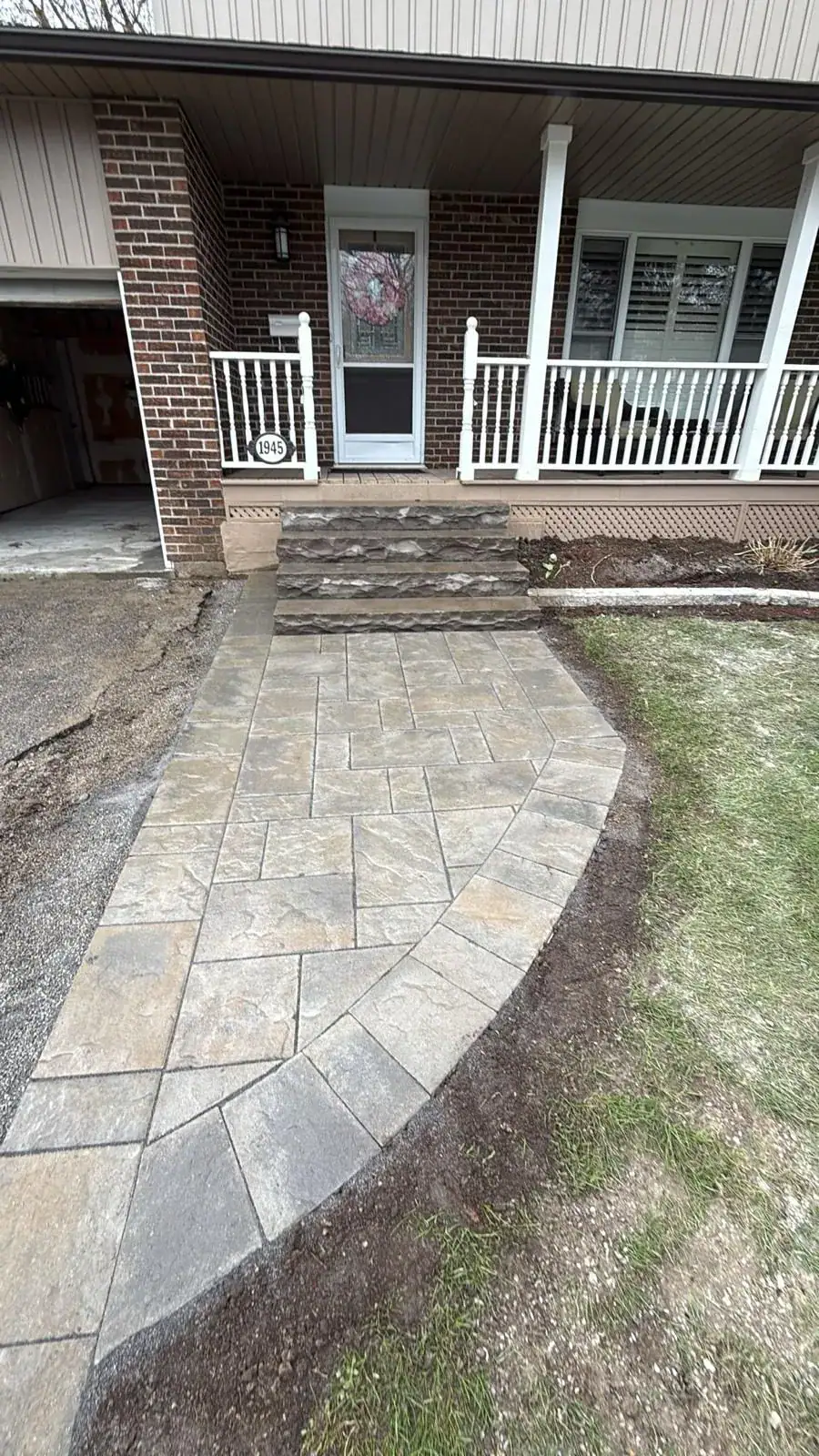
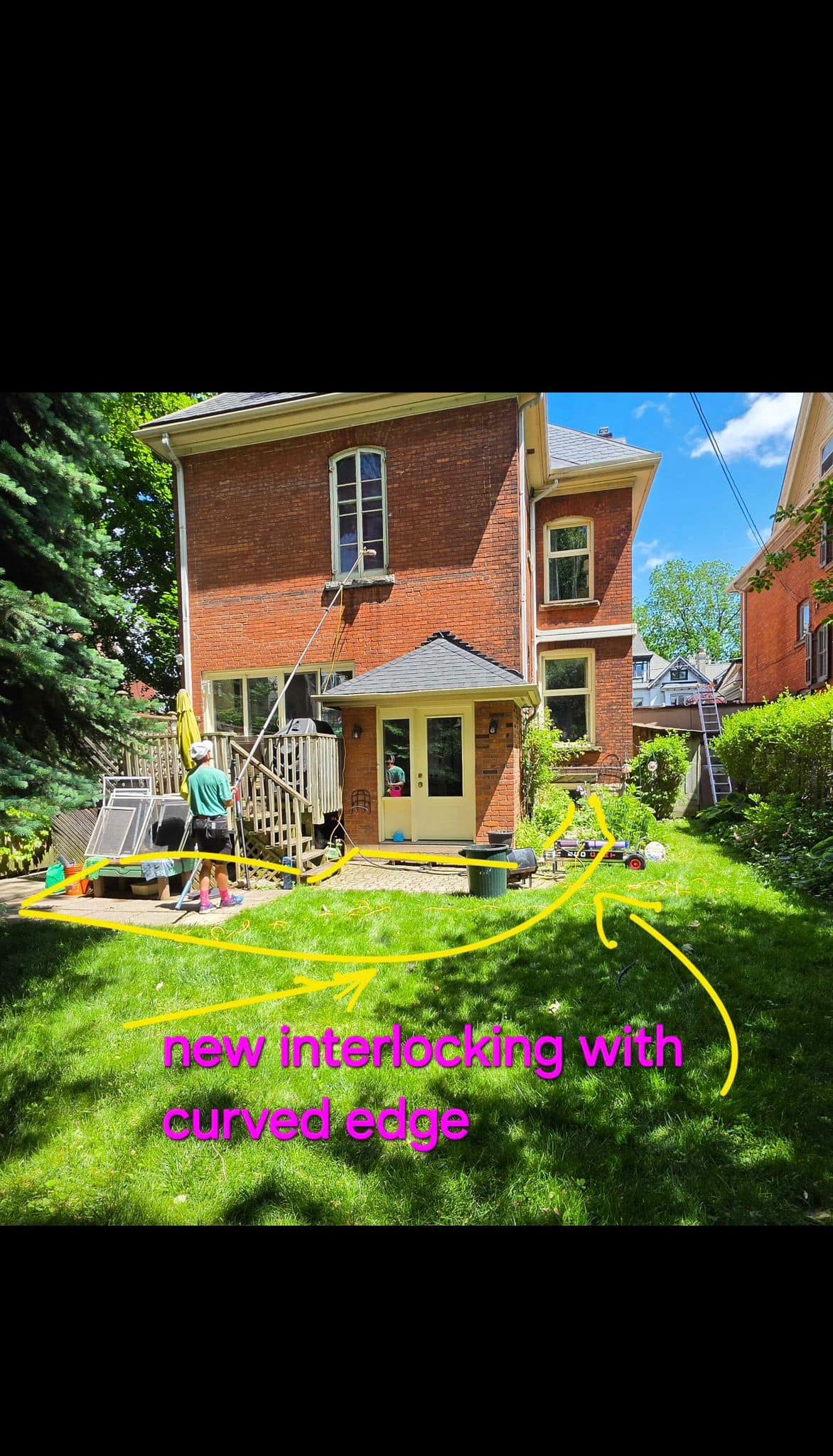
A beautiful new interlocking patio can develop problems if it directs runoff toward the house.
New caulking can stop water entering around a window, but it won’t solve water constantly cascading down the wall from a failed eavestrough.
Repairing deteriorated mortar may restore the masonry, but repeated water exposure can eventually damage it again.
That’s why A&A takes a broader approach.
We look at where the water starts, where it travels and where it ultimately ends up.
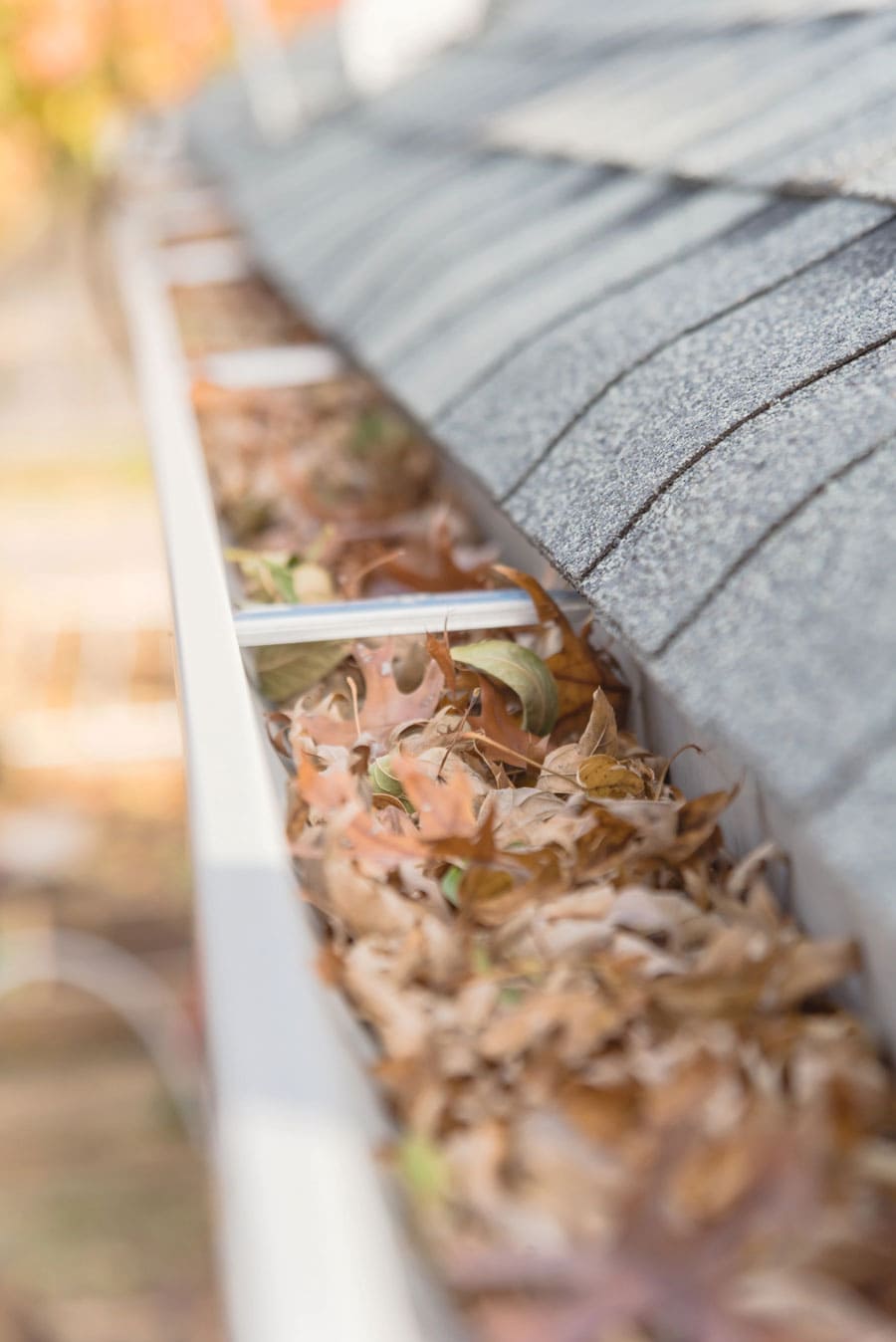
The Four Parts of Good Water Management
1. Collect the Water
The first job is controlling water coming off the roof.
A properly functioning roof drainage system collects rain and melting snow before it can pour directly onto walls, foundations, steps and landscaping.
This can involve:
- Eavestroughs
- Roof drainage
- Valleys and roof runoff
- Properly positioned outlets
- Soffit and fascia condition
- Flashing and roofline details
Good water management starts at the highest point of the home.
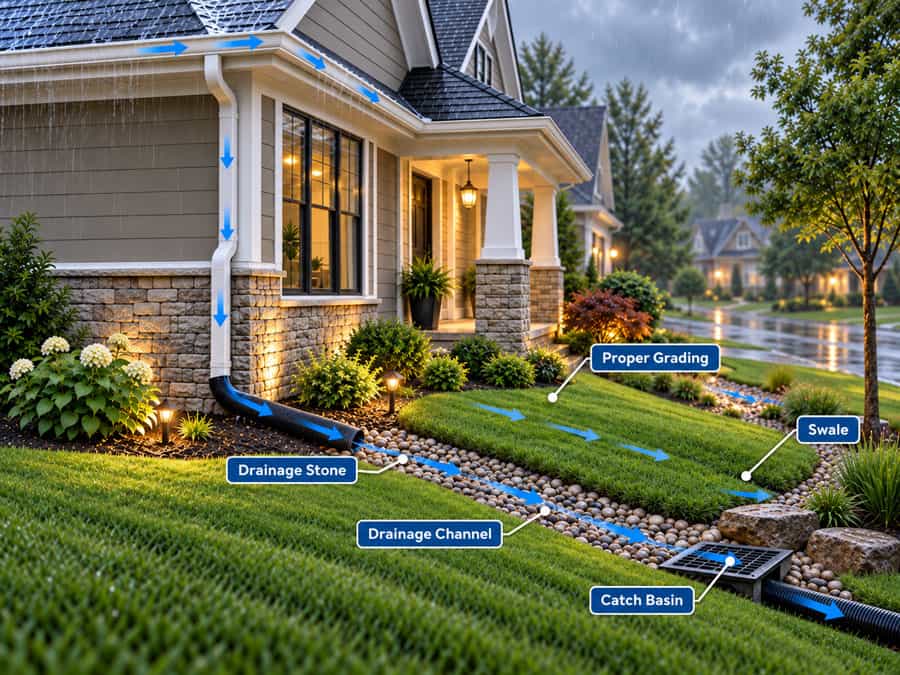
2. Move the Water
Once roof water has been collected, it needs somewhere to go.
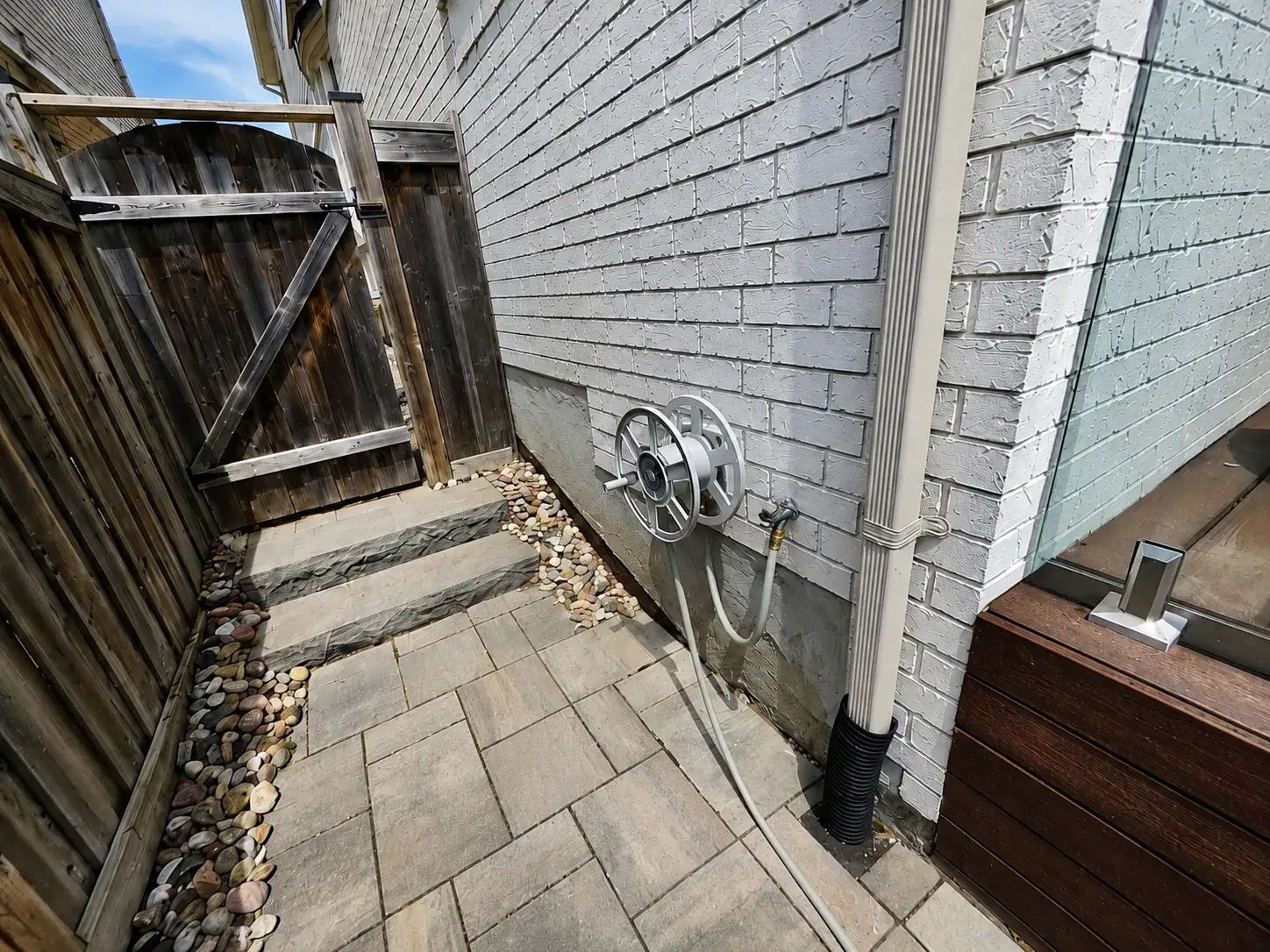
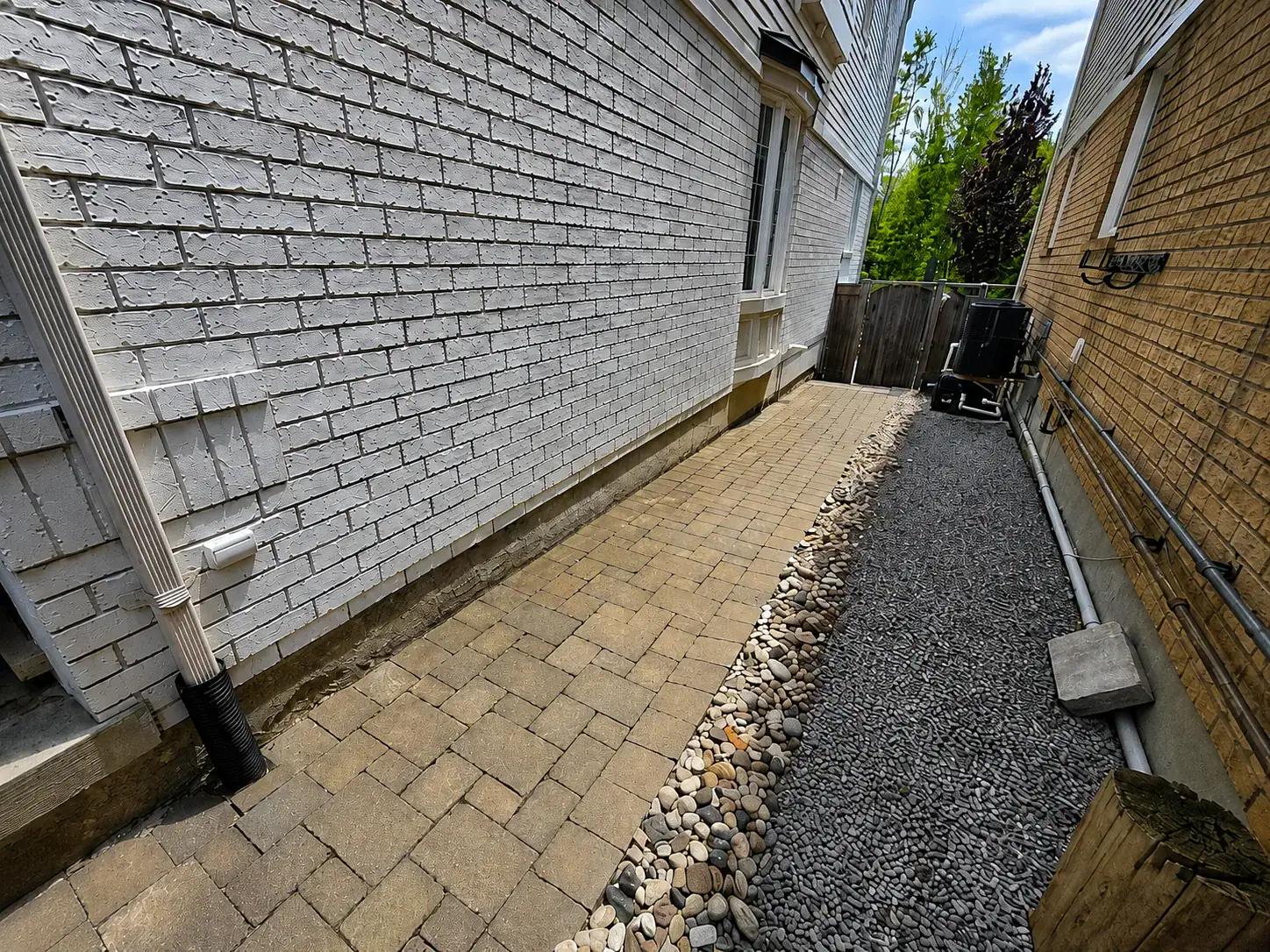
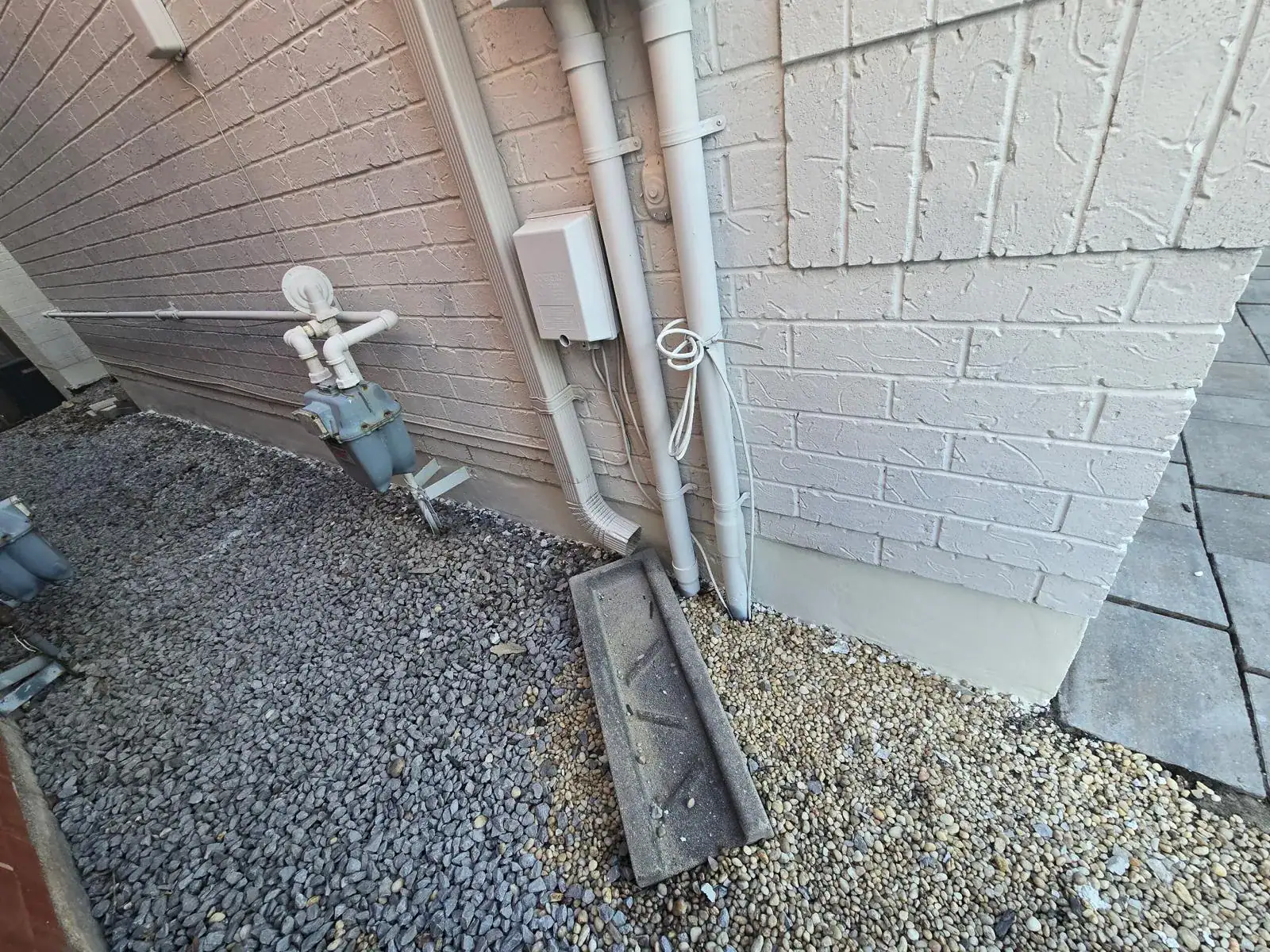
Downspouts should carry water toward an appropriate discharge area rather than simply dumping it beside the foundation.
Depending on the property, water movement may involve:
- Downspouts
- Downspout extensions
- Surface drainage
- Proper grading
- Drainage channels
- Swales
- Drainage stone
- Catch basins where appropriate
- Other exterior drainage solutions
The goal is simple:
Move water away from vulnerable areas of the home.
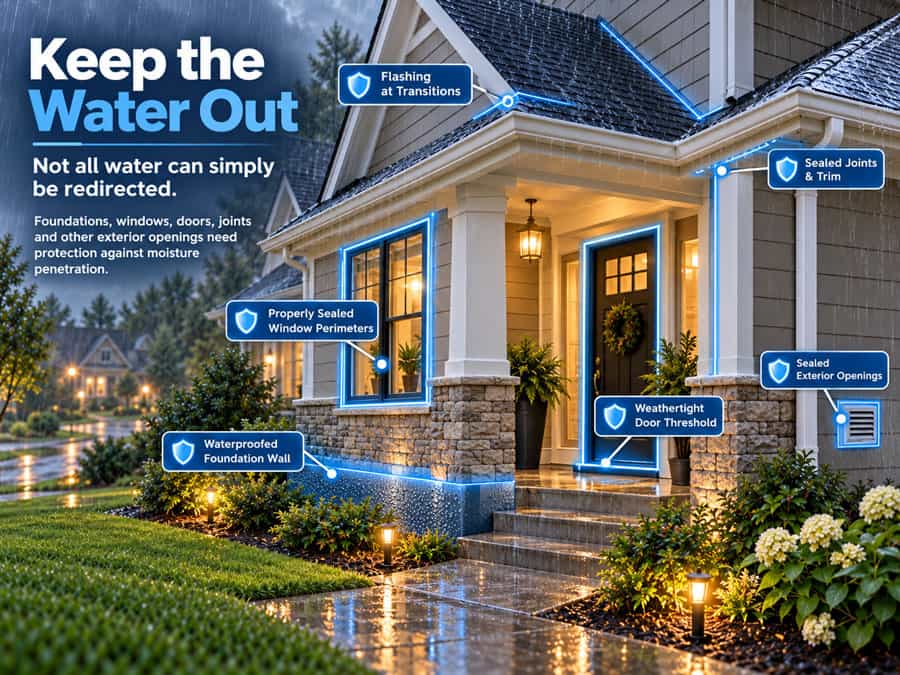
3. Keep the Water Out
Not all water can simply be redirected.
Foundations, windows, doors, joints and other exterior openings also need protection against moisture penetration.
Depending on the source of the problem, this may involve:
- Foundation waterproofing
- Basement waterproofing
- Exterior waterproofing
- Waterproof membranes
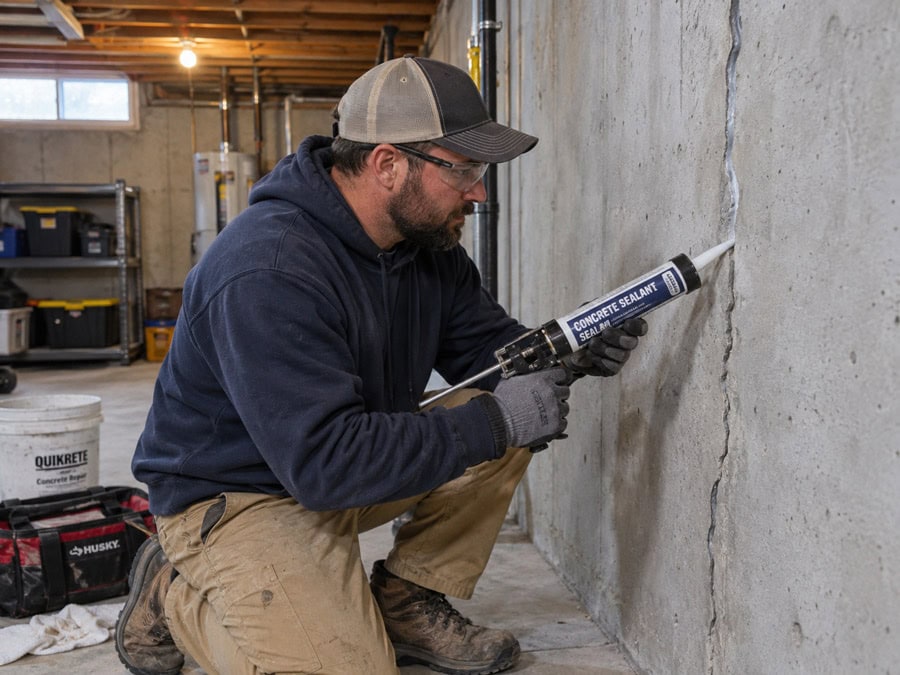
- Foundation crack repair
- Exterior caulking
- Window and door sealing
- Parging repair
- Masonry repair
- Concrete repair
The correct solution depends on how and where water is entering.
4. Control Water Across the Property
Water doesn’t stop being a problem once it reaches ground level.
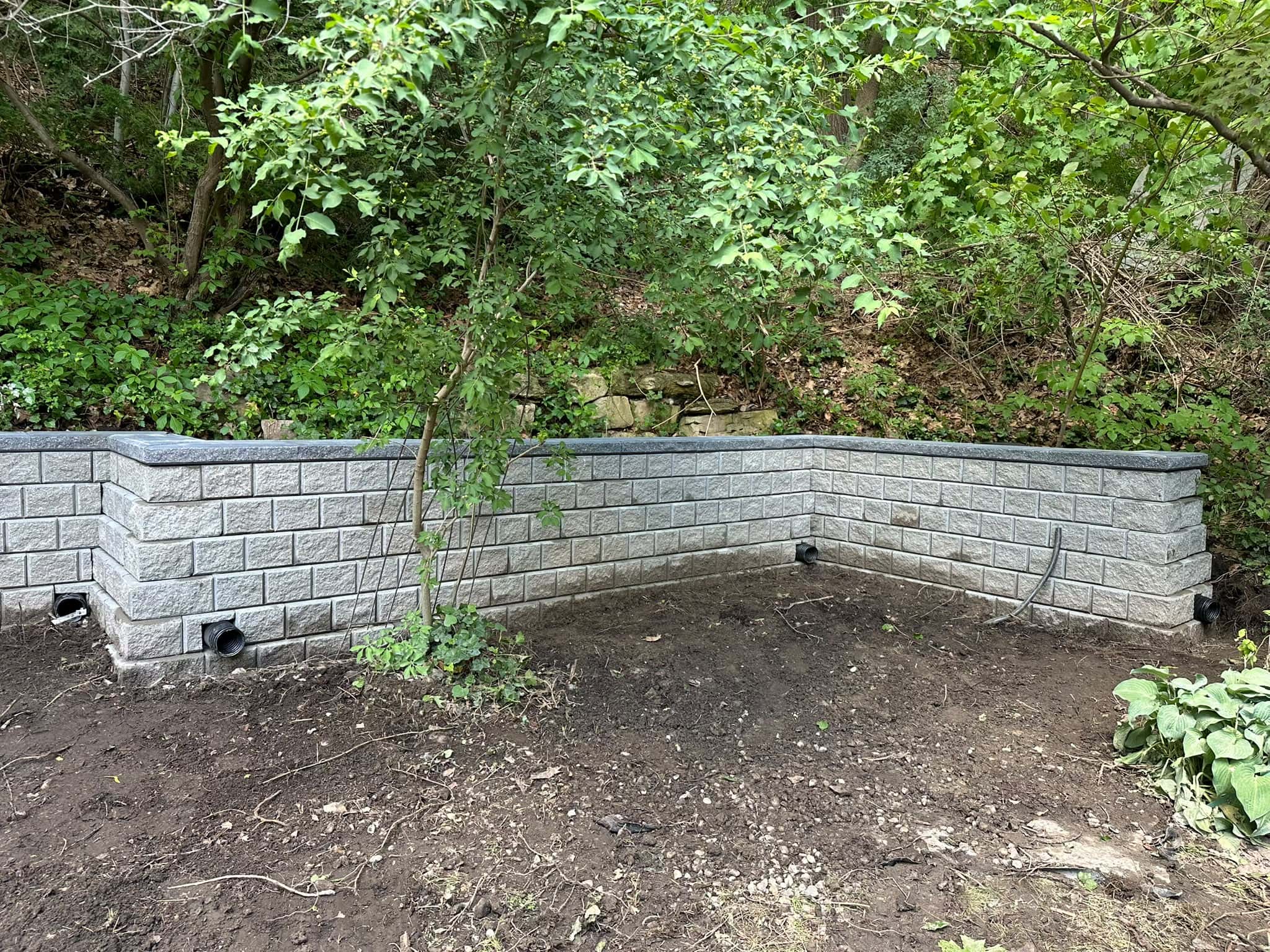
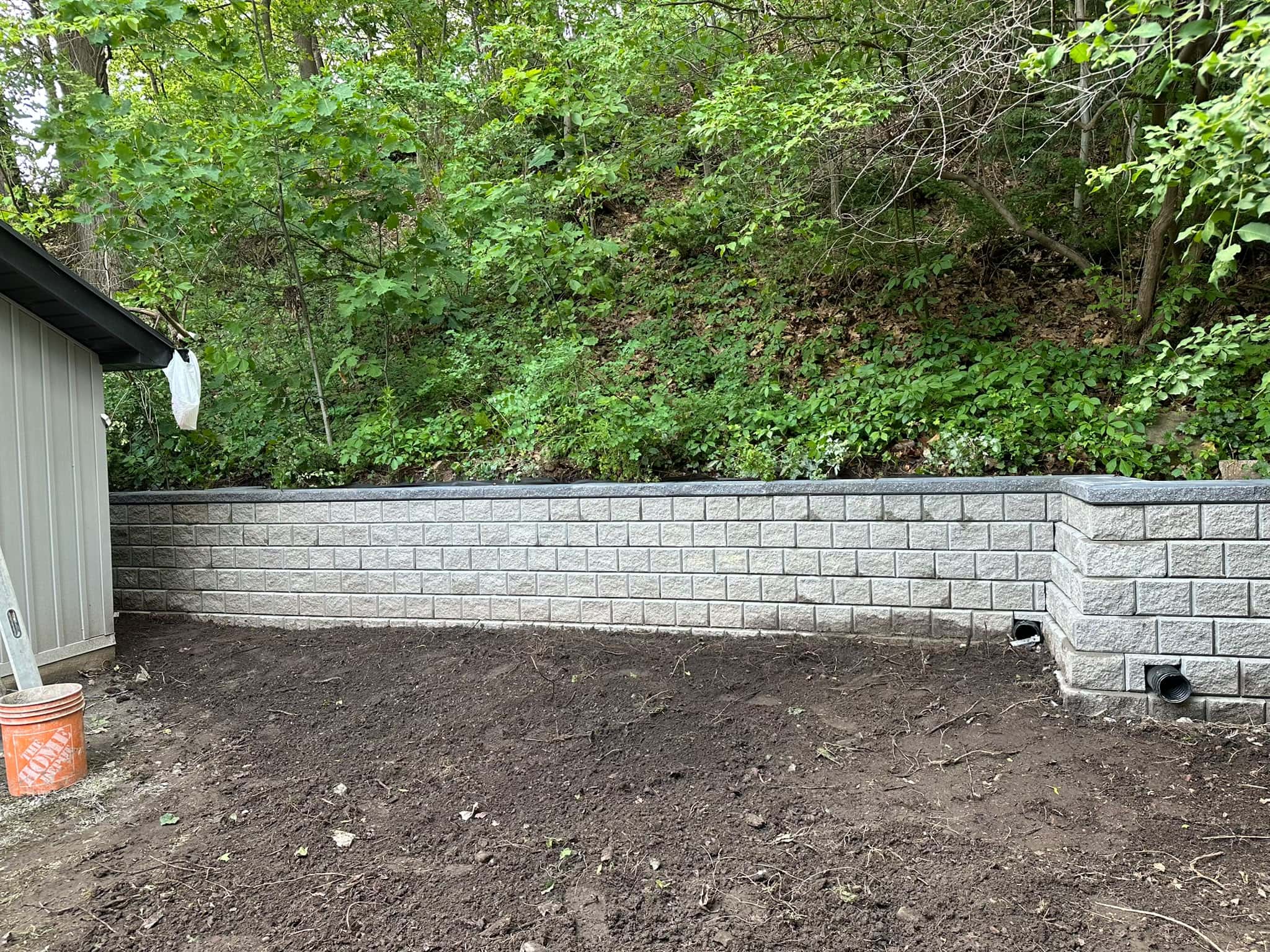
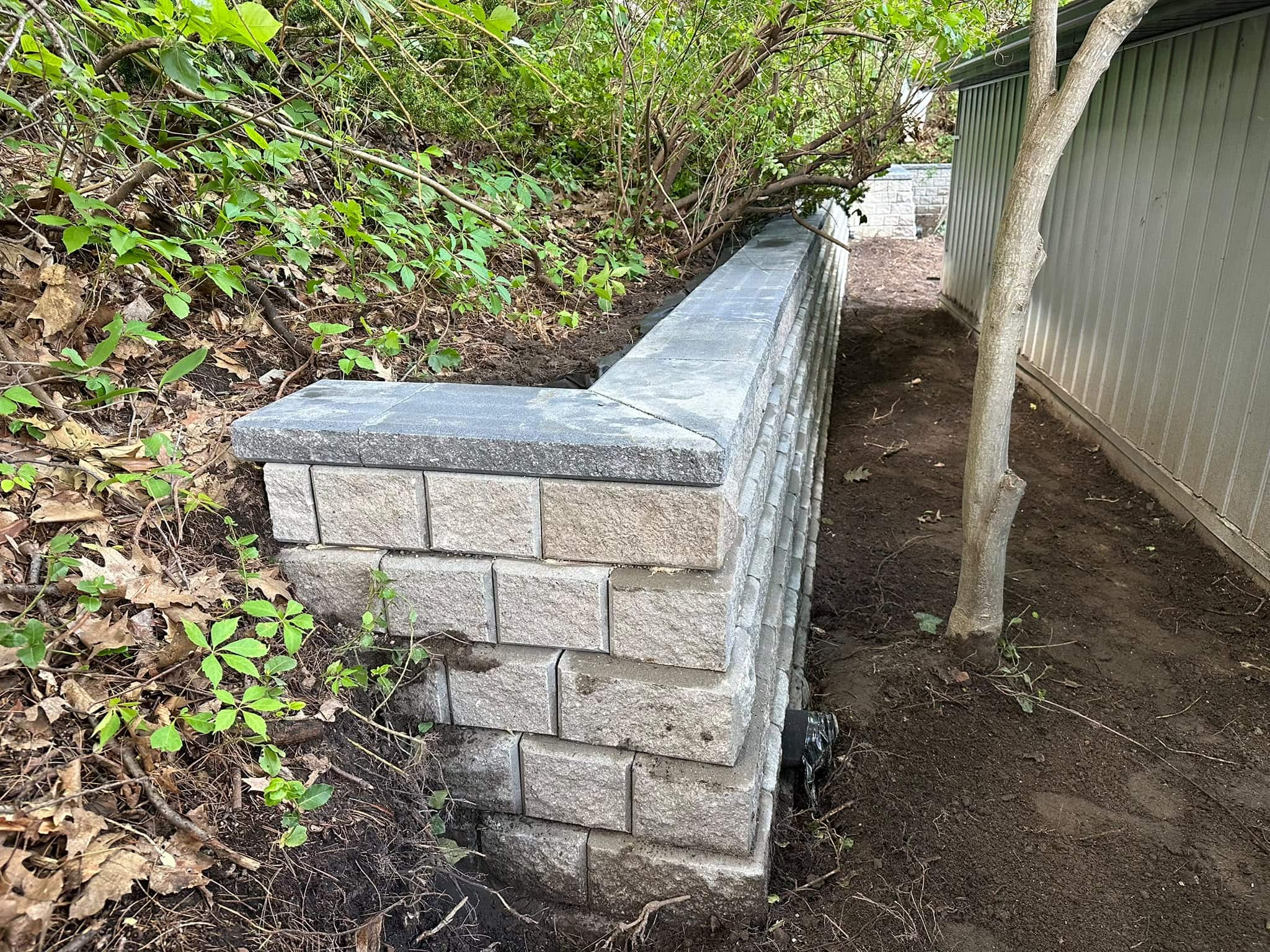
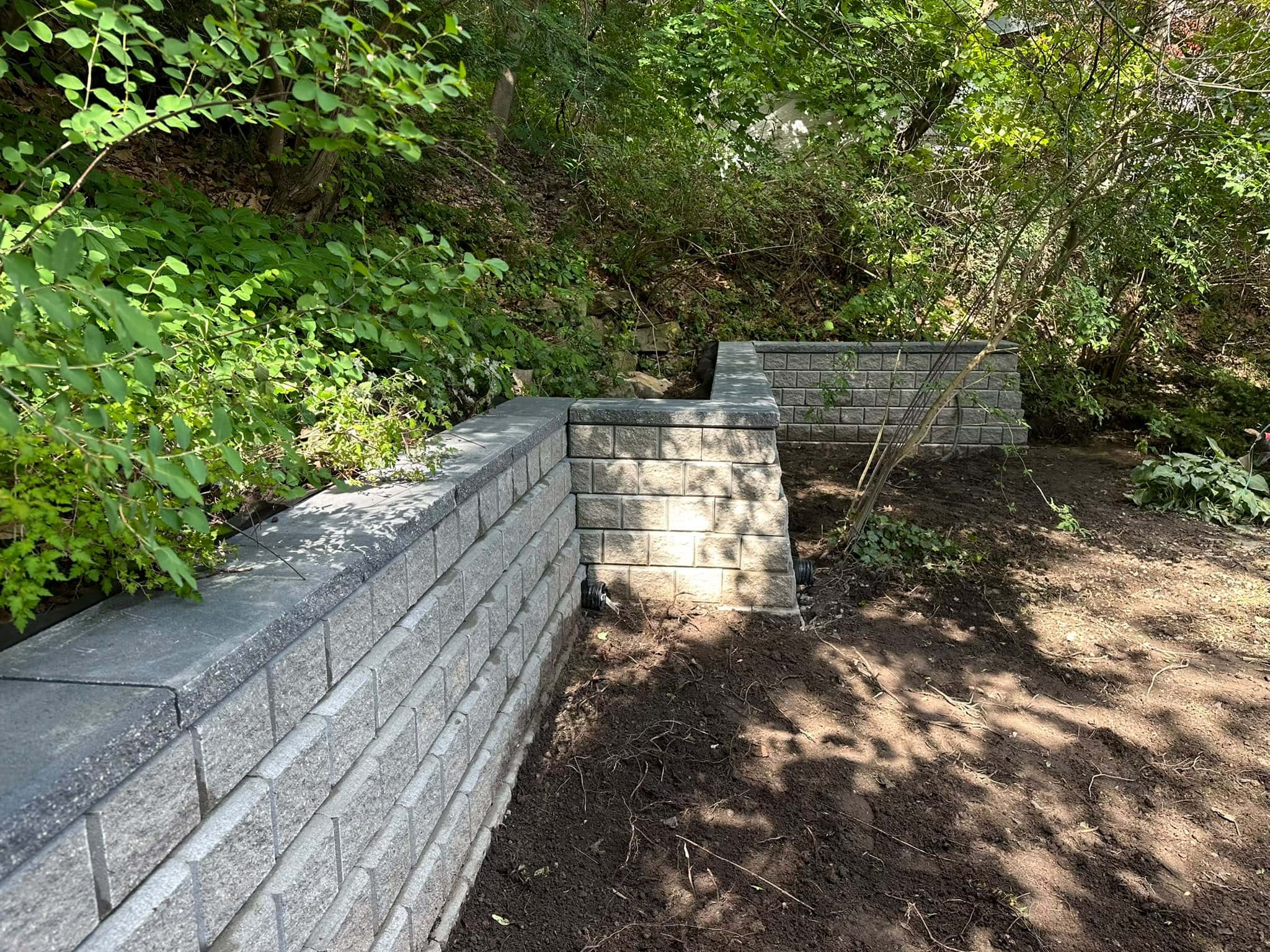
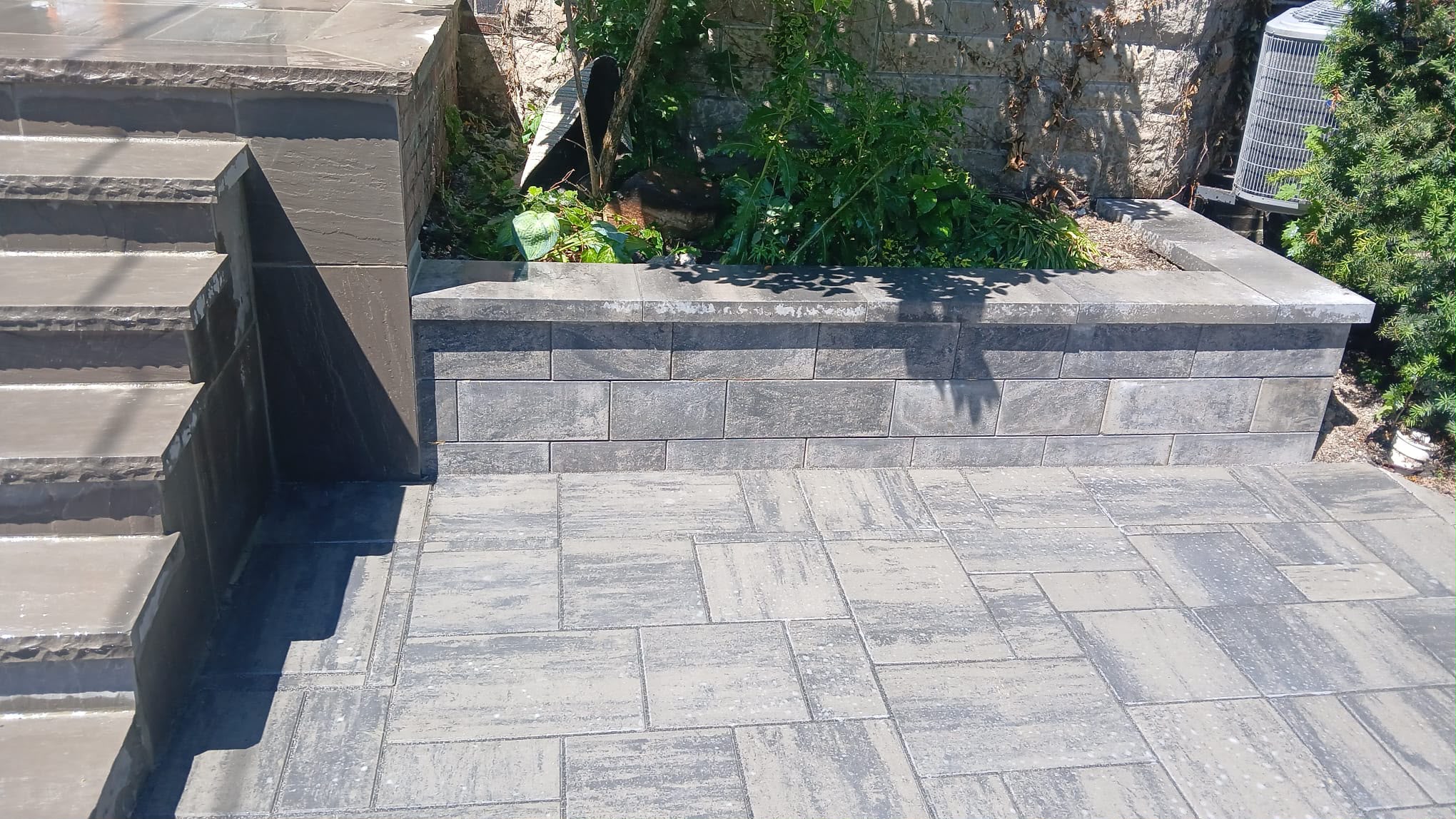
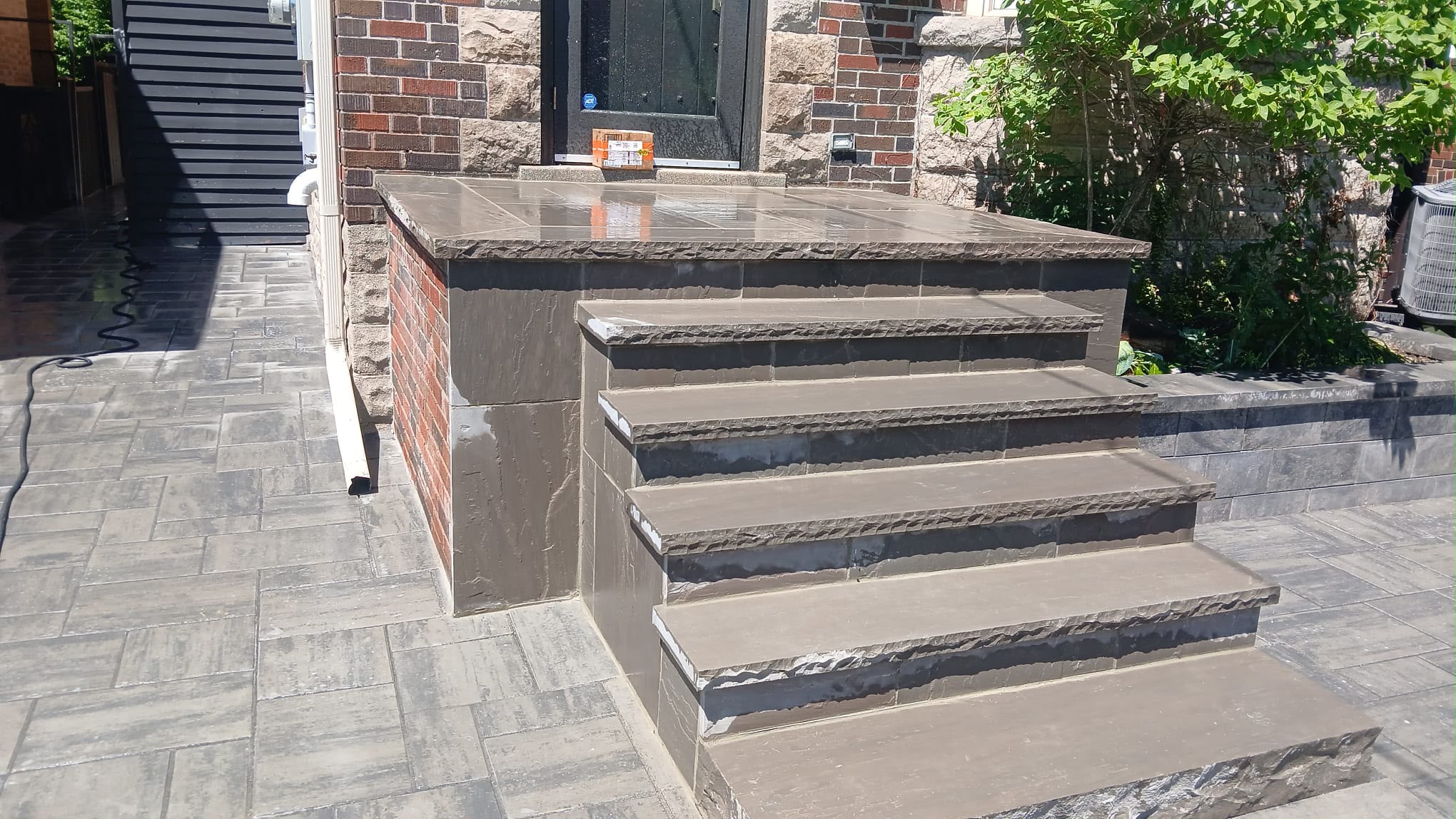
Driveways, patios, walkways, interlocking stone, retaining walls and landscaping all influence how water moves around the home.
These surfaces should help direct water toward appropriate drainage areas — not back toward the house.
That means water management should be considered whenever A&A designs or repairs exterior surfaces.

Eavestroughs & Downspouts
Your Home’s First Line of Water Control
Eavestroughs have one extremely important job:
Collect roof water and get it away from the house.
When an eavestrough system fails, large amounts of water can repeatedly fall beside exterior walls and foundations.
Common problems include:
Leaking eavestroughs
Sagging sections
Poor slope
Overflowing gutters
Damaged fascia
Blocked outlets
Improperly positioned downspouts
Downspouts terminating too close to the foundation
A&A provides eavestrough and downspout installation and replacement as part of our growing exterior restoration services.
Where appropriate, we can also evaluate how the downspout discharge interacts with the ground, interlocking stone, foundation and surrounding drainage.
Explore Eavestrough, Soffit & Fascia Services
Grading & Surface Drainage
Make Gravity Work For Your Home — Not Against It
Water naturally travels downhill.
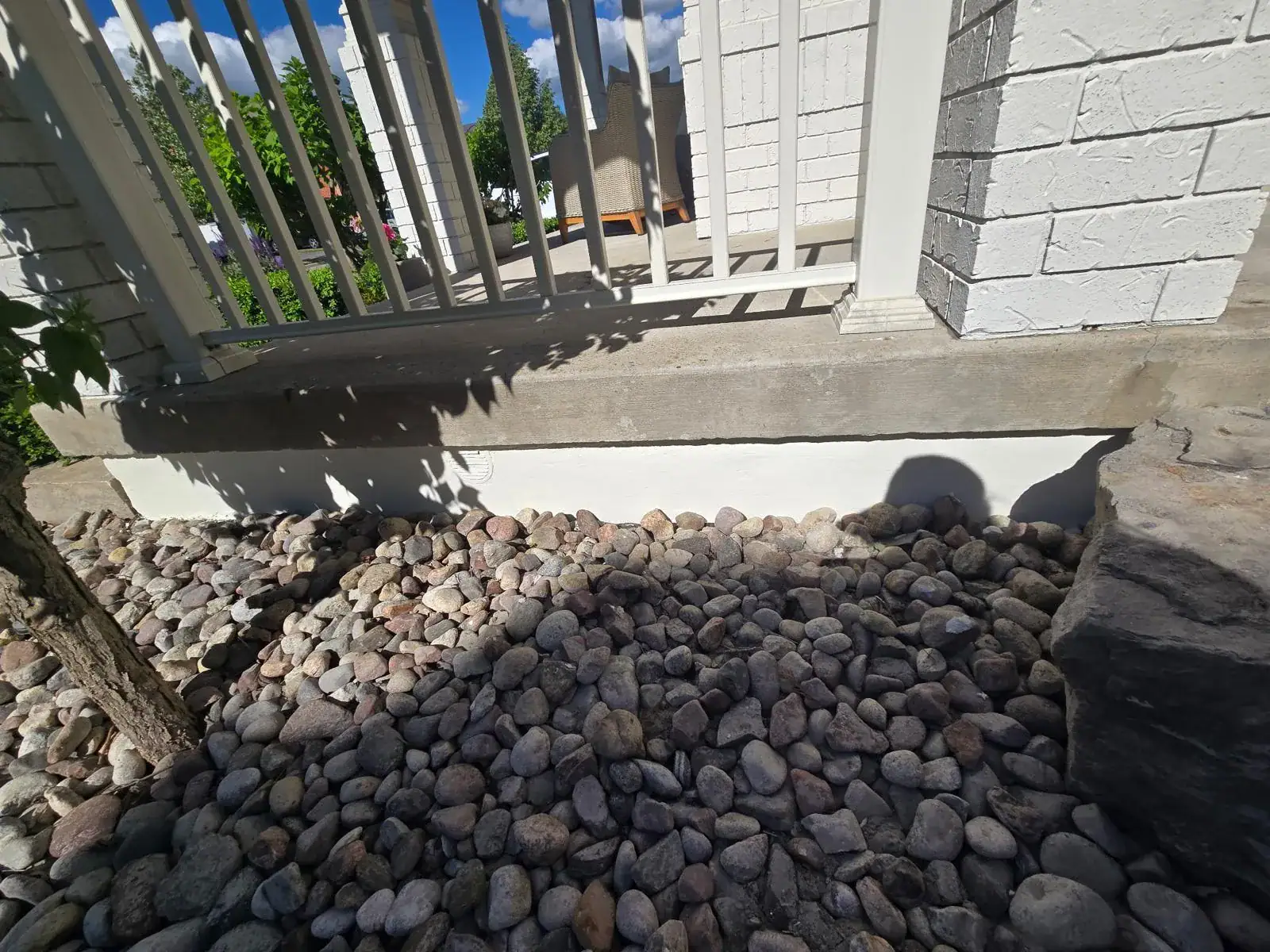
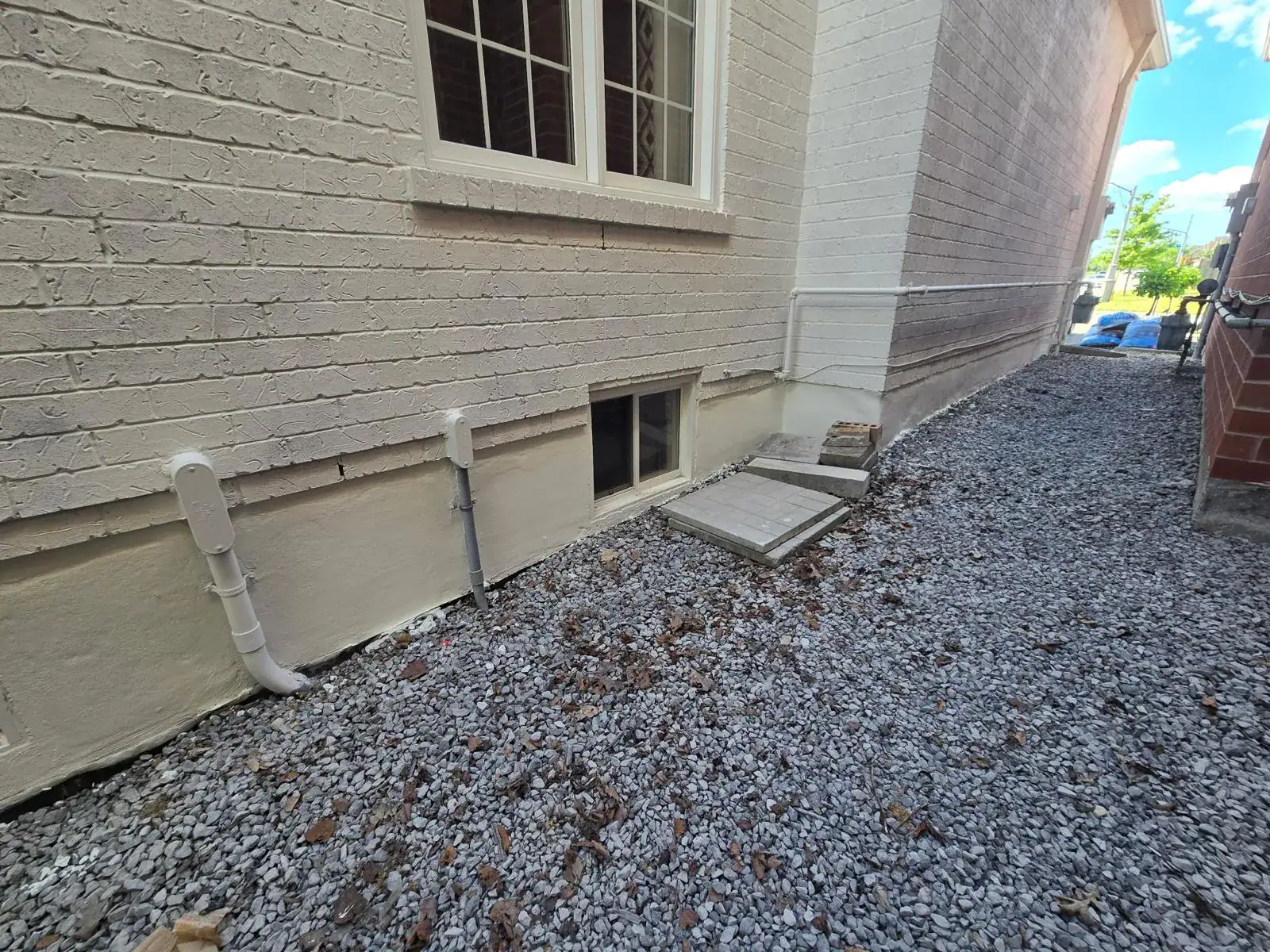
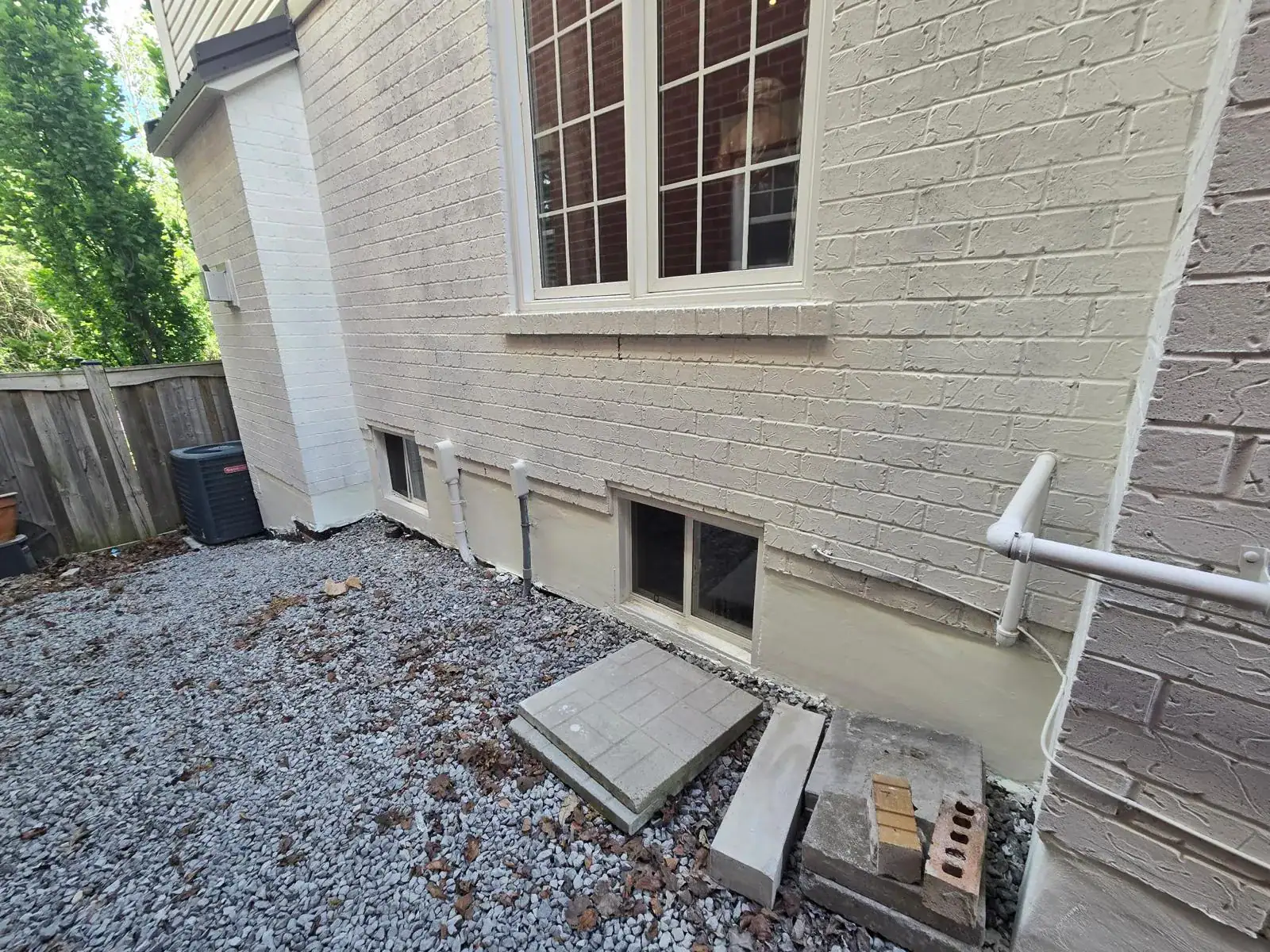
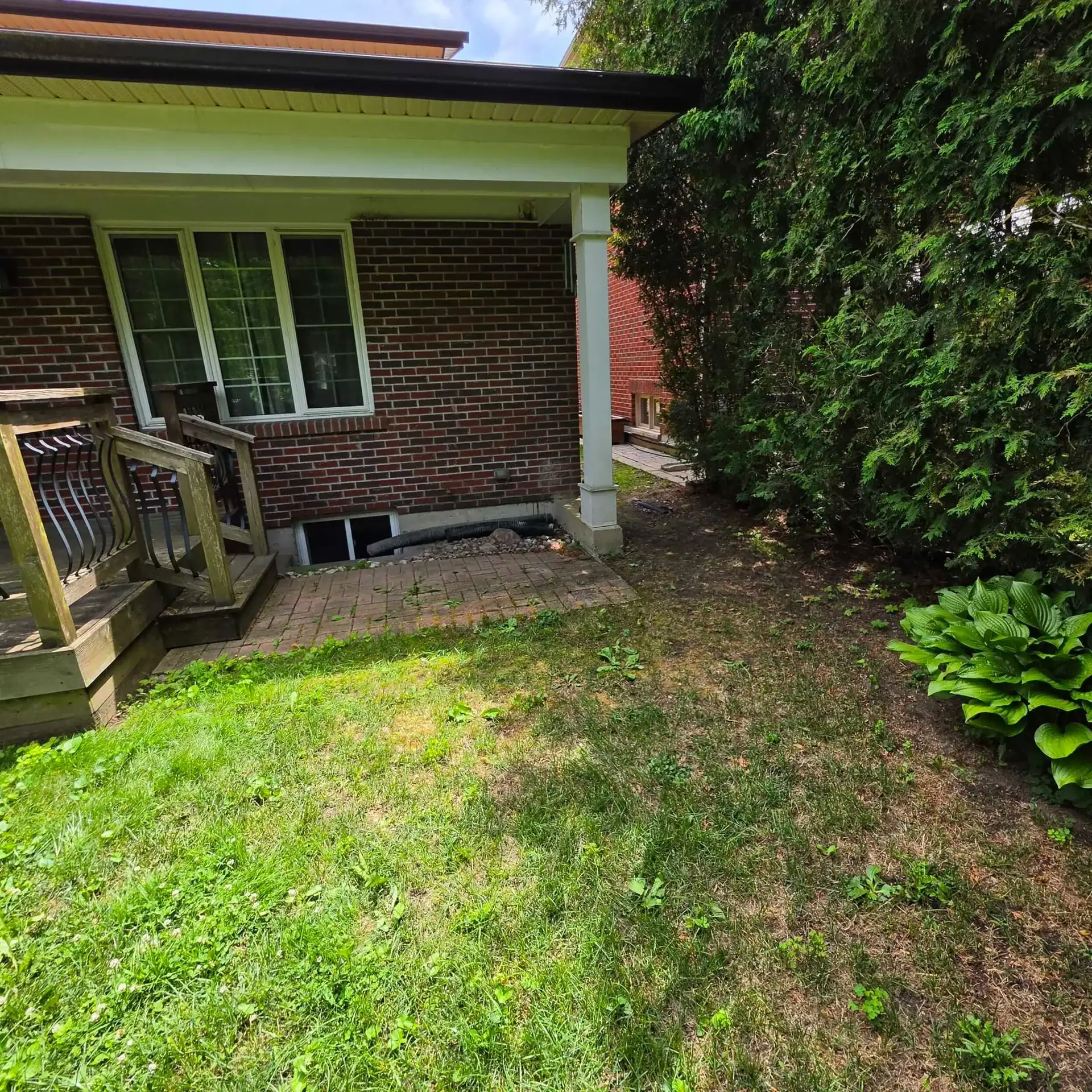
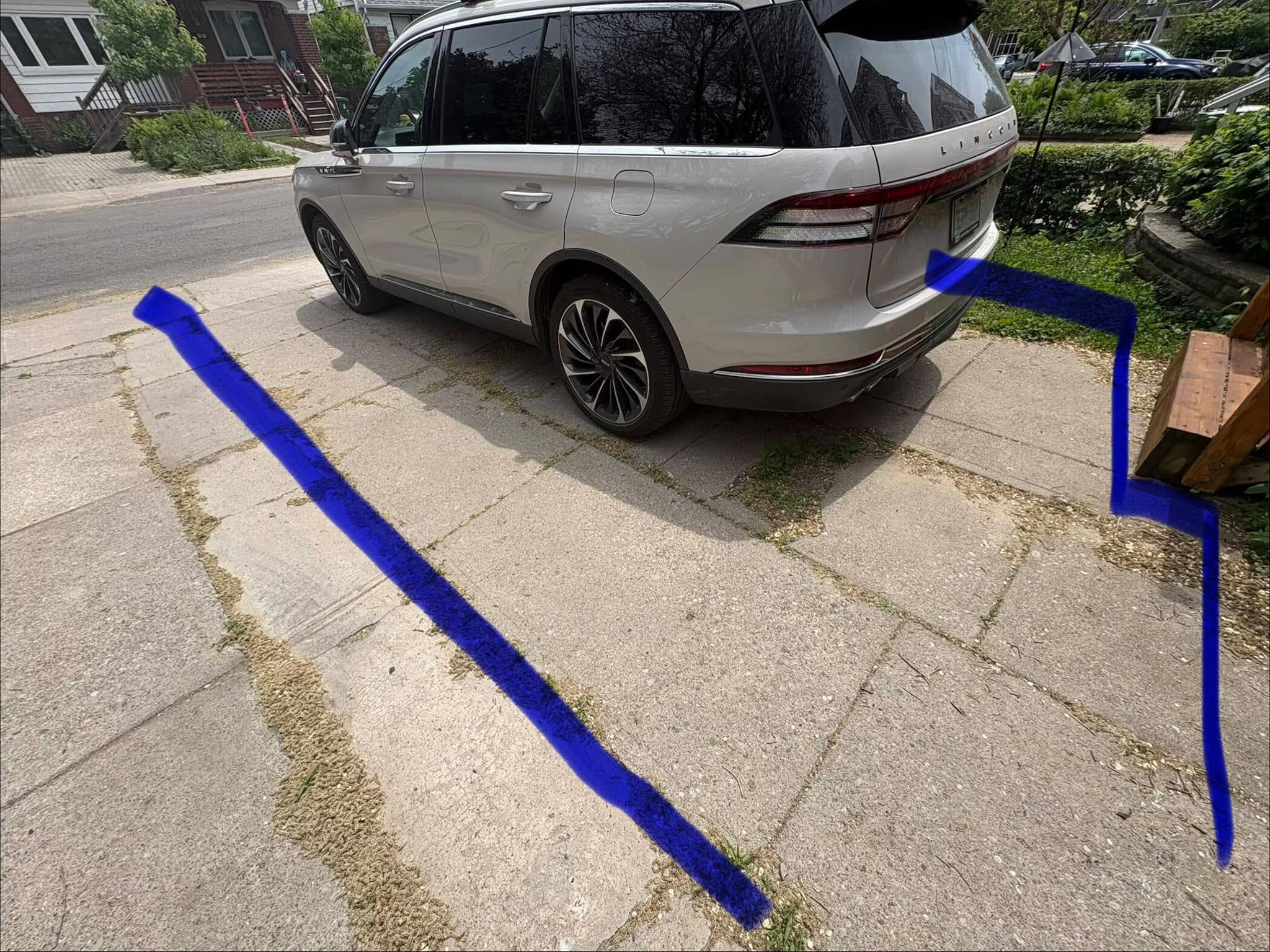
If the ground around your home slopes toward the foundation, rainwater and snowmelt can repeatedly collect against basement walls.
Proper grading helps move surface water away from the building.
Potential warning signs include:
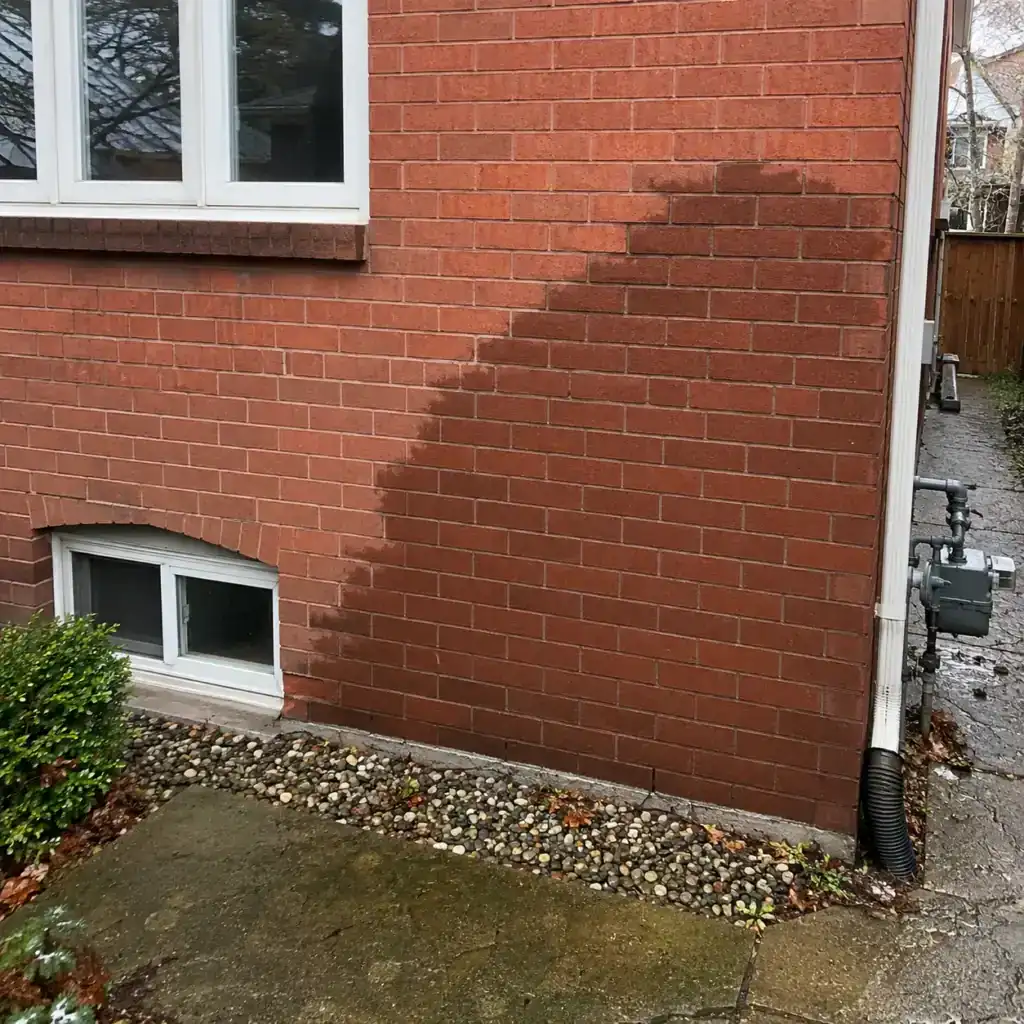
- Water stains on brickwork
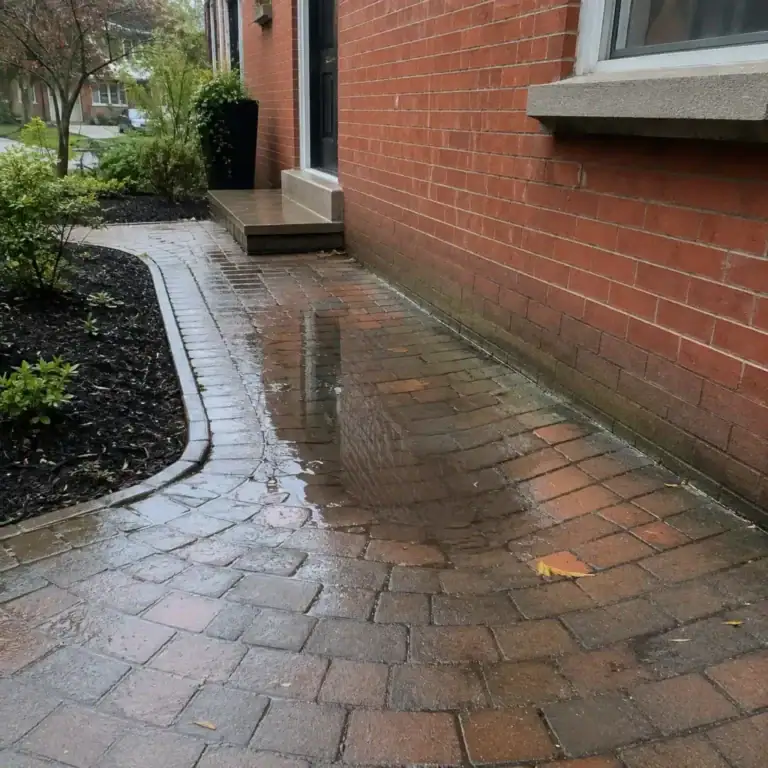
Water pooling beside the foundation
Soil sloping toward the house
Puddles along walkways
Water collecting between neighbouring homes
Basement leaks after heavy rain
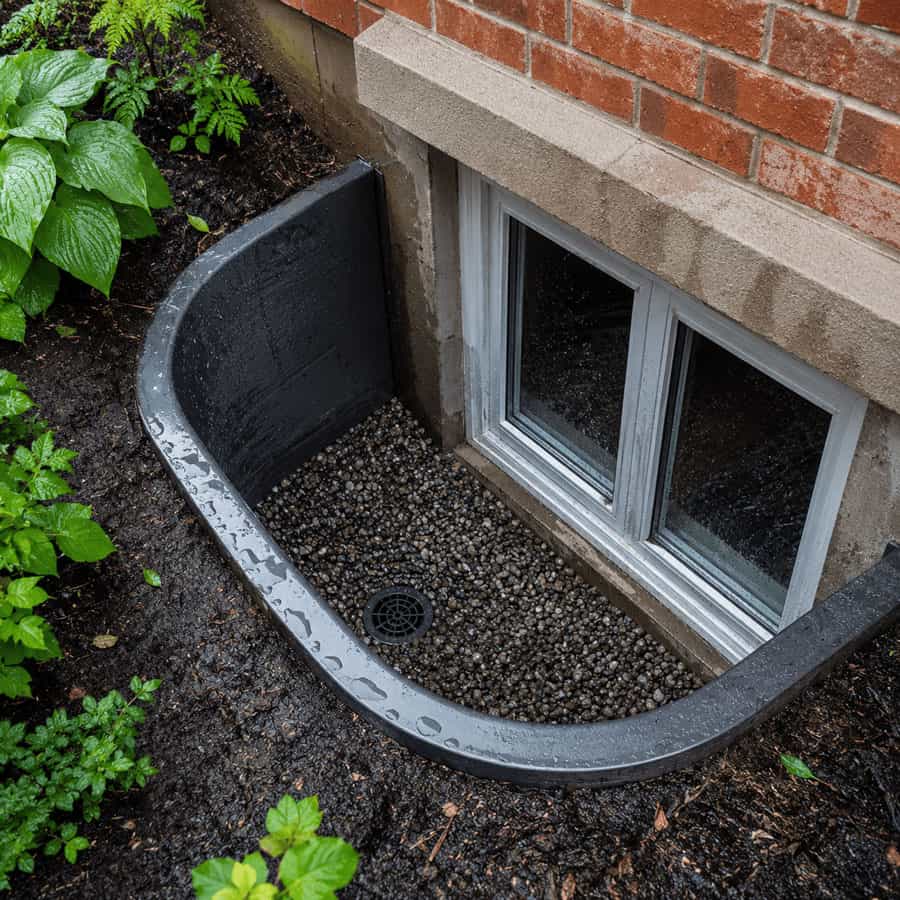
Water repeatedly entering window wells
Washed-out landscaping
Correcting drainage may involve adjusting slopes, modifying hard surfaces or coordinating several exterior improvements.
Interlocking Stone & Water Management
Proper Drainage Starts Below the Pavers
Interlocking stone doesn’t just need to look good.
It needs to manage water properly.
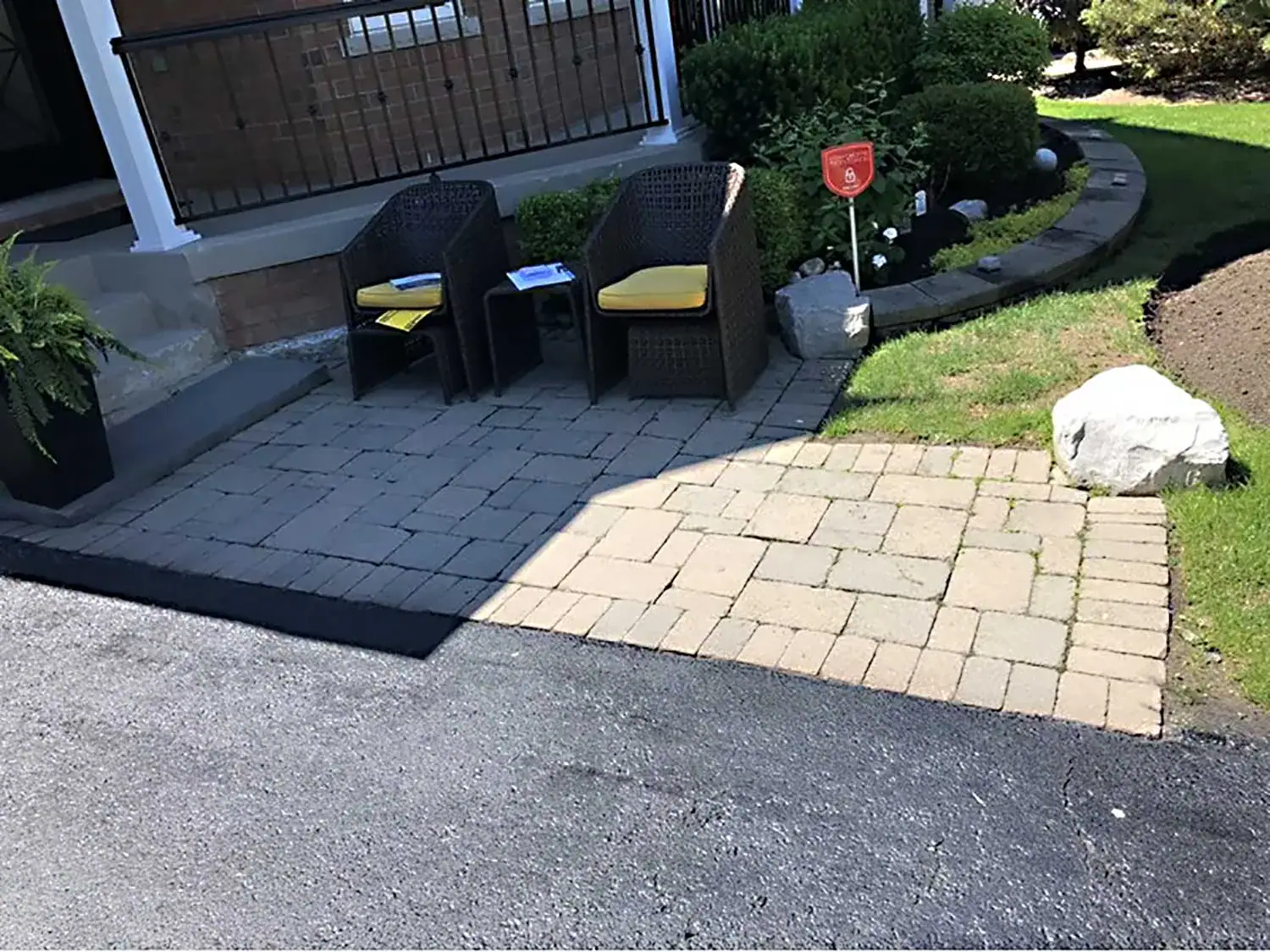
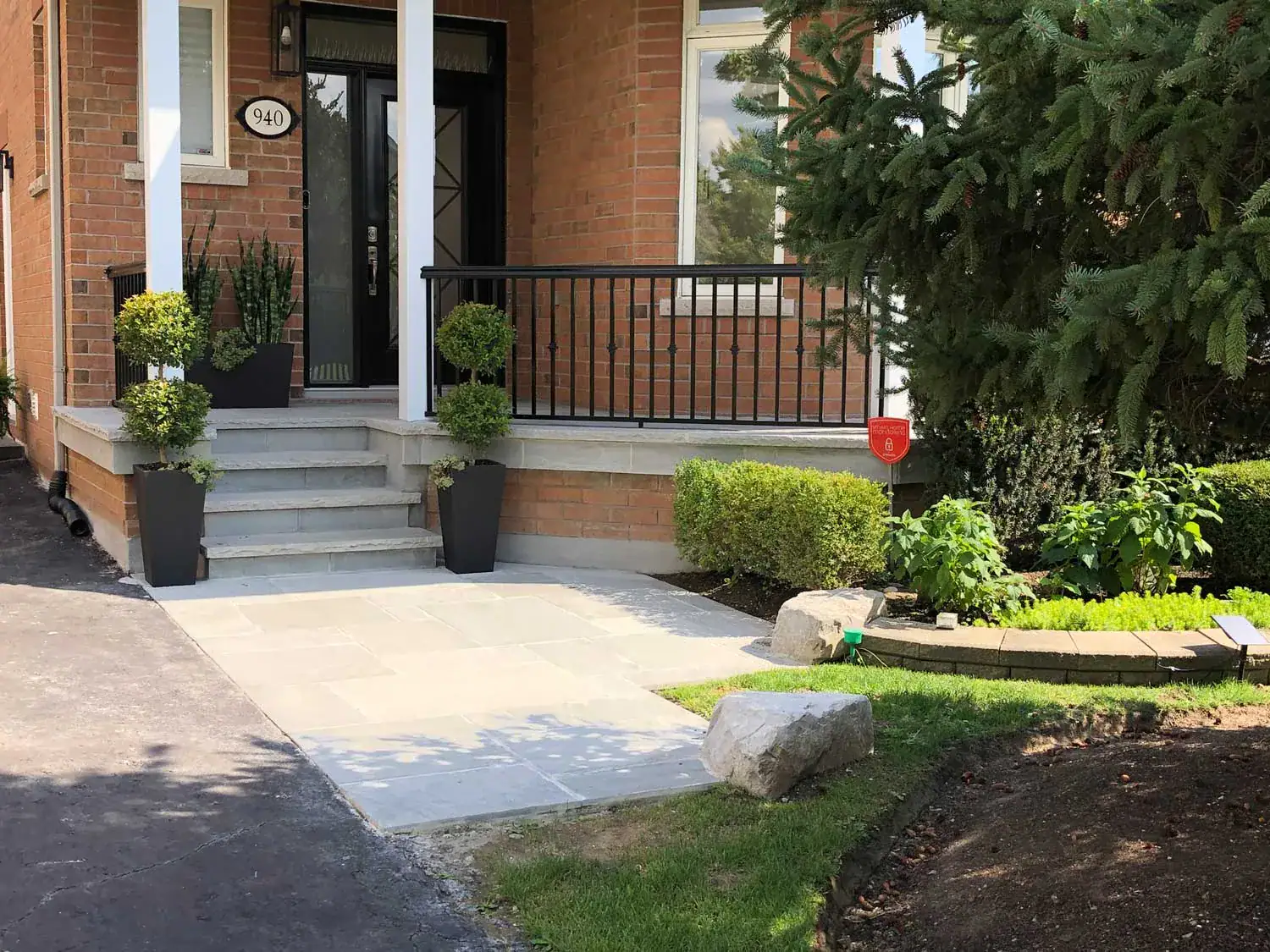
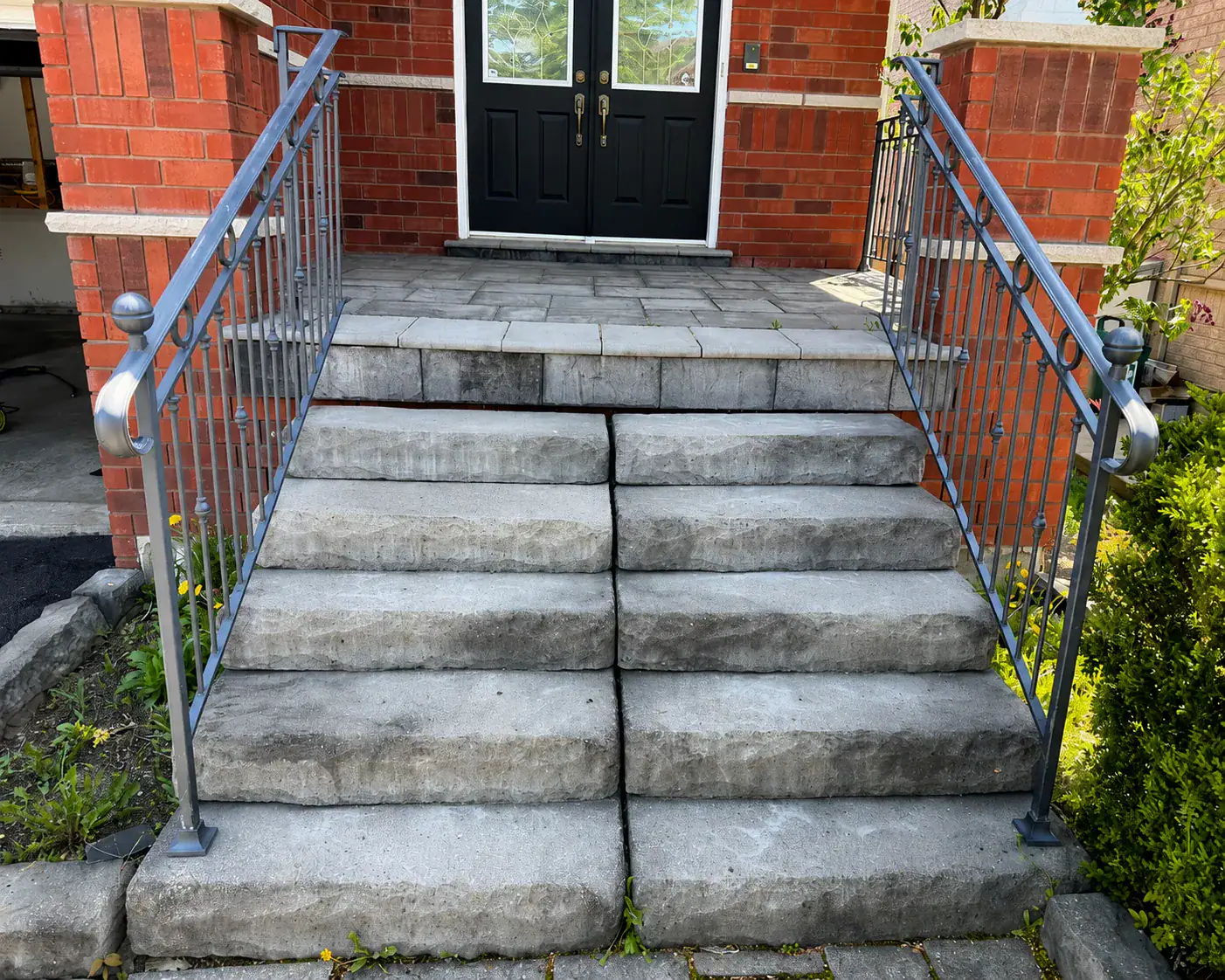
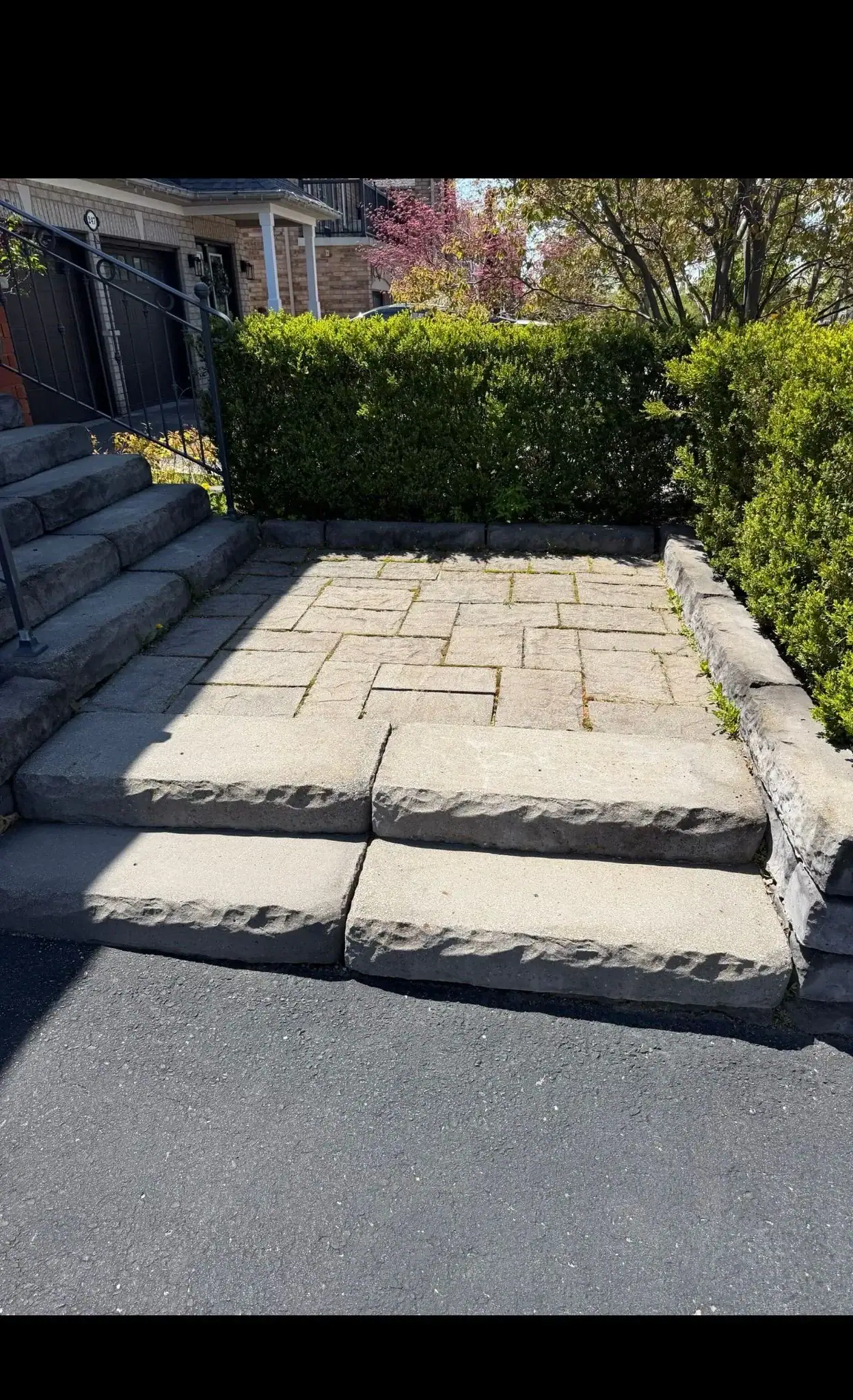
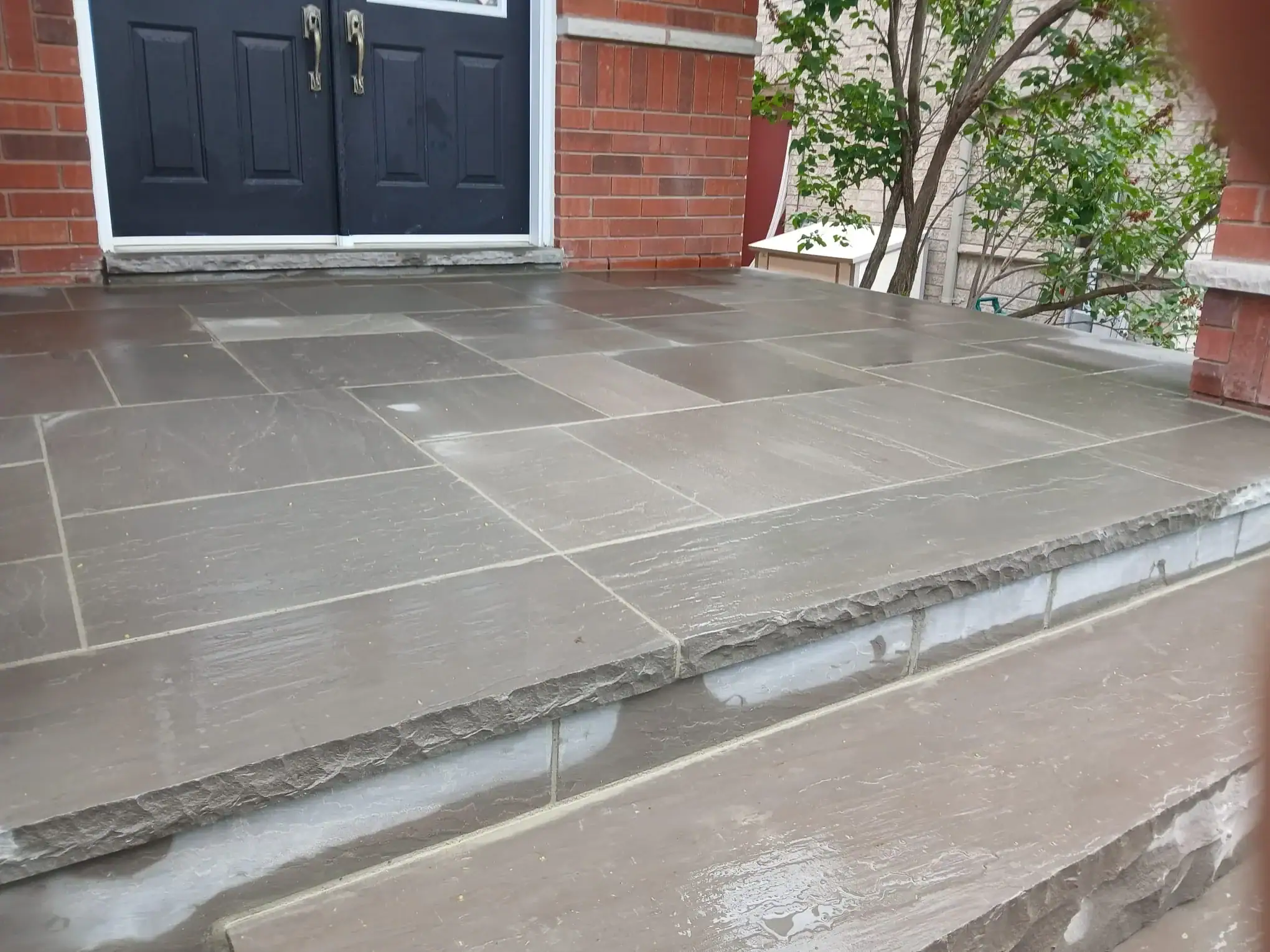
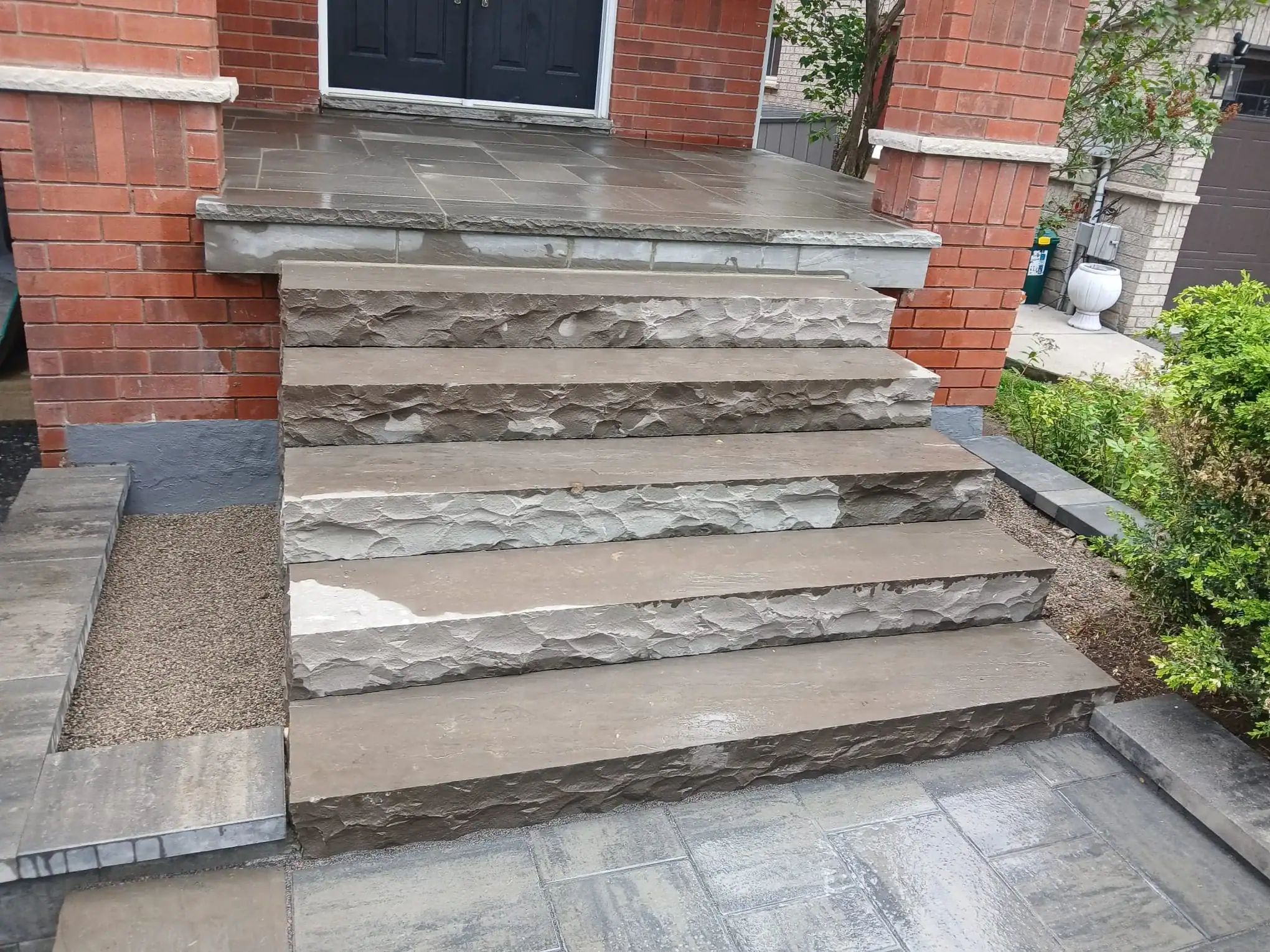
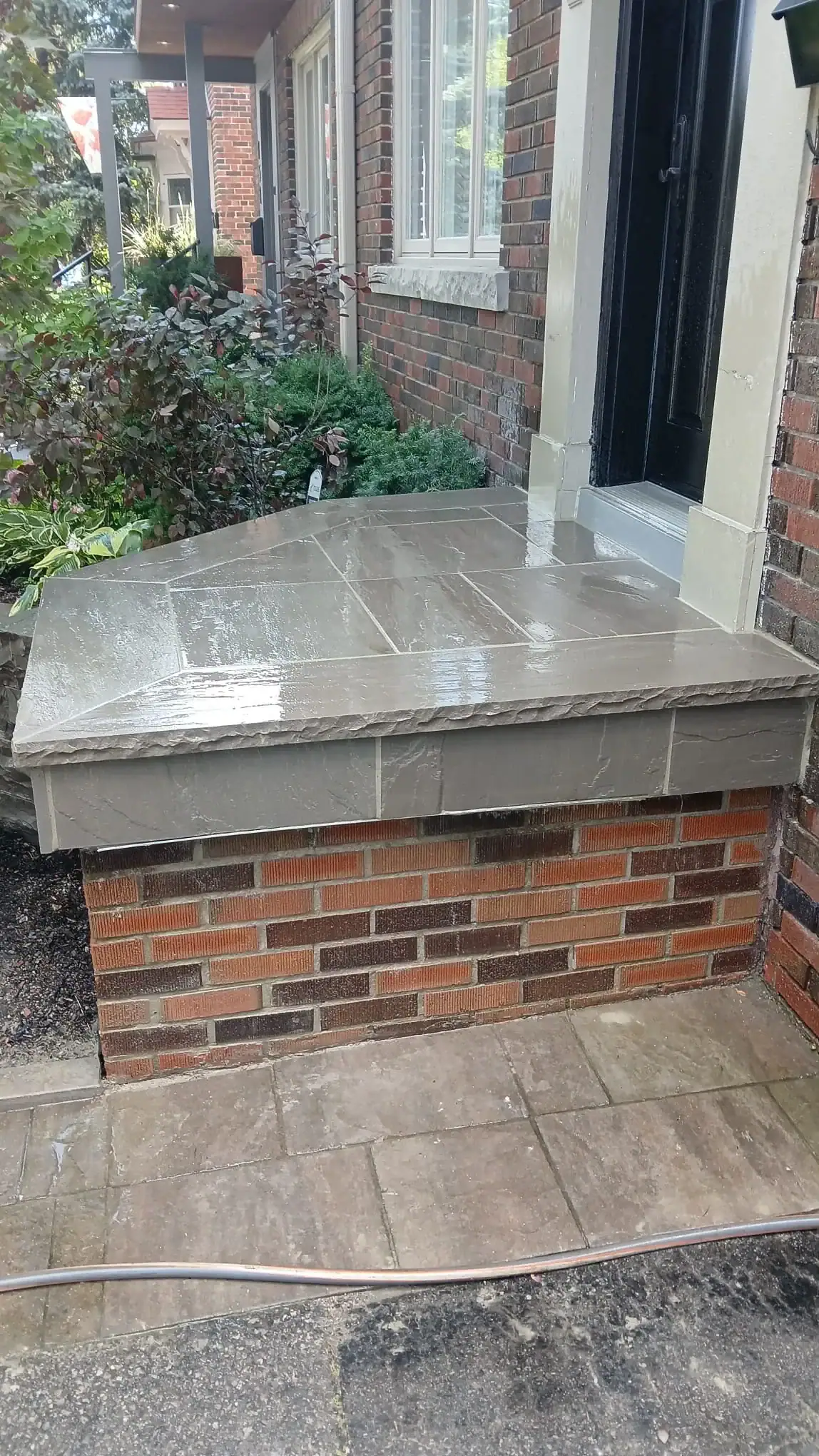
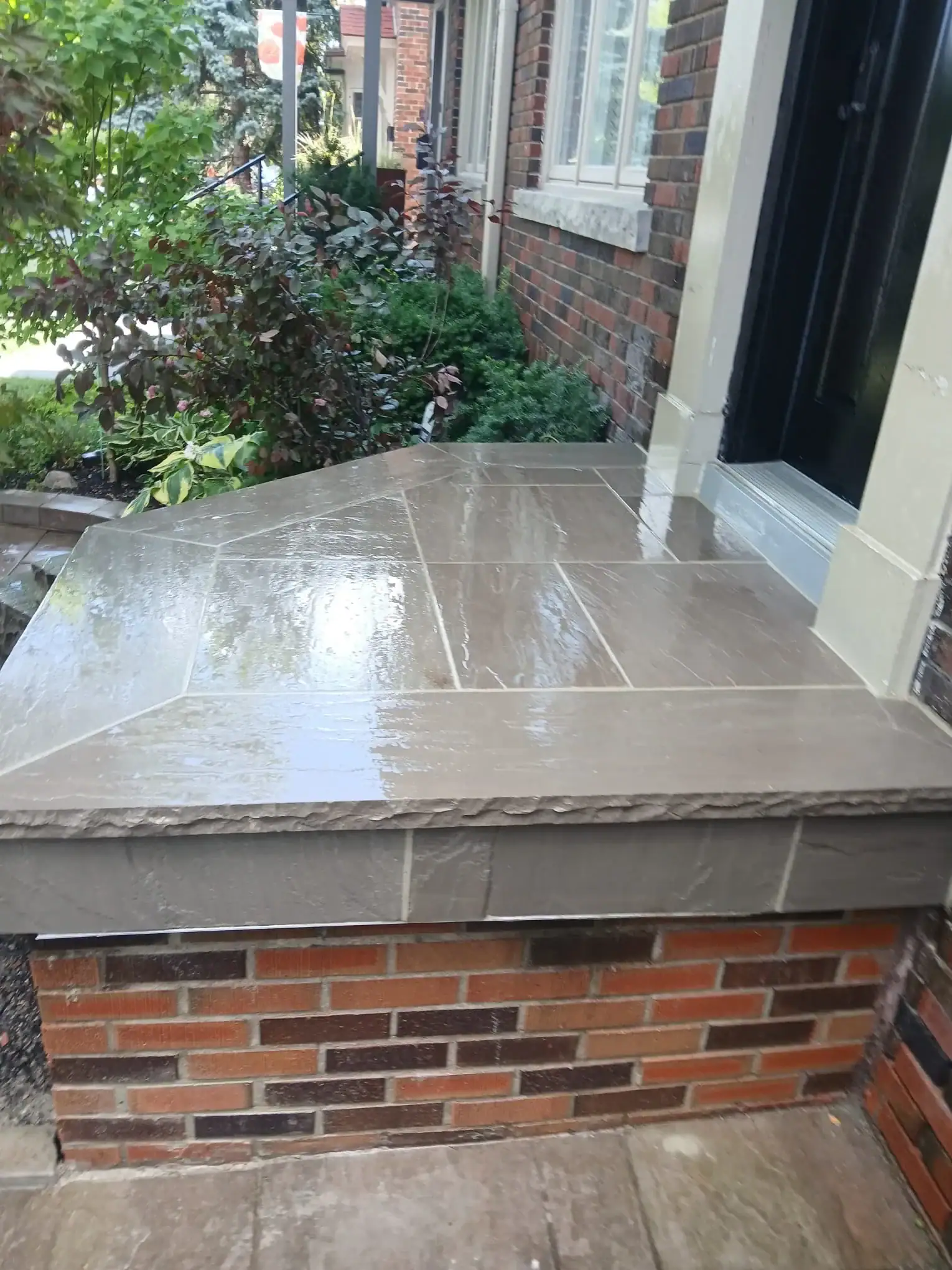
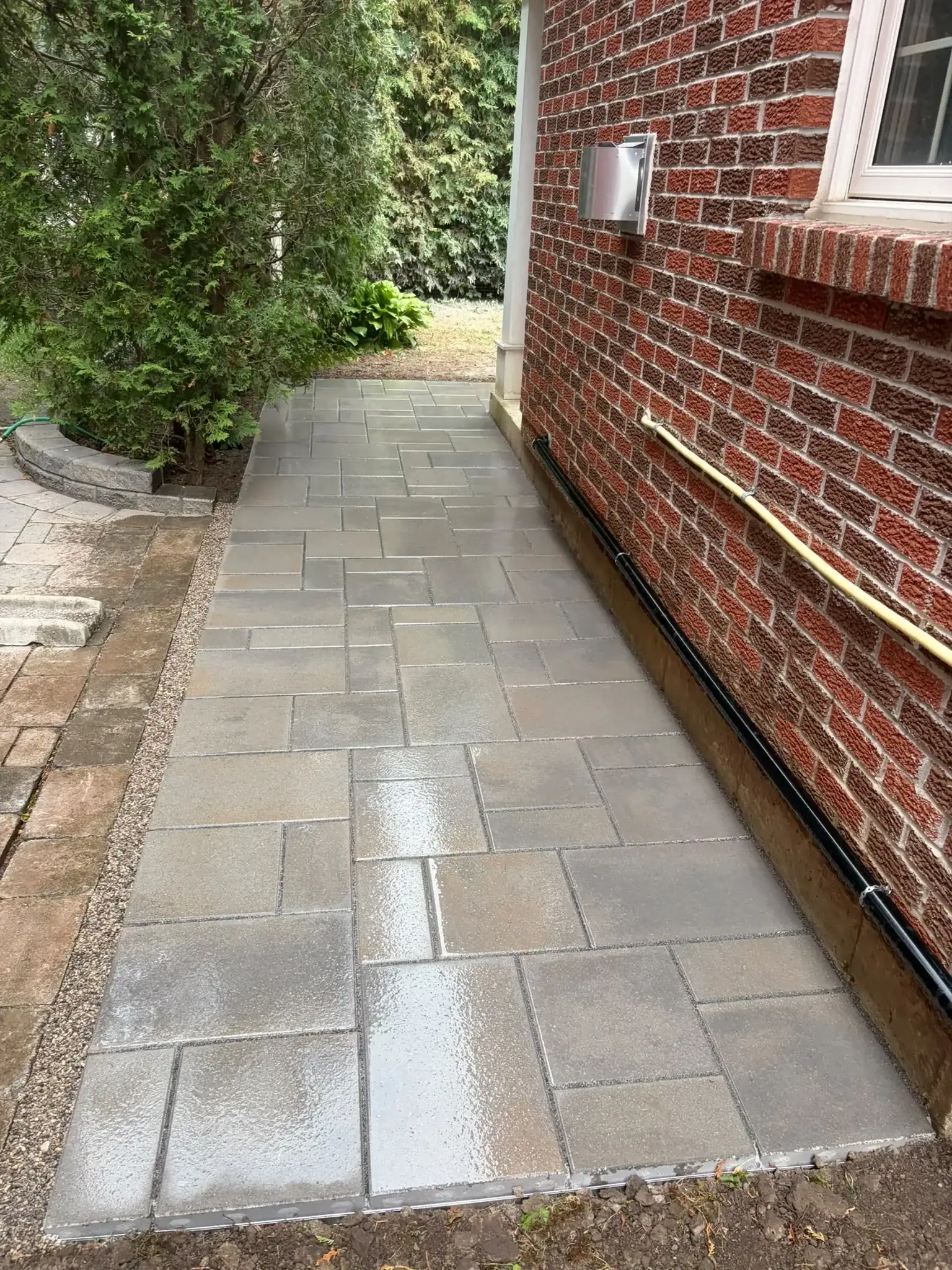
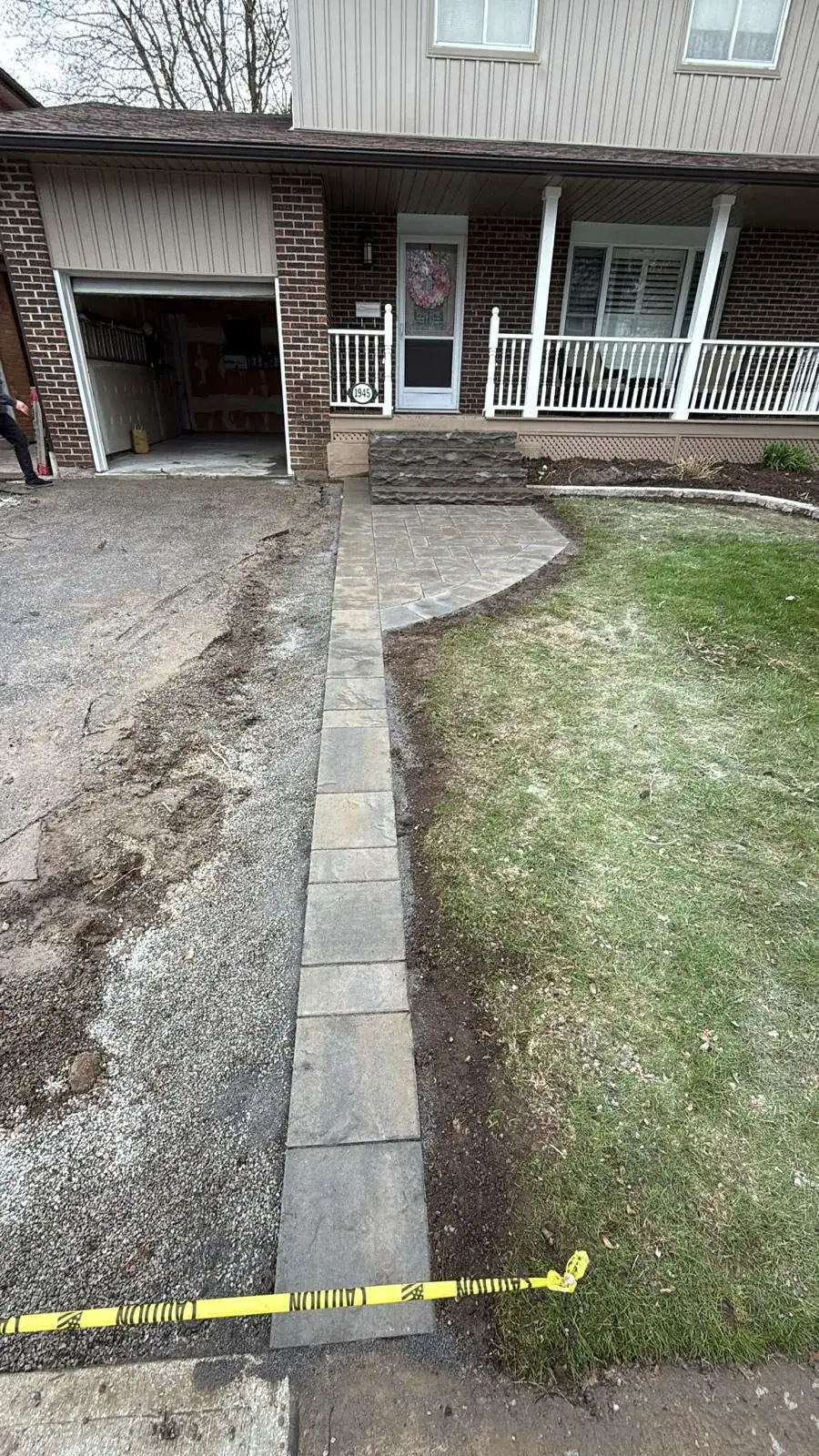
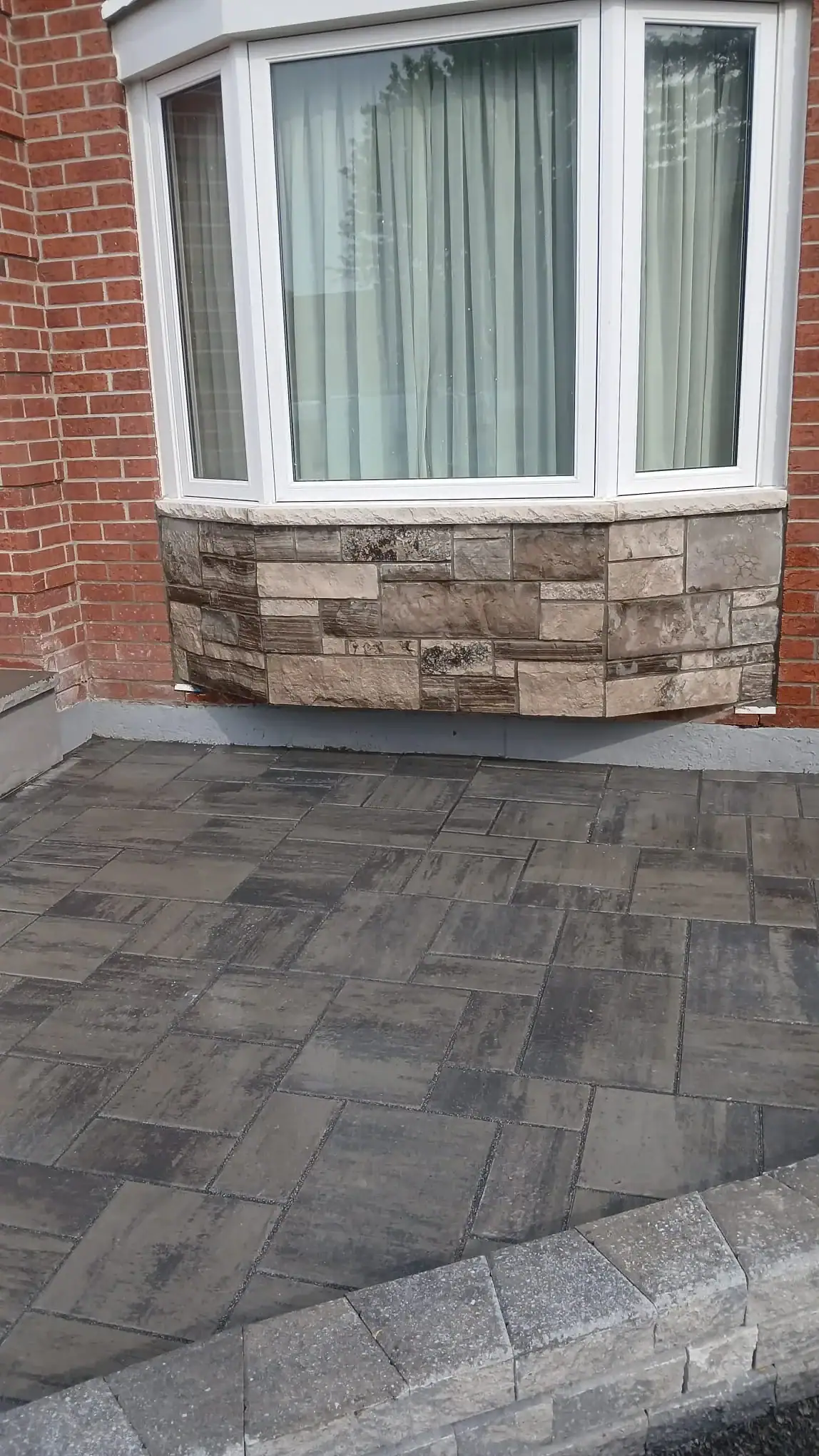
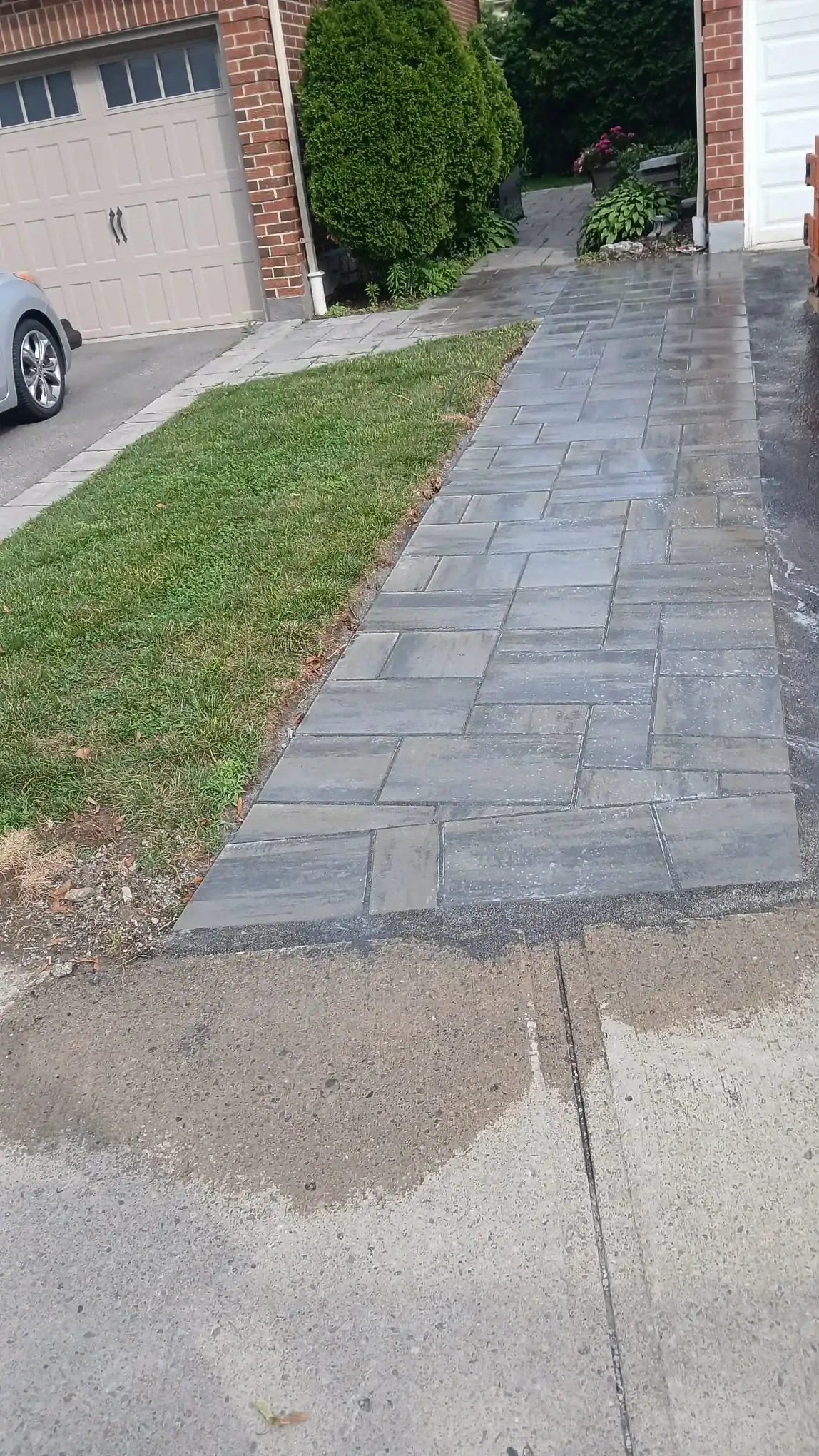
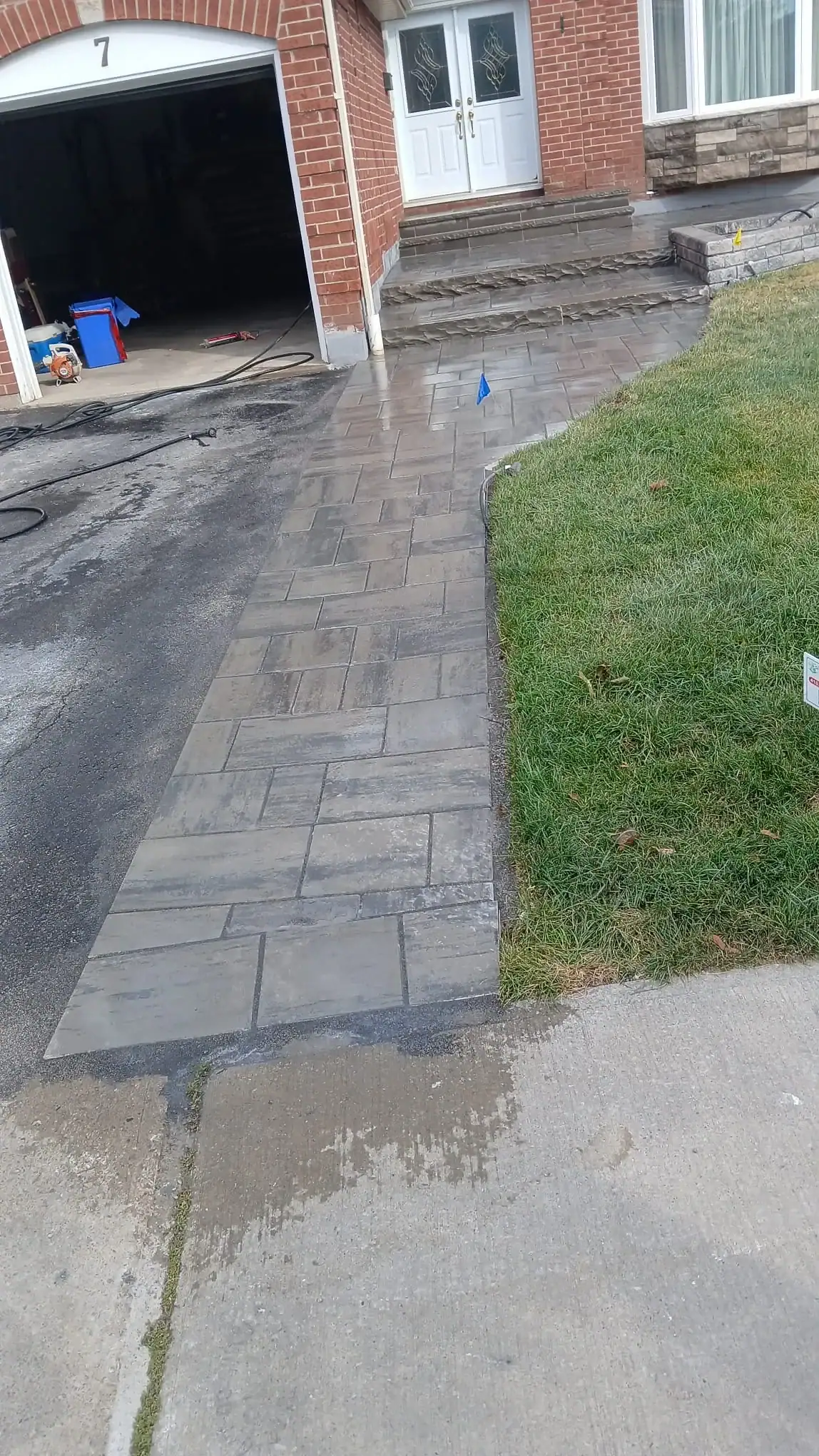
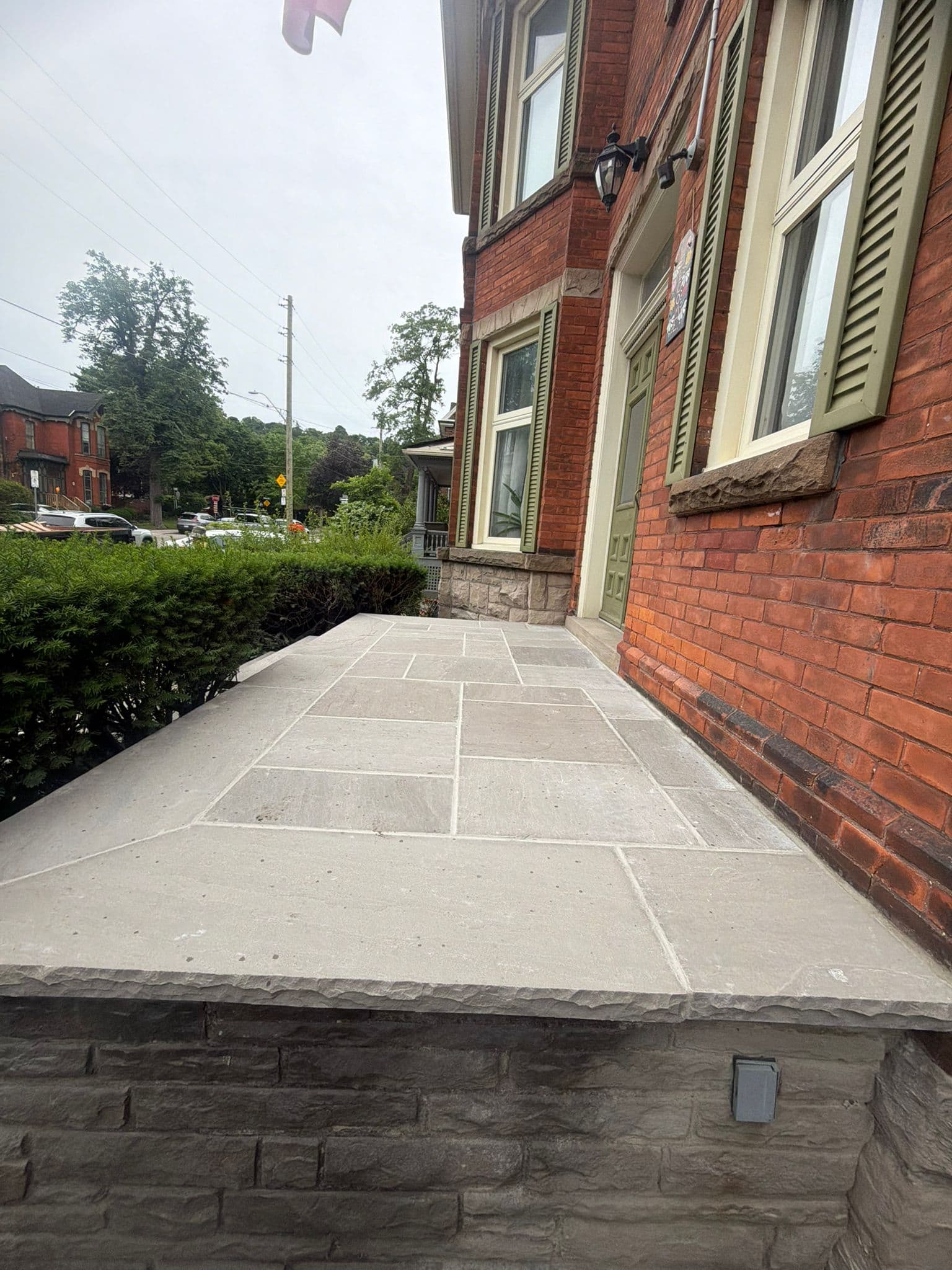
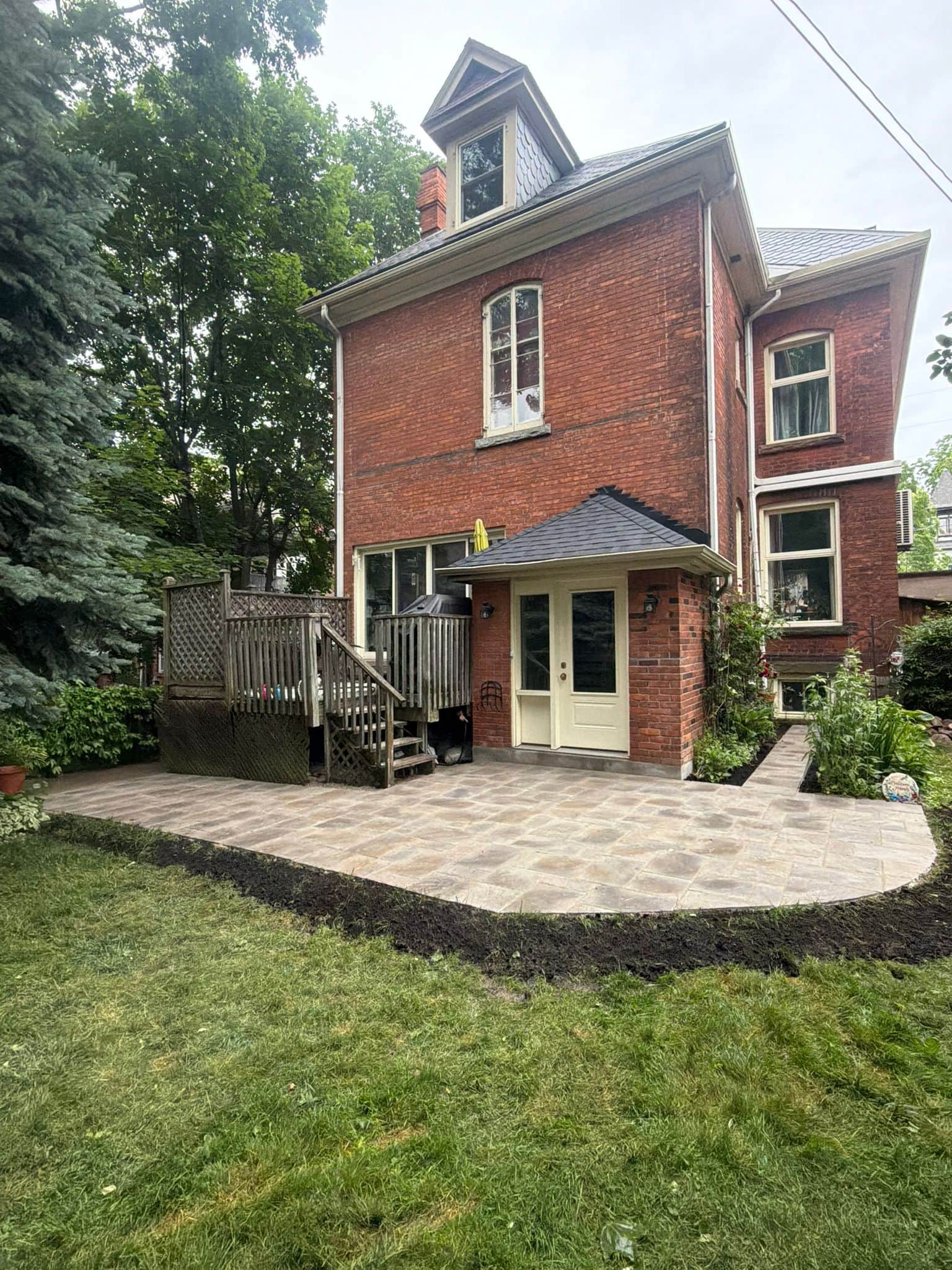
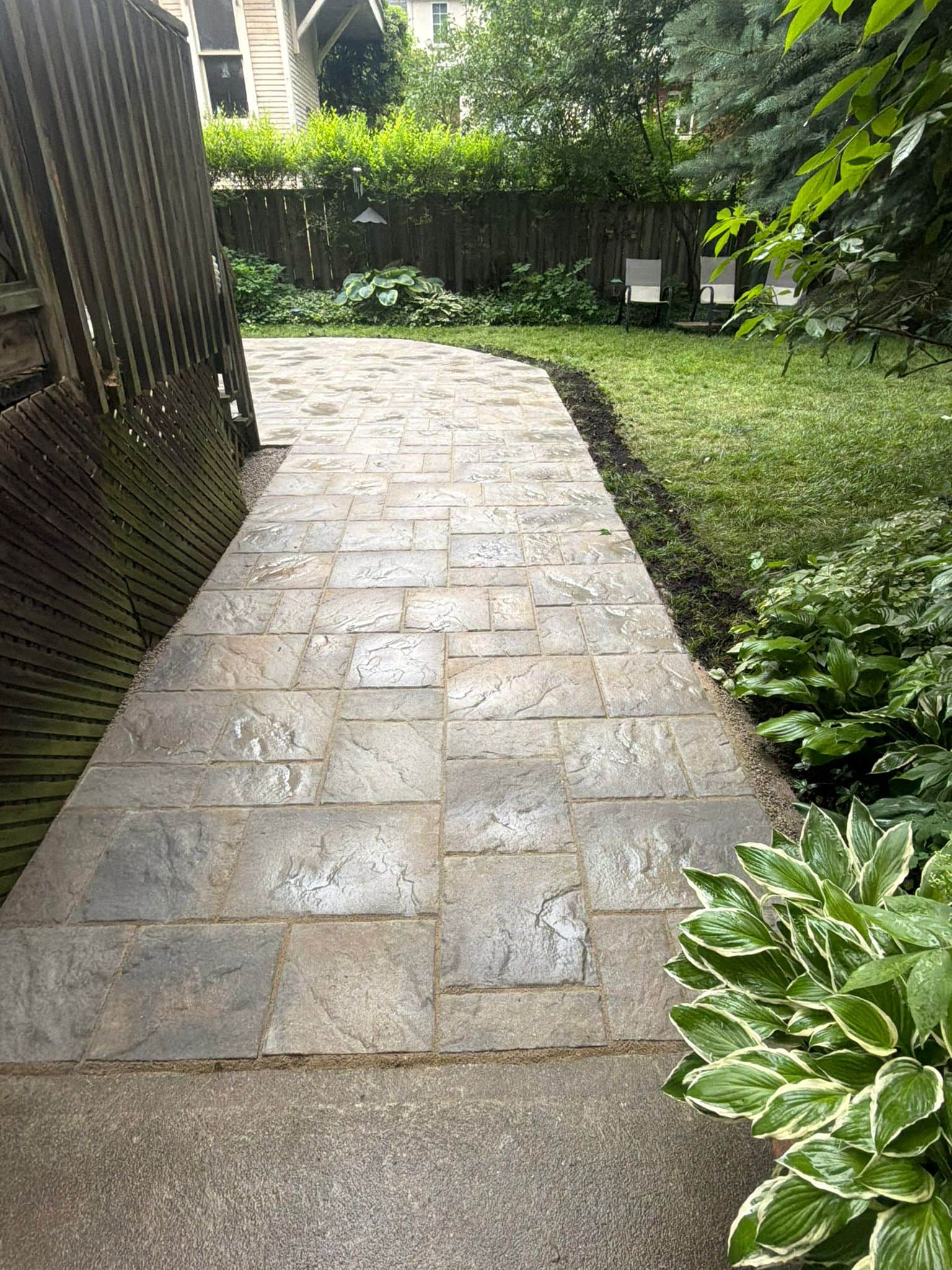
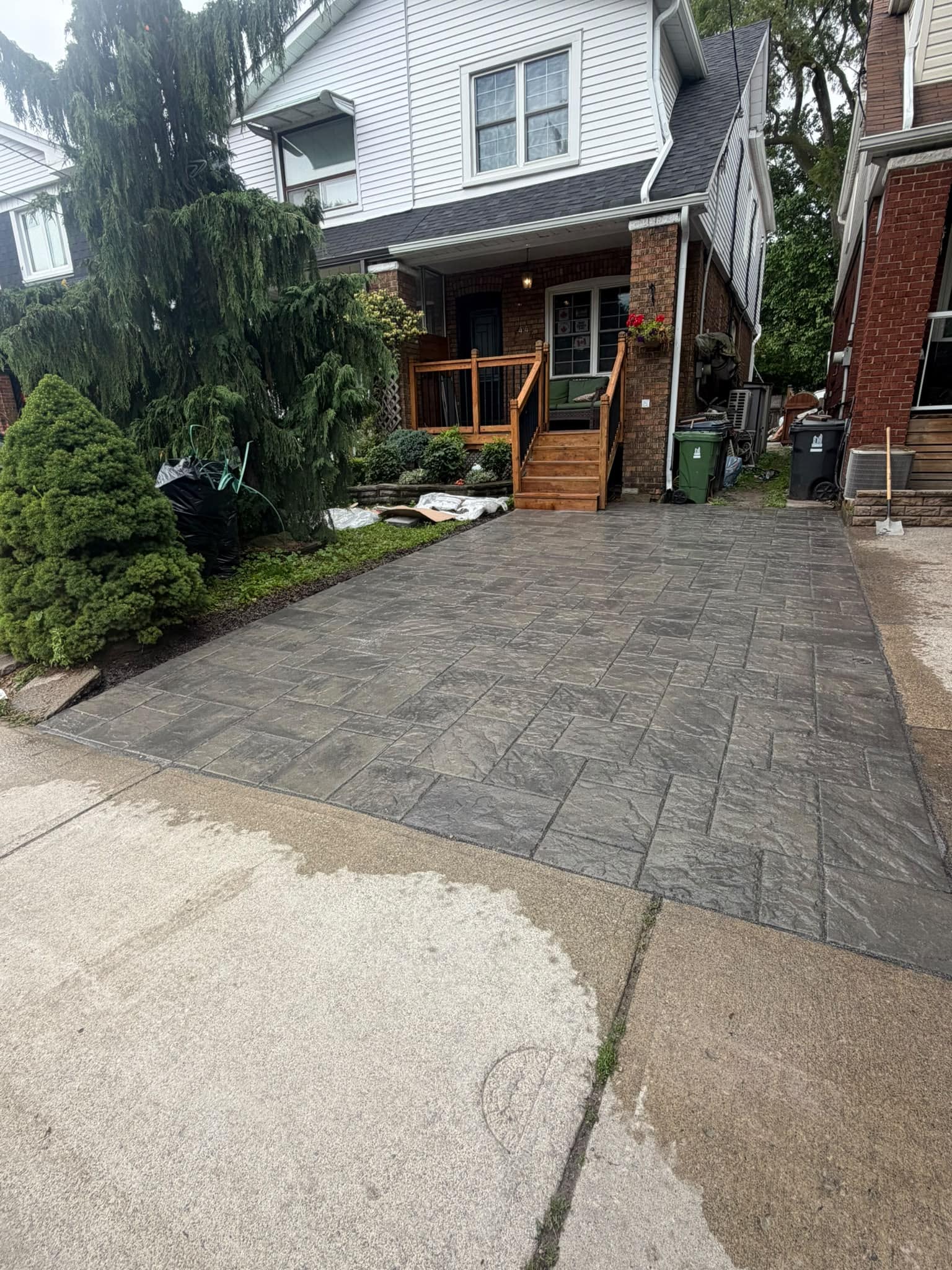
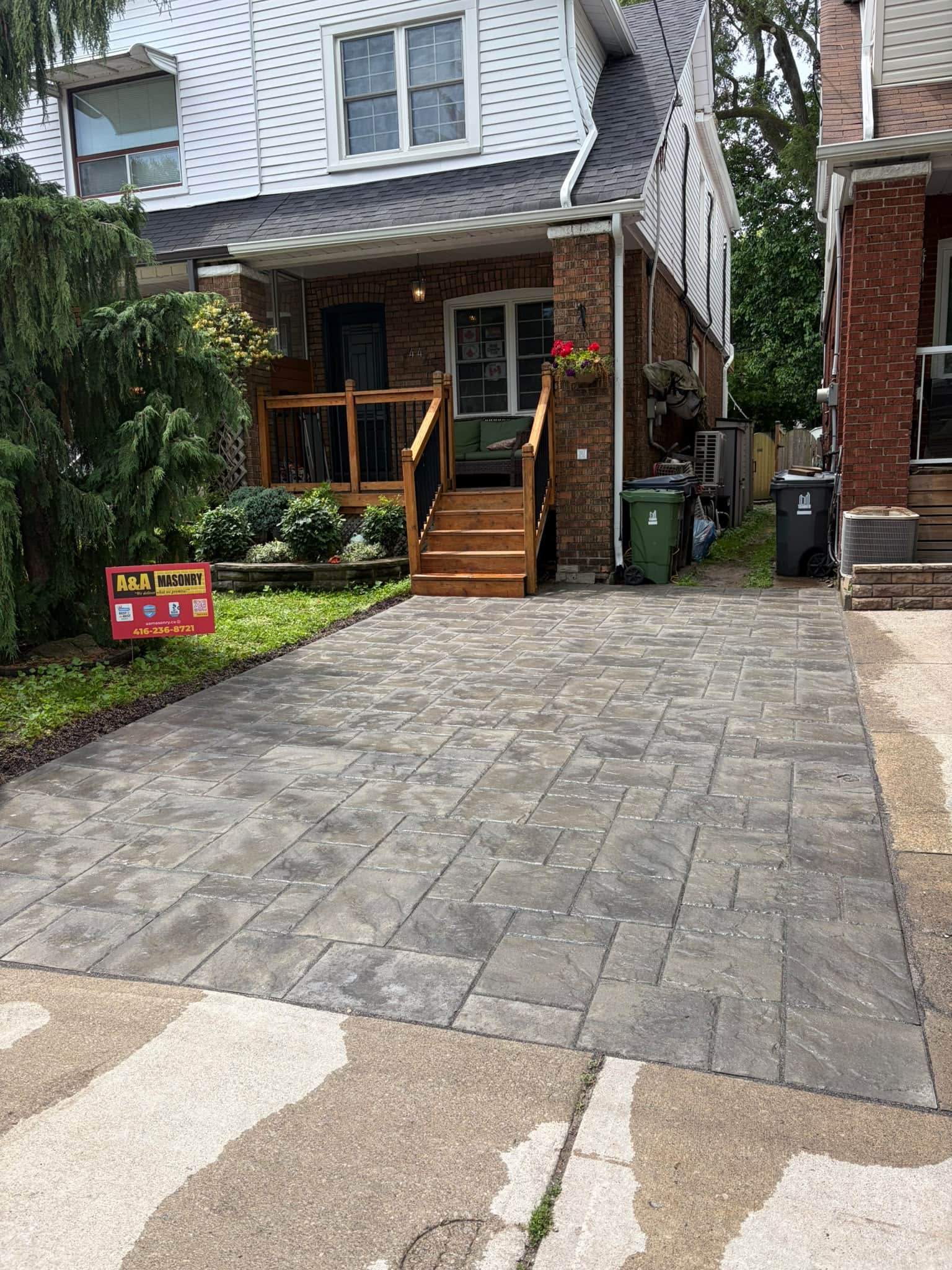
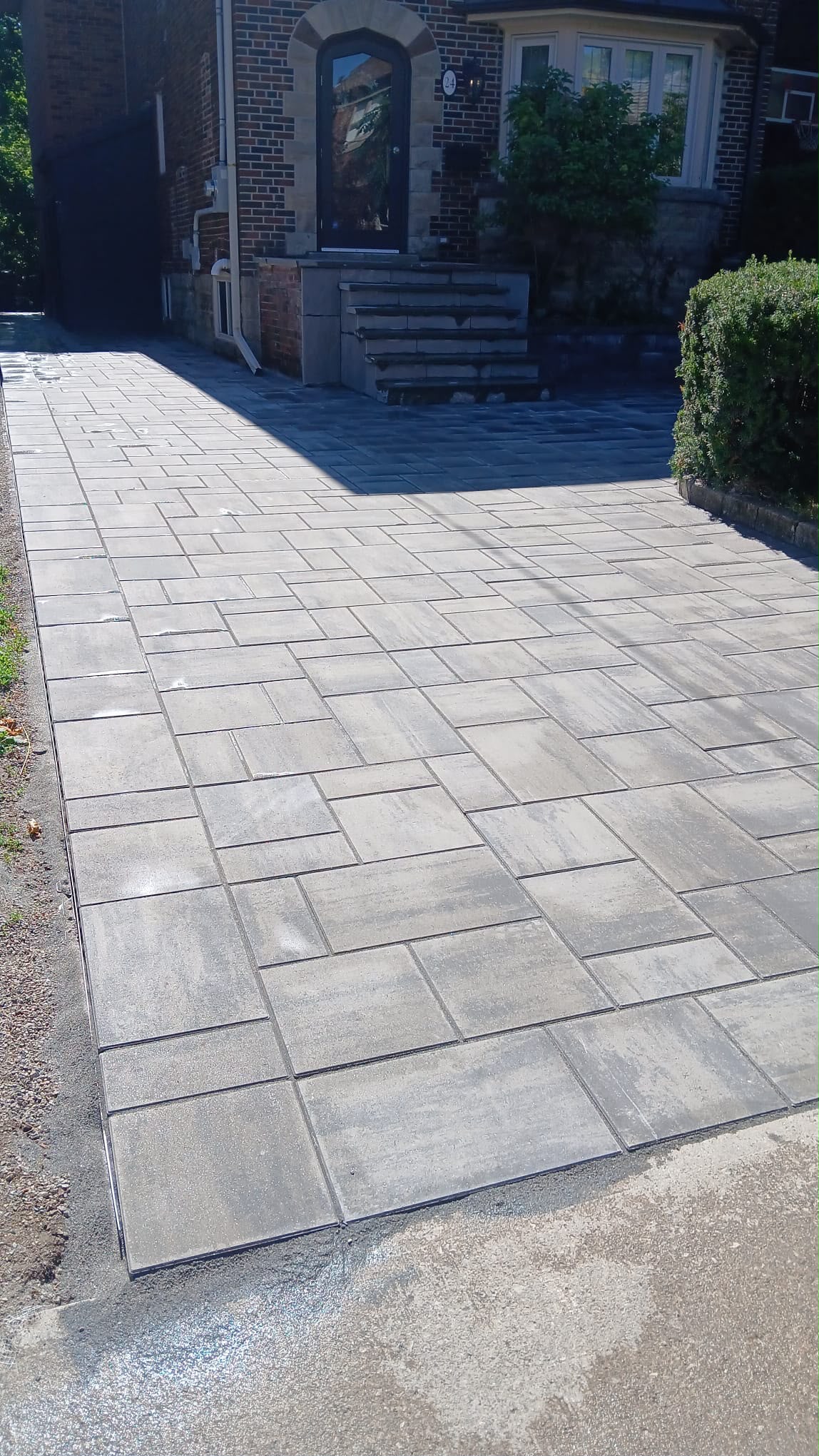
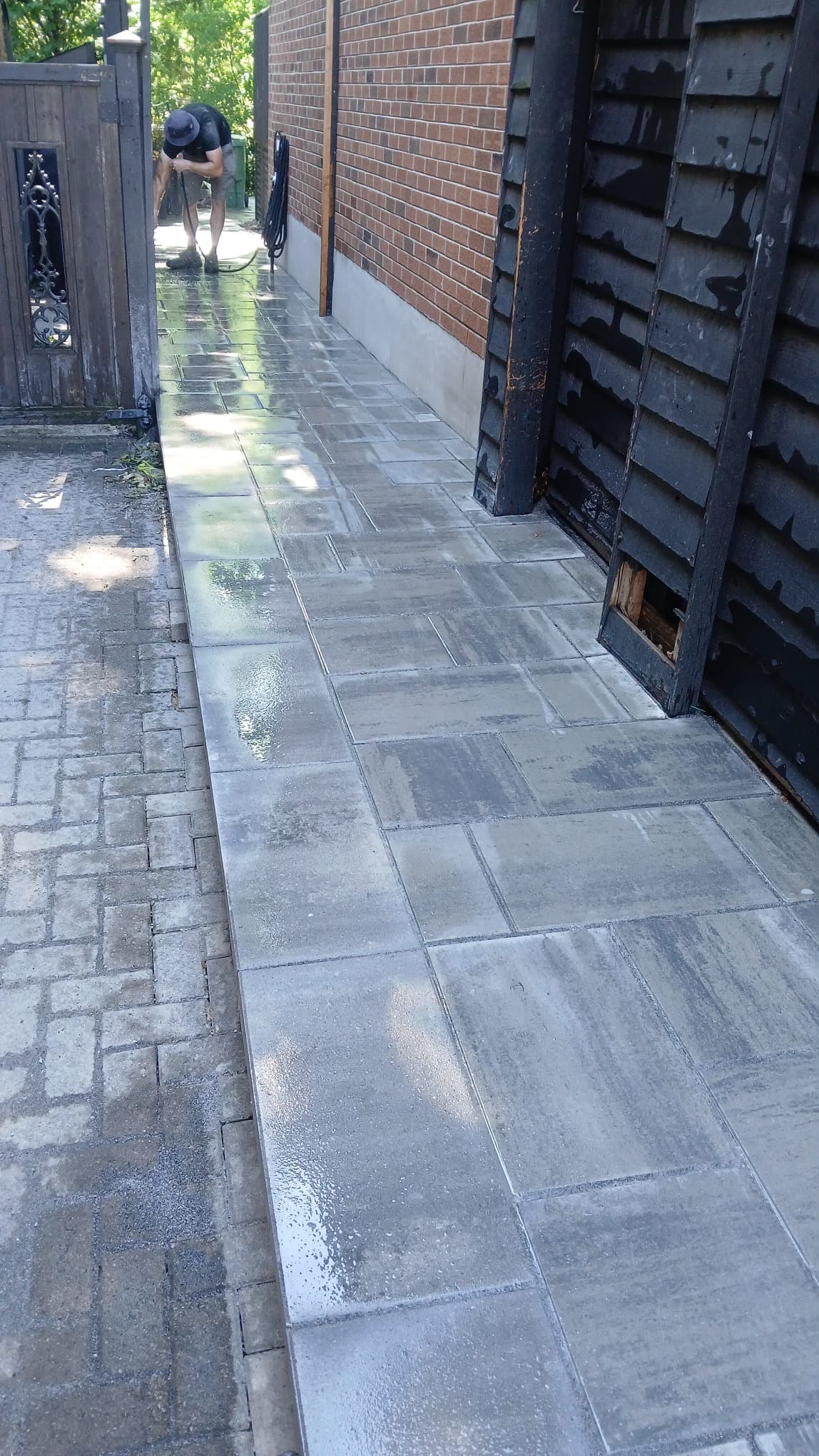
Patios, driveways, walkways and other hardscape surfaces should be installed with appropriate grading and drainage so water moves in the intended direction.
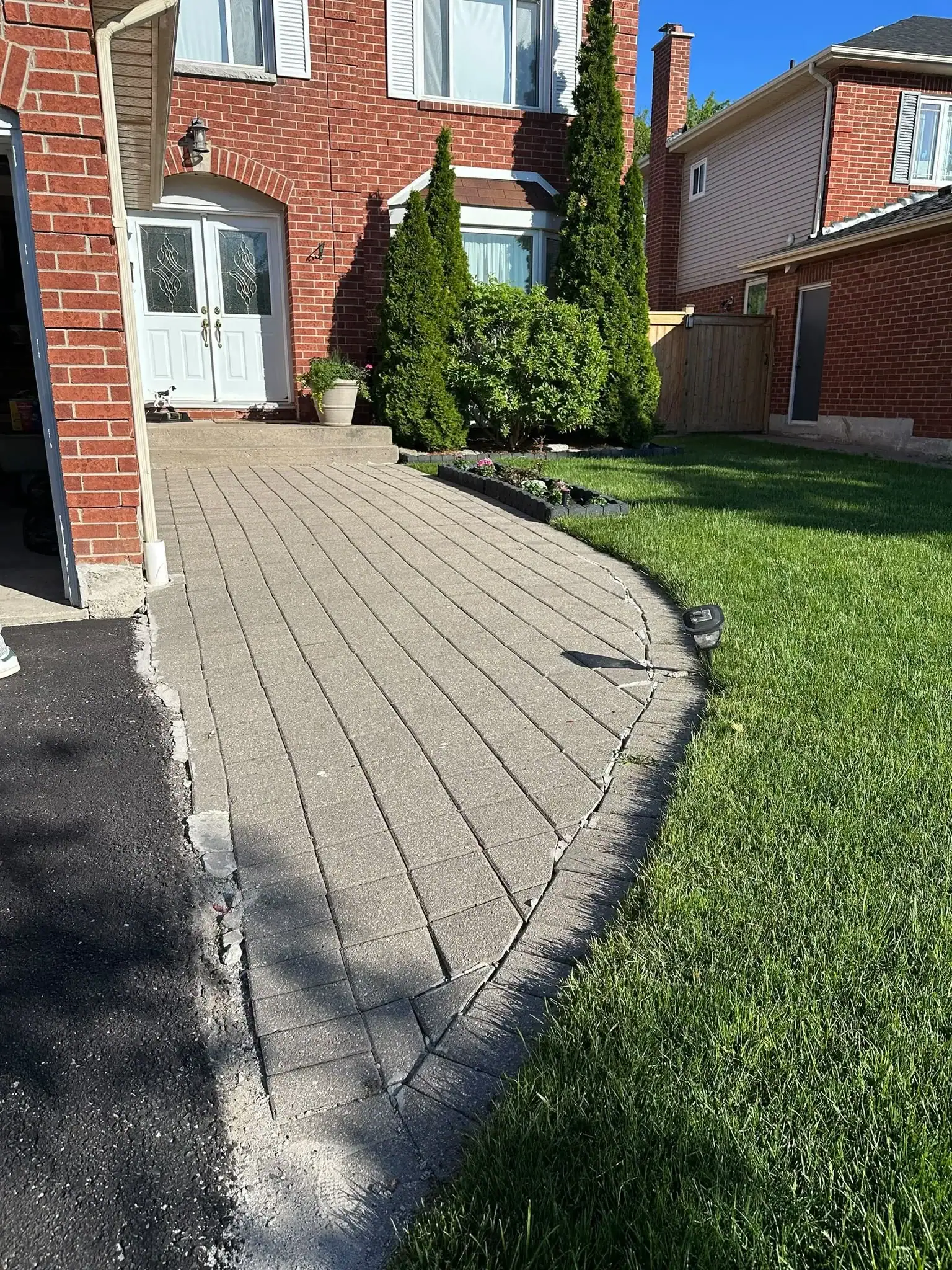
Poor drainage can contribute to:
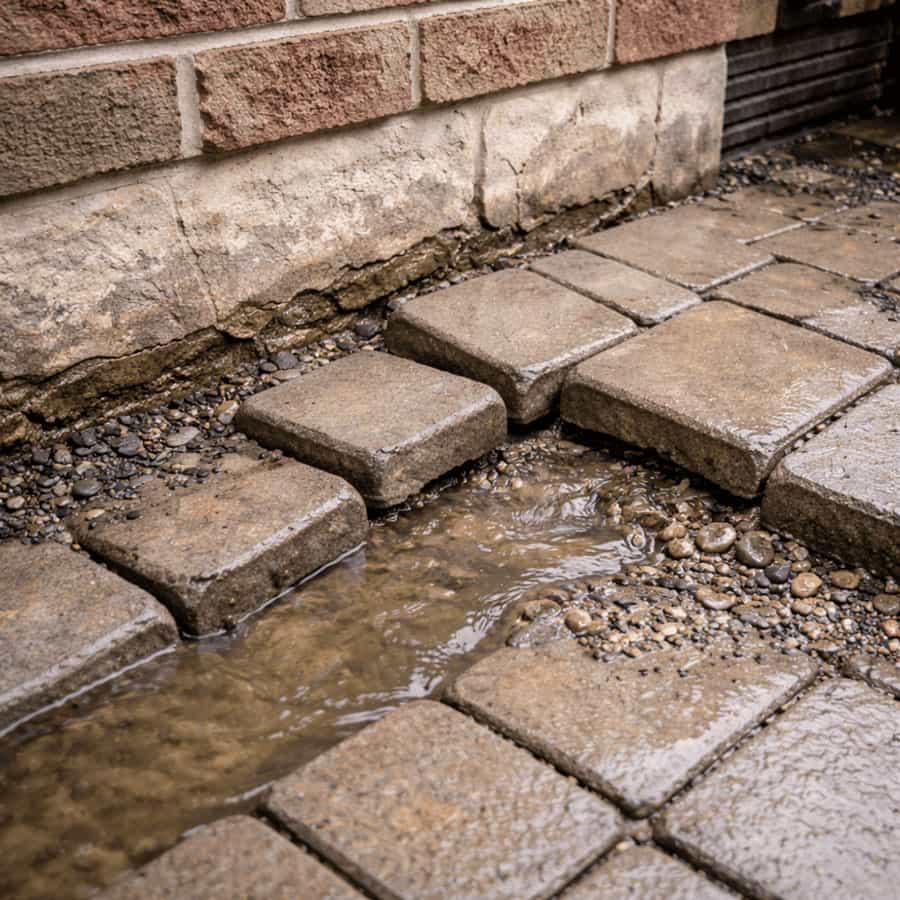
Standing water
Sunken pavers
Settlement
Heaving
Washout
Joint deterioration
Ice buildup
Water flowing toward the foundation
A&A considers drainage when installing and repairing interlocking stone.
This includes evaluating:
Existing grade
Finished surface slope
Base preparation
Surrounding elevations
Foundation location
Downspout discharge
Adjacent walkways and driveways
Retaining walls
Existing drainage patterns
Beautiful interlocking isn’t enough.
It needs to perform properly when it rains.
Driveways, Walkways & Patios
Hard Surfaces Can Move a Lot of Water
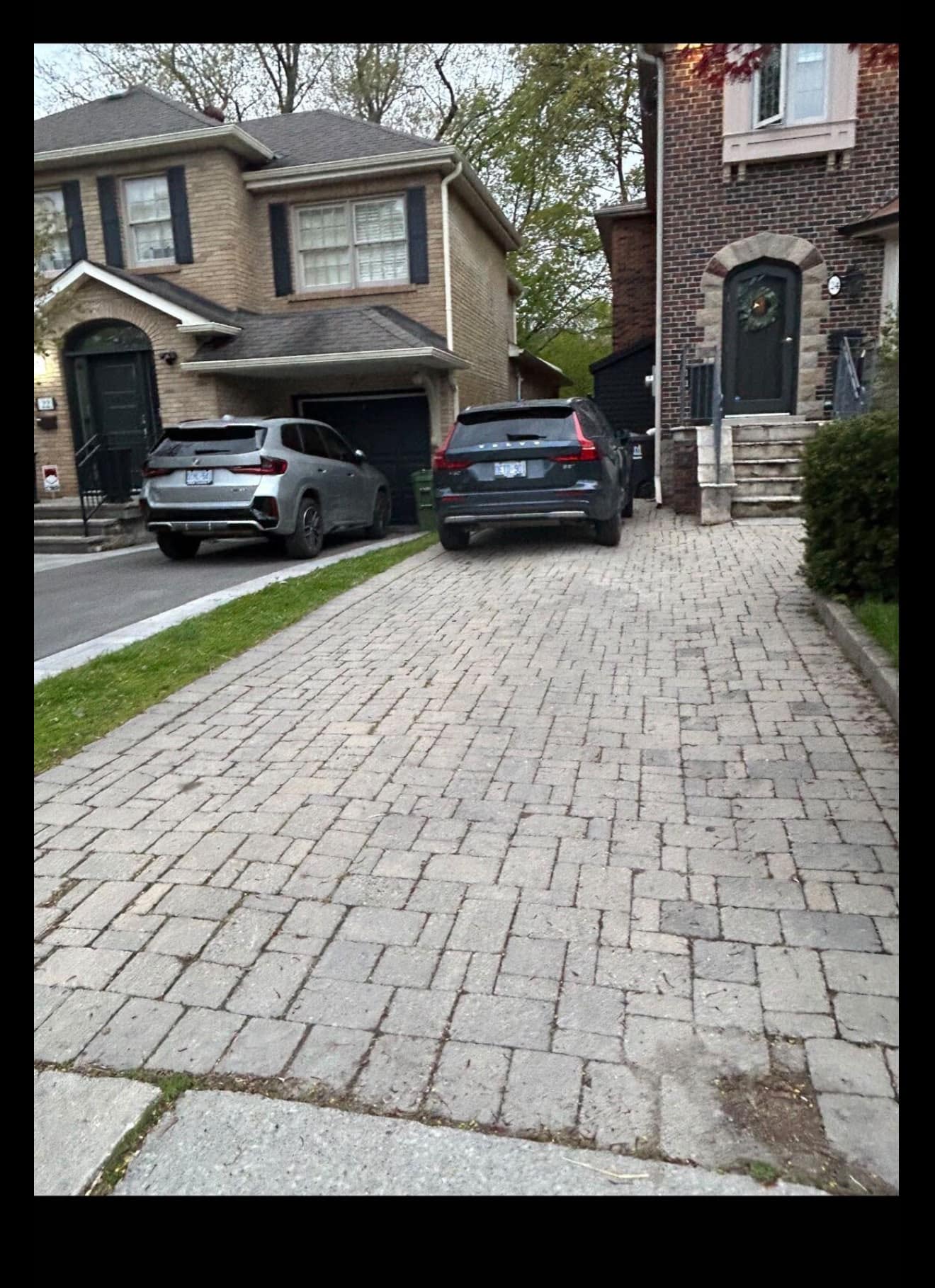
A driveway or large patio can collect considerable runoff during a storm.
Unlike soil, hard surfaces don’t absorb much water.
That means their slope matters.
If a driveway, walkway or patio directs water toward the house, foundation or neighbouring property, drainage problems can develop quickly.
When A&A installs or repairs exterior hardscape, water movement should be considered as part of the project design.


Foundation Waterproofing
Protecting the Home Below Grade
When water reaches the foundation, the next line of defence is the foundation itself.
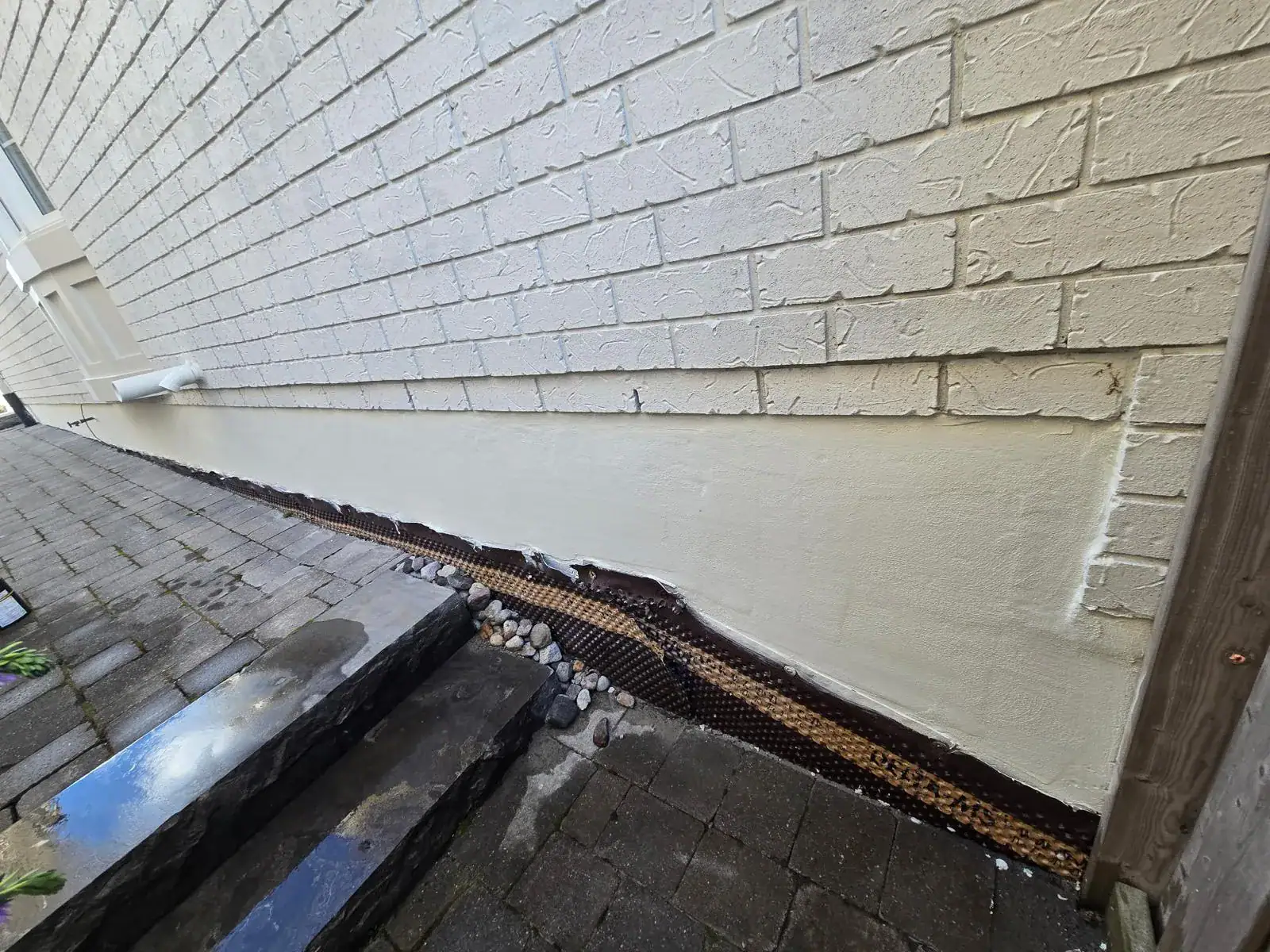
Foundation waterproofing can help protect below-grade walls from moisture penetration and hydrostatic pressure.
Depending on the condition of the property, work may involve:
Exterior foundation waterproofing
Interior waterproofing
Waterproof membranes
Foundation crack repair
Weeping tile
Drainage improvements
Parging repairs
Concrete repairs
Foundation wall repairs
But waterproofing works best when surrounding drainage problems are also addressed.
Waterproofing shouldn’t have to compensate for preventable water constantly being directed toward the foundation.
Explore Waterproofing Services
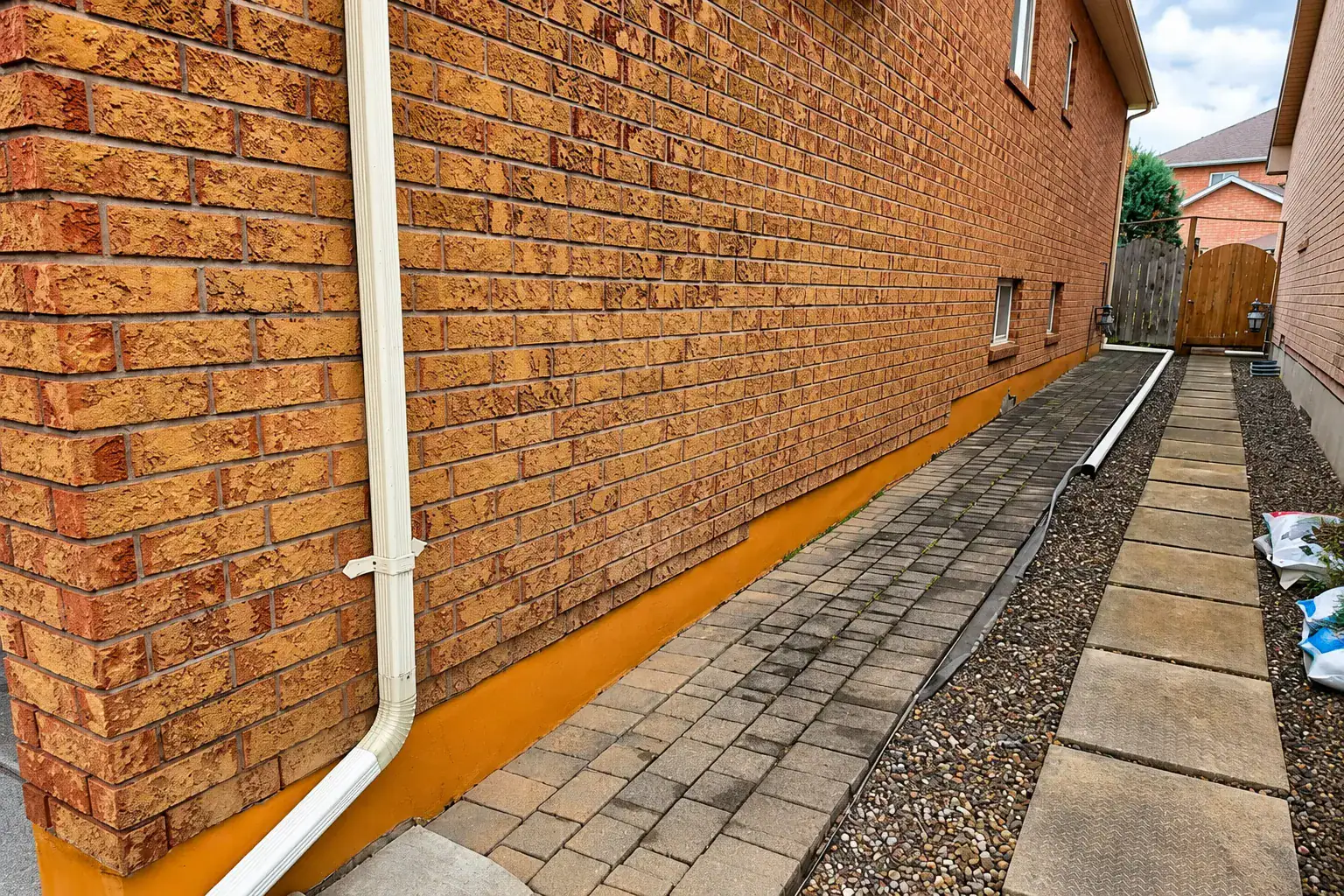
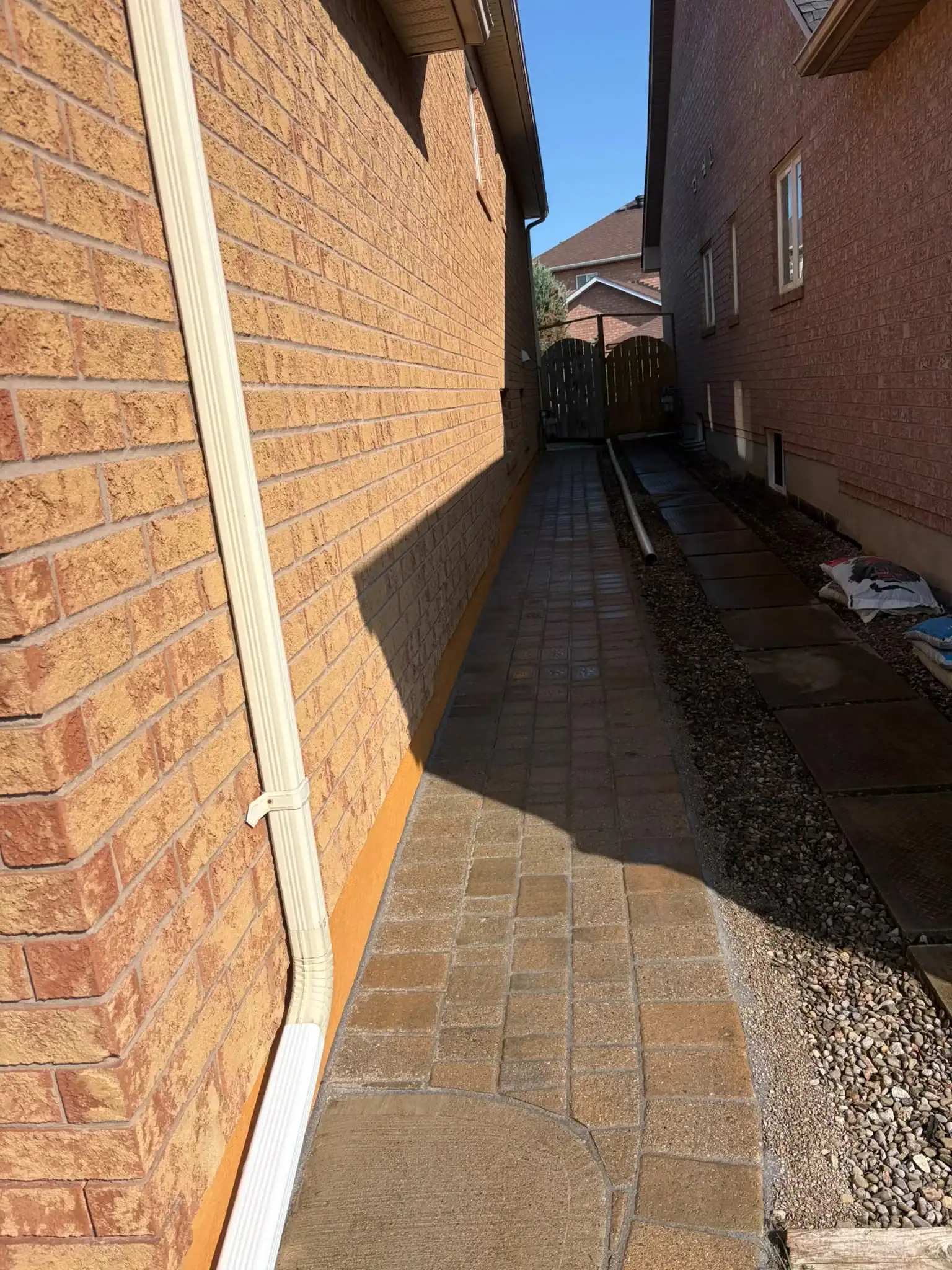
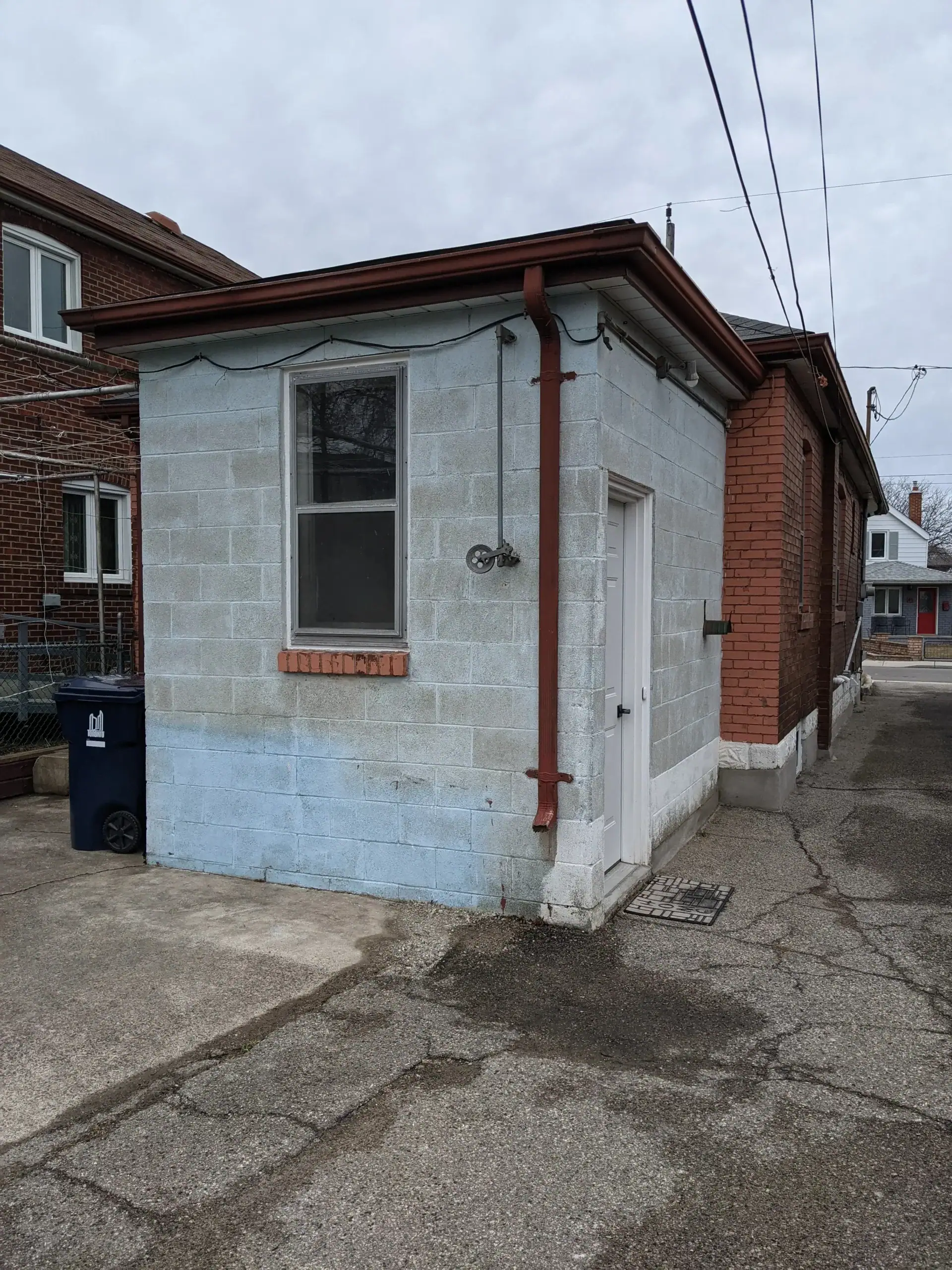
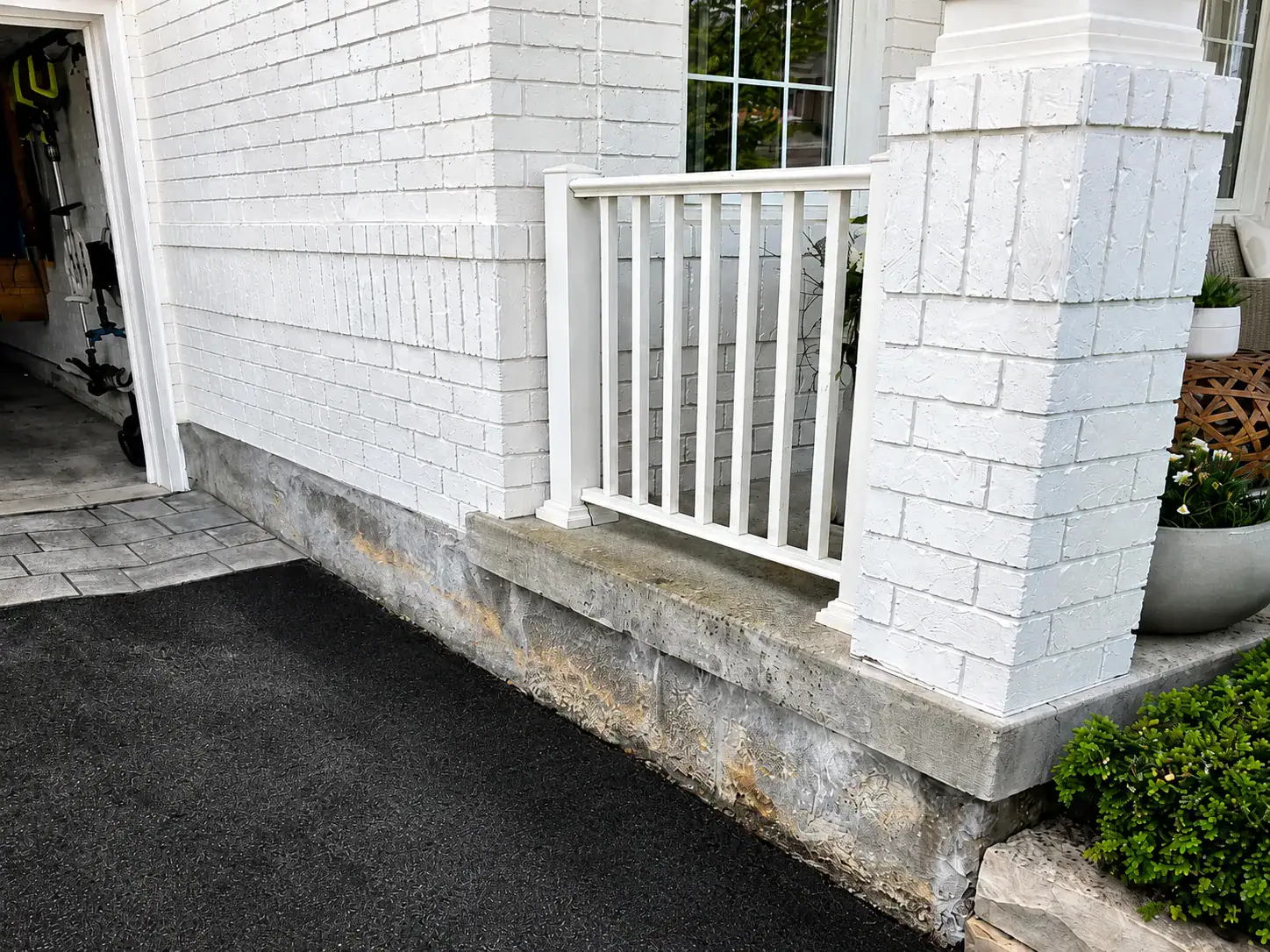
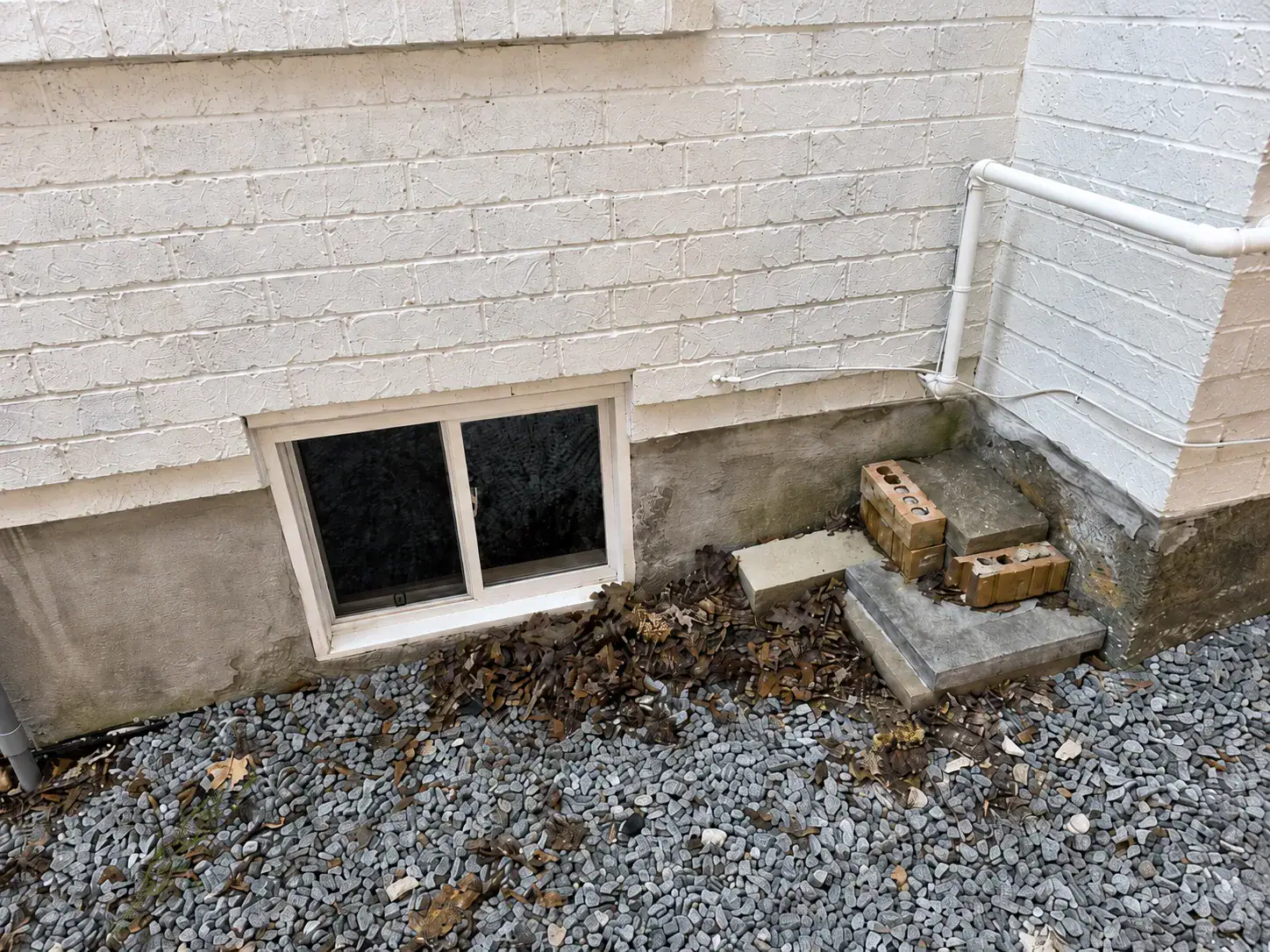
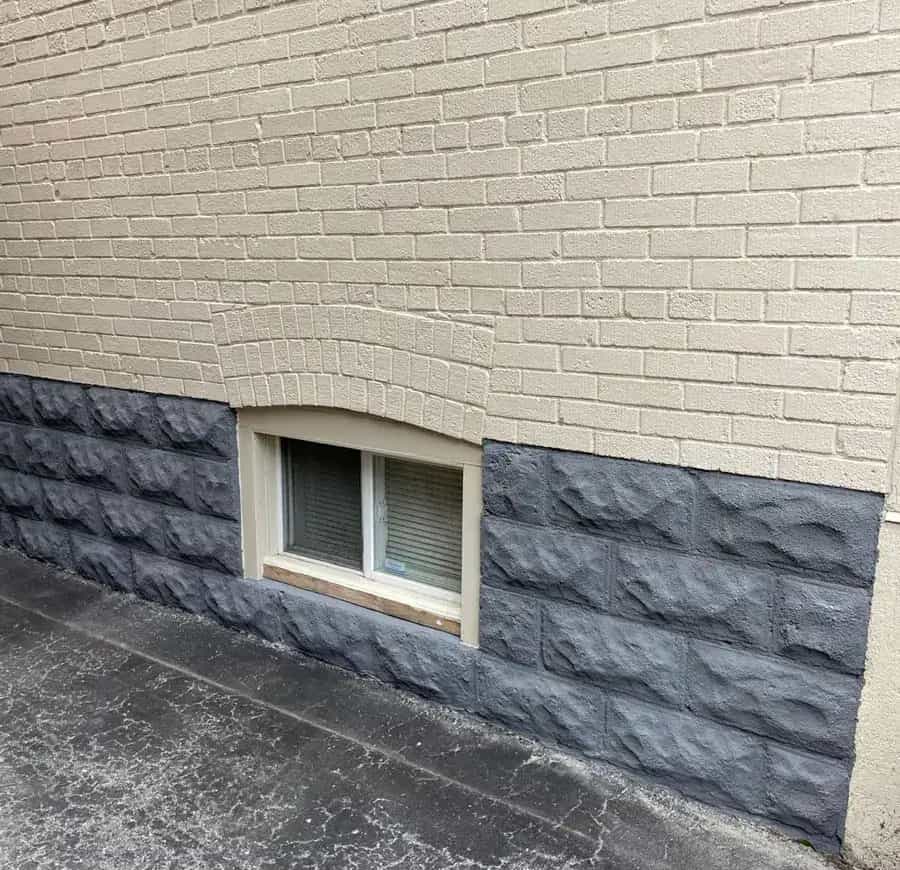
Protect Exposed Foundation Walls with SurGuard® Coating
Water management doesn’t stop below grade.
Exposed foundation walls are constantly subjected to rain, snow, salt, UV exposure and Toronto’s freeze-thaw cycles.
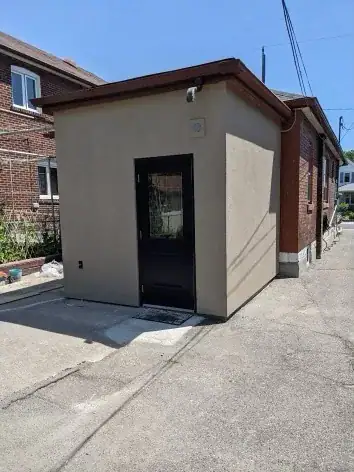
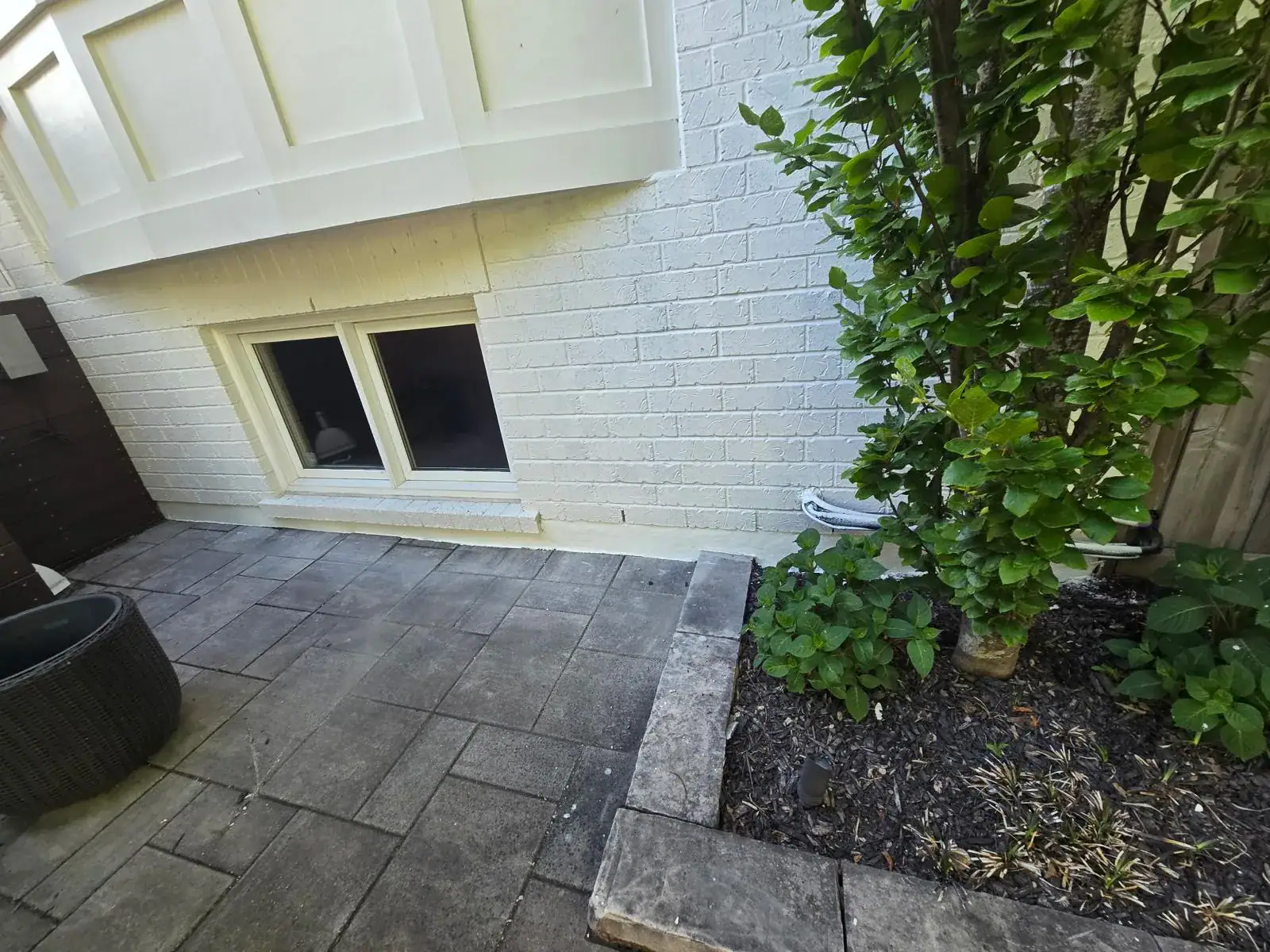
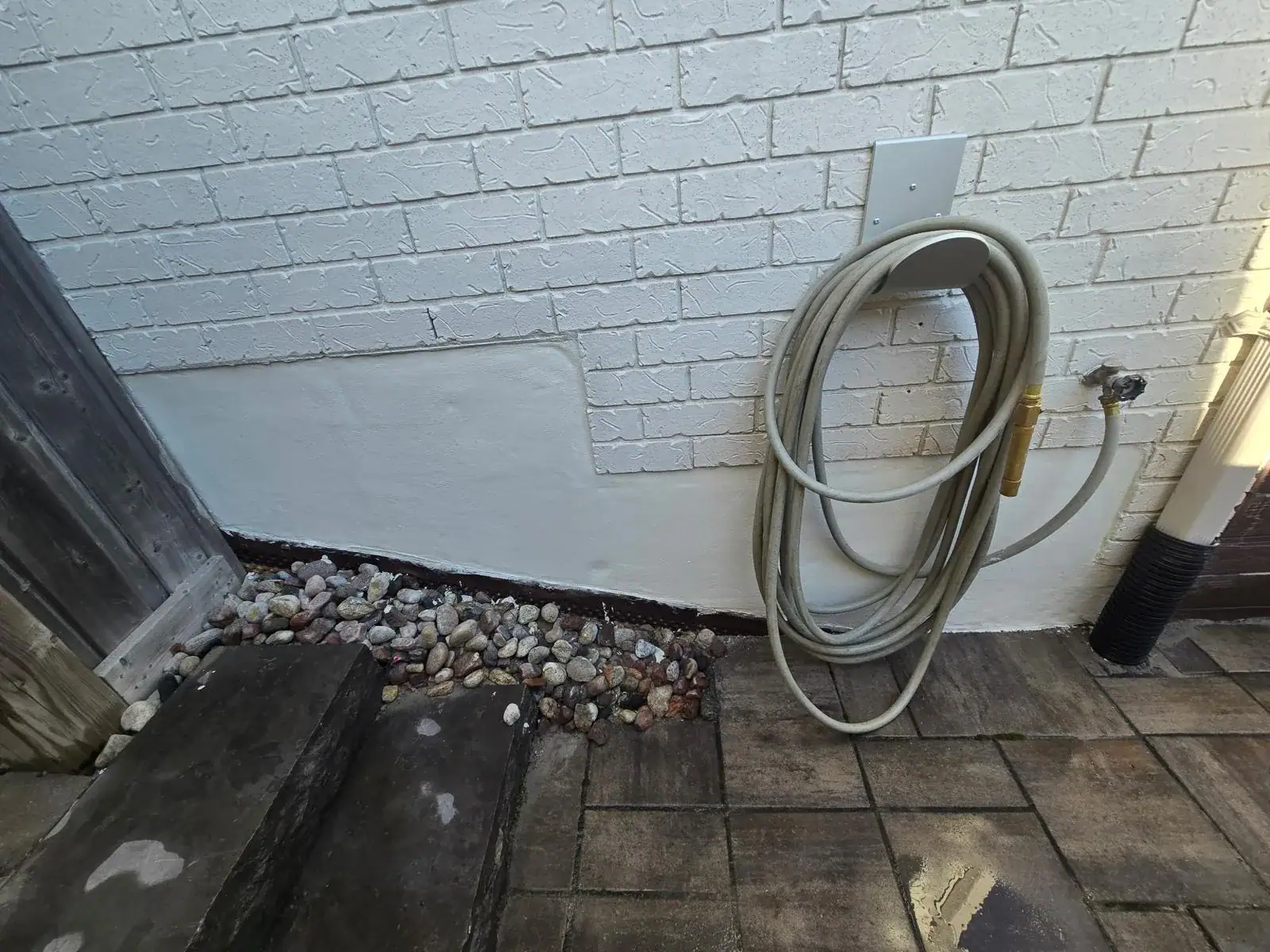
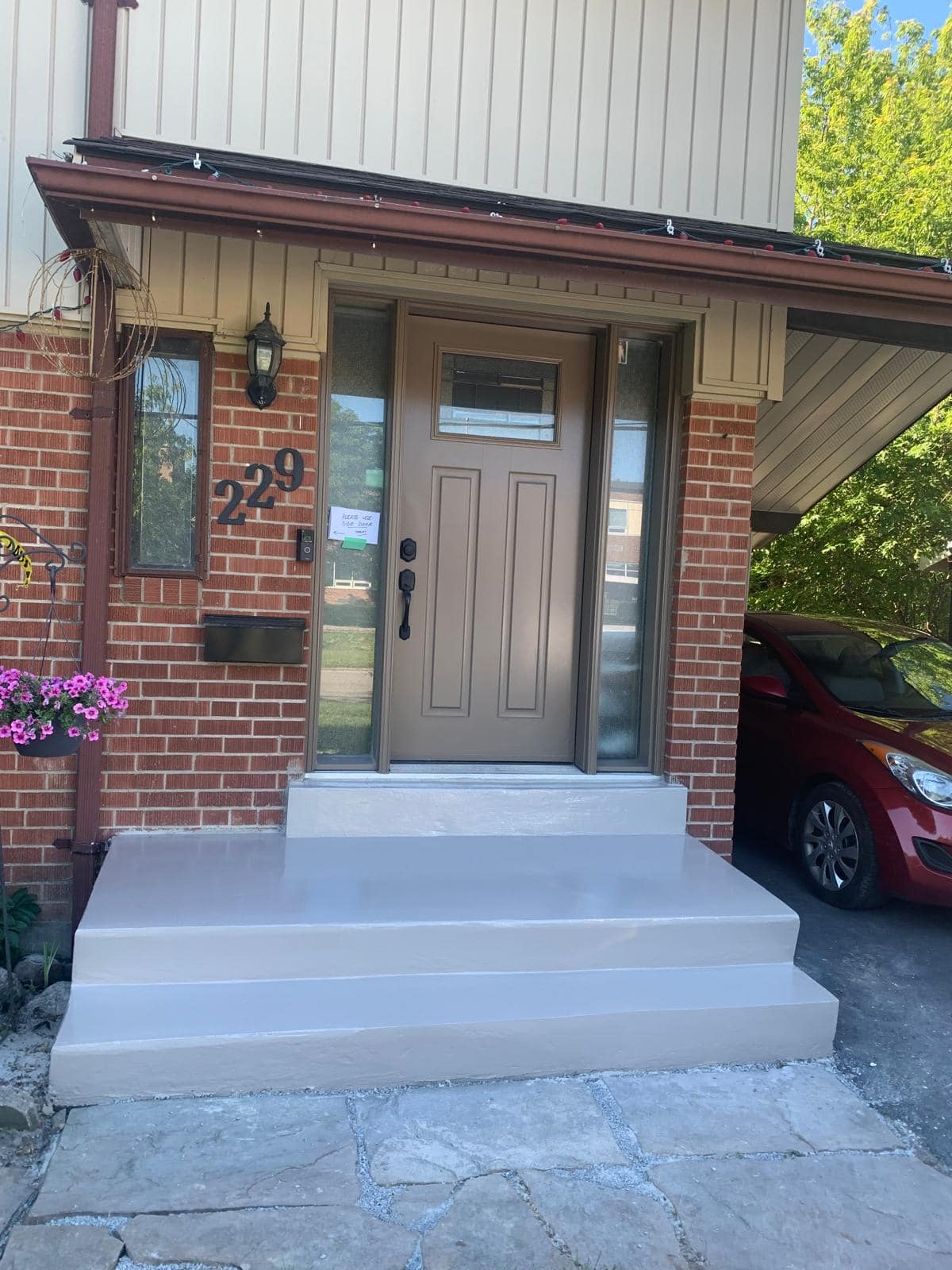
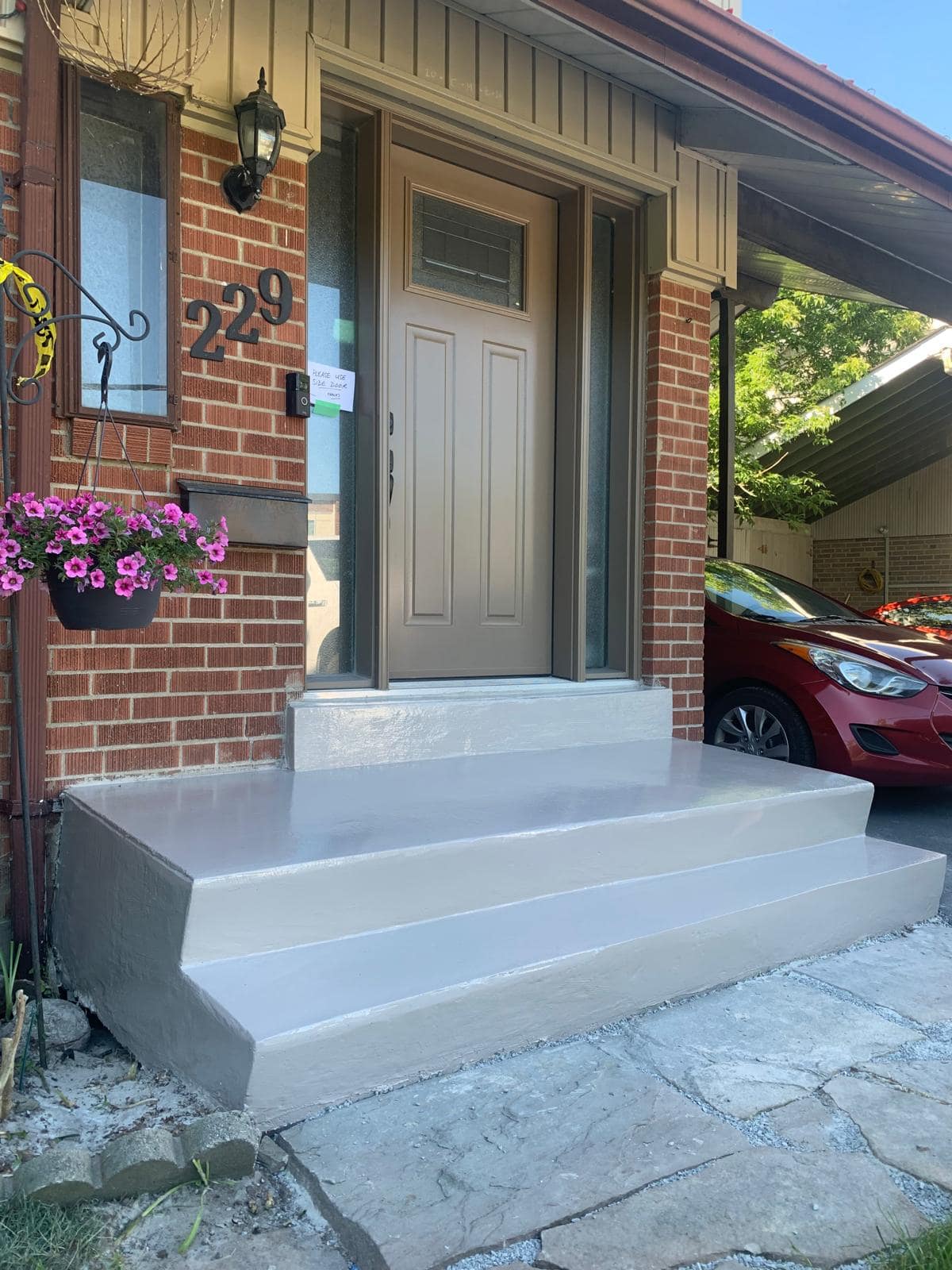
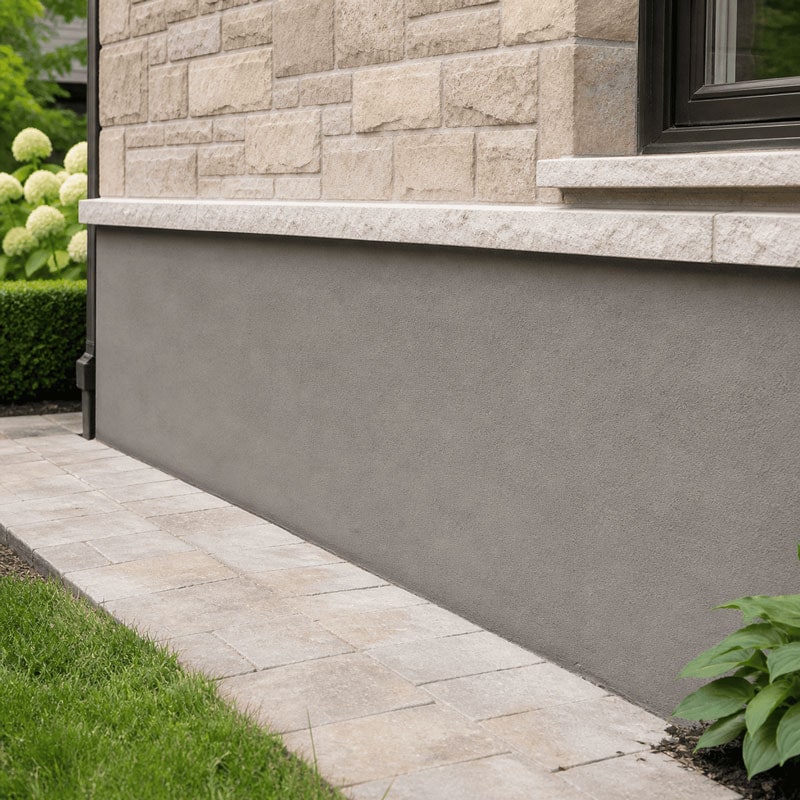
A&A can apply SurGuard® Coating to exposed concrete and foundation surfaces to create a durable, breathable protective finish while dramatically improving their appearance.
SurGuard® can help:
• Protect exposed concrete and masonry surfaces
• Reduce weather-related surface deterioration
• Refresh stained or tired-looking foundation walls
• Provide a clean, uniform architectural finish
Waterproof below. Protect above.
SurGuard® is not a substitute for foundation waterproofing — it is an additional layer of protection for the exposed portion of your foundation.
Basement Water Problems
The Water You See Inside Often Starts Outside
A wet basement is often the final symptom of an exterior water-management problem.
Water may be reaching the basement because of:
Poor grading
Foundation cracks
Failed waterproofing
Clogged or damaged drainage systems
Improper downspout discharge
Window wells
Deteriorated masonry
Failed exterior joints
Repeated water accumulation beside the foundation
A&A looks at the surrounding exterior conditions when assessing moisture problems instead of focusing only on the wet spot inside.
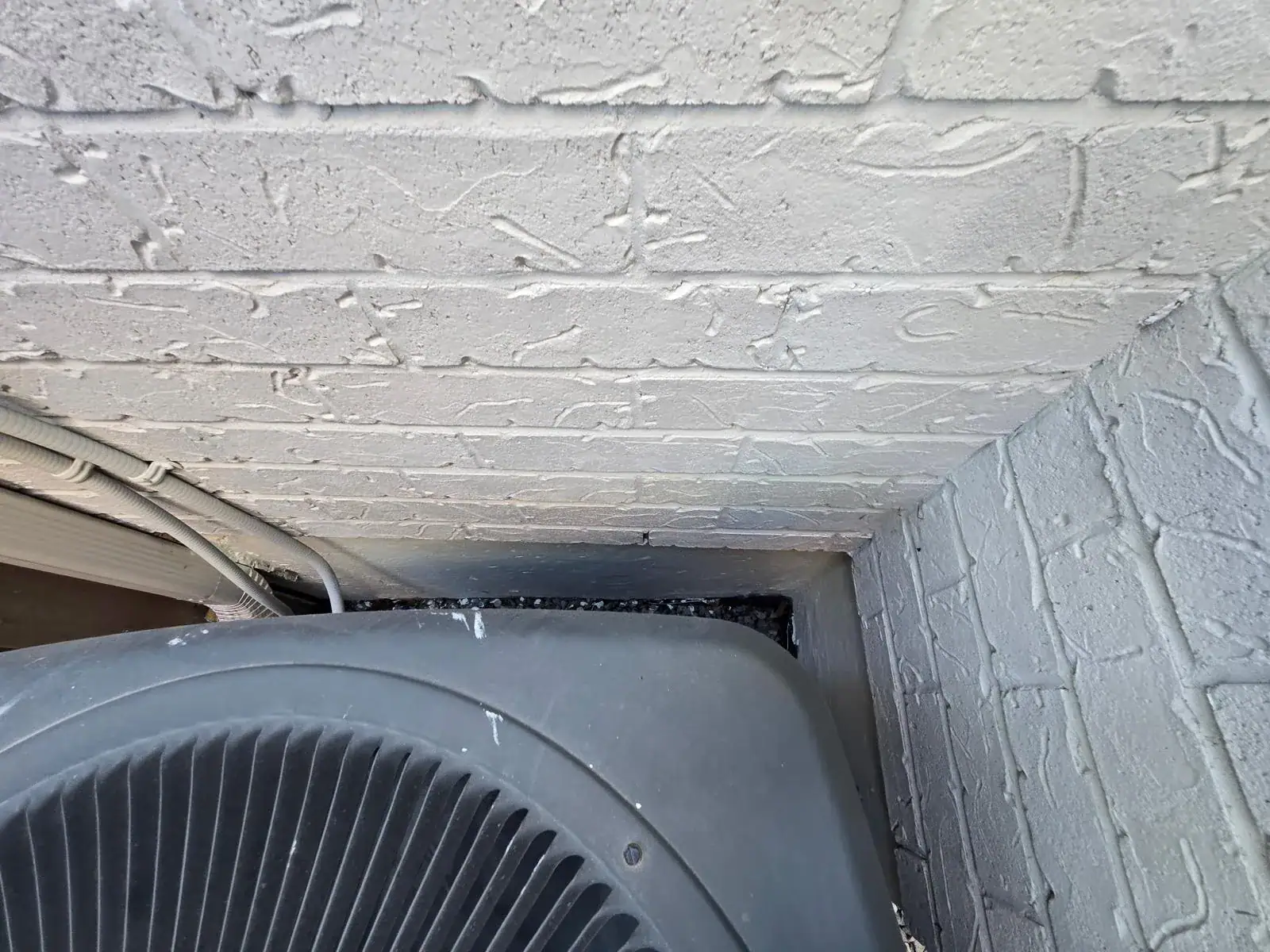
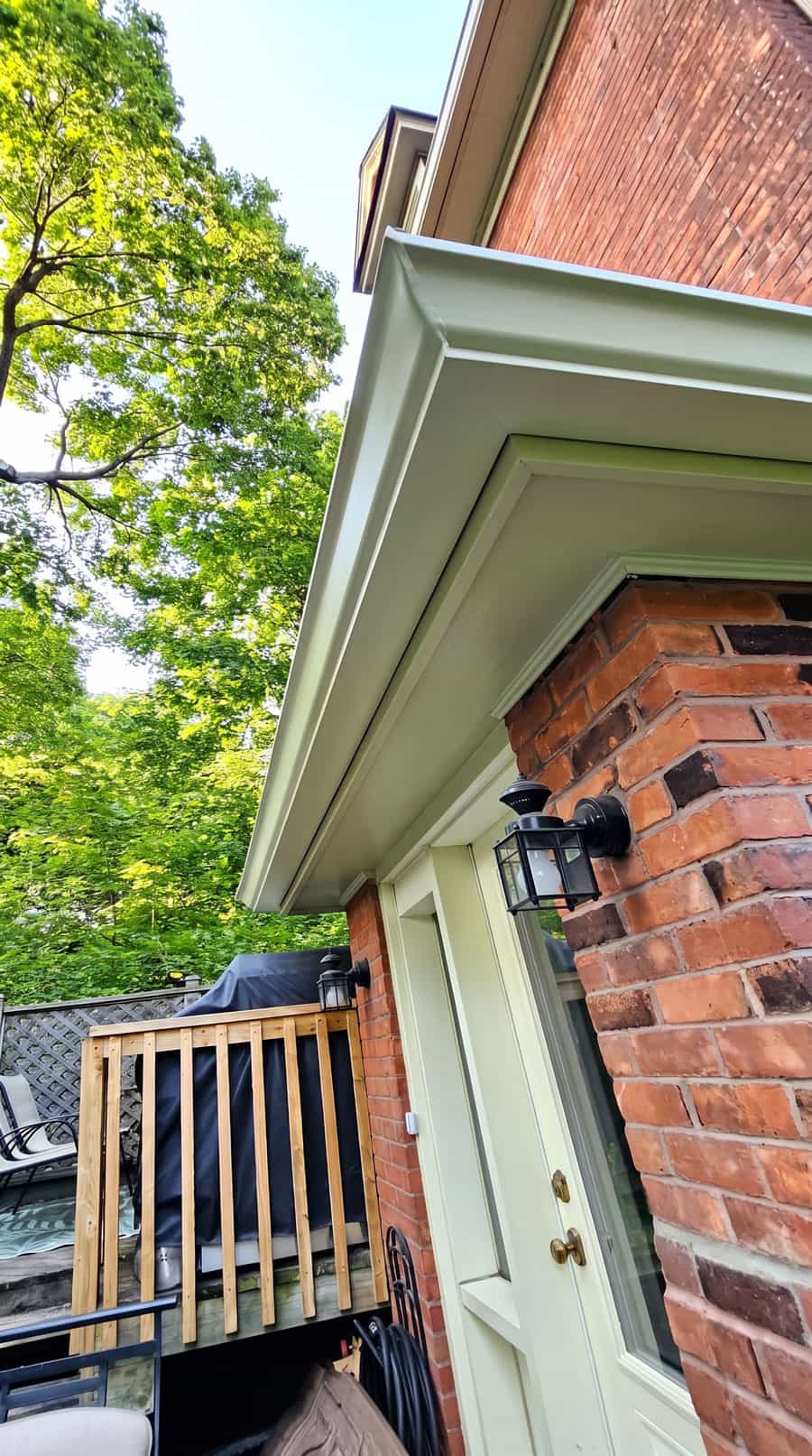
Exterior Caulking
Small Gaps Can Let In a Surprising Amount of Water
Water doesn’t always enter below grade.
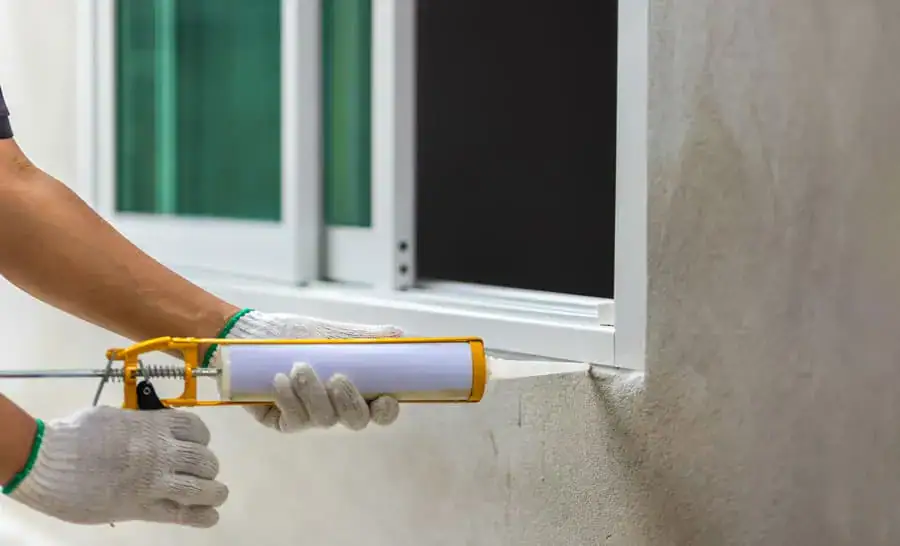
Failed exterior caulking can allow moisture into the building around:
Windows
Doors
Exterior joints
Masonry transitions
Wall penetrations
Flashing
Sills
Trim
Different building materials
Exterior caulking provides a flexible weather-resistant joint that helps accommodate normal building movement while reducing water and air infiltration.
Older caulking can crack, shrink, separate or become brittle.
When that happens, the joint may no longer keep water out.
A&A can replace deteriorated exterior caulking where it forms part of a larger exterior restoration or water-management project.
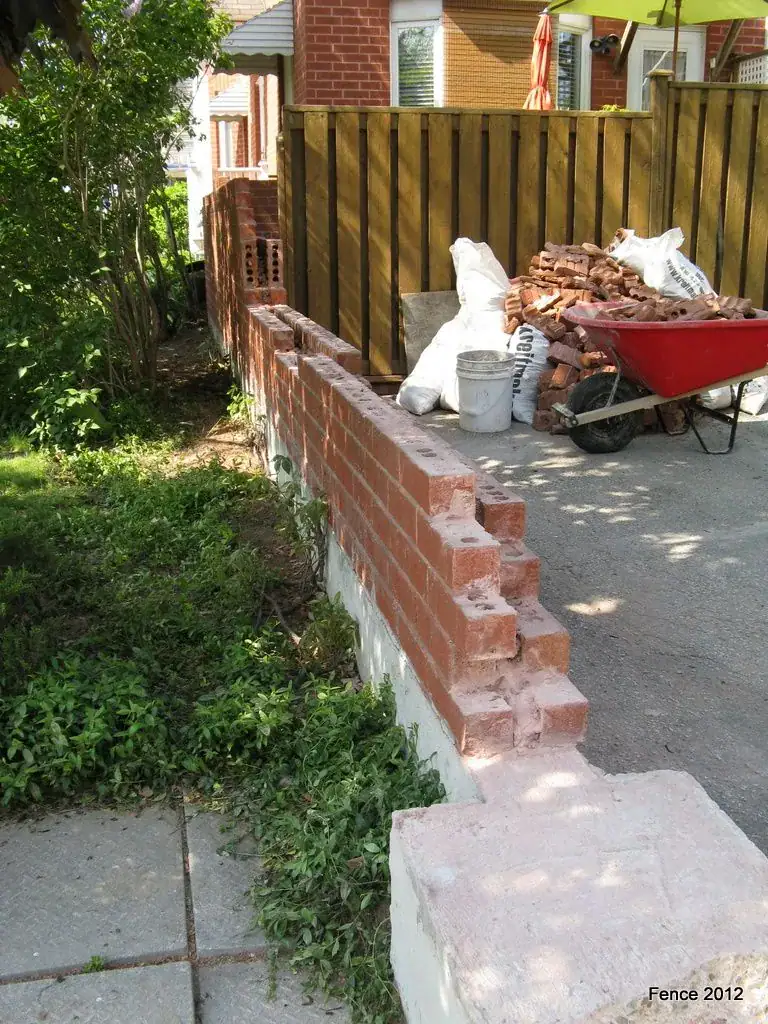
Masonry & Water
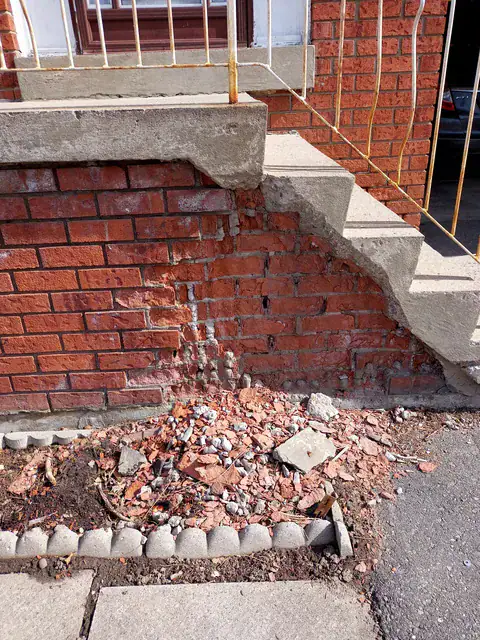
Masonry Is Durable — But Constant Saturation Causes Problems
Brick, stone and mortar are designed to withstand weather.
They are not designed to remain constantly saturated.
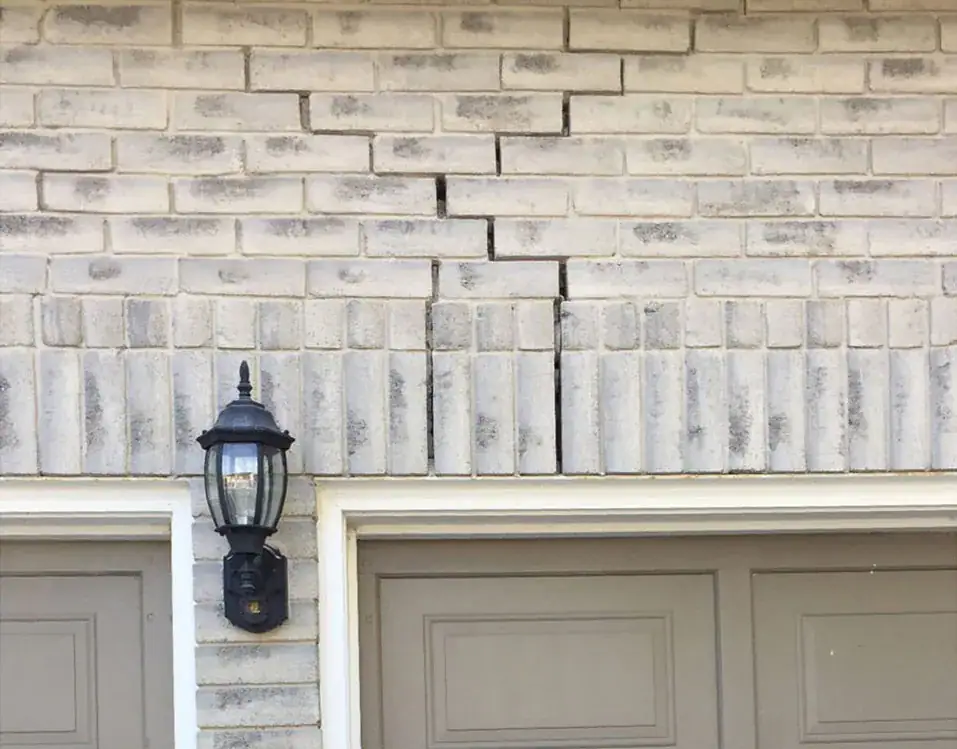
Repeated moisture exposure combined with Toronto’s freeze-thaw cycles can contribute to deterioration such as:
Spalling brick
Deteriorated mortar
Efflorescence
Cracked masonry
Damaged parging
Loose stone
Chimney deterioration
Staining
Surface erosion
Sometimes the masonry needs repair.
But it’s equally important to determine why that area keeps getting wet.
If the source is an overflowing eavestrough, poorly positioned downspout or drainage problem, repairing only the masonry may leave the underlying cause untouched.
Water Management Toronto FAQs
Residential water management involves controlling rainwater and snowmelt around a property so it does not damage the building. This can include eavestroughs, downspouts, grading, drainage, hardscape slopes, foundation waterproofing, caulking and related exterior repairs.
Water that repeatedly collects against a home can contribute to basement leaks, foundation deterioration, masonry damage, soil erosion, interlocking settlement and other exterior problems. Proper water management reduces unnecessary water exposure.
No. Waterproofing is one component of water management. Waterproofing helps prevent water from entering the building, while water management also addresses where water originates and how it is collected, redirected and drained away.
Poorly functioning eavestroughs or downspouts can discharge large amounts of roof water near the foundation. This can increase soil saturation and the amount of moisture surrounding basement walls.
Yes. Ground that slopes toward the home can direct surface water against the foundation. Correct grading can reduce how much water reaches vulnerable below-grade walls.
A&A addresses drainage as part of many exterior projects, including waterproofing, interlocking stone, grading-related work, eavestrough and downspout projects and other exterior restoration services. The appropriate solution depends on the property and source of the water problem.
Yes. Interlocking patios, walkways and driveways need appropriate grading and base preparation. Incorrect slopes can create standing water or direct runoff toward the foundation.
Proper exterior caulking can reduce water infiltration through gaps and joints around windows, doors and other exterior transitions. However, the surrounding drainage and building materials should also be evaluated if the area is exposed to excessive water.
Repeated moisture exposure can contribute to mortar deterioration, staining, efflorescence and freeze-thaw damage in masonry. The source of excessive moisture should therefore be considered when repairing water-damaged masonry.
A&A provides exterior restoration and water-management-related services throughout Toronto and selected communities in the GTA. Contact us with your location and details about the problem so we can determine whether the project is a good fit.
Some of the higher-risk areas are located around the Humber River, Don River, Black Creek, Rouge River, Highland Creek and Mimico Creek watersheds.
Flood-prone corridors can include parts of:
Rockcliffe-Smythe
Jane-Wilson / Black Creek
Don Valley communities
Scarborough near Highland Creek and the Rouge
Etobicoke near Mimico Creek
Low-lying waterfront areas
Parts of Oak Ridges and Lake Wilcox
However, homes outside mapped floodplains can still experience basement flooding from overloaded sewers, poor grading, downspout discharge and local drainage problems.
That’s why good water management matters across the entire GTA — not just beside rivers and creeks.