
Chimneys are among the most exposed masonry features on a home. Because they extend above the roofline, they regularly face rain, snow, wind, ice and repeated temperature changes.
Toronto’s freeze-thaw conditions can be particularly hard on chimney brick and mortar when moisture is already entering cracks, open joints or damaged masonry. Understanding how the main exterior chimney components work can help homeowners recognize when routine observation is enough and when professional masonry assessment makes sense.
If your chimney already has cracked brick, deteriorated mortar, crown damage, flashing problems or recurring water entry, A&A Masonry’s professional chimney repair services cover assessment, targeted masonry repairs and rebuilding options for Toronto homes.
Why Chimneys Deteriorate
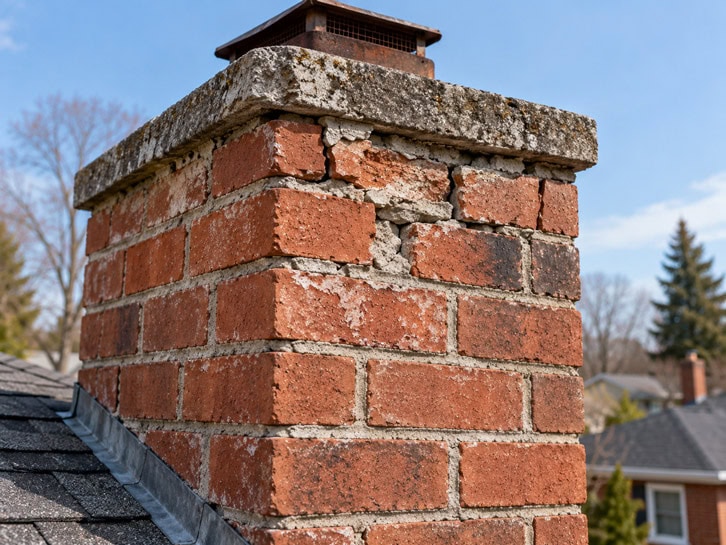
Moisture is one of the most important contributors to chimney deterioration.
Water can enter cracks, deteriorated mortar joints, damaged crowns and other vulnerable areas. When saturated masonry repeatedly freezes and thaws, existing cracks can widen and brick or mortar deterioration may become more pronounced.
Because a chimney is exposed above the roofline, several conditions can contribute to deterioration at the same time:
- Wind-driven rain and snow
- Repeated freeze-thaw exposure
- Cracked or missing mortar
- Spalling or damaged brick
- Crown deterioration
- Missing or damaged caps
- Flashing problems
- Previous repairs that have begun to fail
- General age and weather exposure
Birds and other animals can also enter uncapped chimneys and may introduce nesting material or other obstructions. A properly fitted chimney cap can help reduce that risk.
Brick, Stone and Mortar Can All Be Affected by Moisture
Brick, stone and mortar can all be affected by moisture depending on their condition, porosity and exposure.
Cracked masonry, deteriorated joints and damaged top surfaces can create additional paths for water entry. Once moisture is present, repeated freezing and thawing can contribute to spalling, cracking and mortar deterioration.
The correct repair depends on which part of the chimney is actually failing. A cracked brick does not require the same repair as open mortar joints, a failed crown or leaking flashing.

What Chimney Flashing Does
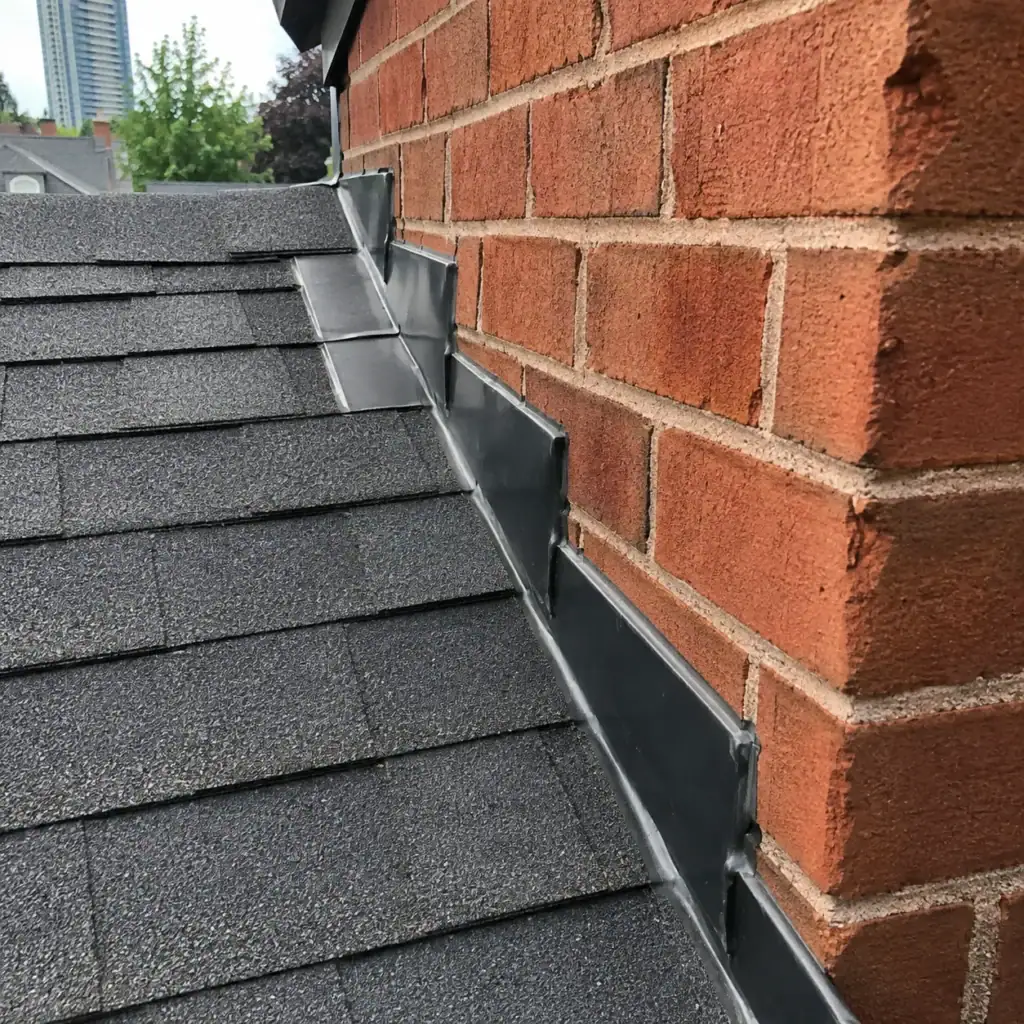
Chimney flashing is installed where the chimney meets the roof to help direct water away from the roof-to-chimney junction.
Flashing problems can develop because of:
- Poor installation
- Loose or displaced counter-flashing
- Deteriorated mortar around embedded flashing
- Failed sealant where sealant is part of the detail
- Roof movement
- Corrosion
- General age and weather exposure
Recurring leakage around a chimney should be assessed rather than automatically blamed on the brickwork. Water may be entering through the flashing, crown, cap, open mortar joints or another nearby roofline detail.
If the leak appears concentrated where the chimney meets the roof, A&A Masonry also has a guide to chimney flashing problems and repairs.
Wood-Burning Chimneys and Flue Maintenance
If you use a wood-burning fireplace, the inside of the chimney also requires appropriate maintenance.
Creosote, soot, liner condition and flue obstructions are different issues from exterior masonry deterioration. Inspection and cleaning of those components should be handled by an appropriately qualified chimney-service professional.
A&A Masonry’s chimney work is focused on exterior masonry and related components such as:
- Brick and mortar deterioration
- Tuckpointing and repointing
- Chimney crowns
- Chimney caps
- Flashing
- Exterior water-entry problems
- Brick replacement
- Partial or full chimney rebuilding
This distinction helps homeowners avoid assuming that masonry repair and chimney sweeping are the same service.
What a Chimney Cap Does
A properly fitted chimney cap can help reduce direct rain, snow, debris and animal entry through the flue opening.
However, a cap does not solve every chimney leak.
Water can also enter through:
- Cracked chimney crowns
- Failed flashing
- Open mortar joints
- Spalling or cracked brick
- Gaps around the roofline
- Other deteriorated masonry details
If water continues to enter after a cap has been installed, the rest of the chimney should be assessed rather than assuming the cap itself is the only problem.
Chimney Crown vs Chimney Cap
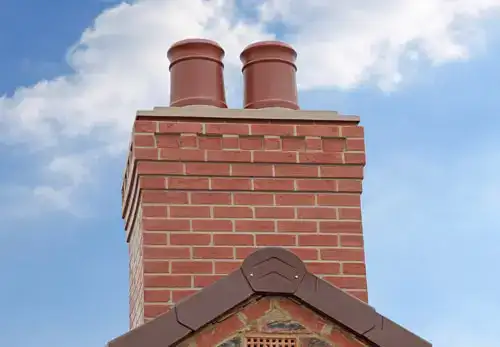
The chimney crown and chimney cap are two different components.
Chimney Crown
The crown is the masonry or concrete surface at the top of the chimney. Its job is to help shed water away from the flue openings and the masonry below.
Crowns are commonly formed from concrete or another suitable masonry material. If the crown cracks or begins breaking apart, moisture can enter the masonry beneath it.
Chimney Cap
The cap is a separate cover installed over a flue or chimney opening.
It helps limit rain, snow, debris and animal entry through the opening.
A chimney may therefore have both:
- a crown that protects the top masonry surface, and
- one or more caps protecting the flue openings.
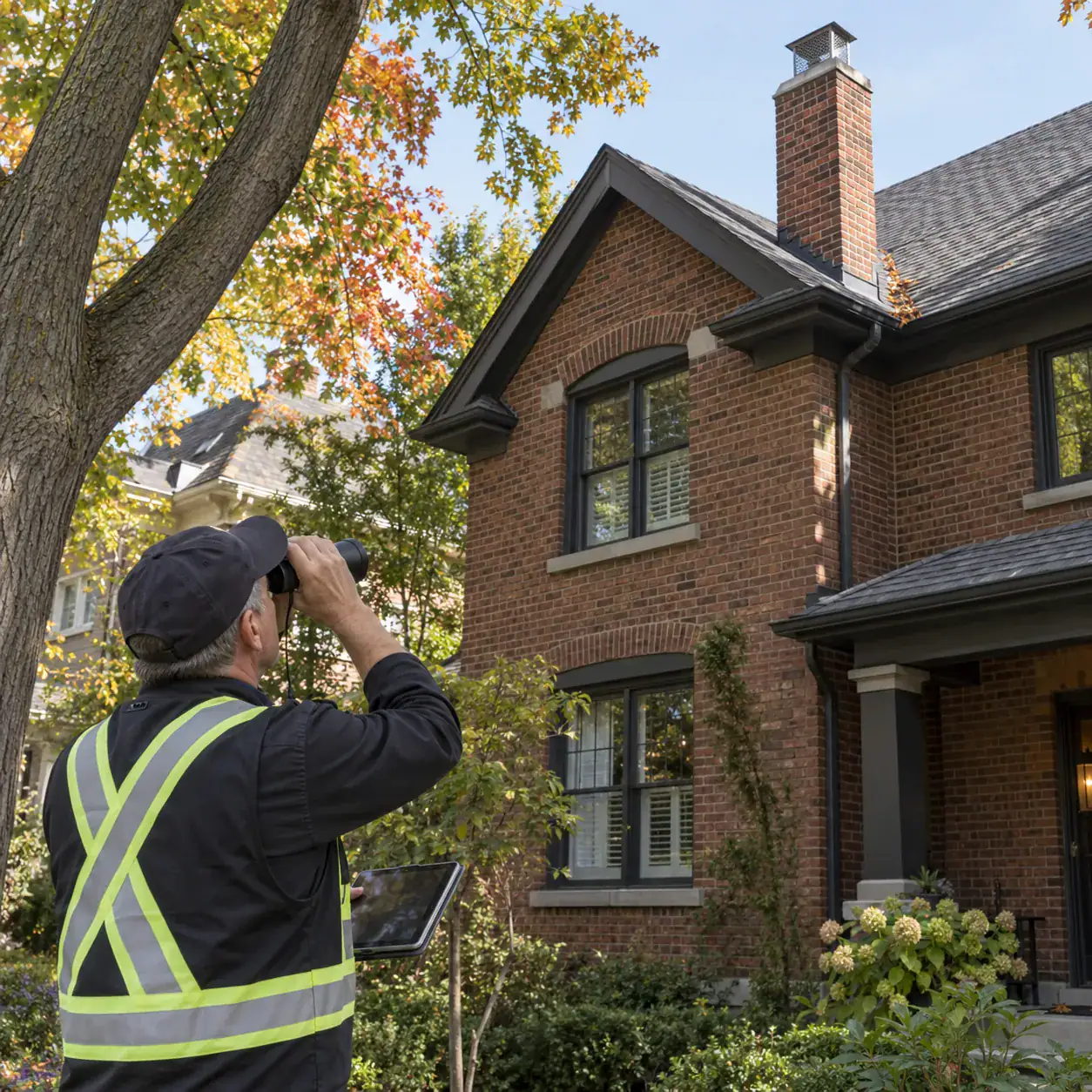
What Homeowners Can Check From the Ground
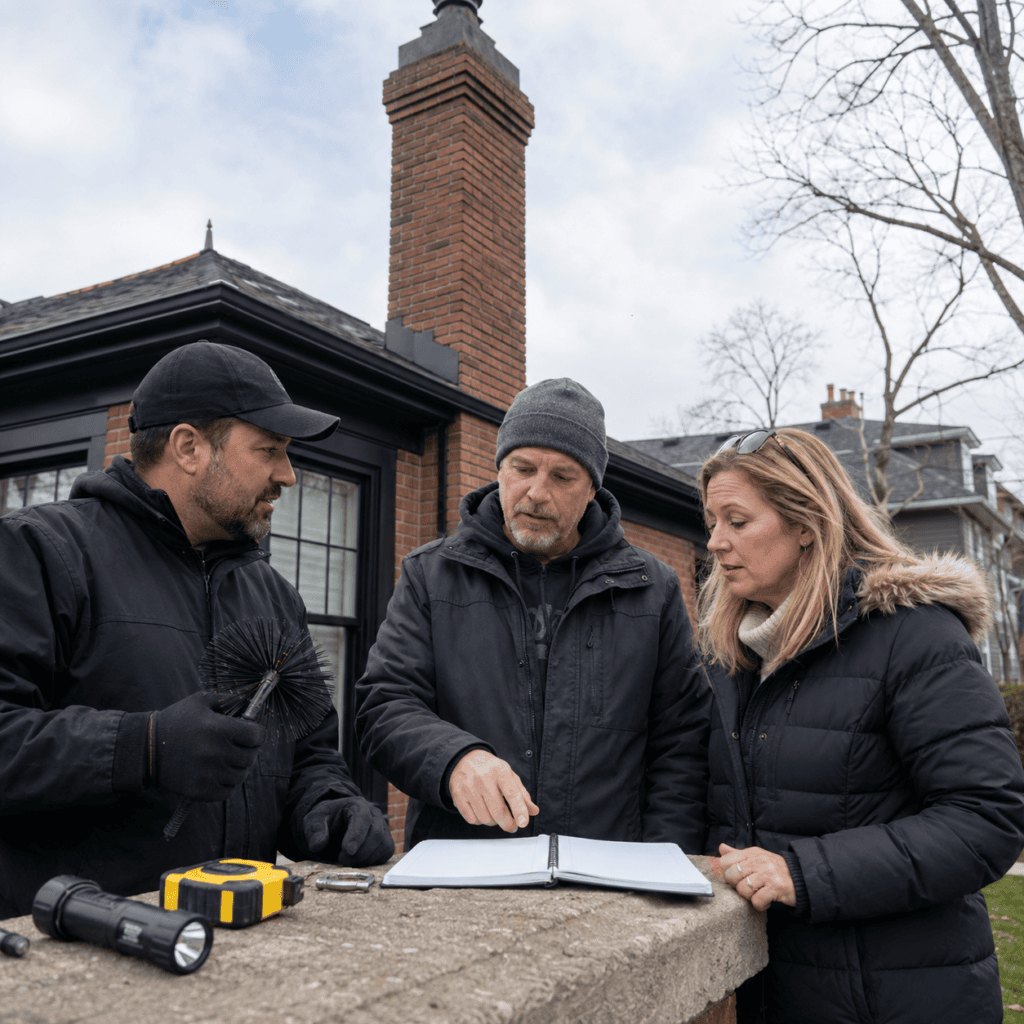
You do not need to climb onto the roof to notice many exterior chimney problems.
From a safe location on the ground, look for visible changes such as:
- Cracked or missing bricks
- Brick faces that are flaking or breaking apart
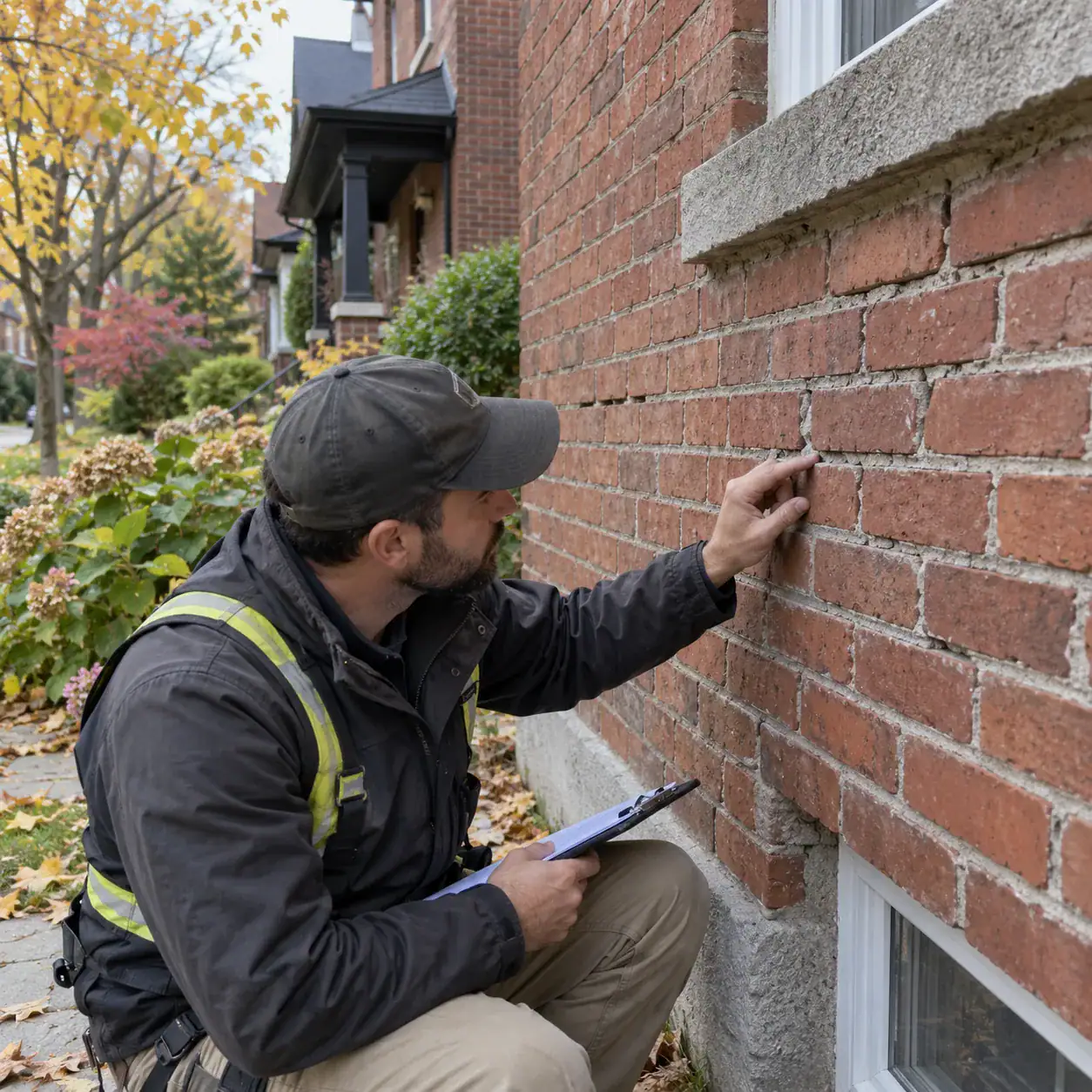
- Crumbling or missing mortar
- White staining on the masonry
- A visibly cracked chimney crown
- Missing or damaged chimney caps
- Loose or distorted flashing that can be seen from below
- Water staining around the chimney or fireplace area
- A chimney that appears to lean or separate from the home
Early assessment may allow some problems to be addressed while the deterioration is still localized.
Avoid climbing onto the roof solely to inspect a chimney if it cannot be viewed safely.
When Chimney Masonry Repair May Be Needed
Professional chimney masonry assessment may be appropriate when you notice:
- Cracked or crumbling brick
- Spalling masonry
- Missing, cracked or deeply deteriorated mortar
- Crown cracks or deterioration
- Missing or damaged caps
- Failed or loose flashing
- Recurring water entry
- Loose masonry
- Visible movement, leaning or separation
Not every chimney problem requires rebuilding.
Localized mortar deterioration may be repairable with tuckpointing or repointing. Individual damaged bricks may be replaceable. Crown, flashing or cap problems may also be addressed independently when the rest of the chimney remains stable.
More extensive rebuilding may be appropriate when large sections are loose, deteriorated or visibly unstable.
For a more detailed explanation of visible deterioration, see A&A Masonry’s guide to common chimney damage and how to spot it early.
Masonry Problems vs Flue and Fireplace Problems
It is useful to separate exterior masonry warning signs from problems involving the inside of the chimney.
Exterior Masonry Concerns
These may fall within chimney masonry repair:
- Spalling brick
- Open or failed mortar joints
- Crown damage
- Exterior leaks
- Flashing issues
- Missing caps
- Leaning or visibly unstable masonry
Flue or Fireplace-Service Concerns
These may require a different qualified professional:
- Heavy creosote buildup
- Smoke-drafting problems
- Internal liner concerns
- Persistent combustion odours
- Suspected flue obstructions
A masonry contractor and chimney-service professional may sometimes identify related problems, but they perform different types of work.
How Water Can Reach a Chimney
Chimney leaks are sometimes difficult to diagnose because several exterior components are located close together.
Water may enter through:
- A cracked crown
- Failed or missing mortar
- Damaged brick
- Failed flashing
- A missing or damaged cap
- Roofline gaps
- Other deteriorated exterior details
That is why repairing only the first visible crack does not always solve a leak.
The source should be identified before the repair method is selected.
Routine Chimney Maintenance for Toronto Homes
Homeowners can help monitor exterior chimney condition by making periodic visual checks, especially after winter or severe weather.
Useful maintenance habits include:
- Looking for new cracks or spalling
- Watching for mortar loss
- Checking whether caps appear missing or displaced
- Noting water staining around the fireplace or chimney
- Watching for changes in the chimney’s alignment
- Having recurring leak problems assessed rather than repeatedly sealed at the surface
Toronto’s repeated wetting, freezing and thawing makes moisture management particularly important for exposed masonry.
Routine observation does not guarantee that every problem will be caught early, but it can make changes easier to notice.
When a Repair May No Longer Be Enough
A damaged chimney does not automatically need to be rebuilt.
Targeted repairs may make sense when:
- Mortar damage is localized
- Only a small number of bricks are deteriorated
- A leak is associated with a specific crown, cap or flashing issue
- The overall chimney remains stable
A broader rebuild may need to be considered when:
- Large sections of brick are loose or crumbling
- Mortar failure is widespread
- The chimney is leaning
- Masonry is separating
- Repeated repairs have failed
- Water damage is widespread
- The chimney no longer appears stable
The decision should be based on the chimney’s actual condition rather than age alone.
Final Thoughts
Exterior chimney maintenance is largely about recognizing where moisture can enter and understanding that the crown, cap, flashing, brick and mortar perform different jobs.
A missing cap does not automatically mean the crown has failed. A roofline leak does not automatically mean the brick needs replacing. Cracked mortar does not automatically mean the chimney needs rebuilding.
The appropriate repair depends on identifying which component is deteriorating and whether the surrounding masonry remains stable enough for targeted work.
Concerned About Chimney Damage or Water Entry?
Cracked brick, deteriorated mortar, crown damage, failed flashing and recurring leaks can have different causes and may require different repairs.
A&A Masonry can assess the visible chimney masonry and help determine whether tuckpointing, brick replacement, crown or flashing repair, leak repair or rebuilding is appropriate.