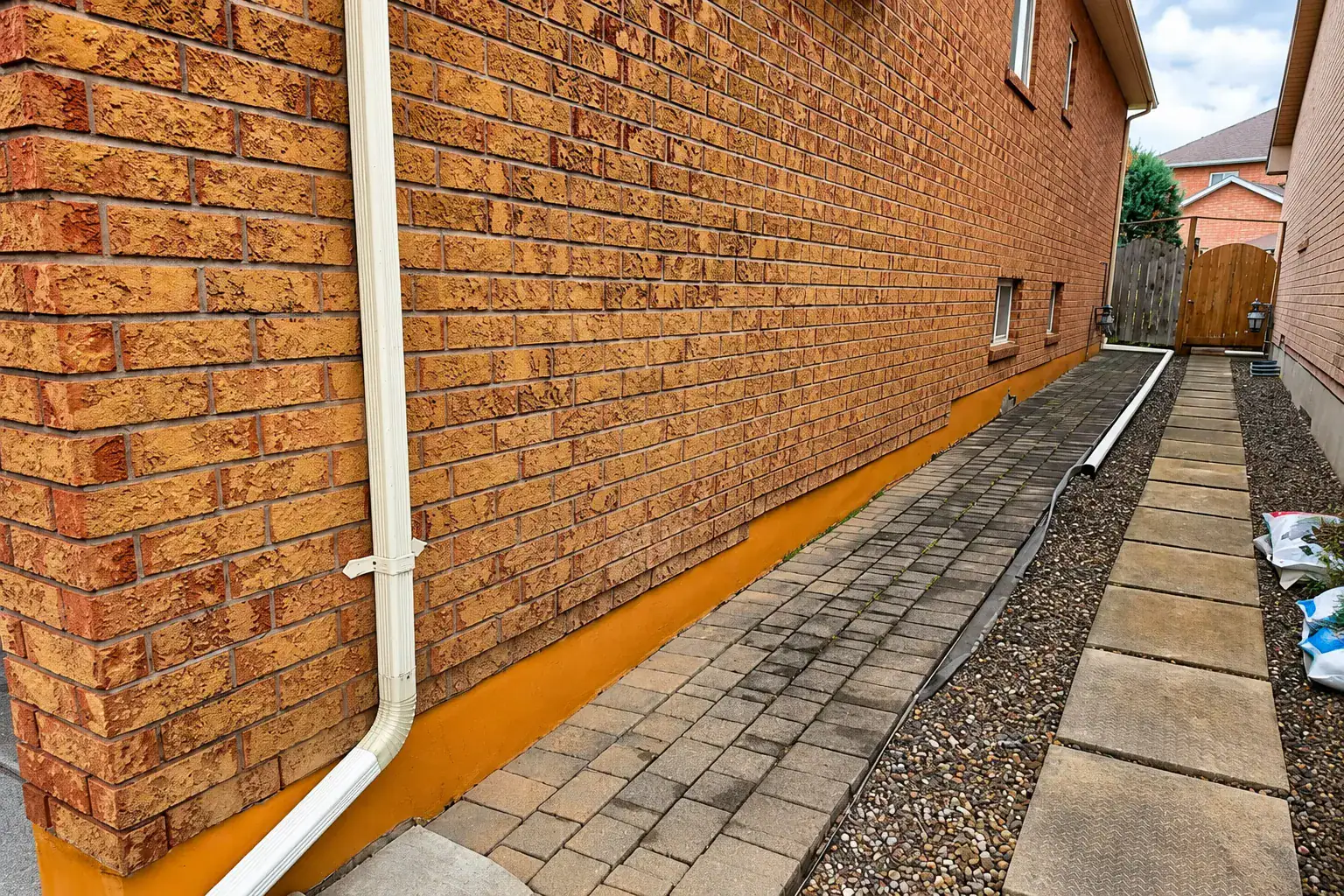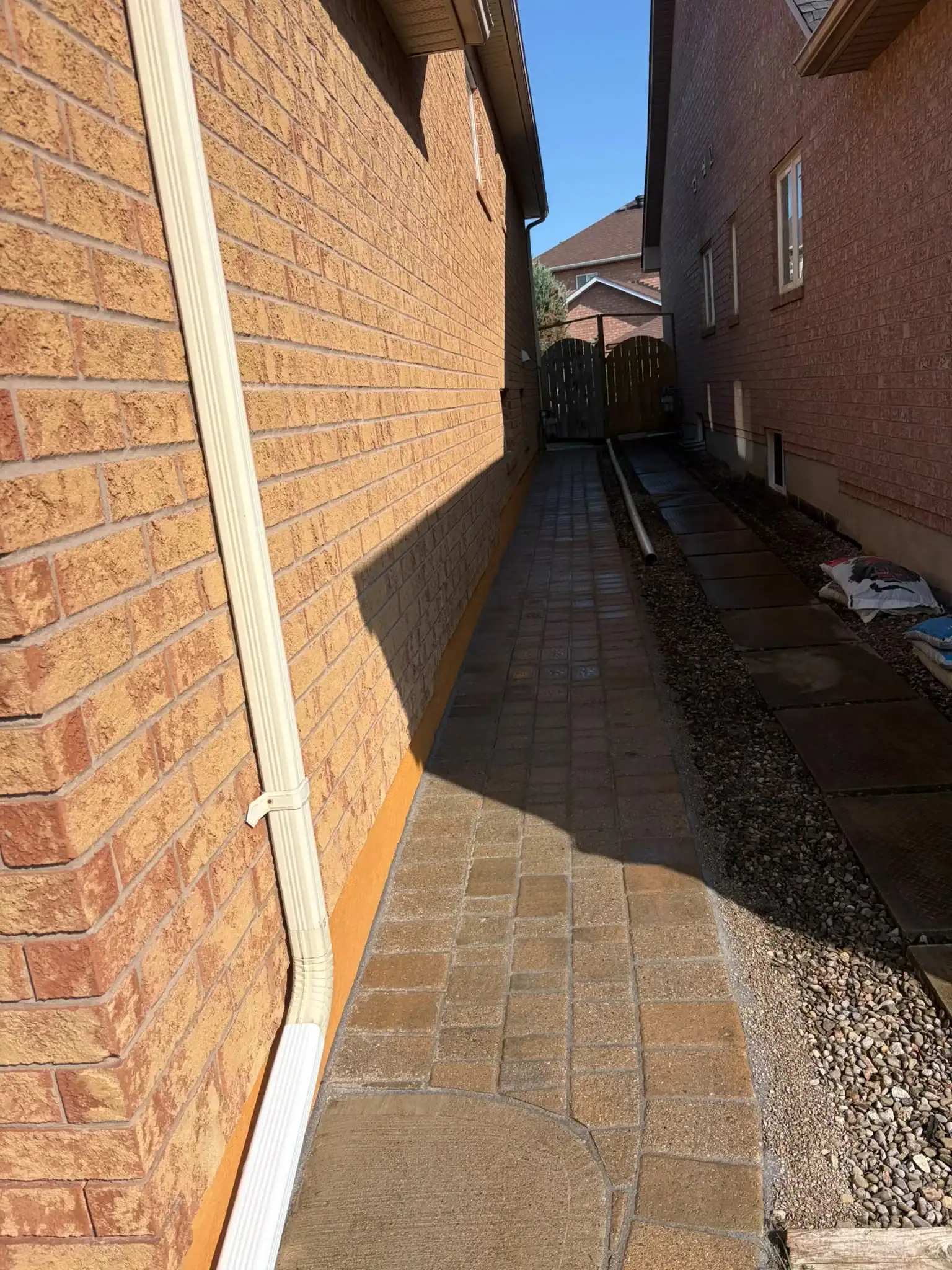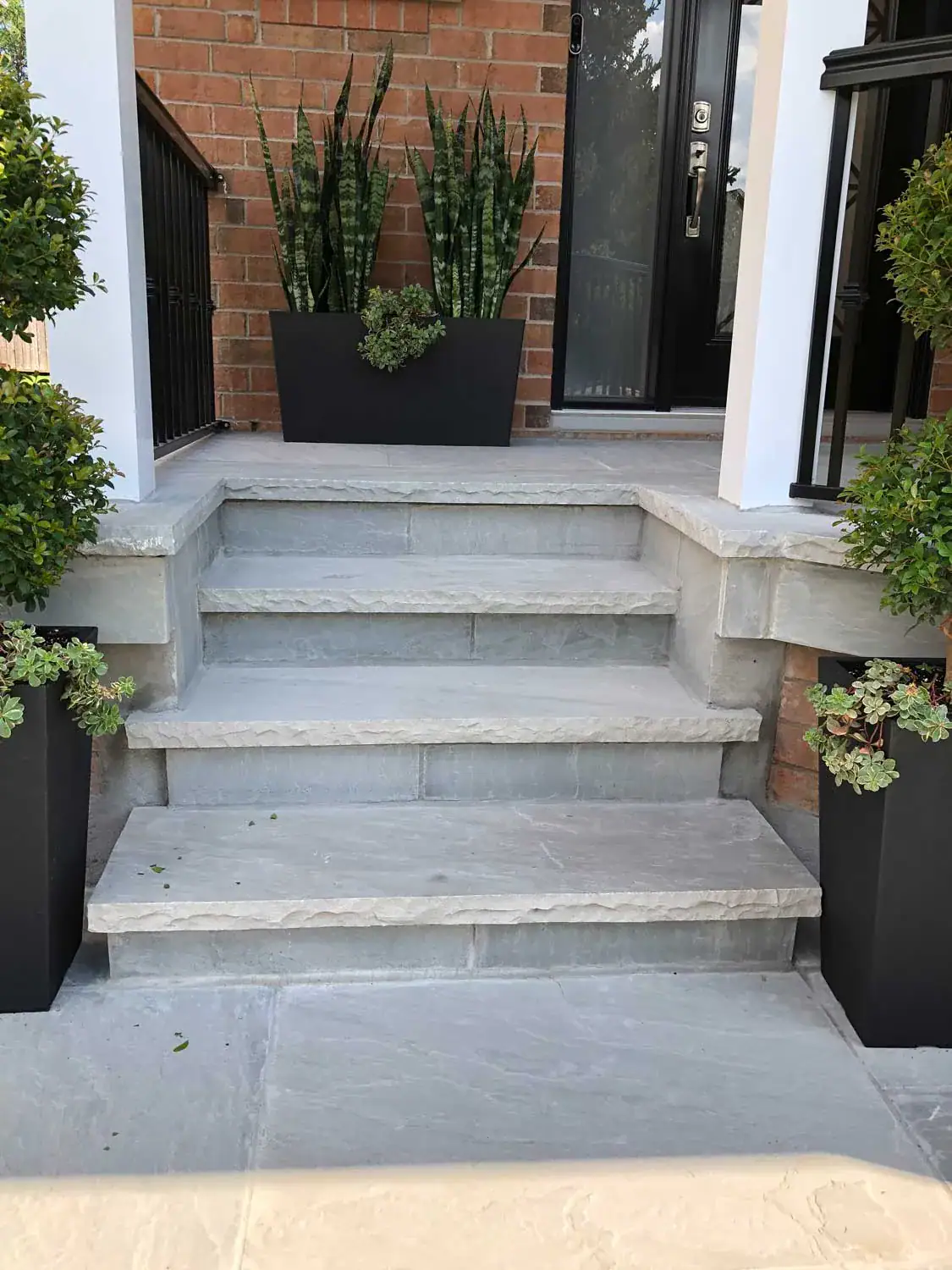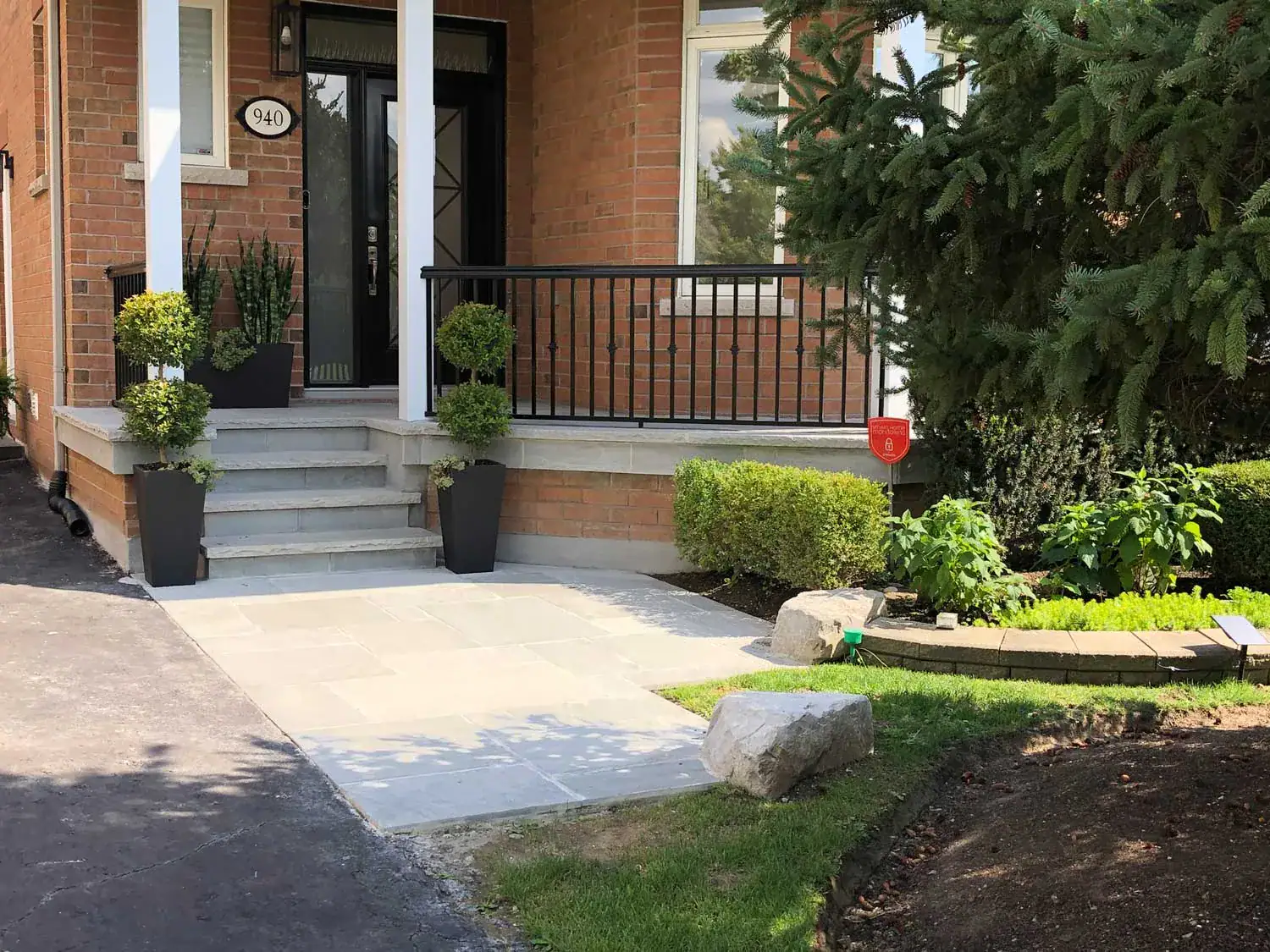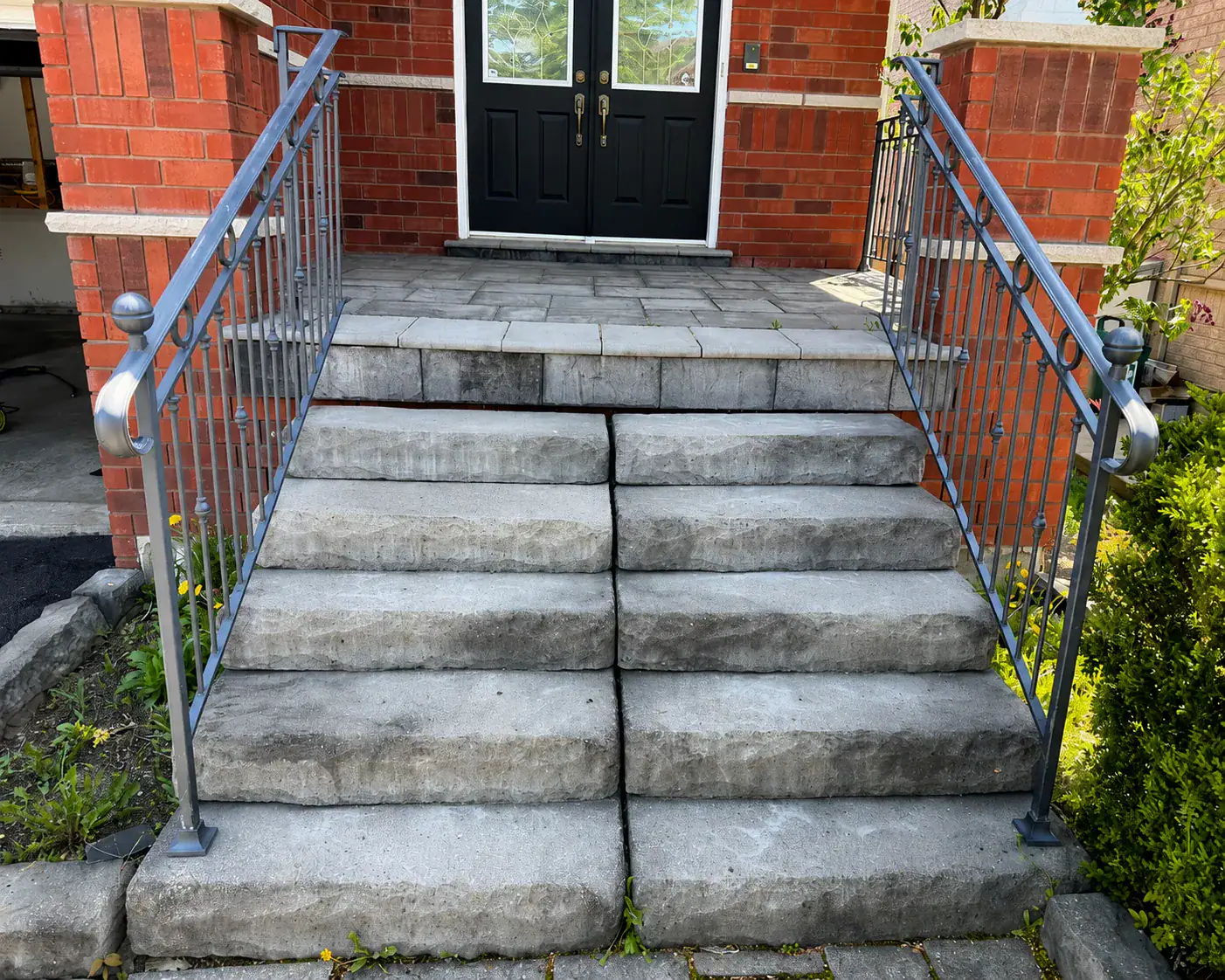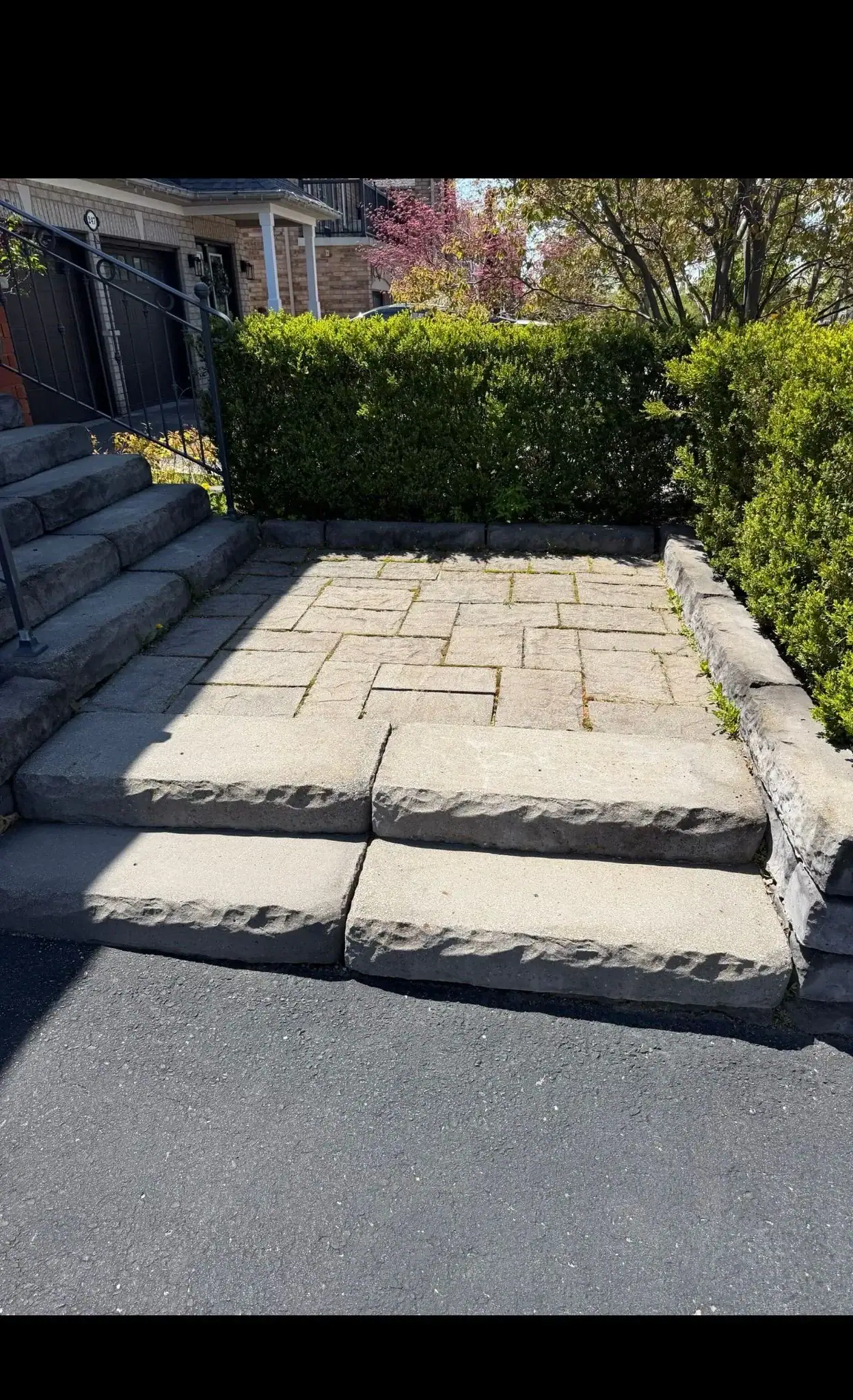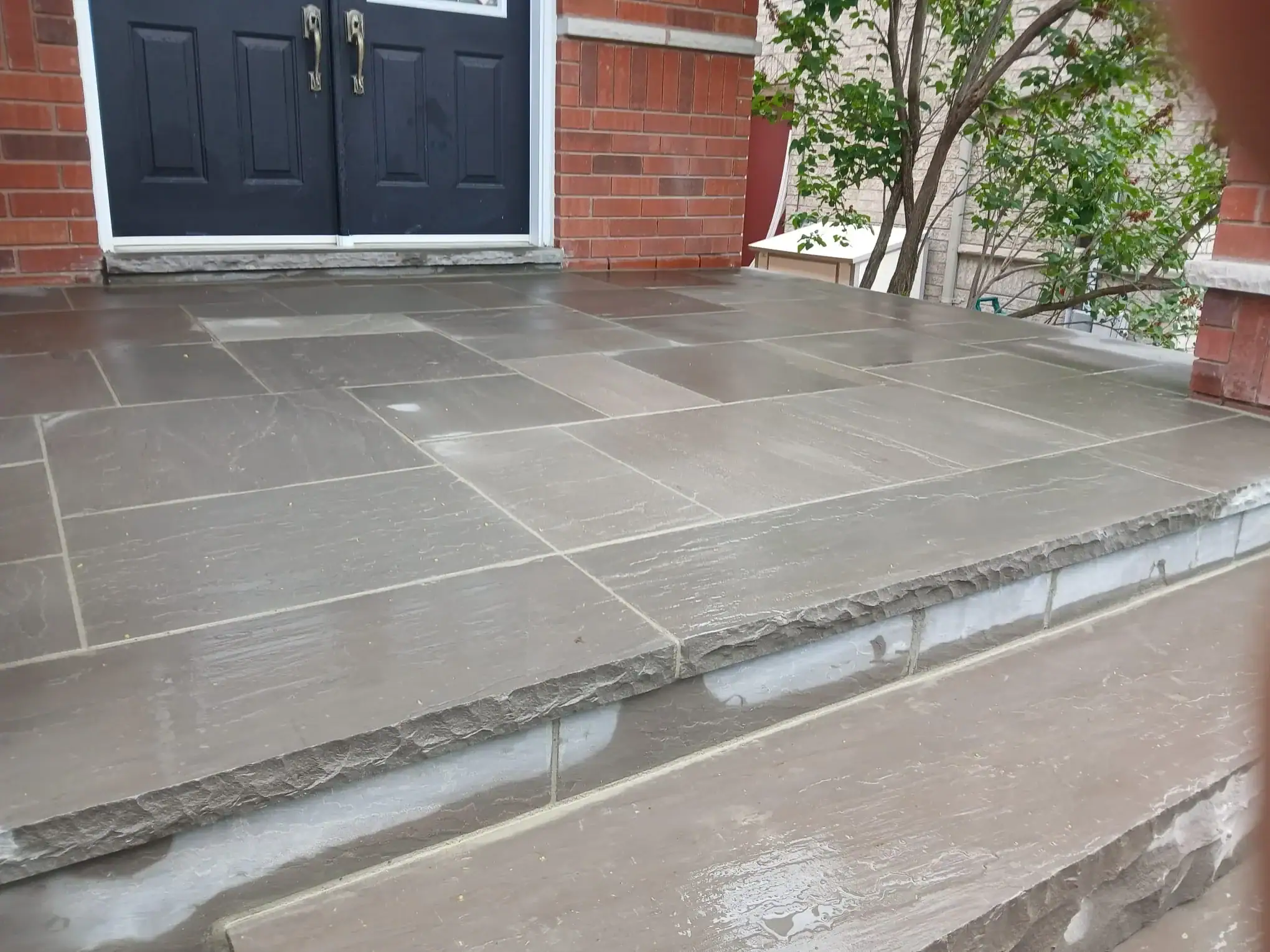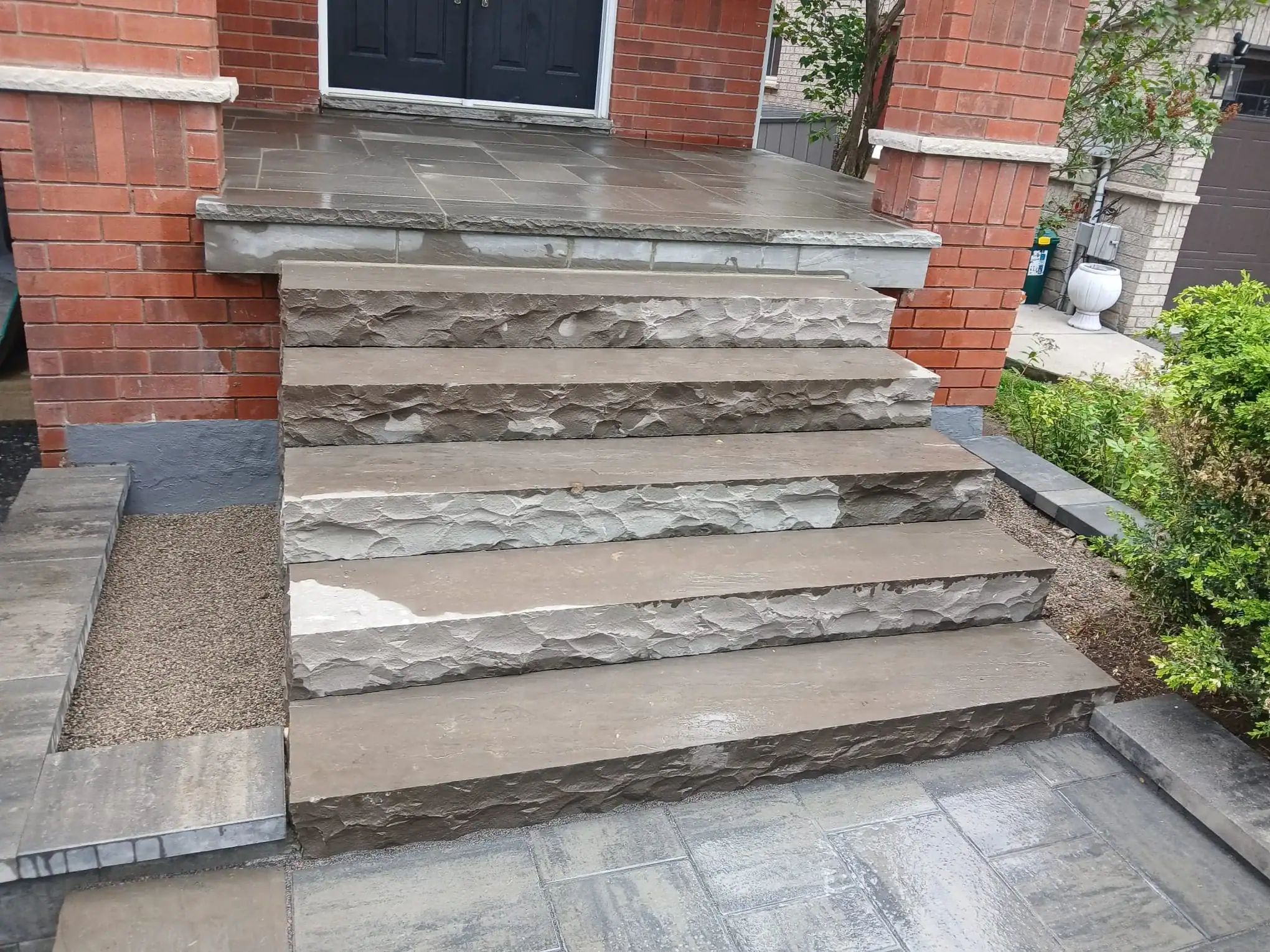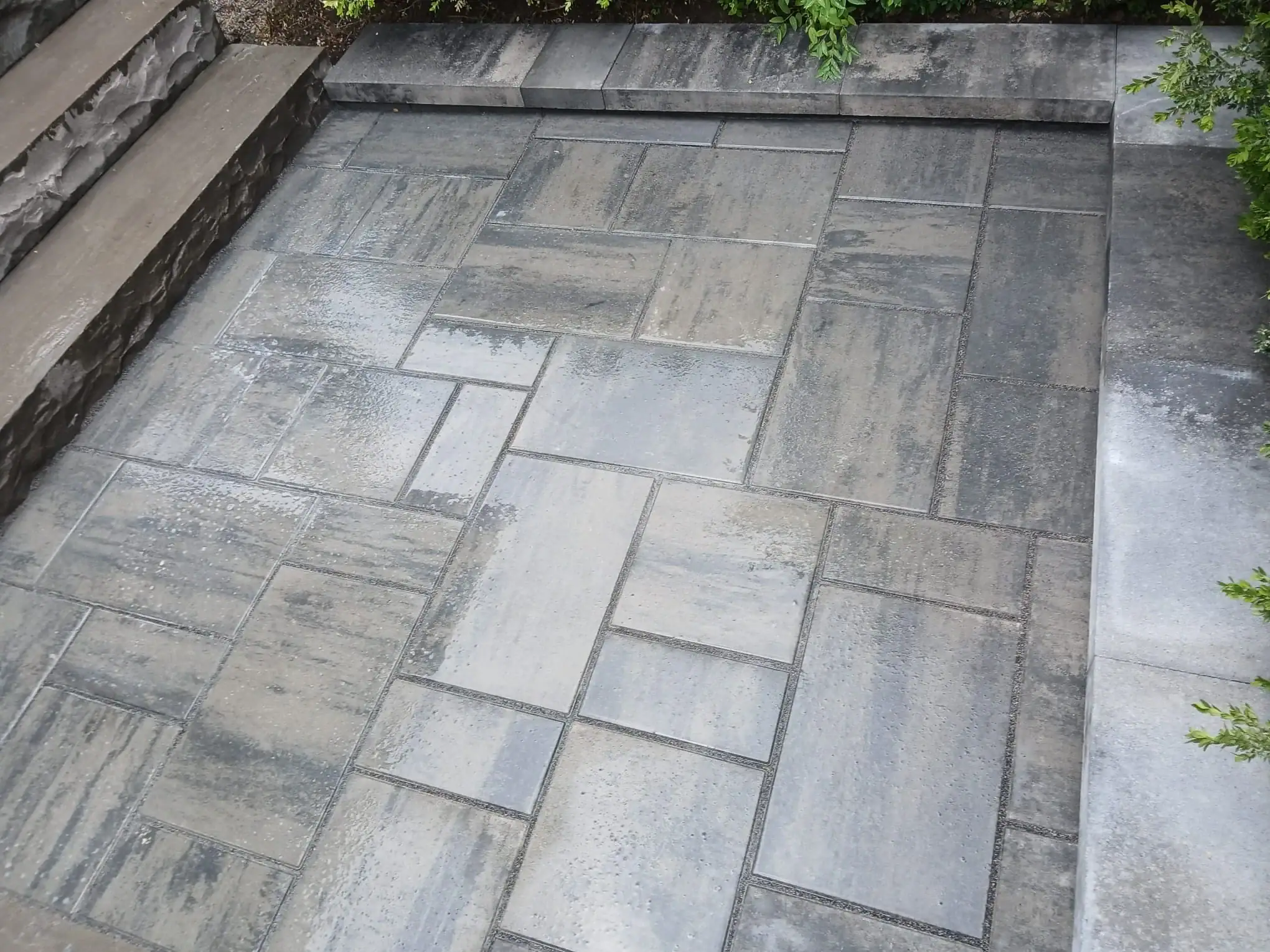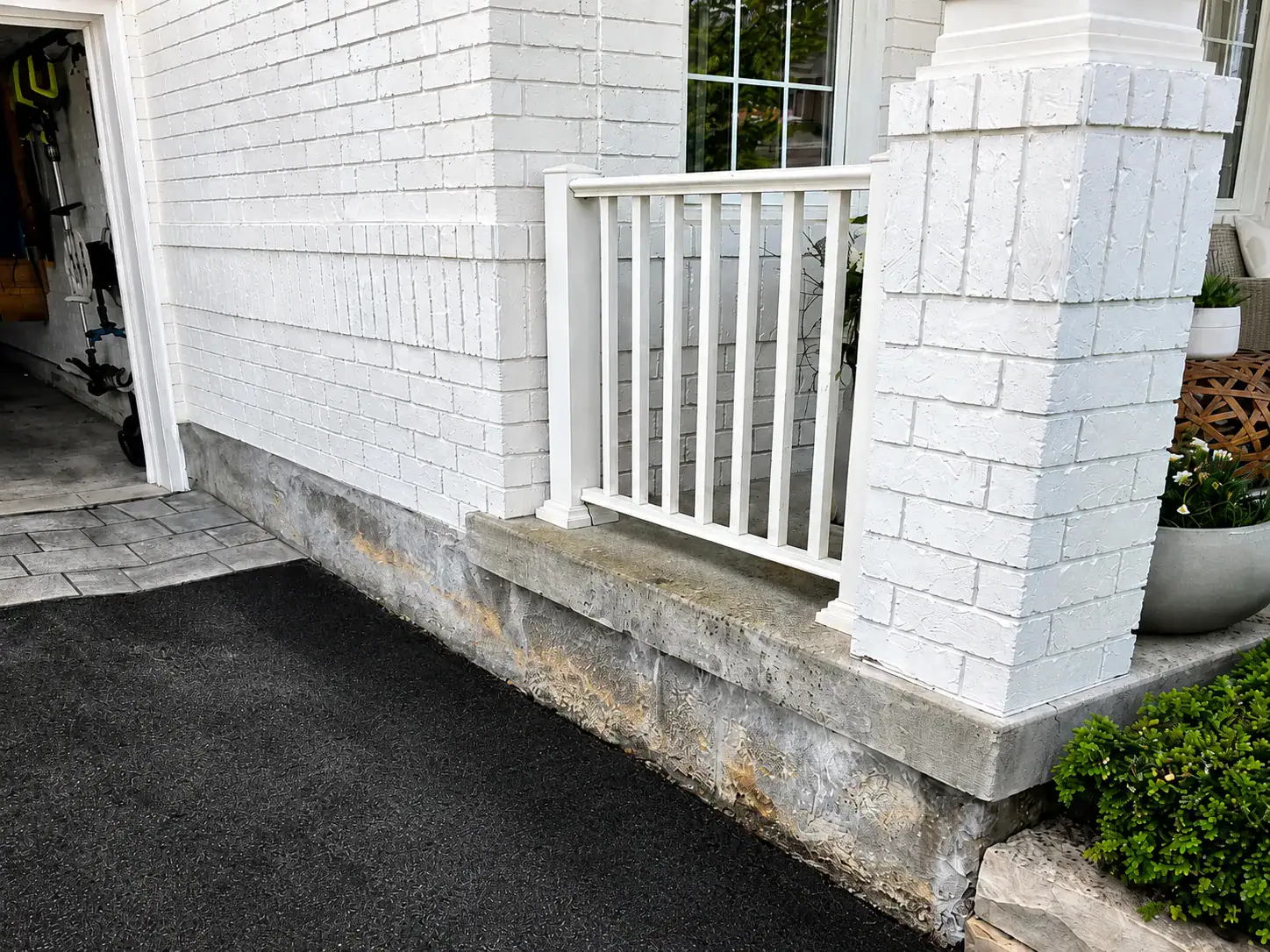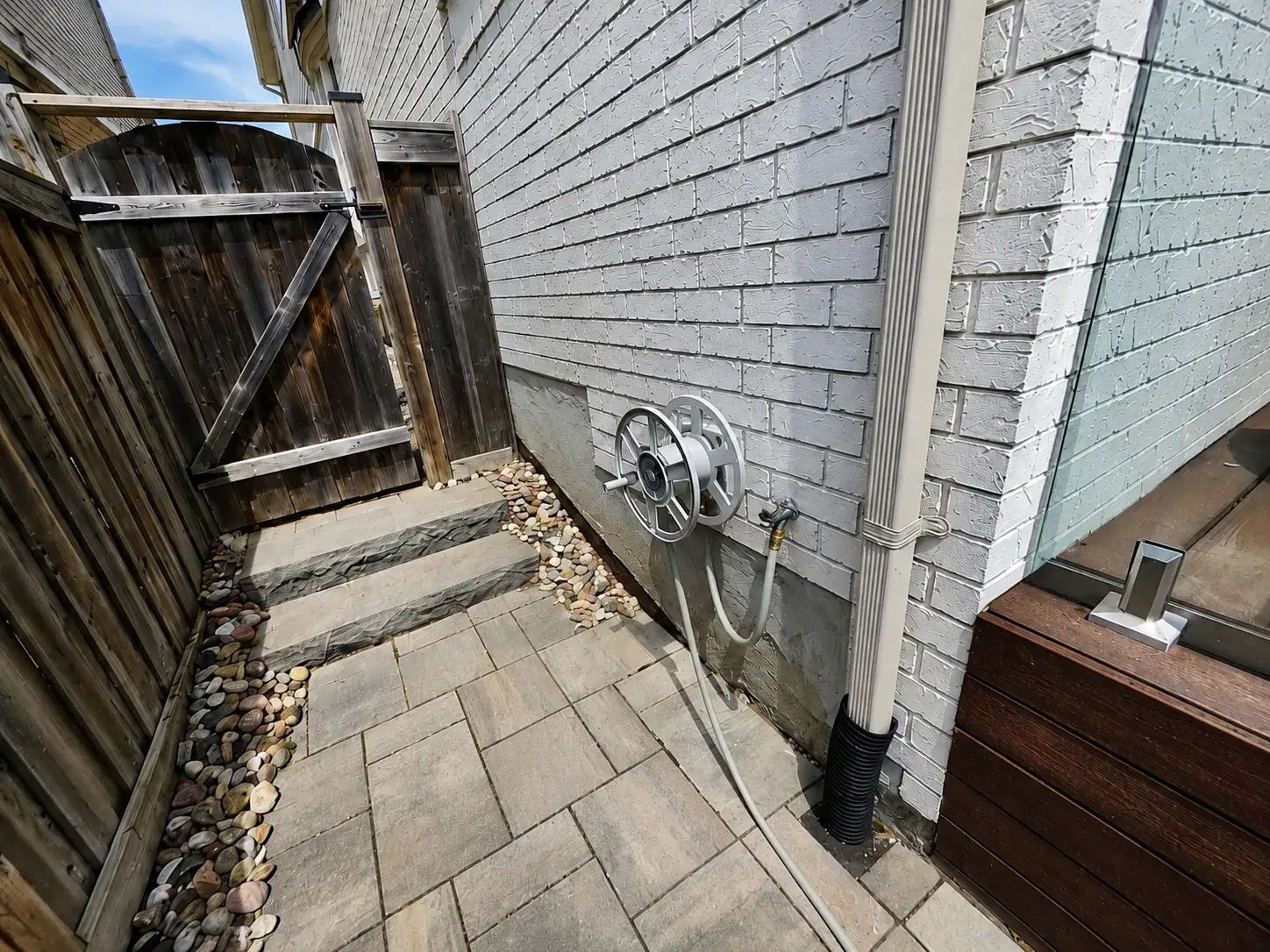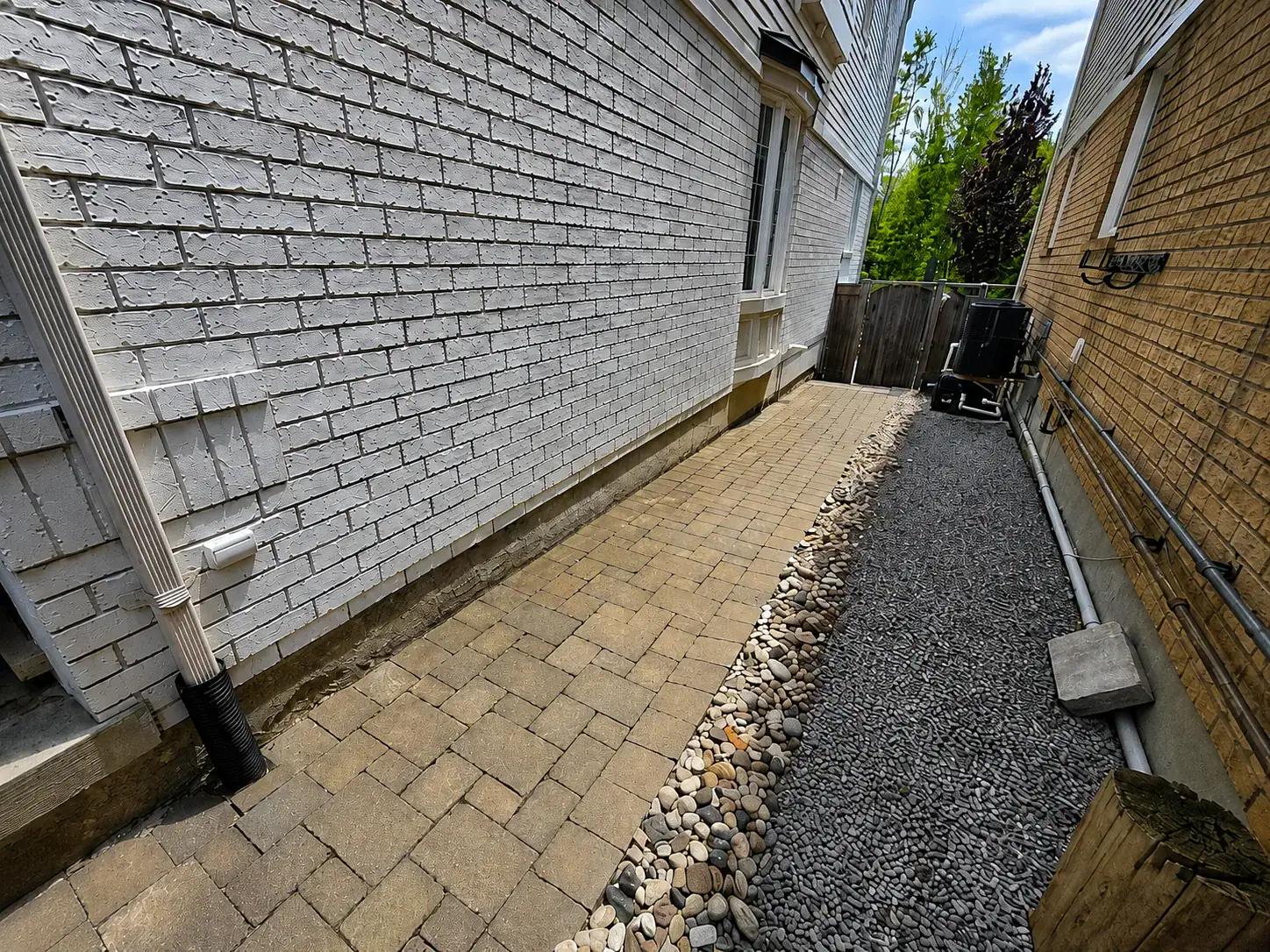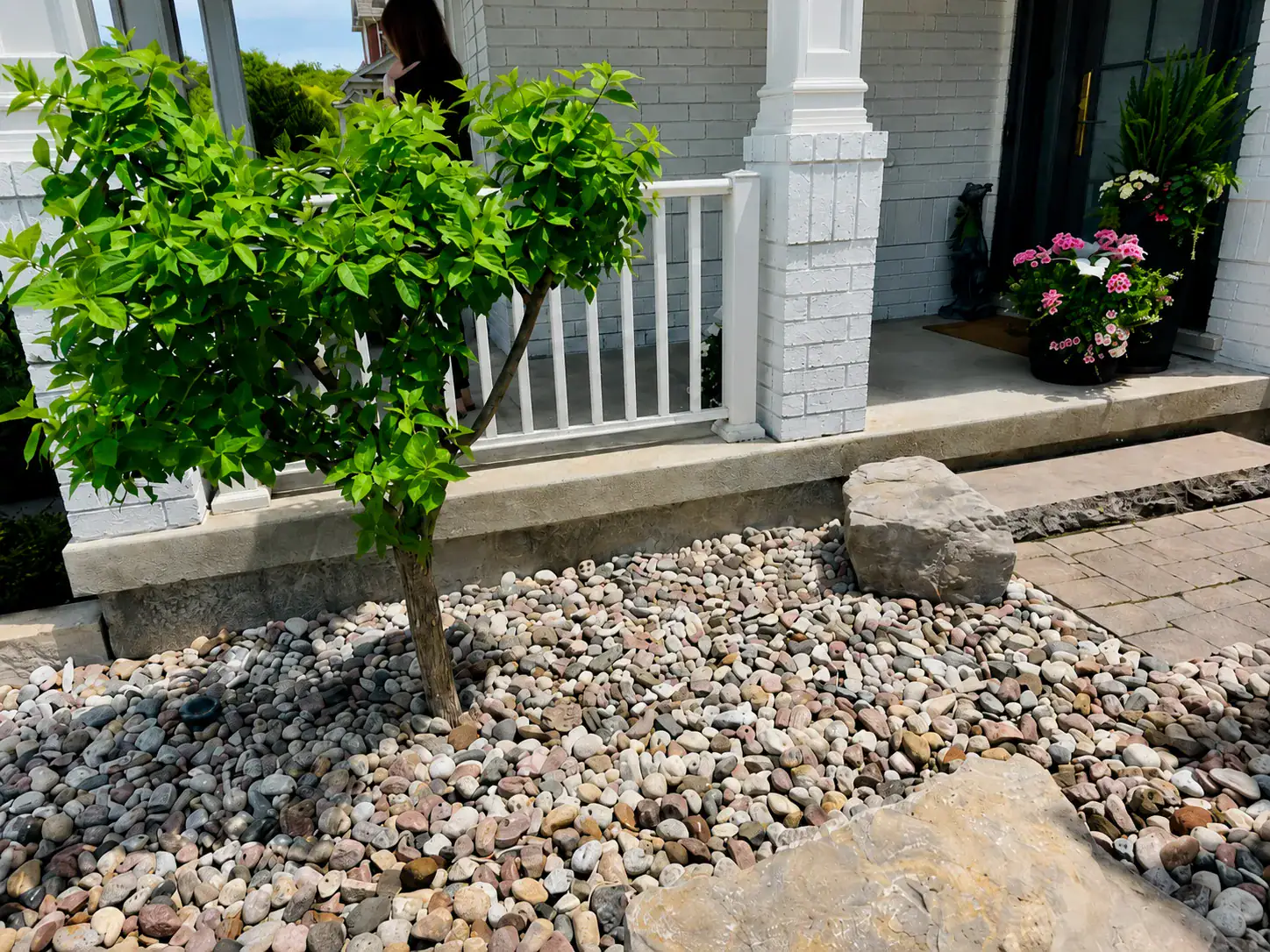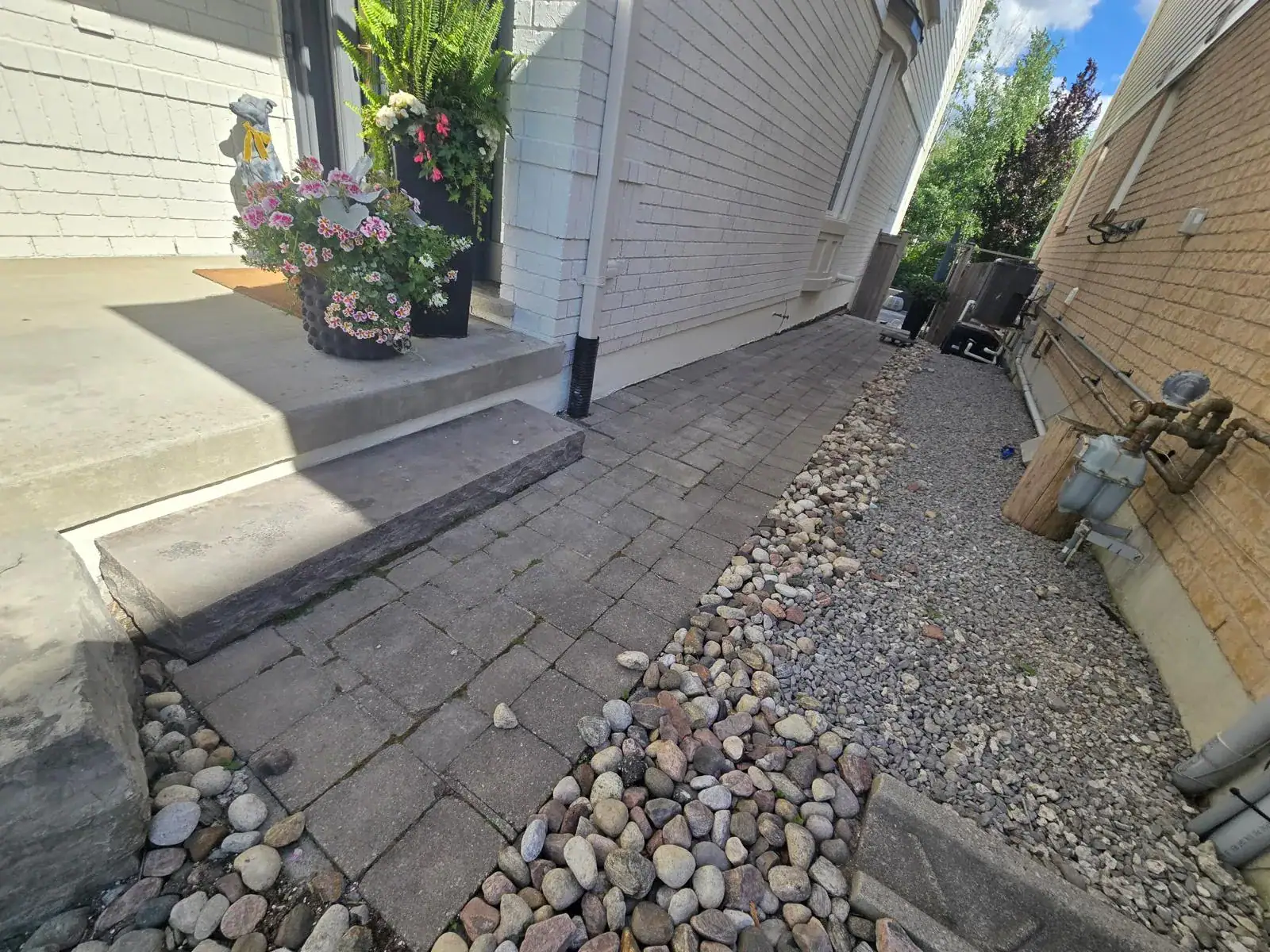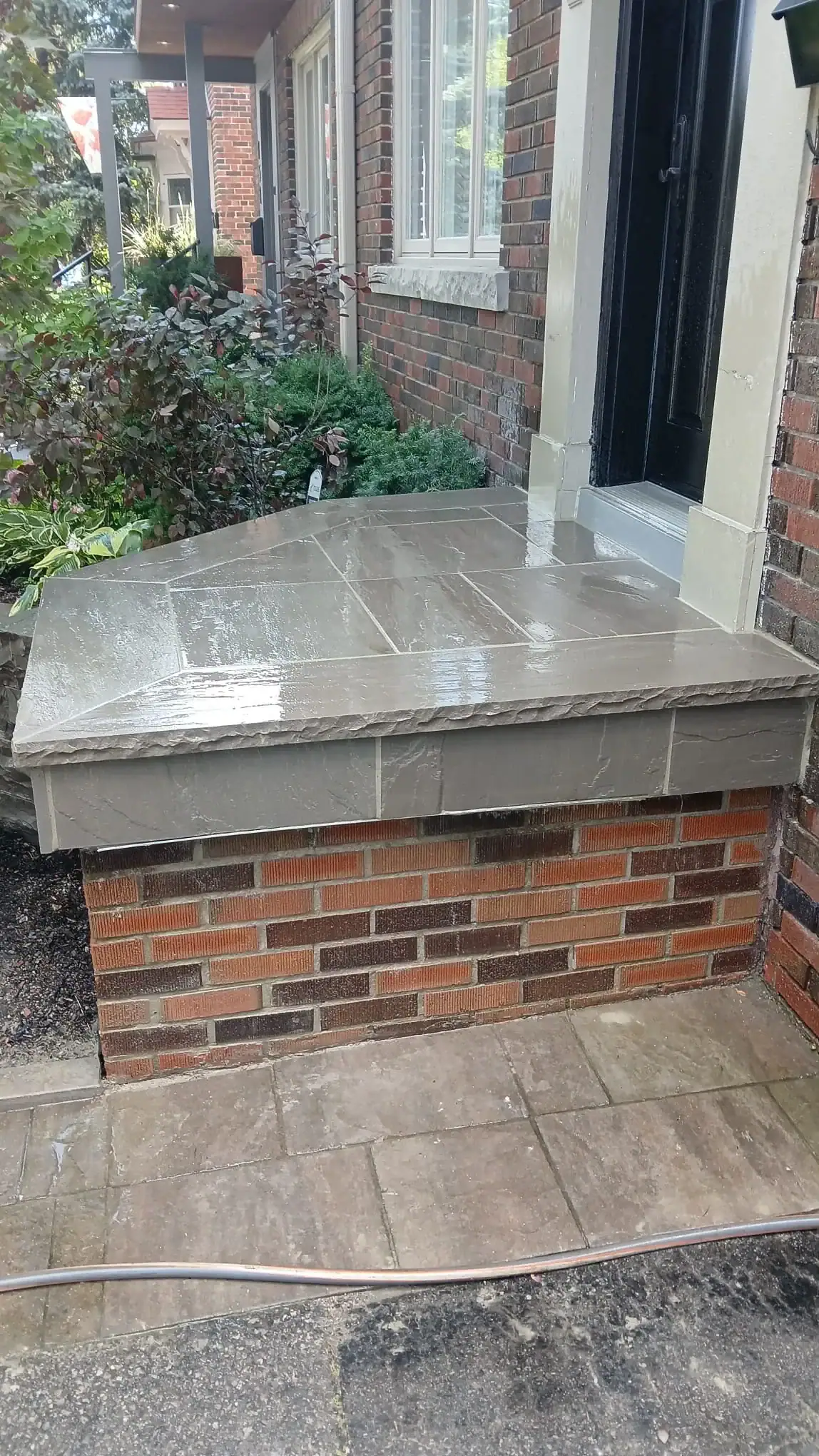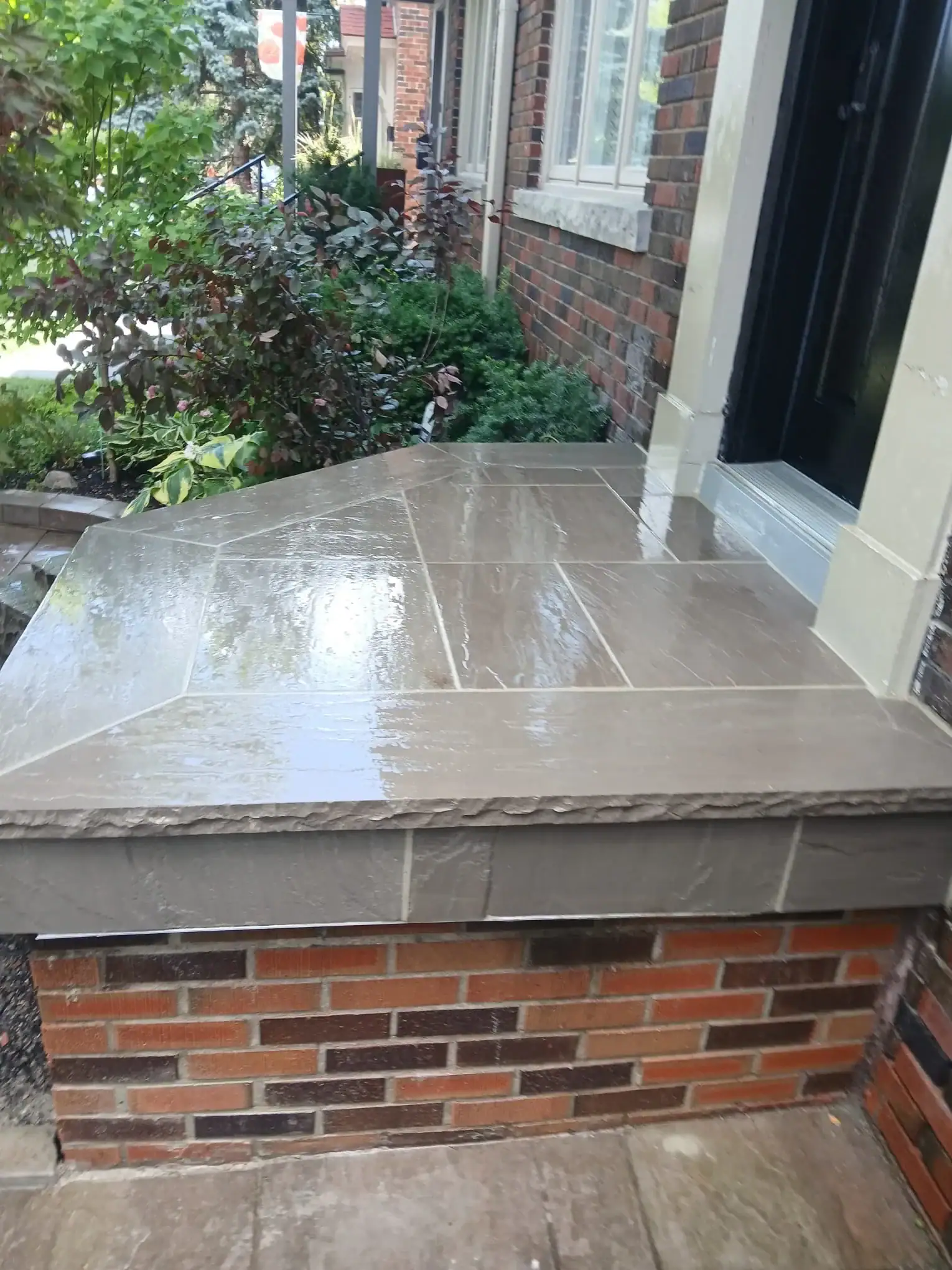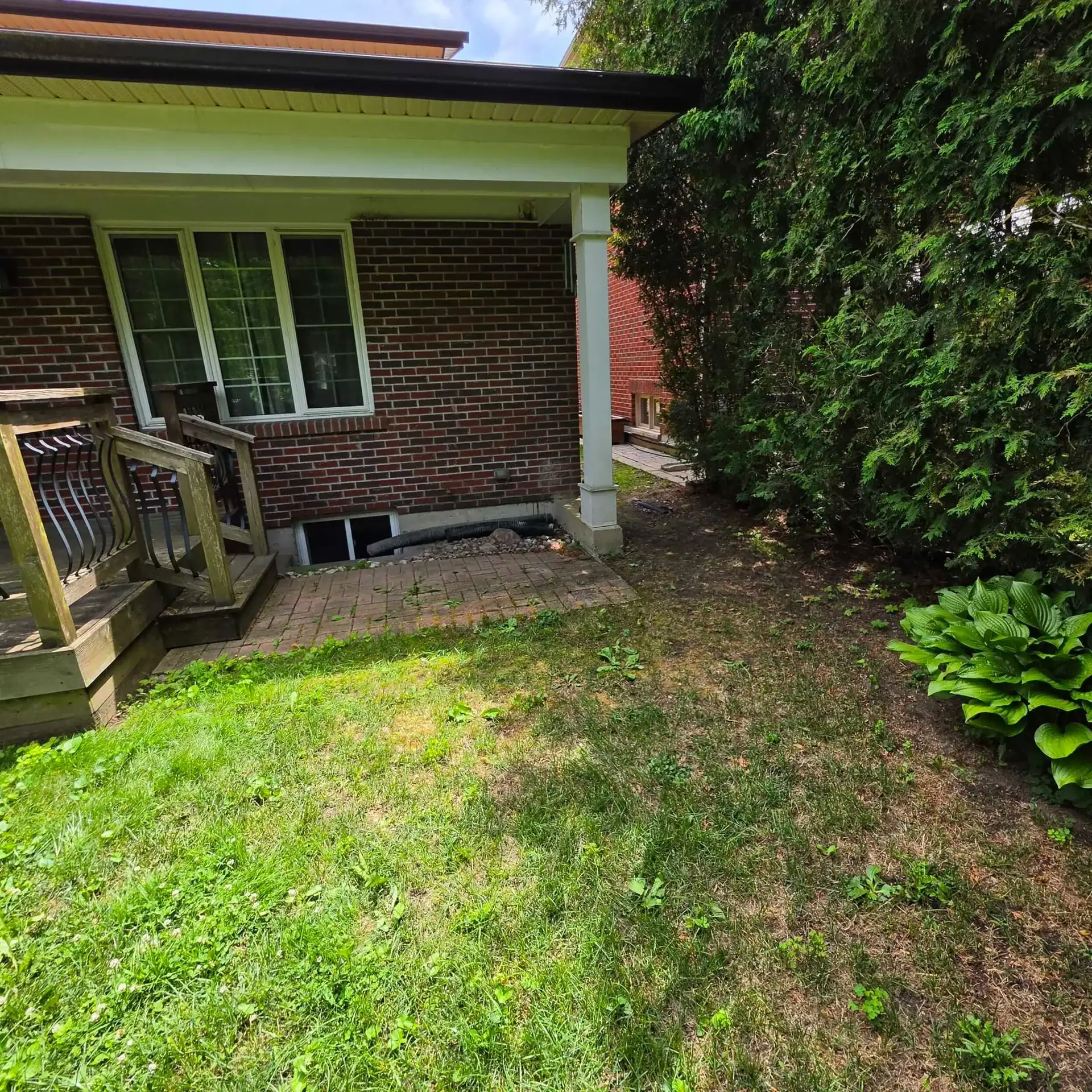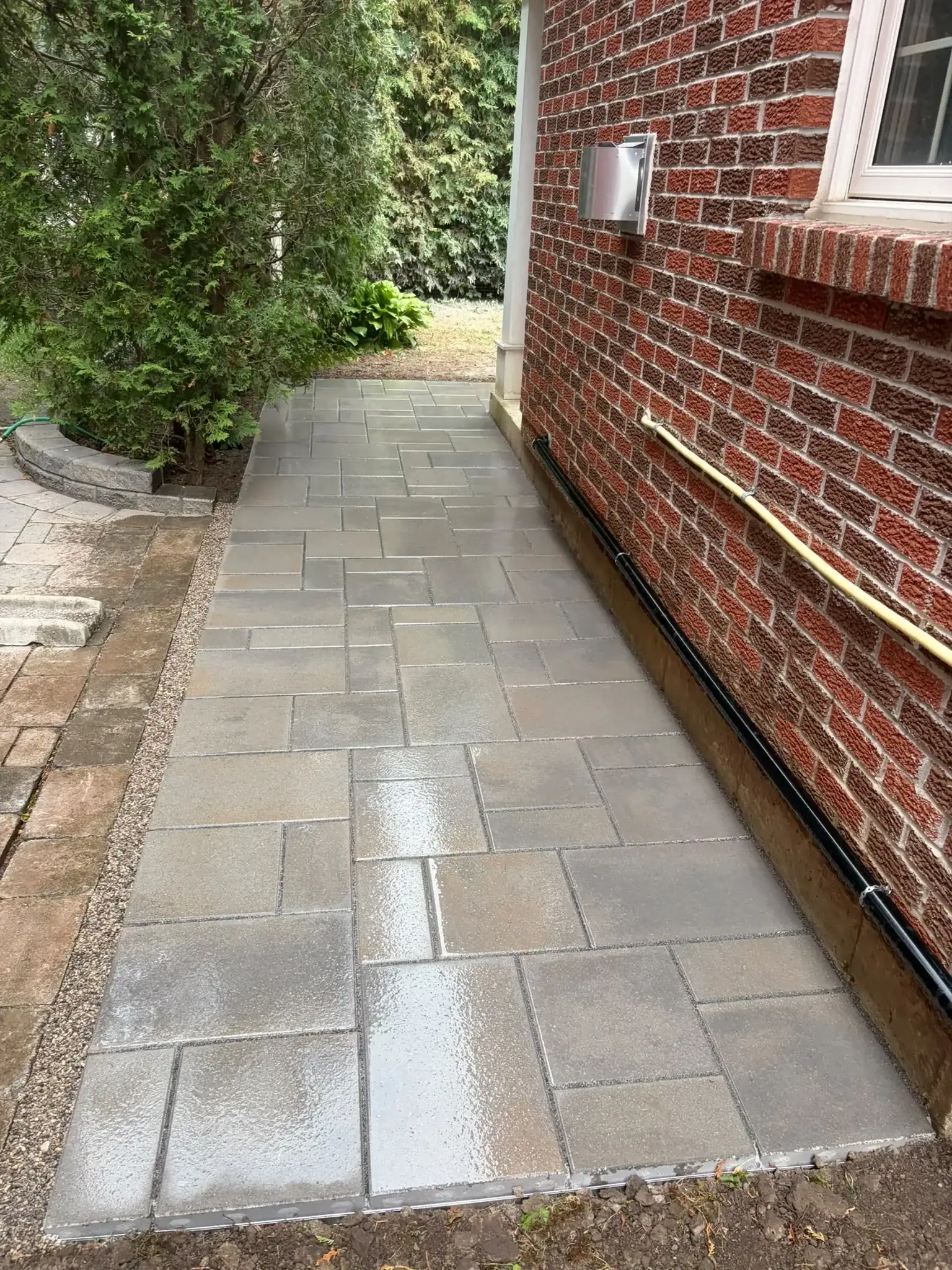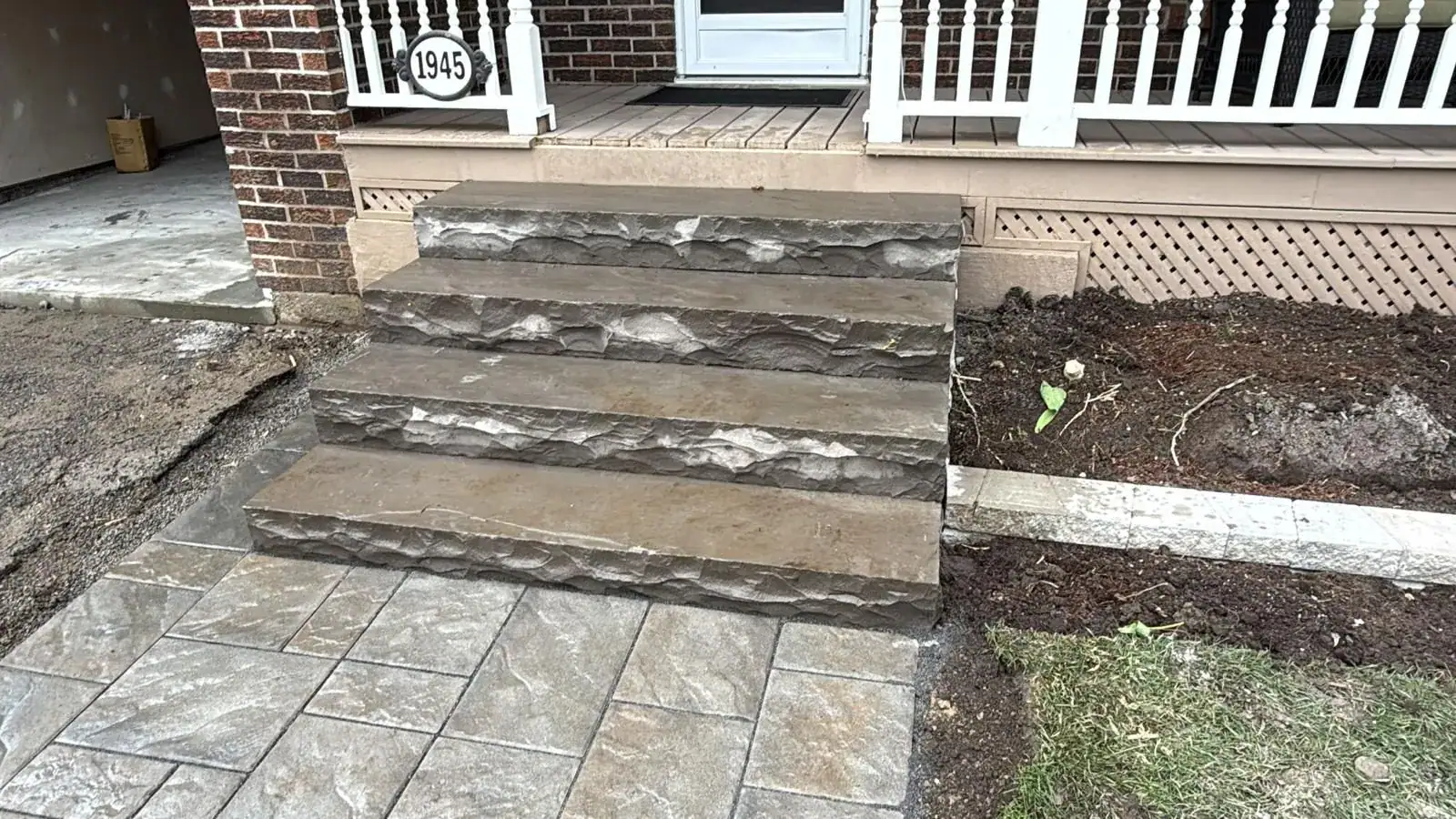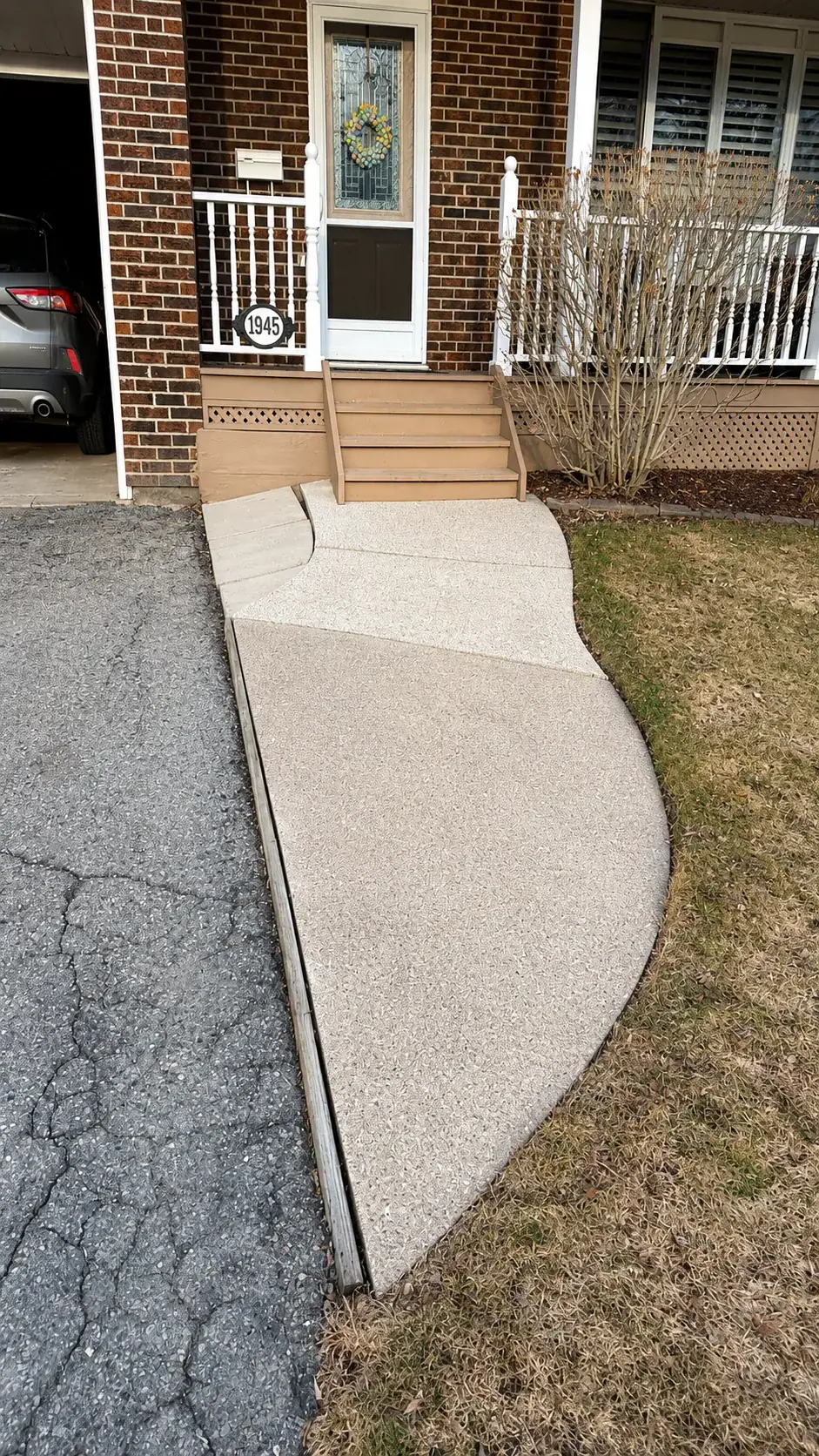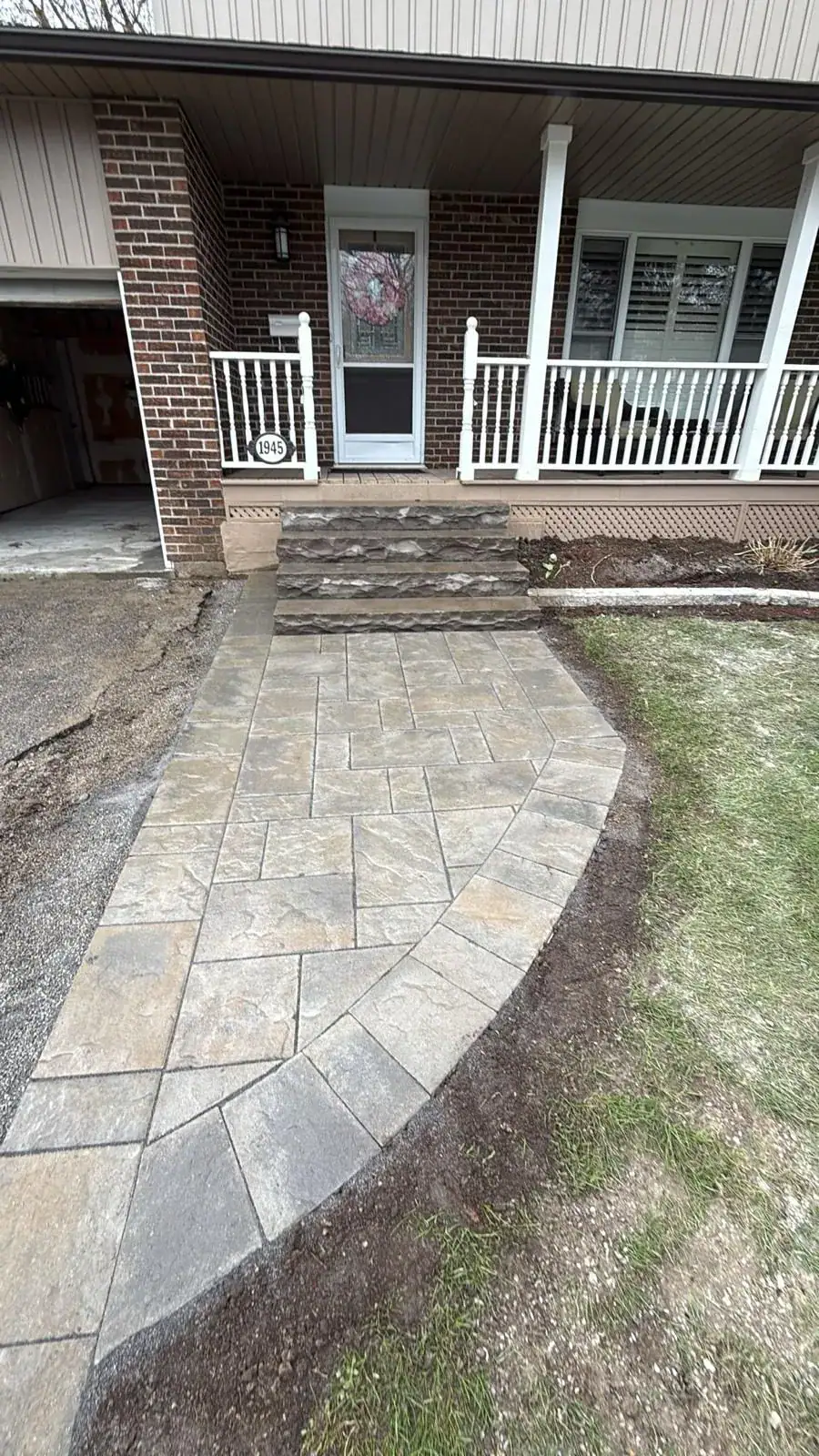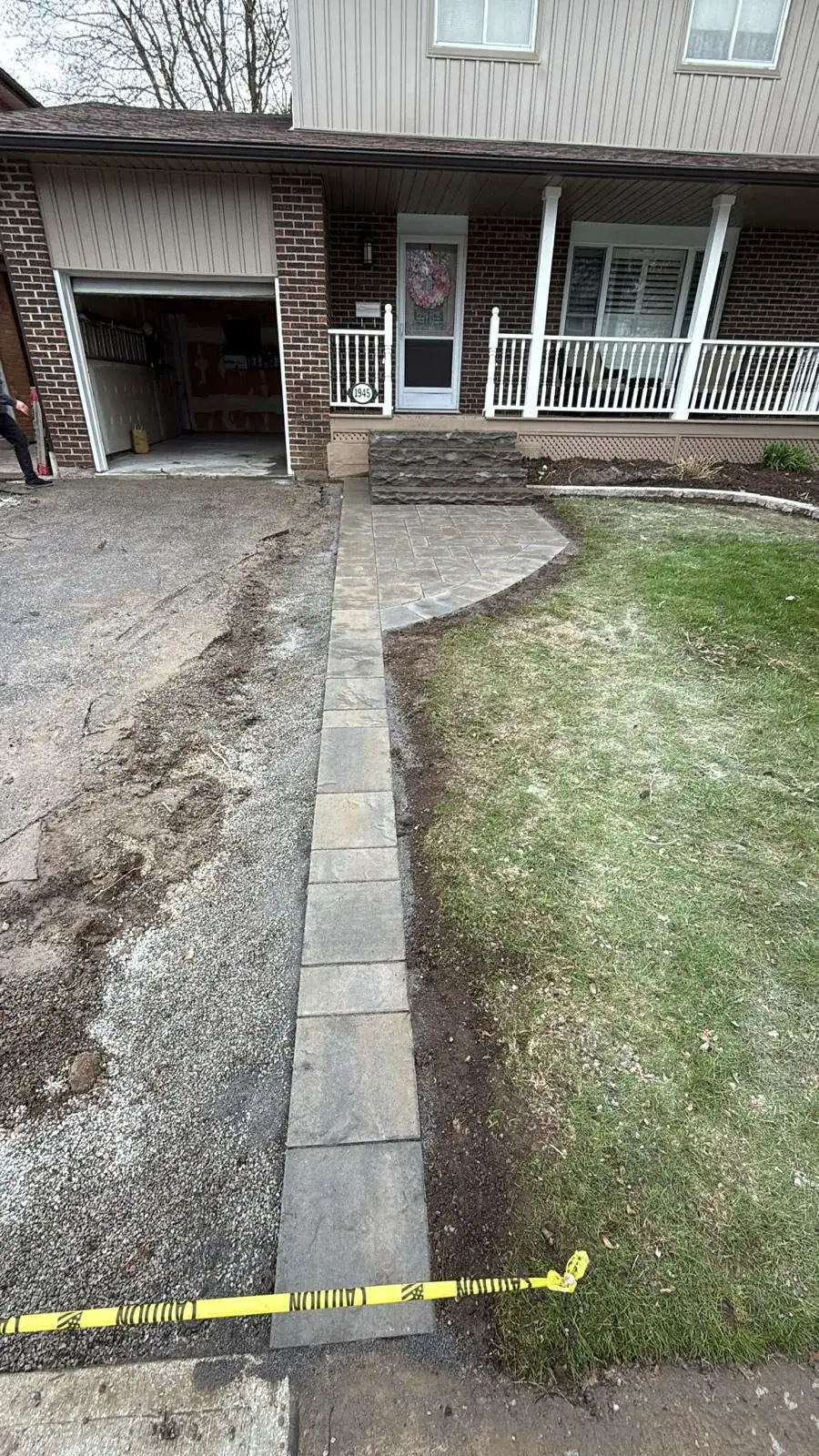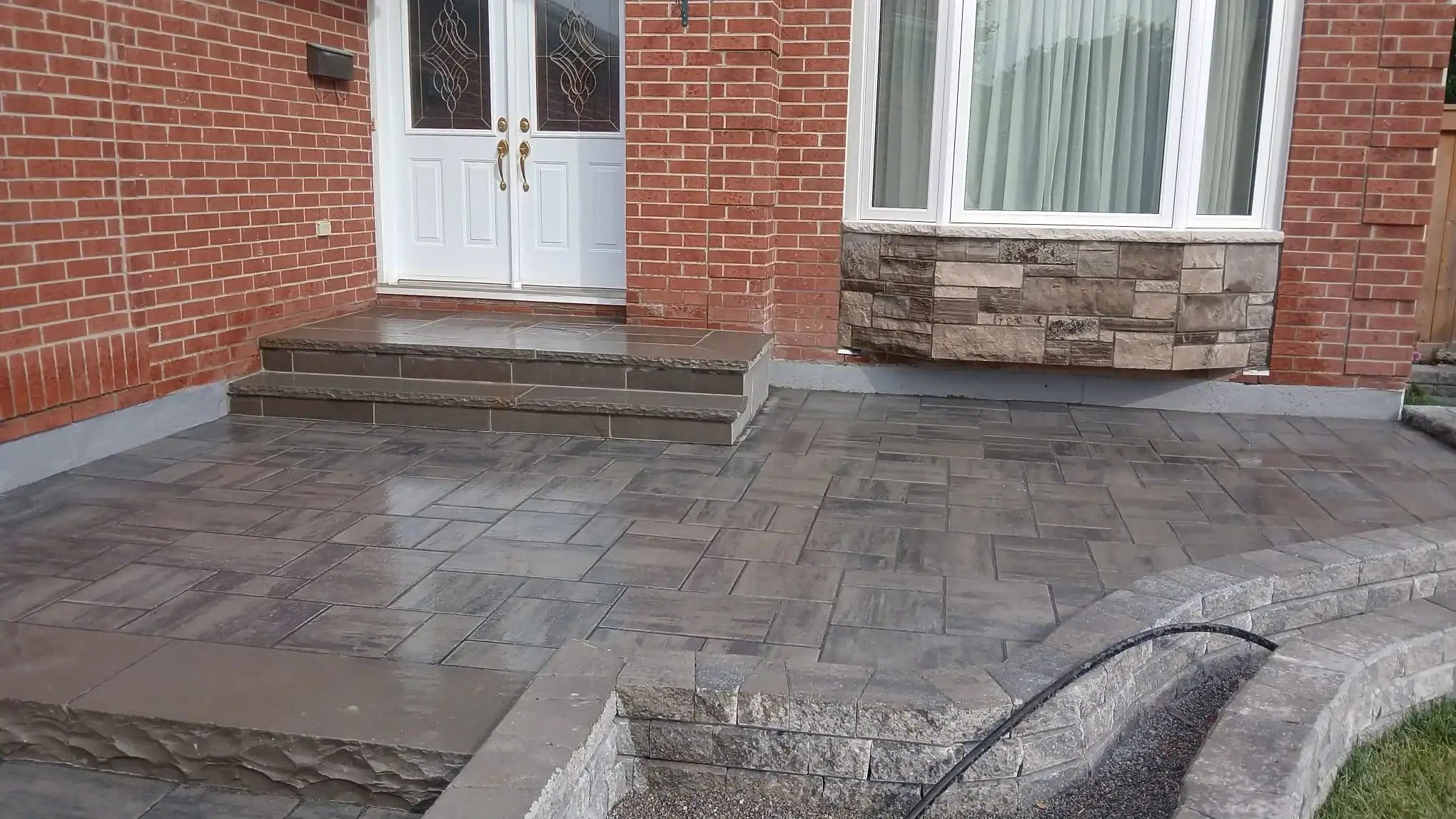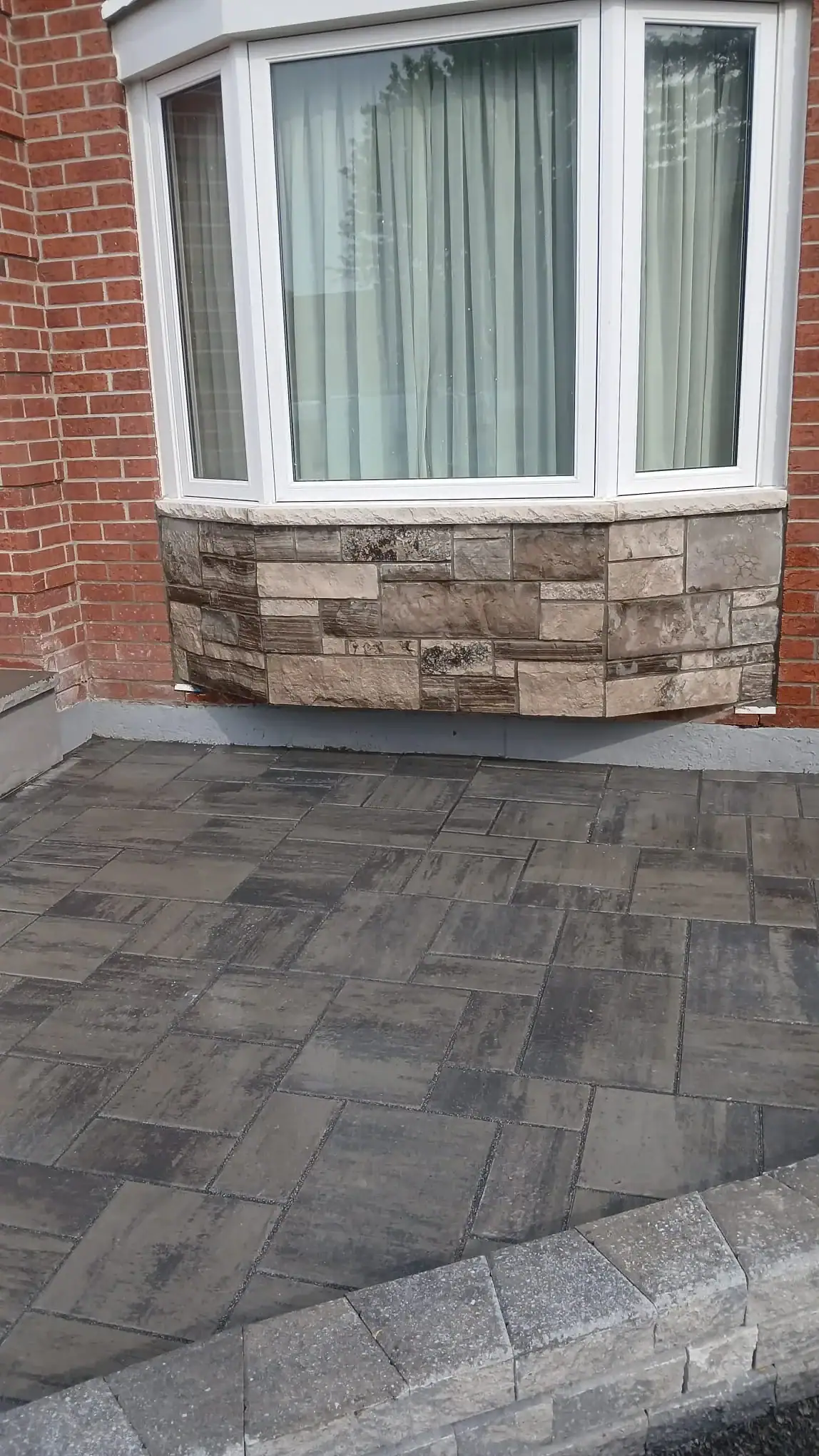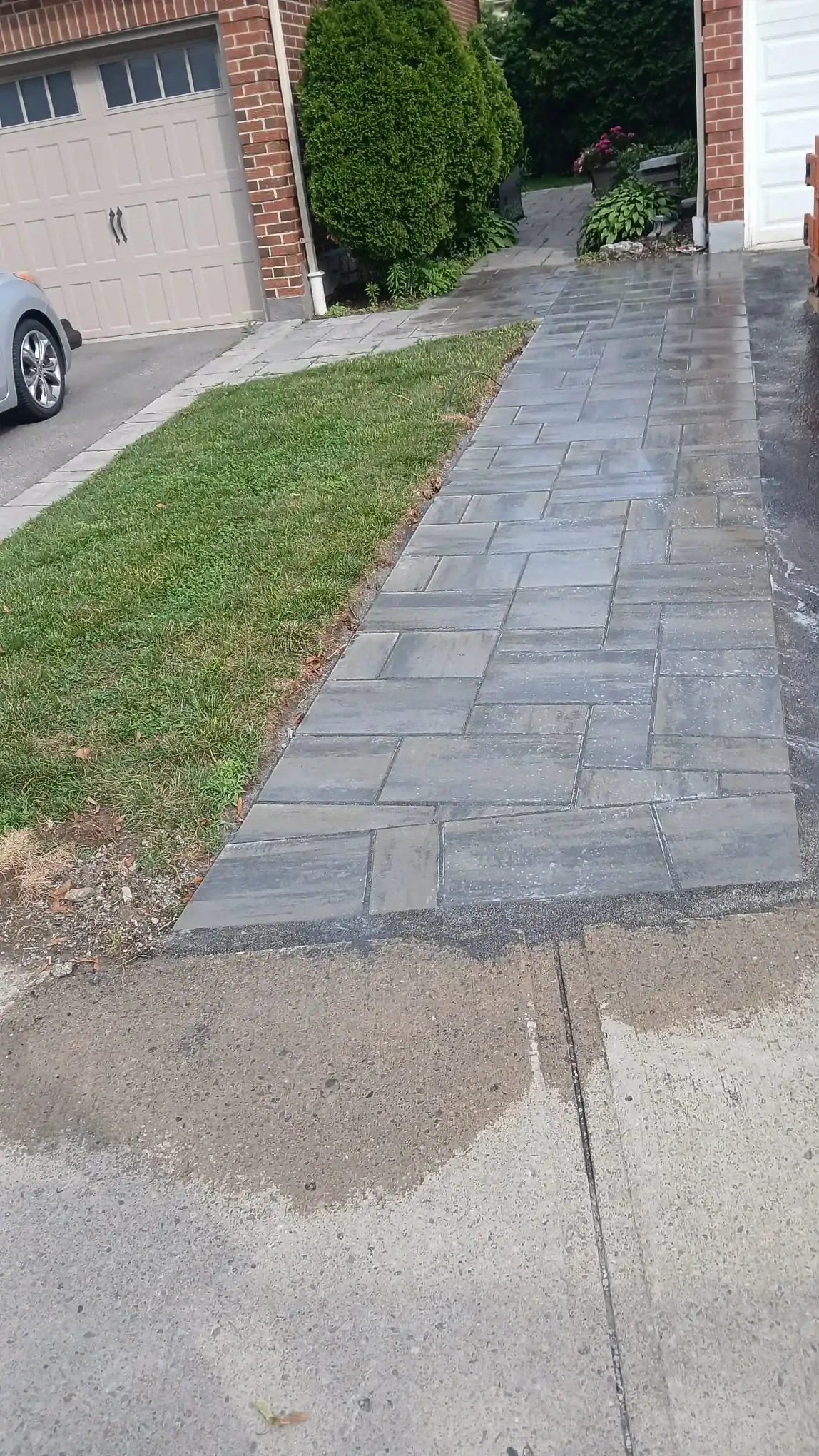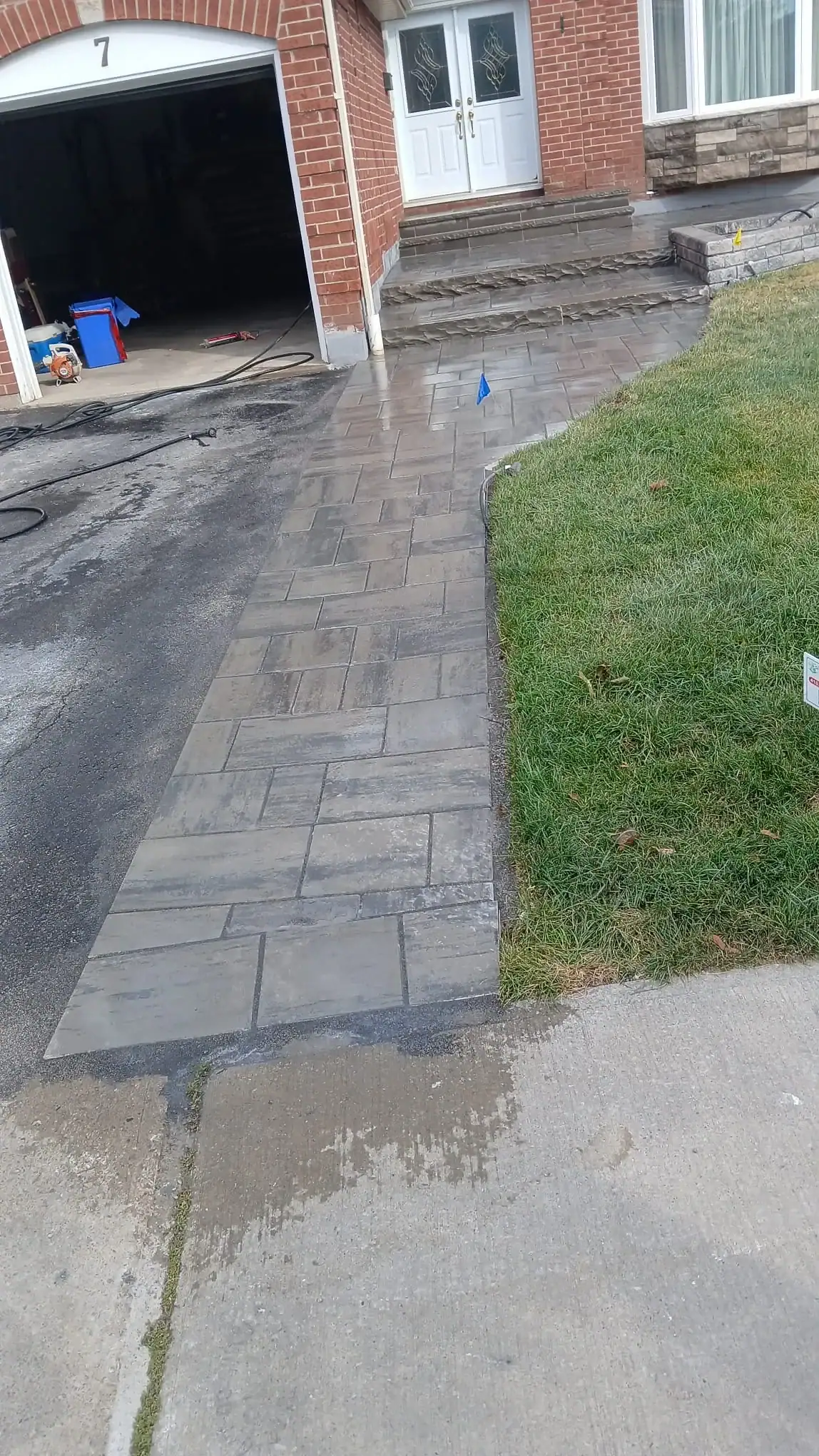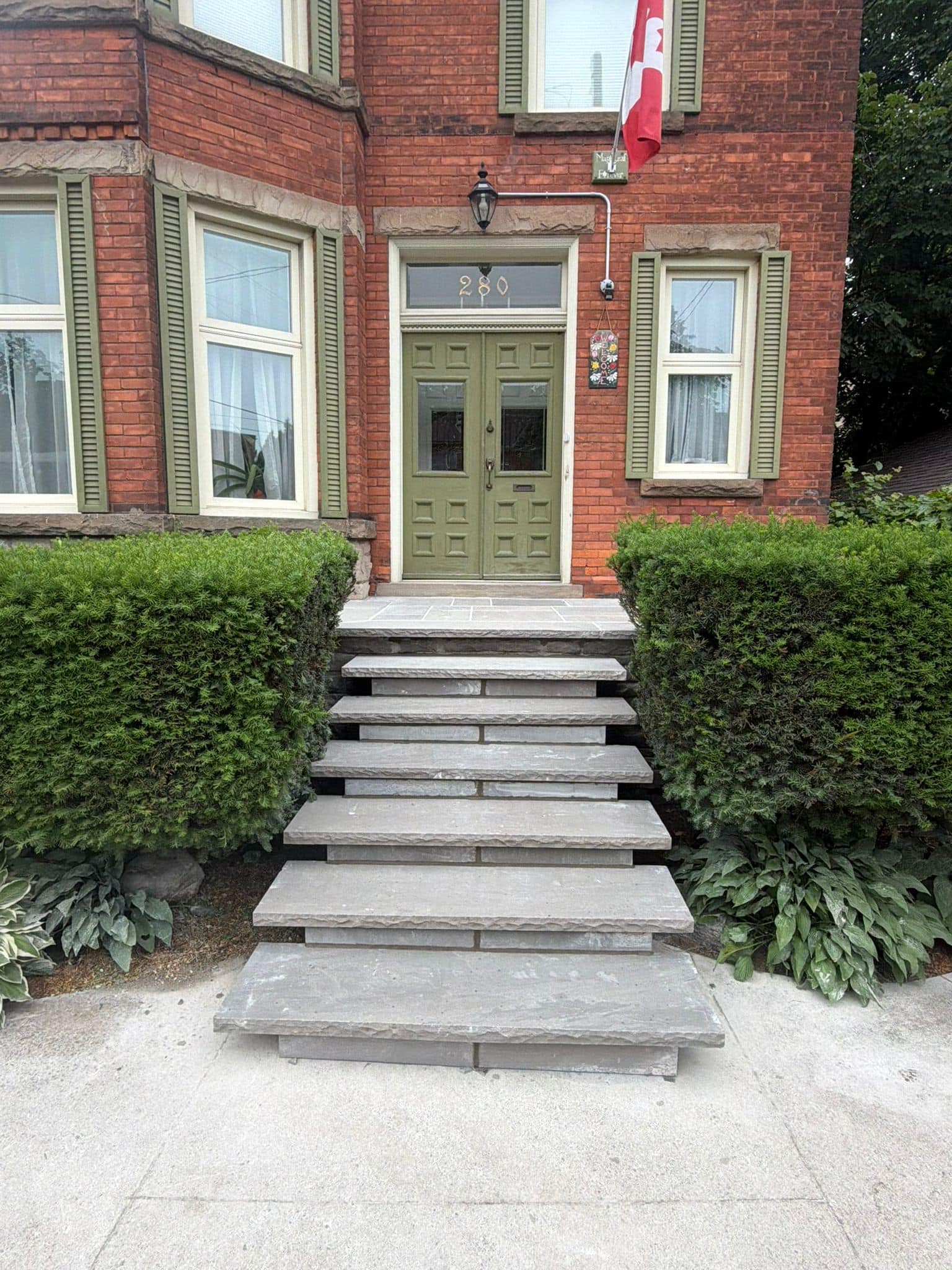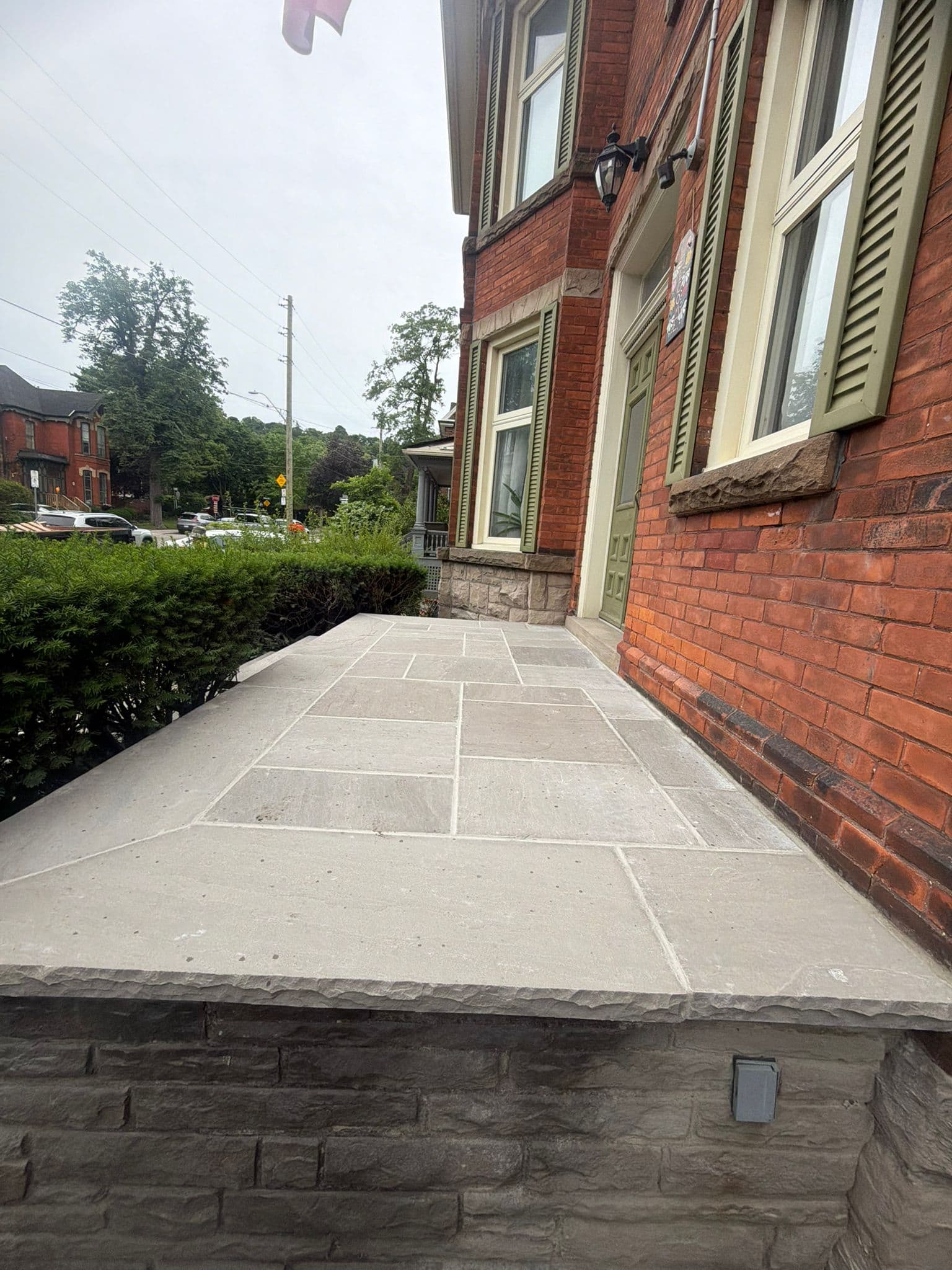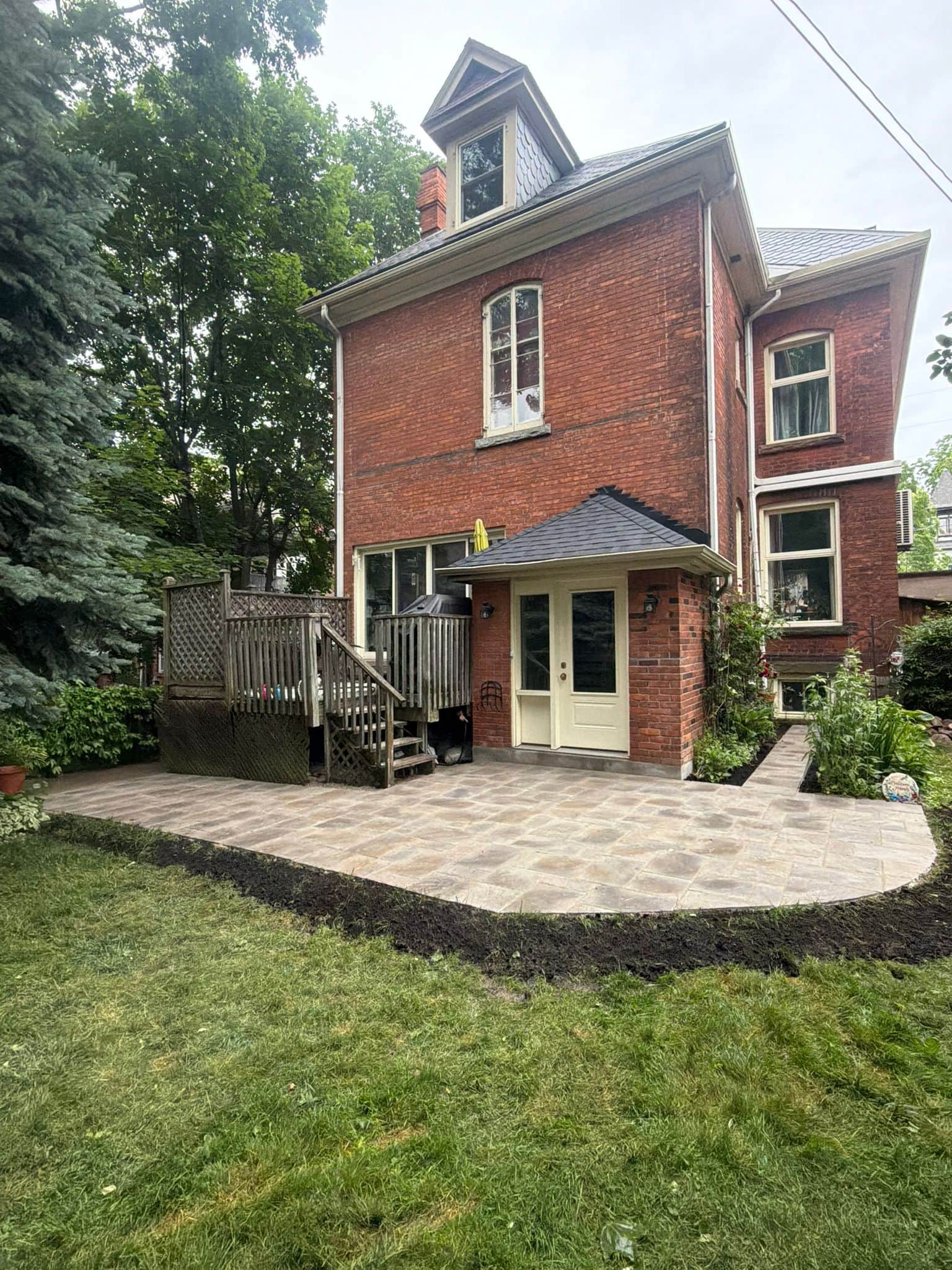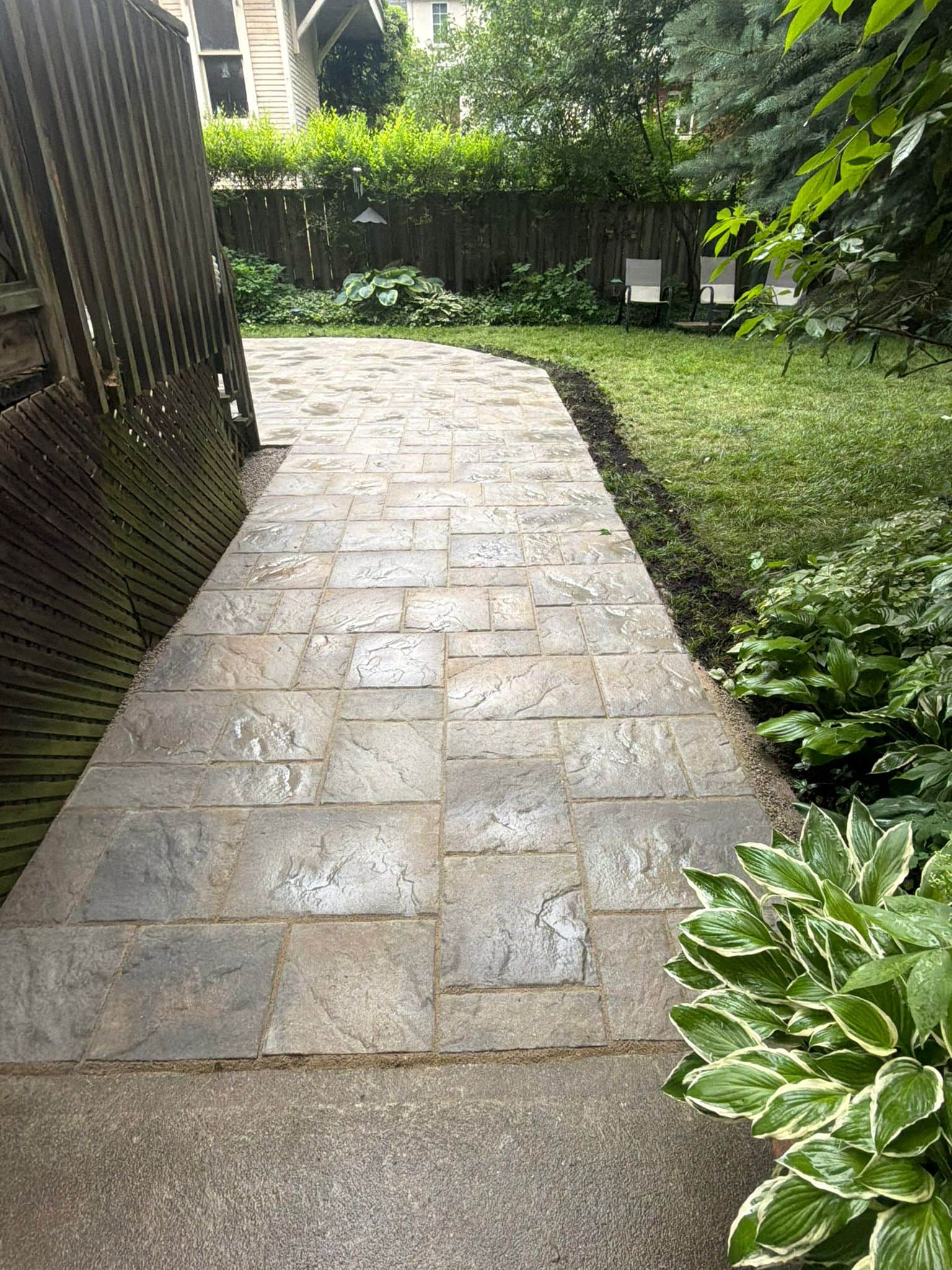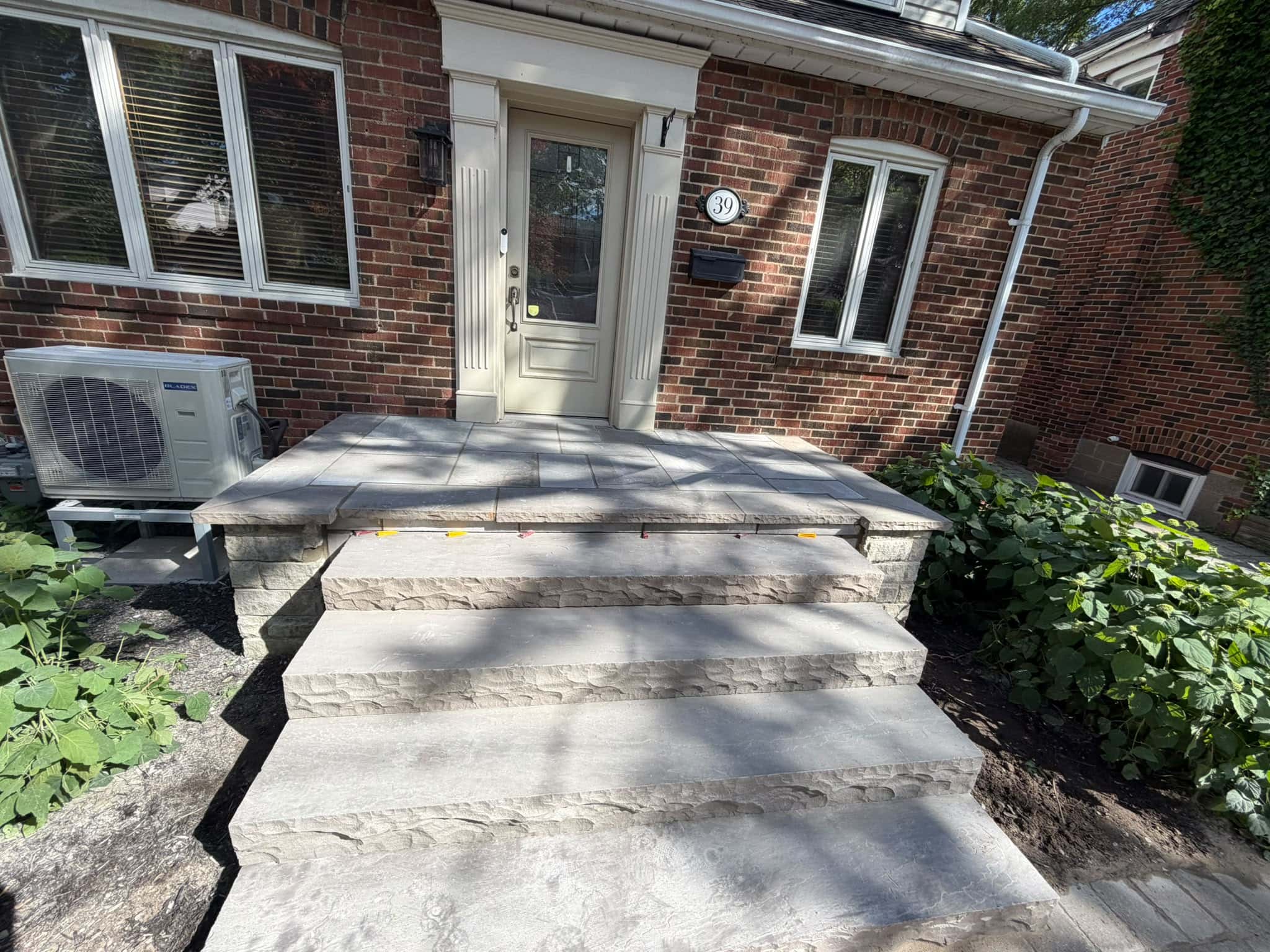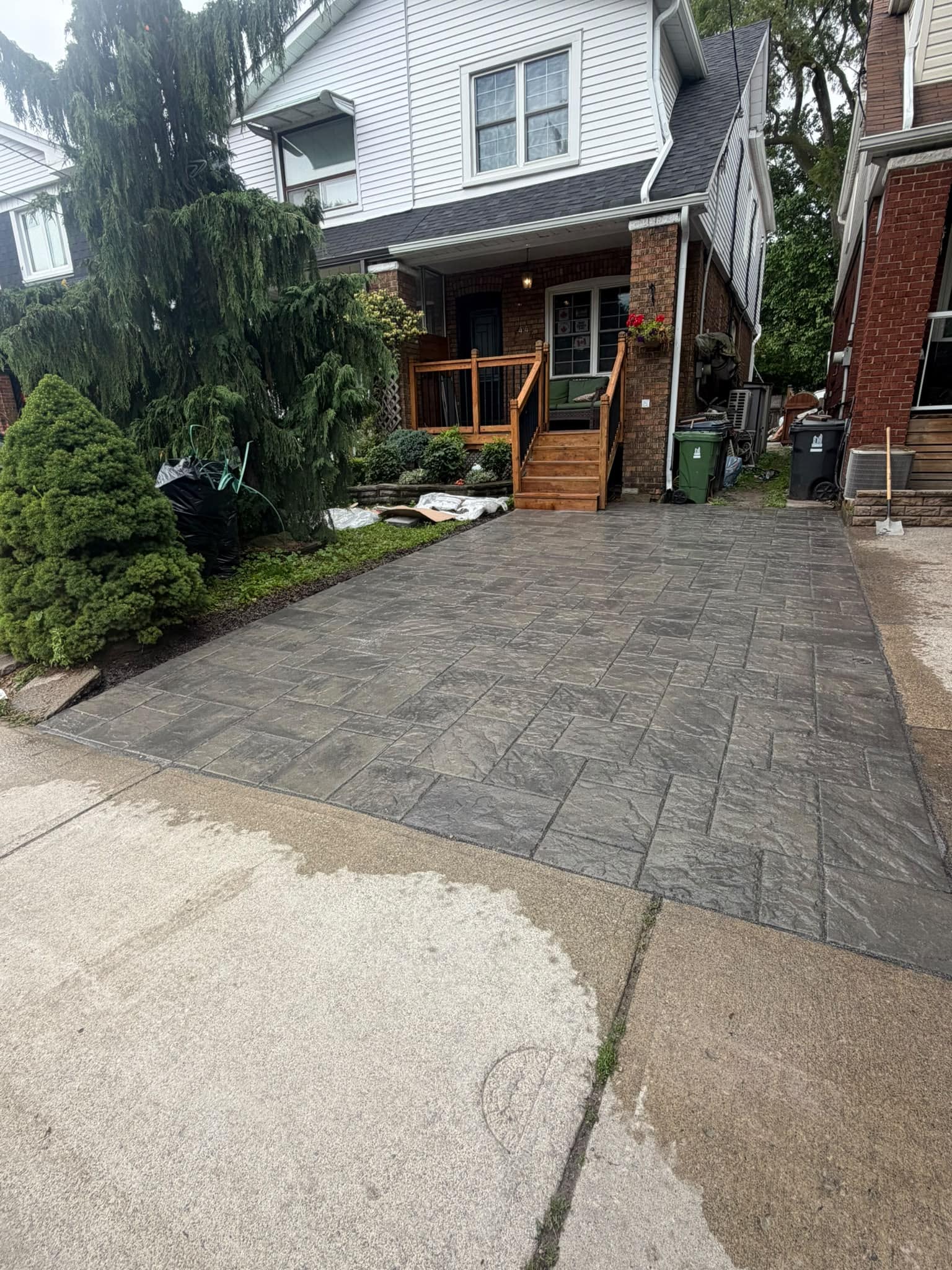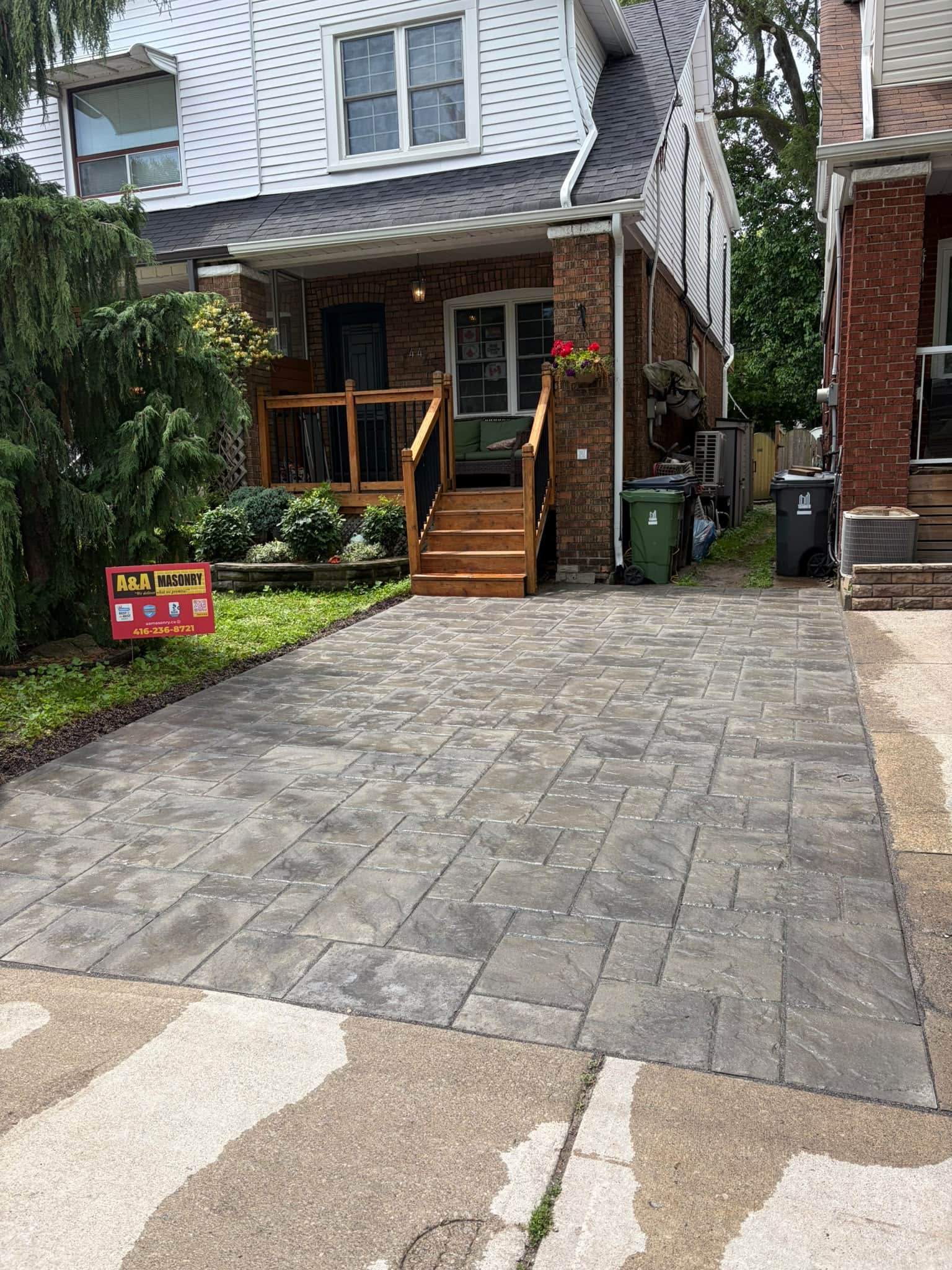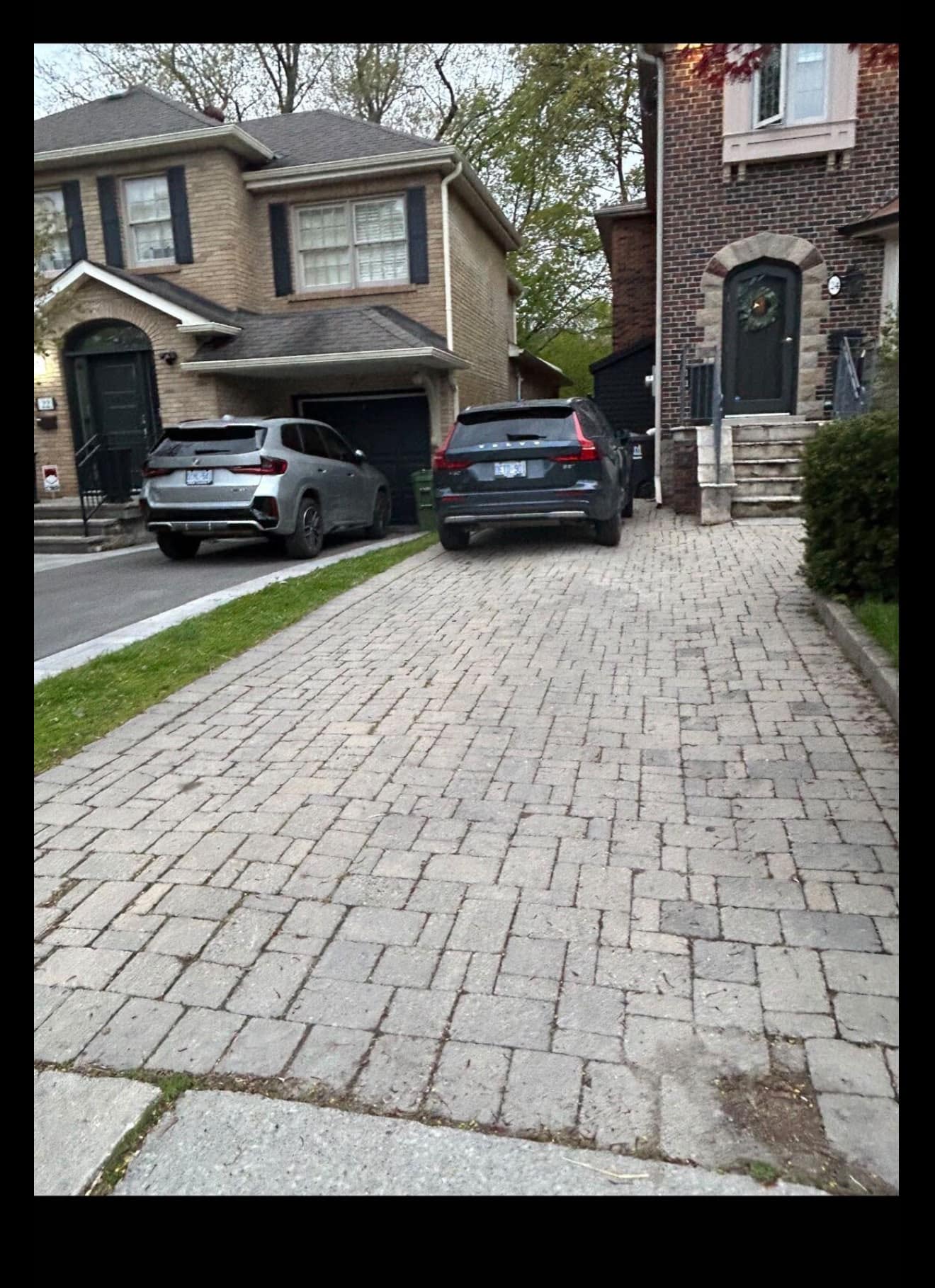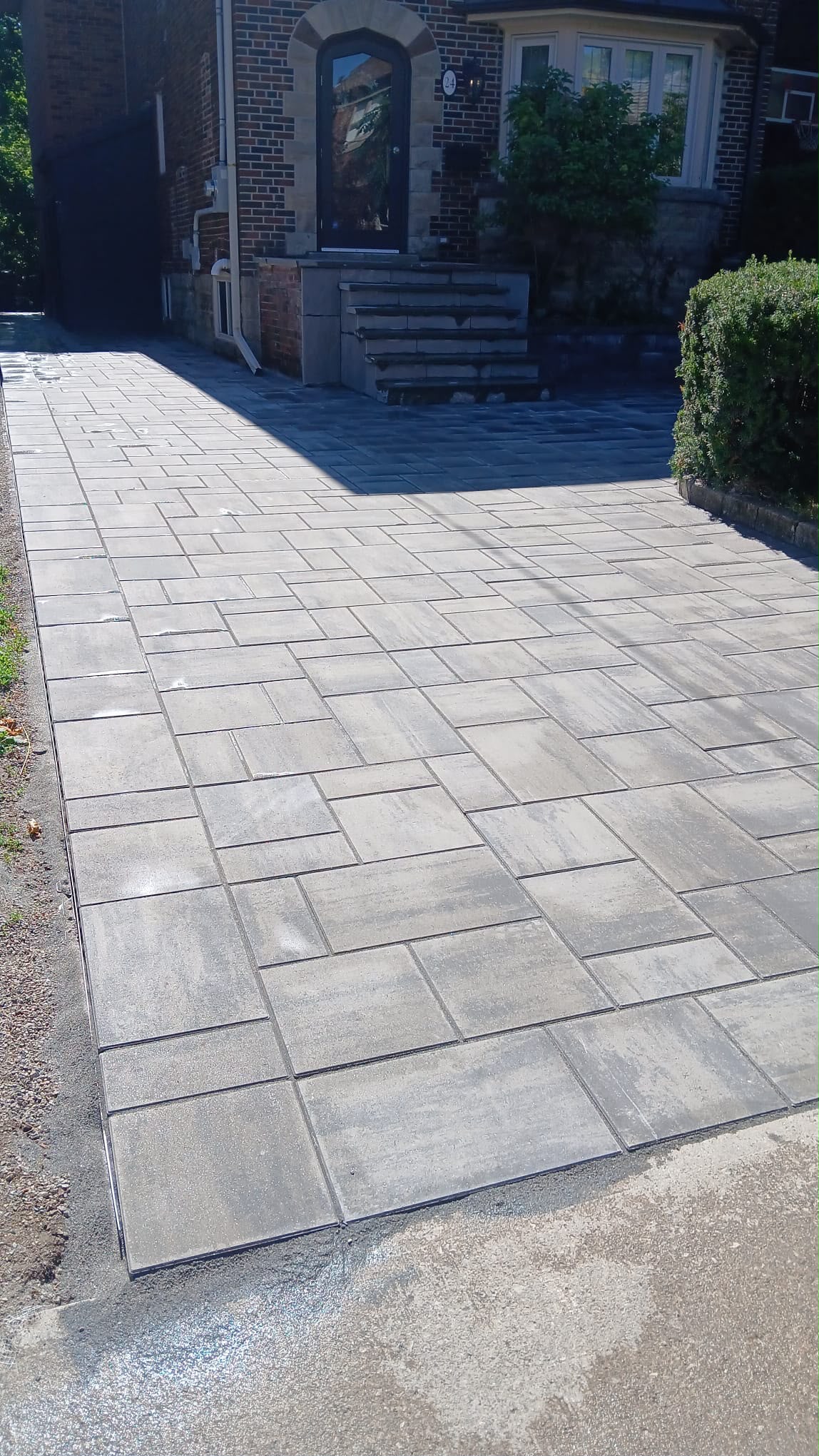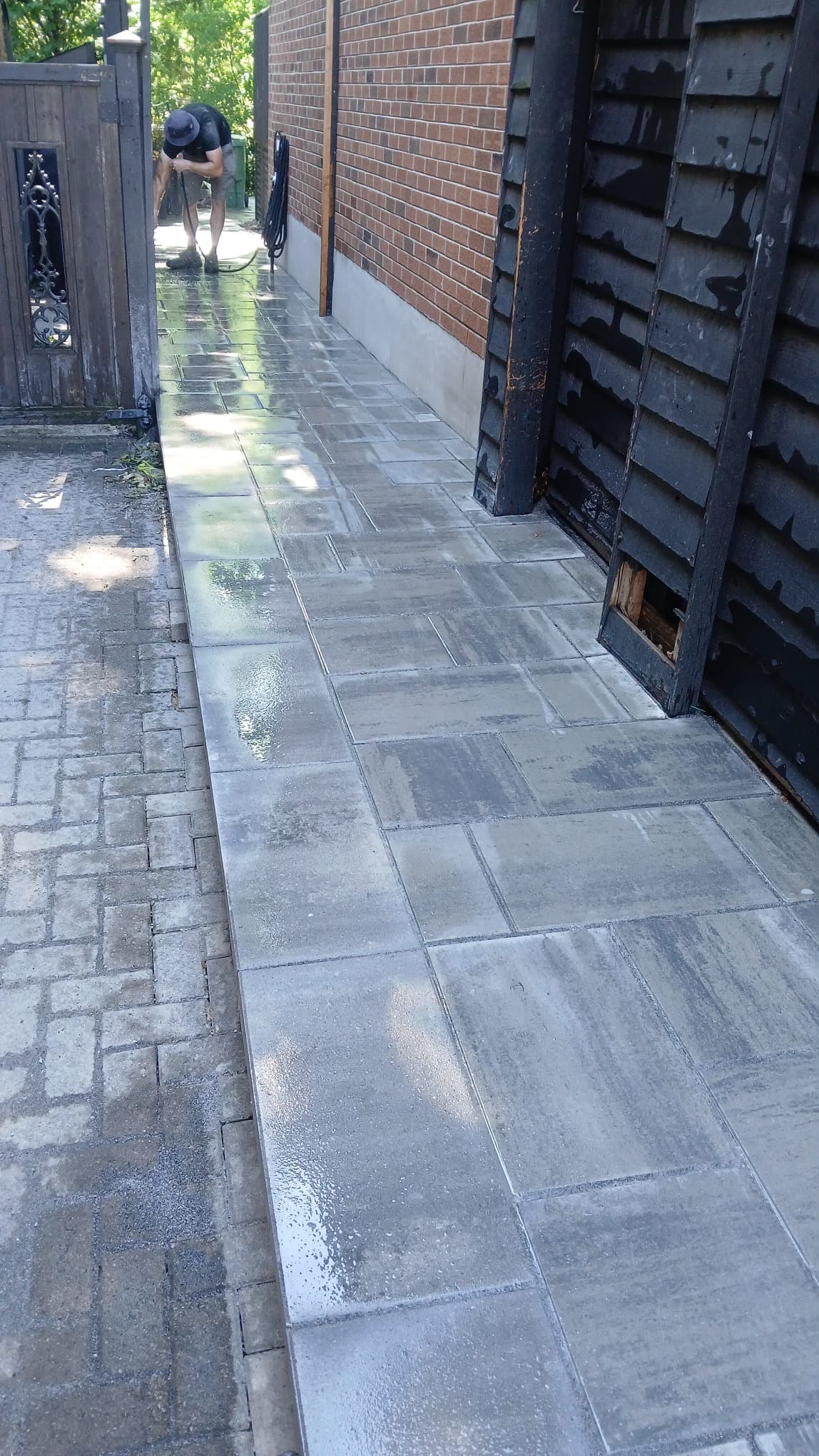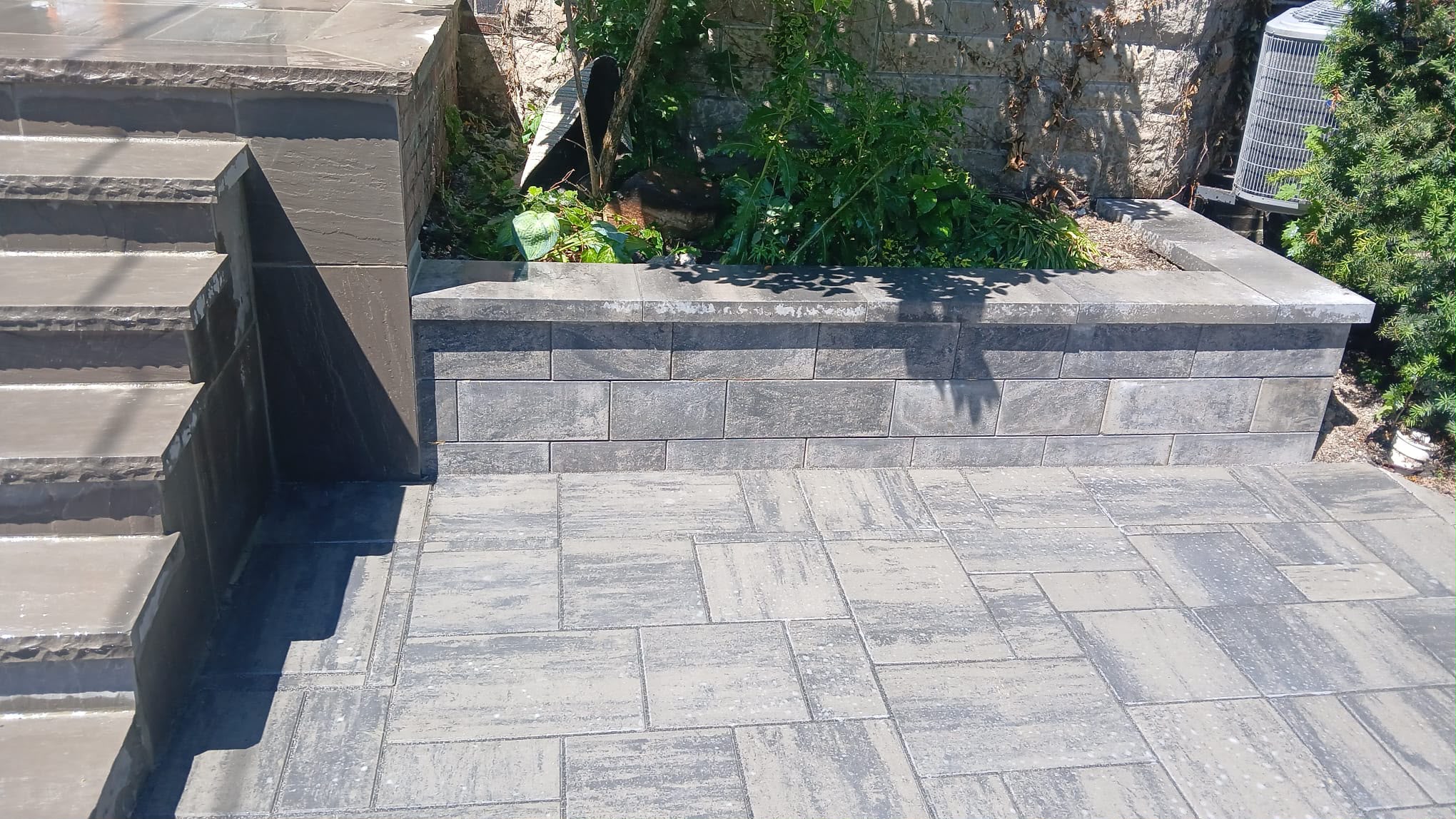

Interlocking stone patterns influence how a driveway, walkway or patio looks and how the individual pavers relate to one another. Pattern choice can also matter in areas exposed to vehicle traffic, but long-term performance depends on much more than the visible layout.
The paver system, base preparation, compaction, grading, drainage, edge restraint and joint material all play important roles in keeping an interlocking surface stable.
This guide looks at several popular interlocking stone patterns, where each one is commonly used and what Toronto homeowners should consider before choosing a layout.
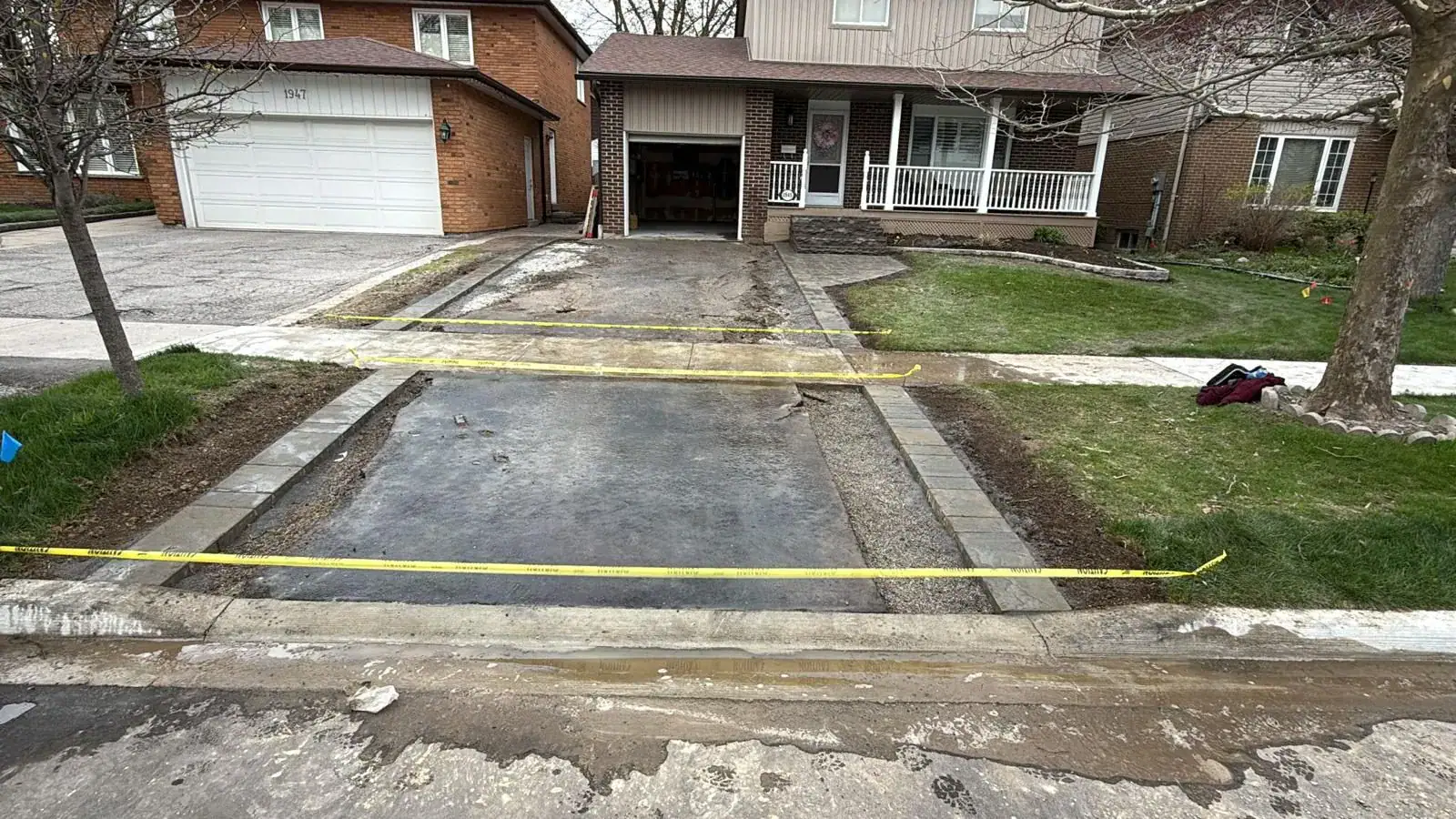
If you are choosing patterns as part of a new driveway, patio, walkway or entrance, A&A Masonry’s professional interlocking installation and repair services cover layout planning, paver selection, borders, grading, drainage and the preparation below the finished surface.
Why Interlocking Stone Patterns Matter
Pattern choice affects the overall appearance of an interlocking project and can influence how the pavers respond to traffic.
Paver shape, laying orientation, and pattern can affect how loads transfer through an interlocking surface, particularly in vehicle areas. However, the paver specification, supporting base, drainage, edge restraint and installation quality remain critical to long-term performance.
A good pattern should suit both the property’s design and how the finished surface will be used.
Popular Interlocking Stone Patterns and Where They Work Best
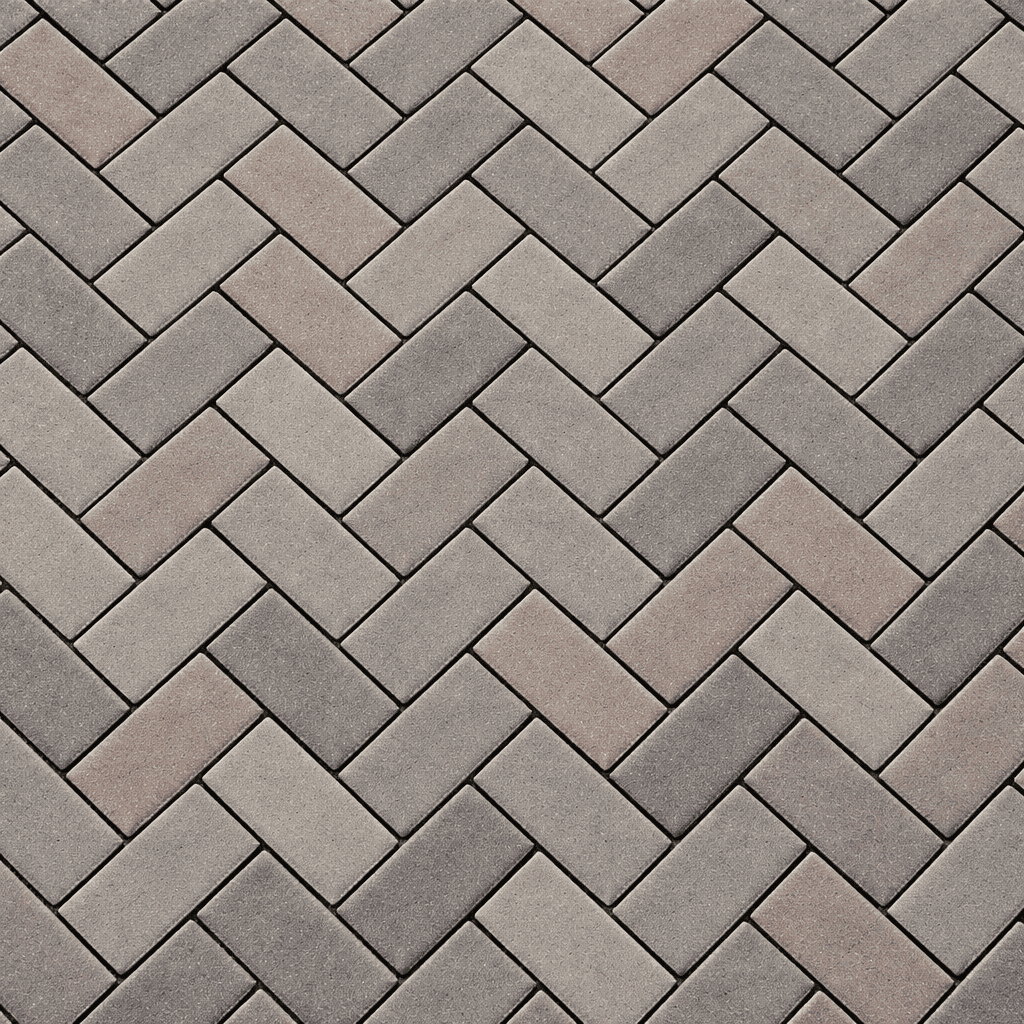
Herringbone pattern
Herringbone uses pavers arranged at opposing angles to create a tightly interlocked visual pattern. It is commonly used for vehicle areas because the angled layout can provide strong interlock when paired with pavers and an installation system designed for driveway traffic.
It also creates a distinctive look that works well on driveways, entrances and other areas where homeowners want more visual detail.
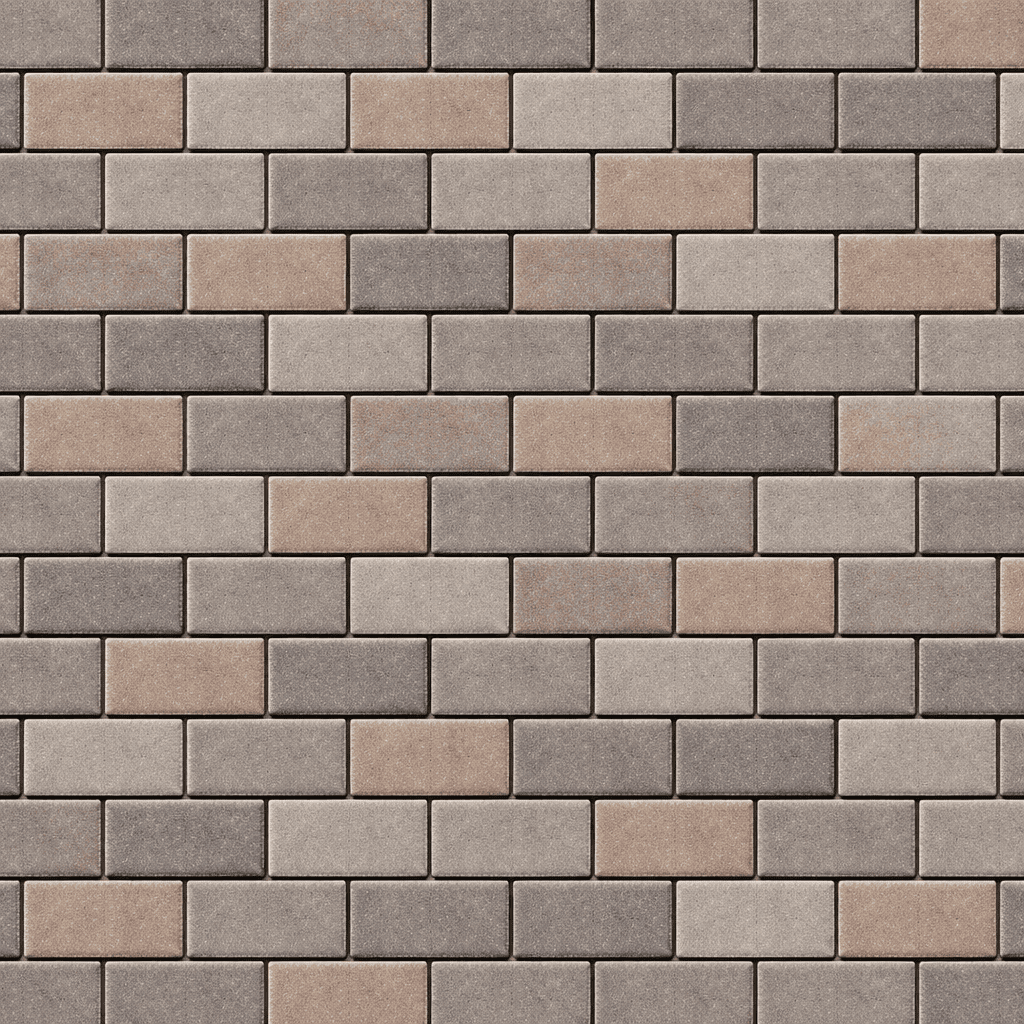
Running bond pattern
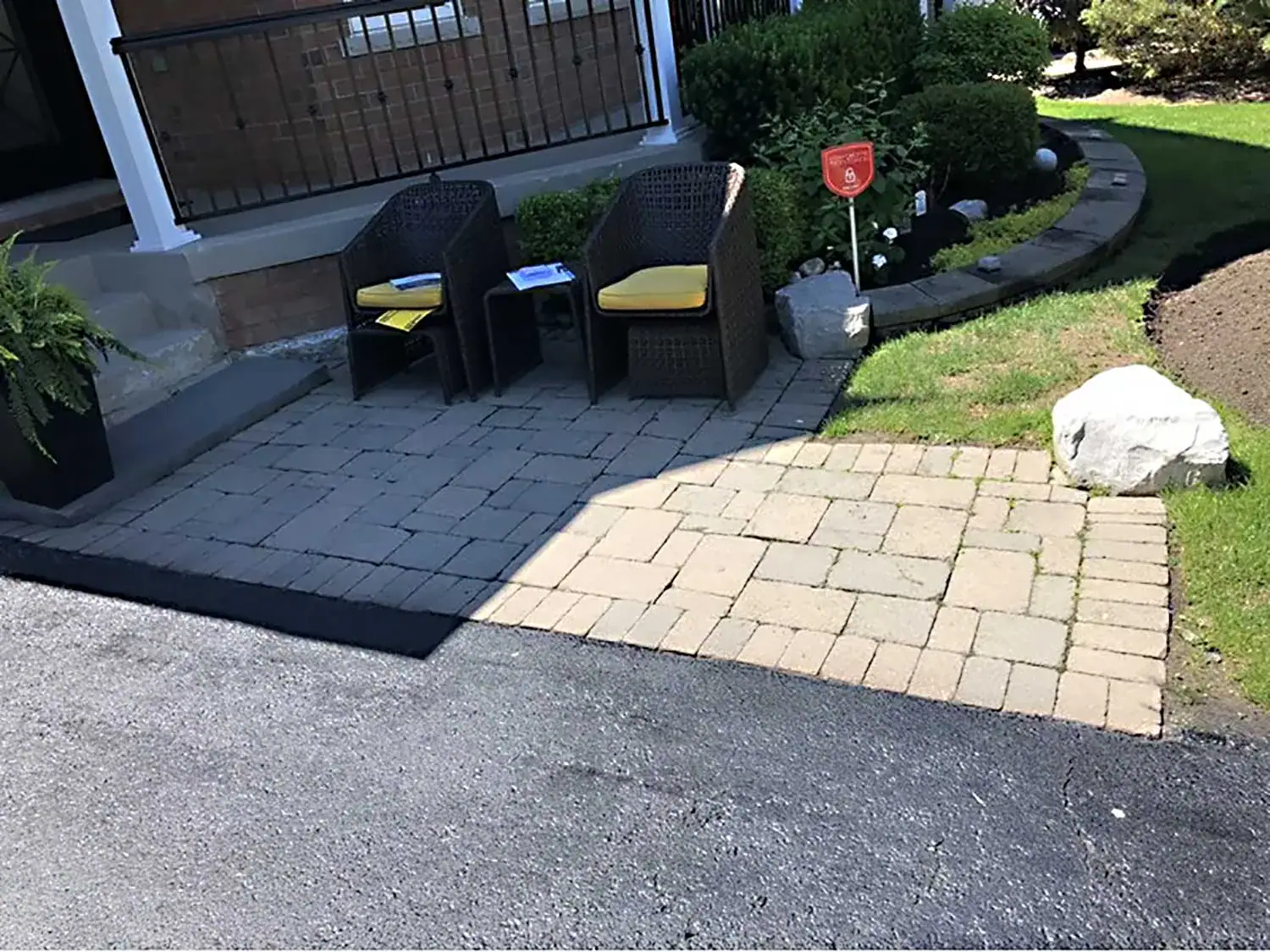
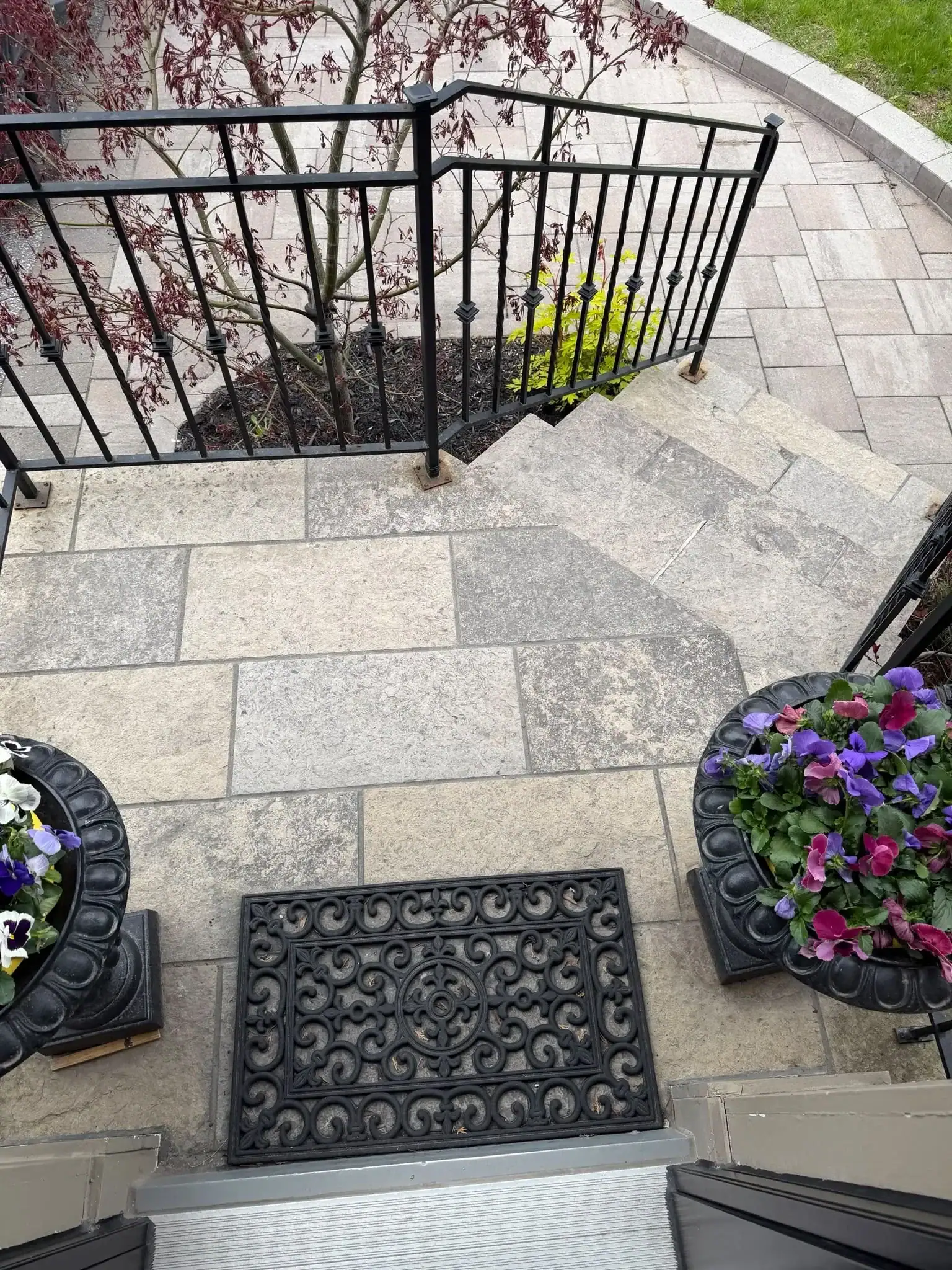
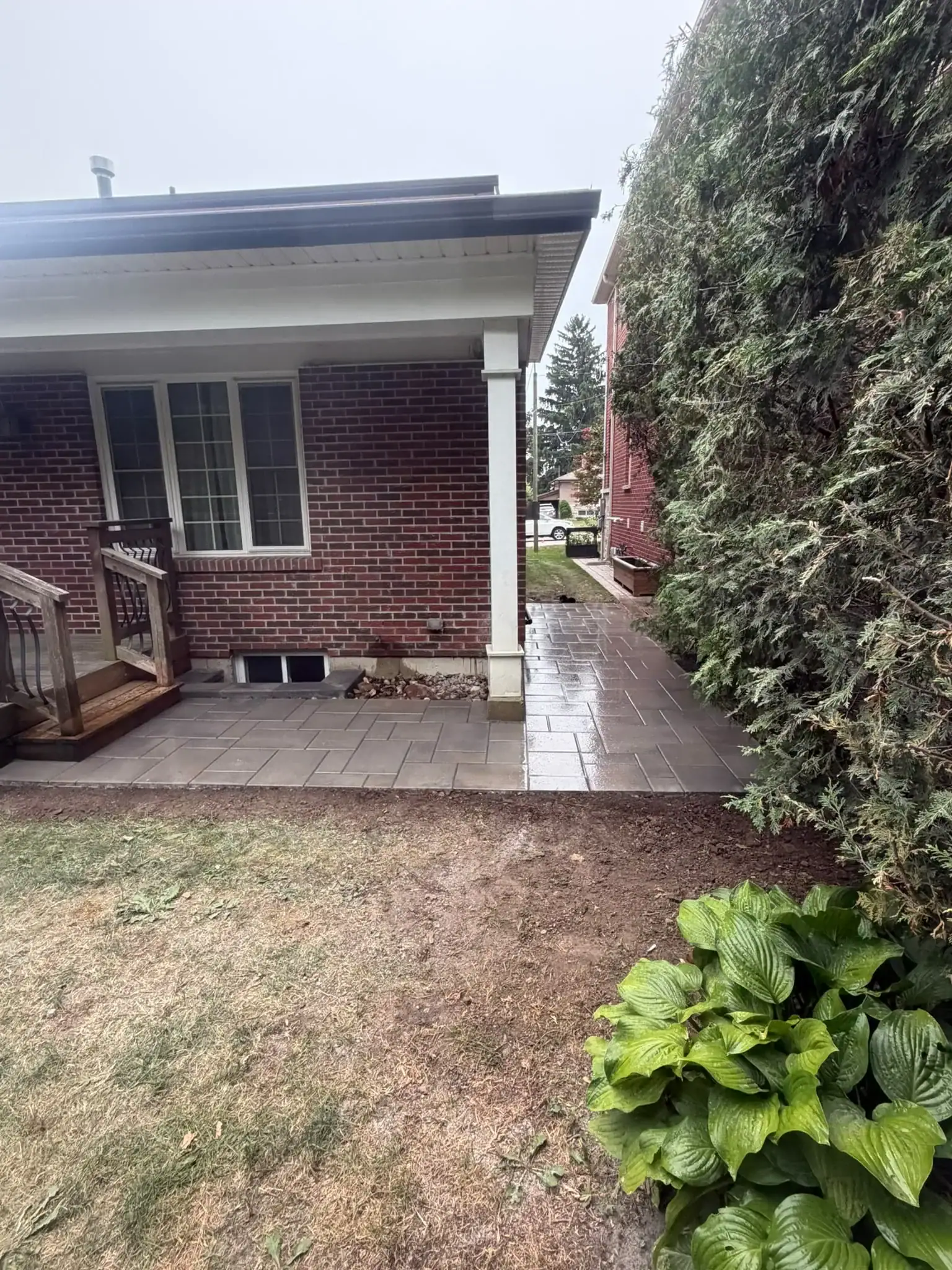
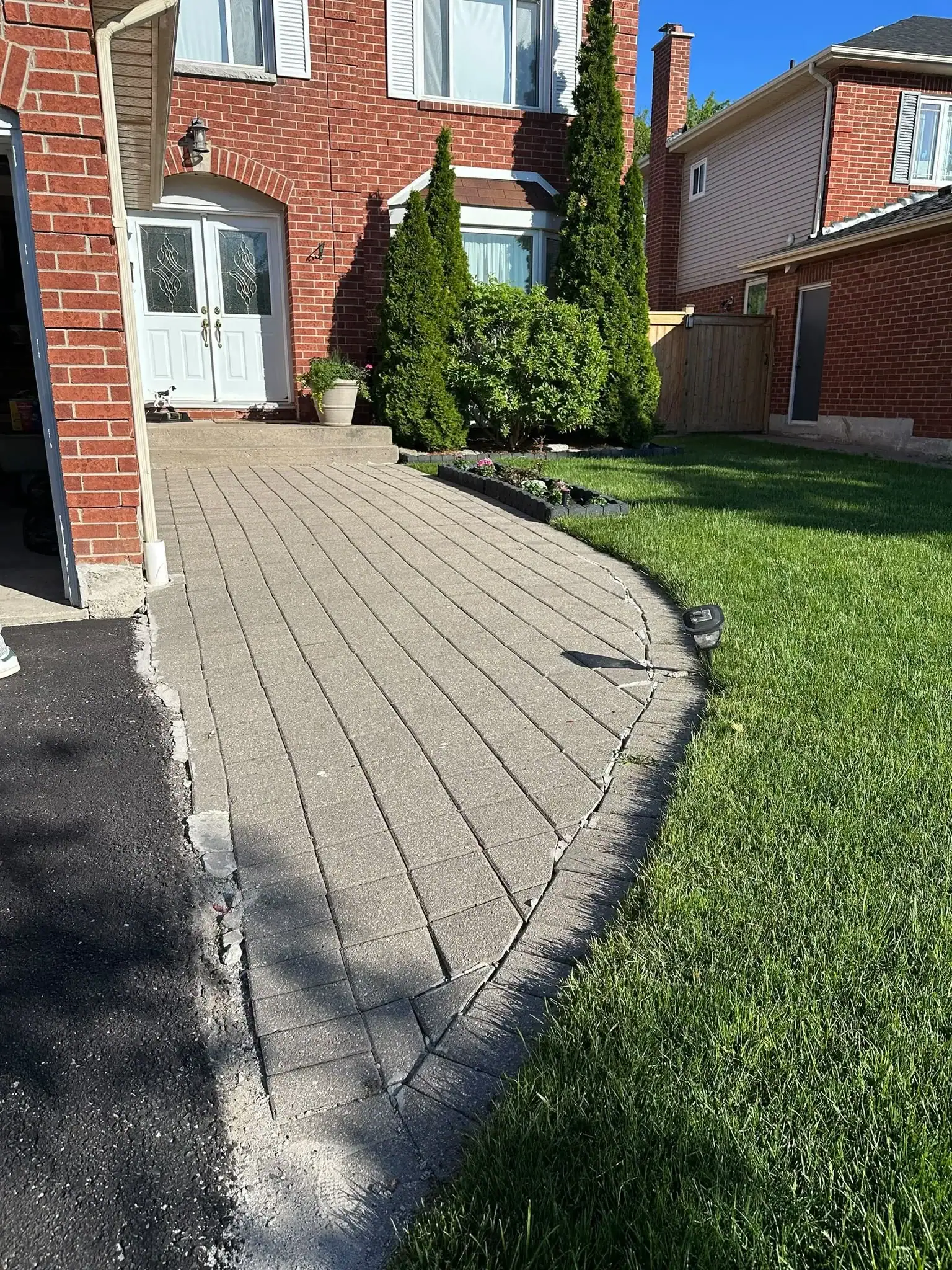
Running bond arranges pavers in offset rows, creating a clean, traditional appearance. It is commonly used on walkways, patios, and other straightforward layouts.
Whether running bond is appropriate for a driveway depends on the paver system, laying orientation, and manufacturer guidance for vehicle applications.
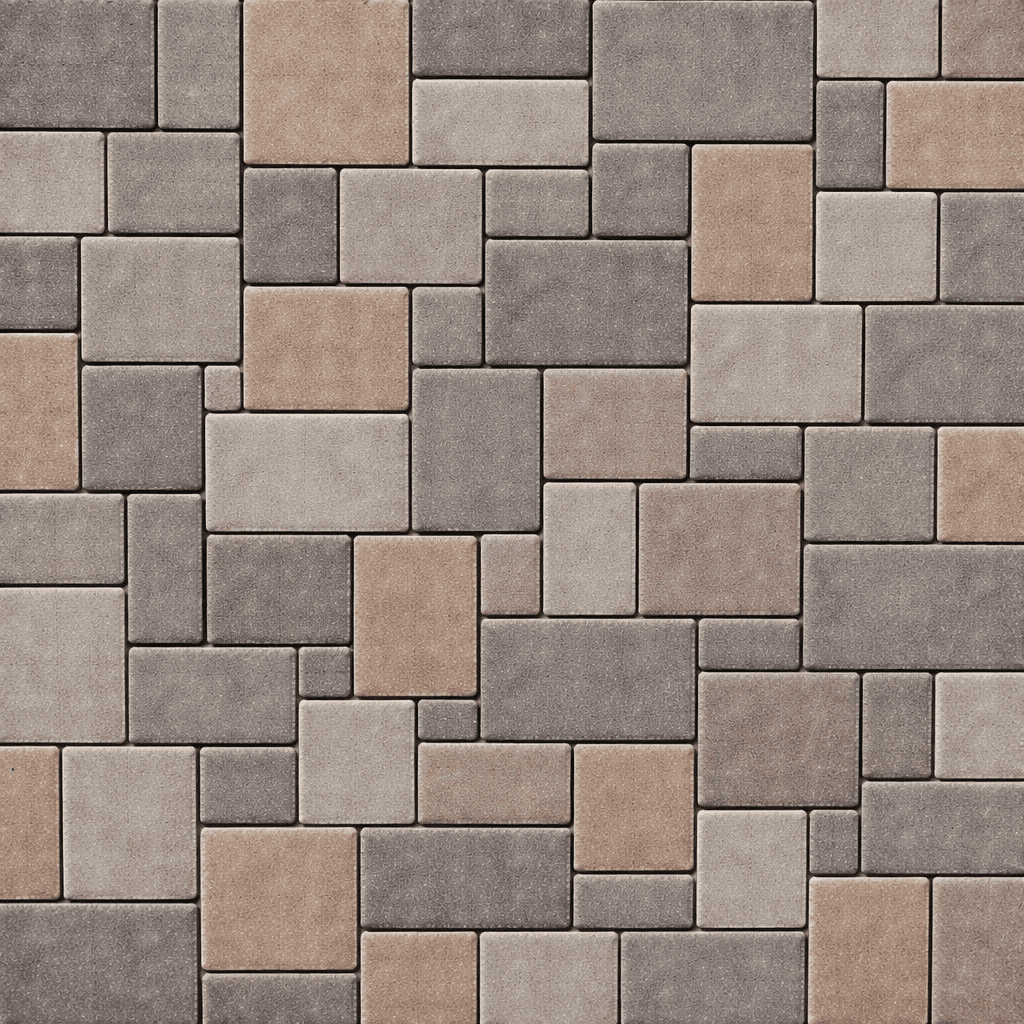
Random ashlar pattern
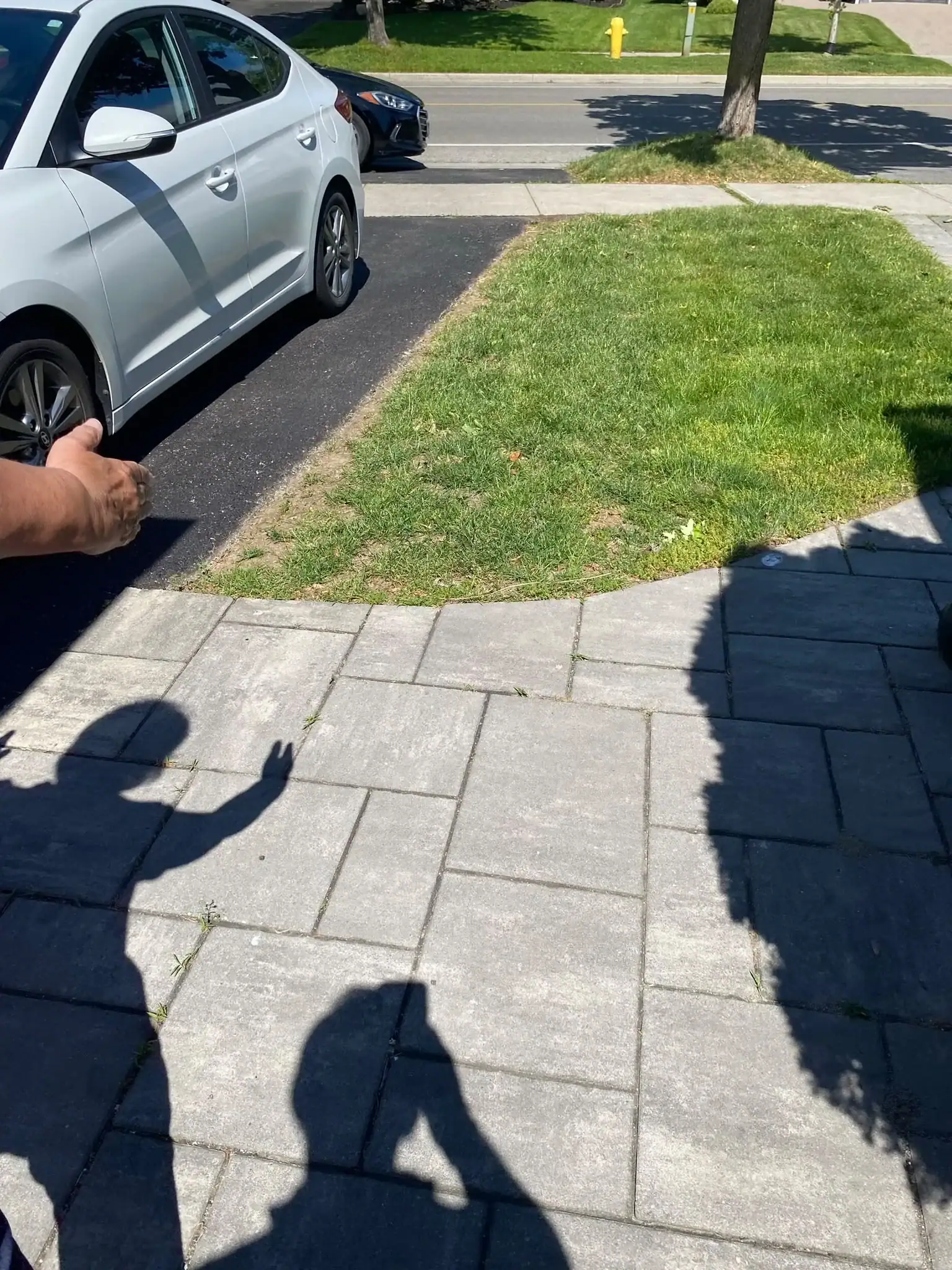
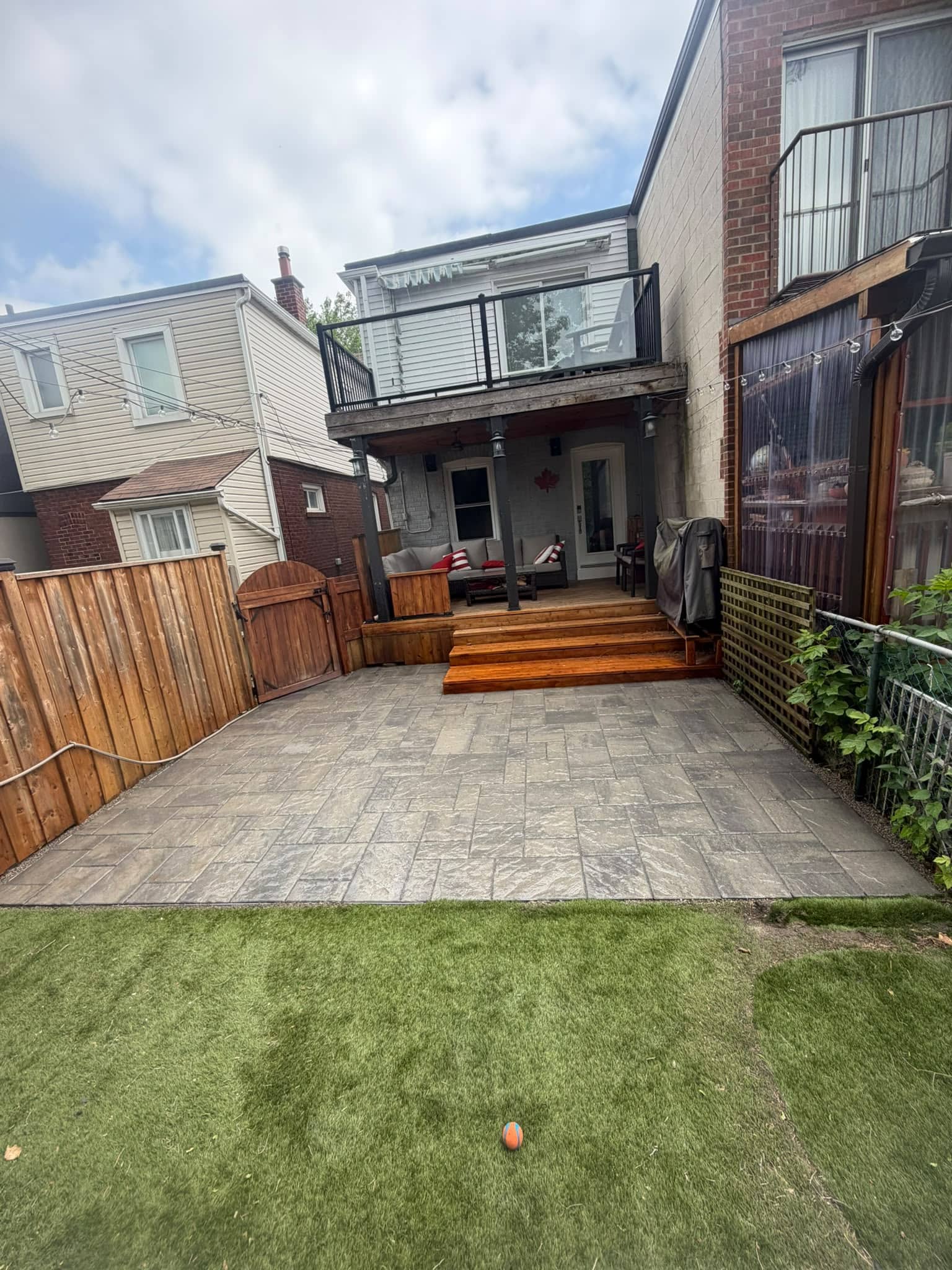
Random ashlar combines different paver sizes to create a less repetitive layout. It can work well on patios, walkways, and larger outdoor areas where homeowners want a more varied stone appearance.
The layout should still follow the requirements of the selected paver system and be planned around borders, cuts, and transitions to surrounding surfaces.
Climate Performance of Interlocking Stone
Toronto’s repeated freeze-thaw conditions can affect outdoor paved surfaces when moisture, drainage or movement problems are present.
Freeze-thaw performance depends on the overall installation, including base materials, compaction, grading, drainage, jointing and edge restraint. Pattern selection is only one part of the design.
For more background on how seasonal exposure affects exterior masonry, see A&A Masonry’s guide on how weather affects masonry over time.
Installation Quality Matters More Than Pattern Choice
Even an attractive pattern will not perform well if the installation below it is inadequate.
Proper excavation, base preparation, compaction, grading, drainage, edge restraint and joint finishing are important for keeping an interlocking surface level and stable.
A&A Masonry’s professional interlocking installation services address both the visible layout and the supporting work below the pavers.
How Pattern Choice Affects Curb Appeal and Overall Design
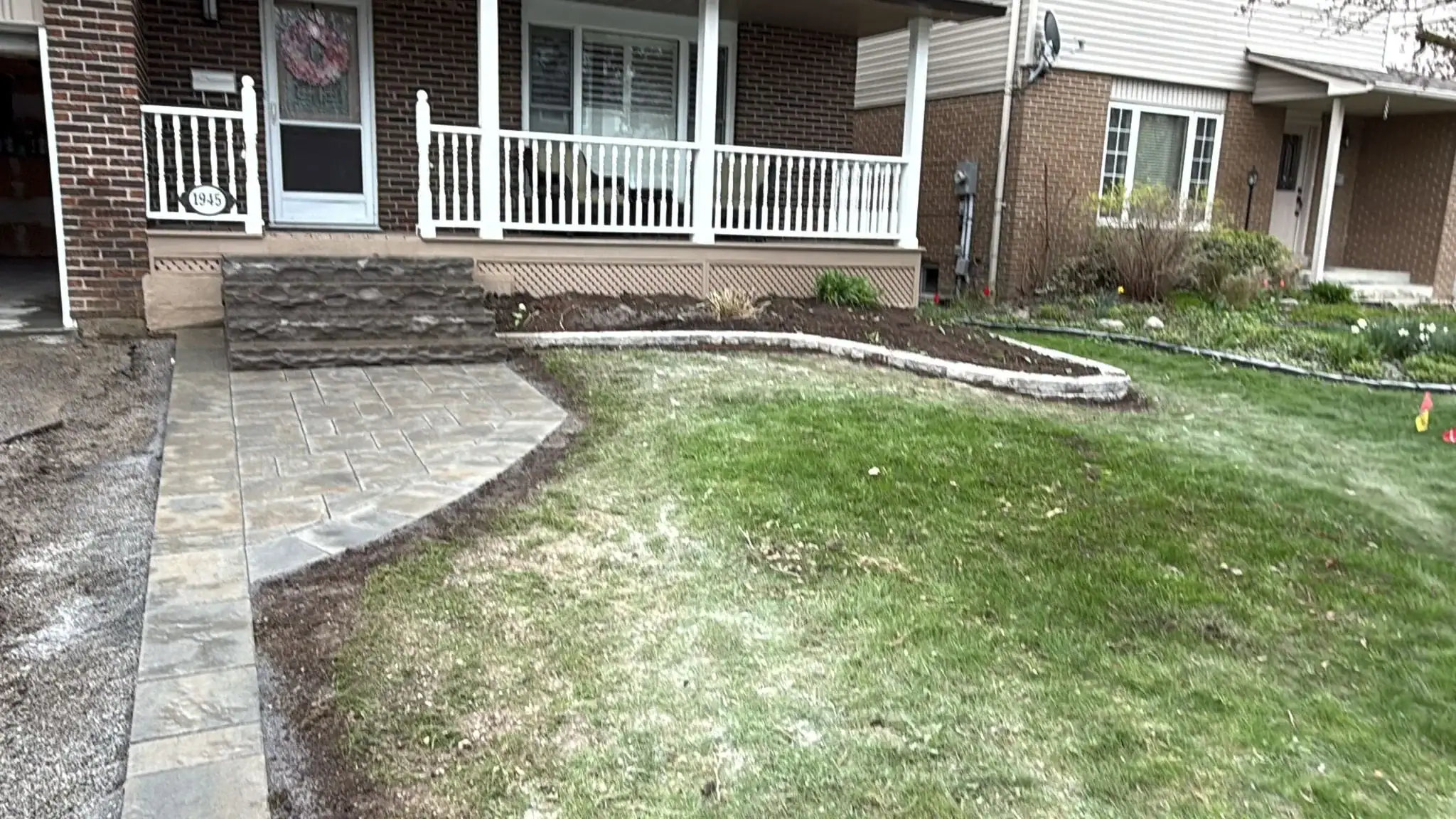
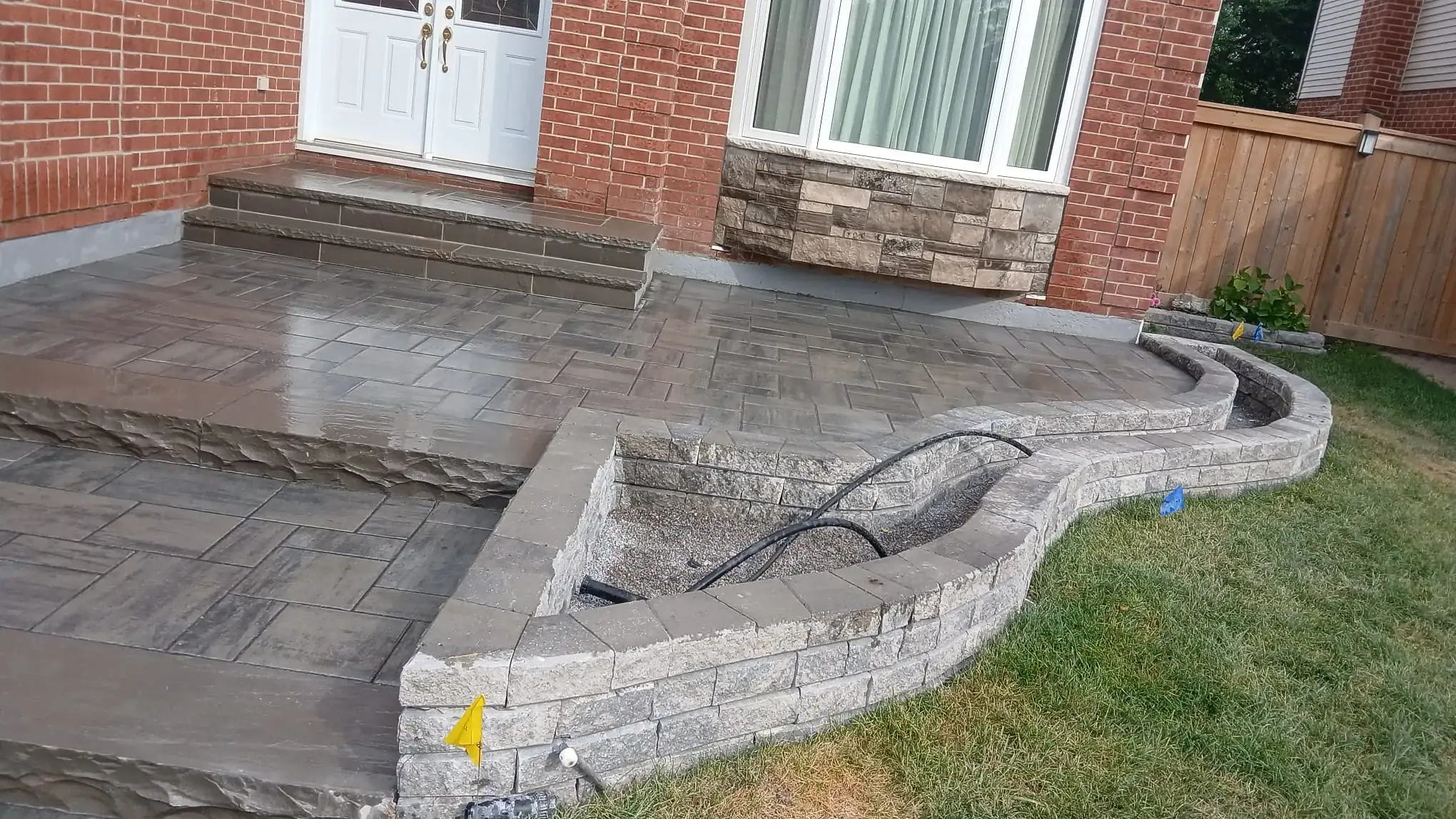
A well-planned interlocking pattern can improve curb appeal and help a driveway, walkway or patio feel more coordinated with the house and landscaping.
Pattern, colour, border style and stone size should work together rather than being selected independently. Simple layouts may suit traditional homes, while larger-format or more varied patterns can suit contemporary properties.
A well-designed hardscape can strengthen a property’s overall presentation, but the financial effect on resale value varies by the property, neighbourhood, project quality, and individual buyer preferences.
Municipal Standards and Surface Construction
Interlocking work entirely within private property may still need to account for grading, drainage, and applicable zoning requirements. If construction extends into Toronto’s public right-of-way, additional permits and City requirements may apply.
Check driveway access, paving near City trees, and construction beyond the property line against current City of Toronto requirements before work begins.
Final thoughts for Toronto homeowners
Interlocking stone patterns are not just decorative. The right pattern improves durability, controls movement, and adds measurable value to Toronto homes.
Choosing interlocking stone patterns based on use, climate, and proper installation helps ensure your driveway, patio, or walkway performs well for years to come.
Planning an Interlocking Project?
If you are choosing a pattern for a driveway, patio, walkway, or entrance, the layout should suit the paver system, traffic, space dimensions, and the property’s overall design. A&A Masonry can help plan the pattern along with the base, grading, drainage, borders, and other installation details that affect the finished project.