
Stone veneer fireplaces can make a room feel warmer, more finished, and more visually grounded, but not every fireplace design that looks good in a photo works well in a real home. Some feel too bulky for the room. Some clash with the other finishes. Some create a strong focal point but forget about scale, heat, clearance, or how the fireplace will actually be used day to day.
That is why homeowners should consider stone veneer fireplaces more than just a style decision. A fireplace has to work visually, but it also has to fit the room, the house, and the practical side of installation. If the design is too heavy, too trendy, or disconnected from the rest of the space, the fireplace can feel forced instead of timeless. If the planning ignores code, appliance type, or proper installation details, the project can become more complicated than expected.
For Toronto and GTA homeowners, this matters whether the fireplace is a main living room focal point, a basement feature wall, or part of a broader renovation. In this guide, you will learn what makes a stone veneer fireplace work, which design choices usually hold up best over time, what practical issues deserve attention before installation, and when homeowners should stop thinking only about style and start thinking about performance too.
What a Stone Veneer Fireplace Really Adds
A stone-veneer fireplace changes more than just the fireplace surround. It changes the visual weight of the whole room. It can make the space feel more natural, more architectural, more traditional, or more contemporary, depending on the material, colour, pattern, and scale.
That is one reason stone veneer is so popular. It adds texture and depth without the same mass as full stone construction. It can create the appearance of a substantial masonry feature while still working within renovation and design budgets more comfortably than full-stone builds often do.
For homeowners, the key is to understand that the fireplace is one of the strongest visual anchors in the room. Once the stone veneer is installed, the fireplace is no longer the background. It becomes a major part of how the room reads.
Why Some Stone Veneer Fireplaces Work Better Than Others
The fireplaces that work best usually get three things right at once: scale, material fit, and room context.
Scale matters because a large stone wall can overwhelm a smaller room, while a very small veneer treatment can feel underpowered in a tall or open-concept space.
Material fit matters because the veneer should feel connected to the rest of the home. A rustic stacked stone may work beautifully in one room and feel too rough or too busy in another.
Room context matters because the fireplace is not viewed in isolation. It interacts with flooring, wall colour, ceiling height, furniture, shelving, lighting, and the overall style of the house.
This is why the most successful fireplace projects usually do not begin with “Which veneer do I like most?” They begin with “What kind of fireplace should this room support?”
Best Design Directions for Stone Veneer Fireplaces
There is no single best style, but some directions tend to work more consistently than others because they are easier to integrate into real living spaces.
- Full-height feature wall: strong visual impact, often best in taller rooms where the scale can support it
- Fireplace surround only: more restrained and often easier to fit into smaller or more traditional rooms
- Fireplace with built-in shelving or millwork: useful when the goal is balance rather than a single heavy focal mass
- Cleaner modern veneer look: often works best in contemporary rooms with simpler lines and fewer competing textures
- Warmer, more textured traditional veneer: often works best in classic or transitional interiors where softness and character matter
The most important decision is usually how dominant you want the fireplace to be. Some rooms need a quiet focal point. Others can support a bold one.
How to Choose a Veneer Style That Fits the Home
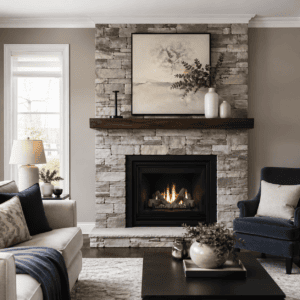
The veneer should feel like it belongs to the house, not like a disconnected feature copied from another project. That means considering the home’s age, the surrounding finishes, and the space’s tone before choosing the stone style.
If the home leans traditional, a heavily modern linear veneer choice may feel too sharp. If the room is clean and contemporary, a rough, highly varied stone can sometimes make the space feel visually noisy. That does not mean you have to match the house rigidly. It does mean contrast should feel intentional, not random.
For homeowners who are still deciding whether veneer is the right direction to take, our service page on fireplace stone veneers is a useful reference. It helps frame how veneer functions as both a design choice and a masonry feature.
When a Stone Veneer Fireplace Starts Looking Too Heavy
One of the most common design mistakes is making the fireplace visually heavier than the room can support. This can happen when the stone is too dark, the texture is too aggressive, the wall coverage is too broad, or there are too many competing elements around it.
Signs the concept may be getting too heavy include:
- the fireplace dominates every other element in the room
- the veneer texture fights with the flooring, wood grain, or ceiling beams
- the fireplace wall feels dark even in daylight
- the room loses flexibility because the focal point is too strong
- the scale looks oversized compared with the seating, windows, or ceiling height
This is where restraint often makes the design stronger. A fireplace does not have to cover the entire wall to feel finished. In many homes, the best result comes from using stone veneer more selectively and letting the surrounding millwork, paint, or trim help balance the room.
What Practical Issues Matter Before Installation
Fireplace projects often start as design ideas, but they quickly become construction projects once material, appliance, venting, and wall conditions come into play. Before choosing veneer, homeowners should also think through the practical side.
Important practical factors include:
- what type of fireplace or appliance is being used
- whether the wall can support the installation properly
- what clearances, venting, or combustible-material limits apply
- how the veneer ties into trim, flooring, mantle design, or media layout
- whether the project affects an existing chimney or fireplace opening
Toronto’s building permit guidance says a permit is required to install or reconstruct a chimney or fireplace, and to install a wood-burning stove or fireplace. That is a strong reminder that fireplace work is not only decorative. City of Toronto: When Do I Need a Building Permit?
Ontario’s Building Code also contains the broader construction rules around fireplaces and chimneys. Ontario Building Code
Why the Fireplace Type Matters to the Veneer Plan
A stone veneer fireplace design should not be planned as though every fireplace works the same way. A wood-burning fireplace, gas fireplace, electric unit, or other system may require different installation requirements, heat conditions, and design choices regarding depth, venting, and clearance.
For example, a wood-burning fireplace may bring more chimney-related planning into the conversation, while a gas or electric feature may create a different balance between appearance and technical installation. Health Canada also notes that wood smoke can affect indoor air quality and health, which is one reason fireplace choices should not be treated casually. Health Canada: Wood smoke
If the project involves an existing chimney system, related pages such as chimney repair Toronto and our blog on chimney cap options and why they matter can also become relevant, depending on the condition of the chimney above the roofline.
Common Mistakes Homeowners Make With Stone Veneer Fireplaces
Some fireplace mistakes happen because the design is too trend-driven. Others happen because the installation is treated as a finished upgrade, with insufficient attention to the technical side.
Common mistakes include:
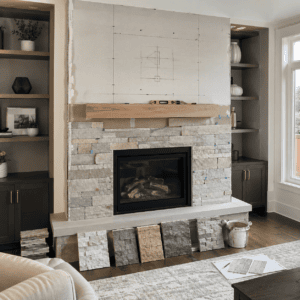
- choosing veneer only from a showroom board without testing it against the actual room
- making the fireplace too dominant for the scale of the space
- using a mantle or trim style that clashes with the veneer
- forgetting how the fireplace wall will connect to the flooring, lighting, and furniture
- treating the installation as cosmetic when it affects a real fireplace system
- ignoring chimney or venting-related issues that should be corrected first
Another mistake is assuming the veneer alone will make the fireplace feel custom. In many cases, what makes the final design work is not the veneer by itself, but the proportion, the side details, the mantle choice, the lighting, and how cleanly the fireplace transitions into the rest of the room.
What Homeowners Can Usually Decide for Themselves
Homeowners can usually decide the design direction, especially regarding how bold or quiet they want the fireplace to feel.
You can usually decide:
- whether the fireplace should be traditional, transitional, or modern
- whether the veneer should be lighter, warmer, darker, or more textured
- whether the fireplace should cover the full wall or just the surround
- how prominent do you want the fireplace to be in the room
Where professional help matters most is ensuring the design direction aligns with the actual fireplace system, the wall condition, the installation method, and any code or permit requirements associated with the project.
When Professional Help Makes More Sense
Professional help makes more sense when the project touches more than finishes. Once the fireplace work involves chimney changes, installation around a real firebox, structural surfaces, or broader renovation coordination, the project should be treated like real construction, not just decorative re-facing.
That usually includes cases where:
- the fireplace itself is being installed, reconstructed, or changed
- the chimney system needs attention
- the veneer layout affects mantle clearances or wall build-up
- the project is part of a full room renovation
- the homeowner is unsure how design choices interact with the appliance type
If the project involves a new fireplace installation or a broader rebuild, our page on fireplace installation Toronto is the more relevant next step. If the issue is more about chimney condition or masonry wear around the fireplace system, chimney repair Toronto may be the better reference.
Ontario also treats brick and stone masonry work as a regulated skilled trade, which reinforces that true fireplace masonry work is not just decorative finishing. Ontario Brick and Stone Mason Regulation
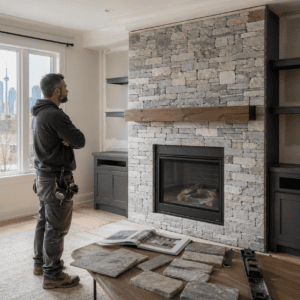
Quick Decision Guide: Subtle Fireplace, Statement Fireplace, or Full Feature Wall?
Choose a subtle fireplace approach if:
- the room is smaller or already visually busy
- you want texture without overwhelming the space
- the fireplace should support the room instead of dominating it
Choose a stronger statement fireplace if:
- the room is larger or has a more open concept
- the fireplace is meant to be the main visual anchor
- the rest of the finishes are restrained enough to support it
Choose a full feature wall only if:
- the room has the scale to carry it
- the ceiling height and layout support a taller visual element
- you are confident the fireplace should be the room’s main focal feature
If you are unsure, the safest choice is usually the one that leaves more room for the fireplace to feel timeless instead of overly trend-driven.
Final Thoughts
Stone veneer fireplaces work best when they do more than look attractive in a sample photo. They need to fit the room, complement the homeowner’s style, and make sense for the actual fireplace system behind the finish.
For Toronto homeowners, the strongest result usually comes from balancing appearance with practicality. The veneer should feel right for the house, the scale should suit the room, and the installation should respect the technical side of fireplaces, chimneys, and code requirements.
If there is one clear takeaway, it is this: the best stone-veneer fireplace is not the most dramatic. It is the one that still feels right in the room after the design trend fades and daily use begins.