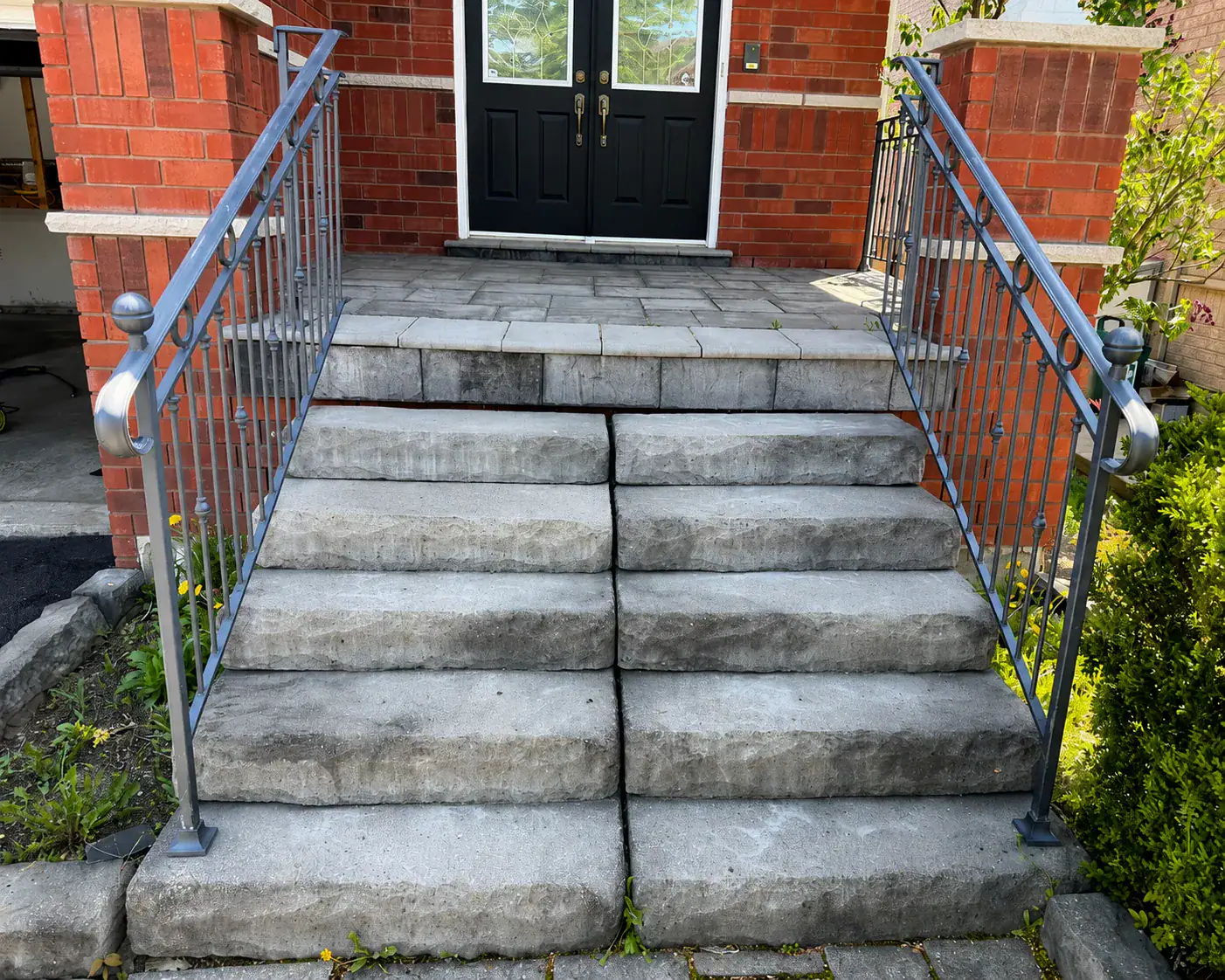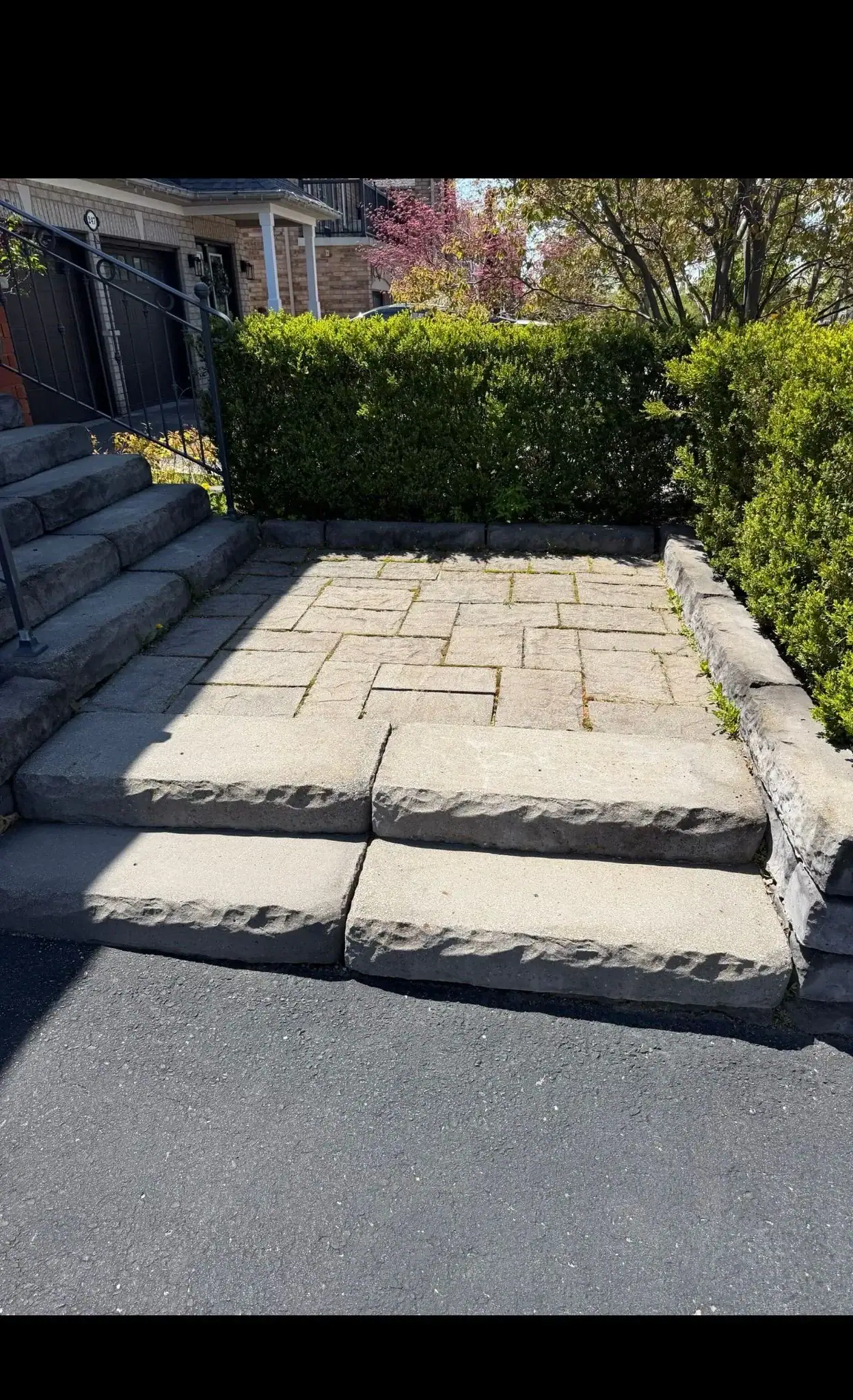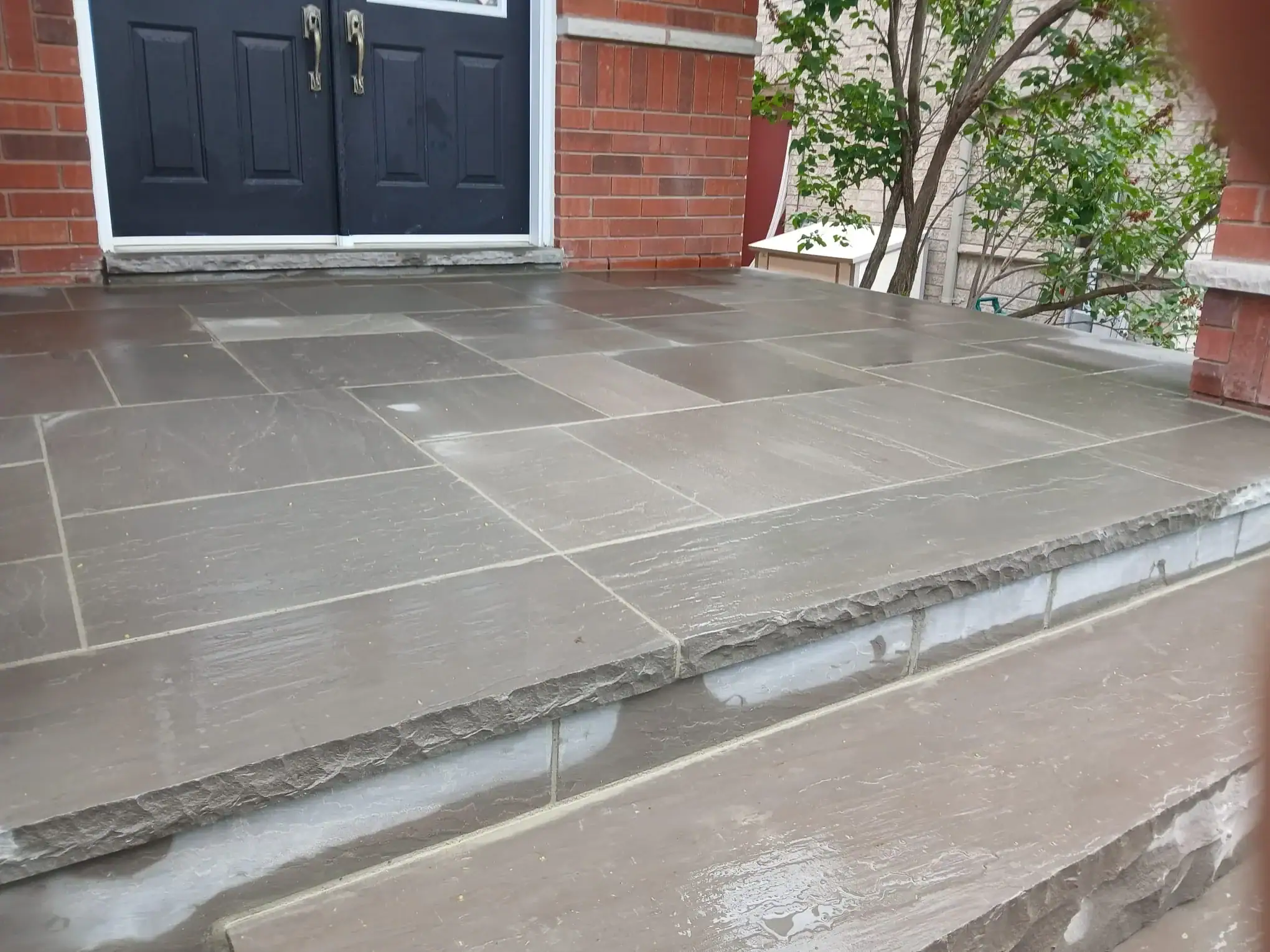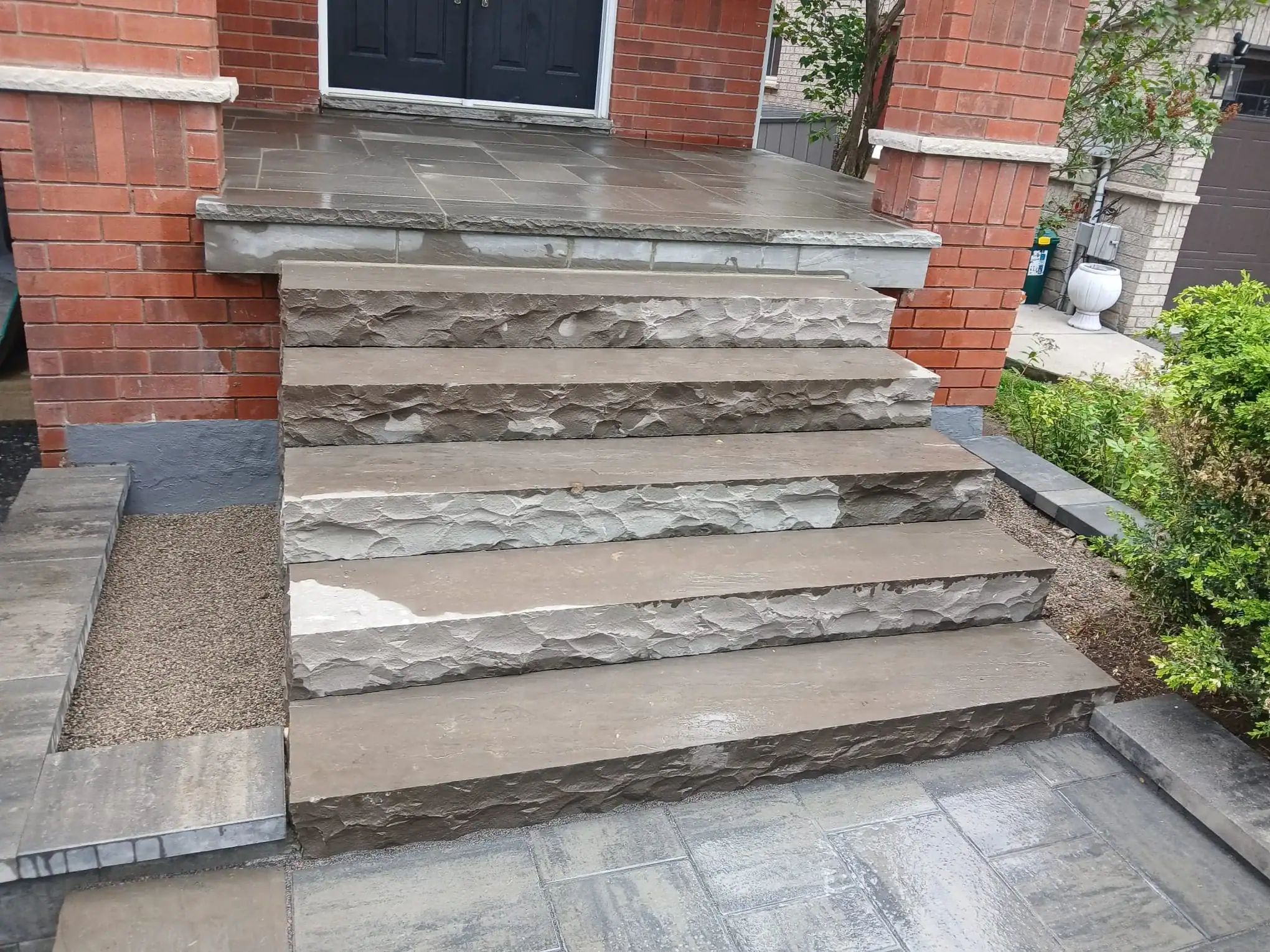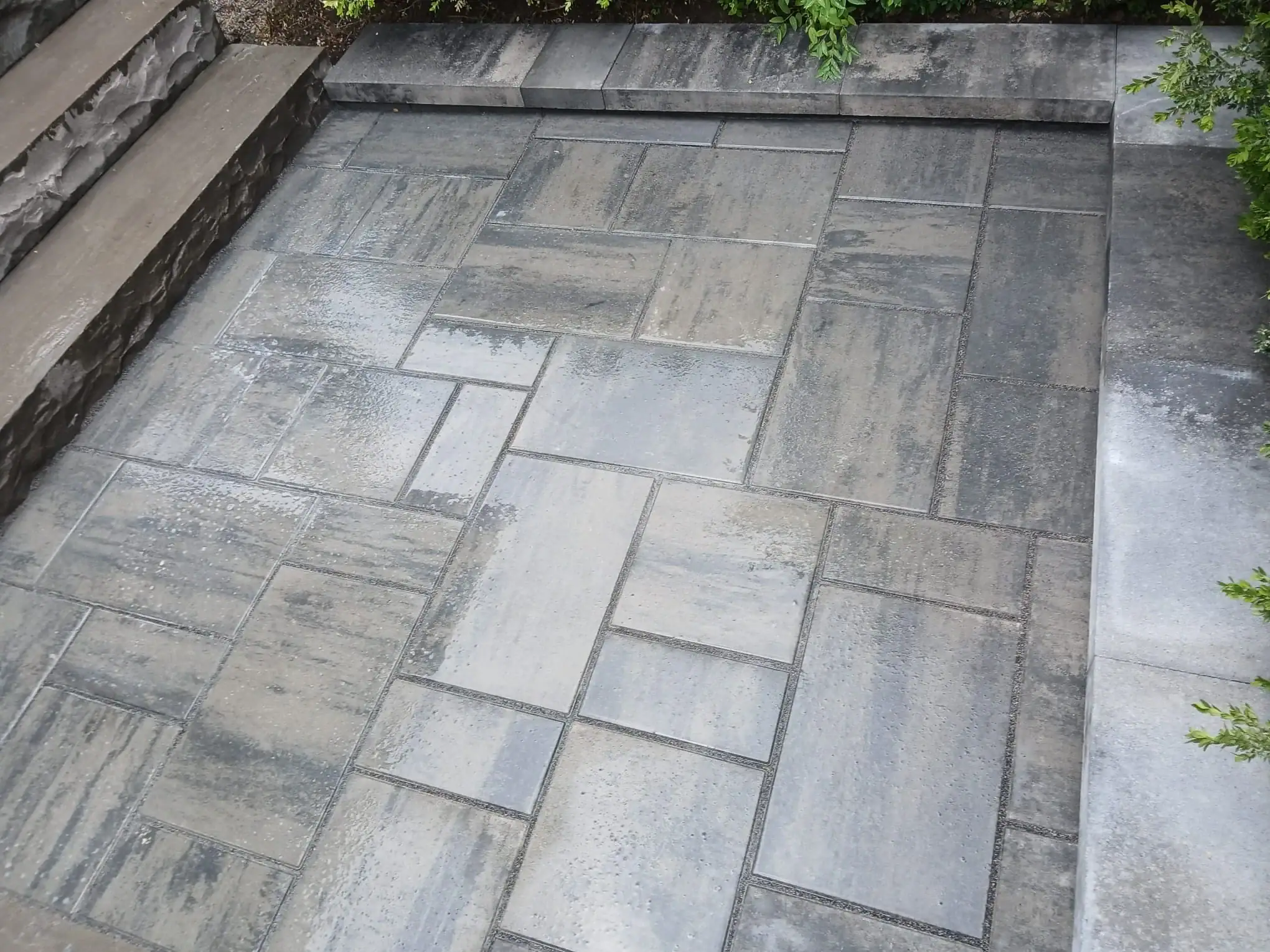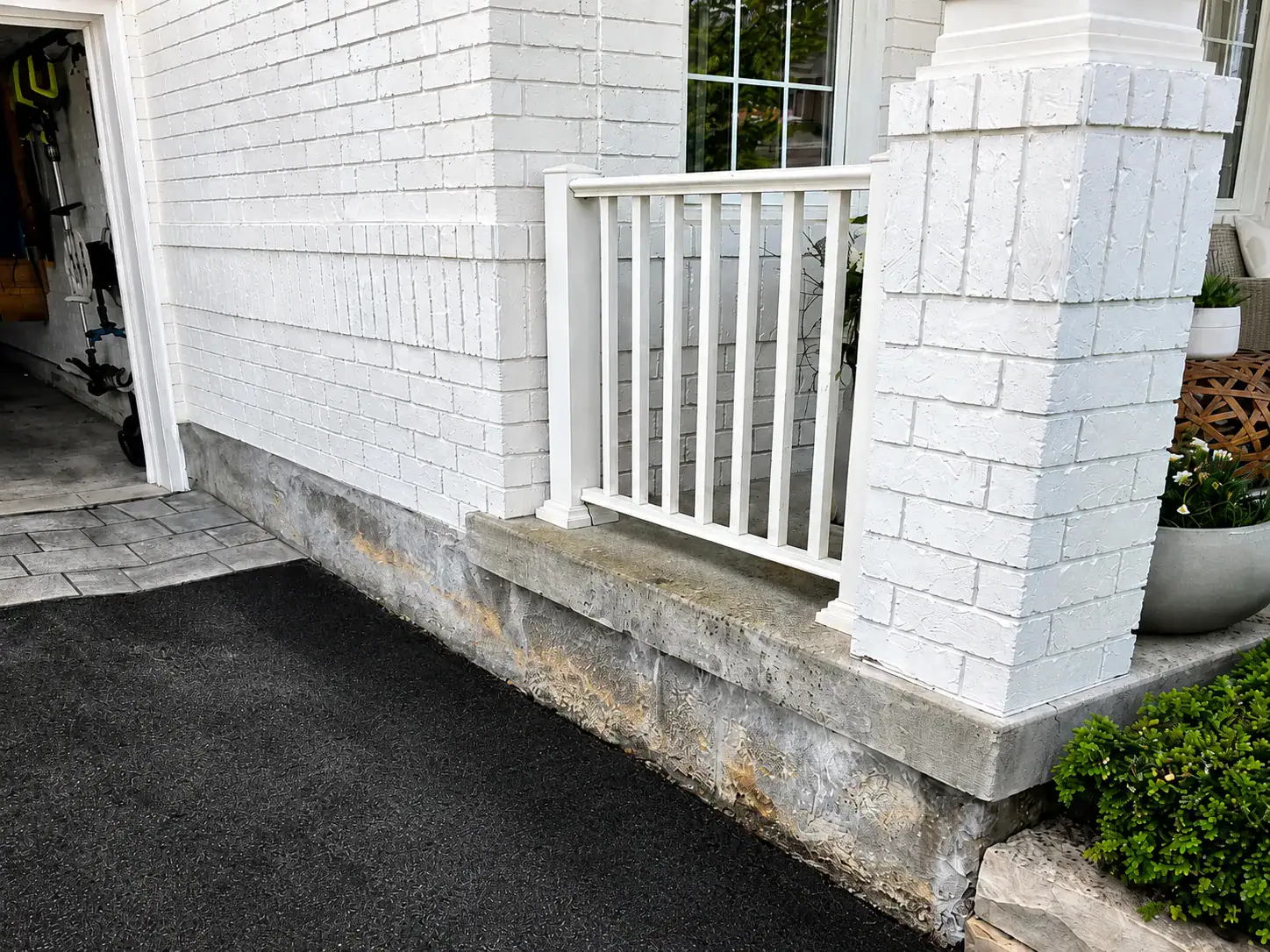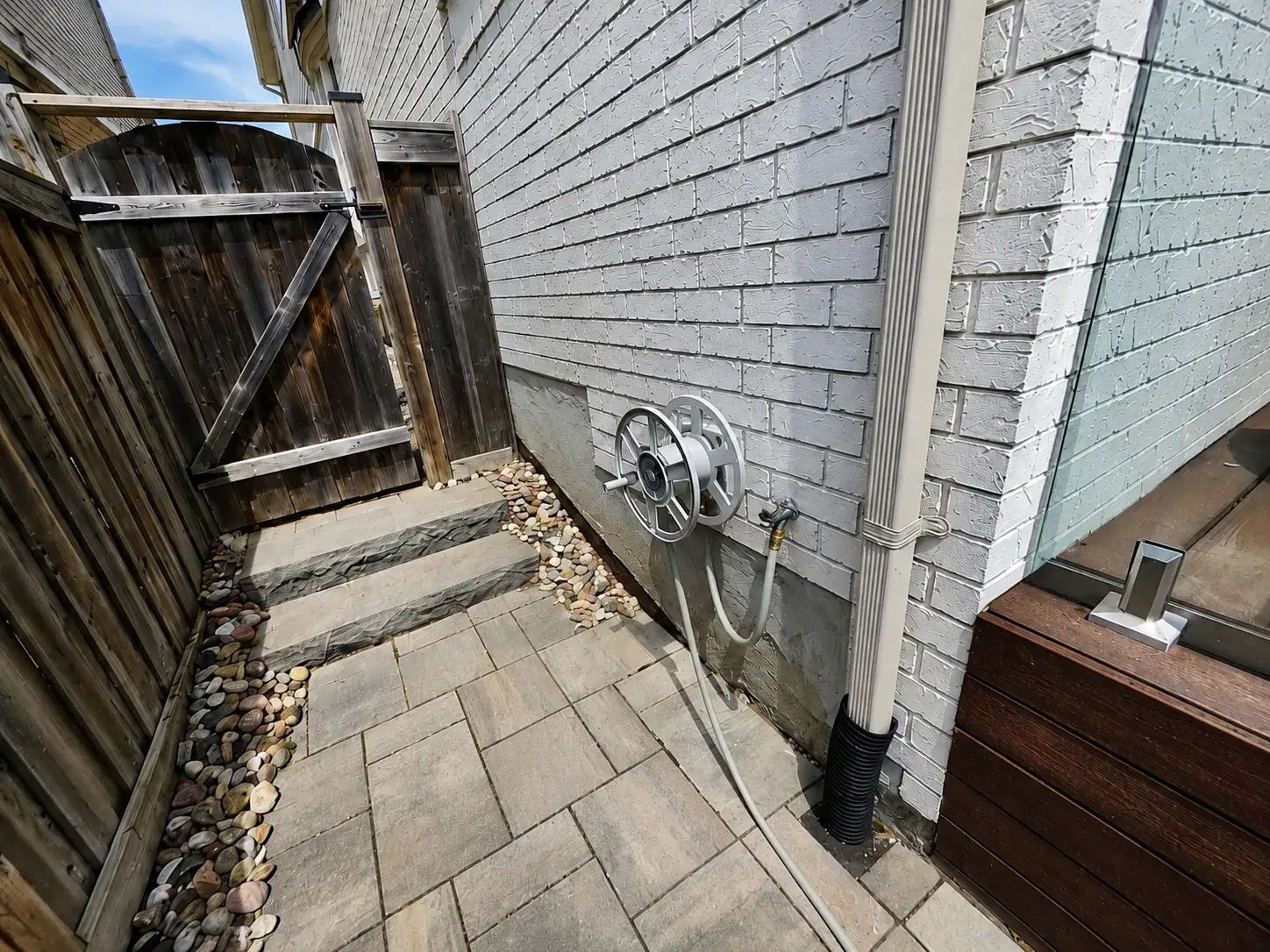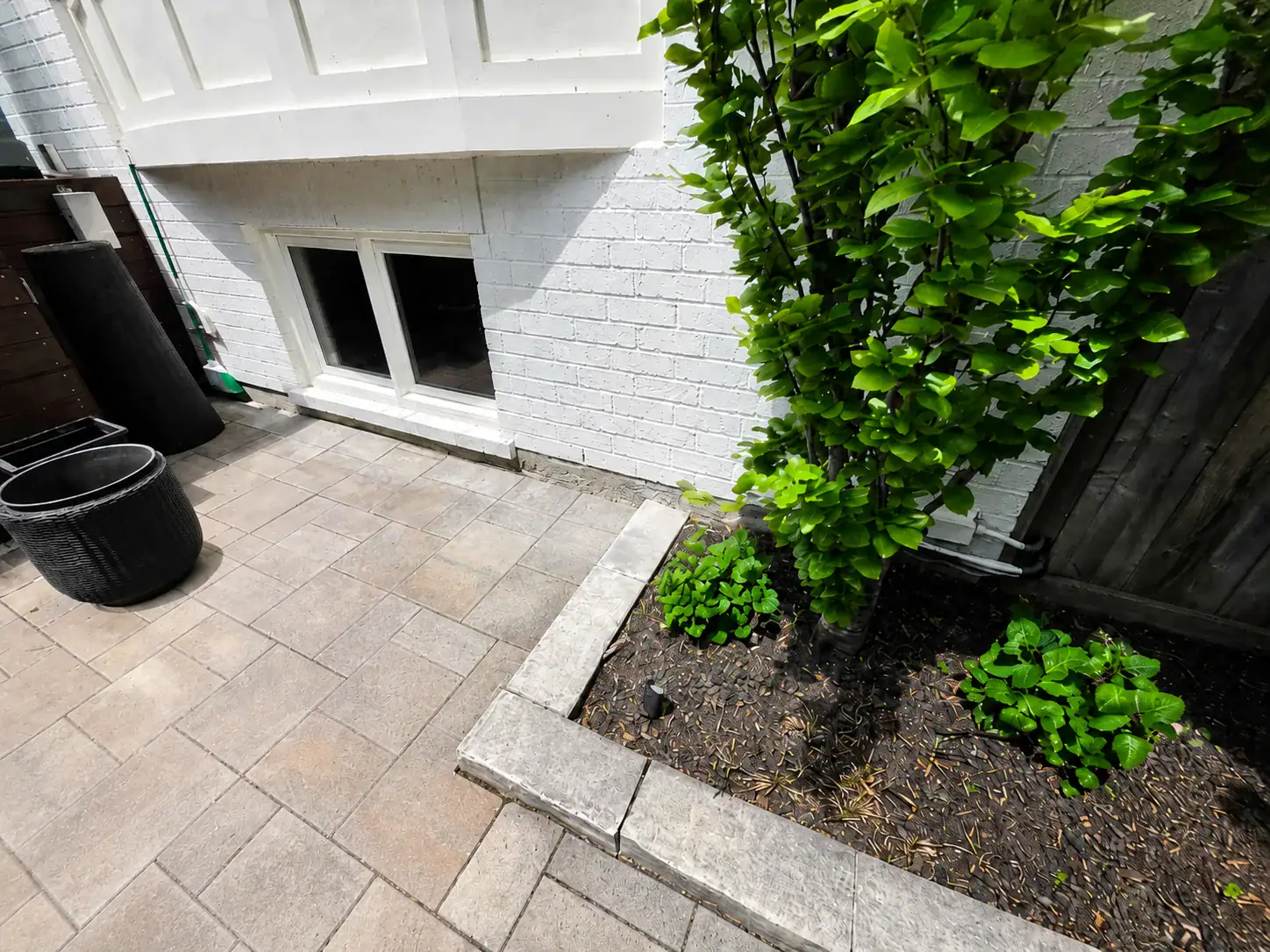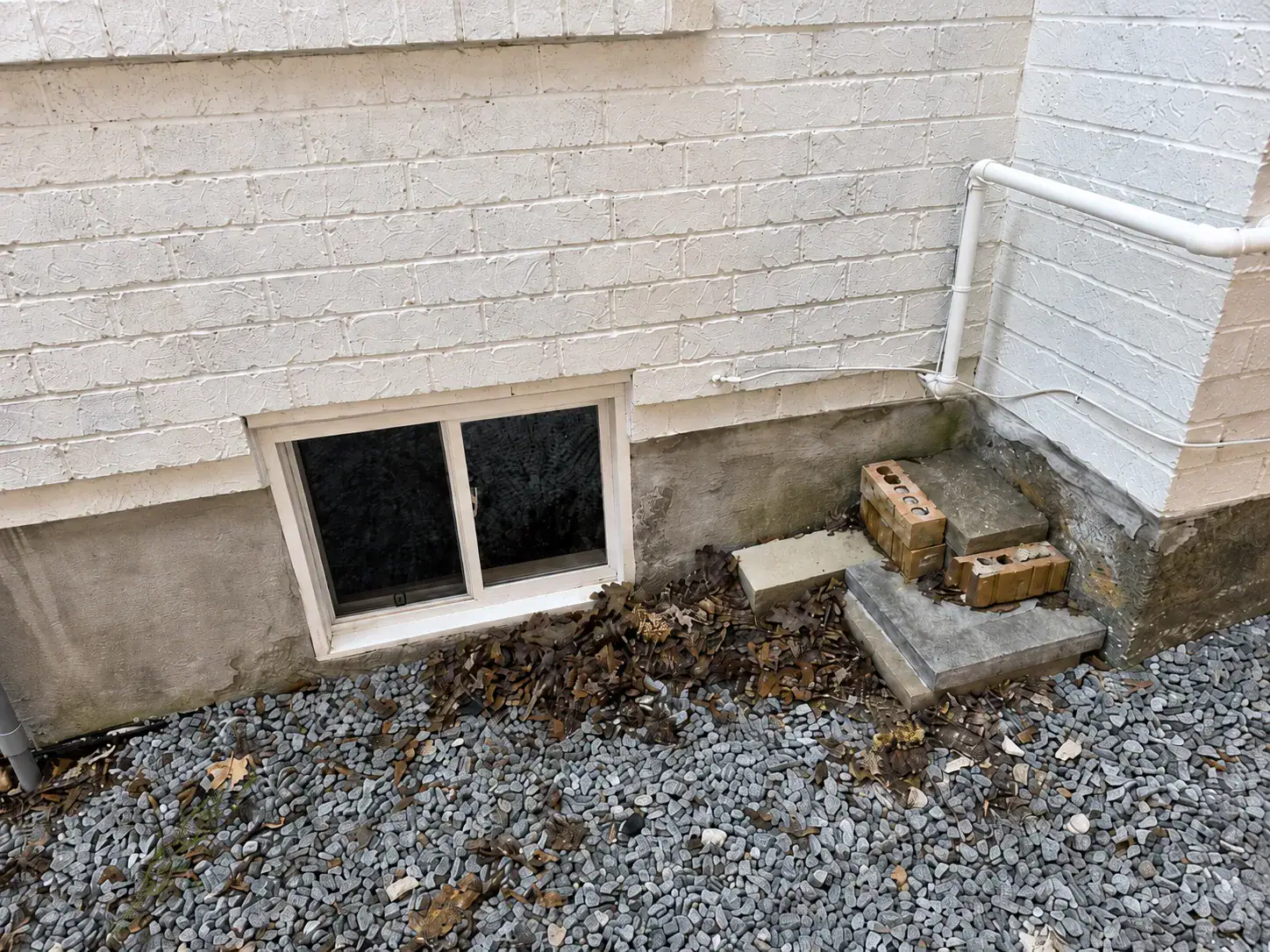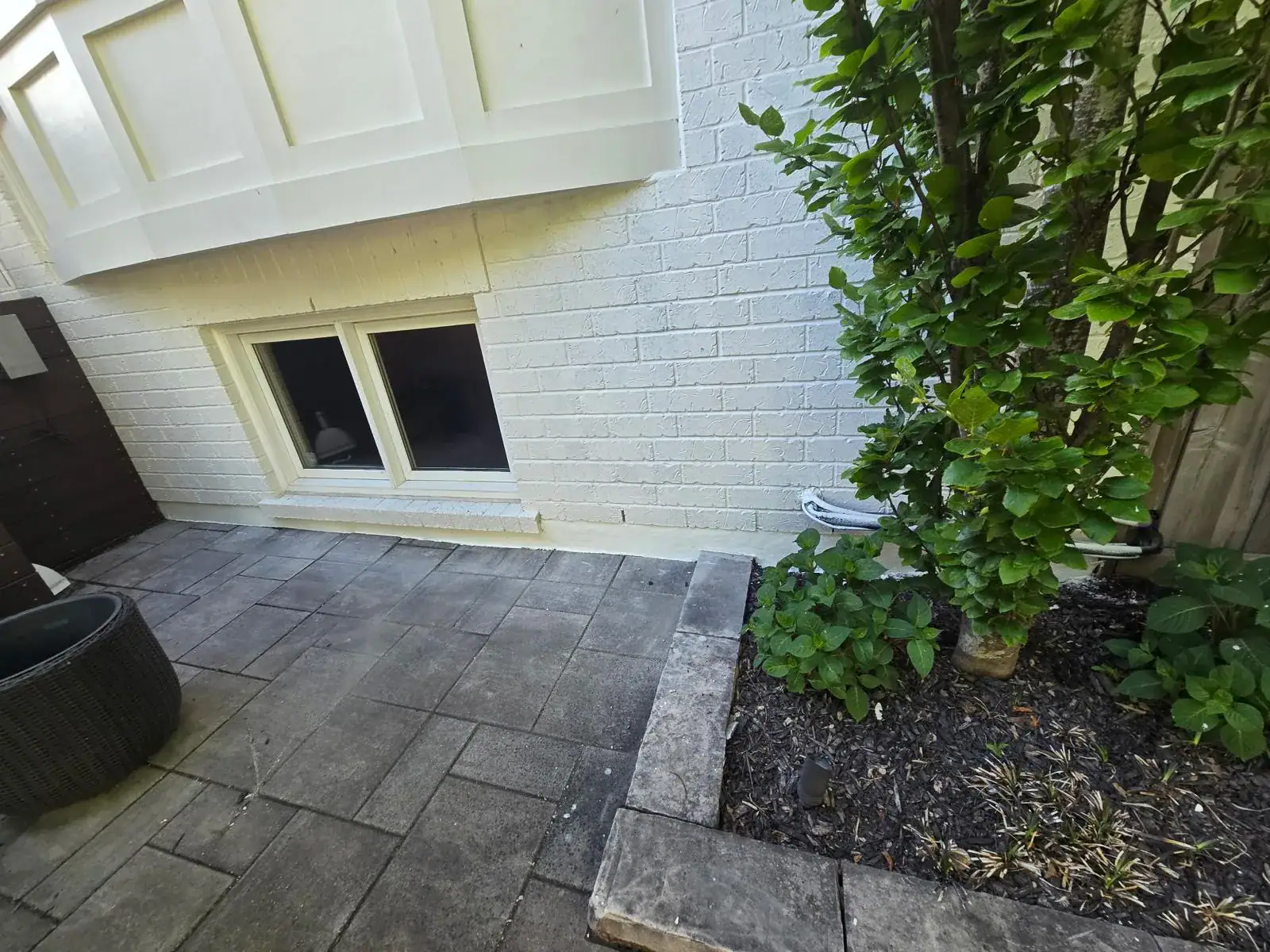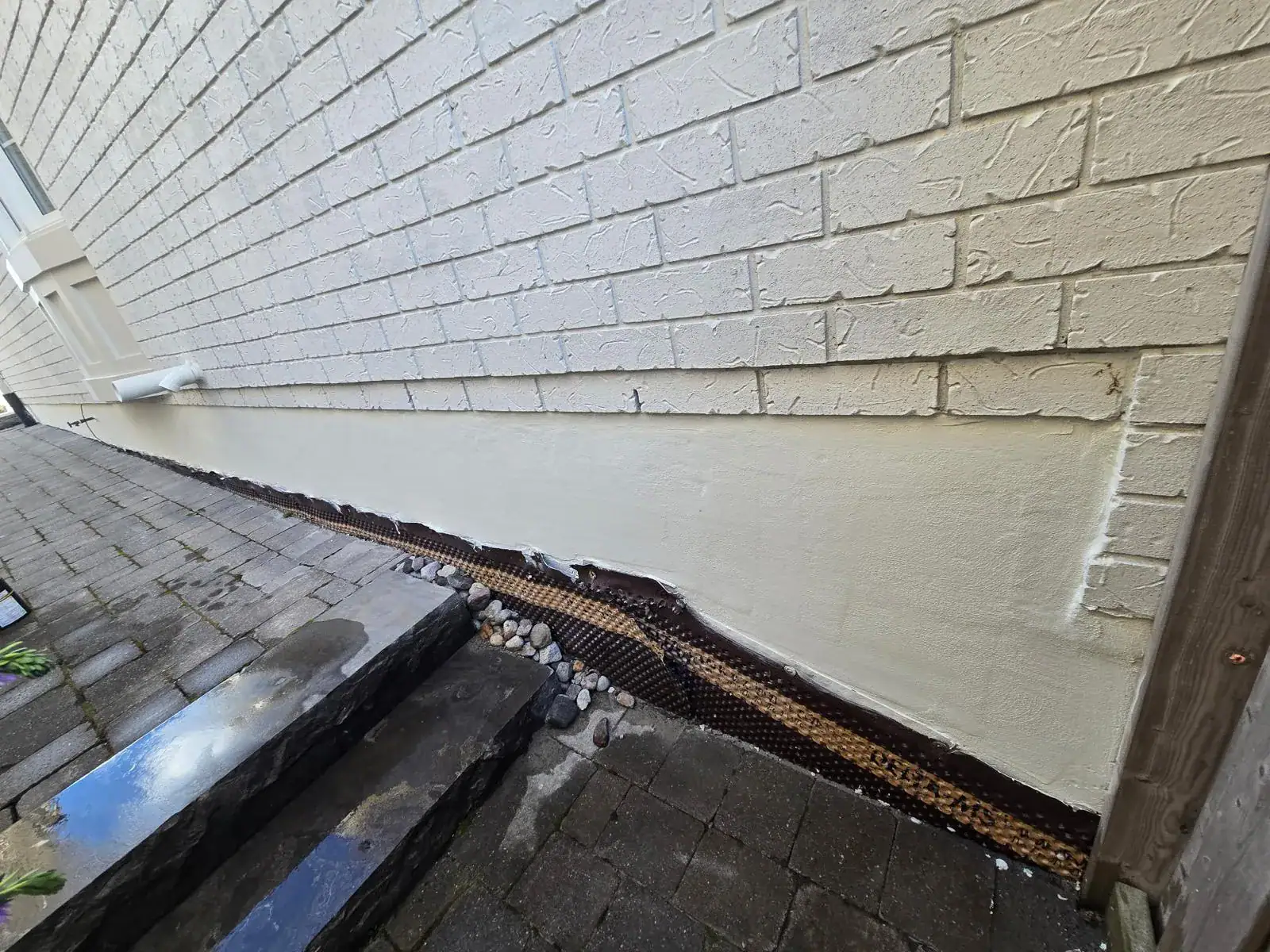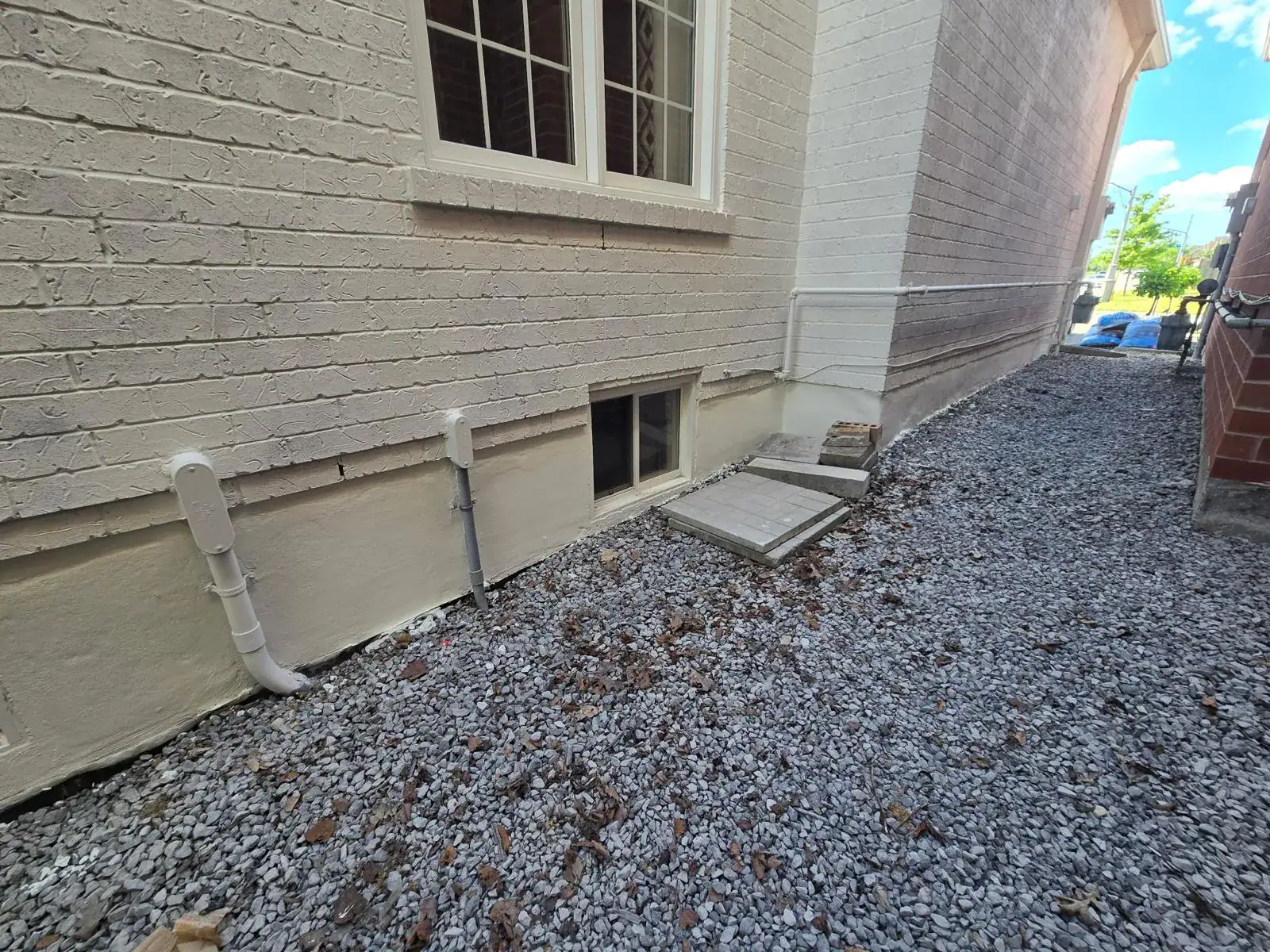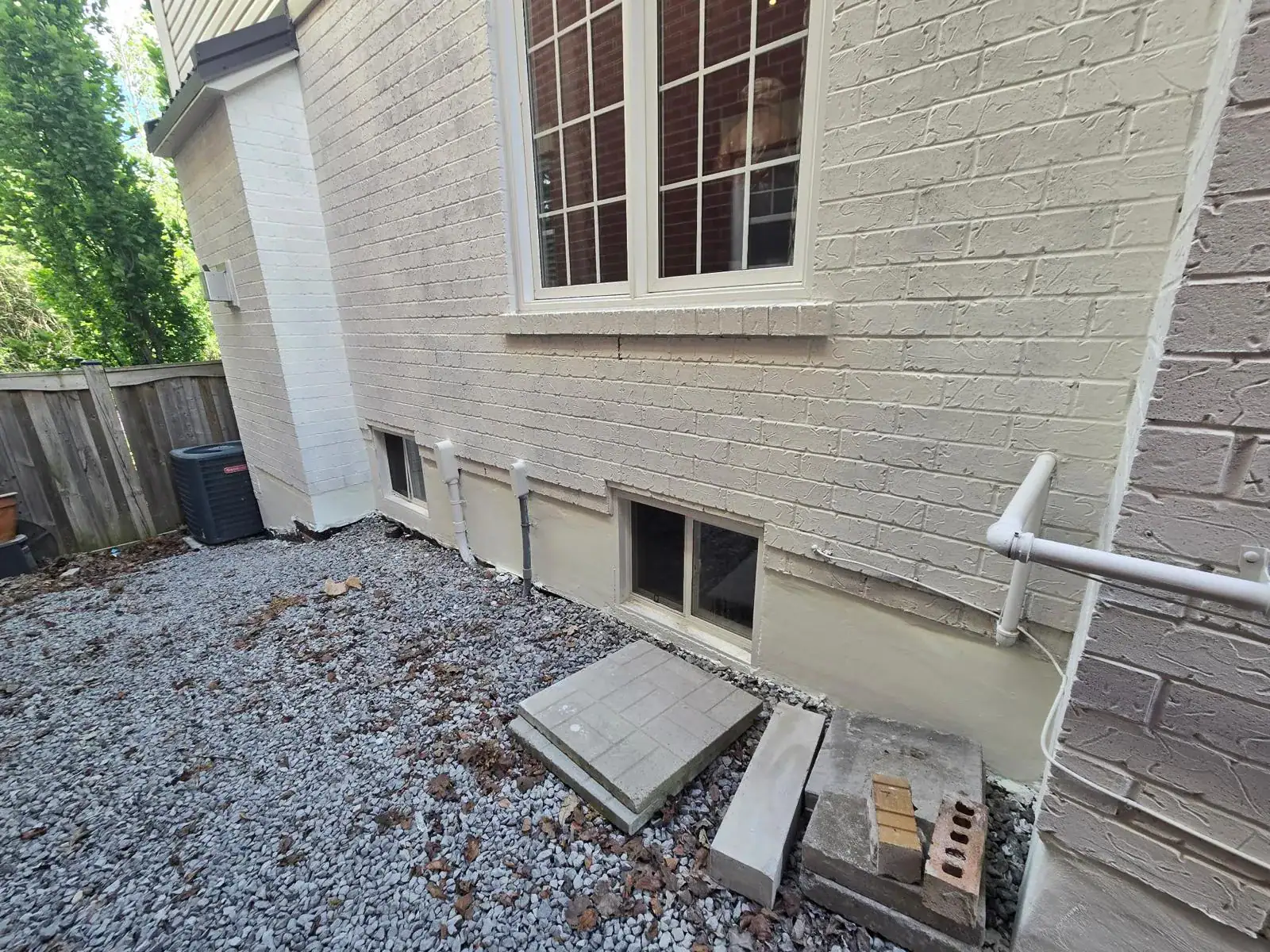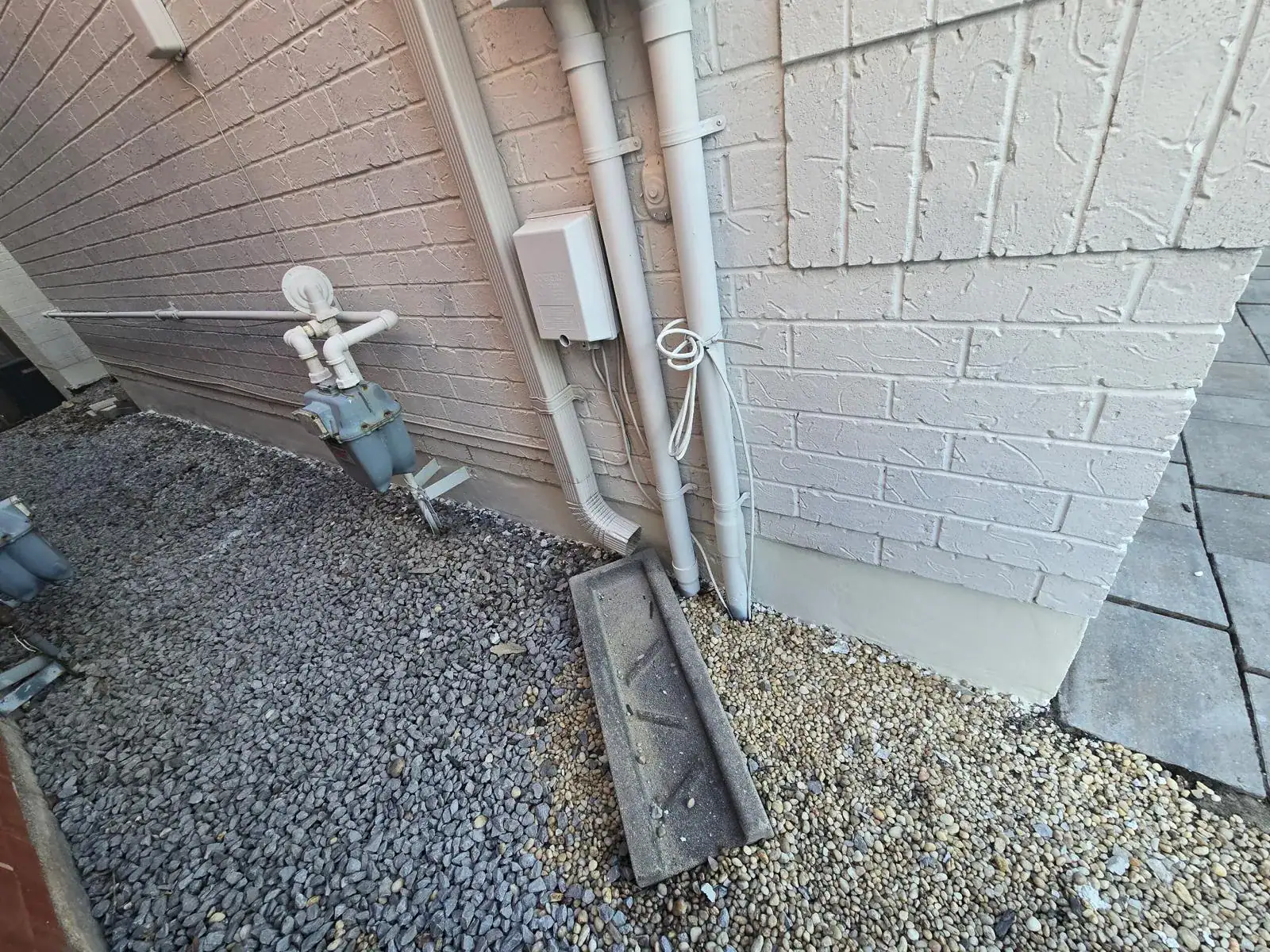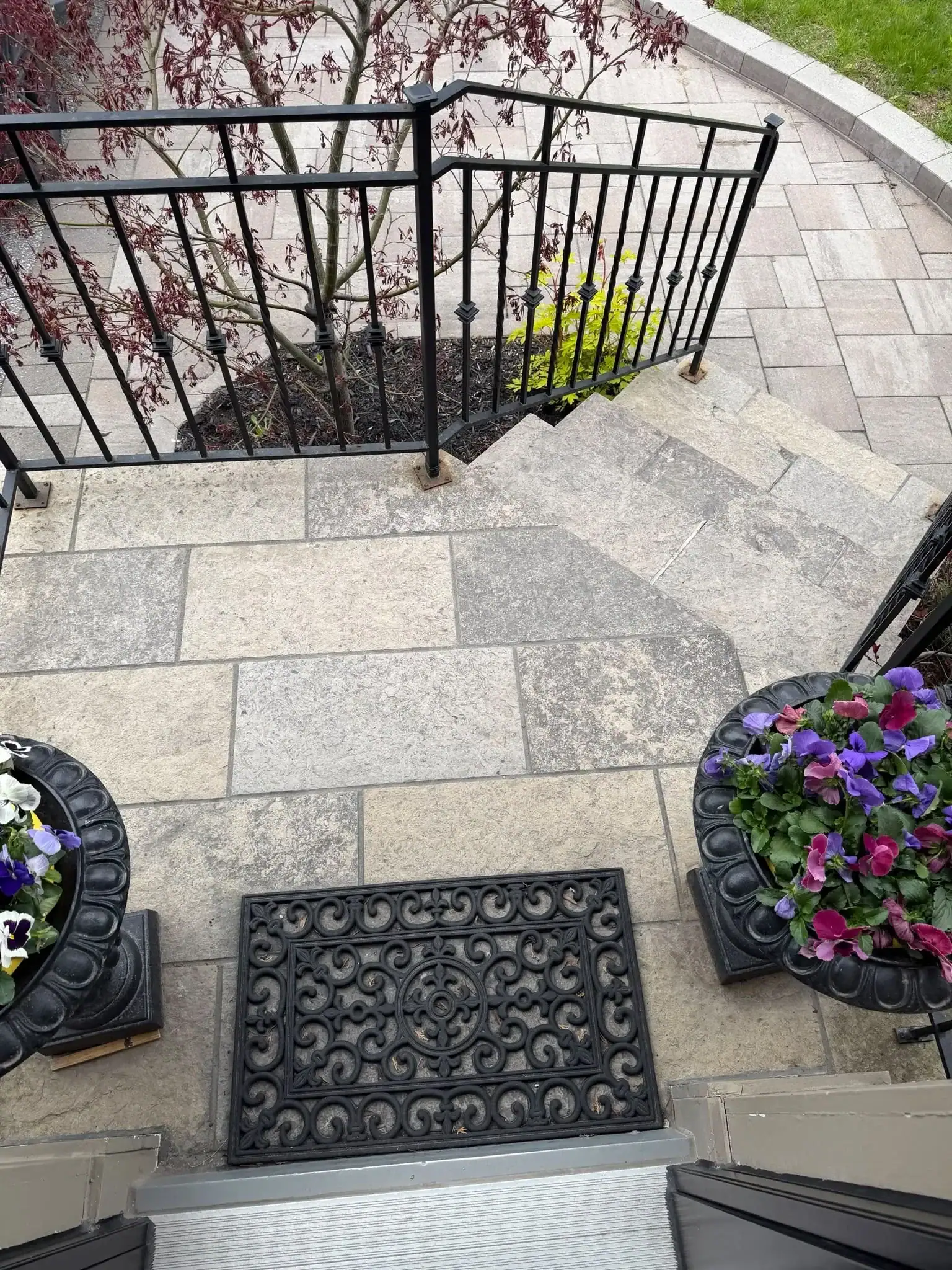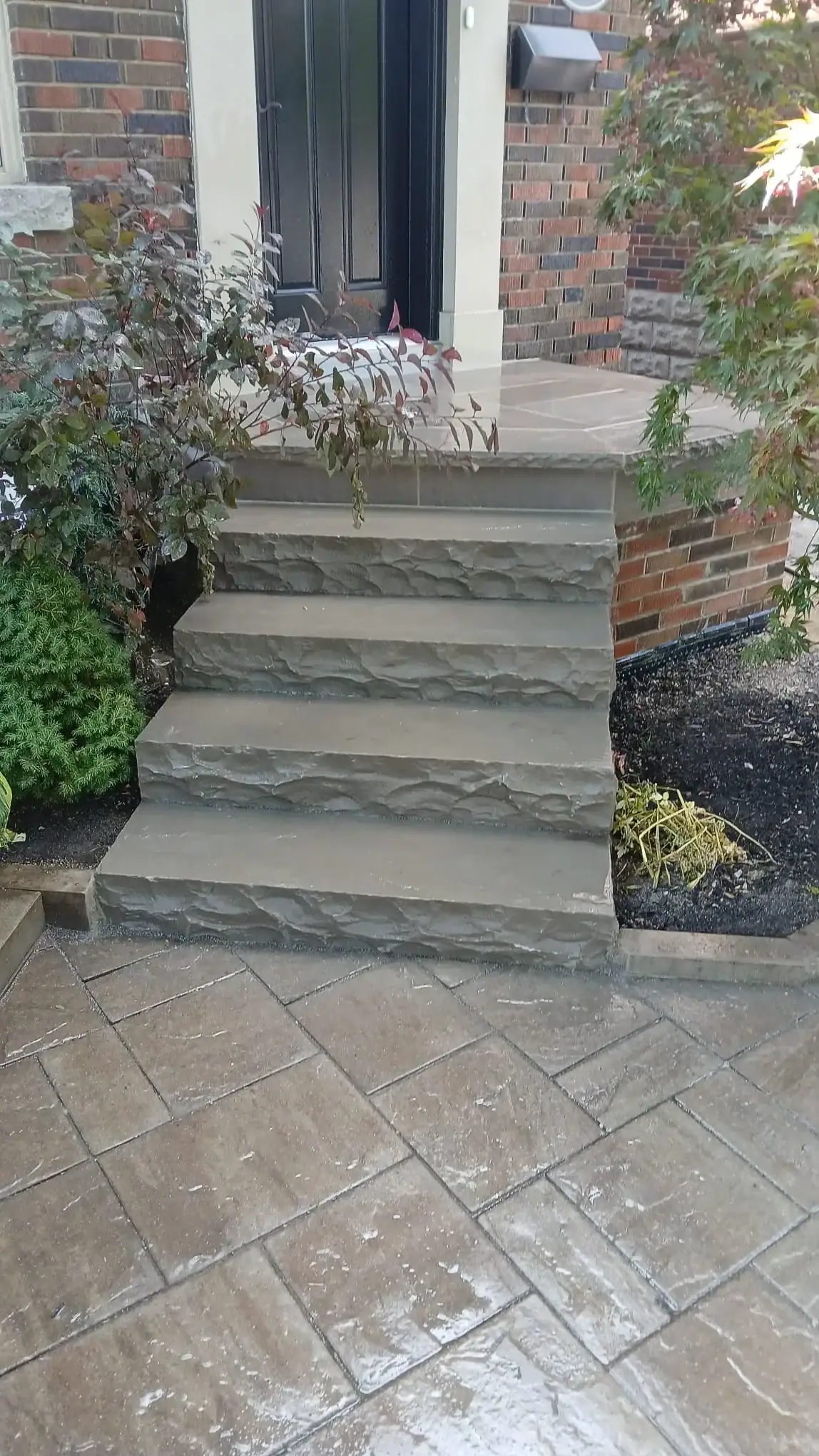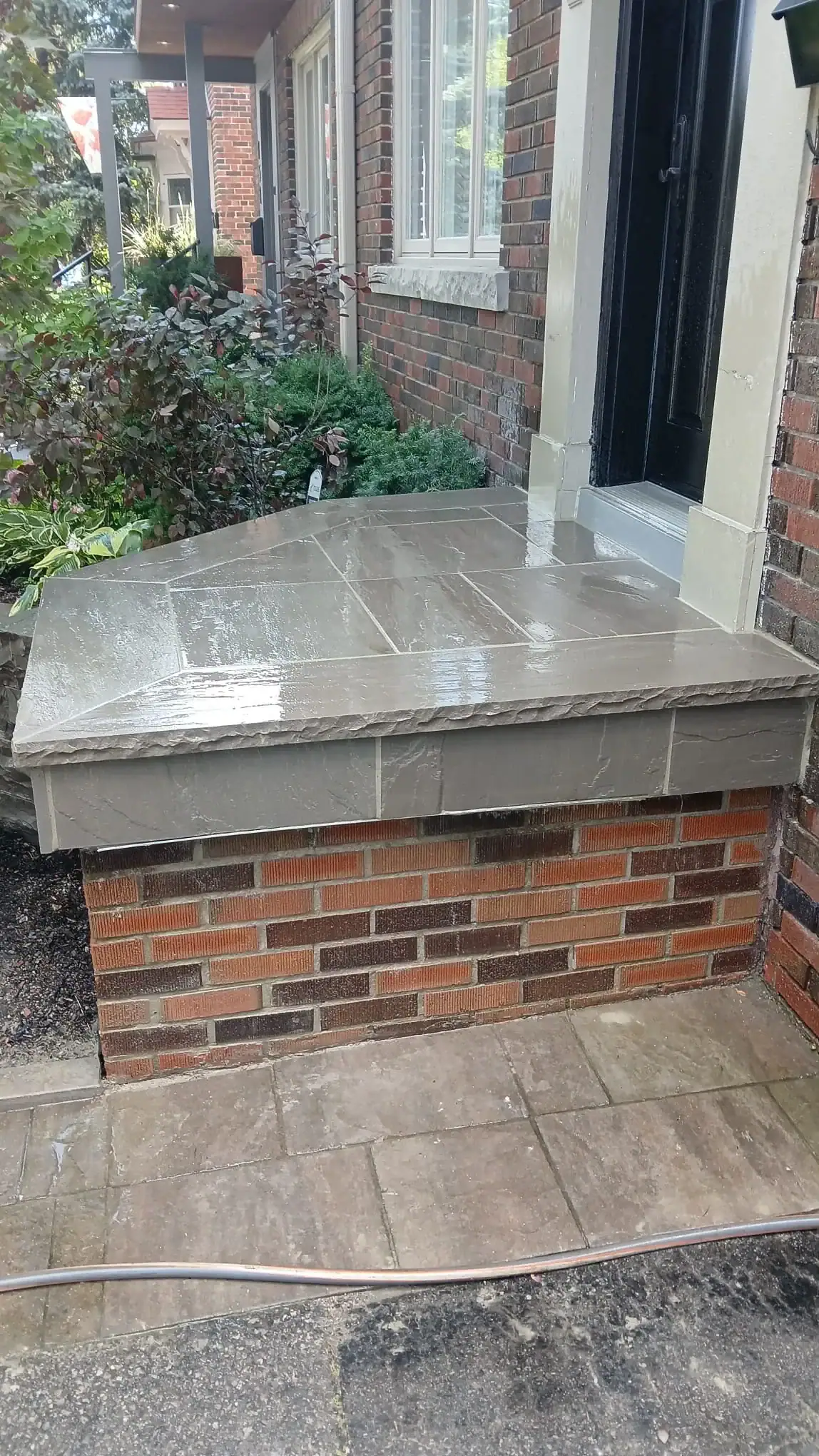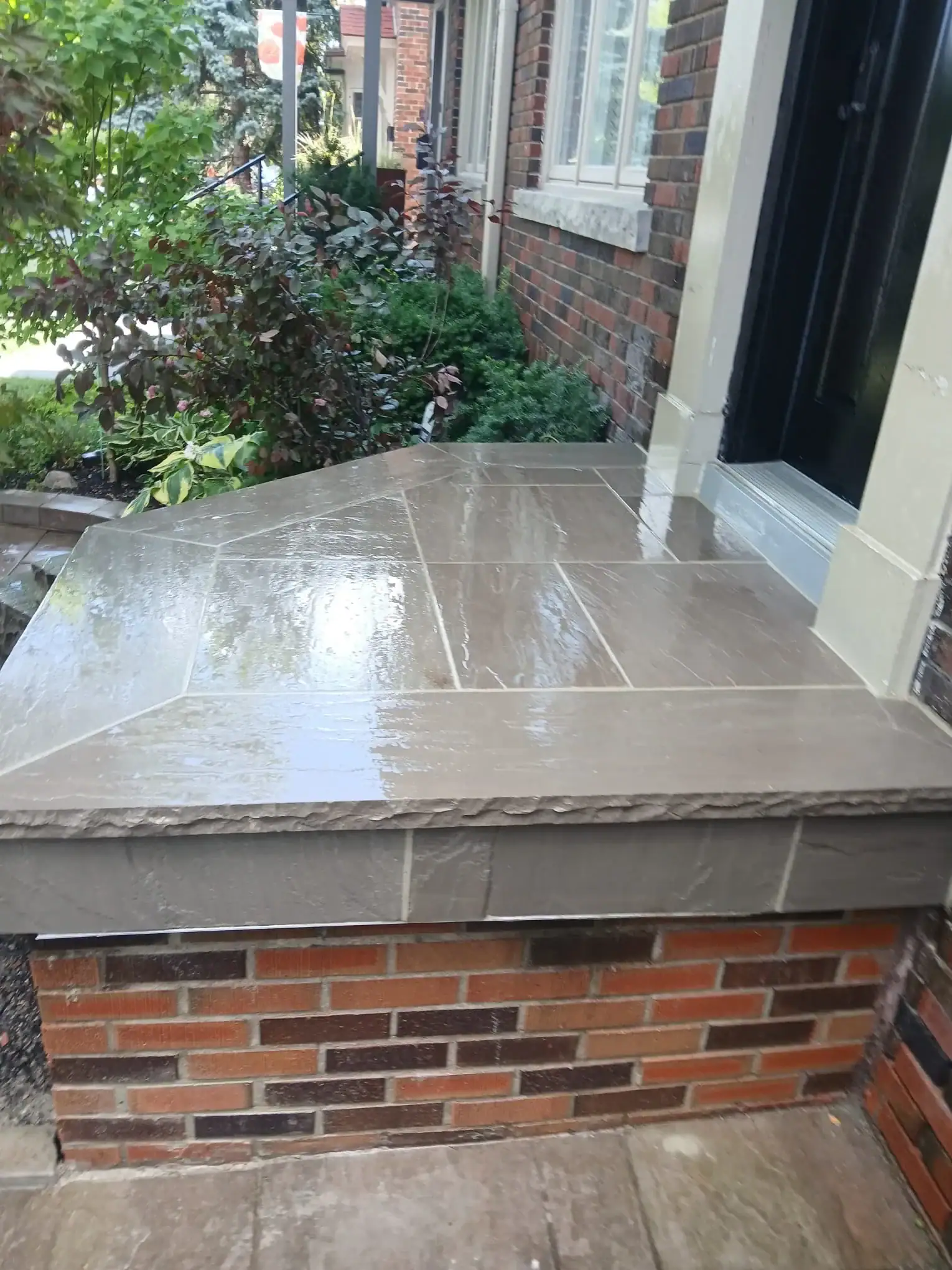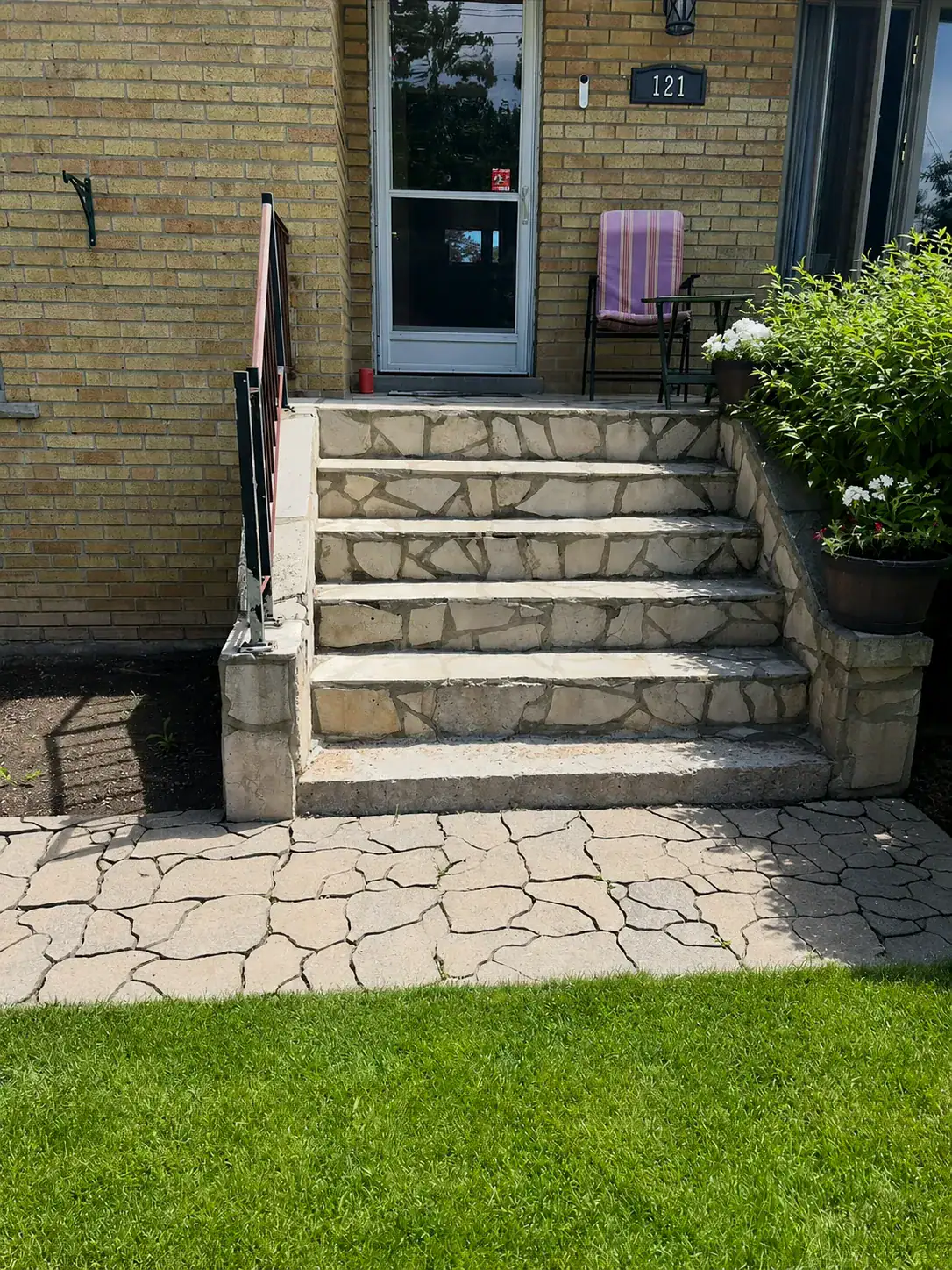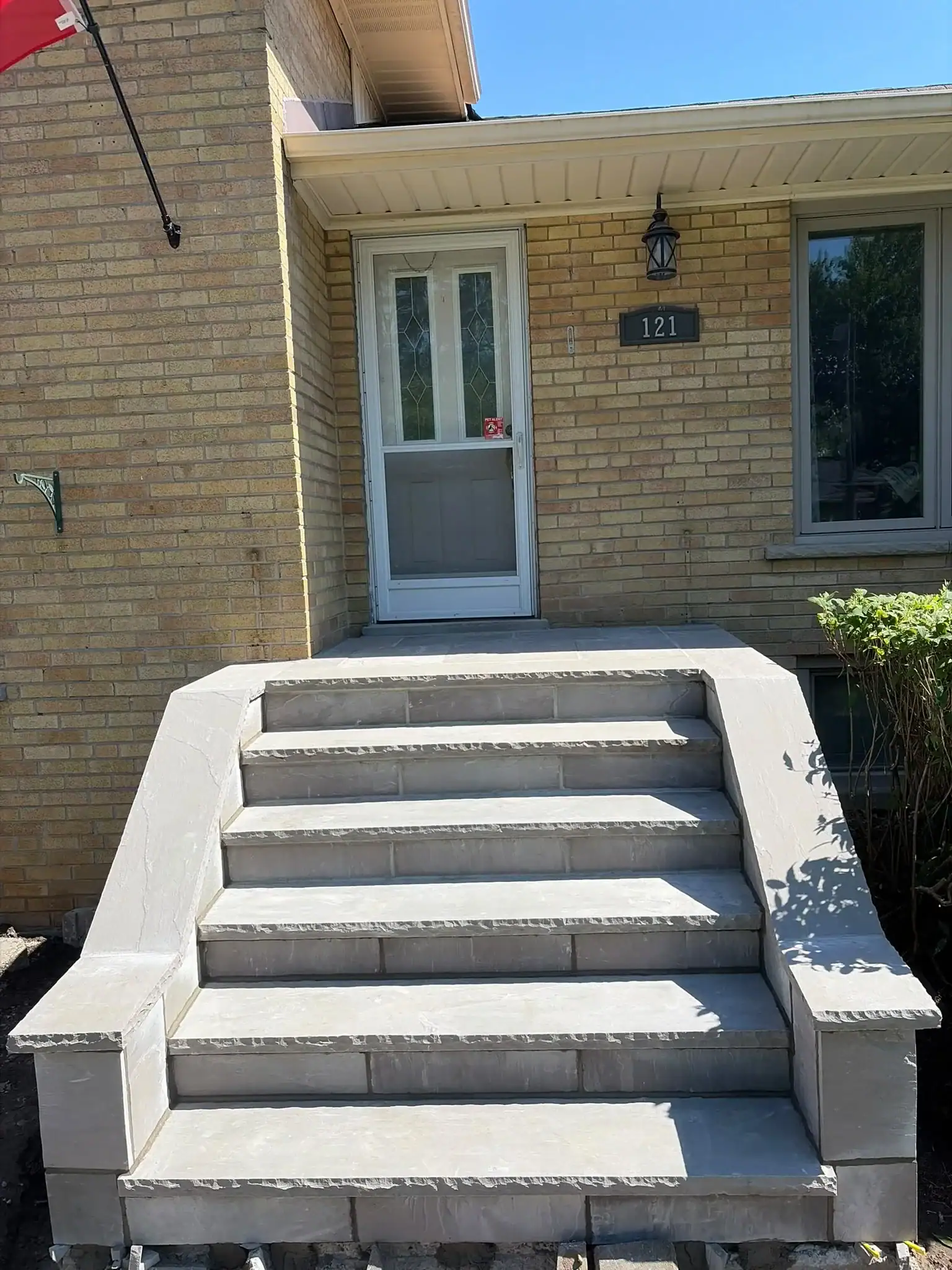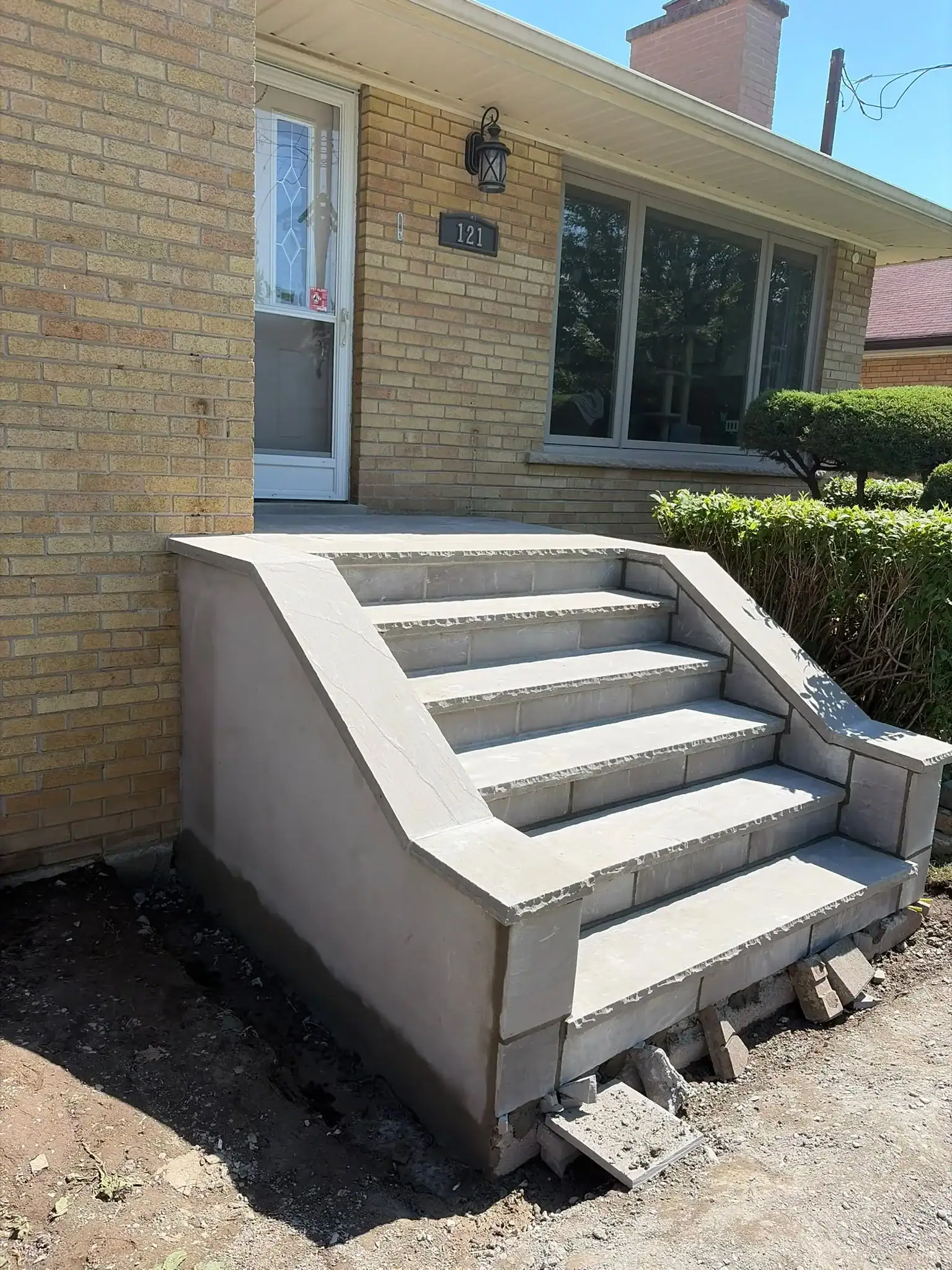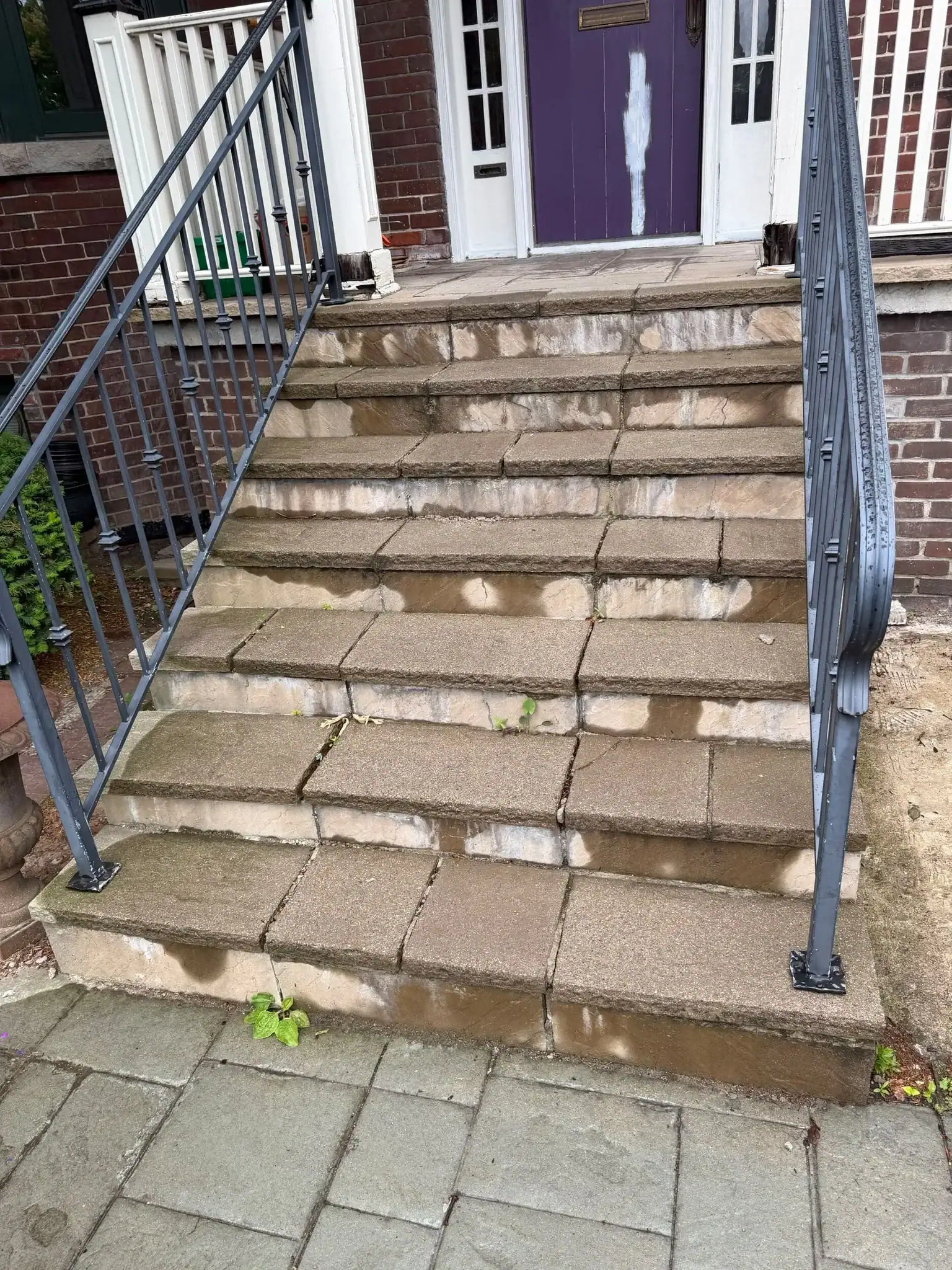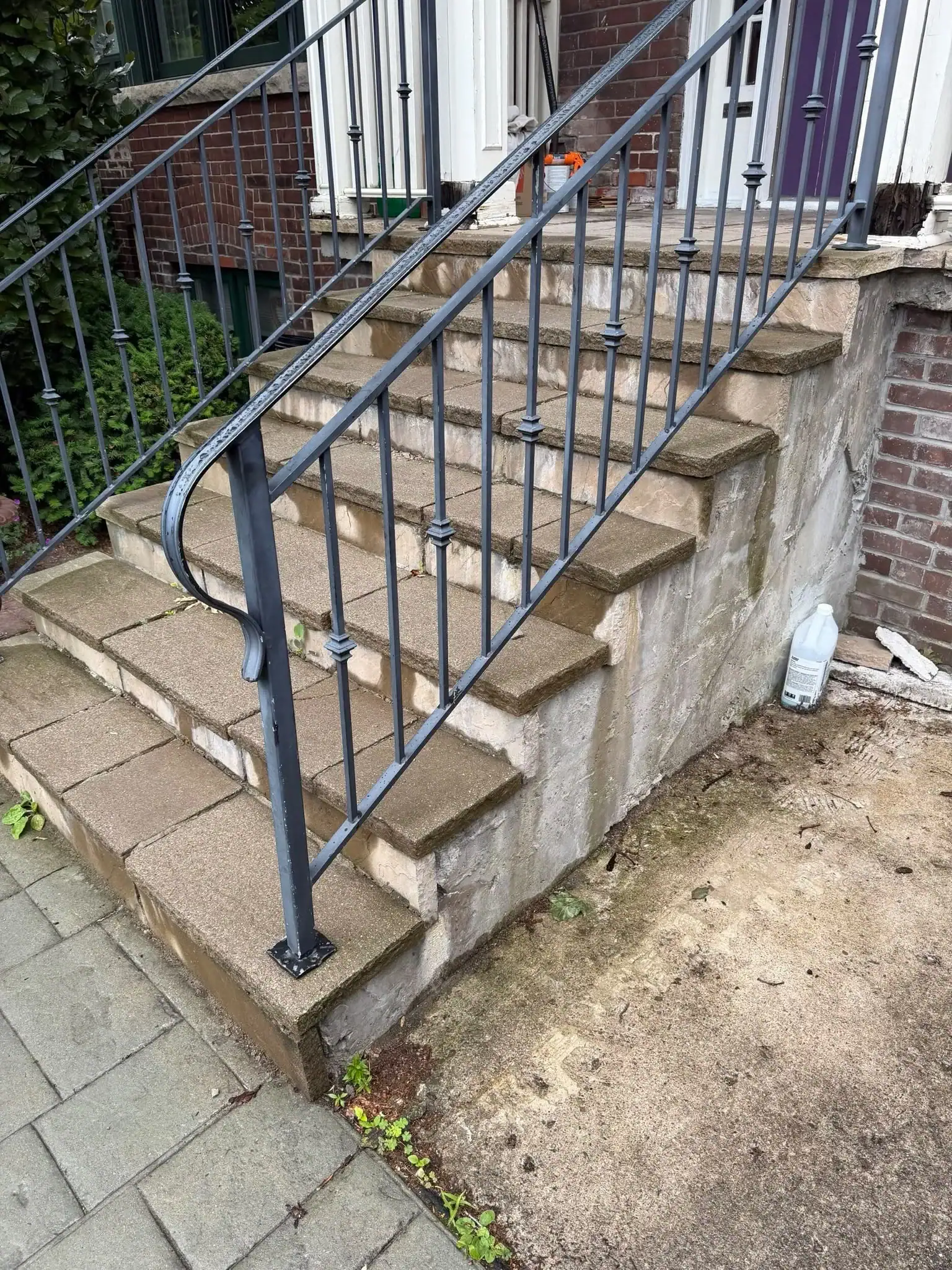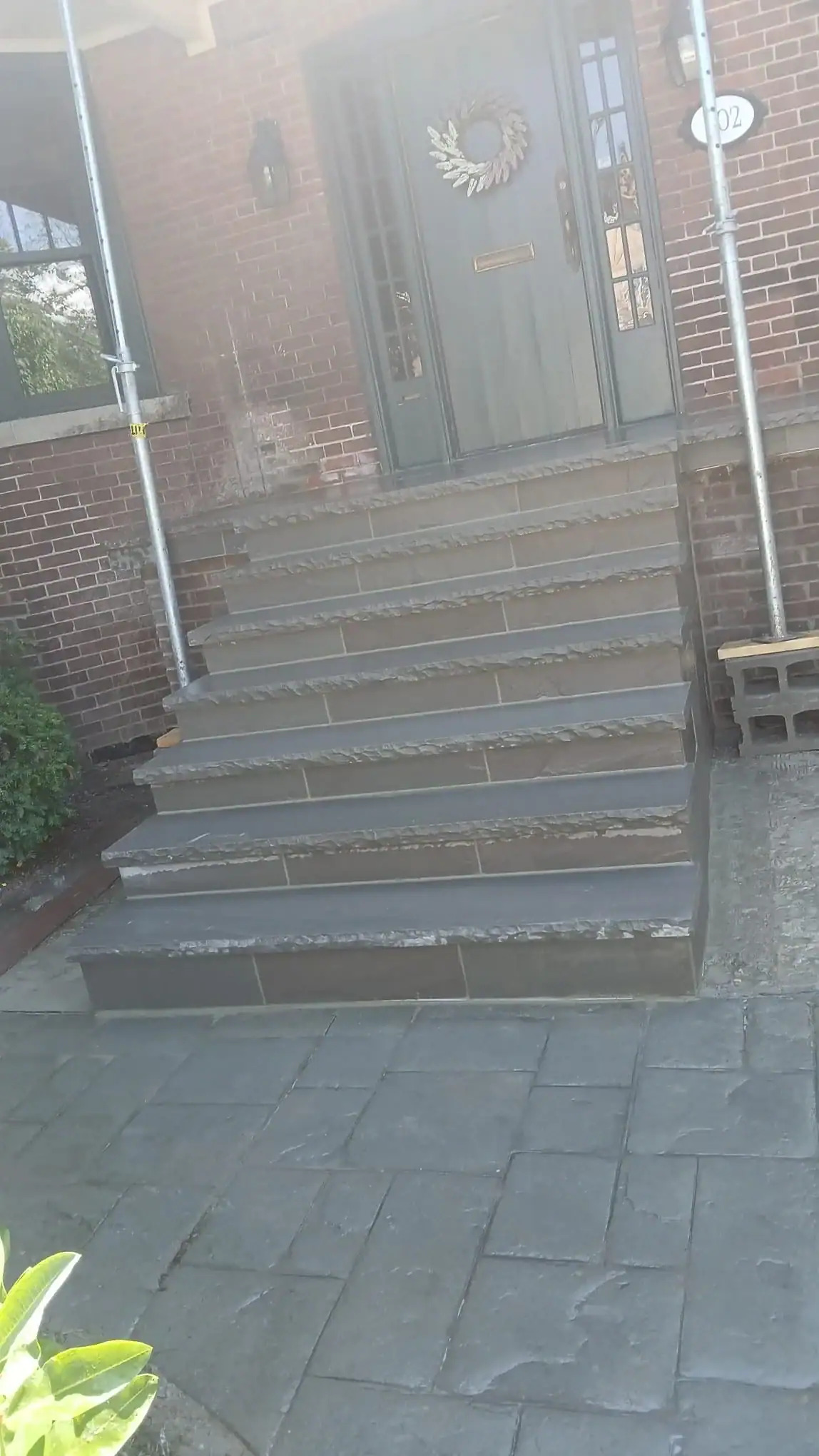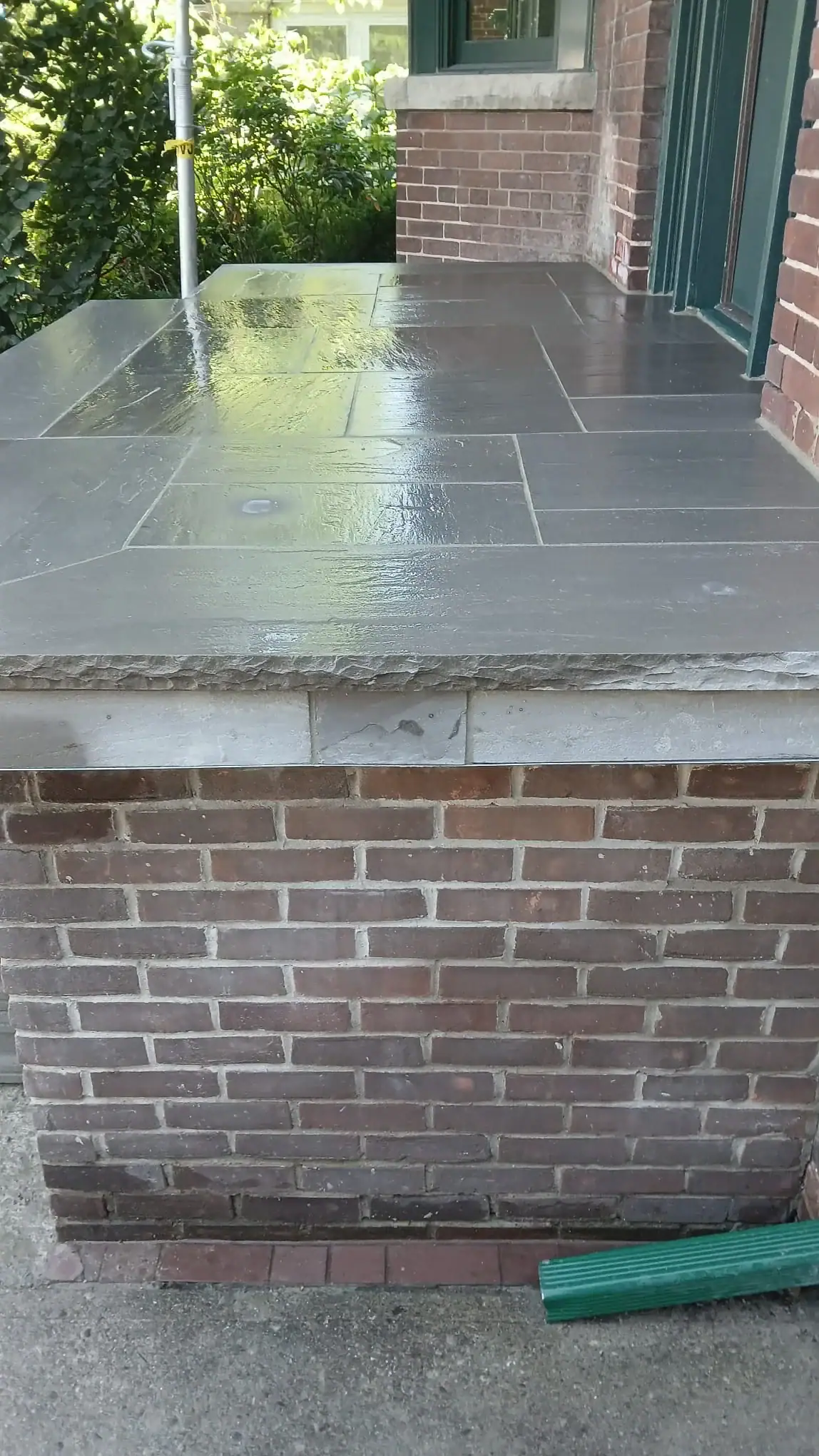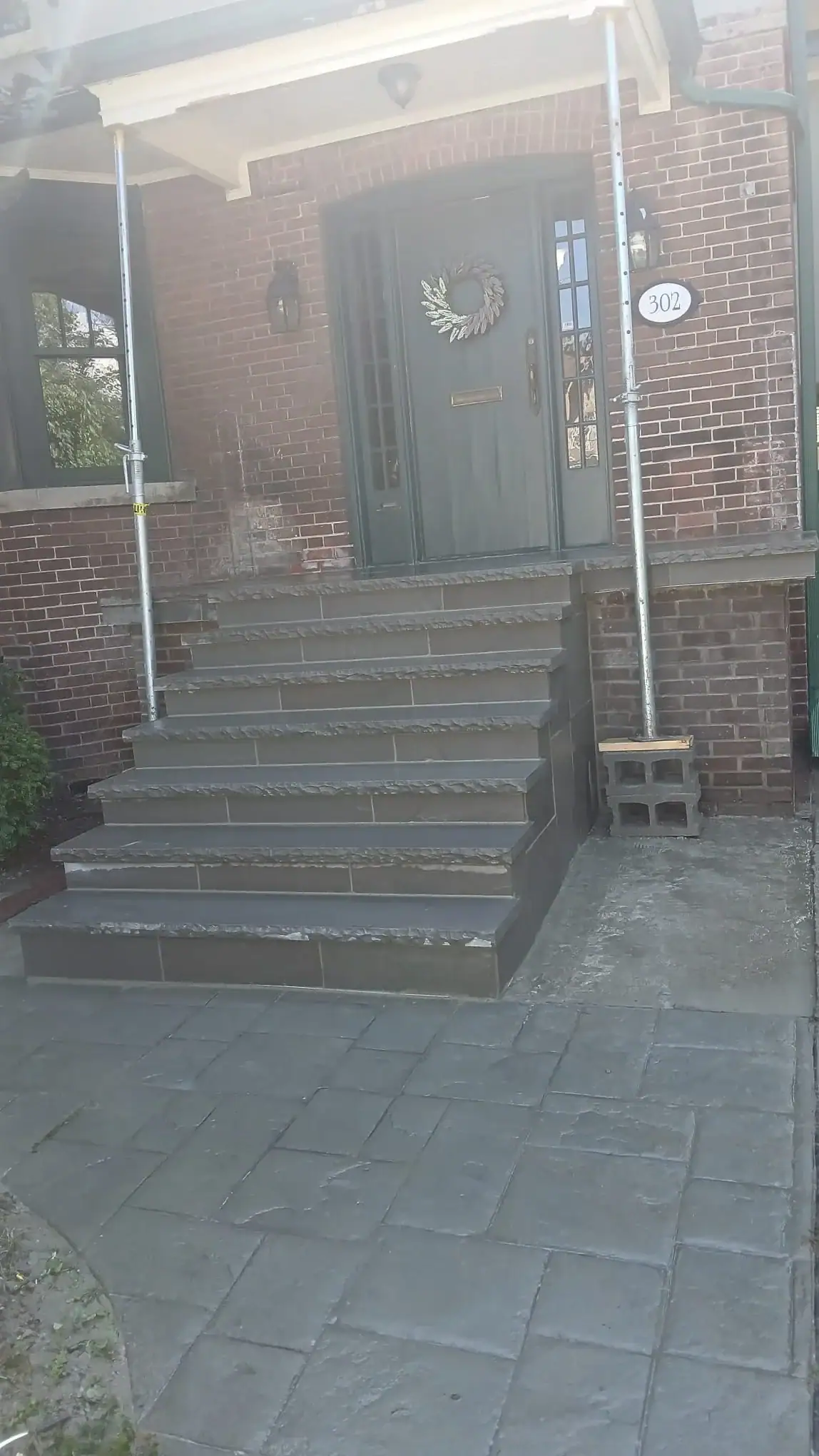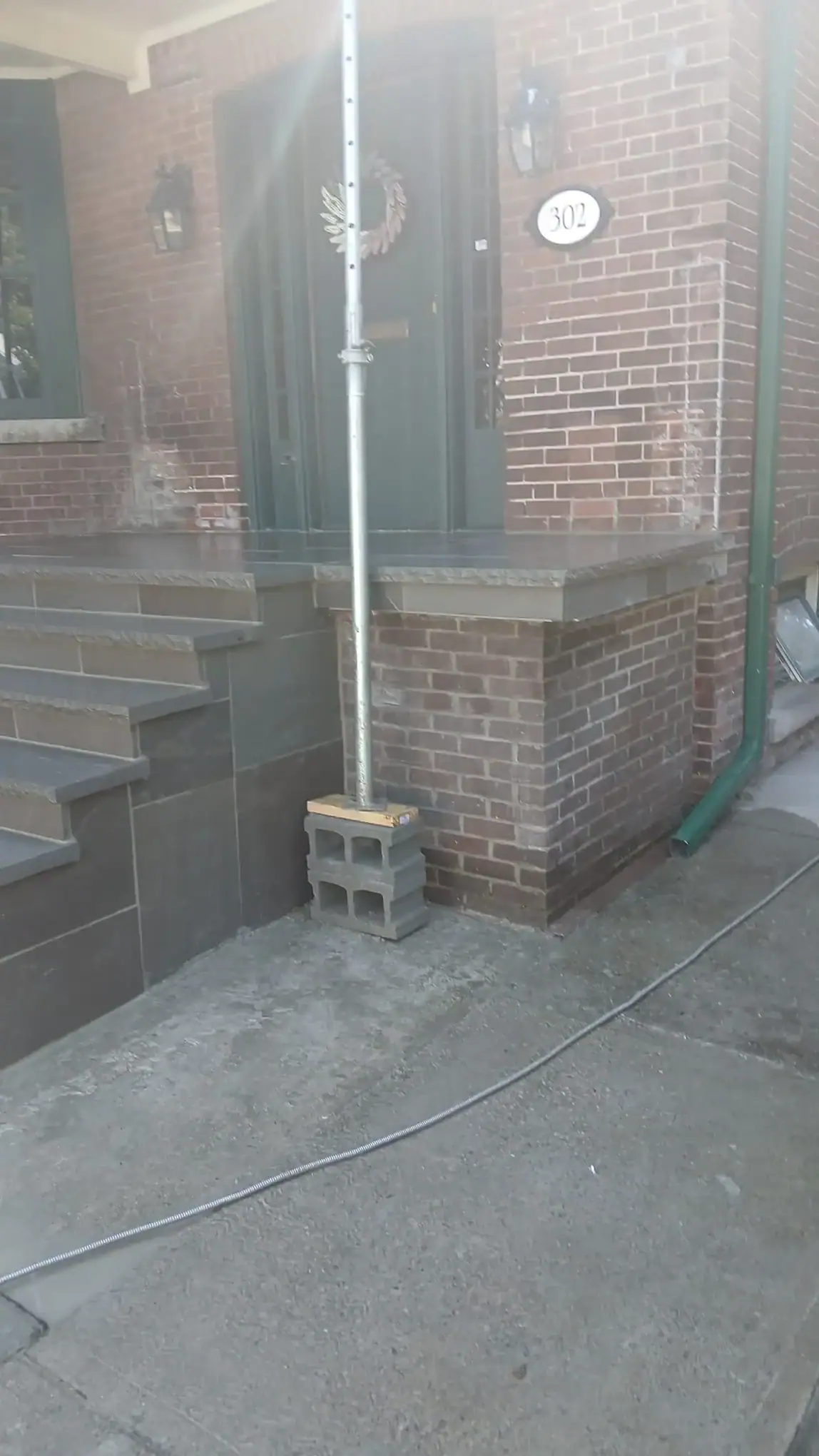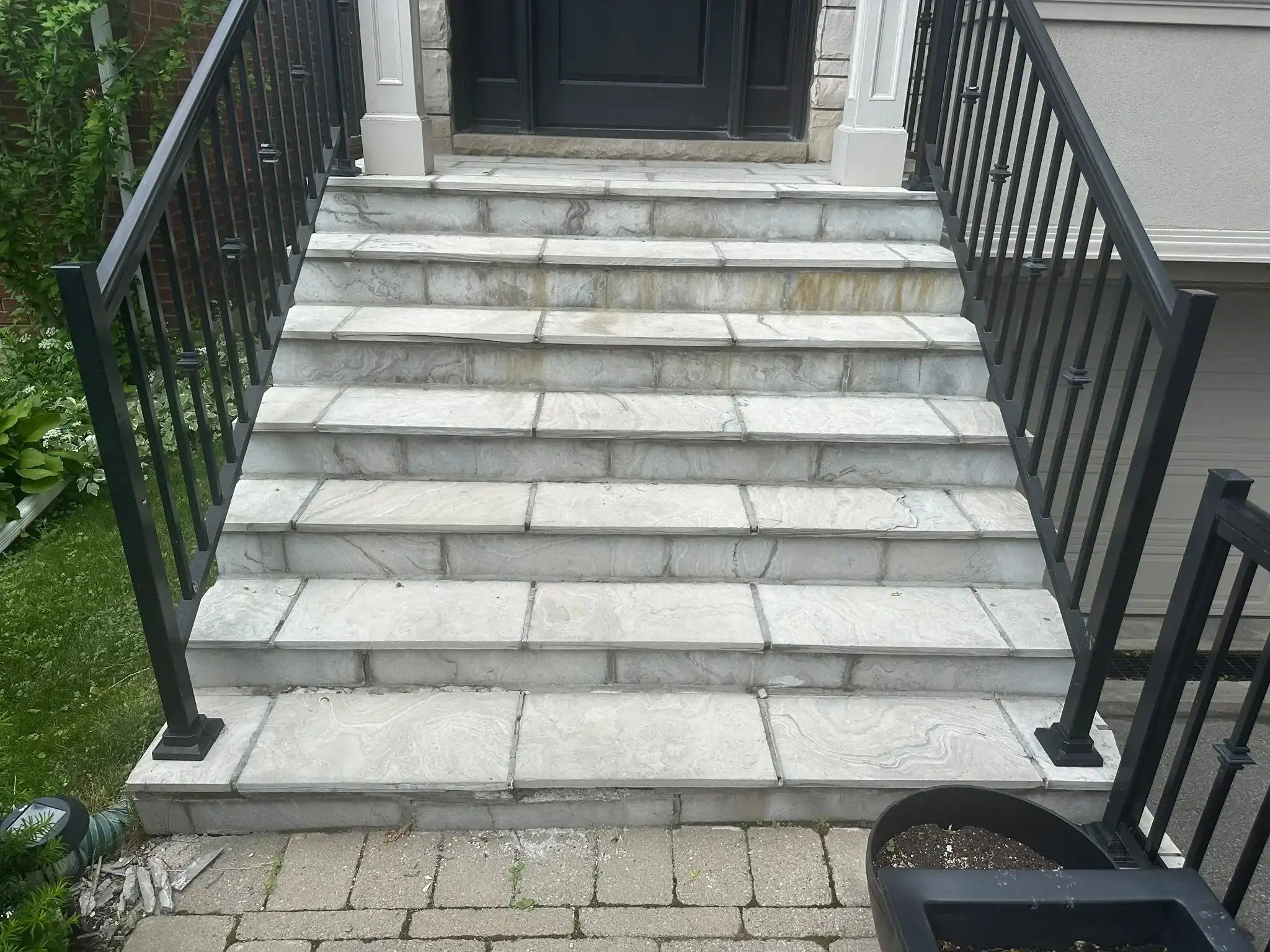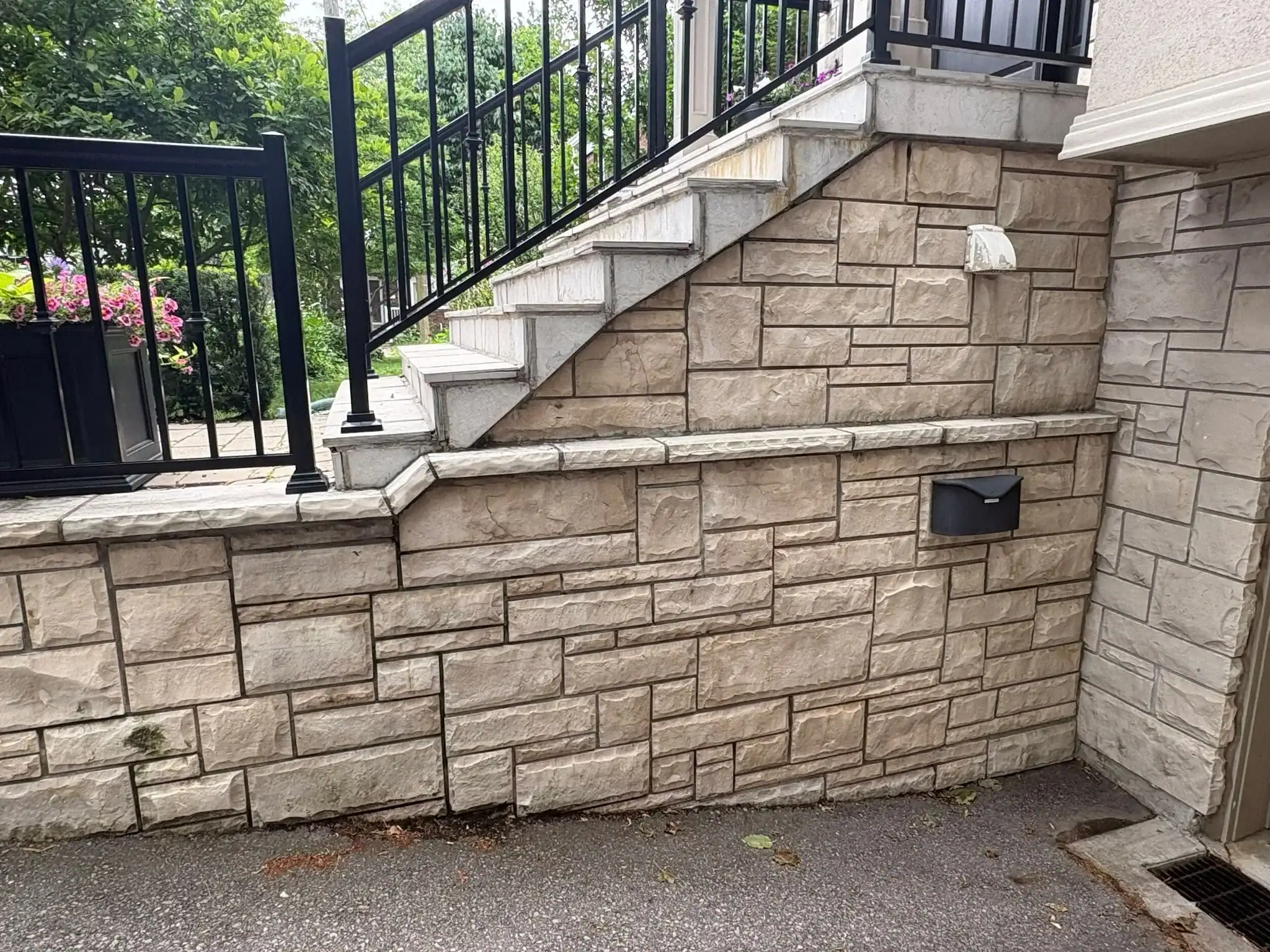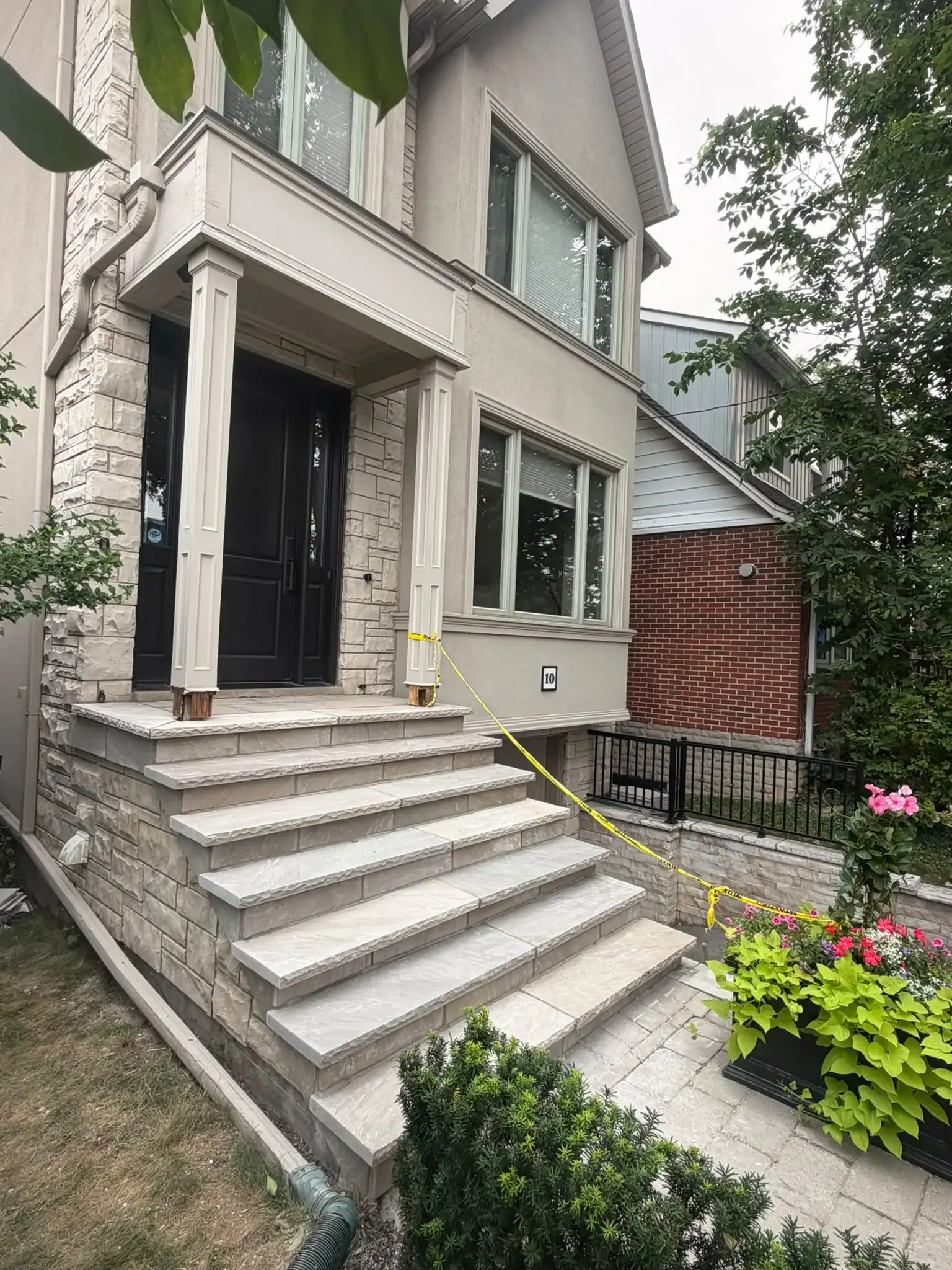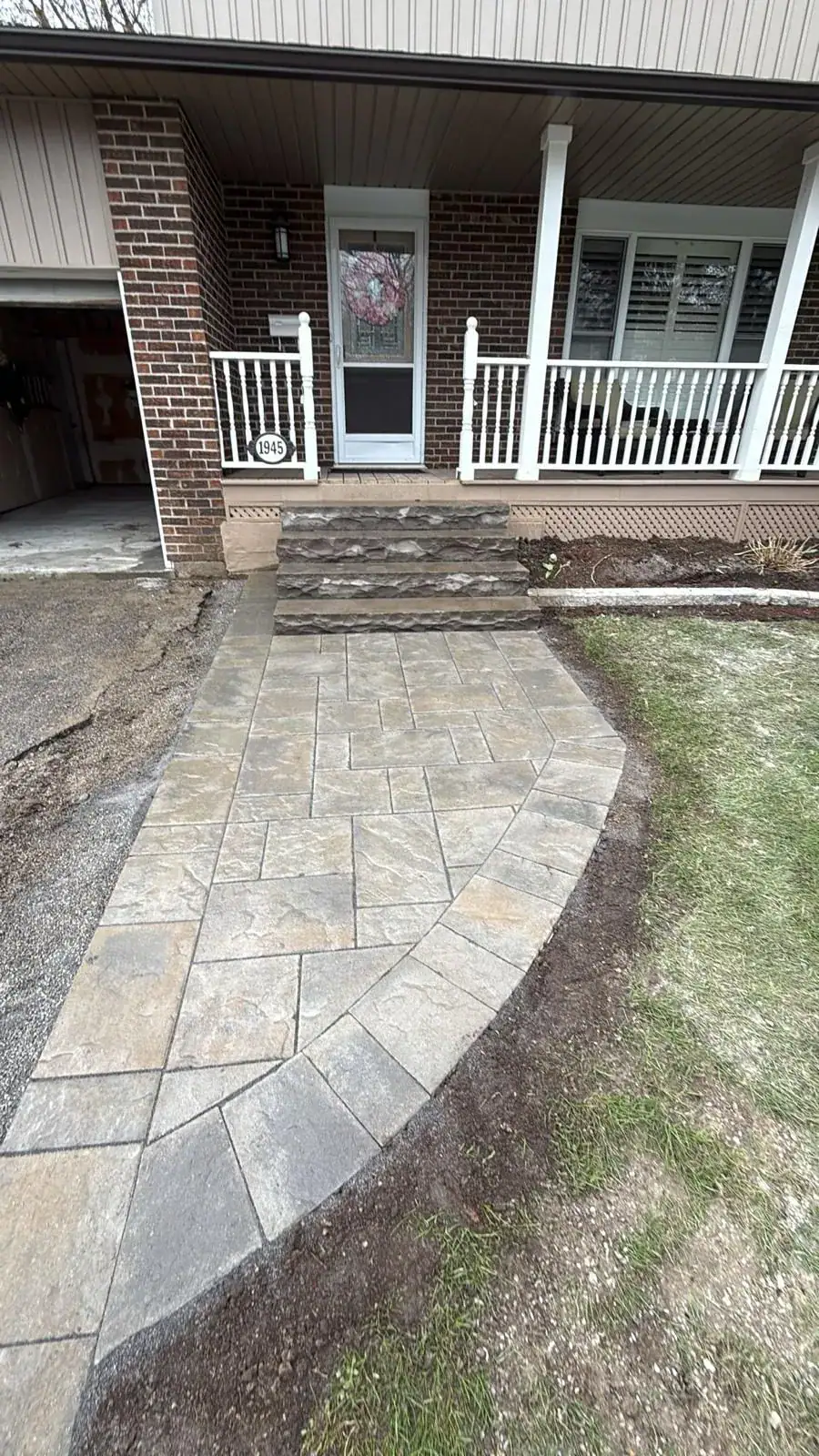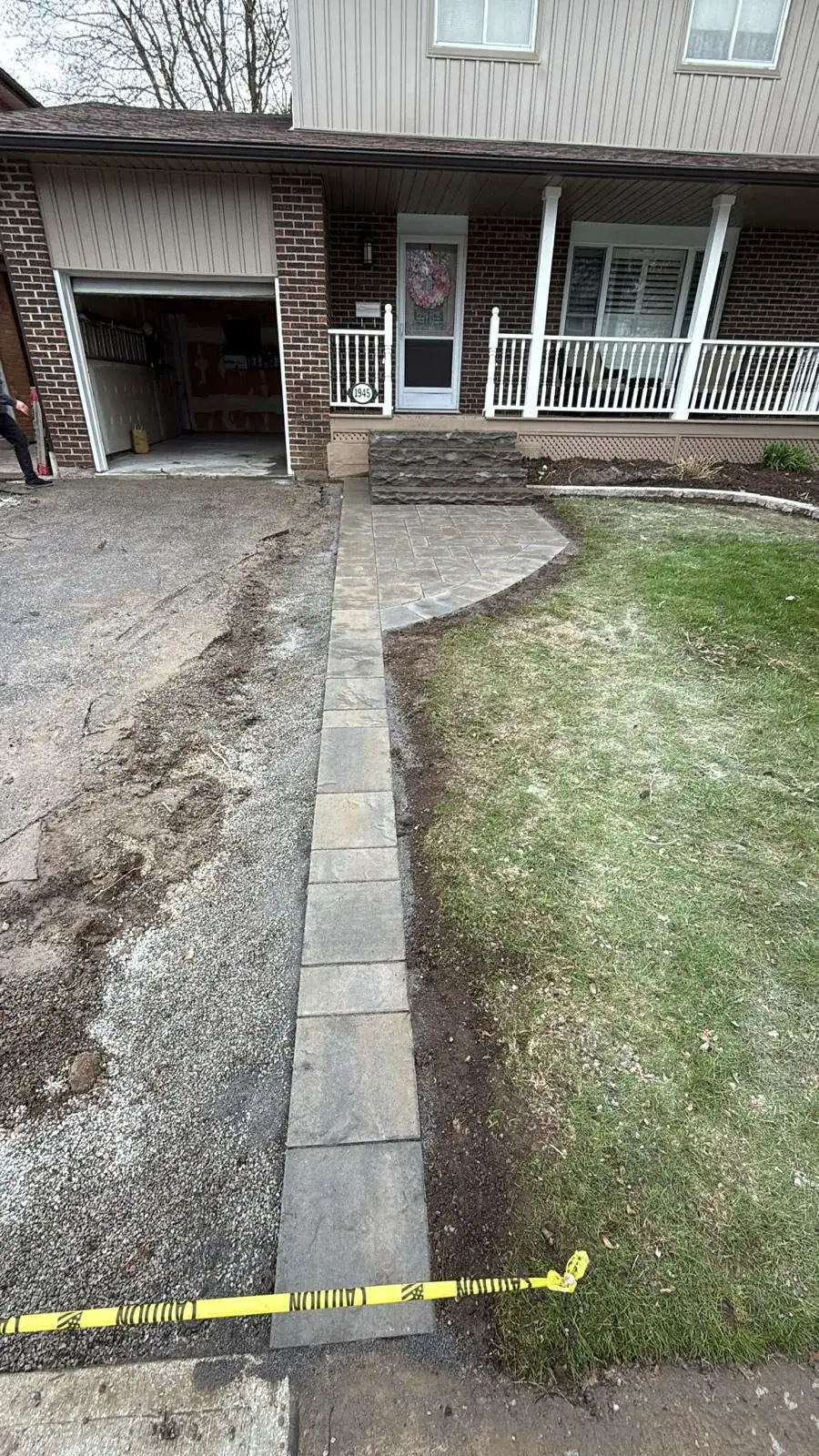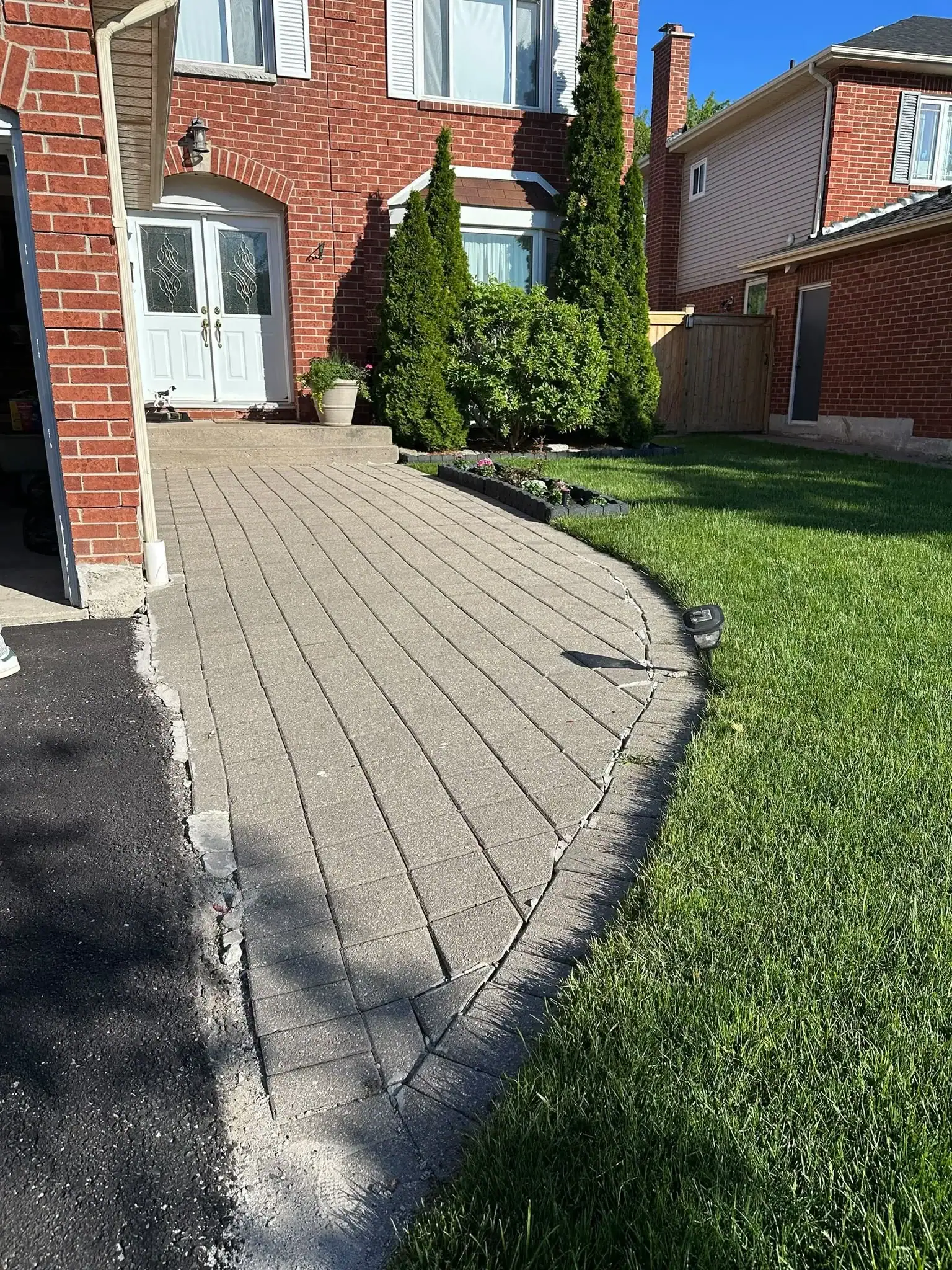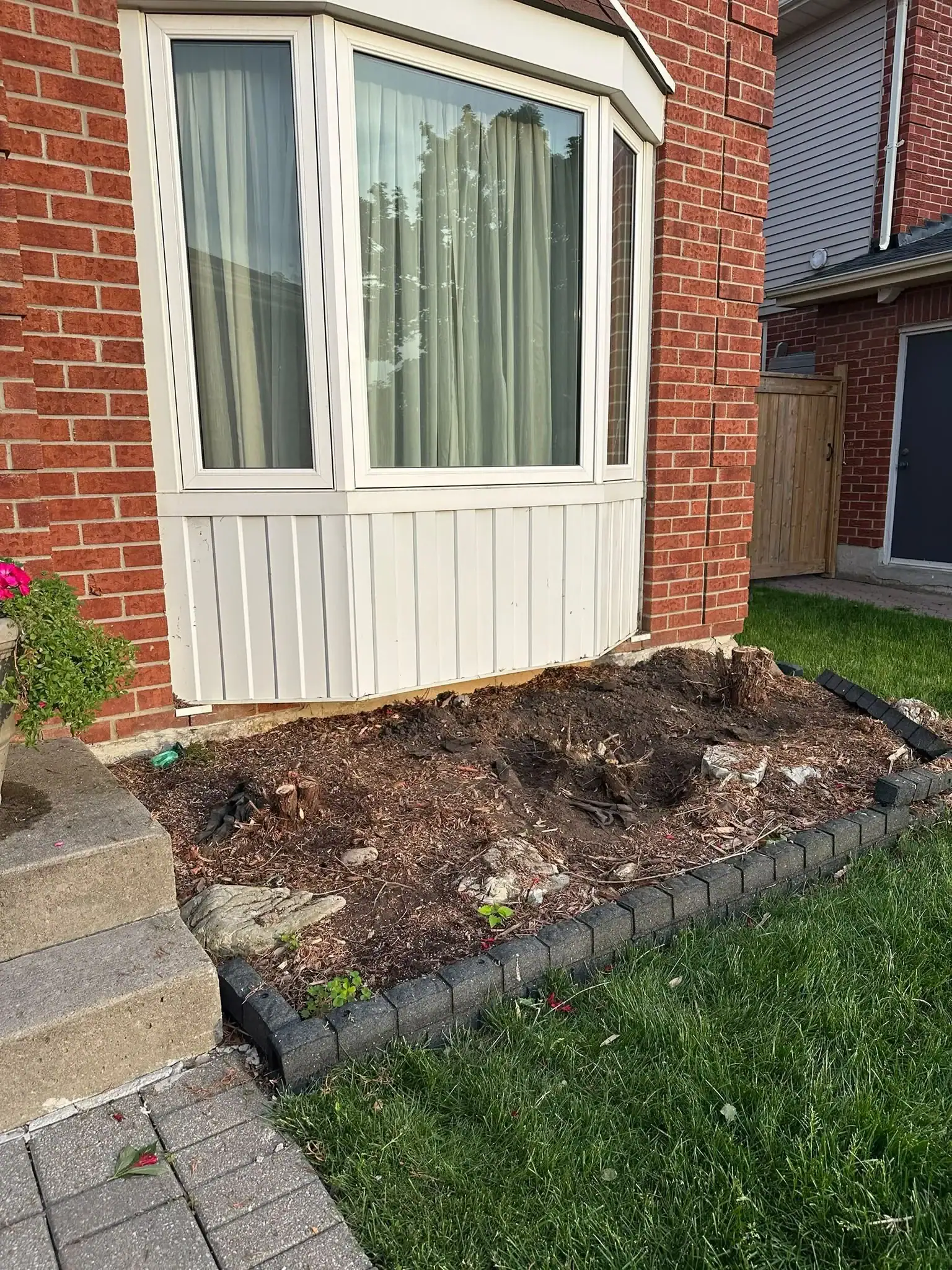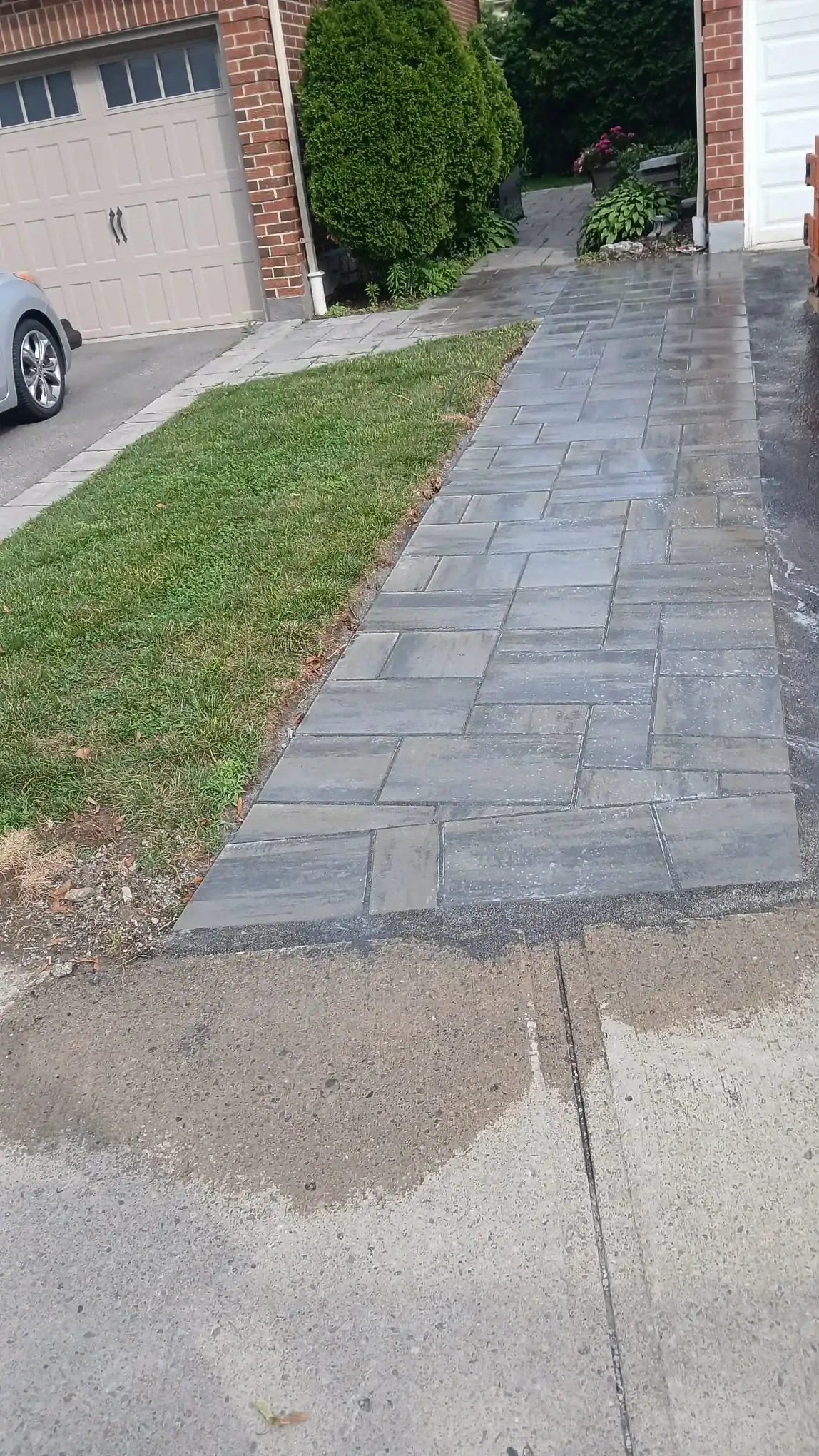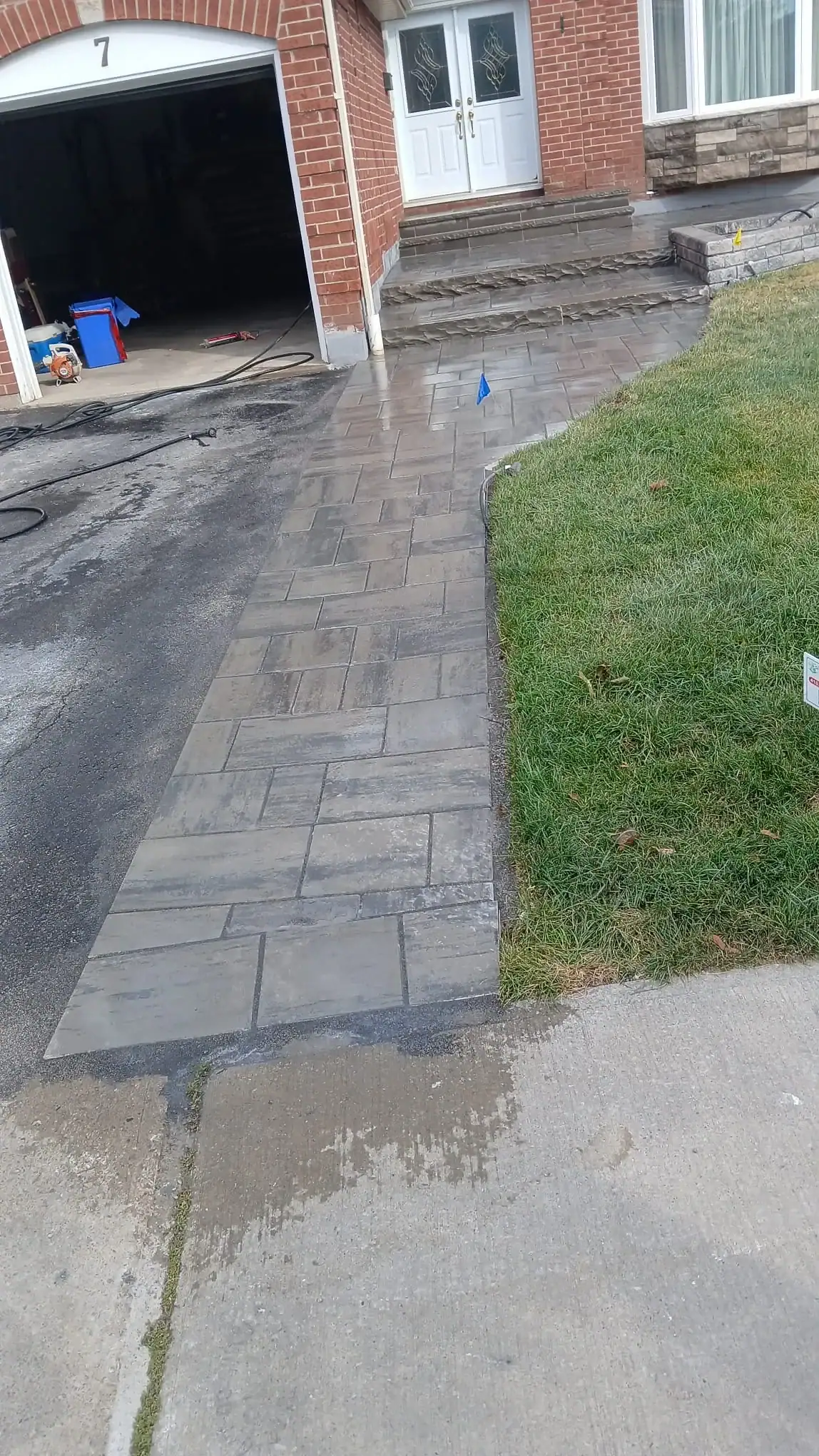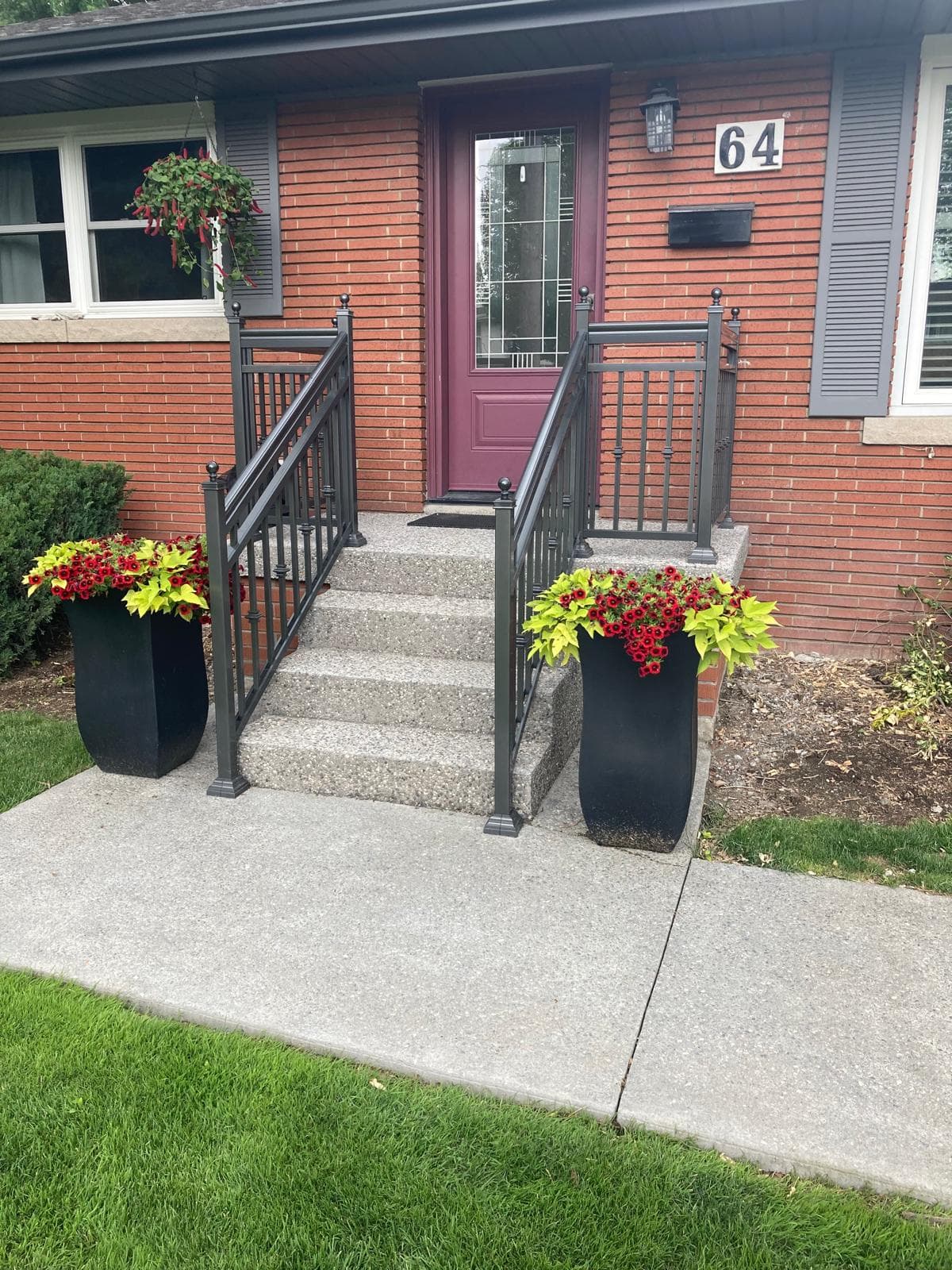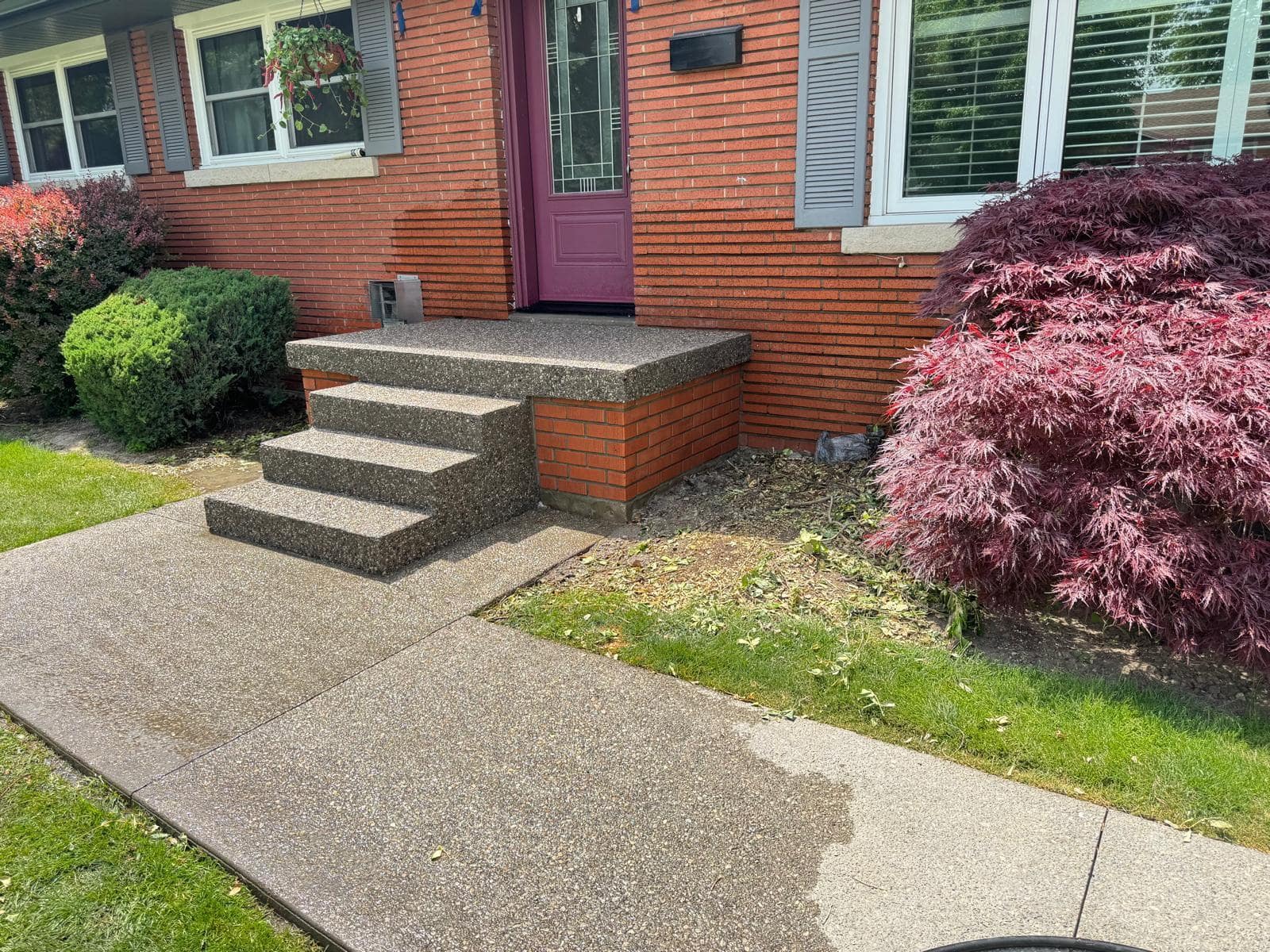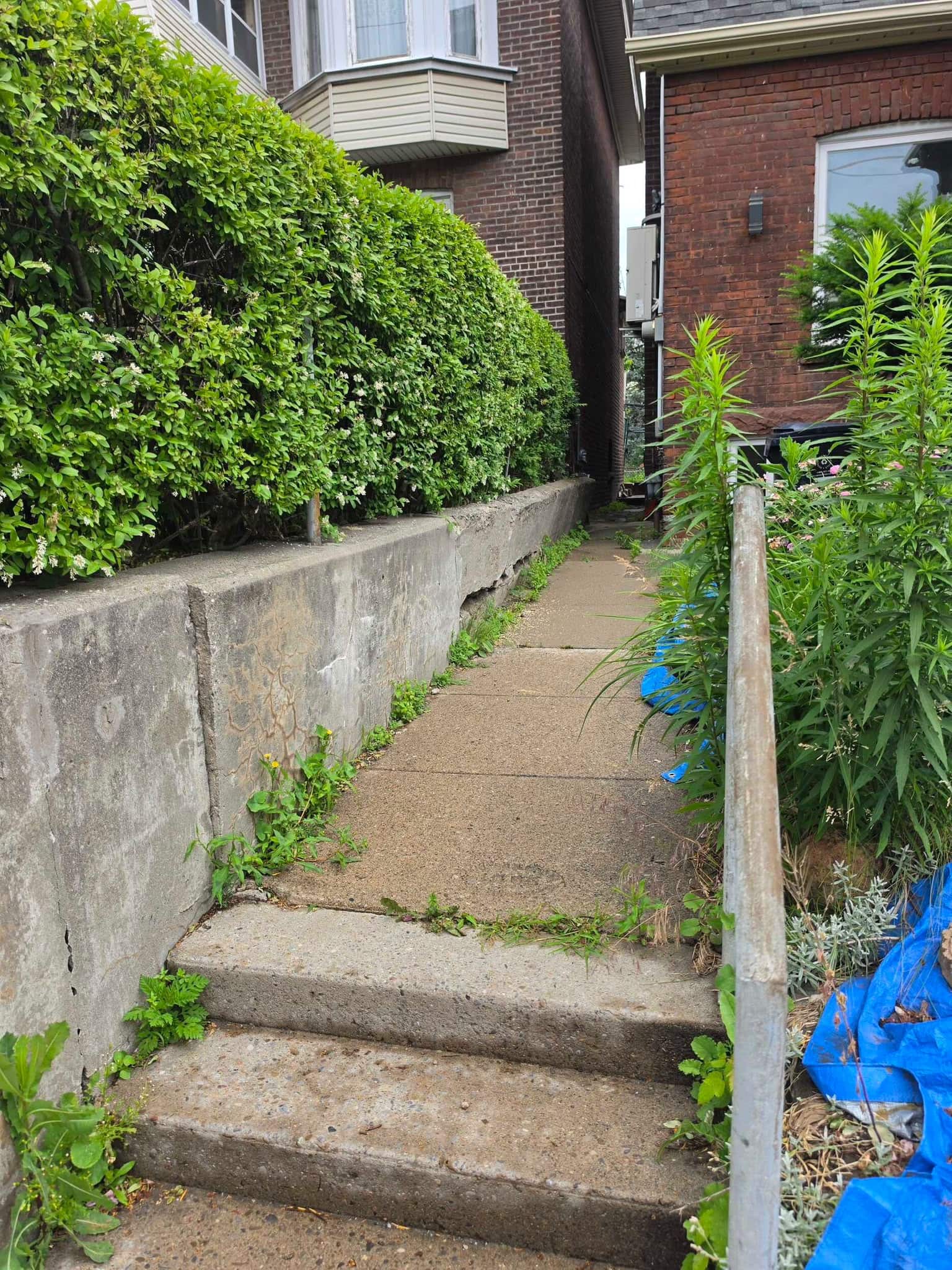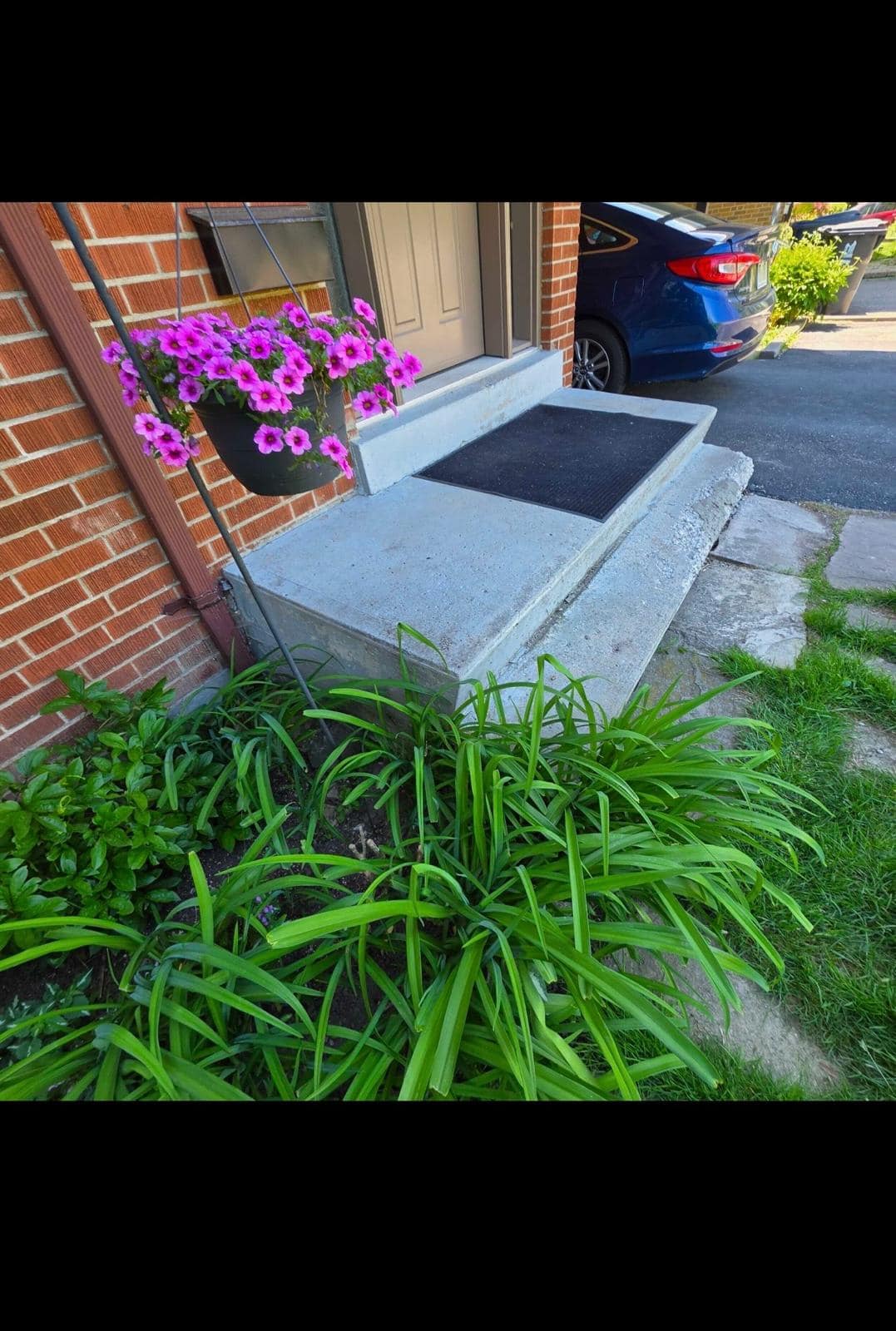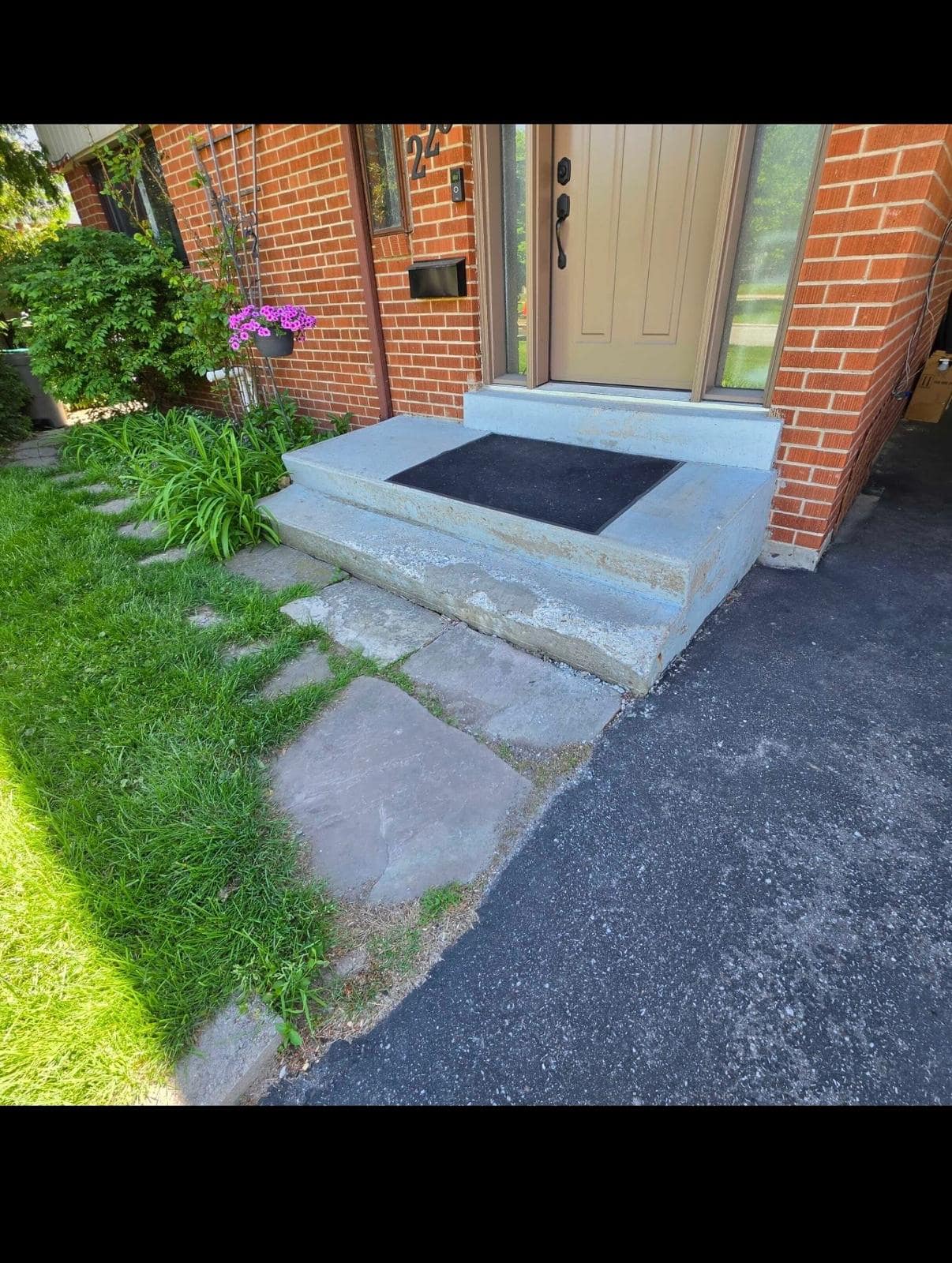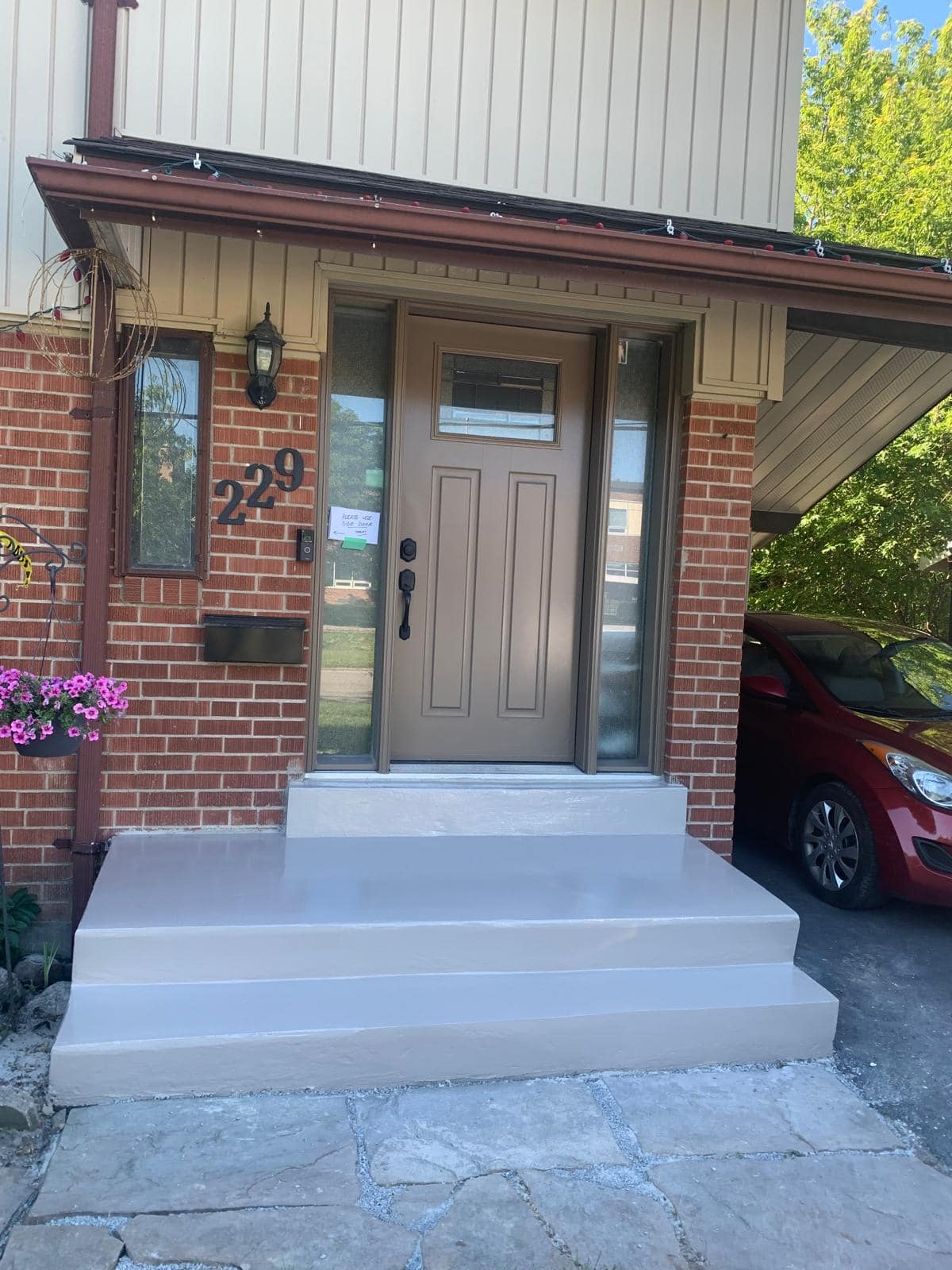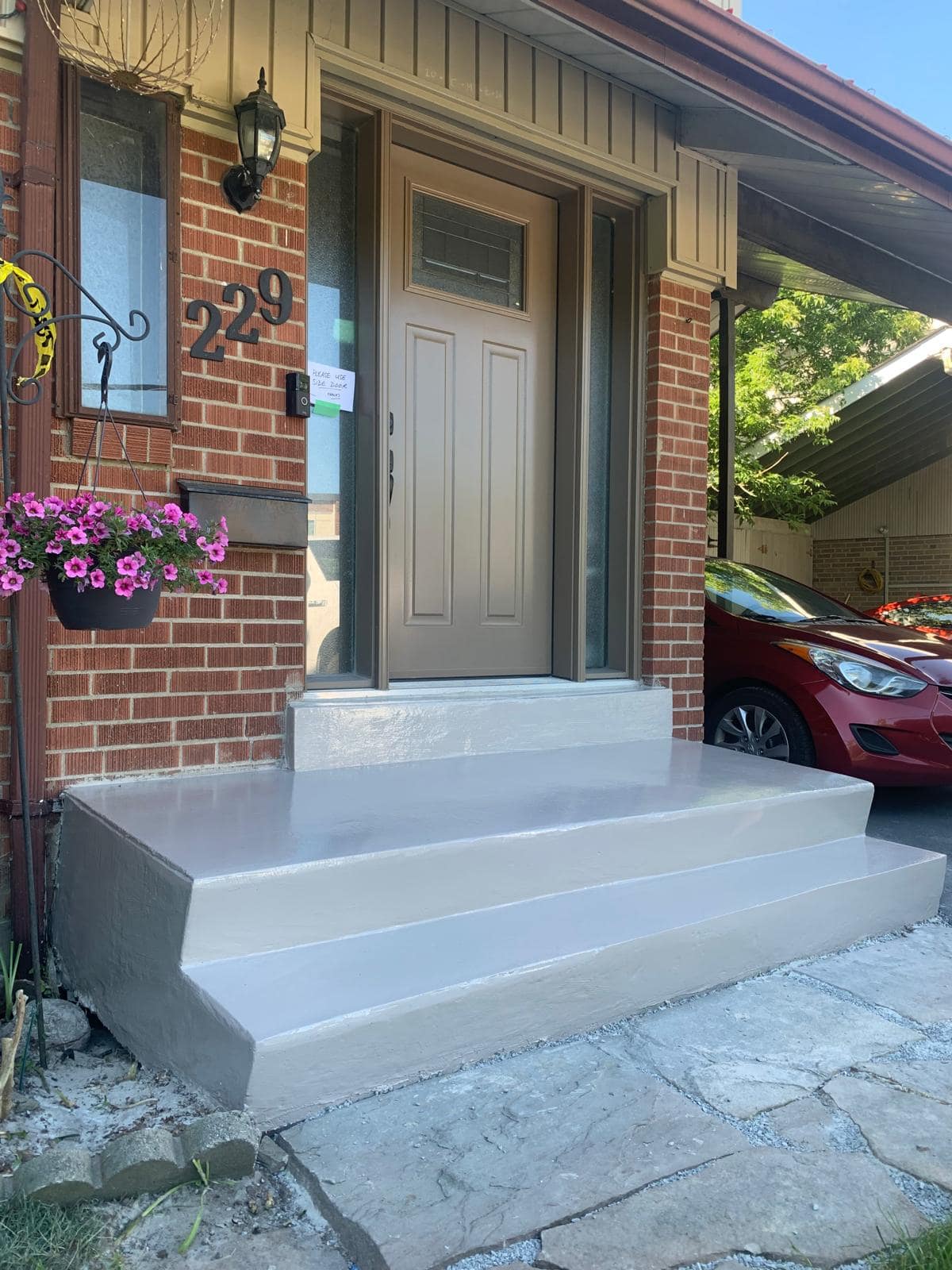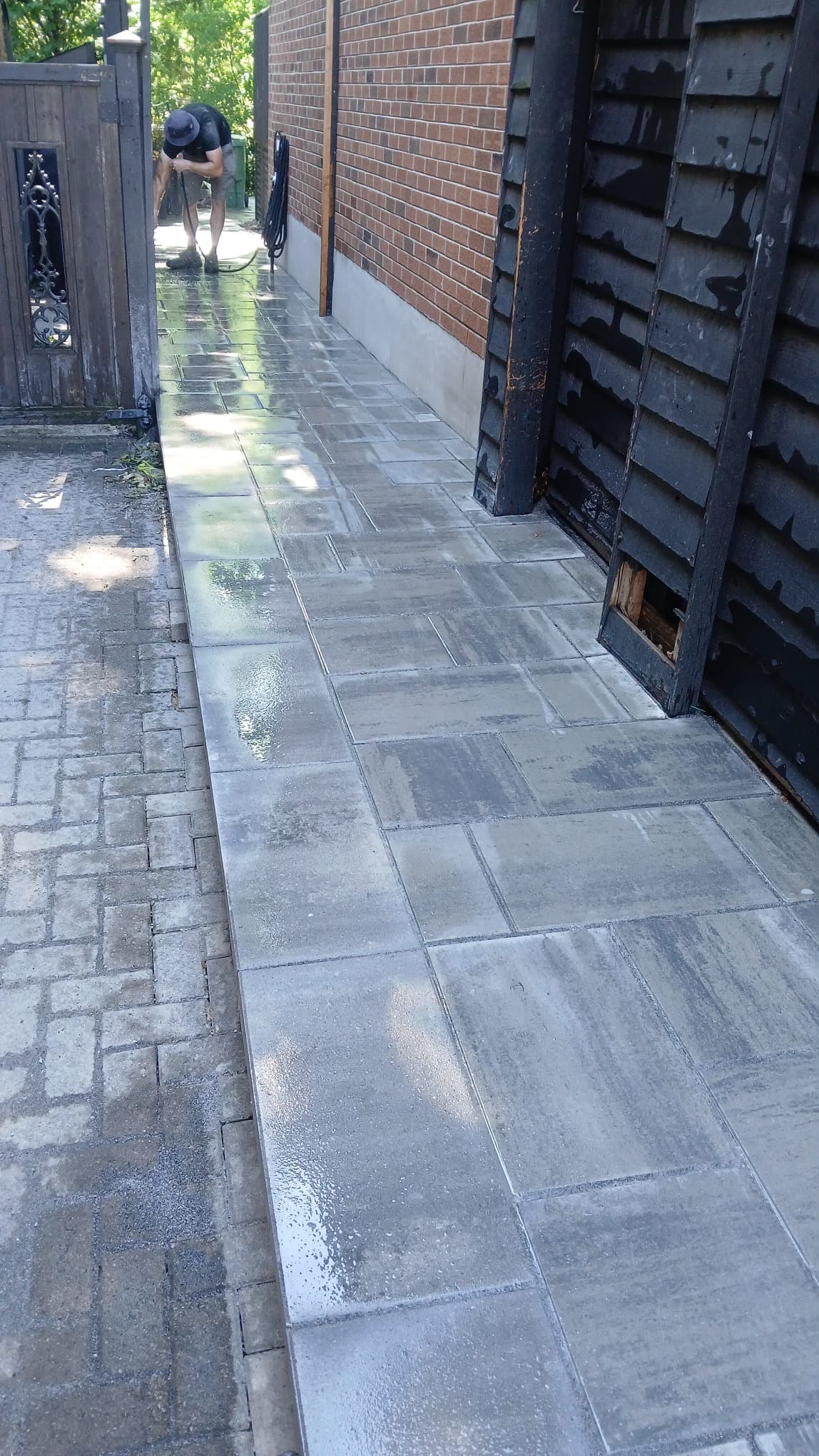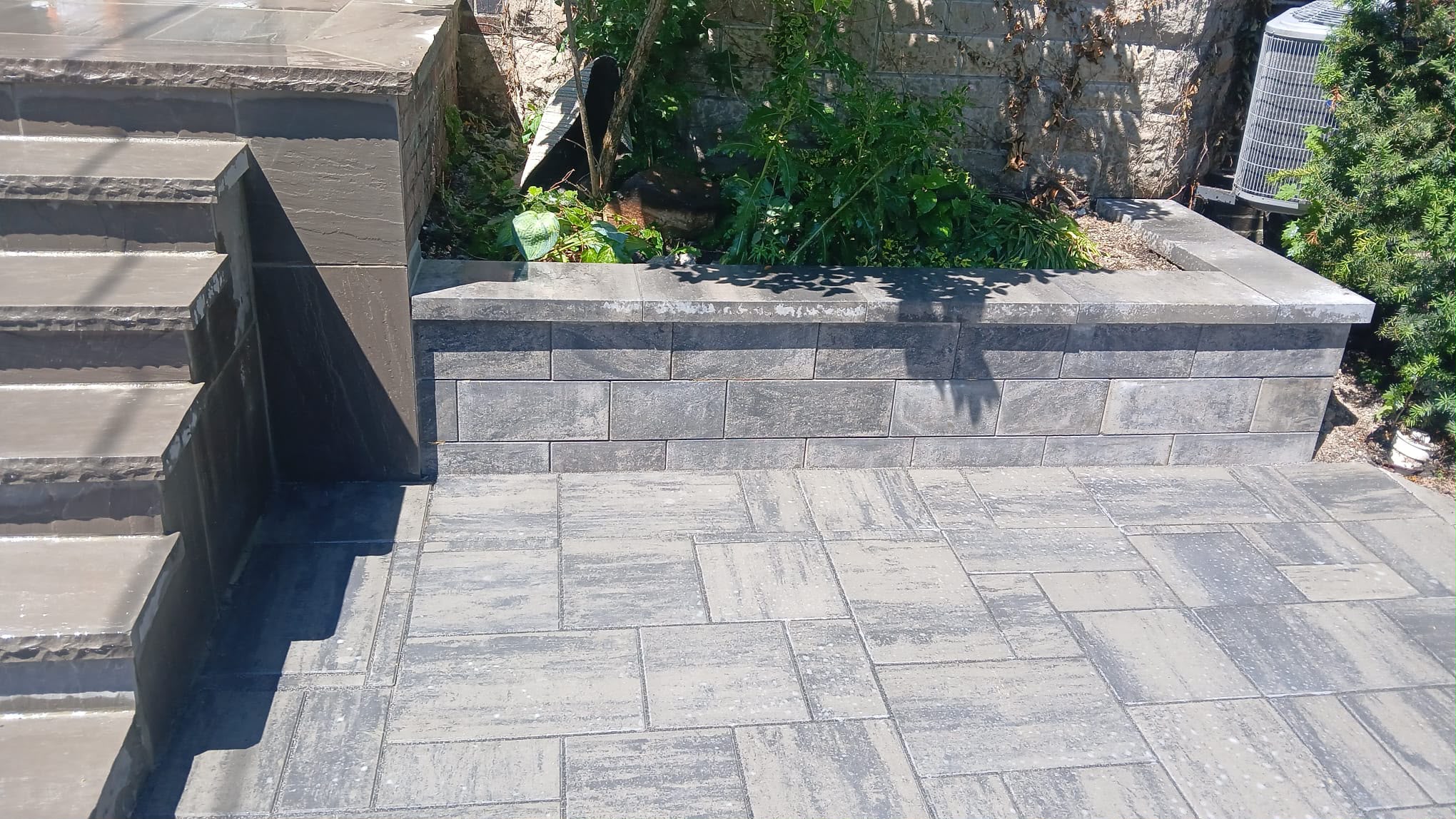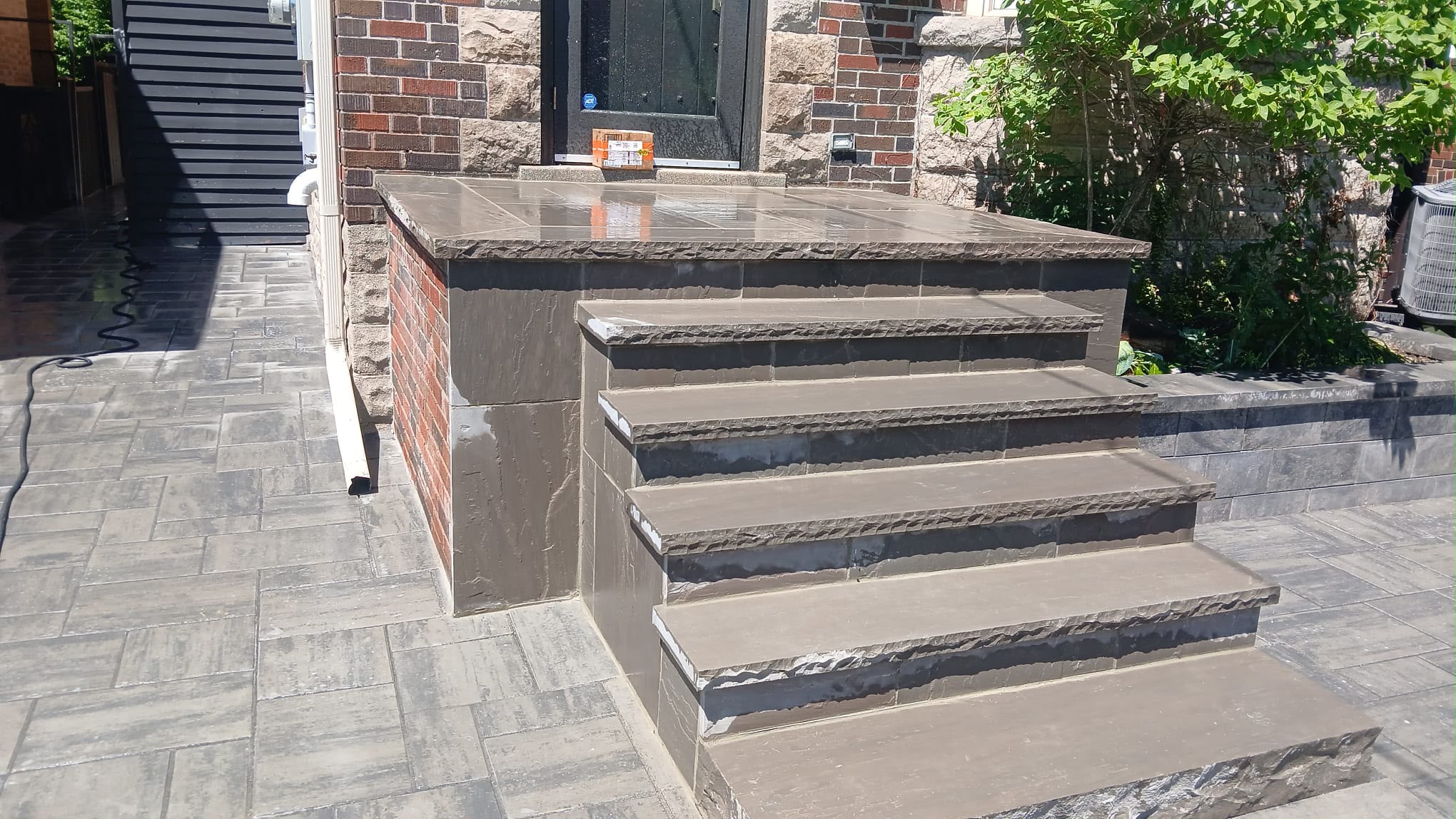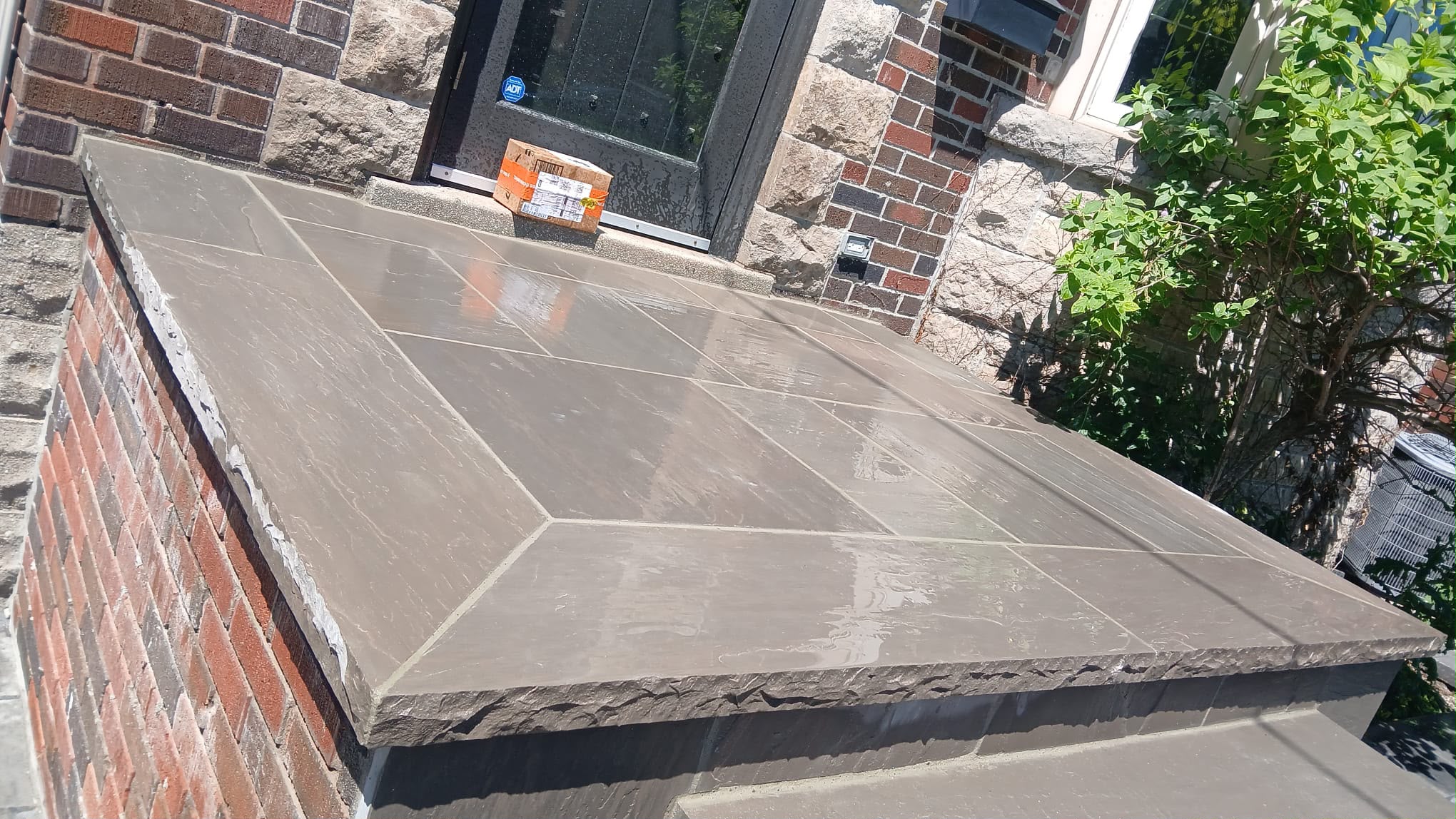

Concrete steps should be repaired when the damage is small, stable, and mostly surface-level. They should be replaced when the steps are unsafe, badly cracked, sinking, separating from the home, holding water, or damaged through the structure. For Toronto and GTA homeowners, this decision matters because concrete steps deal with rain, snow, ice, salt, foot traffic, and freeze-thaw cycles every year.
A small crack may not mean the whole step needs to be rebuilt. But a loose tread, a deep fracture, a crumbling corner, or an uneven step can pose a safety concern, especially in winter. The hard part is knowing whether the problem is cosmetic, repairable, or a sign that the steps are failing underneath.
This guide explains when to repair or replace concrete steps, what warning signs to look for, how Toronto weather affects concrete, what homeowners can check themselves, and when professional assessment makes more sense.
Why Concrete Step Damage Should Not Be Ignored
Concrete step damage should not be ignored, as steps are used every day and must remain safe in wet, icy, and snowy conditions. A crack that looks small in summer can collect water in fall, freeze in winter, and widen by spring.
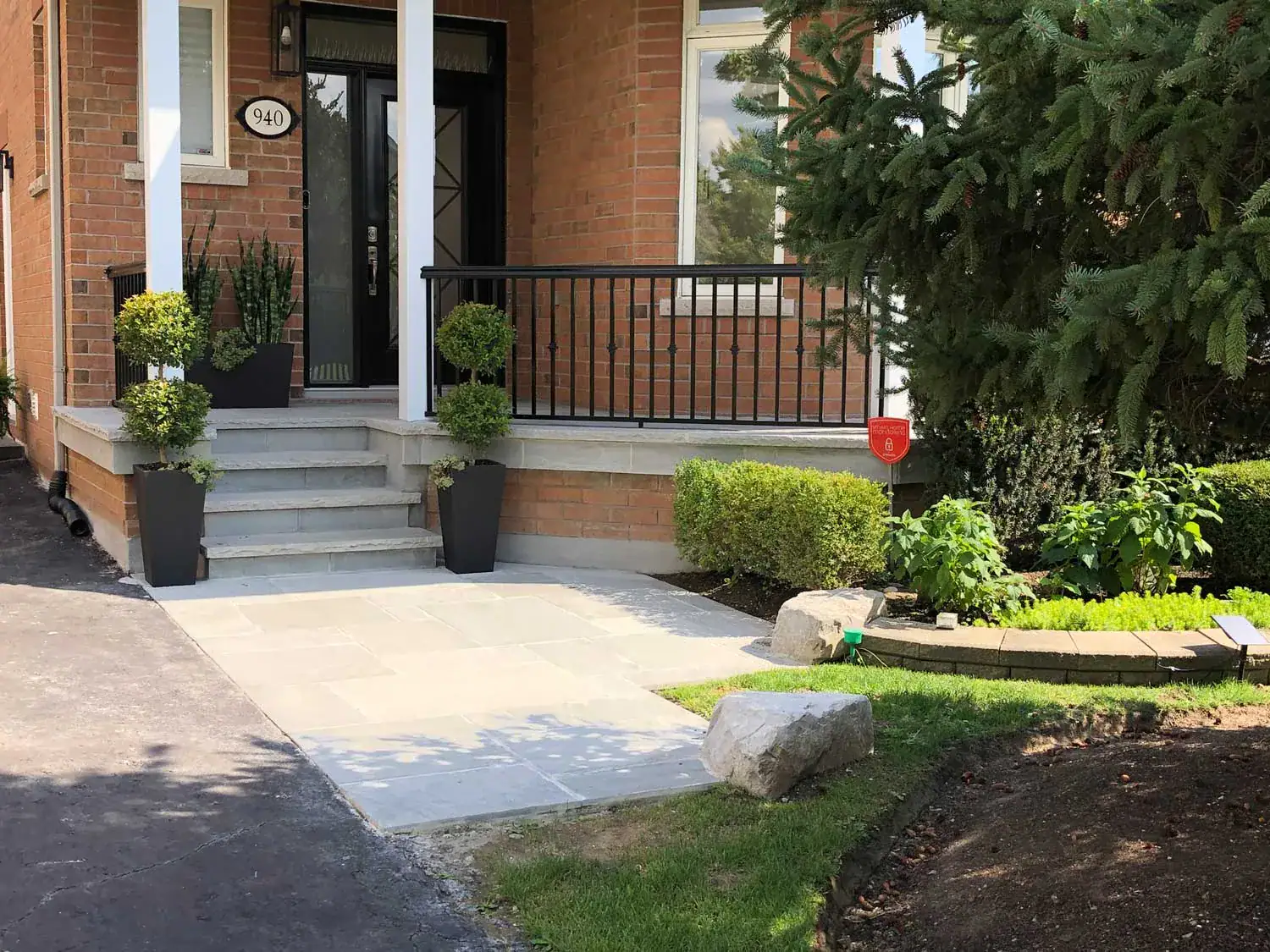
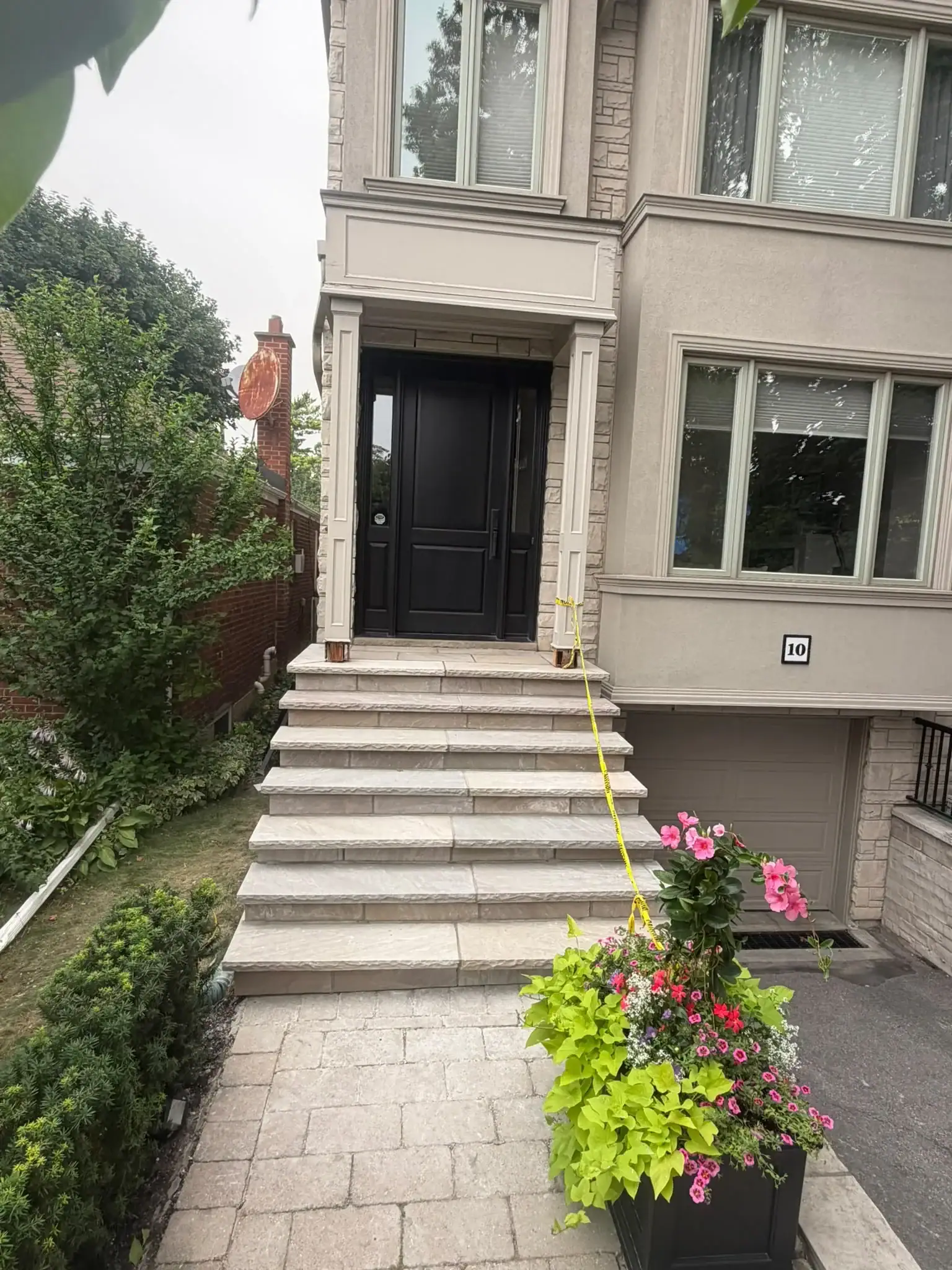
Toronto homes often have concrete steps at front entrances, side doors, basement walkouts, porches, garden paths, and garage access points. These areas are exposed to changing weather and heavy use. If the concrete surface becomes uneven, loose, or slippery, the issue is no longer only about appearance.
Damaged steps can also affect nearby masonry. Water can run toward brick walls, porch columns, parging, foundation areas, or walkways. If the steps slope toward the home or retain water near the entrance, the surrounding masonry may also begin to show signs of moisture damage.
If your steps are part of a wider exterior repair issue, A&A Masonry’s concrete repair Toronto page explains how different concrete problems may need different repair methods.
When Concrete Steps Can Usually Be Repaired
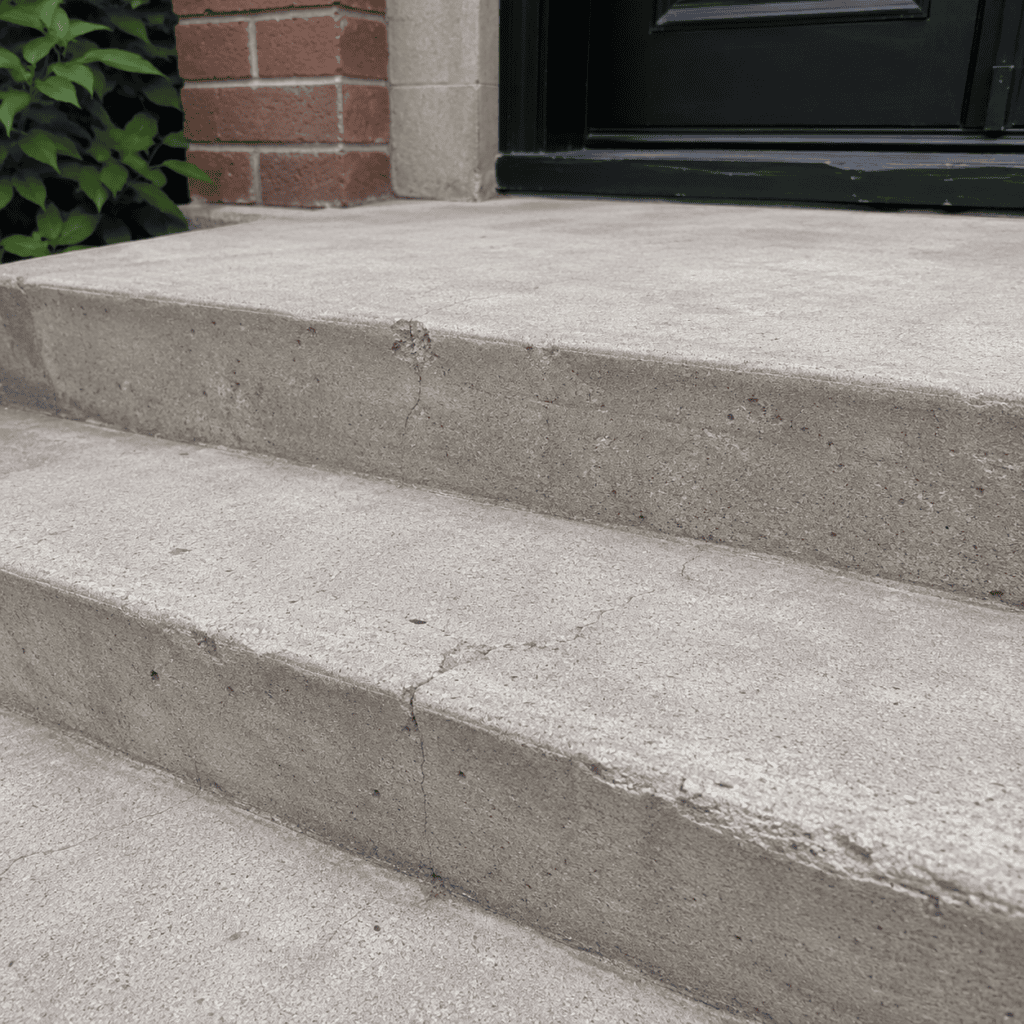
Concrete steps can usually be repaired when the damage is limited, the structure is stable, and the step still has a sound base. Small surface cracks, minor chips, shallow scaling, and worn edges may be repairable if the concrete underneath is still solid.
Repair may make sense when the step is not moving, not separating from the porch, not sinking, and not creating a major trip hazard. In these cases, the repair may involve patching, resurfacing, edge repair, crack repair, or improving drainage around the step.
Repair is often a practical choice when:
- The crack is narrow and has not widened over time.
- The damage is mostly on the surface.
- The corners are chipped, but the step is still solid.
- The step is level and not sinking.
- The base appears stable.
- Water is not pooling heavily on or behind the steps.
- The problem is localized to one small area.
A repair should still address the cause. If a crack was caused by water sitting on the step, the surface should be corrected so water drains properly. If salt damage has caused scaling, the repair plan should include improved winter maintenance practices.
When Concrete Steps Should Be Replaced
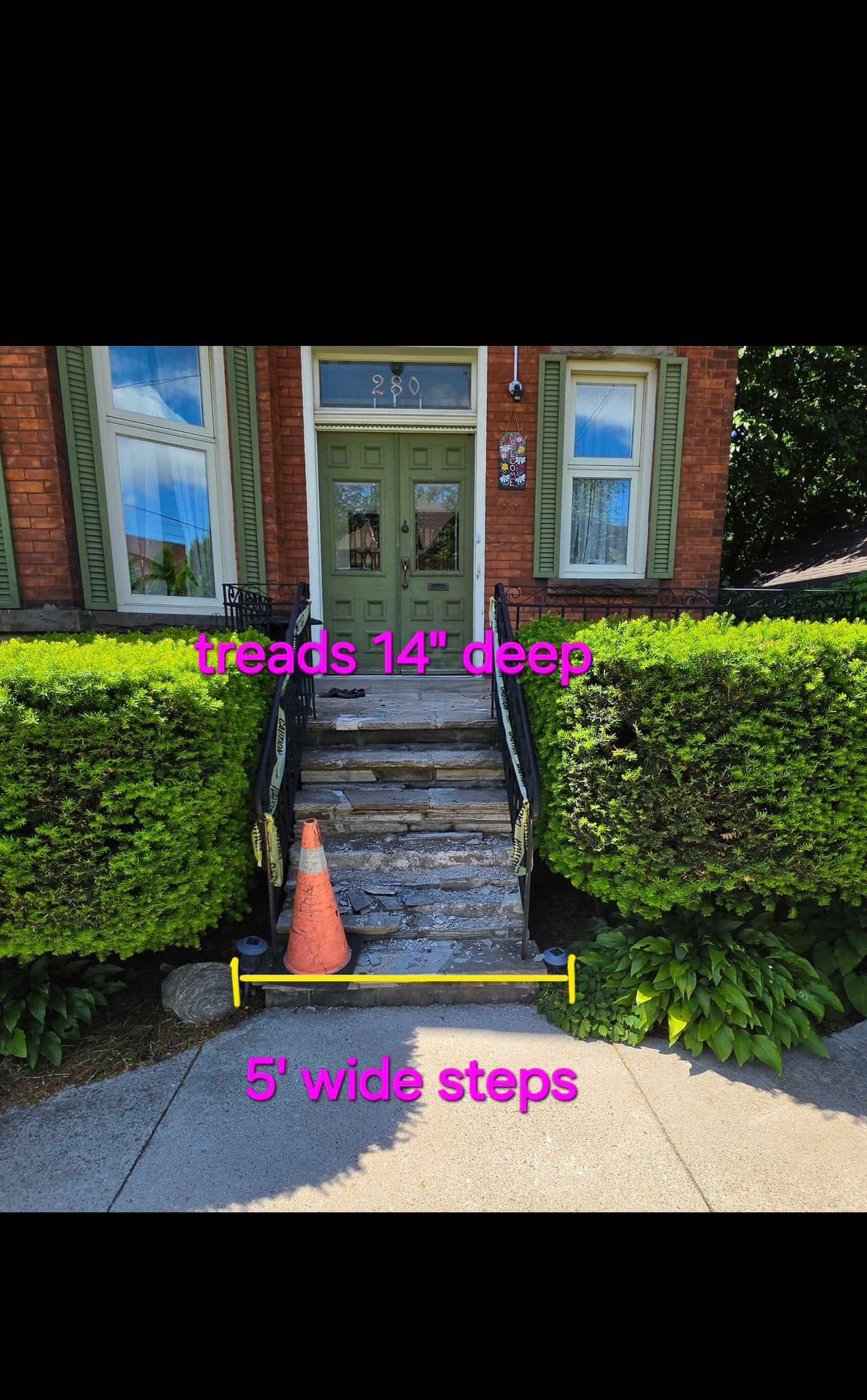
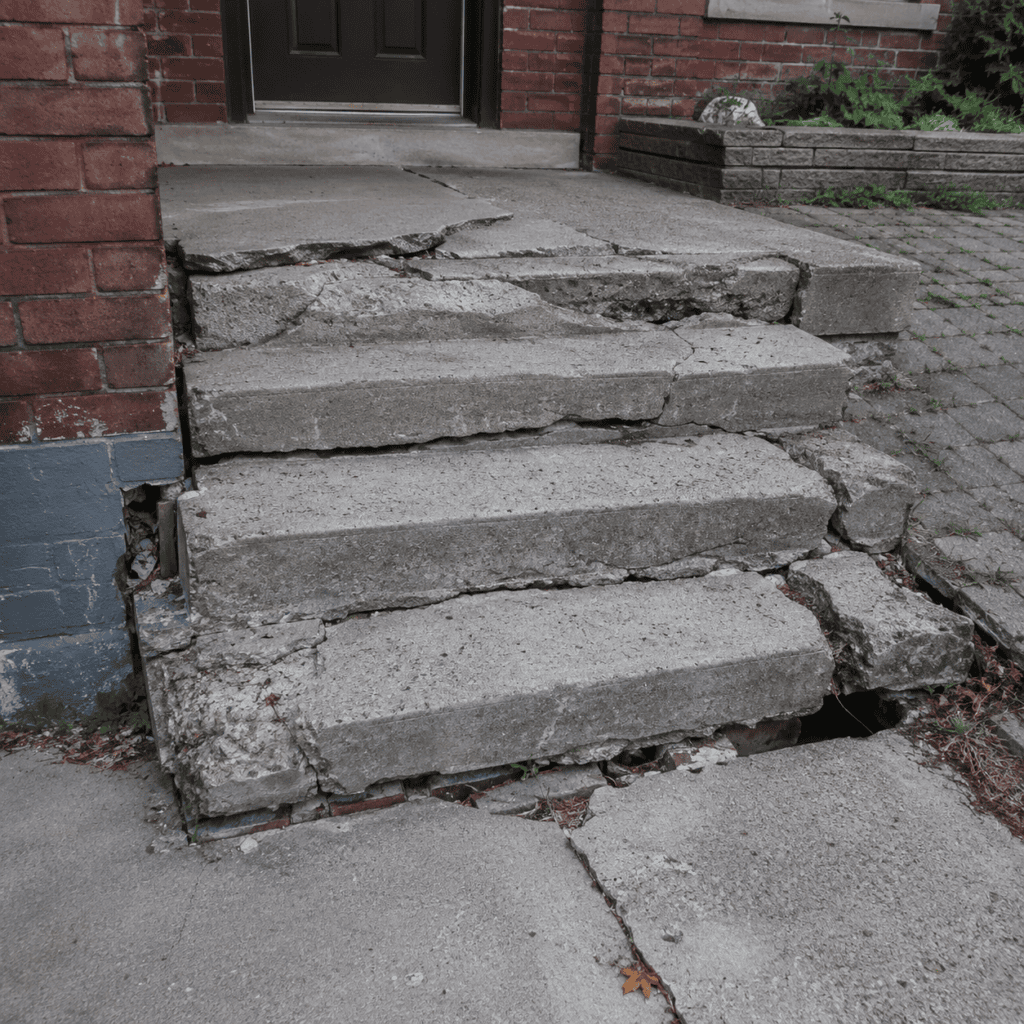
Concrete steps should be replaced when damage compromises safety, structural integrity, drainage, or long-term stability. If the steps are sinking, heaving, badly cracked, loose, crumbling deeply, or separating from the home, repair may only be temporary.
Replacement may be the better option when the concrete has failed through its depth, the base is unstable, or the layout no longer works safely. A surface patch cannot fix a weak base, poor slope, or major movement. If the same repair keeps failing, the real issue is probably below the surface or connected to drainage.
Replacement is often more sensible when:
- Large cracks run through the step.
- The step moves, rocks, or feels hollow.
- The steps have sunk or tilted noticeably.
- Water drains toward the home or foundation.
- The concrete is crumbling in several areas.
- The step height is uneven or unsafe.
- The steps are pulling away from the porch or wall.
- Previous patches have failed more than once.
If the project involves rebuilding or redesigning steps, A&A Masonry’s concrete steps and walkways Toronto page is a useful starting point for understanding step and walkway planning.
Surface Damage vs Structural Damage
The main difference between surface damage and structural damage is depth and movement. Surface damage affects the outer layer of the concrete. Structural damage affects the stability, shape, support, or safe use of the steps.
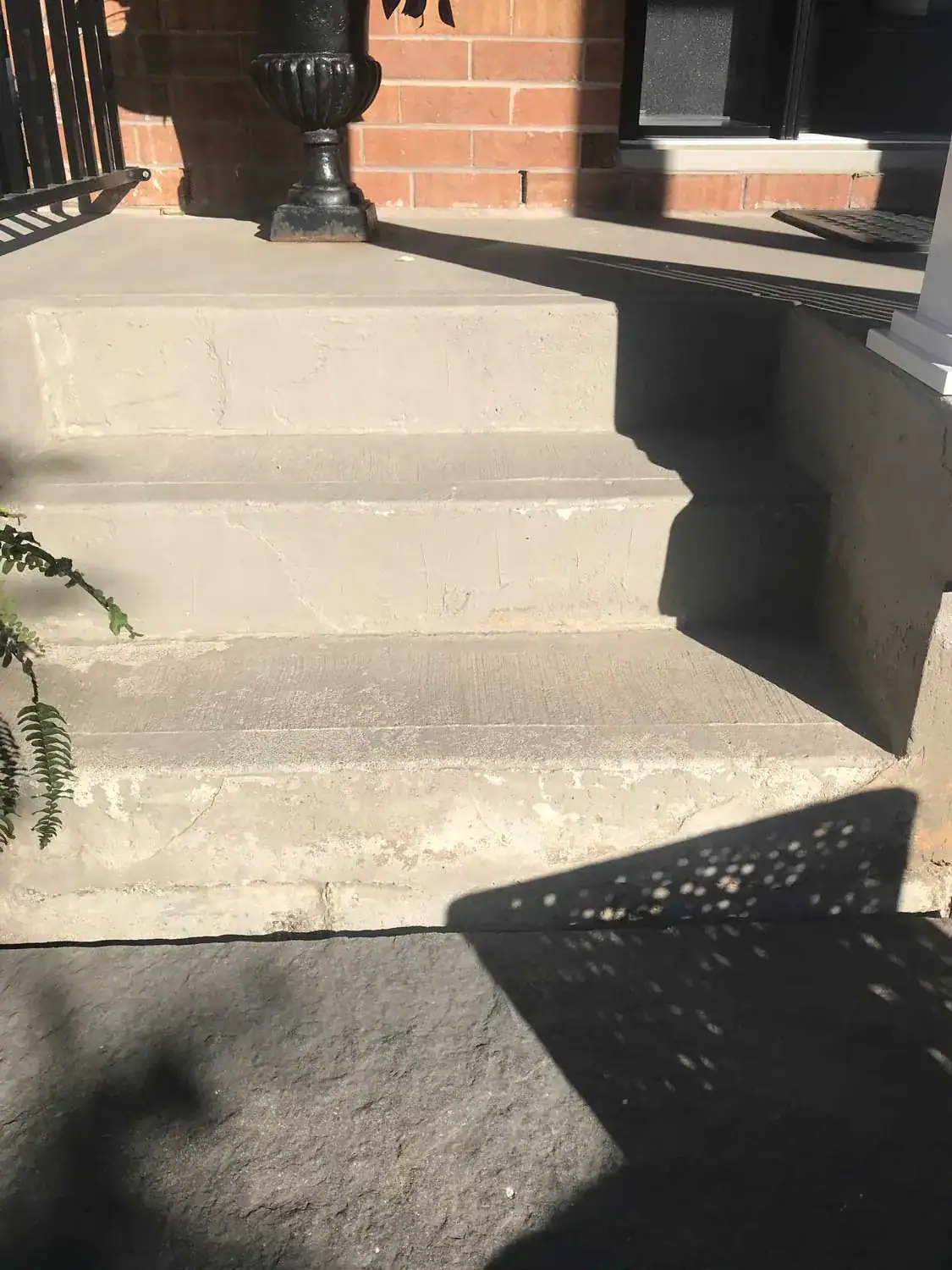
Surface damage may include light scaling, small chips, shallow cracks, cosmetic wear, or minor roughness. These problems can look unattractive, but they do not always mean the step is failing. If repaired early, the step may continue to perform well.
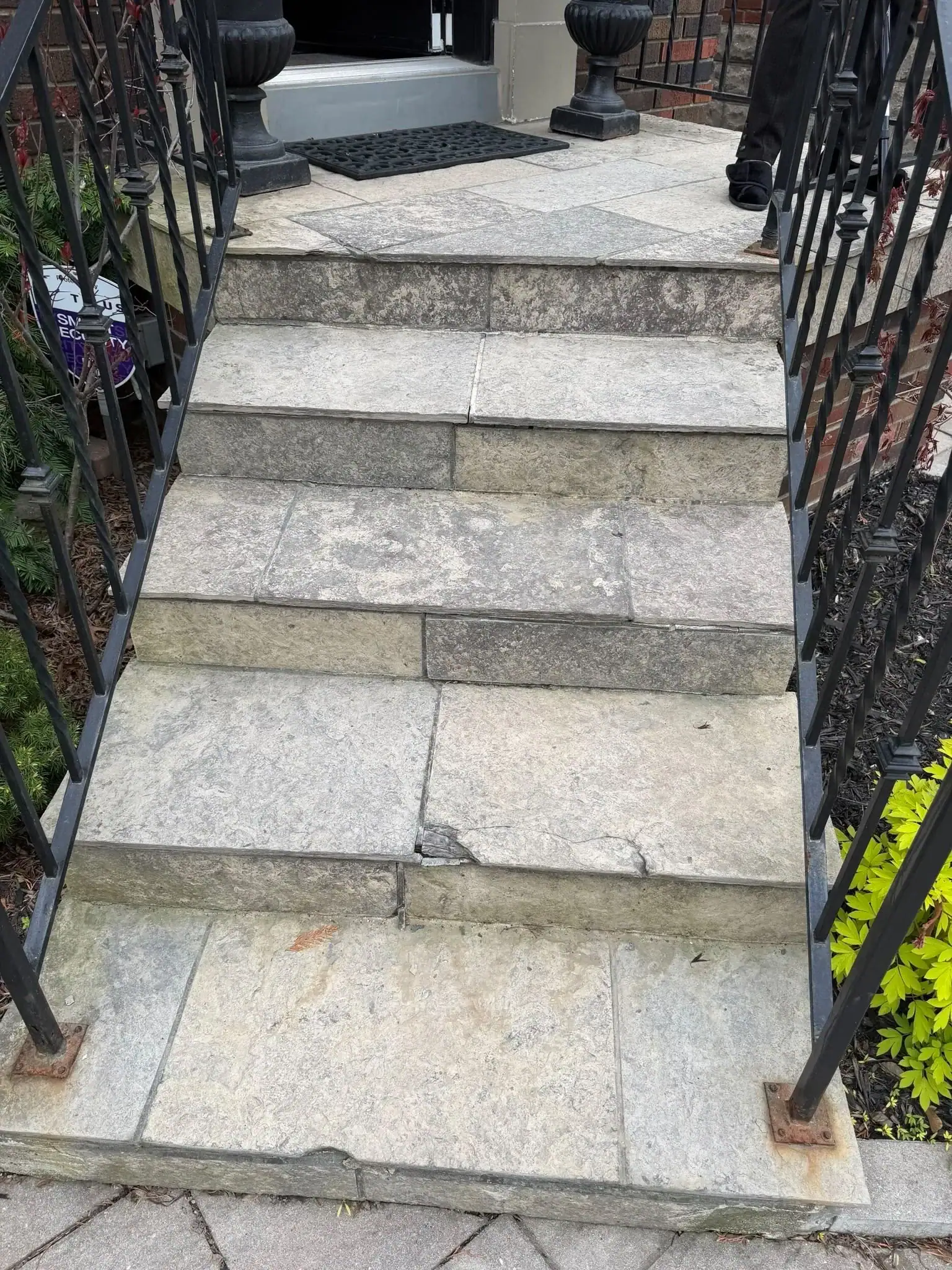
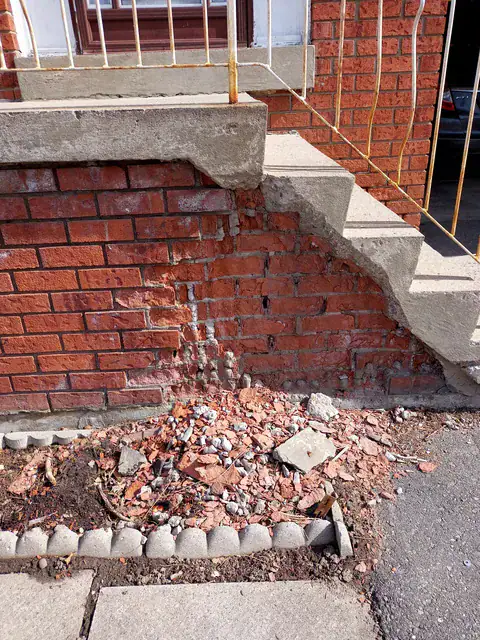
Structural damage is more serious. It may include deep cracks, broken sections, sinking, shifting, separation from the home, leaning, loose pieces, or step heights that no longer feel even. These problems can create trip hazards and may worsen over the winter.
A simple way to think about it is this: if the step is ugly but stable, repair may be possible. If the step is unstable, unsafe, or moving, replacement should be seriously considered.
How Toronto Weather Damages Concrete Steps
Toronto weather damages concrete steps mainly through moisture, freeze-thaw cycles, and winter salt exposure. Water enters cracks, pores, joints, and weak surface areas. When temperatures drop, the water freezes and expands. Over time, this can widen cracks, loosen edges, and break down the surface.
Steps are especially exposed because they are horizontal and hold snow, ice, and rain. They are also frequently salted, shovelled, scraped, and walked on. These conditions can wear down the surface faster than vertical concrete or protected areas.
The City of Toronto’s winter safety guidance is a useful reminder that ice, snow, and slippery surfaces need attention. For homeowners, safe steps are part of seasonal home maintenance.
The goal is to keep water from entering and sitting in damaged areas. Once concrete begins to crack or scale, winter can accelerate the damage if repairs are delayed.
Drainage Problems Around Concrete Steps
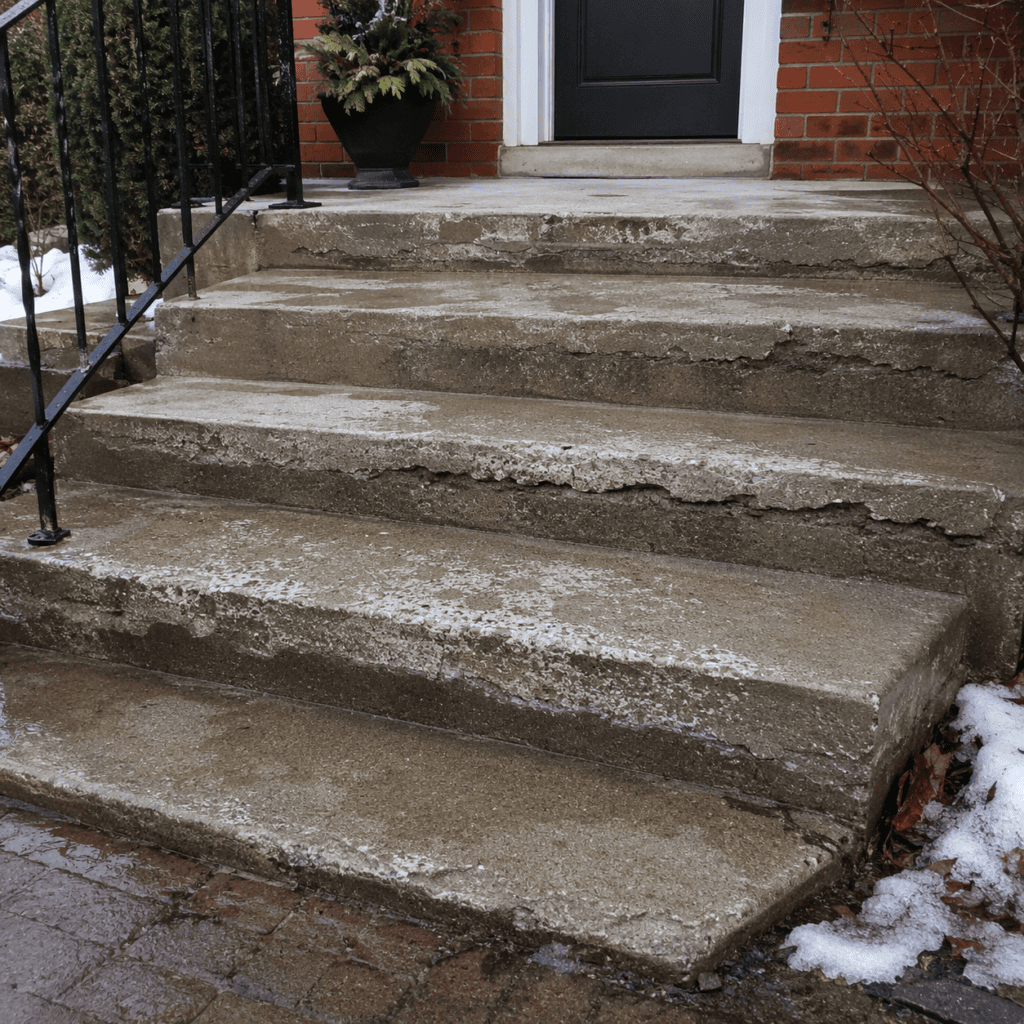
Drainage problems around concrete steps can increase the likelihood of repair failure. Even a well-done patch may not last if water keeps collecting on the step, behind the step, or near the foundation.
Concrete steps should be set to shed water away from the home where possible. Water should not pool on the tread, run toward the wall, or collect at the base. If the steps connect to a walkway, driveway, or porch, the surrounding surfaces should also drain properly.
Signs of drainage trouble include dark wet areas that stay damp, algae growth, efflorescence on nearby masonry, water stains on the foundation, pooling at the bottom step, or ice forming repeatedly in the same place.
The City of Toronto provides guidance on managing rain and melted snow. This is relevant because step repair often lasts longer when water is directed away from concrete, foundations, brickwork, and walkways.
If water near your steps is also affecting basement walls or foundation areas, A&A Masonry’s waterproofing Toronto page explains common exterior moisture and foundation water-entry concerns.
Cracks in Concrete Steps: What They May Mean
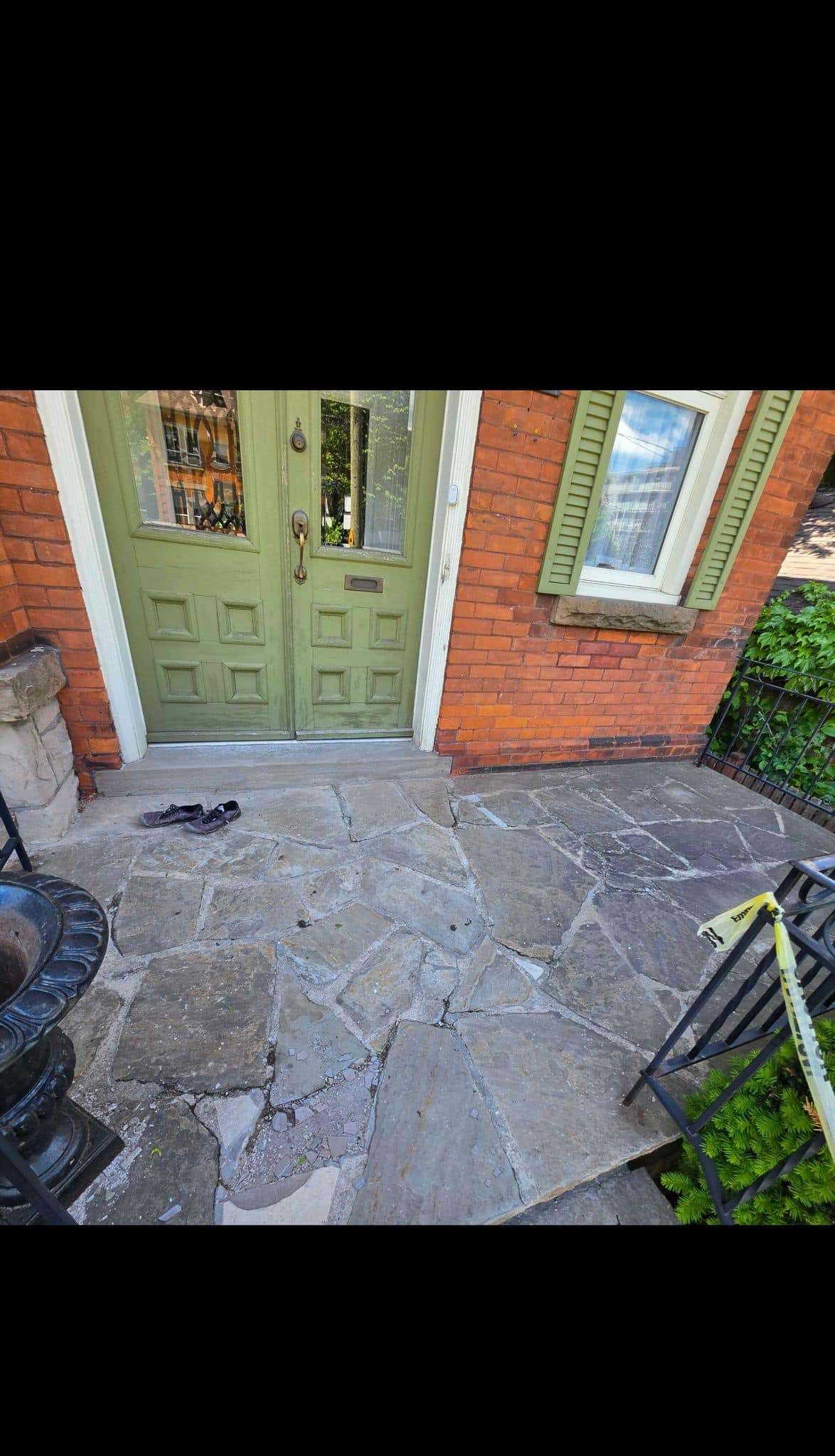
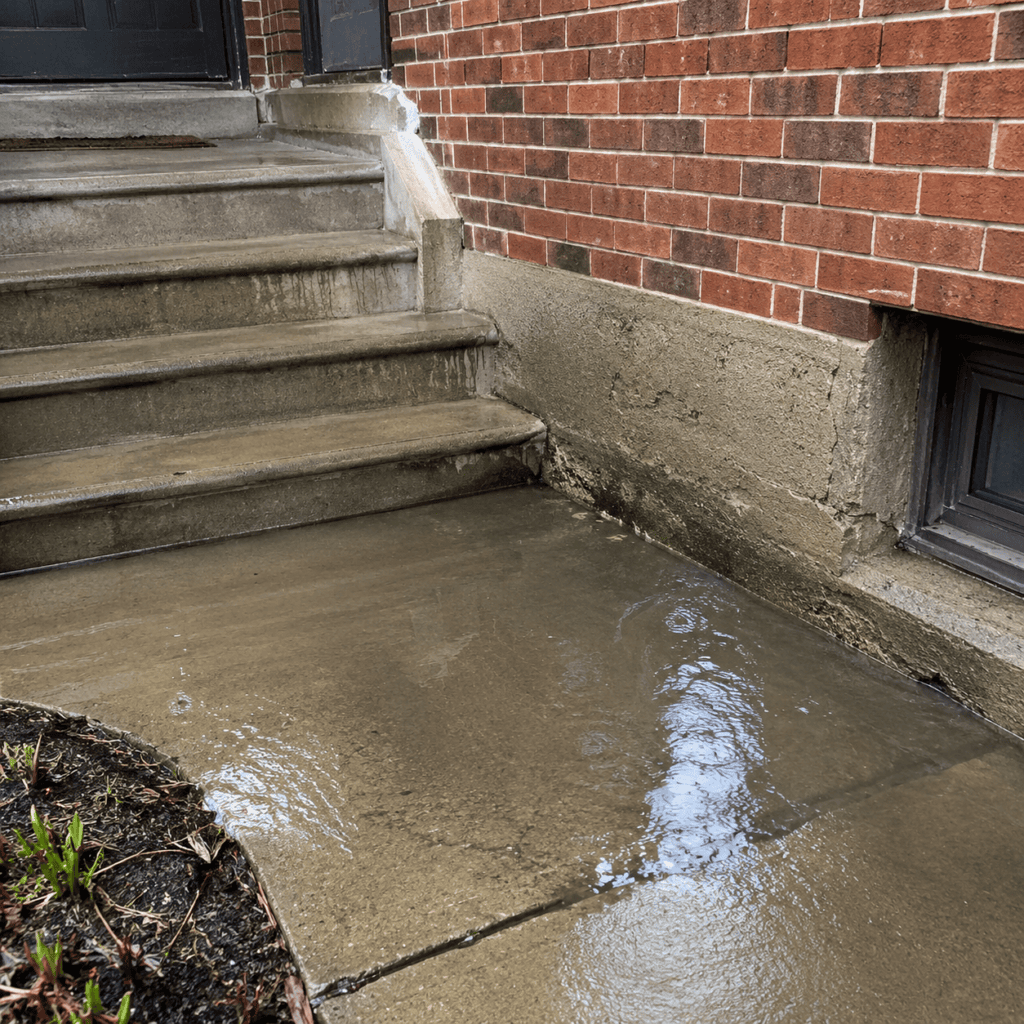
Cracks in concrete steps can mean different things depending on size, location, movement, and whether water is present. A fine hairline crack may be minor. A wide crack running through a tread or riser may indicate deeper movement or structural weakness.
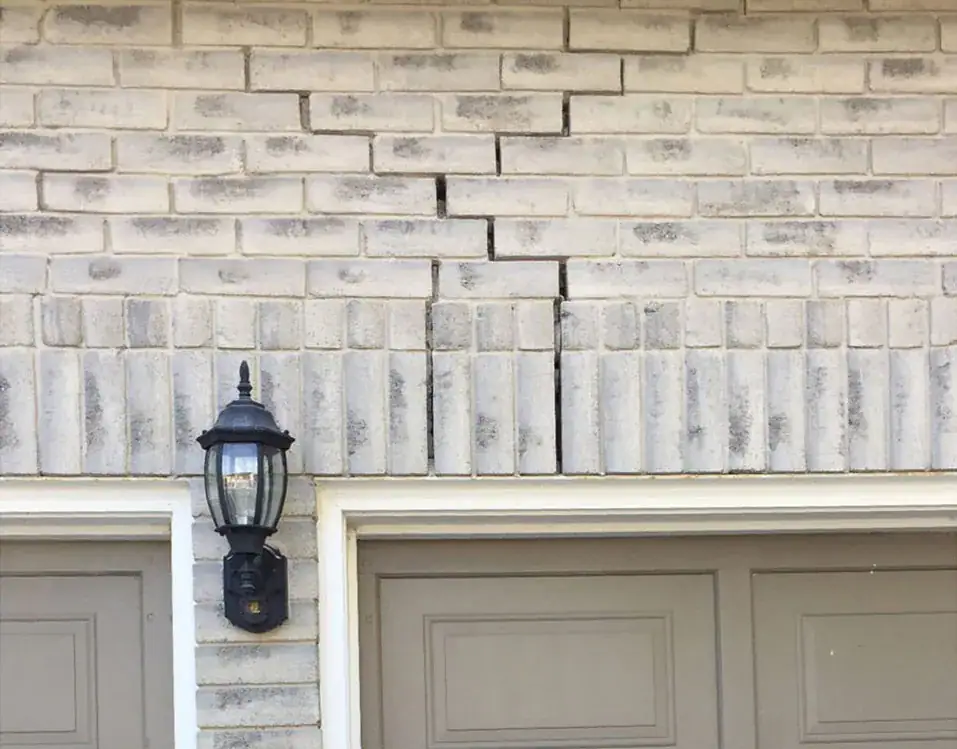
Horizontal cracks near the edge of a step can lead to broken noses or loose pieces. Vertical cracks through the side of a step may show stress or movement. Cracks that appear near the wall may be connected to settlement, frost movement, or water collecting behind the steps.
Cracks should be watched over time. Take photos and compare them after heavy rain, in winter, and after the spring thaw. If a crack widens, leaks, shifts, or causes loose concrete, it should be reviewed sooner rather than later.
Do not simply fill every crack with a quick surface product and assume the issue is solved. Crack repair works best when the cause is understood.
Crumbling Edges and Broken Corners
Crumbling edges and broken corners are common on older concrete steps, especially where snow, salt, and foot traffic wear down the most exposed areas. The front edge of a step often takes the most abuse.
Small chips may be repairable if the rest of the concrete is solid. Larger broken areas may require more careful forming, bonding, and selection of repair materials. If the corner keeps breaking after repairs, the problem may involve weak concrete, poor drainage, impact damage, or freeze-thaw exposure.
Broken step edges are more than cosmetic. They can make the tread shorter, uneven, or harder to see, especially in low light or winter conditions. If the edge creates a trip hazard, the repair should not be delayed.
Surface Scaling and Flaking
Surface scaling and flaking happen when the top layer of concrete breaks down. This can be caused by freeze-thaw exposure, salt, poor finishing, moisture, age, or a weak surface. Scaling often starts as small flakes or rough patches, then spreads across the tread.
Light scaling may be repaired with surface preparation and resurfacing if the underlying concrete remains strong. Deep scaling may be more difficult because the surface may continue to break apart. If scaling affects several steps or exposes loose aggregate, replacement may be more reliable.
Homeowners should be careful with thin cosmetic coatings over weak concrete. A coating may look good briefly, but it can peel or break if the underlying surface is still failing.
Uneven, Sinking, or Tilting Steps
Uneven, sinking, or tilting concrete steps are usually more serious than surface cracks. Movement often points to base failure, frost movement, poor compaction, drainage issues, soil settlement, or water washing away support.
Repairing the surface will not fix the base. If the steps have shifted, the repair may need to address issues beneath the concrete. In some cases, replacement is the safer and longer-lasting option.
Uneven steps are also a safety concern. Even a small difference in step height can create a trip risk because people expect steps to be consistent. In winter, uneven steps are harder to use safely when snow or ice hides the edge.
If your steps are uneven or unstable, A&A Masonry’s concrete stair repair page provides additional context for step repair concerns in Toronto homes.
When Repair Is Only a Temporary Patch
Repair is only a temporary patch when the underlying cause is not corrected. Concrete step repairs fail early when water keeps entering, the base keeps moving, or the surface is too weak to hold new material.
A patch may not last if:
- The step is still moving or sinking.
- Water continues to pool on the repaired area.
- The old concrete is soft, dusty, or crumbling.
- The crack goes through the full step.
- The repair is too thin for the damaged area.
- The wrong material is used for exterior freeze-thaw exposure.
- The surface is repaired in poor weather conditions.
This does not mean patching is always bad. It means patching should match the problem. A small chip and a sinking step should not be handled the same way.
Repair Options for Concrete Steps
Repair options for concrete steps depend on the concrete’s condition and the cause of the damage. A good repair starts with cleaning, preparation, and a sound surface. The repair material must also be suitable for exterior use.
Common repair options may include crack filling, patching broken corners, resurfacing worn treads, replacing damaged sections, improving drainage, or rebuilding individual areas. In some cases, railings, adjacent walkways, or porch edges may also need attention.
Repair is usually most successful when the step is stable and the damage is limited. If the repair area is small and the water problem is corrected, the result can improve safety and appearance without full replacement.
However, homeowners should avoid surface-only repair when the step is moving, hollow, deeply cracked, or structurally compromised.
Replacement Options for Concrete Steps
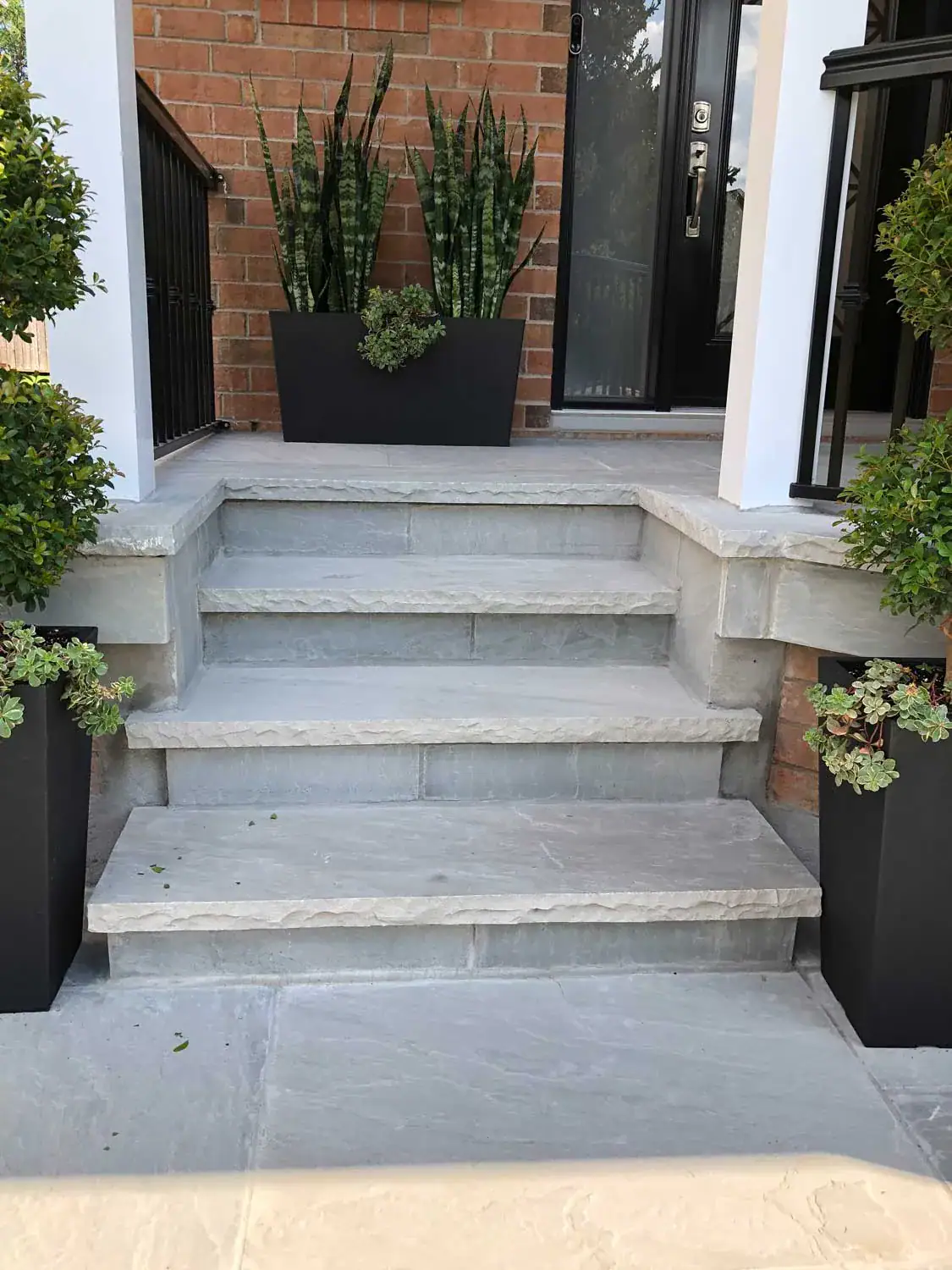
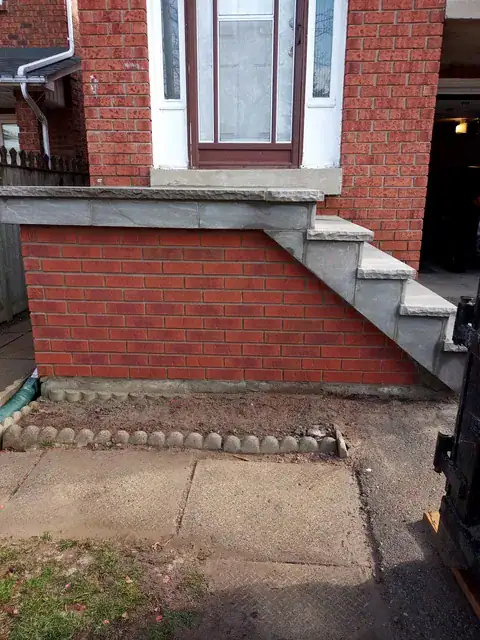
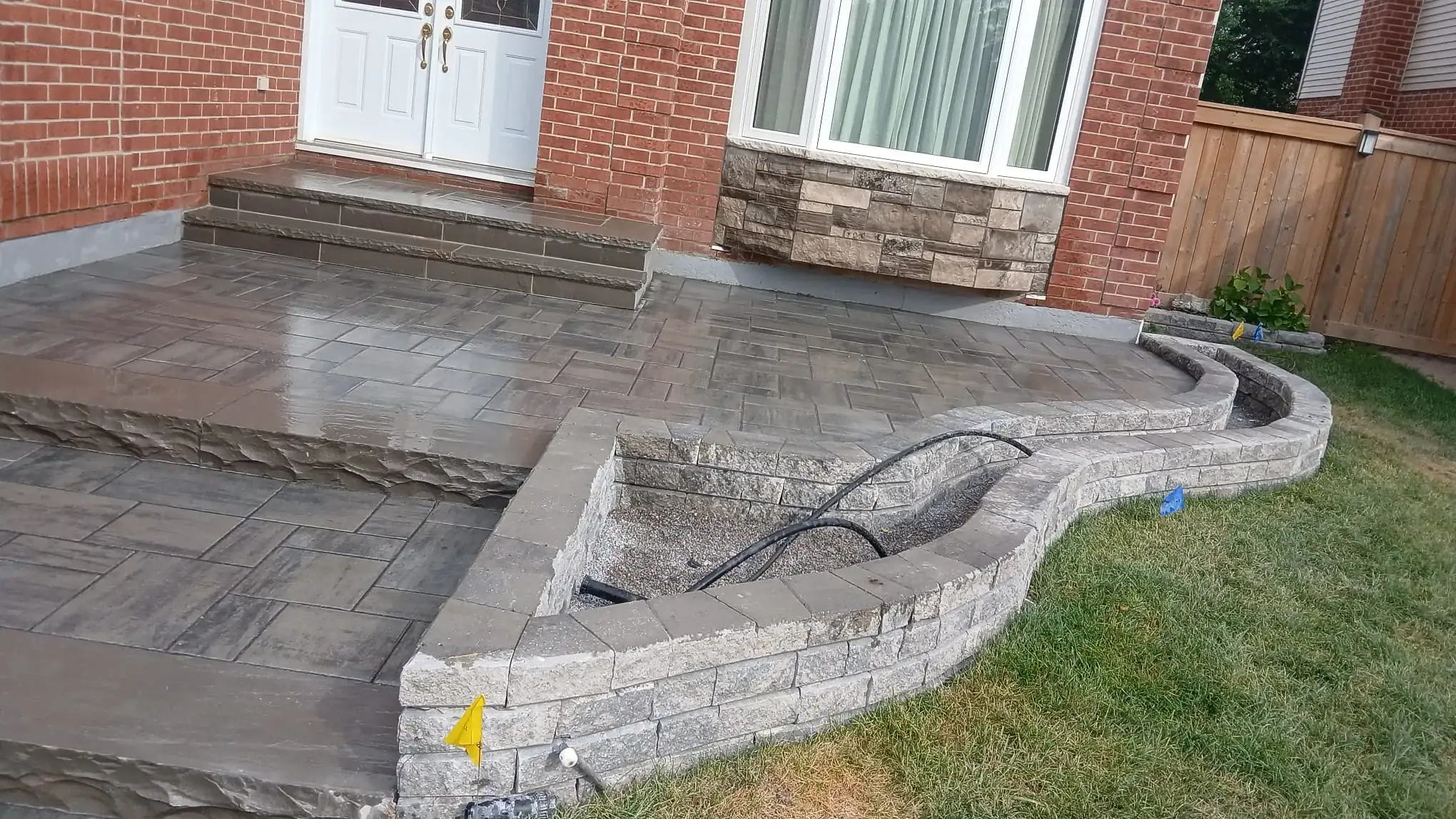
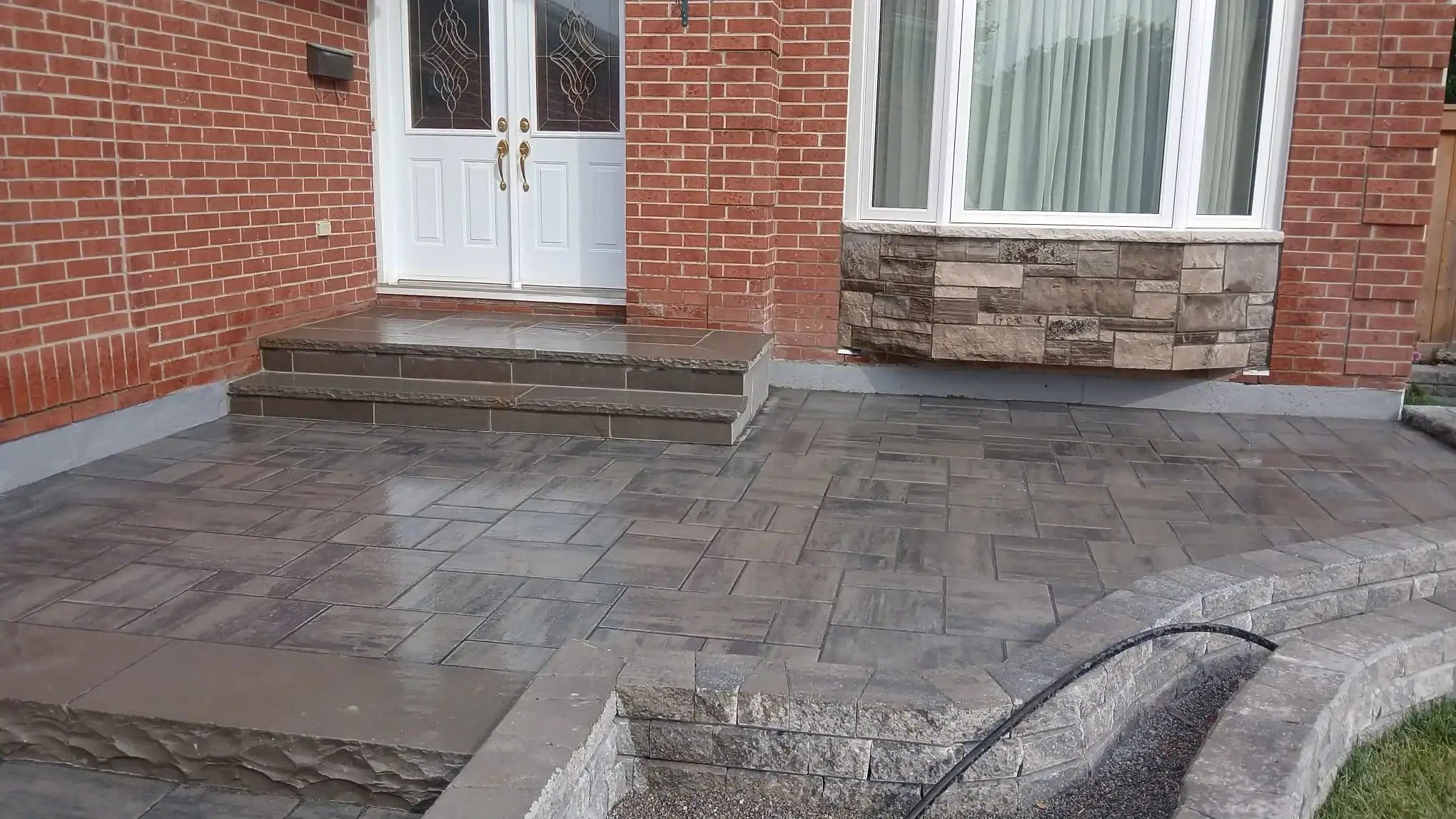
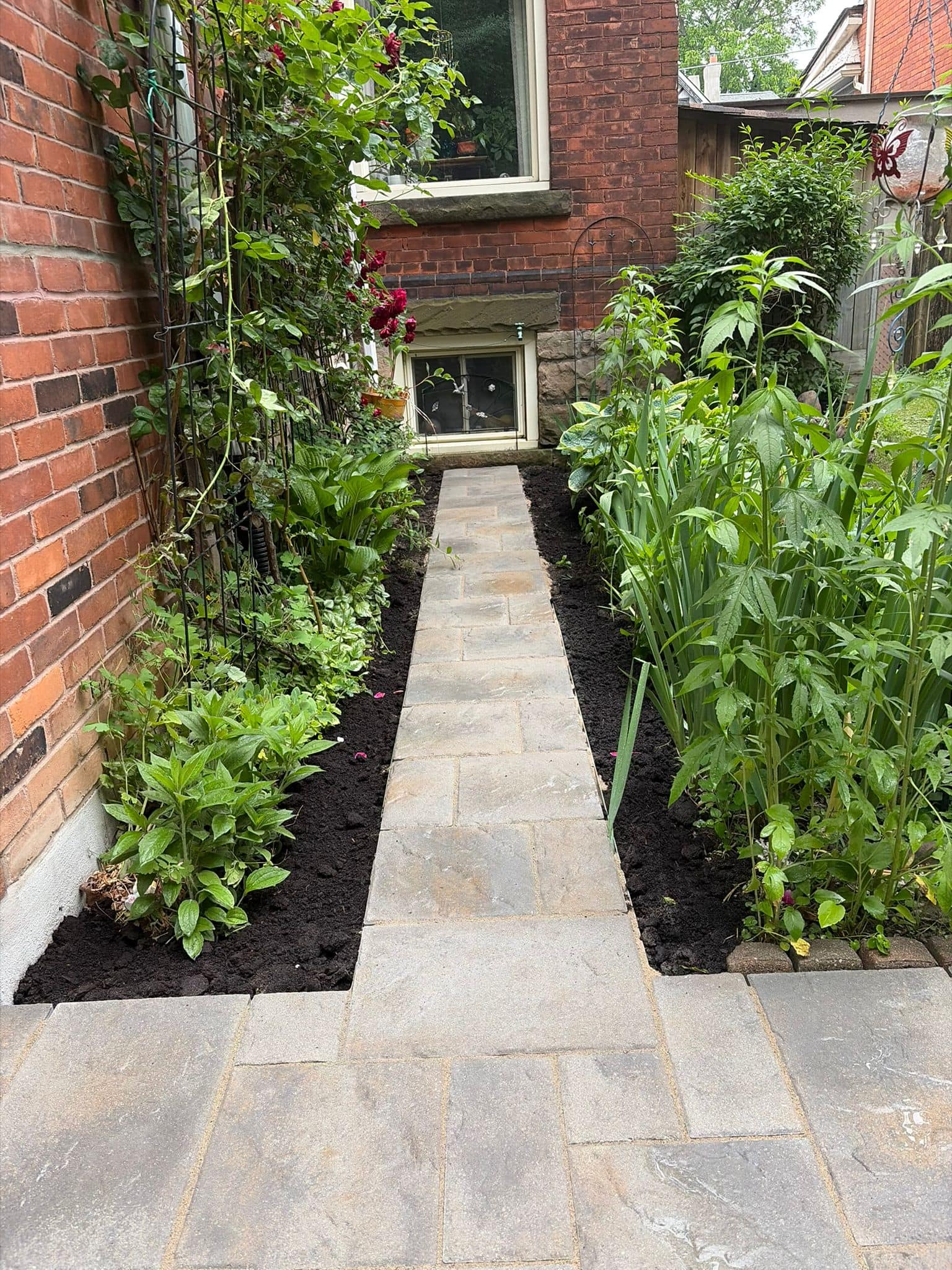
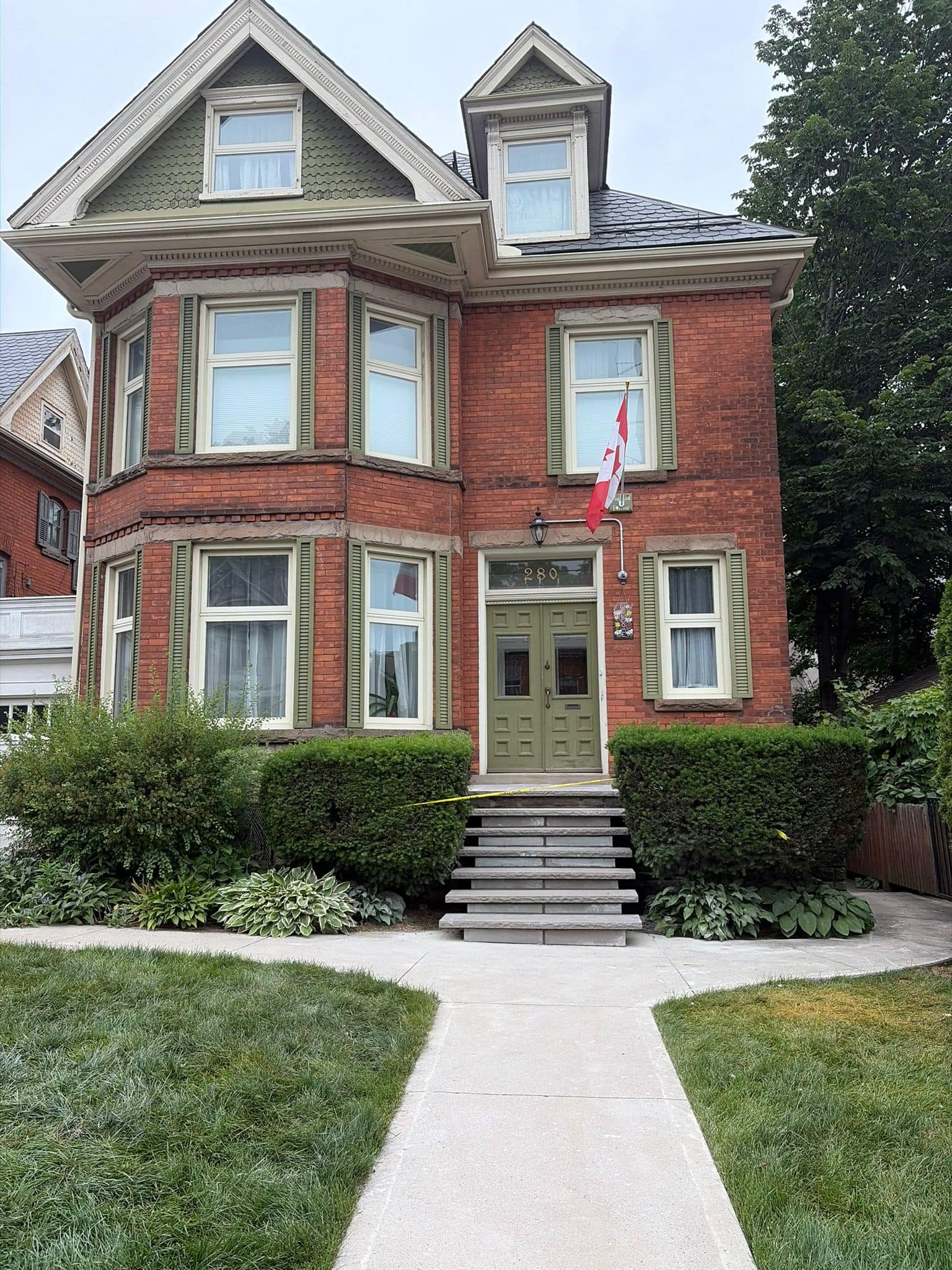
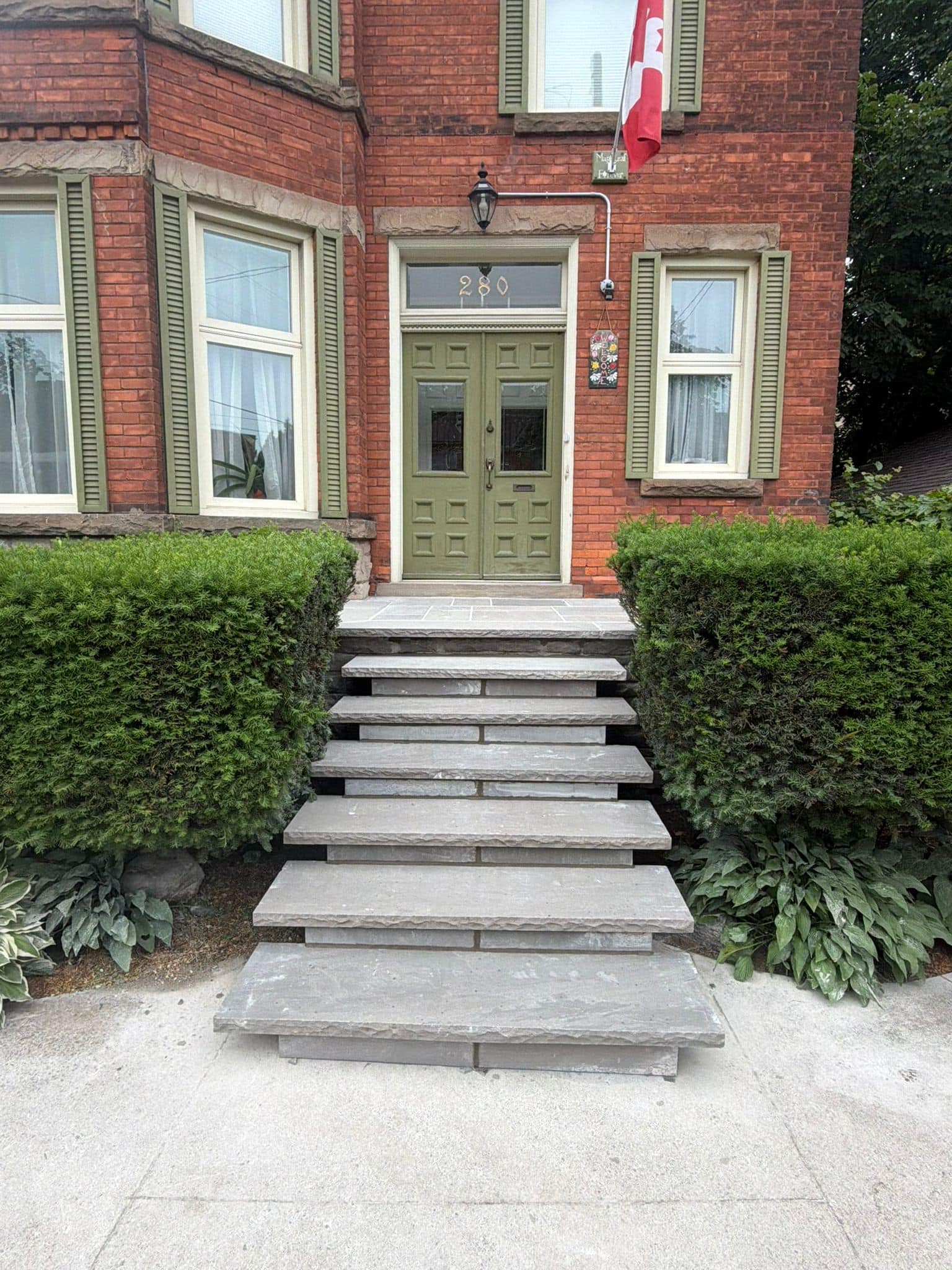
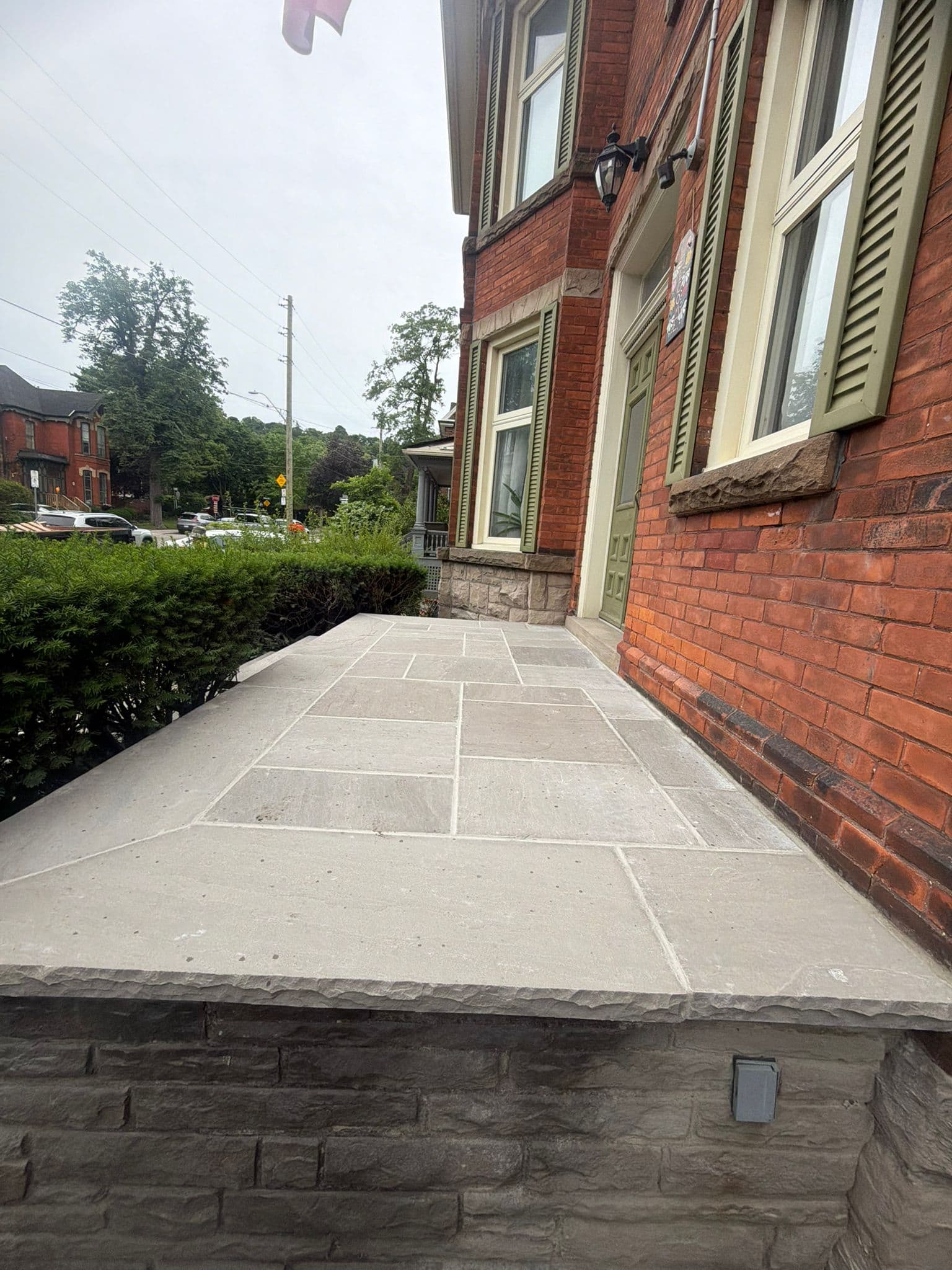
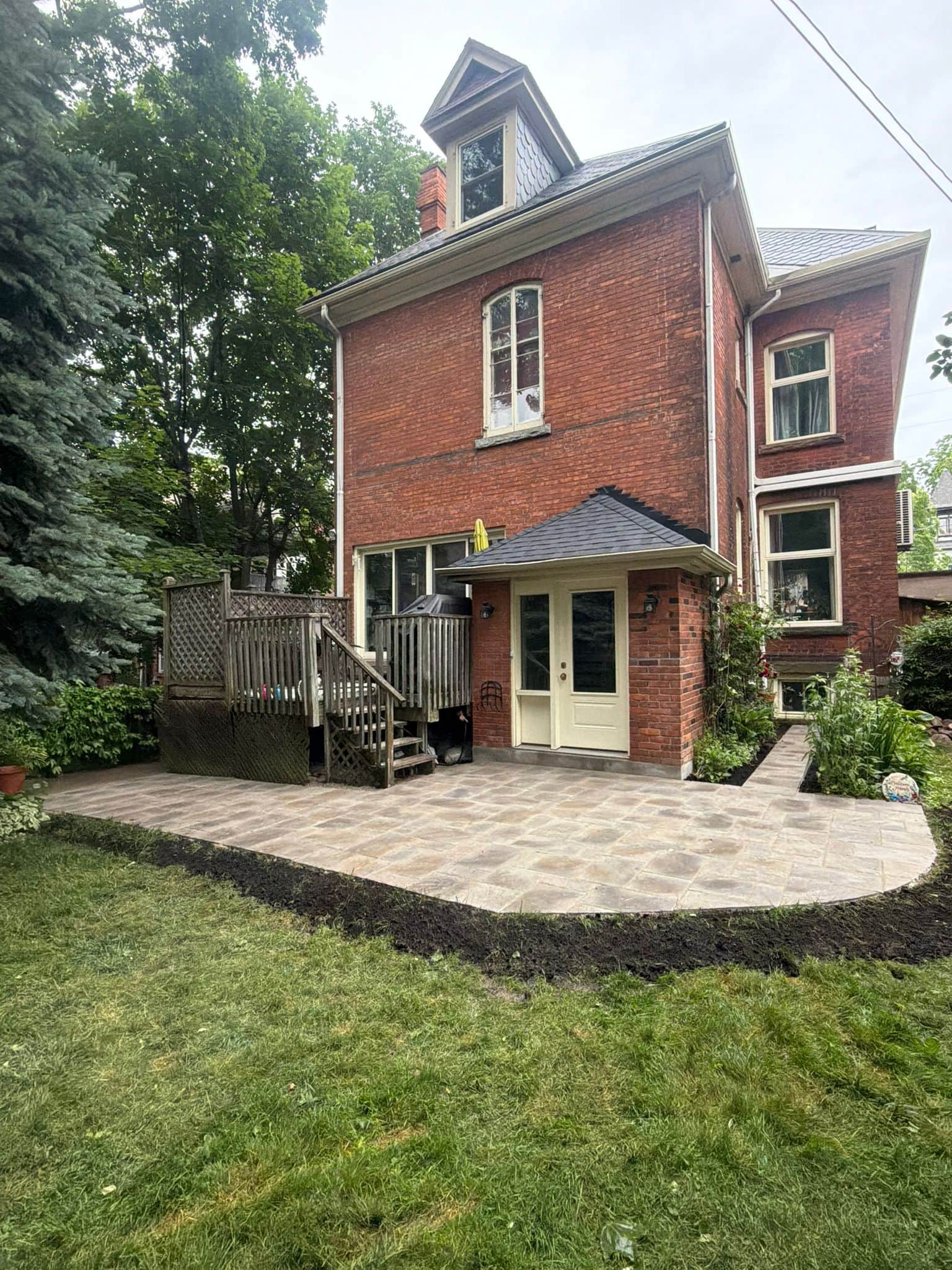
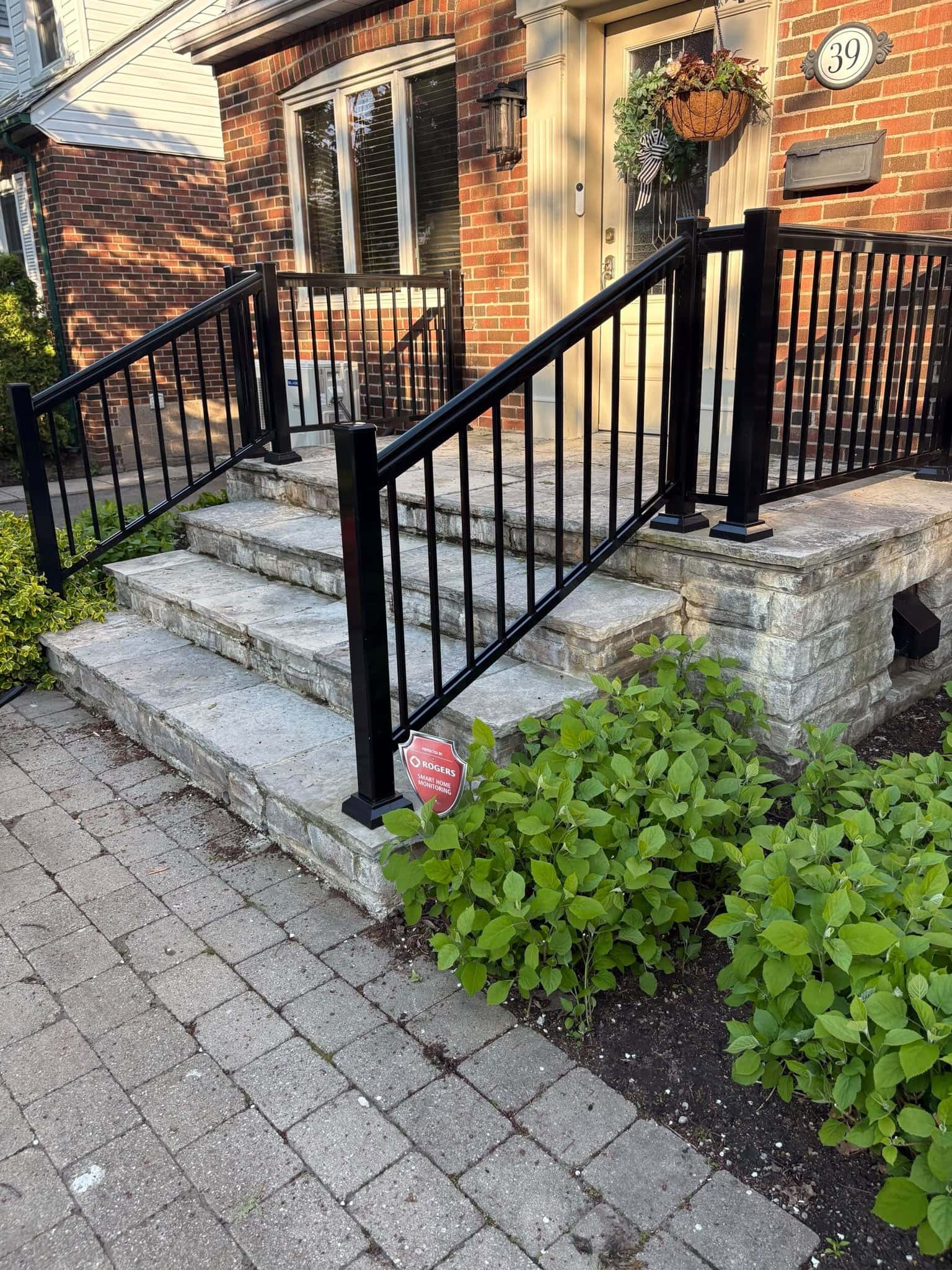
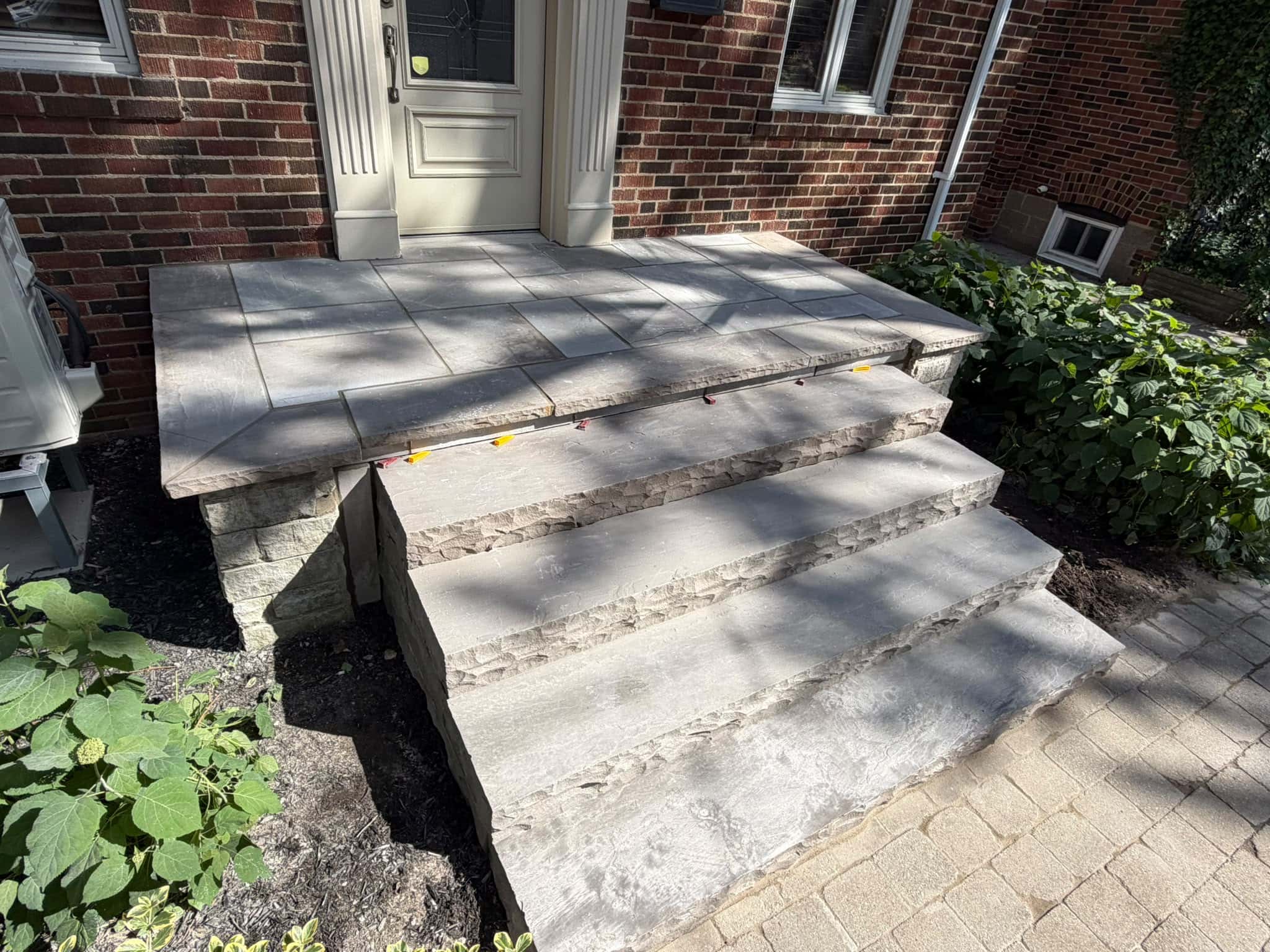
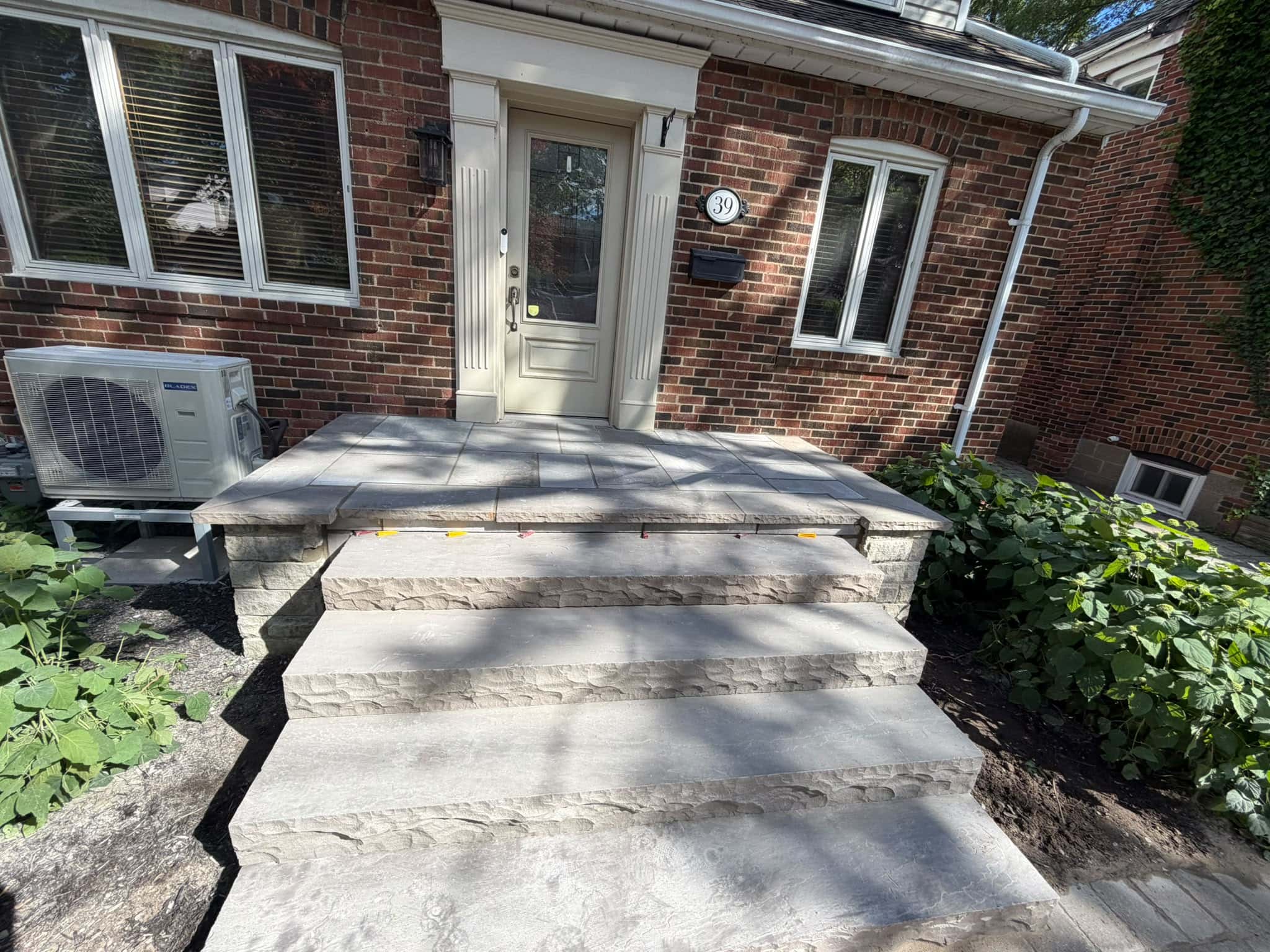
Replacement options for concrete steps may include rebuilding the steps in poured concrete, precast units, concrete block and masonry finishes, stone, brick, or interlocking step systems depending on the home and site. The right option depends on use, style, budget, drainage, height, access, and how the steps connect to the house.
Replacement gives homeowners a chance to correct problems that repair cannot solve. This may include poor slope, awkward step height, weak base support, poor drainage, cracked layout, or a design that no longer suits the entrance.
Replacement also allows better planning for railings, lighting, walkway transitions, porch connections, and snow clearing. For older Toronto homes, the material should also suit the brick, stone, trim, and overall character of the property.
If you are considering a different step material or layout, A&A Masonry’s blog on caring for masonry walkways and steps gives helpful maintenance guidance for steps and surrounding surfaces.
Concrete Steps vs Interlocking Steps
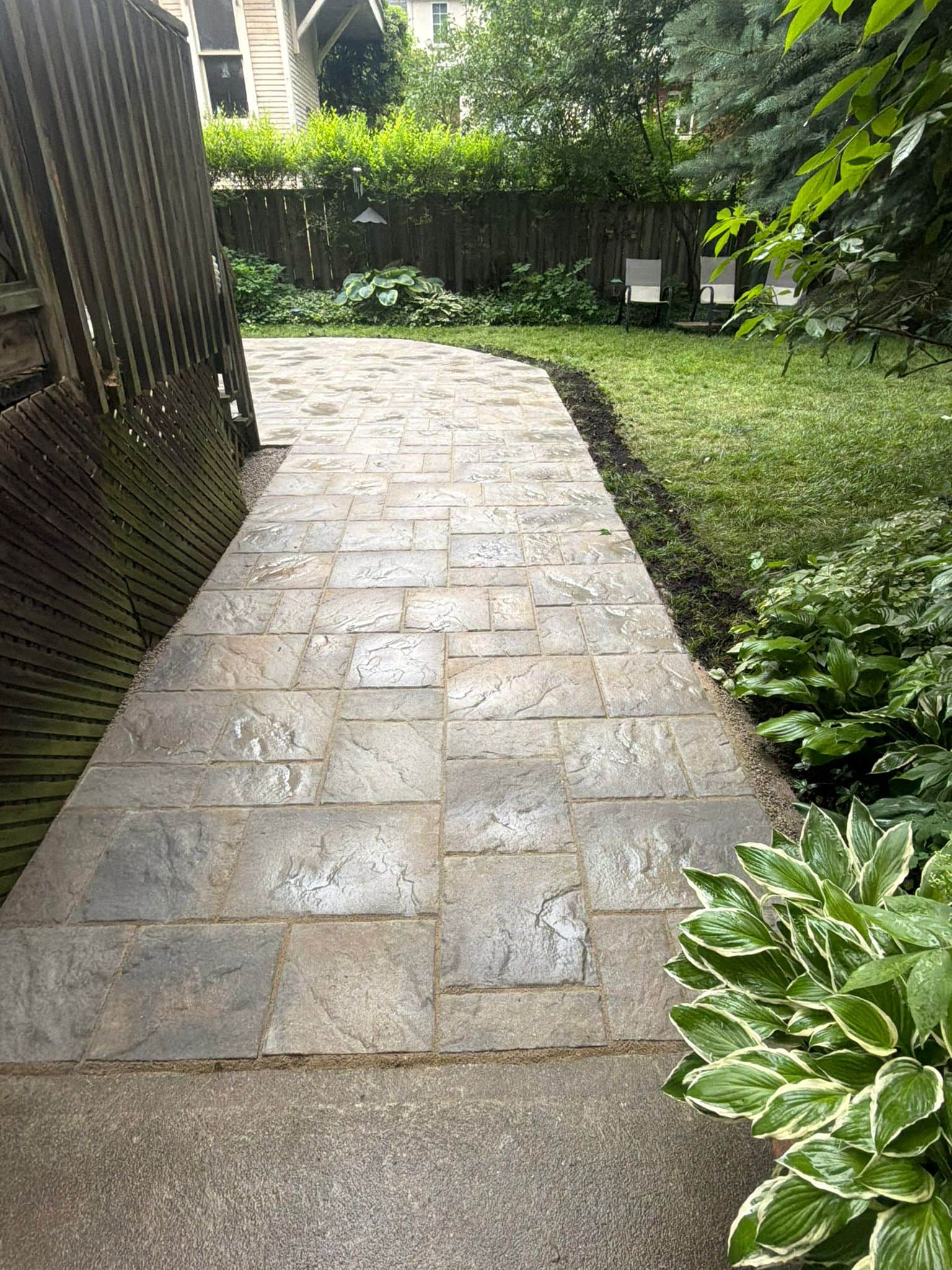
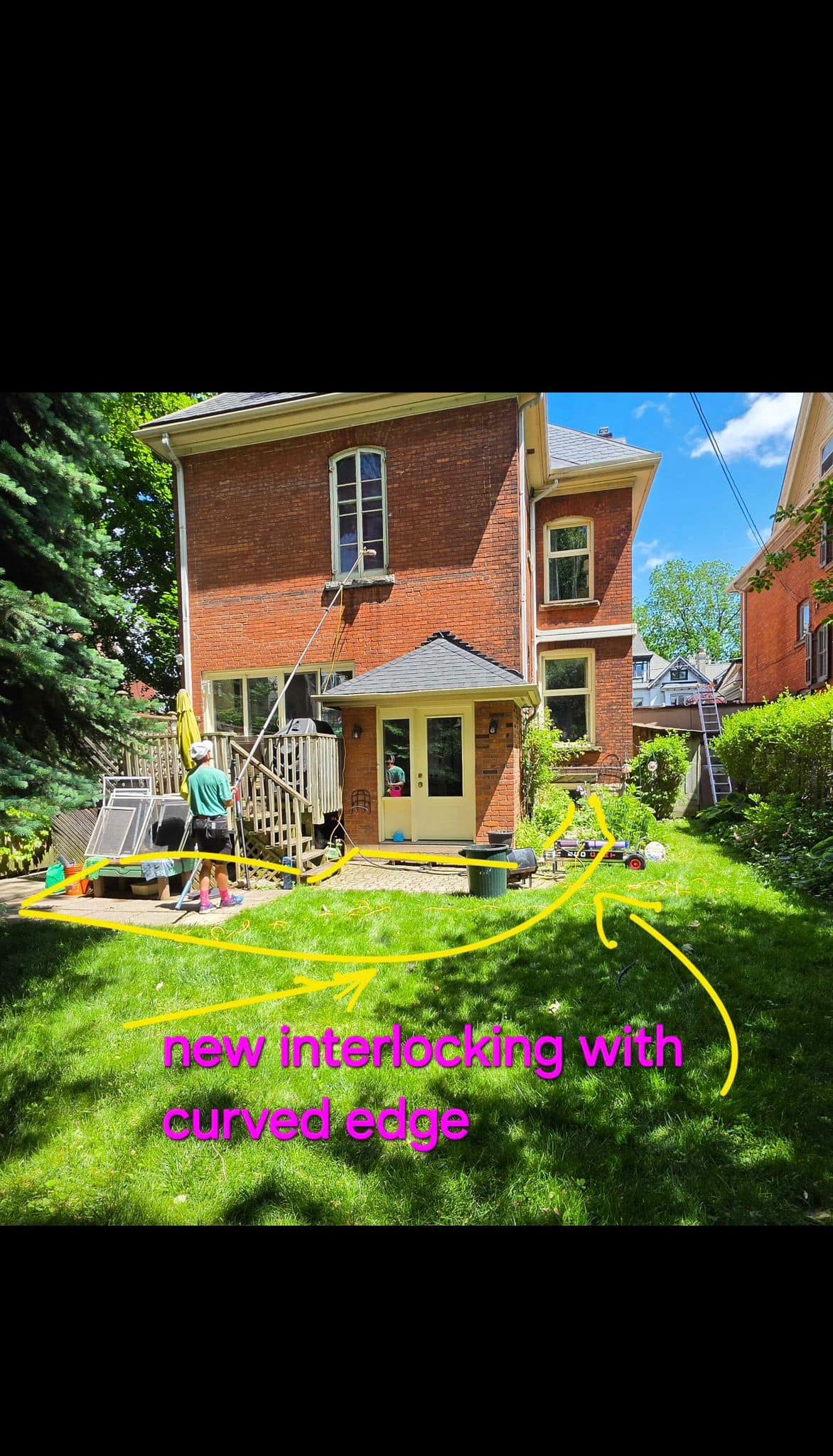
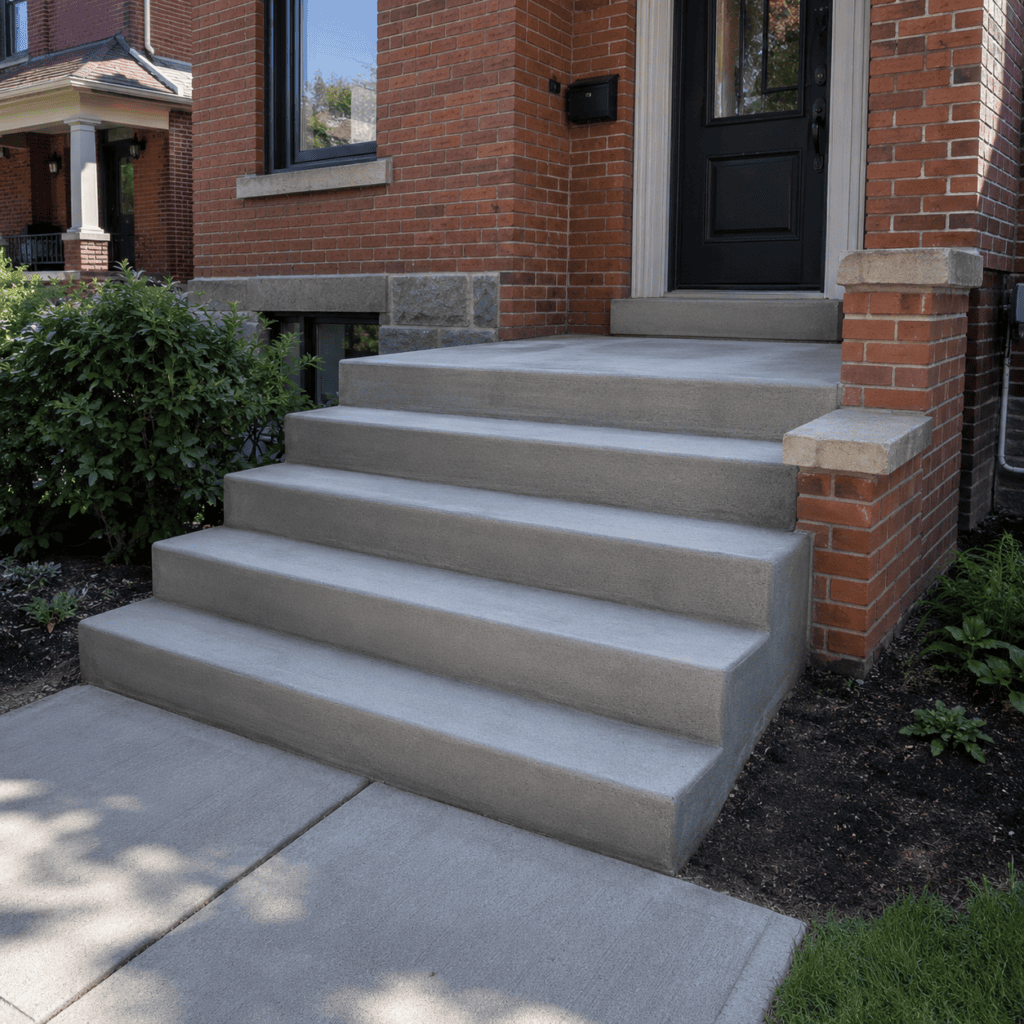
Concrete steps and interlocking steps have different strengths. Concrete can create a solid, continuous surface and may suit traditional entrances, side doors, and straightforward step layouts. Interlocking steps can offer design flexibility, repairability, and a softer transition into walkways or patios.
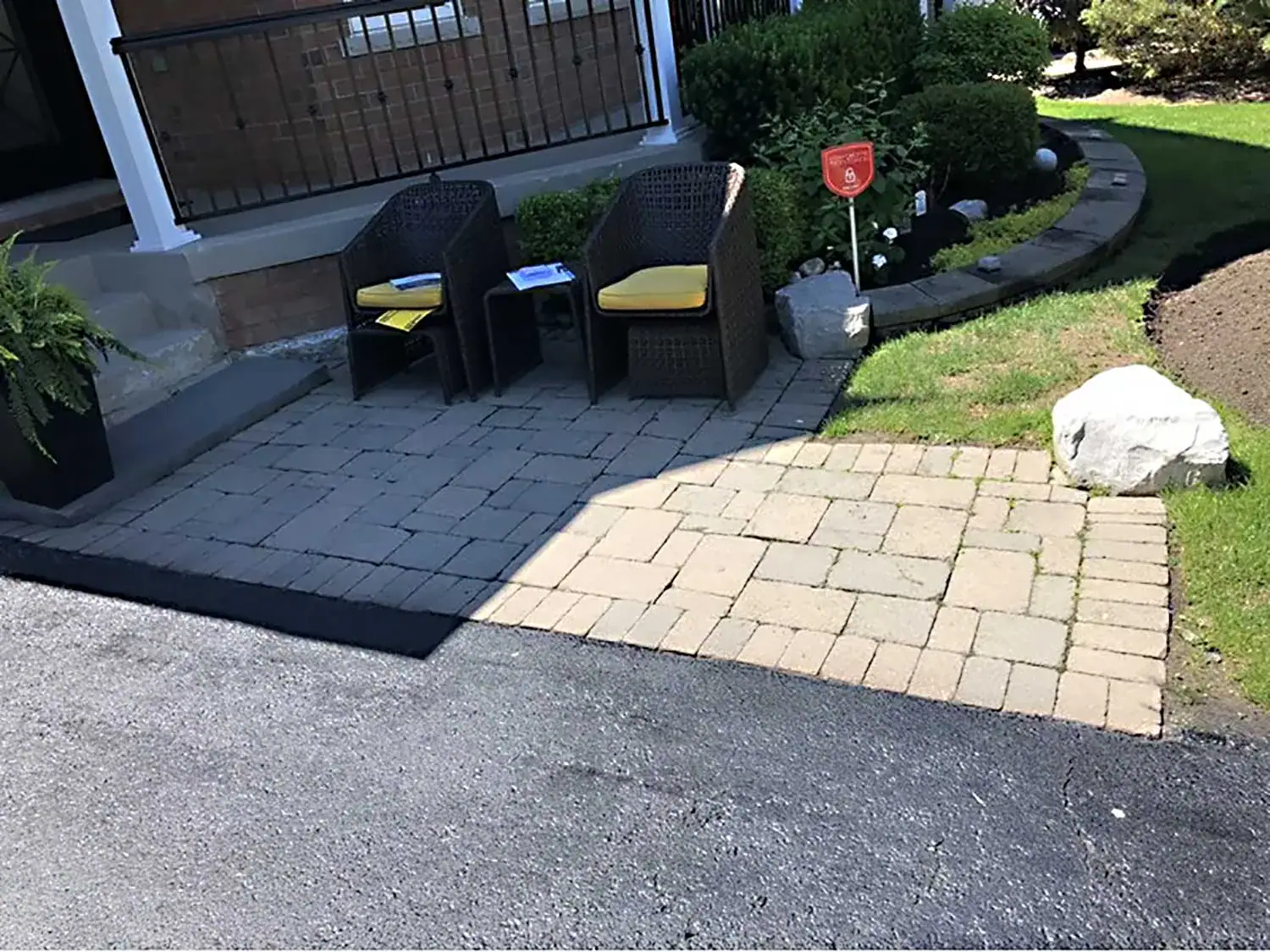
Concrete may make sense when the home needs a simple, strong, clean step system. Interlocking may make sense when the steps connect to a paver walkway, driveway, patio, or landscaped entrance. Stone or brick accents may also be used when the home’s facade calls for a more decorative masonry appearance.
The best choice depends on drainage, base support, height, exposure, design, and maintenance. No material performs well if the base and water management are poor.
If you are comparing step styles, A&A Masonry’s interlocking steps Toronto page explains another option for exterior entrances and walkway connections.
Permits, Code, and Safety Considerations
Permits, code, and safety considerations may matter when concrete step work involves changes to height, structure, railings, entrances, porches, retaining features, or access. Small surface repairs may be simple maintenance, but rebuilding or changing an entrance can involve more planning.
The City of Toronto provides information about building permits. Ontario’s official Building Code page is also the preferred provincial reference for building requirements.
For homeowners, the practical rule is this: if the step repair changes the structure, dimensions, railing needs, porch connection, entrance, or grading, check official guidance before starting work. Safe step height, proper landing space, stable support, and drainage all matter.
What Homeowners Can Check Themselves
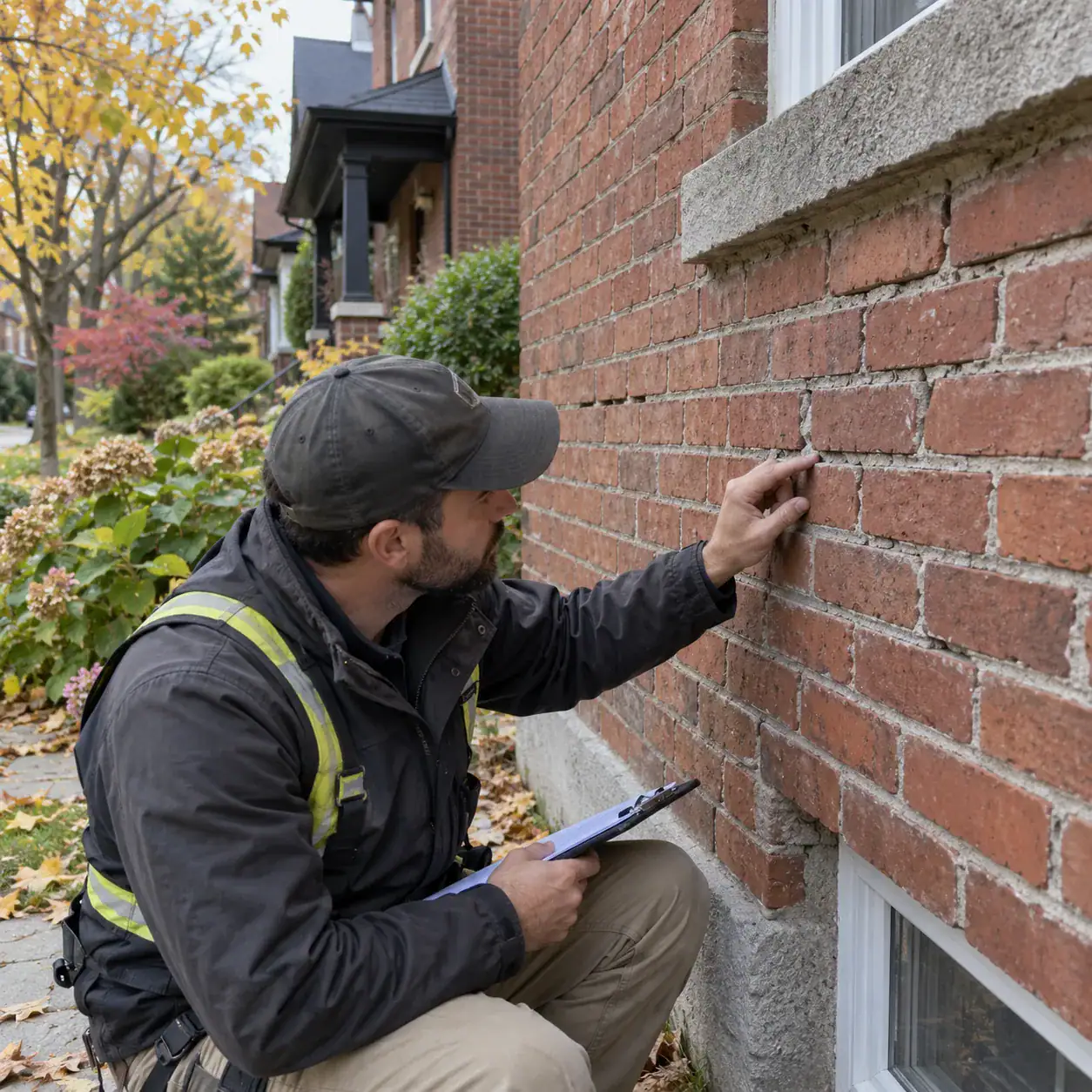
Homeowners can safely check concrete steps from ground level before deciding whether repair or replacement may be needed. A simple inspection can help clarify the issue when seeking professional advice.
- Check for movement: Step carefully and notice whether any section rocks, shifts, or sounds hollow.
- Look for cracks: Photograph cracks and watch whether they widen over time.
- Check water flow: Watch where rainwater goes during and after a storm.
- Look for pooling: Water sitting on the treads or at the base can cause freeze damage.
- Check the edges: Broken corners and crumbling noses can become trip hazards.
- Look at nearby masonry: Staining, damp brick, or cracked parging may show water movement.
- Check winter wear: Note scaling, salt damage, and areas that repeatedly ice over.
- Measure consistency: Uneven step heights may affect safety.
Do not chip away large sections, grind cracks, or apply coatings over damp or unstable concrete without understanding the cause.
Quick Decision Guide: Repair or Replace Concrete Steps?
A quick decision guide can help homeowners decide the next step.
- Repair if the damage is shallow, localized, and the step is stable.
- Repair if the issue is a small chip, minor crack, or light surface wear.
- Repair if drainage can be corrected and the base is sound.
- Replace if the steps are sinking, tilting, rocking, or separating from the home.
- Replace if cracks are wide, deep, or run through several sections.
- Replace if surface repairs have failed more than once.
- Replace if the steps are unsafe, poorly shaped, or no longer meet the home’s needs.
- Check drainage first if water repeatedly pools, freezes, or runs toward the foundation.
The best decision is not based only on appearance. It should be based on safety, stability, water movement, and the likelihood that the repair will actually last.
When Professional Help Makes More Sense
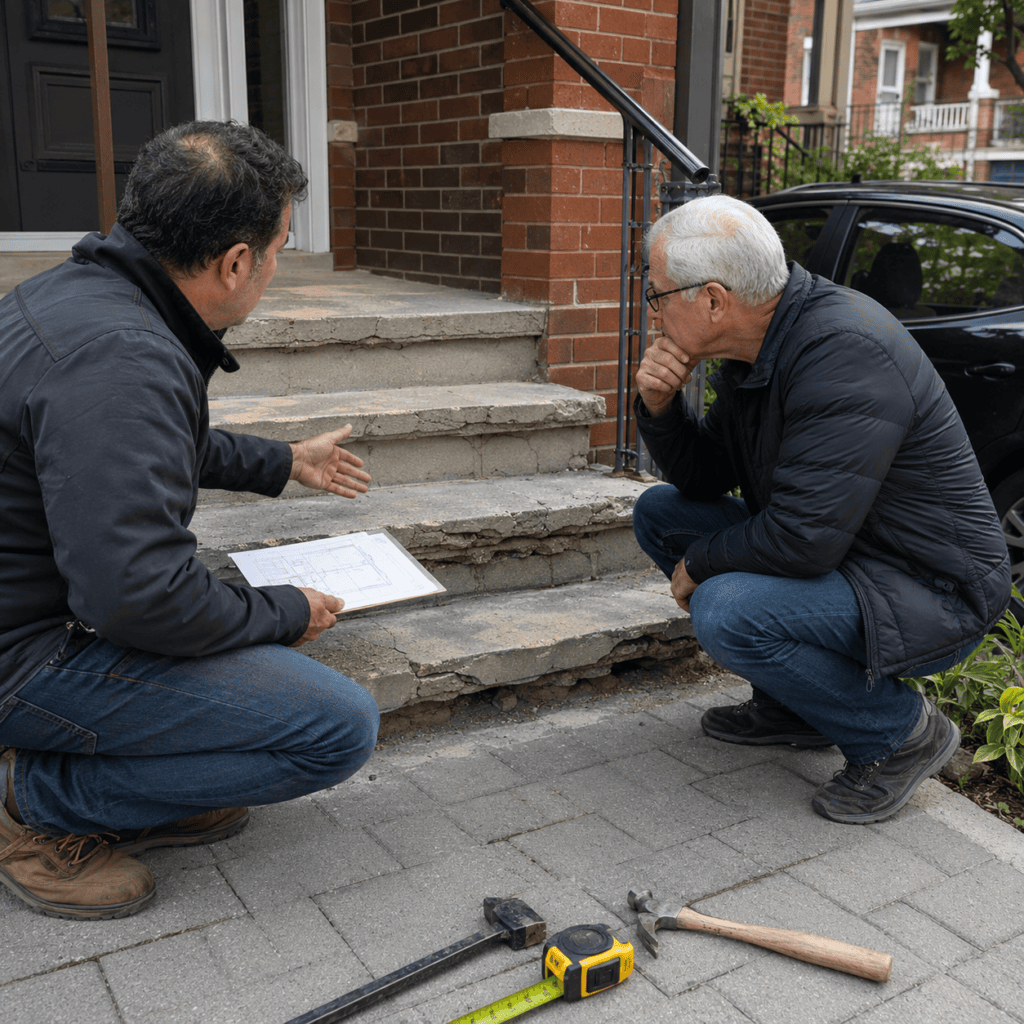
Professional help makes more sense when the steps are unstable, badly cracked, sinking, water-damaged, unsafe, or connected to other masonry problems. A concrete step may look simple, but the cause of failure may involve drainage, base support, freeze-thaw damage, foundation moisture, or poor past repairs.
A professional can assess whether repair, resurfacing, partial rebuilding, or full replacement is the better option. They can also check how the steps connect to walkways, porches, brick walls, railings, drainage paths, and foundation areas.
For broader exterior repair planning, A&A Masonry’s masonry services in Toronto page outlines related services such as concrete repairs, brick repair, tuckpointing, waterproofing, chimney repair, stone masonry, and exterior restoration.
Final Thoughts on Concrete Steps: When to Repair or Replace
Concrete steps can often be repaired when the damage is small, stable, and limited to the surface. Repair may be enough for minor cracks, small chips, light scaling, or worn edges when the base is sound and water is controlled.
Replacement makes more sense when the steps are unsafe, sinking, tilting, deeply cracked, separating from the home, crumbling in several areas, or holding water in a way that will keep damaging the concrete. In these cases, a surface patch may only delay the real repair.
For Toronto and GTA homeowners, the repair-or-replace decision should always consider weather, drainage, freeze-thaw exposure, salt, safety, and how the steps connect to the rest of the home. When the cause is understood and the right method is chosen, concrete steps can be safer, better looking, and better prepared for the next season.