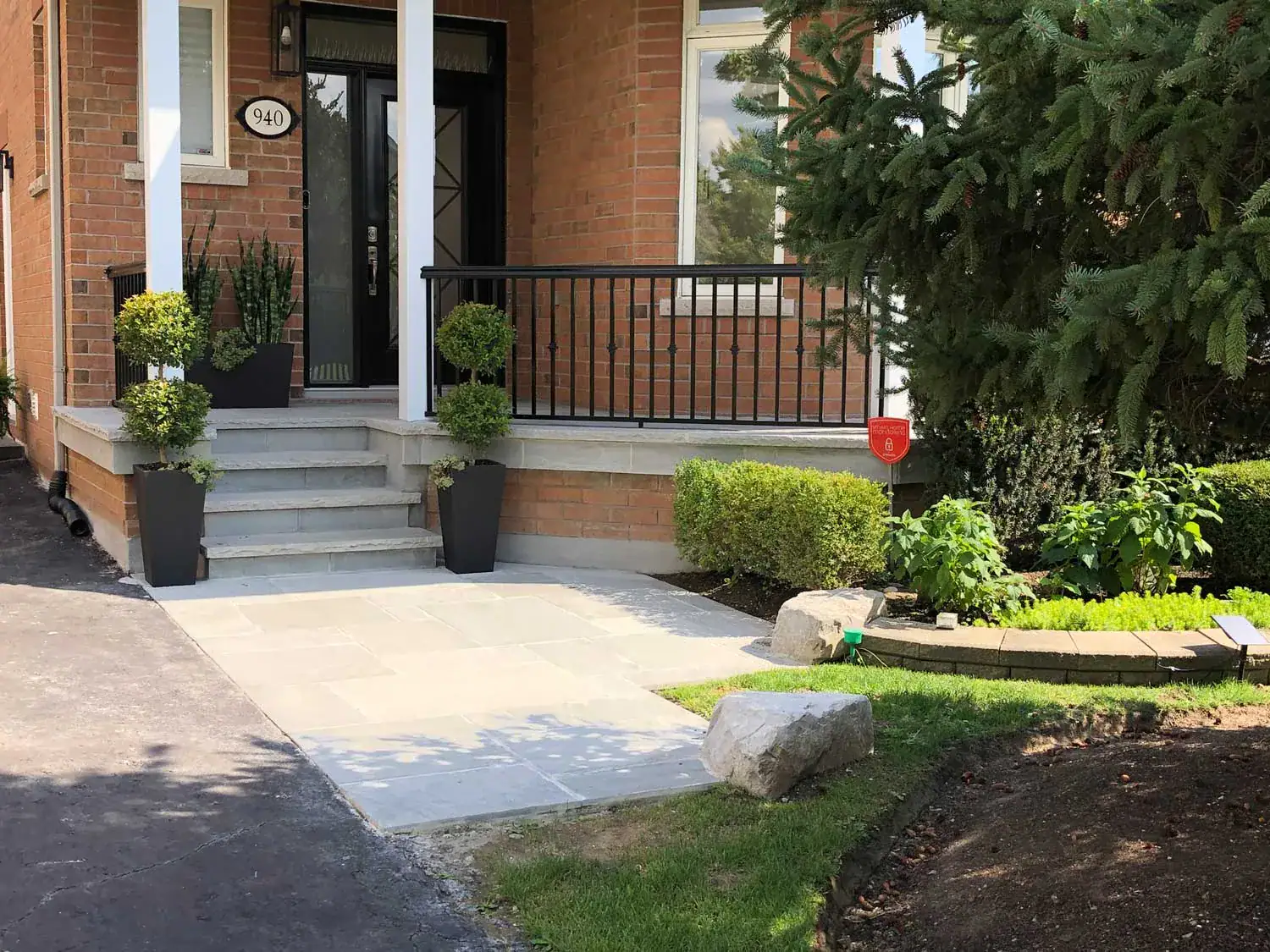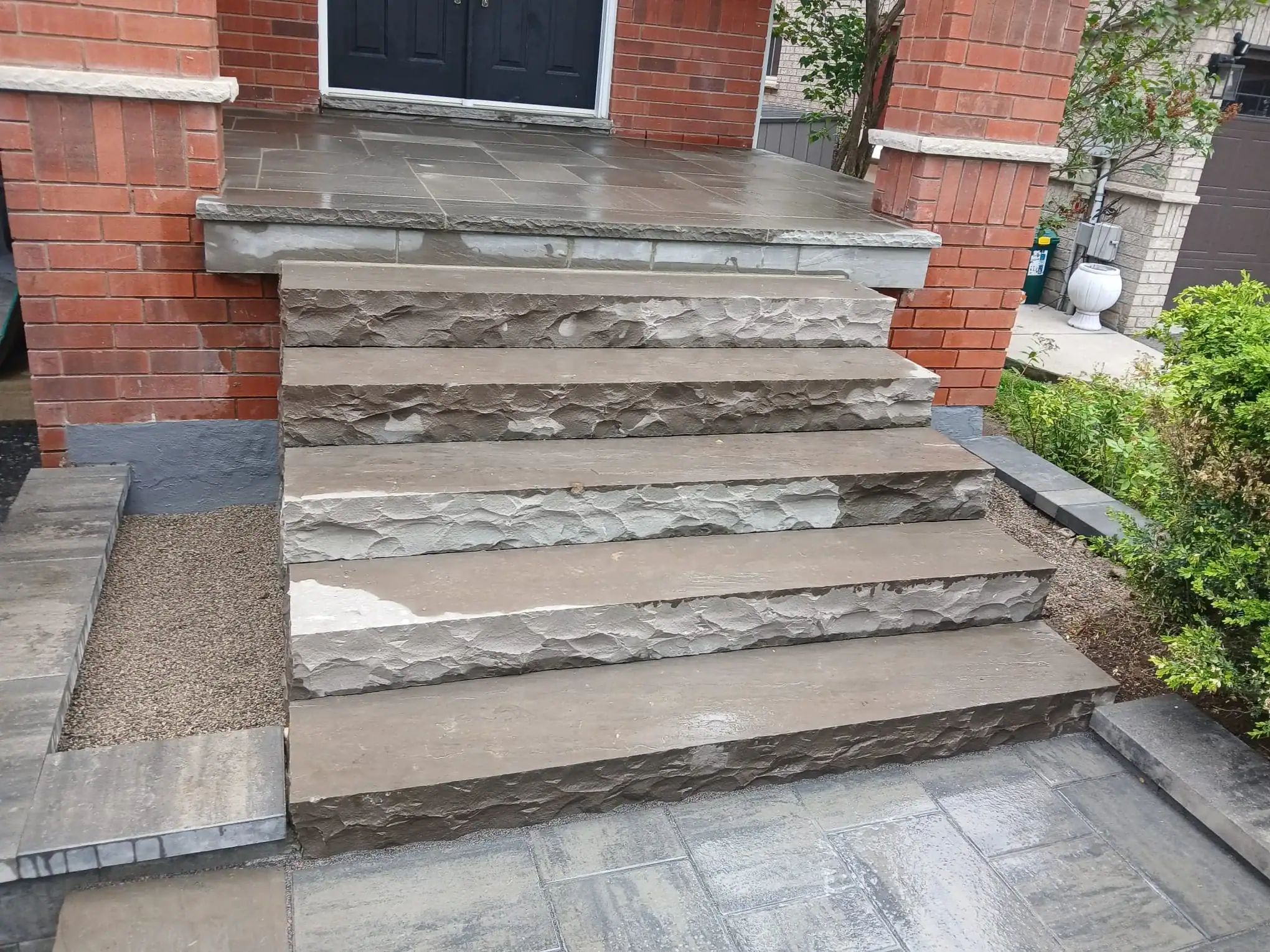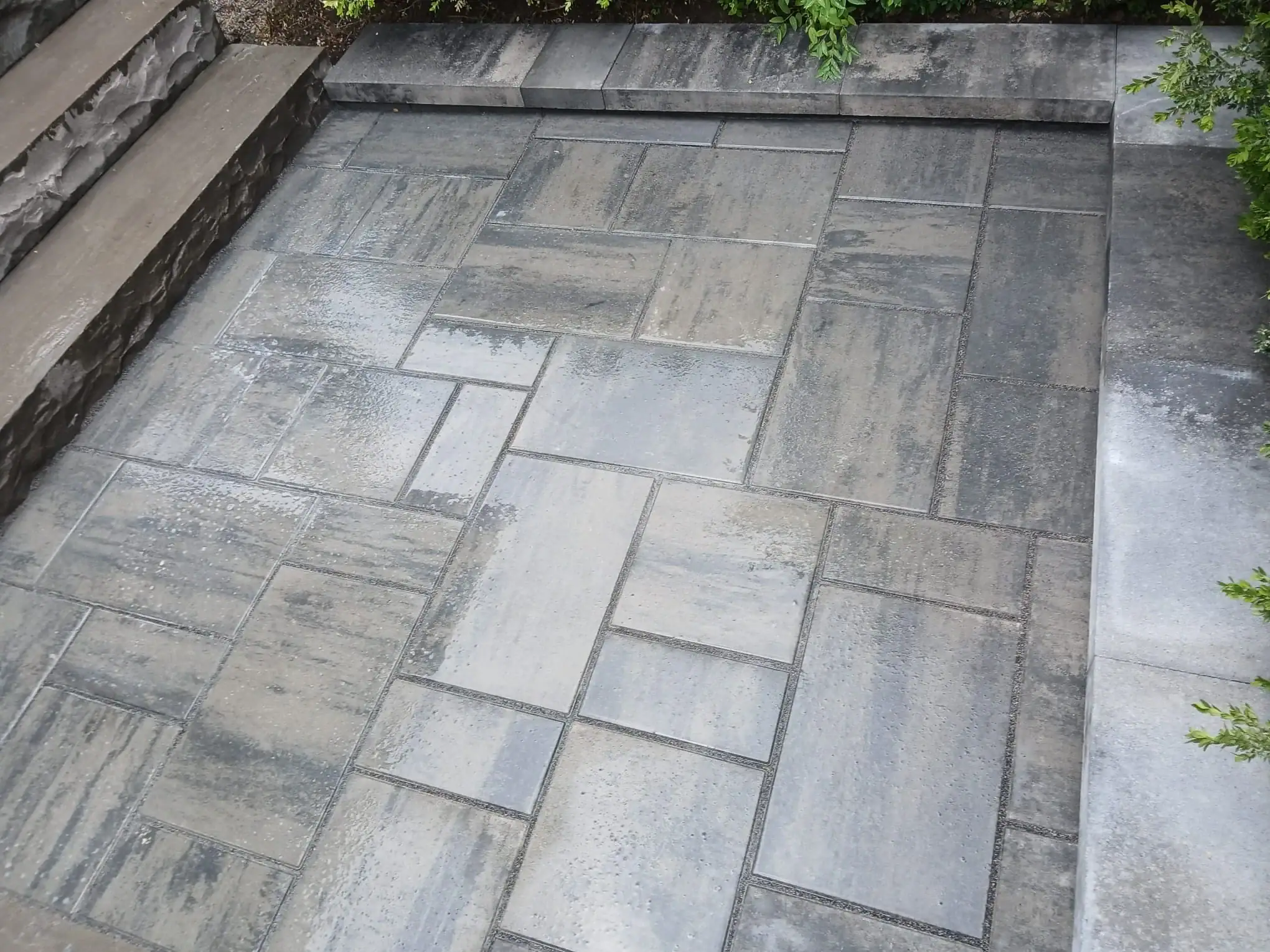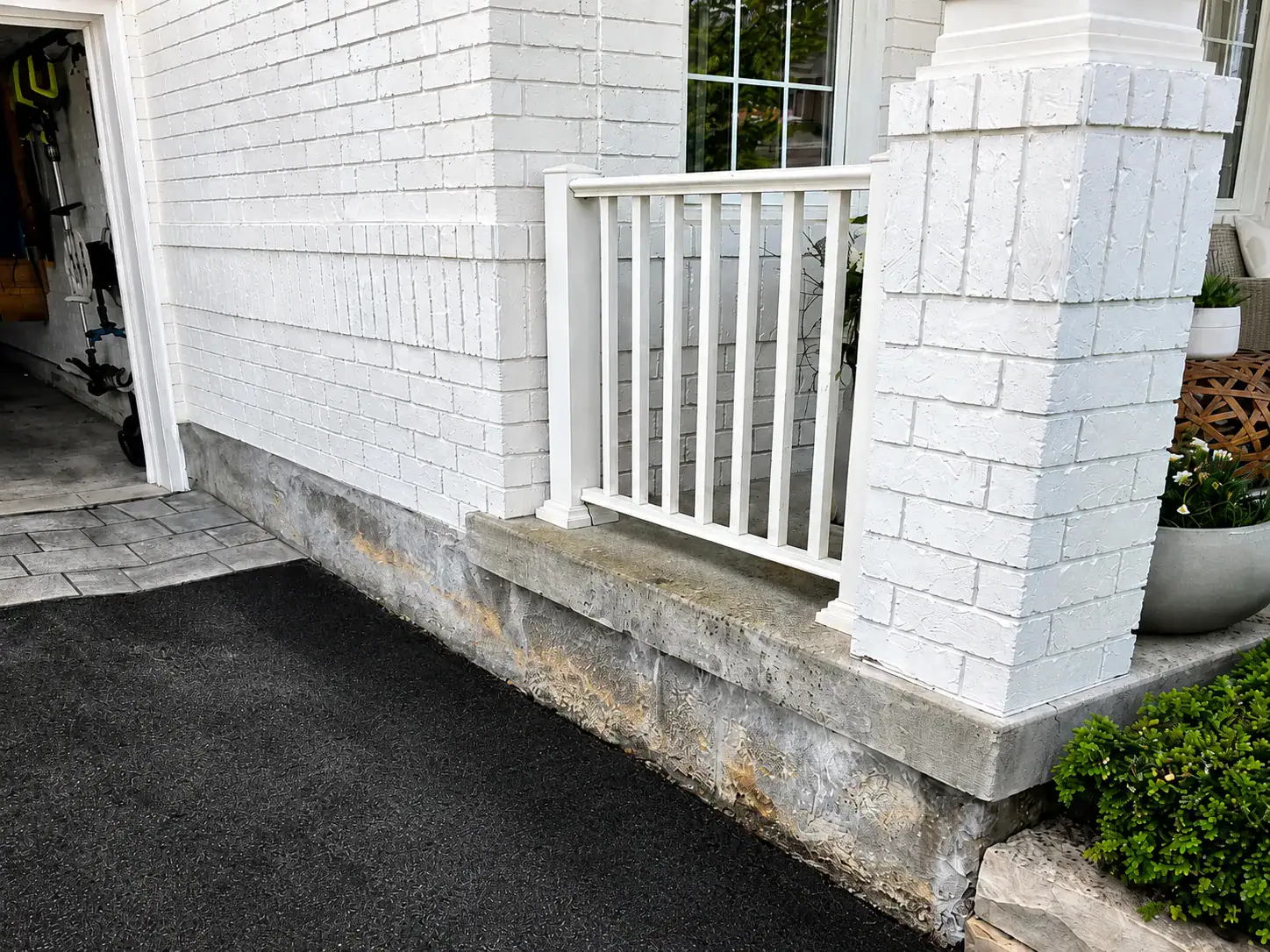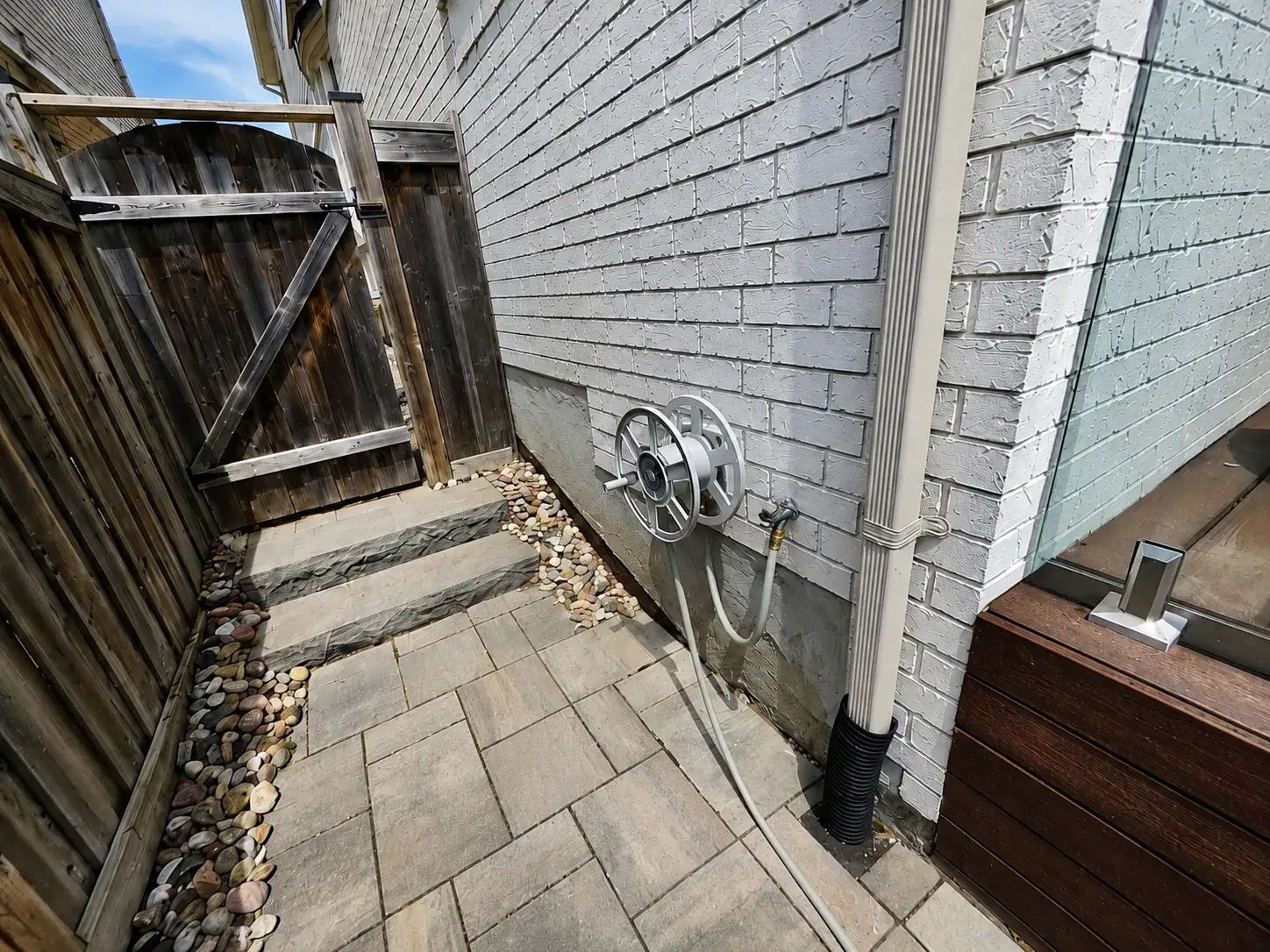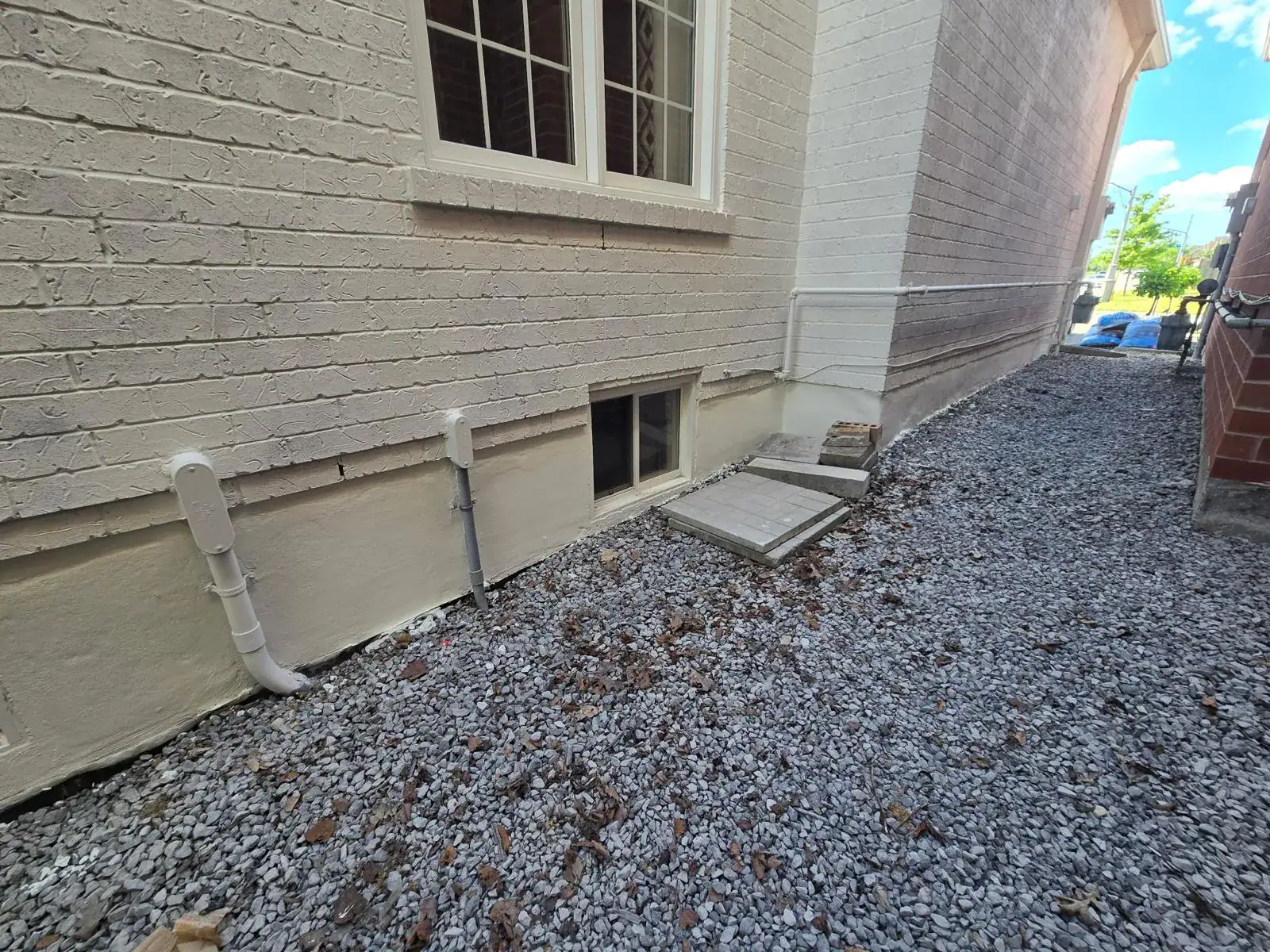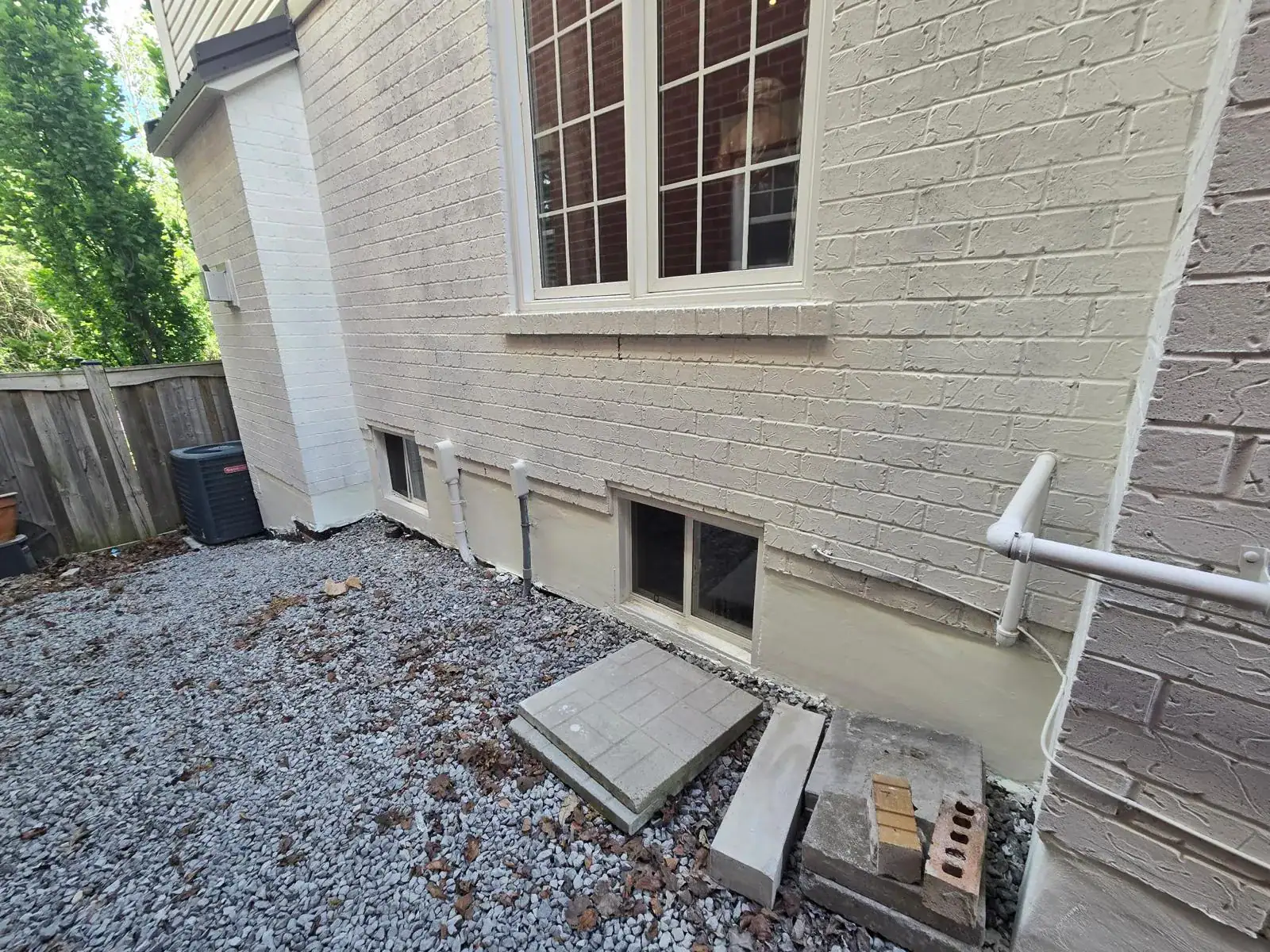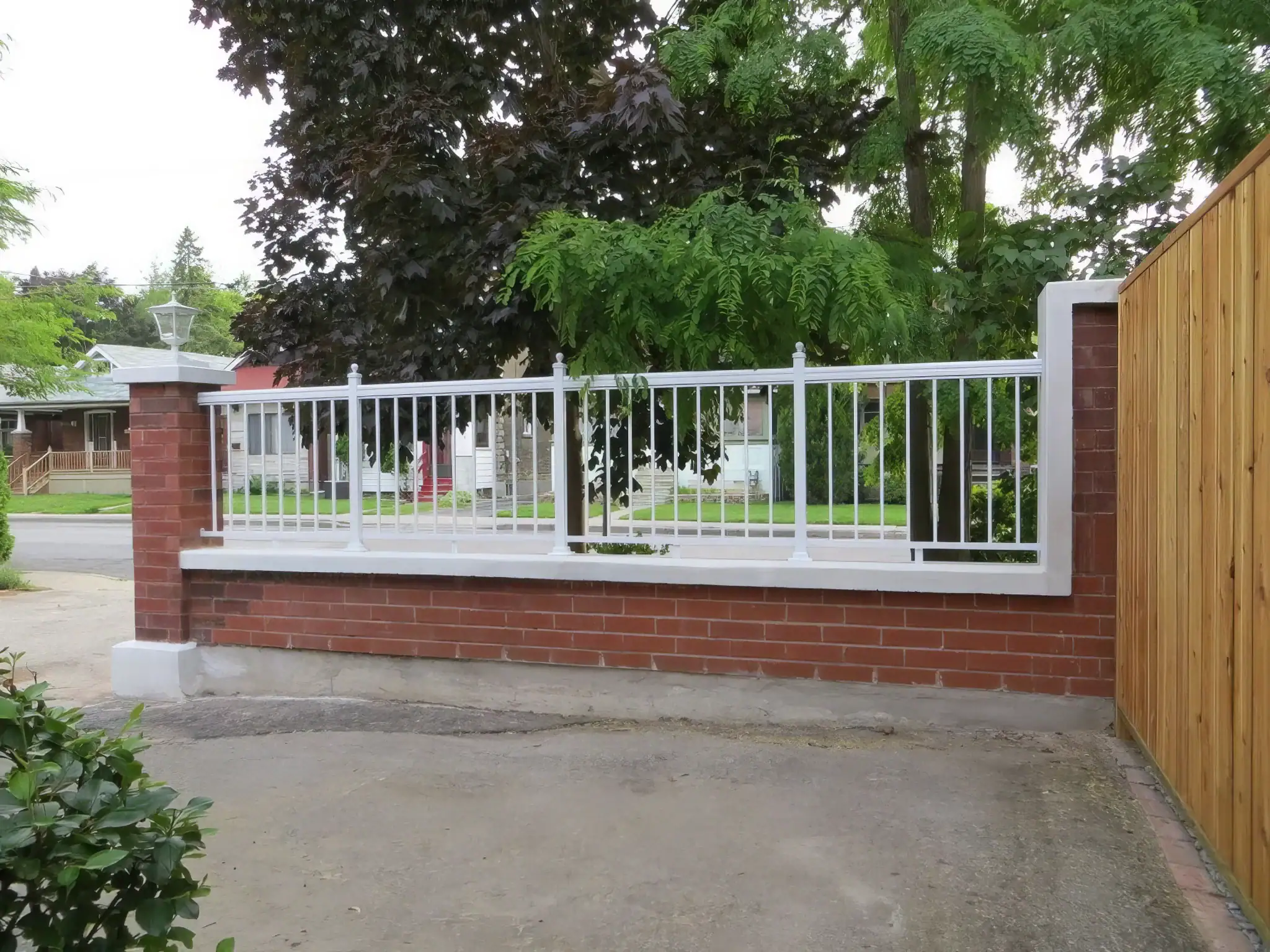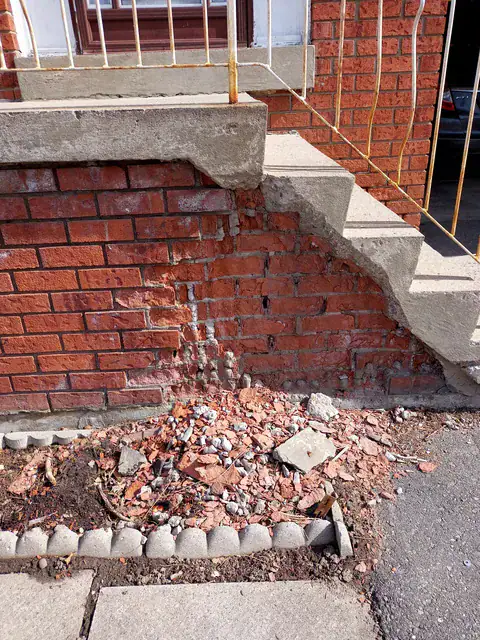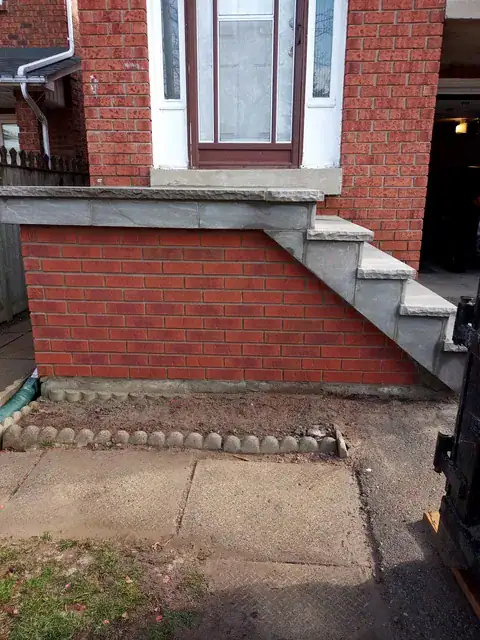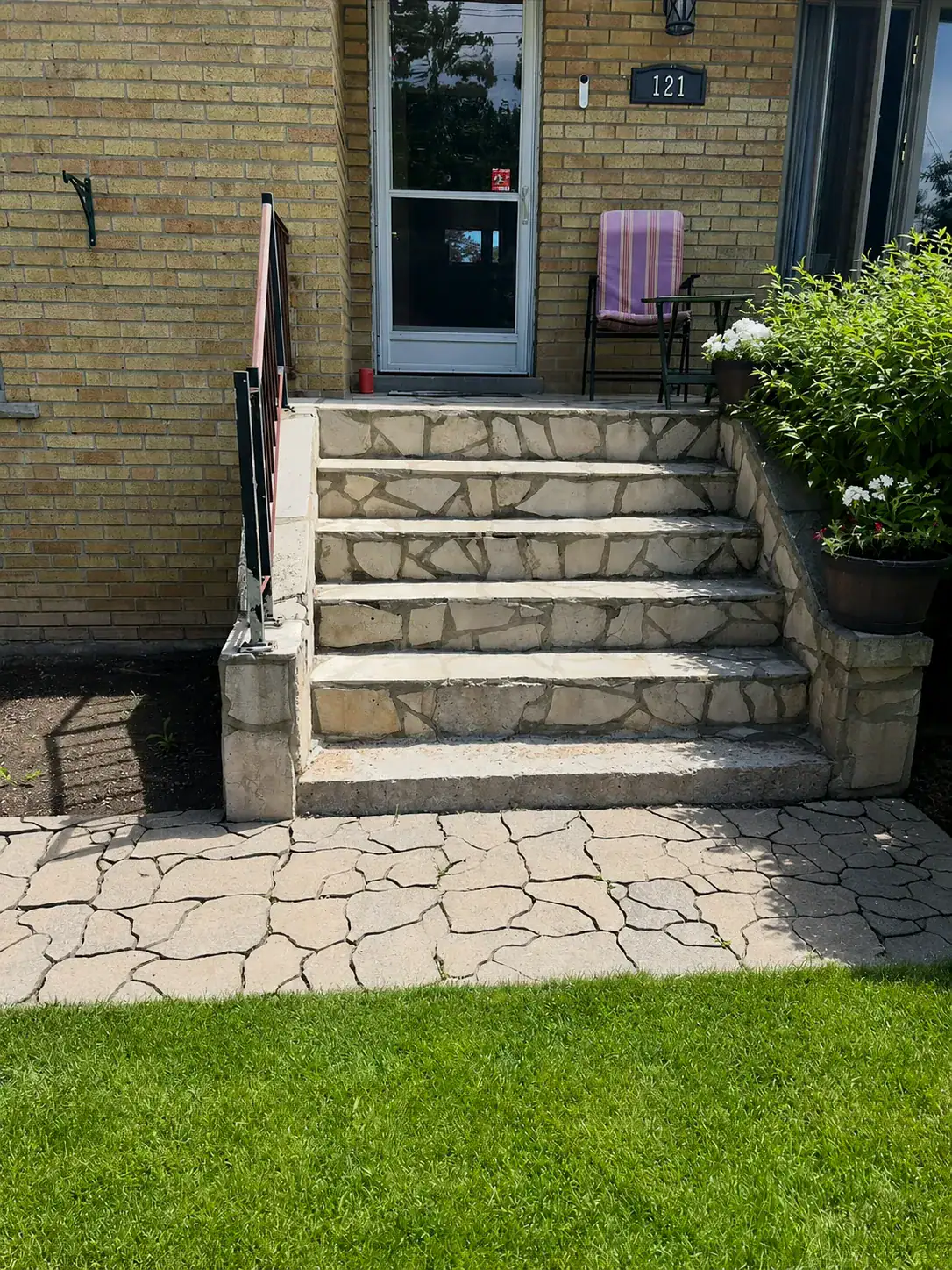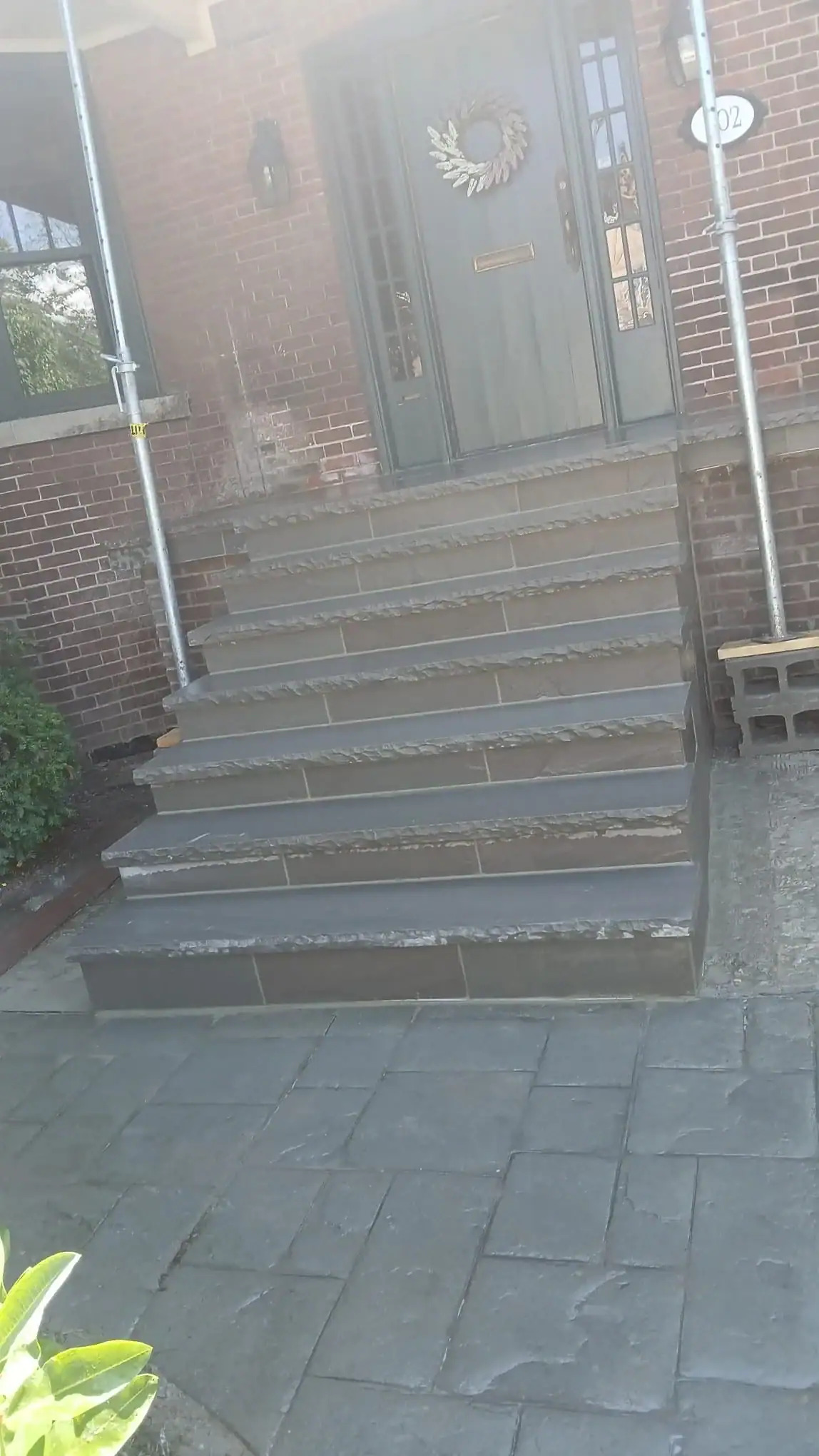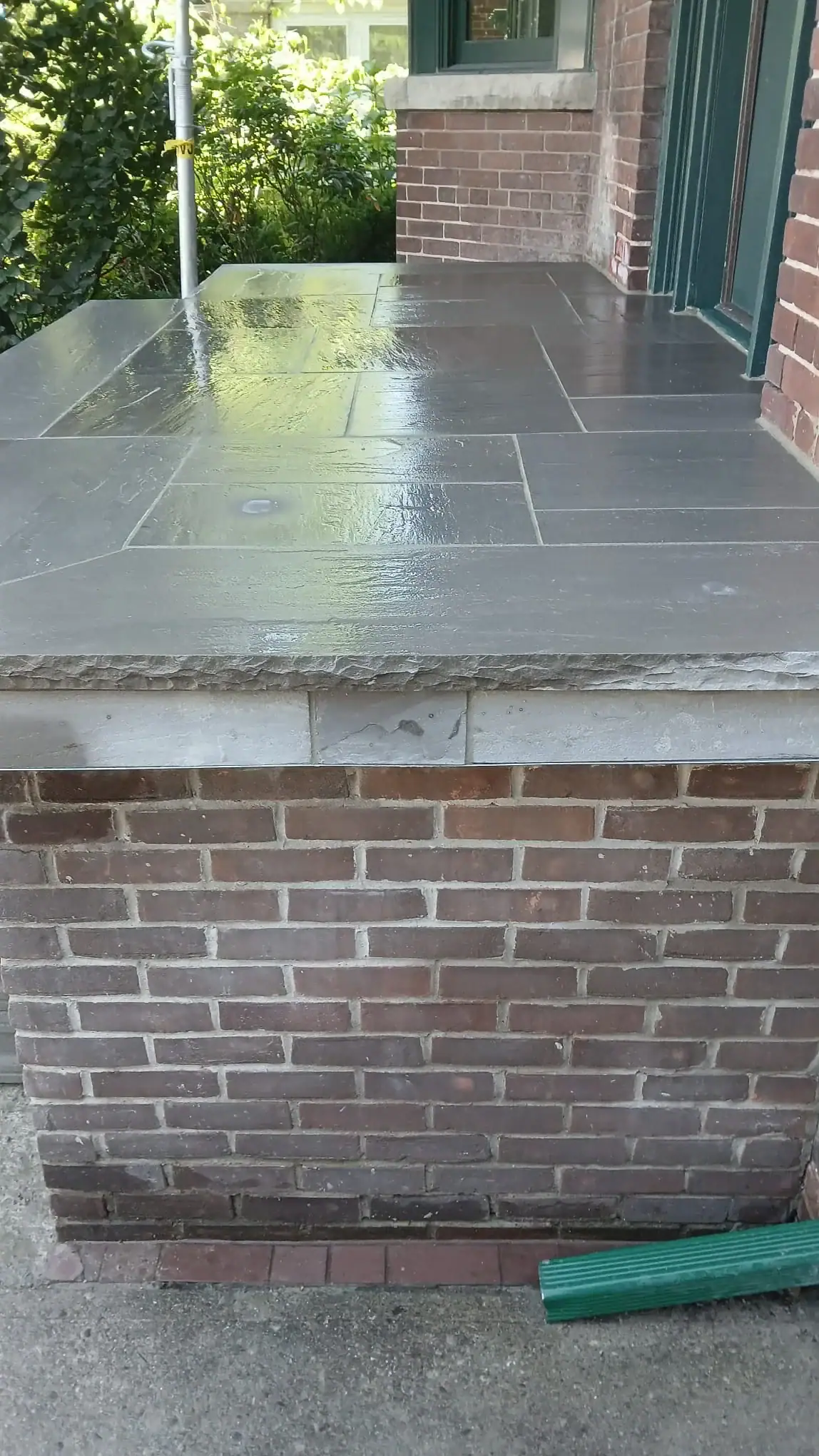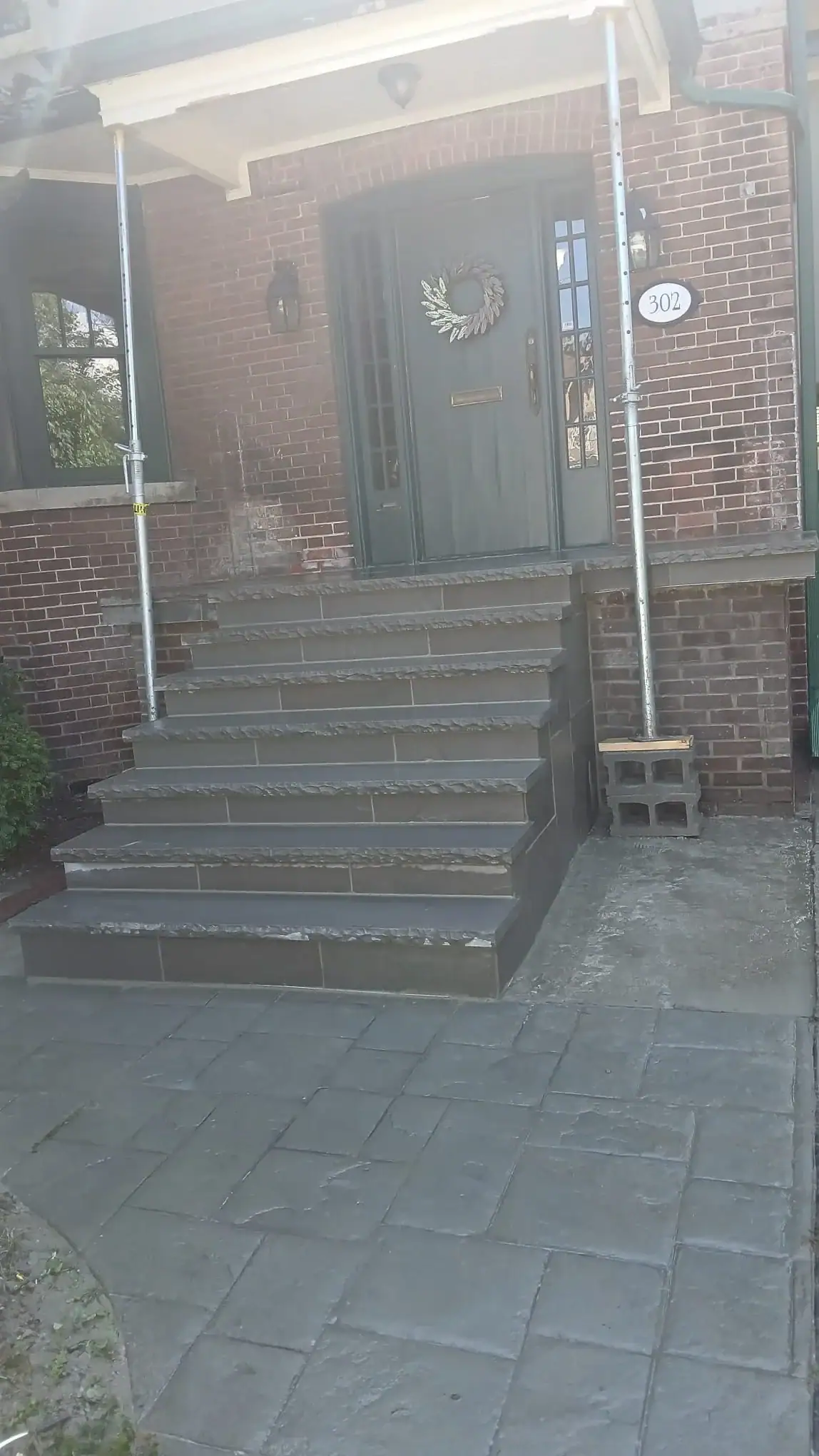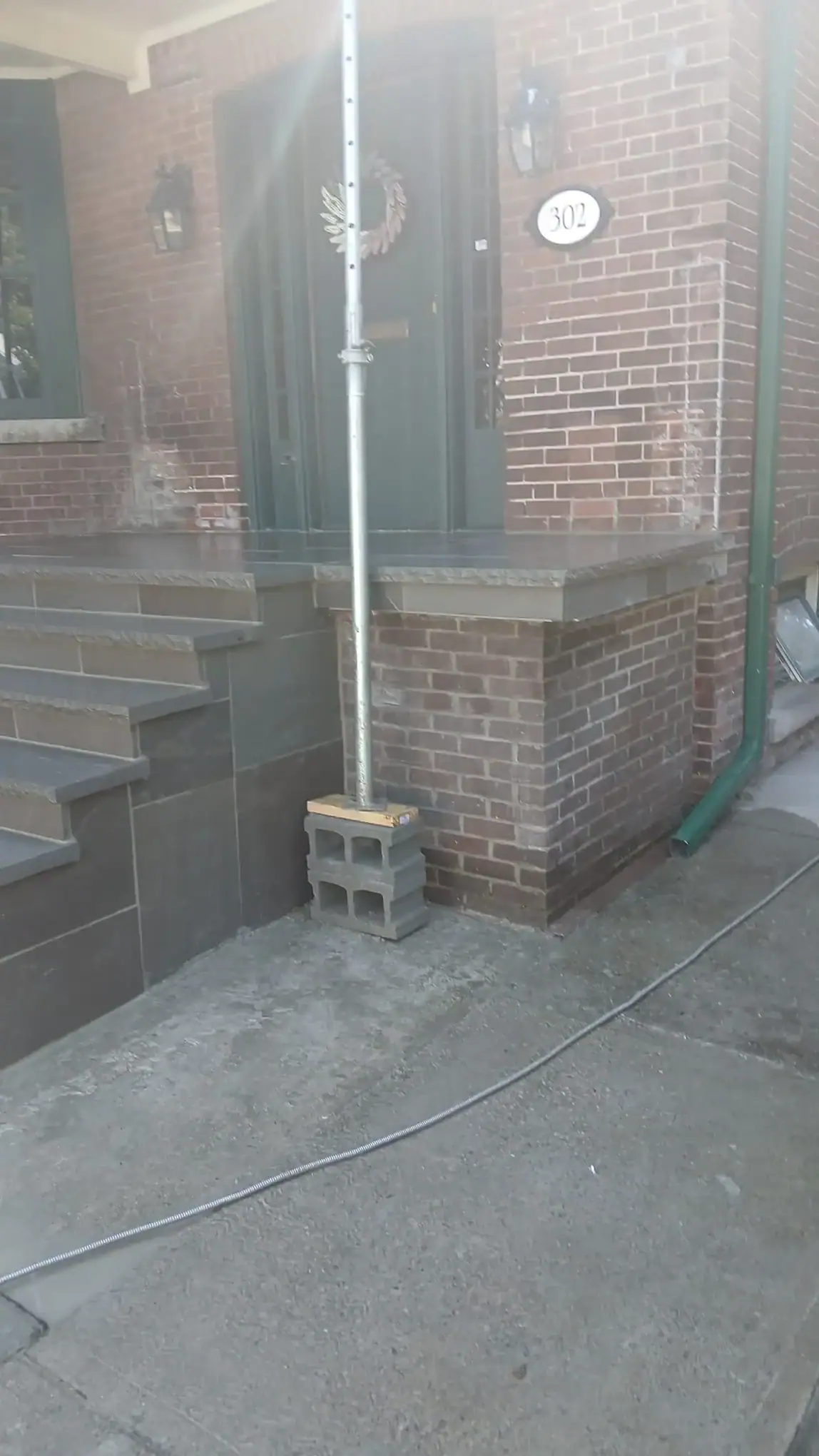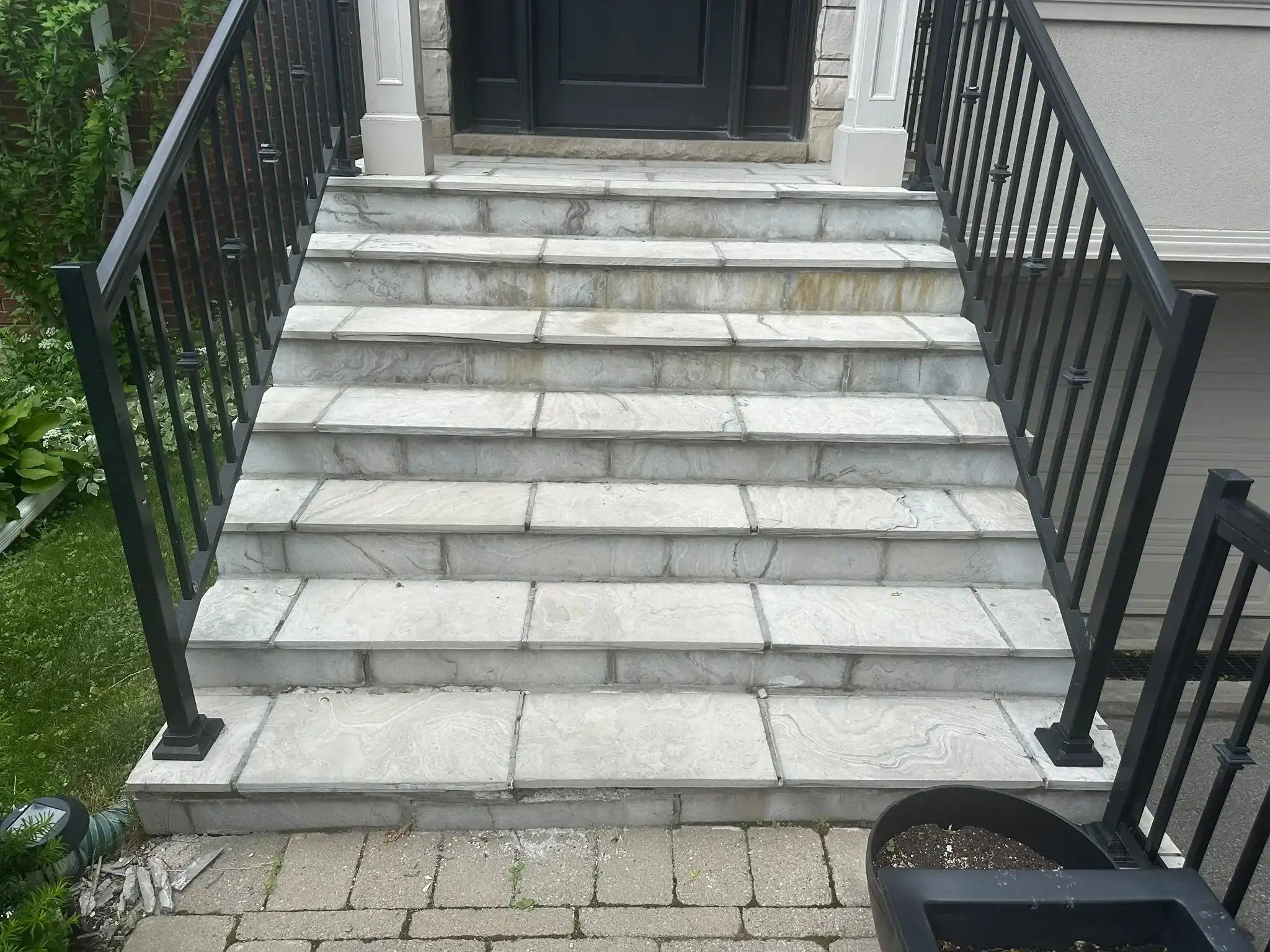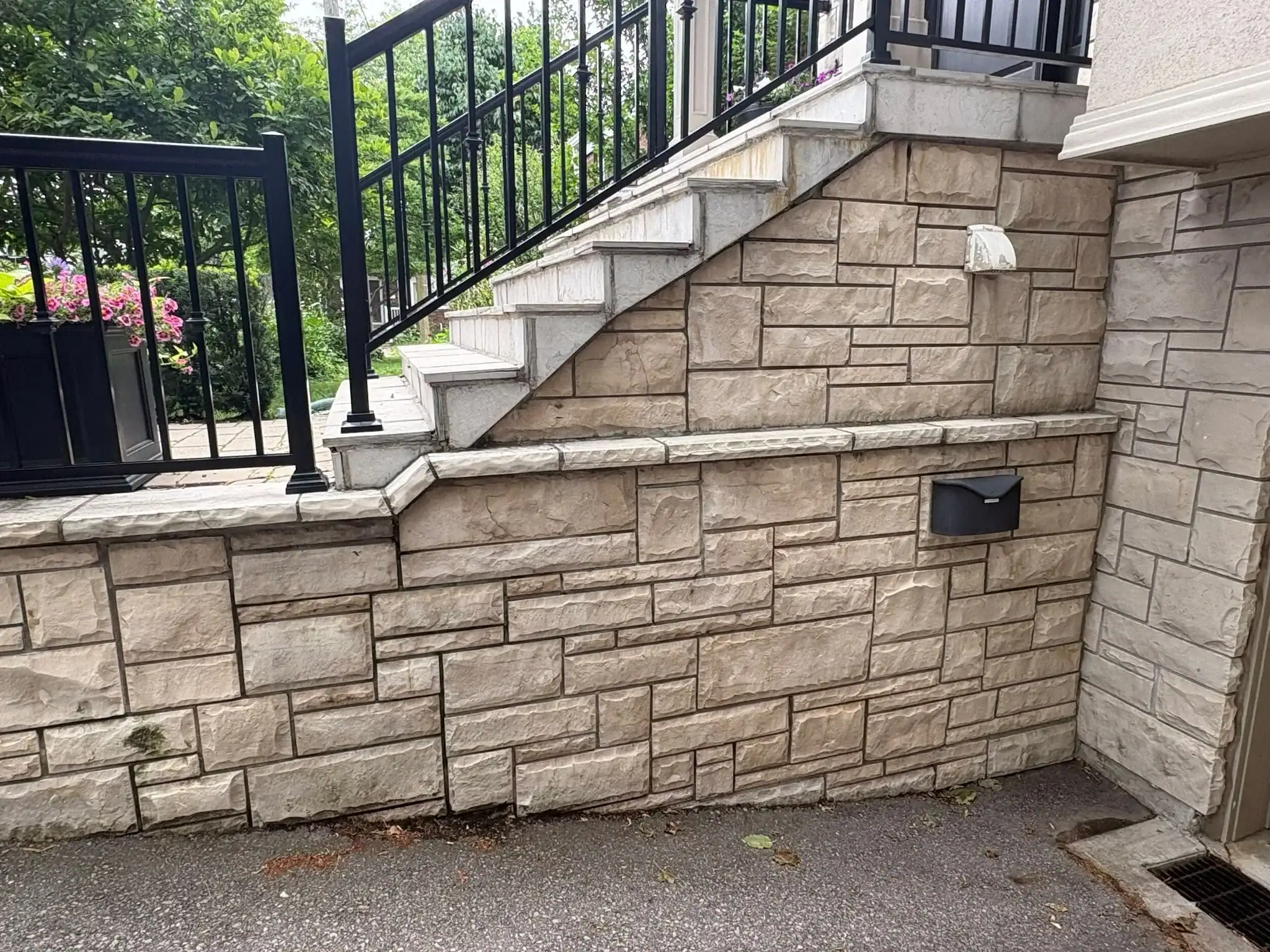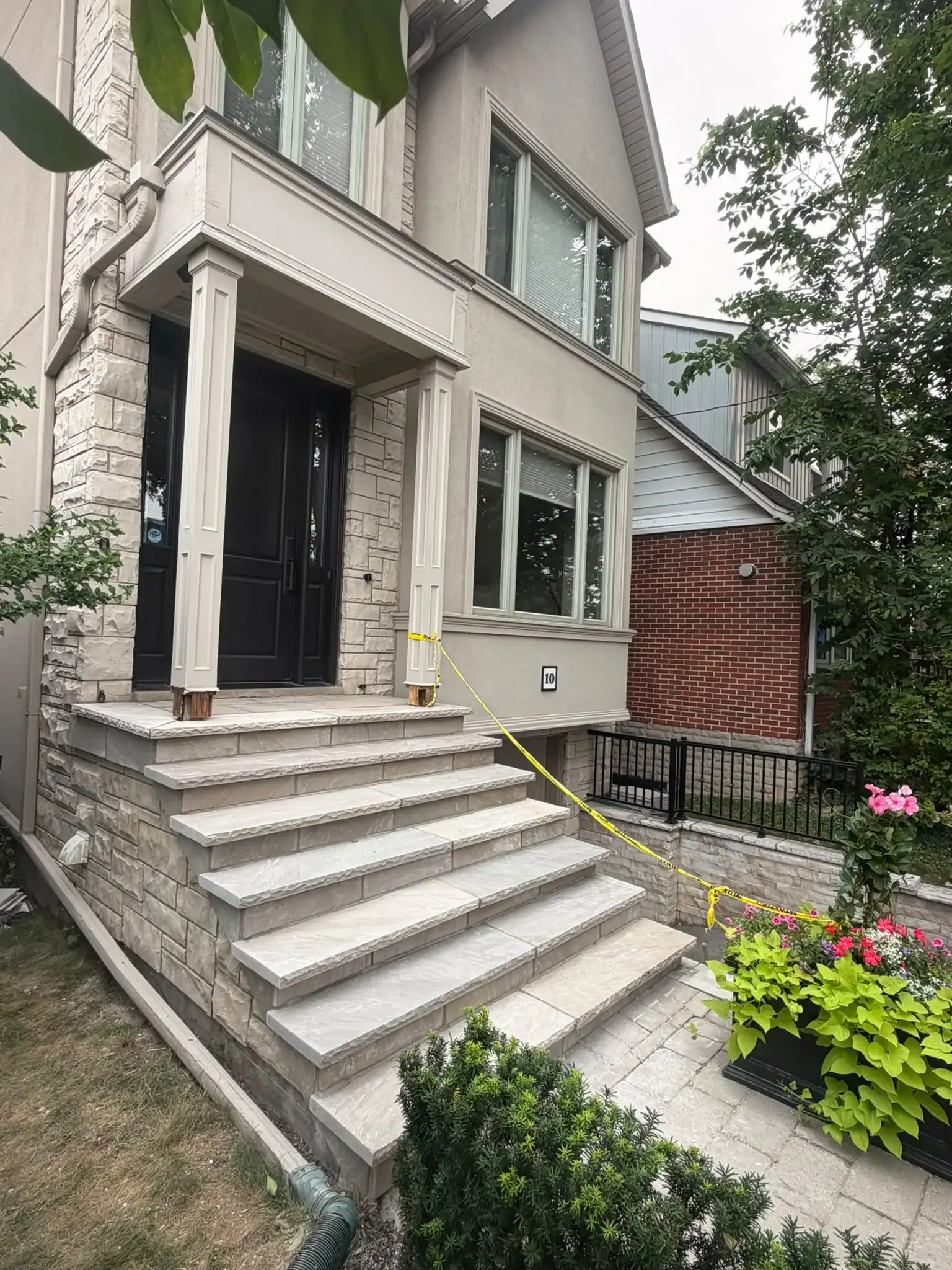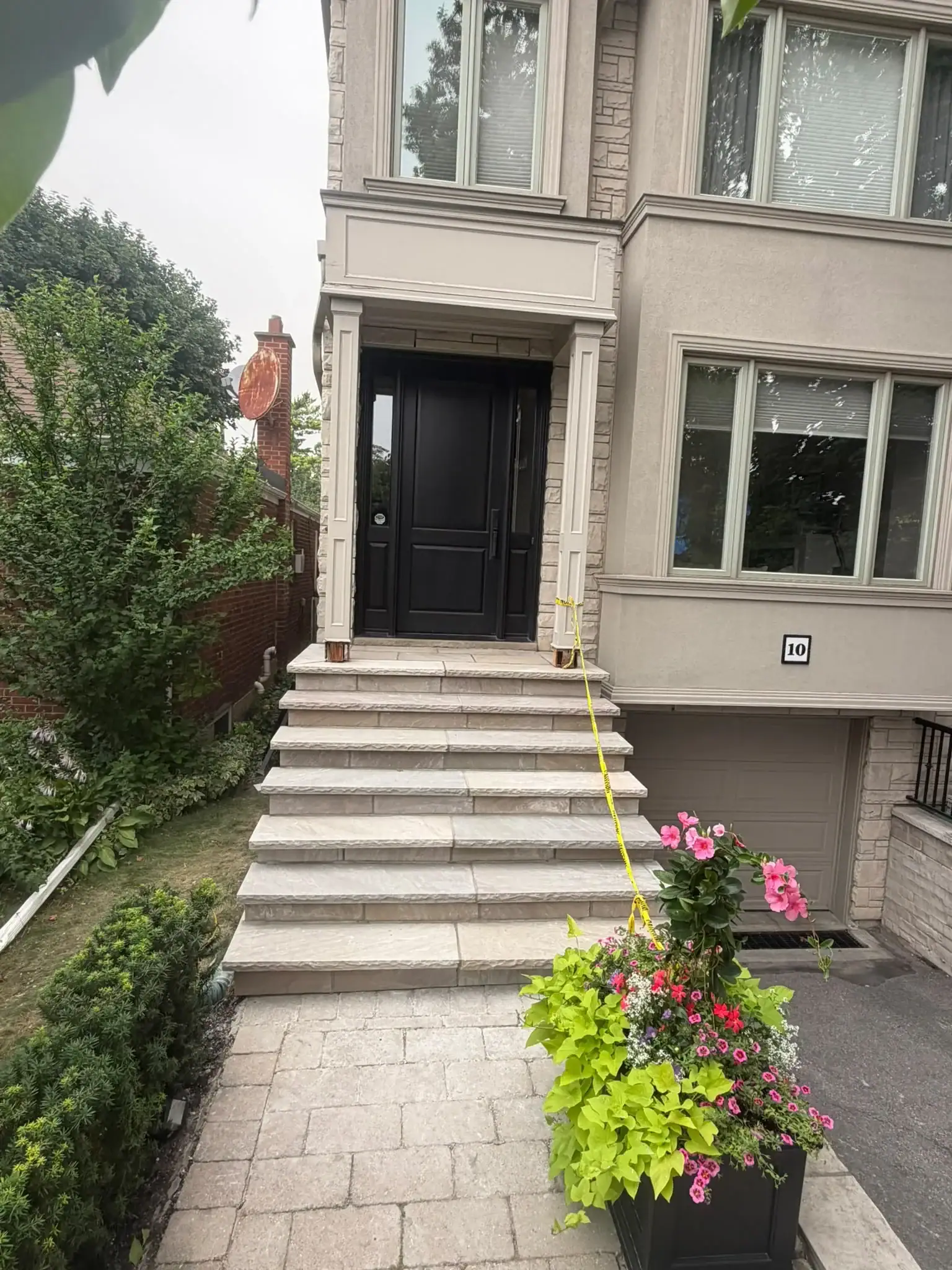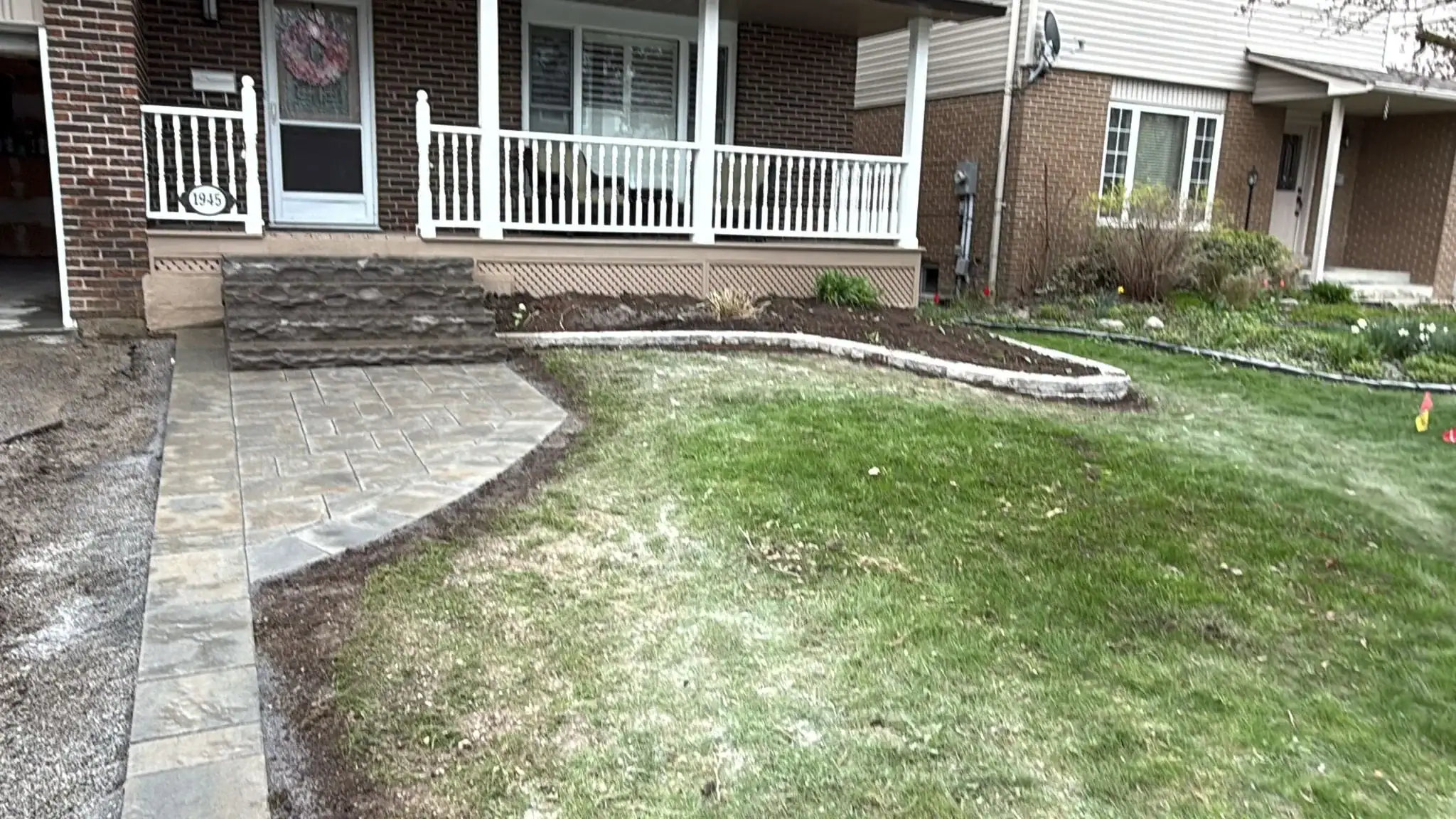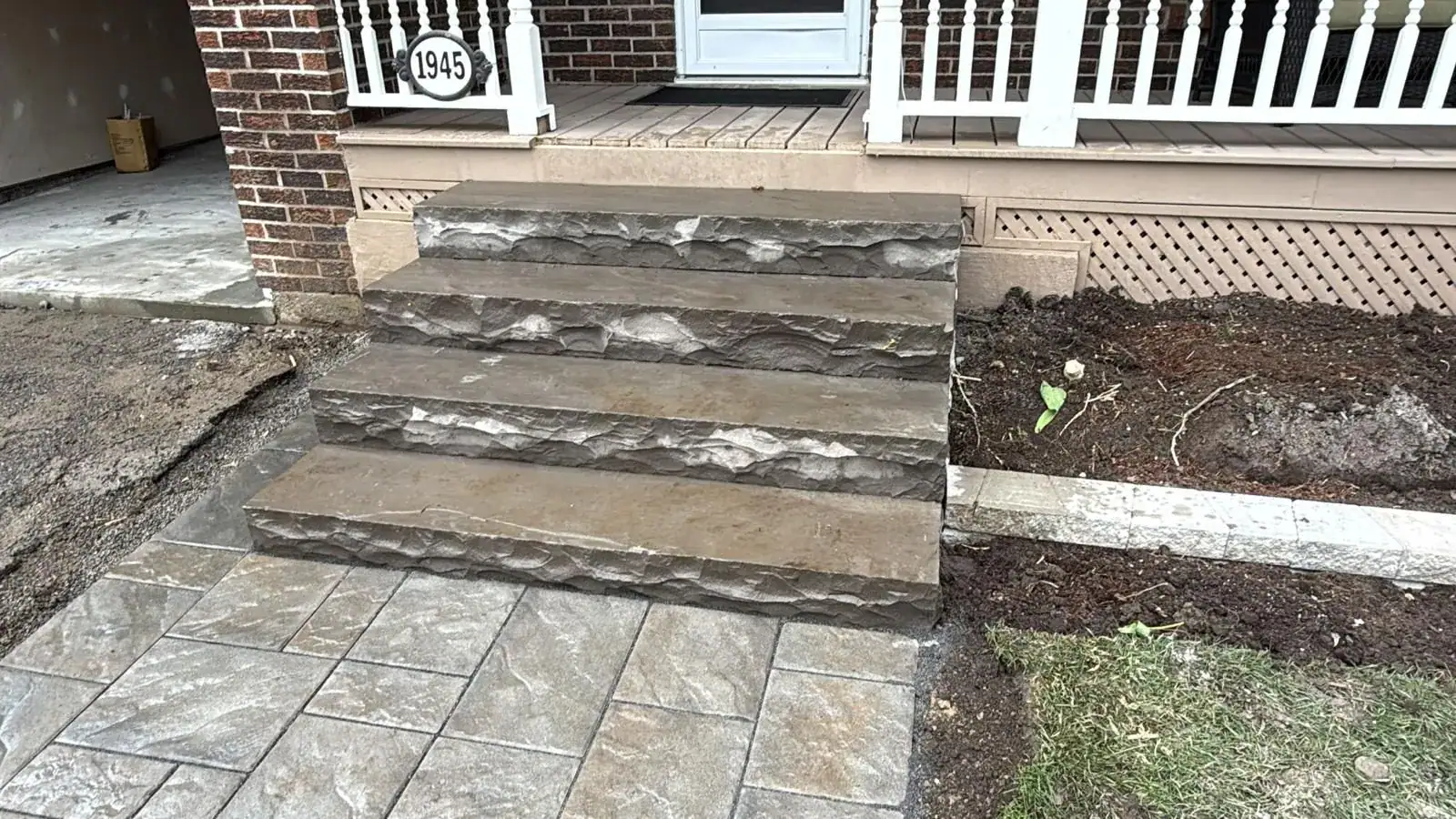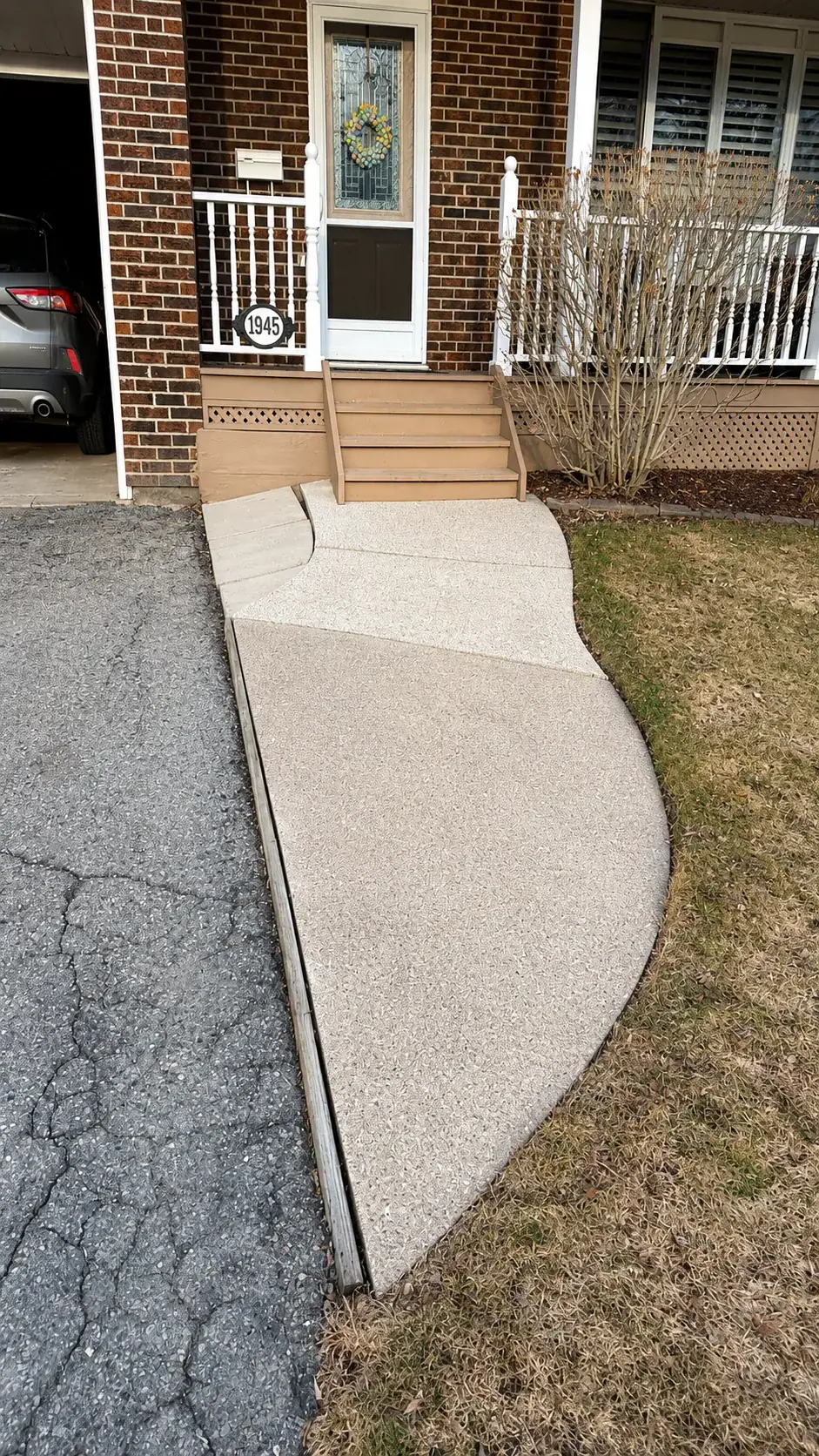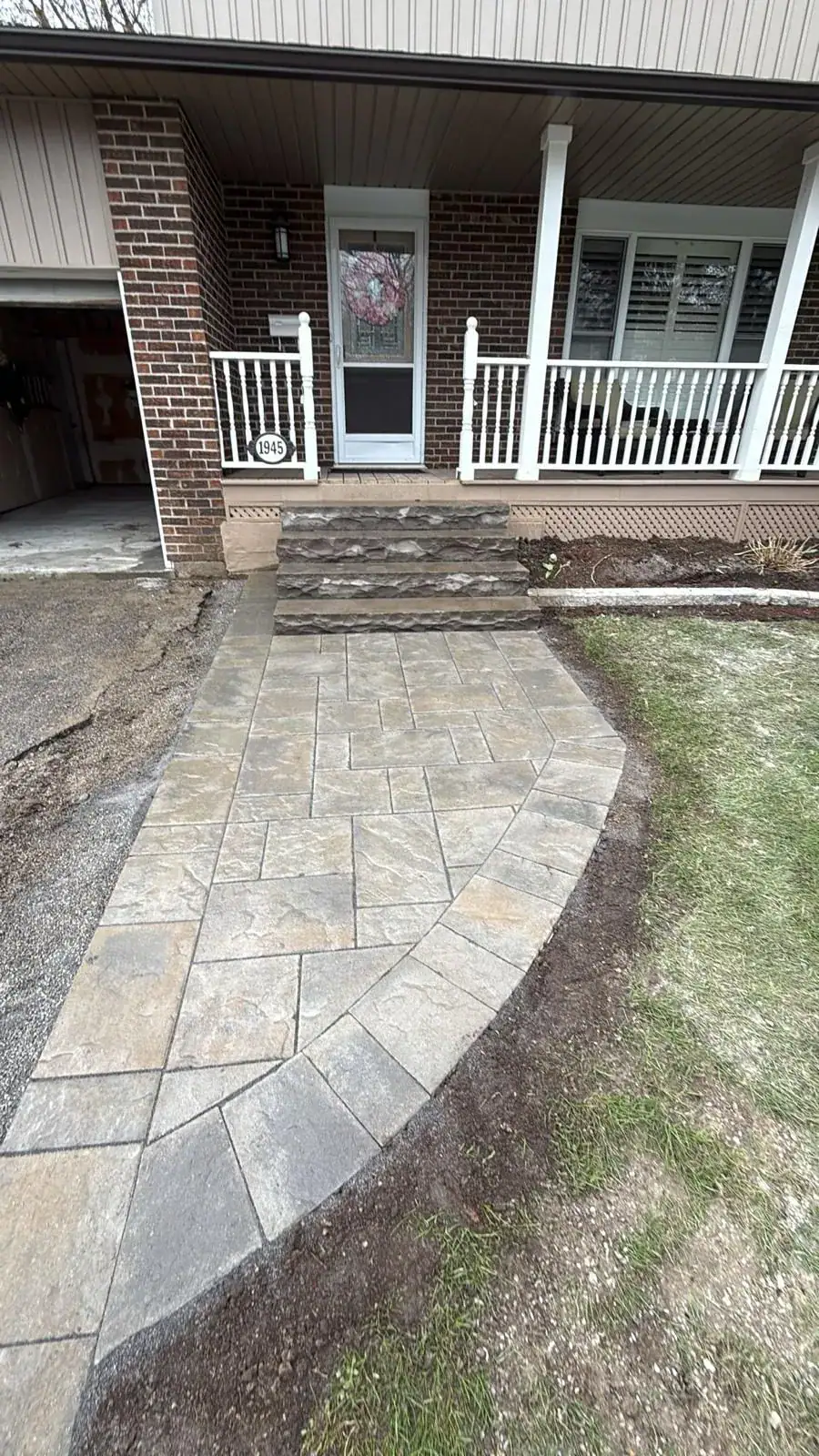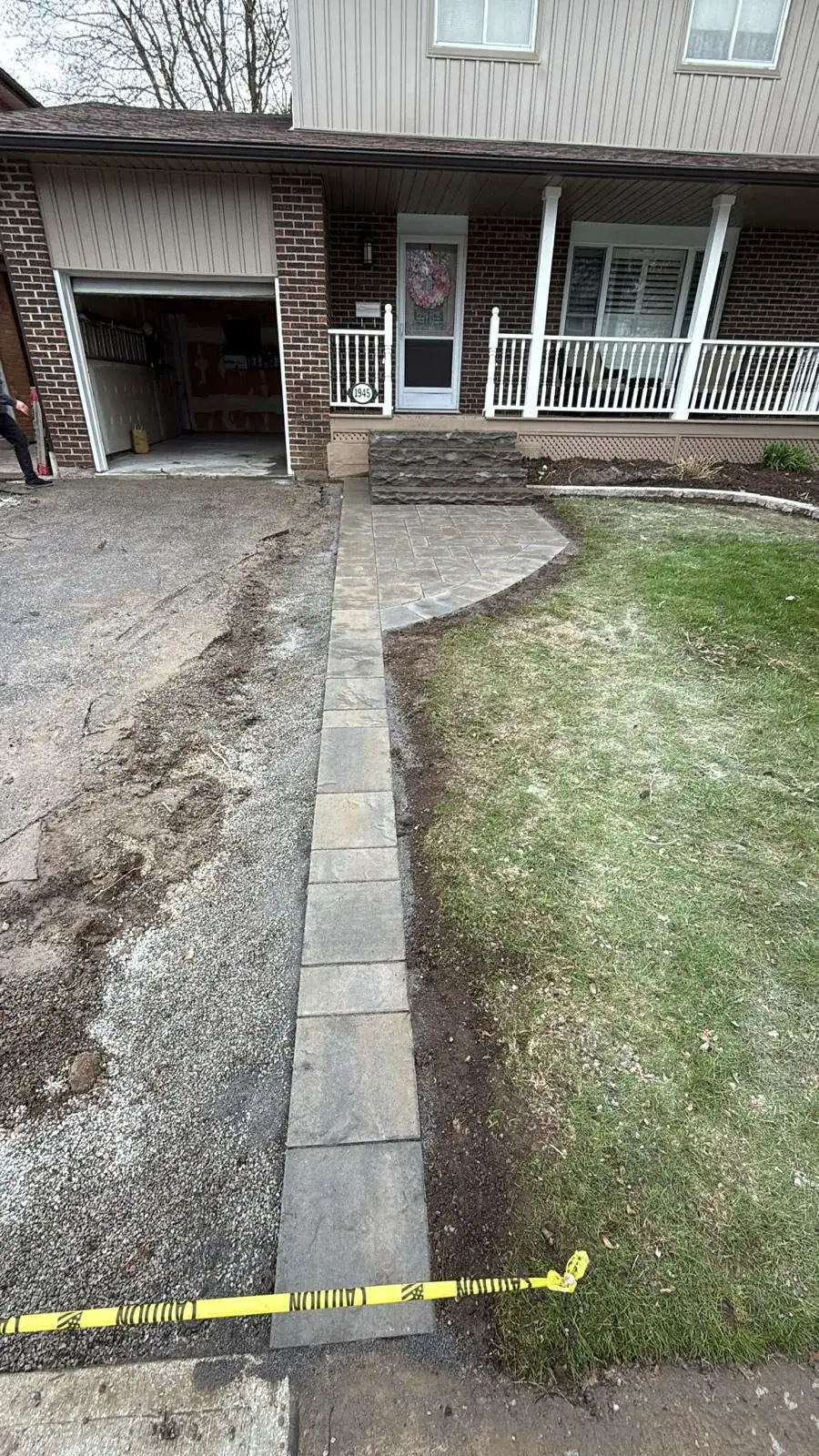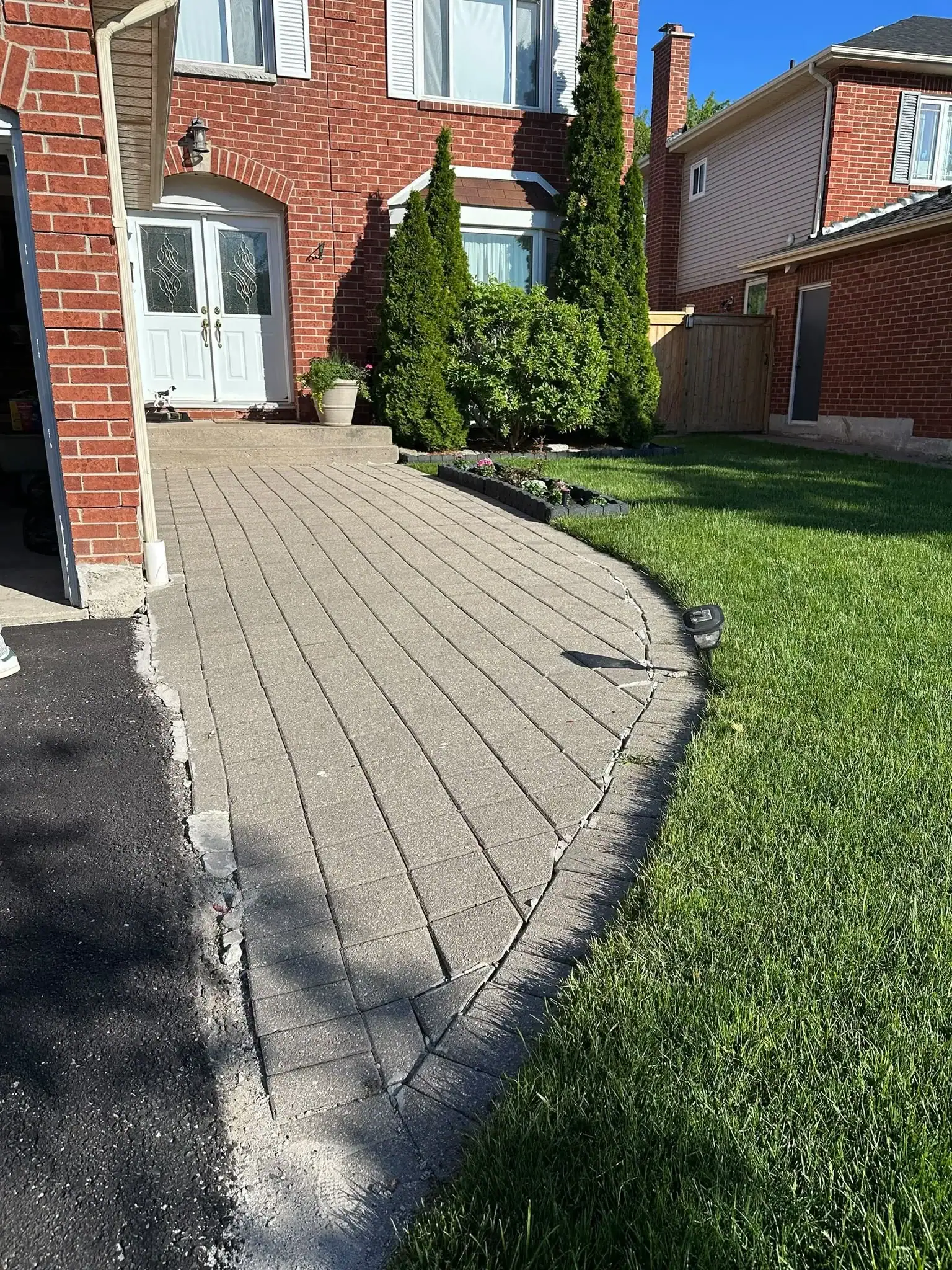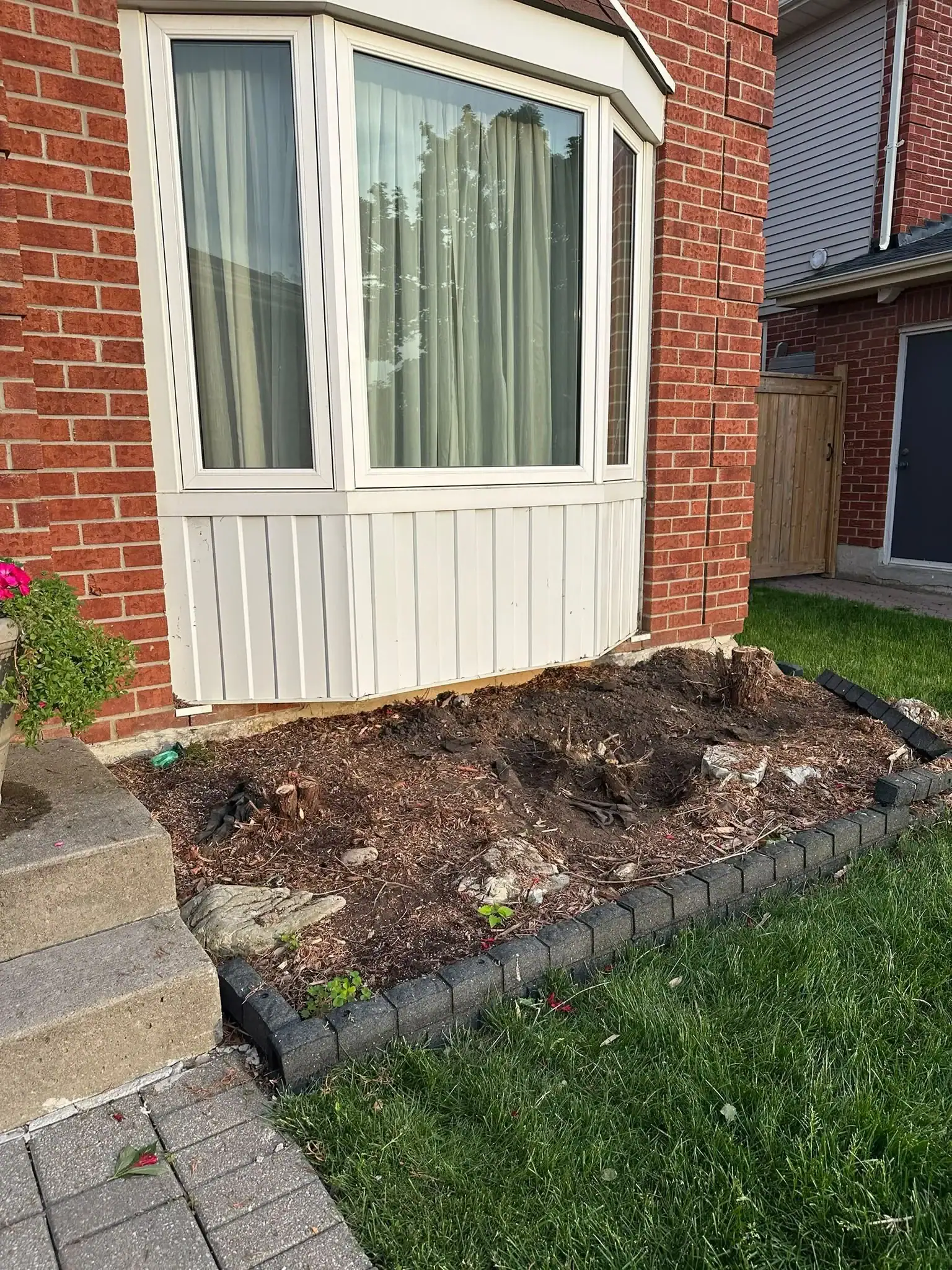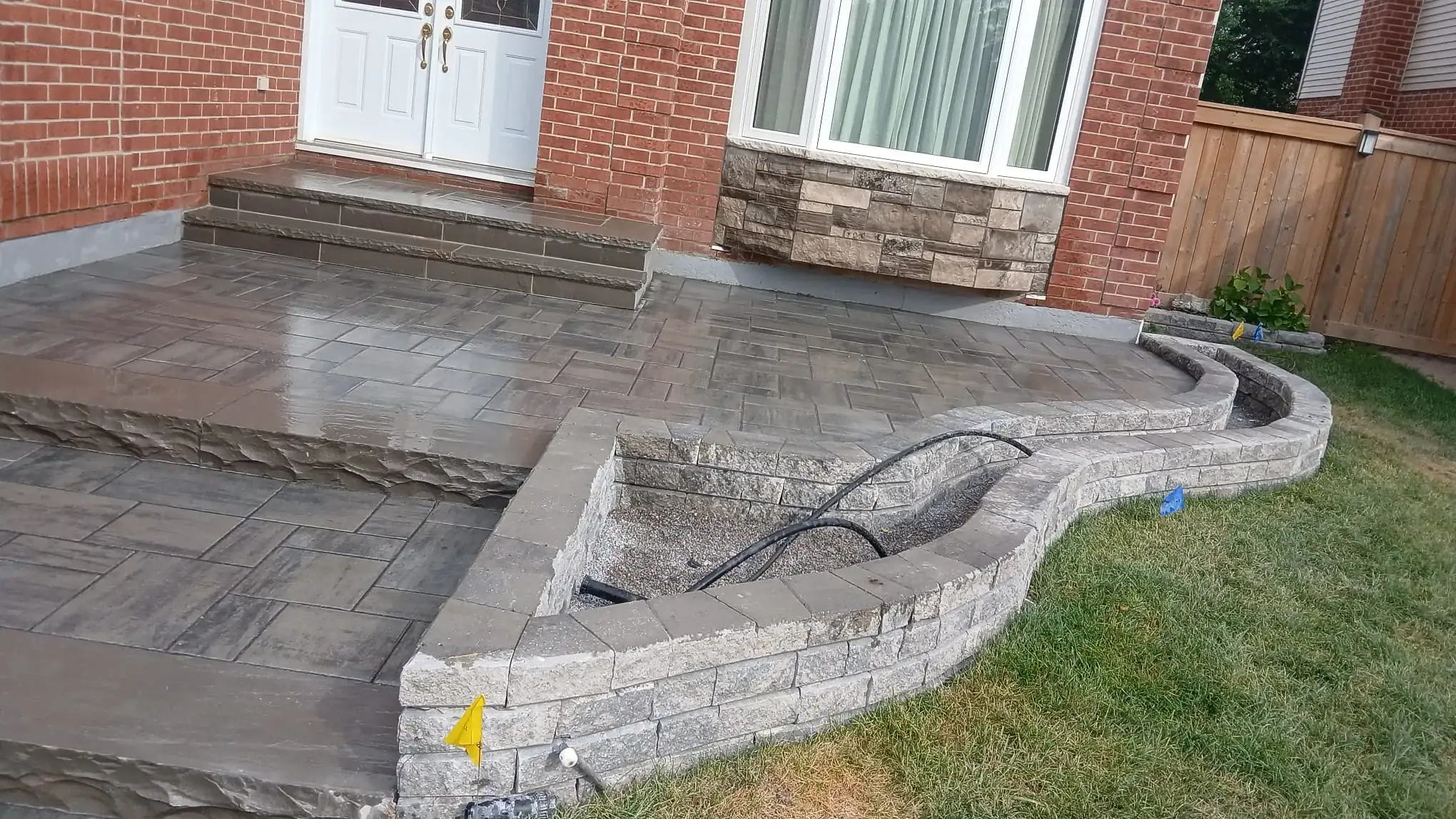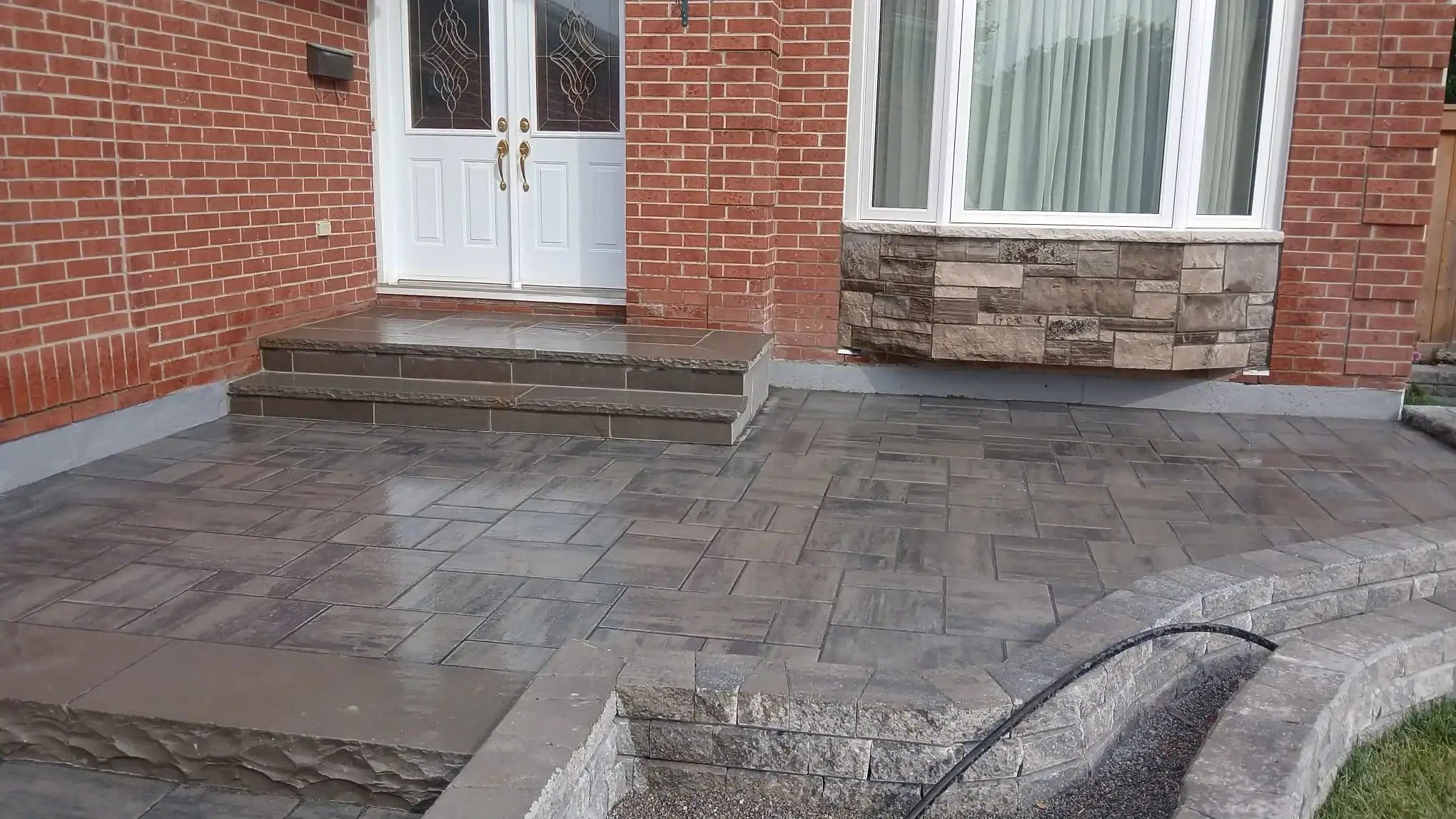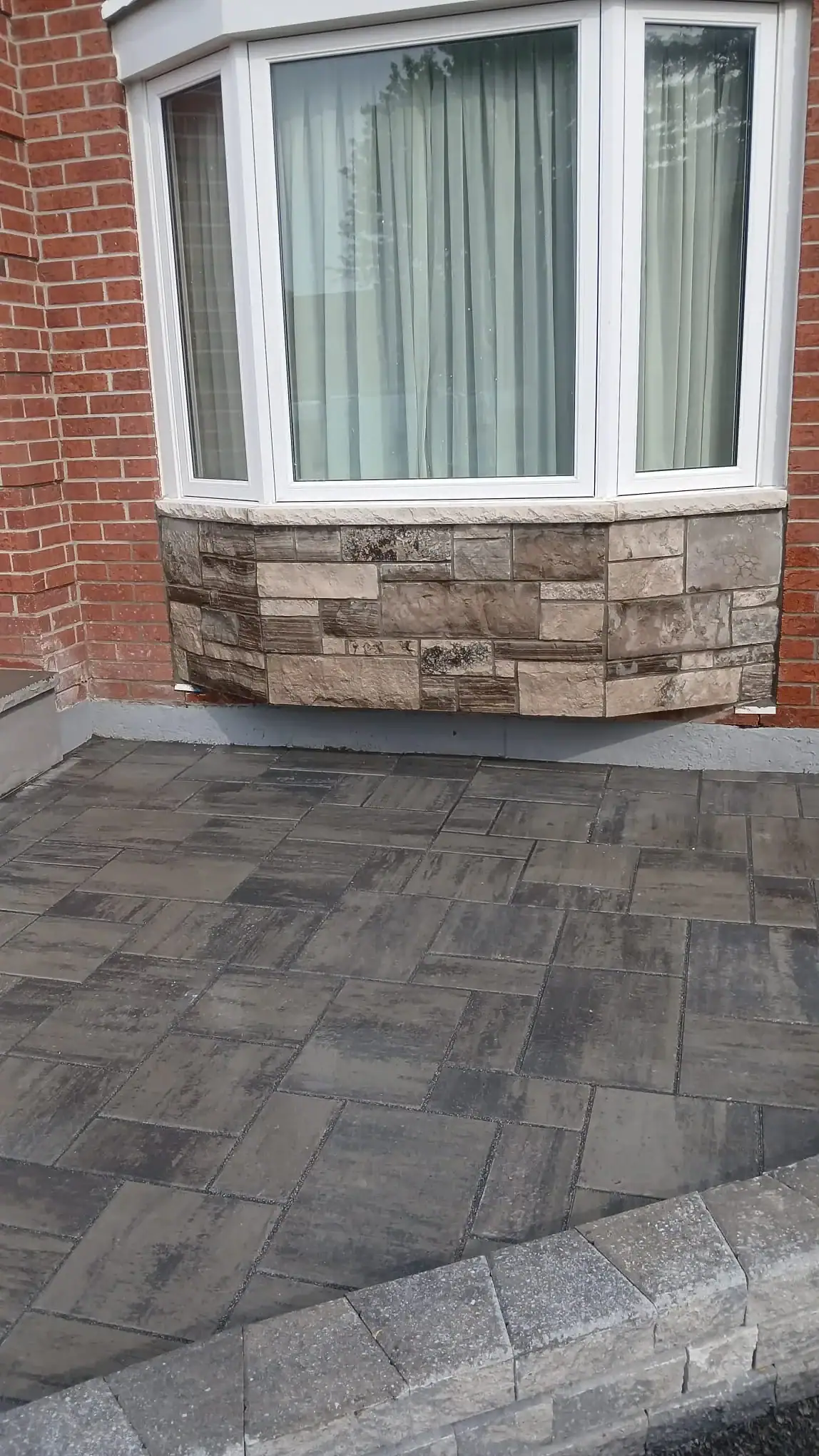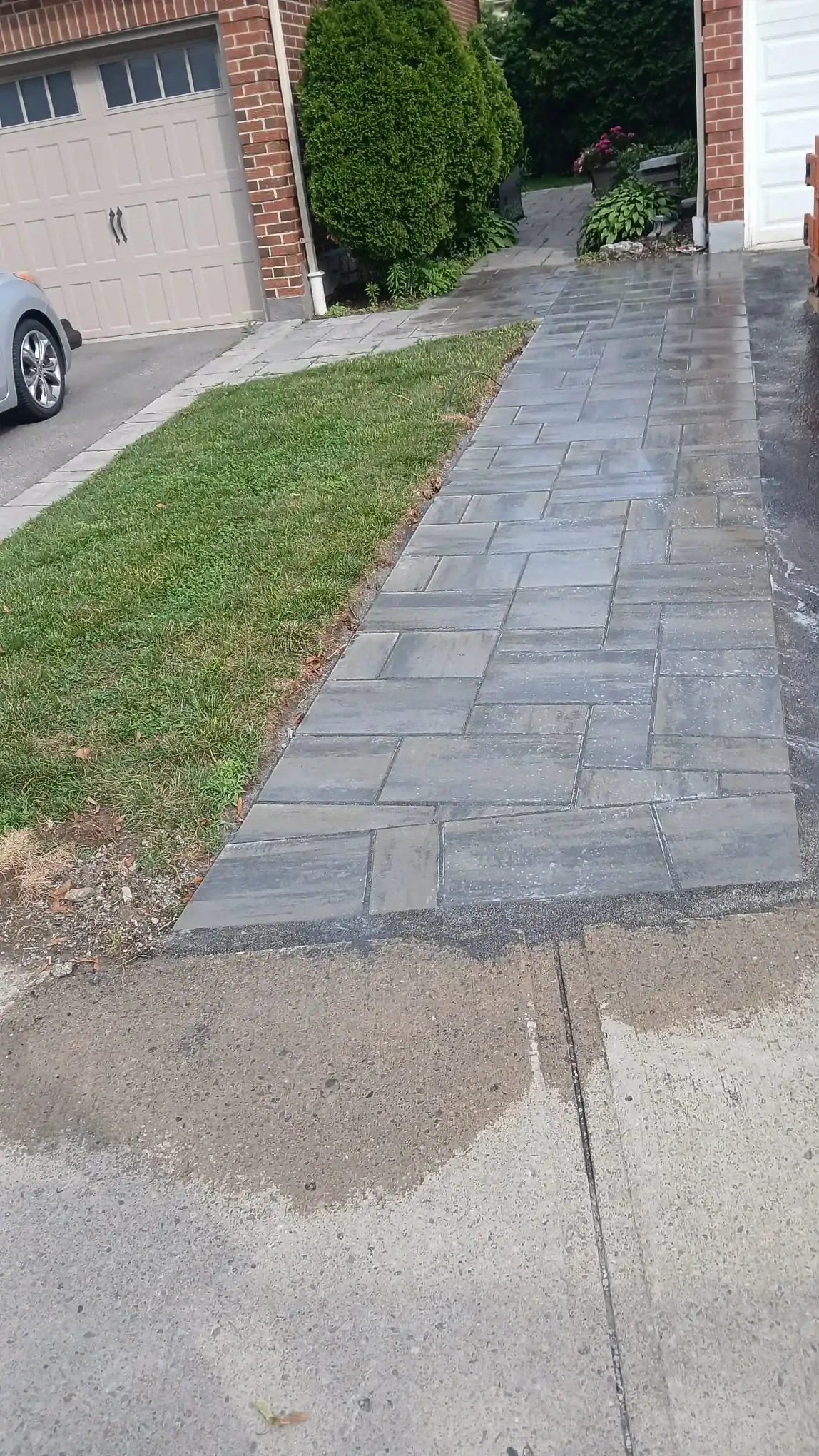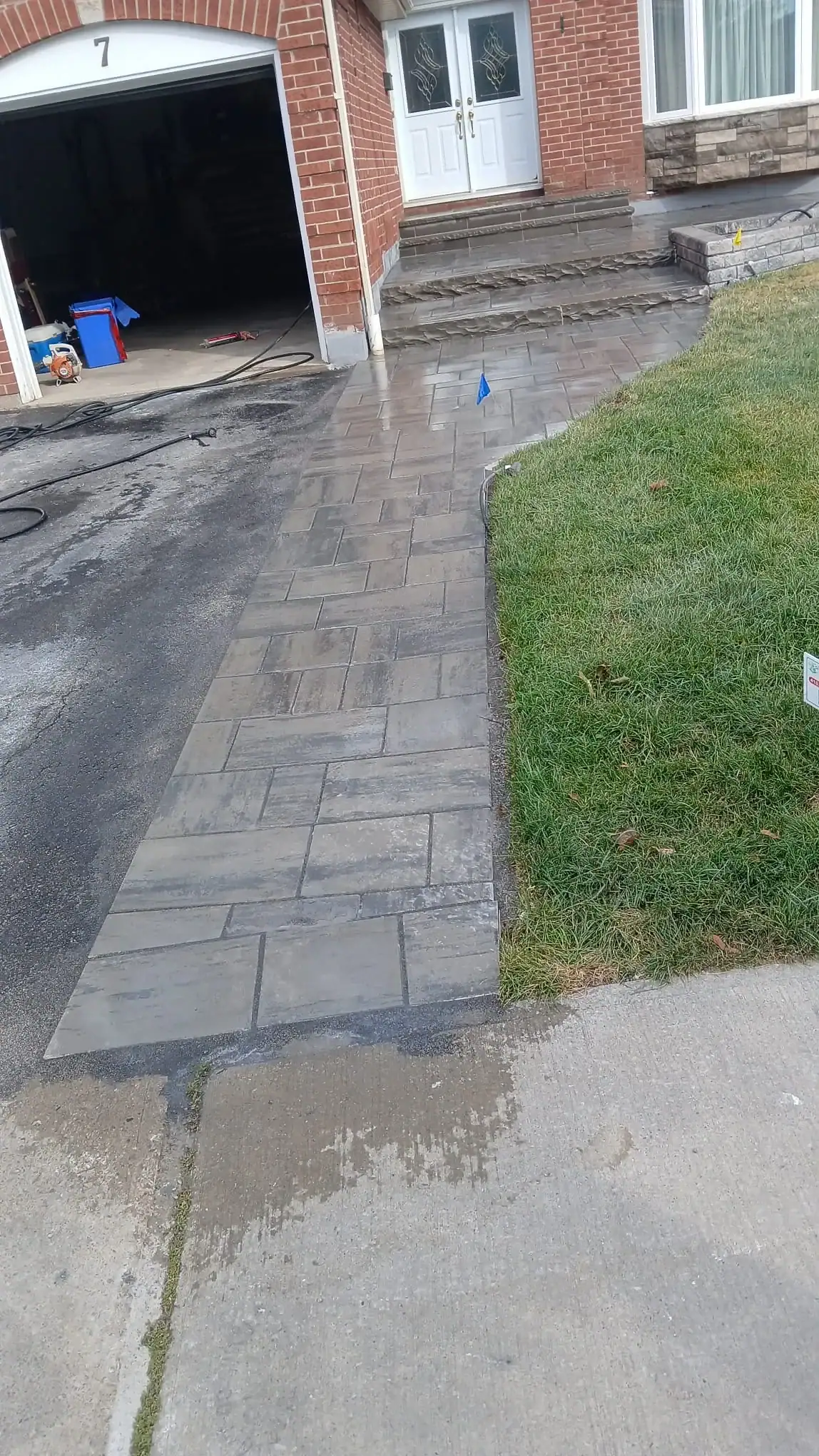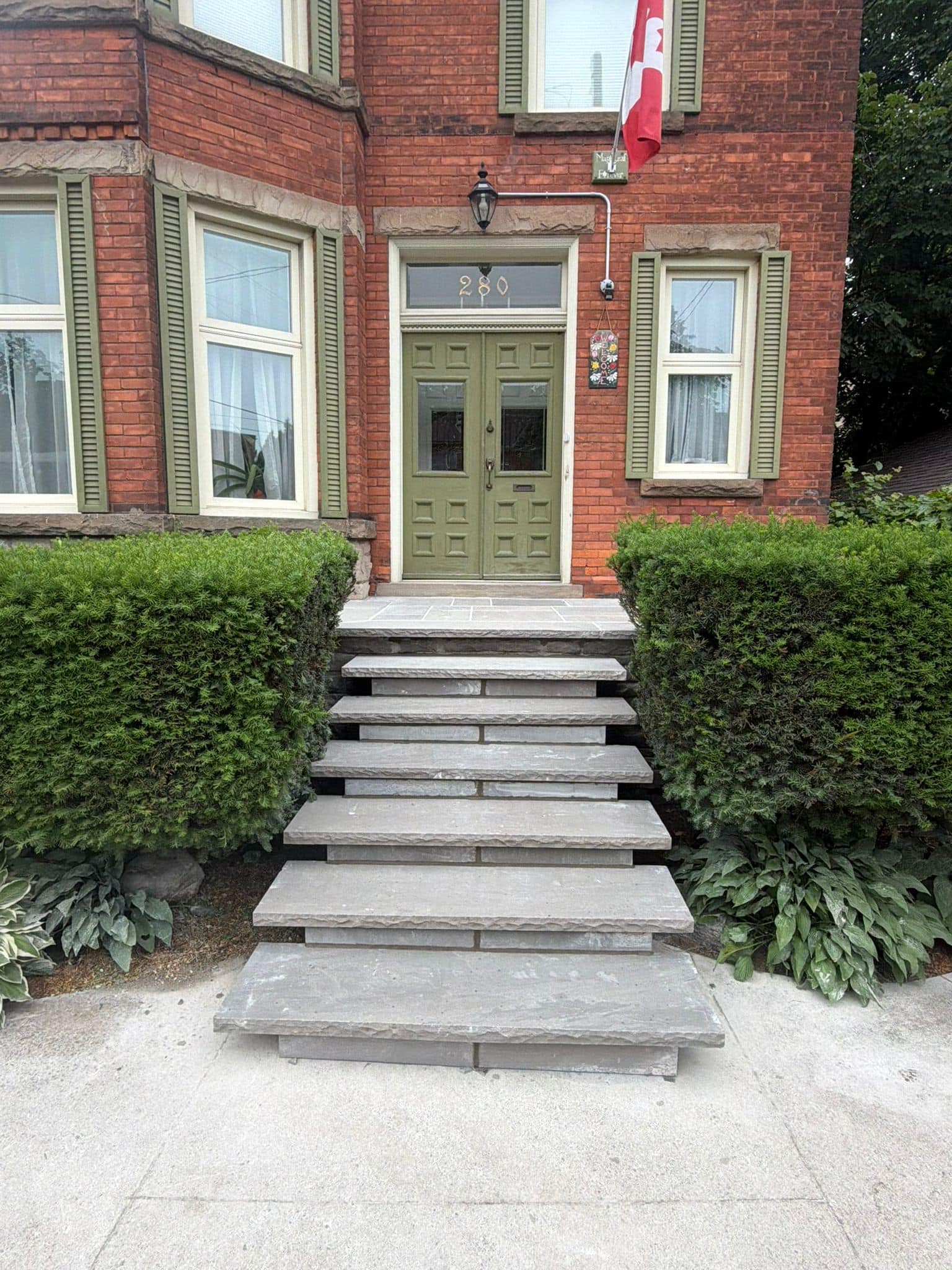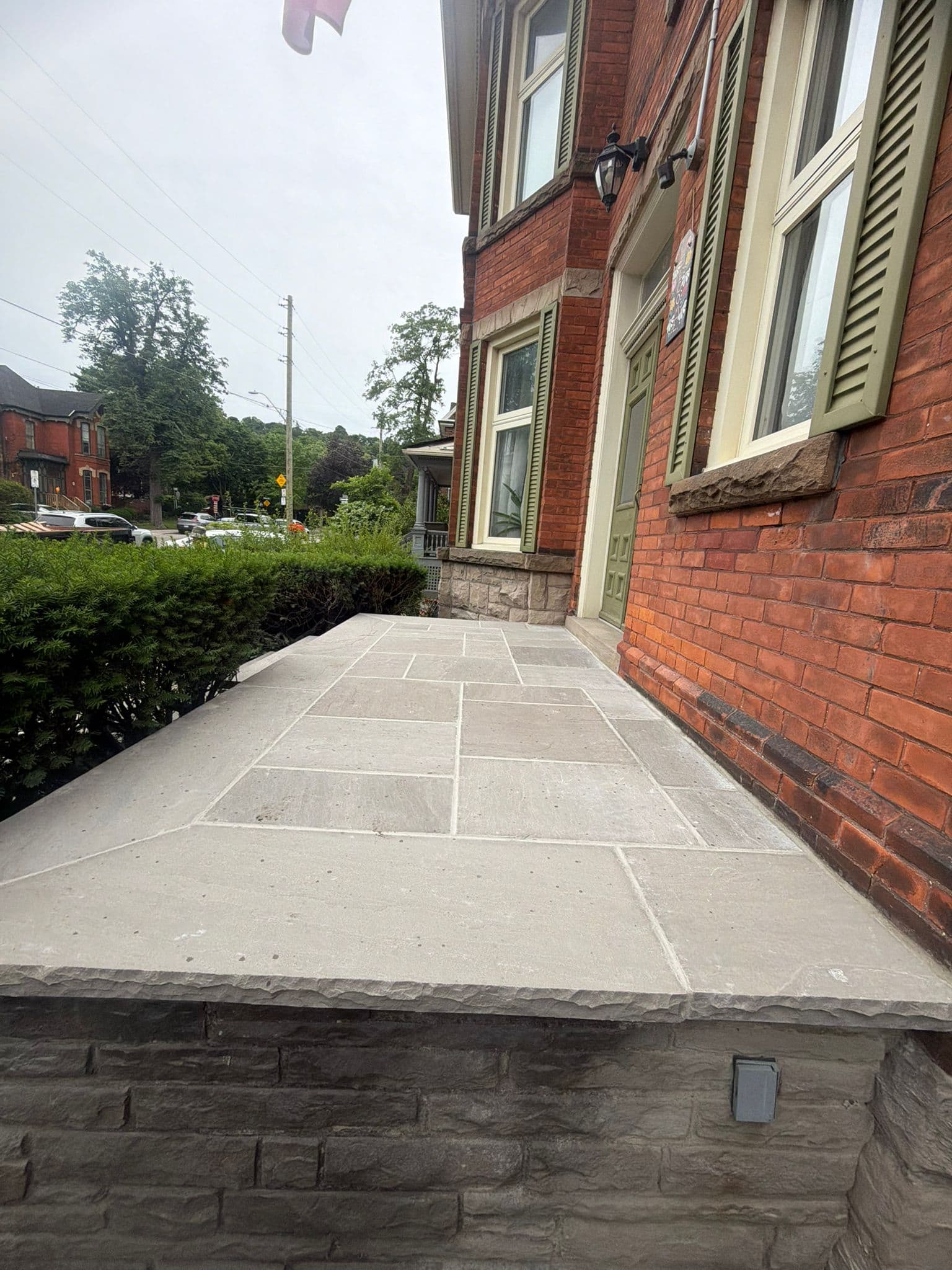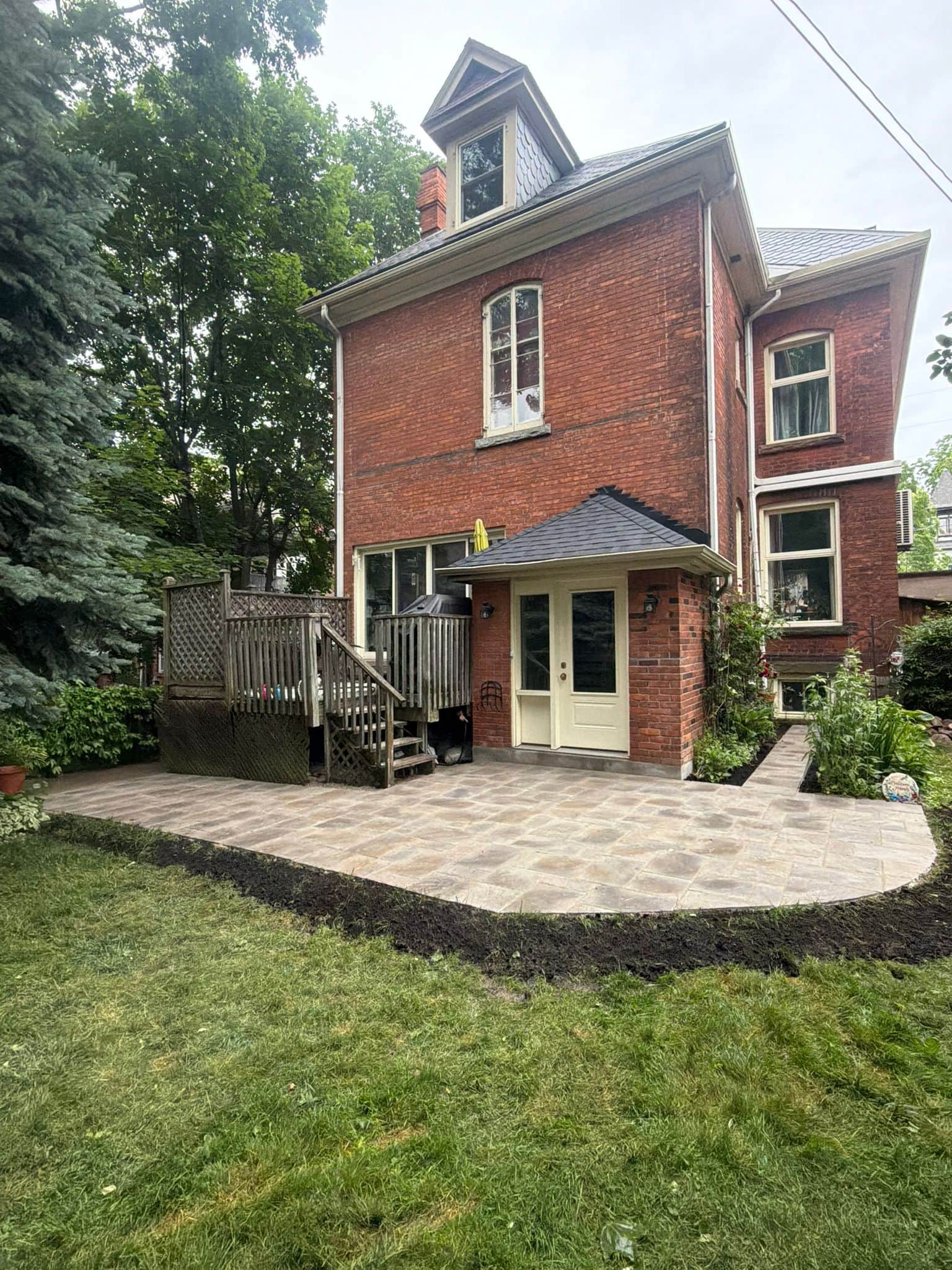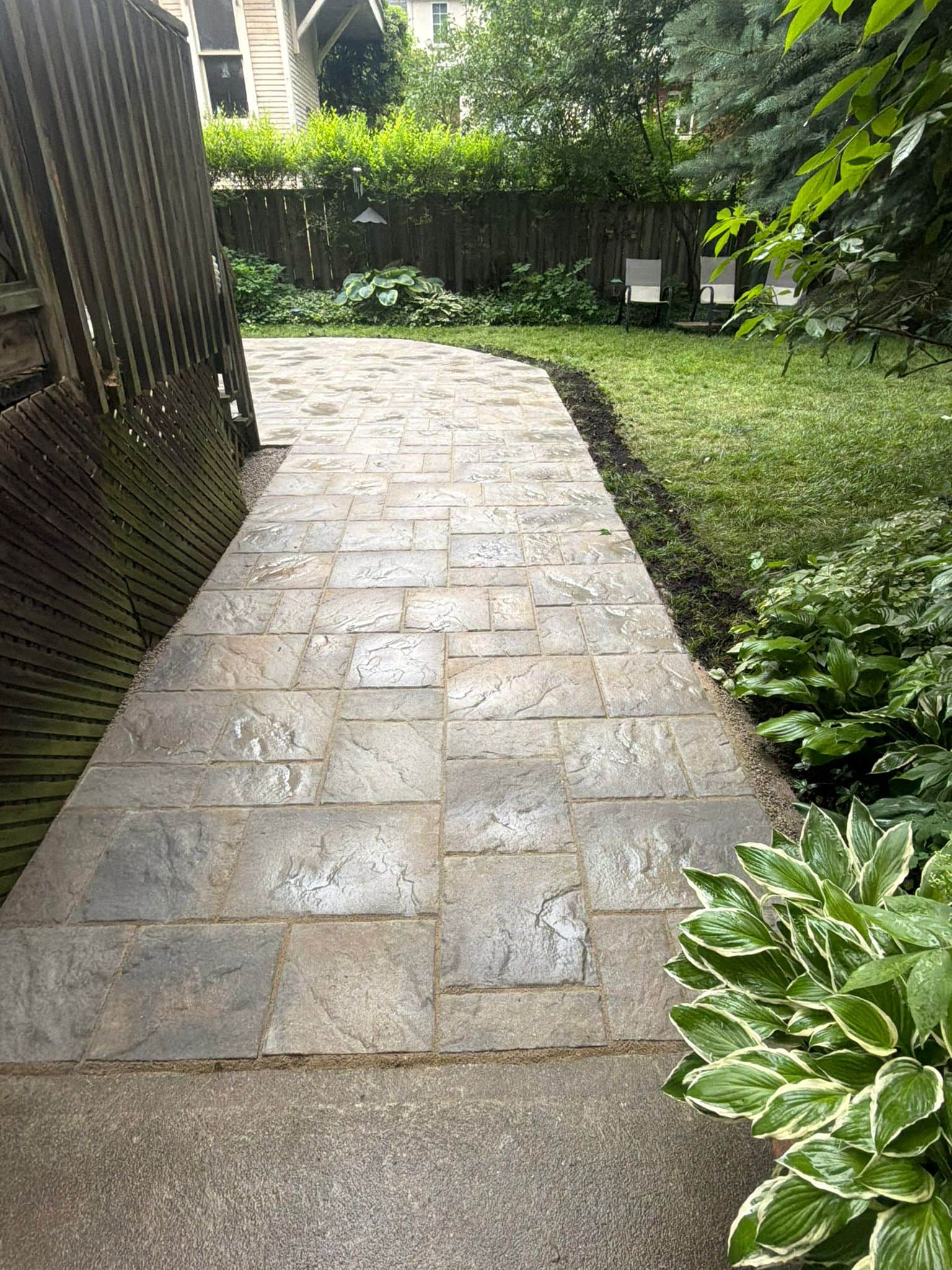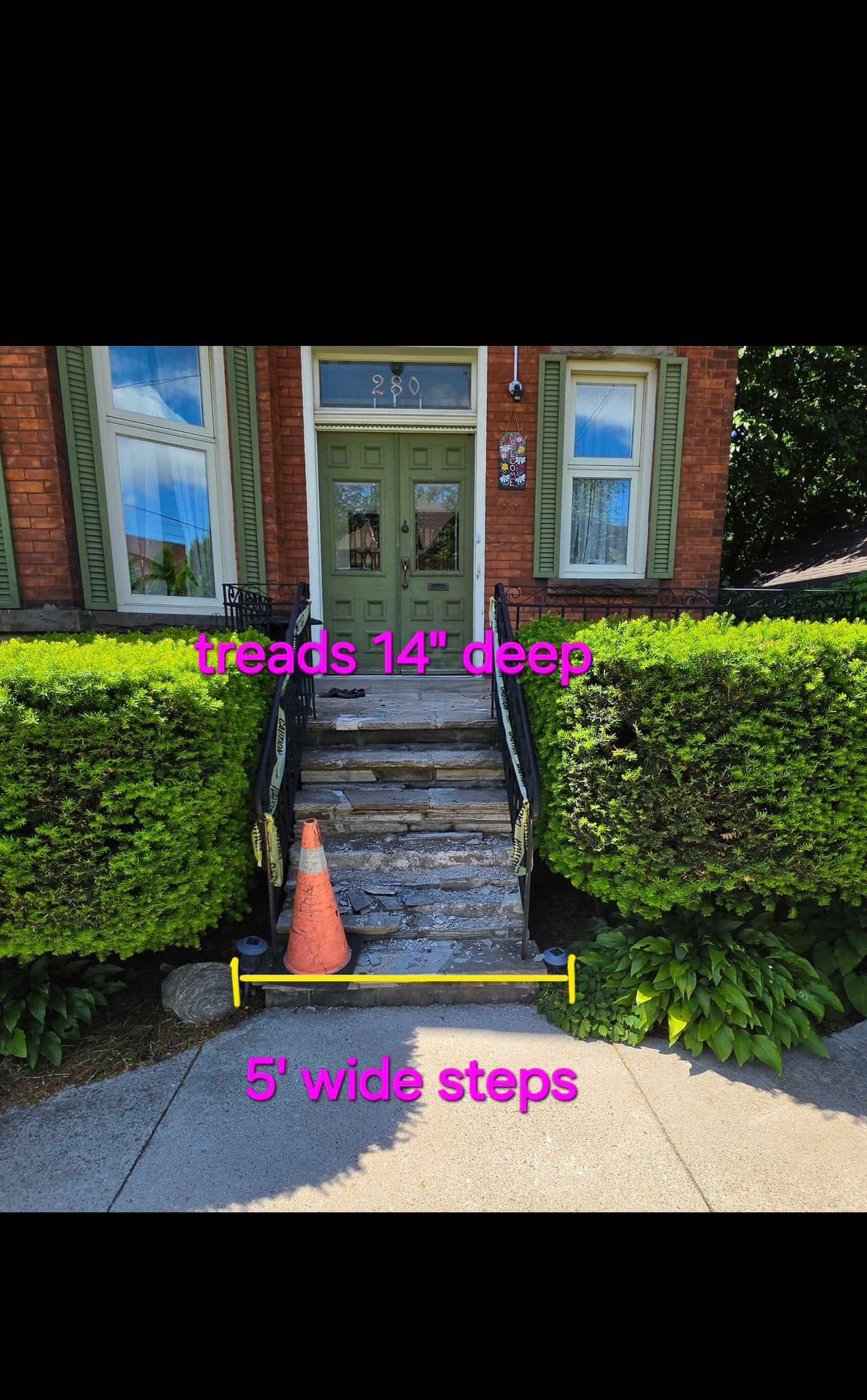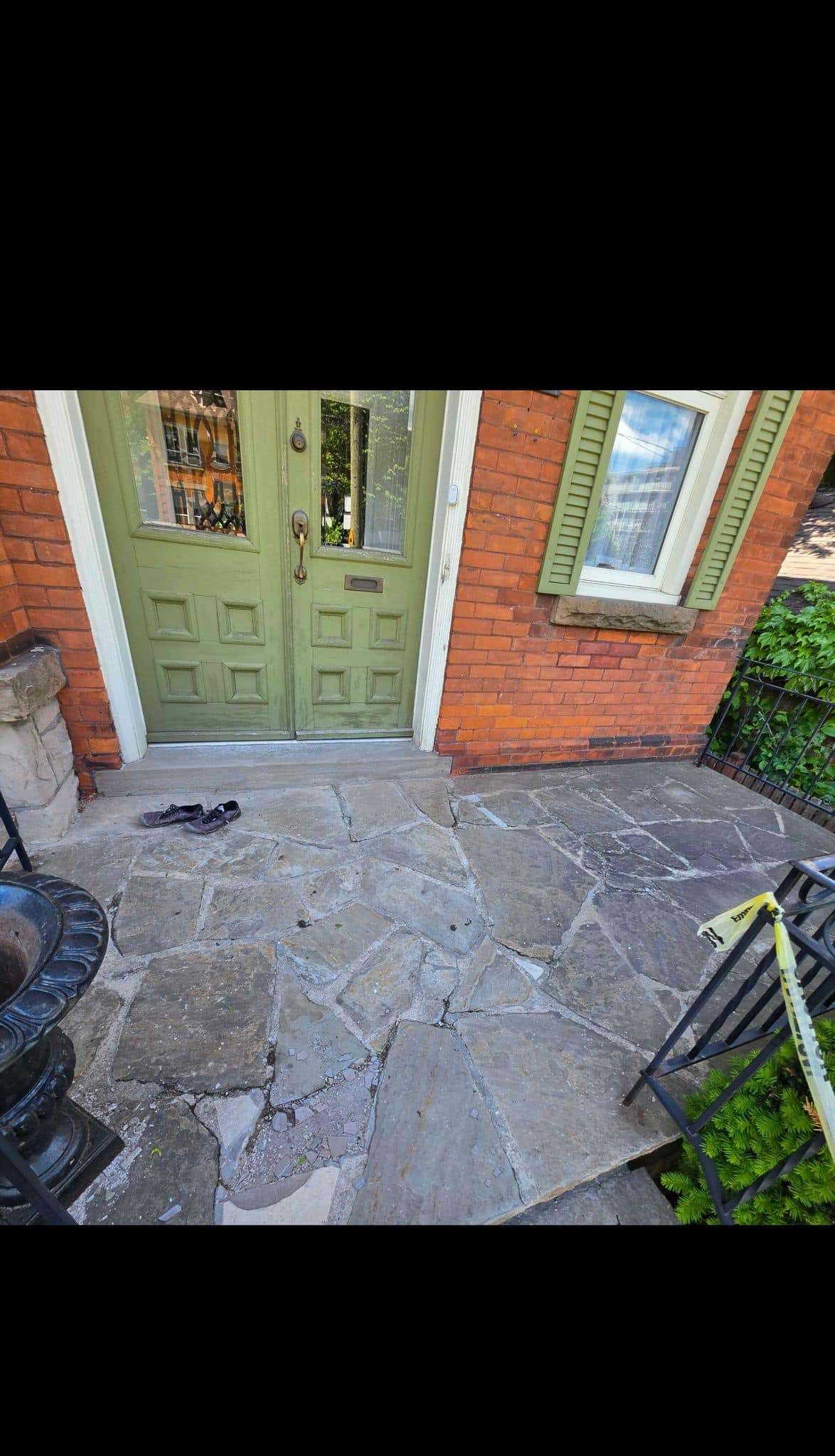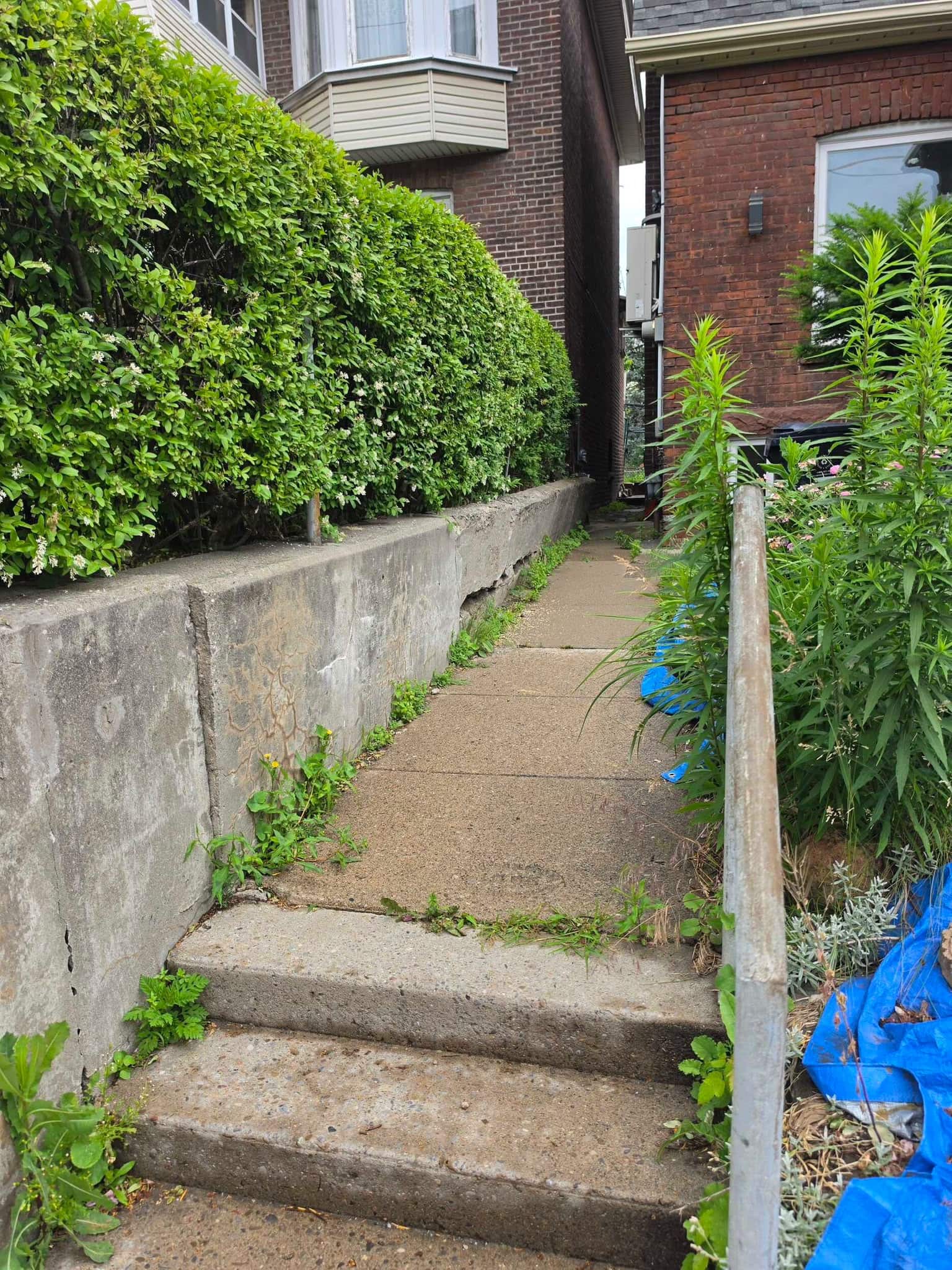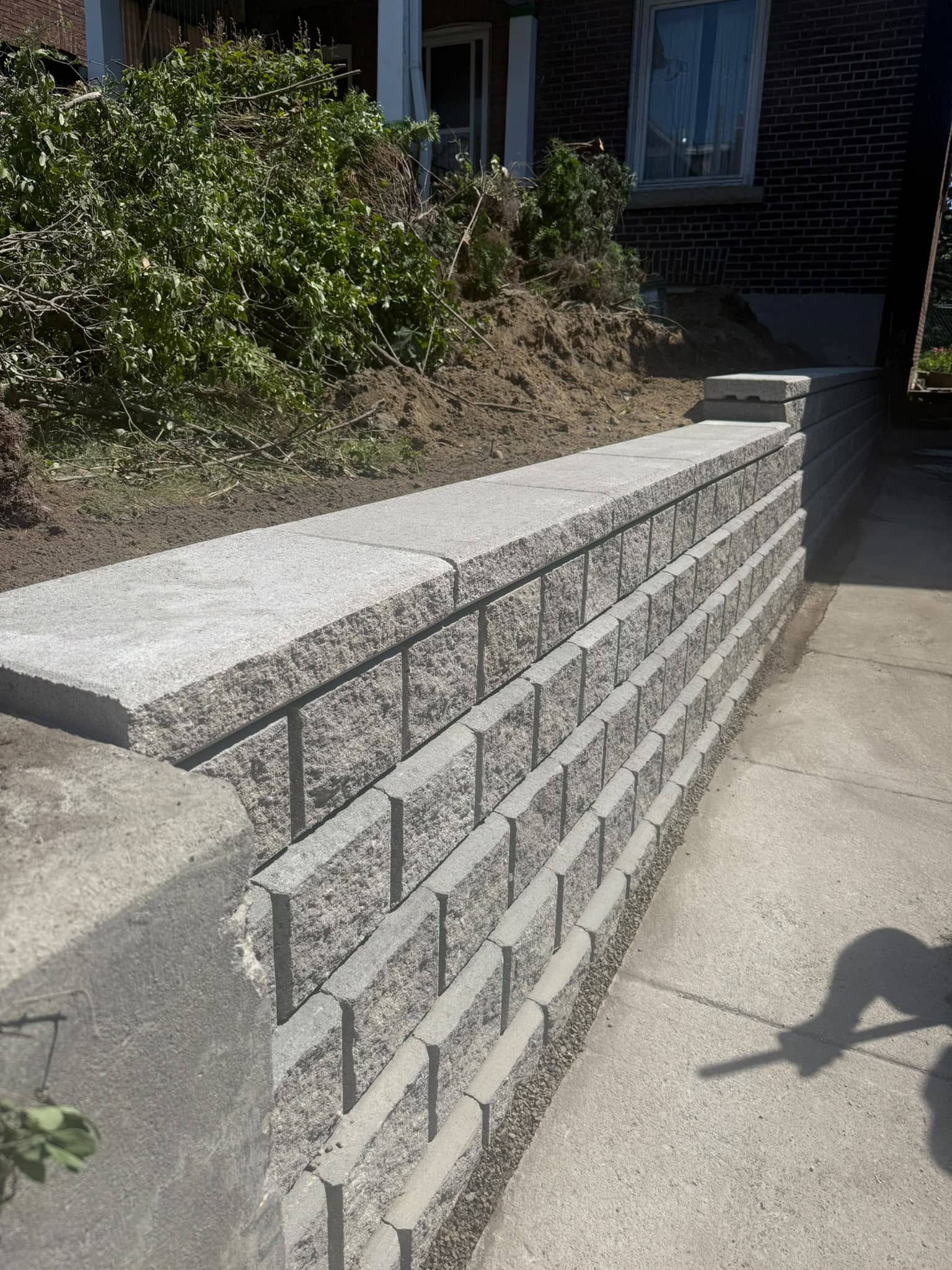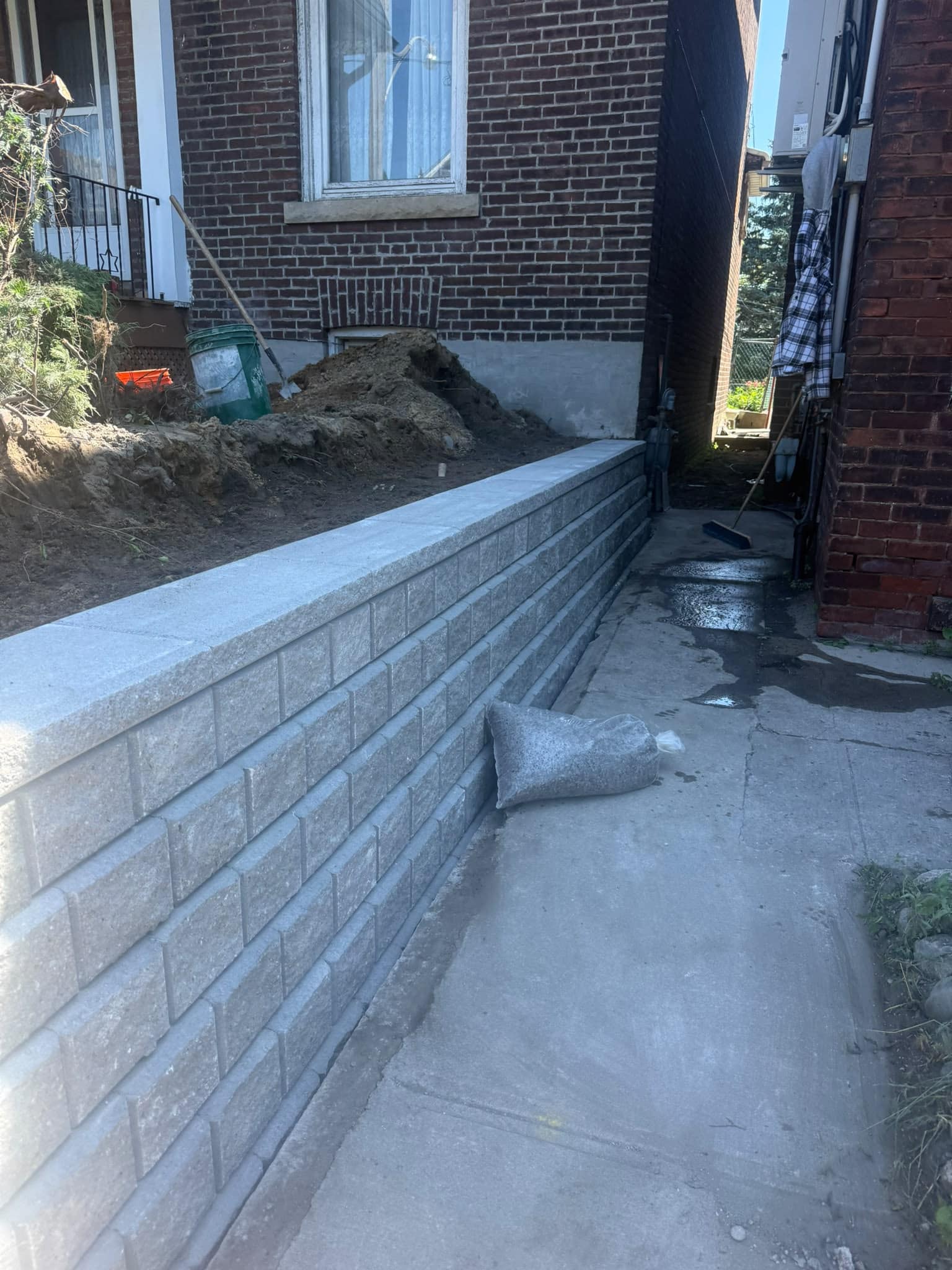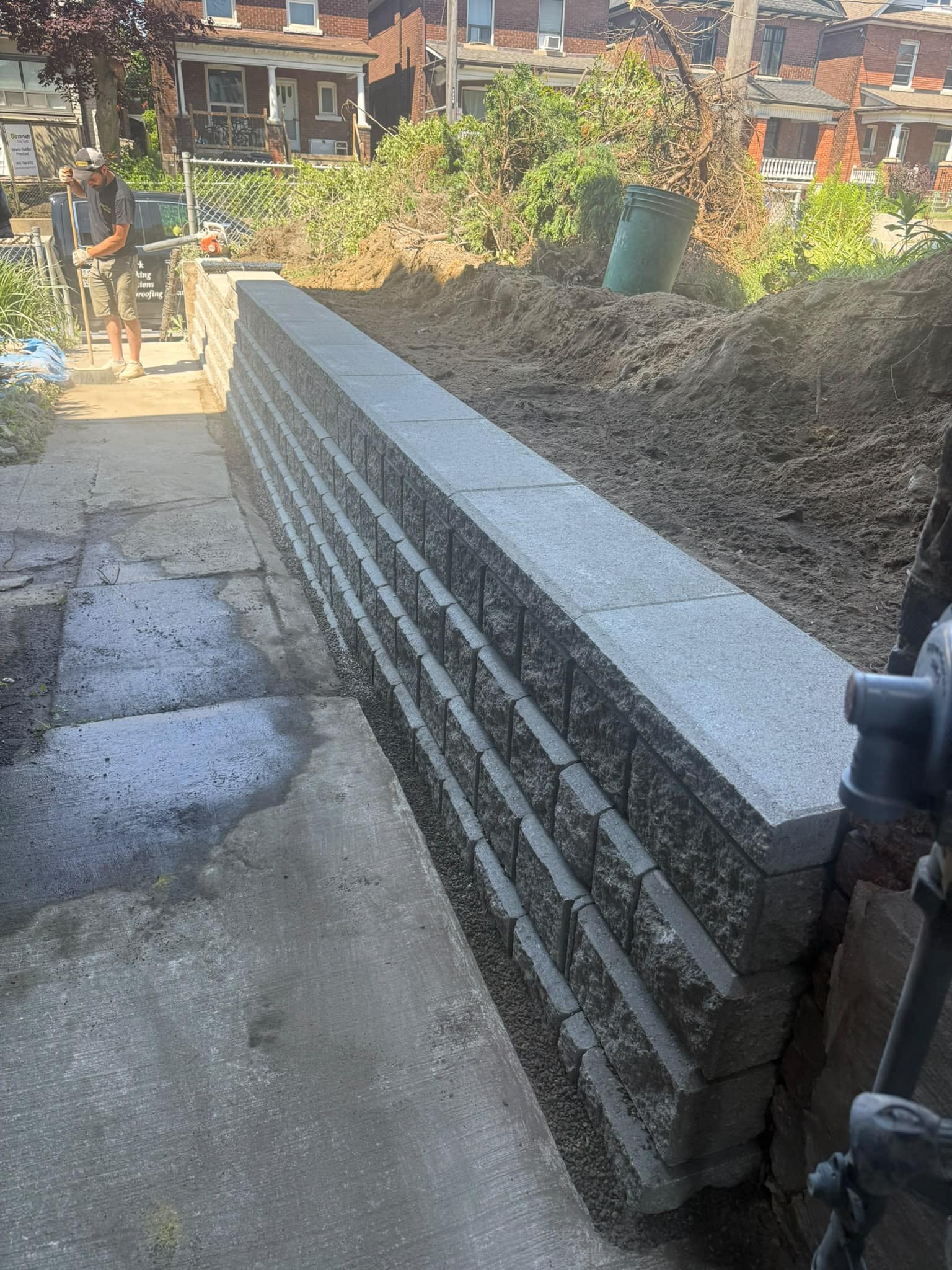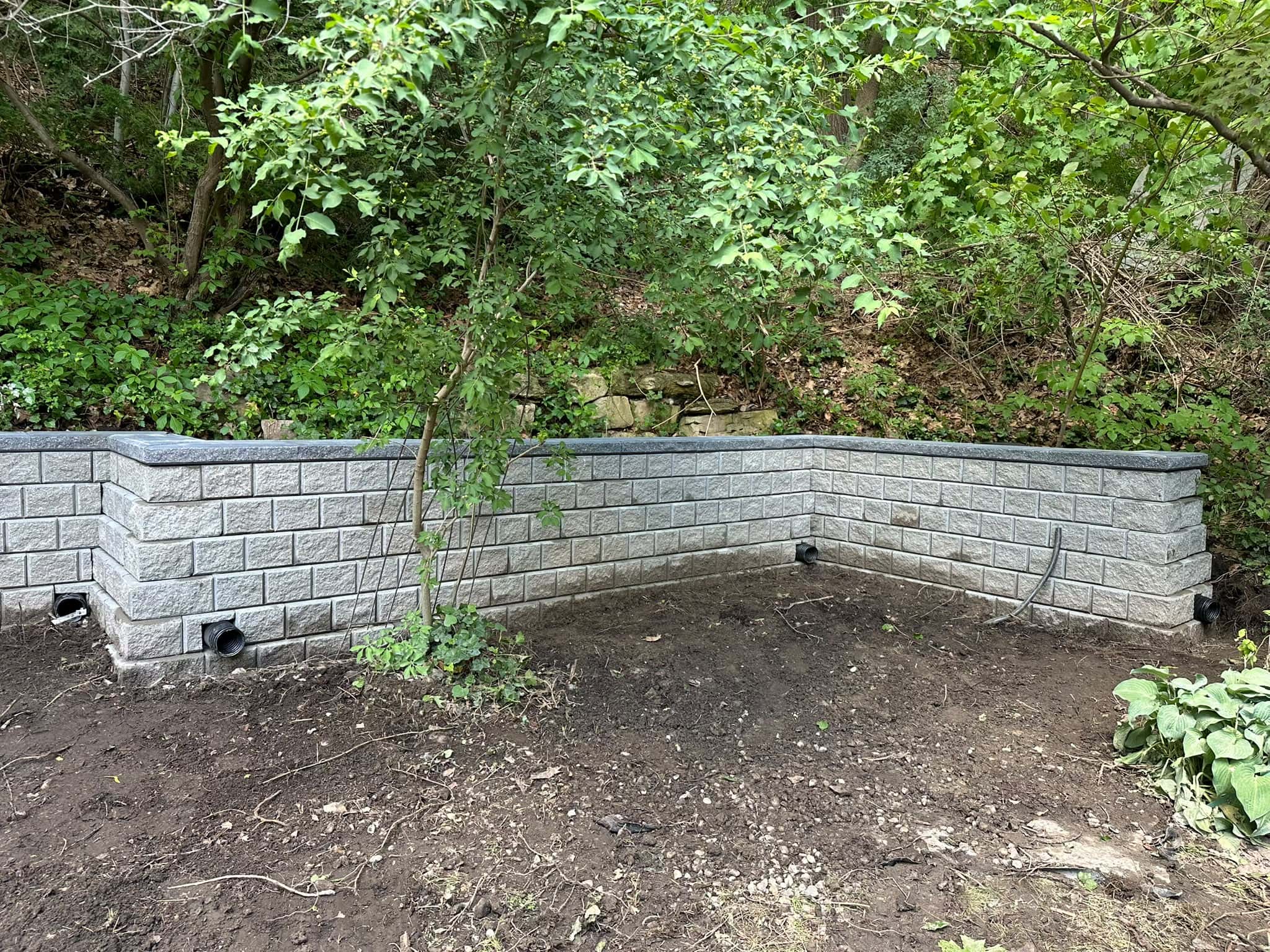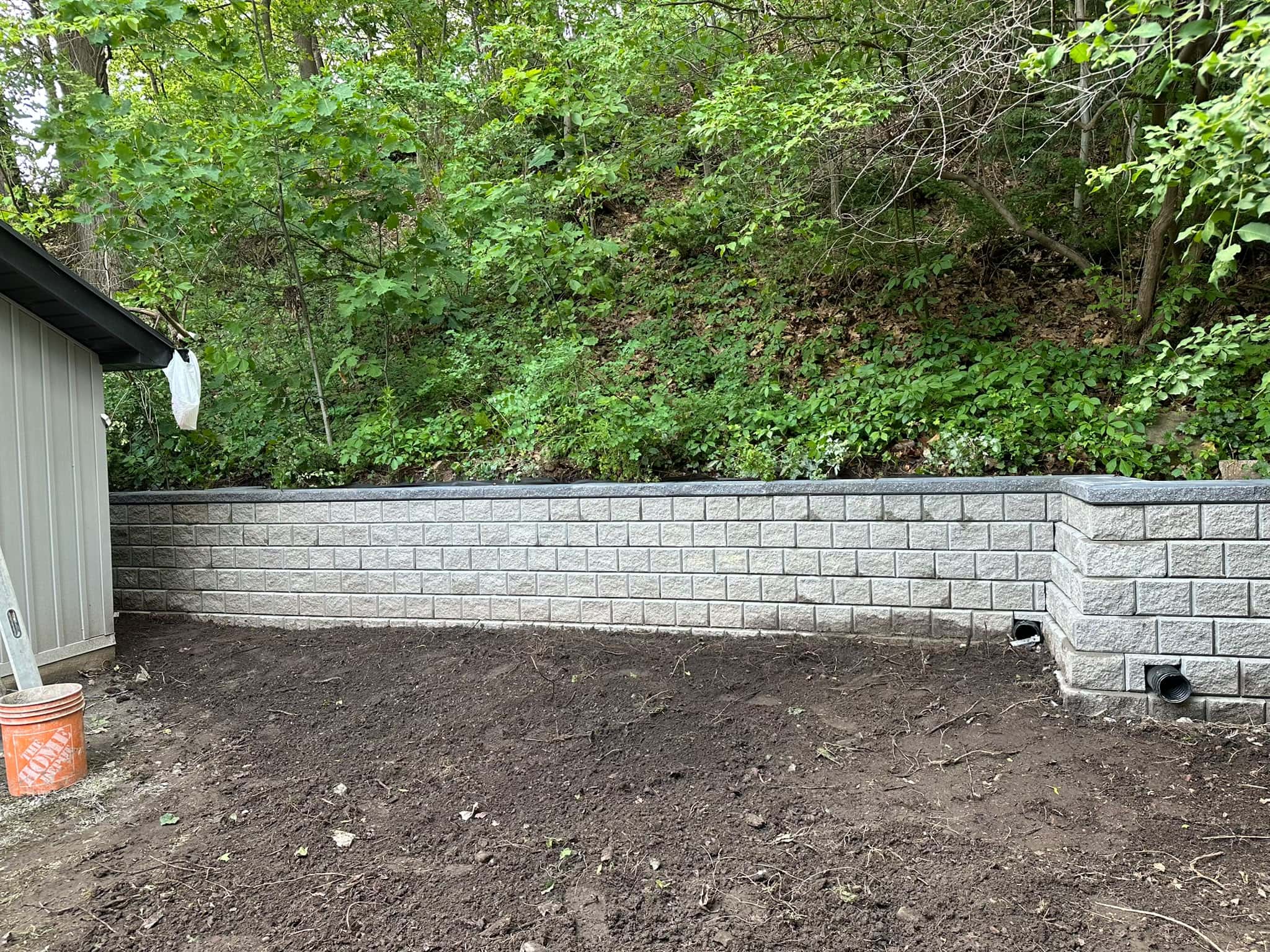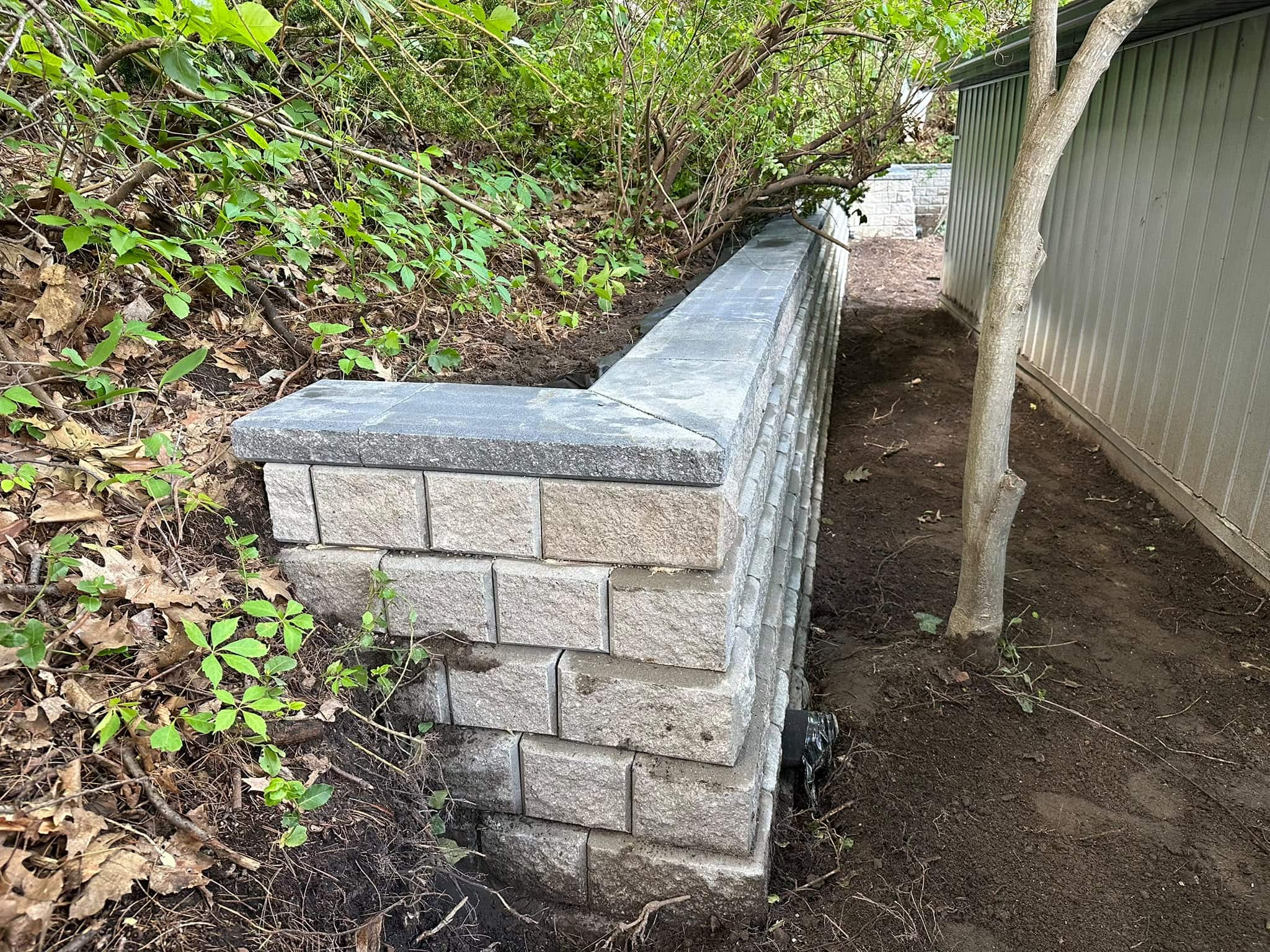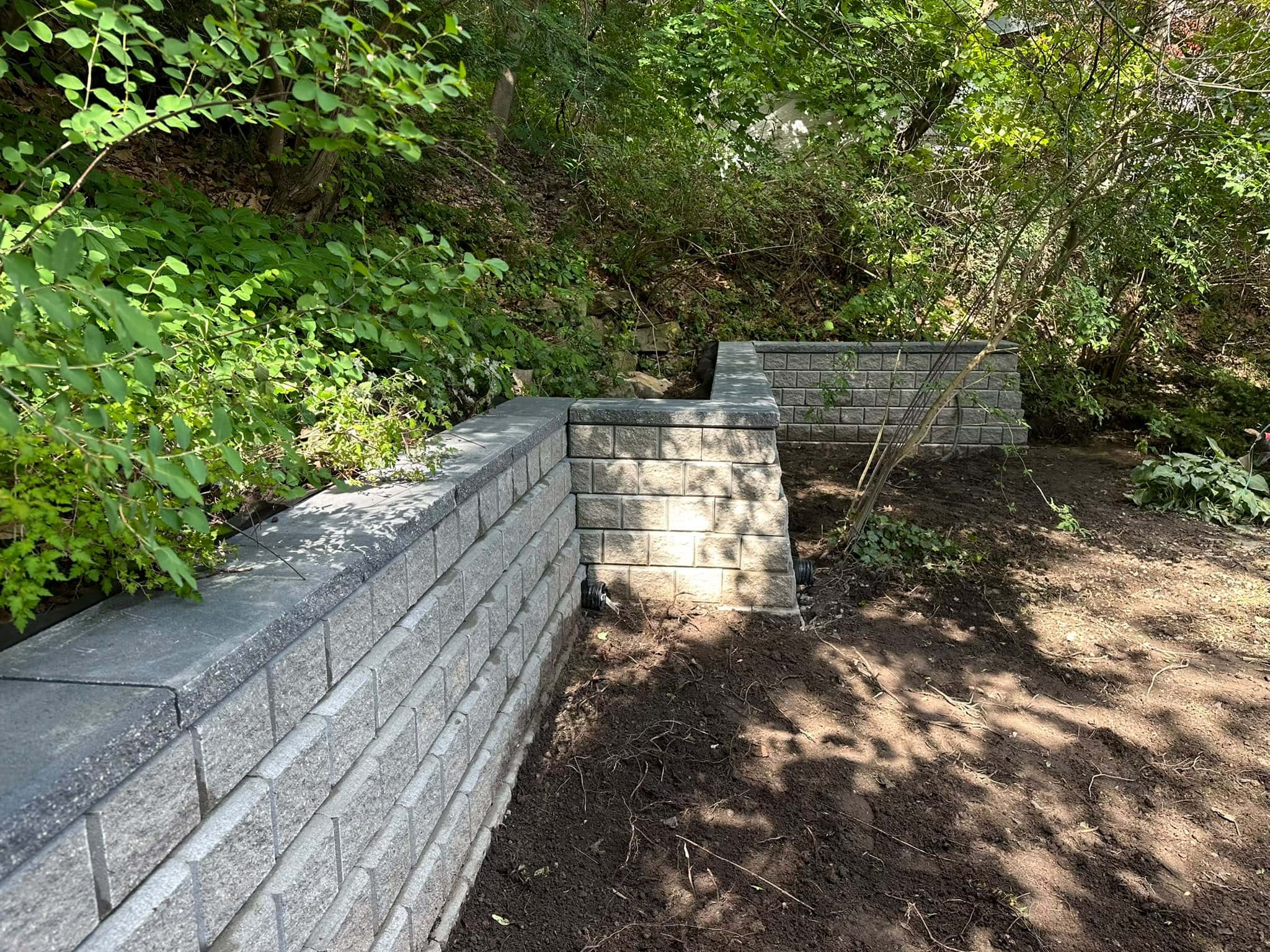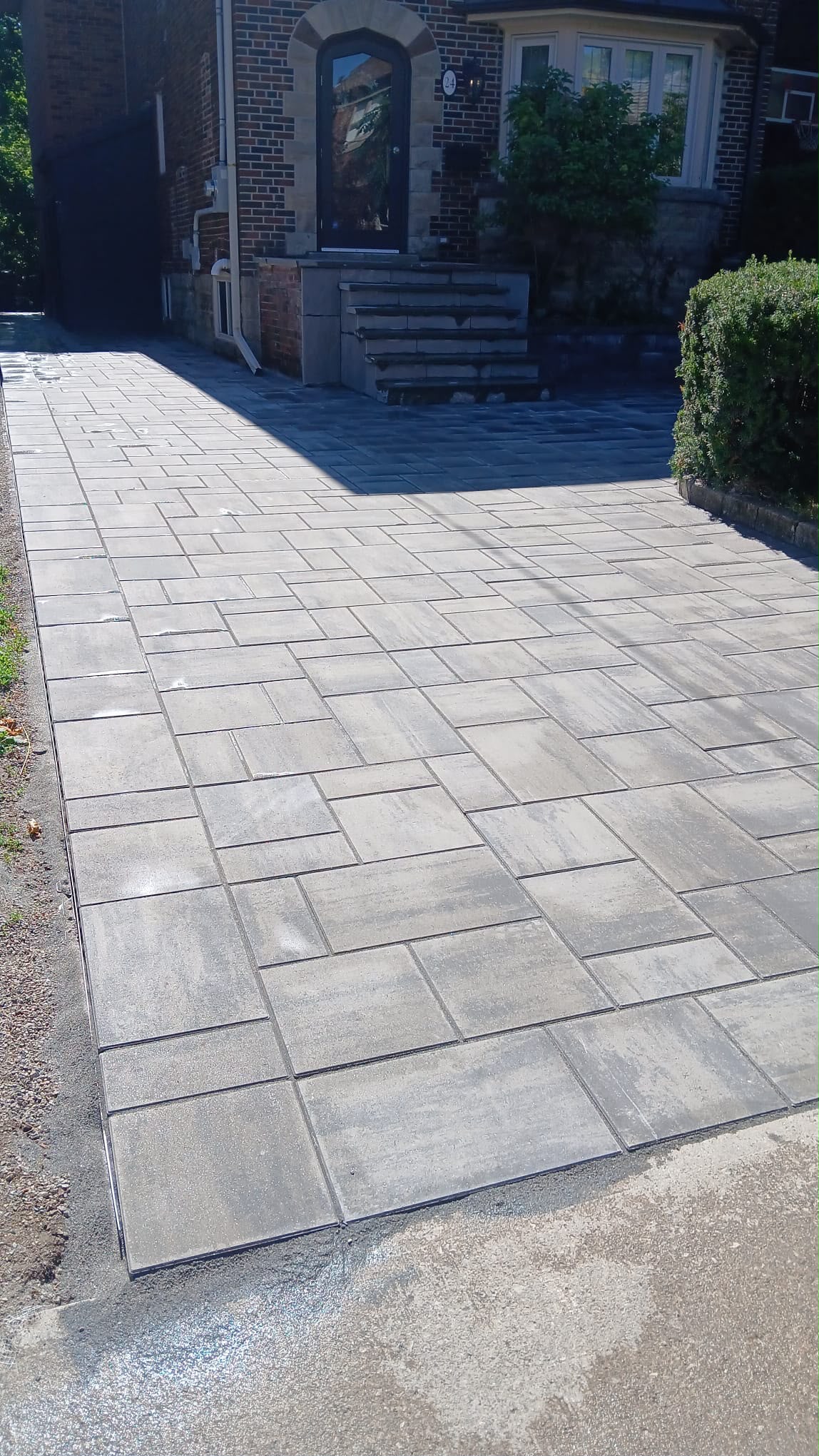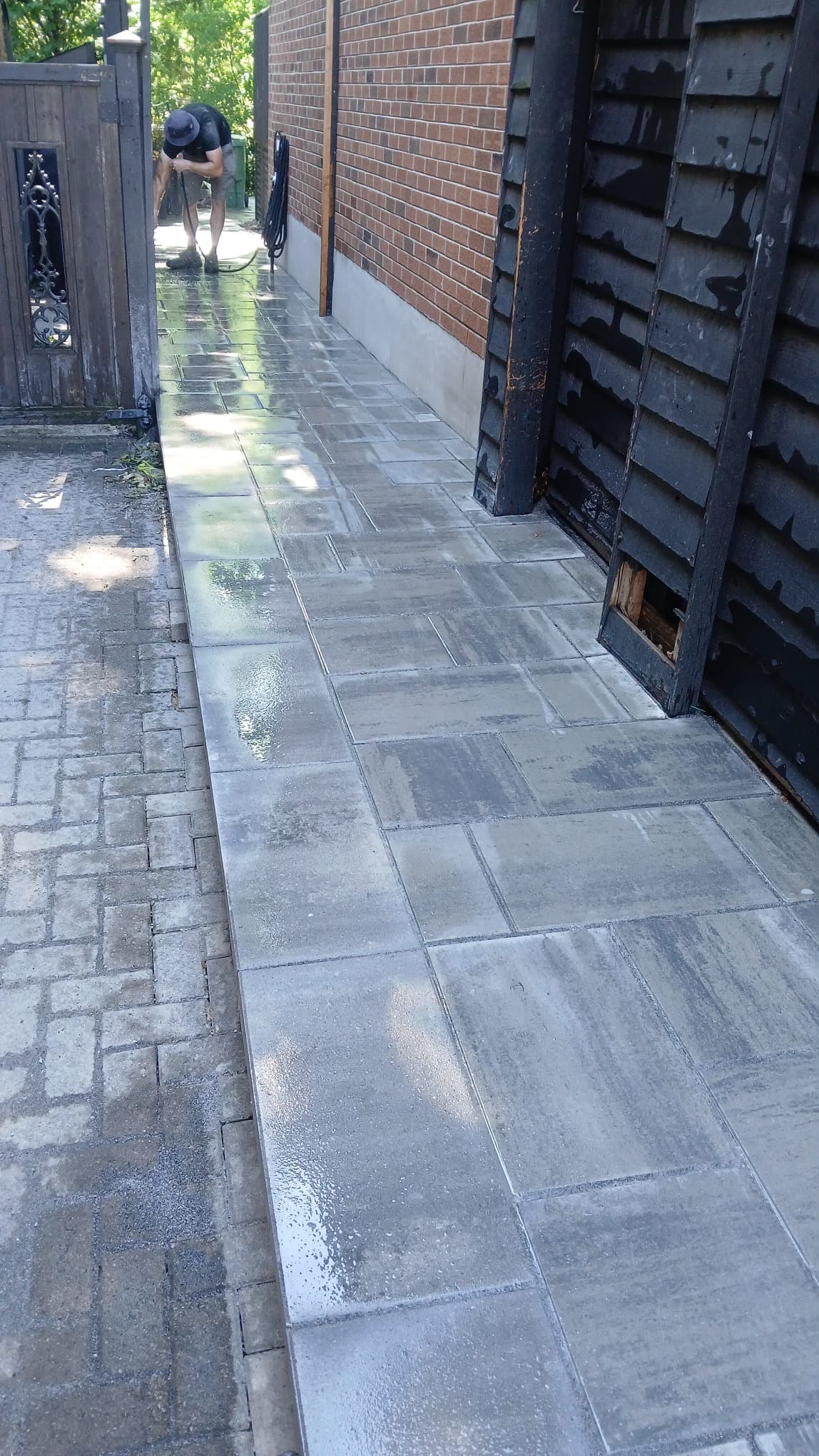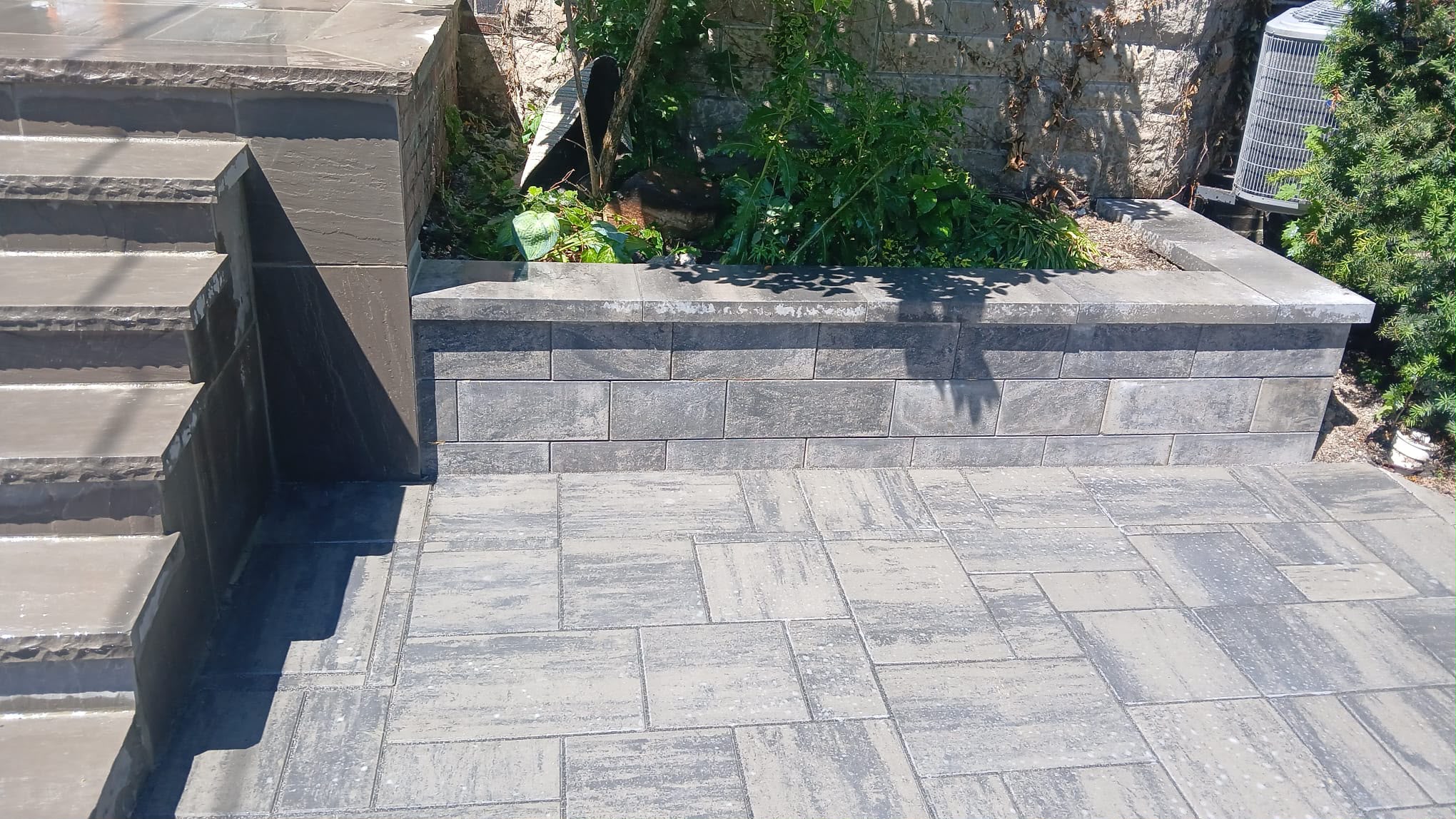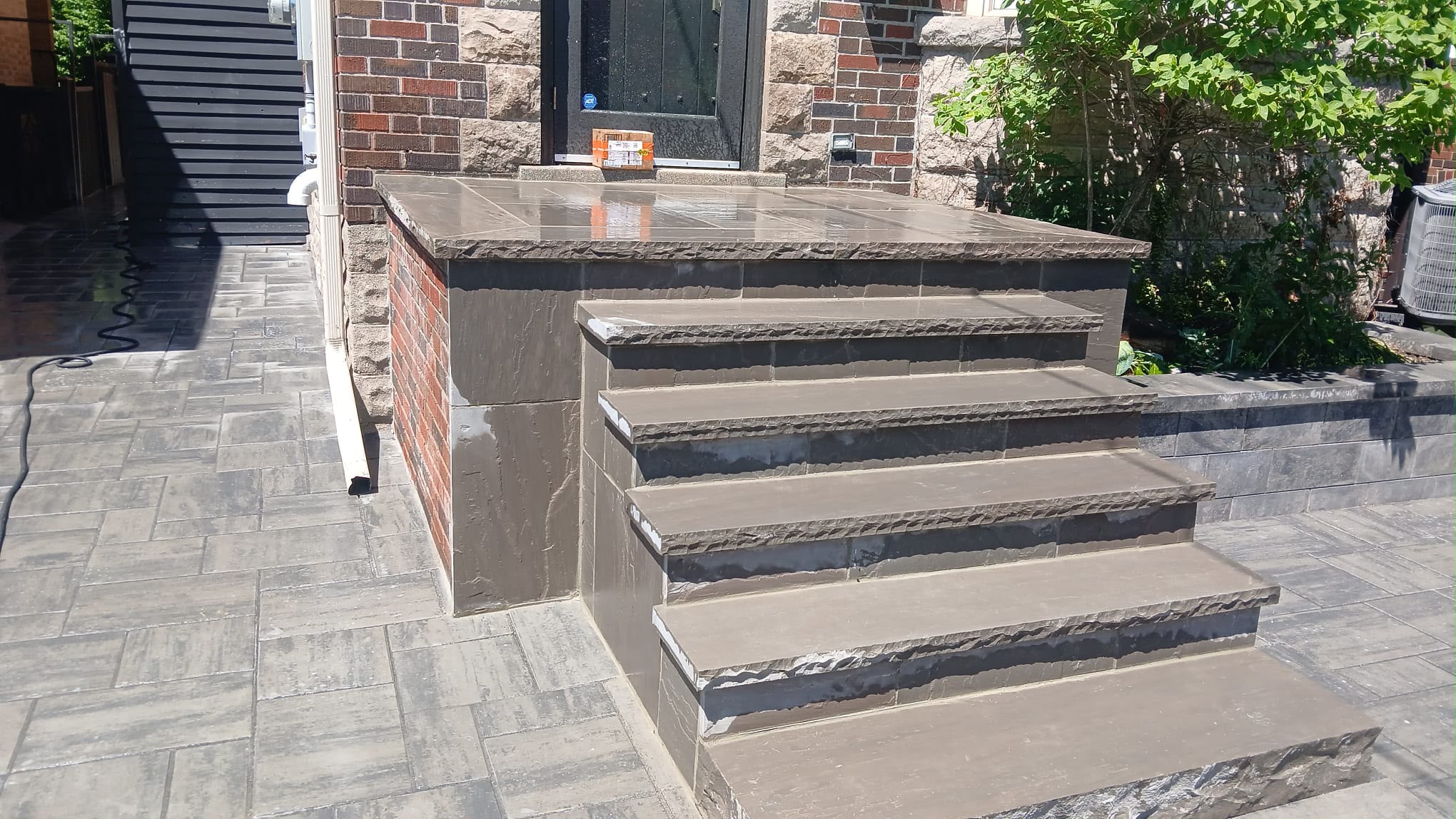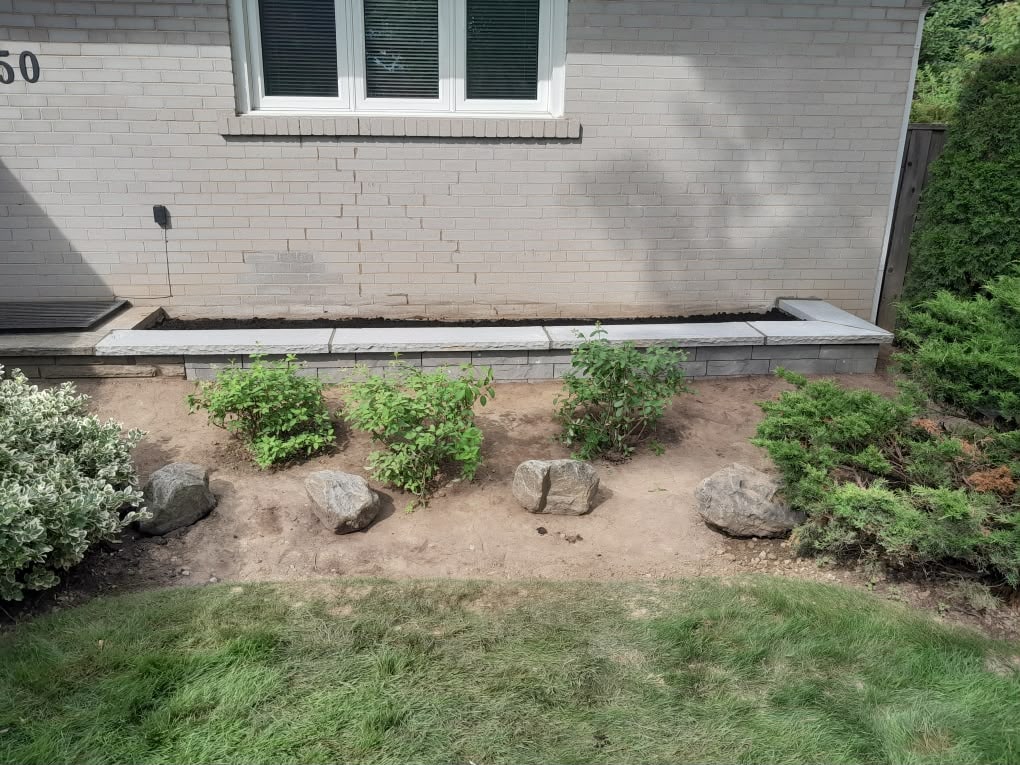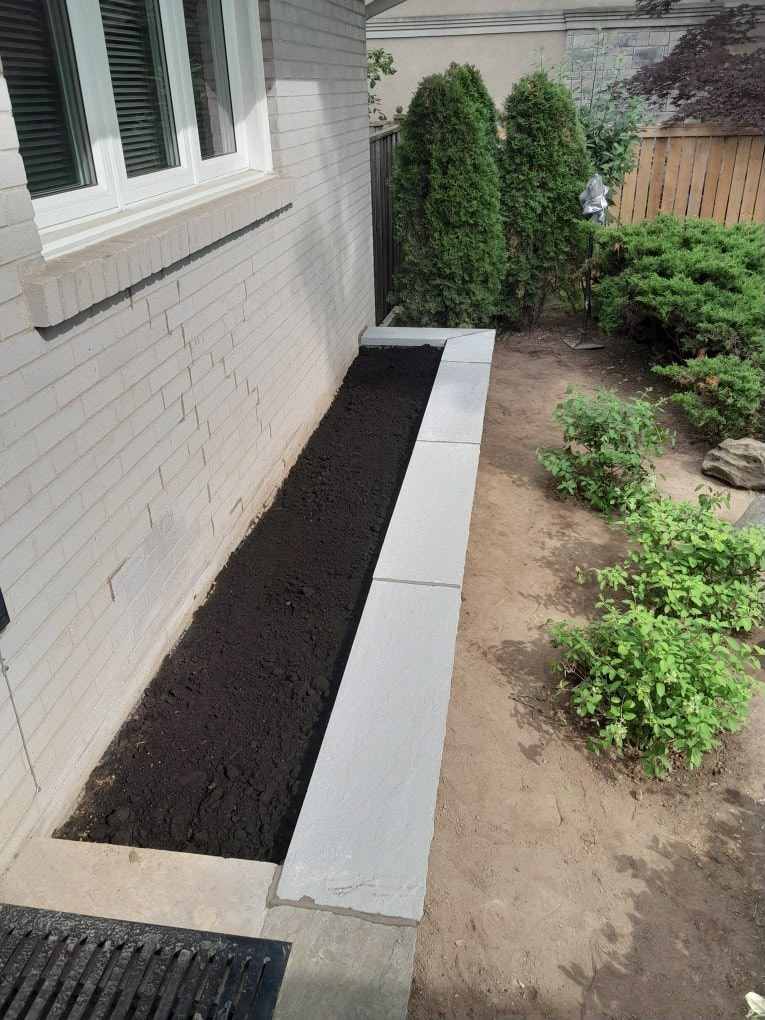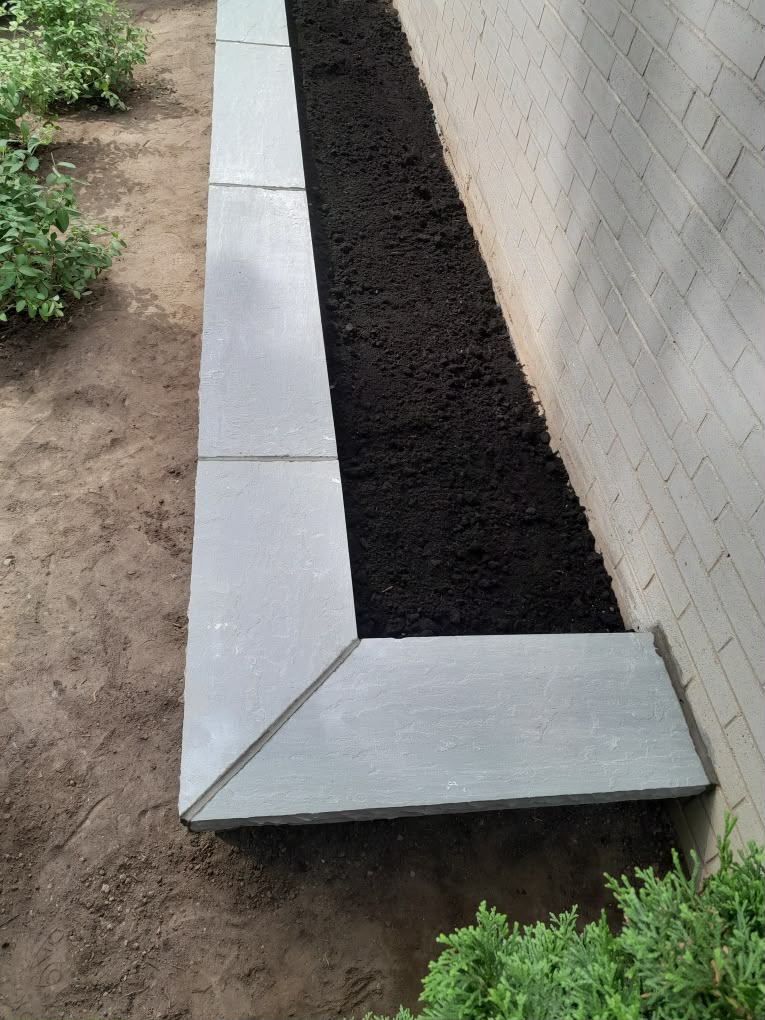

Retaining wall materials should be chosen based on more than appearance. Stone, brick, and concrete block can all create attractive landscape walls, but they do not perform the same way. The right choice depends on wall height, soil pressure, drainage, budget, property style, access, and how the wall will handle Toronto’s rain, snow, ice, and freeze-thaw cycles.
For Toronto and GTA homeowners, retaining walls often solve practical problems. They can hold back soil, create level garden areas, support patios, define walkways, manage slopes, and improve outdoor living space. But a retaining wall is not just a decorative border. When soil is pushing against the wall, drainage and structure matter as much as the finished look.
This guide compares stone, brick, and block retaining walls, explains where each material makes sense, and helps homeowners understand what to consider before building, repairing, or replacing a retaining wall.
What a Retaining Wall Actually Does
A retaining wall holds back soil and helps manage changes in grade. Unlike a simple garden border, a retaining wall must resist pressure from soil, water, frost movement, and nearby surface loads.
The taller the wall, the more important structure becomes. A low decorative wall around a garden bed is very different from a wall holding back a sloped yard, a driveway edge, a patio, or a walkway. If the wall supports soil near a building, entrance, sidewalk, or public area, the design requires even more care.
Homeowners often focus on the front face of the wall because that is what they see. But the hidden parts are just as important. A good retaining wall needs the right base, drainage layer, backfill, wall material, cap, and sometimes reinforcement. If water builds up behind the wall, even strong-looking masonry can lean, crack, bulge, or fail.
If you are planning a wall for a sloped yard or outdoor project, A&A Masonry’s retaining walls Toronto page is a useful starting point for understanding retaining wall services and common landscape uses.
Why Material Choice Matters in Toronto
Material choice matters in Toronto because retaining walls are subject to moisture, freeze-thaw cycles, snow loads, salt exposure, and changing soil conditions. A wall that looks good in summer may struggle if drainage is poor or the material is not suited to repeated winter movement.
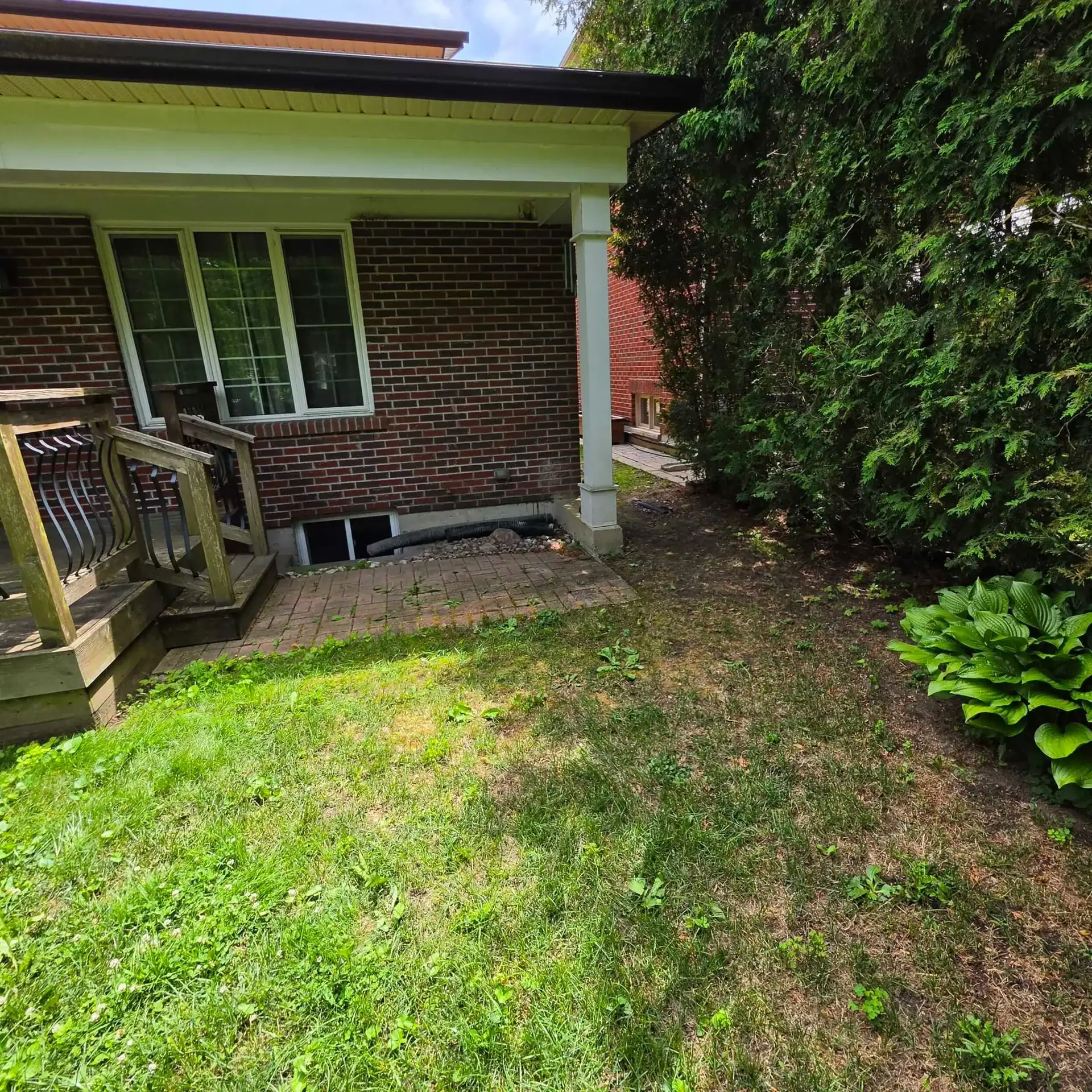
Toronto properties also vary widely. Some homes have narrow side yards, older foundations, small urban gardens, sloped backyards, shared property lines, laneway access, or retaining walls close to driveways and walkways. These details can affect which material is practical.
Stone may fit well with natural landscaping and older homes. Brick may suit traditional architecture when used carefully. Concrete block can be practical for engineered retaining wall systems and clean modern landscapes. None of these options is automatically best. The best material is the one that fits the wall’s purpose, site conditions, and long-term maintenance needs.
Natural Stone Retaining Walls
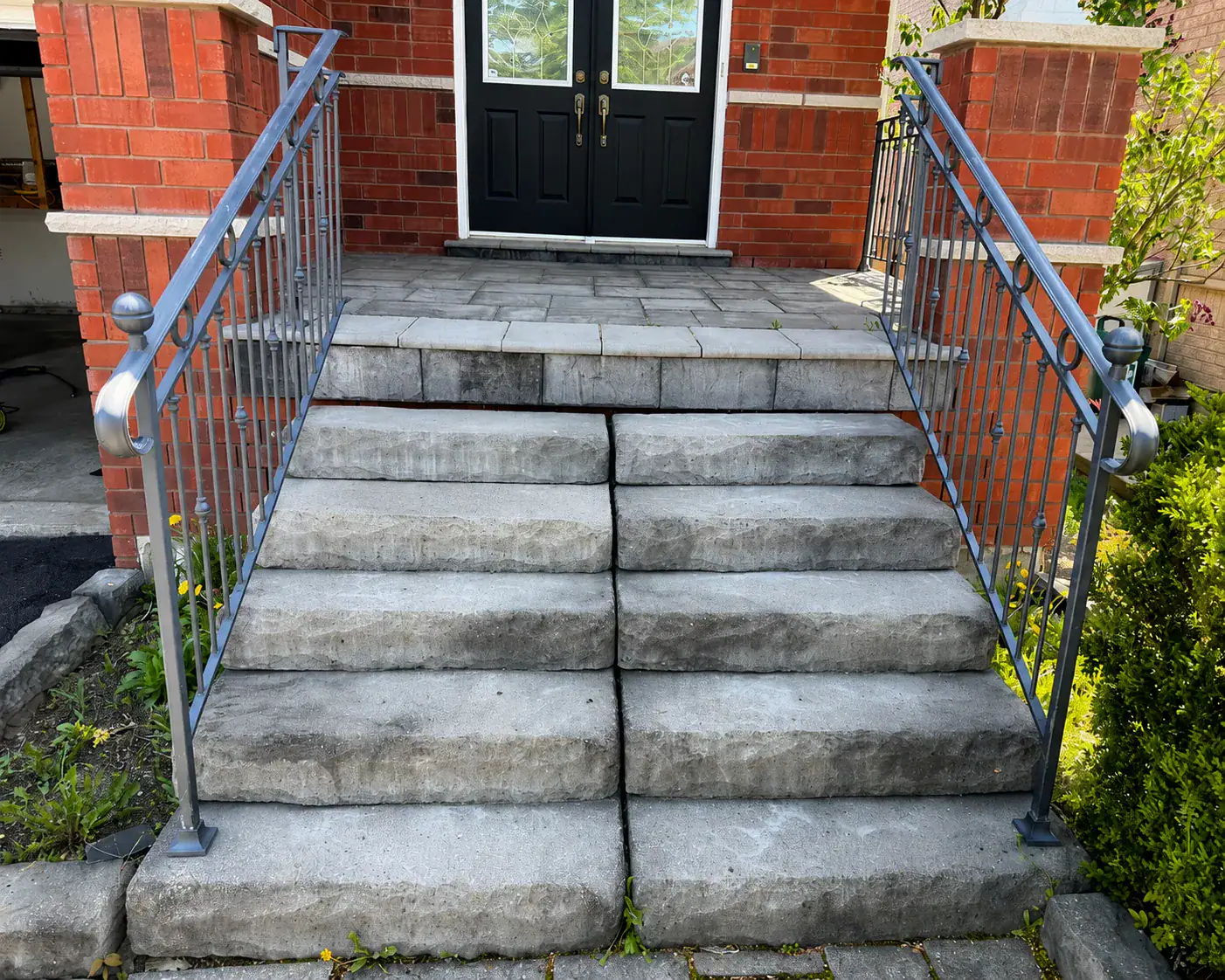
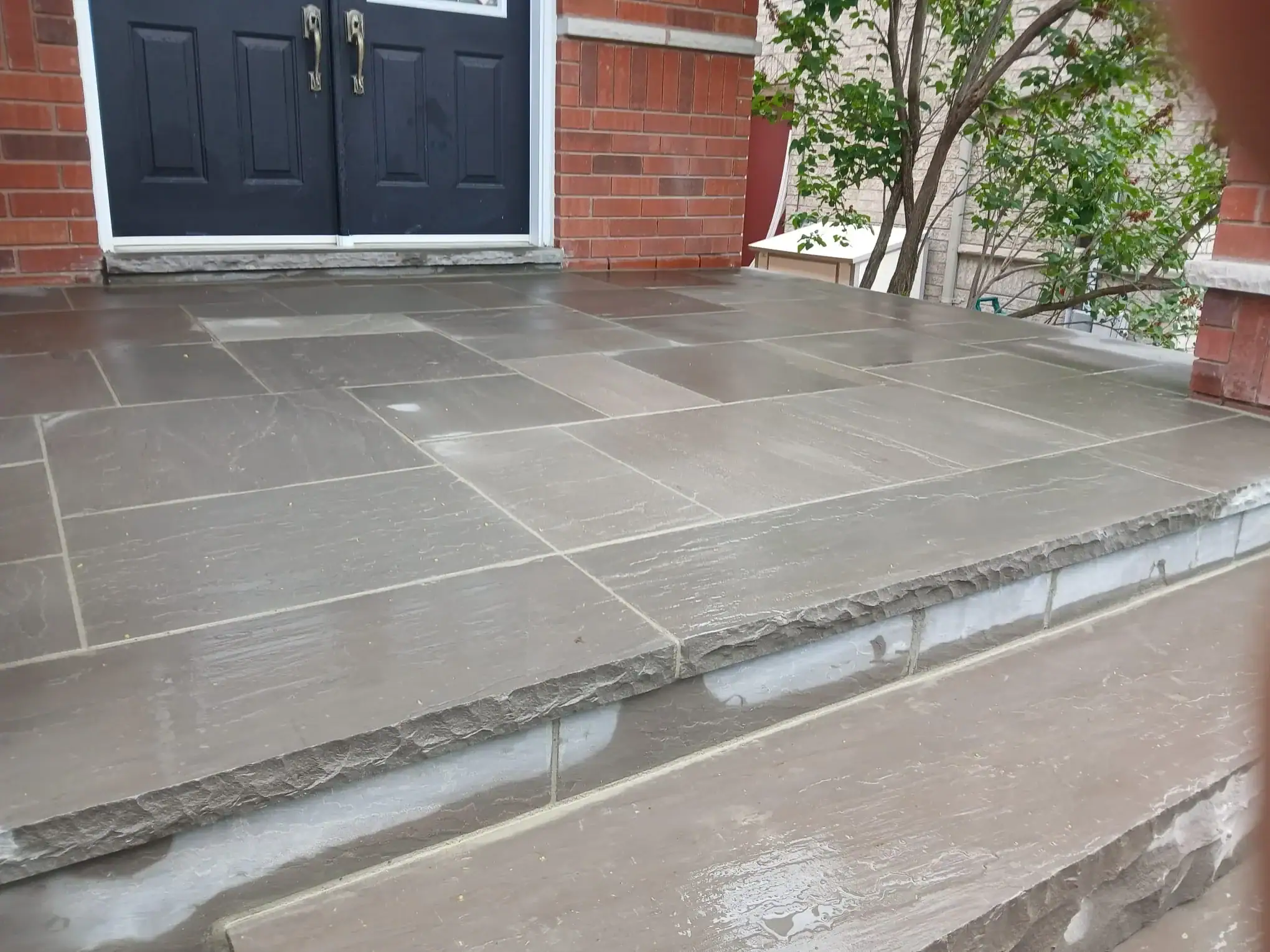
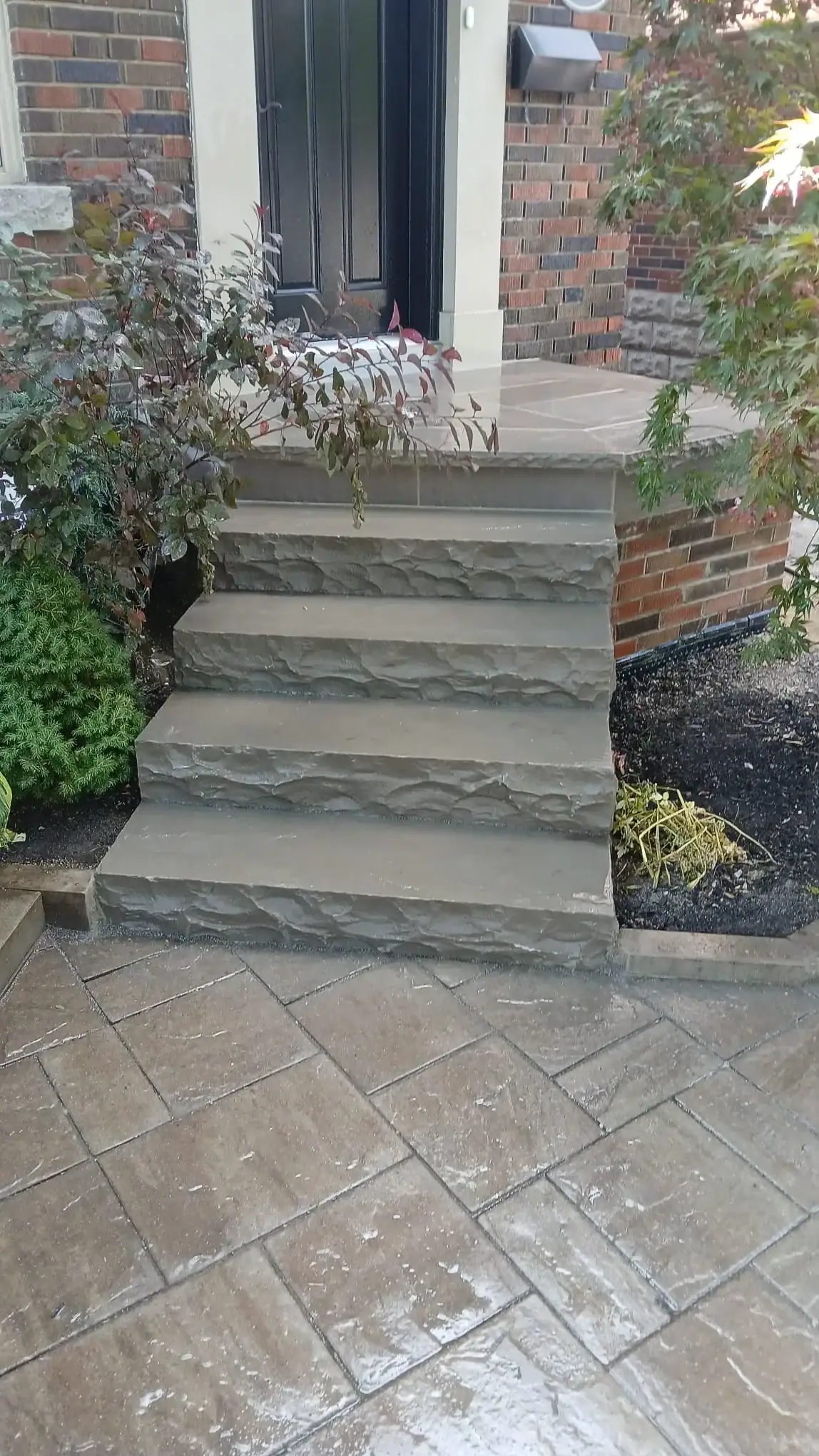
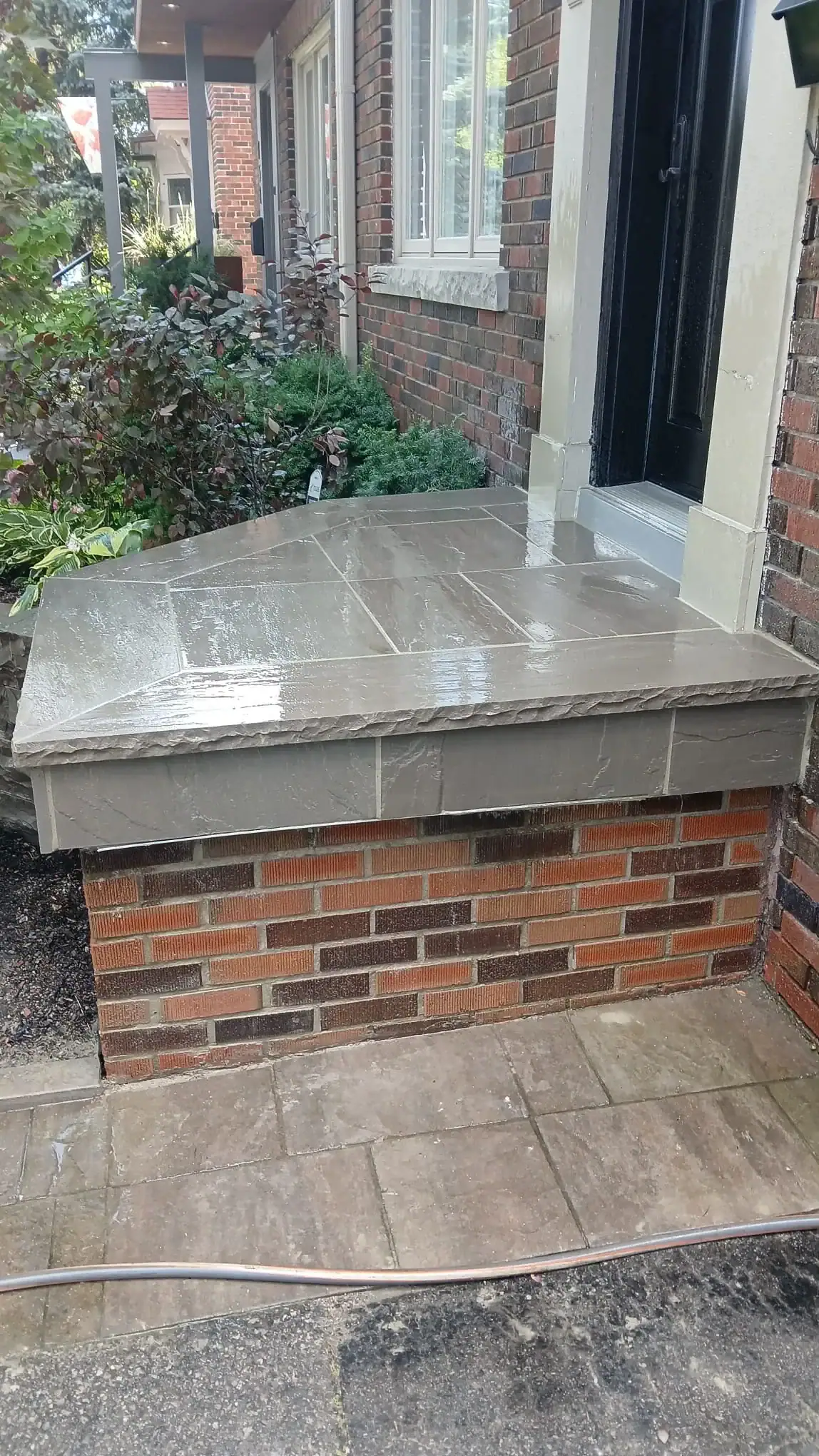
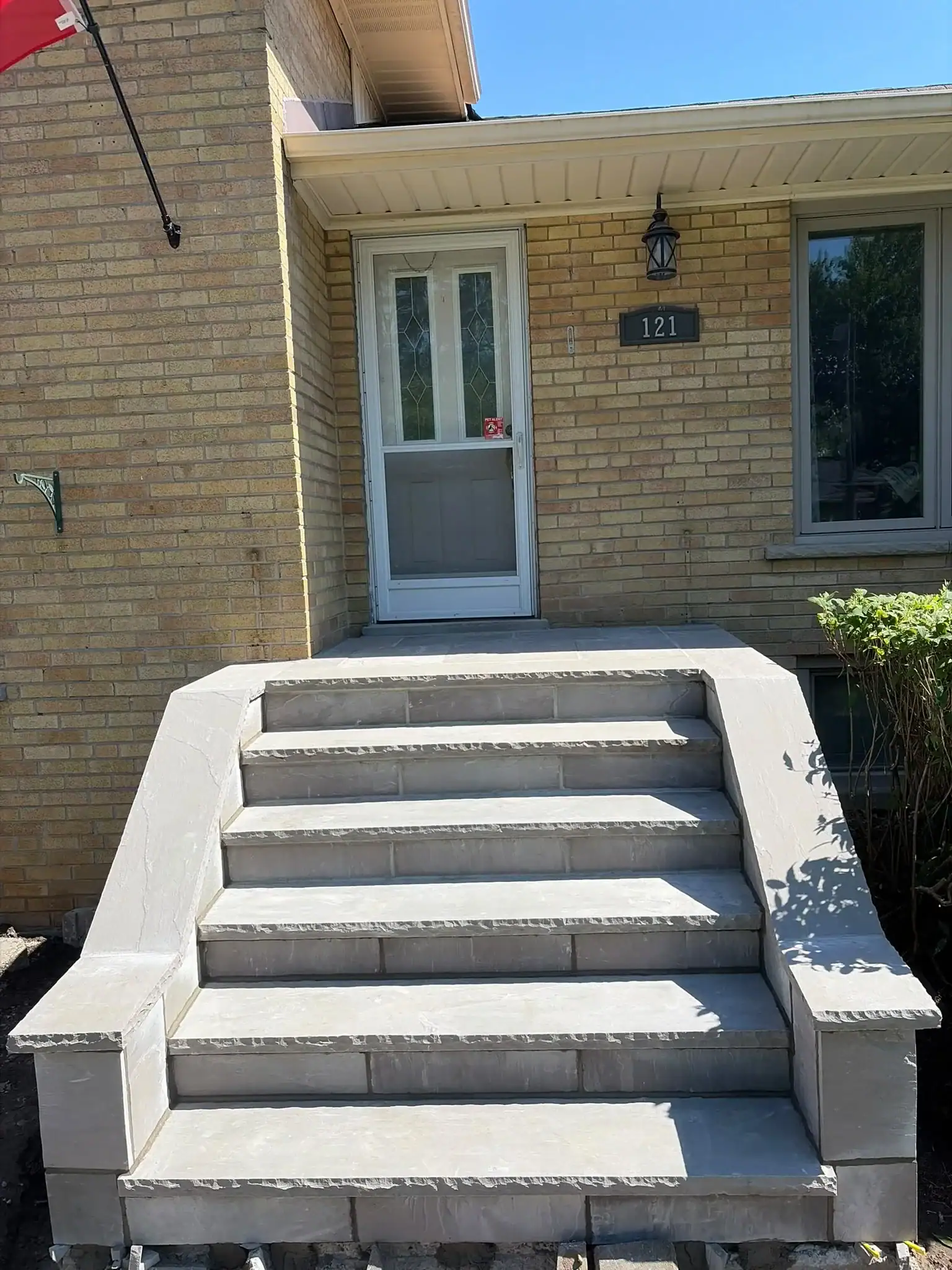
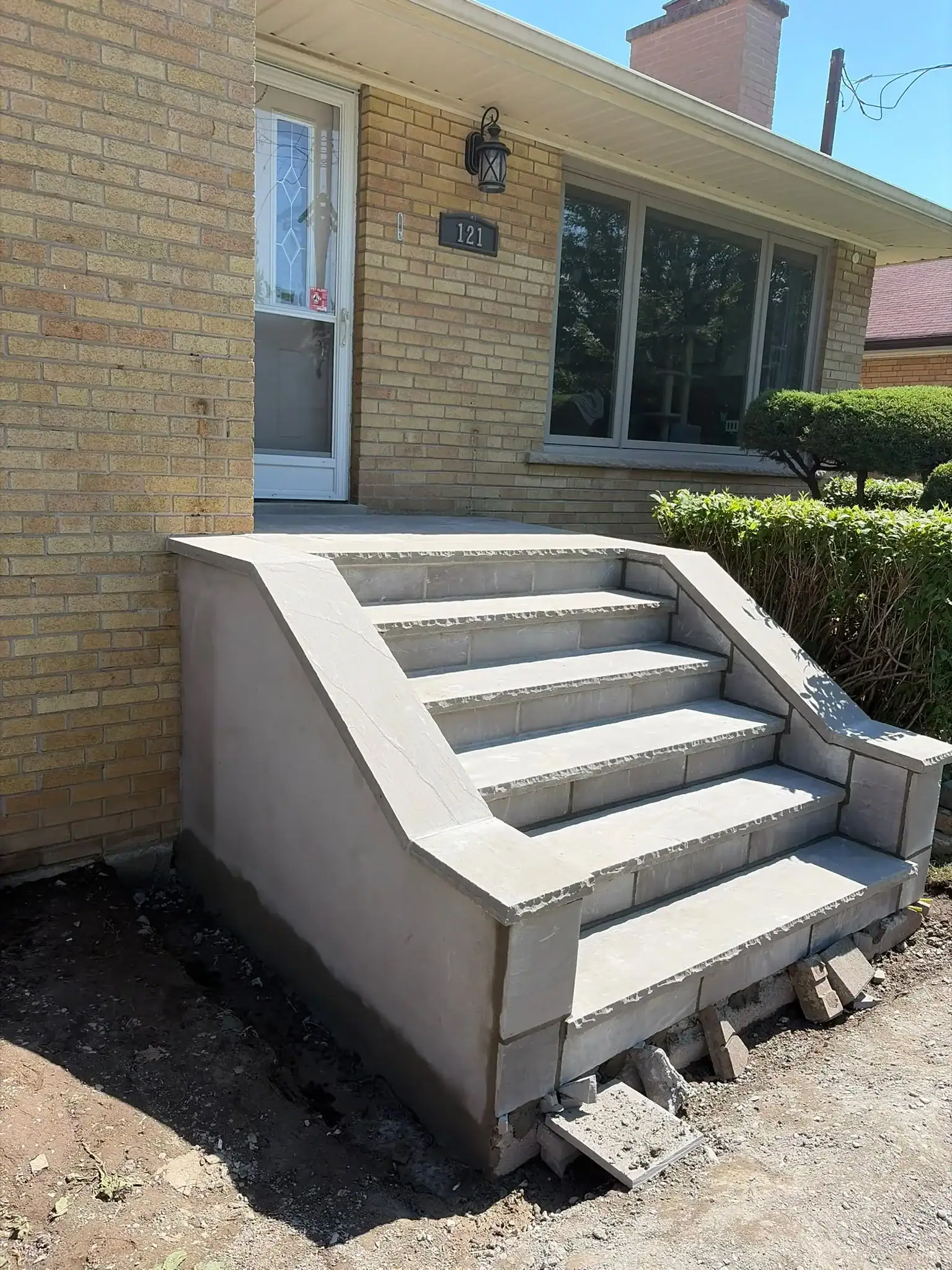
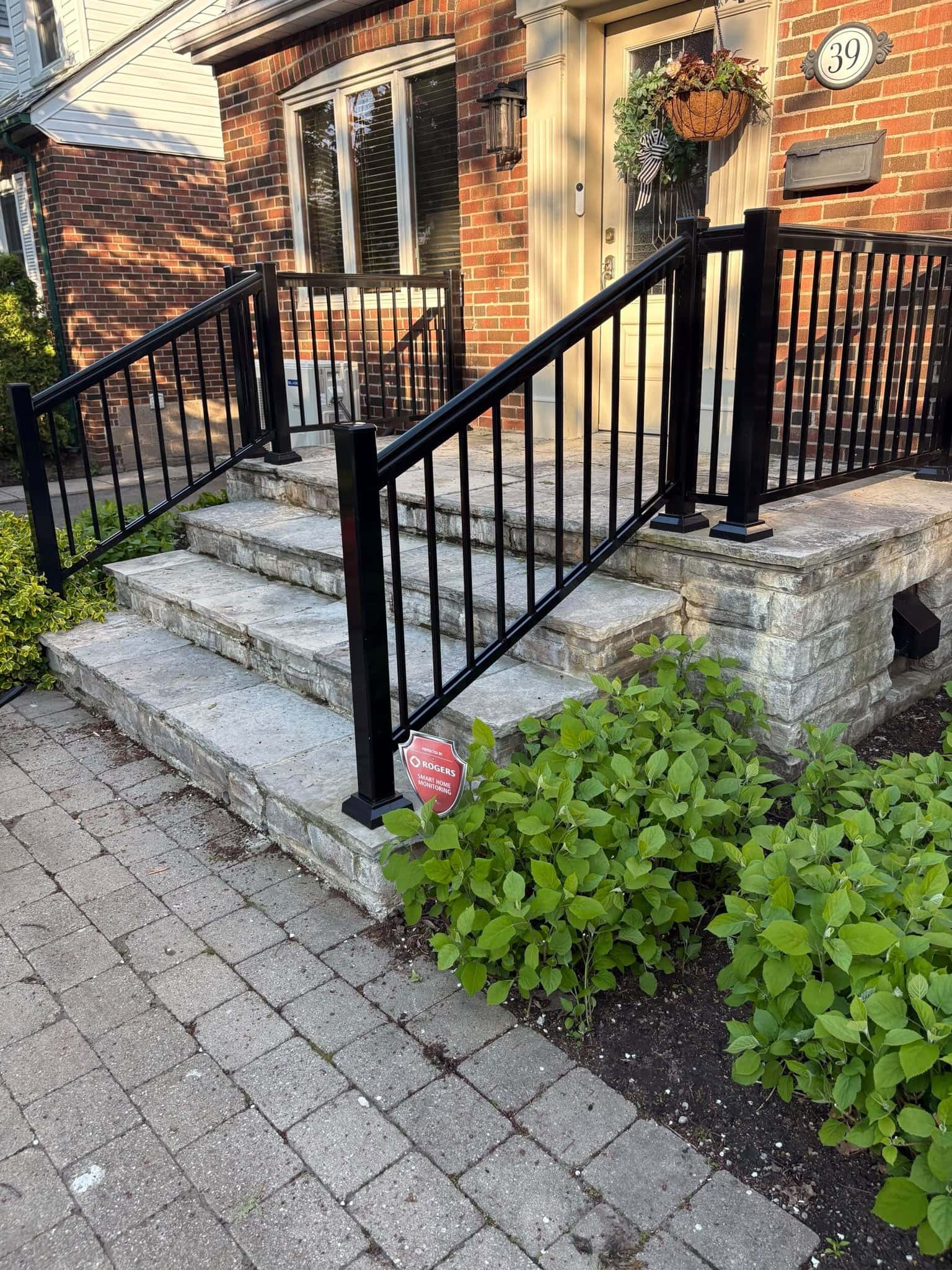
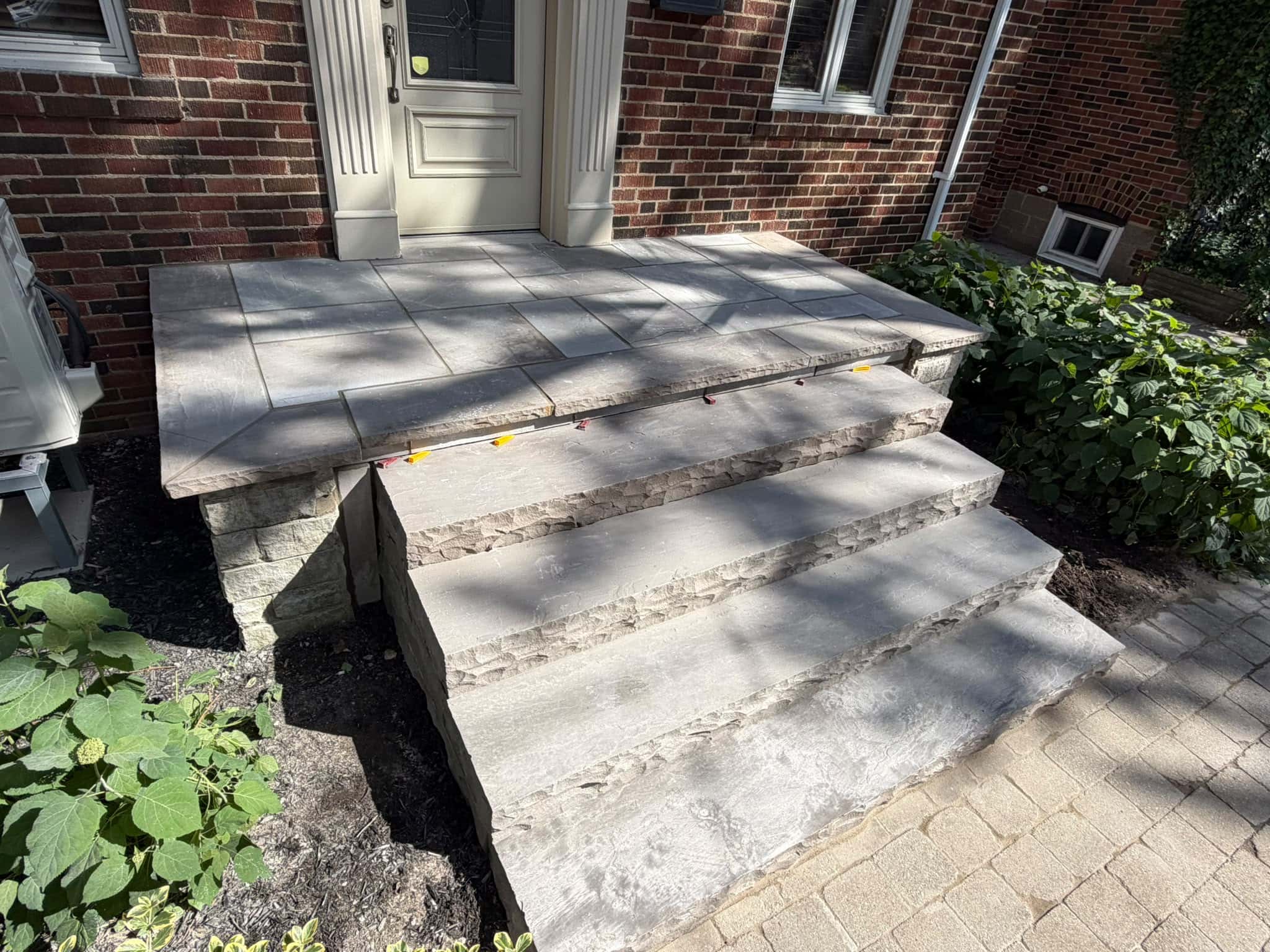
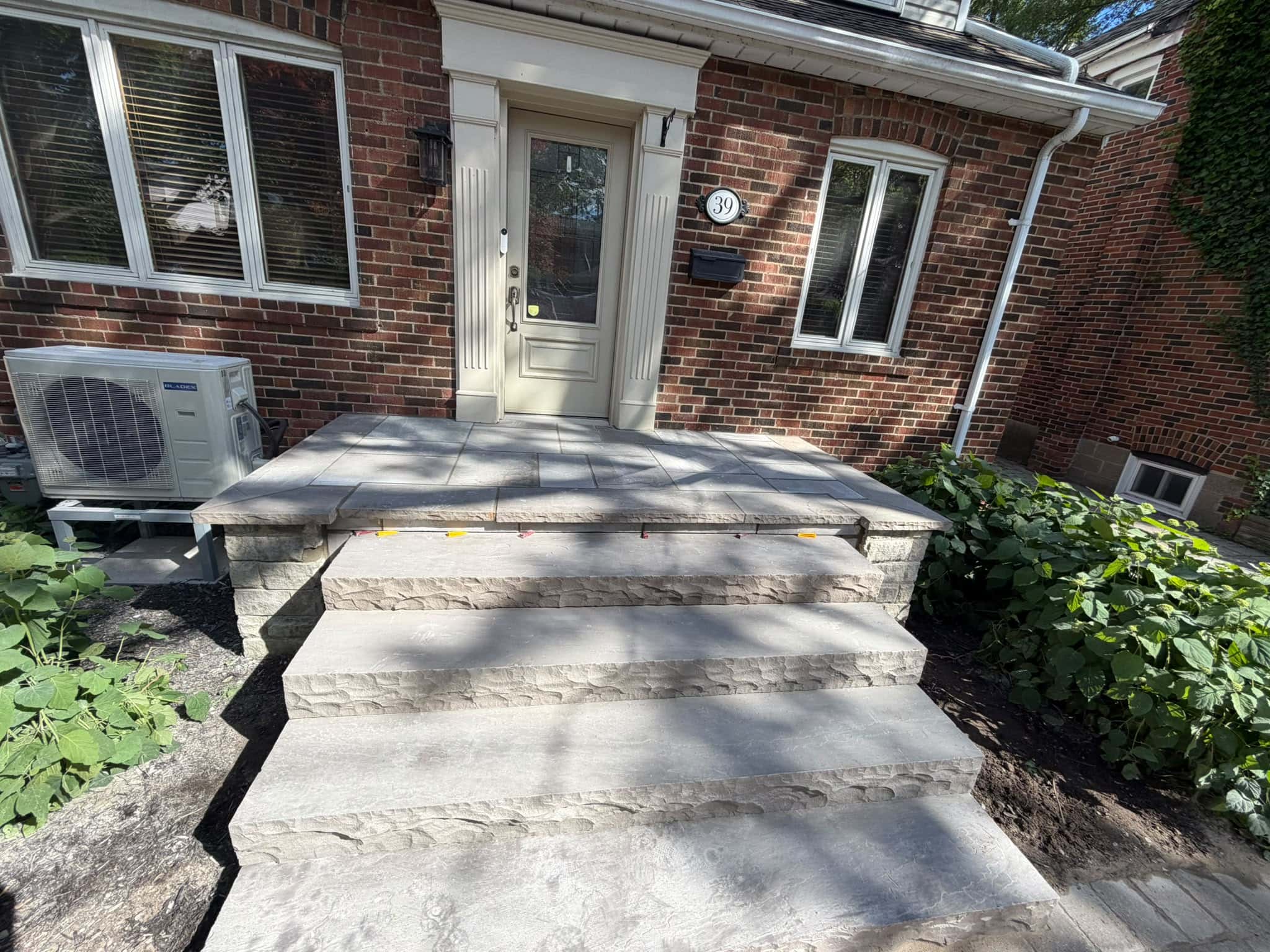
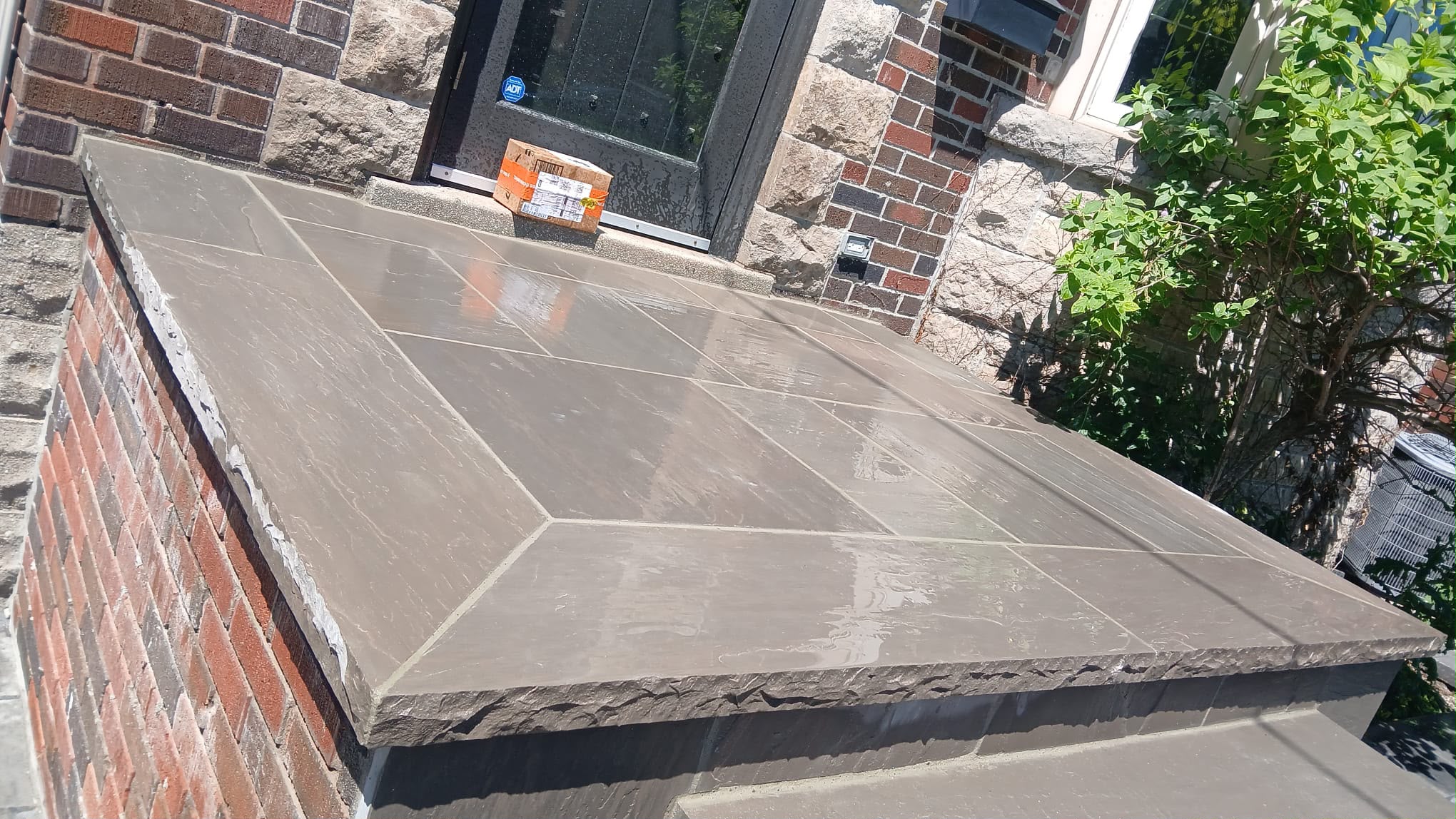
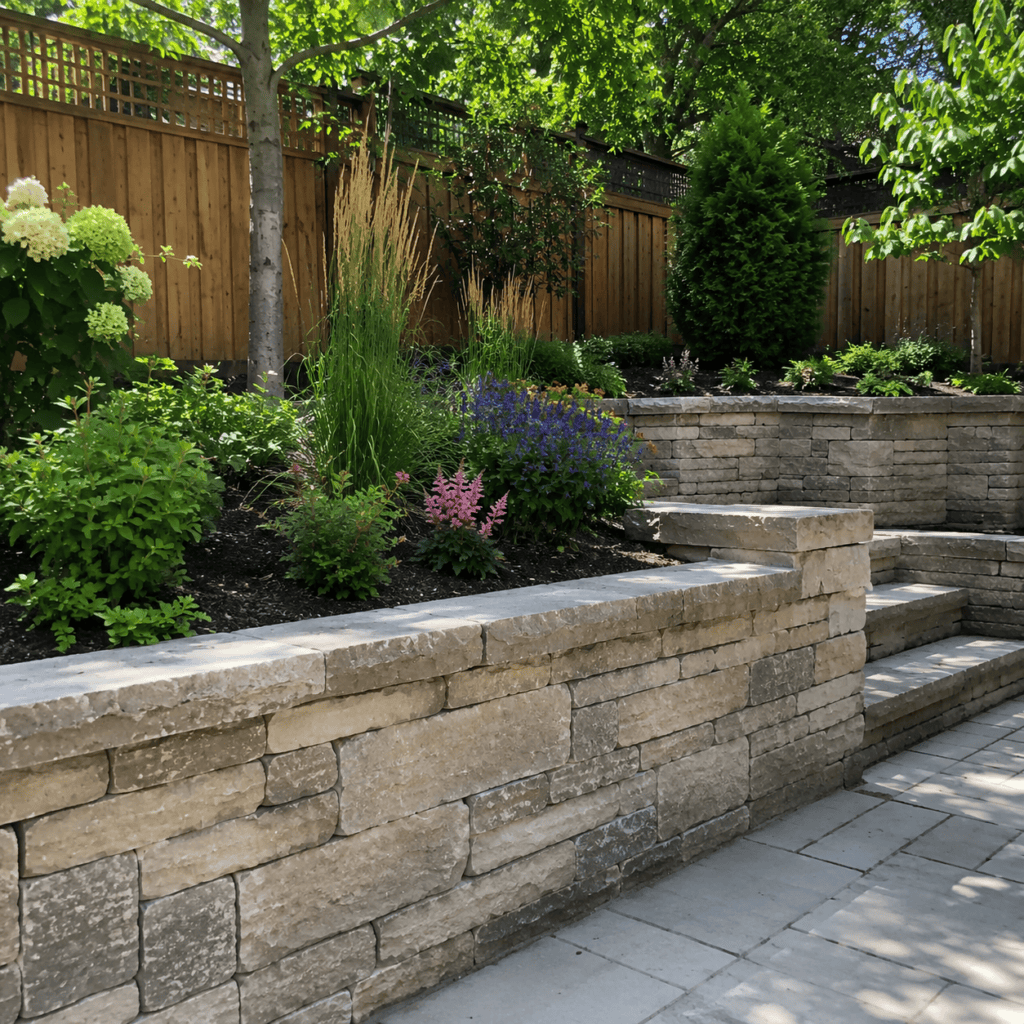
Natural stone retaining walls offer a timeless, organic look and can fit beautifully into Toronto gardens, older properties, and landscape designs that need texture. Stone can look less manufactured than block and often pairs well with brick homes, garden beds, pathways, and outdoor seating areas.
Stone walls can be built in different styles. Some use irregular natural stone for a rustic look. Others use cut or squared stone for a cleaner appearance. Dry-stacked stone, mortared stone, and stone-faced wall systems each have different uses and requirements.
Stone is often chosen when appearance and character are important. It can make a retaining wall feel like part of the landscape instead of a separate structure. It also works well near natural gardens, mature trees, older Toronto homes, and outdoor spaces where a softer, less uniform finish is preferred.
A&A Masonry’s stone masonry Toronto page gives helpful context for homeowners considering natural stone walls, steps, outdoor features, and stone masonry details.
Pros of Stone Retaining Walls
Stone retaining walls are popular because they provide natural texture, long-term curb appeal, and a strong visual connection to landscaping. A well-planned stone wall can feel established, especially beside garden beds, patios, and older masonry homes.
- Natural appearance: Stone blends well with gardens, trees, and outdoor features.
- Good character: Each stone has variation, which can make the wall feel unique.
- Strong curb appeal: Stone can add a high-quality look to entrances, yards, and outdoor living areas.
- Useful for custom features: Stone can work for garden walls, steps, seat walls, and decorative retaining areas.
- Fits many older homes: Natural stone often works well with traditional Toronto brick and mature landscaping.
Stone is a strong choice when the wall is part of a visible landscape feature, and the homeowner wants a natural masonry look.
Cons of Stone Retaining Walls
Stone retaining walls can be more labour-intensive and may require more careful fitting than modular block systems. Natural stone varies in shape, size, and thickness, so layout and craftsmanship matter.
- Higher labour needs: Irregular stone often takes more time to fit and finish properly.
- More variation: Natural variation is attractive, but it can make matching or repair more detailed.
- Drainage still matters: Stone can still fail if water pressure builds behind the wall.
- Not always ideal for every structural need: Higher or more load-bearing walls may need engineered design.
- Access can affect cost: Heavy stone may be harder to move into tight Toronto side yards.
Stone should not be chosen only because it looks strong. The wall still needs proper base preparation, drainage, backfill, and support.
Brick Retaining Walls
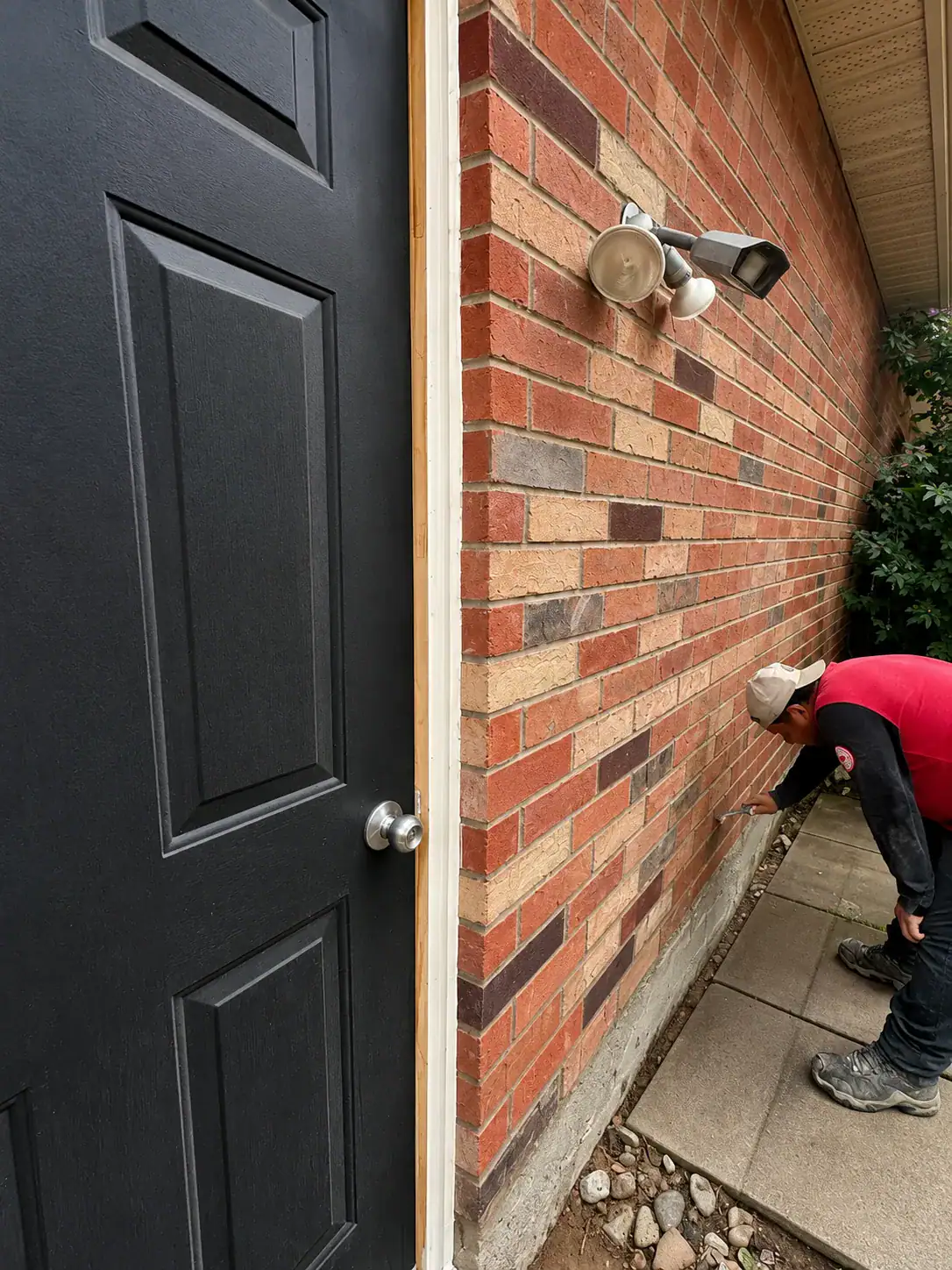
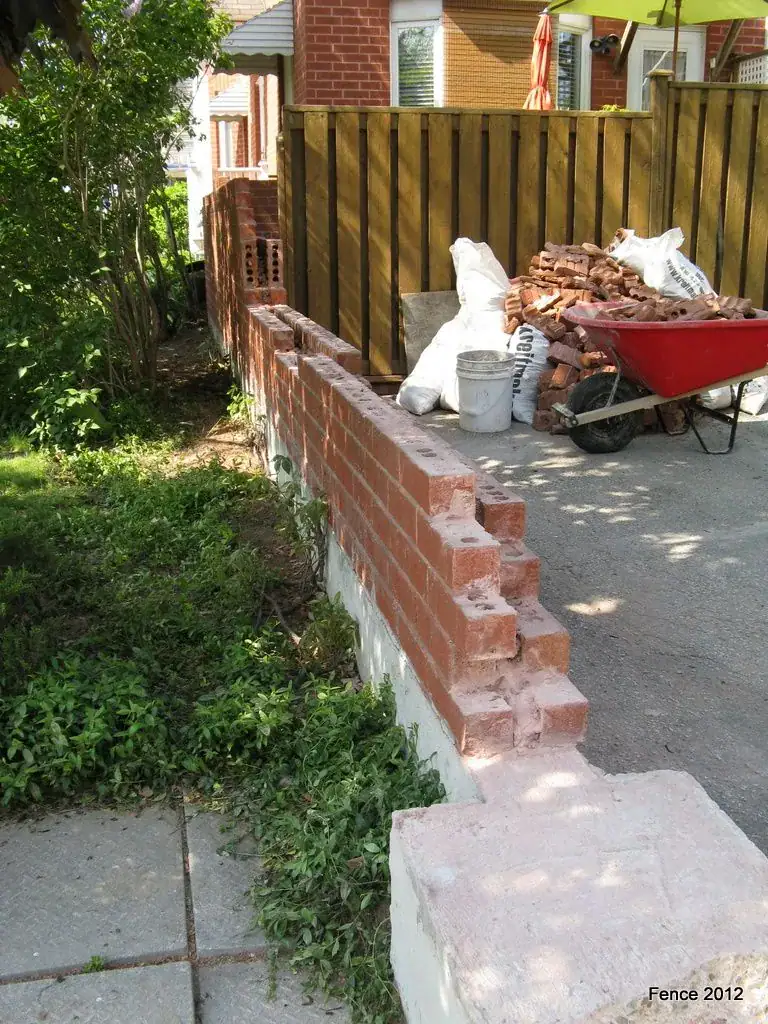
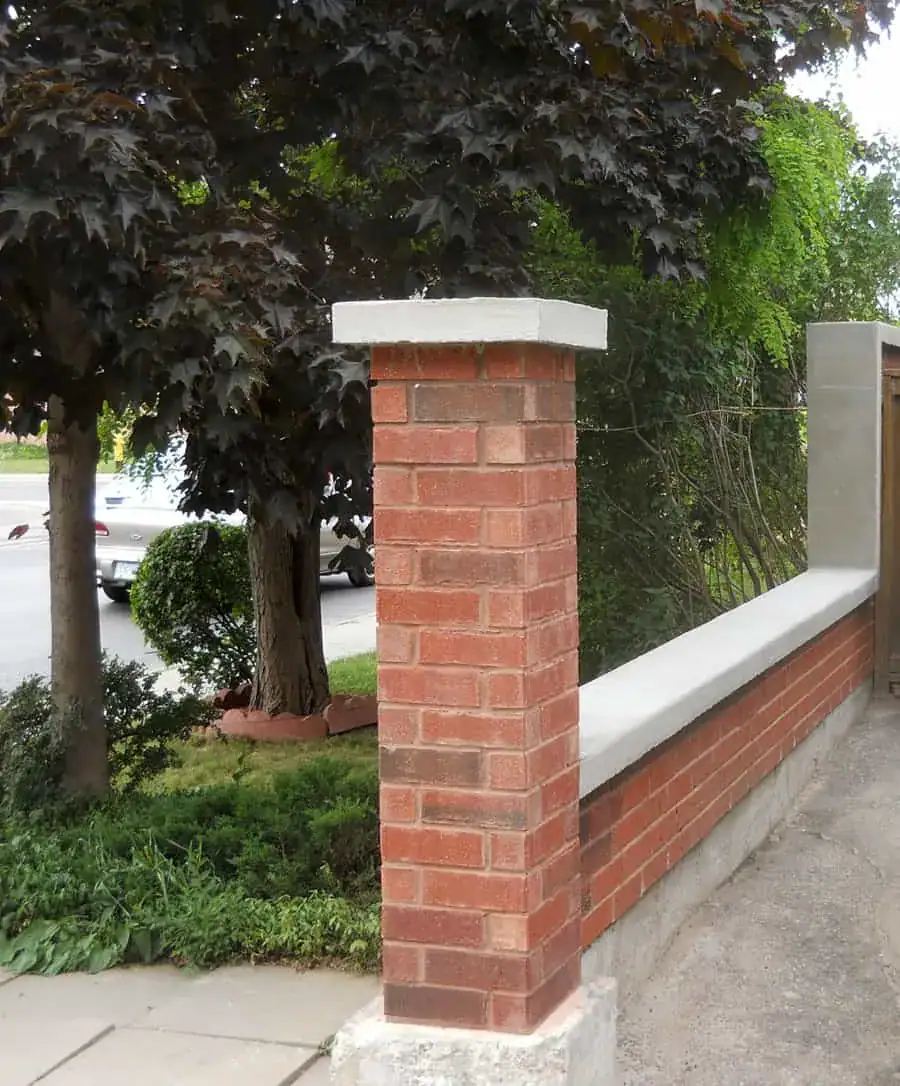
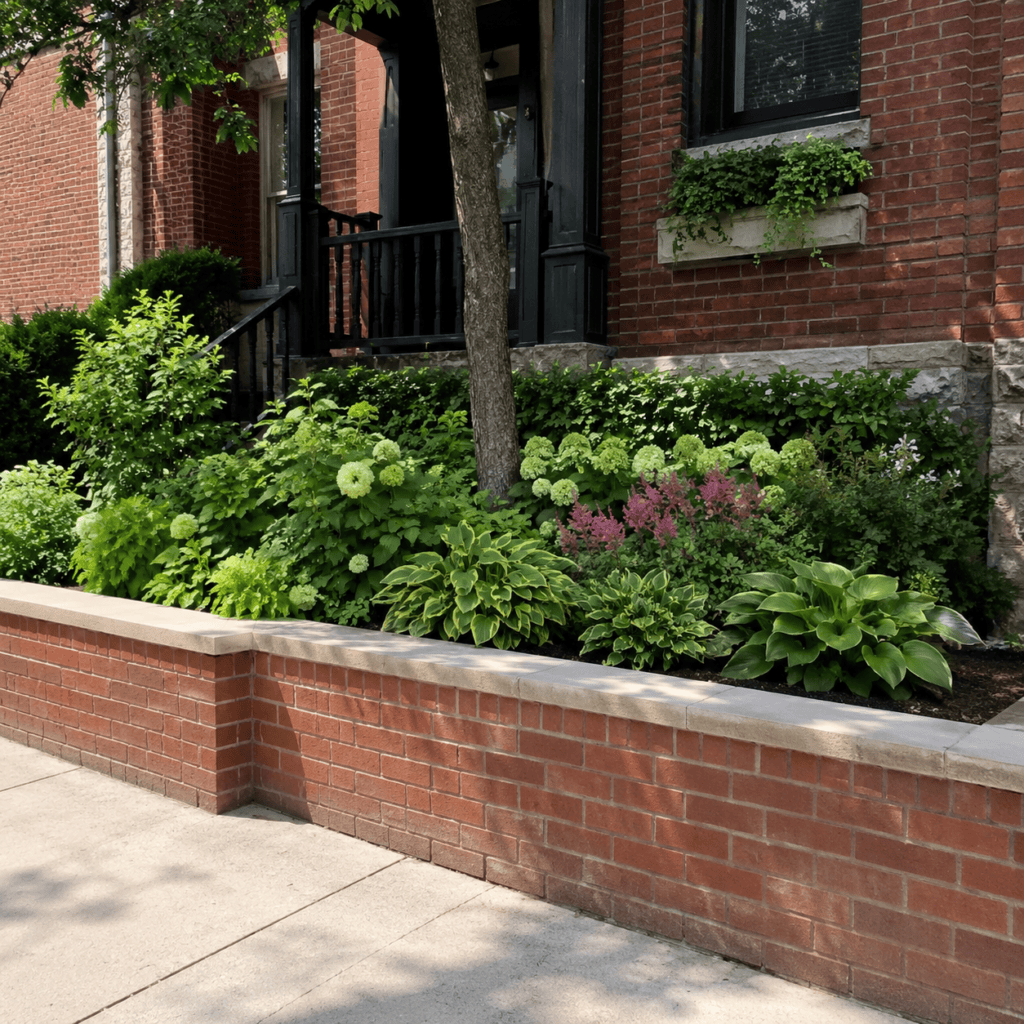
Brick retaining walls can suit homes with existing brick architecture, but brick must be used carefully in such applications. Brick is often better for decorative garden walls, low landscape walls, raised beds, and walls where the design is not under heavy soil pressure.
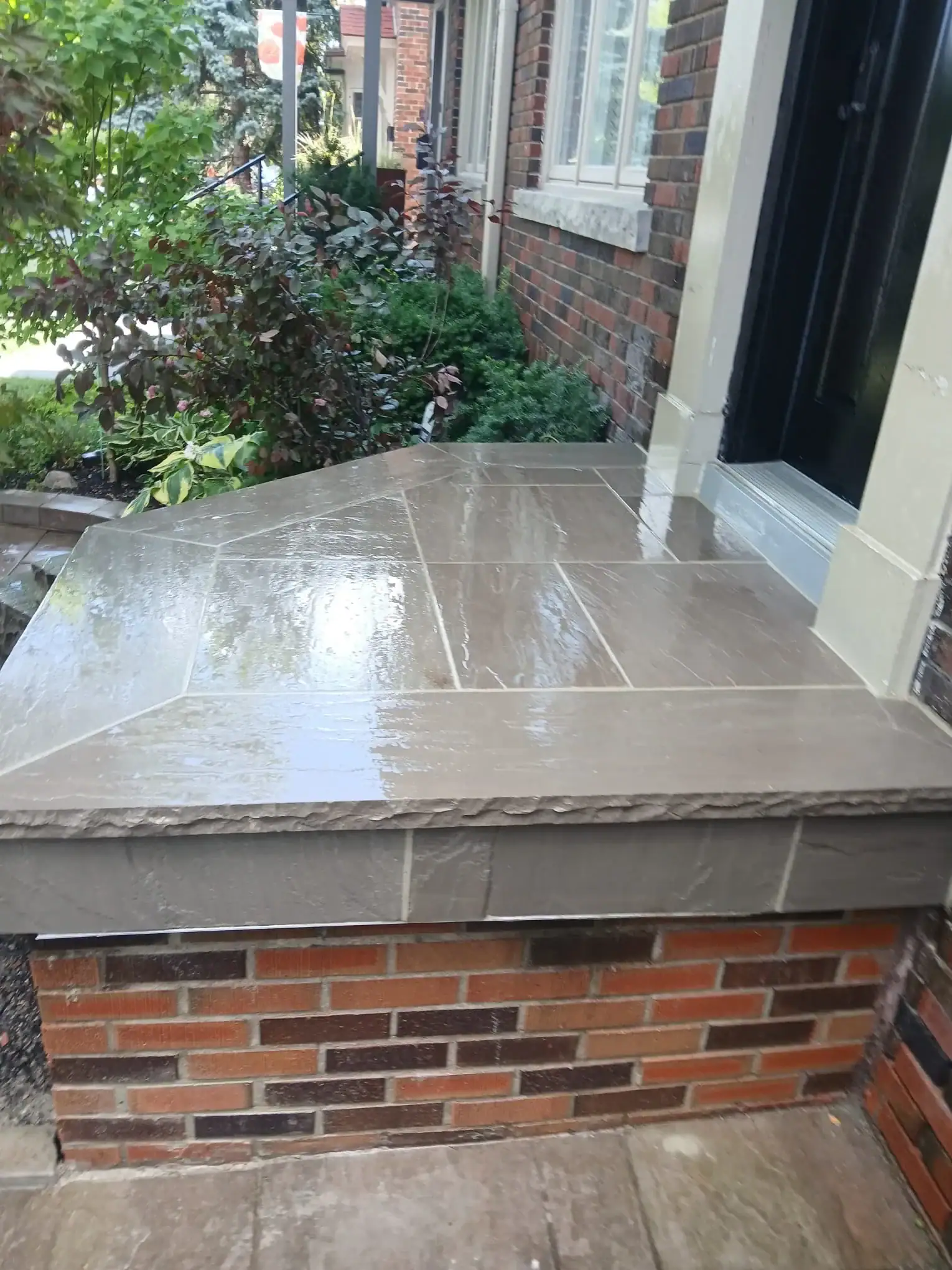
Brick can look natural beside a Toronto brick home because it repeats the house material in the landscape. It can create a more formal or traditional look than irregular stone. A brick wall can also tie together a front entry, walkway, porch, garden bed, or small yard.
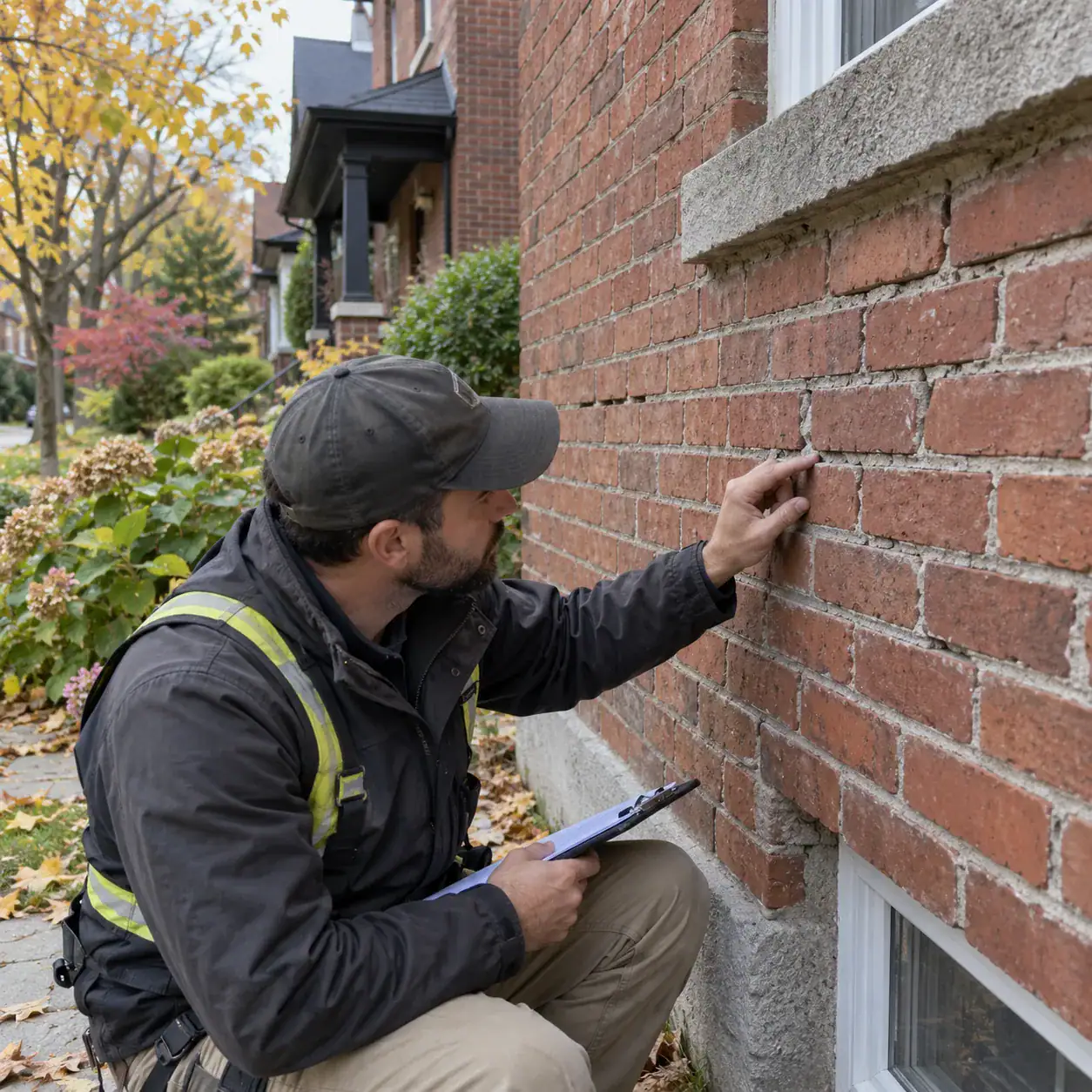
The challenge is moisture. Retaining walls hold soil, and soil holds water. Brick and mortar must be protected from constant wetting, freeze-thaw cycles, and pressure behind the wall. Without proper drainage and construction, brick walls can crack, bulge, spall, or lose mortar.
Brick may be a good choice for low, visible landscape walls where appearance matters, and loads are limited. For higher retaining walls or walls holding back serious grade changes, homeowners should be cautious and confirm whether brick is suitable for the site.
Pros of Brick Retaining Walls
Brick retaining walls can provide a warm, traditional, and highly coordinated look when they match or complement the home. They are especially useful where the wall is part of the visual design rather than a heavy structural feature.
- Matches brick homes: Brick can visually connect the landscape to the house facade.
- Traditional appearance: Brick works well with older Toronto homes and formal garden layouts.
- Good for low walls: Brick can suit raised beds, garden borders, and small landscape walls.
- Flexible design: Brick bonds, caps, and colour choices can create different looks.
- Repairable in sections: Damaged brick or mortar can often be addressed if the wall is otherwise sound.
Brick is a good option when the retaining wall is low, visible, and meant to complement an existing masonry home.
Cons of Brick Retaining Walls
Brick retaining walls can be more vulnerable when exposed to constant moisture and soil pressure. A brick wall needs careful drainage and proper construction if it is expected to hold back soil.
- Moisture concerns: Brick can spall or deteriorate if it remains wet and repeatedly freezes.
- Mortar maintenance: Joints can crack, recede, or fail over time.
- Not always suitable for high loads: Brick may not be the best choice for taller or heavily loaded retaining walls.
- Matching can be difficult: Older brick colours, sizes, and textures may be hard to match later.
- Drainage is critical: Poor drainage behind a brick retaining wall can lead to bulging or cracking.
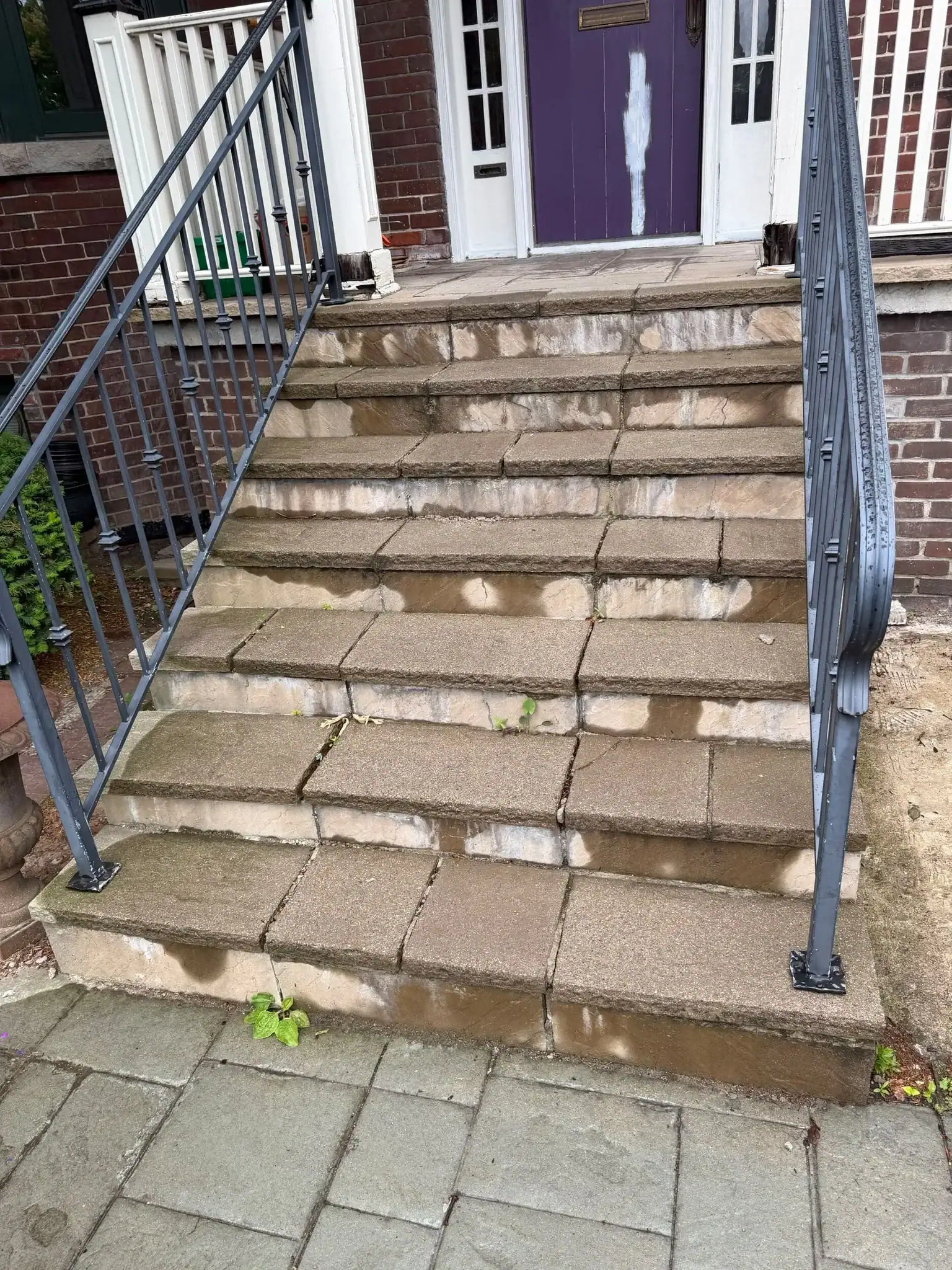
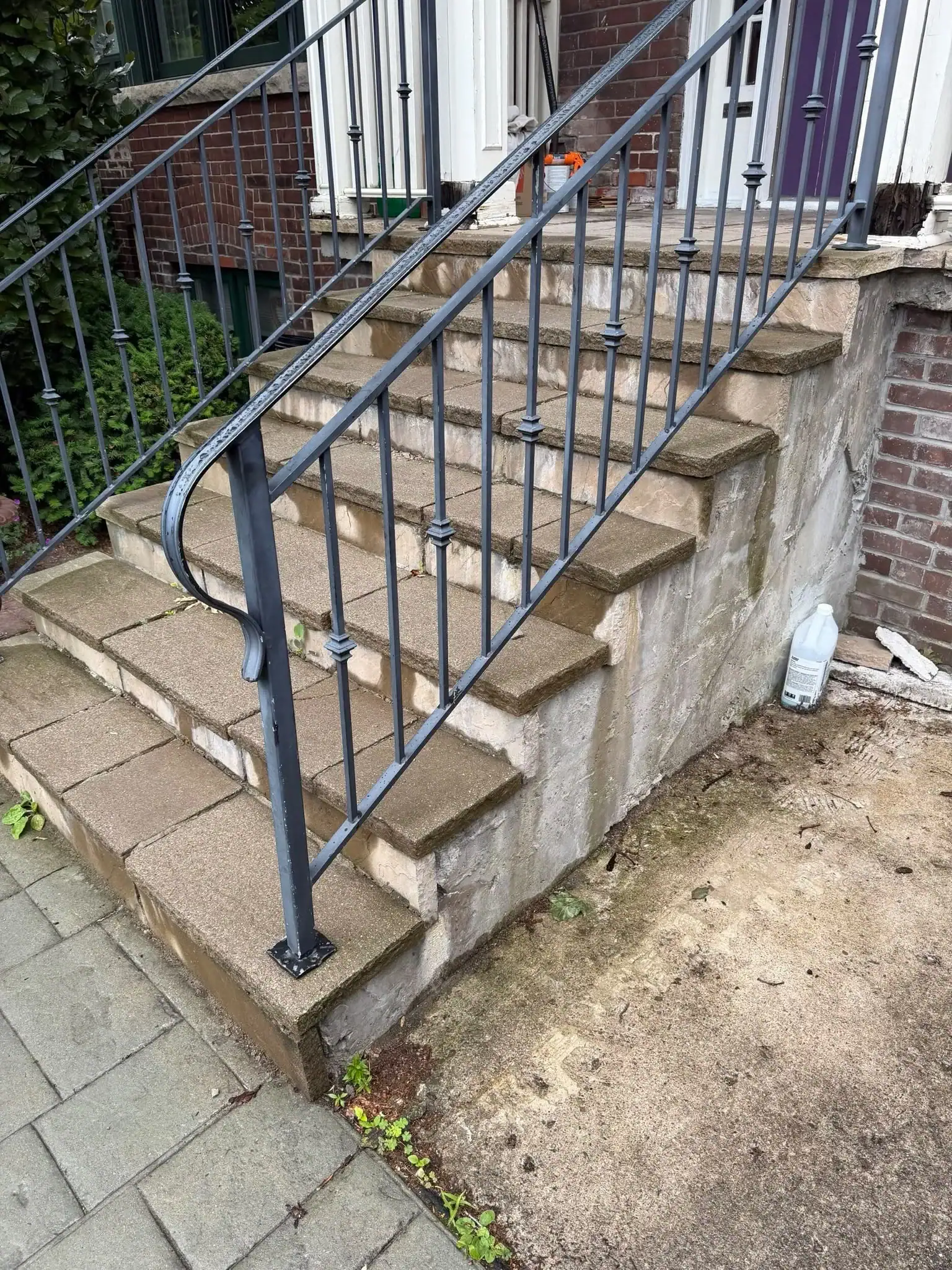
If a brick retaining wall already has cracked mortar, loose units, or spalling, the issue should be reviewed before winter. Water and freeze-thaw cycles can worsen problems with small bricks.
Concrete Block Retaining Walls
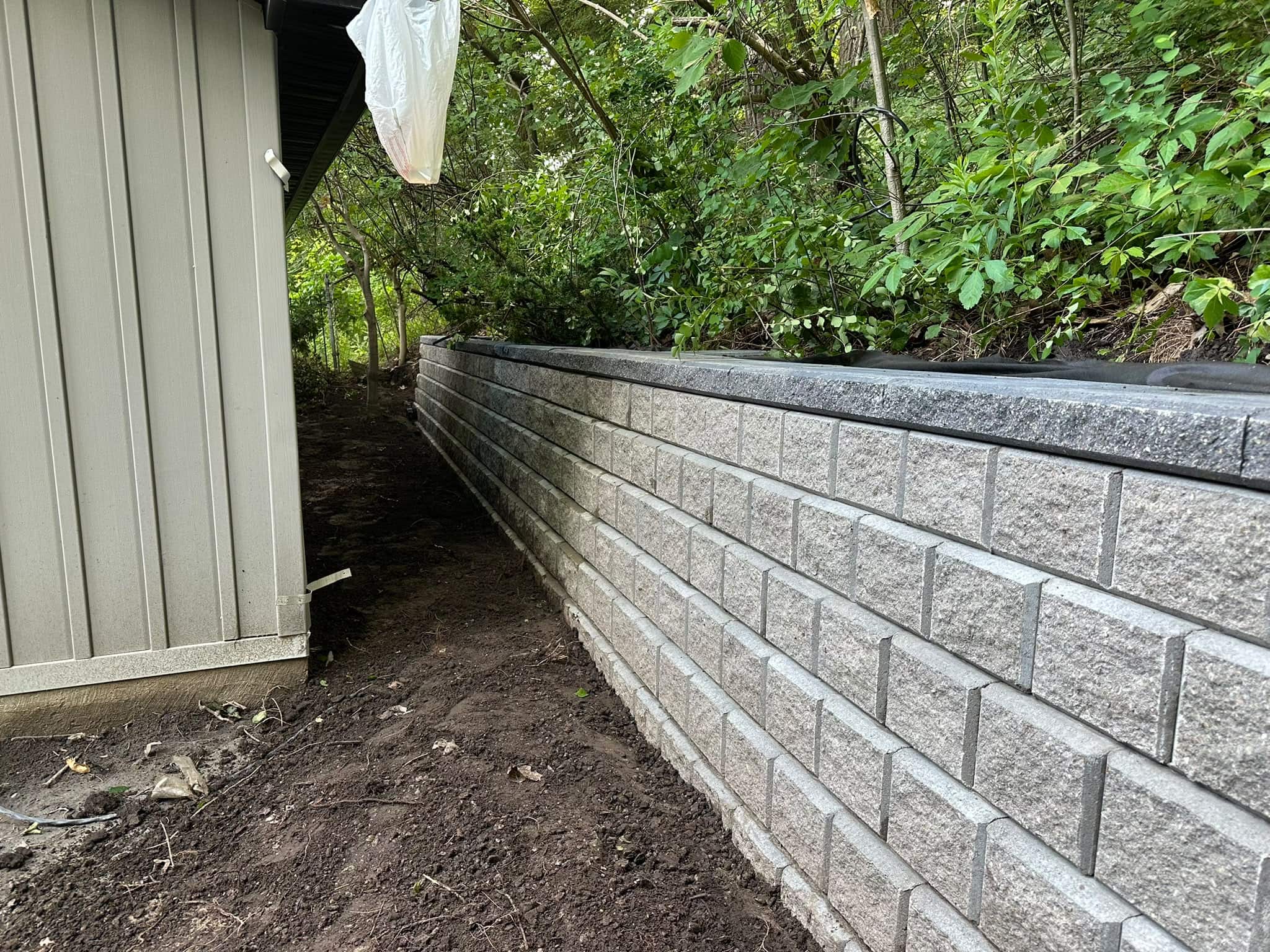
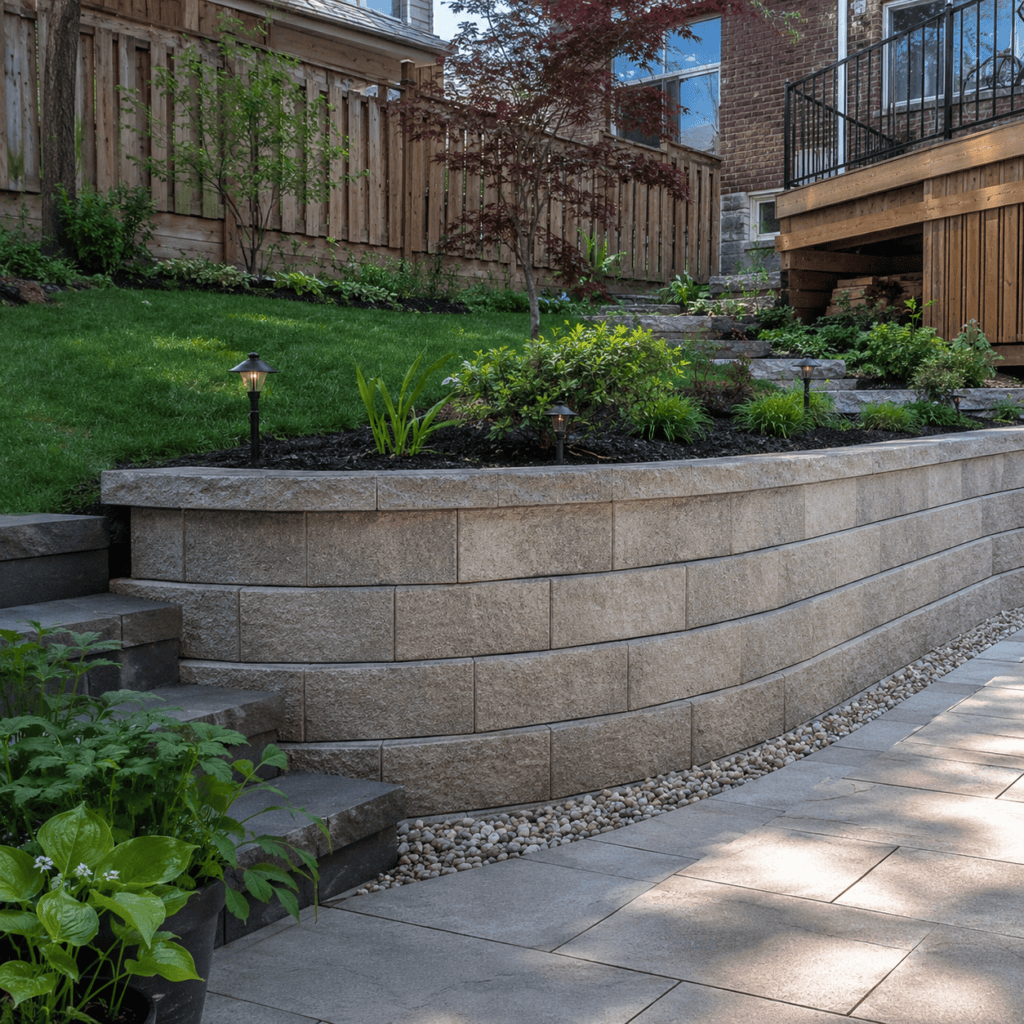
Concrete block retaining walls are often chosen for practical performance, modular installation, and clean lines. Segmental retaining wall blocks are designed to work as a system, often with interlocking units, proper base preparation, drainage stone, and sometimes geogrid reinforcement depending on height and site conditions.
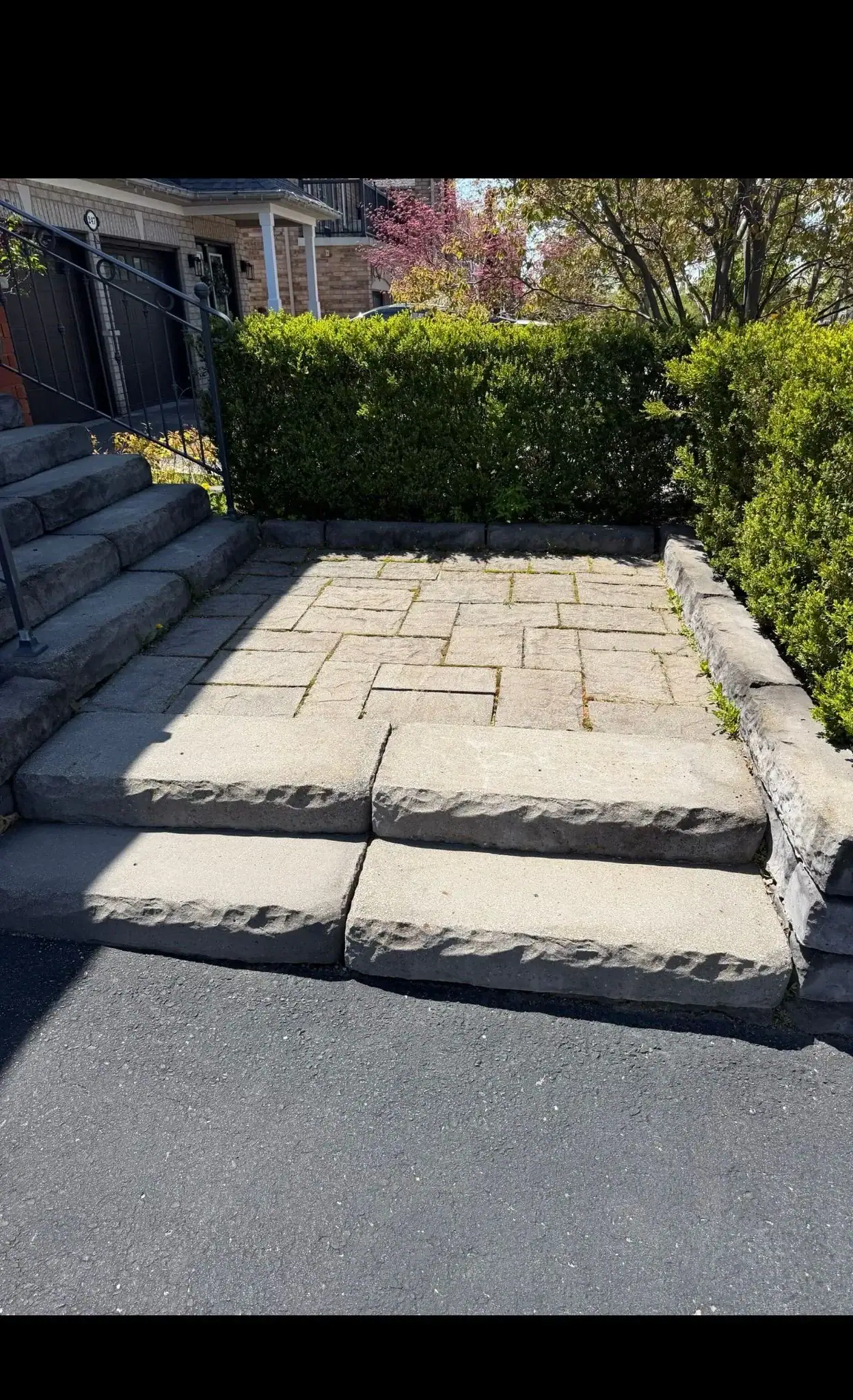
Block walls can look modern, structured, and neat. They are often used for sloped yards, patio edges, garden terraces, driveway borders, and areas where homeowners want a predictable shape and finish. Concrete block can be especially practical when the wall needs a more engineered approach.
Not all concrete block walls are the same. A decorative garden block is different from a properly designed retaining wall system. Homeowners should avoid assuming that any block can safely hold back soil. Wall height, soil type, water movement, surcharge loads, and backfill all matter.
Concrete block can be a strong option when the priorities are function, a clean appearance, and a wall system designed to retain soil.
Pros of Concrete Block Retaining Walls
Concrete block retaining walls are often practical because the units are consistent, system-based, and available in many sizes, textures, and colours. They can suit both traditional and modern landscapes depending on the style selected.
- System-based design: Many blocks are made specifically for retaining wall construction.
- Consistent sizing: Regular units can make layout more predictable than irregular natural stone.
- Good for grade changes: Properly designed block walls can work well for terracing and slopes.
- Design variety: Blocks come in smooth, split-face, textured, and natural-stone-inspired finishes.
- Efficient installation: Modular units can be practical for many residential retaining wall projects.
Concrete block is often a strong choice when the wall must perform reliably, and the homeowner wants a clean, organized look.
Cons of Concrete Block Retaining Walls
Concrete block retaining walls can look too uniform or manufactured if the style does not suit the home. They also still require proper base and drainage. A block system is not automatically strong if installed poorly.
- Can look manufactured: Some block styles may not suit older brick homes or natural gardens.
- Base quality is critical: Poor excavation or compaction can lead to settlement and movement.
- Drainage is still required: Water pressure behind the wall can cause bulging or failure.
- May need reinforcement: Taller walls or certain soil conditions may require geogrid or engineering.
- Colour can age differently: Some block colours may fade or weather over time.
Block walls are best when the material, layout, and engineering requirements match the site. A low garden wall and a tall retaining wall should not be planned the same way.
Drainage Matters More Than the Face Material
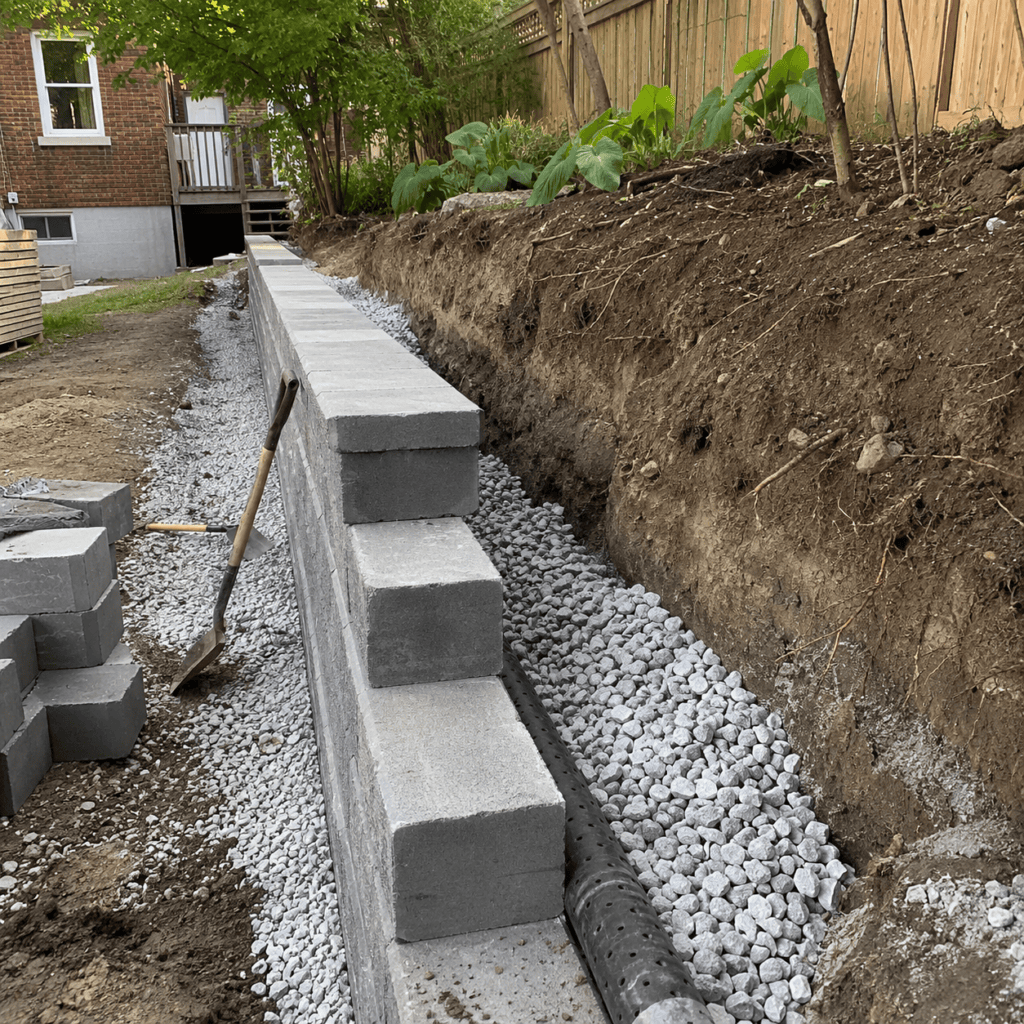
Drainage matters more than the face material because water pressure is a major cause of retaining wall failures. Stone, brick, and block walls can all move, crack, bulge, or lean if water builds up behind them.
A good retaining wall should allow water to drain through or away from the soil behind it. This may involve clear drainage stone, filter fabric, weep openings, perforated pipe, sloped grading, proper backfill, or other drainage details depending on the wall type and site.
The City of Toronto provides guidance on managing rain and melted snow. This is relevant for retaining walls because runoff, downspouts, grading, and hard surfaces can all affect how much water reaches the wall.
If a retaining wall is close to the home, drainage should be reviewed together with foundation moisture. A wall that pushes water toward the foundation can create a separate waterproofing concern. A&A Masonry’s waterproofing Toronto page is a useful resource for homeowners dealing with foundation water entry issues.
How Wall Height Affects Material Choice
Wall height affects material choice because taller walls experience greater soil pressure and usually require more careful design. A low garden wall may be mostly decorative. A taller retaining wall may require structural planning, drainage design, reinforcement, and permit review.
For low walls, homeowners may have more freedom to choose based on appearance. Stone, brick, or block may all be possible depending on site conditions. For medium or taller walls, performance becomes more important. Concrete block systems and engineered wall solutions may be more practical in some cases, while stone may require skilled structural planning.
Brick should be used with caution as wall height and soil pressure increase. It can be beautiful in the right setting, but not every brick wall is suited to holding back a large grade change.
If the wall is near a driveway, entrance, sidewalk, building, public access area, or neighbouring property, height and load should be taken seriously. These are not only design decisions. They can affect safety and permit requirements.
Permits and Code Questions for Retaining Walls
Permits and code questions may apply to certain retaining walls, especially when height, location, public access, structural support, or nearby buildings are involved. Homeowners should consult official guidance before building or rebuilding a wall that serves more than to define a small garden bed.
The City of Toronto’s guidance on when a building permit is needed includes retaining walls more than one metre in height in certain locations, such as on or adjacent to public property, building entrances, and private property accessible to the public. The City also lists retaining walls under its designated structures permit guide.
Ontario’s official Building Code page is the preferred provincial reference for building requirements. For homeowners, the practical rule is simple: if the wall is tall, load-bearing, near public areas or a building, or supporting a driveway, entrance, or grade change, check the permit and design requirements before starting.
Stone vs Brick vs Block: Appearance
Appearance matters because retaining walls often become a major part of the landscape. The wall may frame the front yard, define a patio, support garden beds, or create an entrance feature.
Stone usually gives the most natural look. It can feel timeless, textured, and well-suited to gardens and older homes. Brick gives a traditional look and may match an existing brick facade. Block offers the cleanest, most systematic appearance, which can suit modern yards and structured landscape designs.
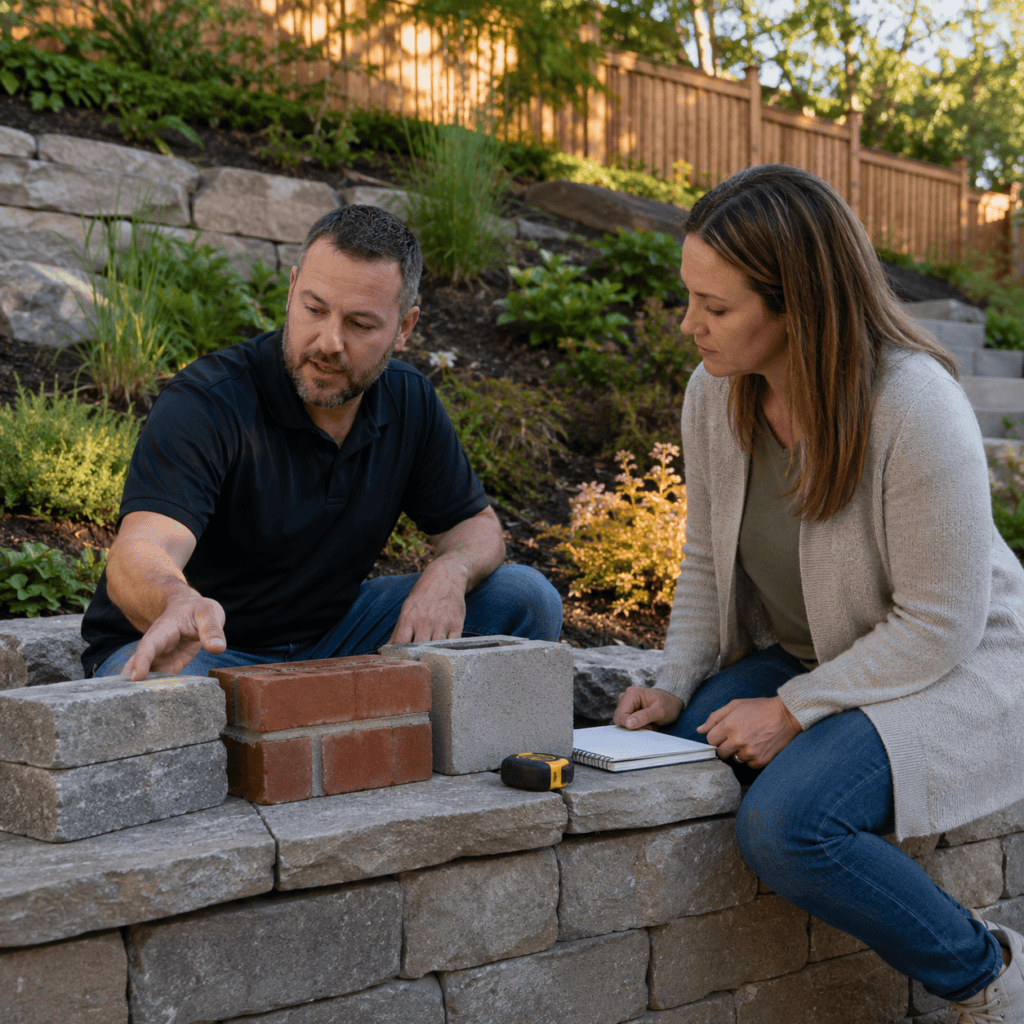
Choose stone if the goal is natural character. Choose brick if the wall is low and should visually connect to a brick home. Choose block if the wall needs a more modular, practical, and predictable system.
The best-looking wall is not always the most decorative one. It is the wall that fits the home, landscape, and yard scale.
Stone vs Brick vs Block: Durability
Durability depends on material quality, wall design, drainage, base preparation, and maintenance. No retaining wall material lasts well if water is trapped behind it or the base is weak.
Stone can be very durable when properly built, but irregular stone requires skilled fitting and drainage planning. Brick can last well in suitable low-wall applications, but constant soil moisture and freeze-thaw exposure can damage brick and mortar. Concrete block systems can be very practical for retaining walls, but only when the correct block type and installation method are used.
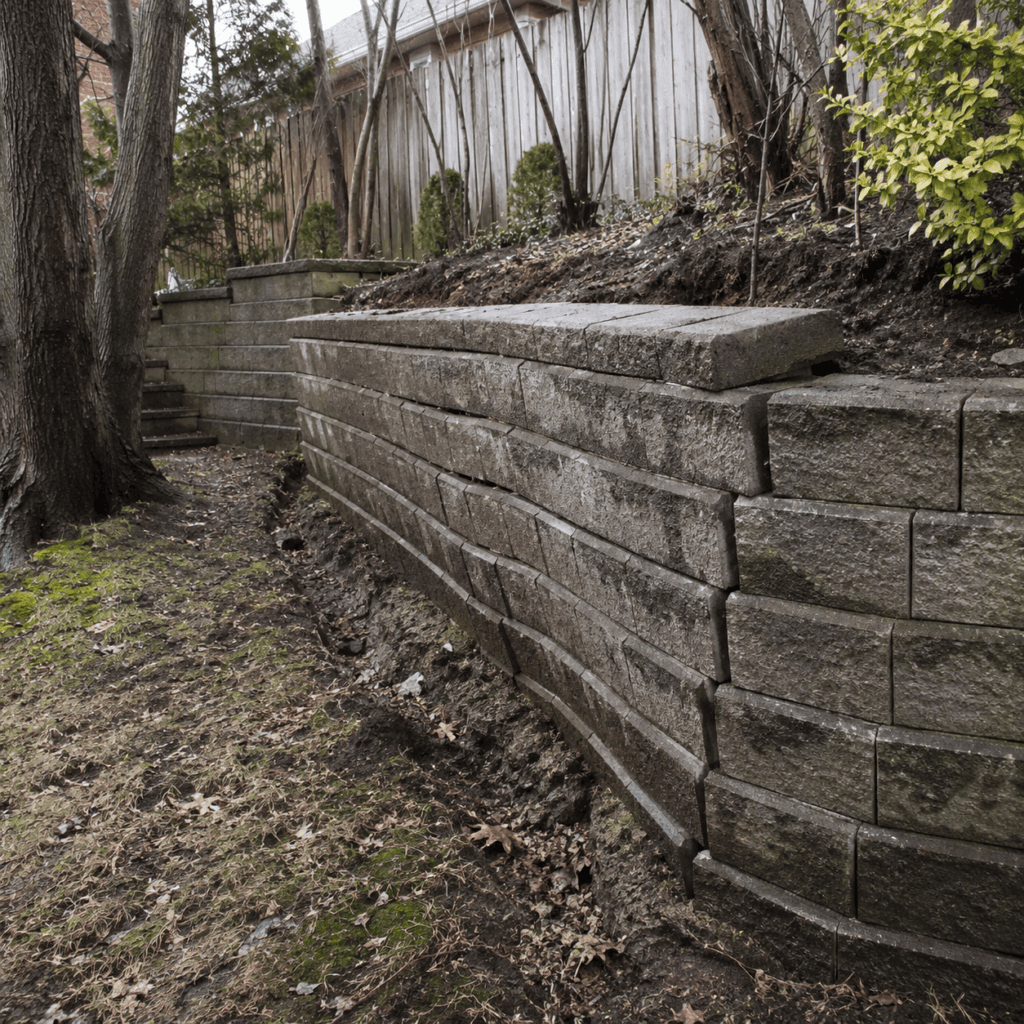
In Toronto, freeze-thaw cycles make drainage especially important. Water that enters joints, sits behind walls, or collects under the base can freeze and expand. This can push walls forward, open joints, or create settlement.
The most durable choice is the one designed for the actual site conditions, not simply the material that looks strongest.
Stone vs Brick vs Block: Maintenance
Maintenance needs vary by material, but all retaining walls should be checked regularly. Homeowners should look for leaning, bulging, cracks, open joints, loose caps, drainage problems, and water stains.
Stone walls may need occasional repointing, resetting of loose stones, cap repair, or drainage correction. Brick walls may need tuckpointing, brick replacement, cap maintenance, and moisture control. Block walls may need joint checks, cap repairs, base or settlement review, and vegetation control.
Do not ignore small changes. A slight lean, new crack, or wet area behind the wall may be an early sign of pressure or drainage issues. Early repair is usually easier than rebuilding a wall that has already moved significantly.
If retaining wall work is part of a wider yard update, A&A Masonry’s interlocking stone services in Toronto page is helpful for related outdoor surfaces such as patios, walkways, steps, driveways, and retaining-wall-connected hardscaping.
When Brick Is the Better Choice
Brick is the better choice when the wall is low, decorative, and meant to match or complement an existing brick home. It can be a good option for raised garden beds, front yard borders, small retaining features, and traditional landscape details.
Brick works best when soil pressure is limited, and drainage is handled carefully. It should not be treated as the default choice for taller retaining walls simply because the house is brick. A brick-faced design or another structural system may be more appropriate in some cases.
Choose brick if the wall is mostly visual, complements the home’s architecture, and is not expected to support heavy loads. Be cautious if the wall is tall, wet, shaded, or holding back a large slope.
When Stone Is the Better Choice
Stone is the better choice when natural appearance, texture, and landscape character matter most. It can work beautifully for garden walls, natural terraces, seat walls, and retaining features that should feel connected to the yard.
Stone also suits properties where the wall should look custom rather than modular. Older Toronto homes with mature gardens can look especially good with natural stone because the material feels established and organic.
Choose stone if the wall is highly visible and the design calls for character. Be prepared for a more detailed installation, and make sure drainage and base conditions are carefully planned.
When Block Is the Better Choice
Concrete block is the better choice when the wall needs a practical retaining system, consistent units, and predictable installation. Segmental retaining wall blocks can be a strong option for grade changes, terraces, patio edges, and yards where performance is a priority.
Block is often easier to plan for taller or more structured retaining walls than brick, depending on the system used. It can also offer many design options, from natural-looking textured units to clean modern finishes.
Choose block if the wall needs function, drainage planning, modular construction, and a clean, organized appearance. Be careful not to choose a decorative block that is not suited to the actual retaining load.
What Homeowners Should Check Before Choosing
Homeowners should check the site conditions before choosing stone, brick, or block. The best material depends on what the wall must do and what conditions it will face.
- Wall height: Taller walls usually need more design planning and may require permits.
- Soil pressure: Heavy or wet soil puts more pressure on the wall.
- Drainage: Water behind the wall must have a safe path out.
- Location: Walls near buildings, entrances, sidewalks, driveways, or property lines need extra care.
- Style of home: Brick, stone, or block should fit the house and landscape.
- Access: Tight side yards or stairs can affect material handling and labour.
- Winter exposure: Snow piles, salt, shade, and freeze-thaw cycles affect long-term performance.
- Maintenance expectations: Some materials need more joint, cap, or surface care than others.
Choosing the material before understanding the site can lead to the wrong wall. The site should guide the material, not the other way around.
Common Retaining Wall Mistakes
Common retaining wall mistakes often stem from treating the wall as a decorative feature rather than a structure that must manage soil and water.
- No drainage behind the wall: Water pressure can push the wall forward.
- Weak base preparation: Settlement can cause leaning, cracking, or uneven wall lines.
- Wrong material for the height: Decorative materials may not suit taller retaining walls.
- No cap or poor top detail: Water can enter from above and damage joints.
- Ignoring nearby loads: Driveways, patios, fences, slopes, and structures can increase pressure.
- Poor backfill: Soil placed directly behind the wall can hold water and increase pressure.
- Skipping permit review: Taller or public-facing walls may need official review.
- Choosing only by colour: Appearance matters, but performance matters more.
A retaining wall should look good, but it also needs to work properly behind the surface.
Quick Decision Guide: Stone, Brick, or Block?
A quick decision guide can help homeowners narrow down their choices.
- Choose stone for natural texture, garden character, and a custom masonry look.
- Choose brick if the wall is low, decorative, and should match a traditional brick home.
- Choose block if the wall needs a practical retaining system with consistent units and clean lines.
- Choose stone or block for many sloped-yard projects where strength and drainage planning are important.
- Be cautious with brick when the wall is tall, wet, shaded, or under heavy soil pressure.
- Check drainage first before deciding on any material.
- Check permits first if the wall is tall, near a public area, or supporting a driveway, entrance, or major grade change.
The right retaining wall material should suit the property, manage water effectively, and support the wall’s intended purpose.
When Professional Help Makes More Sense
Professional help makes more sense when the wall is taller, leaning, cracked, holding back a slope, close to a building, near public access, or connected to drainage problems. Retaining walls can fail when they are treated as simple landscaping rather than as masonry systems.
A professional can assess soil conditions, drainage needs, base preparation, wall height, material suitability, access, and whether a permit or engineering review may be needed. They can also help choose between stone, brick, block, or a combined system that fits the home and the site.
For broader exterior project planning, A&A Masonry’s masonry services in Toronto page outlines related services, including retaining walls, stone masonry, brick repair, concrete repair, interlocking stone, waterproofing, and exterior restoration.
Final Thoughts on Retaining Wall Materials
Retaining wall materials should be chosen based on structure, drainage, appearance, maintenance, and site conditions. Stone, brick, and block can all work well in the right setting, but they are not interchangeable.
Stone is often best for natural character and custom landscape features. Brick can work well for low decorative walls that complement traditional homes. Concrete block is often practical for functional retaining walls where consistent units and system-based construction are important.
For Toronto and GTA homeowners, the biggest lesson is that drainage and base preparation matter more than the wall’s visible face. A retaining wall should hold soil safely, drain water properly, fit the home, and withstand freeze-thaw cycles. When those details are well planned, the finished wall can improve both the function and the appearance of the property.