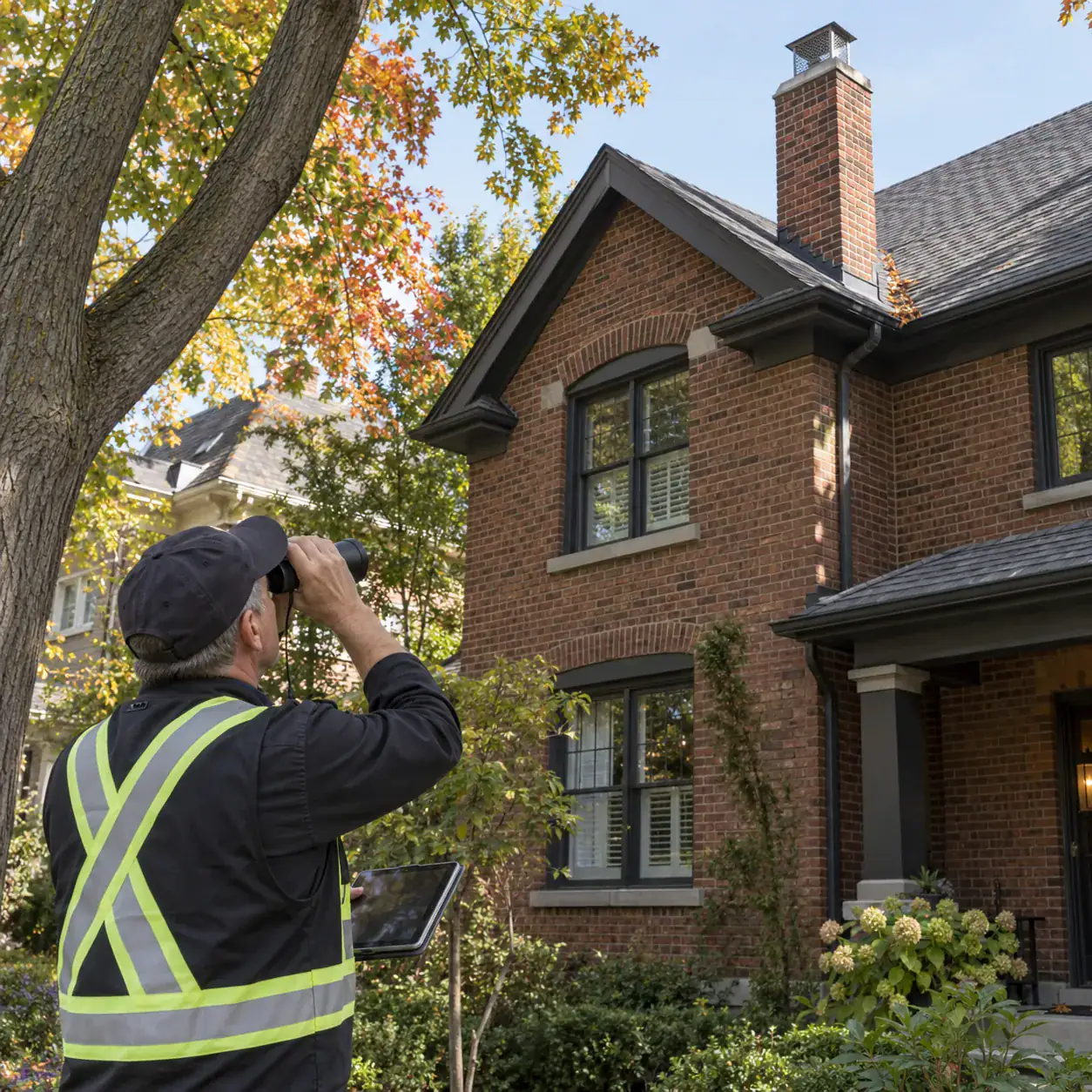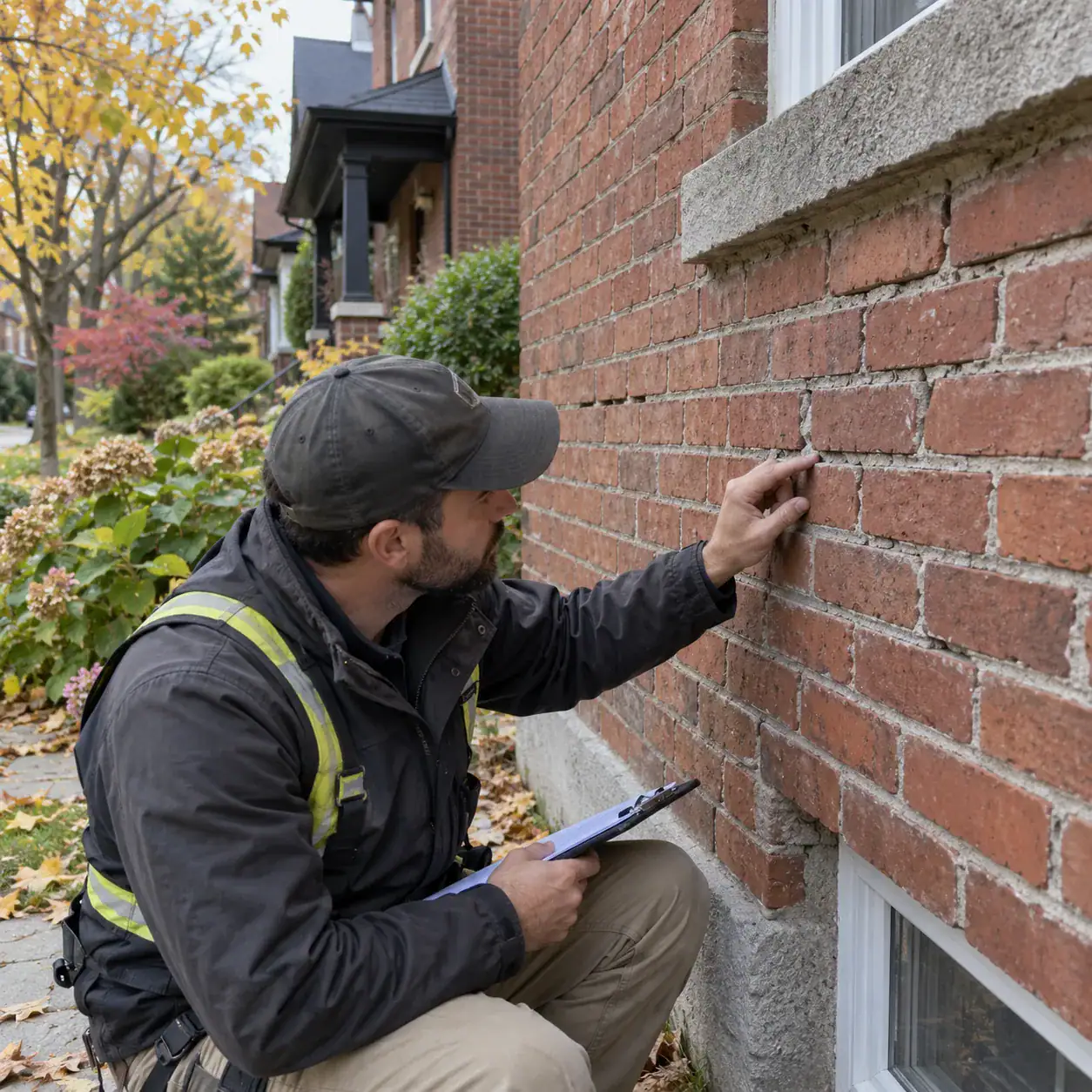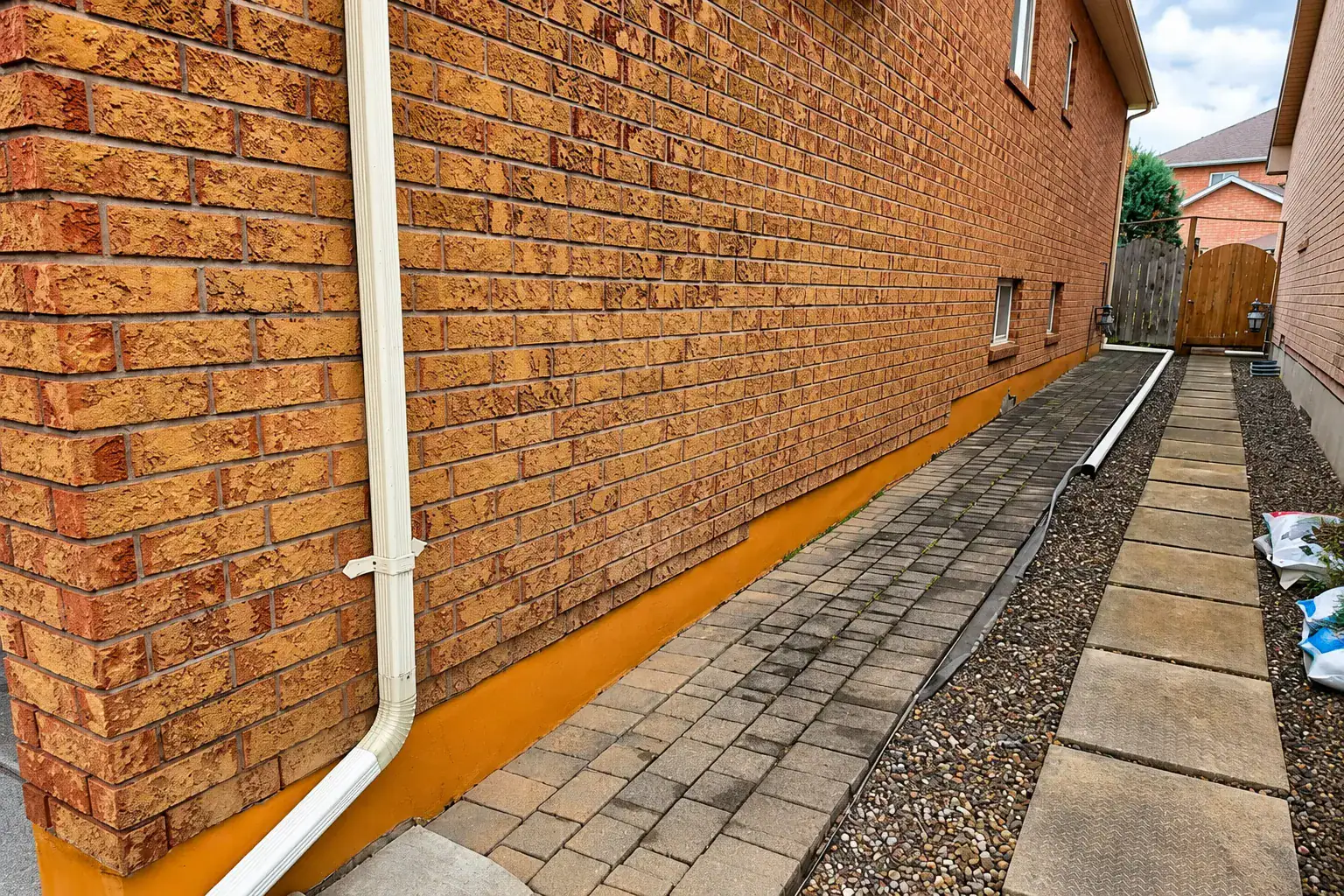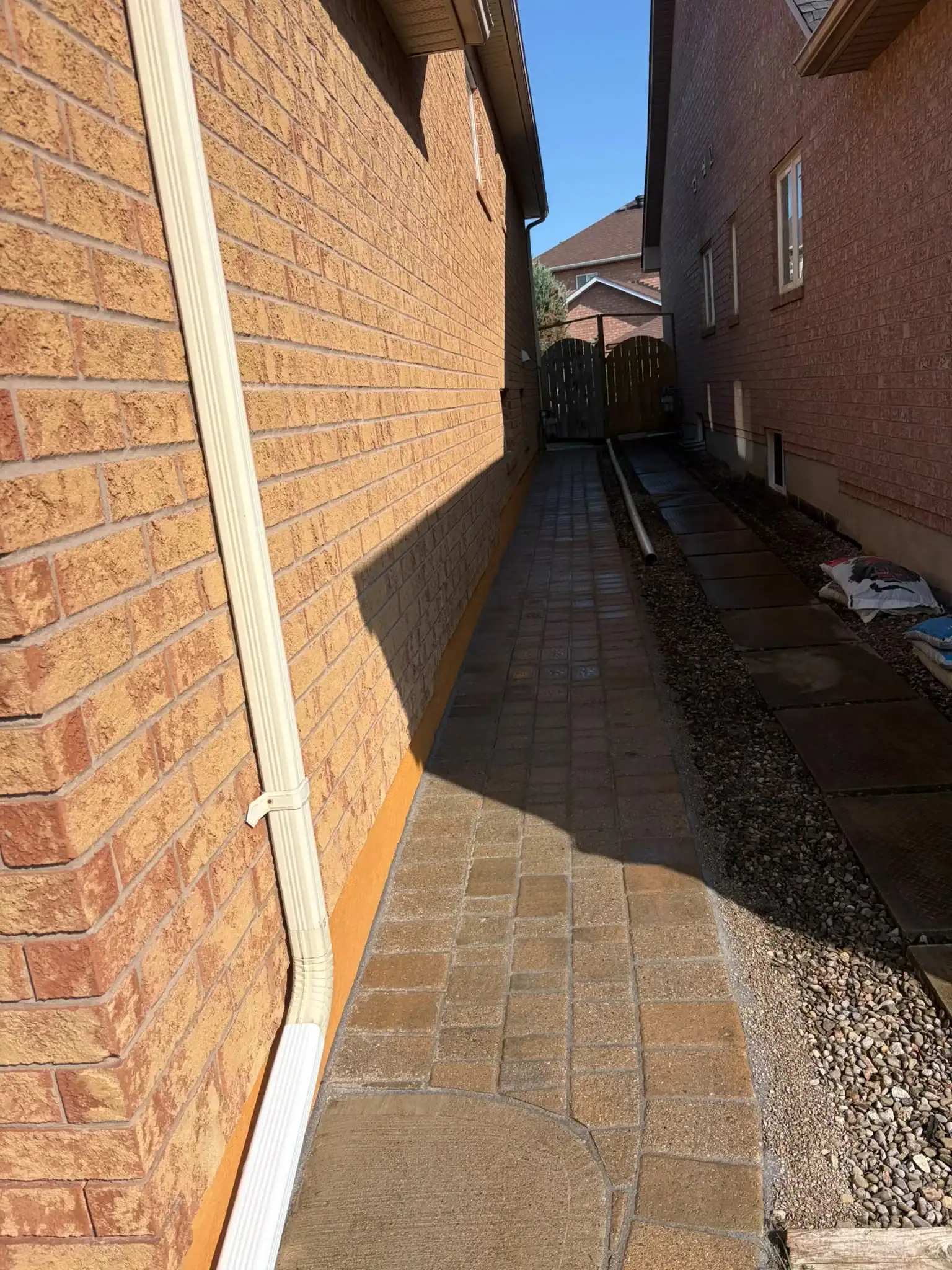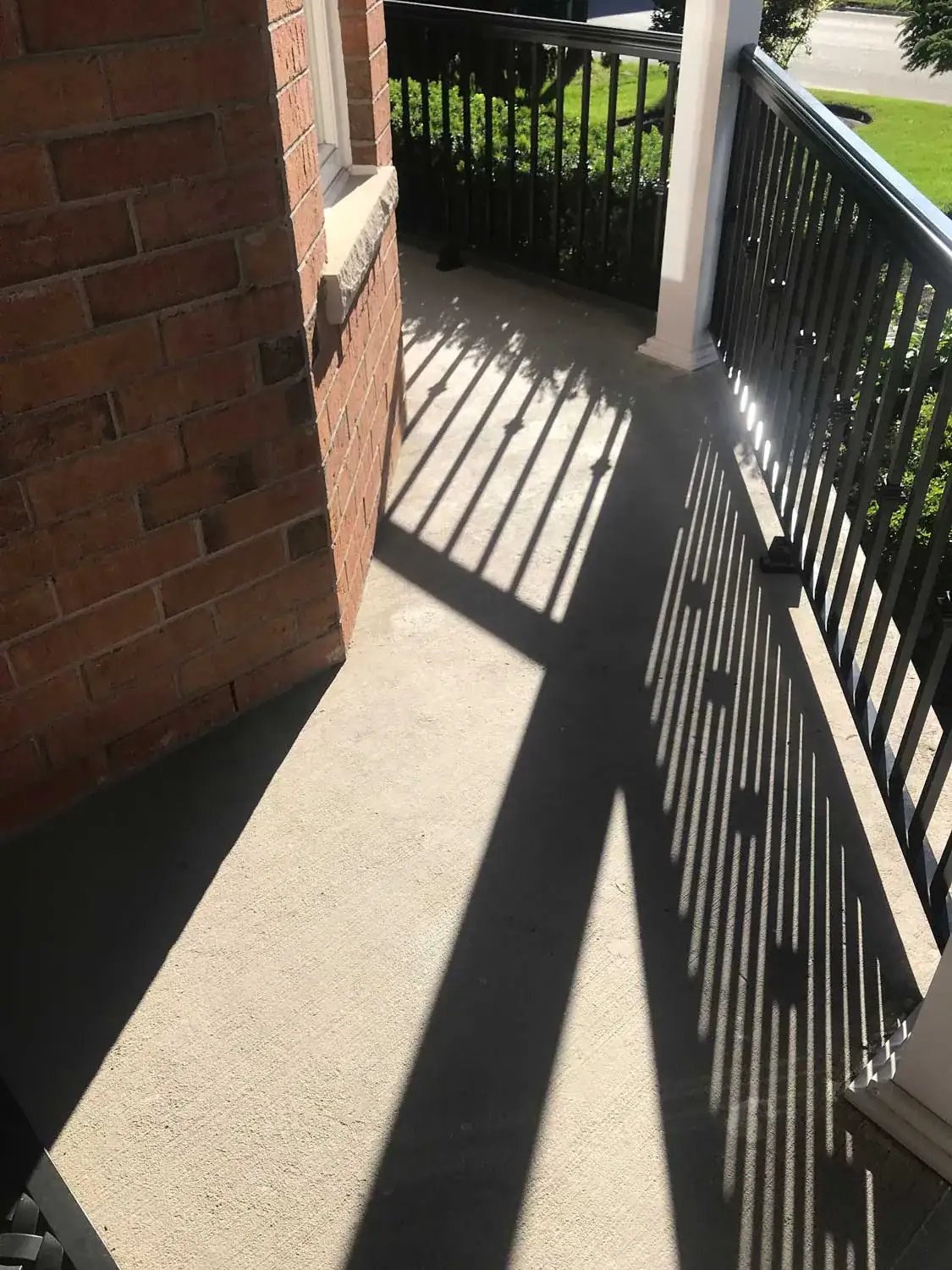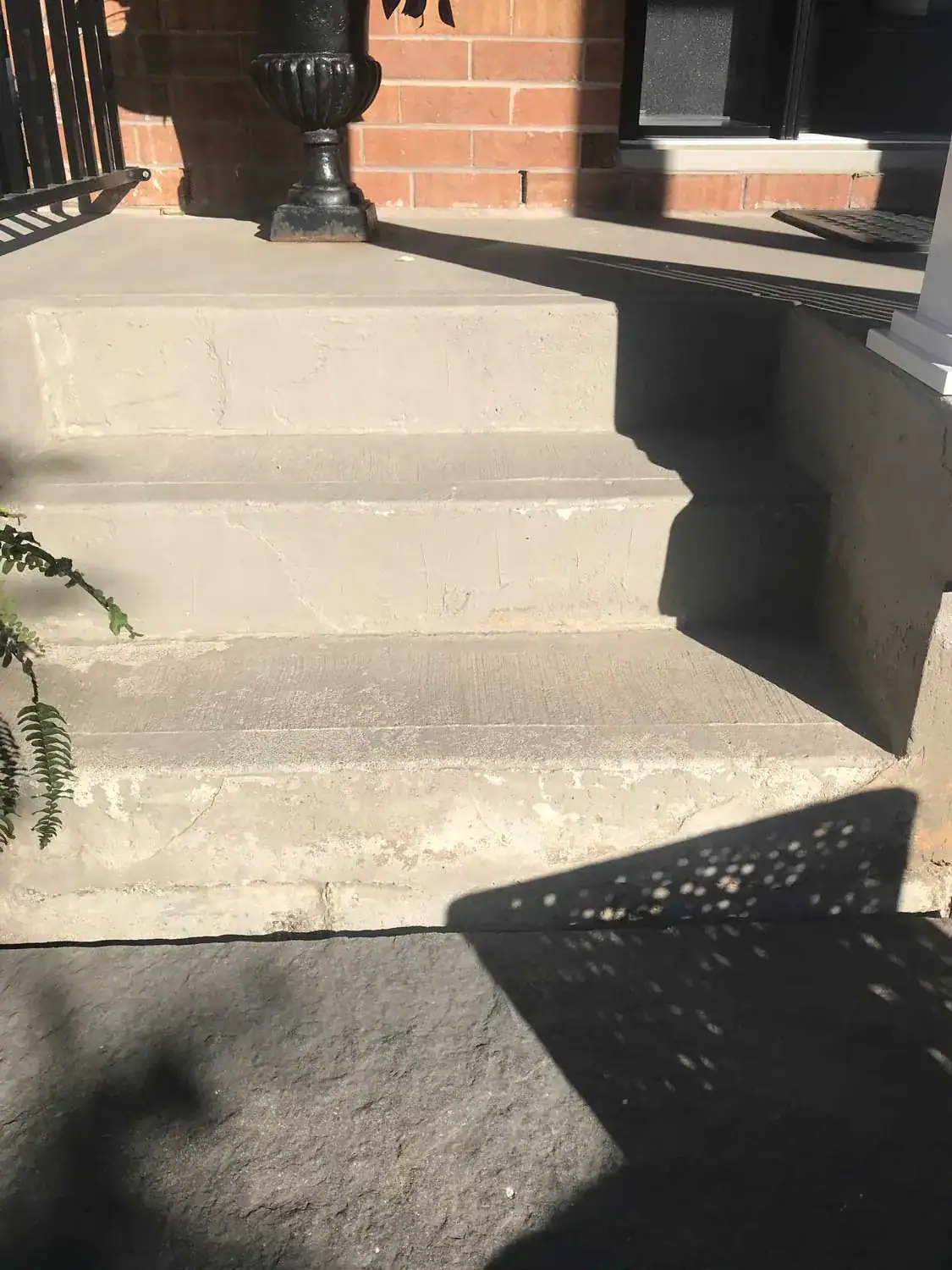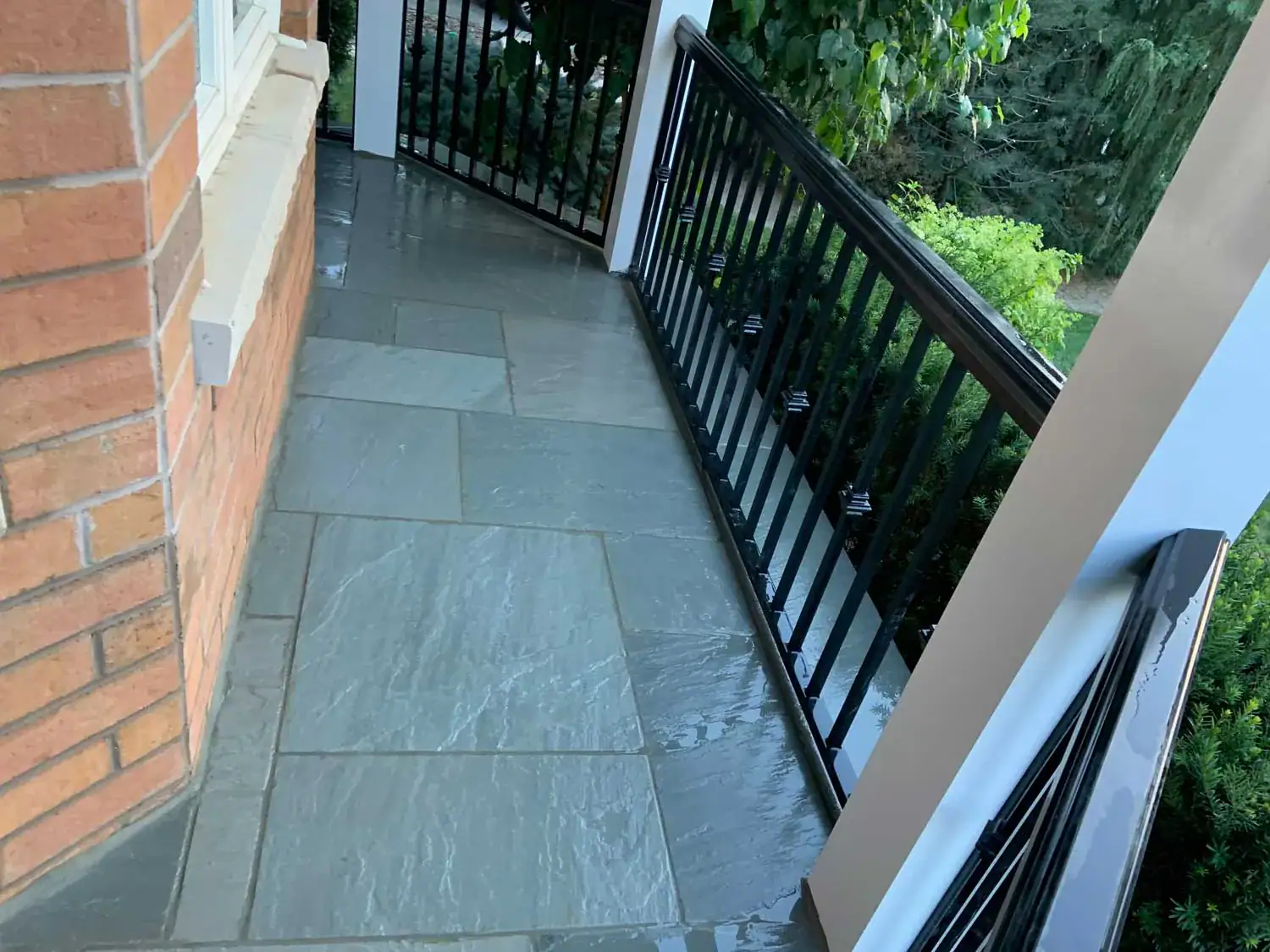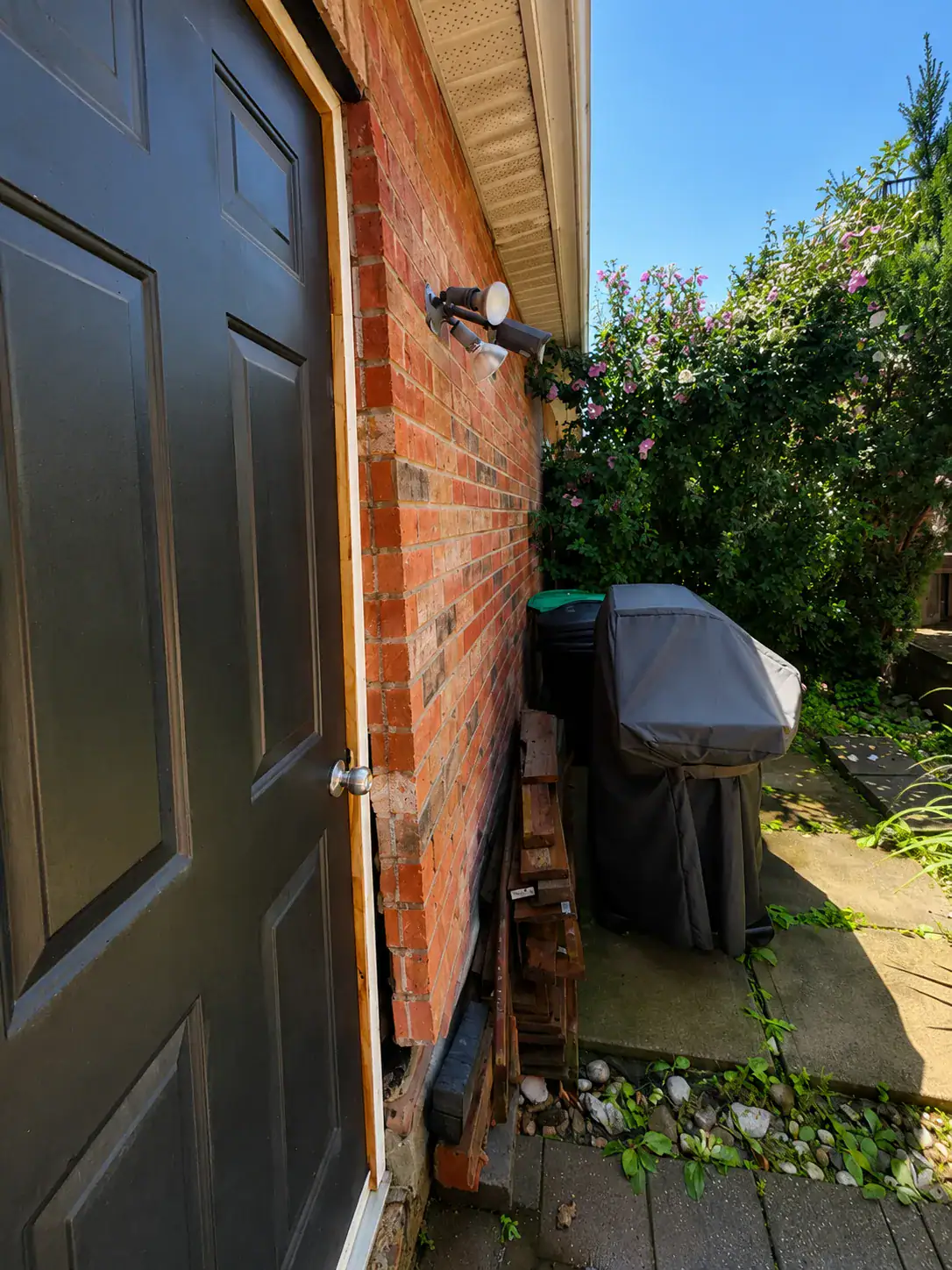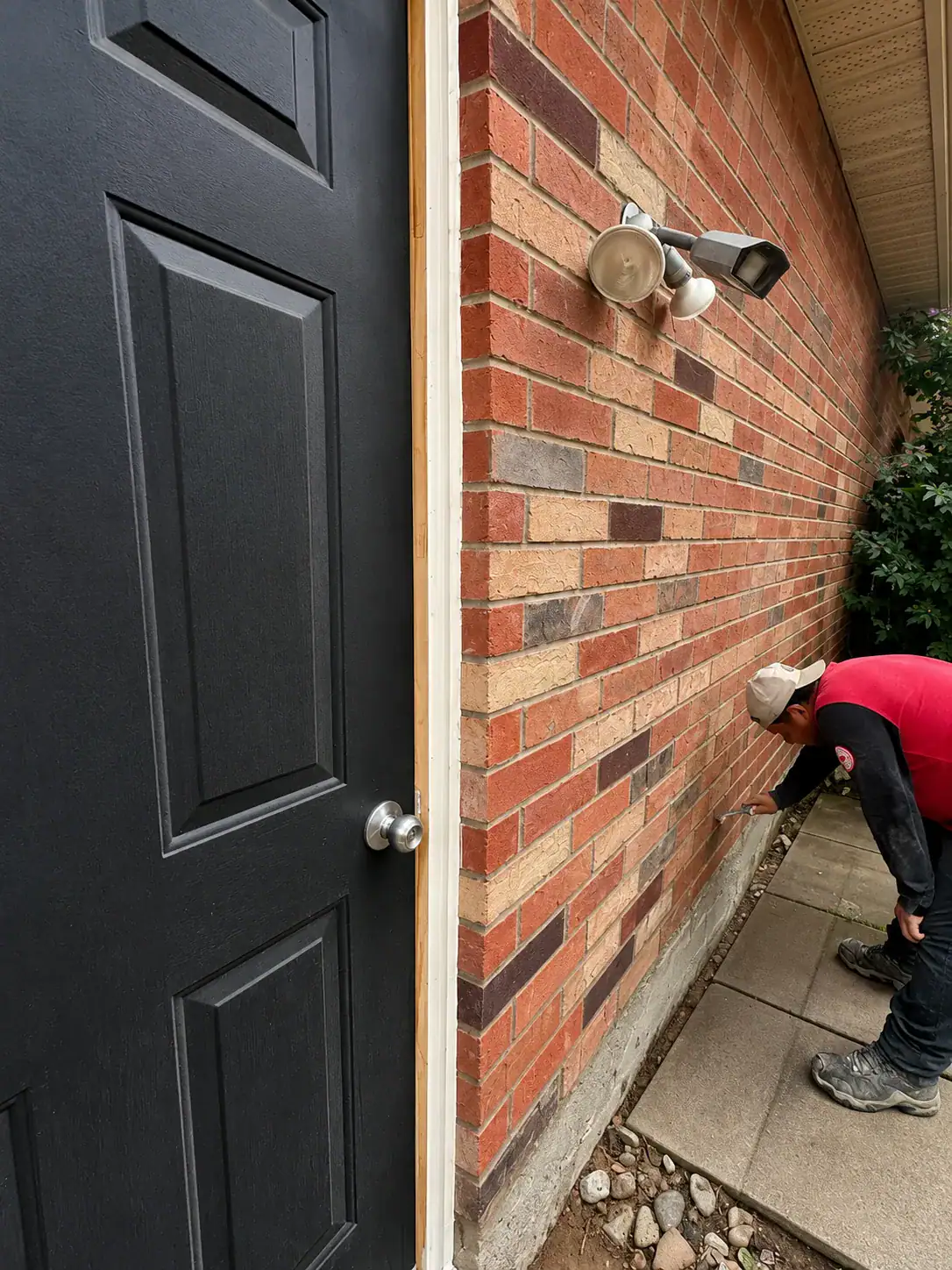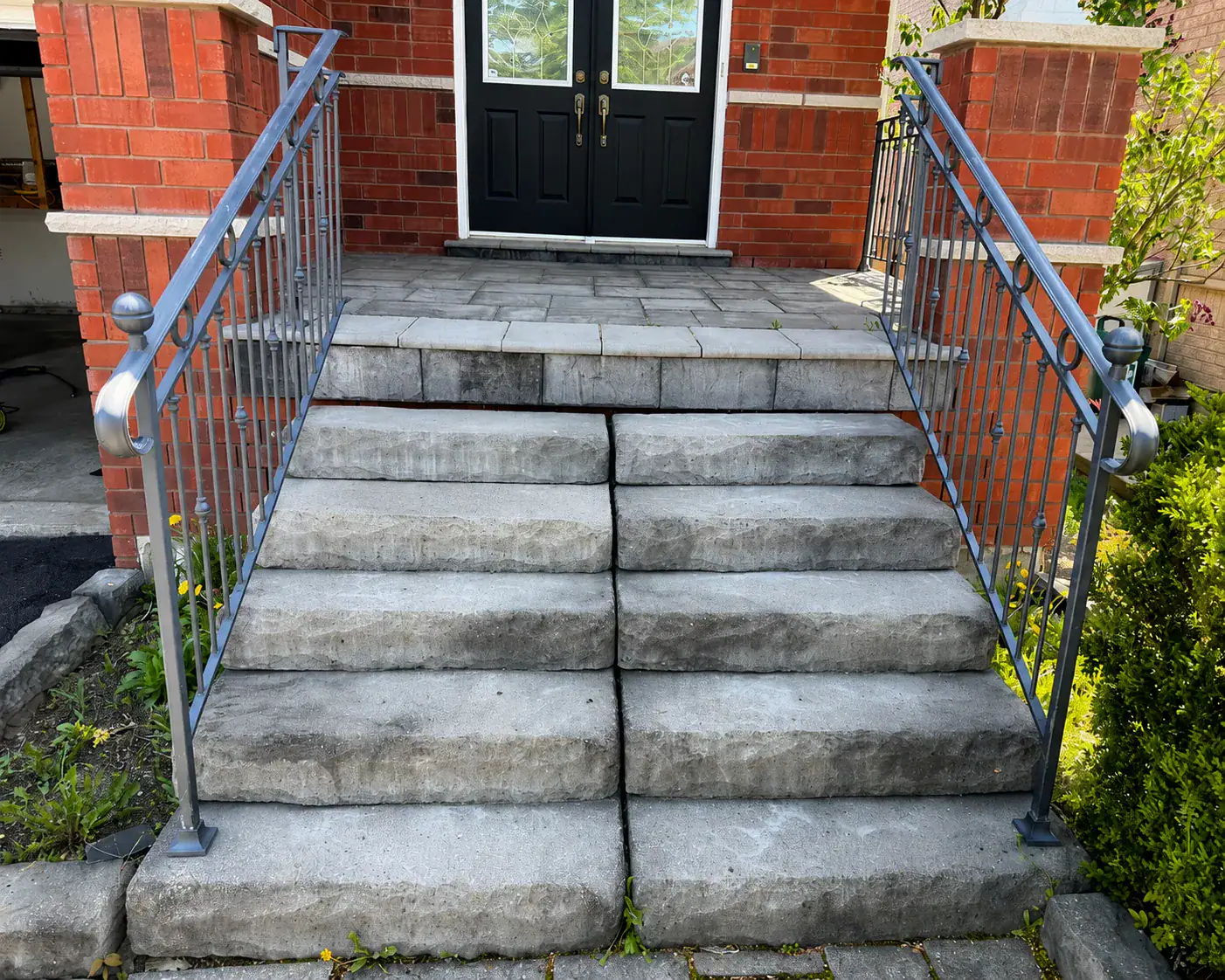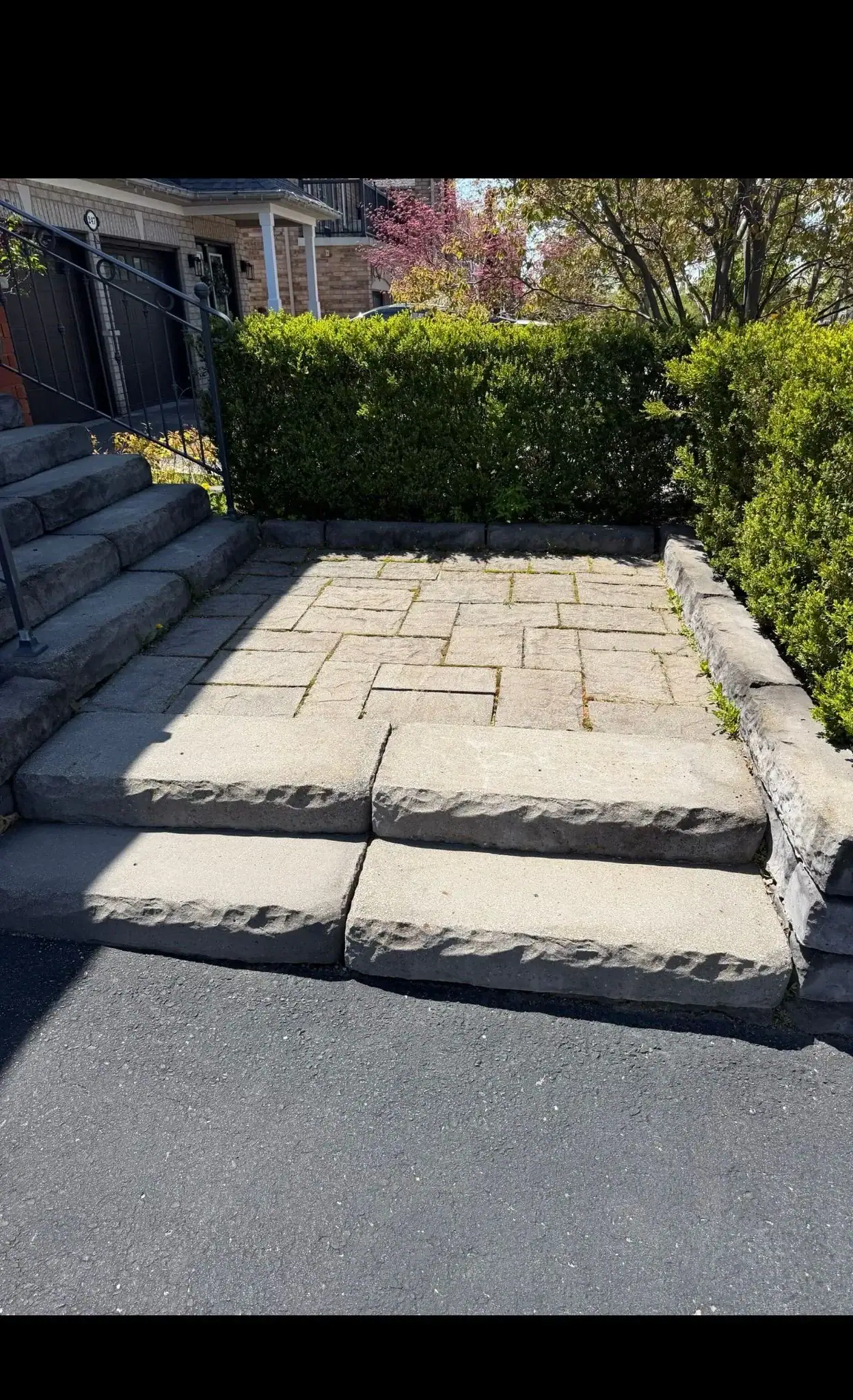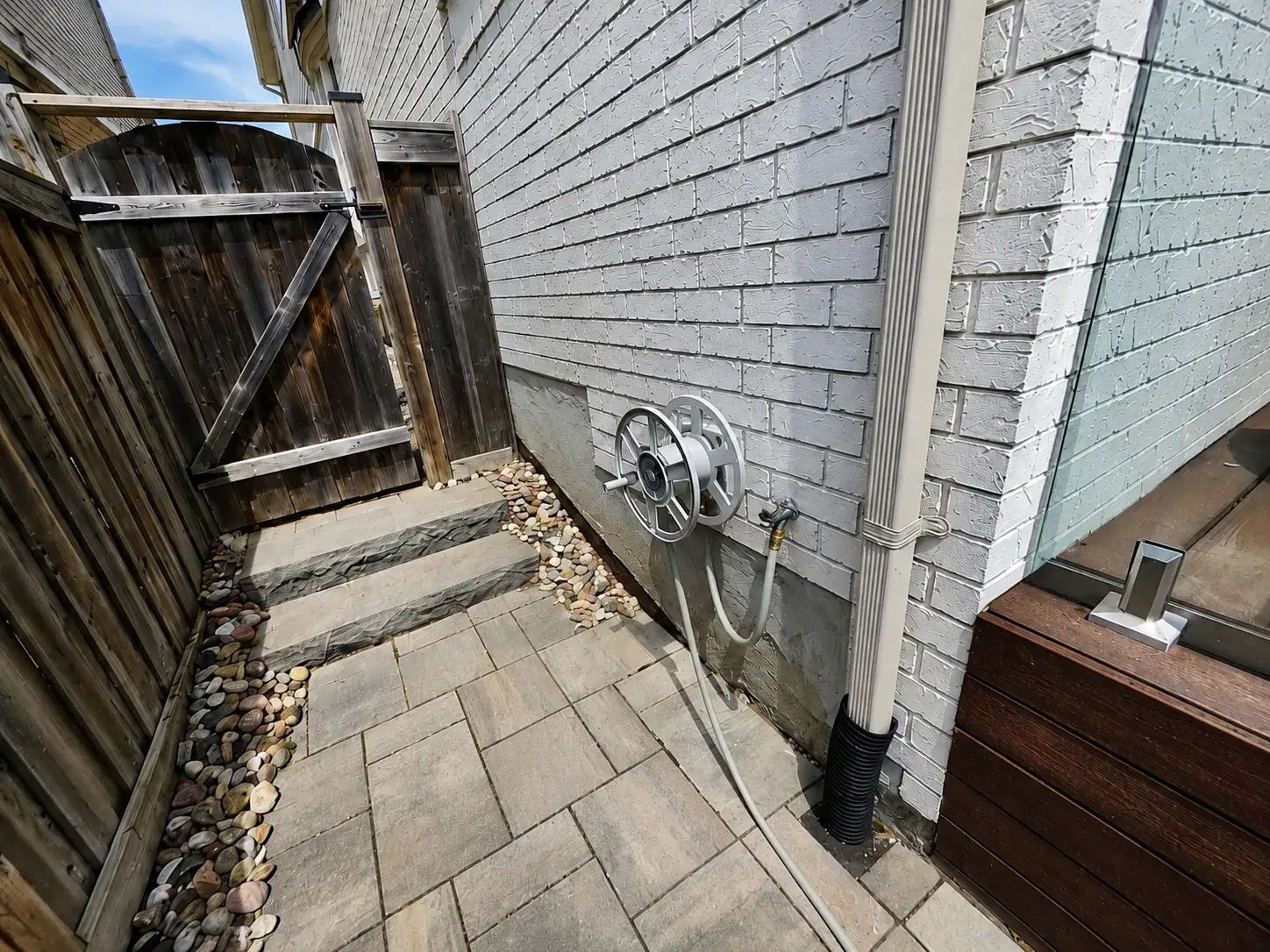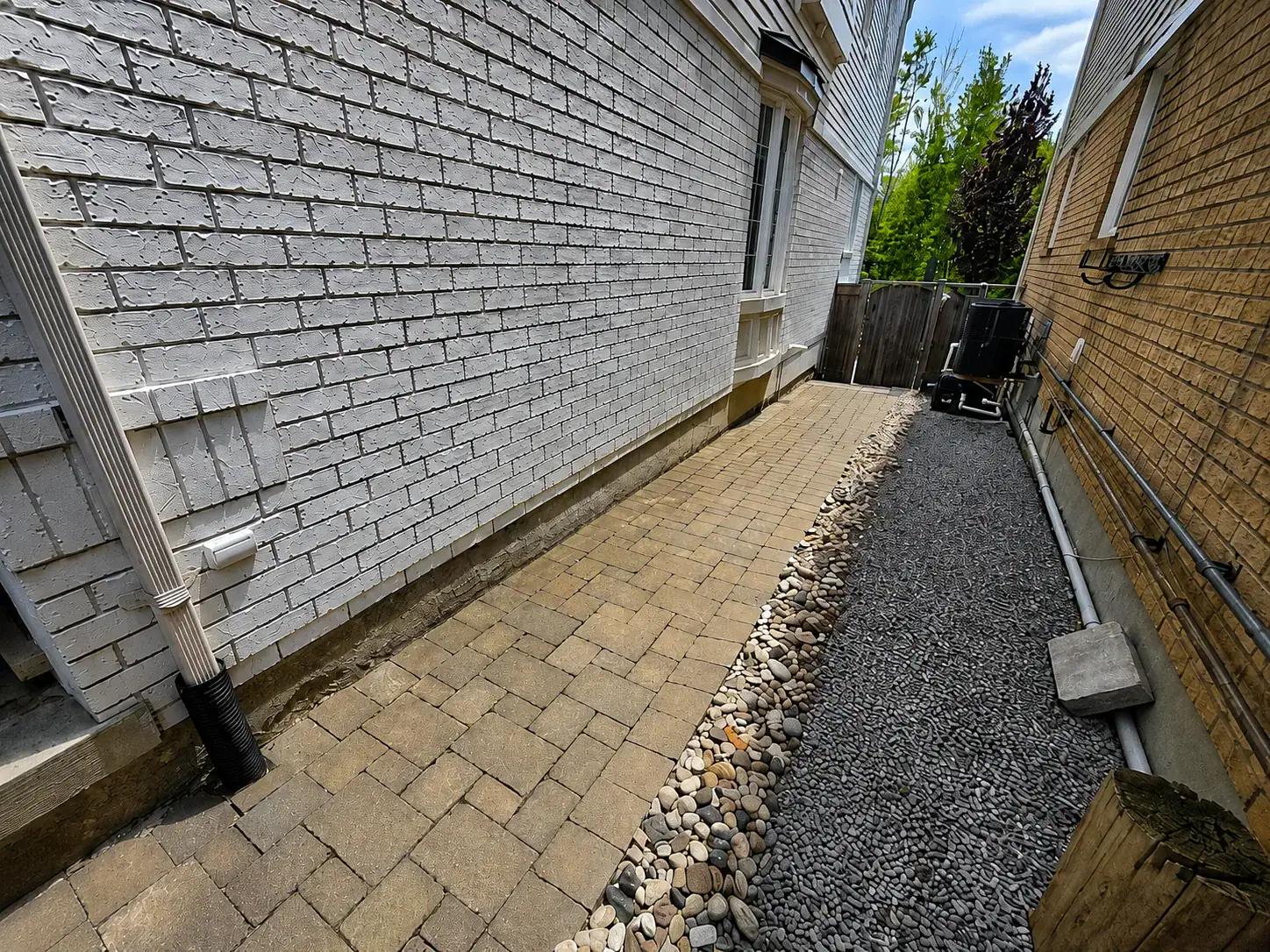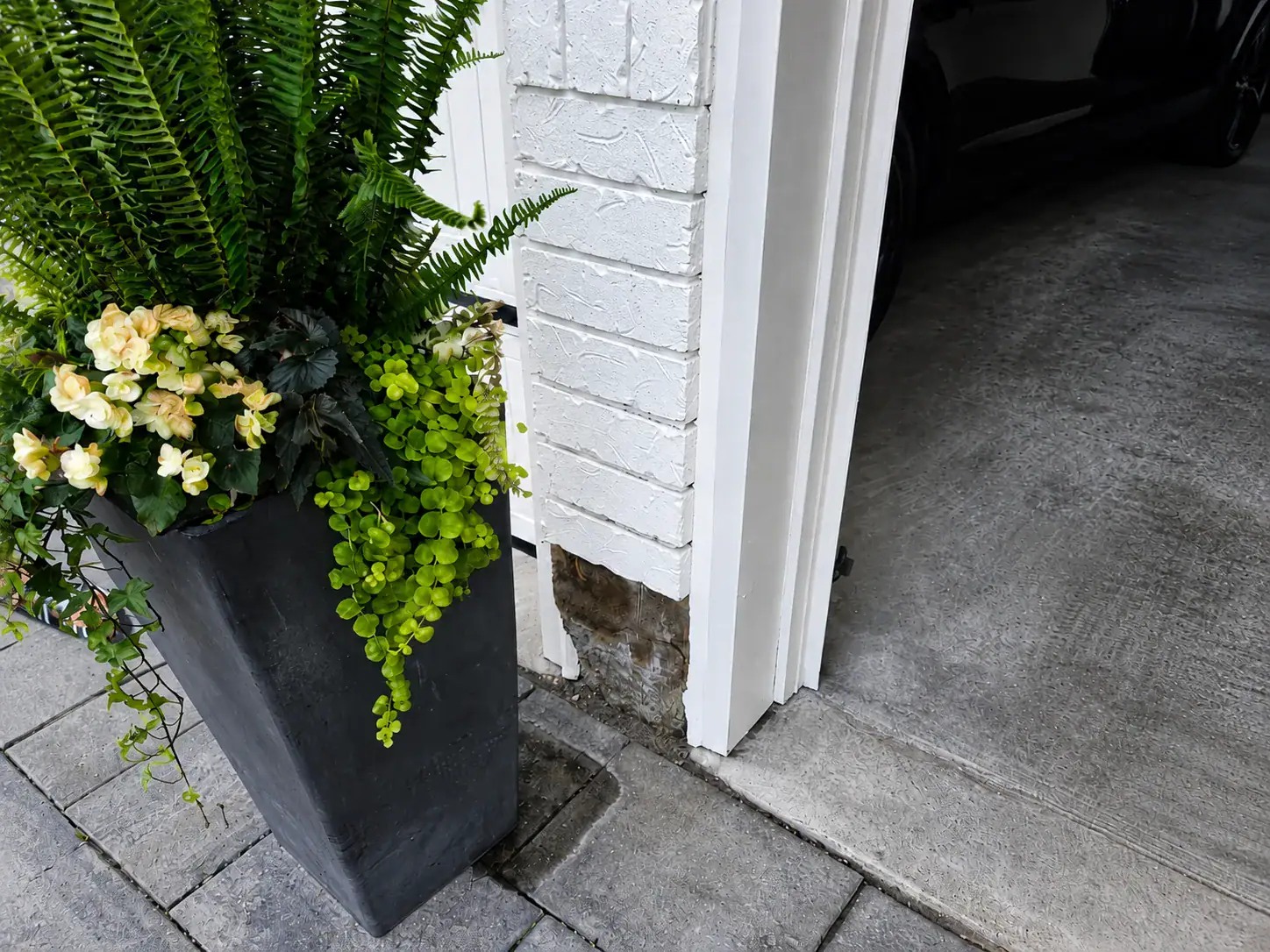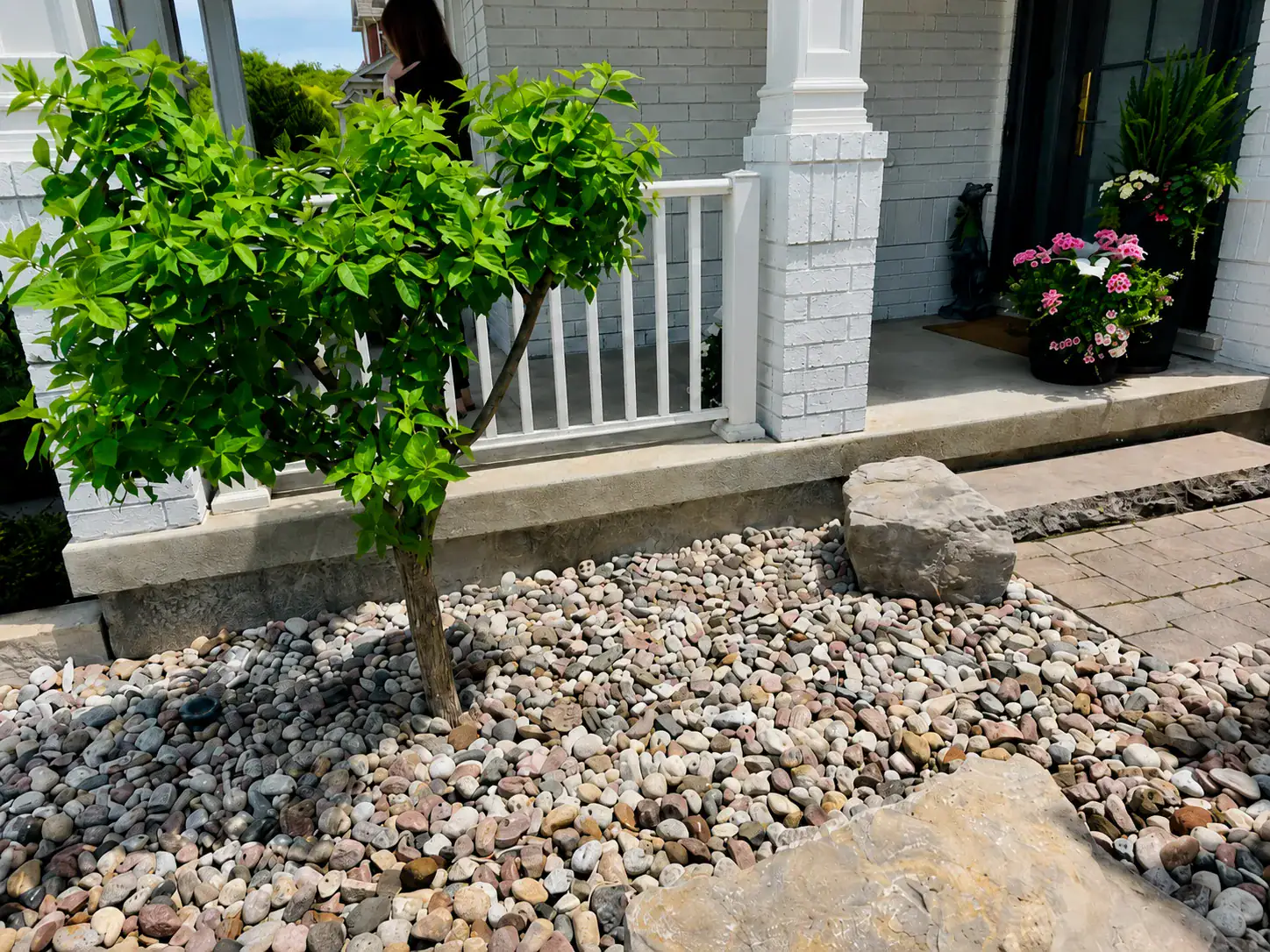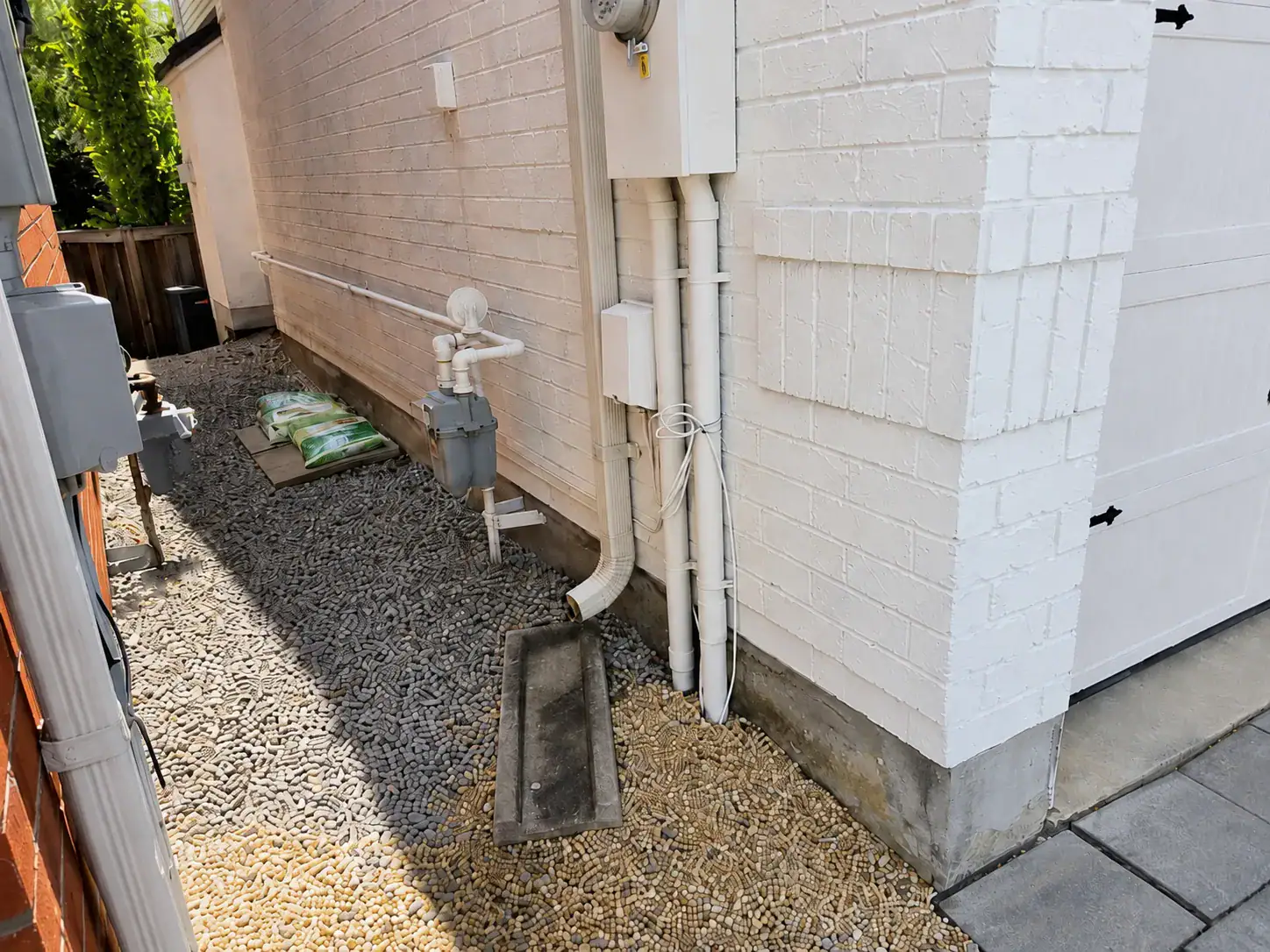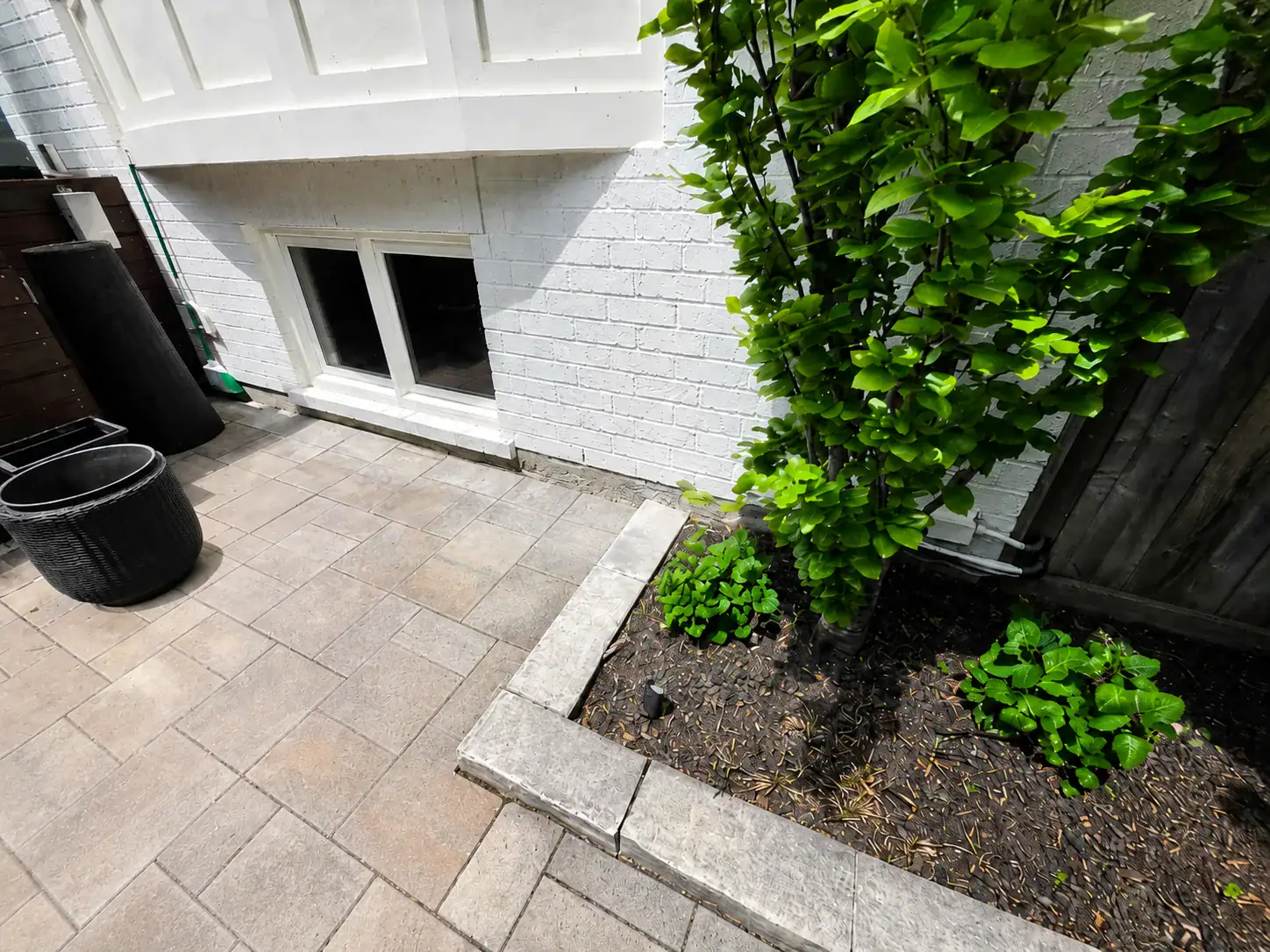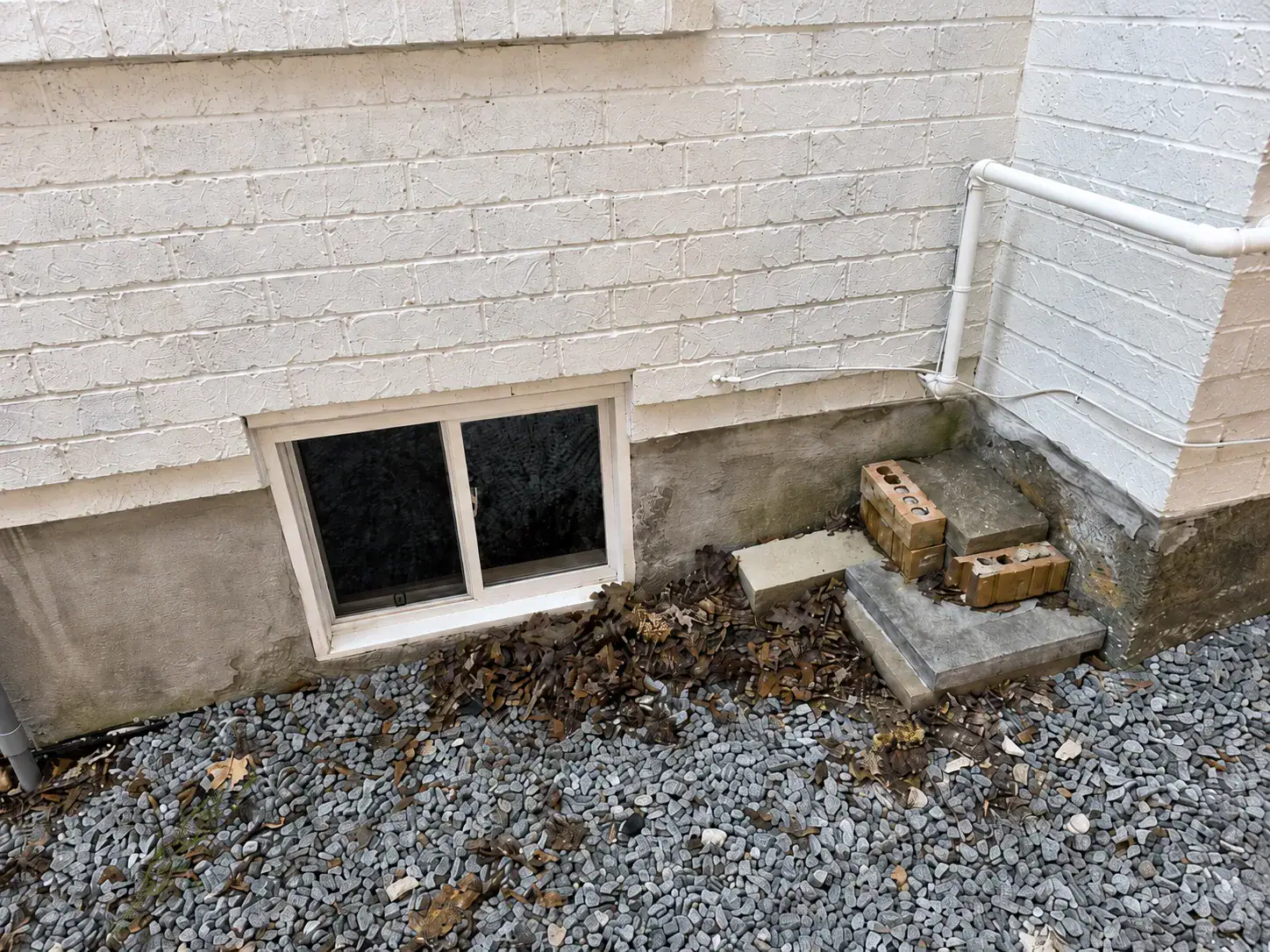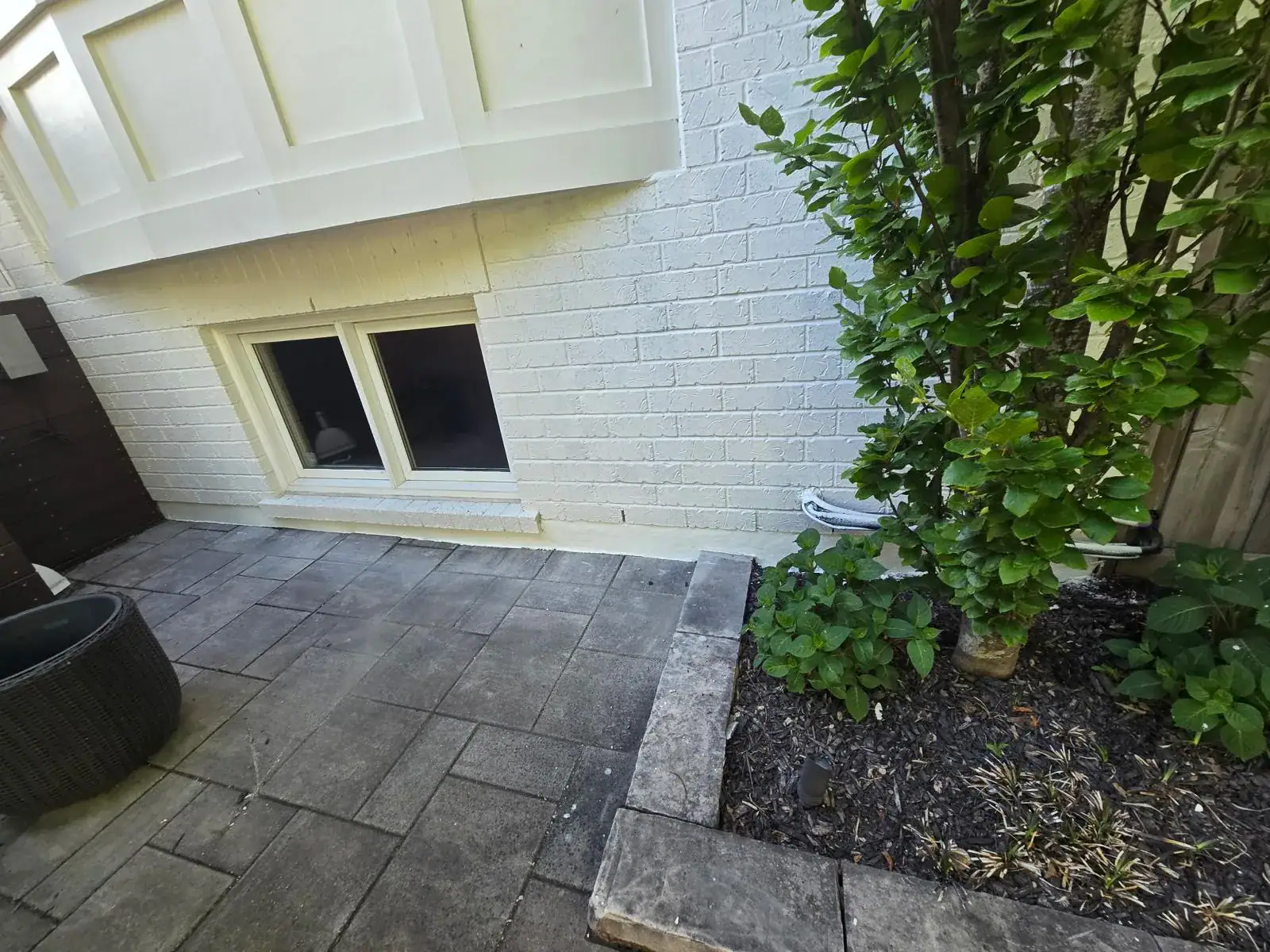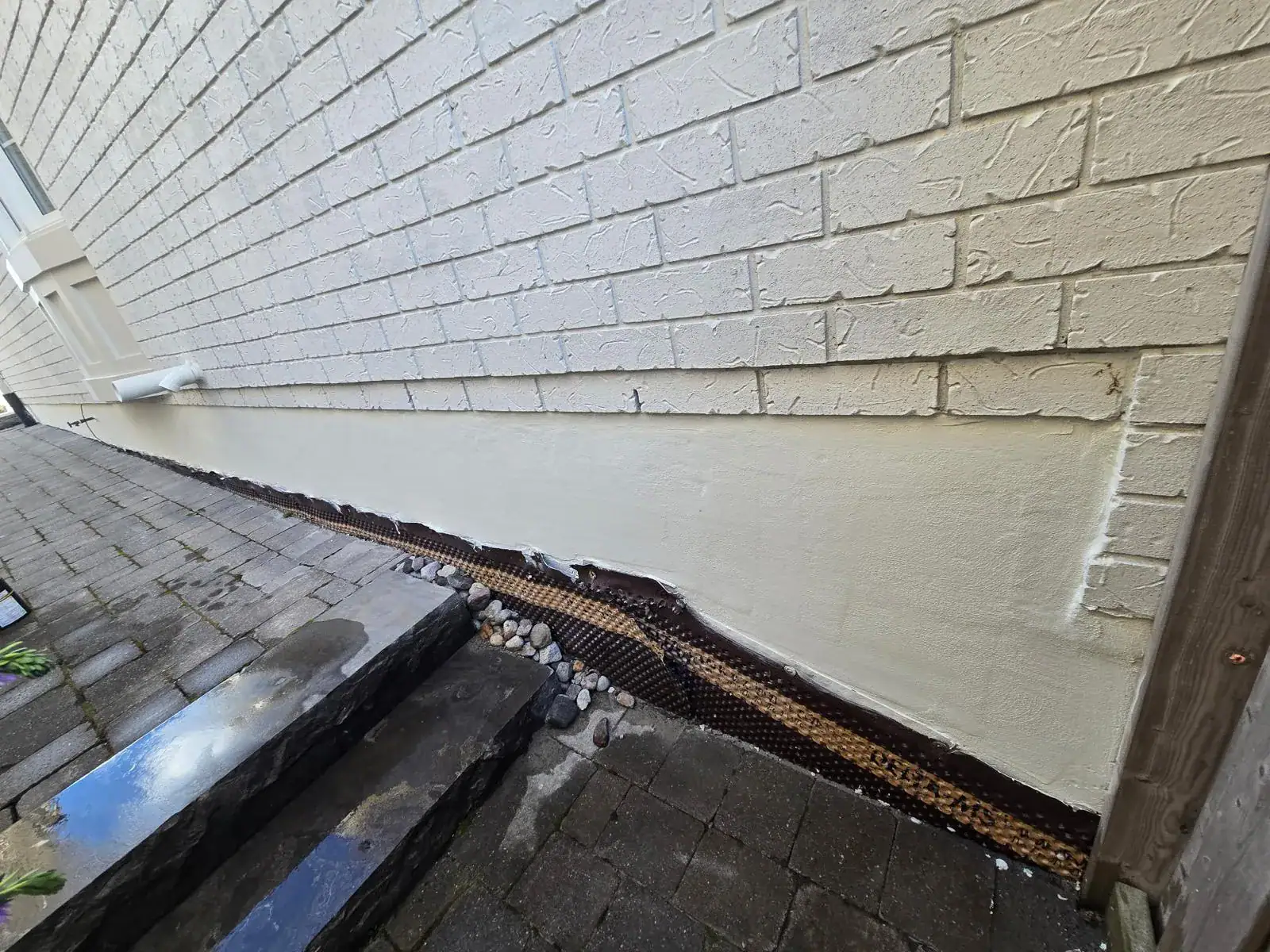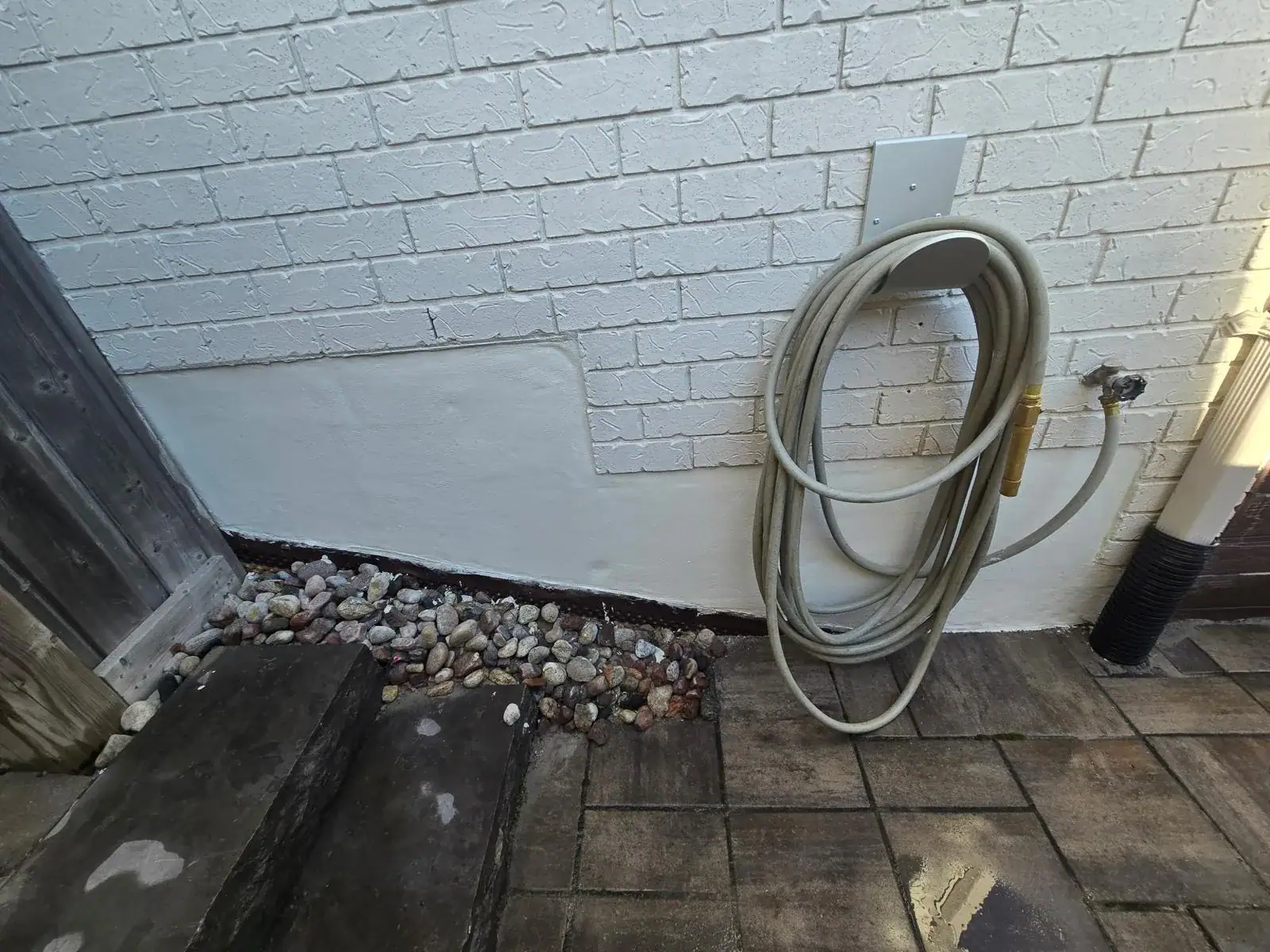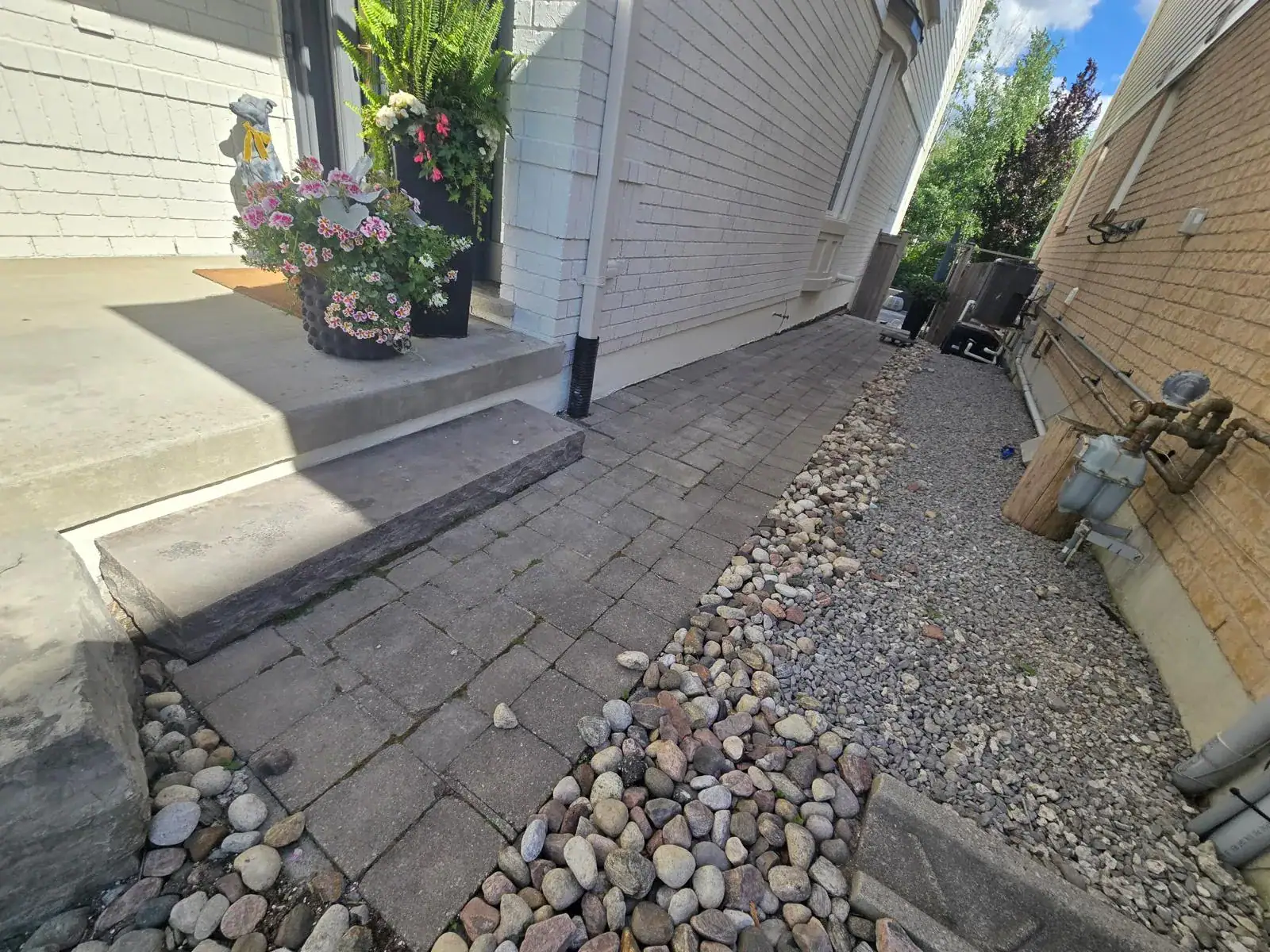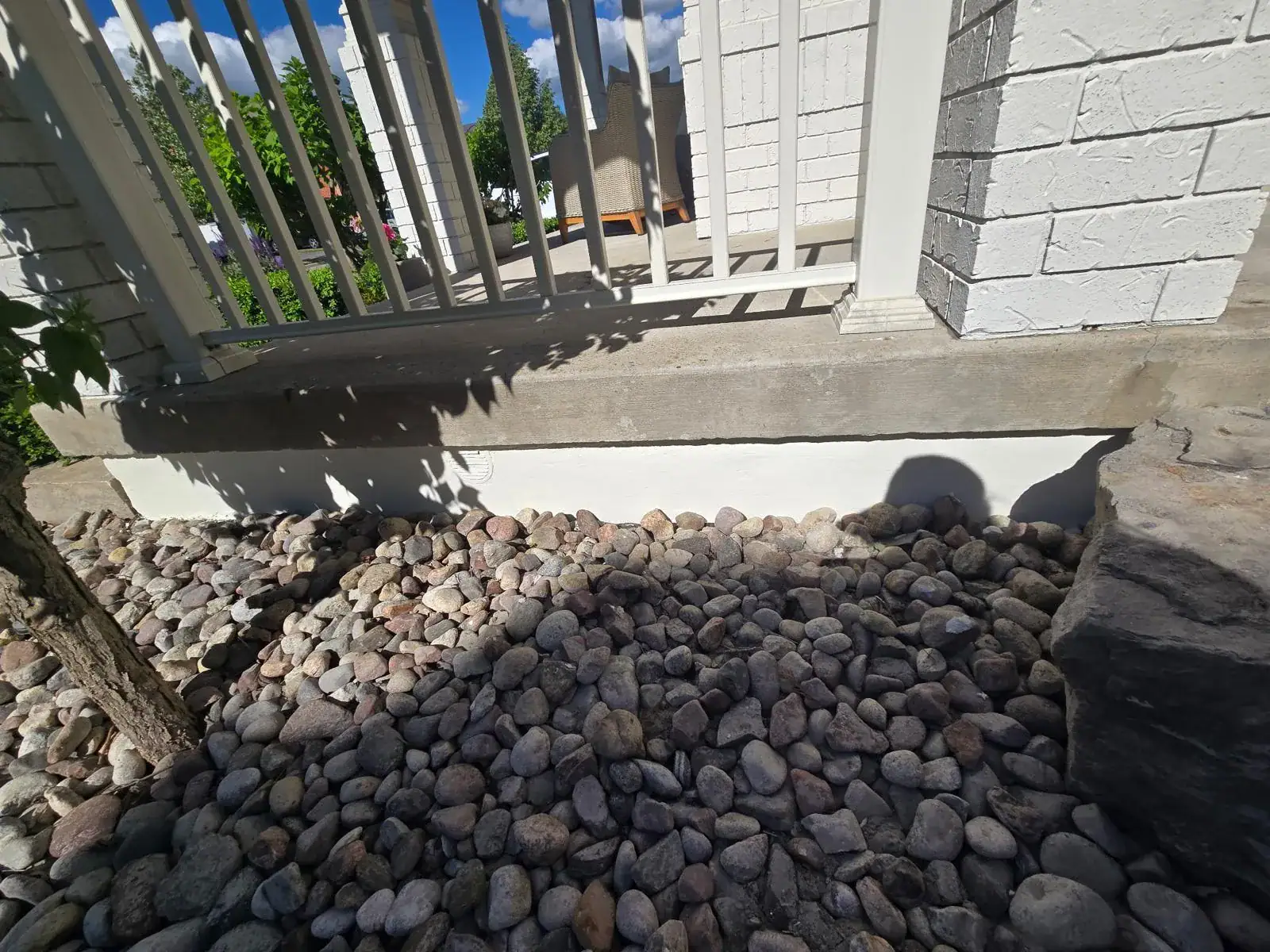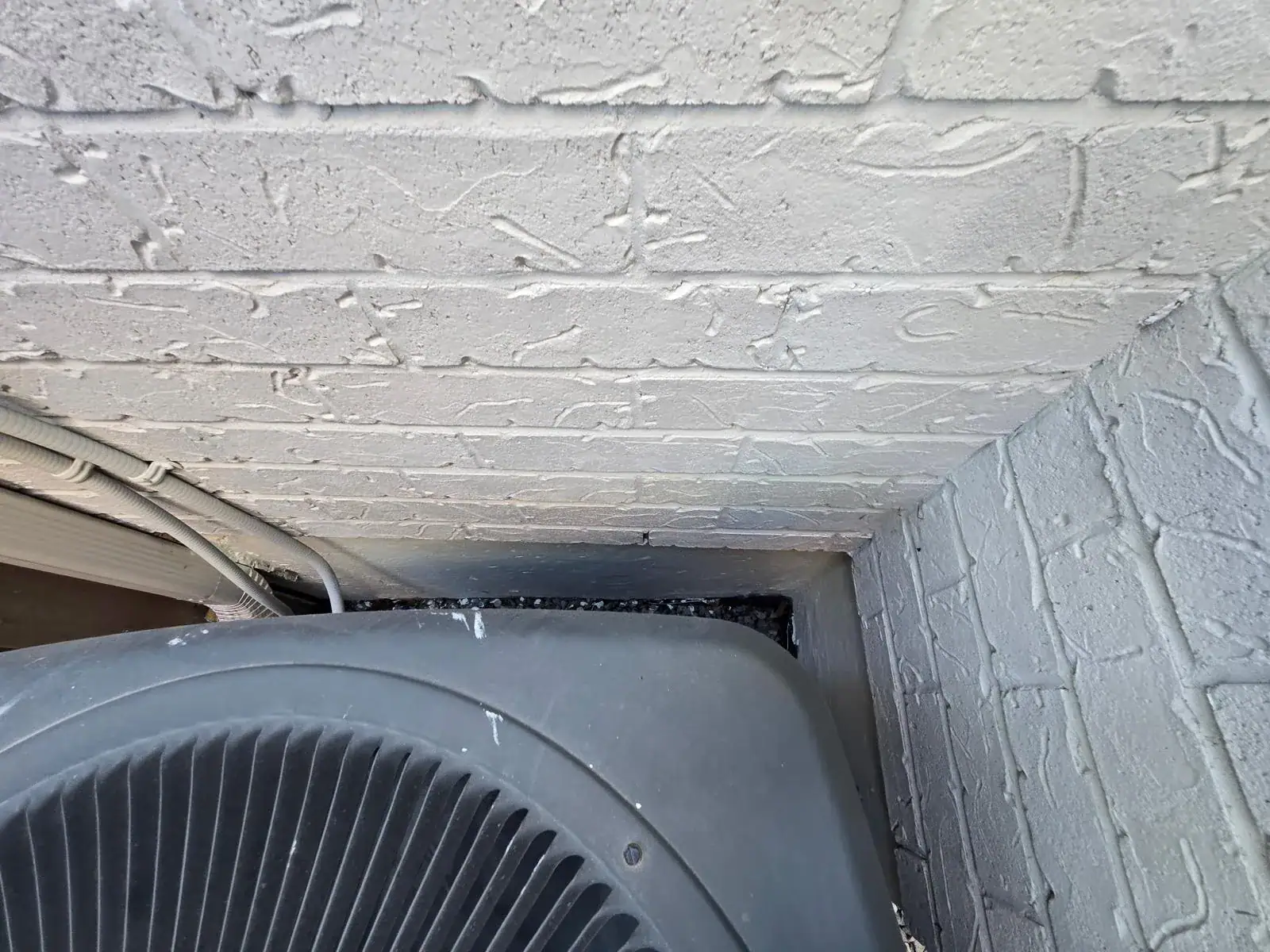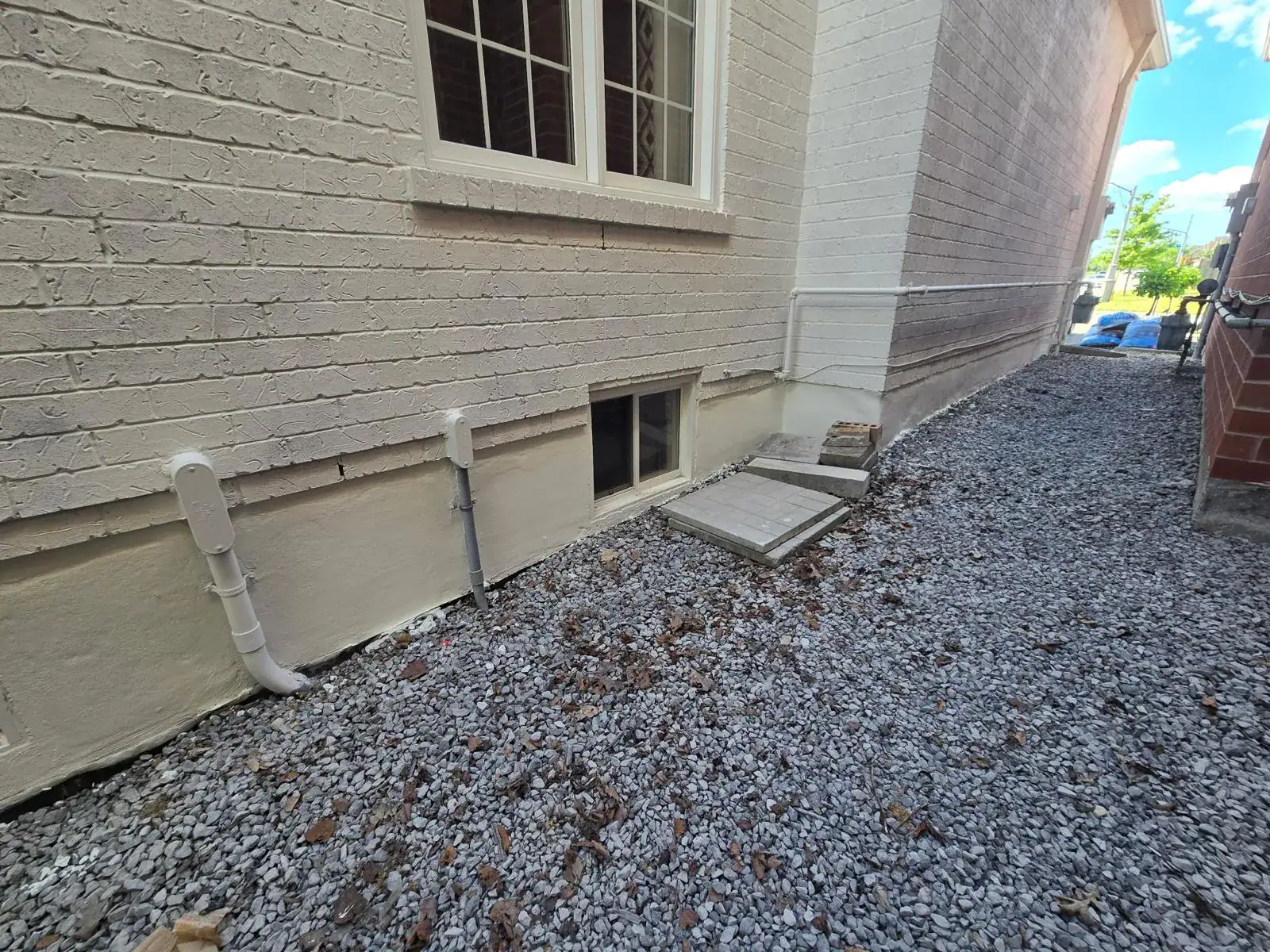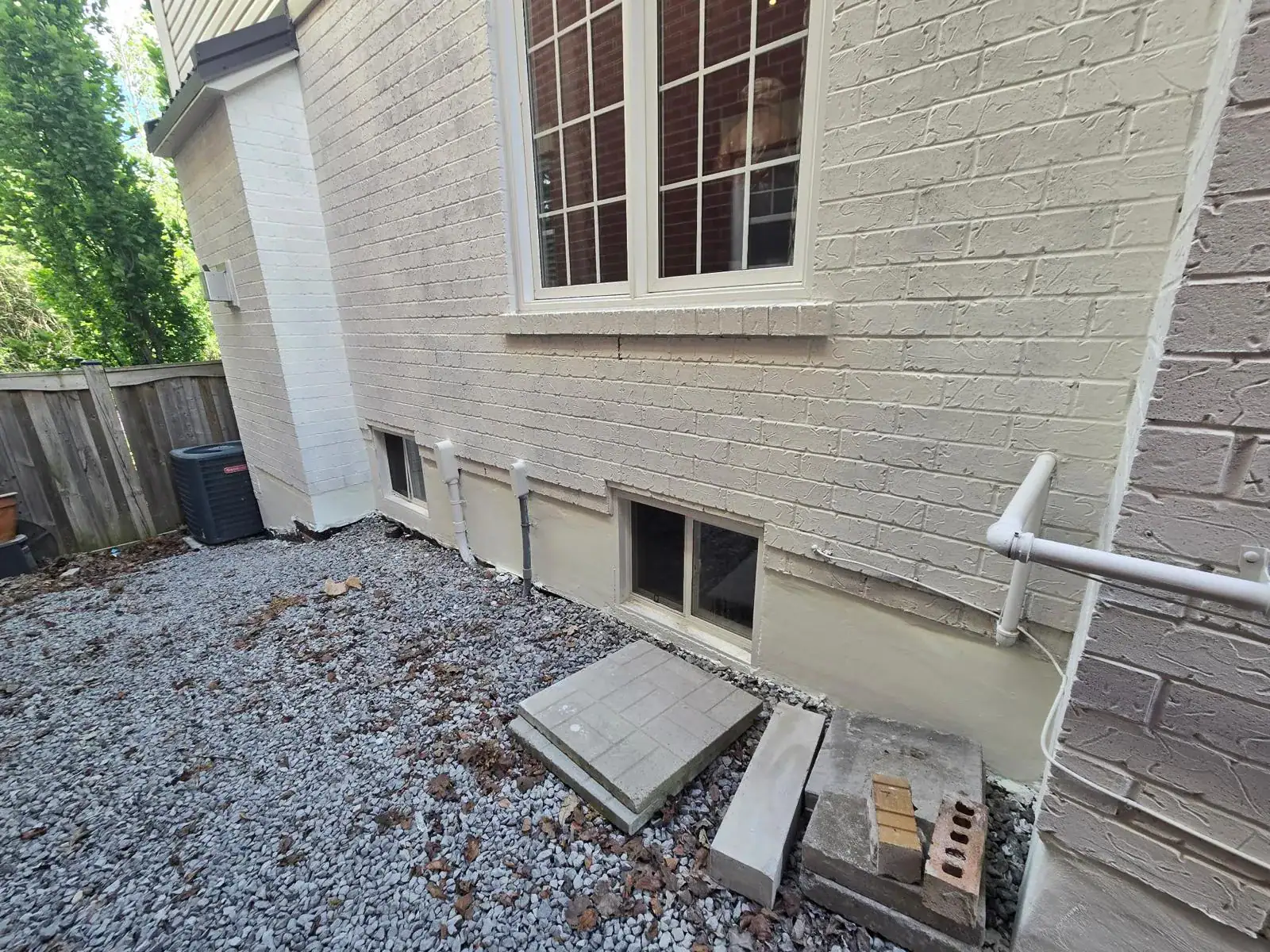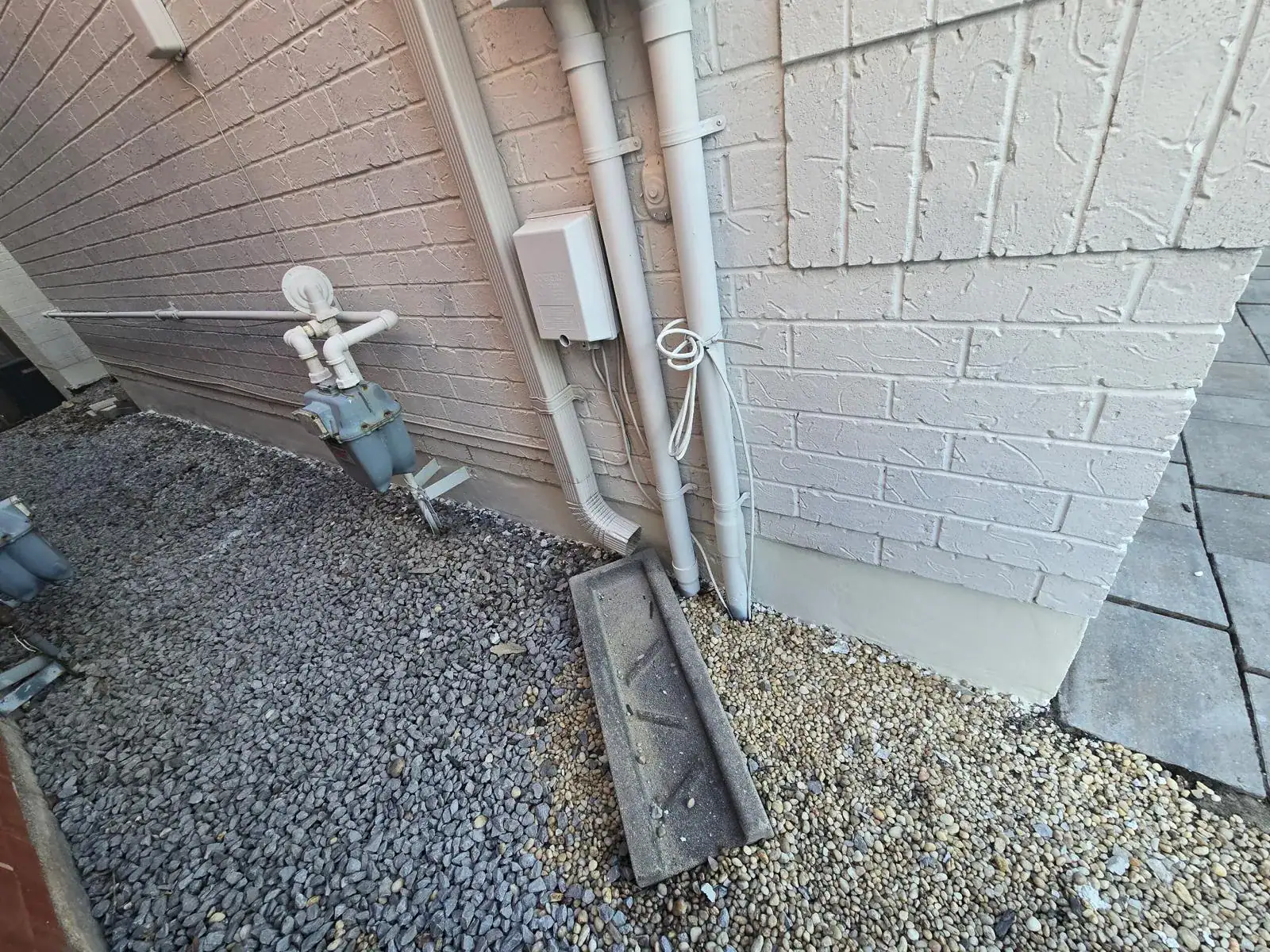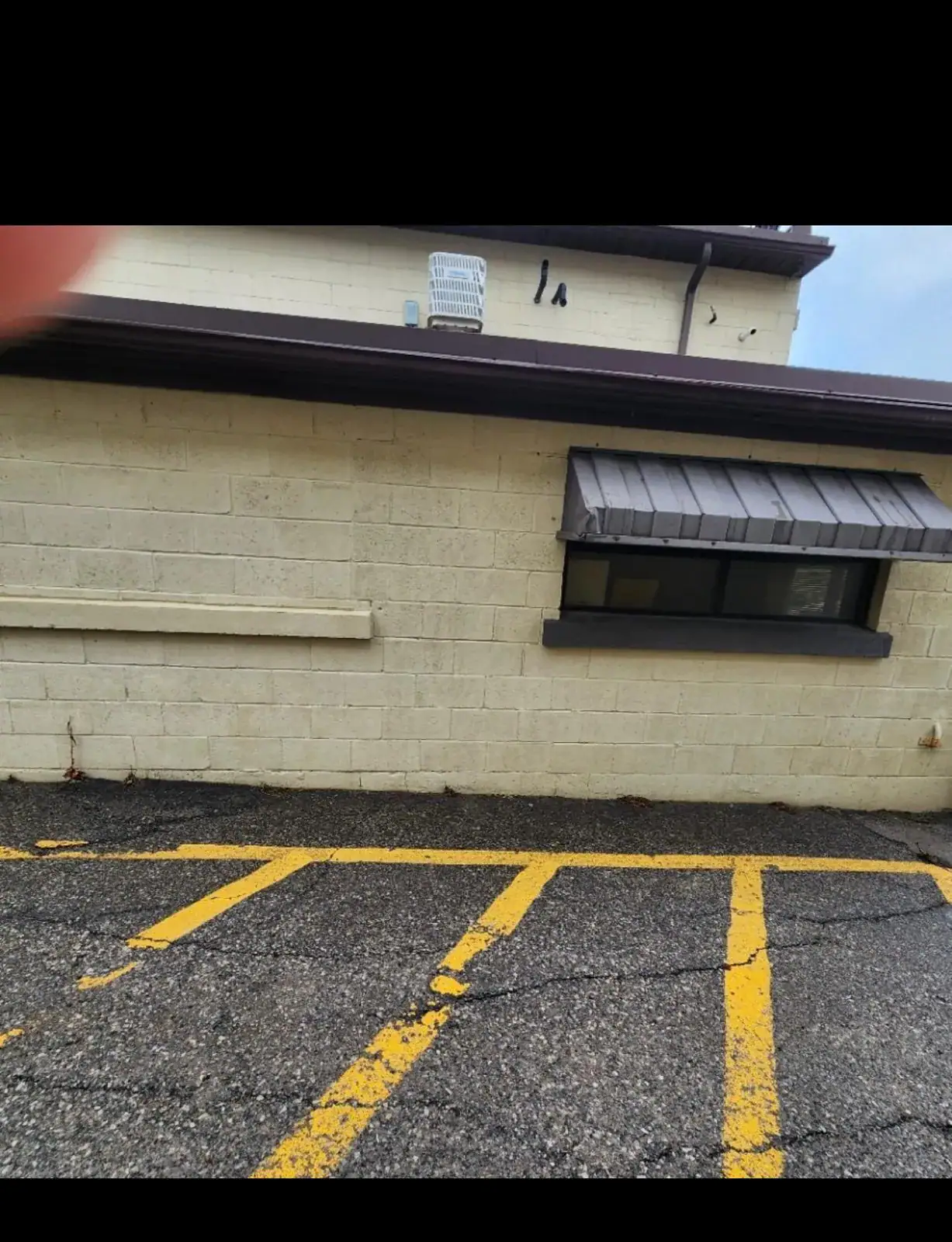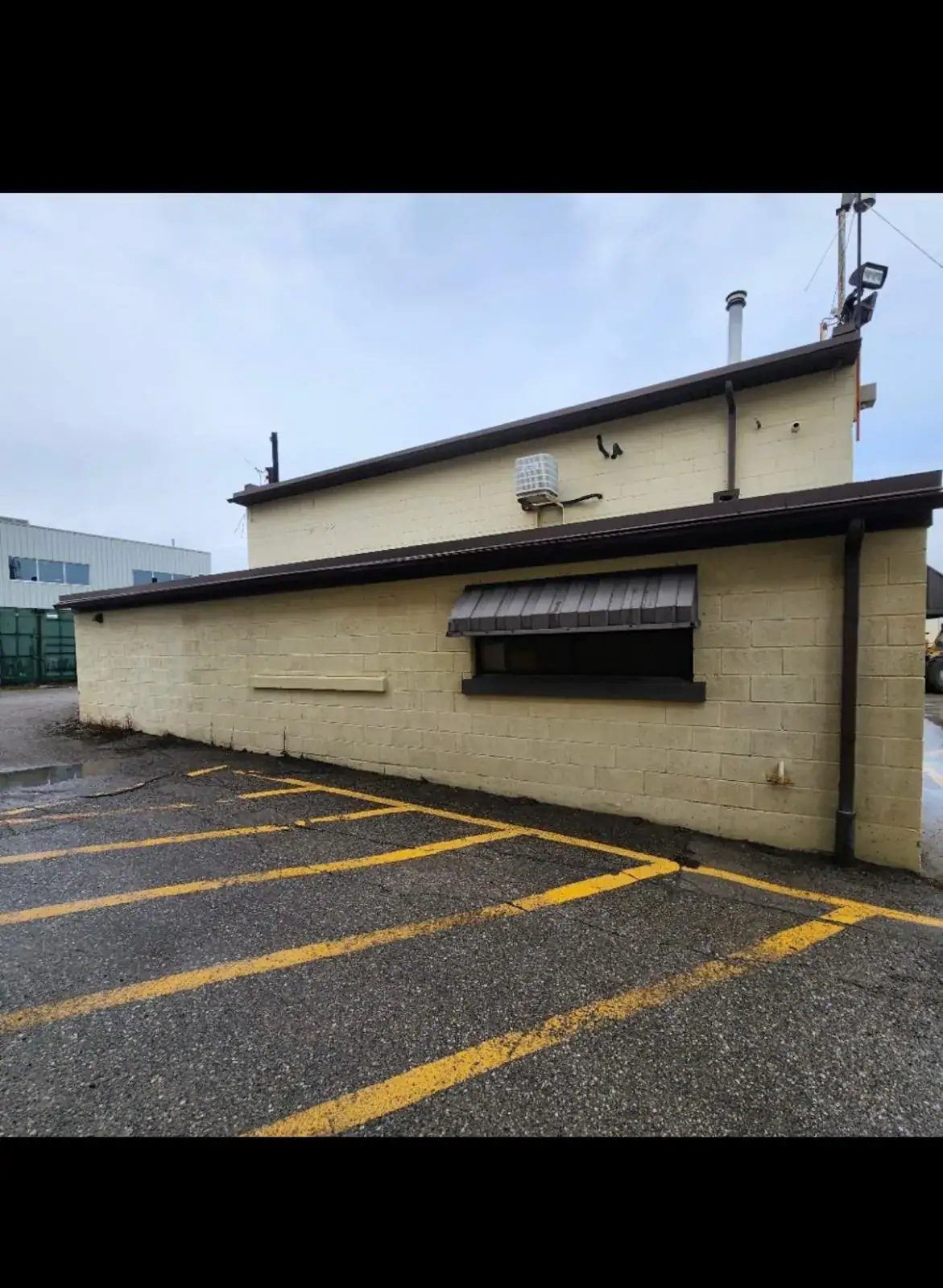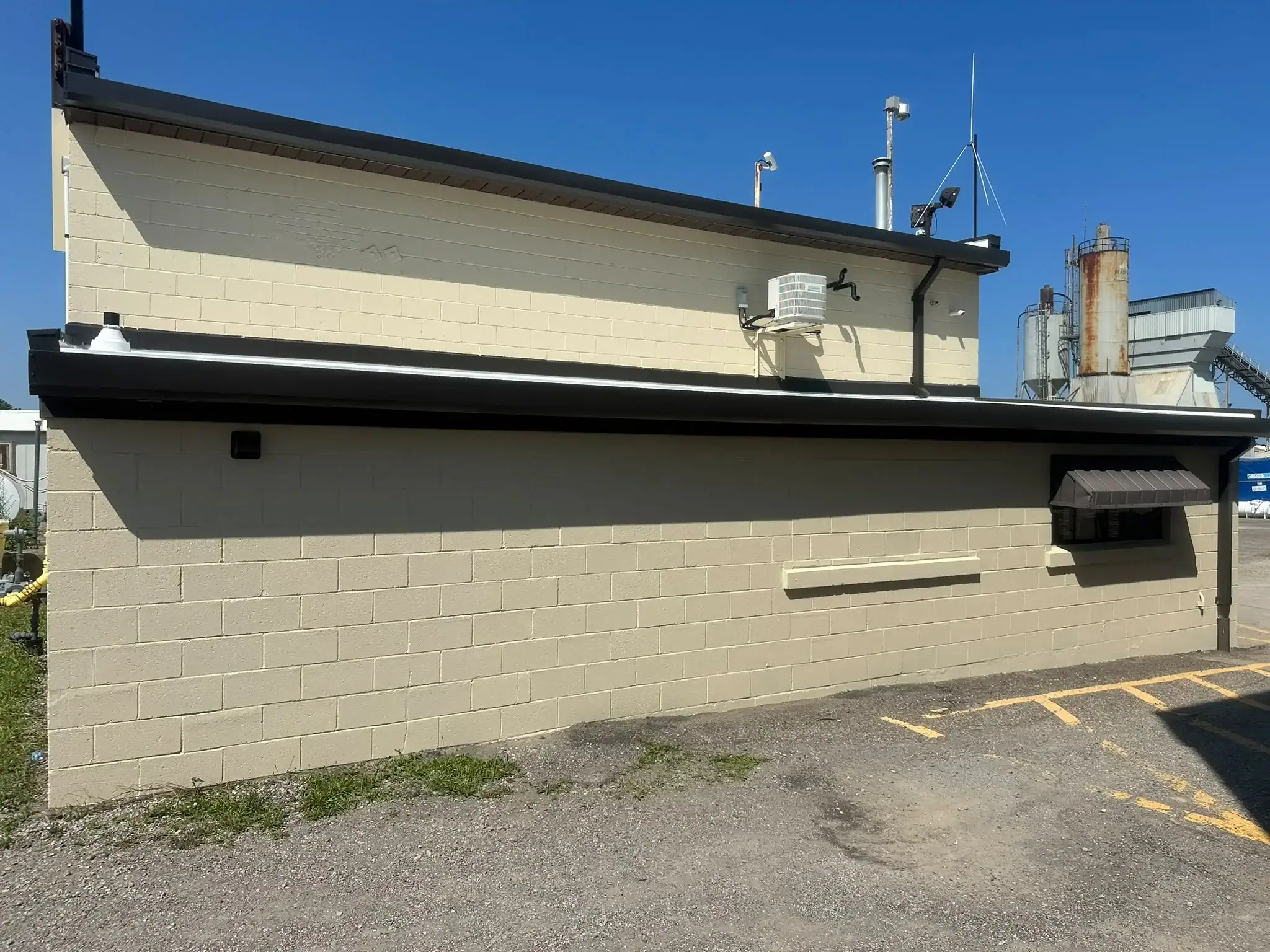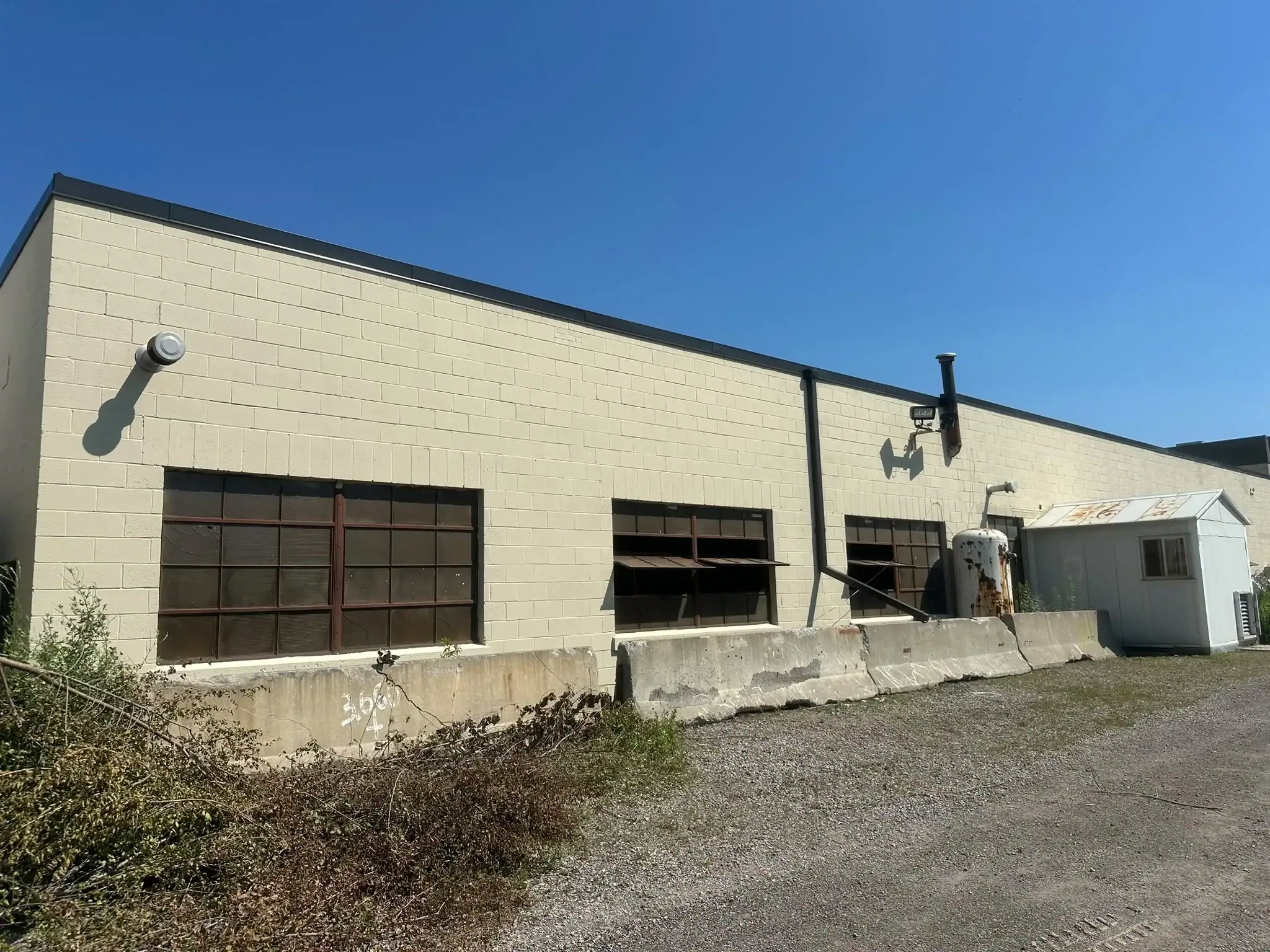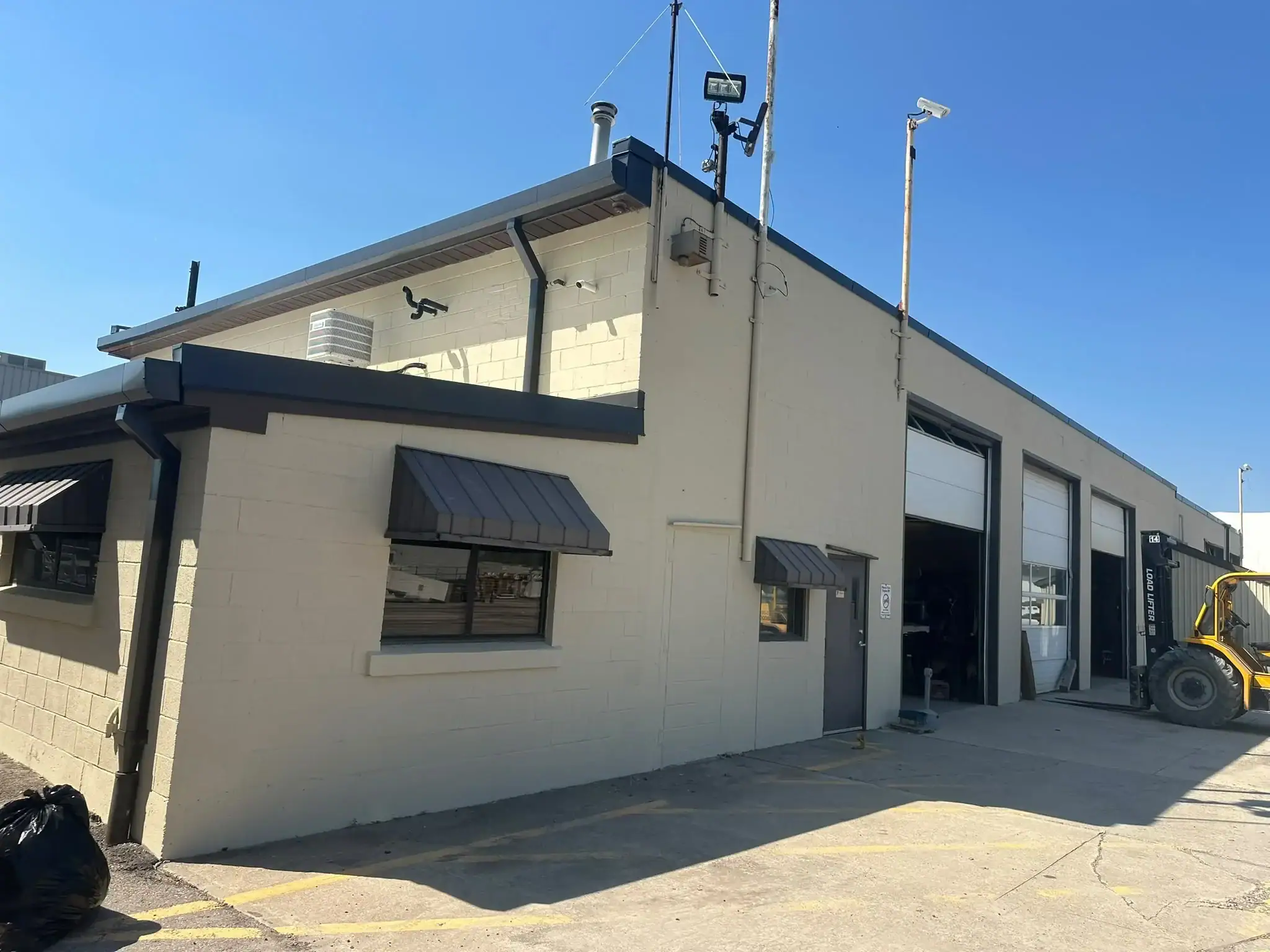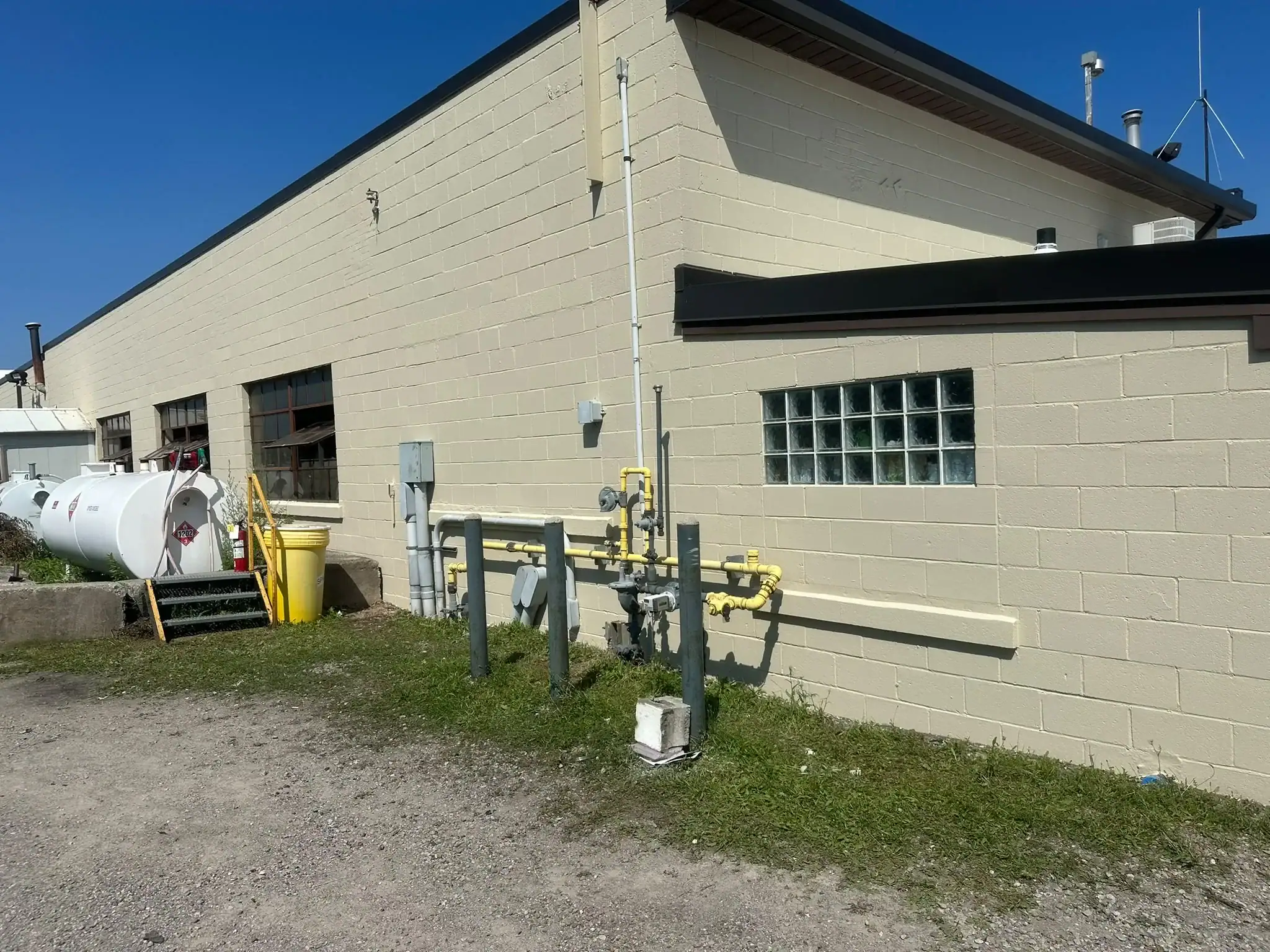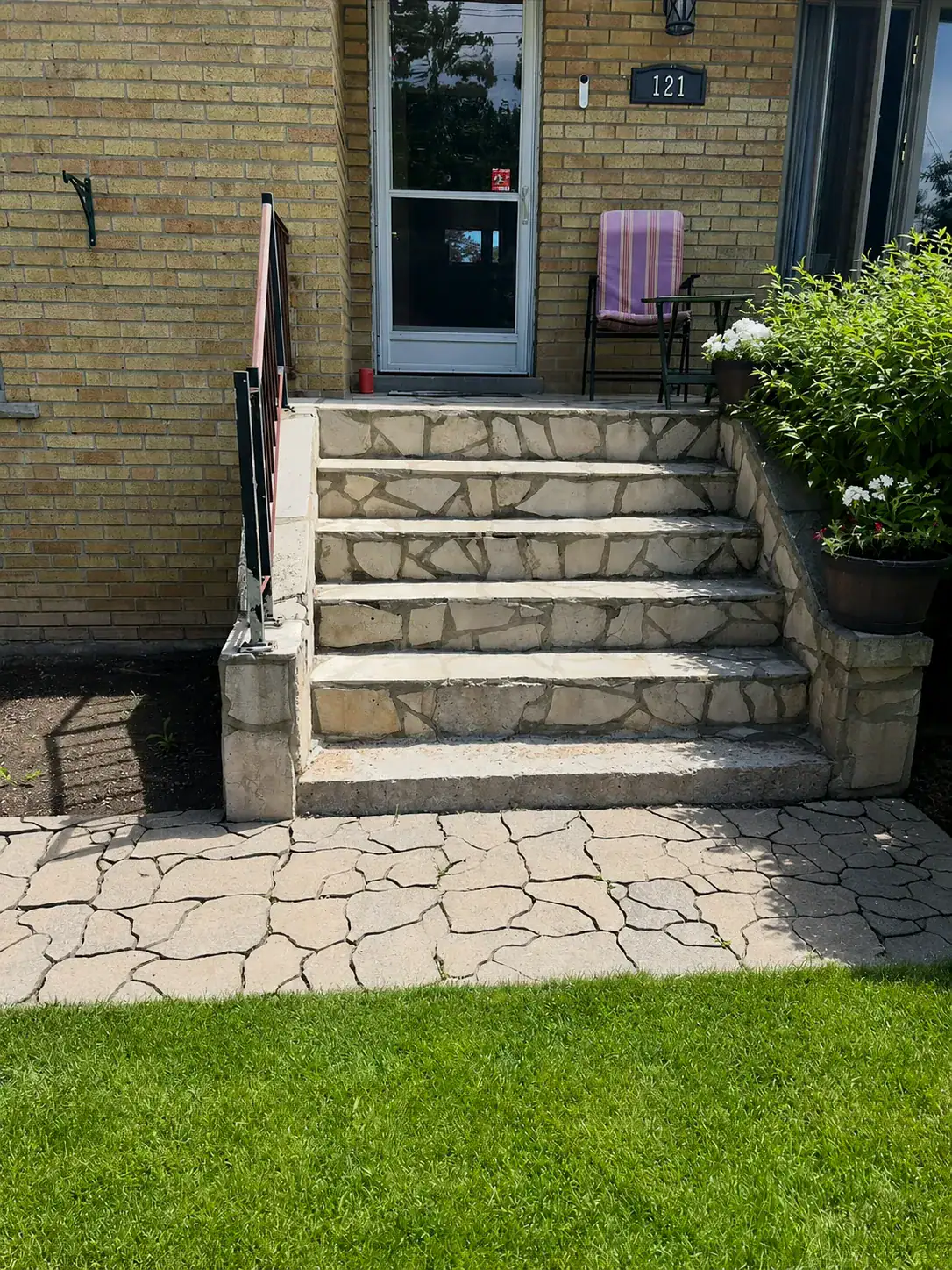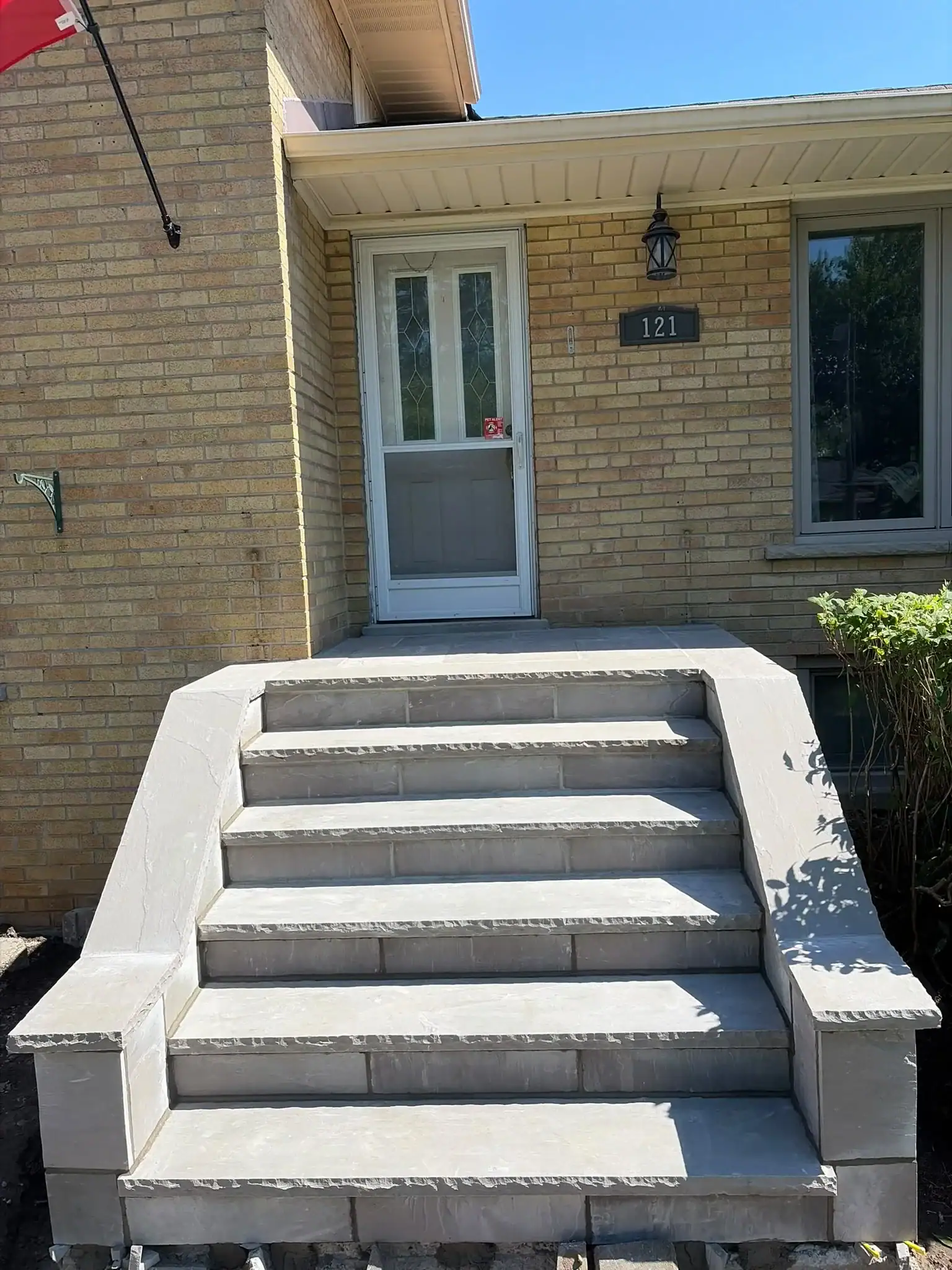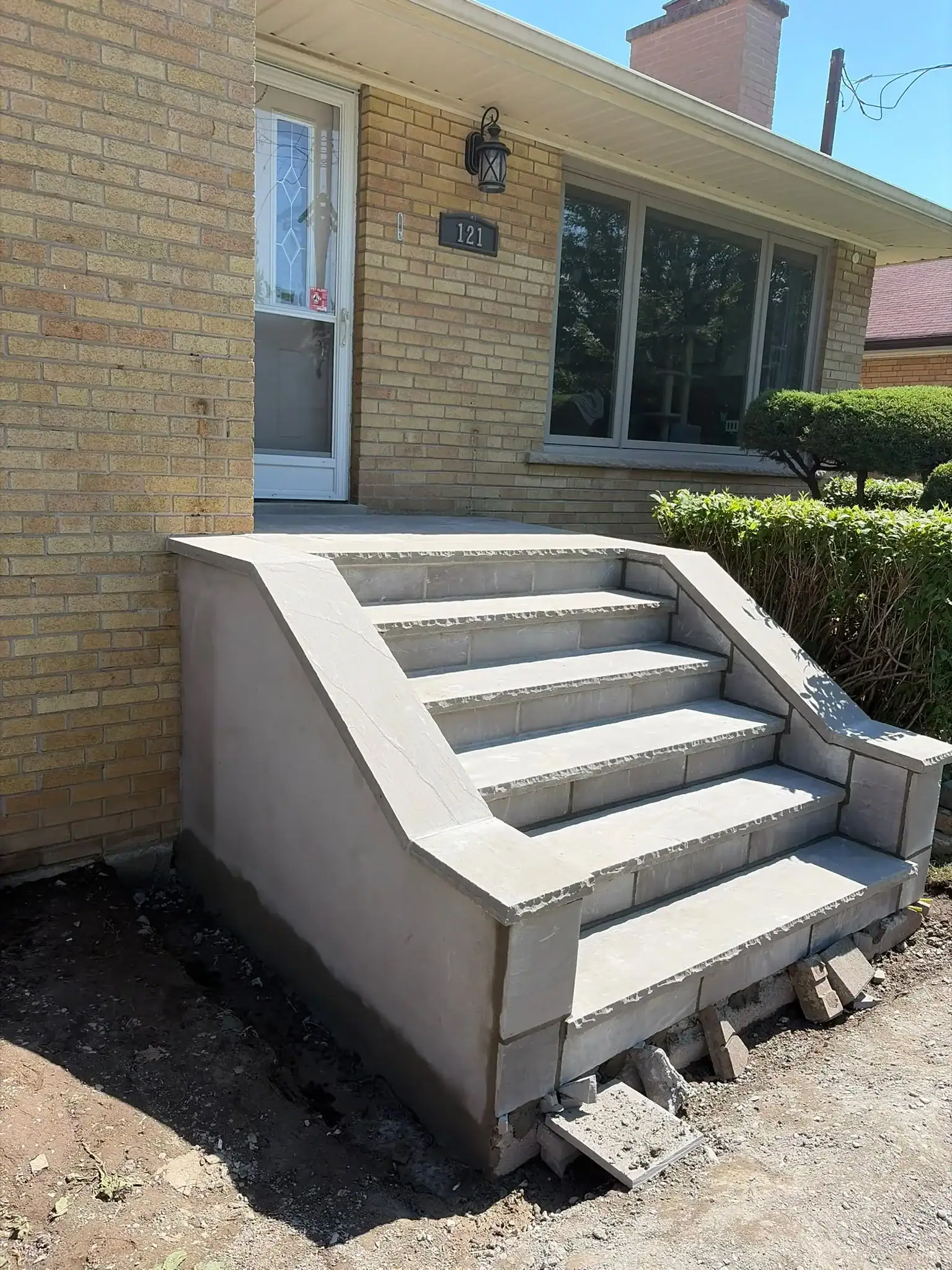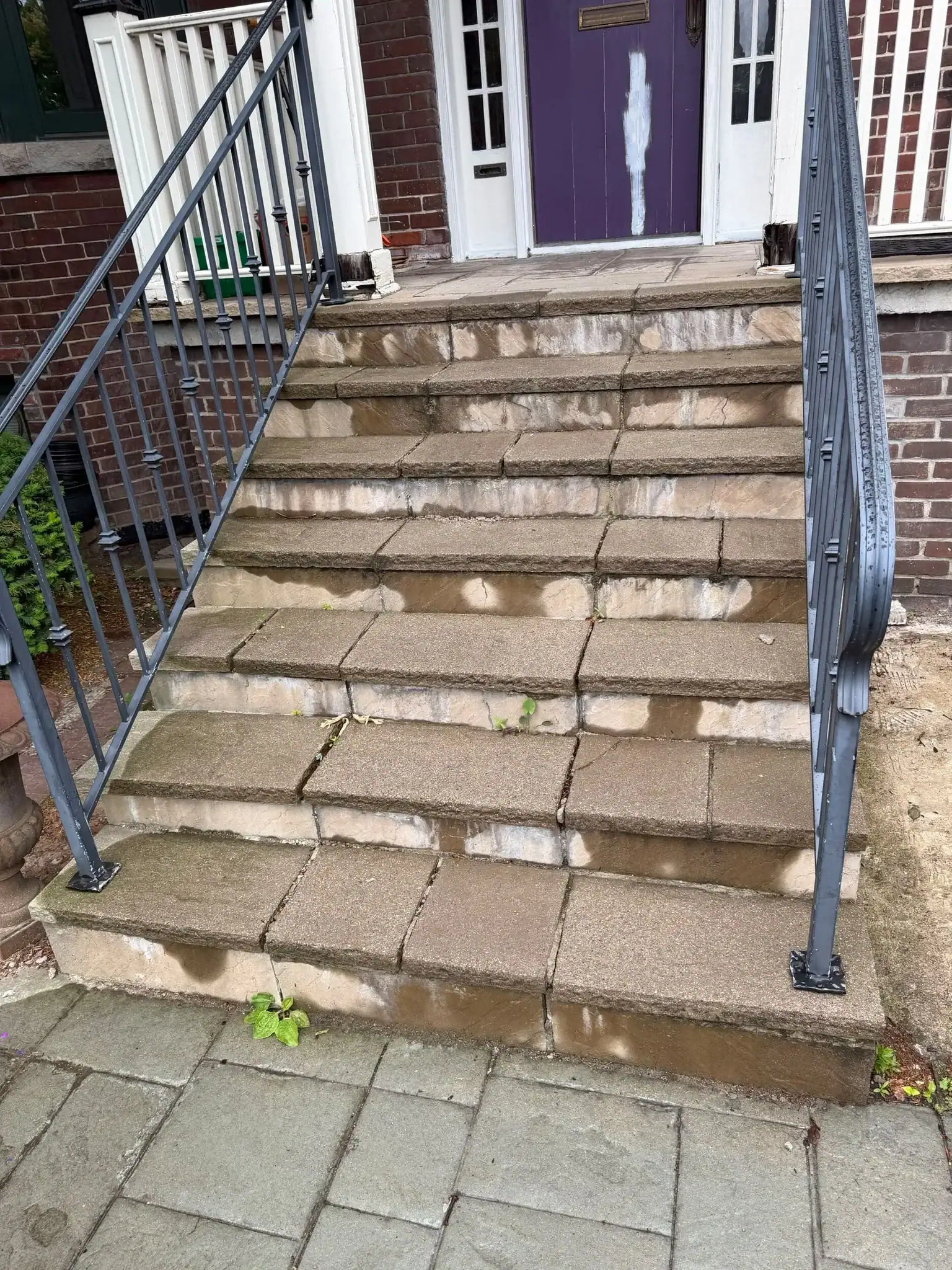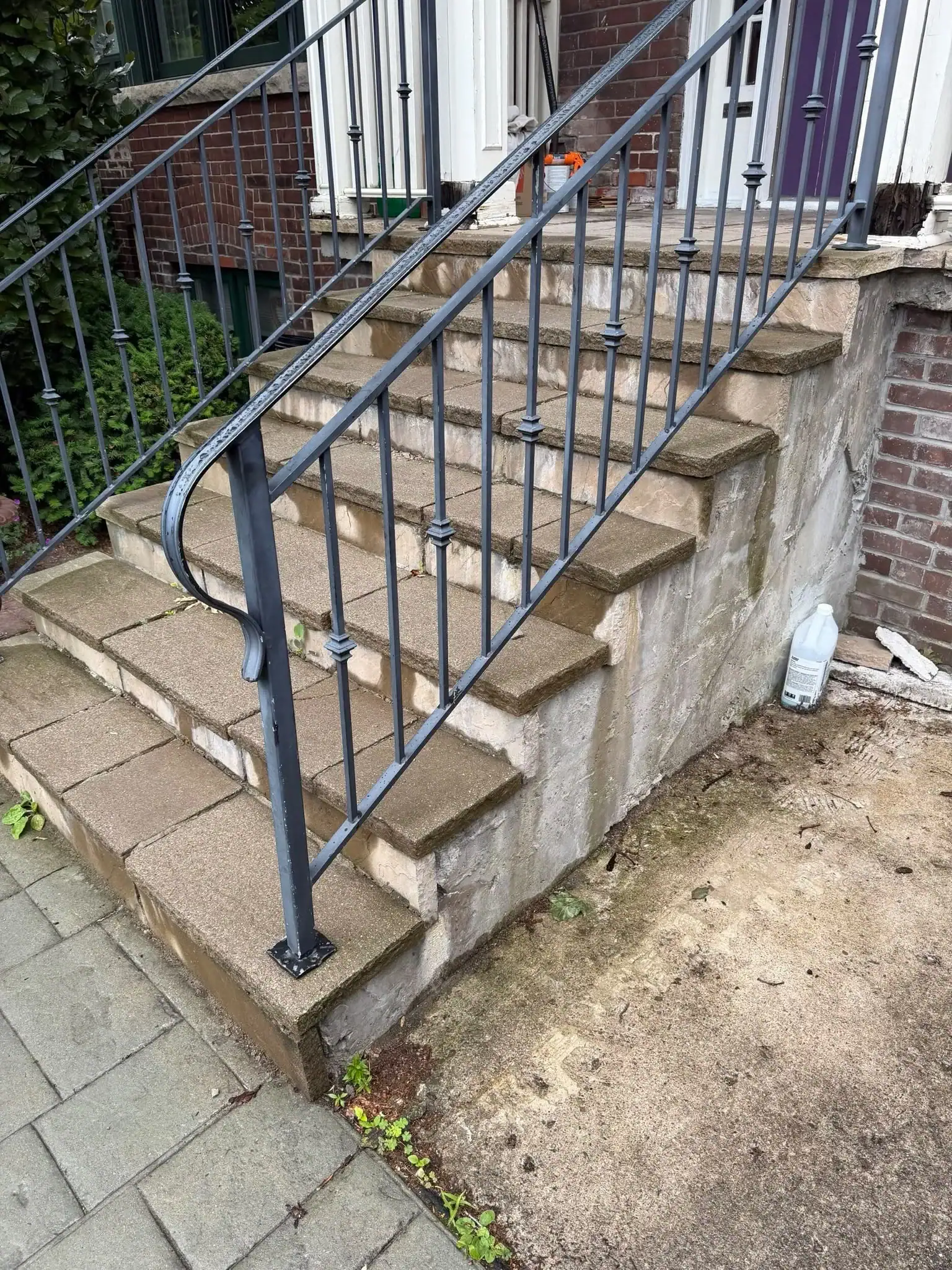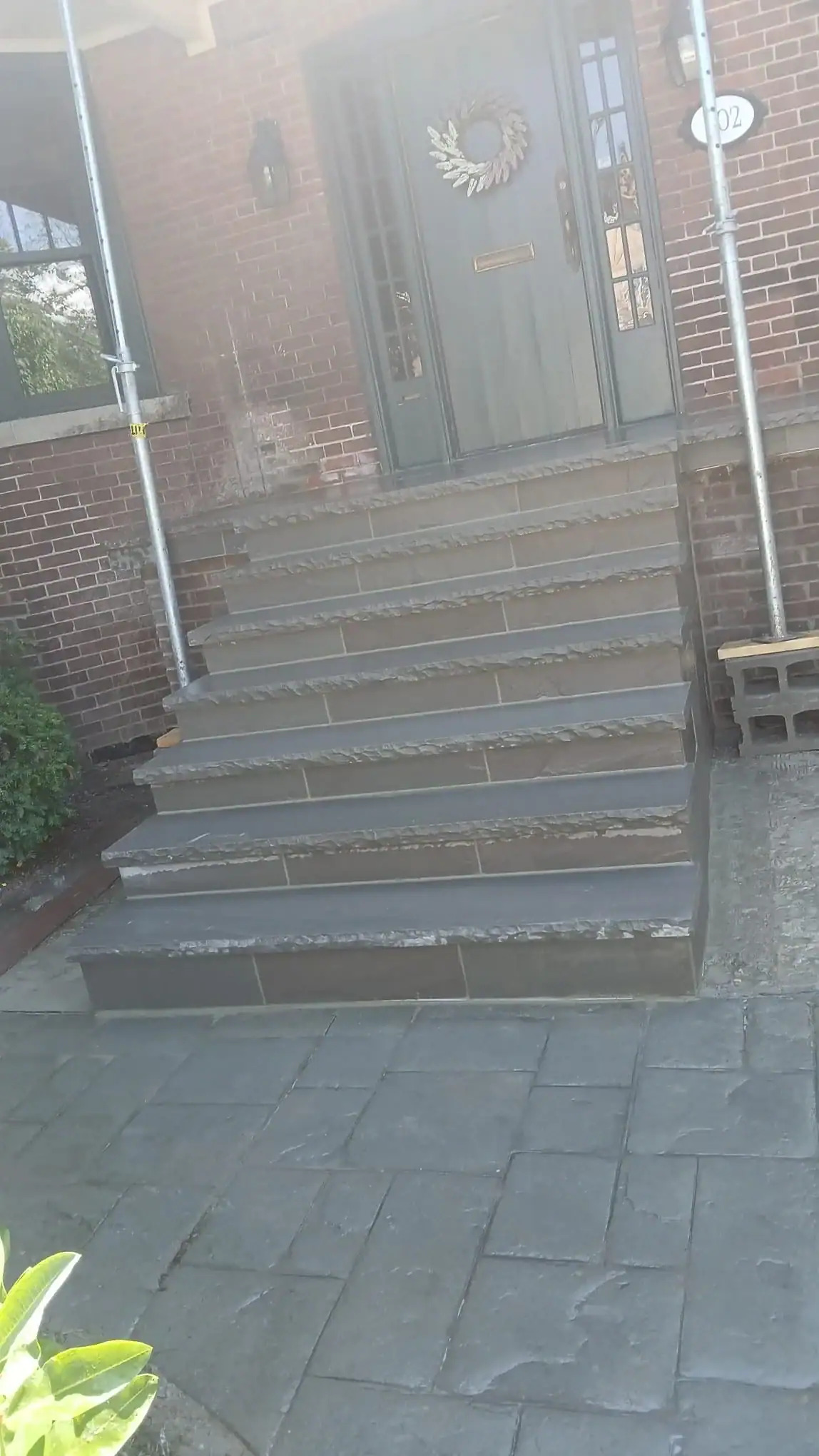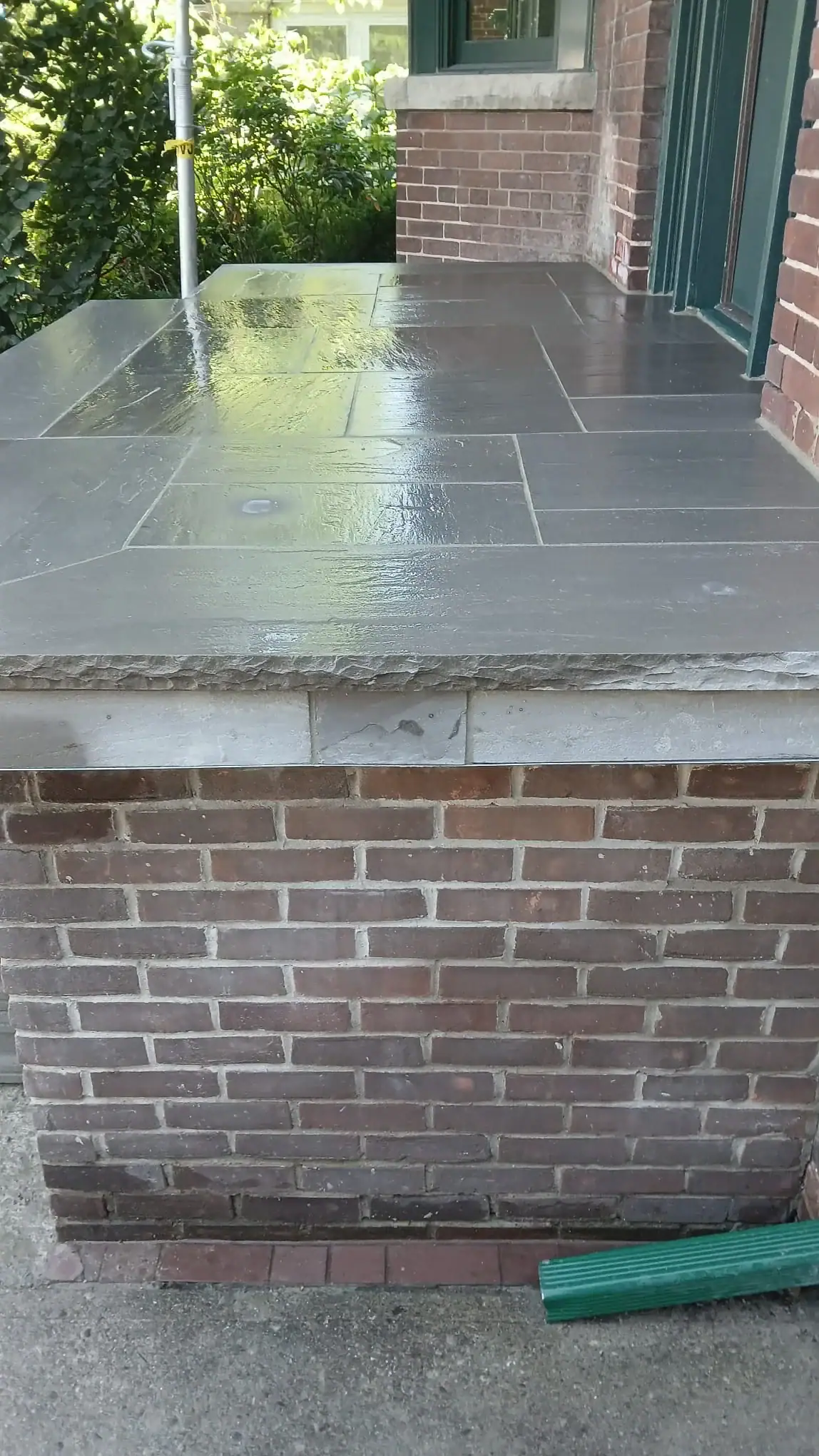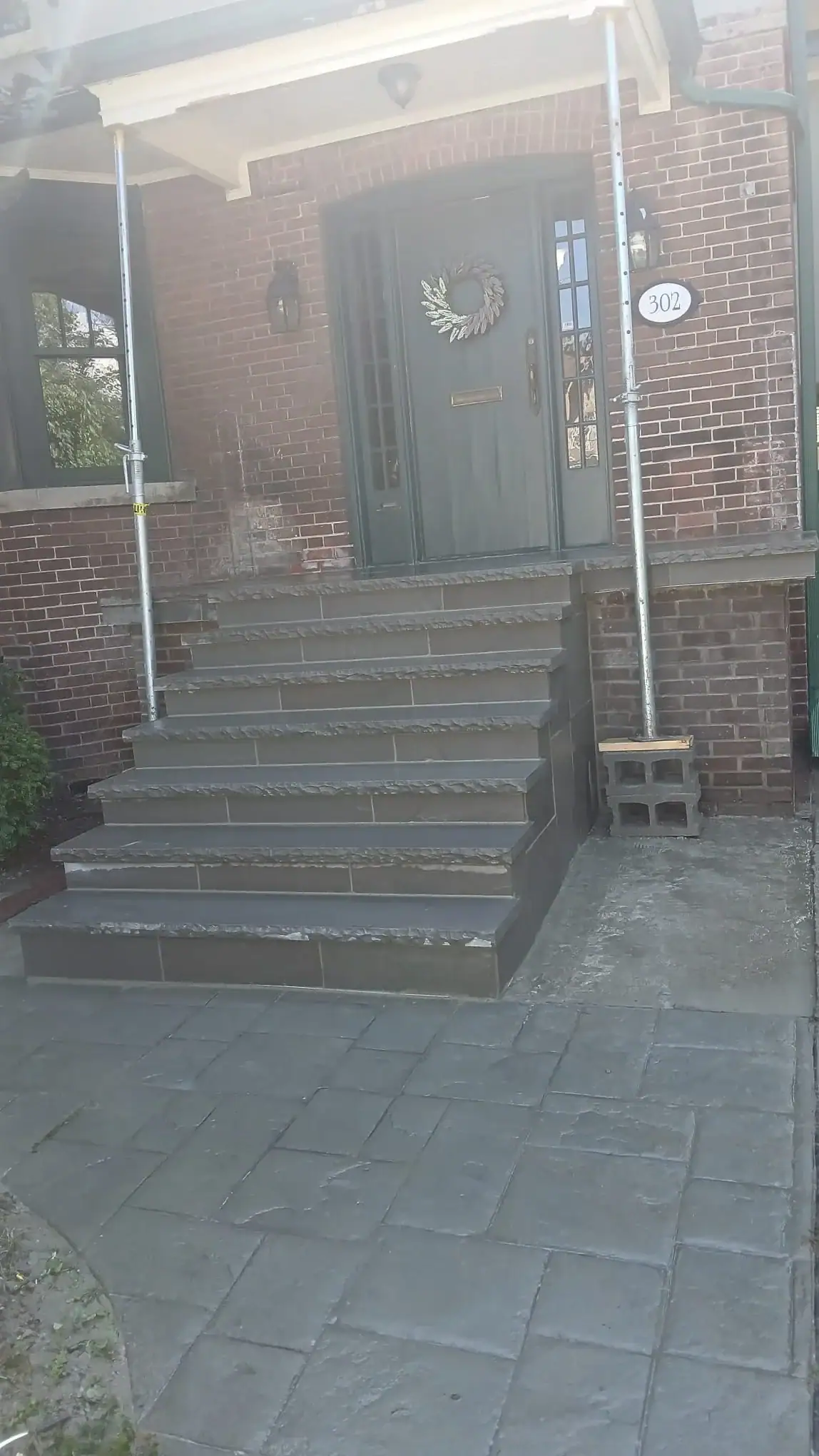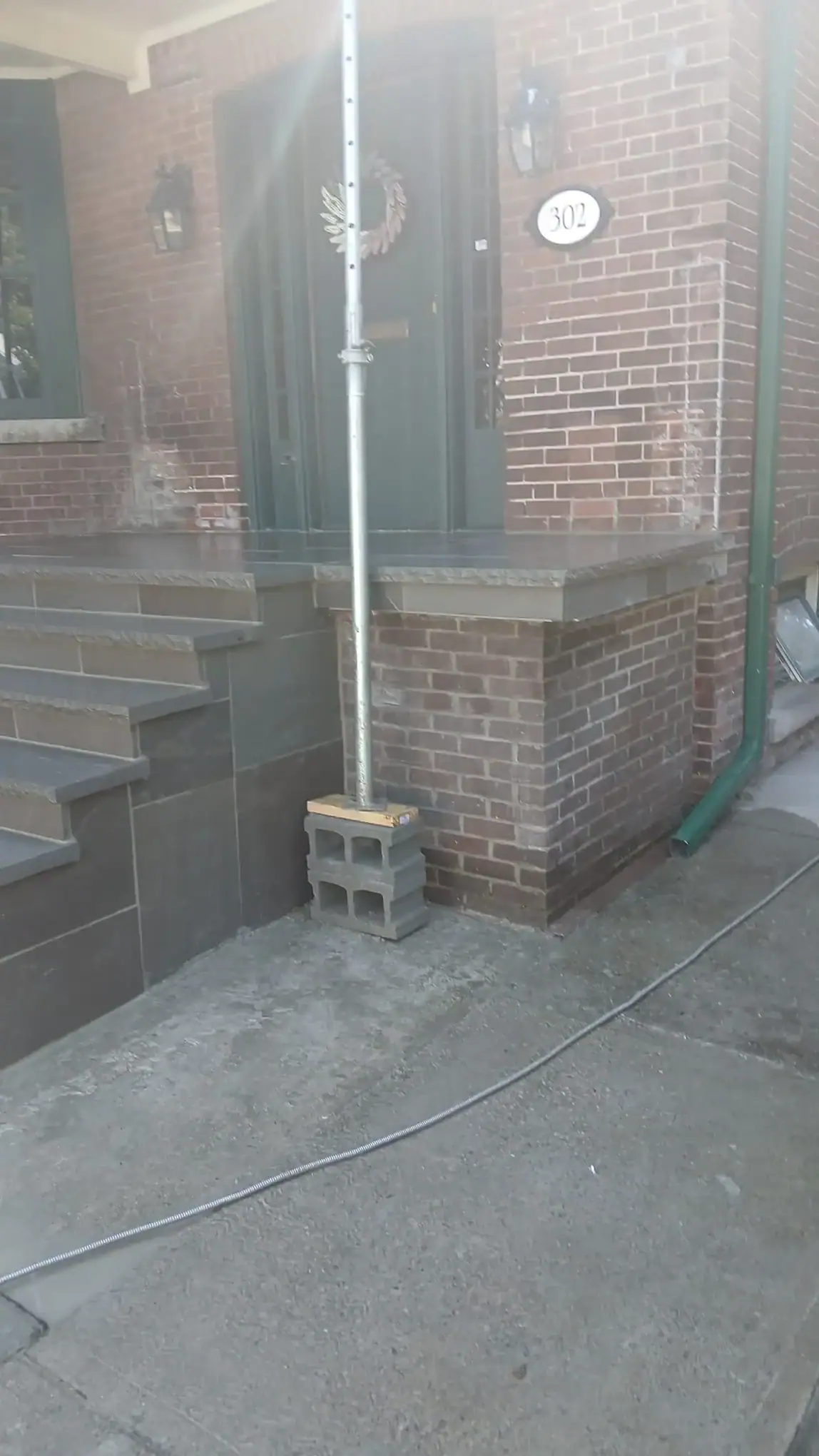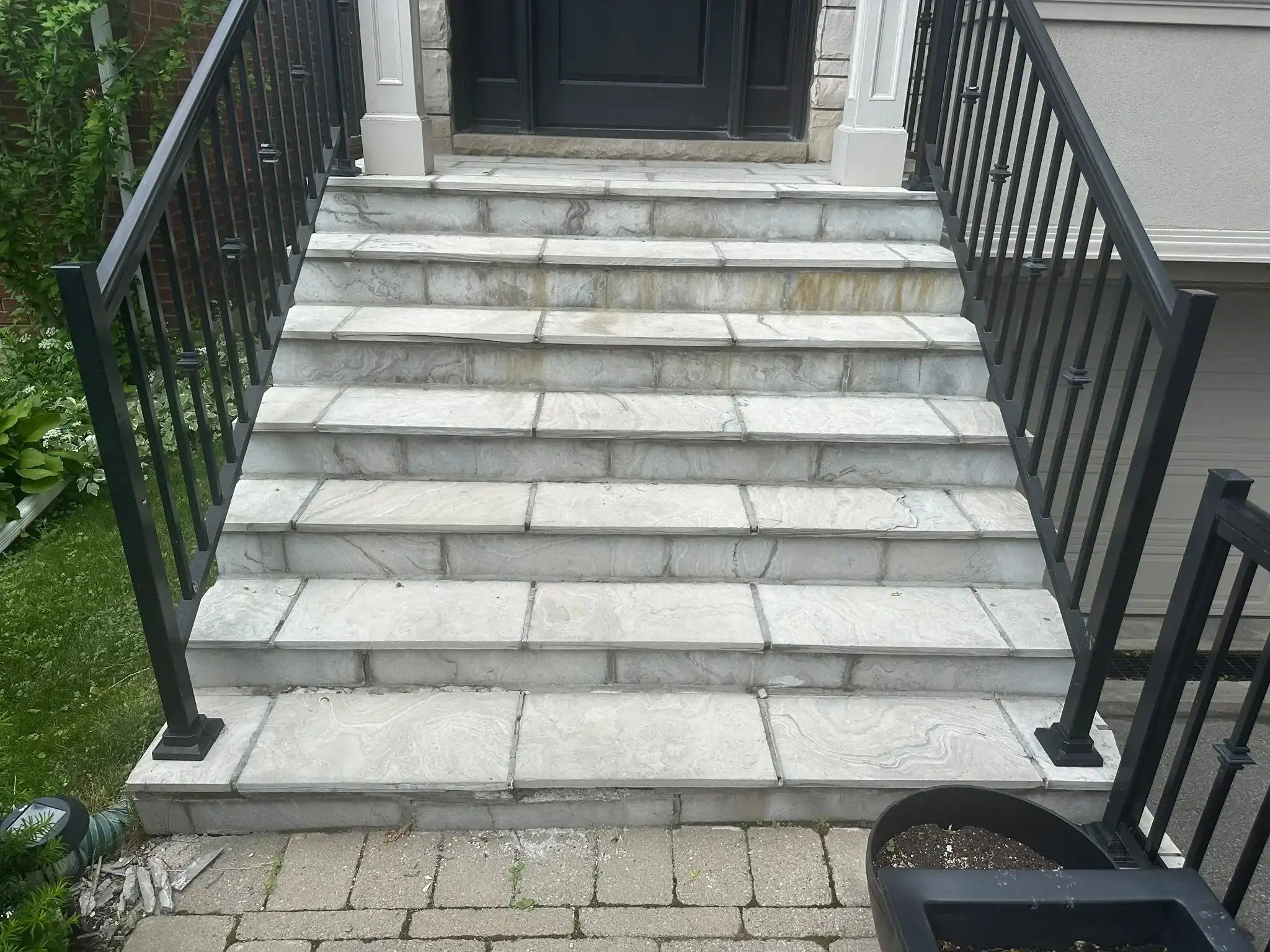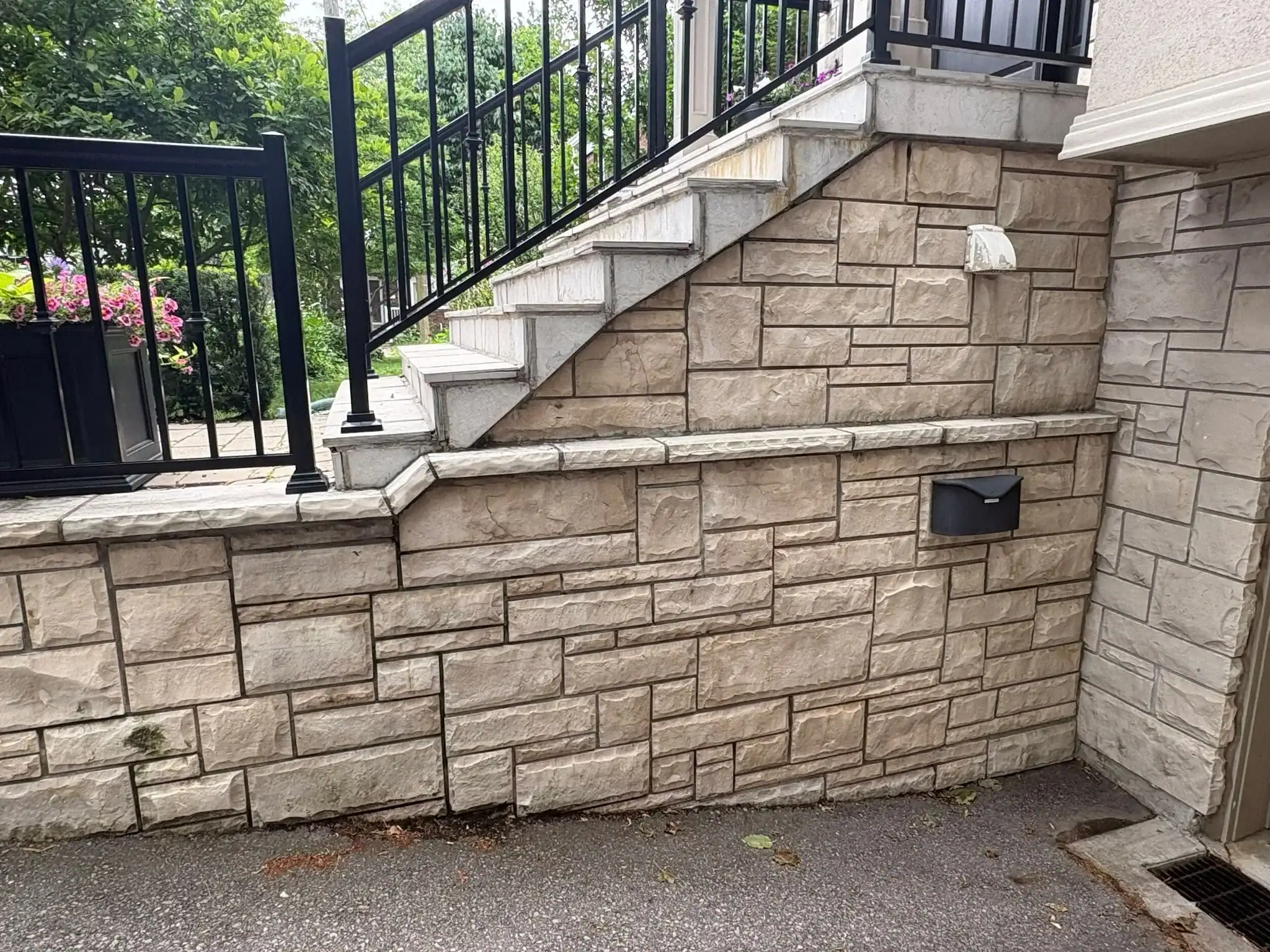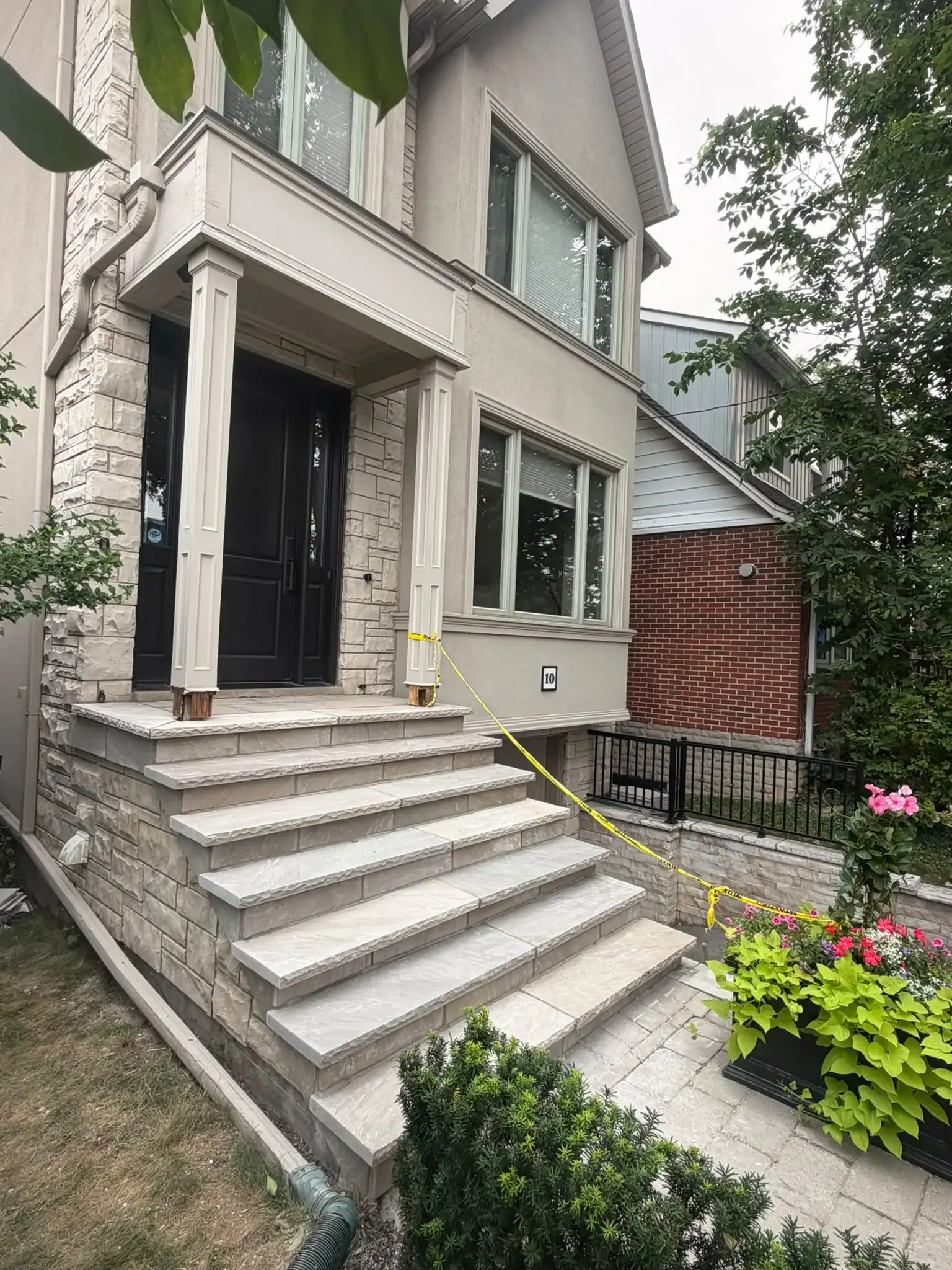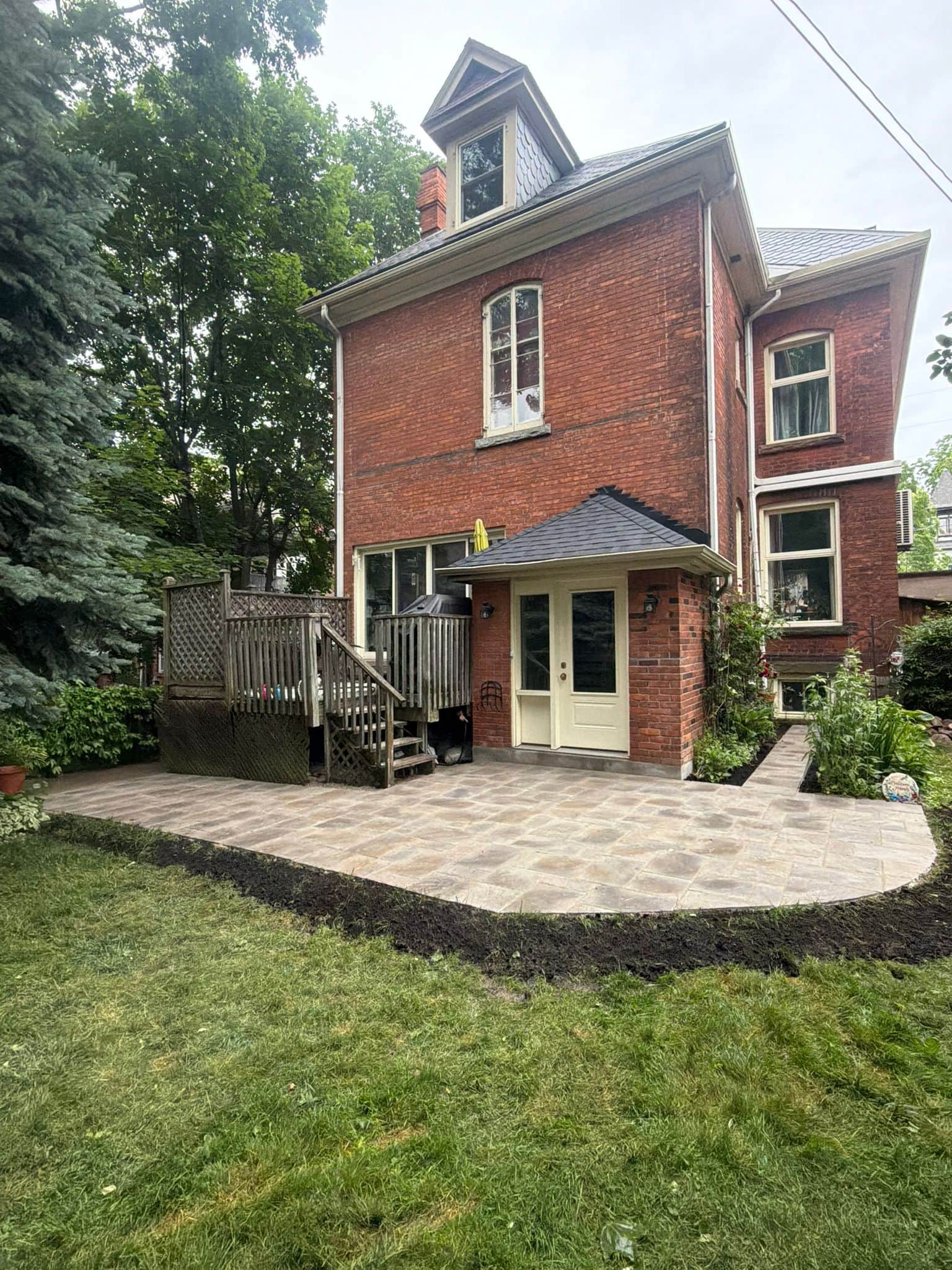
Roof-to-wall masonry junction problems happen where a roof meets brick, stone, block, chimney masonry, parapet walls, or exterior masonry around additions and dormers. These junctions are common weak points because rain, snow, ice, flashing, mortar joints, roof runoff, and wall movement all meet in one place.
For Toronto and GTA homeowners, roof-to-wall masonry junctions need close attention because winter freeze-thaw cycles can turn small gaps into larger leaks. Water may enter around failed flashing, open mortar joints, cracked brick, missing caps, poor sealant, or roofline details that no longer shed water properly. Once water gets behind the surface, it may show up as interior stains, spalling brick, damp walls, chimney damage, or repeated repairs that do not last.
This guide explains what roof-to-wall masonry junctions are, why they fail, what warning signs homeowners should watch for, and how masonry repair, tuckpointing, brick repair, chimney repair, waterproofing, and proper drainage can help protect the home.
What Is a Roof-to-Wall Masonry Junction?
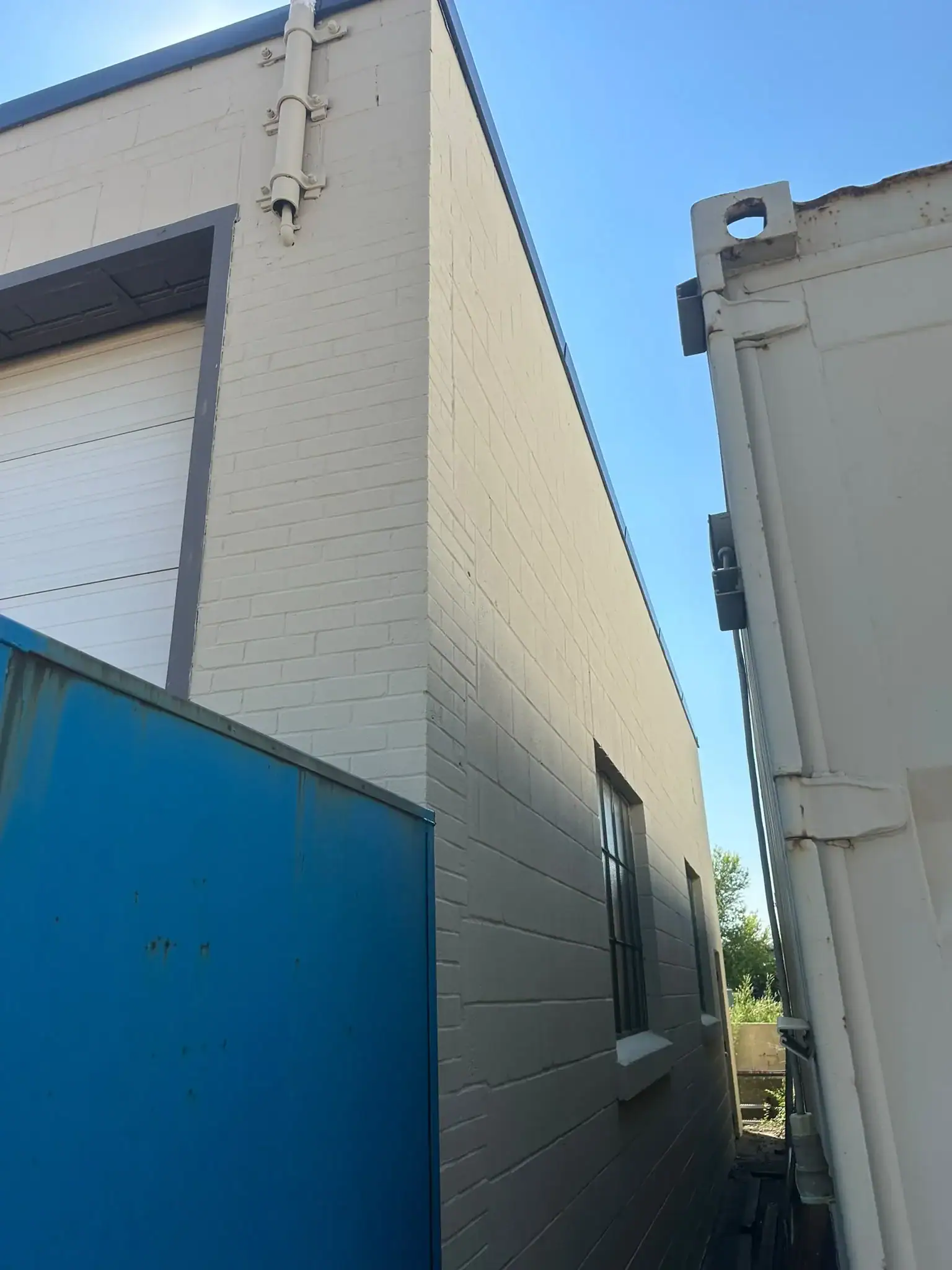
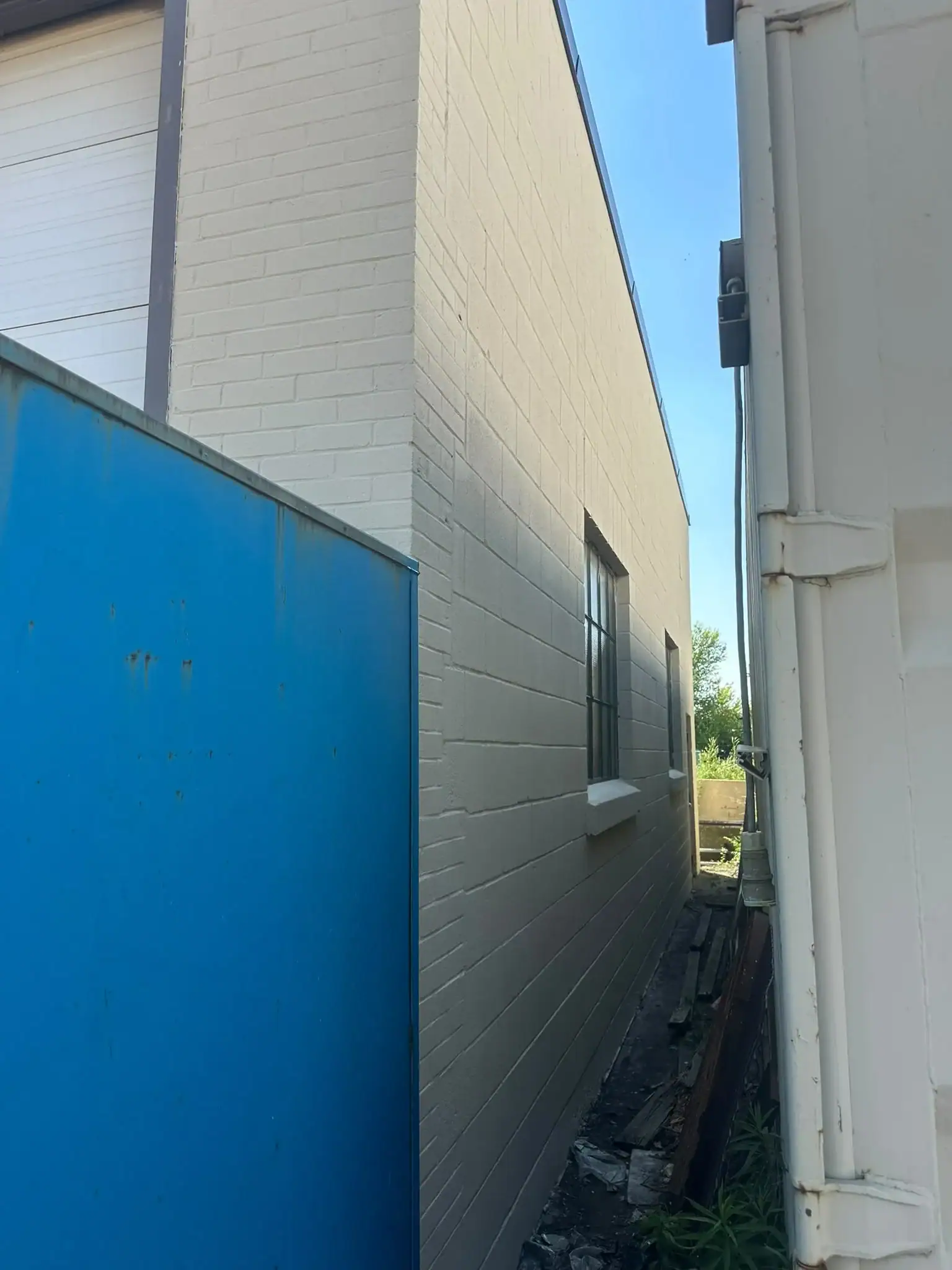
A roof-to-wall masonry junction is any place where a roof surface meets a vertical masonry surface. This may be where a sloped roof meets a brick wall, where a small roof meets a chimney, where a roofline meets a stone veneer wall, or where a flat roof meets a parapet wall.
These areas usually depend on several parts working together. The roof must shed water. Flashing must direct water away from the joint. Mortar joints must stay sound. Brick or stone must remain intact. Caps, crowns, and coping stones must protect horizontal surfaces. Sealants and termination details must not become the only line of defence.
When one part fails, water can enter the junction. The problem may look like a roofing issue, a masonry issue, or an interior leak, but the cause often sits at the meeting point between systems.
This is why roof-to-wall junctions should be inspected as a full detail, not as isolated roof shingles or isolated brickwork.
Why Roof-to-Wall Junctions Are Vulnerable in Toronto
Roof-to-wall junctions are vulnerable in Toronto because they deal with rain, snow, wind-driven water, ice buildup, thawing, refreezing, and older masonry conditions. These areas often stay wet longer than open wall surfaces.
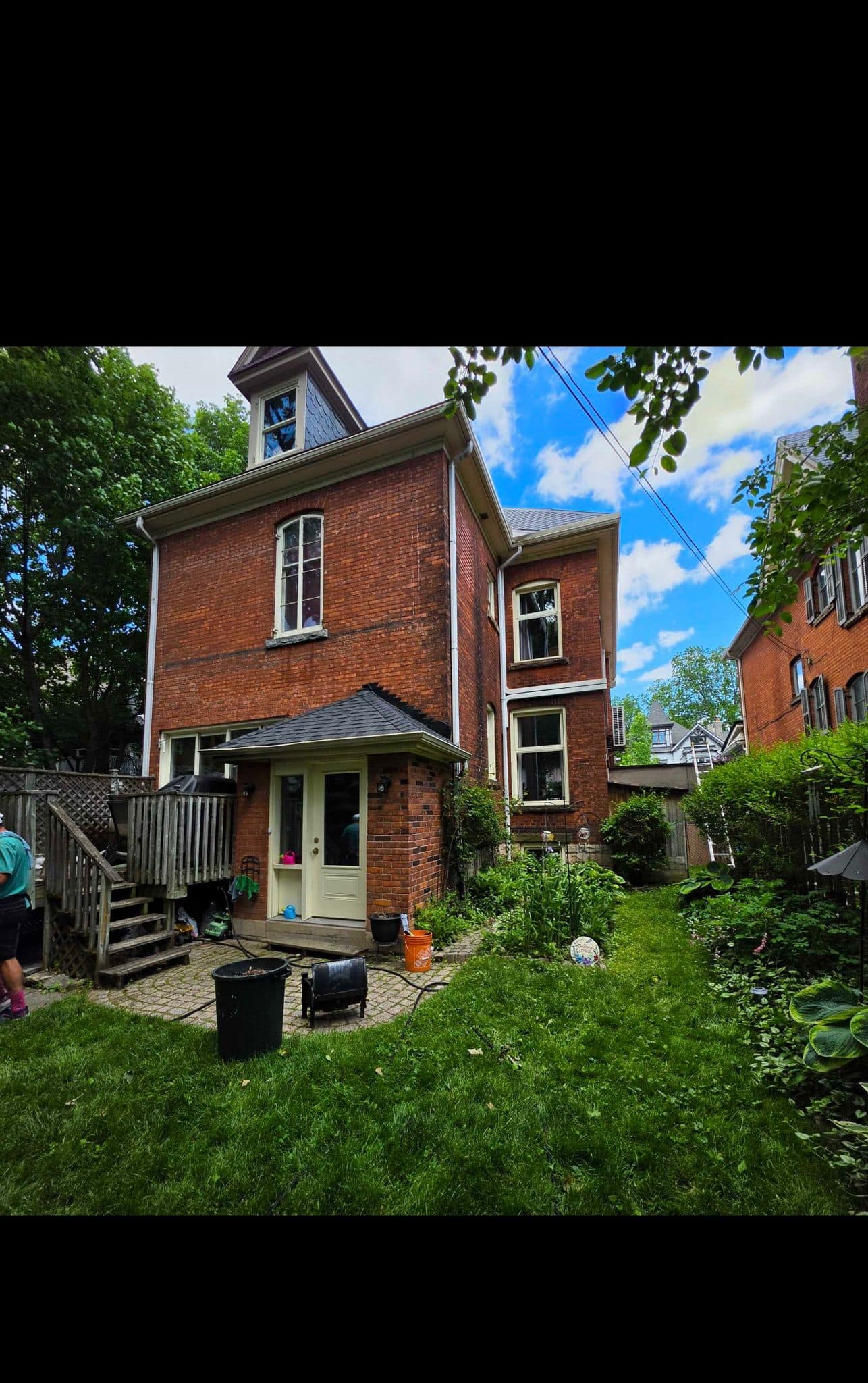
Toronto homes may have older brick walls, additions built at different times, masonry chimneys, dormers, side walls close to neighbouring houses, flat roof sections, and parapet details. Each transition can create a point where water needs to be carefully redirected.
The City of Toronto’s guidance on managing rain and melted snow is useful because roof runoff and snowmelt affect walls, foundations, basements, and exterior masonry. When water is not managed properly, it can find the weakest joint.
Winter is especially hard on these areas. Water can enter a small gap during the day, freeze overnight, expand, and slowly open the gap further. This repeated movement can damage mortar, brick faces, flashing edges, sealants, and wall surfaces.
Common Places Where Roof-to-Wall Masonry Problems Appear
Roof-to-wall masonry problems often appear where water collects, slows down, or changes direction. These areas should be checked regularly, especially after winter or after heavy rain.
- Chimney bases: Water can enter where the roof meets the chimney if flashing, mortar, or brick is damaged.
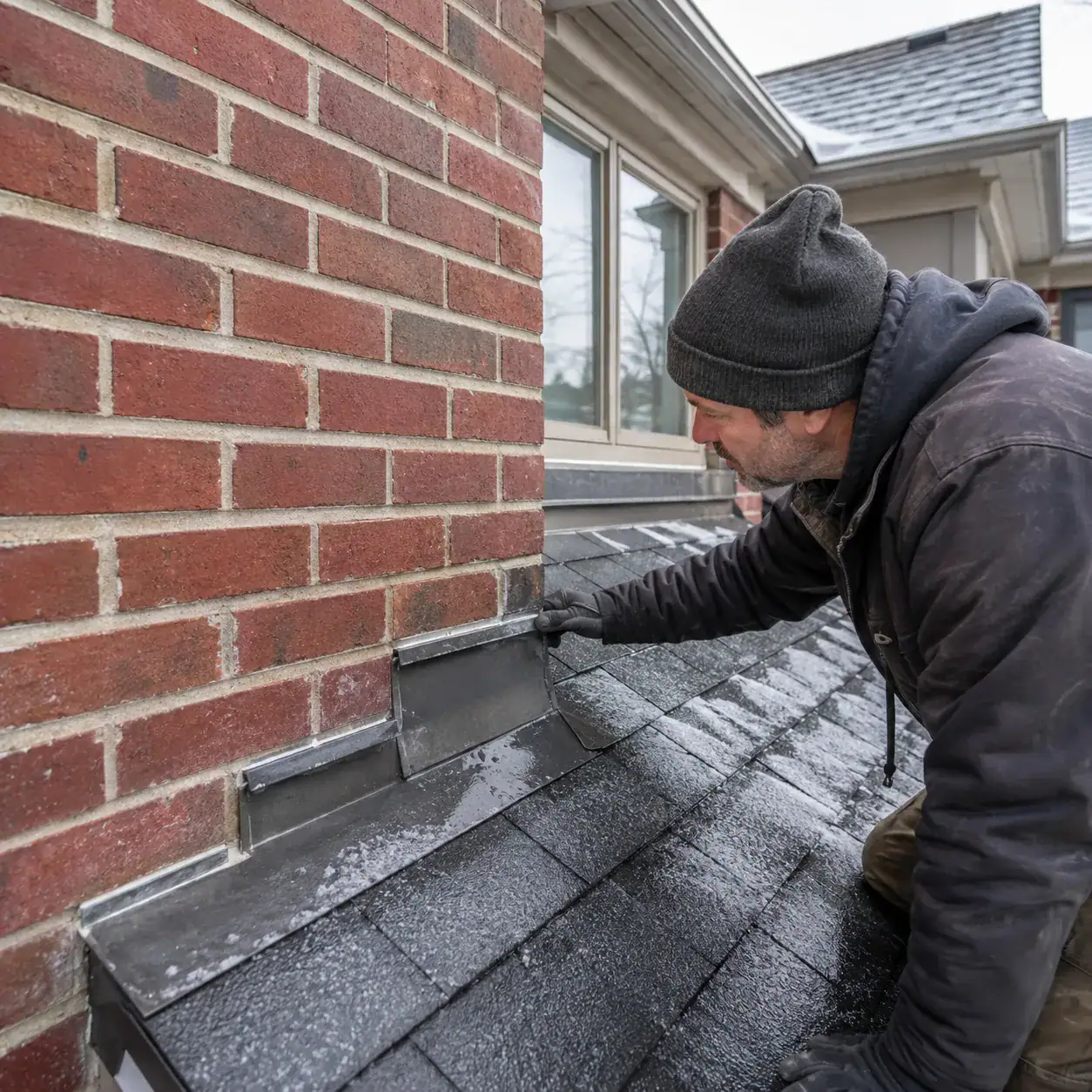
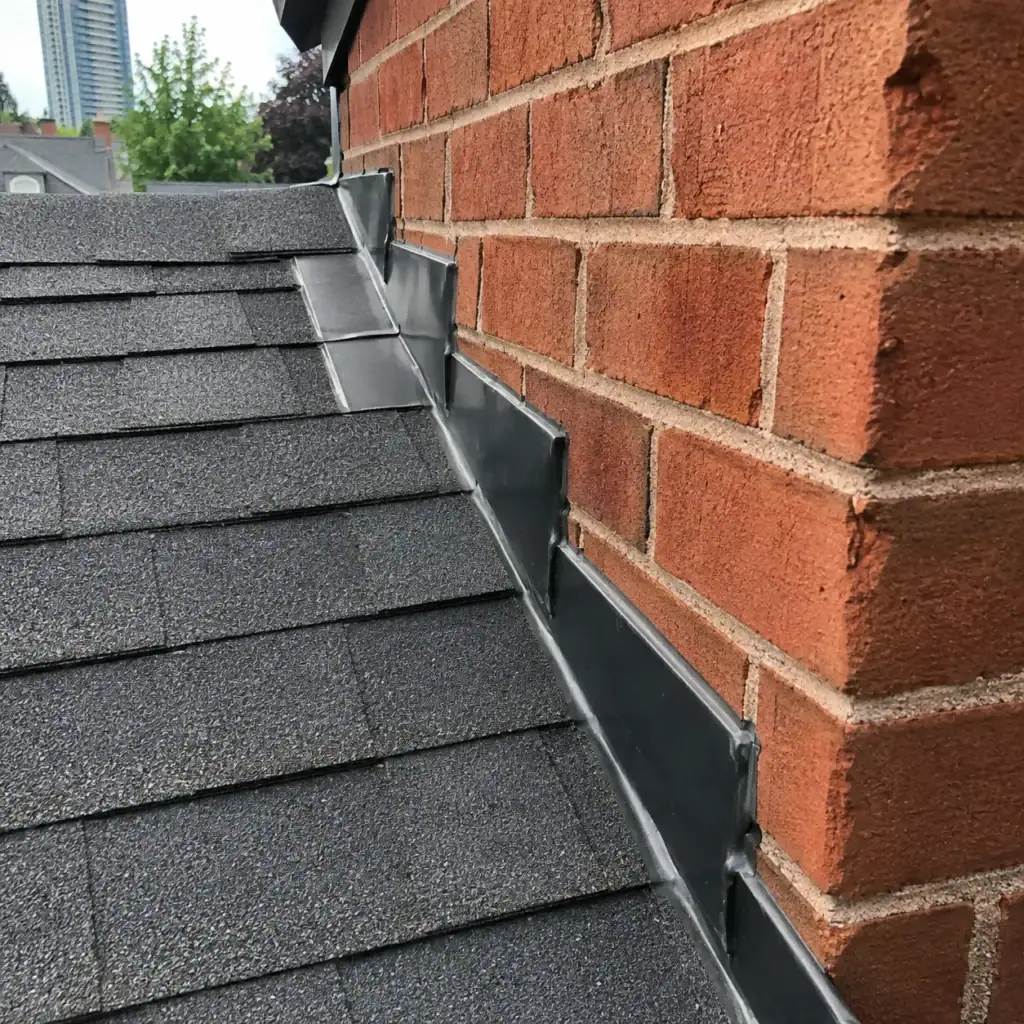
- Sidewall intersections: A sloped roof meeting a brick wall needs proper step flashing and sound masonry.
- Dormers and additions: Newer roof sections may connect to older brick or stone walls.
- Parapet walls: Flat or low-slope roof areas often rely on coping stones, caps, and roof flashing.
- Roof valleys near masonry: Water volume can be higher where roof planes meet near a wall.
- Porch roofs: Small roofs attached to brick facades can hide leaks behind trim or flashing.
- Garage and rear additions: These areas may have mixed materials and less visible detailing.
- Stone veneer walls: Water behind veneer near rooflines can lead to staining, cracking, or loose stones.
Treat any place where roof water meets masonry as a high-risk moisture detail.
Failed Flashing Around Masonry
Failed flashing is one of the most common causes of roof-to-wall masonry junction problems. Flashing should direct water away from the joint where roofing meets masonry. If it is missing, loose, corroded, poorly installed, or buried behind surface patches, leaks can follow.
Chimneys, sidewalls, parapets, and dormers often need flashing details that work with the masonry. If flashing is only caulked at the surface, water may eventually get behind it. Sealant can help in some details, but it should not replace proper flashing and sound masonry.
Sometimes the roof flashing is fine, but the mortar joints above it are open. Water can enter the brick wall above the flashing and appear as a roofline leak. Other times the masonry is sound, but flashing has separated from the wall.
This is why a roofer and mason may both be needed. The roofer reviews shingles, membranes, step flashing, valleys, and roof drainage. The mason reviews brick, stone, mortar, caps, crowns, parapets, and water-damaged masonry.
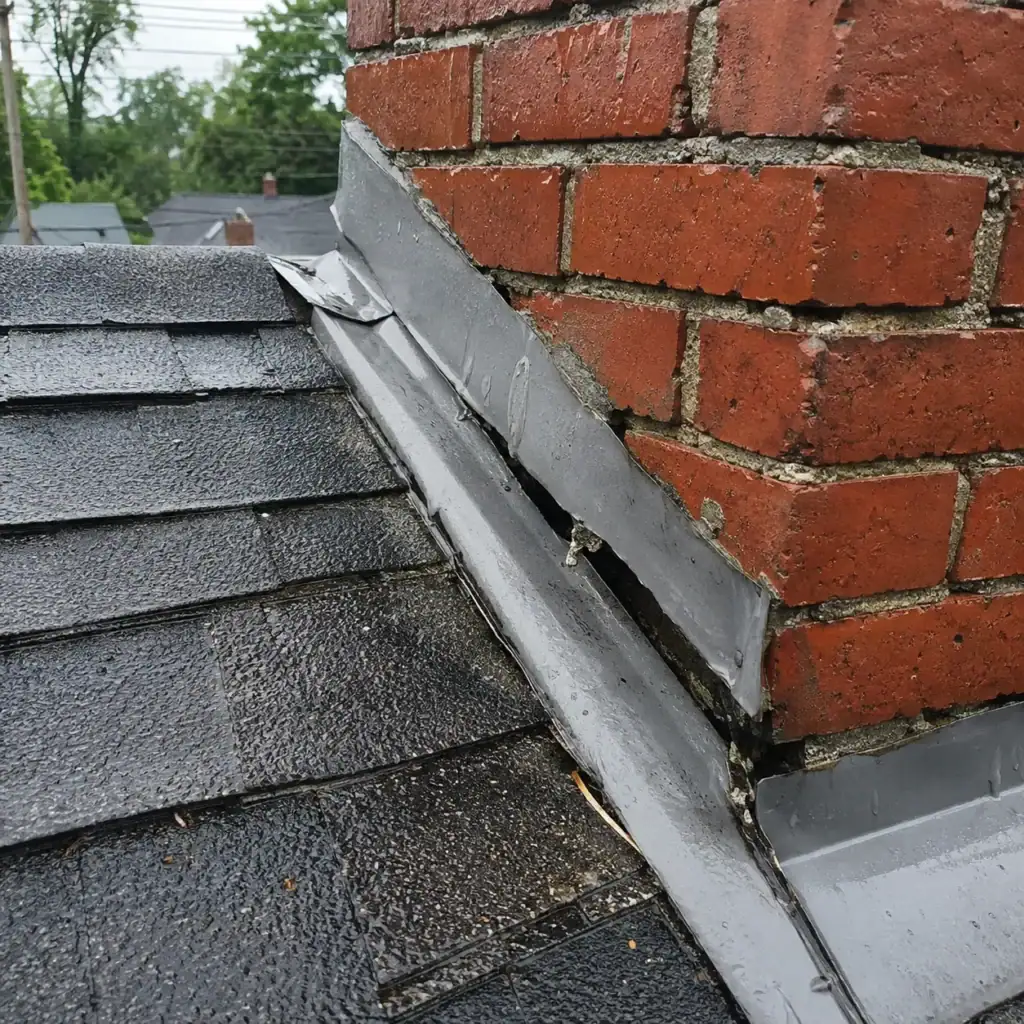
Open Mortar Joints at the Roofline
Open mortar joints at the roofline let water enter the masonry where exposure is often highest. Mortar joints can crack, recede, crumble, or fall out over time. At roof-to-wall junctions, these gaps often take a beating from roof runoff, snowmelt, and wind-driven rain.
Once water enters open joints, it can move behind the brick or stone and show up lower on the wall. During winter, the water may freeze inside the joint and widen the opening. Over time, this can lead to spalling brick, loose masonry, interior staining, or repeated leaks.
Tuckpointing can help when the masonry units are still generally sound. Proper tuckpointing removes failed mortar to a suitable depth, cleans the joint, installs compatible mortar, and finishes the joint to shed water.
If roofline mortar joints are cracked, sandy, or missing, A&A Masonry’s tuckpointing services in Toronto page explains how proper mortar repair helps protect masonry from moisture and freeze-thaw damage.
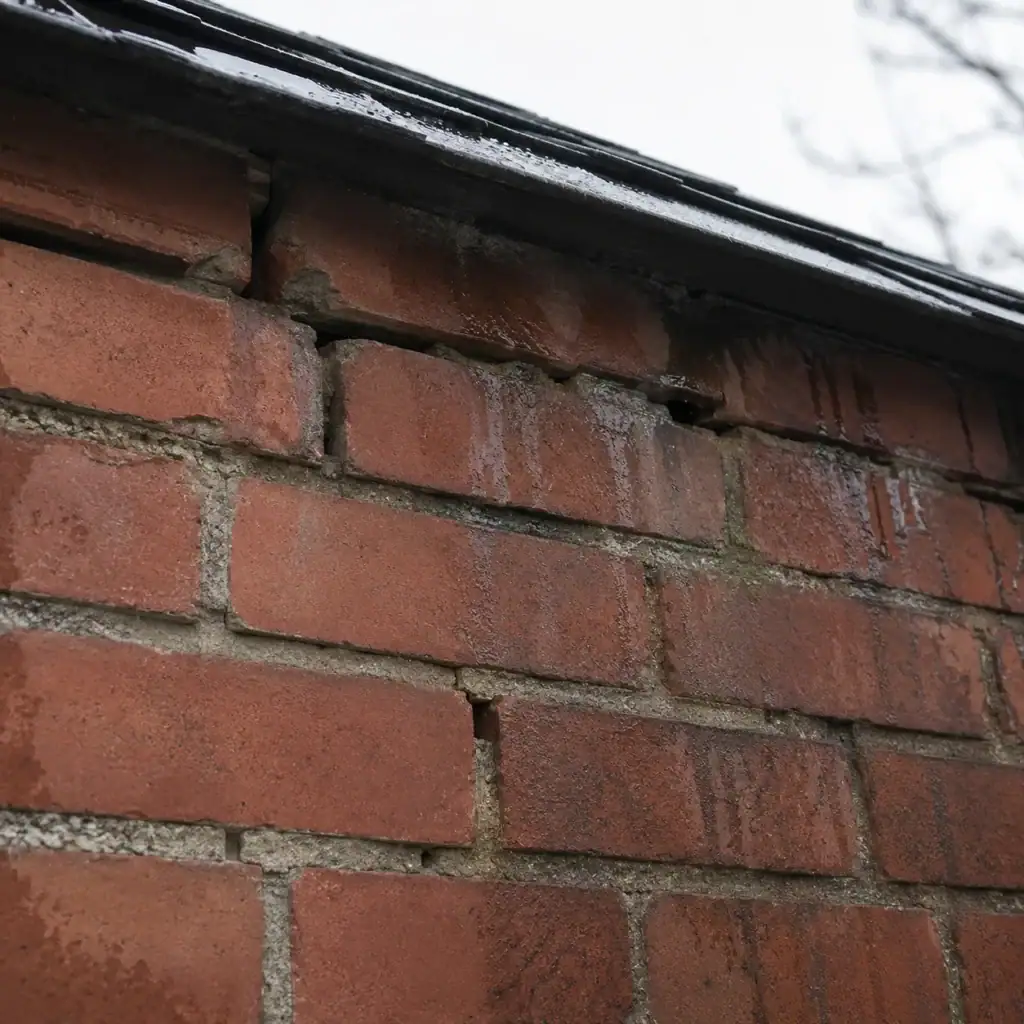
Chimney Roof Junction Problems
Chimney roof junction problems are common because a chimney interrupts the roof surface and receives weather from every side. Snow and rain can collect around the chimney base, while the upper chimney is exposed to wind, ice, sun, and freezing temperatures.
Common chimney junction issues include damaged flashing, open mortar joints, cracked crowns, missing caps, spalling brick, rust staining, water stains near the fireplace, and dampness in nearby ceilings or attic spaces. A leak near a chimney does not always mean the chimney itself is the only problem. The roof, flashing, crown, cap, brick, and mortar all need review.
A cracked chimney crown or missing cap can allow water to enter from the top. Open joints can let water enter from the sides. Failed flashing can let water enter at the roofline. Any of these can create symptoms that look similar indoors.
For masonry-specific chimney issues, A&A Masonry’s chimney repair Toronto page explains common concerns such as brick repair, tuckpointing, crown repair, cap repair, water damage, and rebuild planning.
Parapet Walls and Flat Roof Masonry
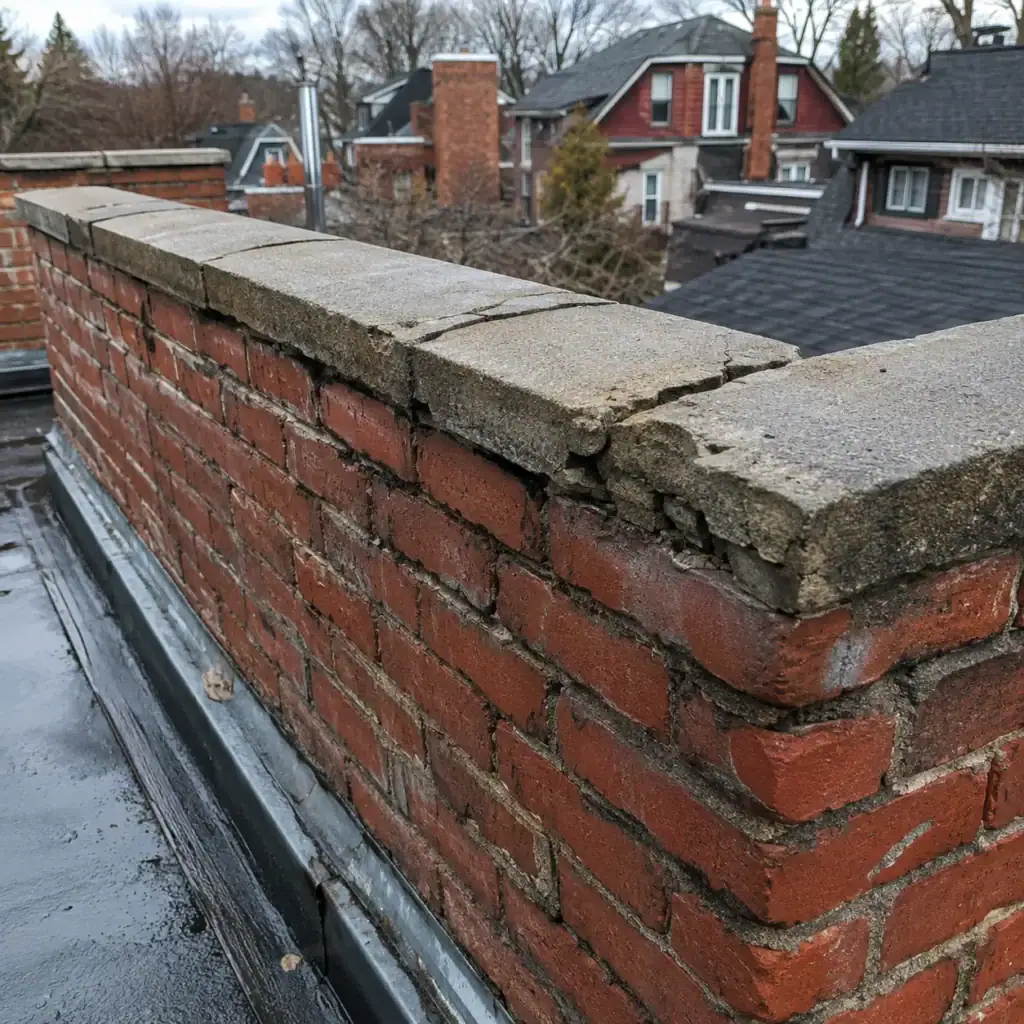
Parapet walls and flat roof masonry are vulnerable because the top of the wall and the roof edge are highly exposed to water. A parapet is a wall that extends above the roofline. You may find them on some older Toronto homes, row houses, additions, garages, and commercial-style residential buildings.
Parapets need sound coping stones, caps, flashing, and mortar joints. If the top of the wall is not protected, water can enter from above and move down into the masonry. If snow or ice sits against the parapet, the wall may stay wet for long periods.
Common parapet problems include loose coping stones, cracked caps, missing mortar, spalling brick, bulging wall sections, interior water stains, and roof membrane problems where the roof meets the wall.
Parapet repairs often require both masonry and roofing review because the wall and roof membrane depend on each other.
Spalling Brick Near Rooflines
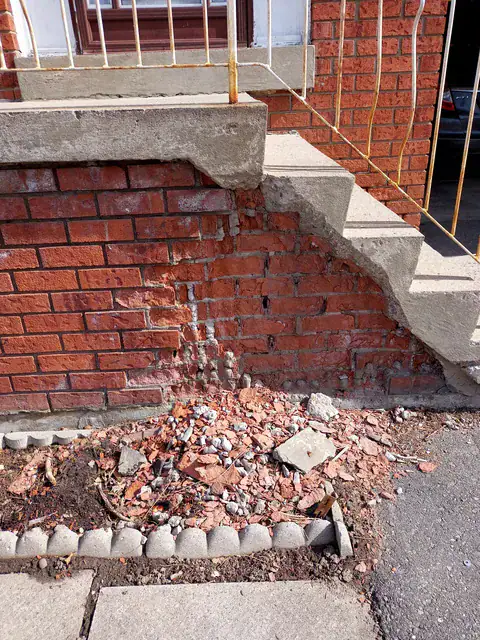
Spalling brick near rooflines often signals repeated moisture exposure. Spalling happens when the brick face flakes, chips, or breaks away. Once the outer face is damaged, the brick can absorb more water and deteriorate faster.
At roof-to-wall junctions, water can enter through open mortar joints, failed flashing, ice buildup, leaking gutters, poor caps, or trapped moisture behind coatings, causing spalling. Roofline brick may also suffer more freeze-thaw stress because water reaches it repeatedly during storms and snowmelt.
You may need to replace damaged bricks when the brick is badly deteriorated. However, the repair should also address why the brick got wet in the first place. If the water source remains, new brick may eventually fail too.
If brick near the roofline is cracked or spalling, A&A Masonry’s brick repair Toronto page explains common repair concerns for weather-damaged brickwork.
Roof Runoff and Poor Drainage
Roof runoff and poor drainage can worsen roof-to-wall masonry junction problems. If gutters overflow, downspouts discharge too close to the home, or roof valleys send too much water toward a wall, masonry may stay wet longer than it should.
The City of Toronto’s guide on how homeowners can help manage stormwater explains that homeowners can help manage rain and melting snow to reduce basement flooding risk and support better water quality. For masonry, the same principle applies: water should be moved away from vulnerable walls, foundations, steps, and roofline junctions.
Poor drainage may show as staining below roof edges, ice buildup, damp lower walls, efflorescence, or recurring cracks. Sometimes the repair is not only at the wall. Gutters, downspouts, grading, patio slope, or roof drainage may also need attention.
If water repeatedly reaches masonry, correct the drainage pattern before making cosmetic repairs.
Stone Veneer at Roof-to-Wall Junctions
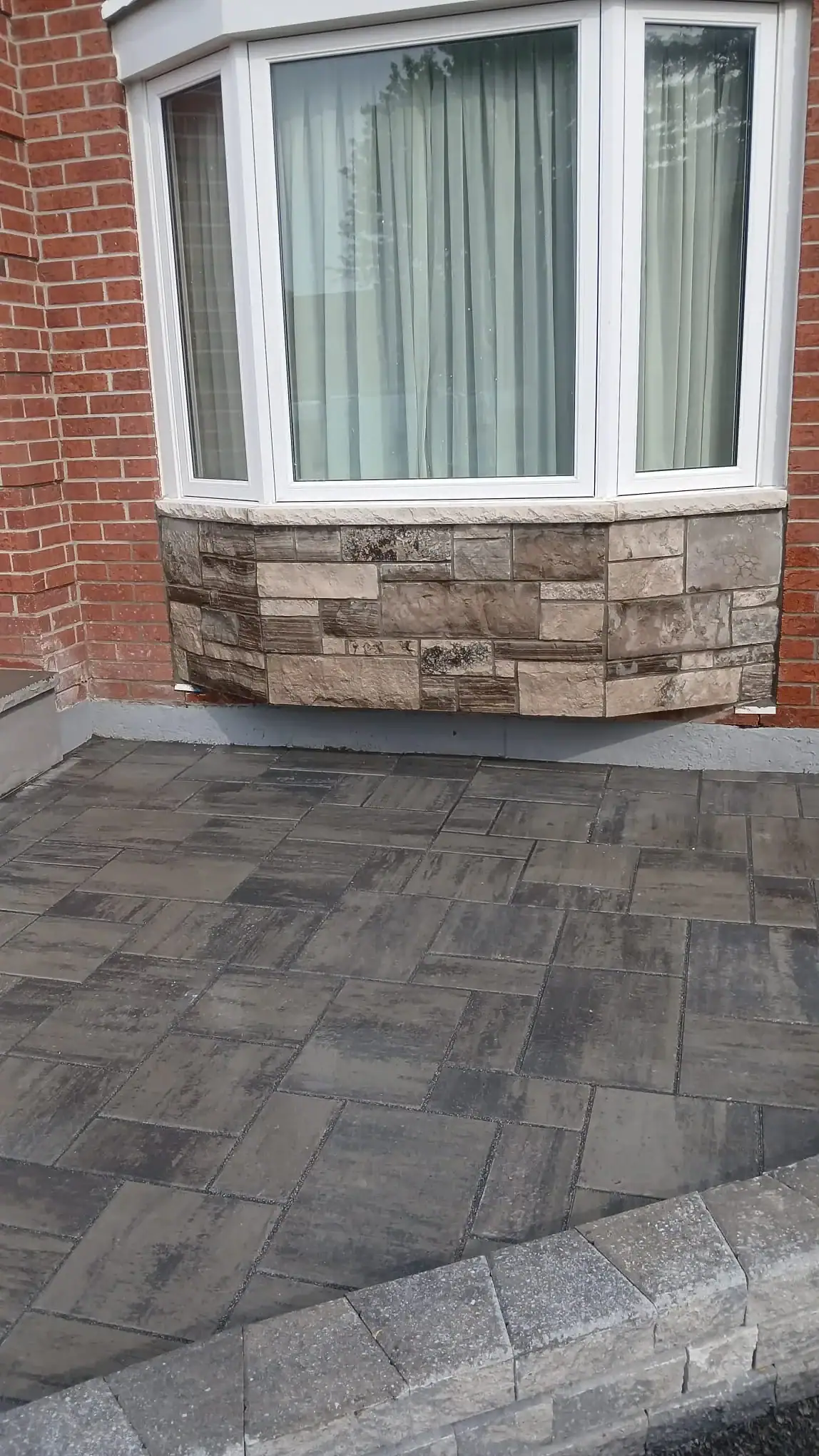
Stone veneer at roof-to-wall junctions needs careful moisture detailing because veneer can hide water movement behind the surface. If water enters behind the veneer near a roofline, it can cause staining, cracking, efflorescence, loose stones, or damp wall areas.
Veneer stone is often used on exterior accents, additions, porch walls, garden walls, and lower facade areas. When veneer meets a roof, cap, flashing, or window detail, water must be directed out and away.
Problems may appear as cracks in the joints, loose stone pieces, white staining, dark damp areas, or gaps along the roofline. Don’t cover these issues with sealant without understanding where water is entering.
If your home has veneer stone near a roofline or addition, A&A Masonry’s veneer stone installation Toronto page explains common stone veneer uses and installation considerations.
Roof-to-Wall Junctions on Additions
Roof-to-wall junctions on additions can be more vulnerable because newer construction often connects to older masonry. A rear addition, side addition, porch enclosure, dormer, or garage connection may create a new water path against an existing brick wall.
These junctions can fail when flashing is poorly integrated, old mortar isn’t repaired before the addition, the roof slope directs water toward the wall, or materials move differently. An older wall may also have hidden cracks or worn mortar that were not obvious before the addition was built.
When adding or repairing a roof connection, check the masonry wall before closing up the new detail. Address open joints, damaged brick, weak lintel areas, or old waterproofing problems first.
Ontario’s official Building Code page is the preferred provincial reference for building requirements, and larger additions or building changes should include the right permit and design review.
Interior Warning Signs Homeowners May Notice
Interior warning signs may appear before the exterior problem is obvious. A roof-to-wall masonry leak can travel through hidden spaces and show up away from the actual entry point.
- Water stains near ceilings: Especially near chimneys, dormers, upper walls, or roof intersections.
- Damp plaster or drywall: Moisture may appear after rain or snowmelt.
- Peeling paint: Paint may bubble or peel where moisture is moving through the wall.
- Musty smells: Hidden dampness may create odours in upper rooms, attics, or closets.
- Efflorescence indoors: White staining on masonry may suggest moisture movement.
- Fireplace-area stains: Chimney leaks may appear around the fireplace, wall, or ceiling.
- Recurring stains after repair: If stains return, the original water path may not have been corrected.
Document interior symptoms with photos and dates. Note whether they appear after rain, wind-driven rain, snowmelt, ice dams, or thaw periods.
Exterior Warning Signs at the Junction
Exterior warning signs at a roof-to-wall masonry junction usually show where the wall is no longer shedding water correctly. Review these signs before winter, when possible.
- Cracked or missing mortar: Open joints near the roofline allow water entry.
- Rust stains: Metal components, flashing, or lintels may be corroding.
- Spalling brick: Brick faces break away after repeated wetting and freezing.
- Loose flashing edges: Flashing may have separated from the wall.
- Failed sealant: Cracked caulking may indicate movement or aging.
- Dark damp patches: Areas that stay wet longer may point to drainage issues.
- White staining: Efflorescence can suggest moisture moving through masonry.
- Loose caps or coping stones: Water may enter from the top of the wall.
Don’t treat these signs as cosmetic until you understand where water is entering and the wall’s condition.
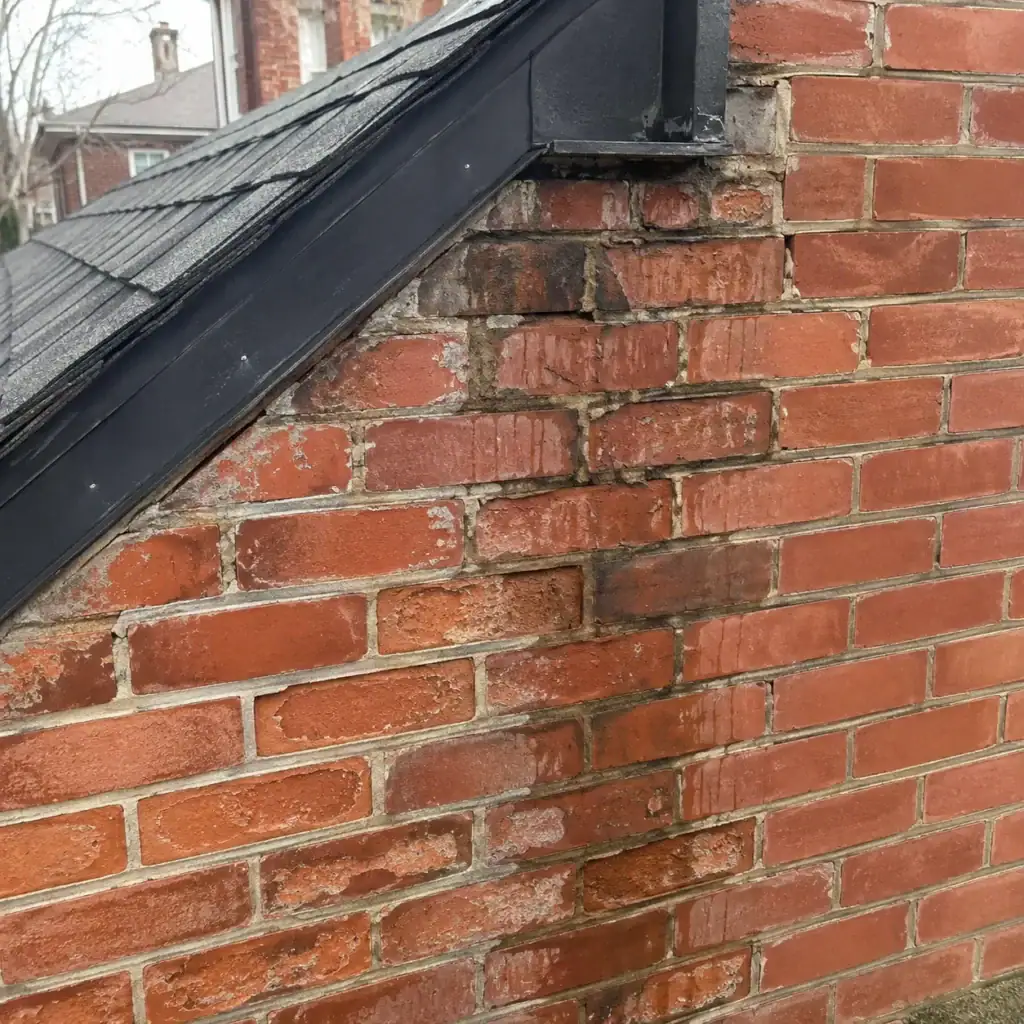
How Winter Makes Roof-to-Wall Problems Worse
Winter makes roof-to-wall masonry junction problems worse because water can freeze inside small gaps and expand. Snow and ice can also sit against masonry longer than rain does.
Ice dams, gutter ice, wind-driven snow, and thawing snow can all push water into areas that may not leak during normal rain. A roofline joint can look fine in summer but leak in winter because water backs up, refreezes, or sits against the wall.
Repeated freezing and thawing can widen mortar cracks, loosen brick faces, crack caps, damage sealants, and worsen flashing separations. By spring, the damage may be more visible as spalling, staining, or interior water marks.
If roof-to-wall junctions have open mortar, cracked brick, damaged chimney crowns, or loose caps before winter, review them early.
Why Sealant Alone Is Usually Not Enough
Sealant alone is usually not enough to fix roof-to-wall masonry junction problems. Caulking can help in certain joints, but it should not be used as the main repair for failed flashing, missing mortar, cracked masonry, or water entering behind the wall.
Surface sealant may hide the problem briefly. If water is still entering above or behind the sealed area, it may become trapped and cause more damage. In winter, trapped moisture can freeze and worsen cracks.
Good repair starts by finding the water path. If the issue is failed mortar, you may need tuckpointing. If the brick is damaged, you may need brick repair. If the flashing is wrong, you may need roofing repair. If the cap is cracked, you may need cap or coping repair.
The repair should solve the cause, not only cover the visible gap.
When Waterproofing Helps
Waterproofing may help when roof-to-wall masonry junction problems are connected to repeated moisture entry, but it should be used in the right order. Waterproofing should not be applied over damaged, wet, dirty, or open masonry joints.
The correct approach is usually to repair the masonry first, correct flashing or drainage problems, let the surface dry, then consider a breathable water repellent if the wall condition and exposure make it appropriate. Non-breathable coatings can trap moisture and worsen freeze-thaw damage.
Waterproofing is also different from fixing roof leaks. If water is entering because flashing is missing or a roof valley is directing water into a wall, a coating on the masonry will not solve the underlying issue.
For exterior water-entry planning, A&A Masonry’s waterproofing Toronto page is a useful resource.
Chimneys, Venting, and Safety Concerns
Take chimneys, venting, and safety concerns seriously when roof-to-wall junction problems involve a masonry chimney. Water damage around a chimney may affect brick, mortar, crown, cap, flashing, and nearby interior finishes. If the chimney serves a fireplace or fuel-burning appliance, venting safety may also matter.
Ontario’s carbon monoxide safety page explains that carbon monoxide can be produced when fuels do not burn completely in fuel-burning appliances and devices, including fireplaces. If a chimney leak or deterioration is connected to a working fireplace or appliance, the appropriate qualified professional should review the flue, venting, and appliance condition.
A masonry contractor can repair exterior chimney masonry. Chimney sweeping, appliance service, flue assessment, or WETT-related inspection may require other qualified specialists.
When safety systems are involved, do not treat the chimney as only a brick repair.
What Homeowners Can Check Themselves
Homeowners can safely check roof-to-wall masonry junctions from the ground, indoors, and from accessible areas without climbing onto a roof. A simple visual review can help identify patterns before calling a professional.
- Look for water stains near chimneys, upper walls, dormers, or roof intersections.
- Check exterior brick near rooflines for missing mortar or spalling brick.
- Look for loose or lifted flashing edges at ground level where visible.
- Watch where water flows during heavy rain.
- Check whether gutters overflow near masonry walls.
- Look for ice buildup near roof edges and wall intersections in winter.
- Photograph stains after rain or snowmelt to track timing.
- Check downspouts and drainage around the foundation below the problem area.
Do not climb icy roofs, pull flashing away, grind mortar, or seal damaged joints without understanding the source of water entry.
Permits, Code, and Larger Repairs
Permits, code, and larger repair questions may matter when roof-to-wall masonry problems involve additions, structural wall repair, chimney rebuilding, roof changes, parapets, major exterior alterations, or changes to openings and support.
The City of Toronto’s when do I need a building permit guidance explains that permits are required for certain construction, demolition, additions, material alterations, and specific retaining wall conditions. Ontario’s Building Code page is also the preferred provincial reference for building requirements.
For homeowners, the practical rule is this: if the work affects structure, support, roof assemblies, chimneys, parapets, openings, foundations, additions, or major exterior changes, check official guidance before starting.
Quick Guide: What Usually Causes Roof-to-Wall Masonry Junction Problems
A quick guide can help homeowners understand what may be causing the problem.
- Water stains near a chimney: Check flashing, crown, cap, mortar joints, and brick condition.
- Leaks after snowmelt: Ice dams or backed-up meltwater may be reaching a weak junction.
- Spalling brick near a roofline: Water may be entering through failed joints, flashing, or caps.
- White staining on masonry: Moisture may be moving through the wall.
- Recurring sealant failure: Movement, poor flashing, or active water entry may be present.
- Leaks near additions: The new roof may not be properly integrated with older masonry.
- Dampness below a parapet: Coping stones, caps, roof membrane, or mortar joints may be failing.
- Lower wall moisture below the roofline: Roof runoff, gutters, or downspouts may be contributing.
The best repair depends on identifying the water path and fixing the roof, masonry, and drainage details that are actually failing.
When Professional Help Makes More Sense
Professional help makes more sense when roof-to-wall masonry junction problems involve leaks, chimneys, high walls, parapets, roof flashing, spalling brick, open mortar joints, repeated interior stains, or winter ice buildup. These areas often require more than one type of expertise.
A mason can assess brick, stone, mortar joints, chimneys, crowns, caps, parapets, coping stones, and masonry water damage. A roofer may need to assess flashing, shingles, membranes, valleys, gutters, and roof drainage. If you suspect structural movement, you may need additional professional review.
For broader masonry repair planning, A&A Masonry’s masonry services in Toronto page outlines related services such as brick repair, tuckpointing, chimney repair, waterproofing, stone masonry, concrete repair, retaining walls, and exterior restoration.
Final Thoughts on Roof-to-Wall Masonry Junction Problems
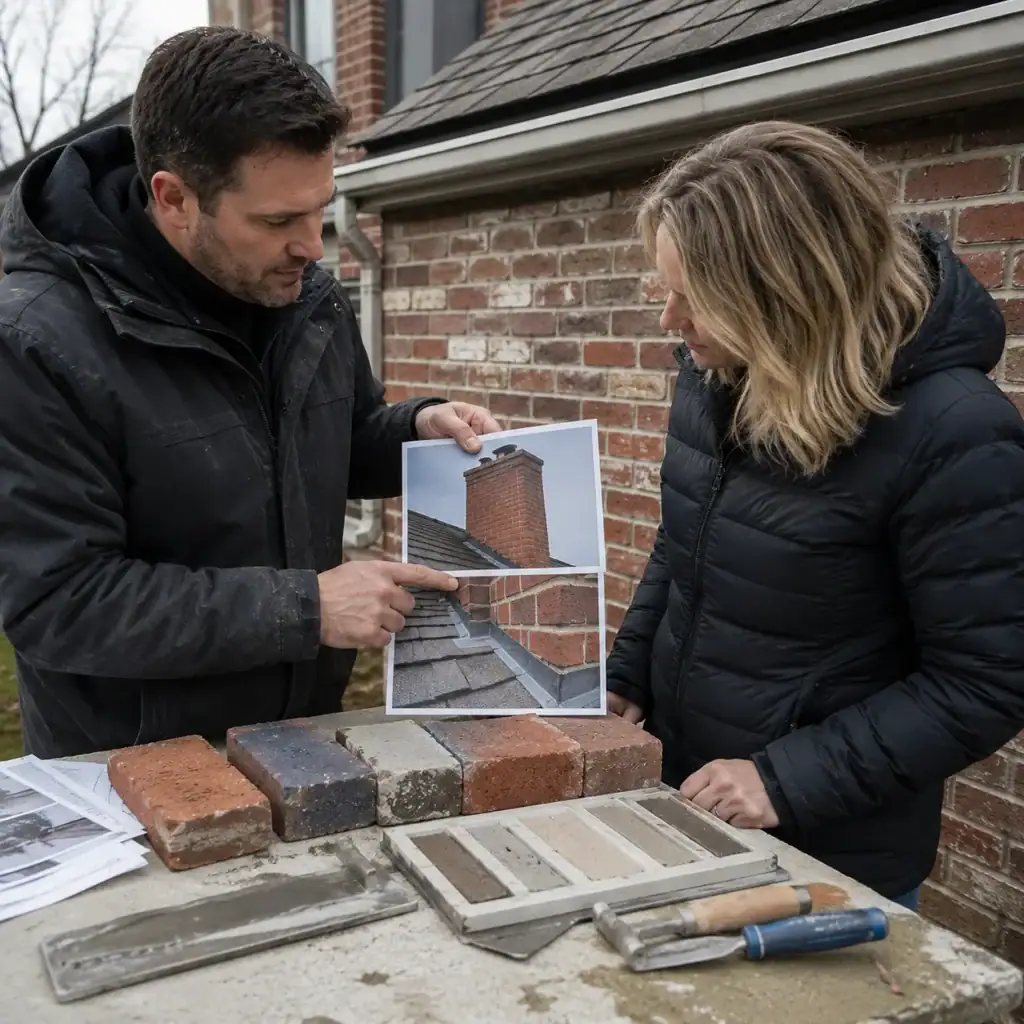
Roof-to-wall masonry junction problems are common because they sit at the meeting point between roof water, flashing, masonry, snow, ice, and building movement. Small gaps at these junctions can lead to leaks, spalling brick, failed mortar, damp interiors, chimney damage, and repeated repairs if you don’t correct the actual water path.
For Toronto and GTA homeowners, the most important issues are failed flashing, open mortar joints, chimney damage, parapet problems, roof runoff, freeze-thaw cycles, and poor drainage. These problems often become more visible after winter or after heavy rain.
The best approach is to inspect roofline masonry before damage spreads, repair failed mortar and brick, correct flashing and drainage problems, avoid relying on sealant alone, and involve the right professionals when the roof and masonry systems overlap. When roof-to-wall junctions are detailed and maintained properly, the home is better protected from water entry and winter damage.