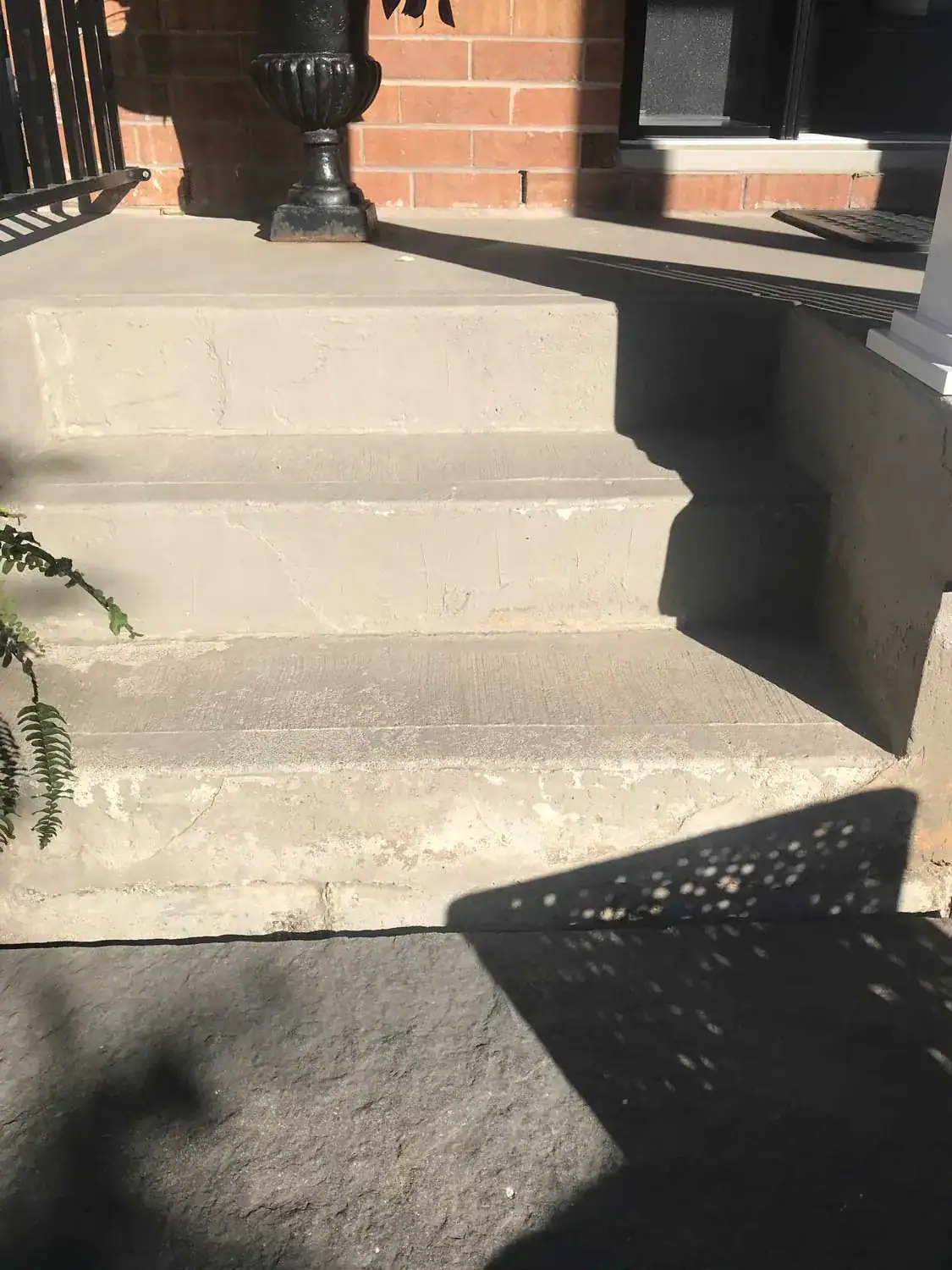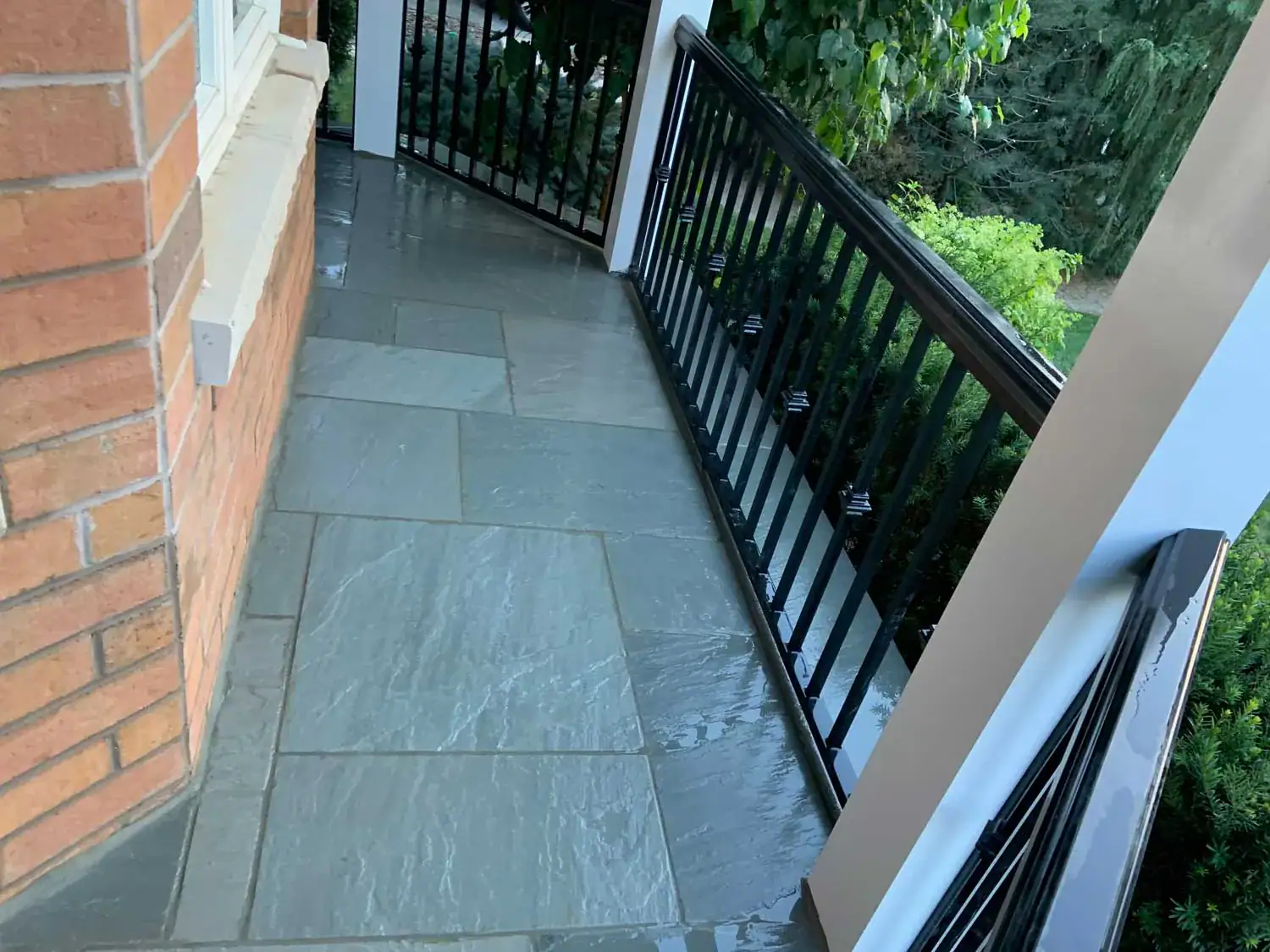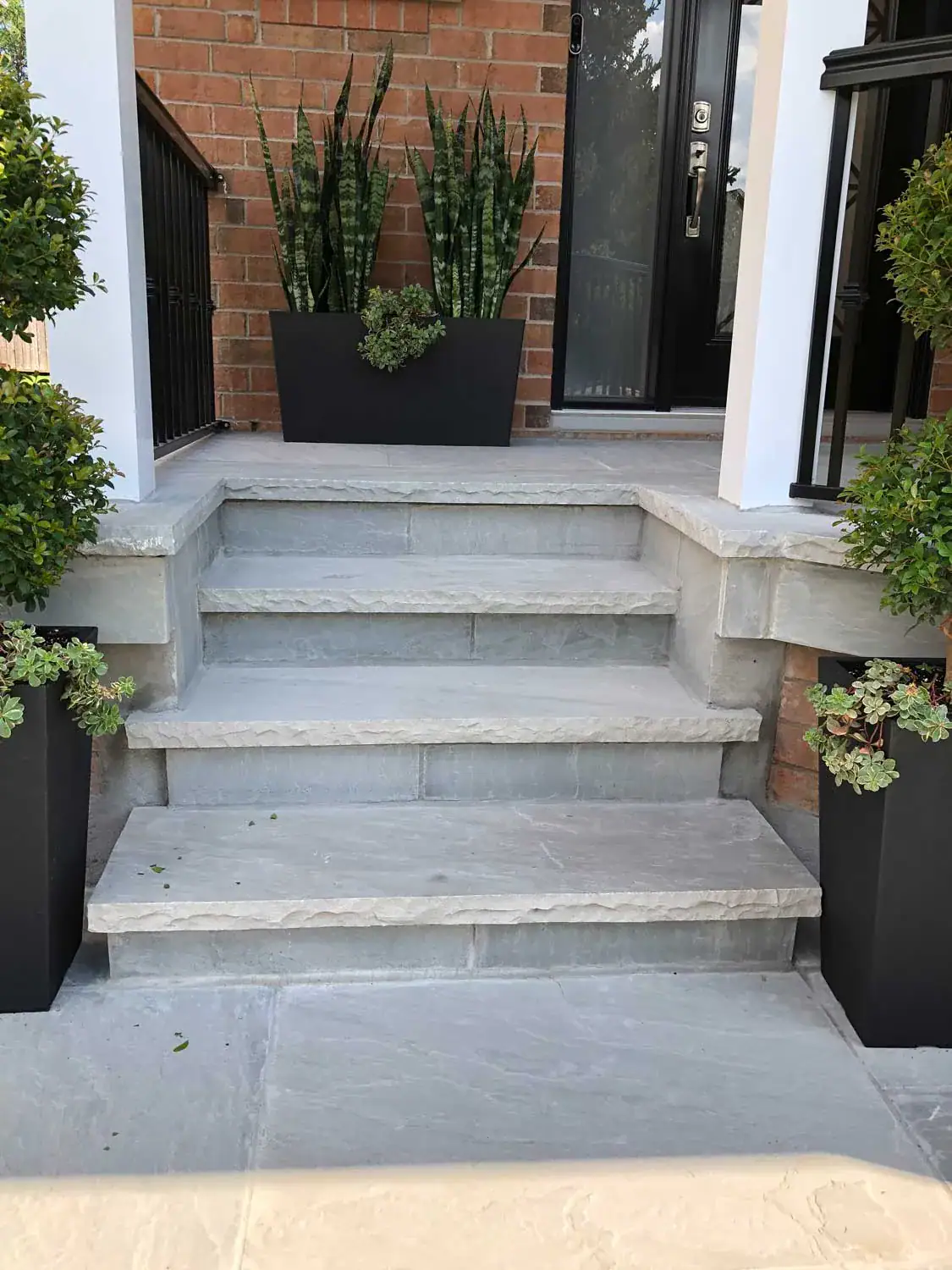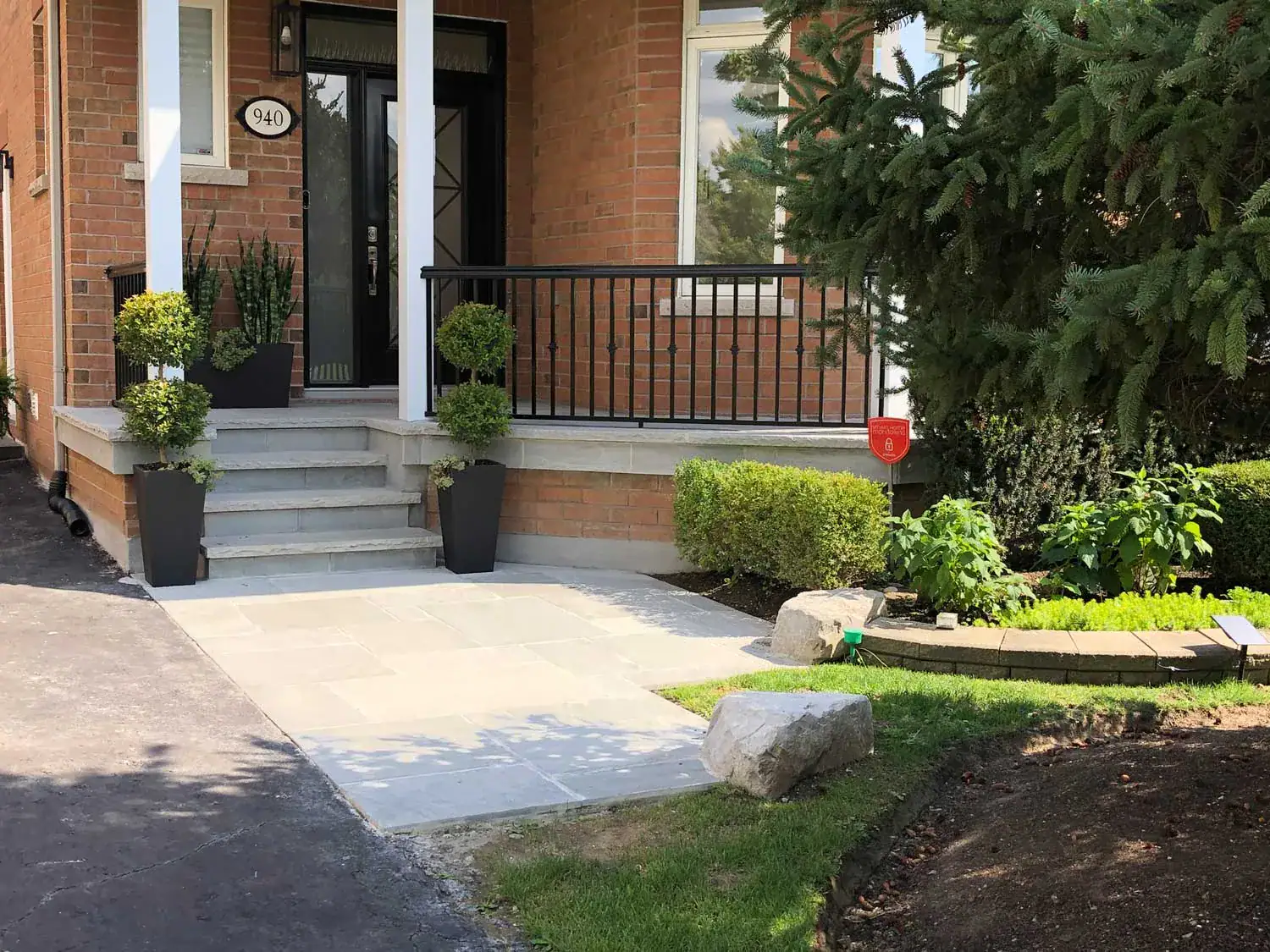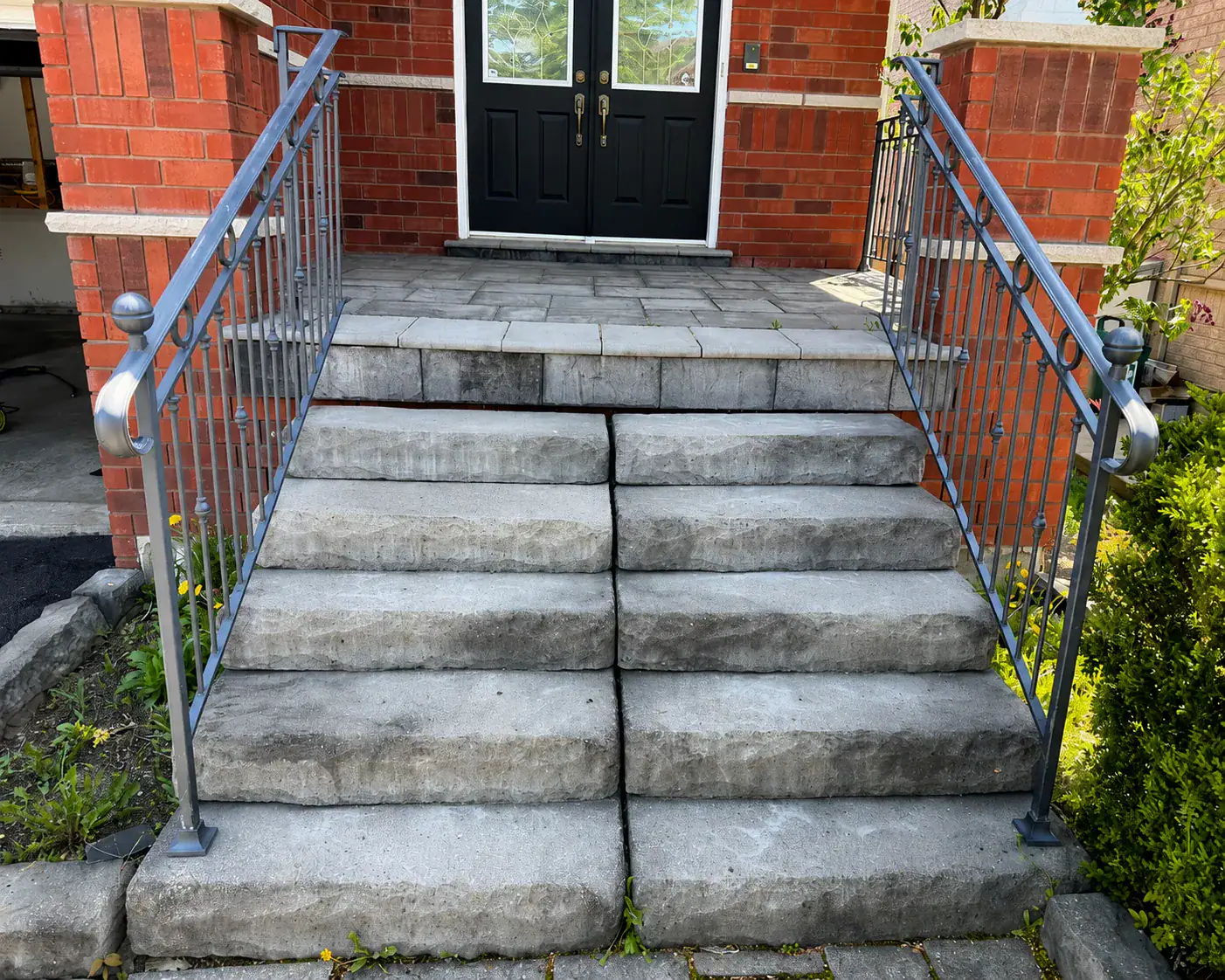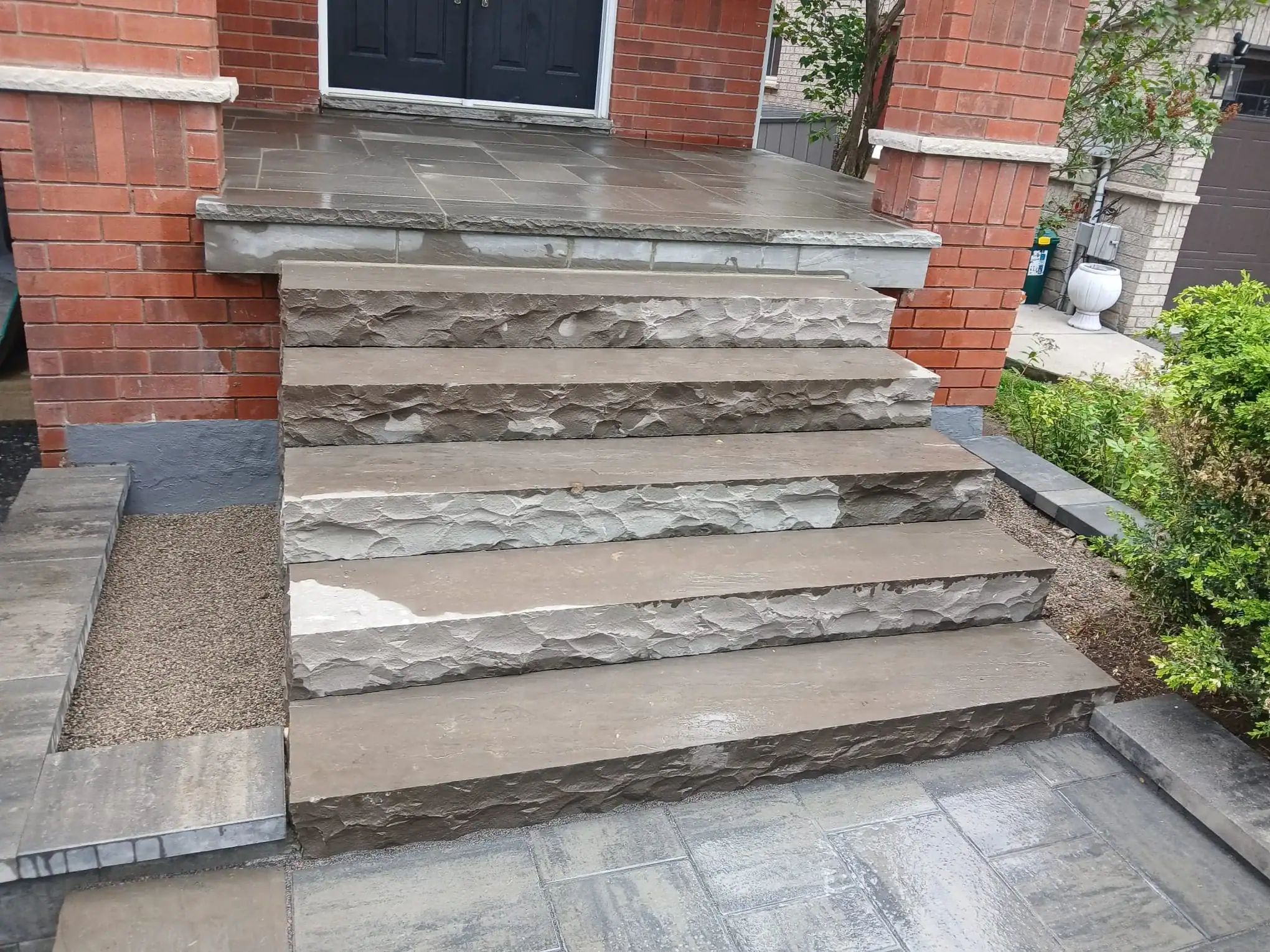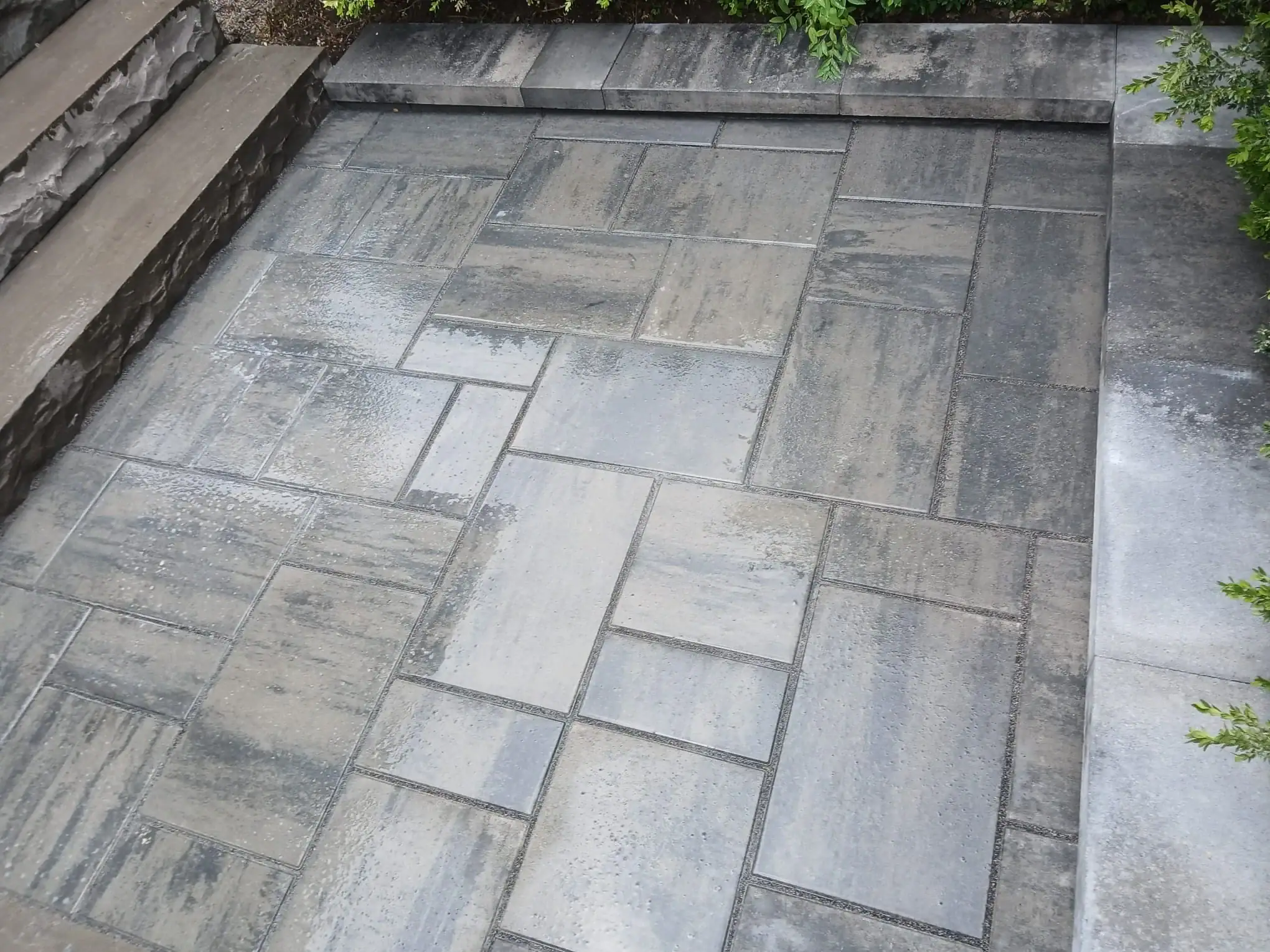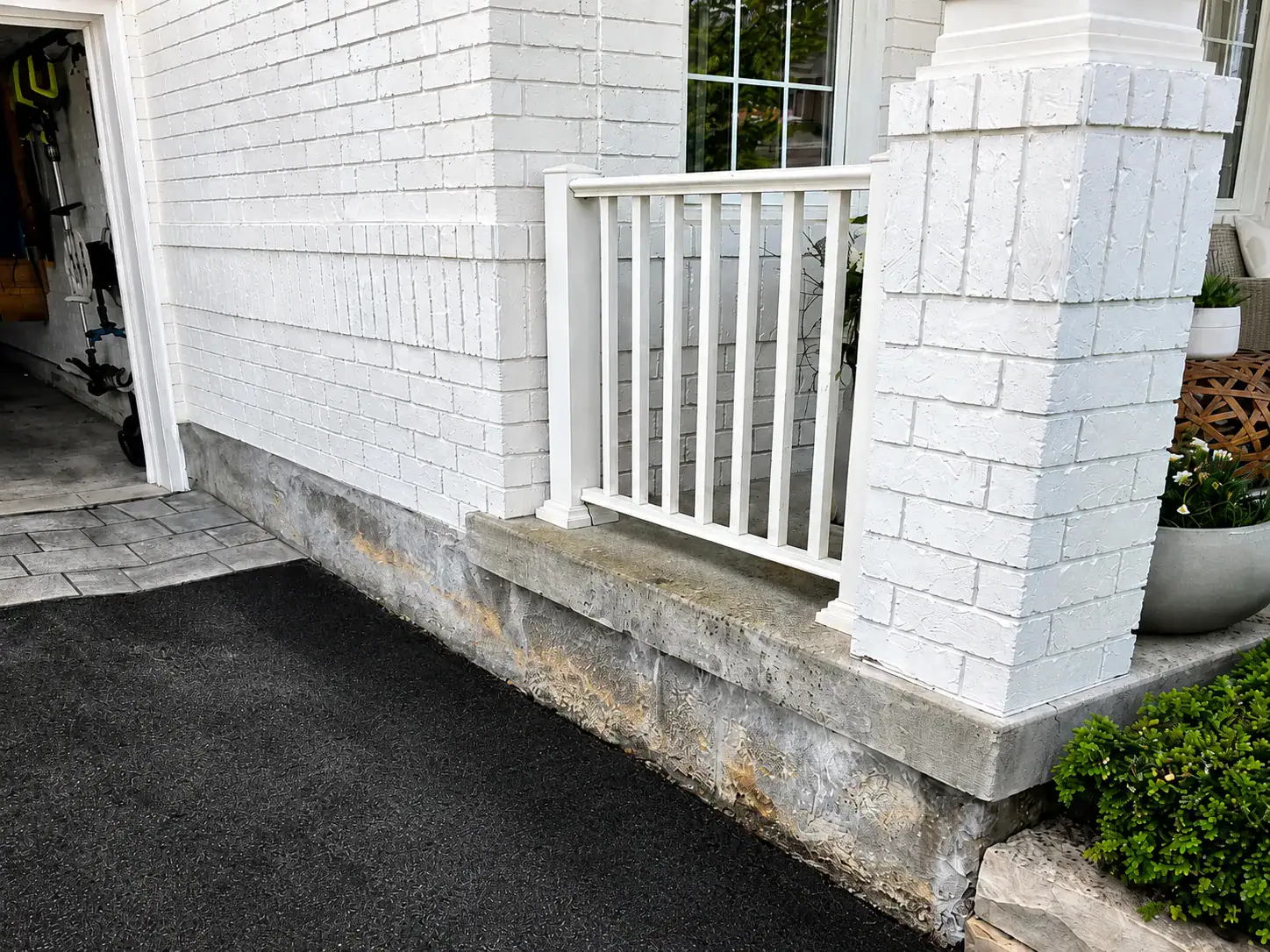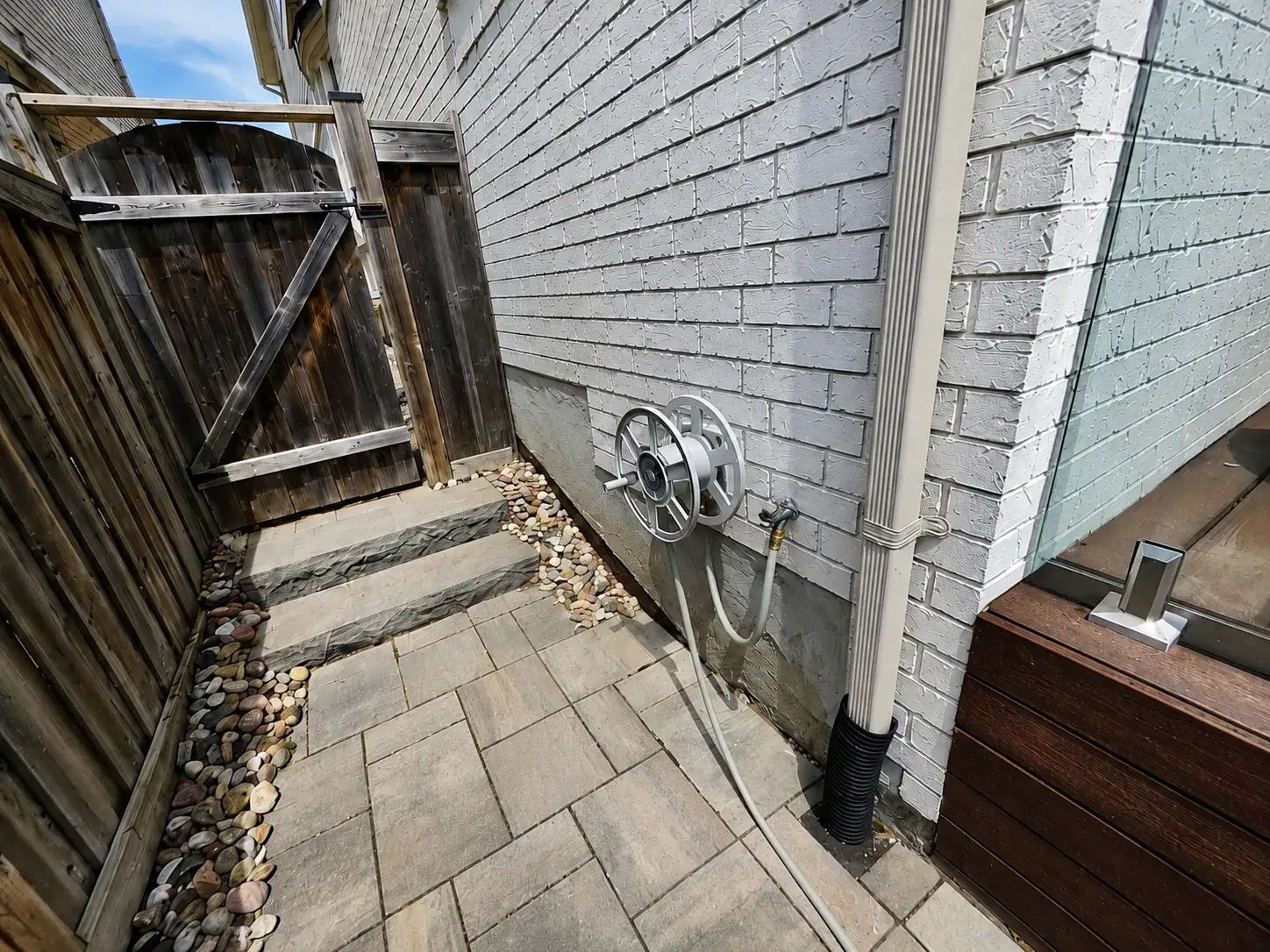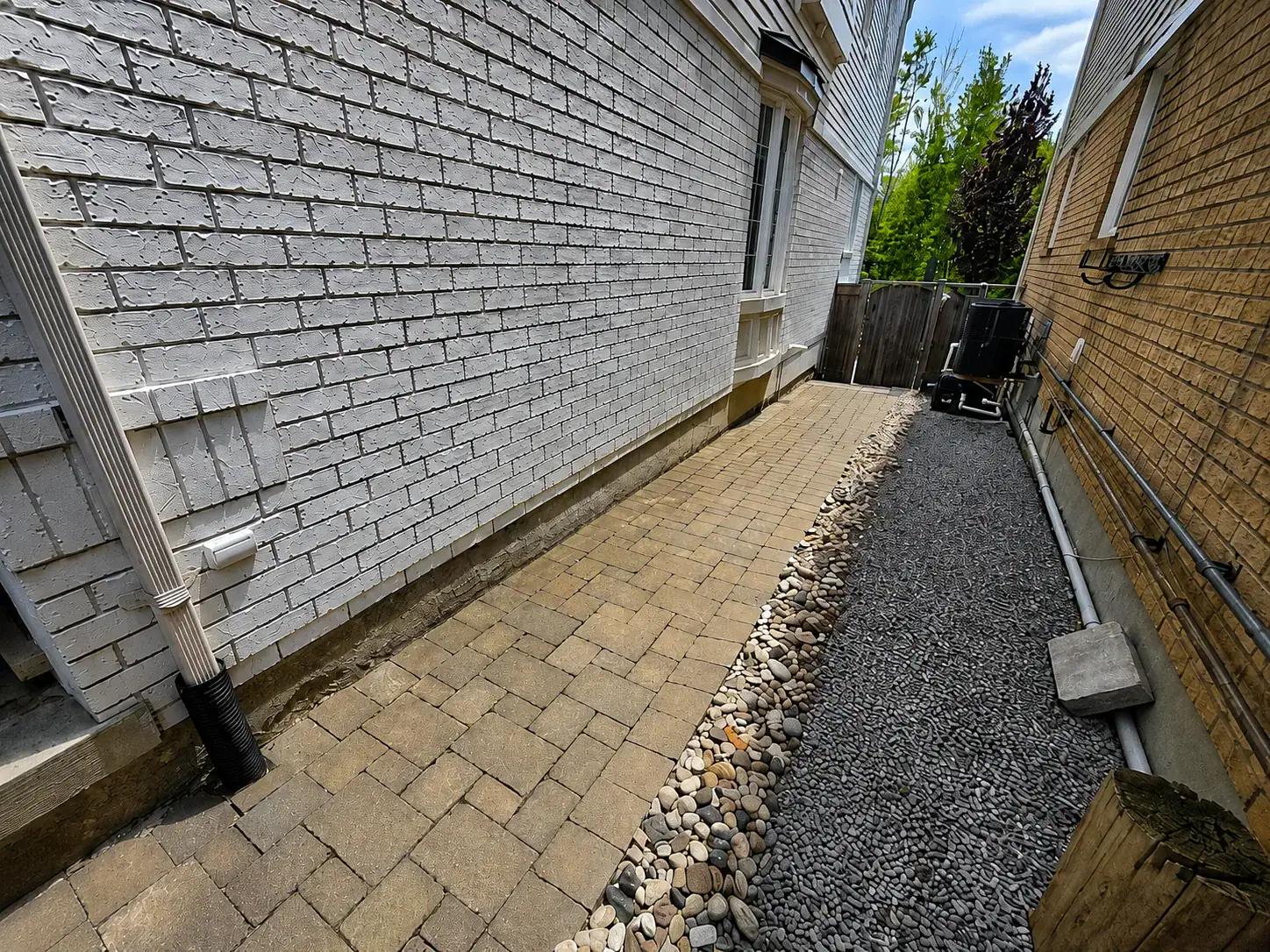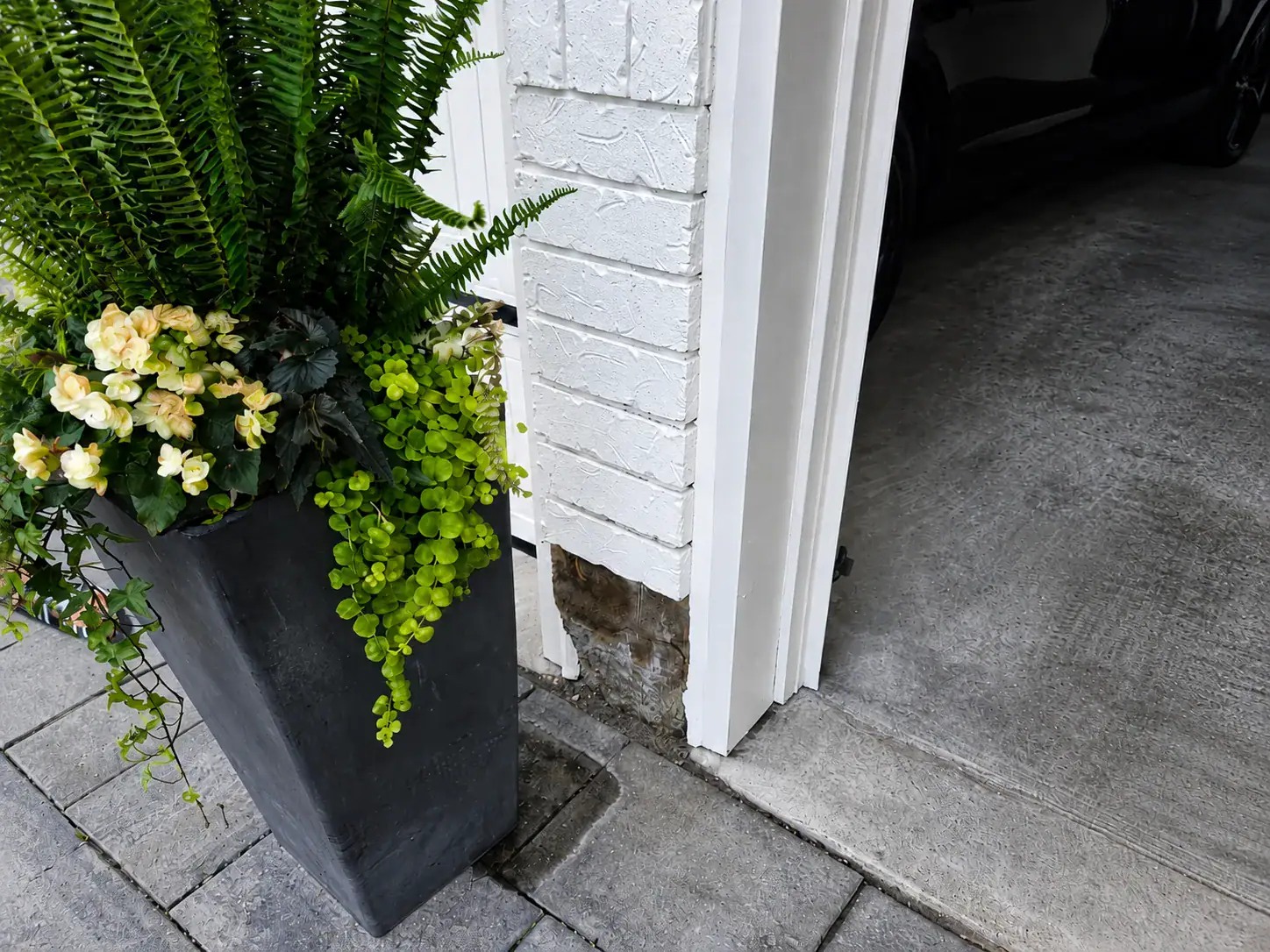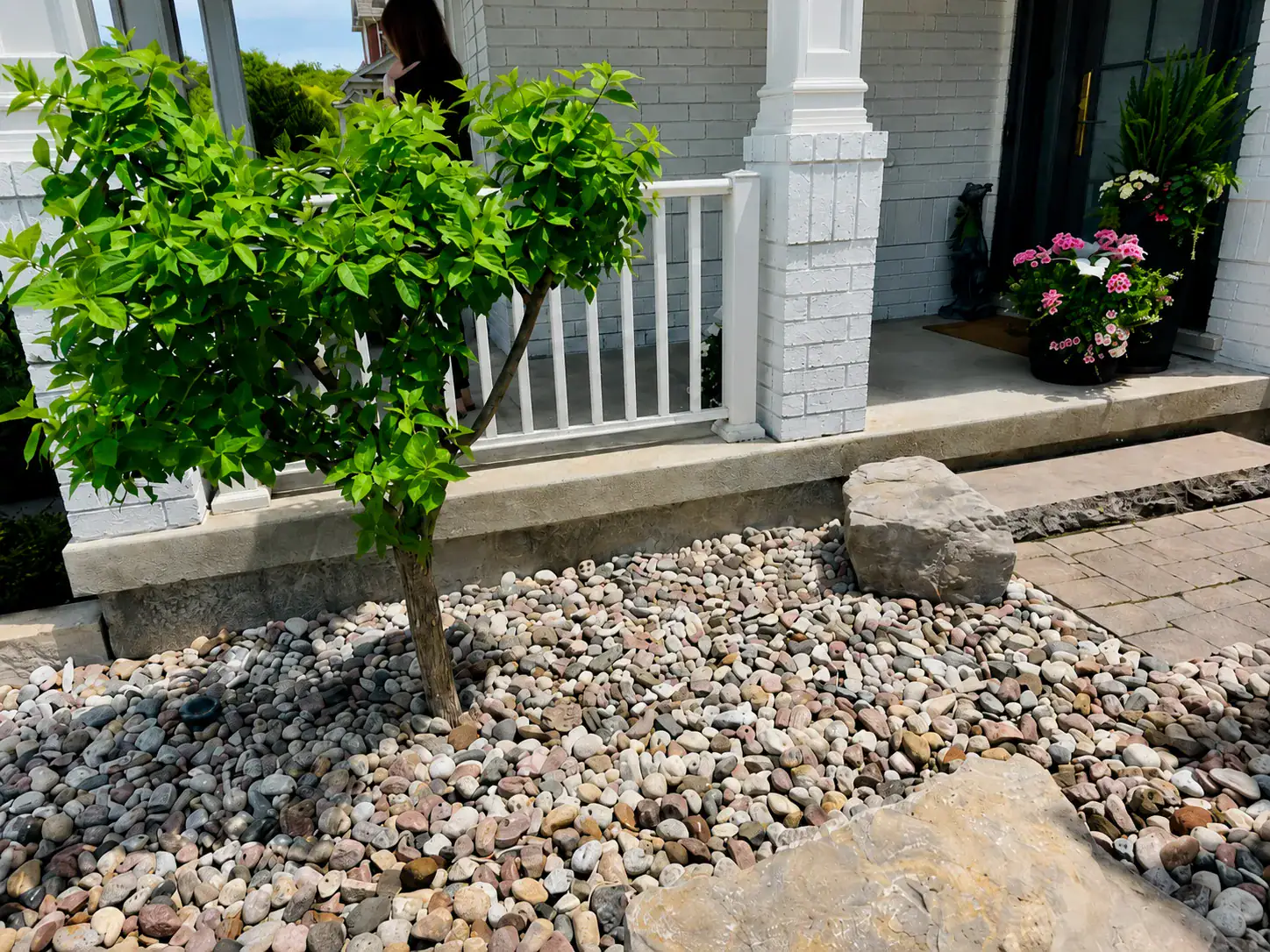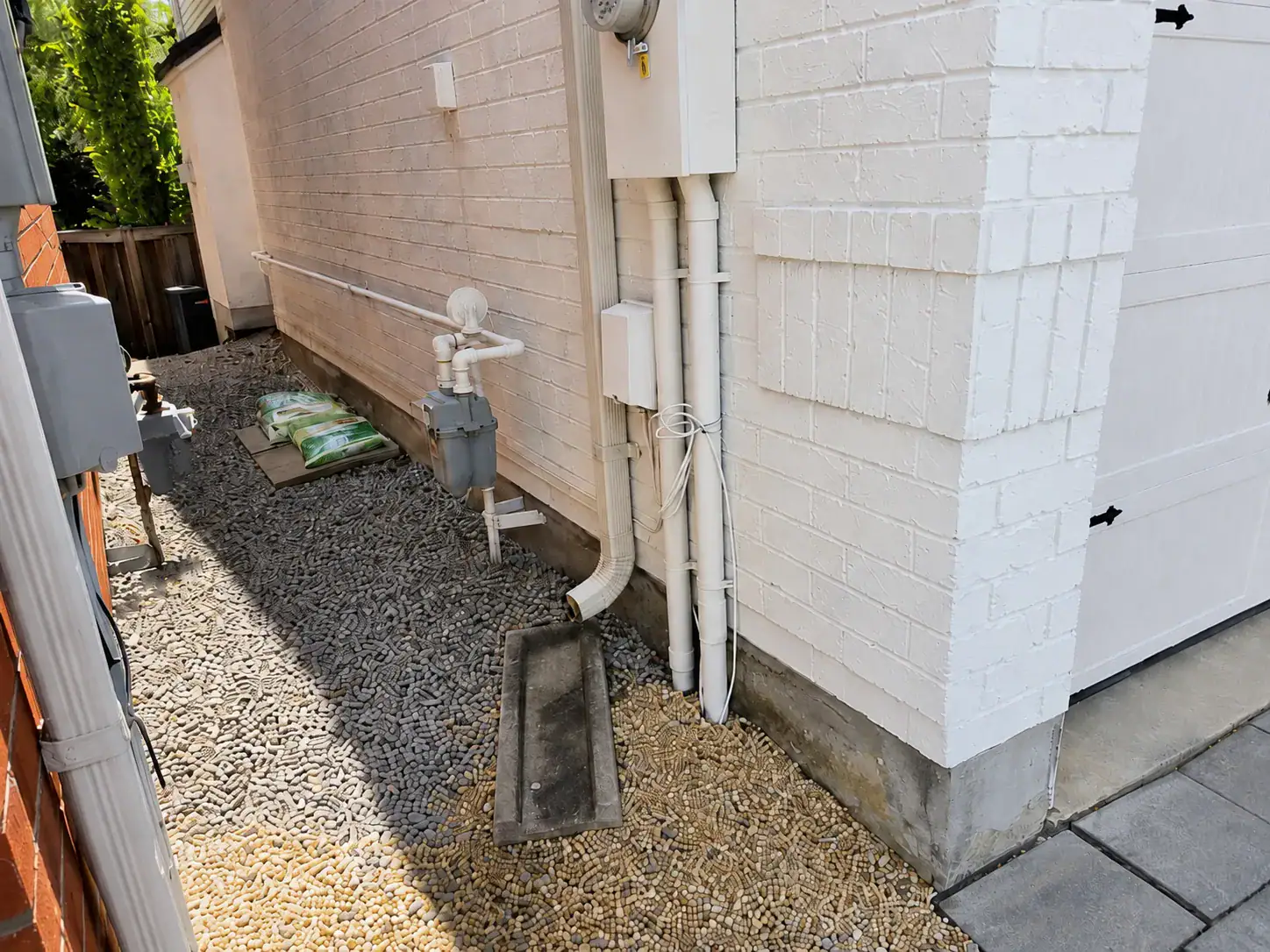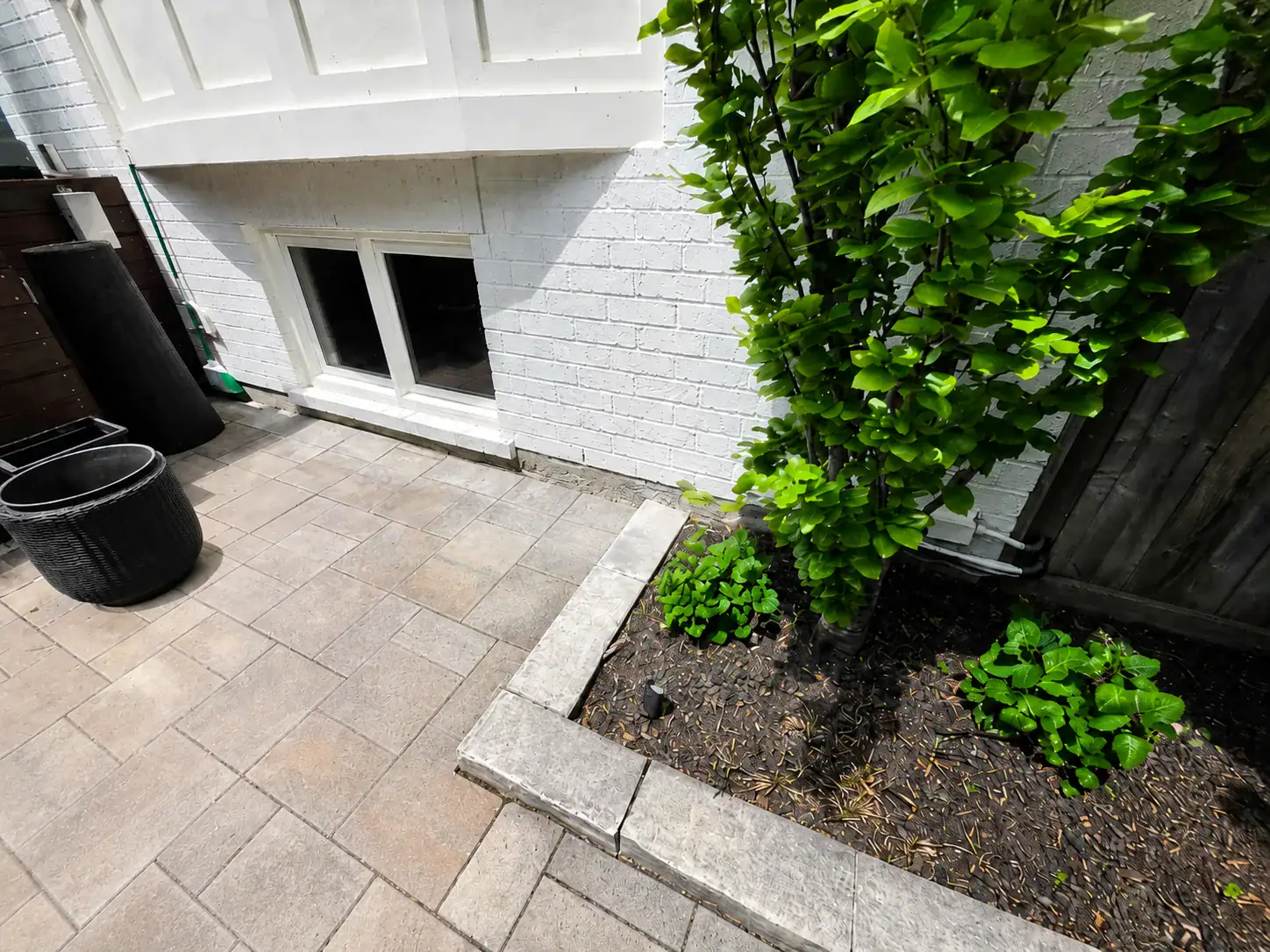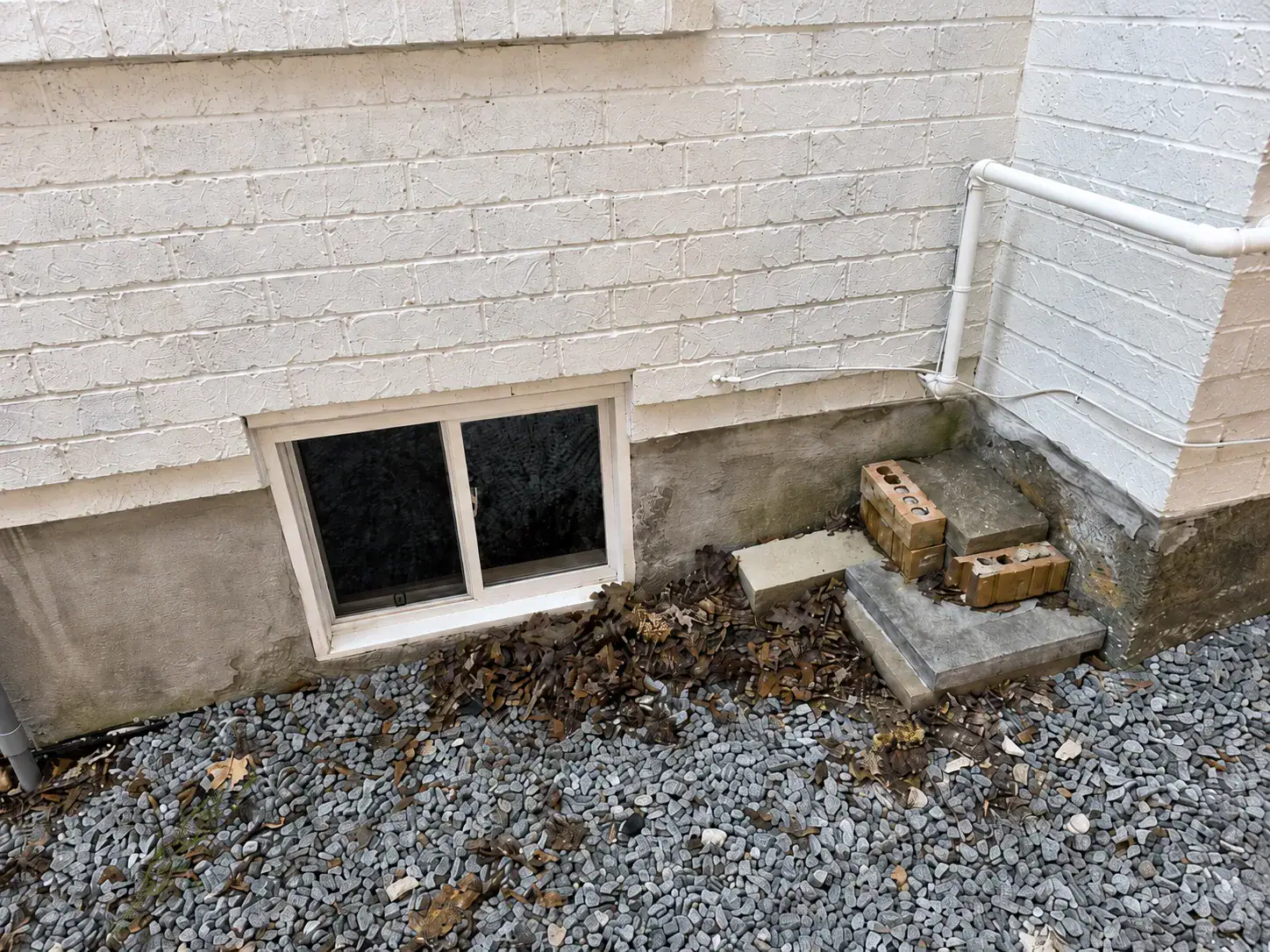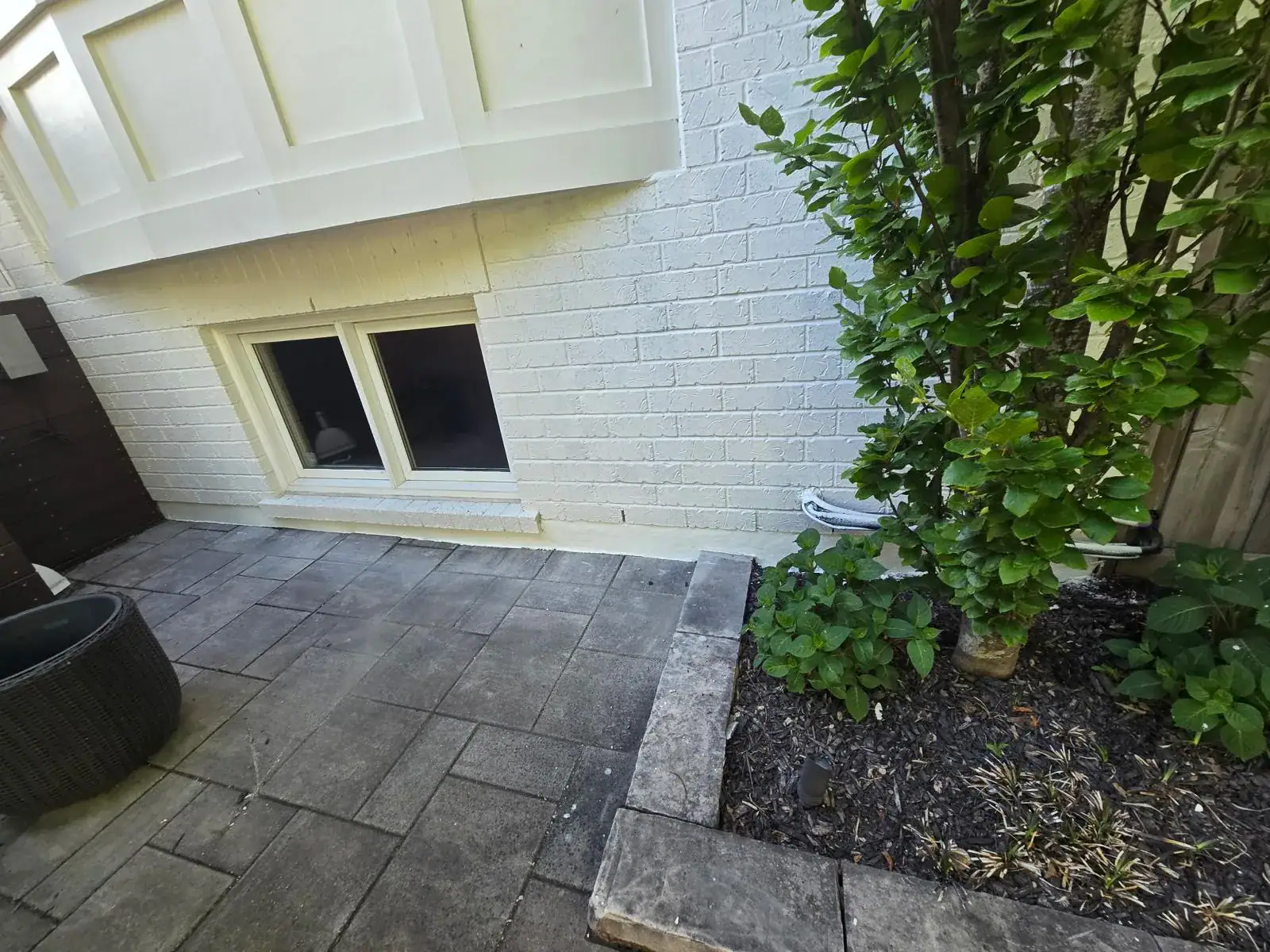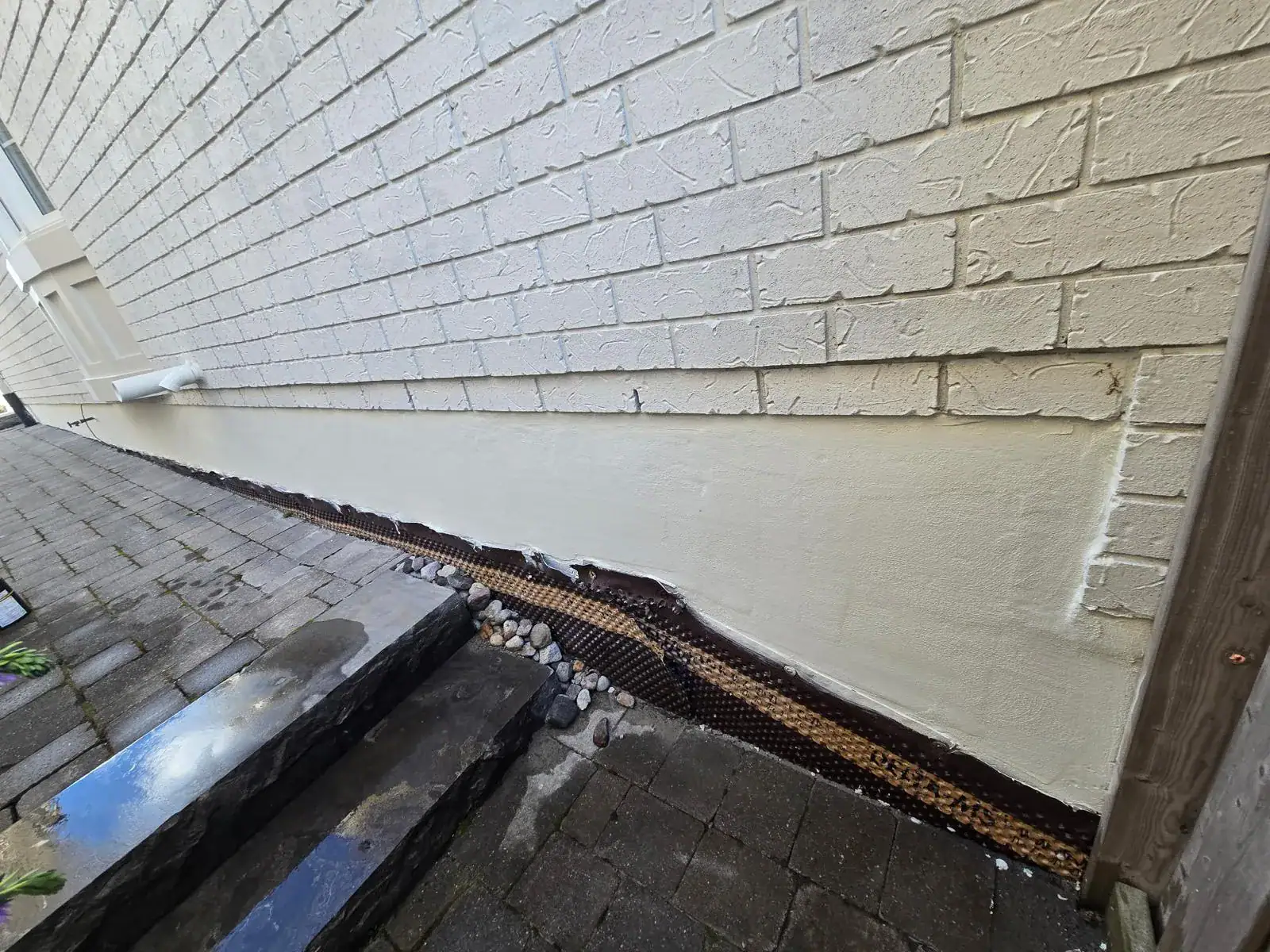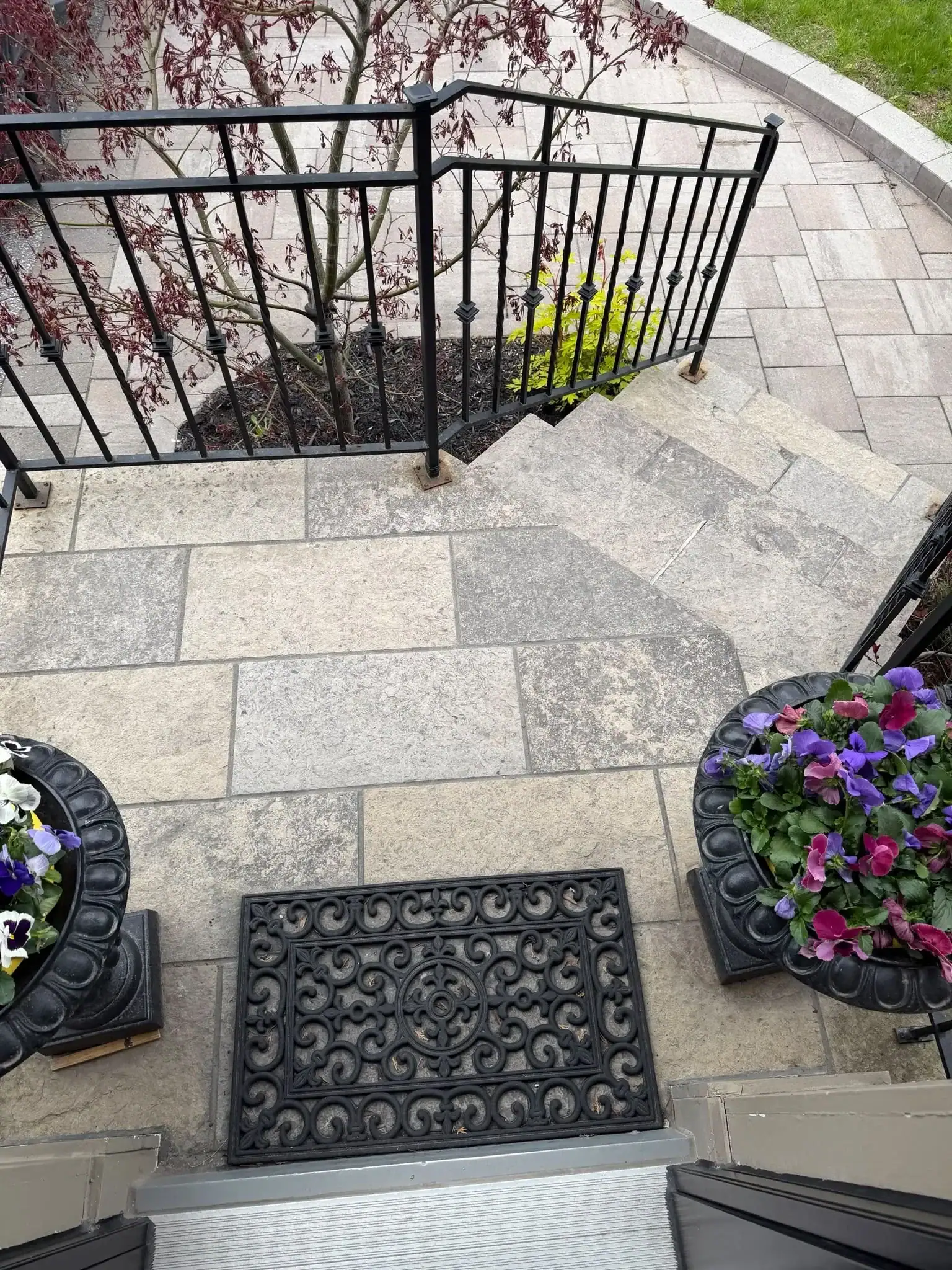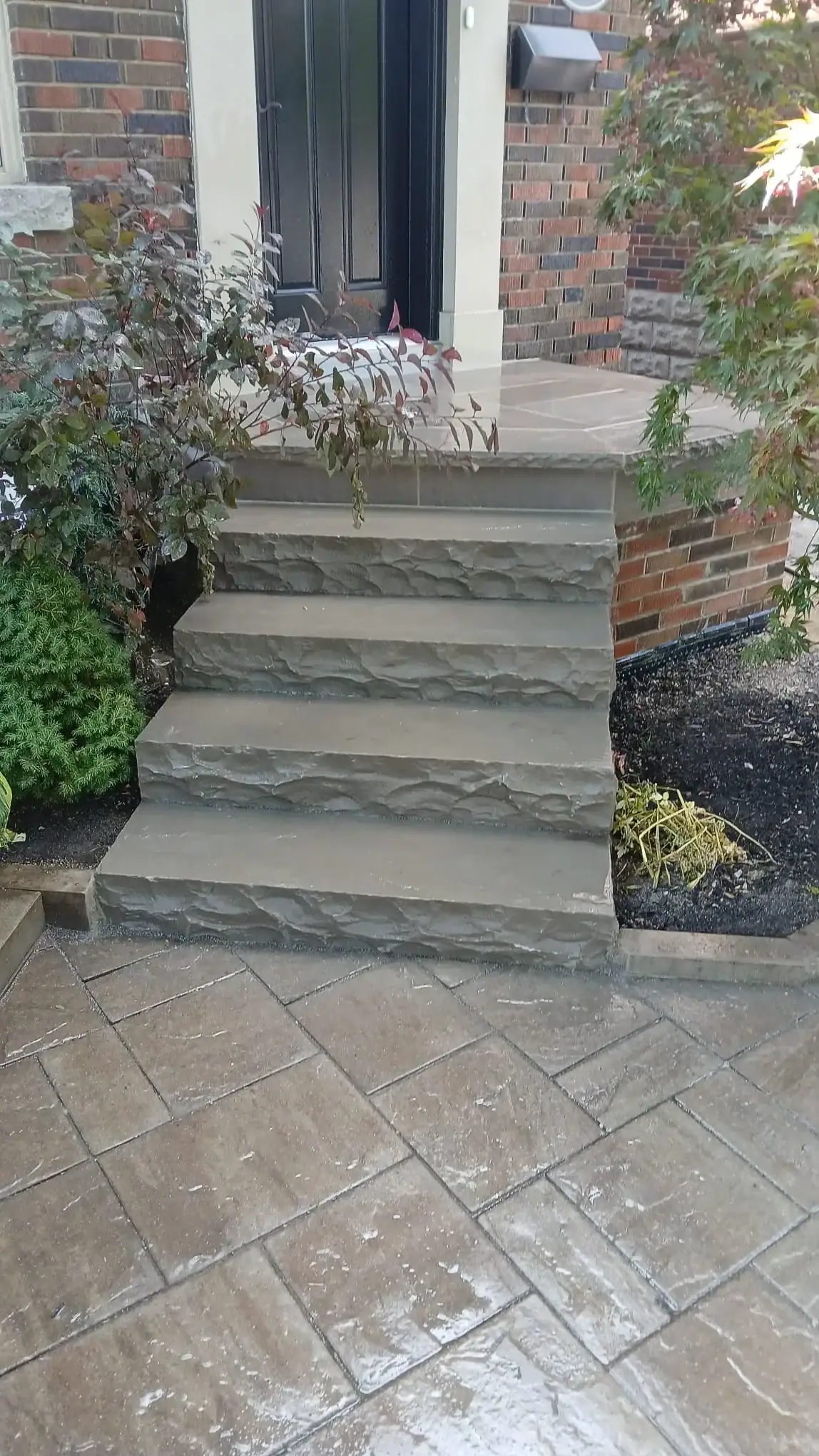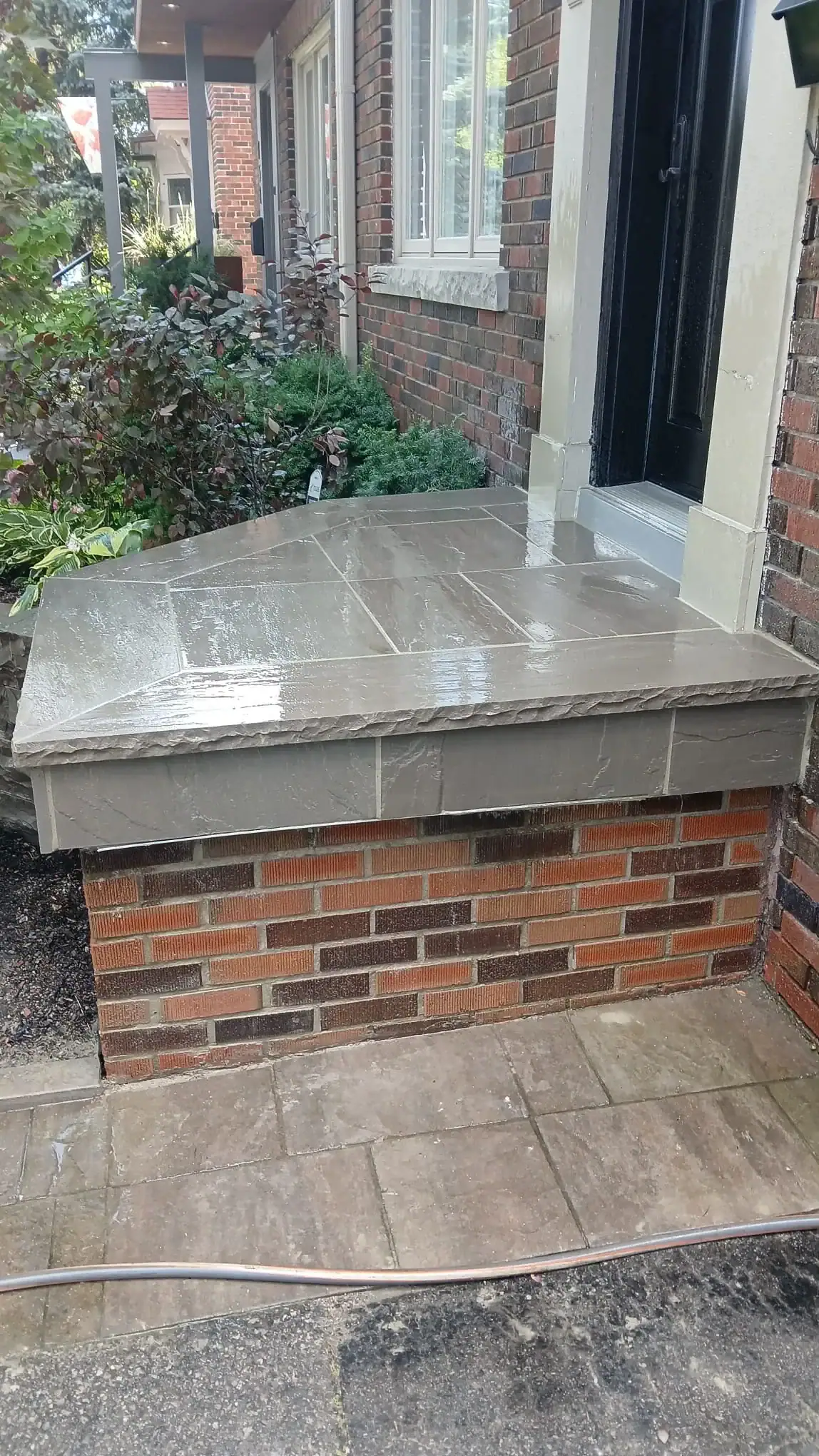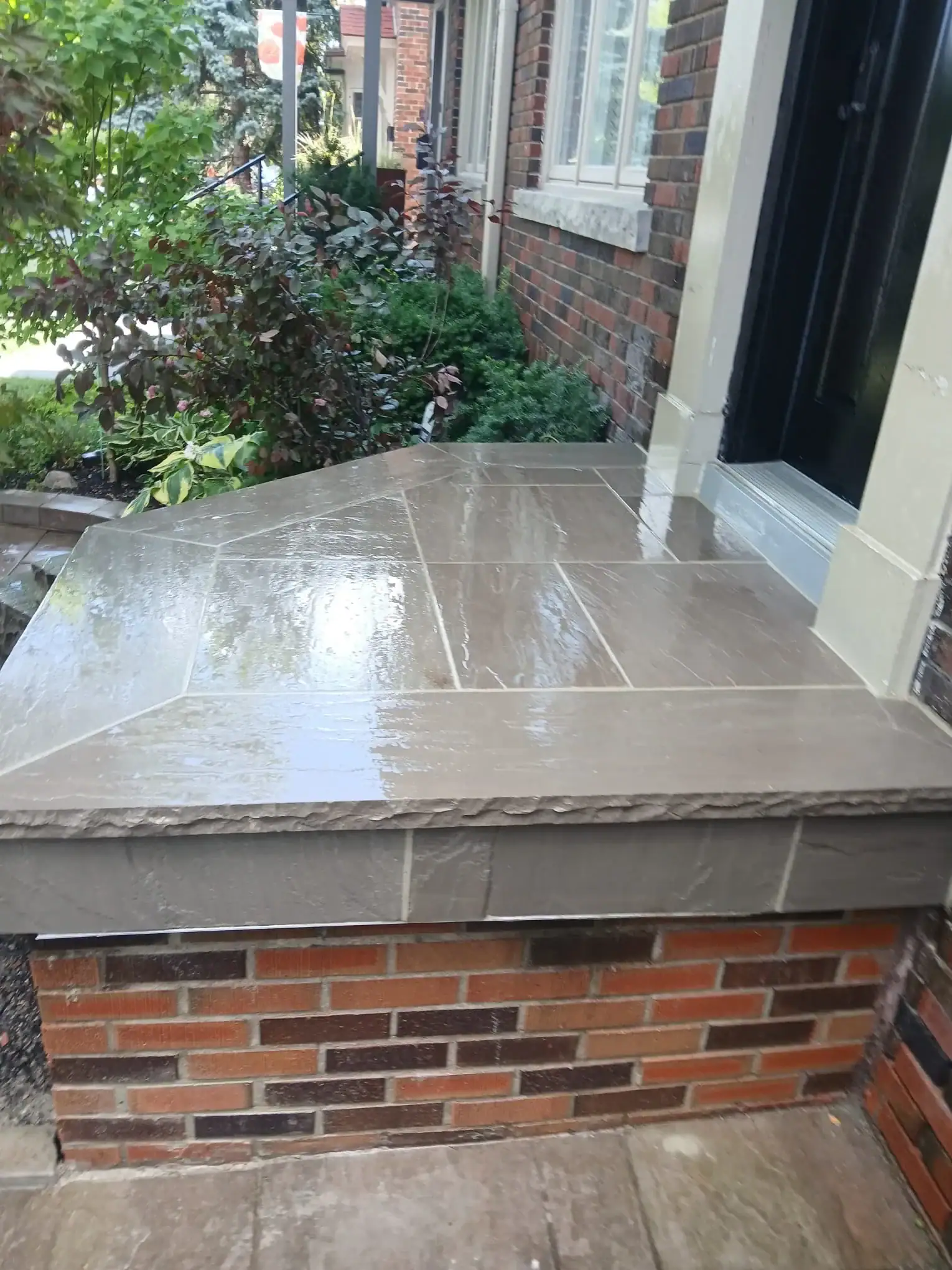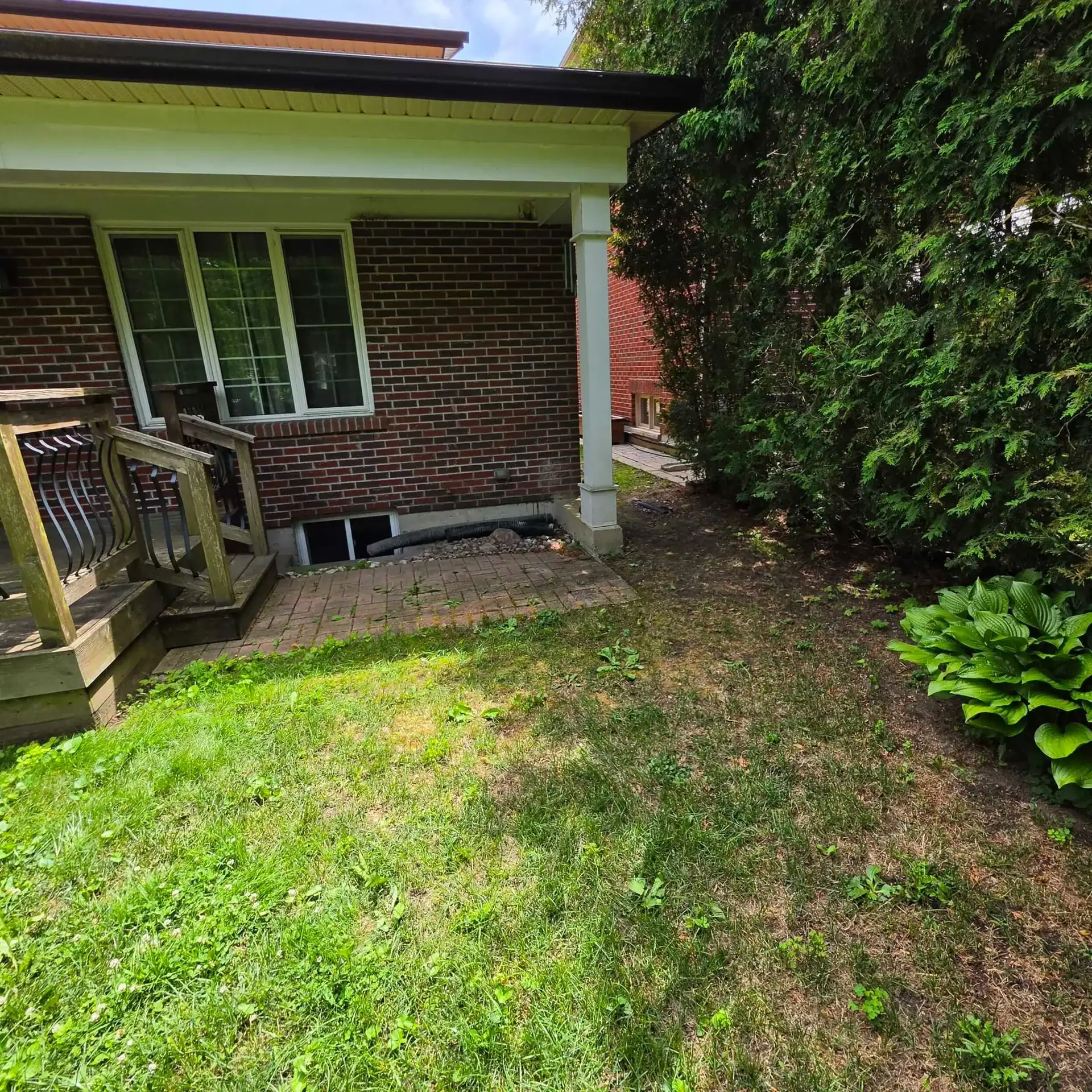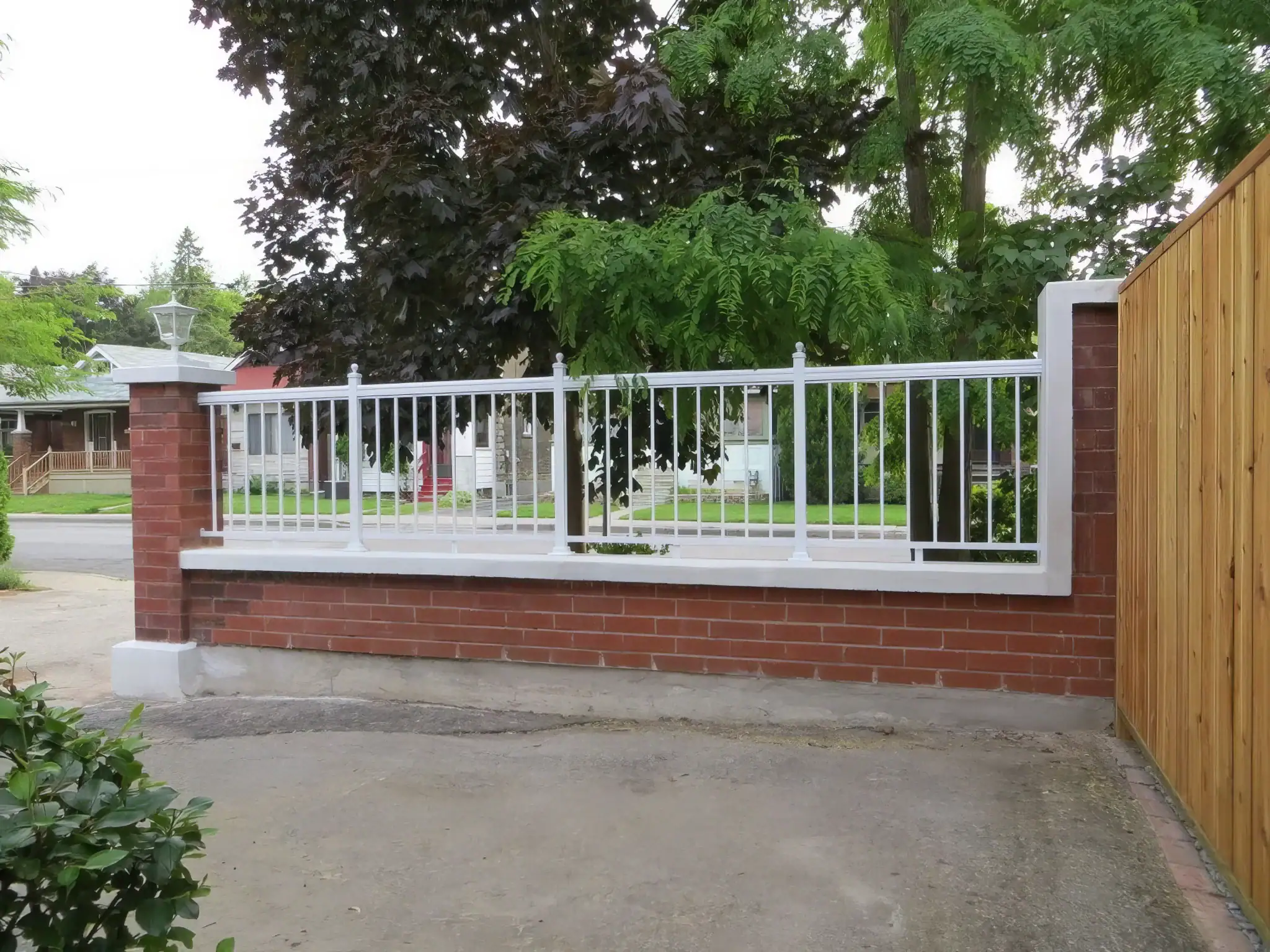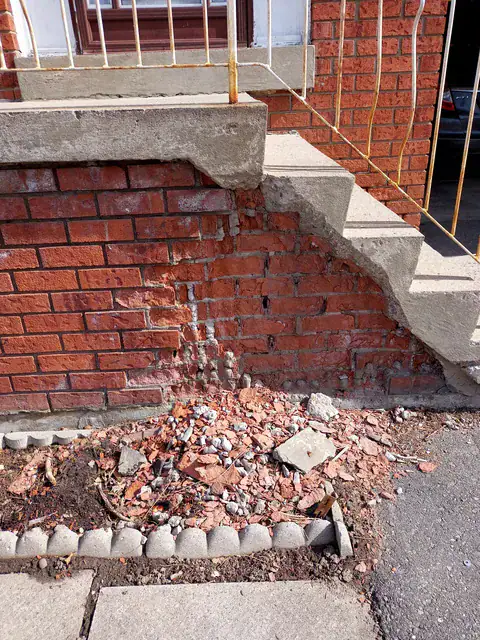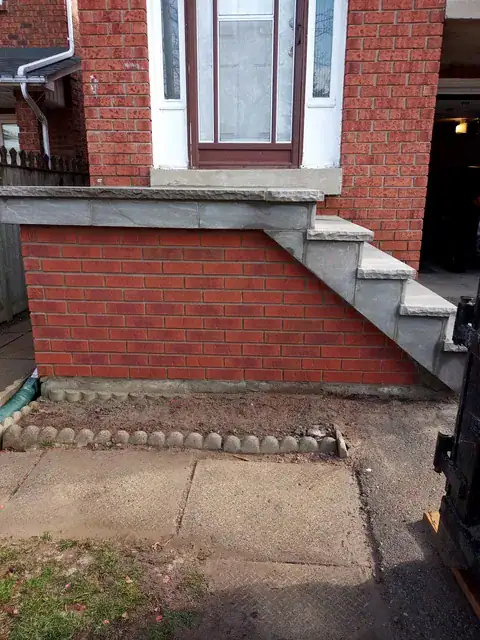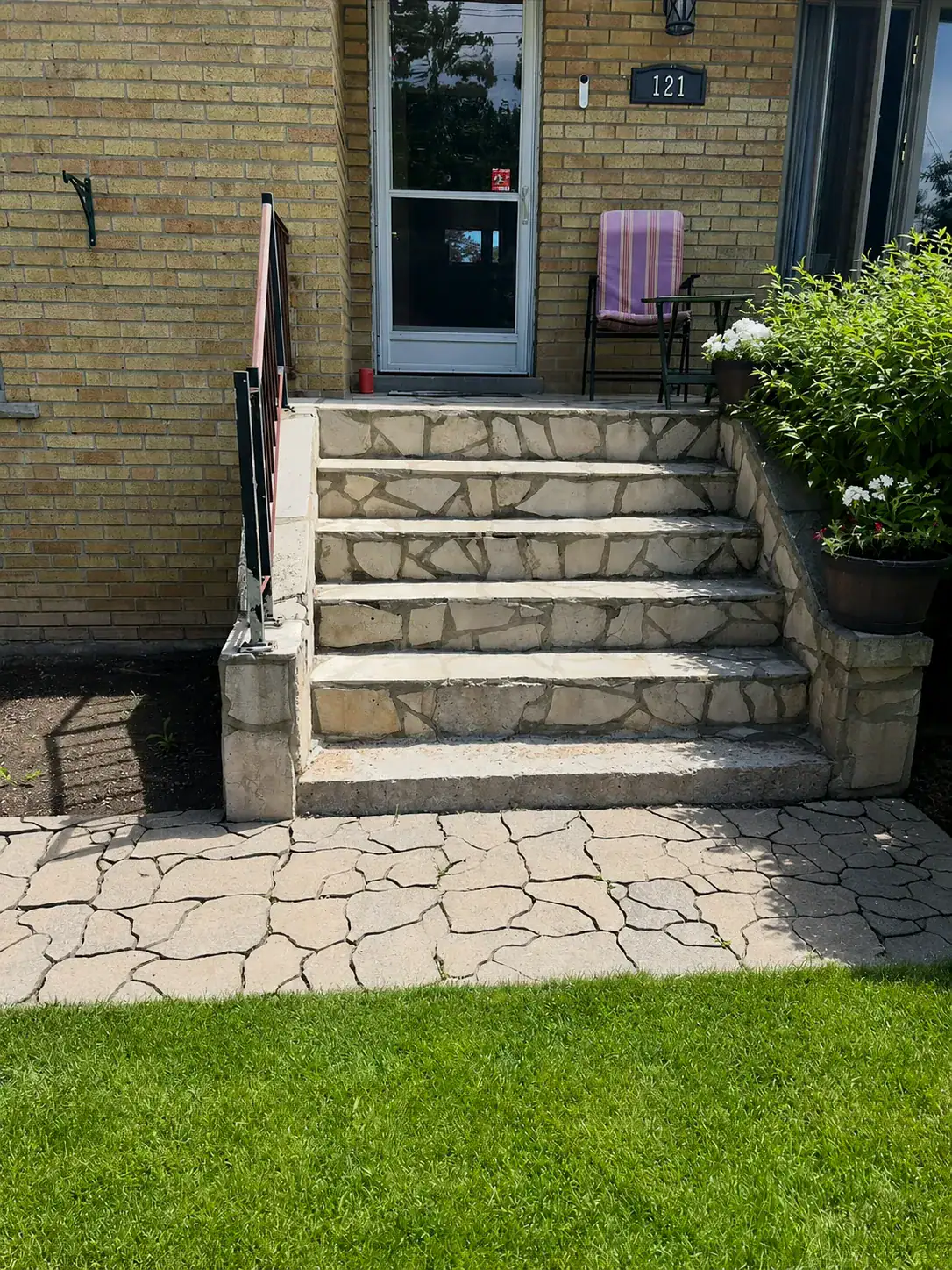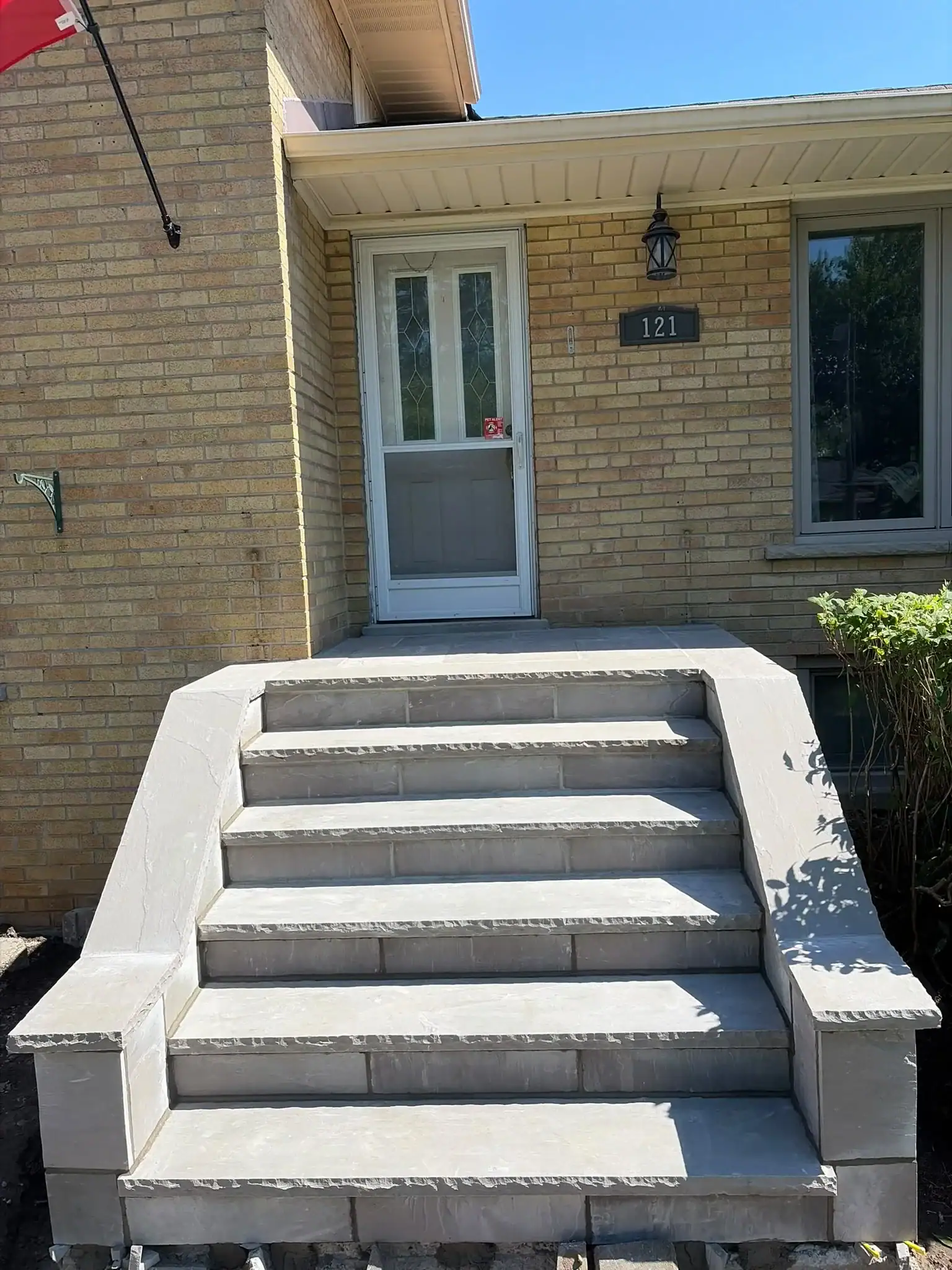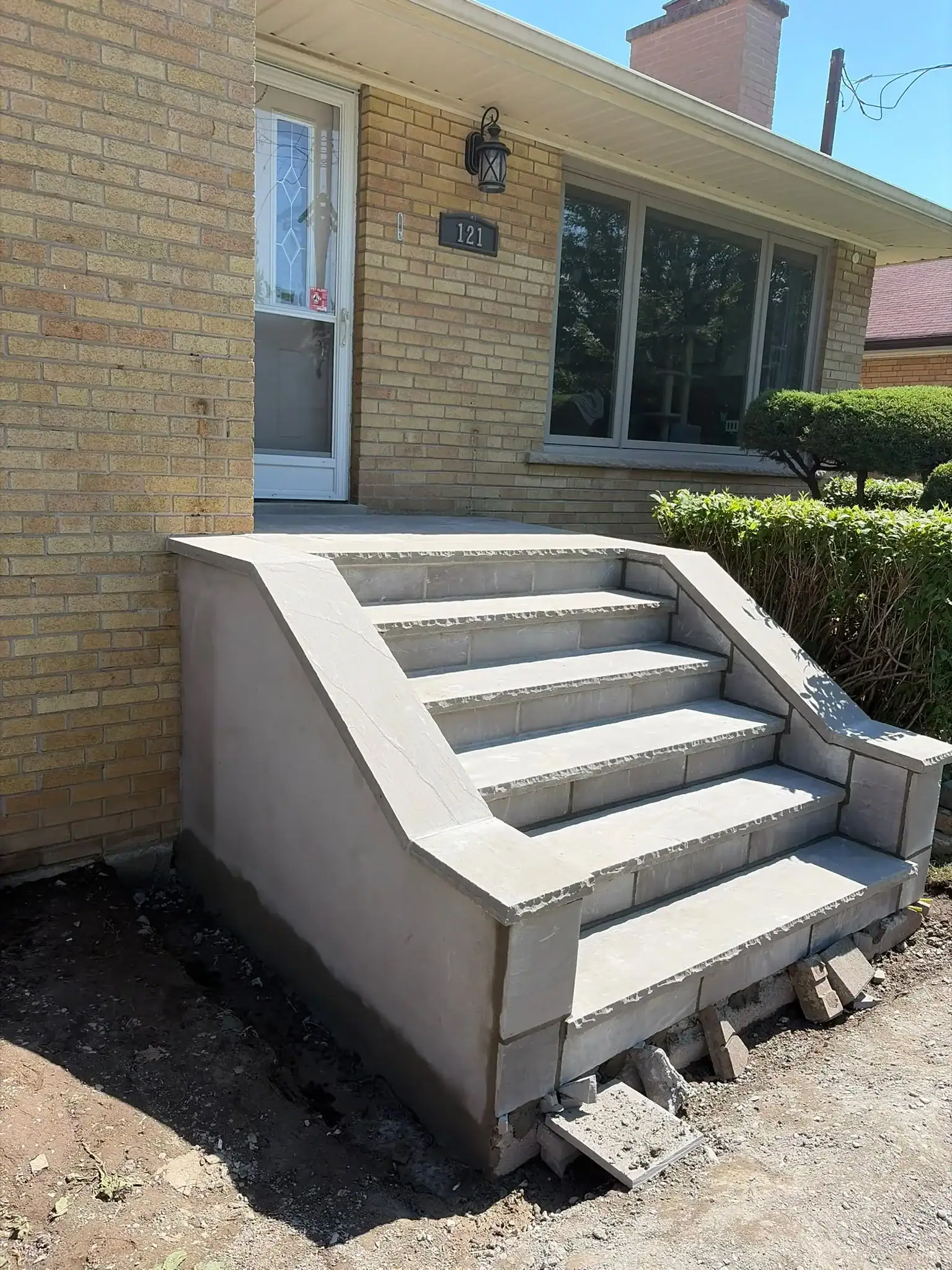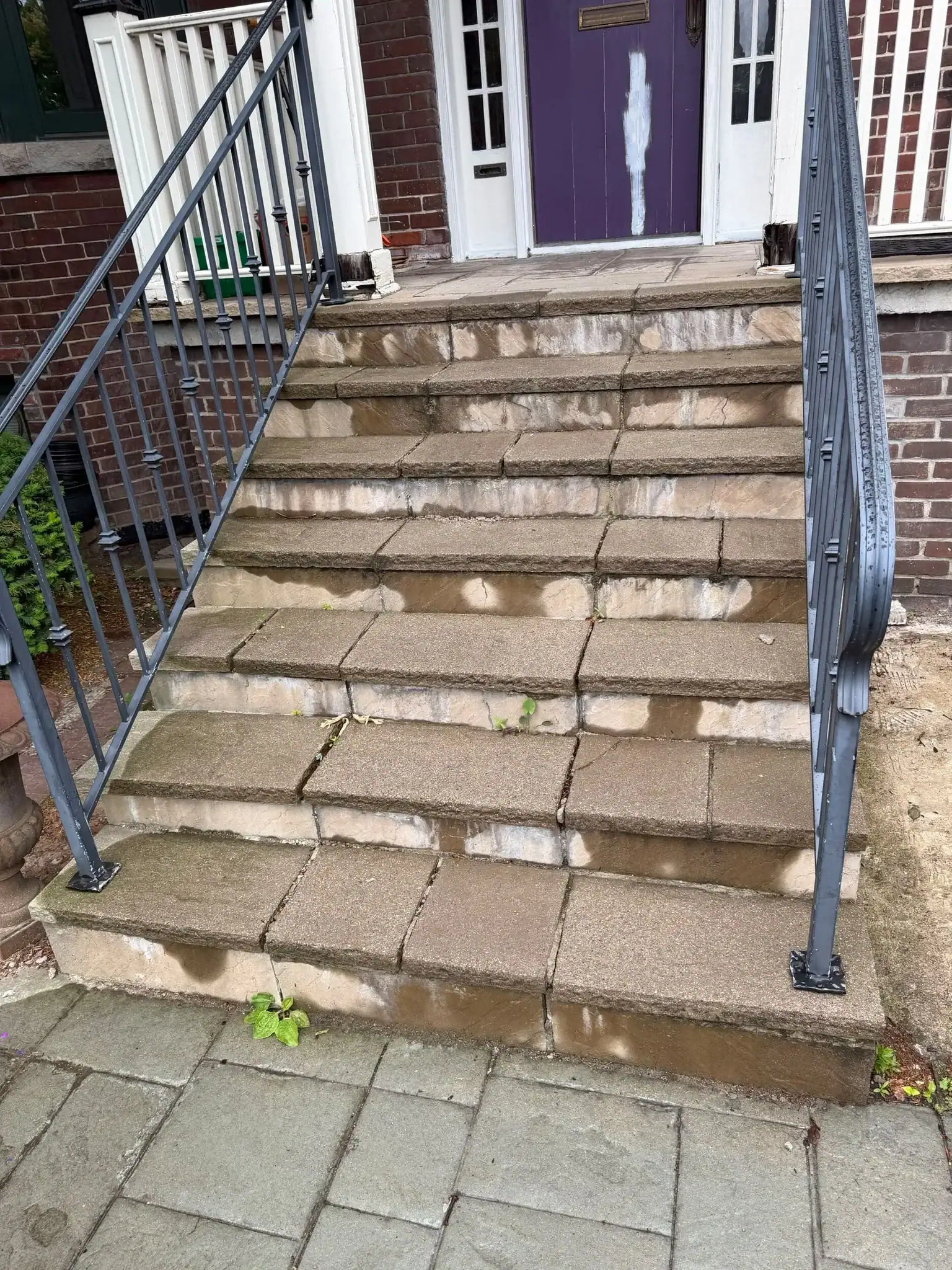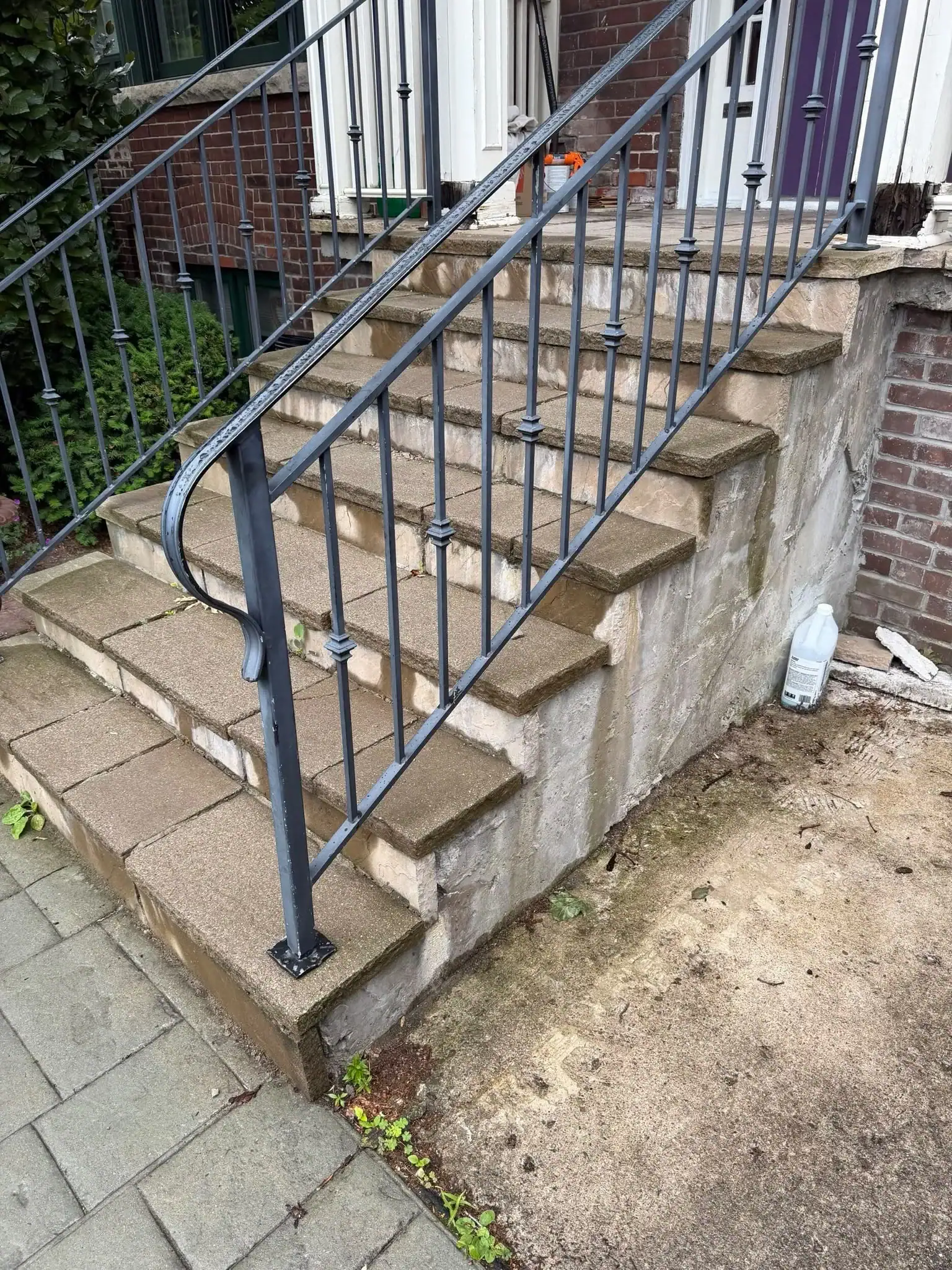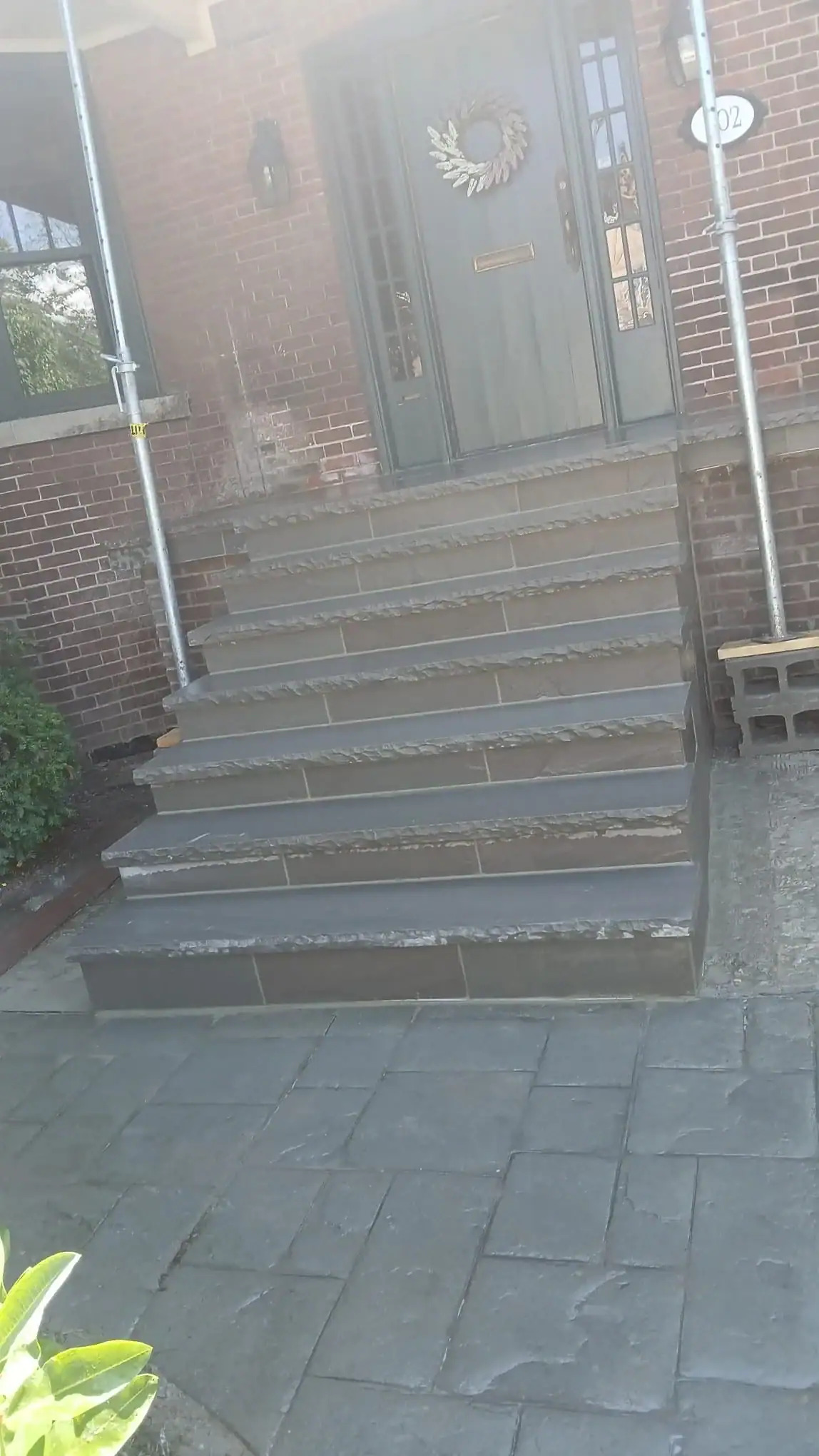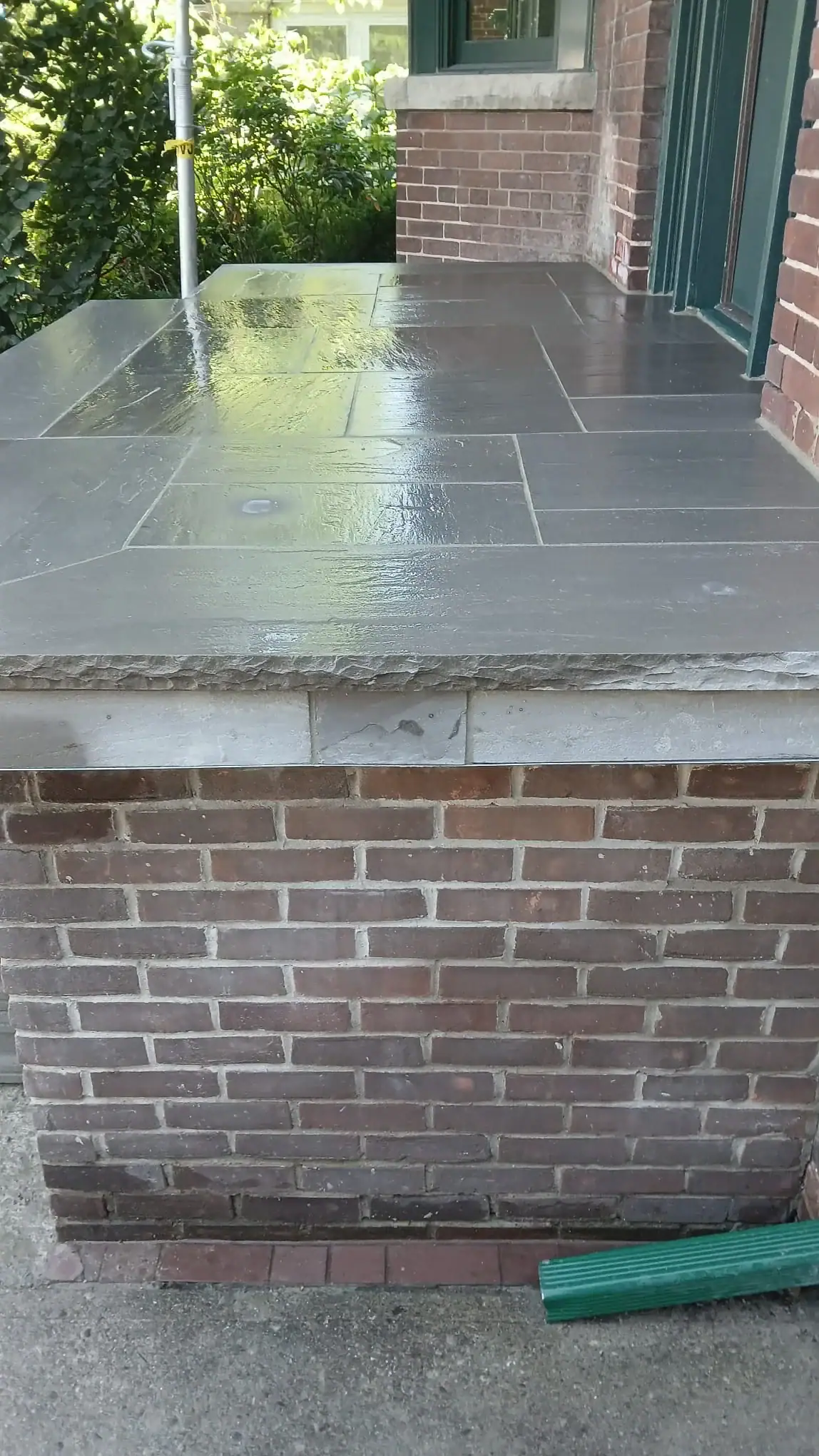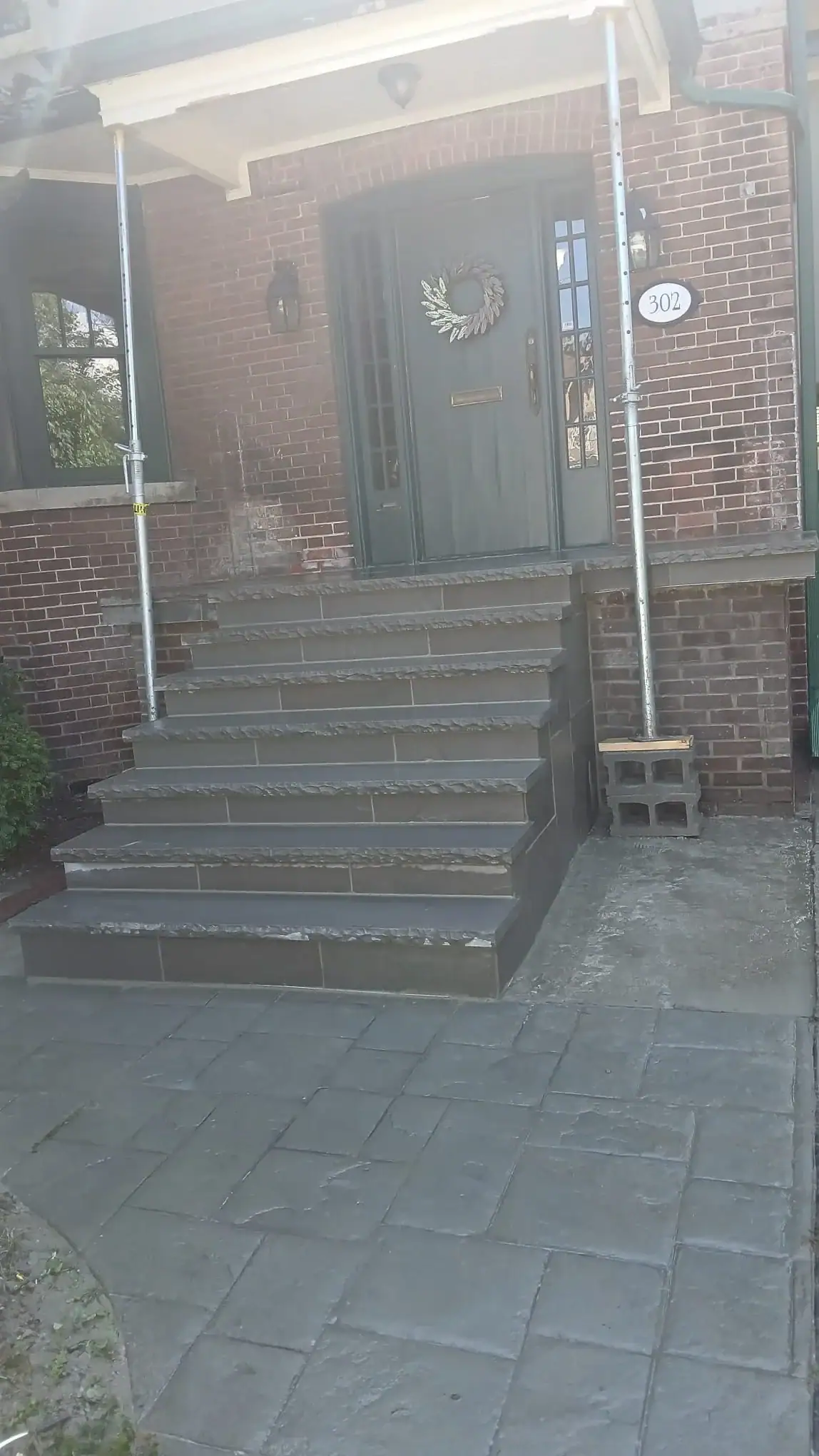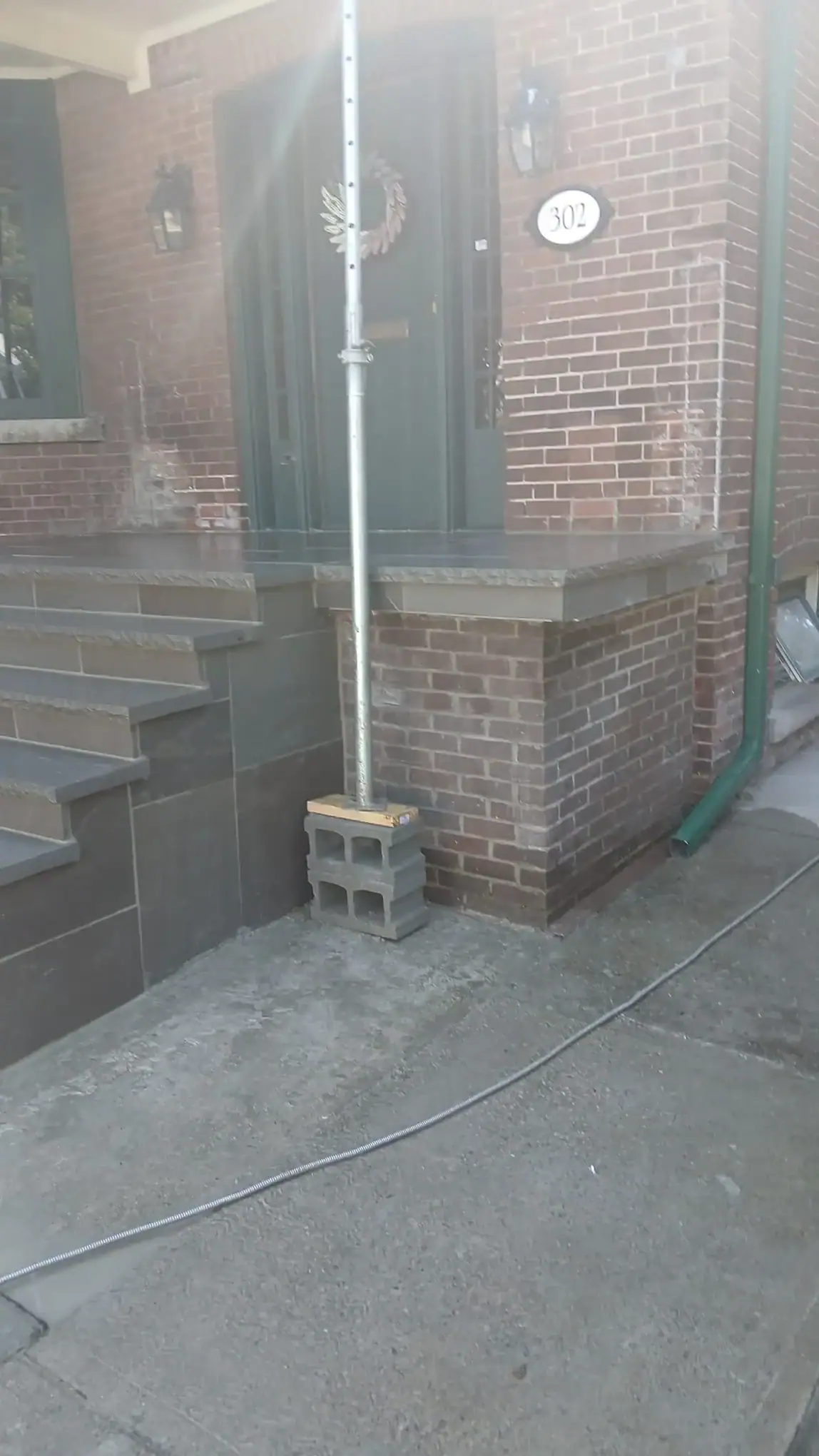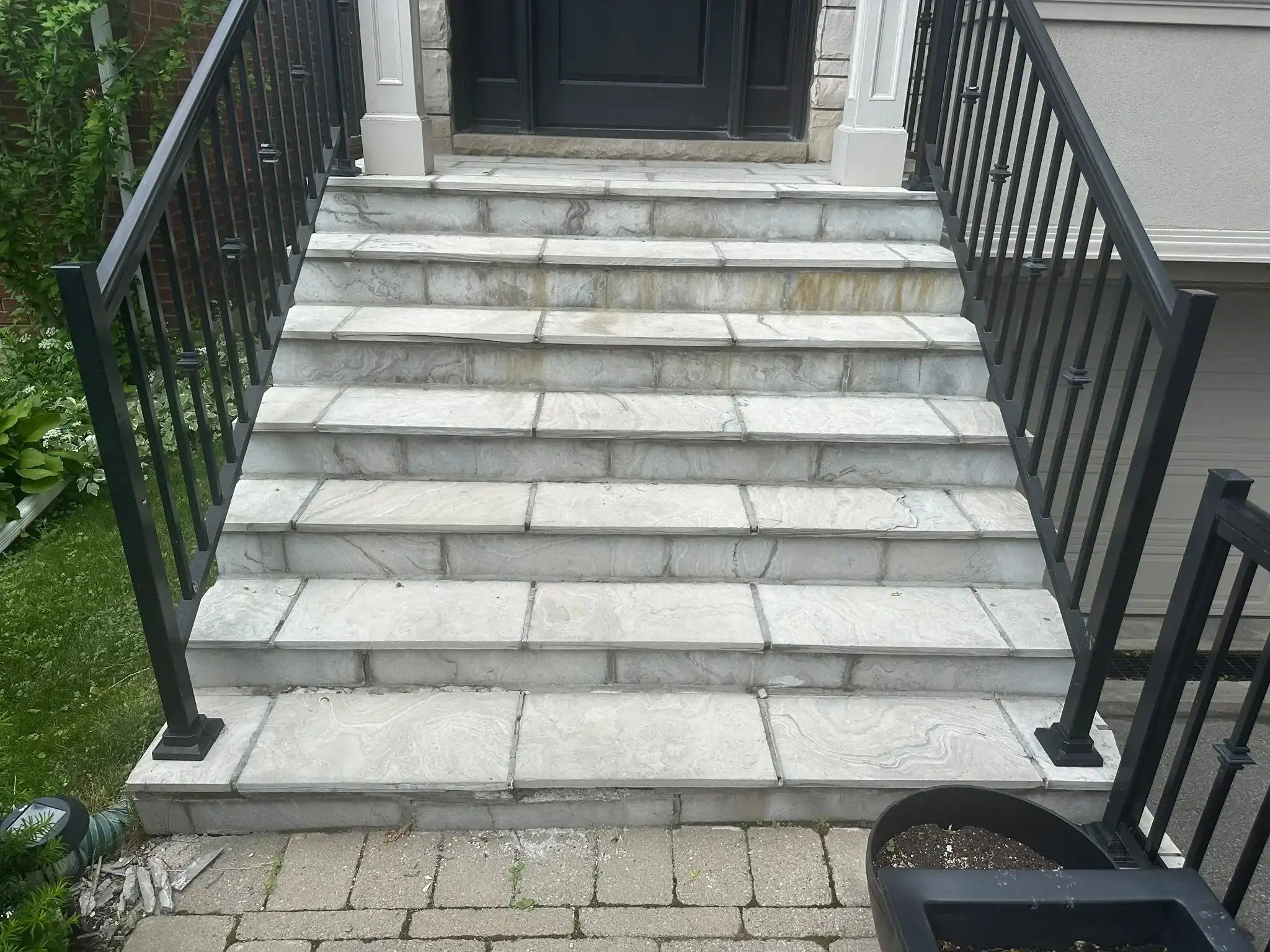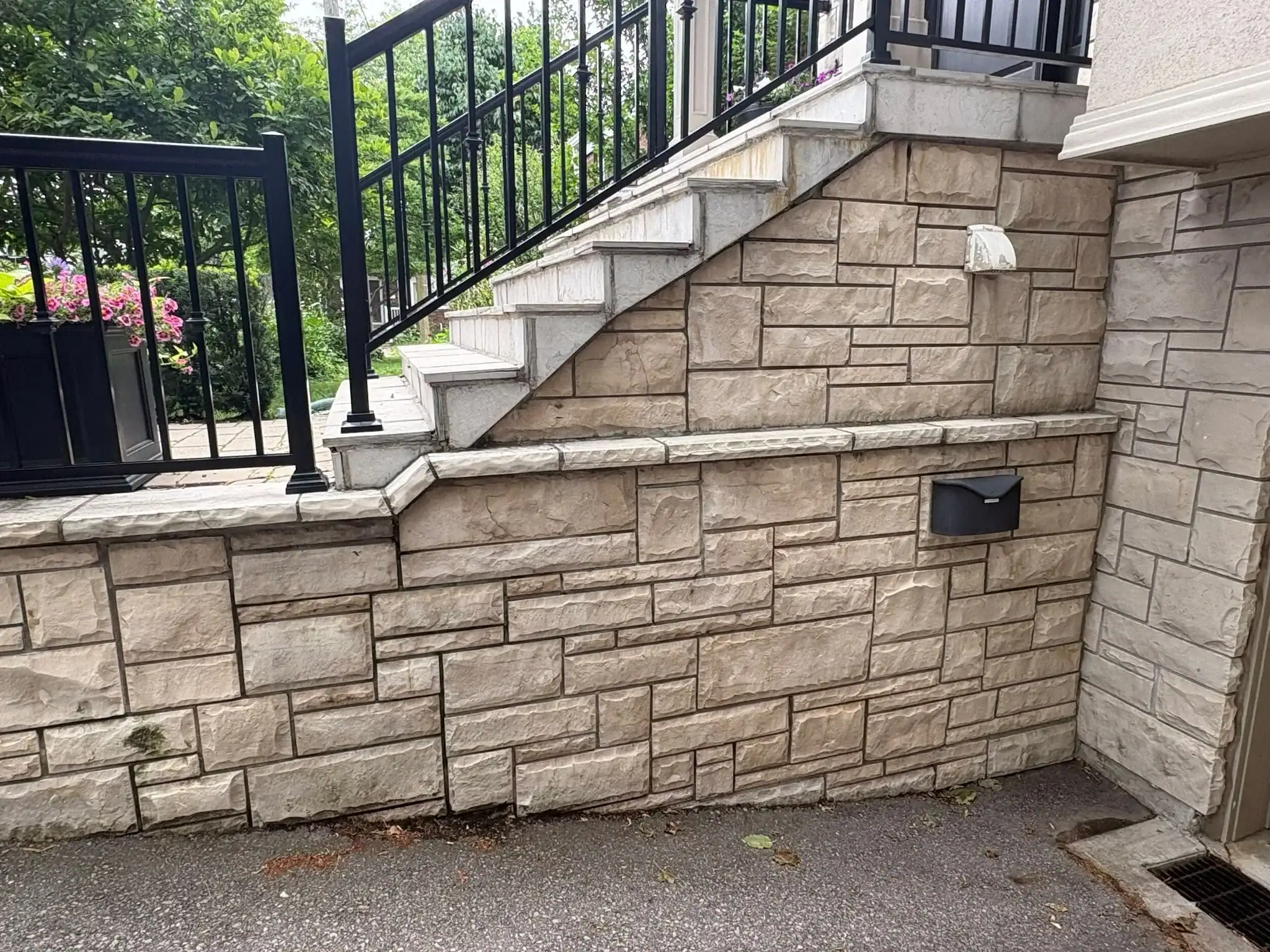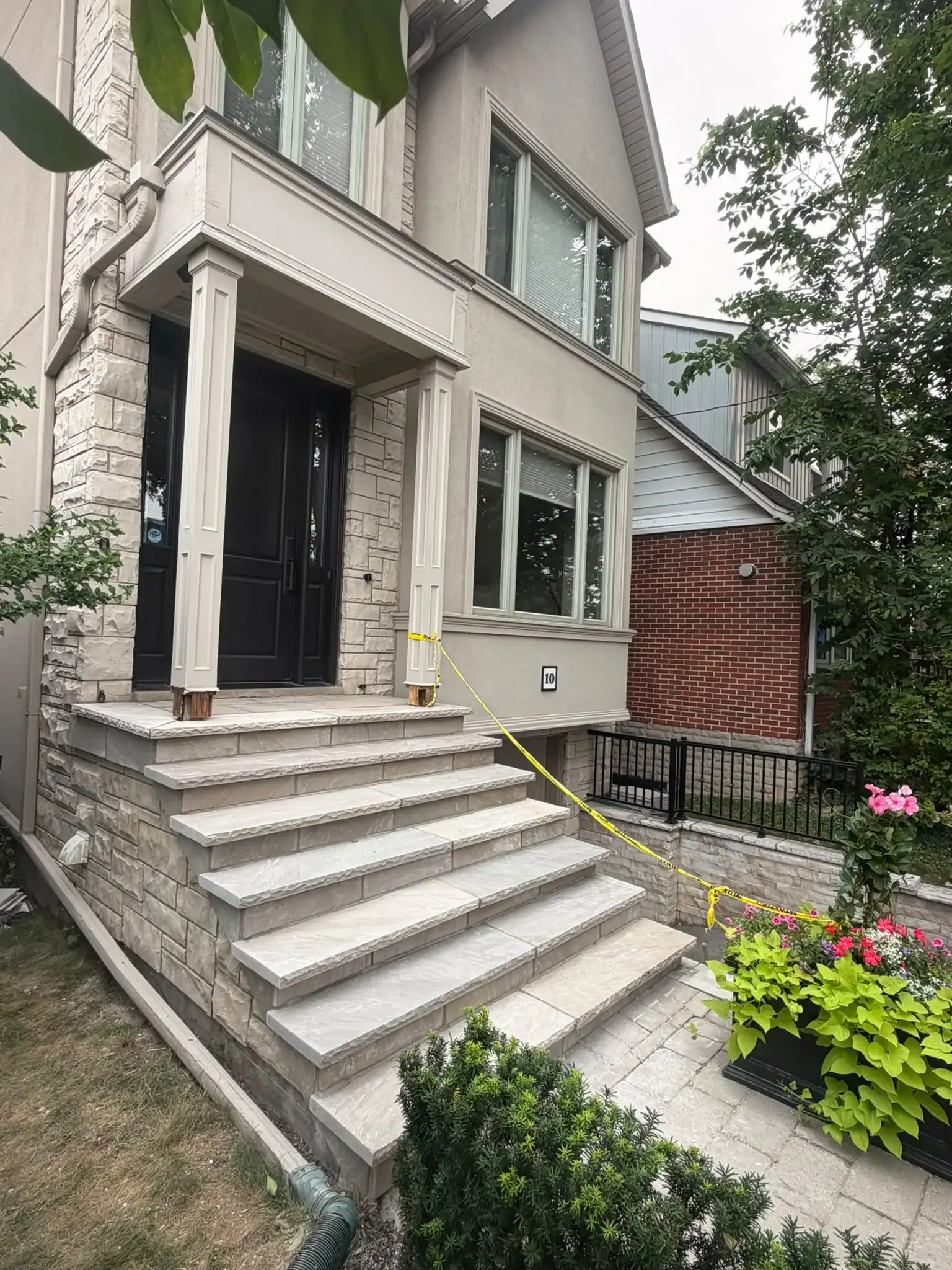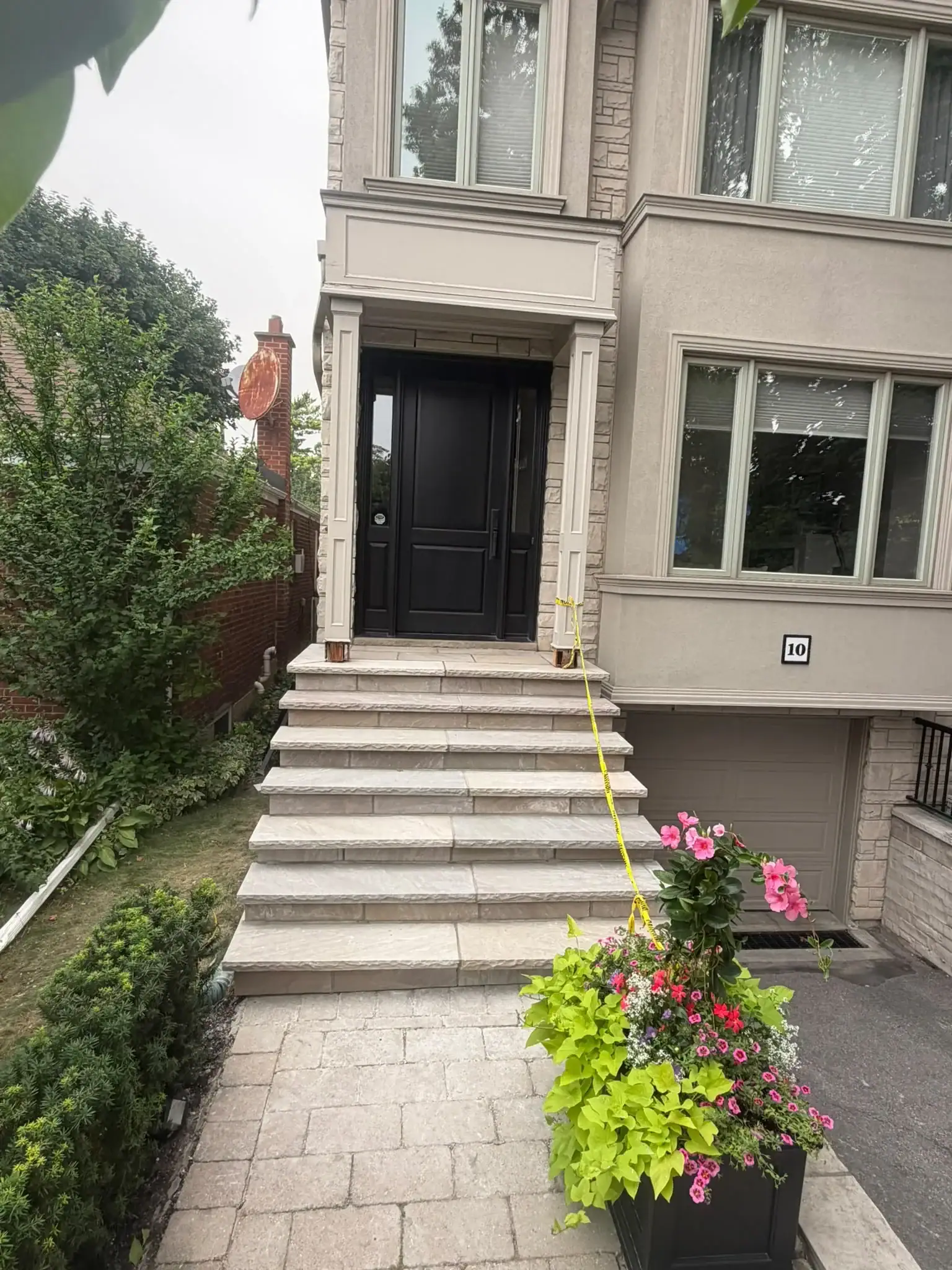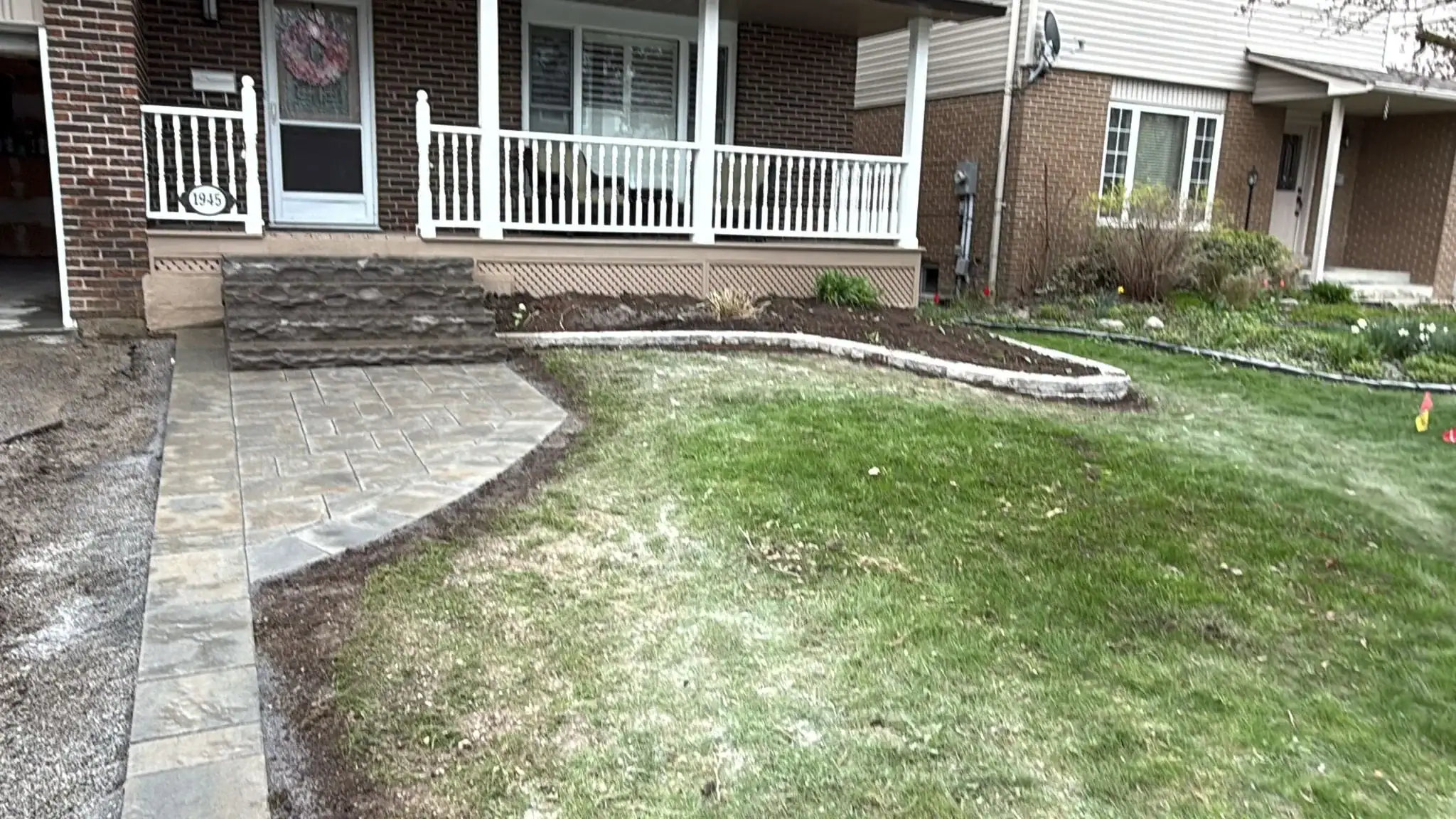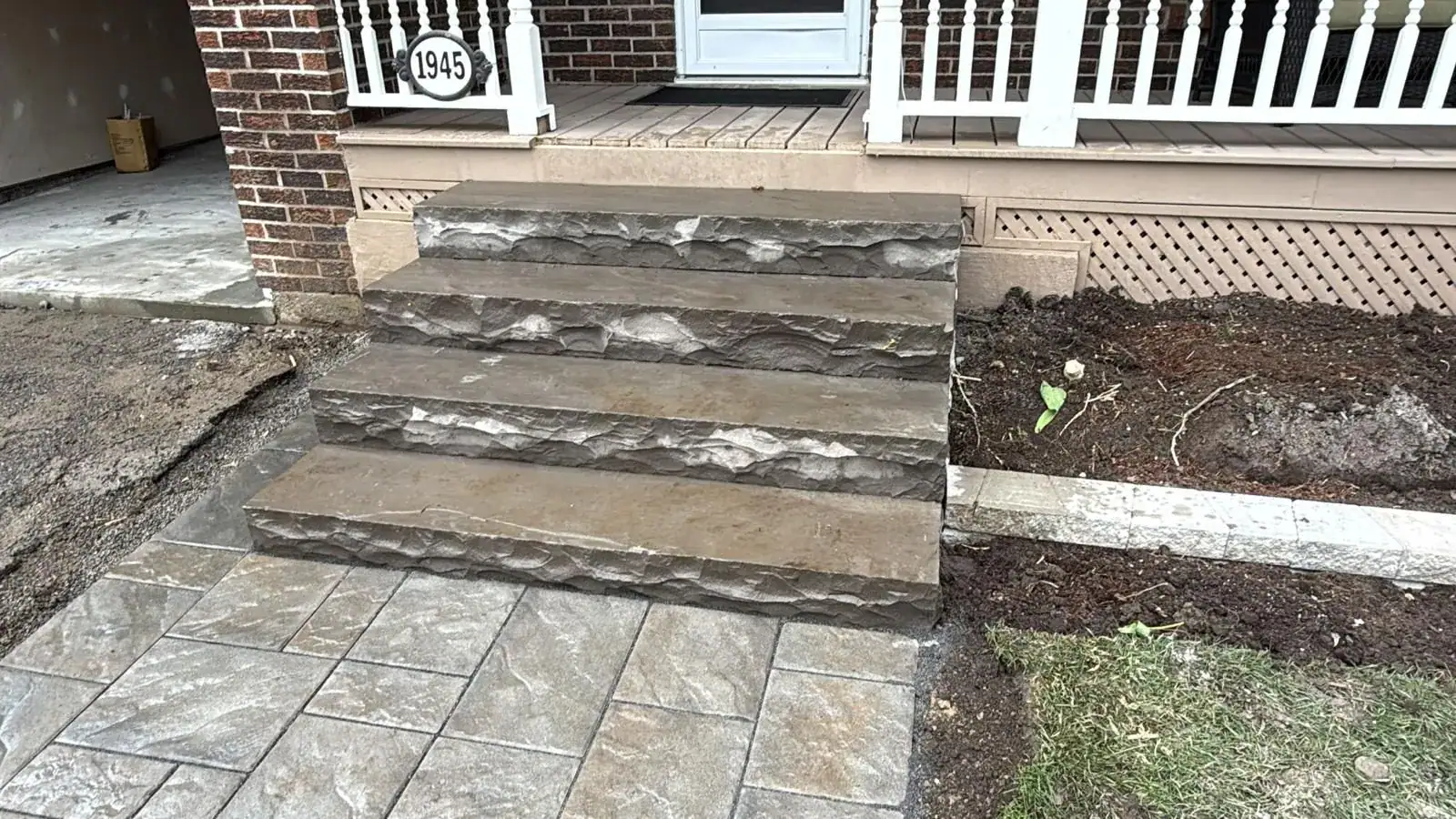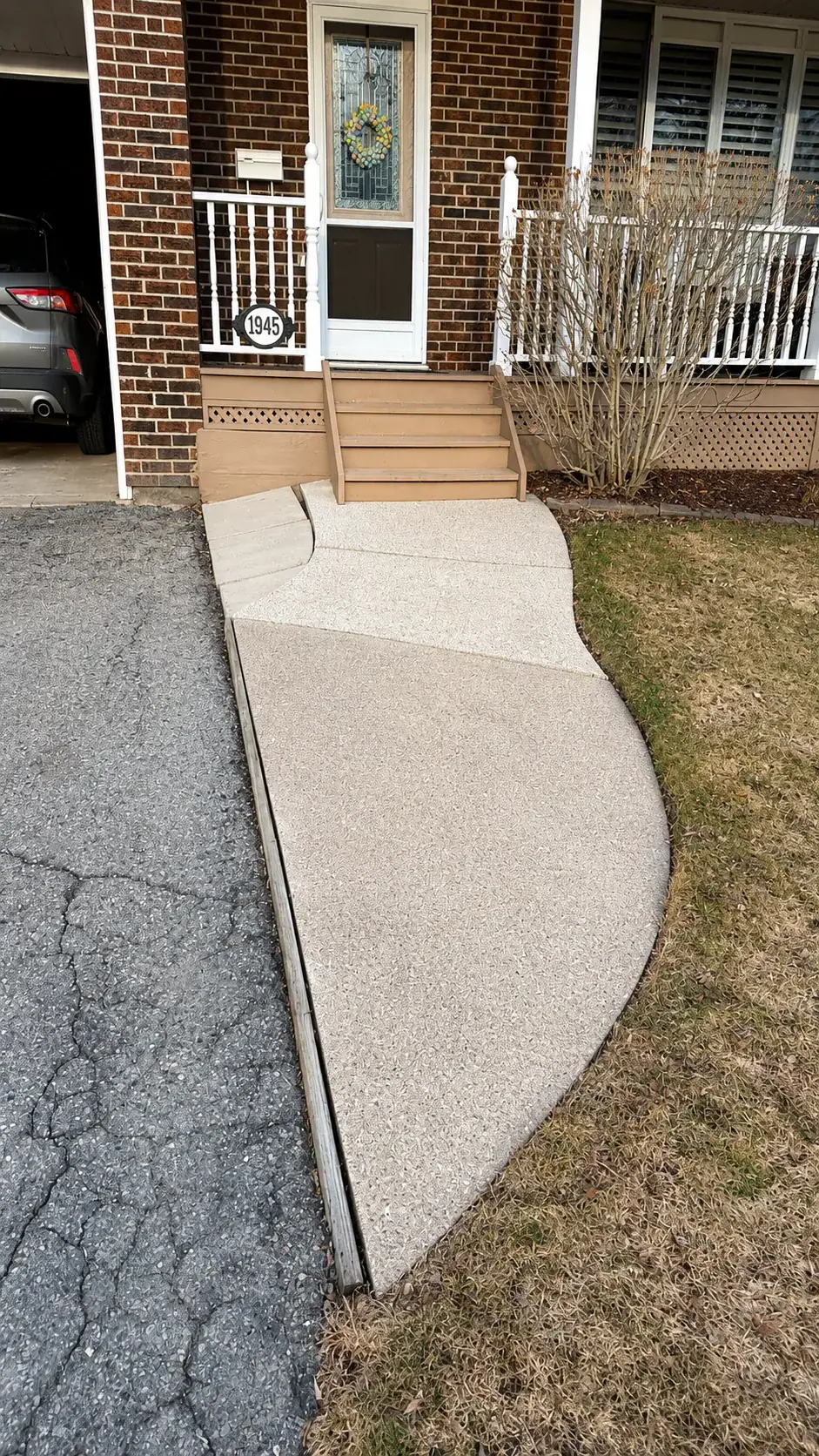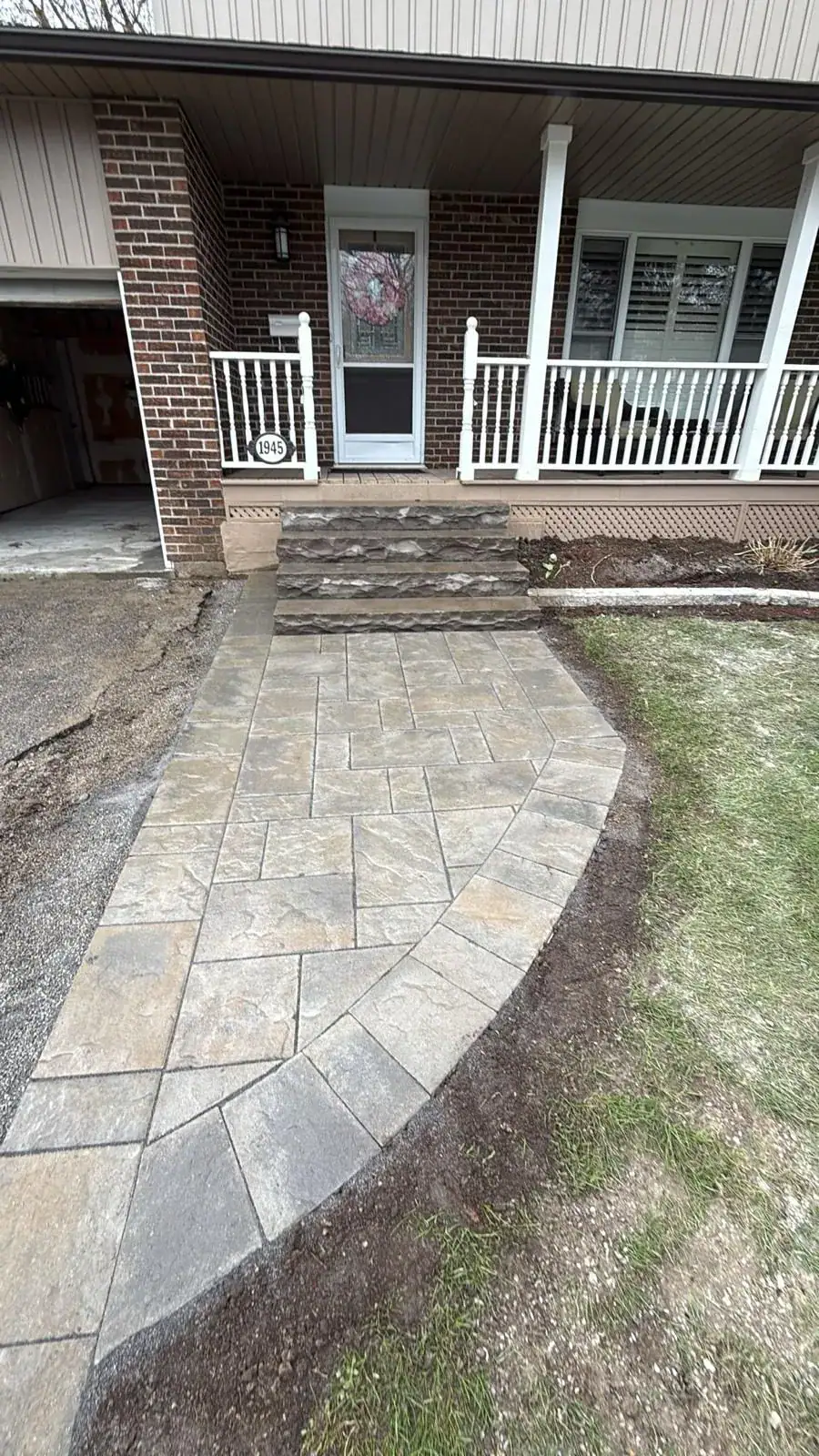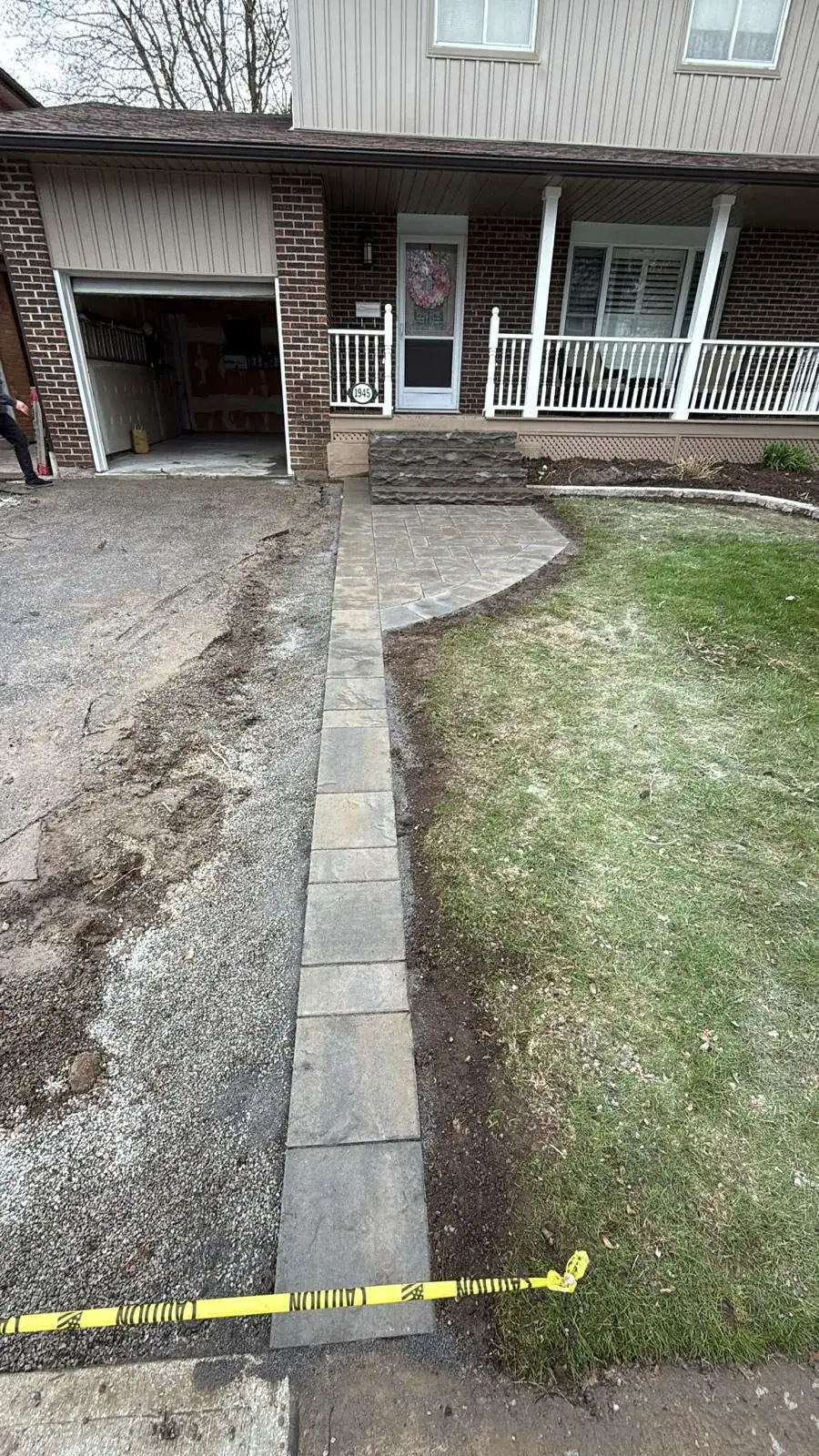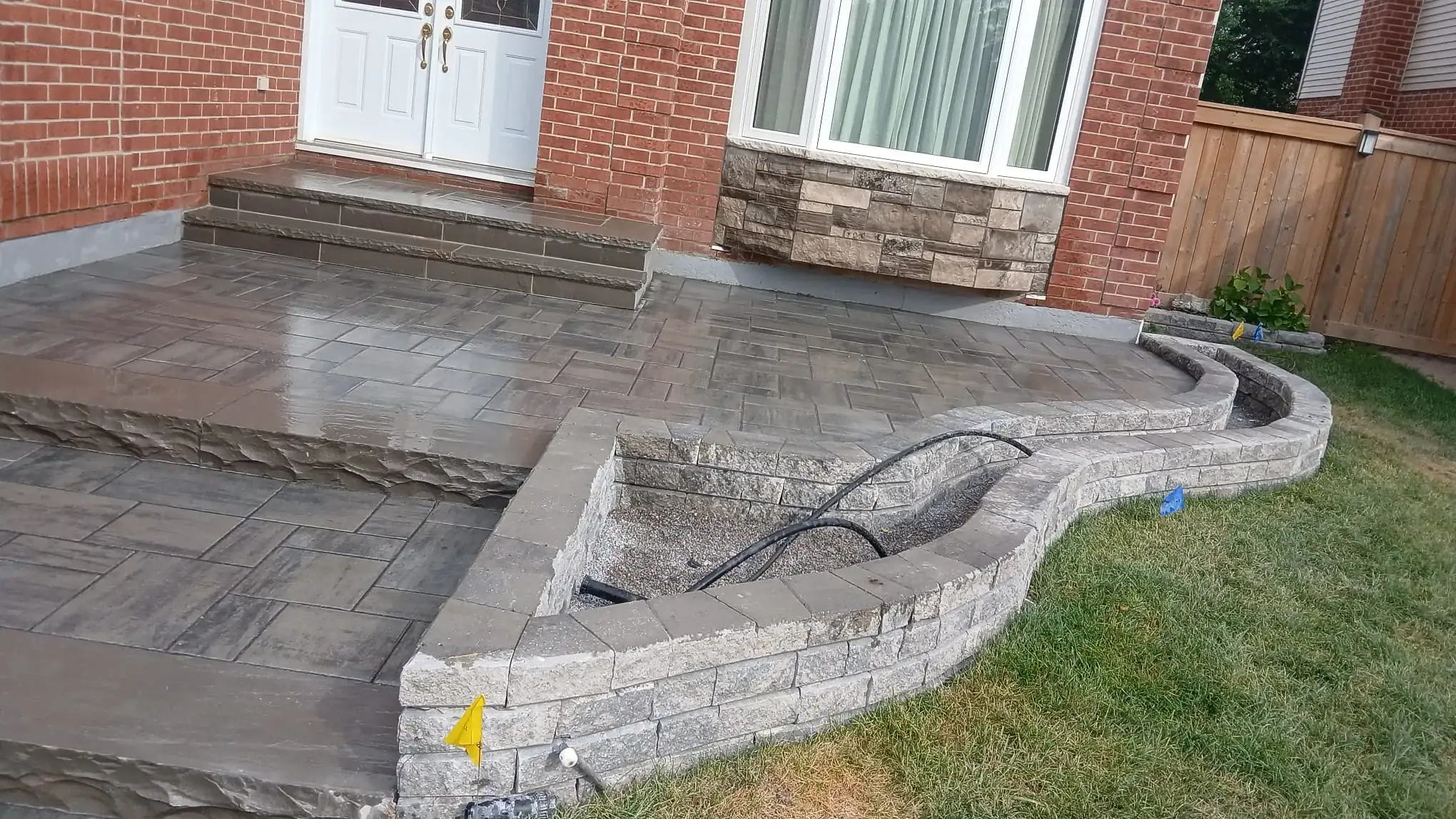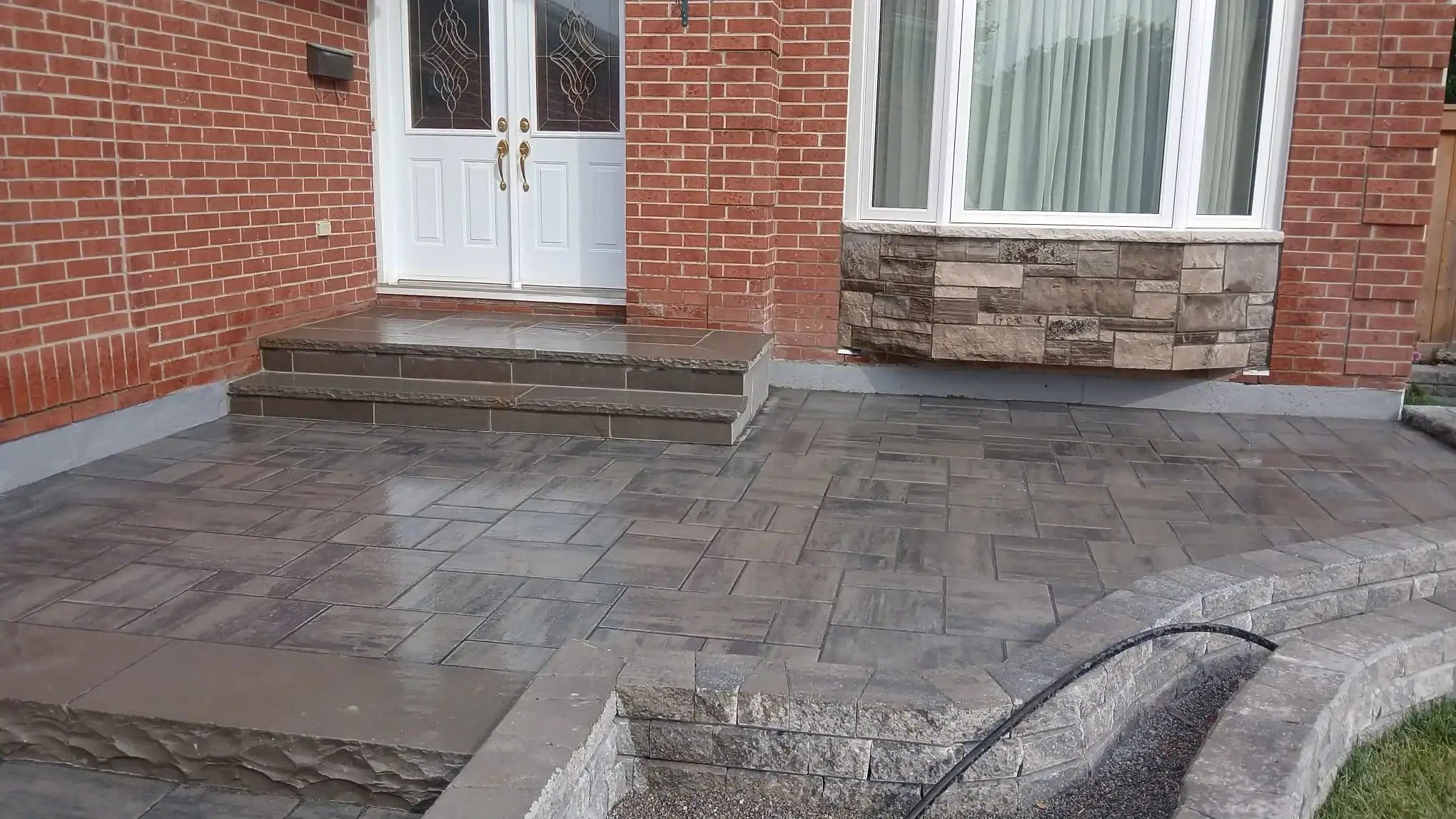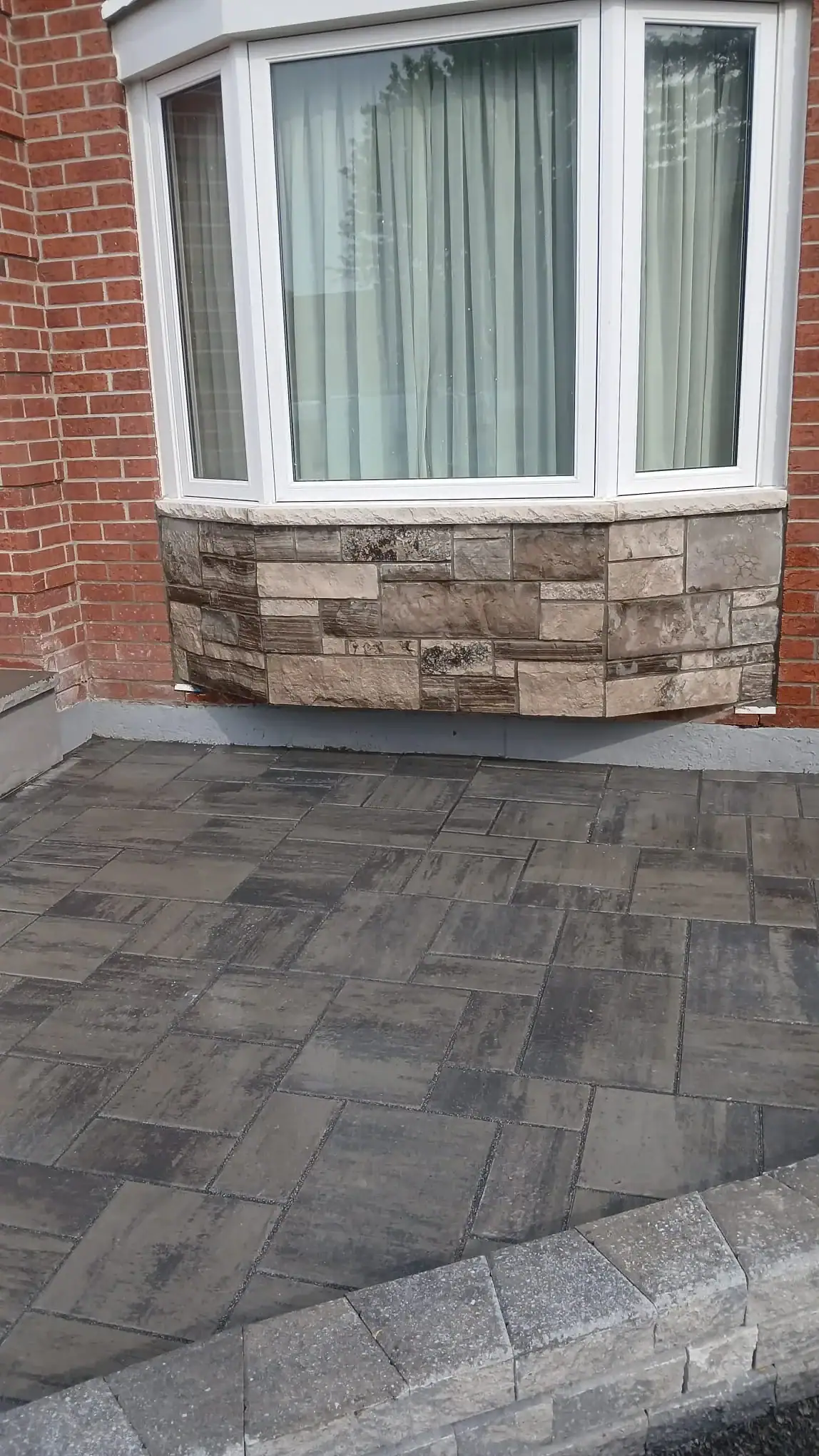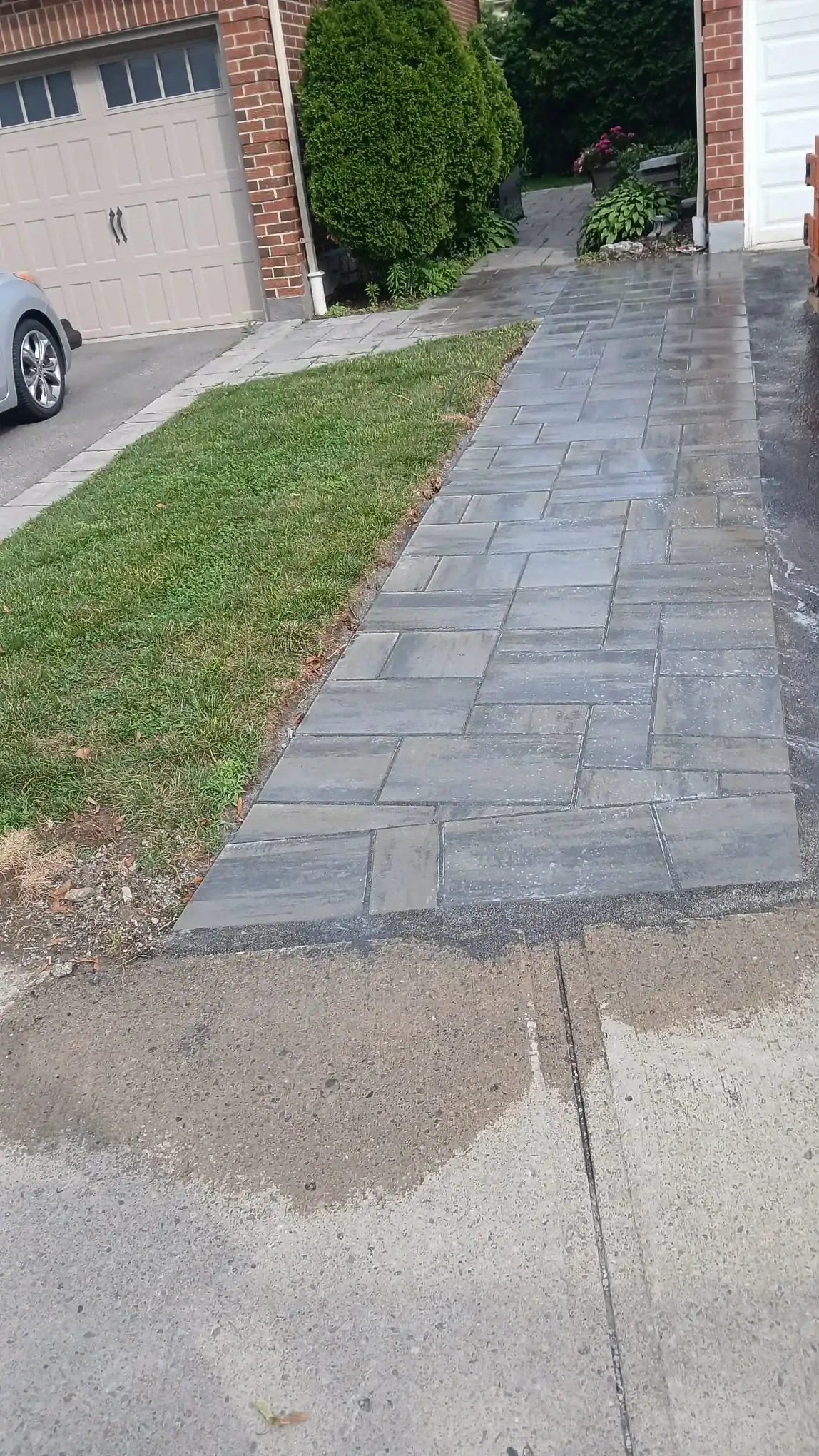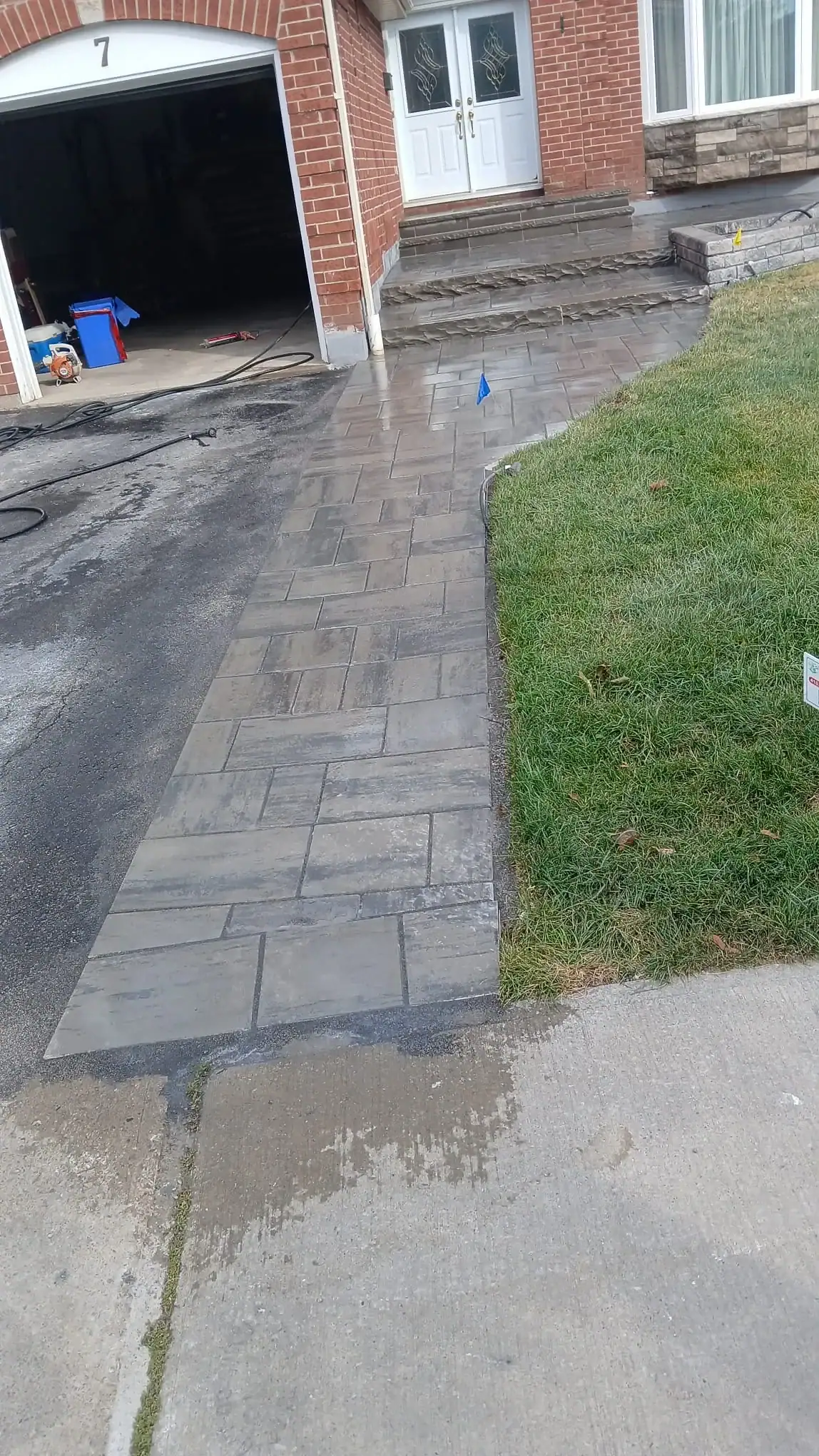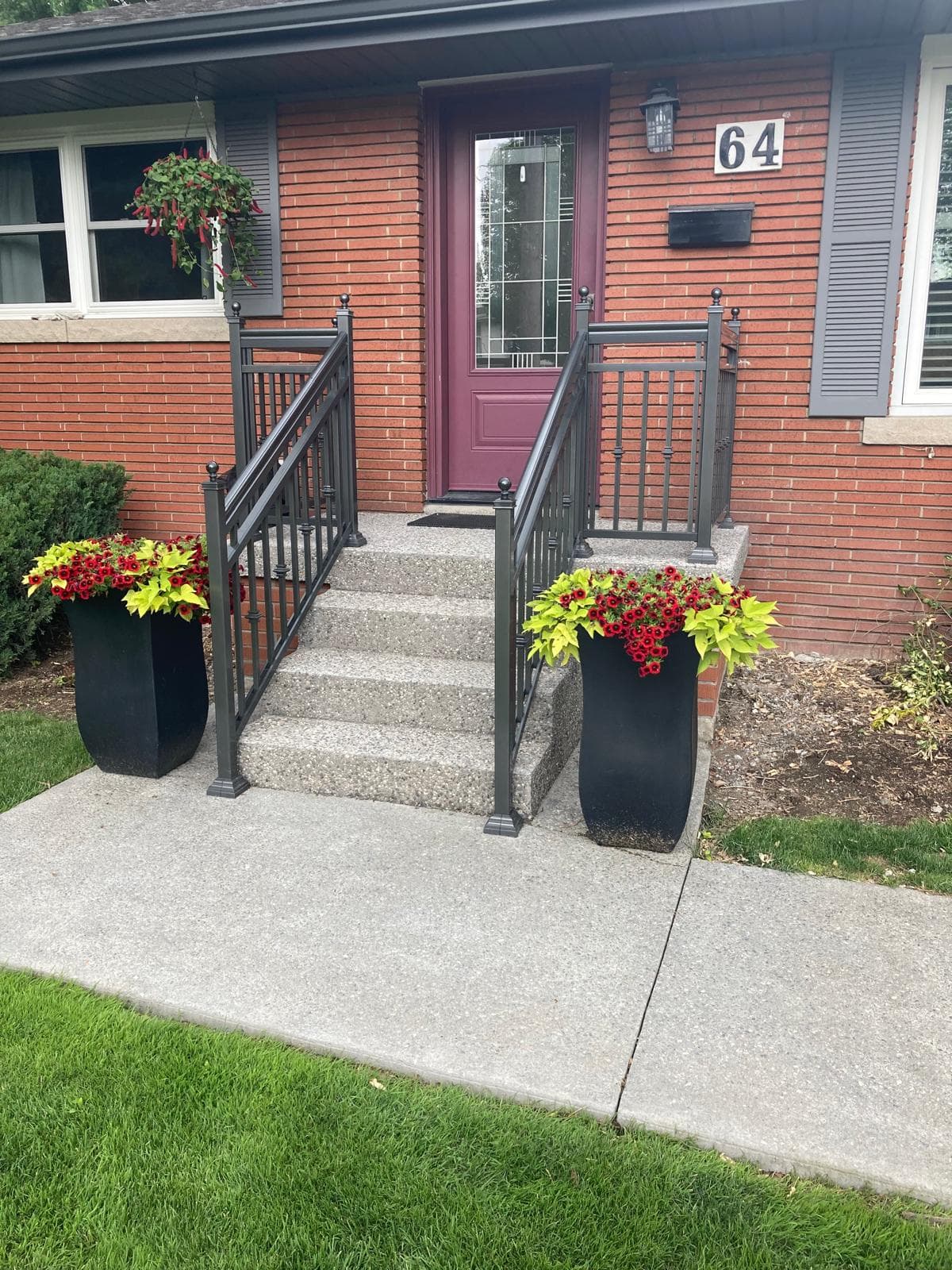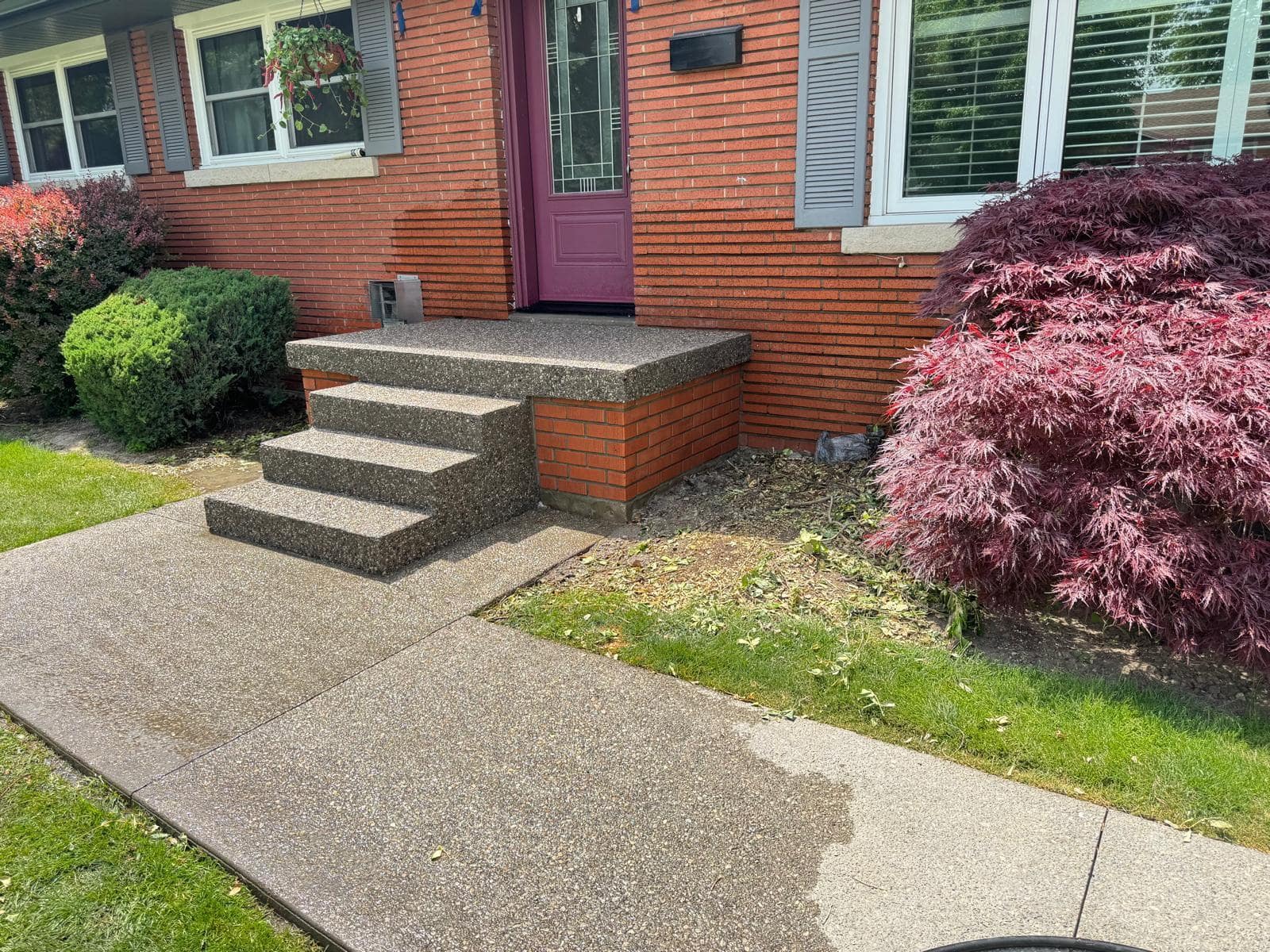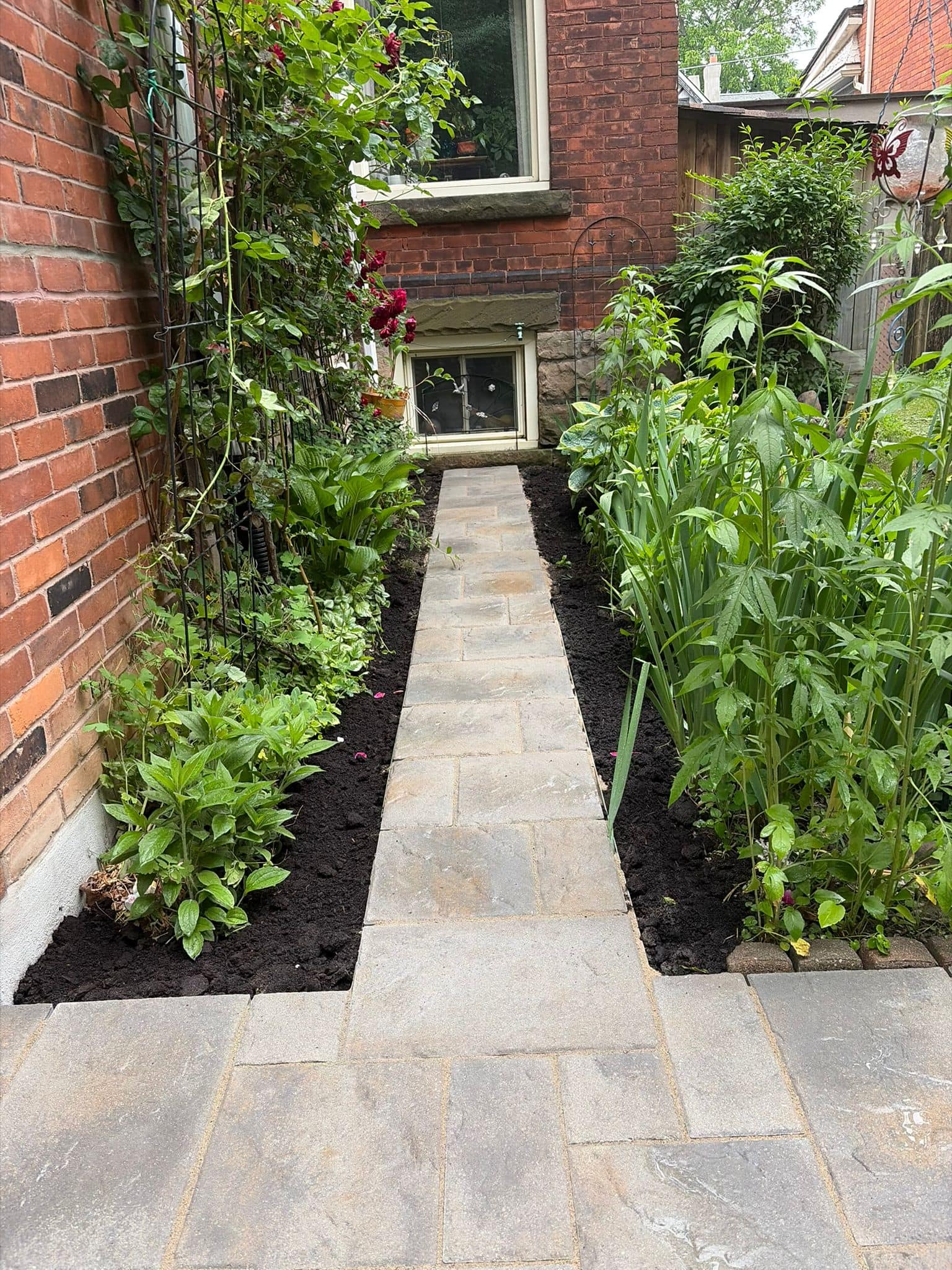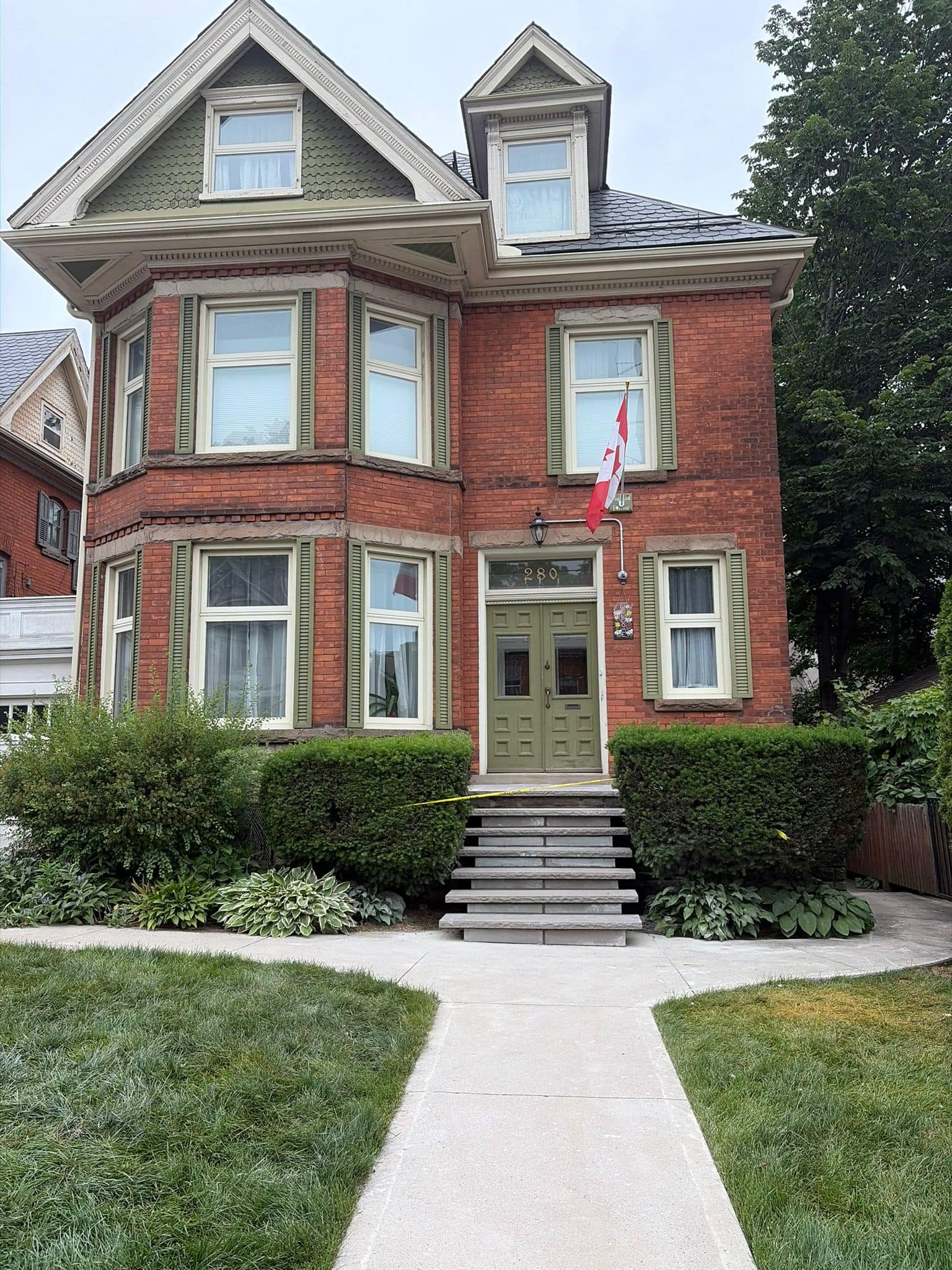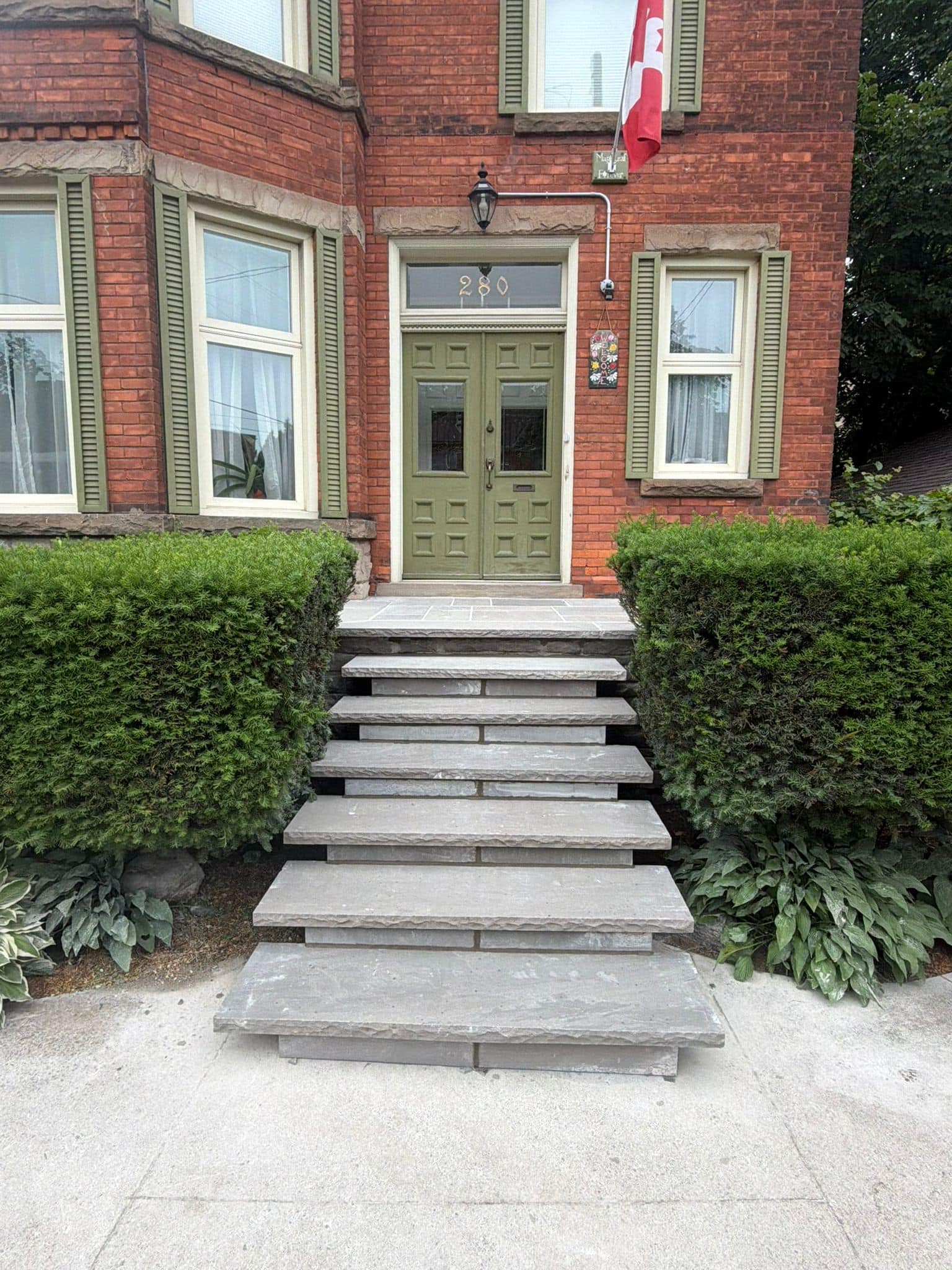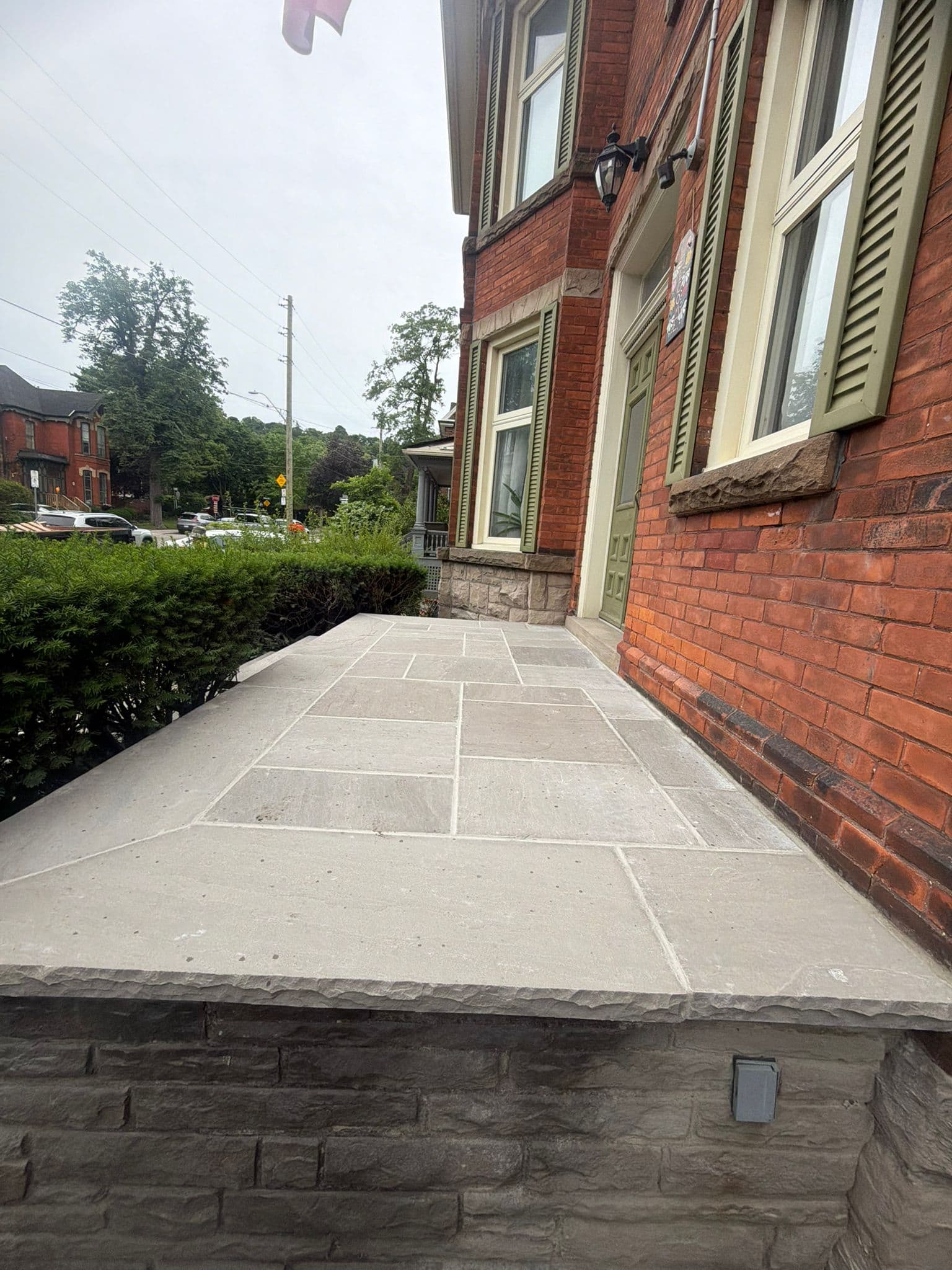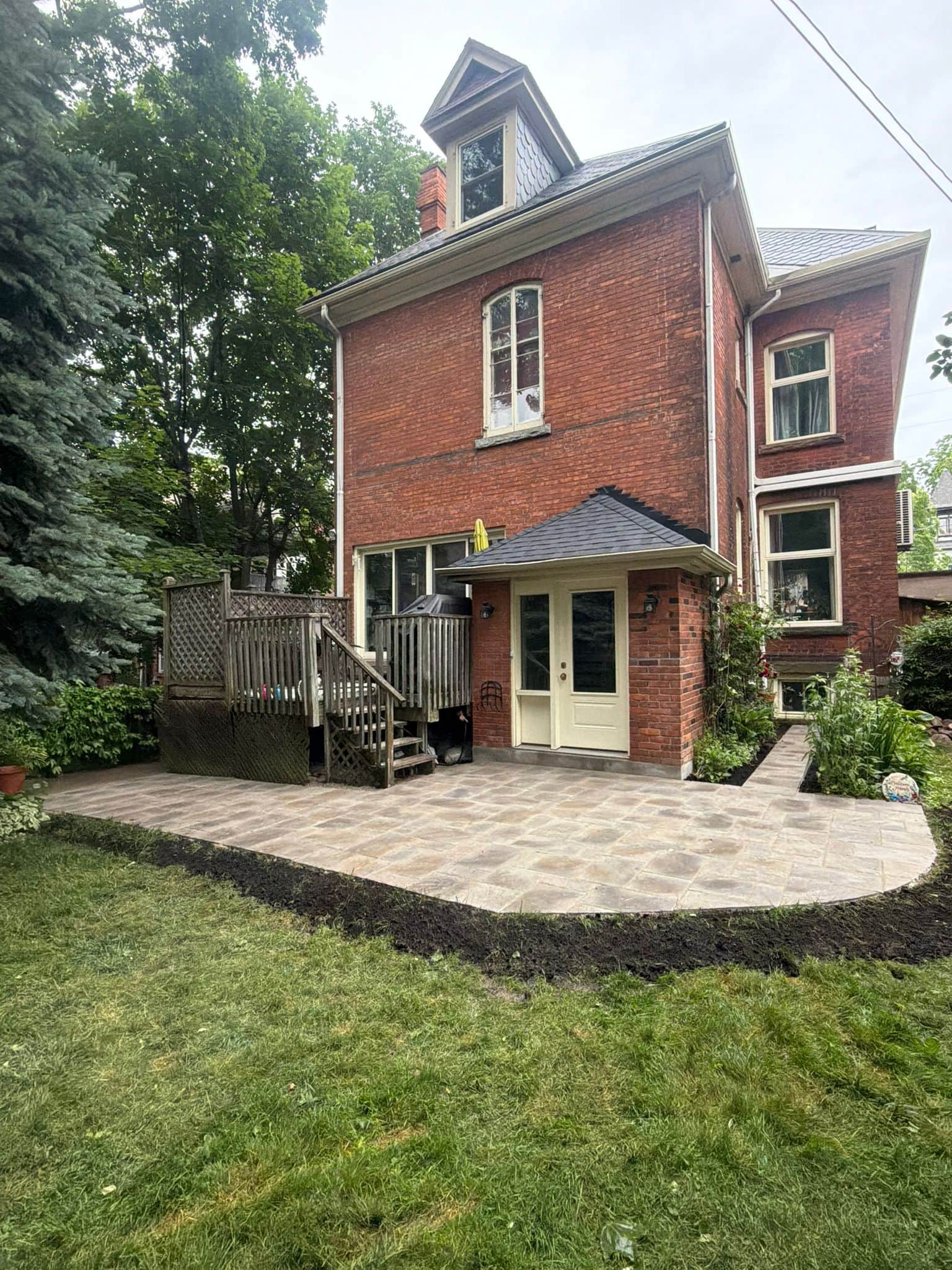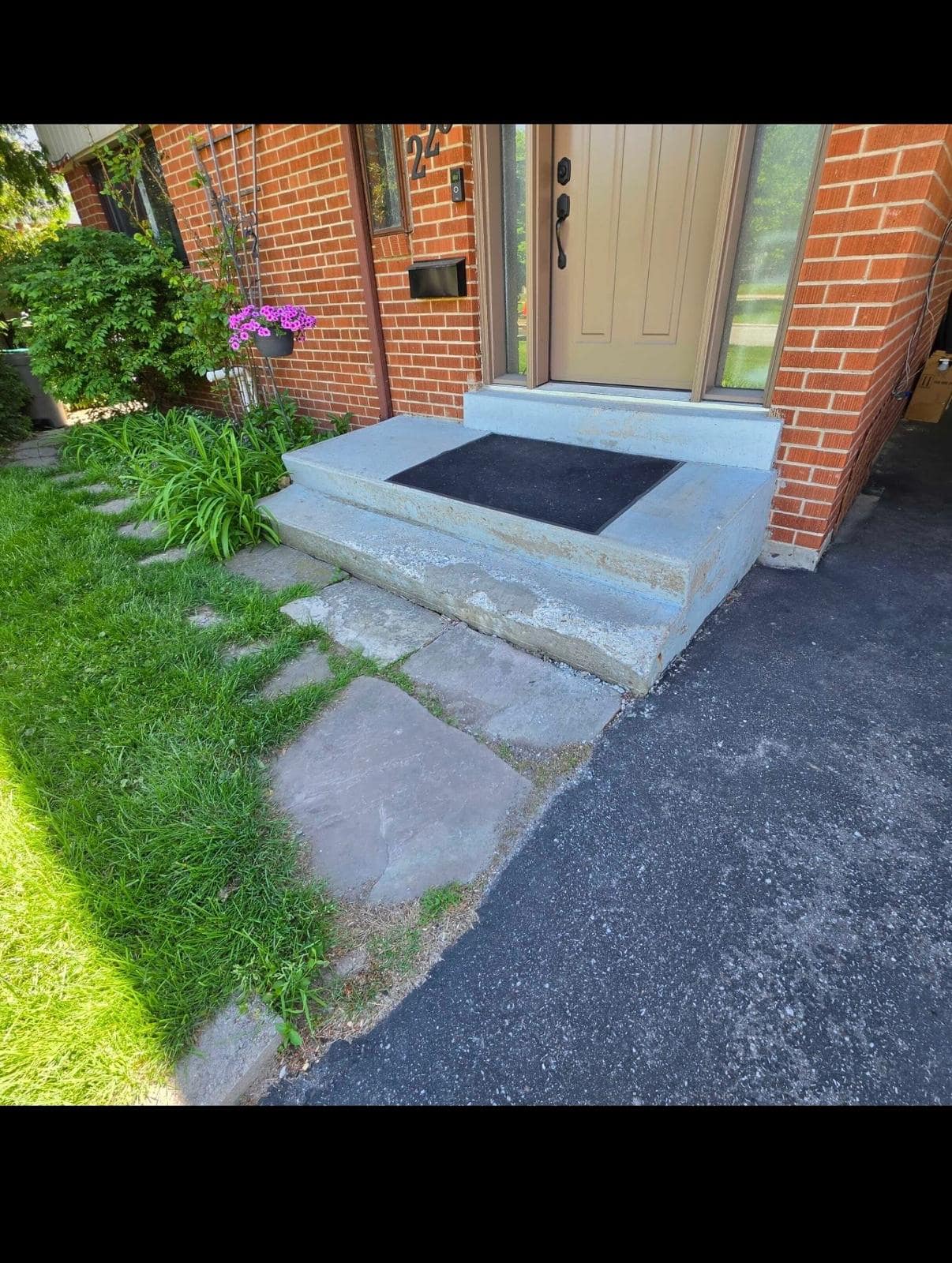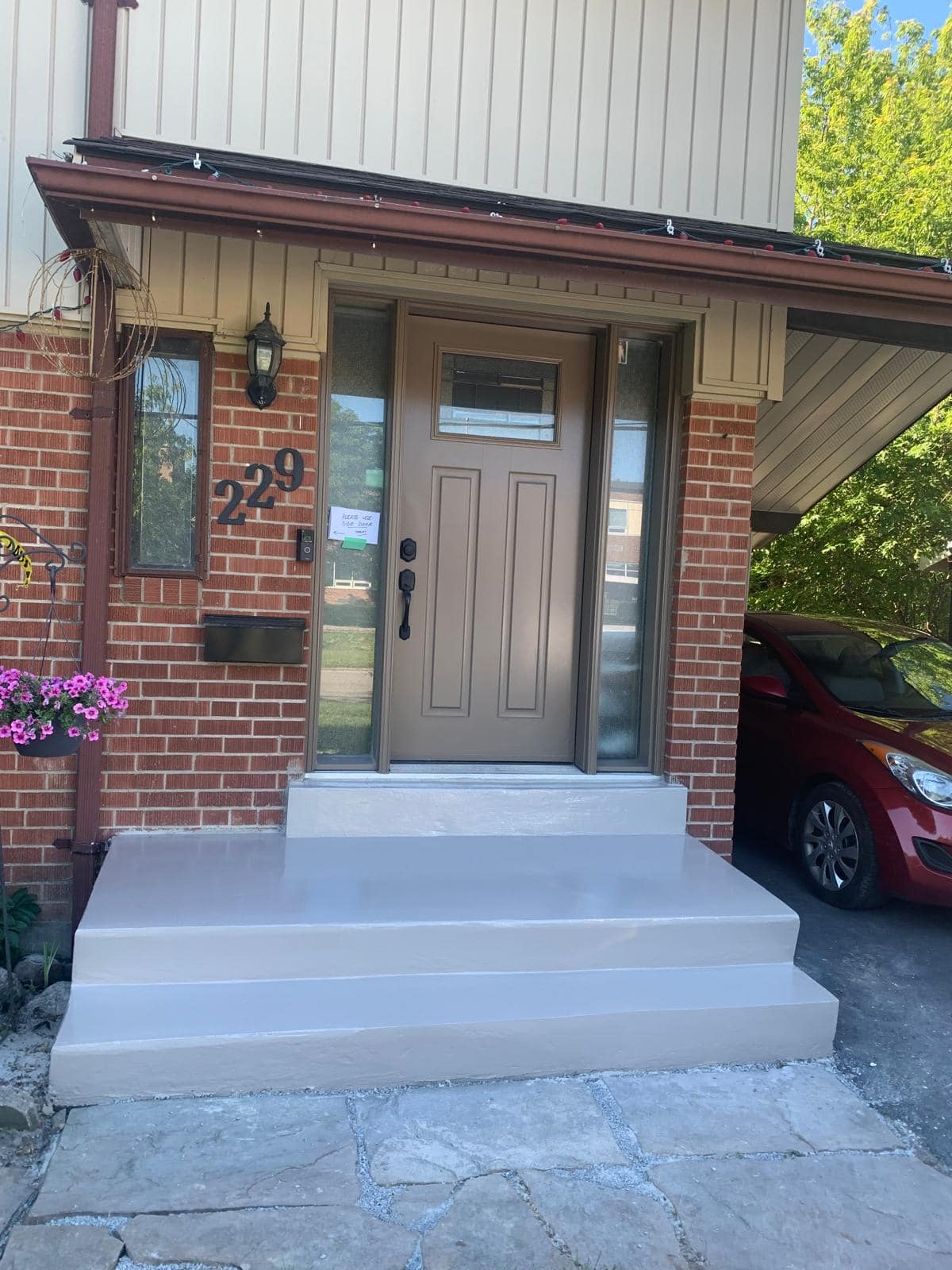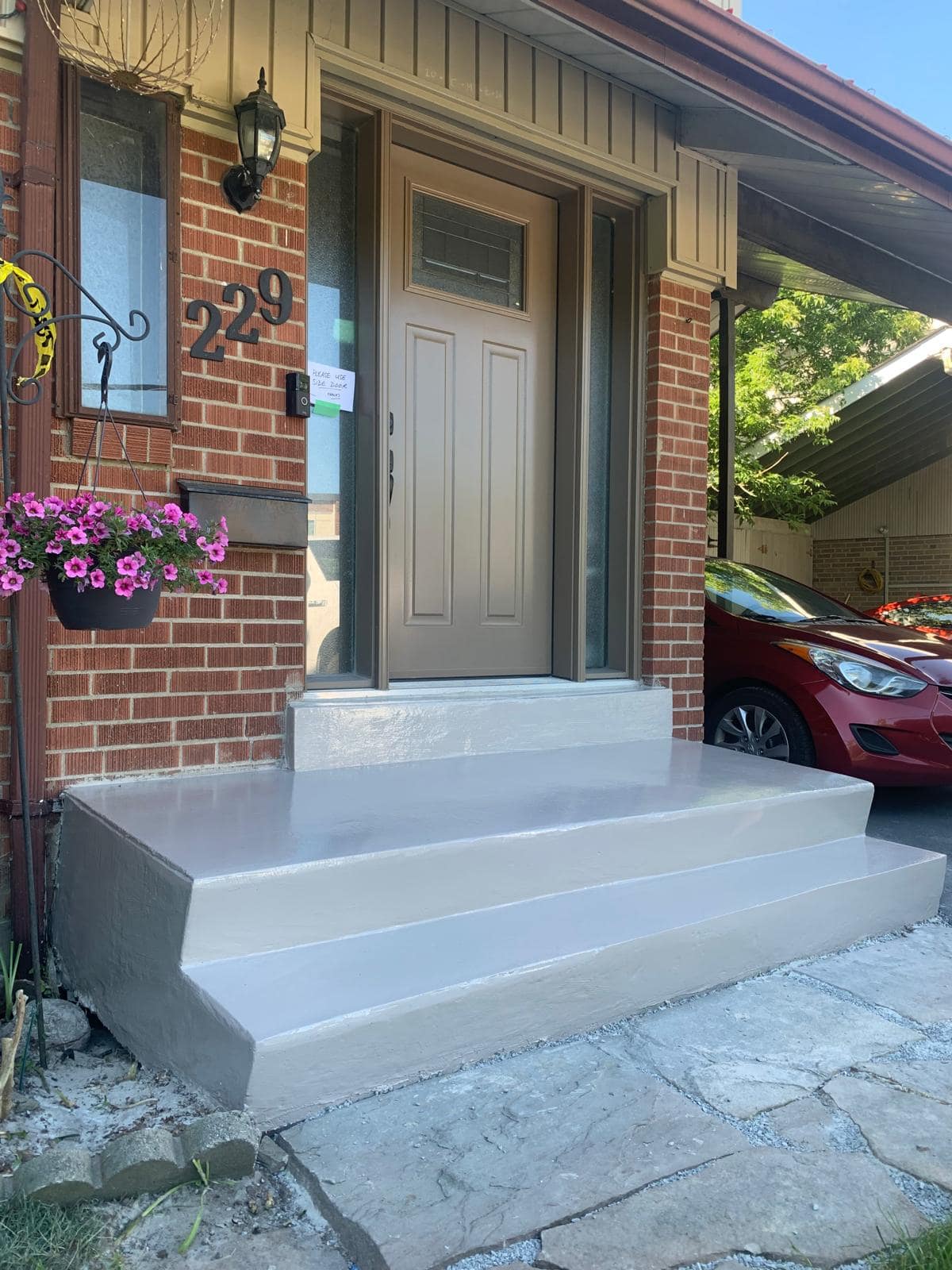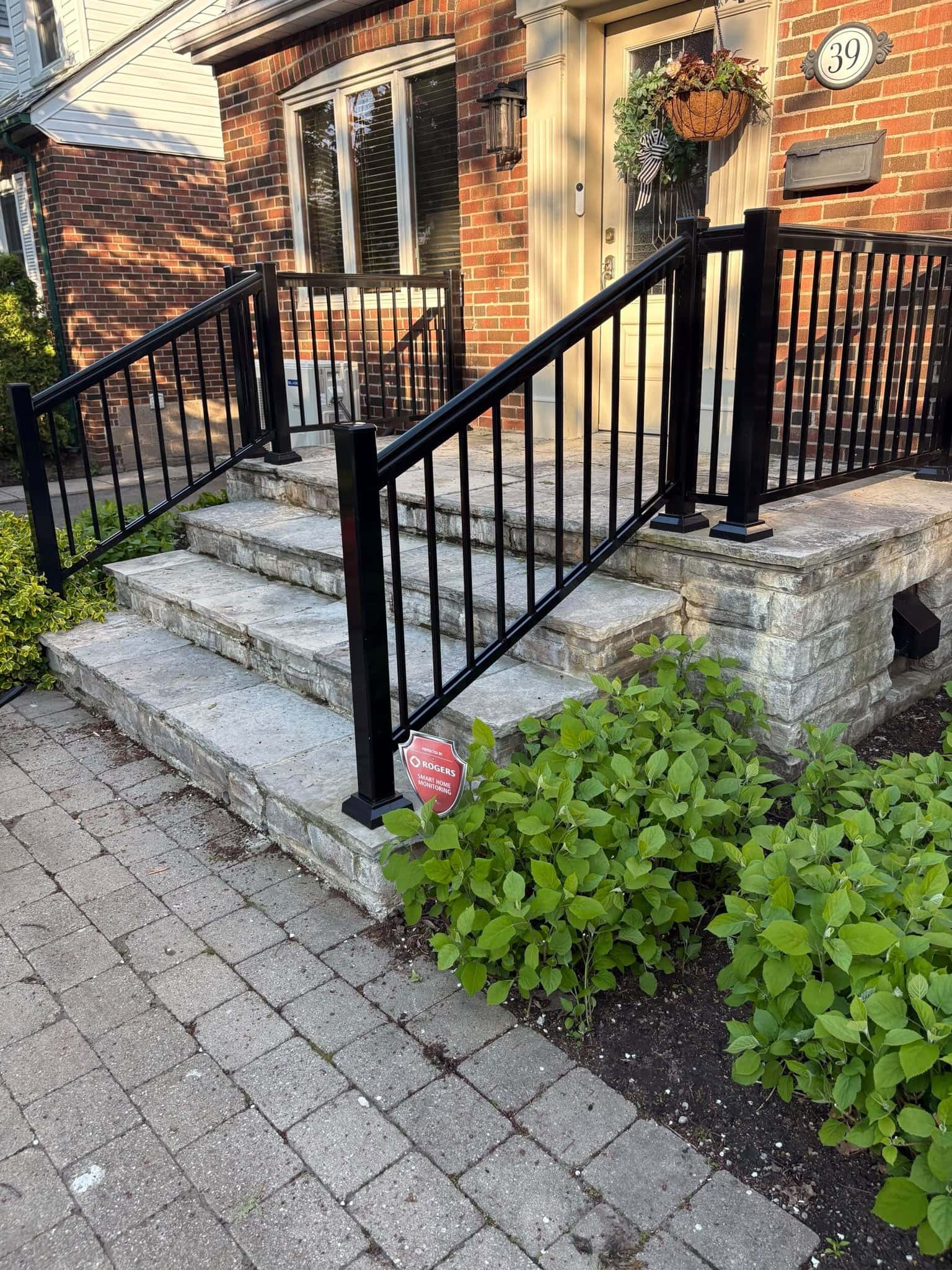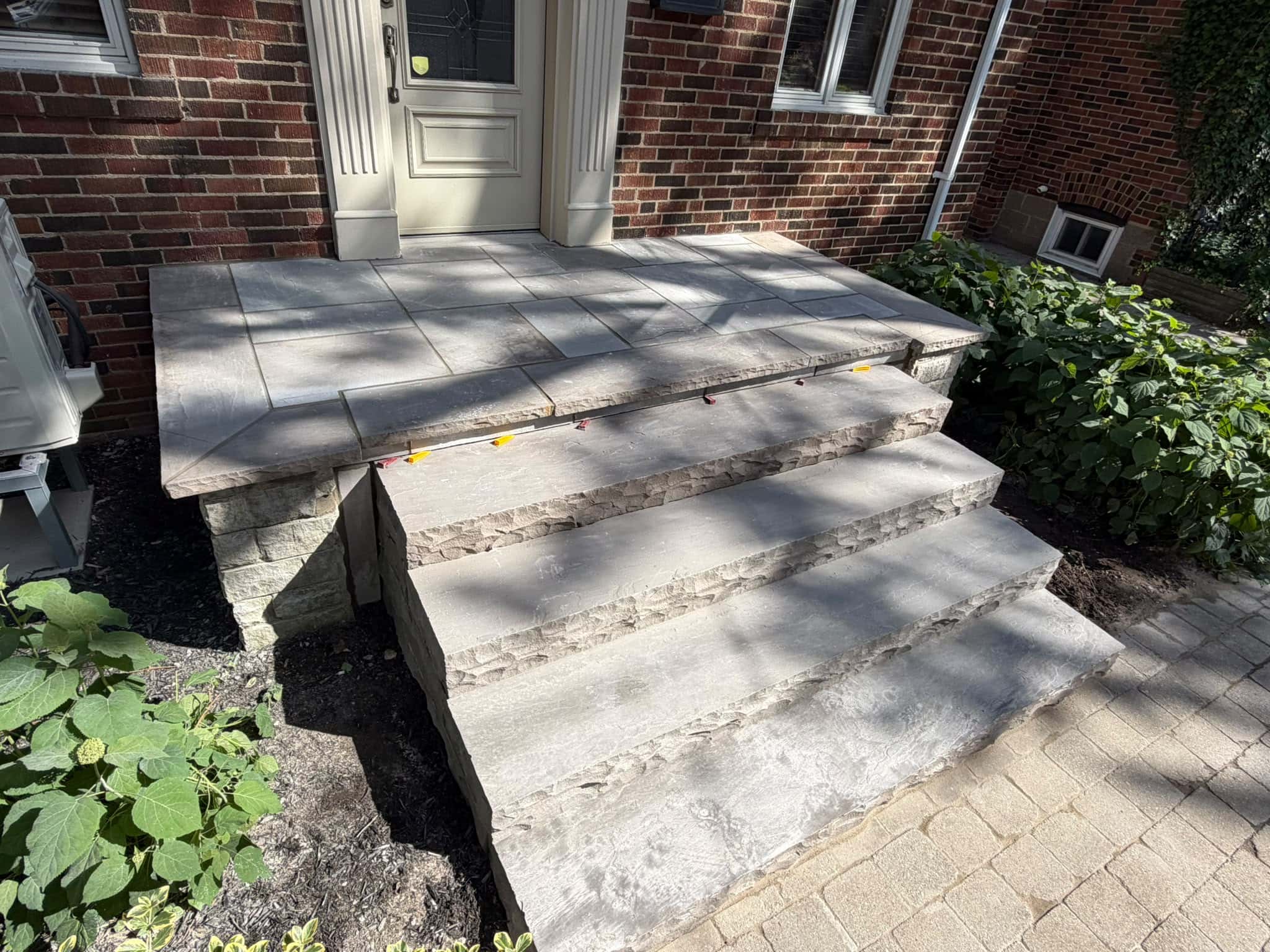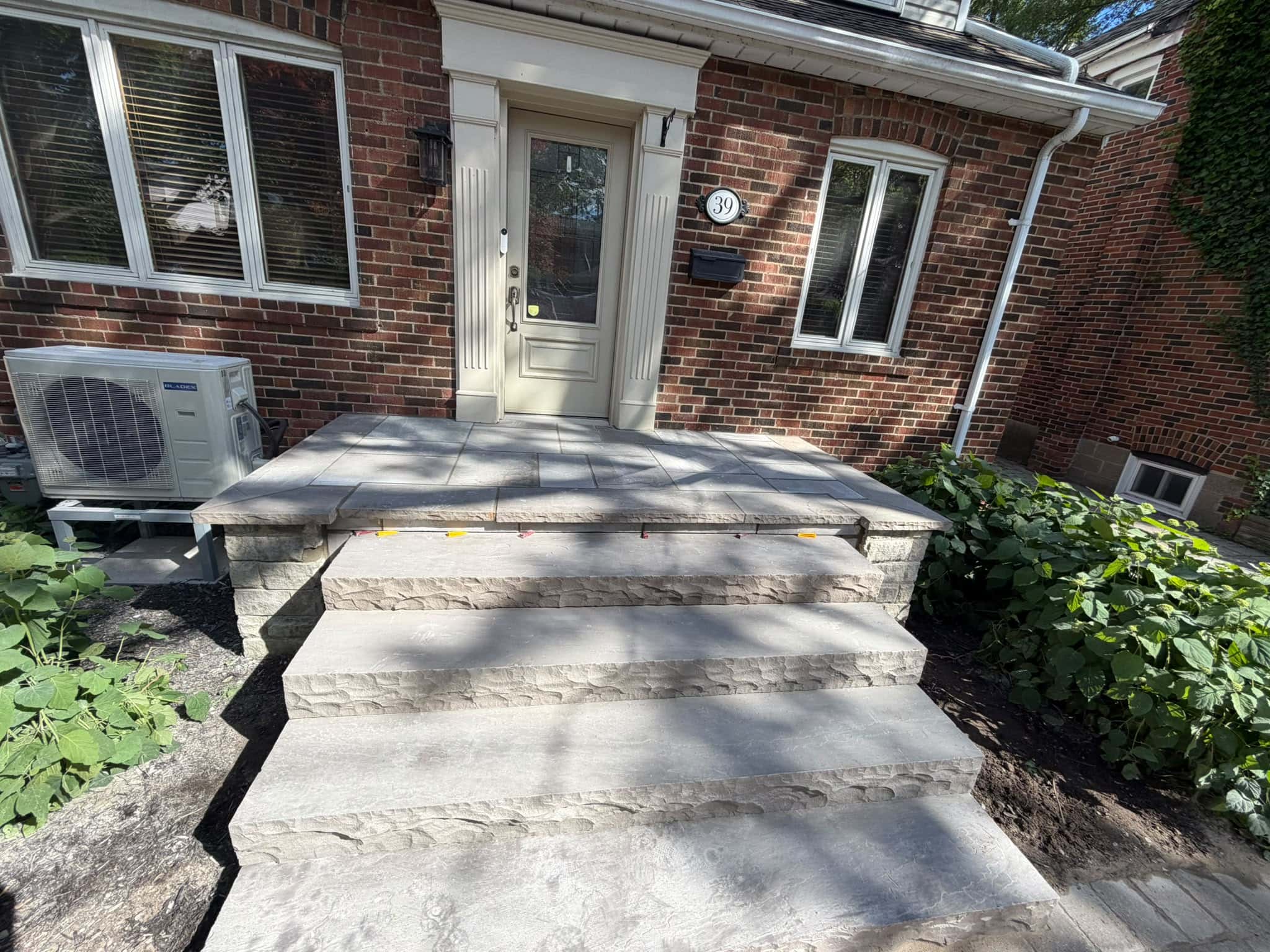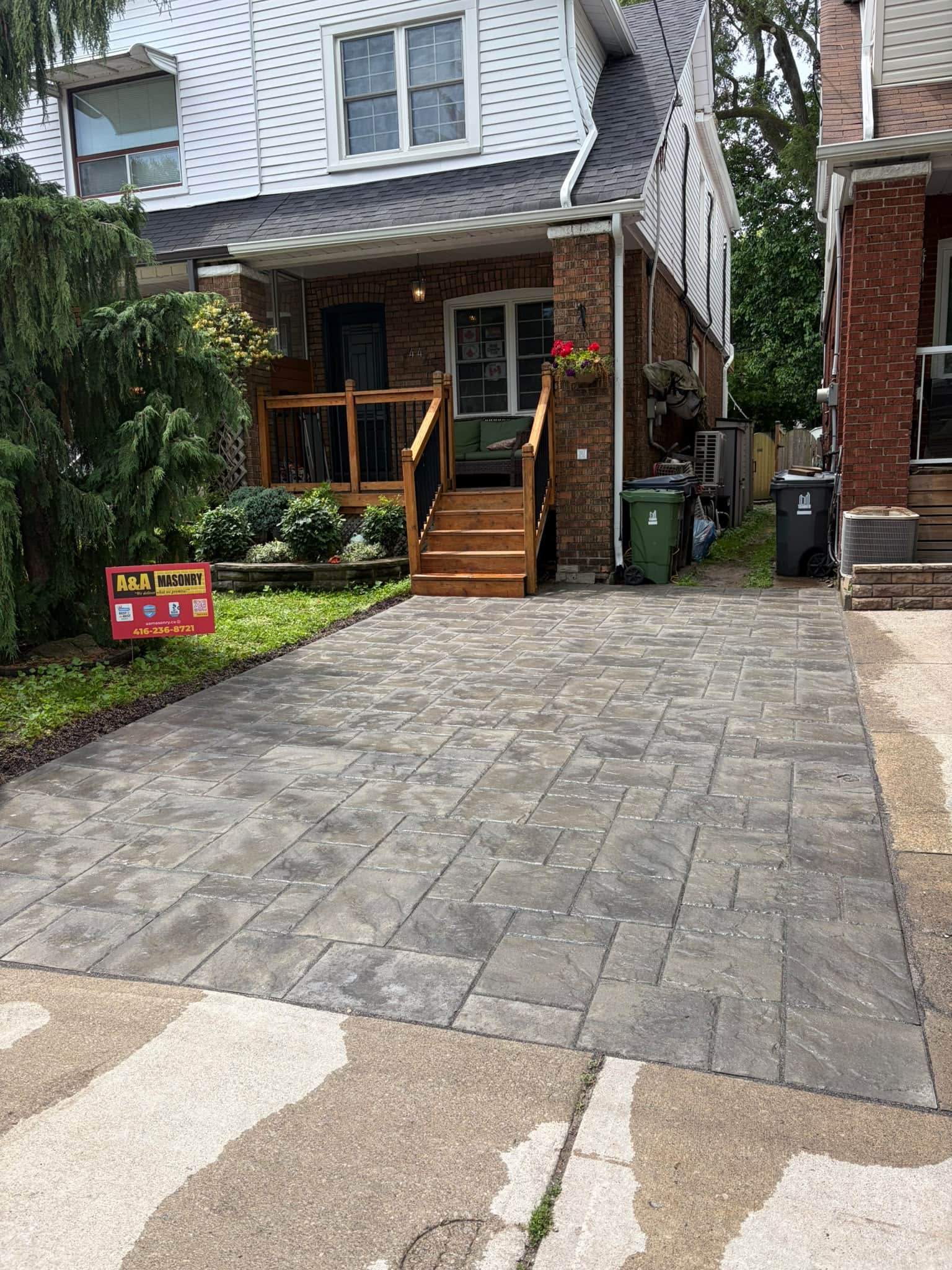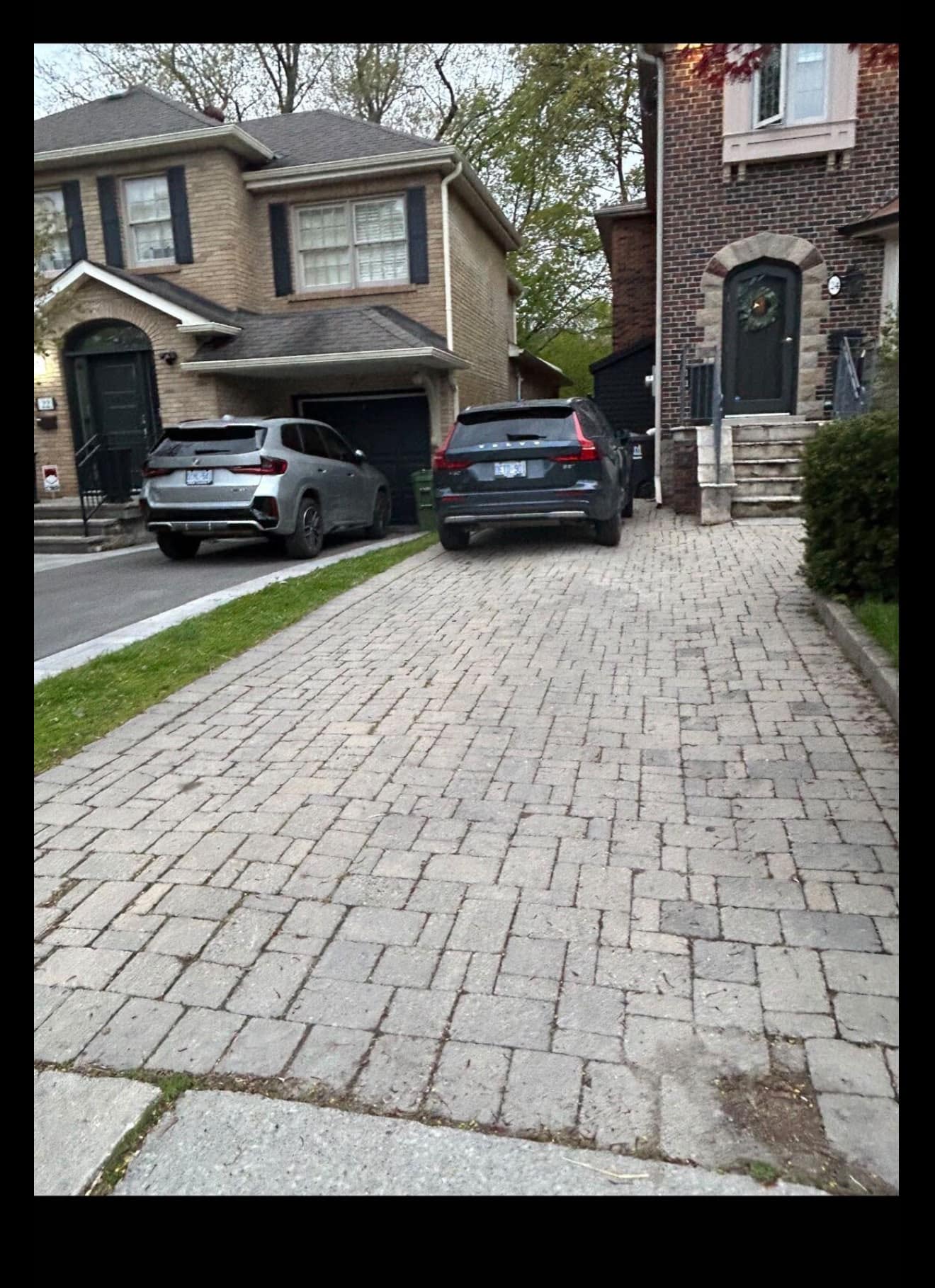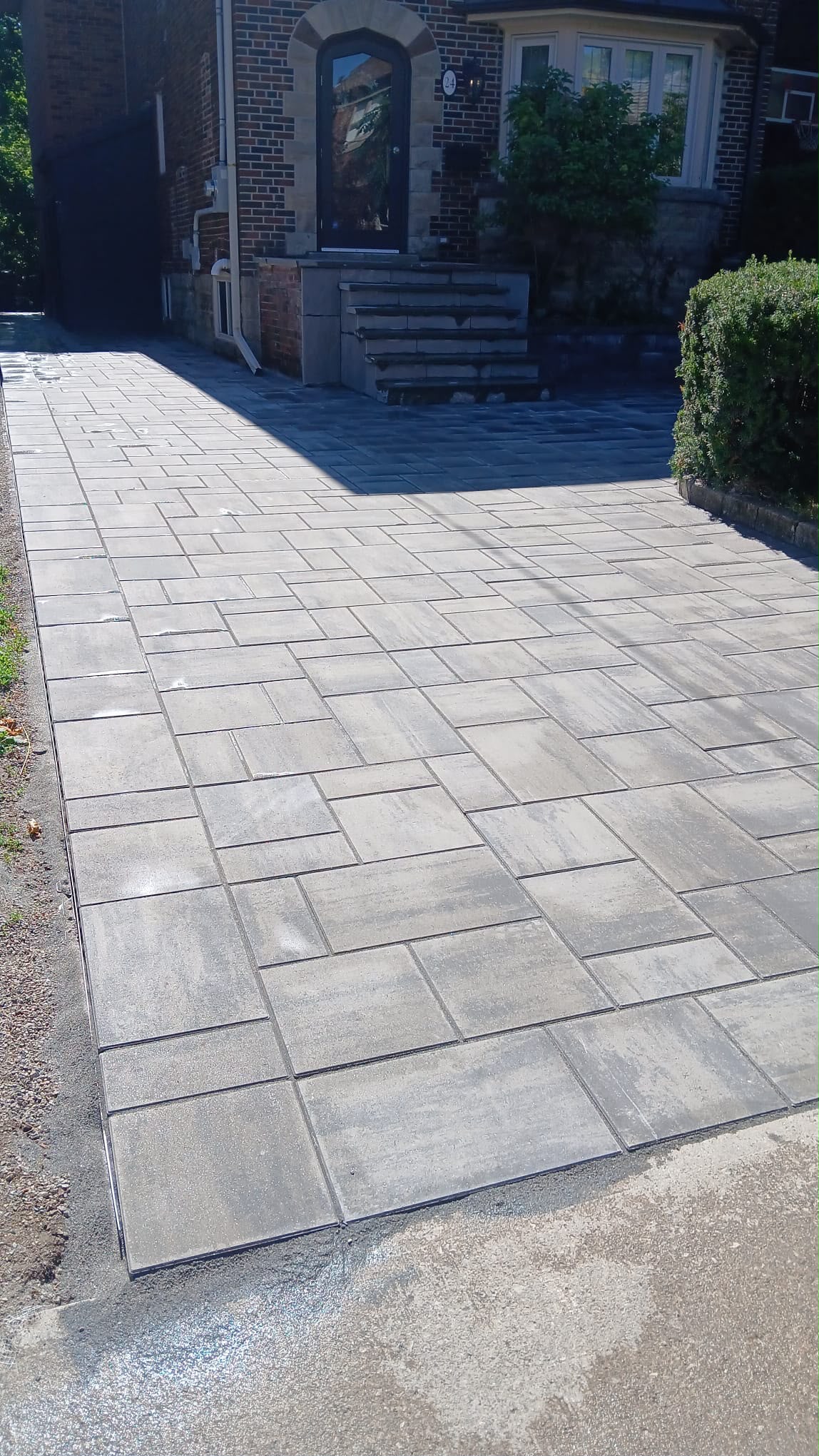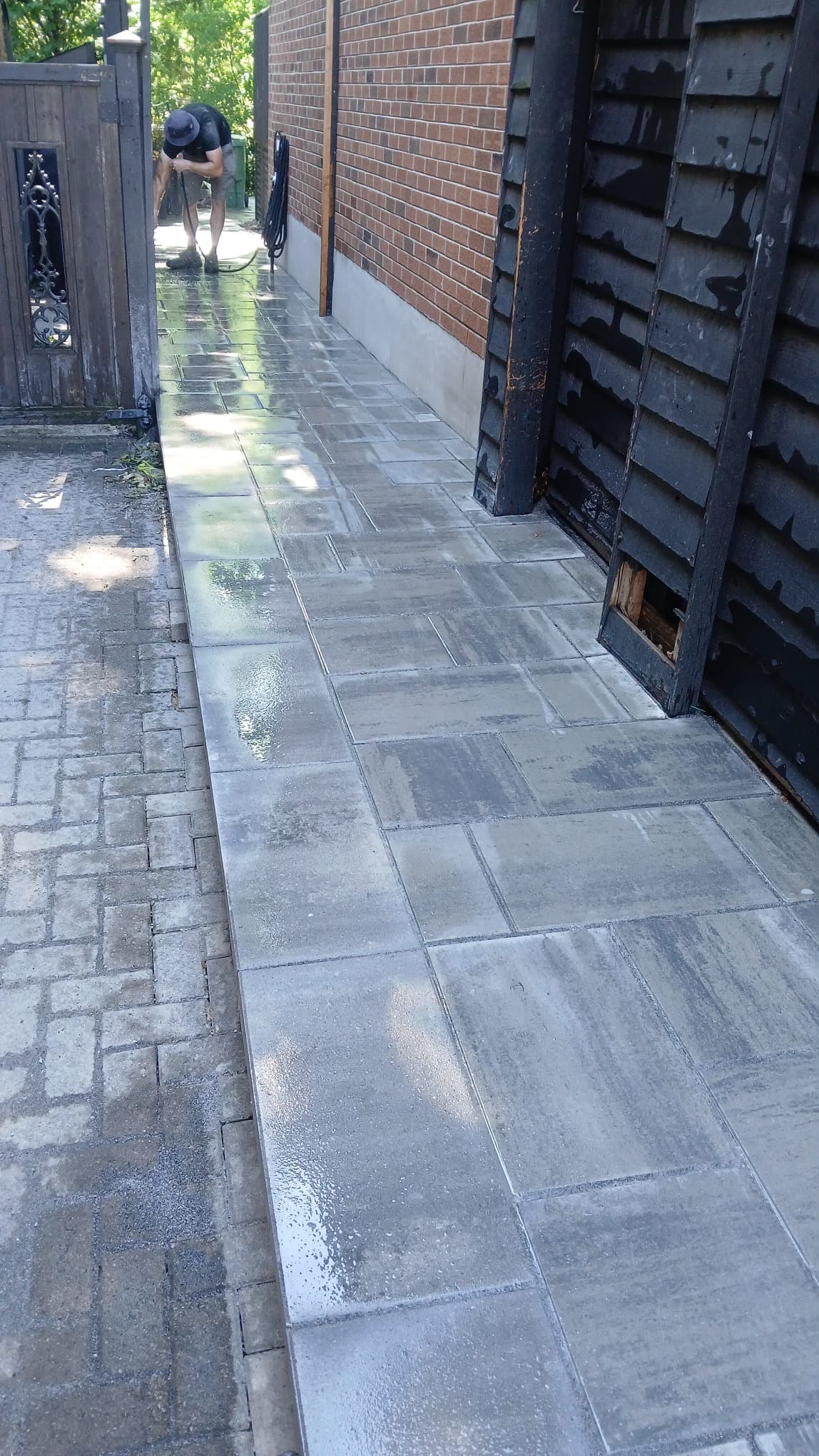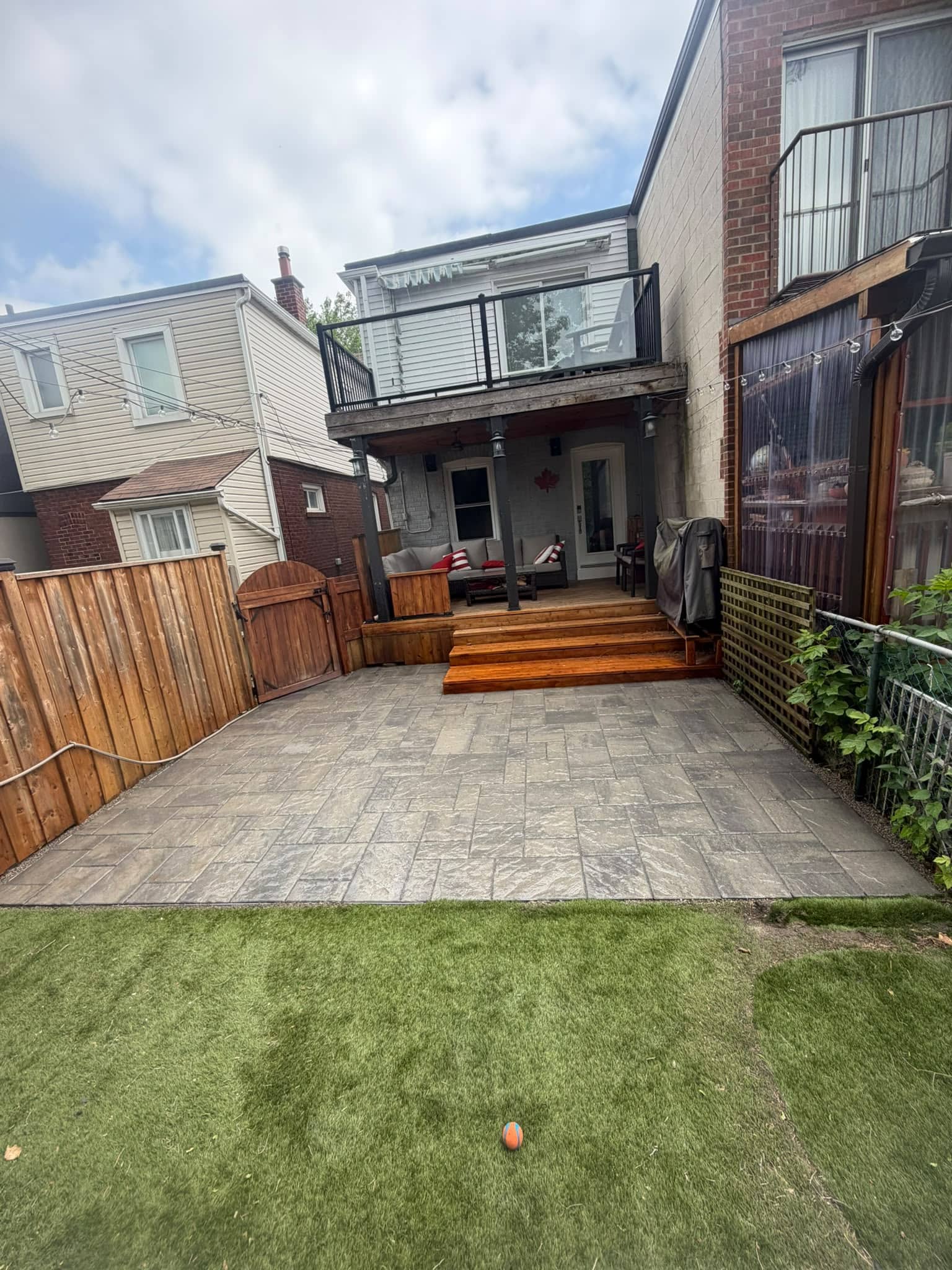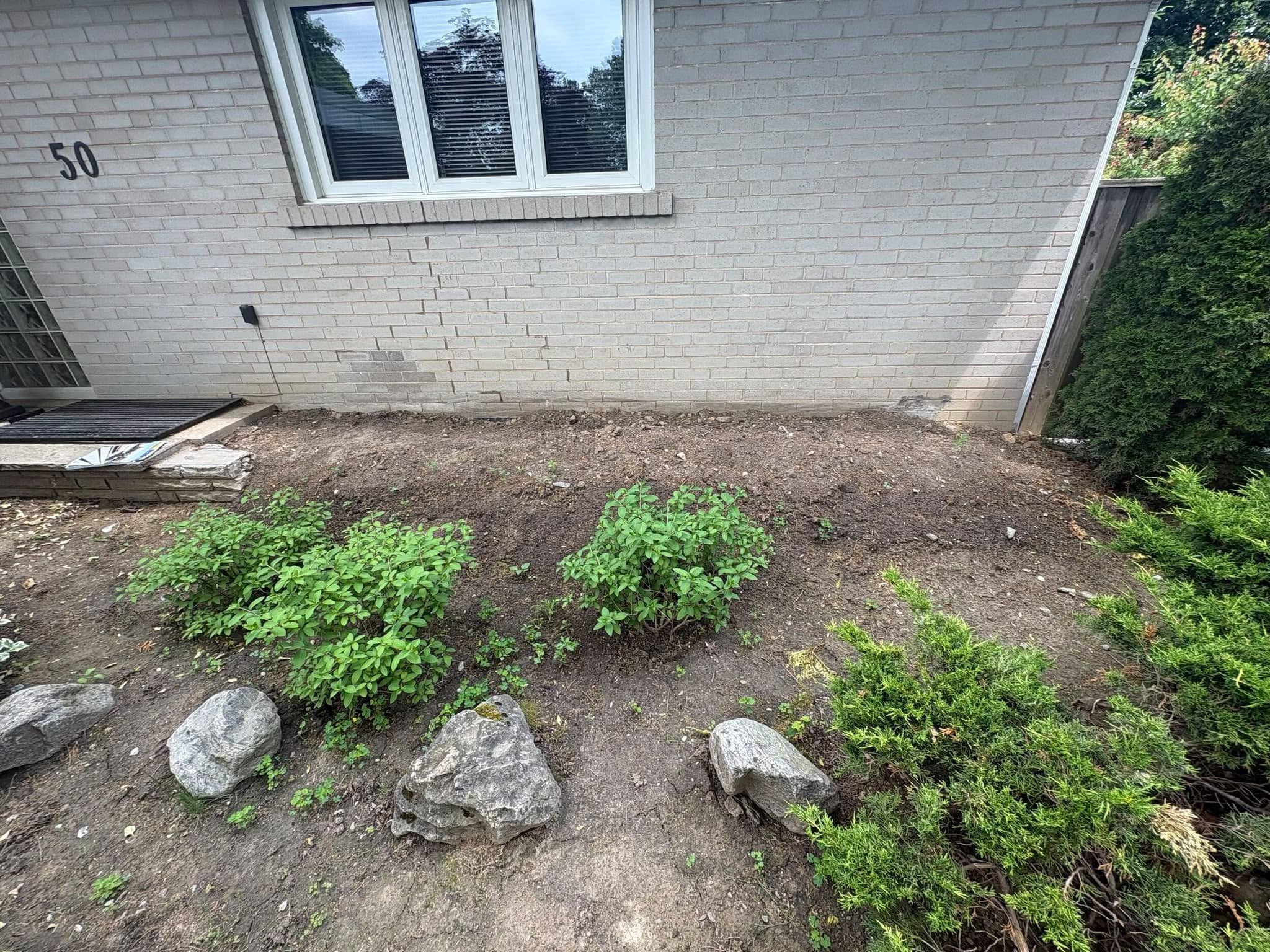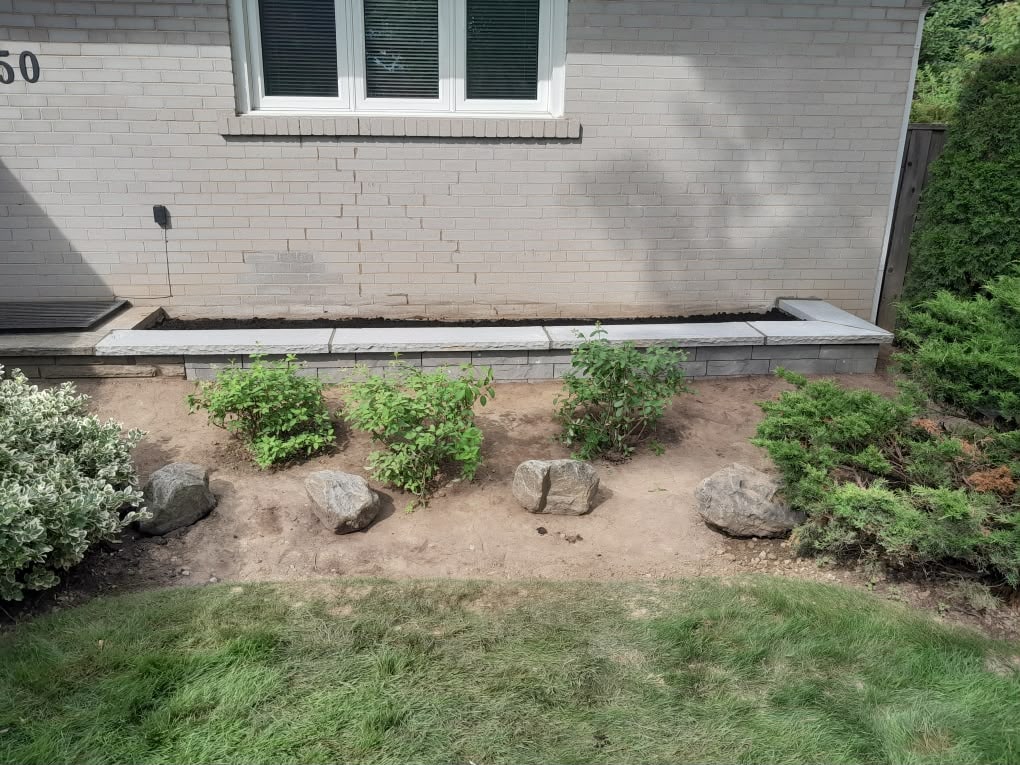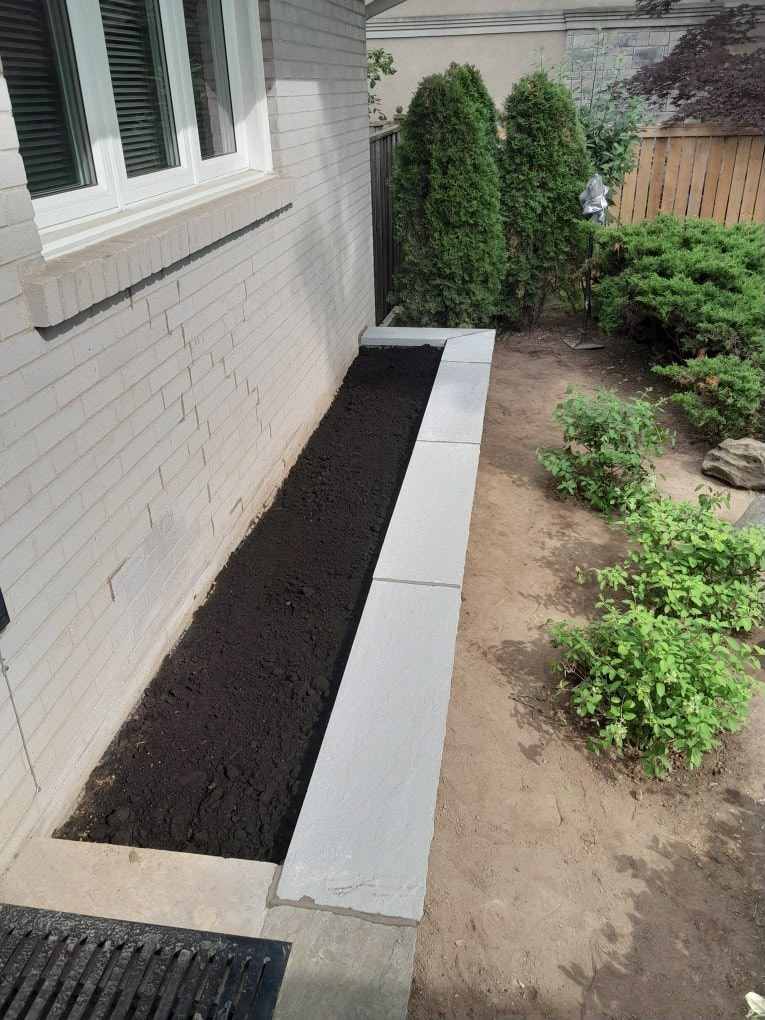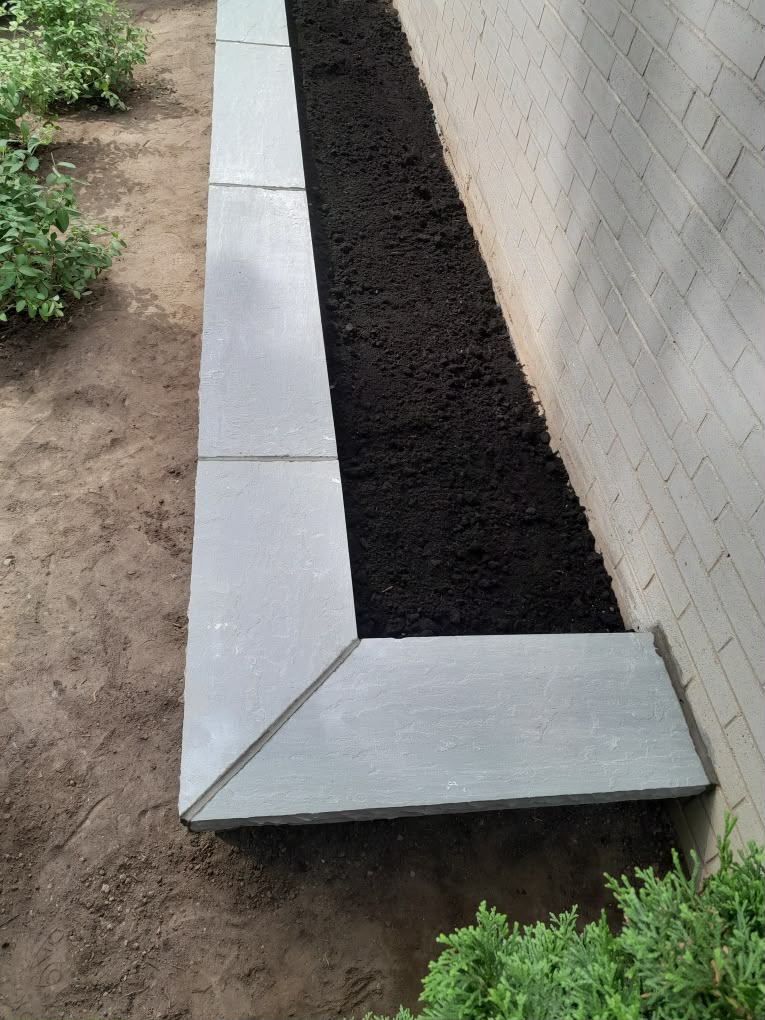

Masonry walkways and steps are some of the most heavily used features around Toronto and GTA homes. Because they support daily foot traffic and are fully exposed to rain, snow, ice, and freeze-thaw cycles, masonry walkways and steps often show signs of wear before other exterior elements.
Understanding how to care for masonry walkways and steps helps homeowners maintain safety, prevent costly repairs, and protect curb appeal. Proper maintenance also reduces liability risks associated with uneven or deteriorating surfaces.
Why masonry walkways and steps deteriorate over time
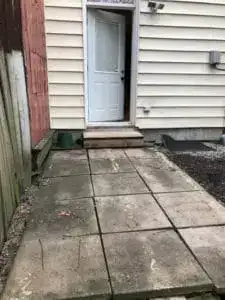
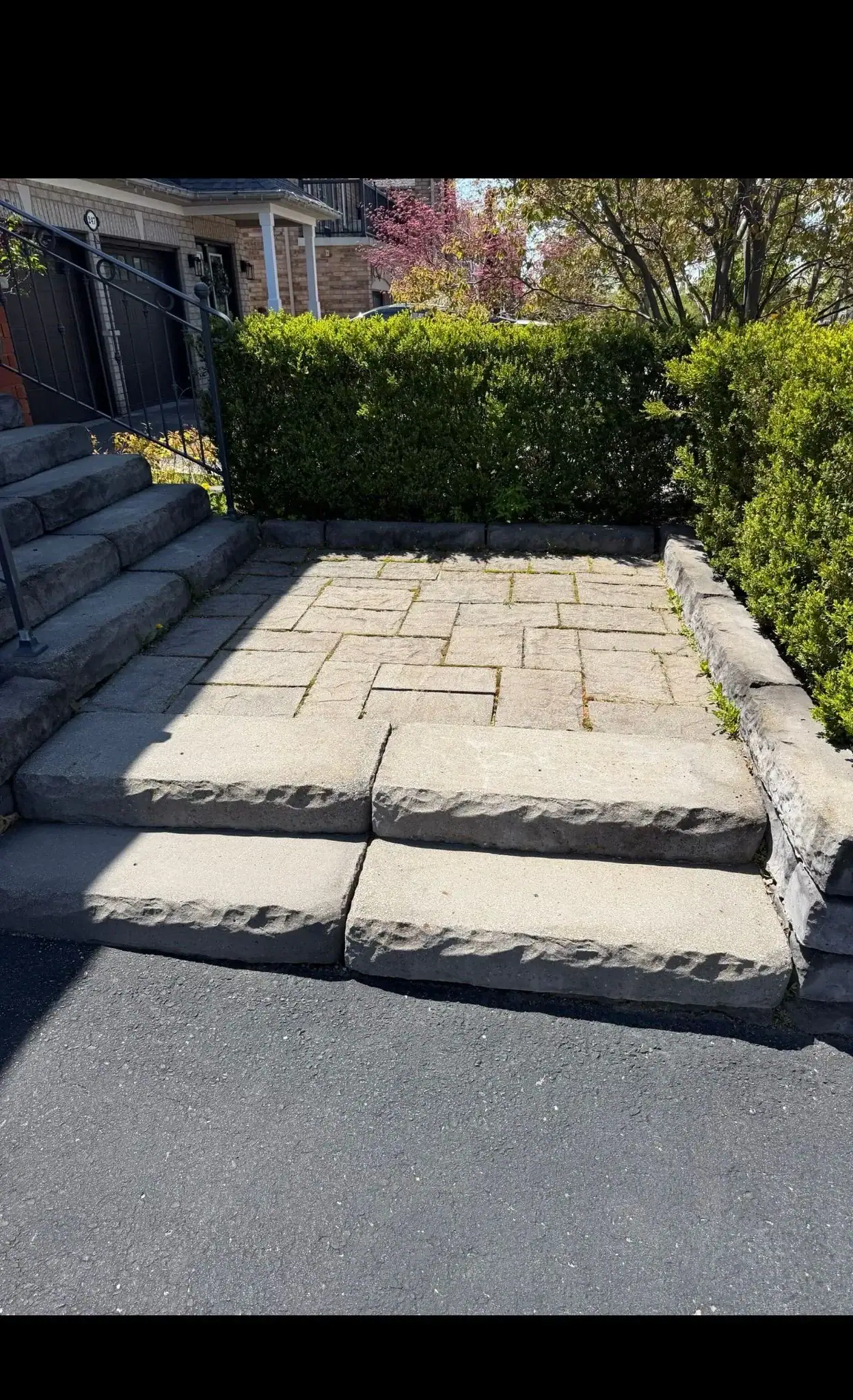
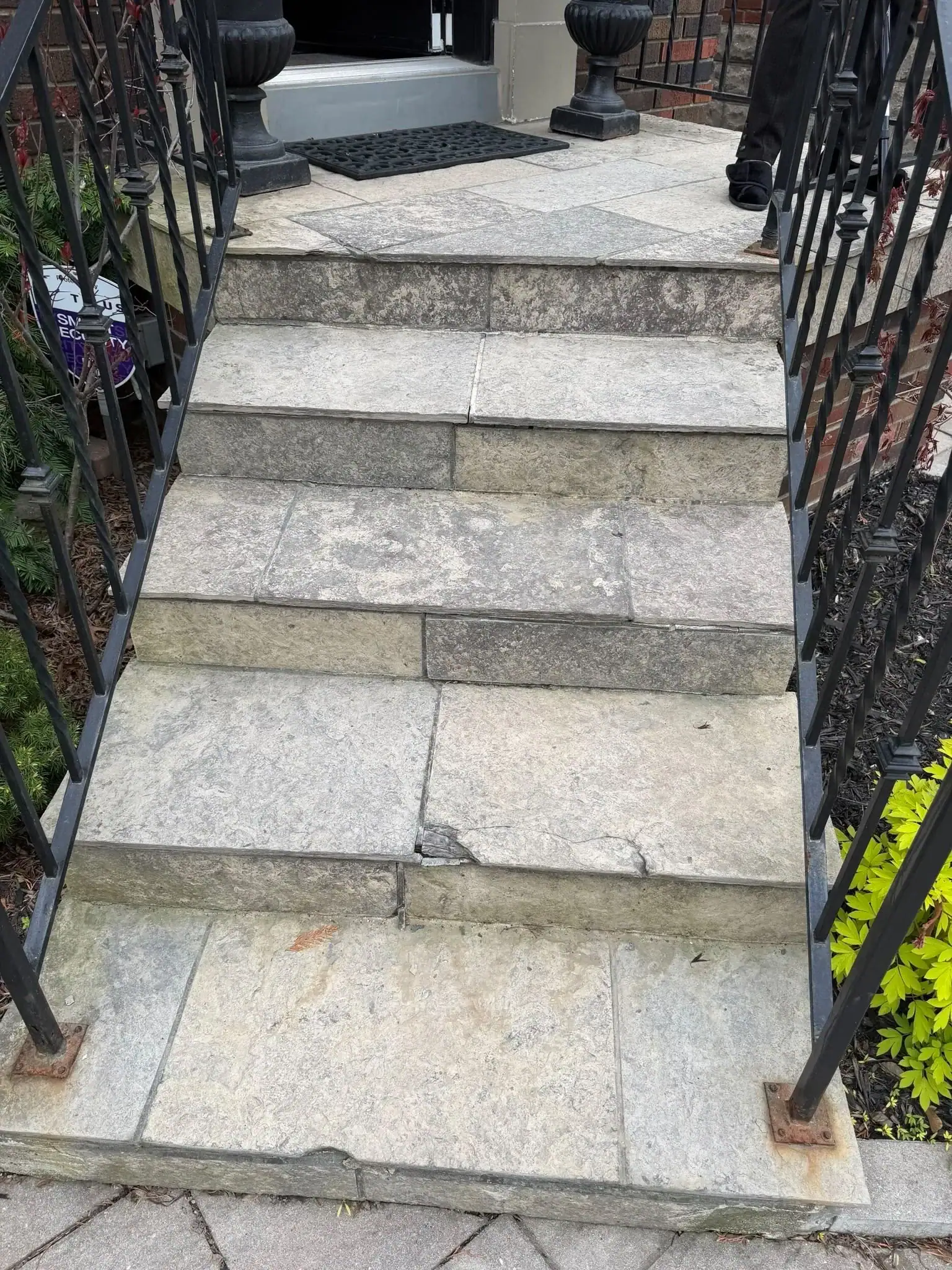
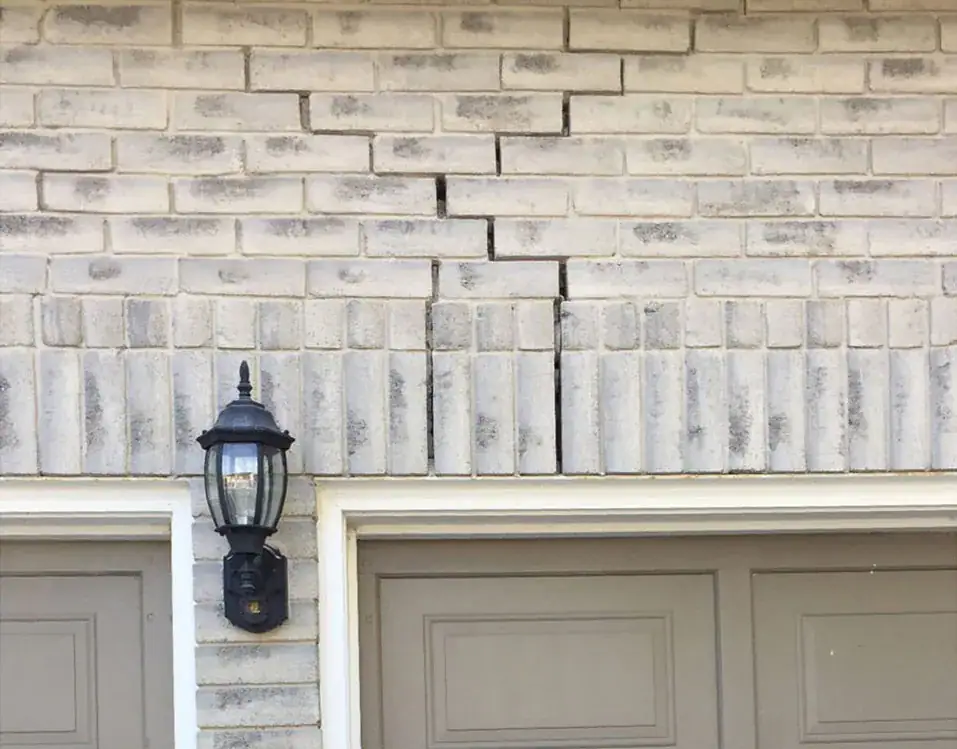
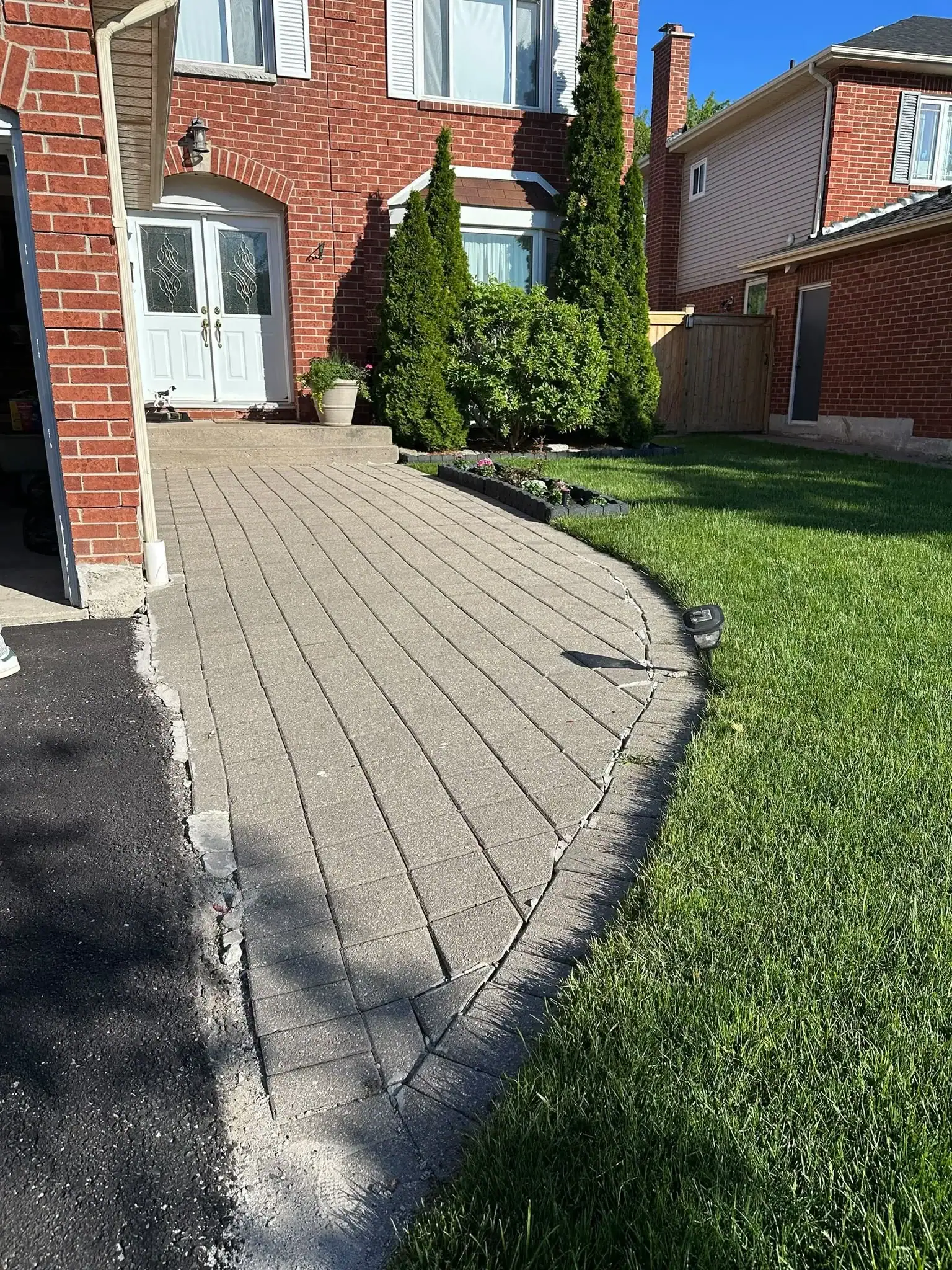
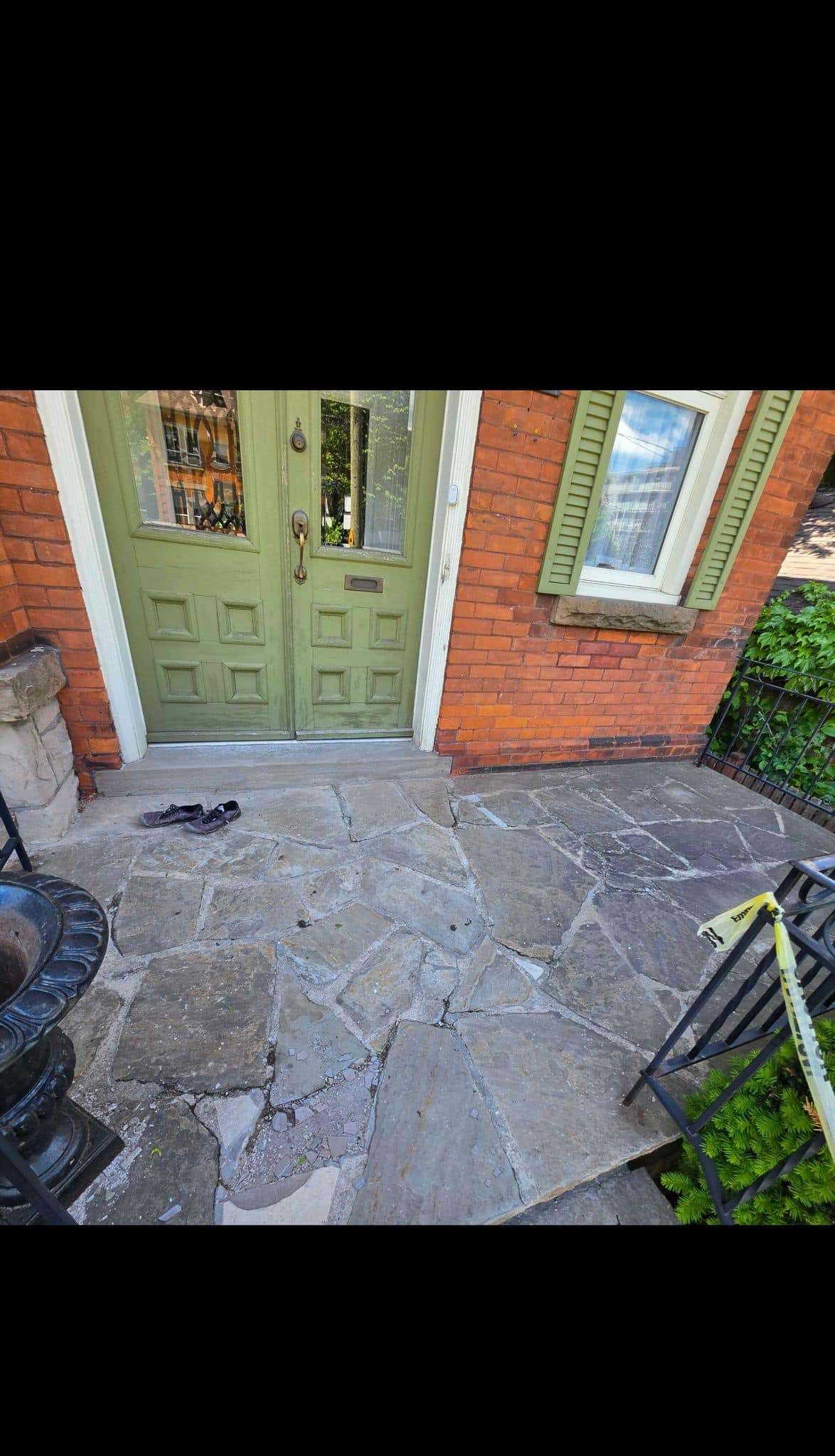
Masonry walkways and steps deteriorate primarily due to moisture exposure and temperature changes. Water enters small cracks, joints, or gaps between pavers. When that water freezes, it expands and gradually shifts masonry units out of alignment.
In Toronto, frequent freeze-thaw cycles accelerate this process, especially on older walkways built without modern drainage systems.
Routine care for masonry walkways and steps
Regular cleaning
Cleaning masonry walkways and steps removes dirt, salt residue, and organic growth that trap moisture. Avoid harsh chemicals that can weaken mortar joints or stain masonry surfaces.
Joint inspection and repair
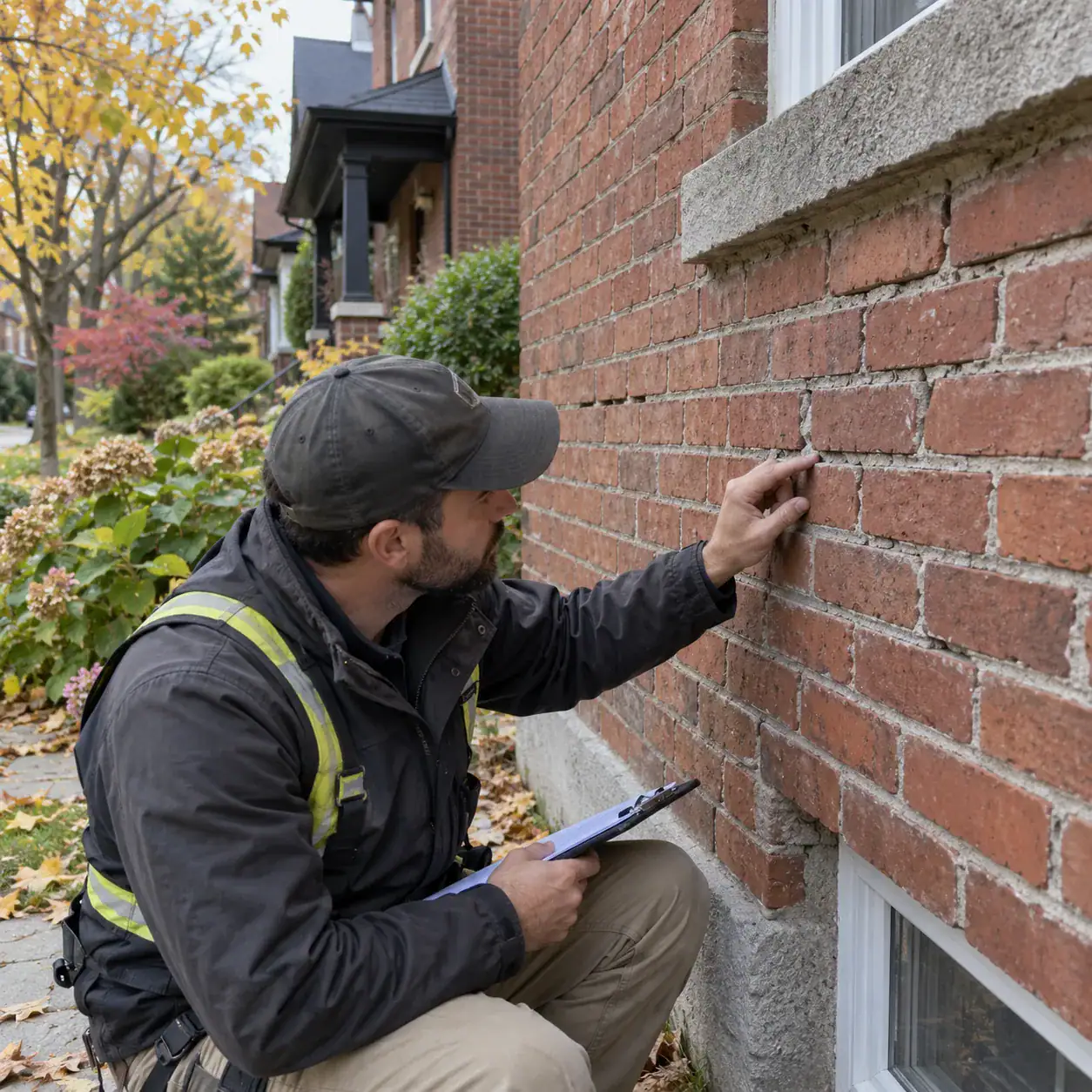
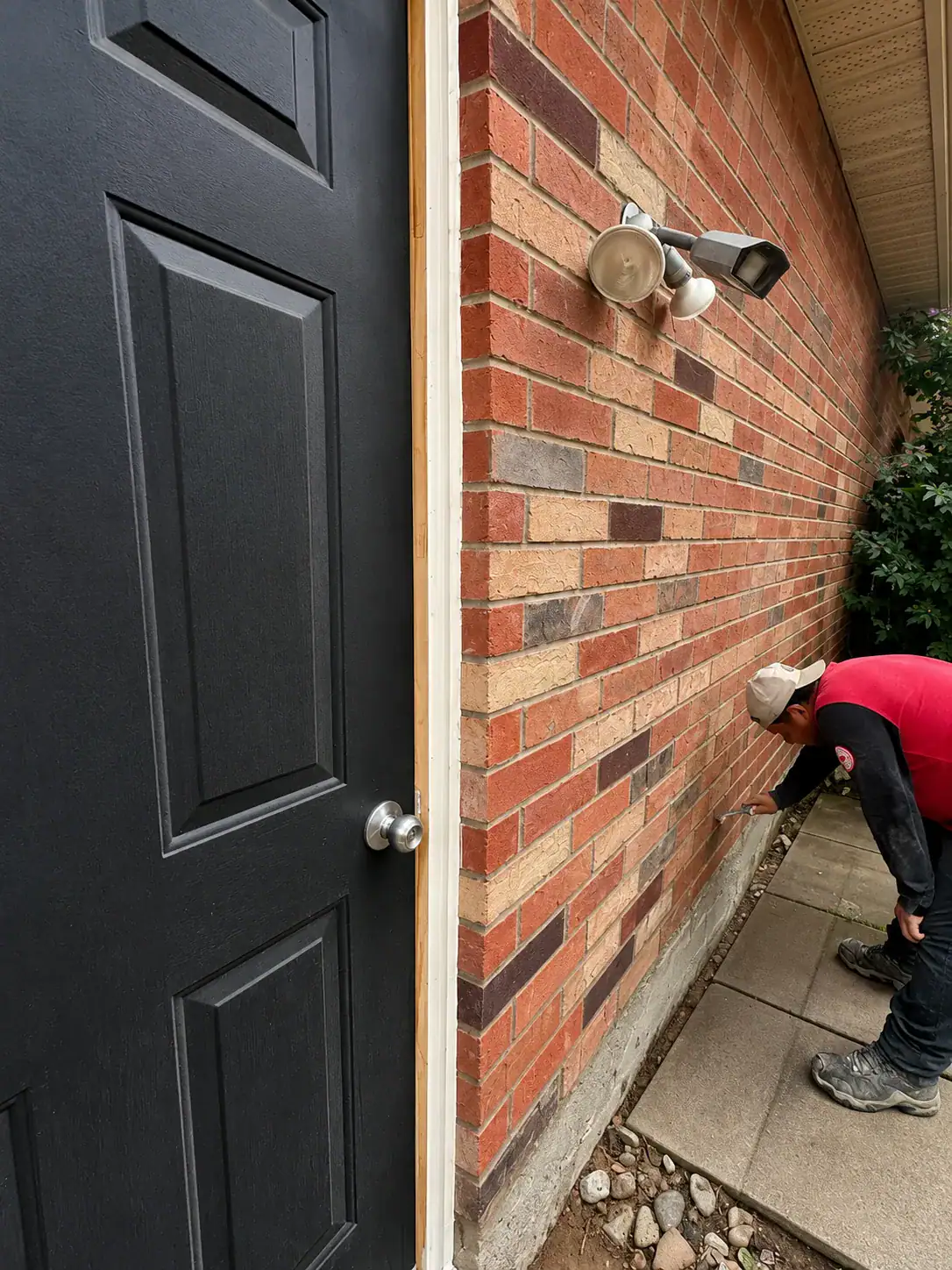
Mortar joints and sand-filled joints should be inspected annually. Cracked or missing joints allow water to penetrate deeper into masonry walkways and steps.
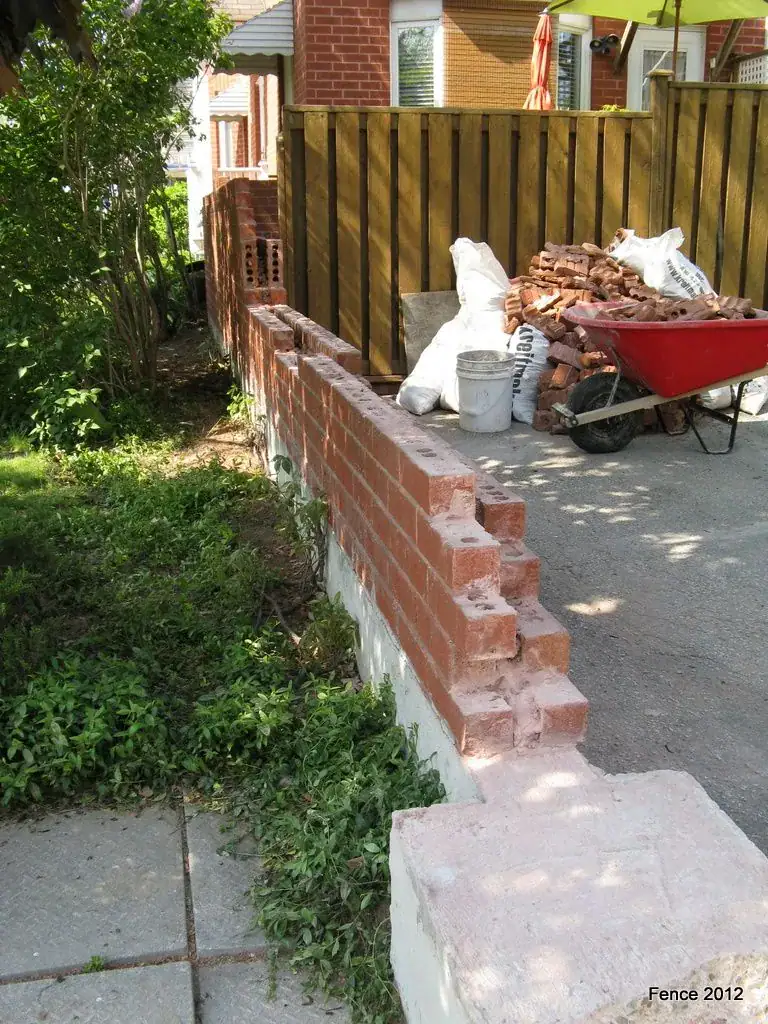
Professional tuckpointing restores joint integrity and helps stabilise brick or stone steps.
Interlocking walkways and proper drainage
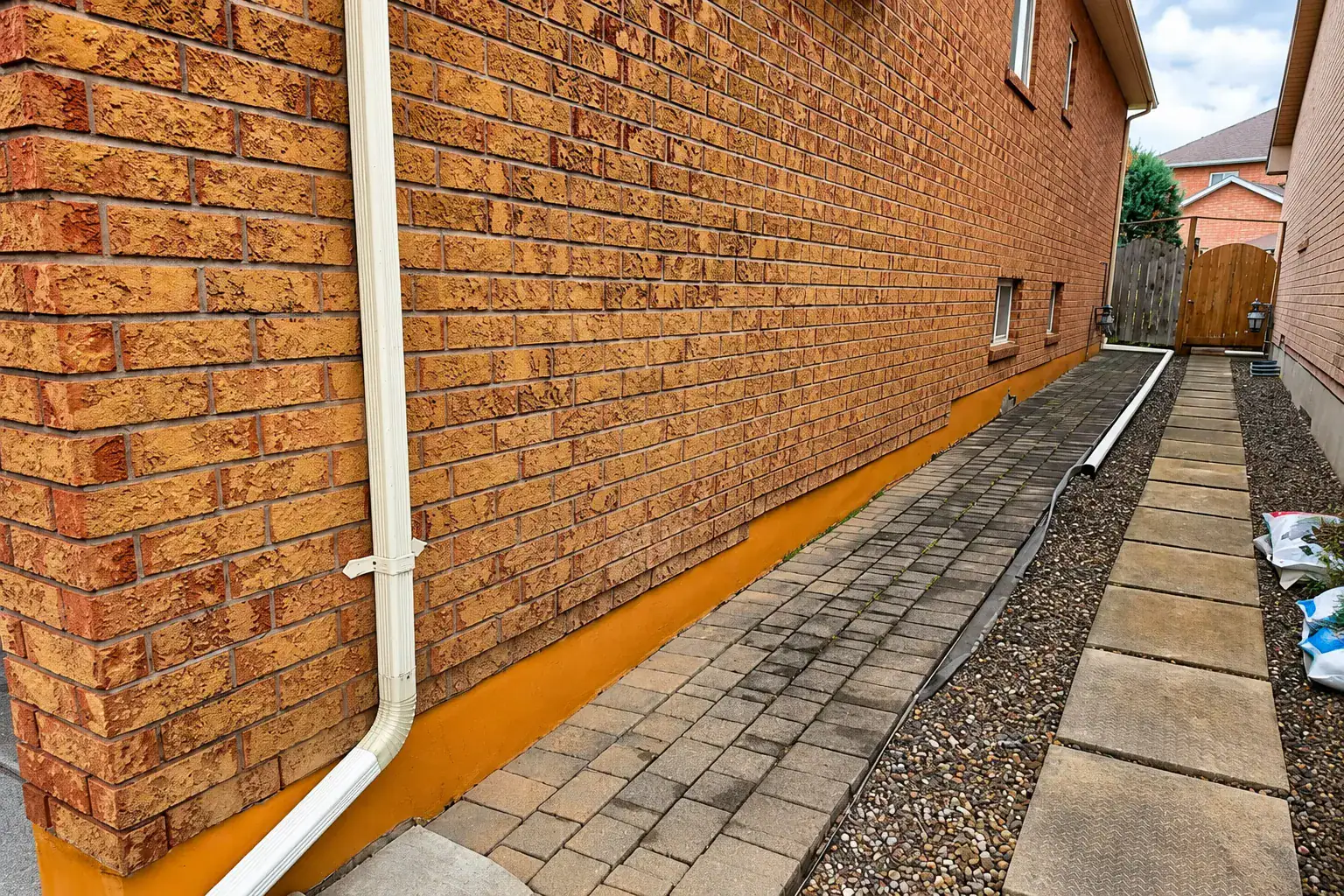
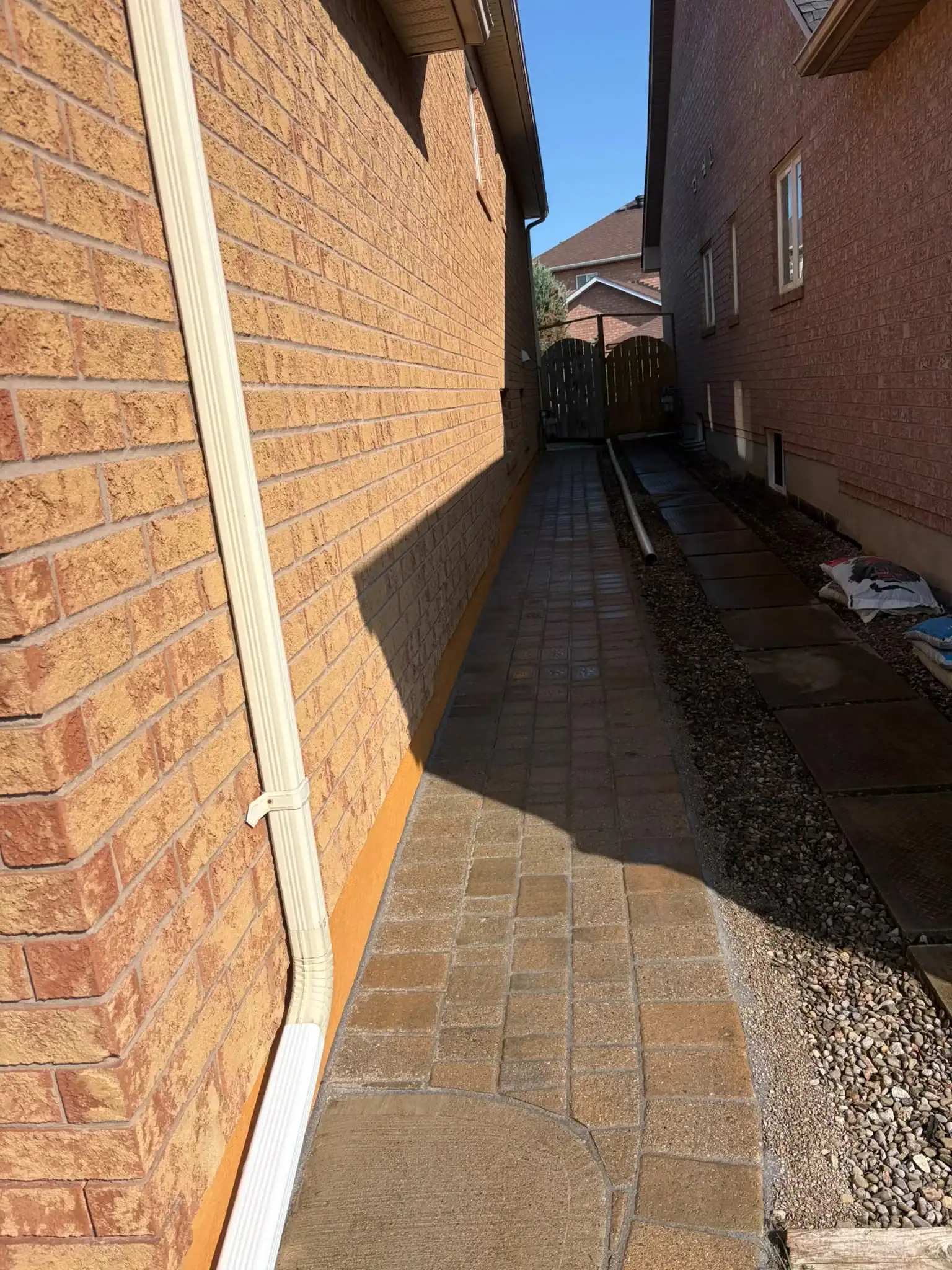
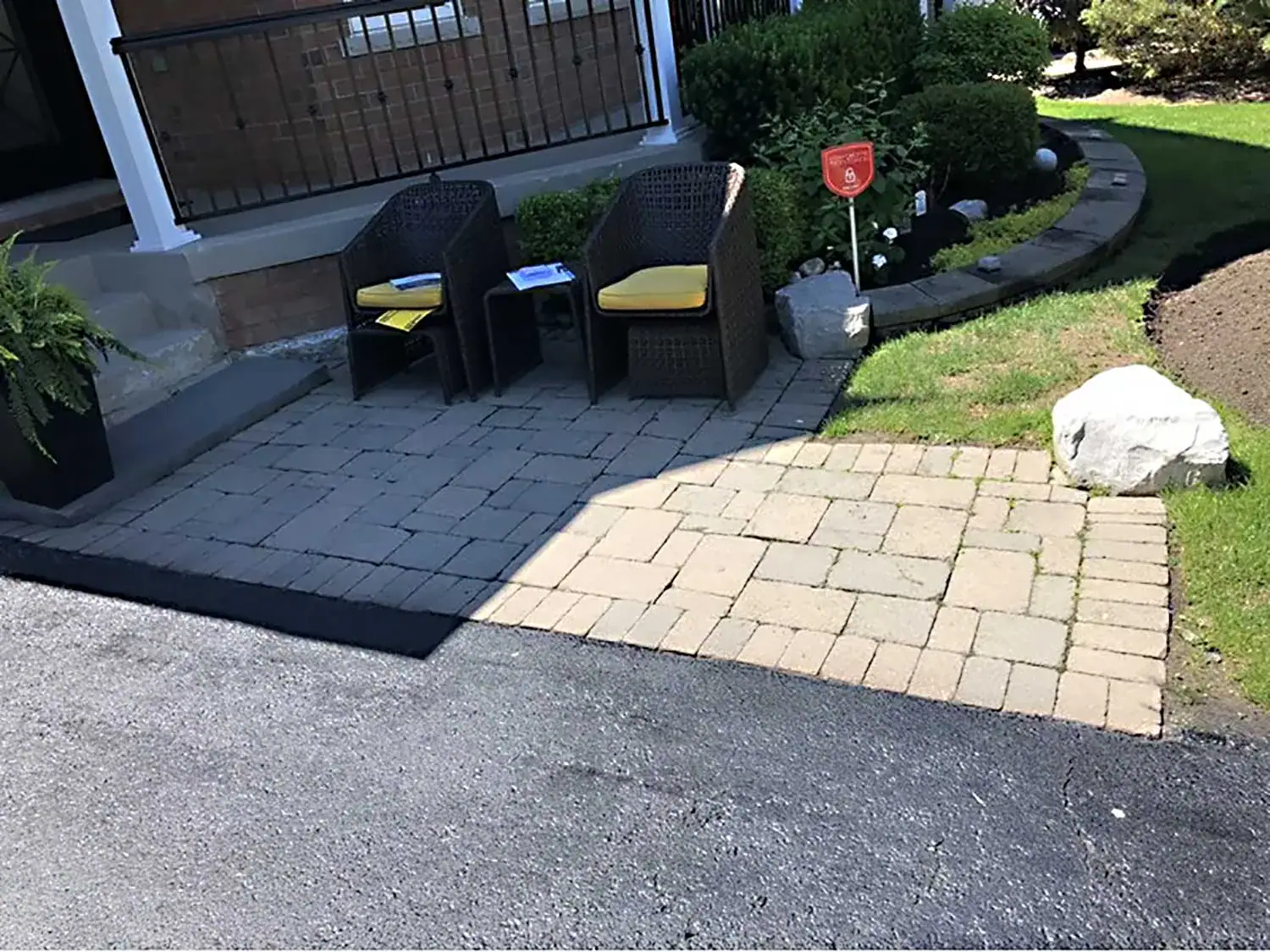
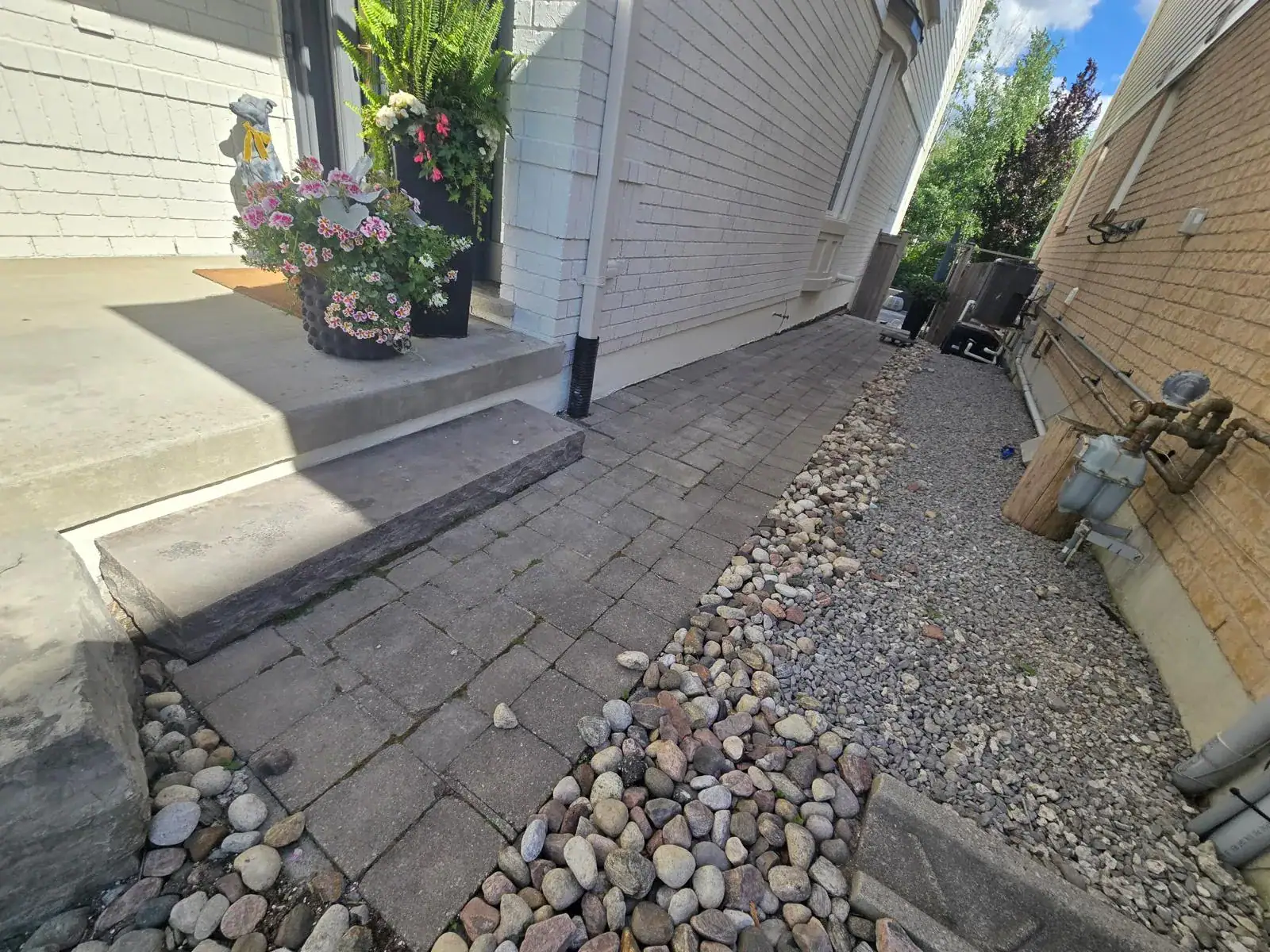
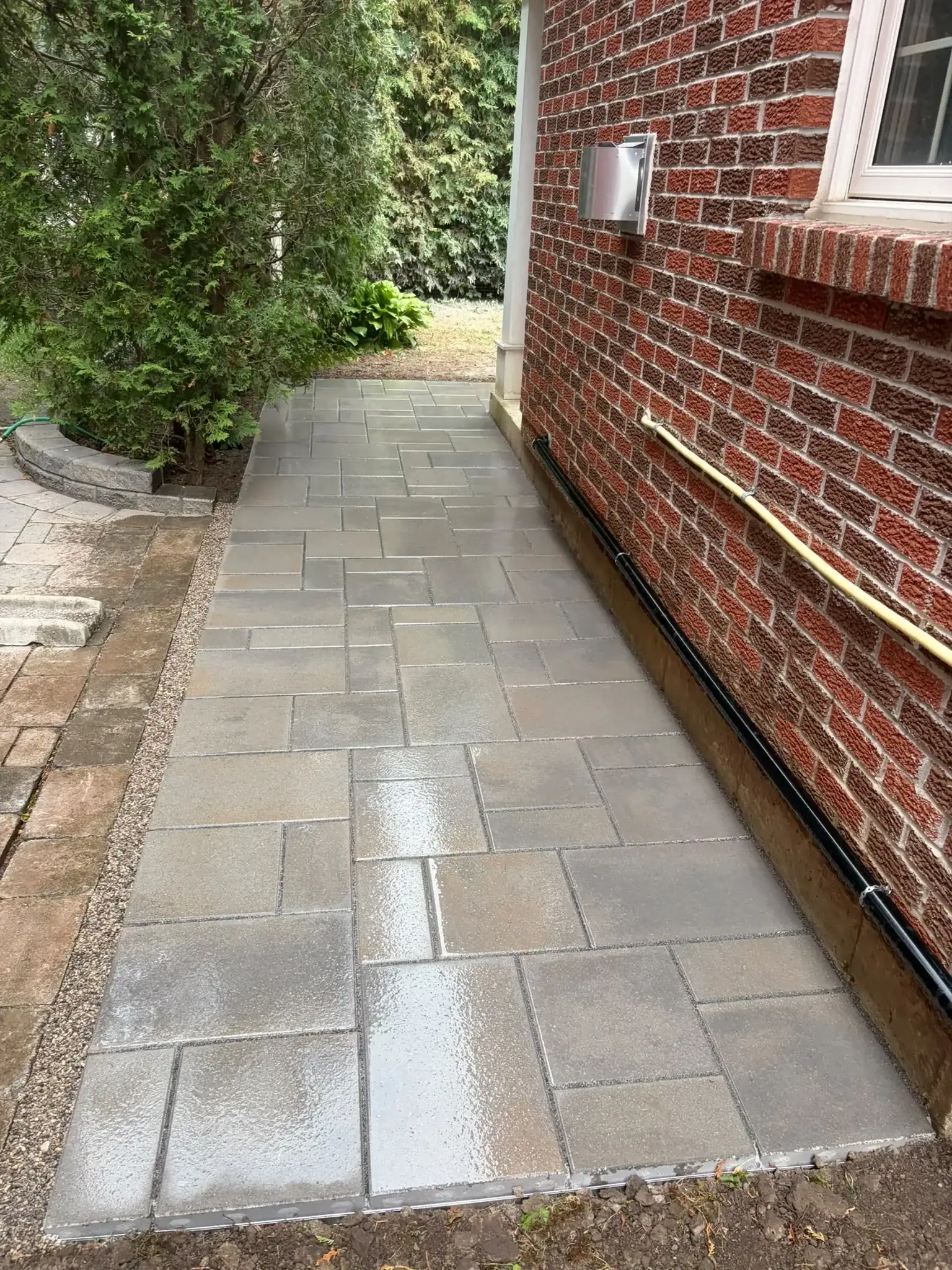
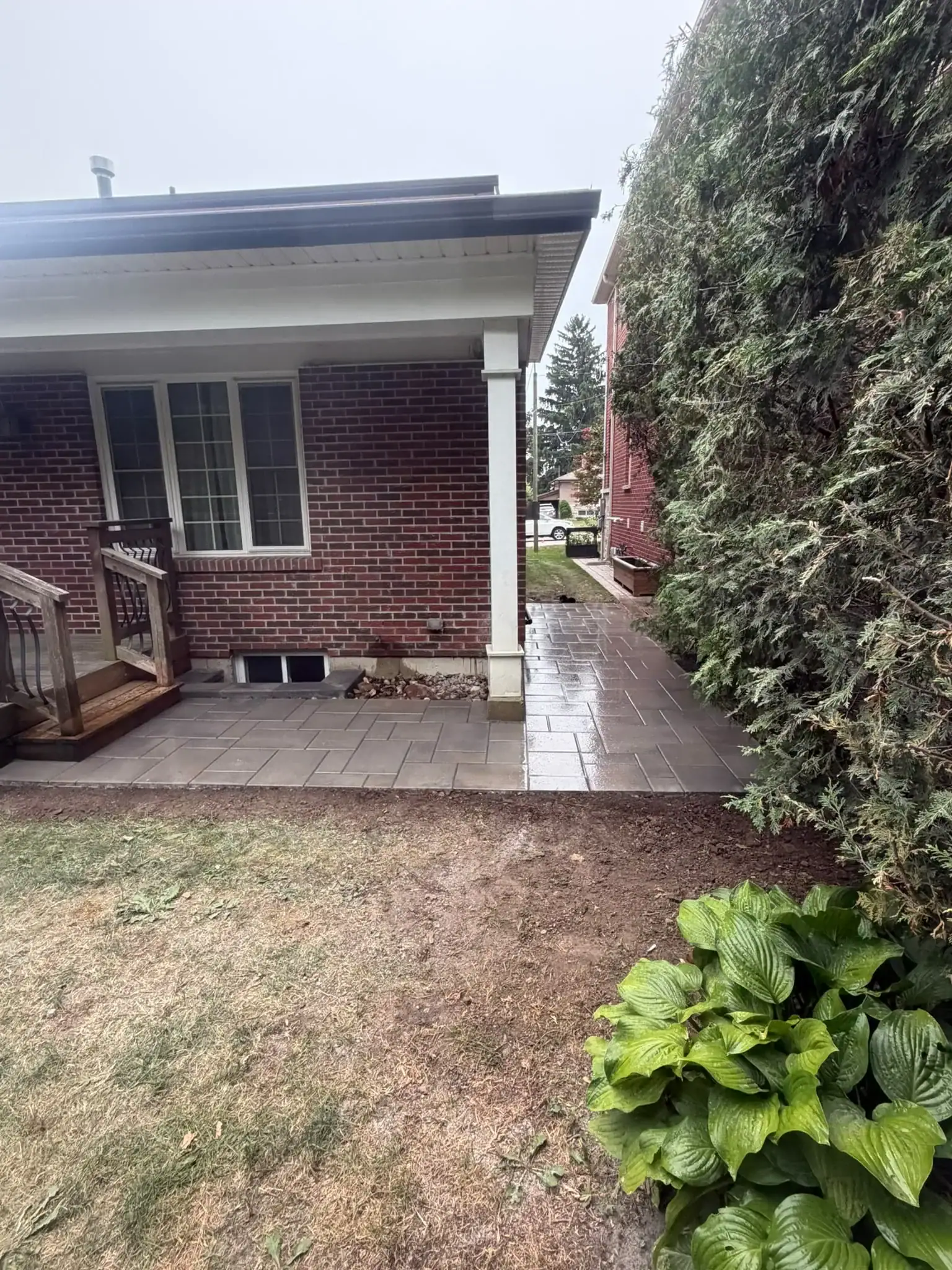
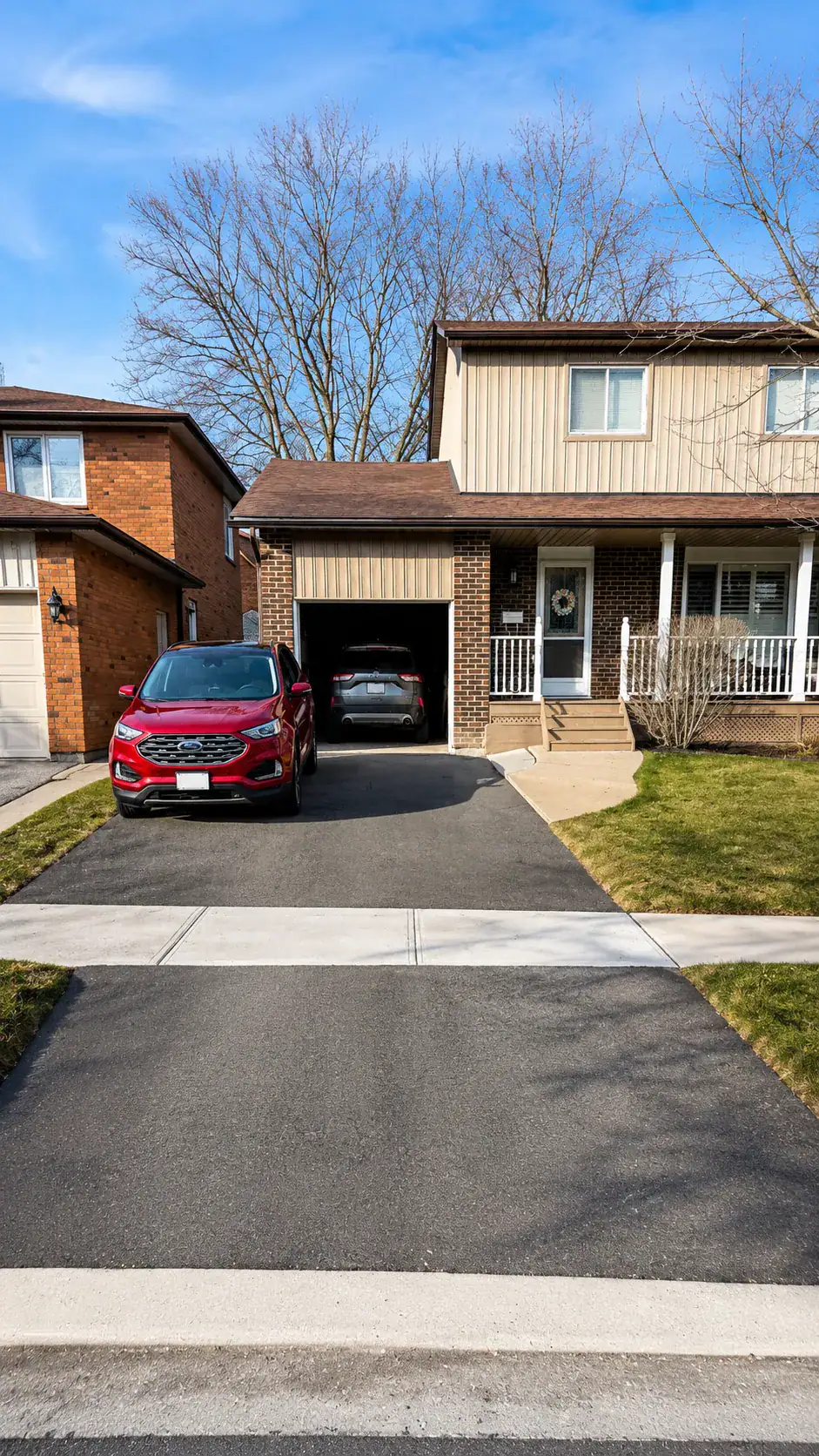
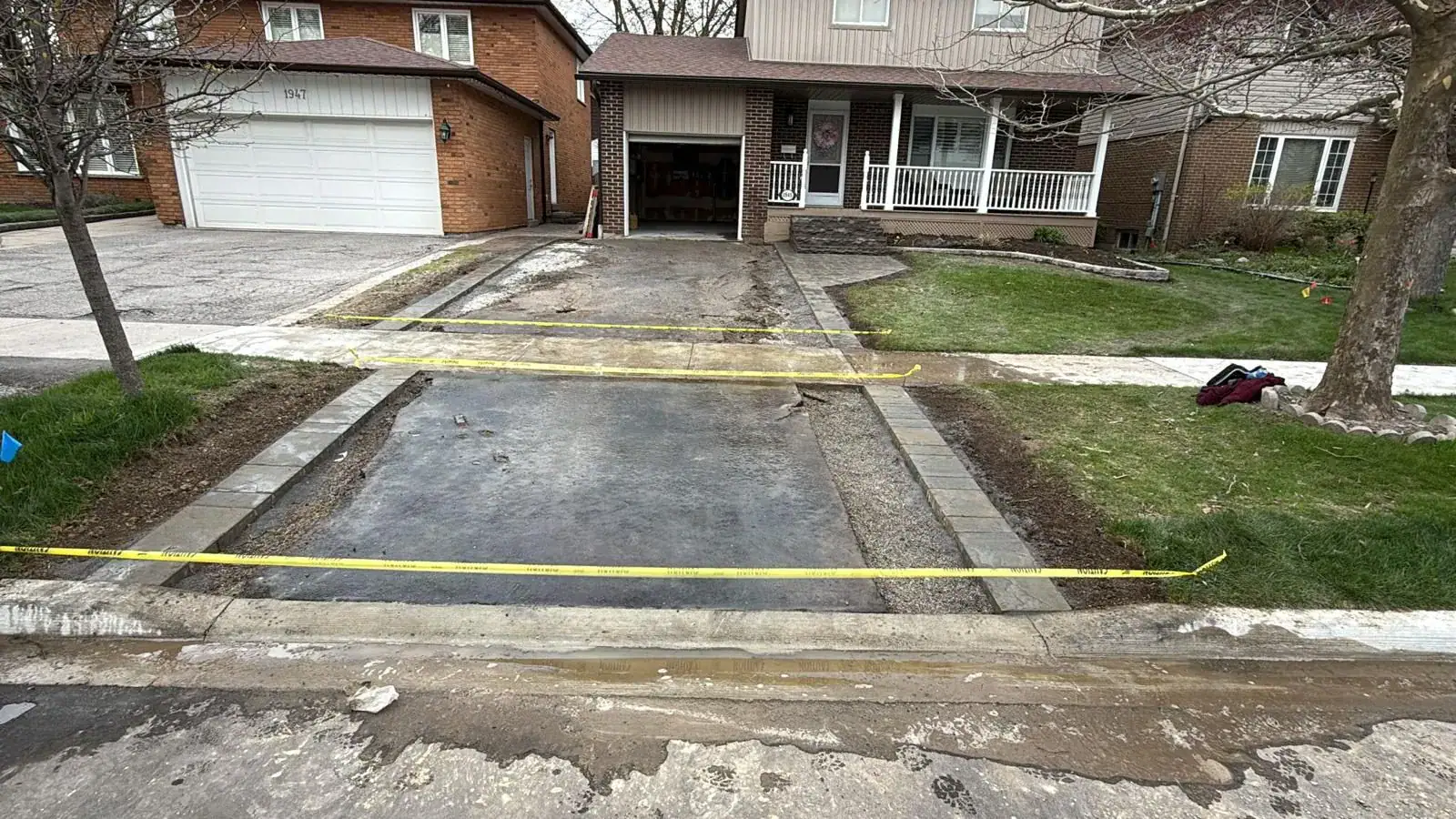
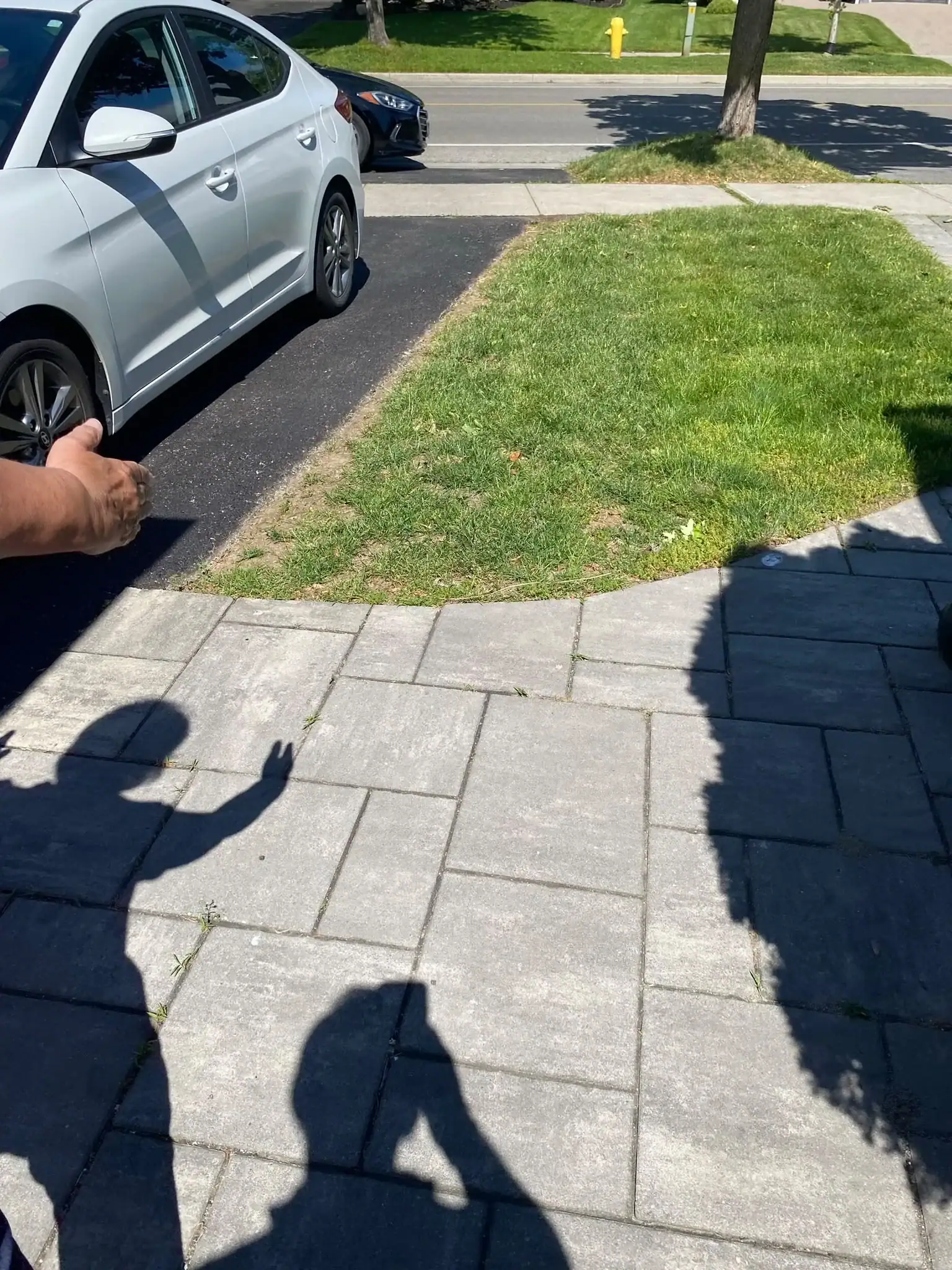
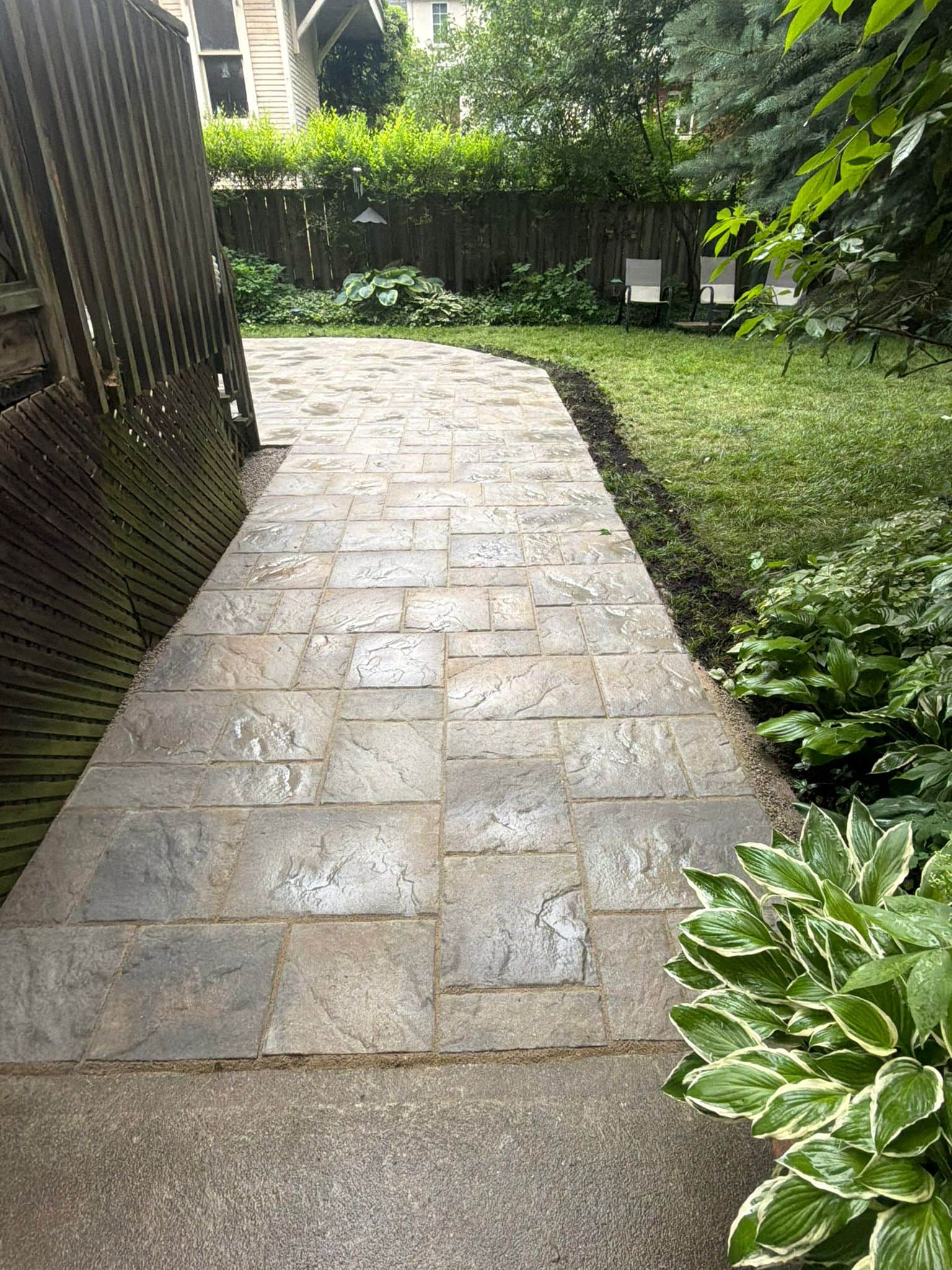
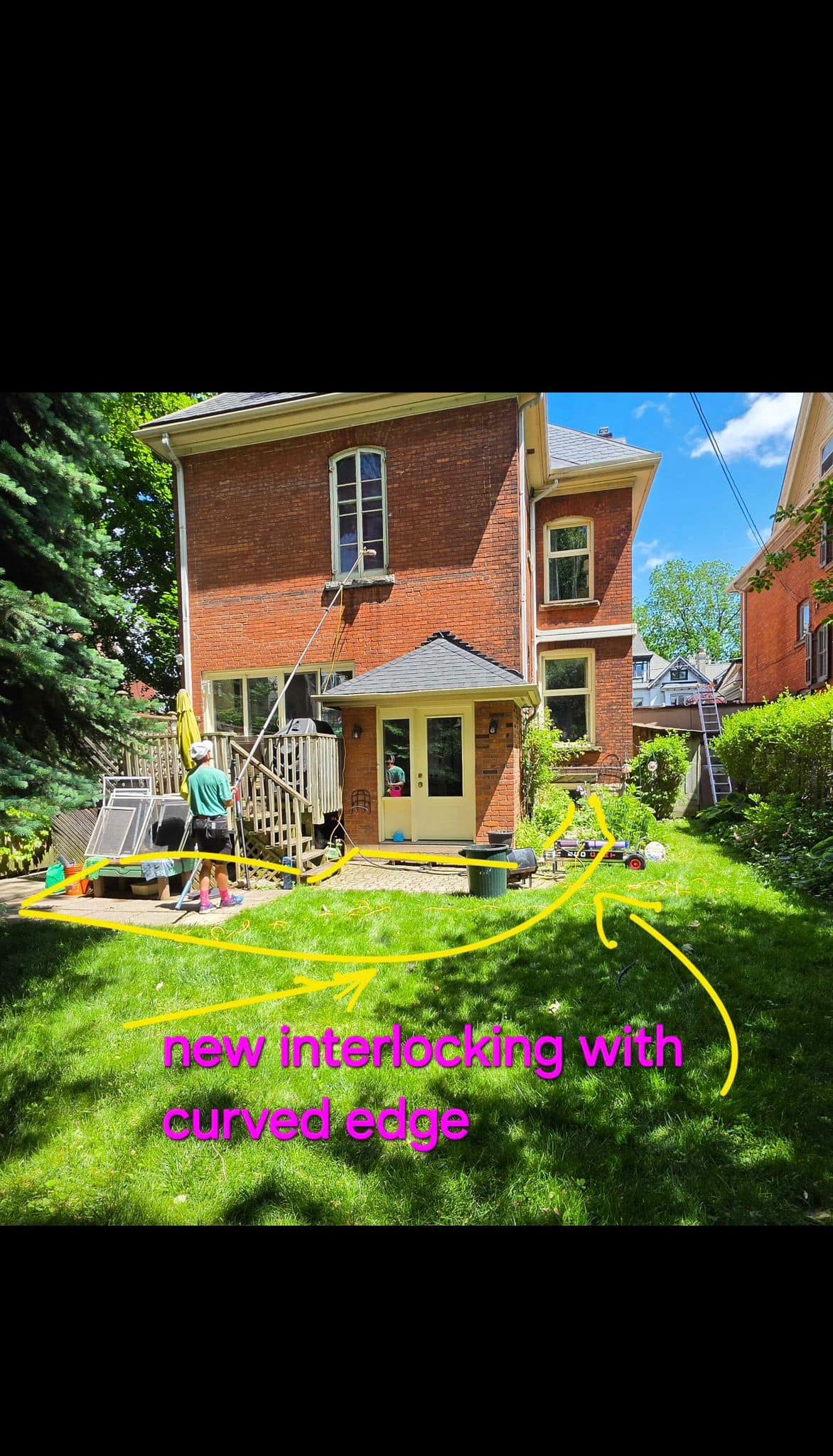
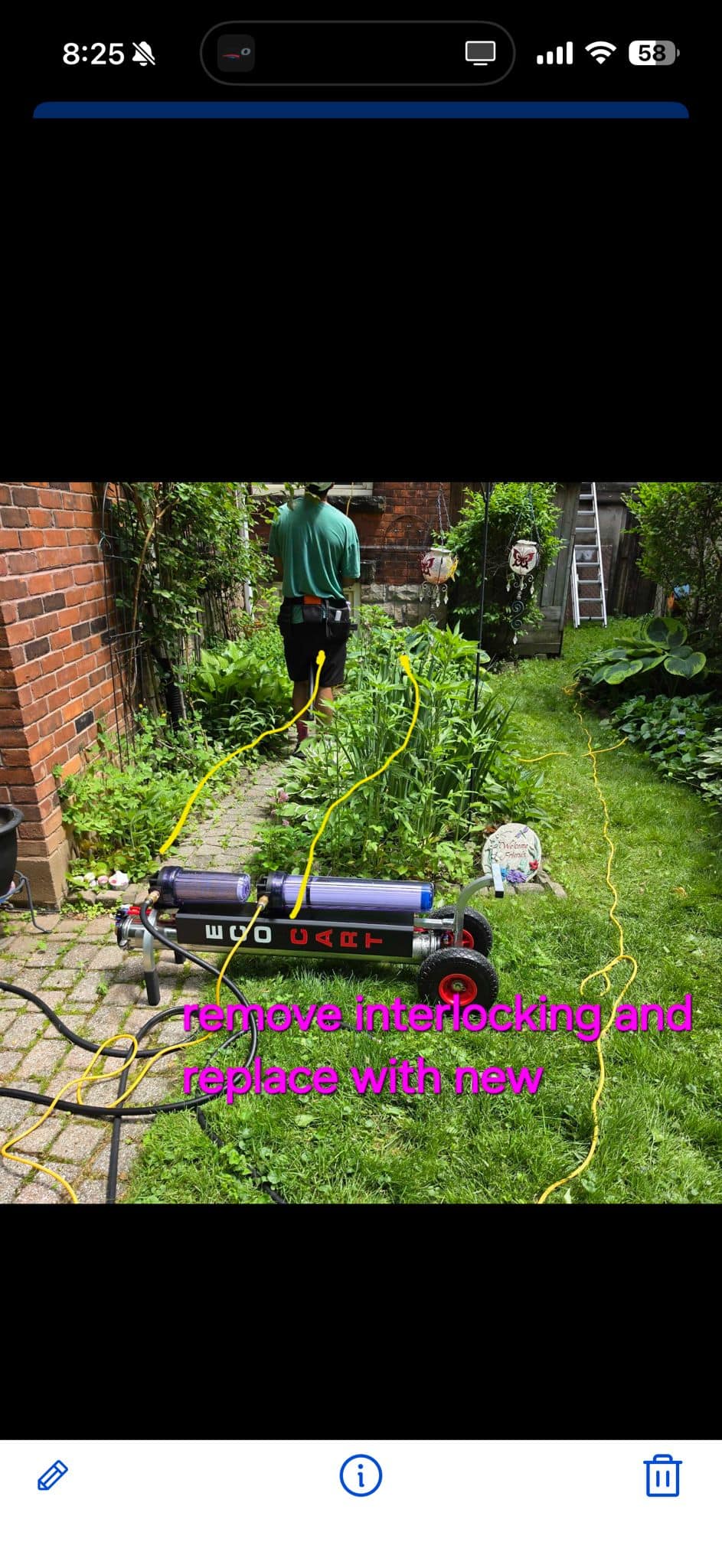
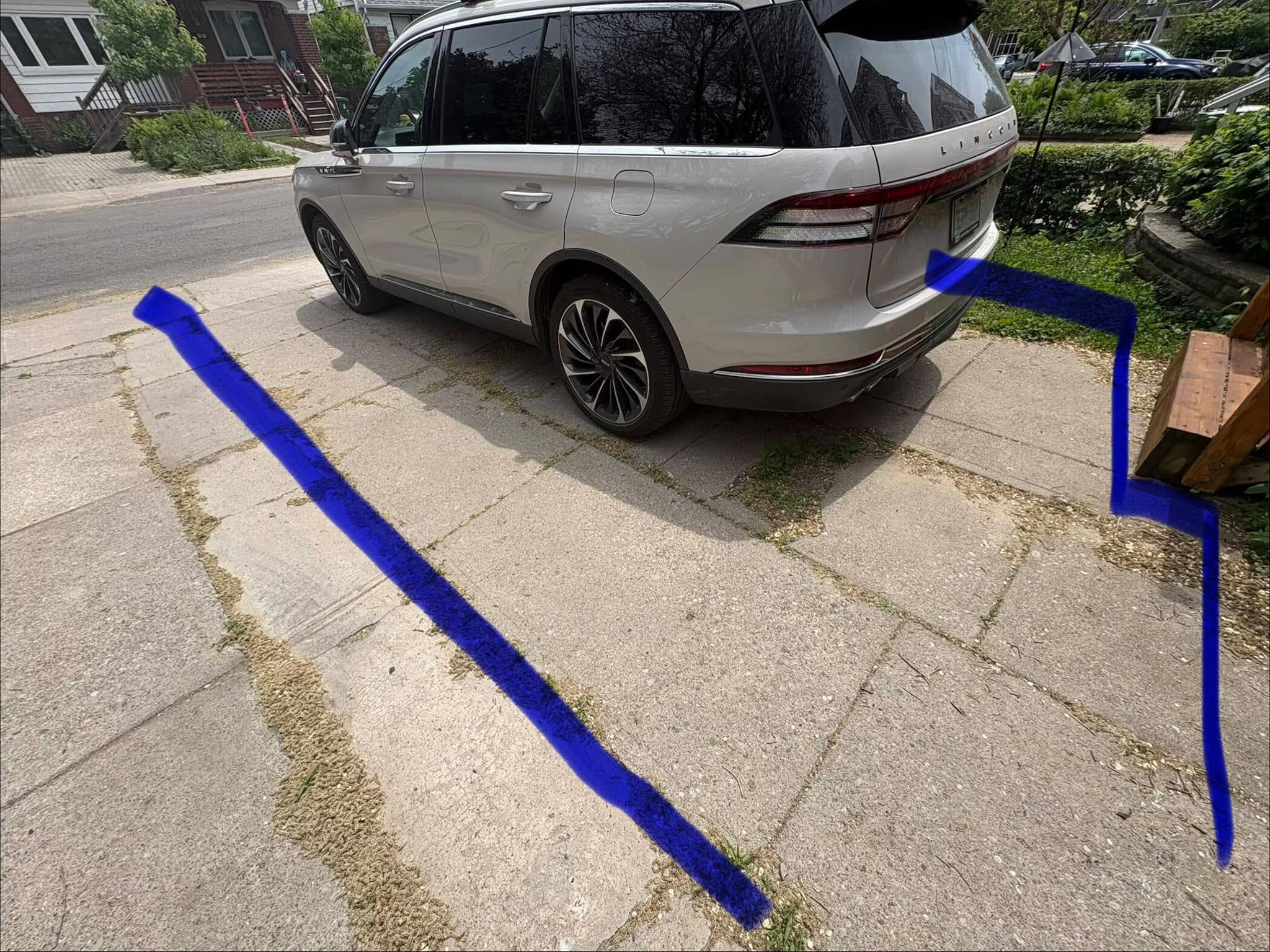
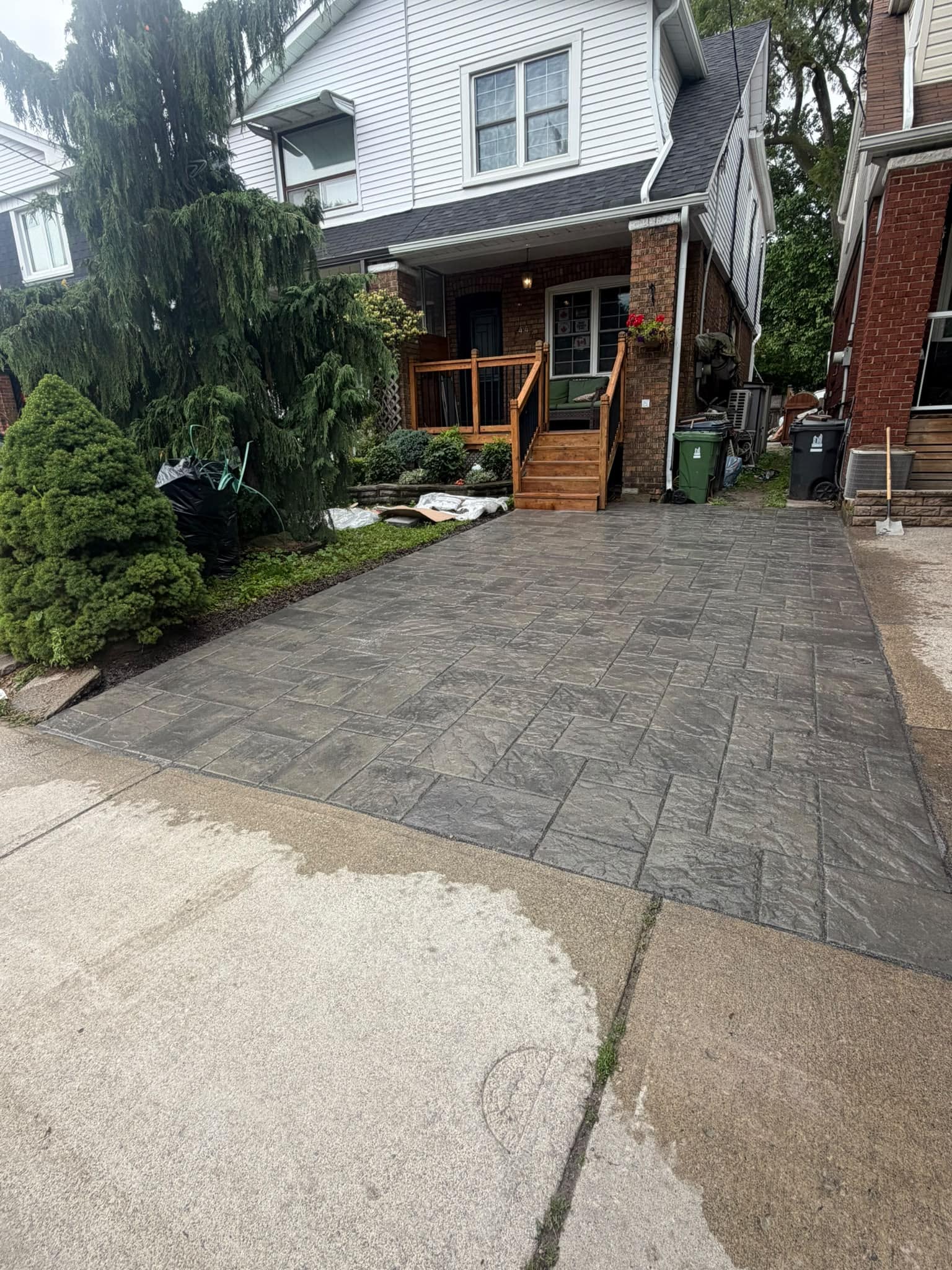
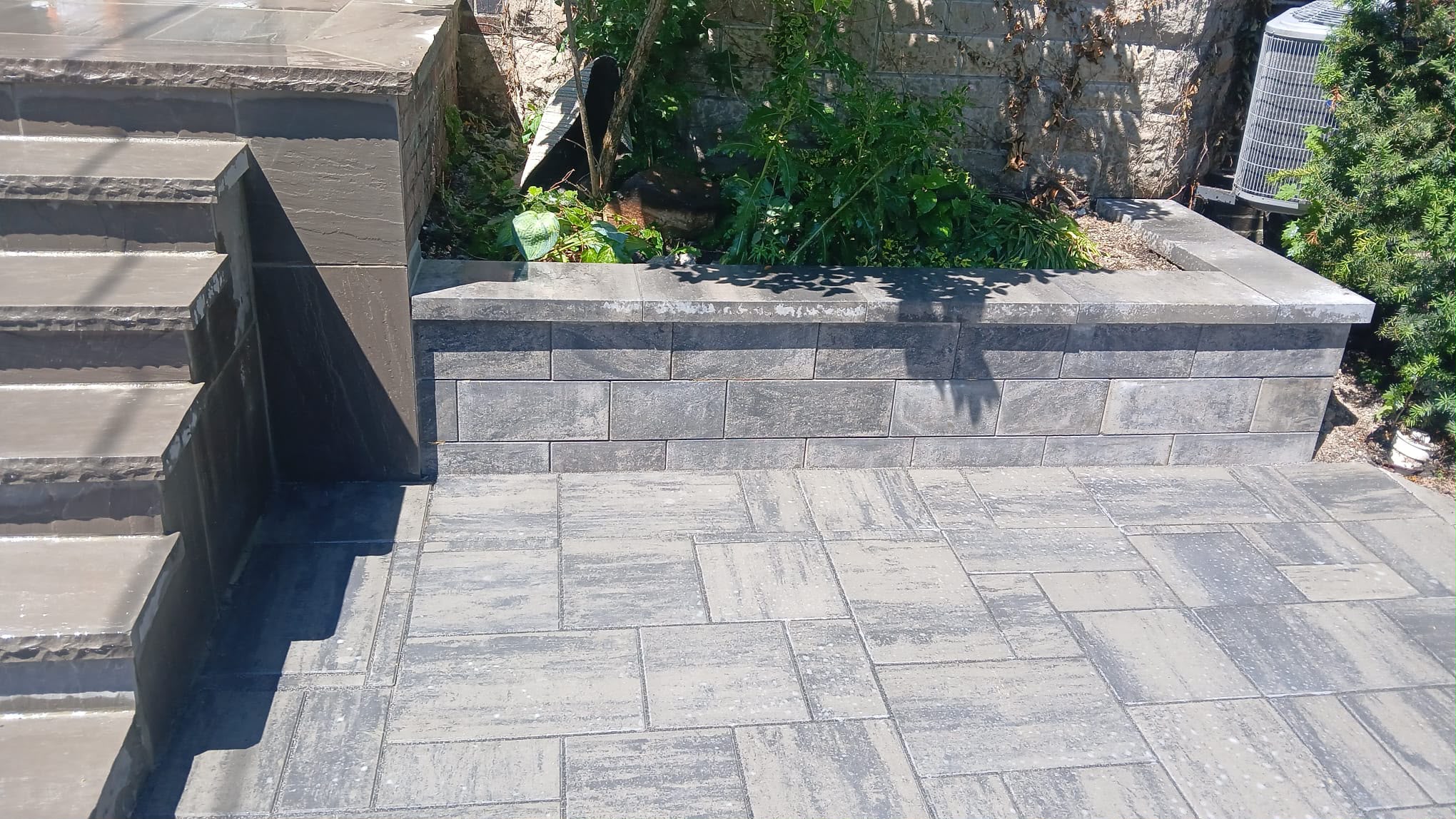
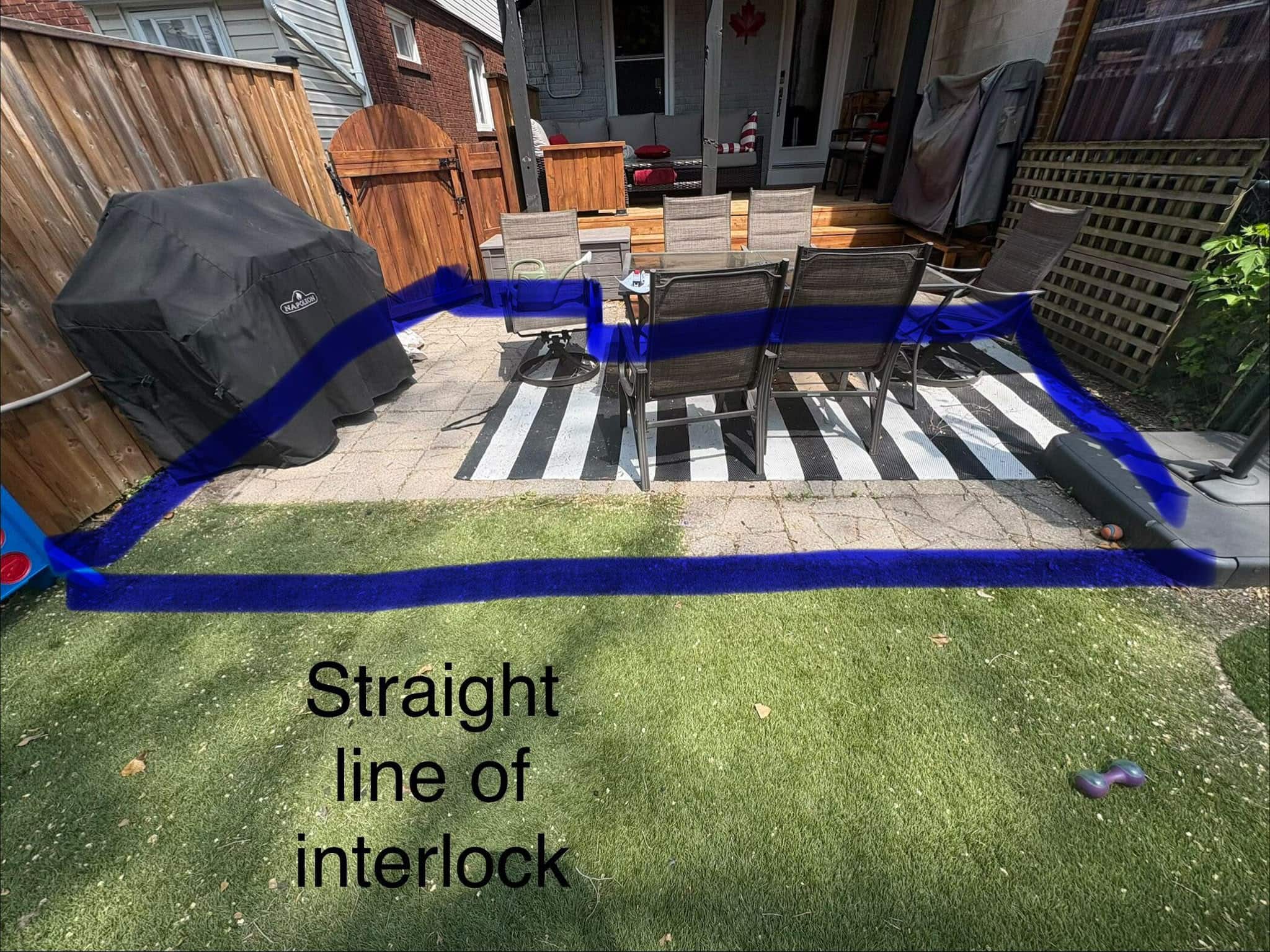
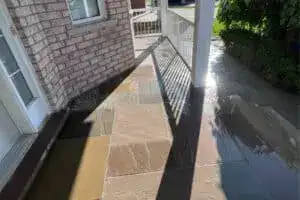 Modern masonry walkways and steps often use interlocking stone systems designed to flex slightly with ground movement. When installed correctly, these systems resist cracking and improve drainage.
Upgrading to paver walkway interlocking helps redirect water away from foundations and reduces ice buildup during winter.
In areas like East York and Bolton, professional services such as East York interlocking stone services and Bolton interlocking stone services are commonly used to correct drainage and surface movement.
Steps, porches, and structural support
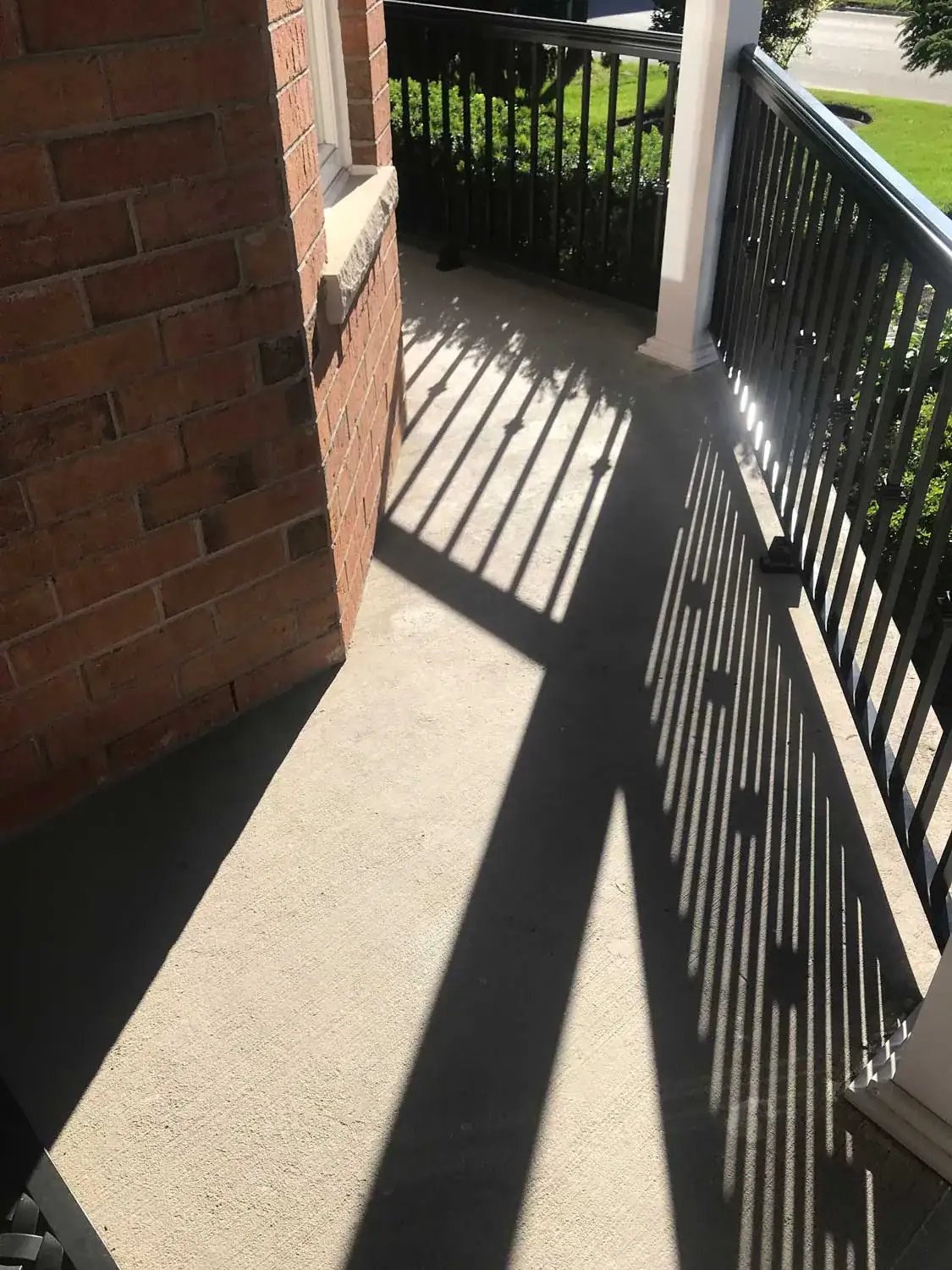
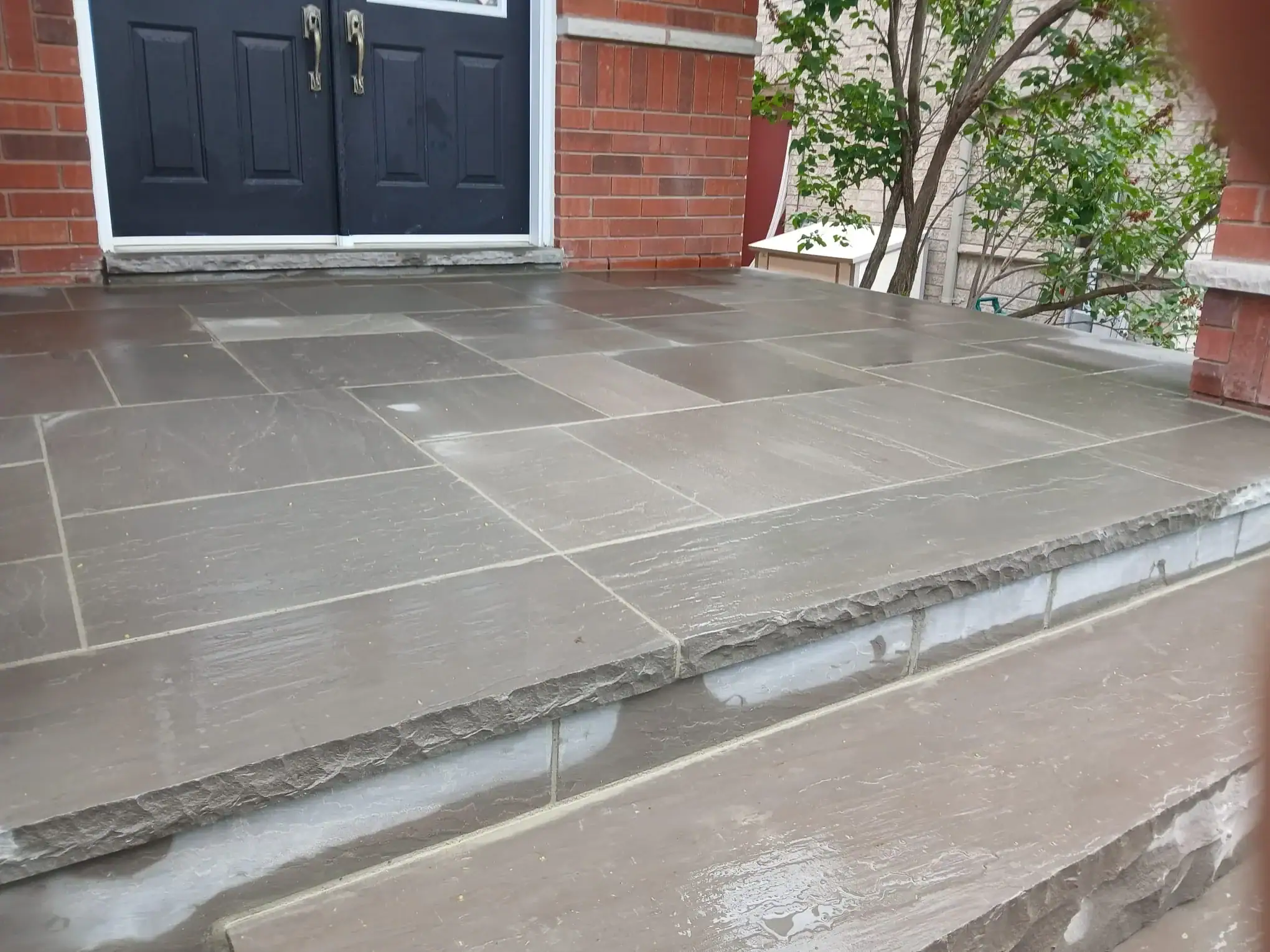
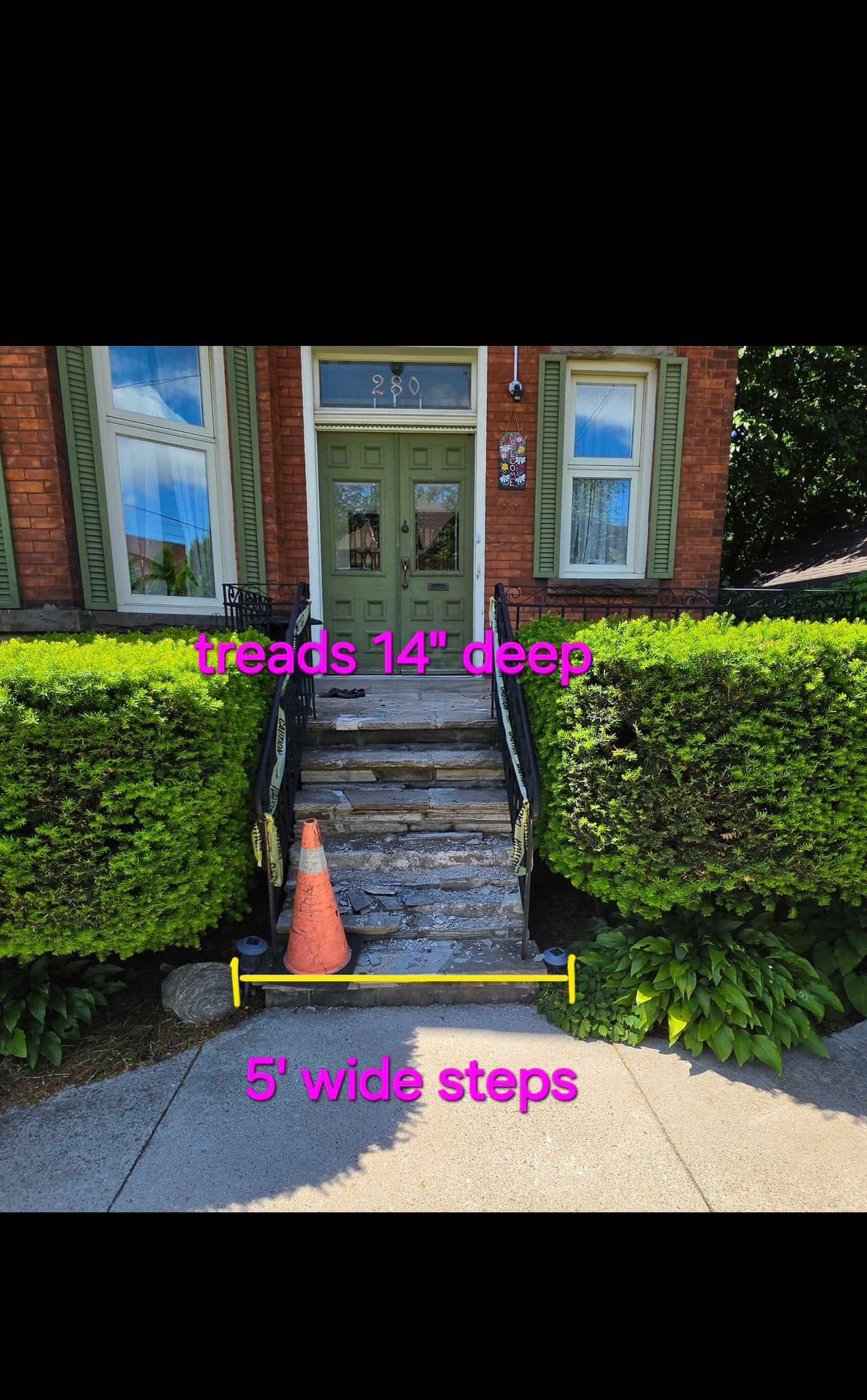
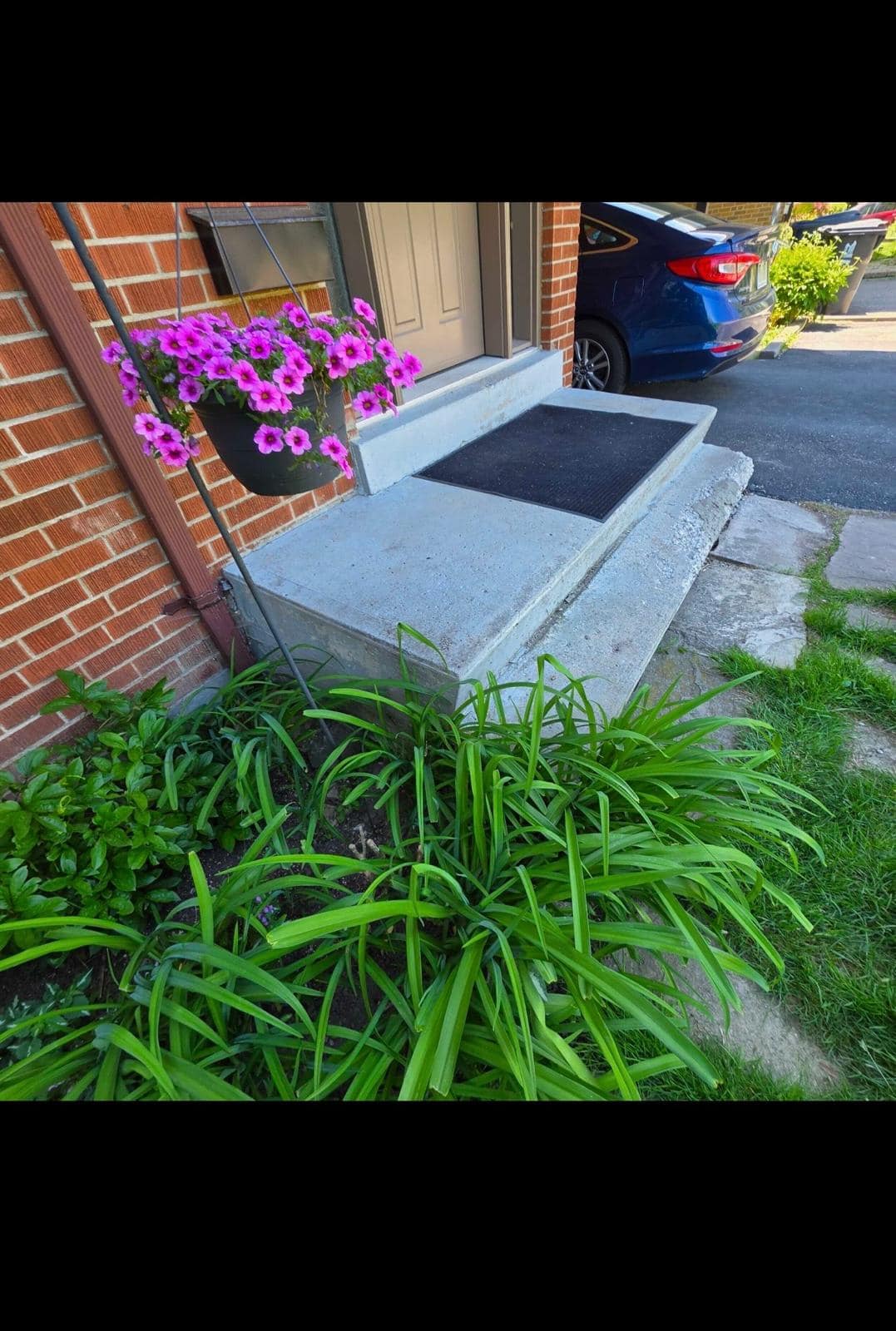
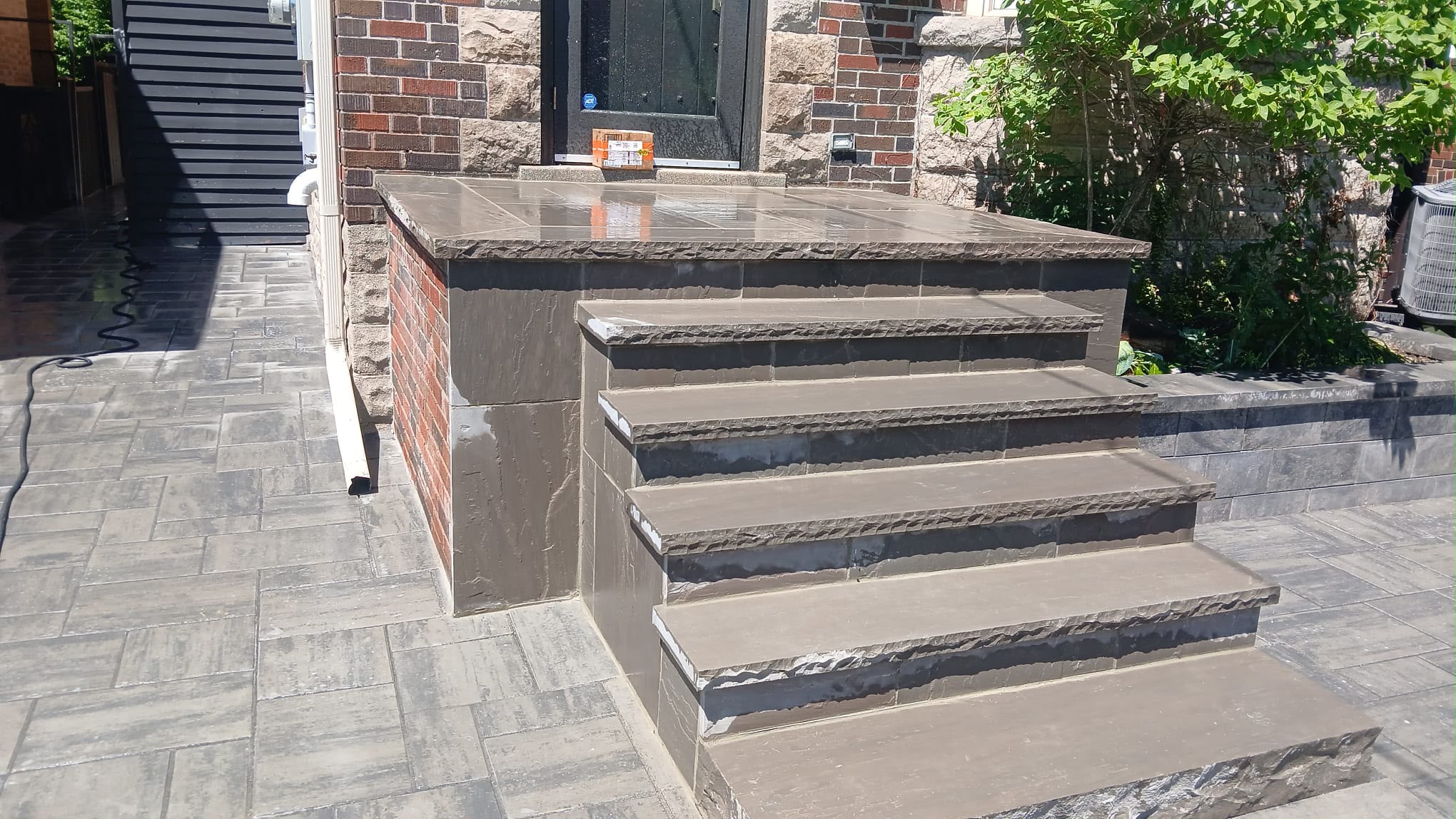
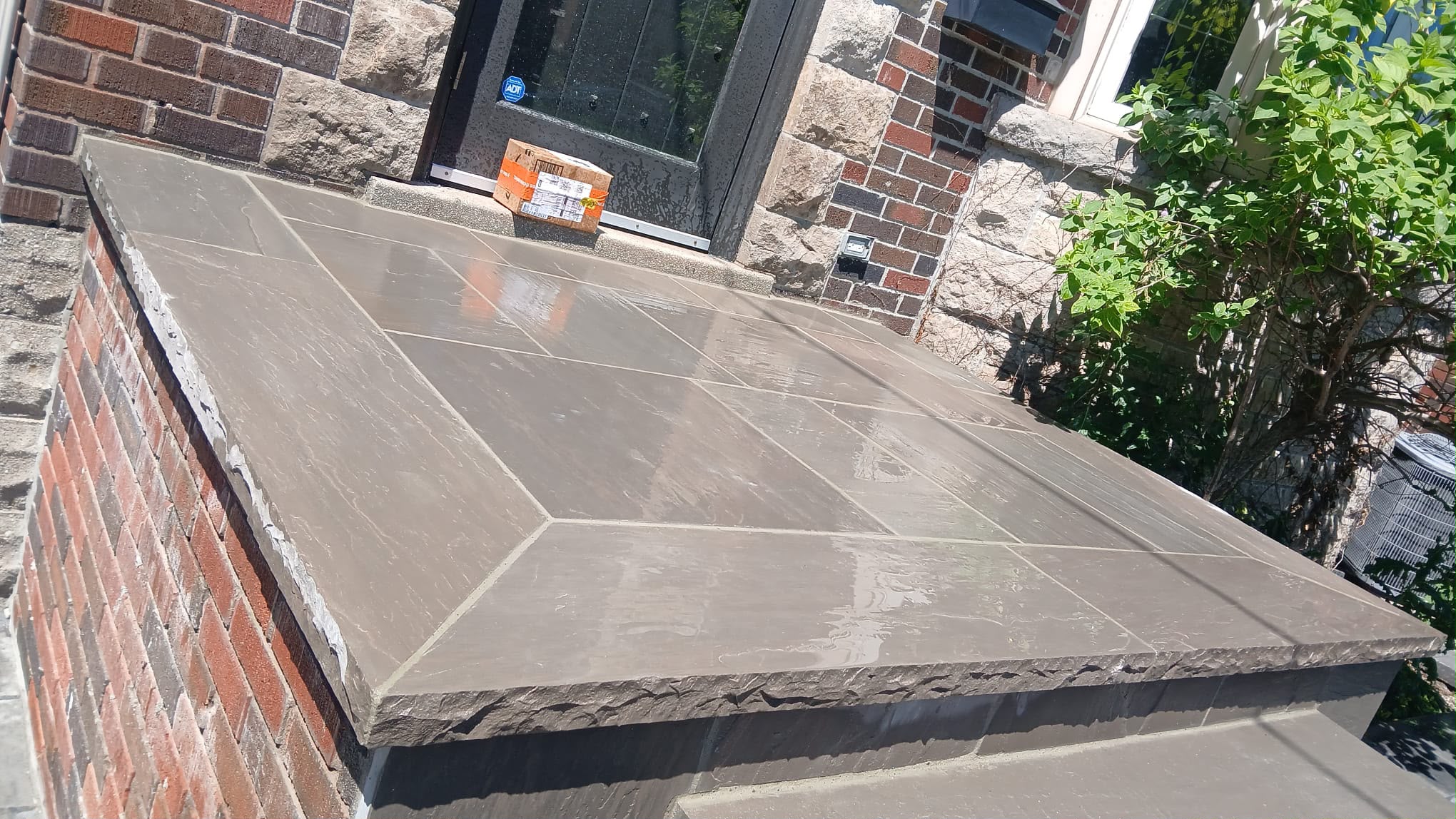
Masonry walkways and steps are often connected to porches and entry structures. When porches settle or crack, steps can shift and become unsafe.
Timely porch repair helps stabilise masonry walkways and steps and maintains safe access to the home.
Retaining walls and elevation changes
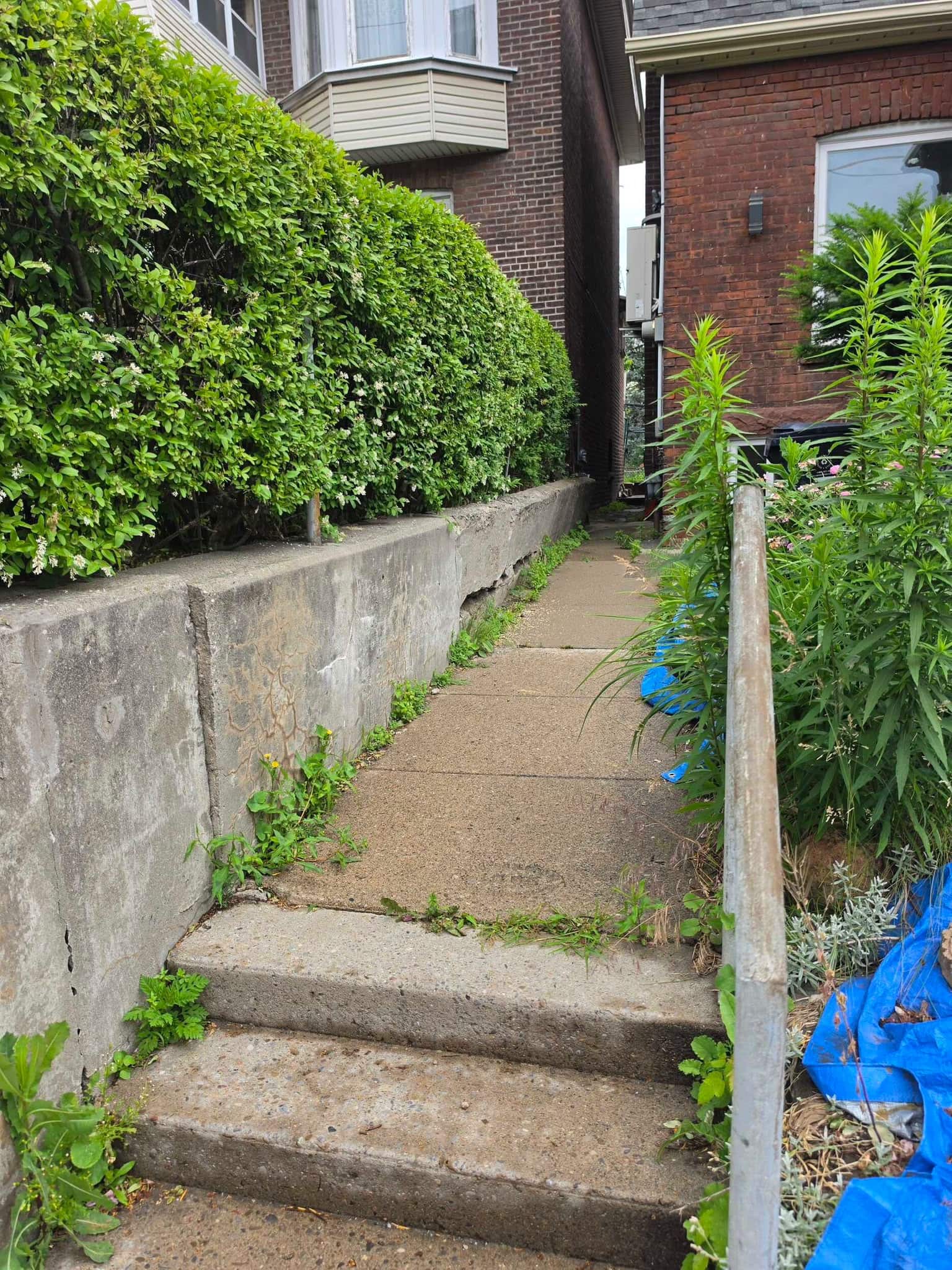
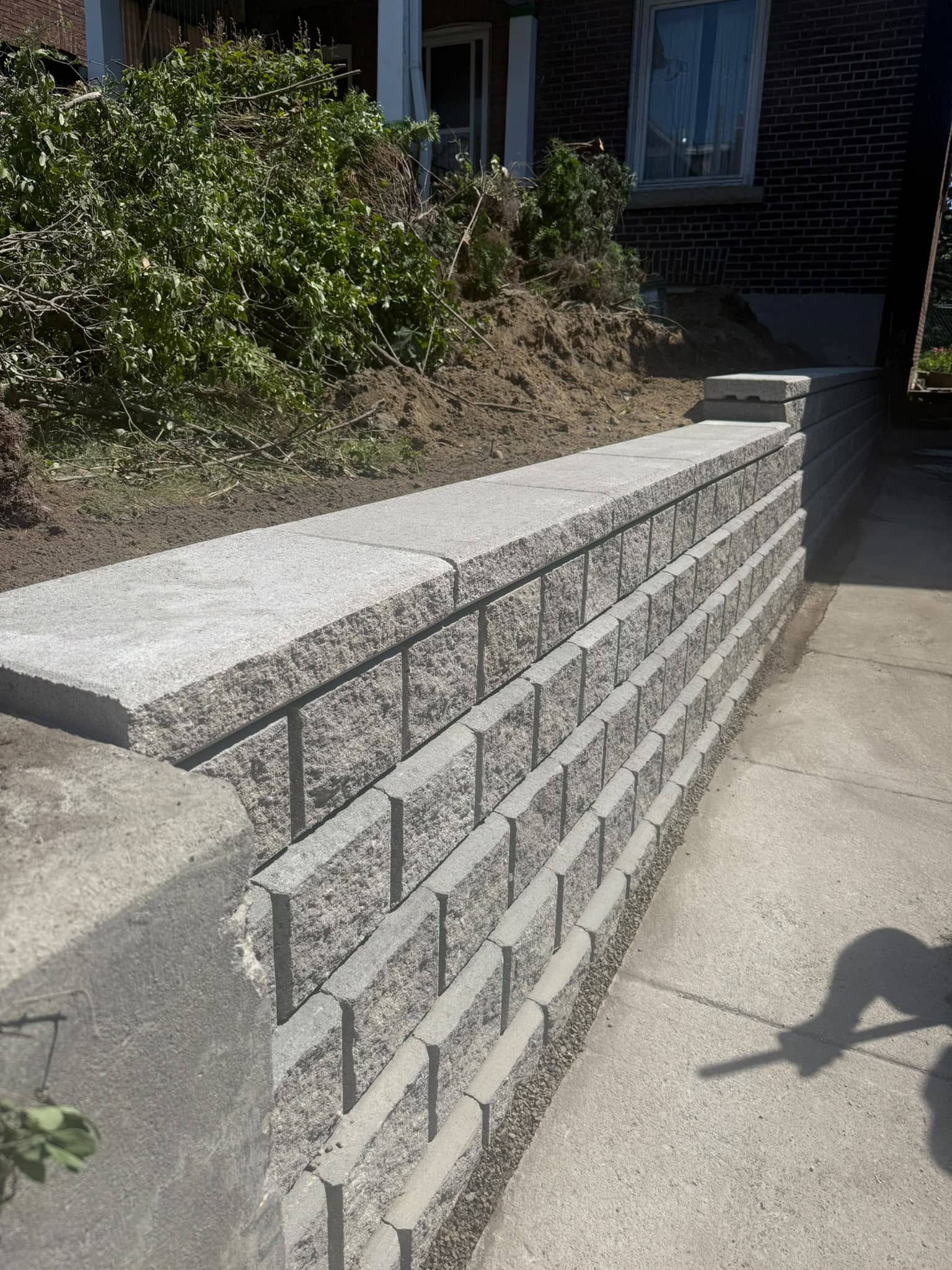
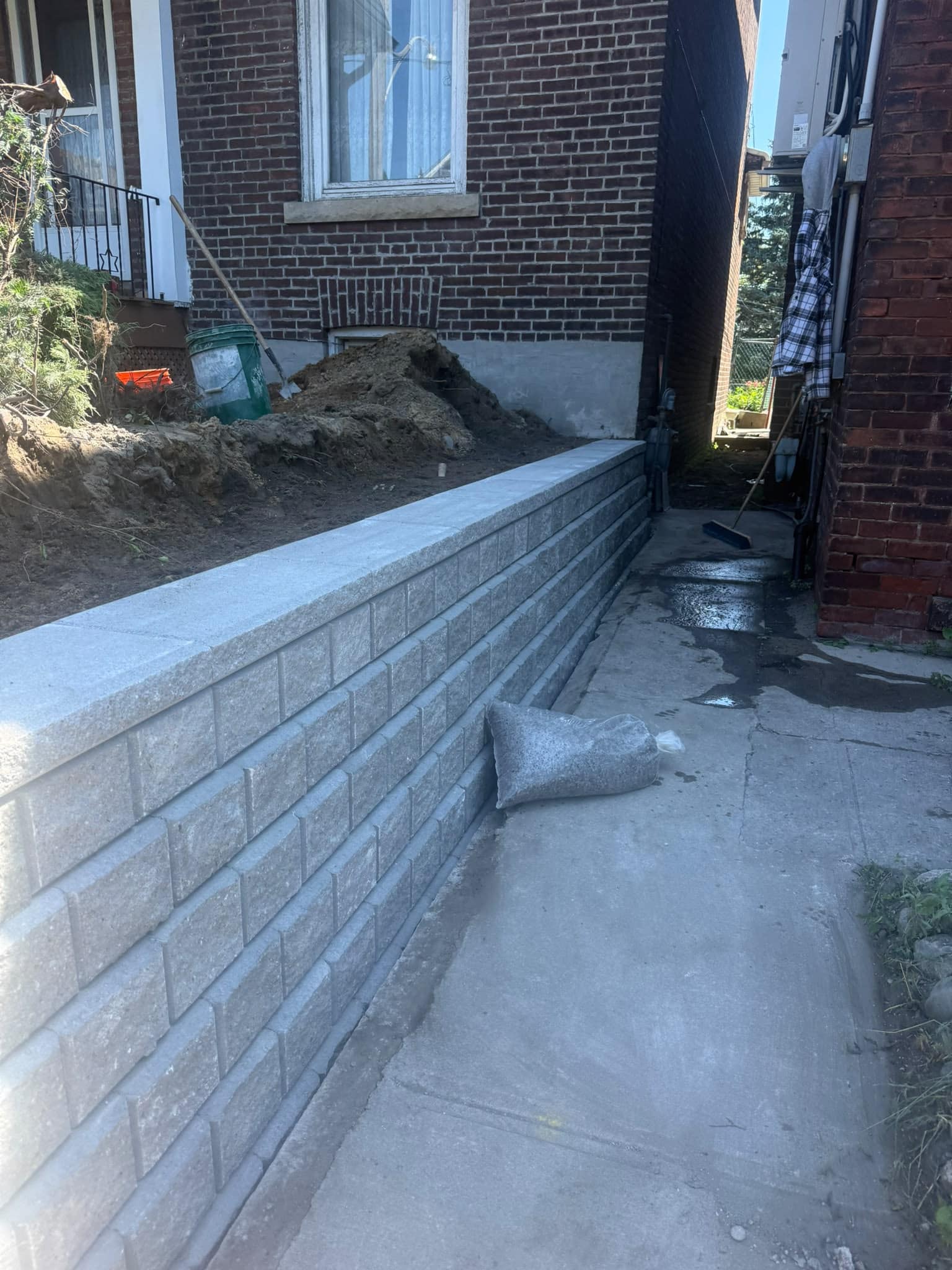
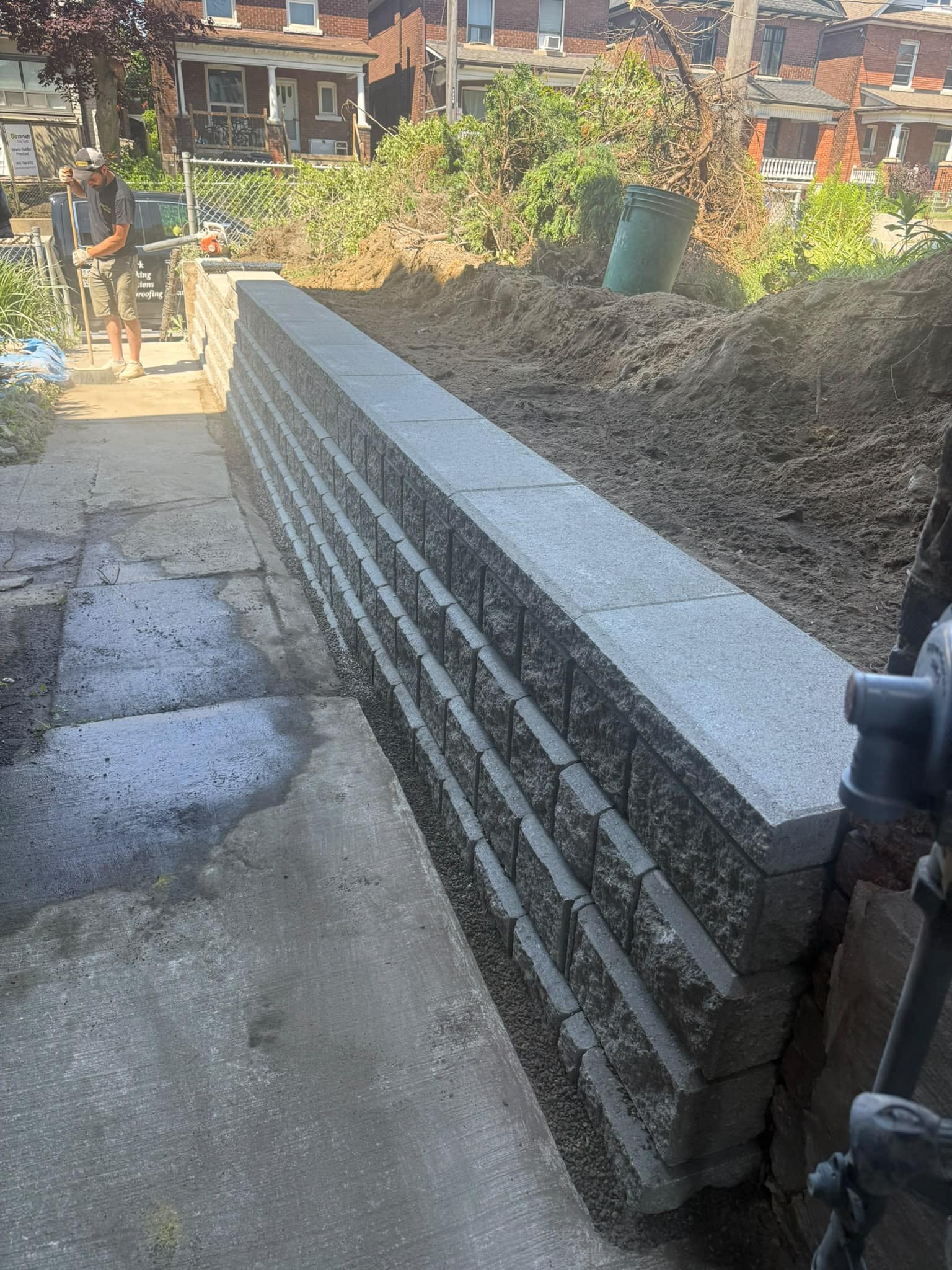
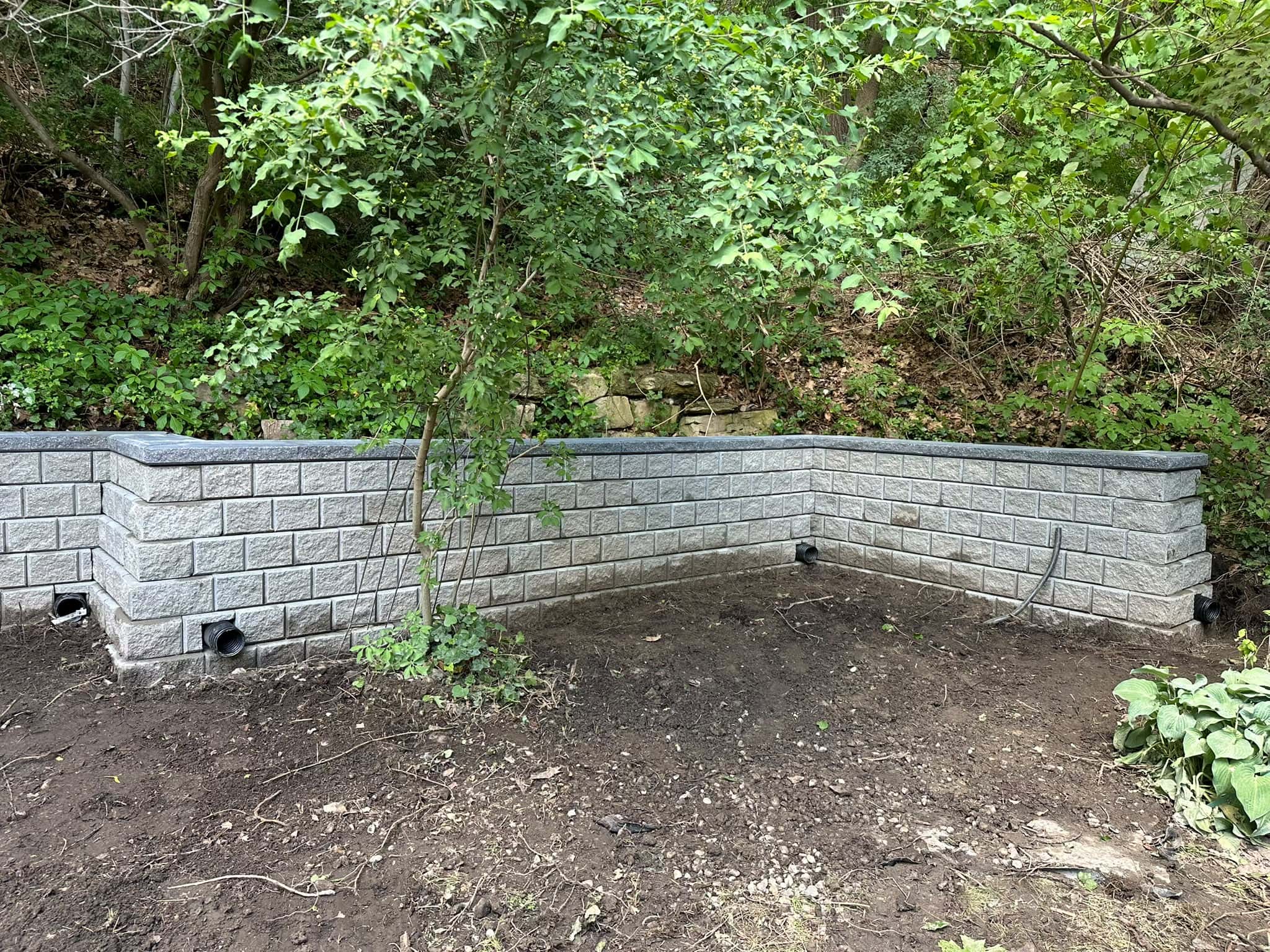
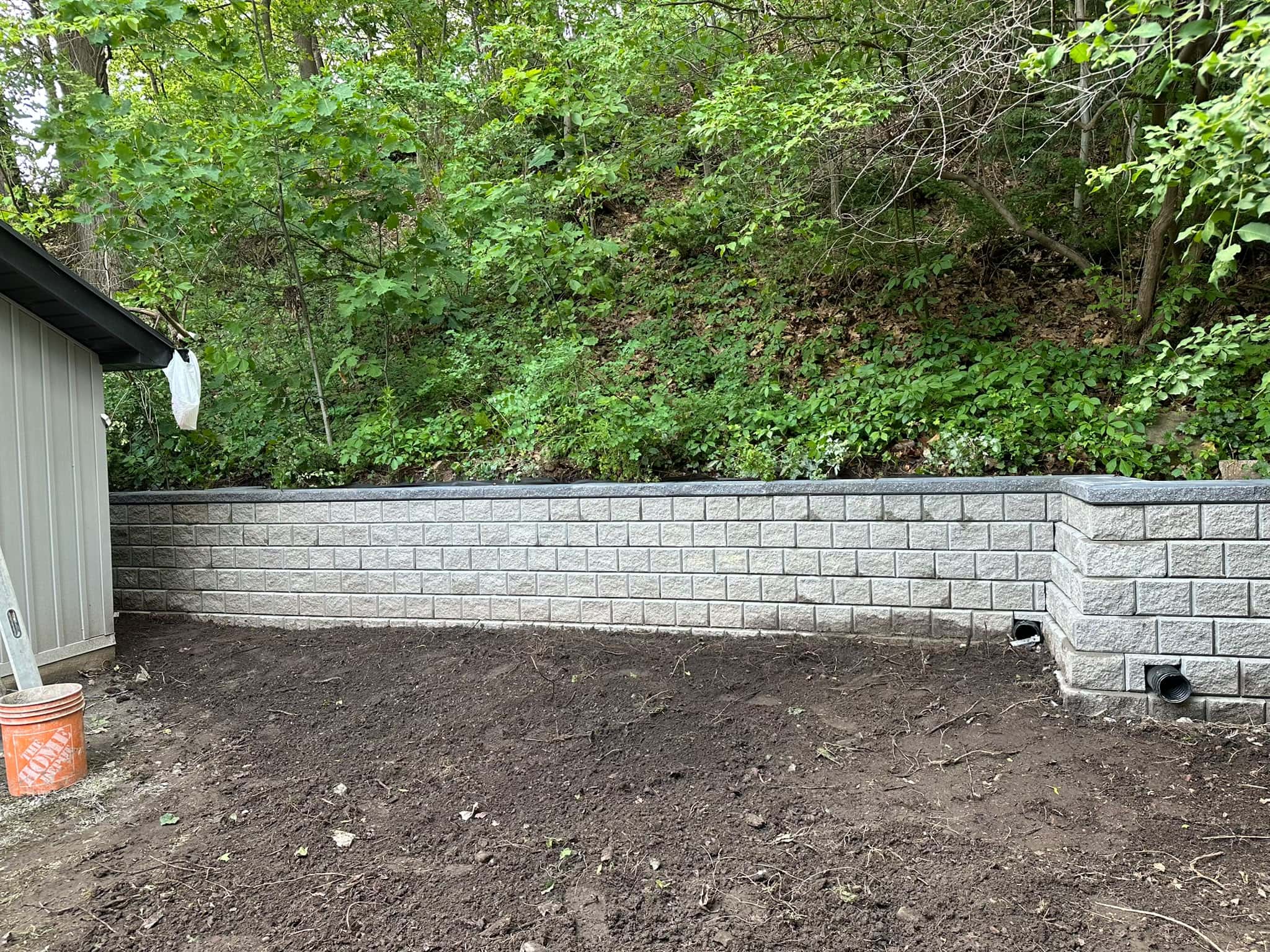
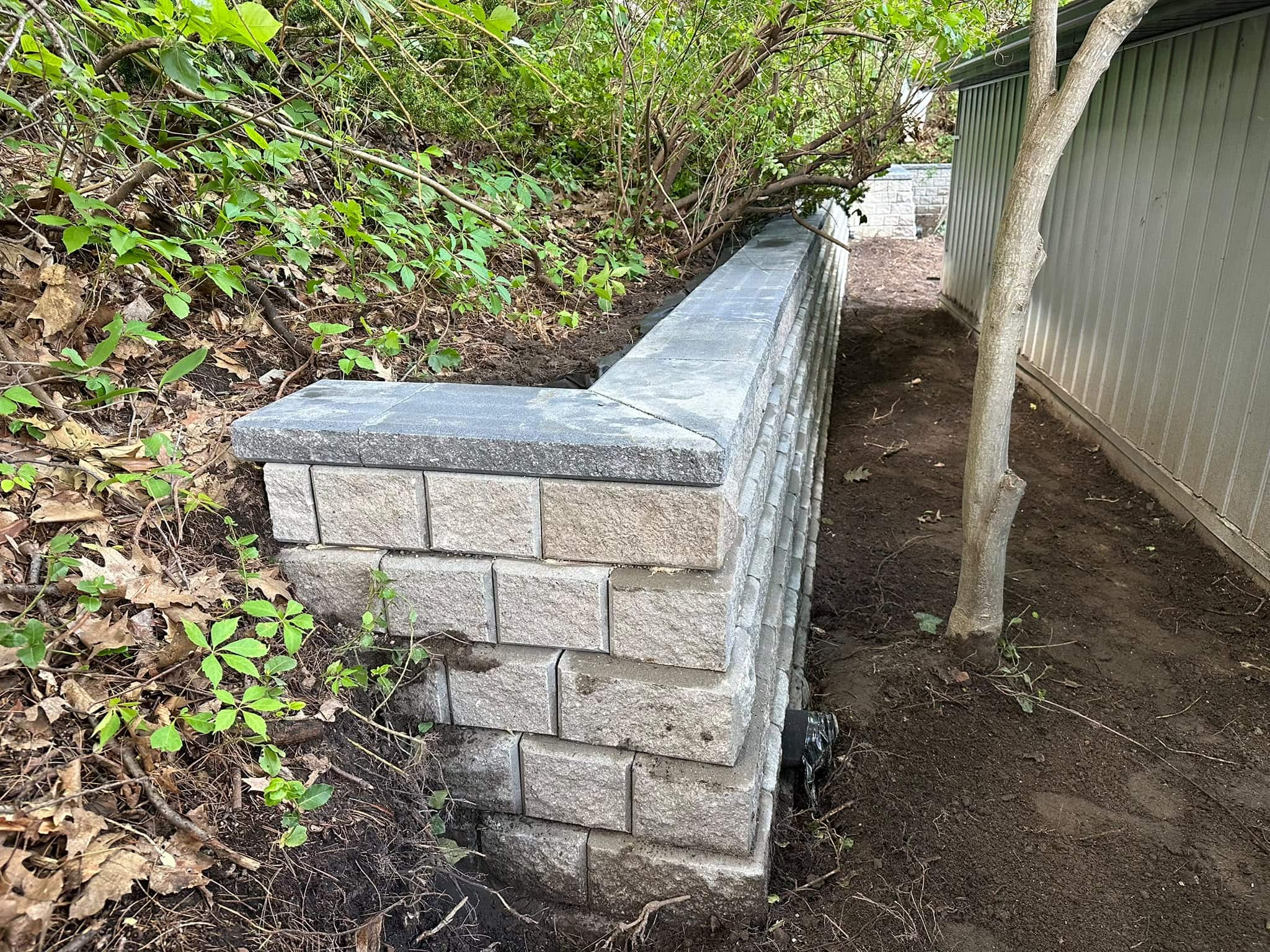
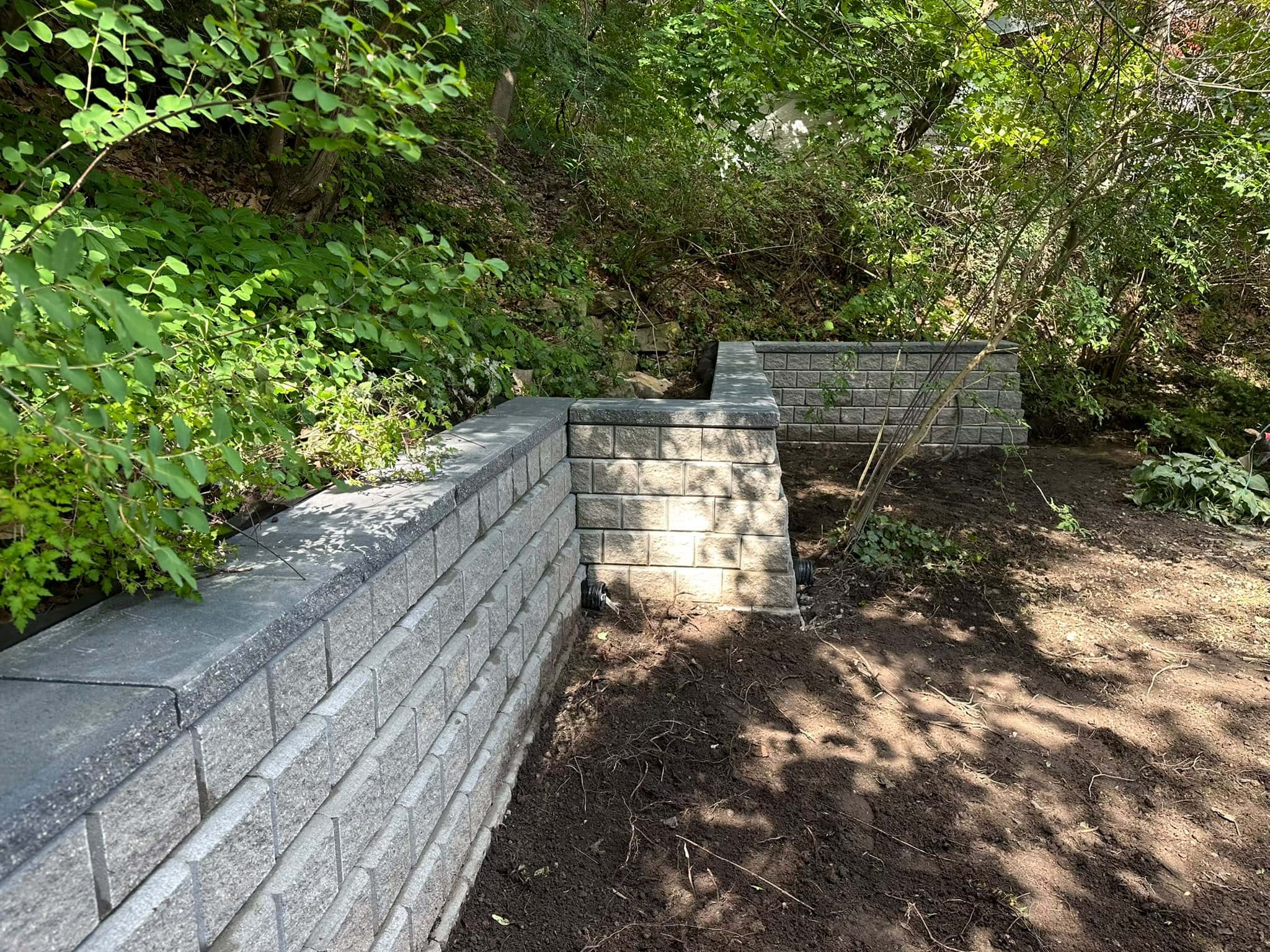
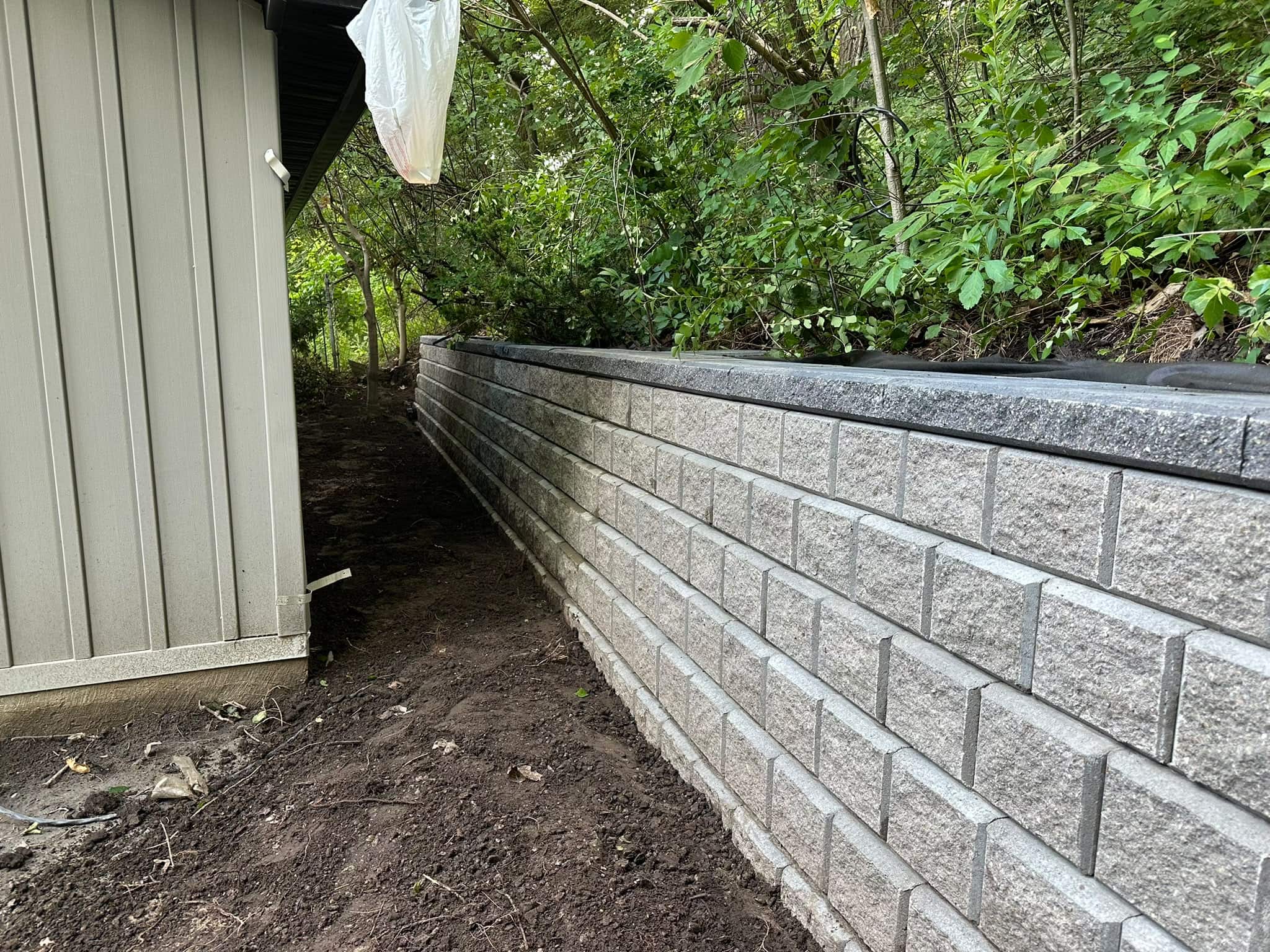
Properties with elevation changes rely on retaining structures to support masonry walkways and steps. Failing retaining walls can cause steps to lean or collapse.
In these cases, upgrading segmental retaining walls improves long-term stability and drainage.
Winter care for masonry walkways and steps
Winter is the most damaging season for masonry walkways and steps. Using the wrong de-icing products or failing to clear snow promptly increases moisture penetration.
Applying winter preparation strategies outlined in preparing masonry for winter helps reduce freeze-thaw damage.
When maintenance becomes a safety concern
Uneven or deteriorating masonry walkways and steps create tripping hazards and fall risks. These issues can affect not only homeowners but also visitors and delivery personnel.
In Toronto, exterior masonry and walking surfaces fall under building safety oversight provided by the City of Toronto Building Division, which provides guidance and inspections related to exterior safety conditions.
How homeowners evaluate repair decisions
Homeowners often want reassurance before investing in walkway or step repairs. Reviewing real outcomes through client video testimonials helps set expectations for durability and workmanship.
Final thoughts for Toronto homeowners
Masonry walkways and steps require consistent care to remain safe and attractive. Ignoring early signs of wear often leads to larger repairs and increased safety risks.
For Toronto and GTA homeowners, routine inspection and maintenance of masonry walkways and steps protects both property value and daily usability.