
Chimney caps are easy to overlook because they sit high above eye level, and most homeowners only think about them when something goes wrong. But that small piece at the top of the chimney does more work than many people realize. A chimney cap helps protect the flue opening from rain, snow, animals, leaves, and debris. It can also help reduce moisture problems that slowly damage masonry.
For Toronto homeowners, that matters more than it might in milder climates. Chimneys experience rain, wind, snow, freeze-thaw cycles, and prolonged exposure to moisture. If the top of the chimney is left vulnerable, water can seep into the masonry, crown, flue area, and joints below. That can lead to cracking, staining, spalling brick, loose mortar, and repairs that cost far more than a cap upgrade would have.
This guide explains what chimney caps do, the common cap options homeowners will encounter, how to tell when a cap may be missing or failing, what happens if you ignore the problem, and how to choose the right cap for your chimney and home.
What a Chimney Cap Actually Does
A chimney cap is a protective cover installed at the top of the chimney flue. It is usually made of metal and designed to sit above the opening, allowing smoke or exhaust gases to vent properly.
In simple terms, a good chimney cap helps do five important jobs:
- keeps rain and snow out of the flue opening
- helps keep birds, squirrels, and other animals out
- reduces the amount of leaves and debris entering the chimney
- adds a layer of protection against moisture-related masonry wear
- can help reduce downdraft issues in some situations
That makes the cap less of an accessory and more of a protective part of the whole chimney system. Toronto Property Standards also requires that chimneys, smokestacks, vent stacks, and similar roof structures be maintained in good repair and free from defects. That does not mean every chimney must have the same type of cap, but it does reinforce that the top of the chimney is not an area homeowners should ignore. Toronto Property Standards, Chapter 629
Why Chimney Caps Matter So Much in Toronto
Toronto’s weather is one of the main reasons chimney caps matter so much. A chimney is one of the most exposed masonry features on a house. It sits above the roofline, is exposed to direct wind and rain, and undergoes constant heating, cooling, wetting, and drying cycles.
That kind of exposure can wear down masonry faster when moisture is allowed to enter the top of the chimney. Rainwater can enter through an uncovered flue opening. Snow and ice can sit around damaged top components. Moisture can move into cracks around the crown or into weakened mortar joints. Then winter temperatures do the rest by freezing that moisture and expanding it.
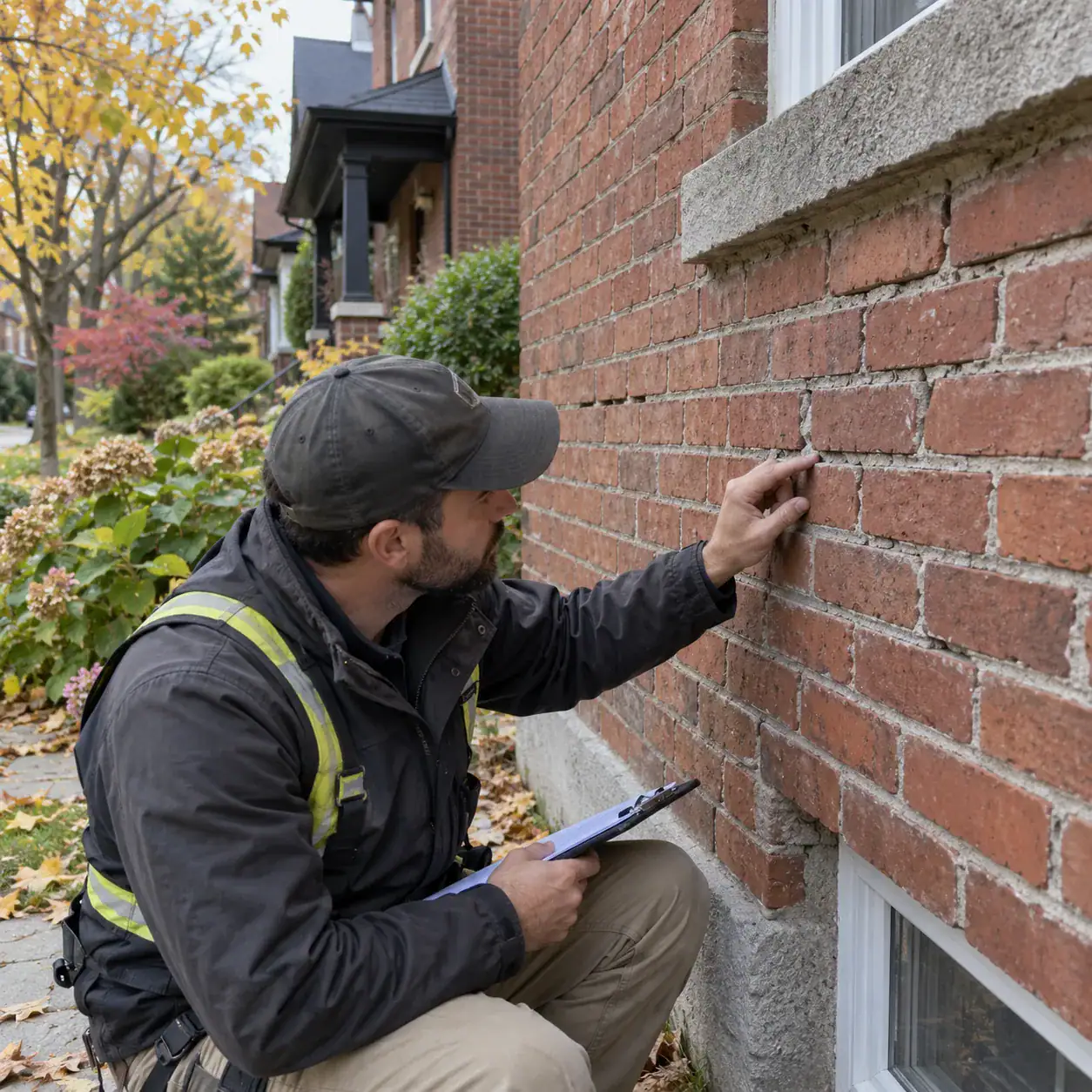
This is one reason chimney problems often show up as masonry problems first. A homeowner may notice cracked joints, white staining, flaking brick, or small pieces breaking off near the top of the chimney without realizing that the chimney cap or top protection is part of the cause.
If you already understand how moisture harms masonry more broadly, this connects closely with our blog on the importance of proper drainage around masonry. The same principle applies here. The longer water is allowed to enter and remain in masonry, the more likely damage is to follow.
Common Chimney Cap Options
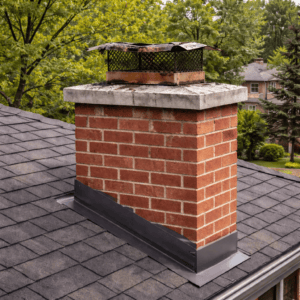
Not every chimney cap is the same, and not every chimney needs the exact same style. The best option often depends on the type of chimney, the flue size, the kind of appliance or fireplace it serves, and the level of weather exposure.
Common chimney cap options include:
- Single-flue chimney caps: designed to cover one flue opening and often used on standard residential chimneys
- Multi-flue chimney caps: designed to cover more than one flue and often mounted across a larger chimney top
- Stainless steel caps: popular for durability and corrosion resistance
- Galvanized steel caps: often more budget-friendly but may not last as long in harsh conditions
- Copper chimney caps: chosen more often for appearance and premium finish
- Caps with mesh screening: help keep animals and larger debris out
- Wind-resistant or specialty caps: sometimes used where draft issues are a concern
For most homeowners, the decision need not become overly technical. The practical question is whether the cap fits the chimney correctly, protects the opening properly, and is made of a material suited to long-term exposure.
Best Option by Homeowner Need
Many homeowners do better when the options are simplified by need rather than by product category alone.
- If you want a practical, durable everyday choice: stainless steel is often a strong option
- If you want a lower-cost short-term option: galvanized caps may be considered, though long-term durability may be lower
- If appearance matters and the chimney is very visible: copper caps are often chosen for curb appeal
- If you have more than one flue: a multi-flue cap may make more sense than separate small caps
- If animals or debris are a recurring issue: screened cap designs usually make more sense
- If your chimney has known draft problems: the cap choice should be part of a broader inspection, not a guess
This is also where homeowners should challenge a common assumption. The cheapest visible cap is not always the cheapest long-term option. If poor fit, poor material, or poor installation allows moisture in, the resulting chimney repair costs can quickly outweigh the savings.
What a Chimney Cap Does Not Fix
A chimney cap is important, but it is not a cure-all. It does not repair a cracked chimney crown, replace damaged flashing, rebuild loose brickwork, or resolve every draft issue on its own.
That matters because homeowners sometimes install a new cap and assume the whole chimney problem is handled. If the masonry below is already deteriorating, the cap is only one part of the solution. The same goes for chimneys with failing mortar joints, cracked brick, or moisture entry through other weak points.
If the chimney is already showing visible wear, it makes sense to assess the cap as part of a broader chimney condition review, rather than as a standalone fix. That is where a page like chimney repair Toronto becomes more relevant than just comparing cap styles.
Signs Your Chimney Cap May Be Missing, Damaged, or Failing
Sometimes the issue is obvious. In other cases, the chimney cap problem only becomes clear after you notice other symptoms.
Common signs include:
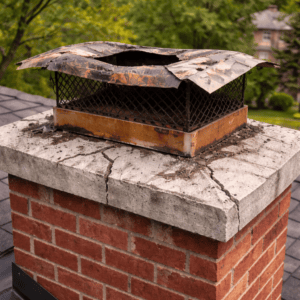
- the cap is visibly missing from the top of the chimney
- the cap looks rusted, loose, bent, or poorly attached
- animals or birds have entered the chimney
- you see debris or nesting material in the fireplace or flue area
- there is repeated moisture staining on or around the chimney
- the chimney crown or top masonry is cracking
- brick faces near the top are flaking or breaking down
- you hear an unusual draft or wind-related noise at the chimney
Some homeowners first notice the problem through masonry symptoms instead of looking at the cap directly. If the chimney has white staining or surface salt deposits, this may also be due to moisture entering from above. That is why our blog on handling efflorescence on brick or stone can also be relevant when chimney moisture is part of the picture.
What Happens If You Ignore the Problem
Ignoring a missing or failing chimney cap does not always cause immediate major damage, but it usually leaves the chimney more exposed than it should be. Over time, that can lead to more extensive repairs.
Common long-term outcomes include:
- more rain and snow entering the flue opening
- faster wear at the crown and top masonry
- more moisture entering the brick and mortar joints
- higher risk of animal entry or blocked flue openings
- recurring staining and moisture-related masonry damage
- more extensive repair work later
In Toronto, chimney damage often becomes more expensive because moisture and winter weather work together. A small weakness at the top can turn into a larger masonry problem after enough freeze-thaw cycling. This is why delayed maintenance at the cap level sometimes ends with broader brick repair or more involved chimney restoration work.
What Homeowners Can Check Themselves
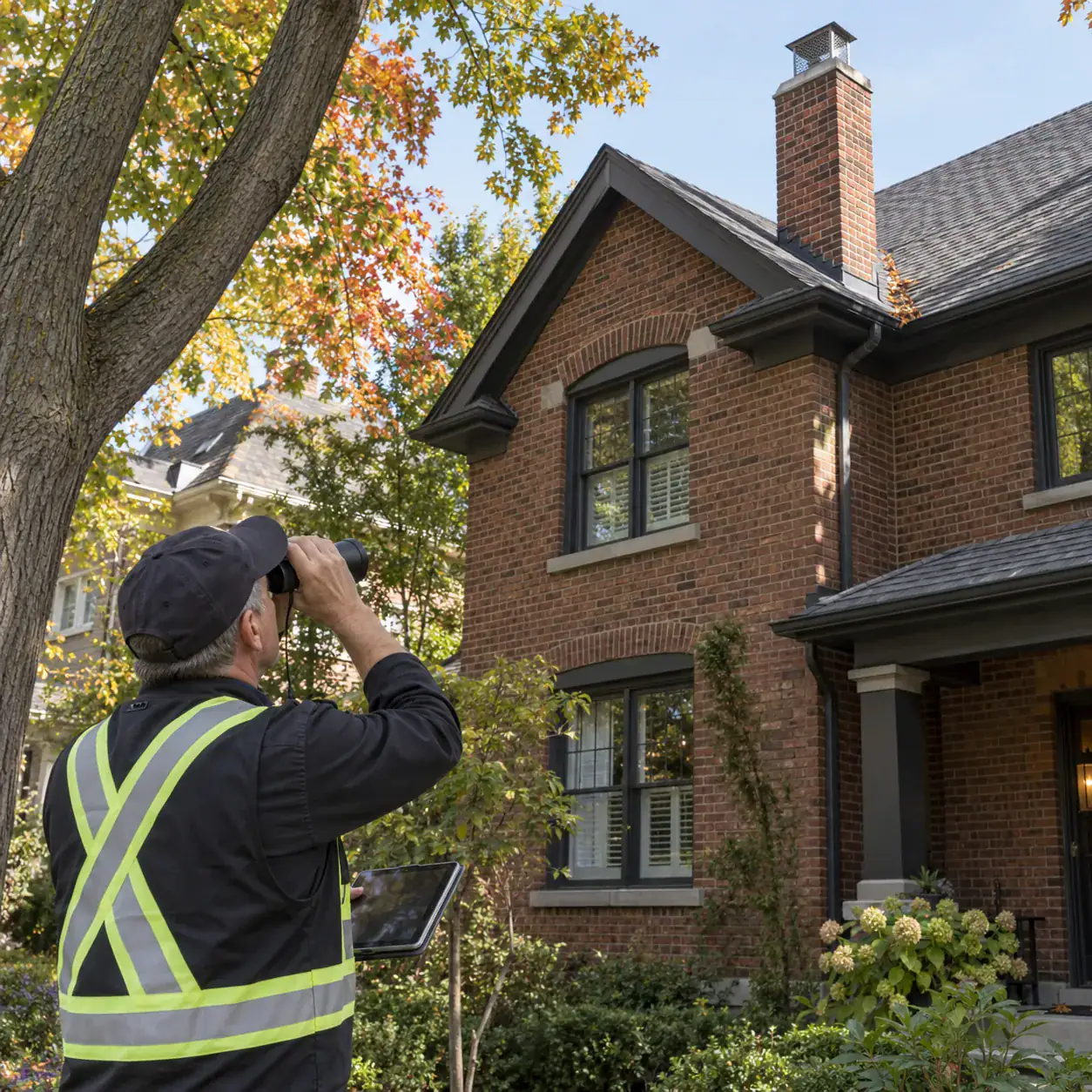
Homeowners do not need to climb on the roof to start being observant. In many cases, you can spot warning signs from the ground or from a safe viewpoint.
You can usually check:
- whether the cap appears present and centred
- whether the top of the chimney shows visible rust, tilt, or damage
- whether there are dark stains or white deposits near the top brickwork
- whether pieces of brick or mortar are collecting below the chimney area
- whether animals seem to be entering or nesting near the flue
- whether interior signs suggest debris or downdraft problems
If you already know your roof runoff system has issues, it is also worth checking whether gutter overflow or nearby water movement is adding to chimney moisture exposure. That is where our related blog on proper drainage around masonry can help as a supporting read.
When Professional Help Makes More Sense
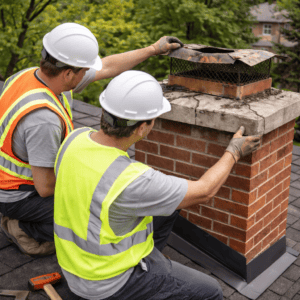
Professional help makes more sense when the cap problem is tied to masonry damage, top-of-chimney deterioration, or any situation where safe access and proper fit are critical.
That usually includes cases where:
- the cap is missing or clearly damaged
- the crown is cracked
- brick or mortar near the top is deteriorating
- there are known moisture or leak concerns
- the chimney serves multiple flues or has a more complex top layout
- the homeowner is unsure whether the cap issue is part of a larger chimney problem
Toronto’s building permit guidance makes clear that material alterations and certain repair scopes can trigger permit requirements depending on the nature of the work. The point for homeowners is not to guess too casually when chimney work becomes more than simple maintenance. City of Toronto: When Do I Need a Building Permit?
Ontario also treats brick and stone masonry work as a regulated trade, which reinforces that chimney masonry repairs are skilled work, not just a quick patch job. Ontario Brick and Stone Mason trade information
Quick Decision Guide: Which Cap Direction Makes the Most Sense?
A simple single-flue cap often makes the most sense if:
- your chimney serves one flue
- you want straightforward weather protection
- the chimney does not have unusual draft issues
A multi-flue cap often makes more sense if:
- the chimney top has multiple flues
- you want one coordinated cover across the chimney crown area
- the top layout is wide or more complex
A premium material like stainless steel or copper may make more sense if:
- the chimney is highly exposed to weather
- you want longer-term durability
- the chimney is visually prominent and appearance matters
If you are not sure which direction fits your chimney, that usually means the right next step is inspection first, product second.
Prevention Tips That Actually Help
The best chimney cap strategy is not just to install one and forget it forever. It is treating the cap as part of normal chimney maintenance.
- look at the chimney top visually at least seasonally
- pay attention after major wind or winter weather
- do not ignore early masonry staining or flaking near the top
- keep an eye out for animal activity near the flue opening
- treat crown cracks, flashing issues, and cap problems as related risks, not separate ones
- pair chimney-top maintenance with broader masonry checks when needed
A chimney cap works best when the rest of the chimney is also kept in good condition. That is why cap protection, crown condition, mortar joints, flashing, and overall chimney repair should be considered a single connected system.
Final Thoughts
Chimney cap options matter because the right cap helps protect one of the most weather-exposed masonry features on the home. In Toronto, where chimneys deal with rain, snow, wind, and freeze-thaw cycles, that protection can make a real difference in how the top of the chimney ages.
The best cap choice depends on the chimney layout, the level of exposure, and whether the issue is limited to the cap or part of a larger repair. A cap is a small component, but it helps reduce some of the biggest long-term risks to the chimney system.
If there is one simple takeaway, it is this: do not treat the chimney cap as optional once moisture, debris, or masonry wear become part of the story. A small top-of-chimney detail can play a big role in preventing larger masonry problems later.