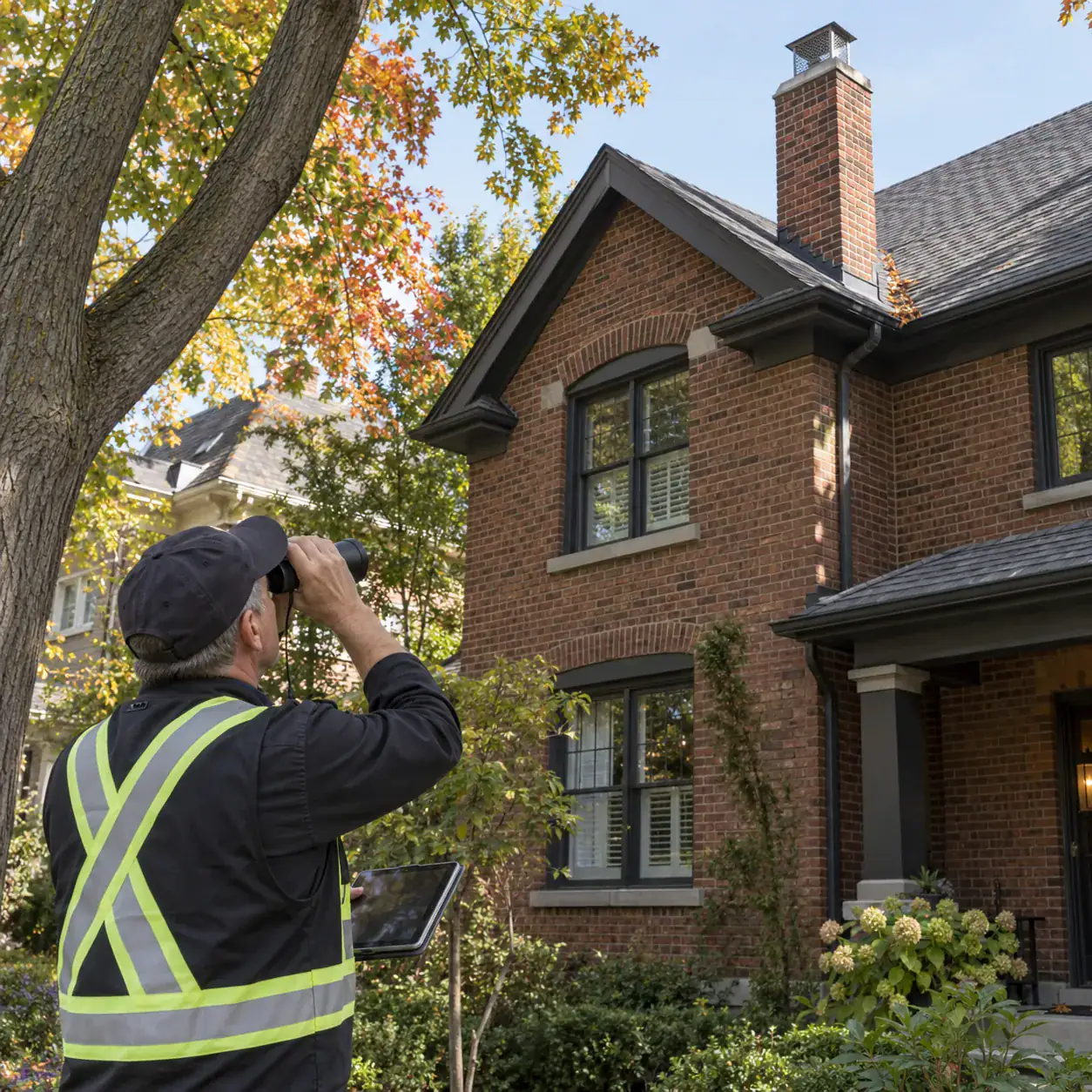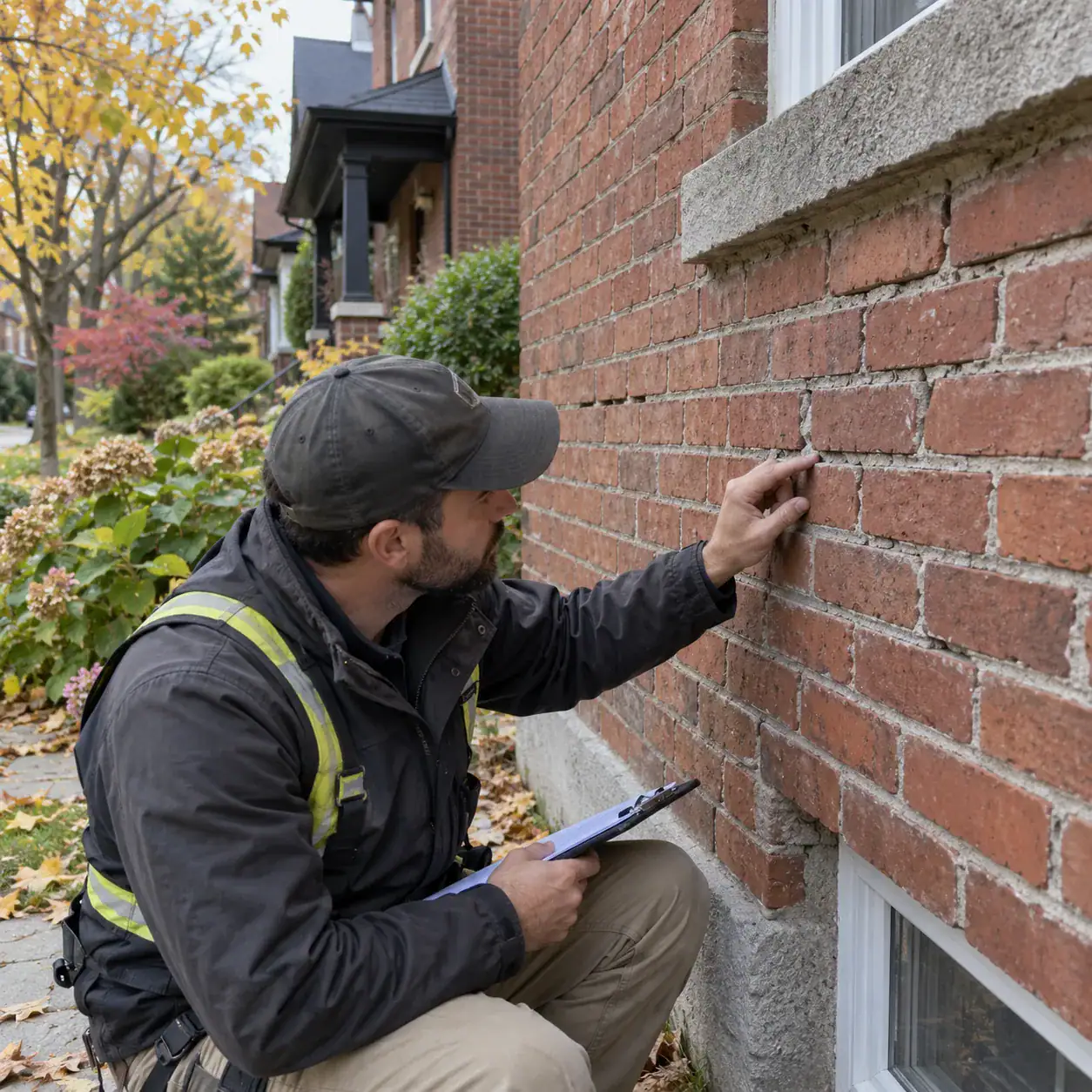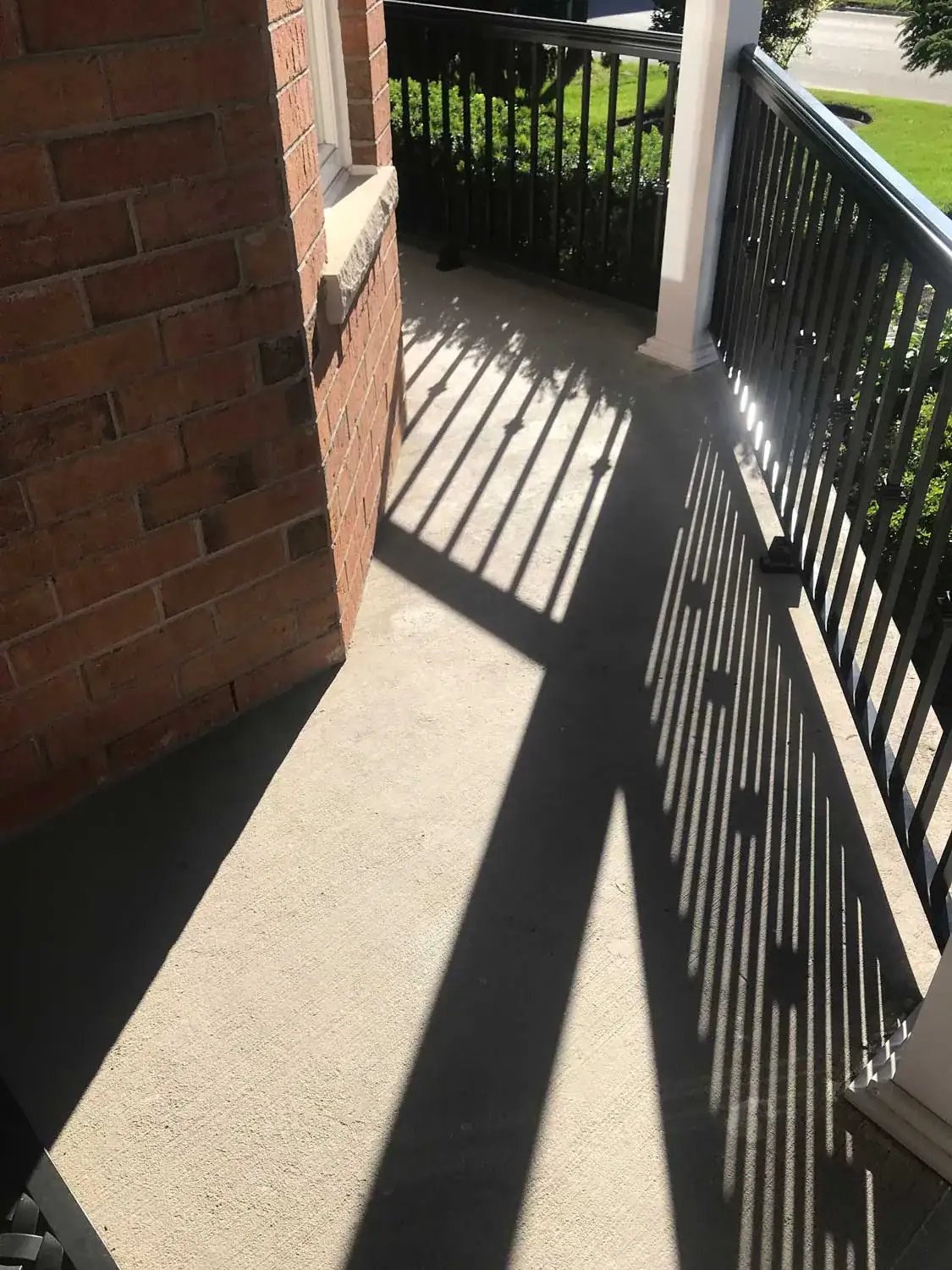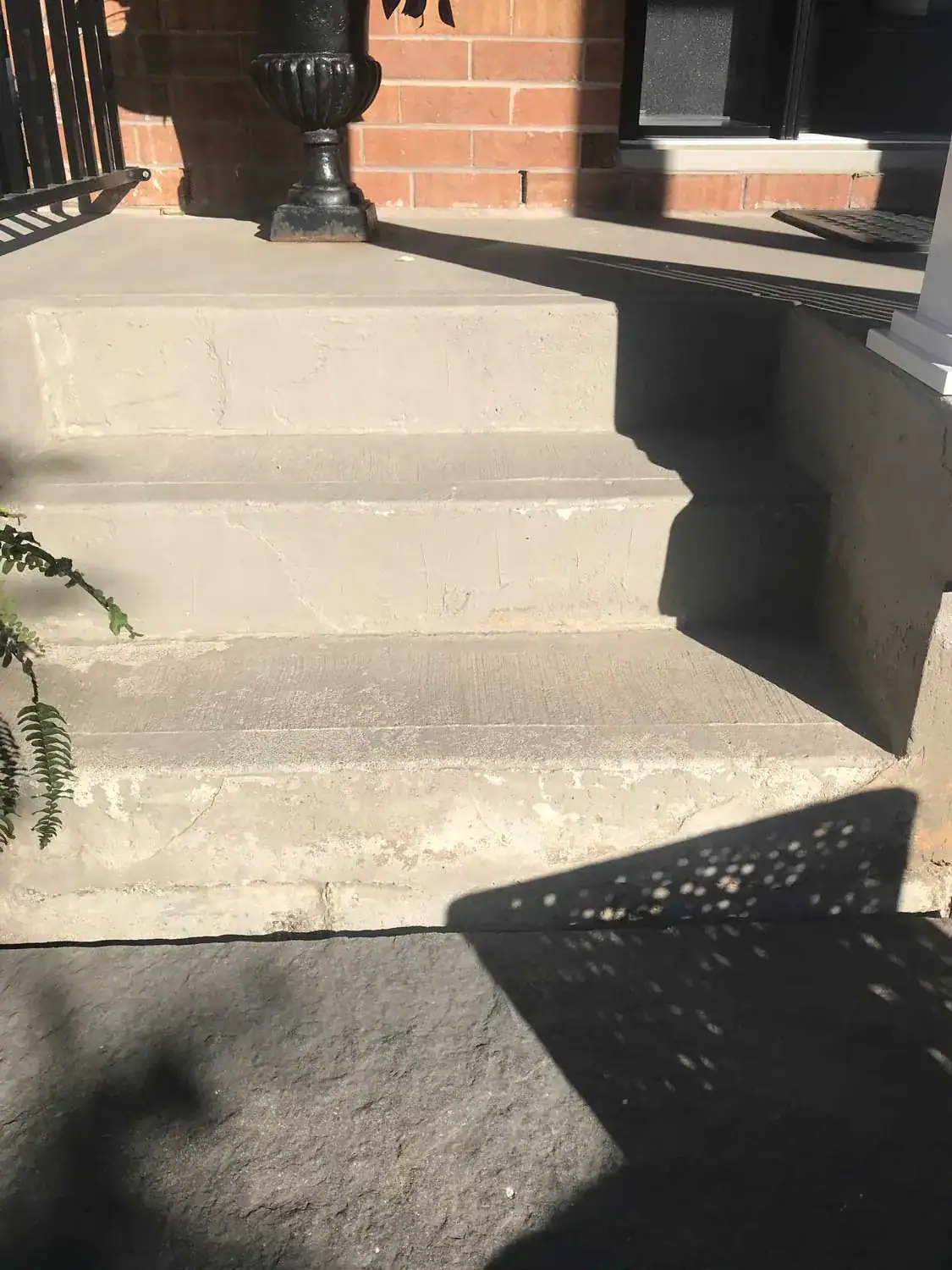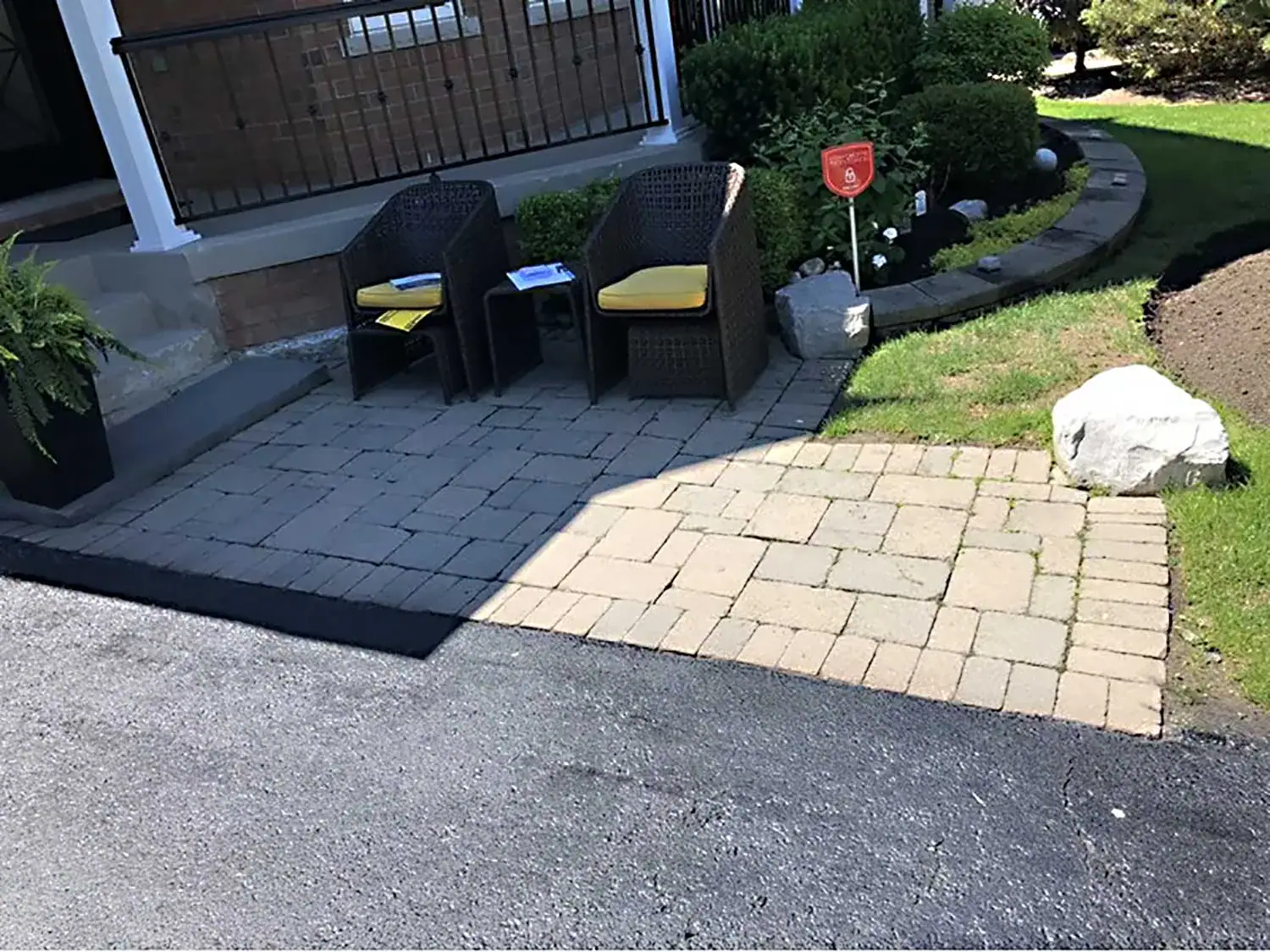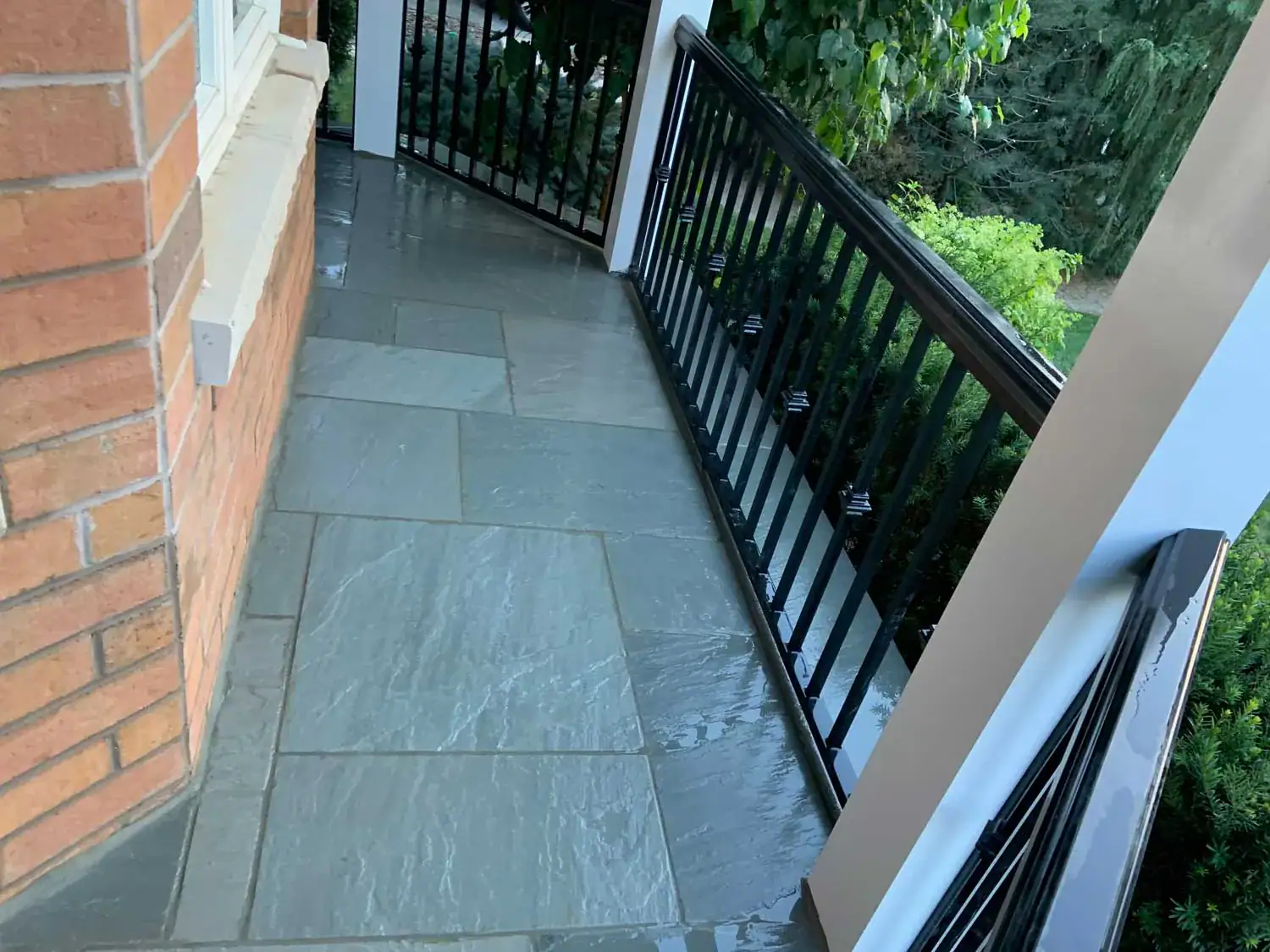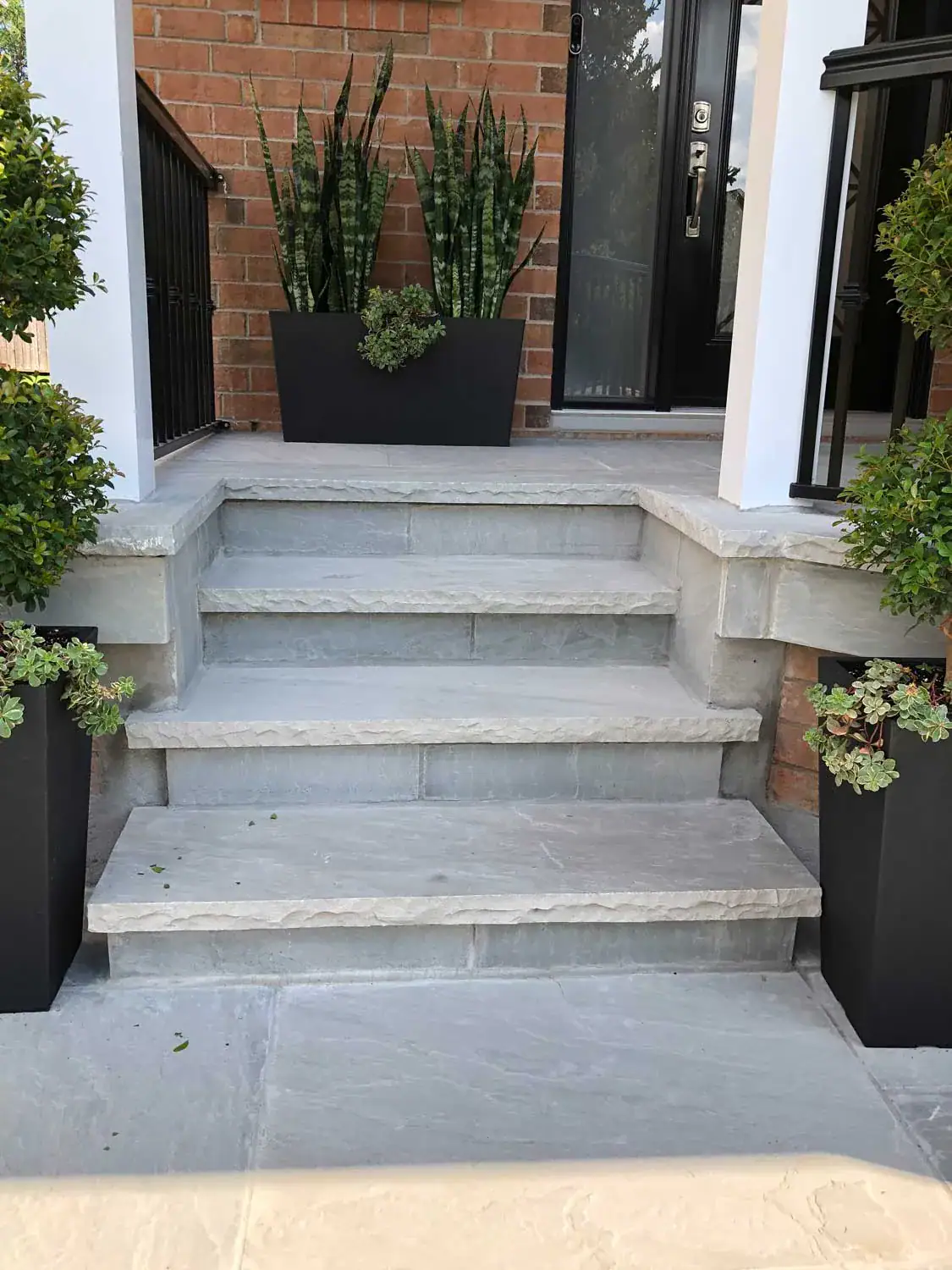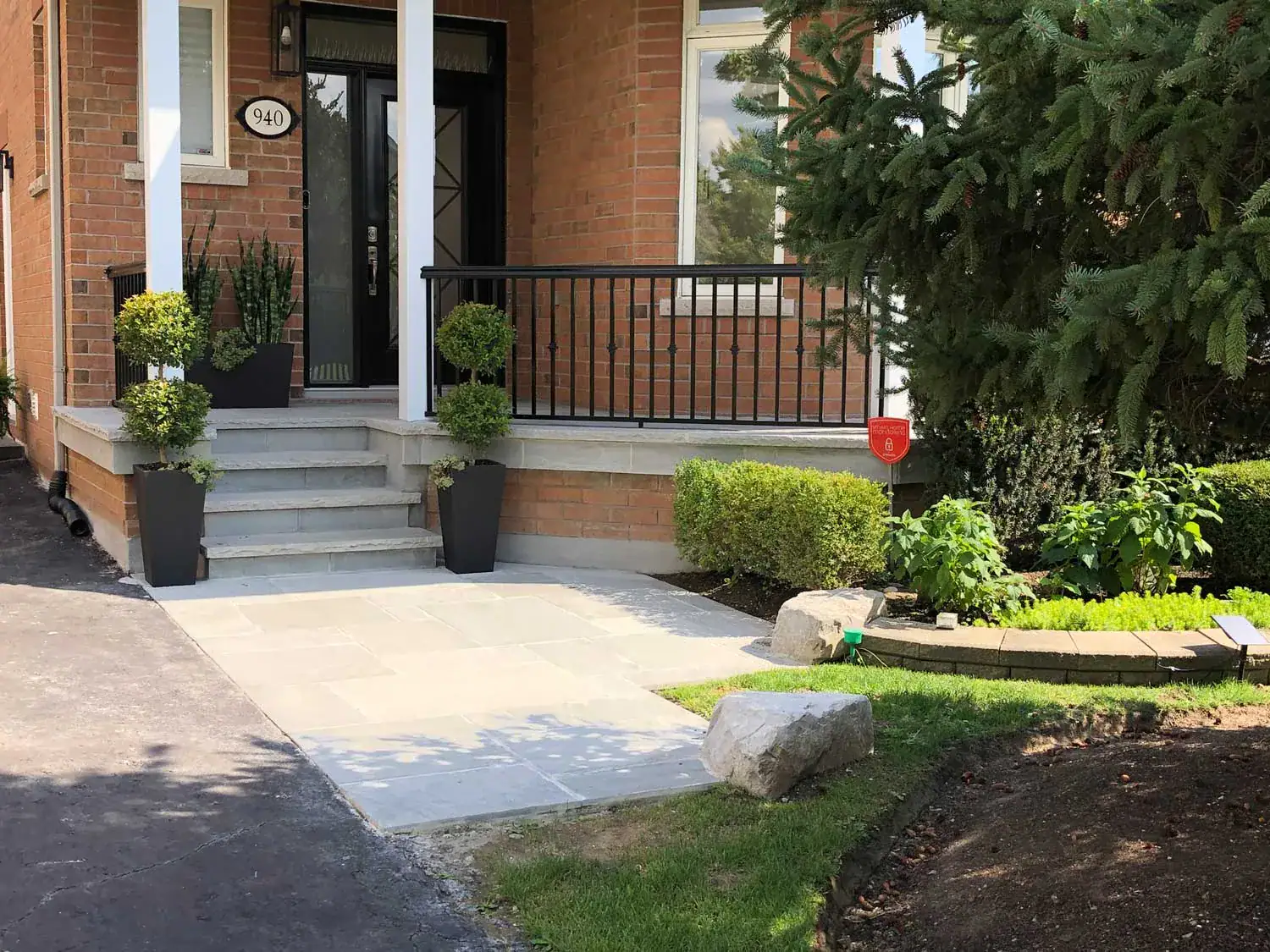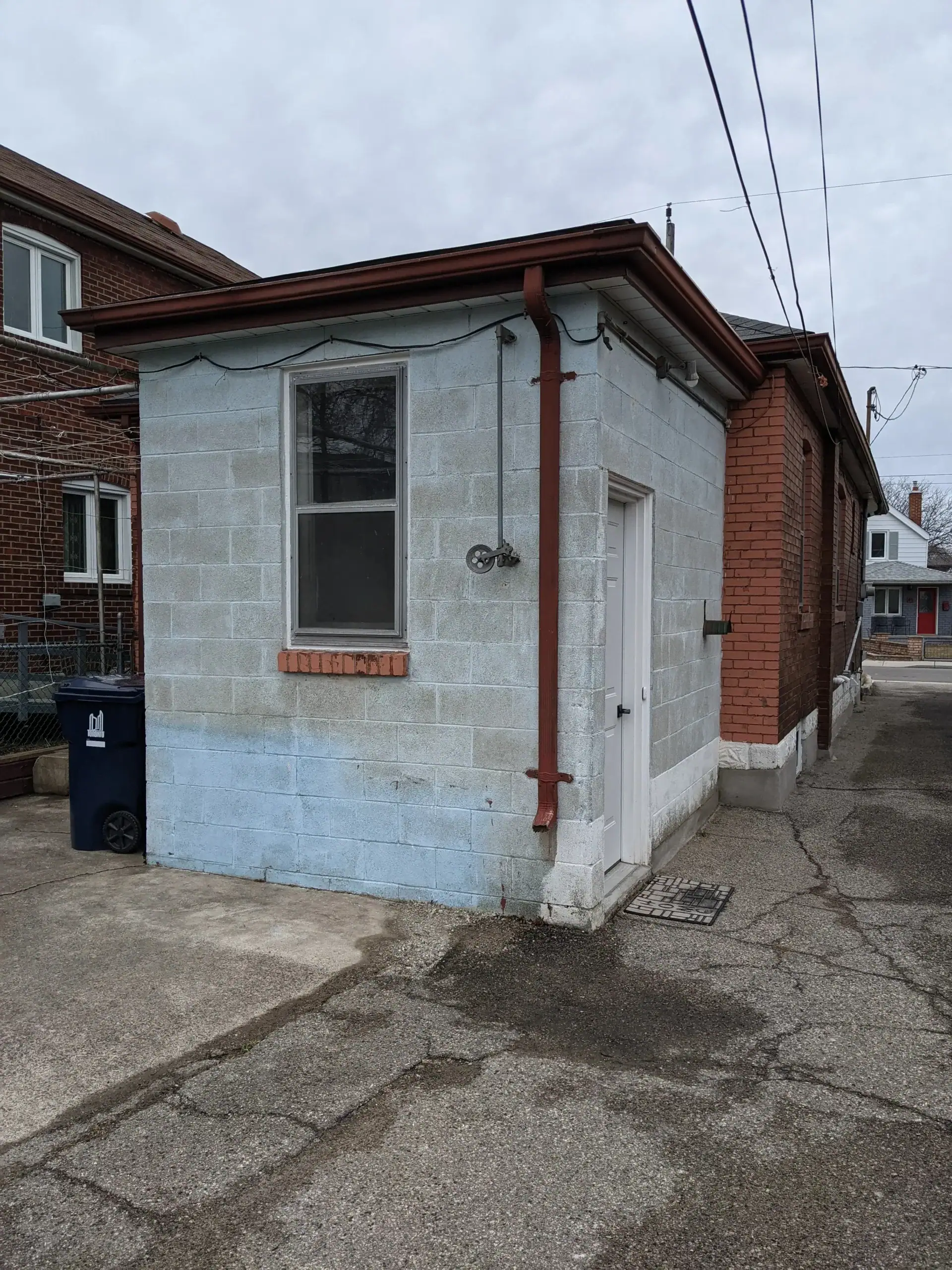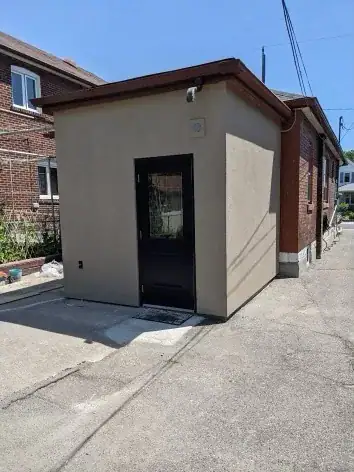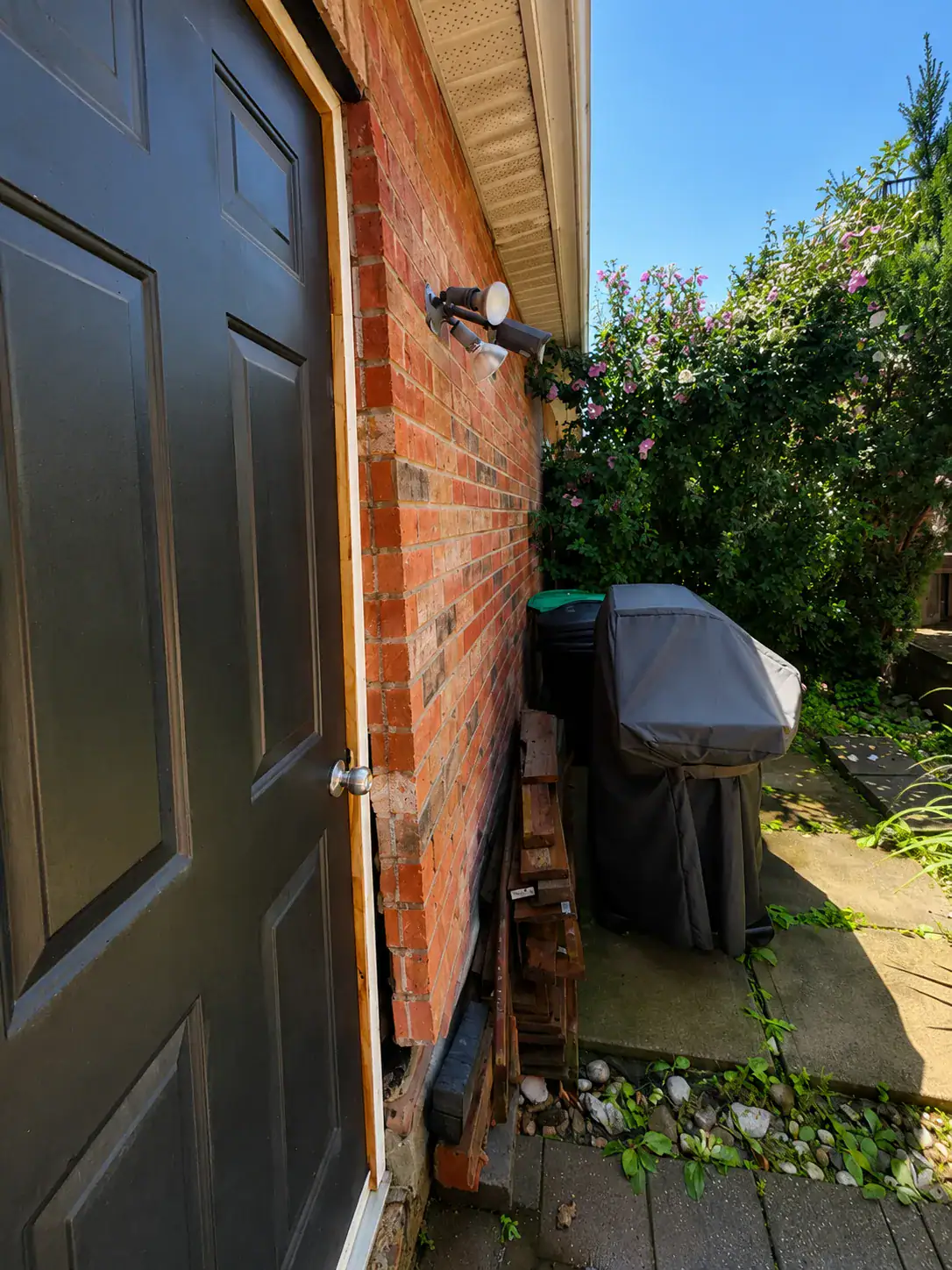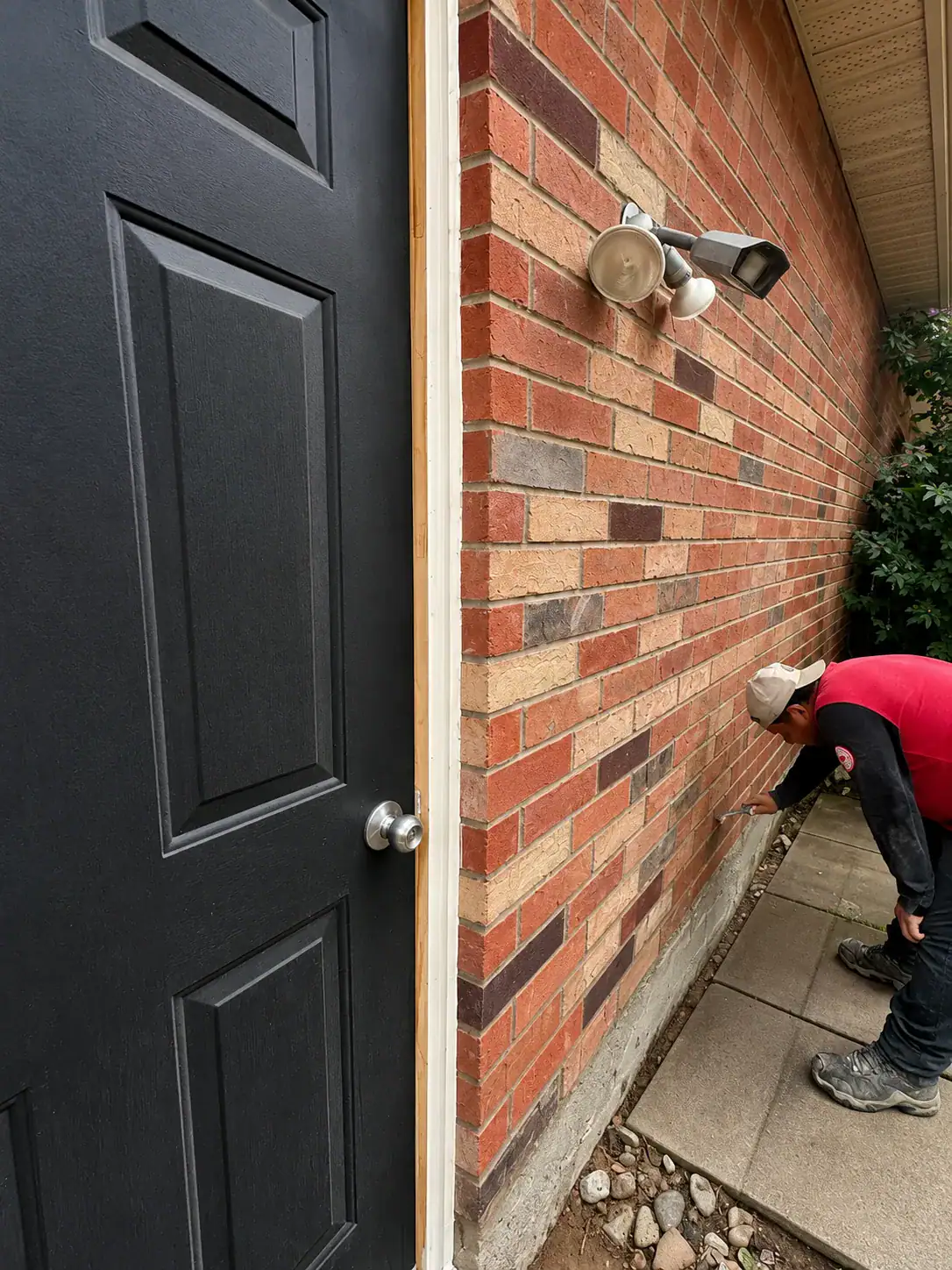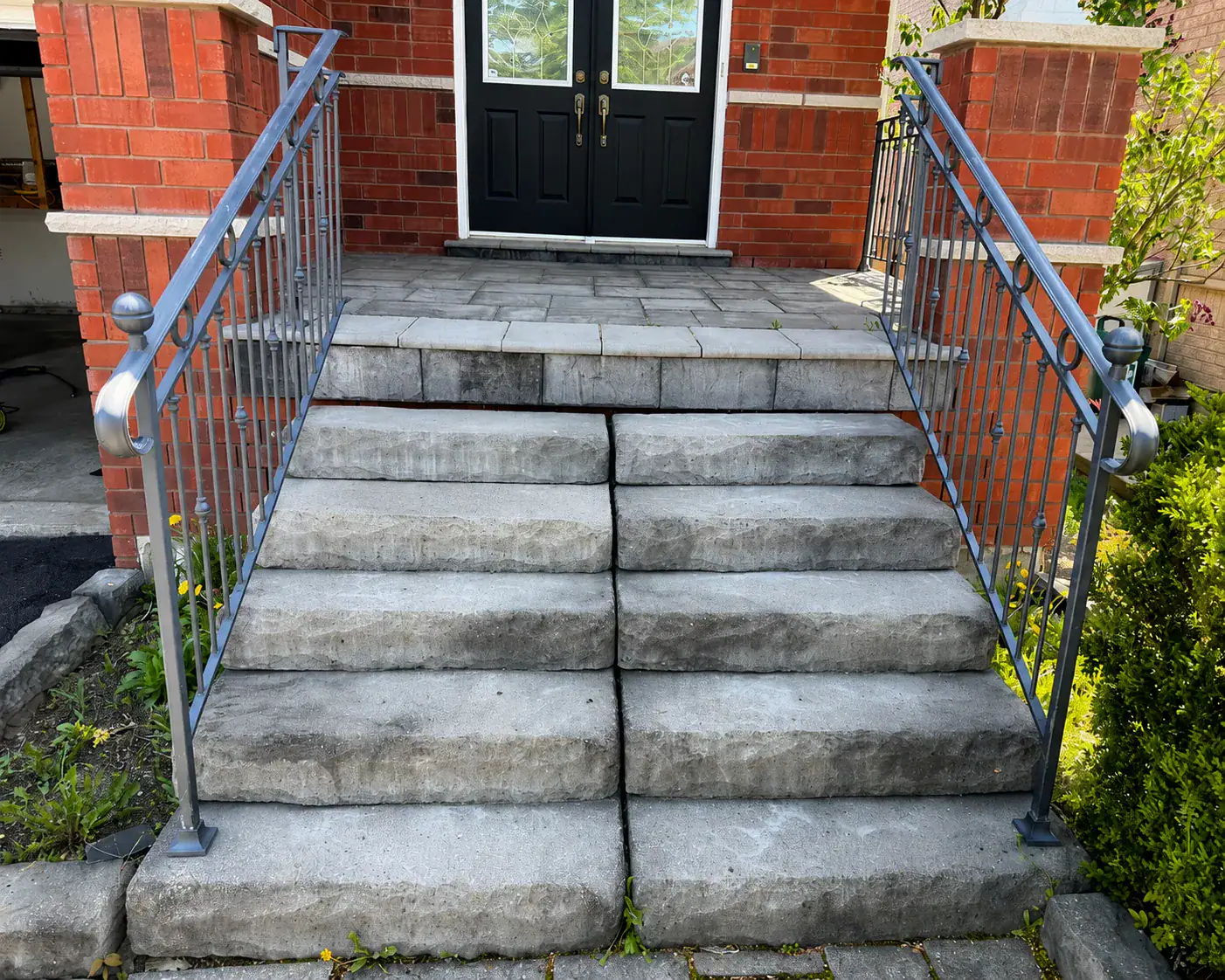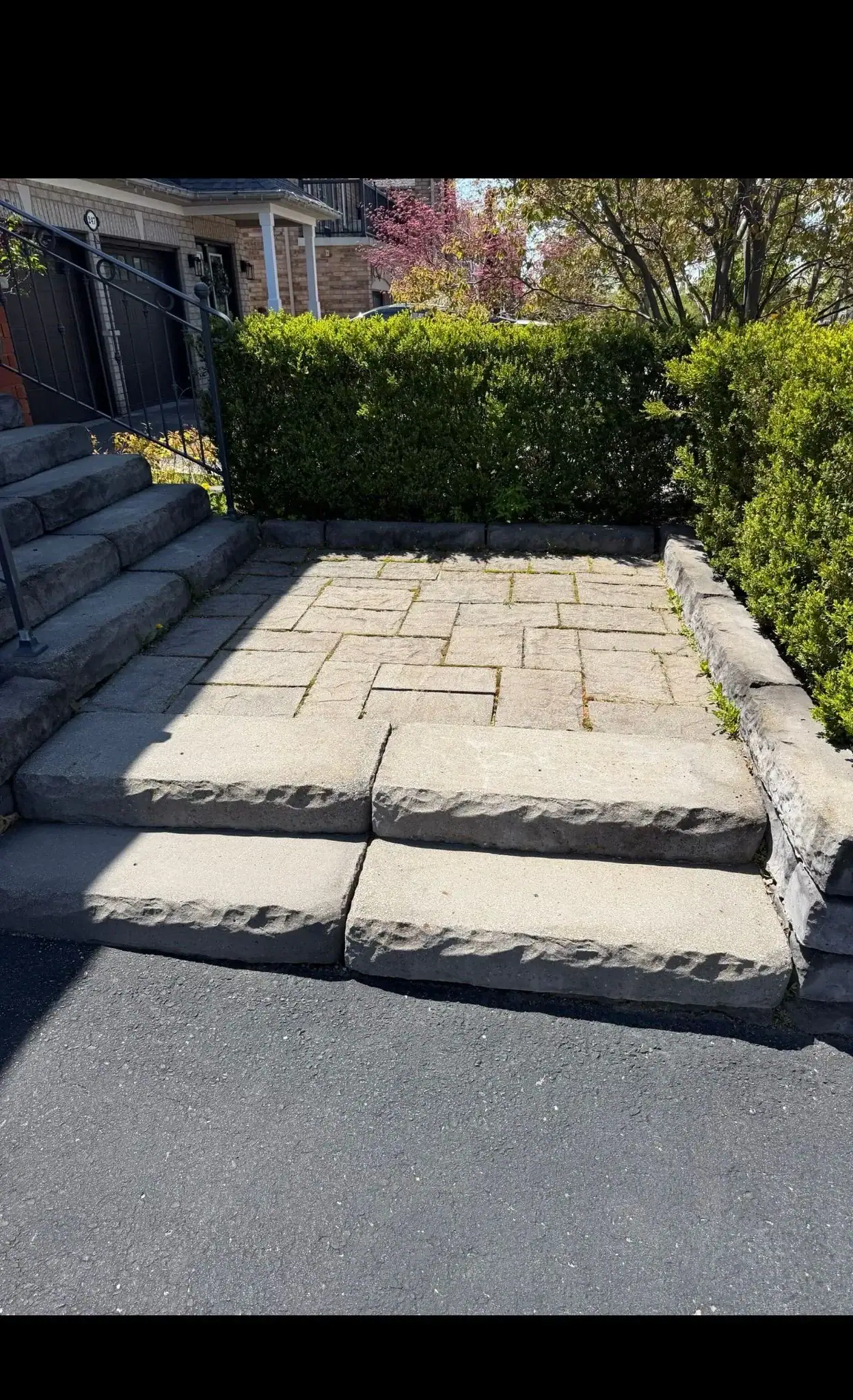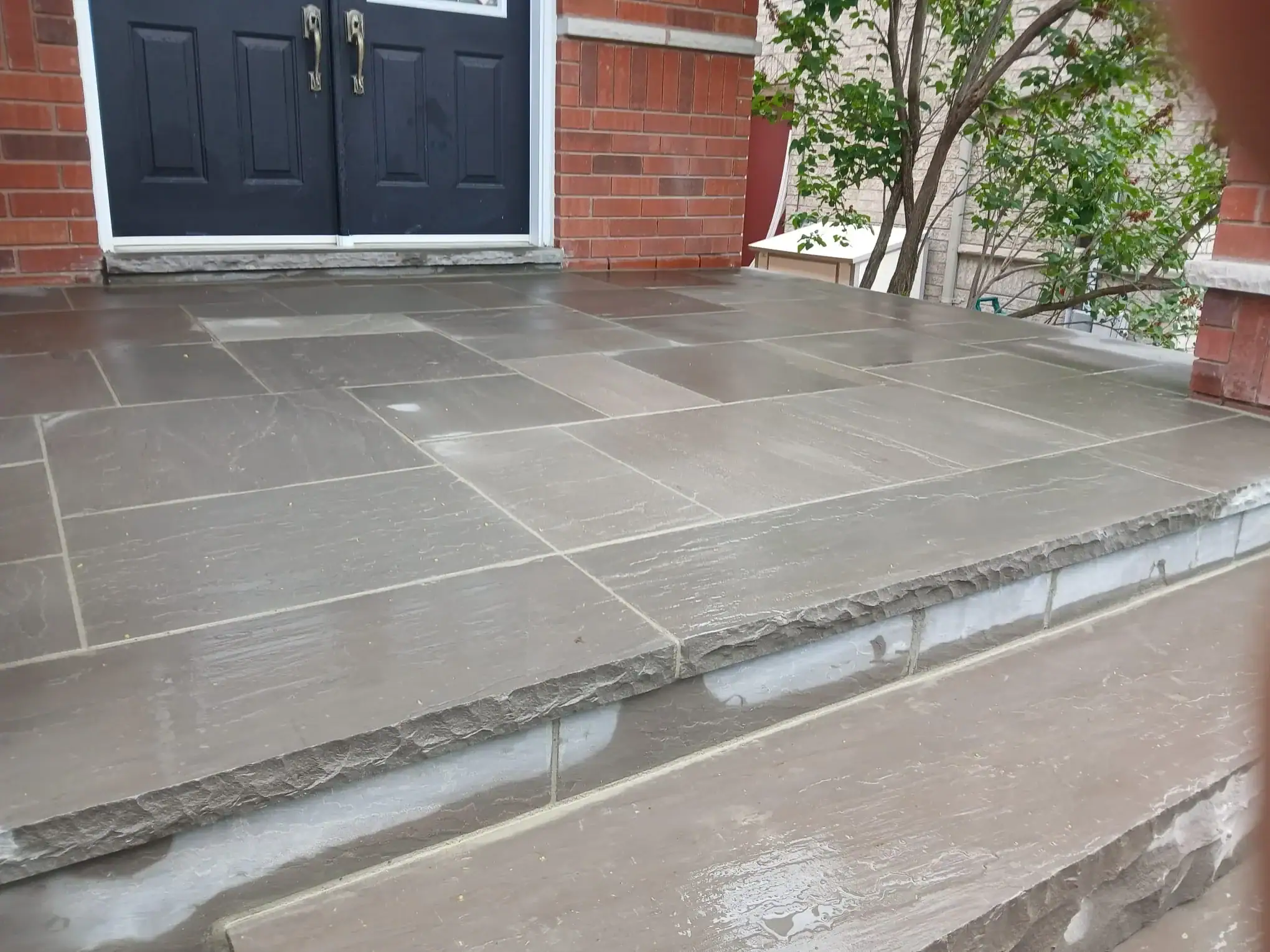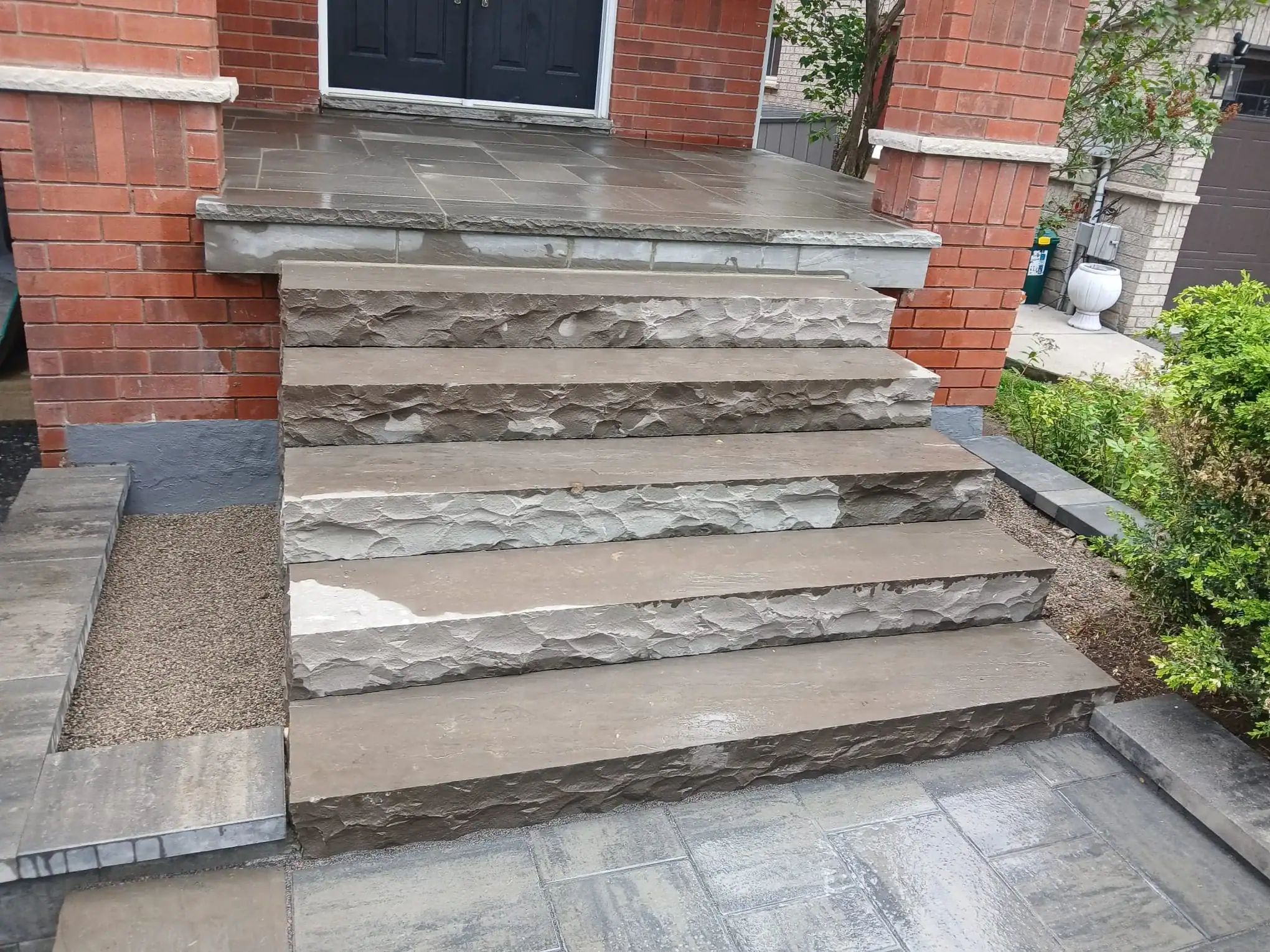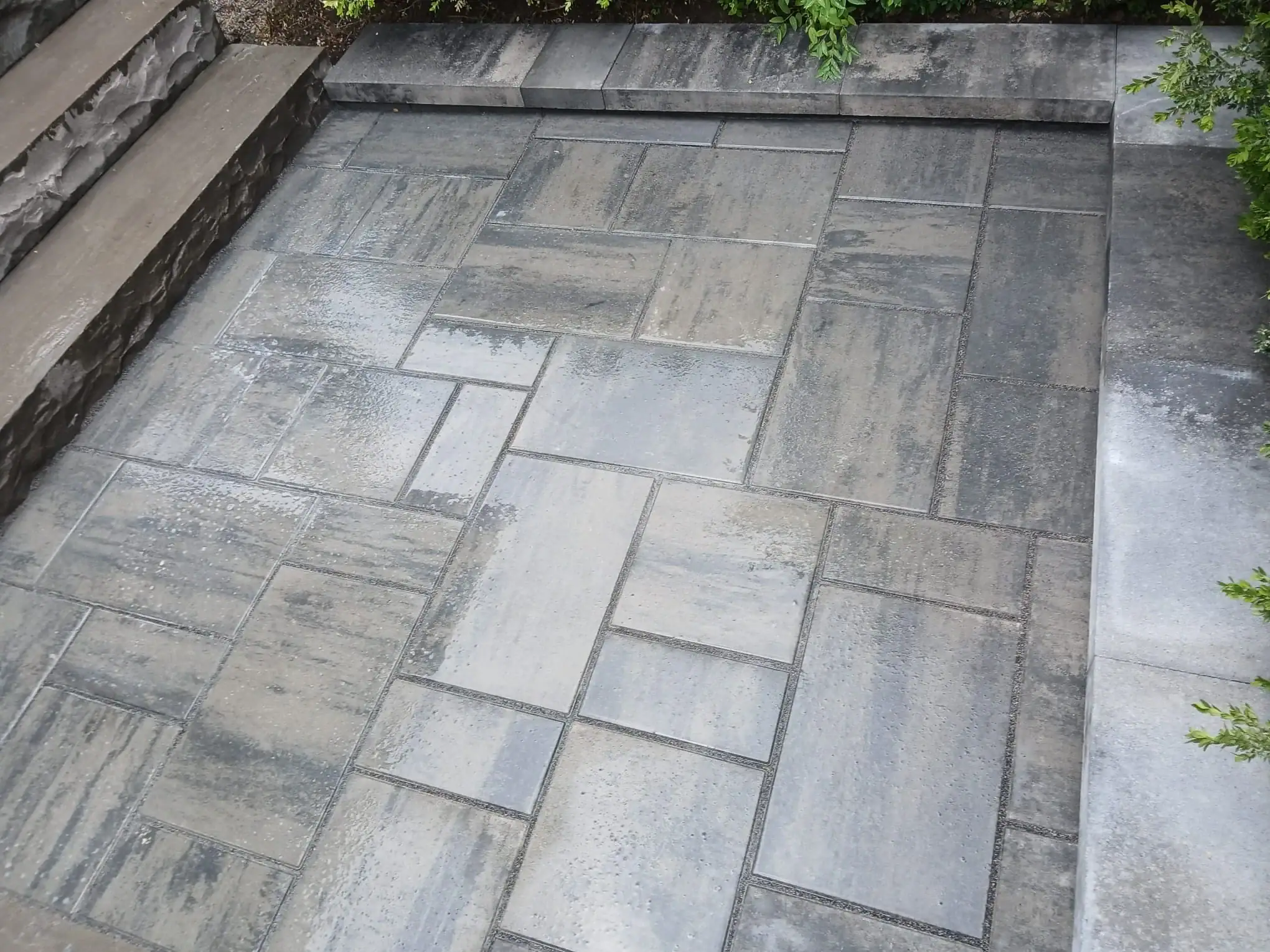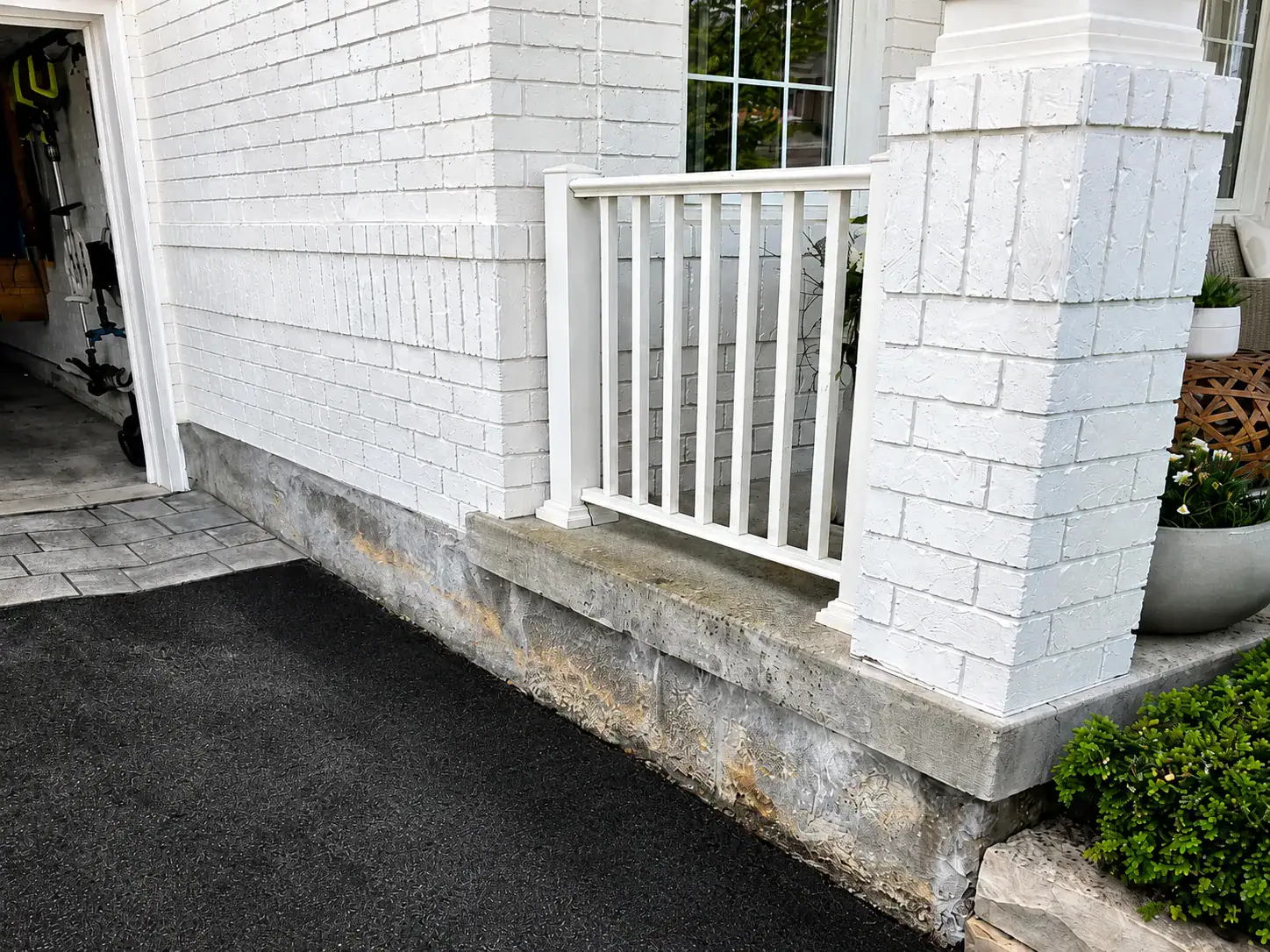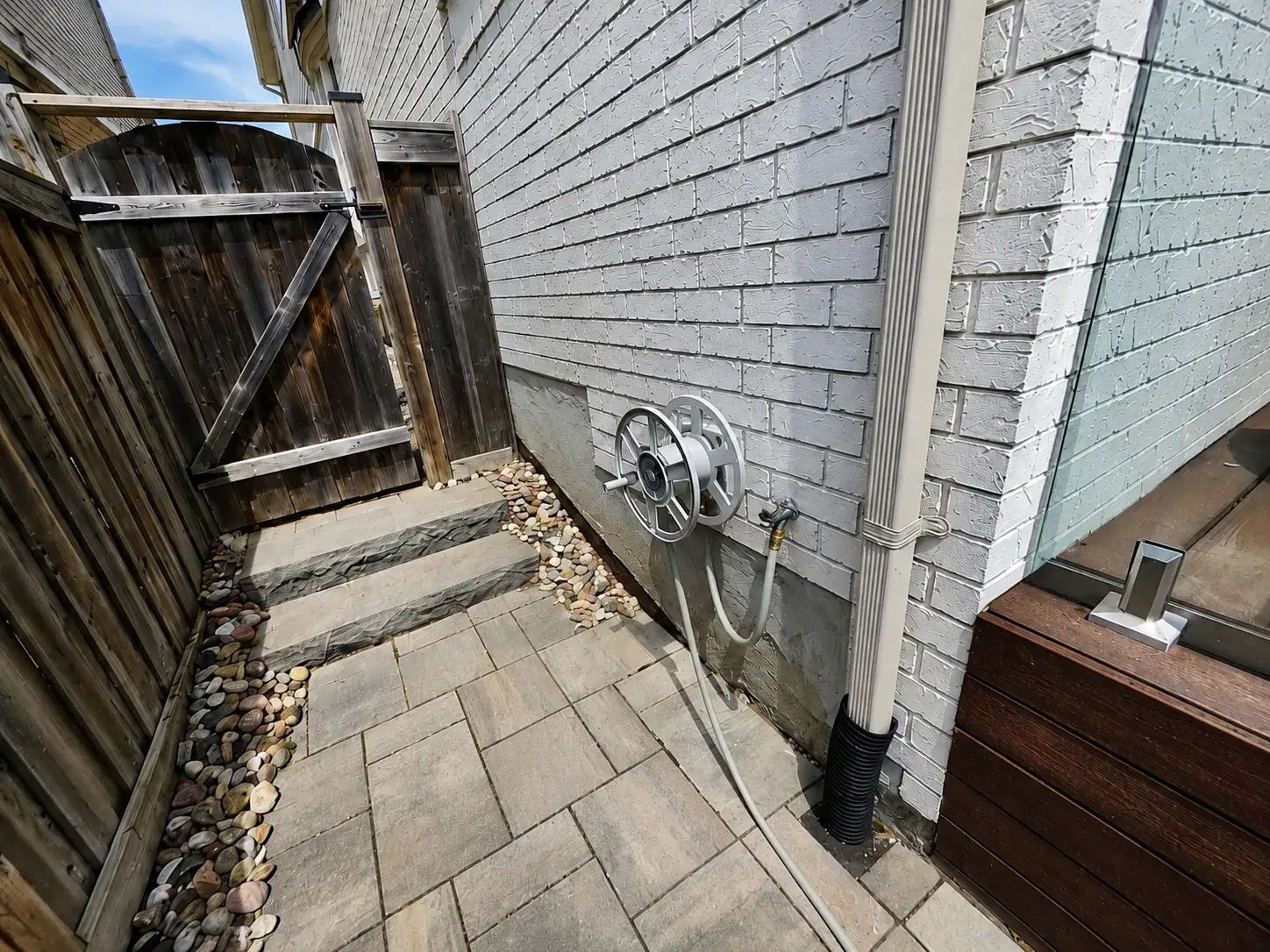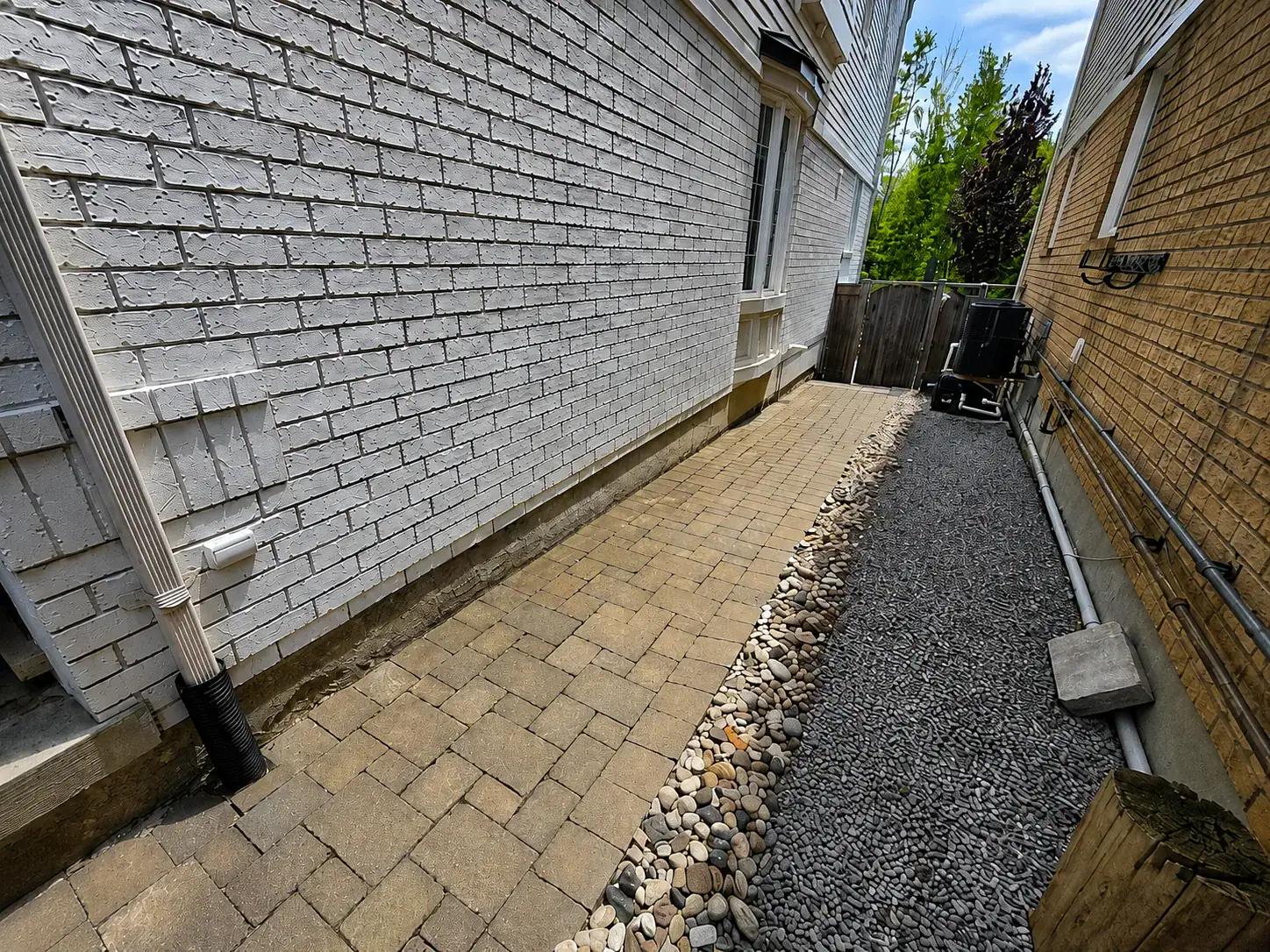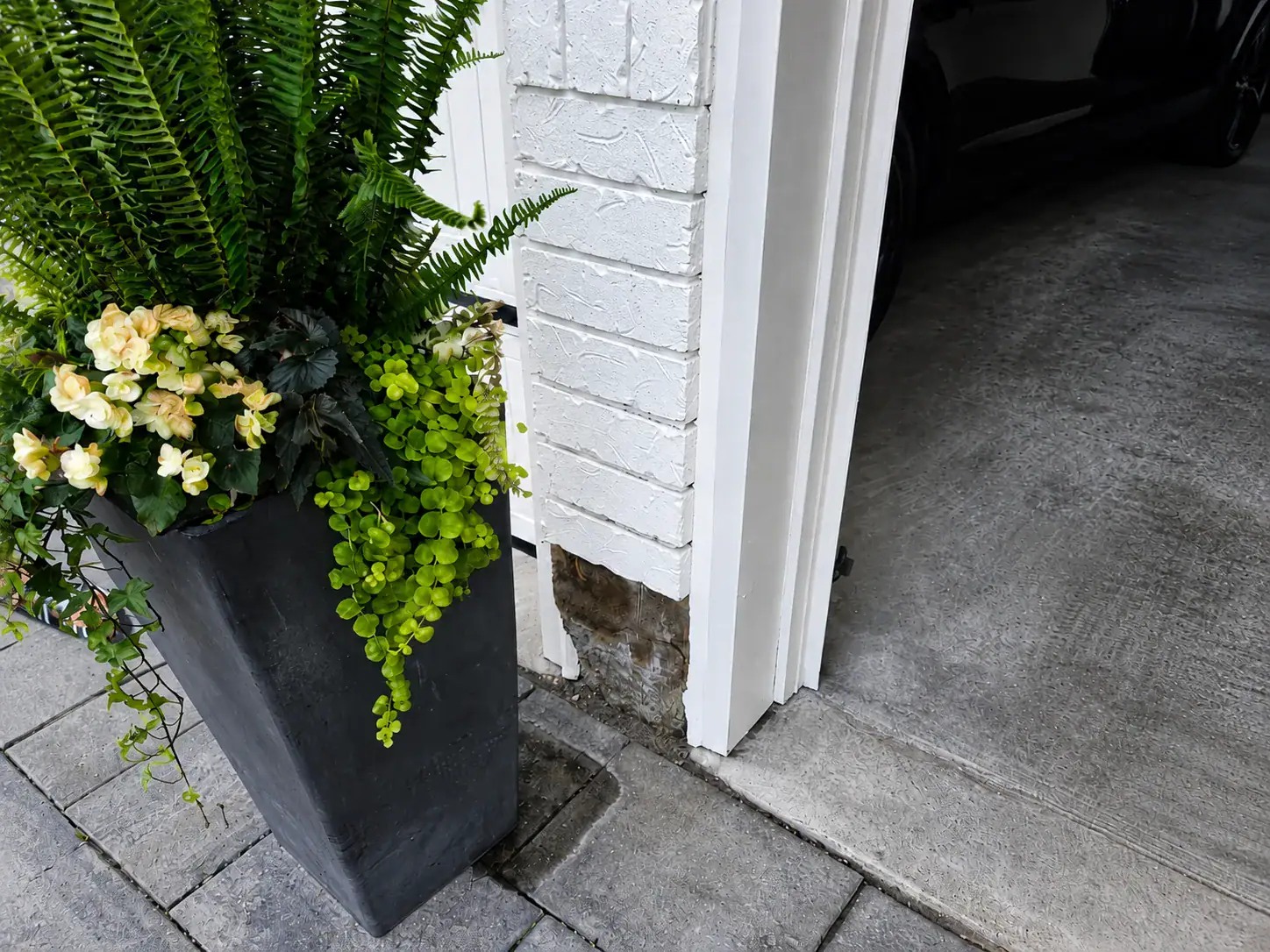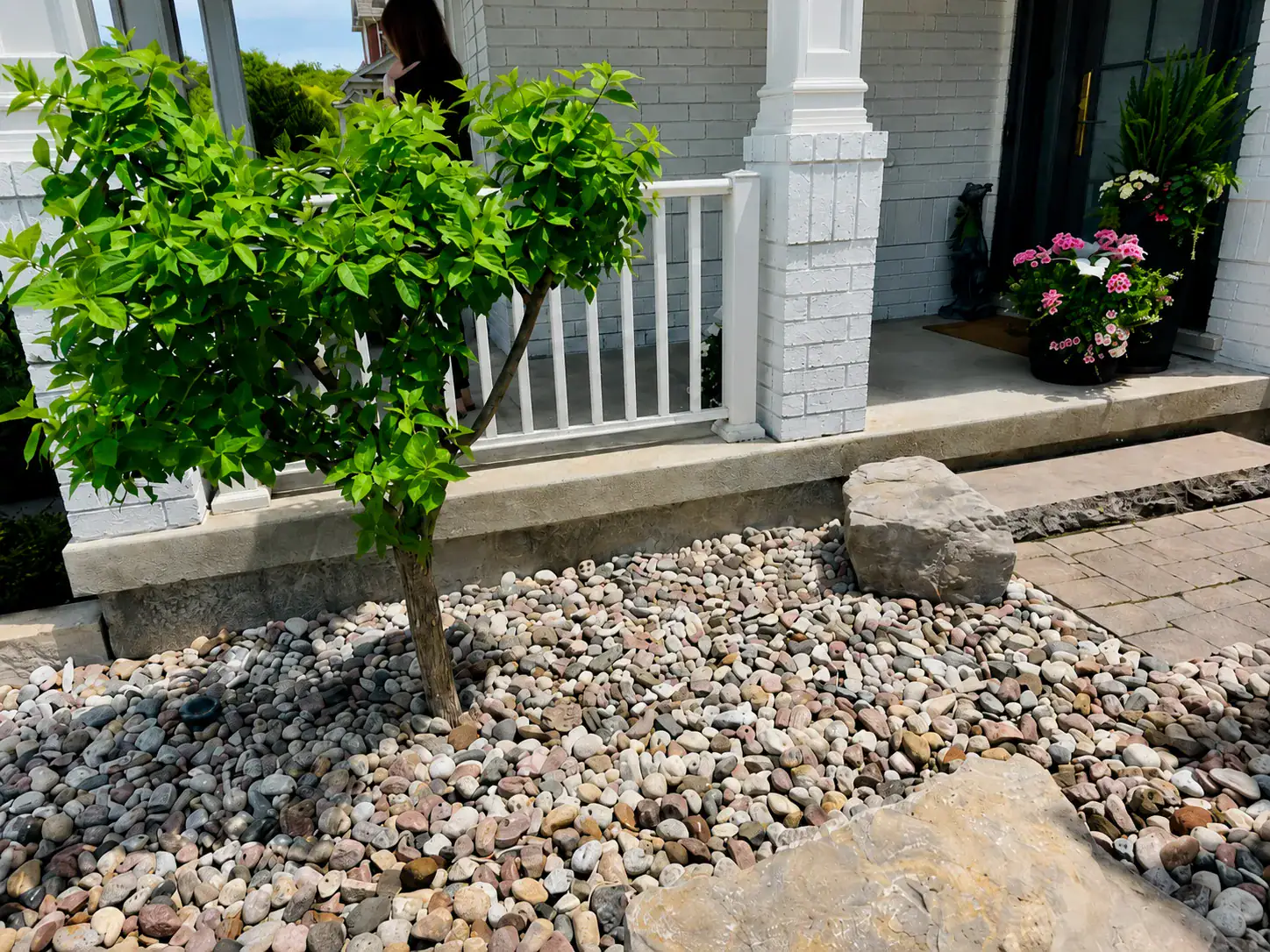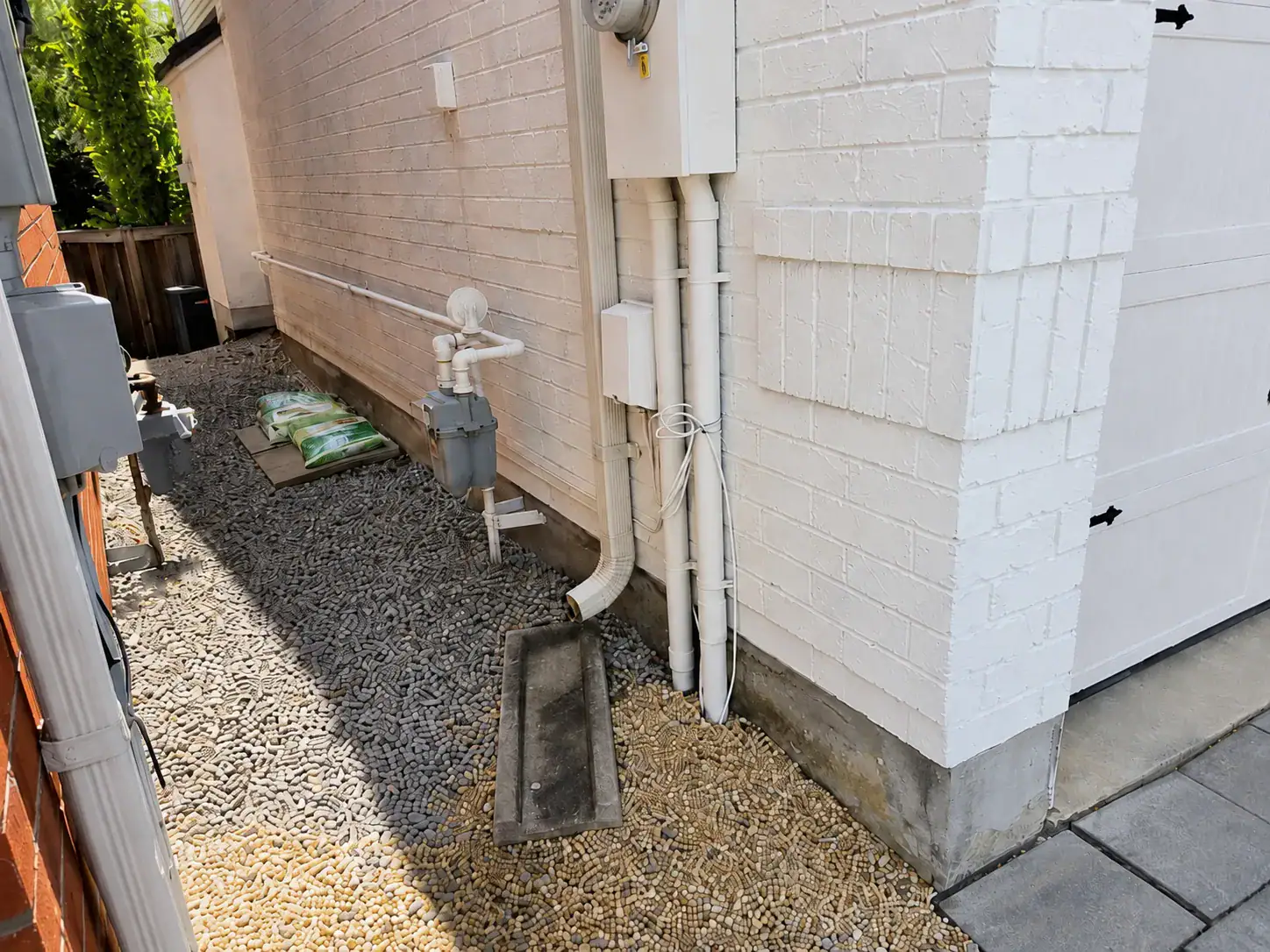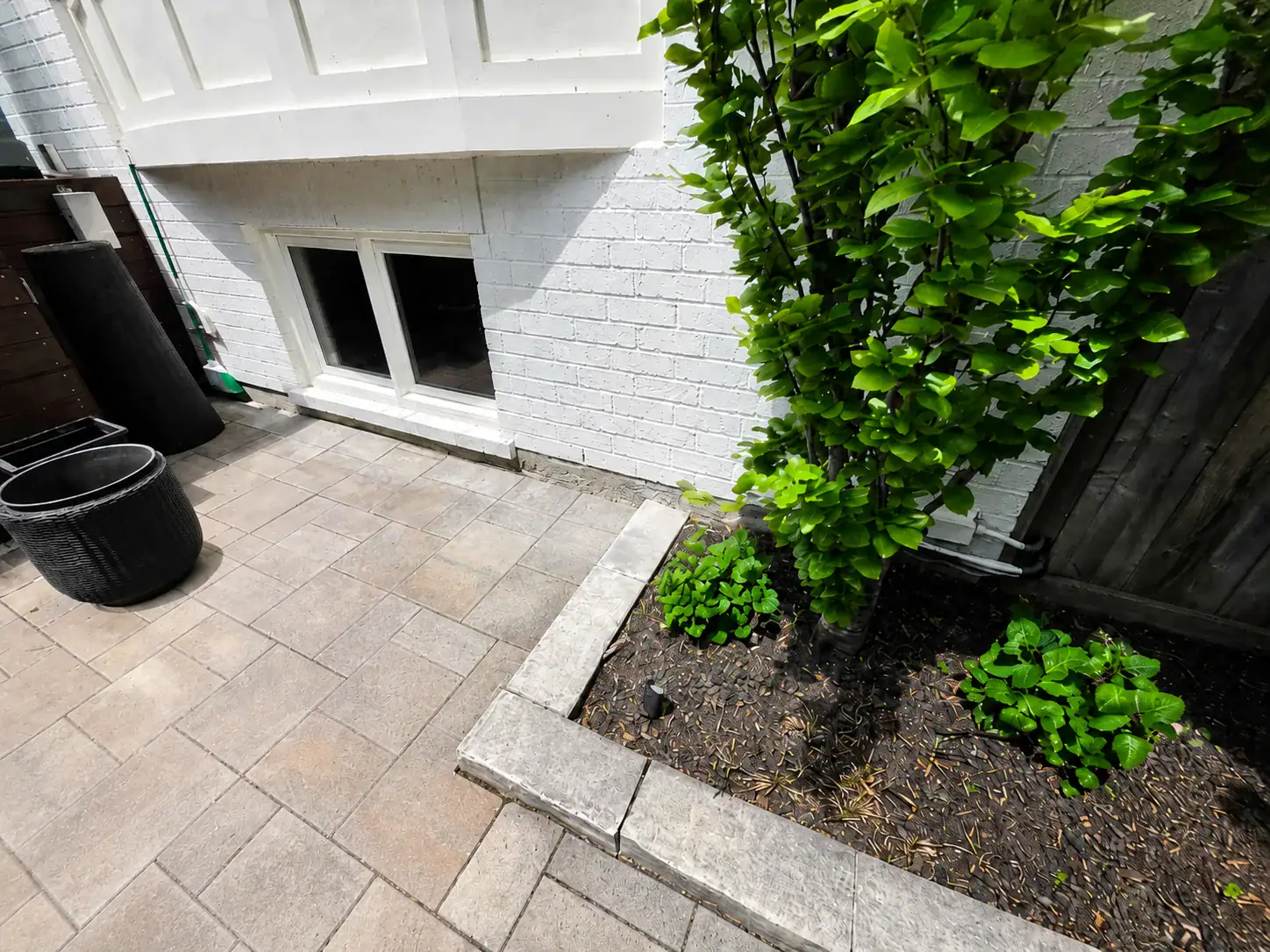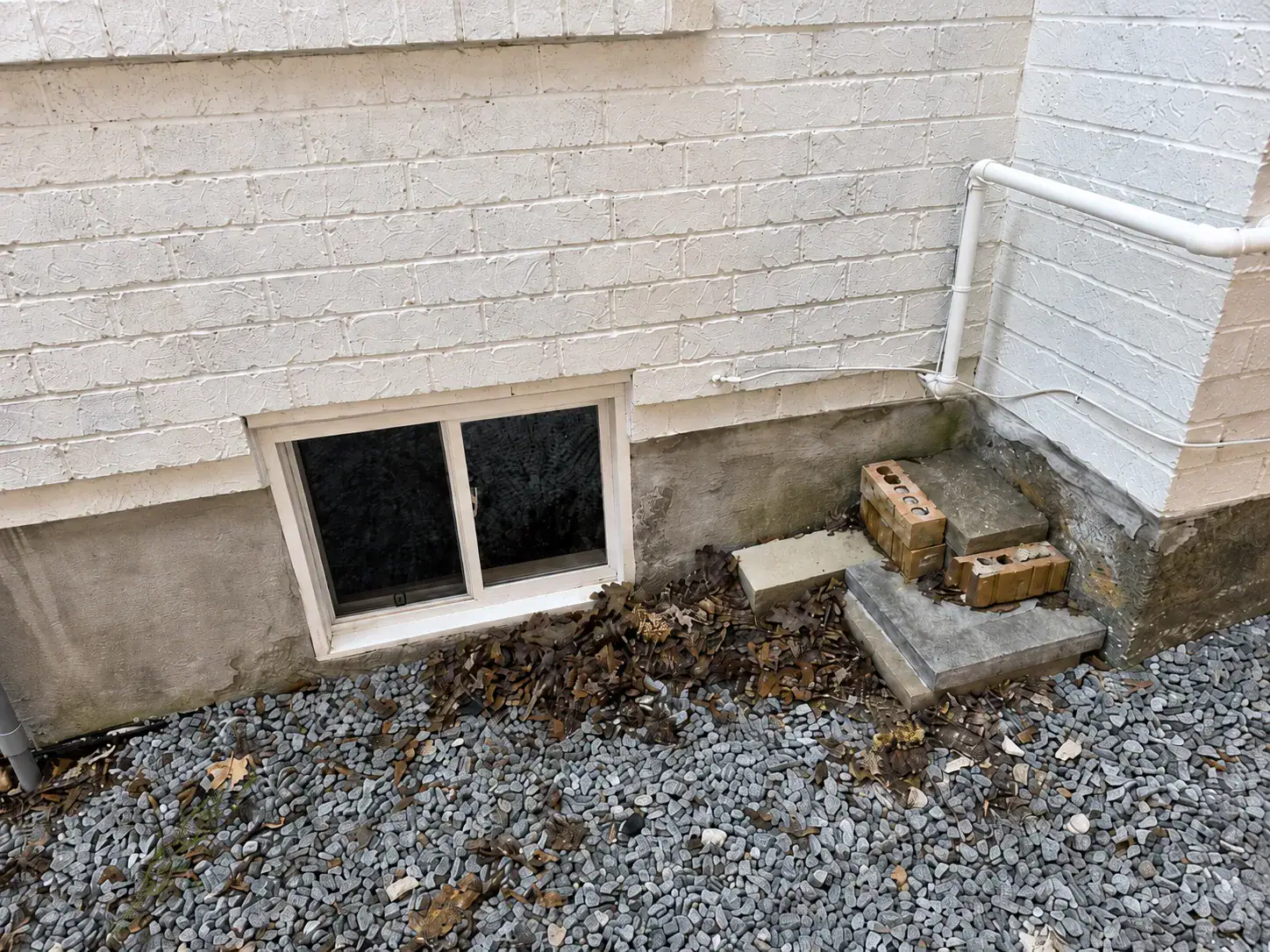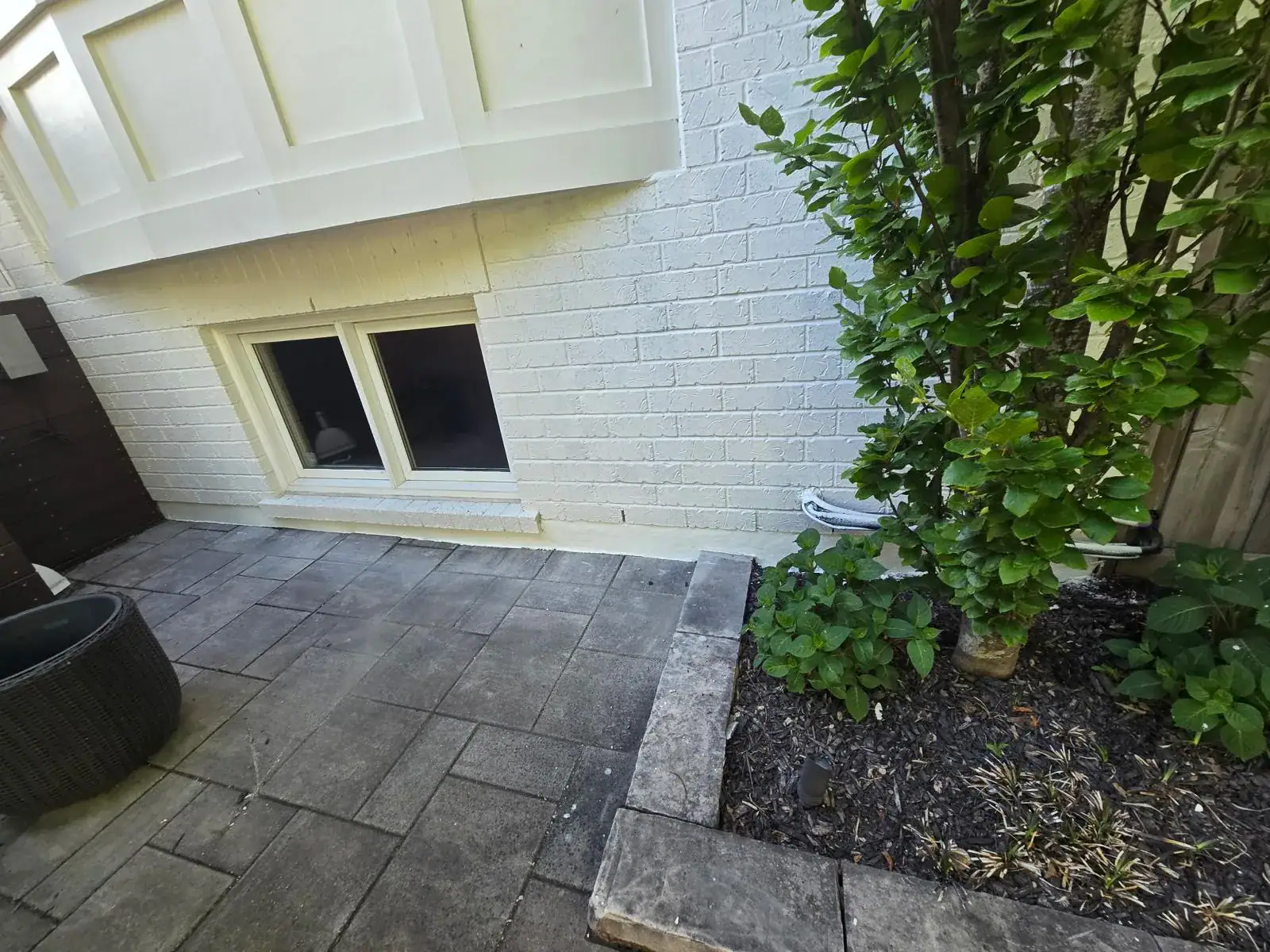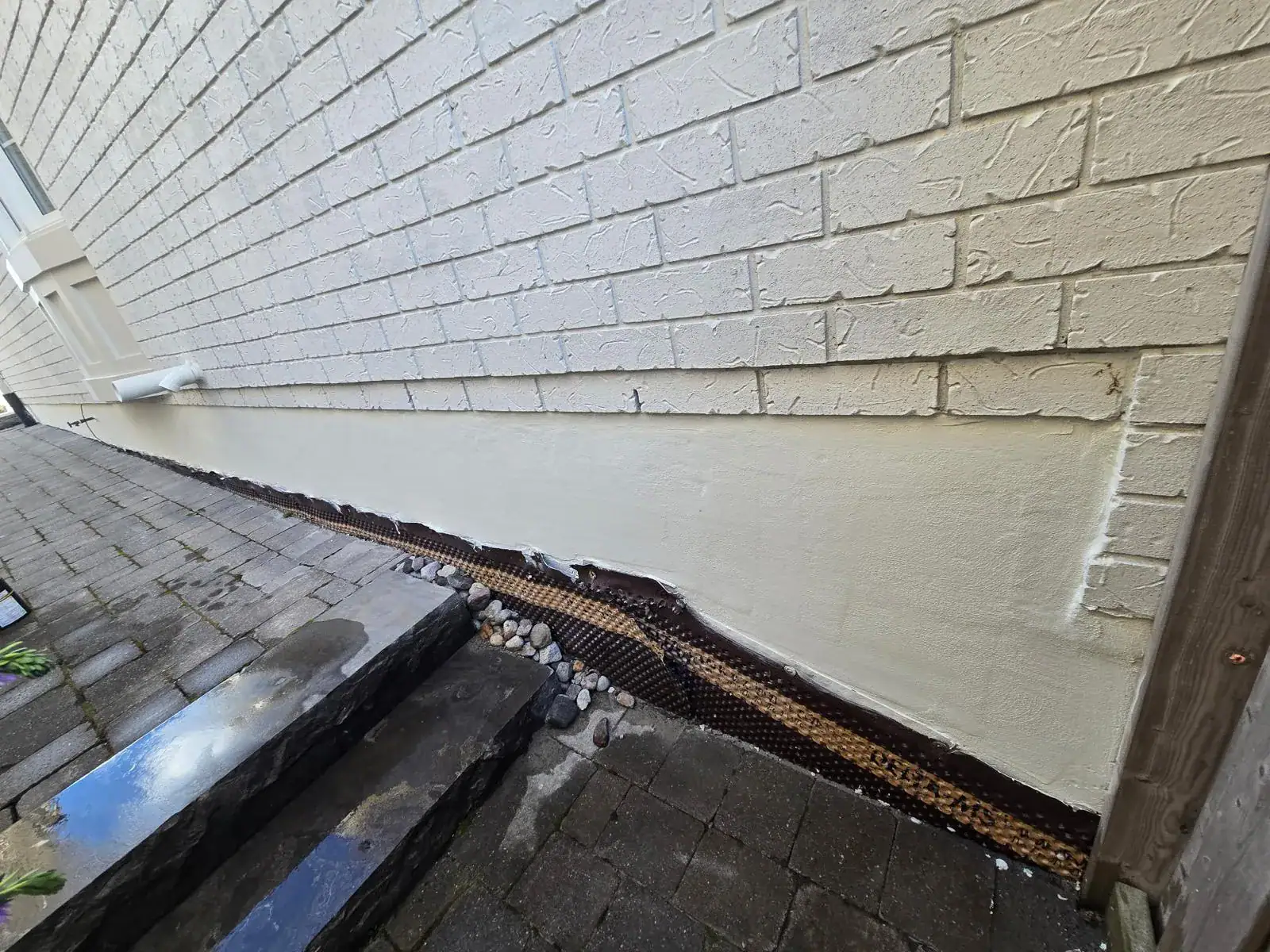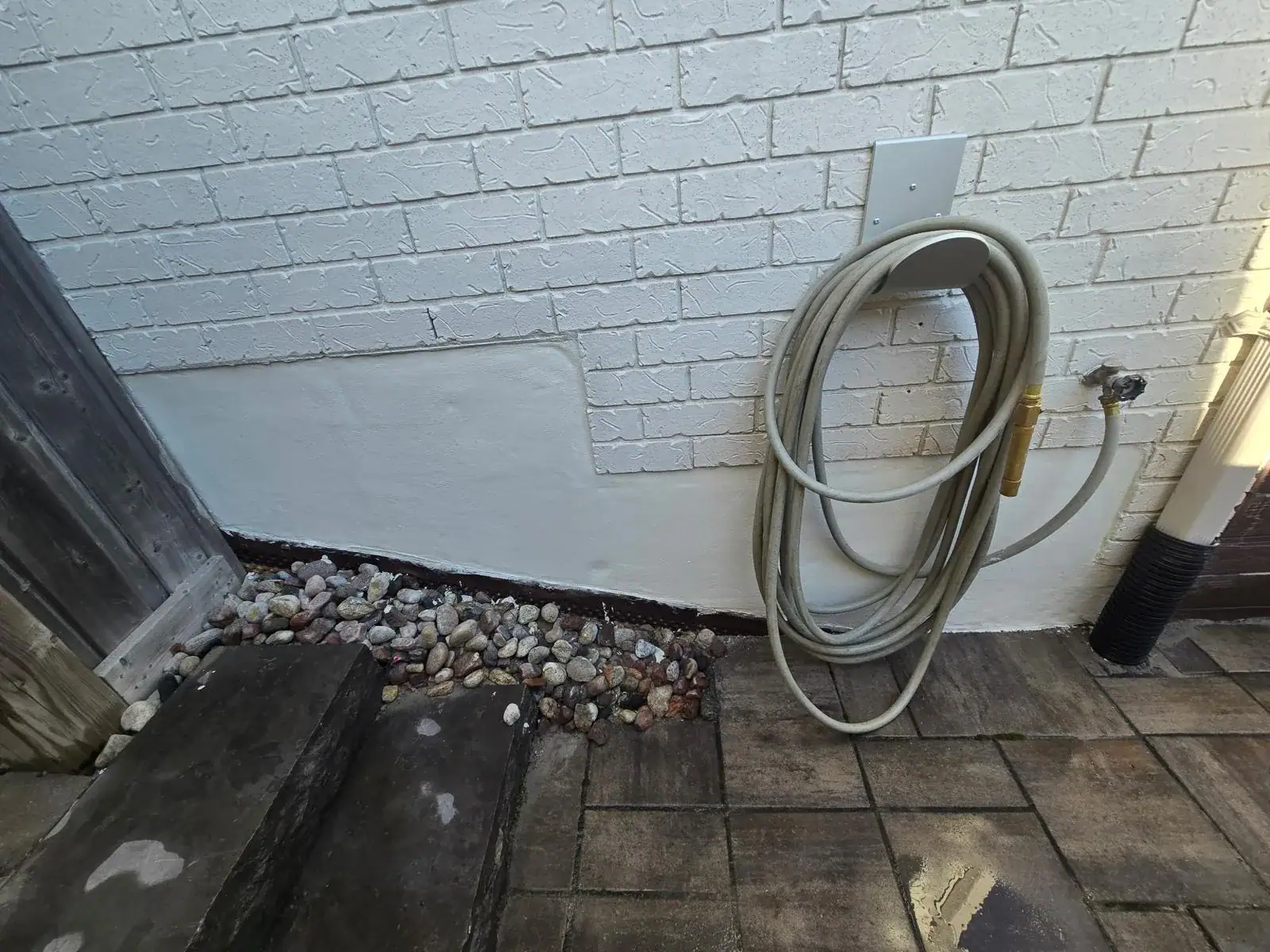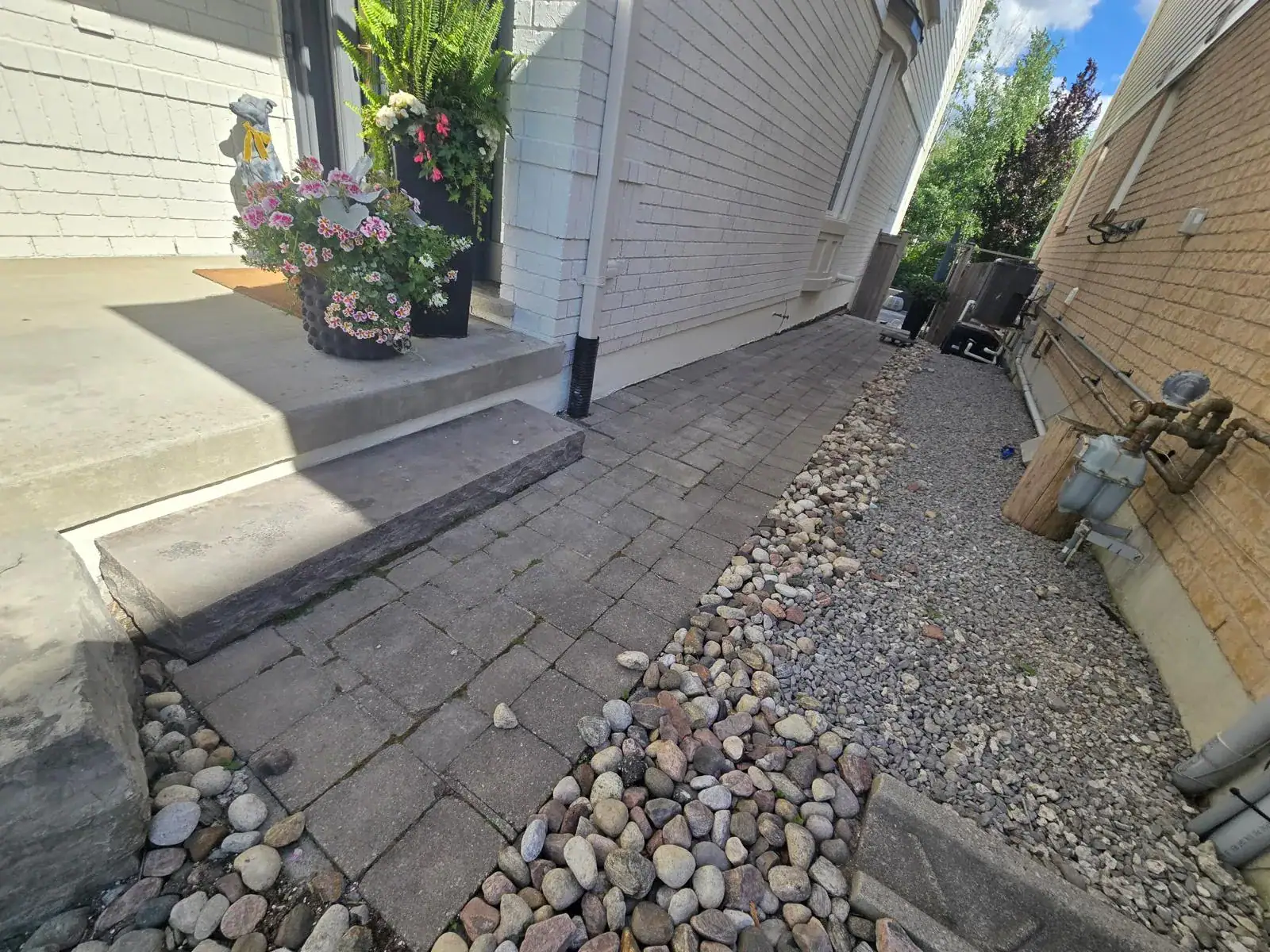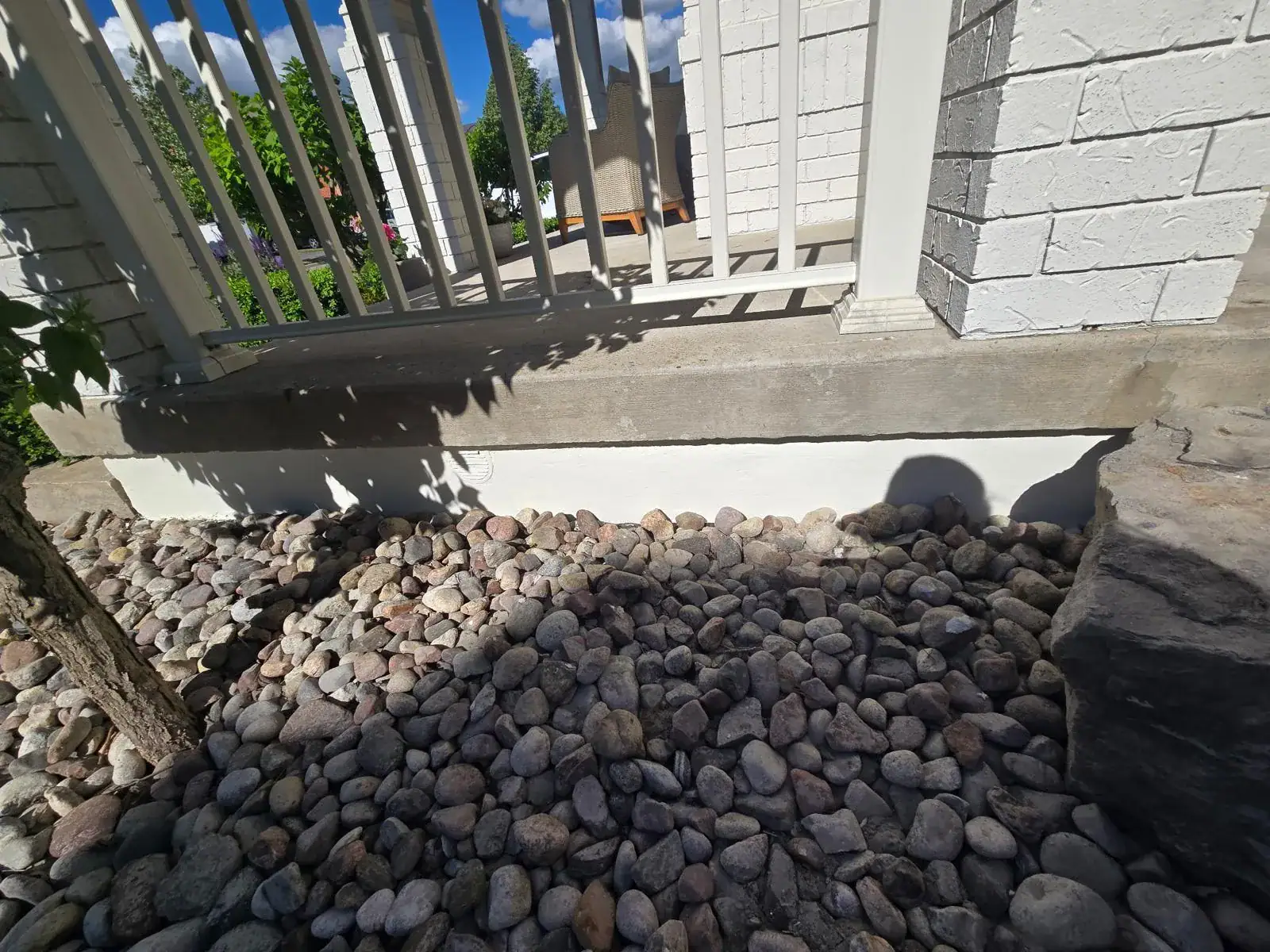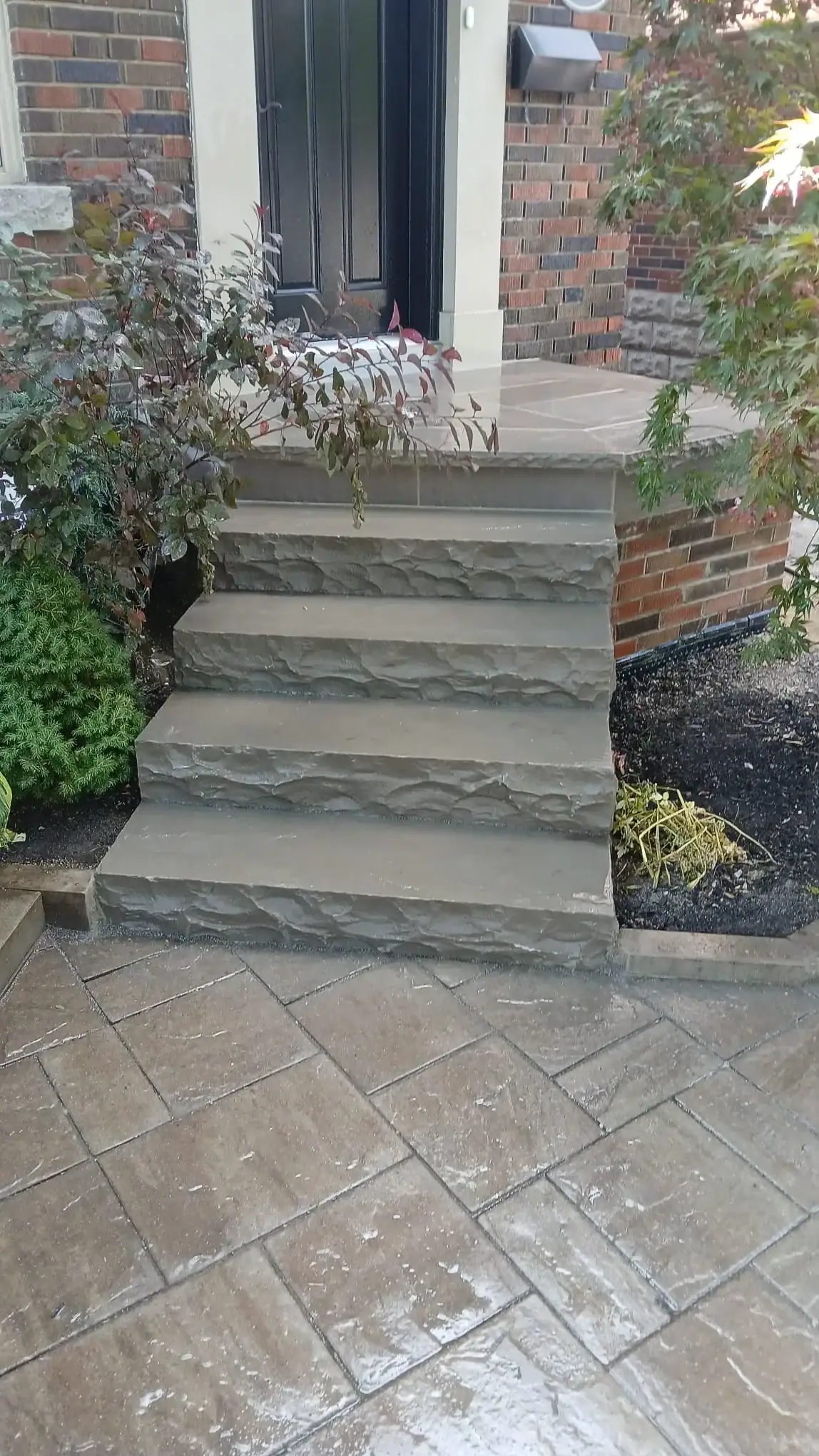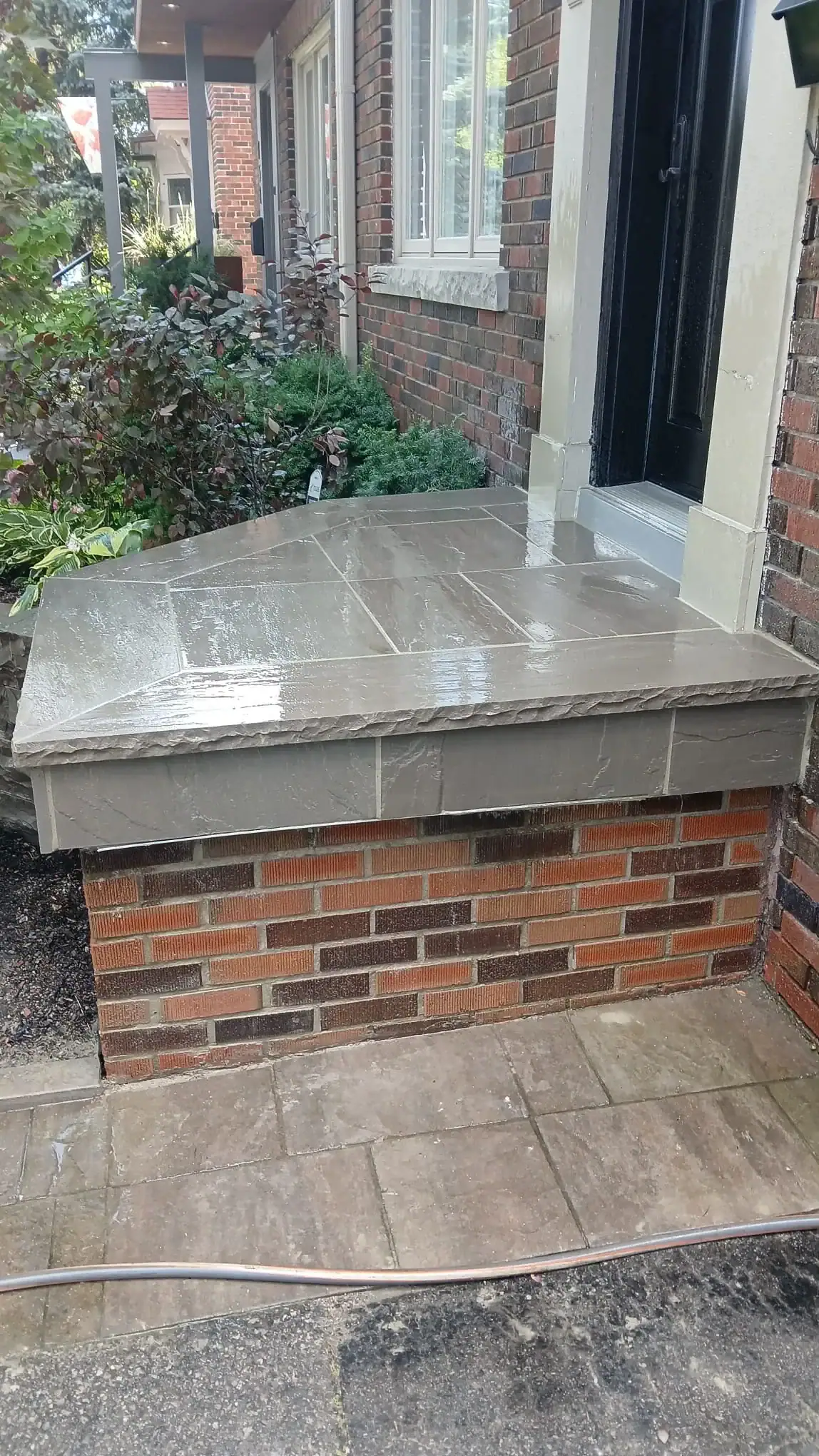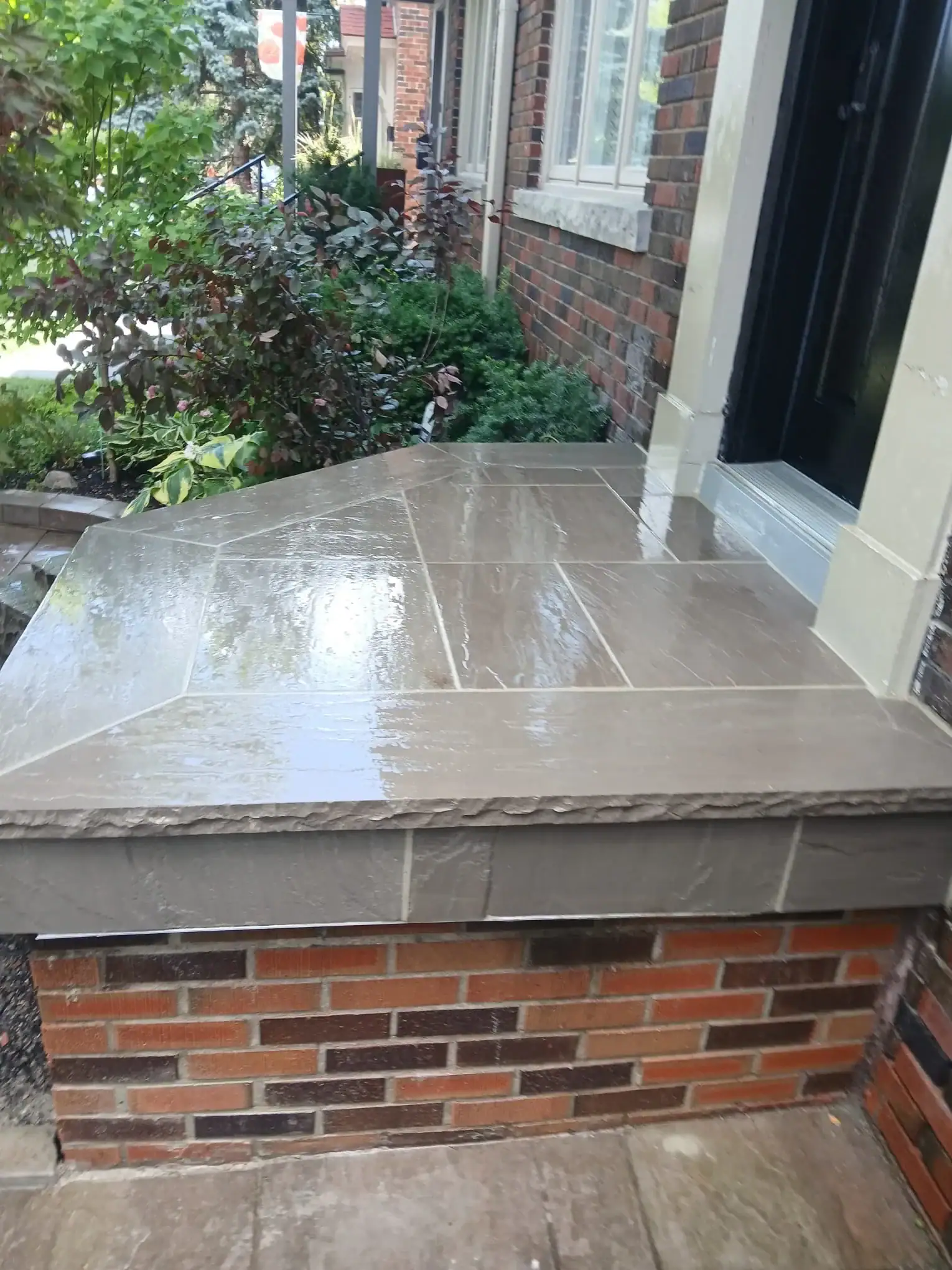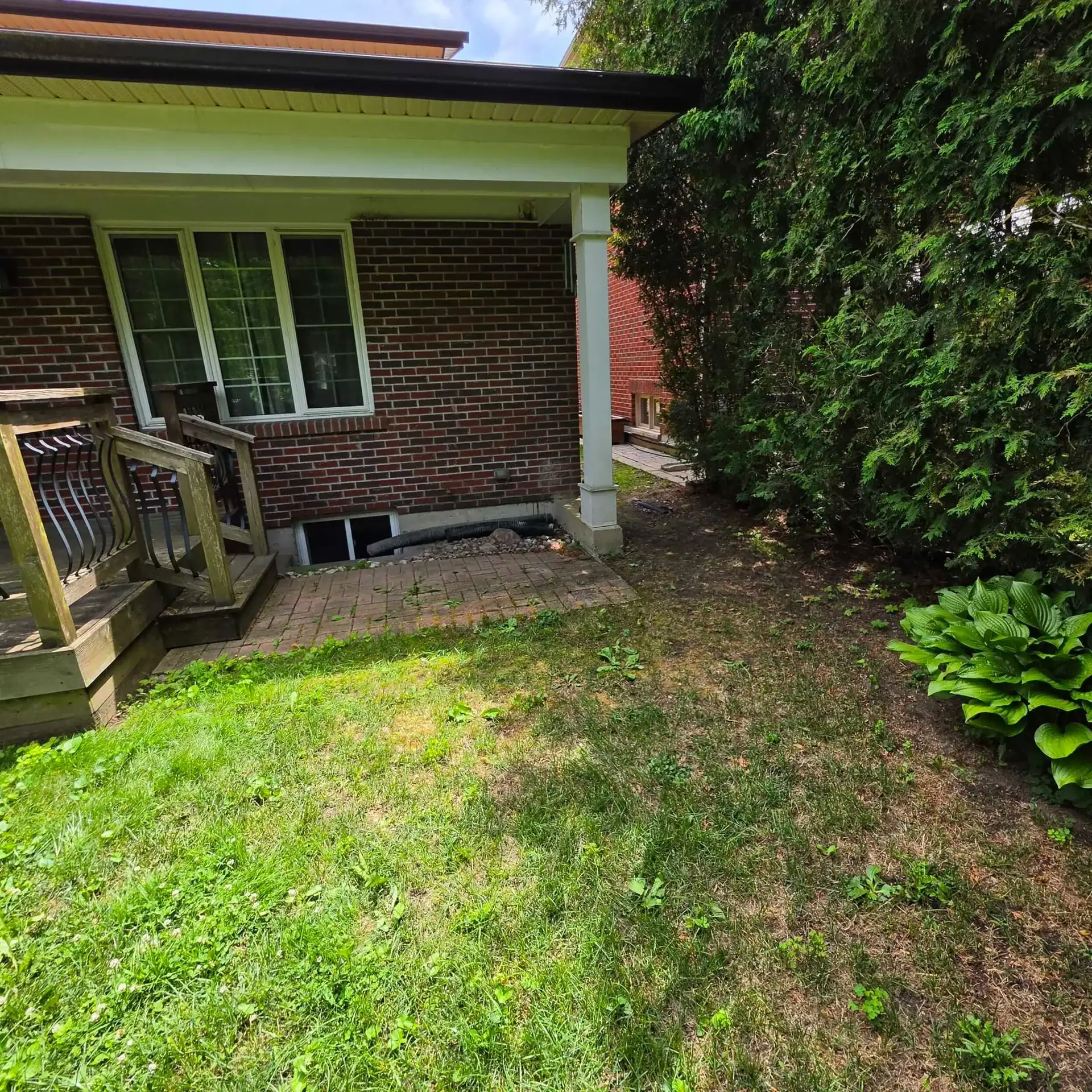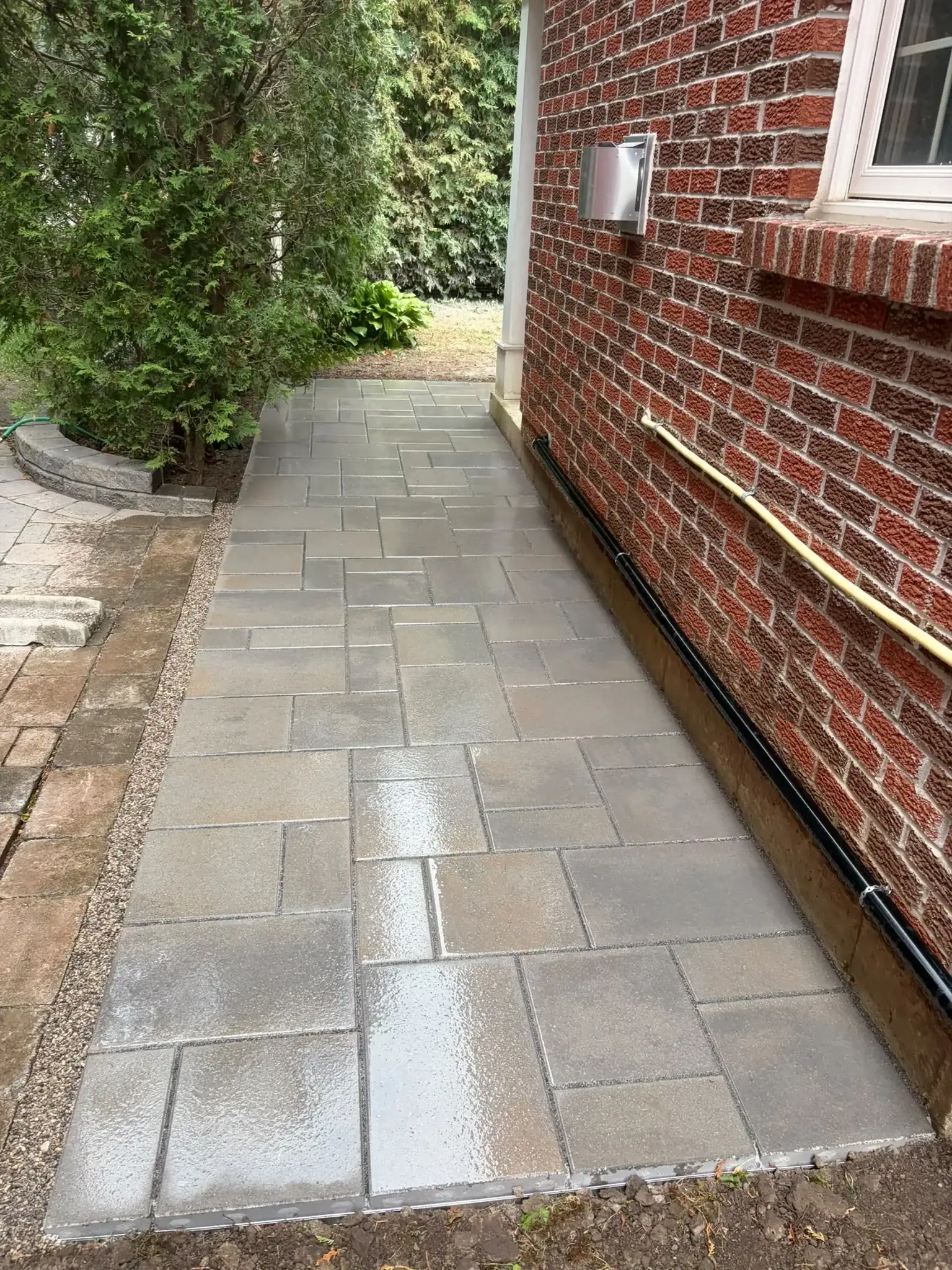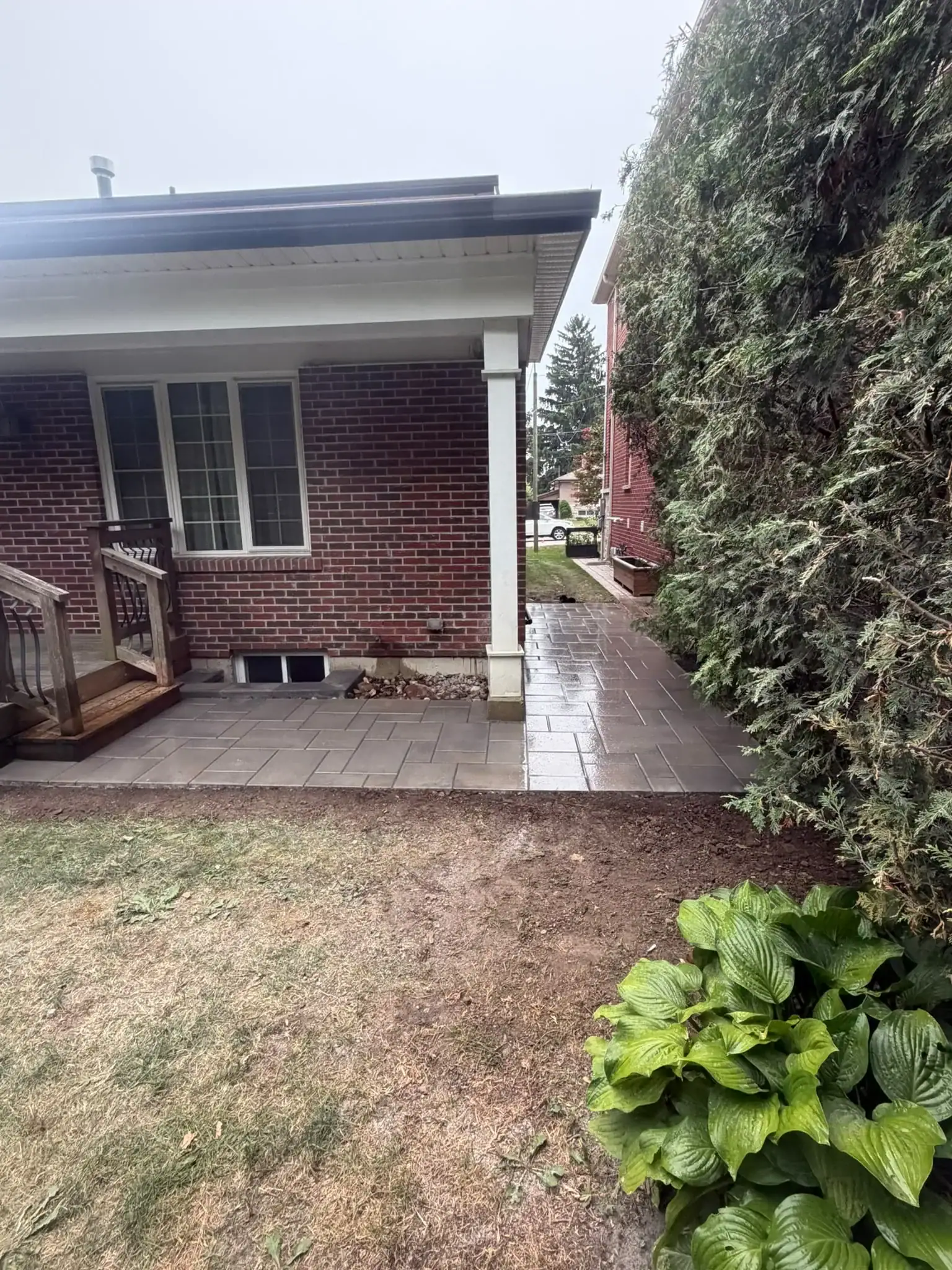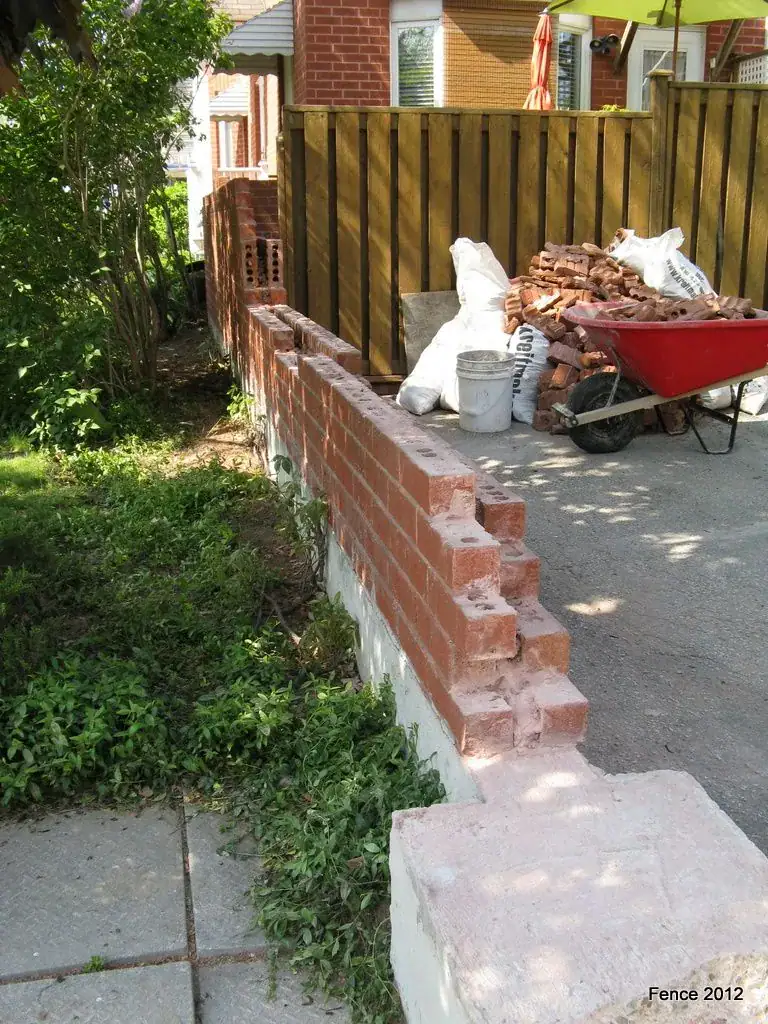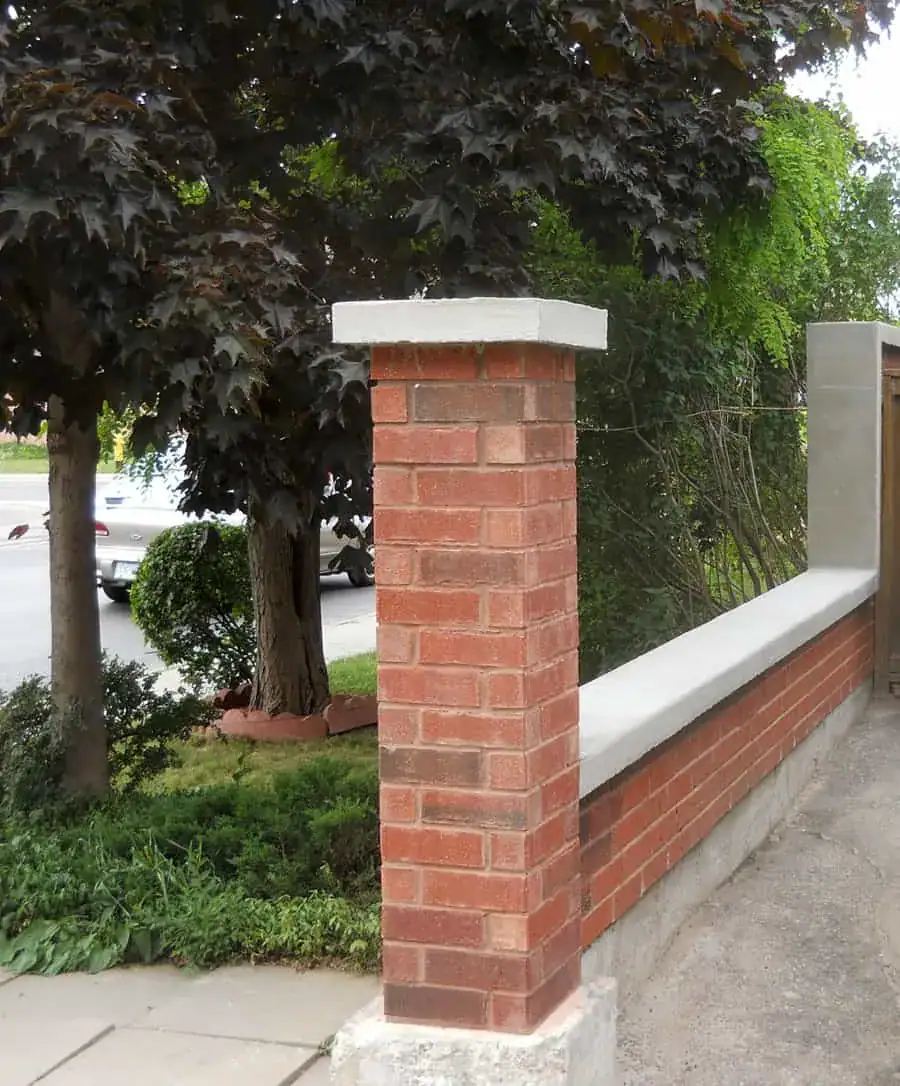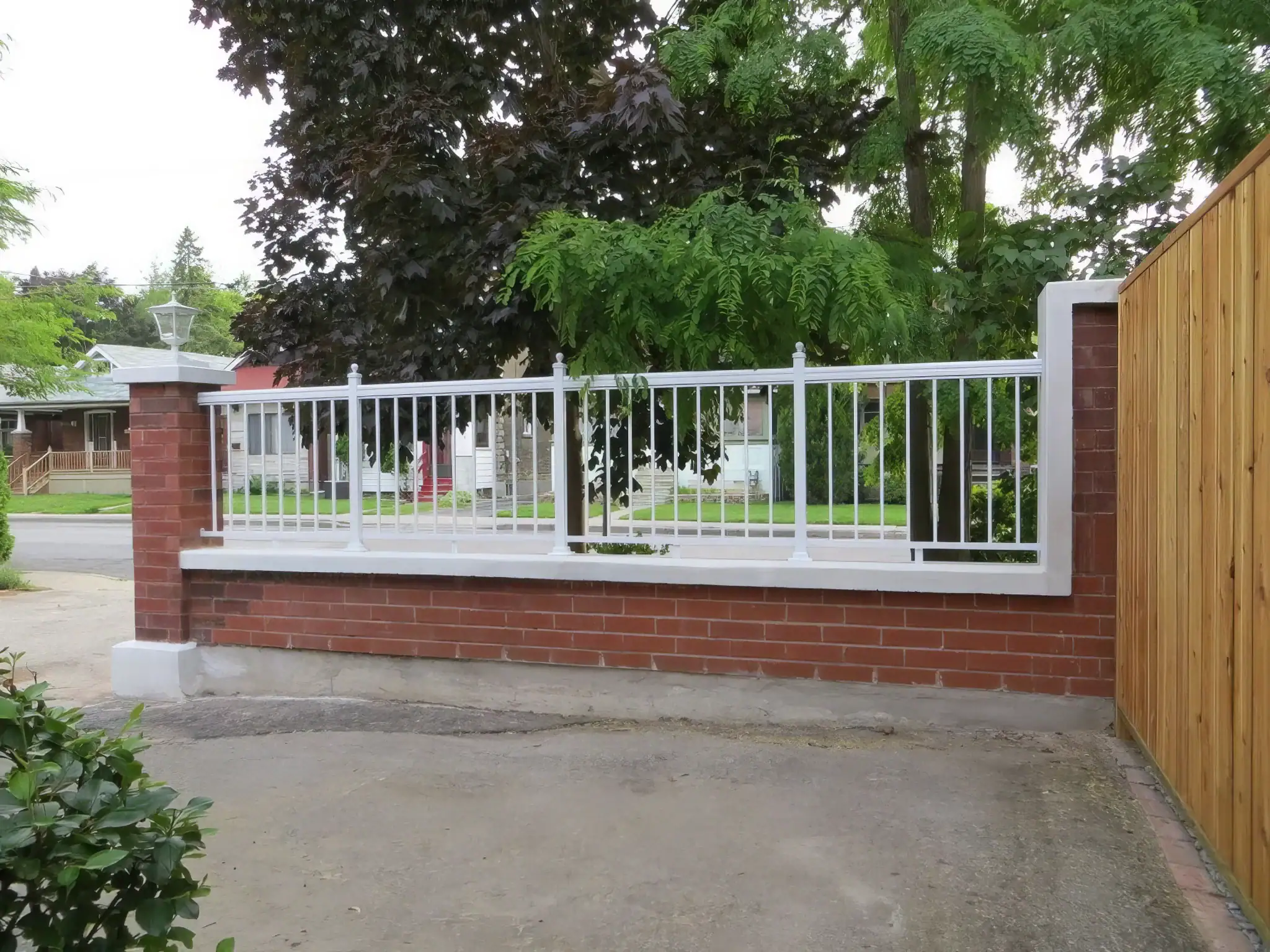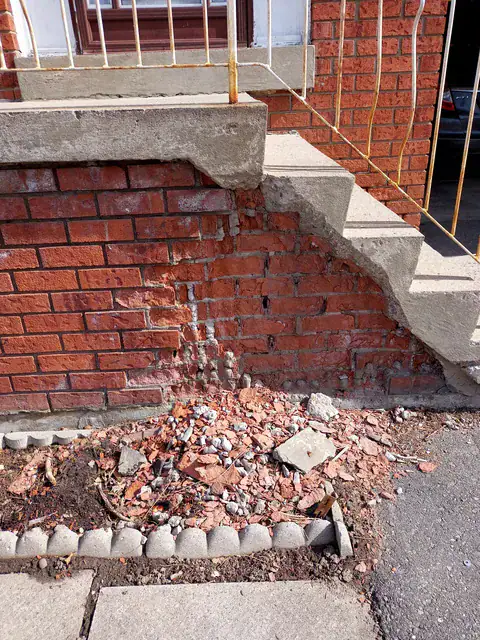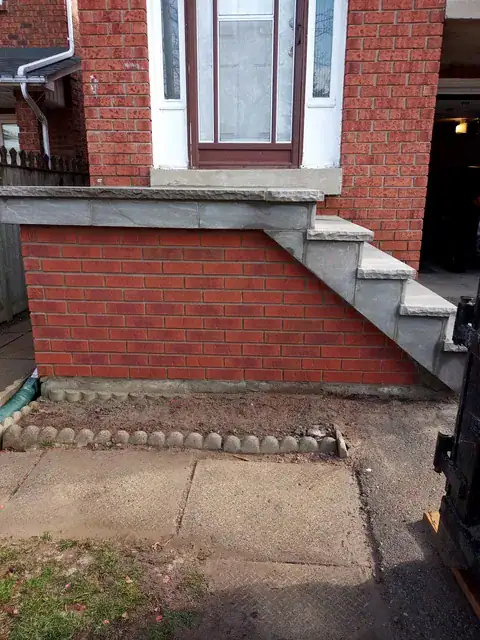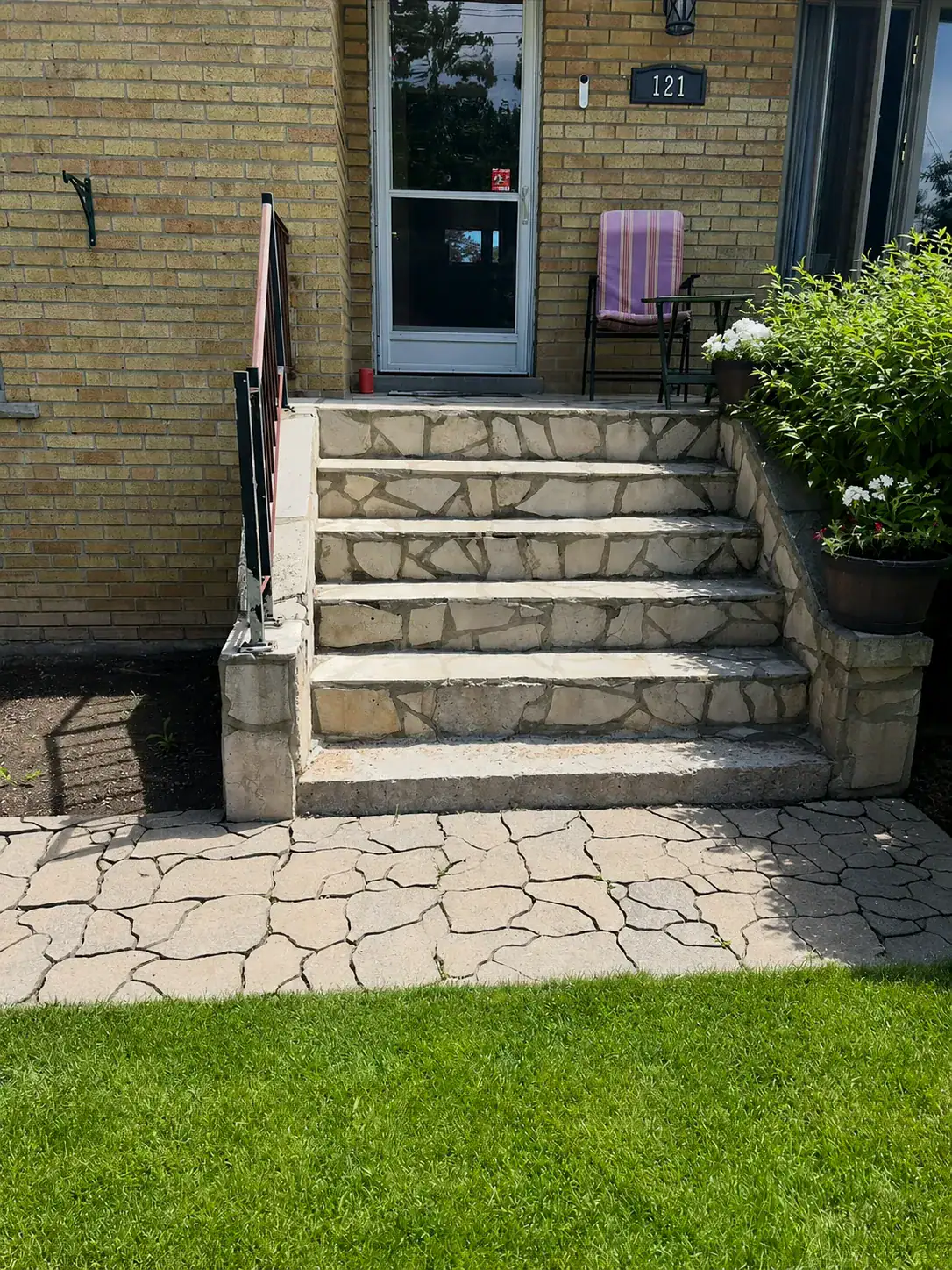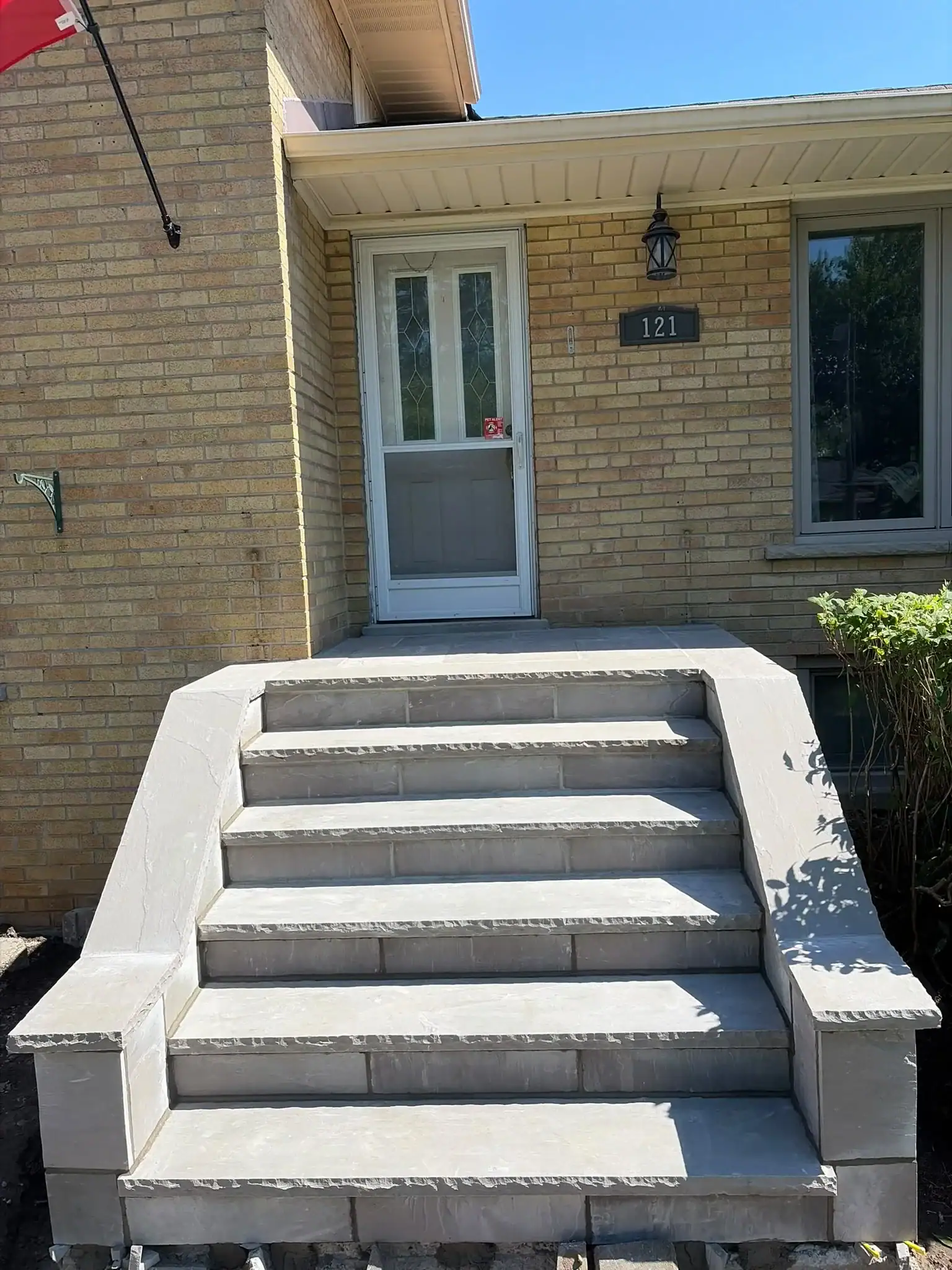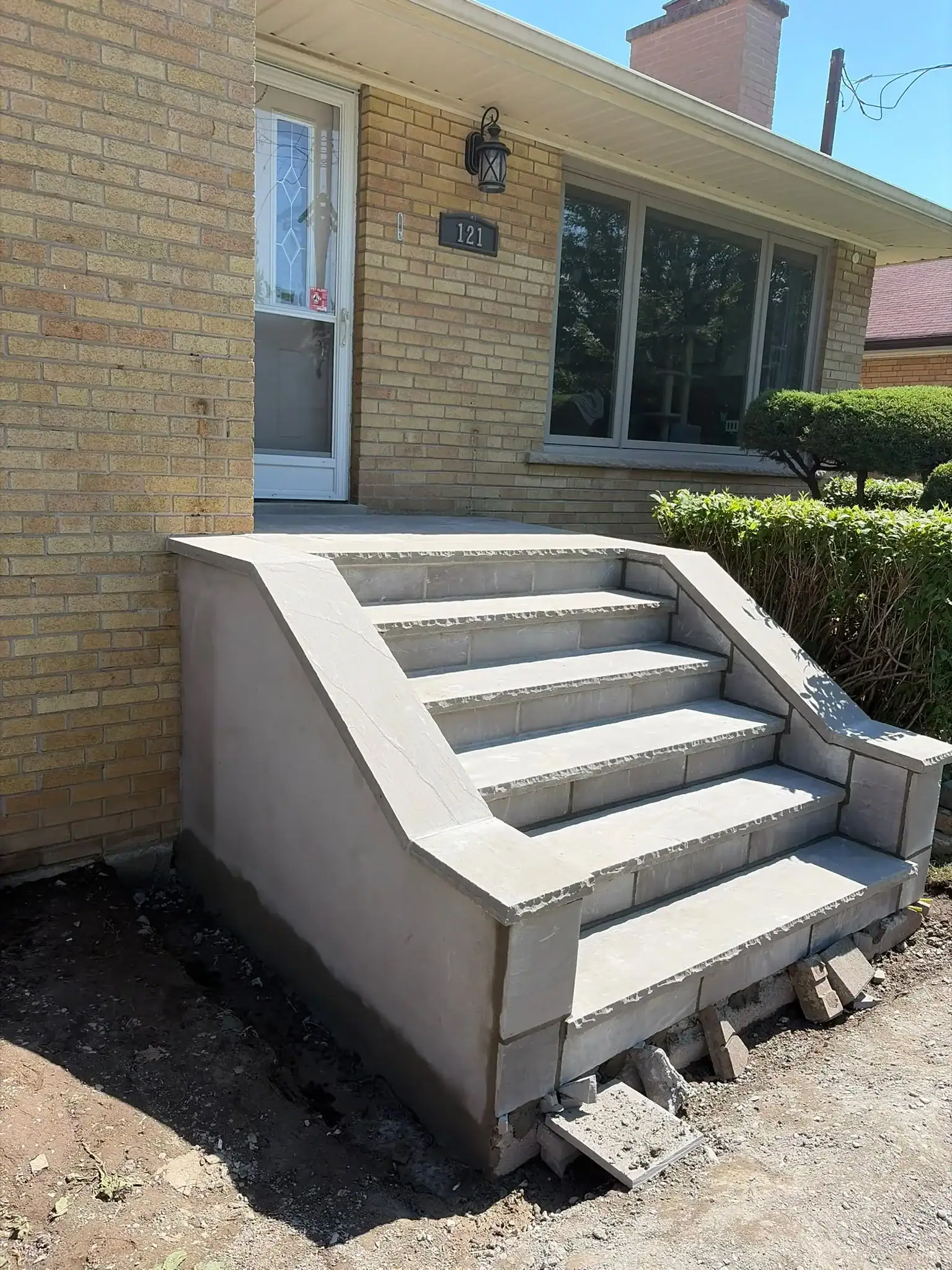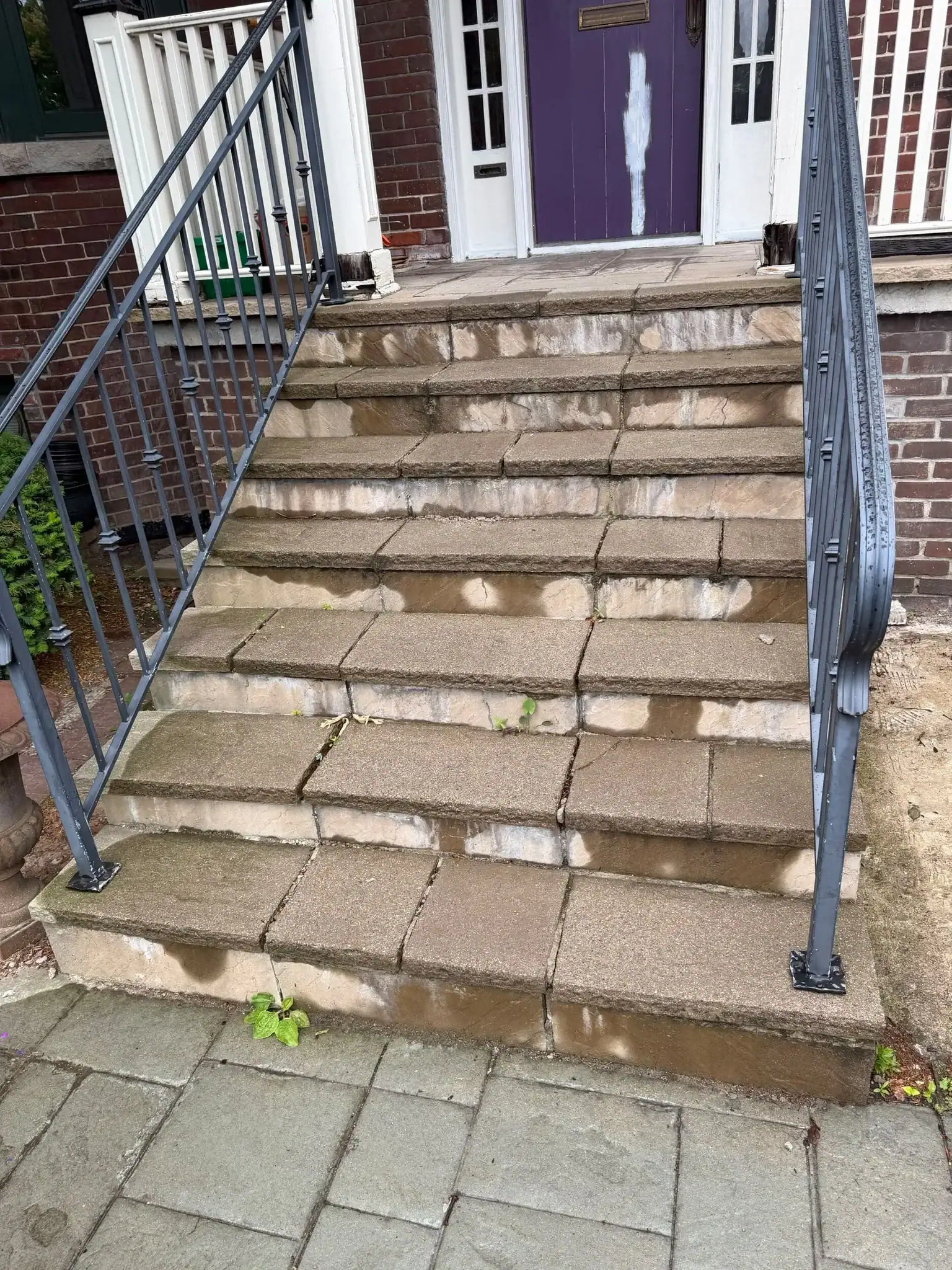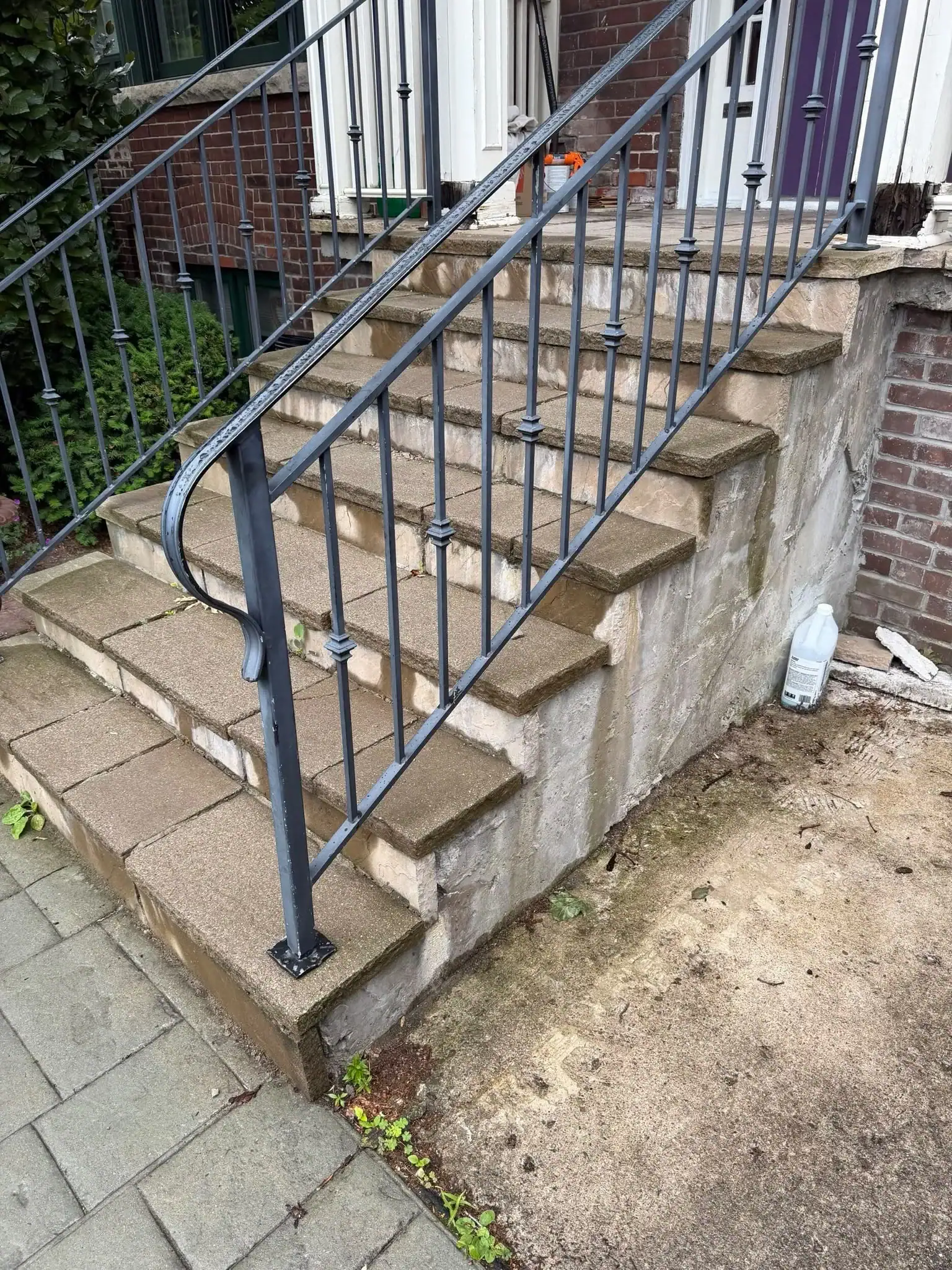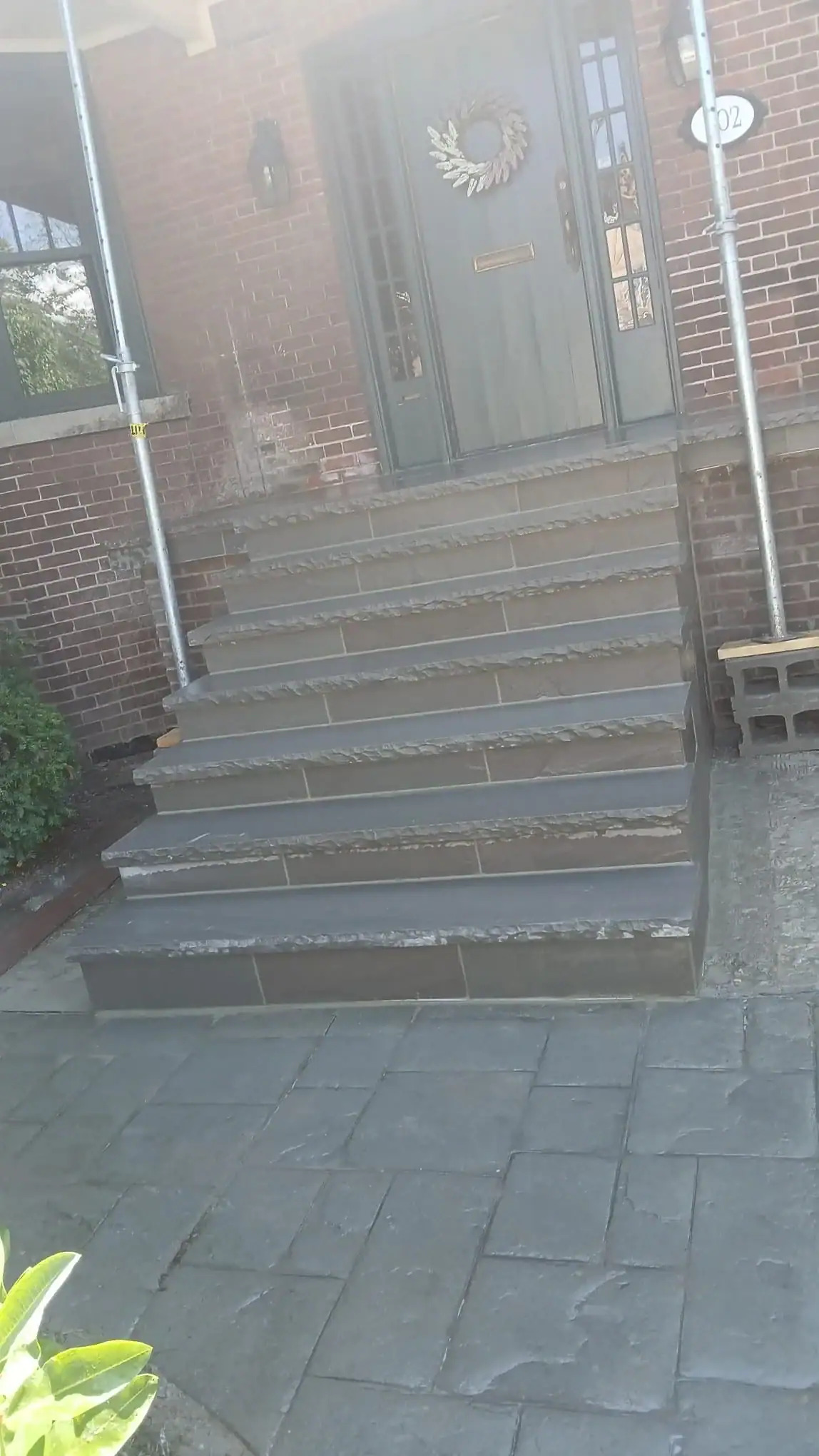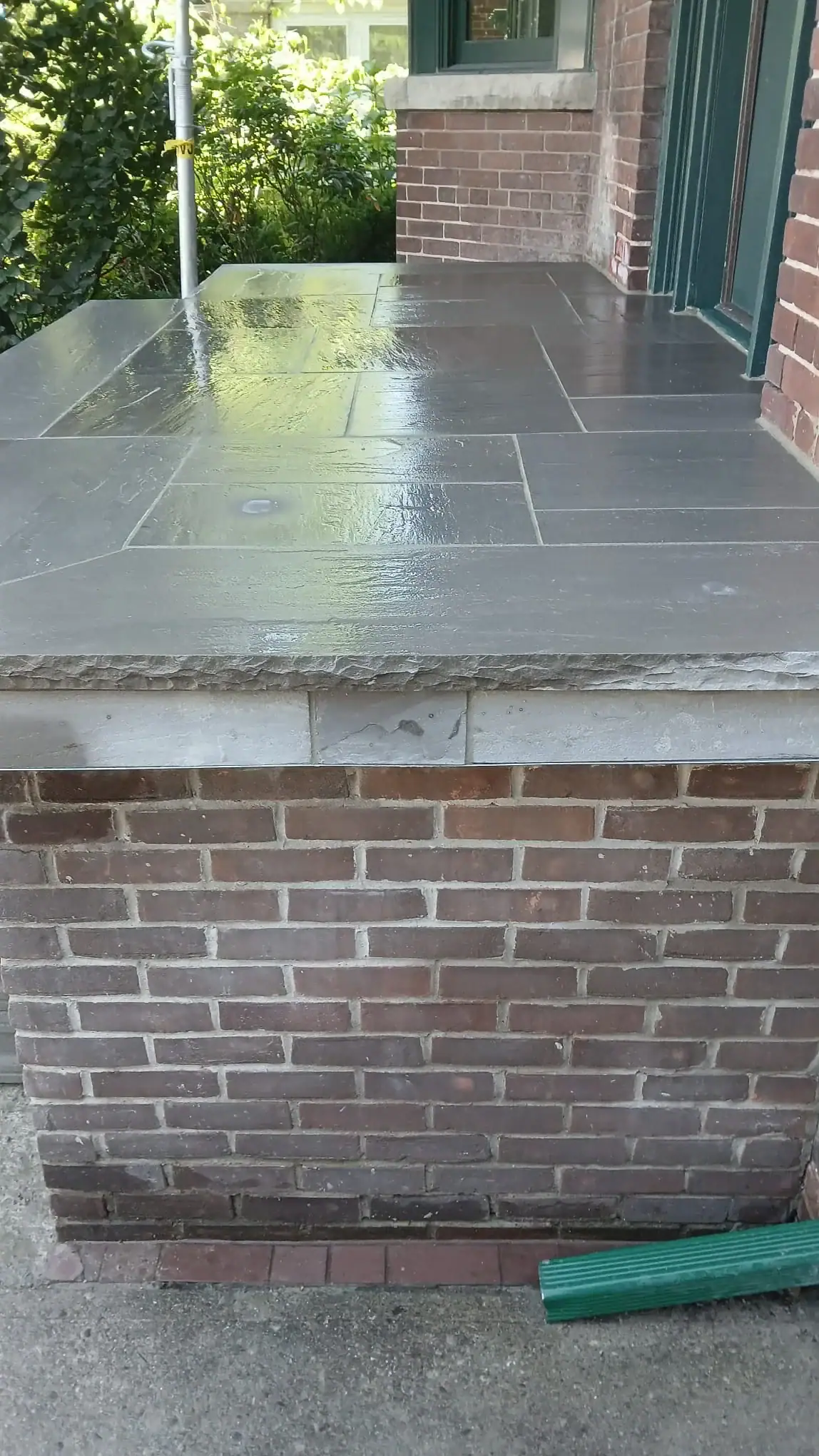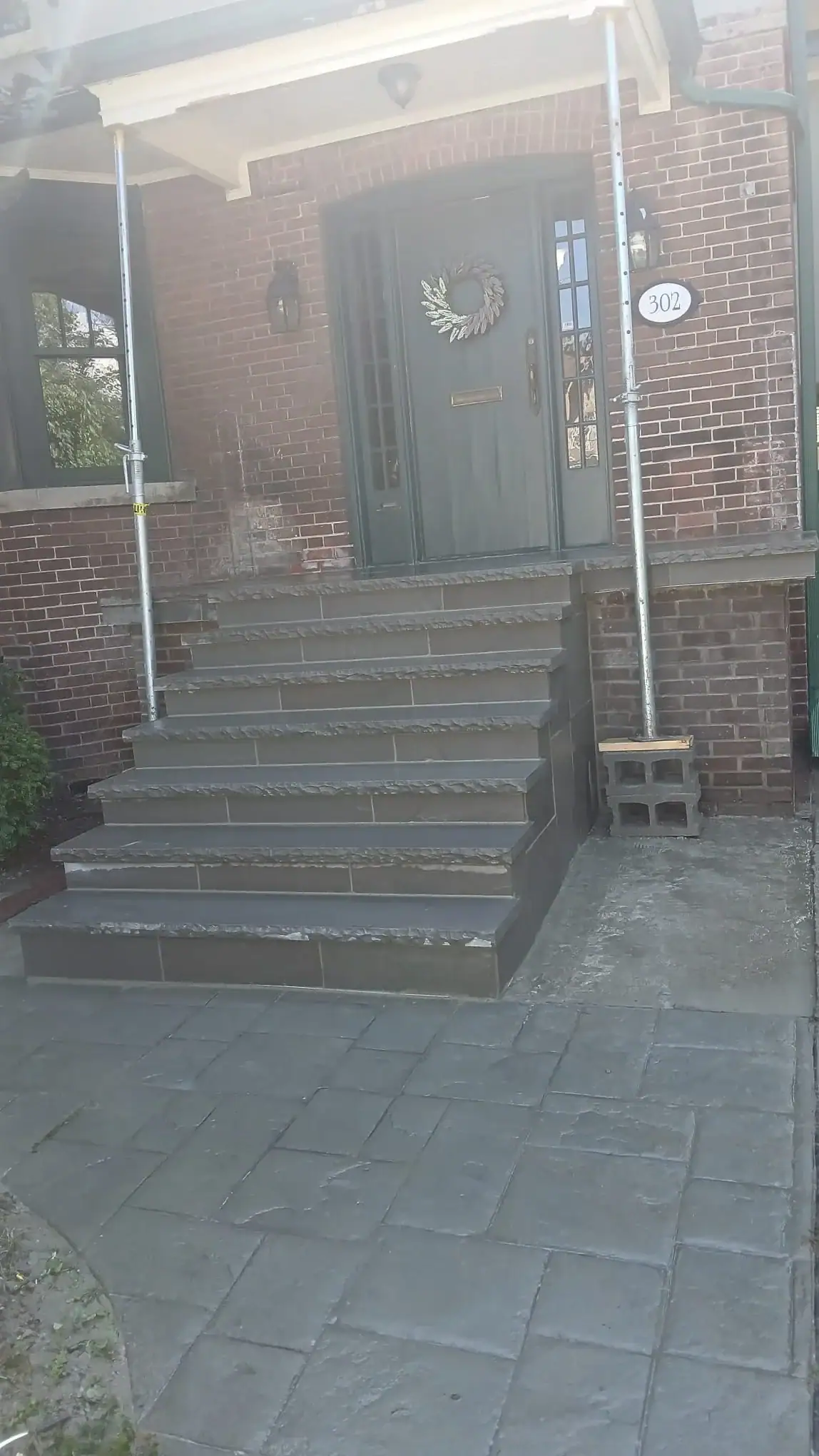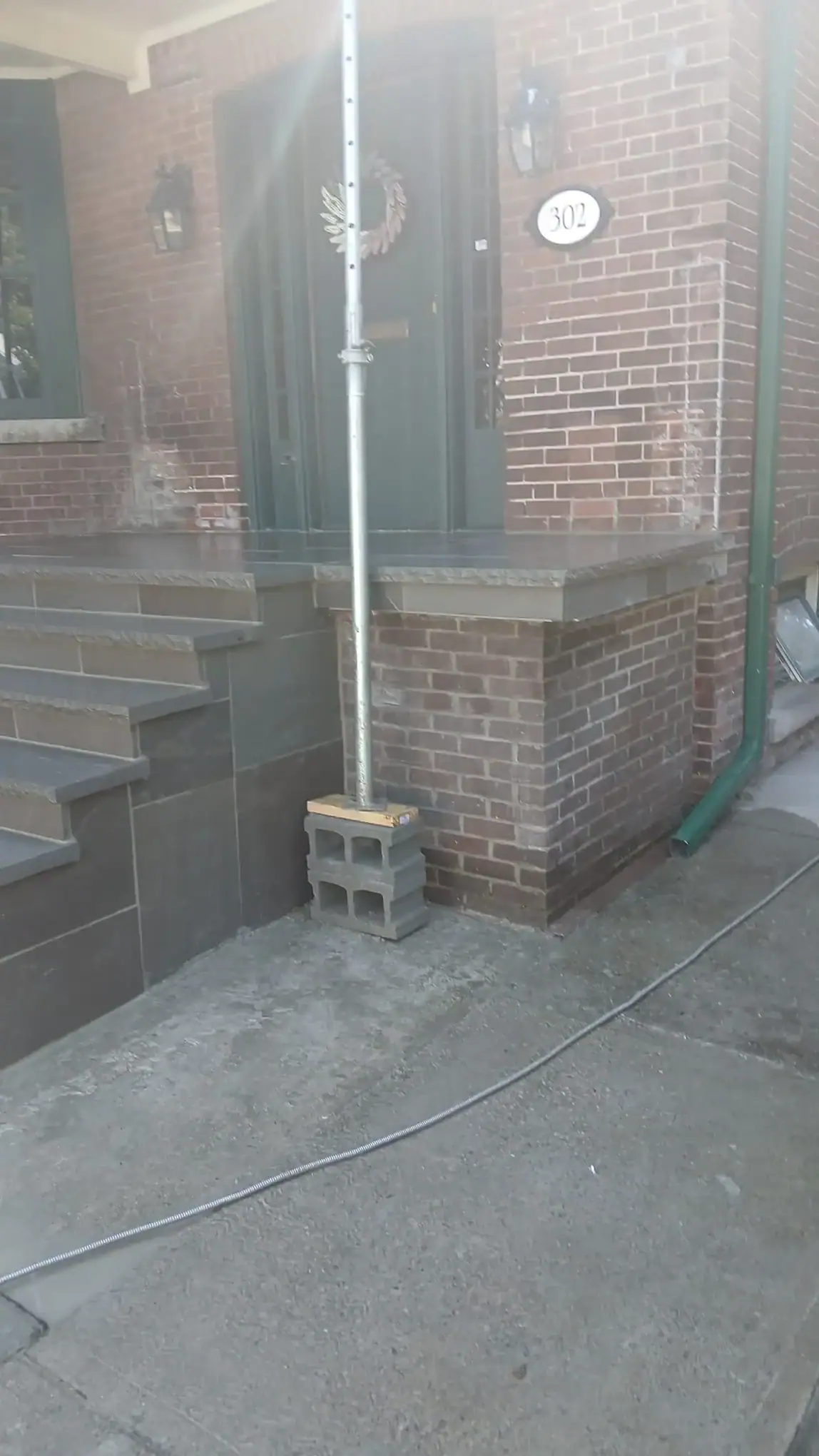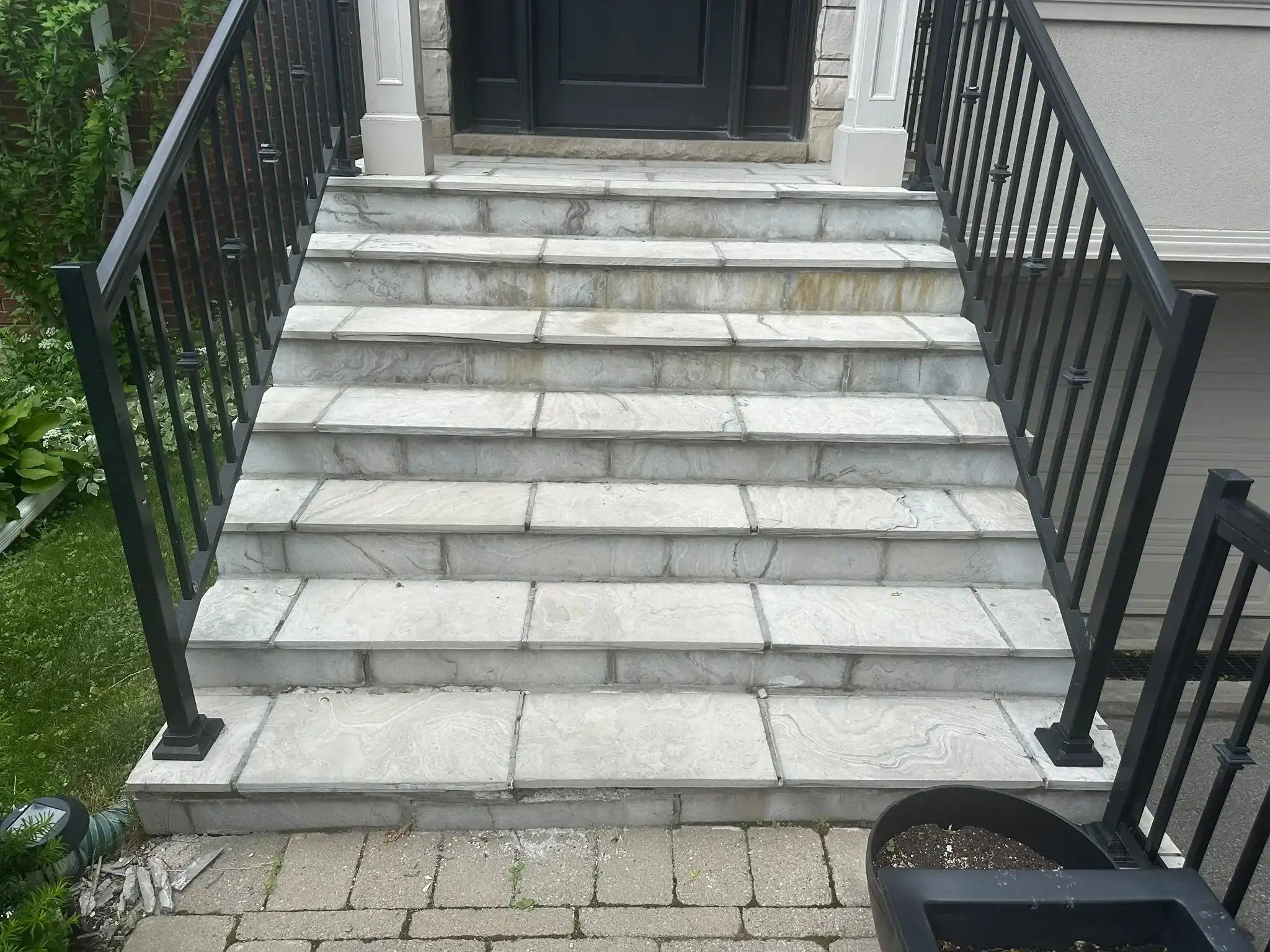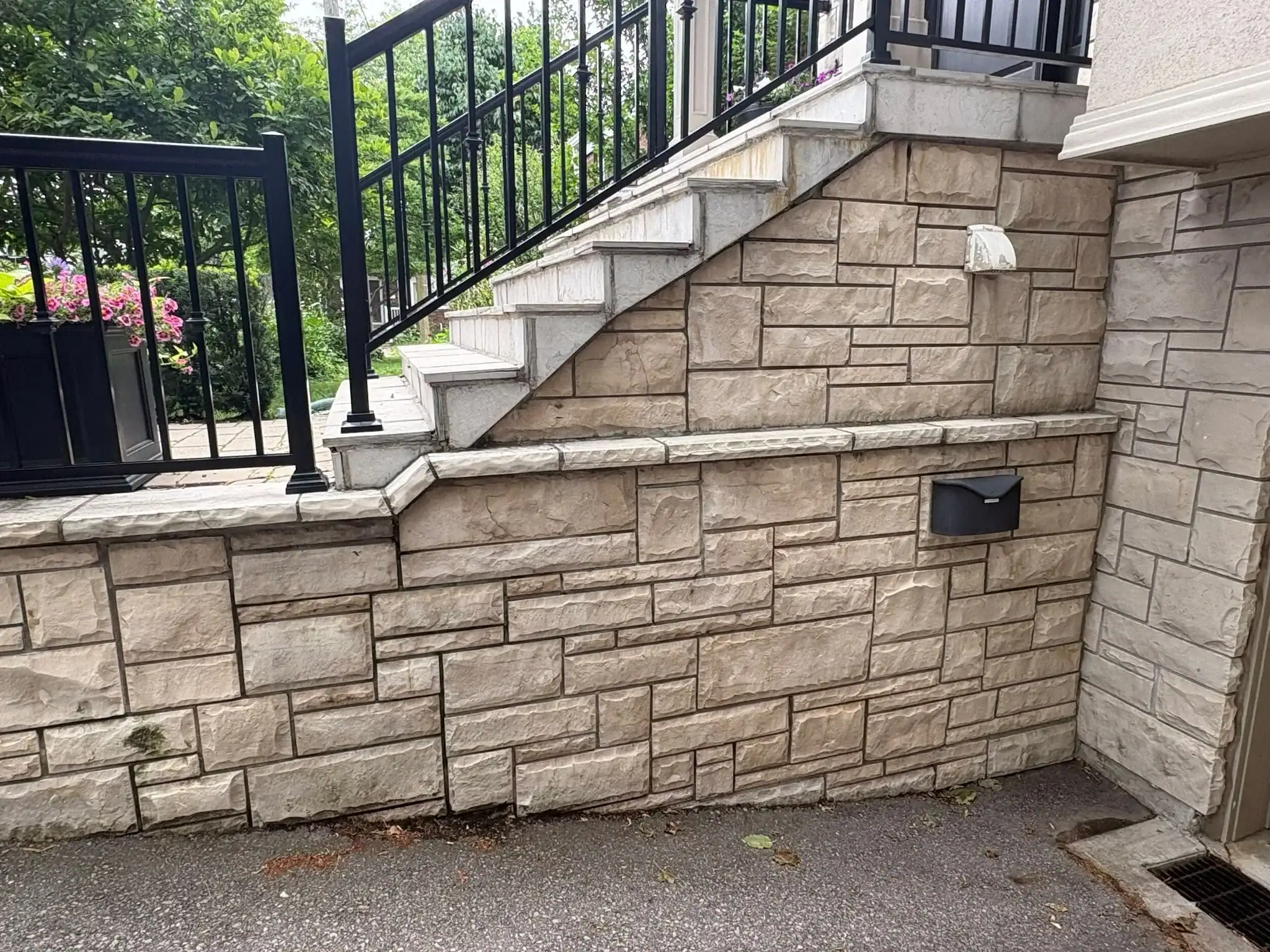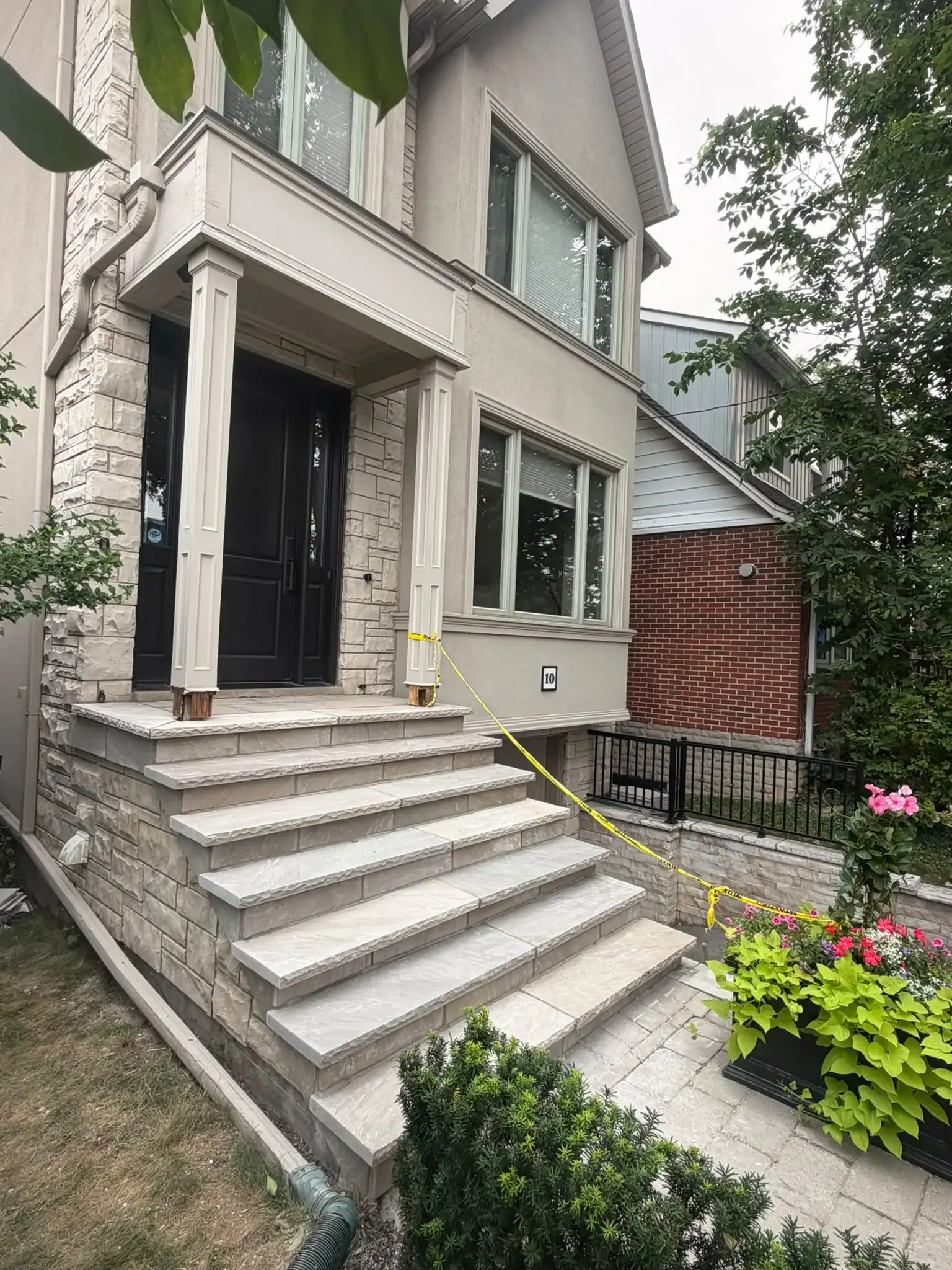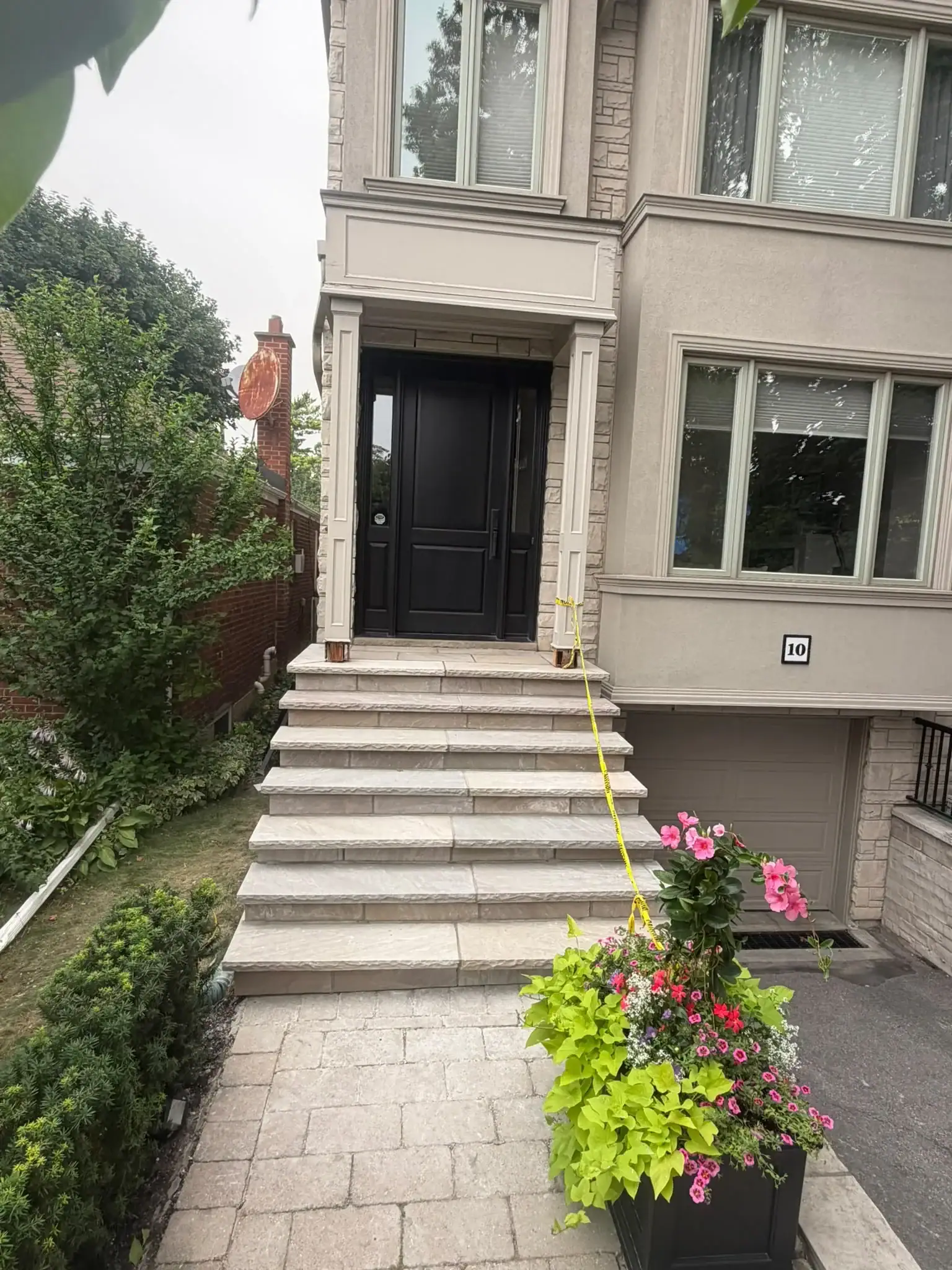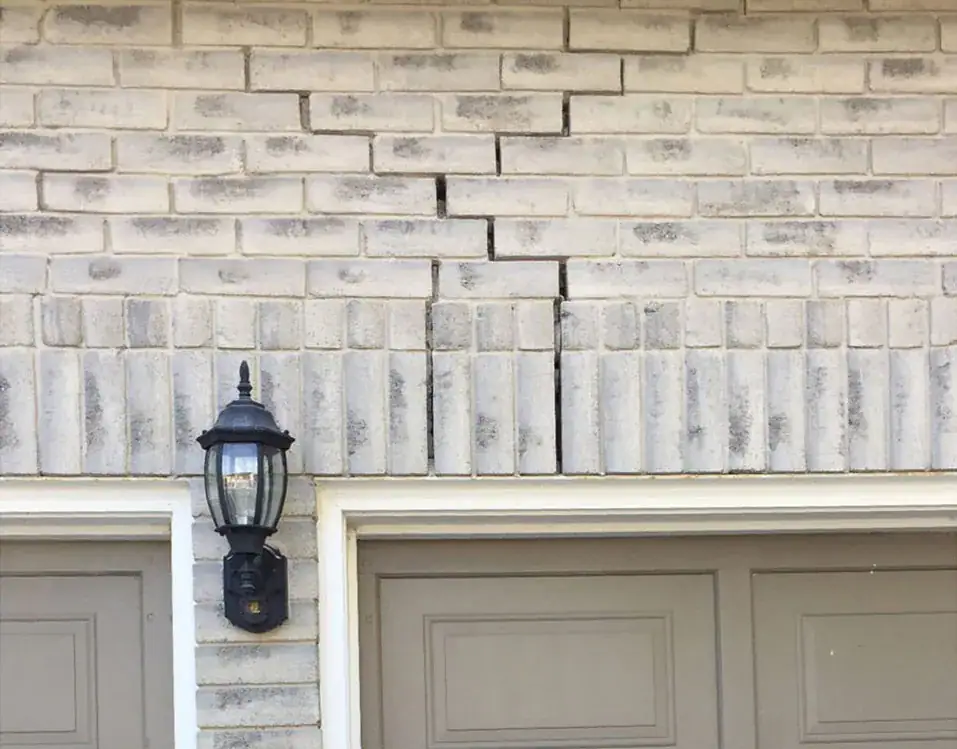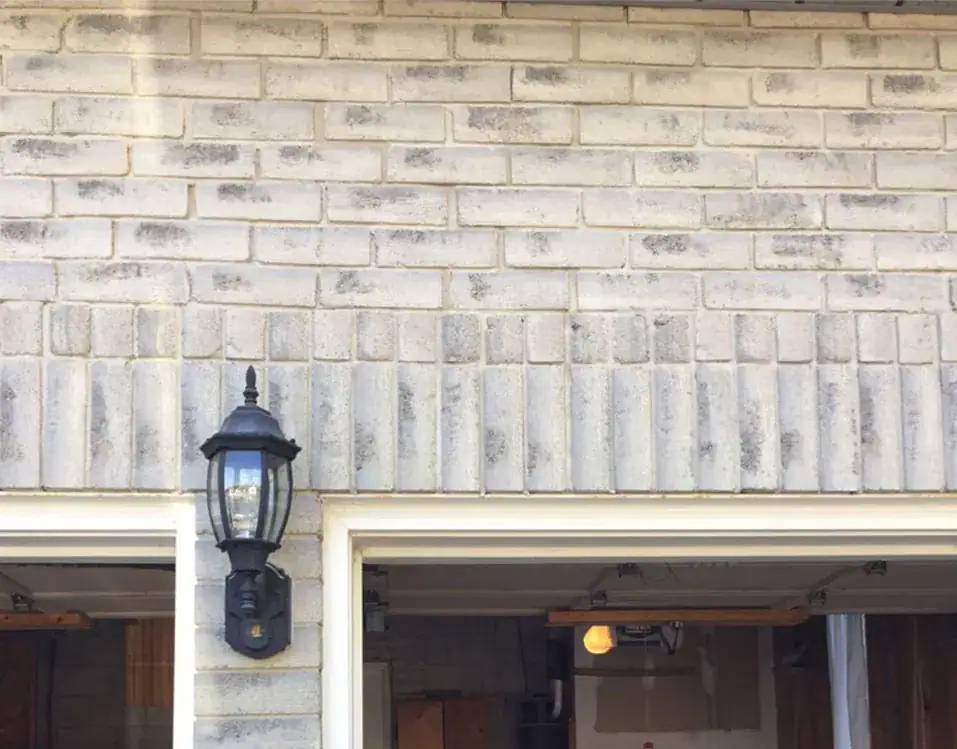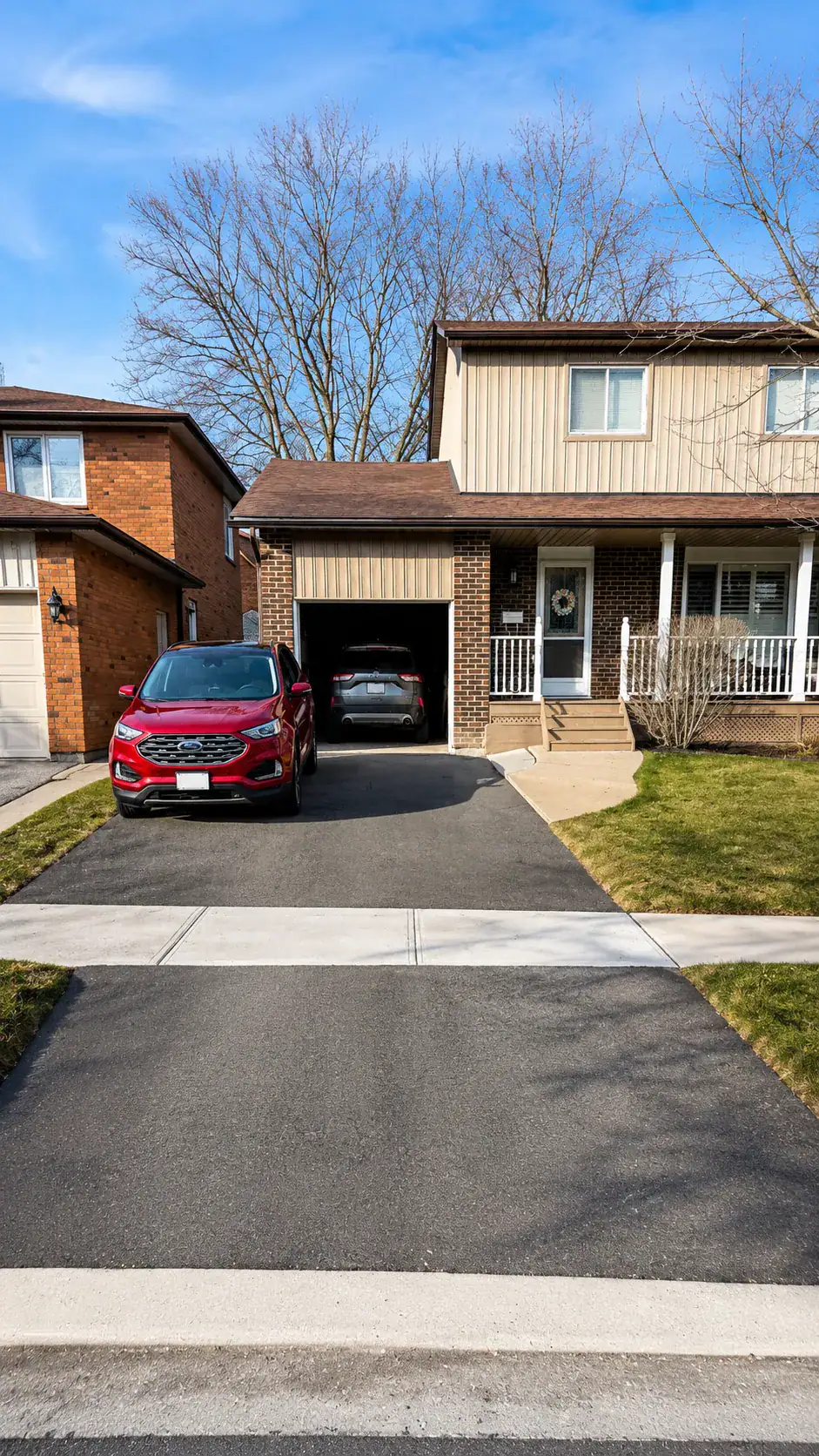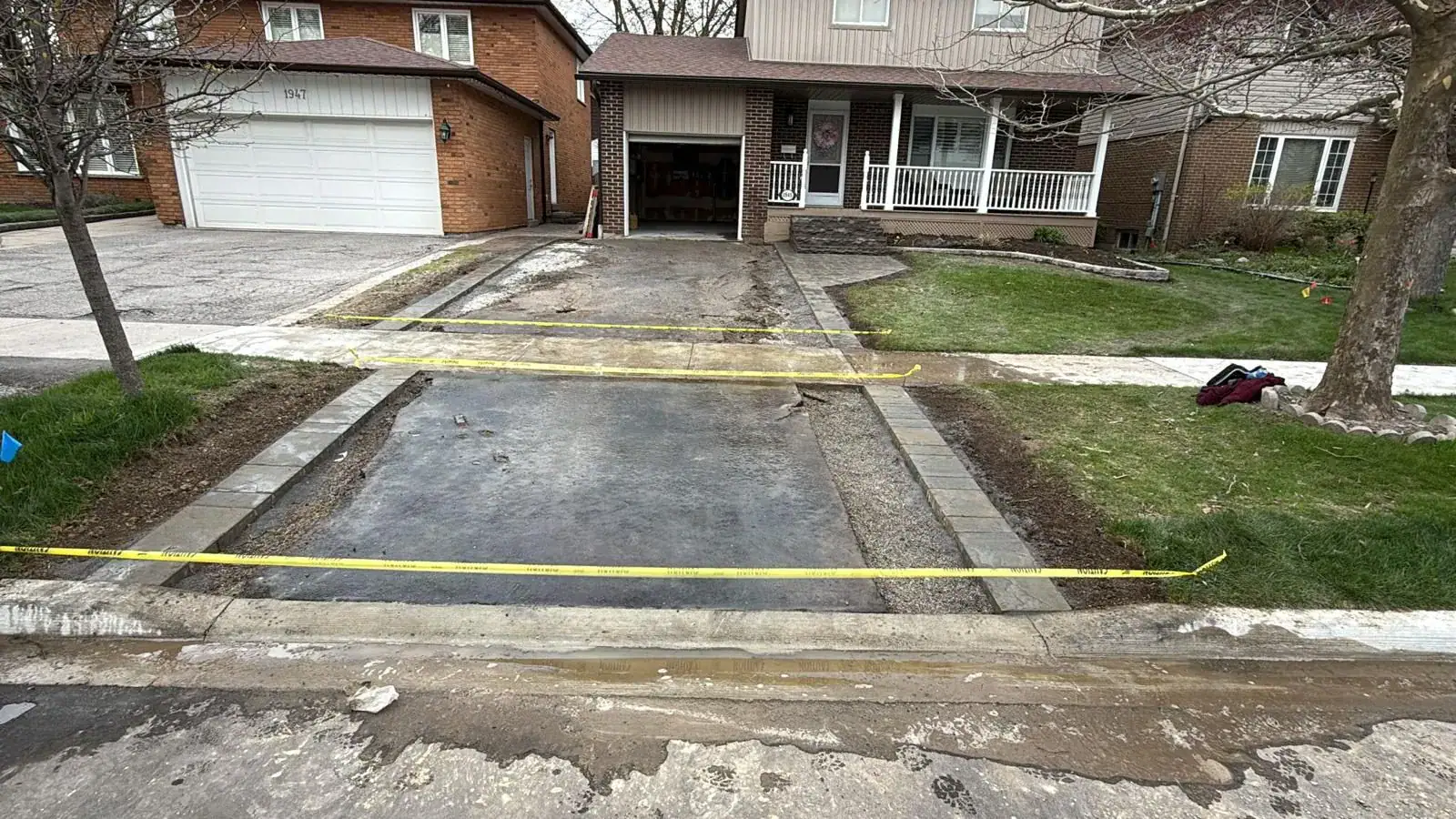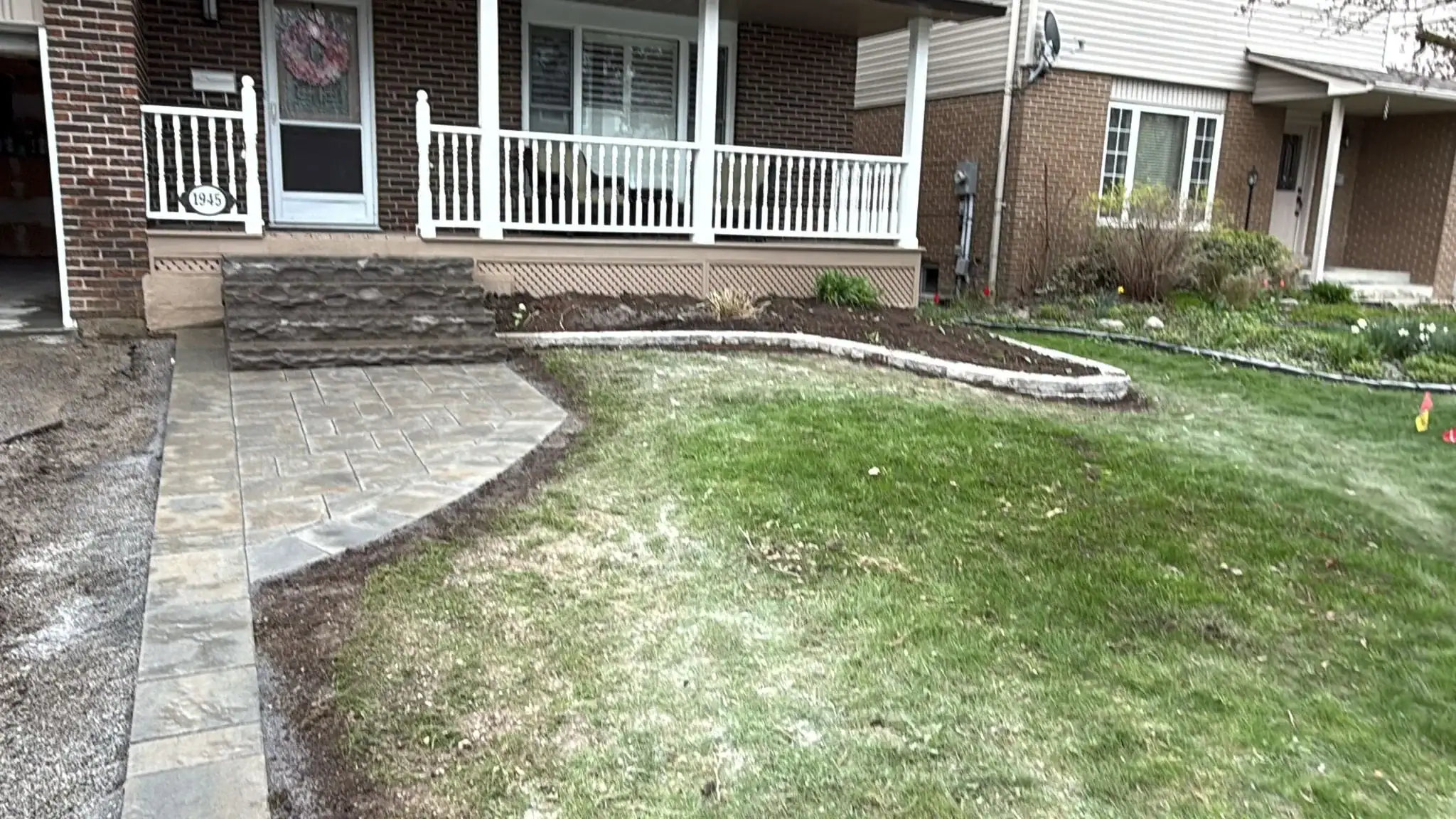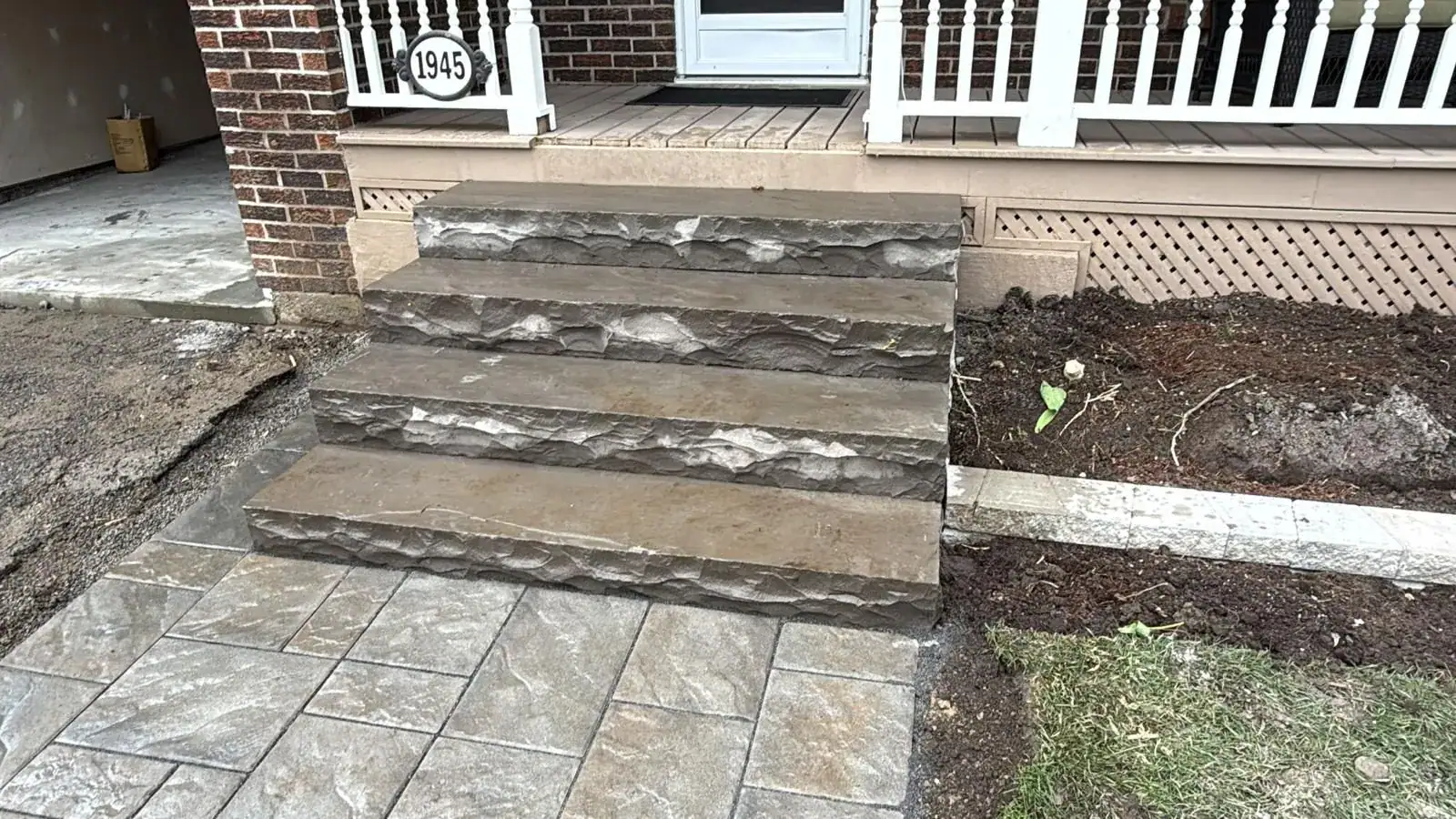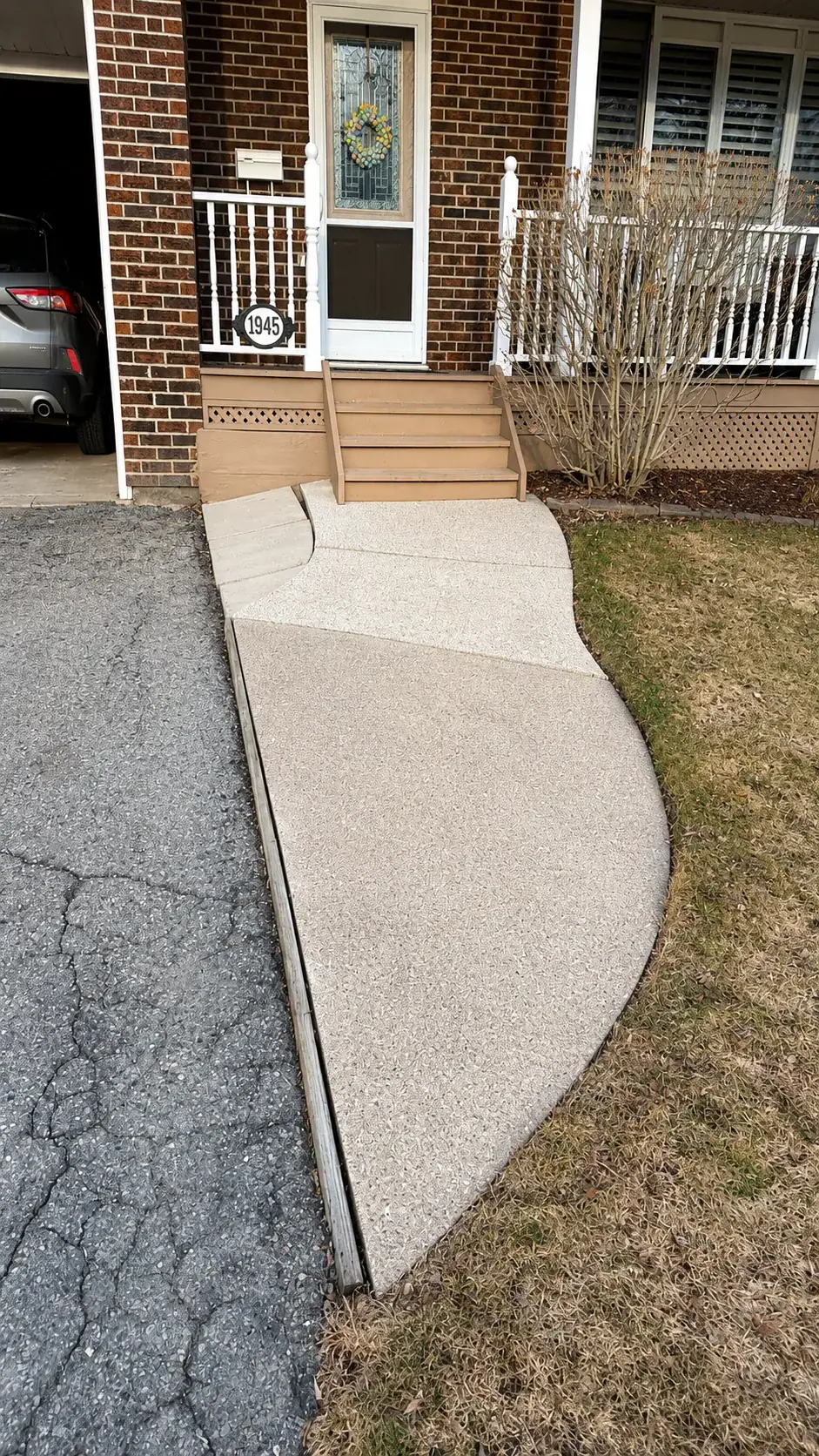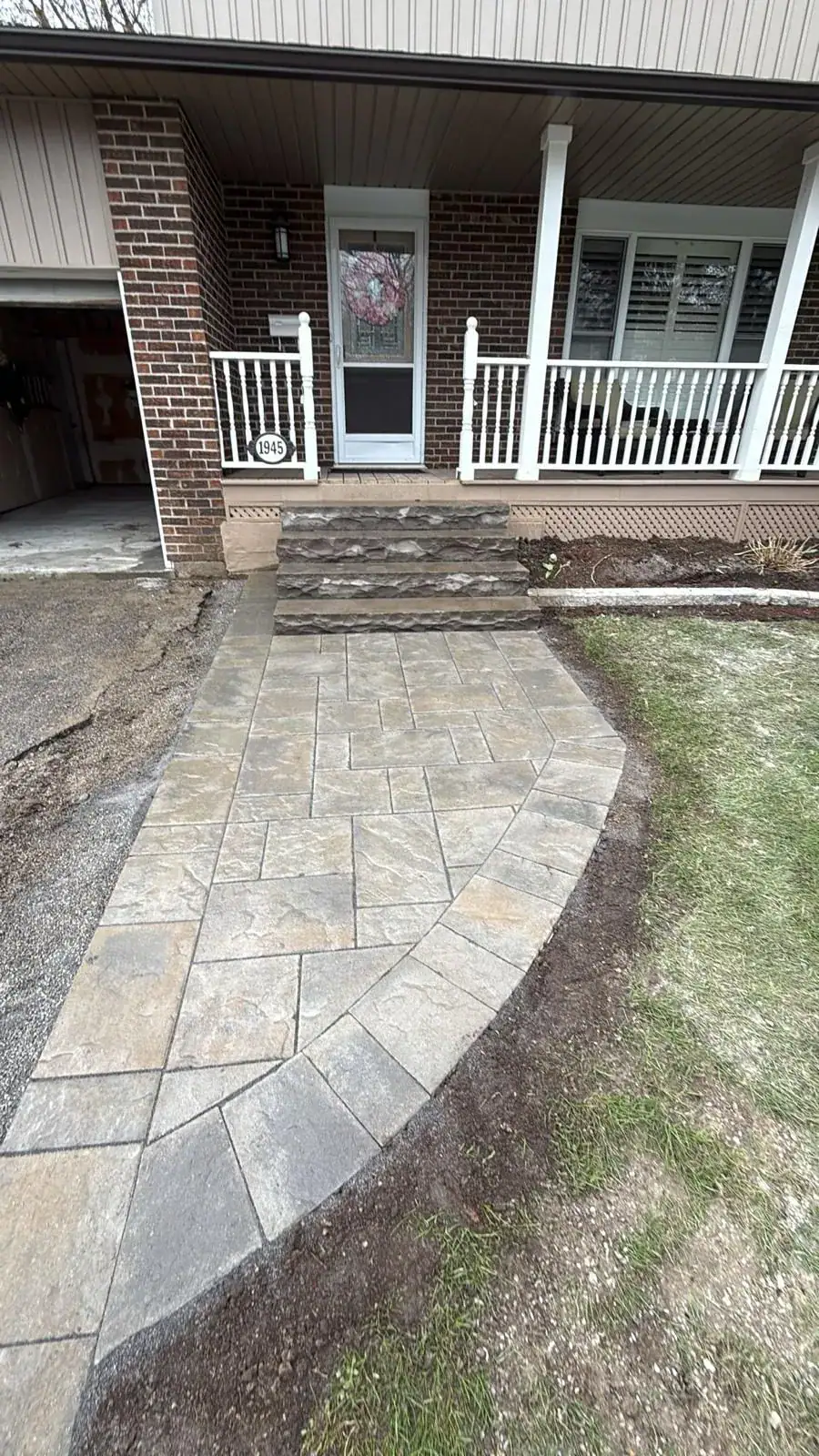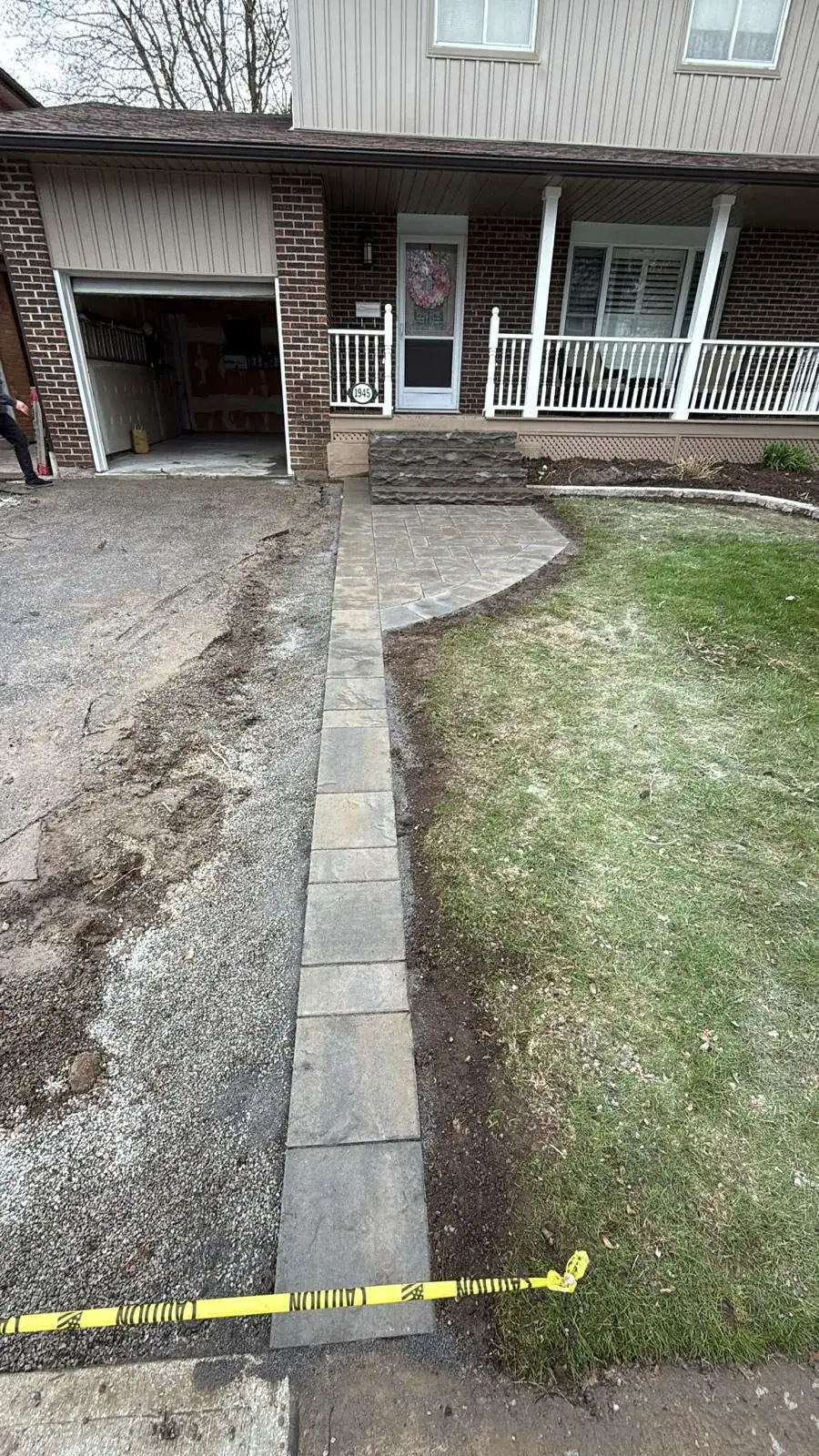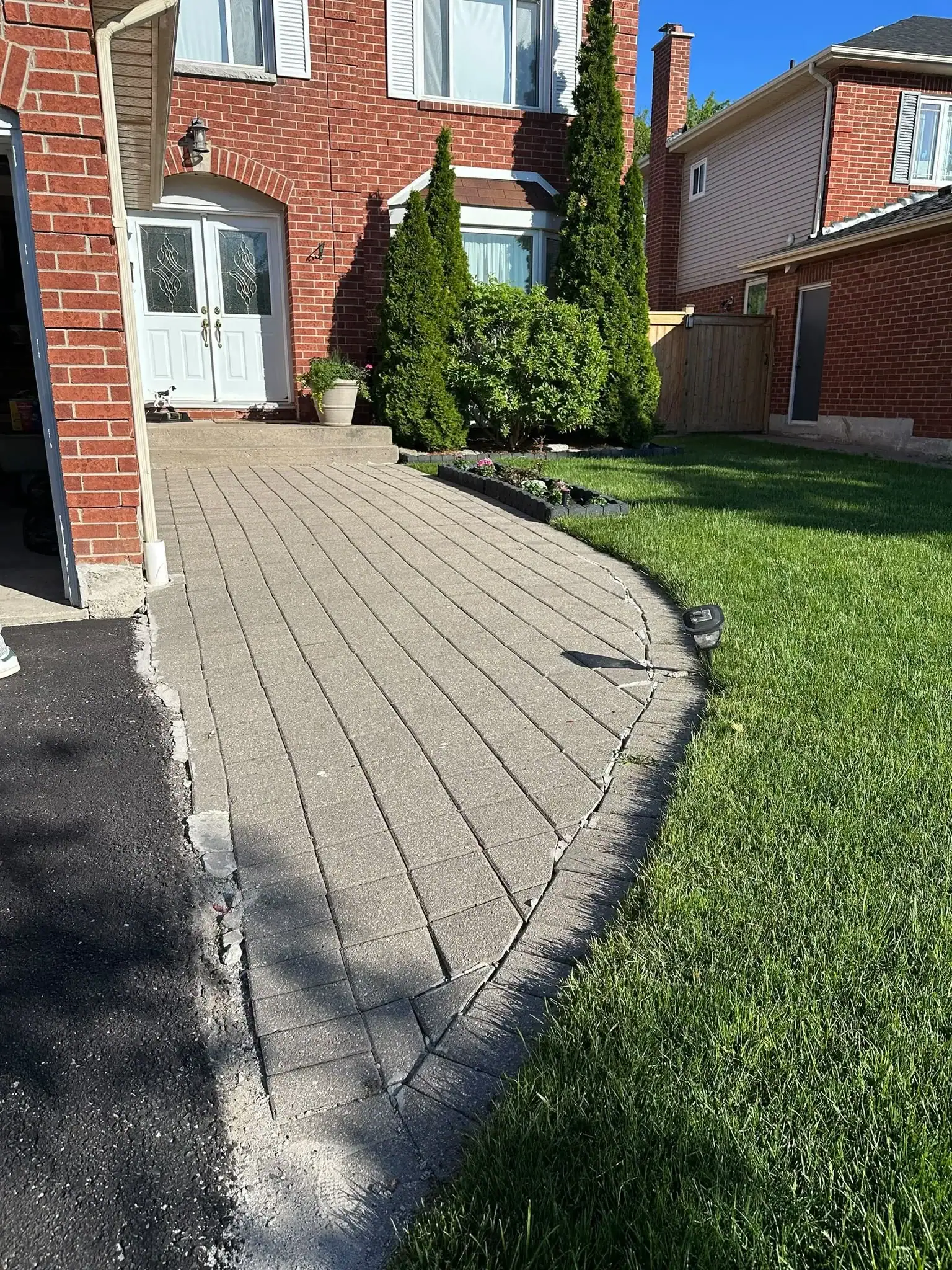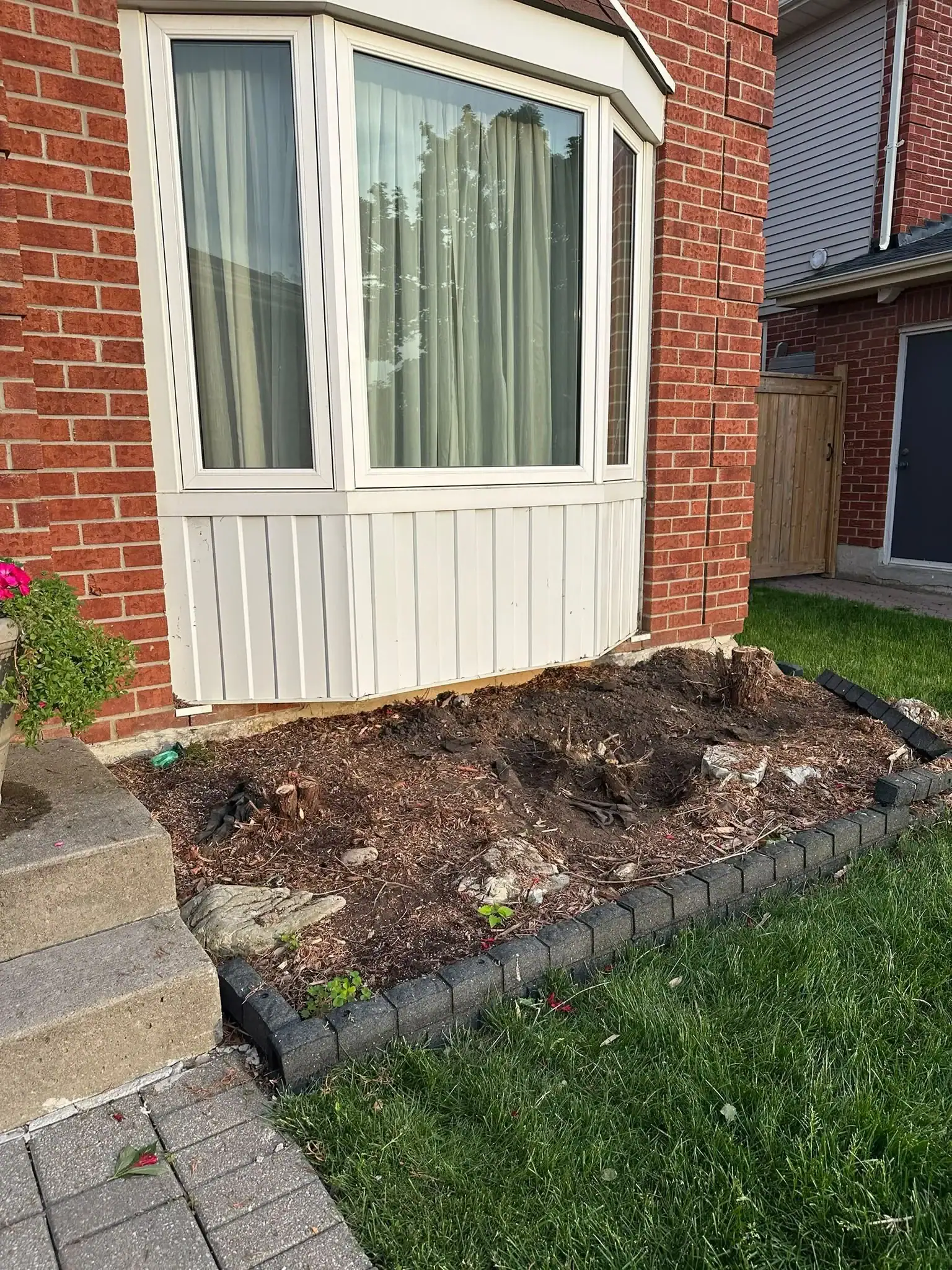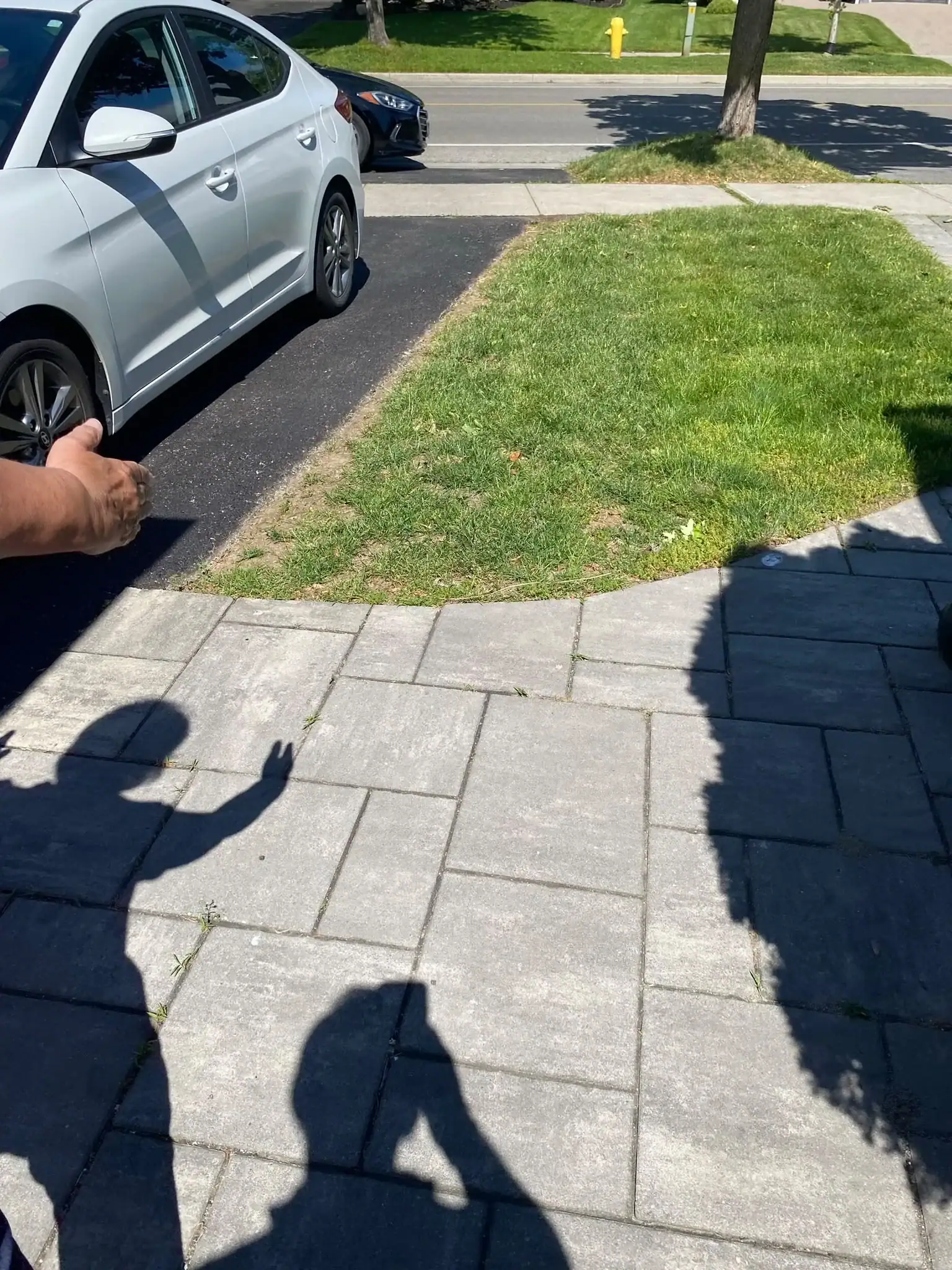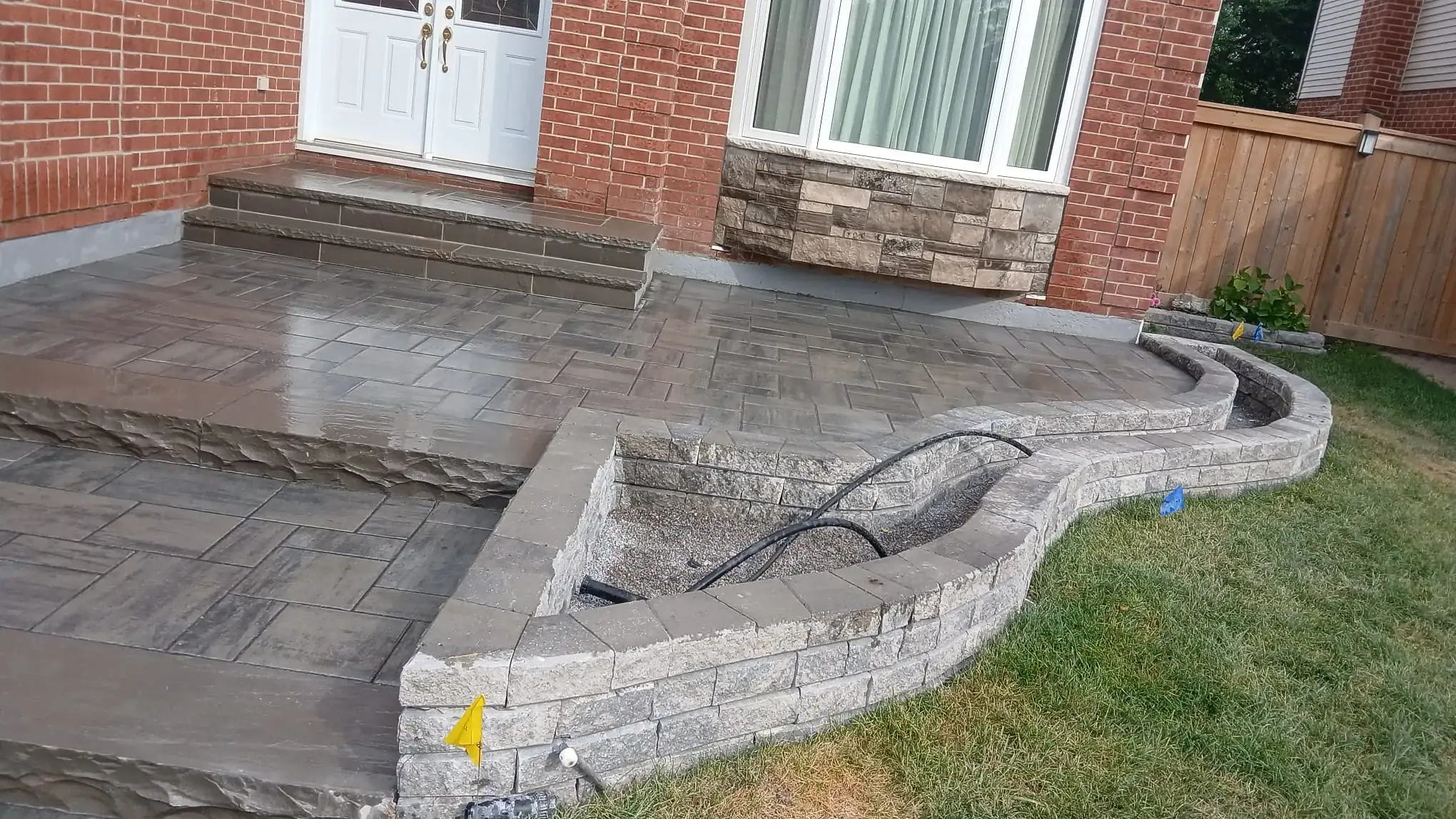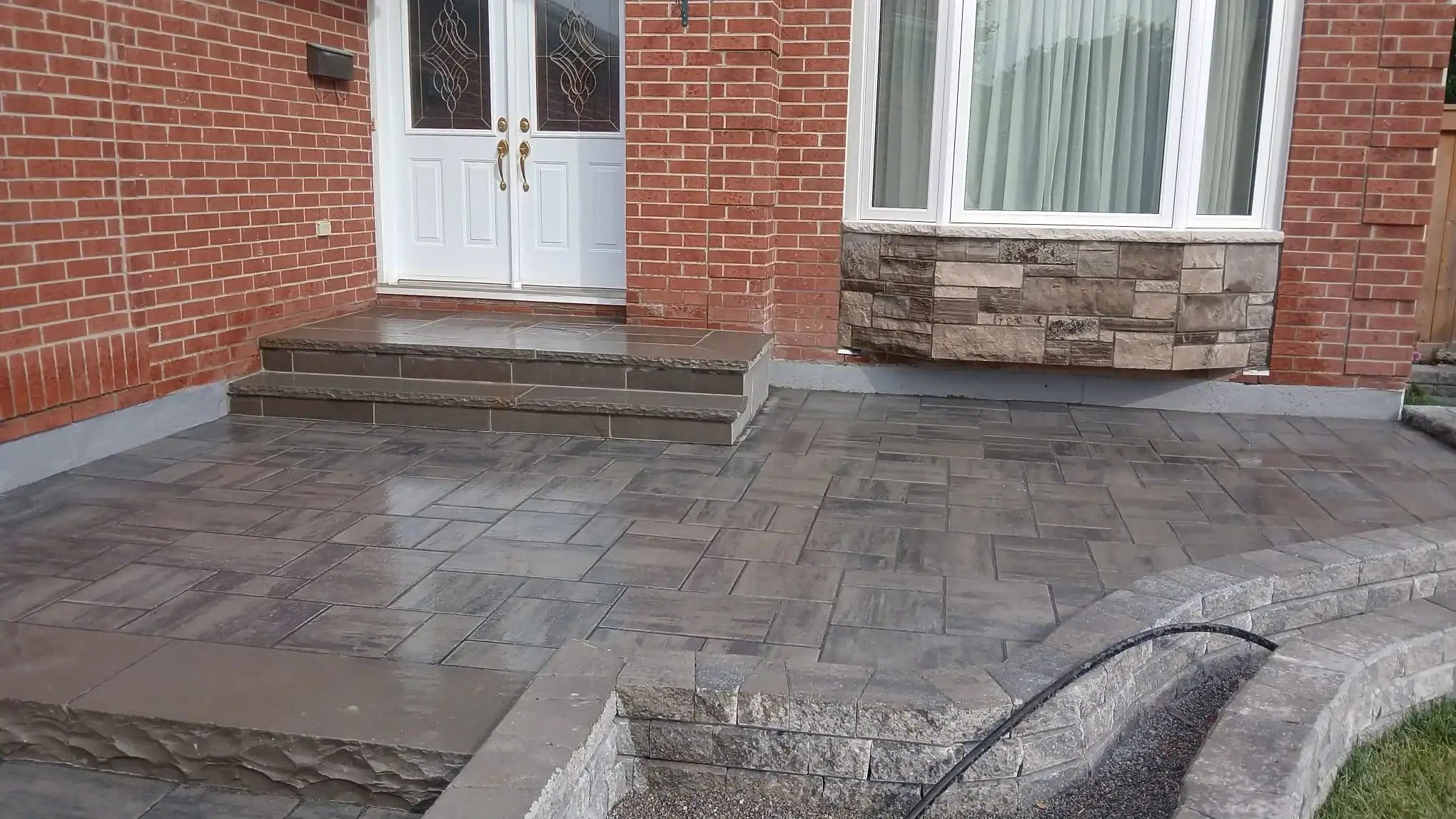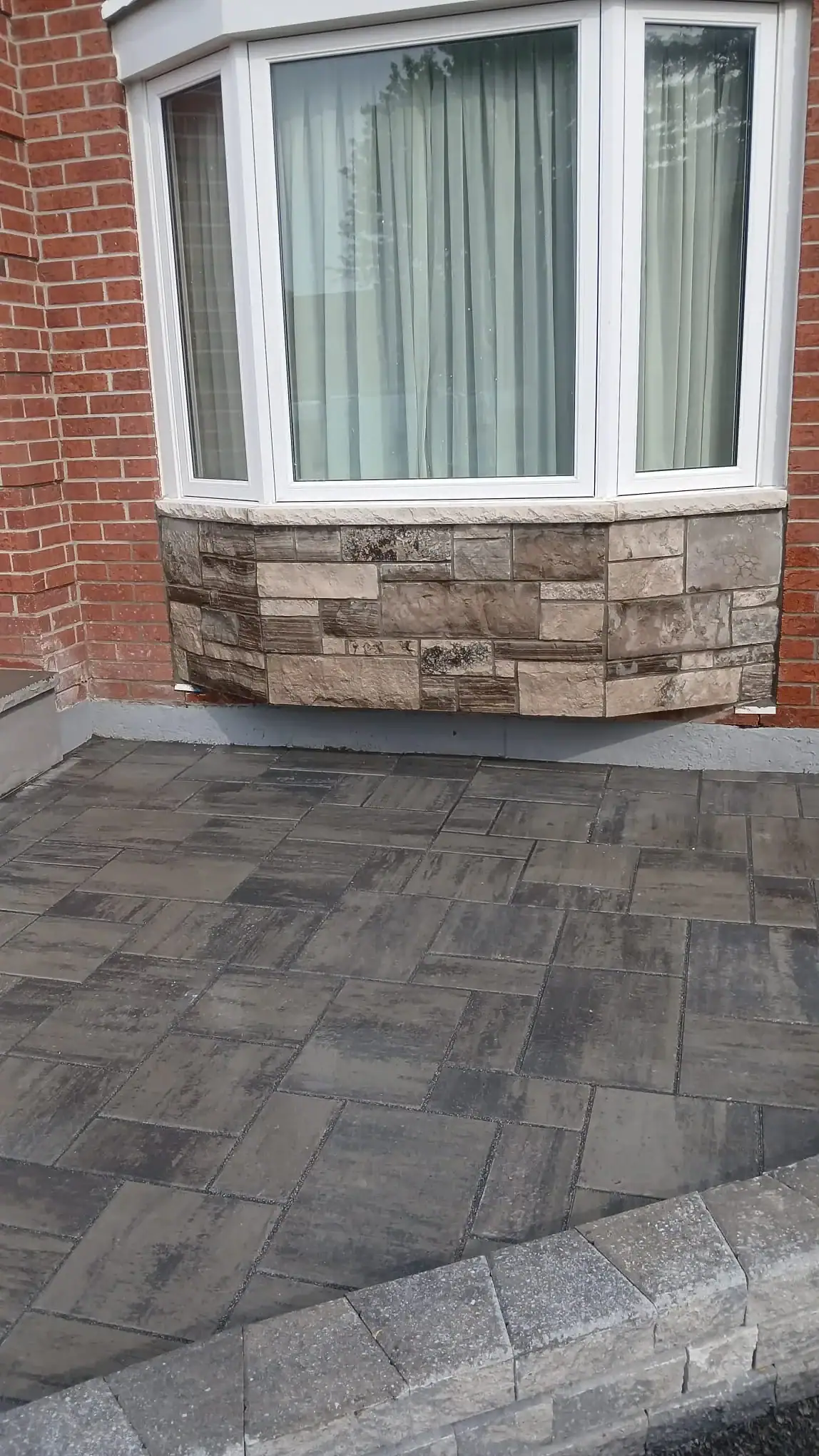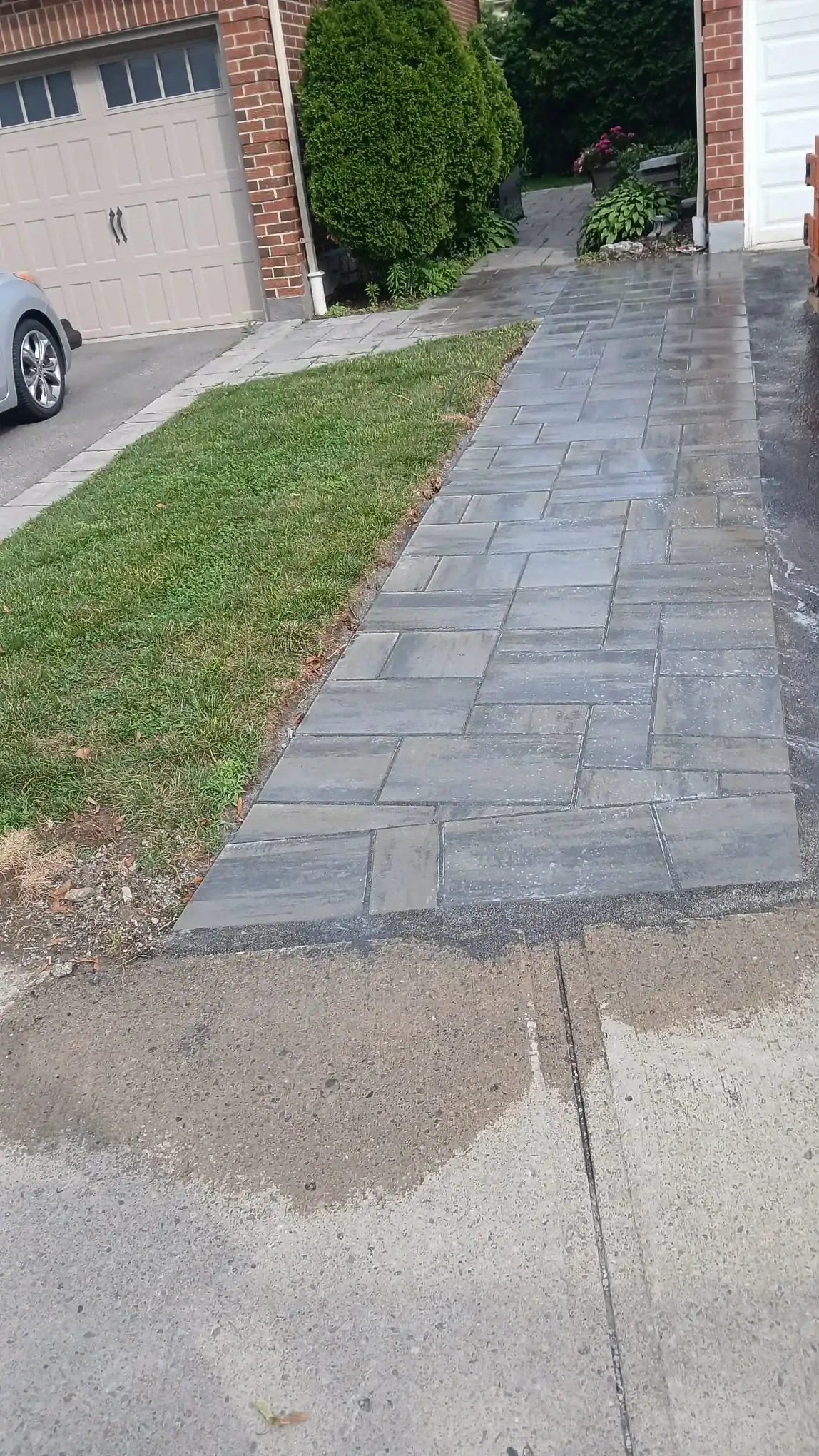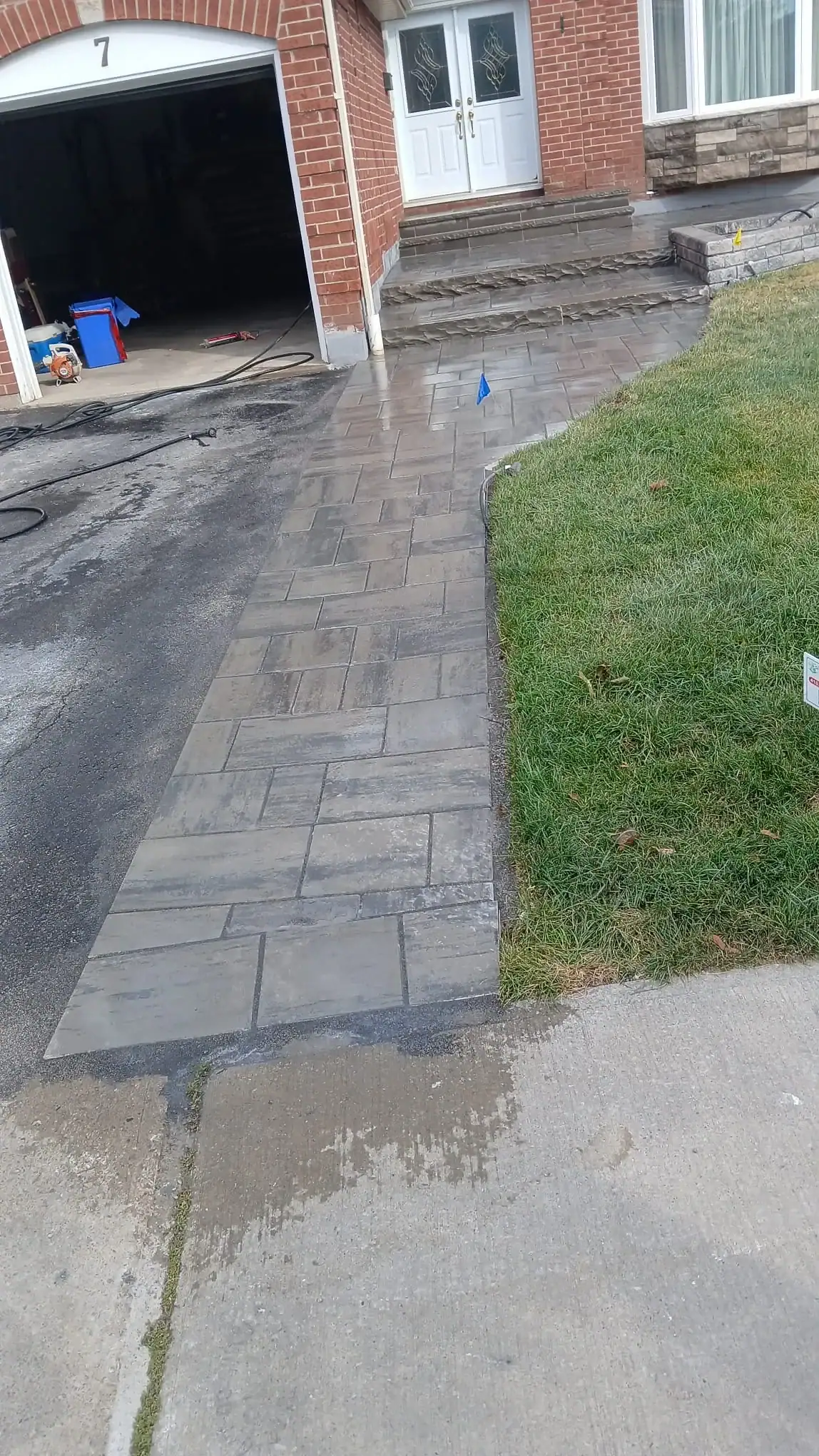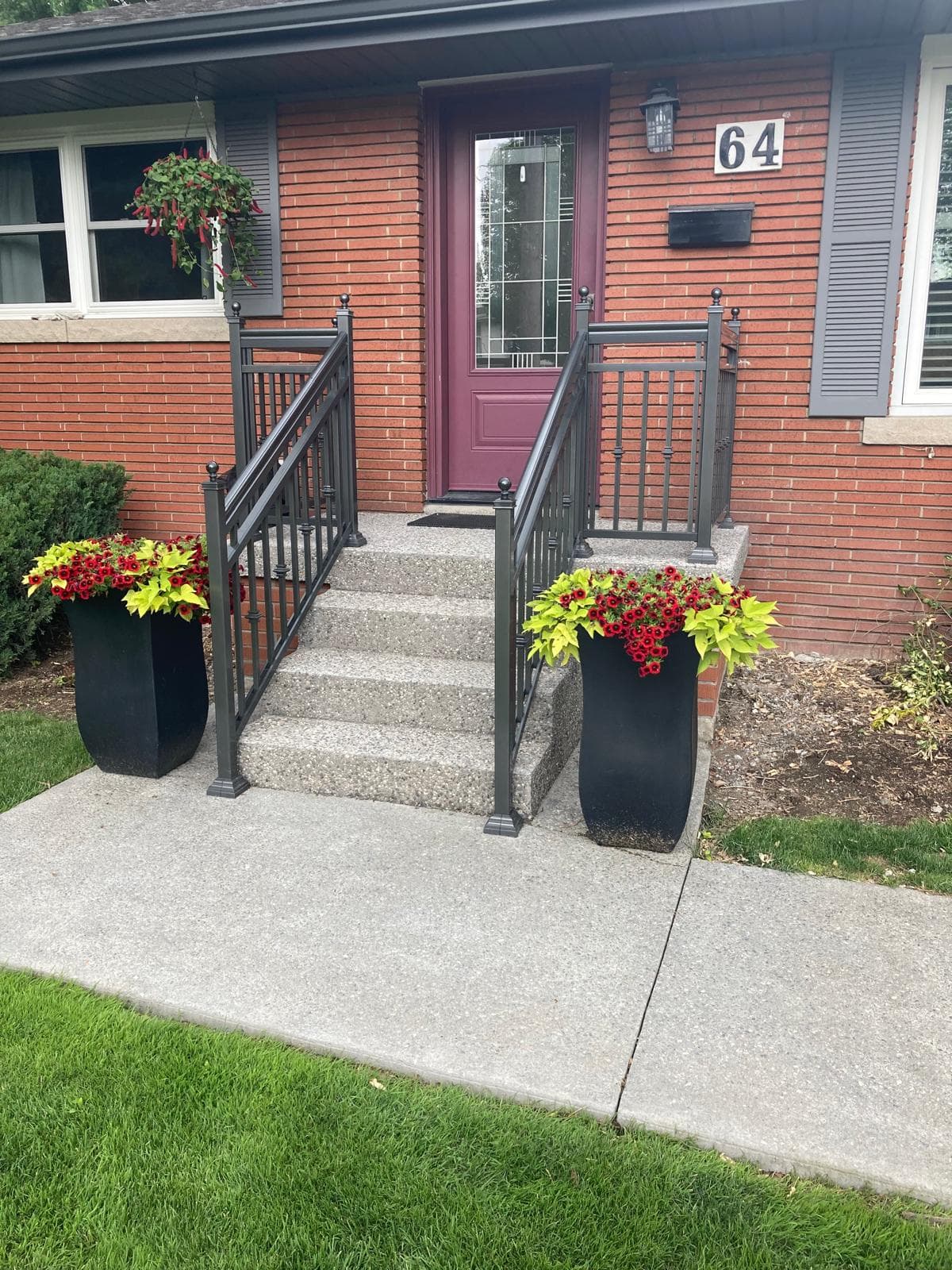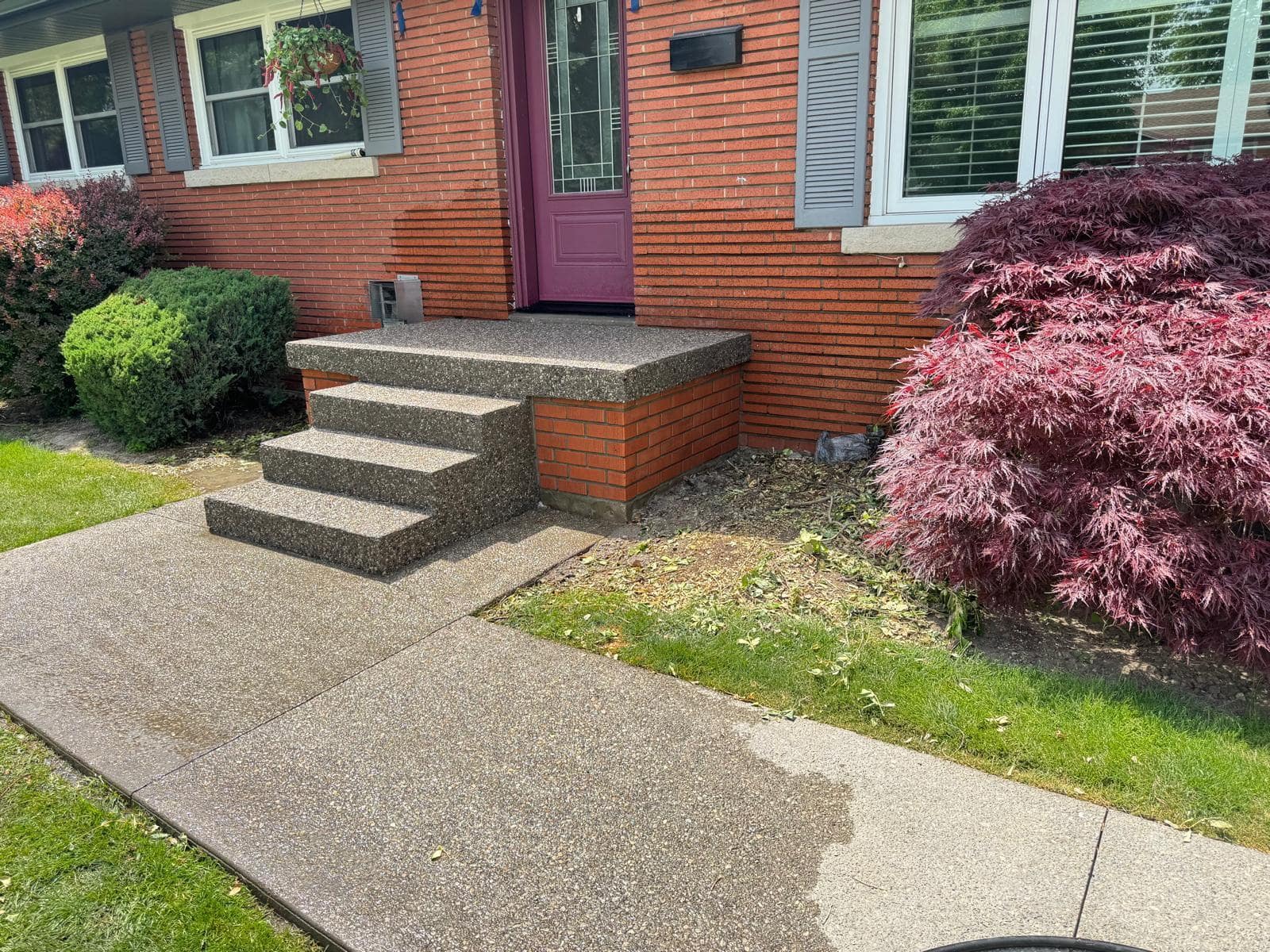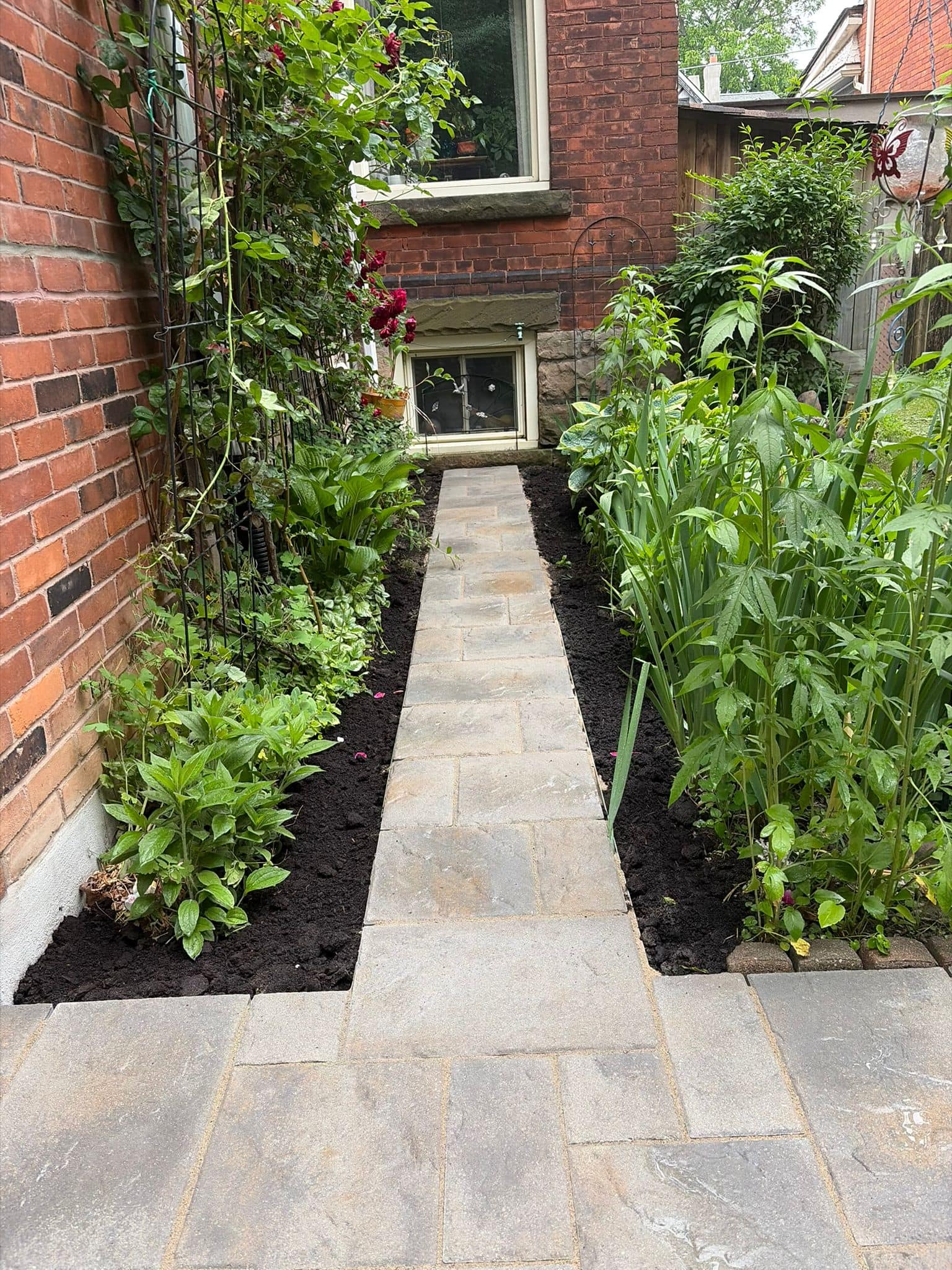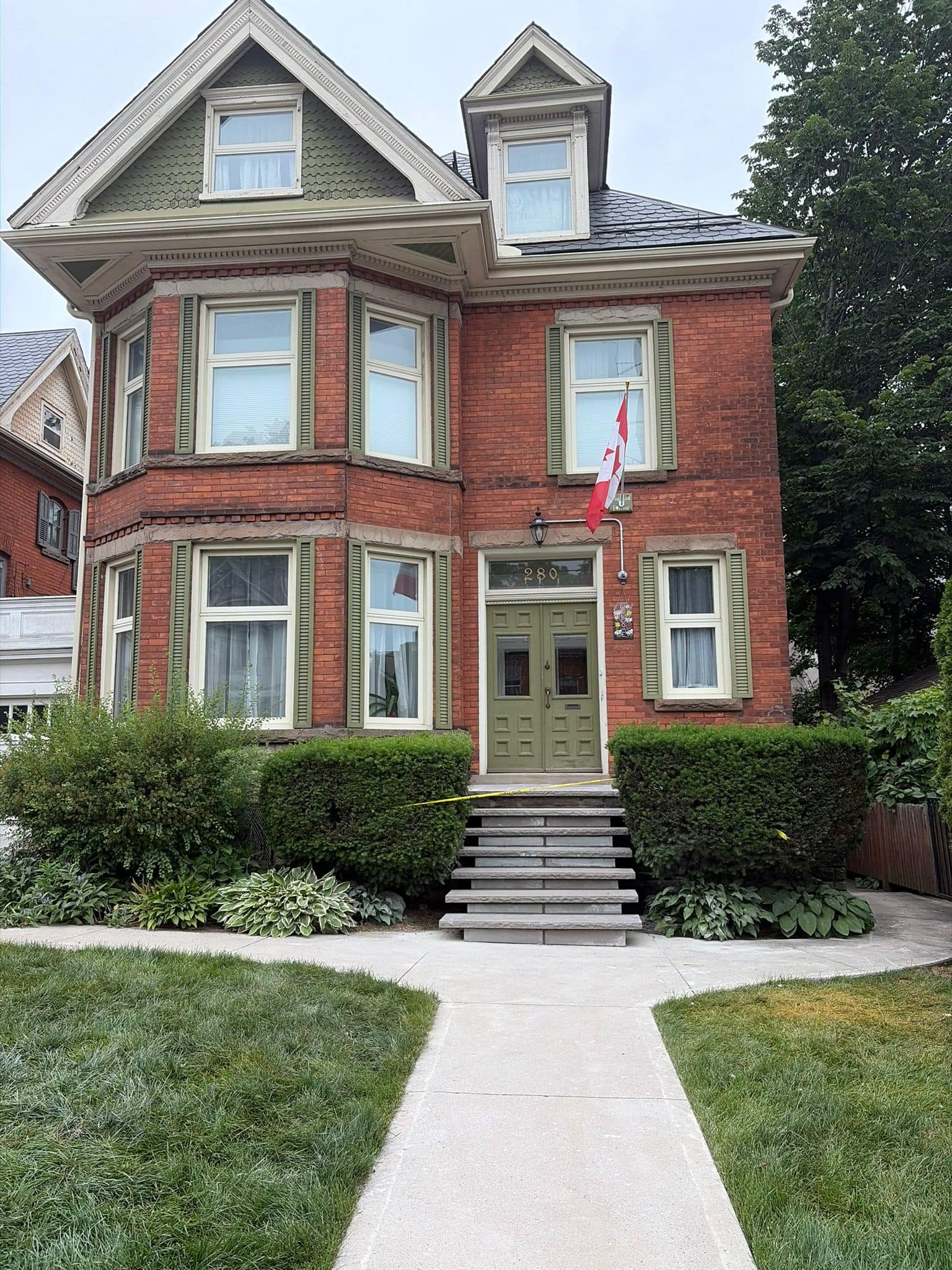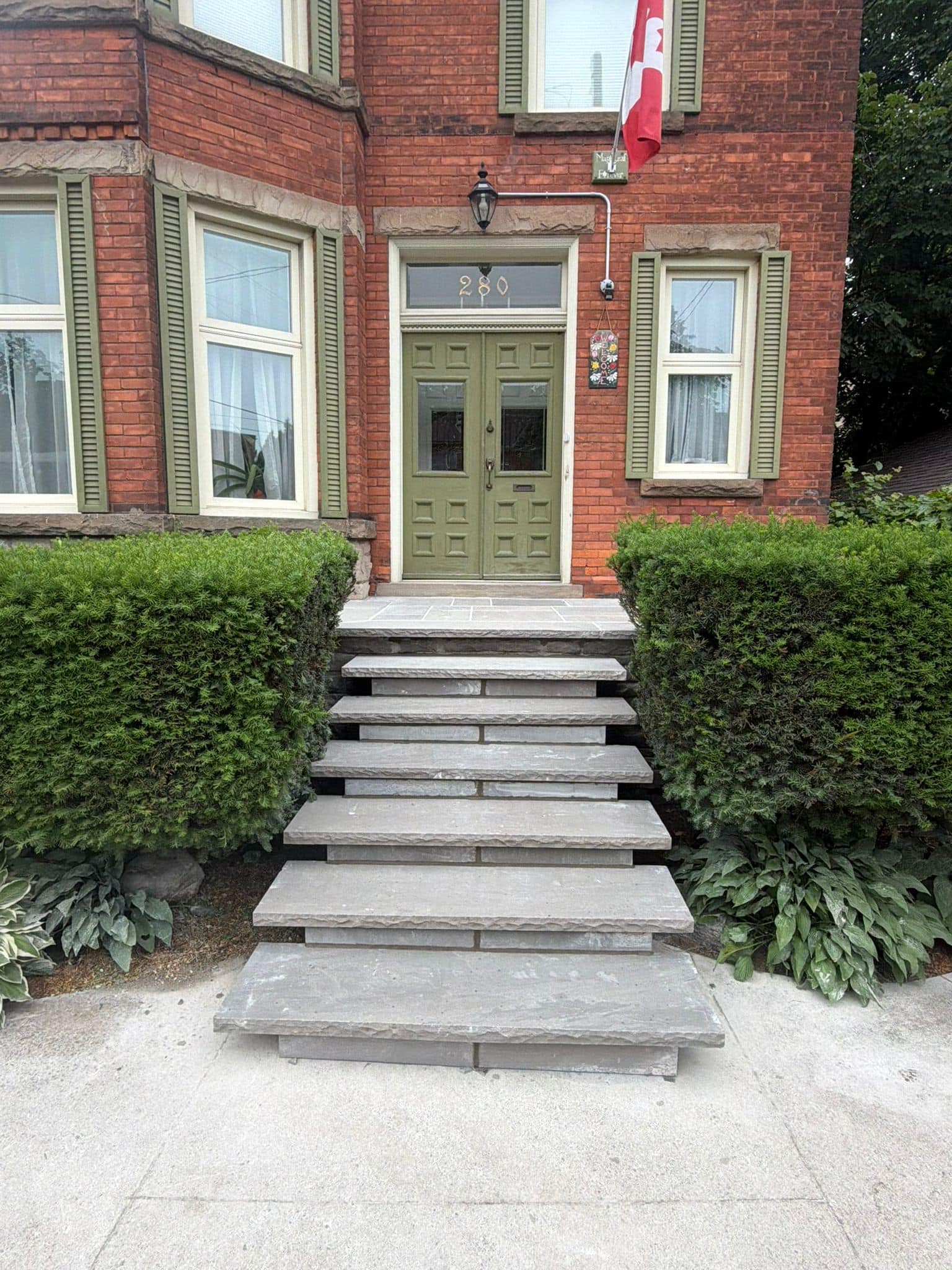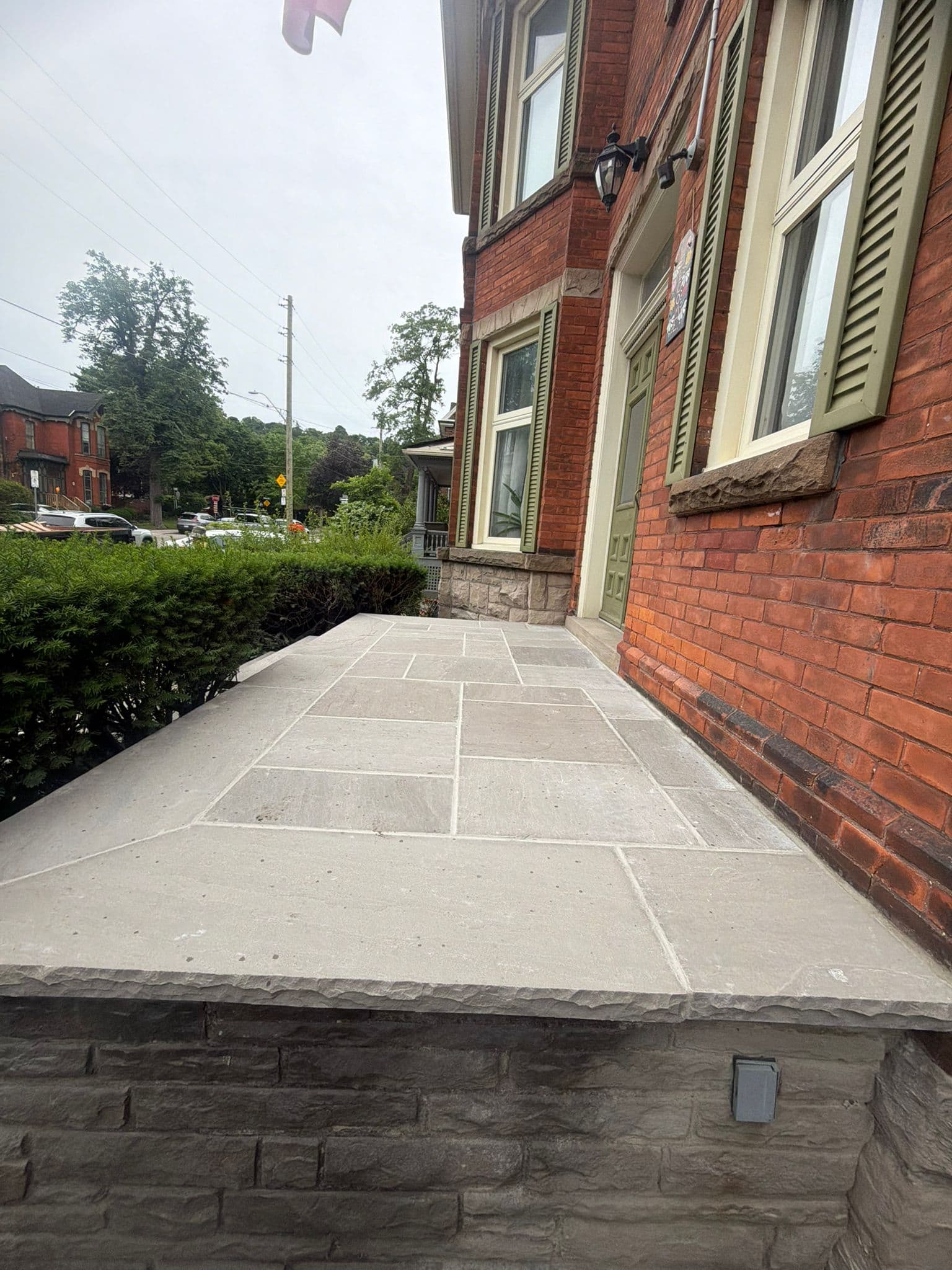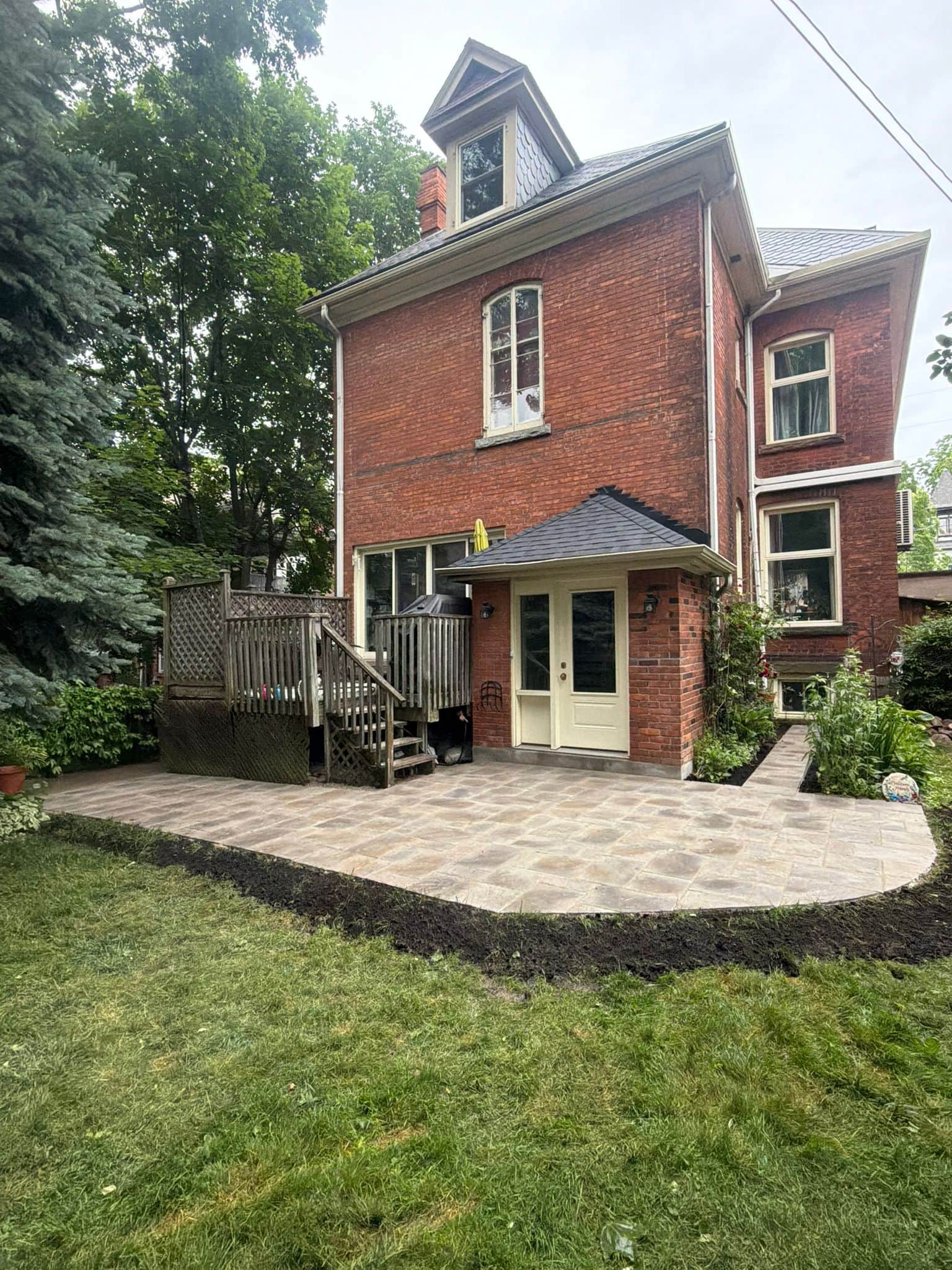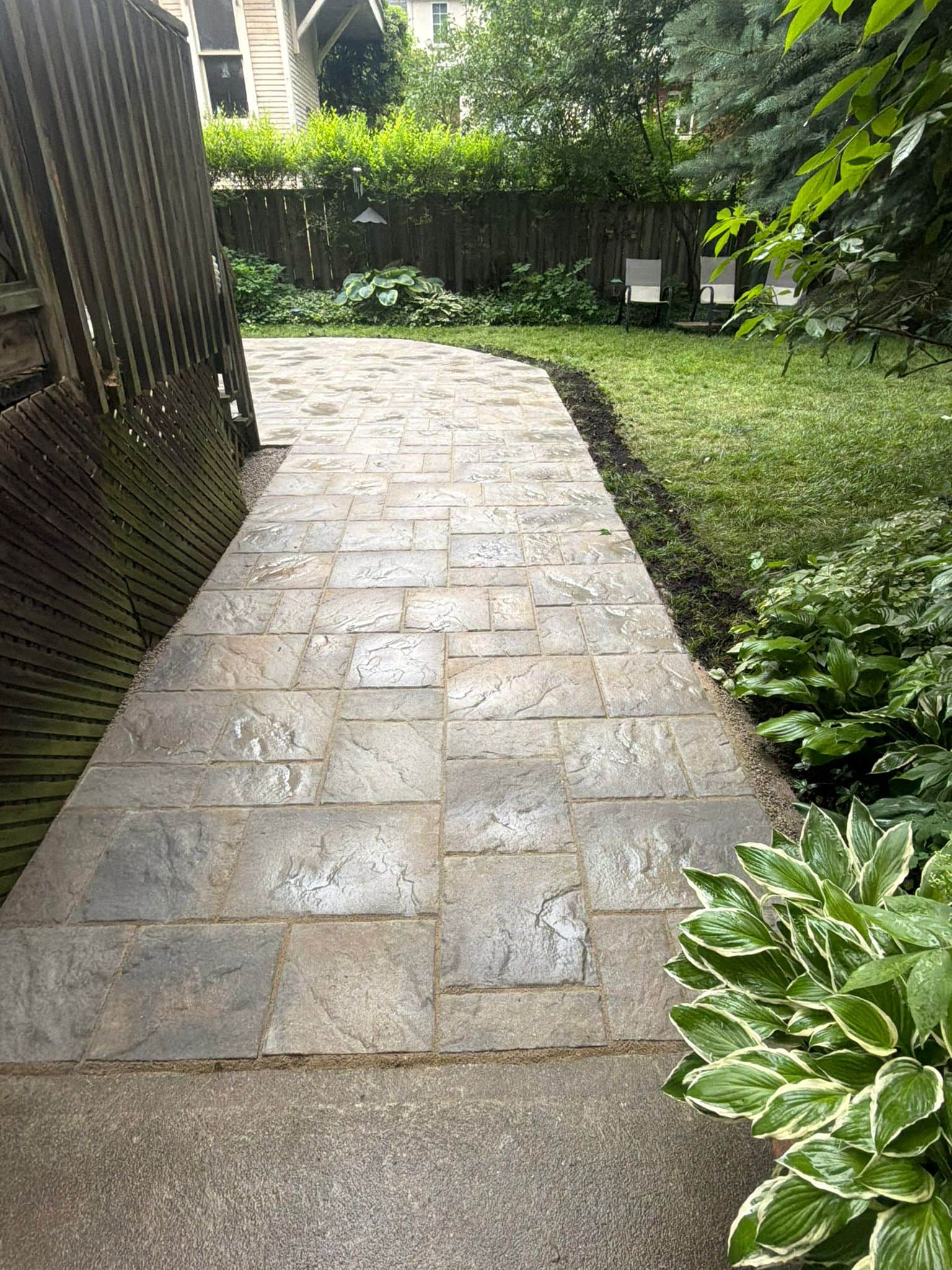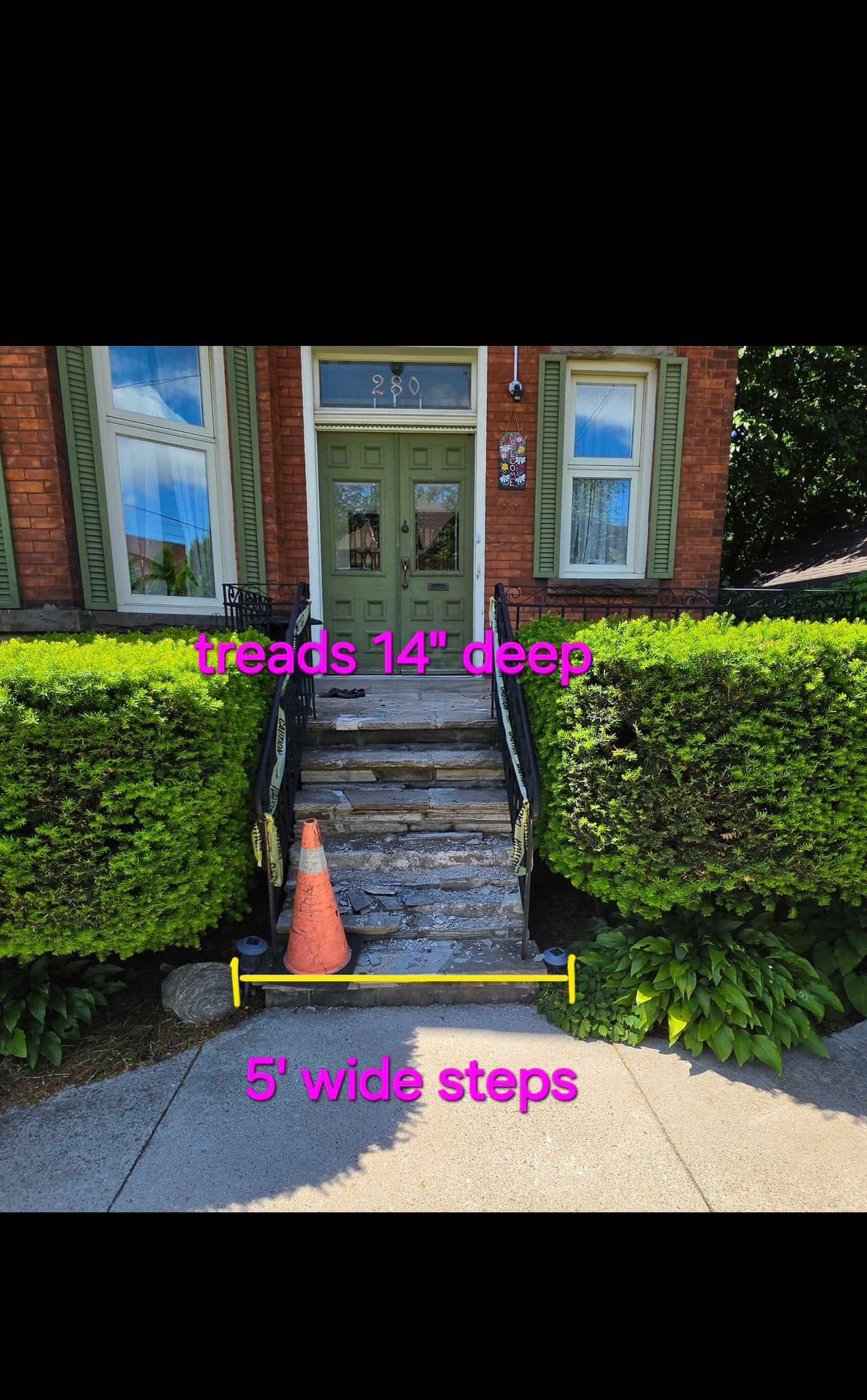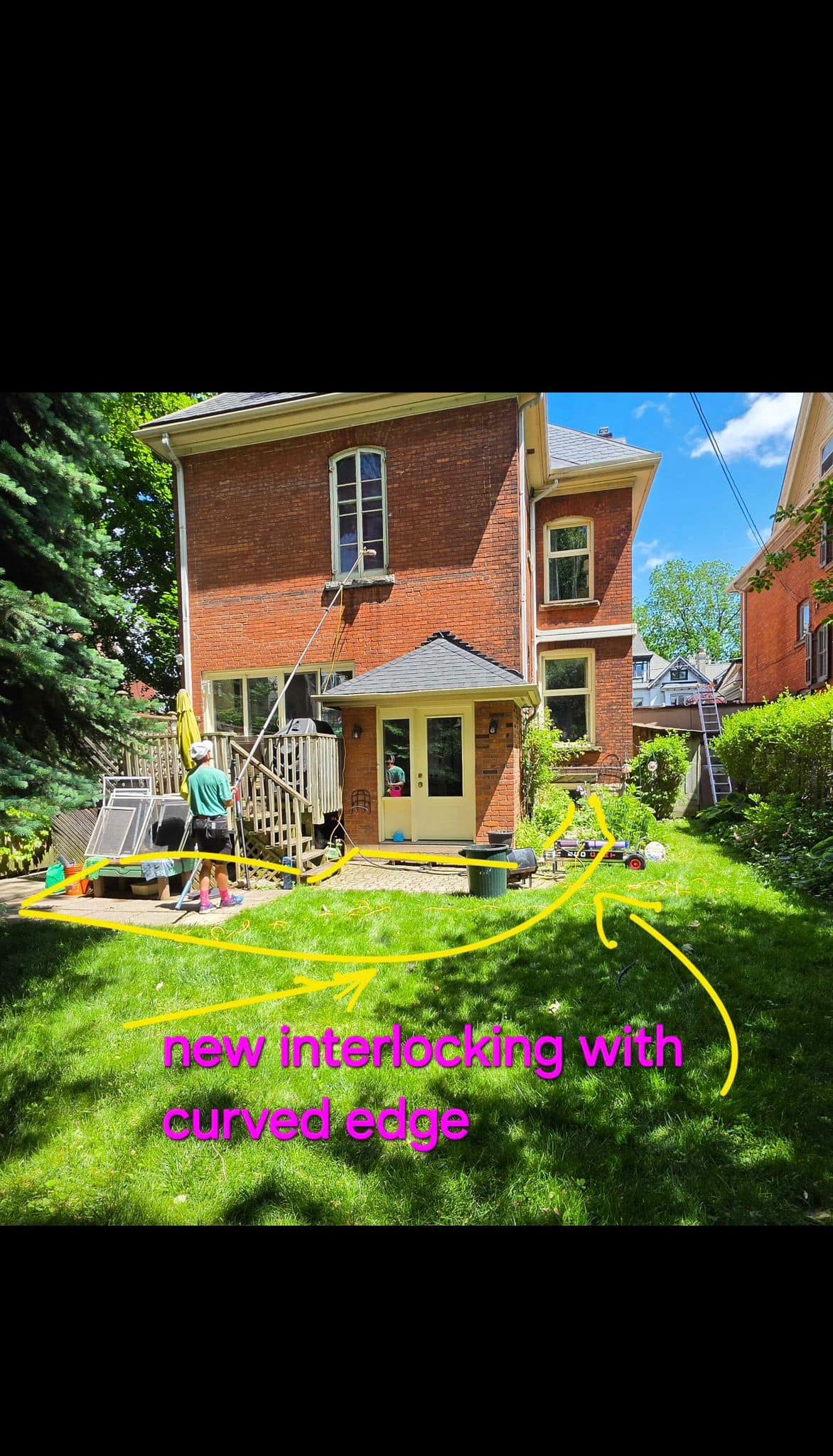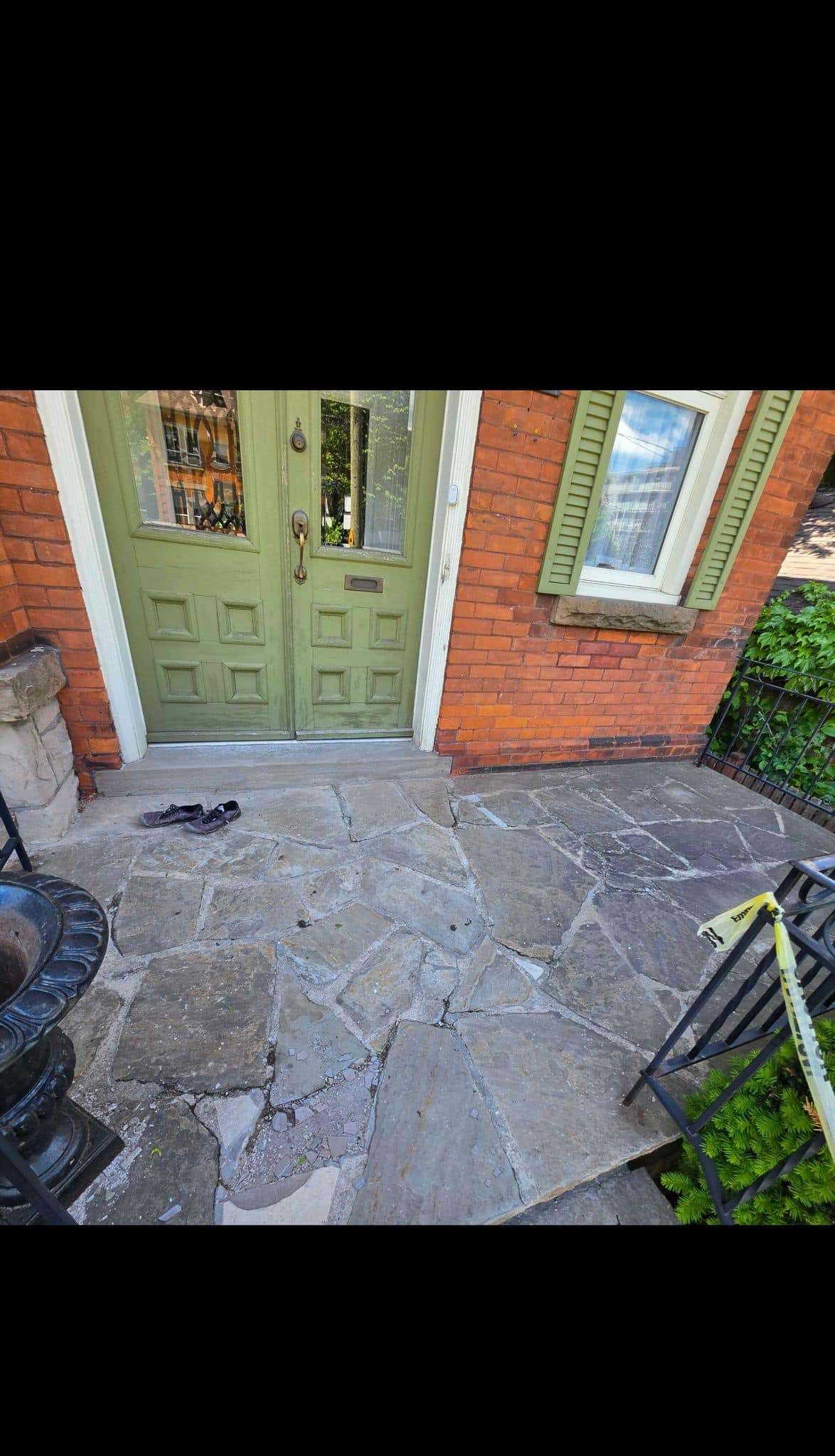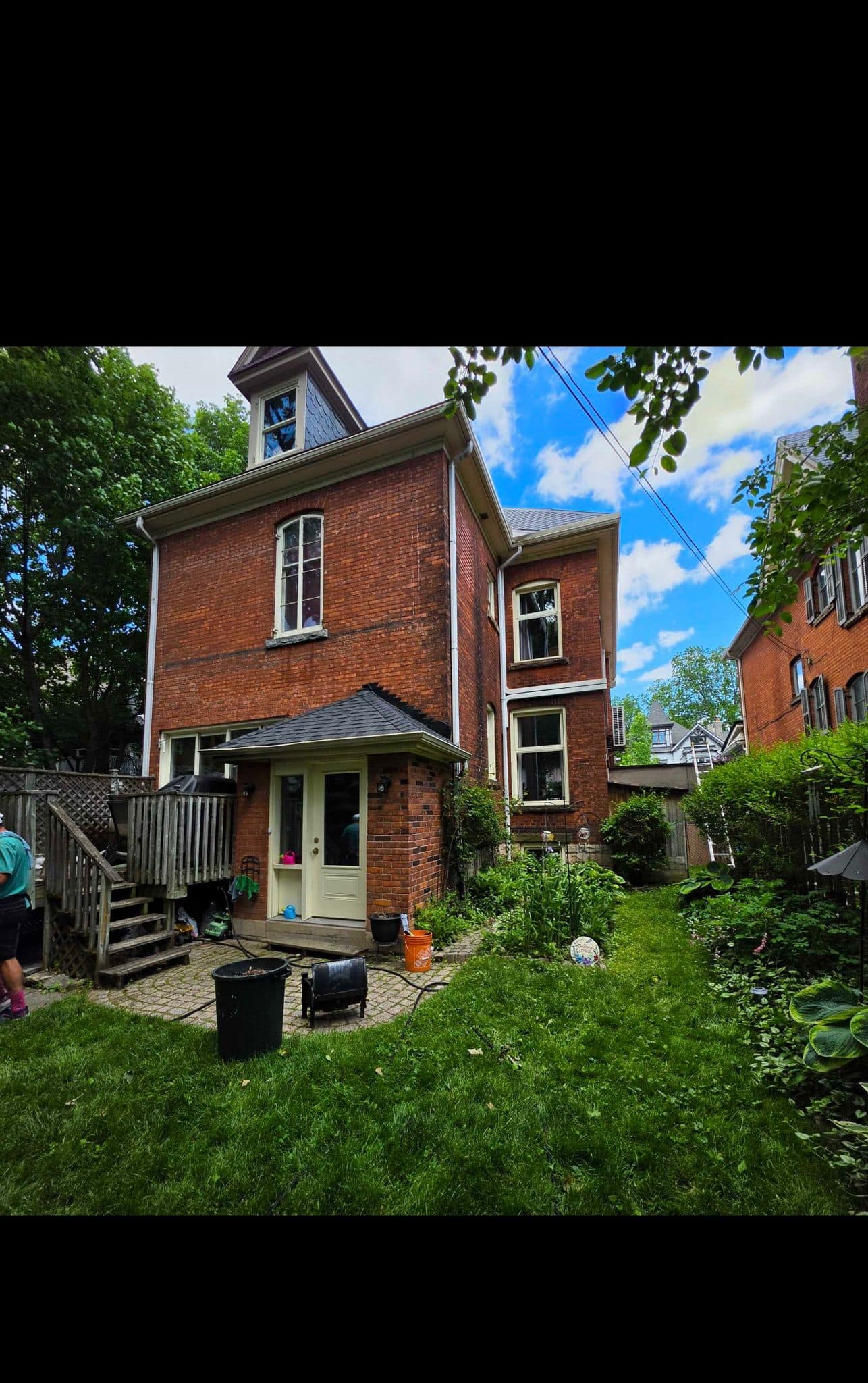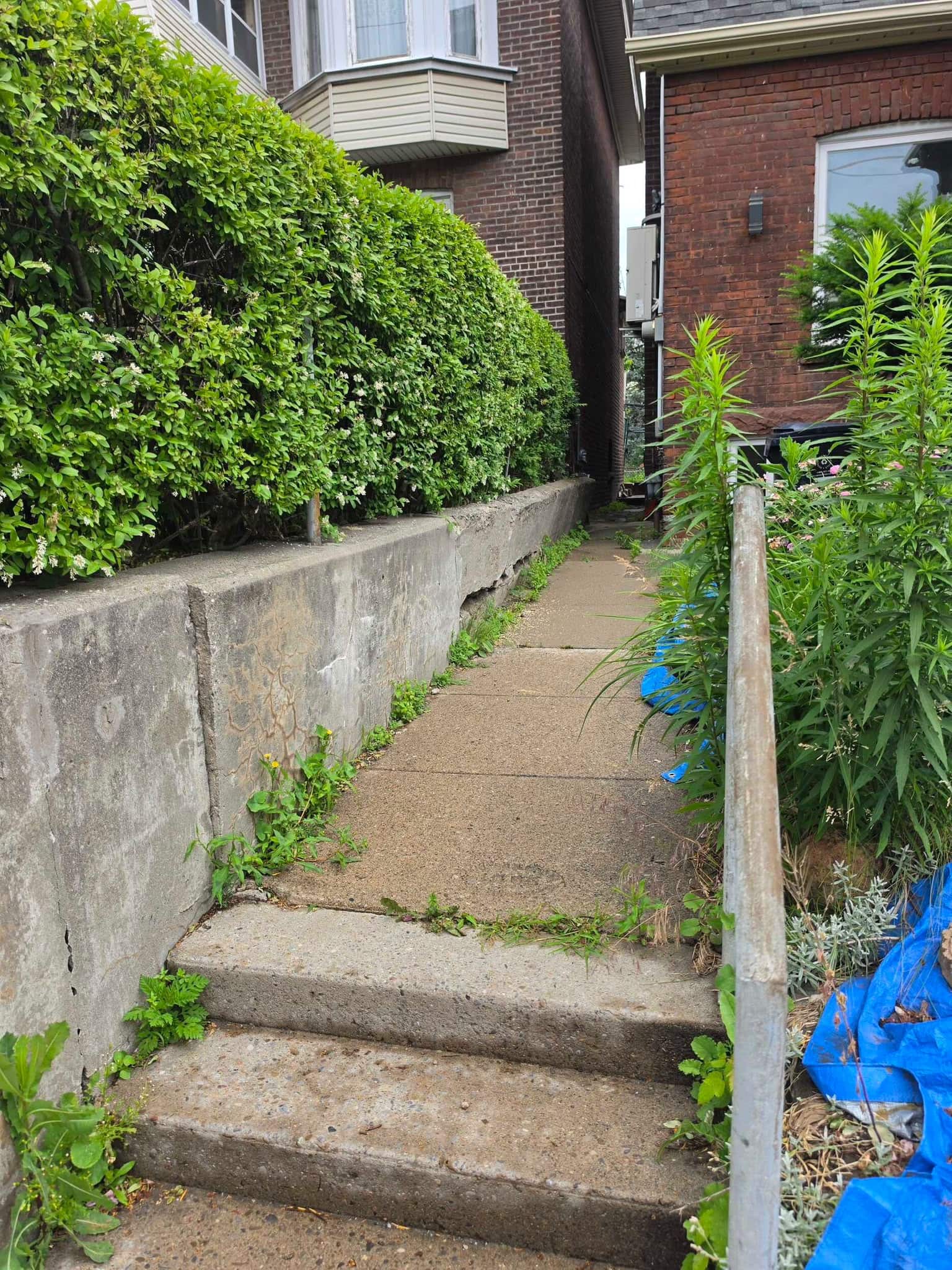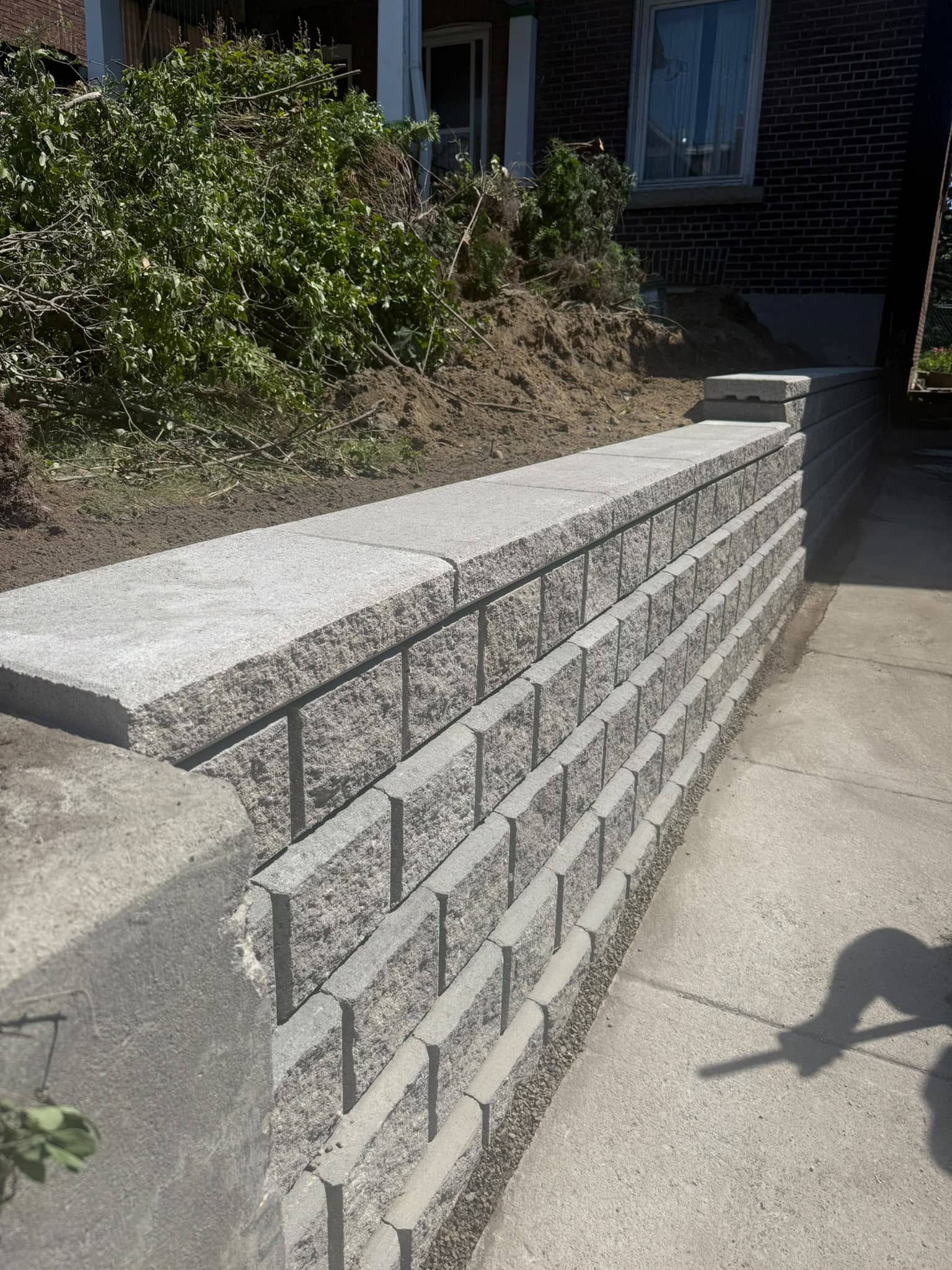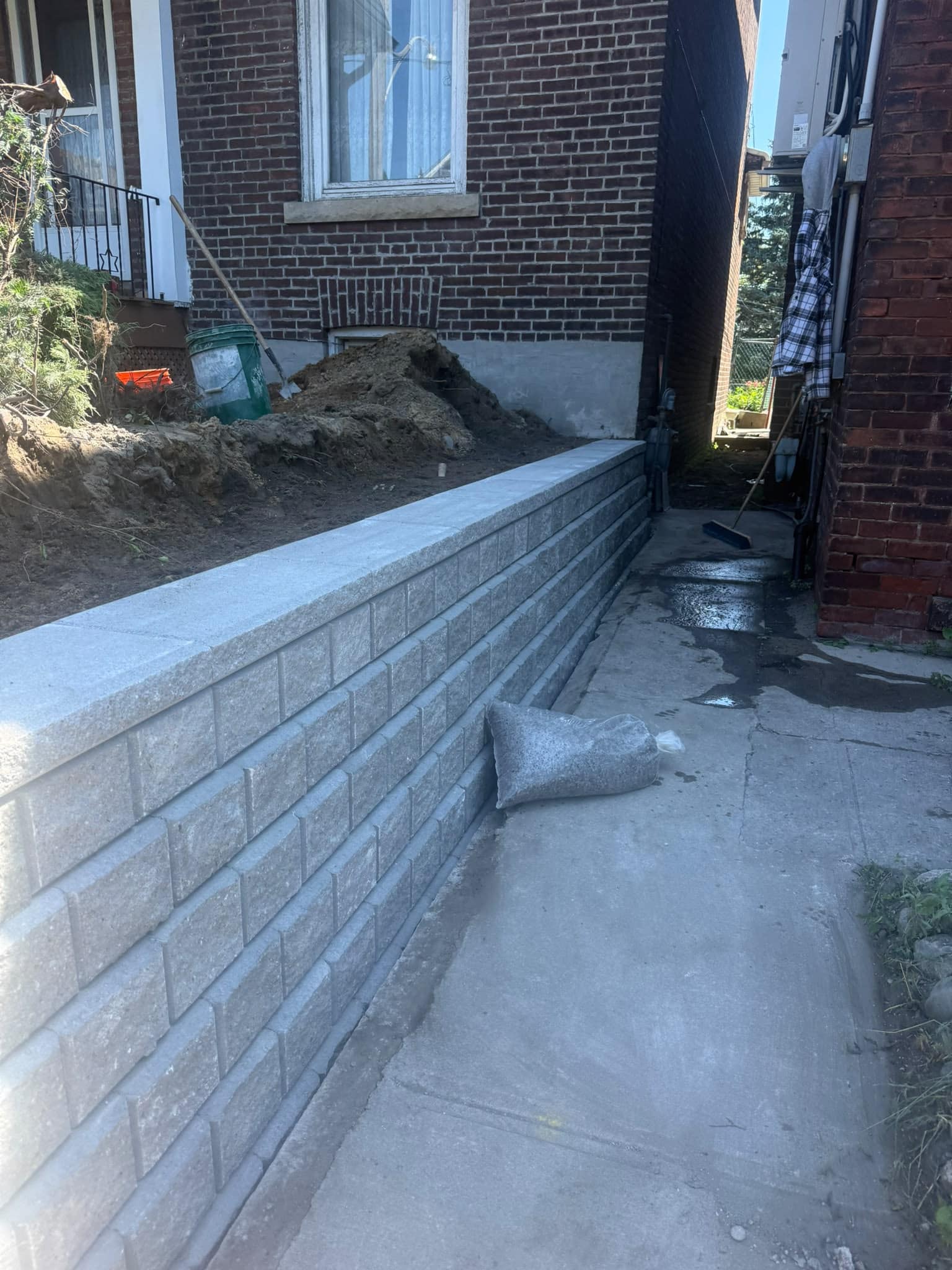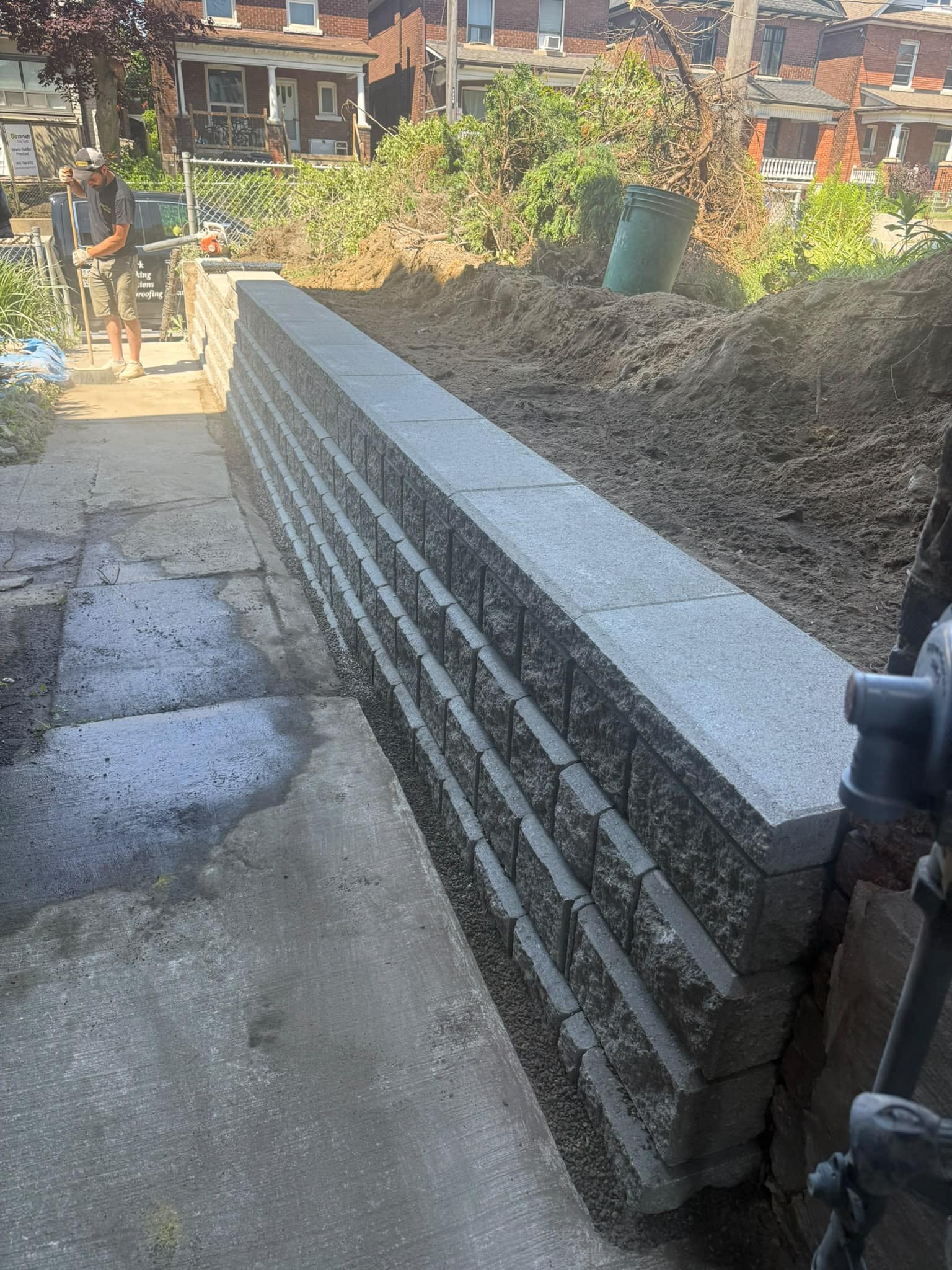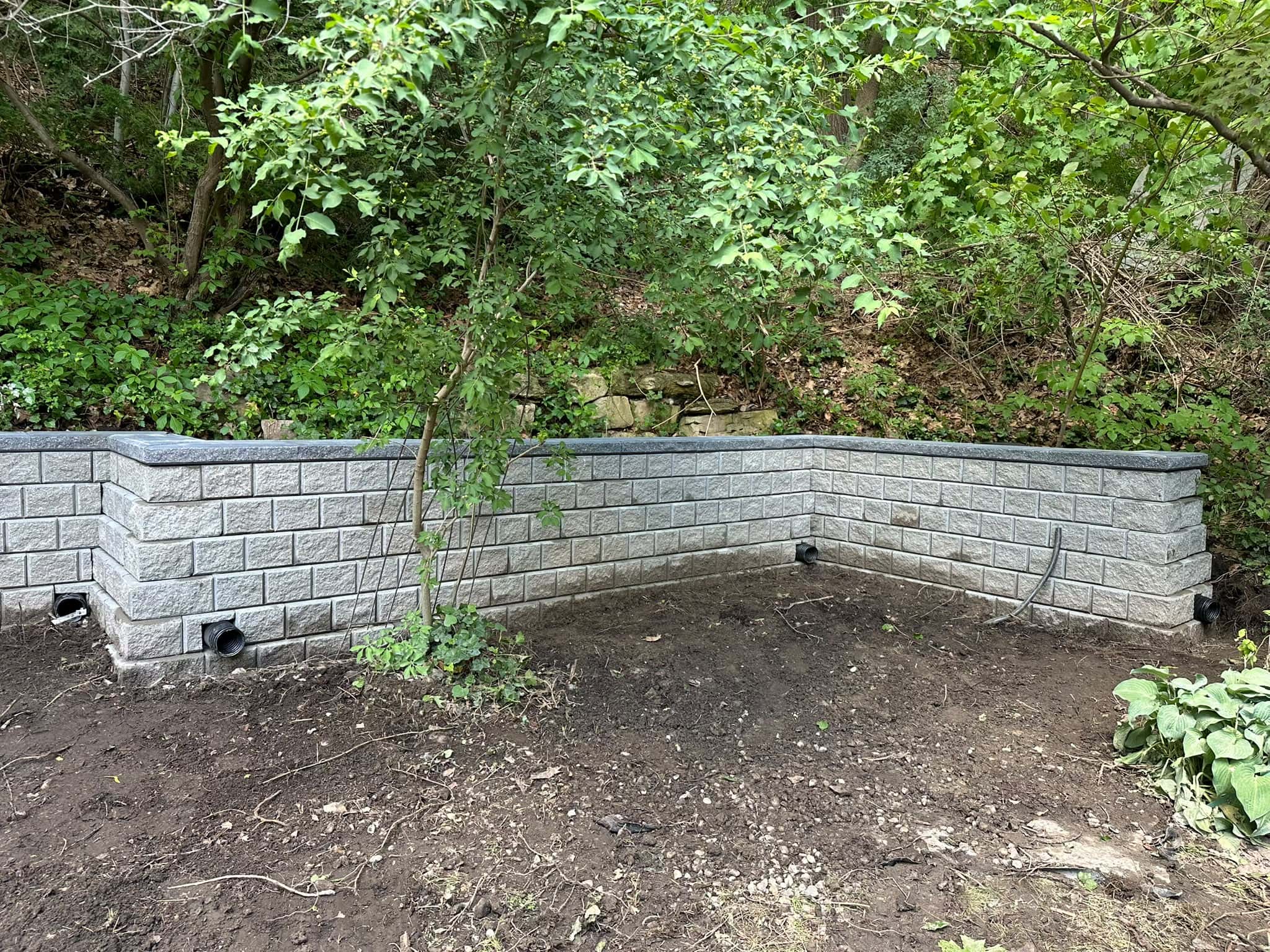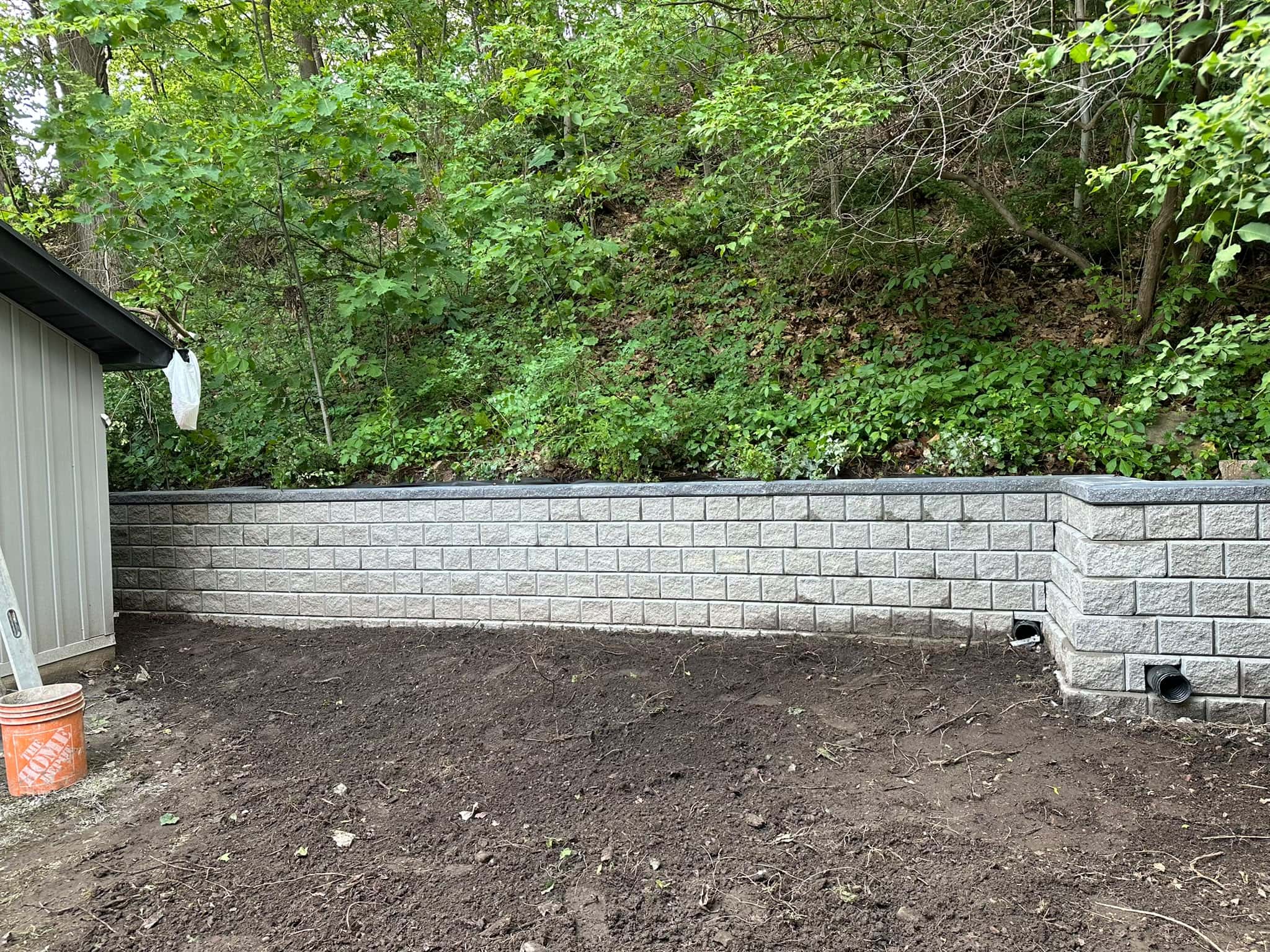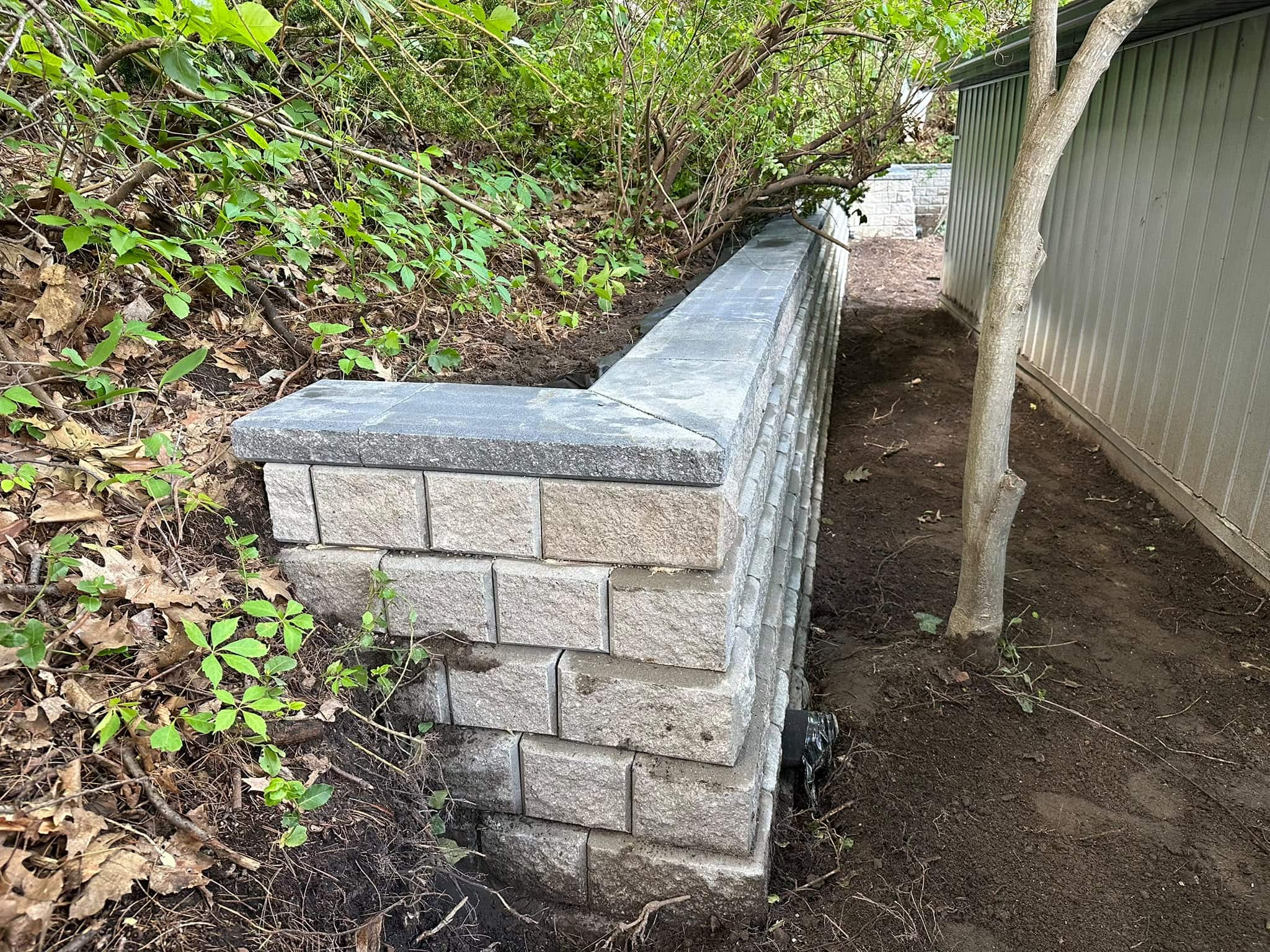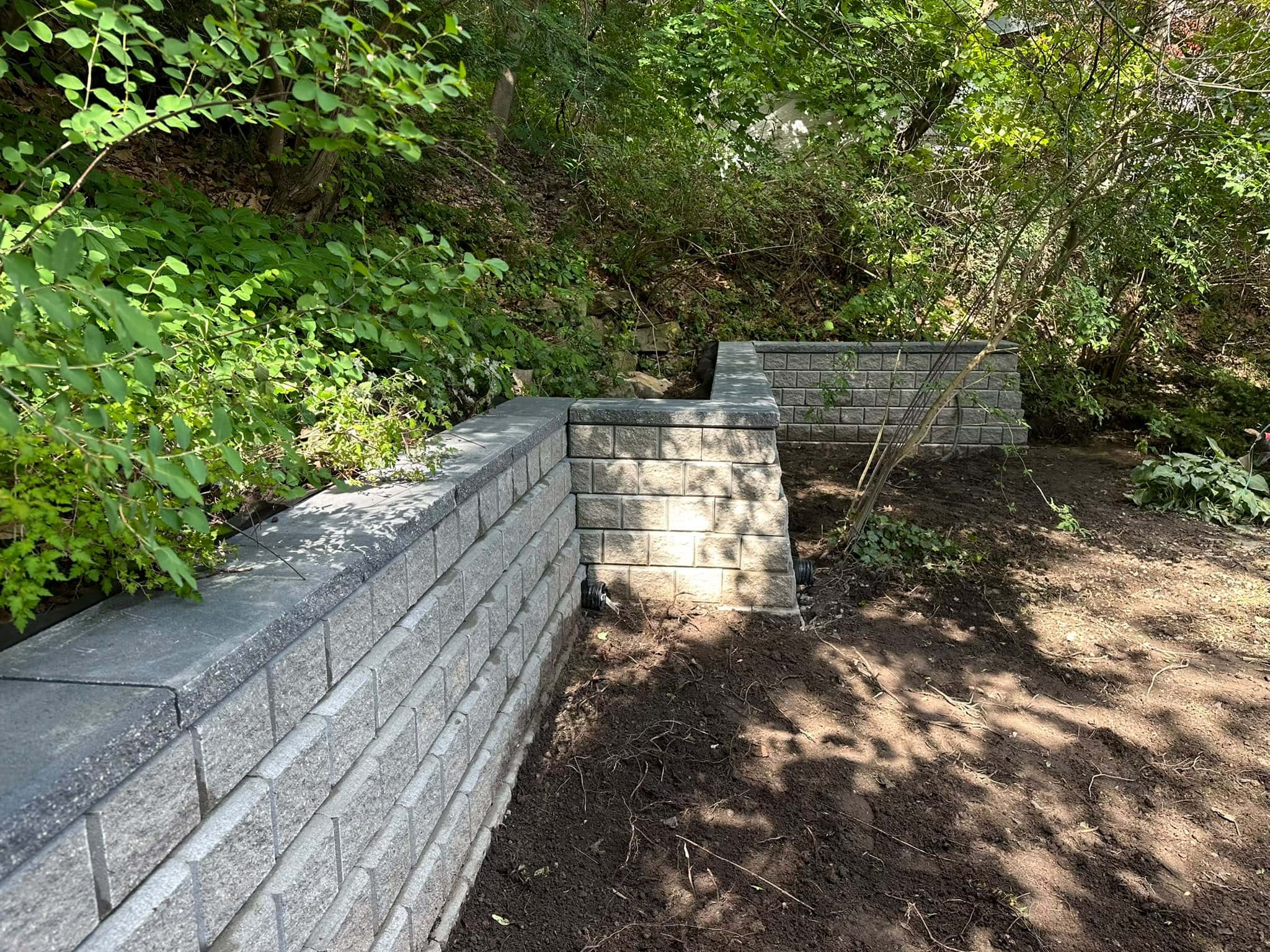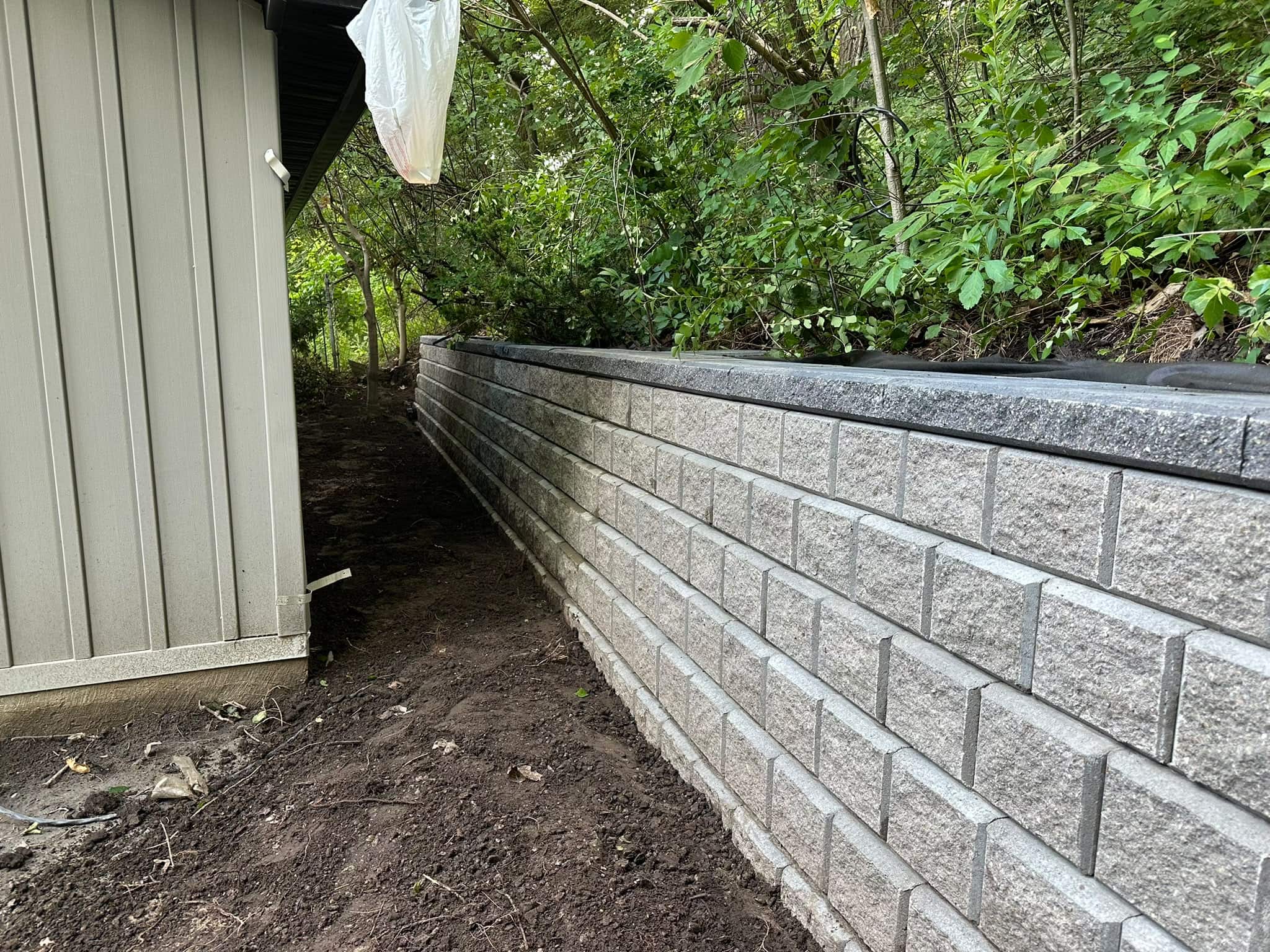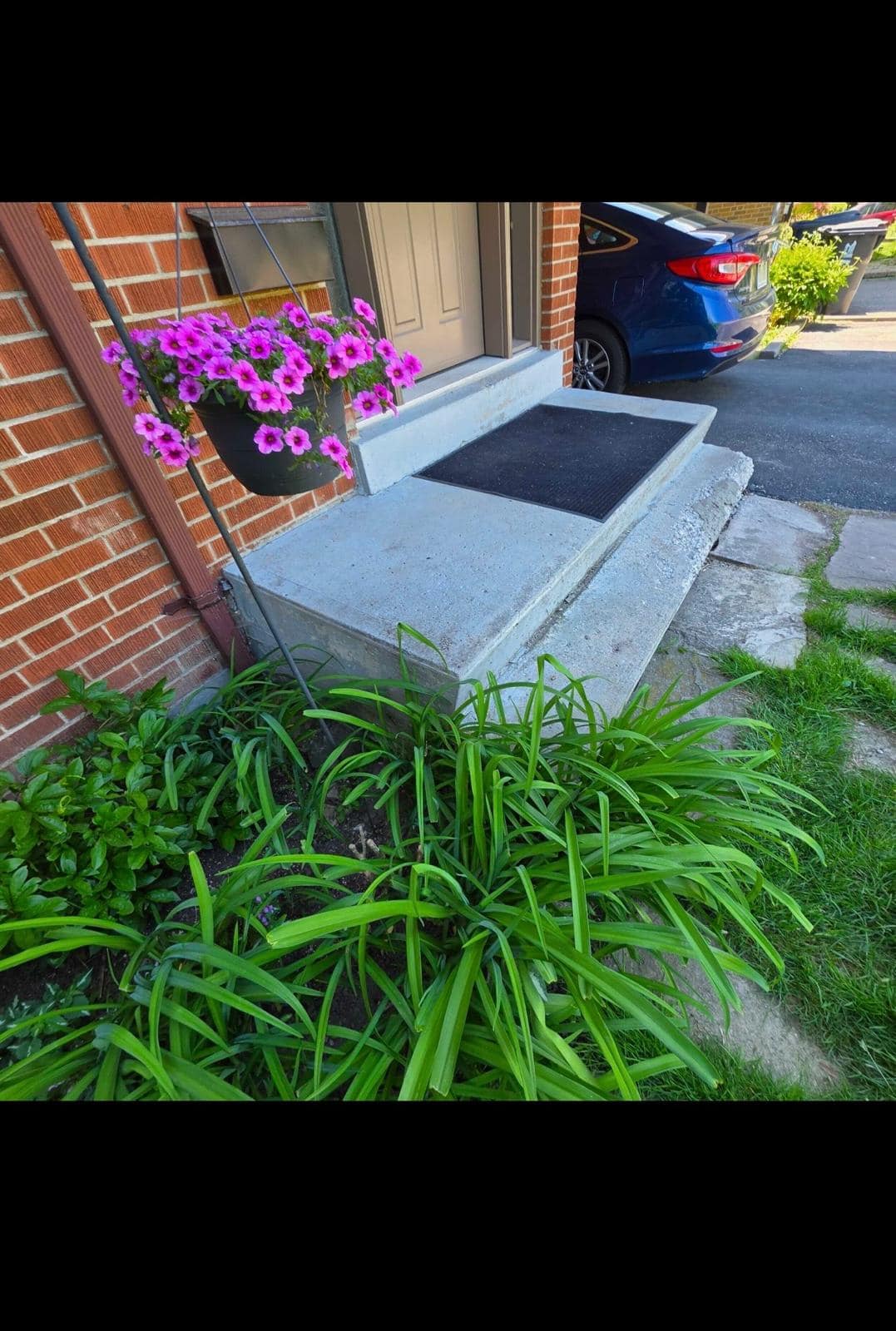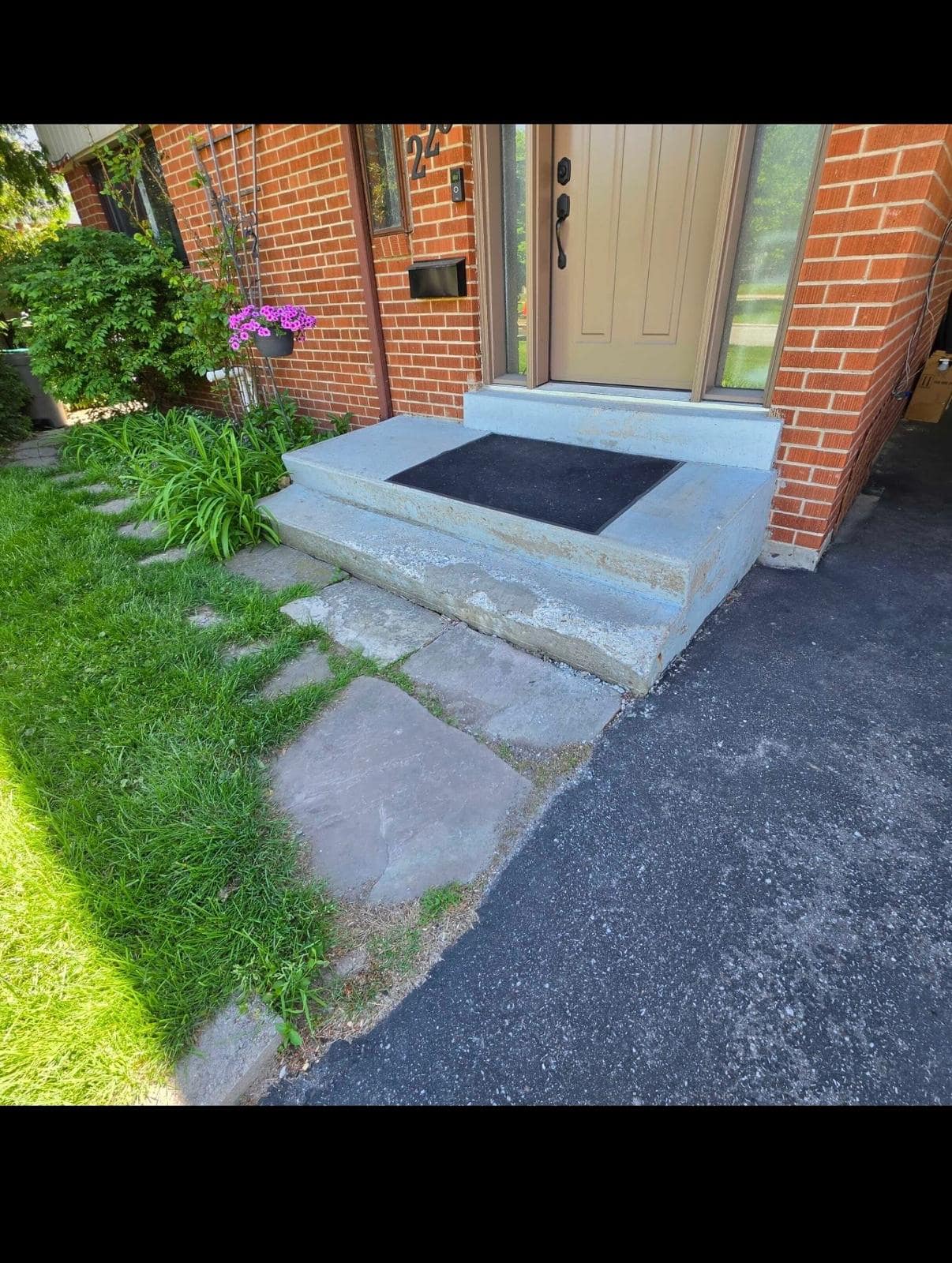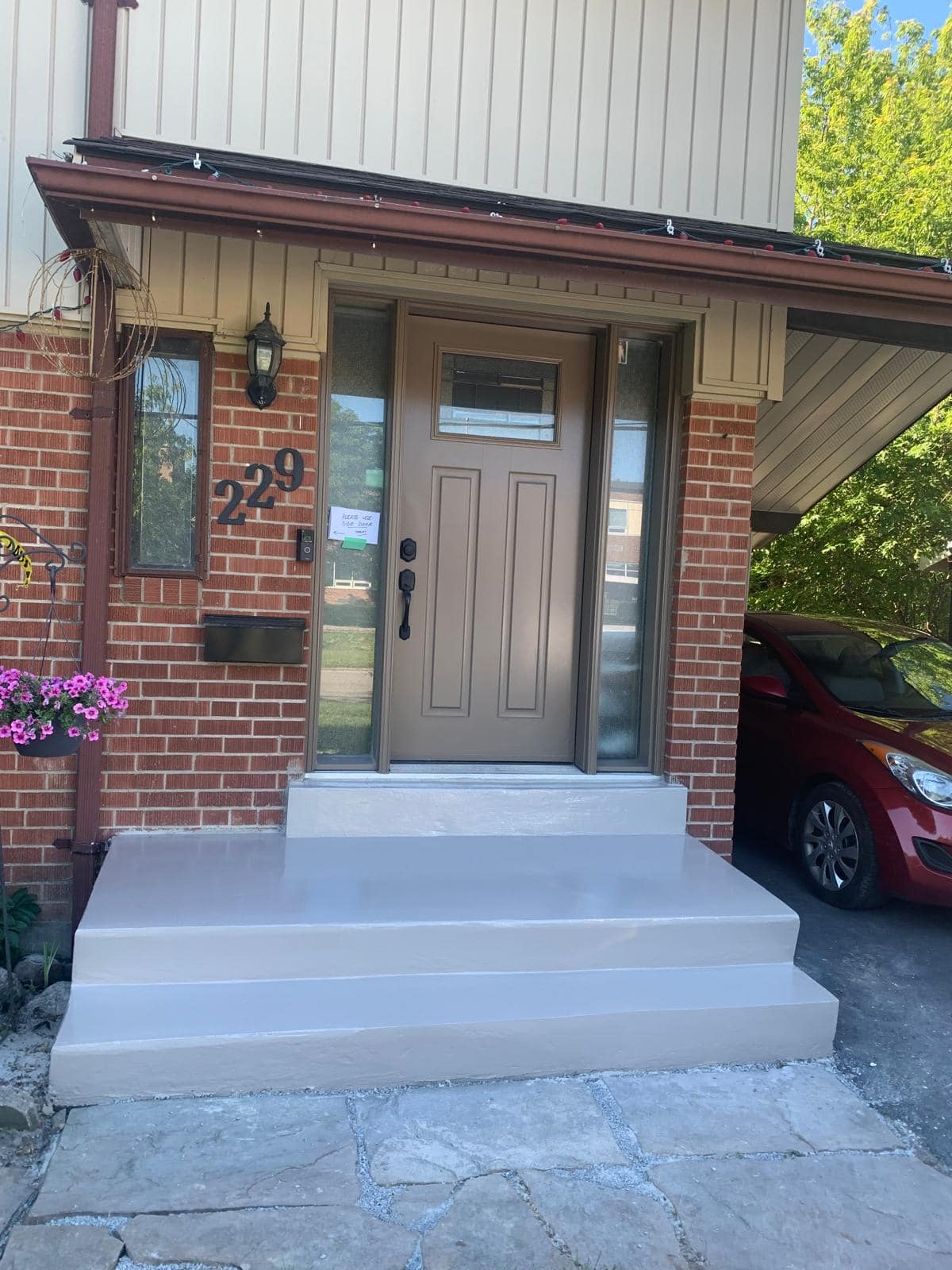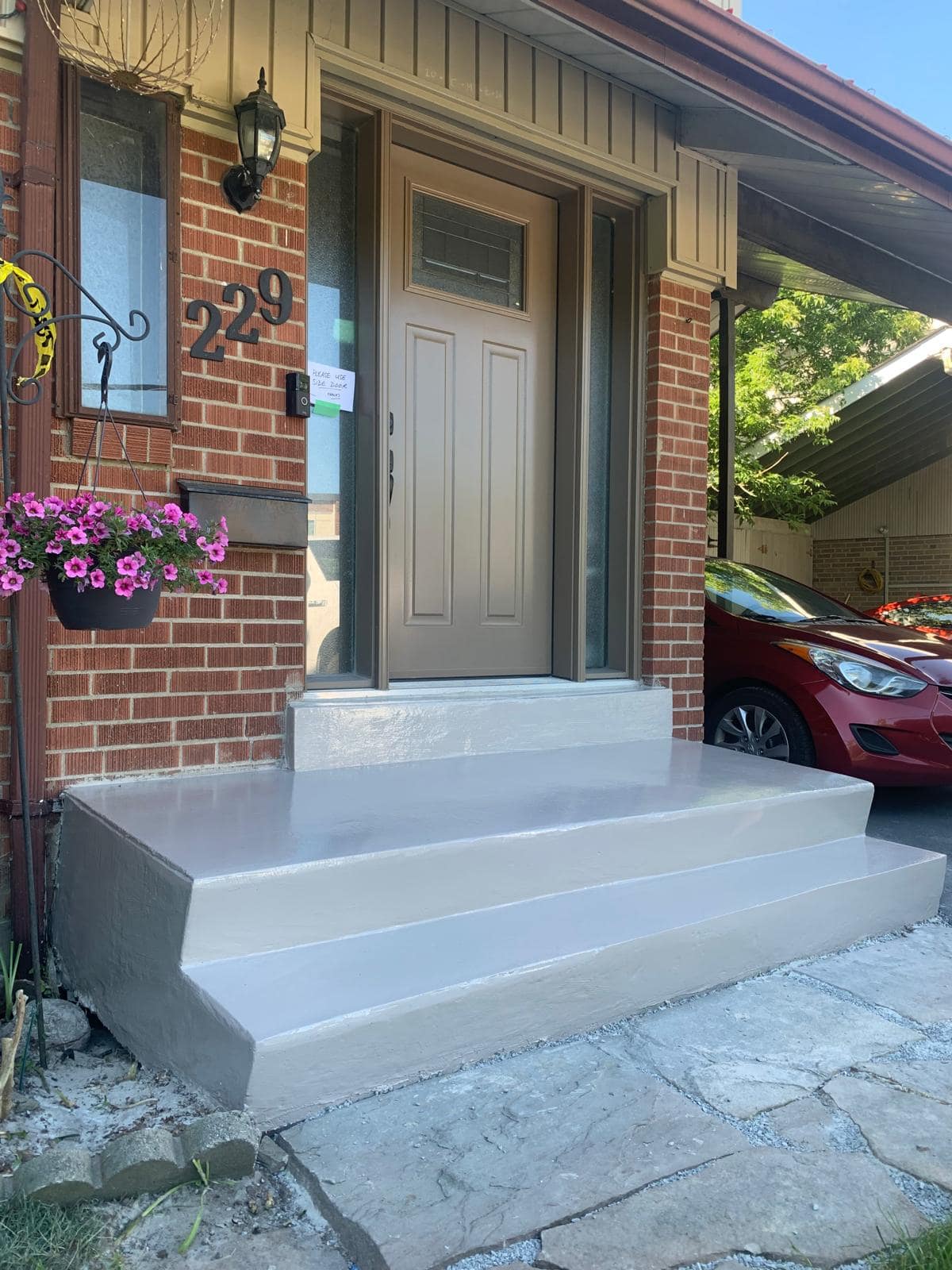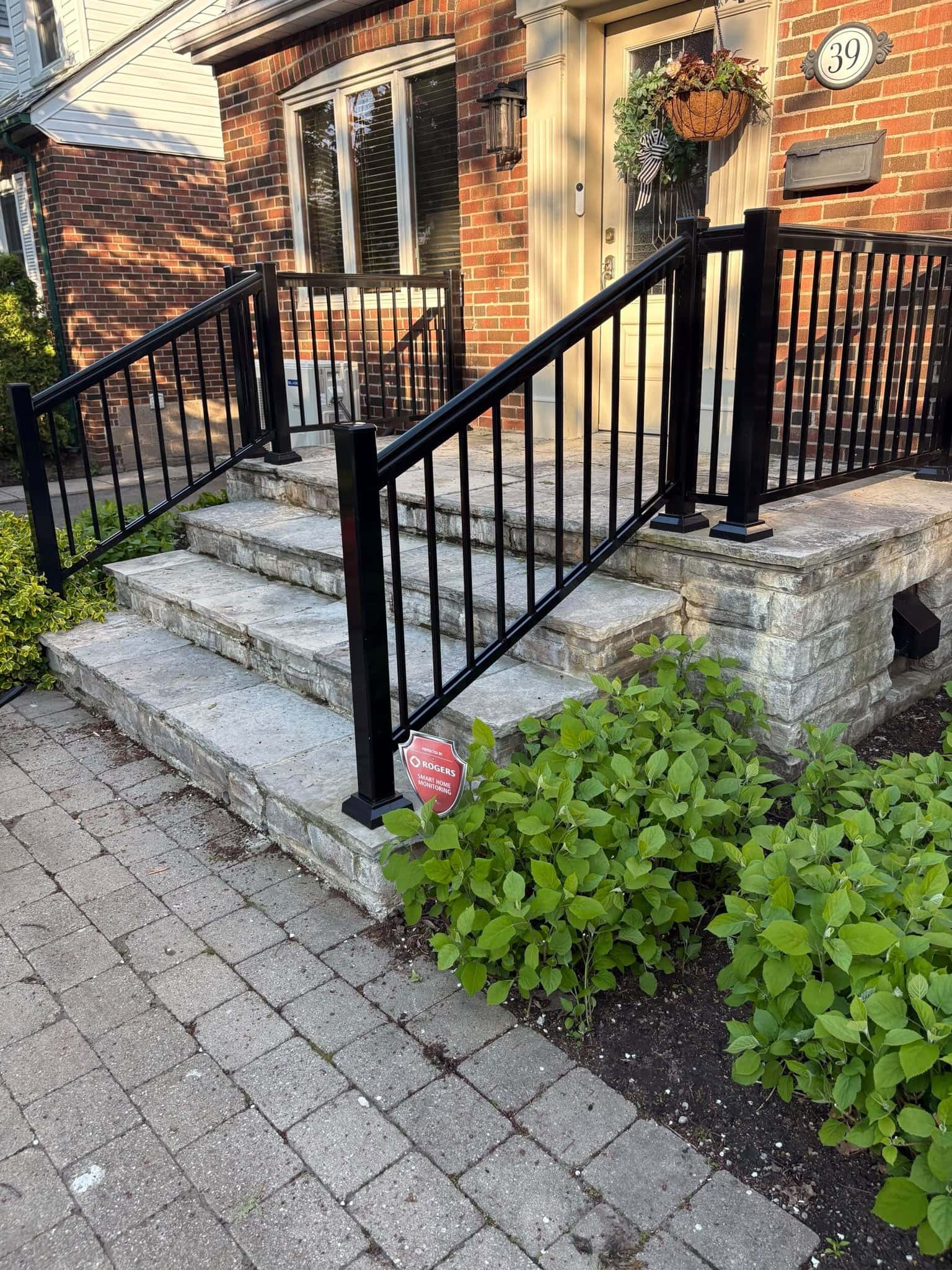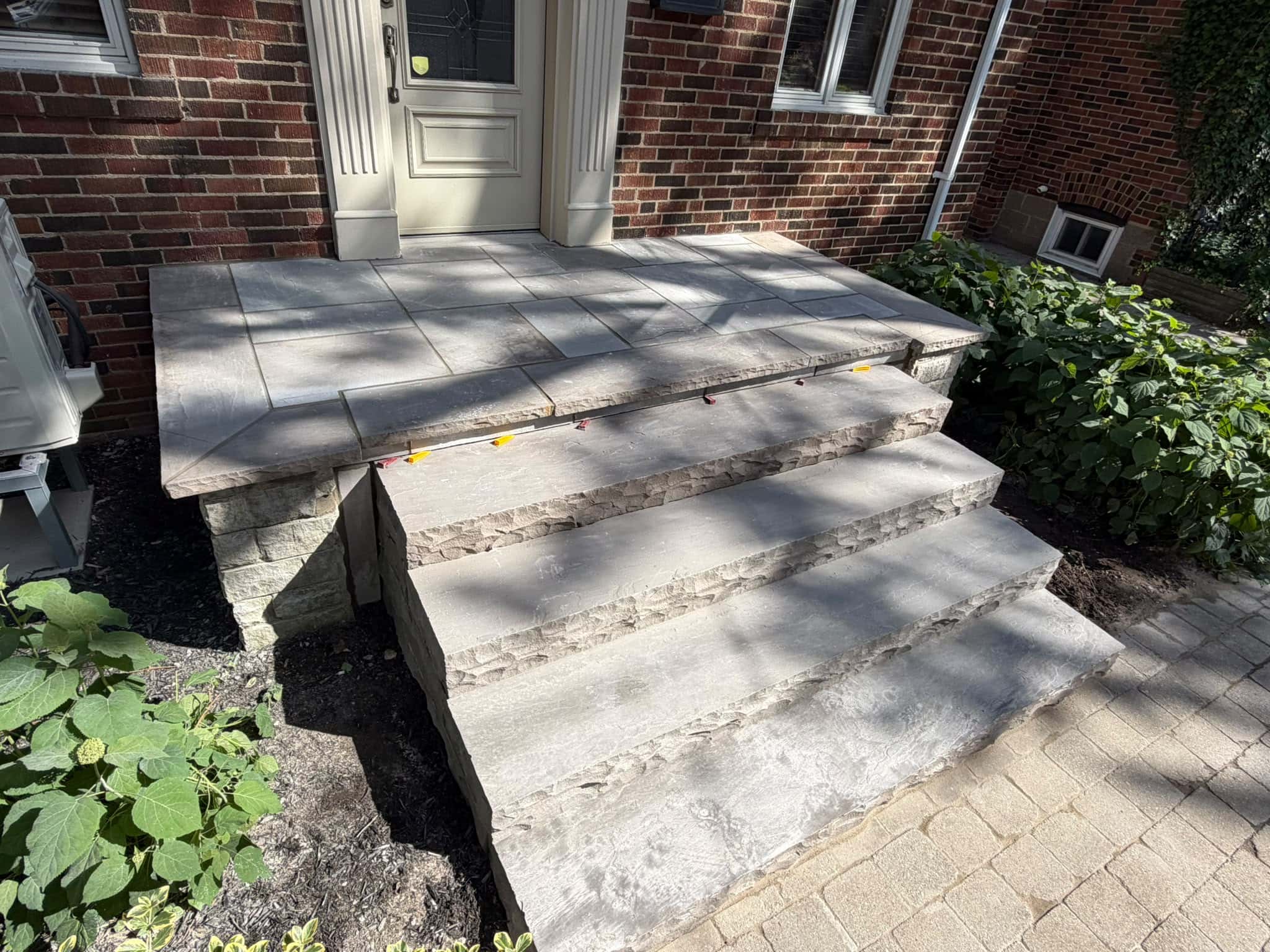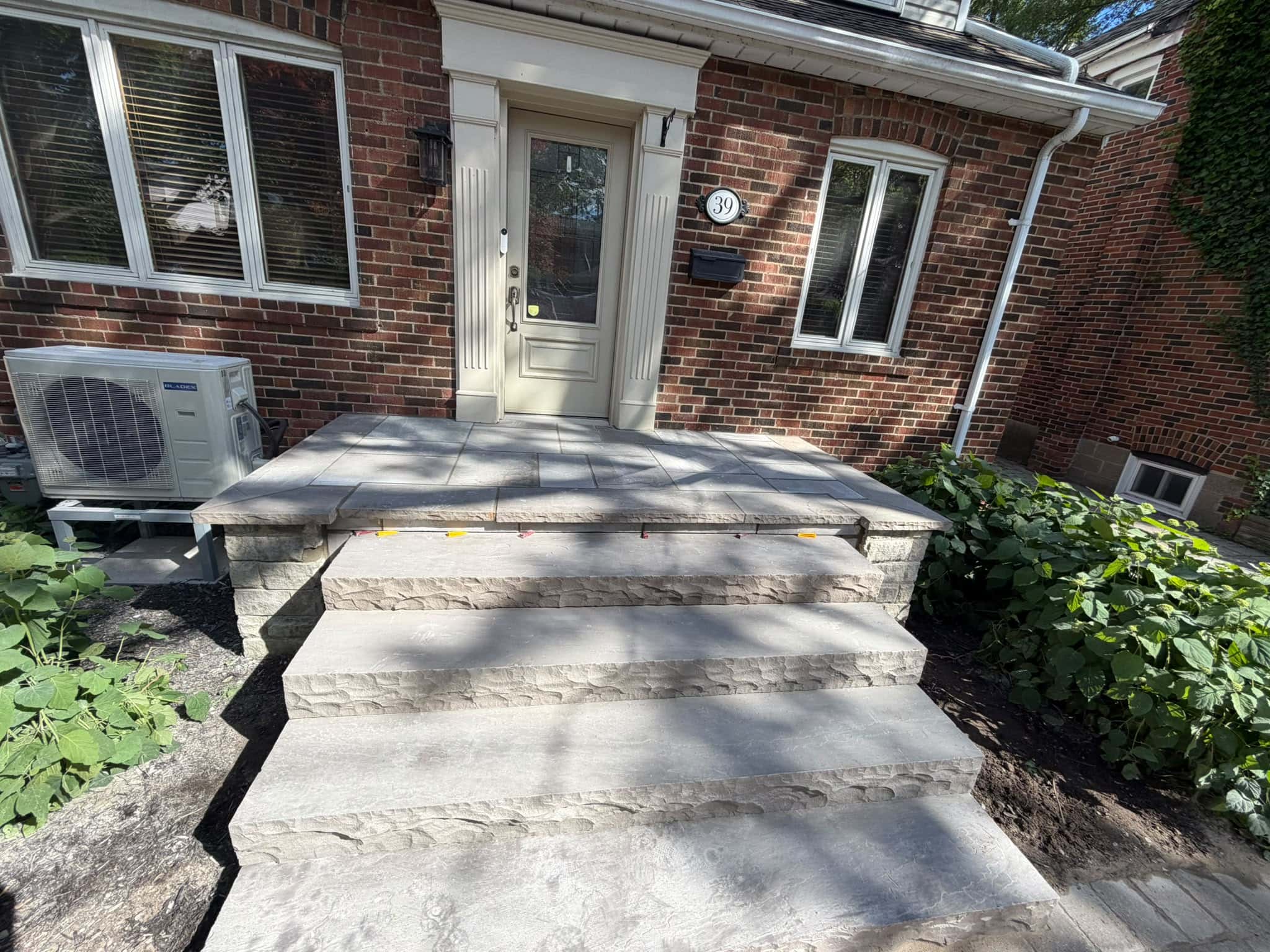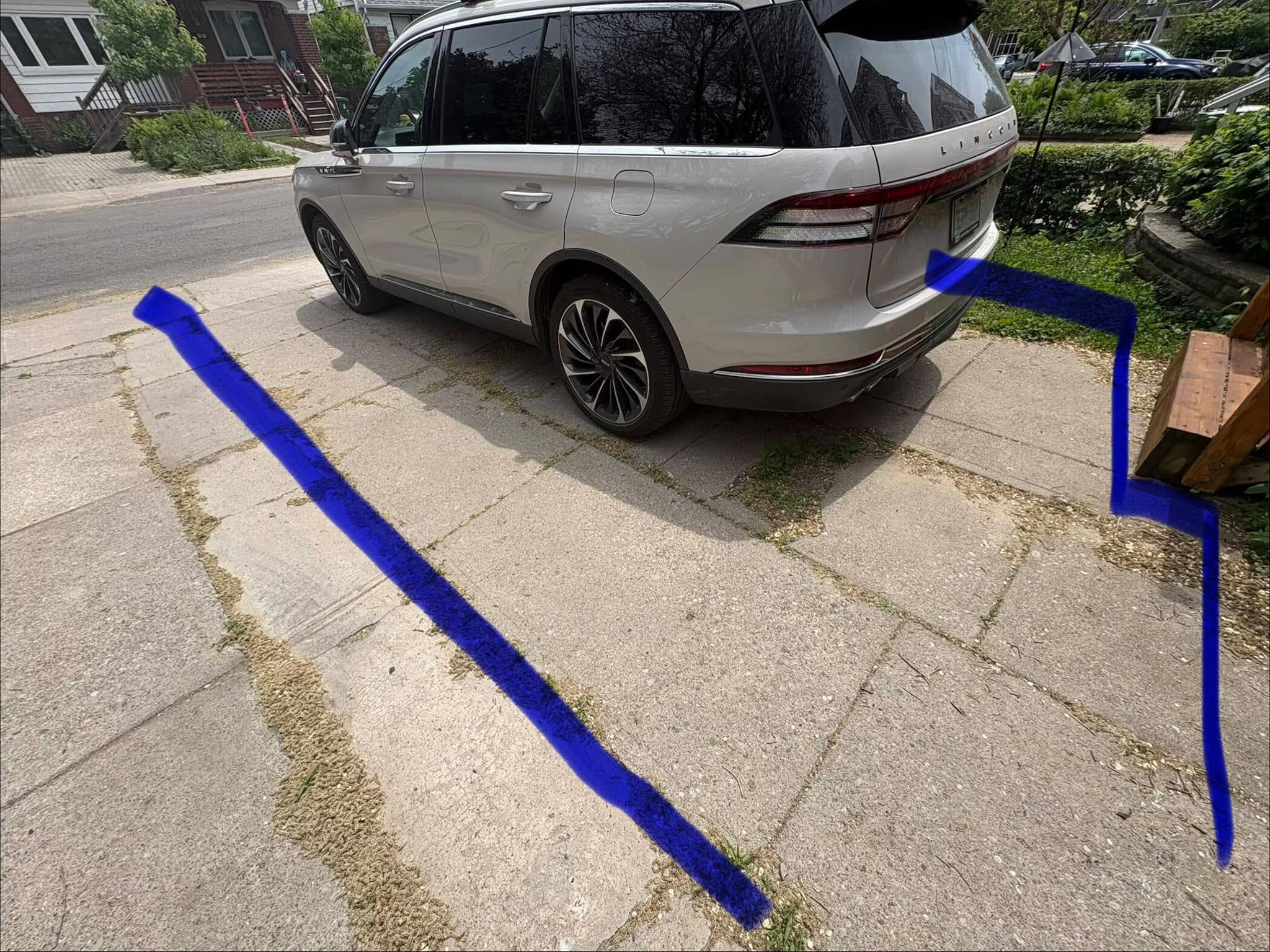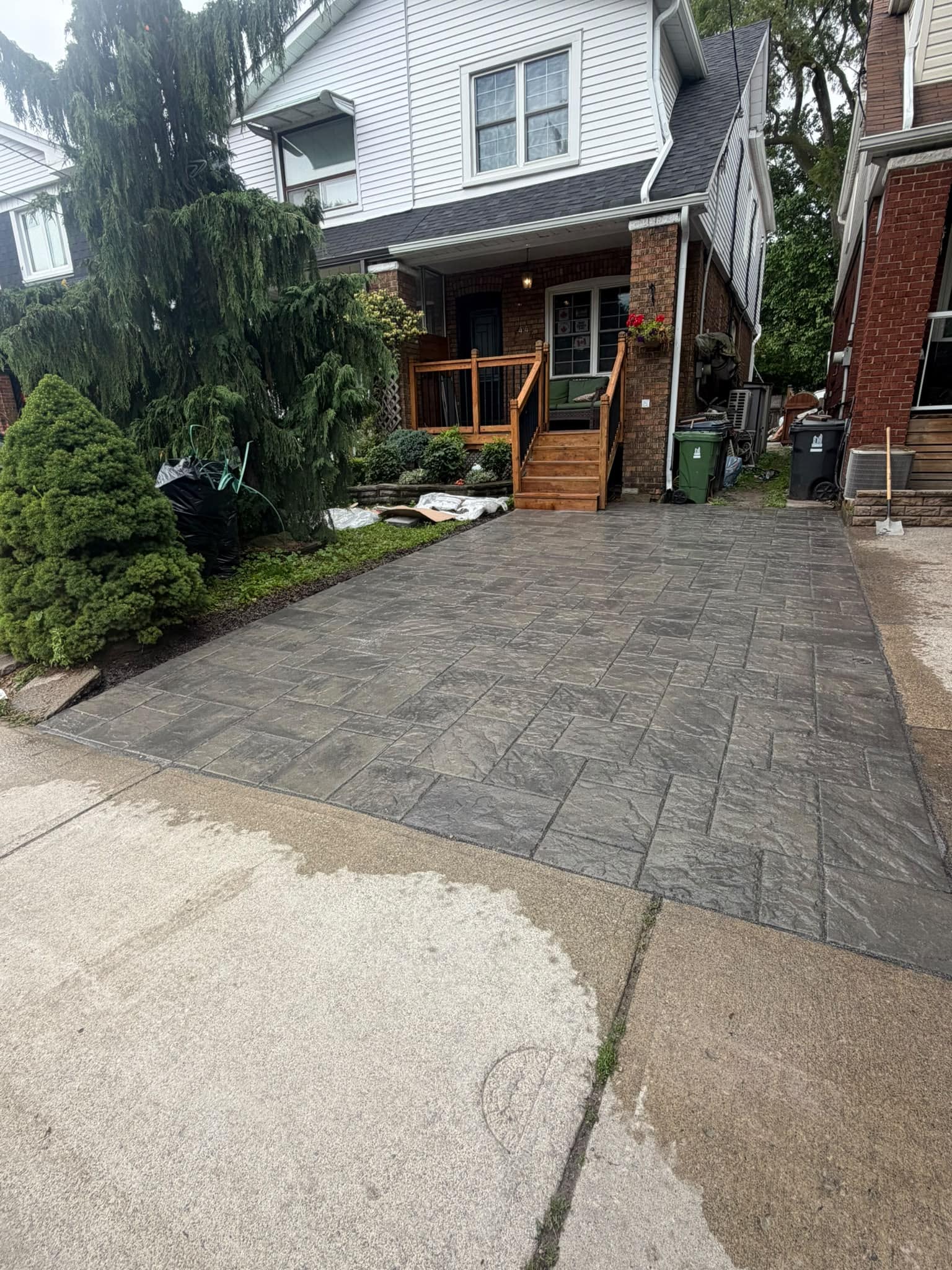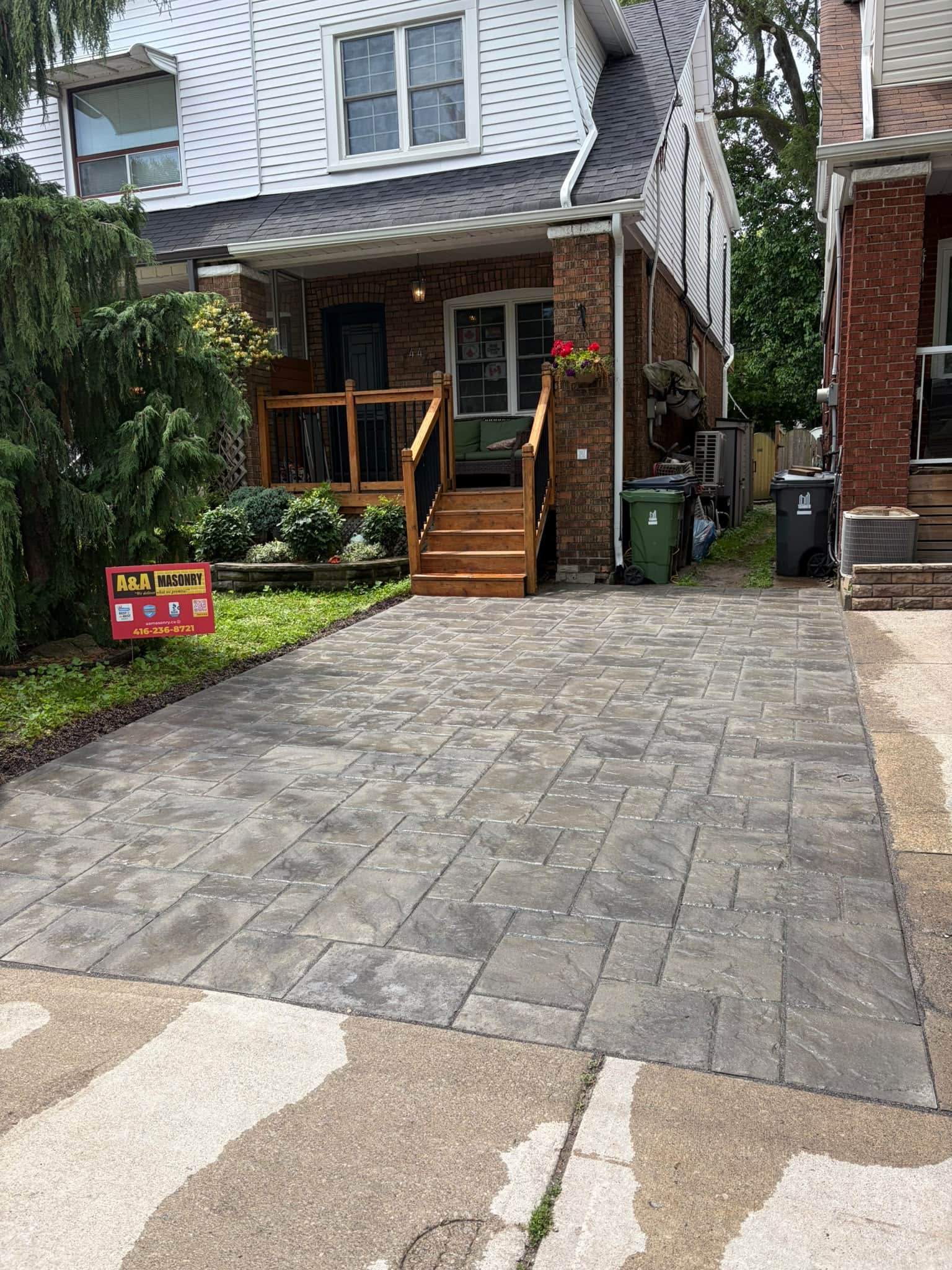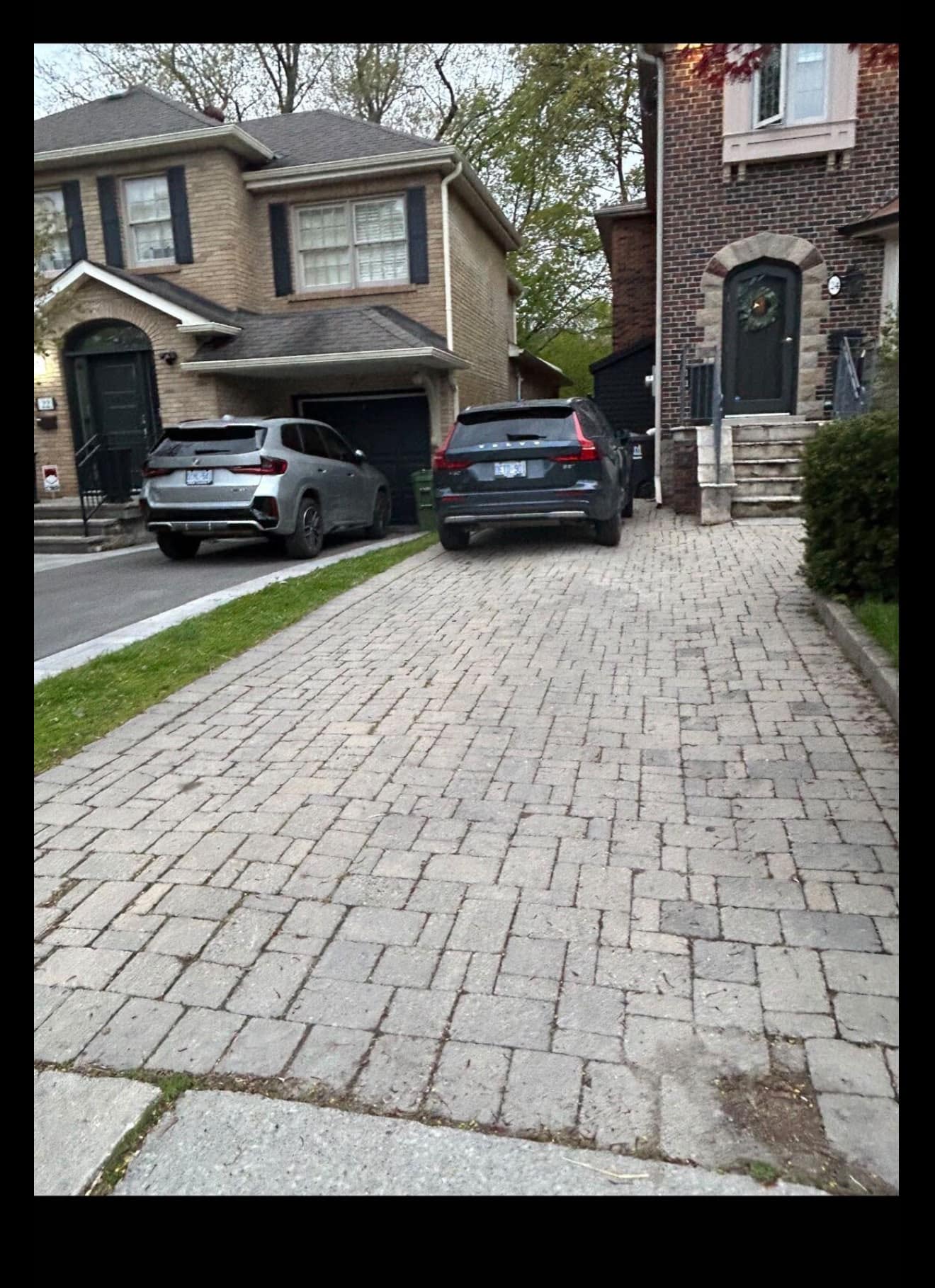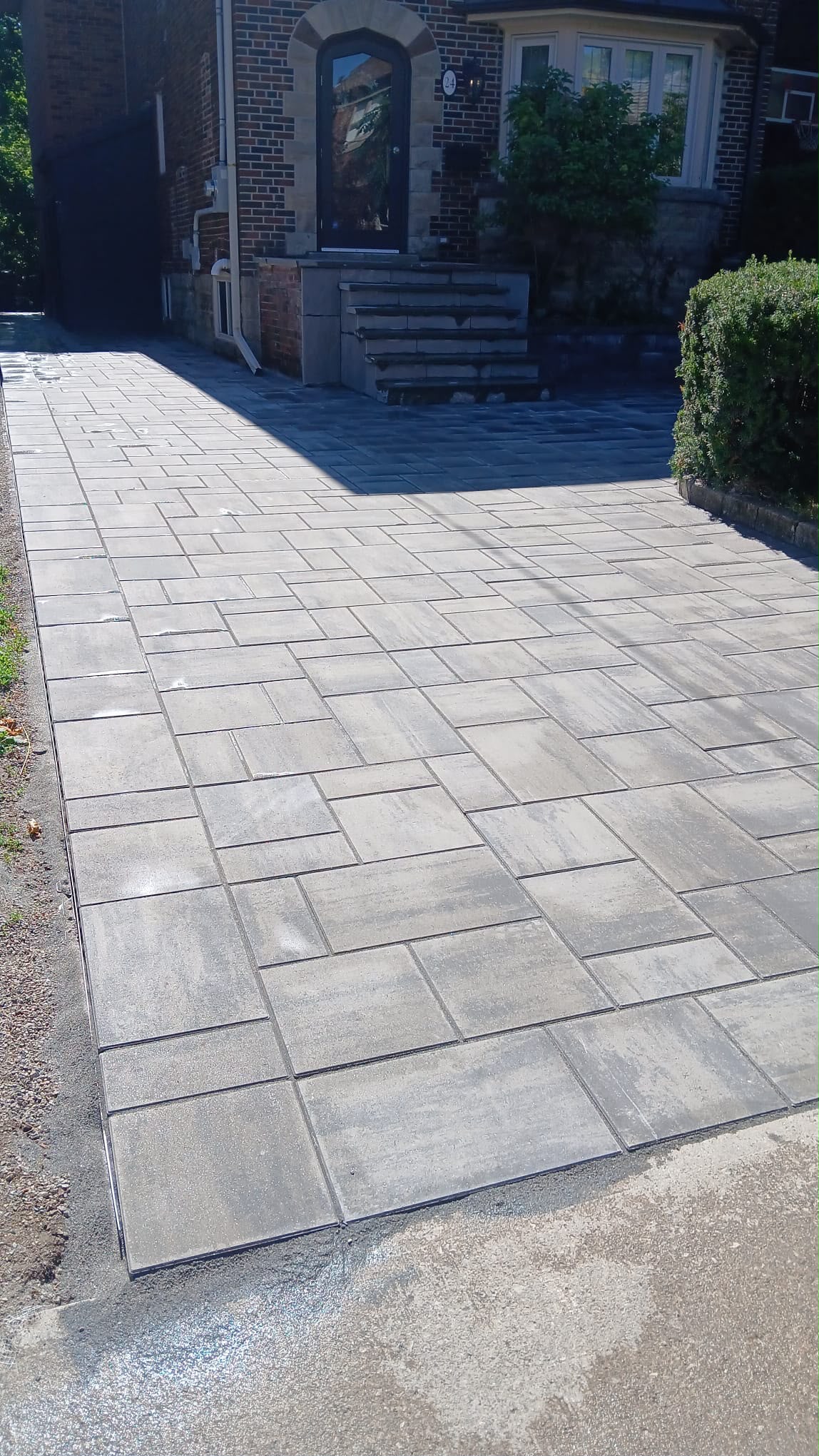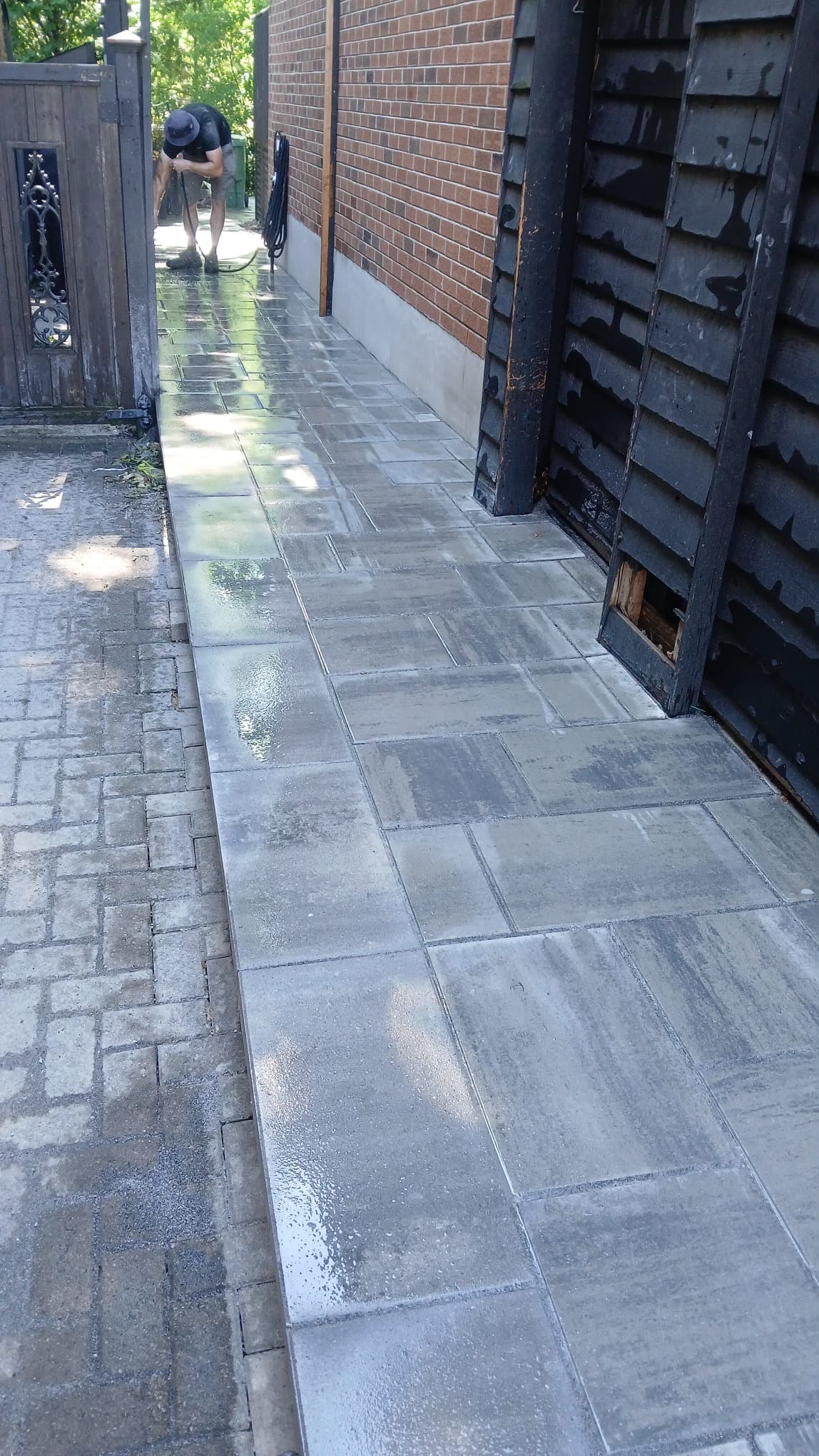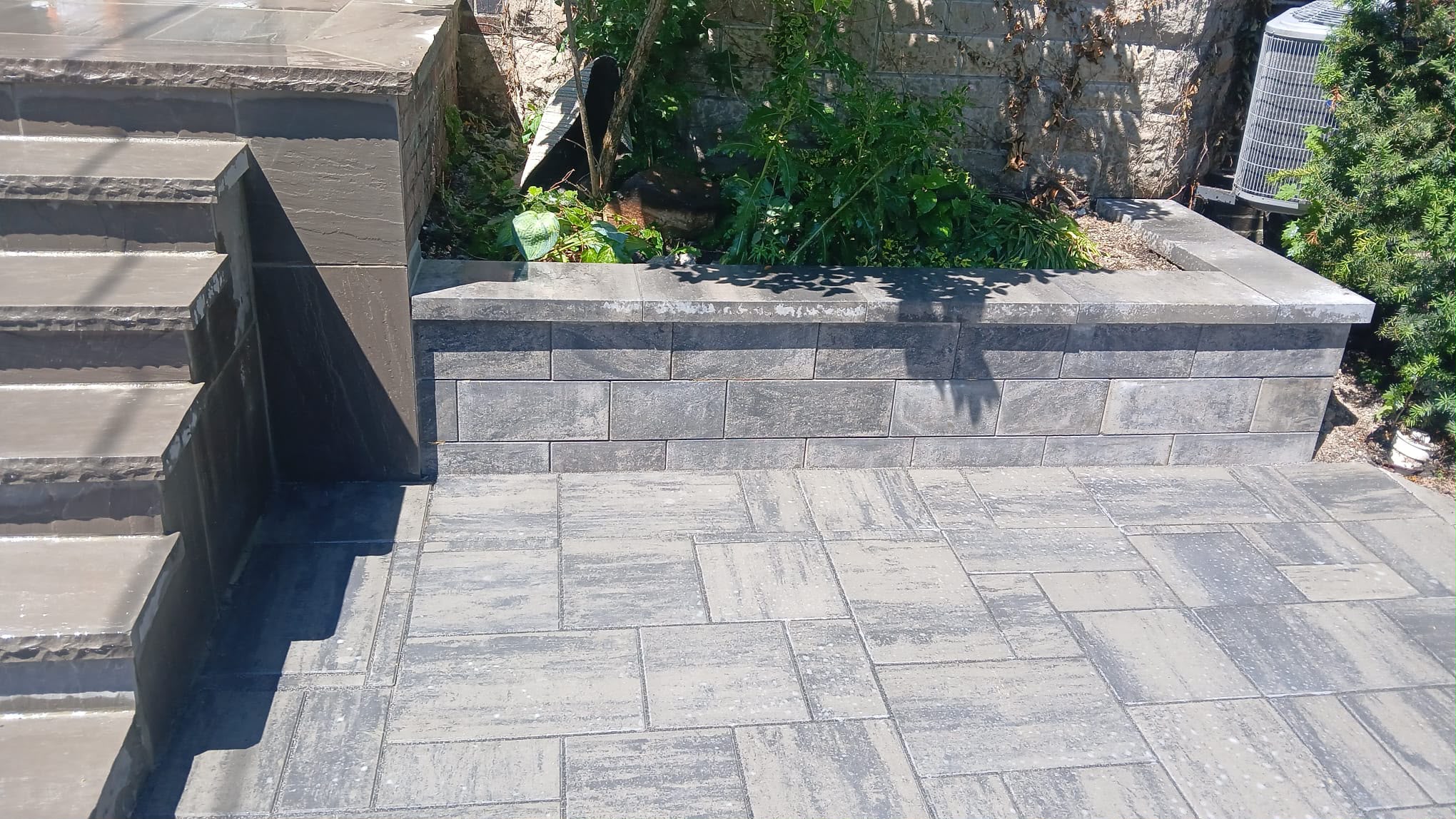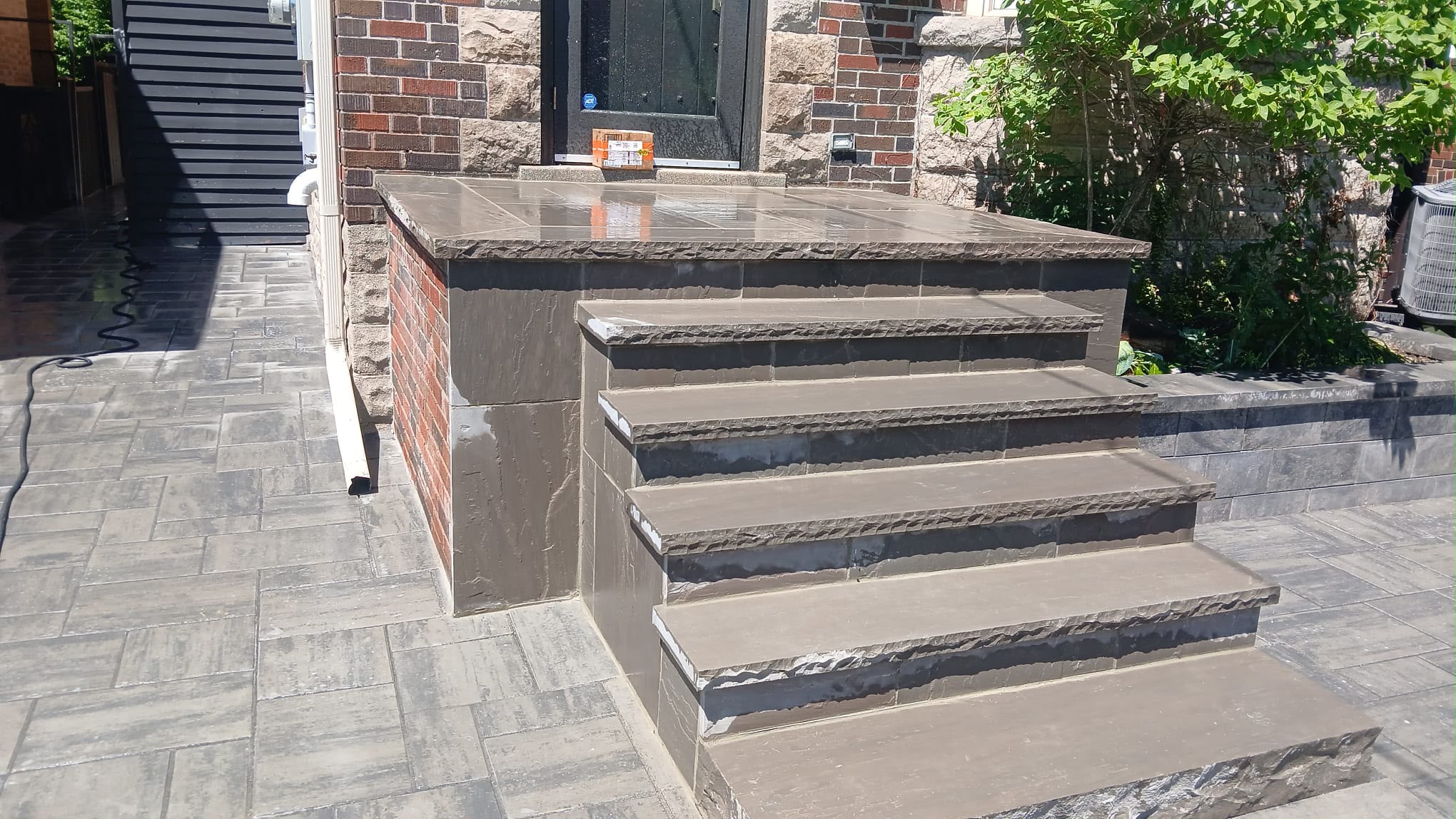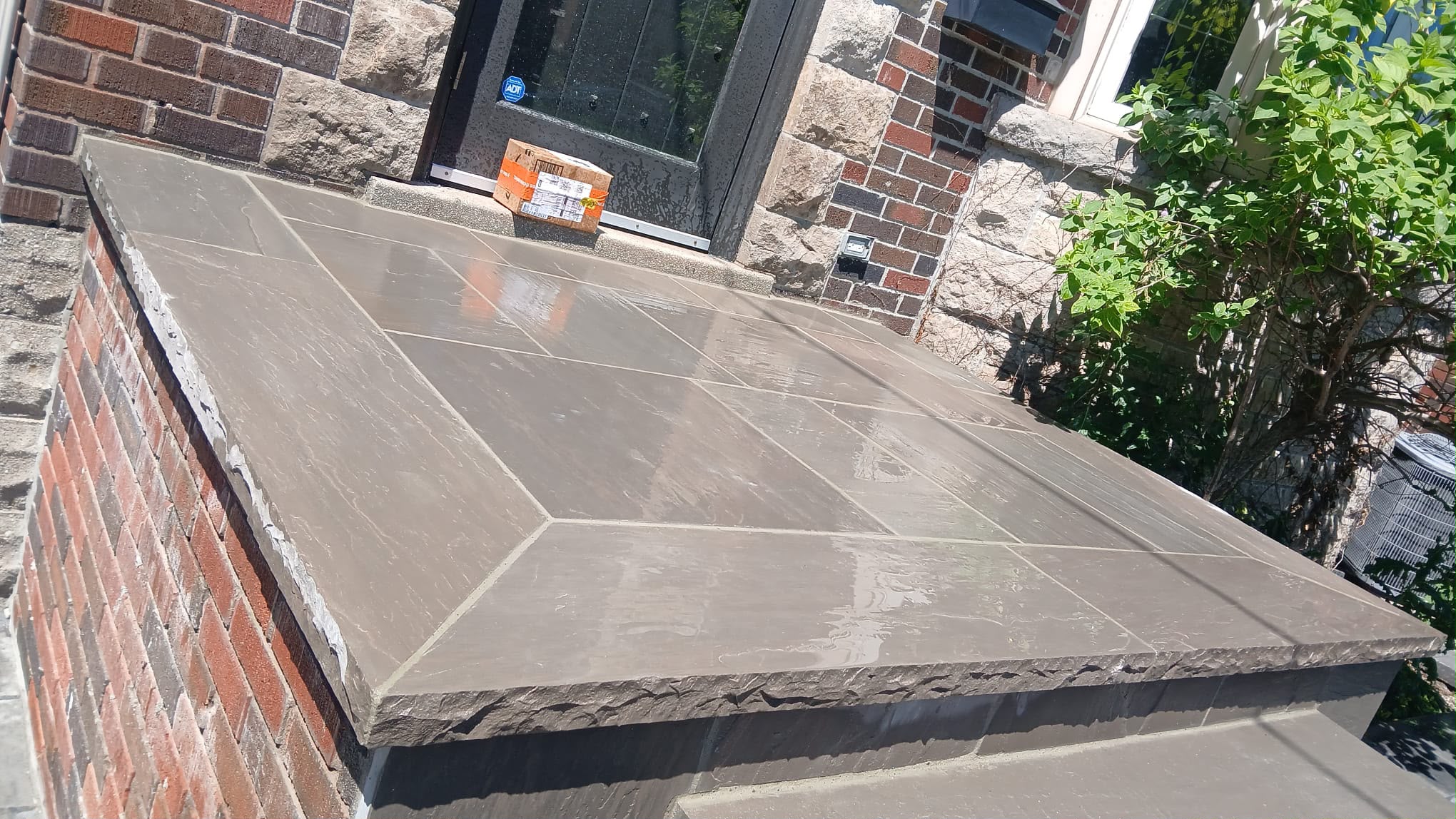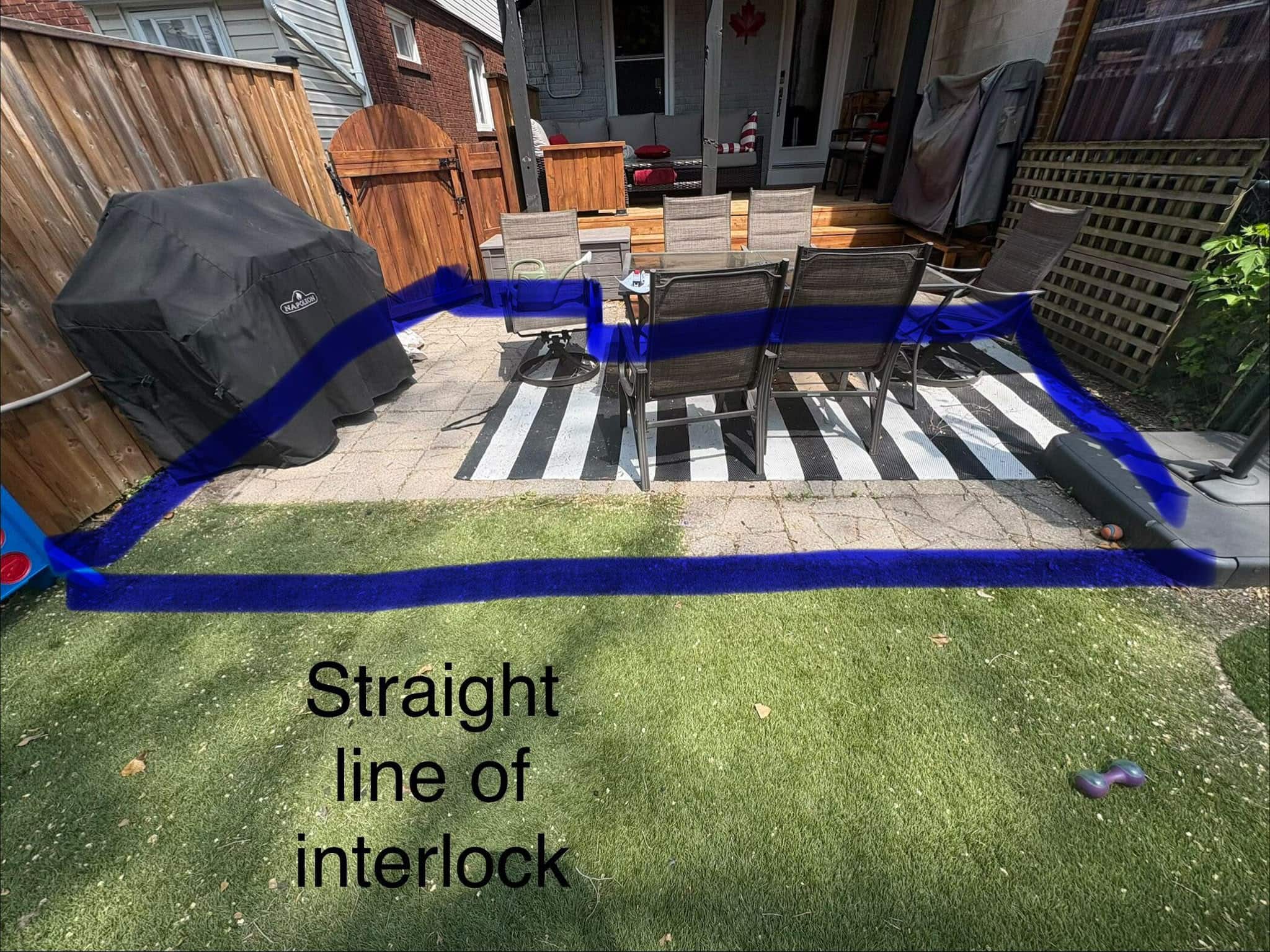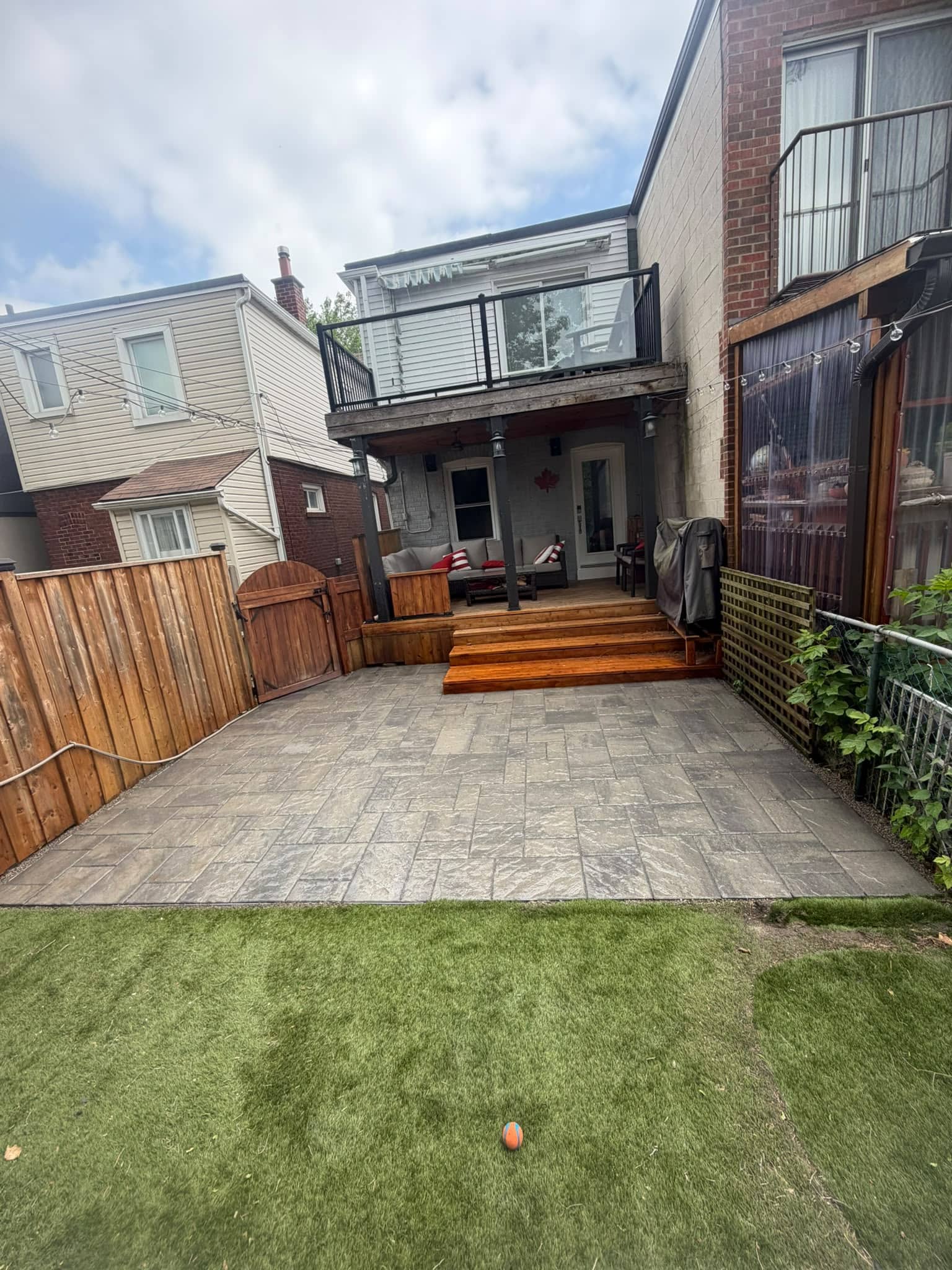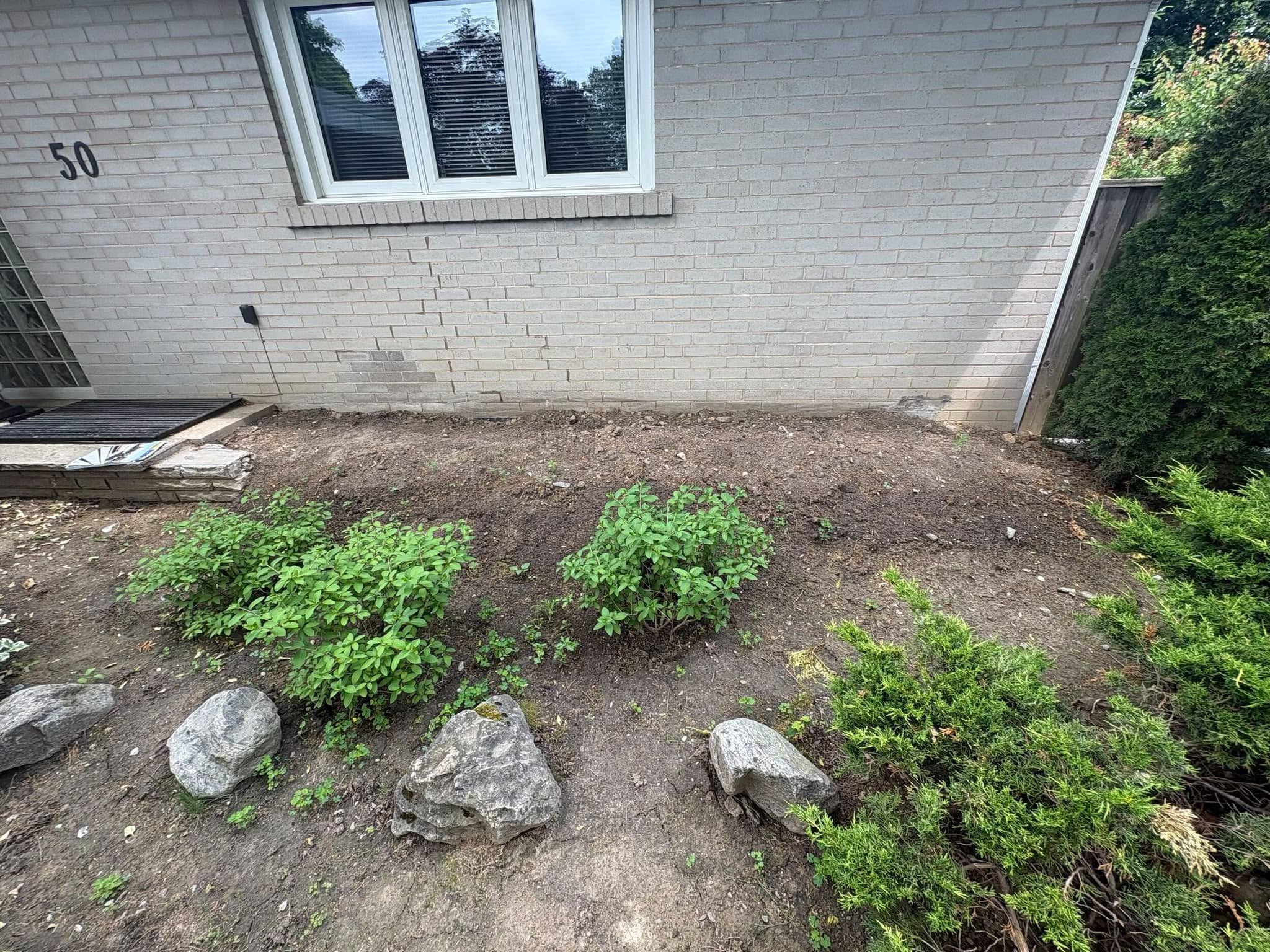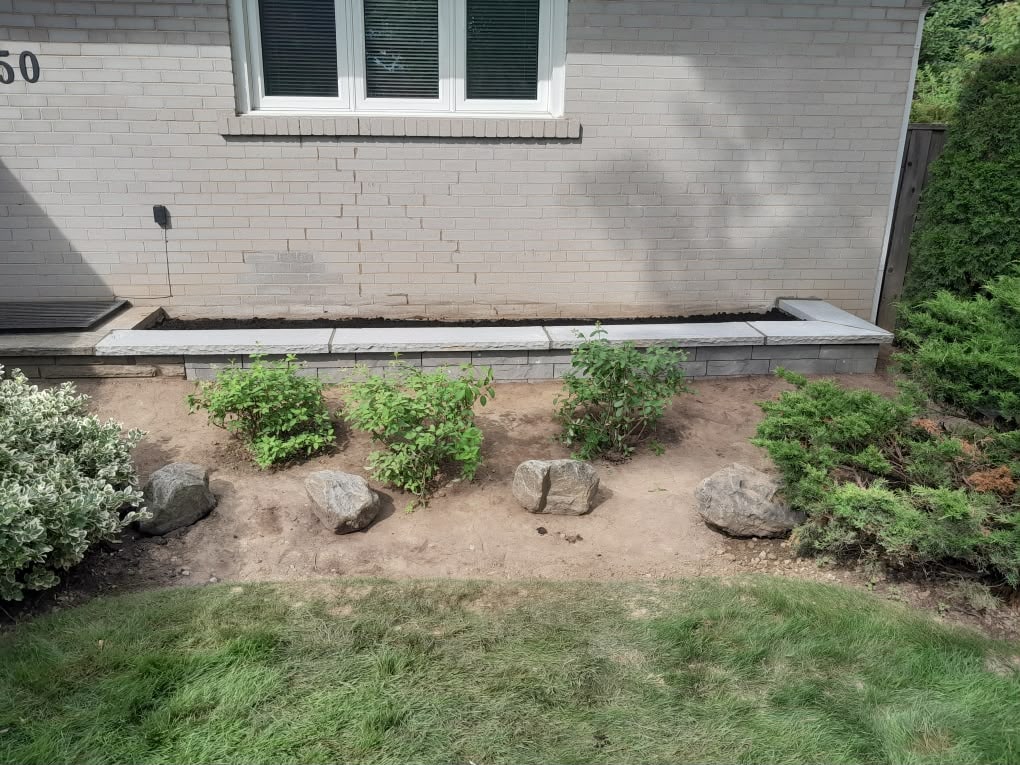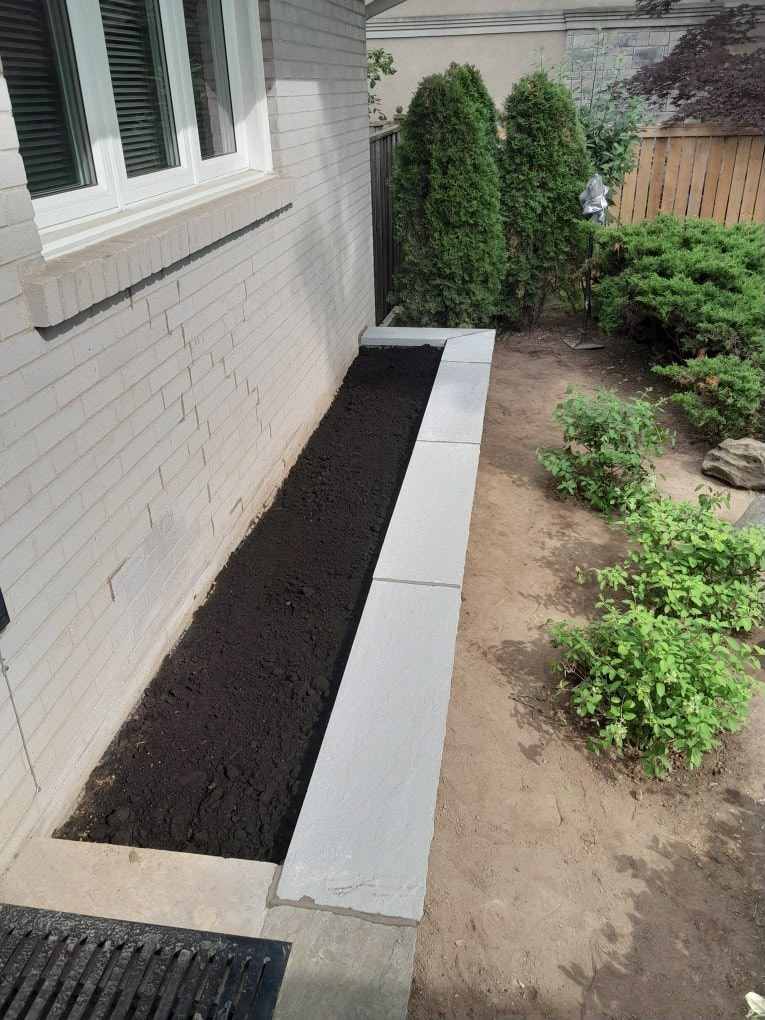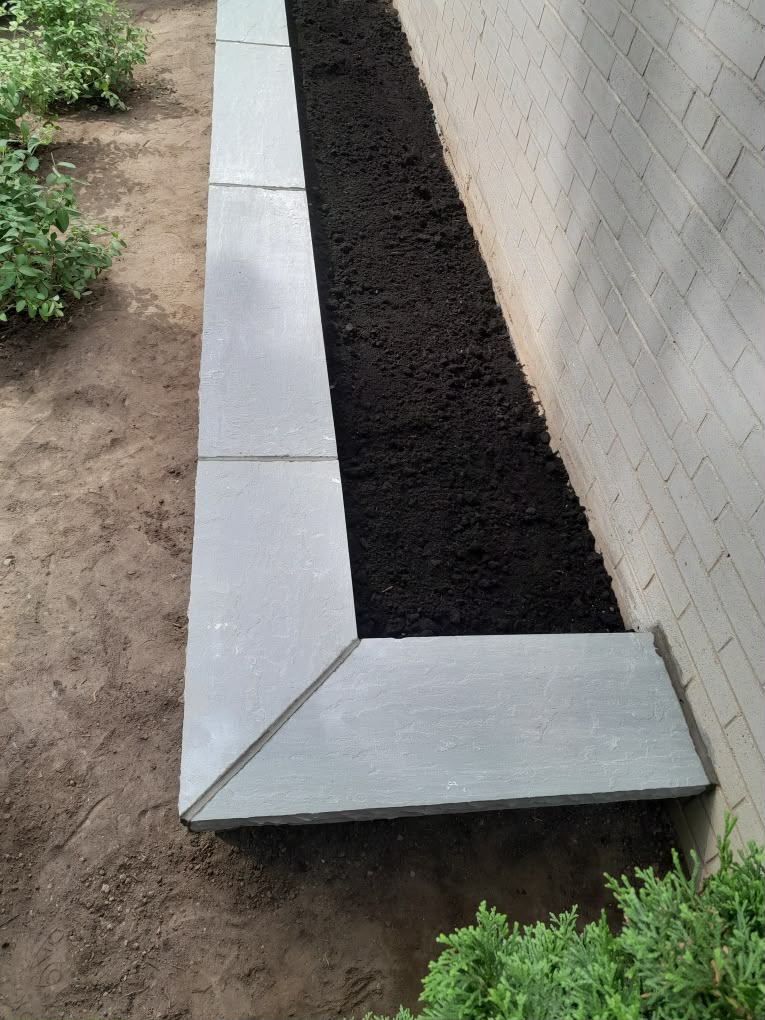

Stone masonry steps that stand the test of time are built with the right stone, a stable base, proper drainage, careful jointing, and a design that suits the home’s daily use. Good stone steps should do more than just look attractive at the front entrance or in the backyard. They should stay level, shed water properly, handle freeze-thaw cycles, and remain safe through years of foot traffic, rain, snow, ice, and seasonal movement.
For Toronto and GTA homeowners, stone steps require extra planning because exterior masonry is exposed to harsh weather. Winter freezing, spring thawing, road salt, heavy rain, shaded walkways, and older property grading can all shorten the life of poorly built steps. A beautiful stone finish will not last if water collects below it, the base moves, the stones are too thin for the use, or the joints are not built to handle moisture.
This guide explains what makes stone masonry steps durable, how to compare material options, what warning signs suggest repairs are needed, and when rebuilding makes more sense than patching.
What Makes Stone Masonry Steps Durable?
Durable stone masonry steps depend on the full system, not just the visible stone. The stone matters, but so do the base, drainage, slope, mortar or setting method, edge support, step height, landing layout, and connection to the surrounding walkway or porch.
A common mistake is judging steps only by the top surface. Homeowners may choose a stone because it looks solid, but if the base underneath is weak, the steps can shift or settle. If water sits under the stone, freeze-thaw movement can loosen the pieces. If the joints are poorly finished, water can enter and damage the installation from within.
Long-lasting stone steps usually have several things in common: a stable foundation, proper water runoff, suitable stone thickness, safe rise and tread proportions, strong edge restraint, and details that match the home’s entrance. This is why stone steps should be planned as part of the full exterior, not as a simple surface upgrade.
Why Toronto Weather Is Hard on Exterior Steps
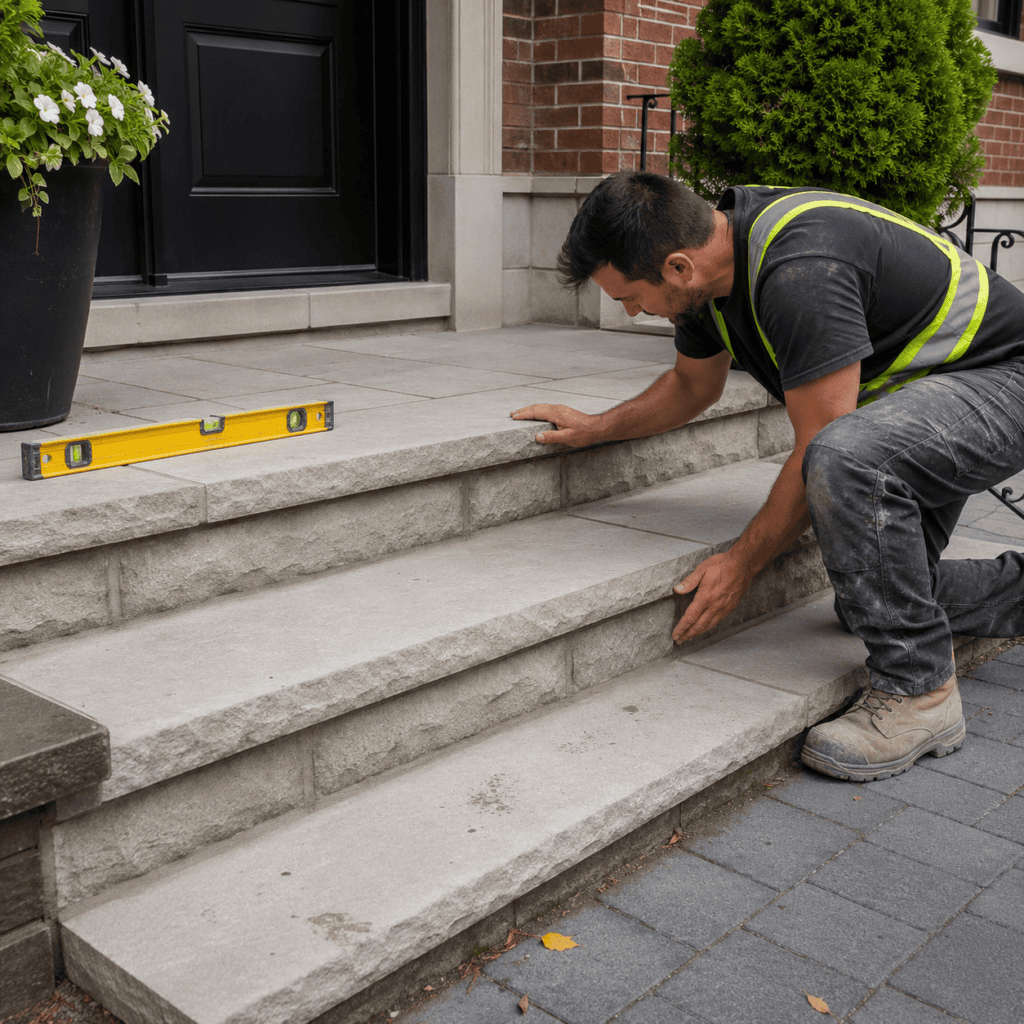
Toronto’s weather is hard on exterior steps because moisture and freezing temperatures repeatedly stress masonry materials. Water can enter small gaps, joints, pores, or cracks. When it freezes, it expands and can push stone, mortar, or base materials apart.
Steps are especially exposed because they are horizontal surfaces. Unlike vertical walls, they directly catch rain, snow, ice, salt, and foot traffic. If the steps are shaded or face north, moisture may sit longer. If they connect to a driveway or front walkway, salt can be tracked across the surface all winter. If the grading directs water toward the steps, damage can occur more quickly.
The City of Toronto provides guidance on managing rain and melted snow, which is useful for homeowners planning exterior masonry. Stone steps should be designed so water drains away from the entrance, foundation, walkway, and nearby walls.
Choosing the Right Stone for Steps
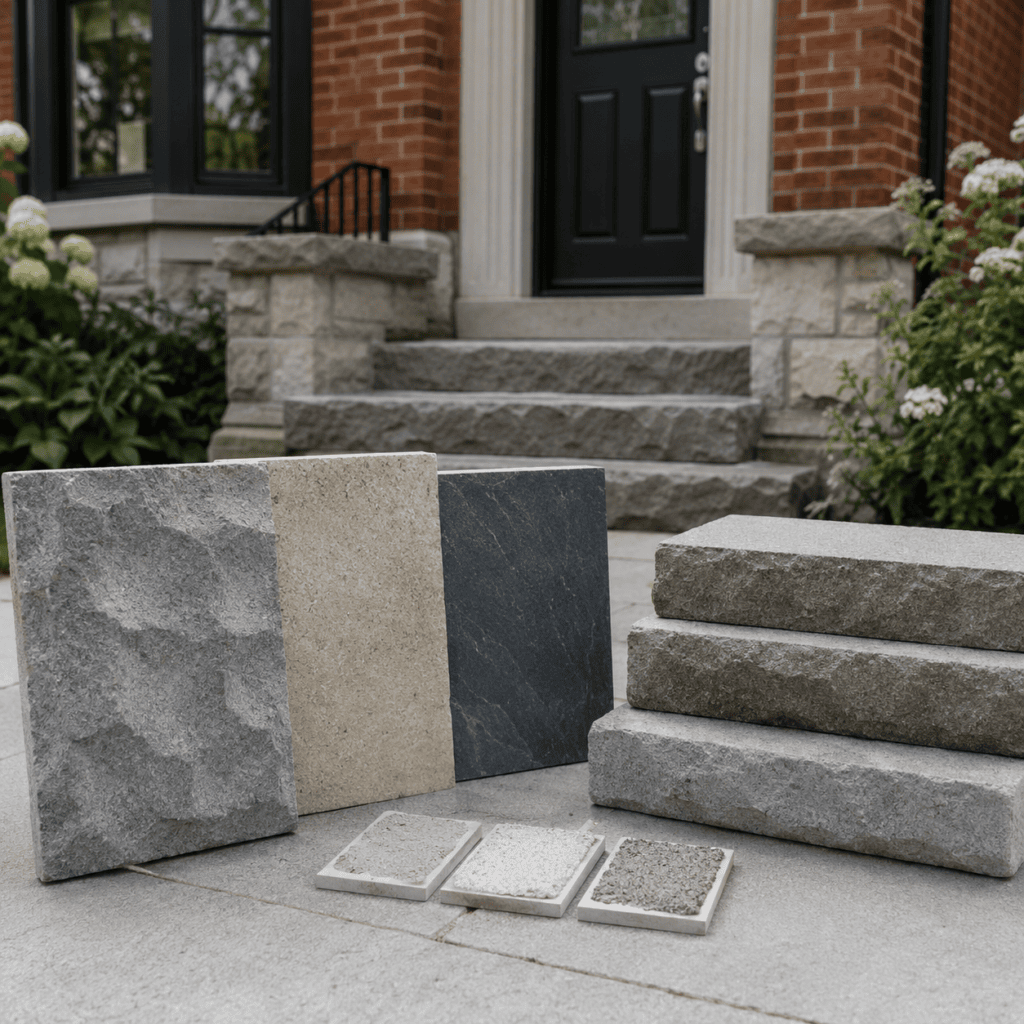
The right stone for steps should be strong enough to withstand foot traffic, suitable for outdoor exposure, and safe in wet or winter conditions. Not all stones perform the same way. Some stones are dense and durable, while others can be more porous, slippery, soft, or sensitive to salt and freeze-thaw conditions.
Homeowners often compare natural stone, flagstone, limestone, granite, sandstone, and manufactured stone products. Each option has a different look, weight, cost, and maintenance need. A stone that works well for a garden wall may not be the best choice for front steps that receive daily use and salt in winter.
For stone steps, texture matters. A highly polished surface may look refined, but it can become slippery when wet. A textured or naturally gripped surface may be safer for exterior use. Thickness also matters because thin pieces may crack or loosen more easily if the underlying support is not properly prepared.
If you are comparing stone choices for exterior work, A&A Masonry’s stone masonry Toronto page is a useful starting point for understanding how stone can be used in walls, veneers, steps, and outdoor features.
Base Preparation Is What Most Homeowners Do Not See
Base preparation is one of the biggest reasons stone steps either last or fail early. The base supports the weight of the stone, the people using the steps, and the seasonal movement below the surface. If the base settles, the stone steps will usually move with it.
A strong base may involve excavation, compacted granular material, concrete support, drainage layers, or other structural preparation, depending on the site. The right approach depends on the step design, soil conditions, height, slope, and whether the steps connect to a porch, retaining wall, walkway, or driveway.
This is where cheaper work can become expensive later. A surface-level installation may look finished at first, but if the base is shallow or poorly compacted, the steps can shift after a winter or two. Once movement starts, joints can open, water can enter, and the top stones can loosen.
For homeowners considering a broader entrance upgrade, A&A Masonry’s interlocking steps and porches Toronto page explains how steps and porches depend on proper base preparation, grading, and finishing details.
Drainage Is Critical for Long-Lasting Stone Steps
Drainage is critical because trapped water is one of the fastest ways to damage exterior stone steps. Water should move away from the steps, not sit on the treads, collect at the landing, or drain back toward the home.
Good drainage includes the right slope on the step surface, proper grading around the entrance, a base that does not hold excess water, and details that keep runoff from collecting near the foundation. Even a small drainage mistake can create winter ice patches, loose joints, staining, and gradual movement.
Stone steps near a sloped yard, retaining wall, or driveway need extra attention. Water often follows the easiest path downhill. If that path crosses the steps or collects behind them, the installation will be subject to constant moisture stress. In those cases, the steps should be planned along with the surrounding hardscape.
If your property has grade changes around the steps, A&A Masonry’s retaining walls Toronto page may be helpful because retaining walls and steps often work together on sloped properties.
Step Design: Rise, Tread, Landing, and Safety
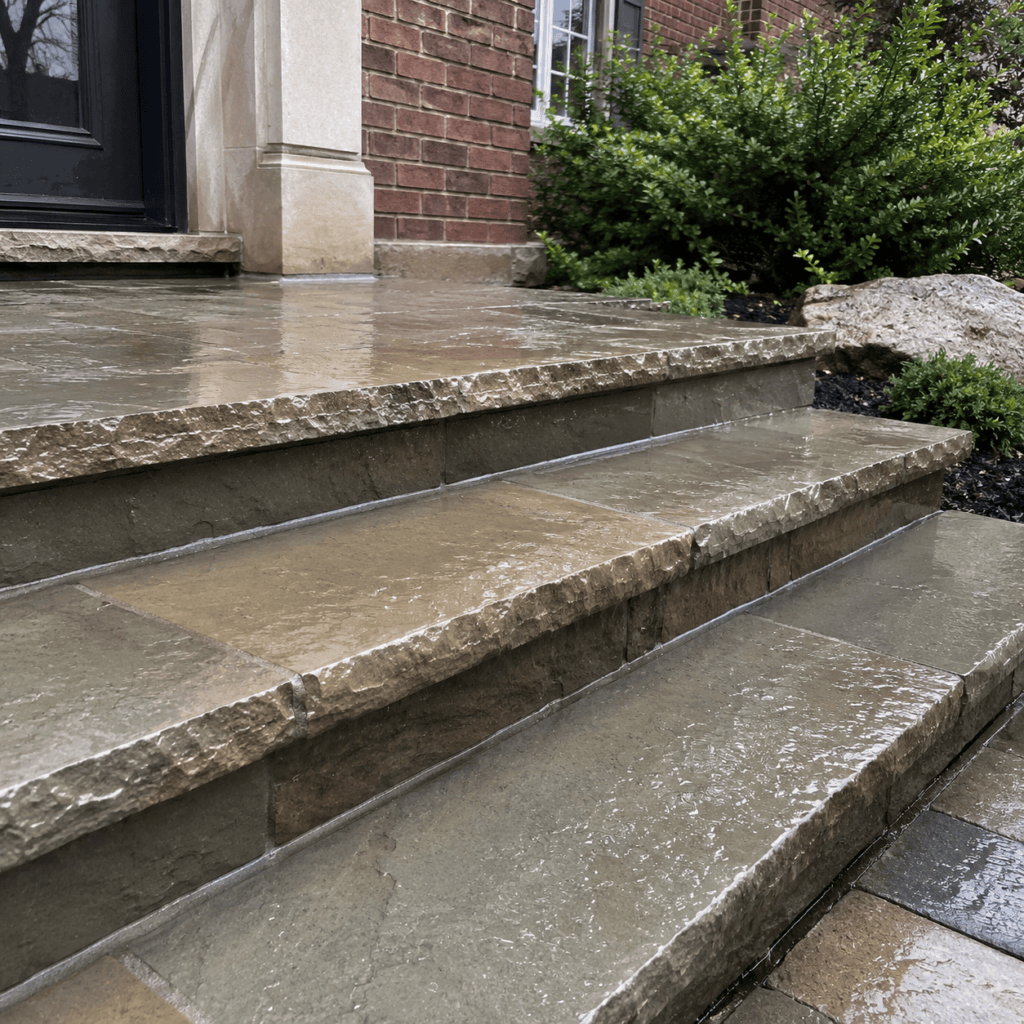
Good step design should feel natural to walk on. The rise is the vertical height of each step, and the tread is the horizontal depth where the foot lands. If the rise is too high, the steps feel uncomfortable. If the treads are too shallow, the steps can feel unsafe. If the step heights vary, people may trip because their walking rhythm changes unexpectedly.
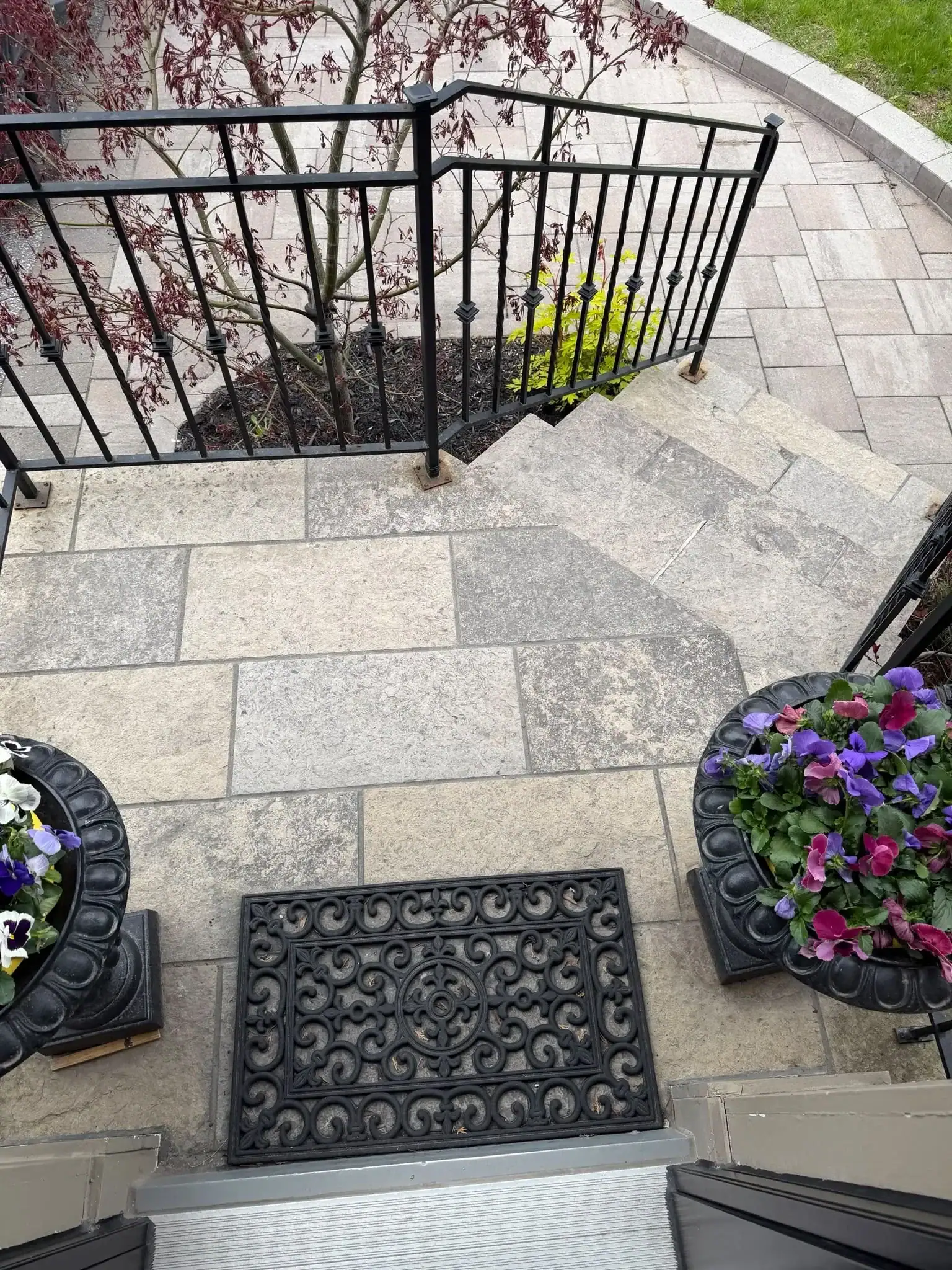
For outdoor stone steps, landings also matter. A landing gives people space to pause, open a door, turn, or transition to a walkway. At the front entrance, the landing should be practical for daily use, deliveries, snow clearing, and safe winter access.
Homeowners planning changes to porches, decks, stairs, or entrances should check whether permit rules apply. The City of Toronto provides guidance on decks and porches, and its broader page on when a building permit is needed is also worth reviewing for projects that affect the structure, entrances, or major exterior changes.
Mortar, Joints, and Movement
Mortar and joints help stone steps stay together, but they must be suited to exterior exposure. Poorly finished joints can hold water, crack early, or separate from the stone. Once joints open, water can enter below the surface and weaken the installation.
Some stone steps are set with mortar, some are built as part of a larger masonry structure, and some use interlocking or dry-laid methods, depending on the design. Each approach has different movement and maintenance needs. The key is to match the jointing method to the material, base, drainage, and expected use.
Toronto’s freeze-thaw cycles make movement important. Exterior masonry needs to handle small seasonal changes without falling apart. If the jointing is too weak, it may wash out. If the system traps water, winter damage can accelerate. If the stone is poorly supported, joints may crack as the units move beneath.
For homeowners dealing with failing joints in brick or stone areas, A&A Masonry’s tuckpointing services in Toronto page explains why the condition of the mortar matters for long-term masonry durability.
Stone Steps vs Concrete Steps vs Interlocking Steps
Stone steps, concrete steps, and interlocking steps can all work well, but they suit different goals. The best choice depends on appearance, budget, repairability, surrounding materials, drainage, and the amount of use the steps will receive.
Stone masonry steps are often chosen for a strong, natural, and high-quality appearance. They can blend well with brick homes, garden walls, stone facades, and older Toronto properties. They require careful material selection and installation because the stone, base, and joints all affect performance.
Concrete steps can be practical when homeowners want a clean, solid, and simple entrance. Concrete can perform well when properly built, but cracks, spalling, and salt damage can become visible over time. If you are comparing repair or replacement options, A&A Masonry’s concrete steps and walkways Toronto page may be useful.
Interlocking steps offer design flexibility and repairability because individual units can often be adjusted or replaced. They can work well when steps connect to interlocking walkways, patios, or driveways. A&A Masonry’s interlocking stone steps Toronto page explains this option in more detail.
A smart choice is not always the most expensive material. The better choice is the one that fits the home, handles water properly, and can be maintained over time.
Warning Signs Stone Steps Need Repair
Stone steps usually show warning signs before they become unsafe. Small problems are easier to repair before the base, joints, or surrounding masonry become more damaged.
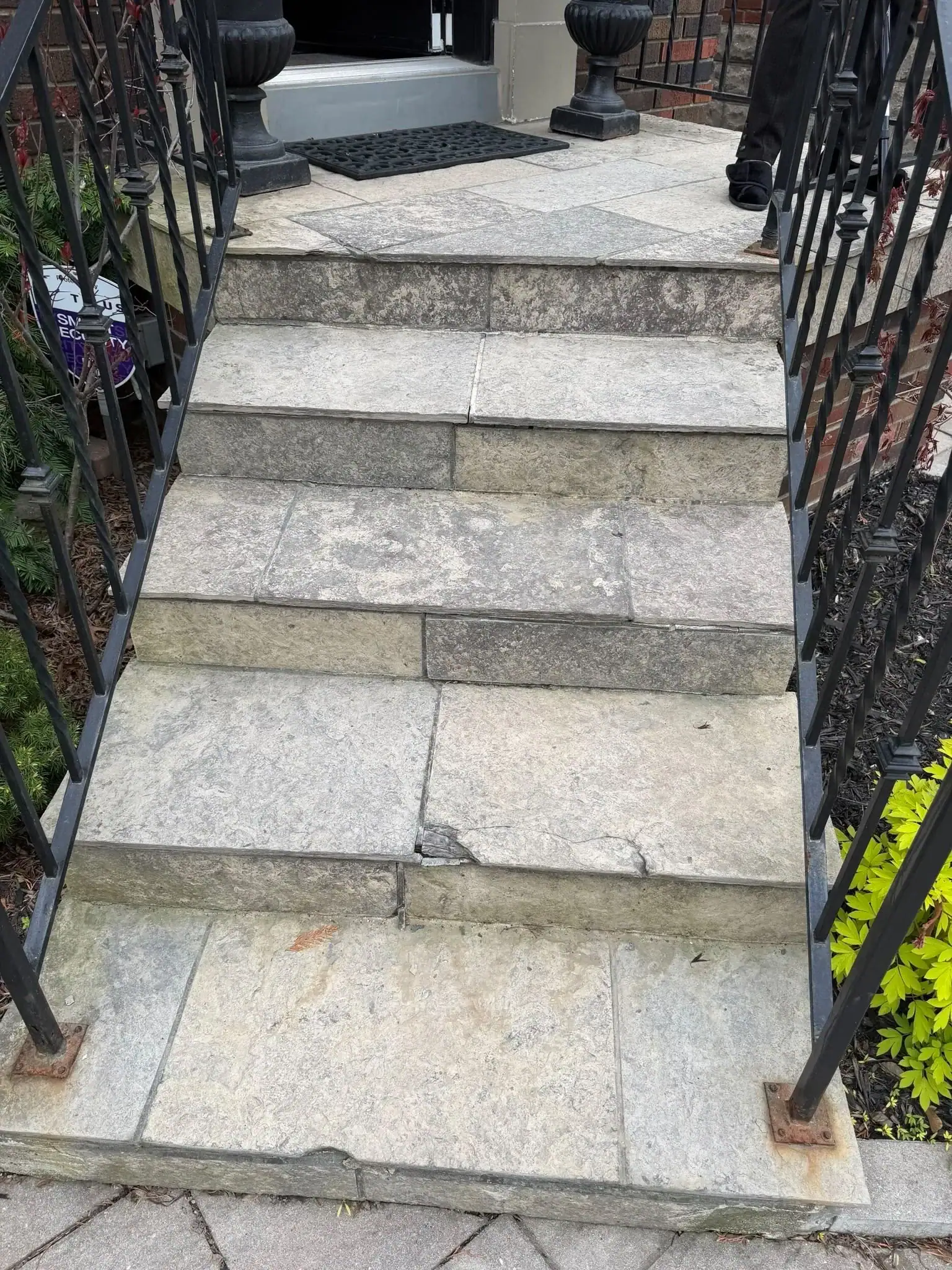
- Loose stones: Movement underfoot may indicate the stone is no longer properly bonded or supported.
- Open joints: Gaps between stones allow water to enter, worsening freeze-thaw damage.
- Uneven treads: Settlement can make steps uncomfortable or unsafe to use.
- Pooling water: Water sitting on steps or landings suggests slope or drainage problems.
- Cracked stone: Cracks may point to impact, weak support, unsuitable stone, or movement below.
- Flaking or surface wear: Some stones break down faster when exposed to salt, moisture, or heavy use.
- Separation from the porch or walkway: Gaps can indicate settlement or a poor connection between surfaces.
- Recurring winter ice: Repeated ice patches can signal drainage or slope issues, not just cold weather.
If steps are loose, uneven, or holding water, surface patching may not be enough. The cause should be checked before repairs are made.
What Happens When Stone Steps Are Built Poorly
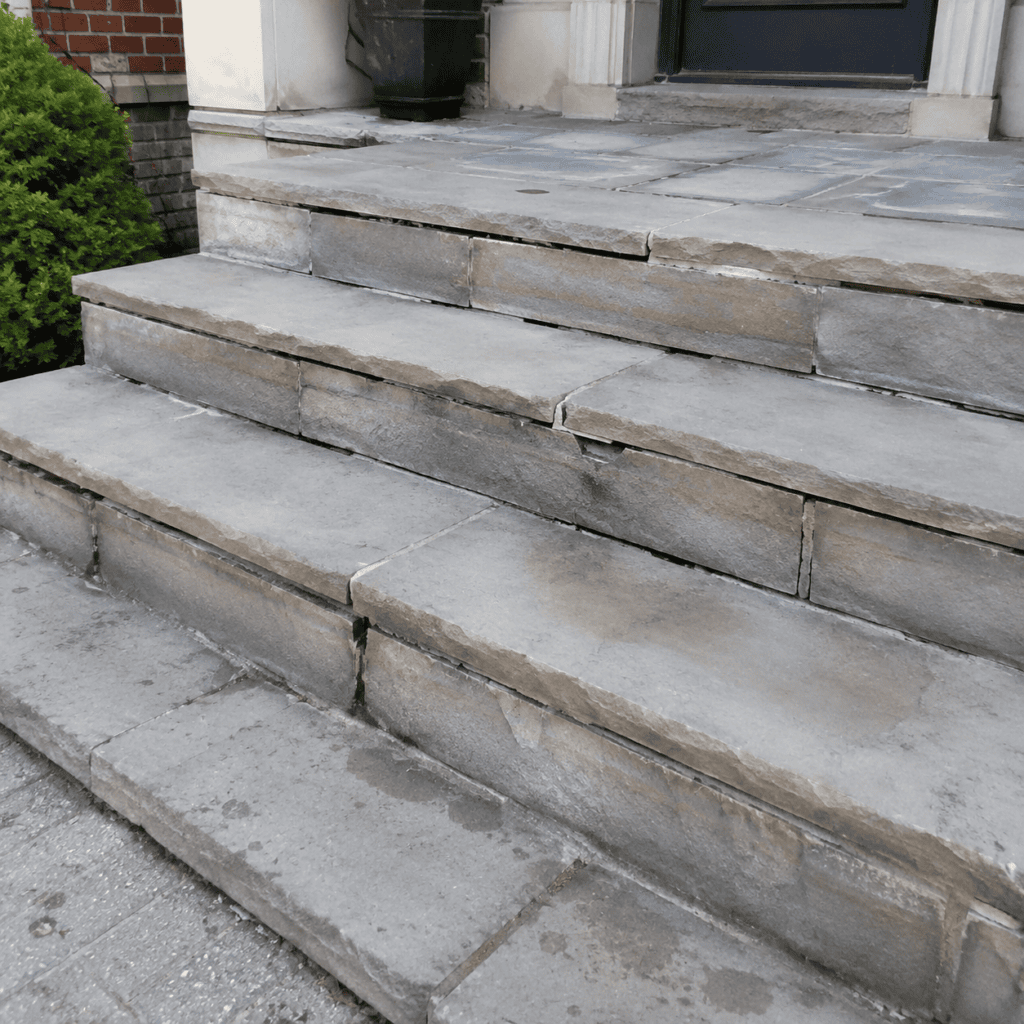
Poorly built stone steps can fail through movement, water damage, cracking, loose joints, and unsafe walking surfaces. The first sign may be a small wobble or a joint crack, but the deeper problem may lie beneath the visible surface.
One common issue is a weak base. If the base settles, the stones above it shift. Another issue is poor drainage. If water collects behind or below the steps, freezing in winter can push the installation apart. A third issue is using the wrong stone for the exposure. A stone that absorbs too much water or wears poorly under salt and traffic may not be the right choice for front steps.
Bad repairs can also make the problem worse. Adding mortar to loose steps without fixing the base may only delay failure. Applying sealer over damaged stone may trap moisture or hide the real issue. Replacing one loose piece without checking why it moved can cause the same problem to recur.
What Homeowners Can Check Before Planning Stone Steps
Homeowners can do a basic review before planning stone steps or requesting estimates. This helps identify whether the project is mainly cosmetic, functional, drainage-related, or safety-related.
- Watch water after rain: Note whether water drains away from the steps or pools on the surface.
- Check the walking feel: Notice uneven treads, rocking stones, or awkward step heights.
- Look at nearby masonry: Cracks in porch walls, retaining walls, or walkways may point to movement.
- Check winter problem areas: Repeated ice patches often show drainage problems.
- Look at the connection points: Check where steps meet the porch, walkway, driveway, or foundation.
- Think about daily use: Consider children, older adults, deliveries, snow clearing, and lighting.
- Take photos: Wide and close-up photos help compare changes over time and explain the issue clearly.
These checks do not replace a professional inspection, but they make the first conversation more useful. They also help homeowners avoid choosing stone based only on colour or style.
Repair, Resurface, or Rebuild?
The right fix depends on whether the problem is on the surface, in the joints, in the stone, or in the base. A small joint repair is very different from rebuilding steps that have settled or shifted.
Repair may make sense when only a few joints are open, one stone is loose, or a small area needs attention, and the base is still stable. The repair should still address water entry and movement.
Resurfacing may make sense when the underlying structure is sound, but the visible surface is worn or outdated. This only works when the base is stable, and moisture is not trapped below.
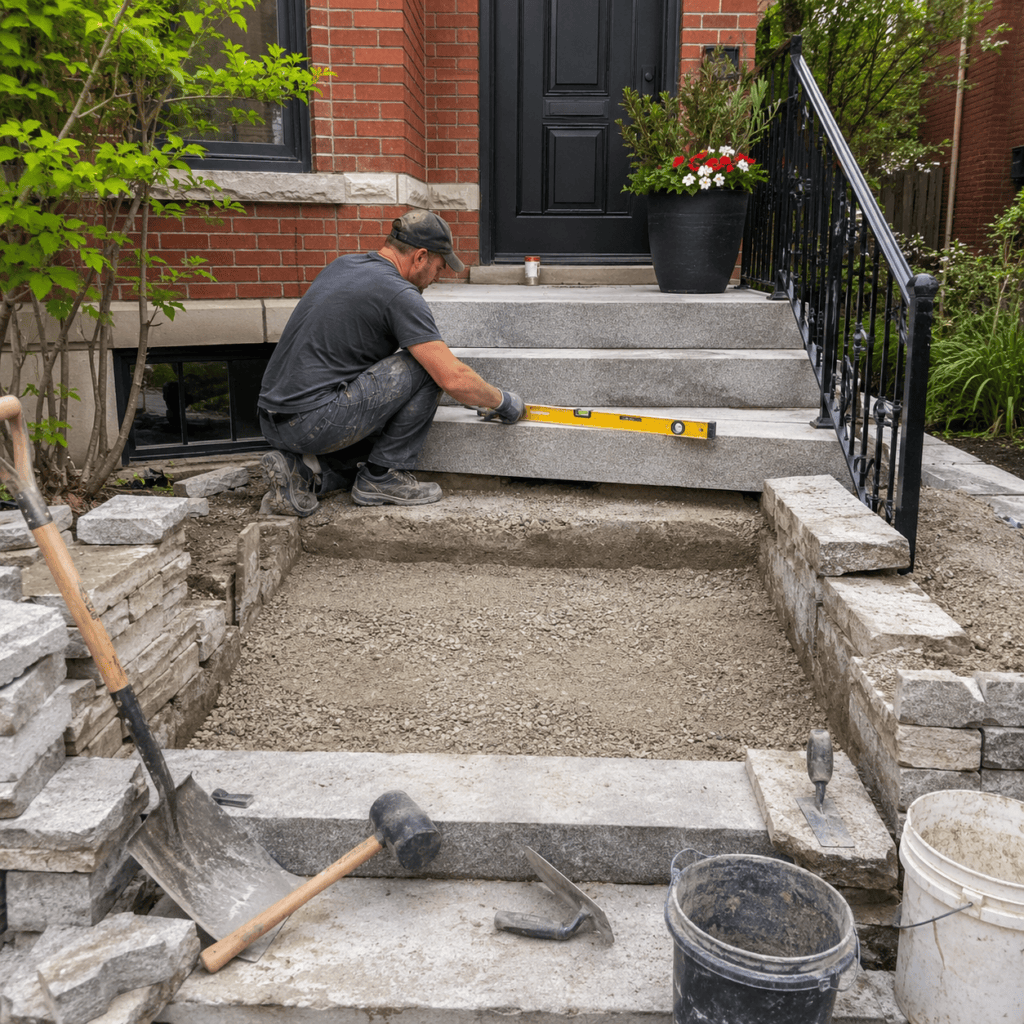
Rebuilding may make sense when the steps are uneven, sinking, unsafe, poorly drained, or repeatedly failing after repairs. Rebuilding gives the contractor a chance to correct the base, drainage, layout, and material choices all at once.
It is worth challenging the assumption that repair is always cheaper. If the base has failed, repeated patching can cost more over time than properly rebuilding the steps.
When Professional Help Makes More Sense
Professional help makes more sense when the steps are uneven, loose, cracked, holding water, connected to a porch, close to a foundation, or part of a larger entrance or walkway project. These are not just appearance issues. They can affect safety, drainage, and long-term masonry performance.
A mason can assess the stone, base, joints, slope, drainage, and surrounding masonry. They can also help determine whether natural stone, interlocking stone, concrete, or a combined approach makes the most sense. If the project changes the entrance structure, porch area, or major exterior layout, permit guidance may also need to be reviewed.
For a broader view of exterior masonry work, A&A Masonry’s masonry services in Toronto page outlines related services, including stone masonry, concrete work, brick repair, tuckpointing, retaining walls, and waterproofing.
Quick Decision Guide for Long-Lasting Stone Steps
A simple decision guide can help homeowners make better choices before committing to stone steps.
- Choose durable exterior stone when the steps will face heavy foot traffic, winter weather, and salt exposure.
- Prioritize base preparation when the existing steps are sinking, rocking, or separating from nearby surfaces.
- Focus on drainage when water pools on the treads, landing, or beside the foundation.
- Use textured surfaces where slip resistance matters, especially at front entrances and shaded areas.
- Repair early when joints open, stones loosen, or small cracks appear.
- Rebuild instead of patching when the base has failed, or the steps keep moving after repairs.
- Check permits when the project affects a porch, entrance structure, retaining wall, or major exterior change.
The best stone steps are not just the best-looking ones. They are the ones built for the site, the weather, and how the home is used every day.
Final Thoughts on Stone Masonry Steps That Stand the Test of Time
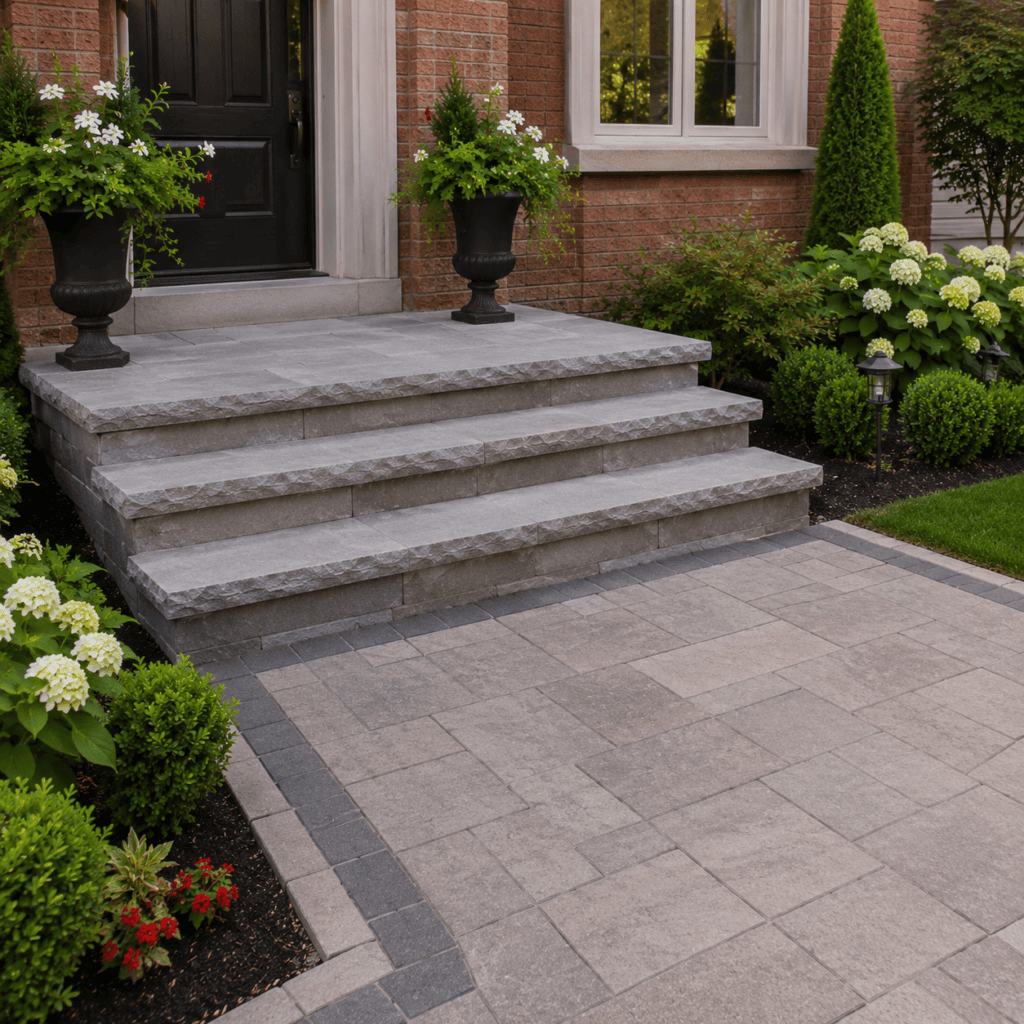
Stone masonry steps that stand the test of time are planned from the bottom up. The visible stone is important, but long-term durability comes from the base, drainage, slope, jointing, material choice, and how the steps connect to the surrounding home.
For Toronto and GTA homeowners, freeze-thaw cycles, snow, salt, rain, and older property conditions make proper installation especially important. A strong stone step project should shed water, feel safe underfoot, match the home’s exterior, and stay stable through seasonal changes.
Before choosing stone steps, look beyond colour and surface finish. Ask whether the stone suits outdoor use, whether the base will be built properly, how water will drain, and whether the layout supports safe daily use. Those details are what help stone steps keep their strength and appearance year after year.