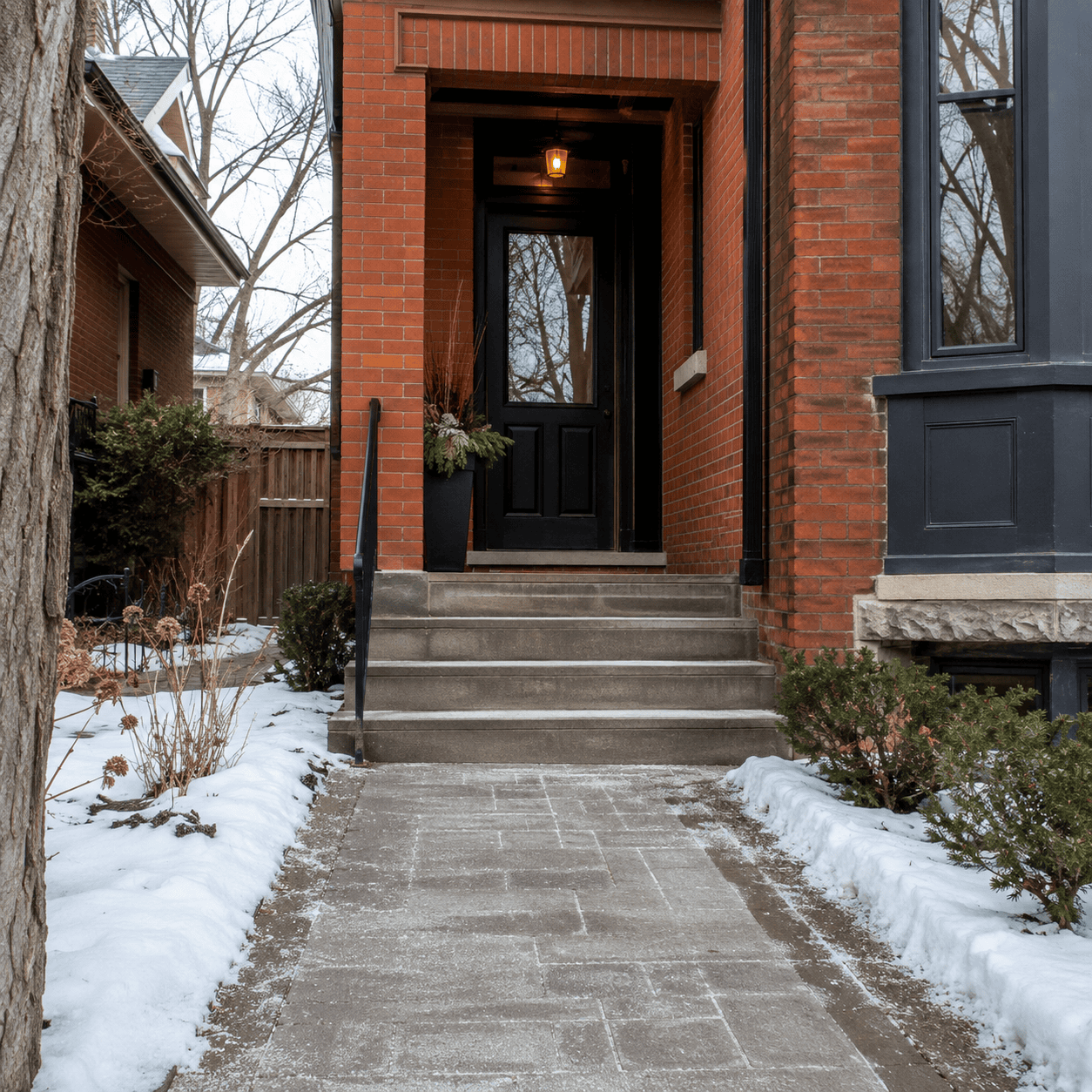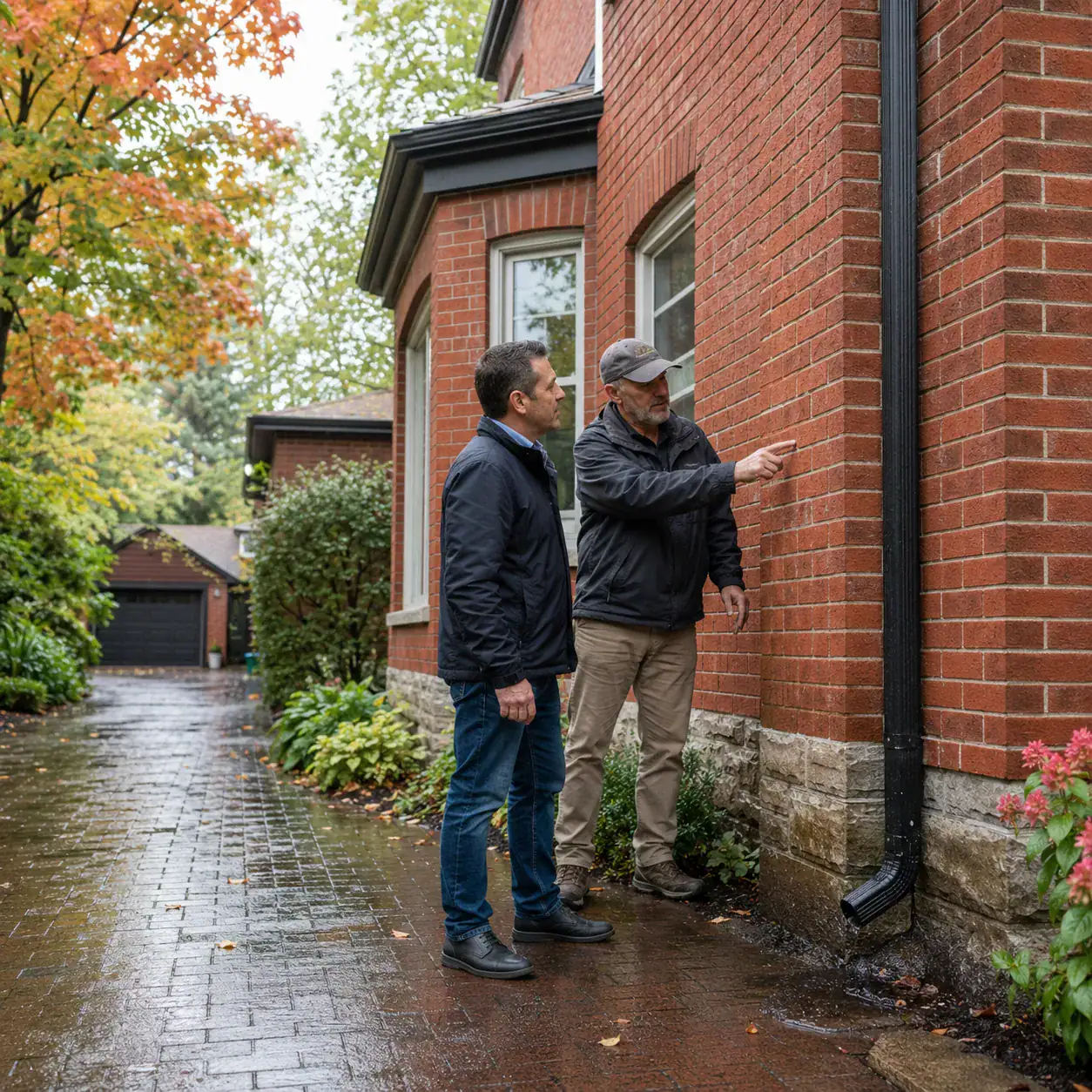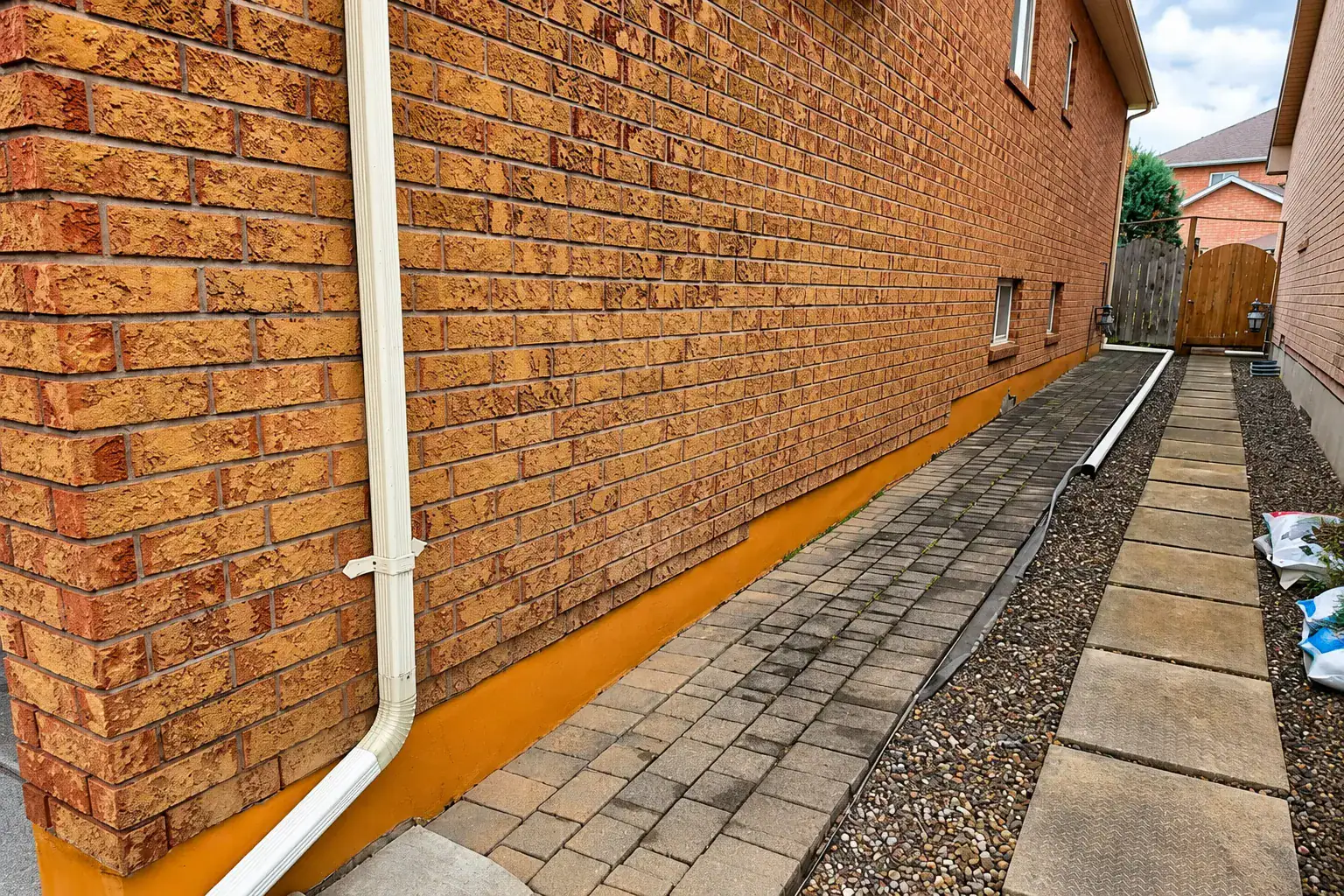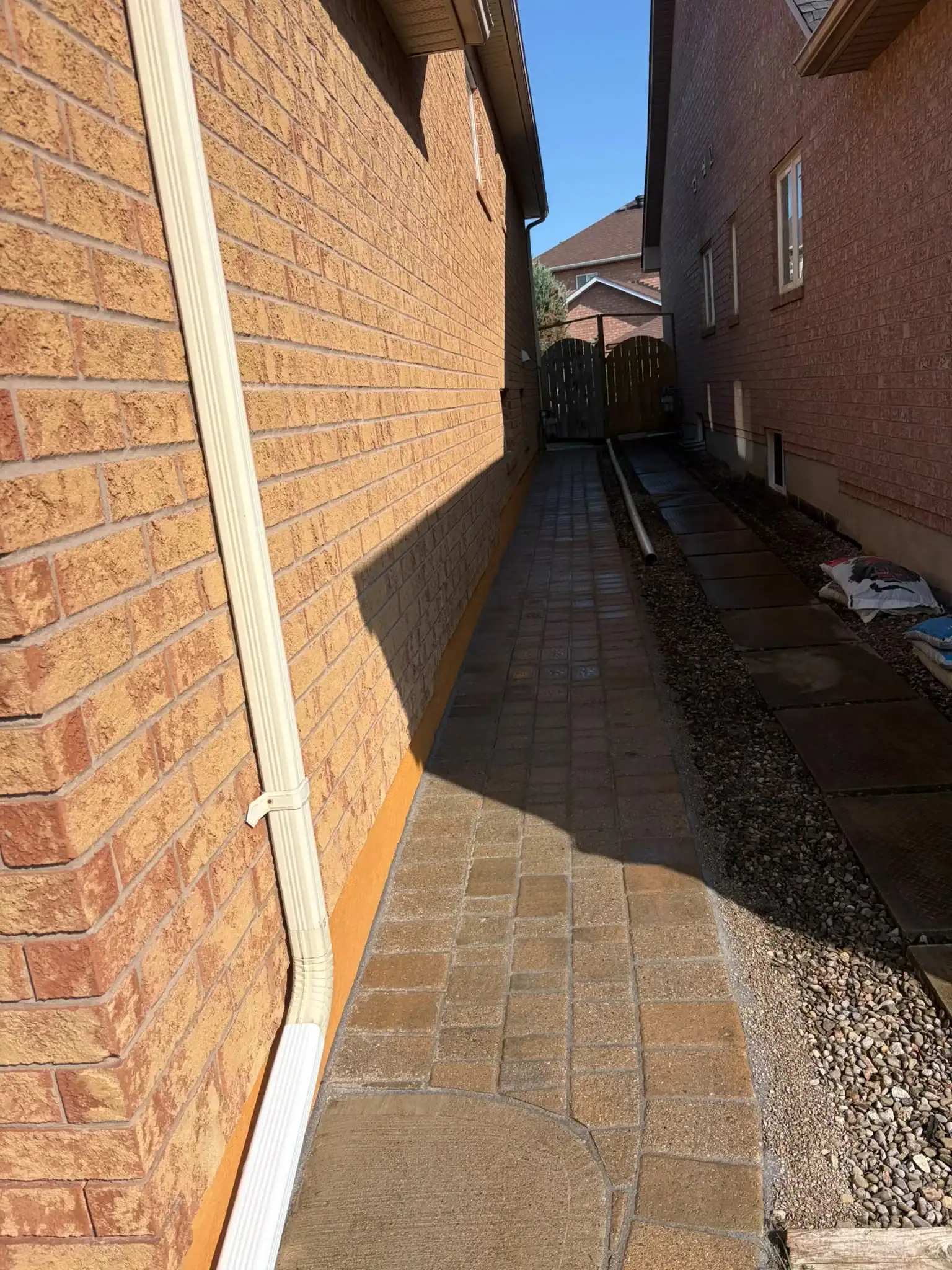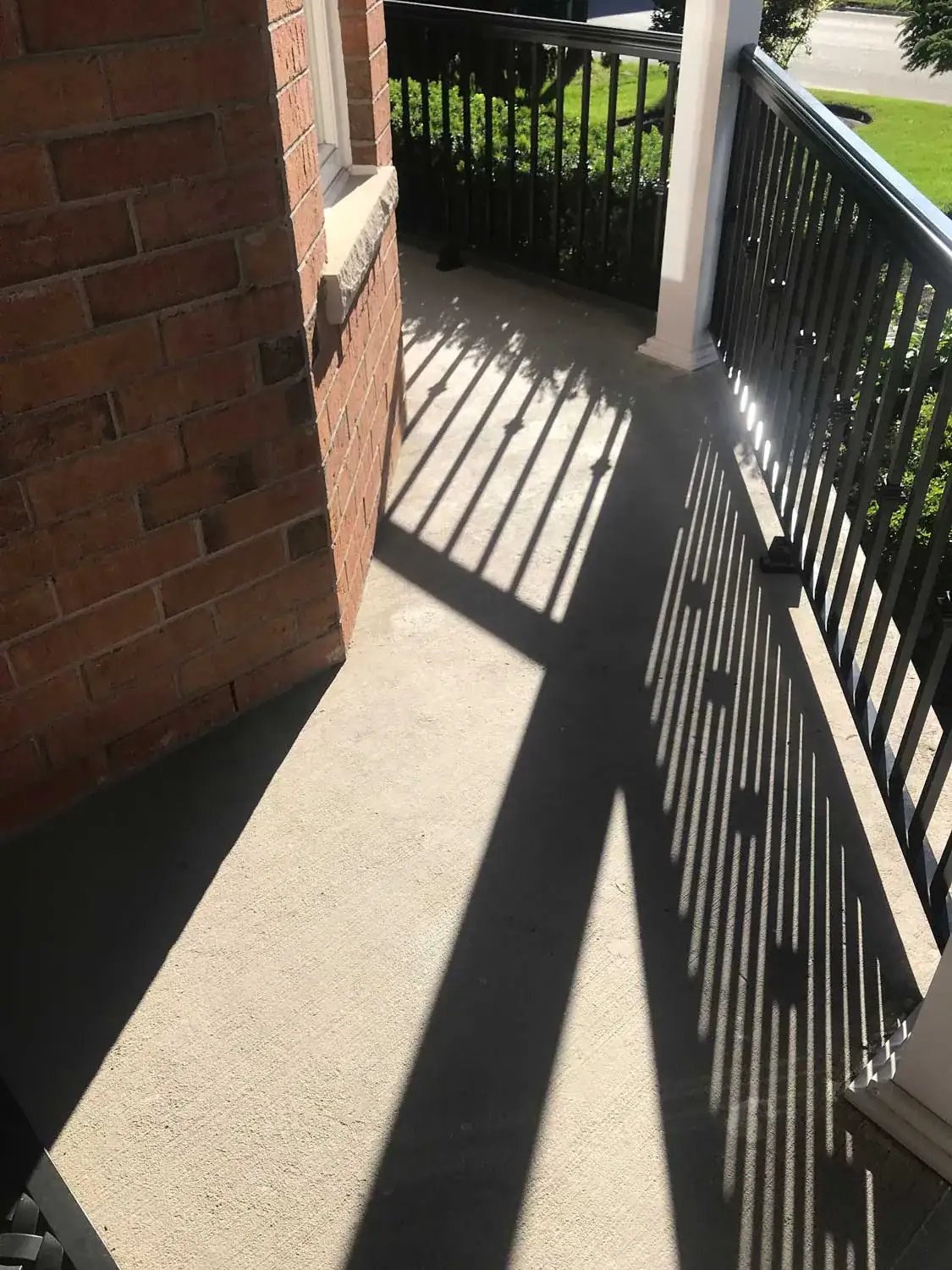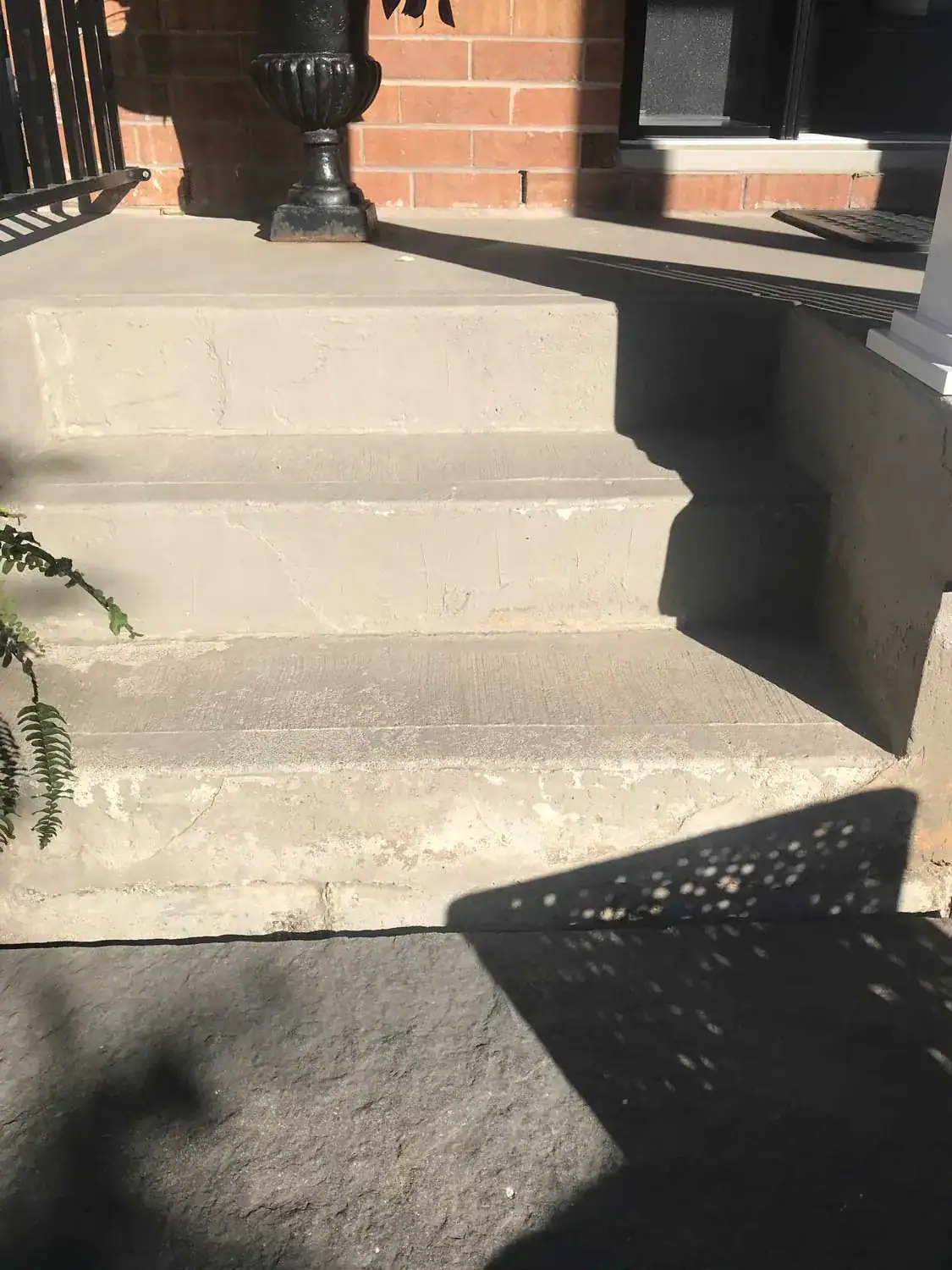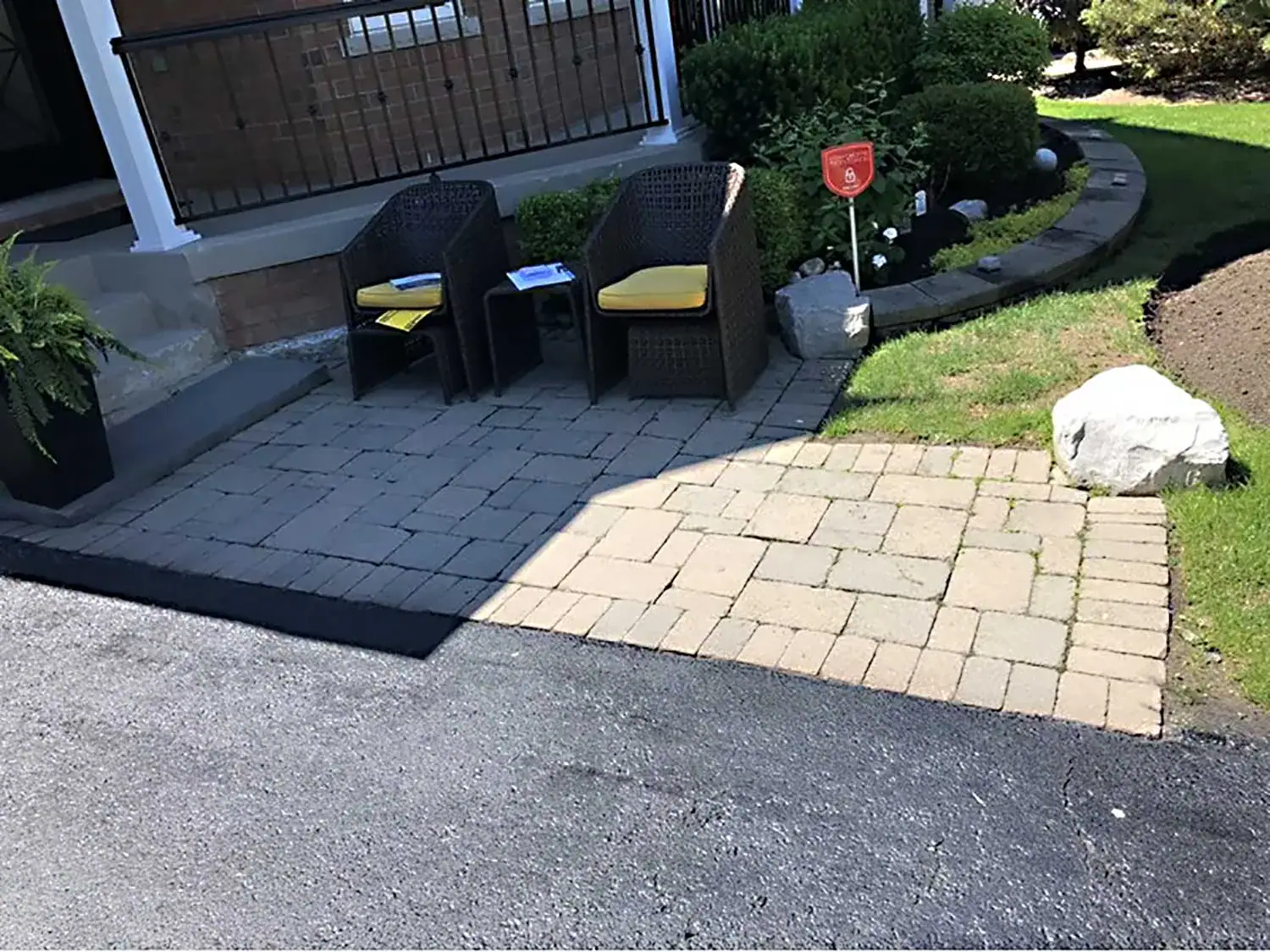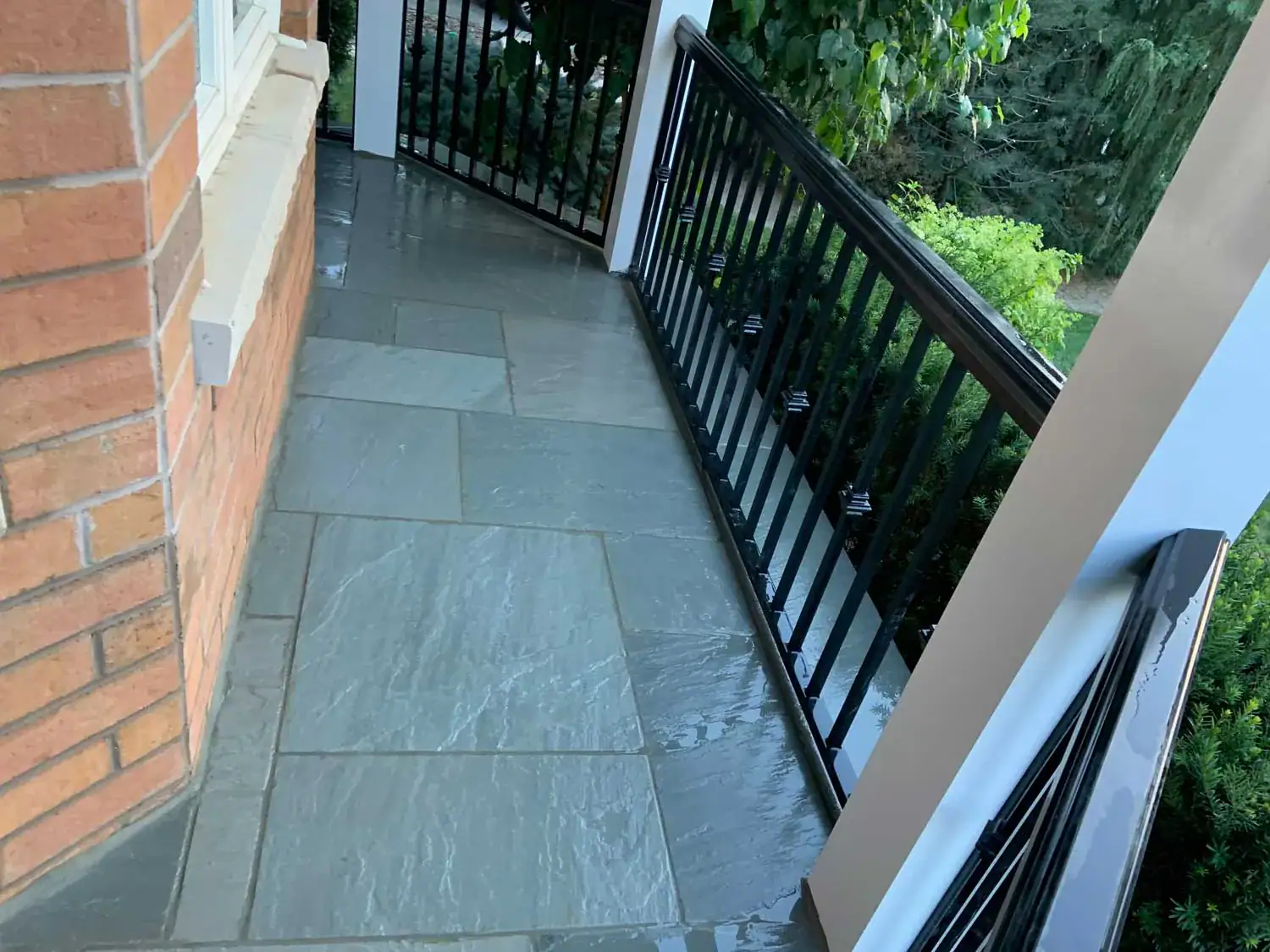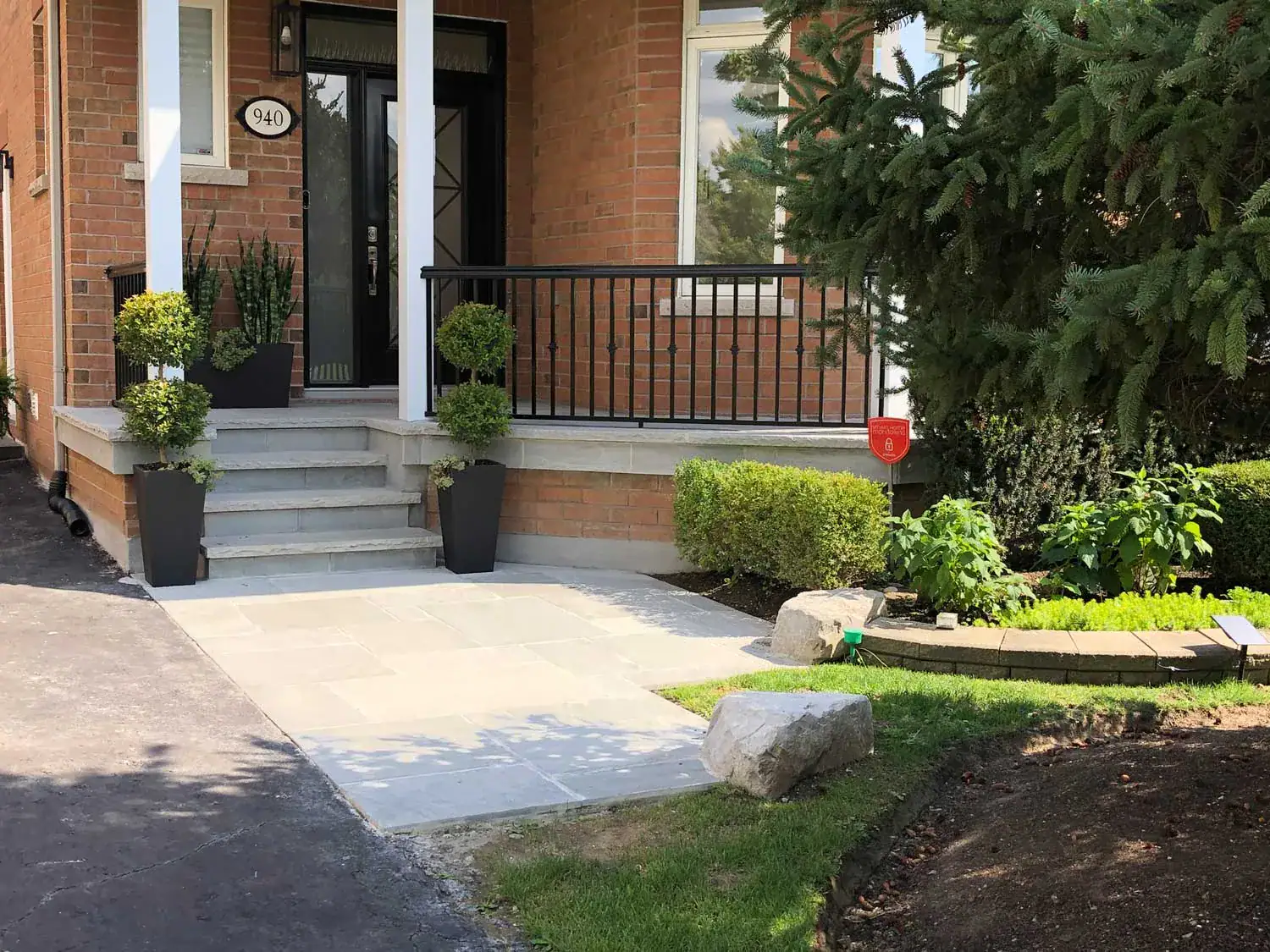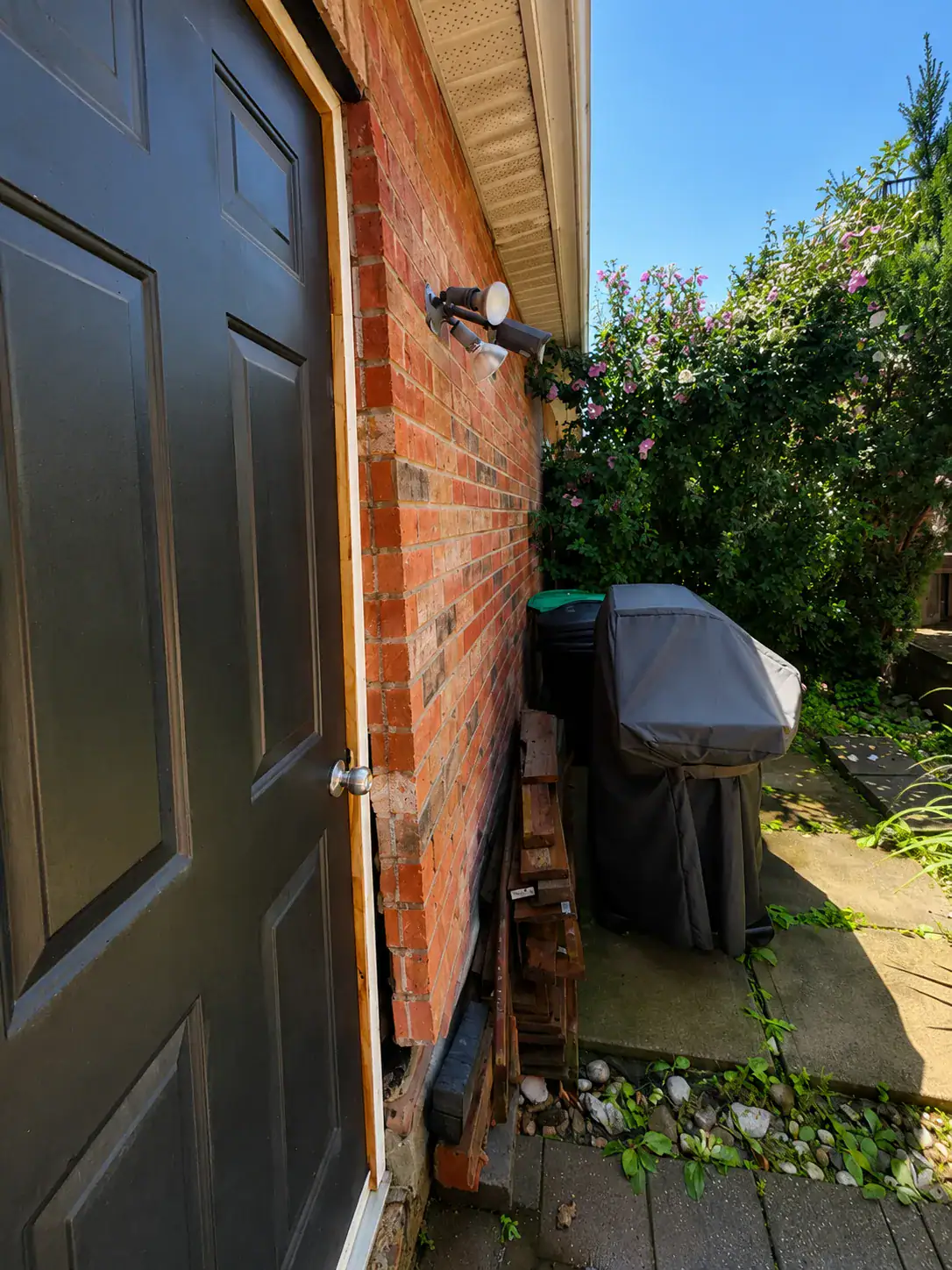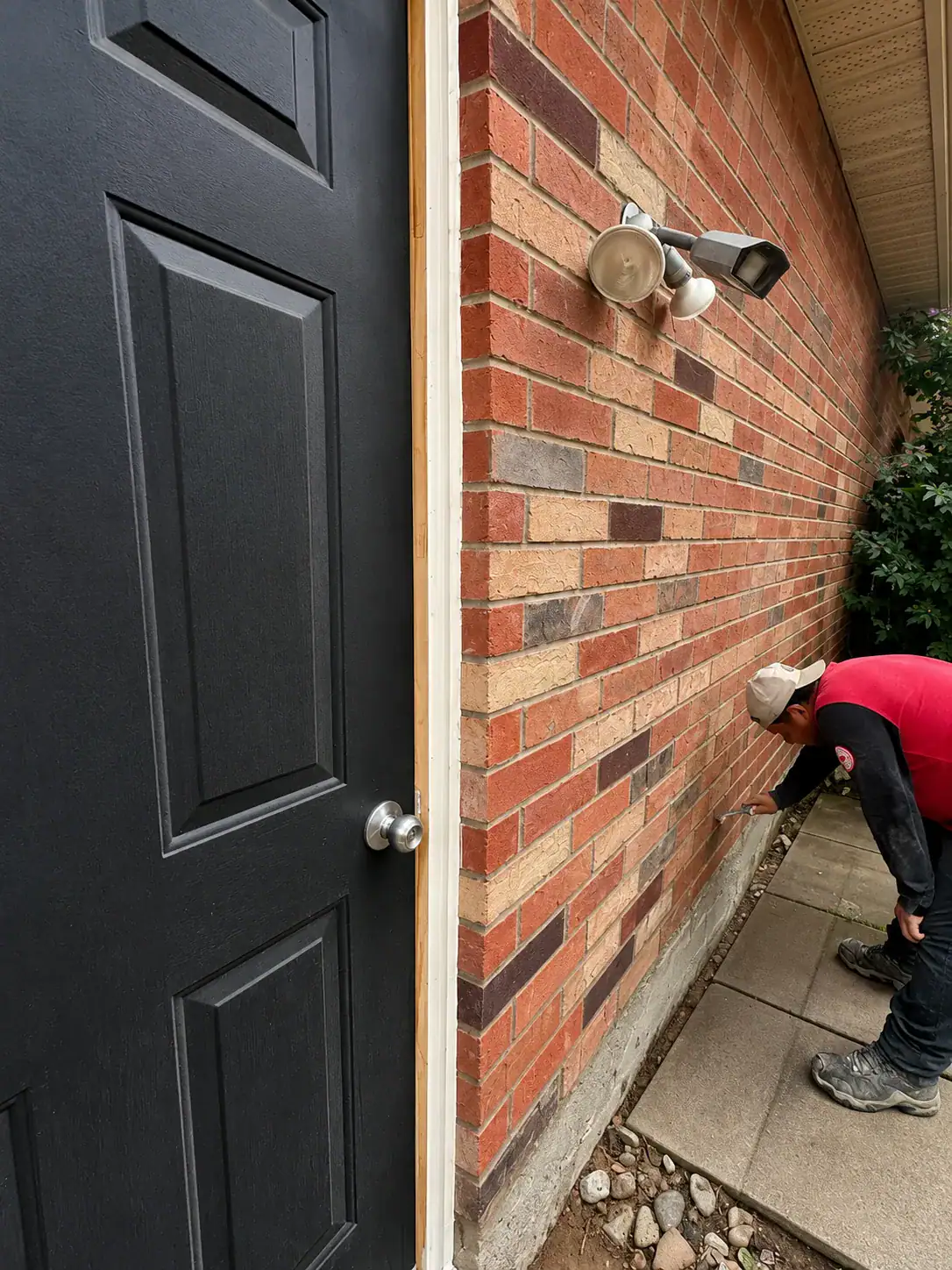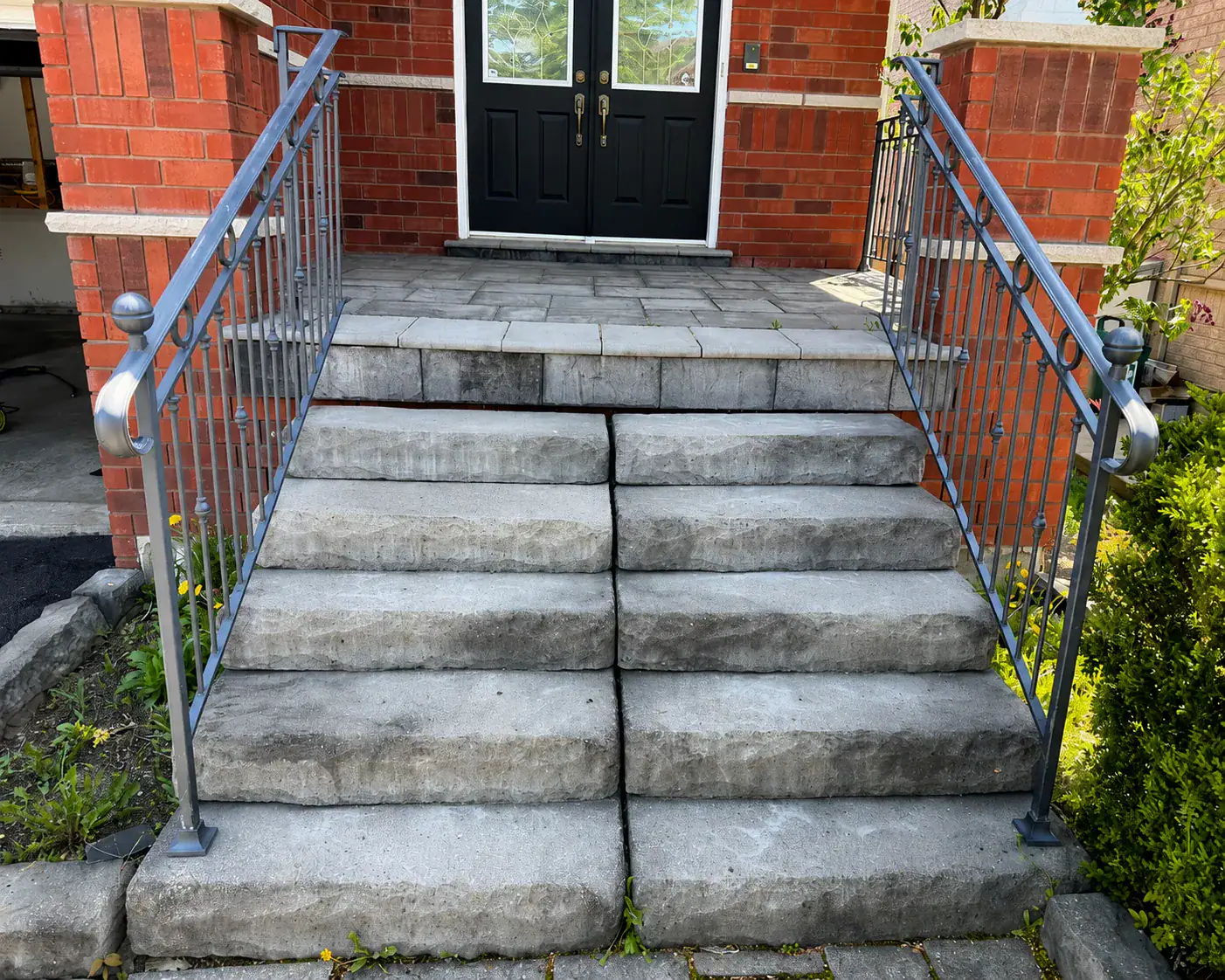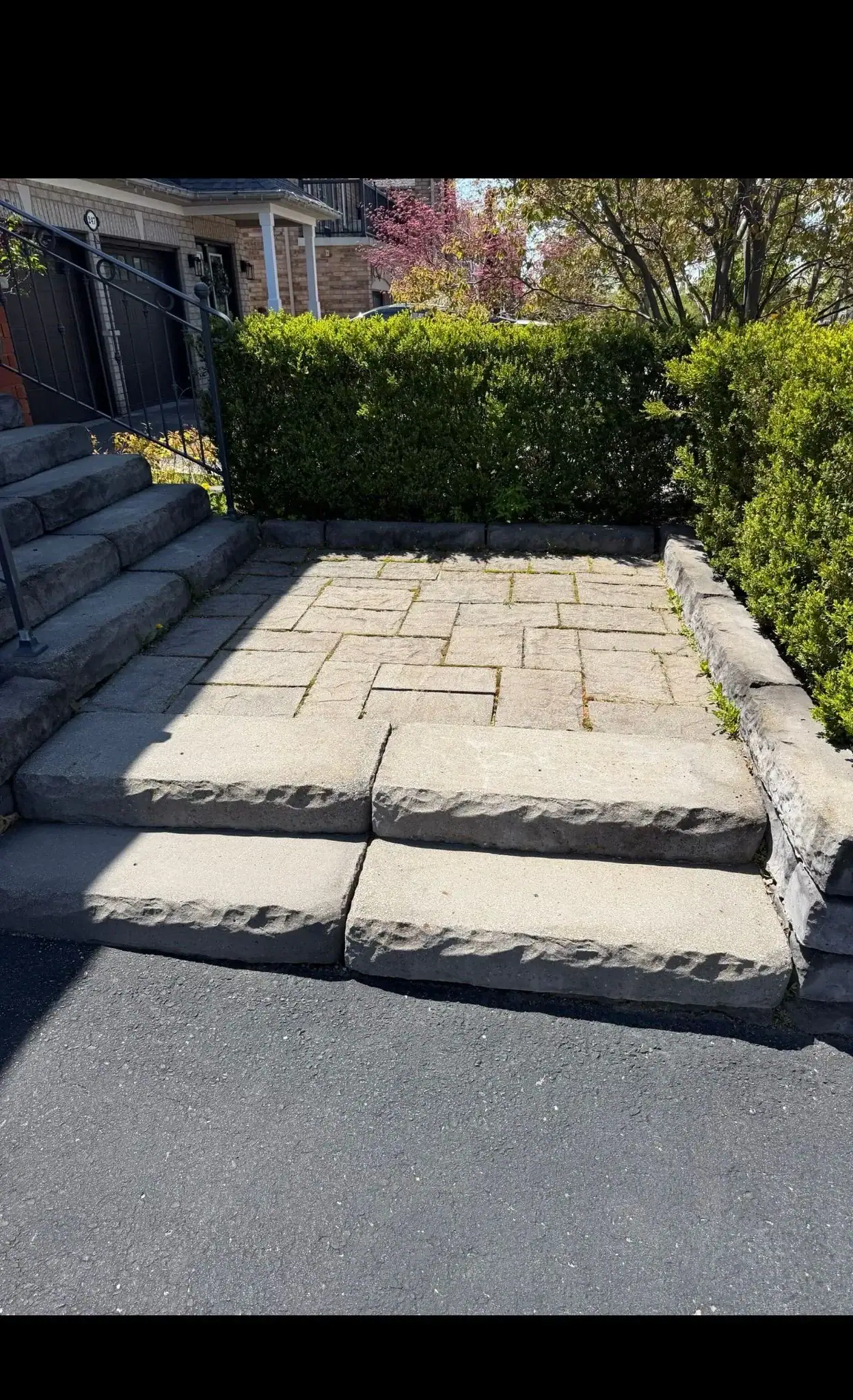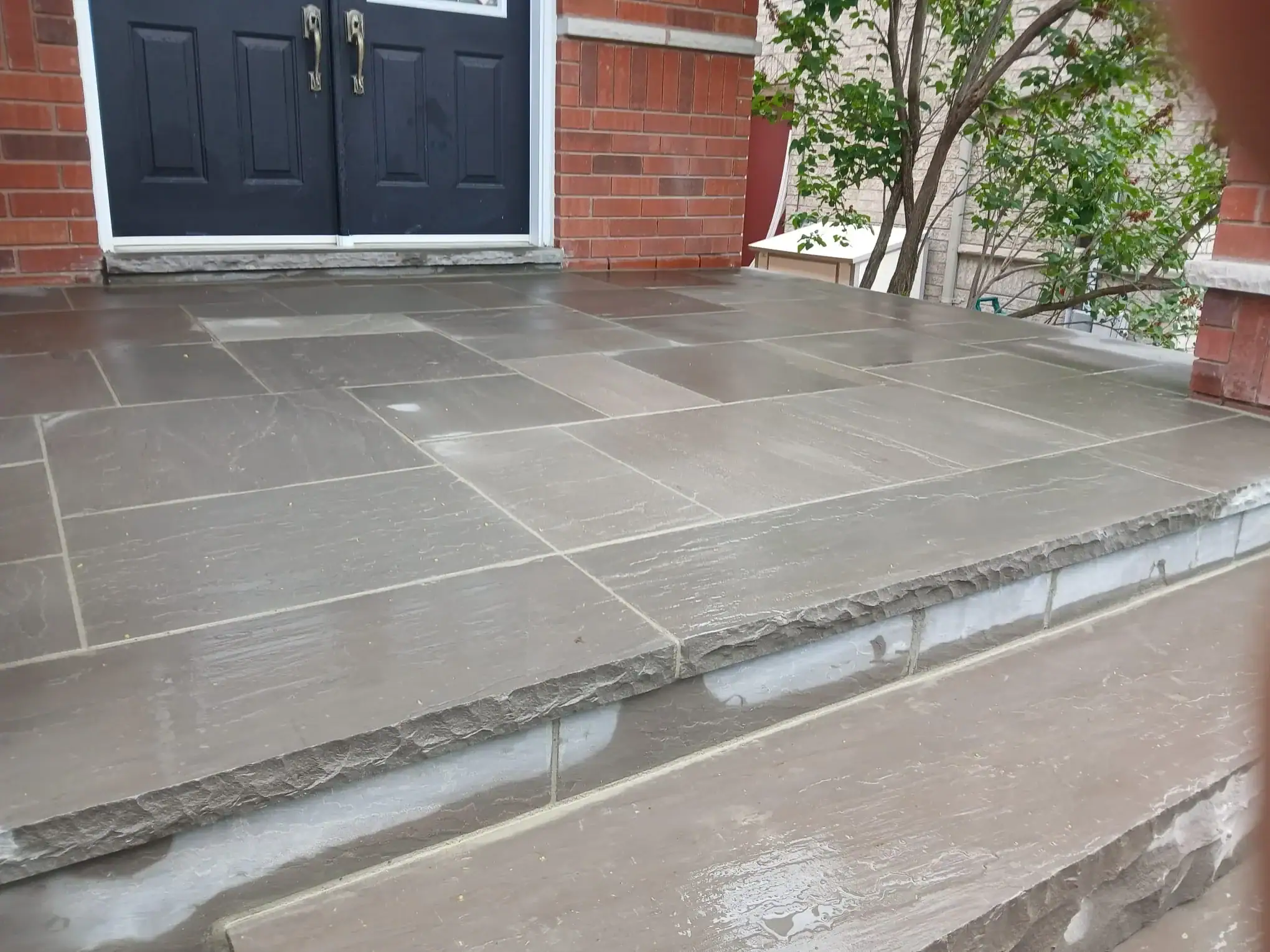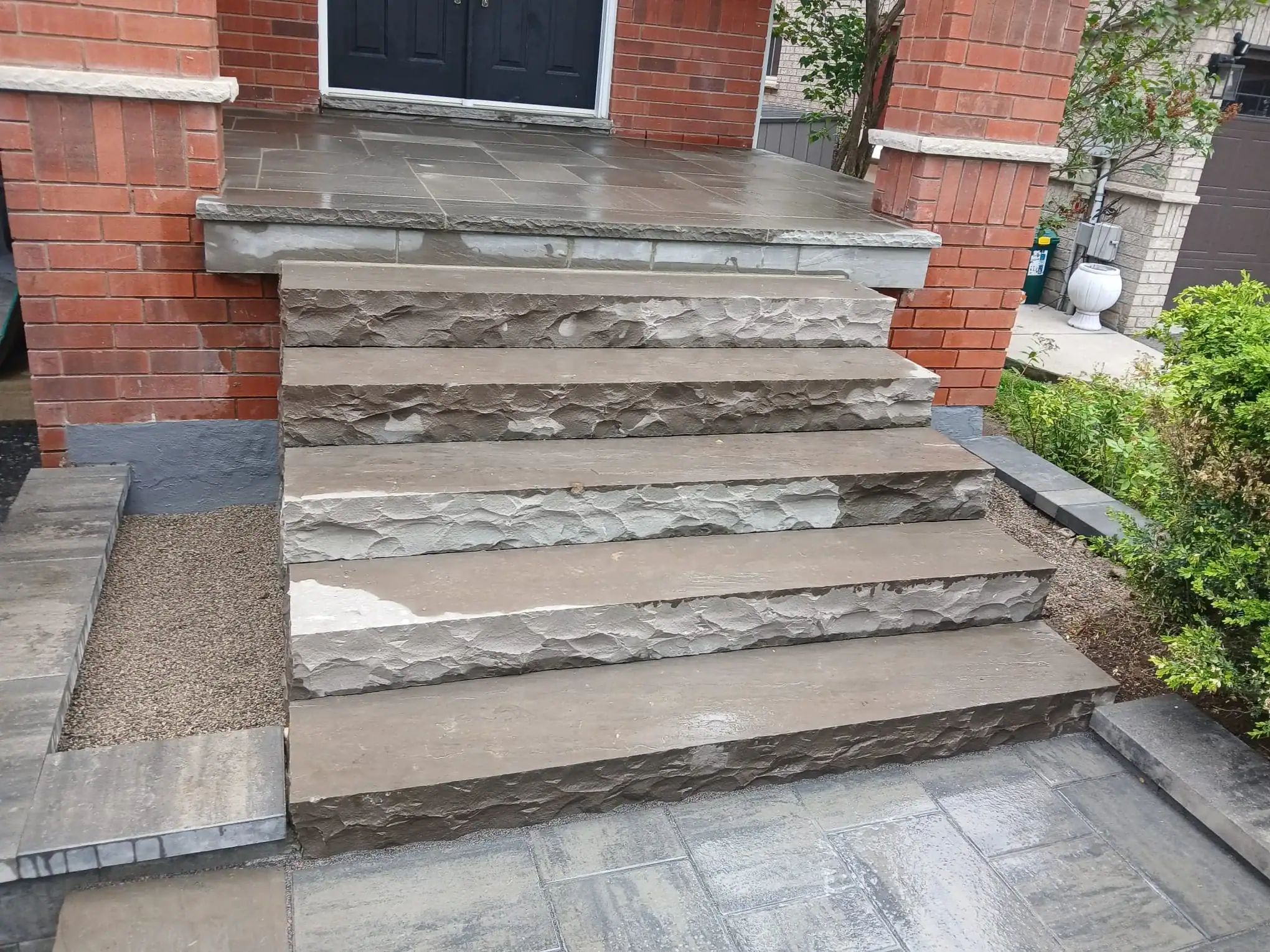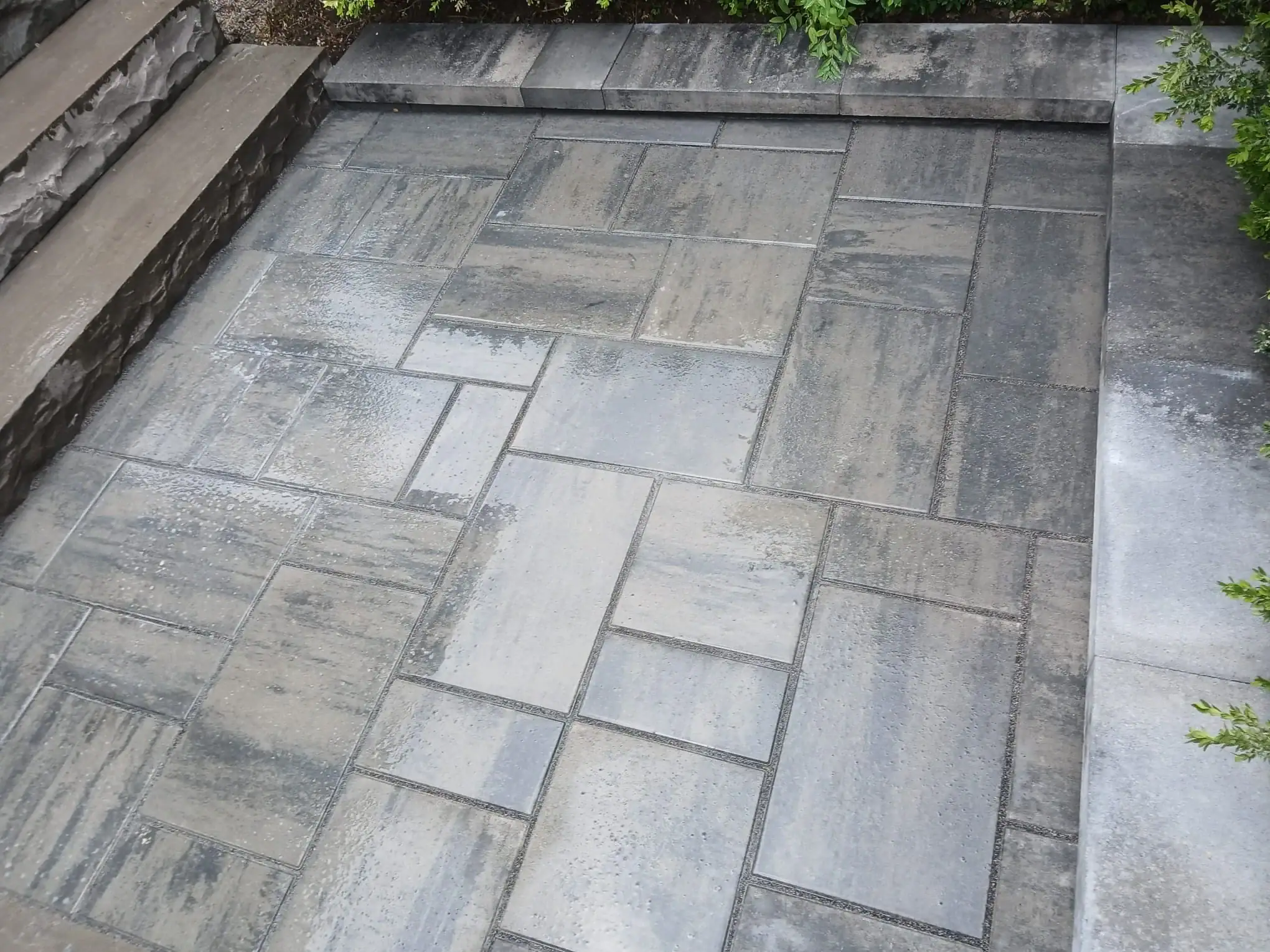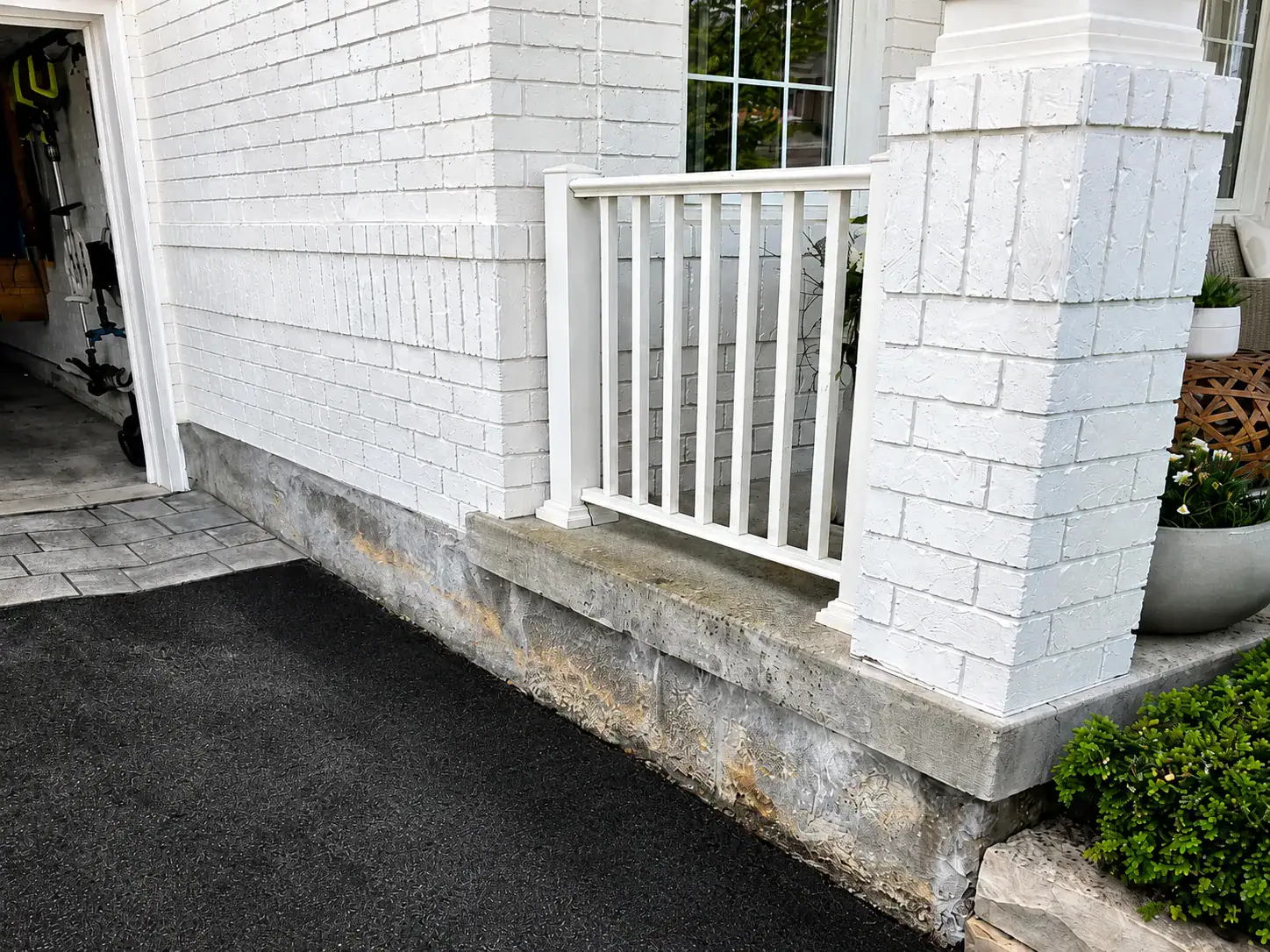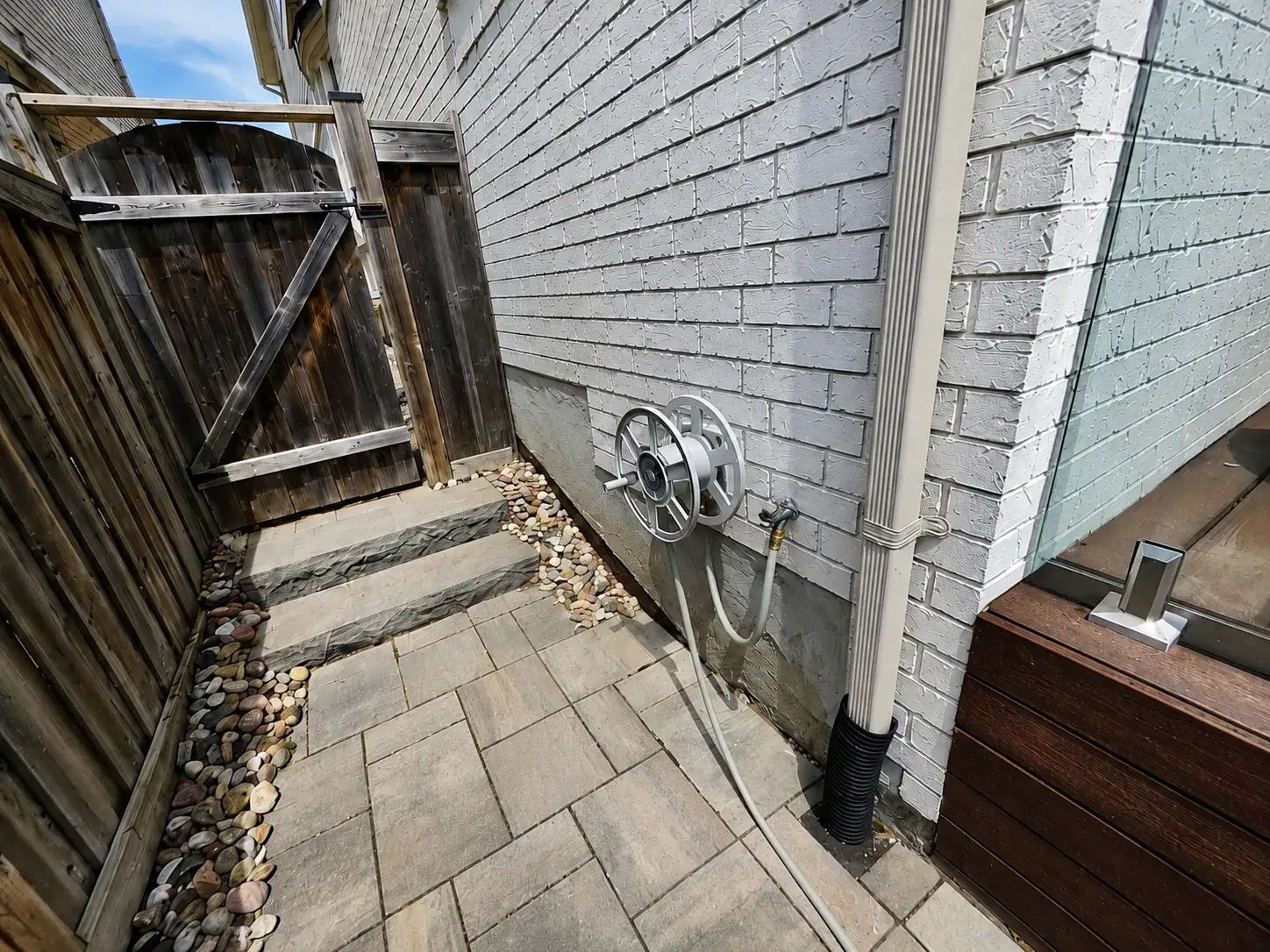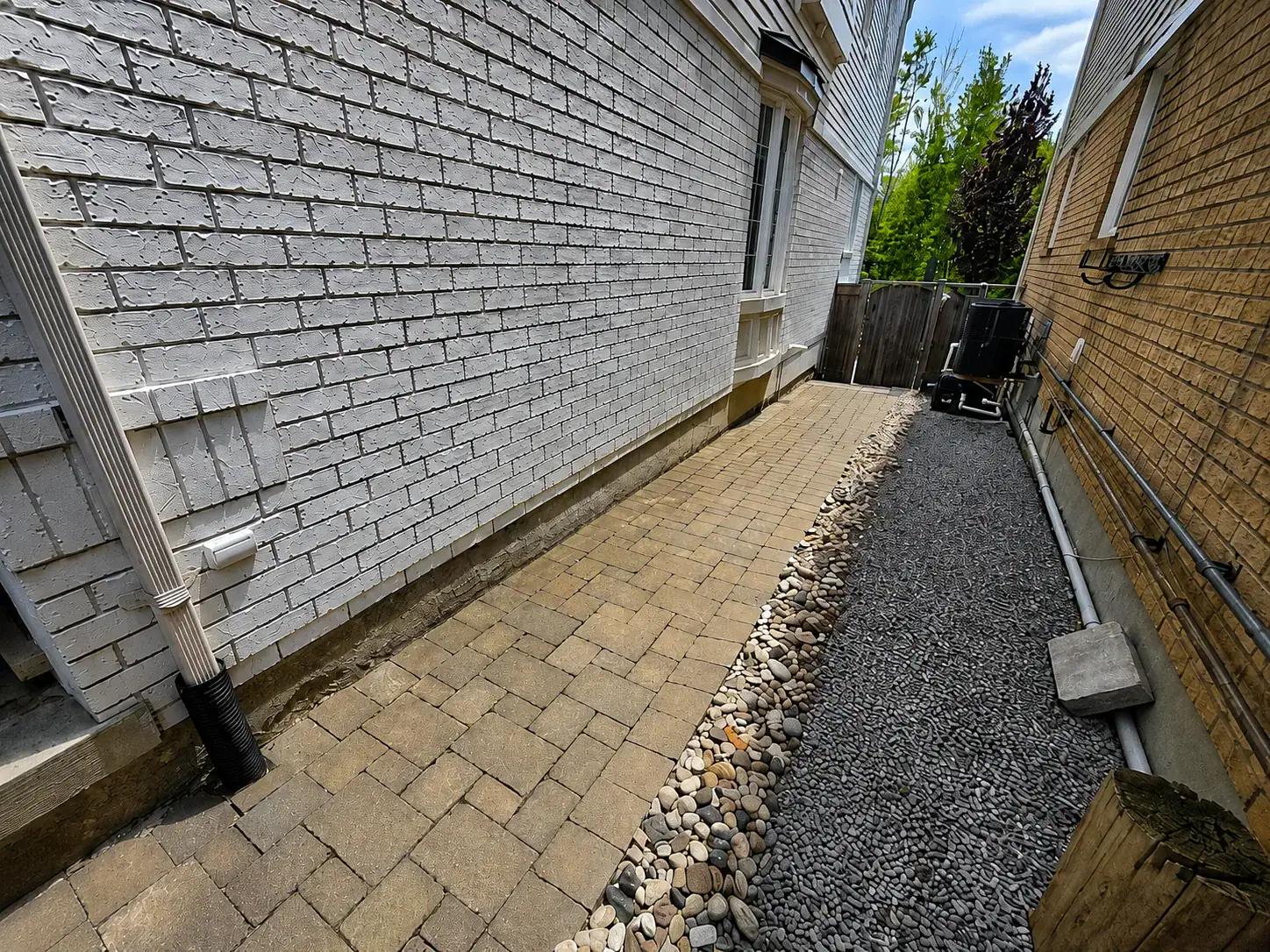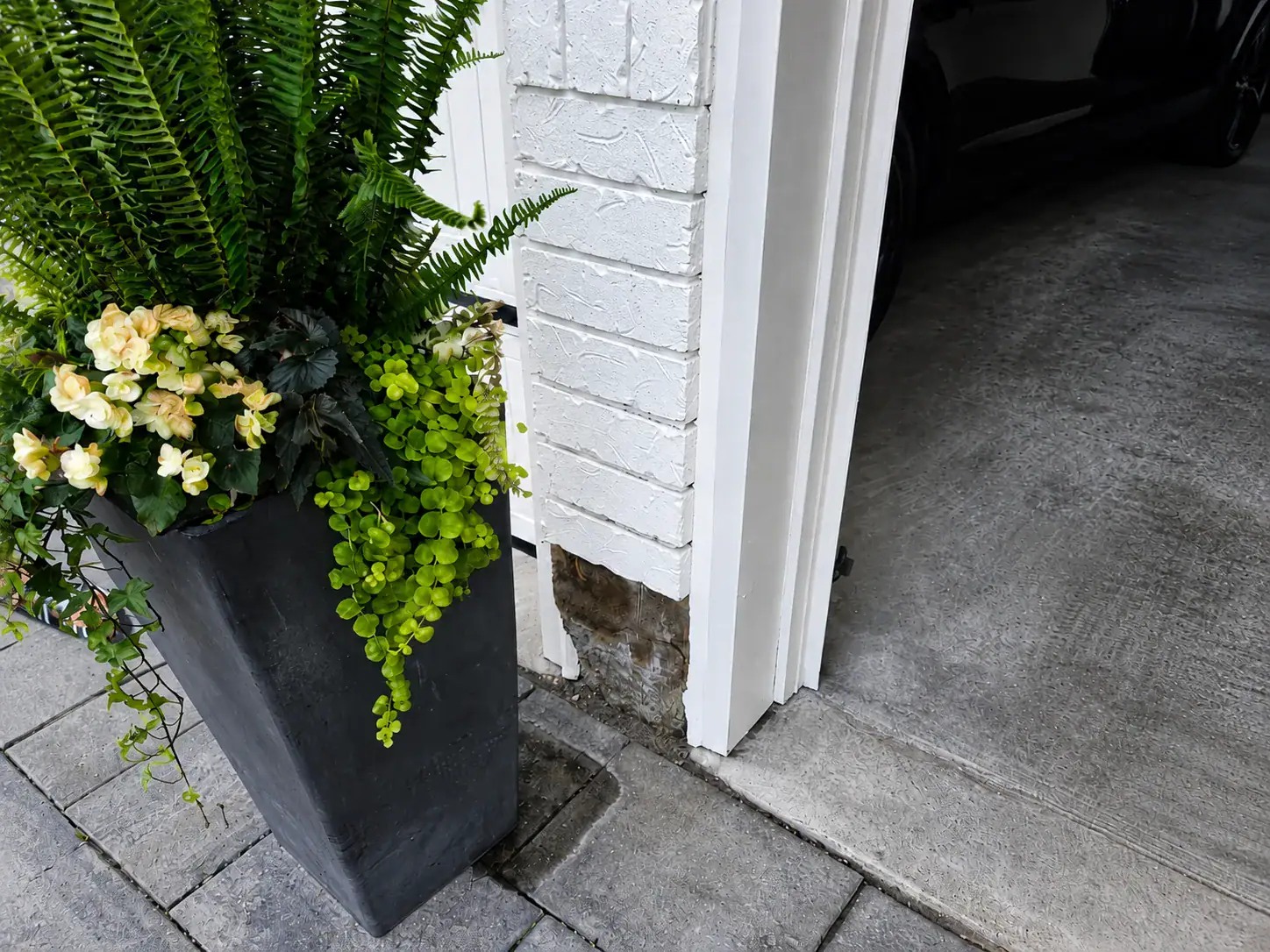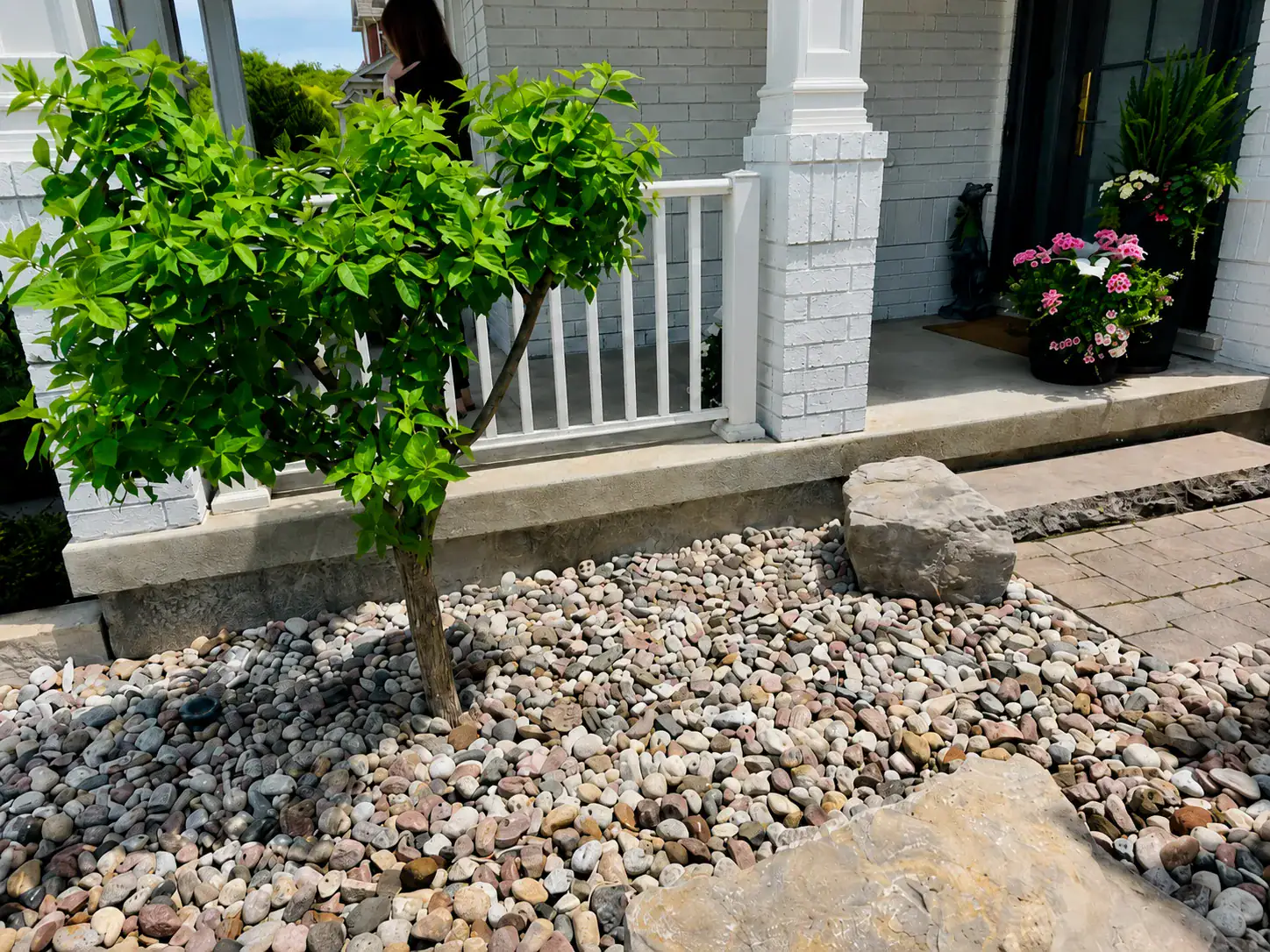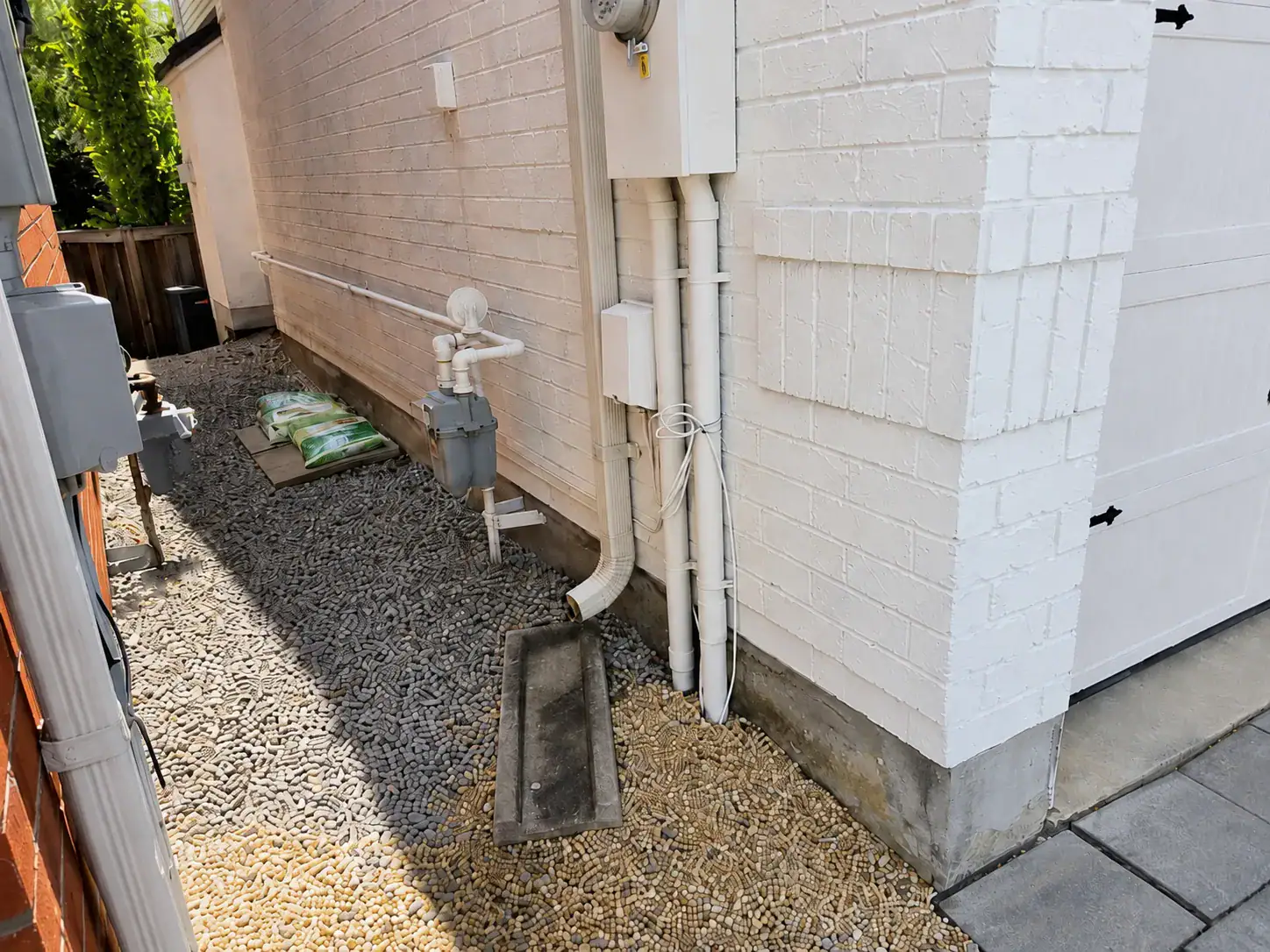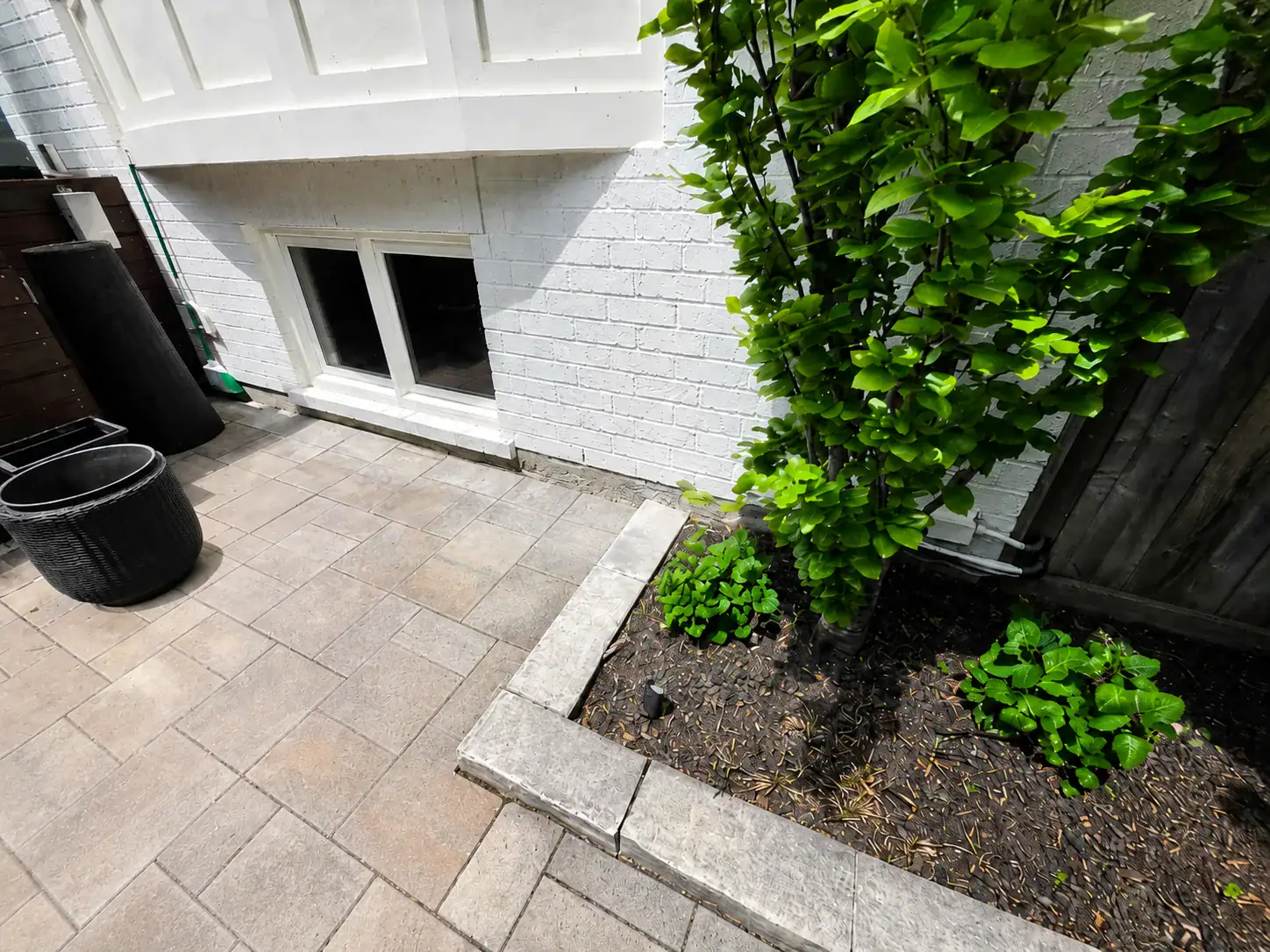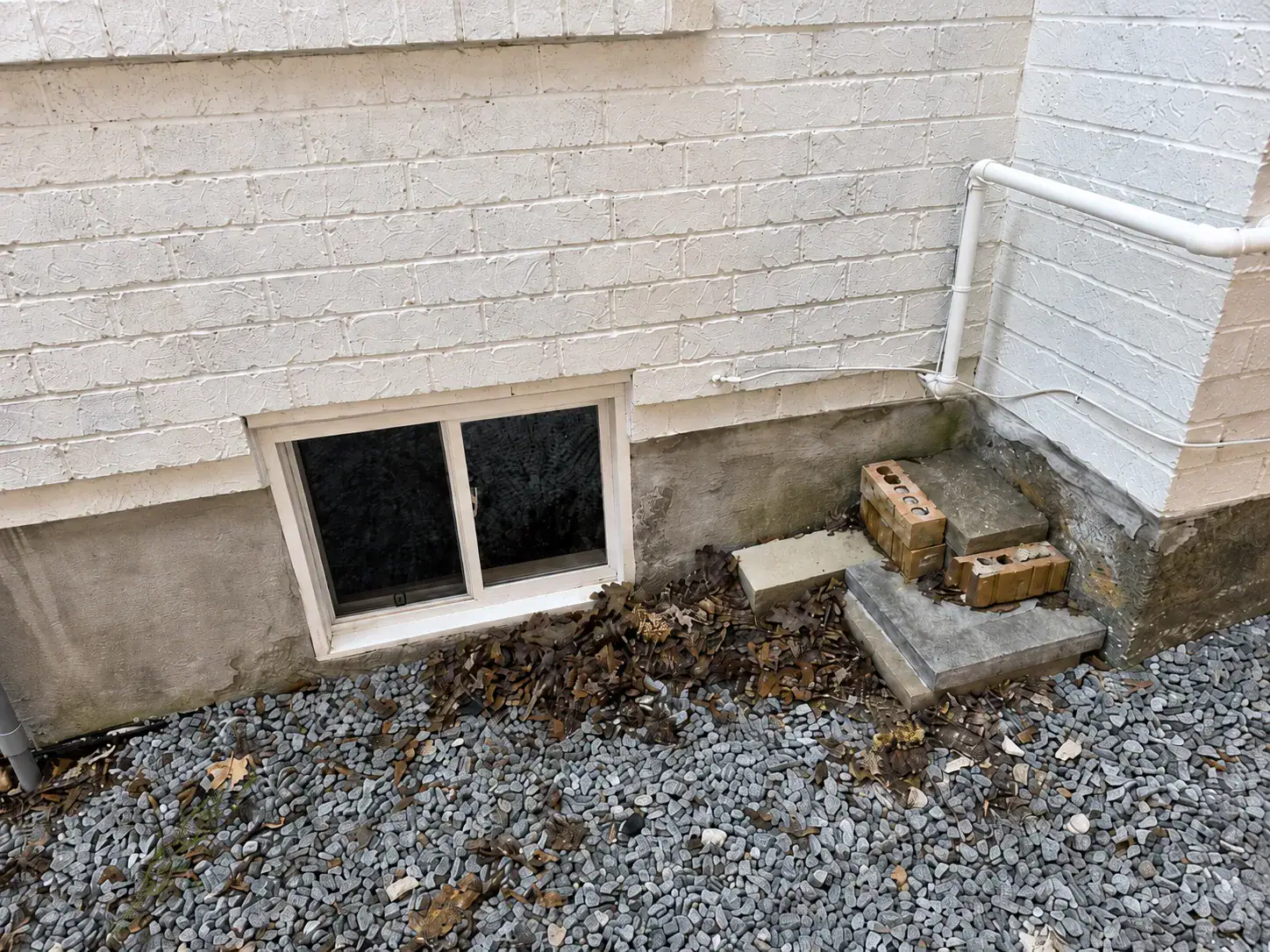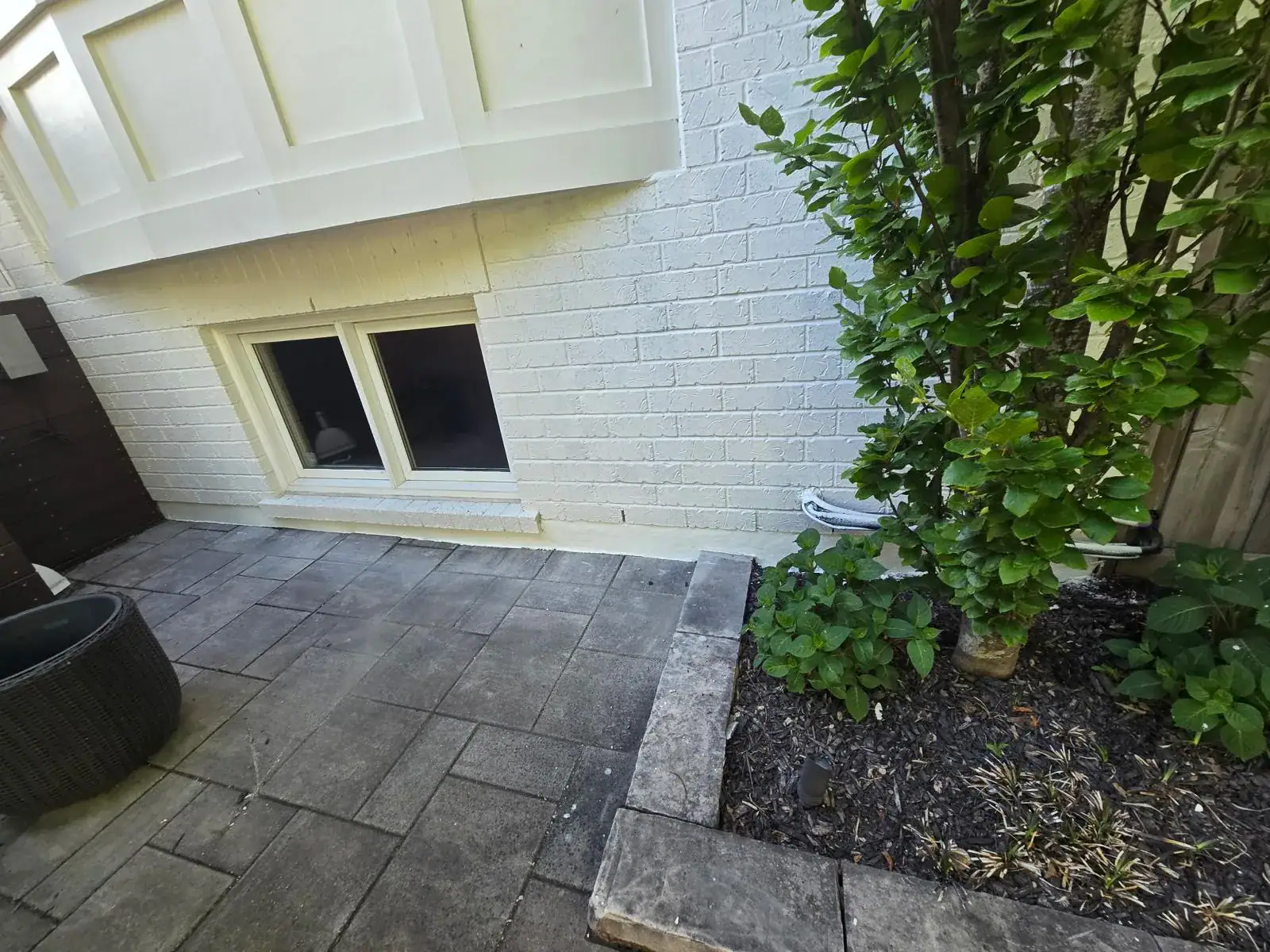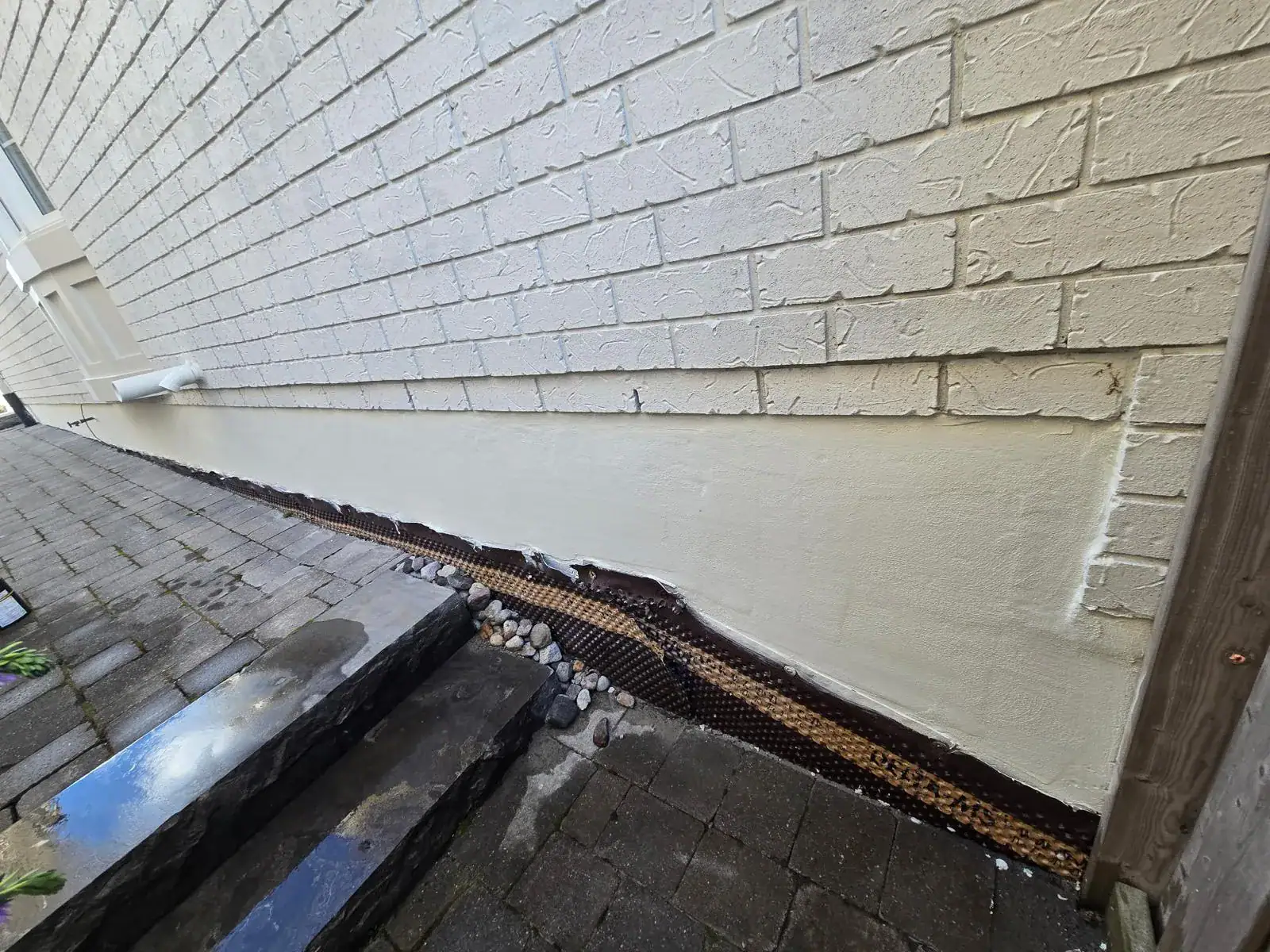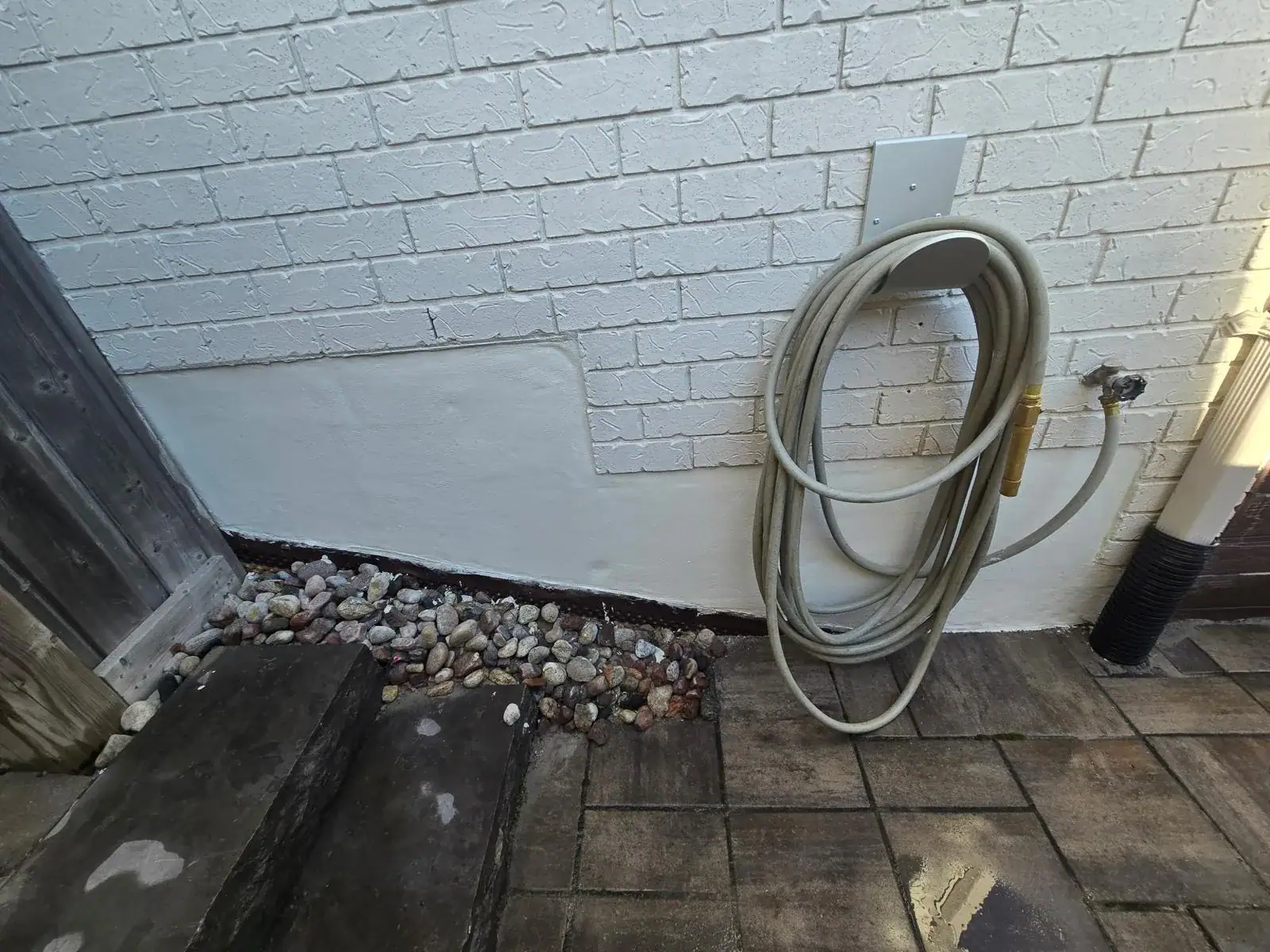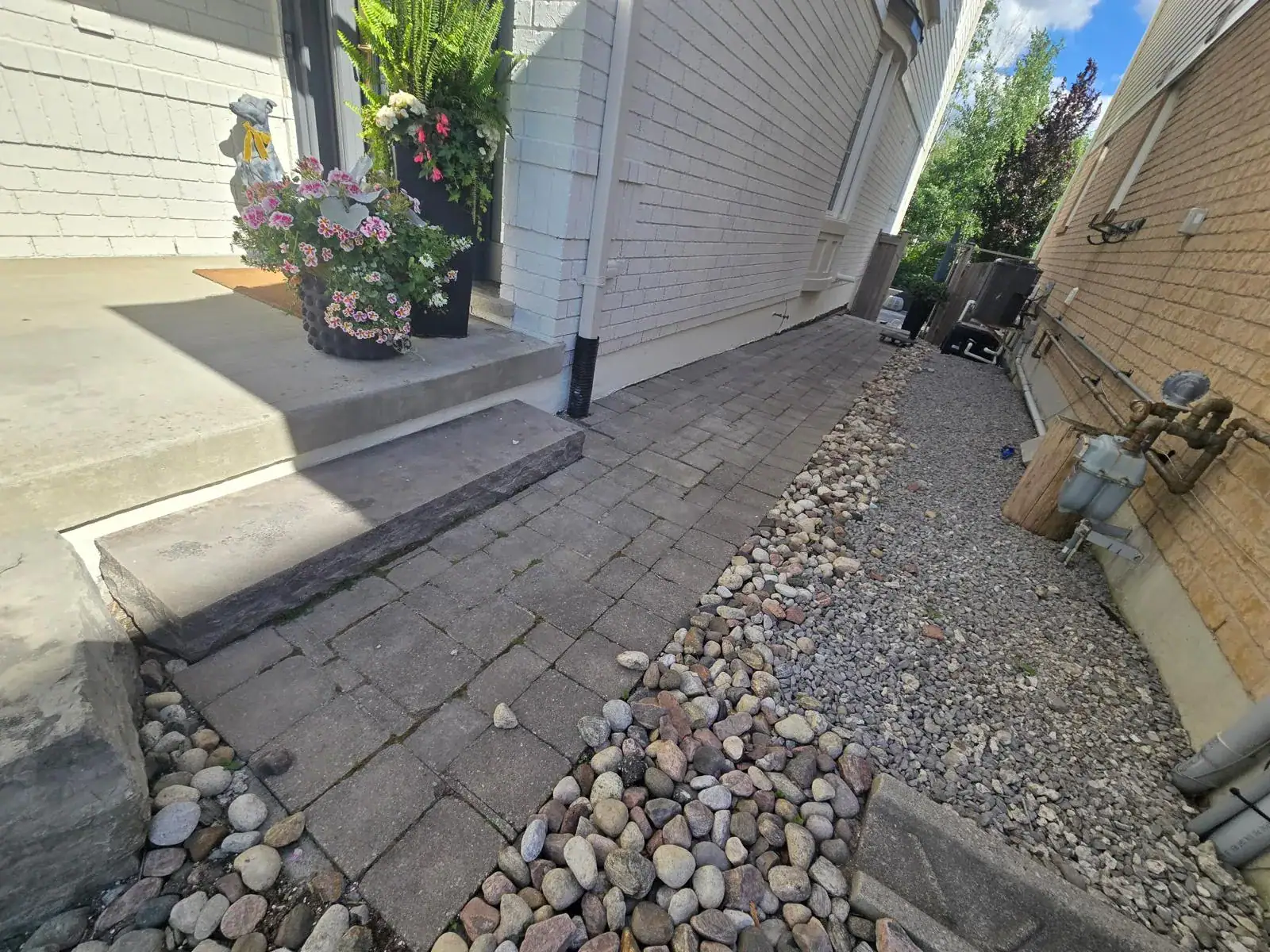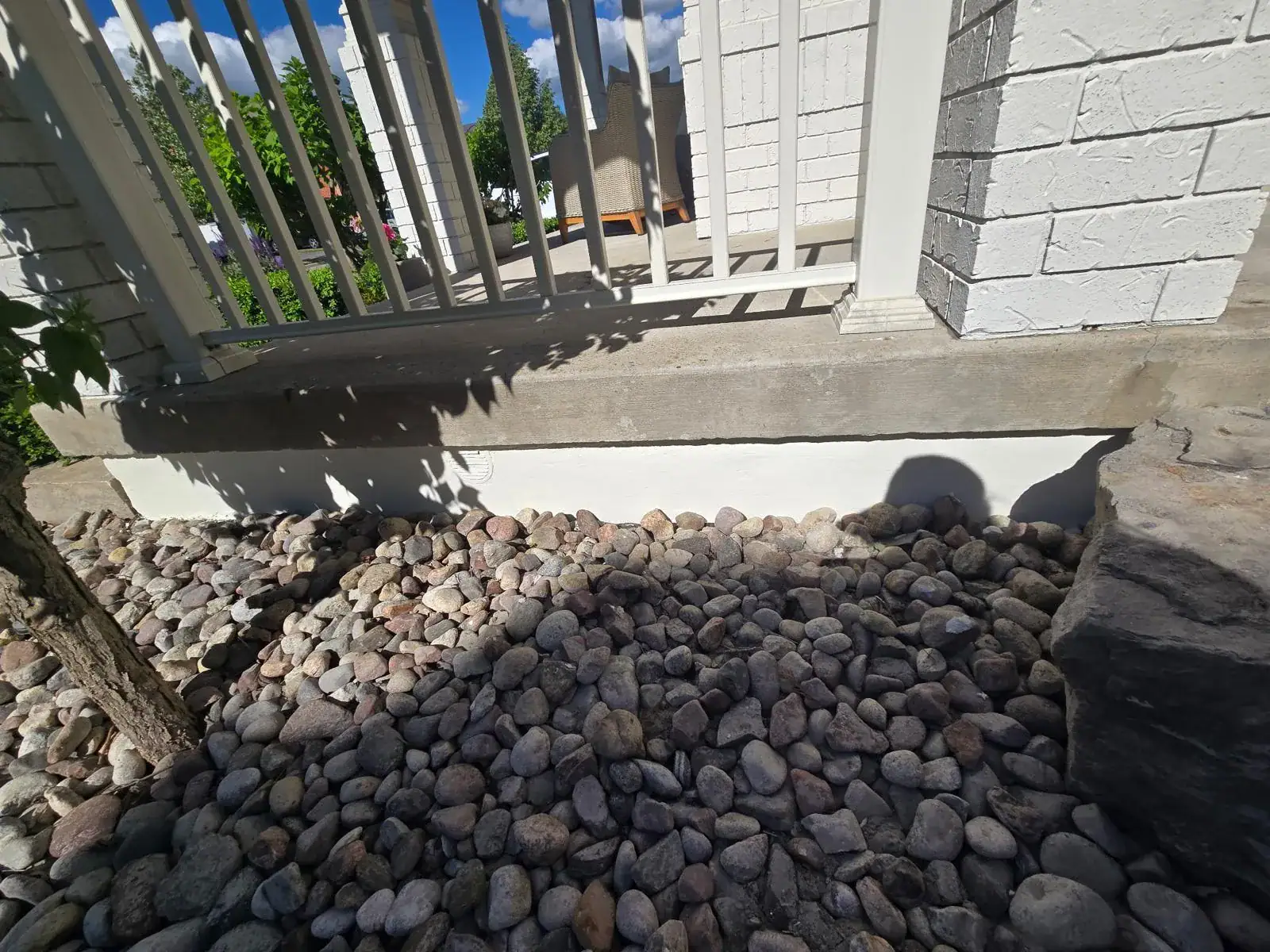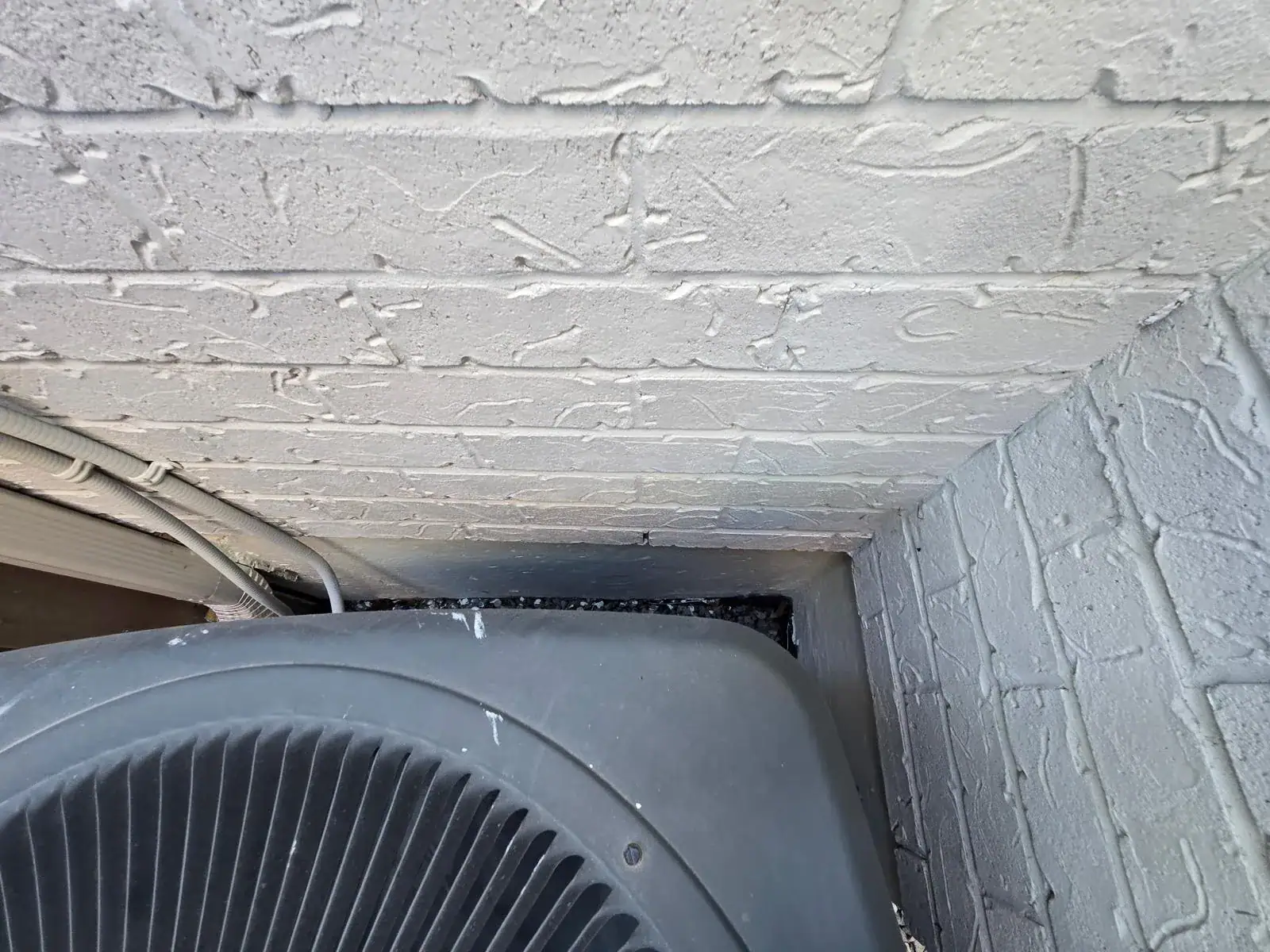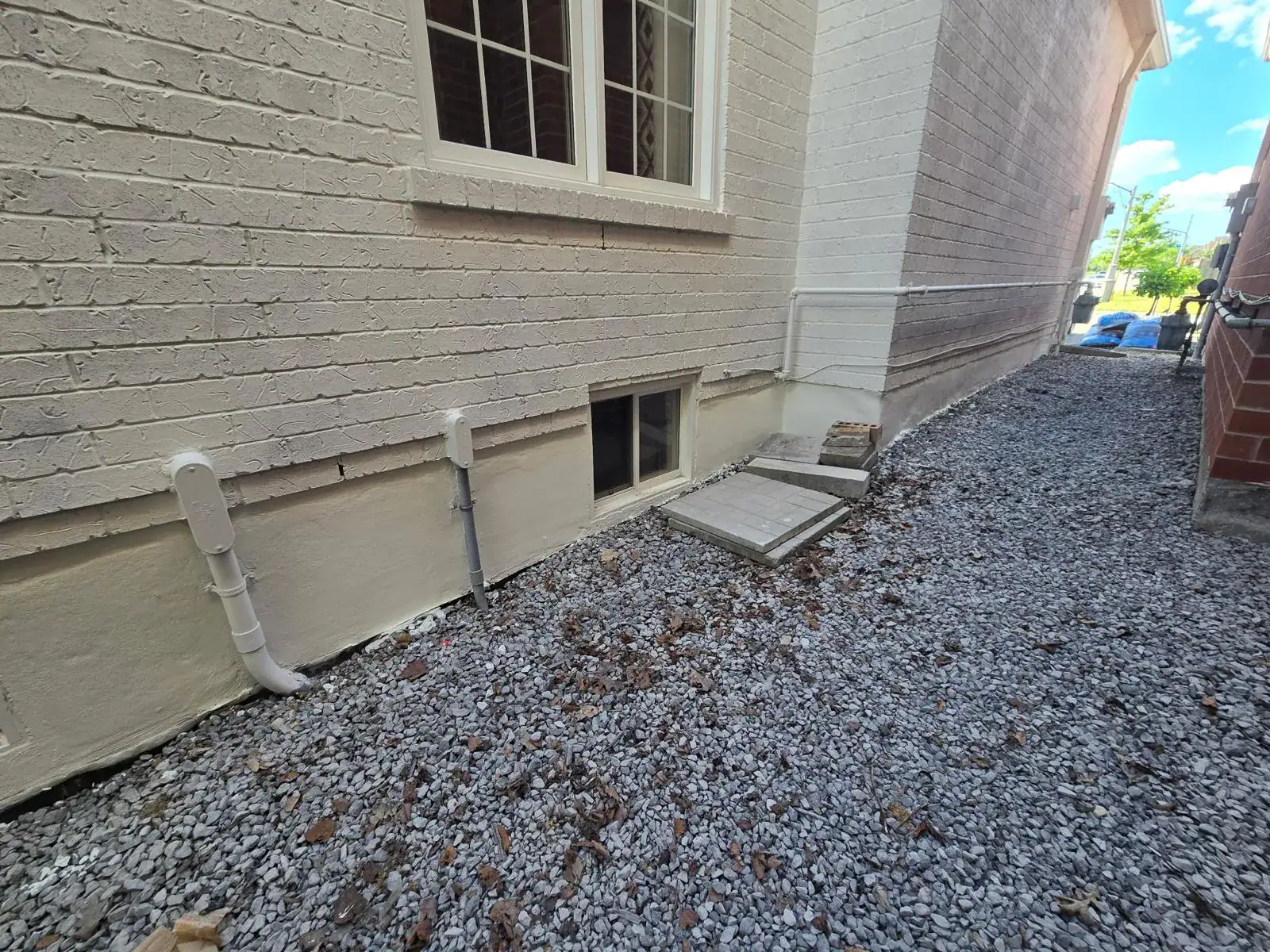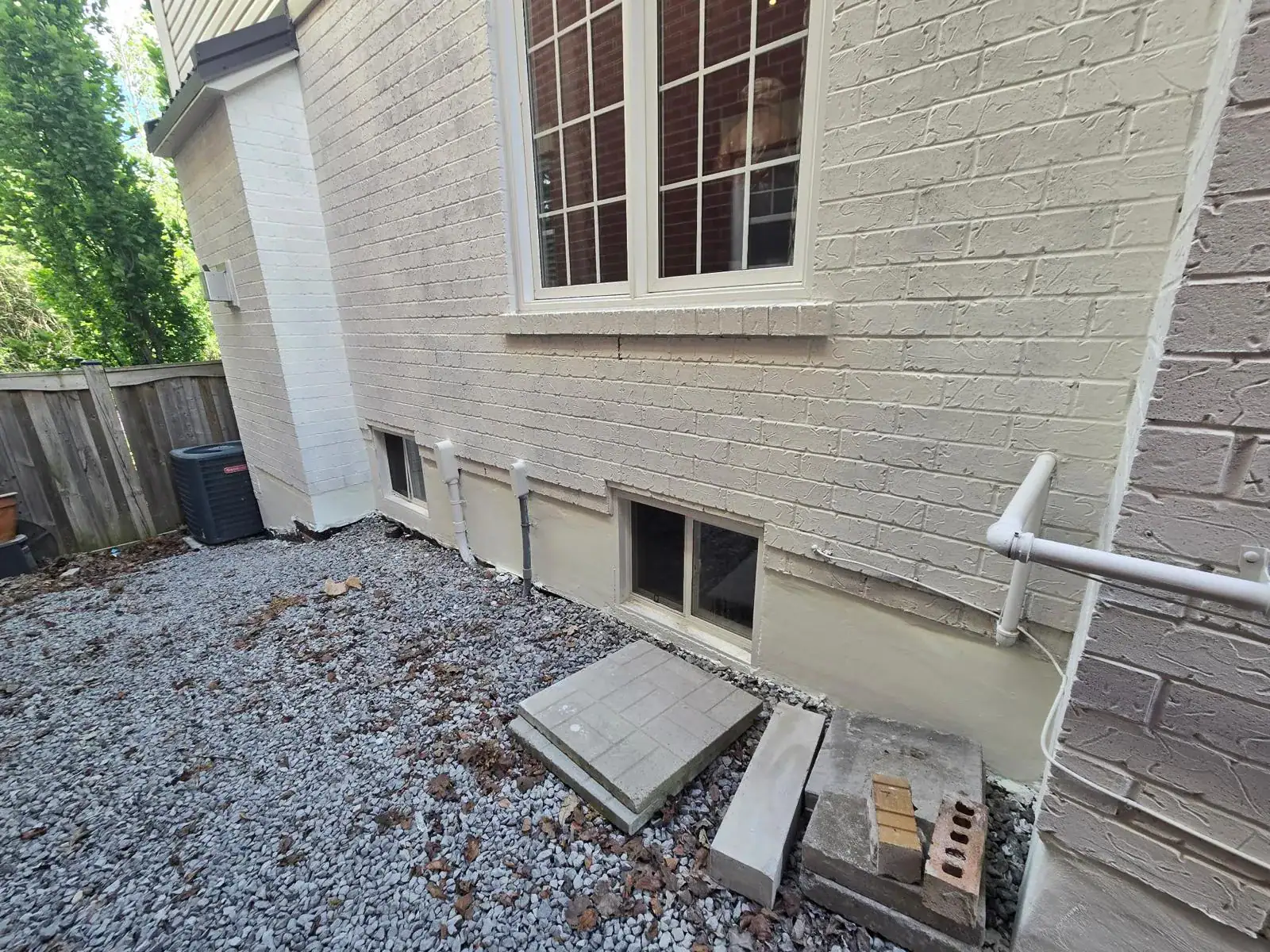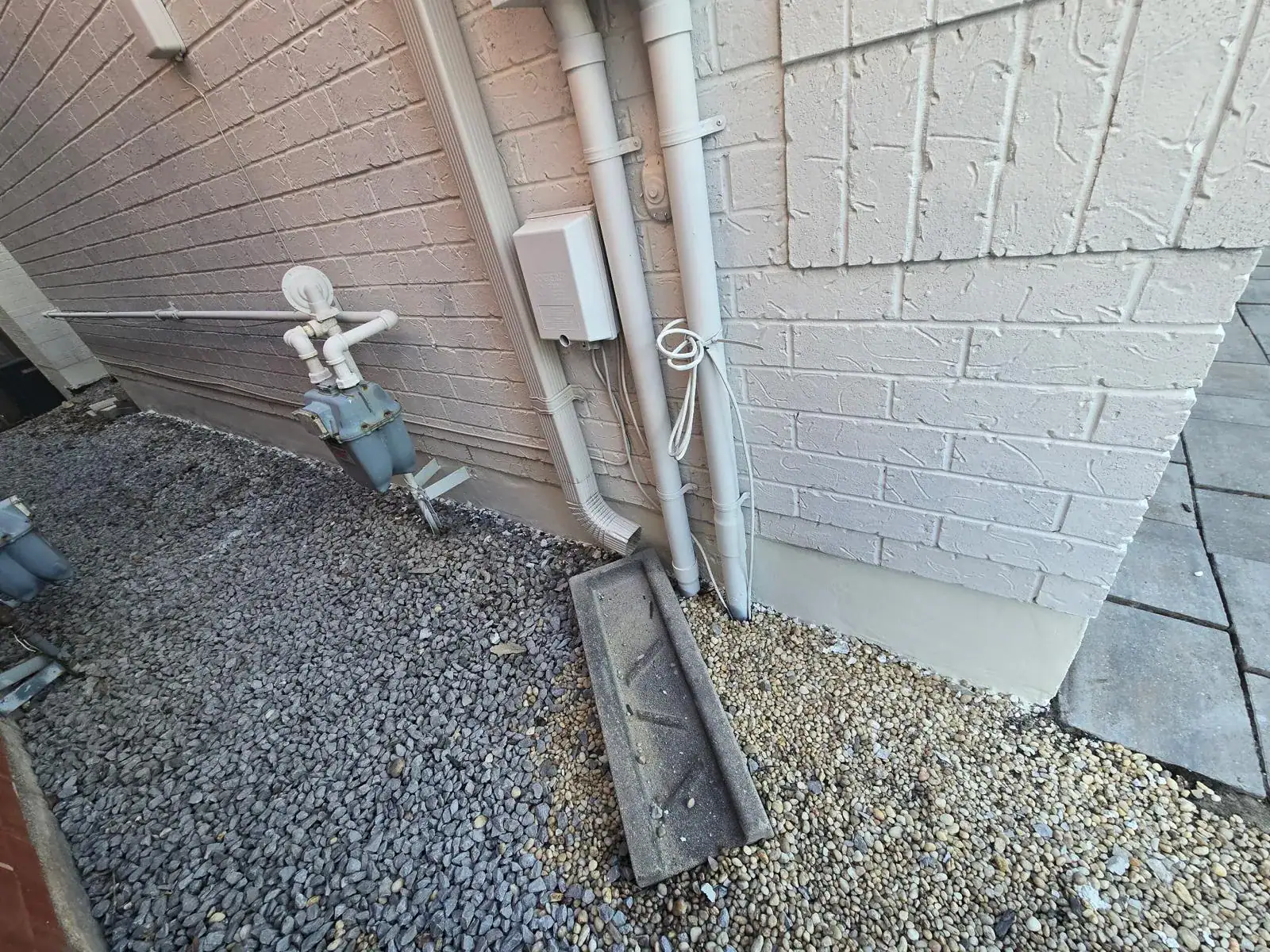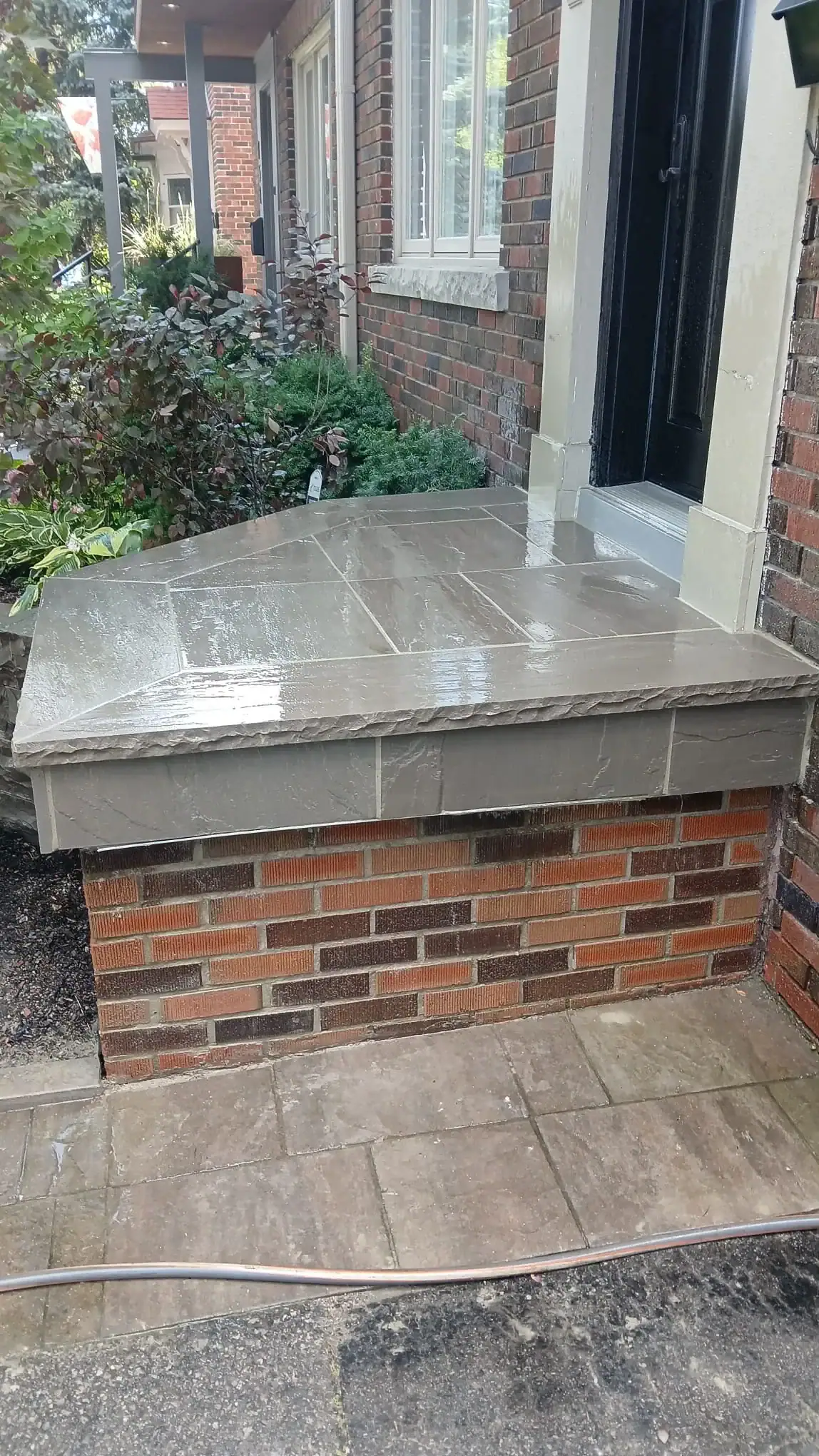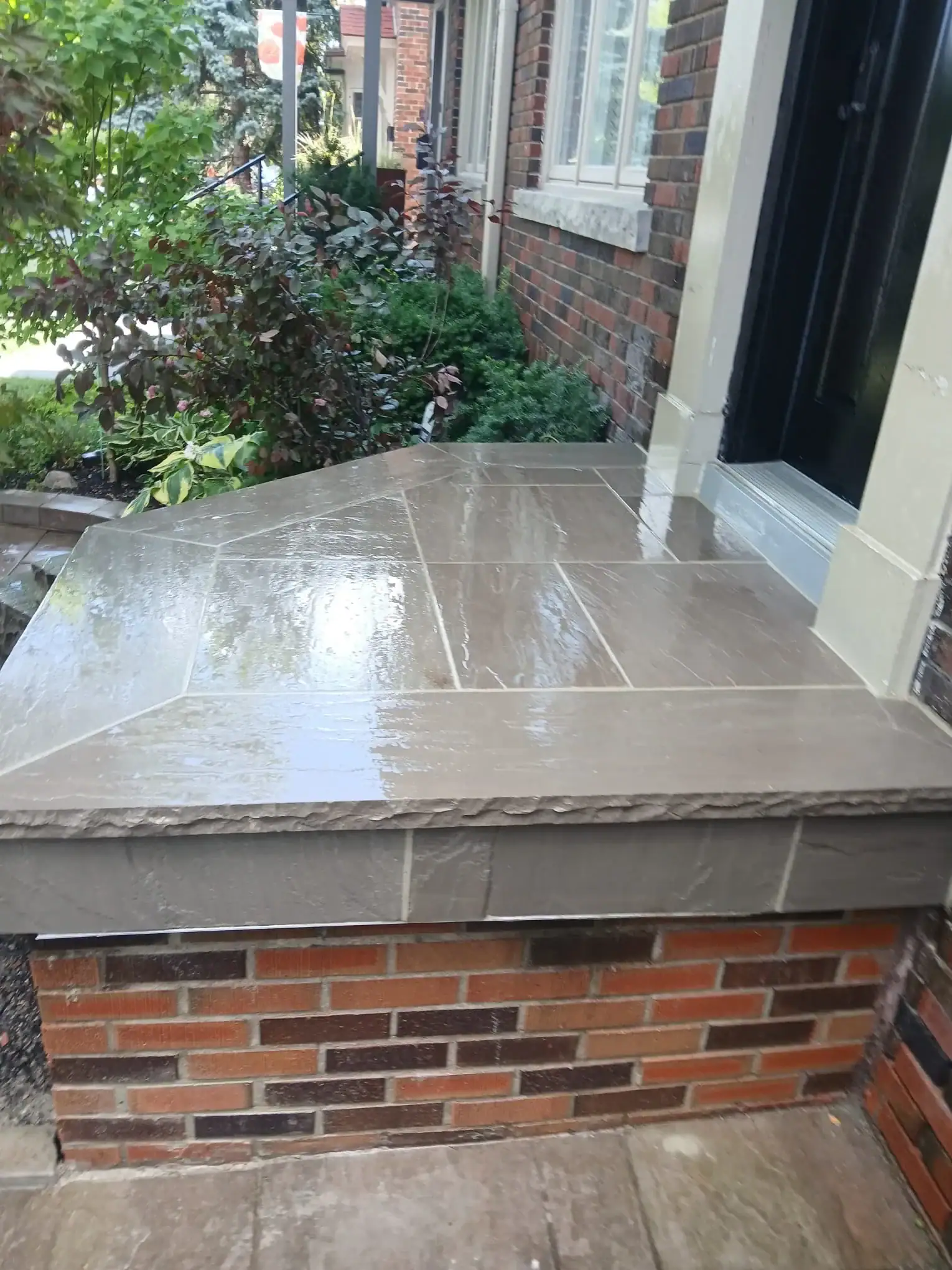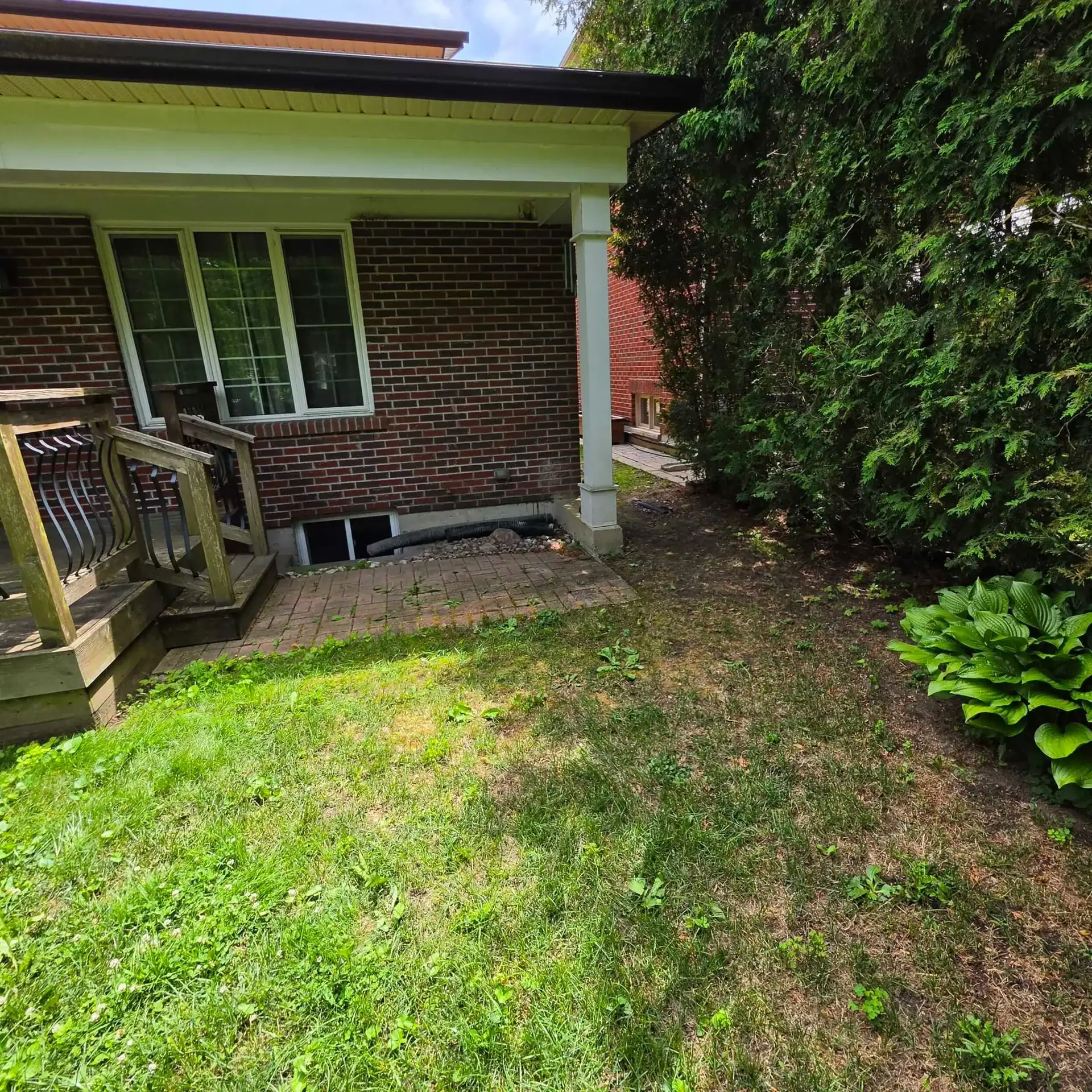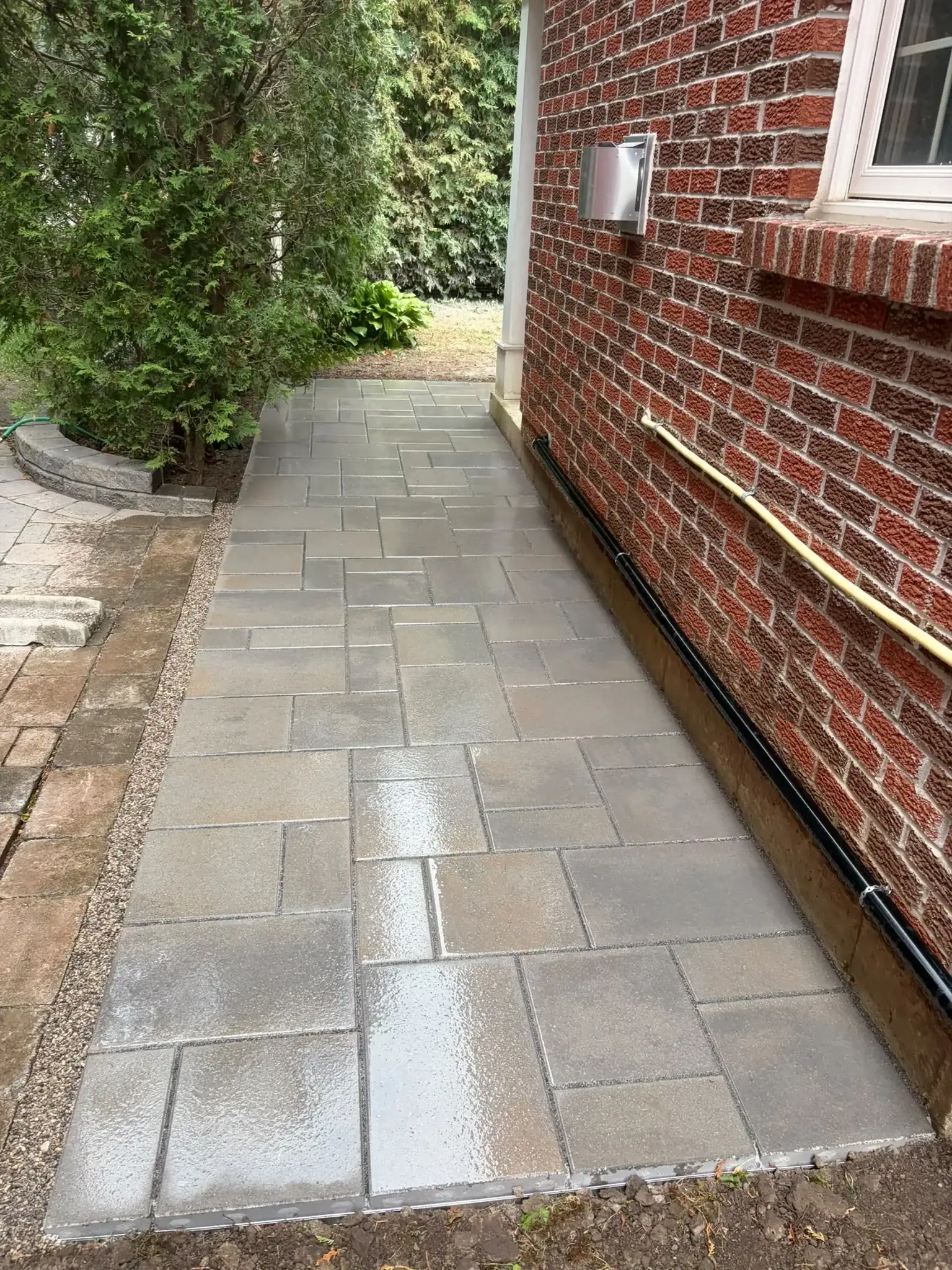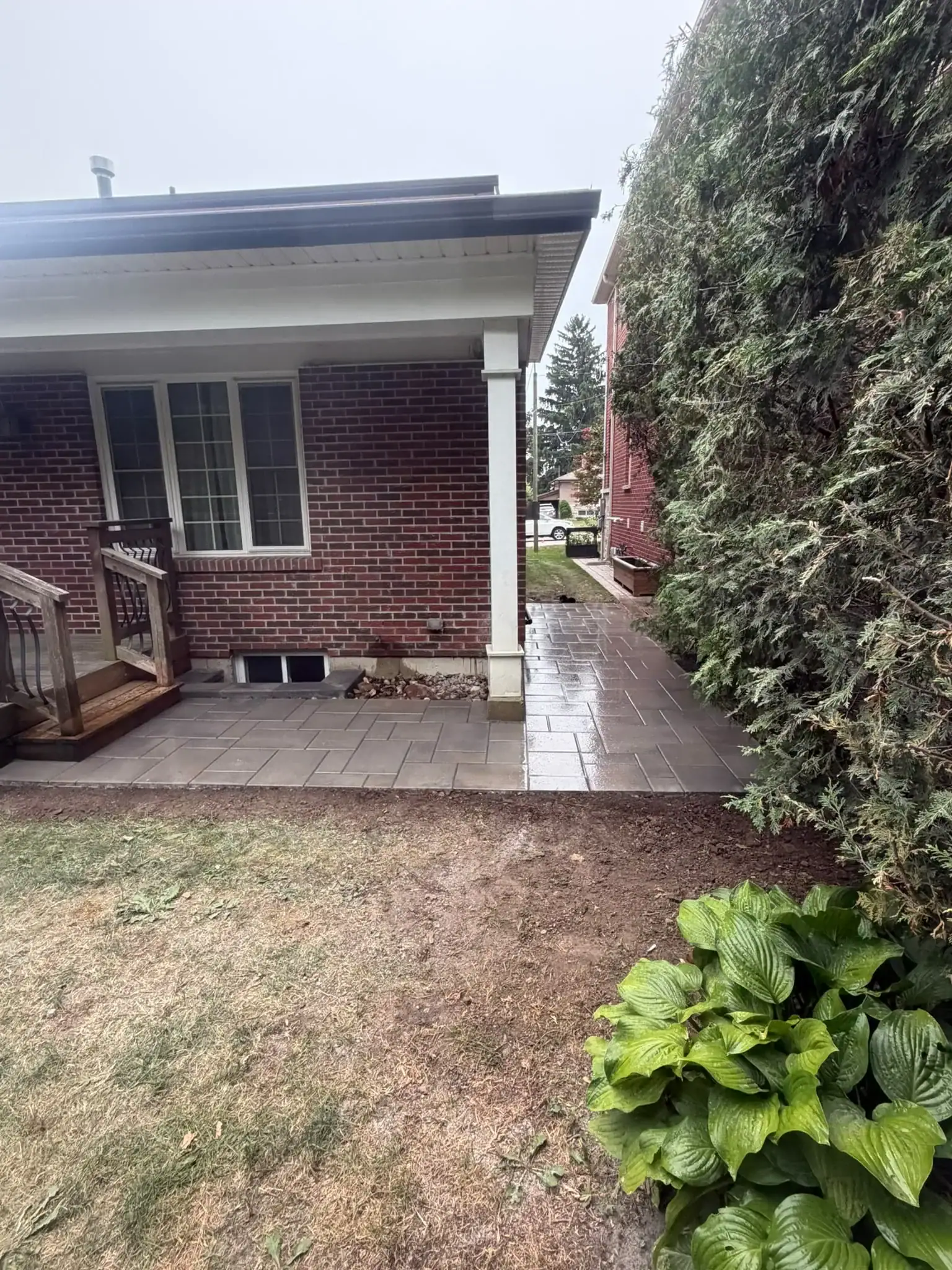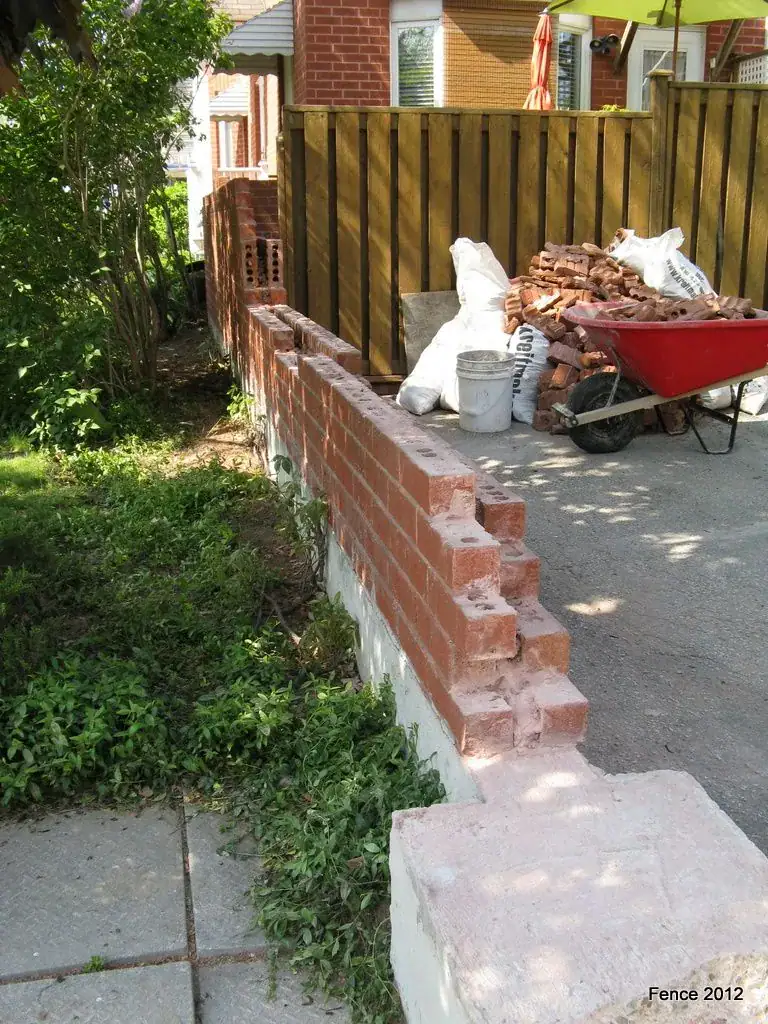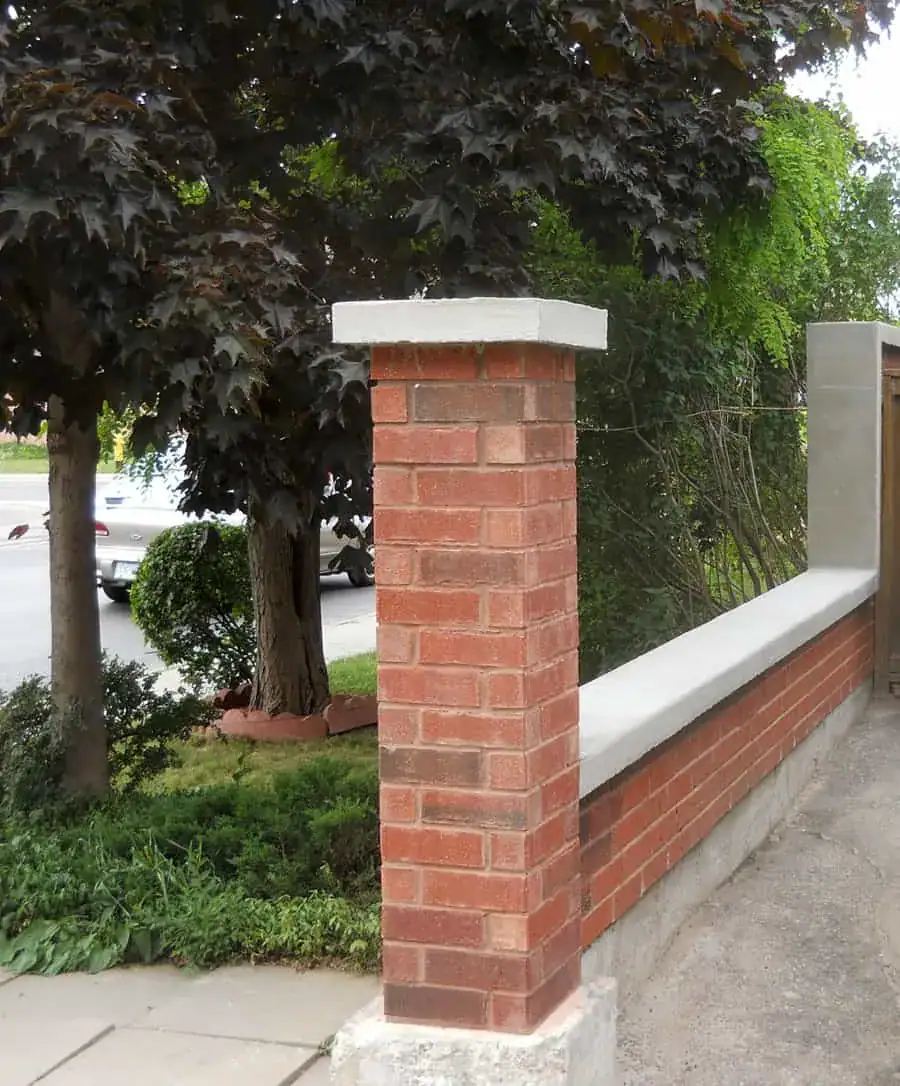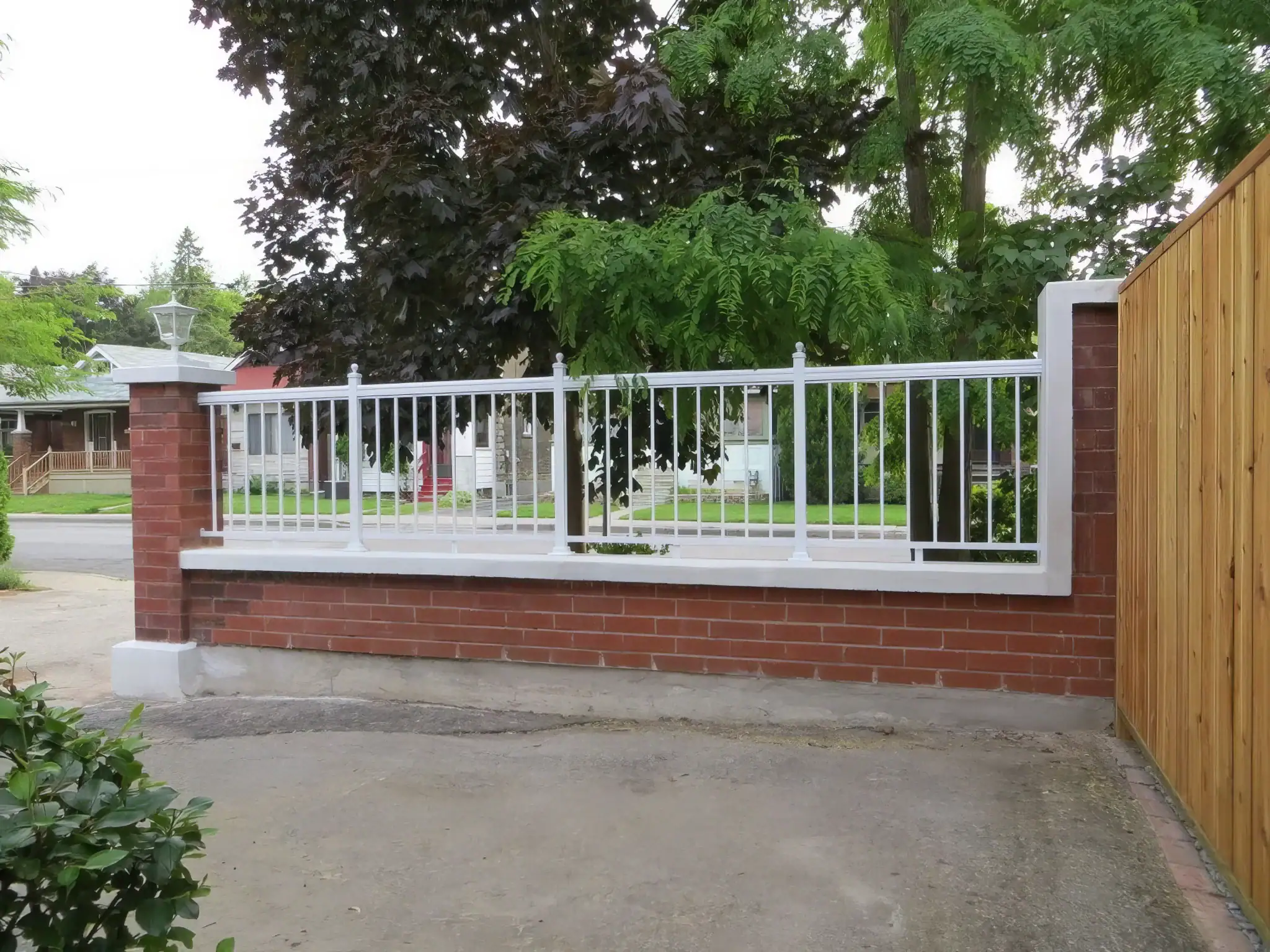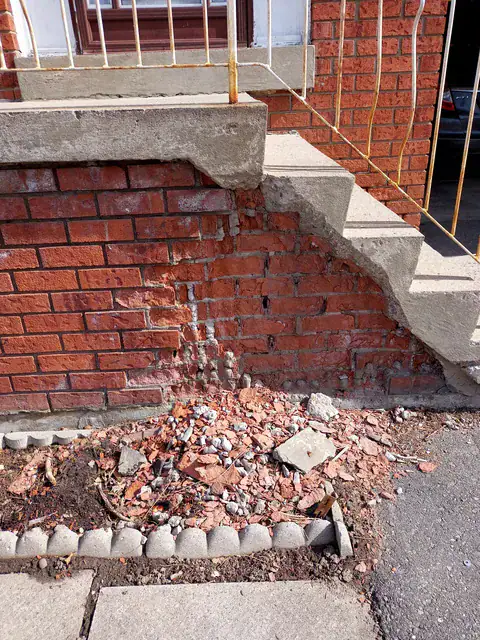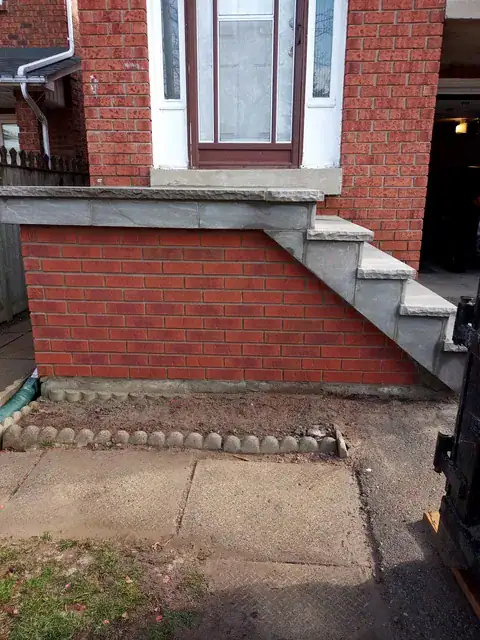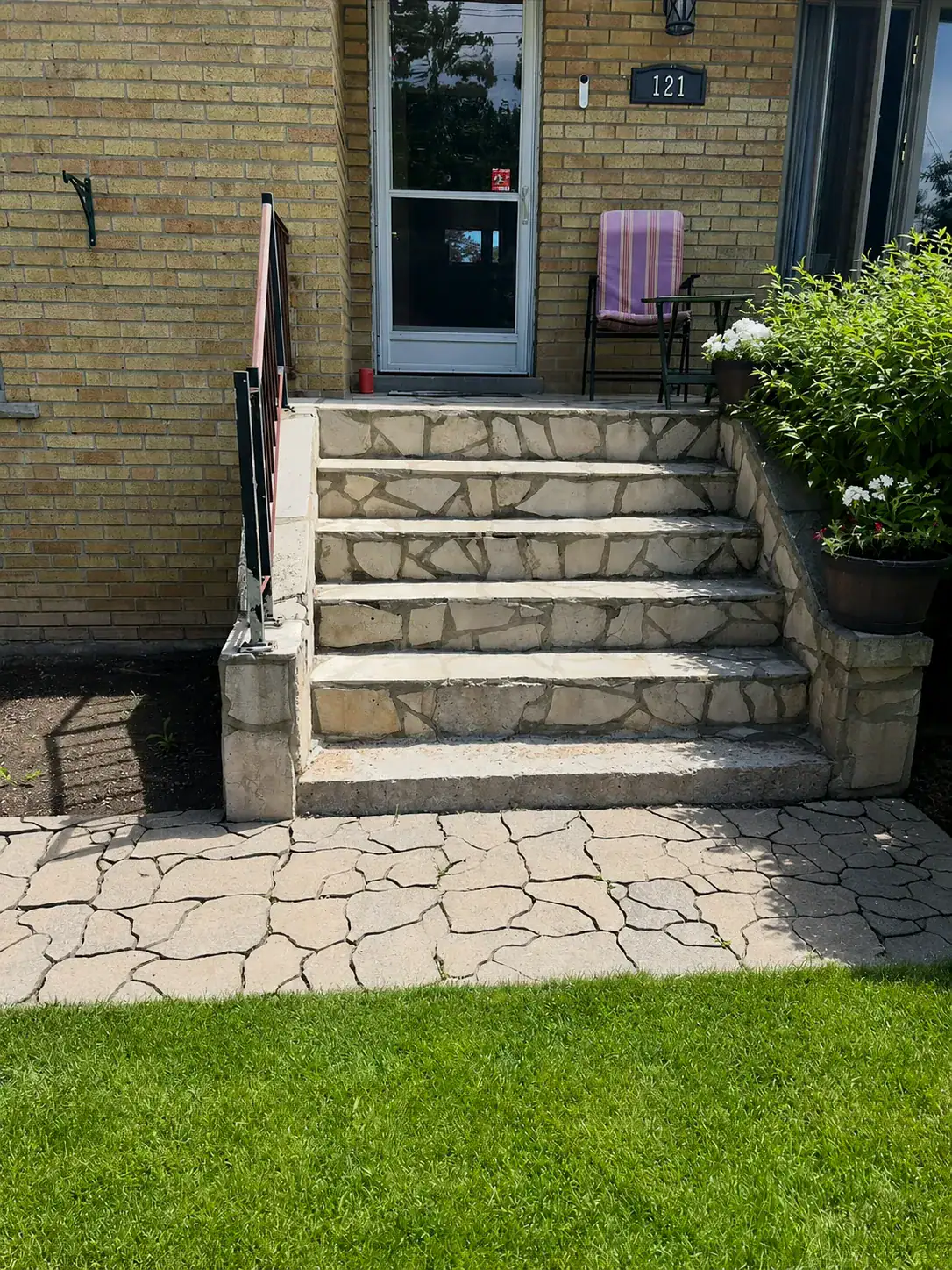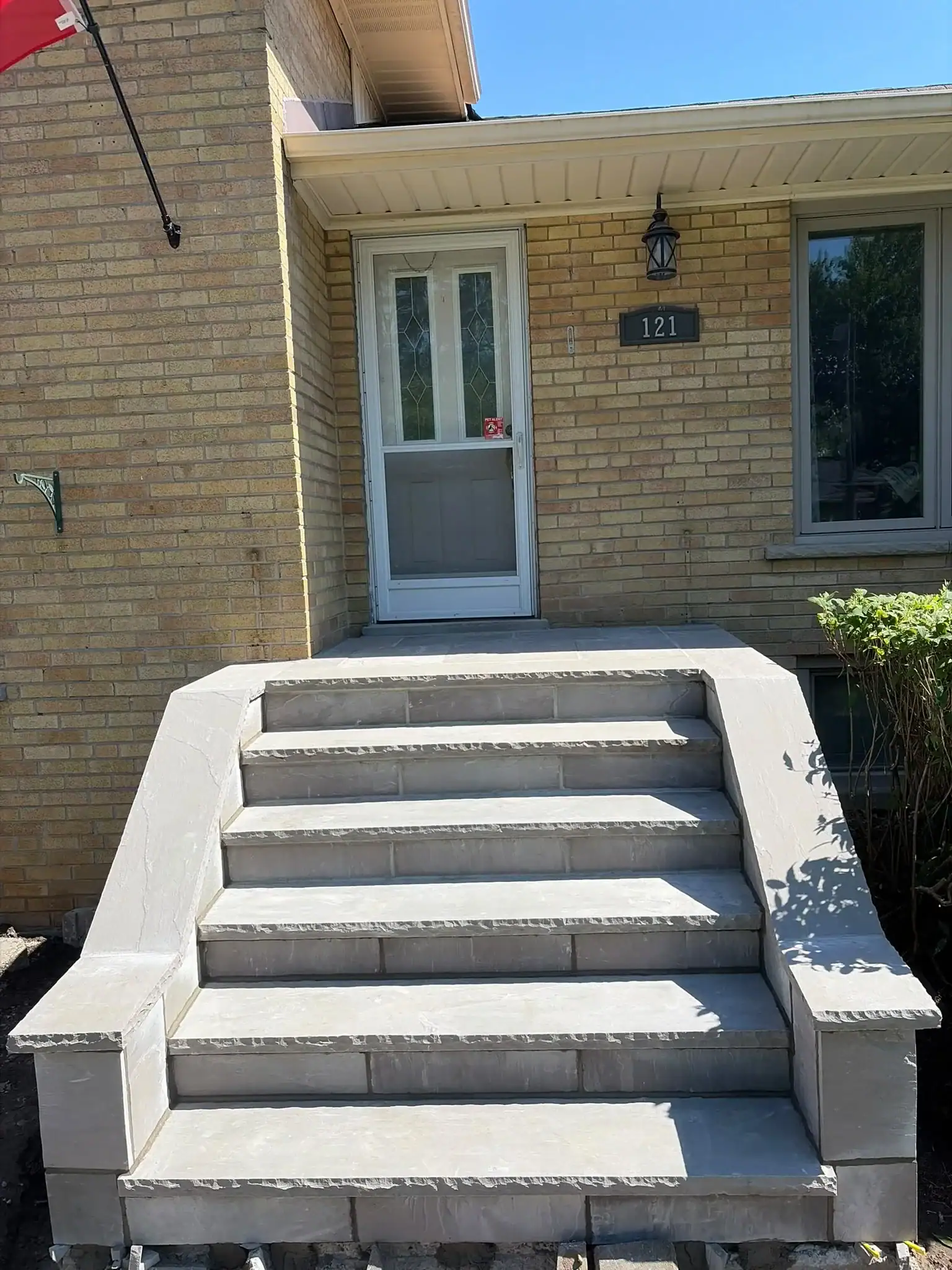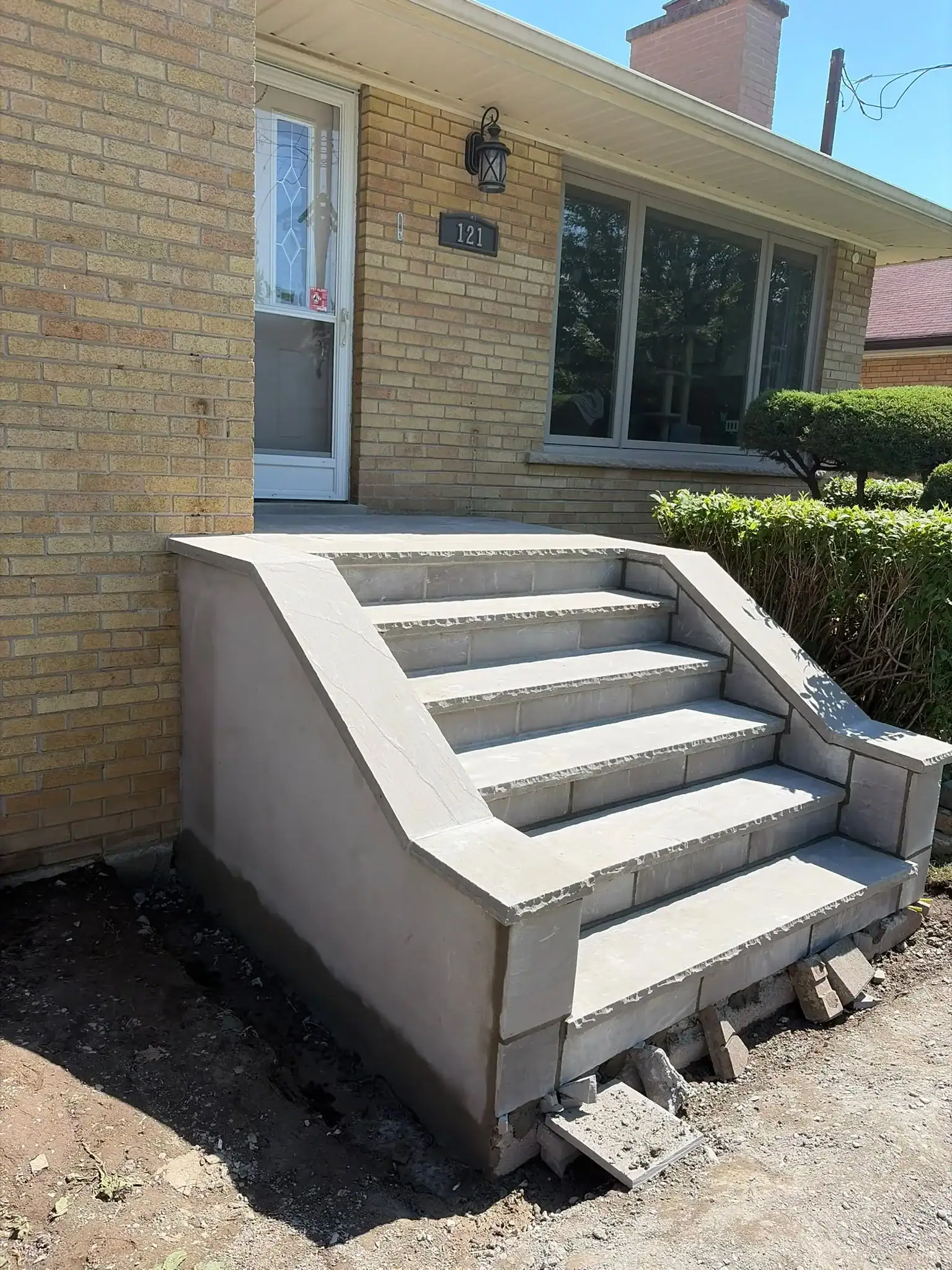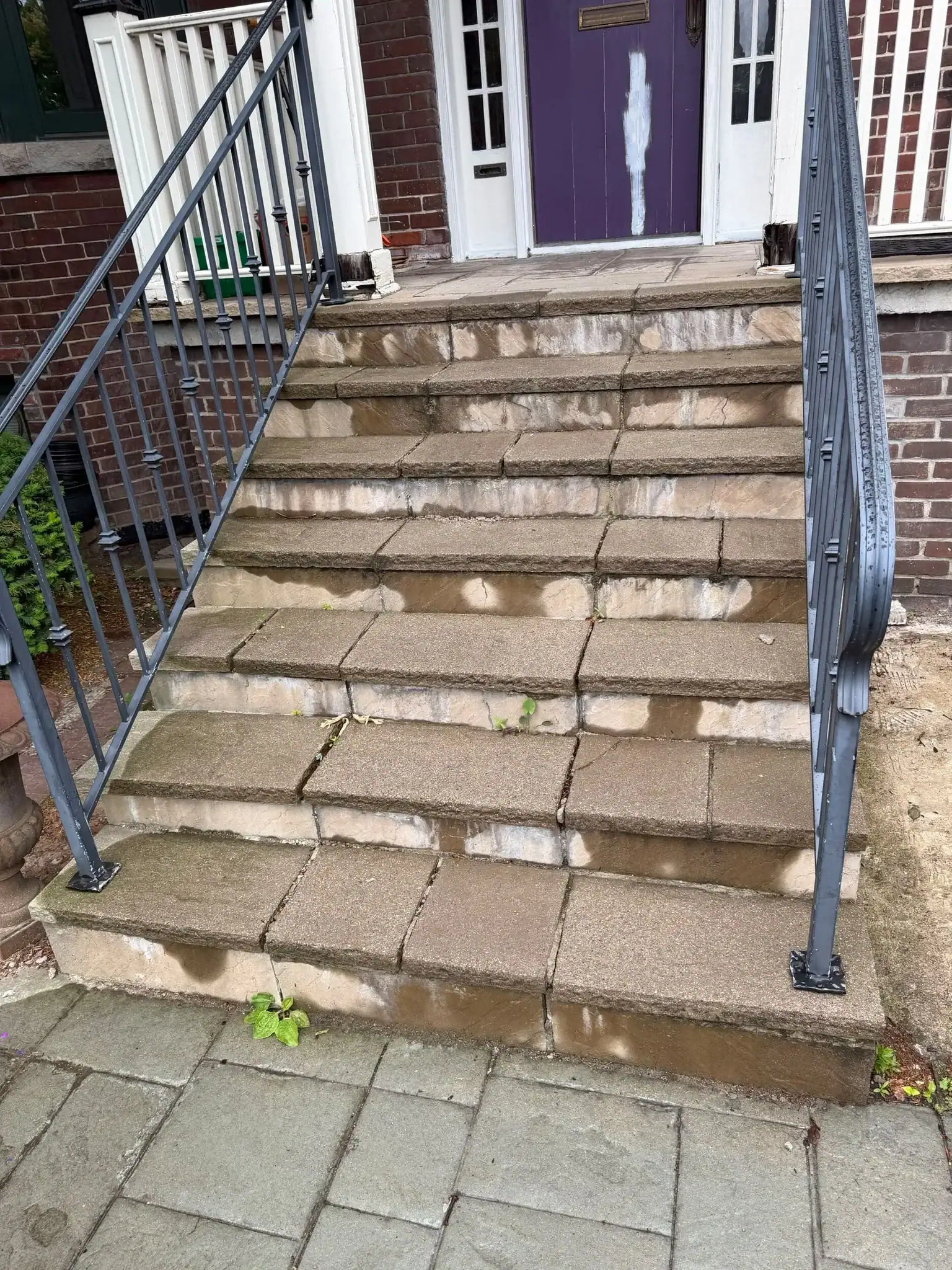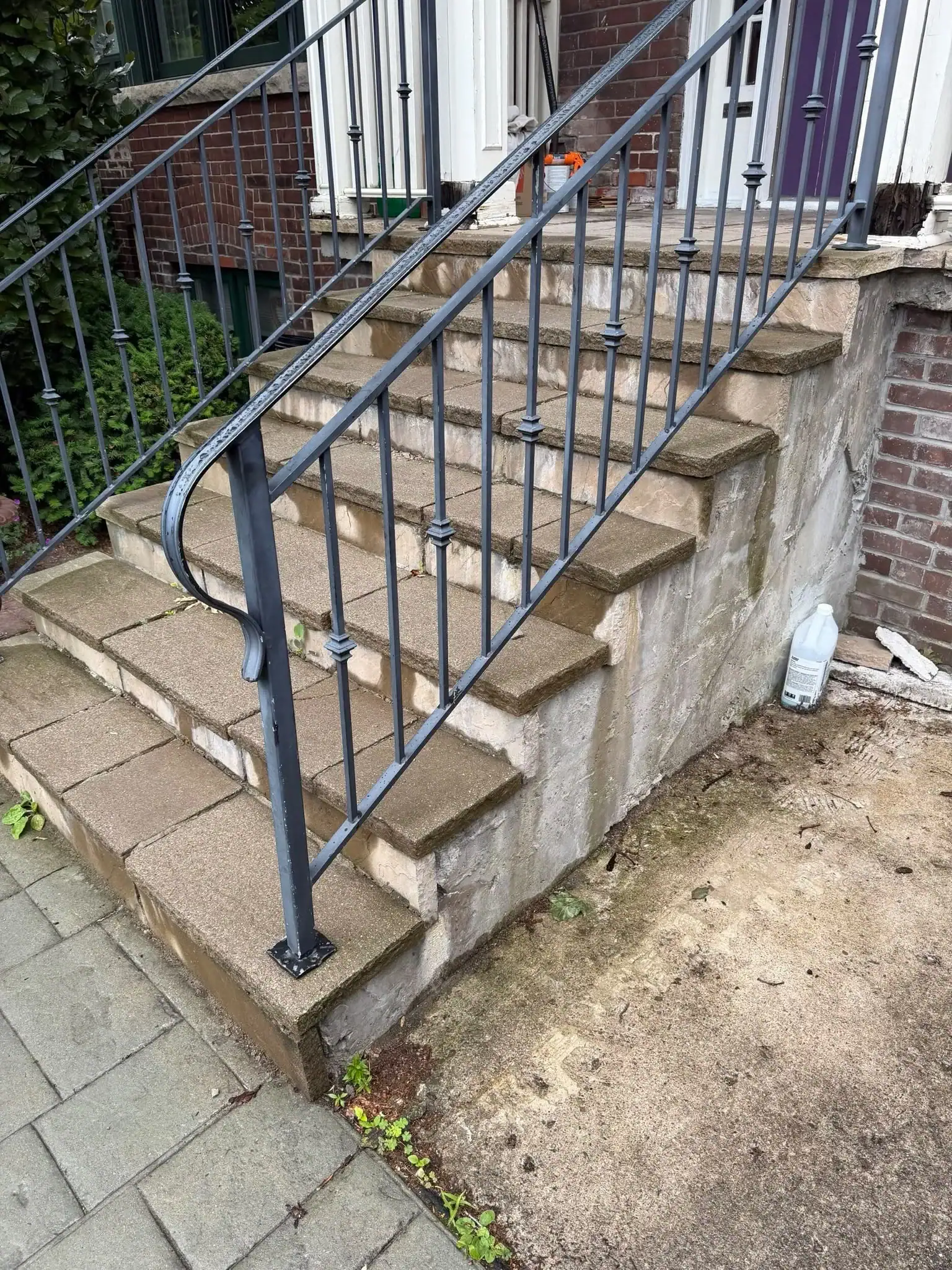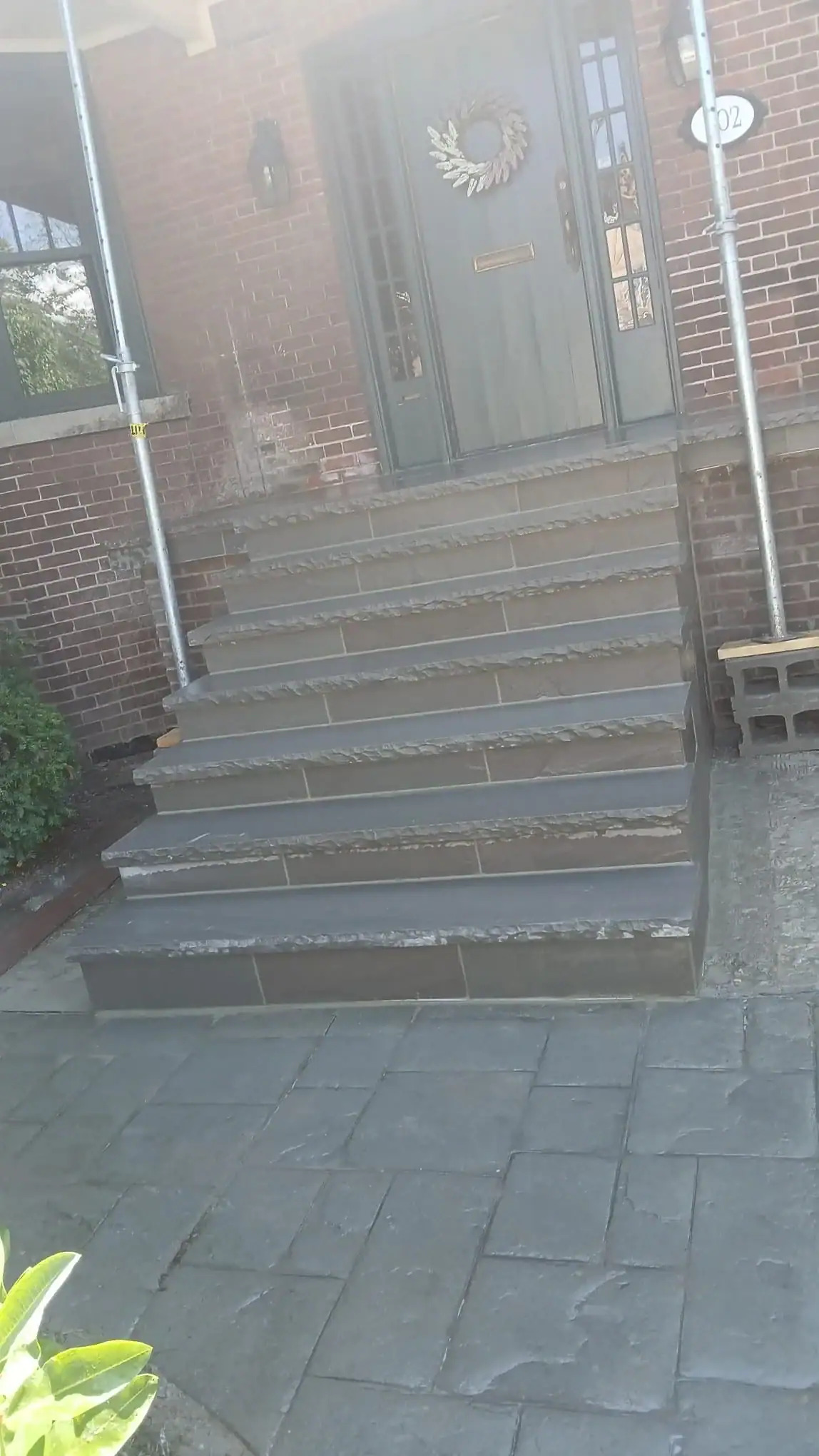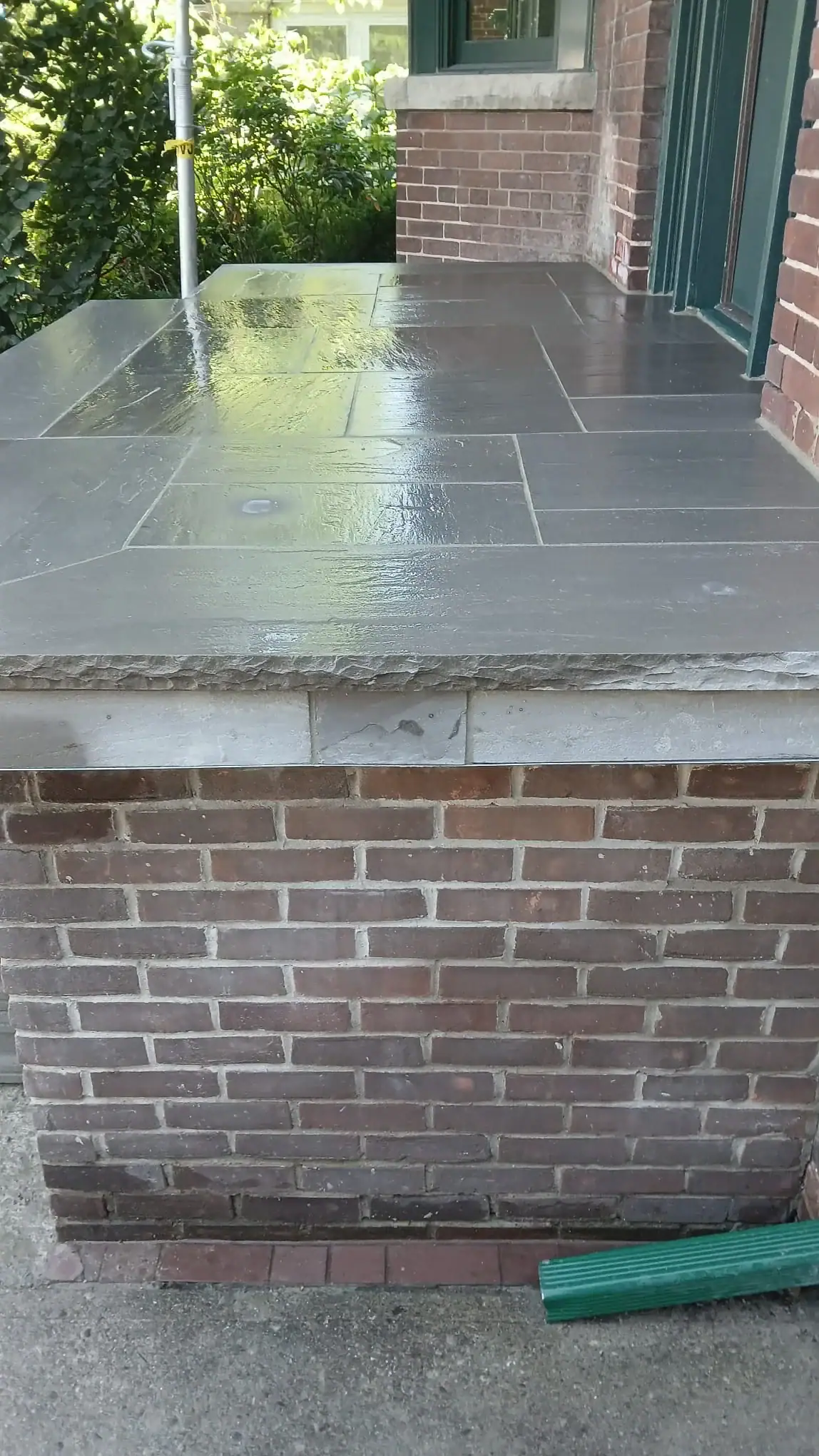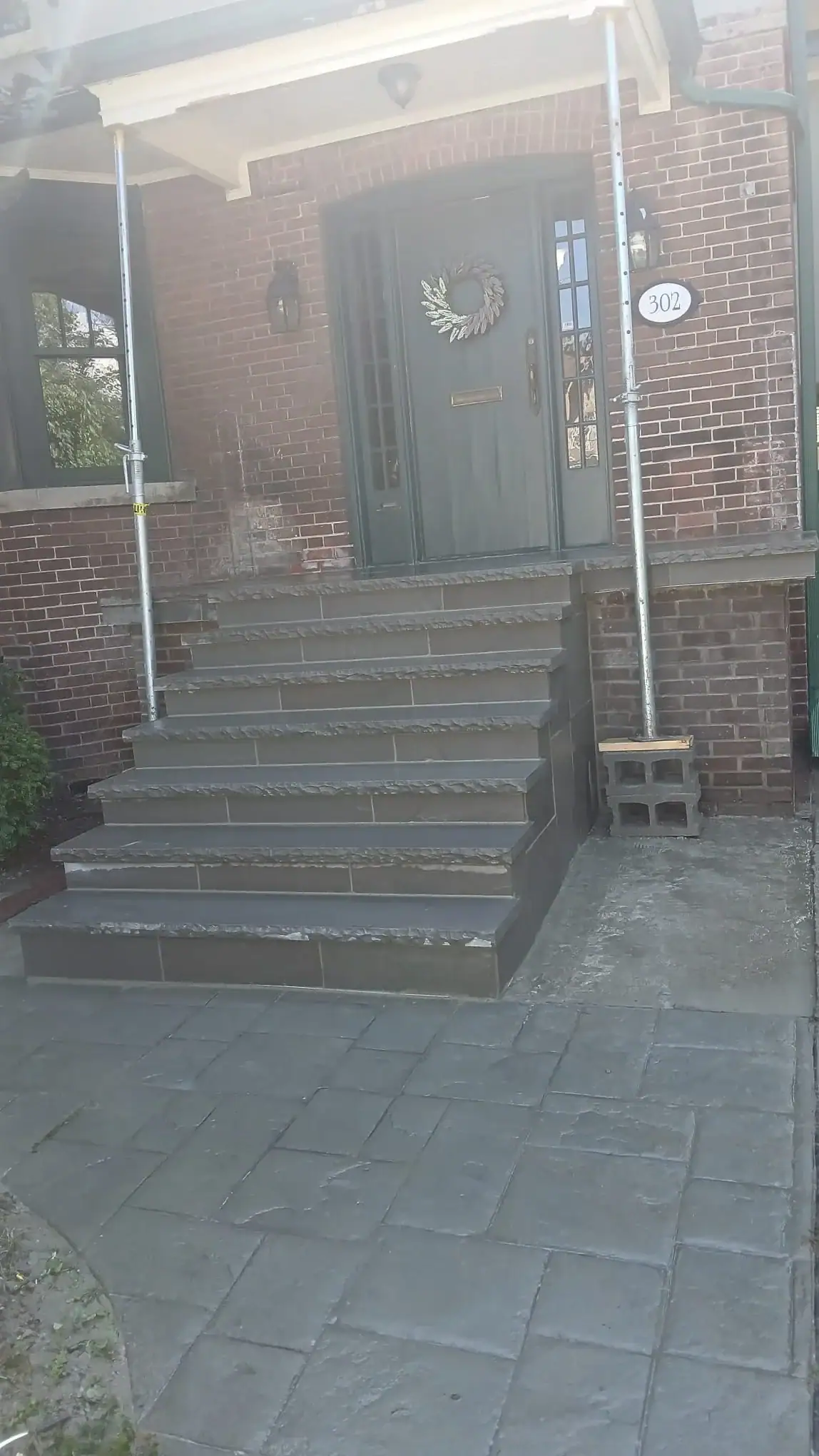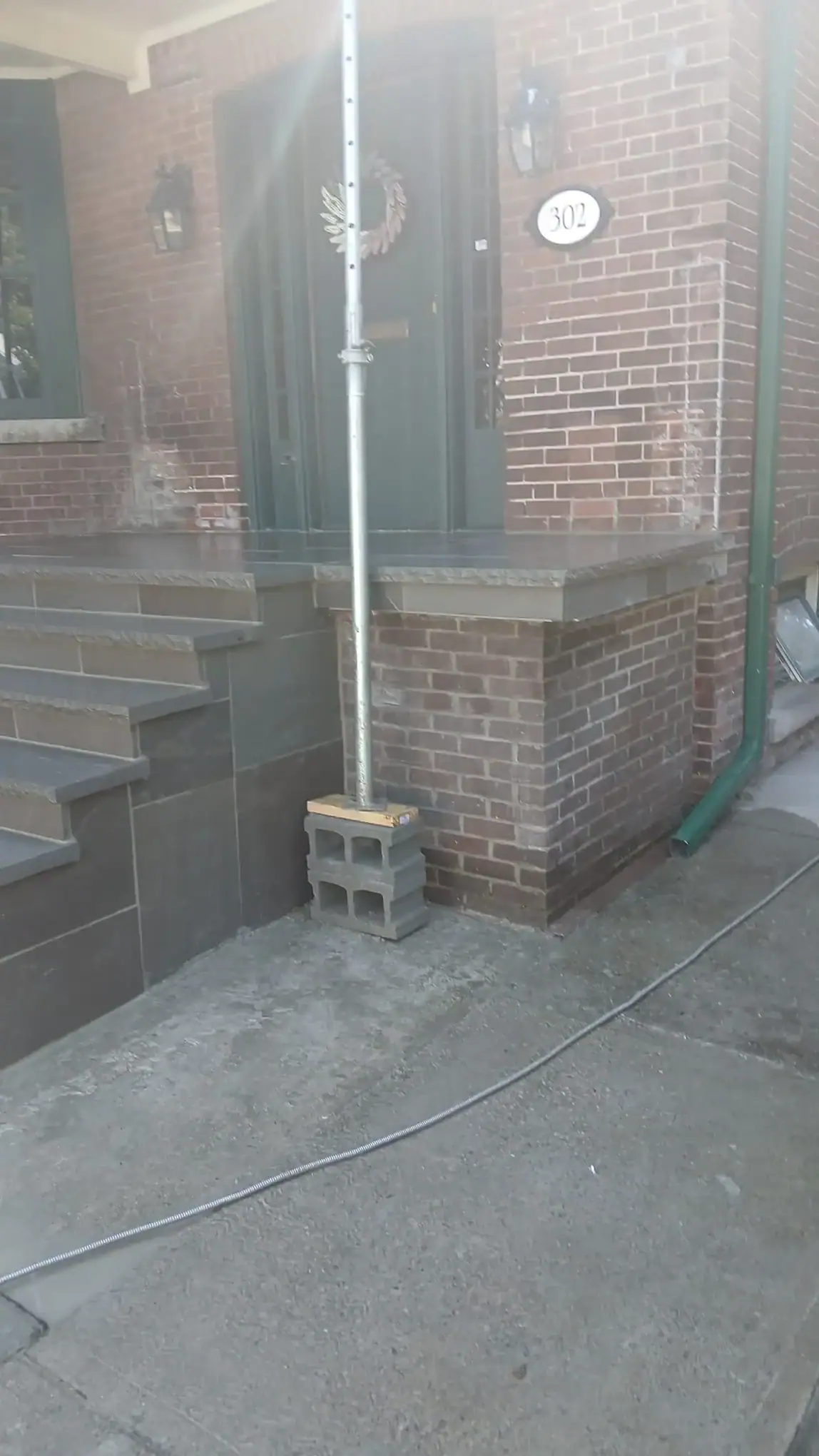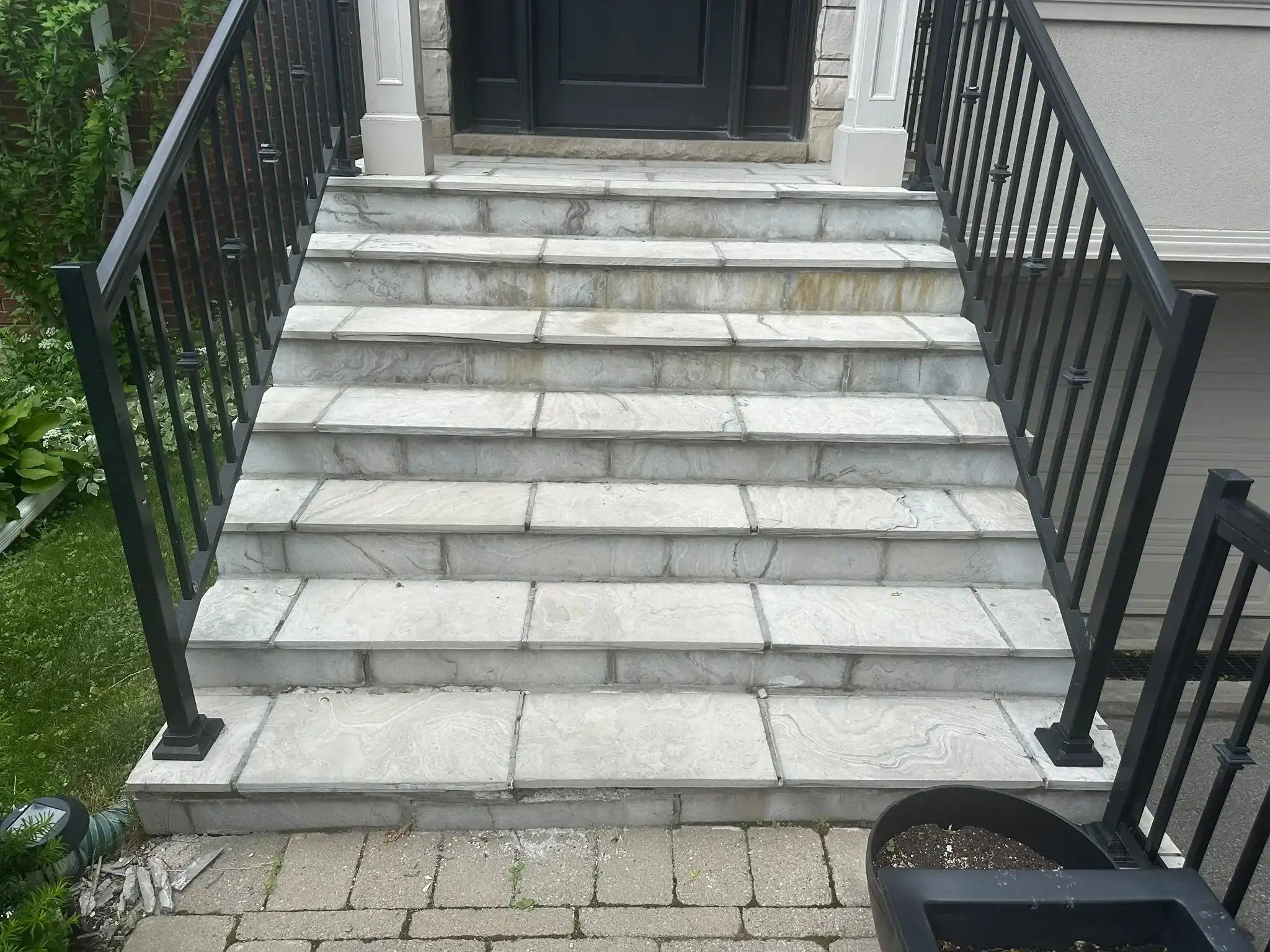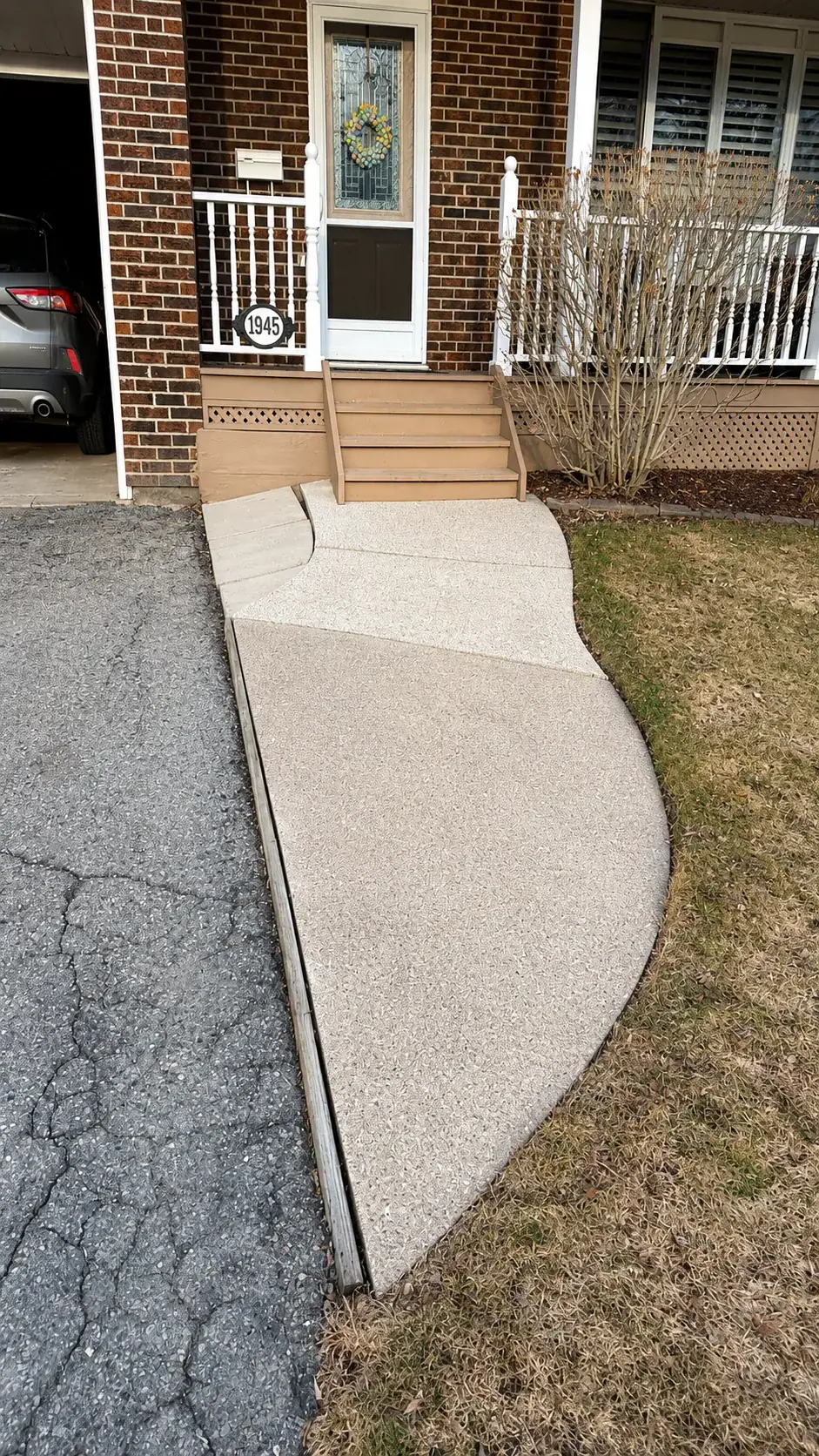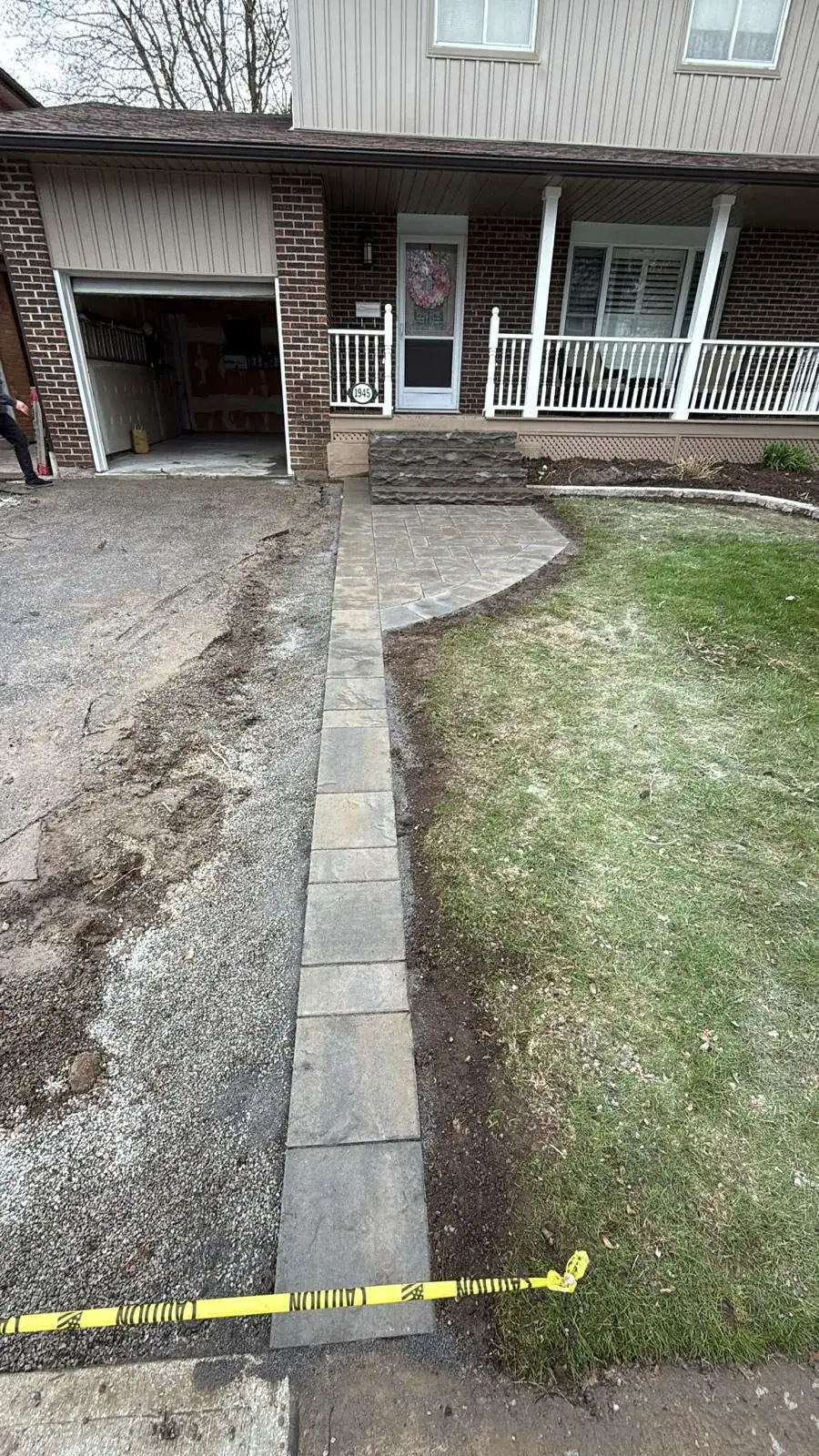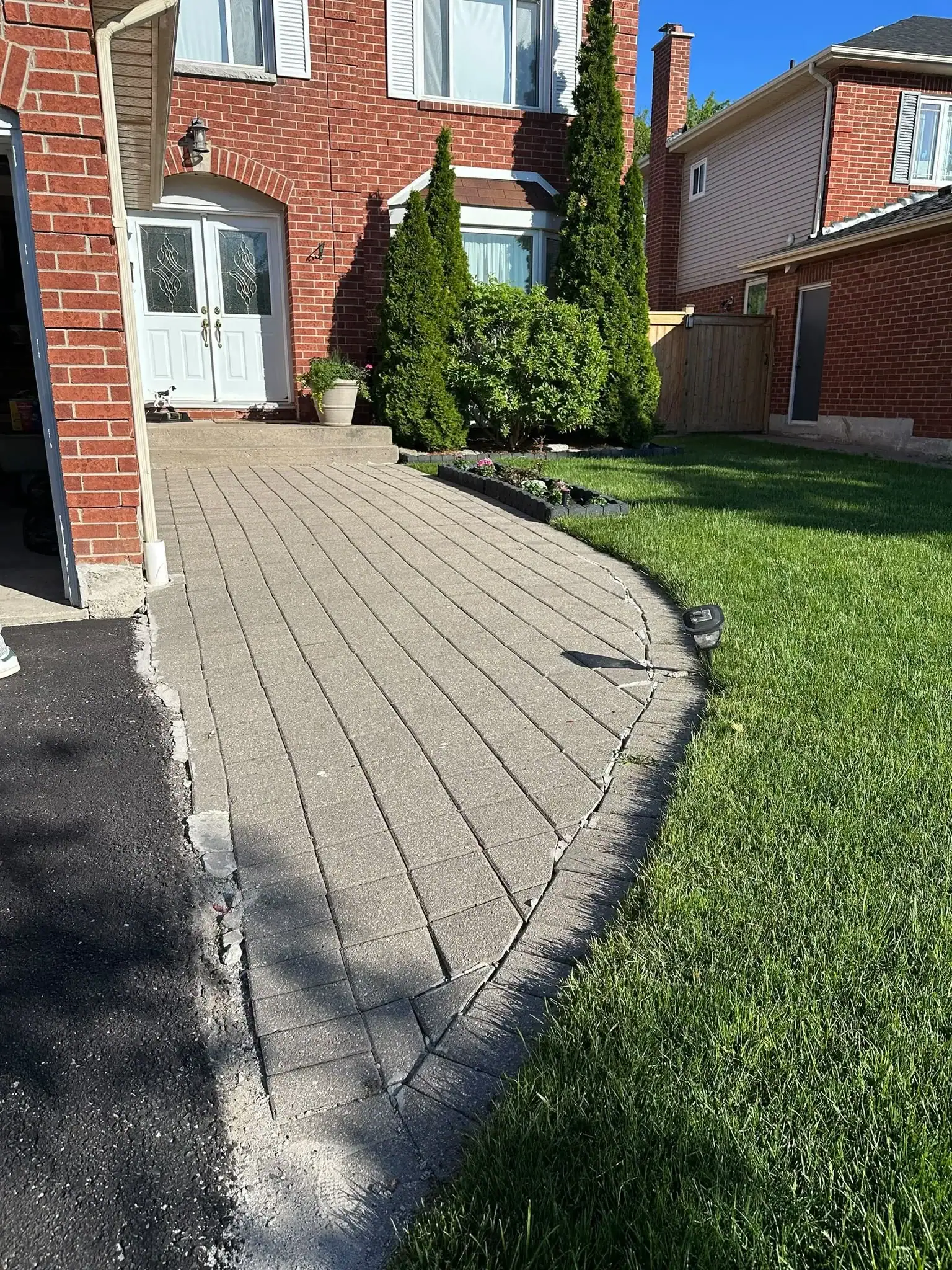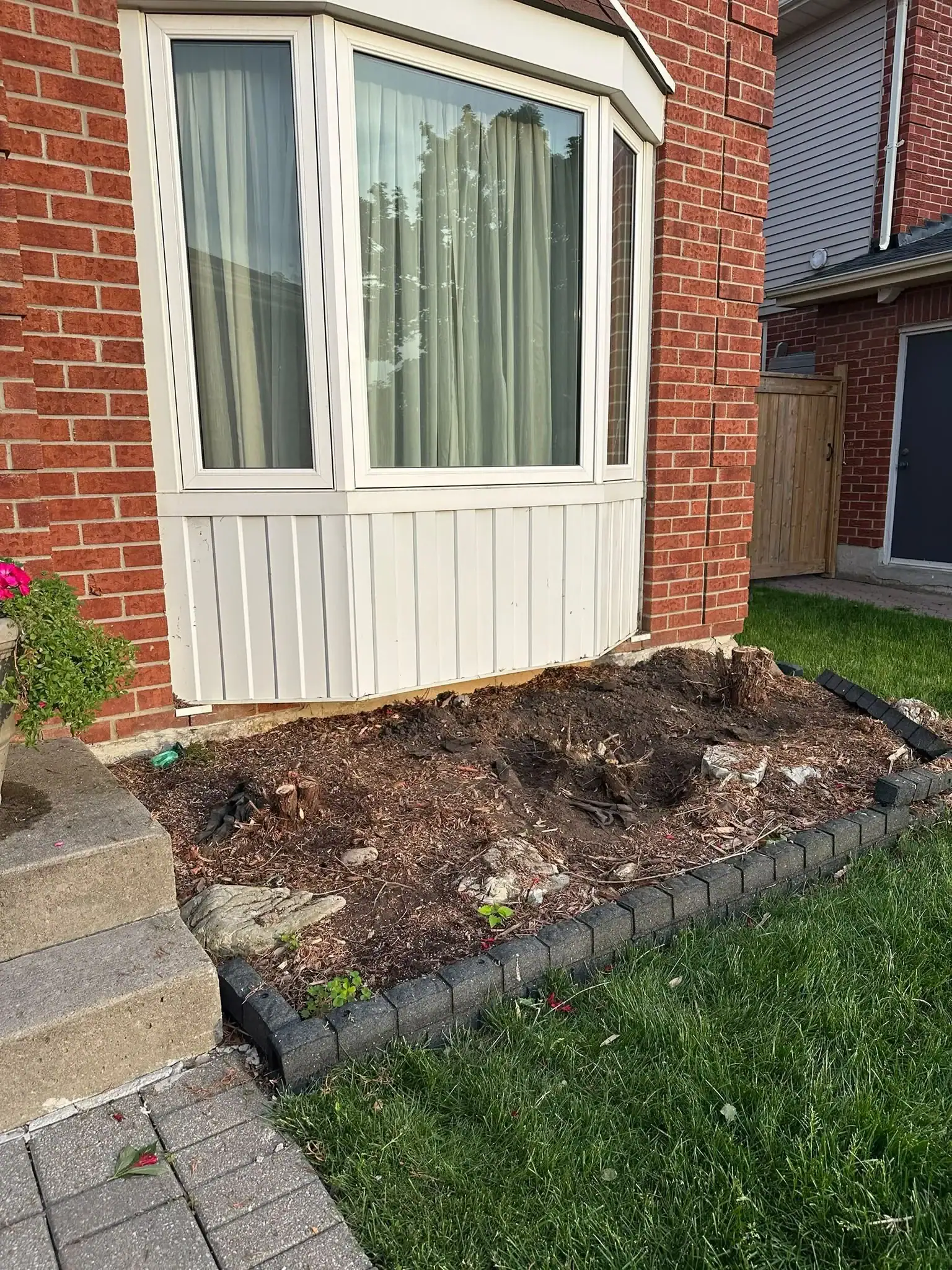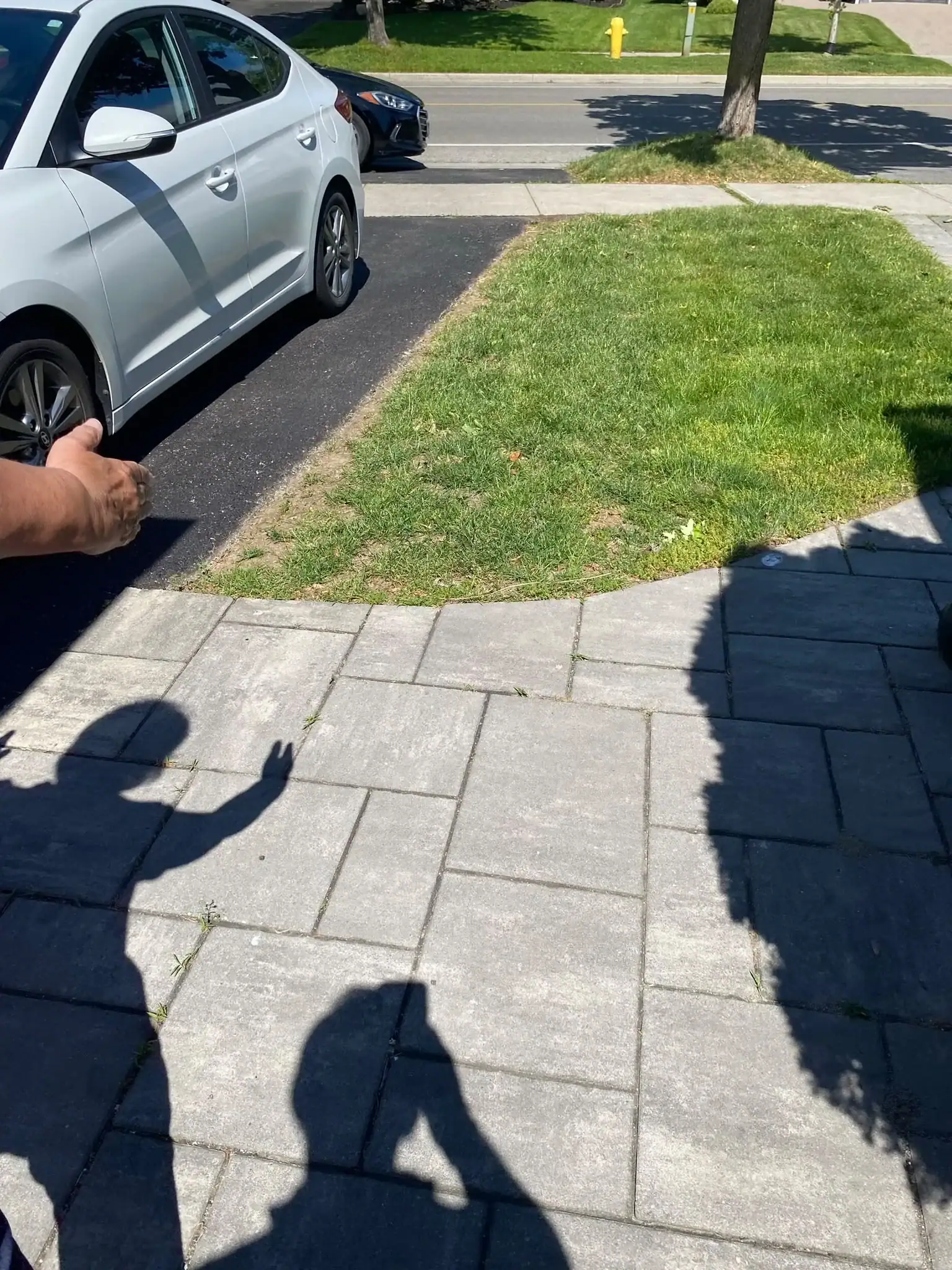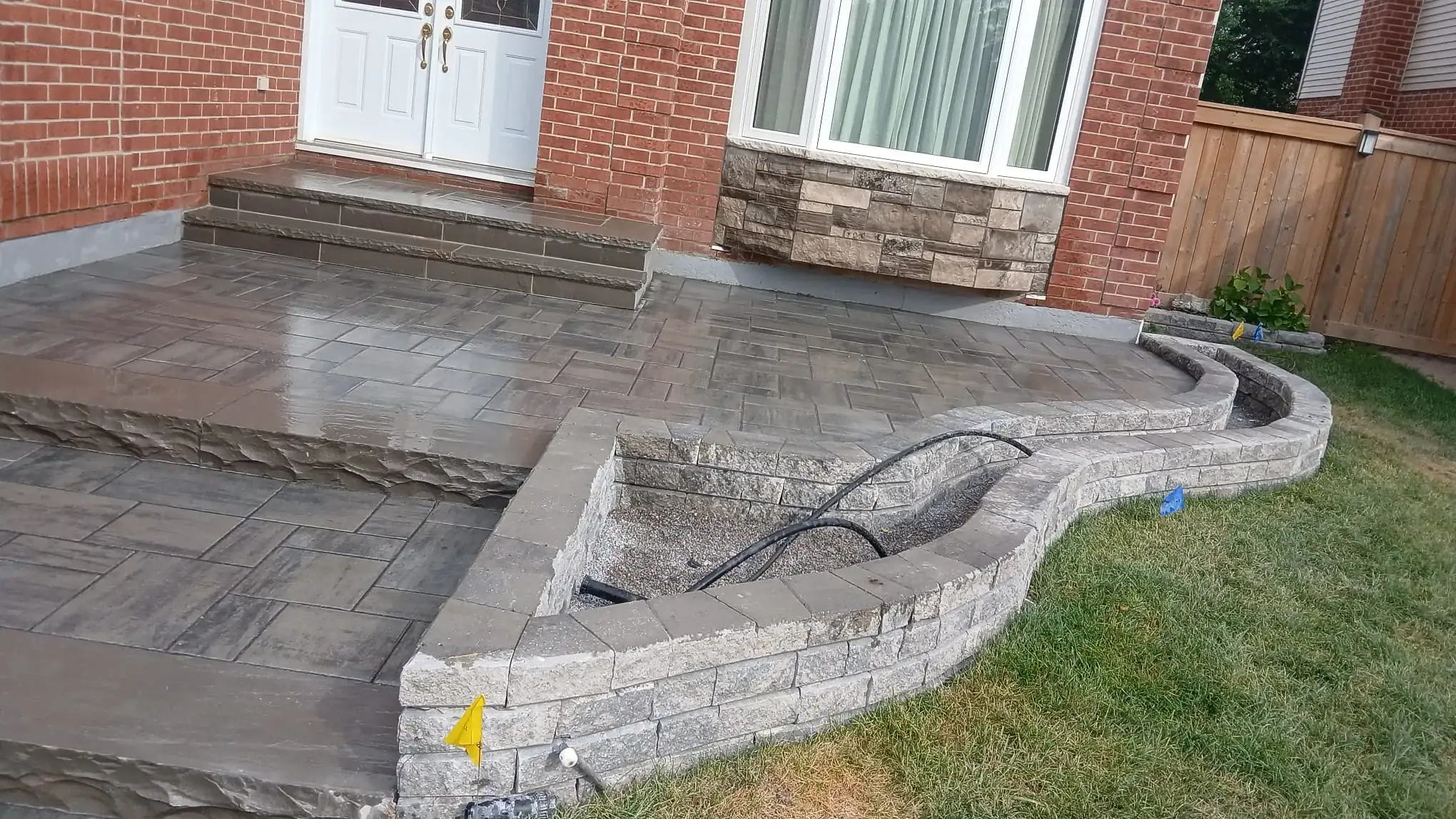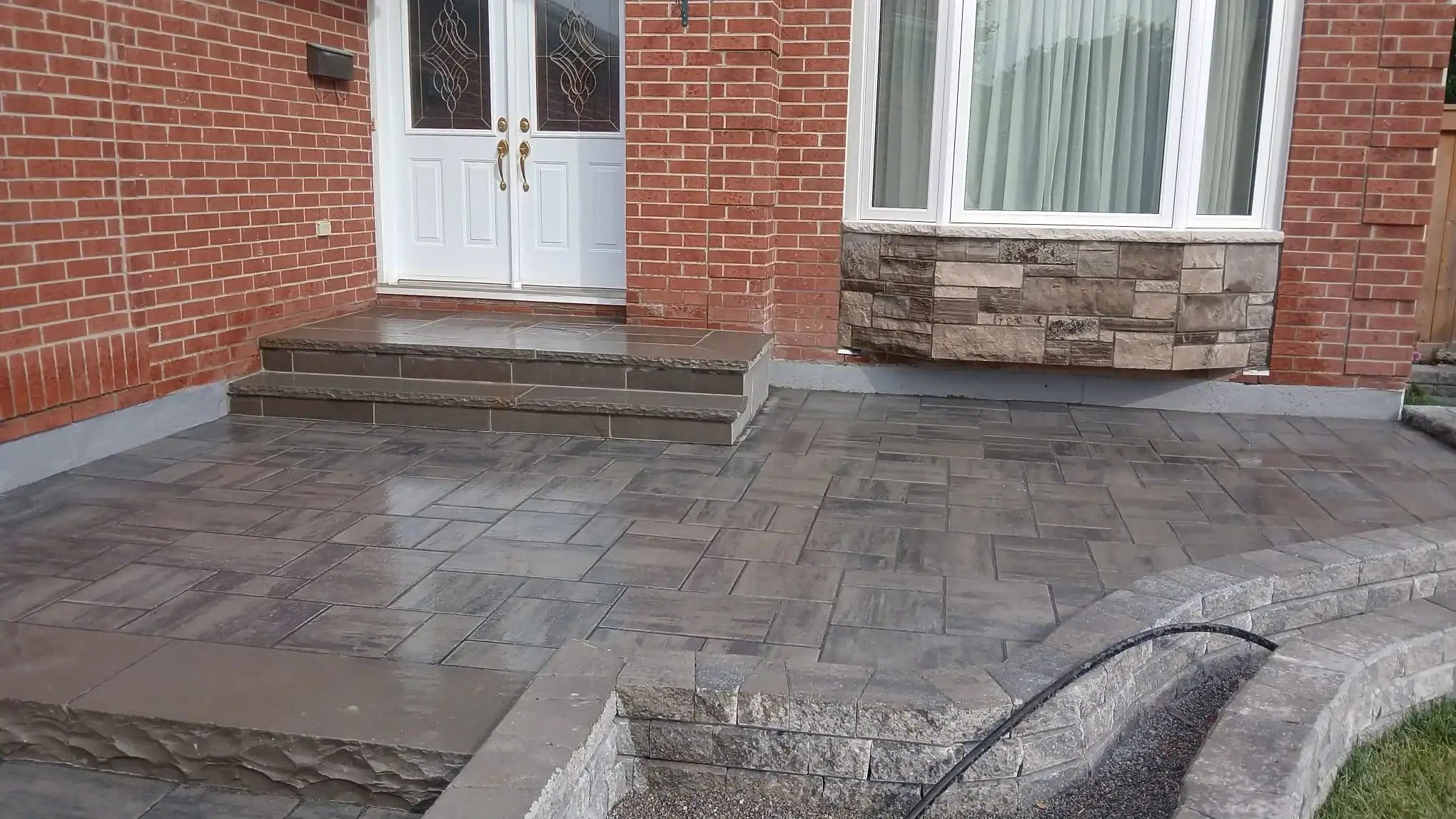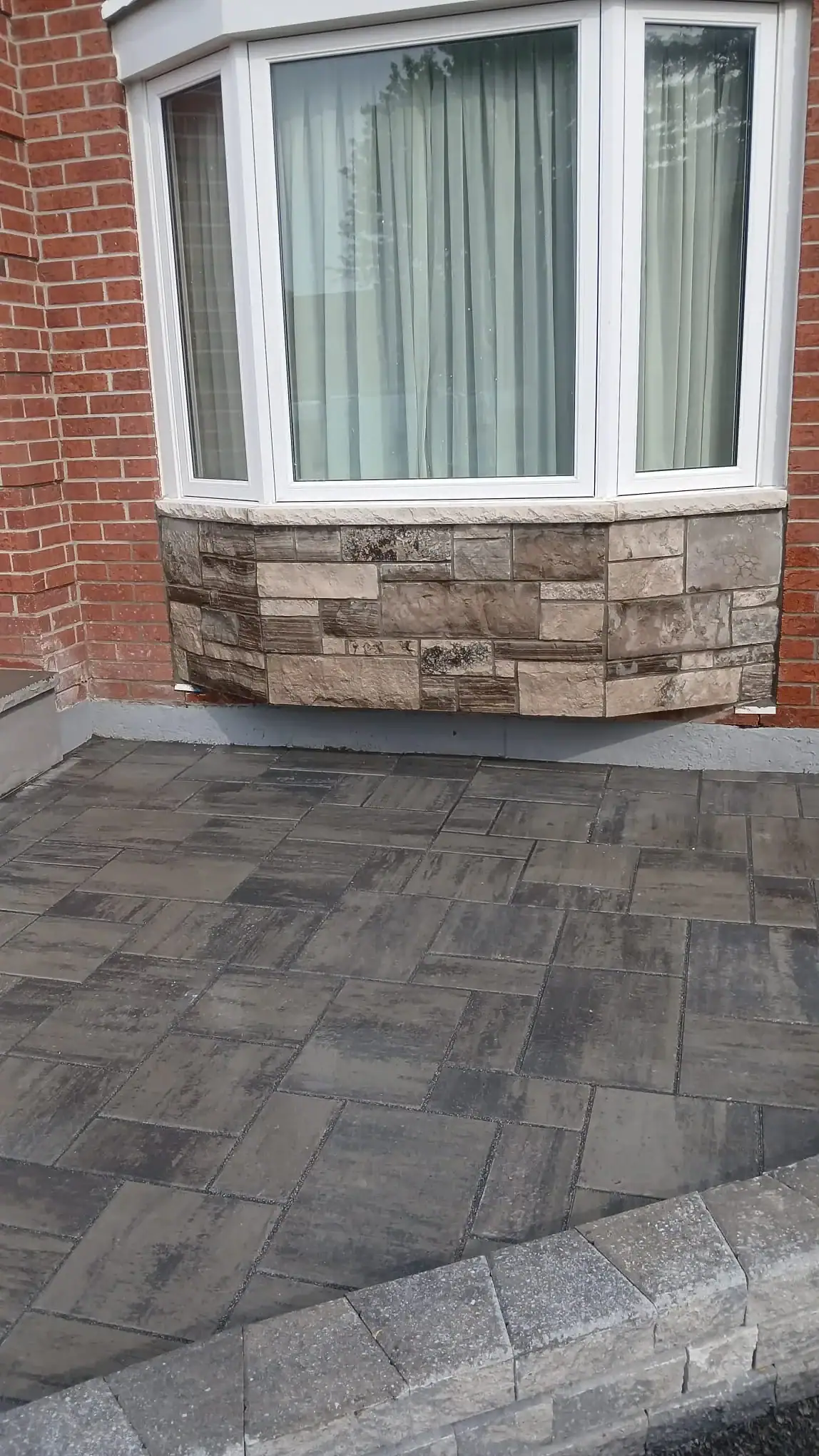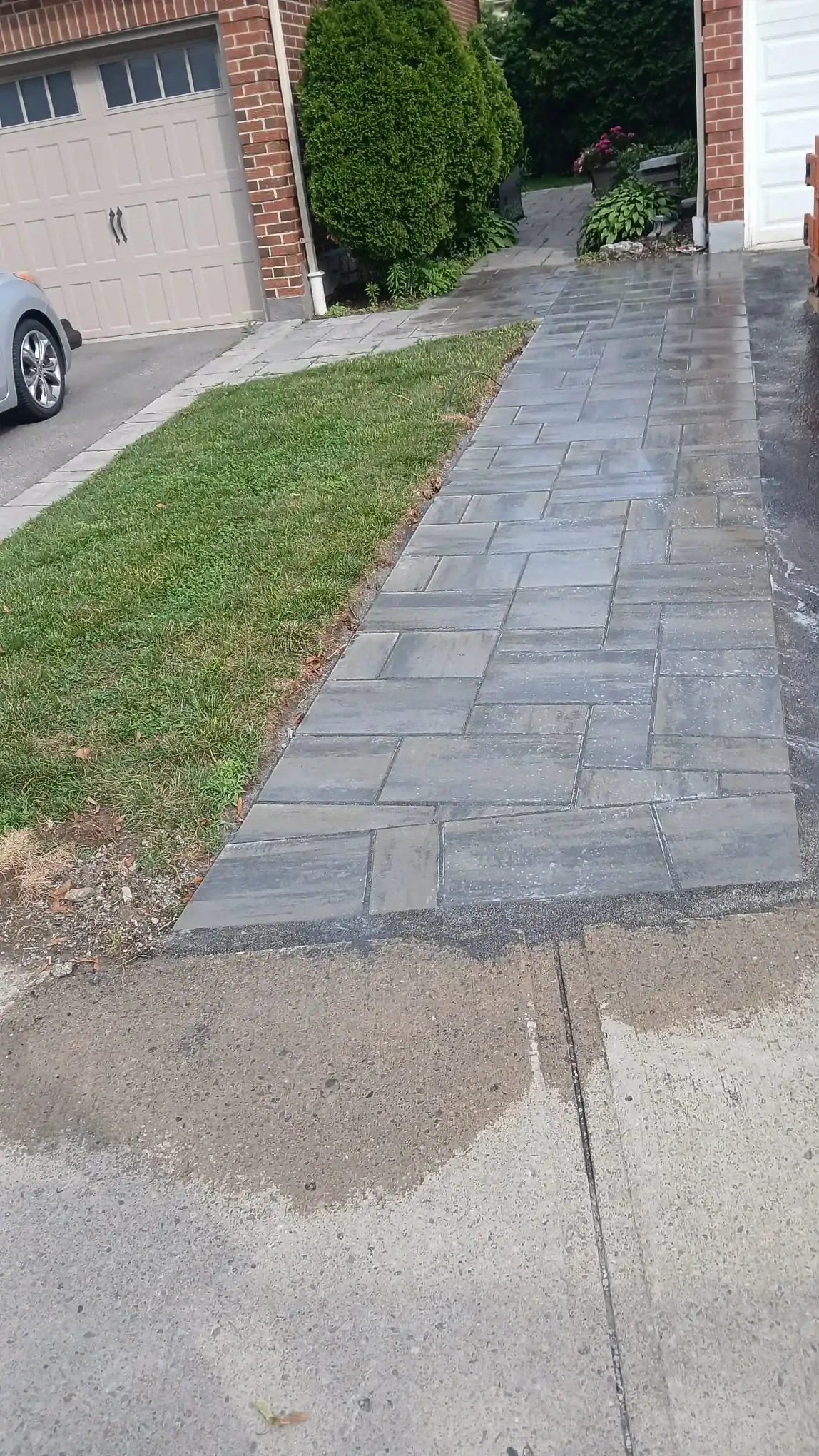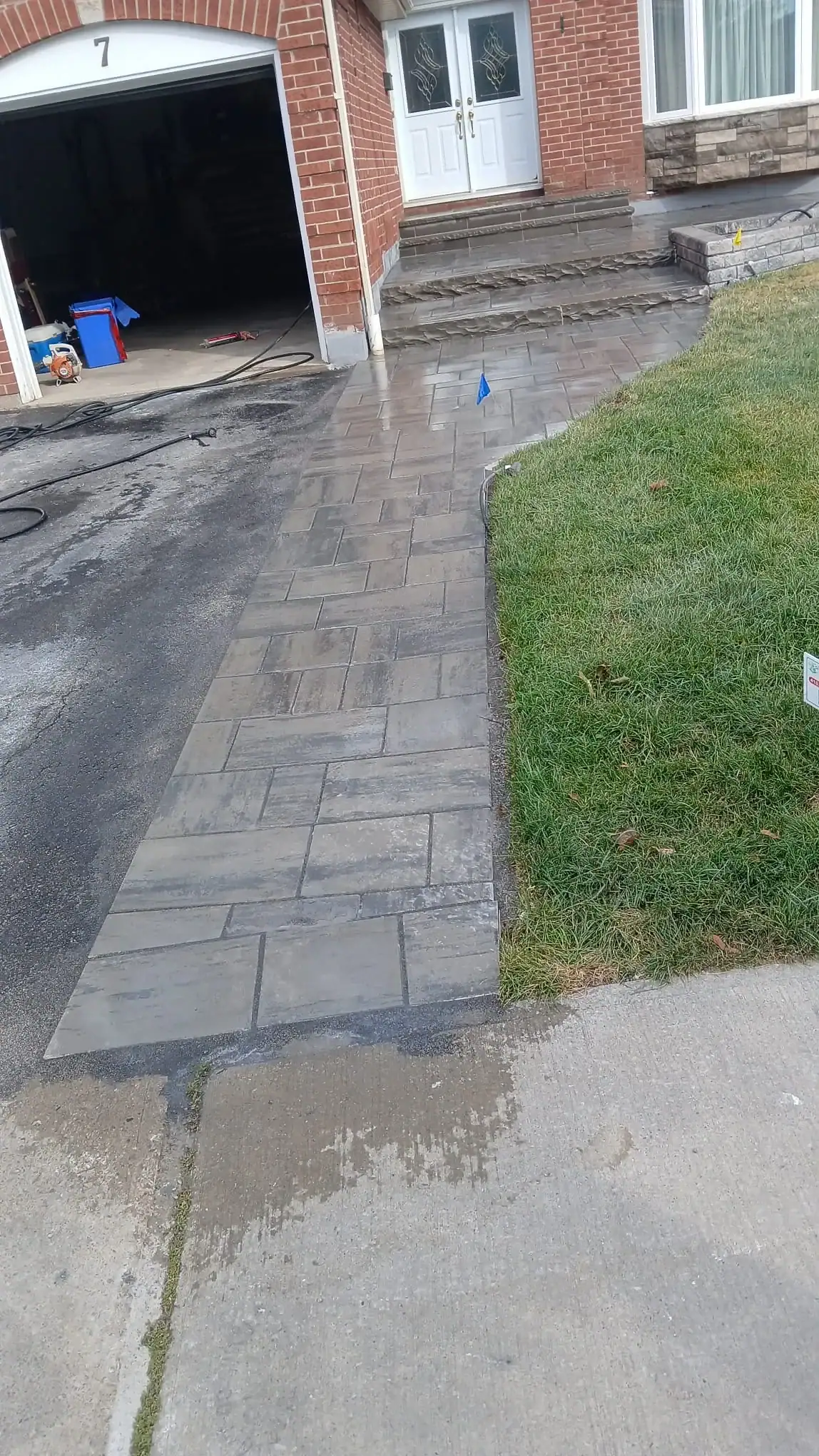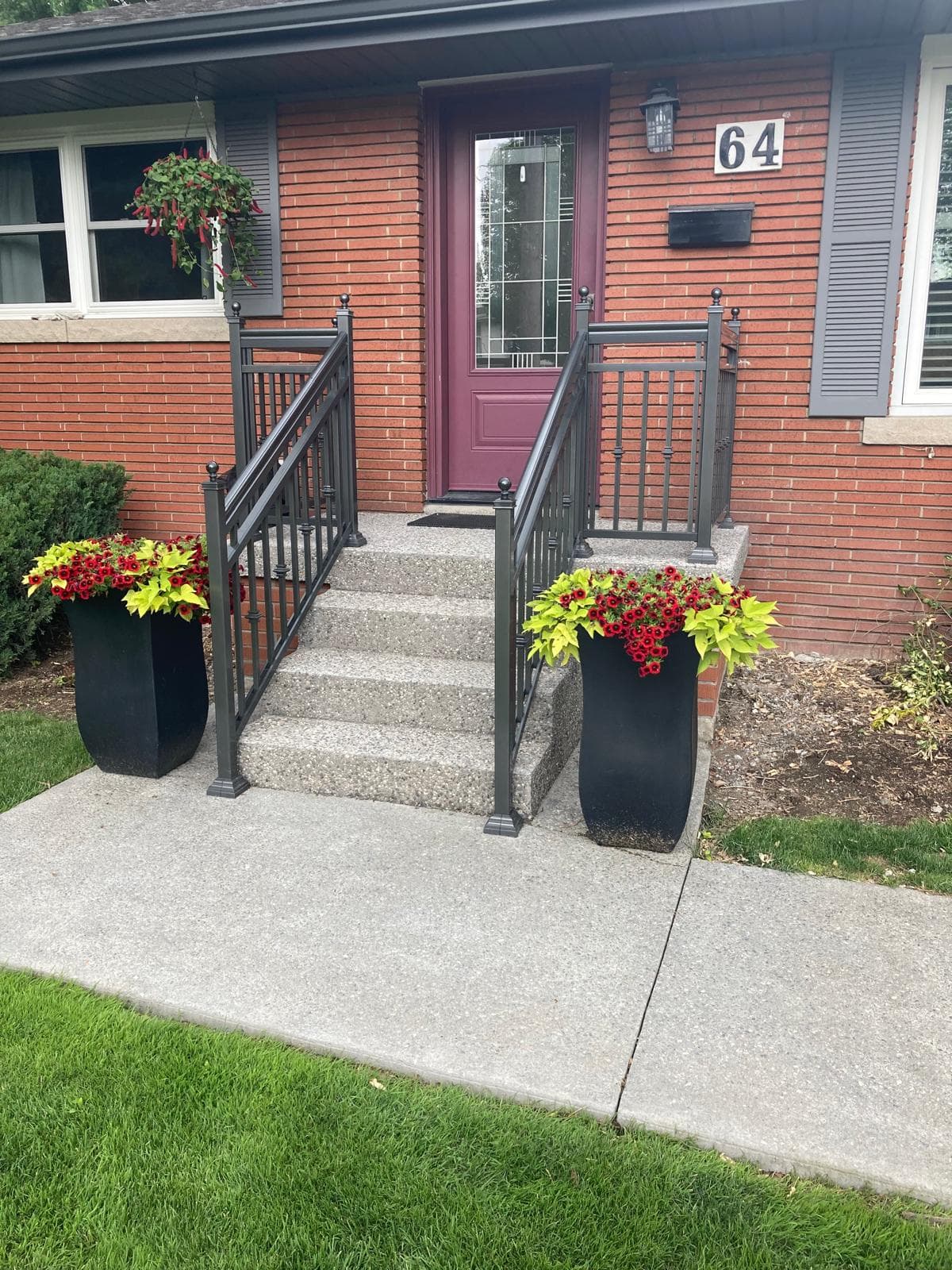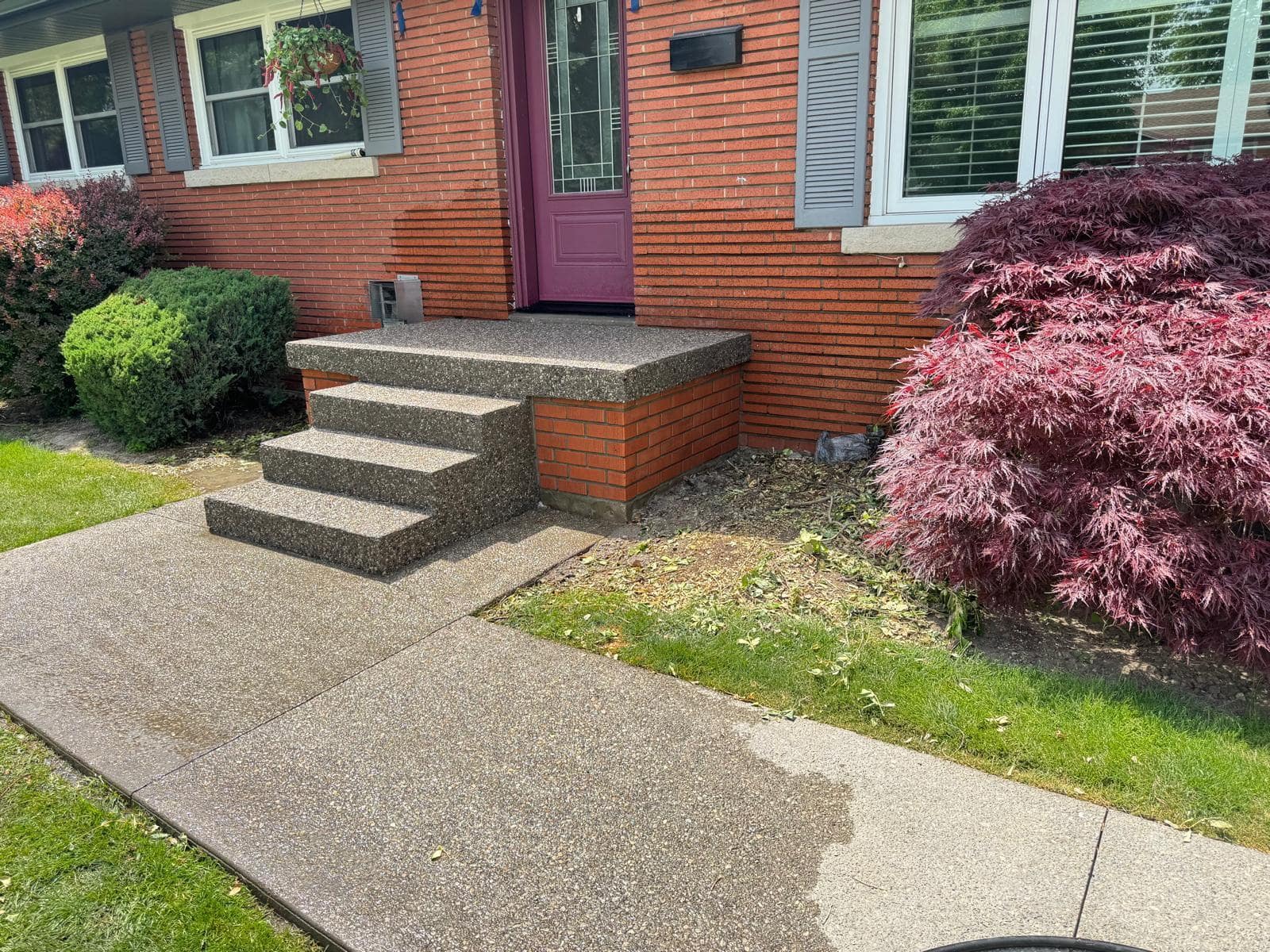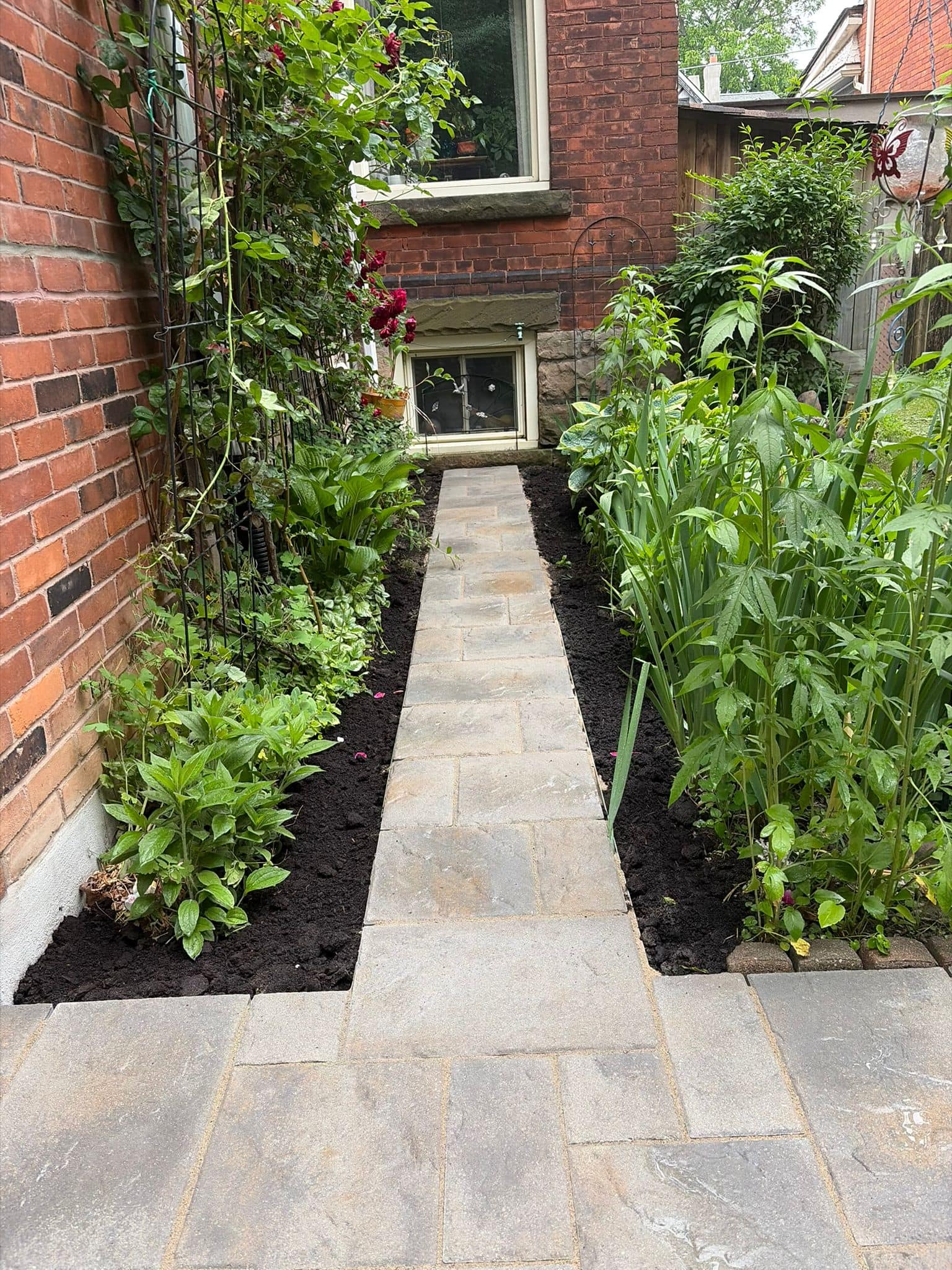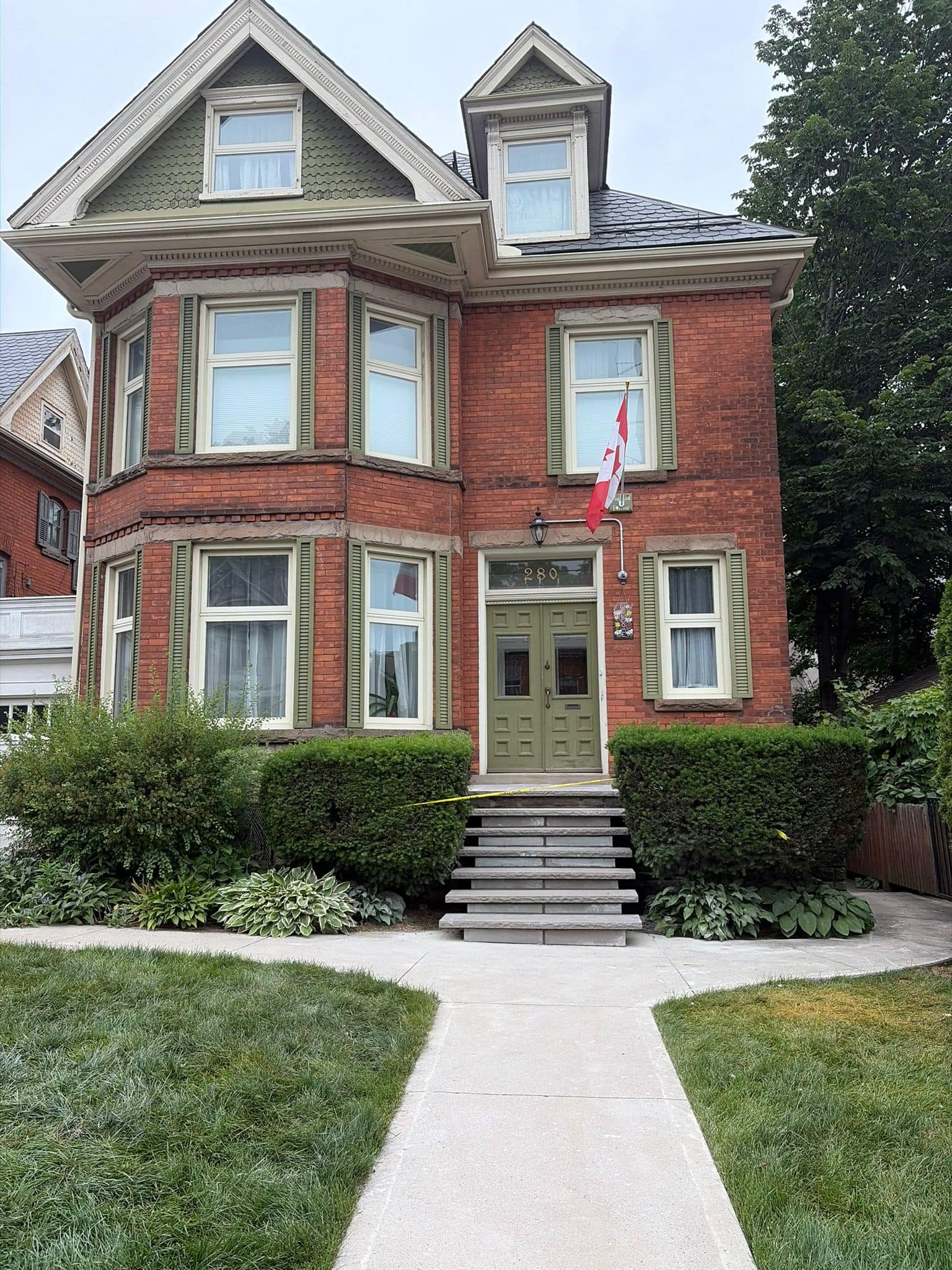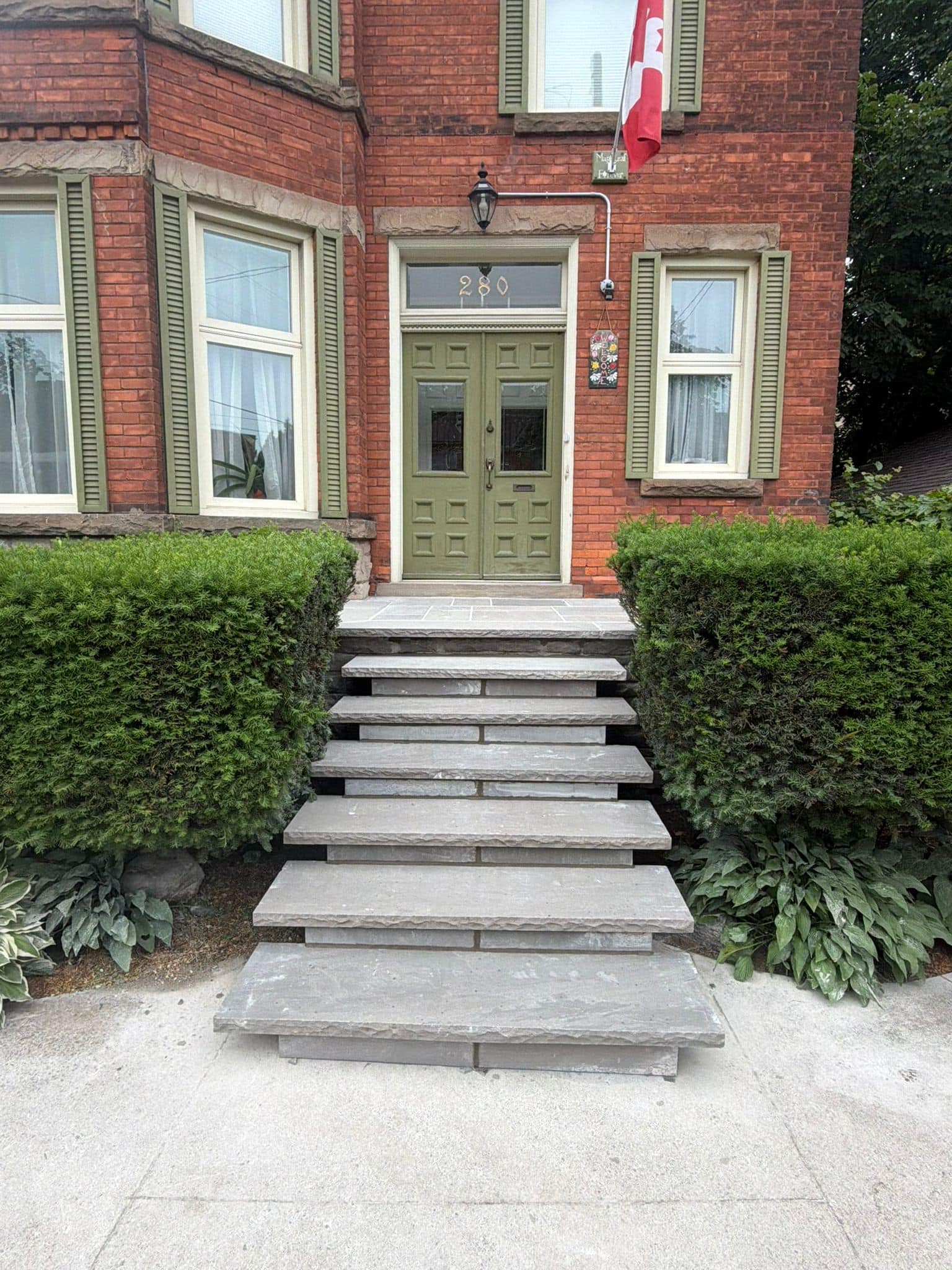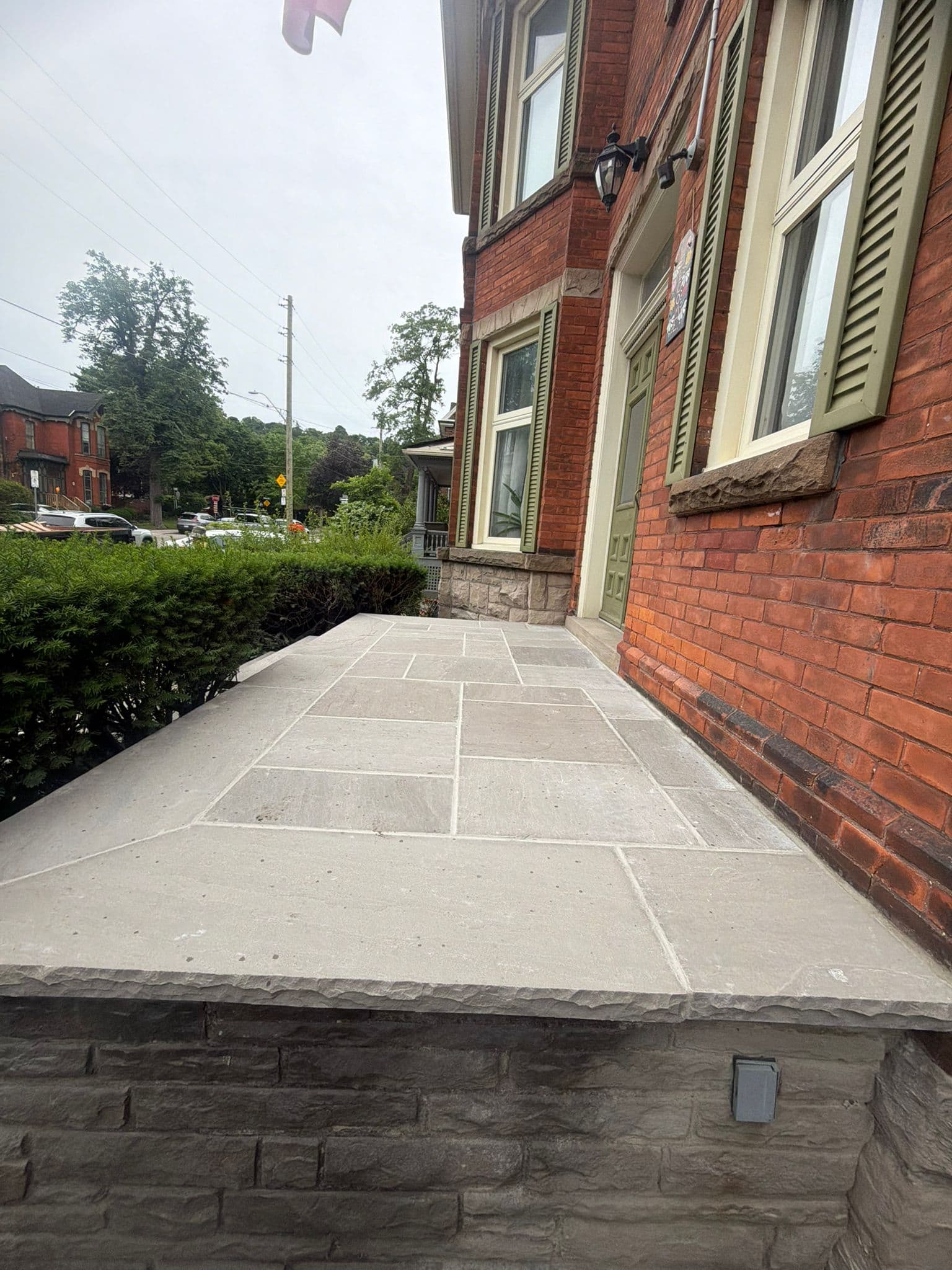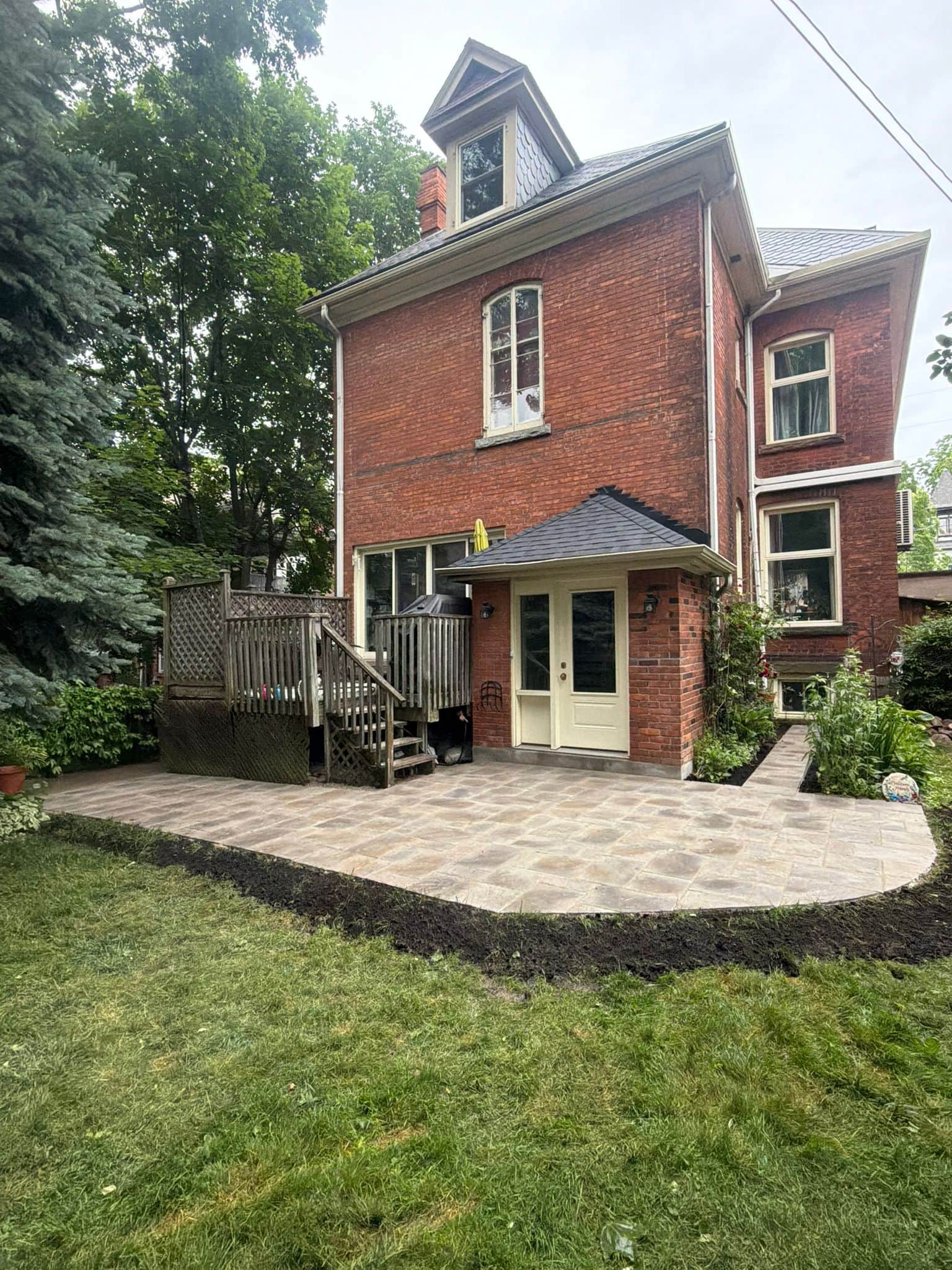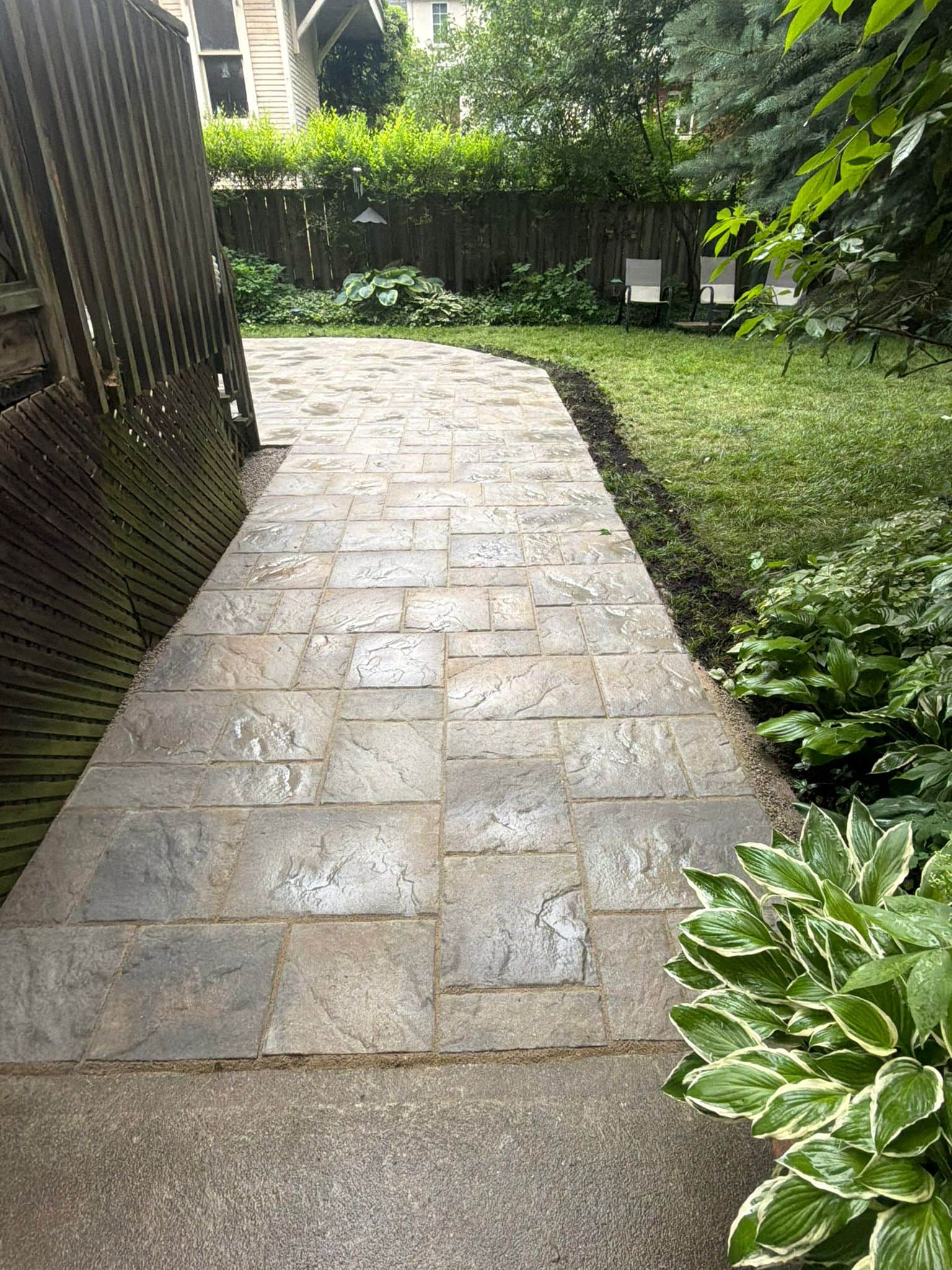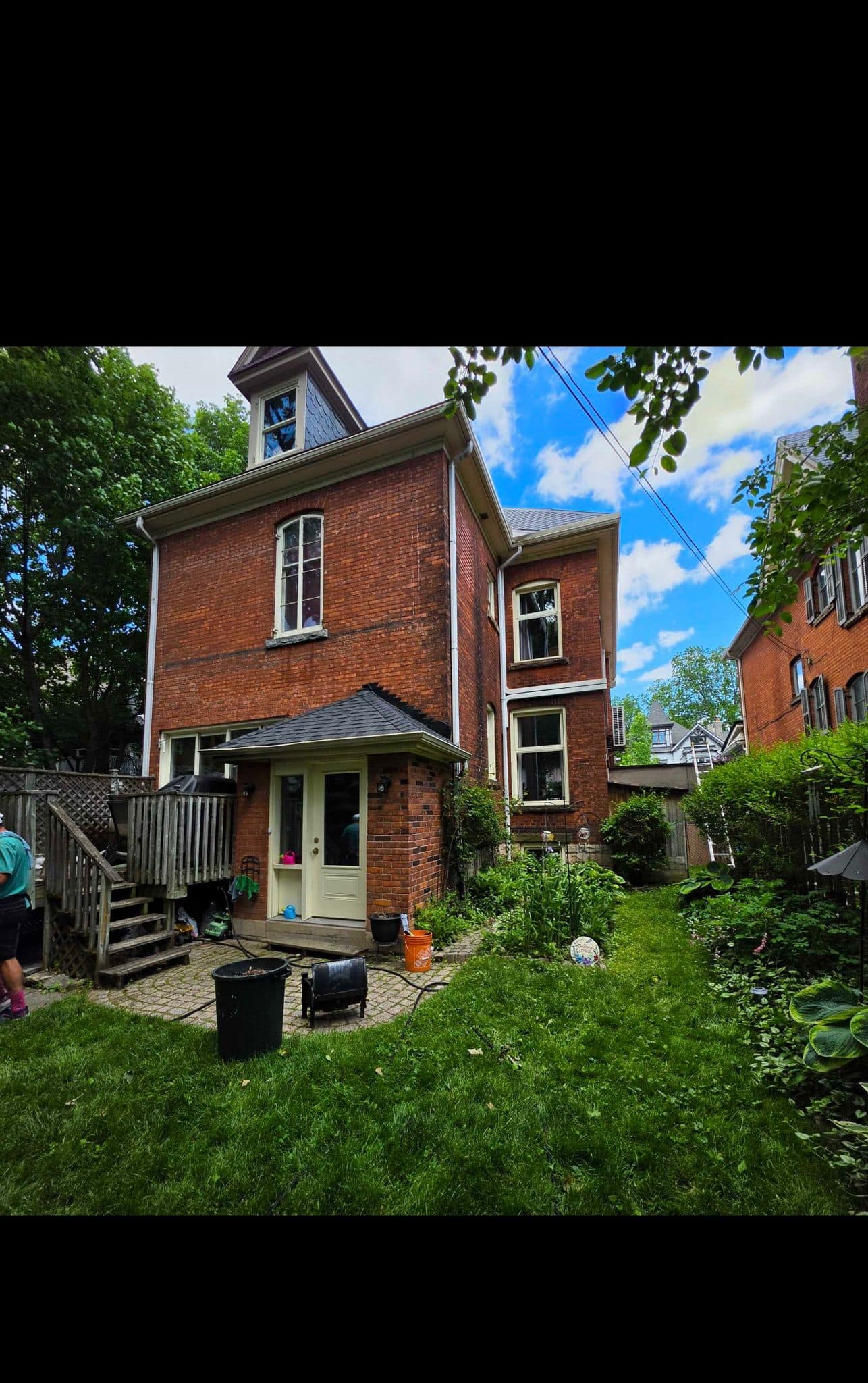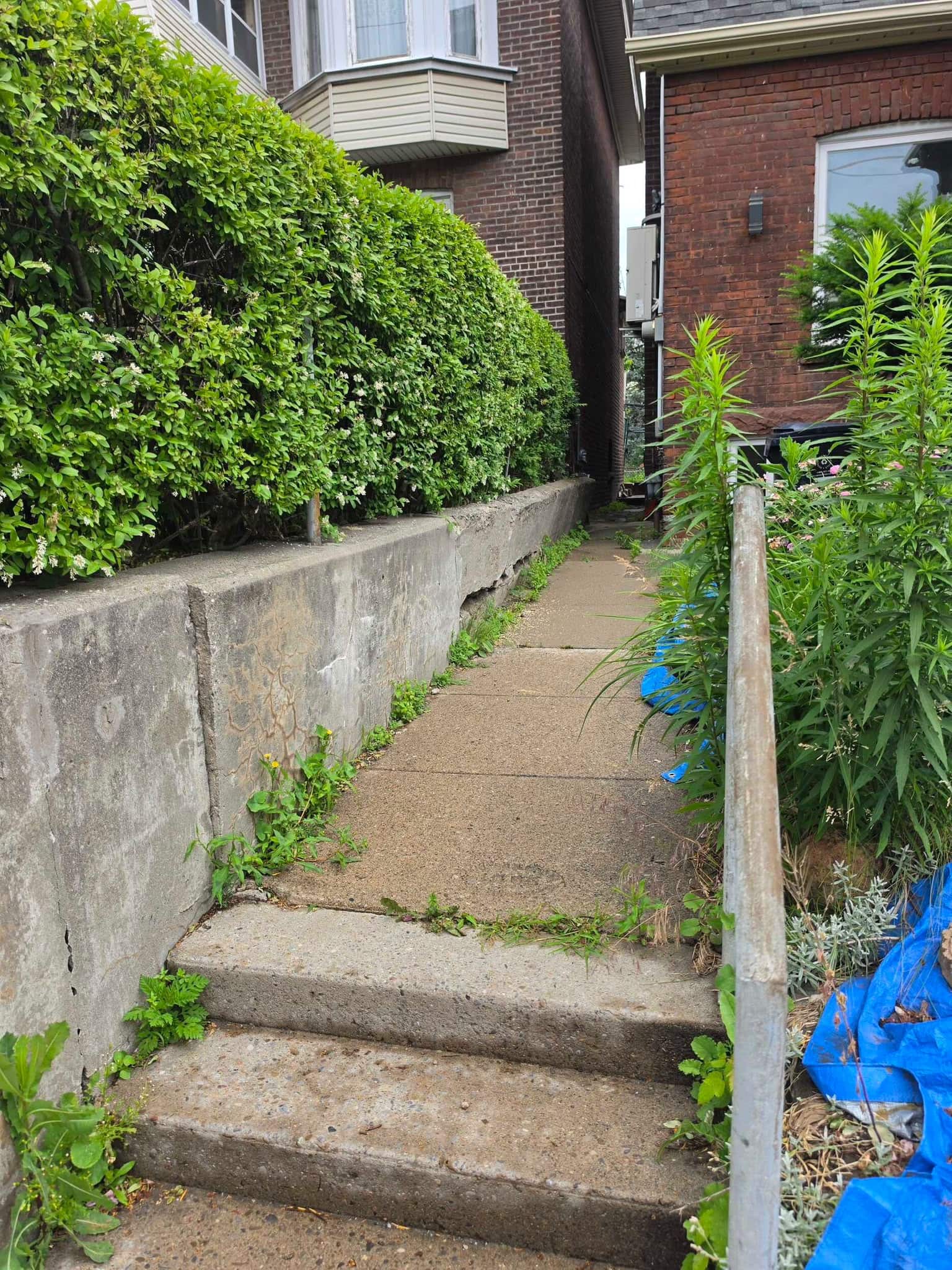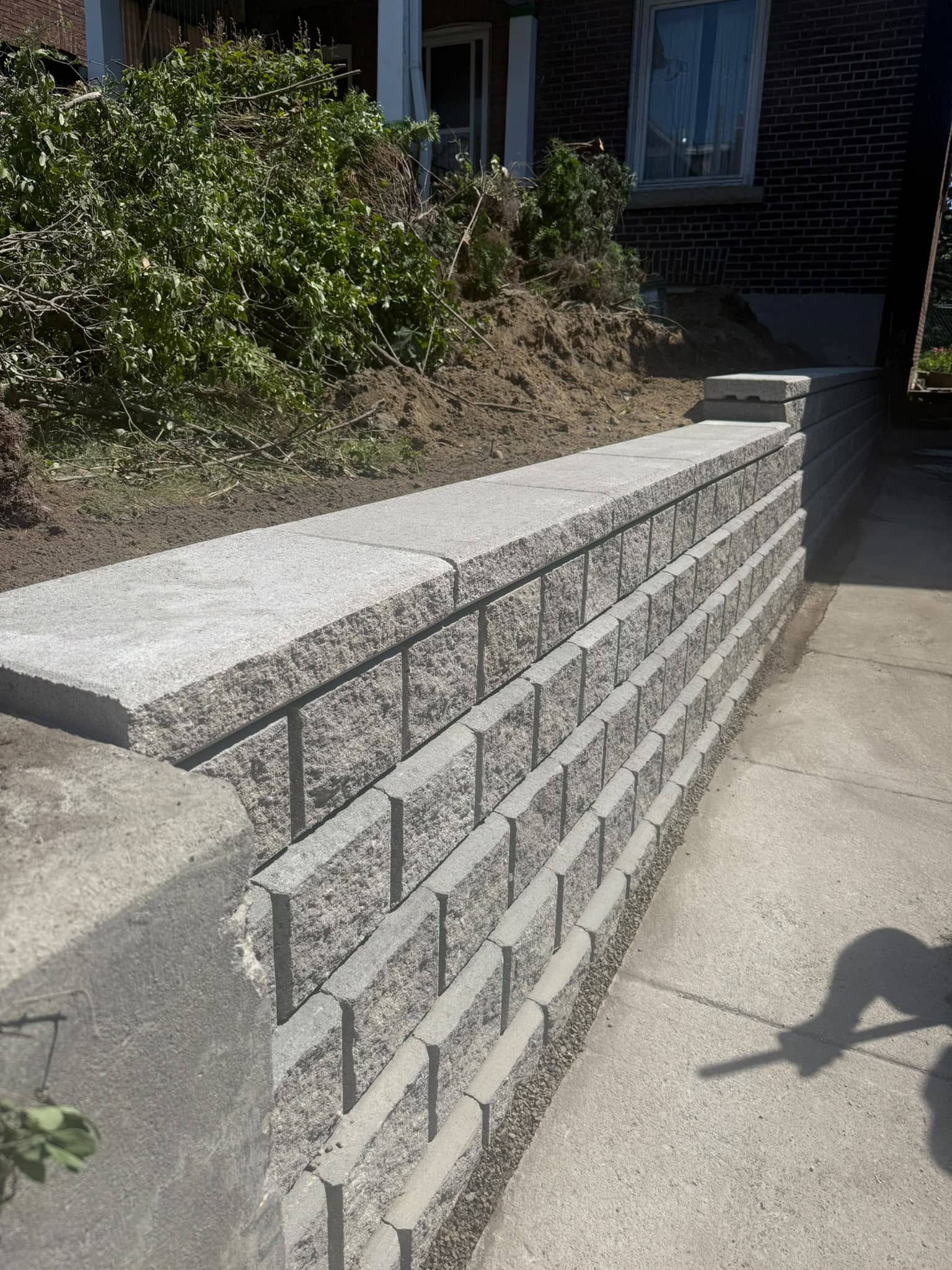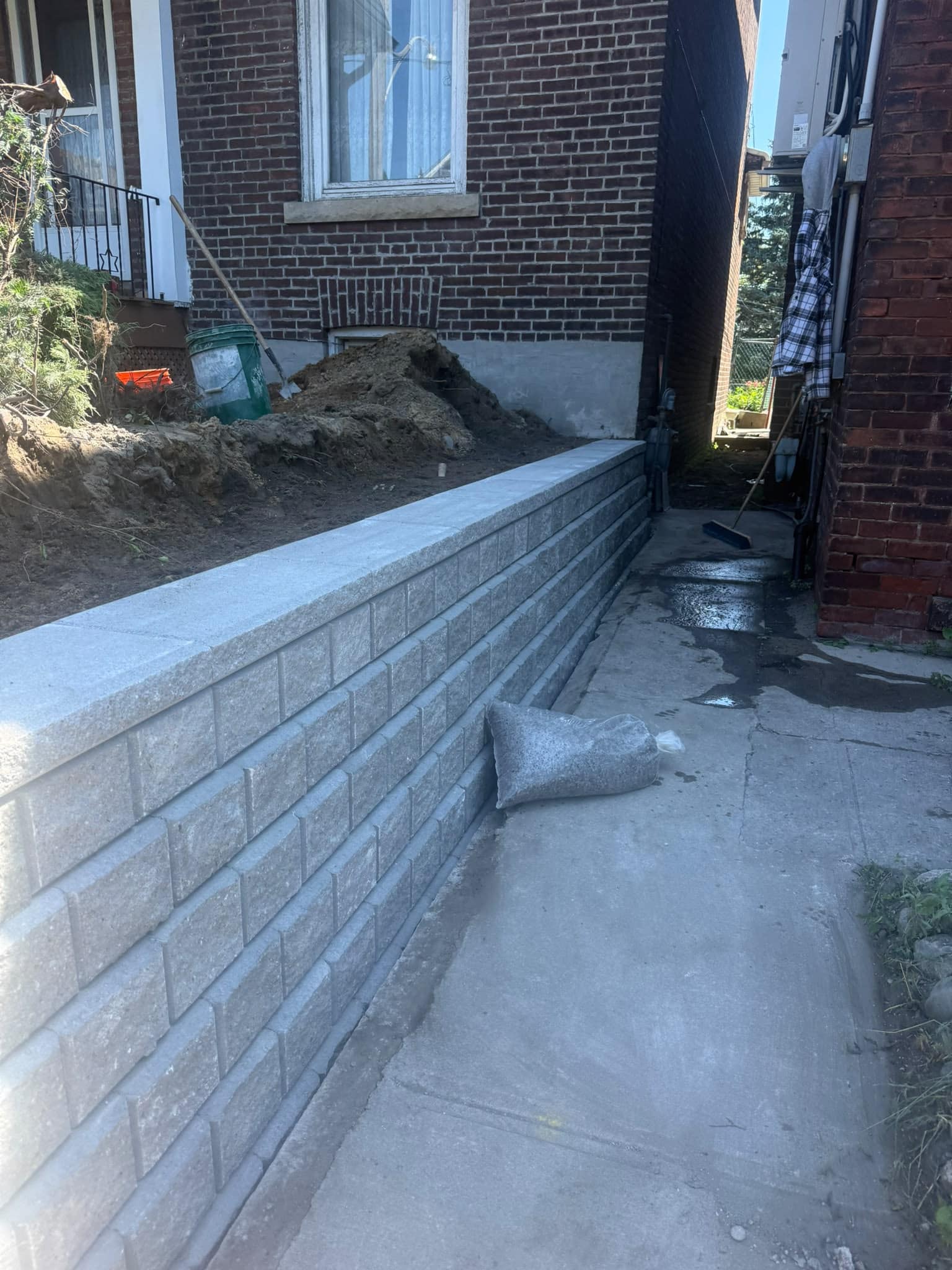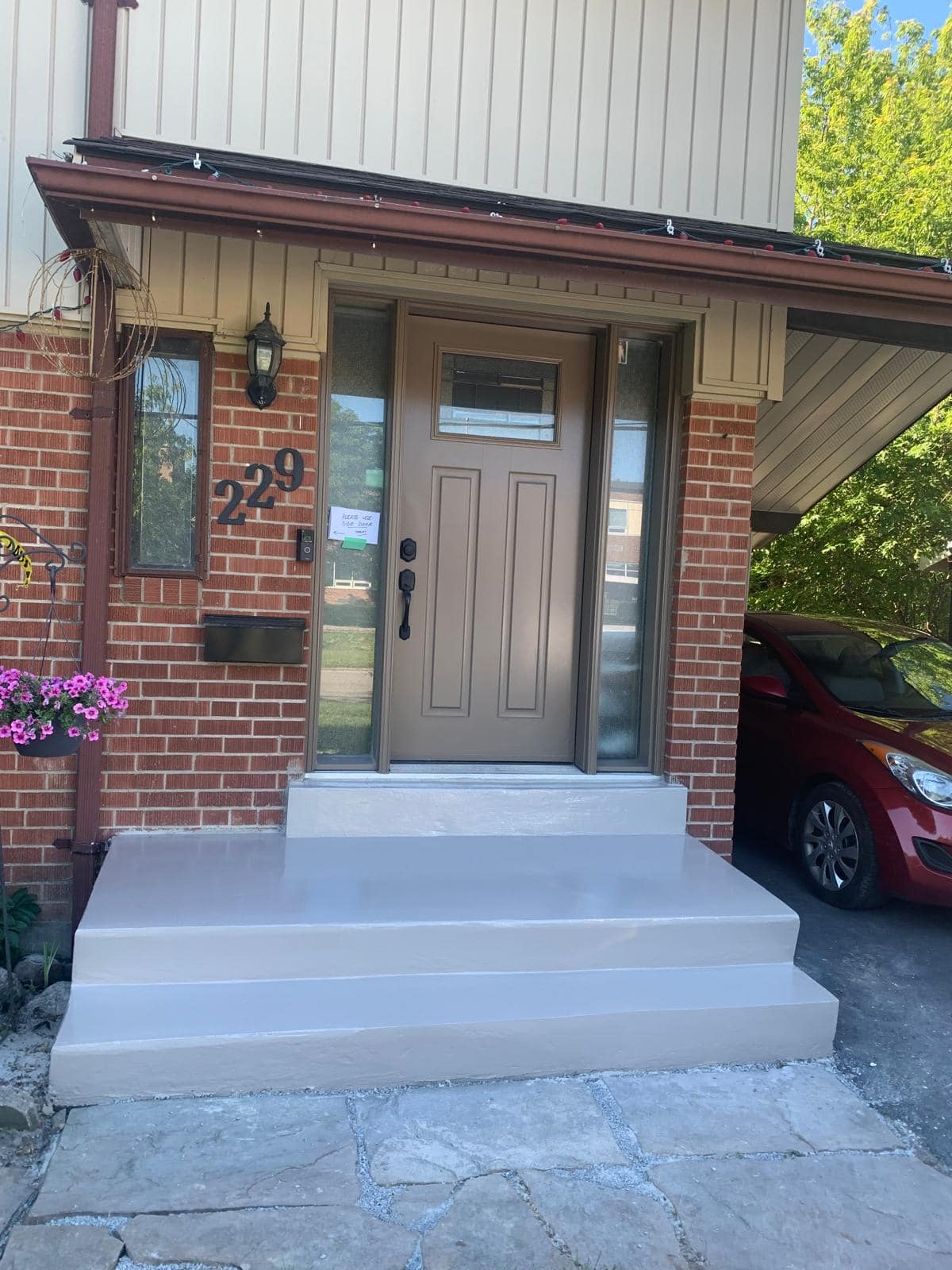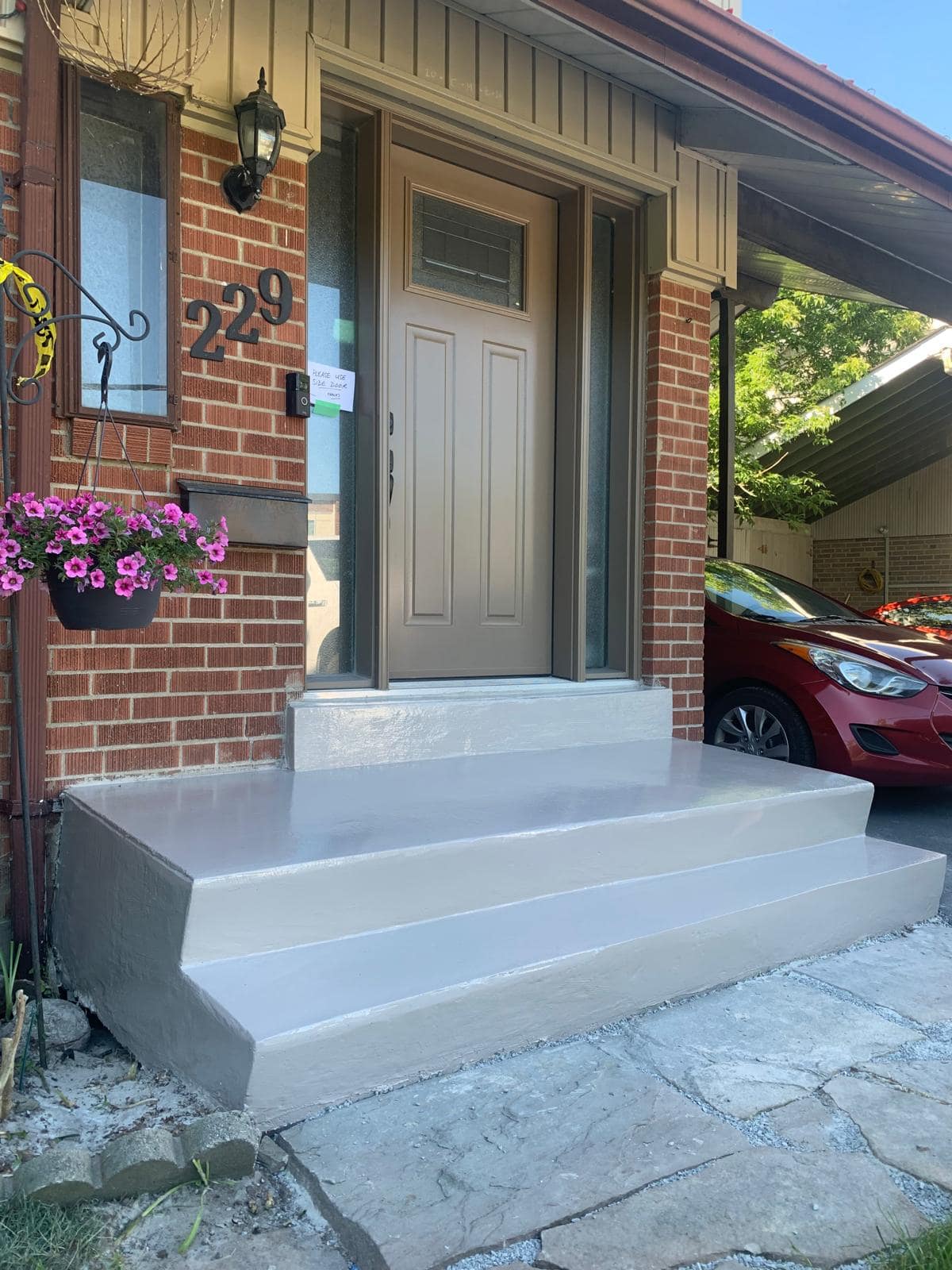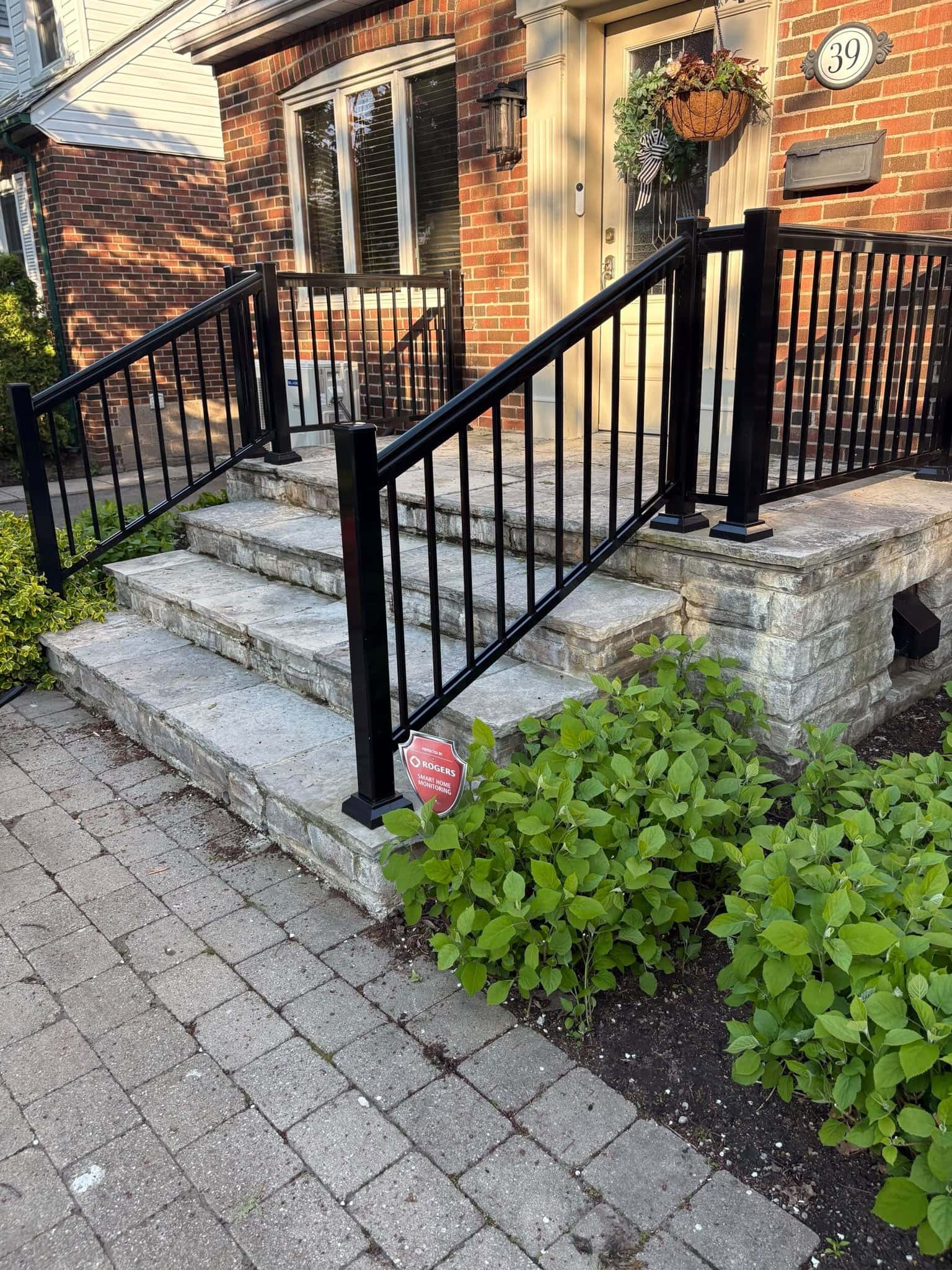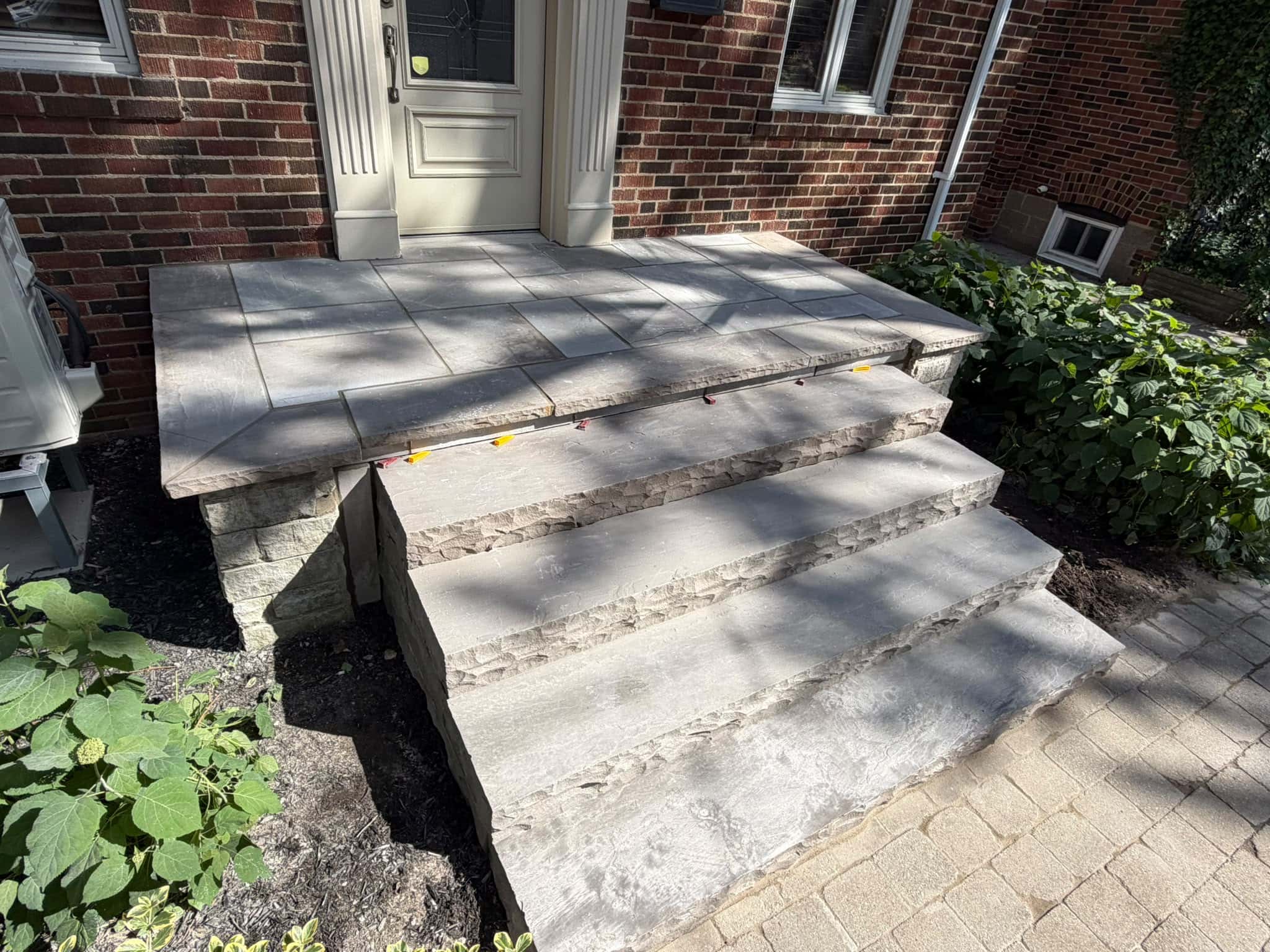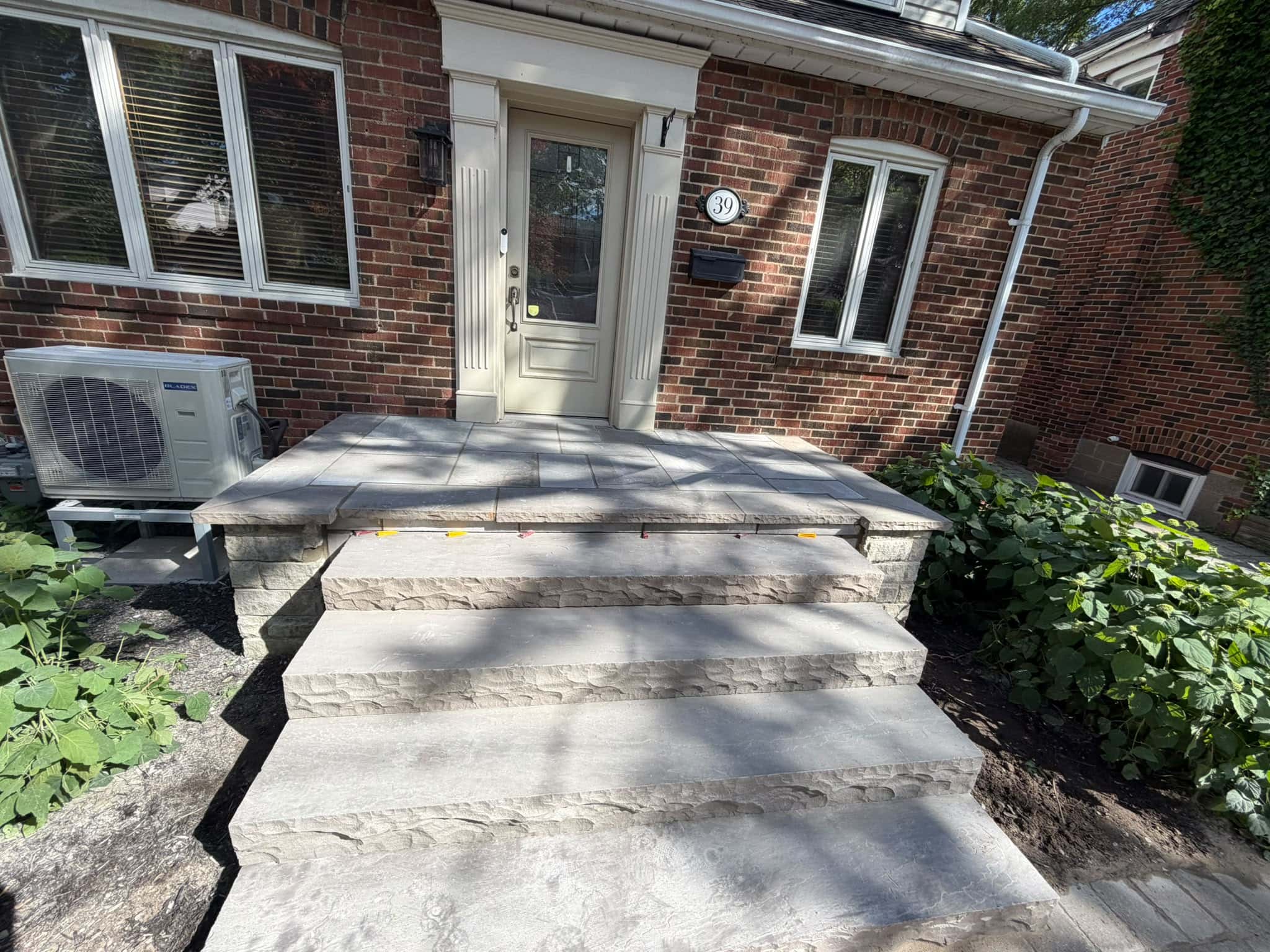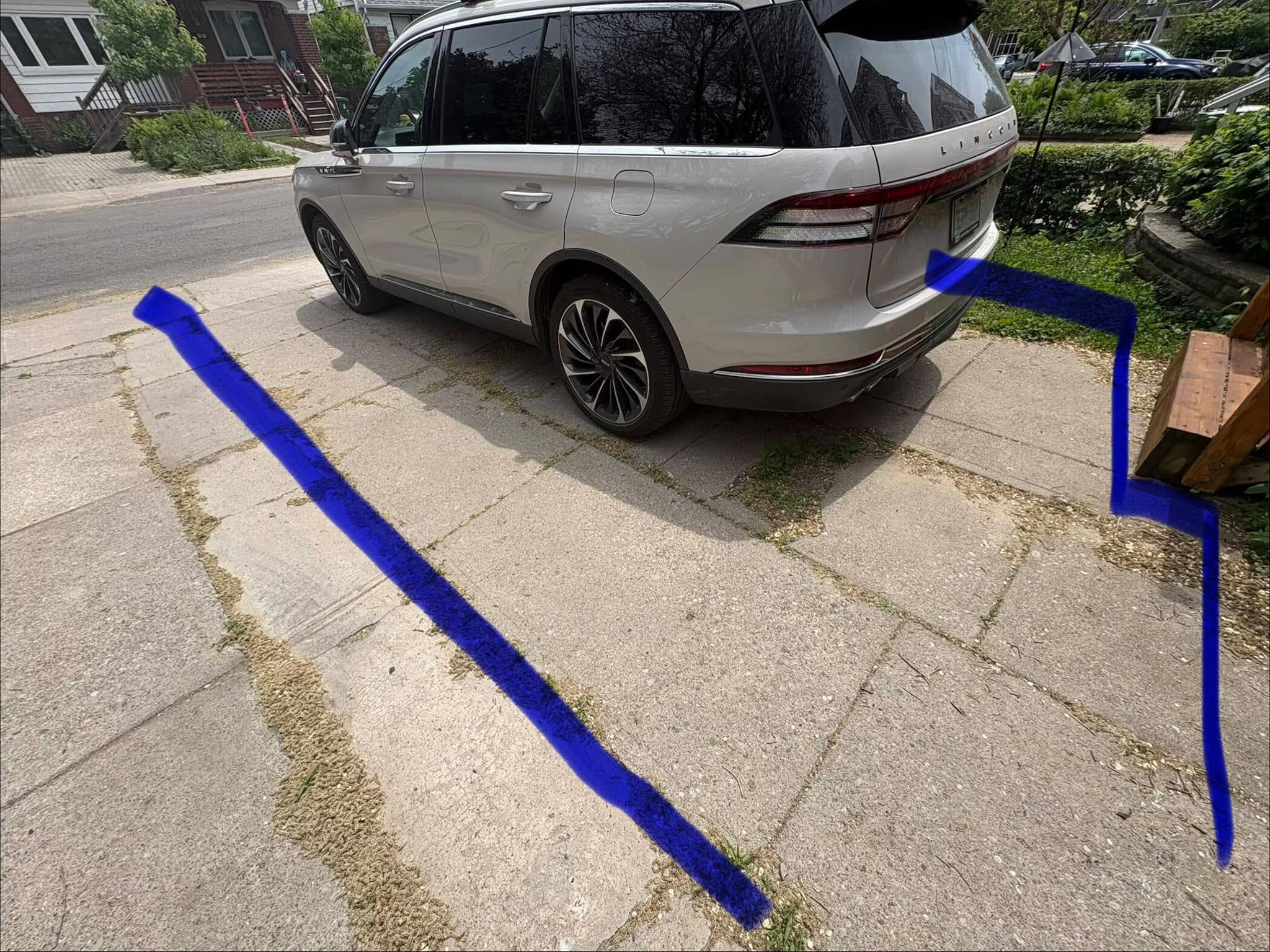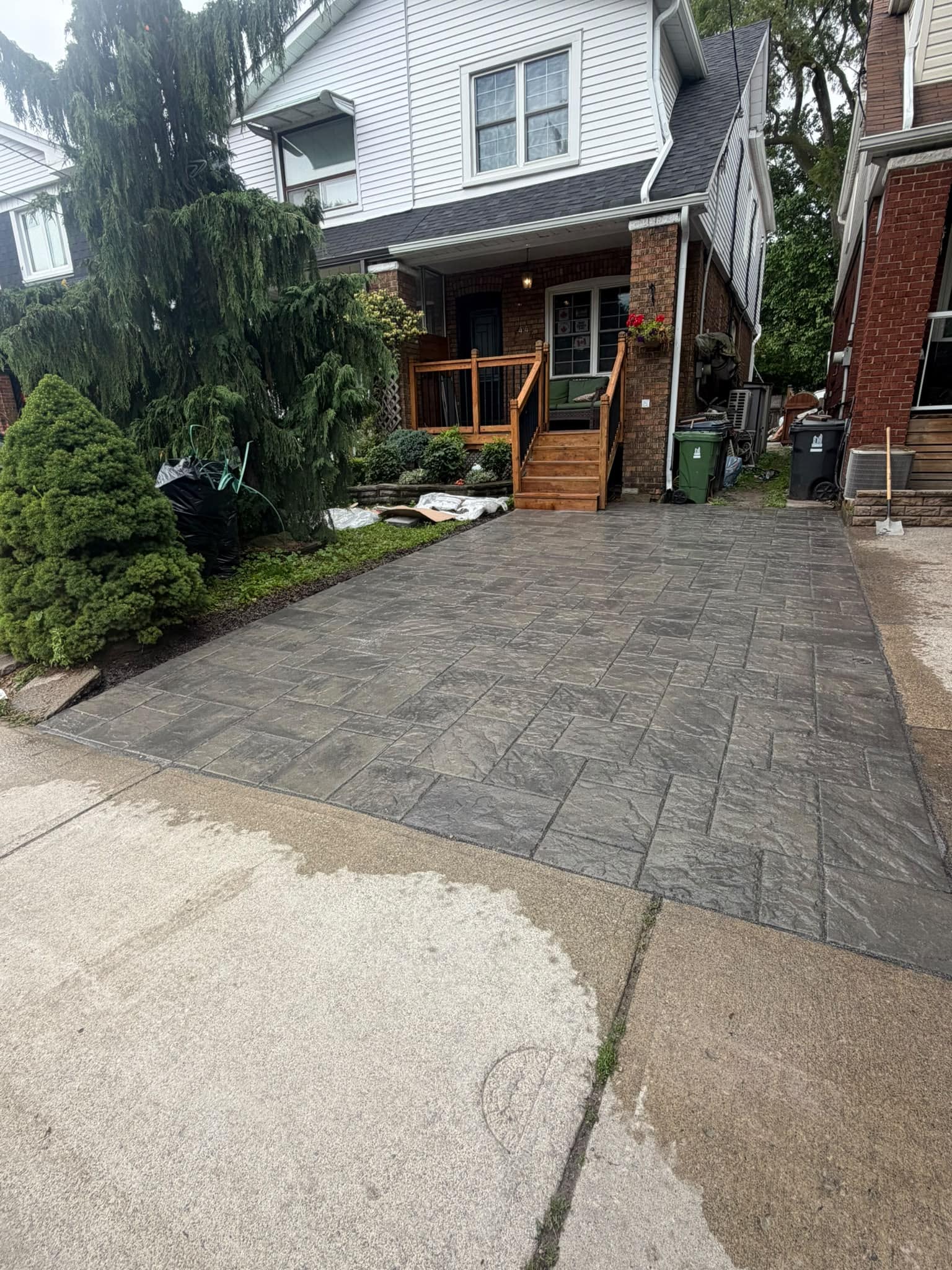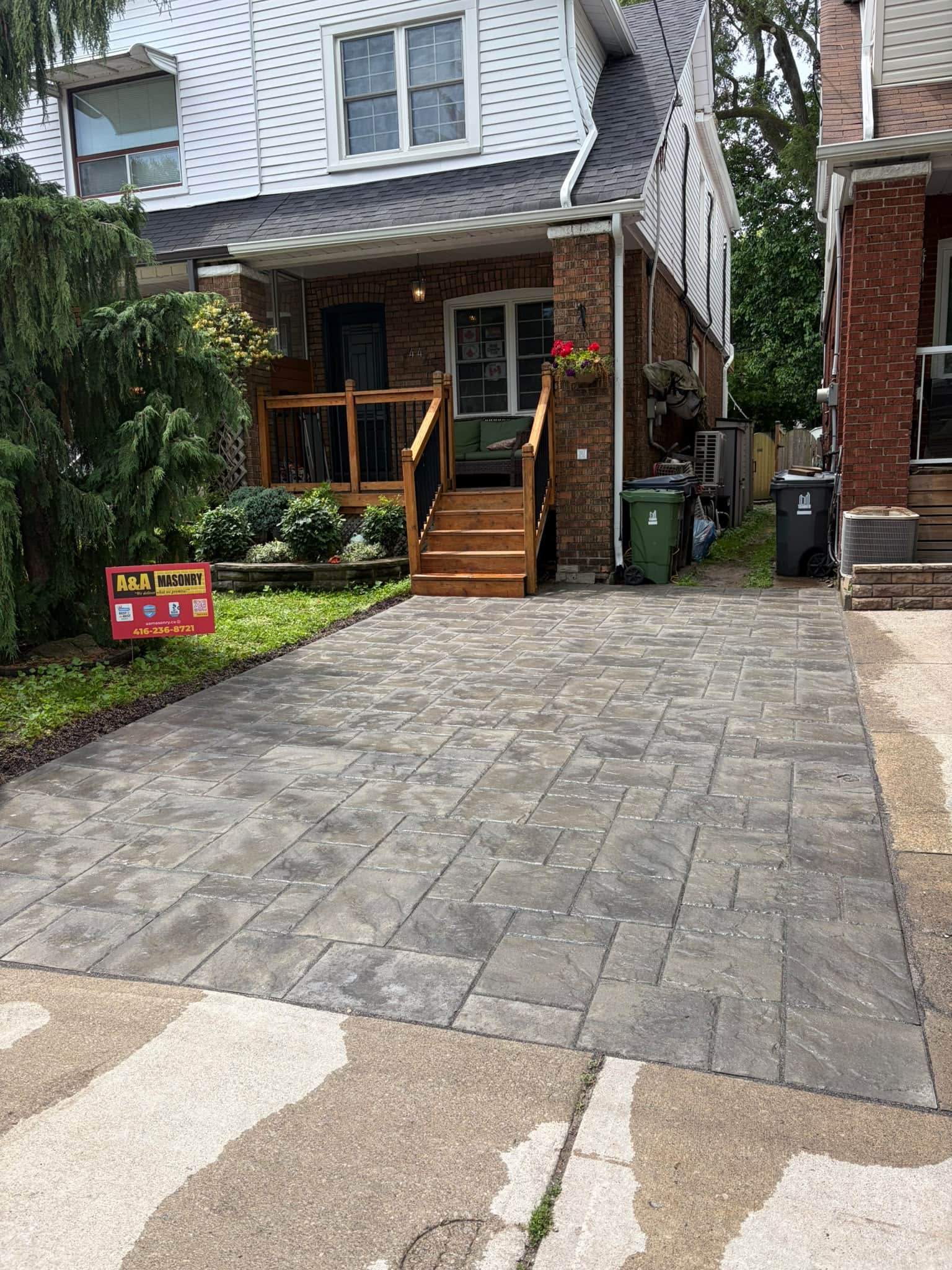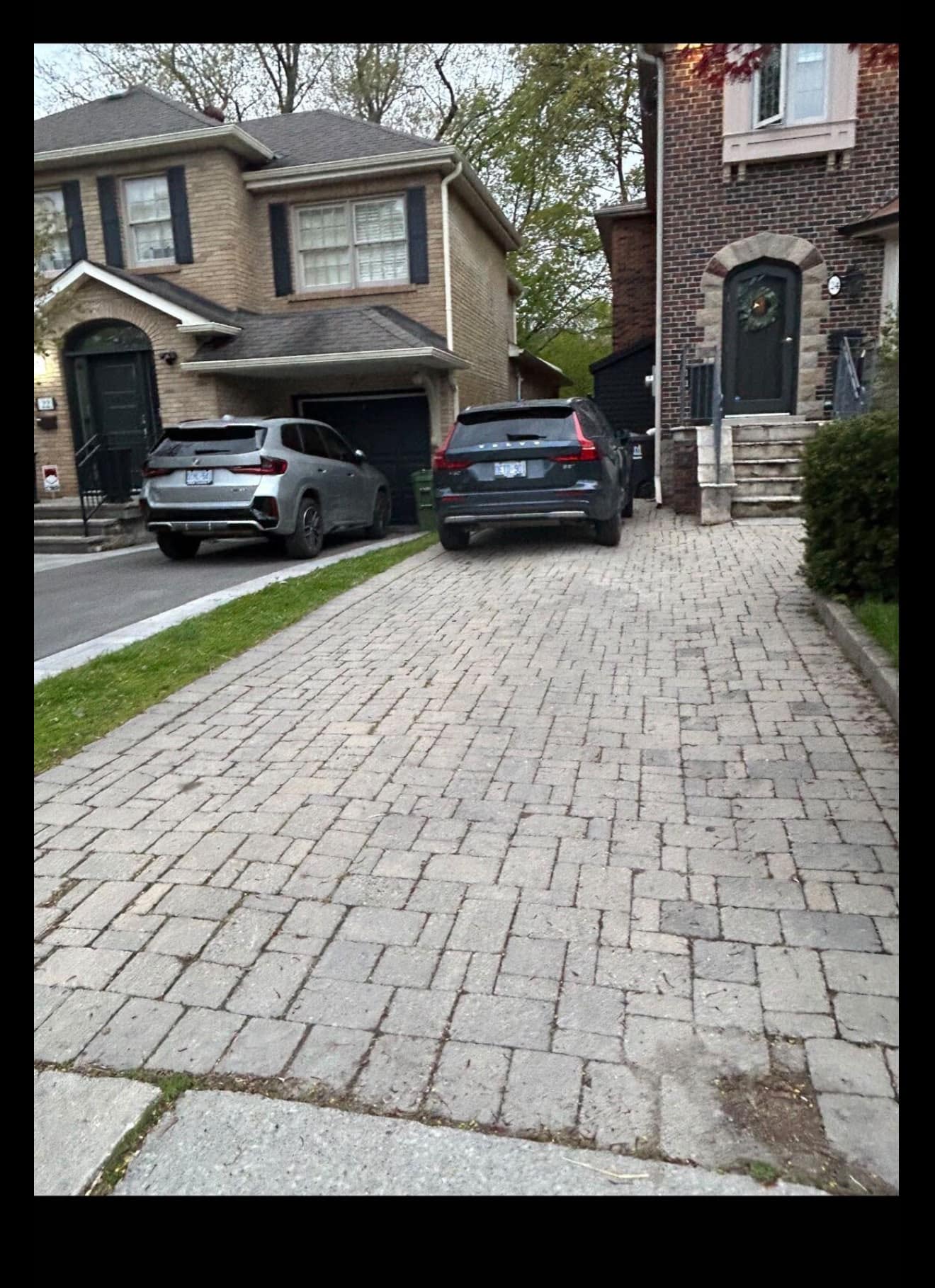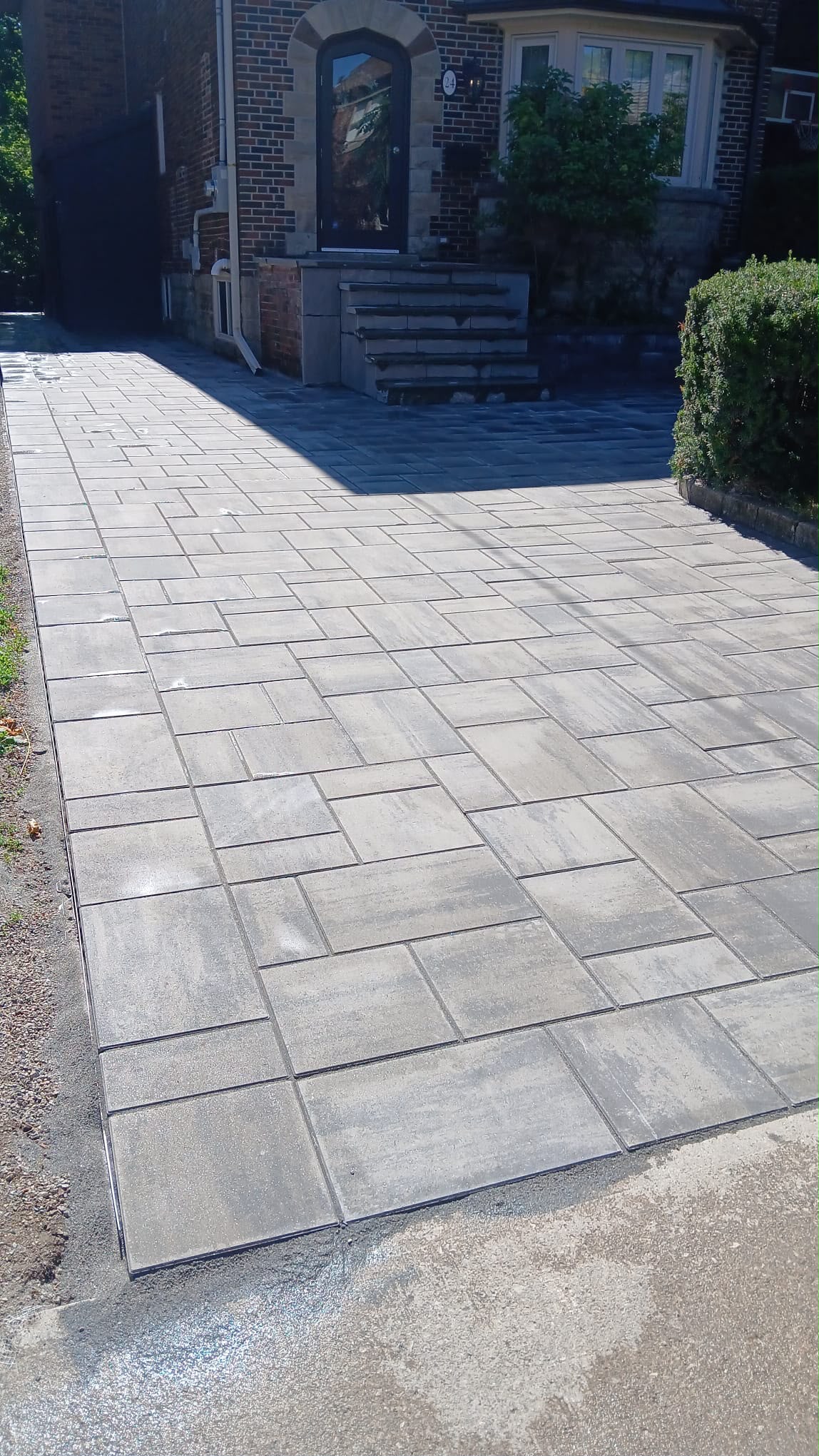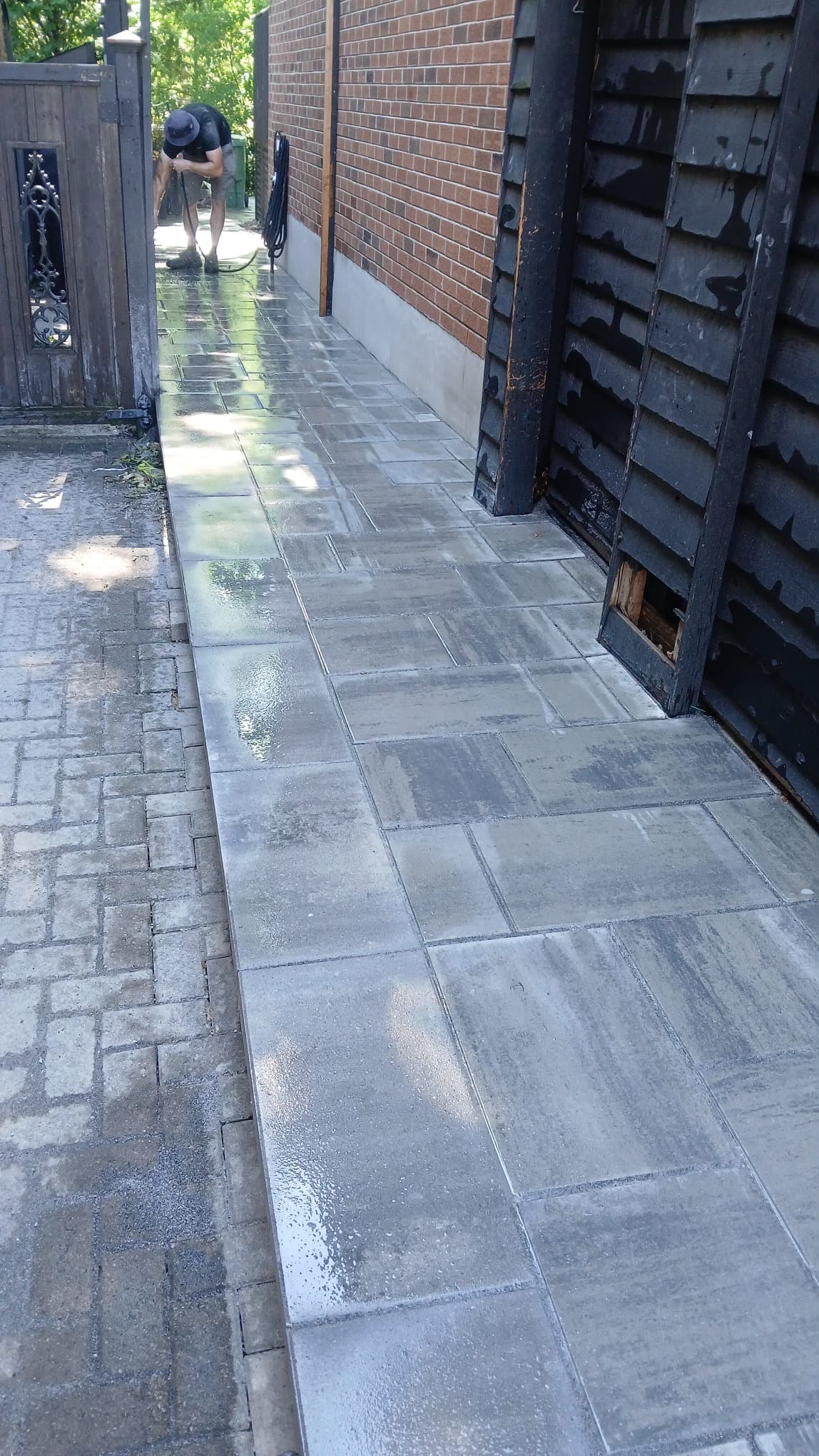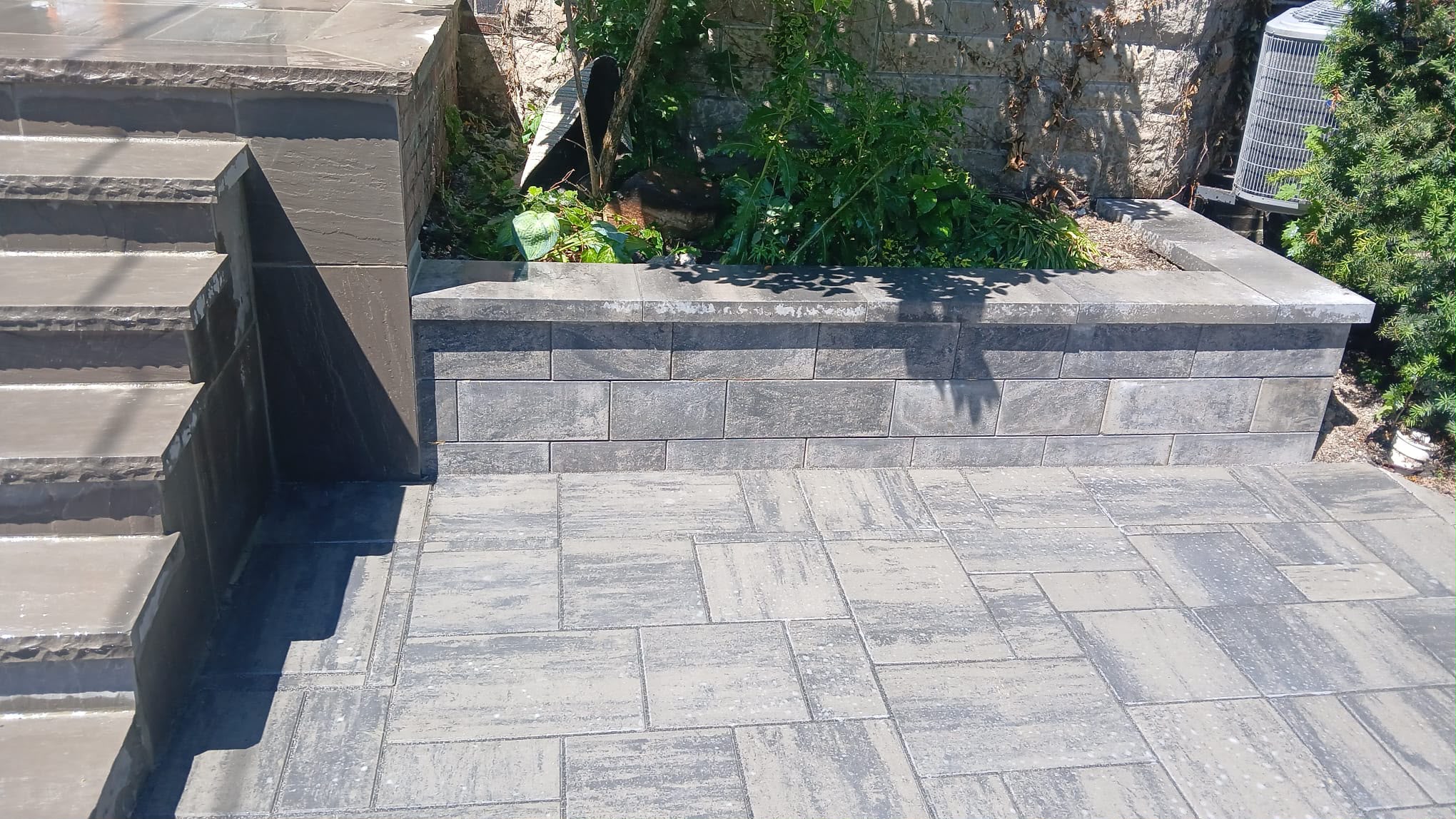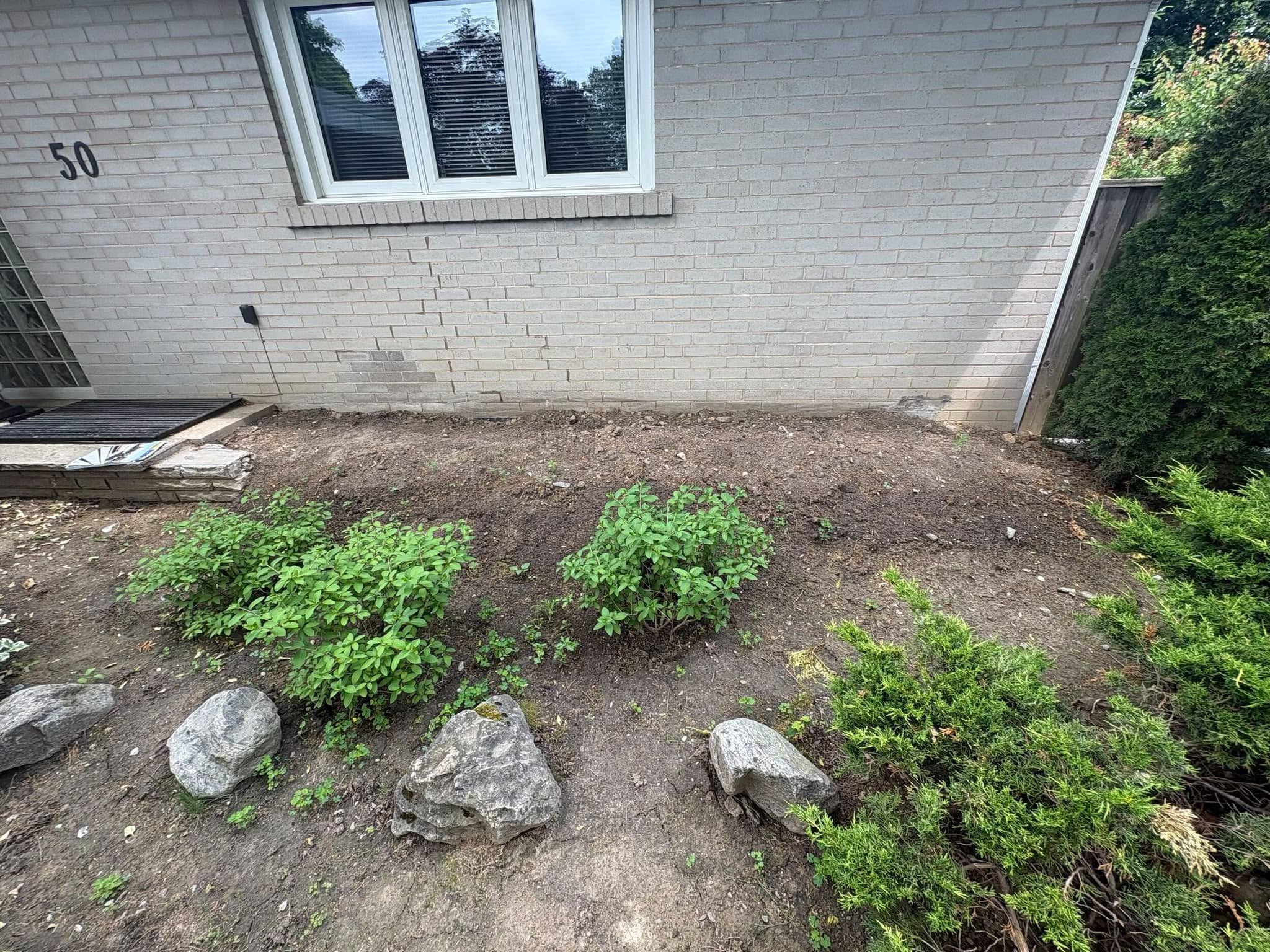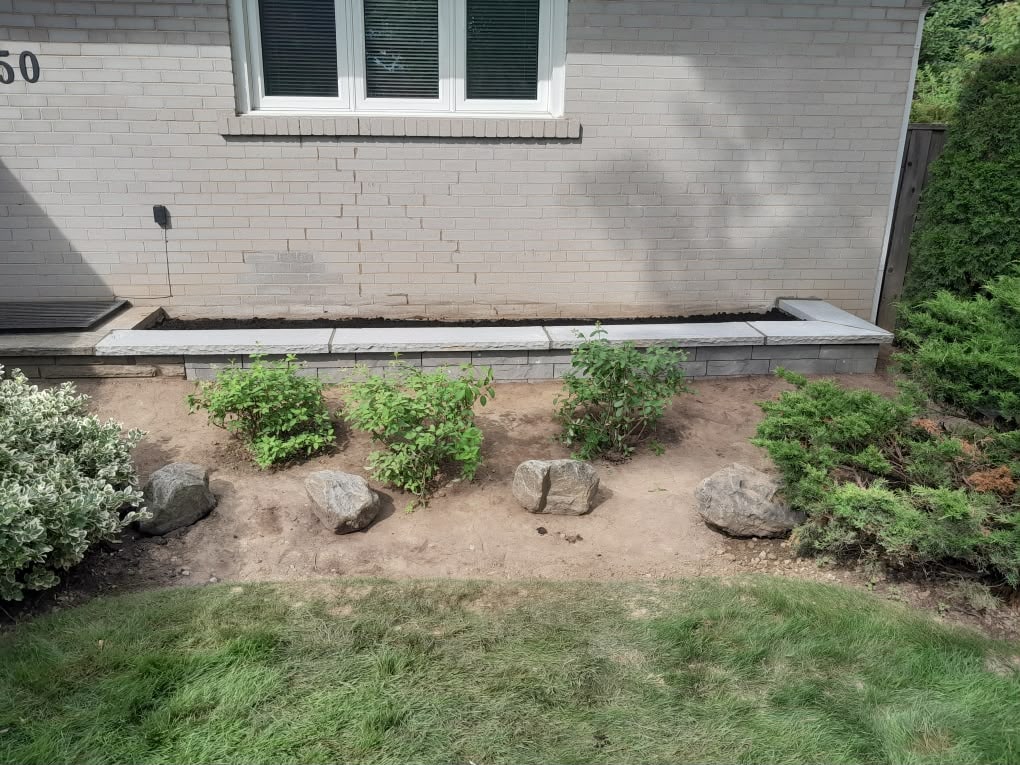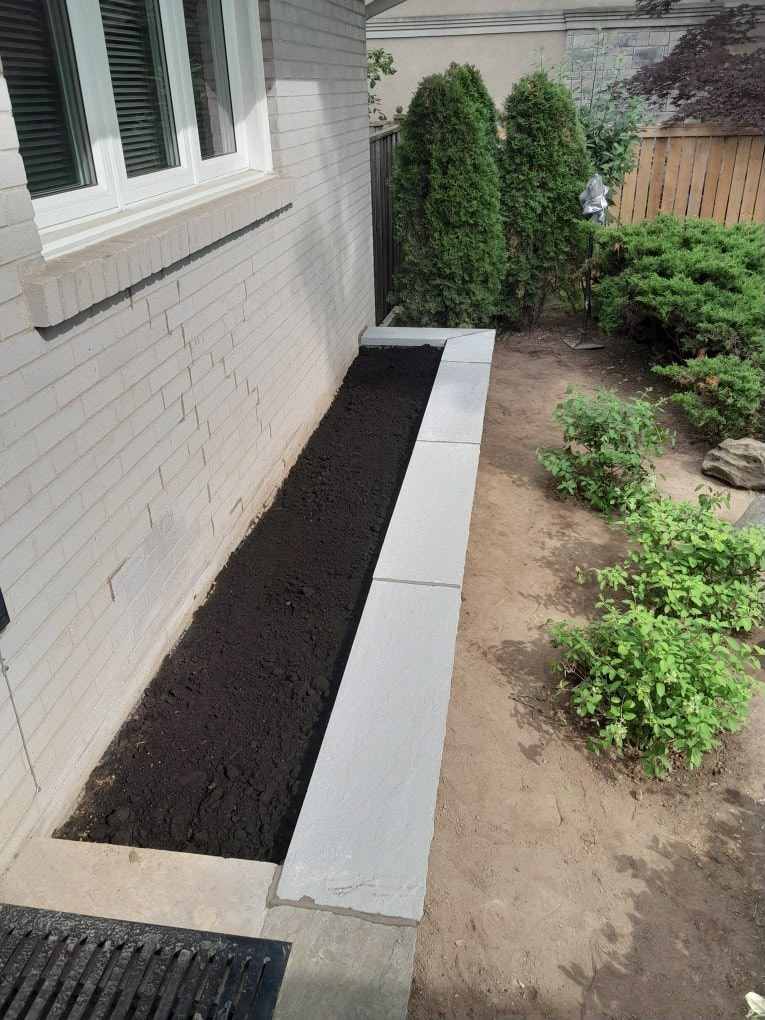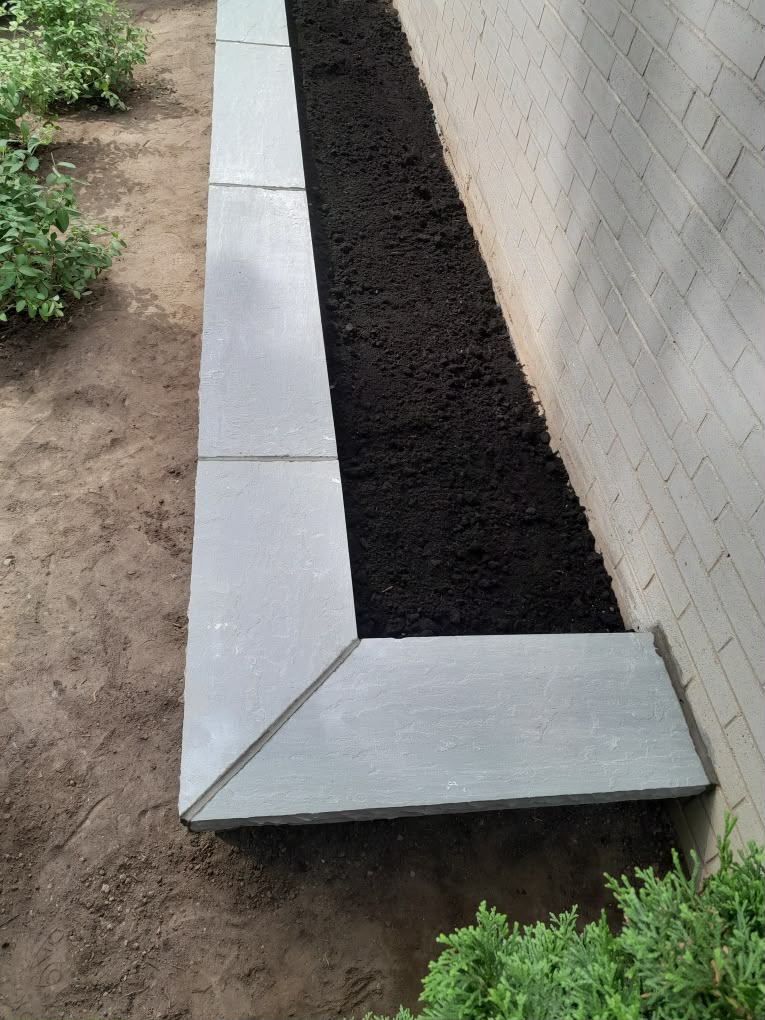
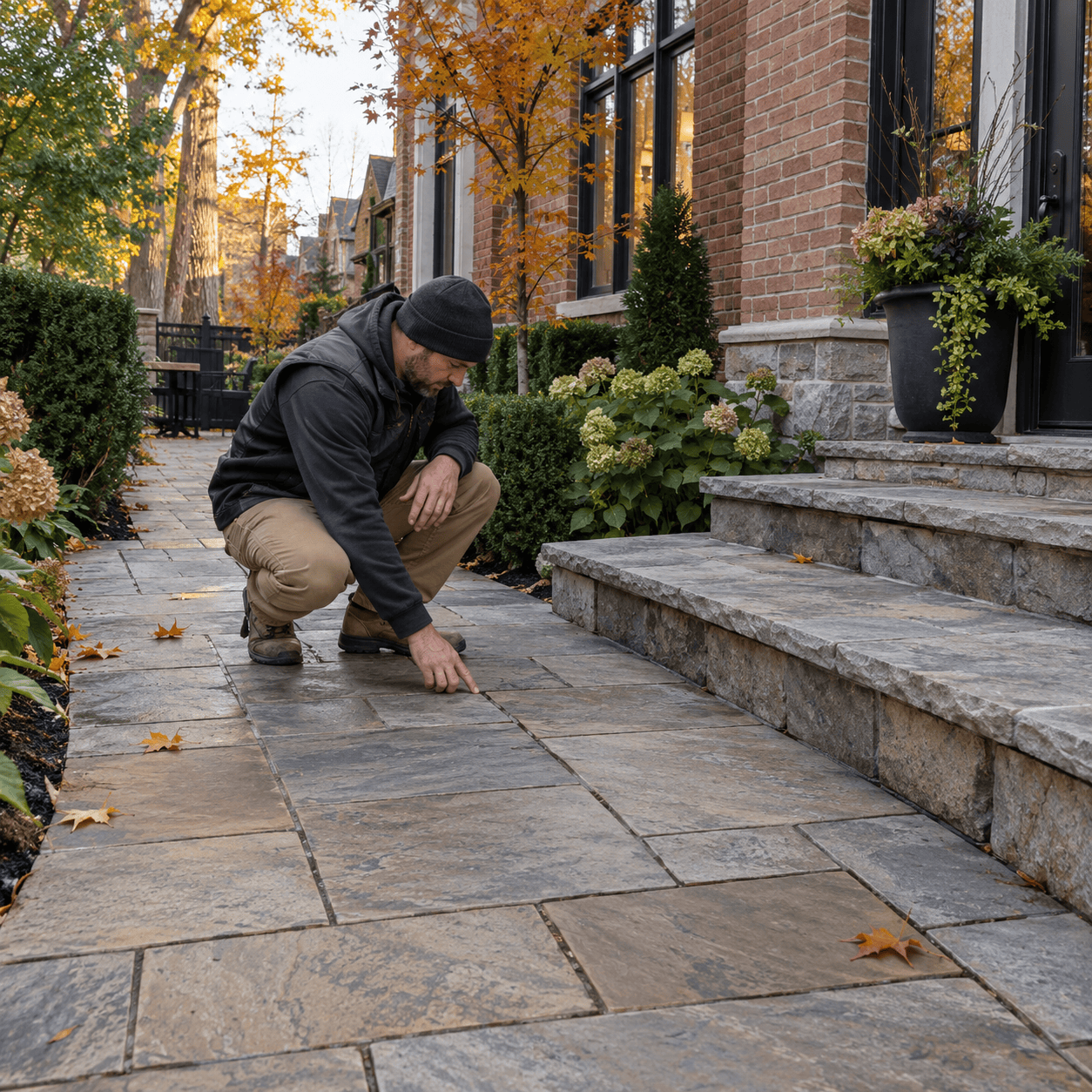
Preparing stone patios and walkways for winter means dealing with loose stones, failed joints, drainage problems, settlement, cracks, and areas that hold water before repeated freezing begins. For Toronto homeowners, September and early fall are useful times to inspect outdoor stonework because problems are easier to see before leaves, snow, and ice cover the surface.
Natural stone is durable, but it is not immune to winter damage. The stone itself may remain sound while joints fail, the base settles, water collects underneath, or individual pieces become loose. These problems can become more noticeable after repeated freeze-thaw cycles.
The goal is not to seal or repair every stone before winter. It is to identify weak areas, keep water moving in the right direction, make walking surfaces safe, and avoid maintenance choices that can make existing damage worse.
Why Stone Patios and Walkways Need a Fall Check
Stone patios and walkways need a fall inspection because horizontal masonry receives more direct moisture than most walls. Rain falls onto the surface, snow sits on it, meltwater travels through joints, and de-icing materials may be applied during icy weather.
Water is usually the most important factor. A properly installed stone surface should manage normal rain and snow, but problems can develop when water repeatedly pools in low areas or reaches a weak base, damaged joint, or cracked stone.
Toronto’s changing winter temperatures can then add another layer of stress. Moisture freezes, thaws, and may freeze again. Existing movement can become more noticeable, particularly where drainage or base preparation is already poor.
A fall inspection helps you tell the difference between a surface that simply looks weathered and one that needs attention before winter.
1. Start by Looking for Loose or Rocking Stones
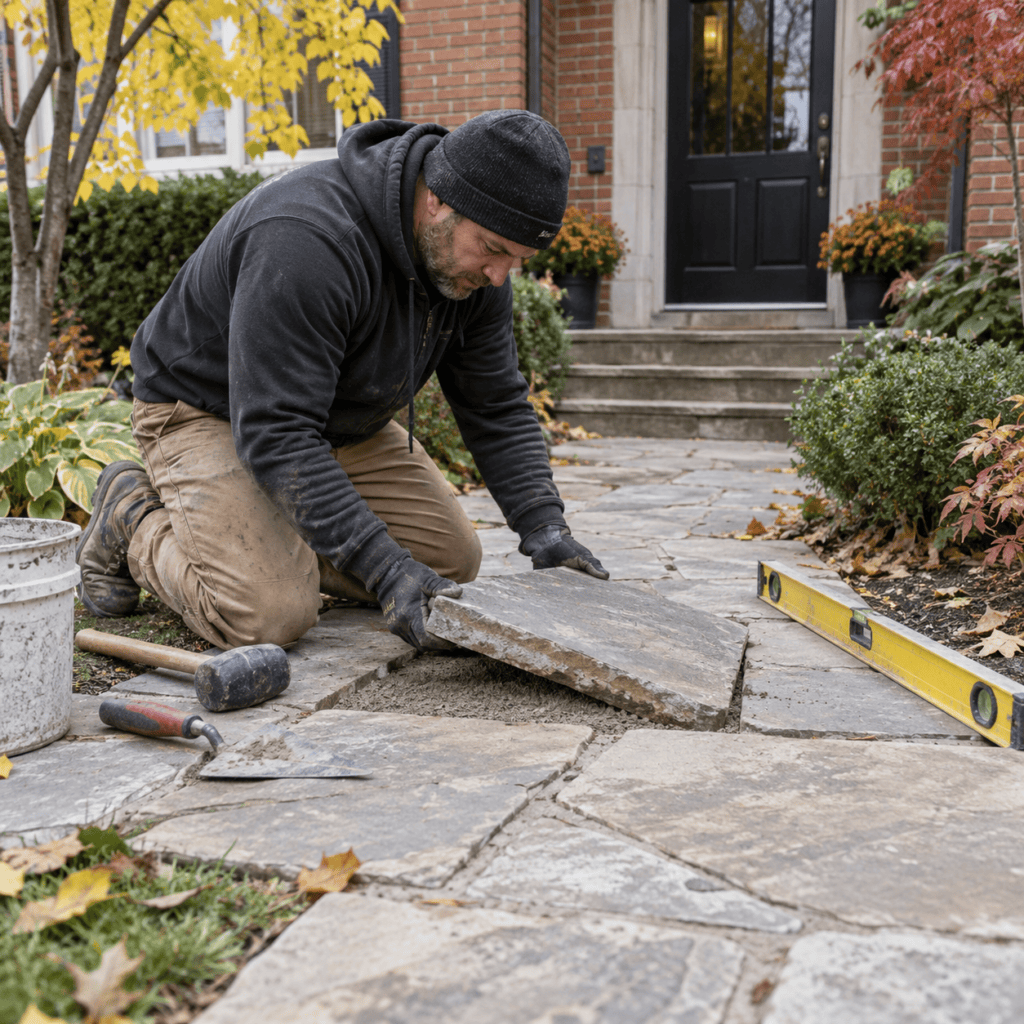
Check loose or rocking stones before winter because movement often means the support underneath is no longer even.
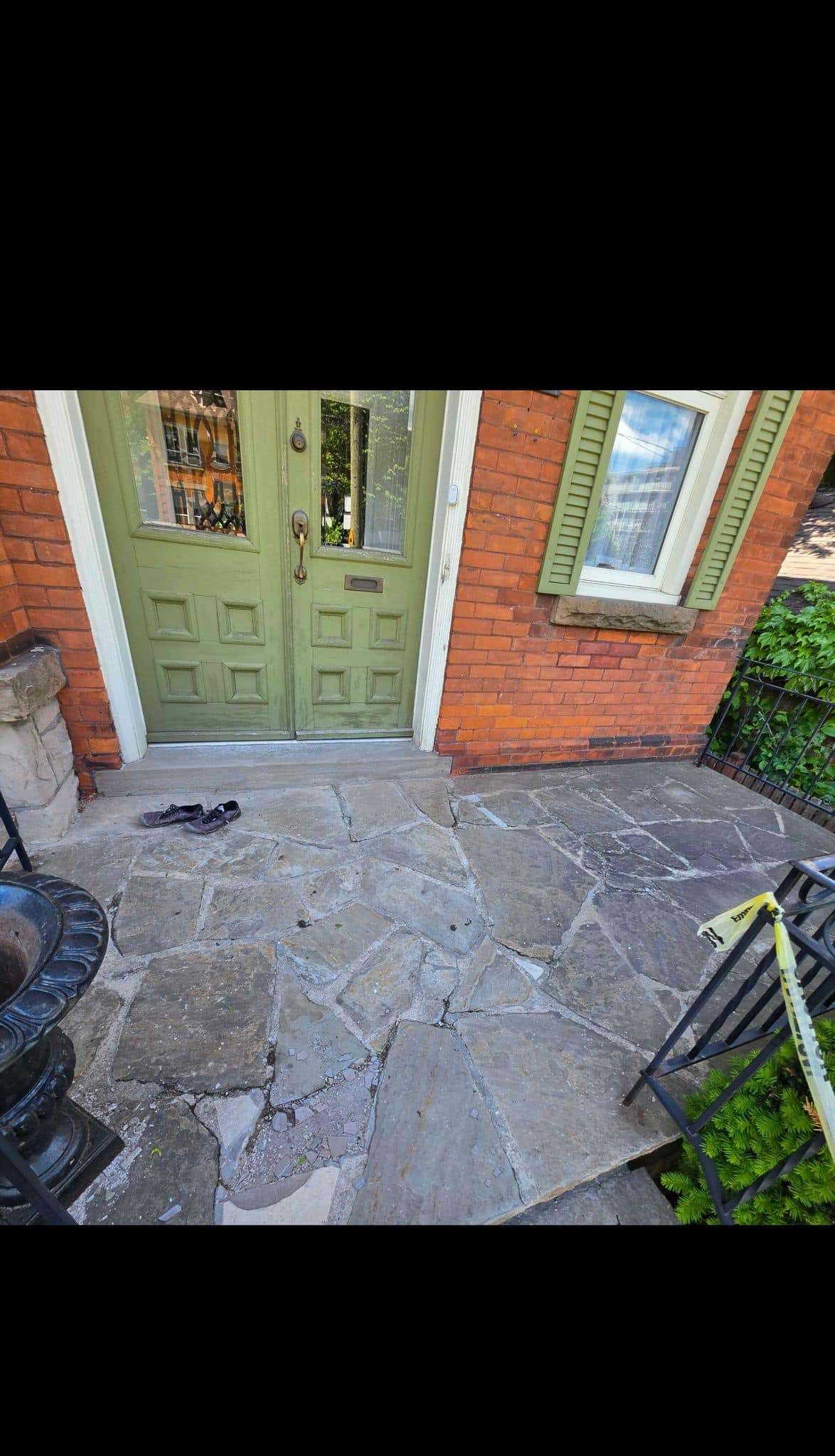
Walk slowly across the patio or walkway in dry conditions. Pay attention to stones that move under normal foot pressure, corners that lift, or pieces that make a hollow movement when stepped on.
Common causes can include:
- localized base settlement;
- washed-out bedding material;
- failed or missing joints;
- water collecting underneath the stone;
- tree-root movement;
- poor original installation;
- movement around nearby steps or retaining walls.
A loose stone is more than an appearance problem. Once snow covers the surface, a raised edge can become harder to see and more difficult to shovel around.
One or two loose stones may be suitable for localized resetting. Widespread movement suggests the base and drainage should be assessed rather than simply adding more joint material.
2. Find Low Areas Where Water Collects
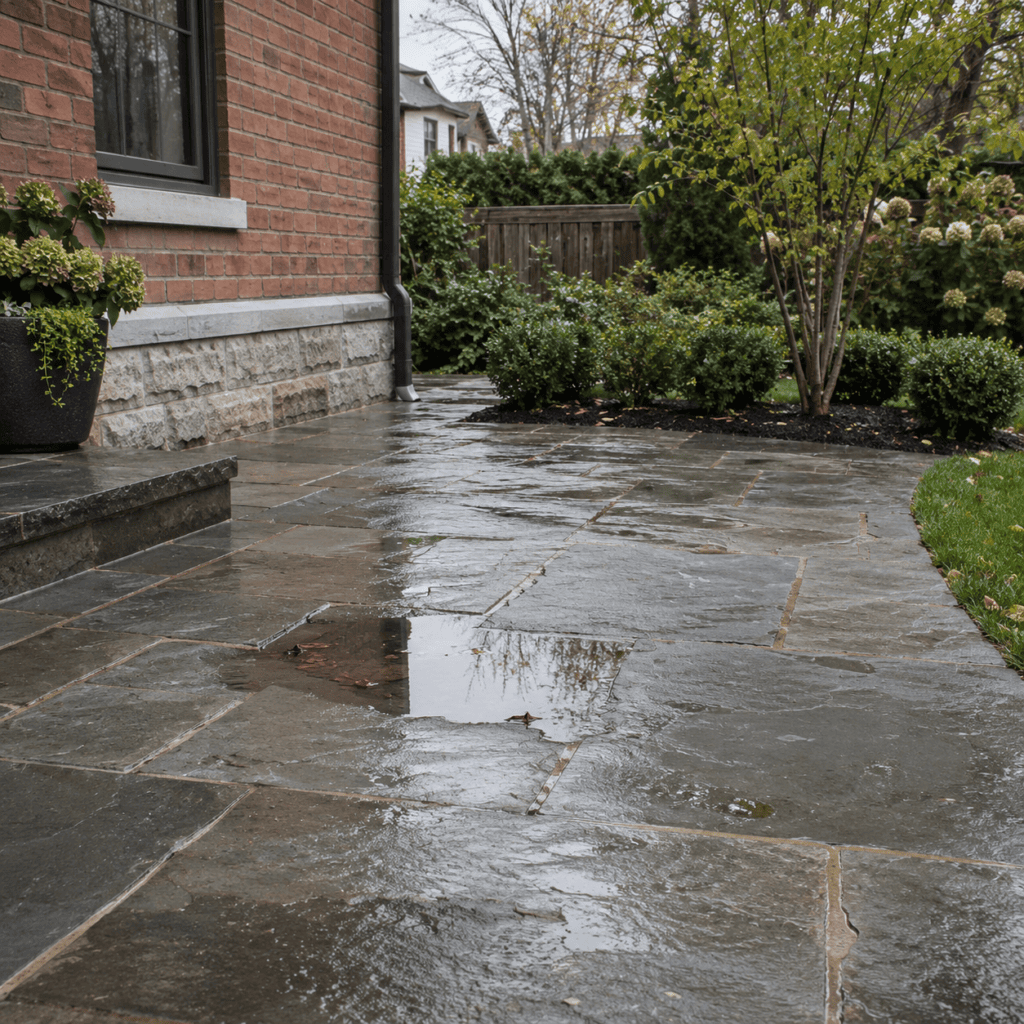
Water pooling on a stone patio or walkway is one of the most useful warning signs to identify before winter.
Inspect the surface during or shortly after a steady rainfall. Small temporary puddles may disappear quickly, but water that remains in the same depression for hours suggests the surface is no longer draining as intended.
Pay particular attention to low areas:
- beside the foundation;
- at the bottom of steps;
- between a patio and retaining wall;
- where a walkway meets a driveway;
- near downspouts;
- around sunken stones;
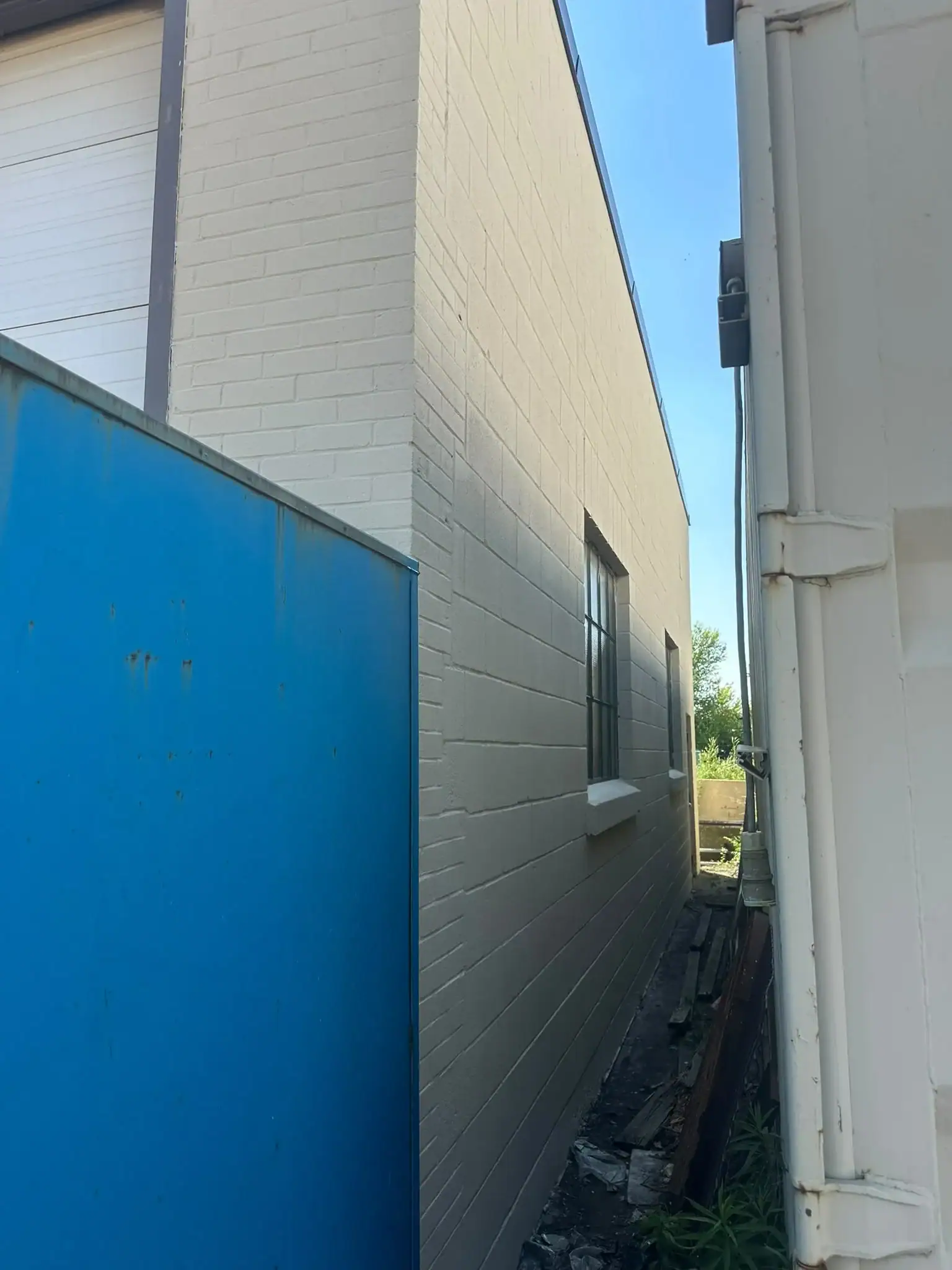
- at narrow side-yard passages.
The City of Toronto recommends managing rain and melting snow so water does not pool around paved areas and buildings. Its stormwater guidance for homeowners also recommends moving snow away from building foundations and considering permeable surfaces where suitable.
If a patio consistently sends water toward the house, correcting the slope or drainage should take priority over cosmetic work.
3. Check Whether the Surface Still Slopes the Right Way
A patio or walkway should move surface water toward an appropriate drainage area, not concentrate it against the house.
Settlement can gradually change that slope. A surface that worked properly when installed may develop a depression after several years.
Watch the stone during rain rather than judging slope only by eye. Water provides a simple visual test. If runoff travels toward the foundation or stops in the middle of the patio, something has changed.
Also check where stonework meets concrete, asphalt, garden beds, steps, and foundation walls. Different materials can settle at different rates, creating small dams that trap water.
The City of Toronto’s basement flooding prevention guidance recommends grading property so water moves away from foundation walls and keeping melting snow away from the house.
4. Inspect the Joints Between Stones
Stone joints deserve attention because missing or deteriorated material can let individual stones shift and change how water moves across the surface.
The joint type depends on the installation. Some natural stone patios use mortar joints. Others use sand, polymeric joint material, gravel, or another flexible system.
Look for:
- missing sections of joint material;
- deeply recessed joints;
- cracked mortar;
- loose pieces of mortar;
- vegetation growing through failed joints;
- washed-out areas after heavy rain.
Do not assume every joint should be filled with mortar. The correct repair depends on how the patio or walkway was built.
Mortared flagstone over a suitable base requires a different repair approach from dry-laid stone or interlocking paving.
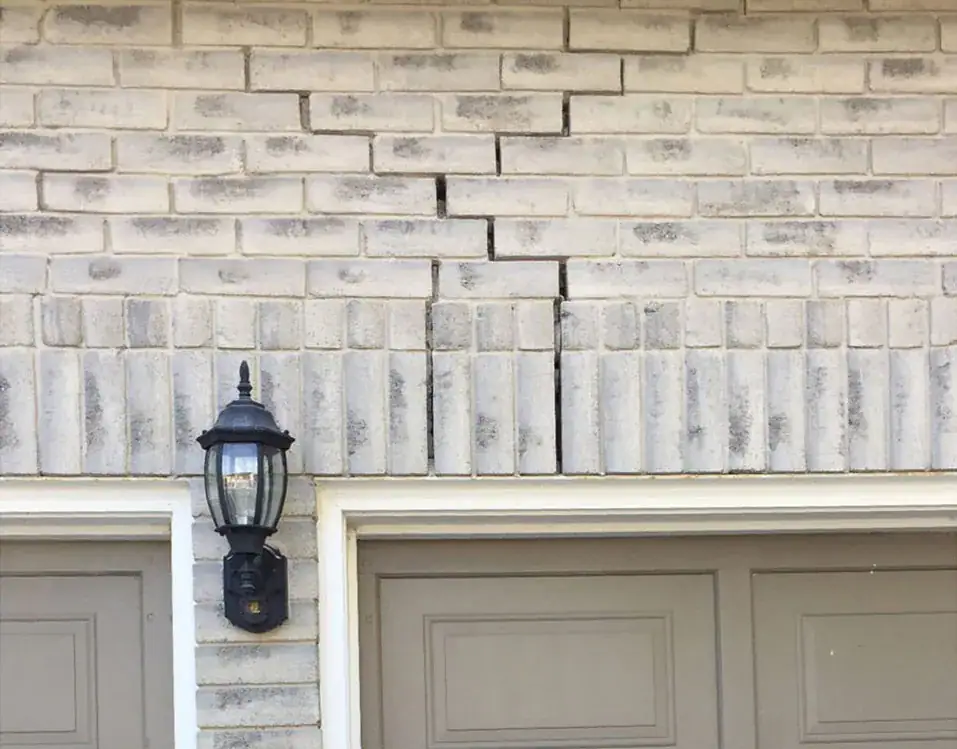
5. Look for Cracked or Flaking Stone
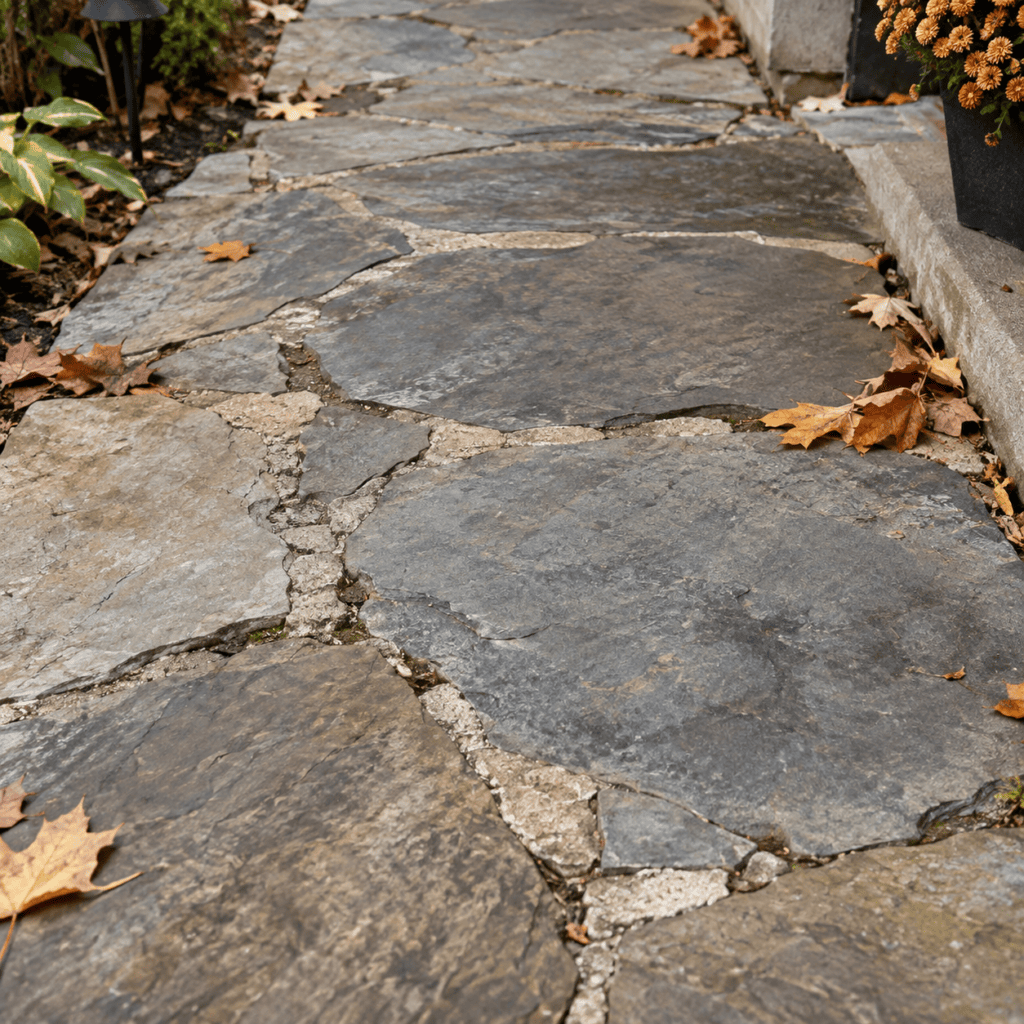
Assess cracked stone before winter, especially if the crack is deep, widening, or allowing part of the stone to move.
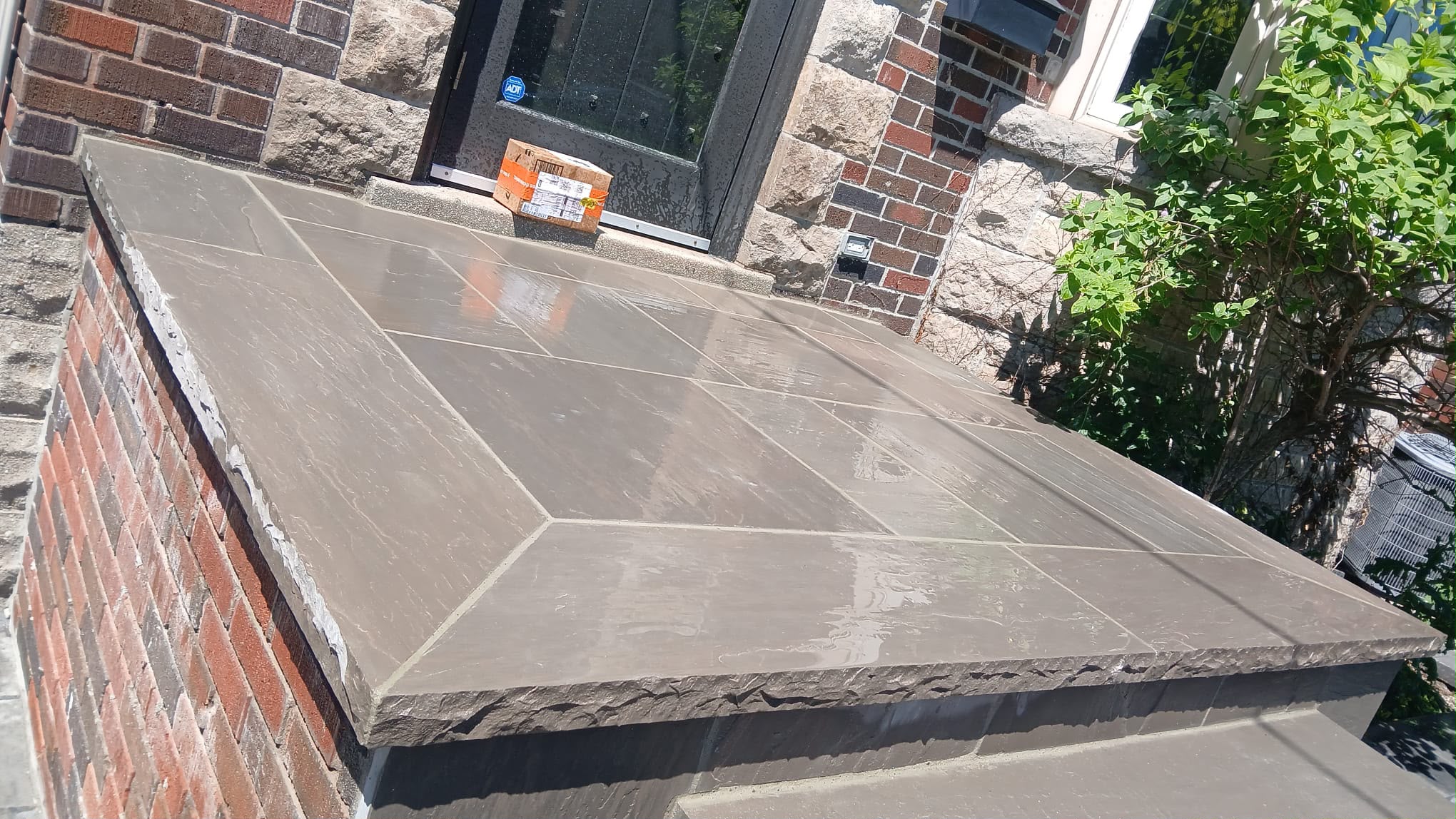
Natural stone varies considerably. Some stones split naturally along layers, while others are more uniform. A small surface line may be harmless, while a deep crack through a step tread can become a safety concern.
Look for:
- pieces separating from the main stone;
- thin layers flaking from the surface;
- cracks running through step edges;
- corners that have broken away;
- stones that have cracked and begun moving independently.
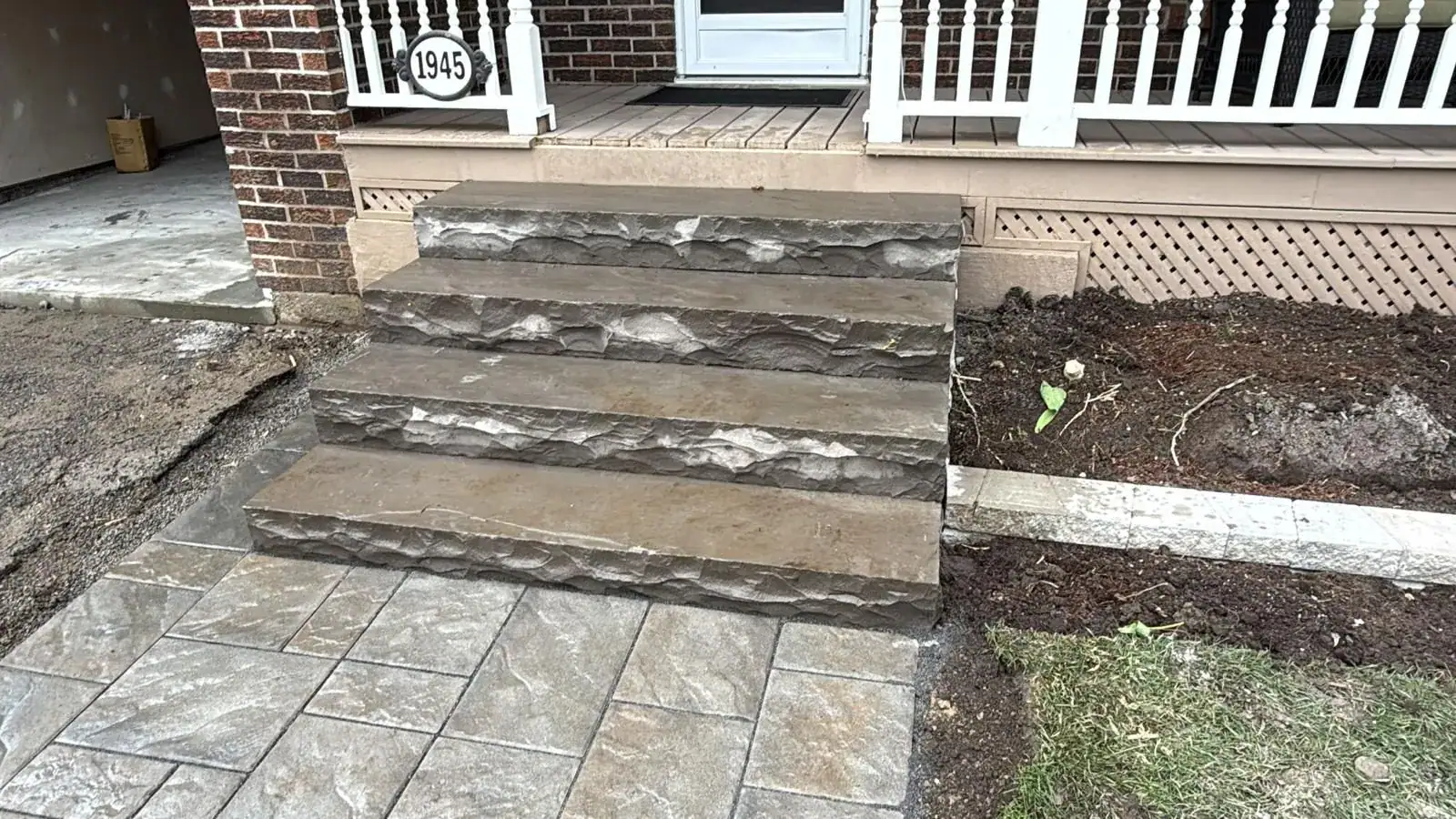
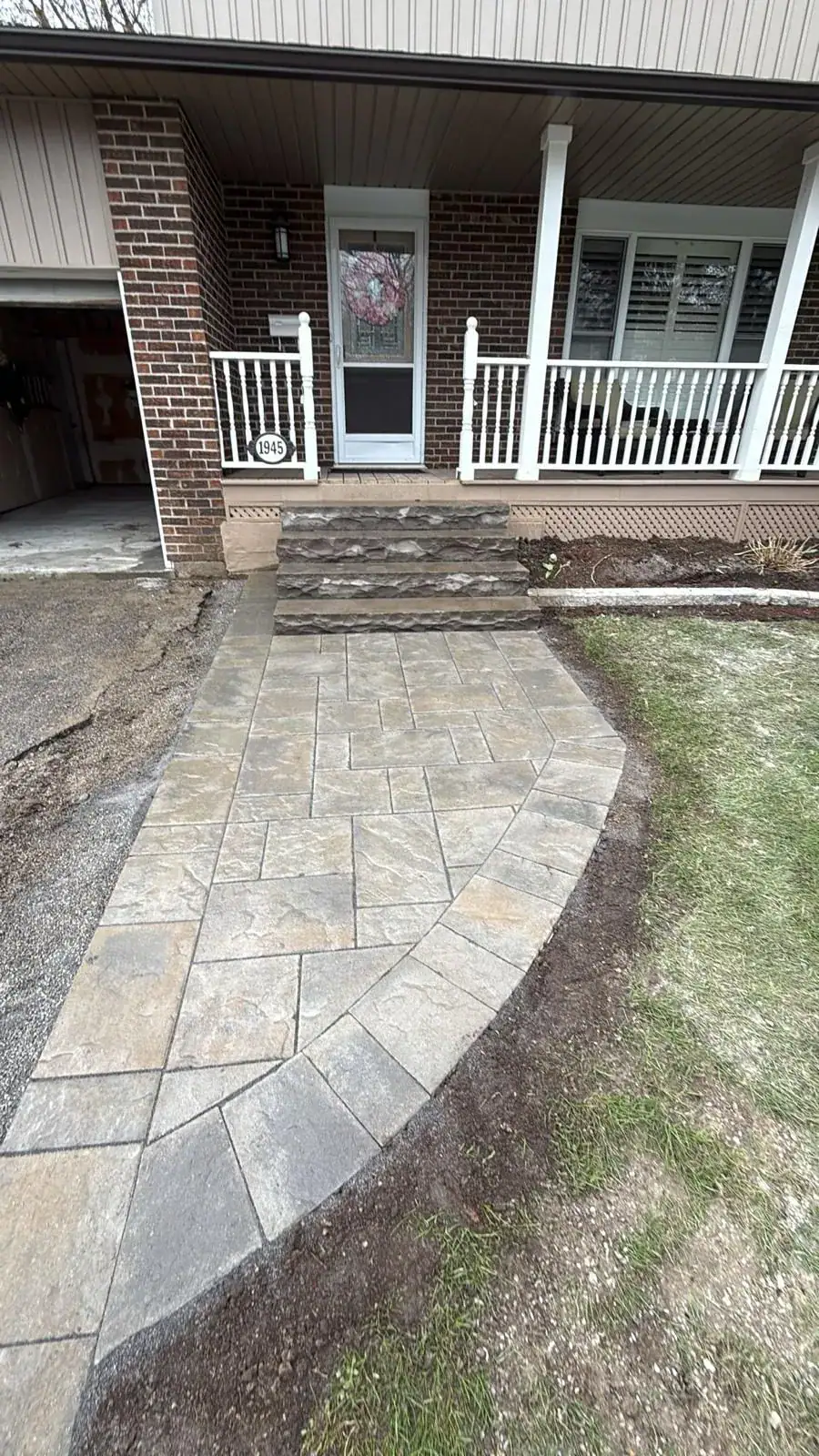
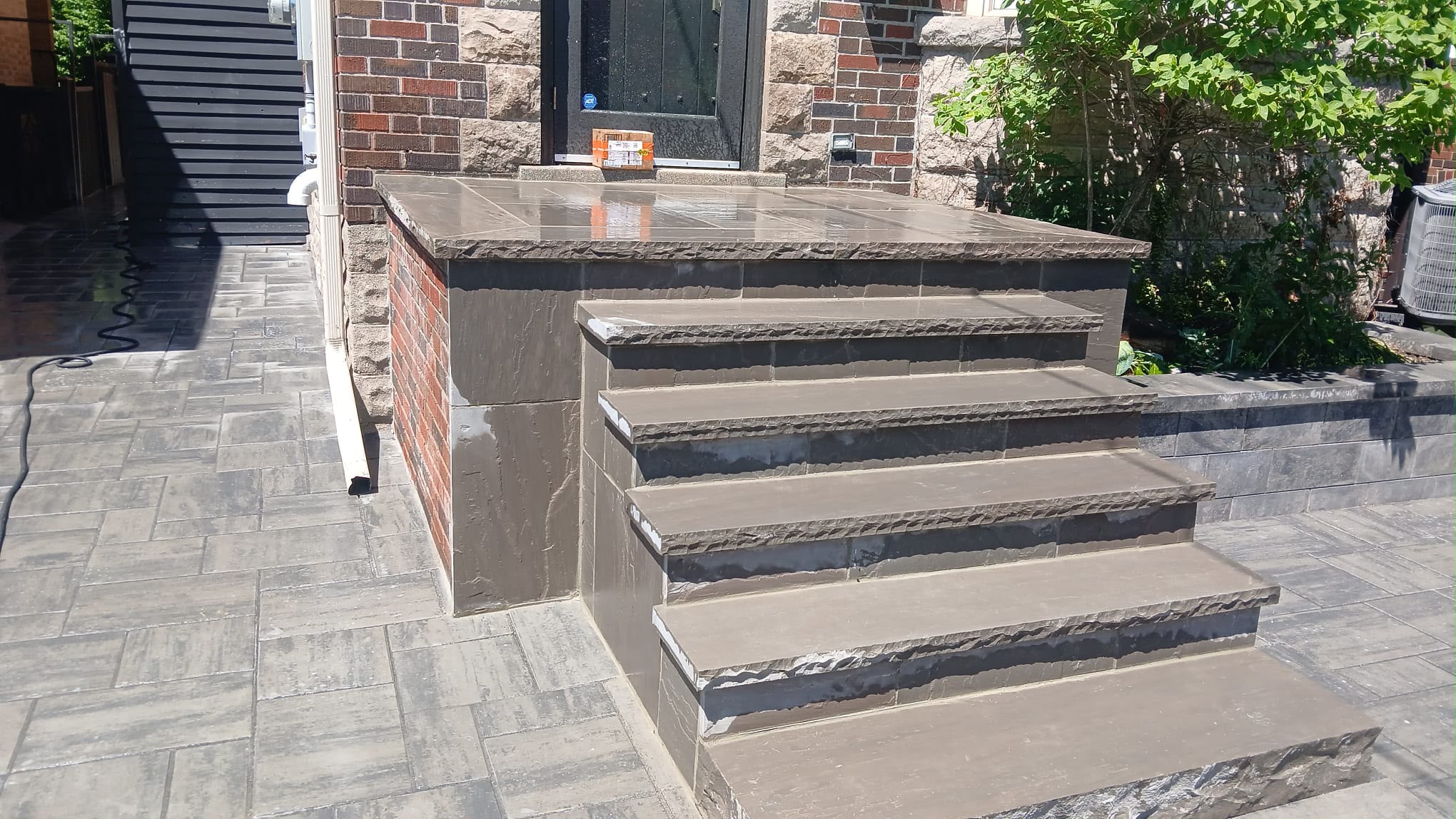
If the damaged stone is isolated, you may be able to replace it without rebuilding the entire patio. A&A Masonry’s flagstone services in Toronto cover patios, walkways, steps, and other natural stone applications.
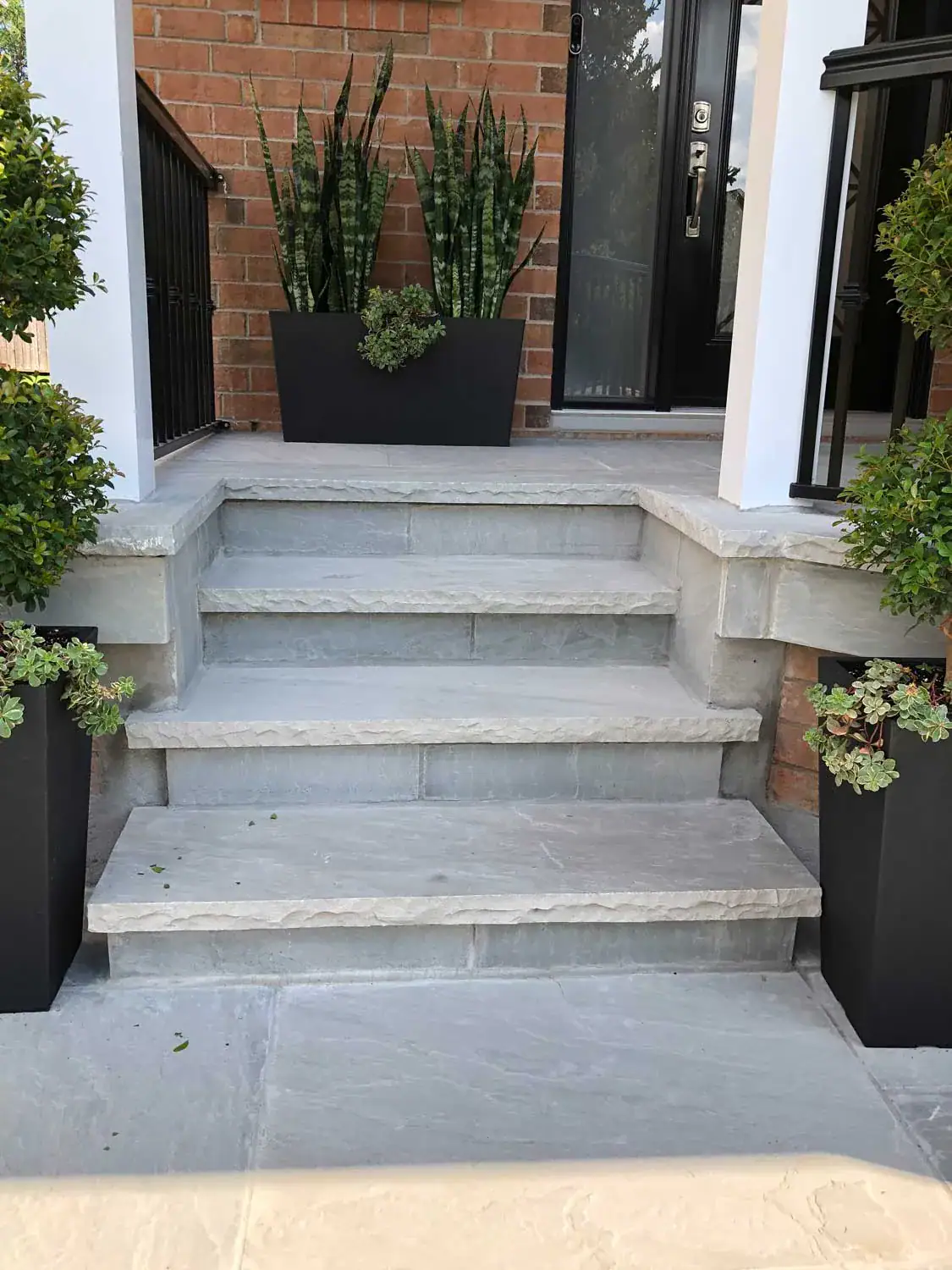
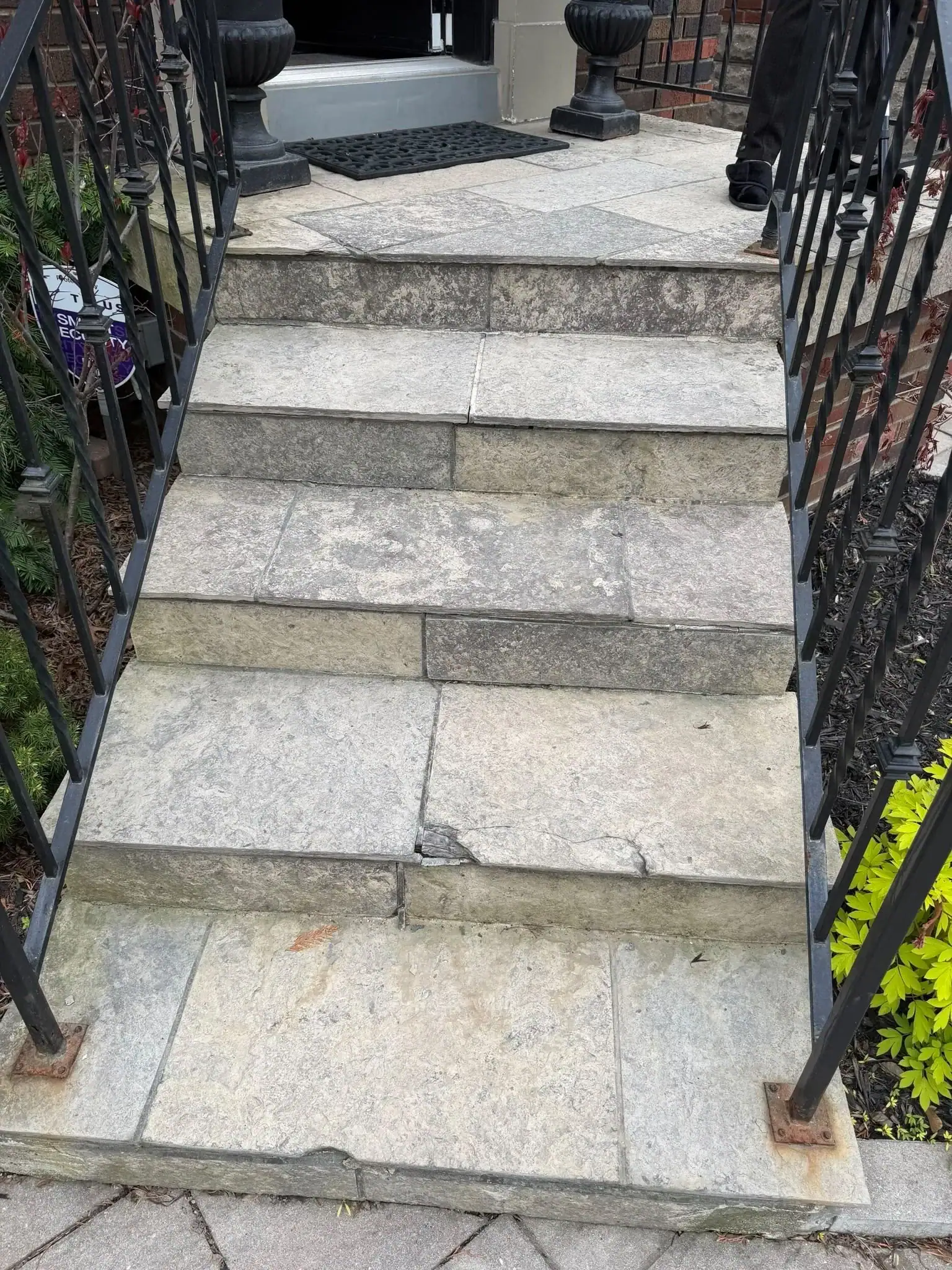
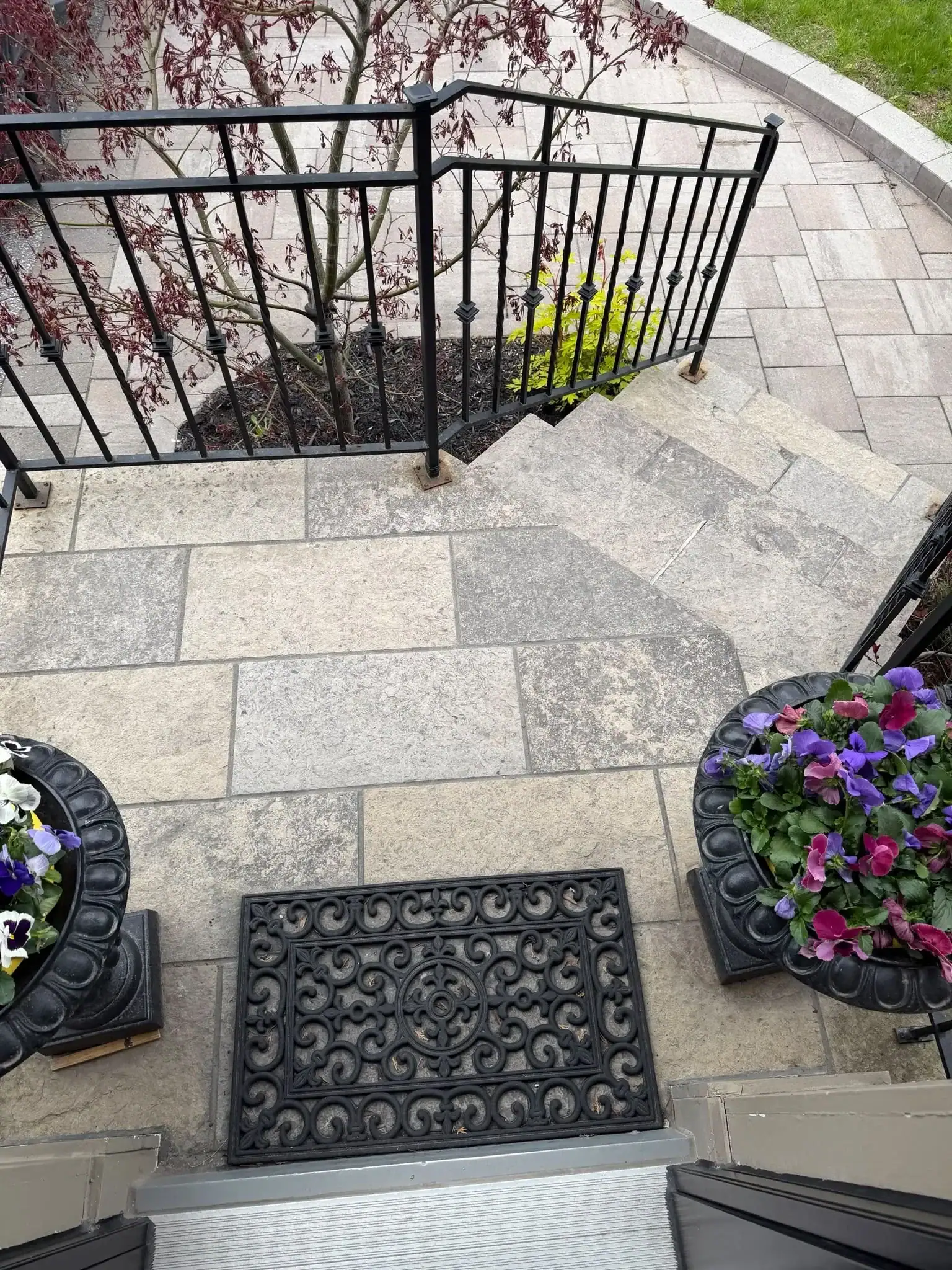
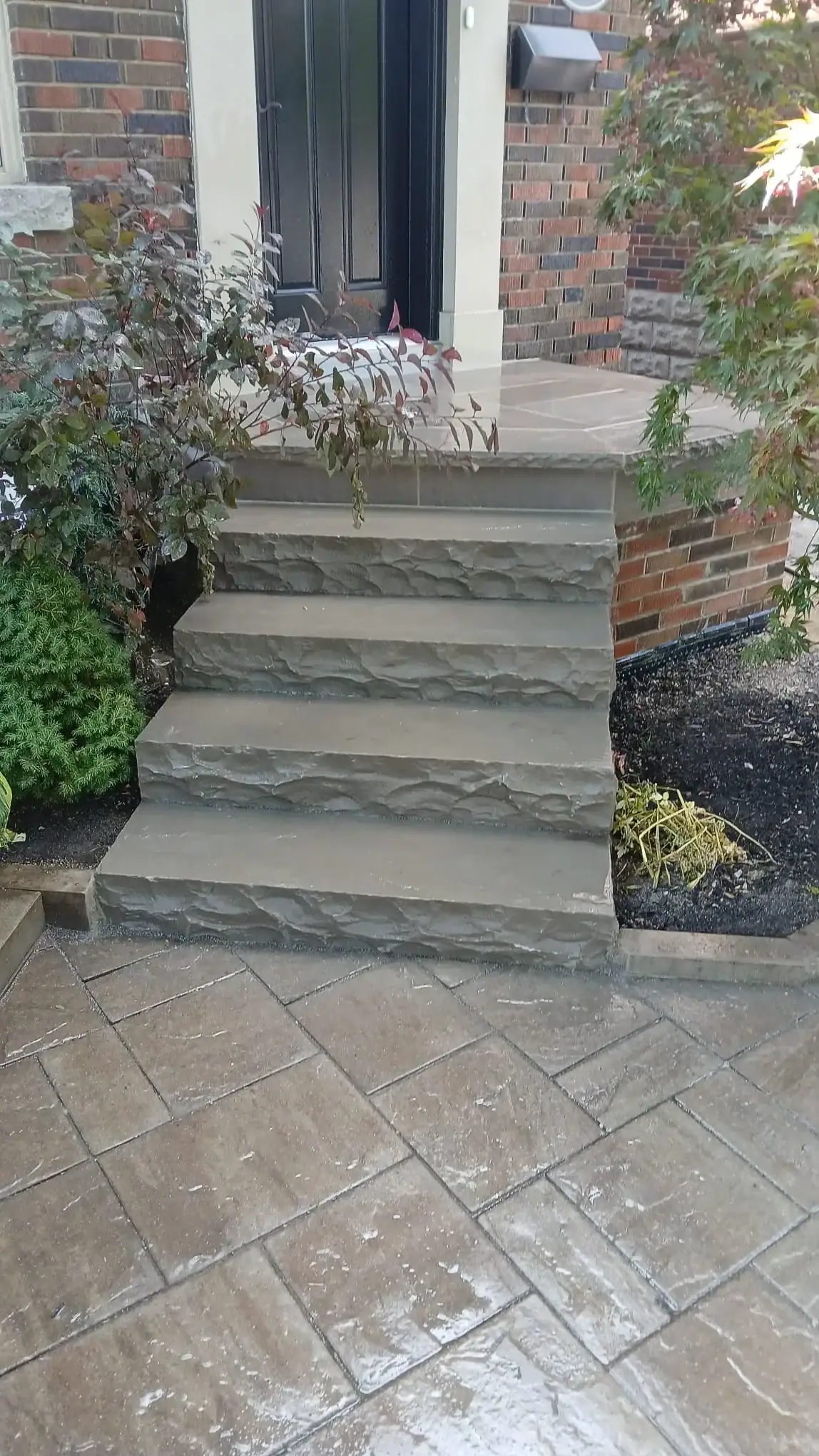
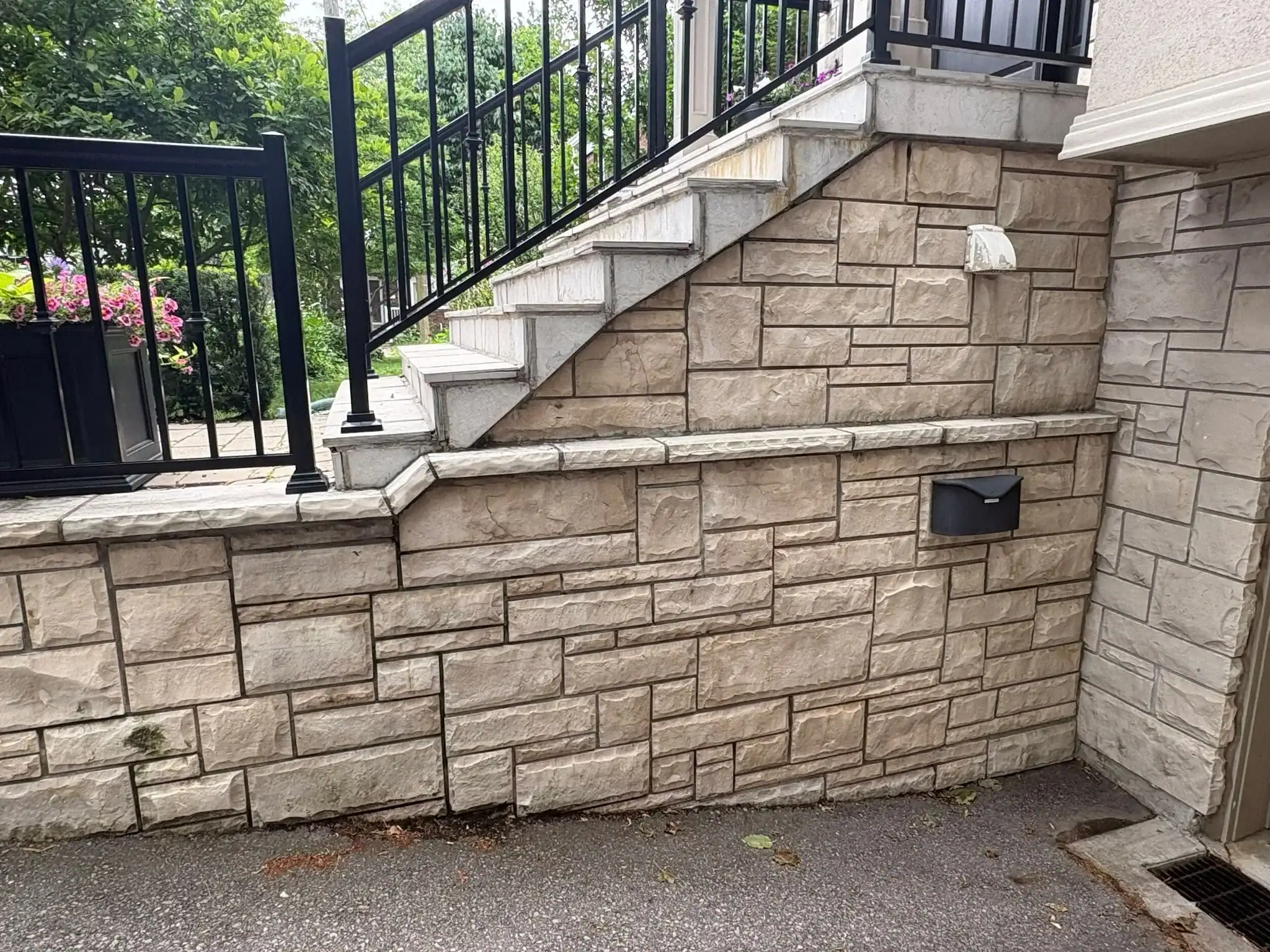
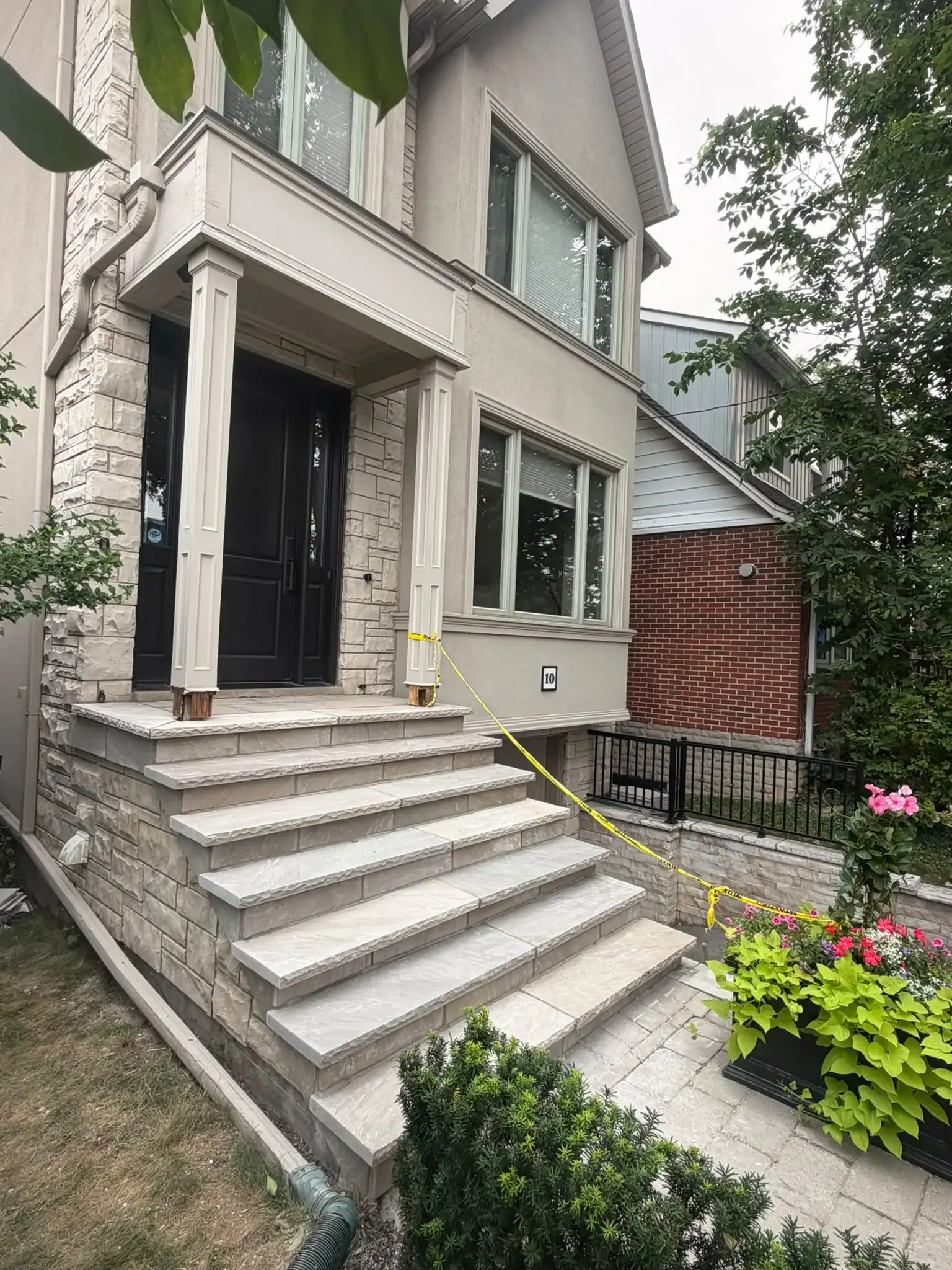
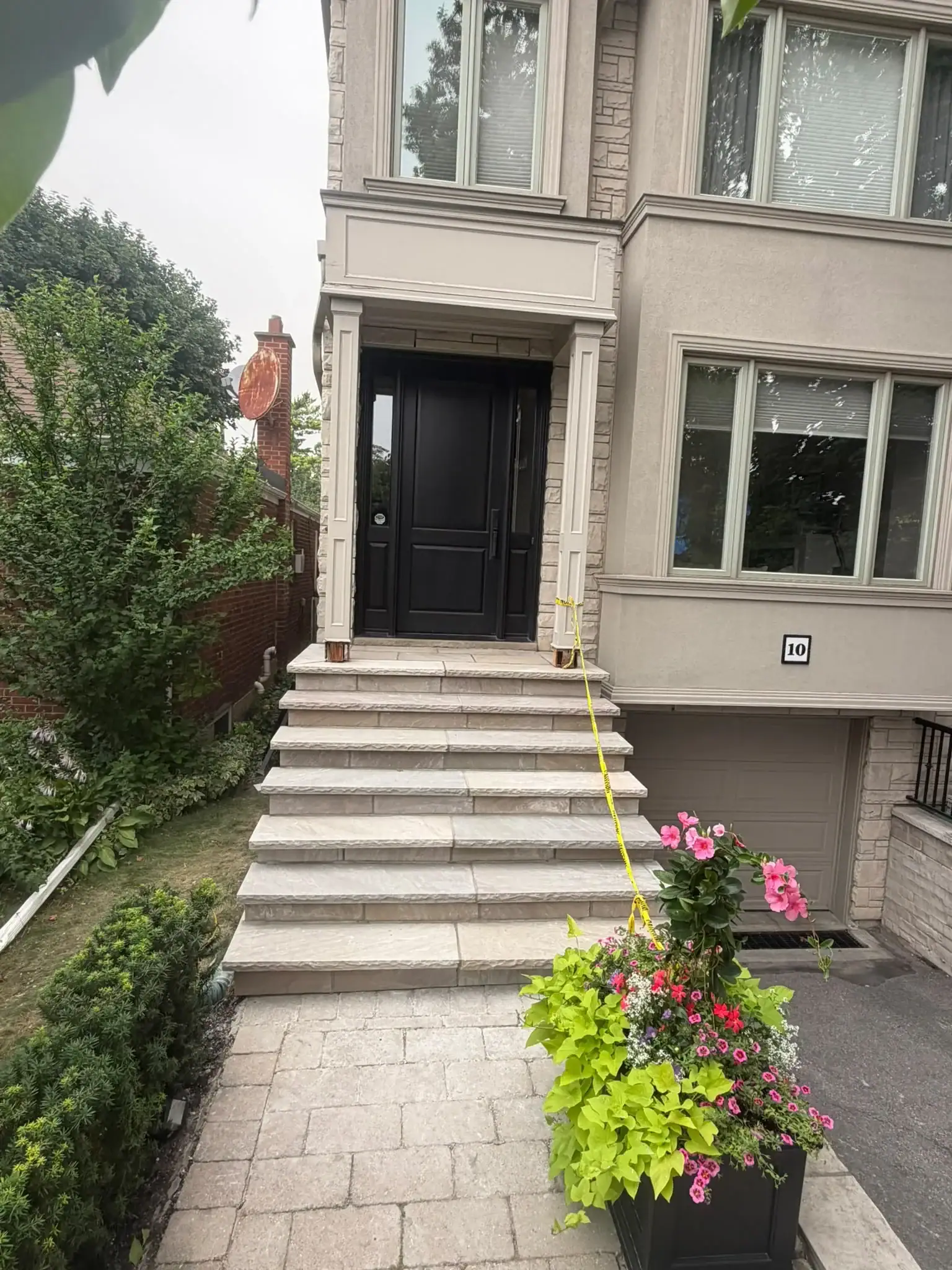
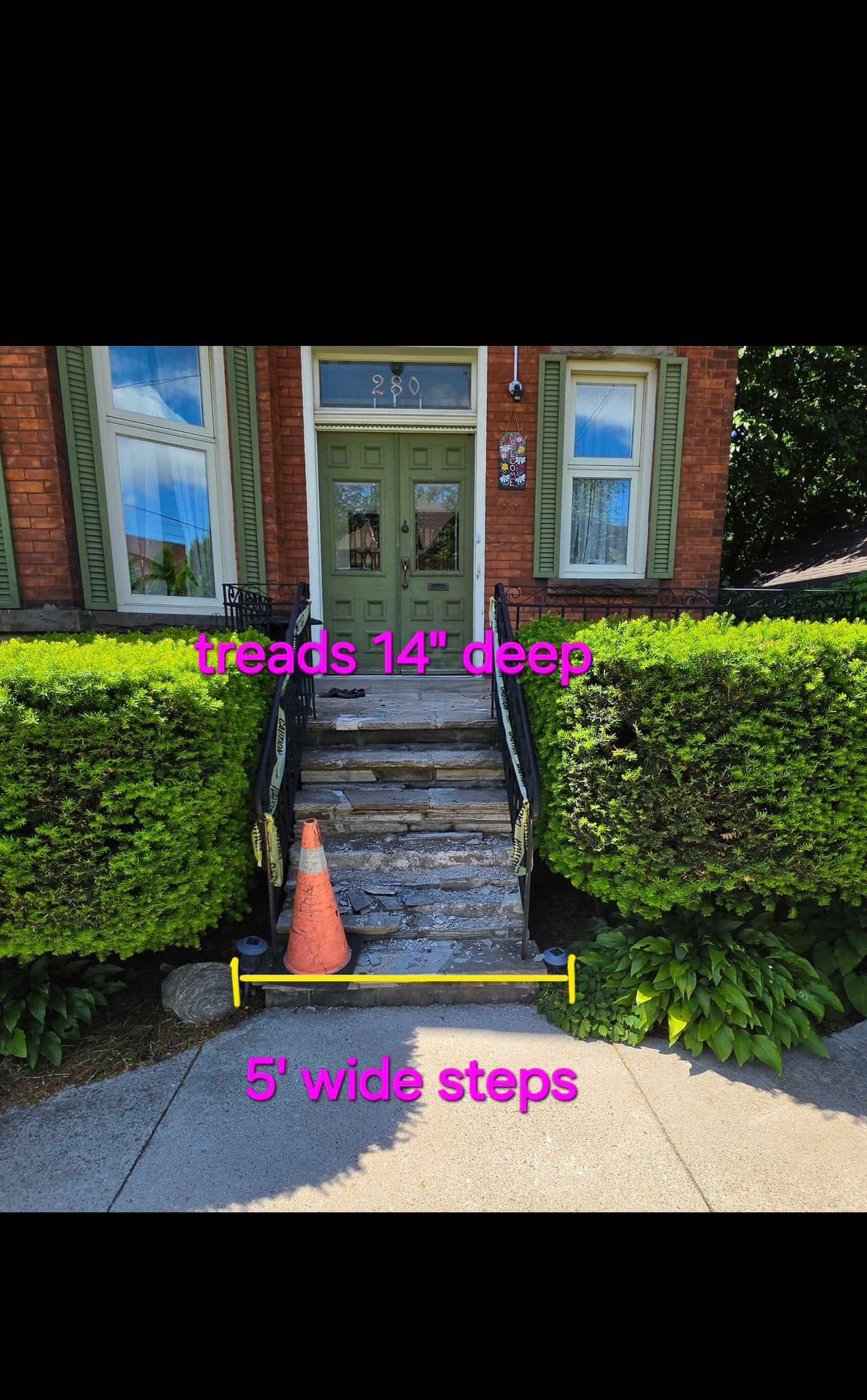
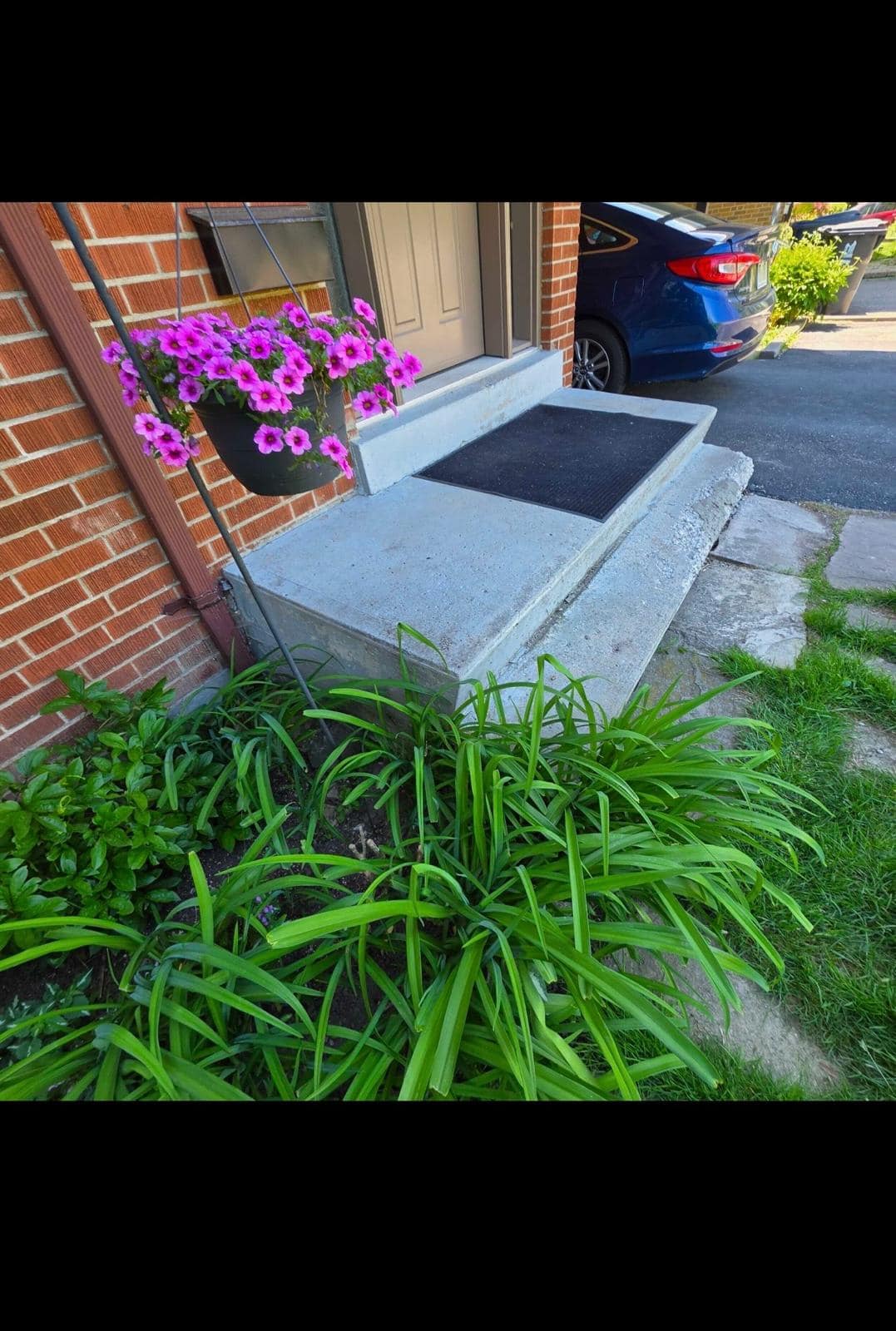
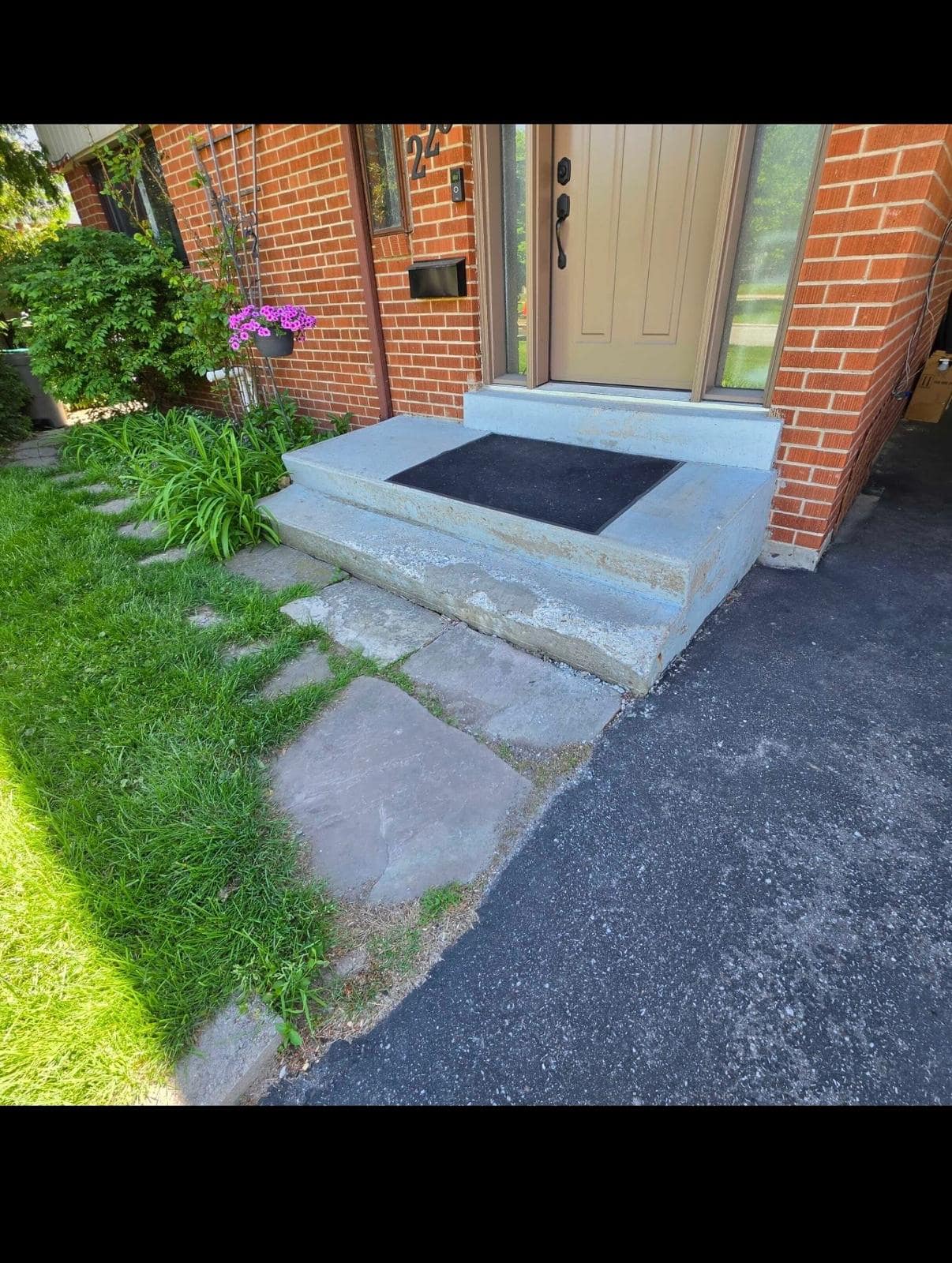
6. Pay Special Attention to Stone Steps
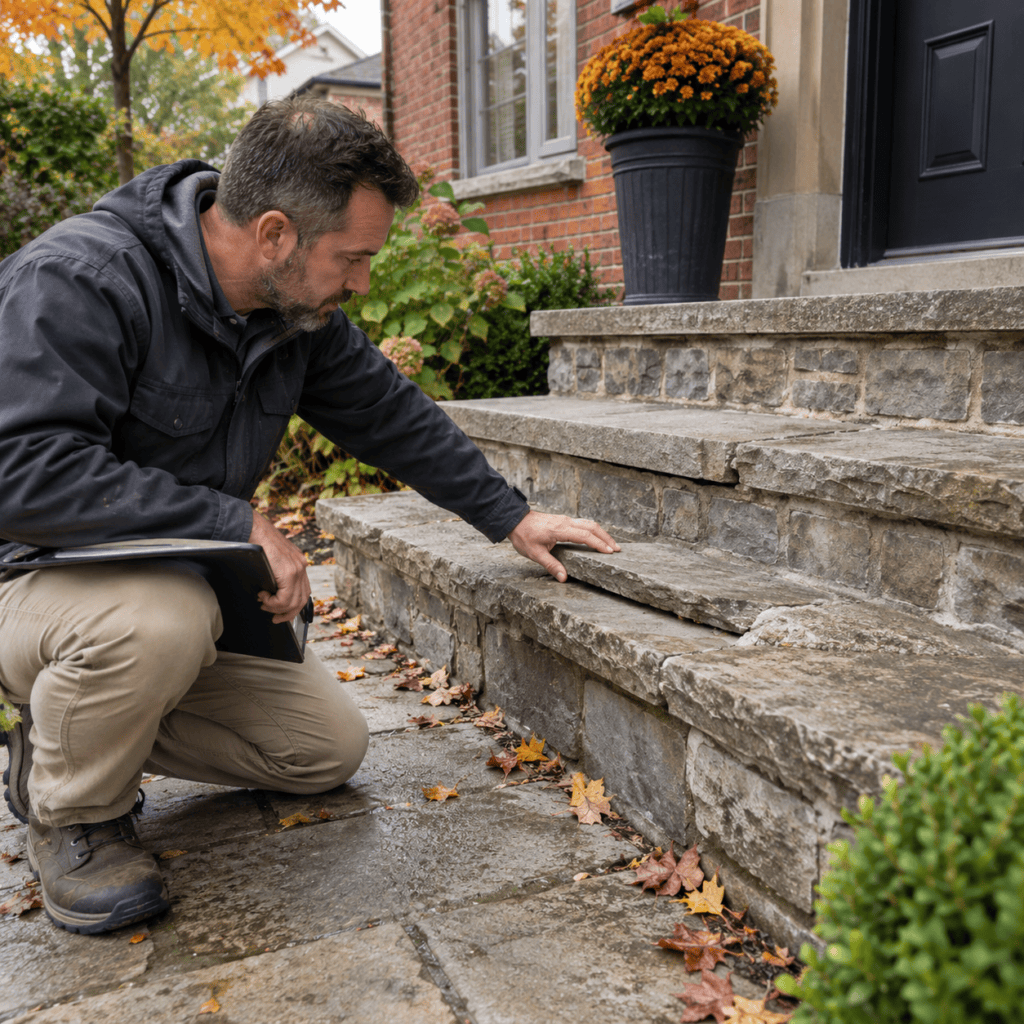
Stone steps should receive more attention than flat patio areas because movement can create a direct walking hazard.
Check each tread individually. Look for rocking stones, cracked nosings, loose mortar, uneven riser heights, and separation between the steps and adjacent walls or landings.
A minor uneven area on a patio may be inconvenient. The same movement at the edge of a step can matter more, especially once snow and ice reduce visibility.
Also think about snow removal. Raised stone edges can catch a shovel and make clearing difficult.
If several steps are moving together, the issue may involve the base, supporting structure, or nearby drainage rather than the individual stones.
7. Check Downspouts Near Patios and Walkways
A downspout can create problems when it repeatedly releases roof water onto or beside a stone surface.
During rain, follow the water. Does it cross the patio? Does it disappear into a joint? Does it collect beside the foundation? Does it wash bedding material from the edge of the walkway?
Toronto requires downspouts to be disconnected from the municipal sewer system, but the discharged water still needs somewhere appropriate to go. The City’s downspout guidance says water should flow away from foundation walls without creating problems on neighbouring properties, driveways, or sidewalks.
It also recommends keeping eavestroughs and downspouts clear and repairing leaks or sagging areas.
Don’t solve a downspout problem by directing water to another part of the stonework where it can pool and freeze.
8. Clean Leaves and Organic Debris From the Surface
Remove leaves before winter because thick, wet organic debris can keep areas damp and hide cracks, loose joints, and uneven stones.
Pay attention to corners, steps, drainage routes, retaining-wall edges, and narrow gaps between landscaping and stonework.
A normal broom or leaf blower may be enough for routine cleaning. Avoid aggressive cleaning methods on unknown natural stone because some materials can be damaged by inappropriate chemicals or excessive pressure.
Cleaning is also a good opportunity to inspect the surface closely. Problems hidden beneath patio furniture, planters, or summer equipment may not have been visible for months.
9. Move Heavy Planters Carefully
Heavy planters and outdoor furniture can hide settlement, staining, or trapped moisture beneath them.
Before winter, move portable items where practical and inspect the stone underneath. Look for cracks, depressed areas, damaged joints, or water that has been unable to dry normally.
If planters remain outside all winter, make sure they are stable and designed for freezing conditions. A water-filled planter that cracks can release moisture directly onto the stone surface.
Avoid dragging heavy objects across natural stone. Lift or use suitable moving equipment to reduce the chance of scratching or chipping the surface.
10. Decide Whether Small Repairs Should Be Done Before Winter
Consider small repairs before winter when they correct a clear weakness, such as a loose stone, open joint, drainage depression, or damaged step.
Prioritize repairs that affect:
- walking safety;
- water drainage;
- stone stability;
- foundation moisture;
- snow clearing;
- areas already deteriorating quickly.
A cosmetic stain can usually wait. A loose step tread should receive more attention.
Where stonework has widespread movement or deterioration, A&A Masonry’s masonry restoration services in Toronto provide a broader approach to stone, mortar, brick, and other exterior masonry that may need assessment together.
Should You Seal a Stone Patio Before Winter?
Not every stone patio needs sealer, and fall should not trigger automatic sealing.
The right decision depends on the stone type, installation, condition, existing coatings, moisture exposure, and the product you’re considering.
Do not apply sealer as a shortcut over:
- loose stone;
- failed mortar joints;
- active drainage problems;
- wet or saturated masonry;
- cracks that still need repair;
- unknown existing coatings.
Some natural stone benefits from specific protective treatments. Other stone may perform well without them. Product compatibility and breathability matter.
If you’re considering sealing, identify the stone first and follow the product or stone supplier’s requirements rather than using a general-purpose masonry coating simply because winter is approaching.
Be Careful With De-Icing Salt on Natural Stone
Use de-icing products carefully around natural stone because different stones, mortars, and surface finishes can react differently to salt and repeated wetting.
The City of Toronto’s current road salt guidance recommends shovelling first, using ice-melting products only when needed, following the manufacturer’s application rate, and using sand as a traction aid when appropriate.
This is useful advice for stonework as well. More salt is not automatically better.
Before applying any de-icer to natural stone, check whether the stone supplier, installer, or product manufacturer provides restrictions. This is particularly important for softer or more porous materials.
For homeowners who want a deeper look, A&A Masonry’s guide to road salt damage on masonry explains how salty meltwater can affect brick, mortar, concrete, stone, and interlocking surfaces.
Plan Where You Will Put Shovelled Snow
Plan snow storage before the first storm because a convenient pile in January can become a drainage problem during a February thaw.
Avoid repeatedly piling snow against the foundation, exterior stone walls, steps, or low retaining walls when another suitable location is available.
The City of Toronto recommends shovelling snow away from building foundations and paved areas and onto lawn areas where practical. It also advises making sure melting water can drain instead of pooling on sidewalks, driveways, and other low areas.
Remember that snow removed from a salted walkway may contain de-icing material. When that pile melts, the water carries the dissolved salts with it.

Do Not Ignore Patio Edges
Patio and walkway edges can reveal base problems before the middle of the surface shows obvious movement.
Look for stones spreading outward, edge material washing away, soil erosion, missing restraints, or gaps forming between the patio and lawn.
If the edge is unsupported, repeated foot traffic and freeze-thaw movement can allow stones to shift farther.
Edges beside garden beds are especially worth checking after heavy rain. Water flowing from the patio may erode soil, while water flowing from a raised garden may wash material toward or underneath the stonework.
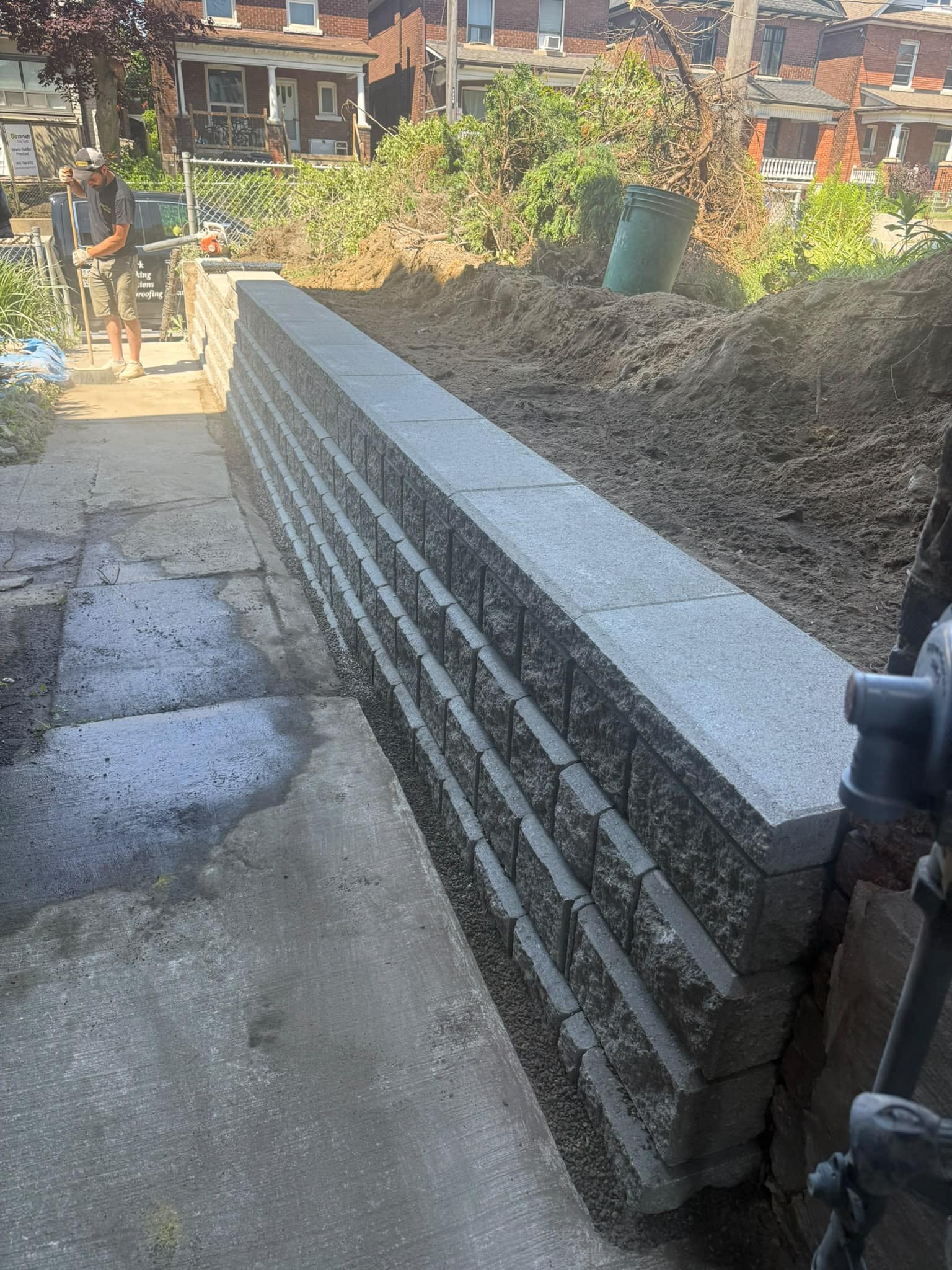
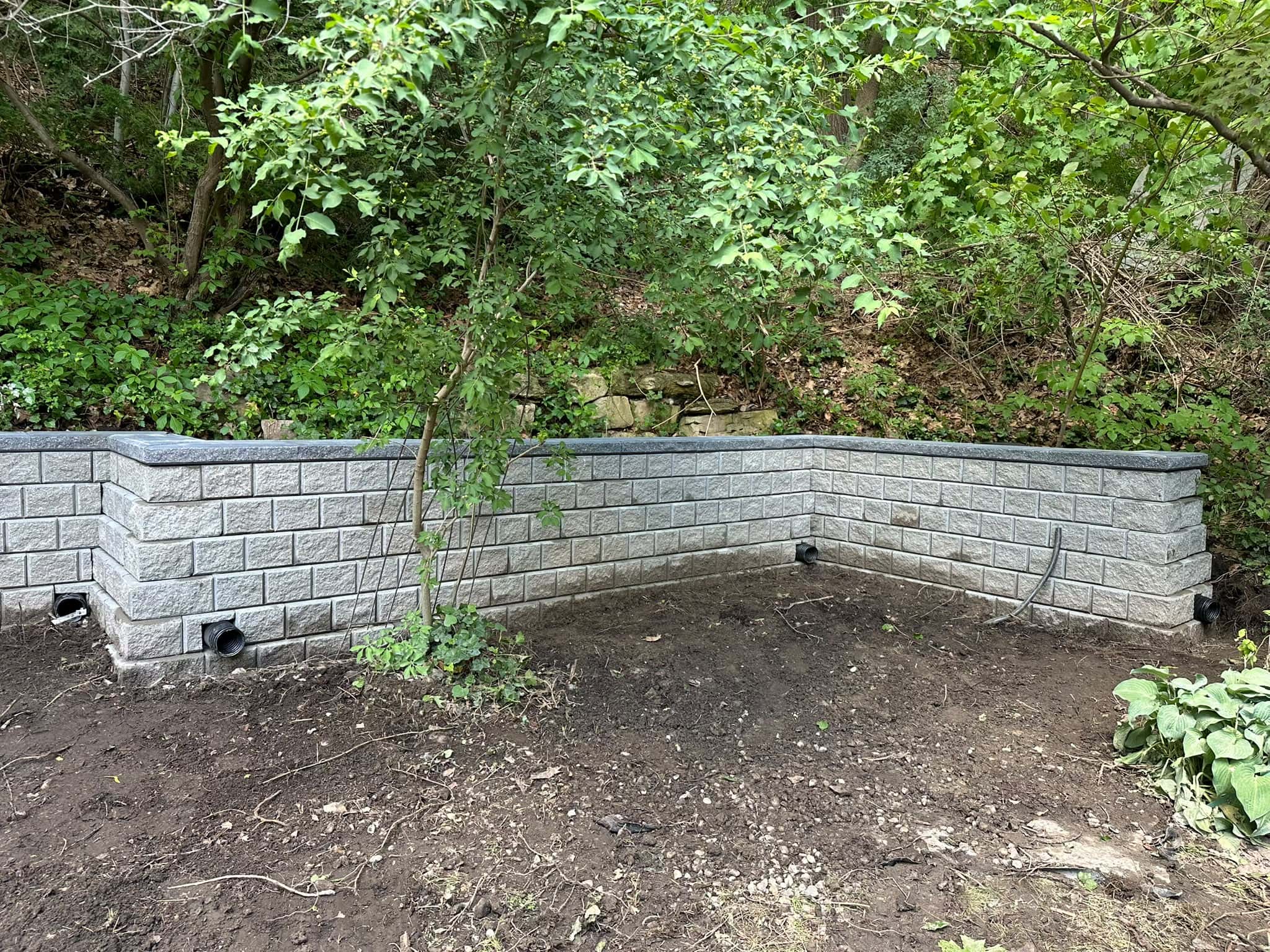
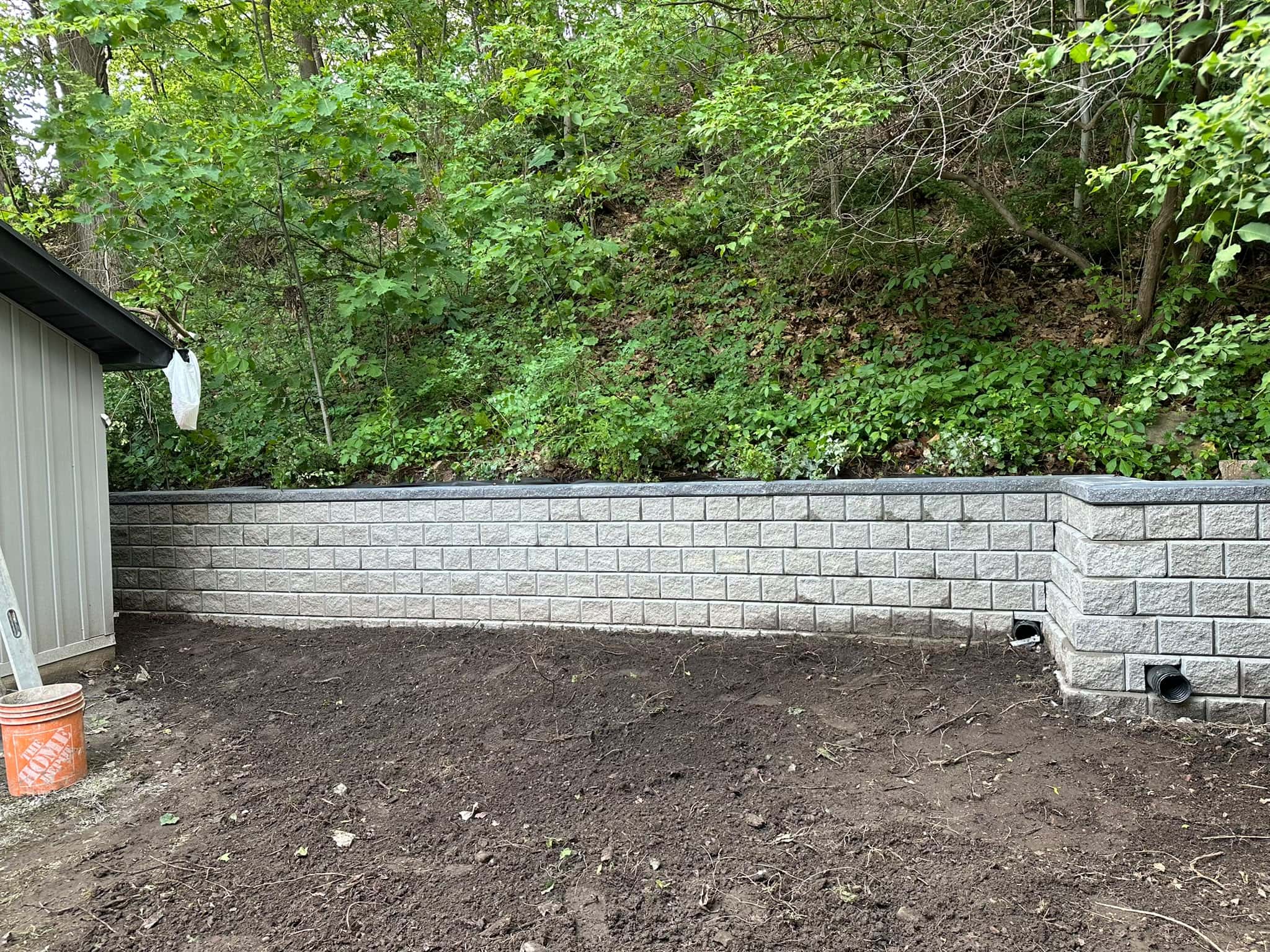
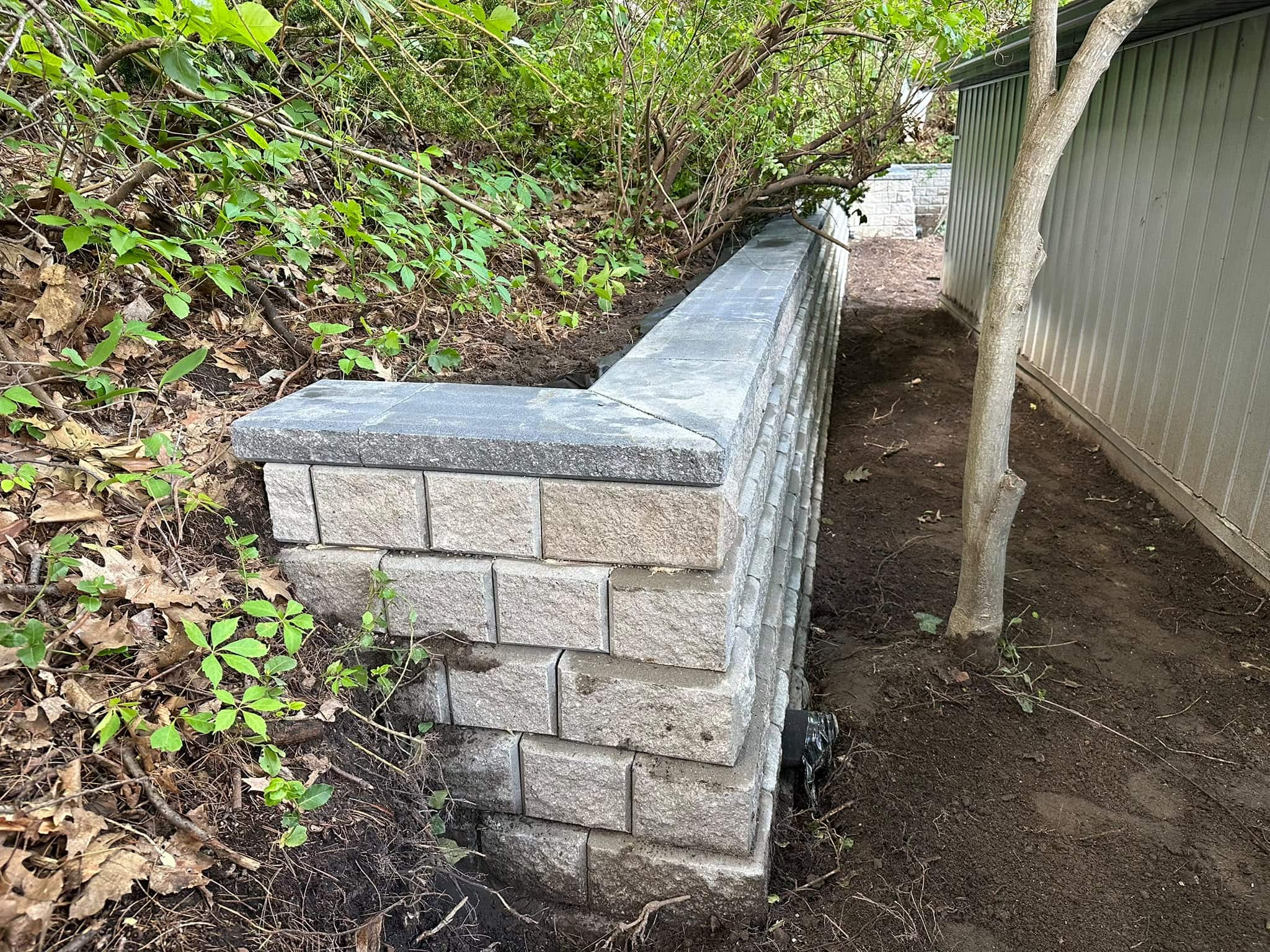
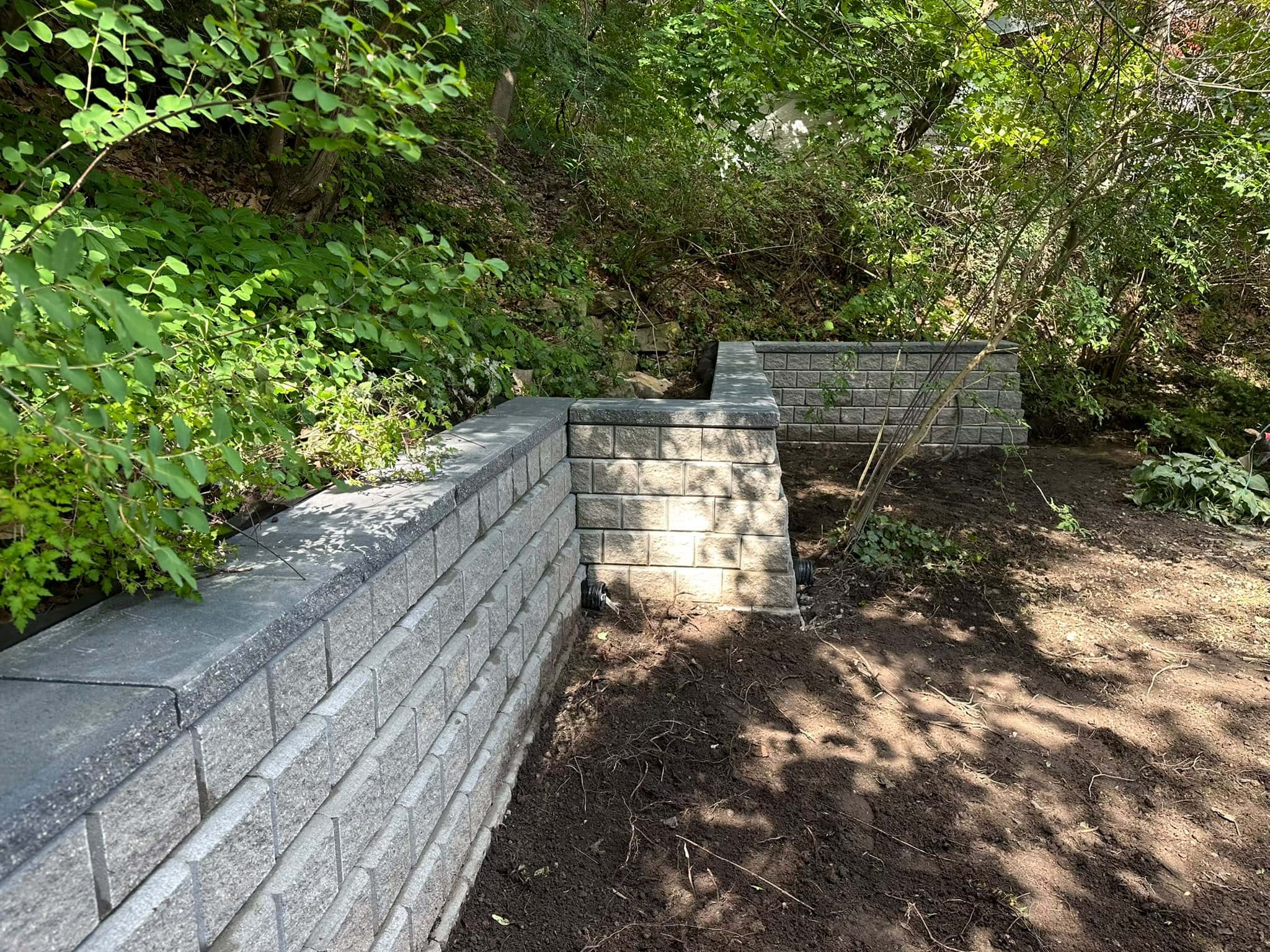
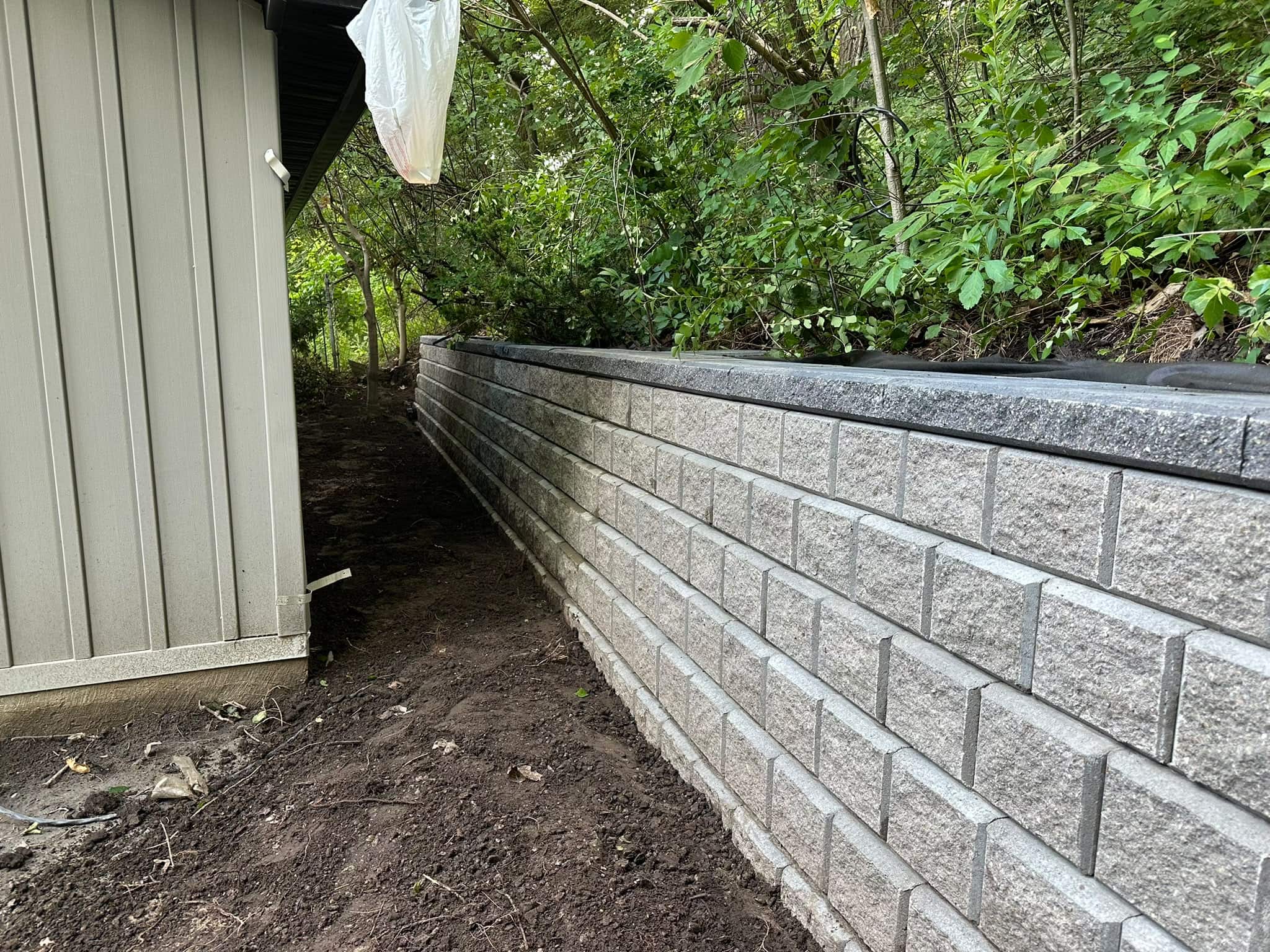
Check Retaining Walls Beside Stone Patios
Consider a patio beside a retaining wall as one drainage area rather than two unrelated masonry features.
Look for:
- the wall leaning toward the patio;
- soil washing through joints;
- water emerging from unexpected locations;
- loose capstones;
- patio stones sinking beside the wall;
- open gaps between the wall and paving.
A moving retaining wall may have drainage or soil-pressure problems behind it. Repointing visible joints won’t fix those causes.
If a wall is retaining a meaningful amount of soil, stability and drainage deserve more attention than appearance.
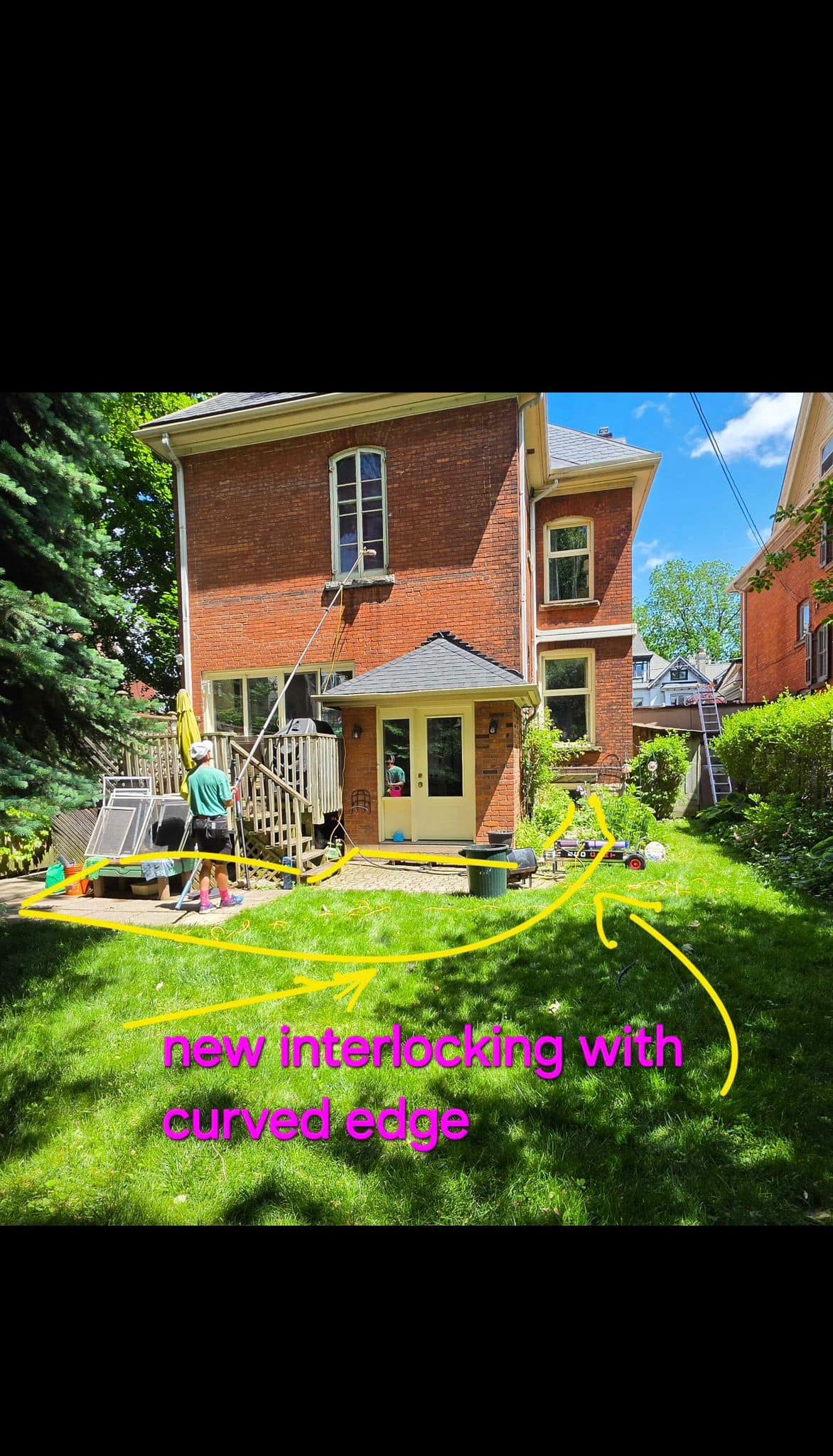
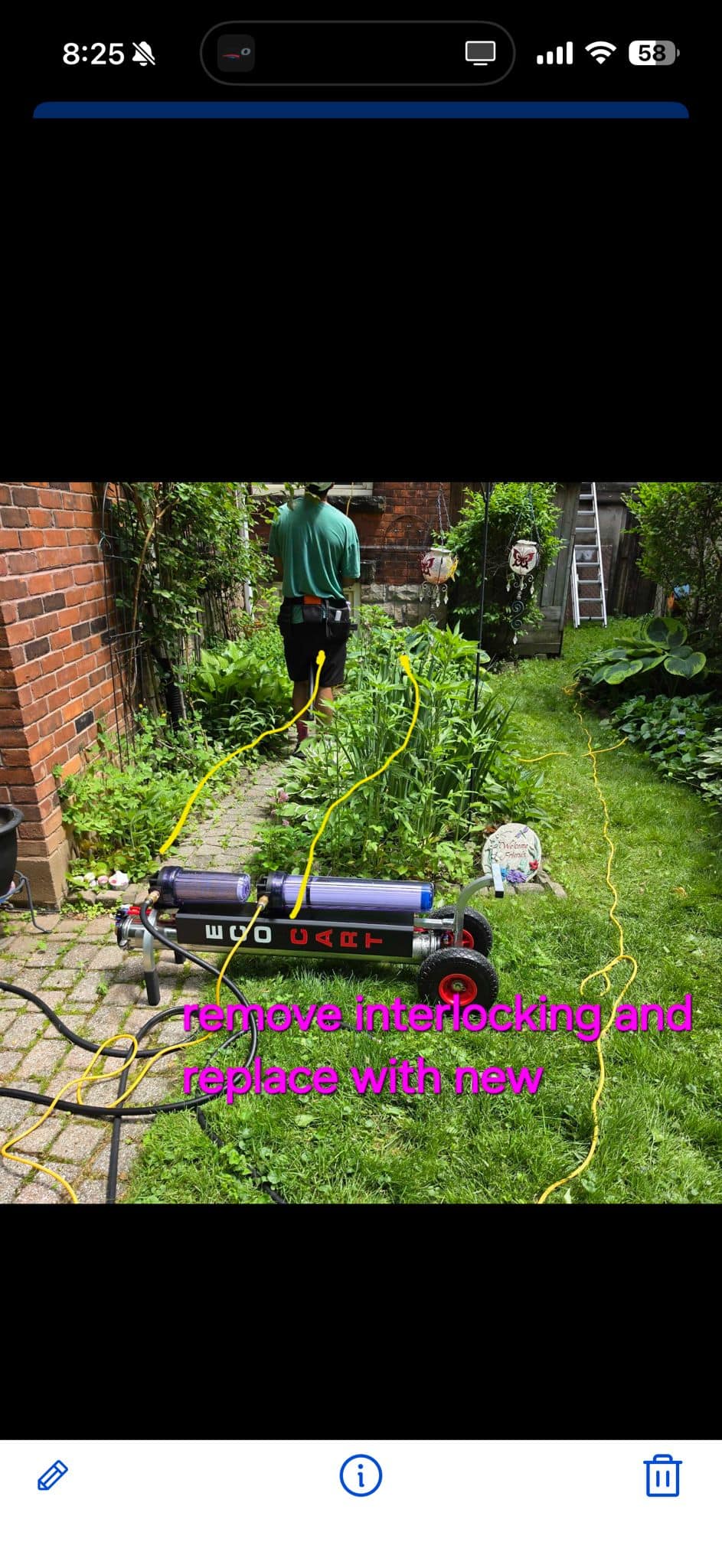
How Interlocking Pavers Differ From Natural Stone
Interlocking pavers and natural stone can develop similar winter symptoms, but their repair methods may differ.
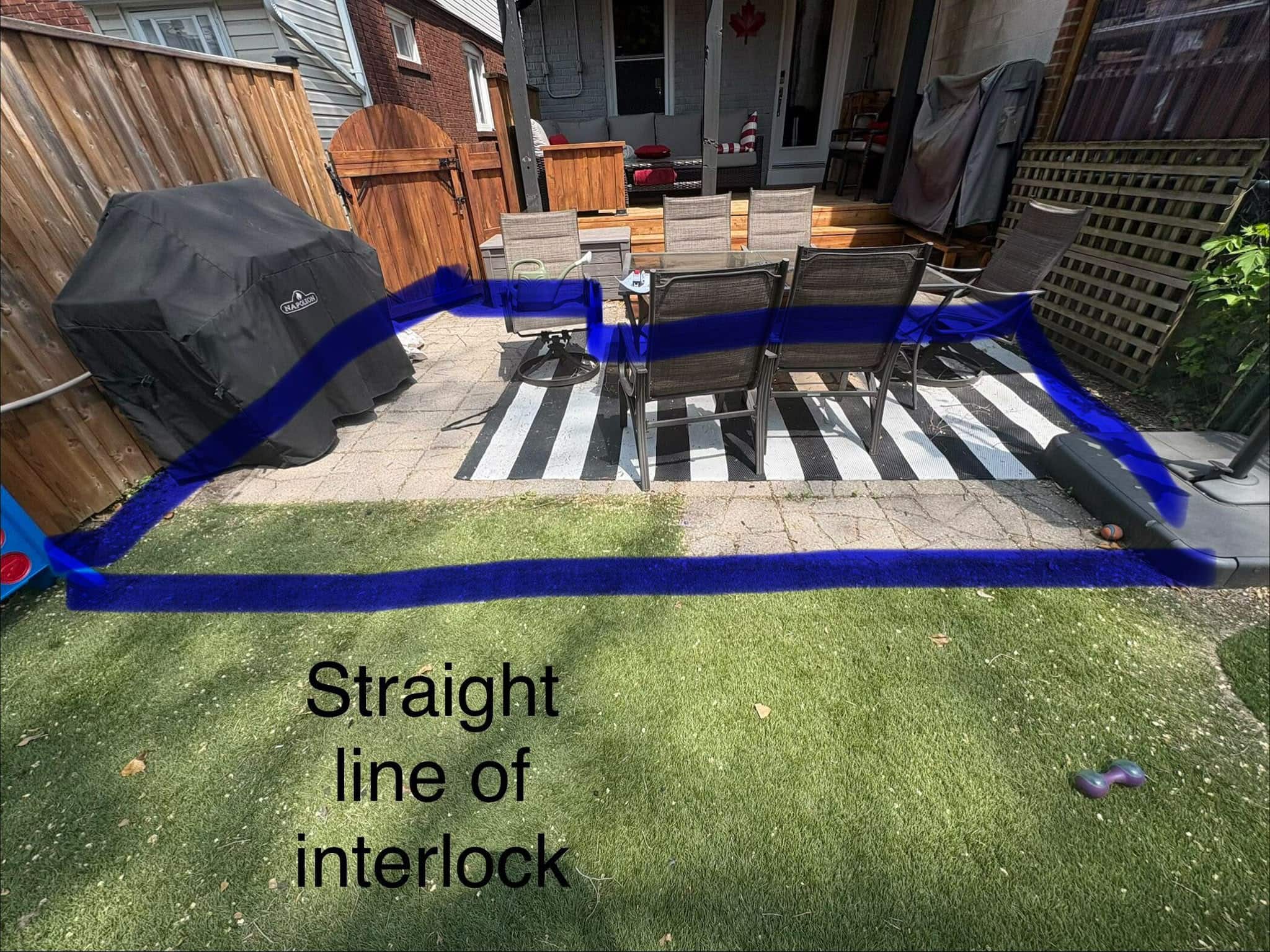
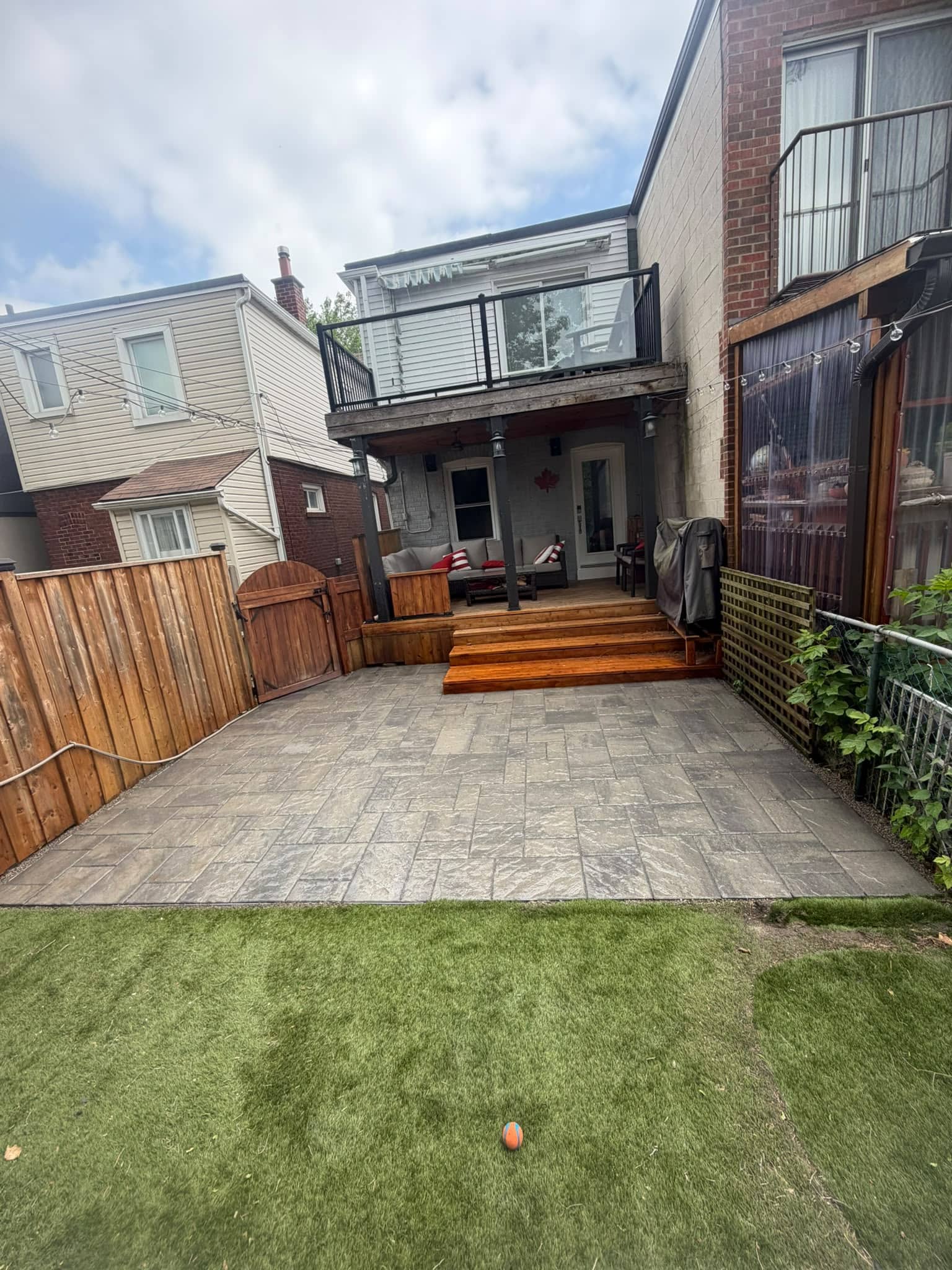
Interlocking systems are designed around individual manufactured units installed over a prepared base. When localized settlement occurs, pavers can often be lifted, the base corrected, and the original units reset.
Natural flagstone installations vary more. Some are dry laid, while others are installed over concrete or another rigid base with mortar joints.
That is why homeowners should identify how the surface was built before choosing a repair method.
For modular paving systems, A&A Masonry’s interlocking patio services explain options for patios, pathways, driveways, and landscape paving designed for Toronto conditions.
What Homeowners Can Safely Do Themselves
Most homeowners can complete a useful fall inspection and basic maintenance without specialized masonry tools.
- Sweep leaves and debris from the entire surface.
- Walk the patio and note rocking stones.
- Photograph cracks and damaged joints.
- Watch the surface during rainfall.
- Mark areas where water remains after surrounding stone dries.
- Check downspouts and nearby drainage.
- Move portable planters and inspect underneath.
- Check every step for movement.
- Plan a safe snow-storage area.
- Review the de-icing product you expect to use.
Avoid lifting very heavy stones, dismantling retaining walls, grinding mortar, or attempting structural step repairs without understanding how the installation is supported.
Quick Pre-Winter Stone Patio Checklist
Before the first sustained freeze, check the following:
- Loose stone: Does anything rock or move underfoot?
- Drainage: Does water move away from the house?
- Low areas: Are puddles forming after rain?
- Joints: Is mortar or joint material missing?
- Cracks: Are any stones splitting or becoming unstable?
- Steps: Are treads level and secure?
- Downspouts: Where does roof water discharge?
- Debris: Are leaves blocking drainage paths?
- Edges: Are stones spreading or losing support?
- Snow storage: Where will shovelled snow melt?
- De-icer: Is the product suitable for the surface?
If the surface is stable, drains properly, and has only normal cosmetic weathering, routine maintenance may be enough.
When Professional Stone Repair Makes More Sense
Professional repair makes more sense when several stones are loose, steps are unstable, widespread settlement is visible, drainage is directing water toward the house, mortar joints are failing across a large area, or a retaining wall is moving.
A proper assessment should determine whether the problem is at the surface or underneath it. Resetting a stone may solve a localized problem. Repeatedly resetting the same stone without correcting a weak base or water problem will not.
A&A Masonry’s Toronto masonry services include stone patios, stone steps, walkways, retaining walls, interlocking, concrete, drainage-related exterior work, and masonry restoration.
Final Thoughts on Preparing Stone Patios and Walkways for Winter
Preparing stone patios and walkways for a Toronto winter is mainly about stability, drainage, and safe use. Natural stone can handle demanding outdoor conditions, but loose pieces, failed joints, poor drainage, and existing cracks give winter weather more opportunity to cause problems.
Inspect the surface before leaves and snow hide it. Watch where rainwater travels. Repair unstable areas when practical. Keep downspouts from flooding the patio, plan where to store snow, and use de-icing products carefully.
Most importantly, match the repair to the cause. A loose stone caused by a washed-out base needs more than fresh joint material. A patio sloping toward the house needs more than sealer. A moving retaining wall needs more than cosmetic mortar repair.
A good pre-winter check helps you identify those differences while conditions are still suitable for planned maintenance and repair.