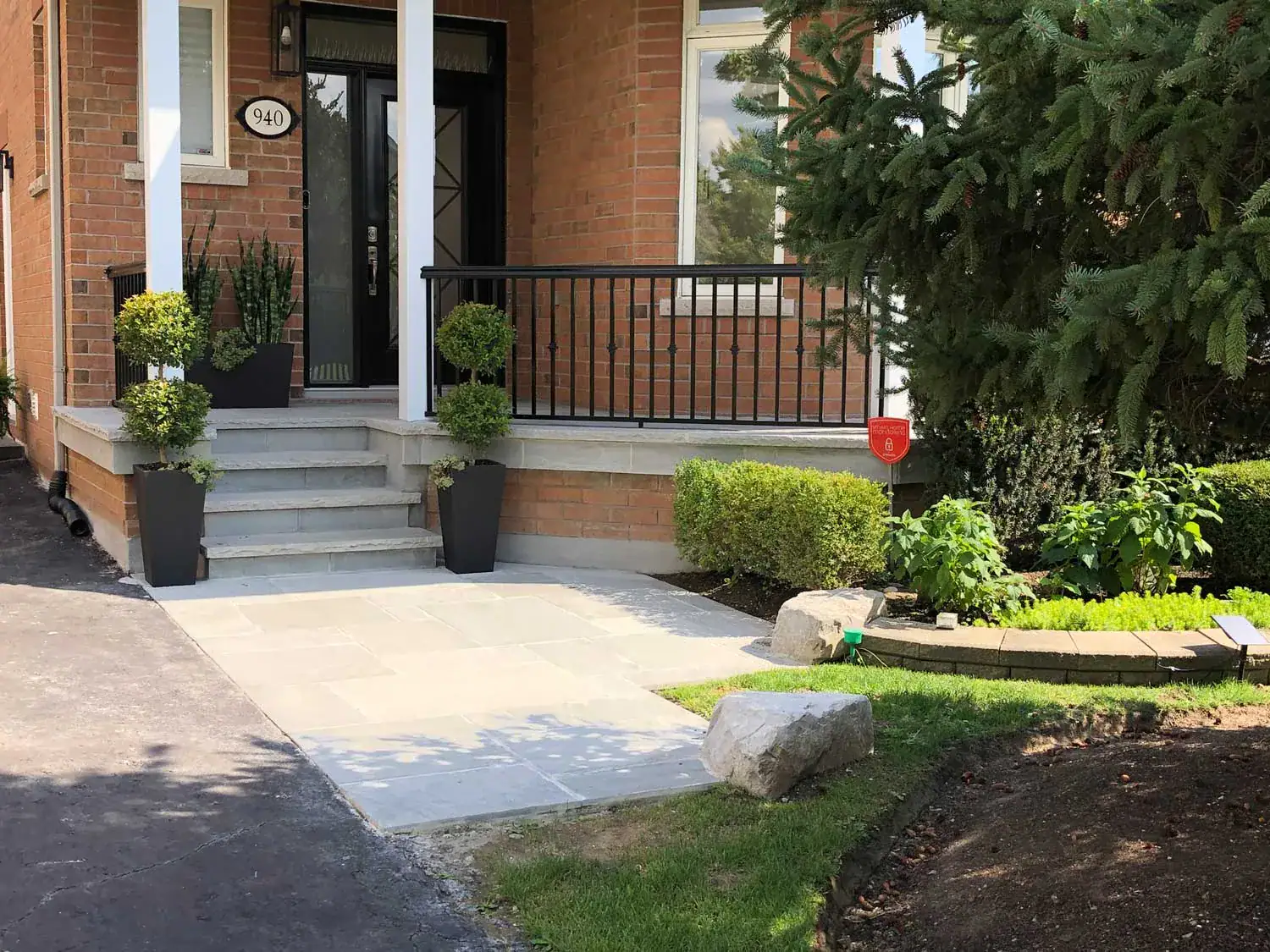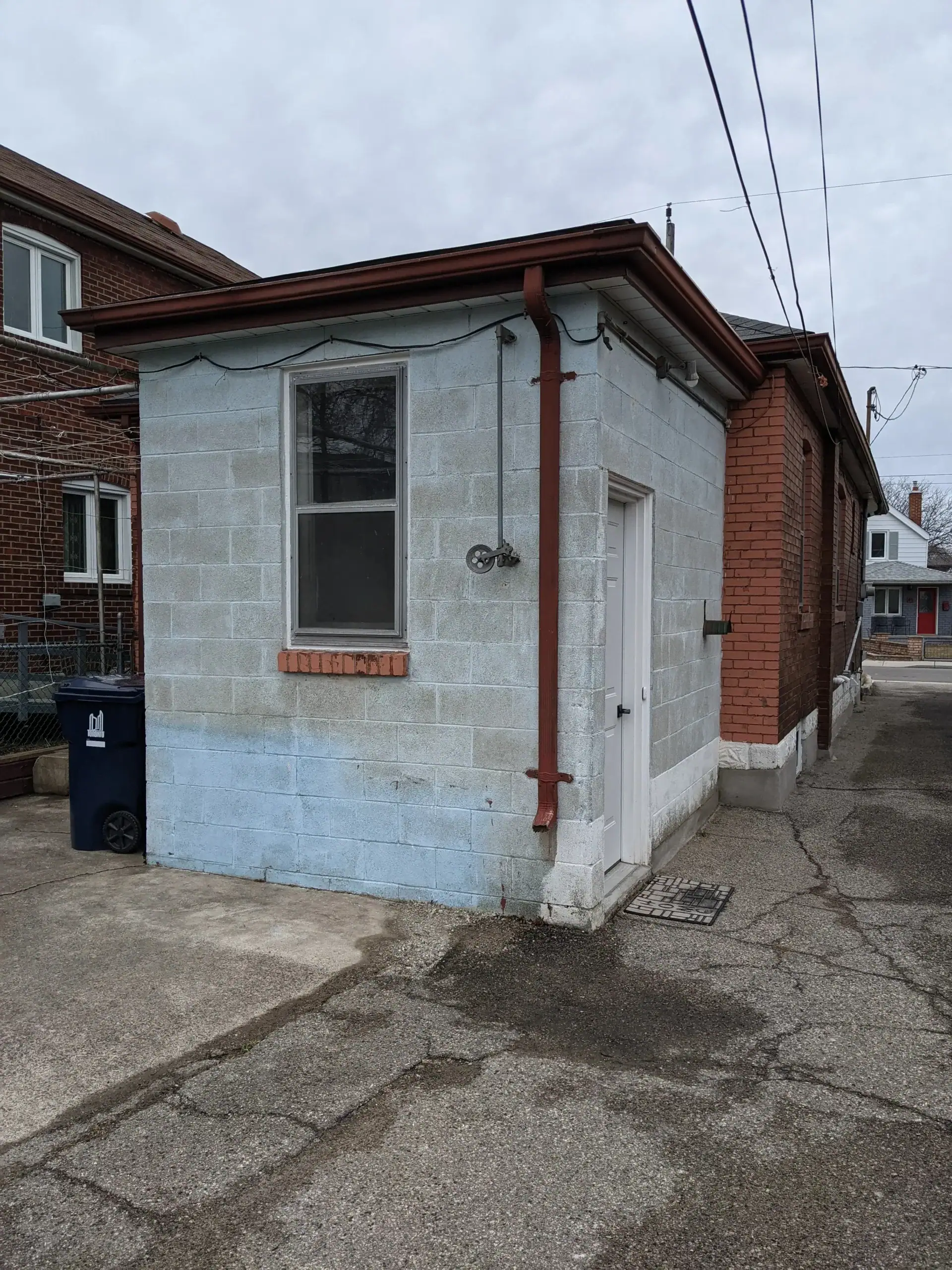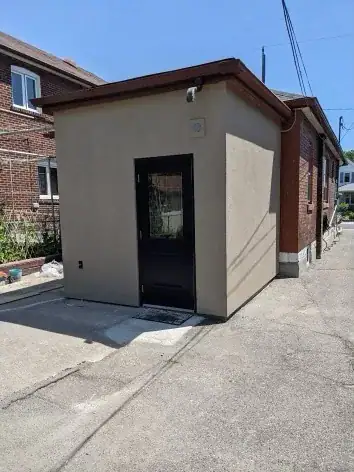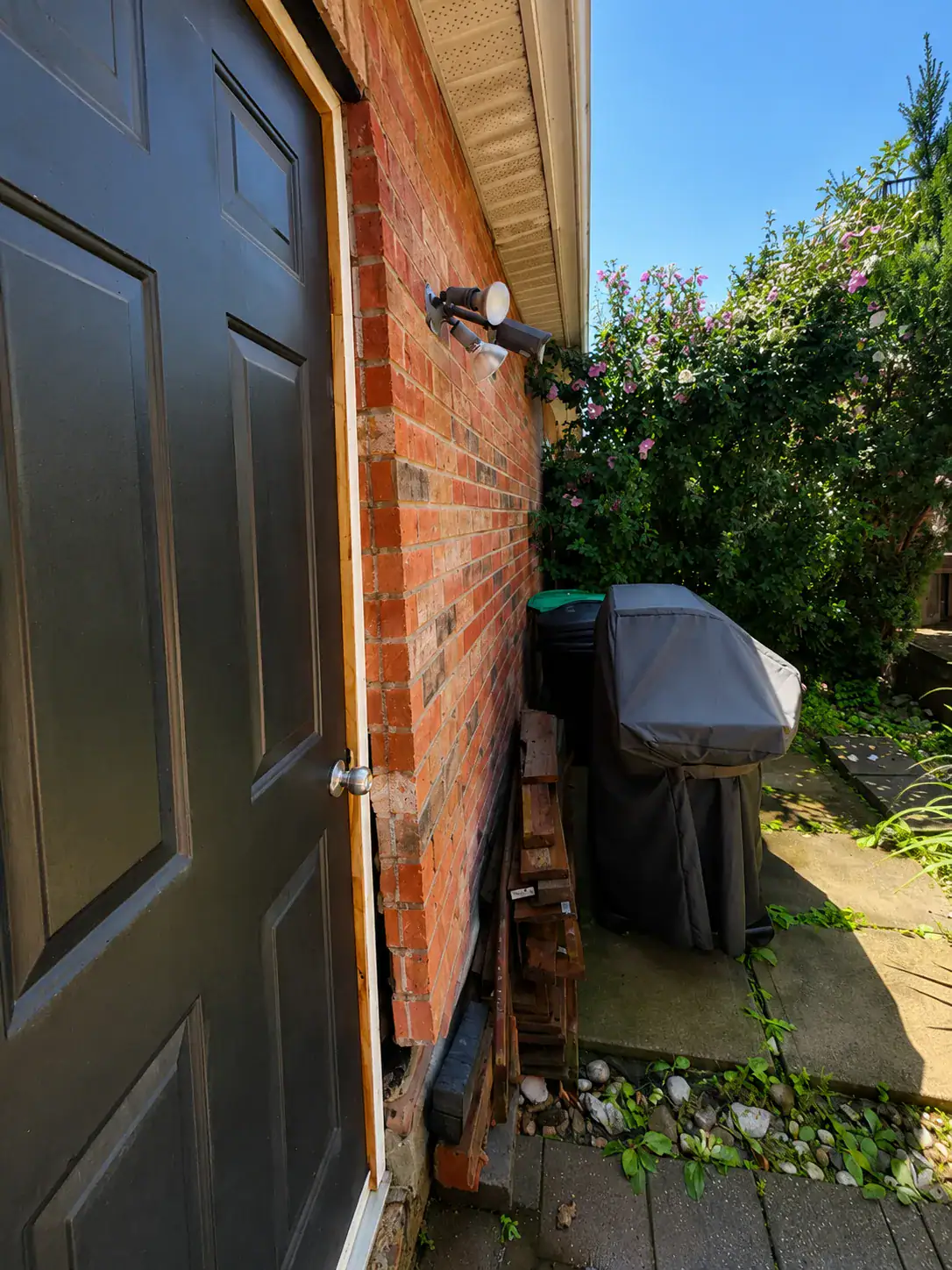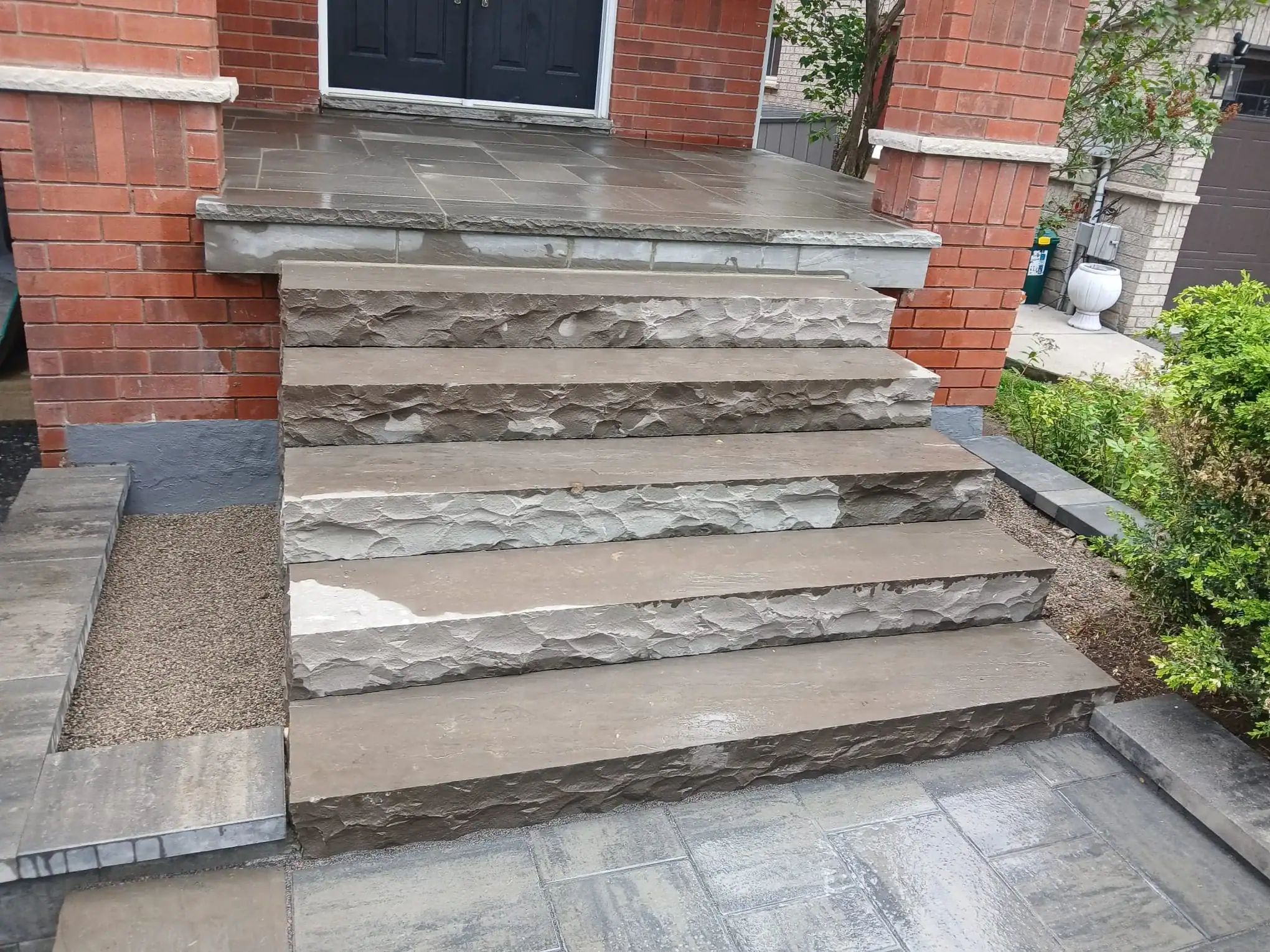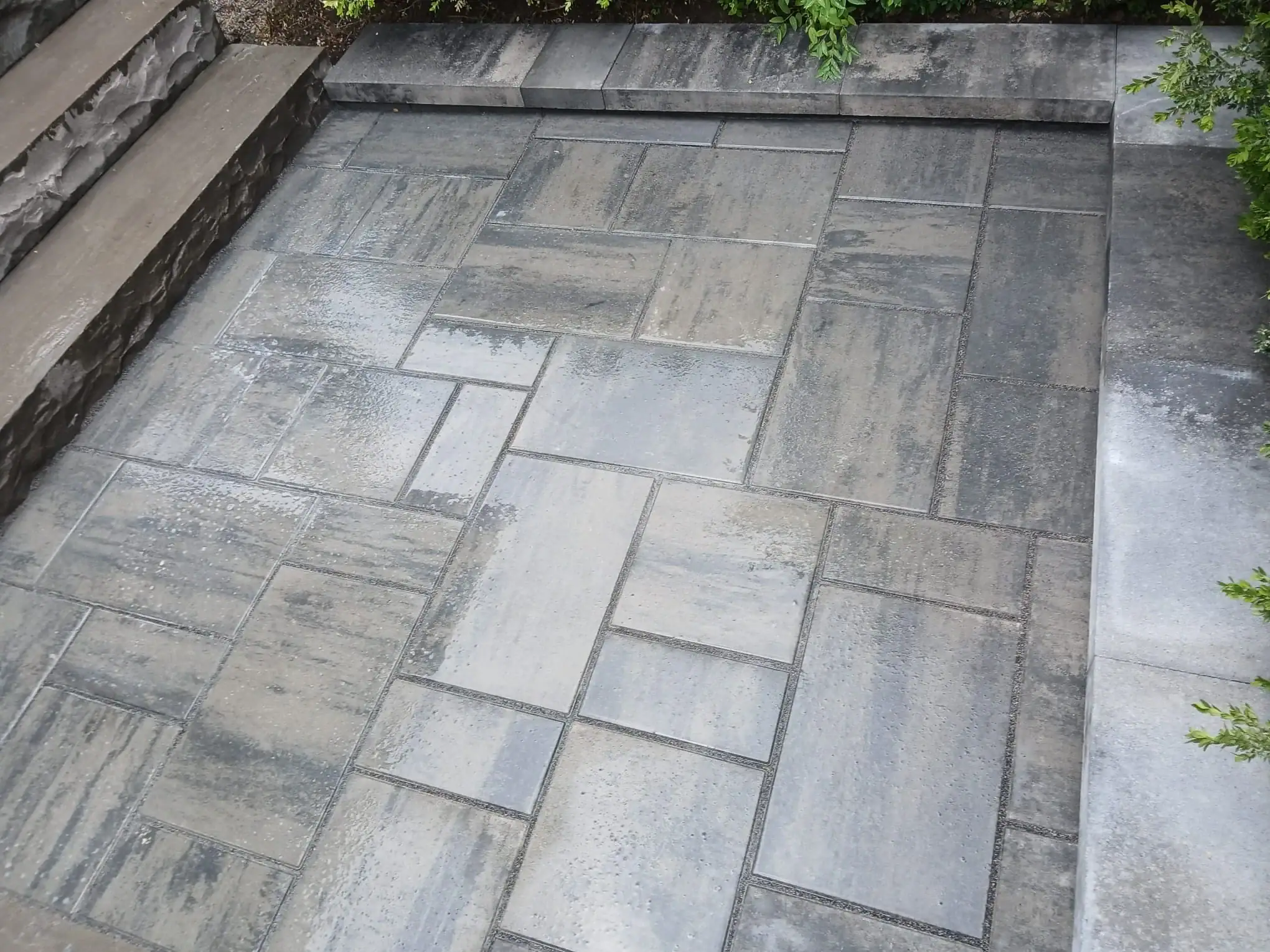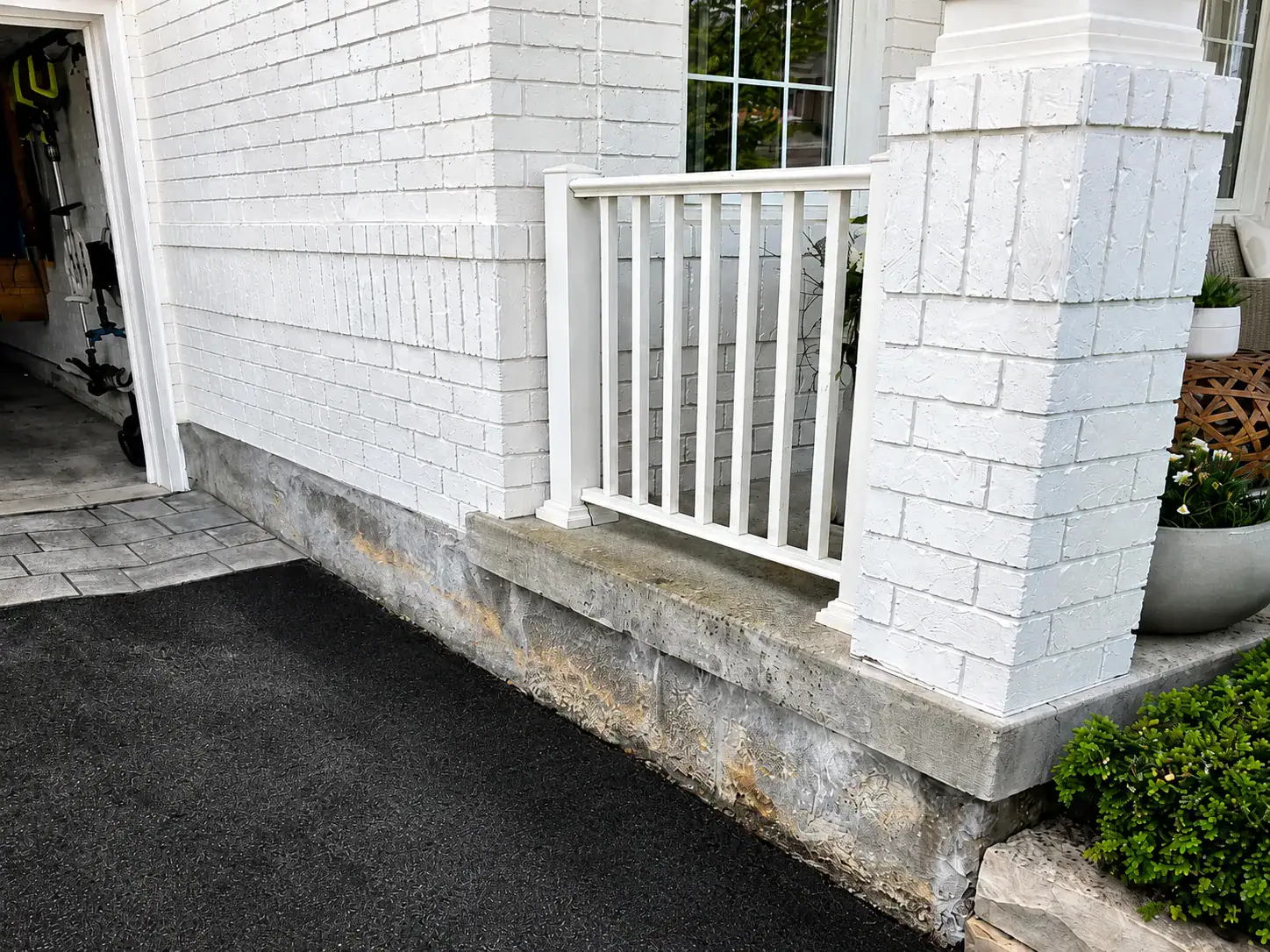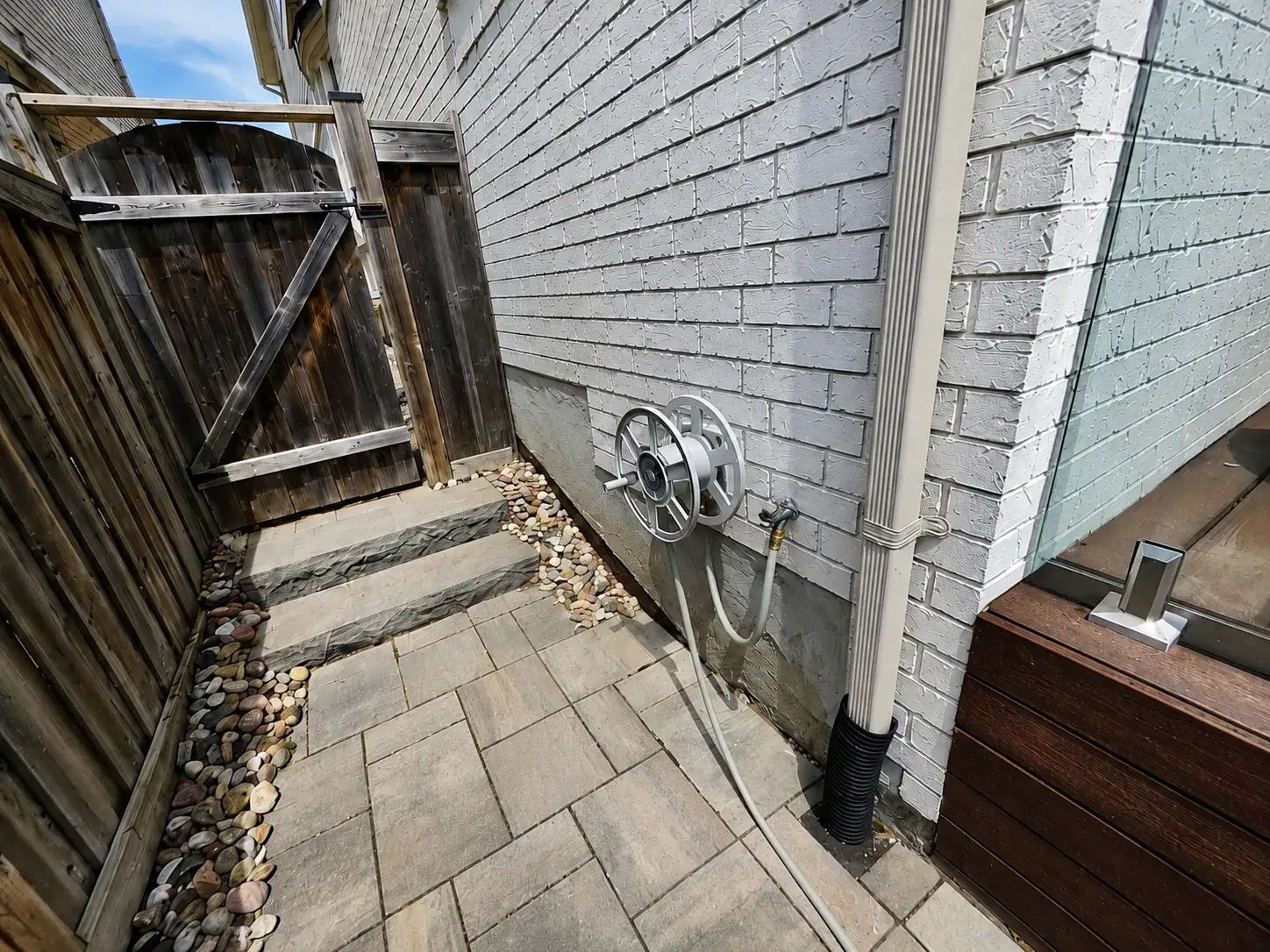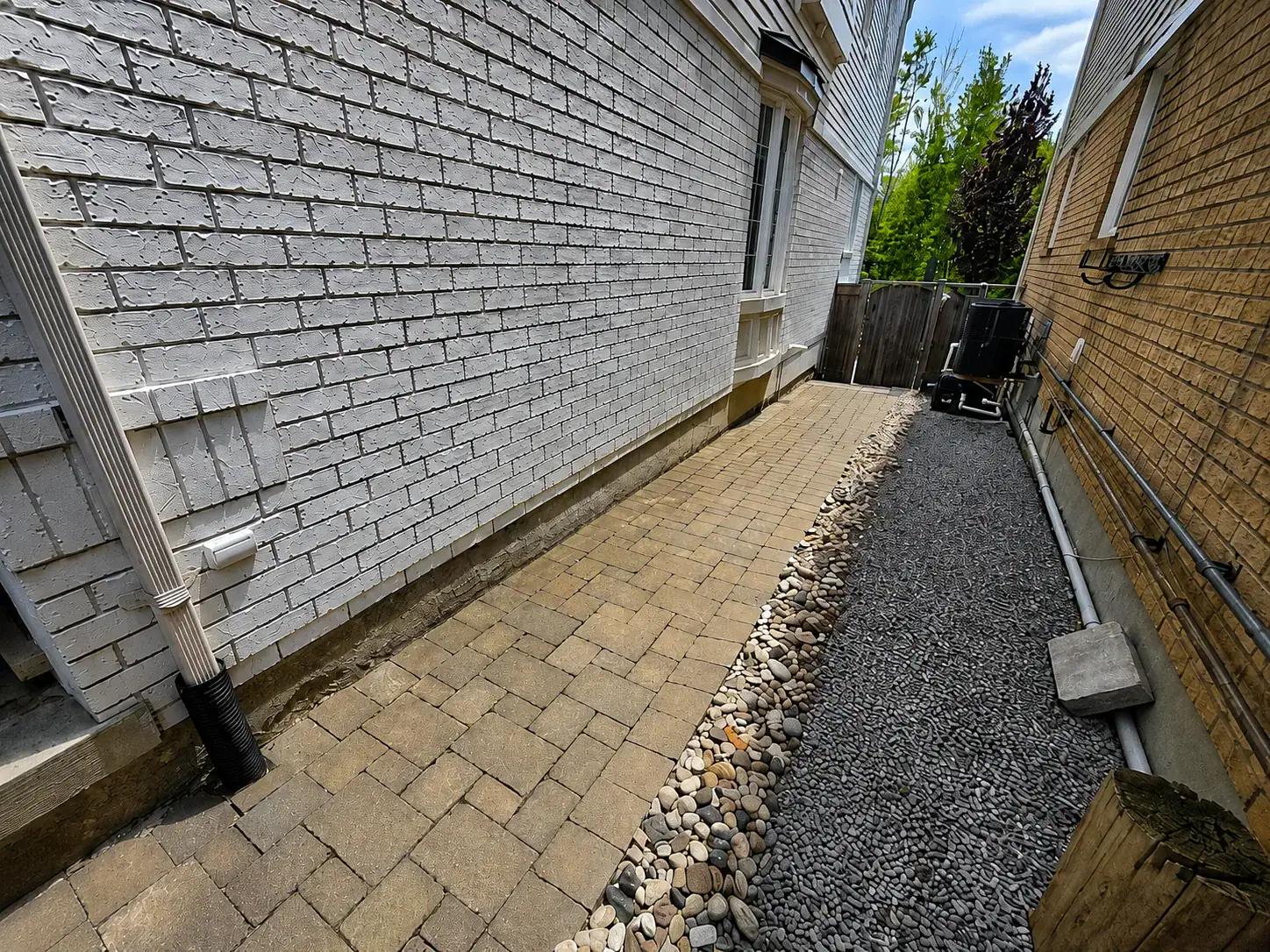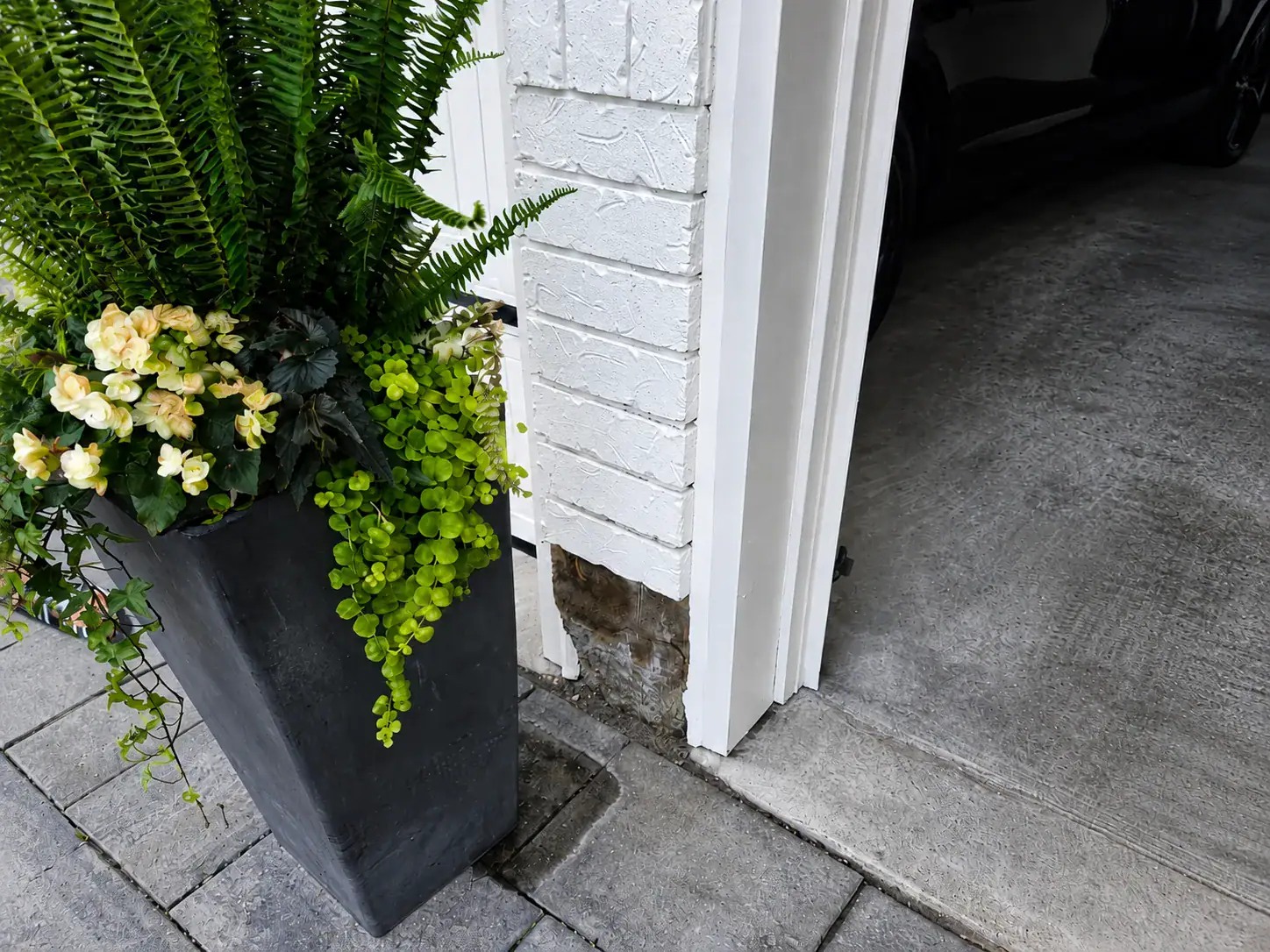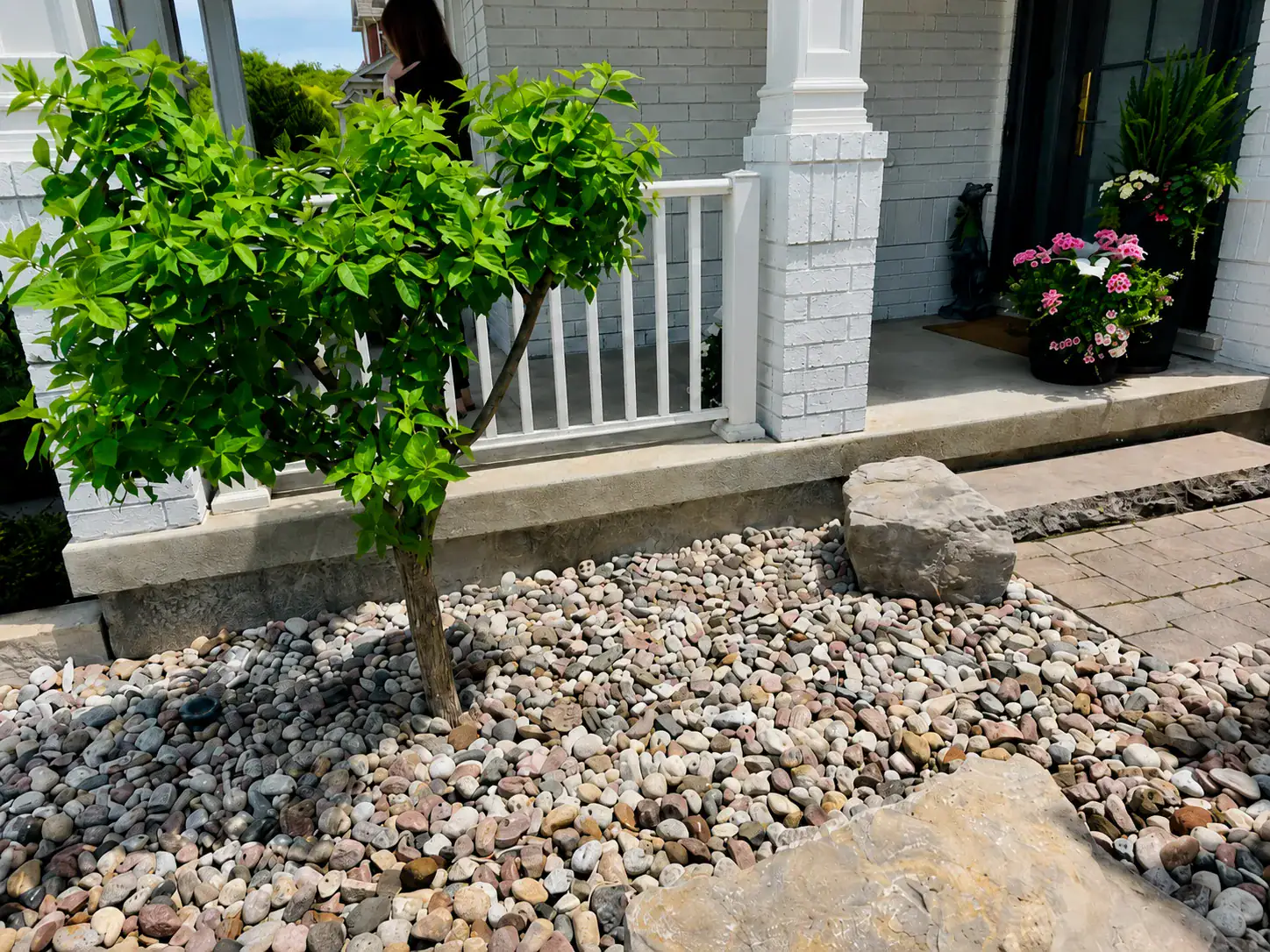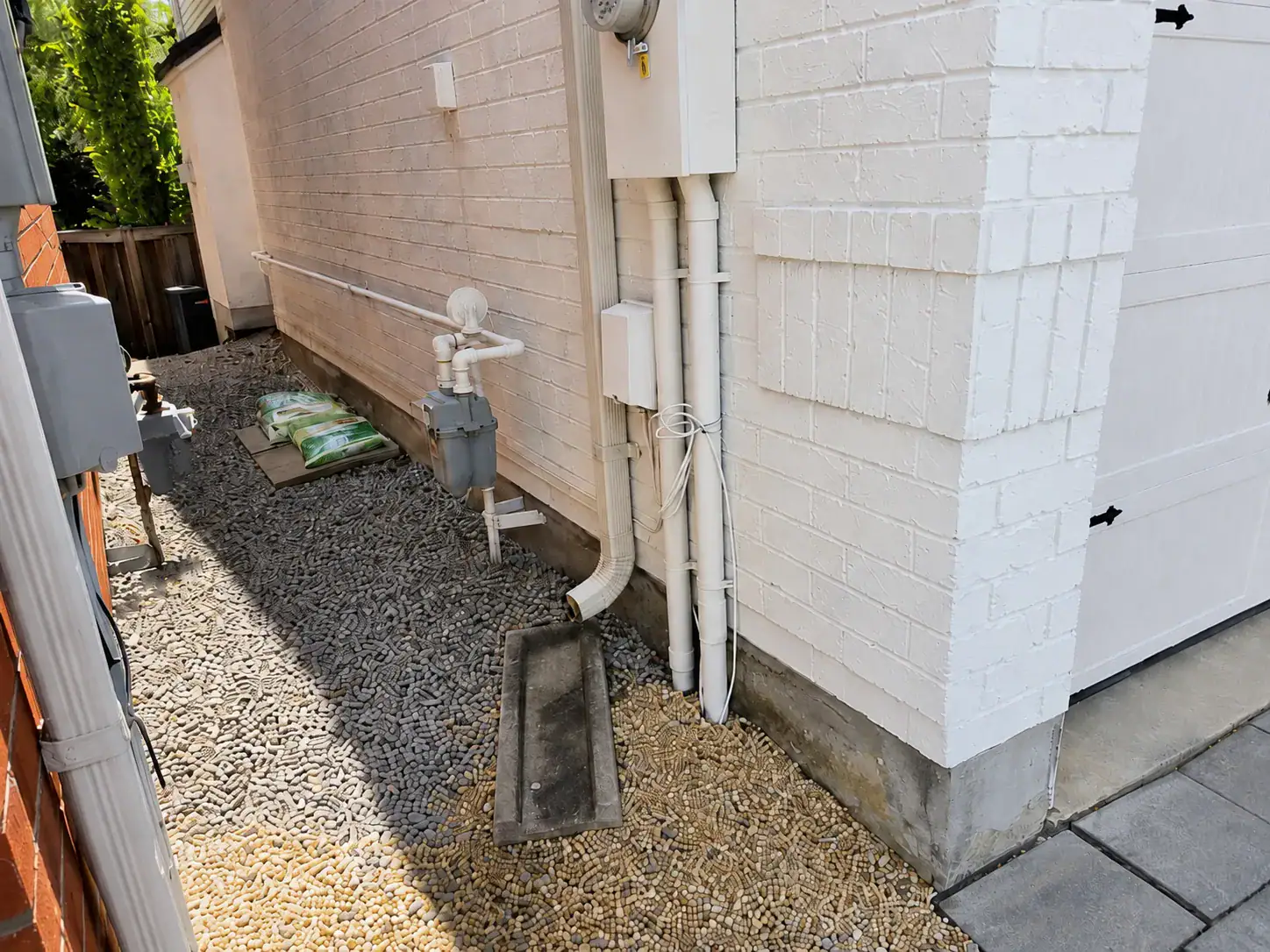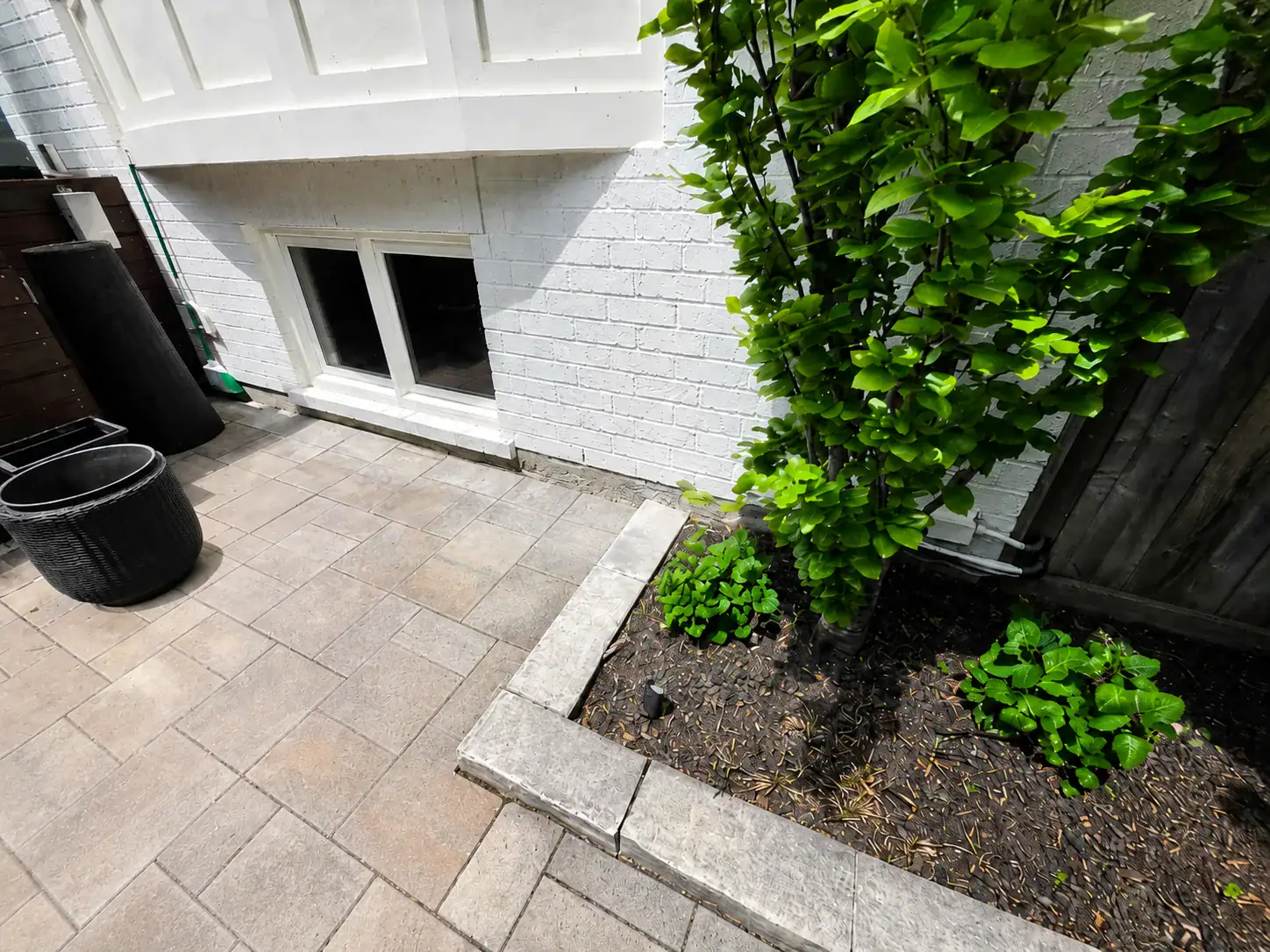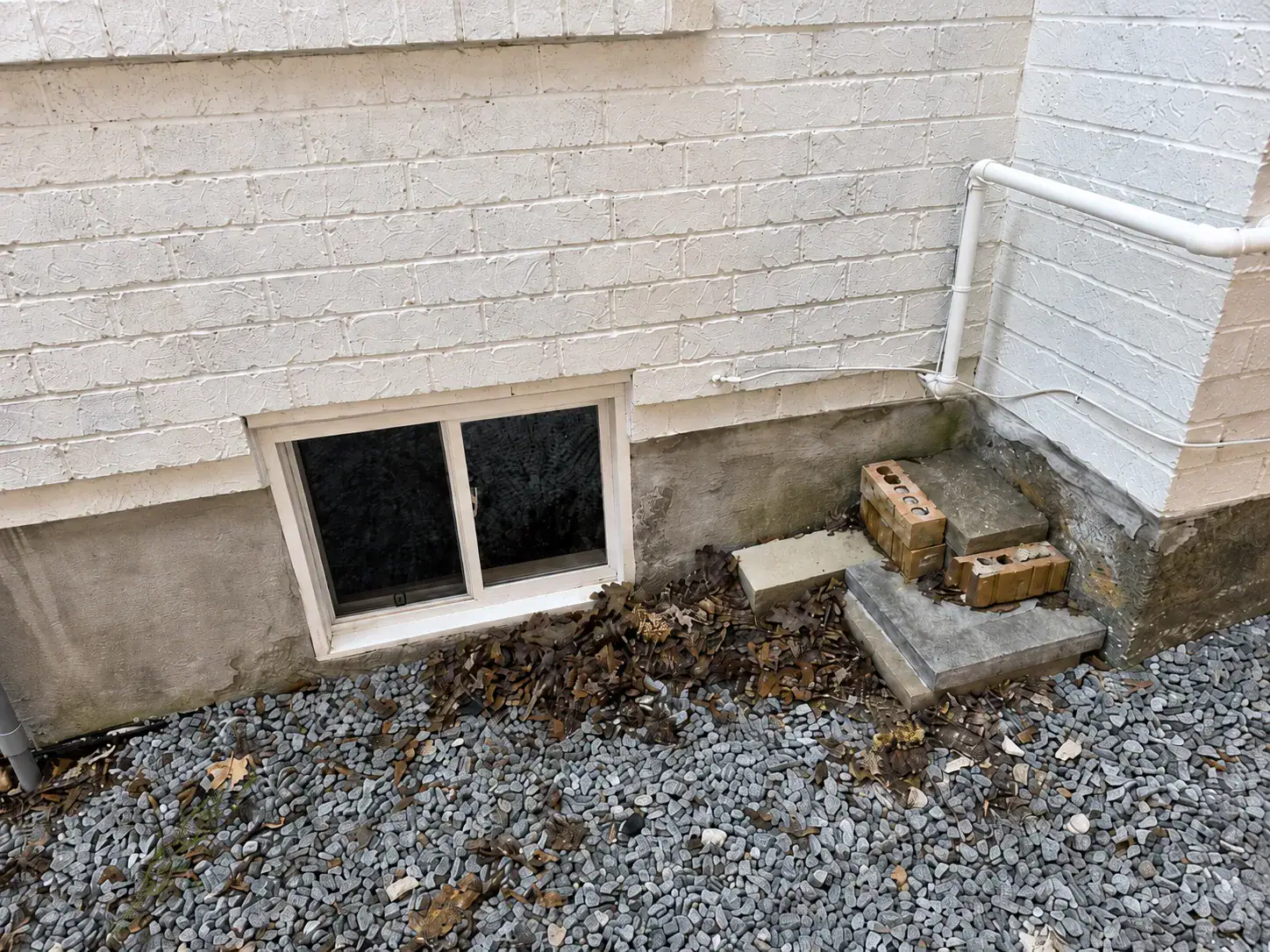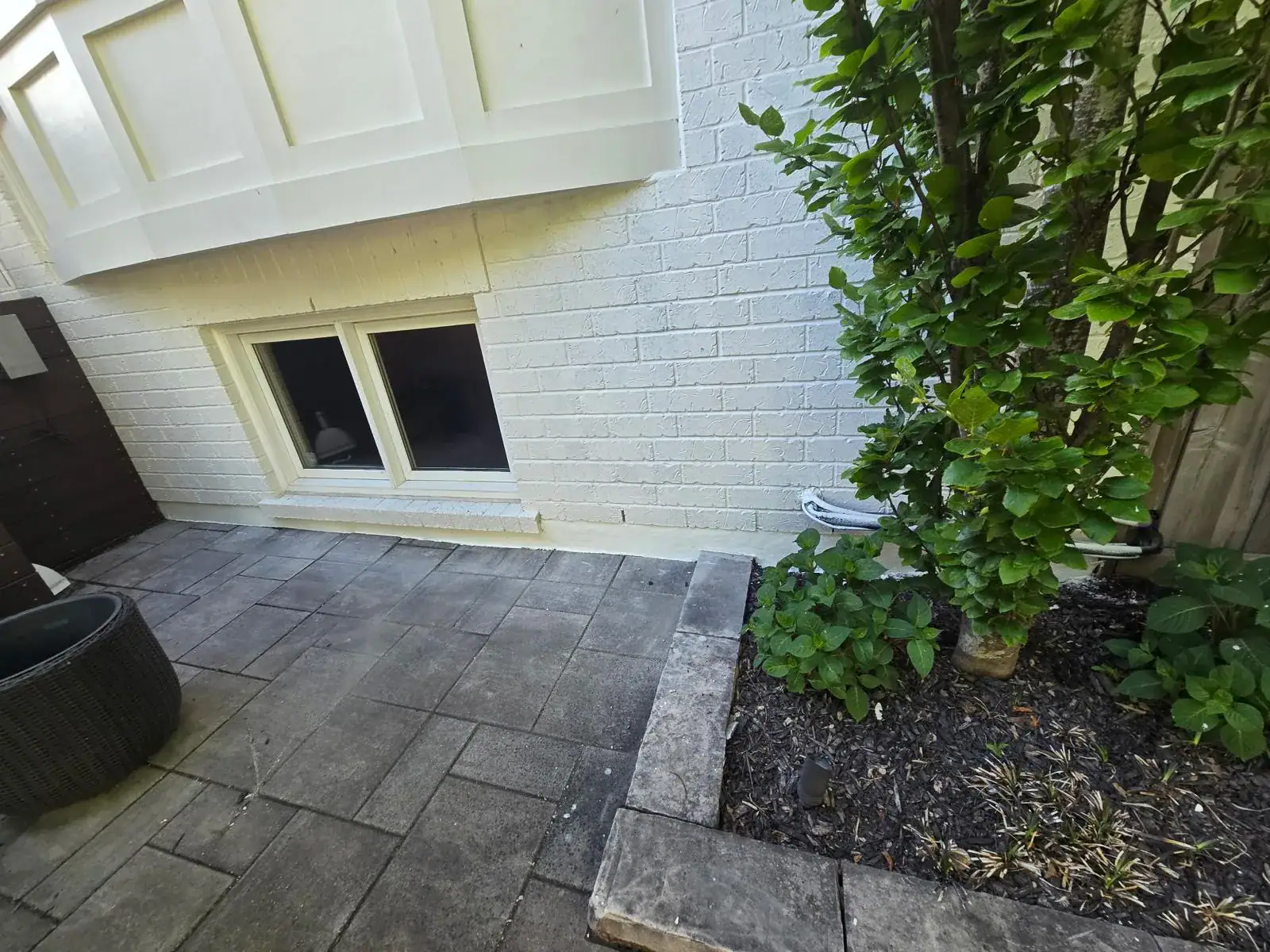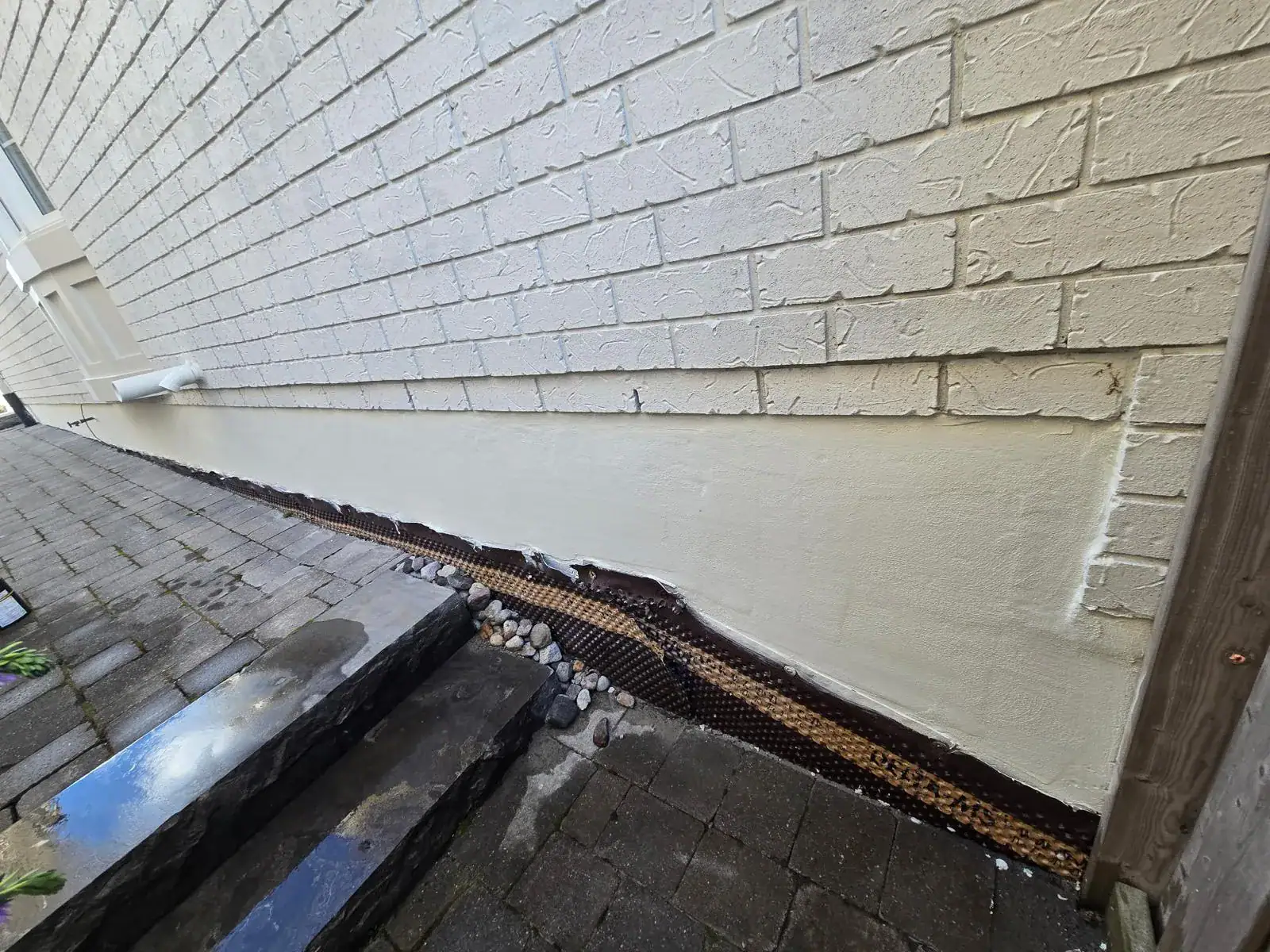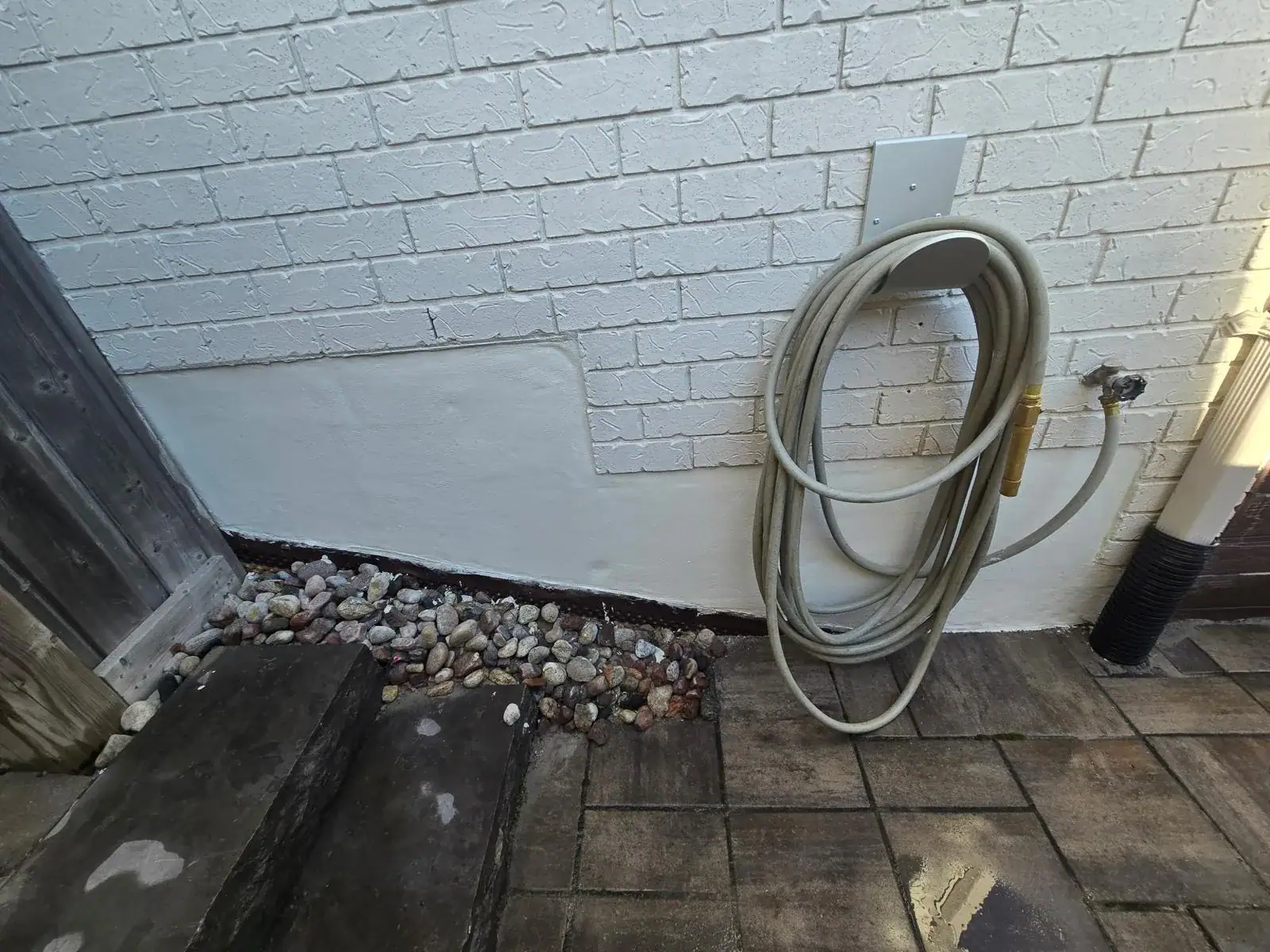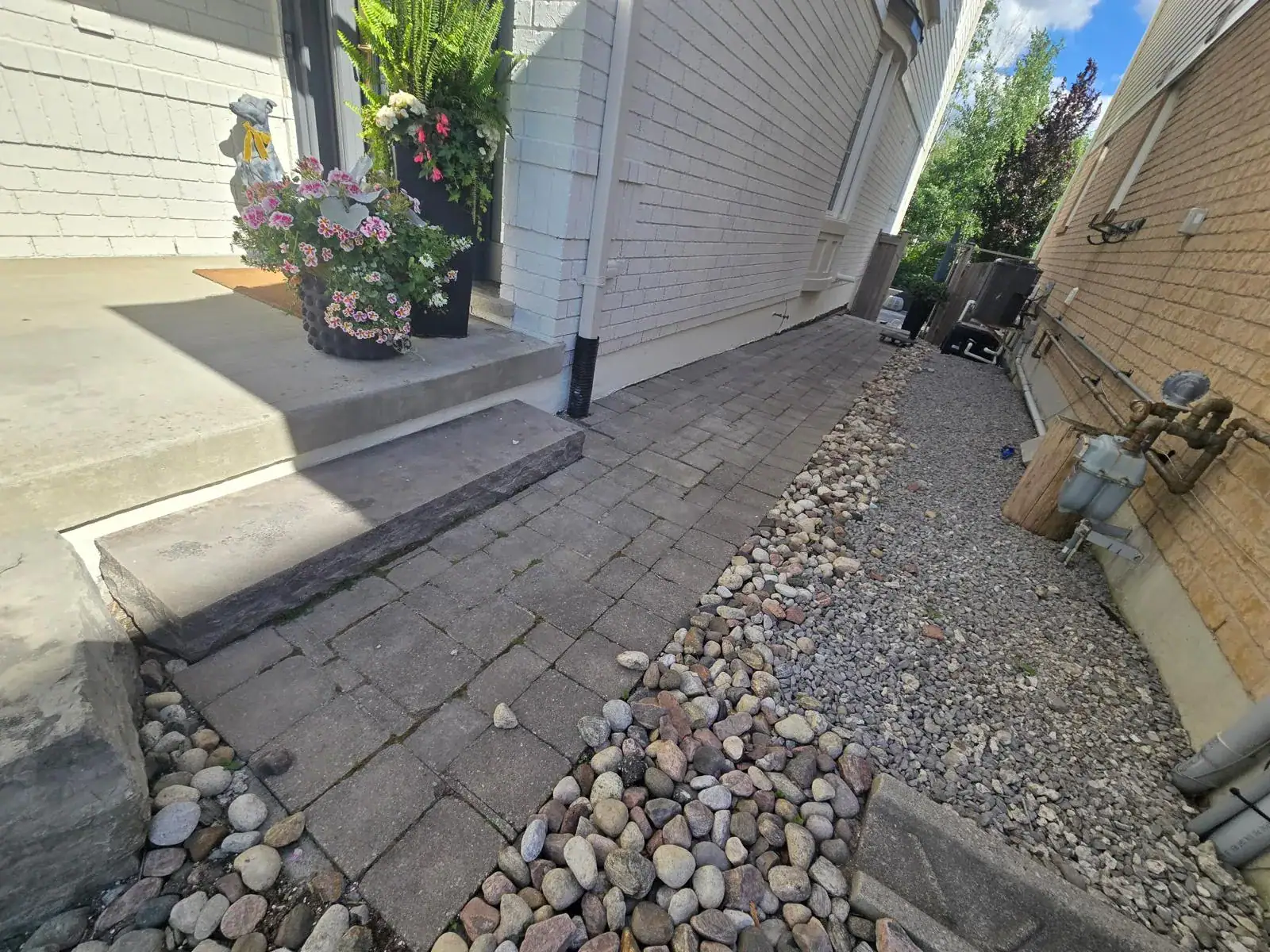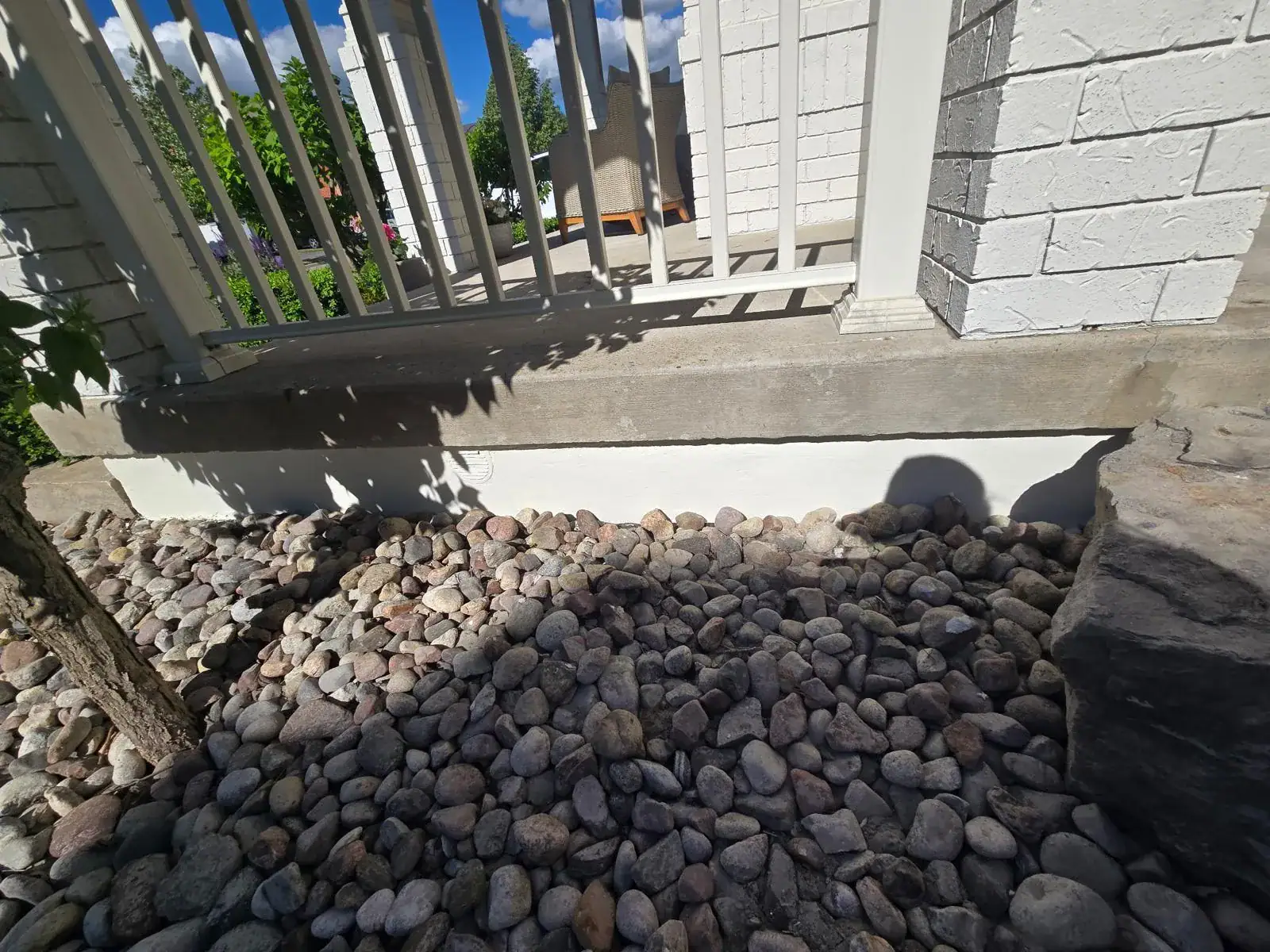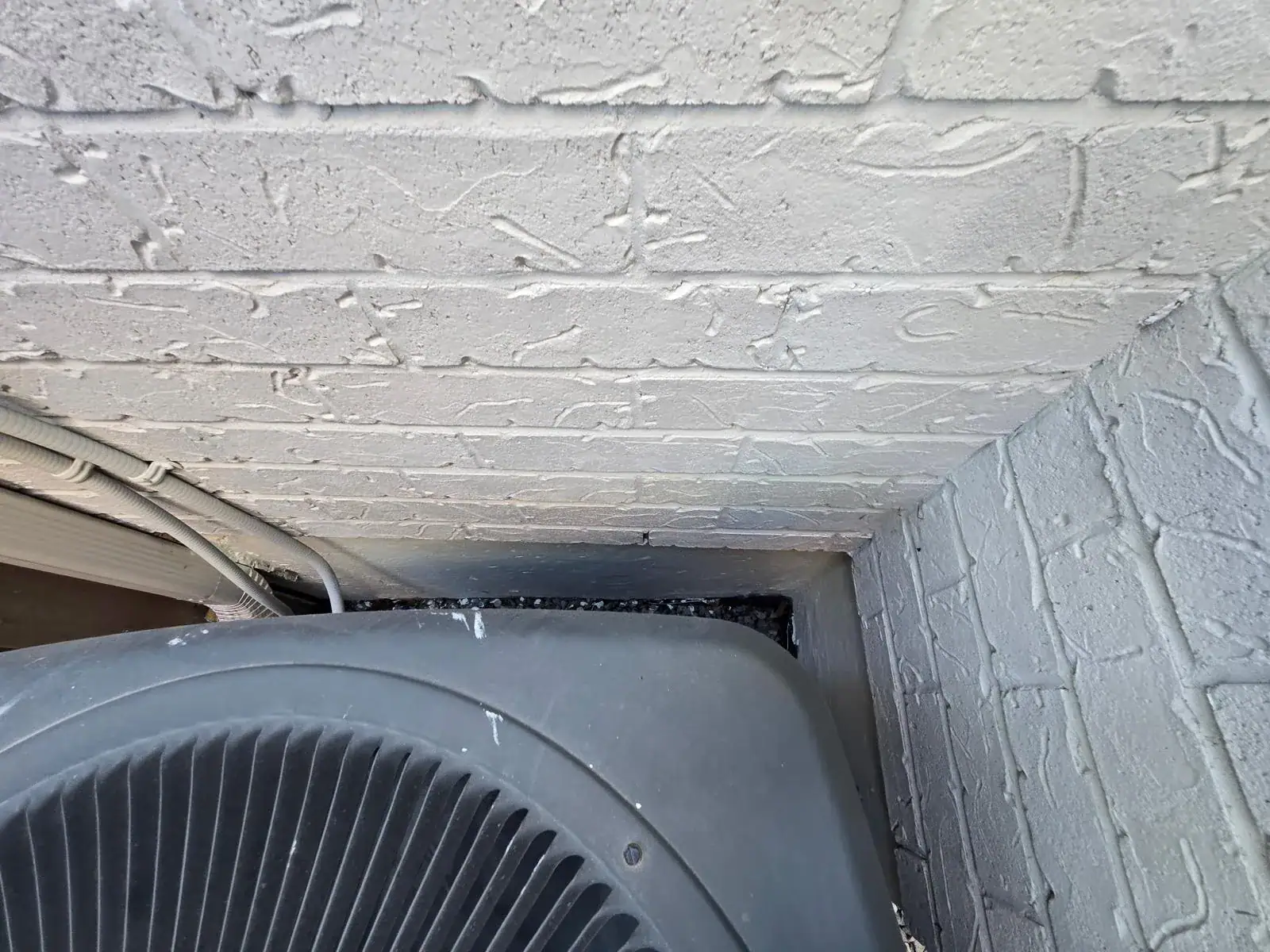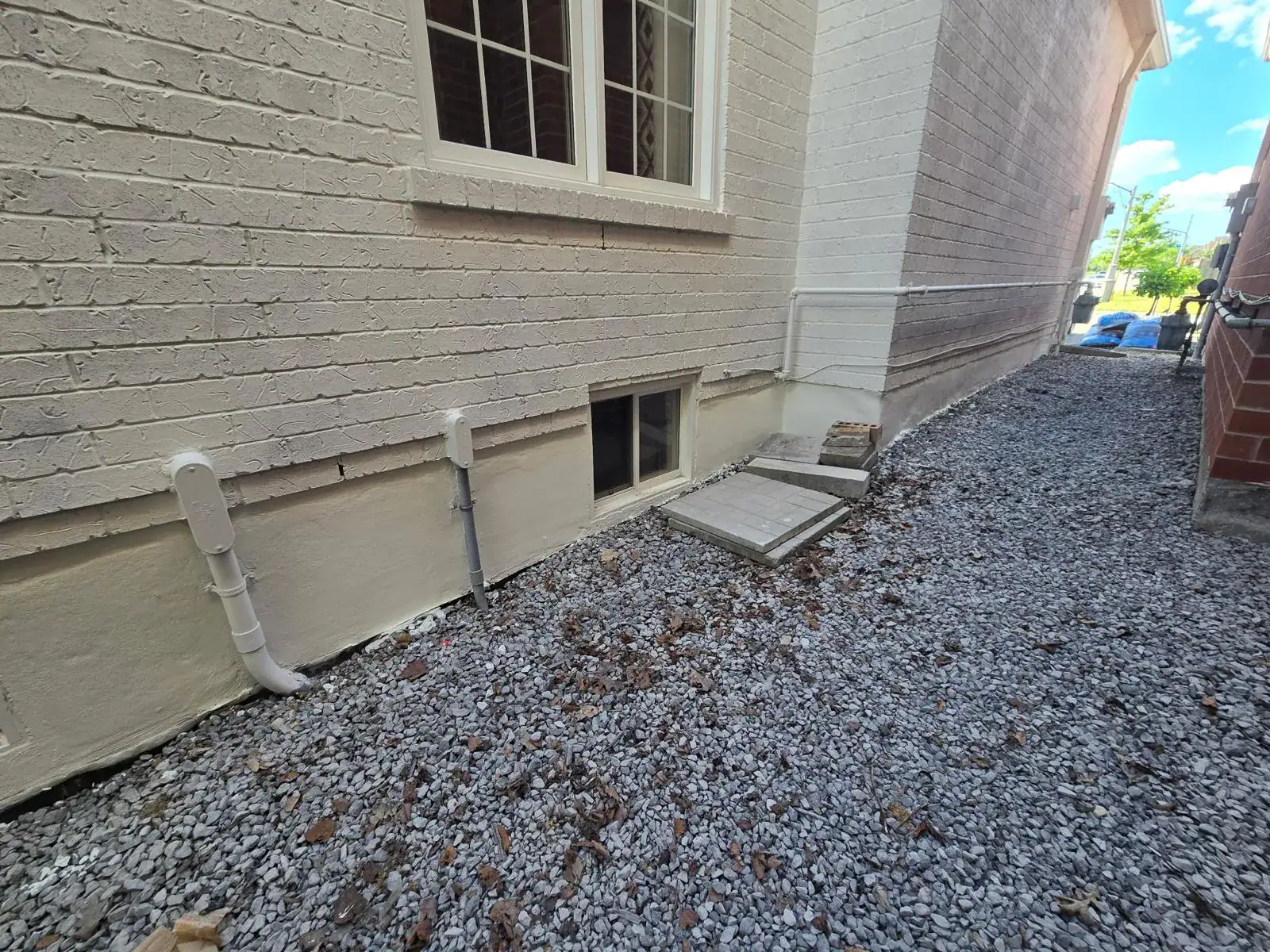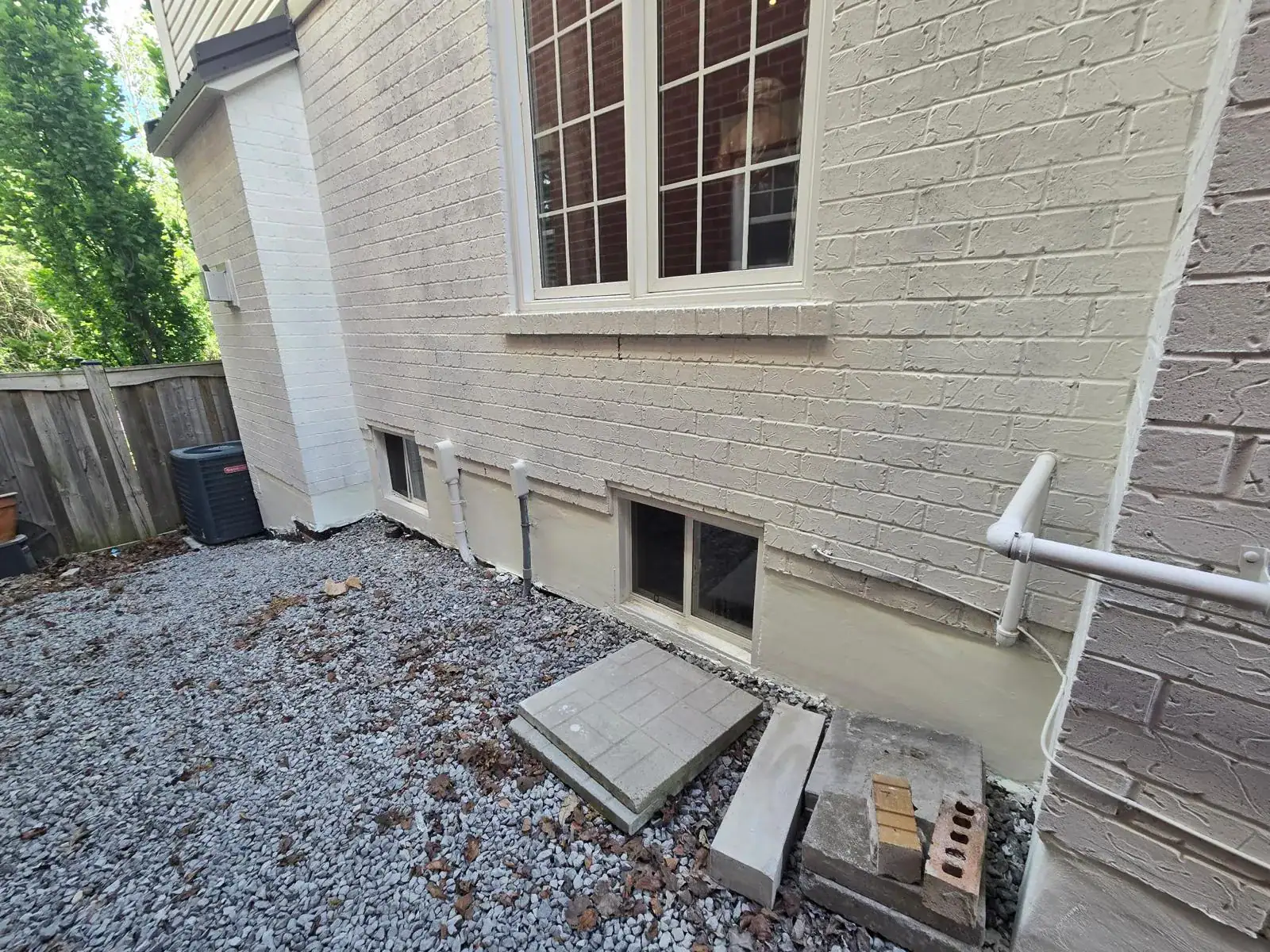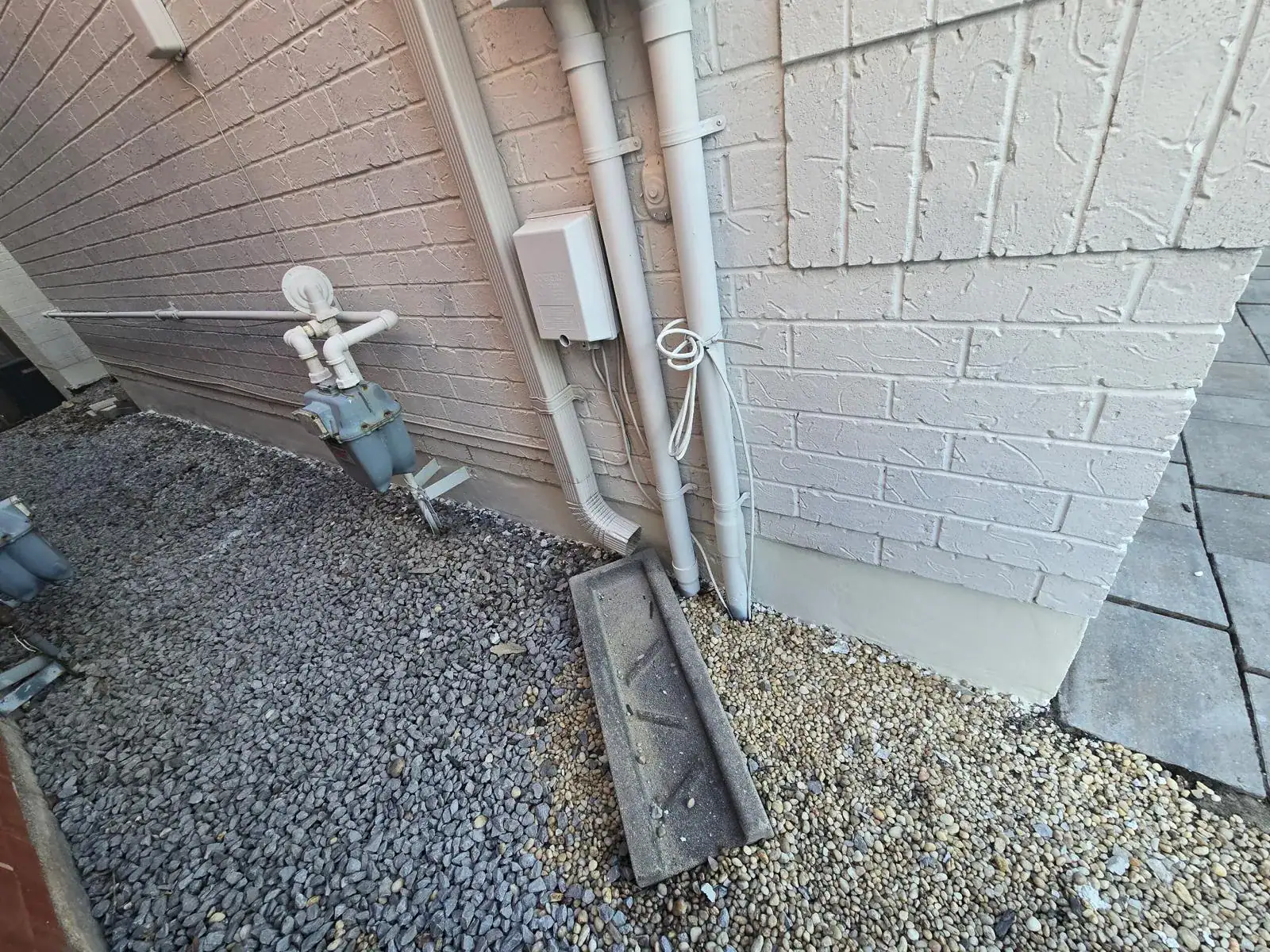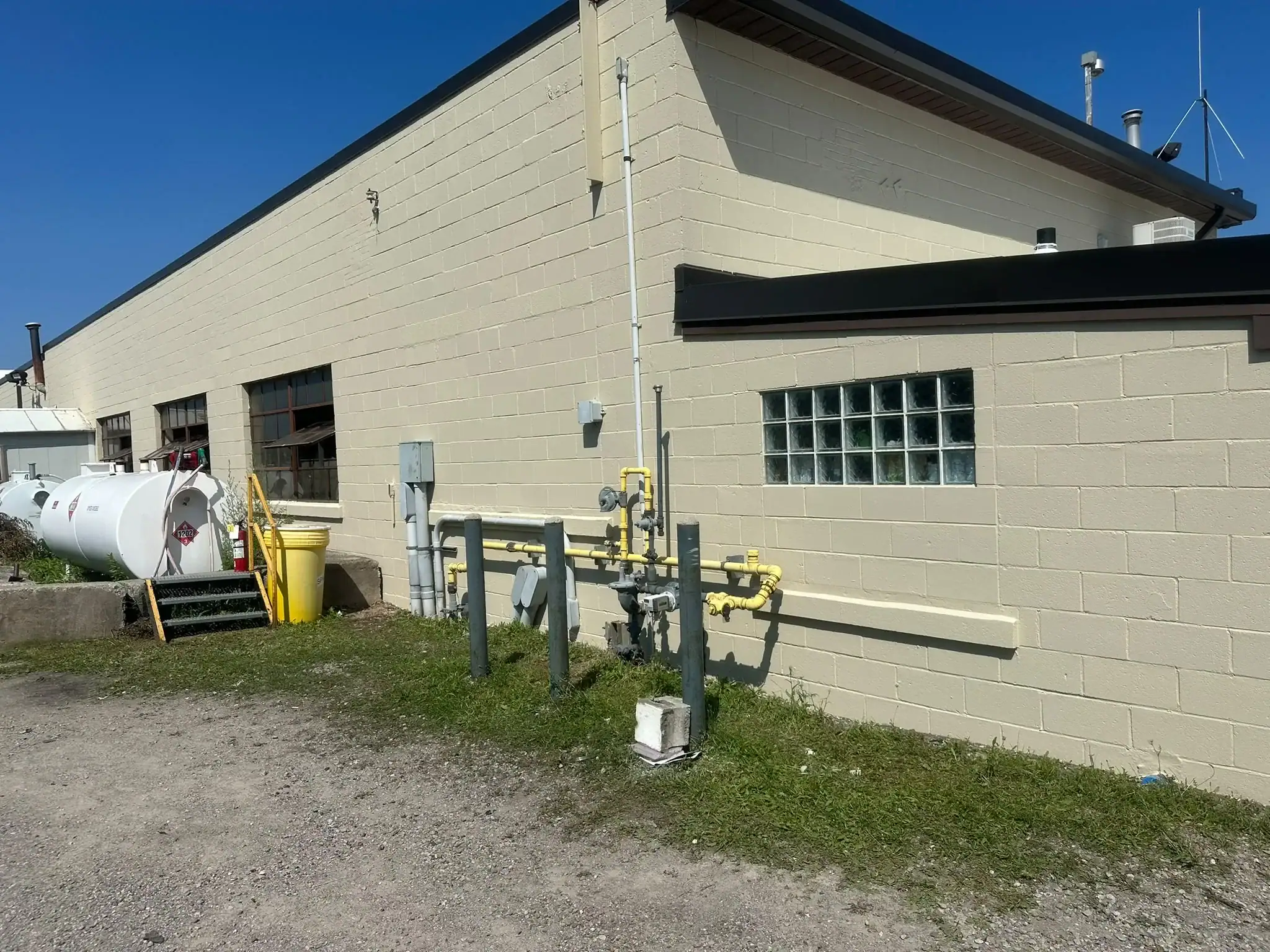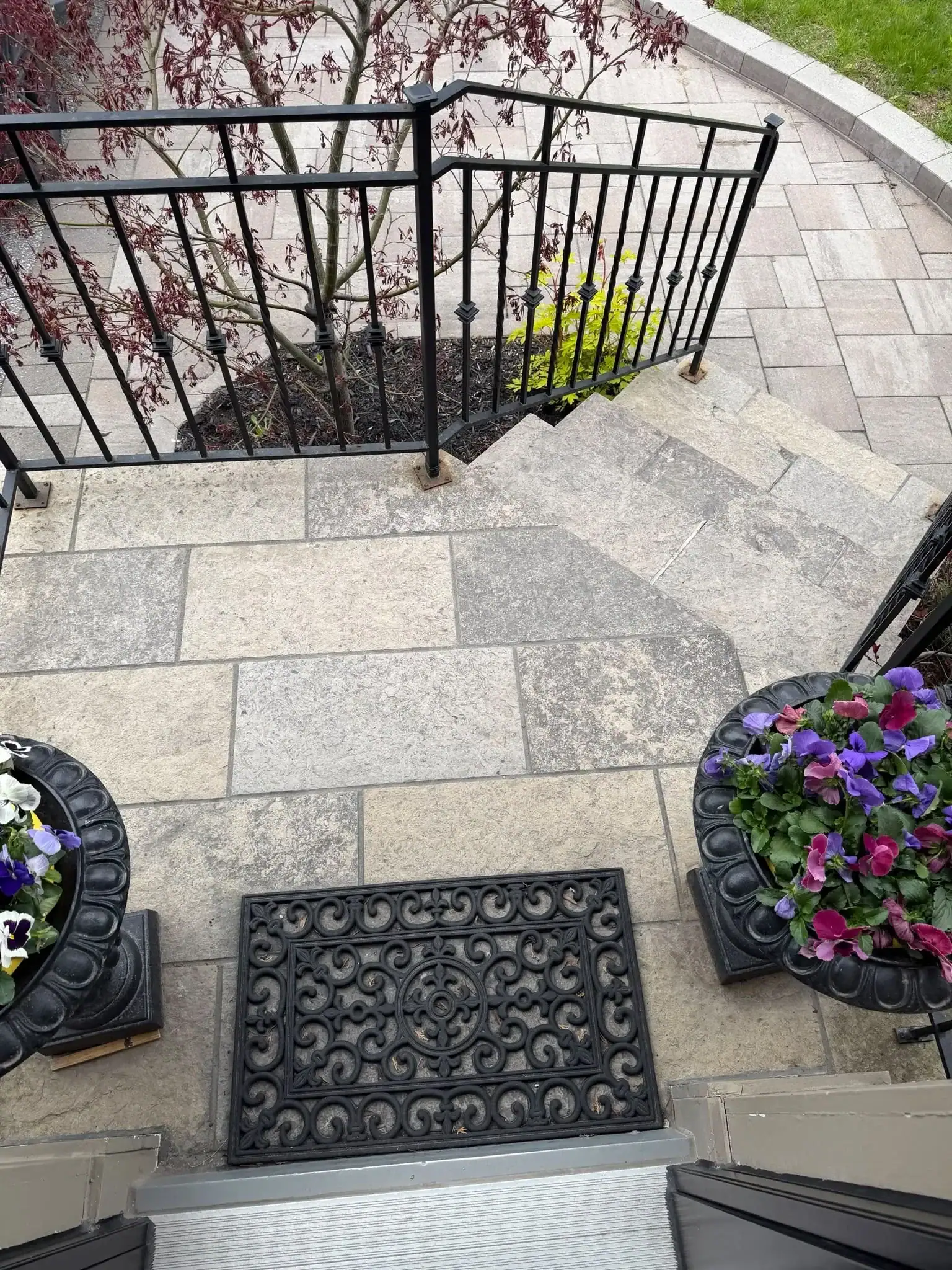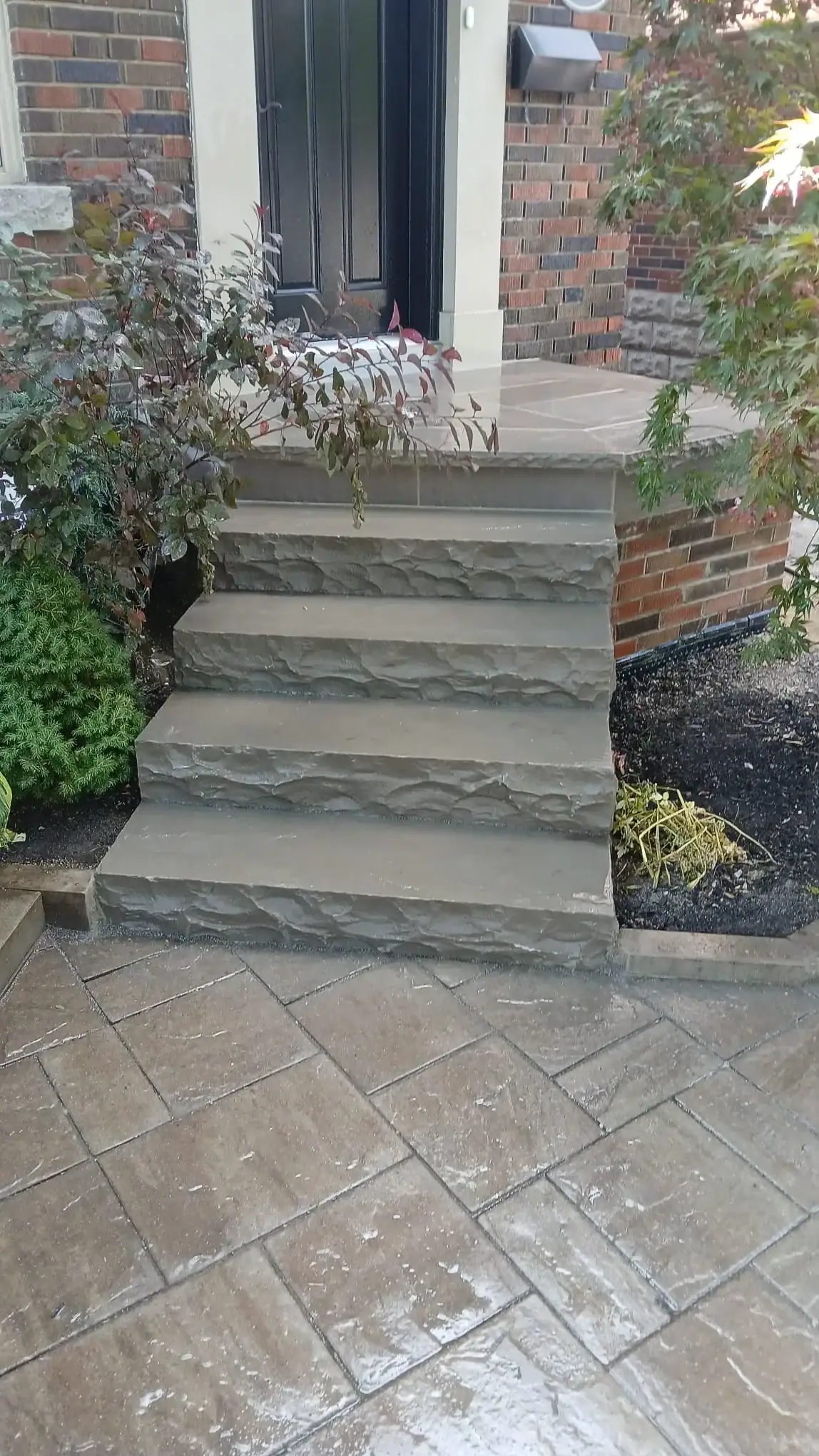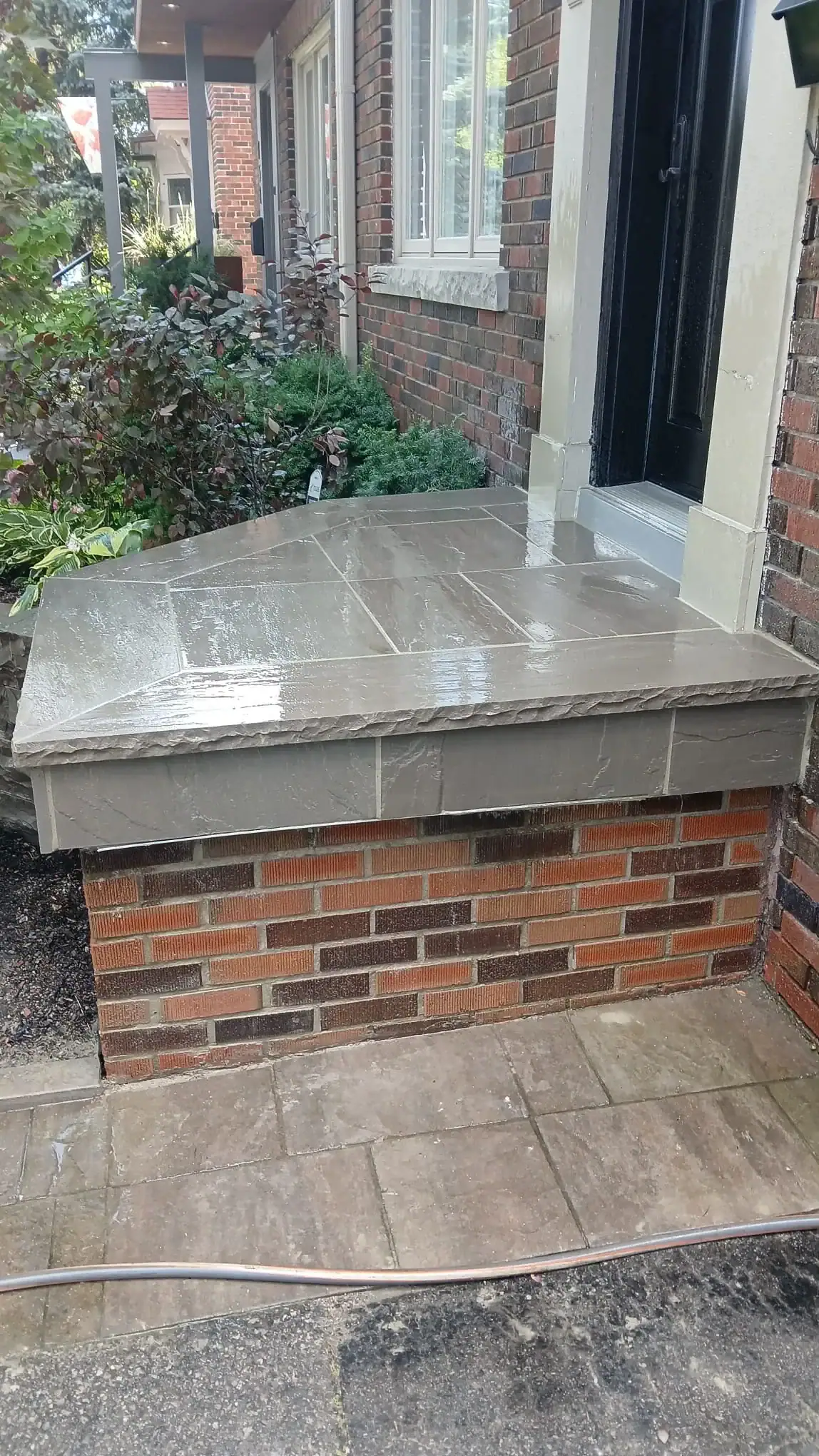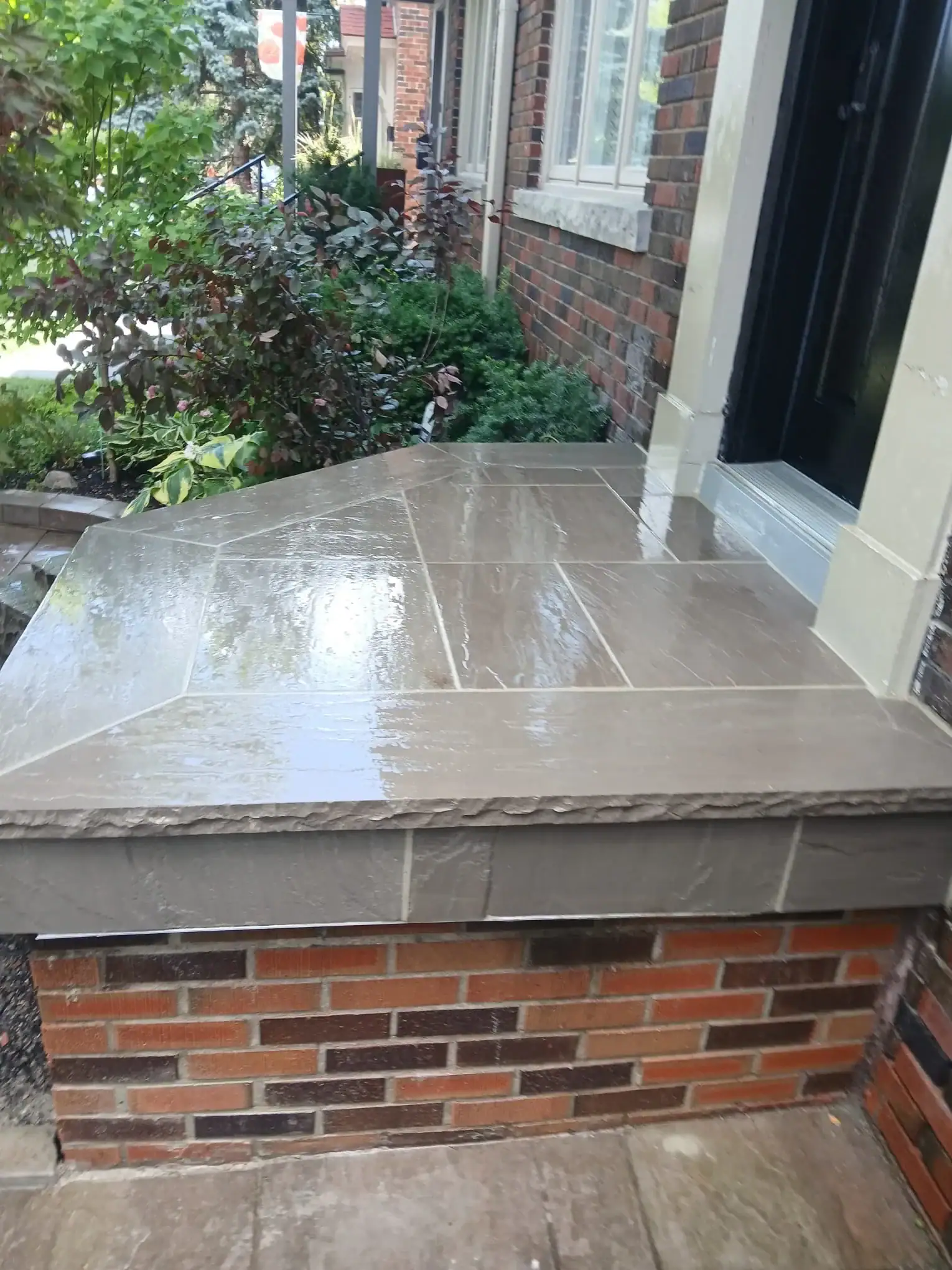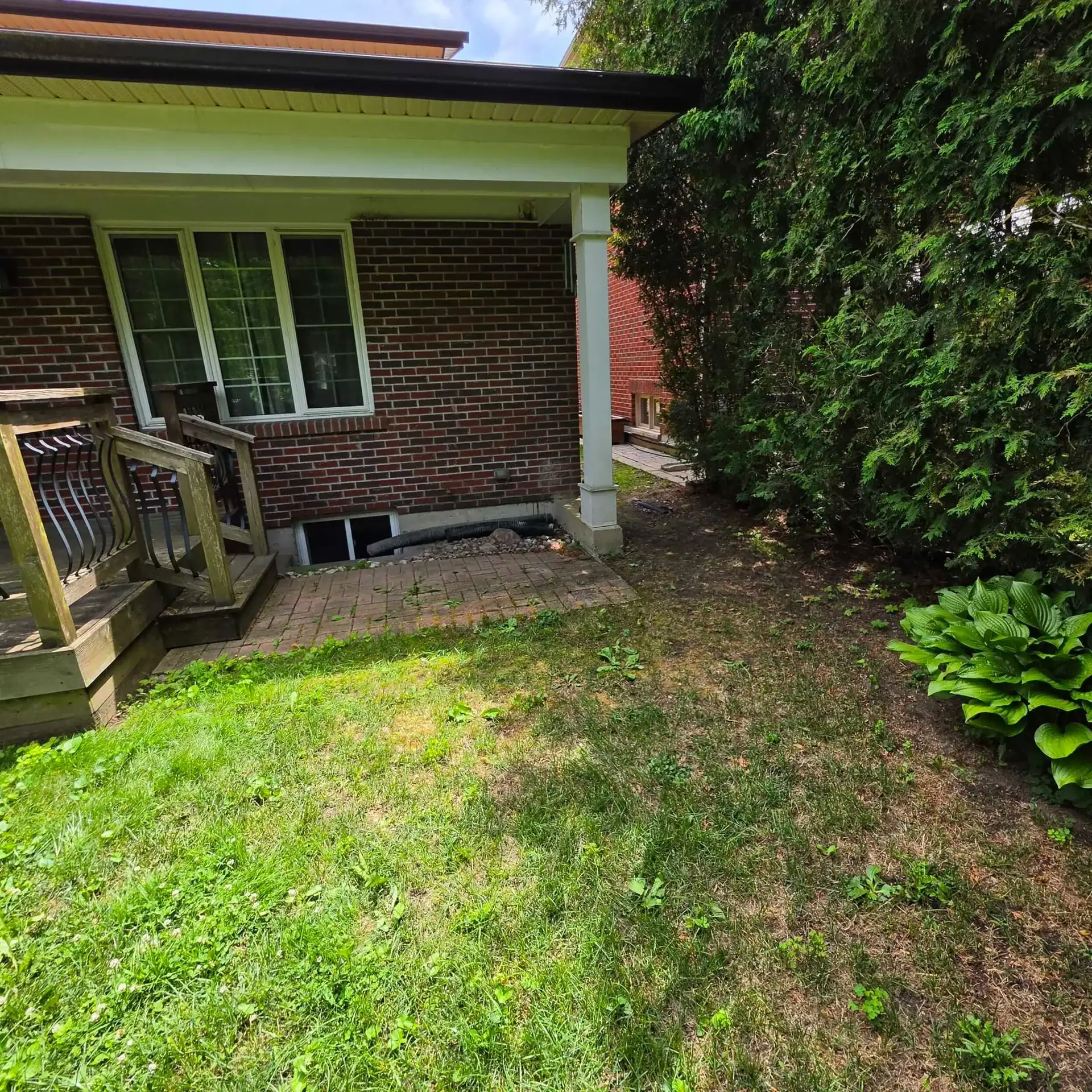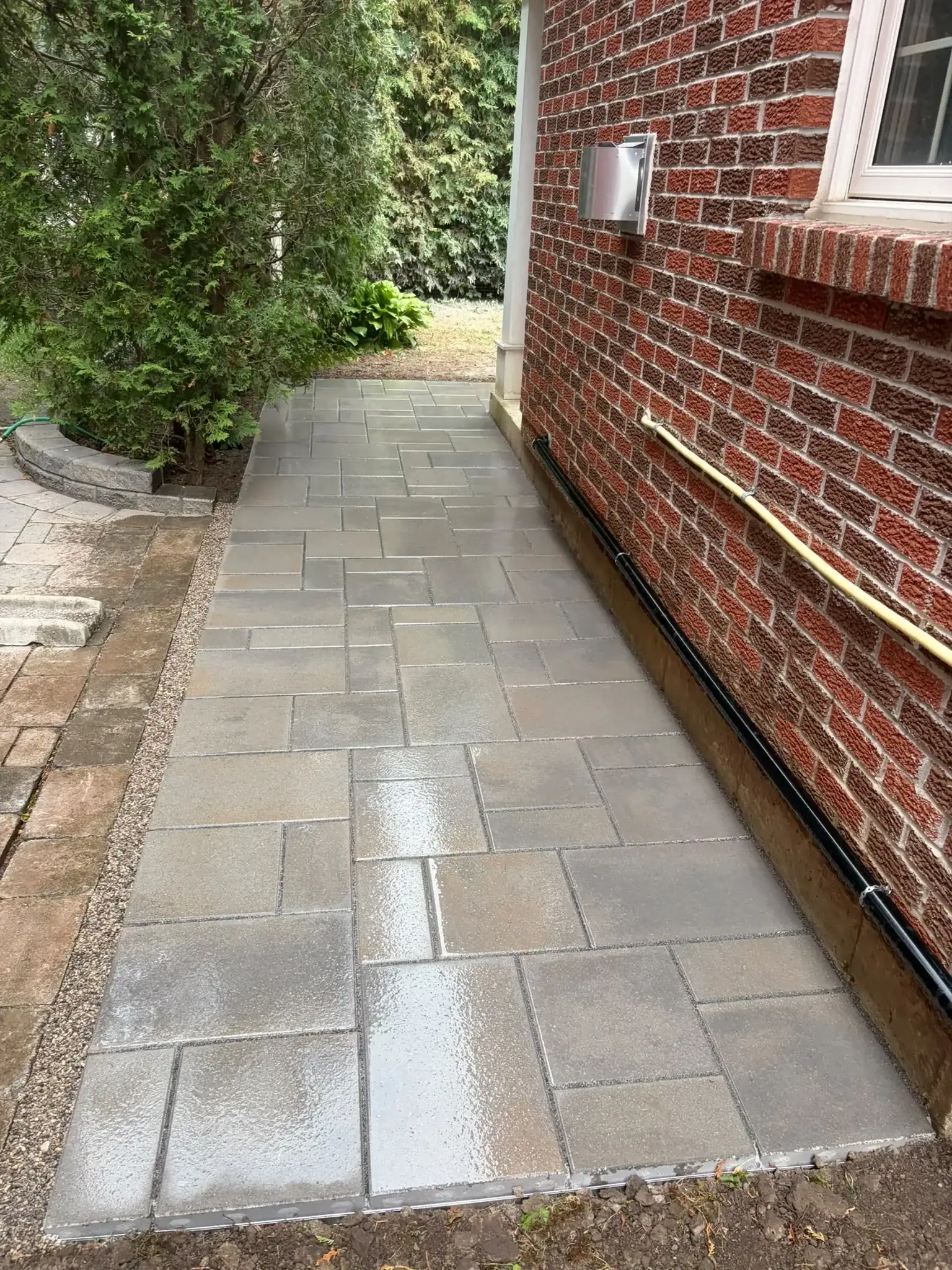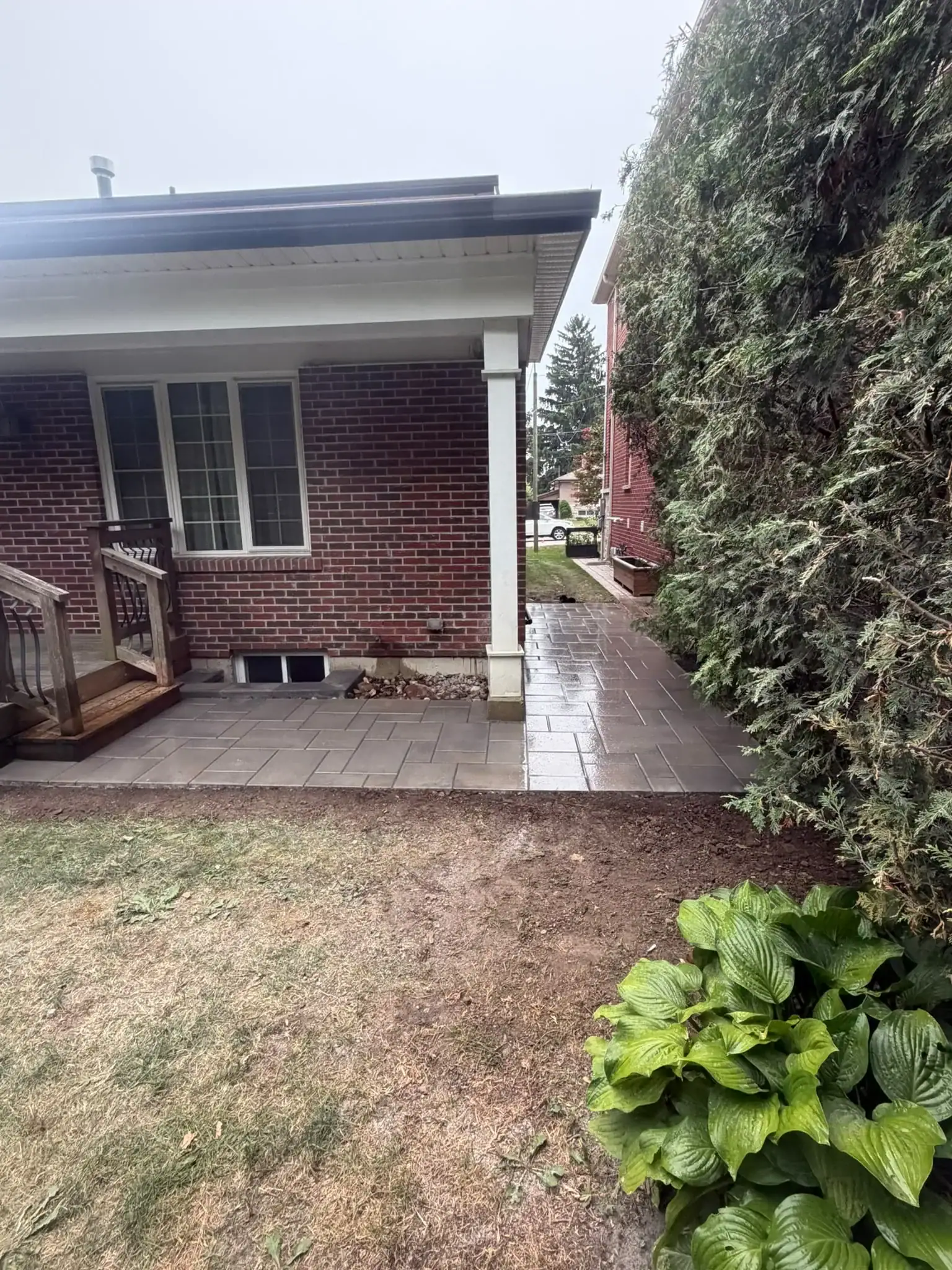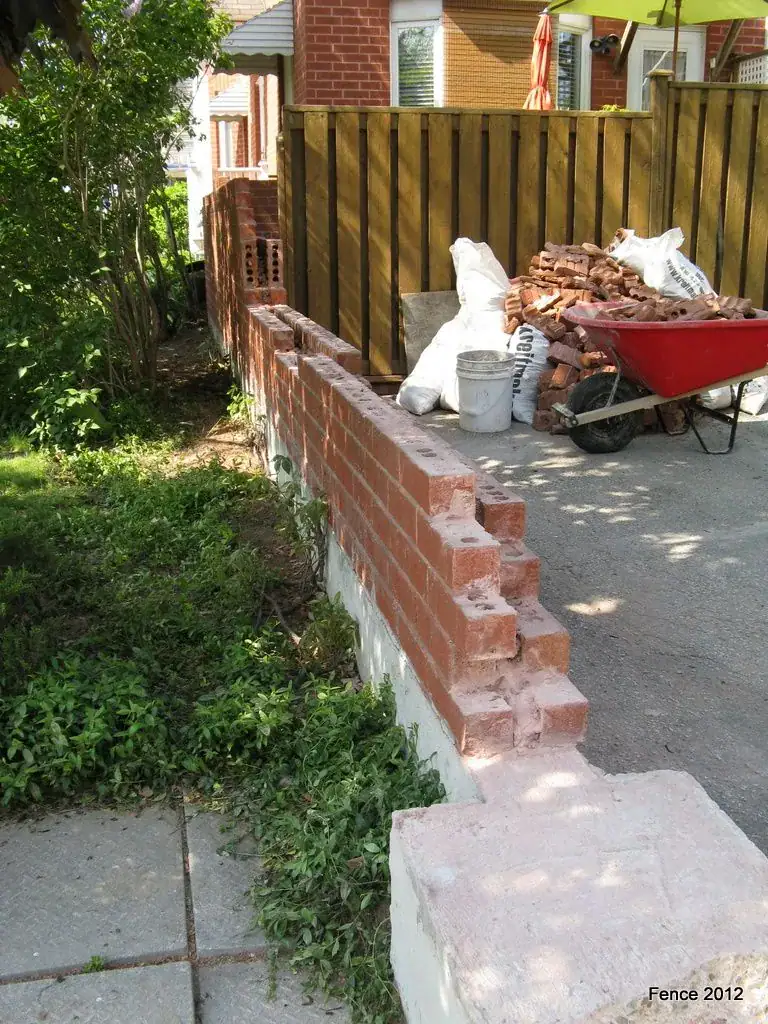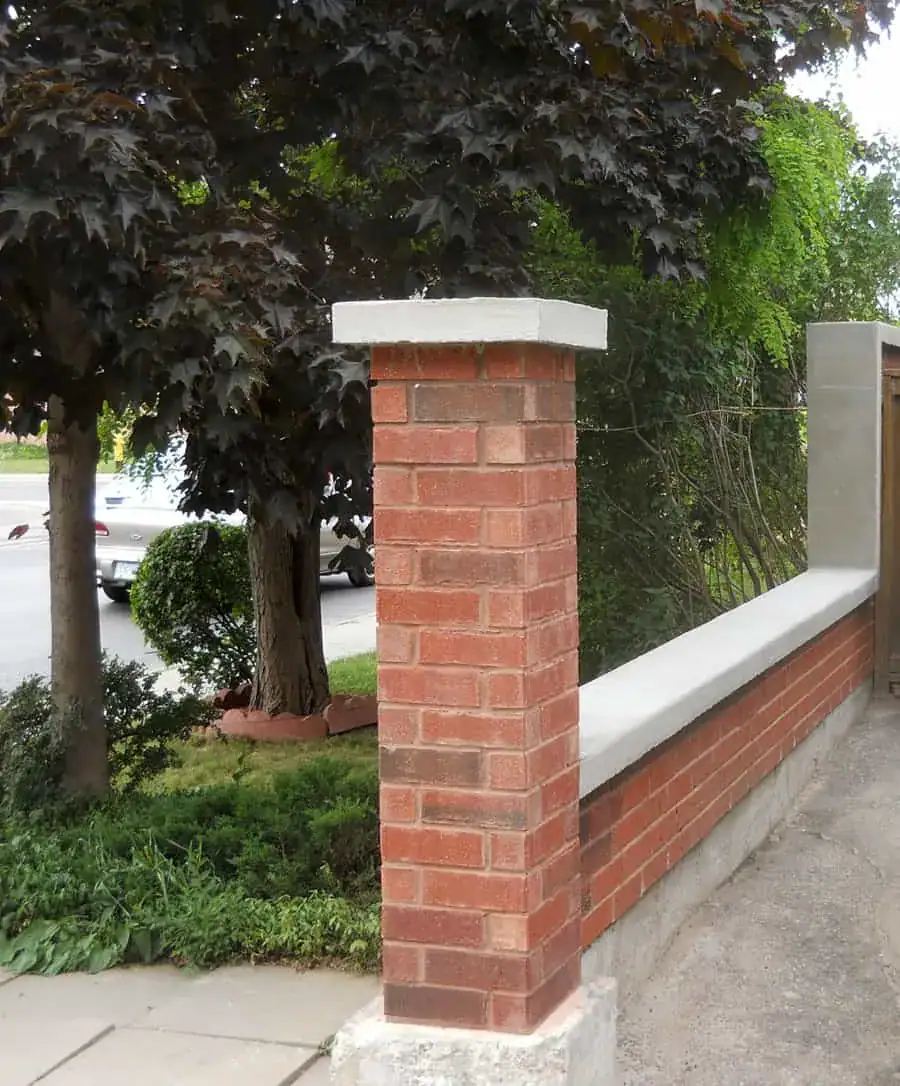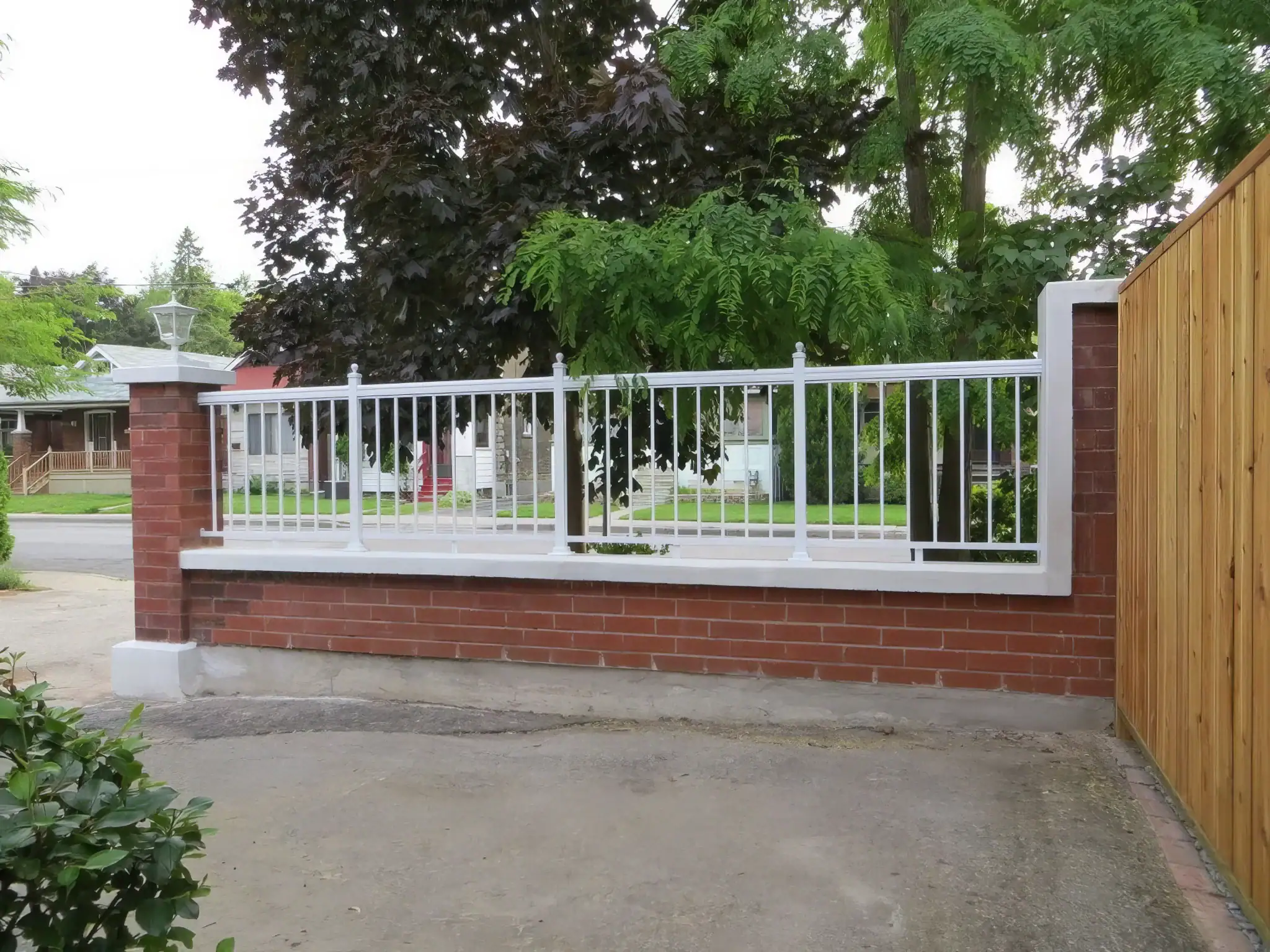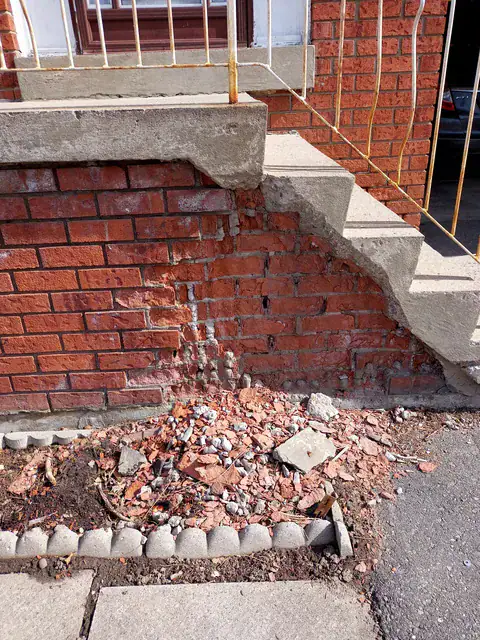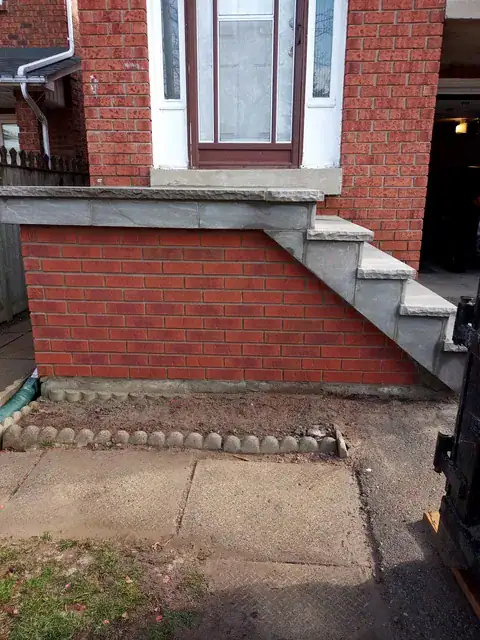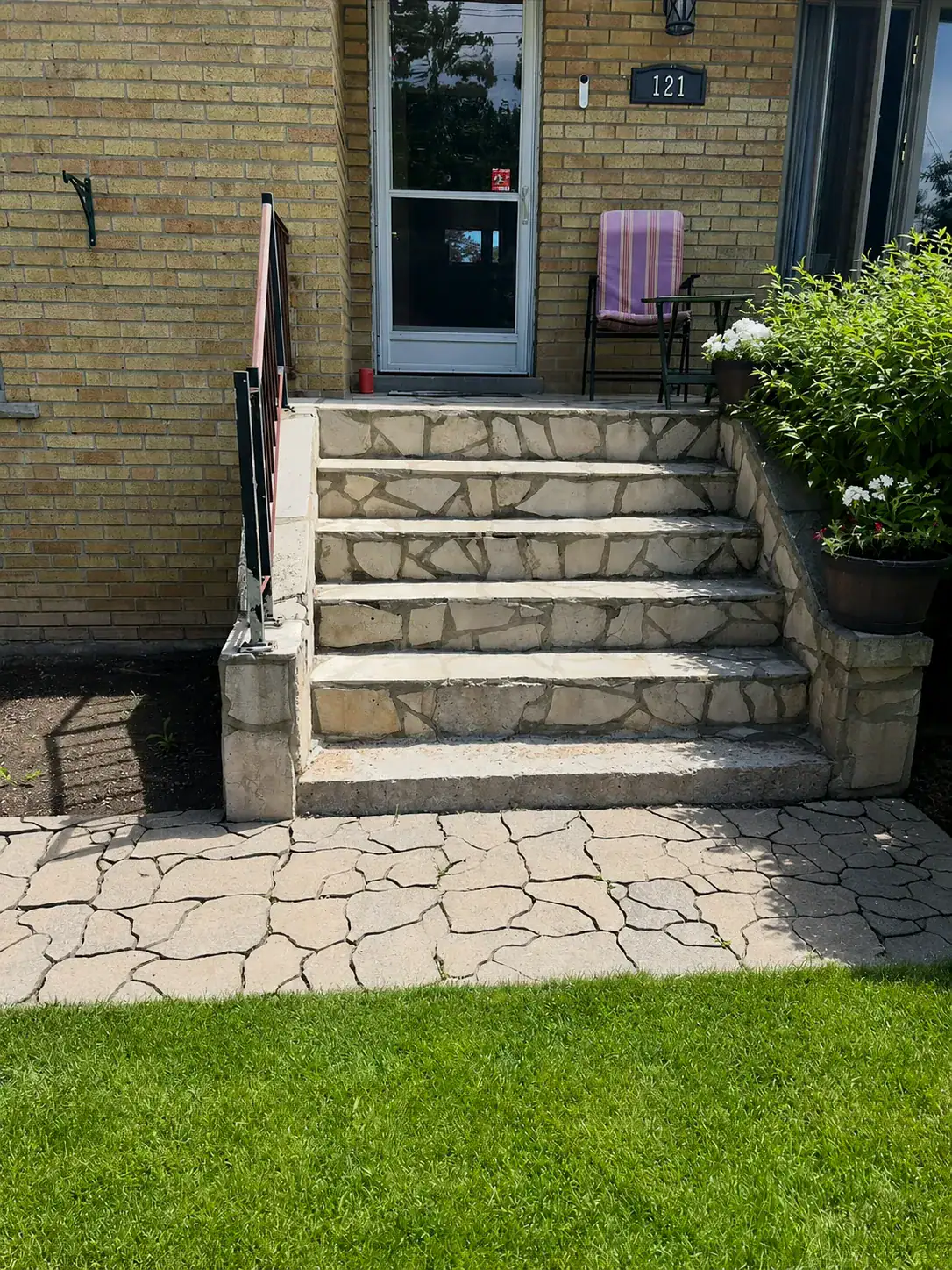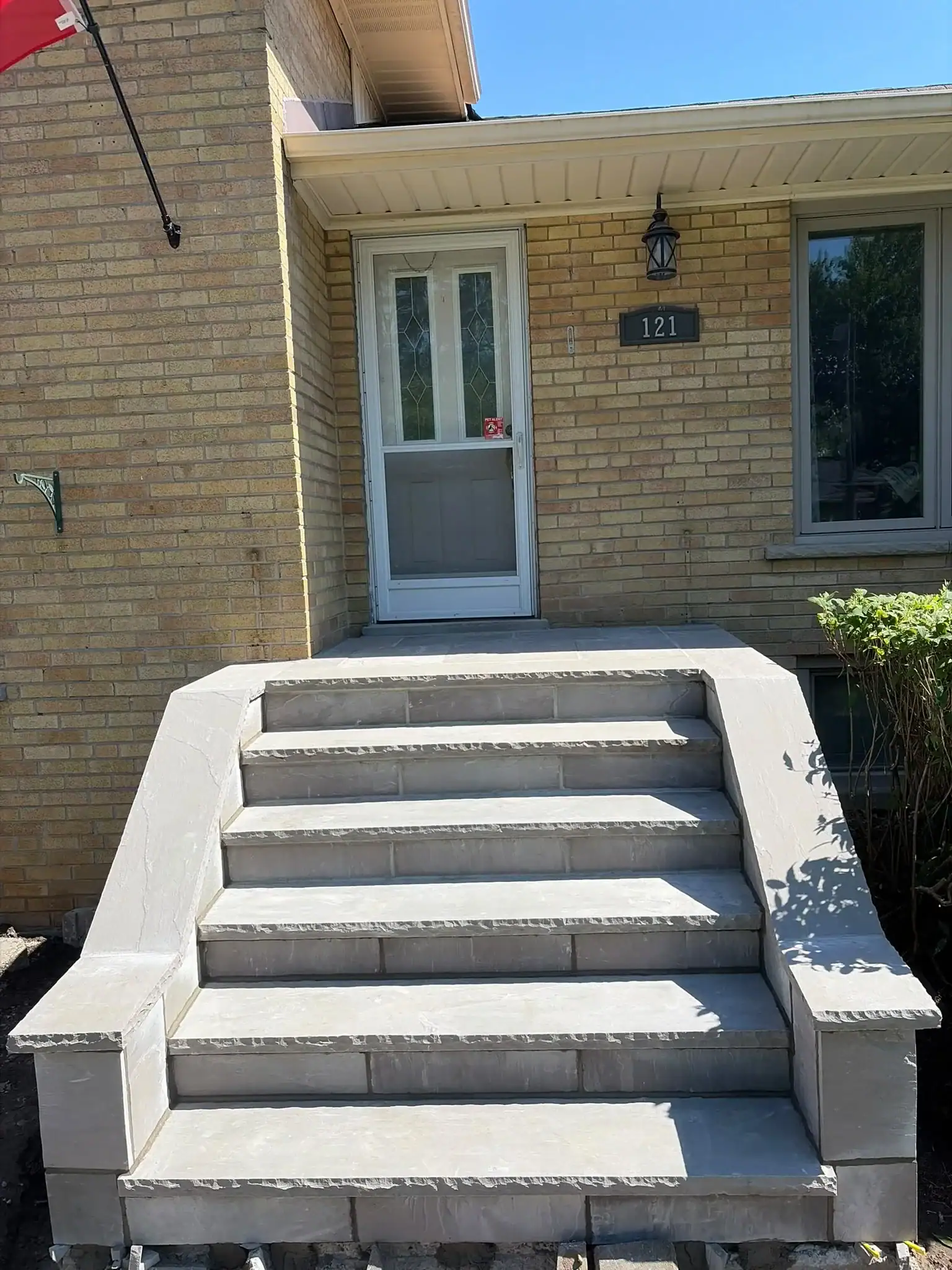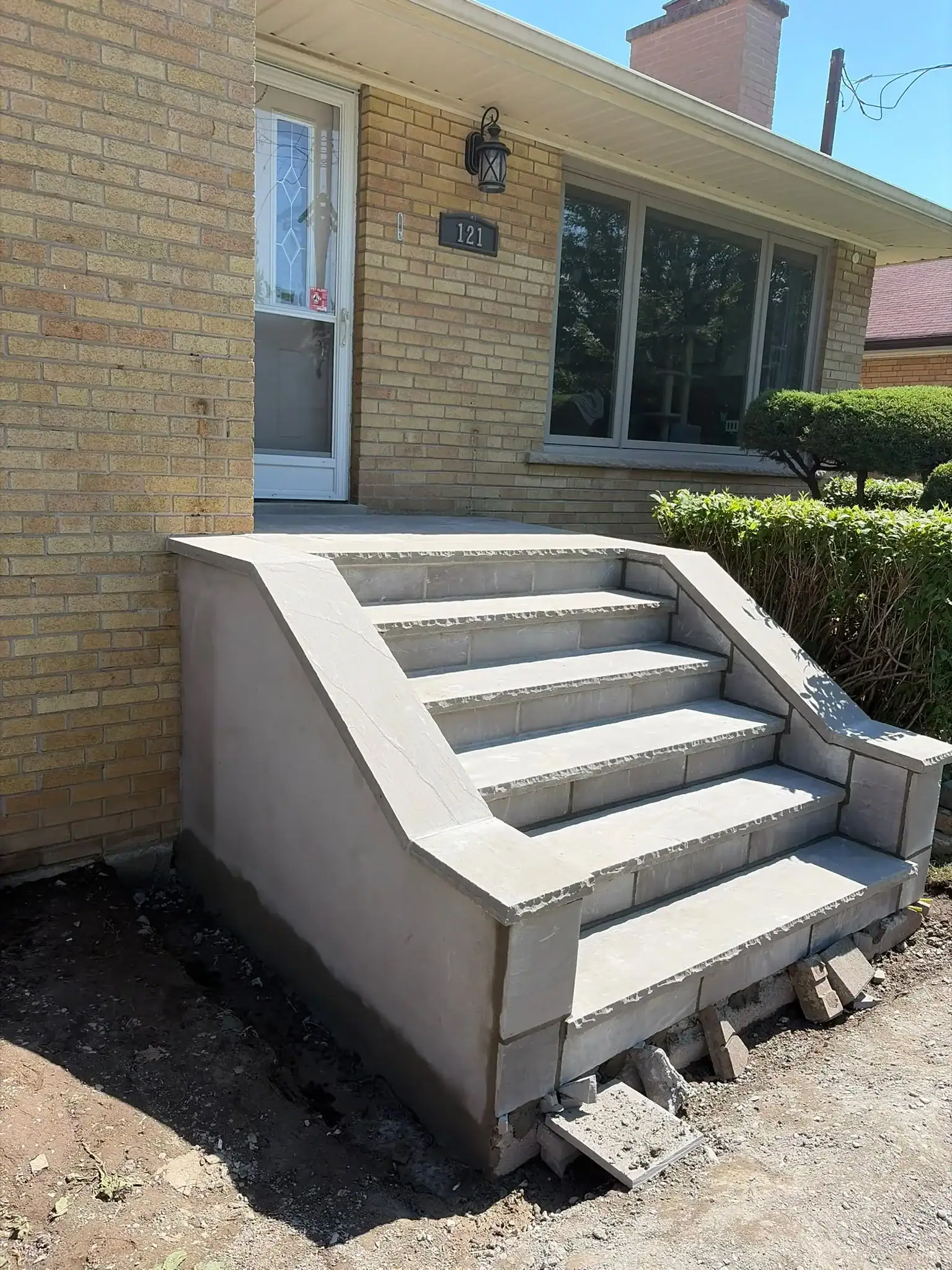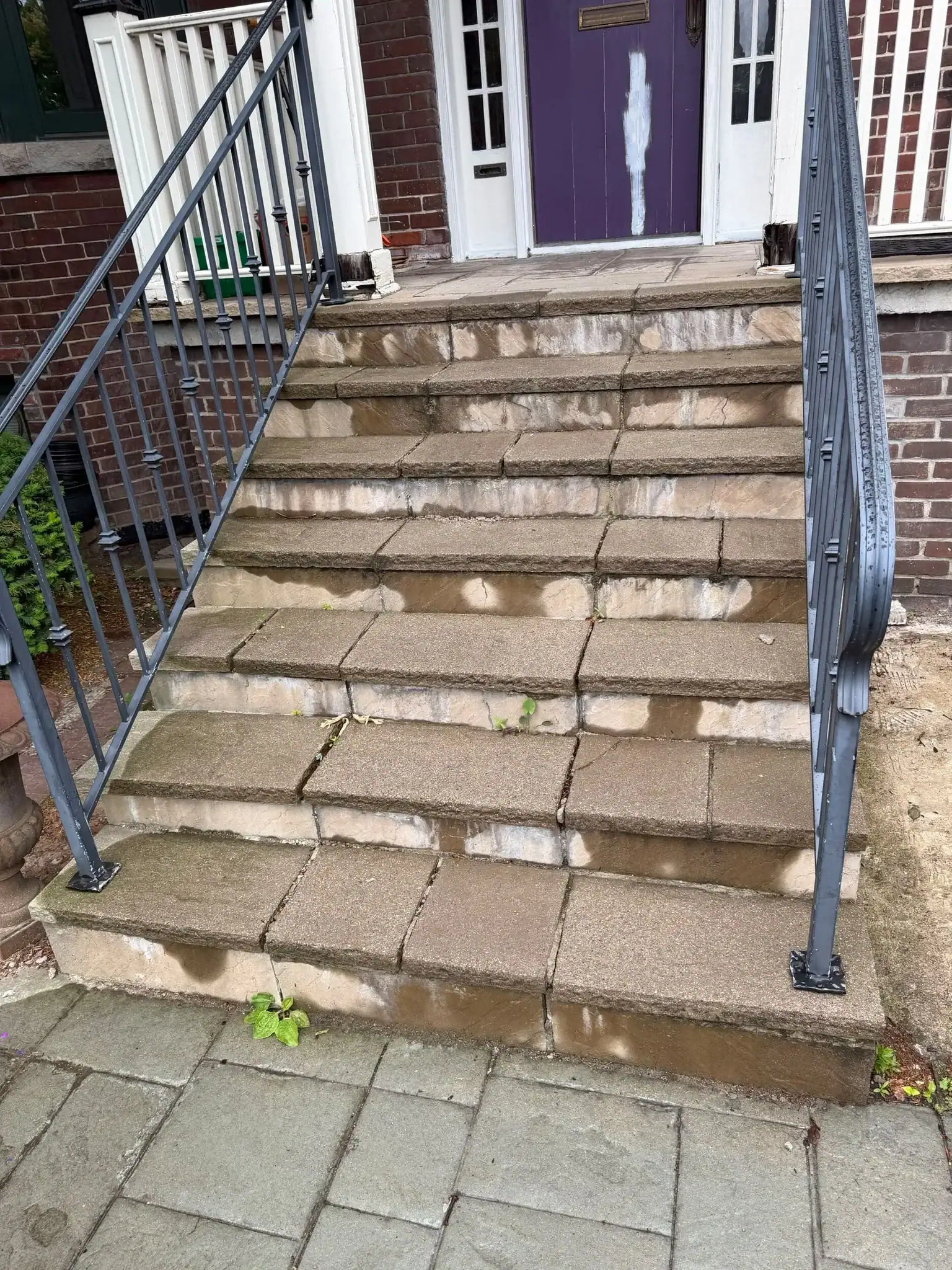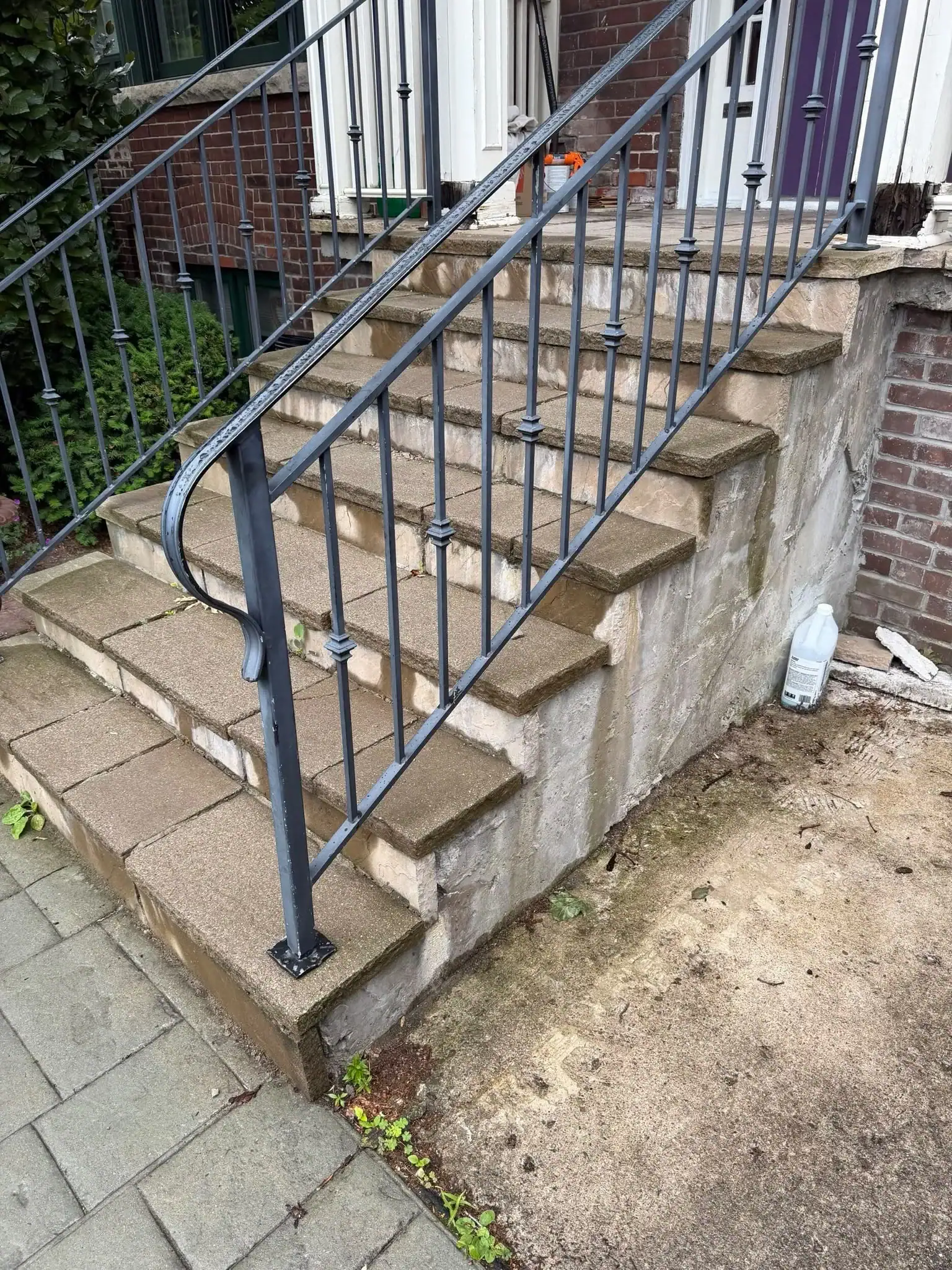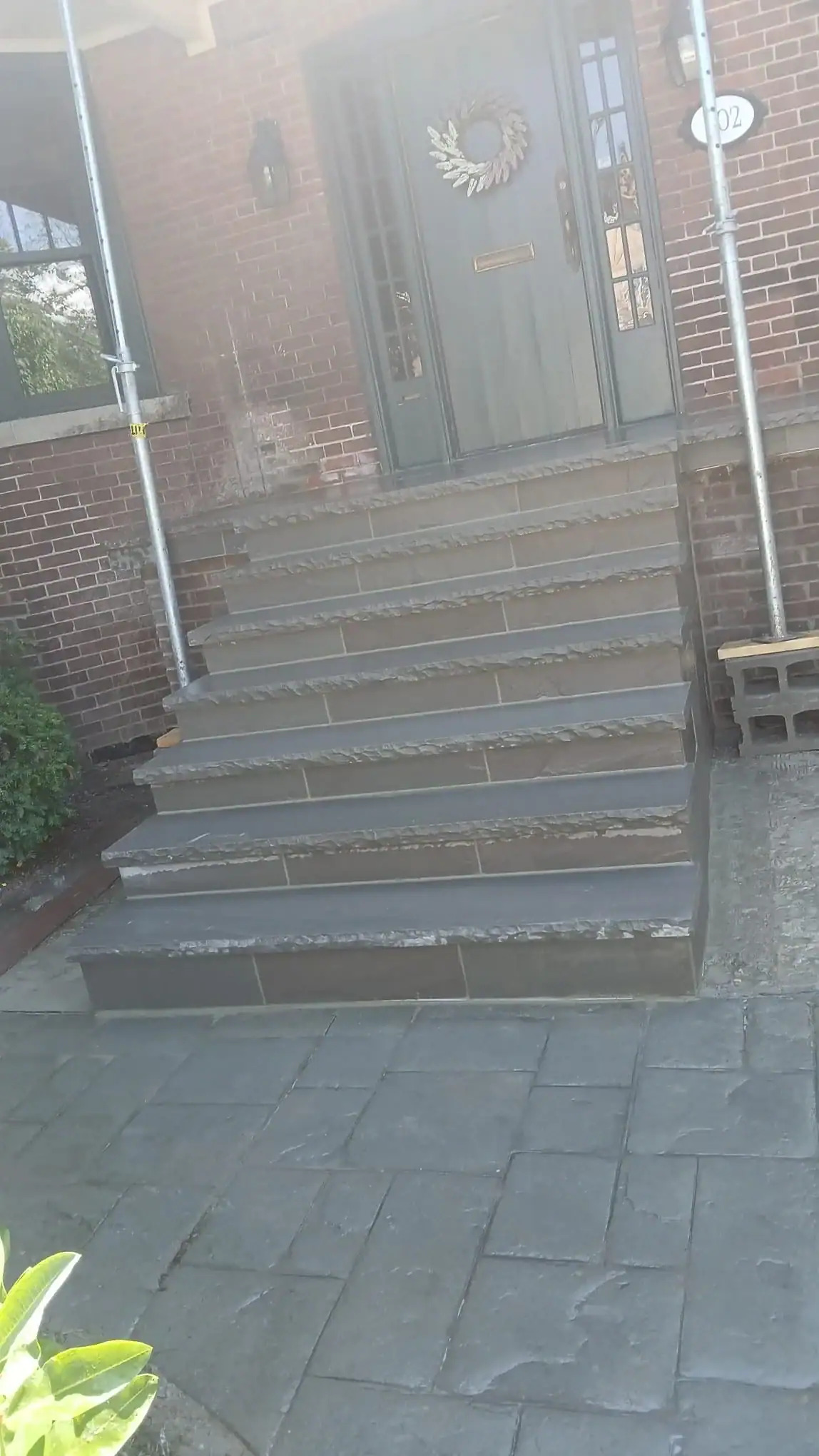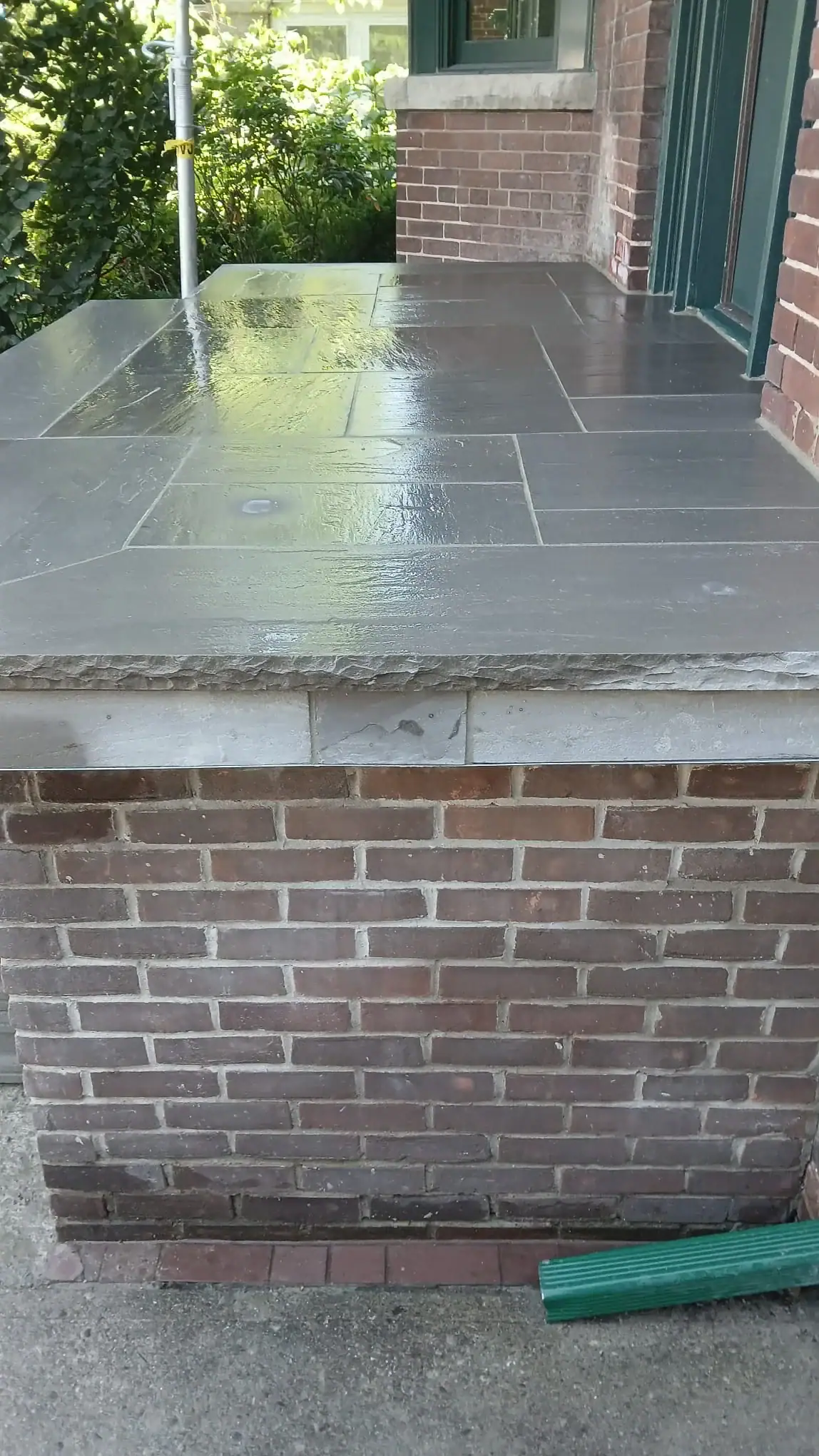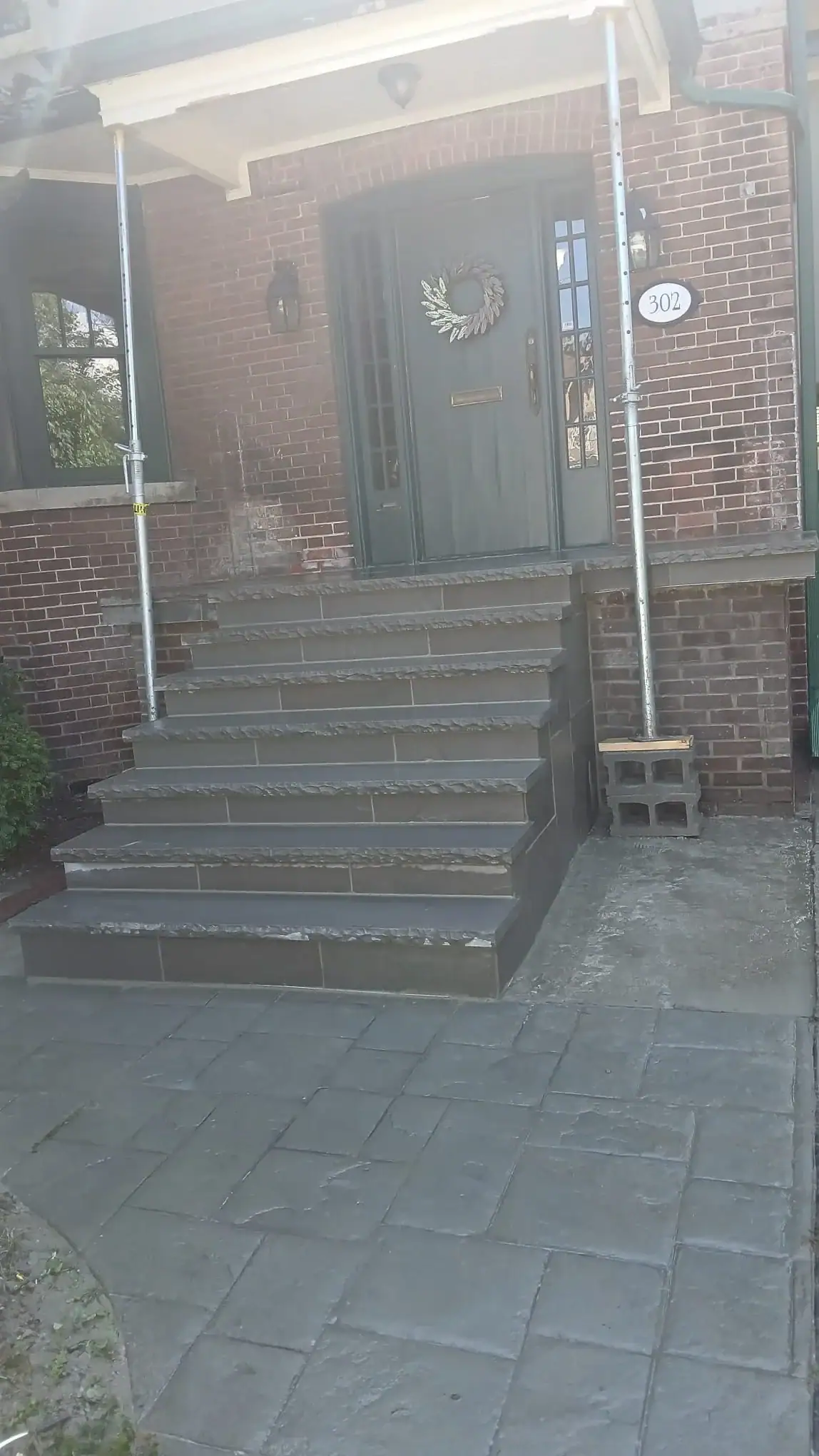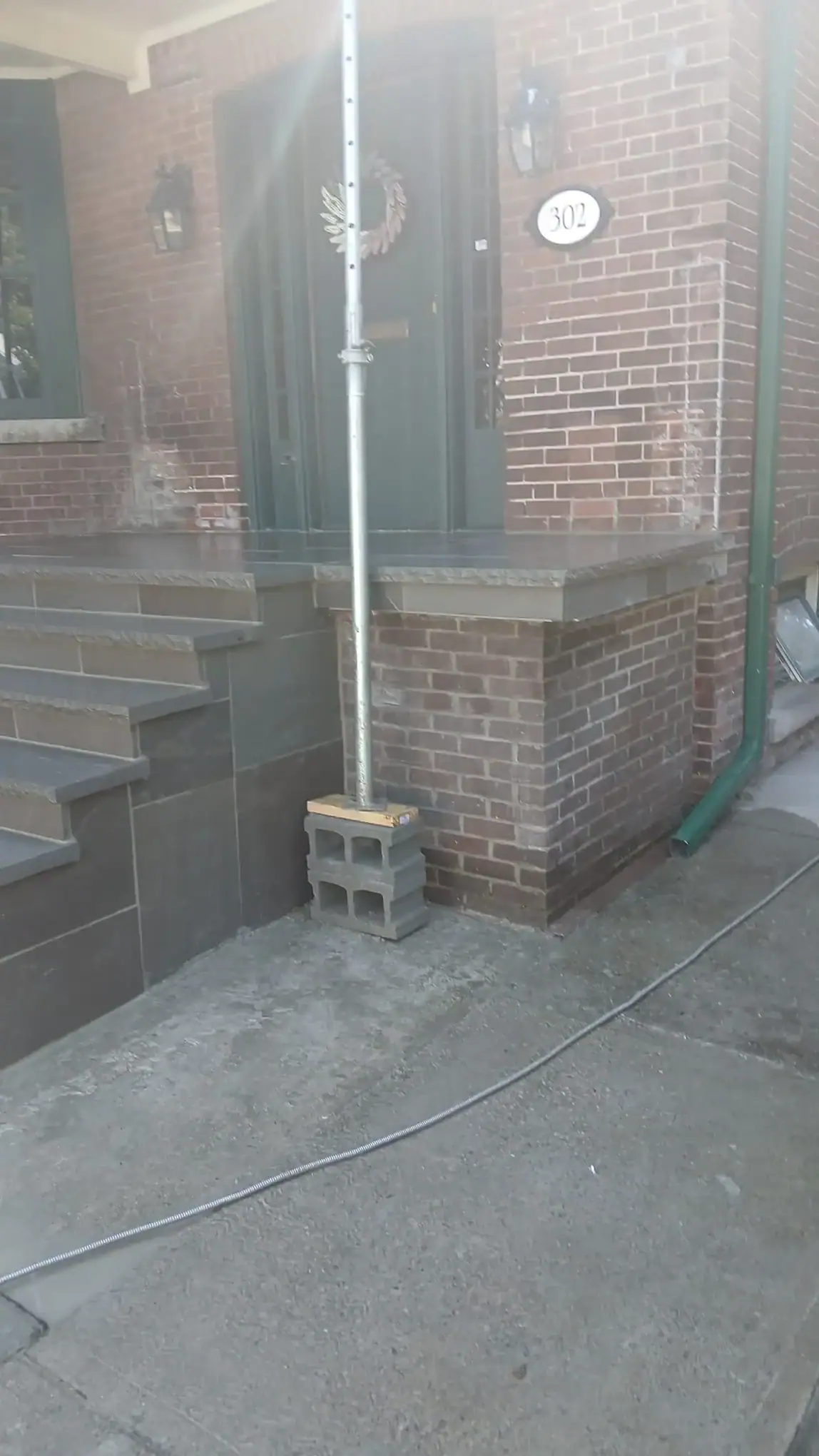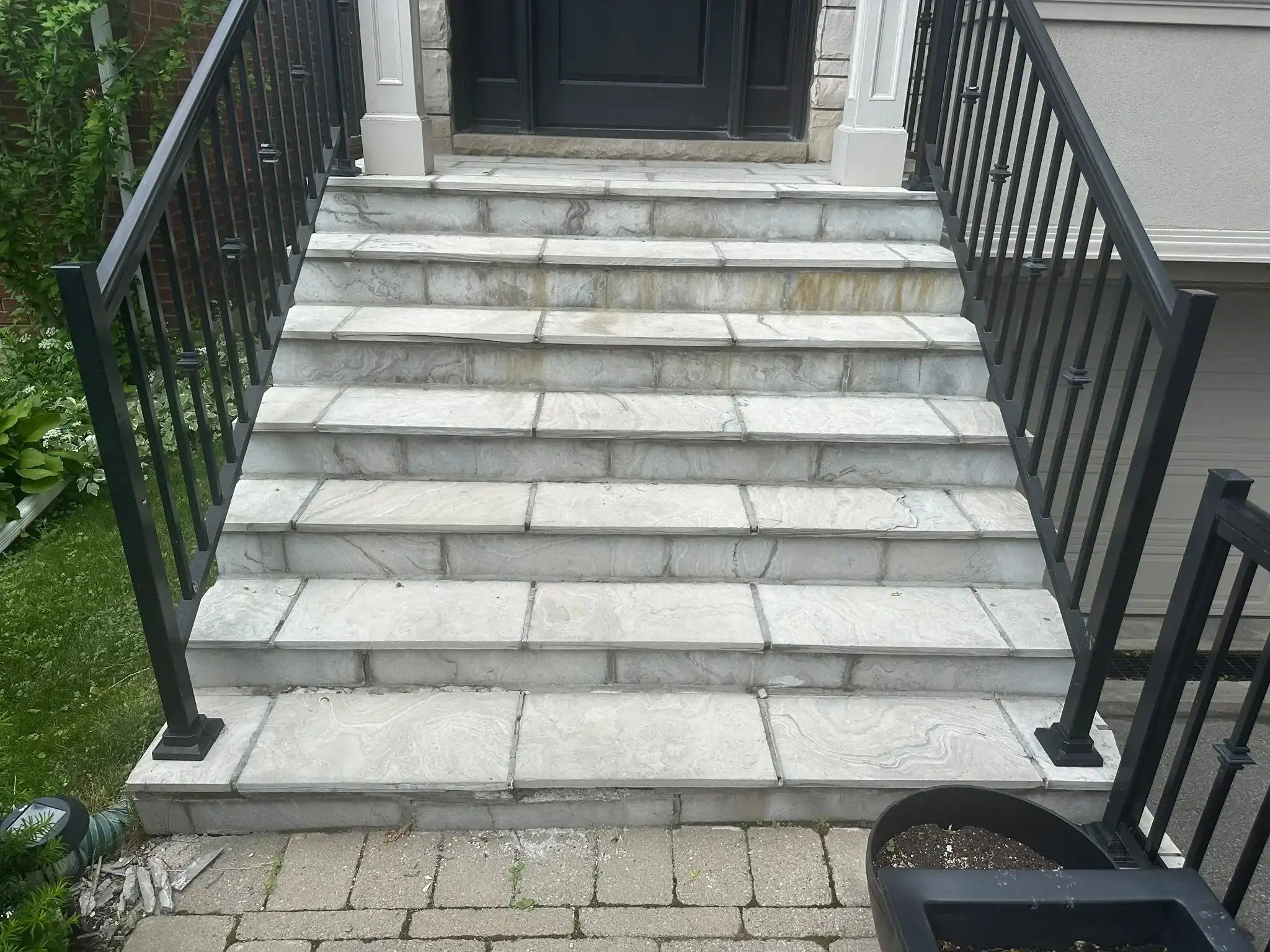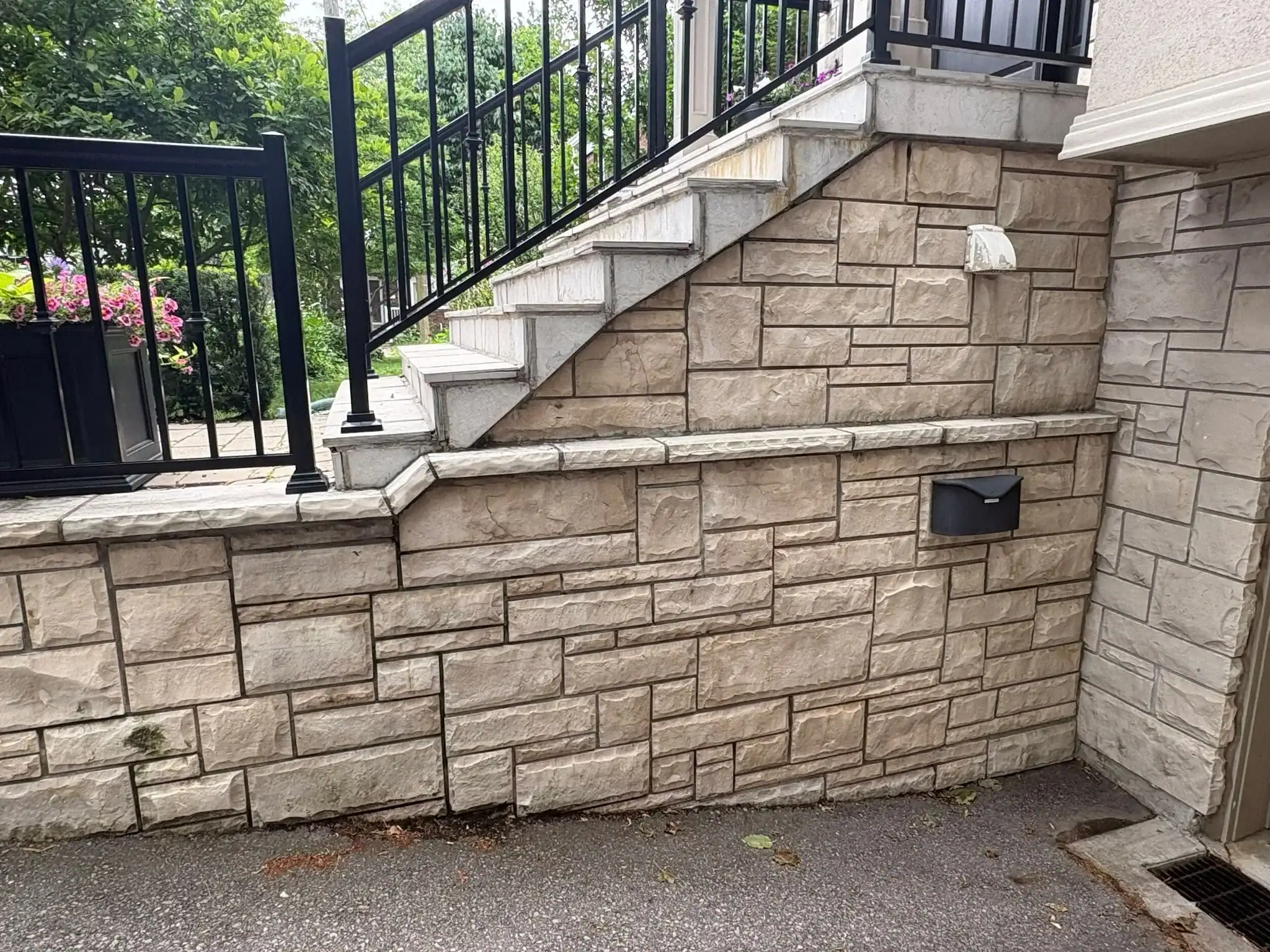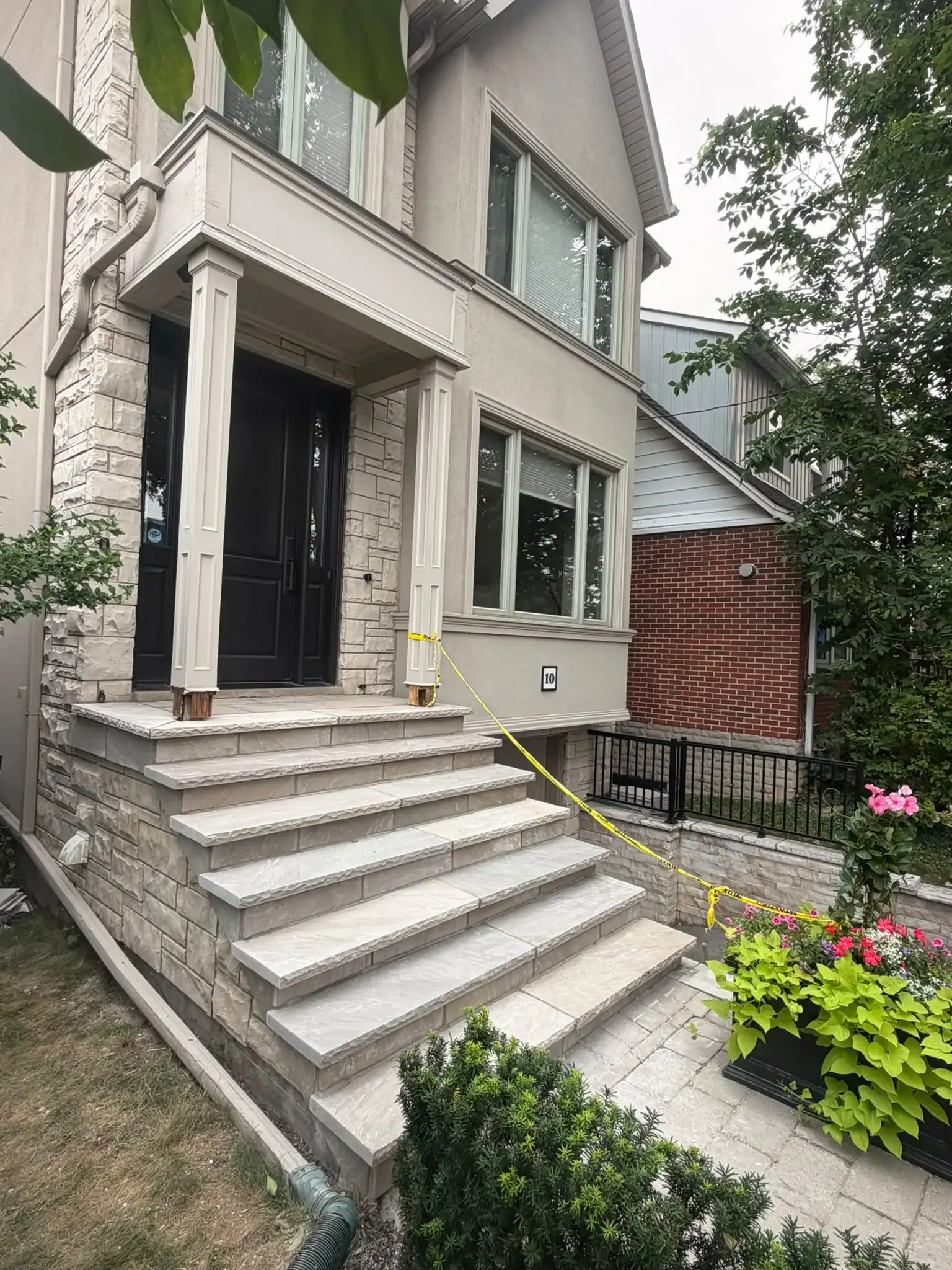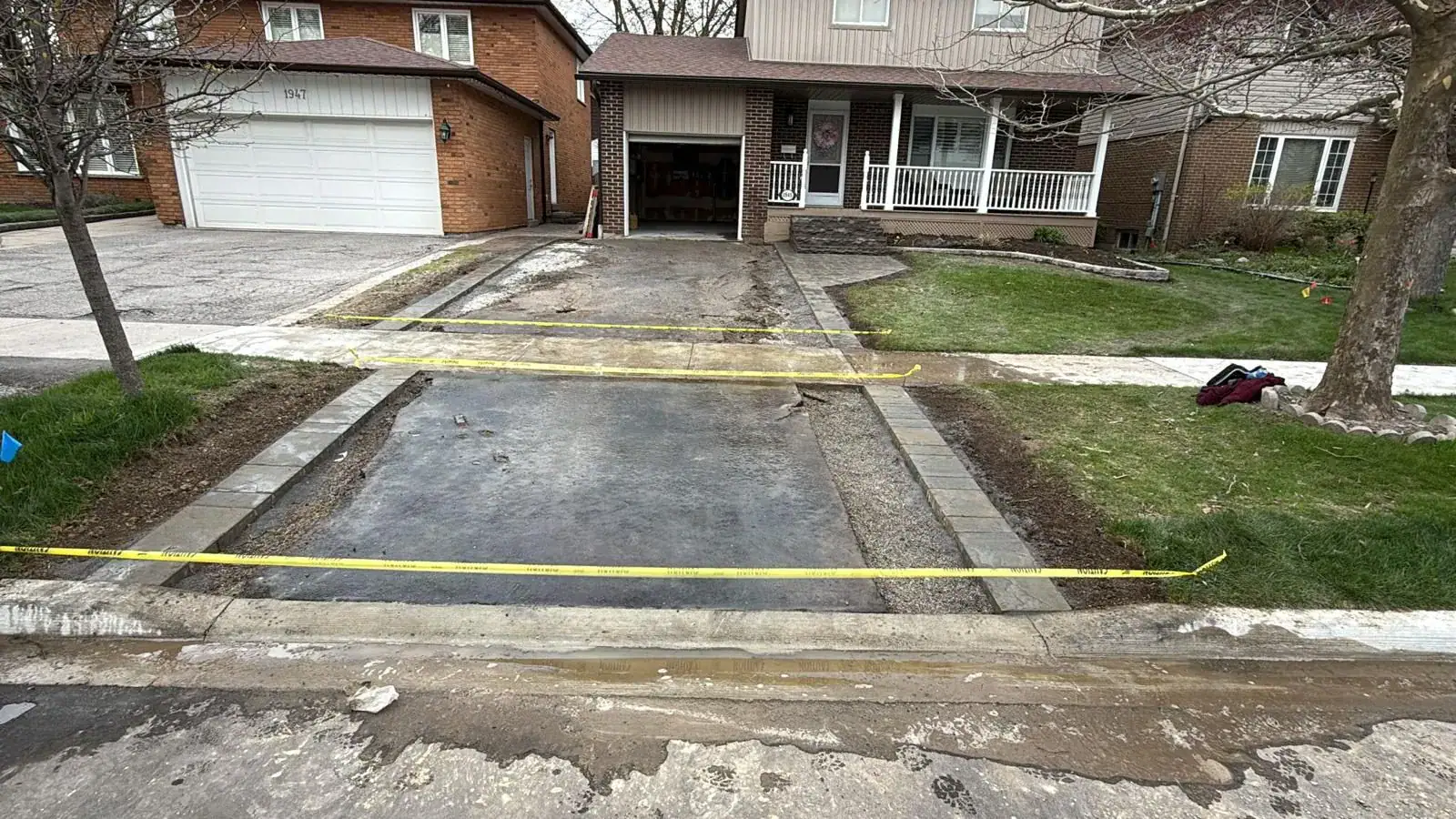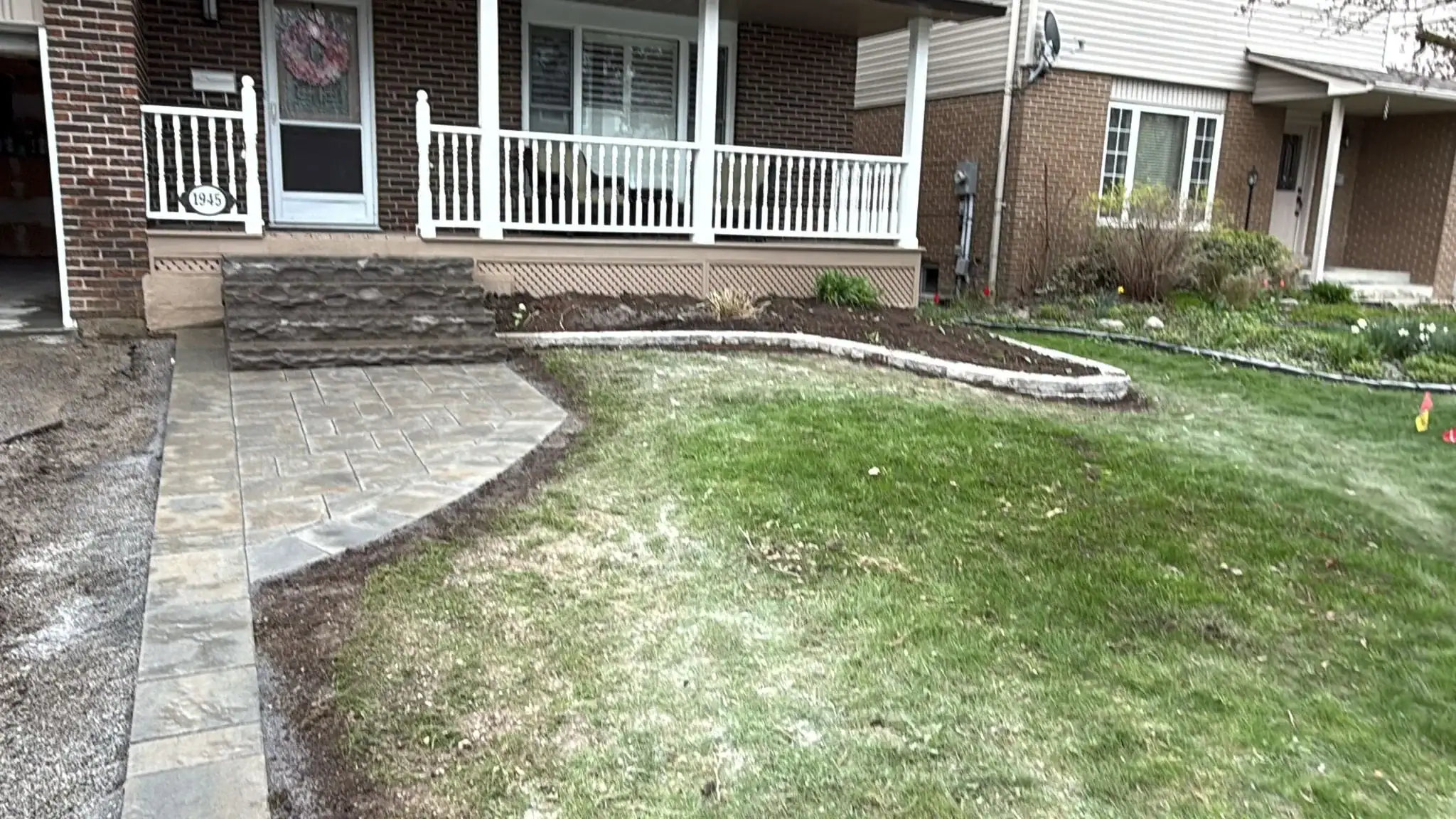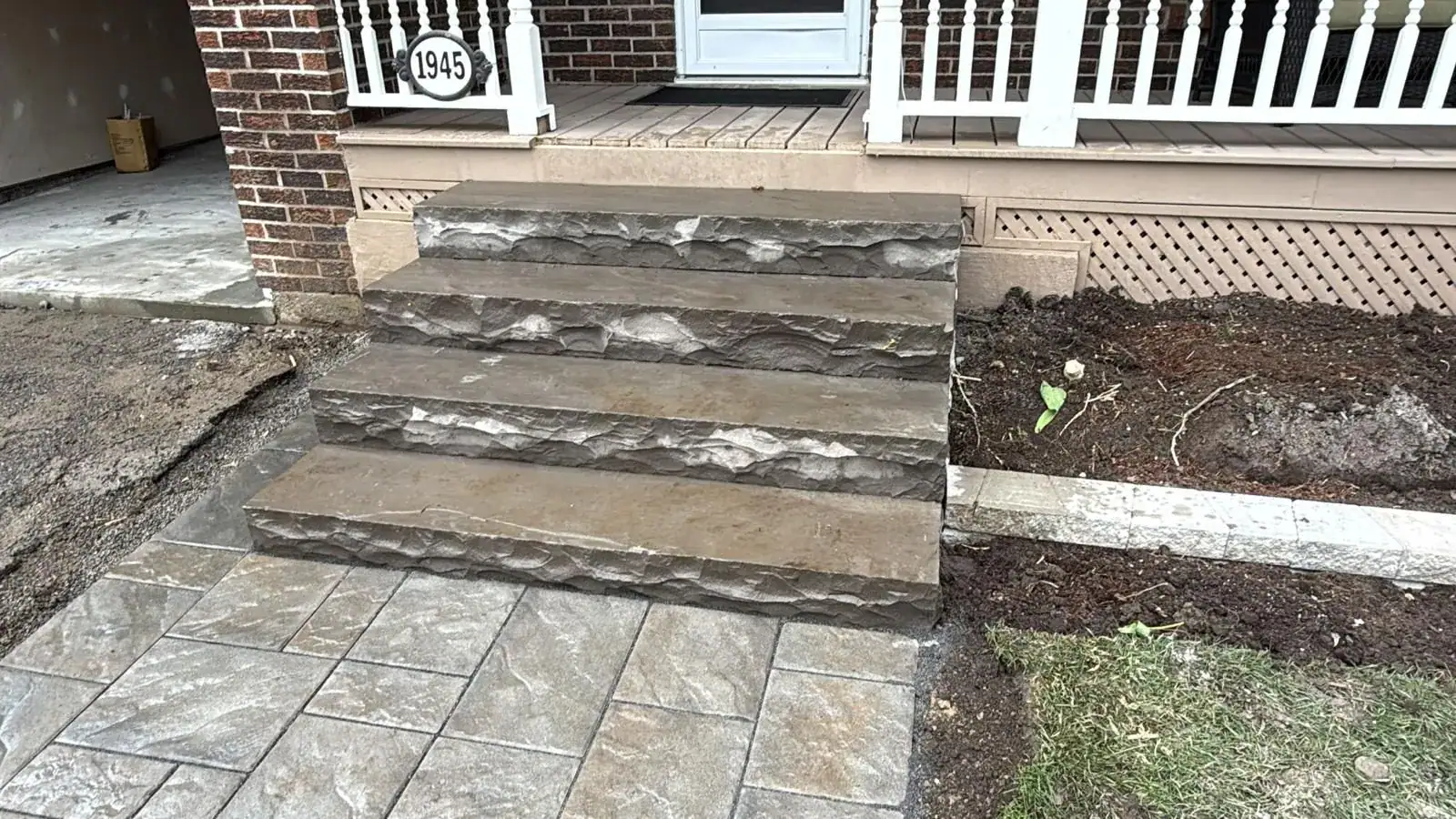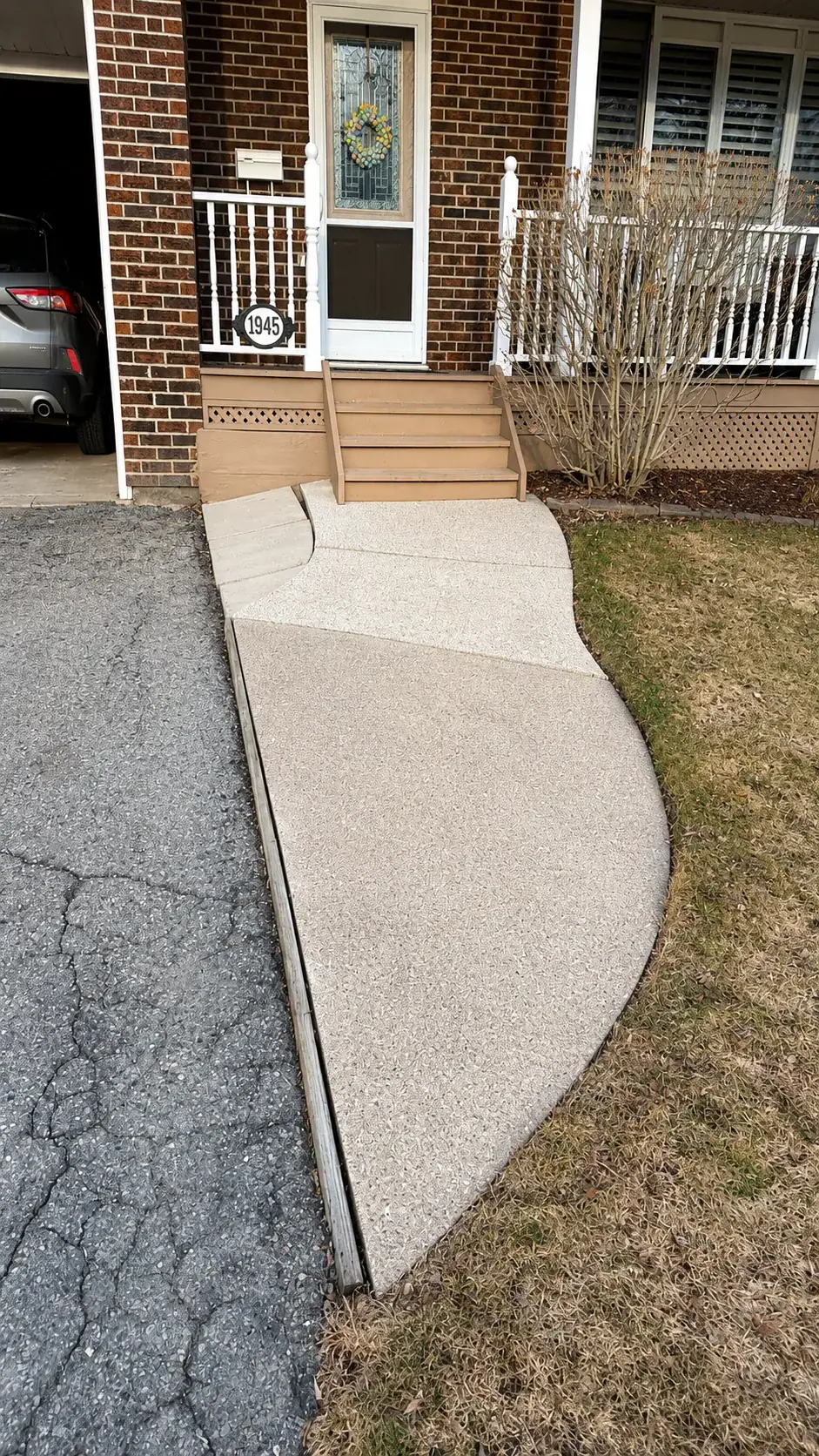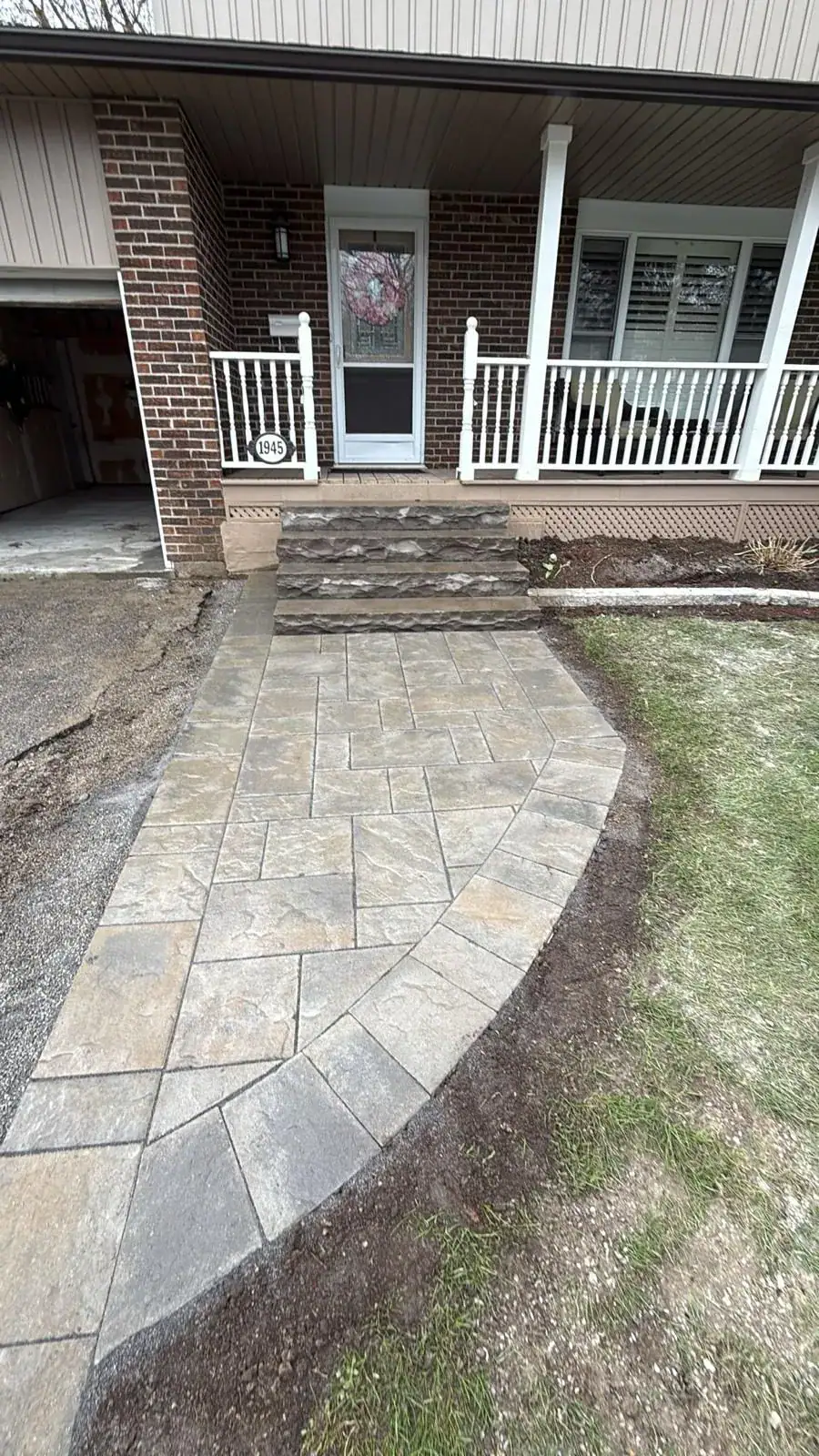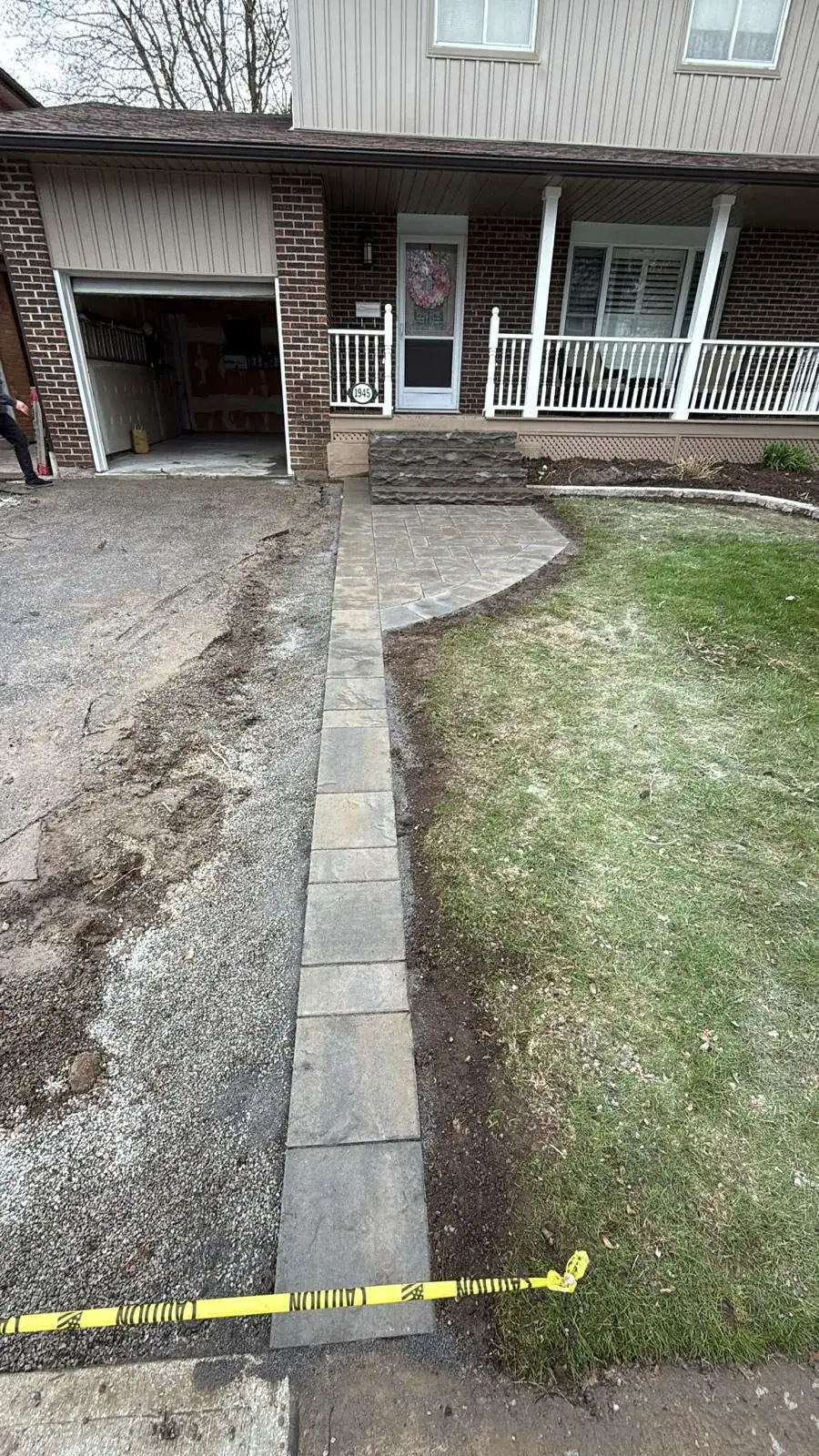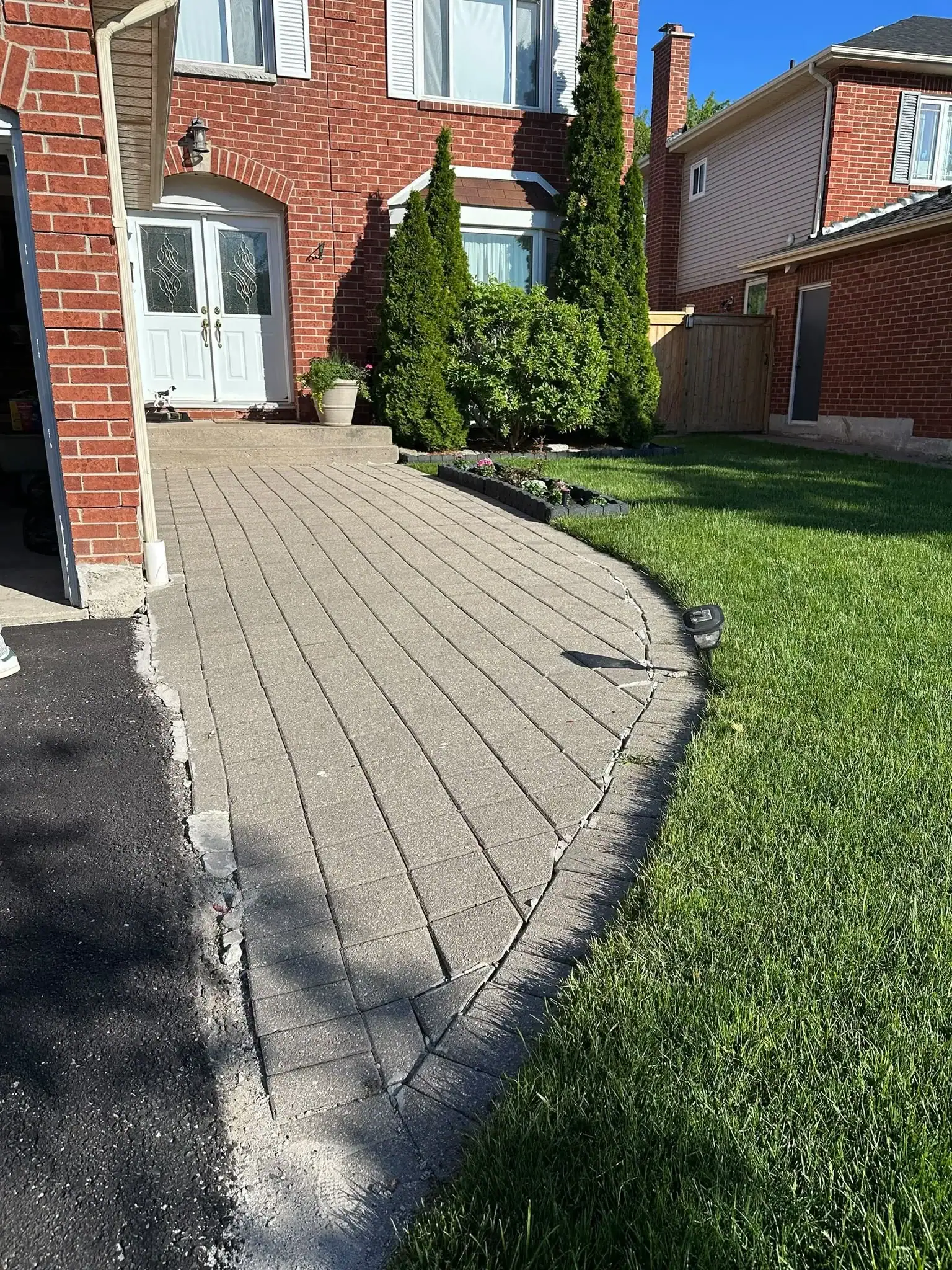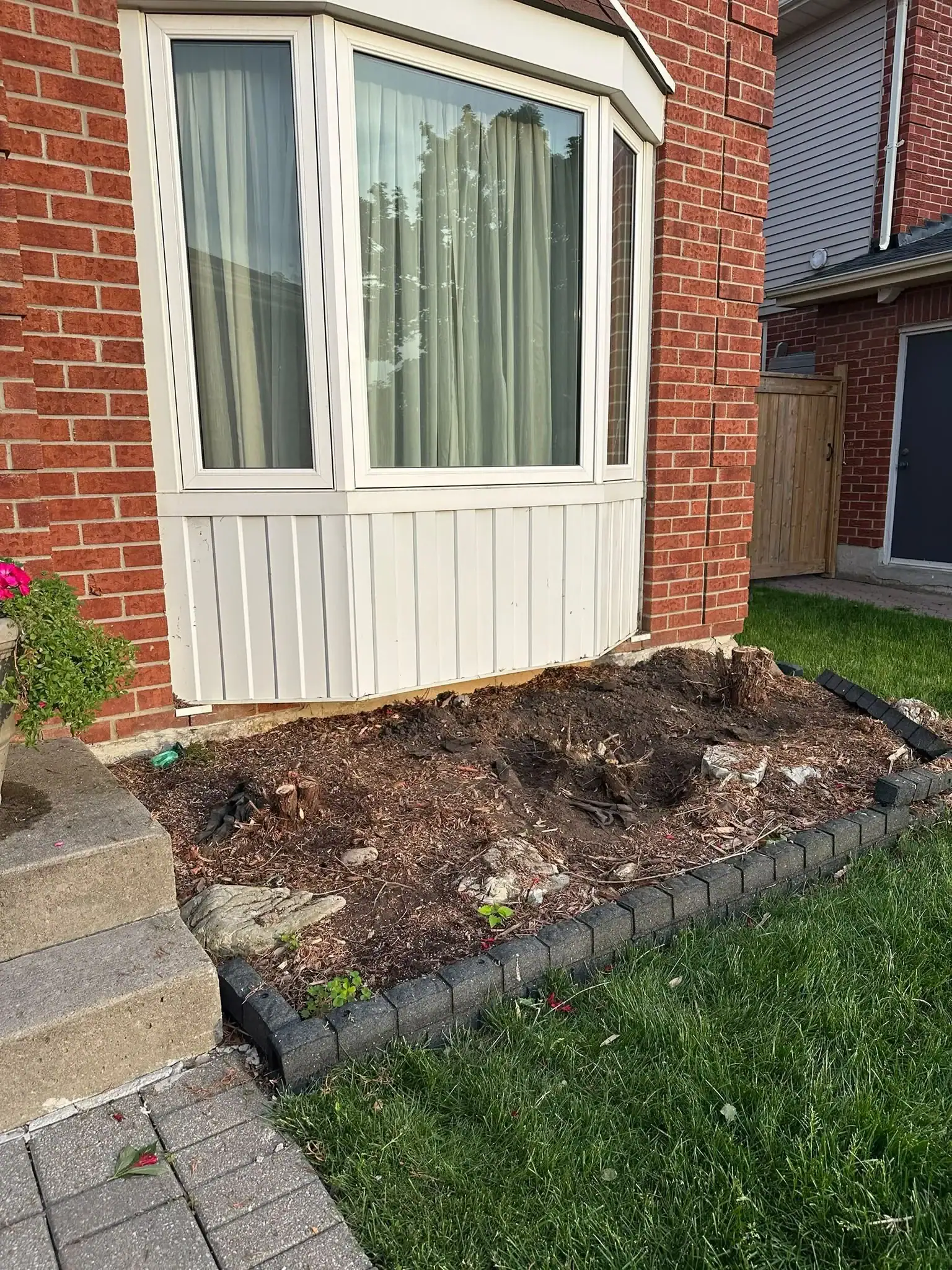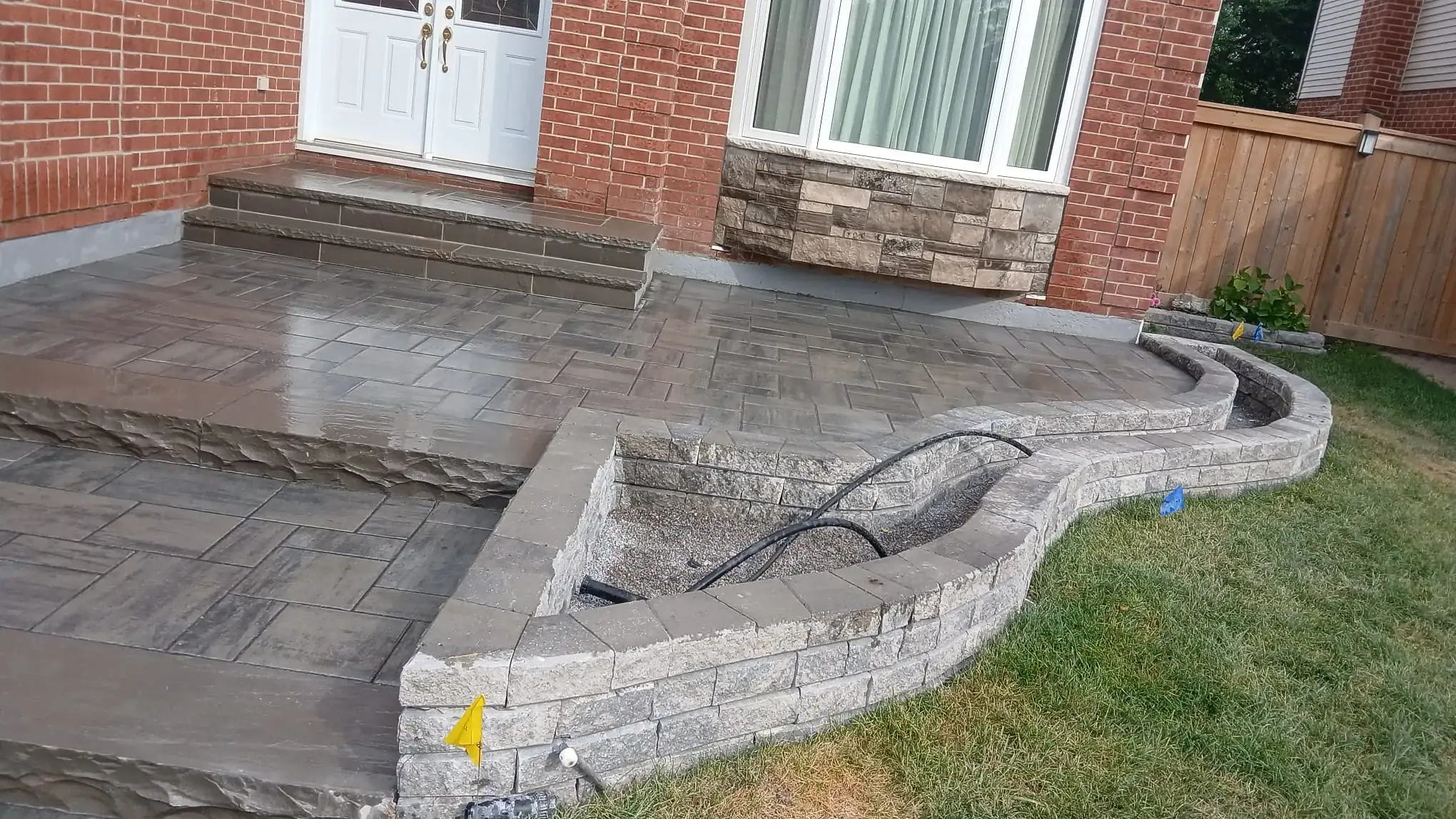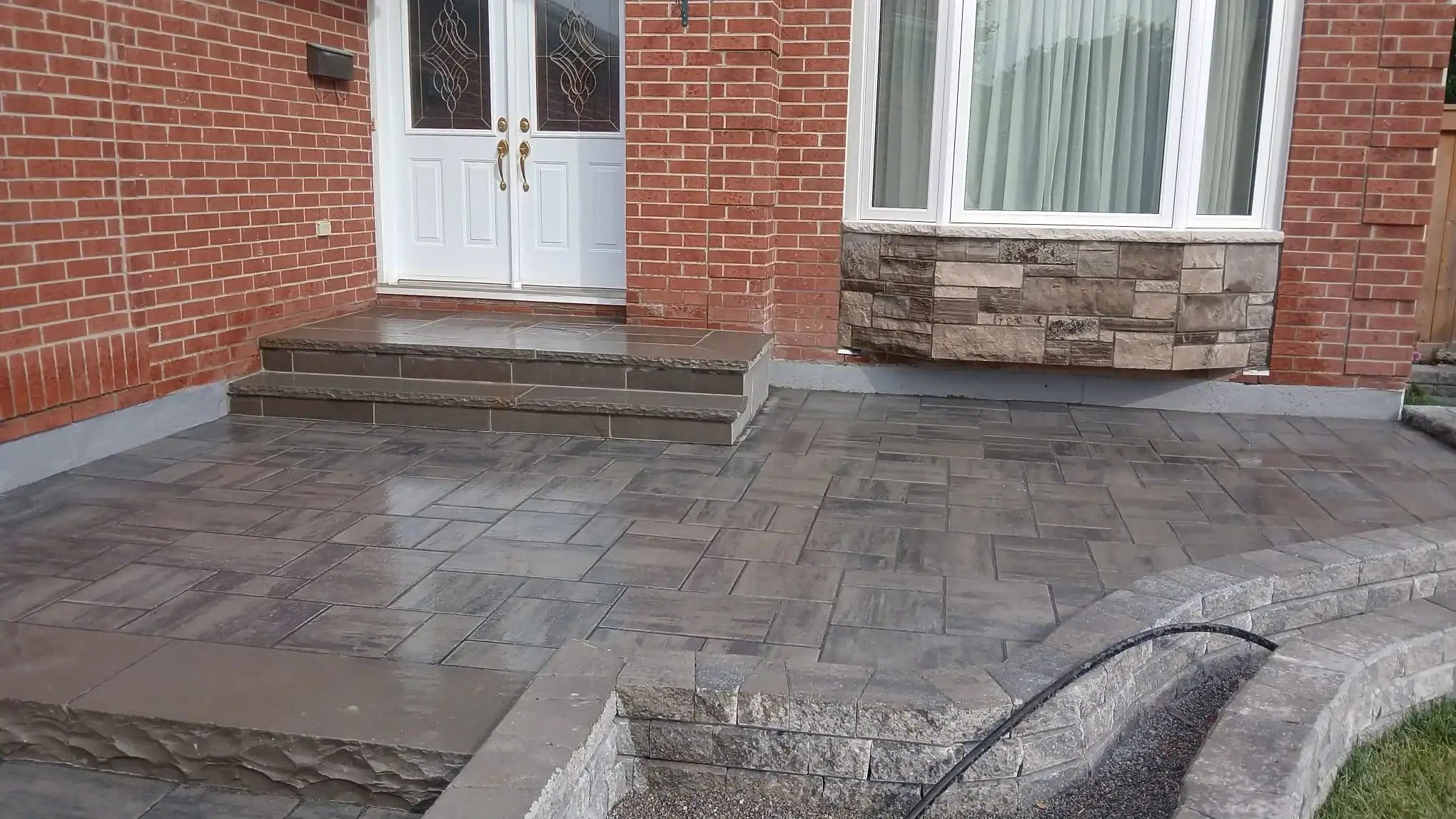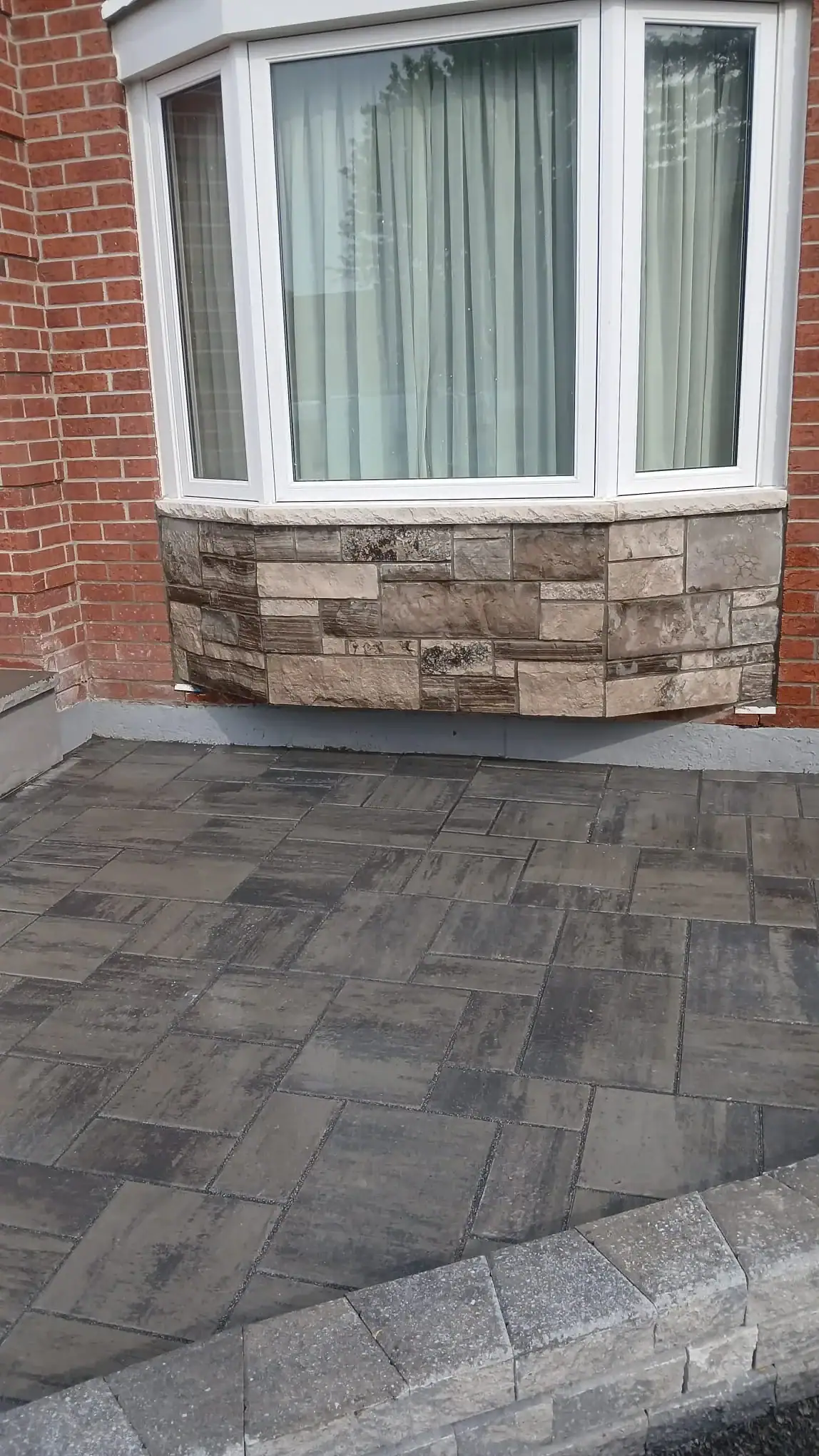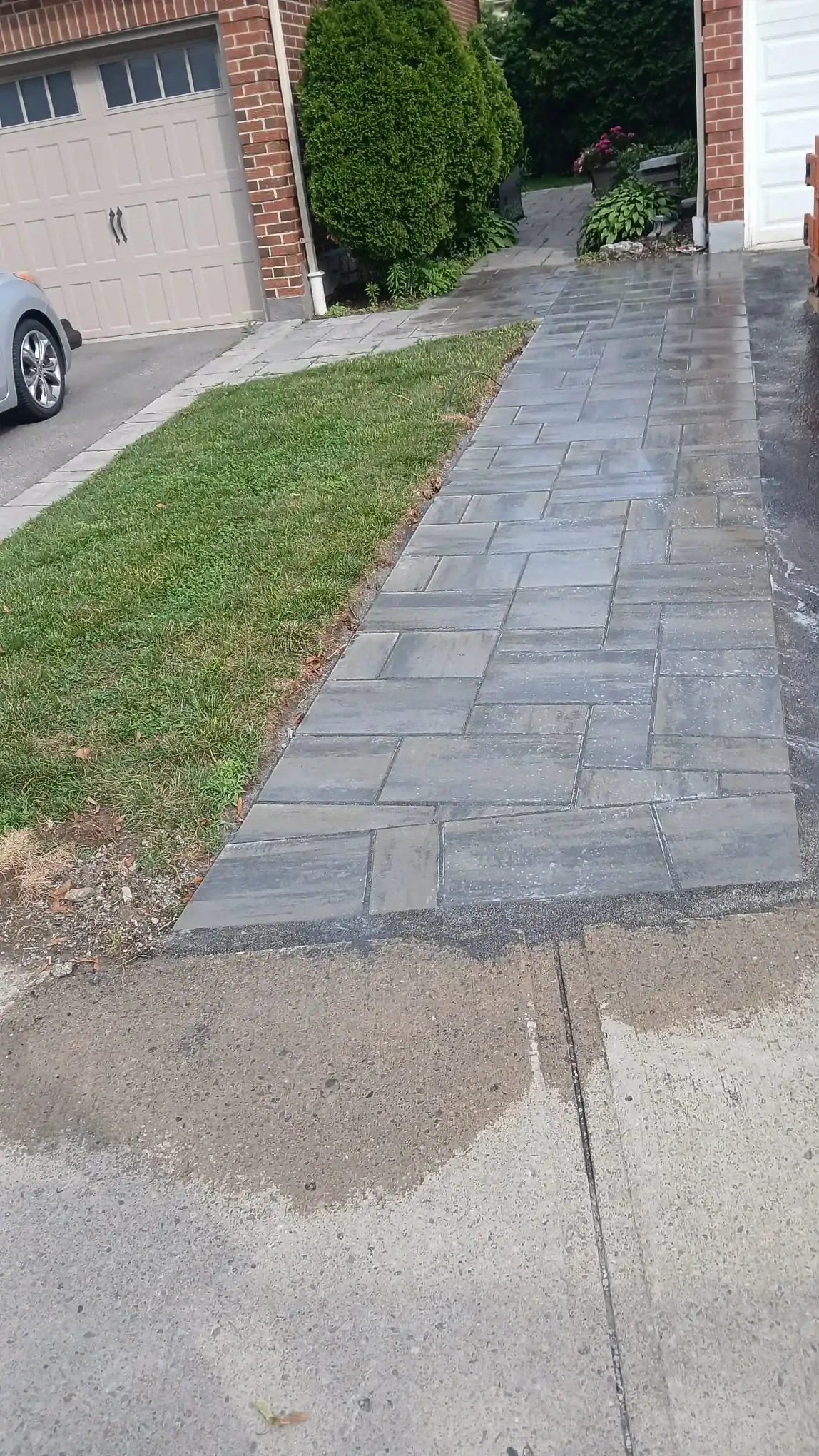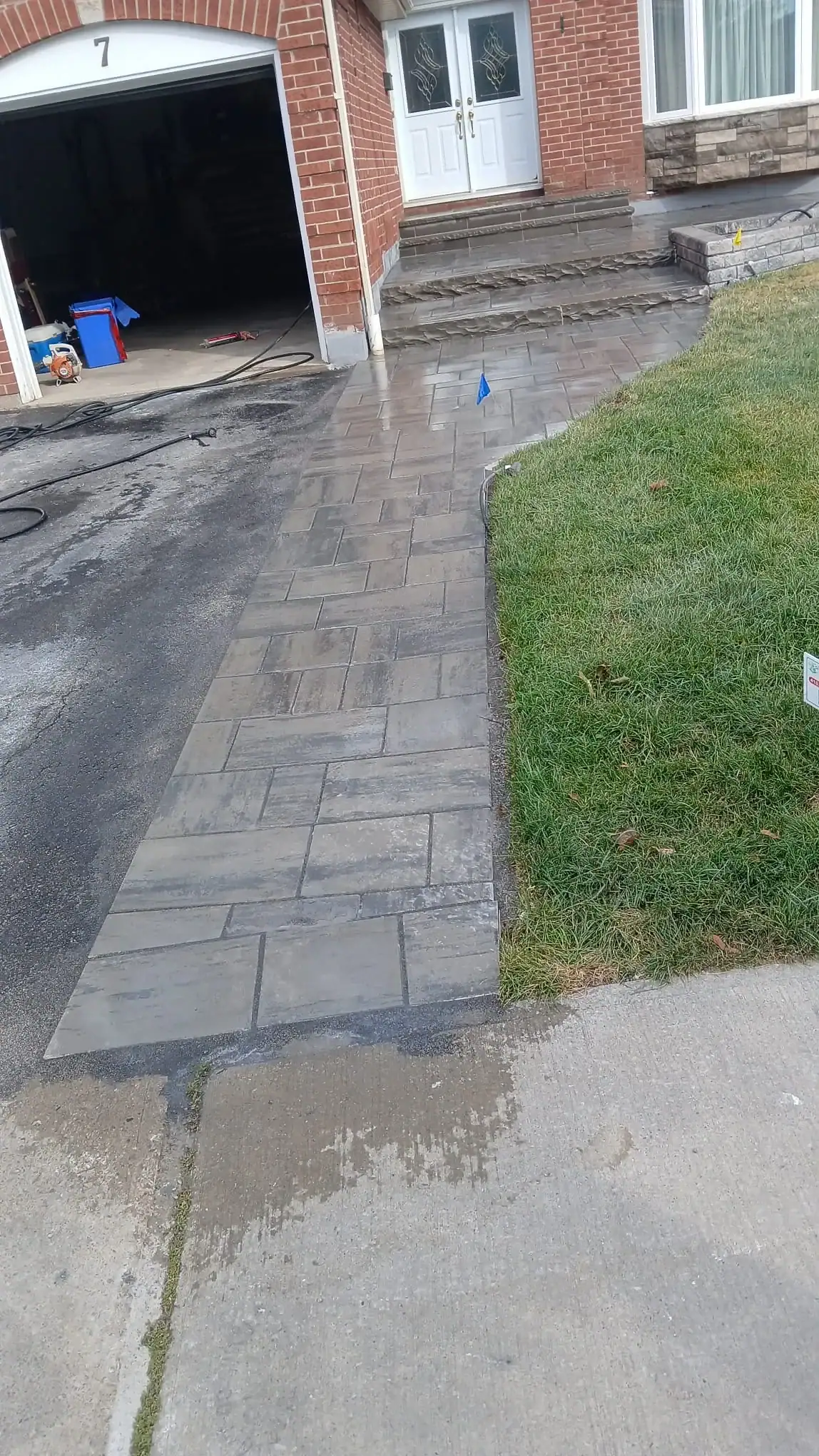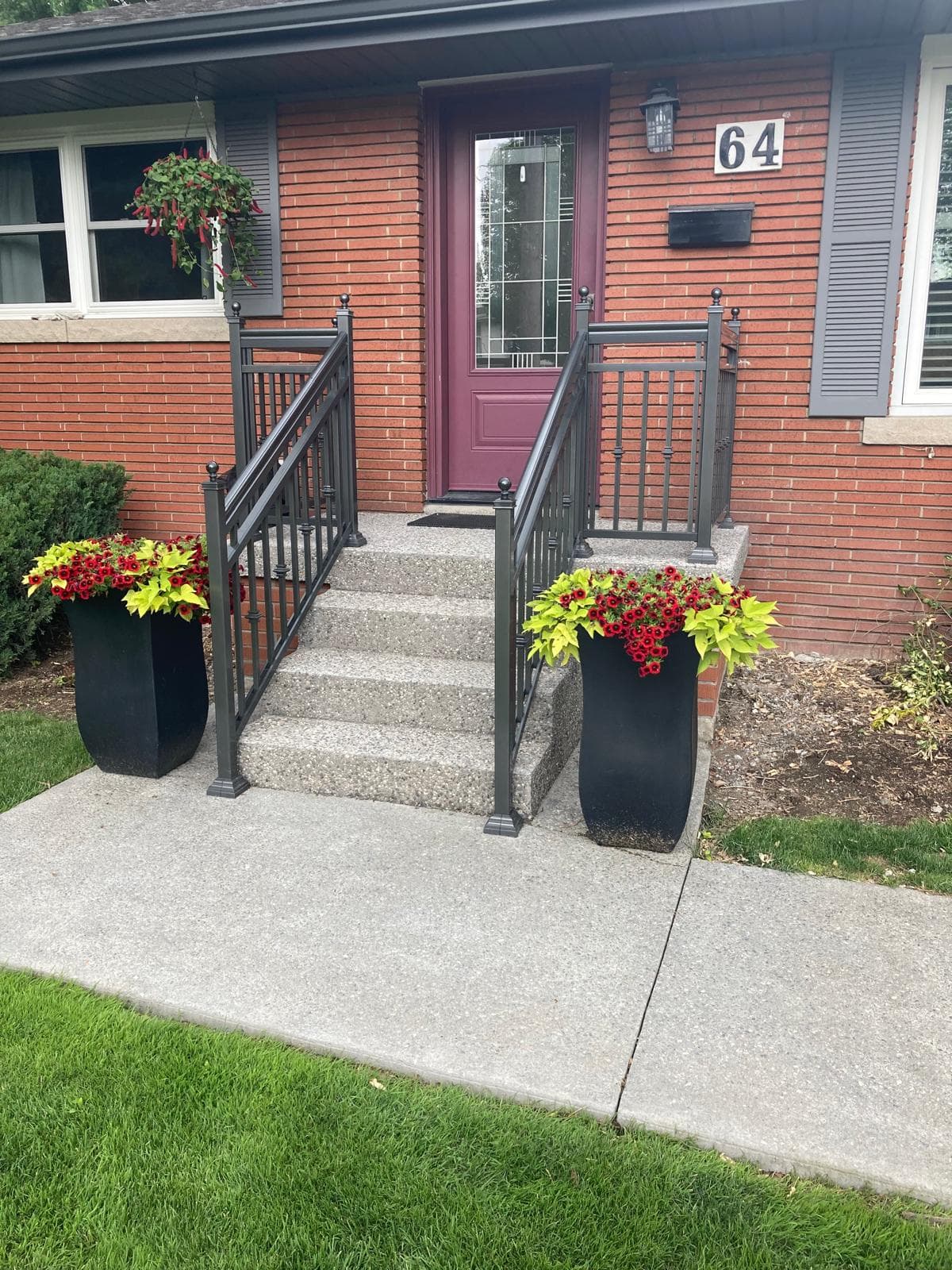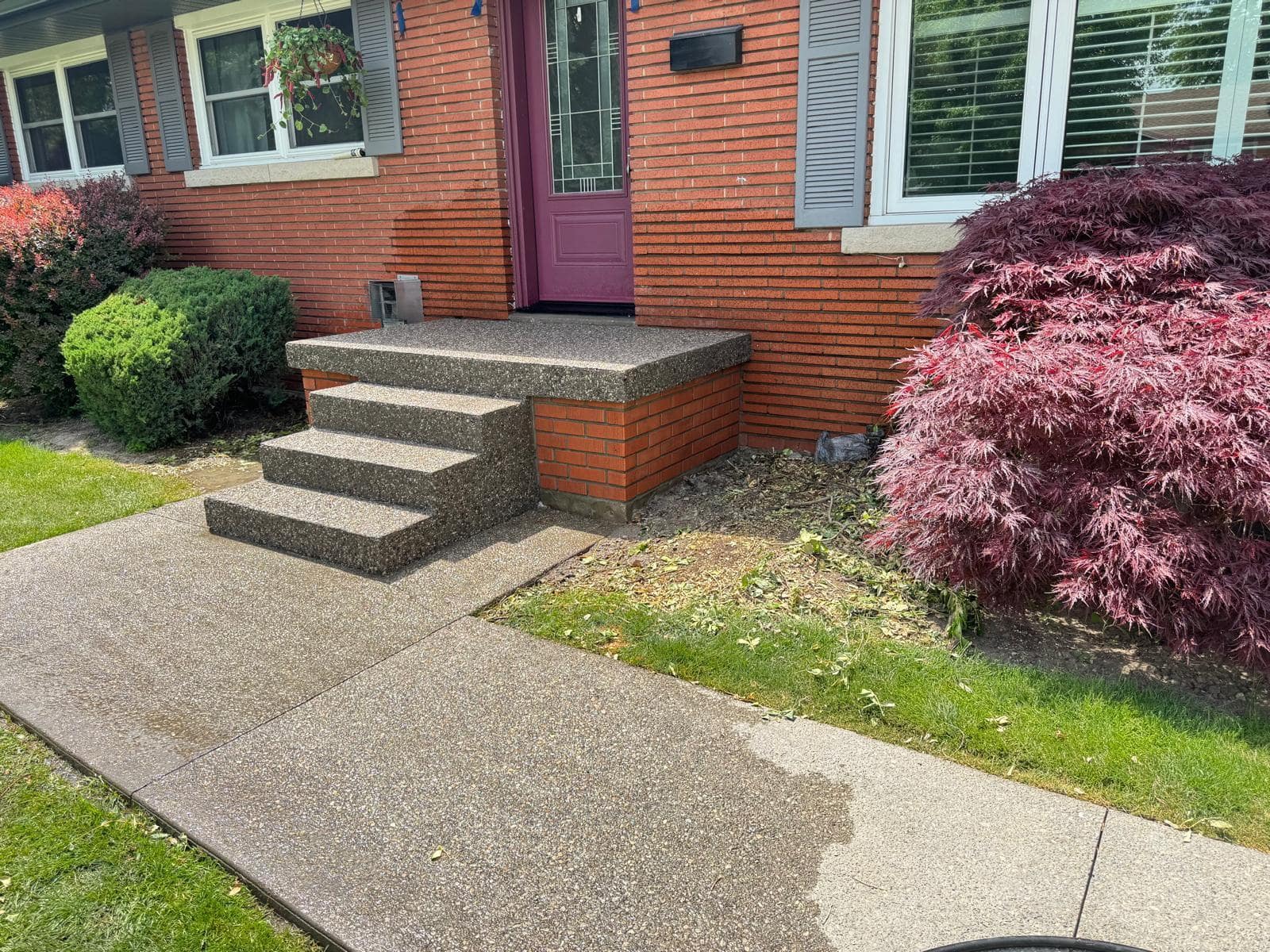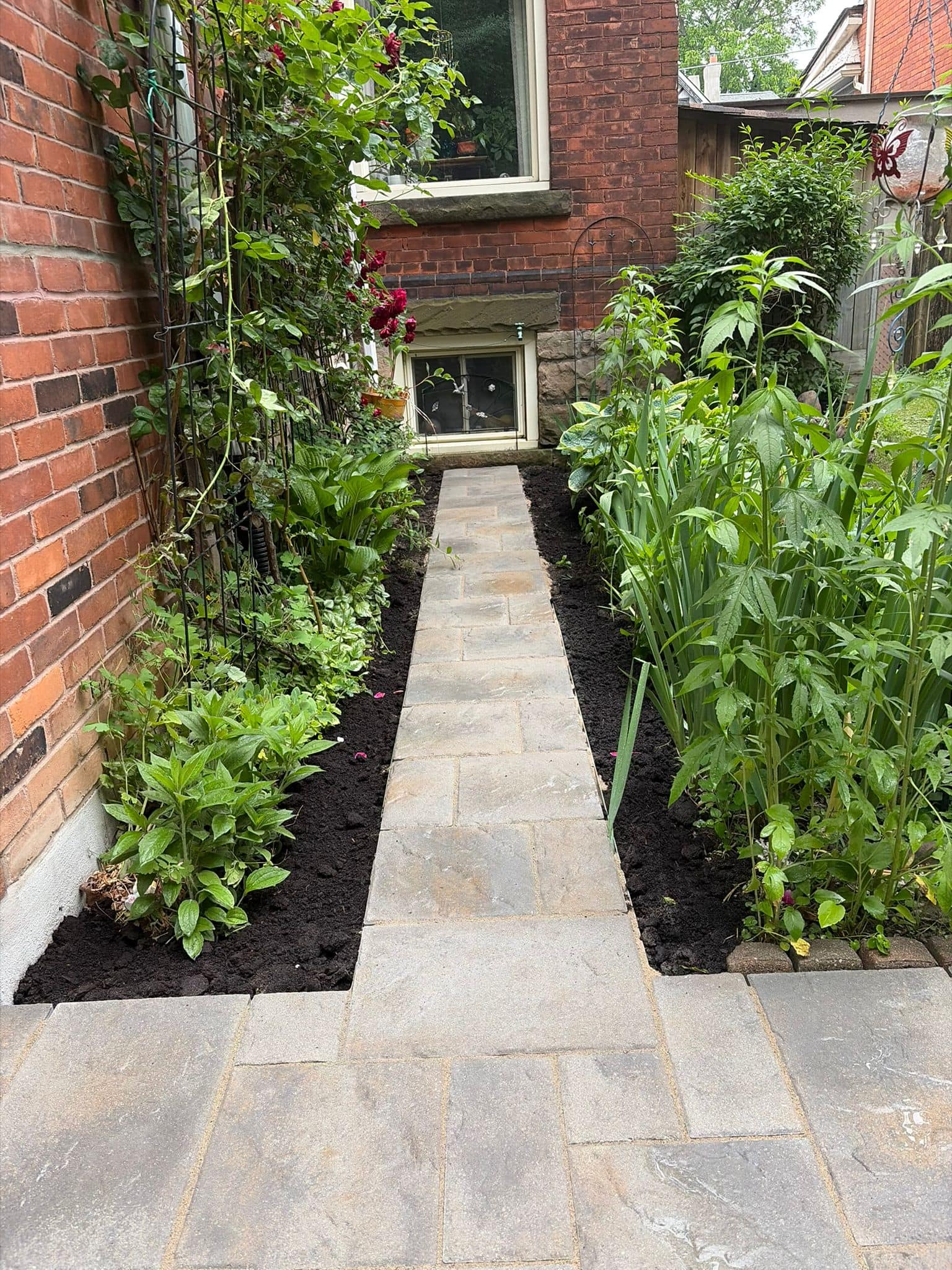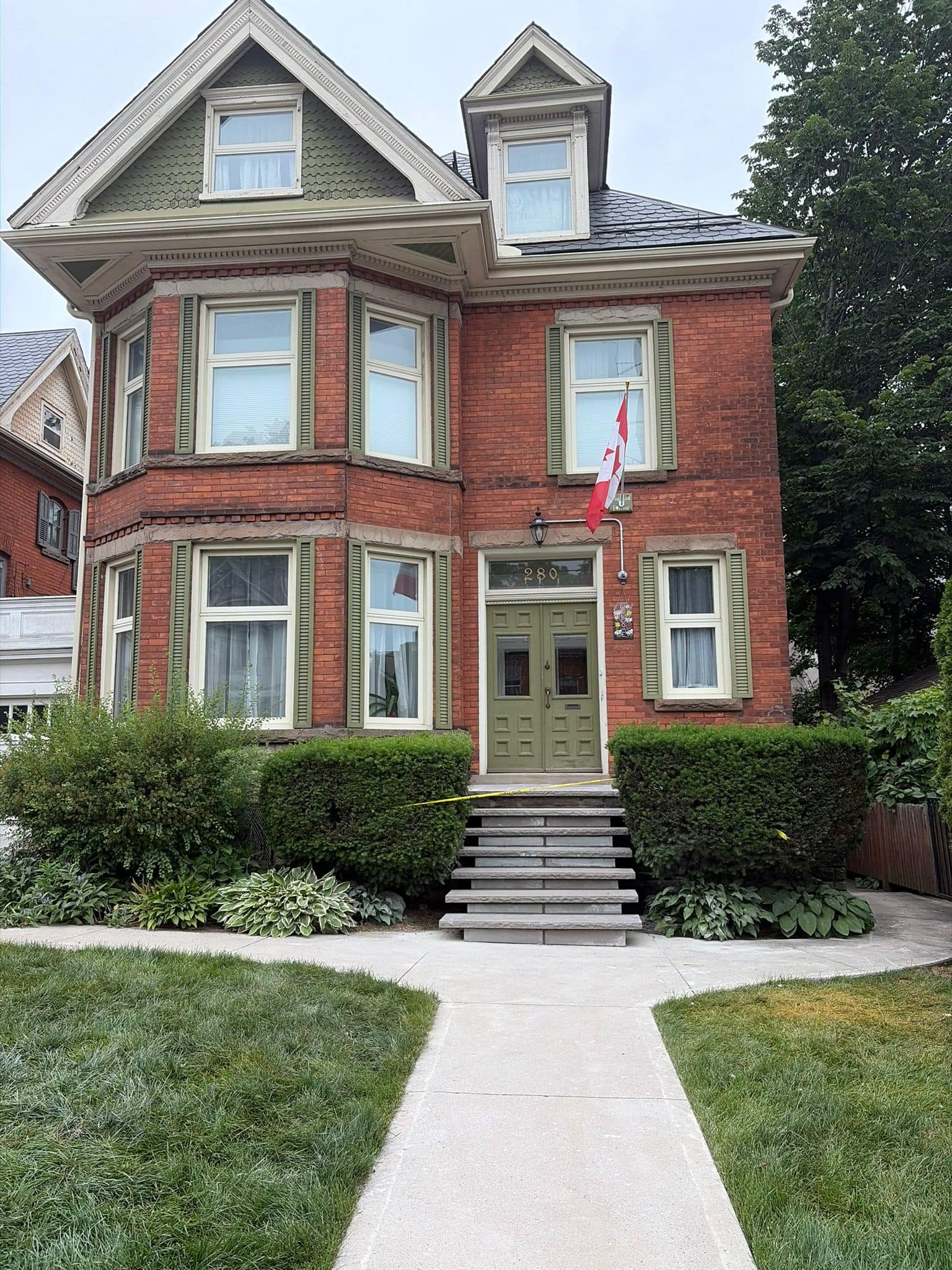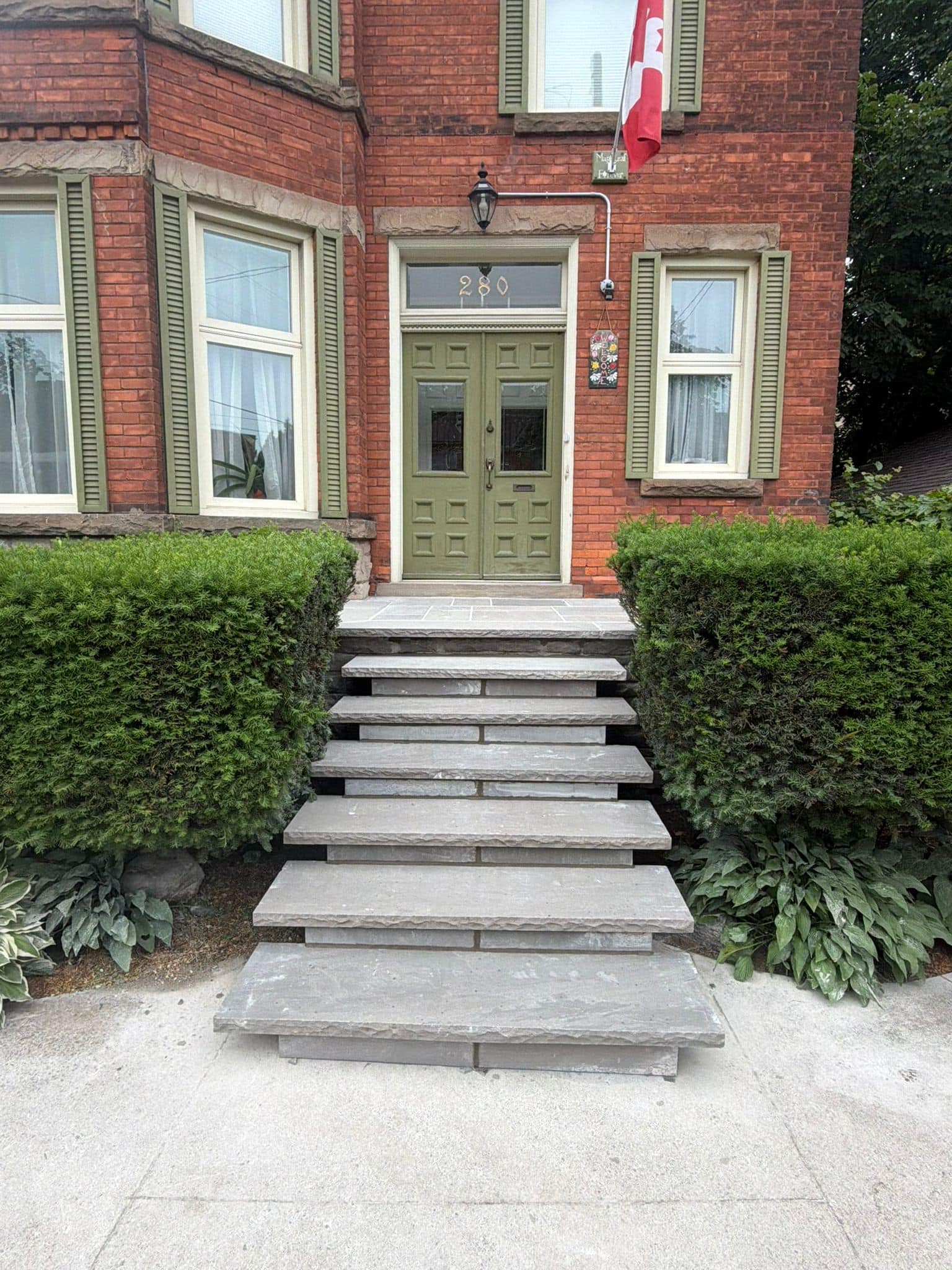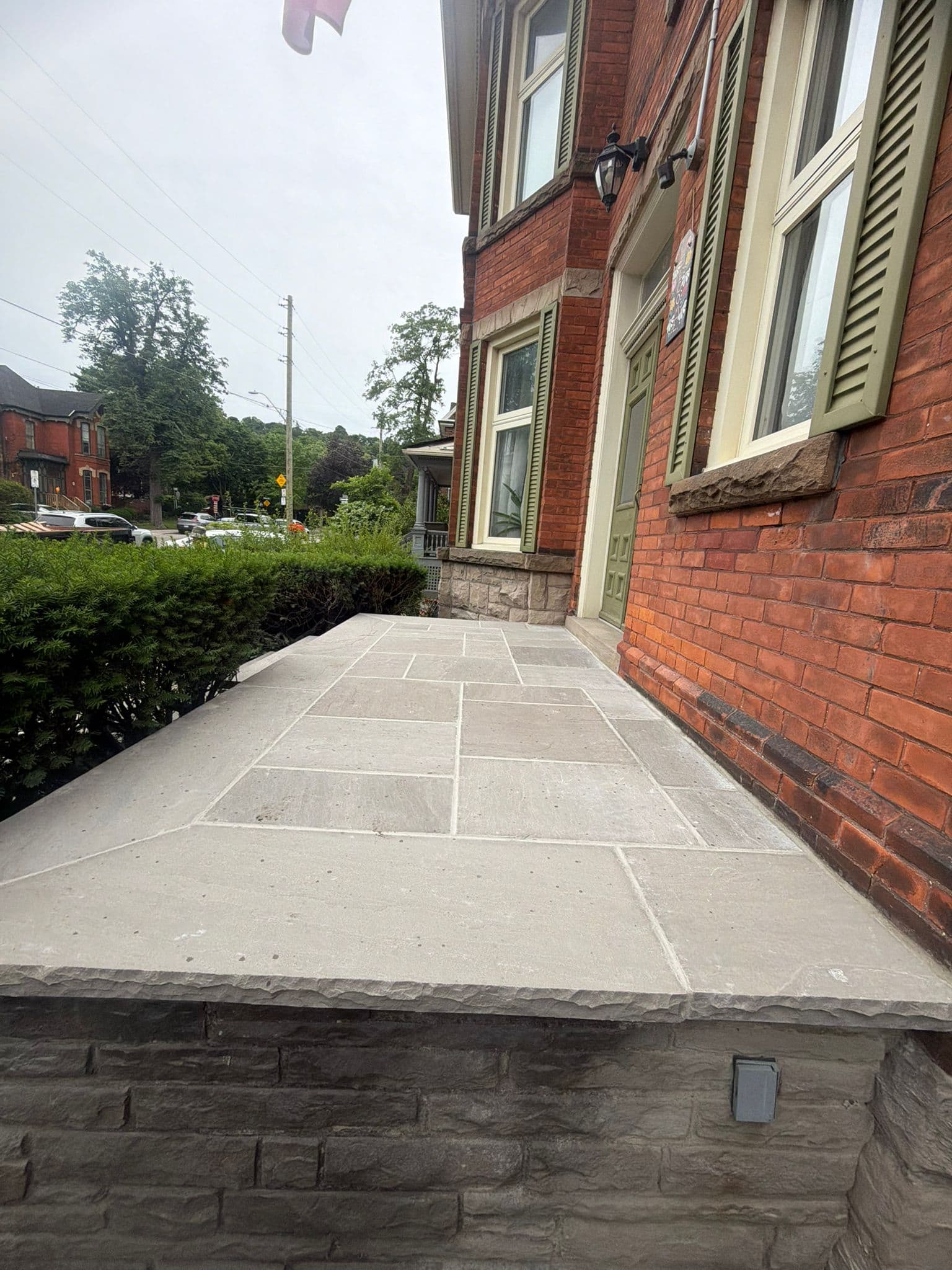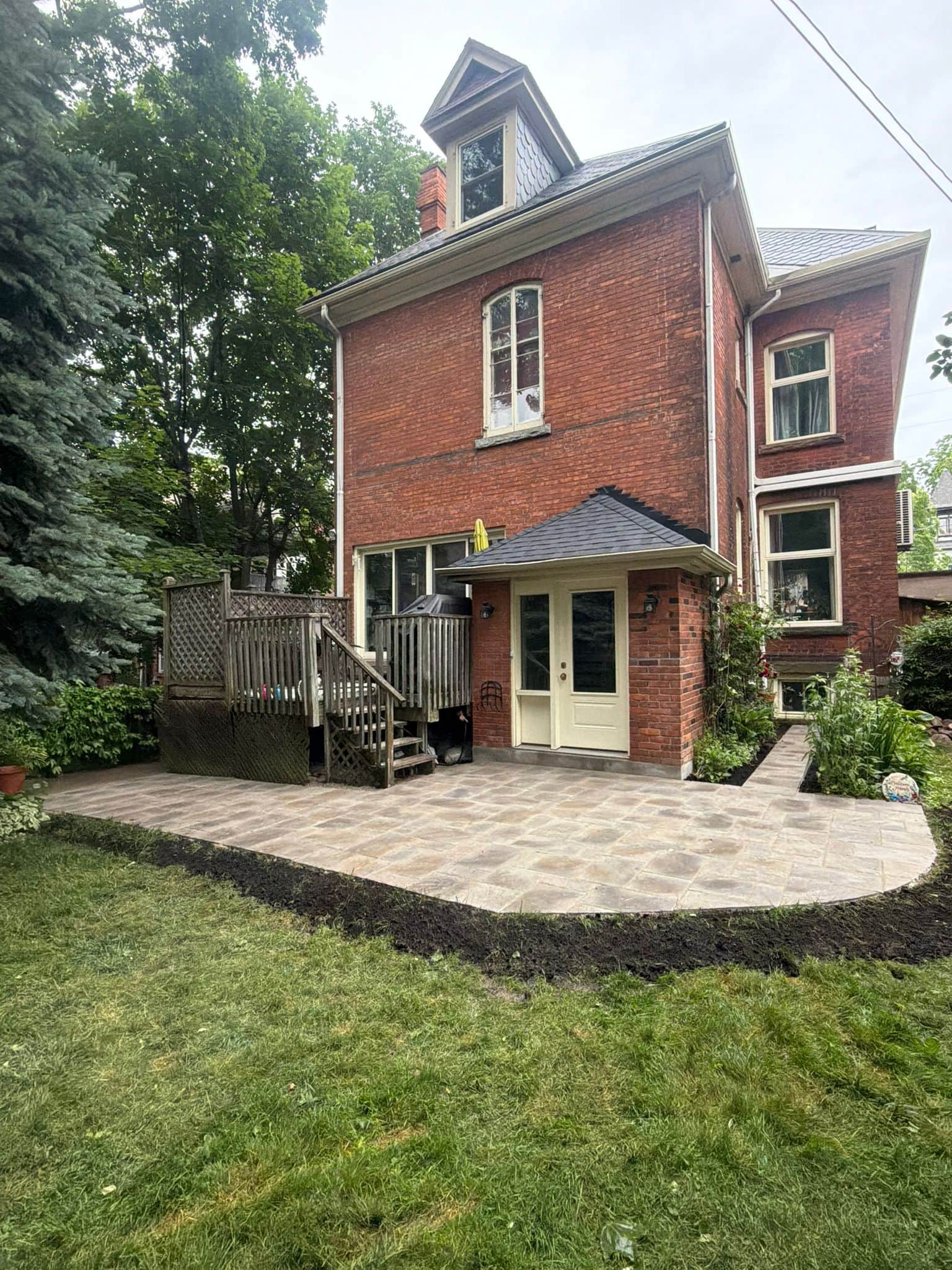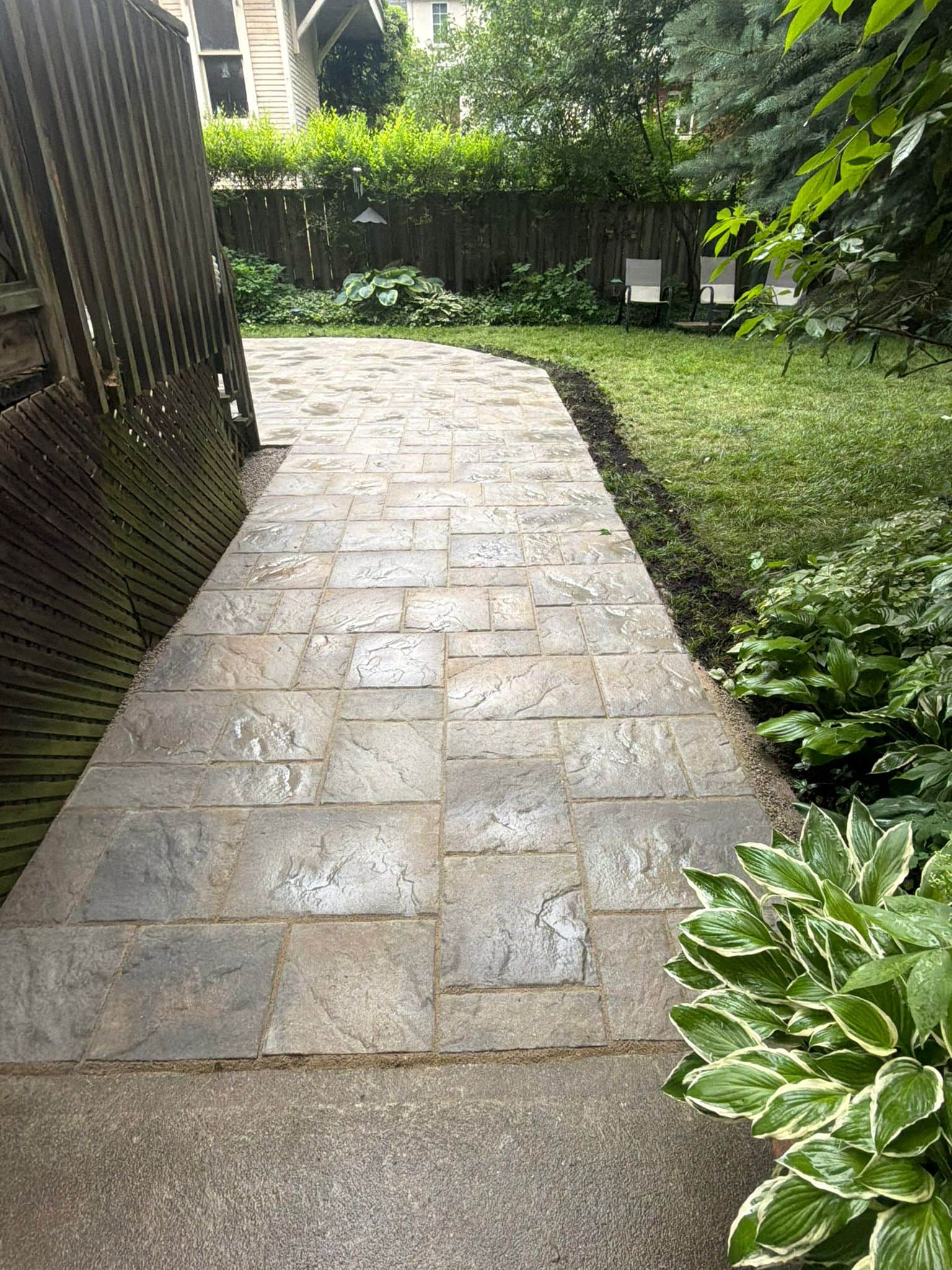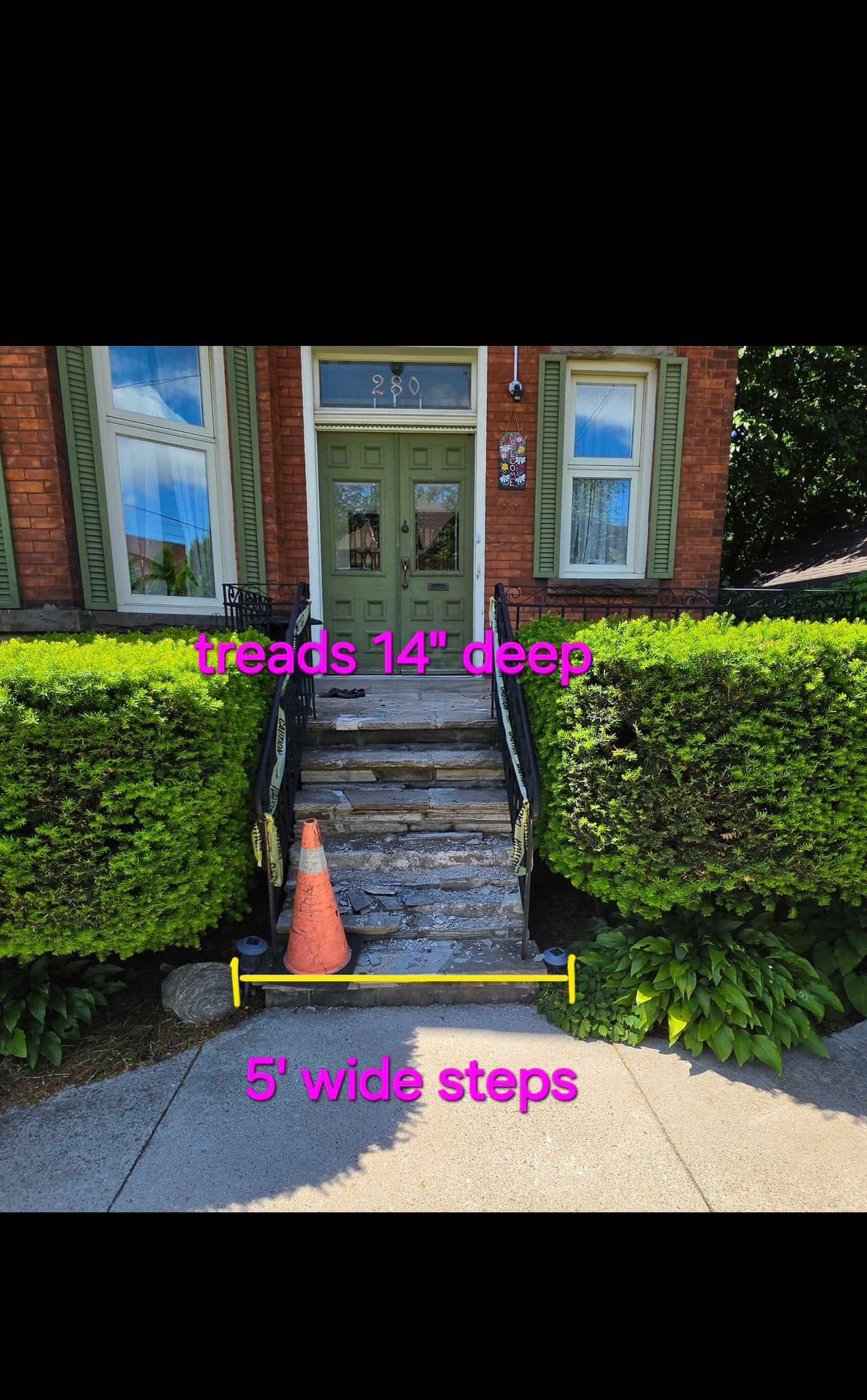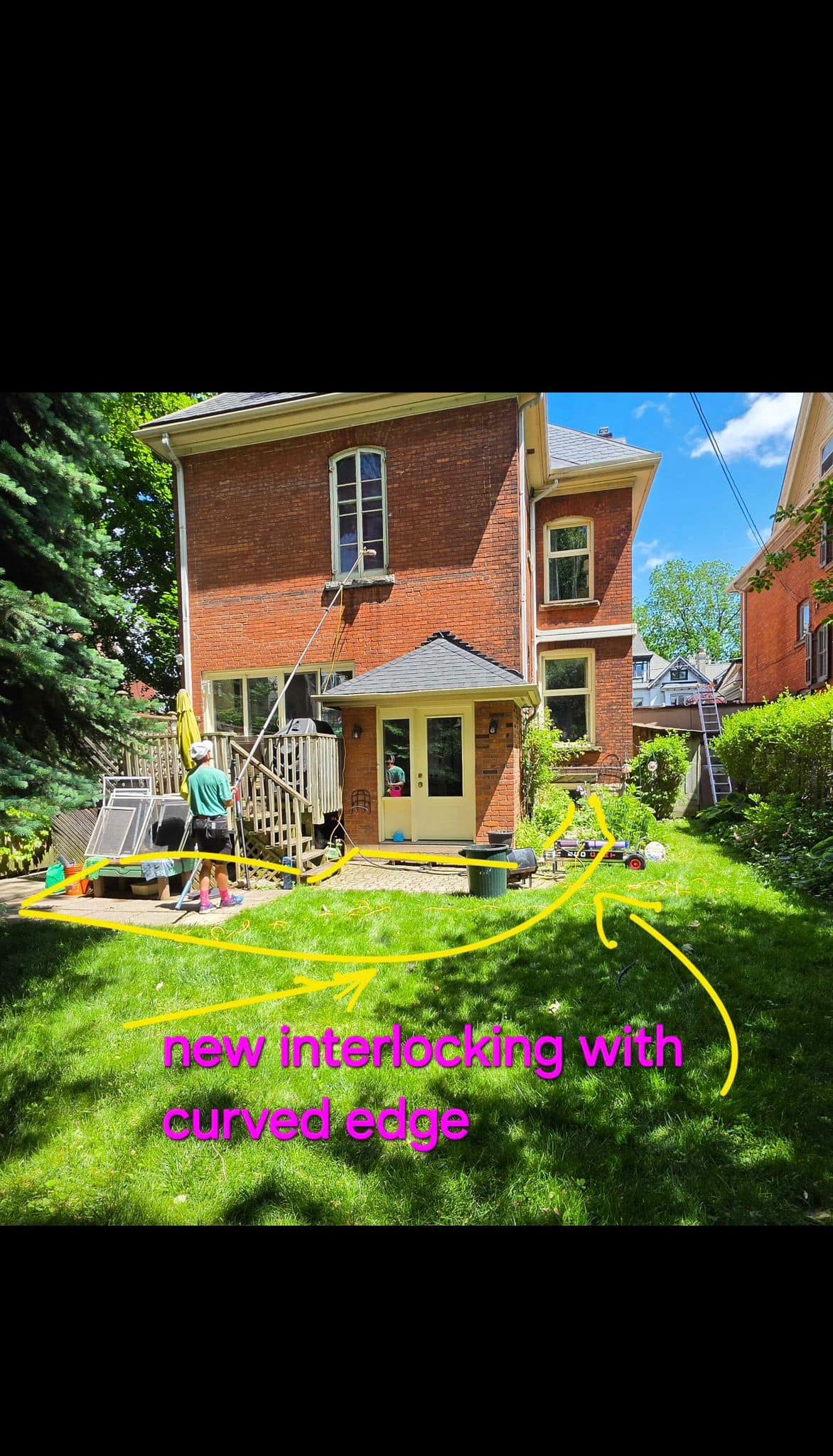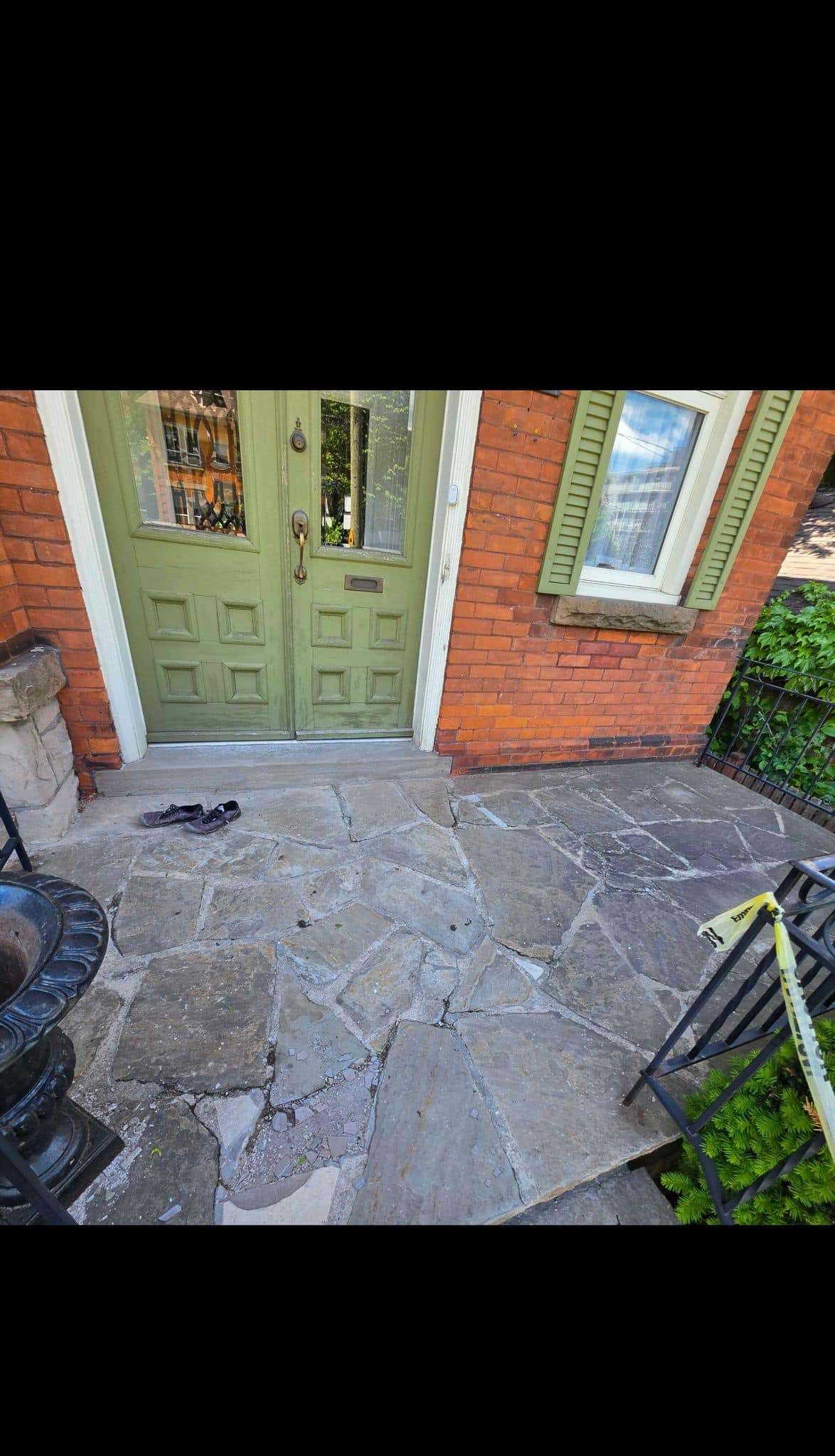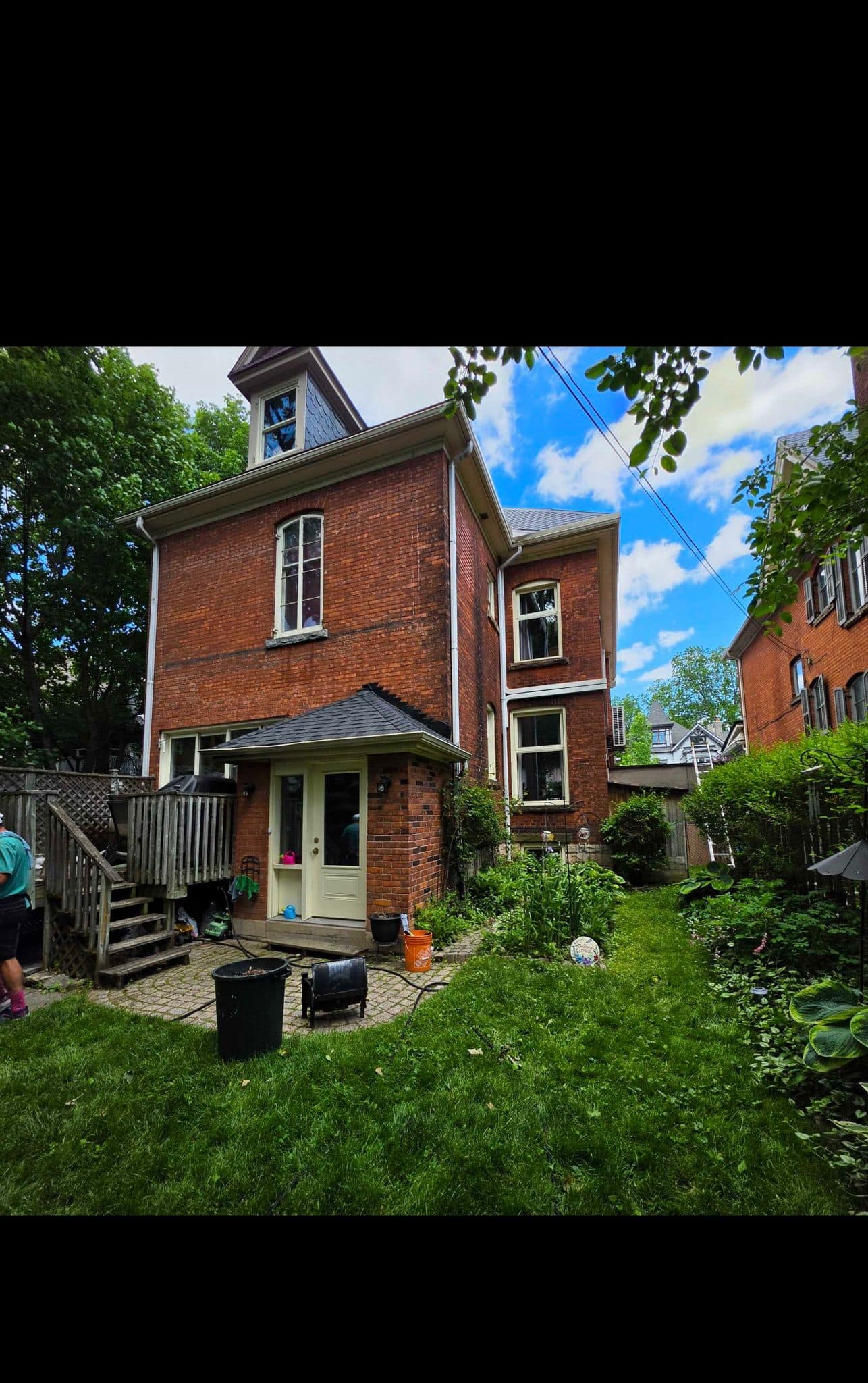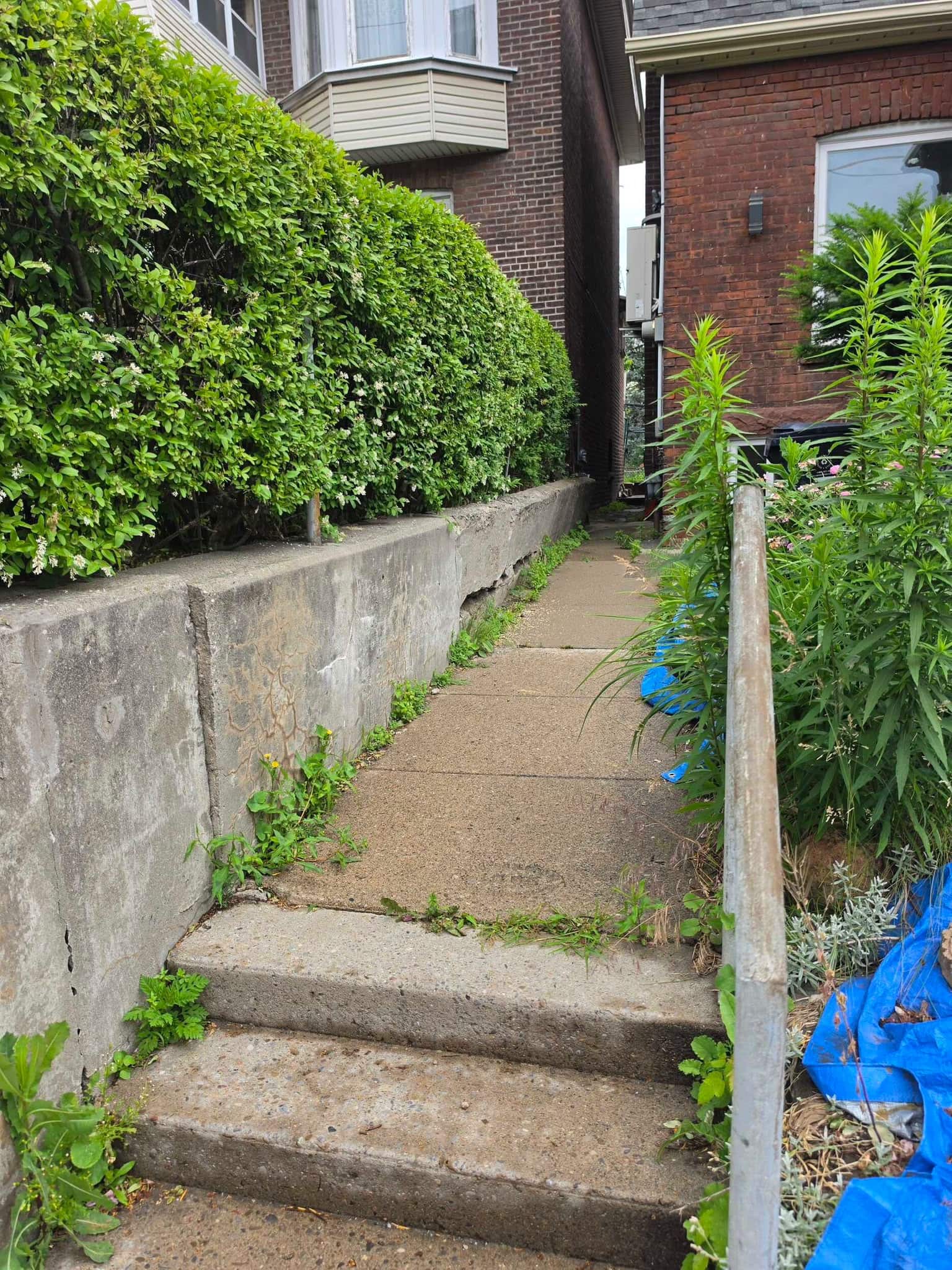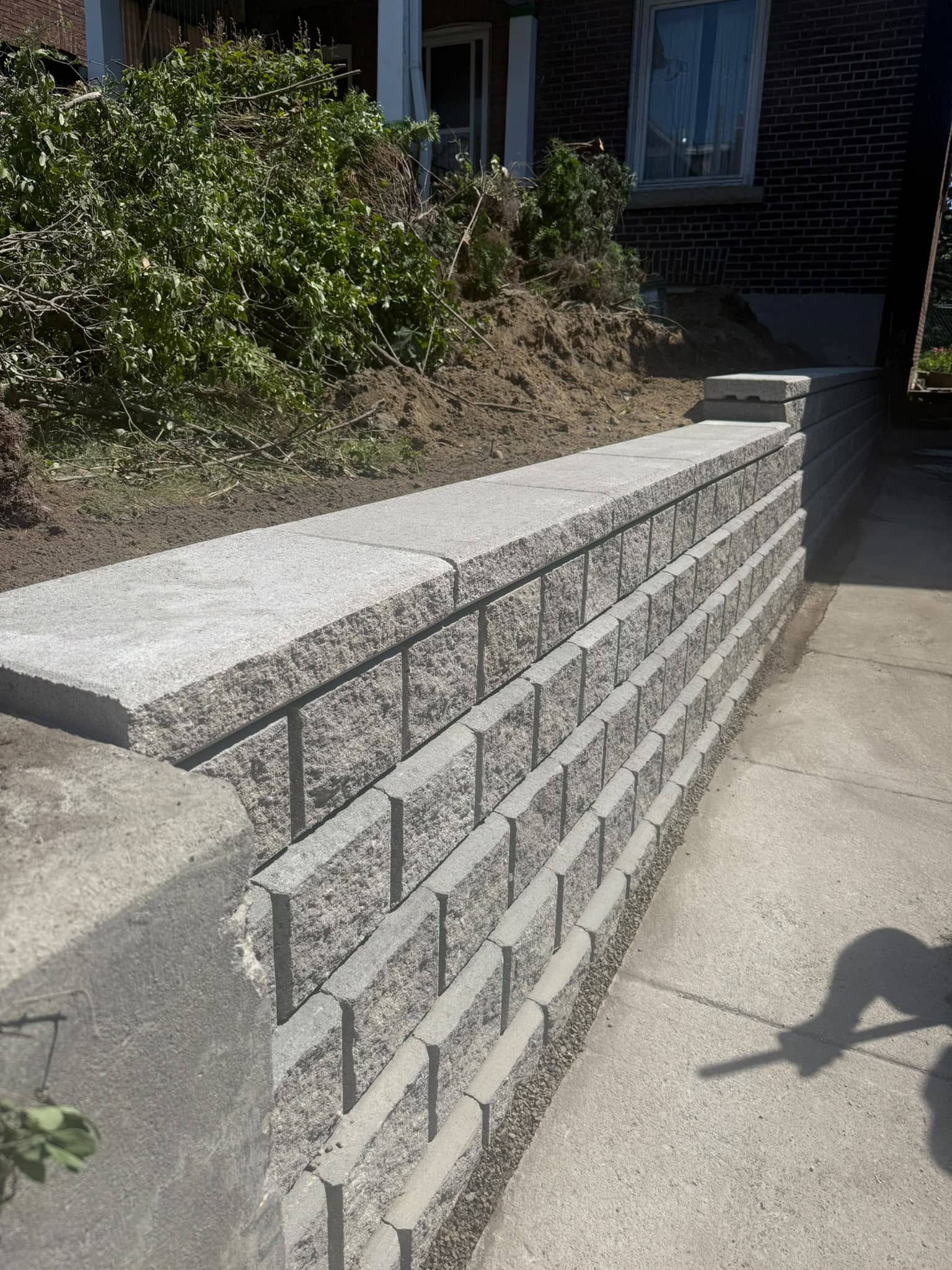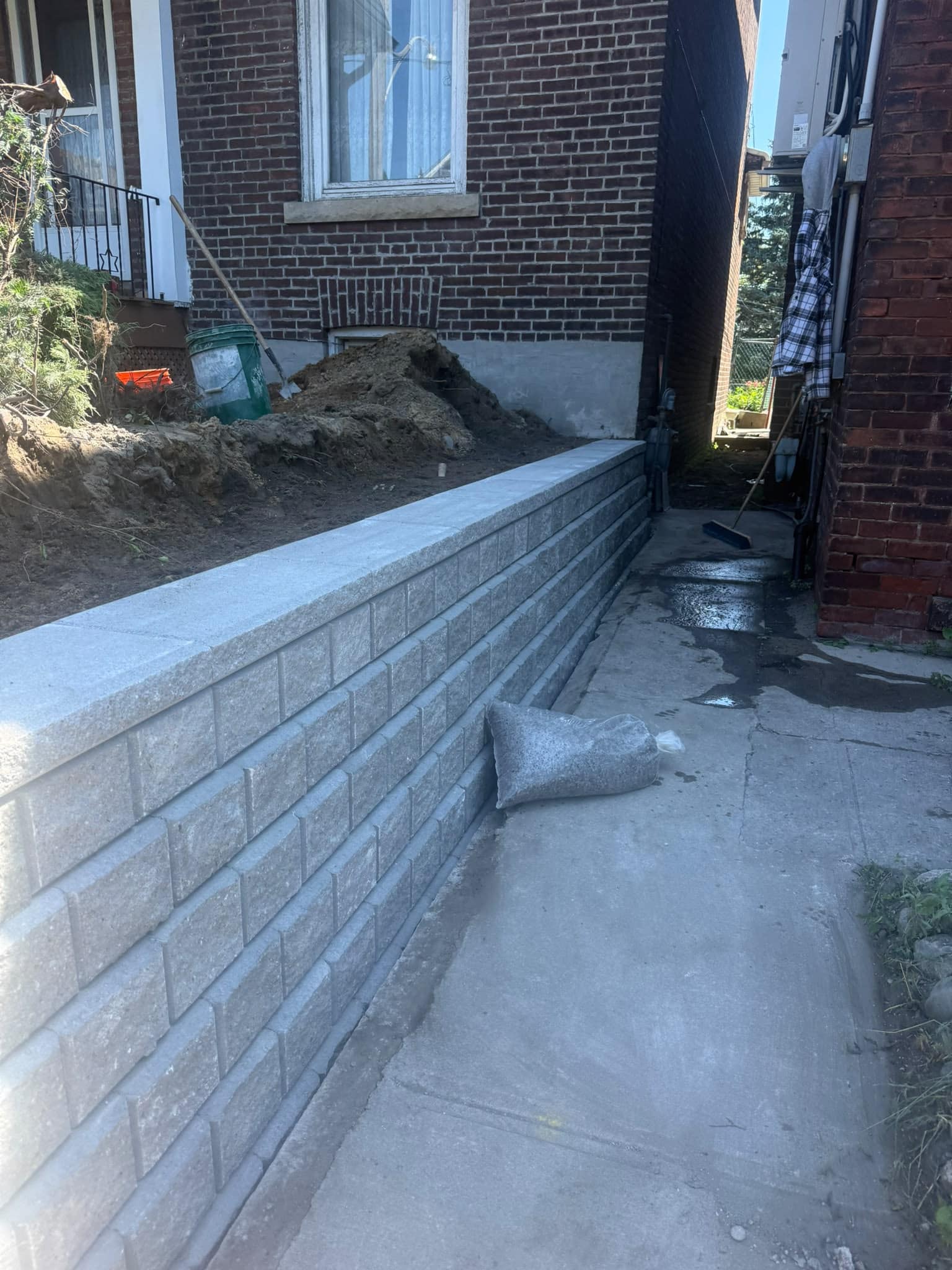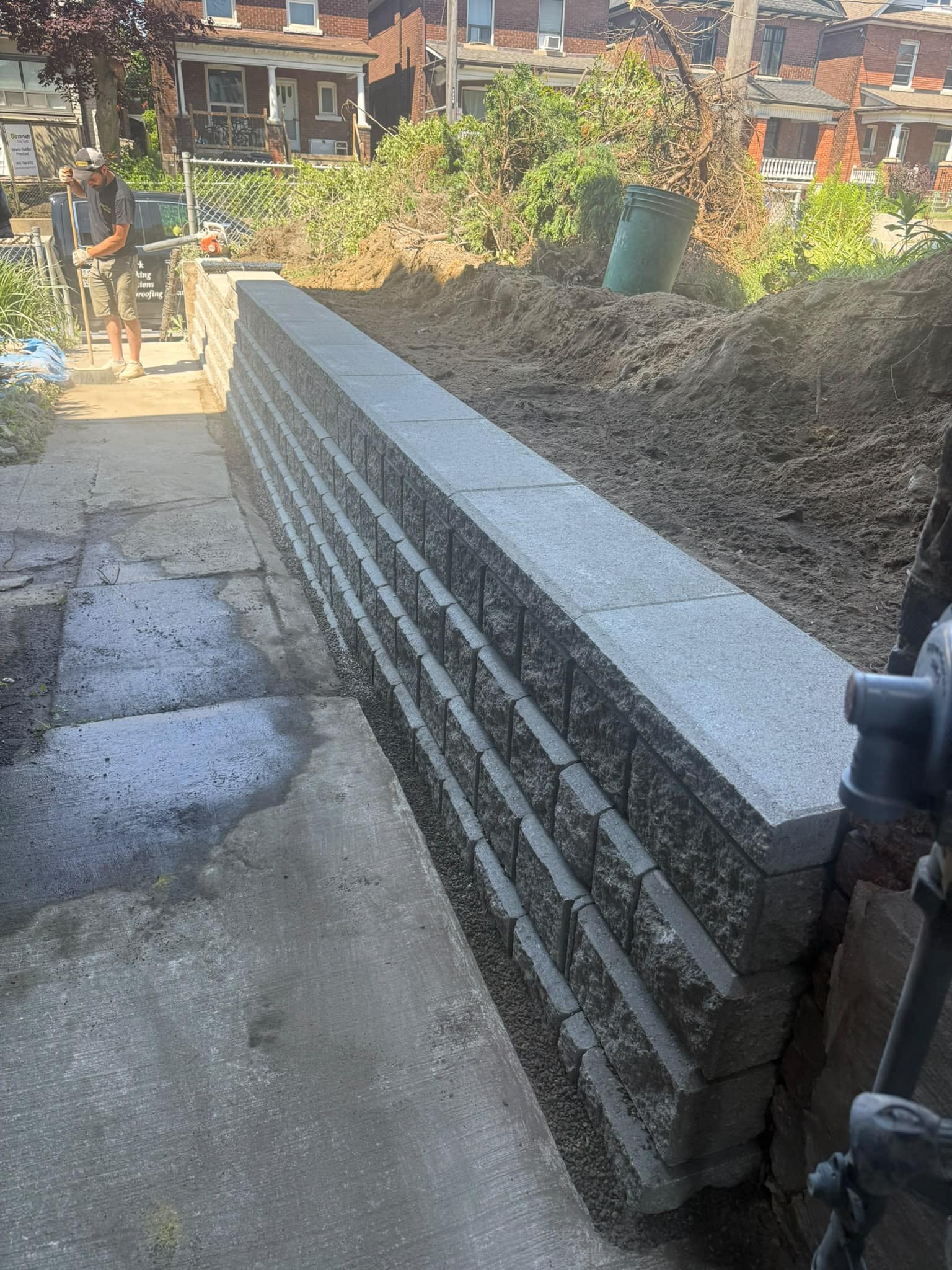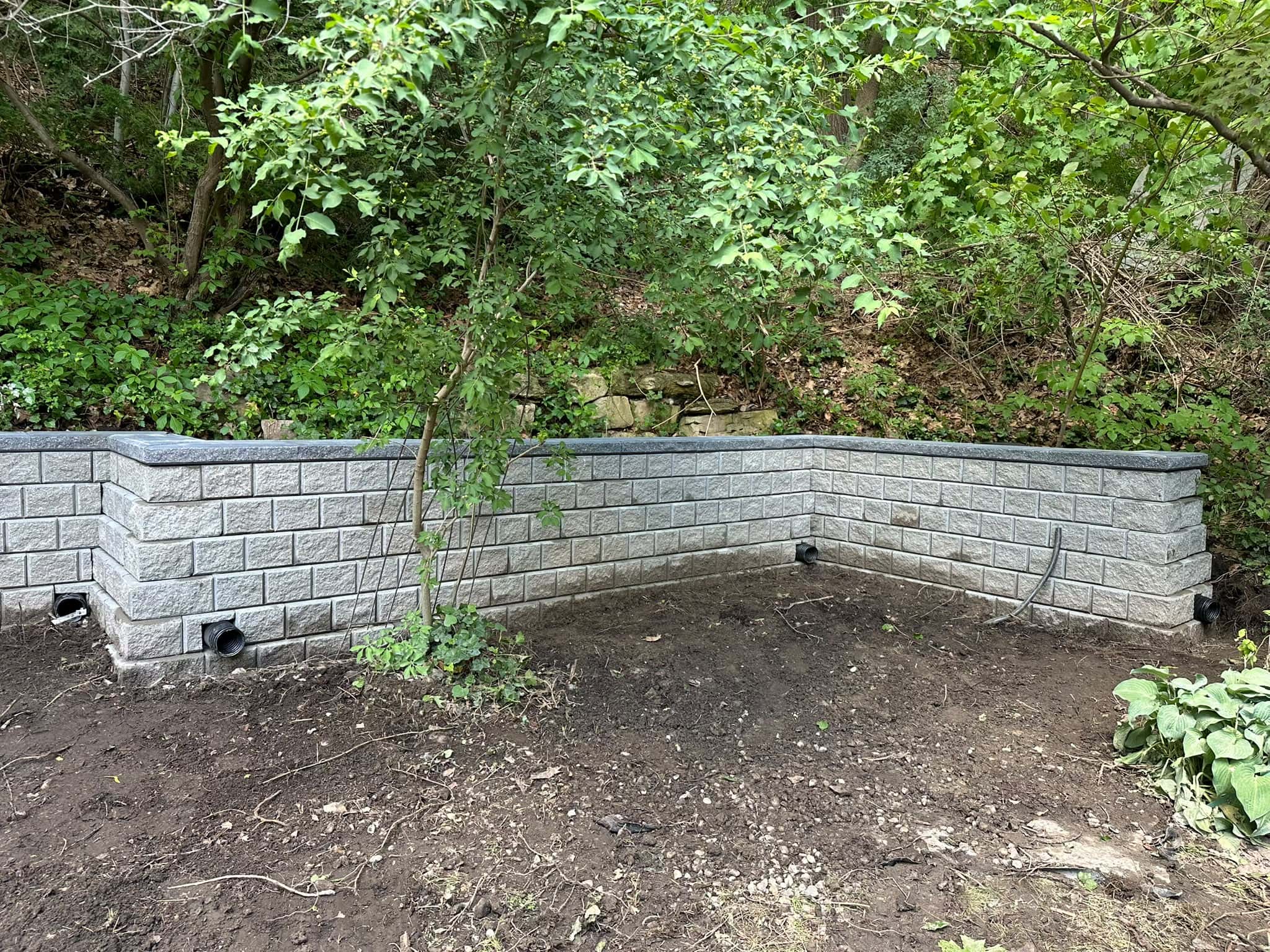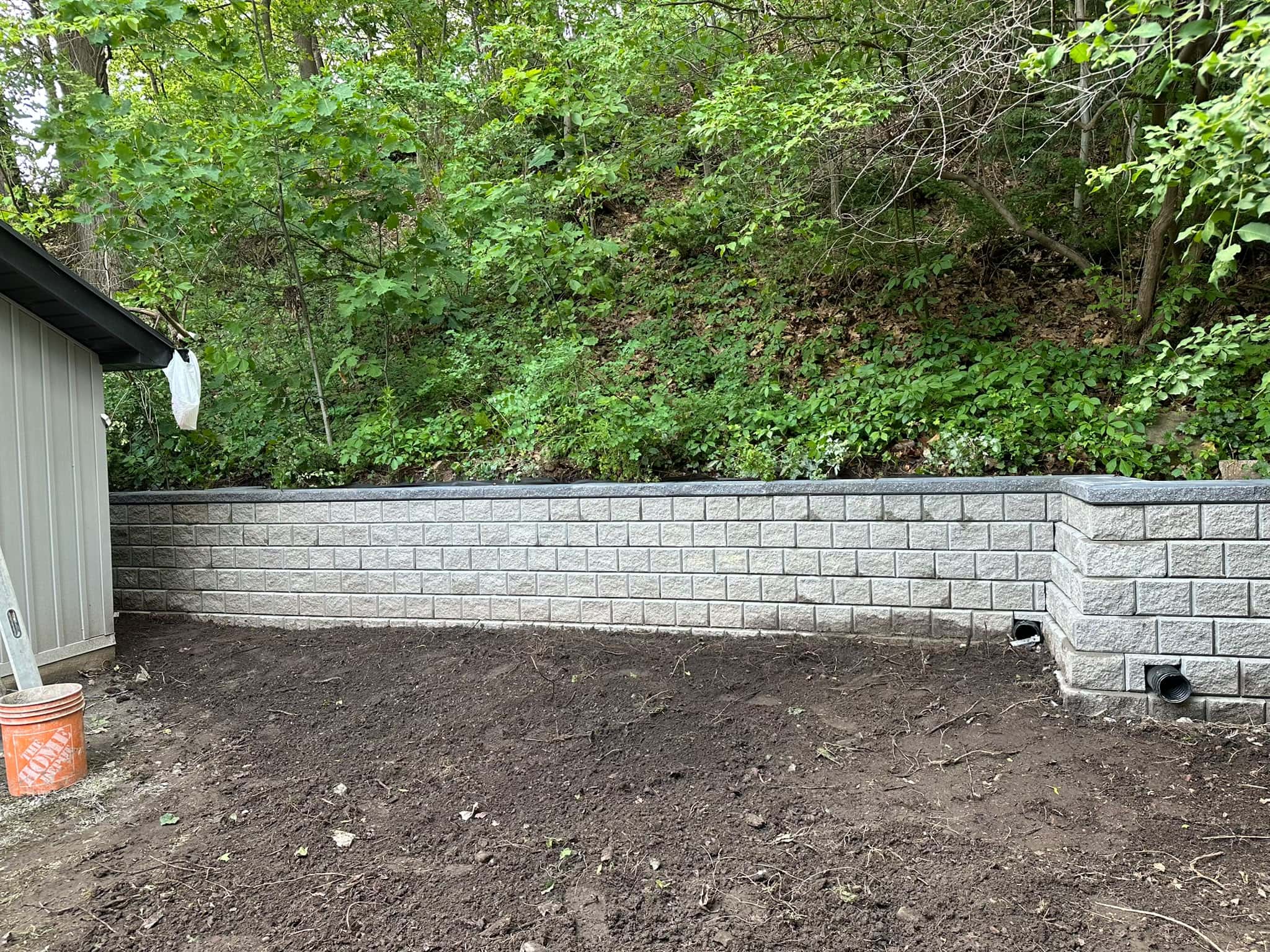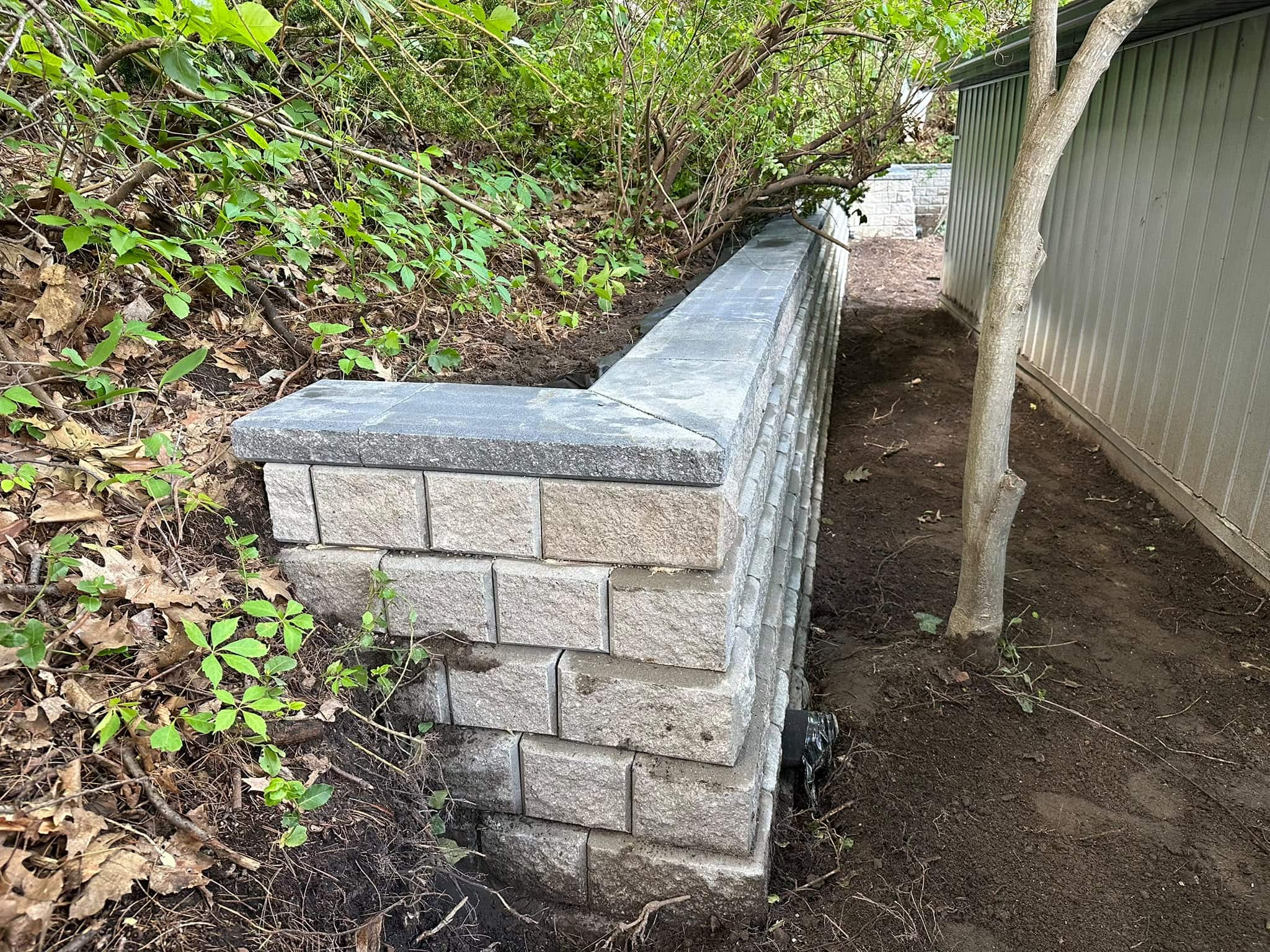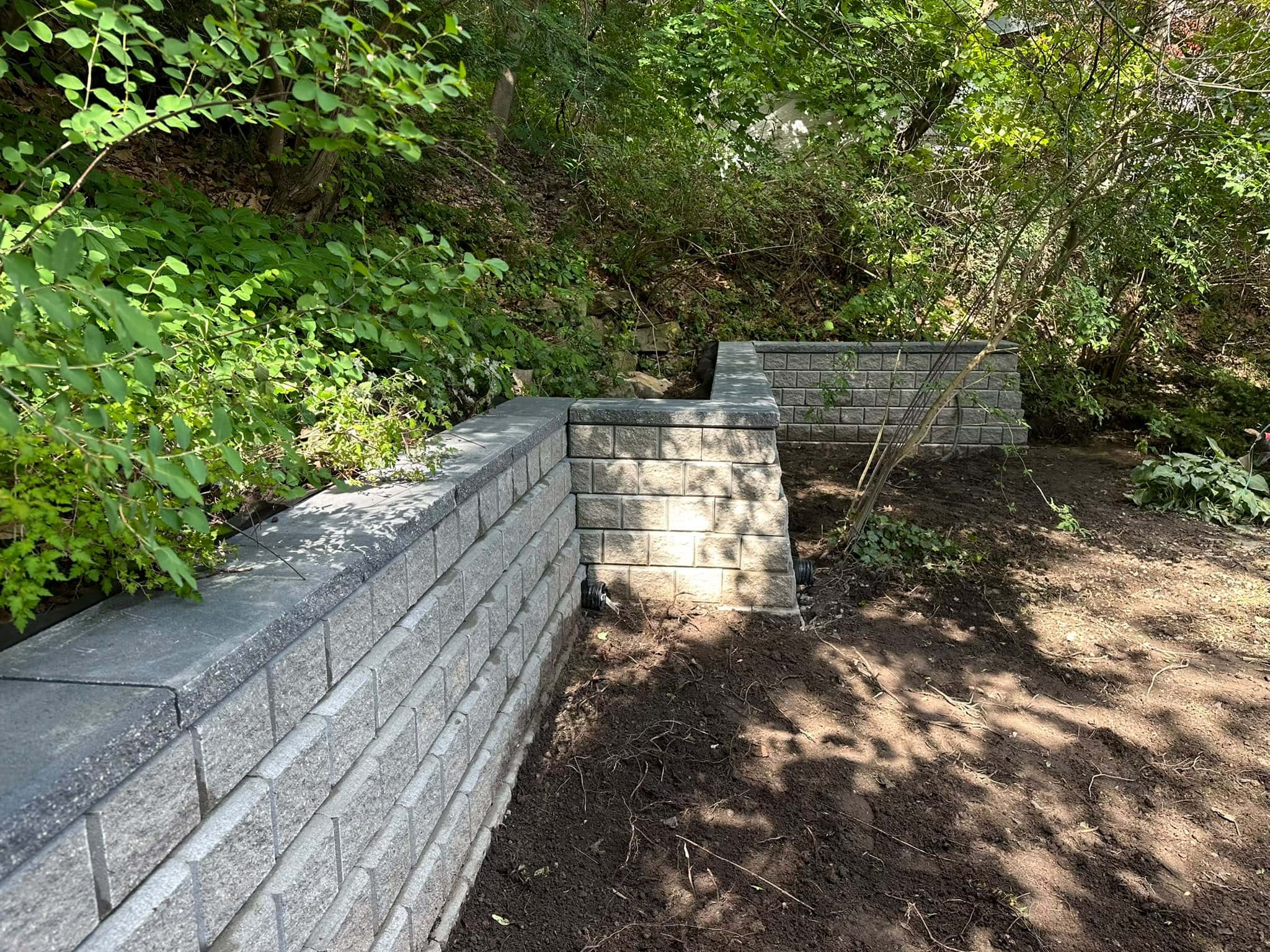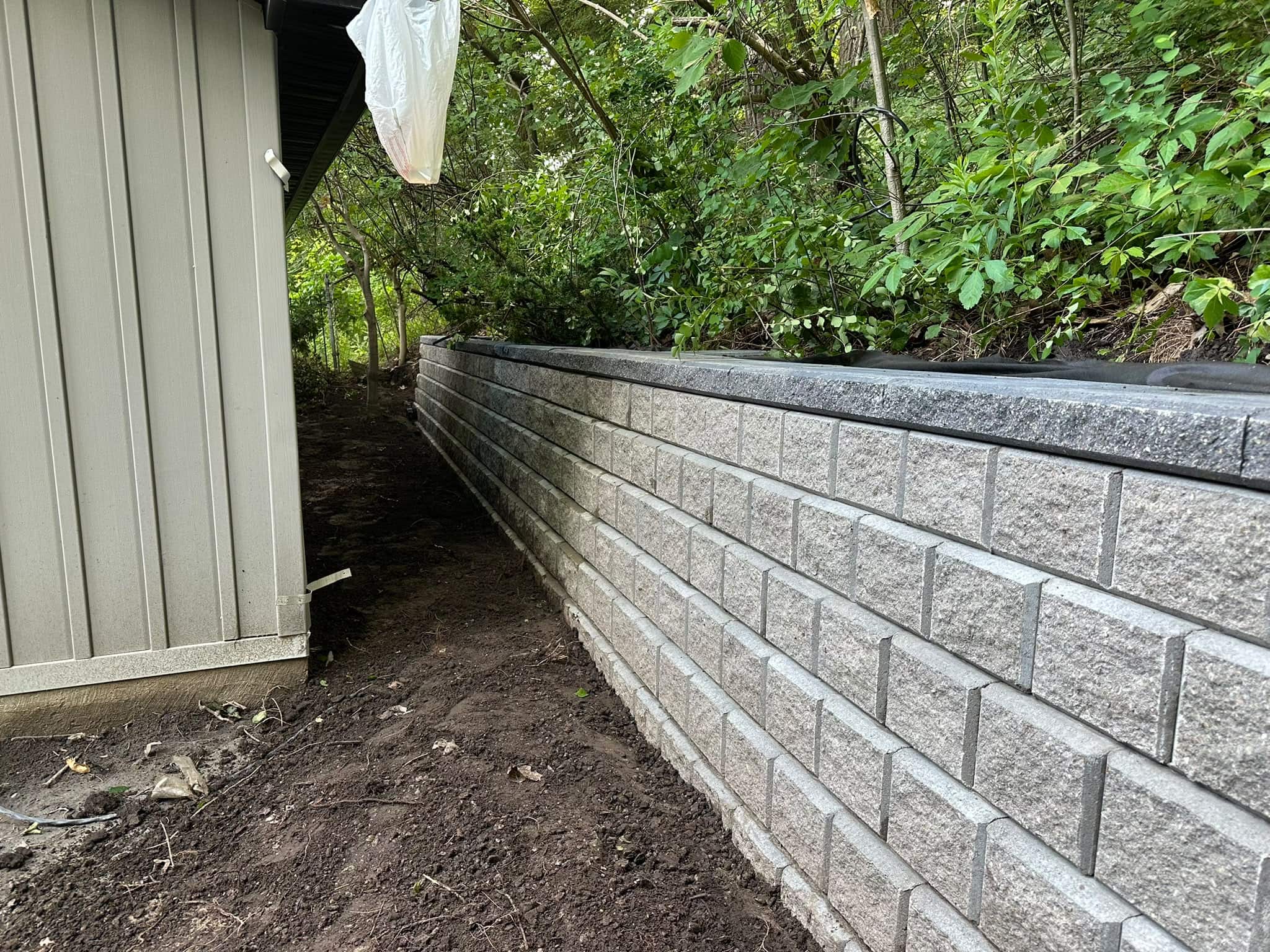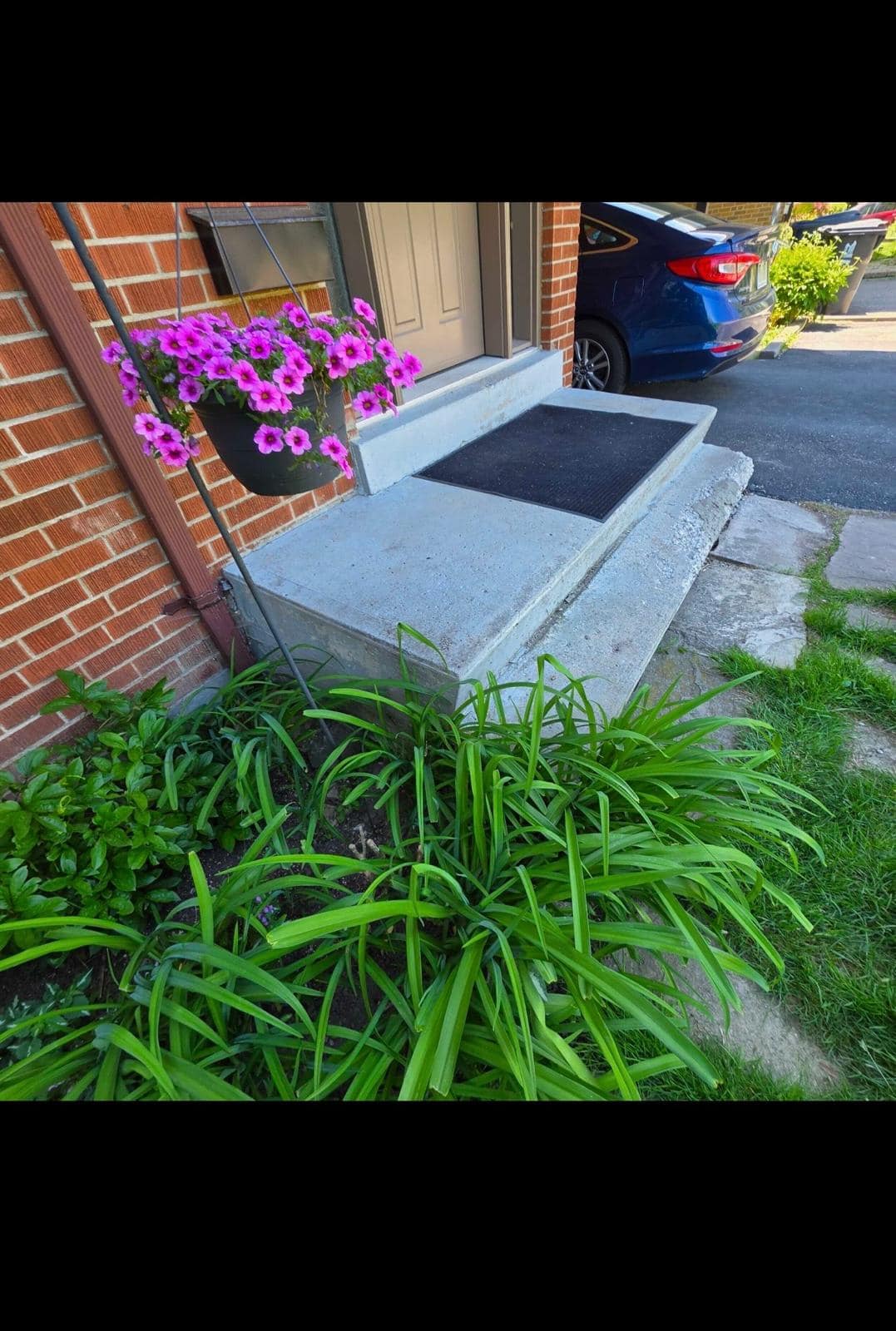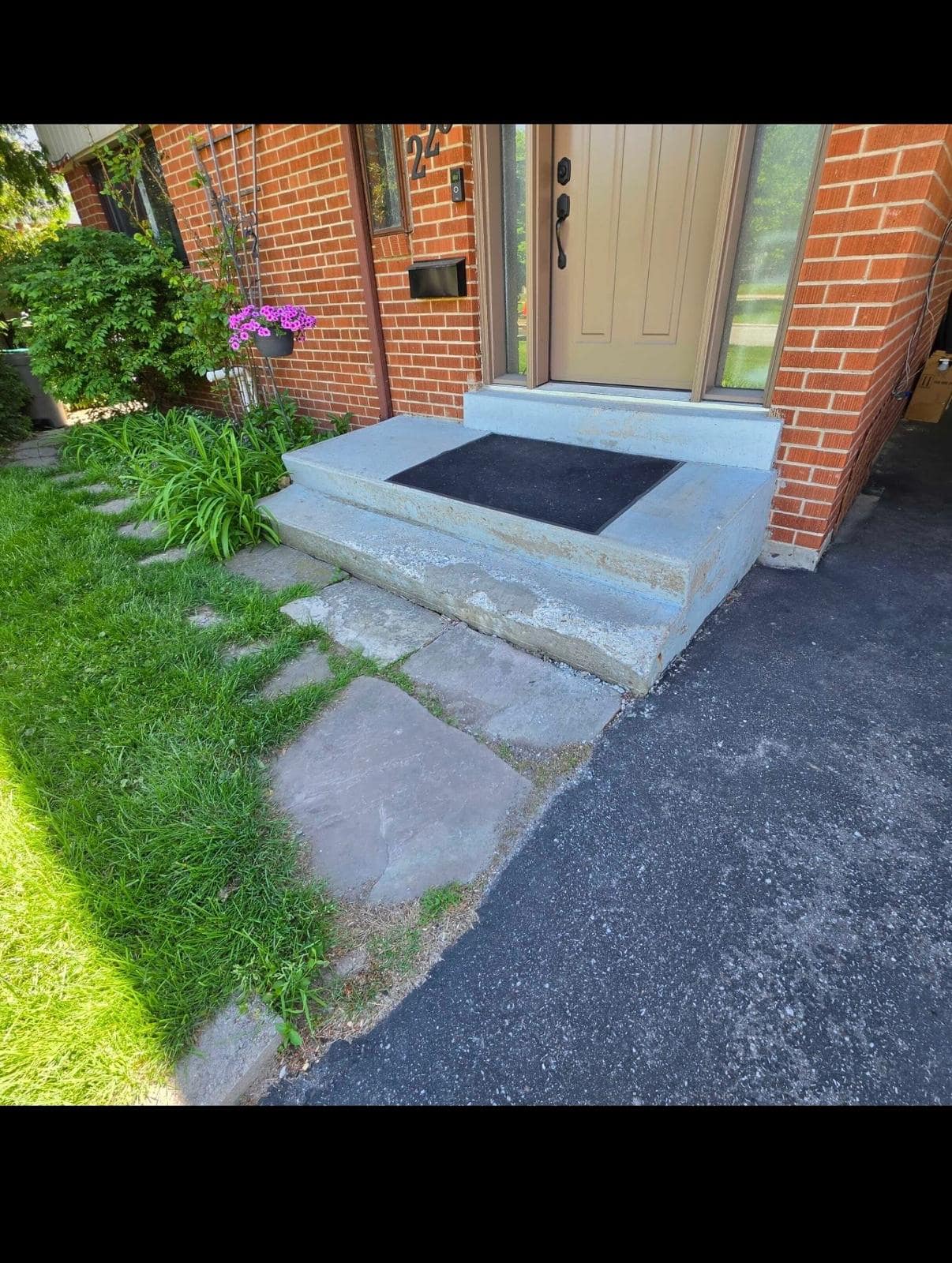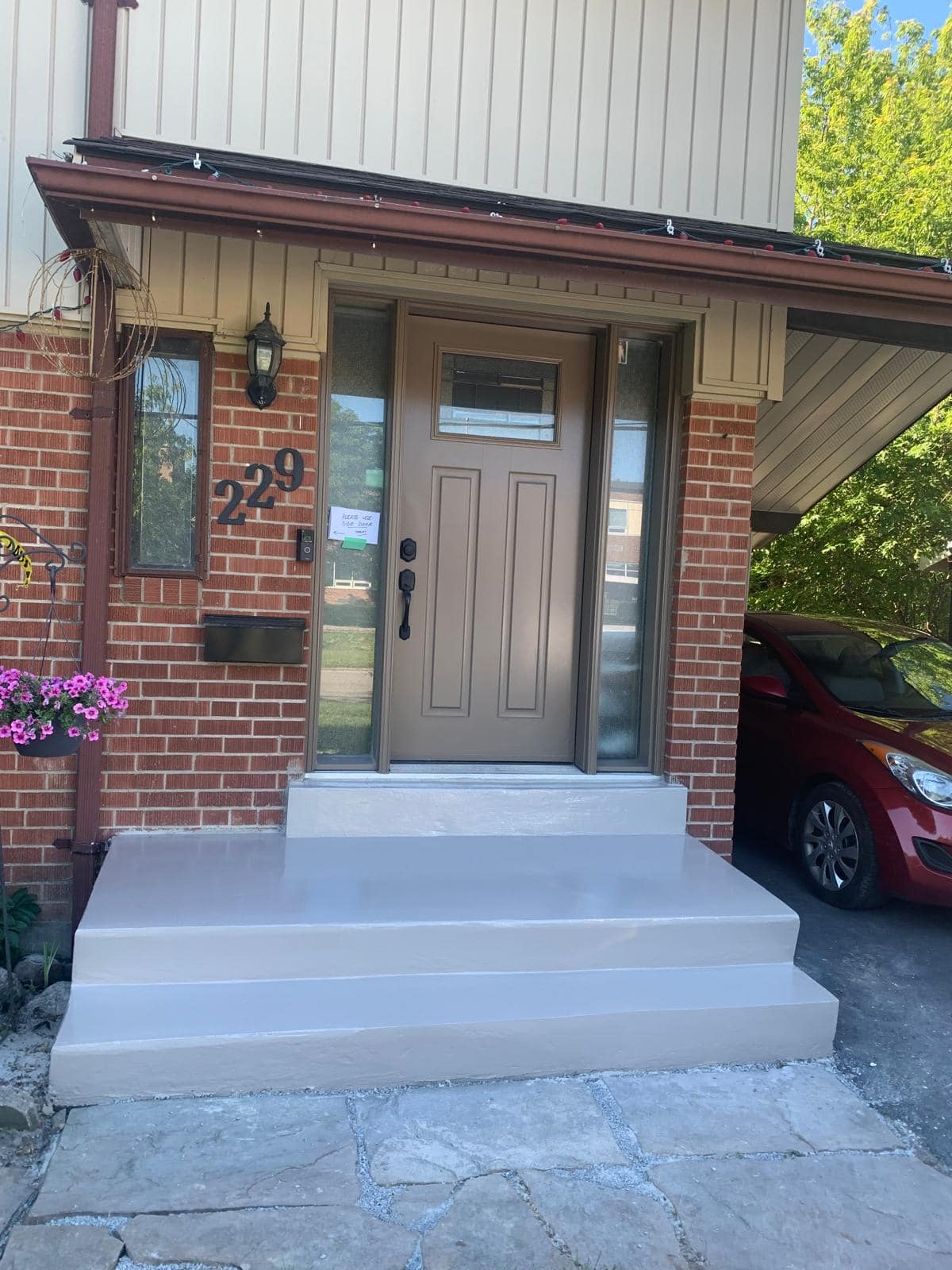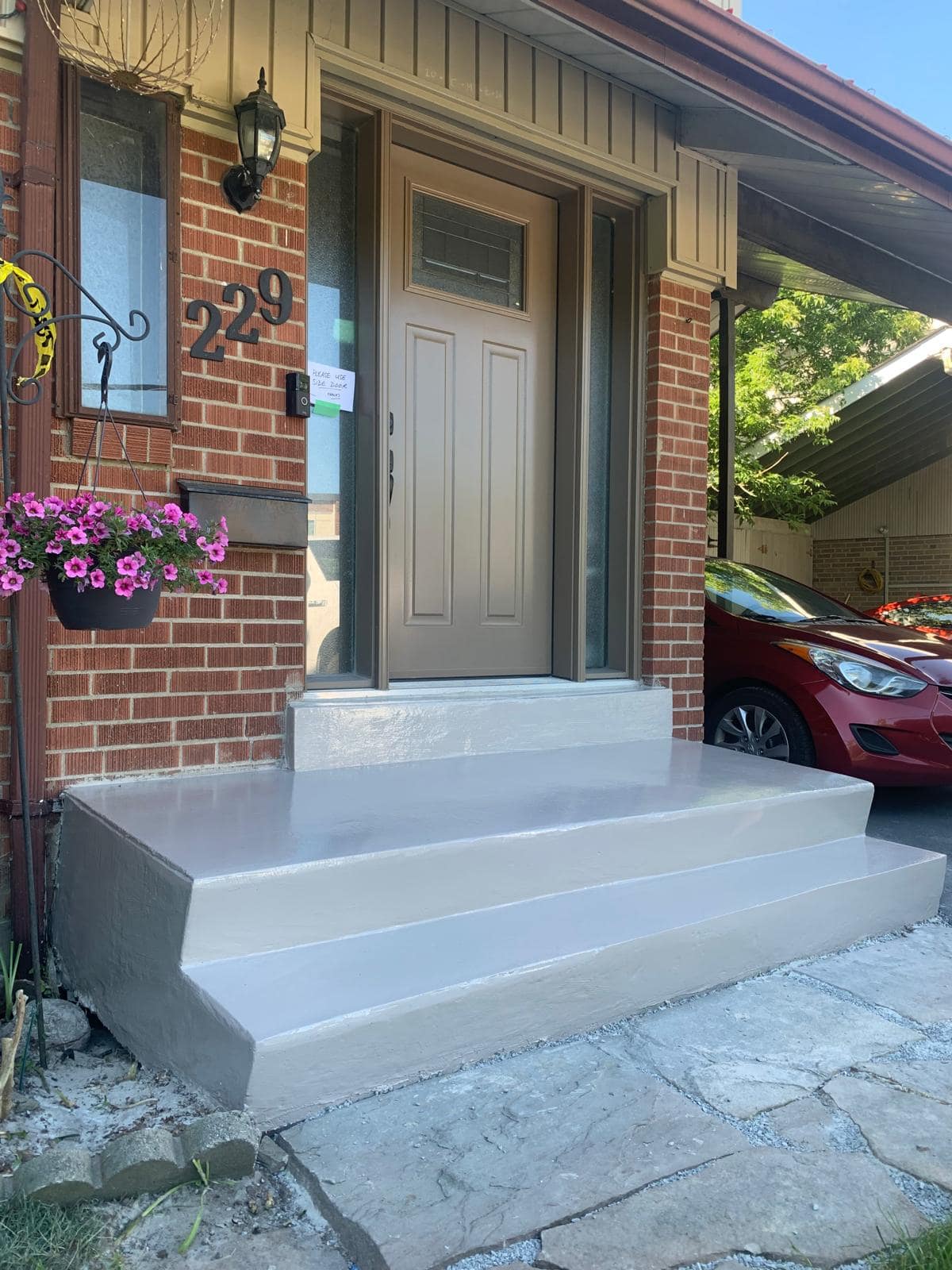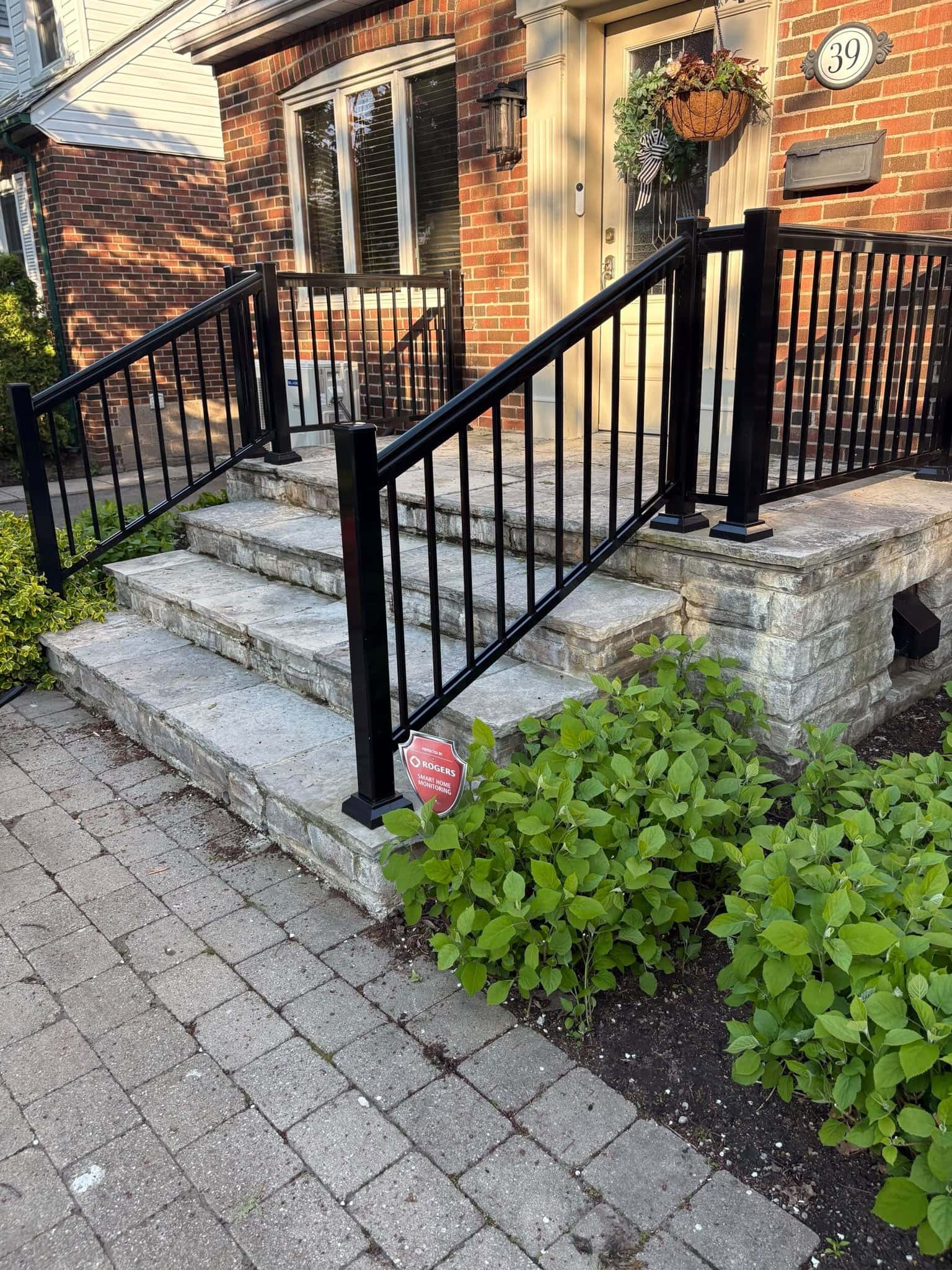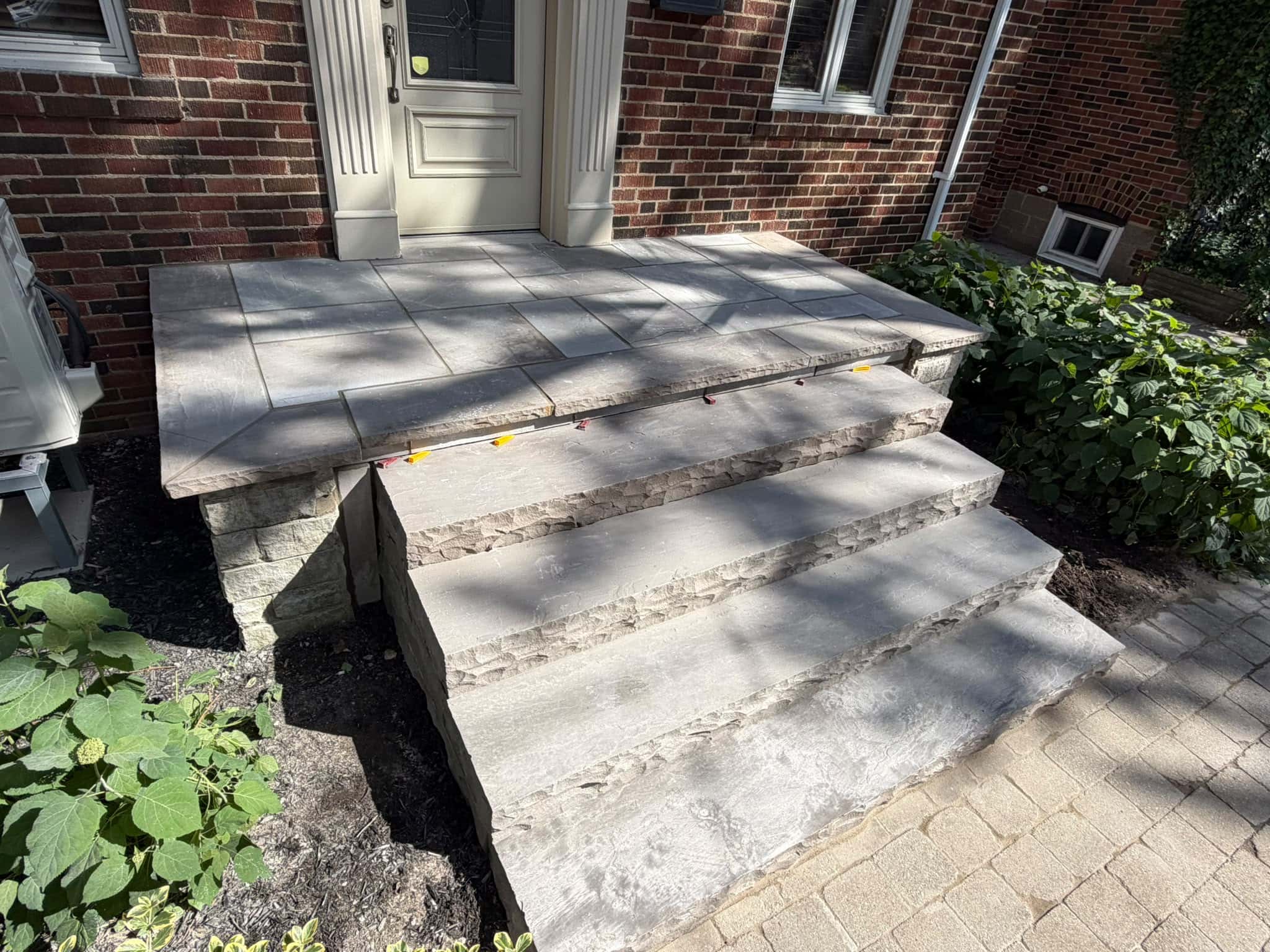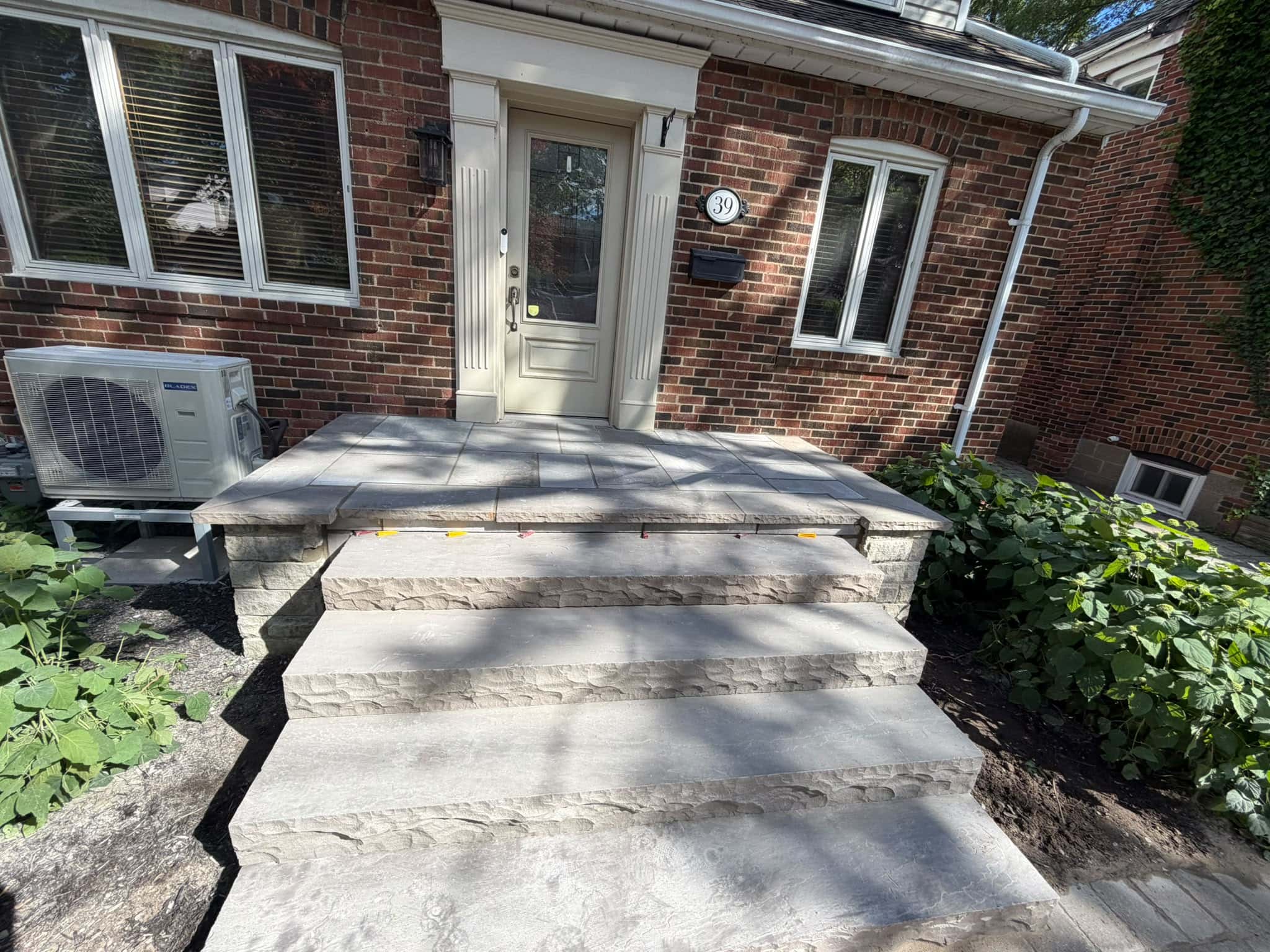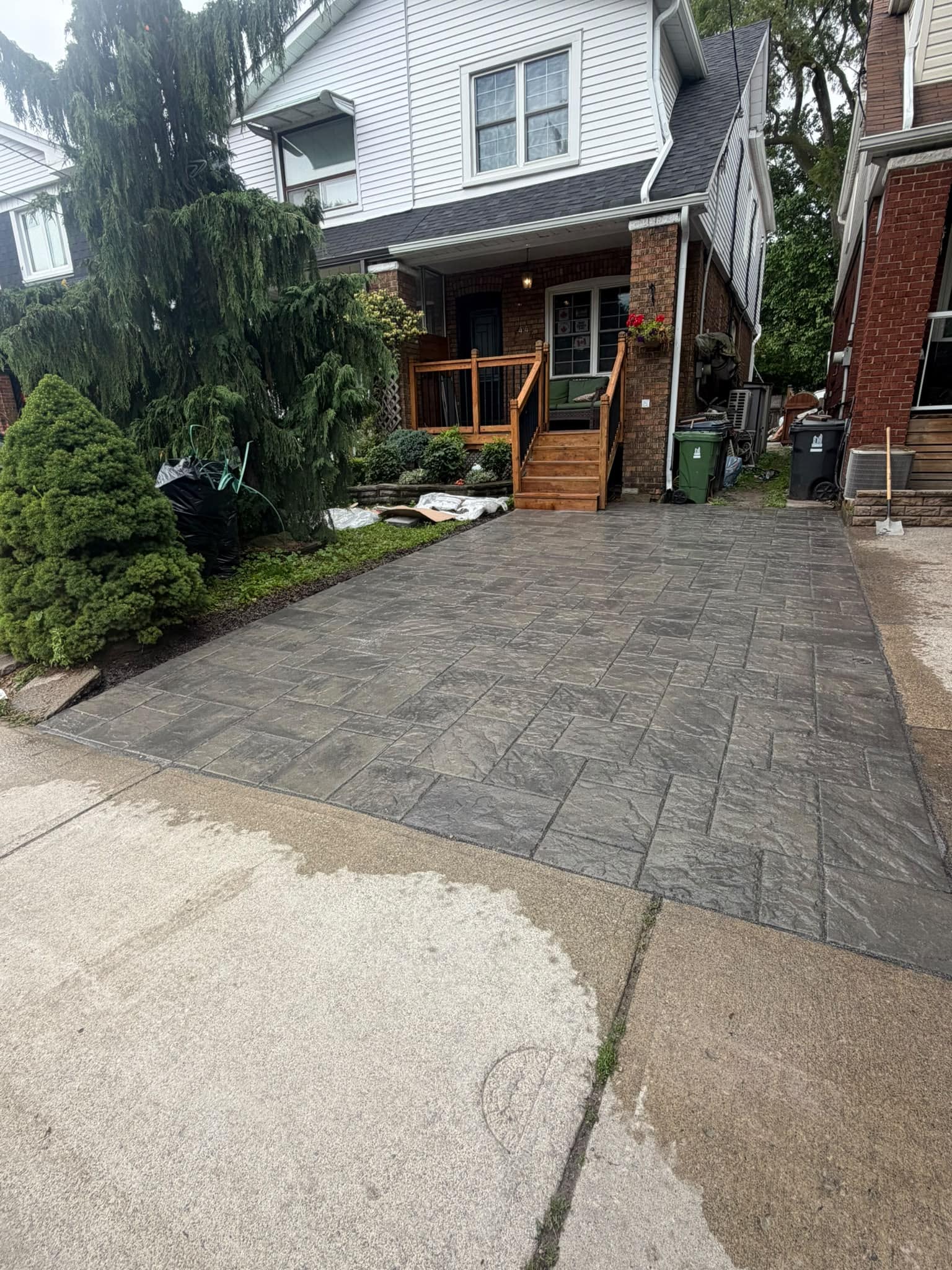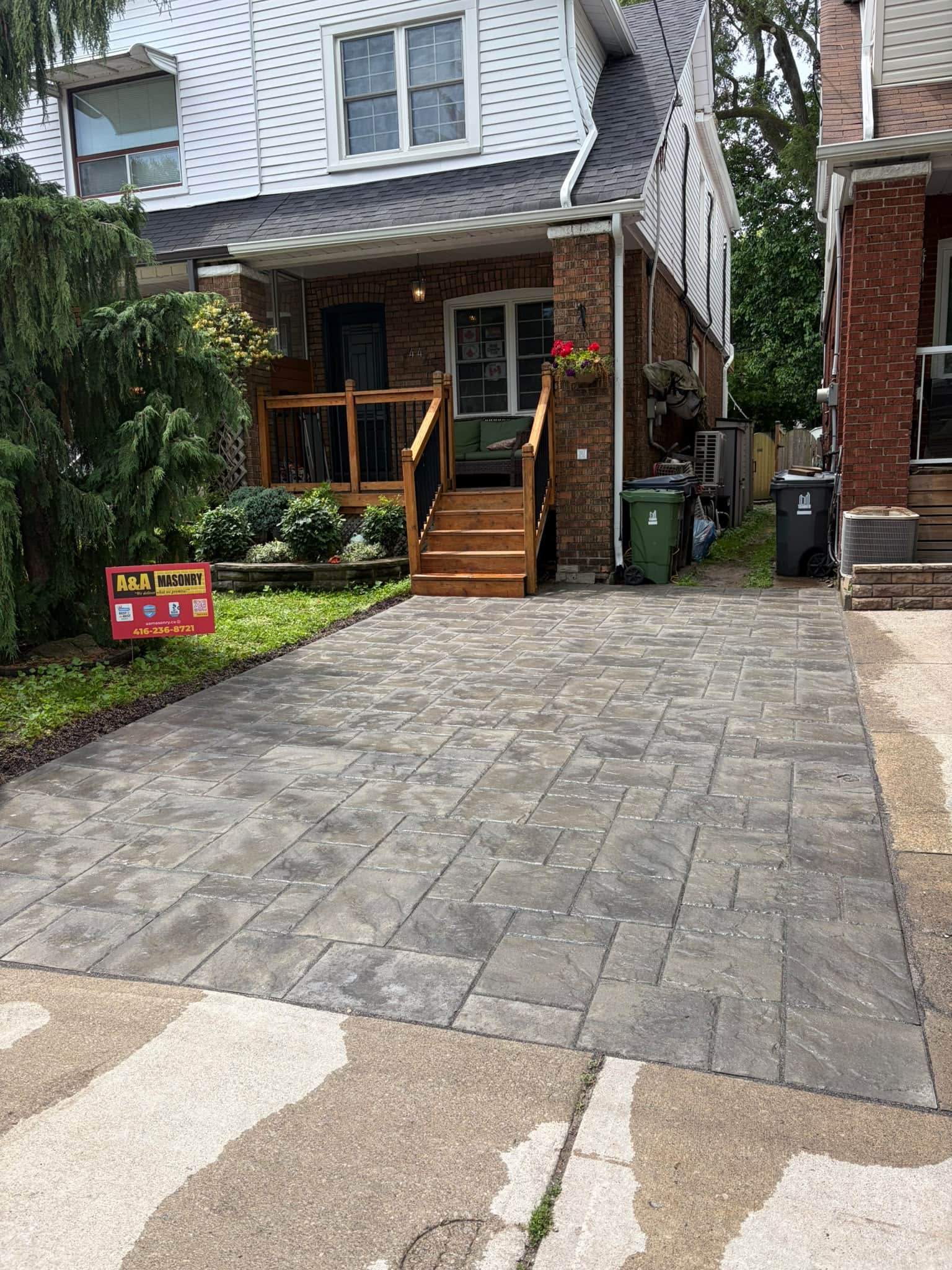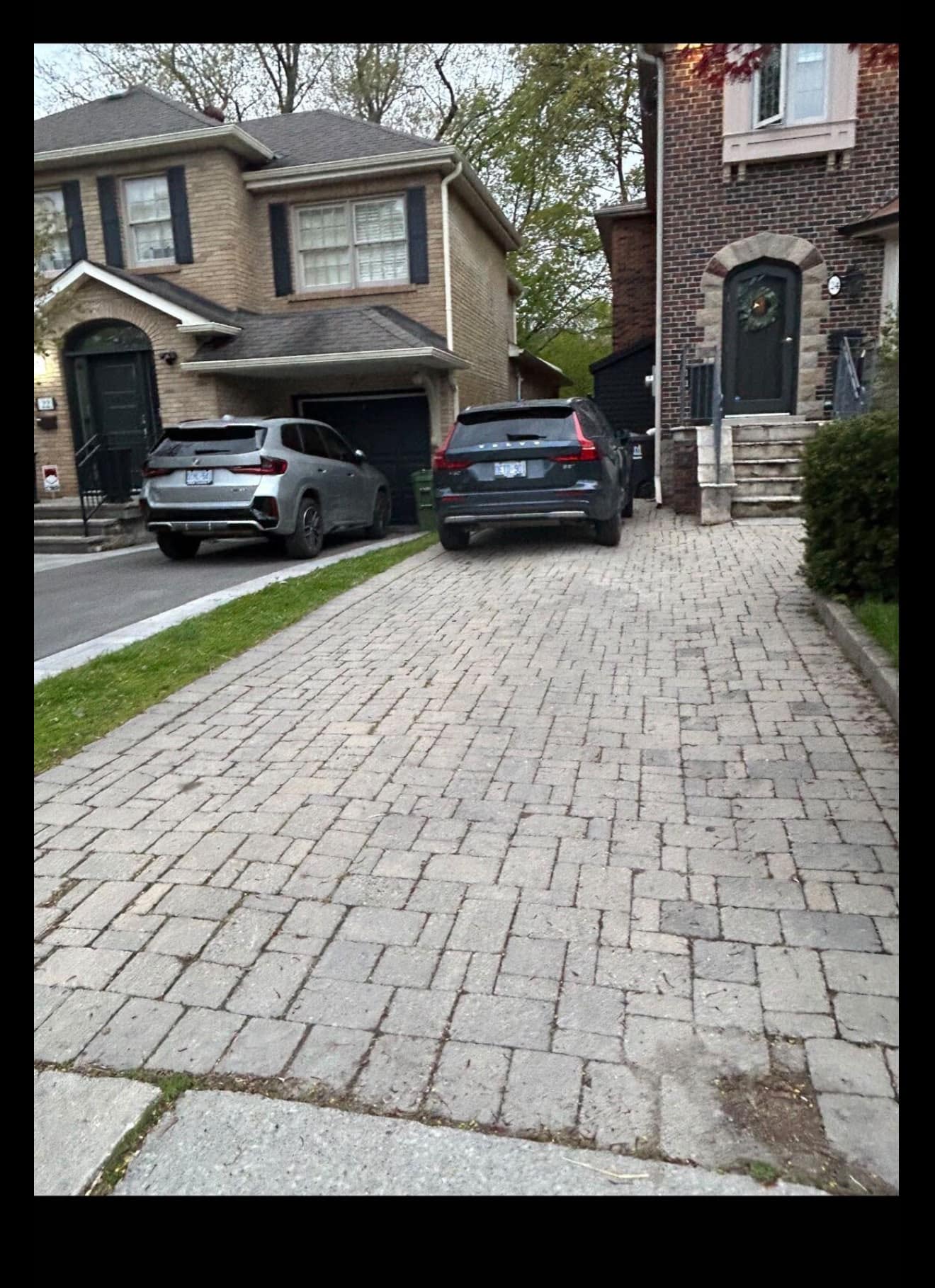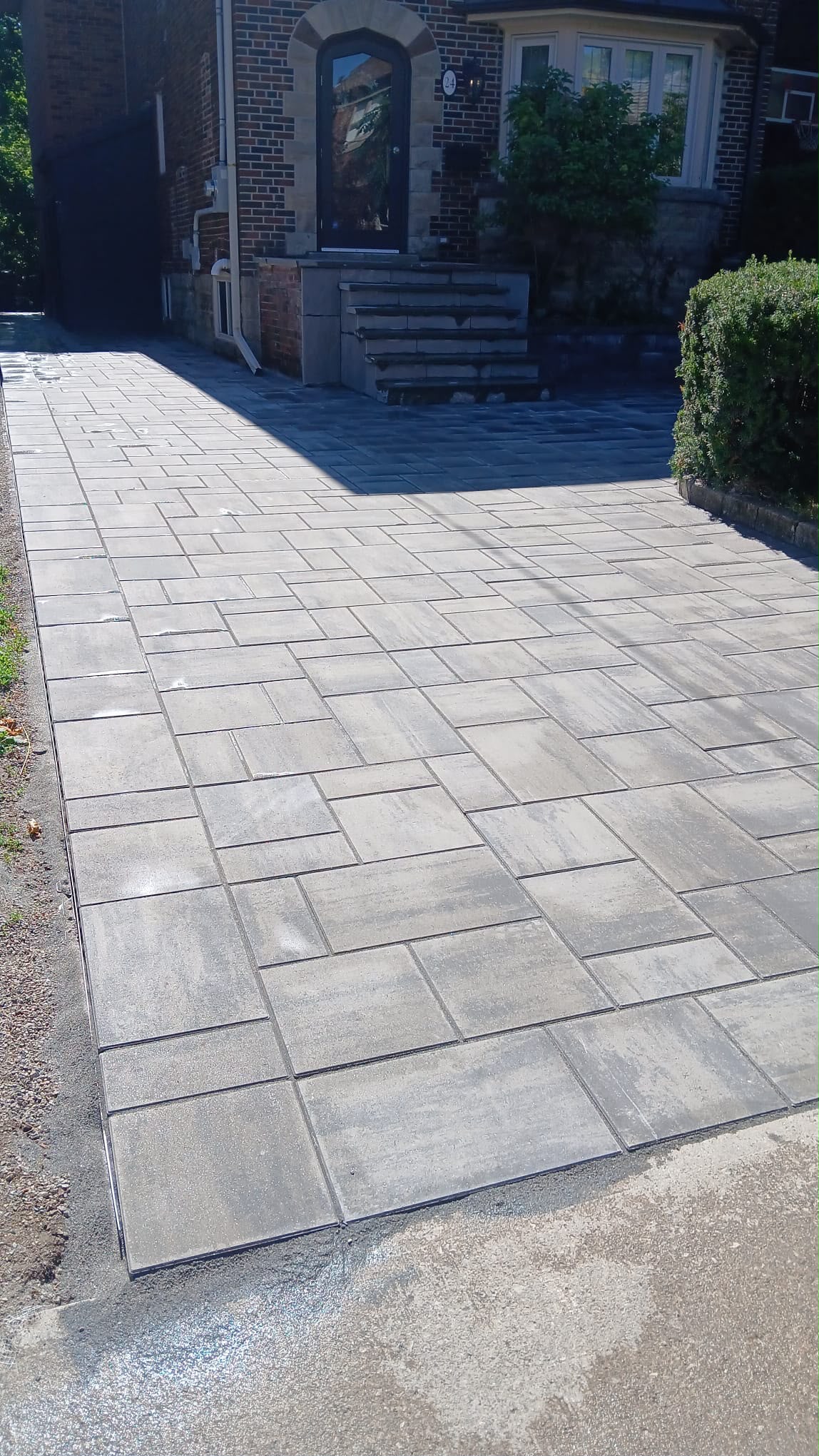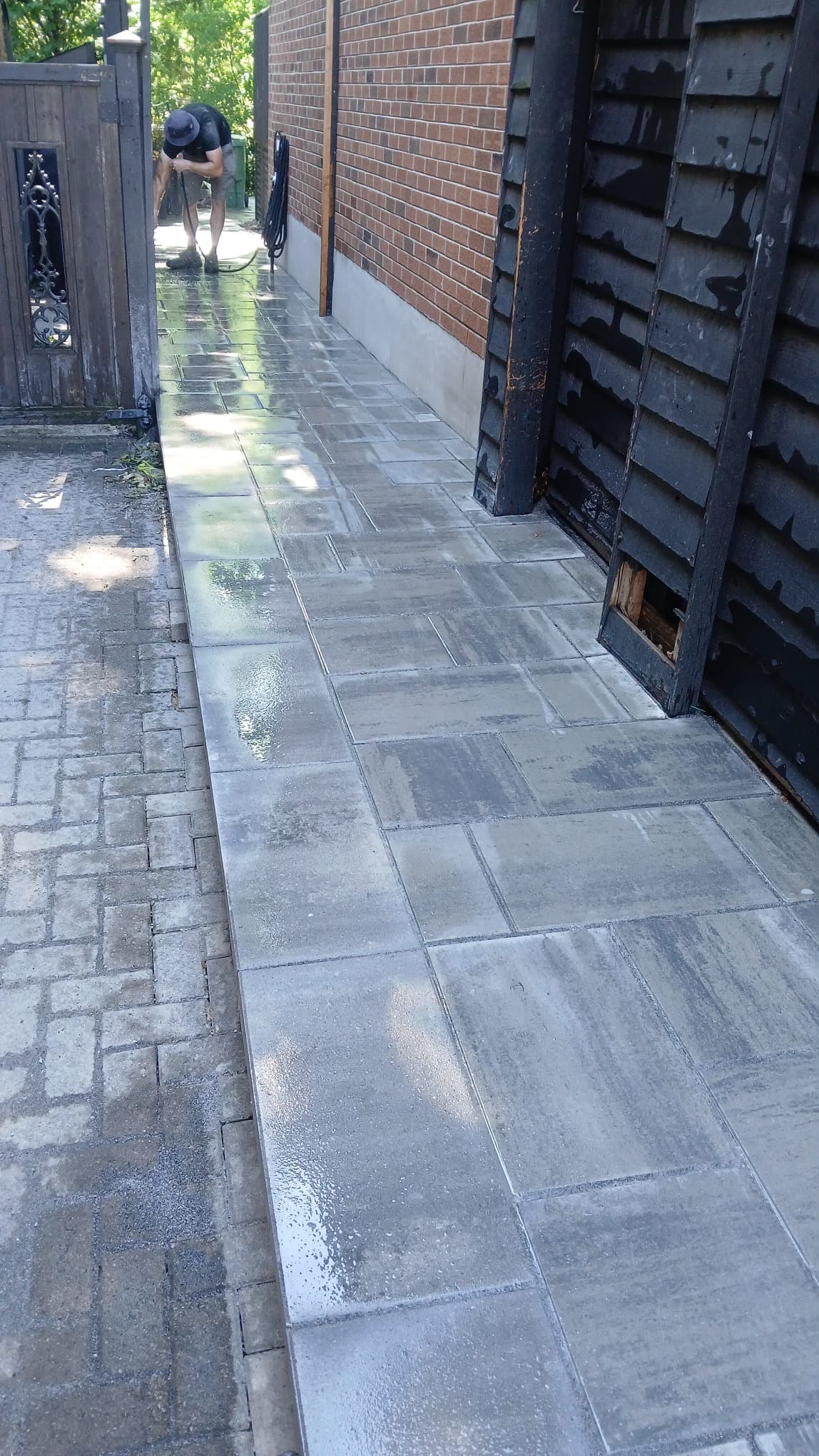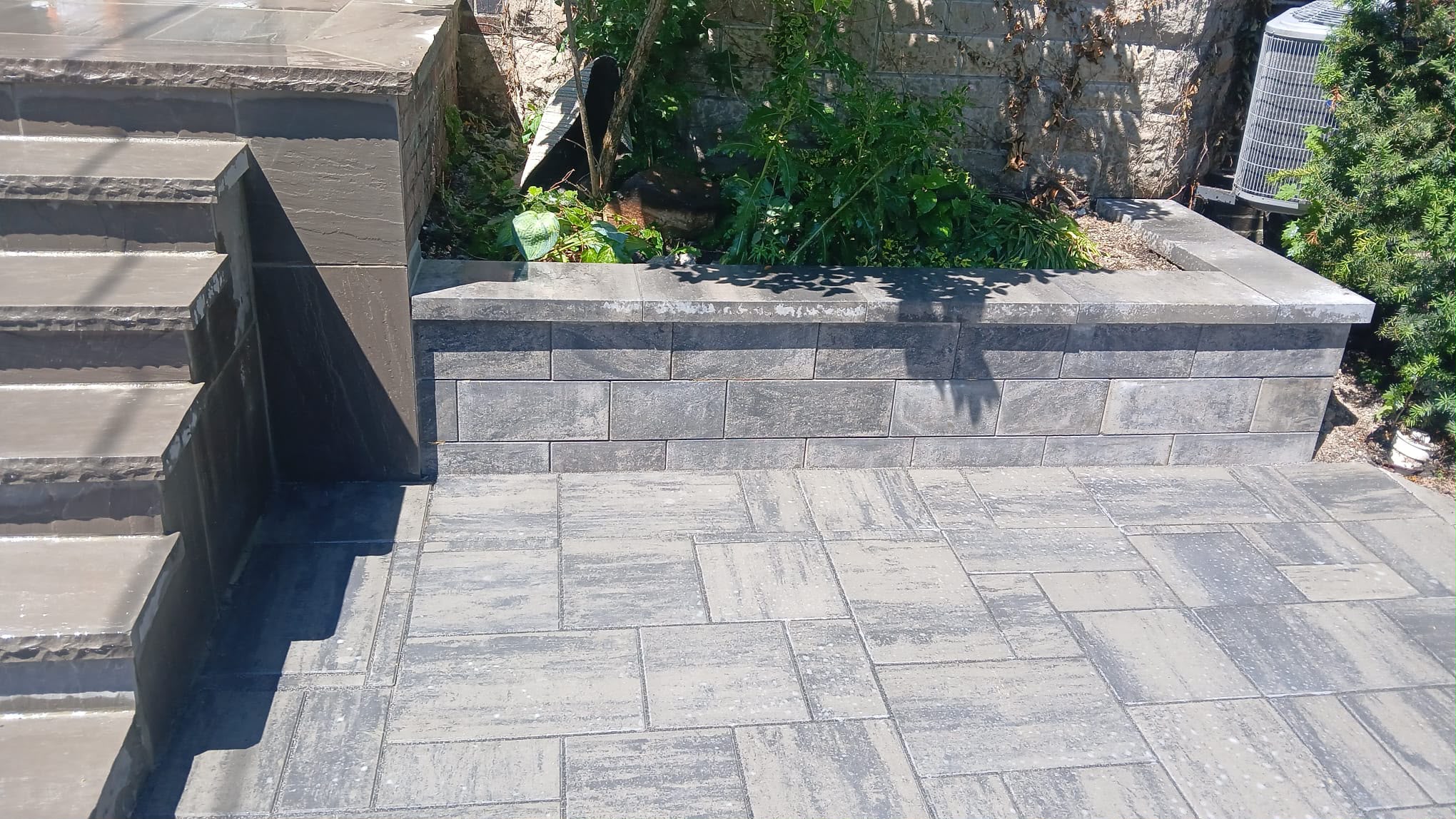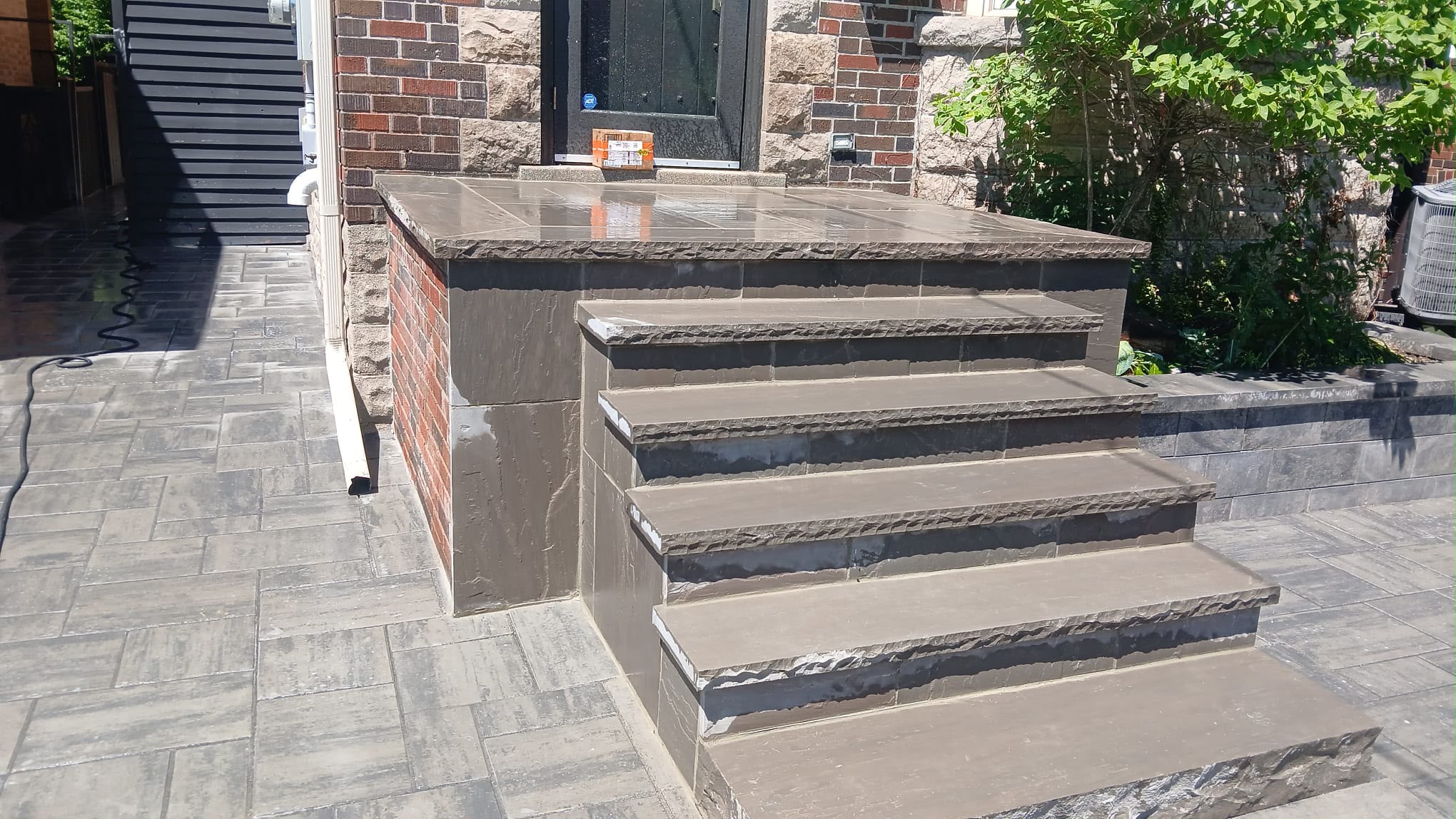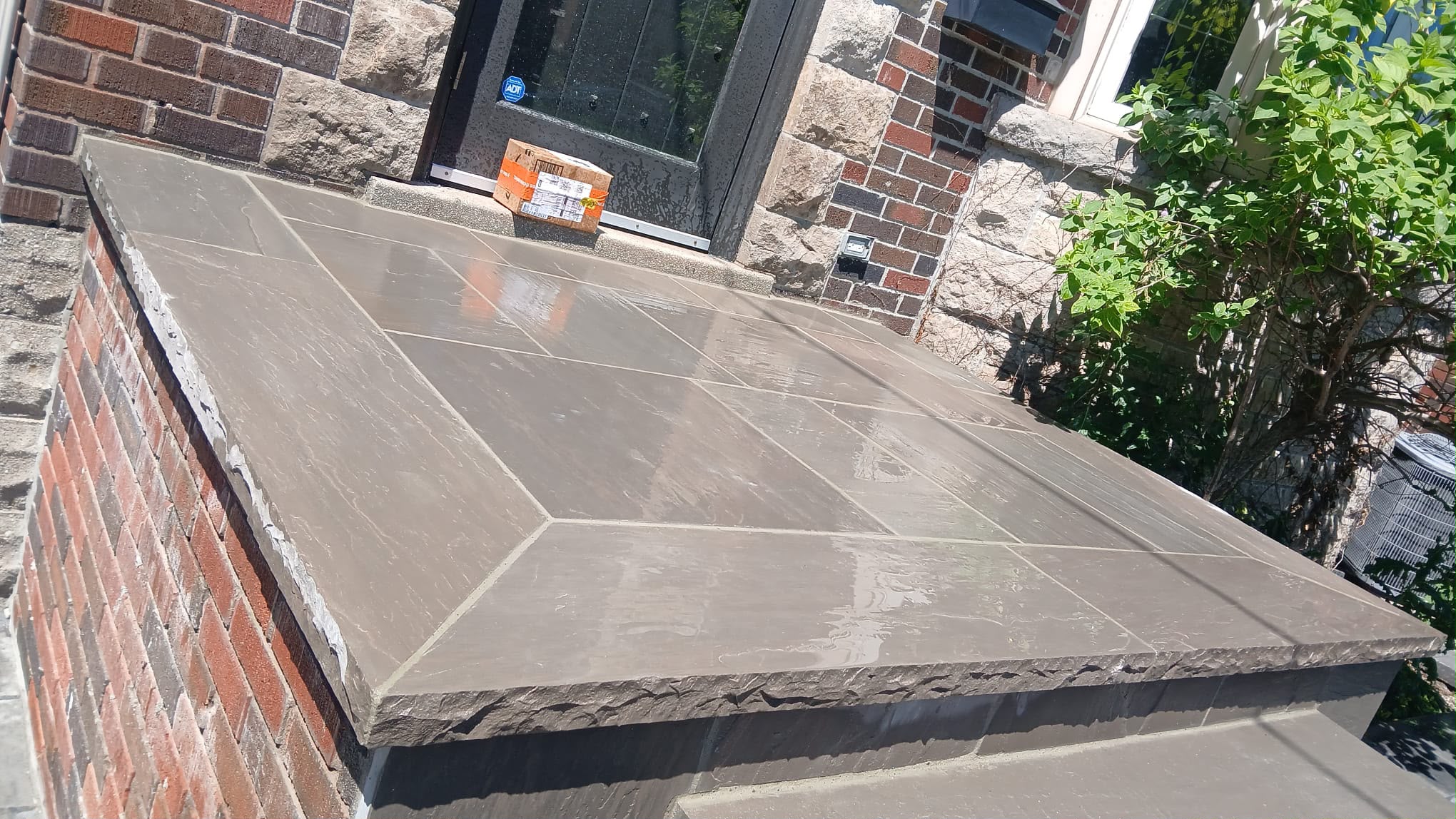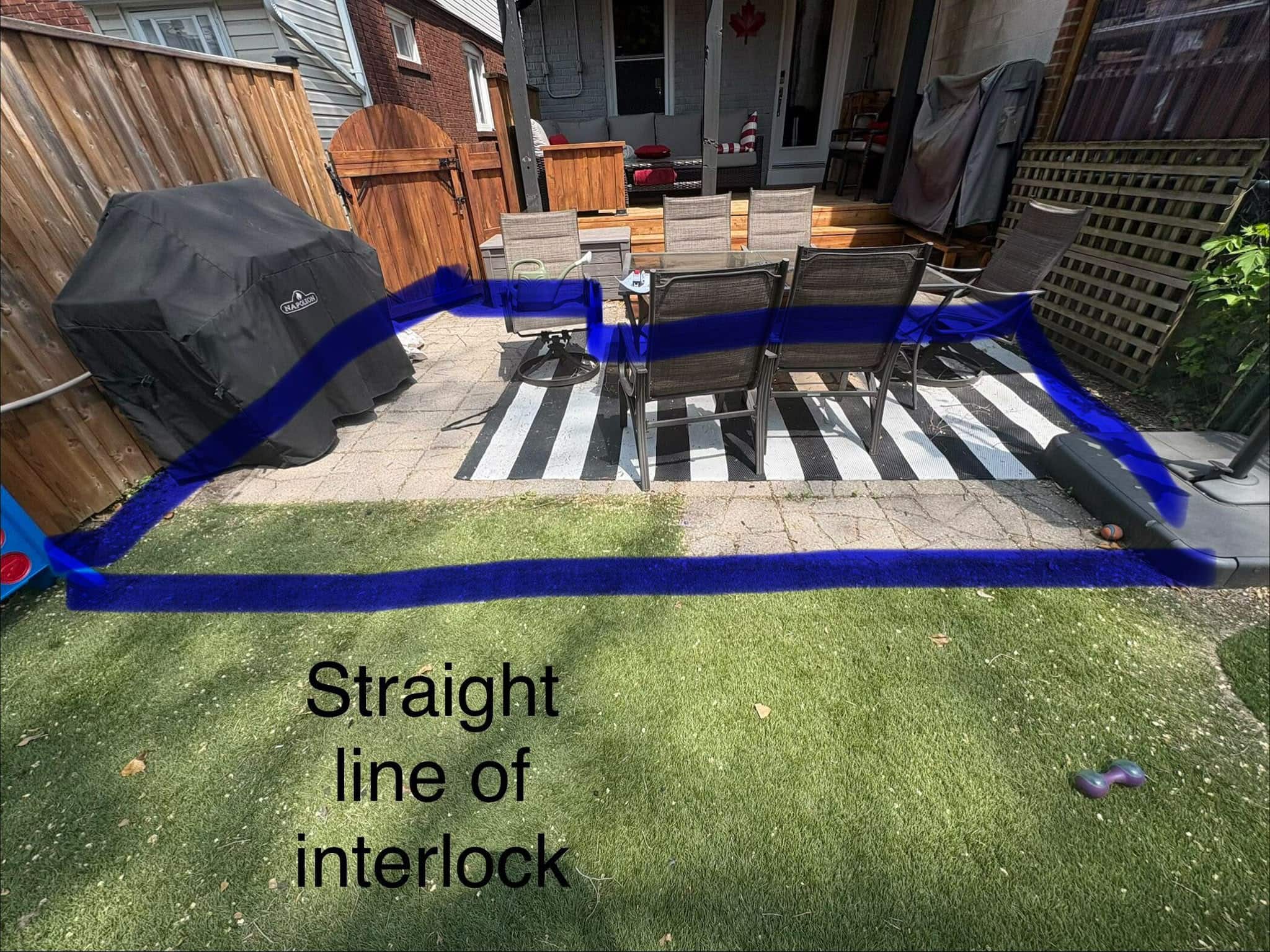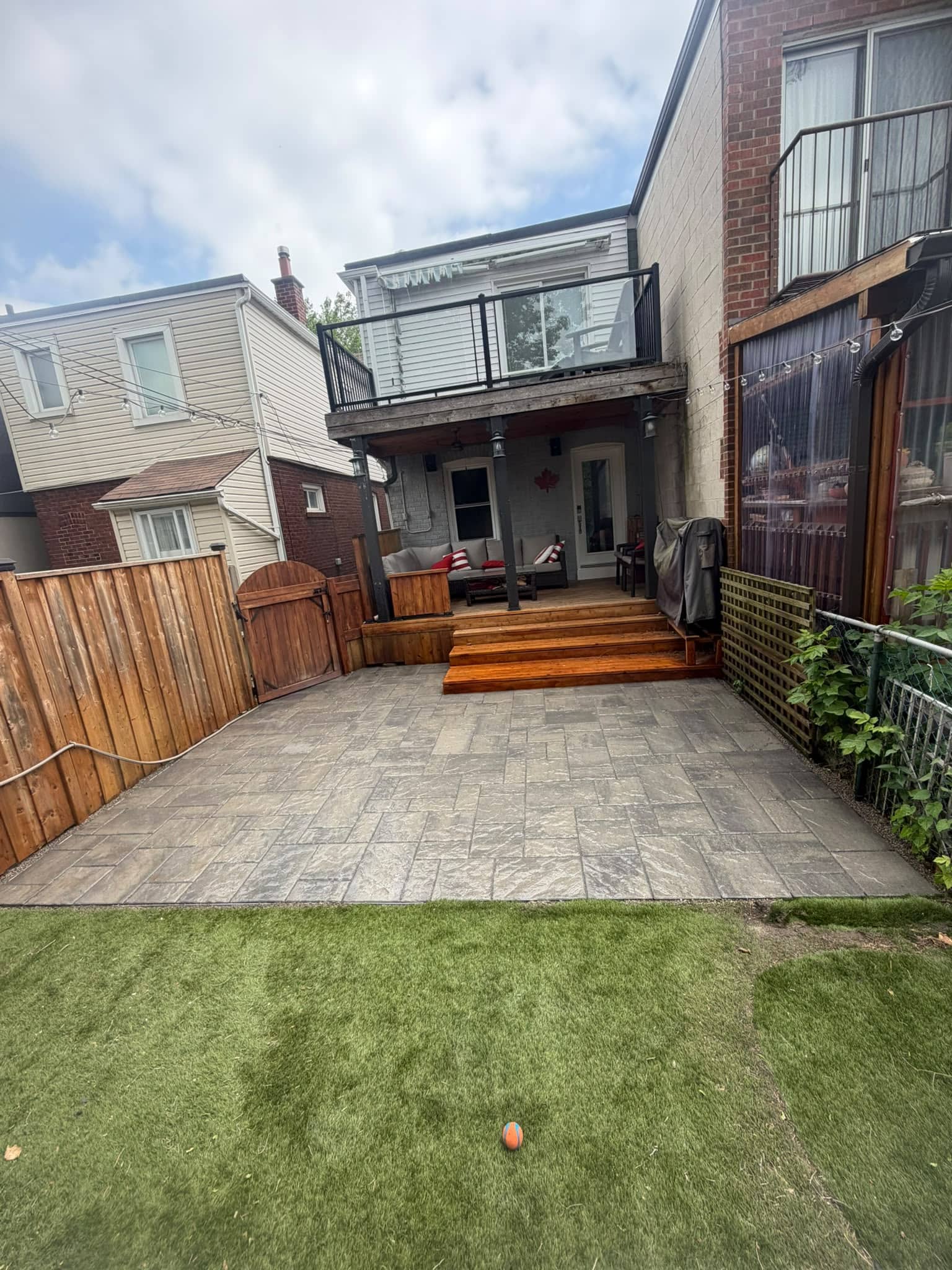

Road salt can affect brick, stone, concrete, mortar, and interlocking surfaces around Toronto homes when salty water repeatedly reaches masonry during winter. The biggest concern is usually not a single light application of salt. Problems are more likely where salt, moisture, freezing temperatures, and repeated freeze-thaw cycles affect the same area throughout the season.
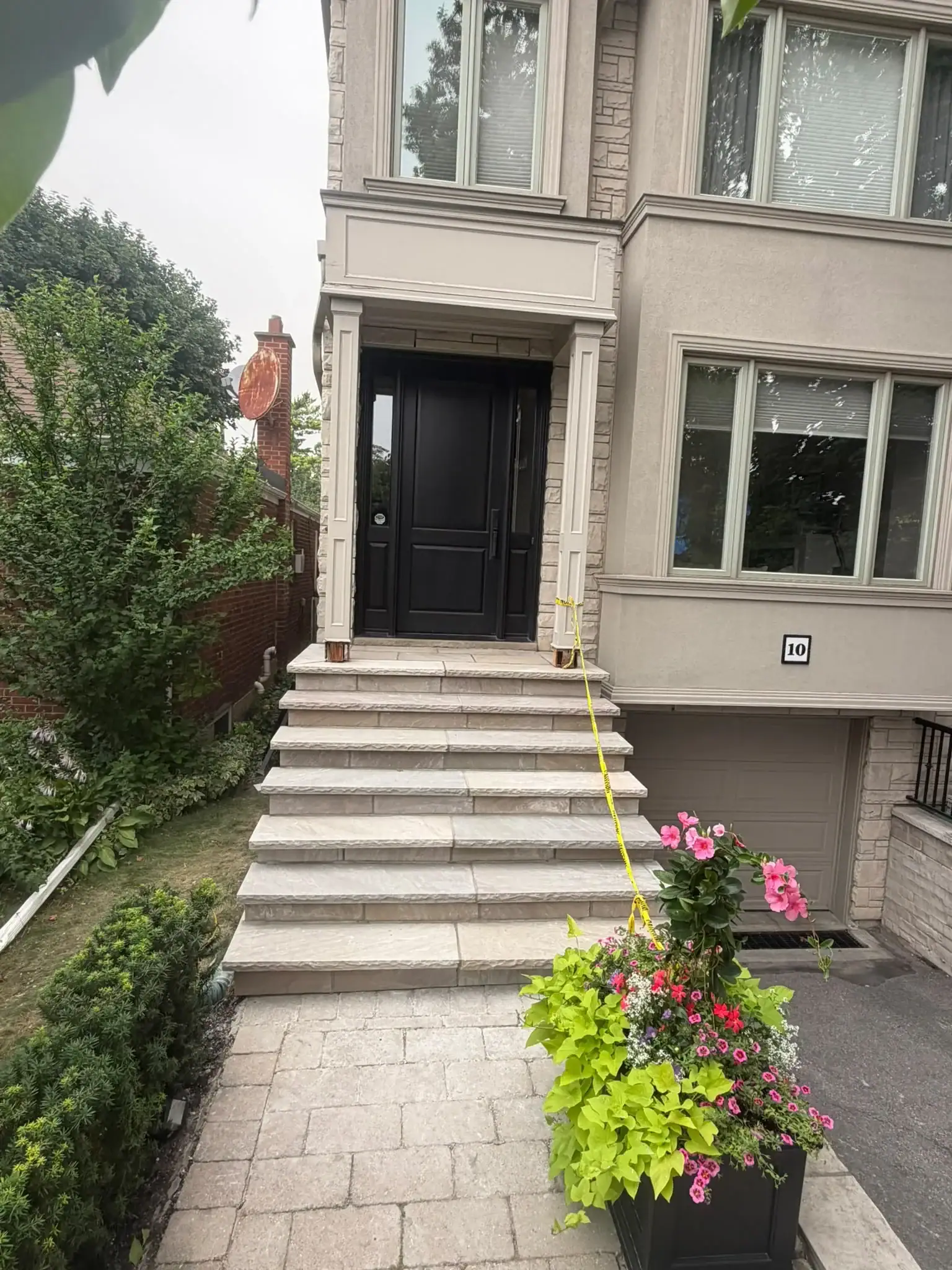
Front steps, walkways, driveway edges, porches, lower brick walls, retaining walls, and masonry beside public sidewalks often receive the most exposure. Salt may be applied directly to some of these surfaces, while other areas receive salty slush from boots, snow shovelling, vehicles, or street spray.
Toronto homeowners still need safe walking surfaces in winter, so simply saying “never use salt” isn’t practical. A better approach is to understand where salt exposure is occurring, use de-icing materials carefully, keep water moving away from masonry, and repair damaged surfaces before winter makes them more vulnerable.
Why Road Salt Matters Around Masonry
Road salt matters because it changes the conditions surrounding masonry during winter. Salt helps manage snow and ice, but once dissolved, salty water can travel across driveways, steps, walkways, walls, soil, and drainage routes.
Environment and Climate Change Canada reports that road salts containing chloride compounds can create environmental problems when released in large quantities. The federal government has developed a Code of Practice for the Environmental Management of Road Salts to encourage better salt management while maintaining winter safety.
For homeowners, the practical concern is more local. Where does salty meltwater go after ice begins to thaw?
If it repeatedly drains over a concrete step, splashes onto the bottom of a brick wall, collects around stonework, or remains trapped in a cracked surface, existing masonry problems can become more difficult to manage.
Salt, Water and Freeze-Thaw Damage Work Together
Don’t consider salt exposure separately from moisture. Water is one of the main factors that determines how exterior masonry performs through a Toronto winter.
Brick, mortar, concrete, and many types of stone contain pores that can absorb some moisture. Cracks, damaged joints, open edges, and worn surfaces may allow even more water to enter.
When temperatures drop, moisture within vulnerable masonry can freeze. As temperatures rise, it thaws. Repeated cycles can gradually place stress on materials that are already cracked, saturated, poorly drained, or deteriorated.
Salt can complicate this by keeping surfaces wet during melting and creating repeated wetting-and-drying cycles. The exact response depends on the material, its condition, the amount and type of de-icer, drainage, temperature, and exposure.
This is why two neighbouring homes can use similar amounts of salt but experience very different masonry problems.
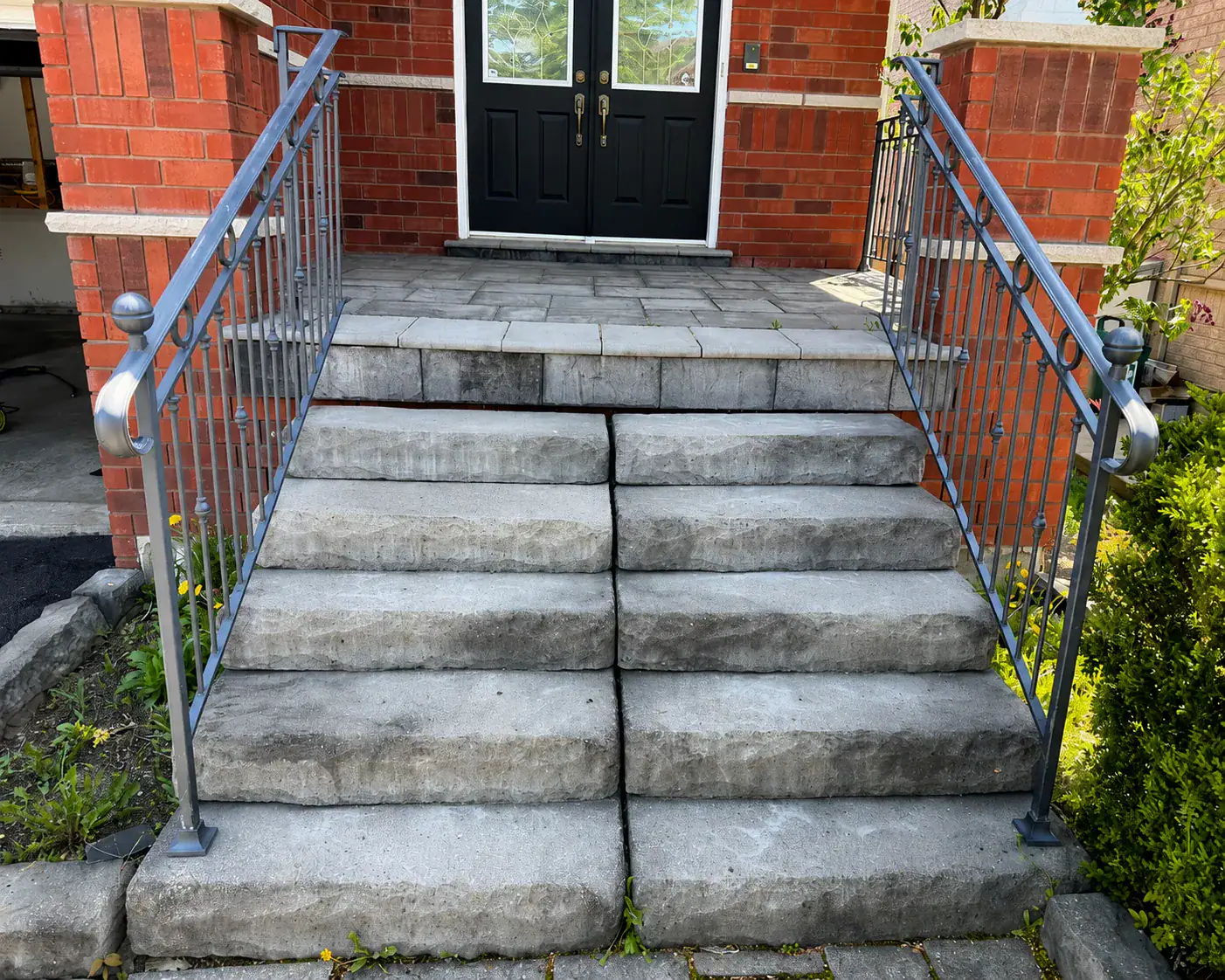
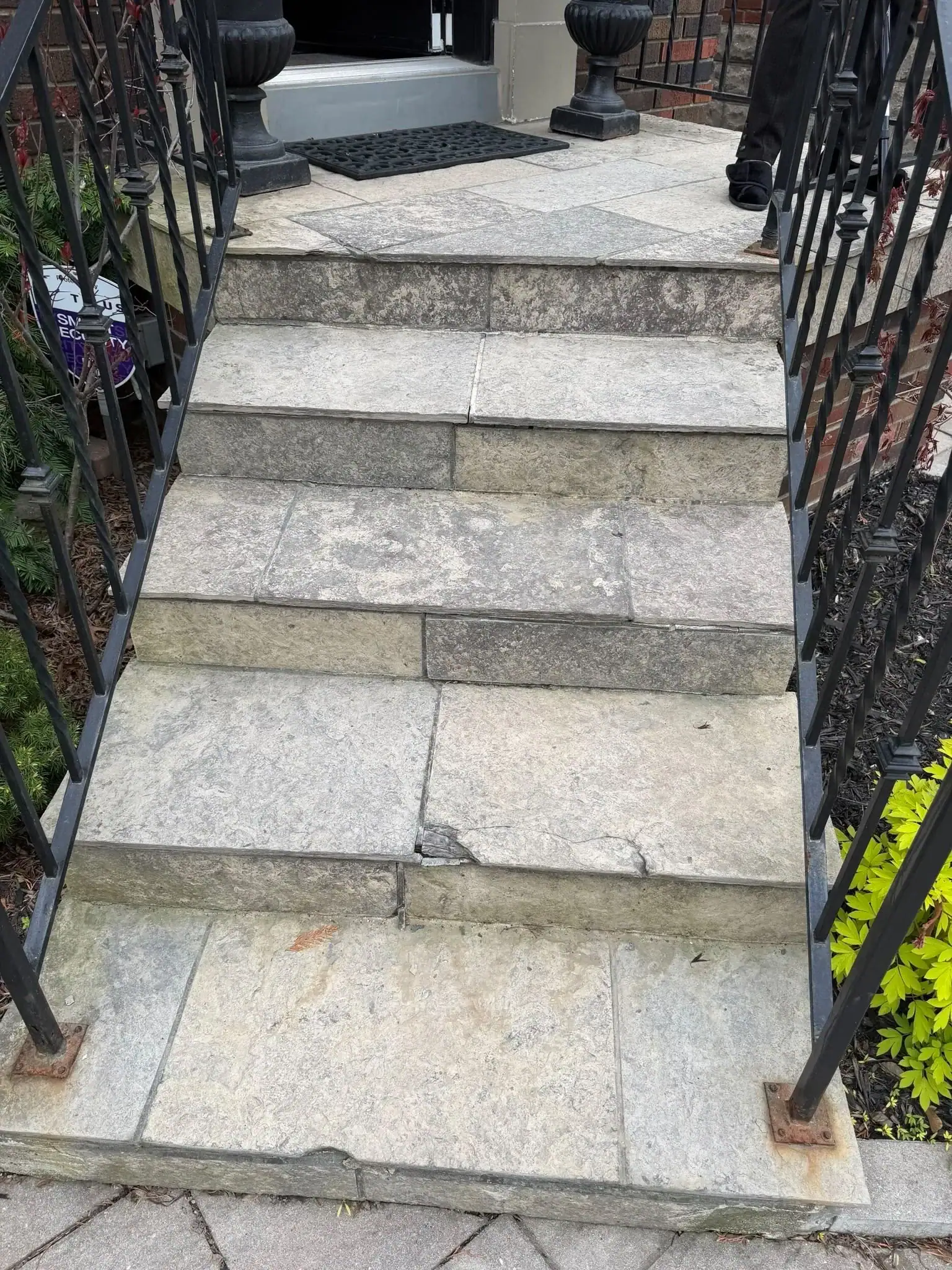
How Road Salt Can Affect Concrete Steps and Walkways
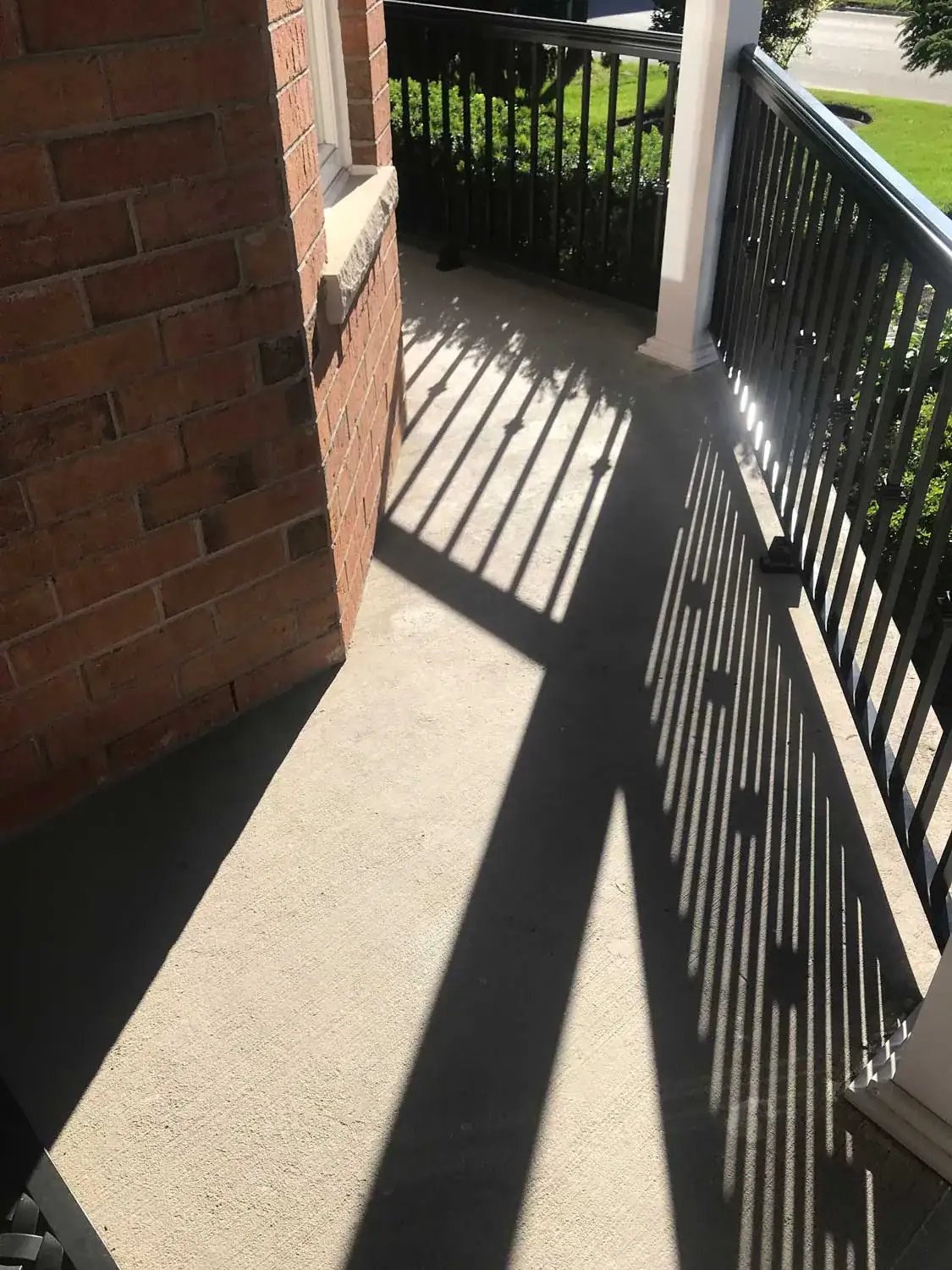
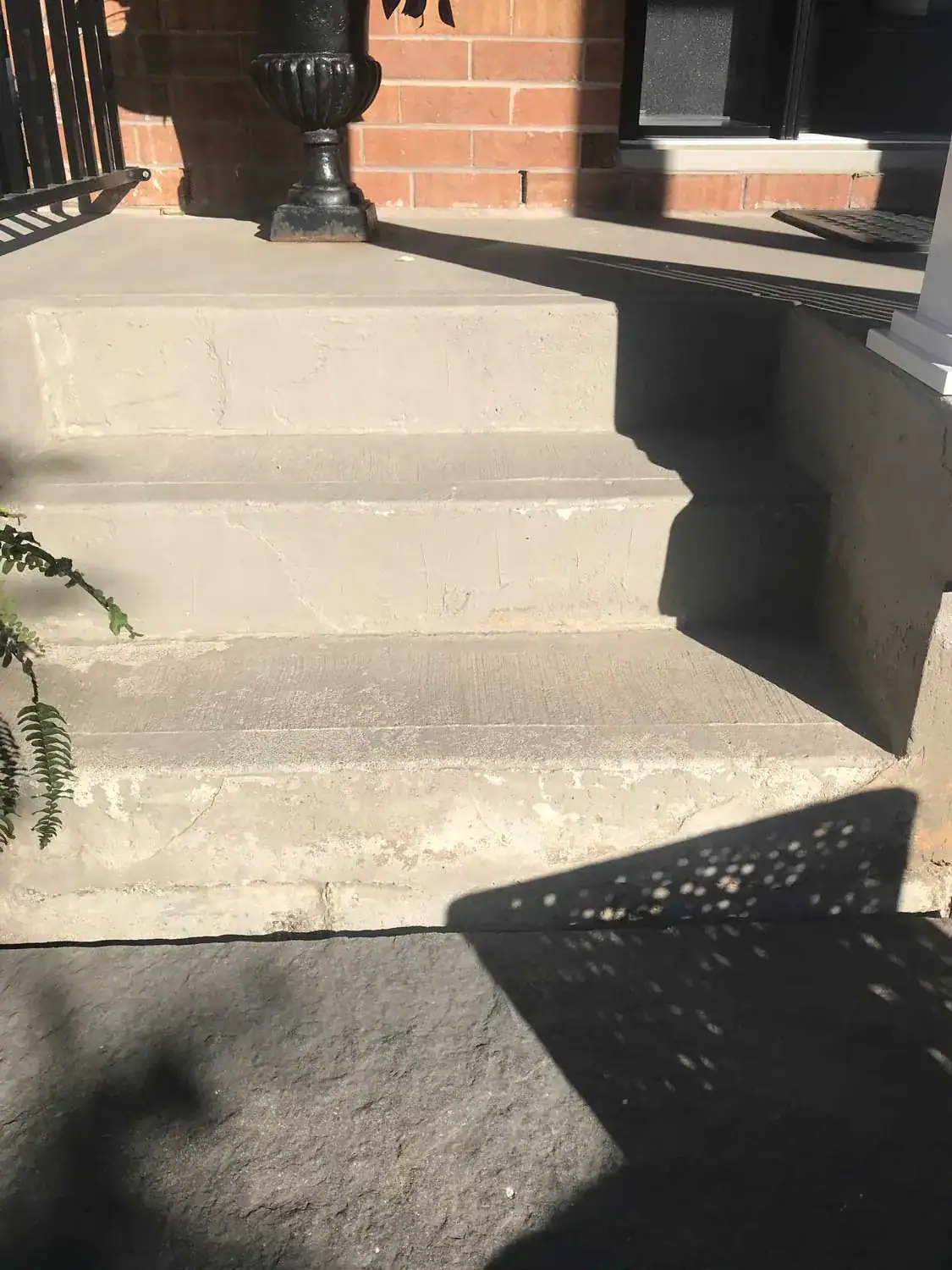
Concrete steps and walkways are often the first masonry surfaces homeowners associate with salt damage because de-icers are commonly applied directly where people walk.
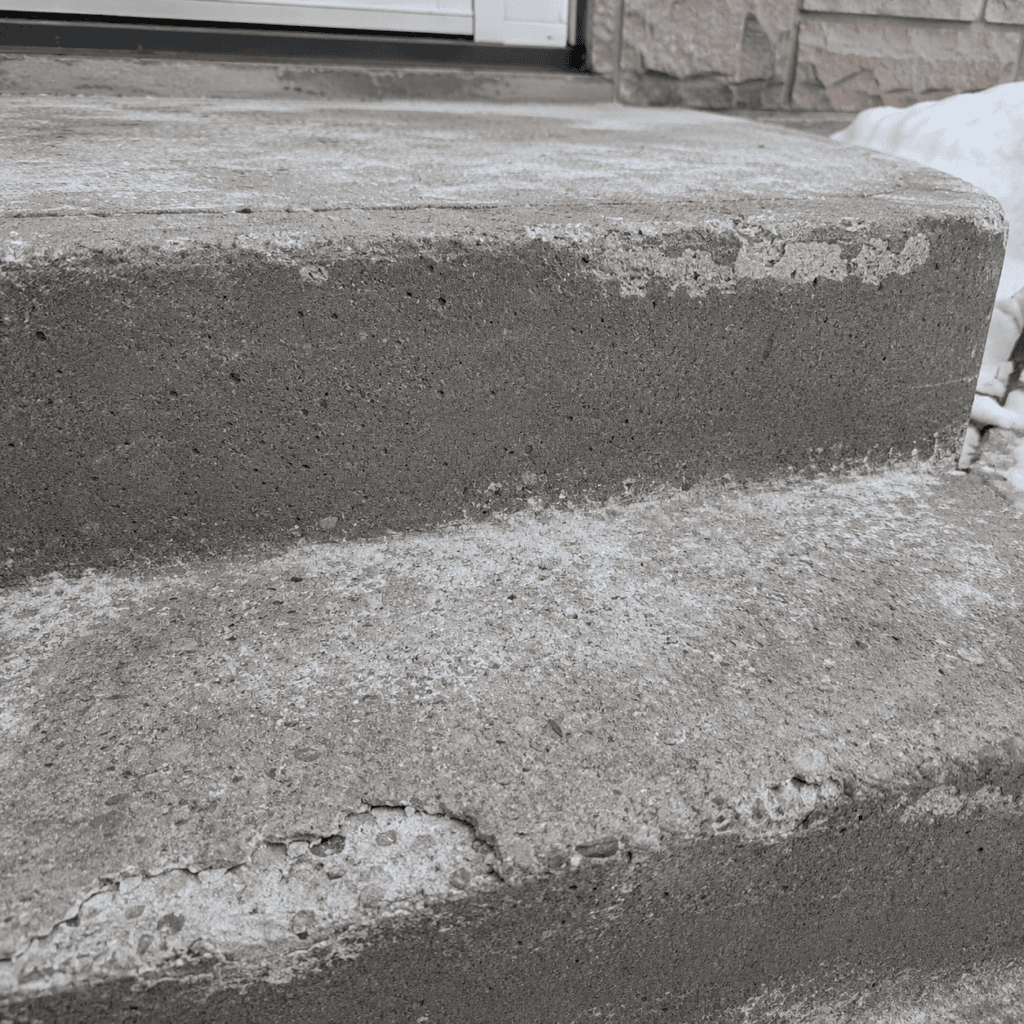
Older, cracked, poorly finished, or already deteriorated concrete deserves particular attention. If moisture enters cracks or weak surface areas and repeatedly freezes, the concrete may begin showing:
- surface scaling or flaking;
- small pits;
- crumbling edges;
- larger cracks;
- rough or exposed aggregate;
- deterioration along step corners and nosings.
Salt is not automatically responsible for every damaged concrete surface. Age, poor drainage, weak concrete, installation problems, impact, settlement, and normal weathering can also contribute.
The useful question is whether the damage appears in an area that stays wet, receives frequent de-icer, or catches salty slush throughout winter.
If a walkway or set of steps is already deteriorating, review the condition before winter rather than relying on de-icer to compensate for an uneven or unsafe surface. A&A Masonry’s concrete repair services cover cracked and deteriorated concrete around Toronto homes.
How Salt Reaches Brick Walls Without Being Applied Directly
Brick walls can receive significant salt exposure even when nobody deliberately puts salt on them.
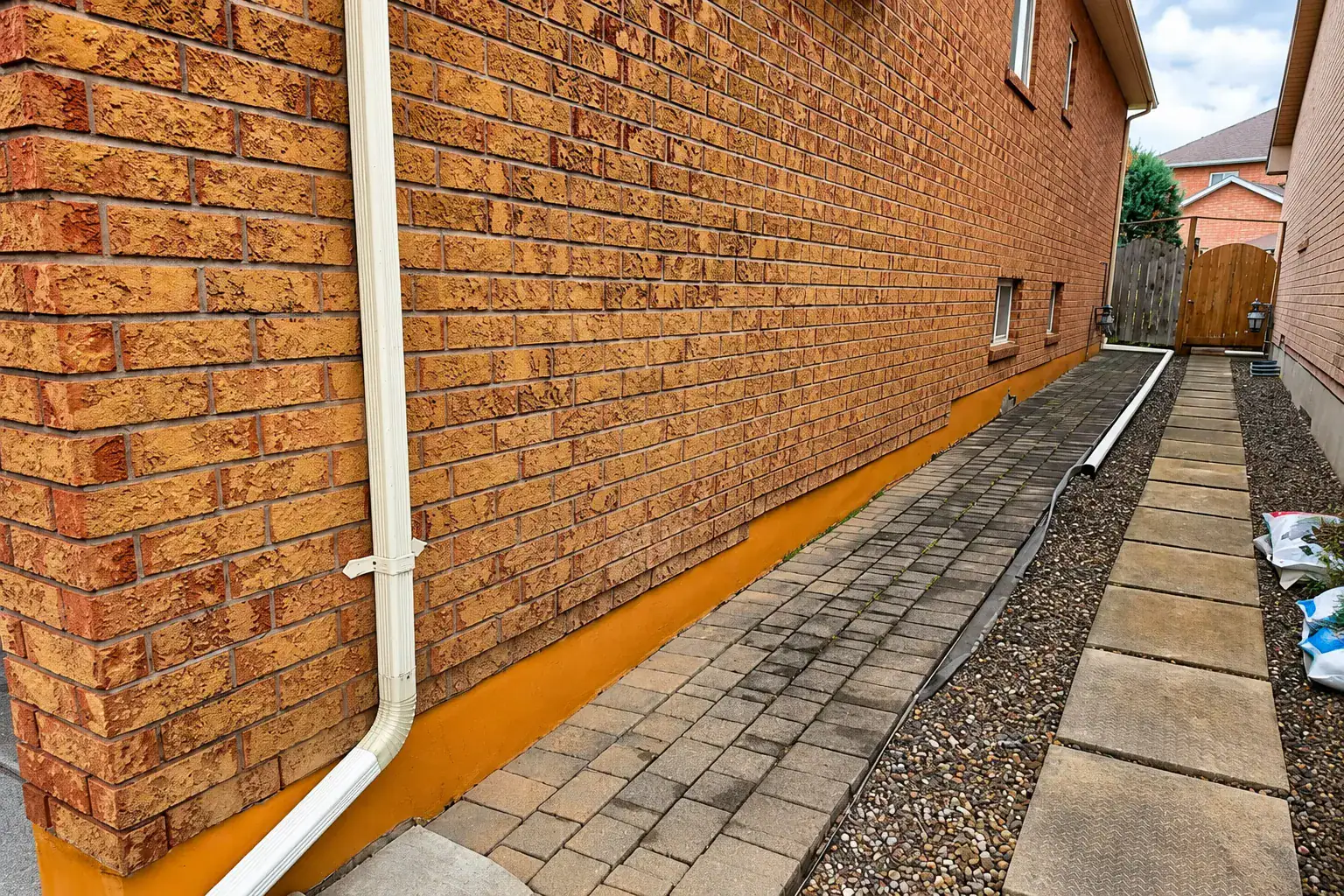
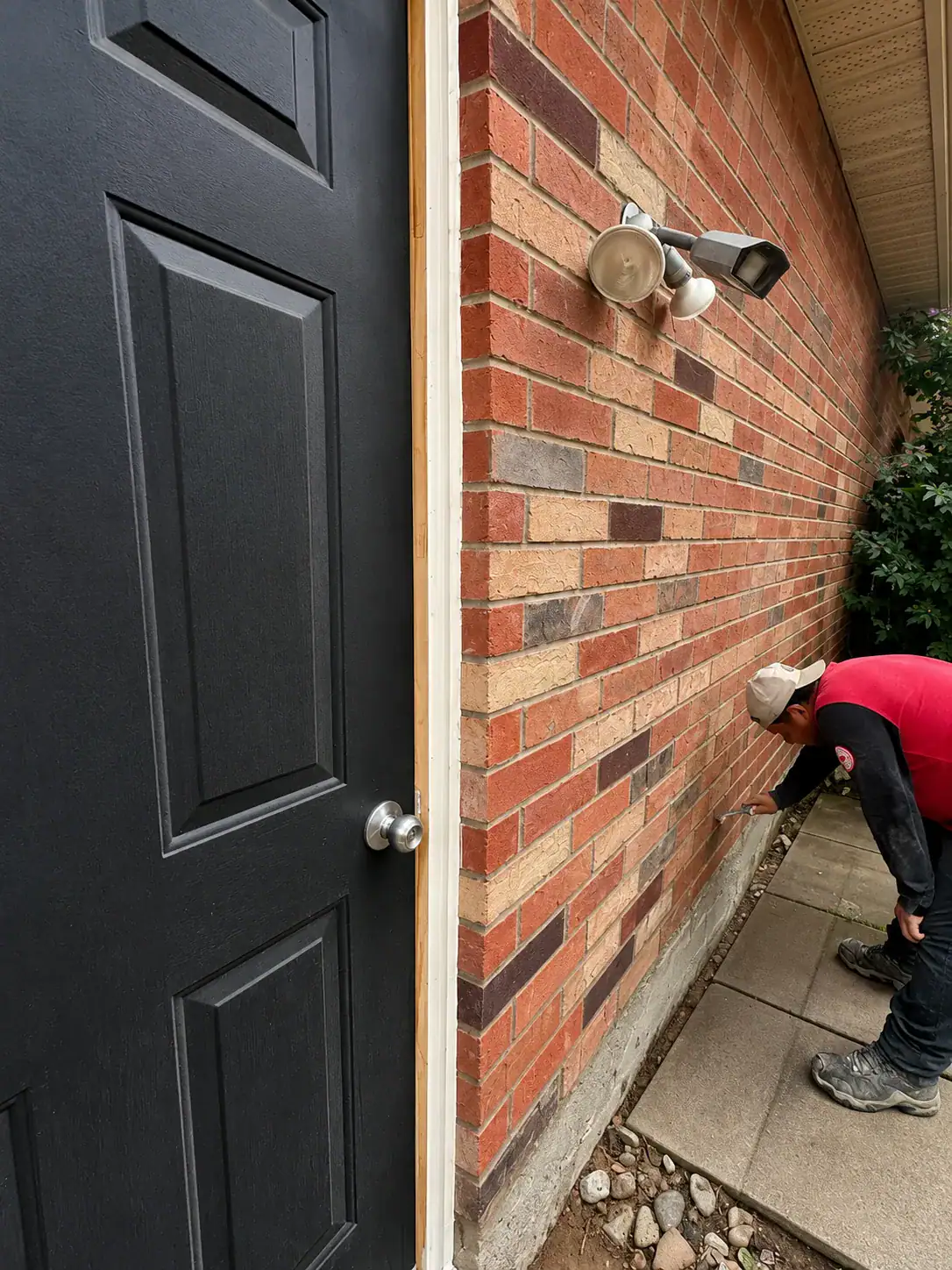
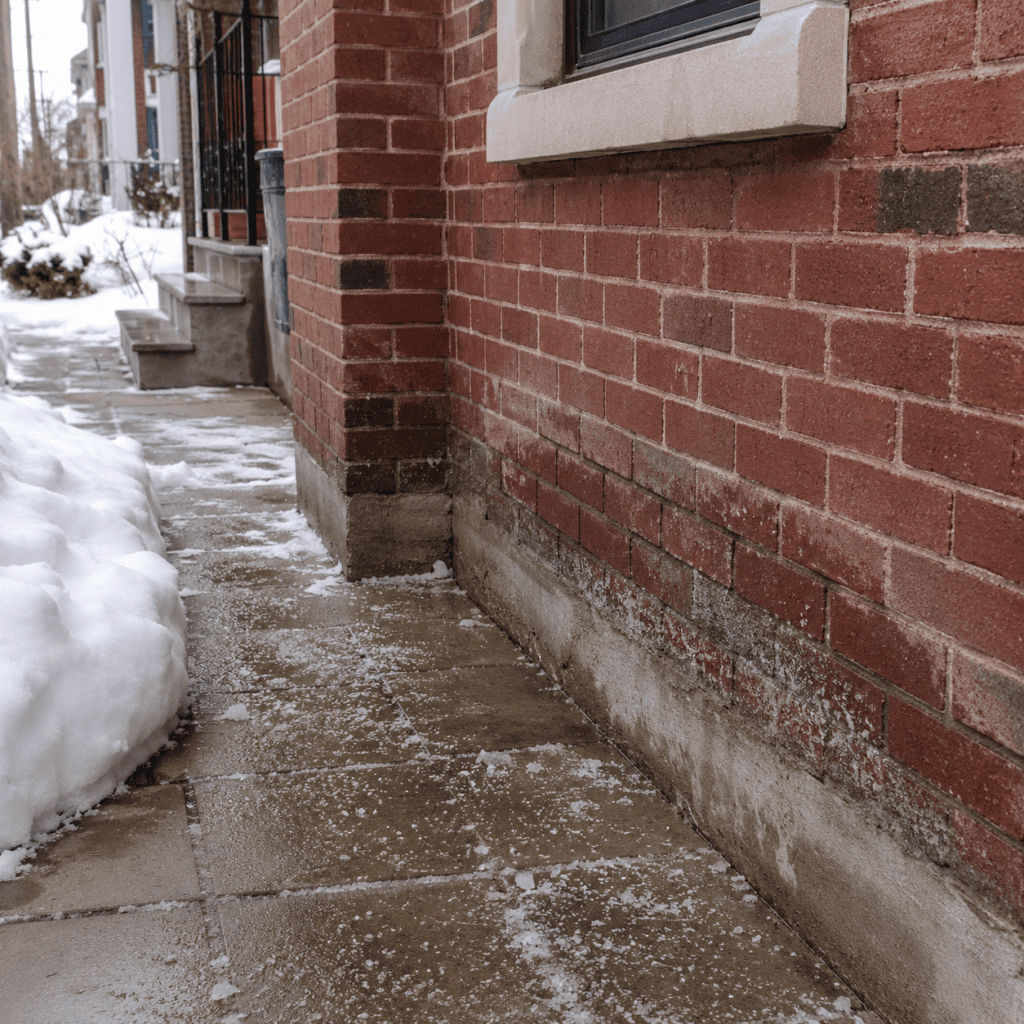
One common route is splashback. Salty water from a driveway, walkway, porch, or sidewalk can splash onto the lower courses of brick as people walk, vehicles pass, snow is shovelled, or meltwater moves across the surface.
Snow placement is another source. Snow collected from a salted driveway or public sidewalk may be piled against the side of a house, porch, retaining wall, or garden wall. As that pile slowly melts, salty water remains in contact with the masonry.
Look closely at brick near:
- front entrances;
- garage doors;
- driveway edges;
- public sidewalks;
- porches;
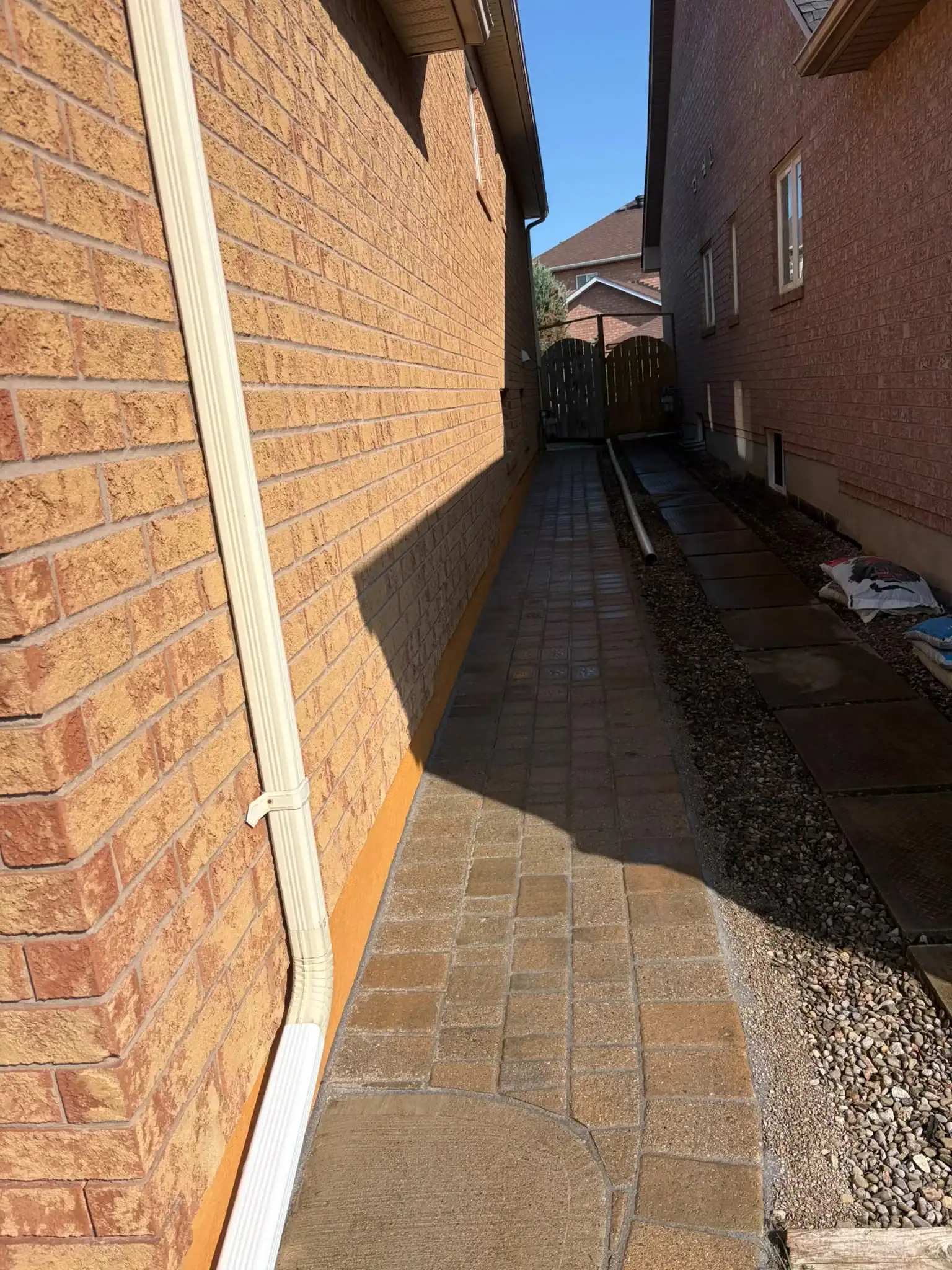
- walkways between closely spaced homes;
- areas where snow is routinely stored.
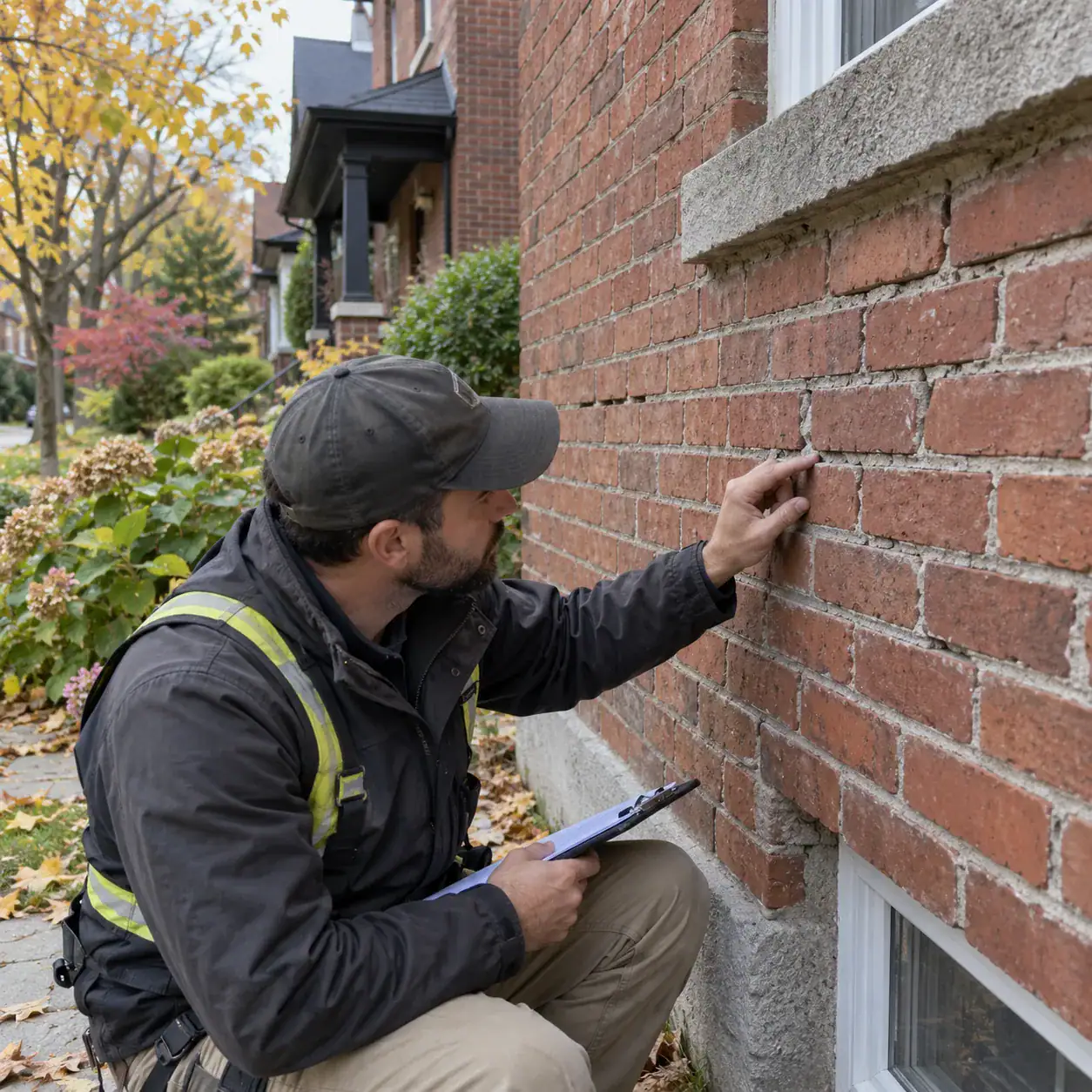
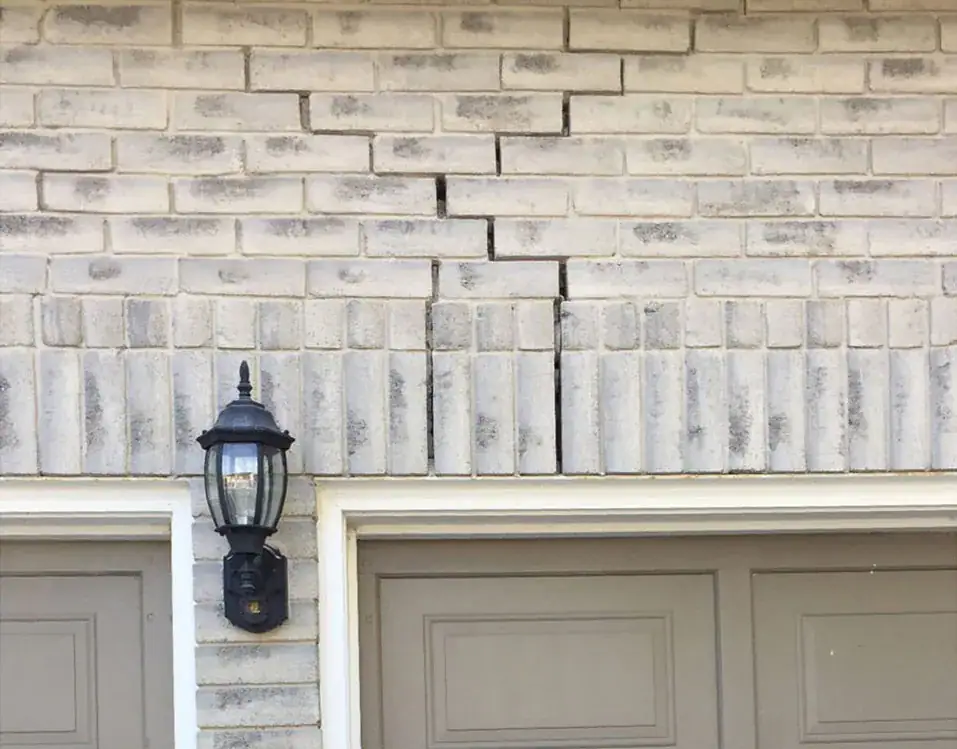
Brick that is already cracked or spalling is more concerning because its protective face may already be compromised. Deteriorated mortar joints can provide additional paths for moisture.
If lower walls show damaged bricks, A&A Masonry’s brick repair Toronto resource explains when individual brick replacement or wider restoration may be appropriate.
Mortar Joints Can Be the Weak Point
Check mortar along with the bricks because joints often weather faster than the masonry units around them.
Look for joints that have become sandy, deeply recessed, cracked, loose, or partially missing. These openings can allow moisture to penetrate farther into the wall.
A lower wall beside a salted walkway may experience repeated splashback all winter. If the mortar is already deteriorated, the problem is no longer simply about keeping the wall clean. Assess the open joints, and consider the drainage or splash pattern.
Where deterioration is limited mainly to mortar joints, tuckpointing and mortar-joint repair may restore the affected joints without requiring unnecessary brick replacement.
What About Natural Stone?
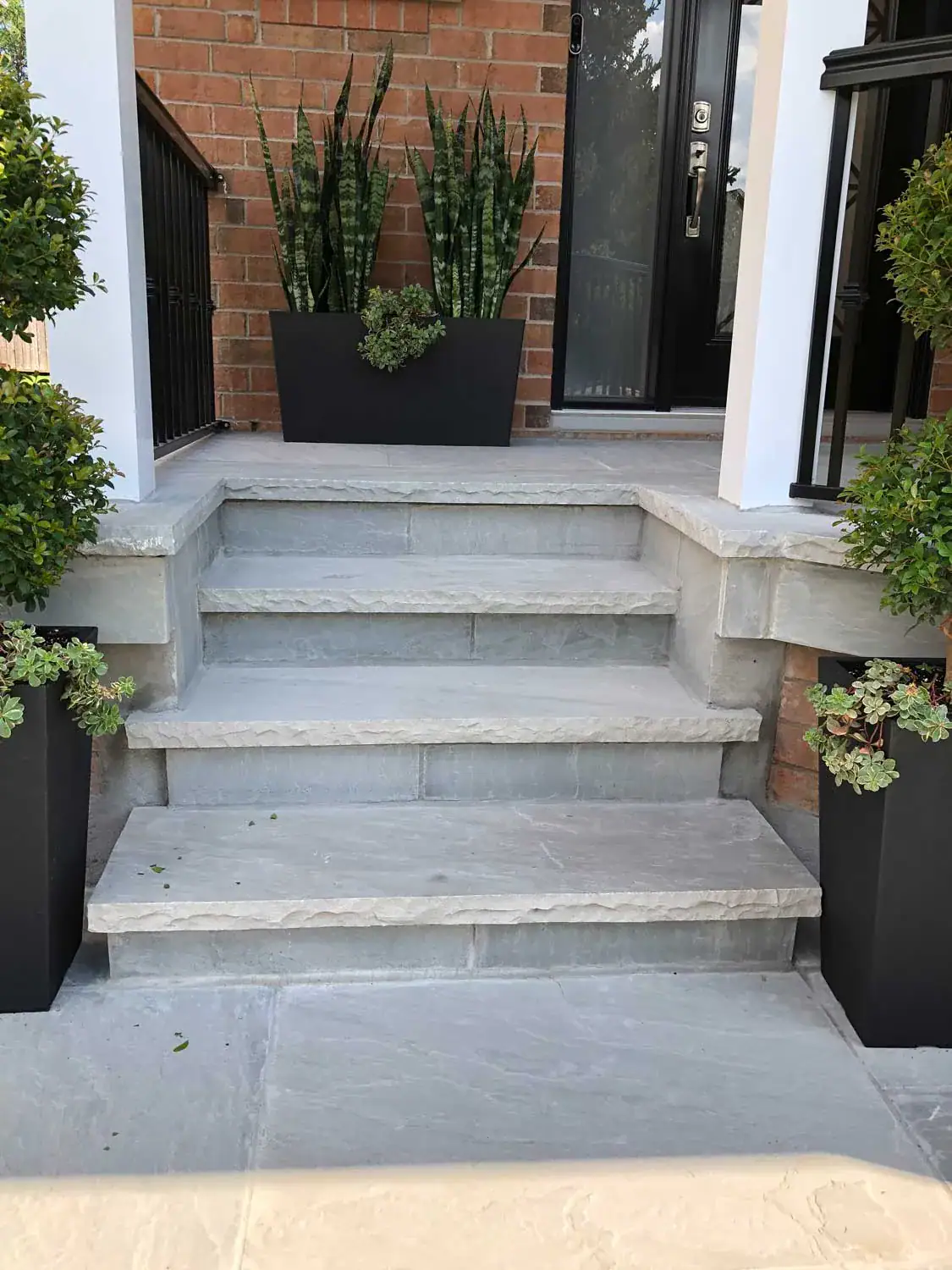
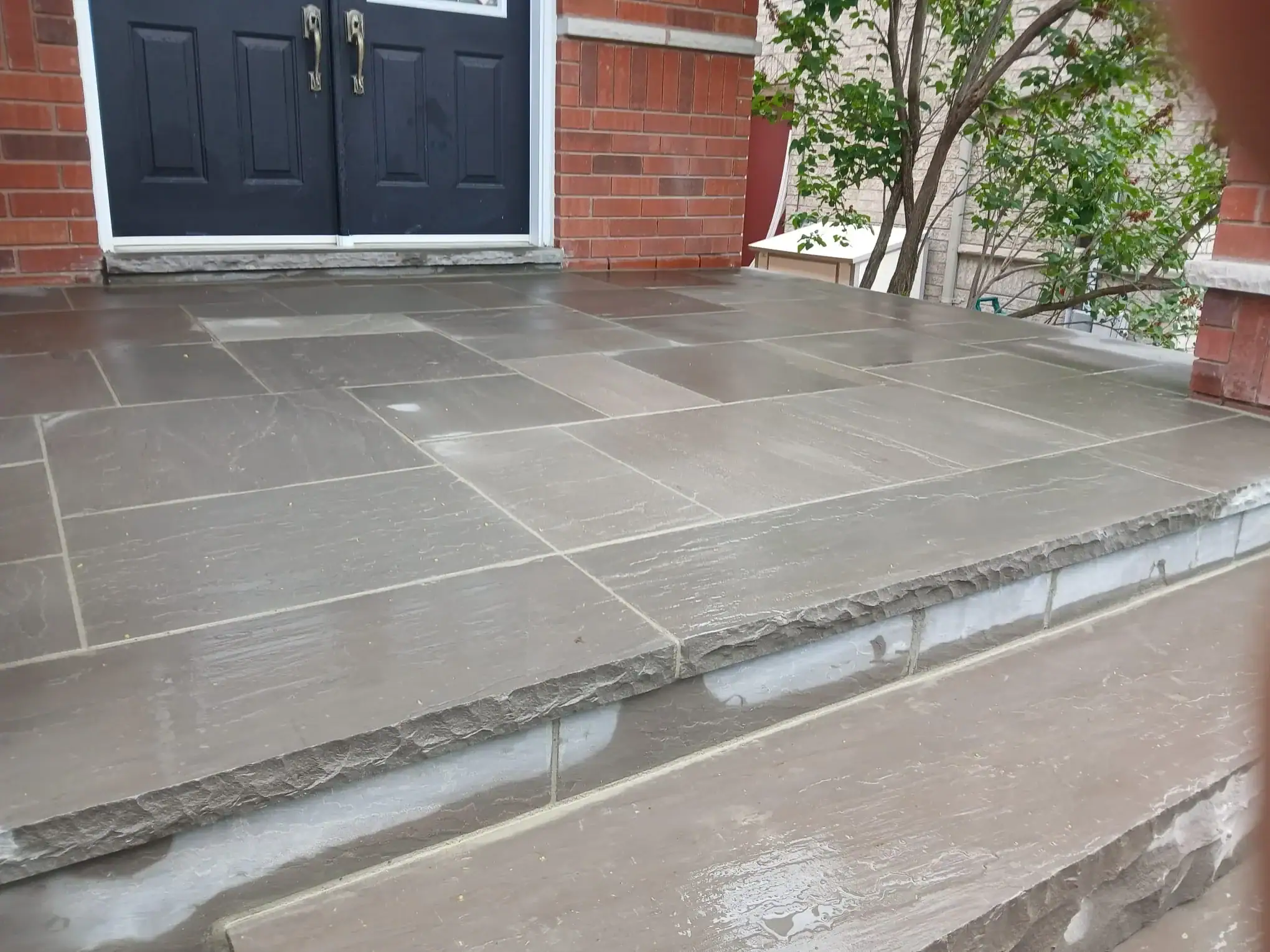
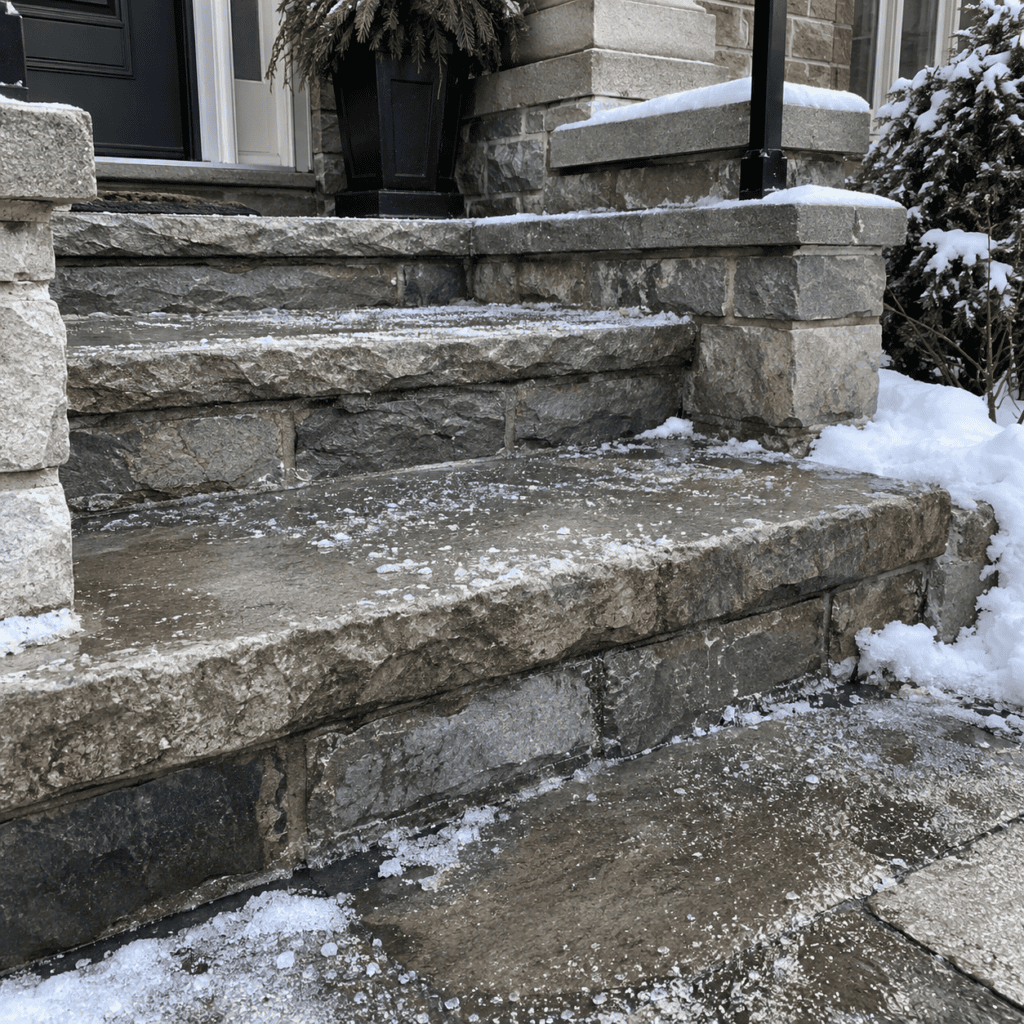
Natural stone does not respond to salt in exactly the same way in every situation. Different stone types have different porosity, strength, surface finishes, mineral composition, and weather resistance.
That means a de-icer that appears harmless on one stone installation should not automatically be assumed safe for another.
Homeowners should be especially careful around natural stone steps, flagstone, stone patios, veneer, and landscape walls when the manufacturer or stone supplier provides specific maintenance instructions.
Winter damage may show up as flaking, loose mortar, surface changes, opened joints, or individual stones becoming unstable. Some of these problems may result primarily from moisture or movement rather than salt itself.
If stone is already cracked or loose, adding more moisture and repeated freeze-thaw exposure is unlikely to improve the situation.
For damaged exterior stonework, A&A Masonry’s Toronto masonry services include natural and manufactured stone repair and installation.
Interlocking Pavers Need a Different Kind of Inspection
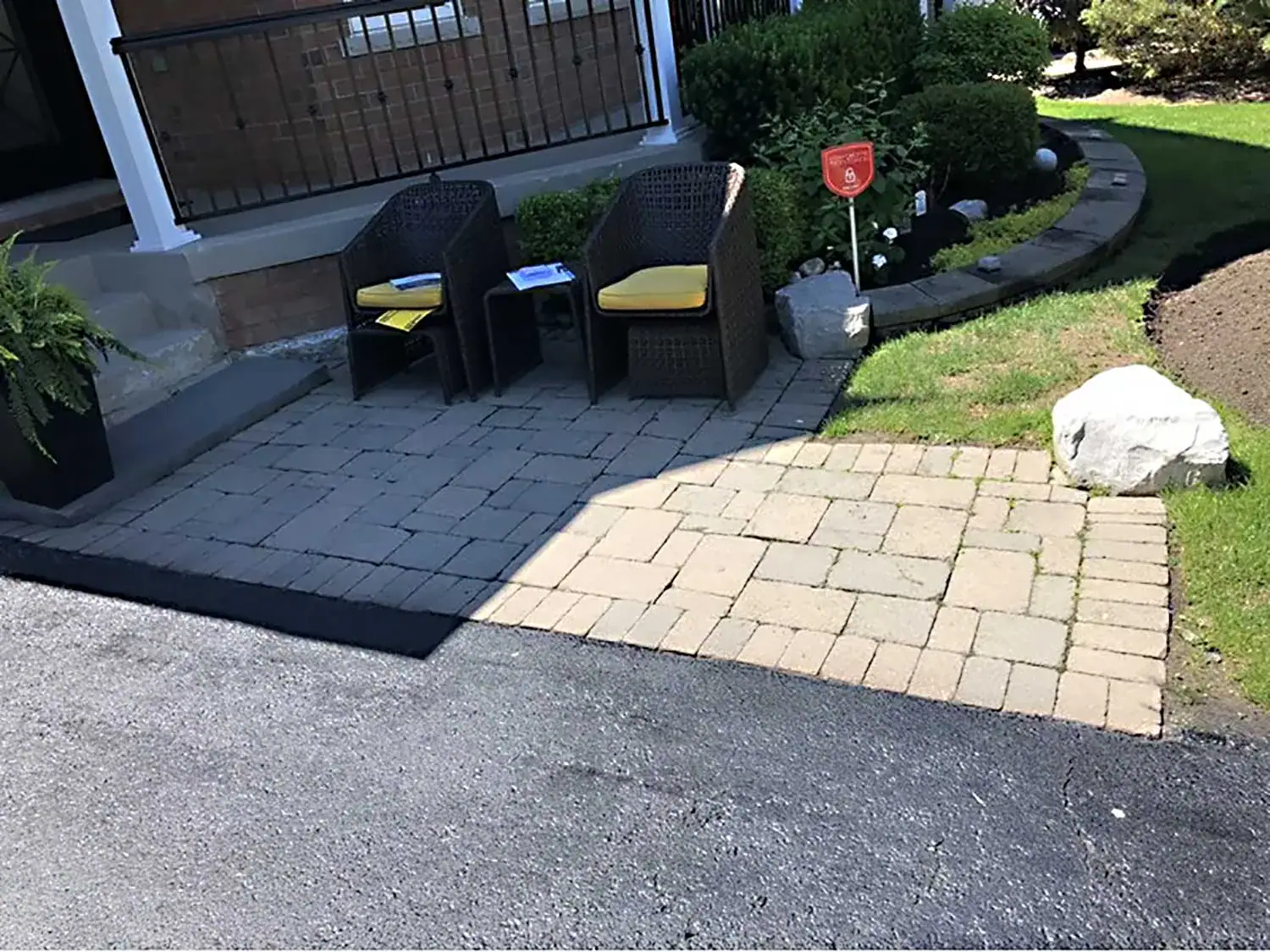
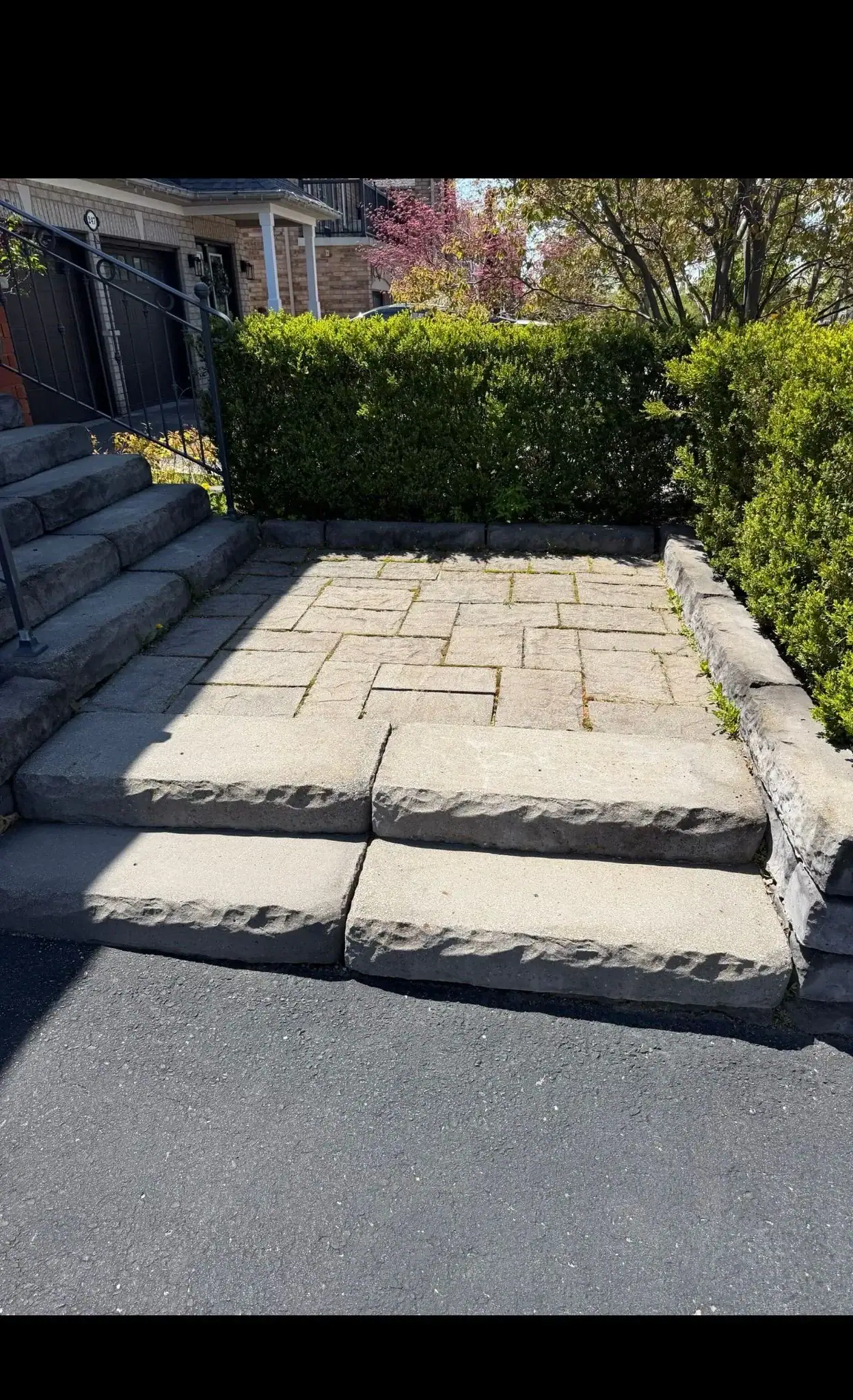
Interlocking pavers are modular, so winter problems often appear differently than damage to a poured concrete slab.
The individual pavers may remain sound while the surface becomes uneven because the base has settled, water is collecting below the installation, or edge restraints have moved.
Before winter, look for:
- sunken areas that hold water;
- loose or rocking pavers;
- open joints;
- raised edges that interfere with shovelling;
- poor drainage beside the house;
- areas where snowmelt consistently collects.
Salt exposure is only one part of the picture. Drainage and base stability usually matter more when an interlocking surface is visibly moving.
The City of Toronto’s current stormwater guidance recommends dealing with slush and standing water before temperatures fall and keeping eavestroughs and downspouts working properly. The City also identifies interlocking pavers as an option that allows water to move through a properly designed permeable surface.
Homeowners dealing with settled or uneven pavers can review A&A Masonry’s interlocking stone services in Toronto for information on installation and repair.
White Deposits Are Not Always Proof of Salt Damage
A white deposit on brick, stone, or concrete does not automatically mean road salt has damaged the masonry.
Efflorescence can occur when moisture moves through masonry, dissolves soluble salts within the material, and carries them toward the surface. Once the water evaporates, a white deposit remains.
Road salt can also leave visible residue after salty water dries.
The two conditions can look similar from a distance, which is why homeowners should avoid diagnosing the problem from colour alone.
Look at where the deposit appears and what happens around it. Is it beside a salted walkway? Does the wall stay damp after rain? Is mortar deteriorating? Is a downspout nearby? Does the white material return after you clean it?
The moisture path usually tells you more than the white colour itself.
Why Snow Storage Location Matters
Where you put snow can affect how much salty water reaches masonry later.
A large pile of snow beside a foundation or brick wall may sit for weeks. If that snow contains de-icing salt collected from a driveway or walkway, each mild period can release more salty meltwater against the same area.
Toronto’s guidance on managing rain and melted snow recommends moving snow away from building foundations where practical and directing meltwater so it does not pool around paved areas and buildings.
When clearing snow, avoid creating large piles directly against:
- brick walls;
- foundation walls;
- stone veneer;
- wood or masonry porch columns;
- basement windows;
- retaining walls where drainage is already poor.
This small change can reduce prolonged moisture exposure even if some salt is still needed for safety.

More Salt Does Not Automatically Mean a Safer Walkway
Using more salt than necessary does not automatically make a walkway safer.
The City of Toronto’s road salt guidance specifically encourages residents to avoid excessive application. The City notes that excess salt can affect infrastructure, vegetation, pets, and the wider environment.
For homeowners, careful application also means less salty water being tracked or washed across nearby masonry.
Start by physically removing snow as soon as practical. A clear surface usually needs less de-icer than one covered by compacted snow.
Then follow the de-icing product directions rather than spreading an arbitrary thick layer.
Always put pedestrian safety first. The goal is not to eliminate winter maintenance. It is to use enough material for the conditions without assuming that more is always better.
Can You Use Sand Instead?
Sand and grit can improve traction, but they don’t melt ice the way a chemical de-icer does.
That distinction matters. On some days, traction may be the main concern. During other conditions, ice removal or melting may still be necessary.
Sand can also create cleanup and drainage issues if large amounts accumulate, so it is not a perfect replacement for every situation.
A sensible winter plan may use several methods: early snow removal, mechanical ice removal where safe, traction materials when appropriate, limited de-icer when needed, and good drainage to prevent meltwater from refreezing.
What Homeowners Should Do Before the First Salt Application
The best time to reduce winter masonry problems is before the walkway becomes icy.
Walk around your property in early fall, paying particular attention to areas where you normally use de-icer.
- Inspect concrete. Look for scaling, cracks, loose corners, and crumbling step edges.
- Inspect lower brickwork. Look for spalling, open joints, staining, and previous splashback.
- Check mortar. Note joints that are recessed, cracked, or missing.
- Check stonework. Look for loose stones, cracked joints, and surfaces that already retain water.
- Inspect interlocking. Find low areas and settled pavers.
- Watch drainage during rain. See where water travels before winter hides the problem under snow.
- Plan snow storage. Identify areas where shovelled snow can melt without soaking vulnerable masonry.
- Photograph existing damage. Compare the same areas in spring to see whether deterioration has changed.
This gives you a useful baseline before freeze-thaw cycles and winter maintenance begin.

What Damage Should Be Repaired Before Winter?
Prioritize damage that allows water into the masonry, affects walking safety, or is already getting worse.
Examples include loose bricks, missing mortar, badly spalled units, unstable stones, broken concrete step edges, deep cracks, sunken pavers that collect water, and drainage that directs runoff toward the house.
Cosmetic staining can usually take a lower priority if the underlying masonry remains sound.
If several materials are deteriorating around the same entrance, driveway, or foundation area, consider the property as a system rather than scheduling several unrelated cosmetic repairs. A drainage problem may be contributing to damage in brick, mortar, concrete, and paving at the same time.
A&A Masonry’s masonry restoration services in Toronto cover projects where several masonry components need to be assessed together.
What to Check During Winter
You don’t need to do a detailed masonry inspection after every snowfall. A few observations throughout winter can still be useful.
Watch where meltwater travels on milder days. Look for salty slush collecting beside walls, steps that remain wet for unusually long periods, and large snow piles melting against masonry.
If you notice a new loose brick, unstable stone, rapidly worsening concrete surface, or unsafe step, don’t wait for spring just because the damage appeared during winter.
Some permanent repairs depend on temperature and product requirements, but you can still assess and manage immediate safety concerns.
What to Check When Spring Arrives
Spring is when winter-related changes often become easier to see.
Compare the photos you took before winter with the same areas after the snow has disappeared.
Look for:
- new concrete scaling;
- larger cracks;
- fresh brick spalling;
- loose mortar;
- opened stone joints;
- pavers that have heaved or settled;
- new white deposits;
- areas where salty snowmelt repeatedly collected.
Not every change is caused by road salt. The comparison simply helps identify where winter exposure may be revealing a weakness that needs attention.
Quick Decision Guide for Toronto Homeowners
If the masonry is sound but receives regular salt exposure: keep snow cleared, avoid excessive de-icer, manage meltwater, and monitor the area.
If concrete is already scaling or cracked: have a professional review the condition before another winter adds more moisture and freeze-thaw exposure.
If brick is spalling beside a salted walkway: check both the damaged bricks and the source of splashback or meltwater.
If mortar is missing: repair the joints rather than trying to solve the problem with a surface coating.
If stone is deteriorating: identify the stone type and follow material-specific maintenance guidance before applying a de-icer or sealer.
If interlocking is uneven: investigate the base and drainage instead of assuming salt is the main cause.
If snow is piled against the house: change the storage location where practical so meltwater drains away from vulnerable masonry.
Final Thoughts on Road Salt and Masonry
Road salt and masonry problems are closely connected to water management. Salt is an important winter safety tool, but repeated exposure to salty meltwater can add stress to brick, mortar, concrete, stone, and paving that is already damaged or poorly drained.
Toronto homeowners do not need to choose between safe winter surfaces and protecting their masonry. The practical approach is to remove snow promptly, use de-icers carefully, prevent salty snow from piling against the house, keep meltwater moving away from masonry, and repair vulnerable areas before winter.
Most importantly, do not assume every crack, flake, or white deposit was caused by salt. Age, moisture, installation, drainage, settlement, and freeze-thaw cycles can all contribute. Finding the actual cause is what leads to a useful repair rather than a temporary fix.