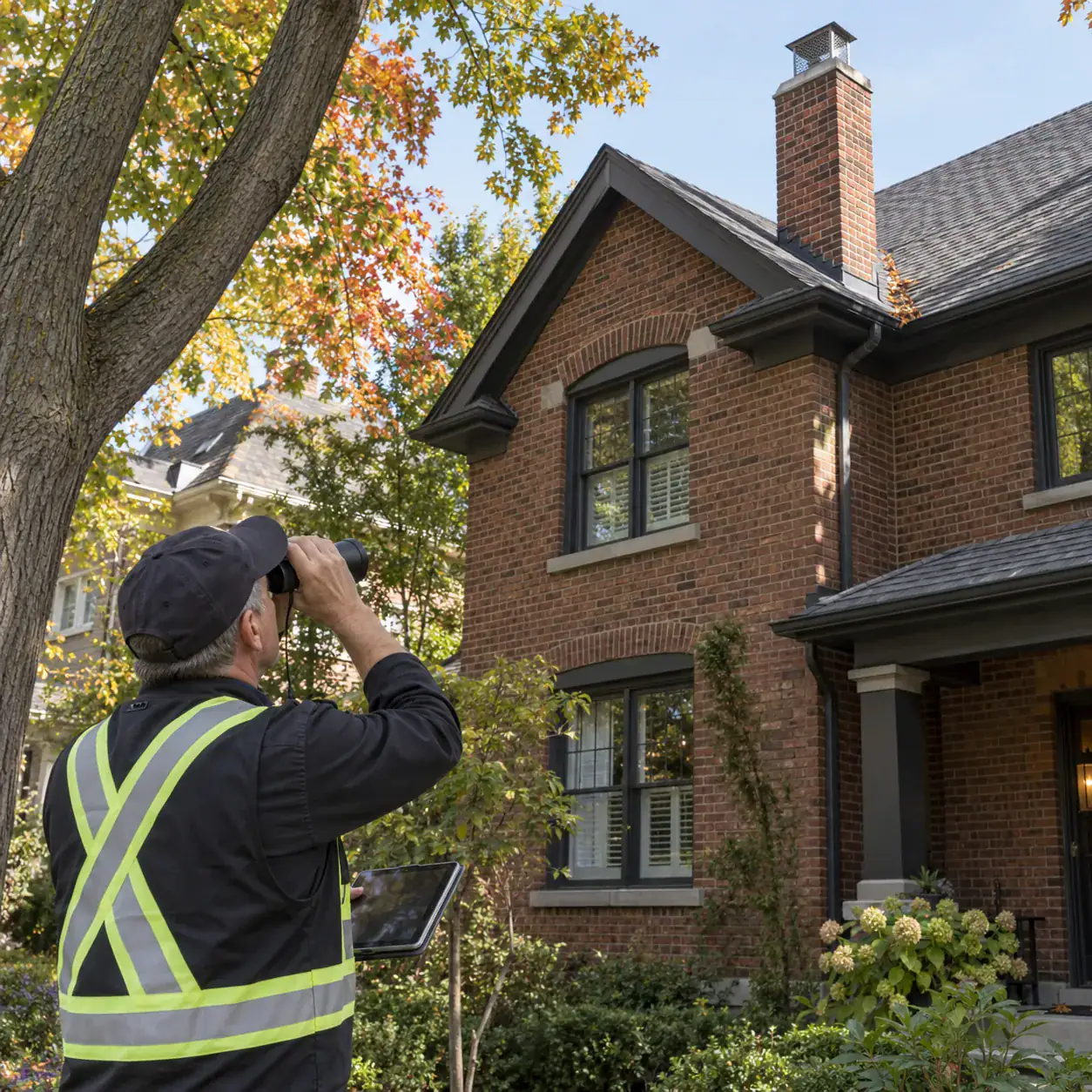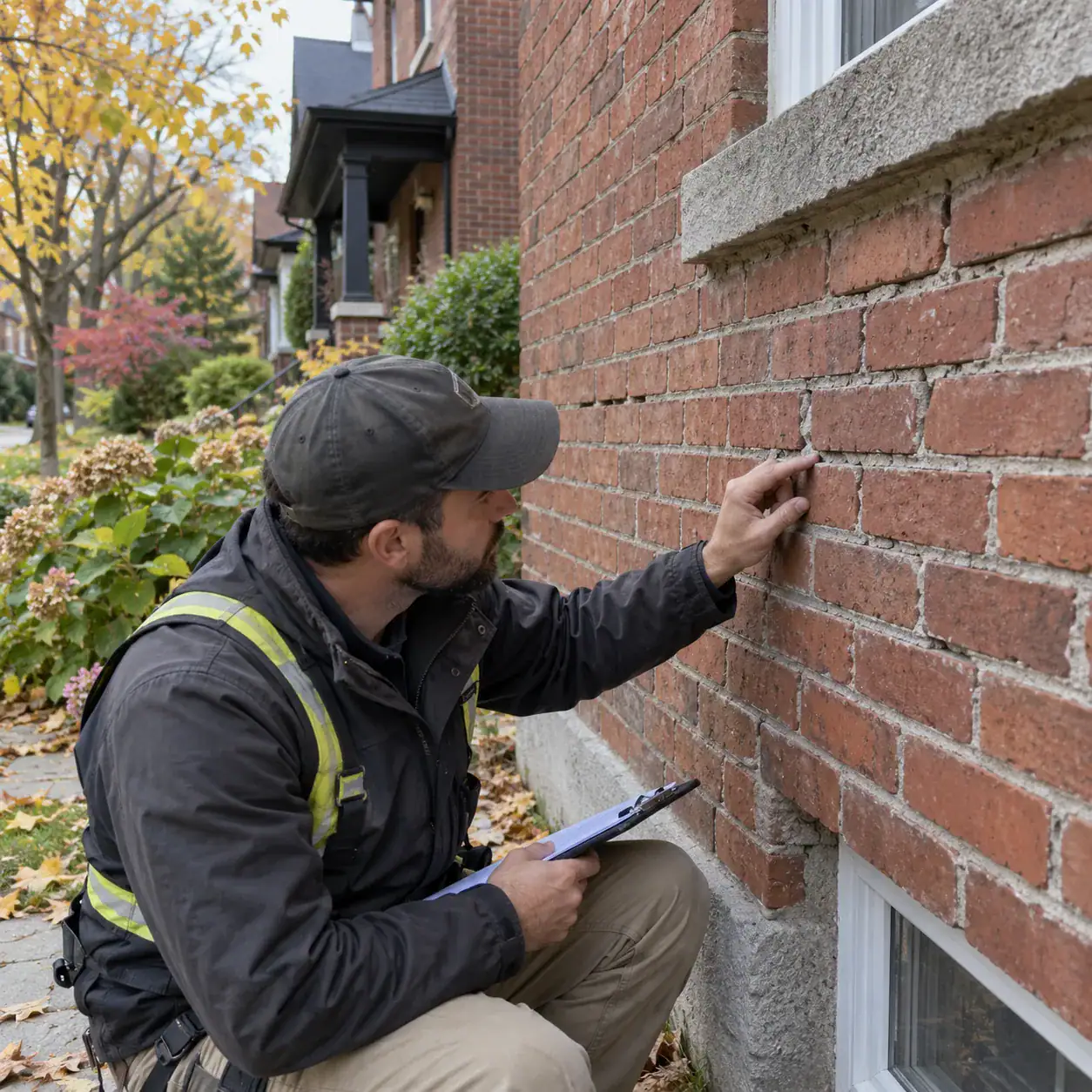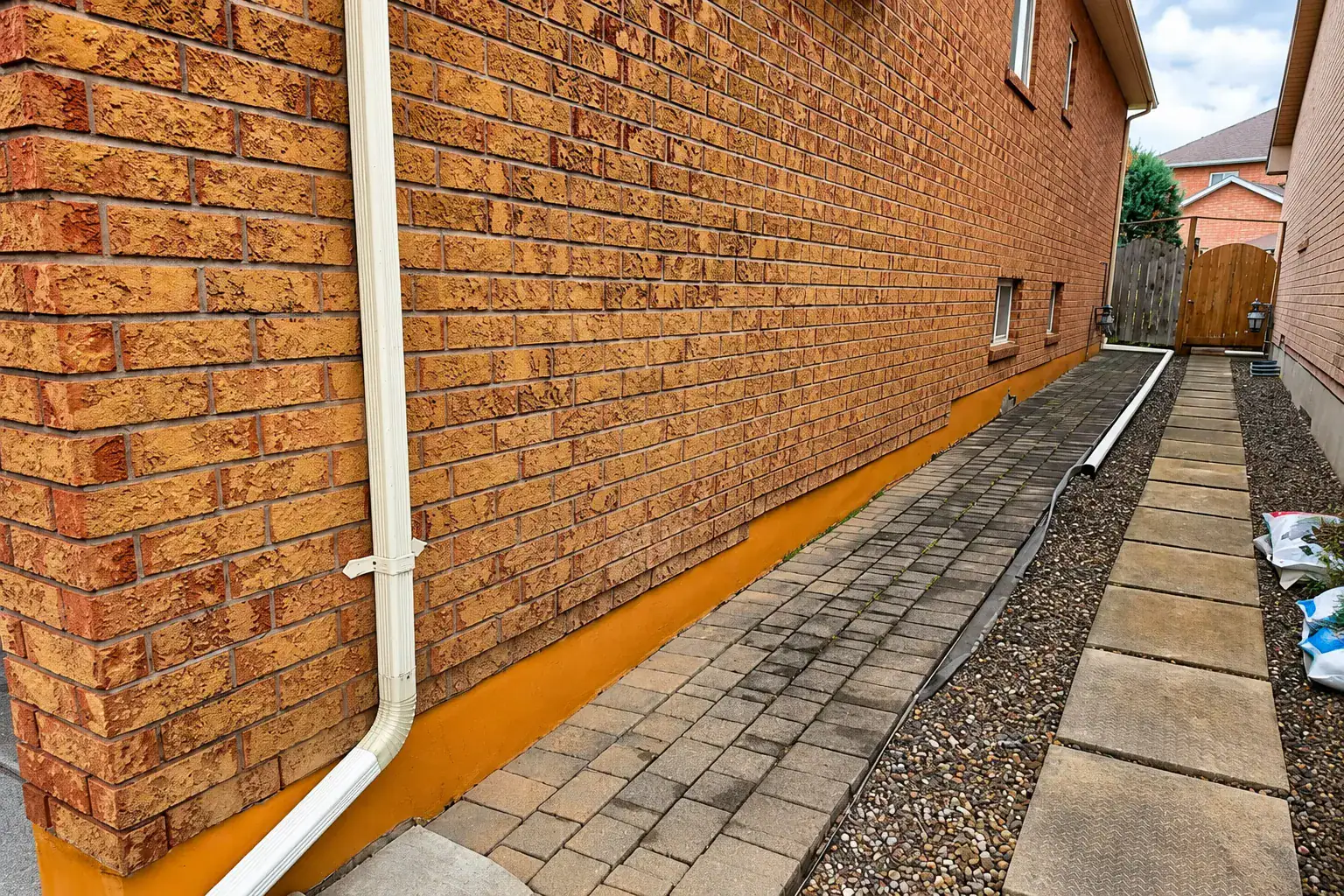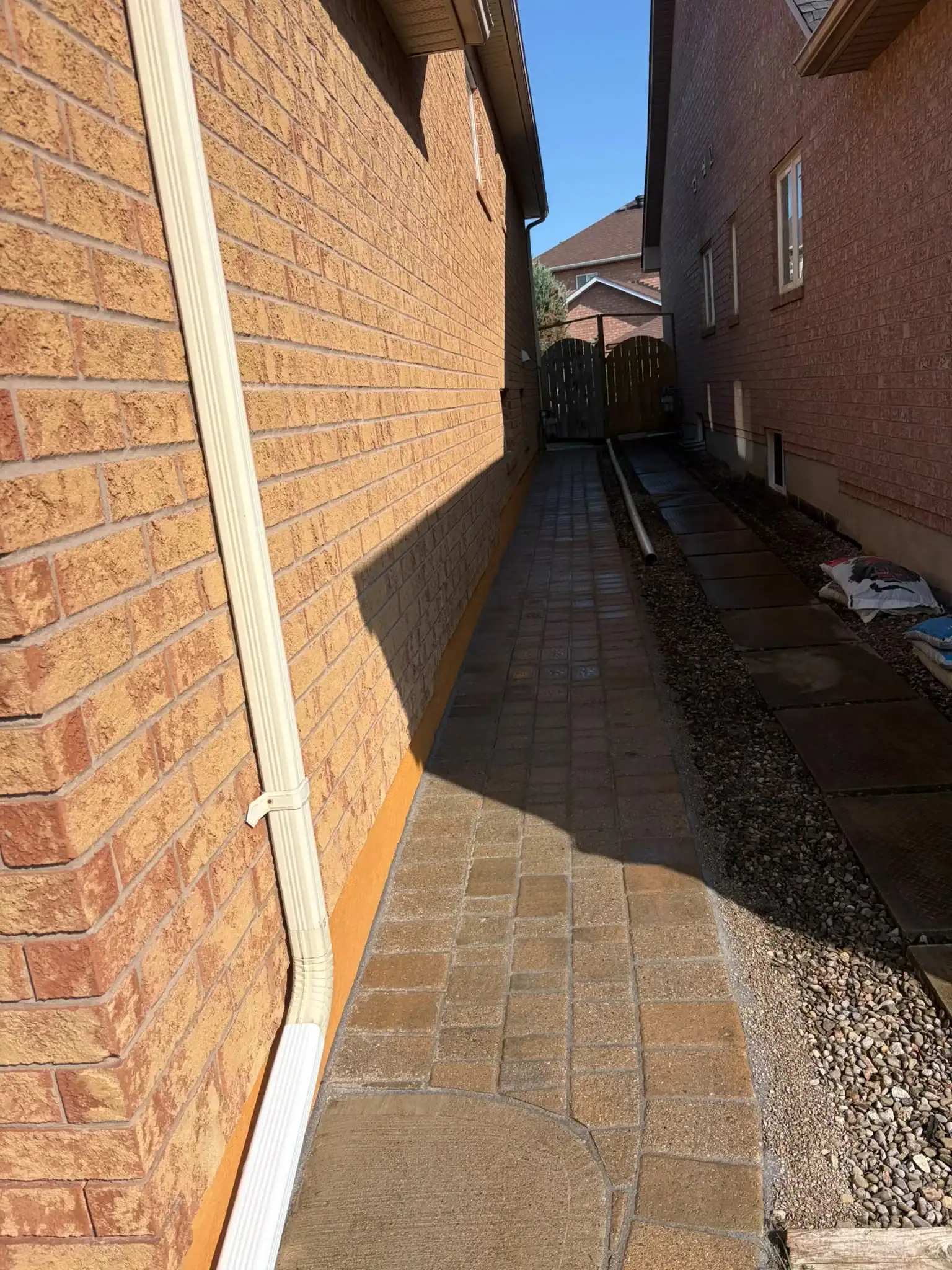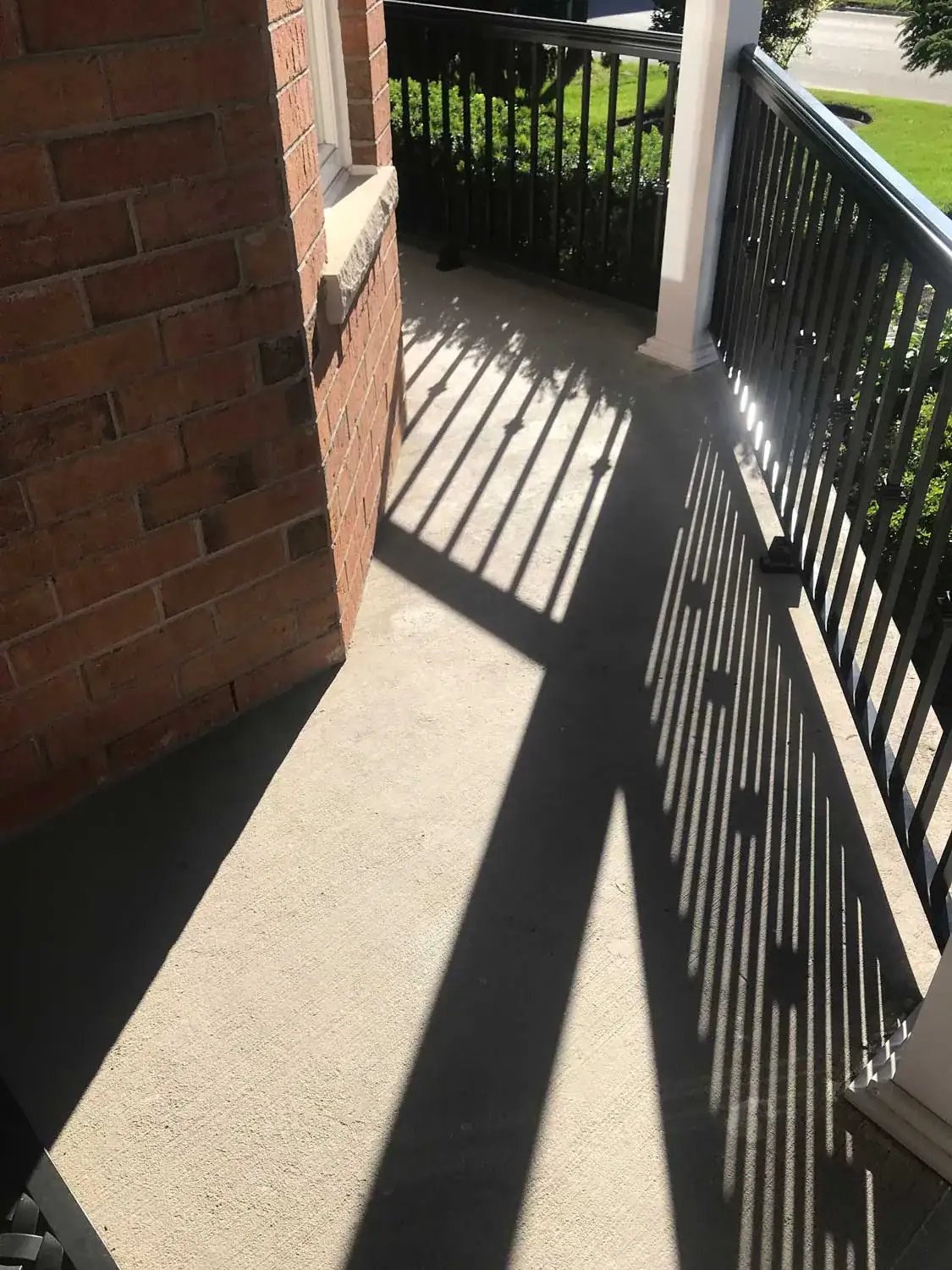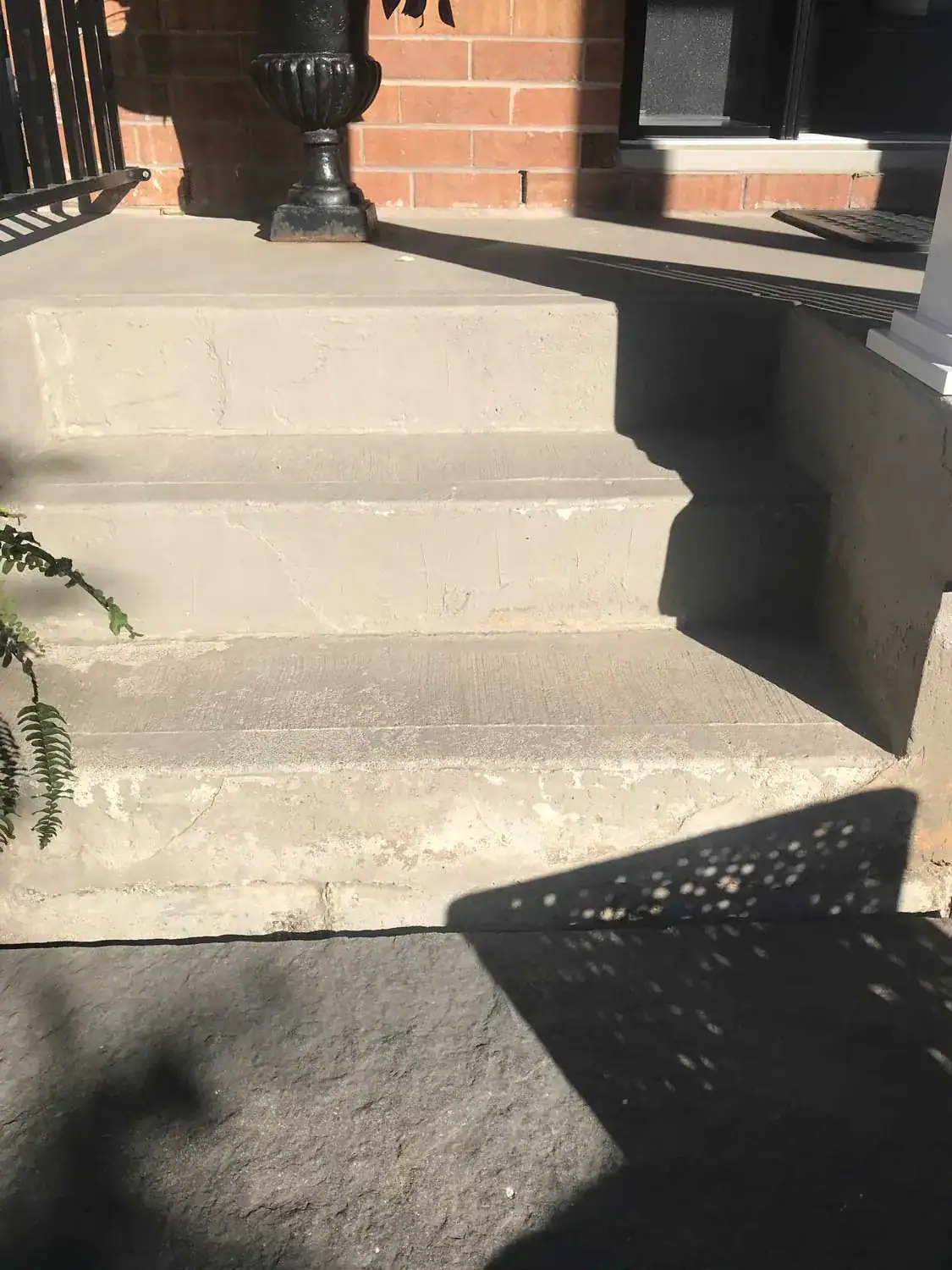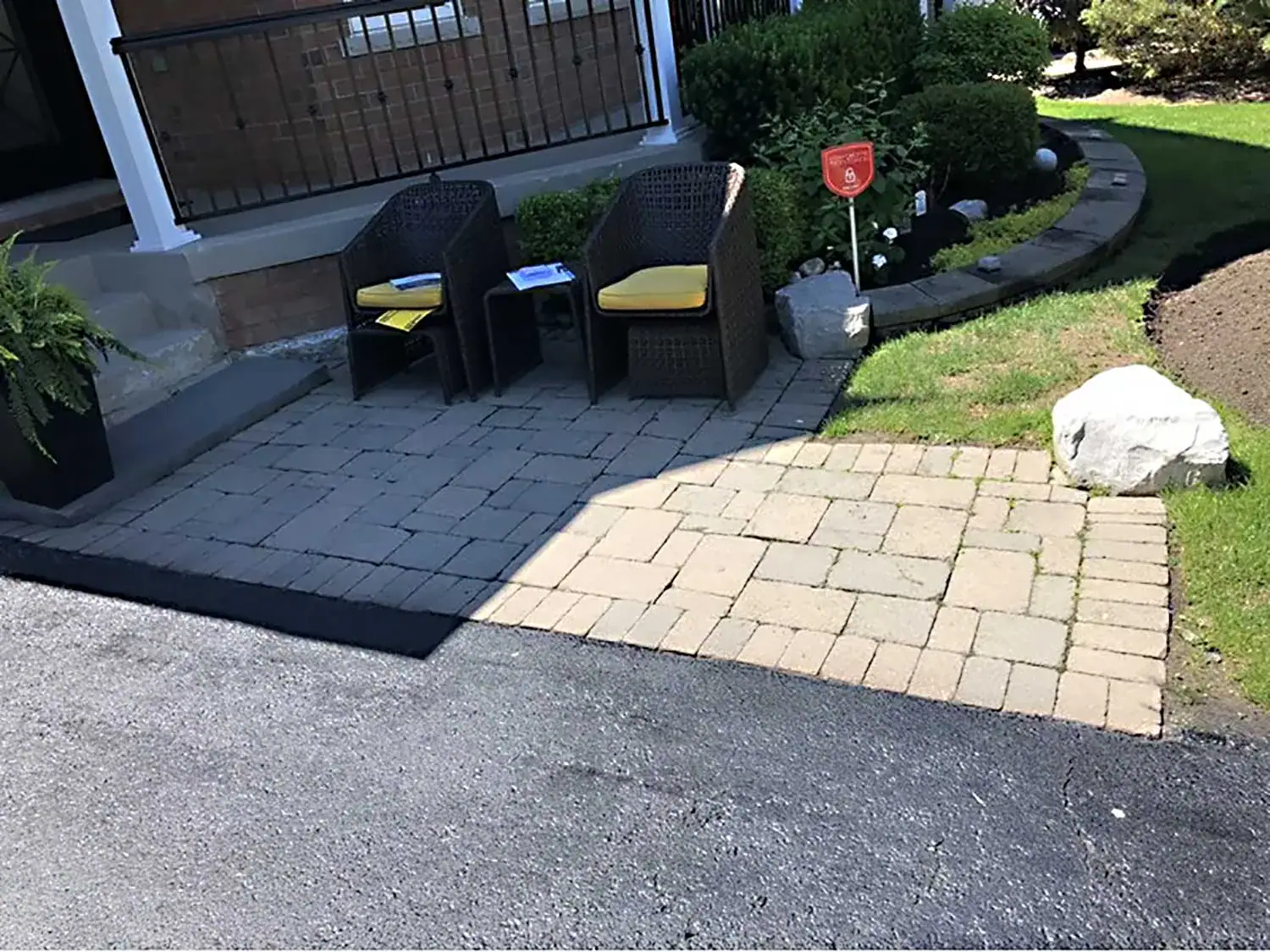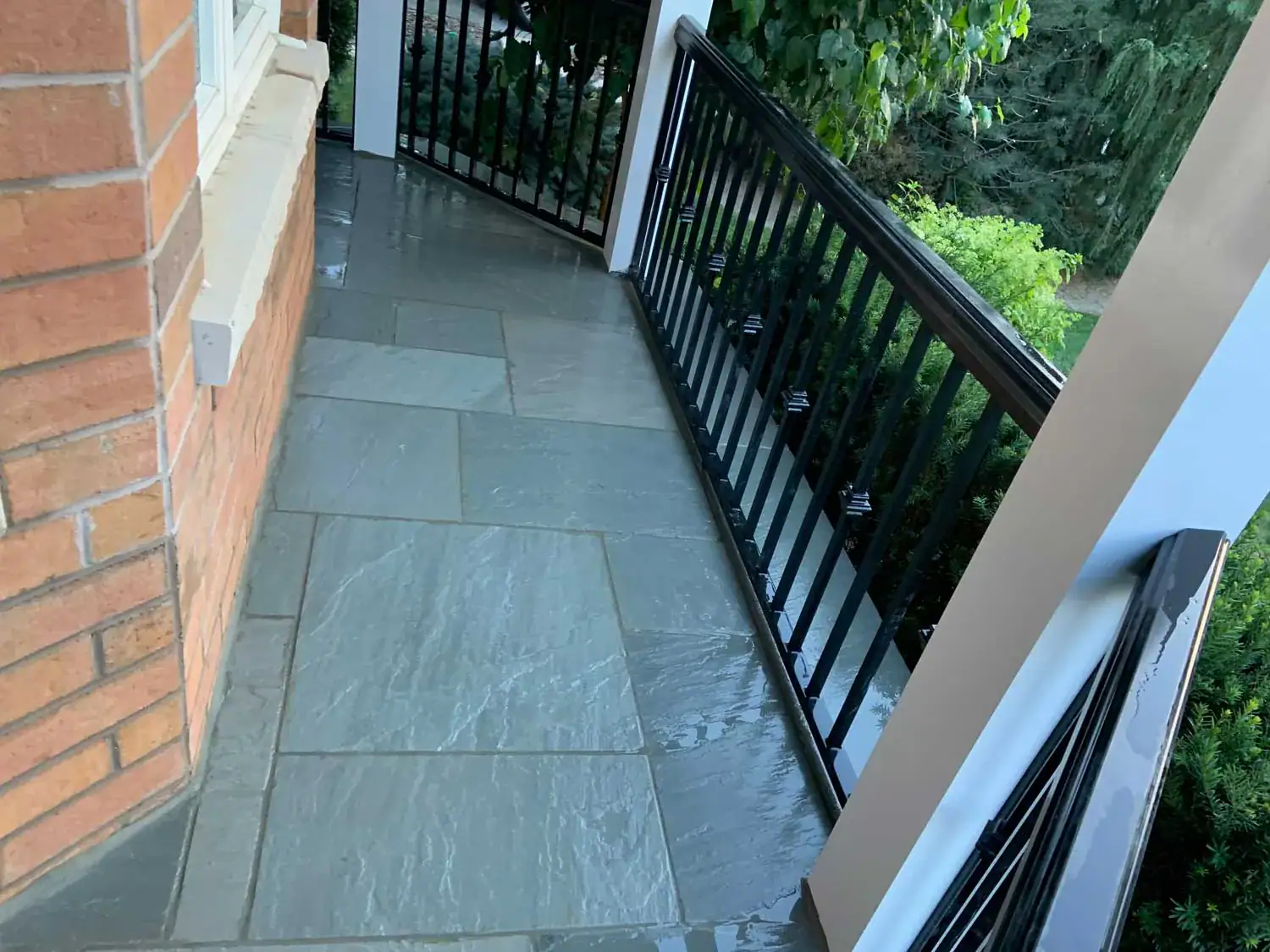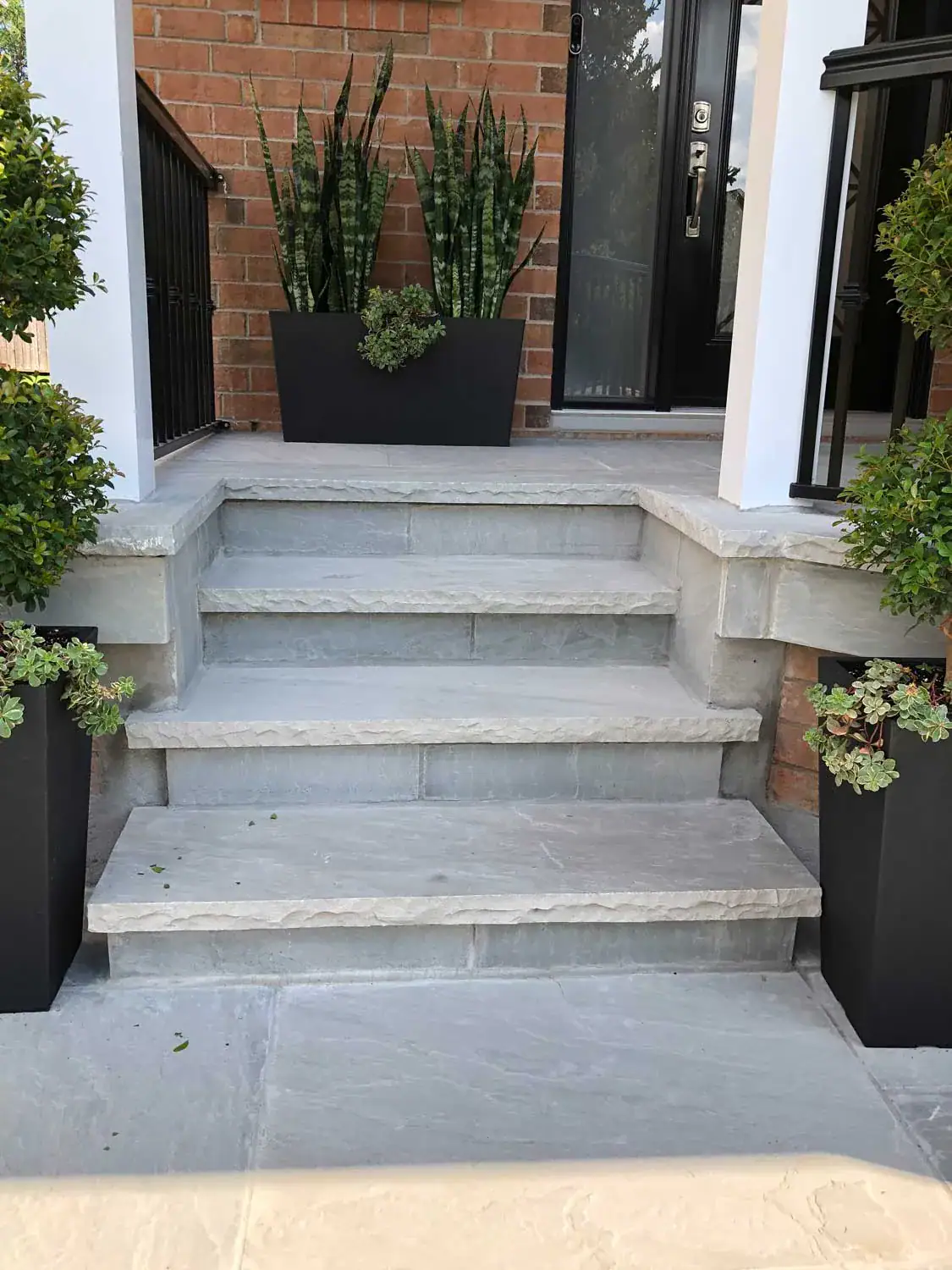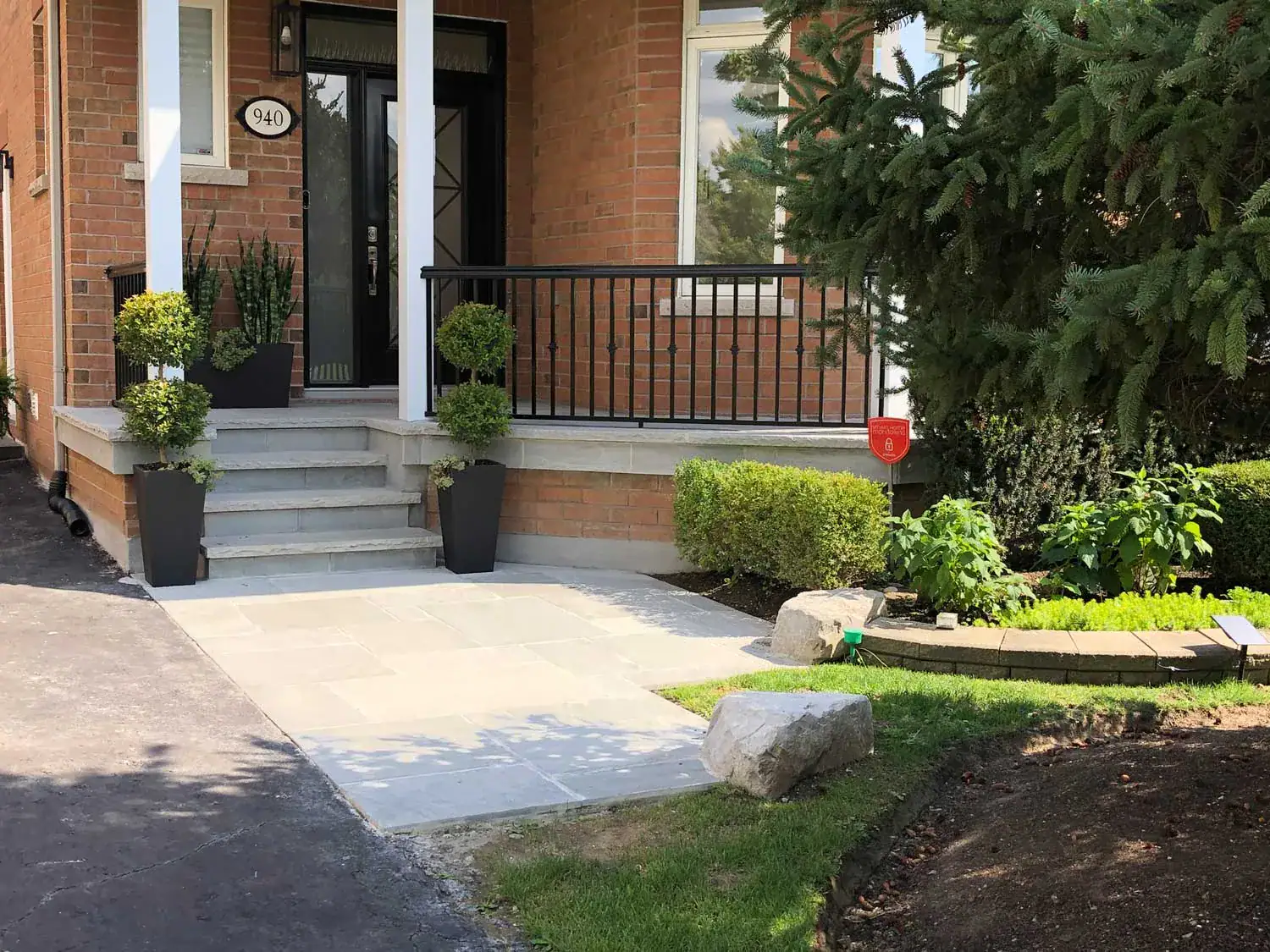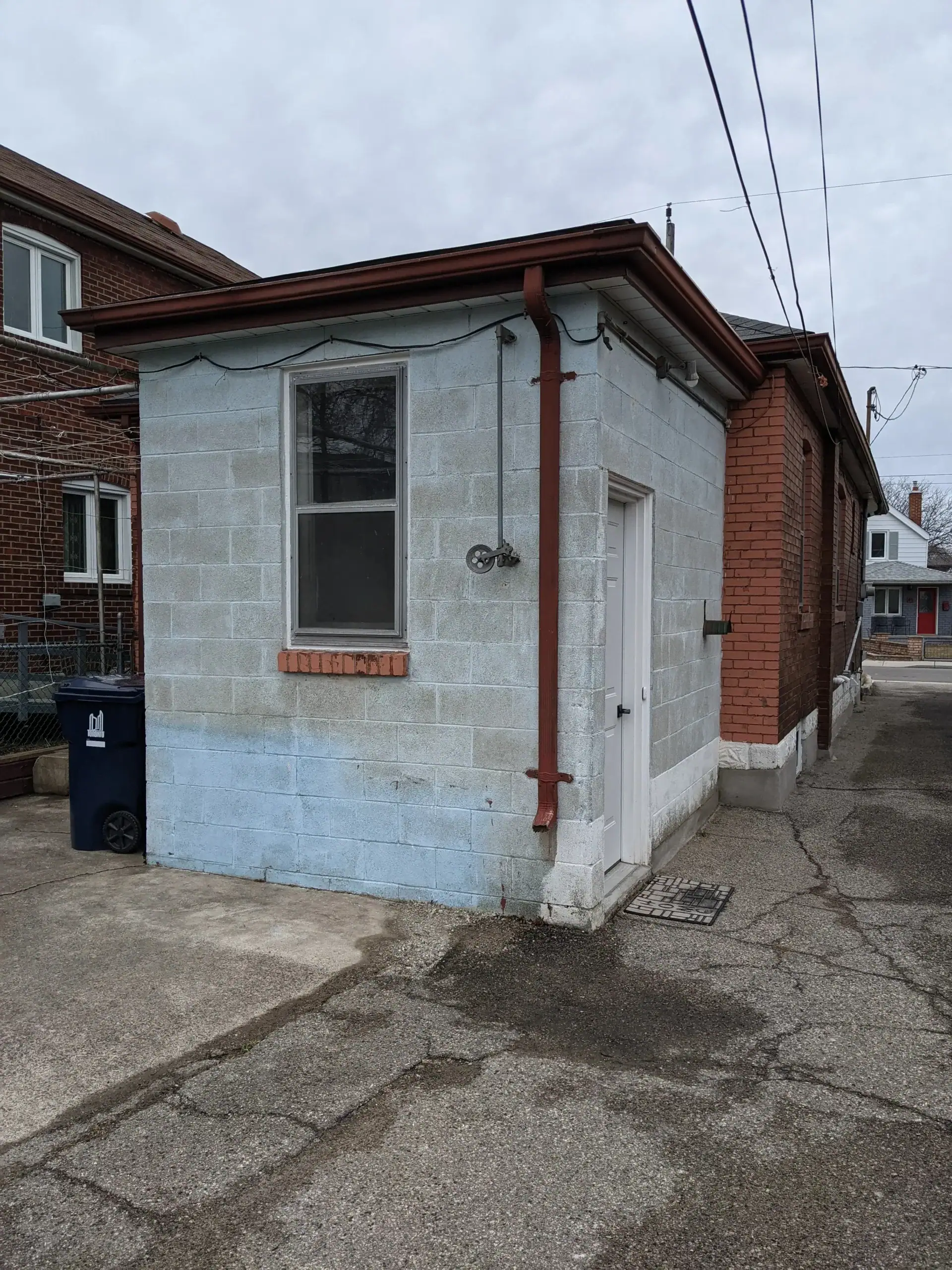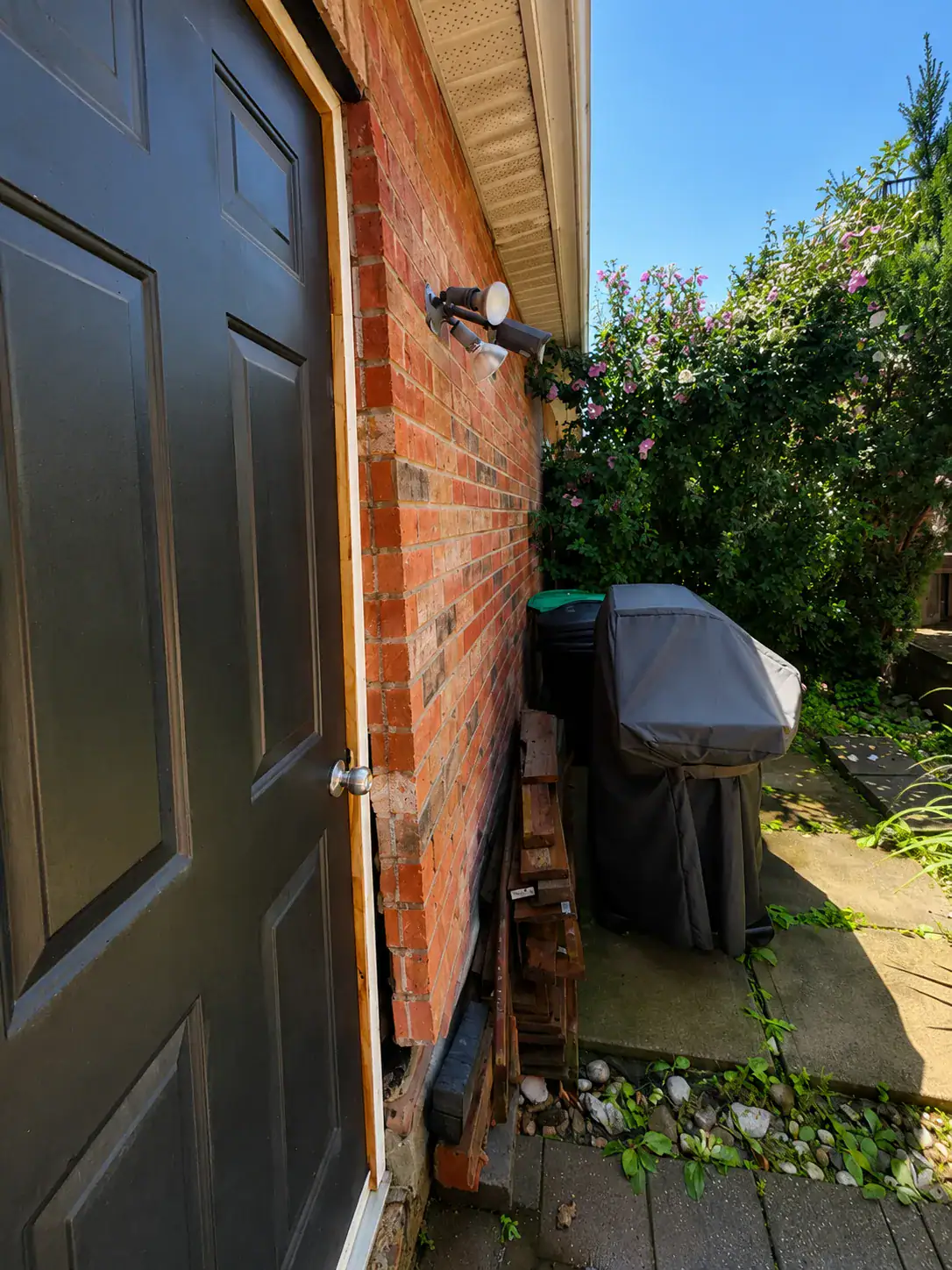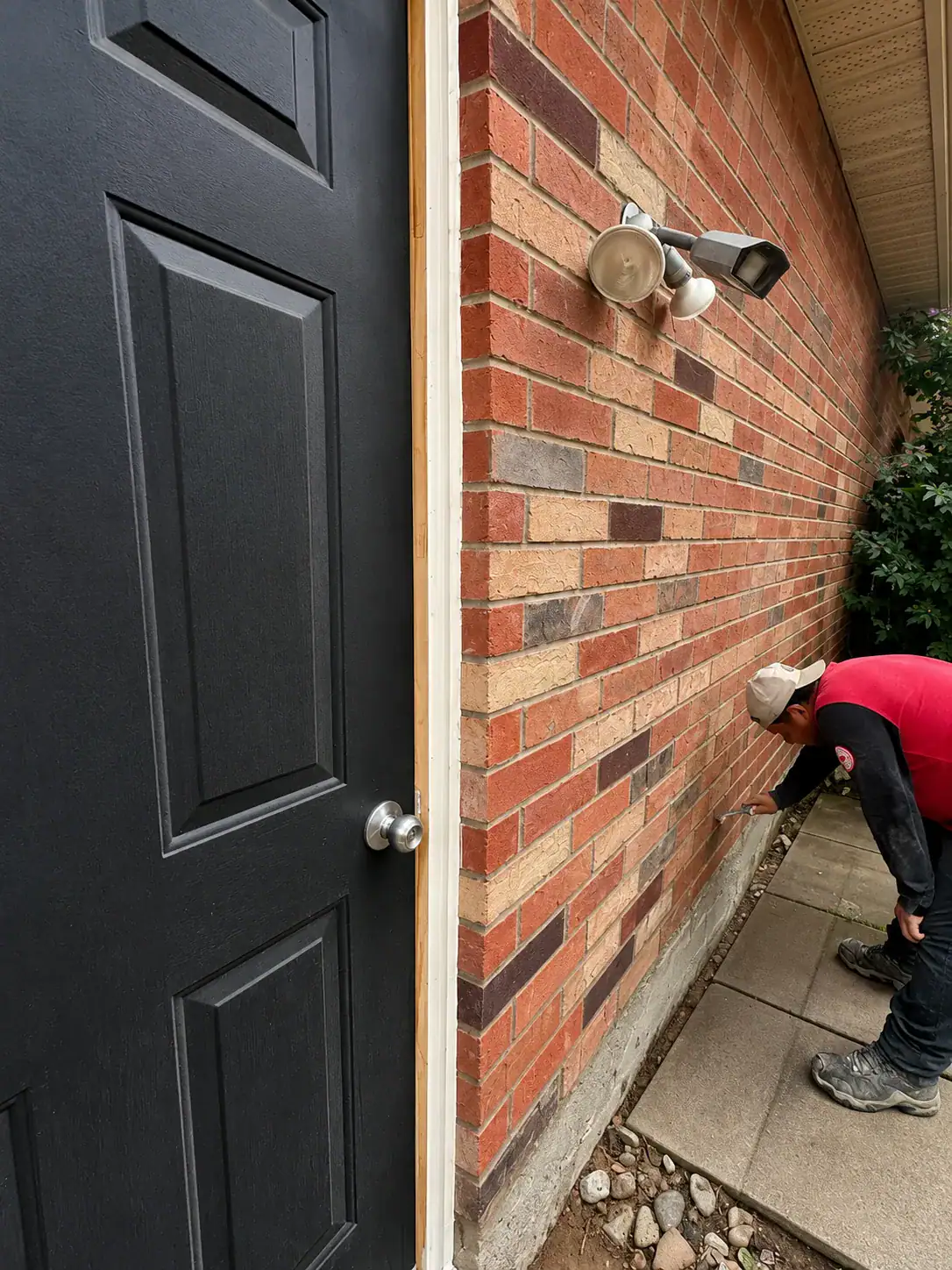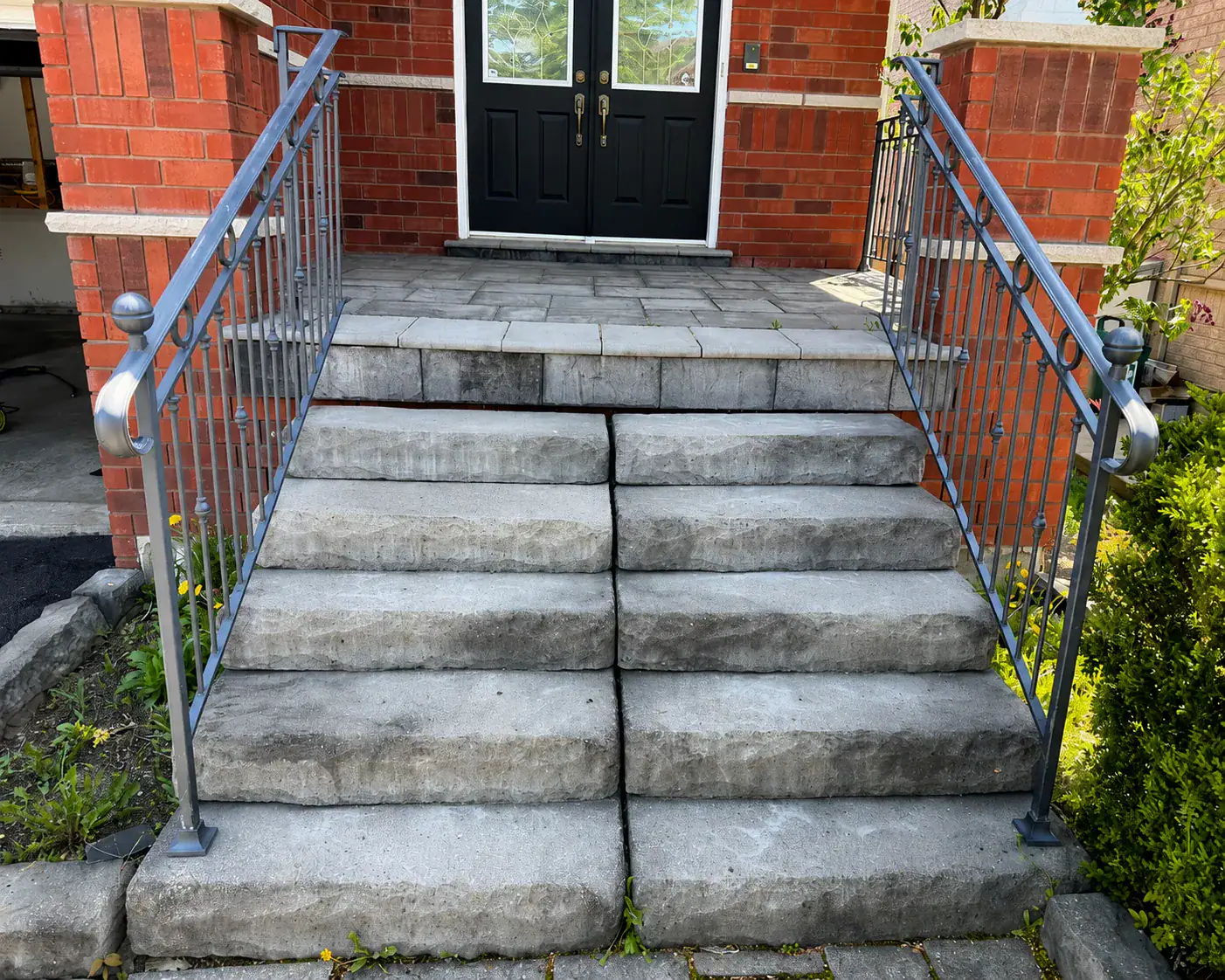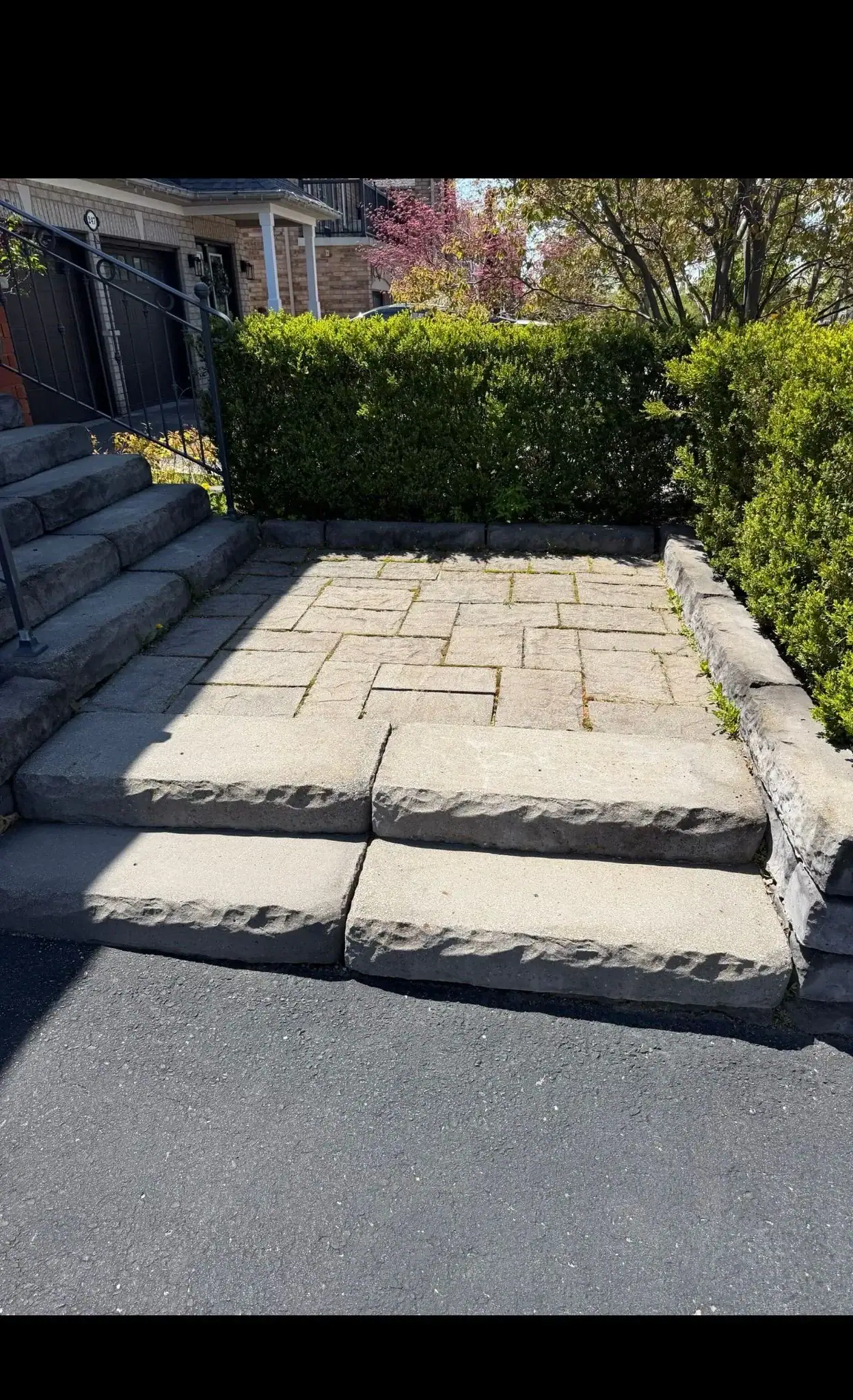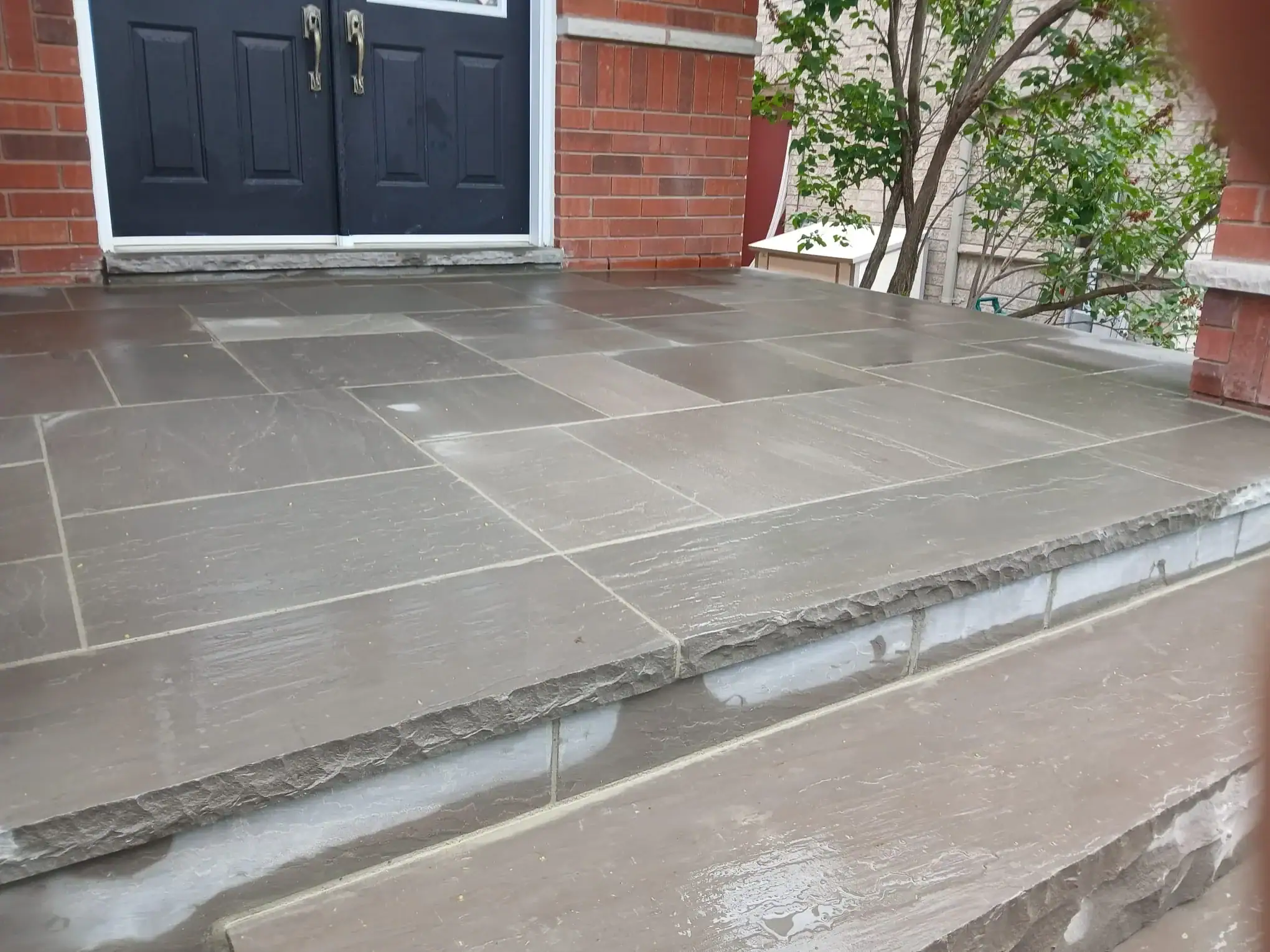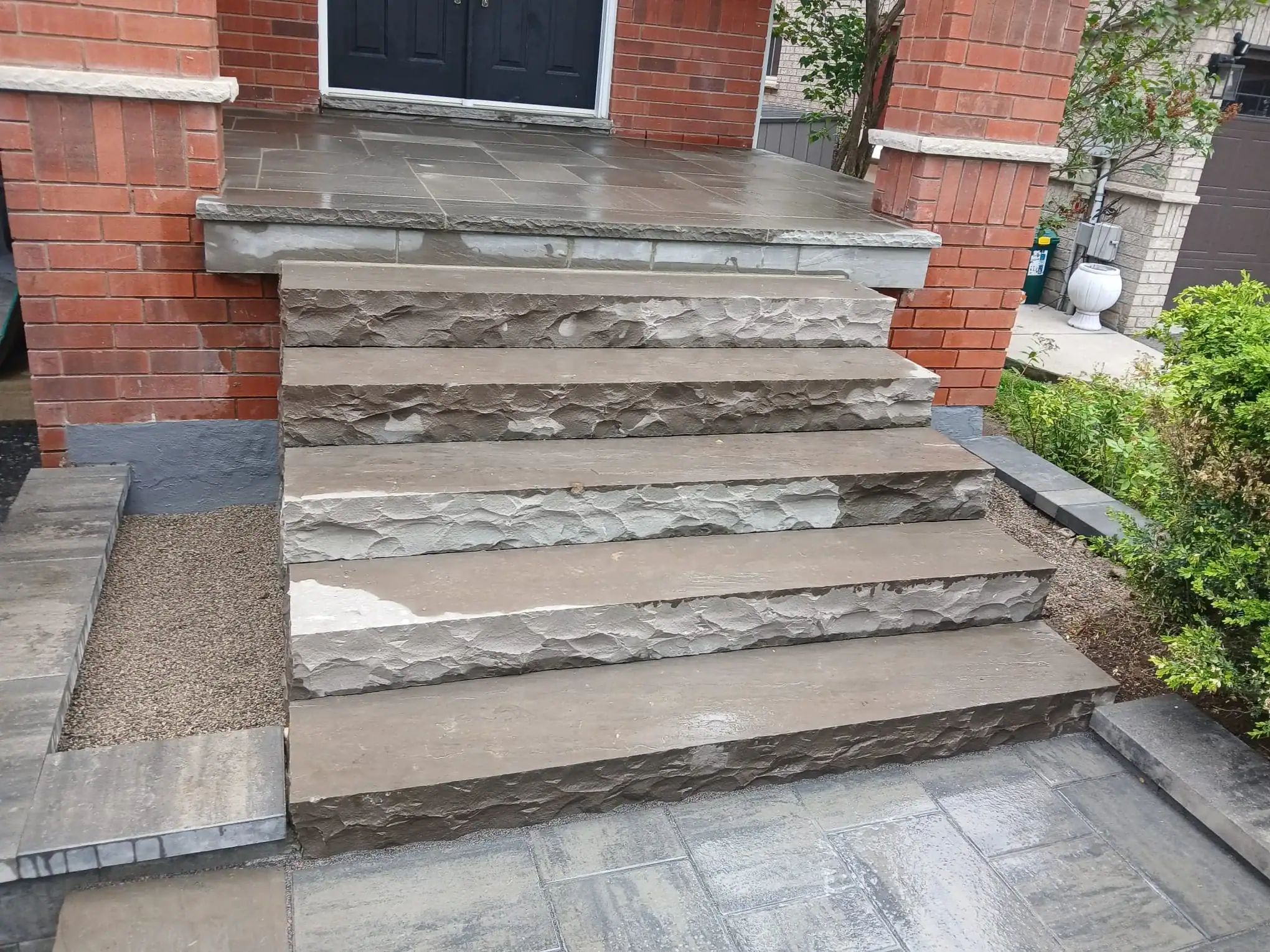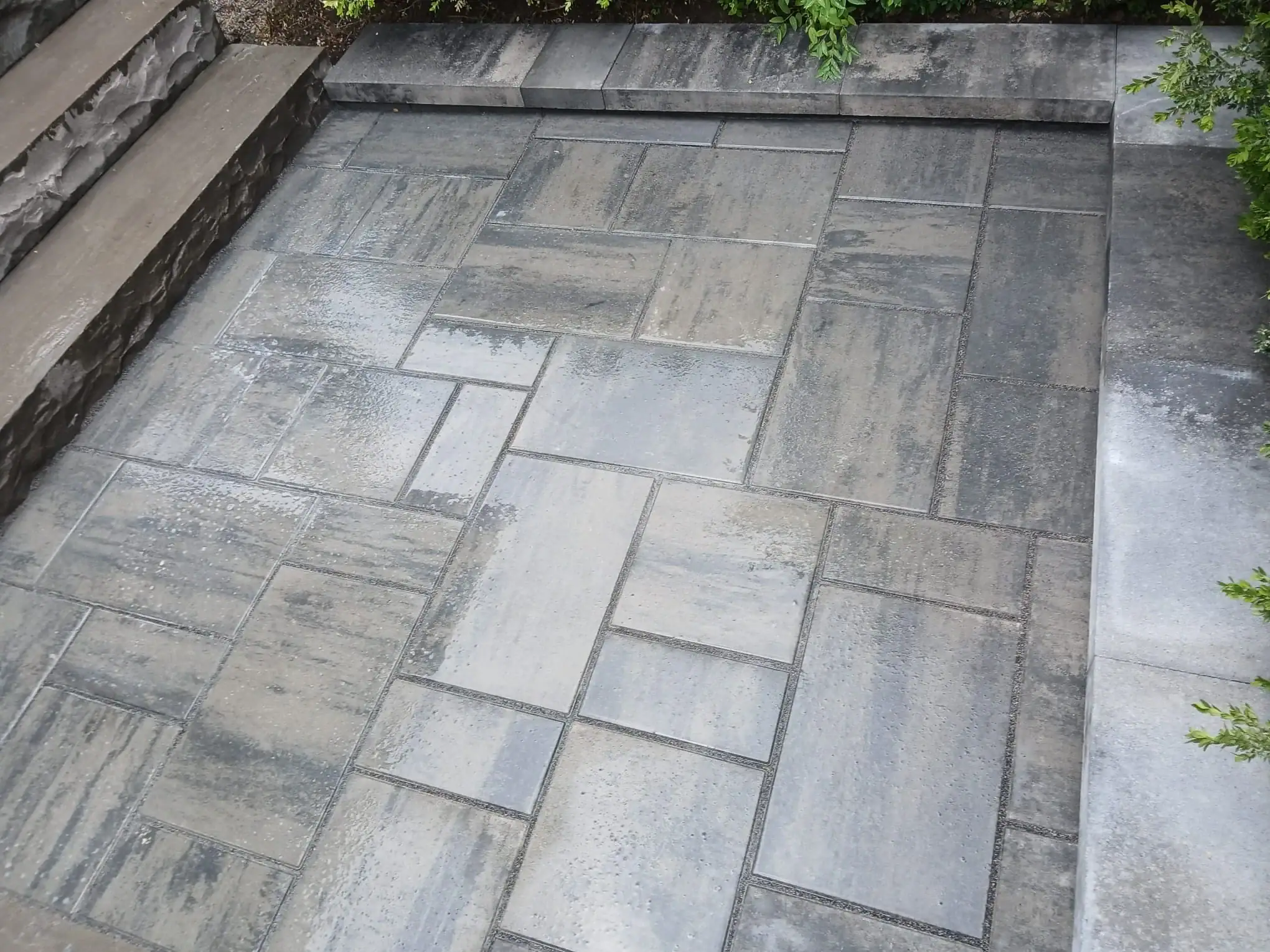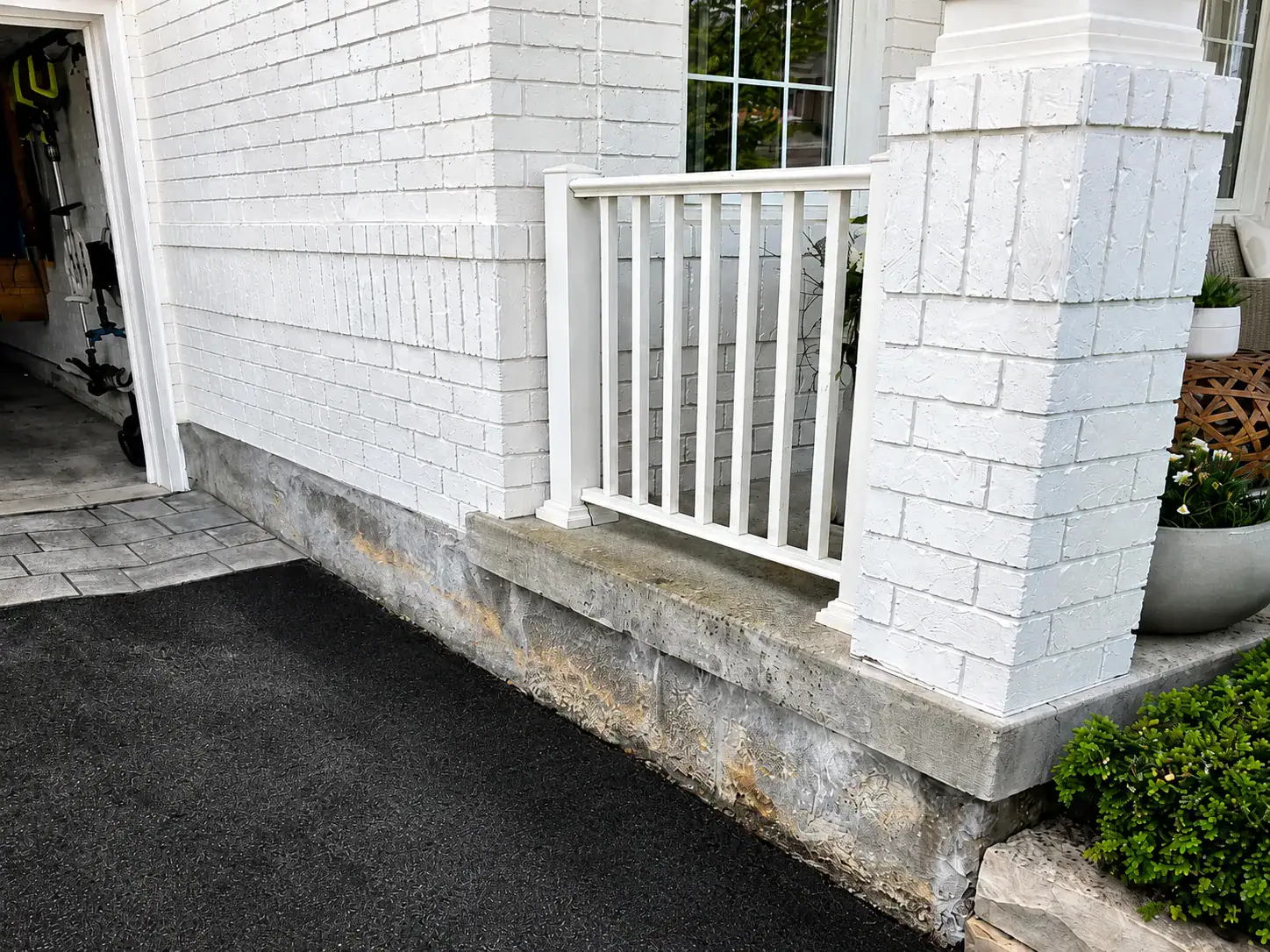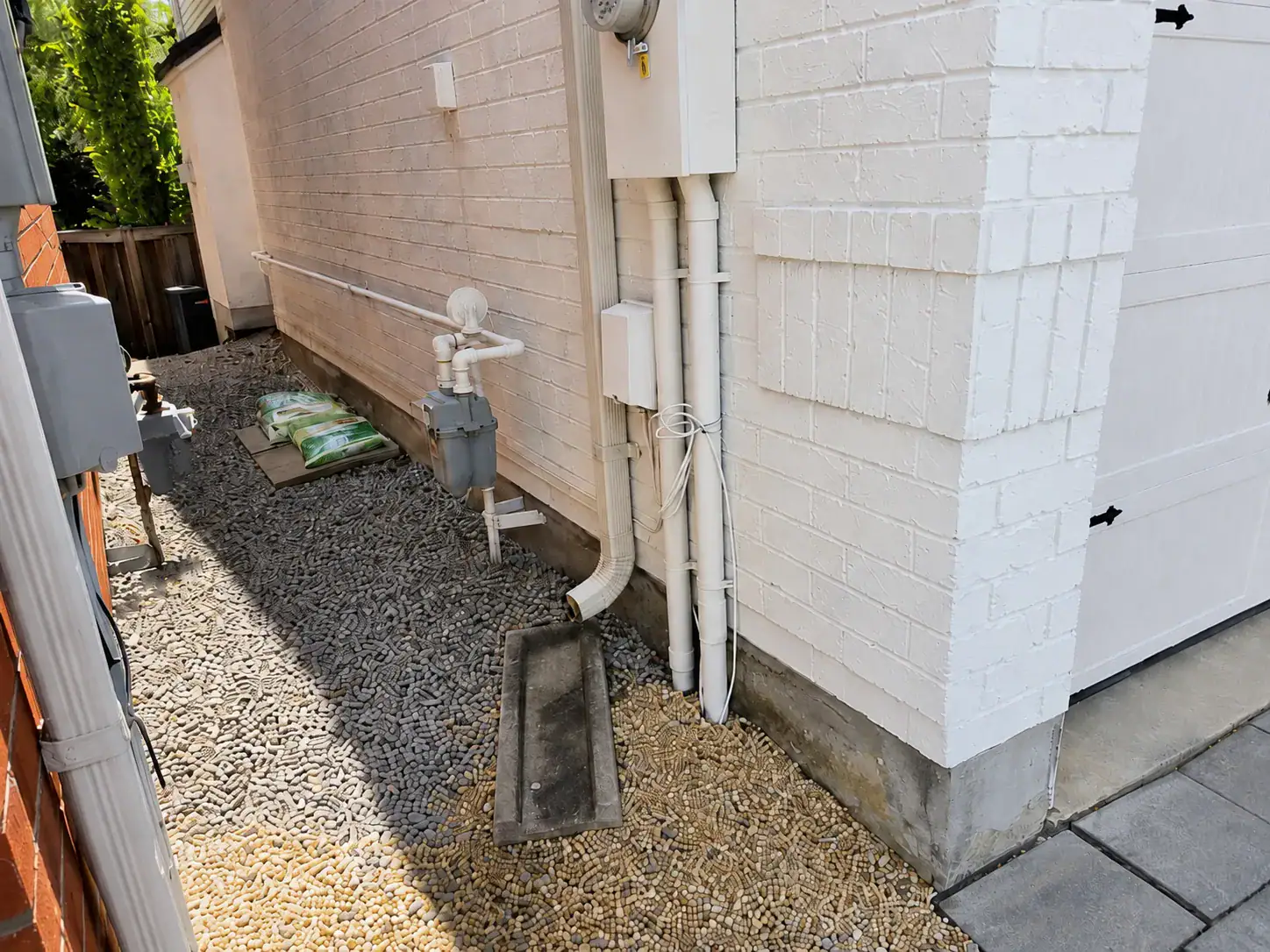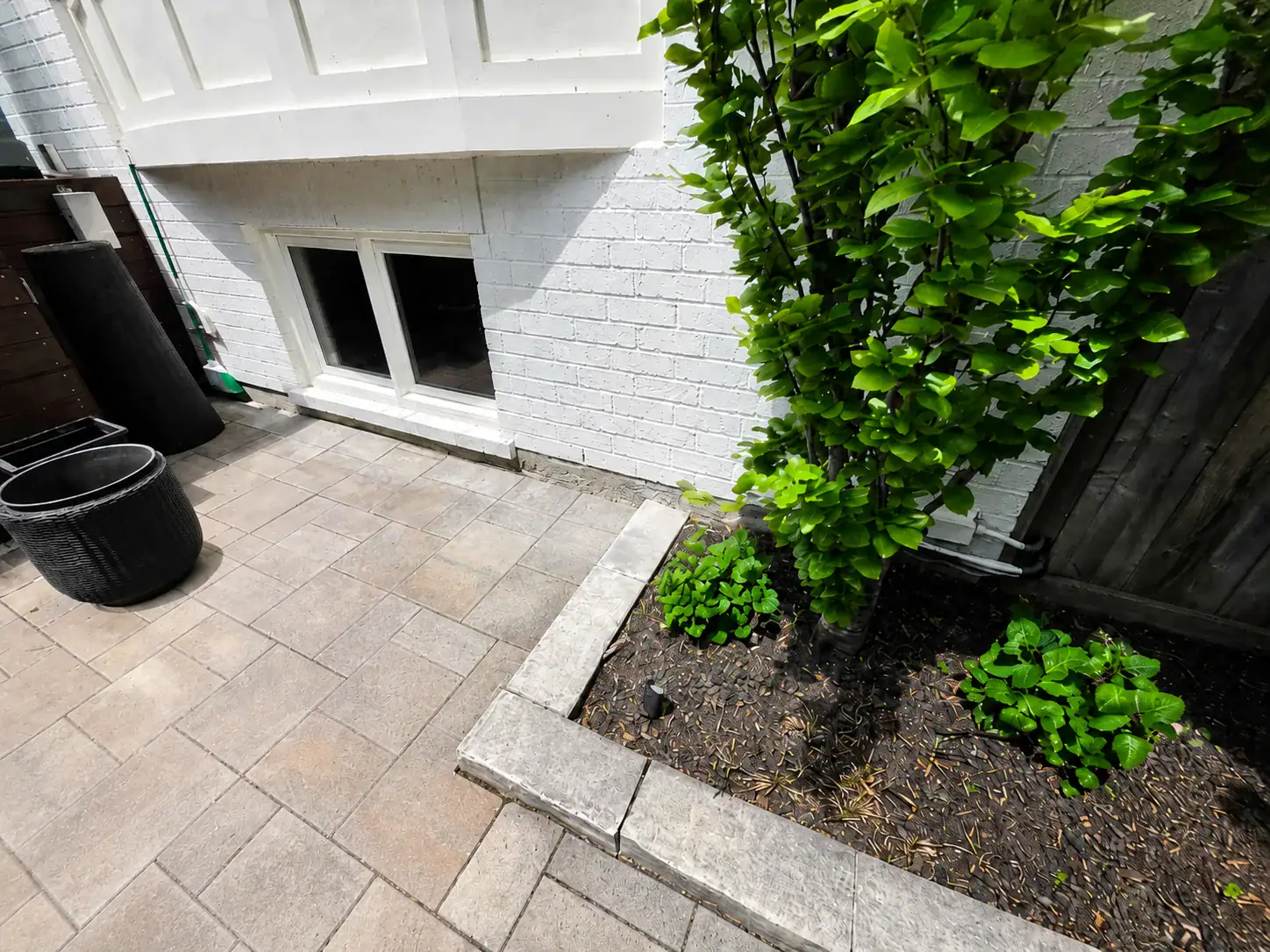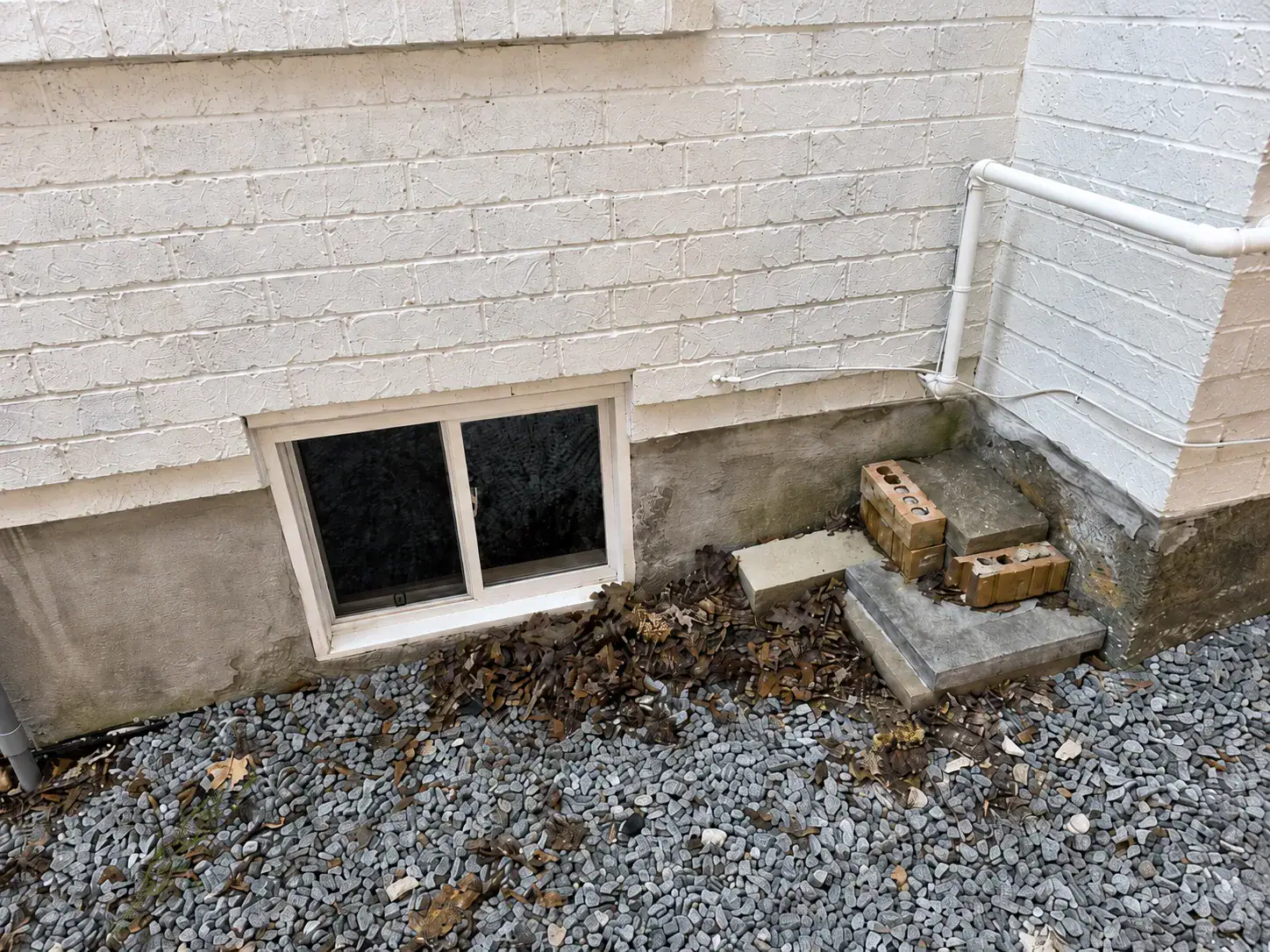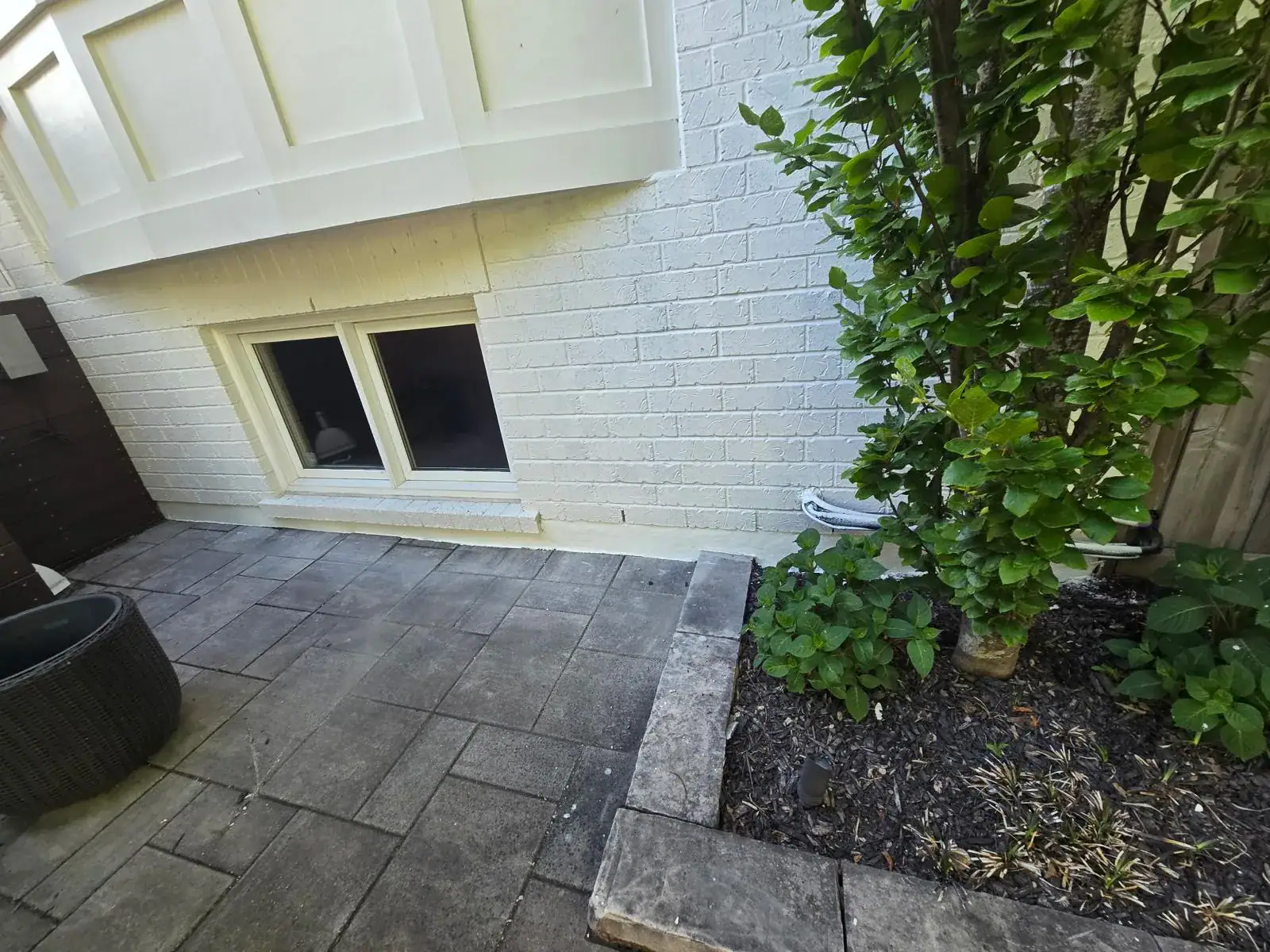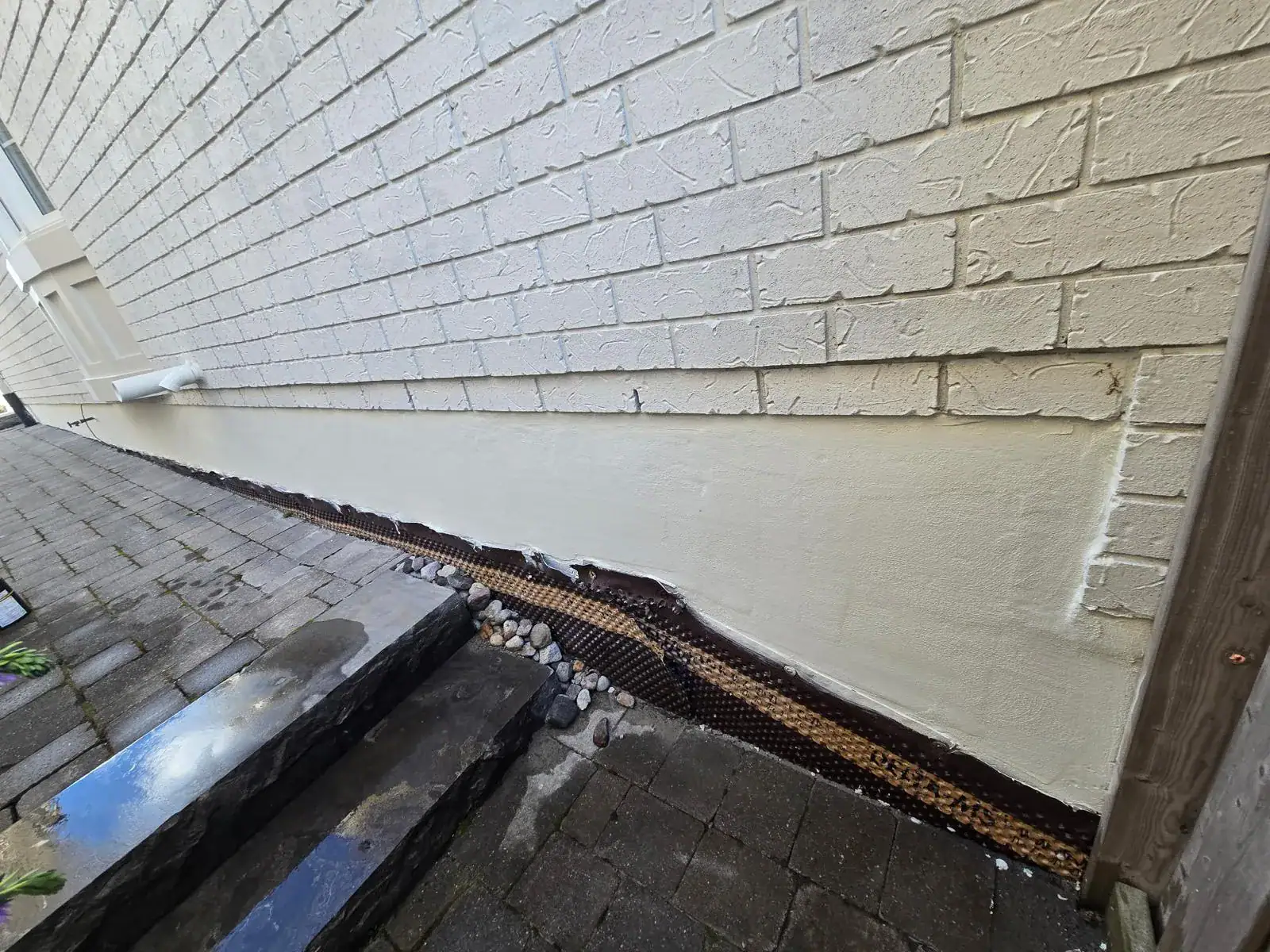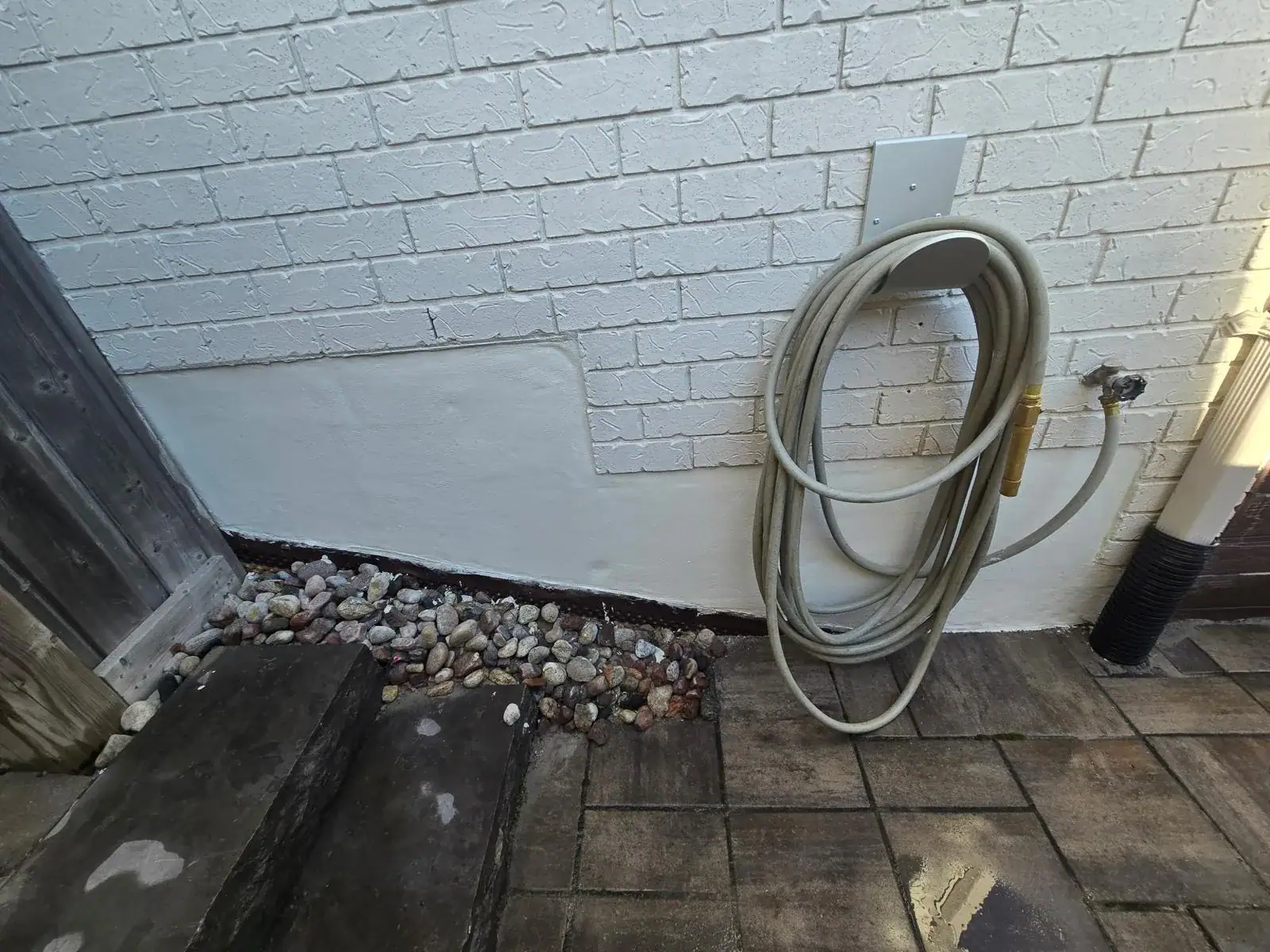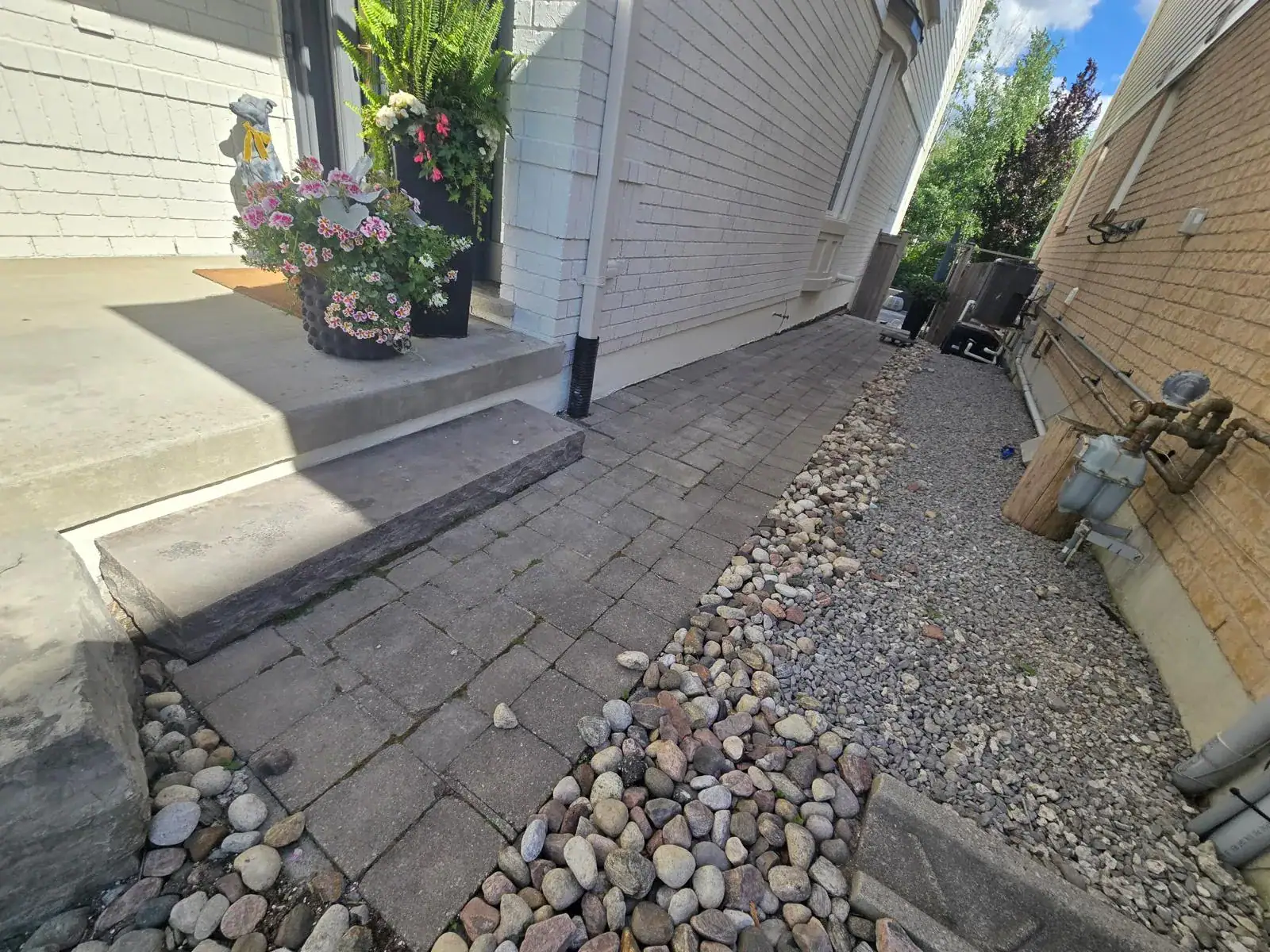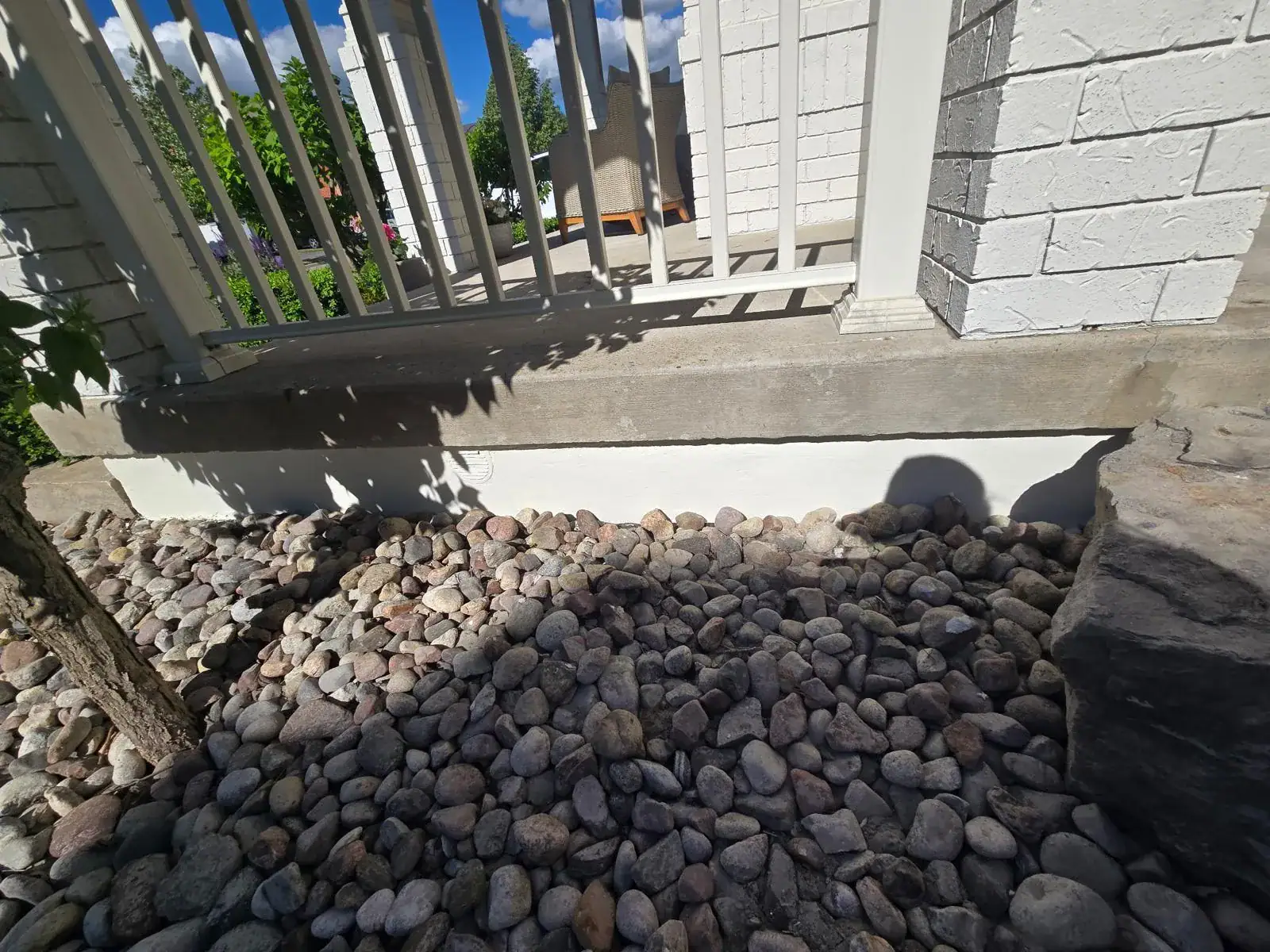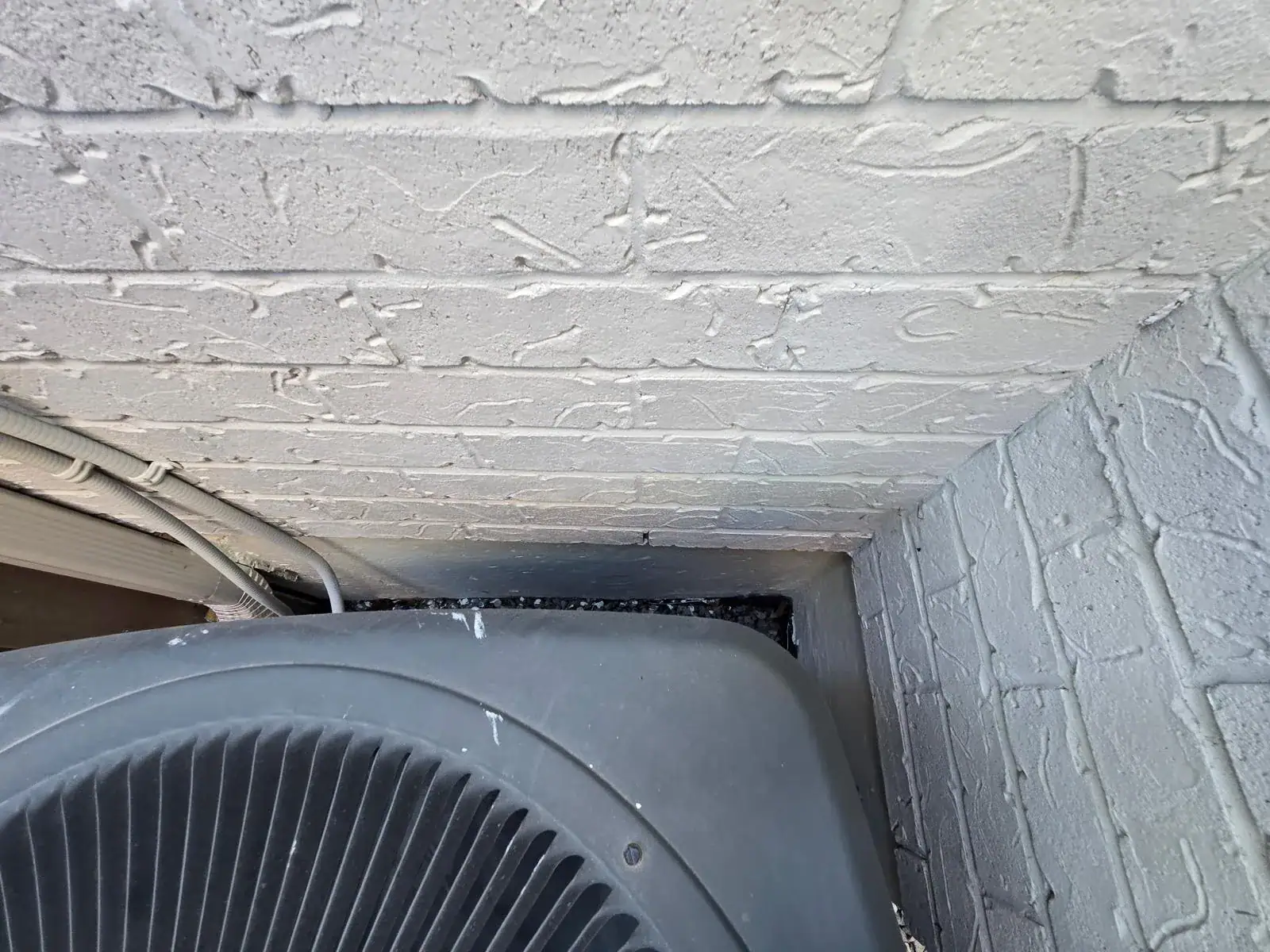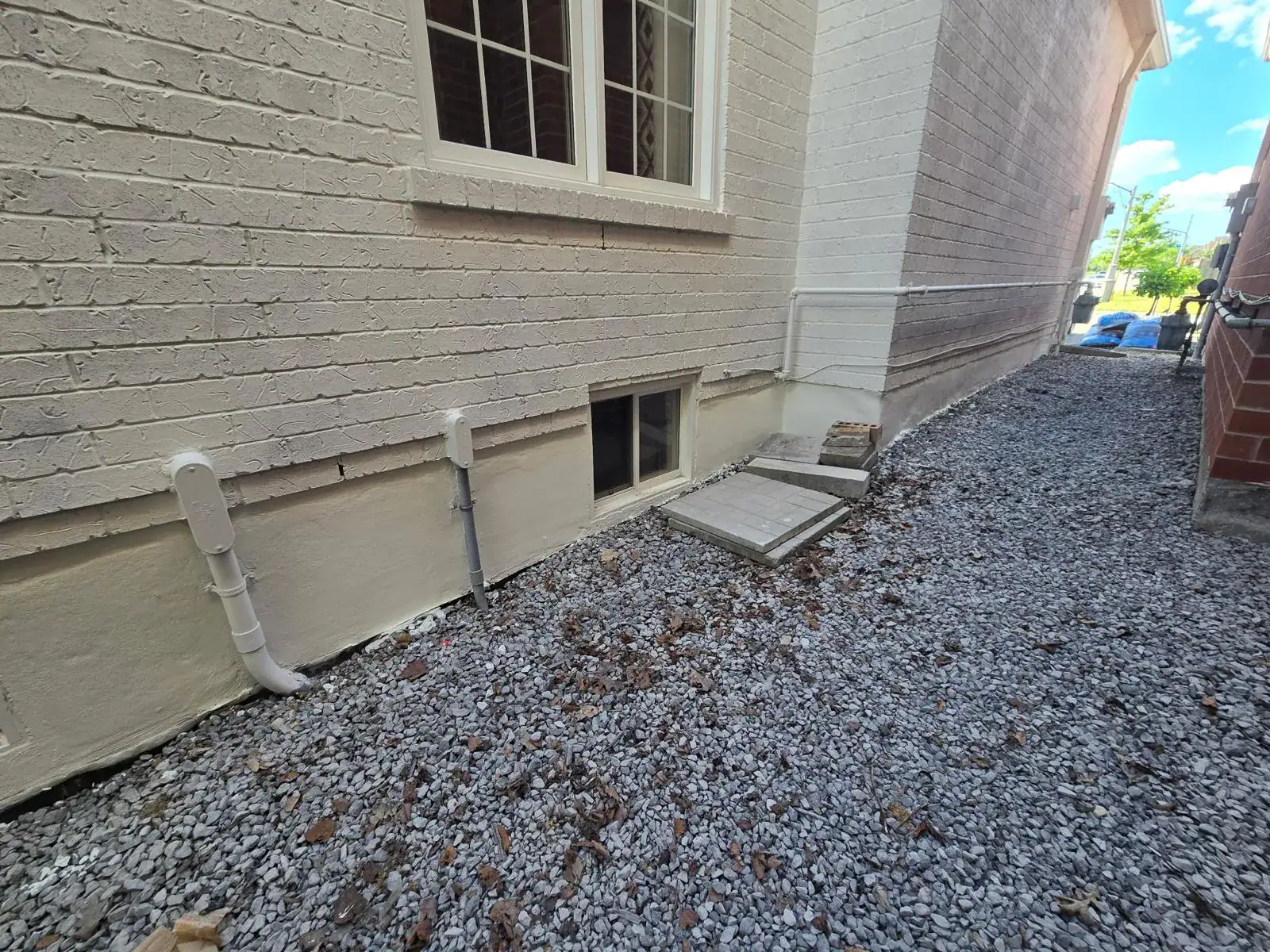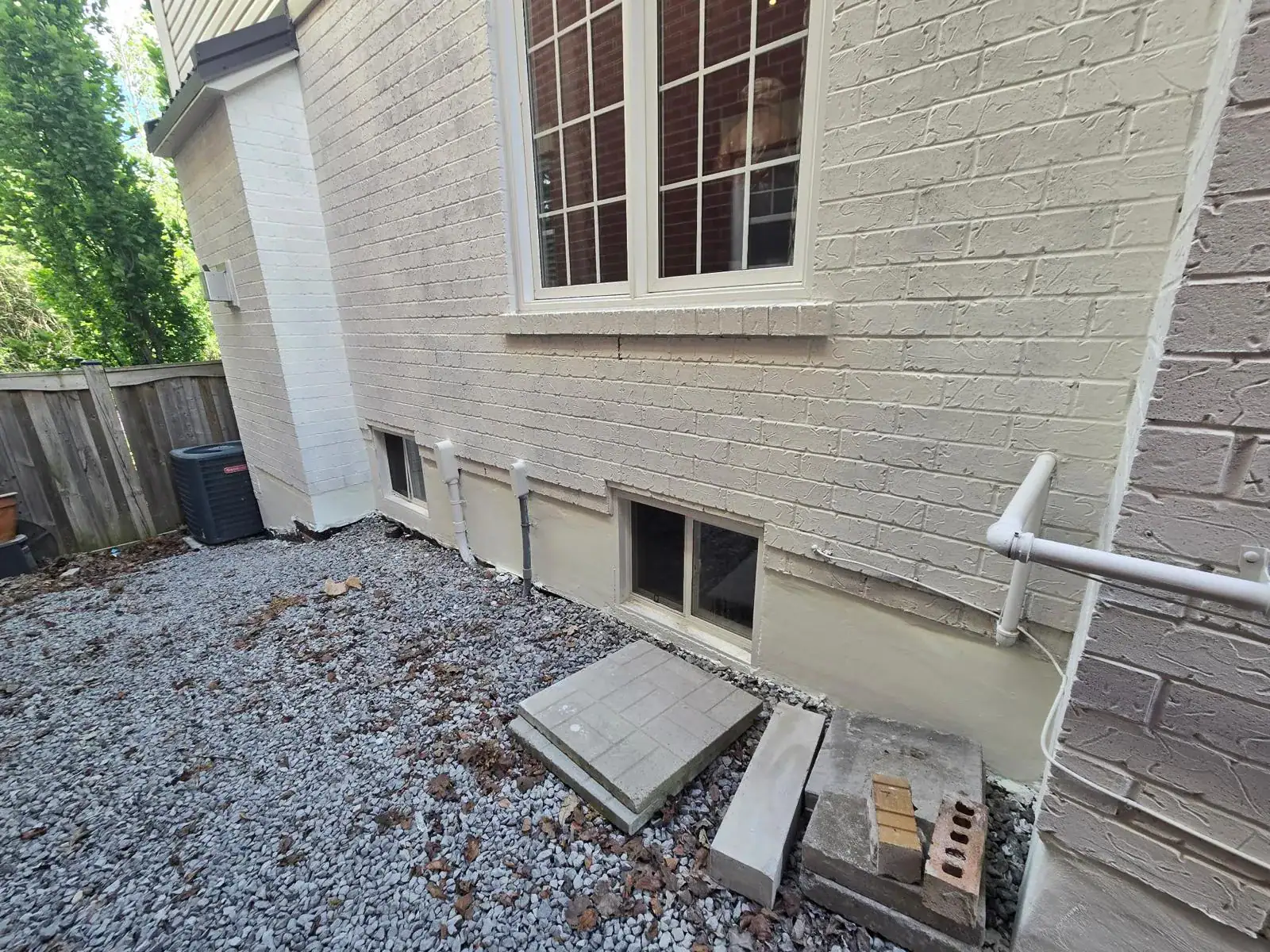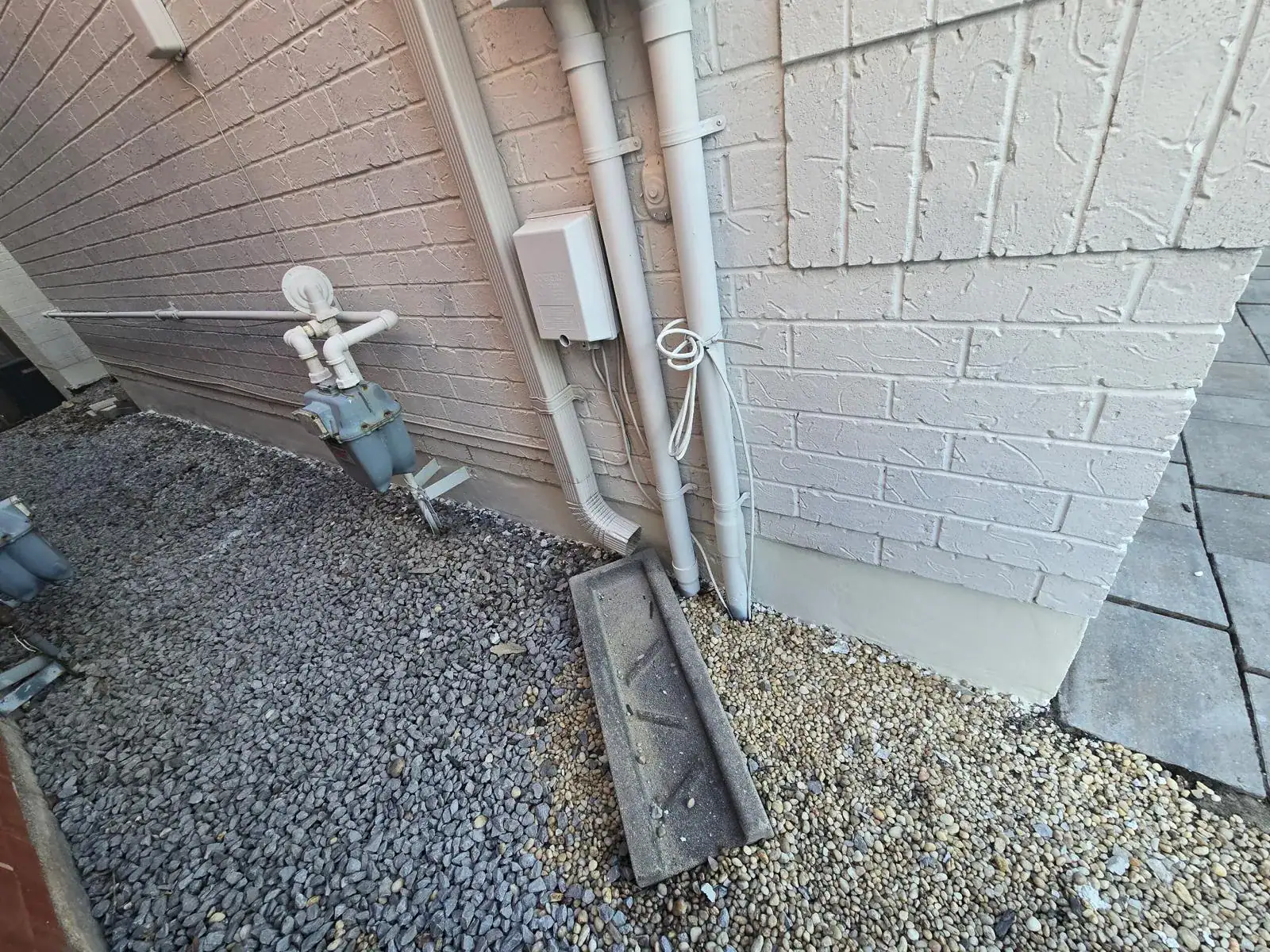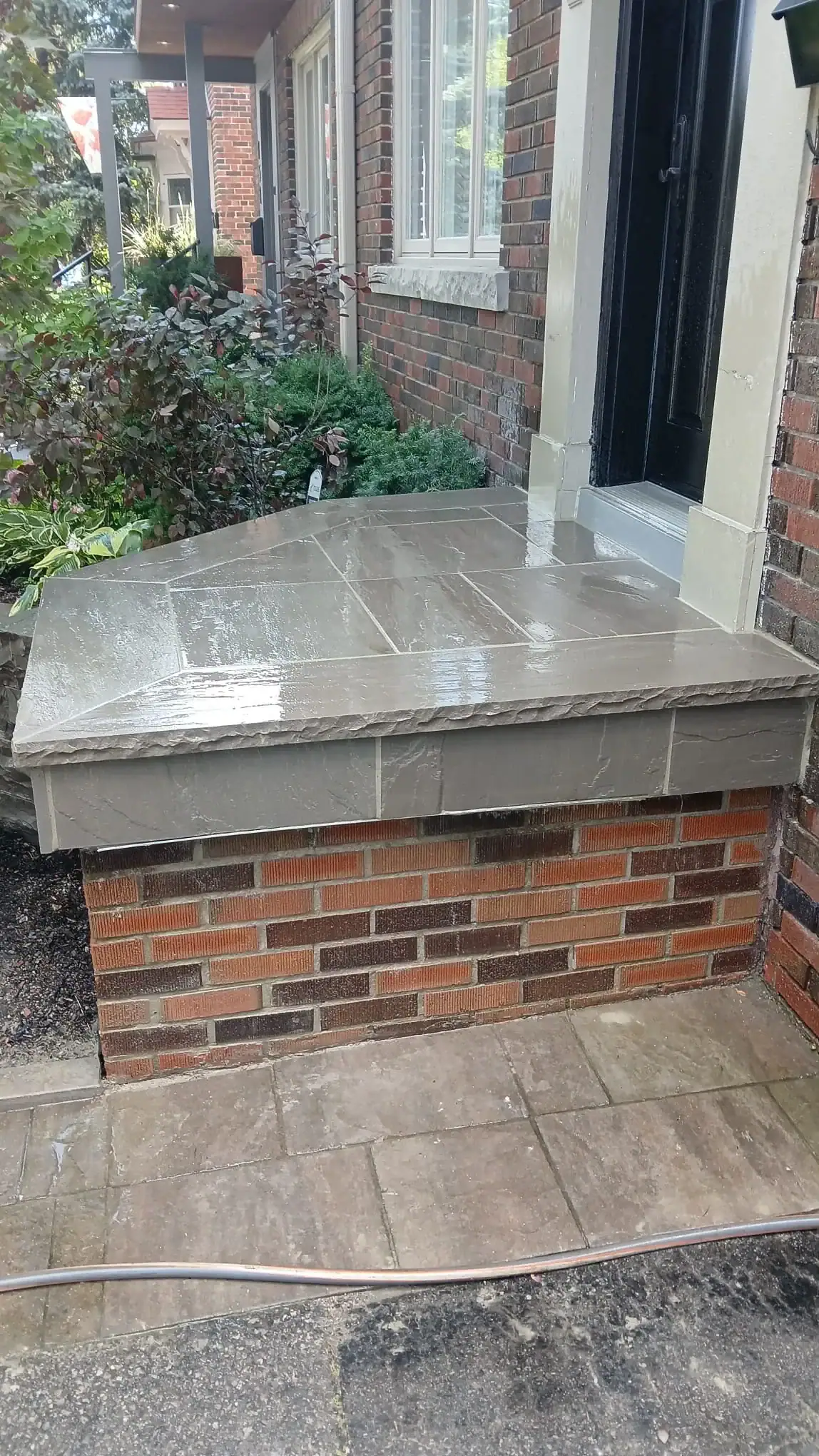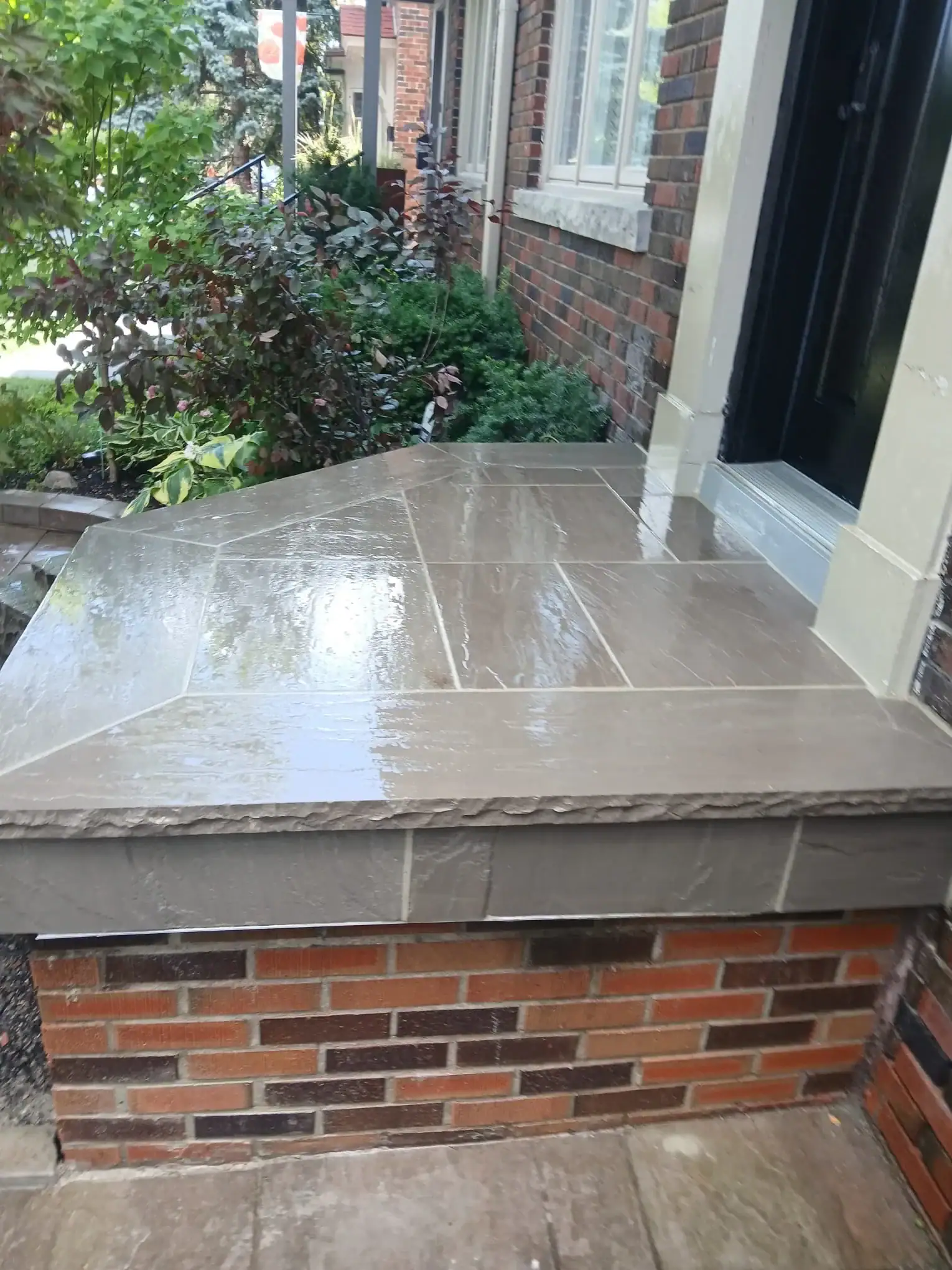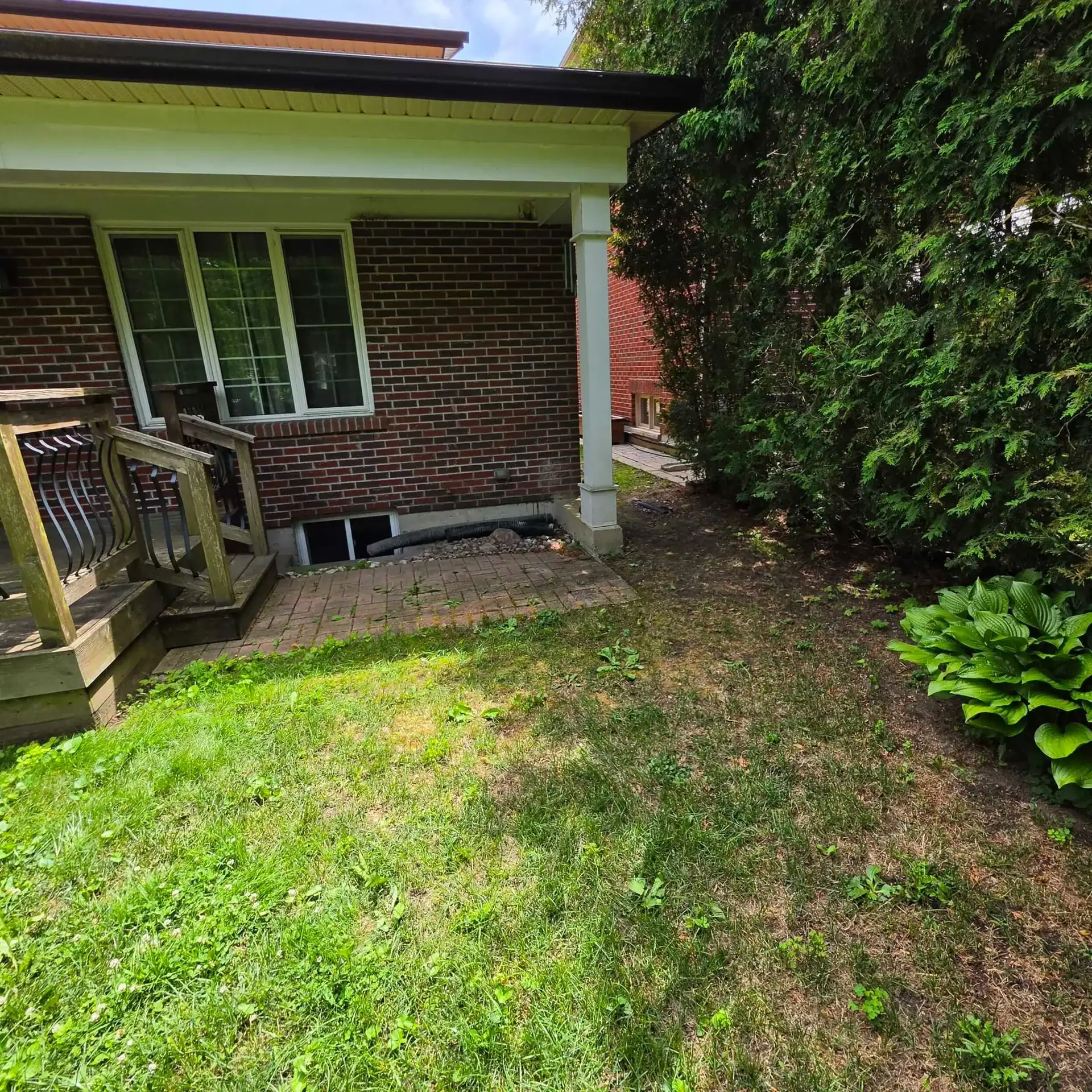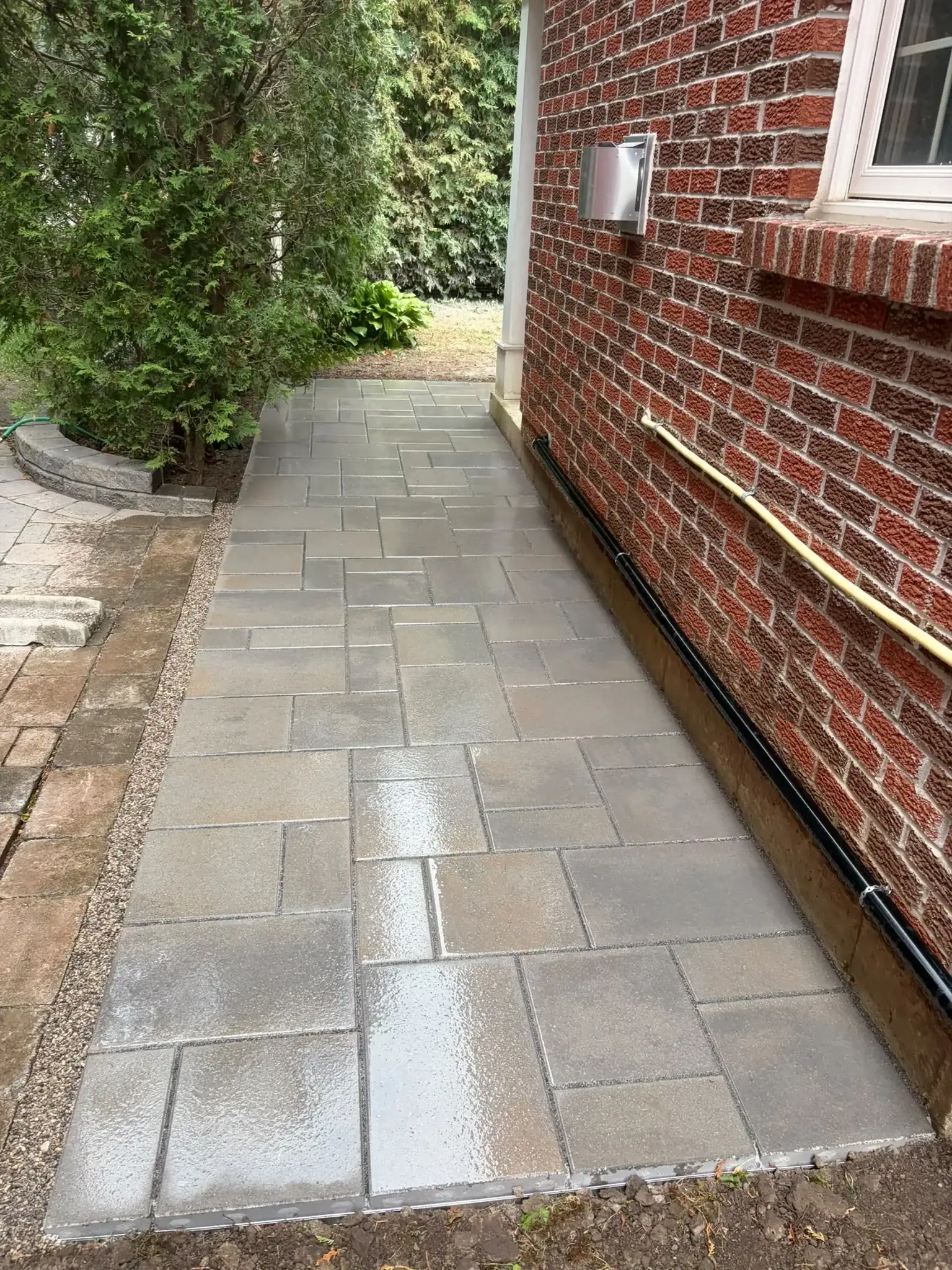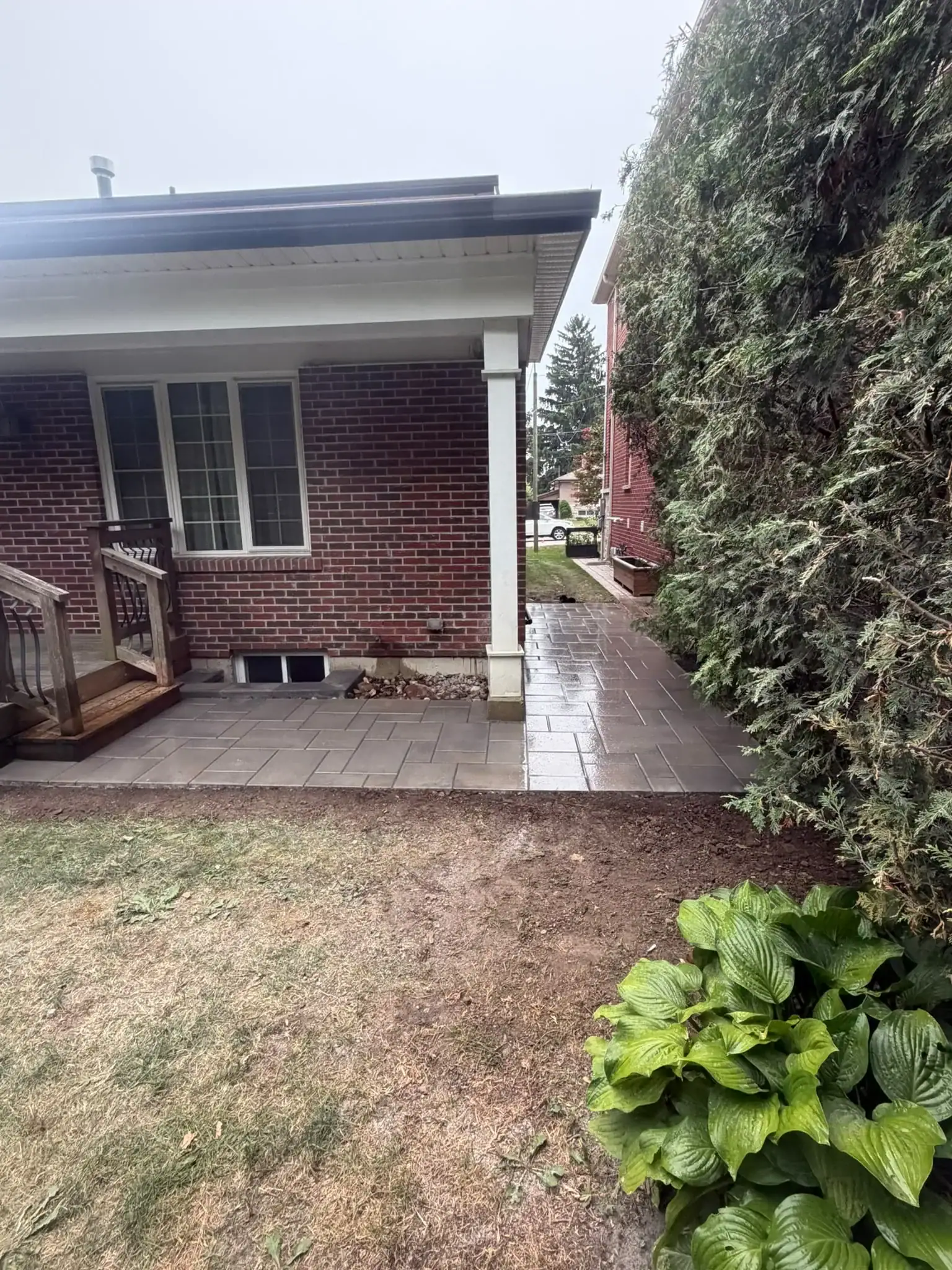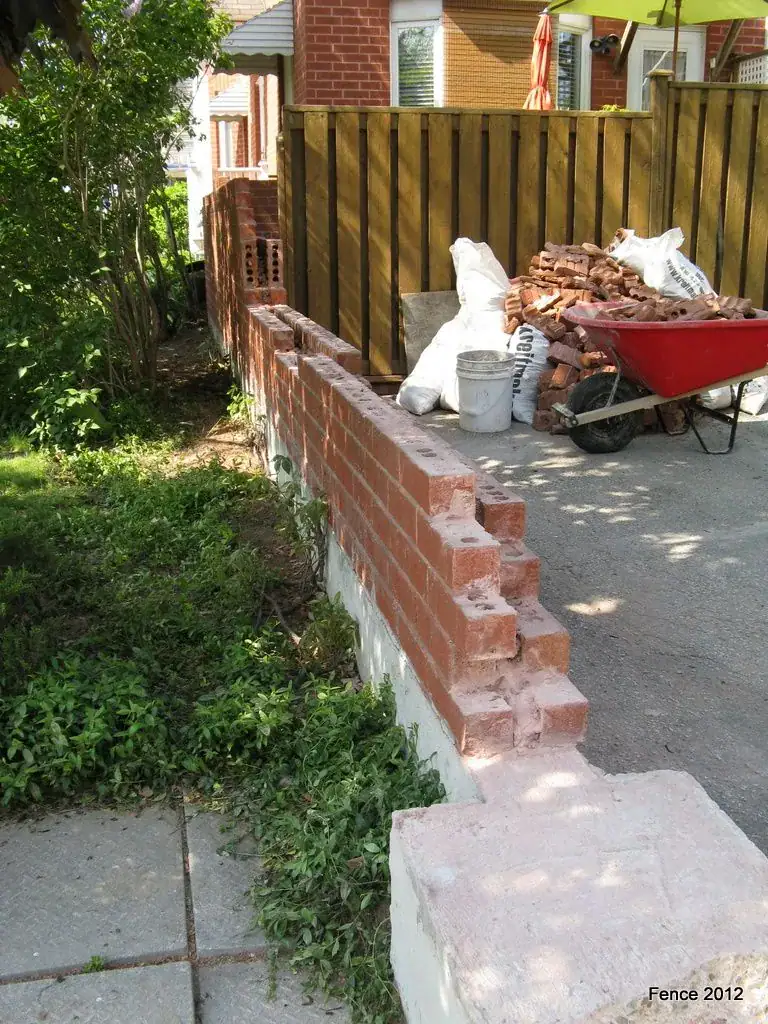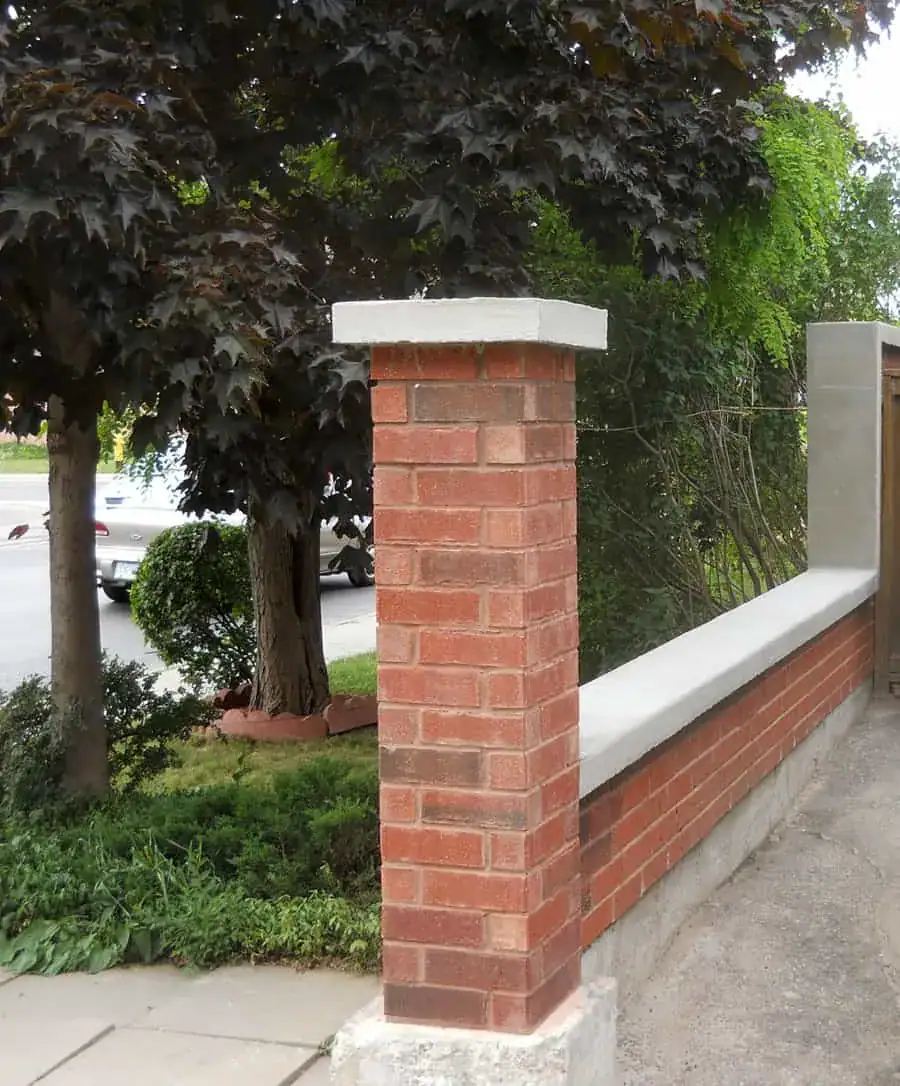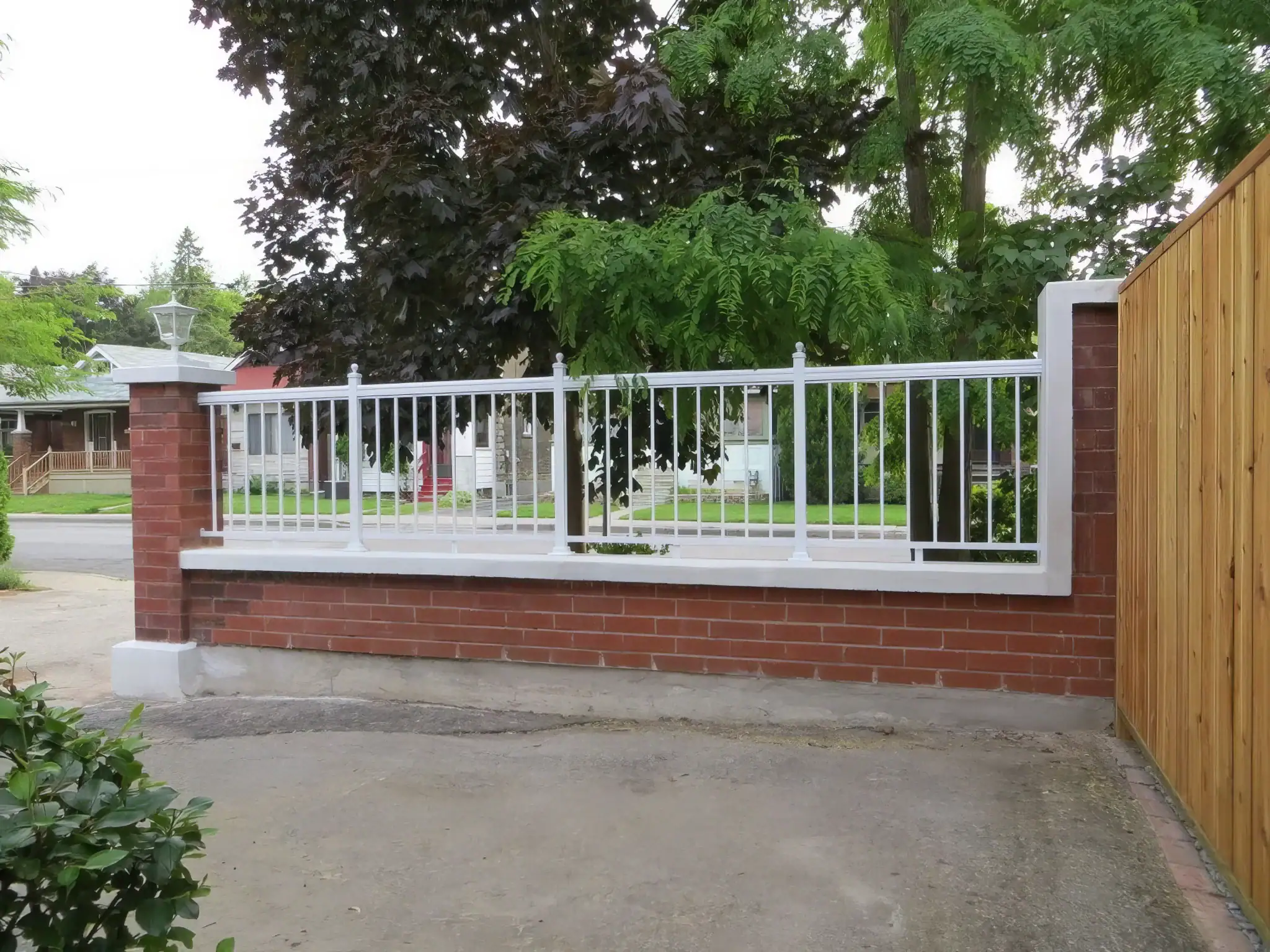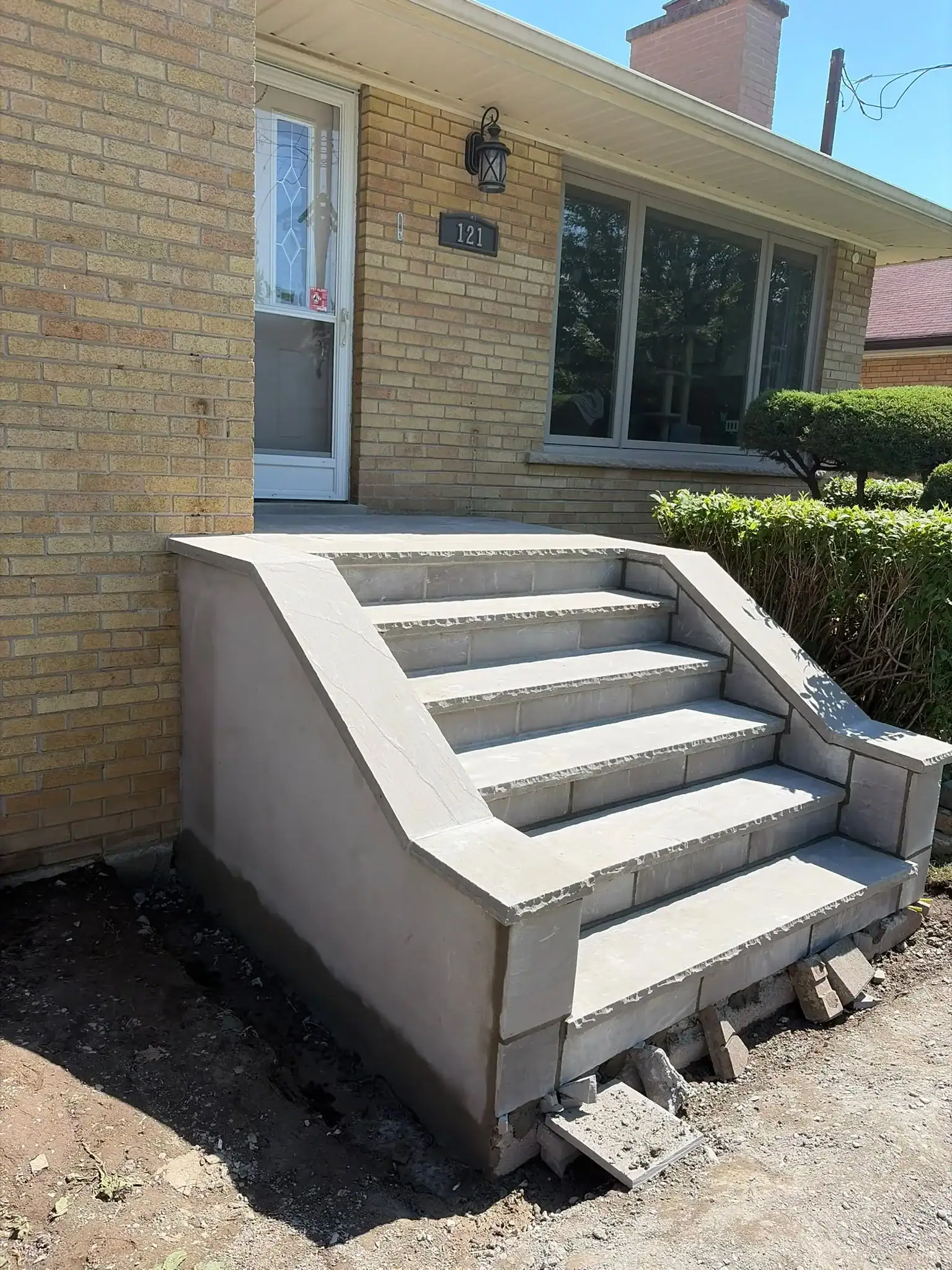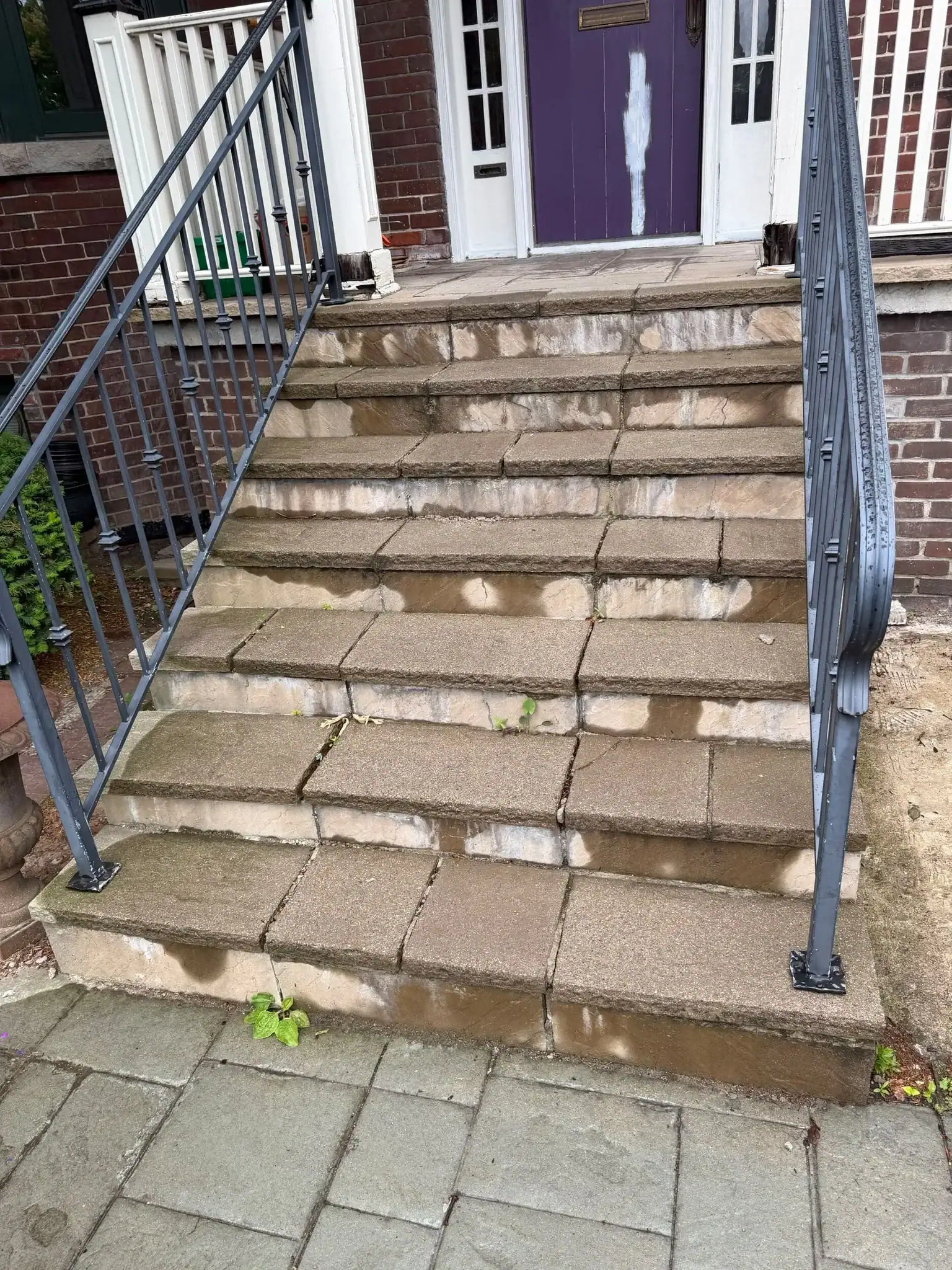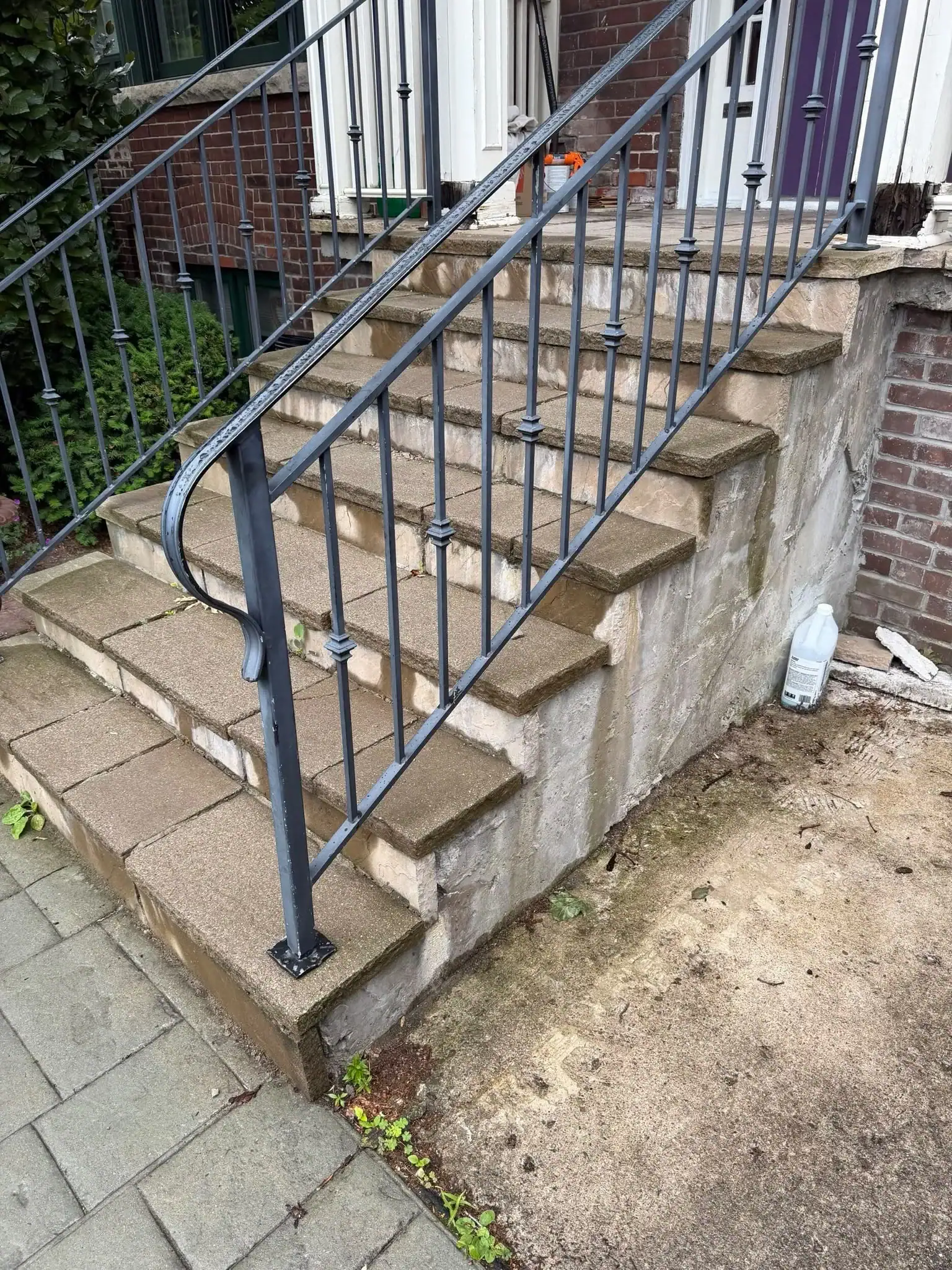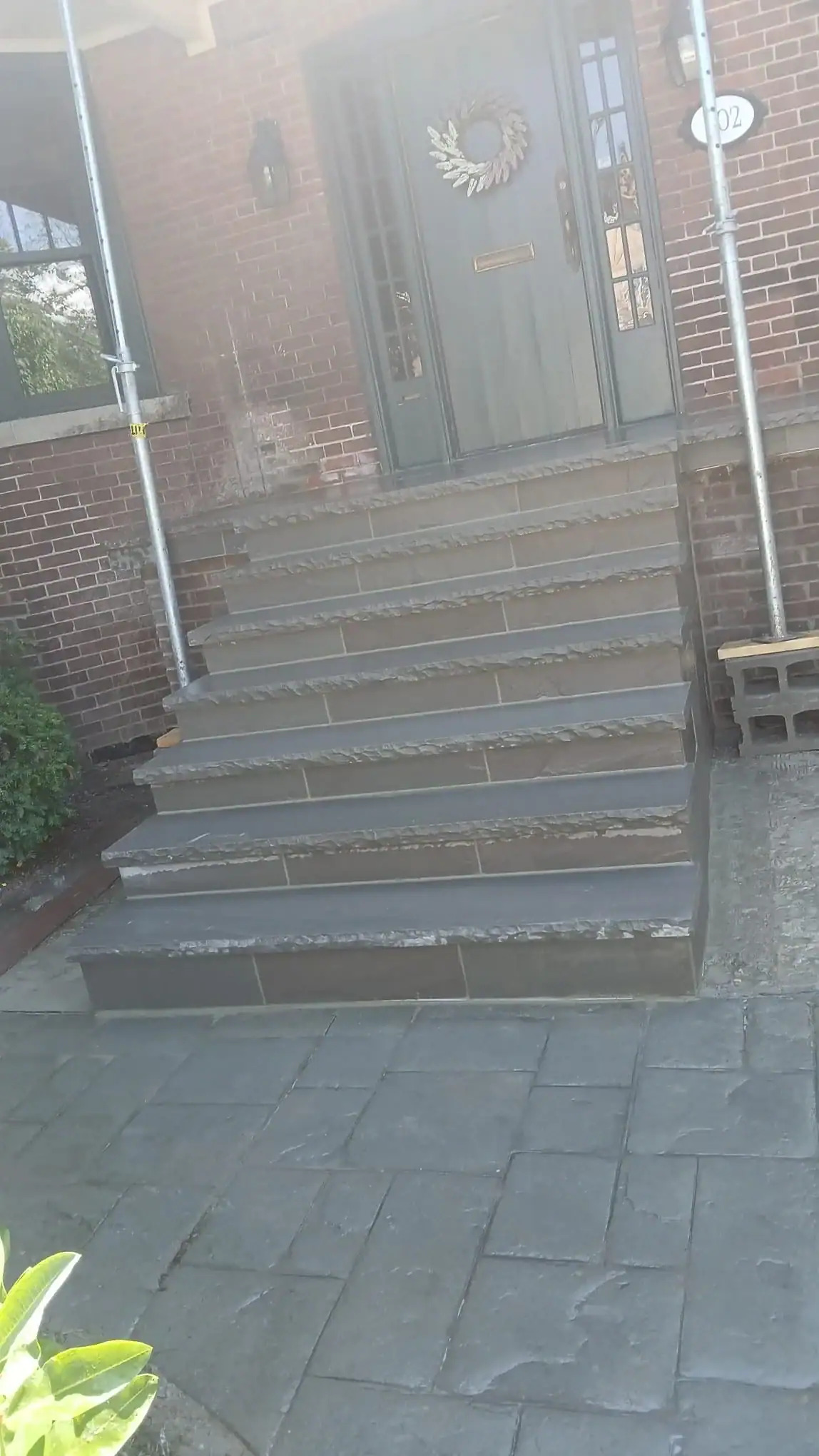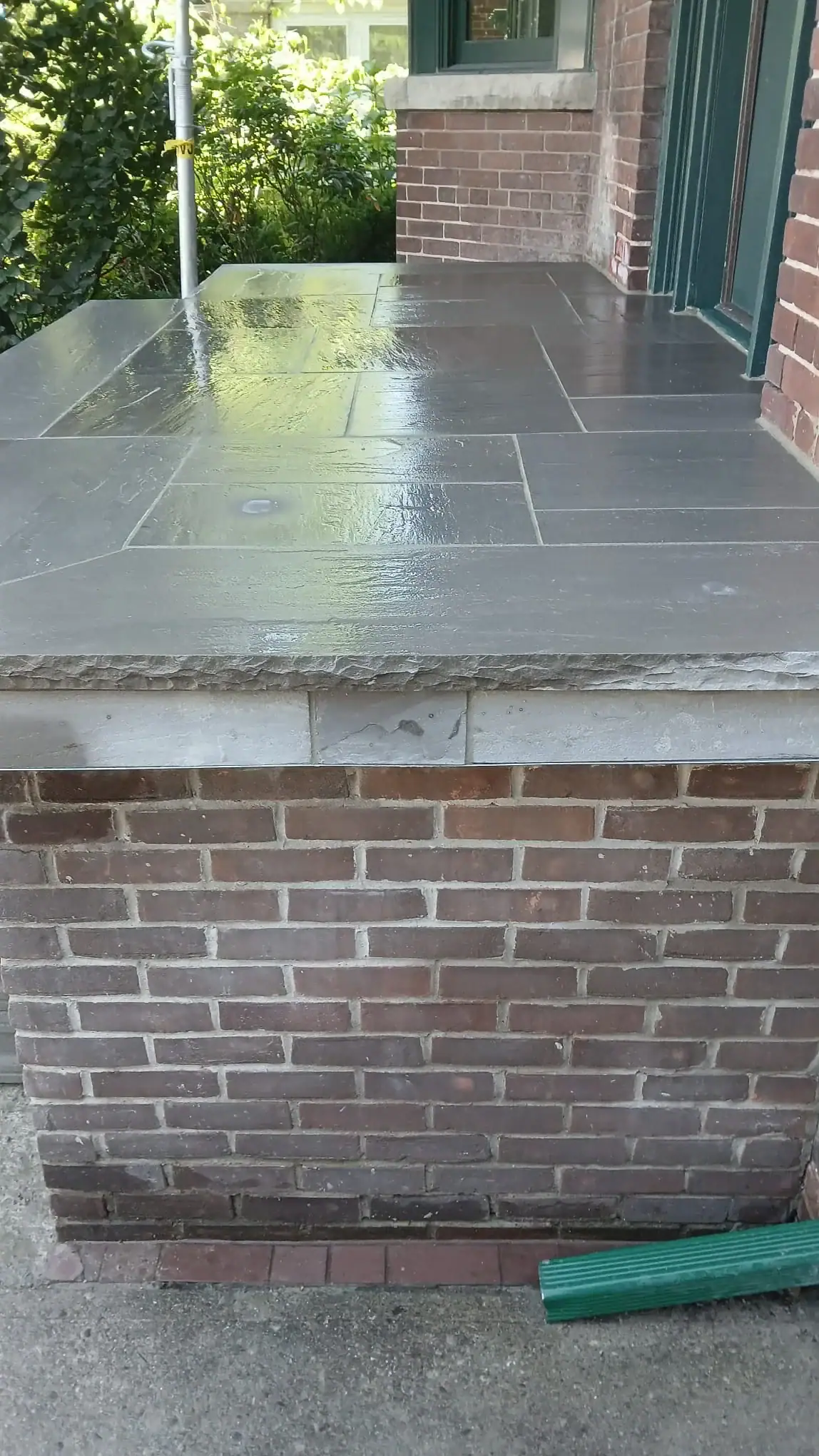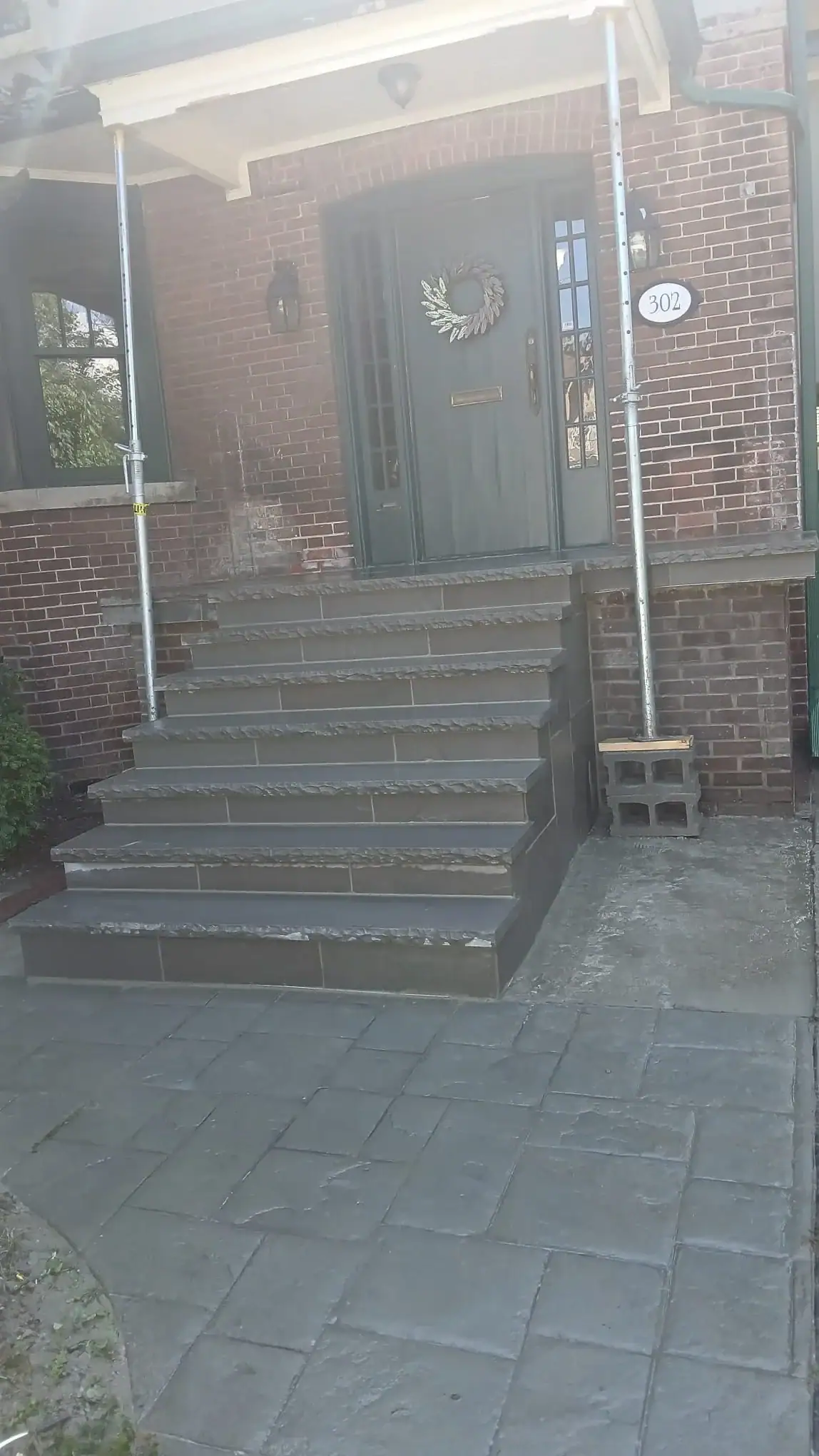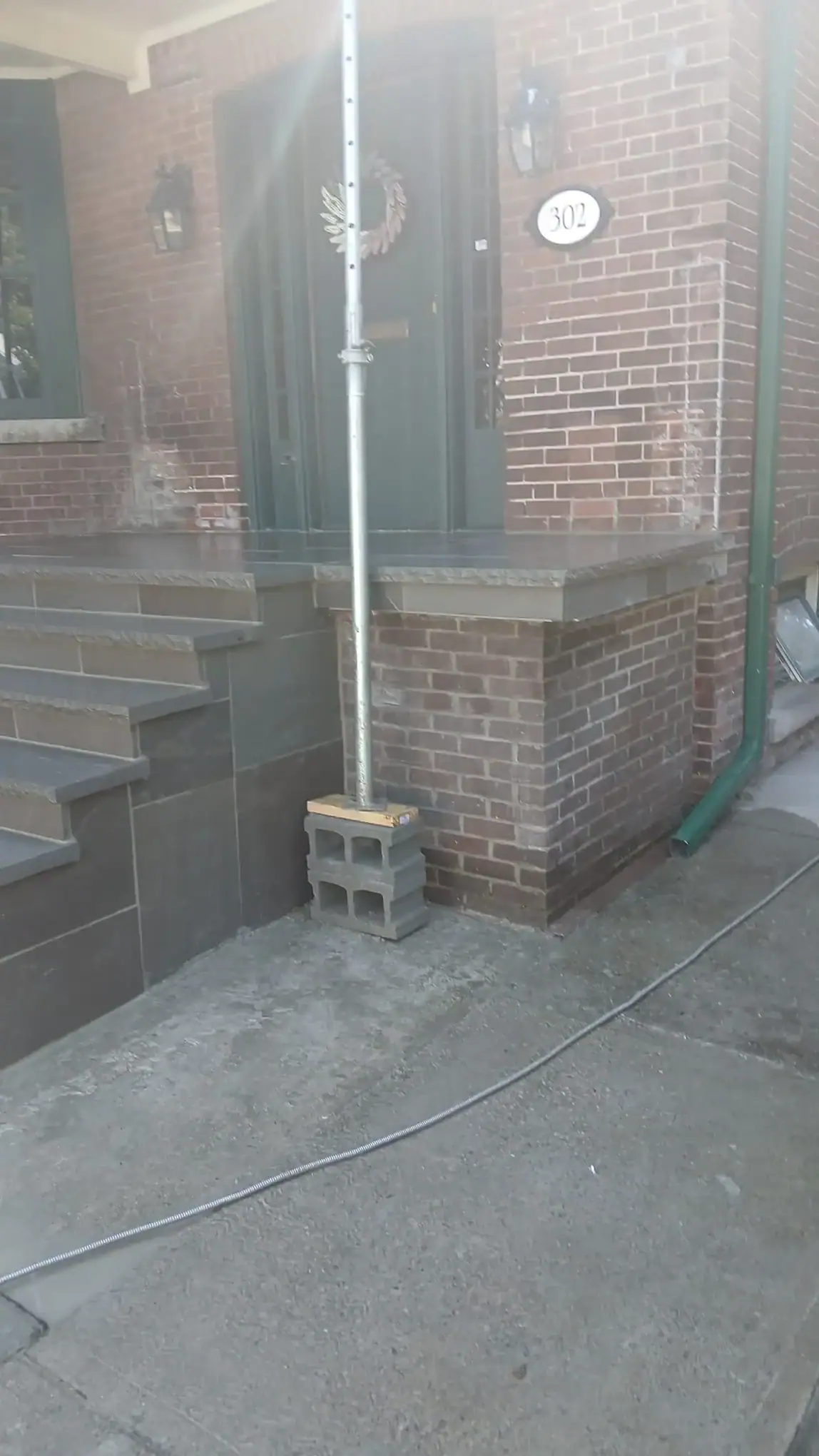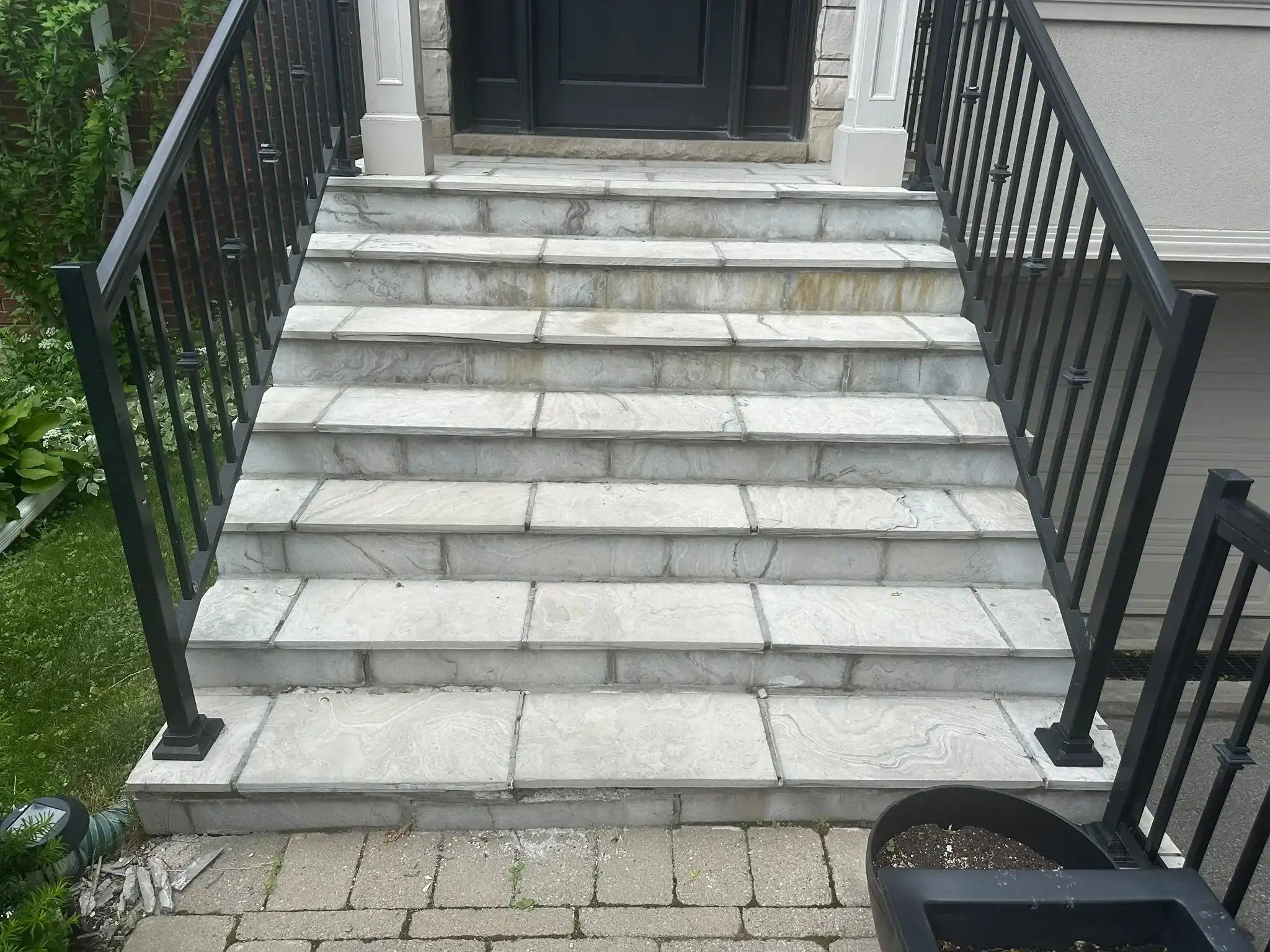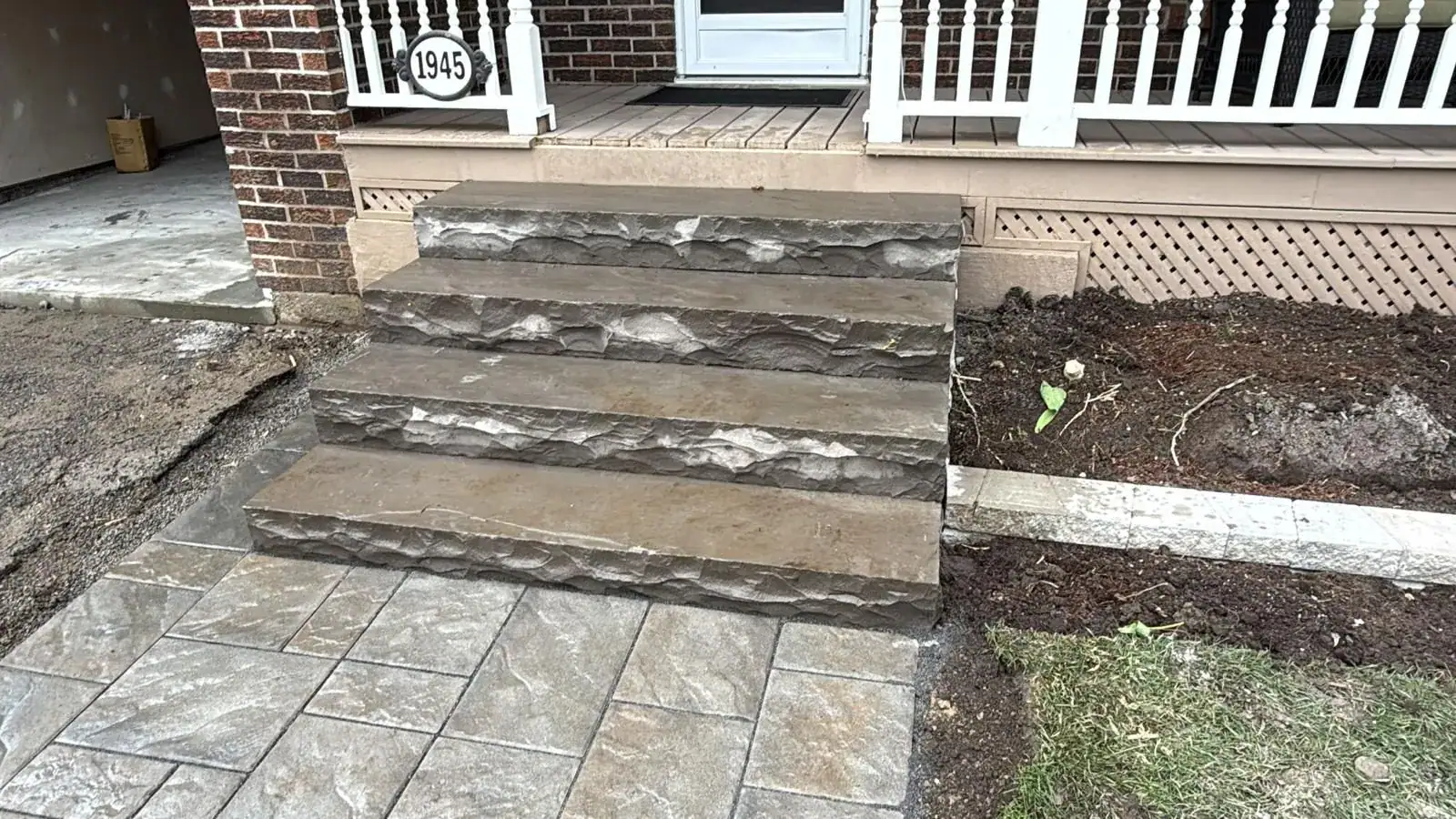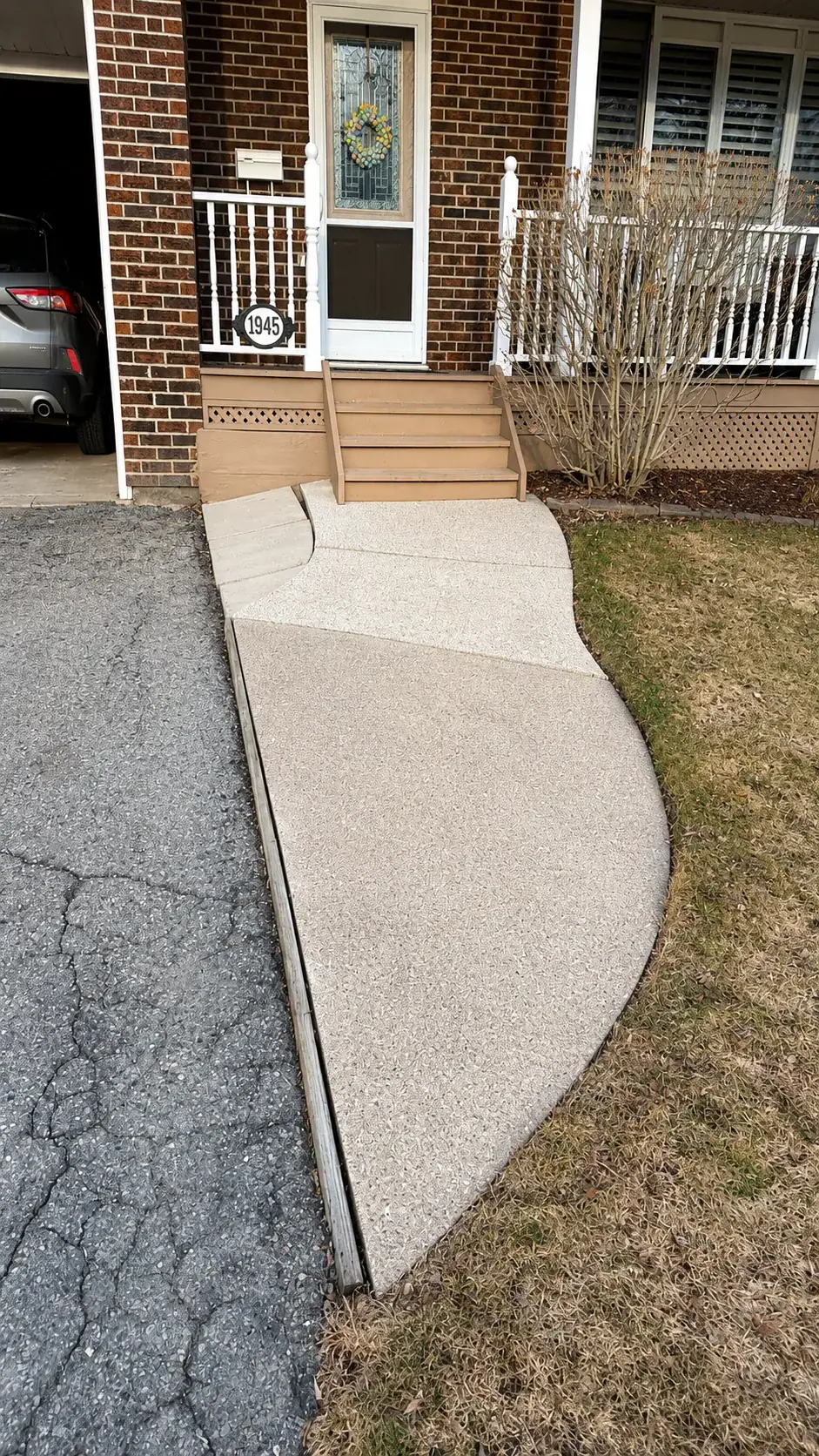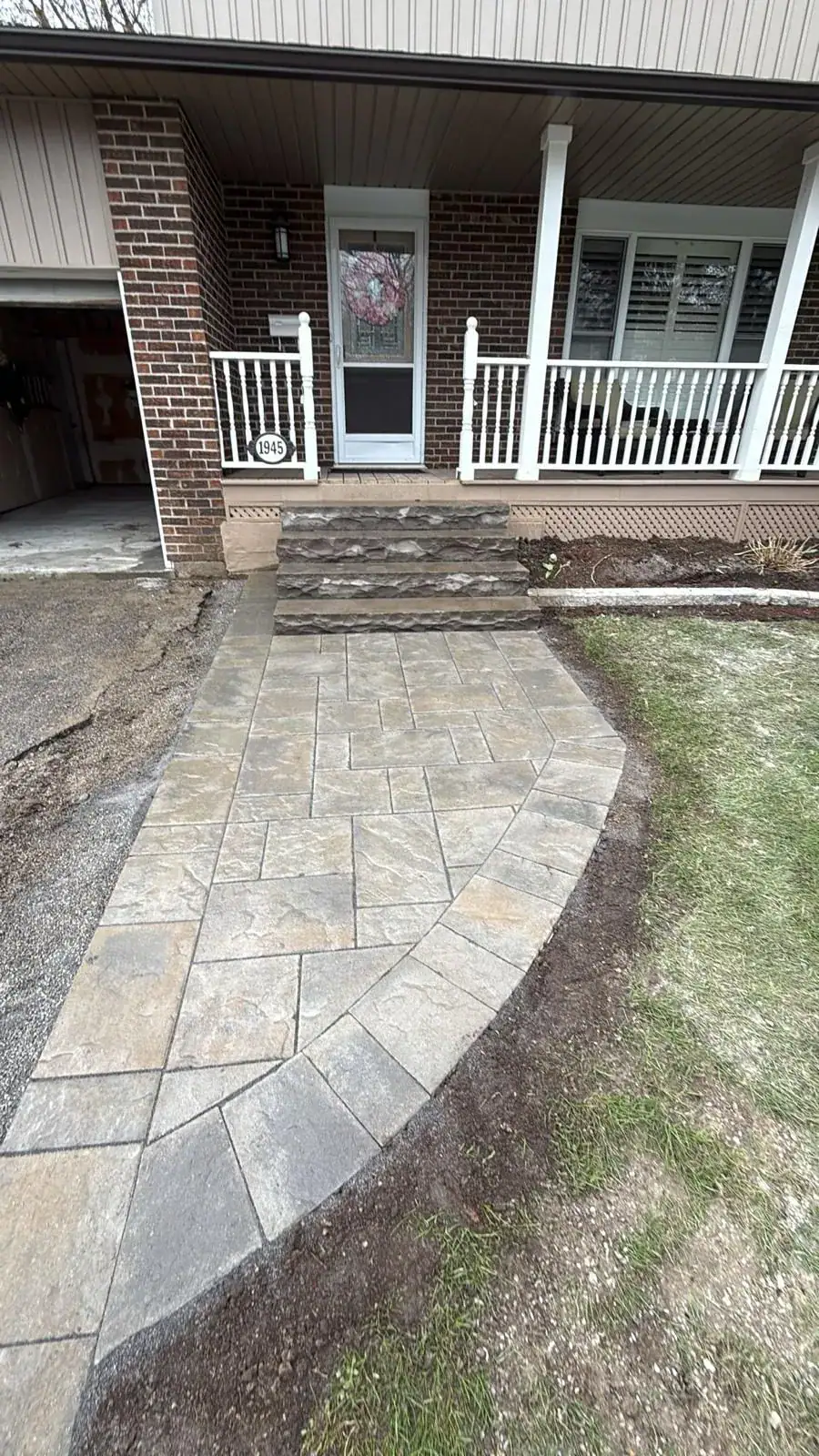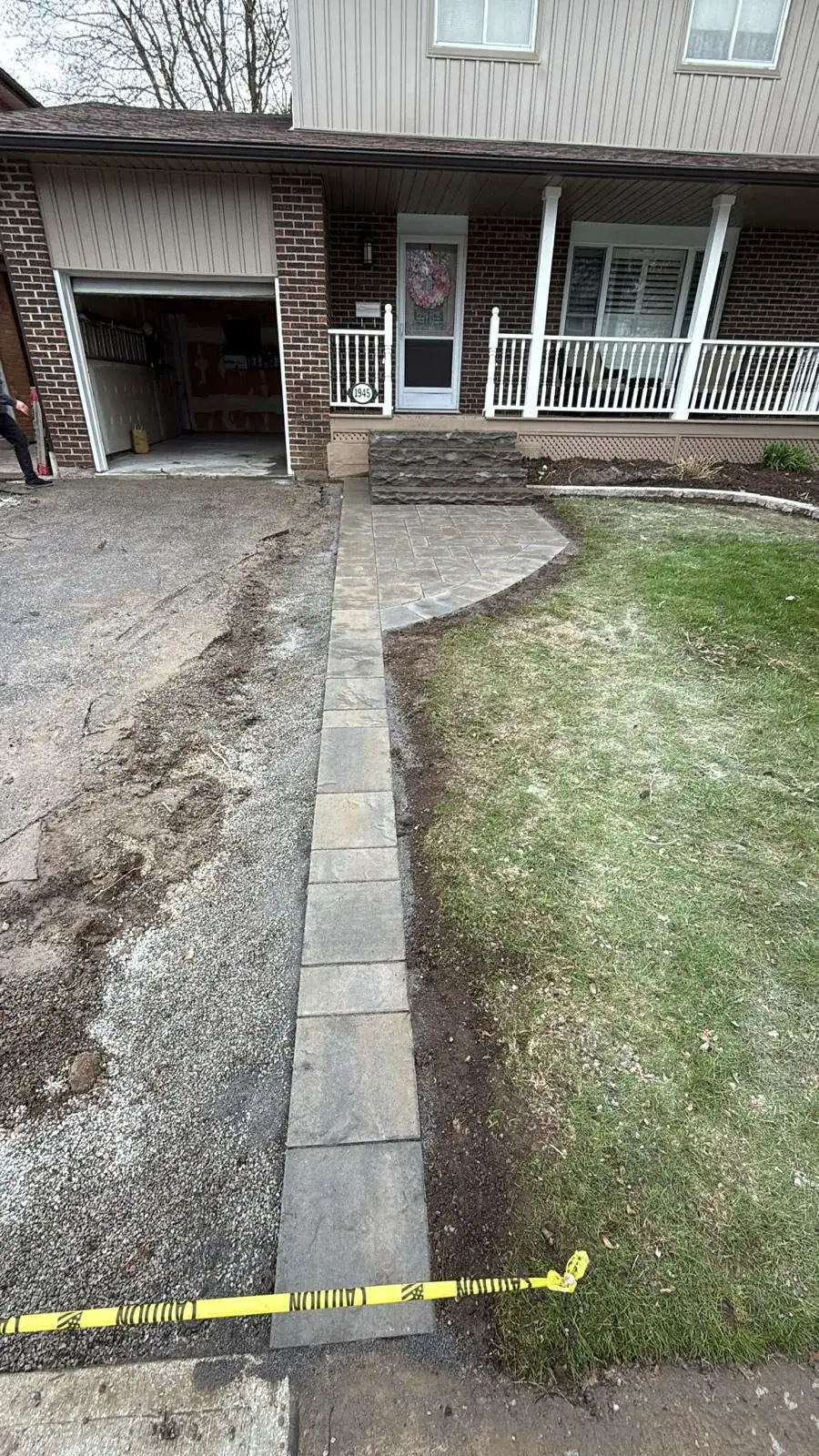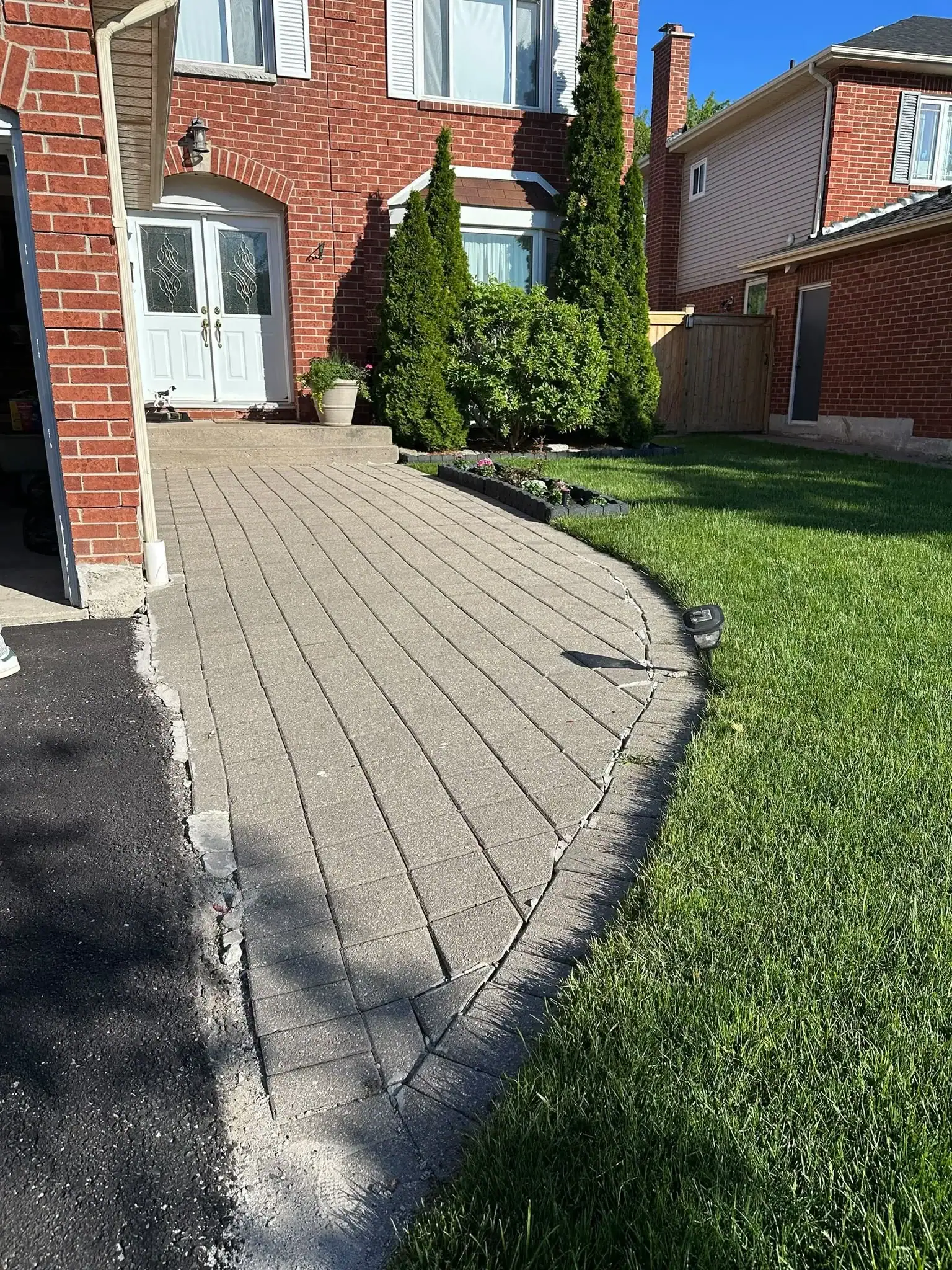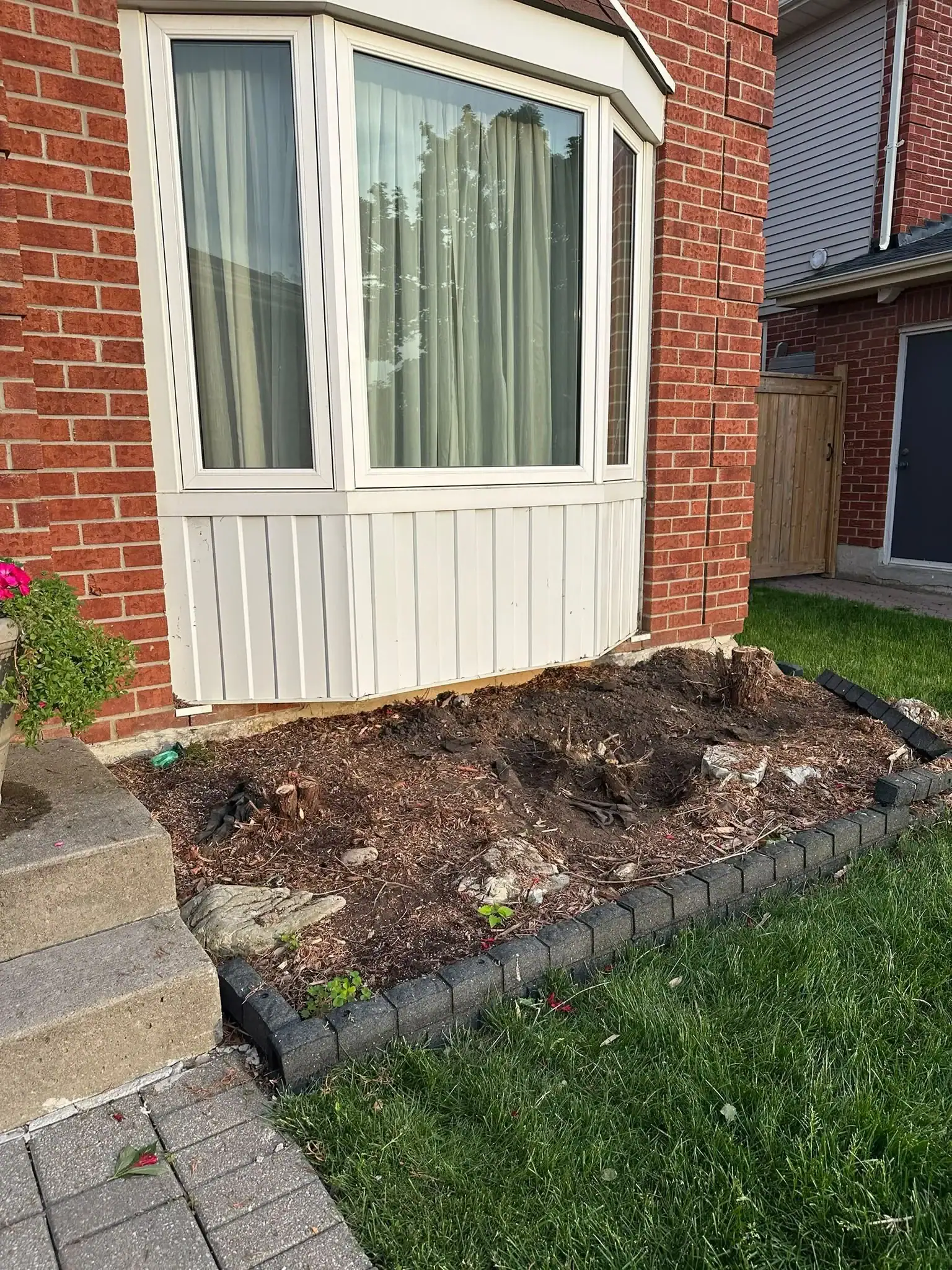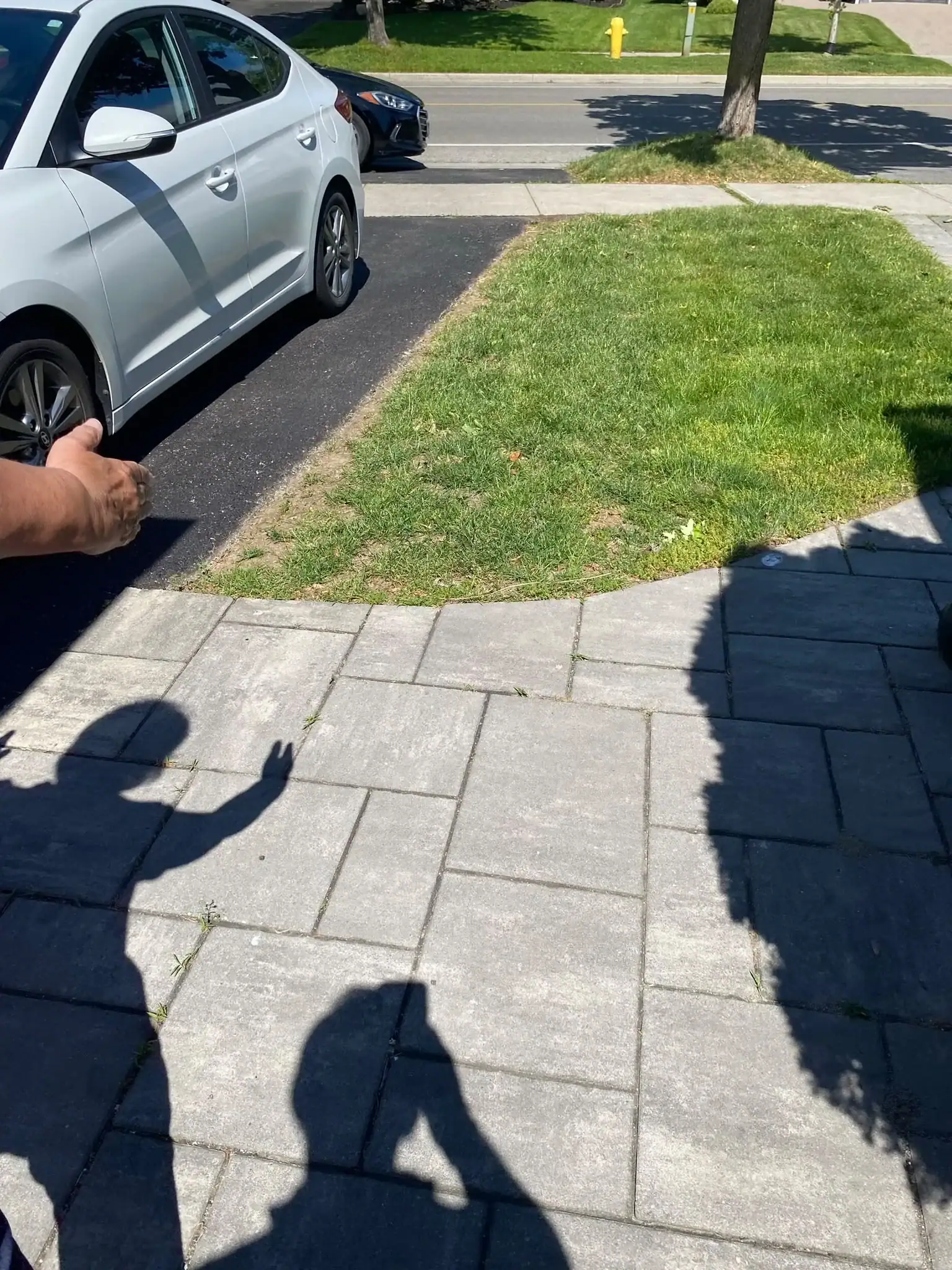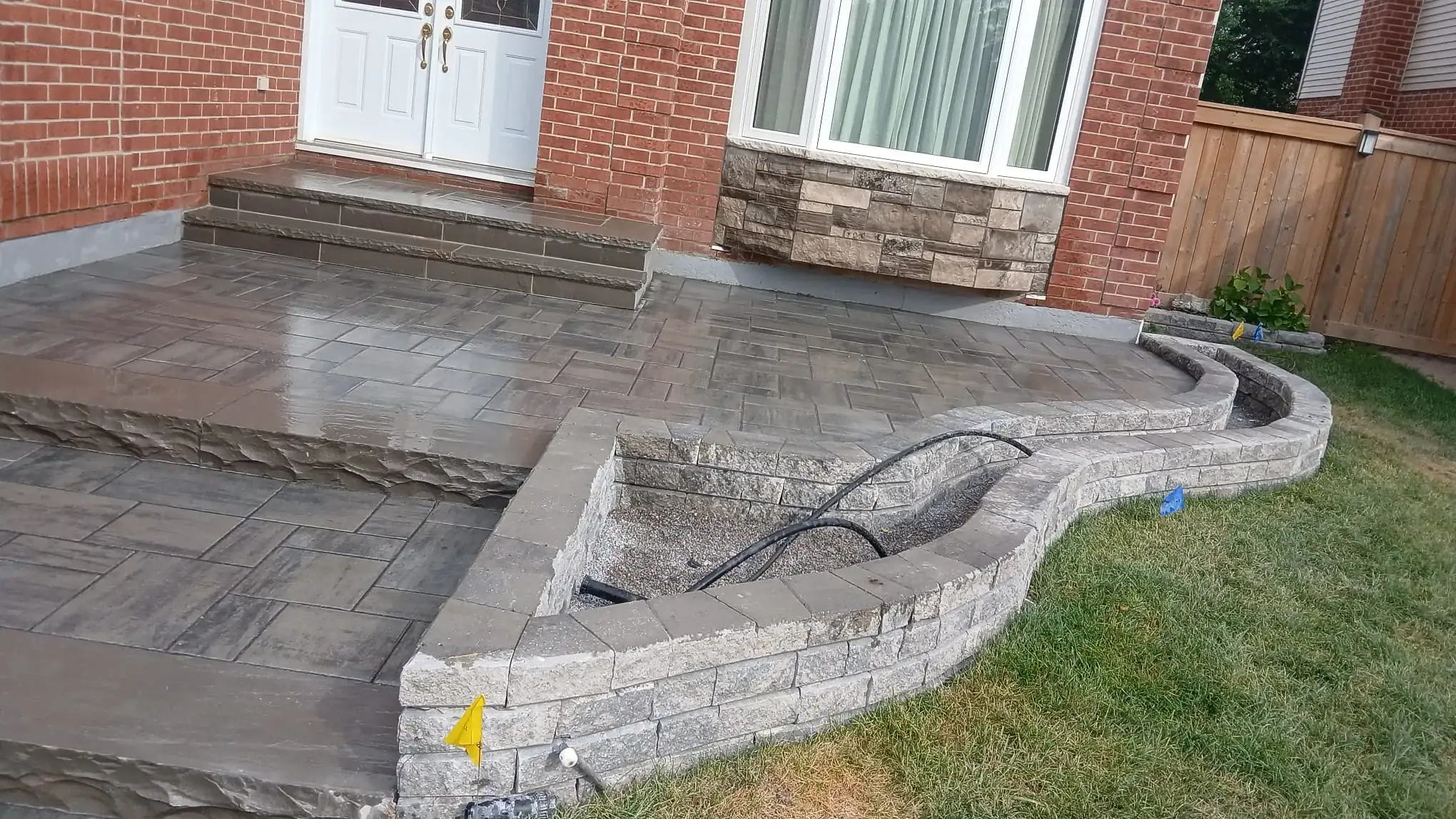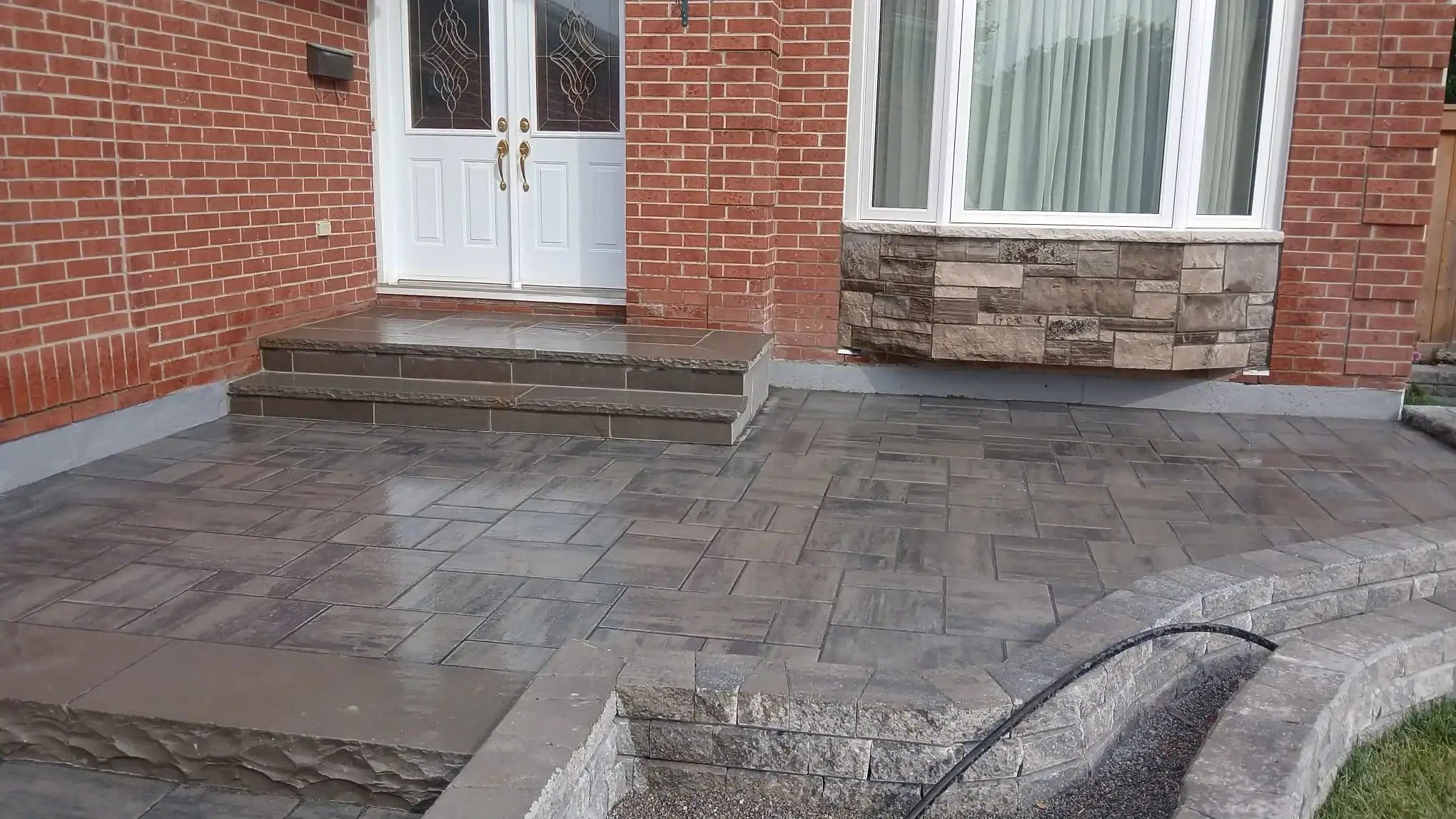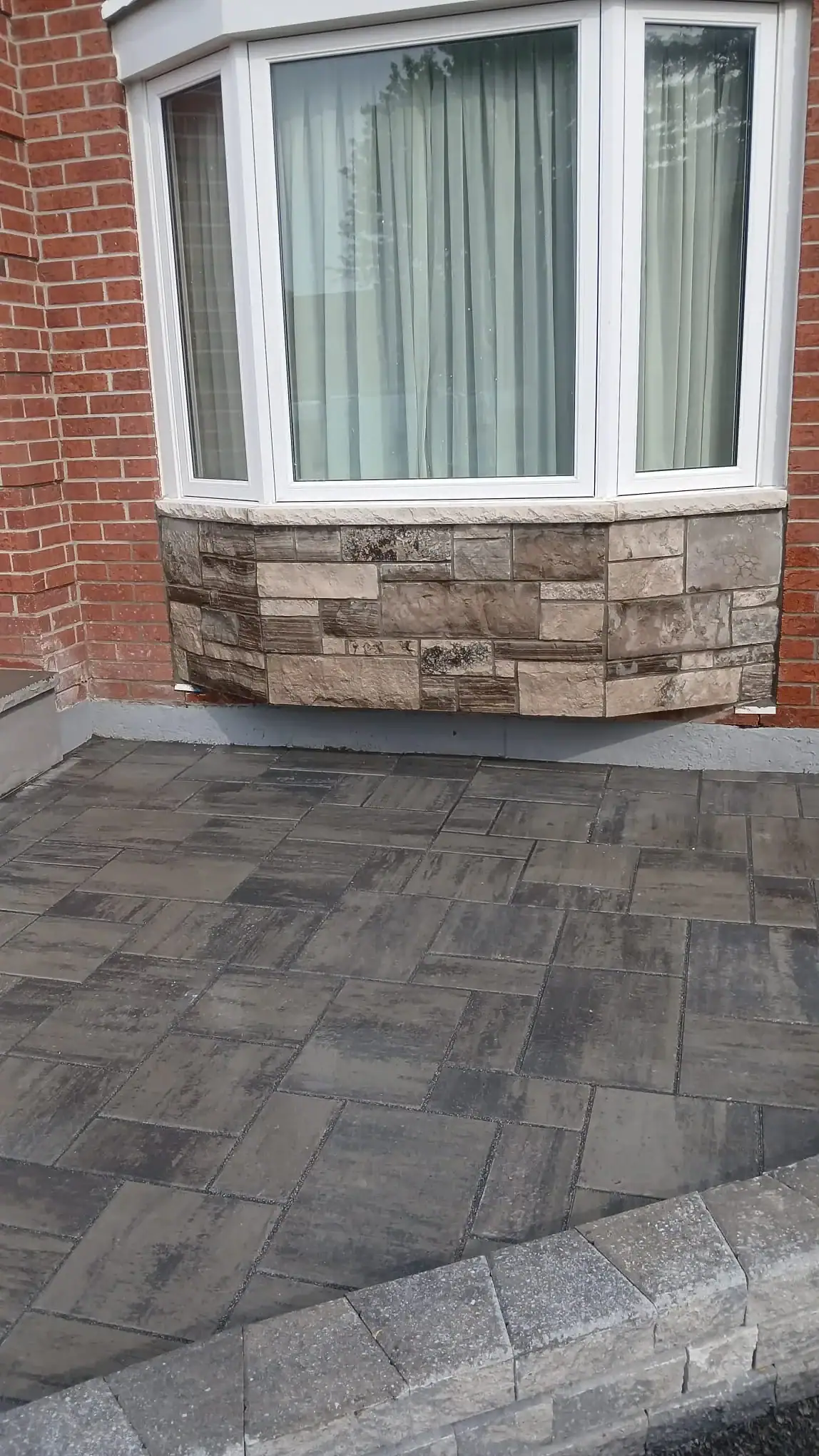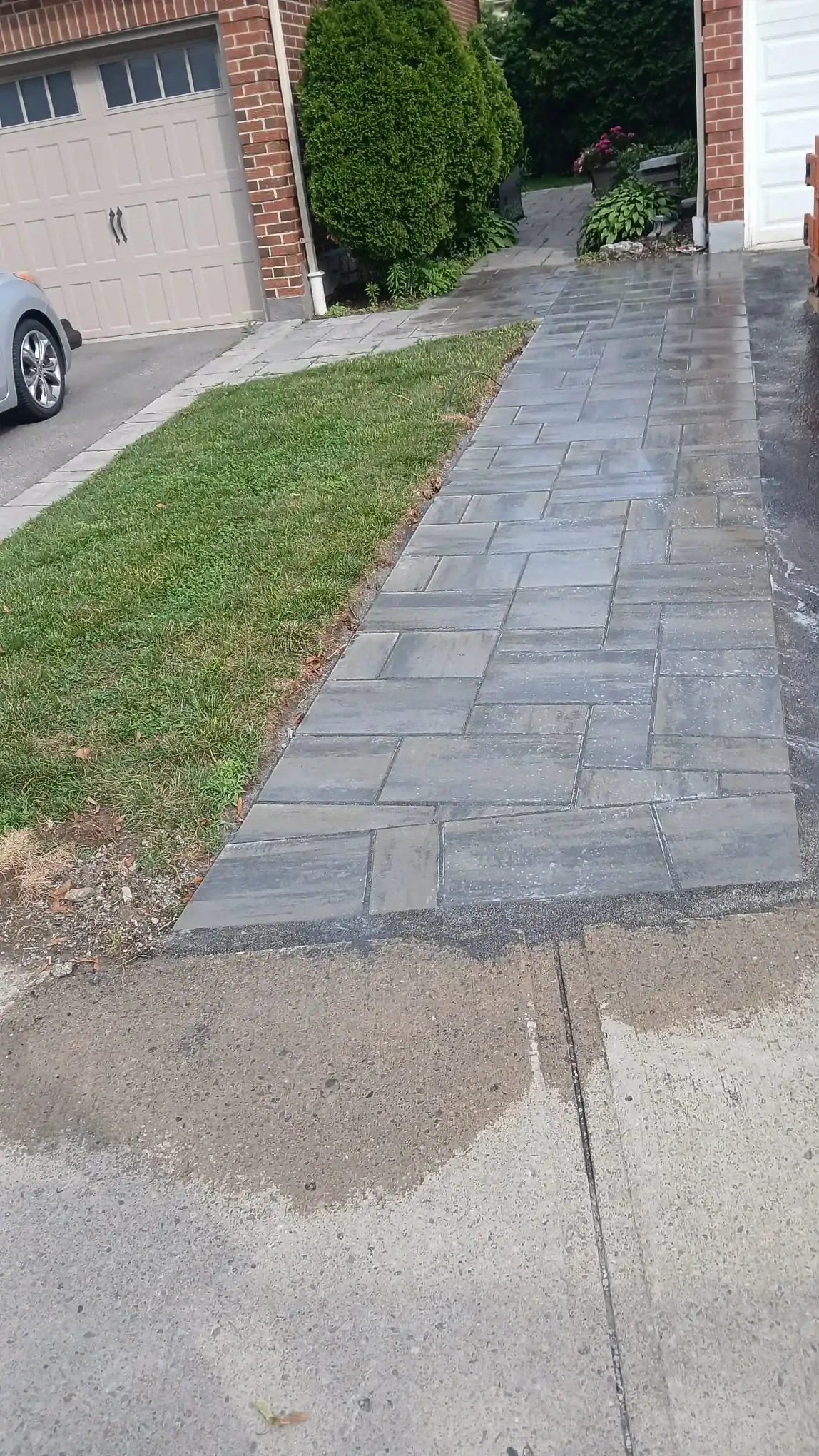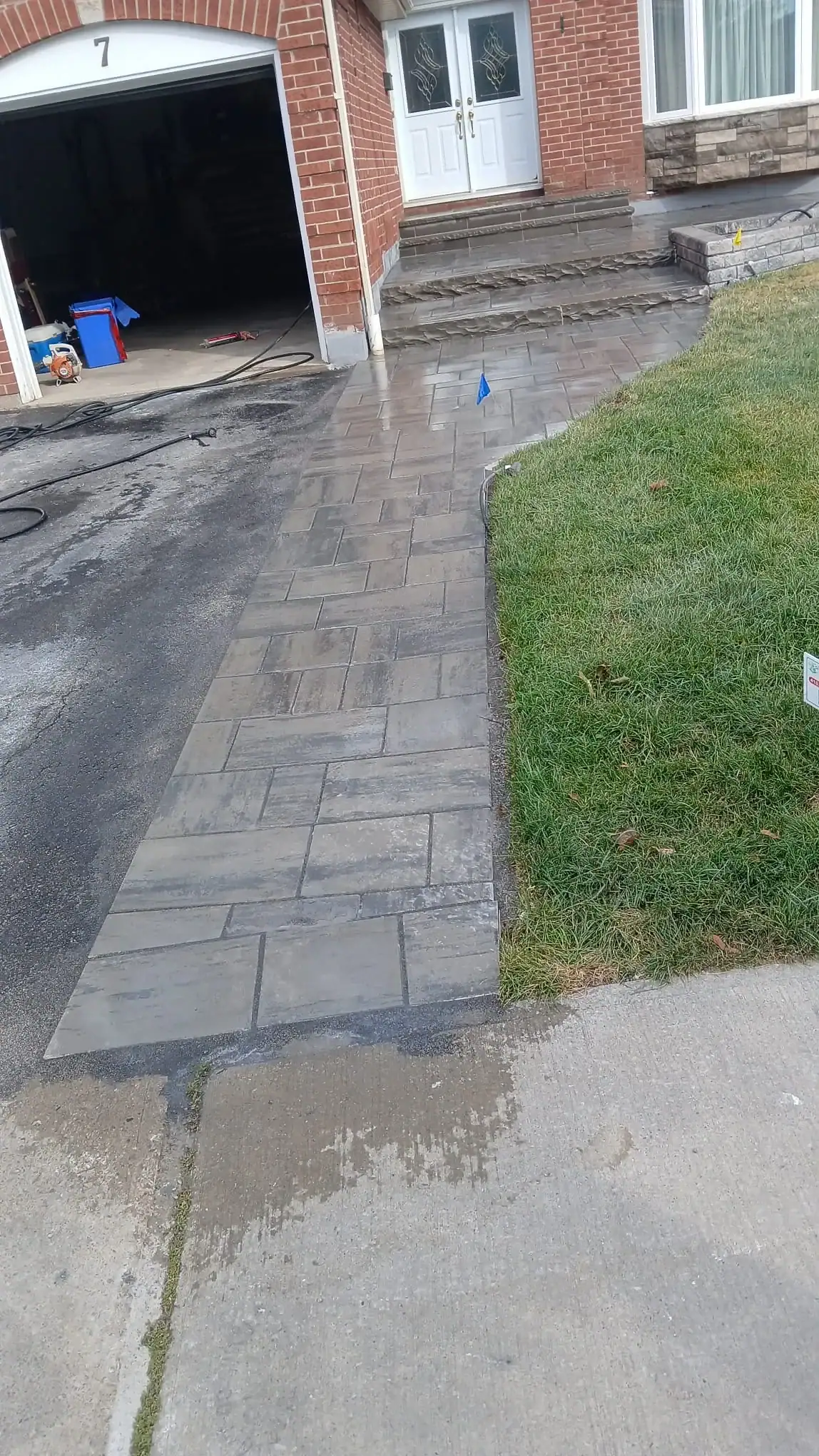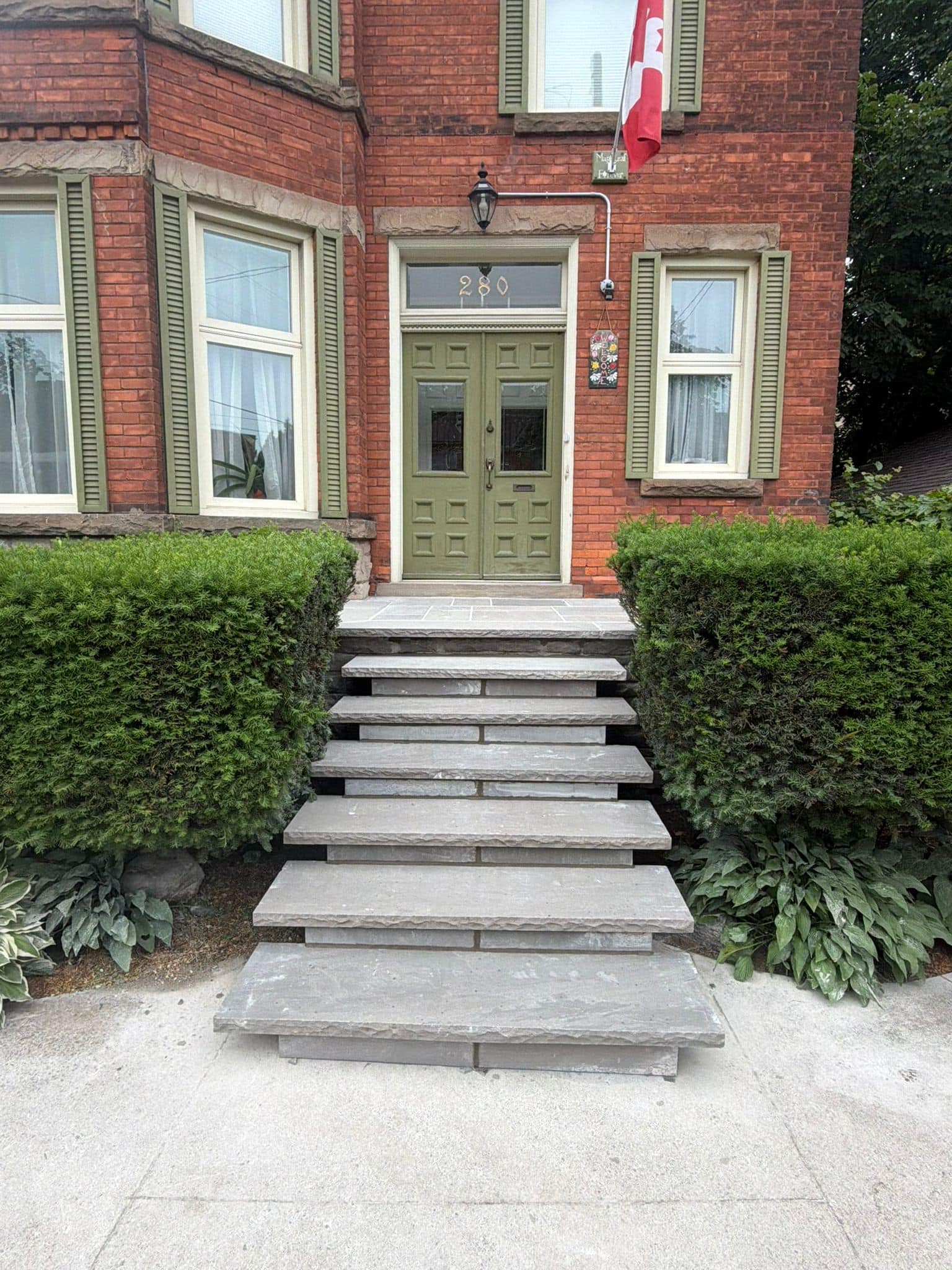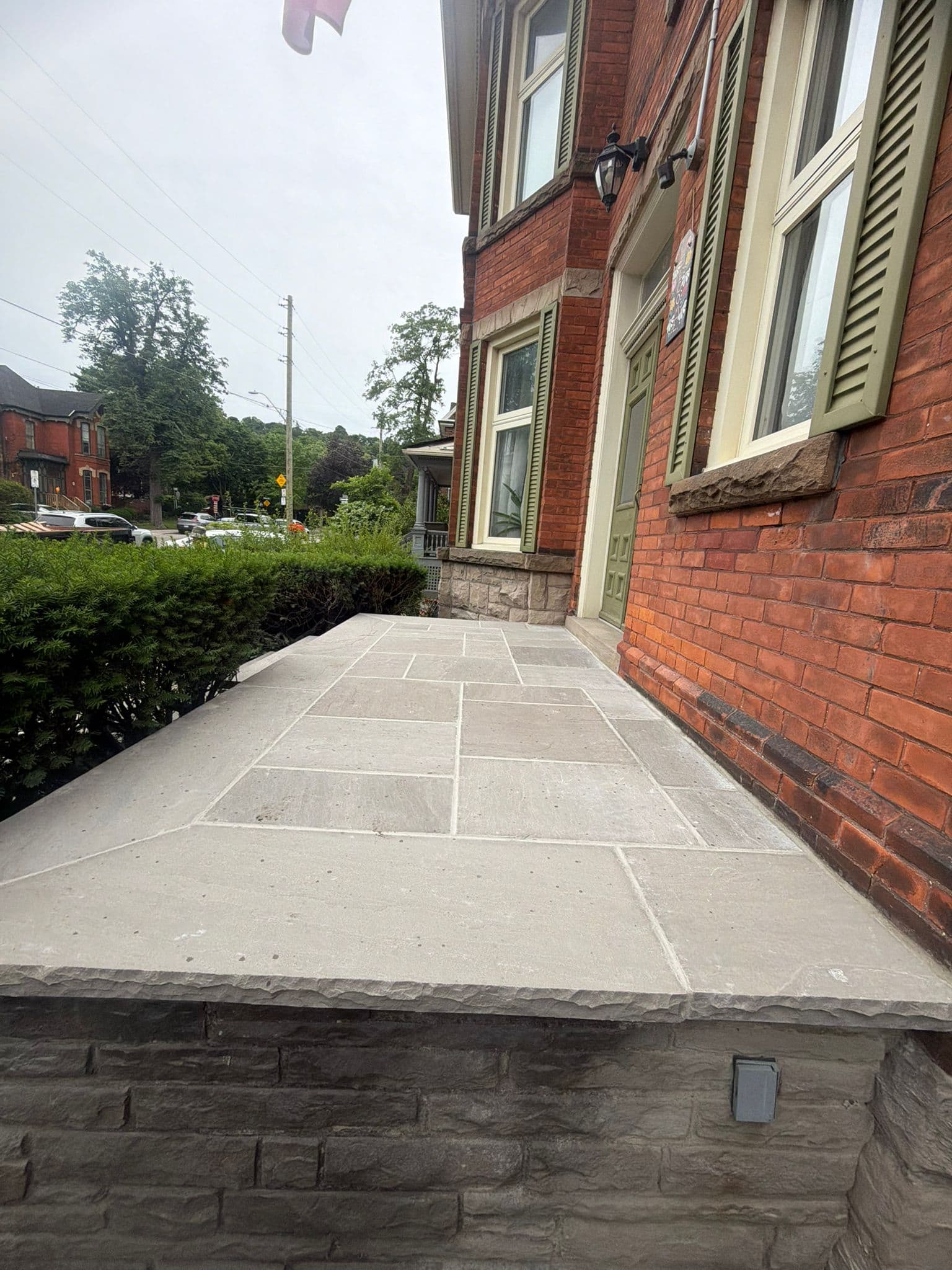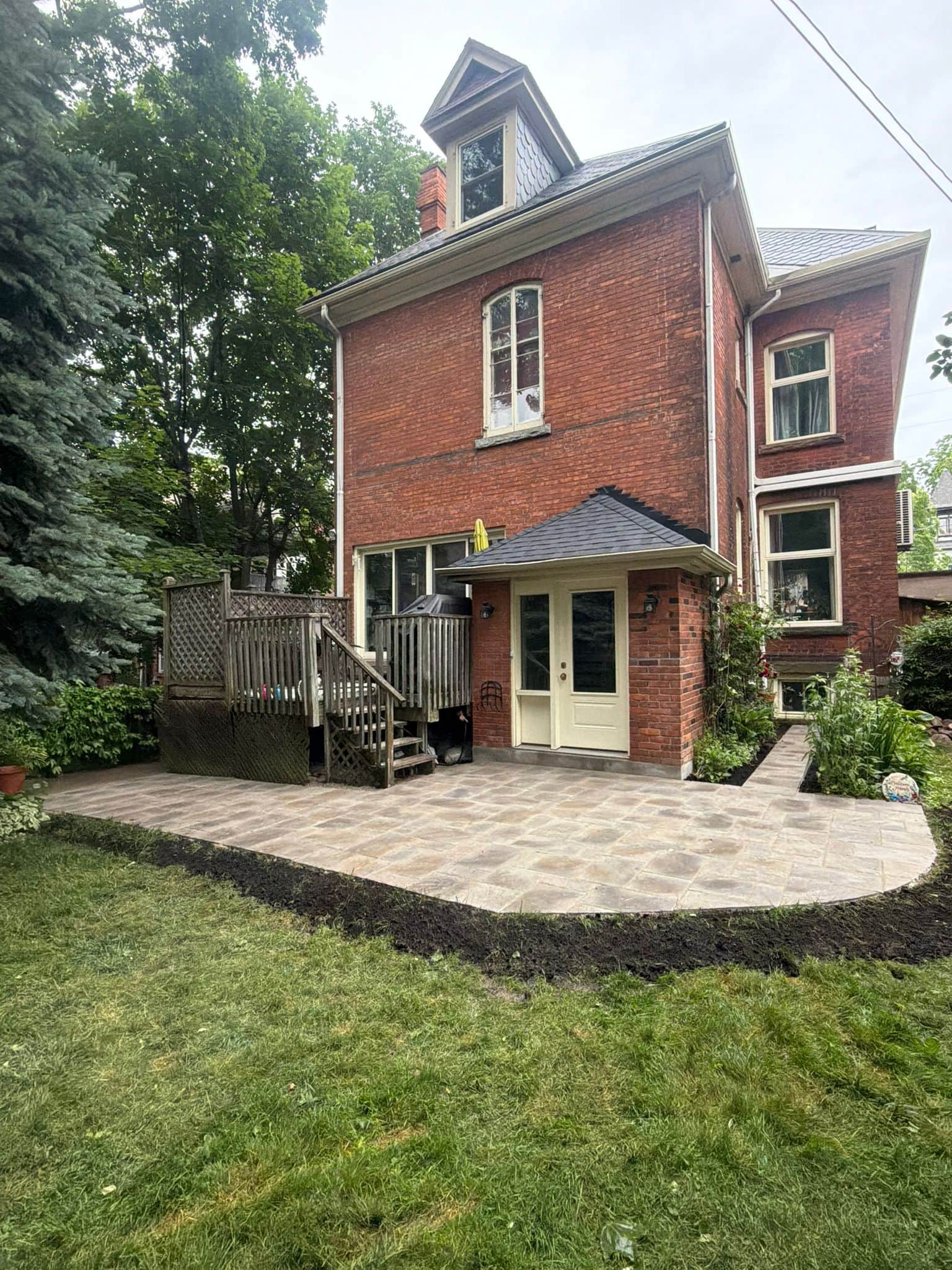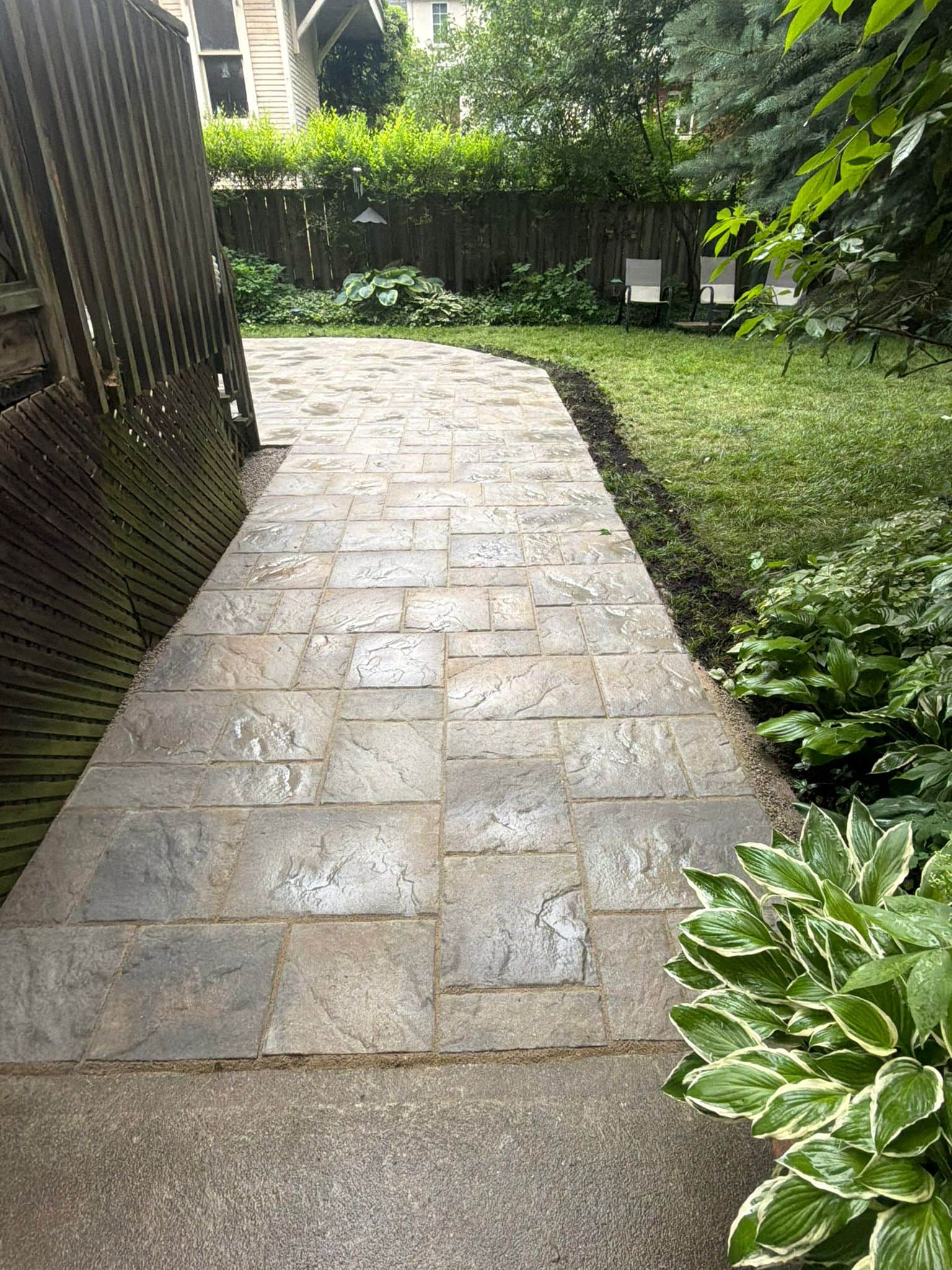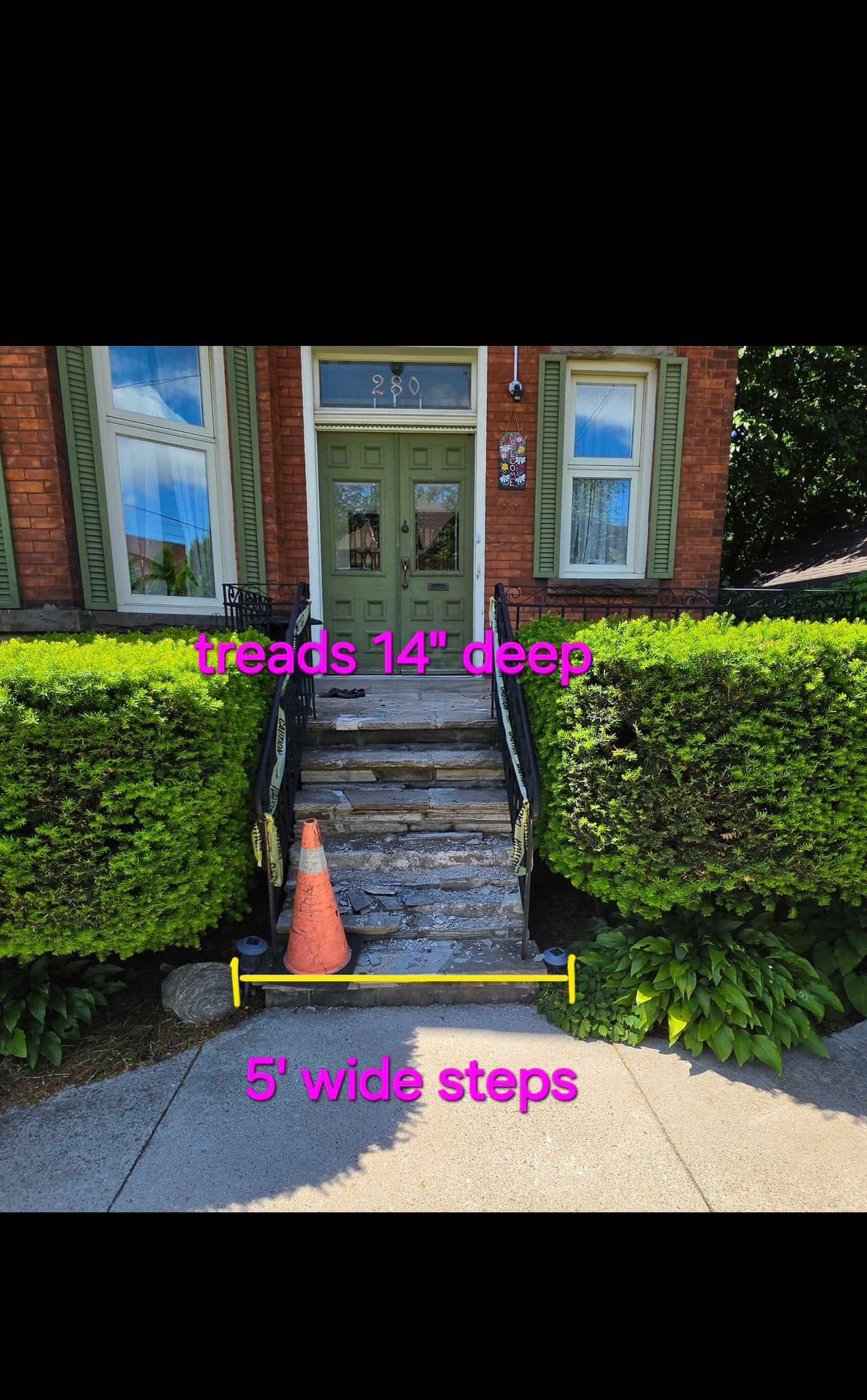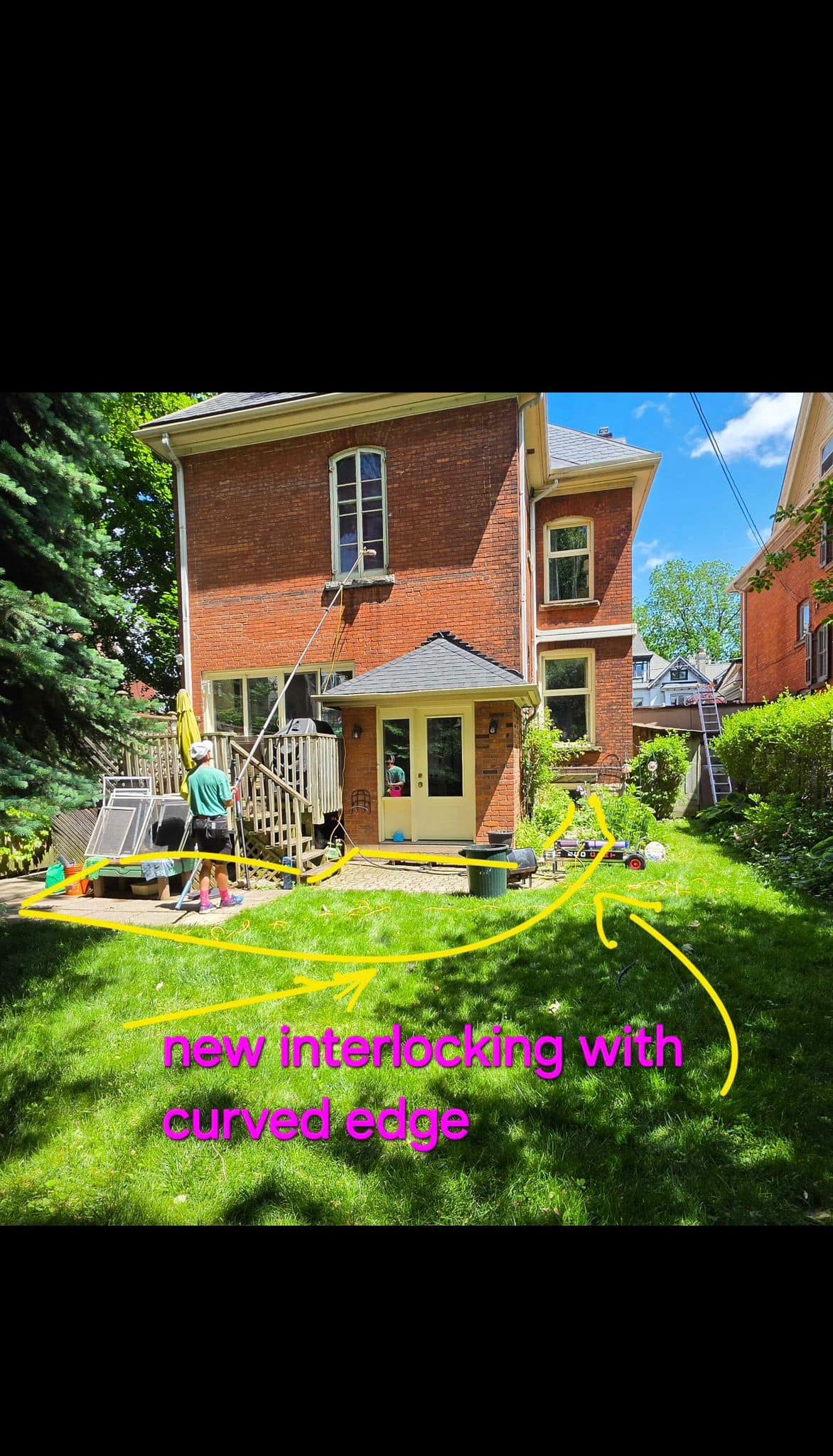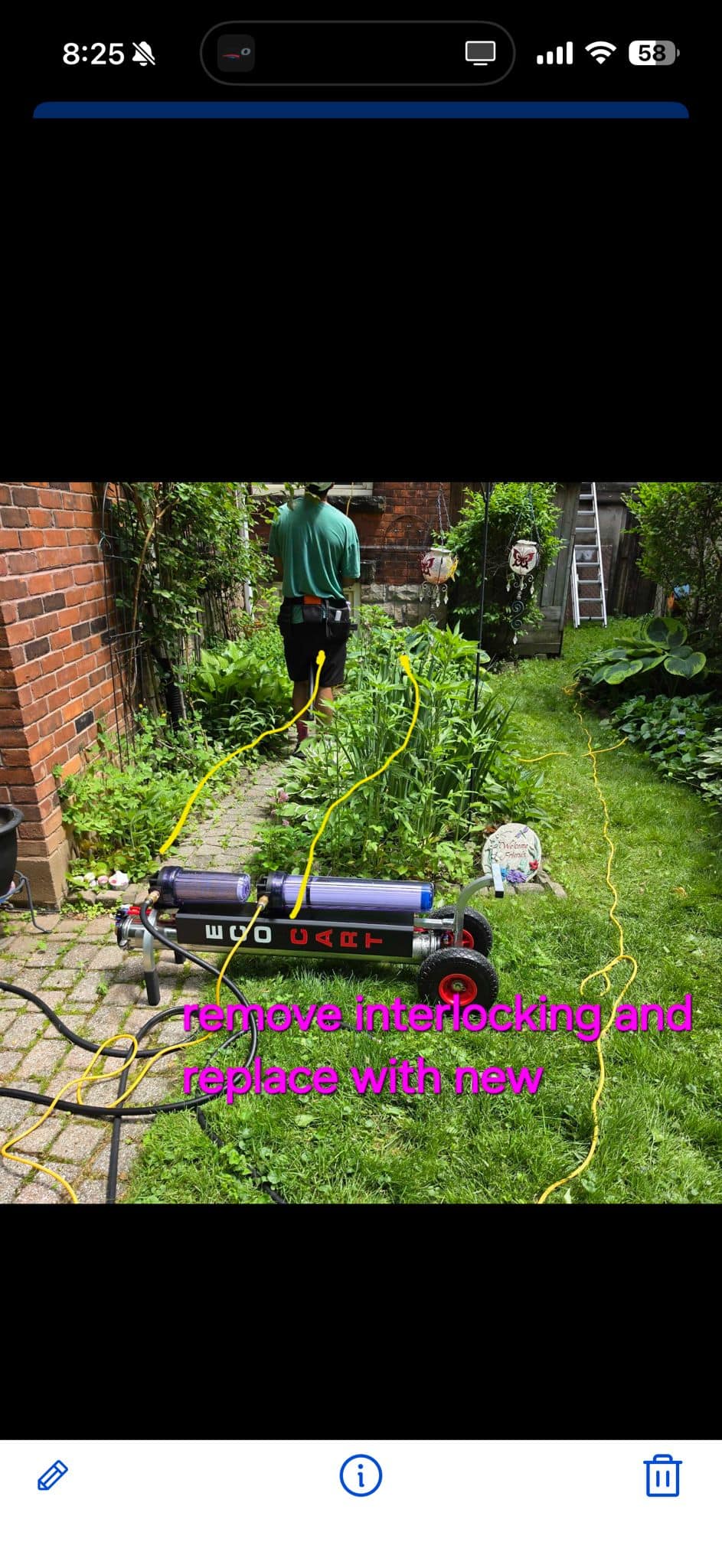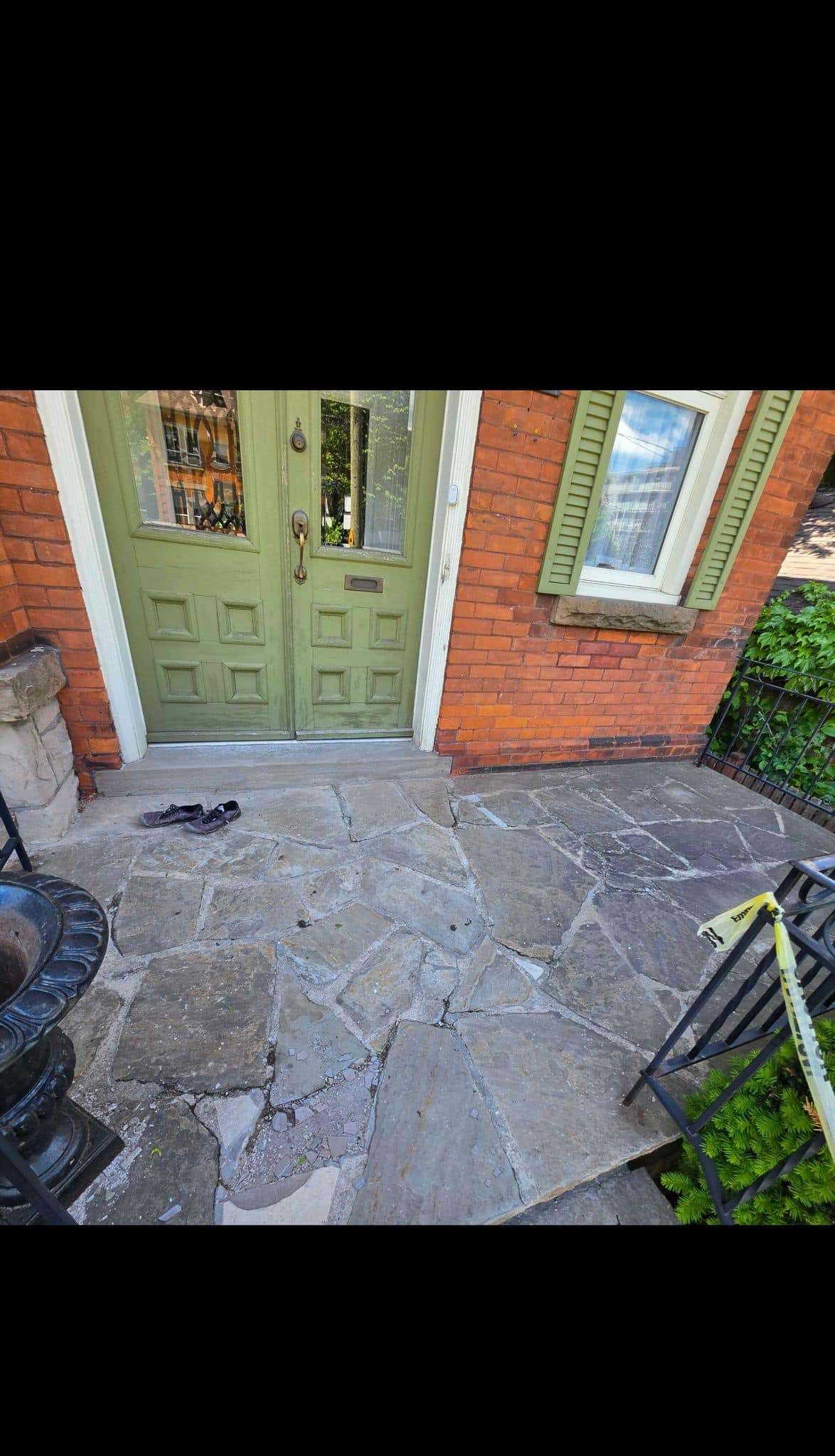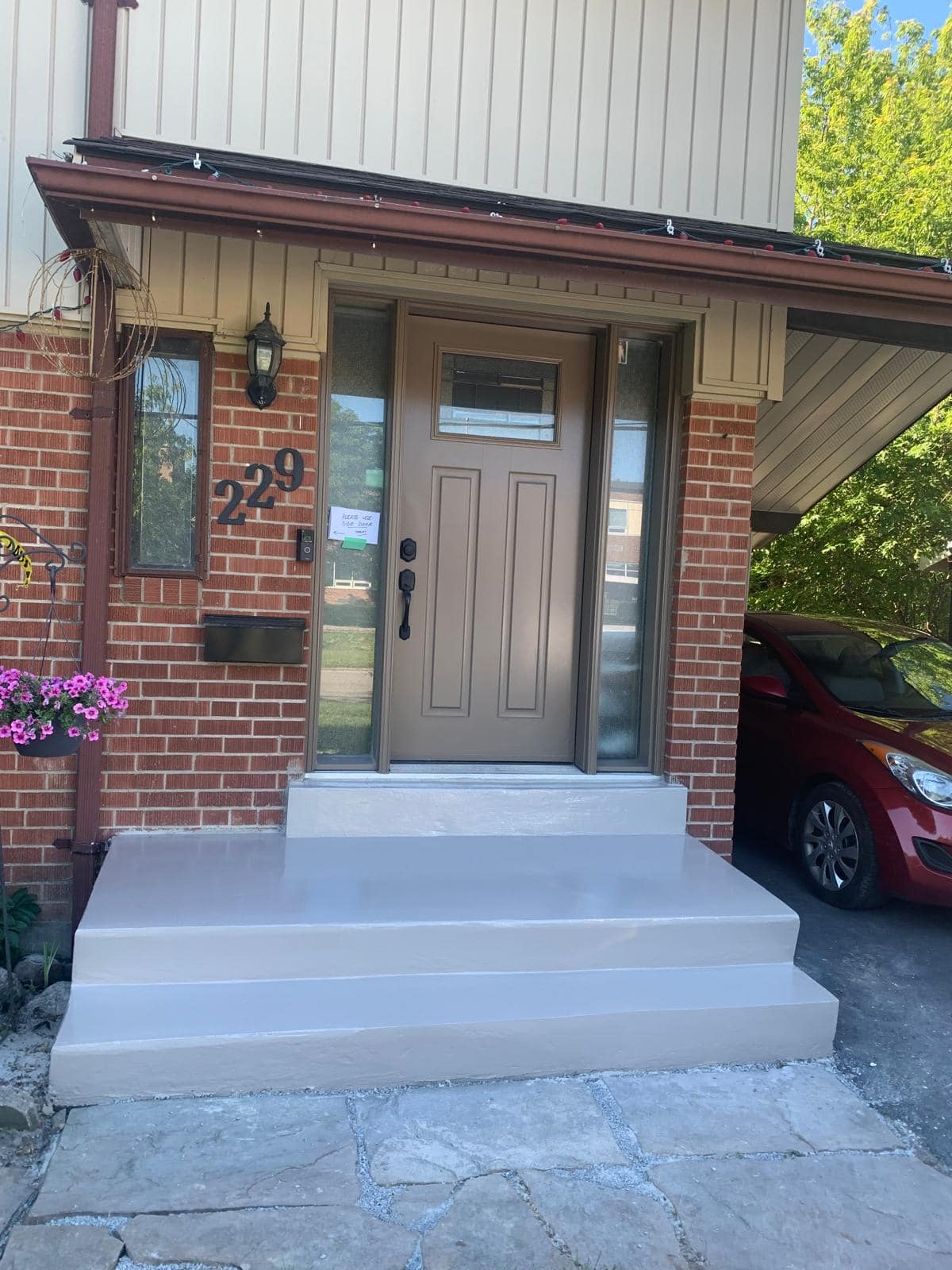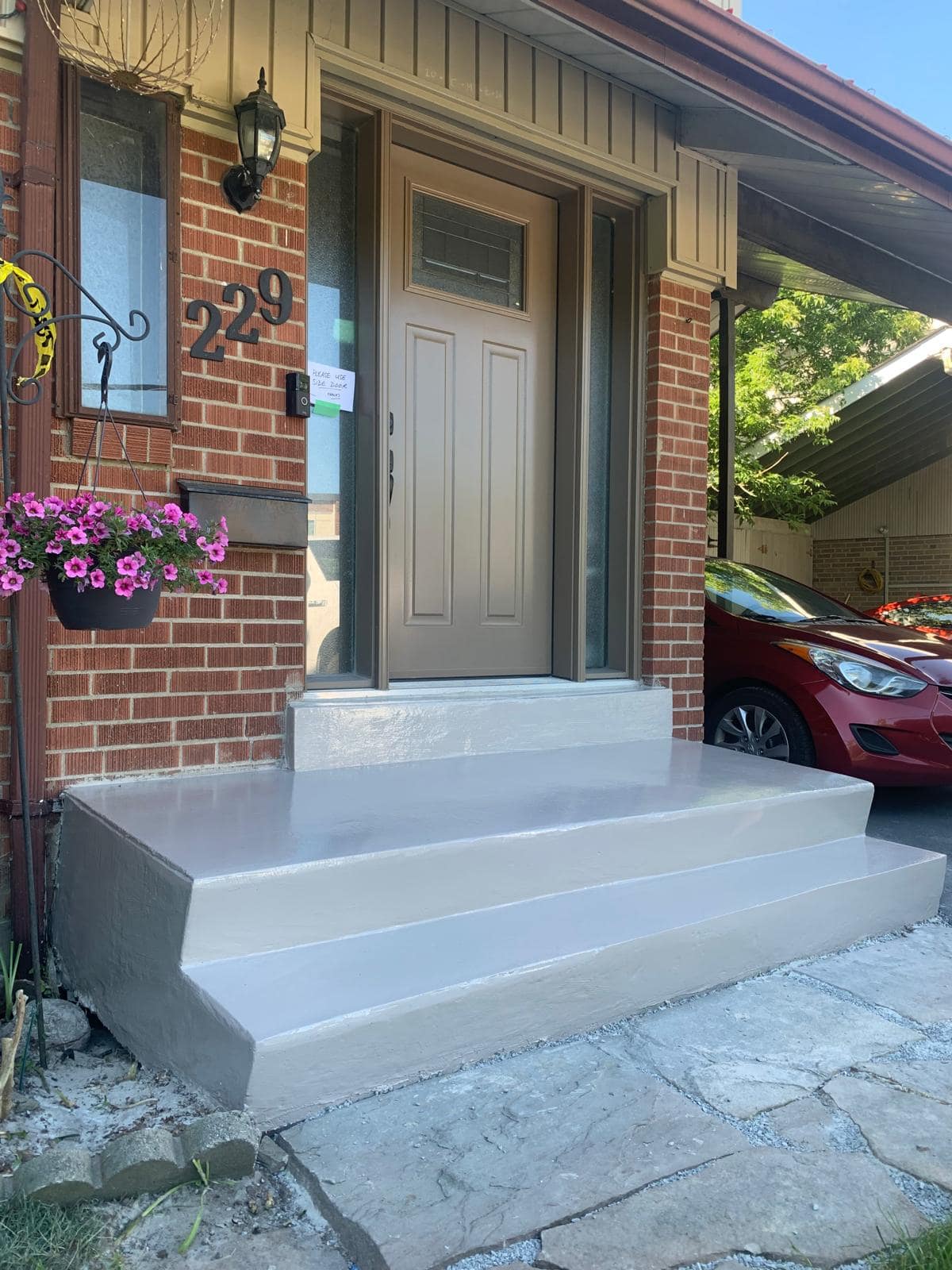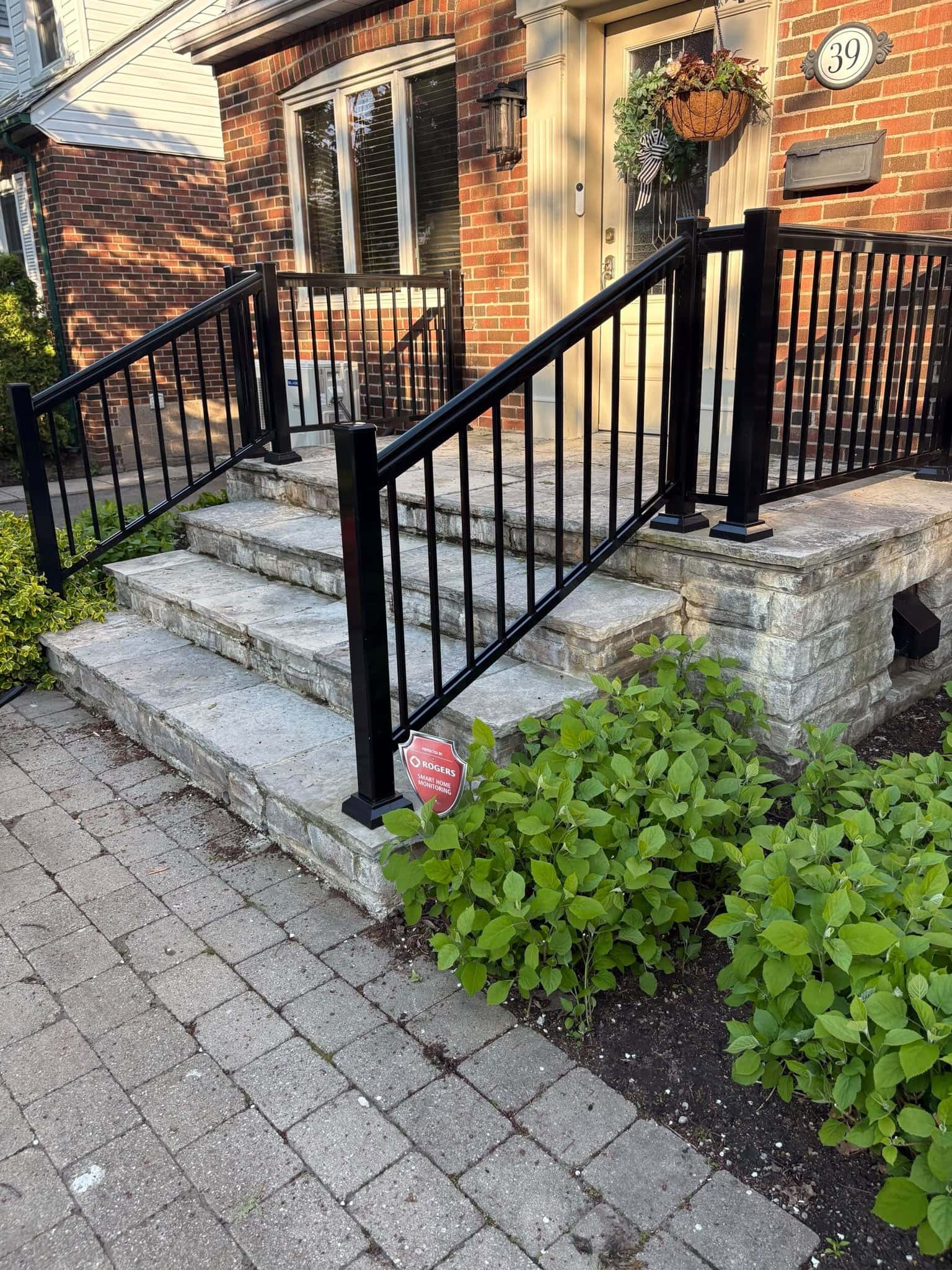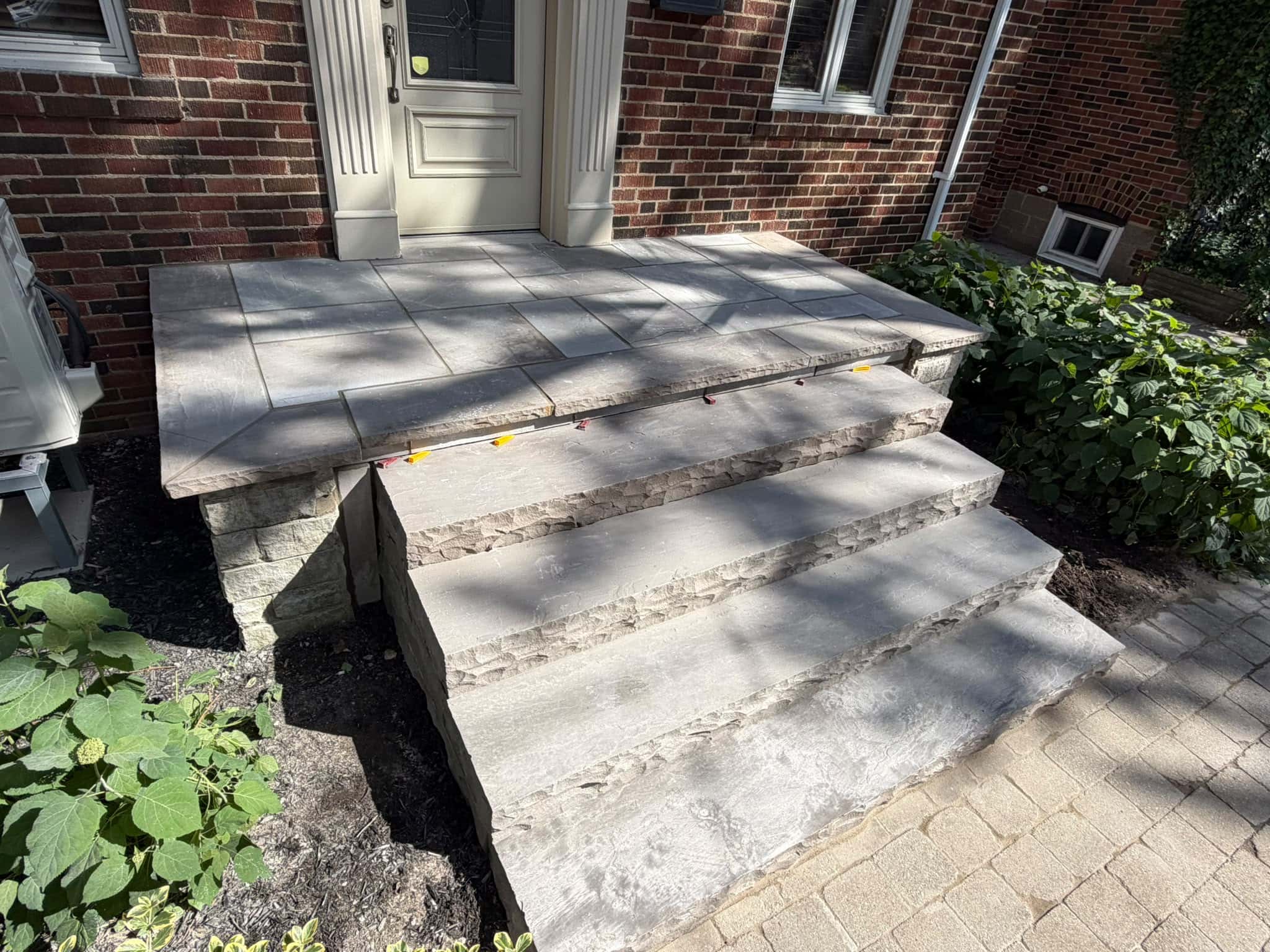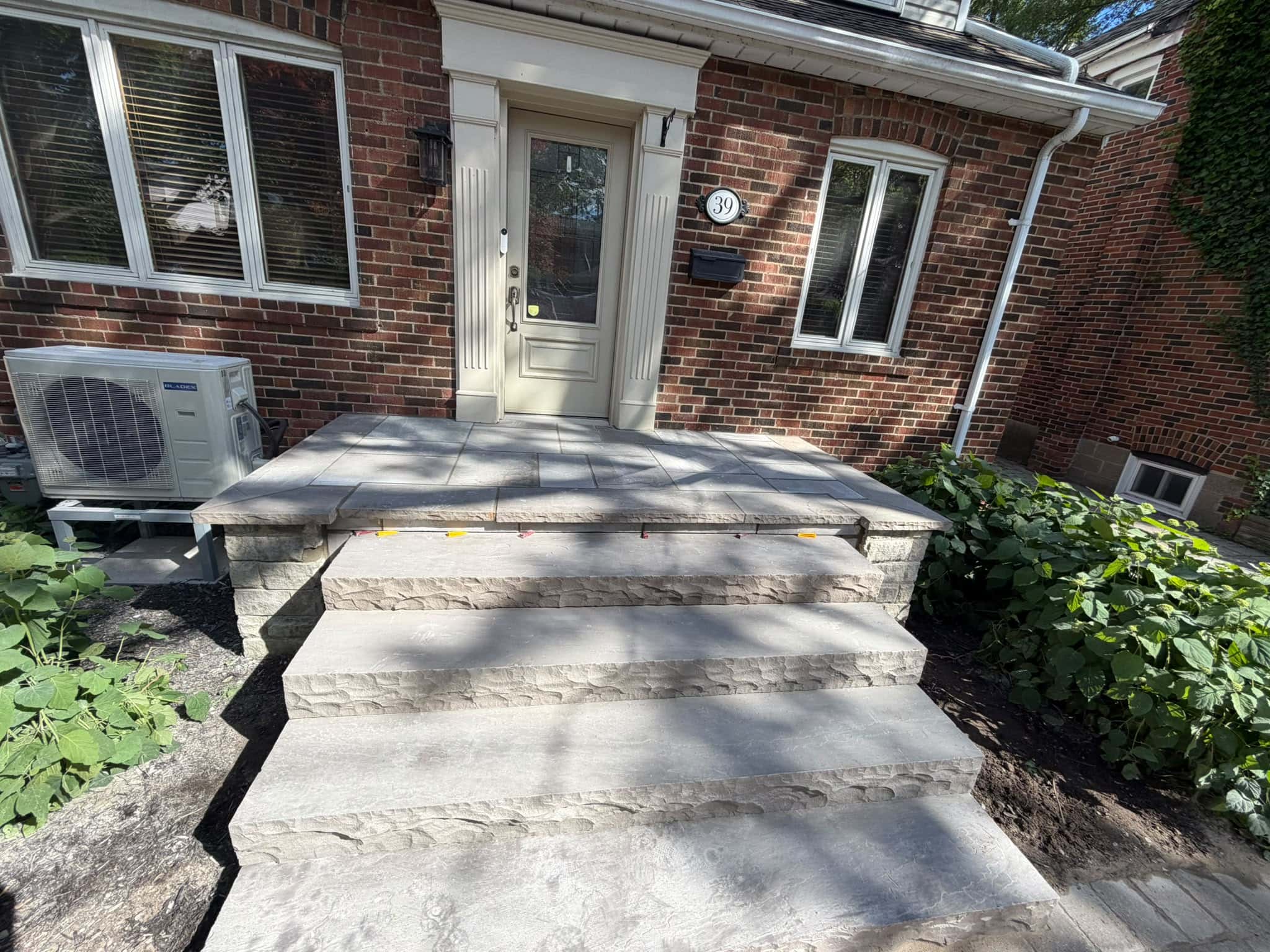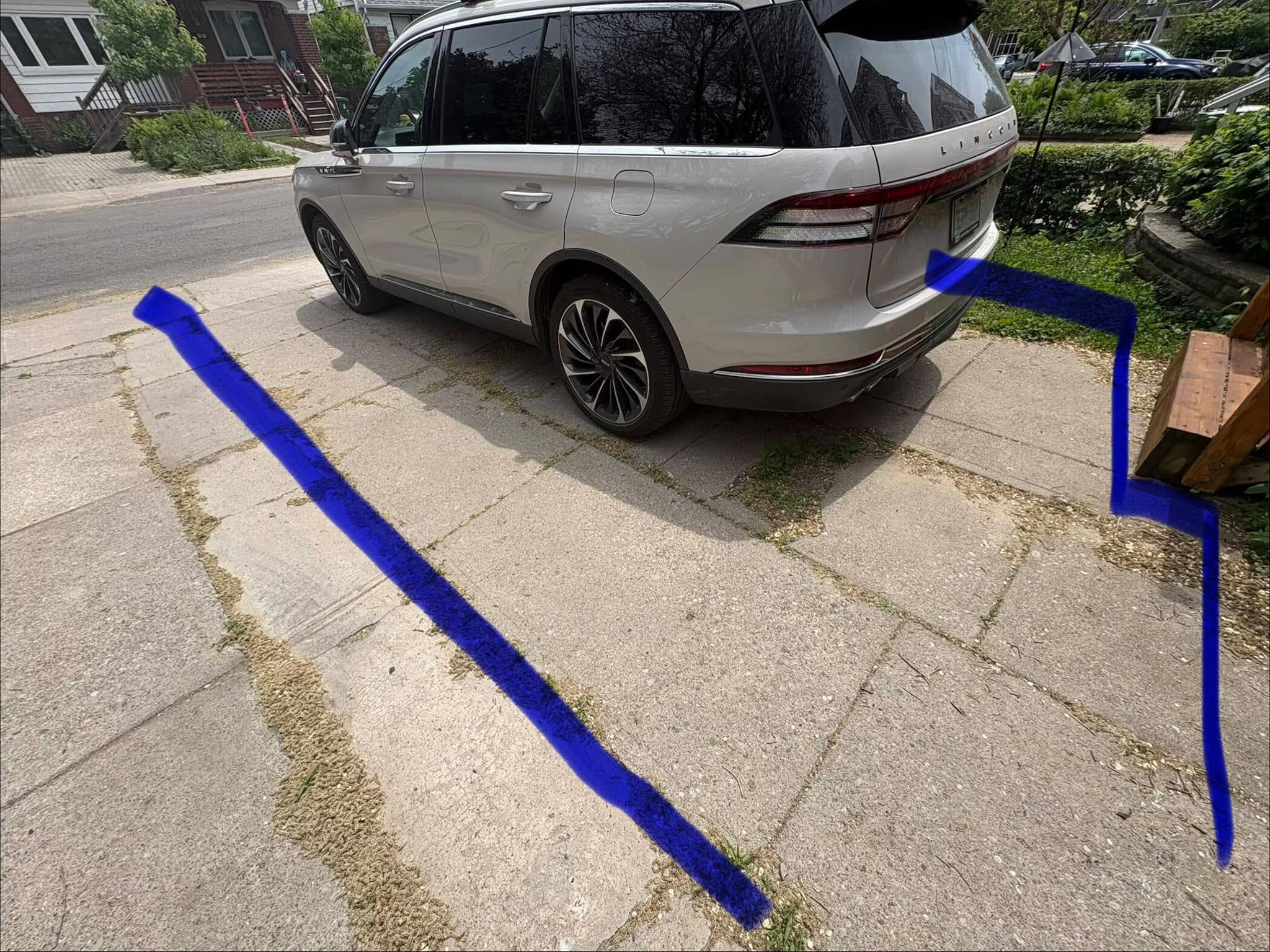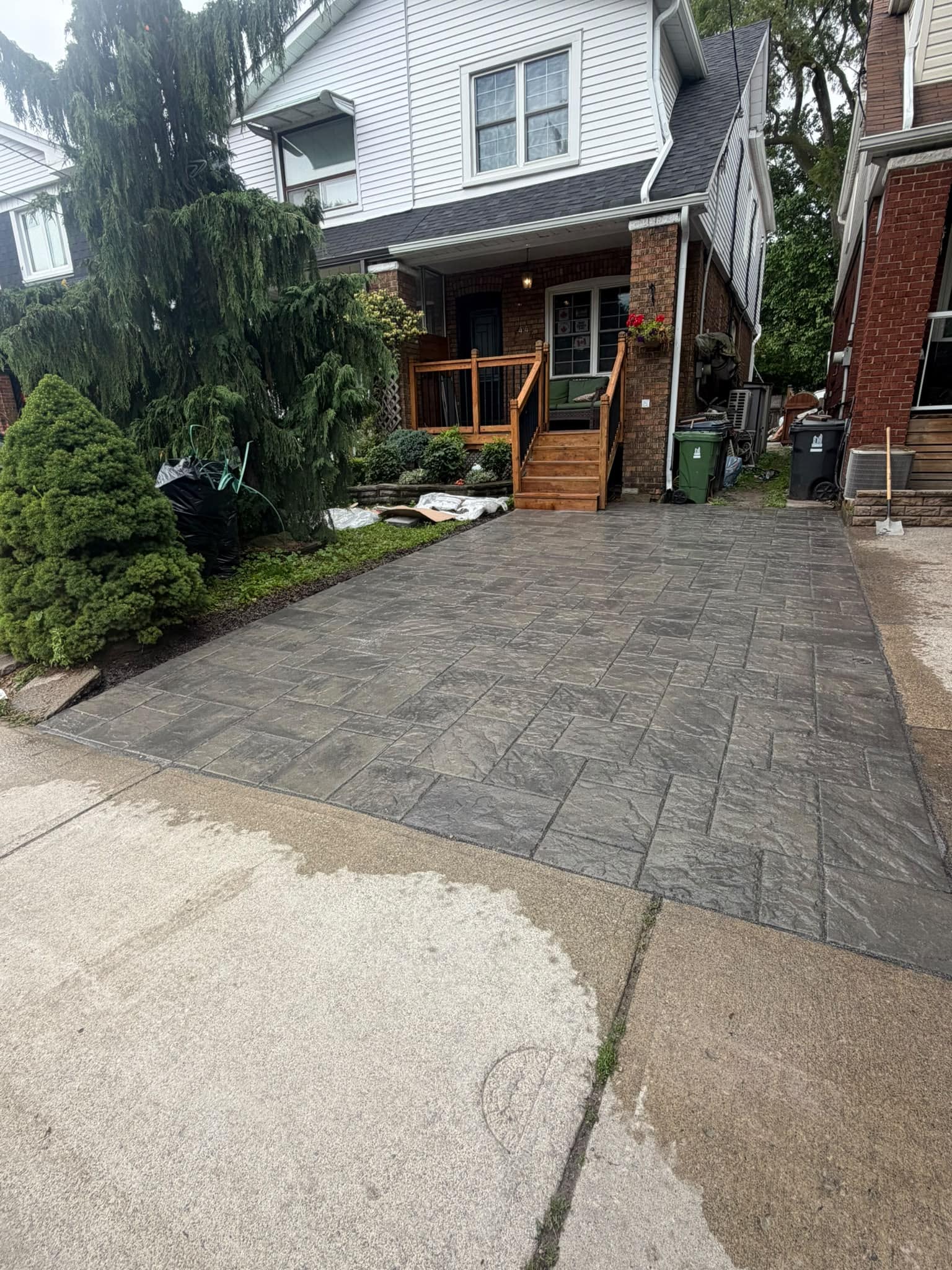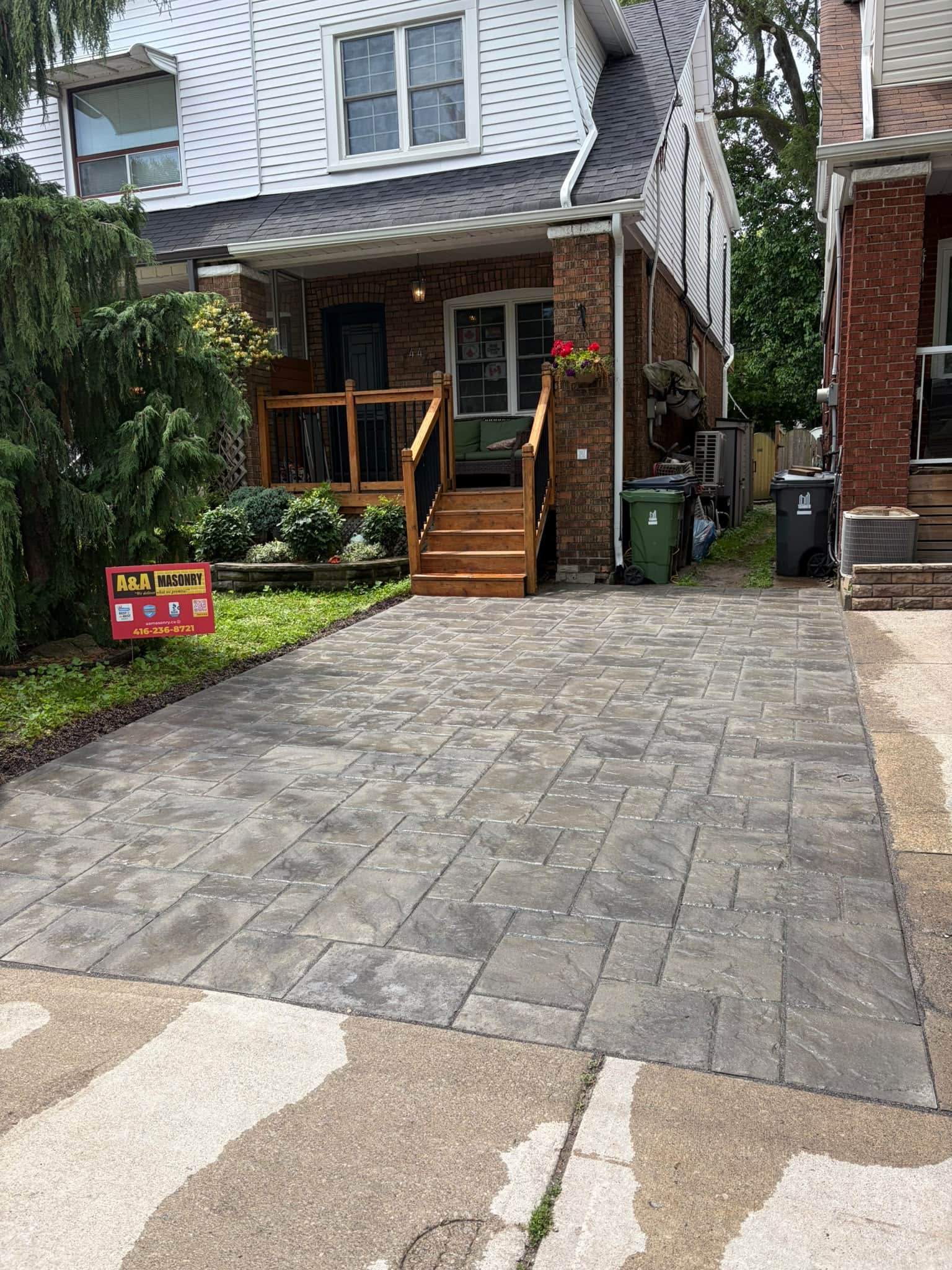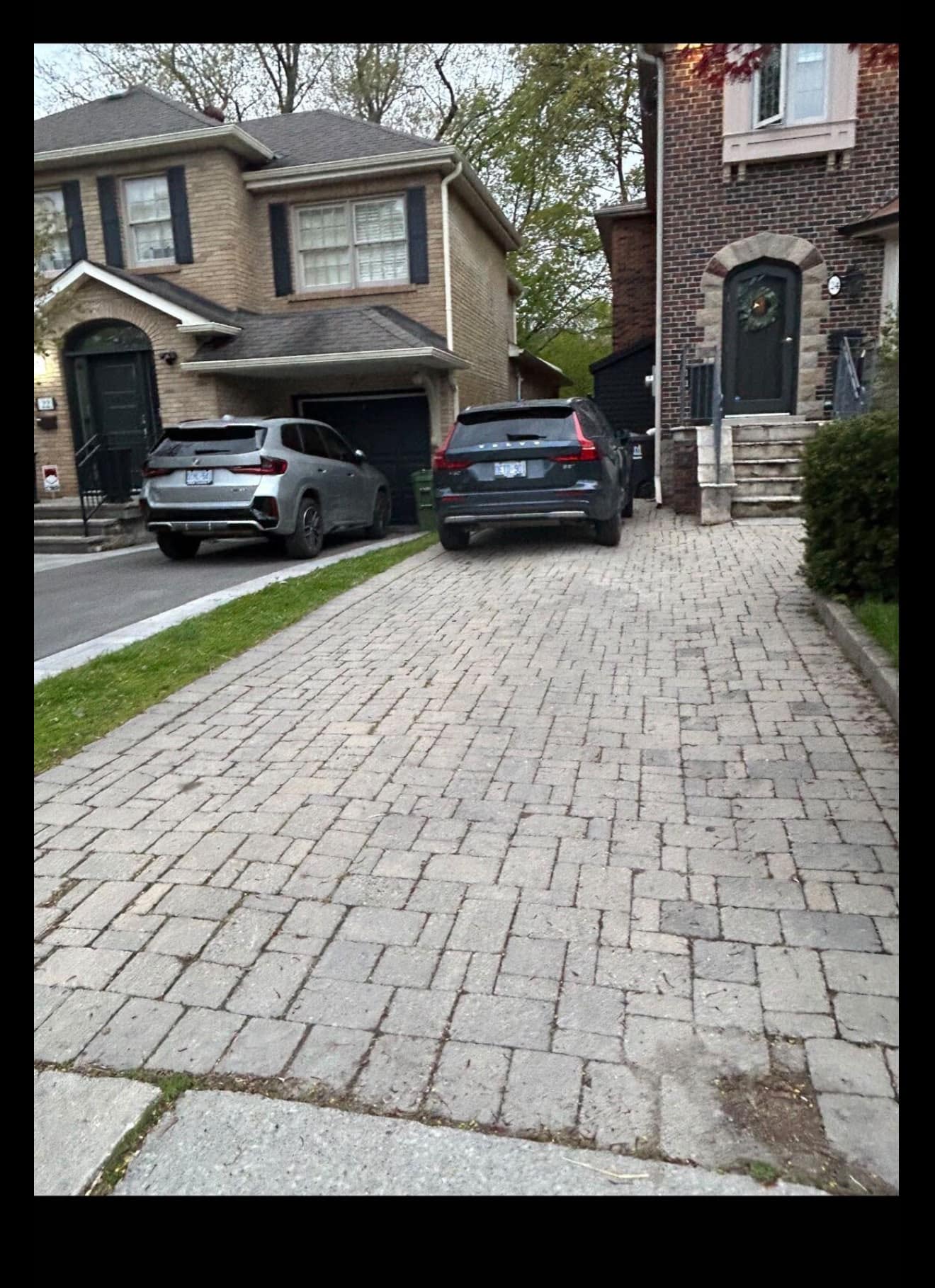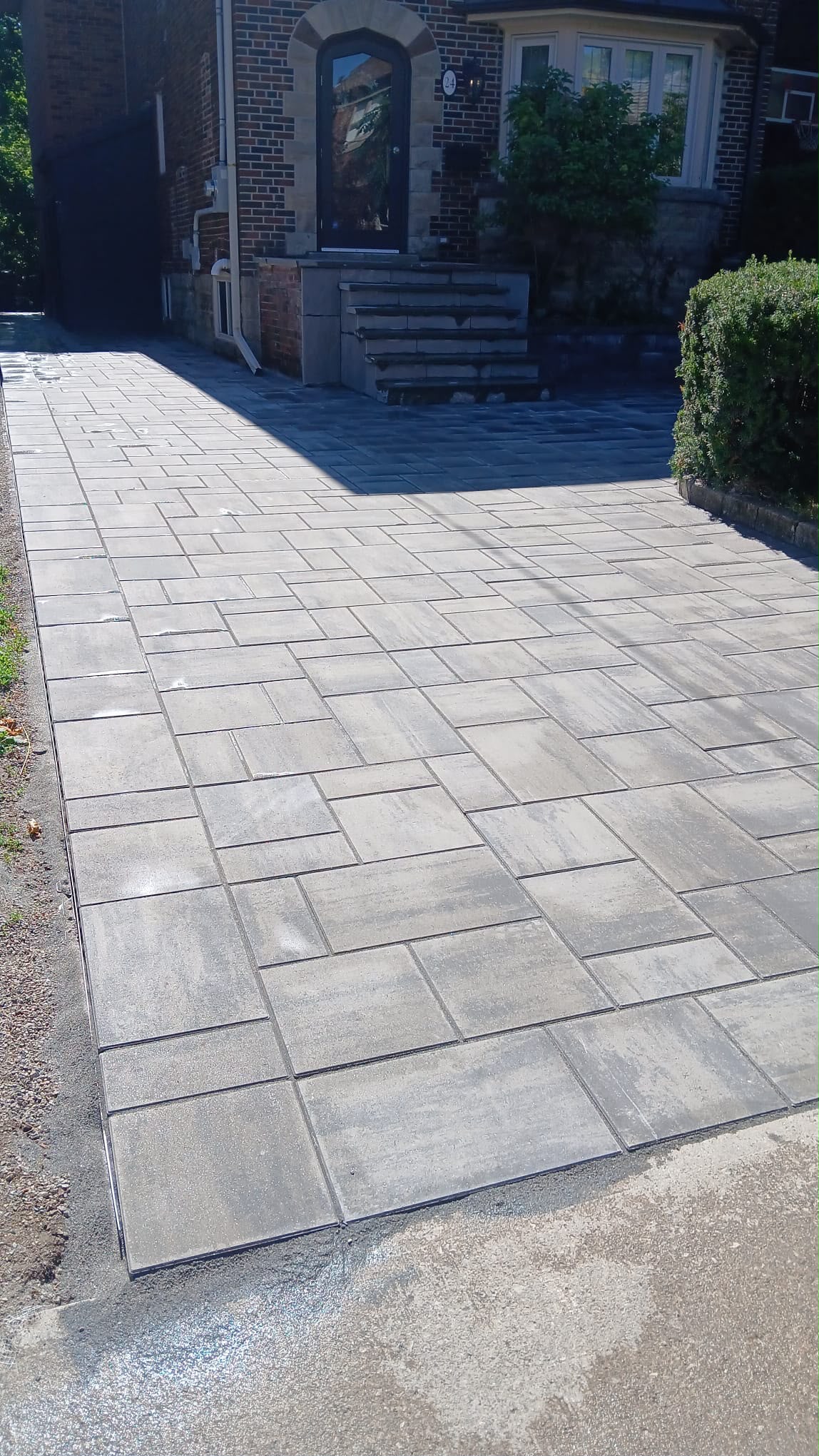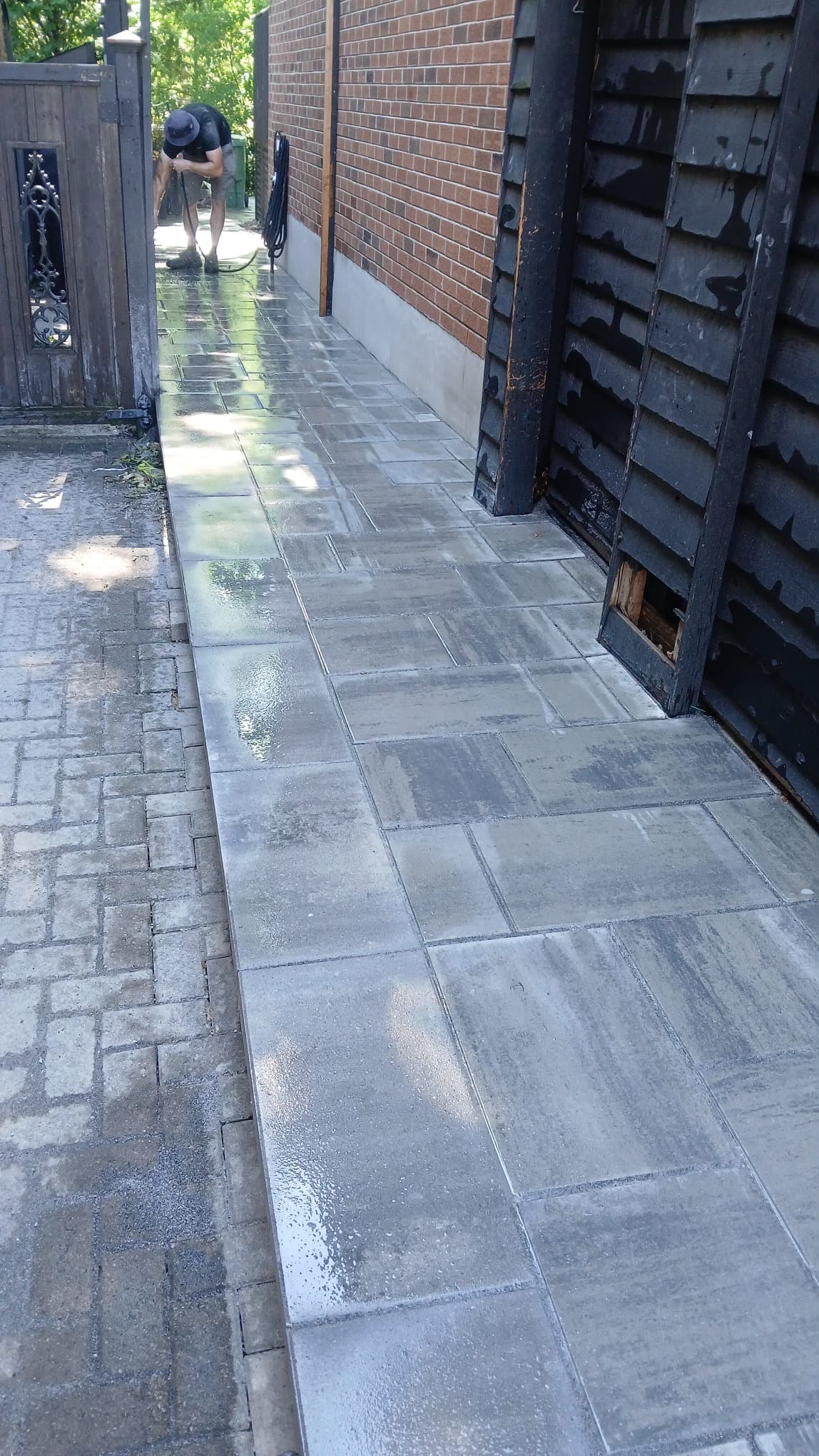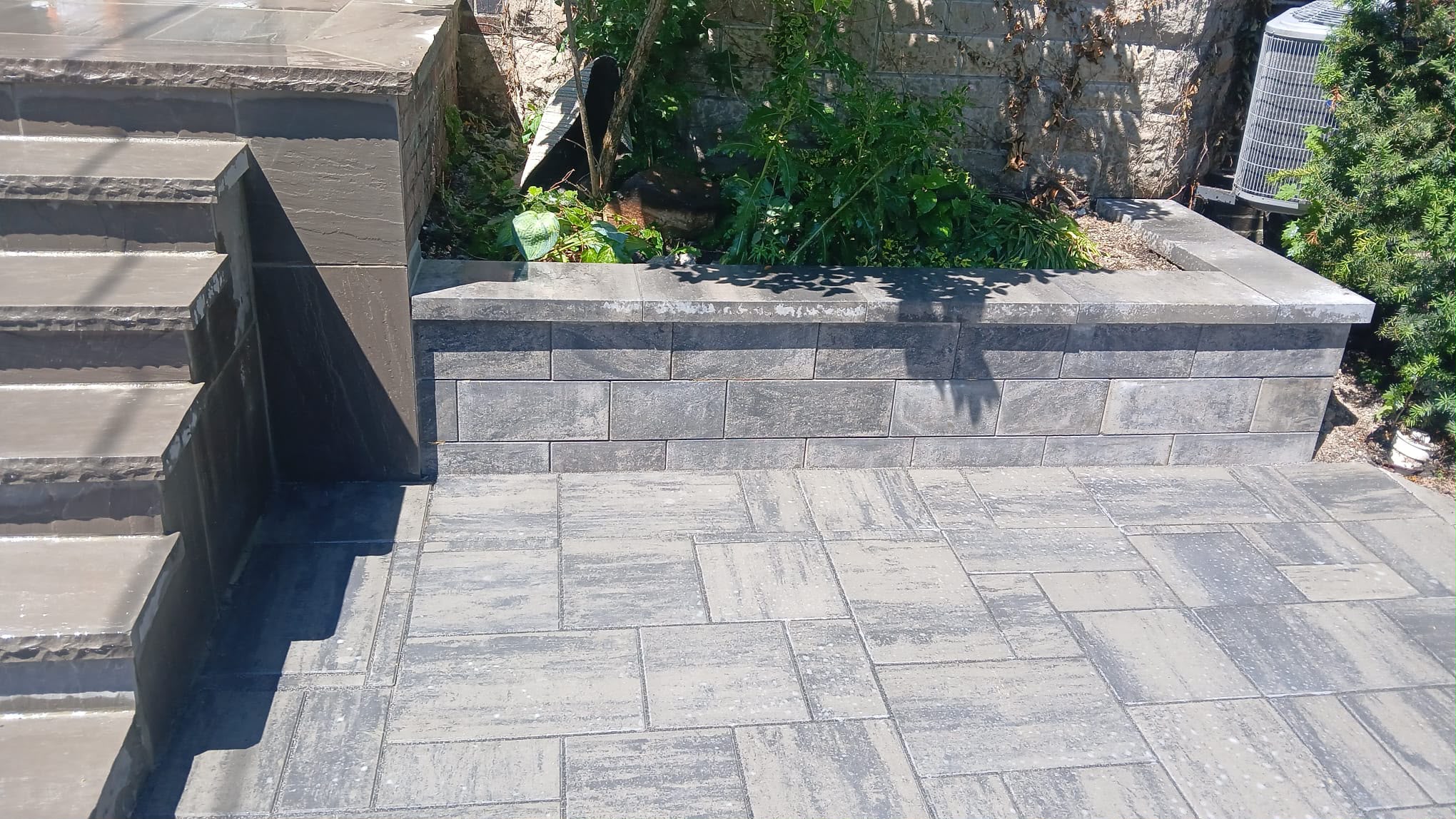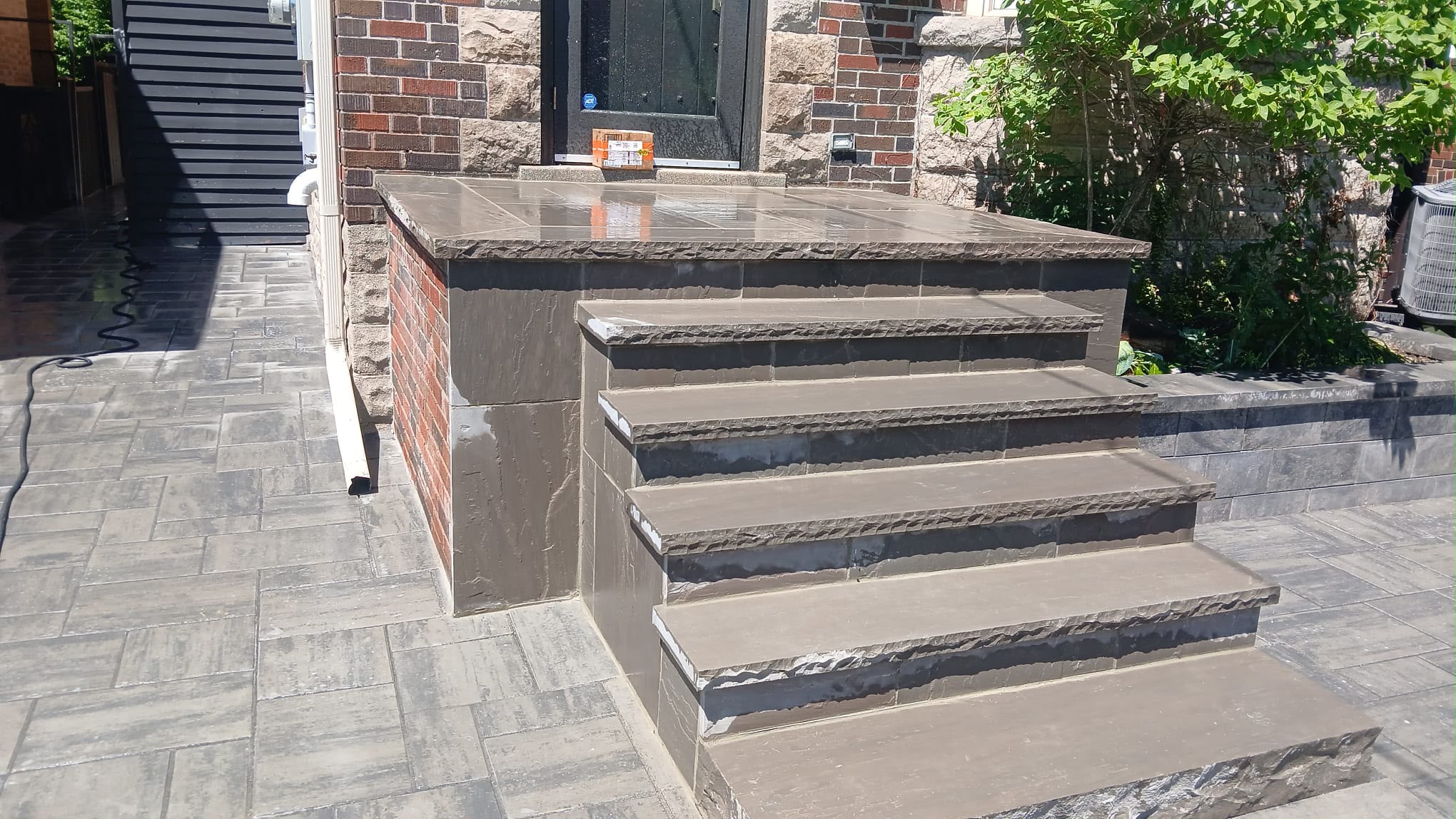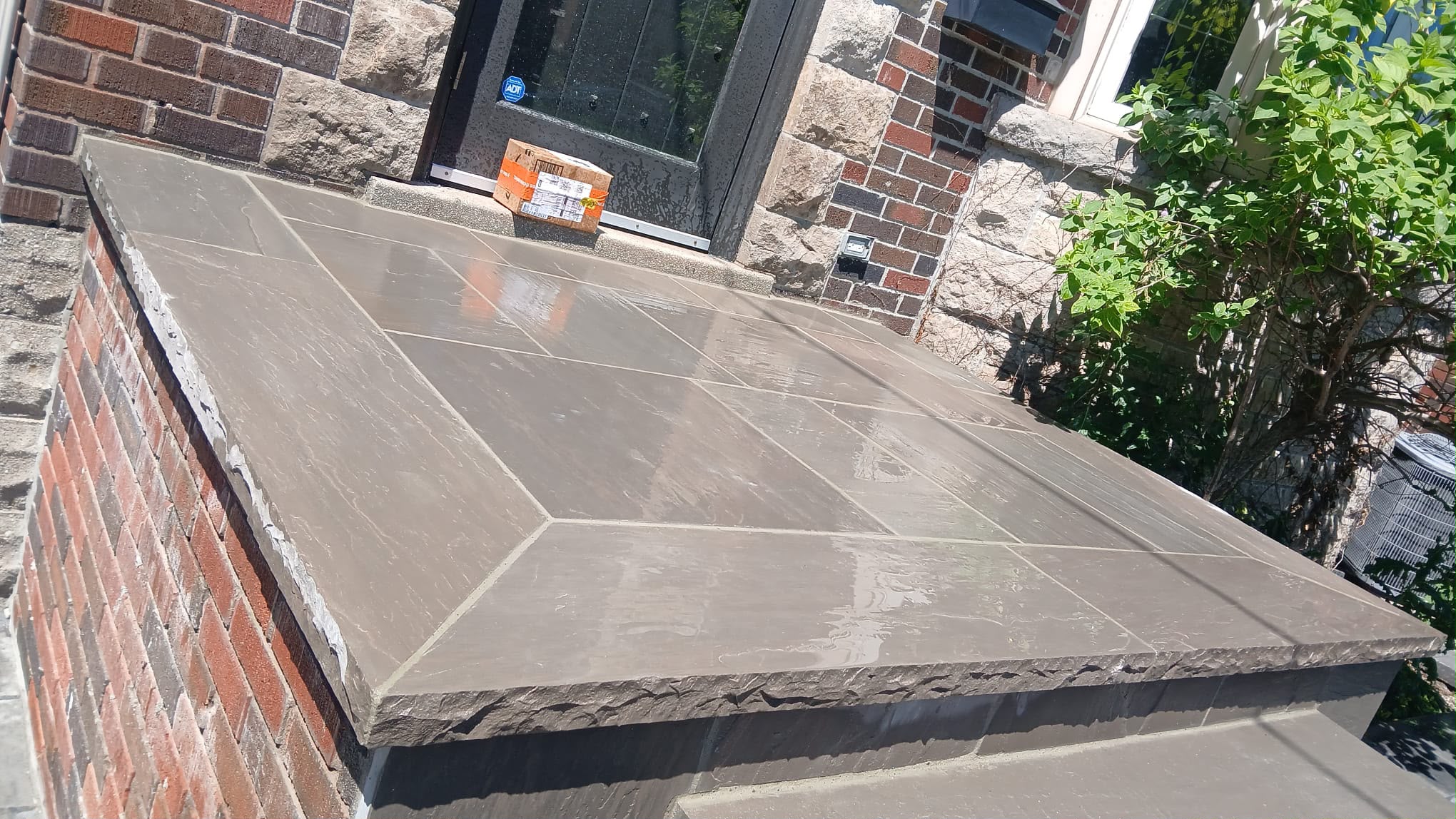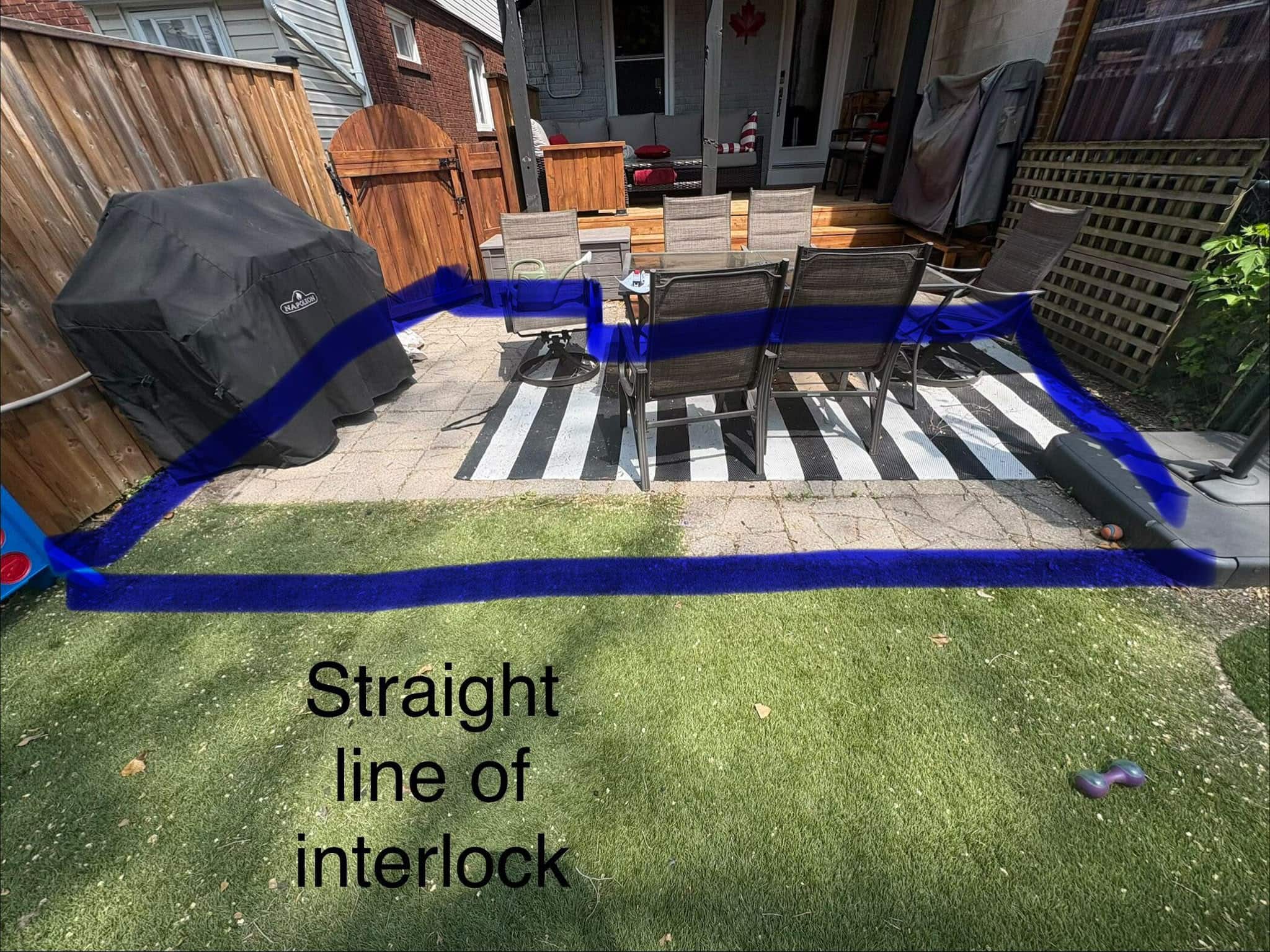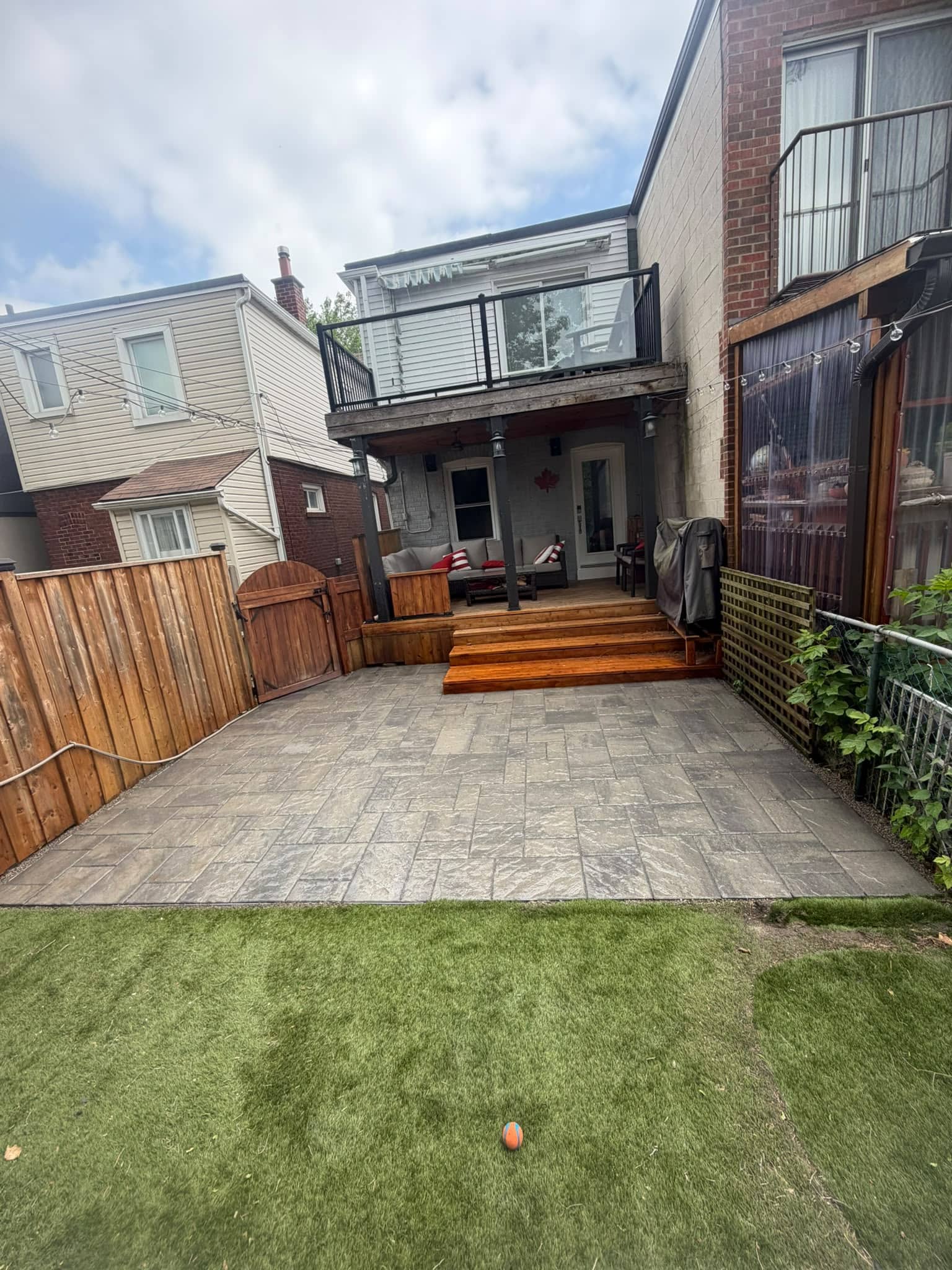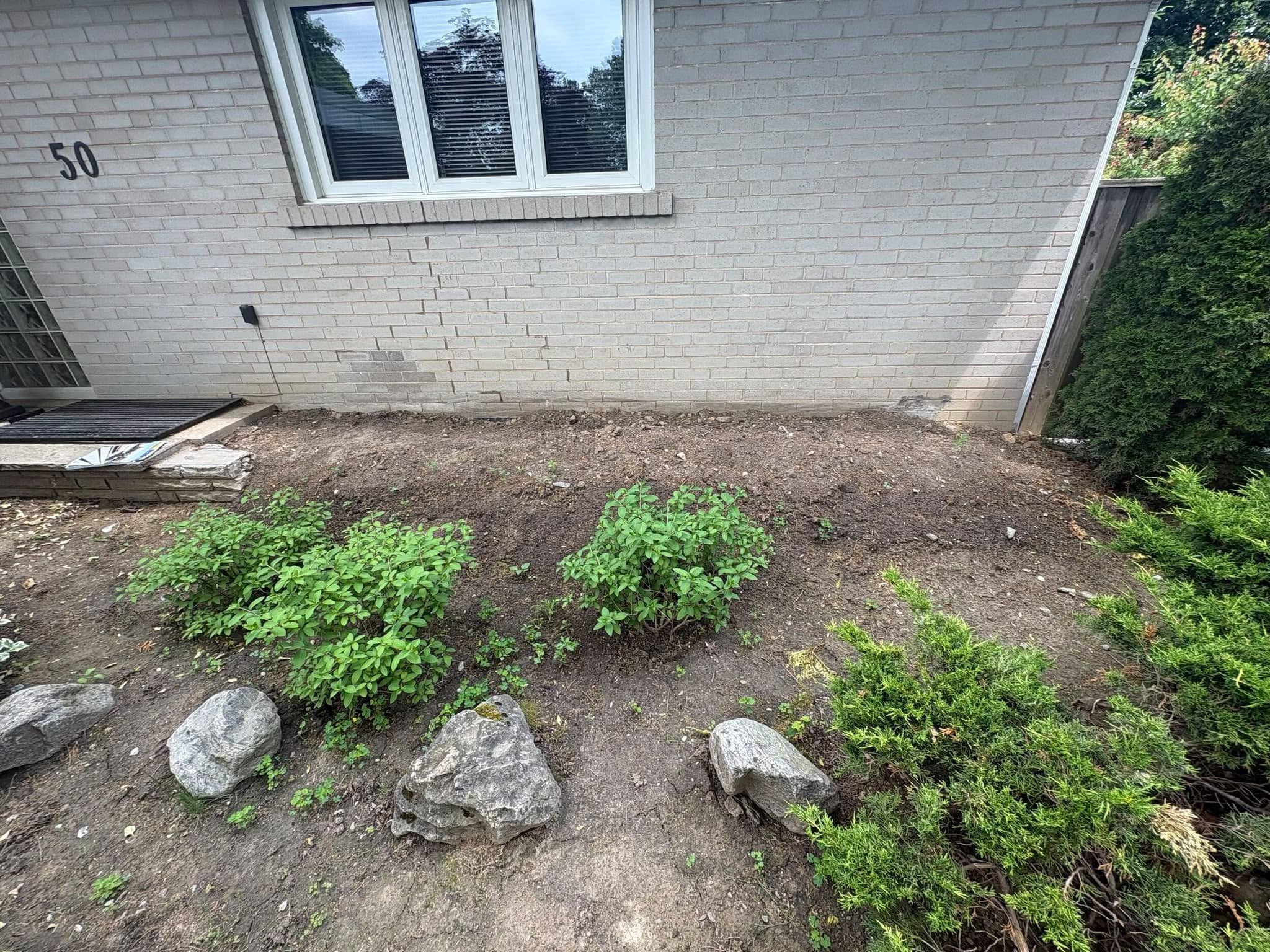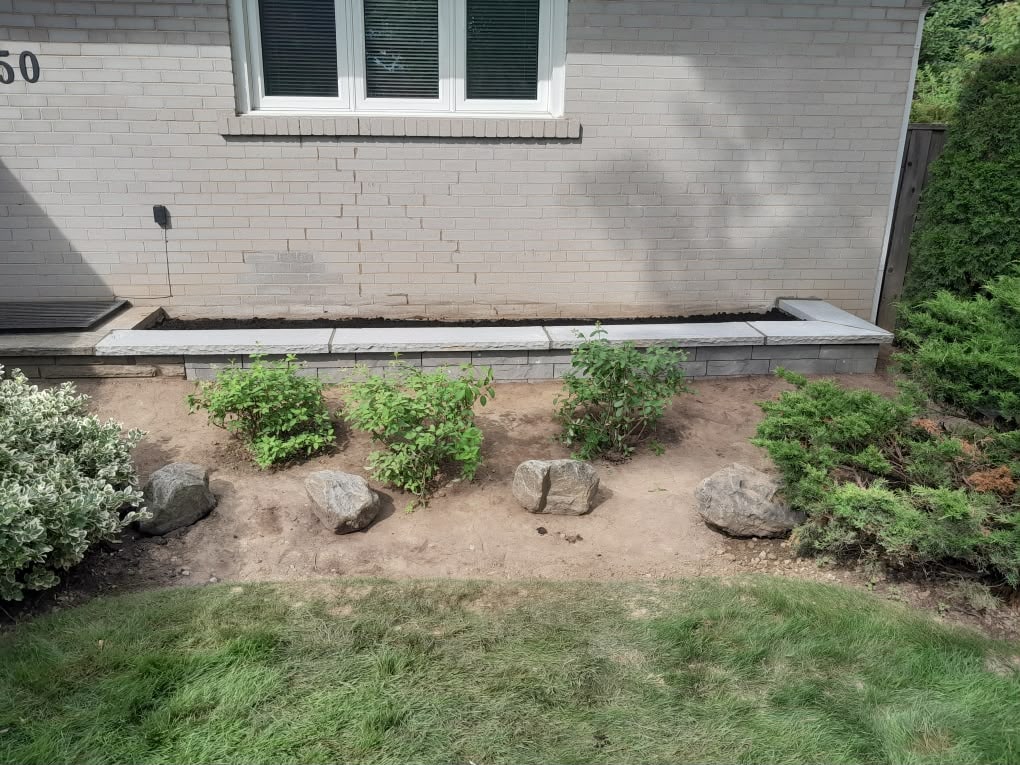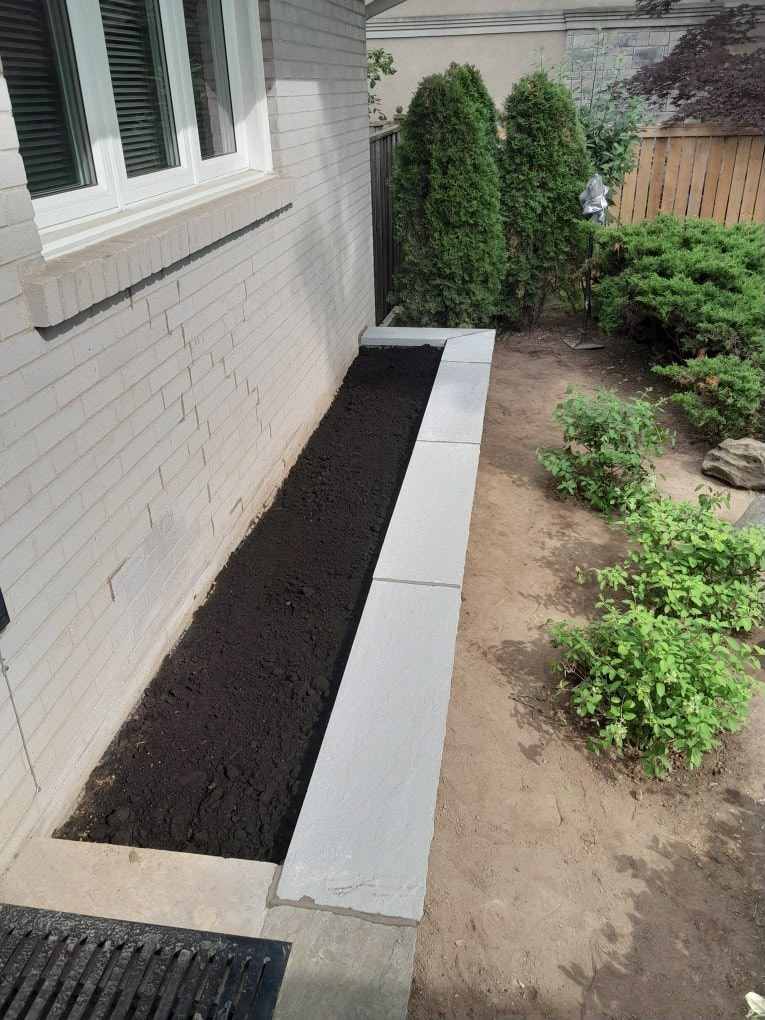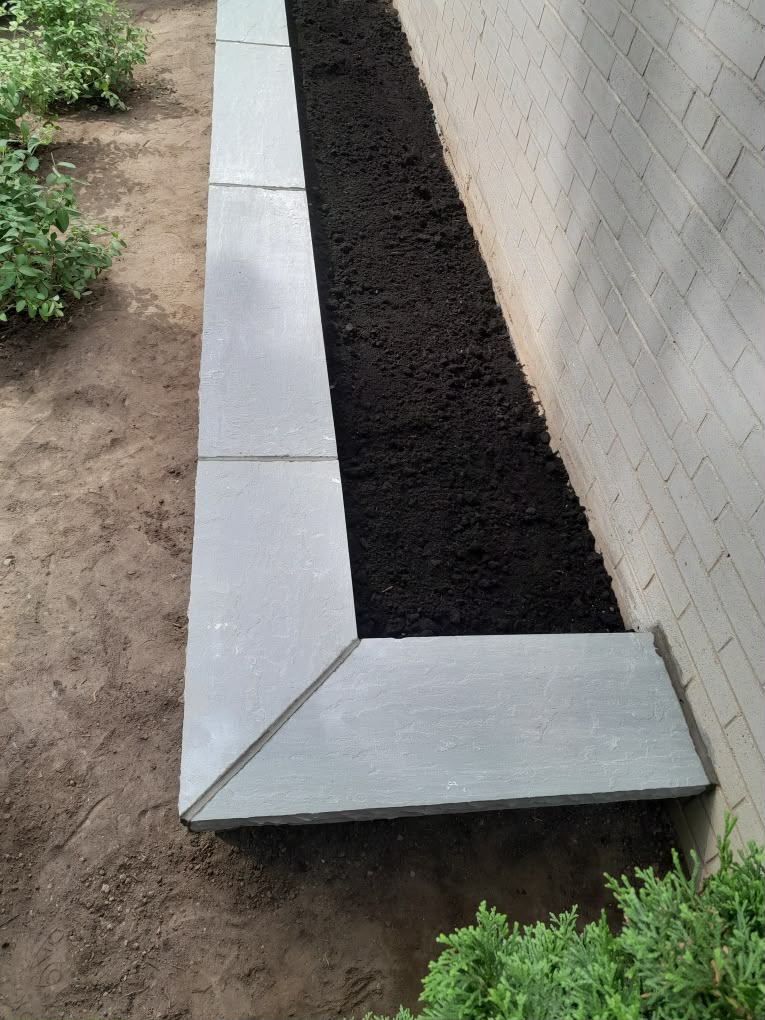
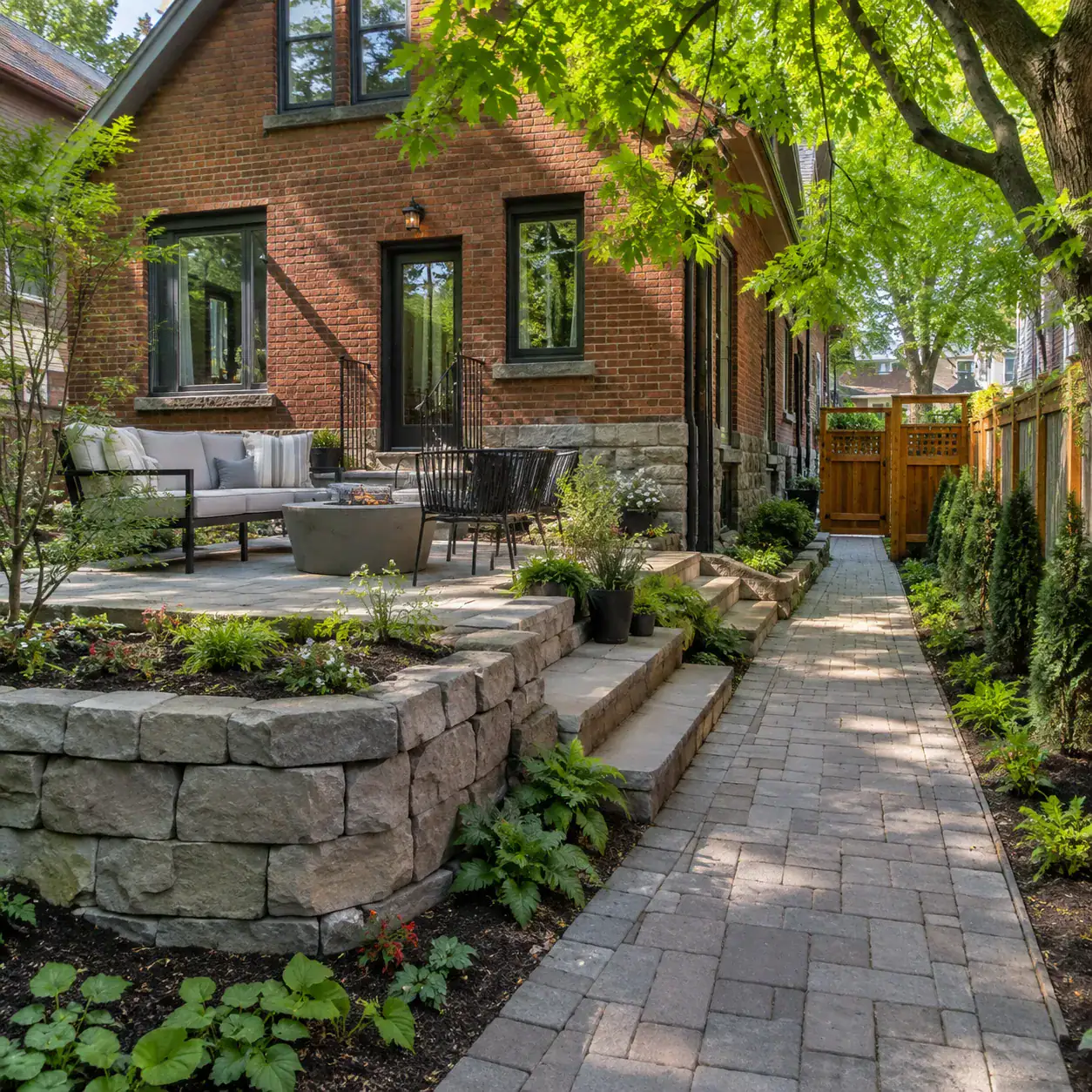
The benefits of masonry in urban landscapes go beyond appearance. Brick, natural stone, concrete, and interlocking pavers can help create durable walkways, patios, entrances, retaining walls, garden borders, steps, courtyards, and exterior features that work well in busy city environments.
For Toronto and GTA homeowners, urban landscaping presents some specific challenges. Properties may have small yards, narrow side passages, sloped lots, mature trees, limited drainage space, heavy foot traffic, older brick homes, and surfaces that need to handle snow, ice, salt, and repeated freeze-thaw cycles. Masonry can be a practical way to organize these spaces when the base, drainage, materials, and layout are planned properly.
This guide explains the main benefits of masonry in urban landscapes, where different materials work best, how masonry can support drainage and usable outdoor space, and what homeowners should consider before adding more hard surfaces to a city property.
Why Masonry Works Well in Urban Landscapes
Masonry works well in urban landscapes because it combines durability, structure, and design flexibility. It can define spaces without requiring large amounts of land, which is useful on Toronto lots where every metre of outdoor space matters.
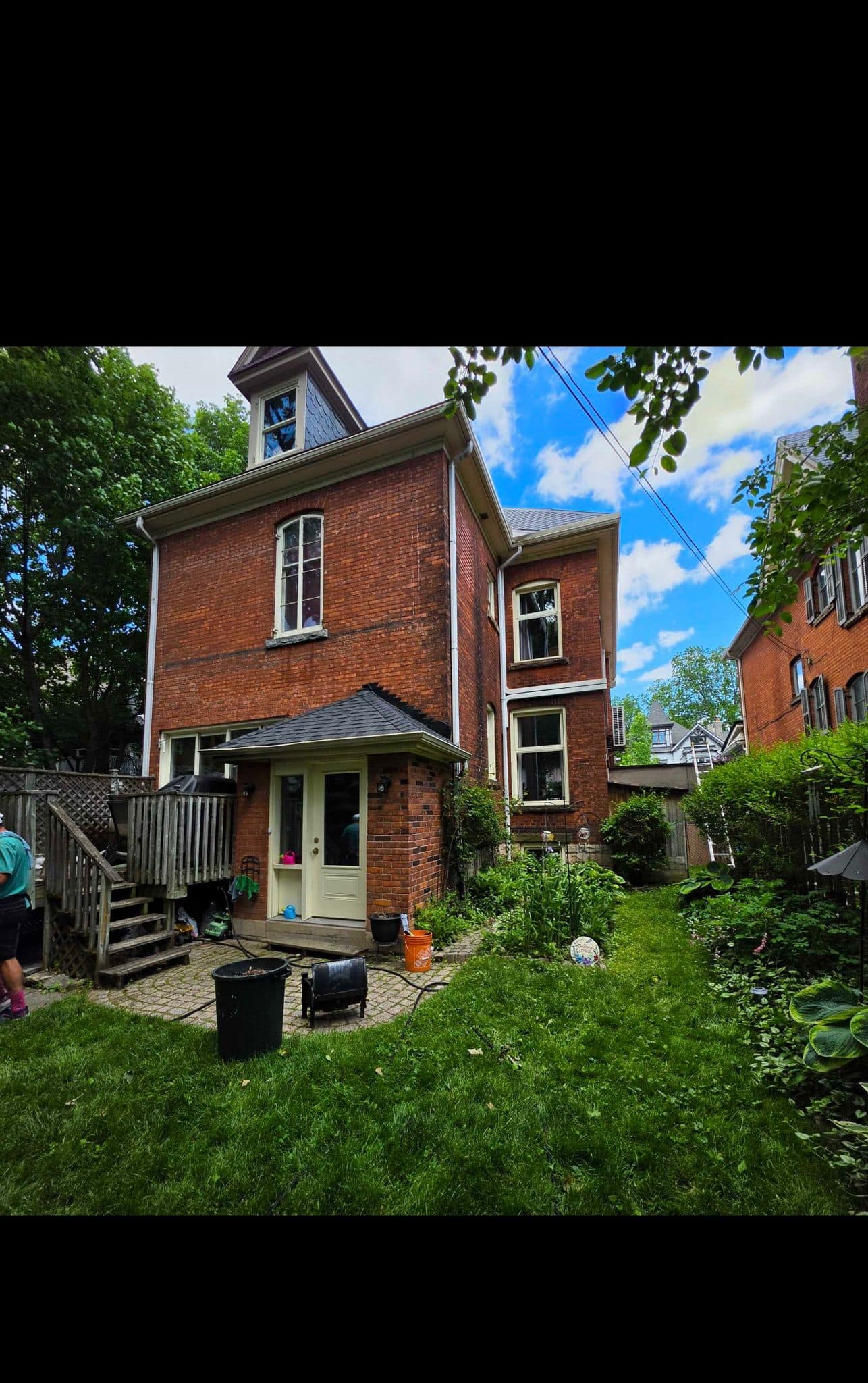
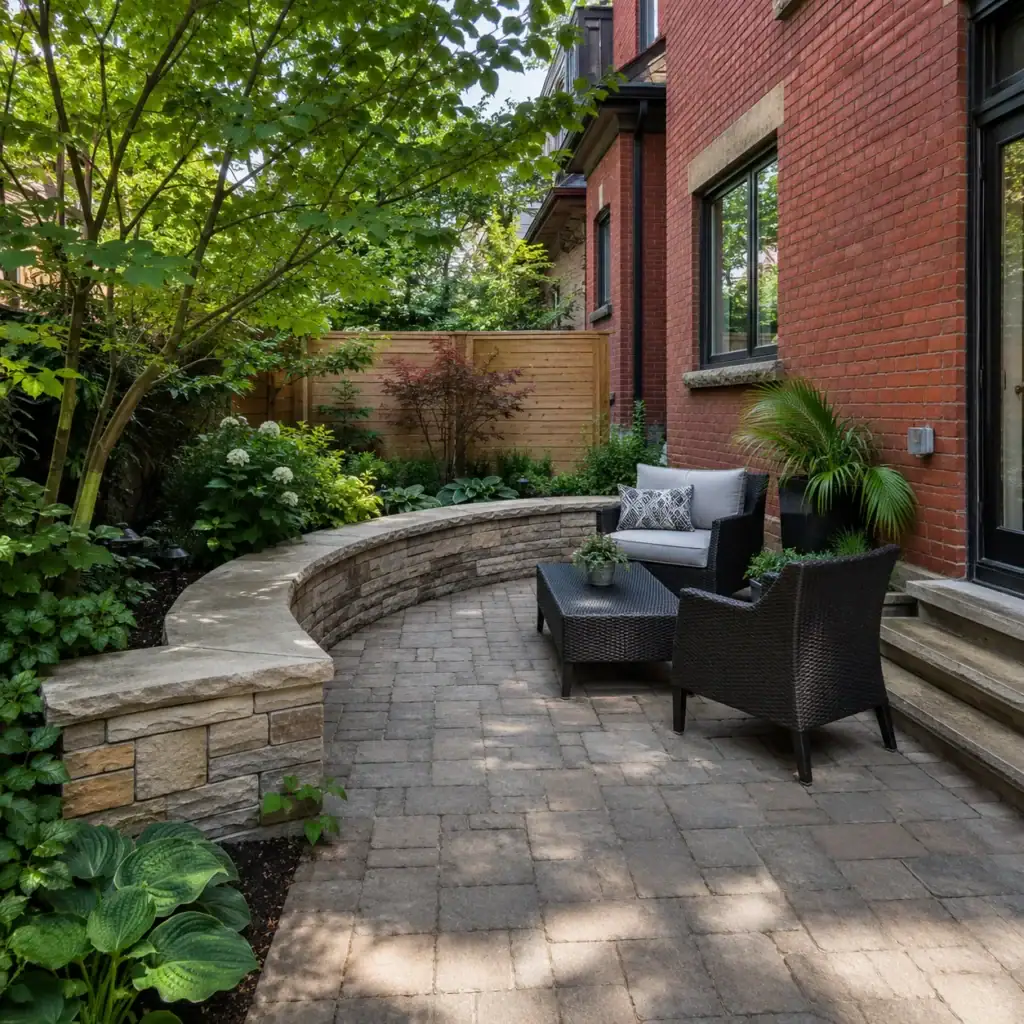
A small backyard can use an interlocking patio for dining, a low stone wall for seating, and raised masonry planting areas without taking over the entire property. A narrow side yard can become a stable walkway. A sloped front garden can use retaining walls and steps to make the entrance safer and easier to maintain.
Masonry also fits a wide range of architectural styles. Red brick can complement older Toronto homes, natural stone can soften a landscaped yard, and clean-lined concrete or interlocking pavers can suit more modern properties.
The real benefit comes from combining appearance with function. Good urban masonry should help people move through the property, manage grade changes, control water, protect planting areas, and create usable outdoor spaces.
1. Masonry Makes Small Outdoor Spaces More Useful
One of the biggest benefits of masonry in urban landscapes is its ability to make limited space more usable. Toronto properties often have compact front yards, small backyards, narrow walkways, and tight transitions between homes.
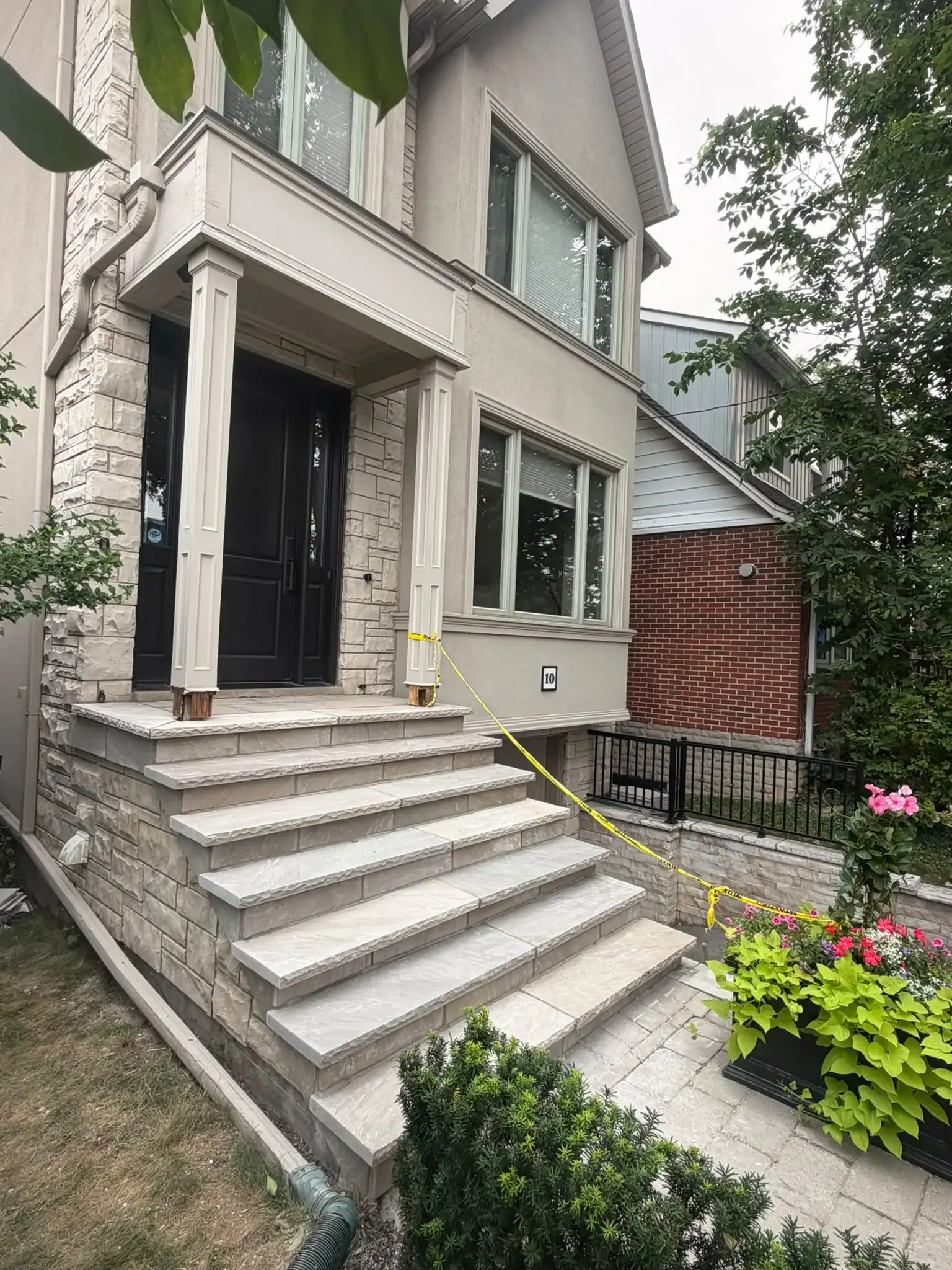
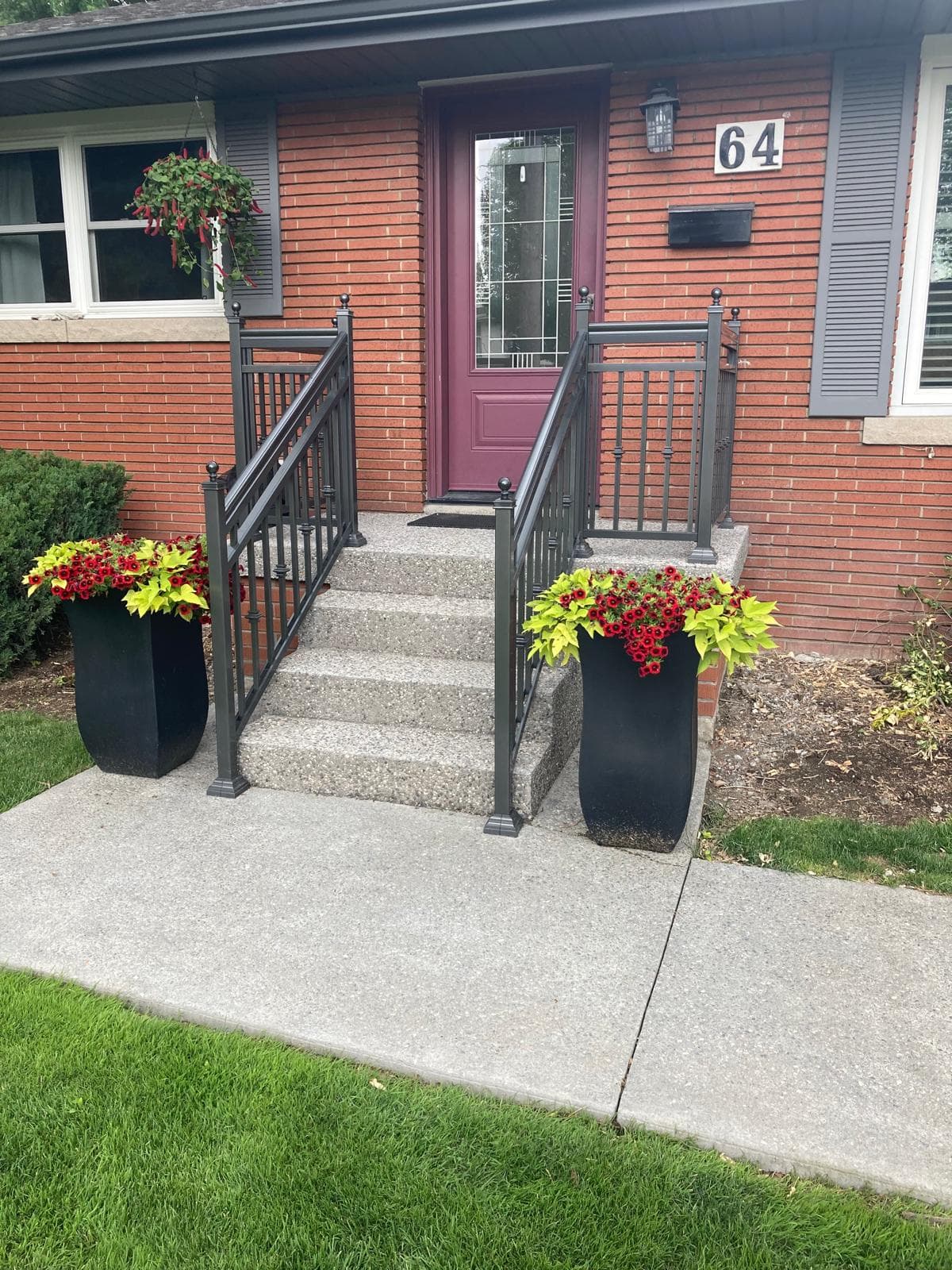
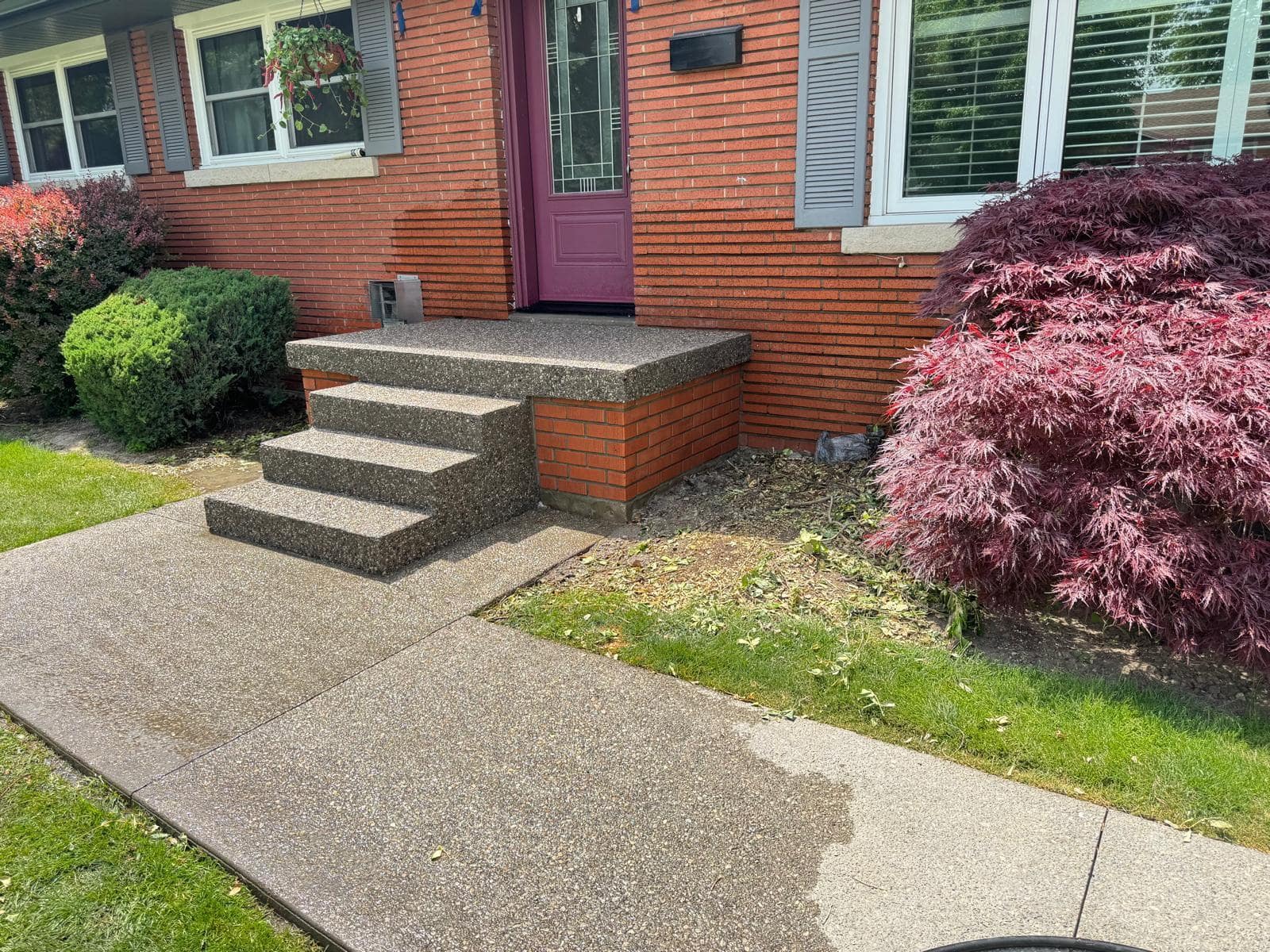
A properly planned masonry layout can divide these areas into clear zones without making the property feel crowded. Interlocking stone can create a compact patio. A low retaining wall can turn a slope into a level planting bed. Stone steps can connect two elevations. A defined walkway can prevent people from cutting across soil or grass.
This matters more on smaller lots because wasted space is more noticeable. A poorly placed wall or oversized patio can make a backyard feel smaller. A well-scaled masonry feature can do the opposite by giving each part of the yard a clear purpose.
For patios, walkways, entrances, and other paved areas, A&A Masonry’s interlocking stone services in Toronto page explains how paver systems work across different exterior spaces.
2. Masonry Handles Heavy Everyday Use
Masonry is useful in busy urban areas because properly installed surfaces can handle regular foot traffic, outdoor furniture, bicycles, bins, garden equipment, and seasonal maintenance.
Front walks and entrances see daily use. Driveways carry vehicles. Backyard patios support tables, grills, and gatherings. Steps need to remain stable through winter. These areas need more than an attractive surface. They need a properly prepared base and materials suited to the expected use.
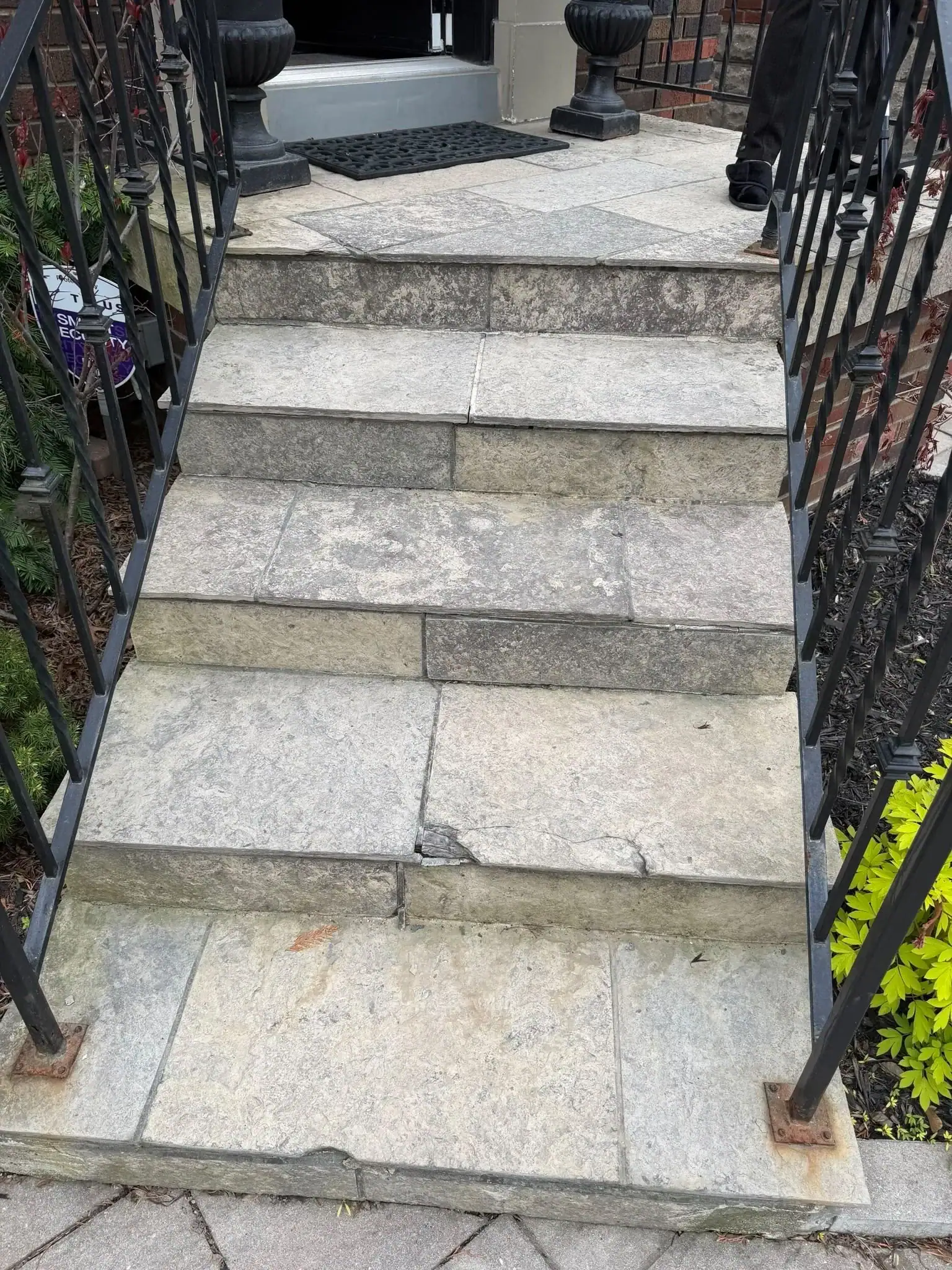
Interlocking pavers can be particularly practical because you can often lift and reset individual units if localized settlement develops or underground work is required. Natural stone can provide strong steps, walls, and landscape features. Brick and concrete masonry can create durable boundaries and structures.
Durability still depends on installation. Thin base preparation, weak edge restraint, poor drainage, or the wrong material can shorten the life of an otherwise good masonry project.
3. Masonry Can Organize Changes in Grade
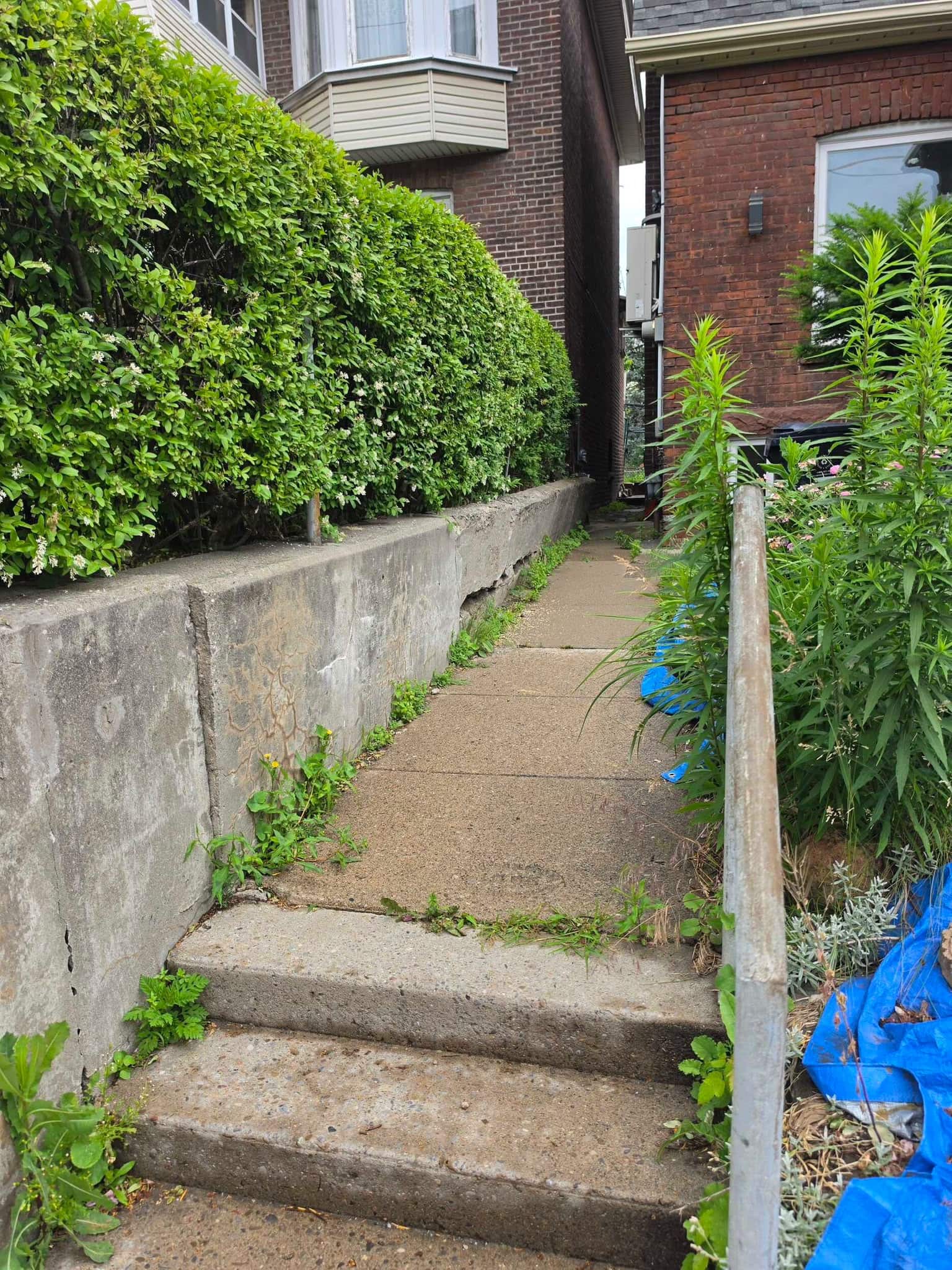
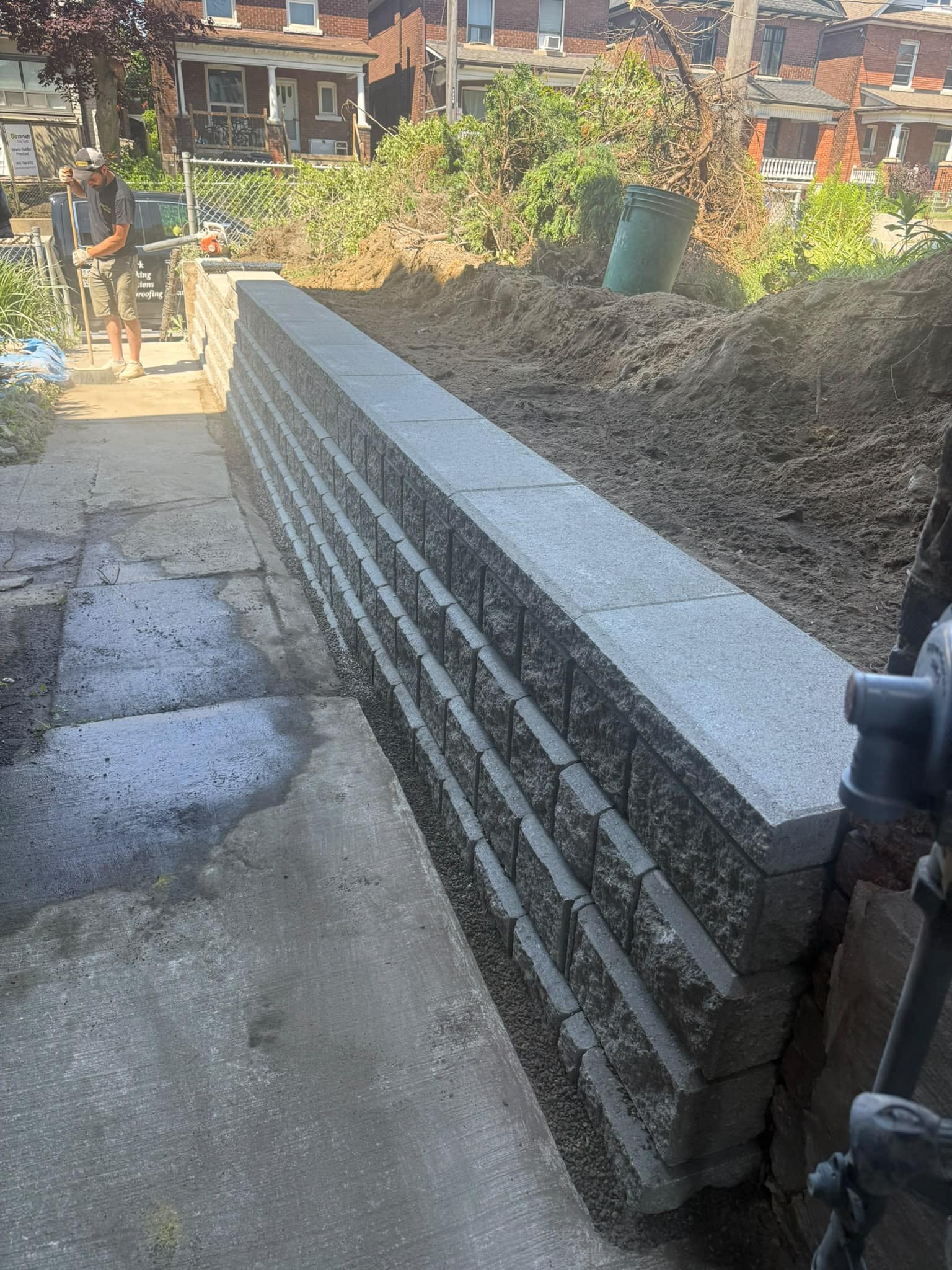
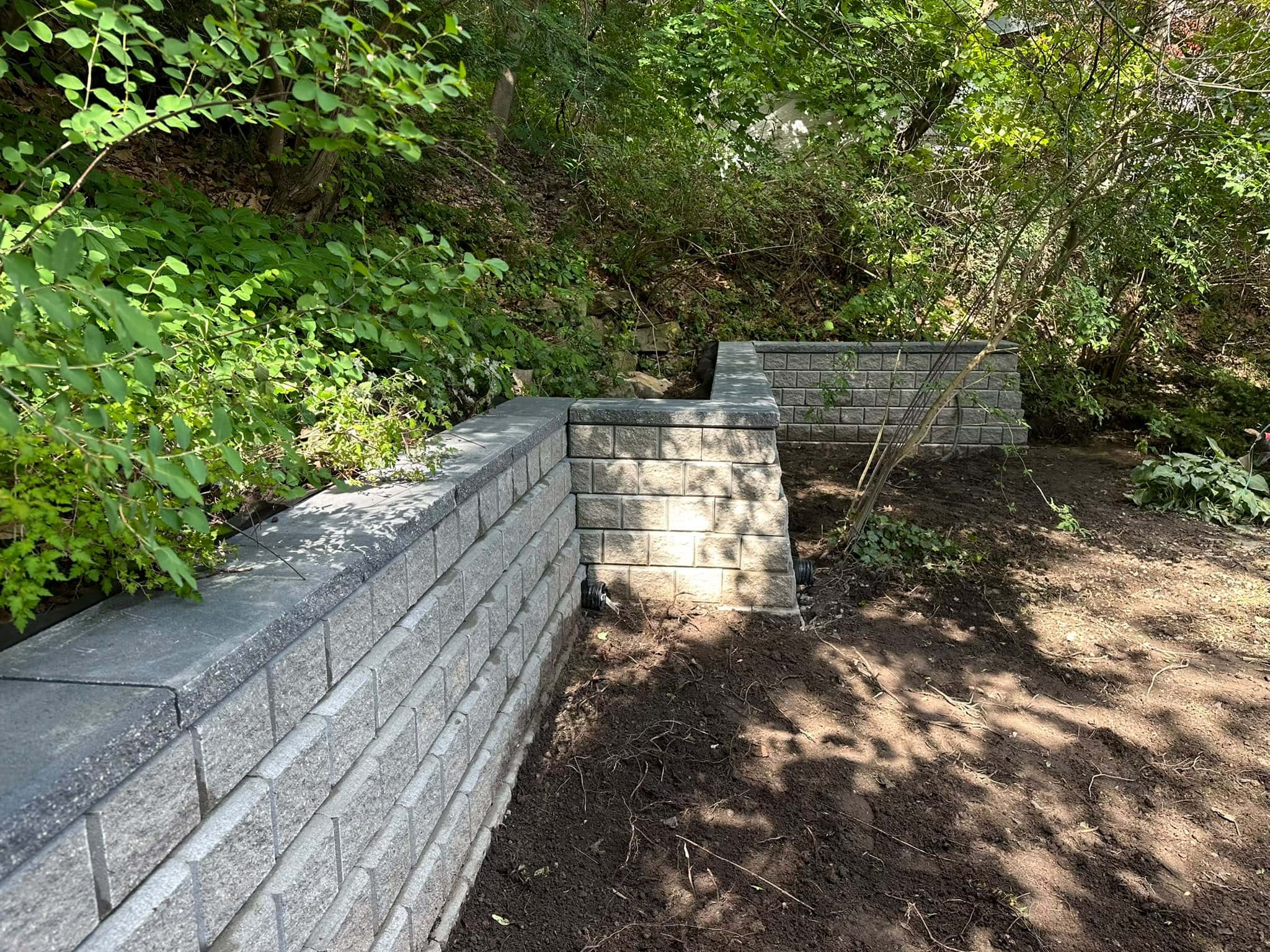
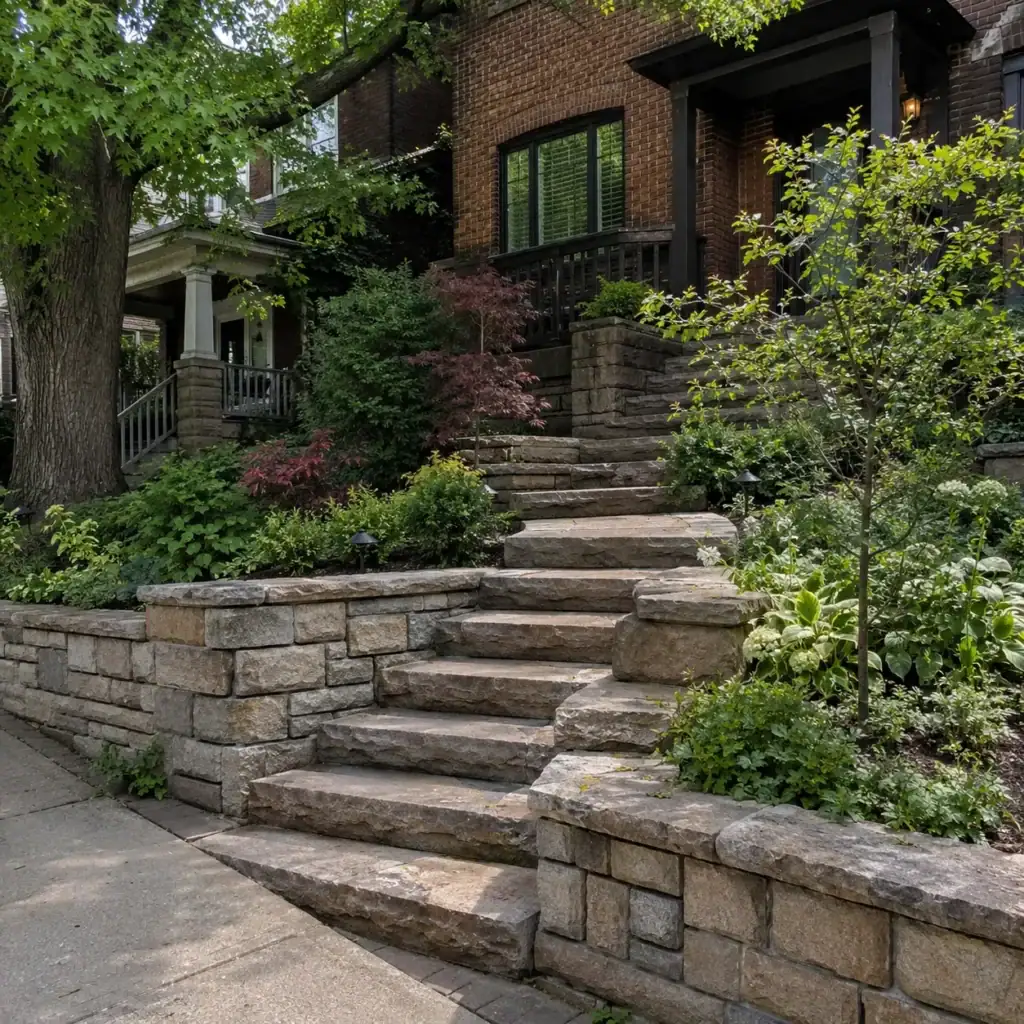
Masonry can make sloped urban properties safer and easier to use by controlling changes in elevation. Toronto may not be mountainous, but many neighbourhoods have sloped driveways, raised front yards, basement entrances, garden terraces, and properties where one part of the yard sits higher than another.
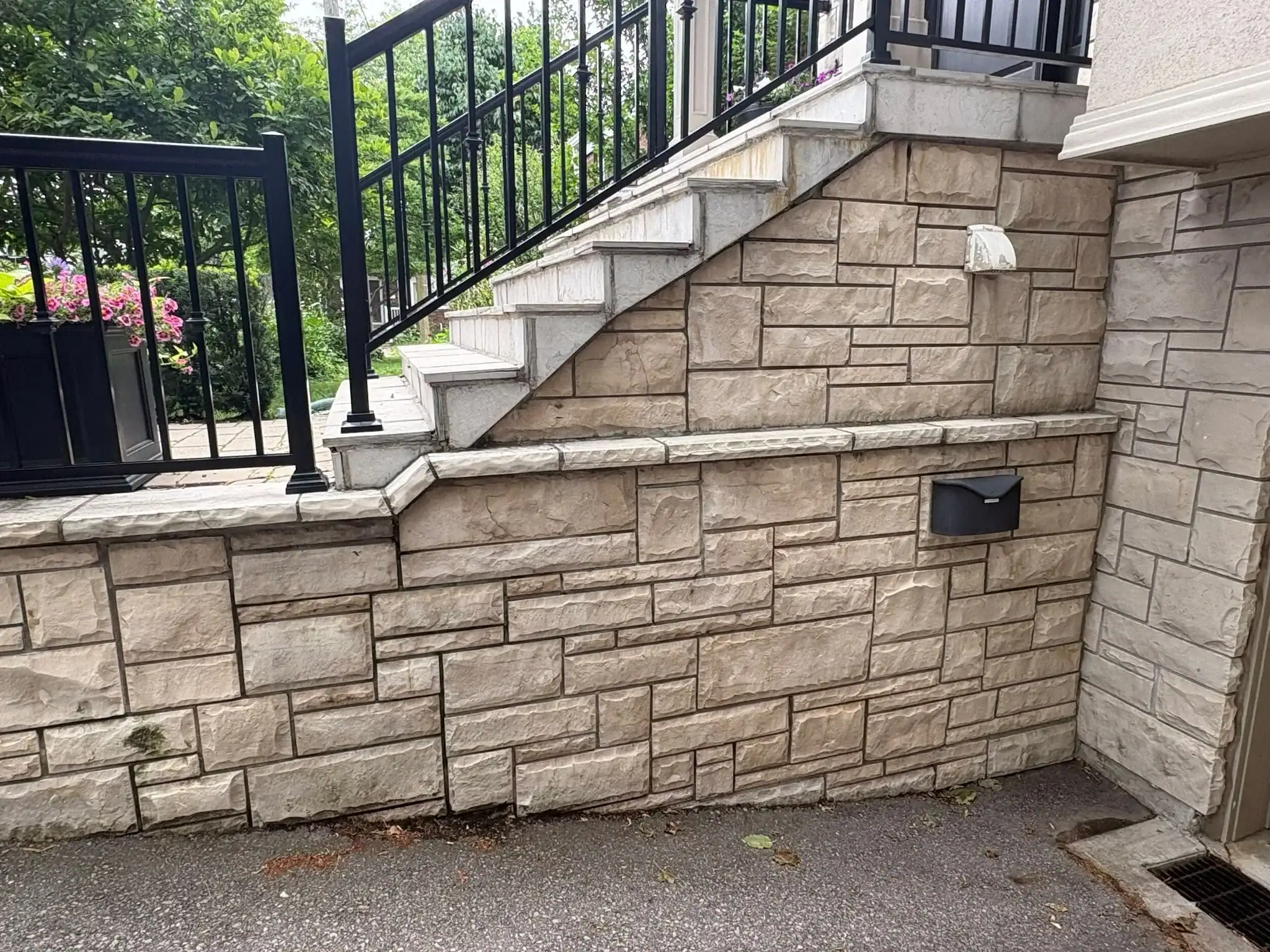
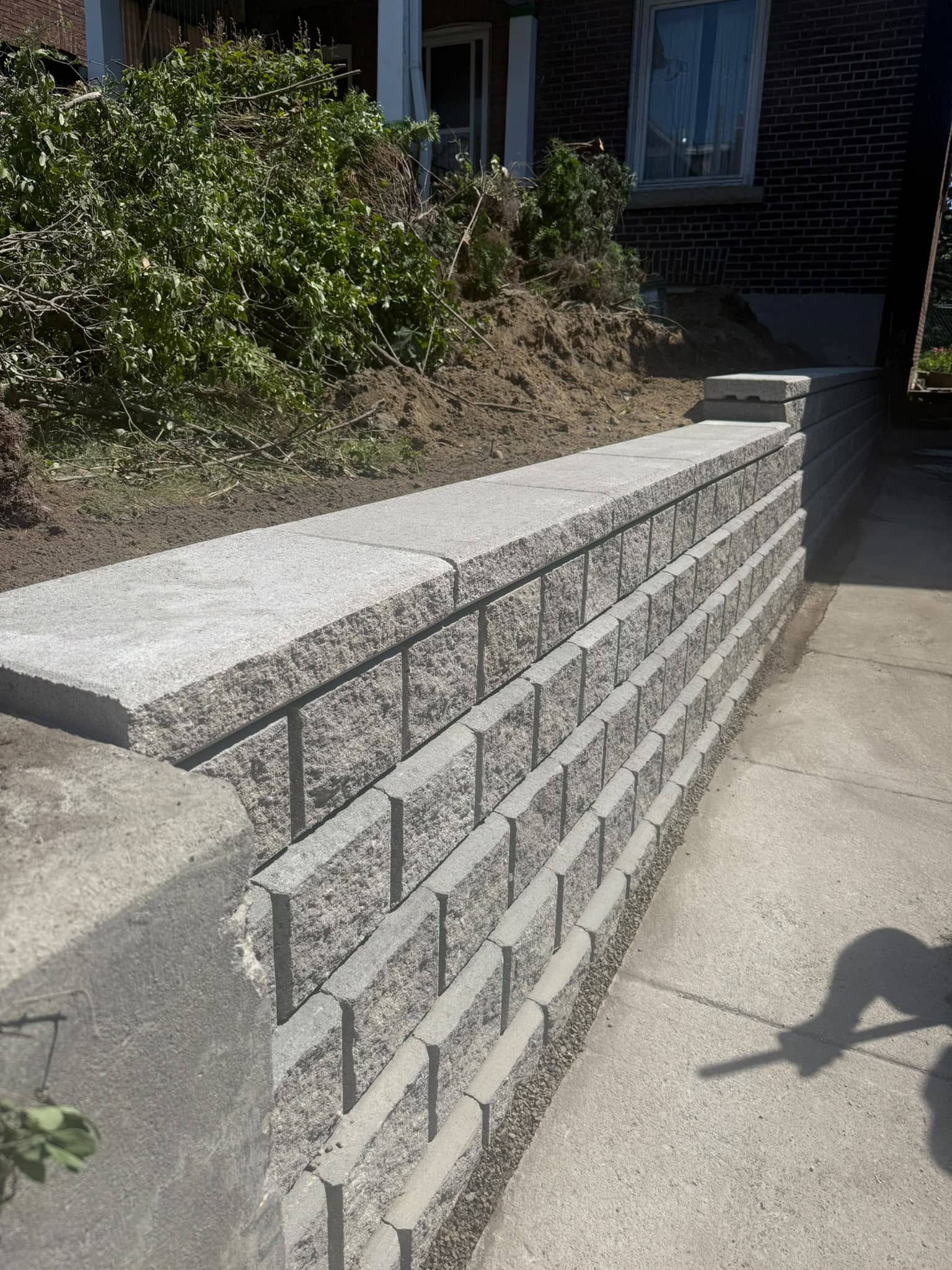
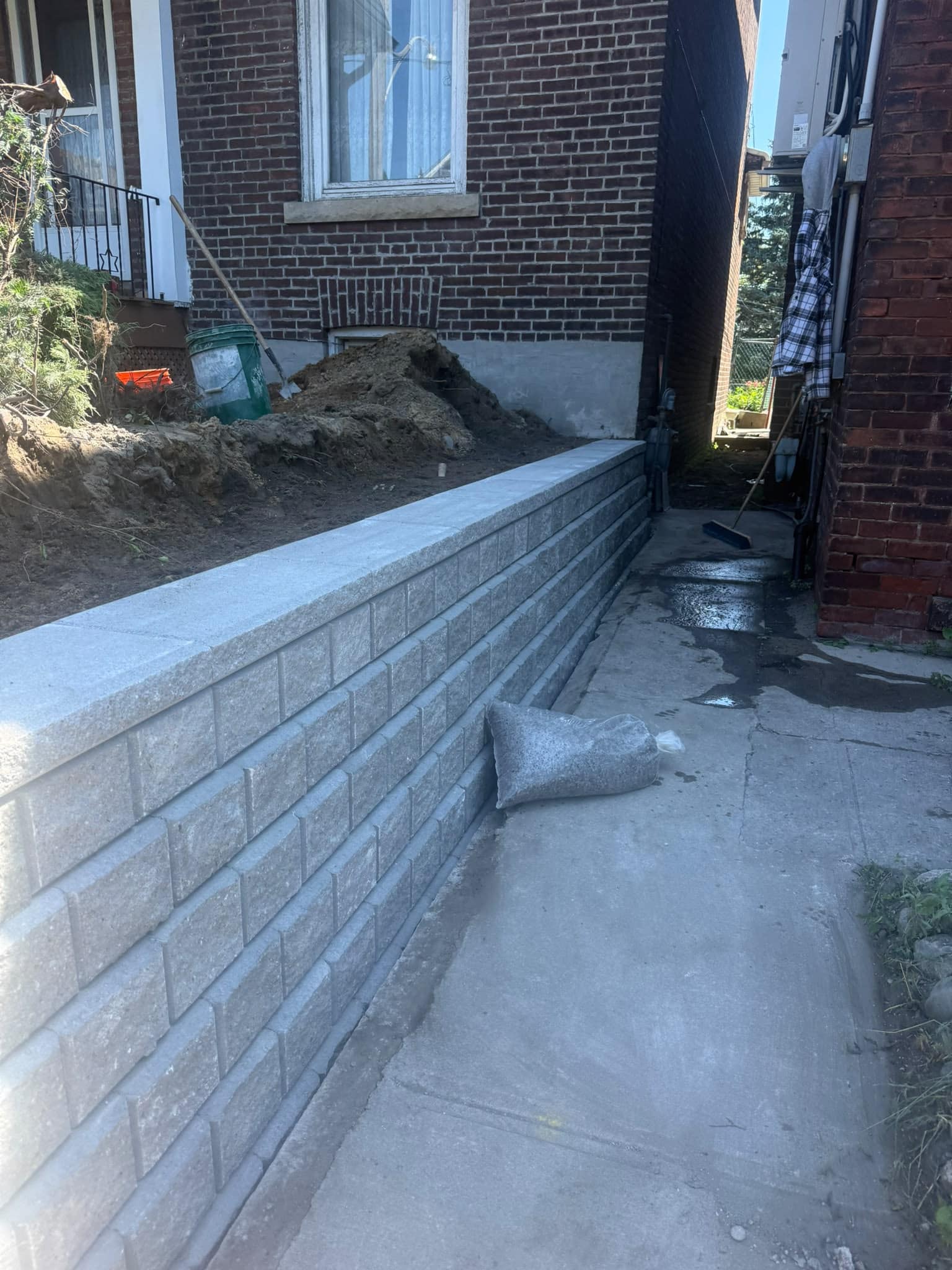
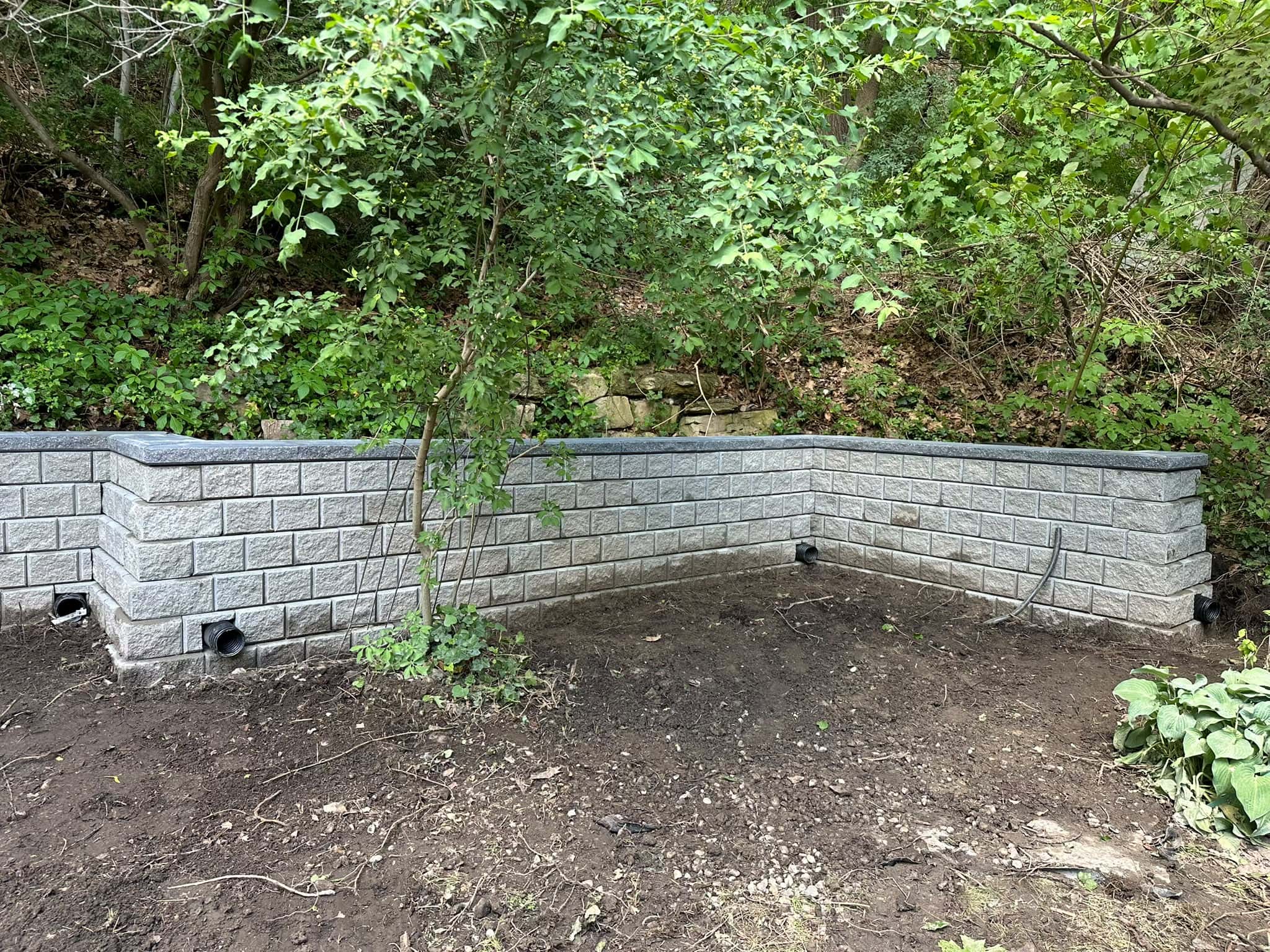
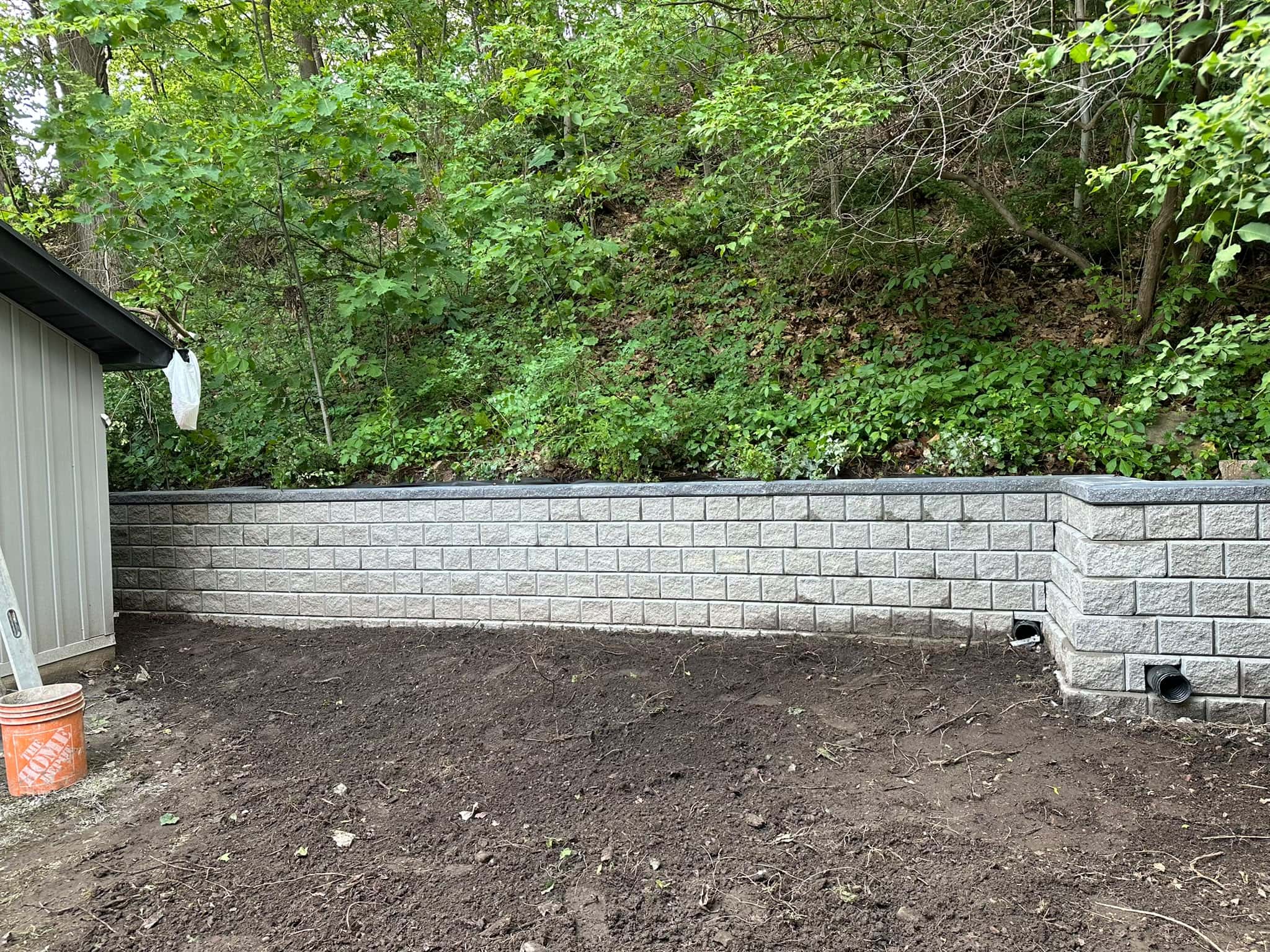
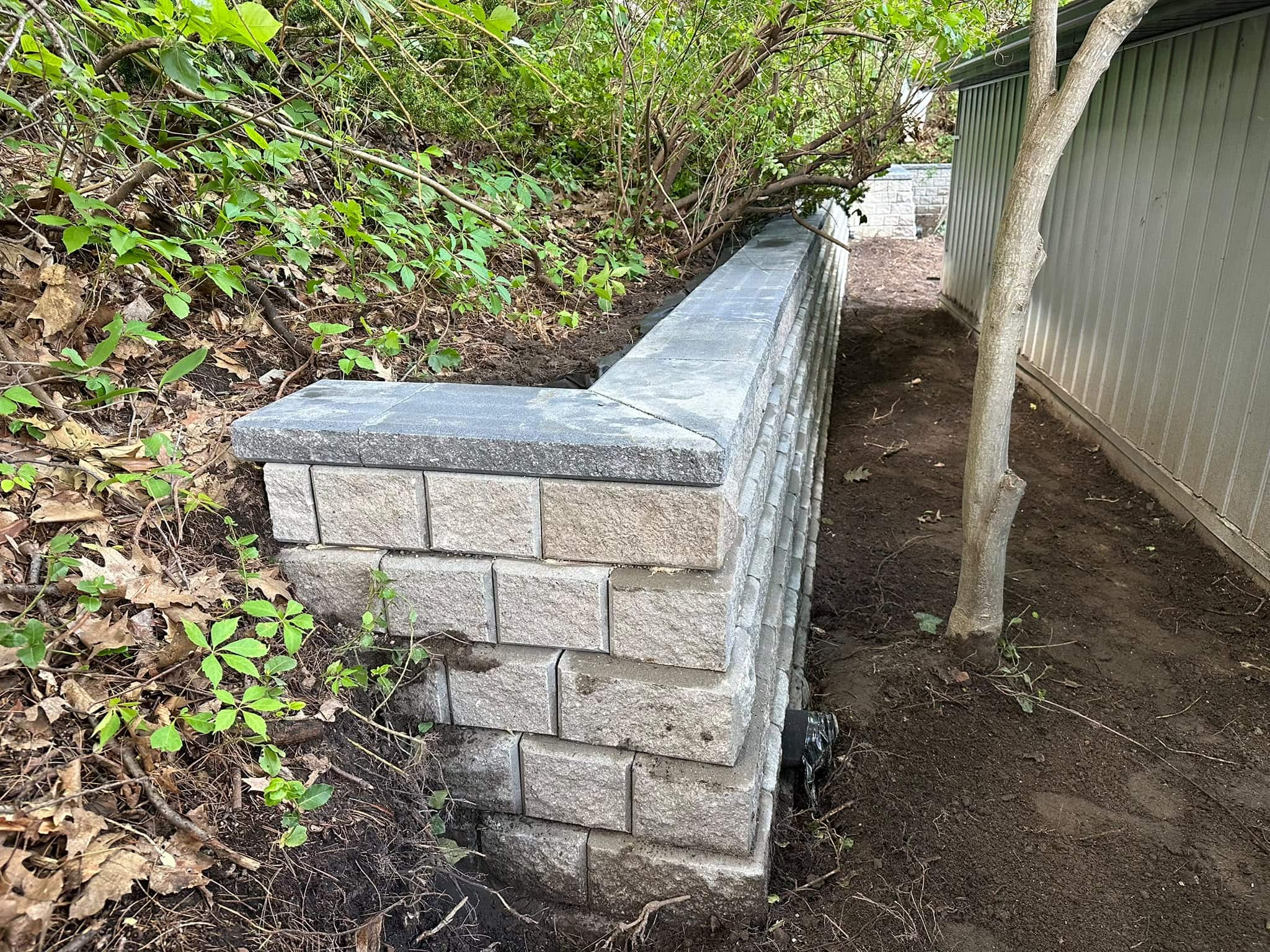
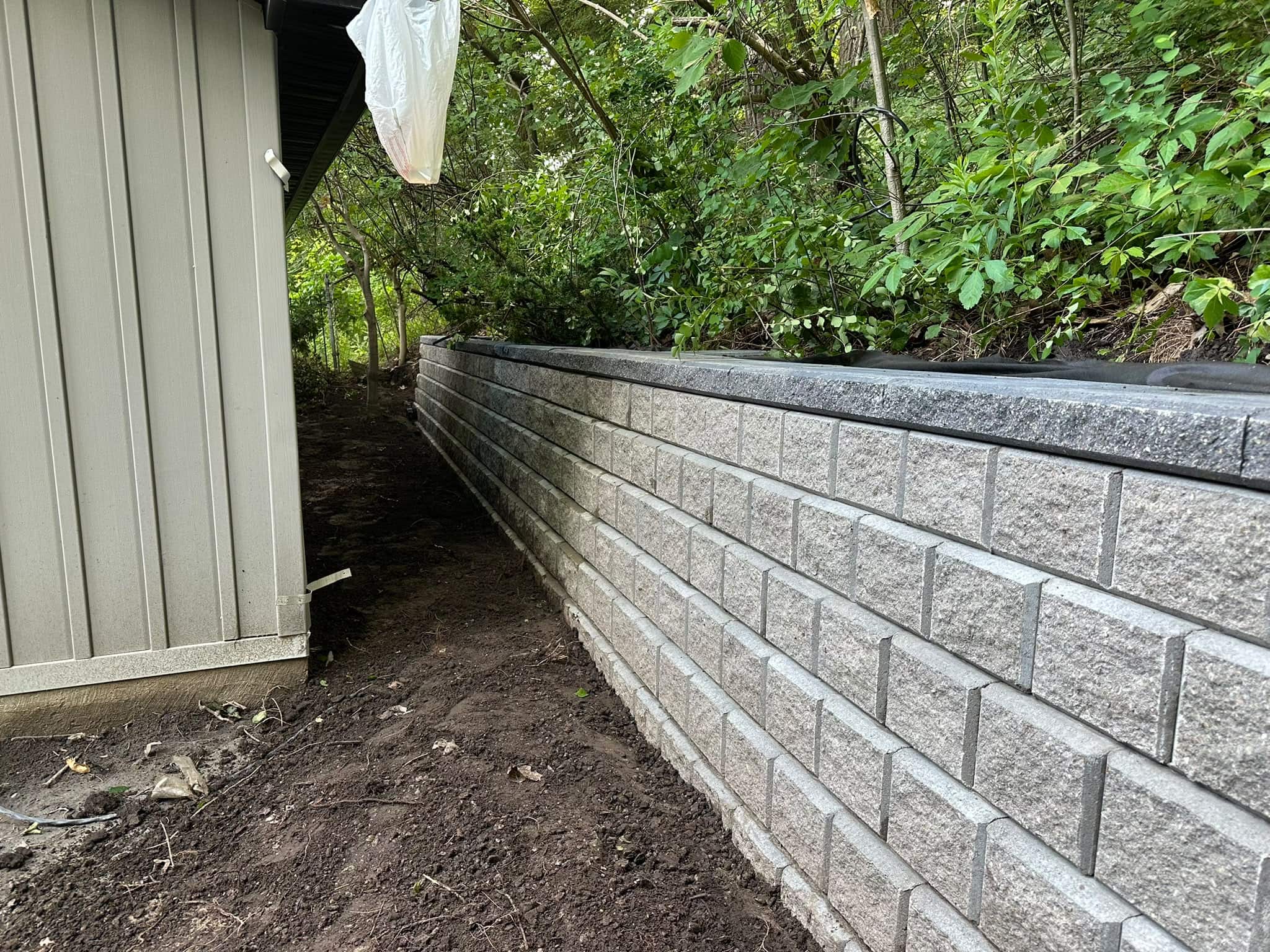
Retaining walls can hold back soil and create flatter, more usable spaces. Steps can provide safer transitions between levels. Low garden walls can separate planting areas from patios and walkways.
A retaining wall is different from a decorative border. Once a wall is holding back a meaningful amount of soil, drainage, foundation preparation, wall type, height, and soil pressure become important.
A&A Masonry’s retaining walls Toronto page explains how retaining walls can address slopes, erosion, garden levels, drainage, and usable landscape space.
4. Masonry Can Help Define Walking Routes
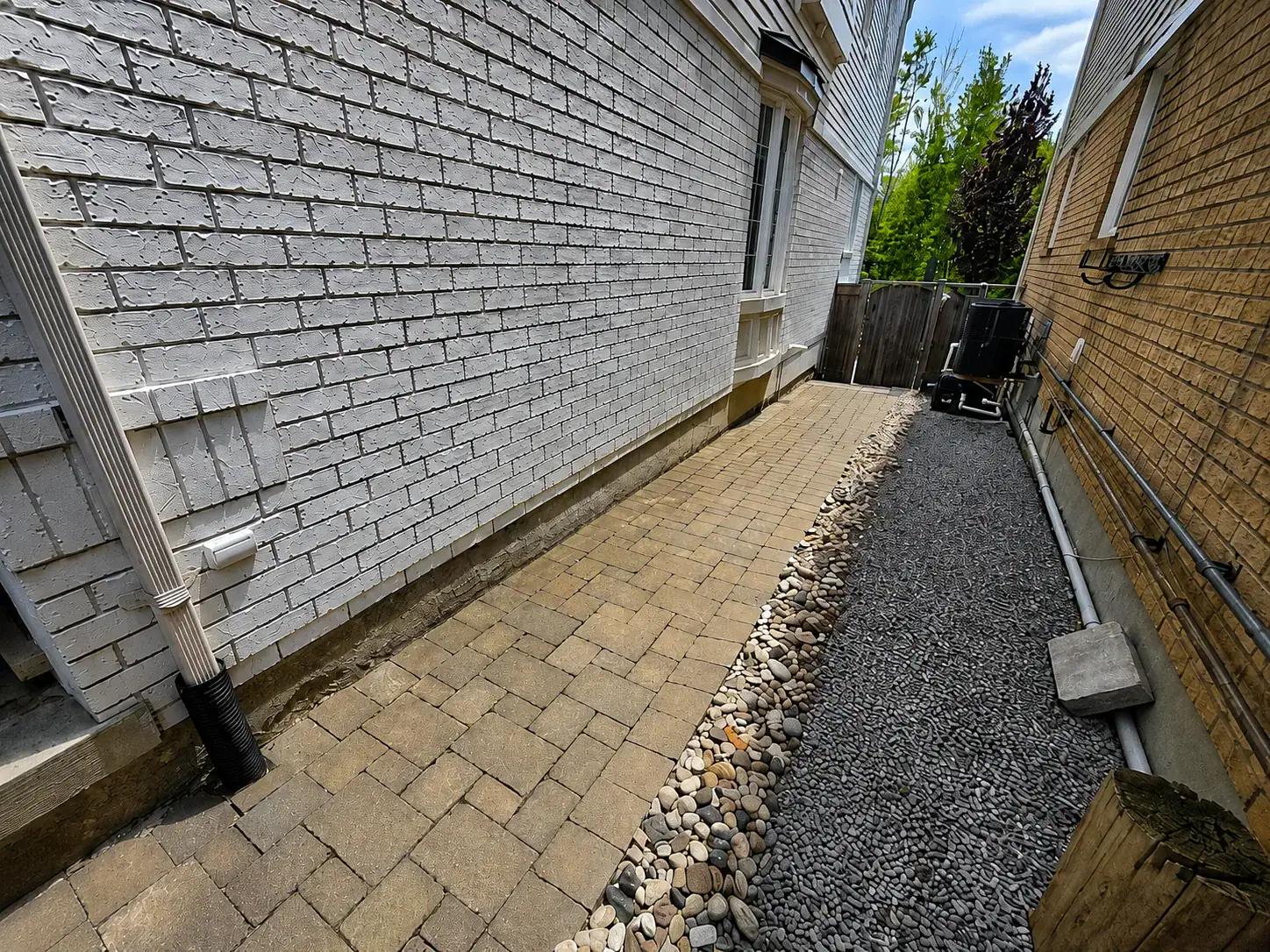
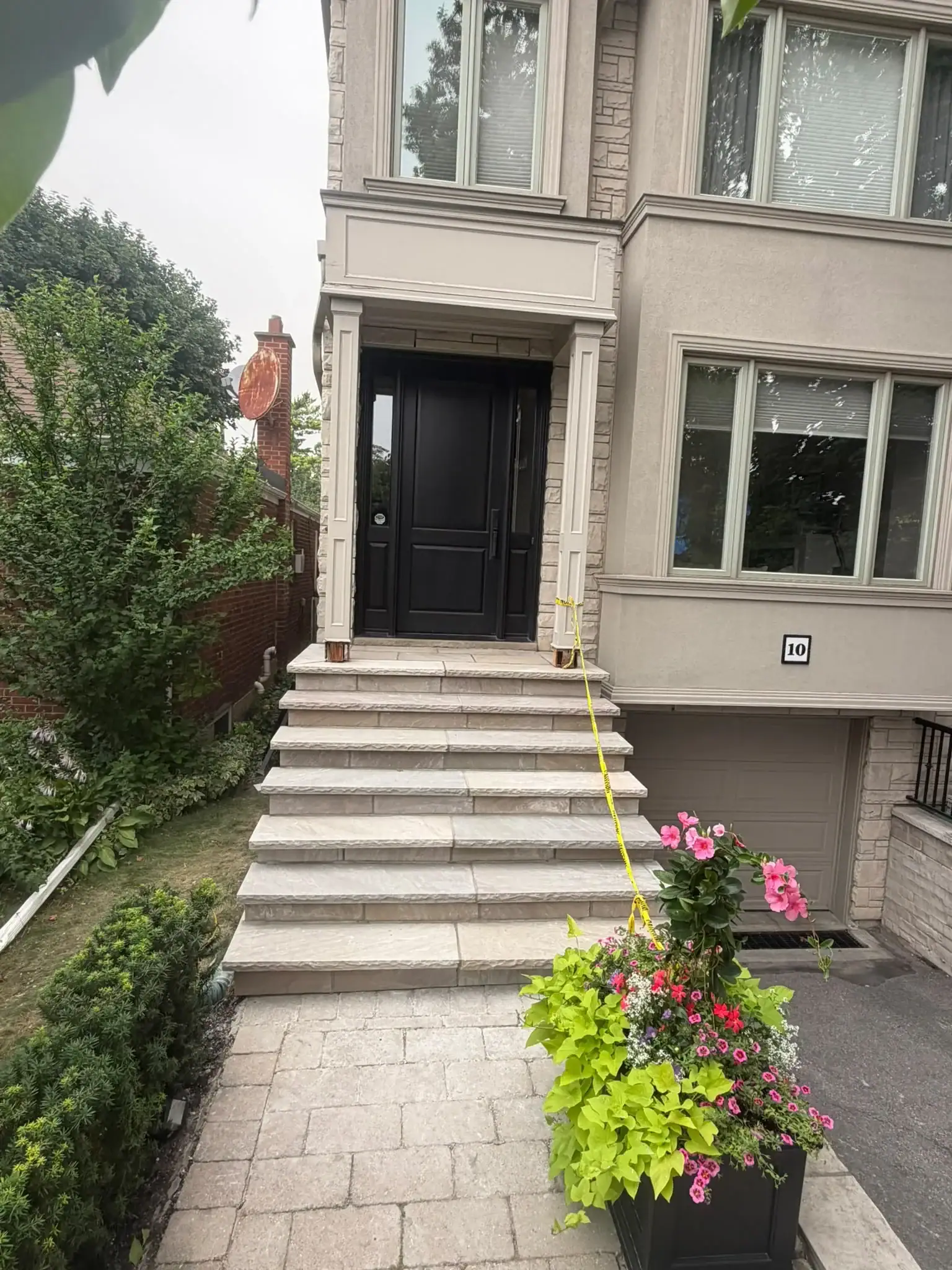
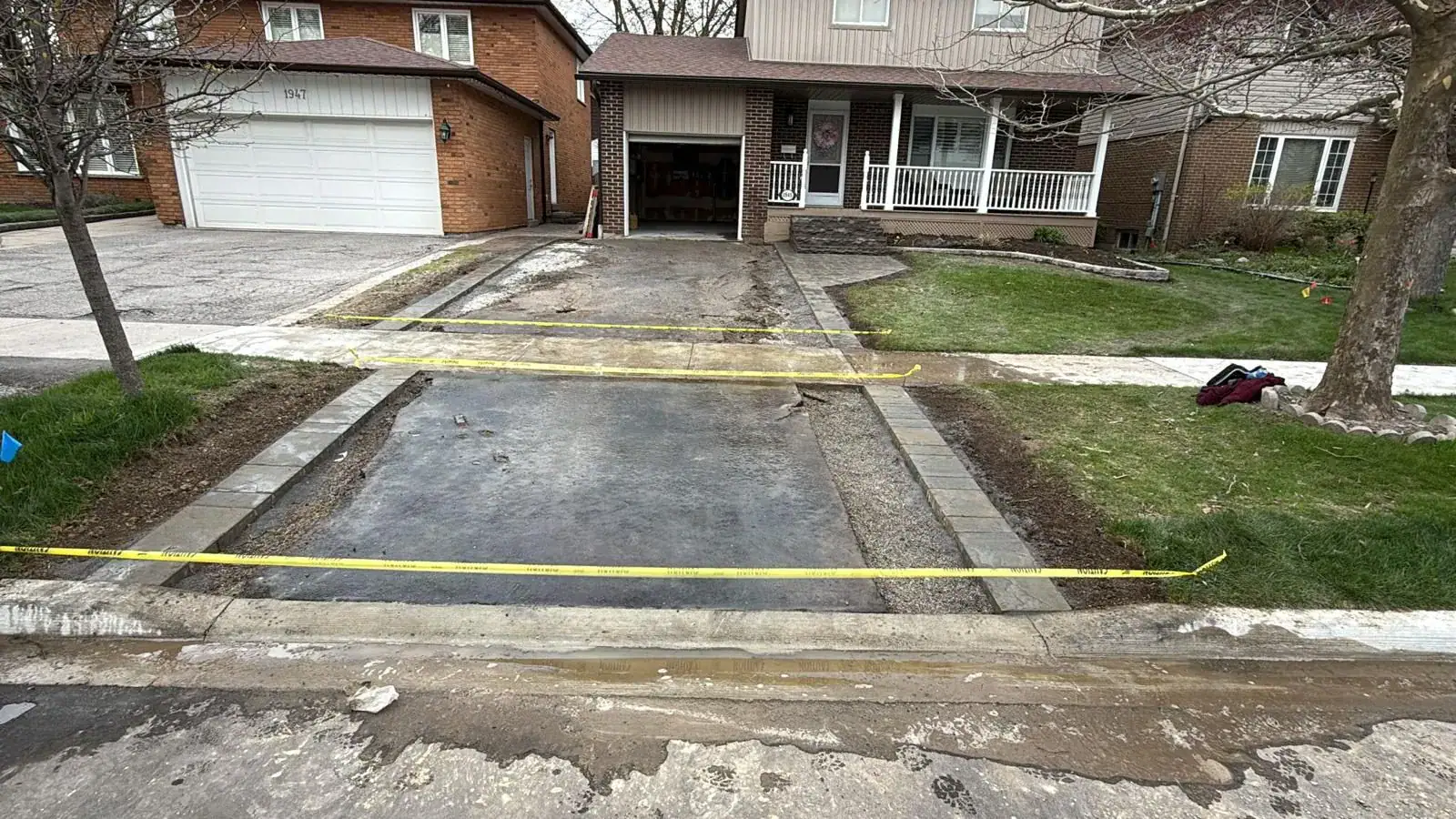
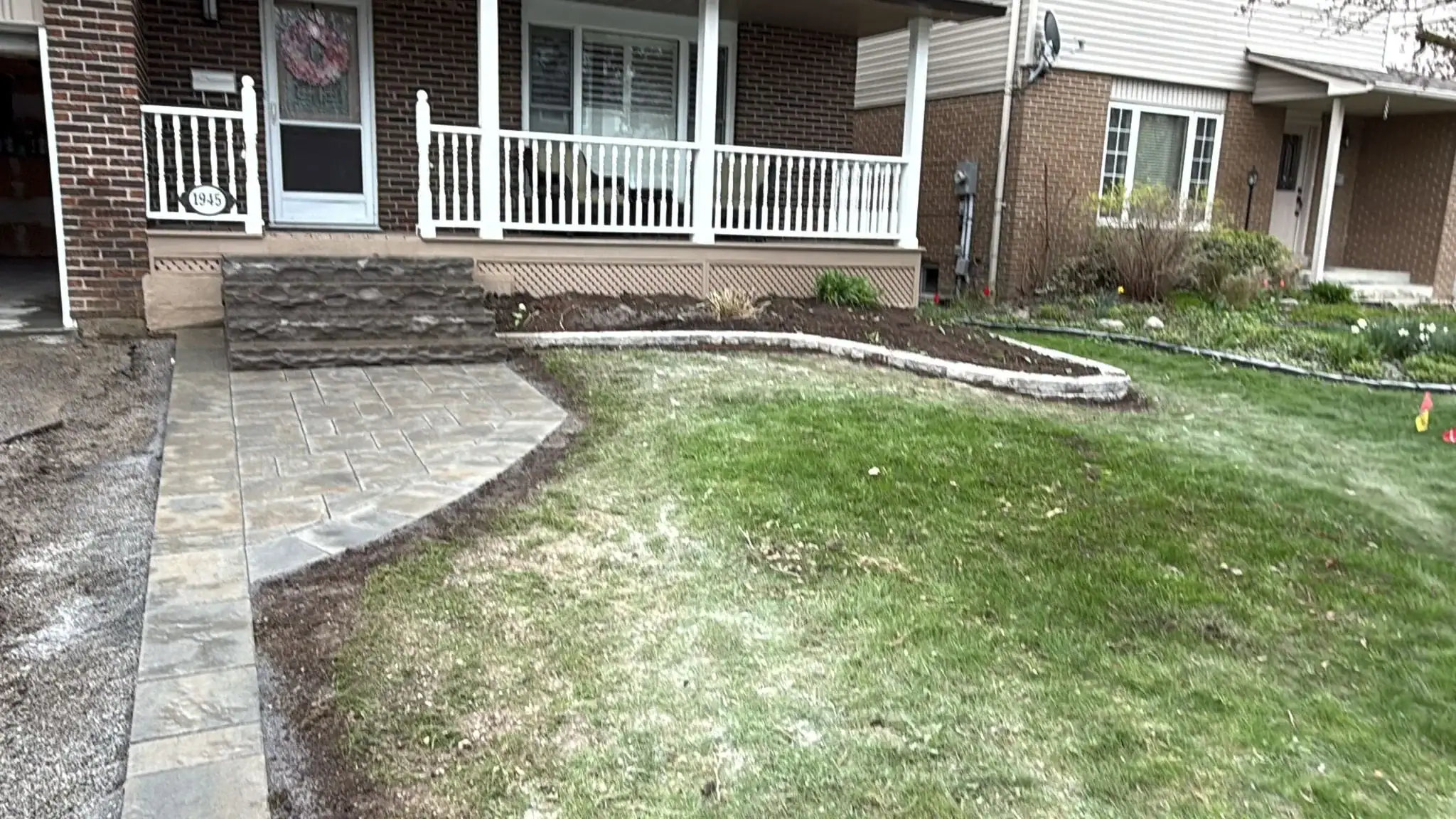
Clear masonry walkways can improve how people move through an urban property. A defined path from the sidewalk to the front entrance, backyard, garage, or side gate can make the property easier to use in every season.
Good walkway planning considers width, slope, step transitions, drainage, lighting locations, and snow clearing. The path should feel natural, not force people around awkward corners or through narrow spaces.
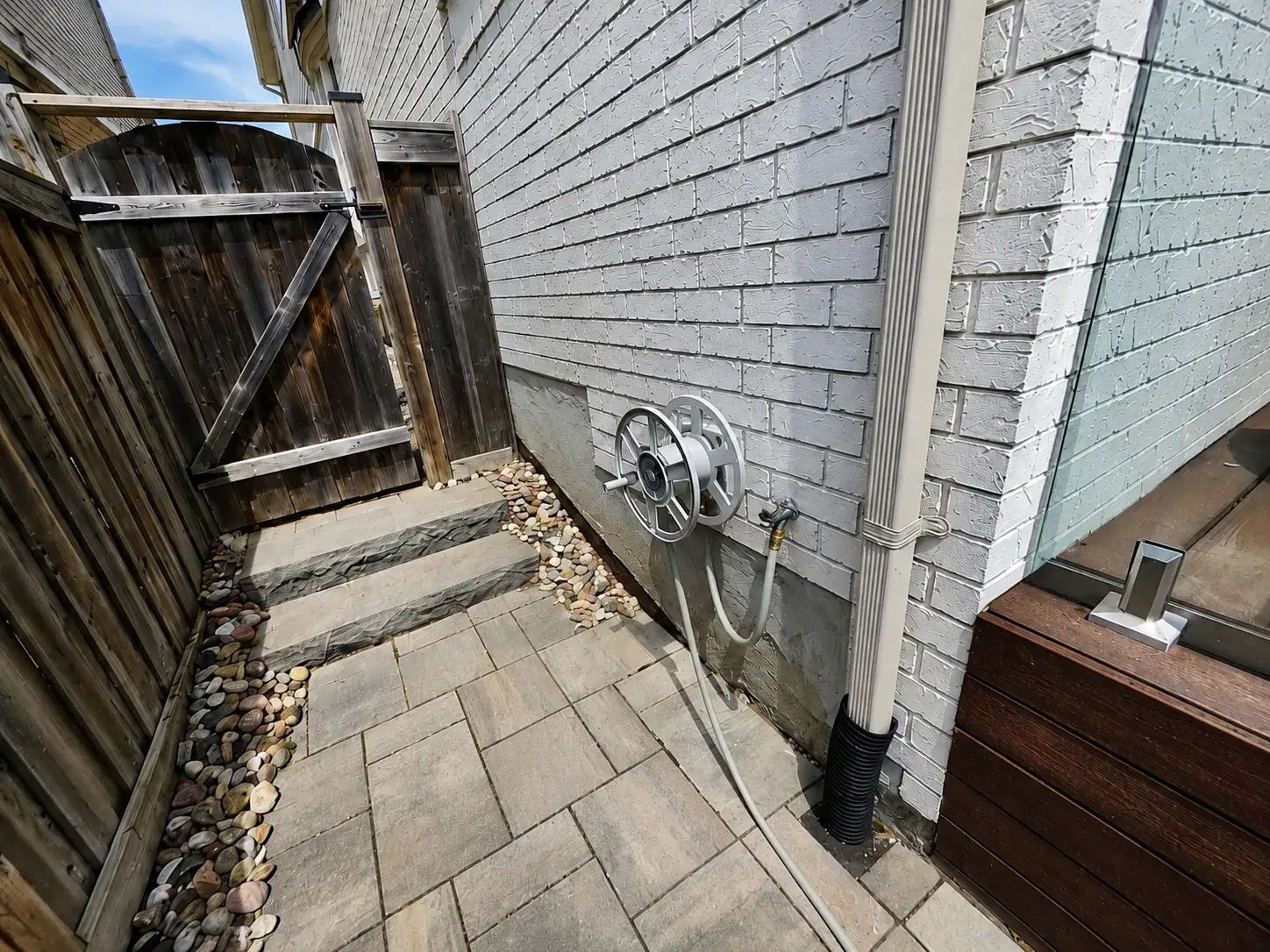
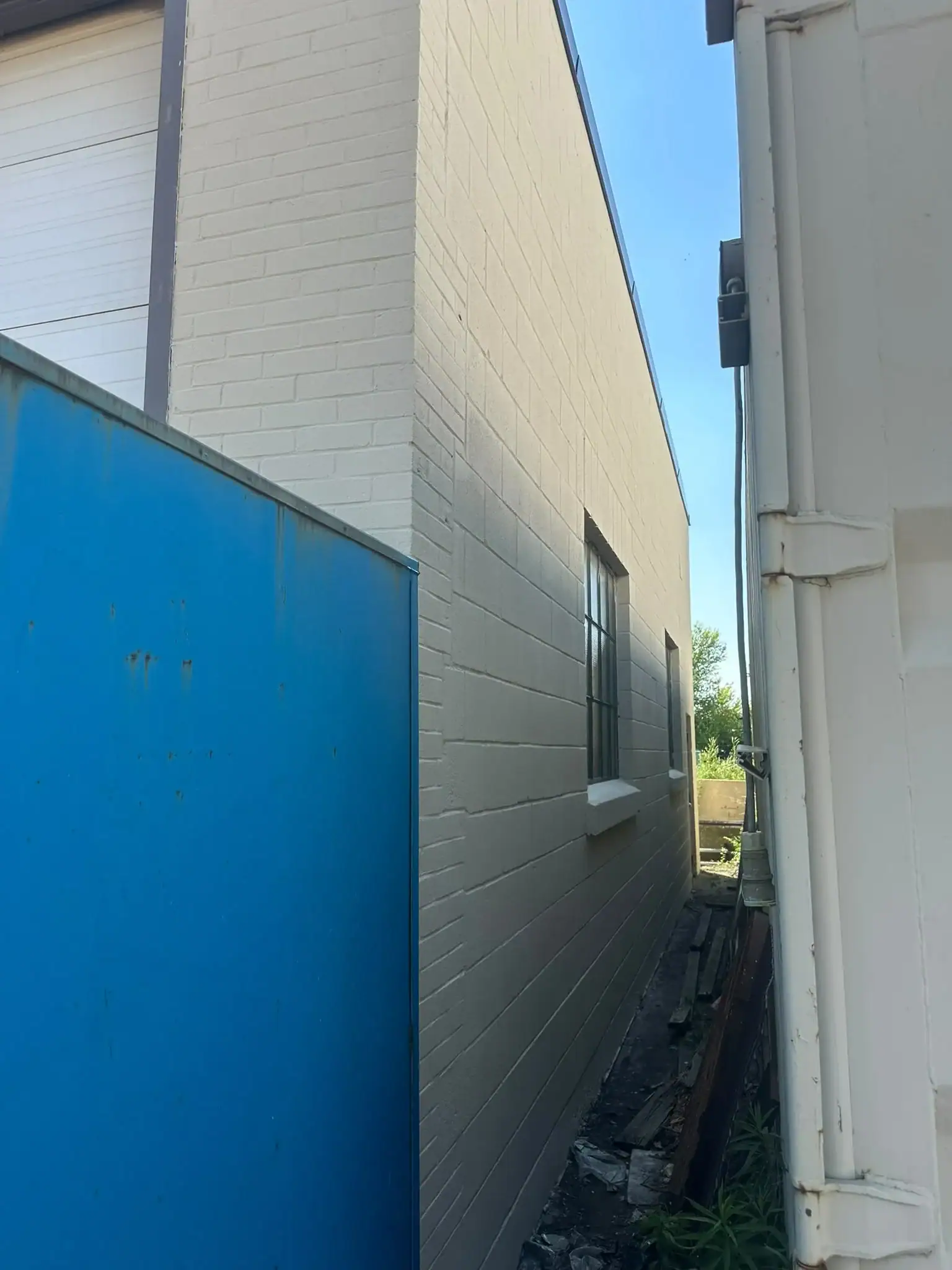
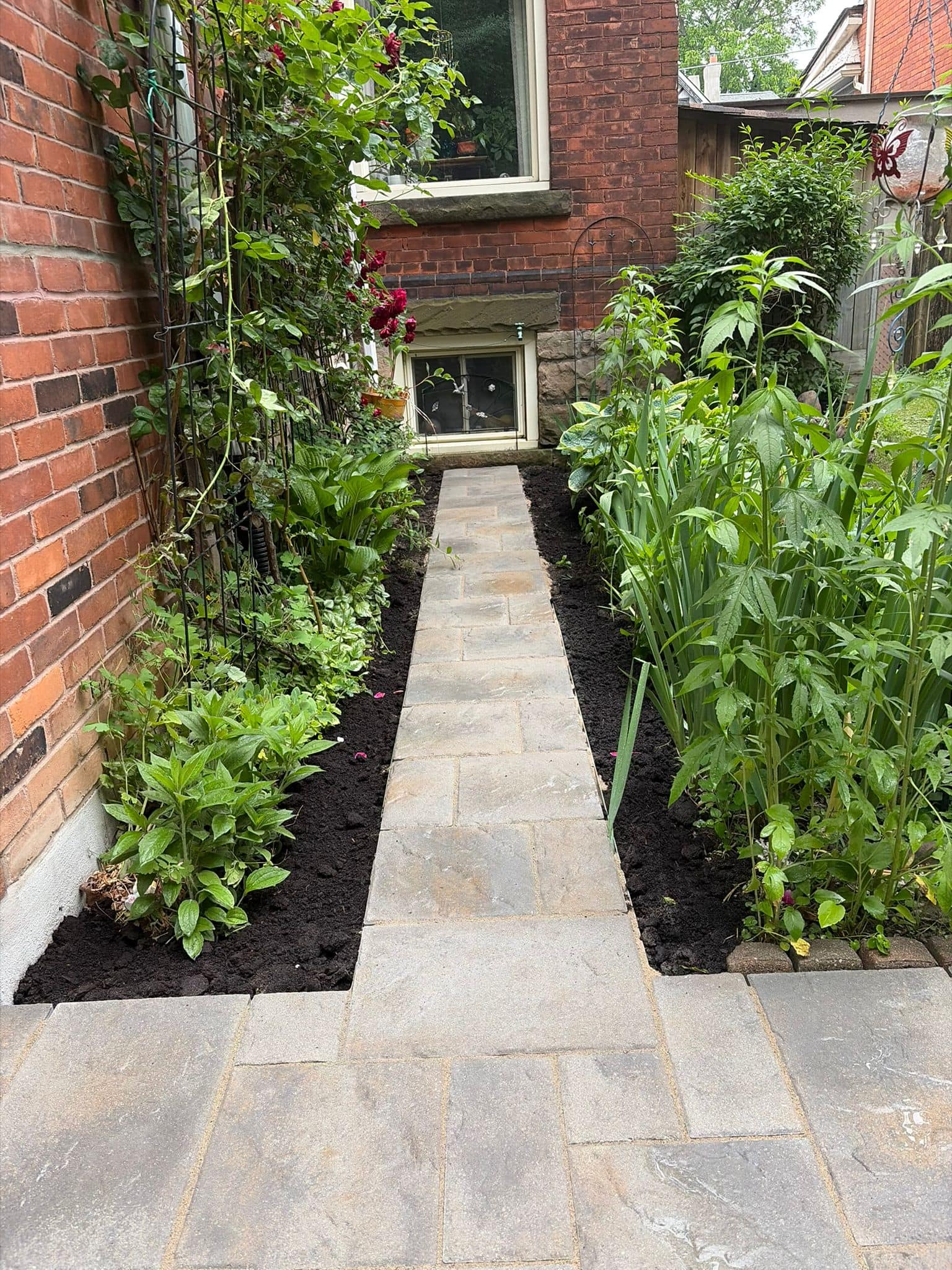
This is especially useful on semi-detached homes, older bungalows, laneway properties, and narrow Toronto lots where space between the house and property line may be limited.
A stable walkway can also reduce muddy traffic through planted areas and help keep soil away from lower brick walls and foundations.
5. Masonry Offers Flexible Design Choices
Masonry gives homeowners many design options because brick, stone, concrete, and pavers come in different shapes, sizes, textures, patterns, and colours. This makes it possible to connect new landscaping with the existing home instead of treating the yard as a separate design.
An older red-brick Toronto house may suit warm natural stone, traditional paver patterns, or brick-toned materials. A modern home may suit larger-format pavers and simpler lines. A landscaped garden may look better with natural stone walls than highly uniform concrete blocks.
Material choice should still be based on more than appearance. Ask where the material will be used, how much water it will receive, whether salt will be used nearby, how snow will be cleared, and how easy individual pieces are to repair.
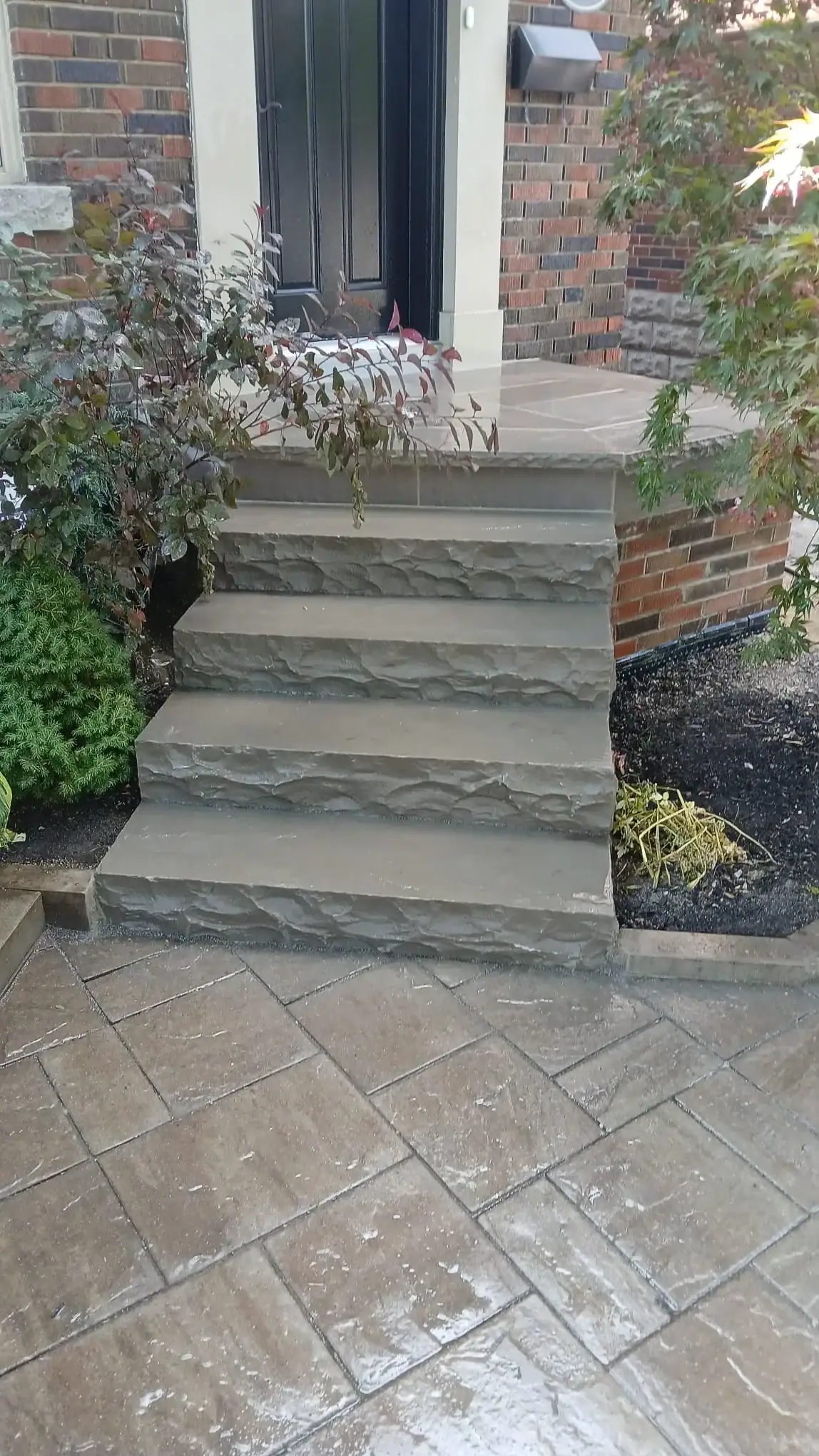
If natural stone is part of the plan, A&A Masonry’s stone masonry page provides examples of stone walls, steps, veneers, and other exterior applications.
6. Masonry Can Complement Existing Toronto Architecture
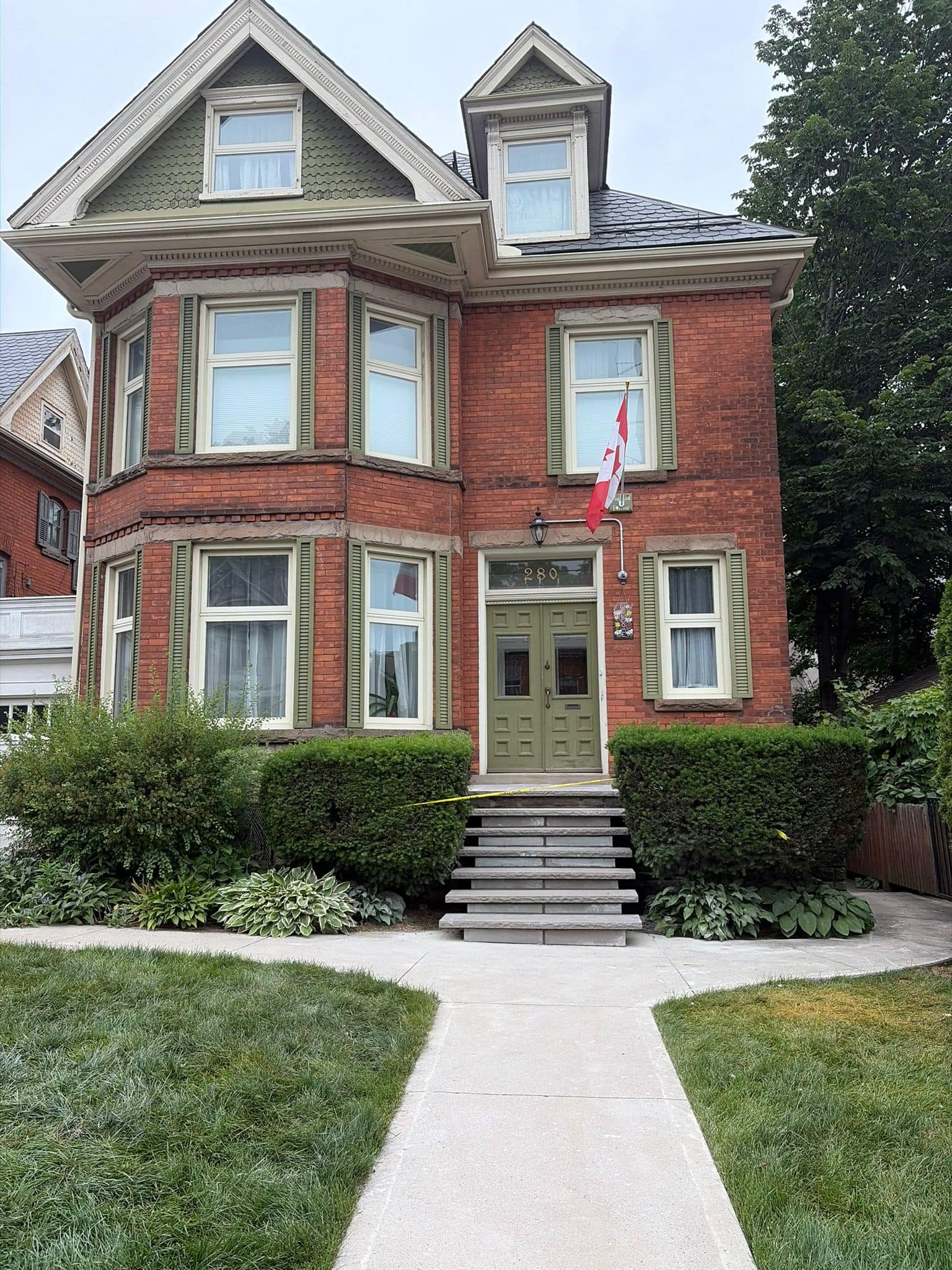
Masonry can help new landscape work feel connected to the architecture already on the property. This is especially important in Toronto neighbourhoods where brick and stone are major parts of the streetscape.
A new walkway does not need to copy the house brick exactly. It should, however, work with the home’s colour, scale, and style. The same applies to retaining walls, steps, porch improvements, and garden masonry.
Older homes may benefit from more traditional textures and natural material variation. Modern homes may suit cleaner joints and larger formats. Heritage or character properties may need more careful material selection so new work does not compete with original masonry.
The strongest designs usually use a limited material palette. Too many different pavers, brick colours, stone types, and borders can make a small urban landscape feel visually busy.
7. Masonry Can Reduce Landscape Maintenance in the Right Areas
Masonry can reduce some landscape maintenance when it replaces areas that are difficult to mow, muddy, worn from foot traffic, or constantly disturbed. A properly built walkway or patio does not need watering, mowing, or seasonal reseeding.
This can be especially useful in shaded side yards where grass grows poorly or around frequently used entrances where soil becomes compacted.
However, replacing every planted surface with masonry is not automatically an improvement. Hard surfaces can increase runoff and make a yard hotter if you ignore drainage, shade, and vegetation.
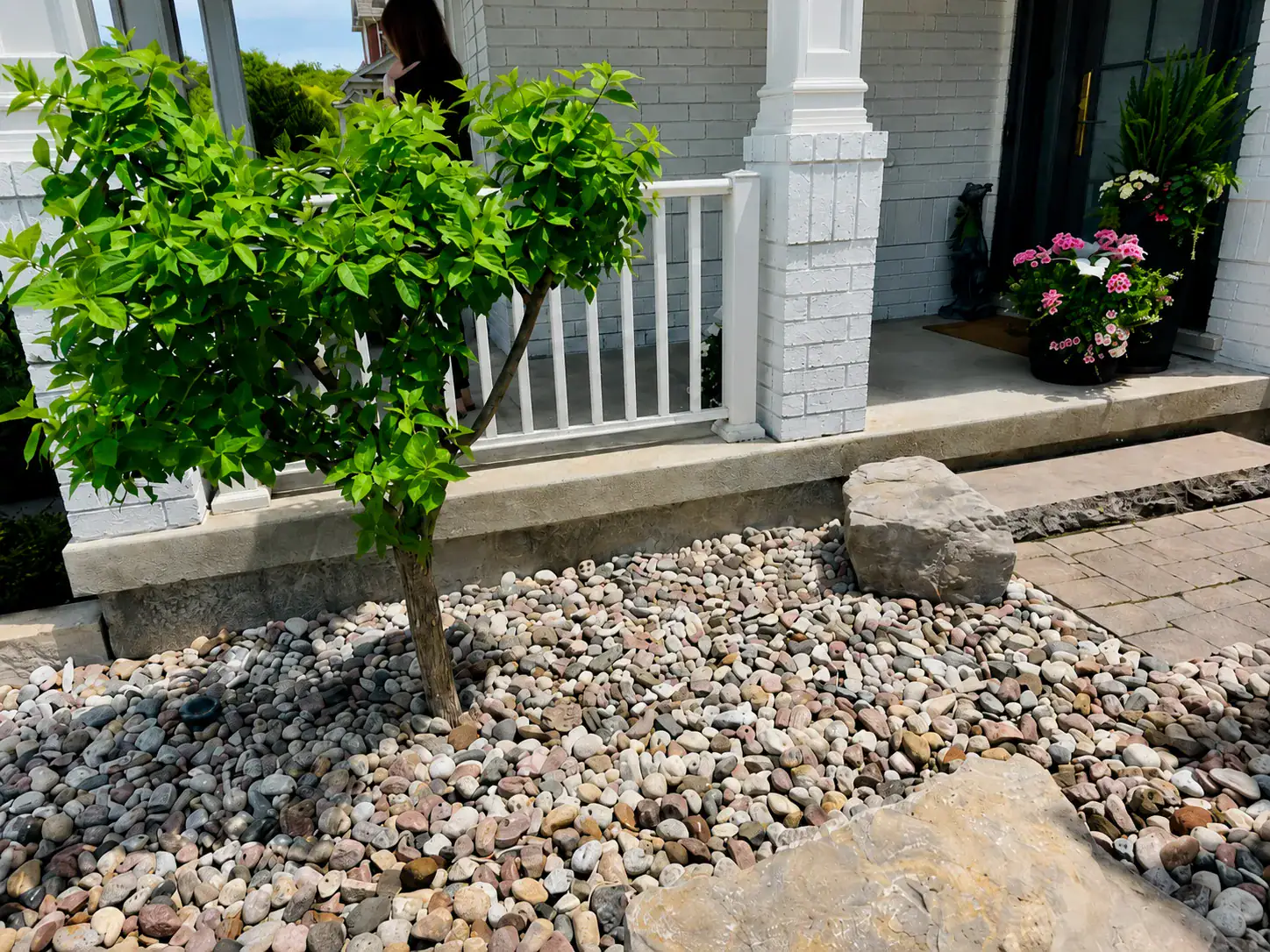
A balanced urban landscape often works better. Masonry handles circulation, seating, grade changes, and heavy-use areas, while trees, shrubs, gardens, and permeable areas provide shade, absorb water, and support biodiversity.
8. Good Masonry Can Work With Urban Green Infrastructure
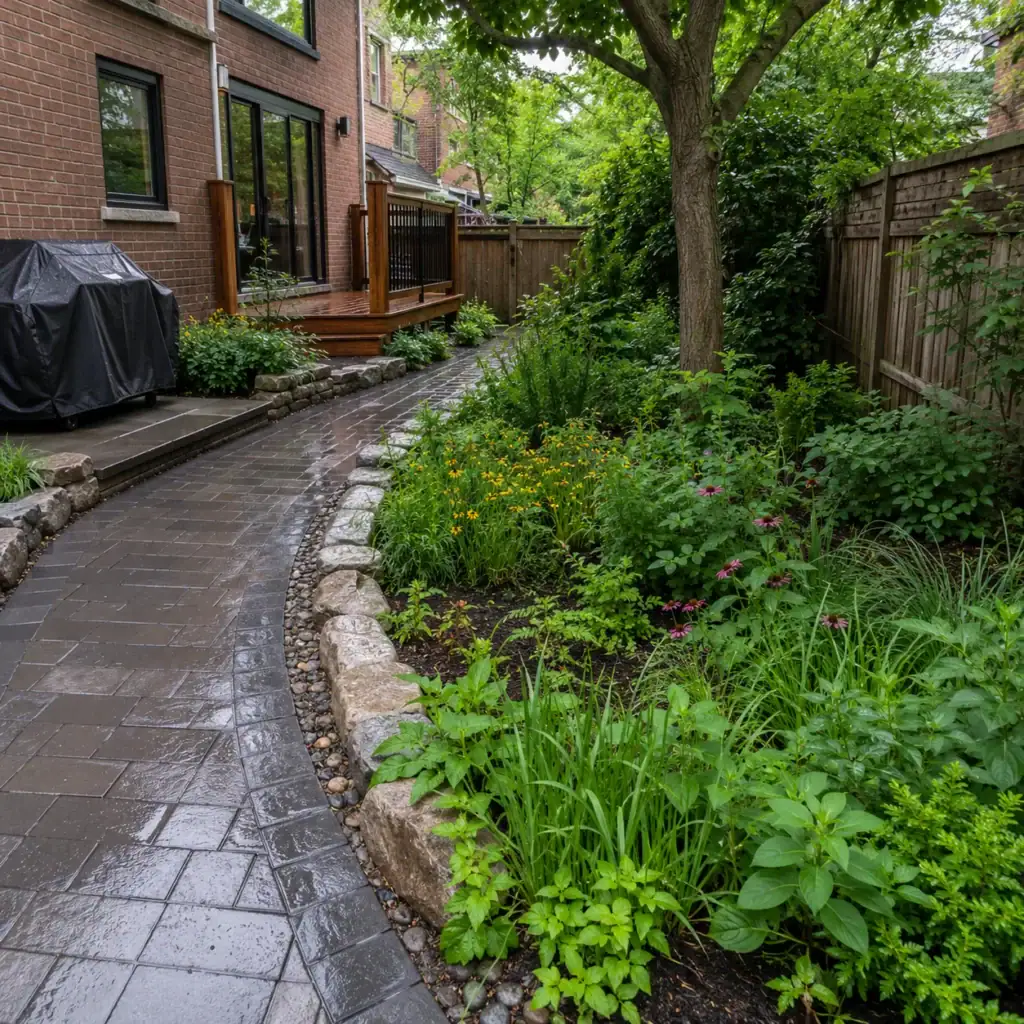
Masonry and green landscaping do not need to compete. Well-planned hardscape can work alongside planting beds, trees, rain gardens, permeable surfaces, and other stormwater management methods.
The City of Toronto describes its Green Streets approach as using natural and human-made green infrastructure to capture rainwater, support plants and trees, manage stormwater, and help reduce urban heat.
The same principle can guide residential landscape decisions on a smaller scale. A patio doesn’t need to cover the entire backyard. Paved routes can be combined with planting areas. Drainage can be directed toward appropriate landscaped areas rather than concentrating water beside the foundation.
Where suitable, permeable paving approaches may also help water move into prepared drainage layers rather than sending all runoff across the surface. The exact design depends on soil, grading, base construction, surrounding structures, and local conditions.
9. Drainage Can Be Built Into the Landscape Plan
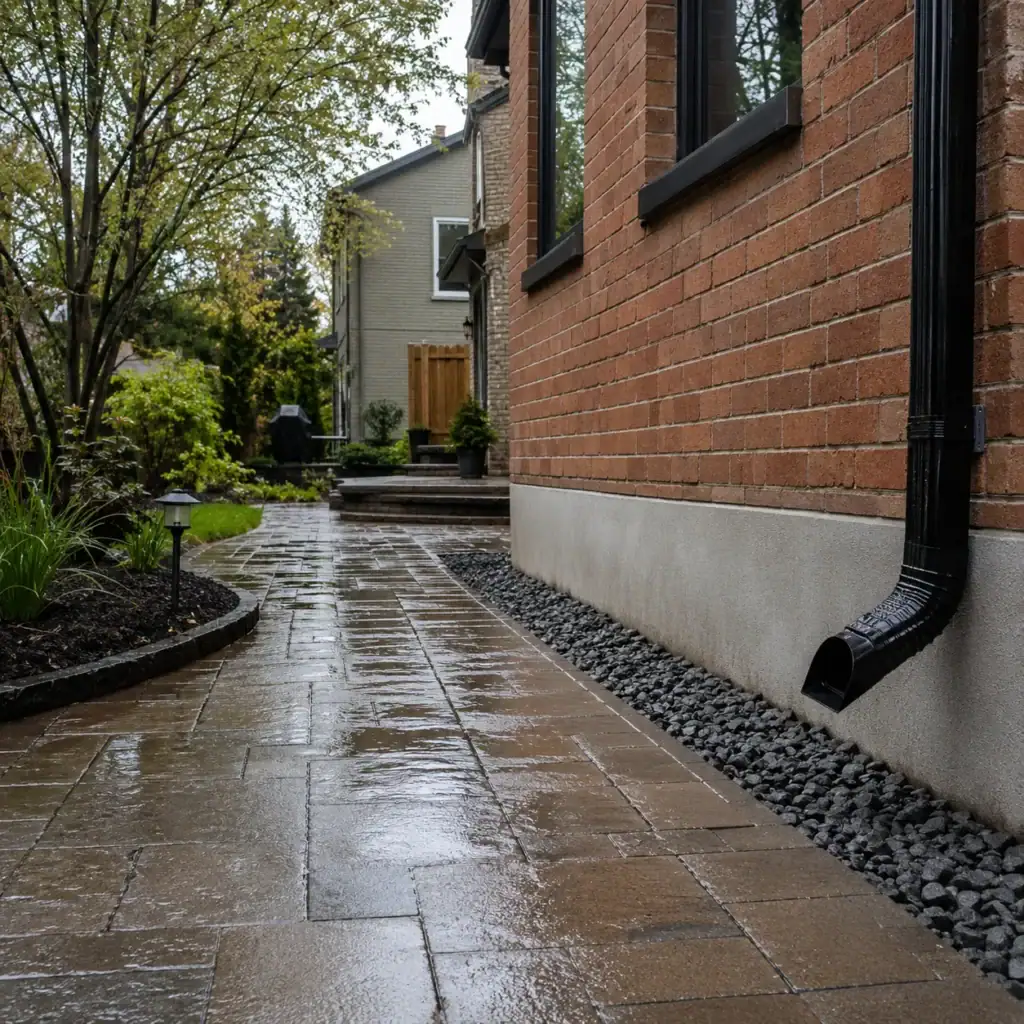
Drainage is one of the most important parts of urban masonry design. A beautiful patio or walkway becomes a problem if it sends water toward the foundation, creates icy low spots, or directs runoff onto a neighbouring property.
The City of Toronto’s guidance on managing rain and melted snow emphasizes managing stormwater and reducing basement flooding risks. Homeowners should think about those issues before increasing the amount of hard surface on a property.
Good masonry planning may include:
- Sloping paved surfaces away from the home where appropriate.
- Keeping downspouts from discharging into low spots.
- Creating suitable drainage around retaining walls.
- Avoiding patios that trap water beside foundation walls.
- Maintaining appropriate transitions between paving and planting areas.
- Planning where snowmelt will travel in spring.
Consider water before the first paver or stone is installed, not after pooling appears.
10. Masonry Can Protect Planting Areas
Low masonry walls and borders can help protect planting areas from foot traffic, soil movement, and minor grade changes. In compact urban yards, this can create a cleaner separation between gardens and heavily used surfaces.
Raised masonry beds may also make gardening easier in some properties, especially where soil depth, accessibility, or grade is a concern. Stone or masonry edging can keep mulch and soil from washing onto a walkway.
Care is still needed around trees. Tree roots need space, soil, air, and water. Building hard surfaces too close to mature trunks or changing the grade around established trees can create problems.
The goal should be to integrate masonry with the landscape, not force the landscape into whatever space is left over.
11. Masonry Can Add Seating Without Taking Up Much Space
Low masonry walls can provide informal seating while also serving another purpose. This can be valuable in smaller urban backyards where adding separate benches and chairs may use too much space.
A retaining wall bordering a patio can sometimes create a seating edge. A raised planter wall can provide a place to sit if it is designed appropriately. A masonry feature near an outdoor cooking area can help define the space.
Multi-purpose design is particularly useful on city lots. One feature may manage a grade change, frame a garden, define a patio, and provide extra seating at the same time.
Consider dimensions, caps, wall stability, and surrounding circulation if a wall is intended to double as seating.
12. Masonry Can Improve Year-Round Accessibility
Stable masonry surfaces can improve year-round access when walkways, steps, and entrances are properly graded and maintained. Uneven soil, loose gravel, mud, and poorly defined paths can be difficult to use during rain, snow, or freeze-thaw conditions.
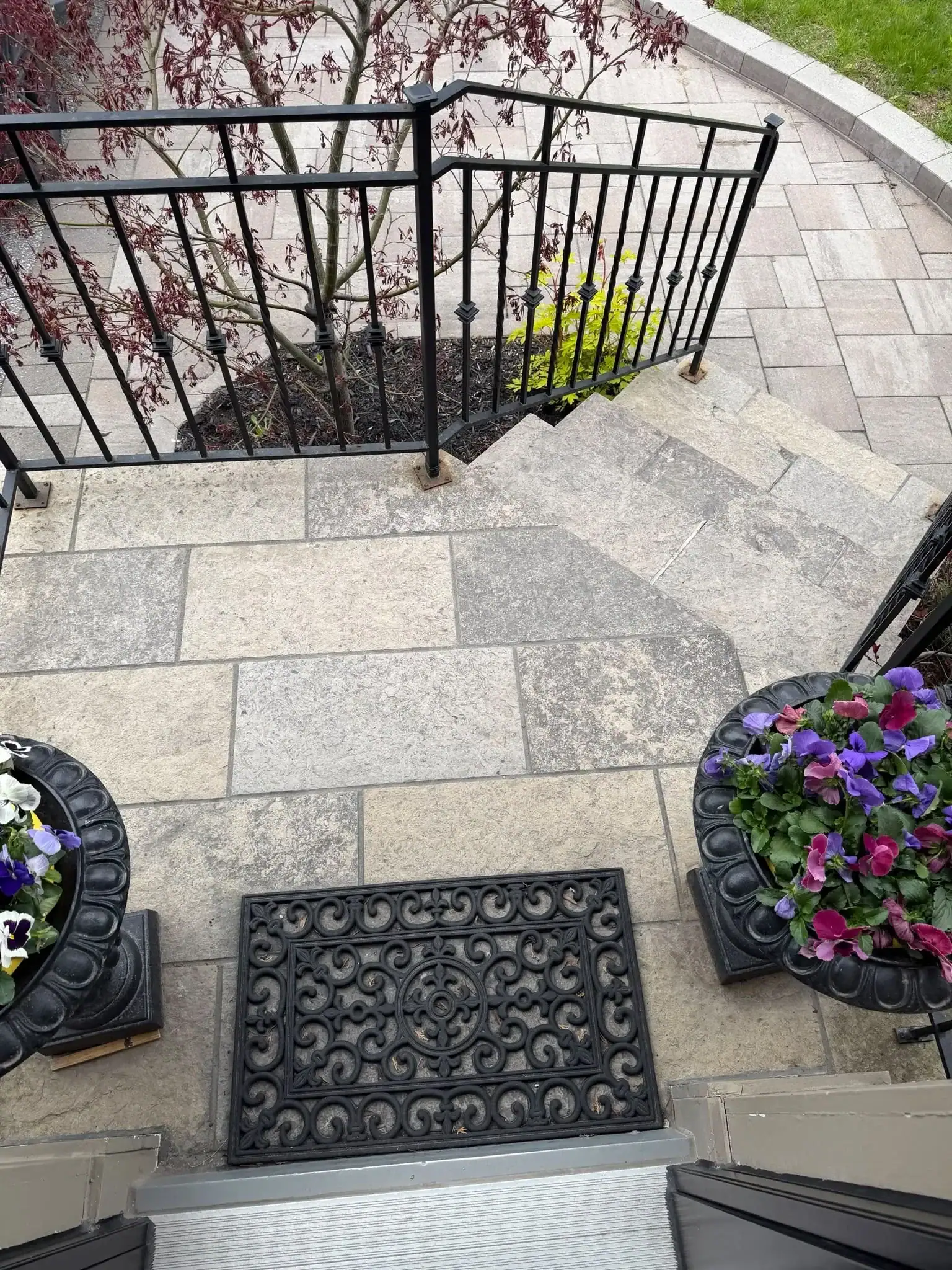
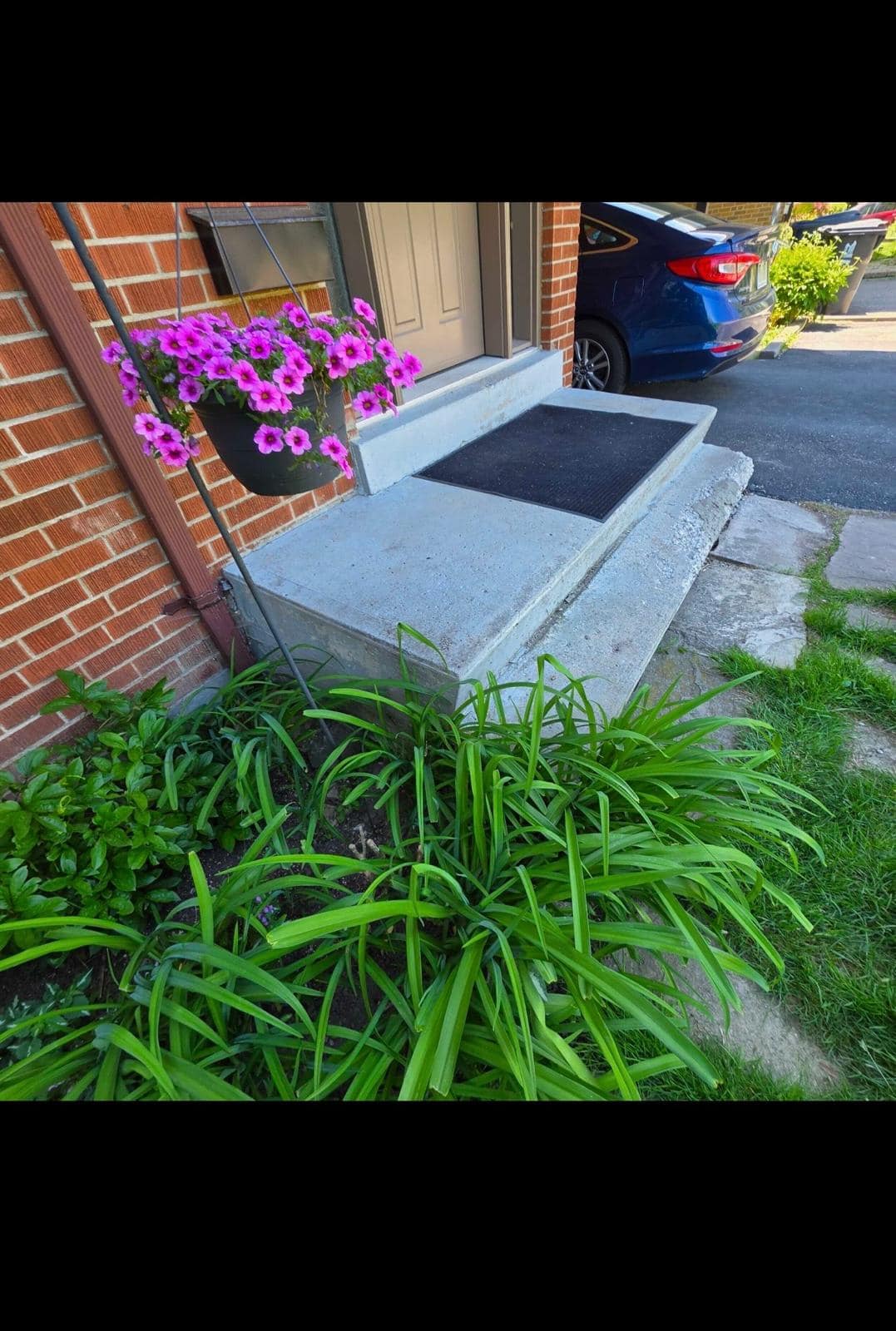
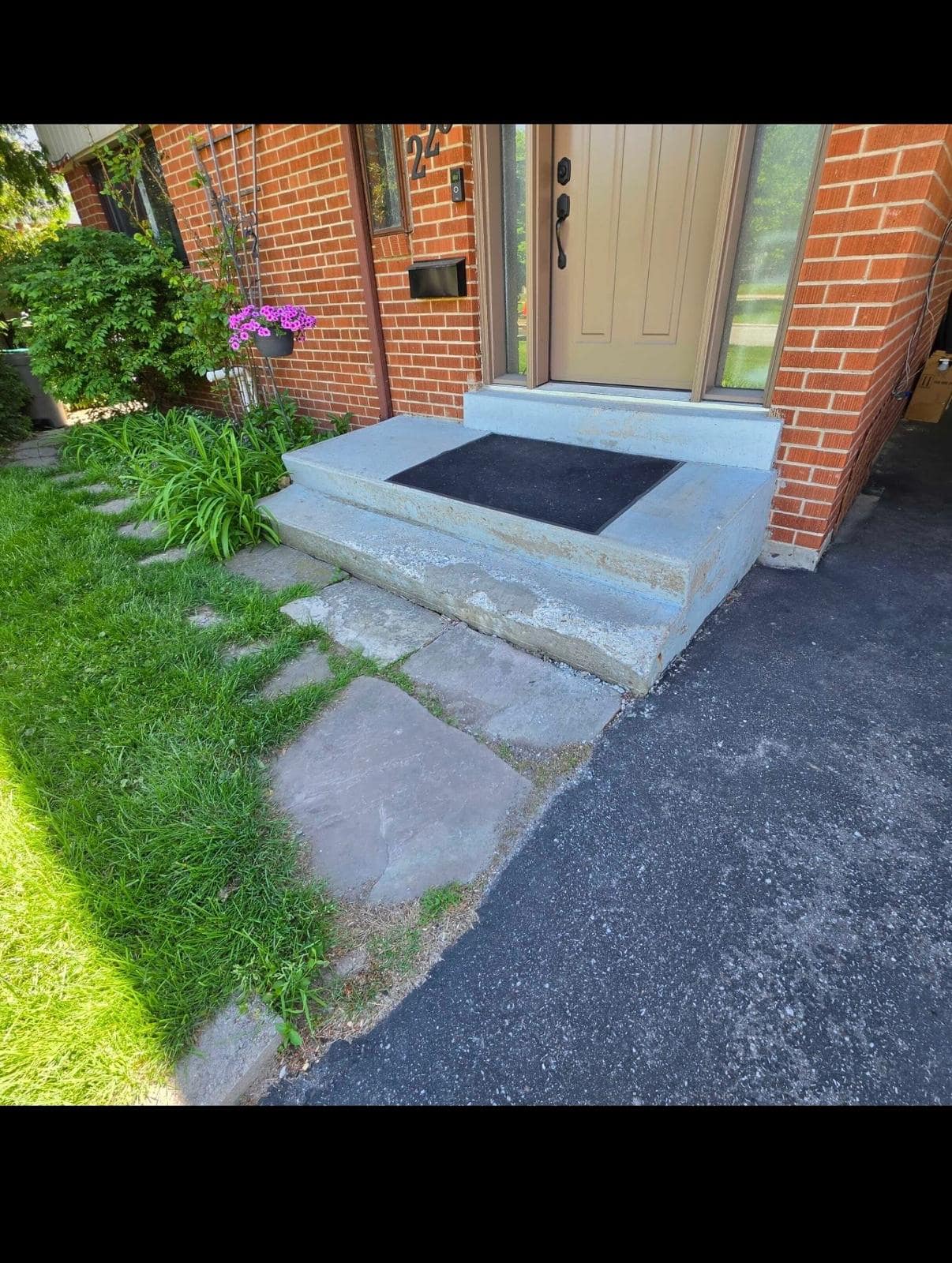
Interlocking stone, concrete, and properly installed natural stone can create firm walking surfaces. Good step design can make elevation changes clearer. Wider paths may make it easier to carry bins, garden equipment, bicycles, or groceries.
Winter still needs to be considered. Surface texture, drainage, snow storage, de-icing practices, and how easily the area can be shovelled all affect usability.
A highly textured surface may look attractive but be harder to clear. A flat surface with poor drainage may become icy. Urban landscape design should consider how the area works in February, not only how it looks in July.
13. Masonry Can Be Repaired Instead of Completely Replaced
One practical advantage of many masonry systems is that you can sometimes repair localized problems without replacing the entire landscape. This is especially true with interlocking paving, individual bricks, and certain stone features.
If pavers settle because a small section of base has failed, the affected units may sometimes be lifted, the base corrected, and the pavers reset. Damaged bricks can often be replaced individually. Mortar joints can be repointed. Loose stones may be rebuilt while preserving sound surrounding work.
This depends on the cause and condition. A patio with widespread base failure may need more extensive rebuilding. A retaining wall that is leaning because of poor drainage may need reconstruction rather than cosmetic repair.
The ability to repair sections can still make masonry practical for urban properties where access for complete reconstruction may be difficult.
14. Masonry Helps Manage Erosion and Soil Movement
Masonry can help manage soil movement when walls, borders, steps, and drainage are designed for the site. Sloped gardens and properties with changing grade can lose soil during heavy rainfall or snowmelt.
Retaining walls can stabilize elevation changes and create usable terraces. Stone edges can help keep soil within planting beds. Properly designed pathways can prevent repeated foot traffic from wearing channels through a slope.
Drainage is critical. A retaining wall should not simply block water. Manage water pressure behind the wall so it doesn’t push outward over time.
Homeowners should be cautious about treating a leaning retaining wall as a simple repointing job. If the wall is moving, the cause may be behind or below it.
15. Masonry Can Support Long-Term Property Maintenance
Masonry can simplify long-term exterior maintenance when it is used strategically. Stable paths make it easier to reach gates, gardens, downspouts, air-conditioning equipment, garages, and other exterior areas that need regular access.
Properly built steps and retaining walls can also reduce recurring problems with soil erosion, uneven grades, and muddy access routes.
The benefit is not that masonry becomes maintenance-free. Pavers may need joint maintenance or resetting. Mortar joints weather. Stone may need cleaning. Concrete can crack. Drainage systems need to stay clear.
The advantage is that you can often identify and address individual problems before the entire space fails.
Urban Masonry Still Needs Space for Water and Plants
More masonry is not always better. One of the most important planning decisions is how much of the property should actually be paved or built over.
Covering most of a small yard with impermeable hardscape can reduce places where rainwater can soak into the ground. It can also remove shade and planting opportunities. In summer, large exposed paved areas may become hot.
The City of Toronto’s green infrastructure resources highlight goals such as stormwater management, urban forest health, heat-island reduction, infiltration, and better resilience.
For homeowners, the lesson still applies on a small property: use masonry where a hard, durable surface or structural feature is genuinely needed, and leave enough room for planting, shade, drainage, and soil.
Choosing Brick, Stone, Concrete, or Interlocking
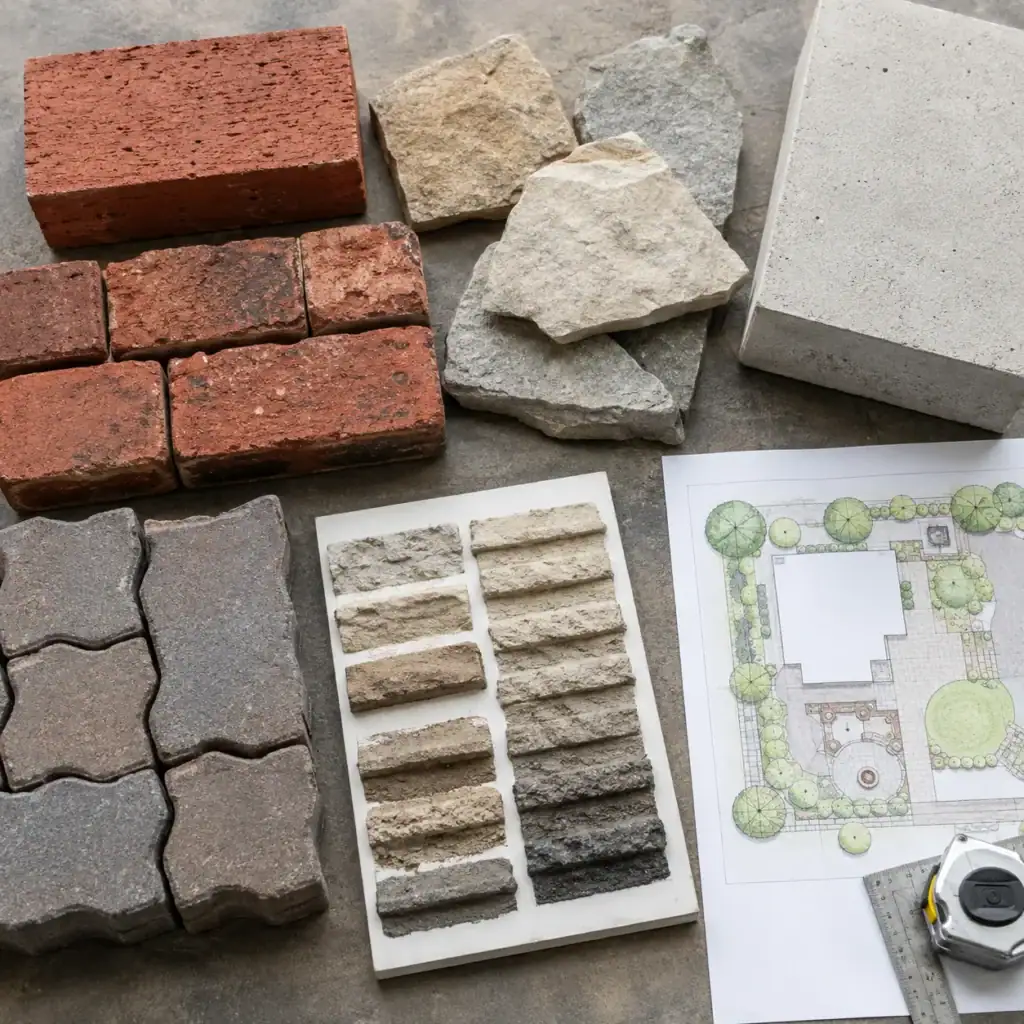
The best masonry material depends on what the landscape feature needs to do. No single material is best for every urban project.
- Brick: Choose it when you want a traditional look that connects visually with a brick home, garden wall, column, or architectural feature.
- Natural stone: Choose it when you want natural variation for steps, walls, garden features, or higher-end landscape details.
- Interlocking pavers: Choose them for patios, walkways, entrances, and driveways where modular construction and future localized repair are useful.
- Concrete: Choose it where a continuous, strong surface or structural element is appropriate, such as certain steps, landings, or retaining structures.
- Segmental wall blocks: Choose them for suitable retaining and landscape wall applications where engineered modular systems make sense.
Material selection should consider the home, expected load, drainage, winter exposure, maintenance, accessibility, and surrounding landscape.
What Happens When Urban Masonry Is Planned Poorly?
Poorly planned masonry can create more problems than it solves. The most common failures usually involve the base, water, grade, or project scale rather than the material’s appearance.
- Settled pavers: Often connected to weak base preparation or compaction.
- Standing water: May result from incorrect slope or low areas.
- Ice patches: Can form where drainage collects during winter thaws.
- Leaning retaining walls: May point to drainage, soil pressure, or foundation problems.
- Water near foundations: Hardscape may slope toward the house.
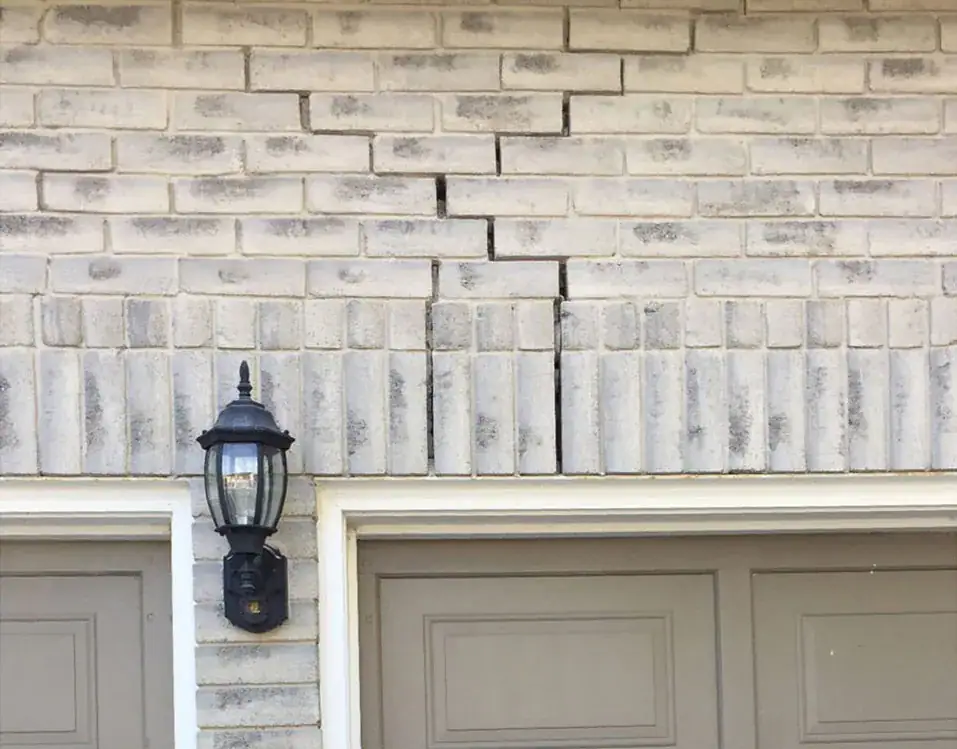
- Cracked masonry: Movement, water, freeze-thaw cycles, or insufficient support may be involved.
- Overcrowded yards: Too much hardscape can leave little usable planting or drainage area.
- Mismatched materials: Too many colours and textures can make a small property look disorganized.
Fixing these problems later can require lifting surfaces, rebuilding bases, improving drainage, or reconstructing walls. Planning them correctly at the beginning is usually easier.
What Homeowners Can Plan Before Starting
Homeowners can make better masonry decisions by observing how the property already works before choosing materials. Spend time looking at the yard after rain, during winter, and while people are actually using it.
- Identify where people naturally walk.
- Watch where water collects after heavy rain.
- Note where snow is normally piled.
- Look for slopes that are difficult to use or maintain.
- Identify mature trees and planting areas that should remain.
- Measure narrow access points and side yards.
- Decide which spaces need paving and which should stay planted.
- Choose materials that complement the home rather than compete with it.
If the project includes several masonry elements, A&A Masonry’s masonry project planning checklist provides a broader way to organize drainage, materials, access, timing, budget, and repair priorities.
Permits and Larger Landscape Masonry Projects
Permits or additional review may be needed when landscape masonry becomes structural or changes how the property is built or graded. Small patios and decorative garden borders are different from substantial retaining walls, structural steps, major excavation, or work that affects buildings.
Ontario’s official Building Code page provides current provincial building requirements and related resources. Homeowners planning larger masonry construction should also check applicable City requirements before starting.
This matters particularly for retaining structures, major grade changes, additions, structural exterior work, and projects that may affect drainage or neighbouring properties.
The practical approach is to confirm requirements while the project is still being designed rather than after materials have been ordered.
Quick Guide: Benefits of Masonry in Urban Landscapes
A quick summary can help homeowners decide where masonry adds the most value to an urban property.
- Use interlocking stone for defined patios, walkways, entrances, and driveways.
- Use natural stone for steps, garden walls, accents, and landscape features where natural texture matters.
- Use retaining walls when grade changes need proper soil support and drainage.
- Use masonry paths where heavy traffic makes grass or soil difficult to maintain.
- Keep planting areas for shade, infiltration, trees, gardens, and softer landscape character.
- Plan drainage first before installing large paved areas.
- Match the home by limiting colours, textures, and competing materials.
- Design for winter by considering freeze-thaw cycles, snow clearing, salt exposure, and spring snowmelt.
The best urban masonry projects create structure without turning the whole property into hardscape.
When Professional Help Makes More Sense
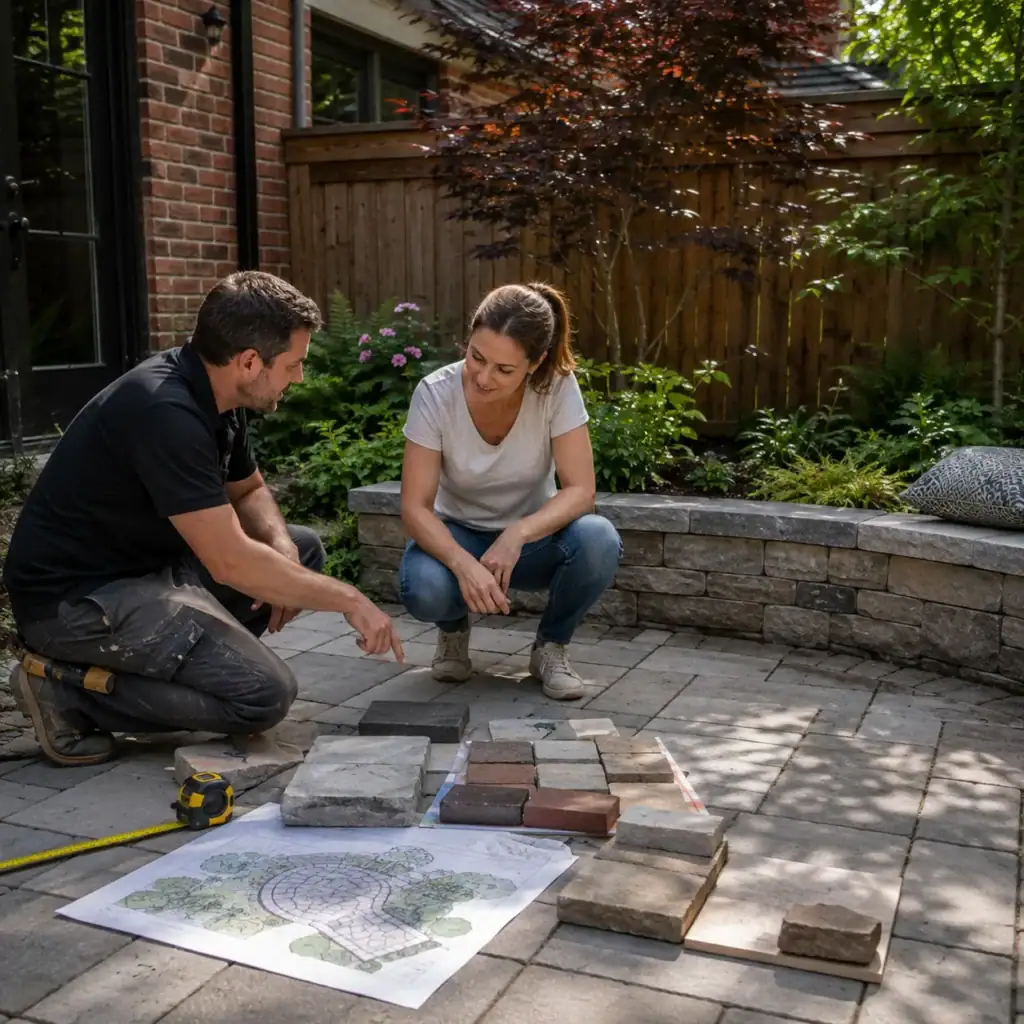
Professional help makes more sense when an urban landscape project involves retaining walls, major grading, heavy-use patios or driveways, structural steps, drainage problems, extensive excavation, older masonry, or several materials that need to work together.
A mason can assess base preparation, grade, drainage, wall construction, stone or paver selection, transitions to existing masonry, and how the project will perform through Toronto winters. Other professionals may be needed when the work affects significant structures, utilities, engineering, trees, or complex drainage systems.
For homeowners planning several types of exterior masonry work, A&A Masonry’s Toronto masonry services page provides an overview of brick, stone, concrete, interlocking, chimney, waterproofing, and restoration work.
Final Thoughts on the Benefits of Masonry in Urban Landscapes
The benefits of masonry in urban landscapes come from using durable materials to make limited outdoor space safer, clearer, more useful, and easier to maintain. Brick, natural stone, concrete, interlocking pavers, steps, and retaining walls can organize small yards, support grade changes, create walking routes, define patios, protect gardens, and connect new landscaping with the home’s architecture.
For Toronto and GTA properties, good masonry design also needs to account for drainage, rain, snowmelt, freeze-thaw cycles, mature trees, narrow lots, and winter maintenance. A project that looks good but sends water toward the house or removes every permeable area is not a well-planned landscape.
The best approach is balance. Use masonry where you need strength, structure, access, and hard surfaces. Keep enough planting and drainage space to manage water, shade the property, and soften the landscape. When those elements work together, masonry can make an urban property more functional without losing the benefits of a healthy outdoor environment.