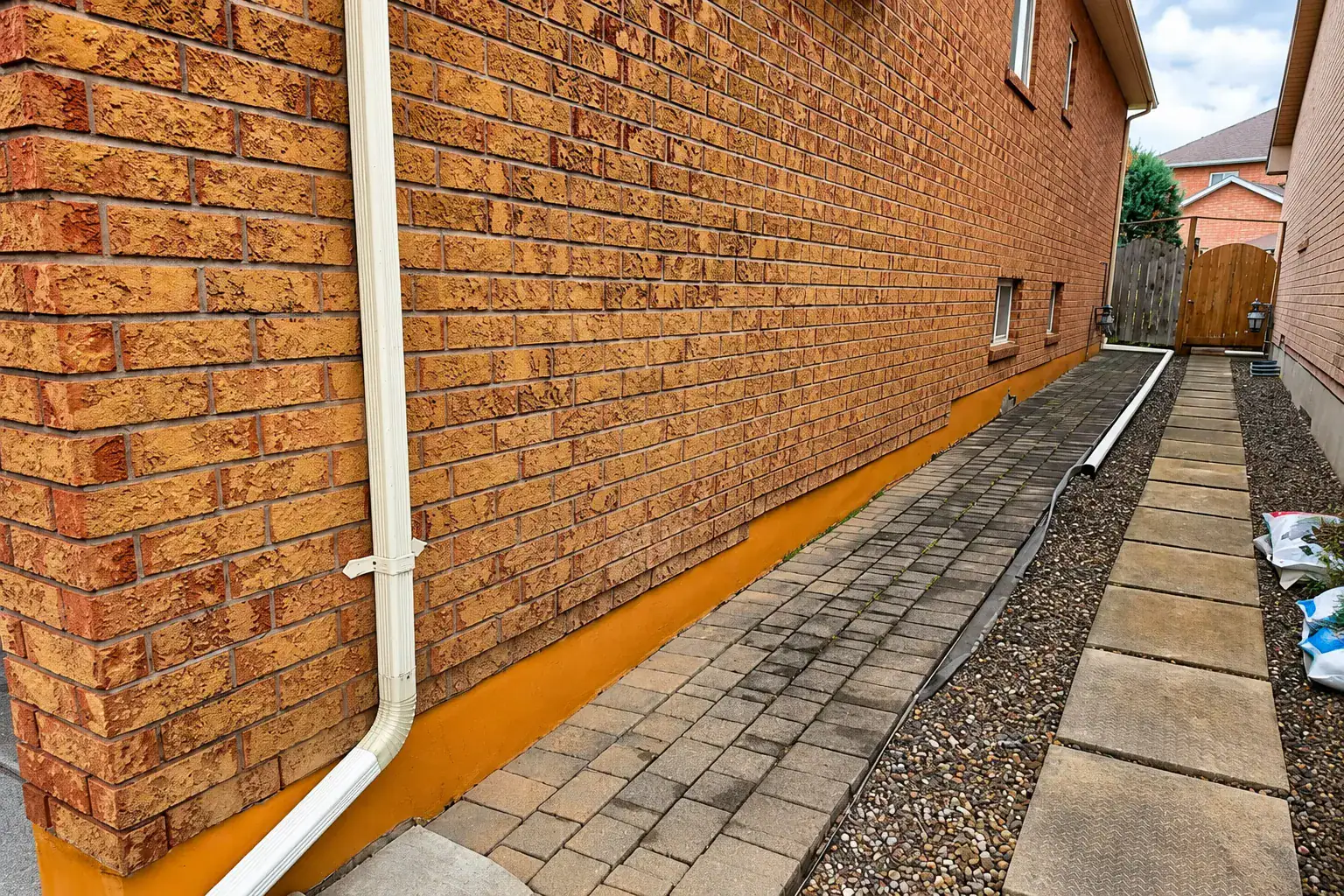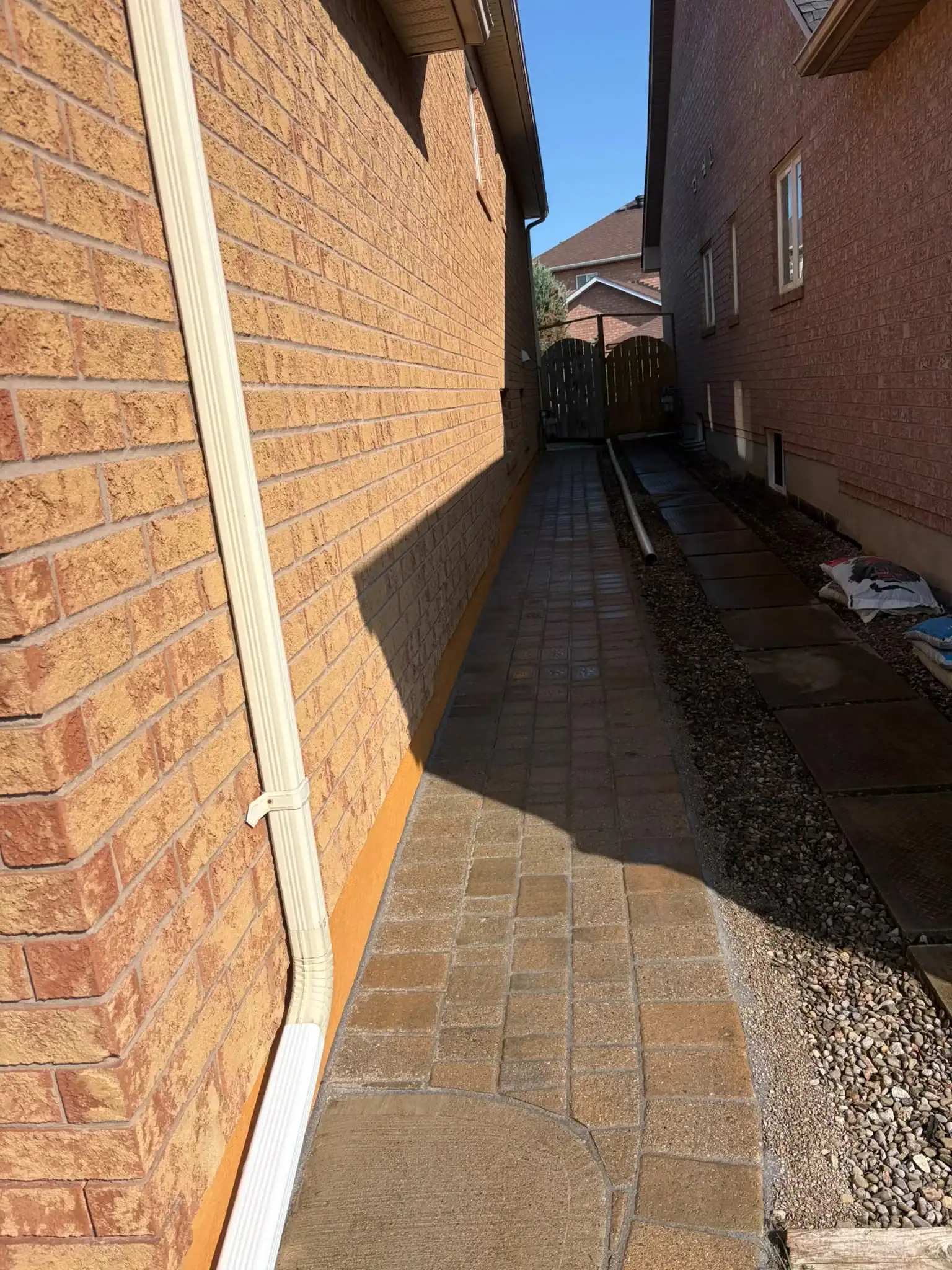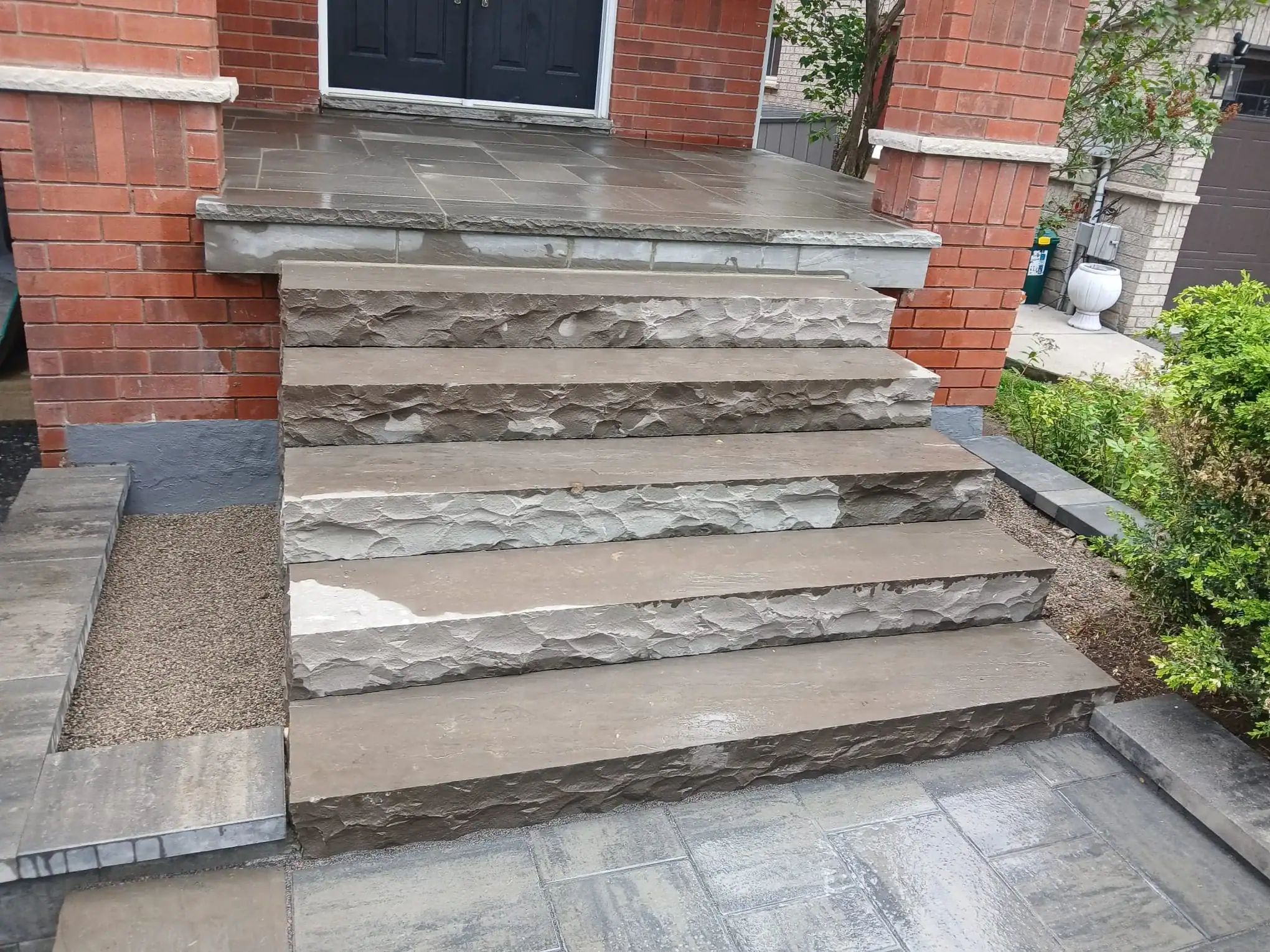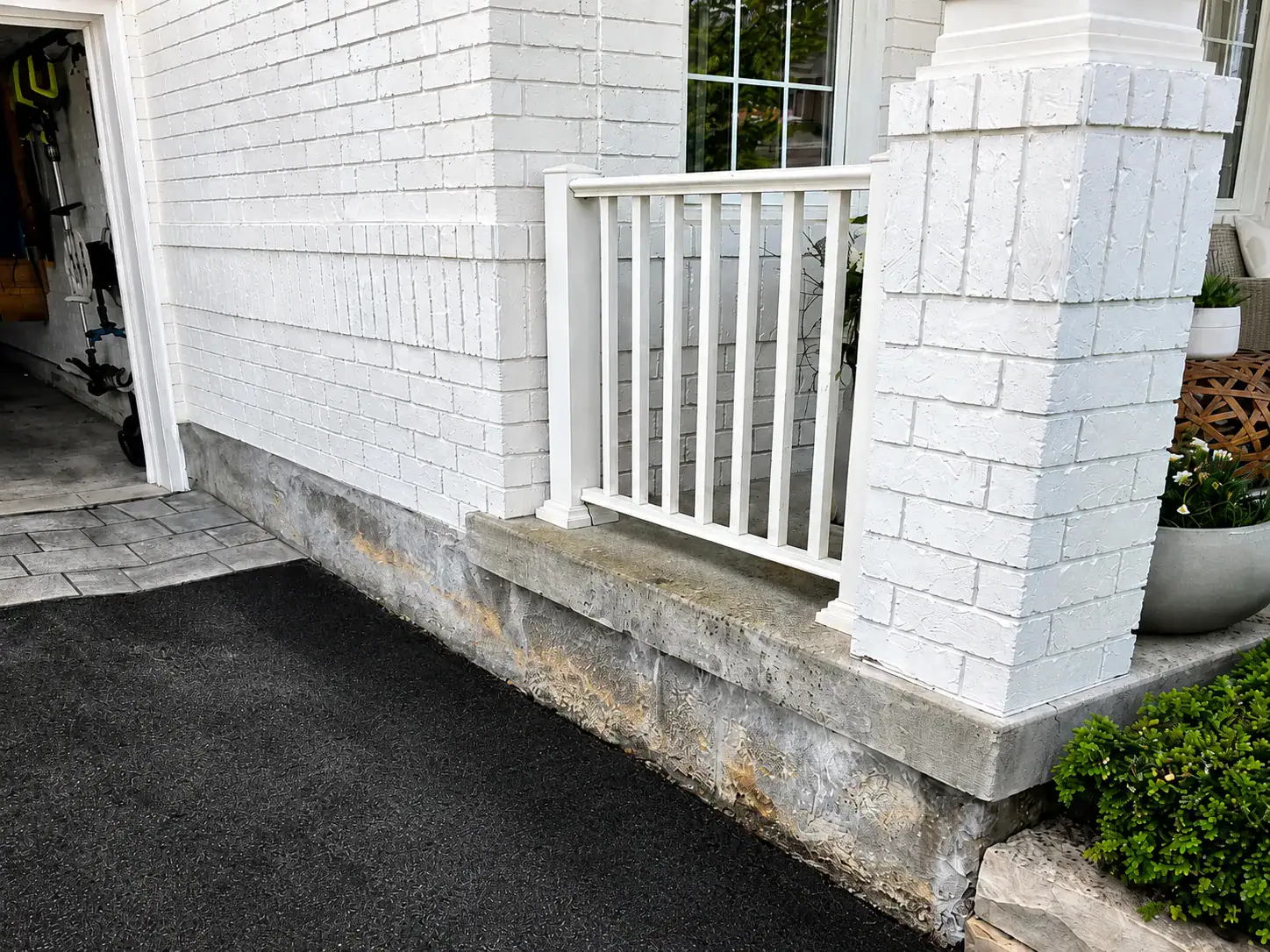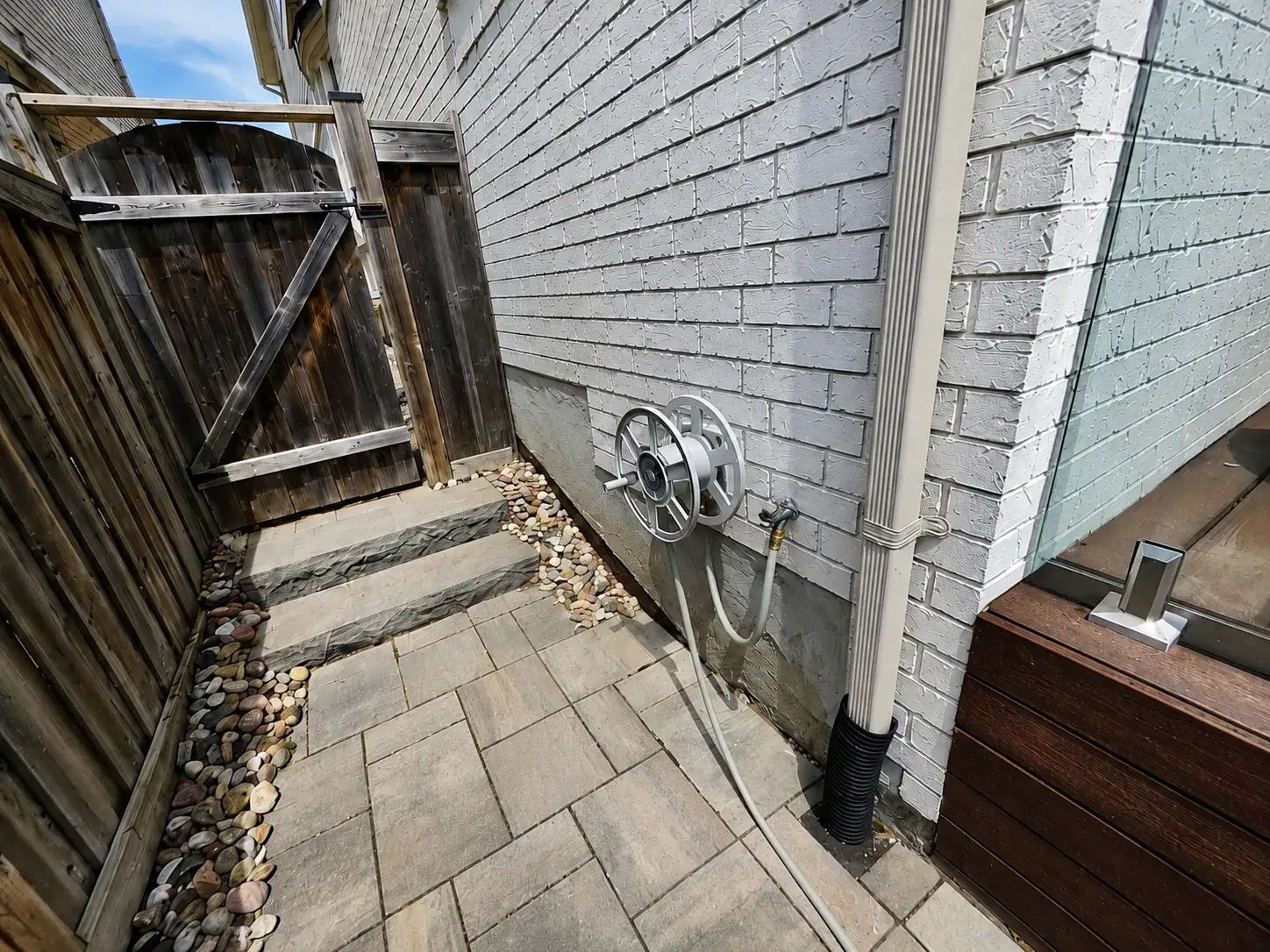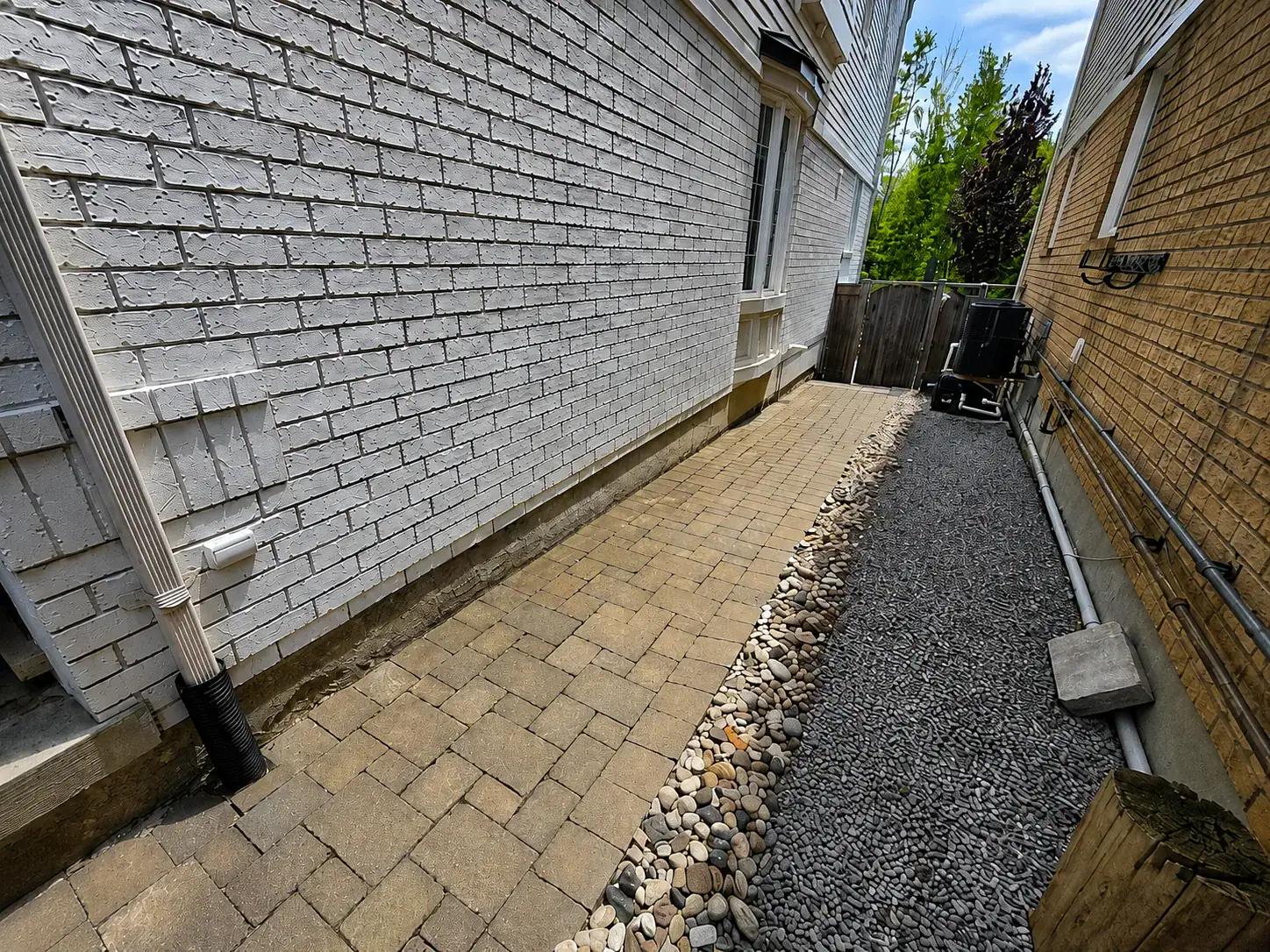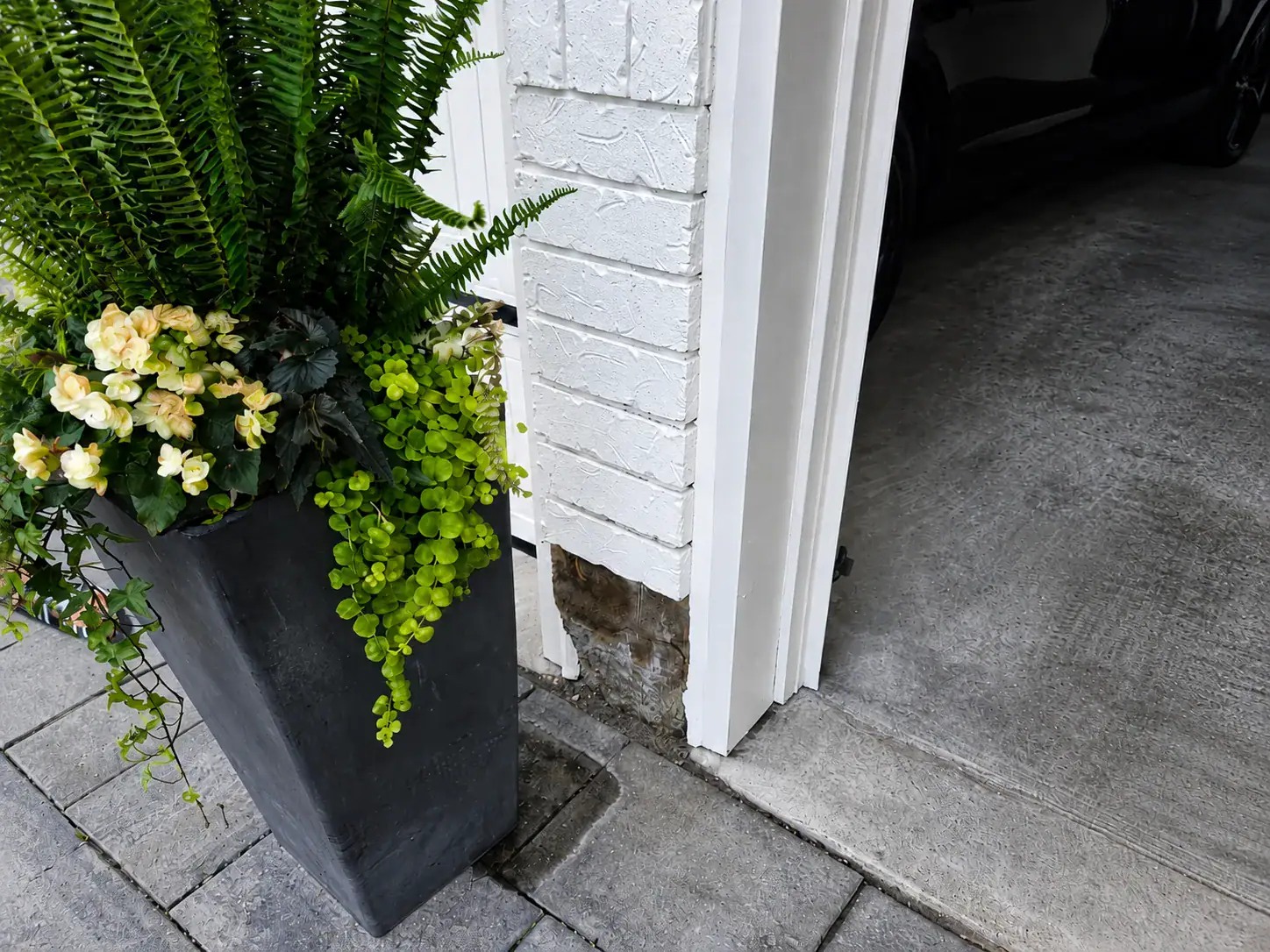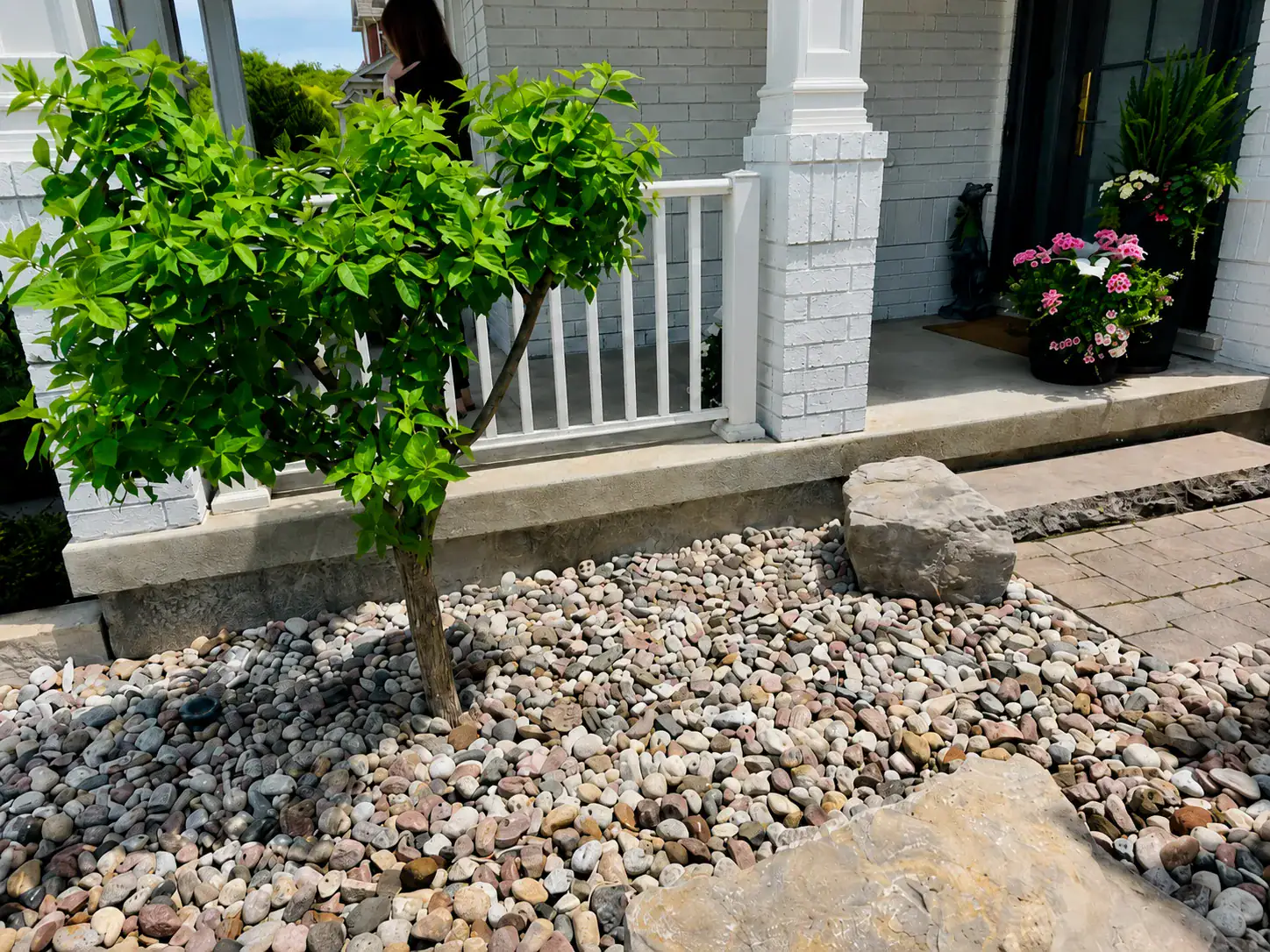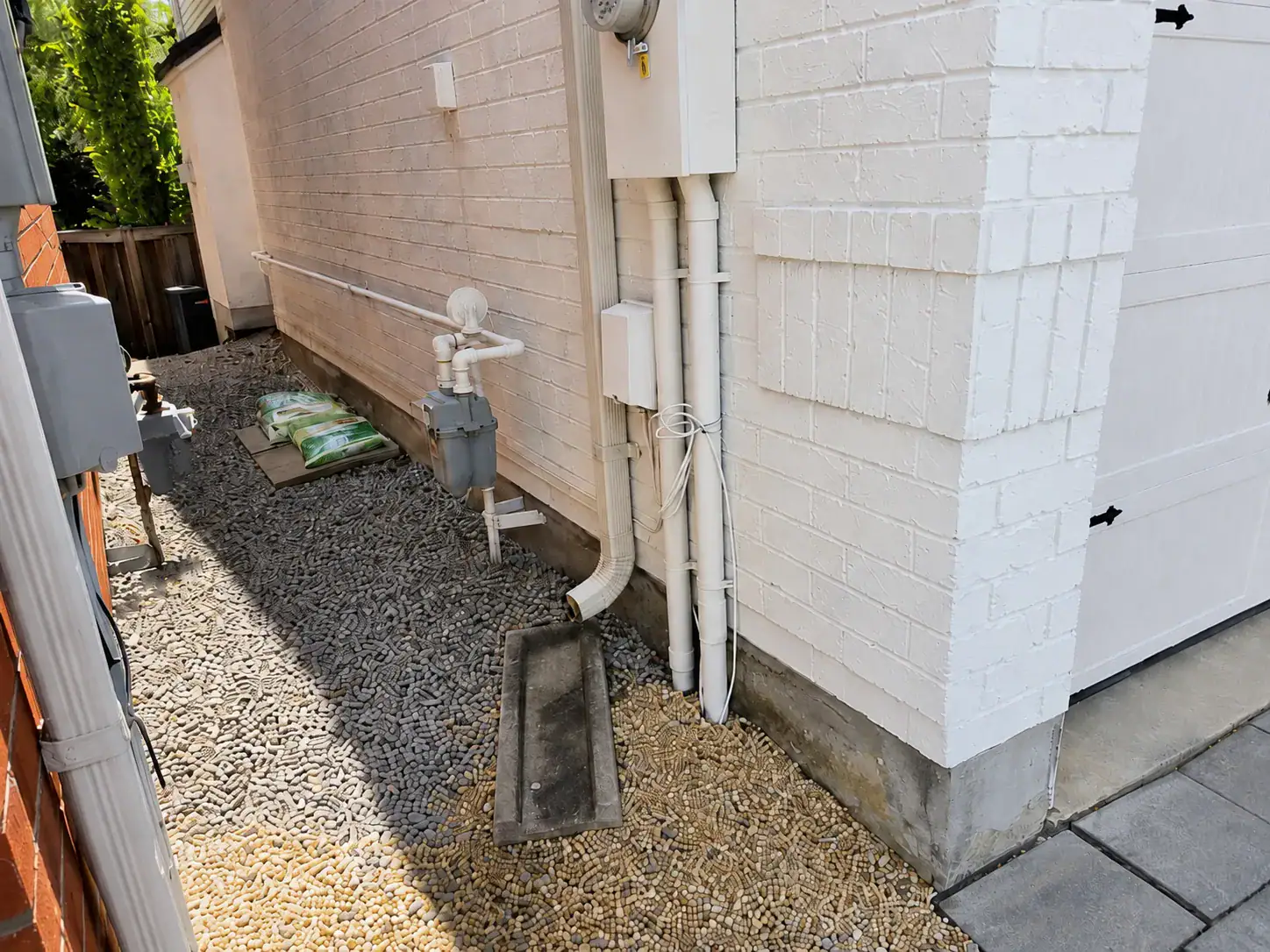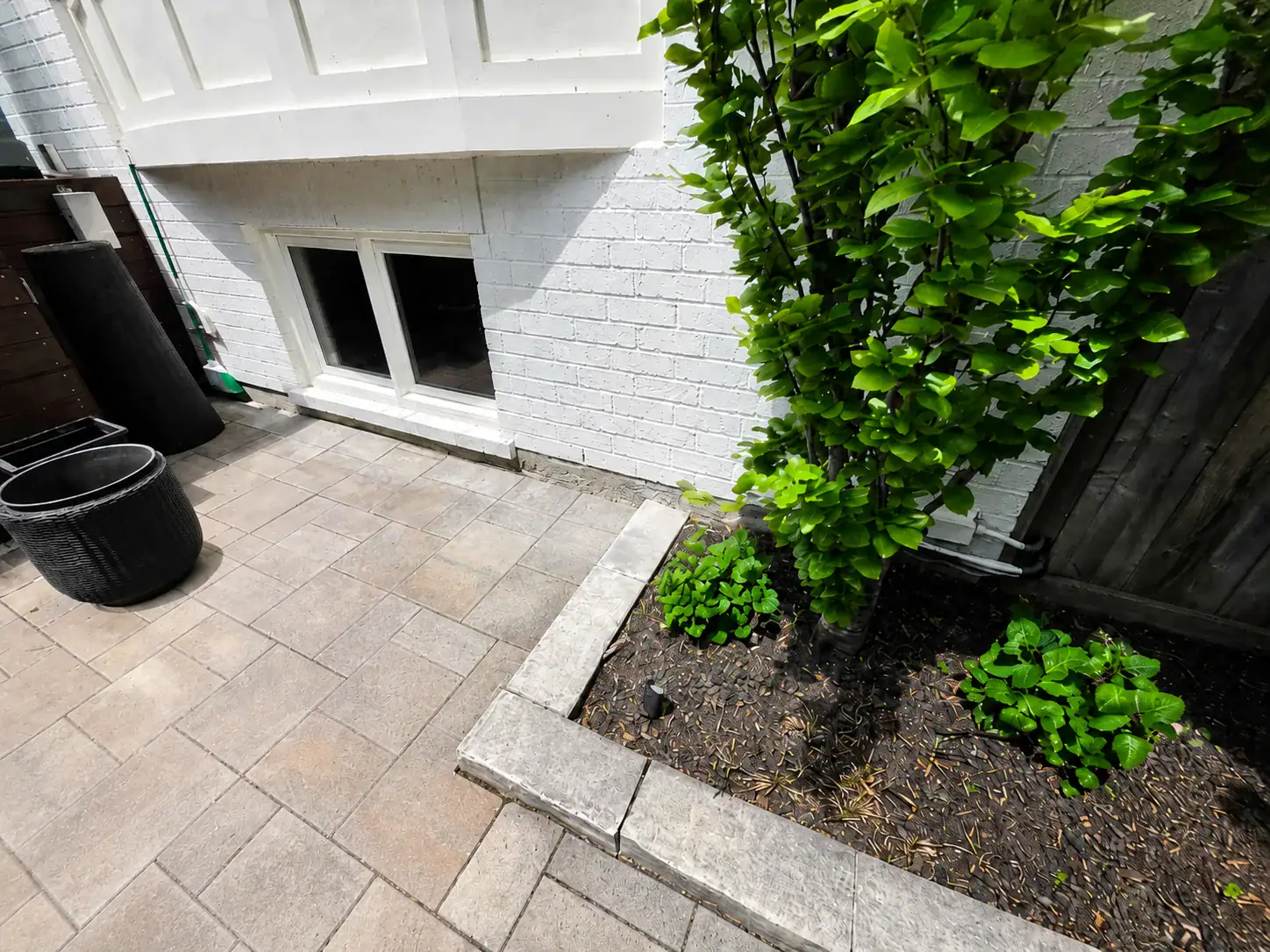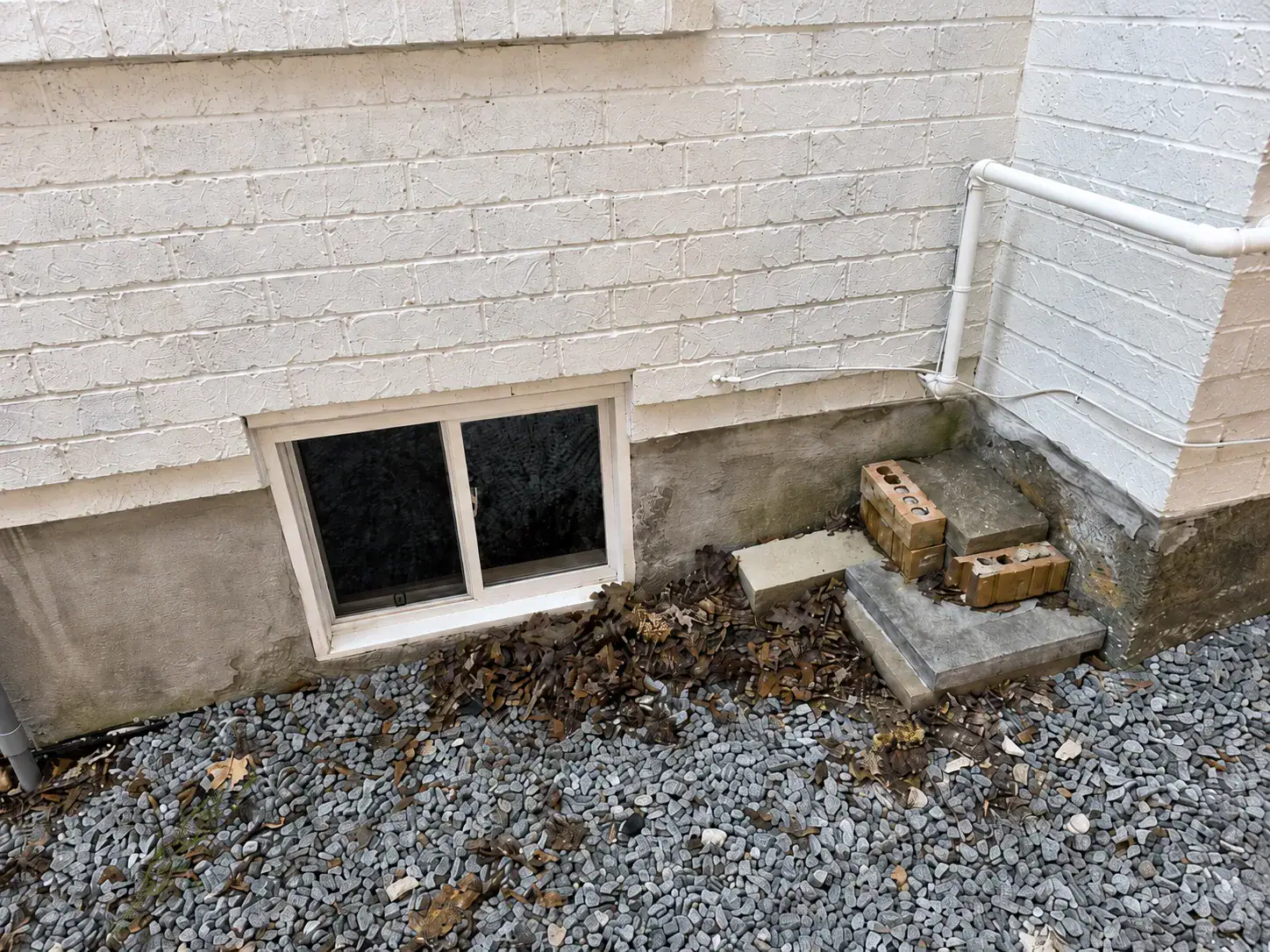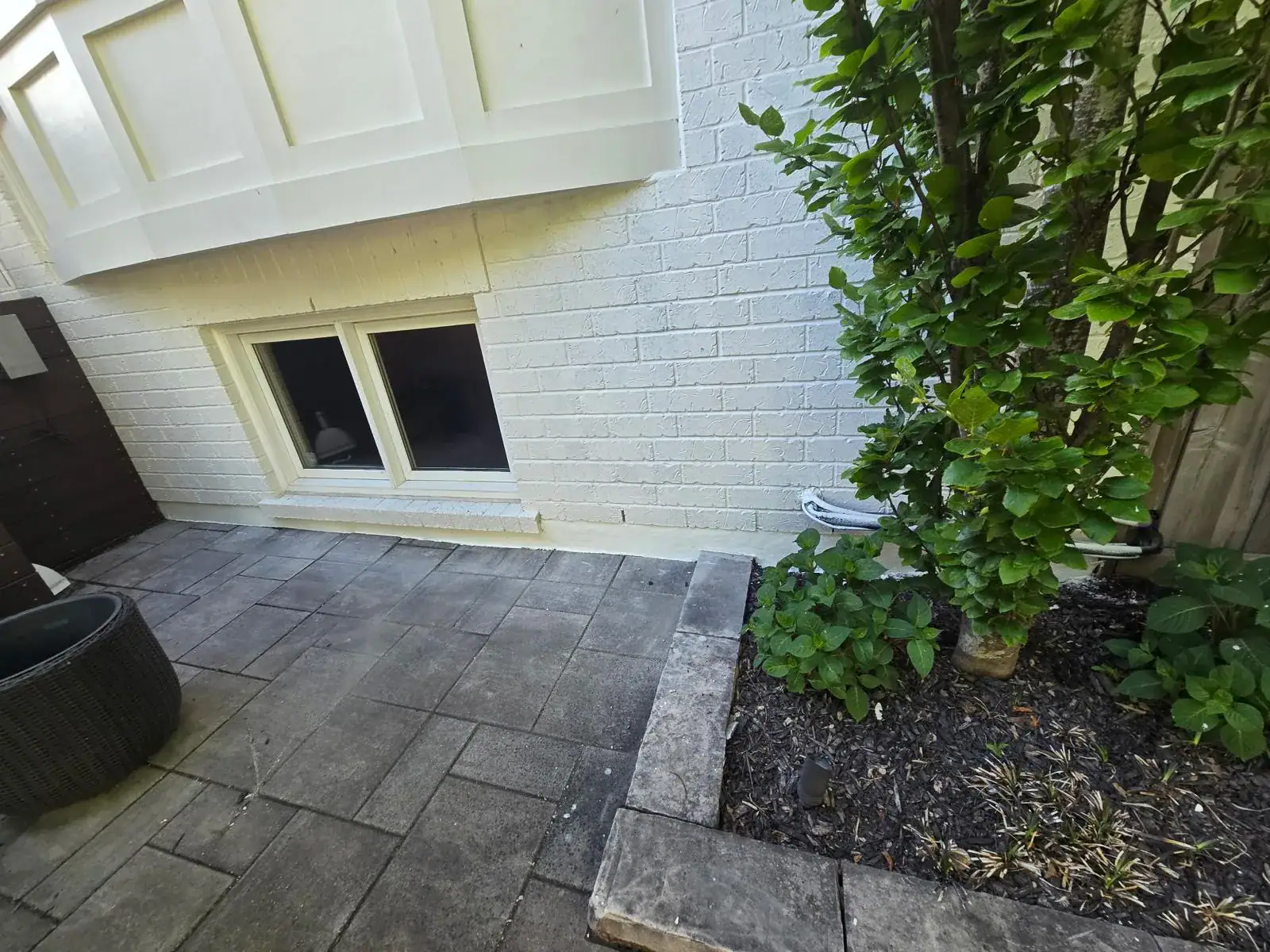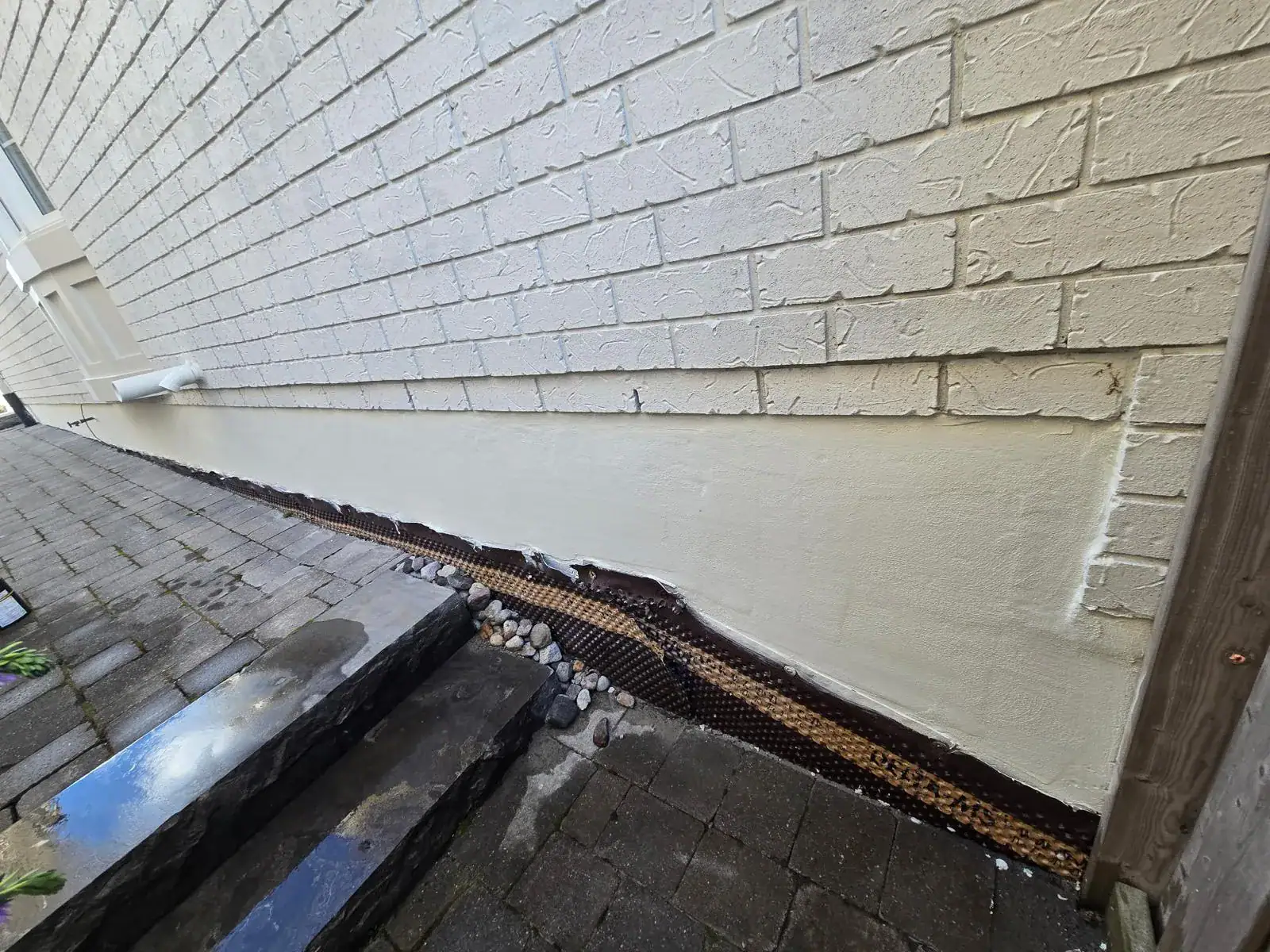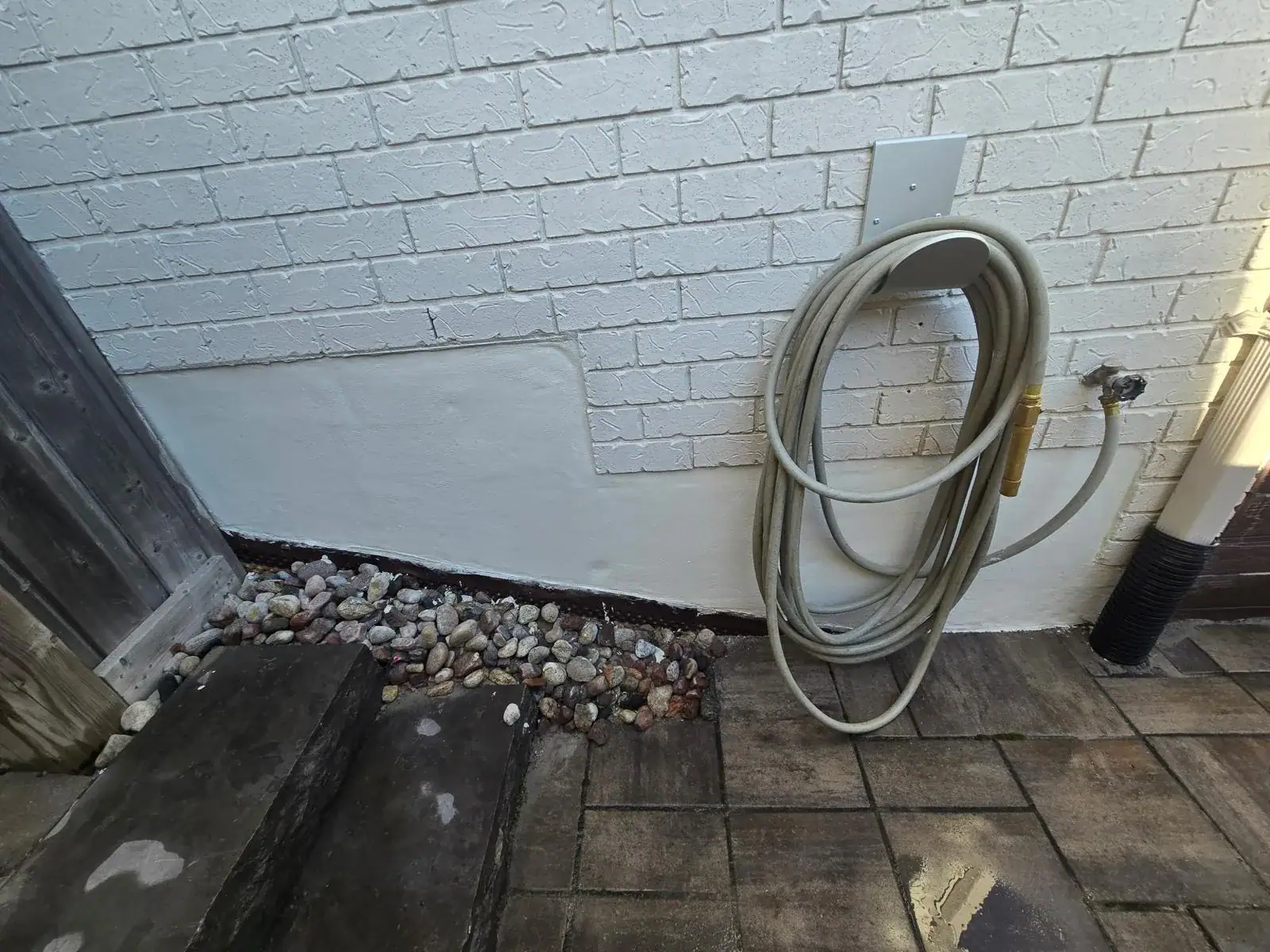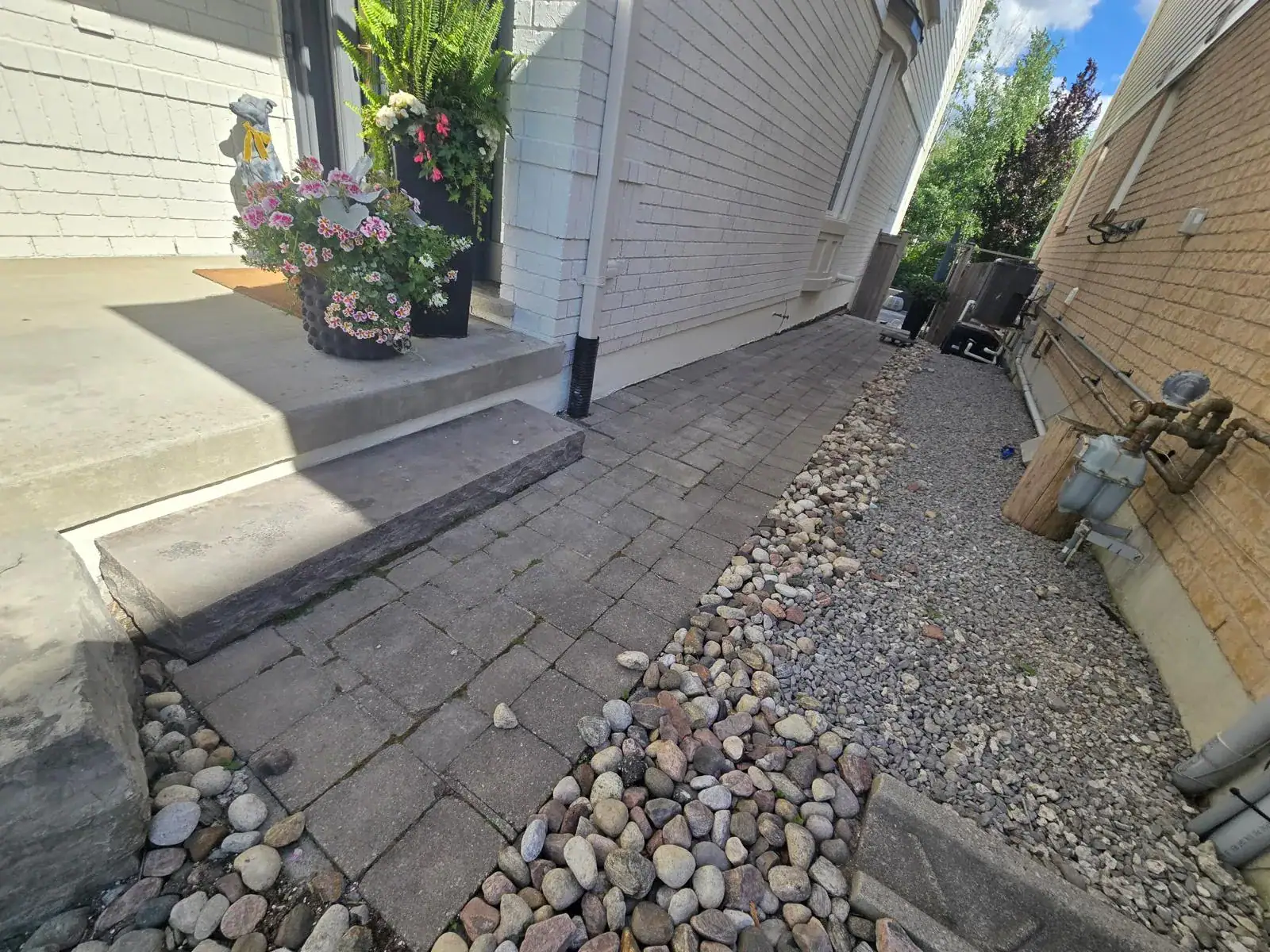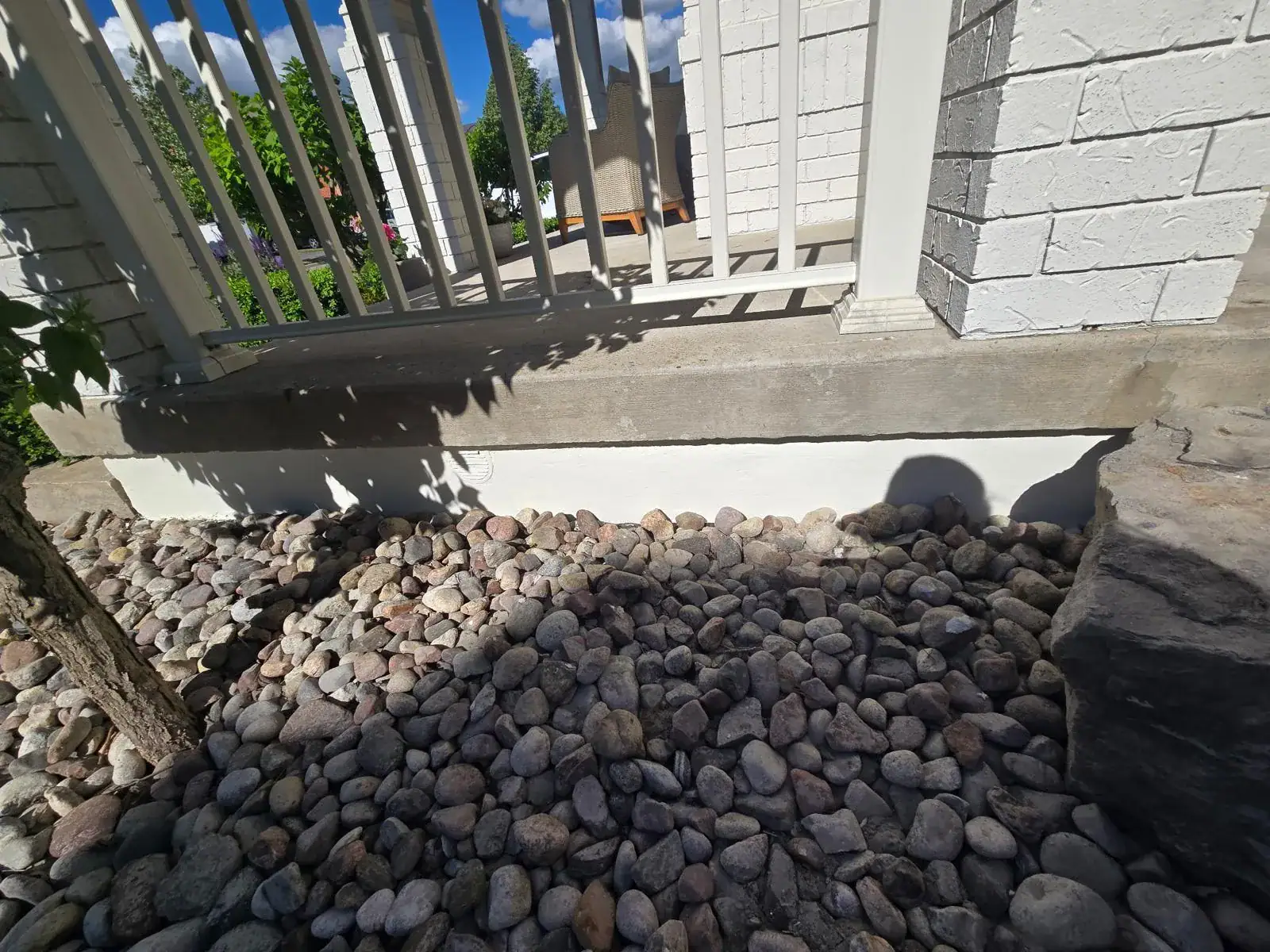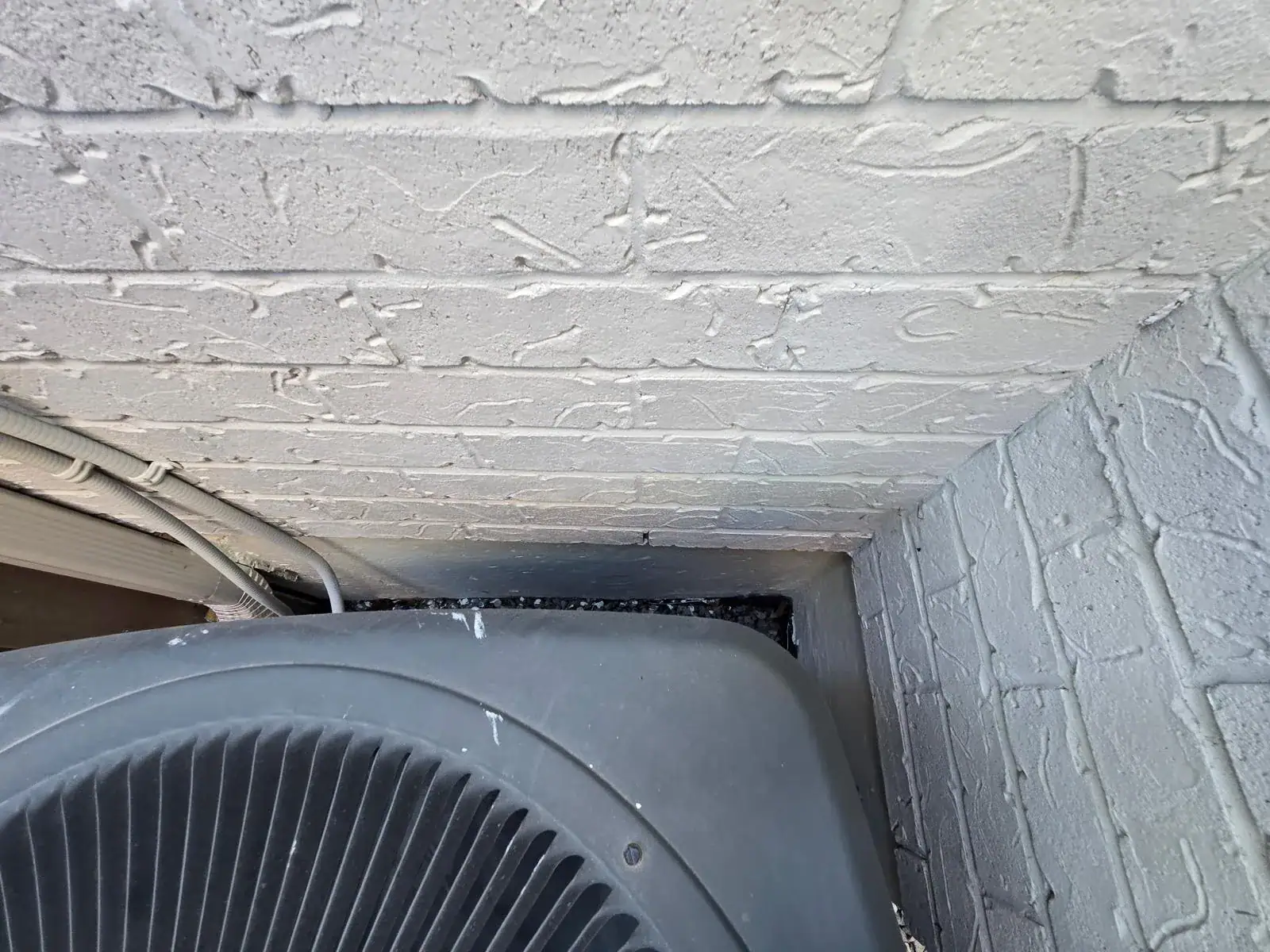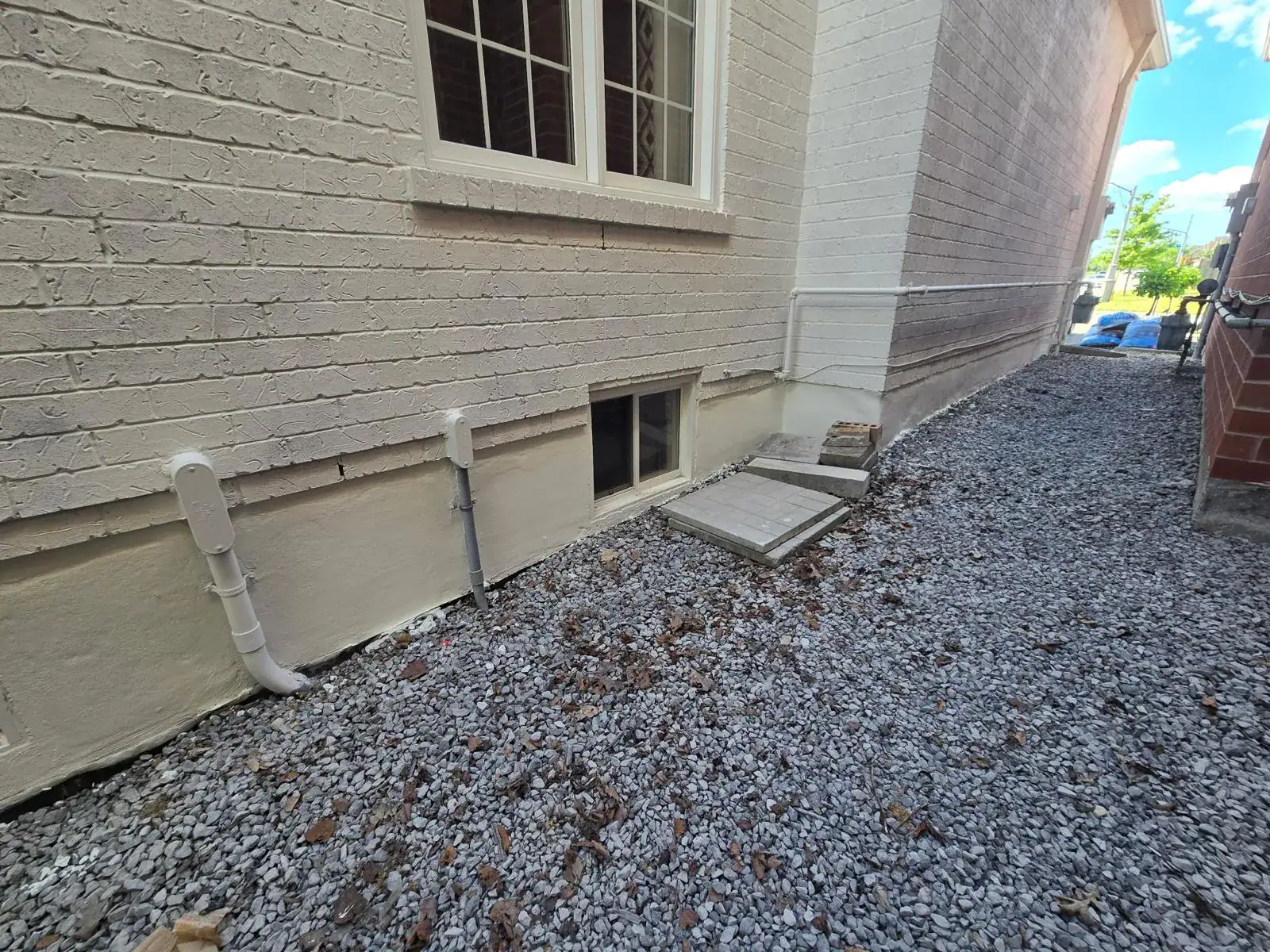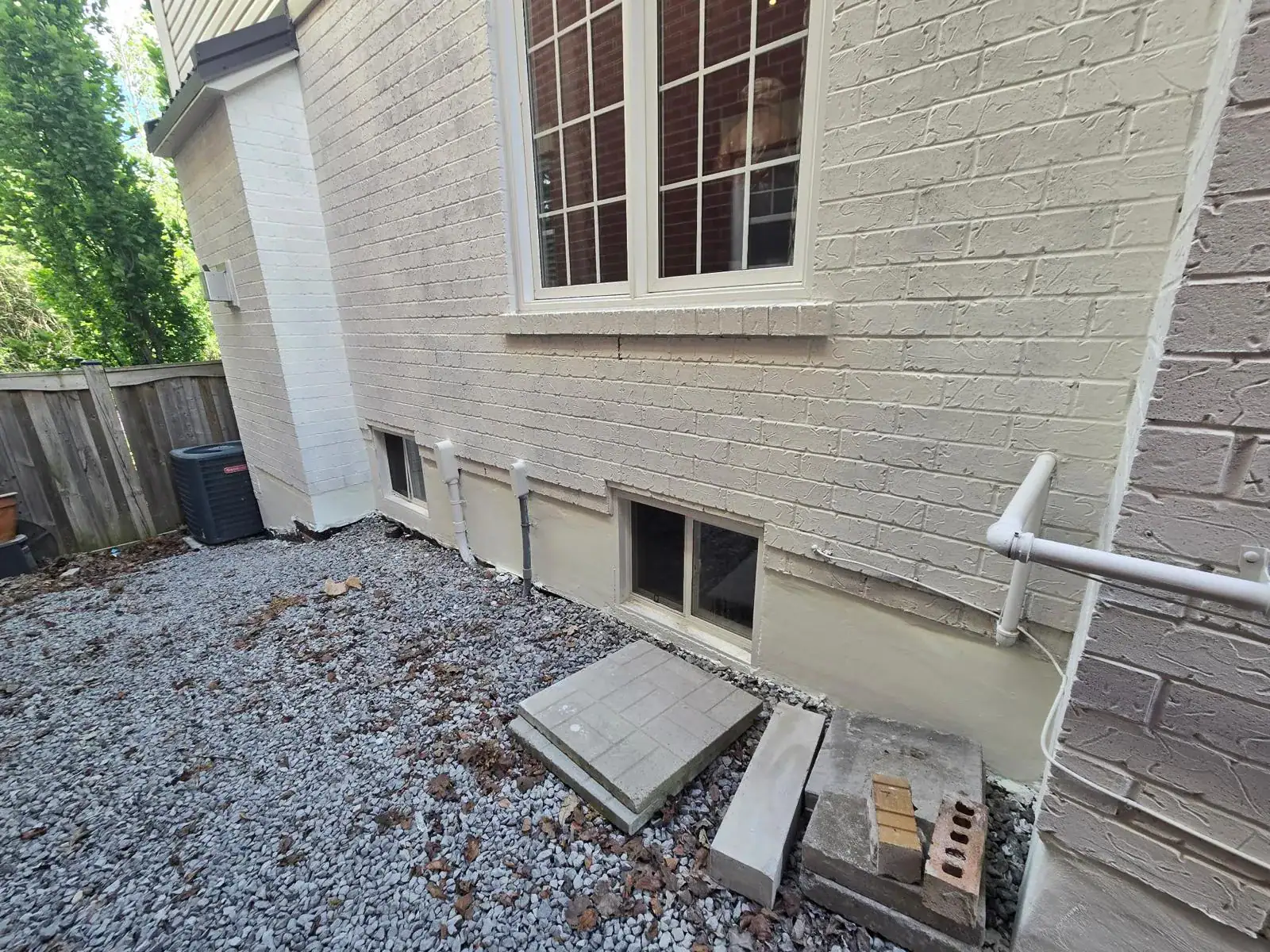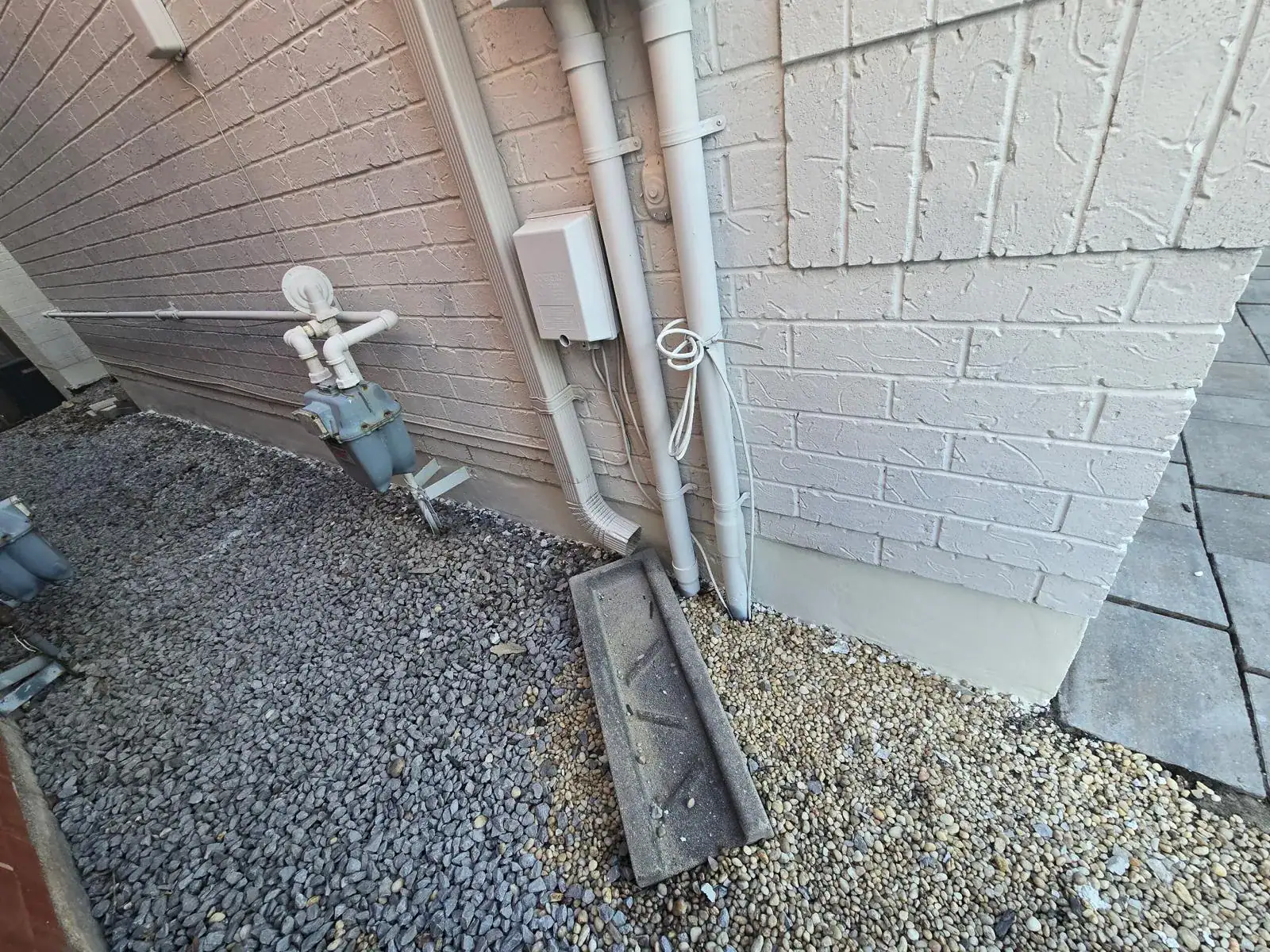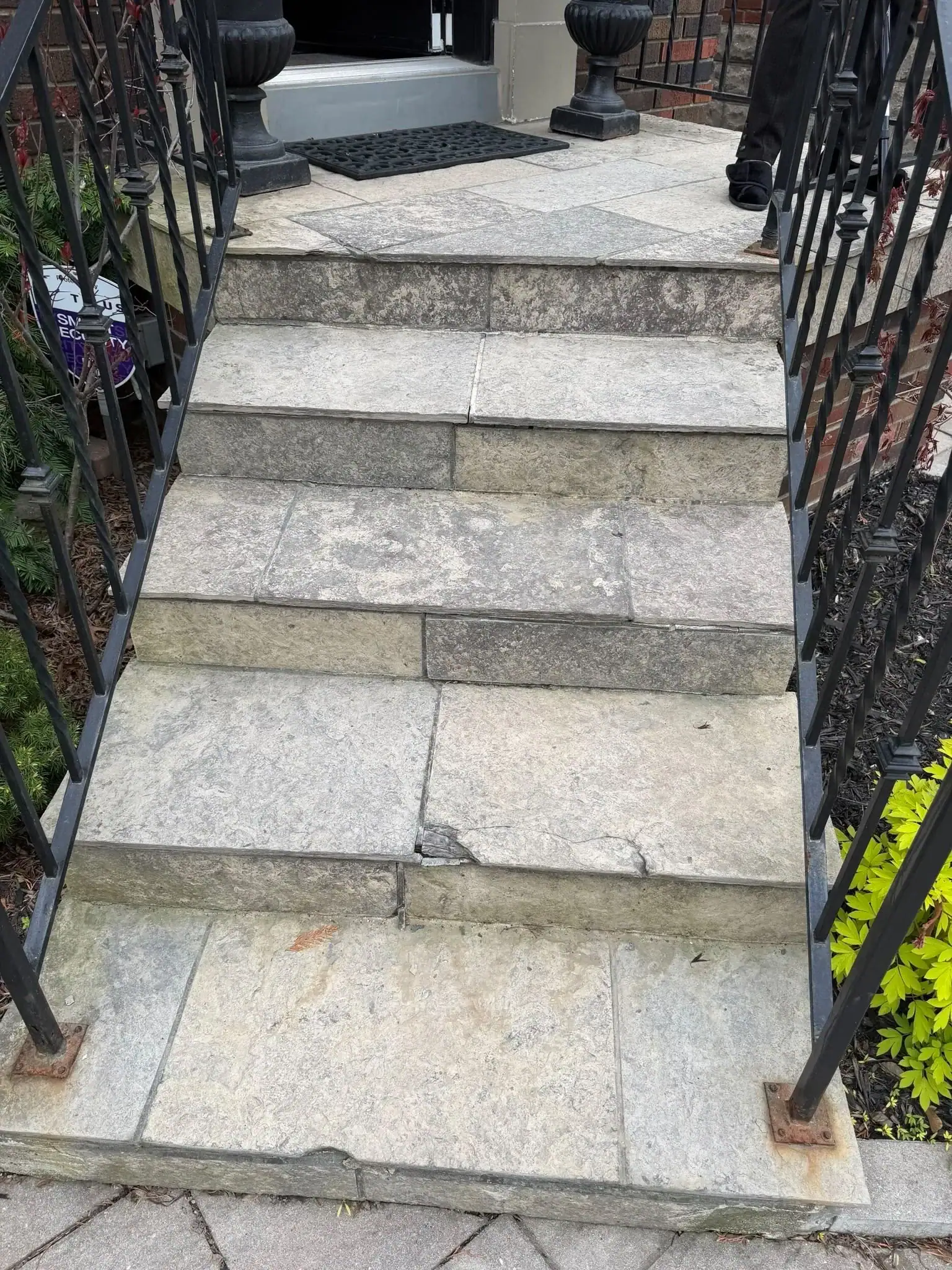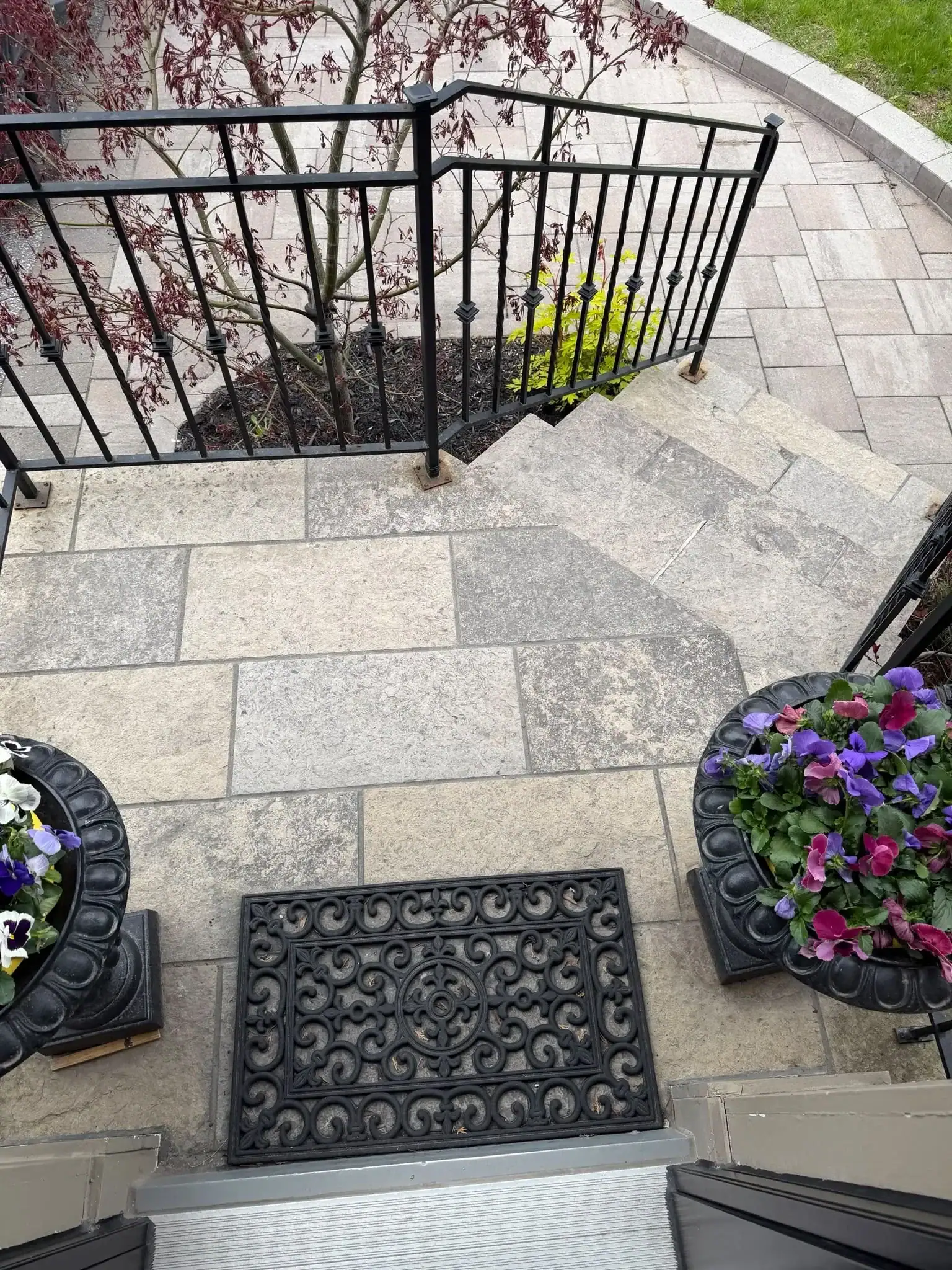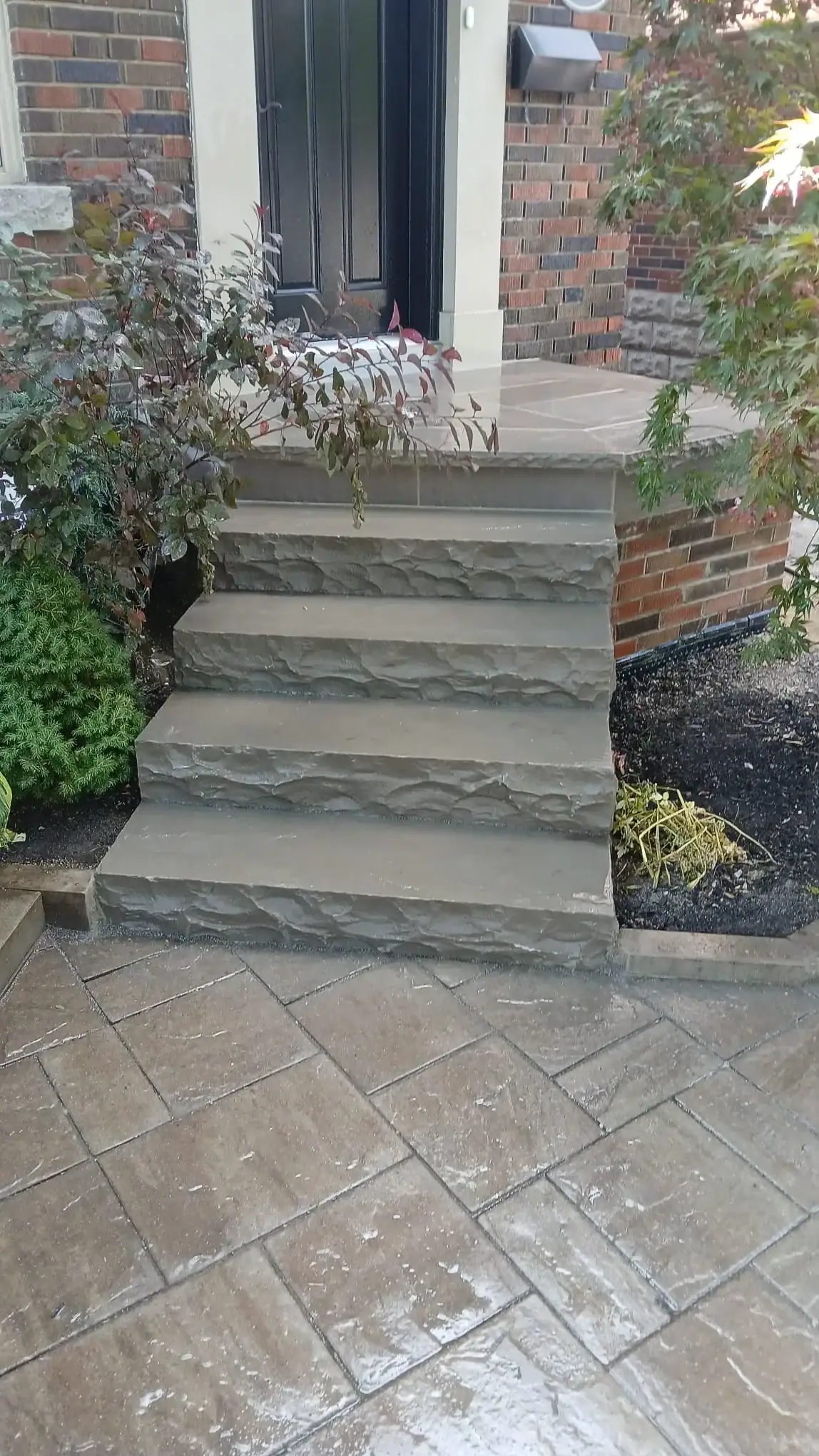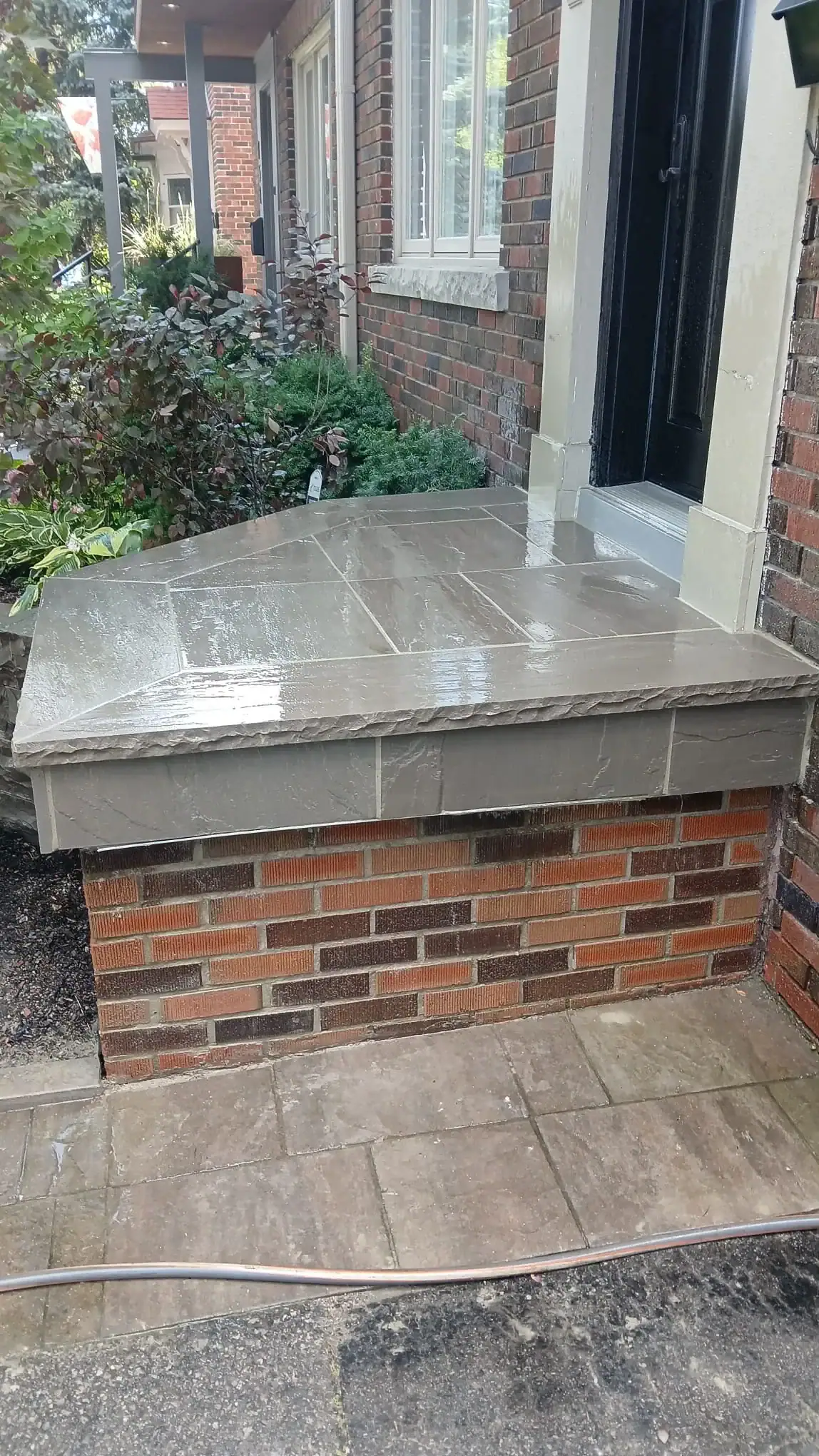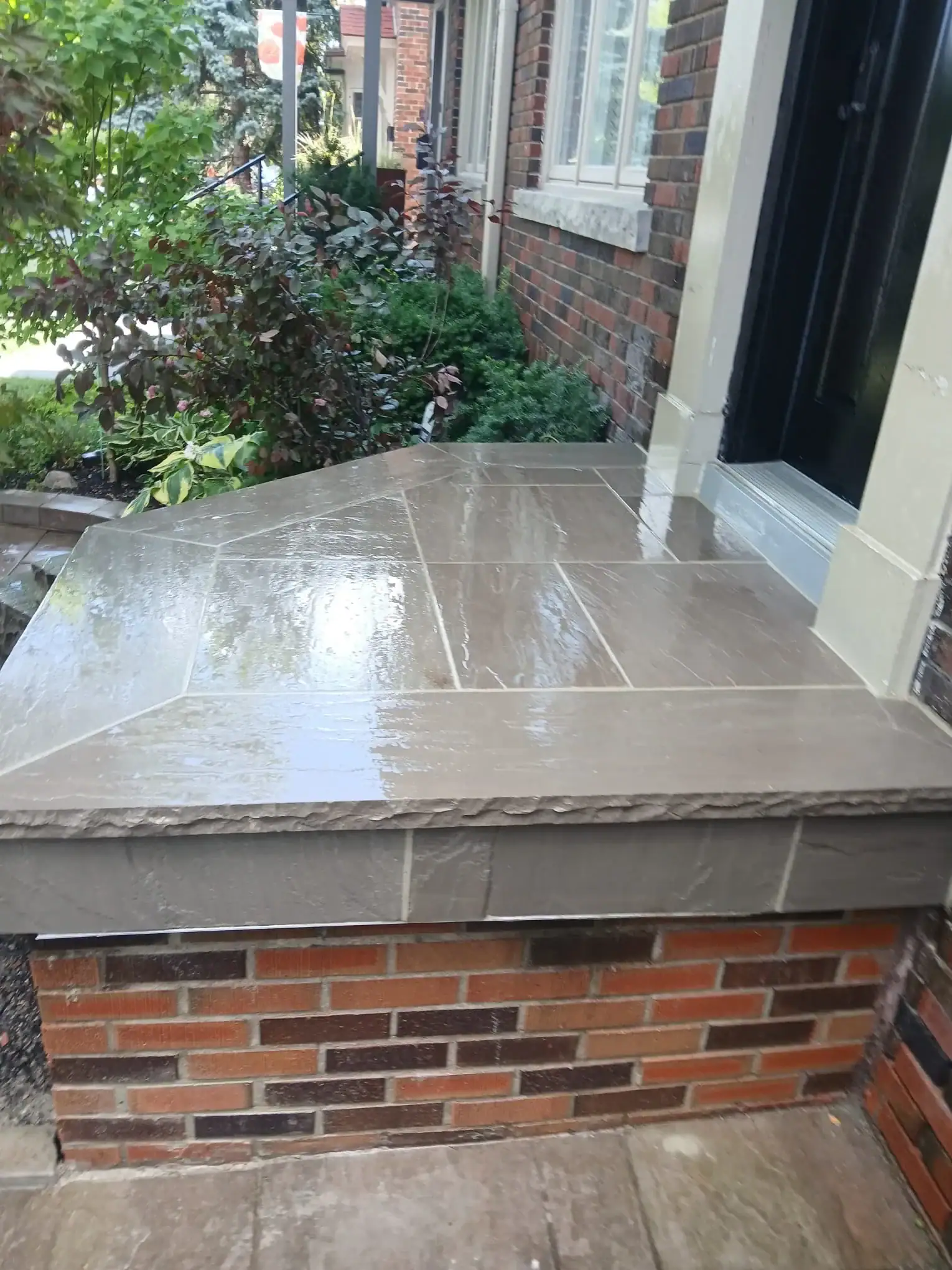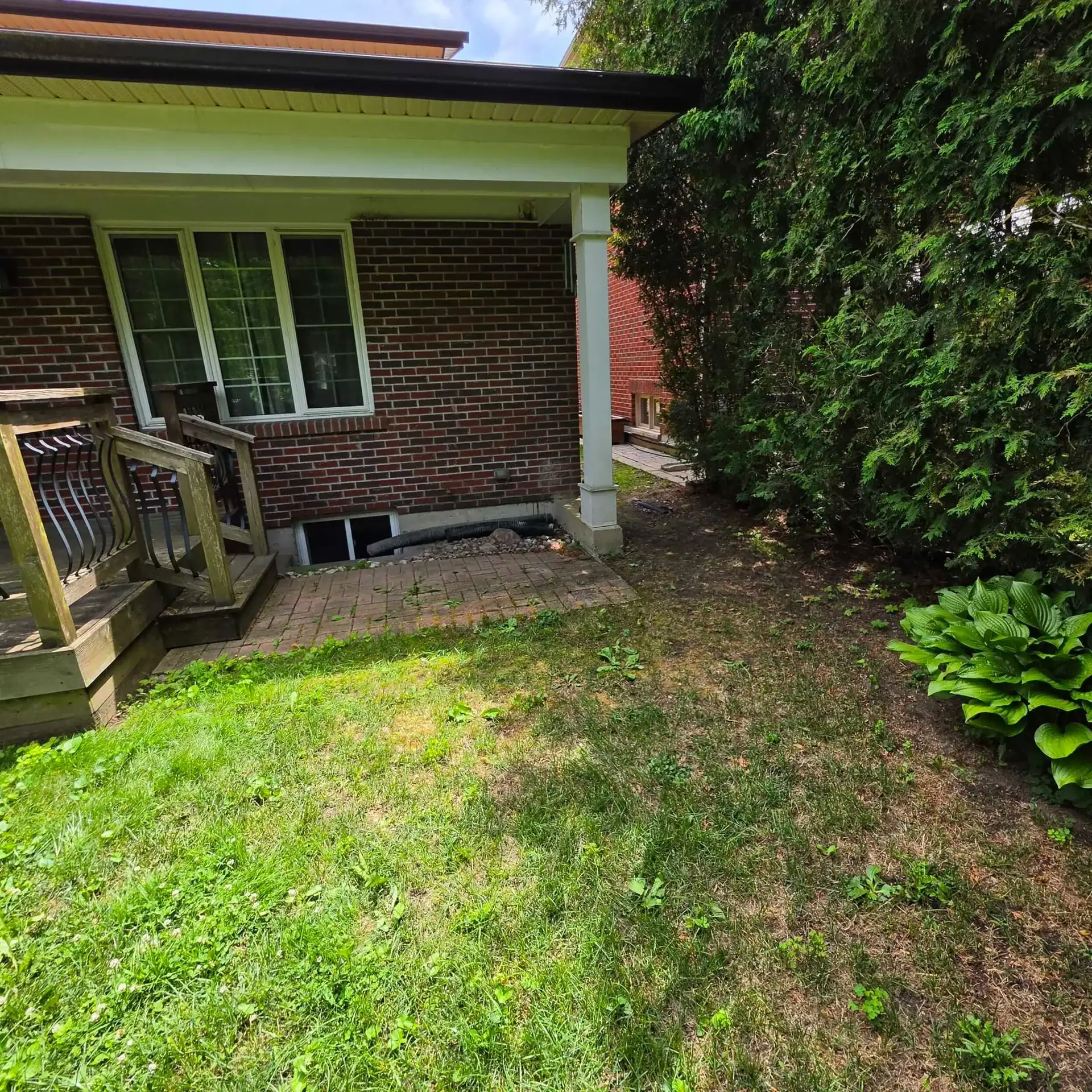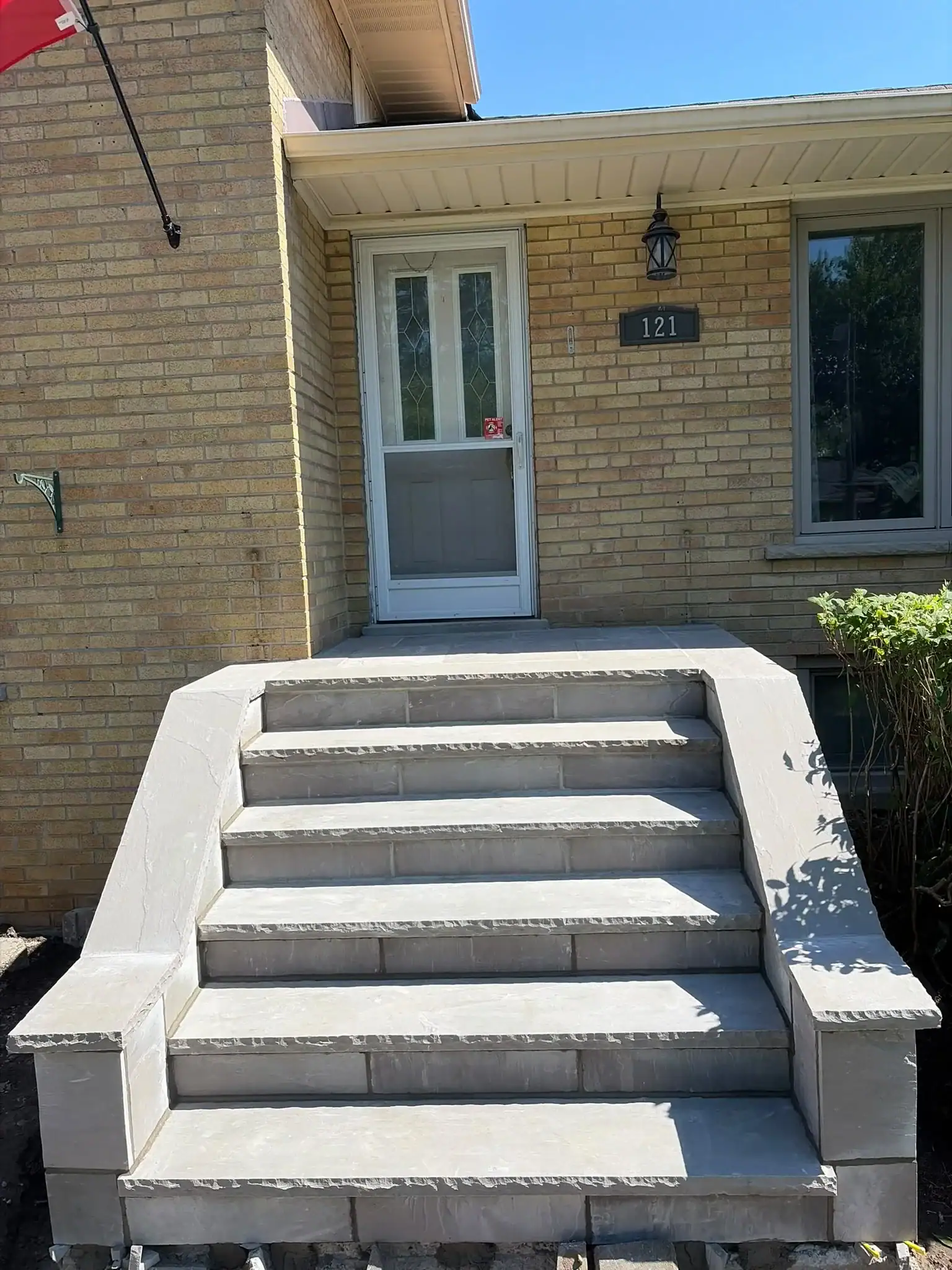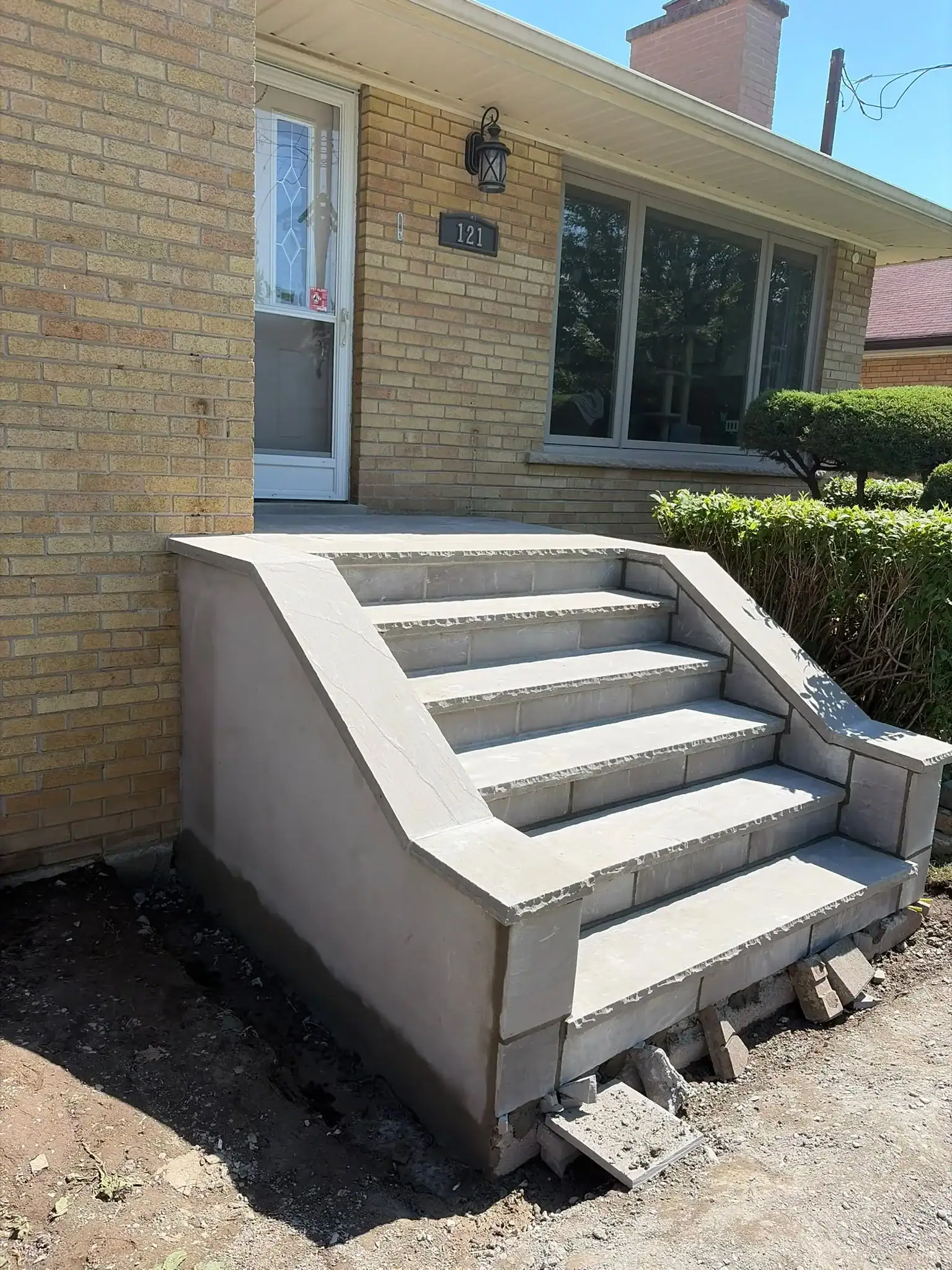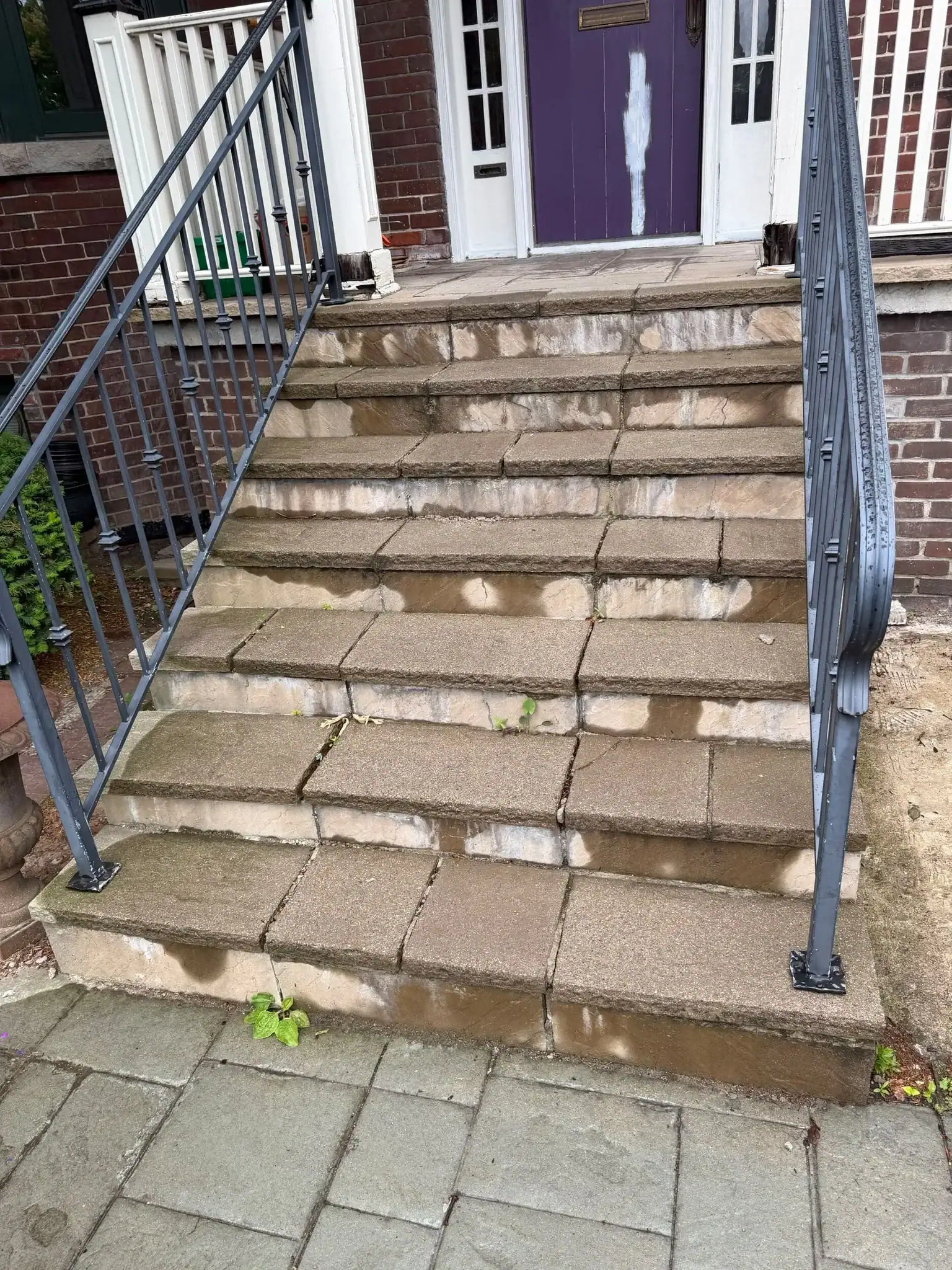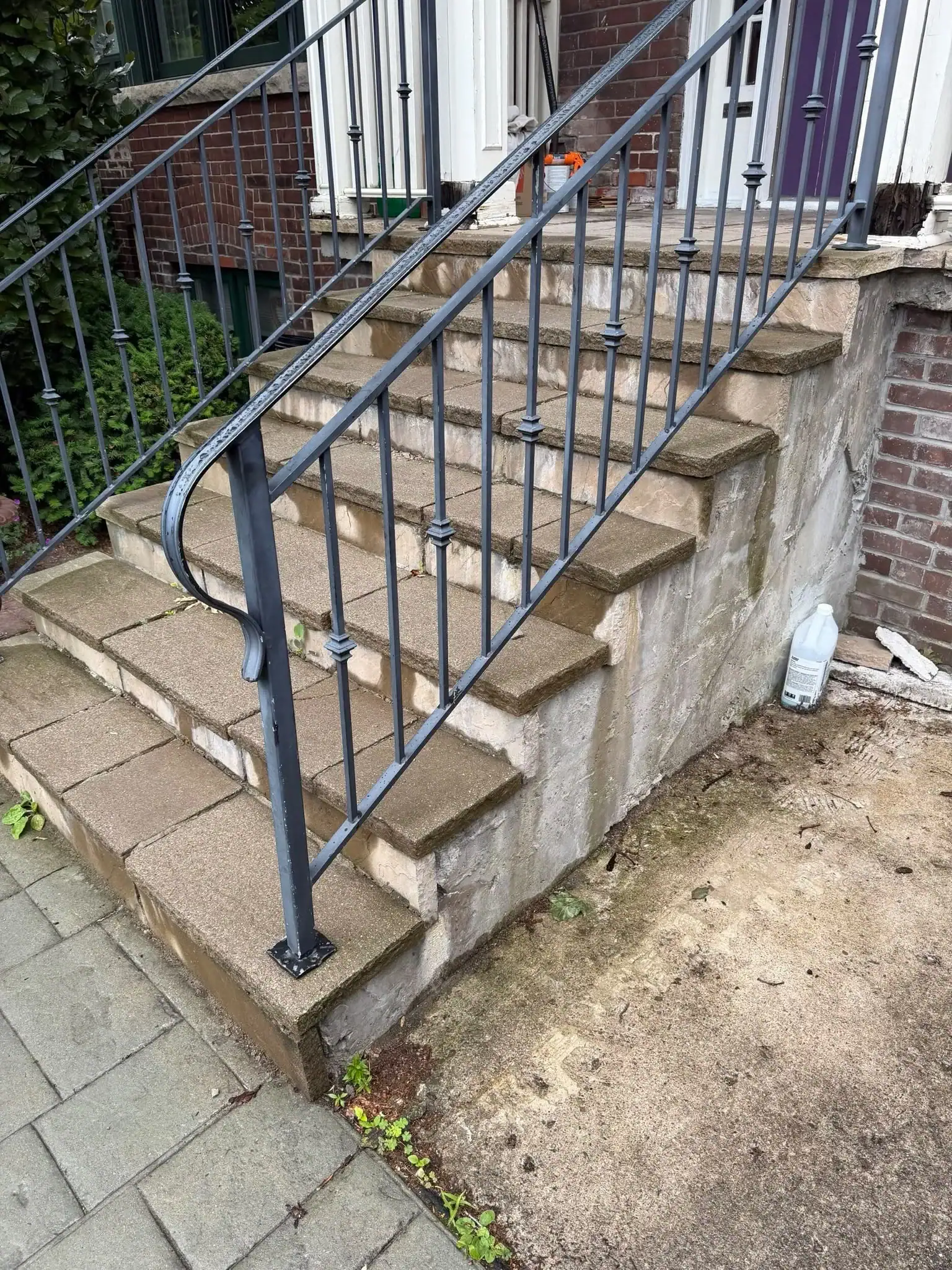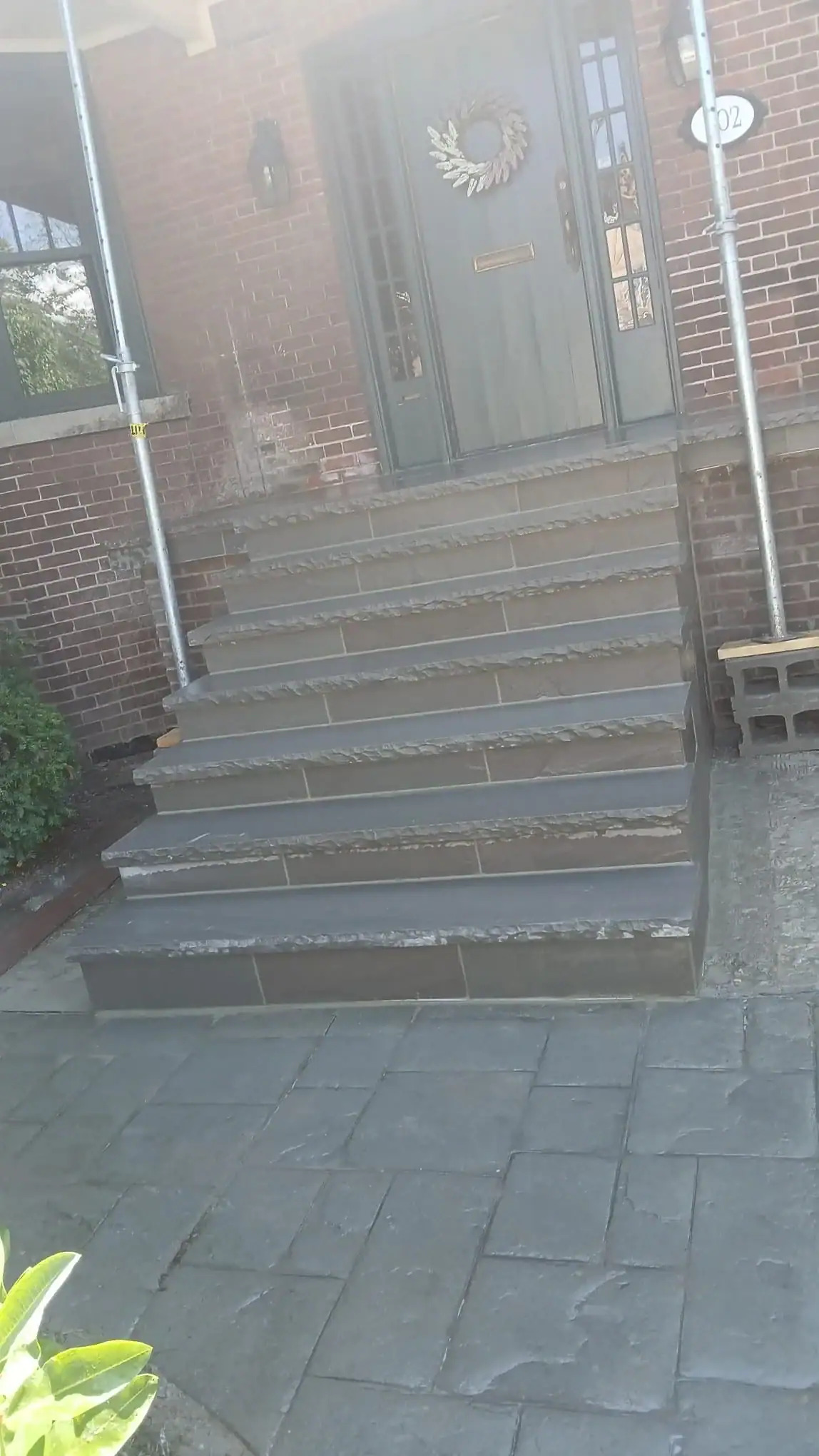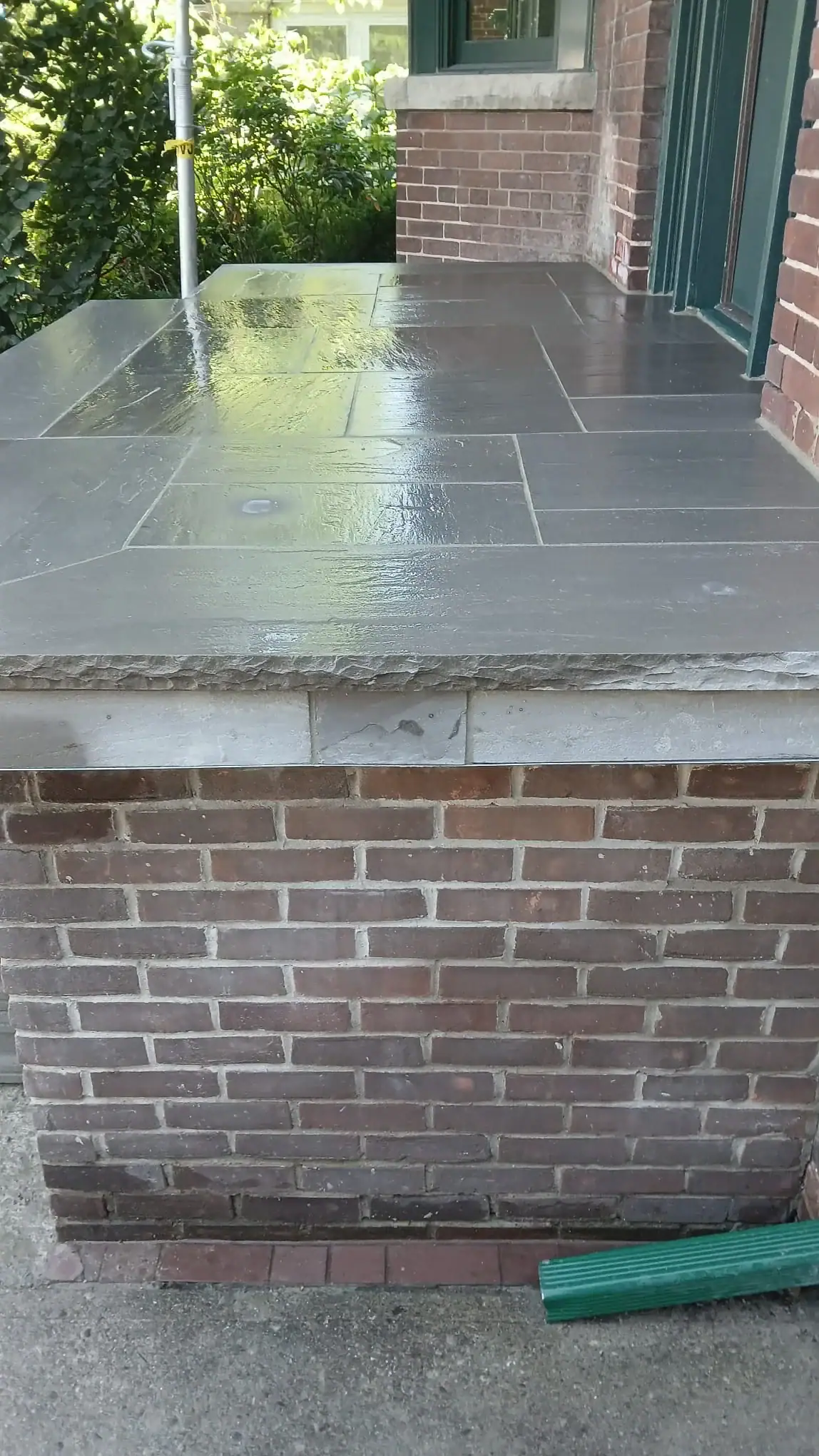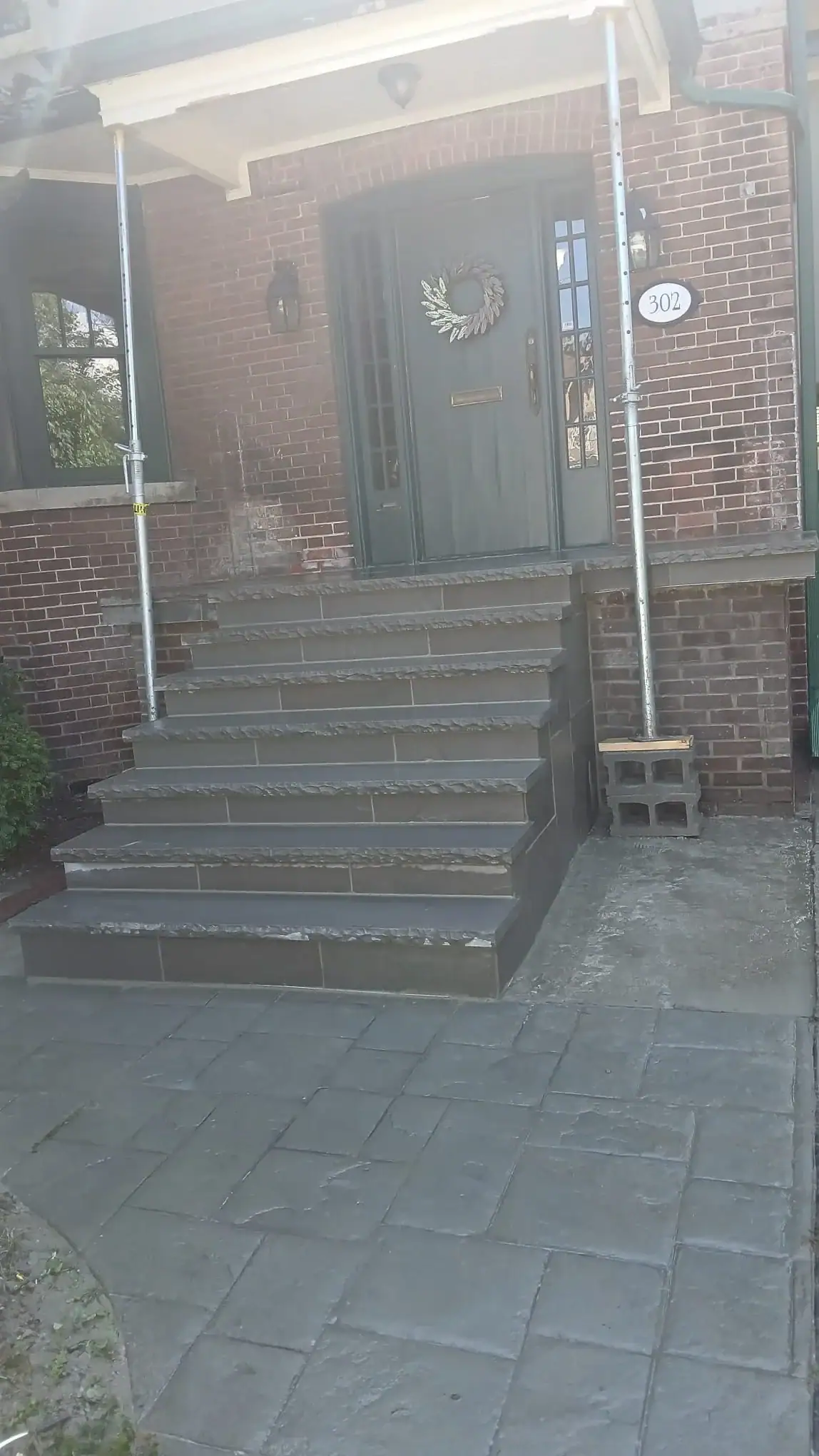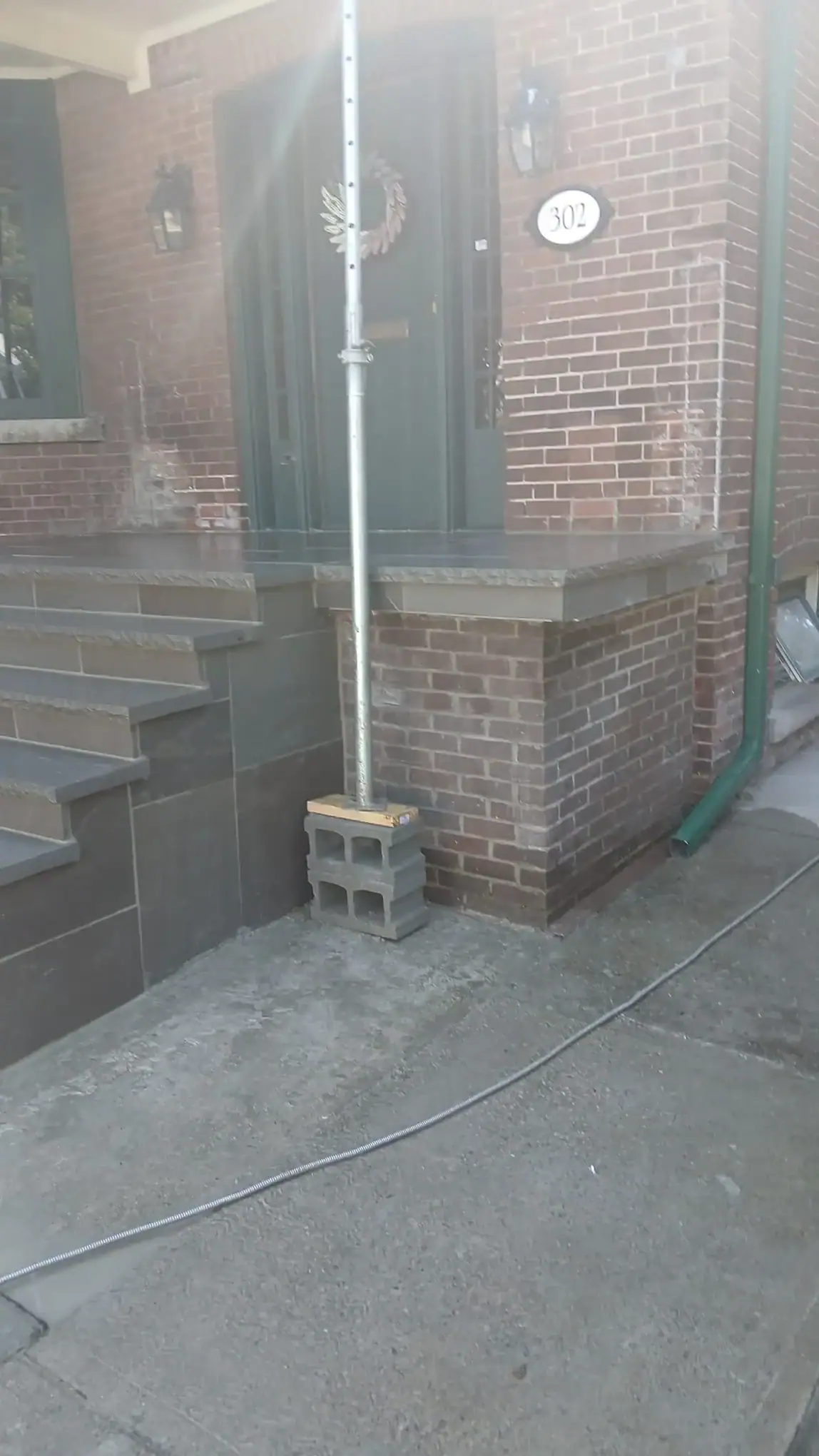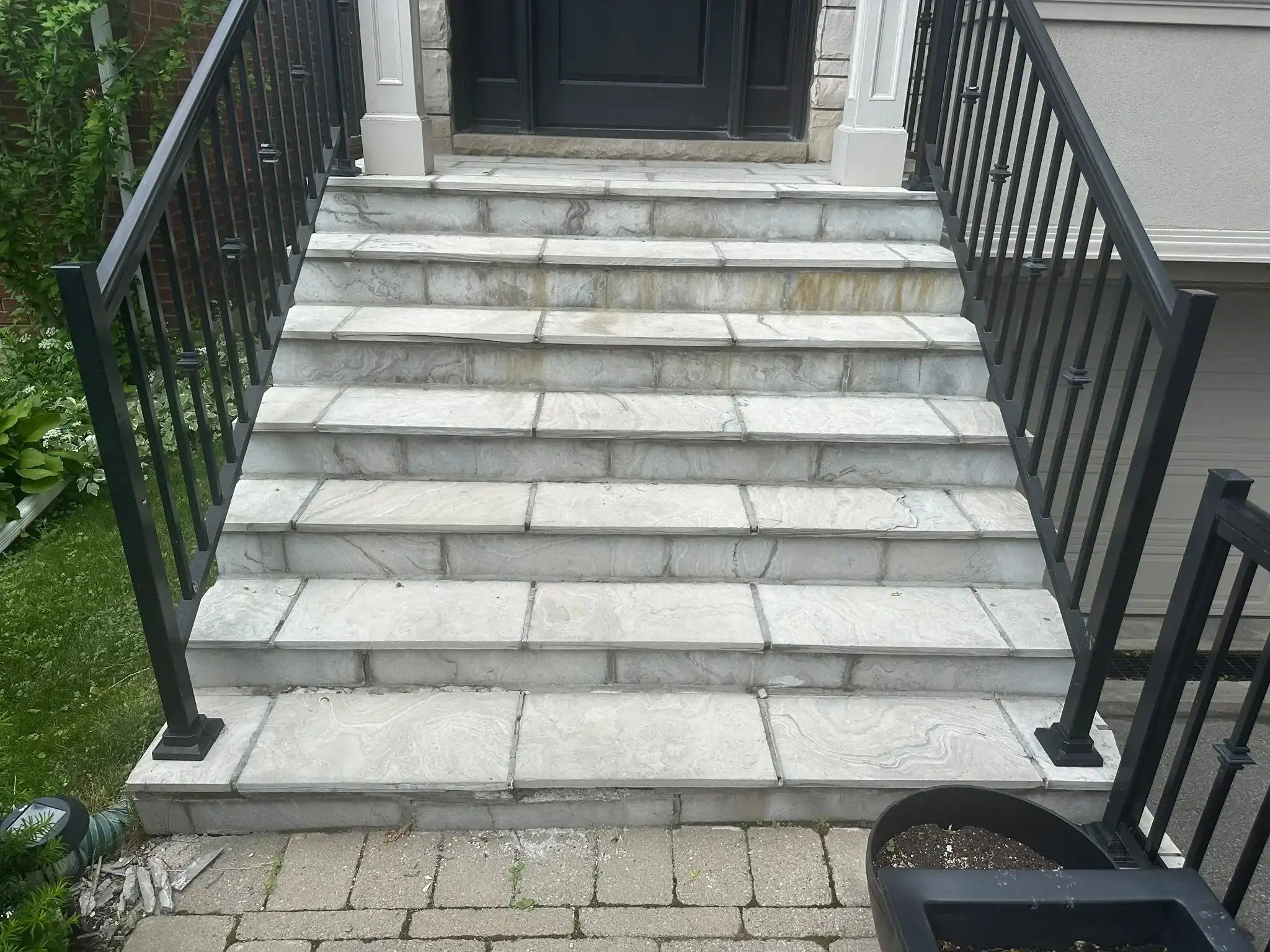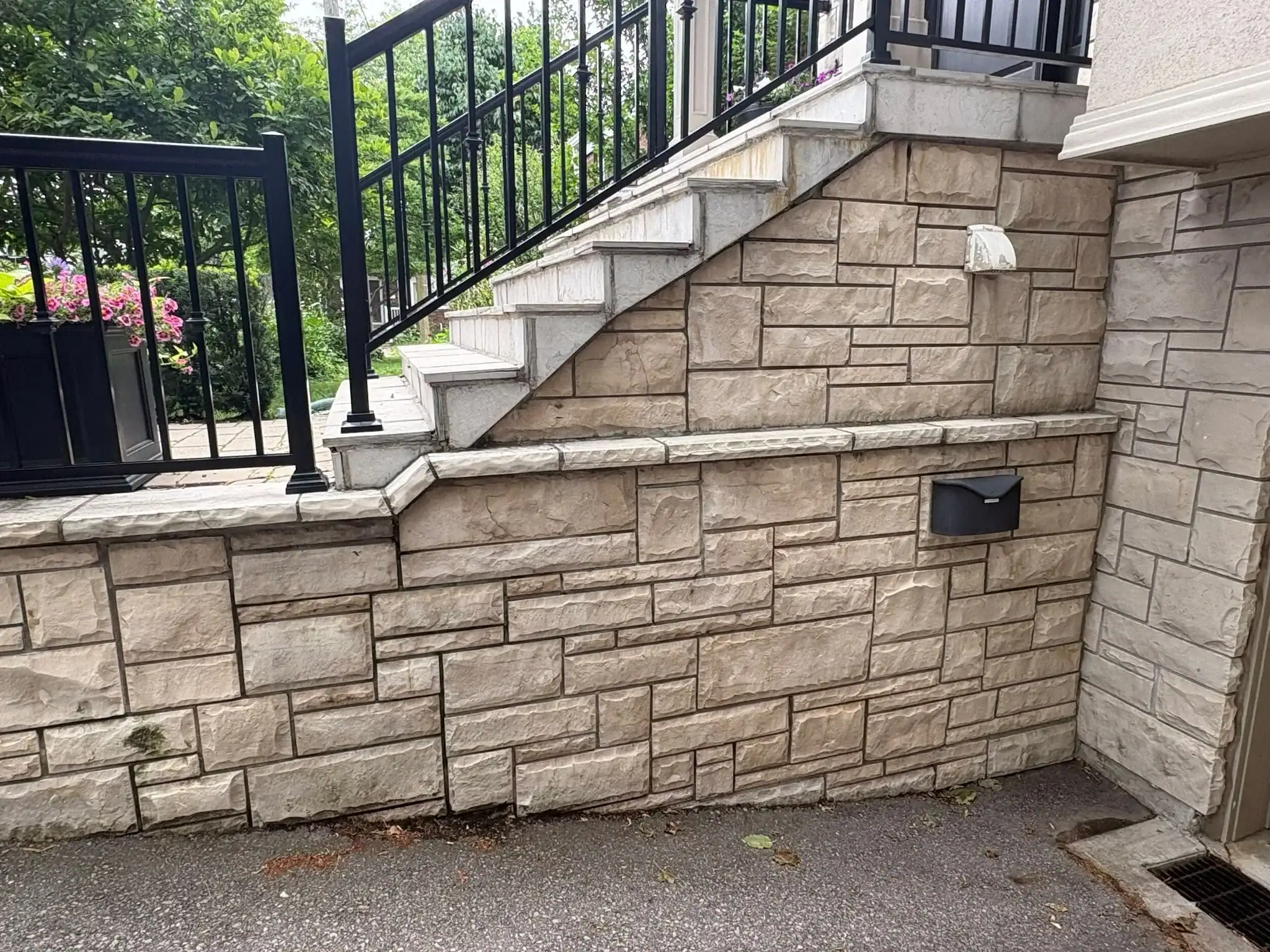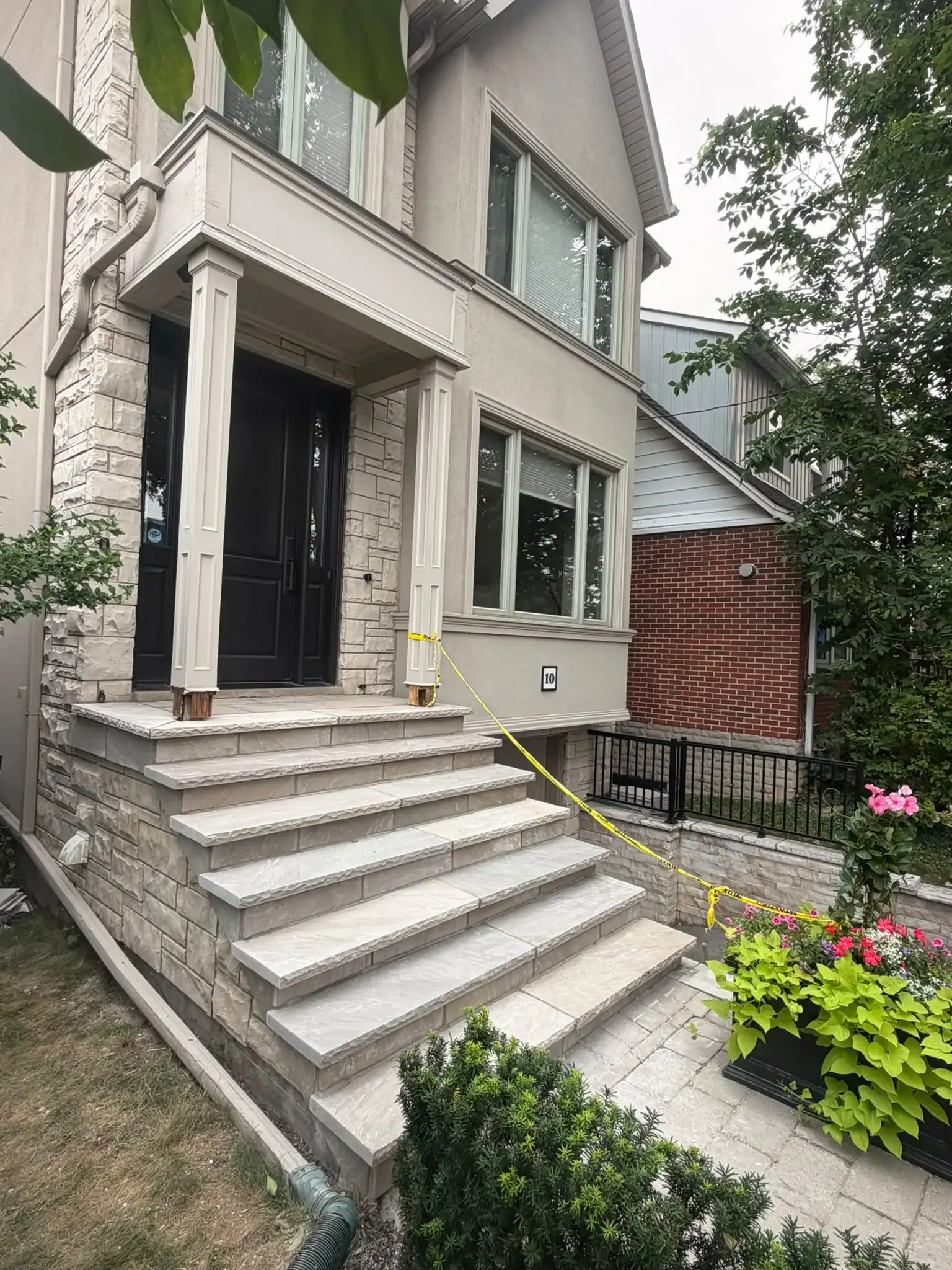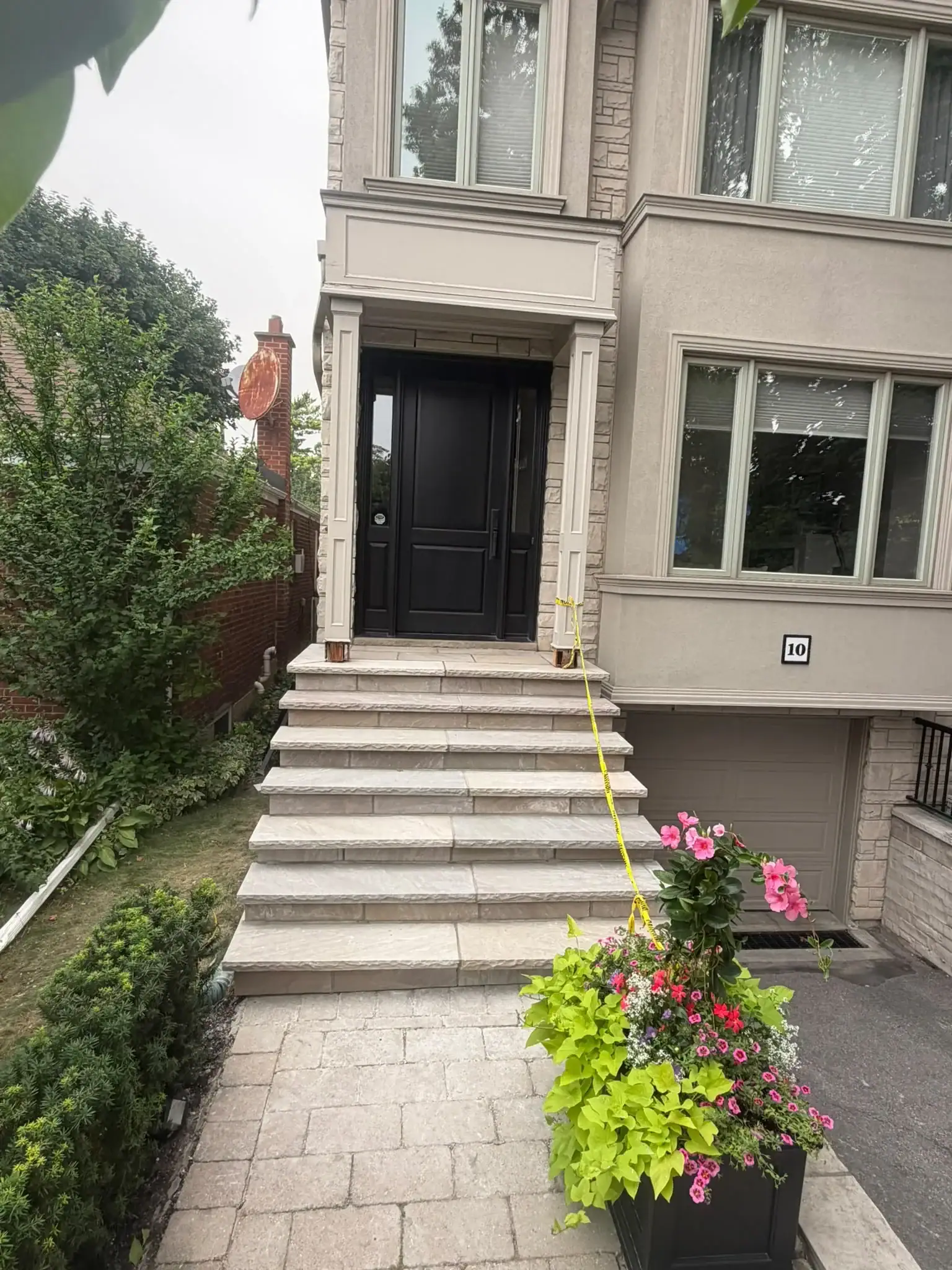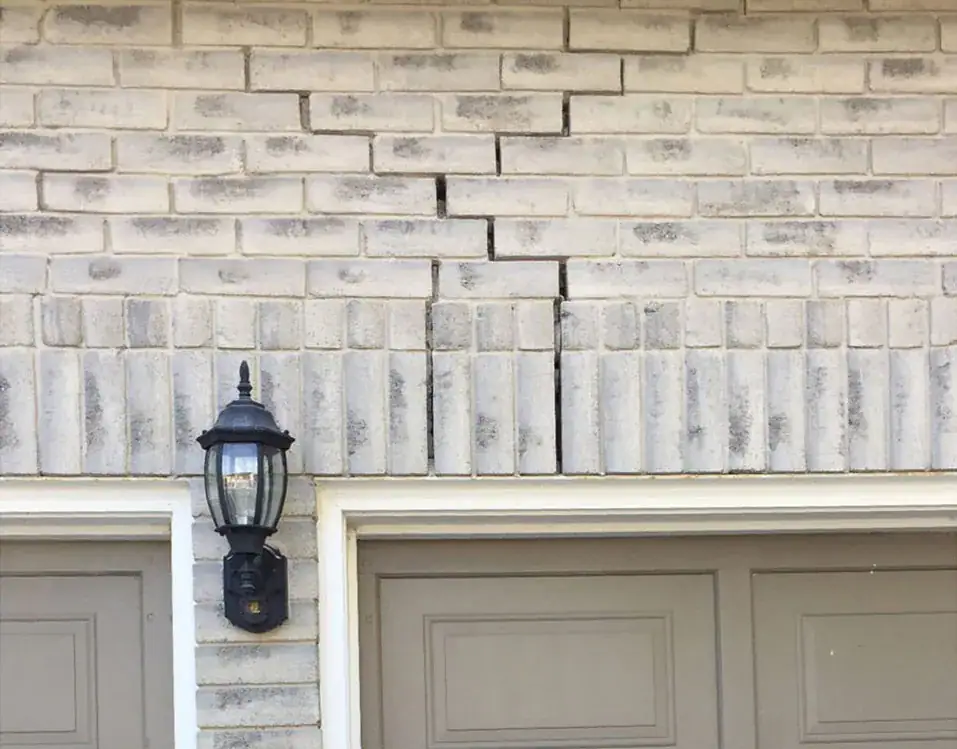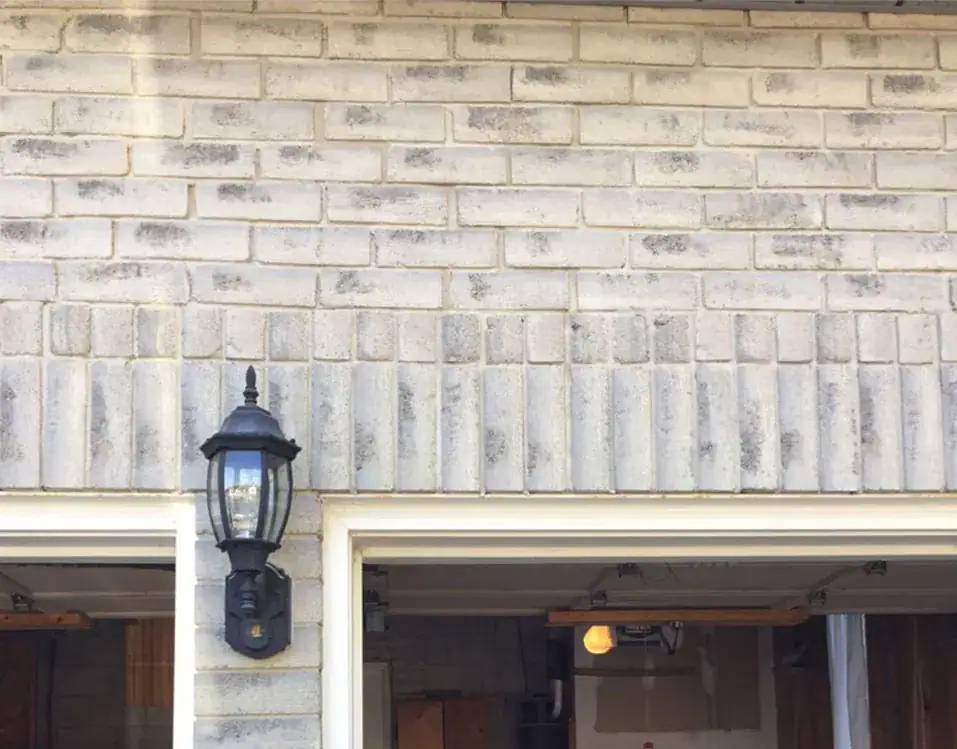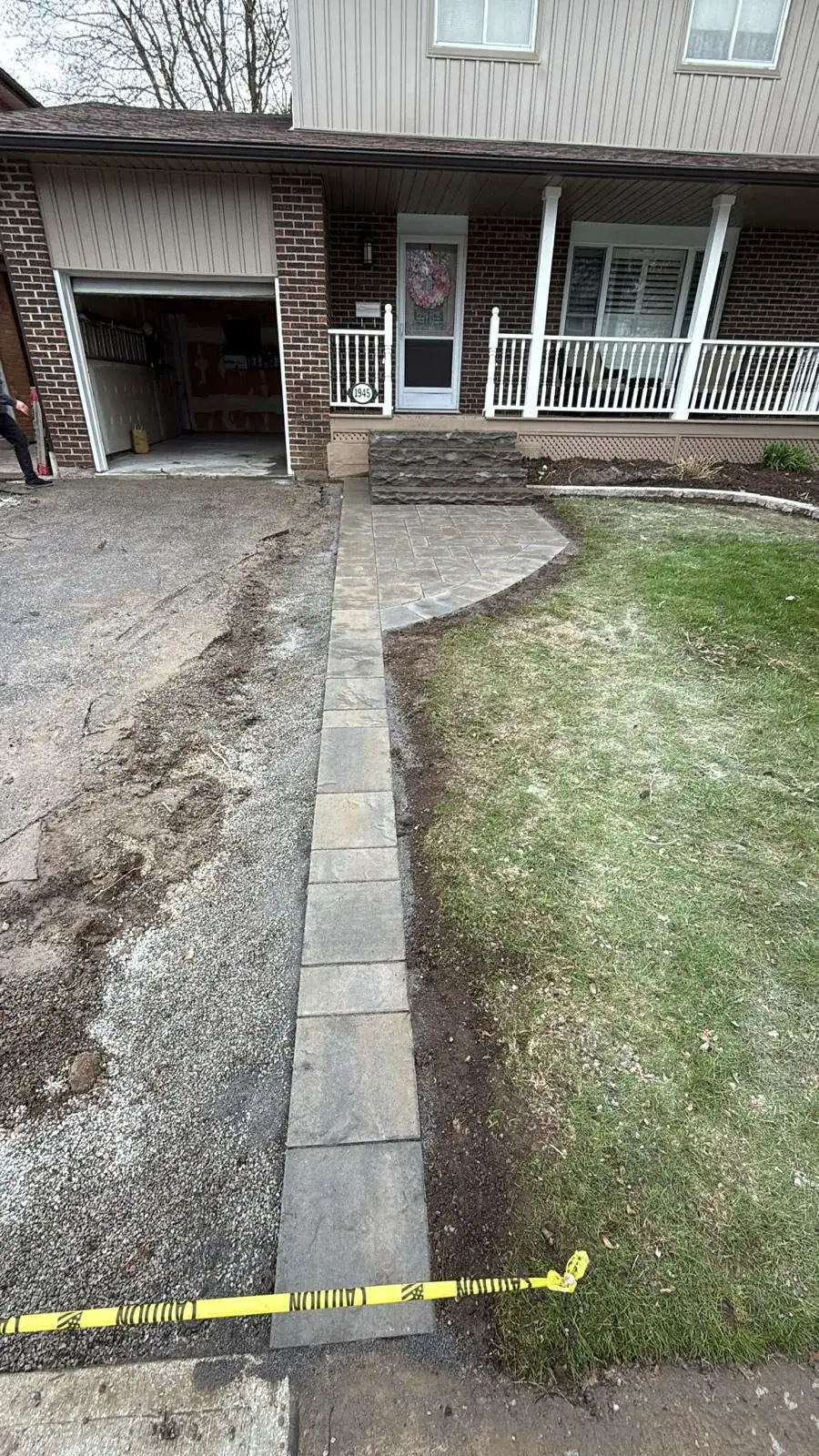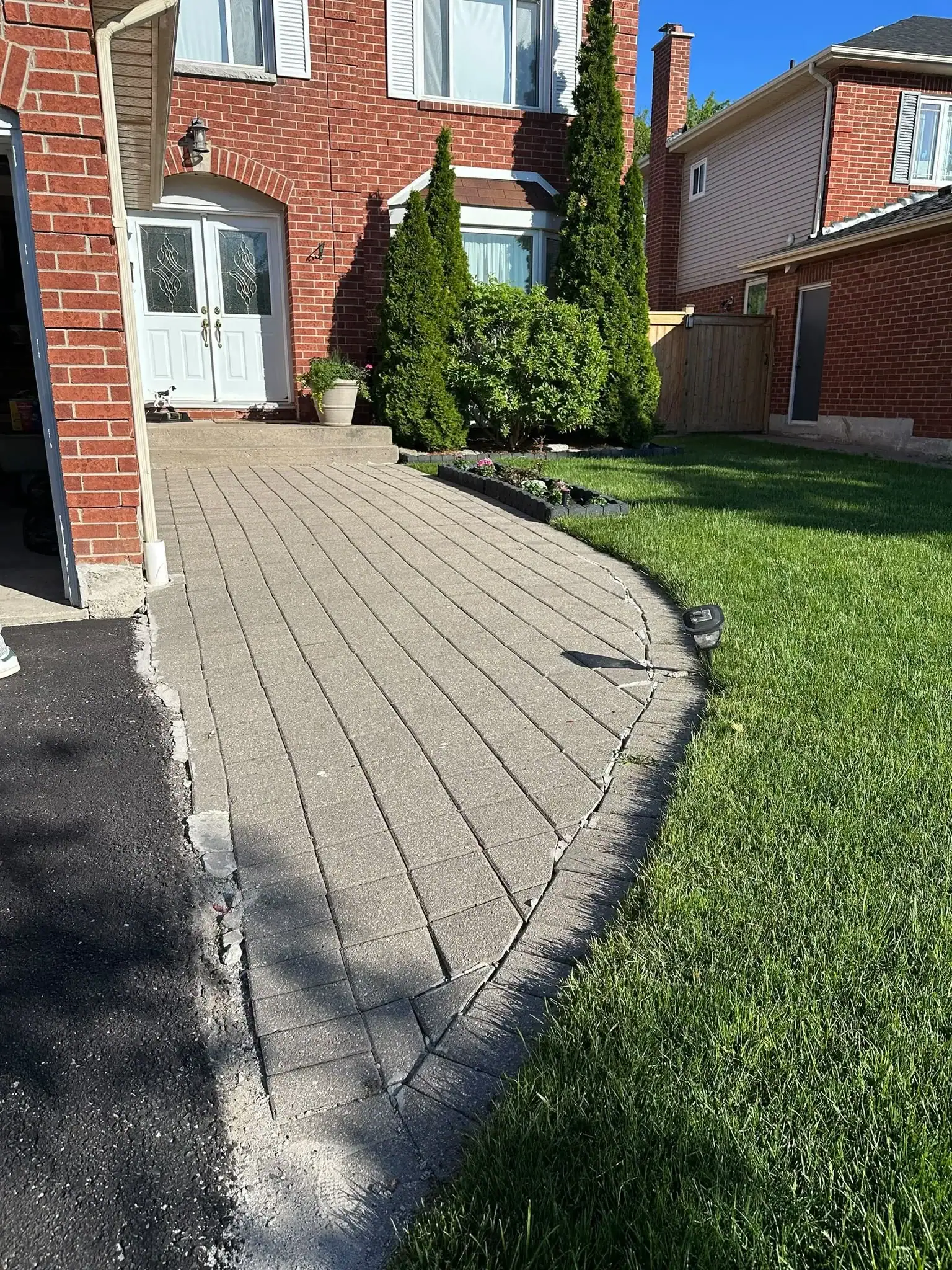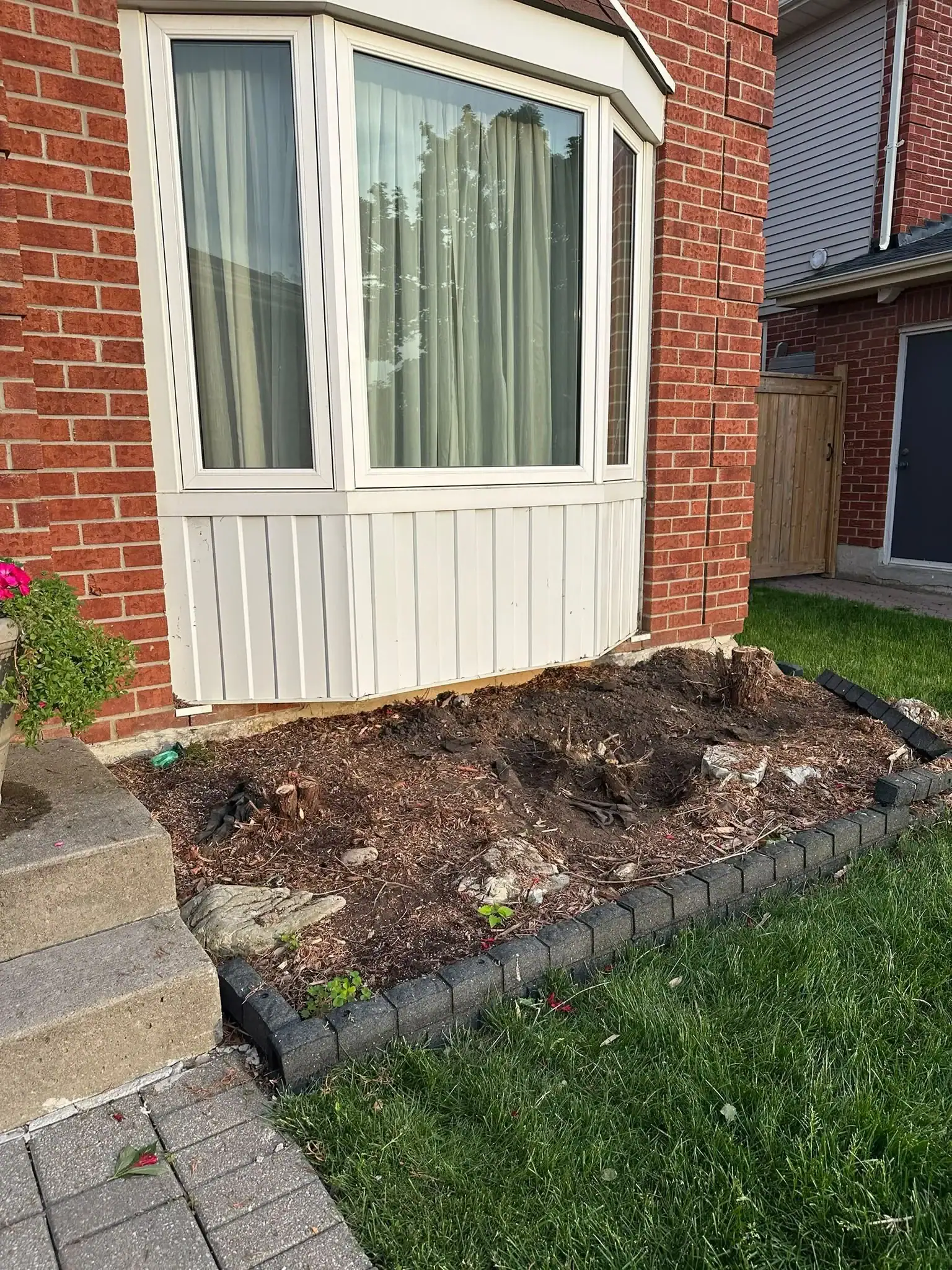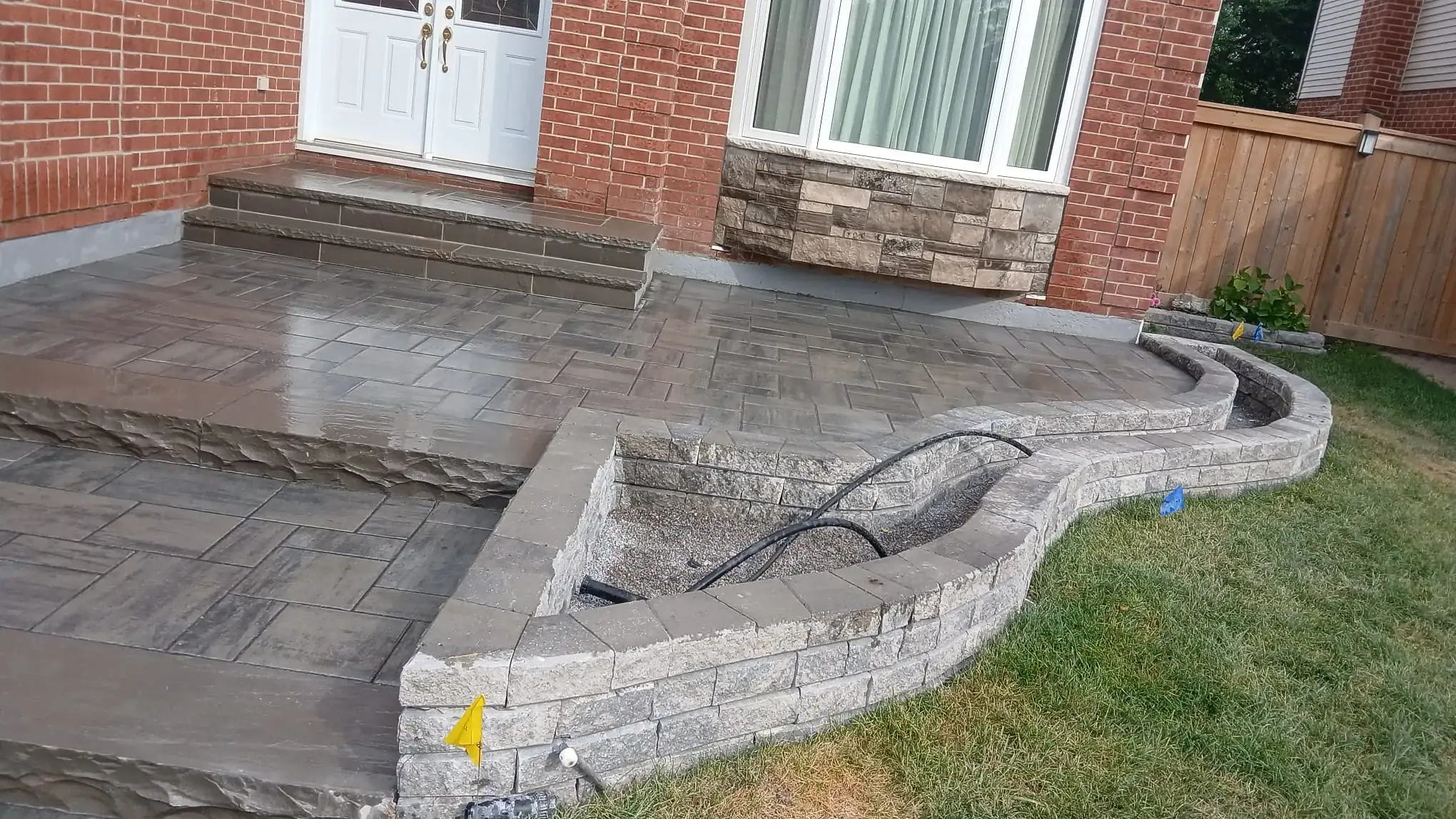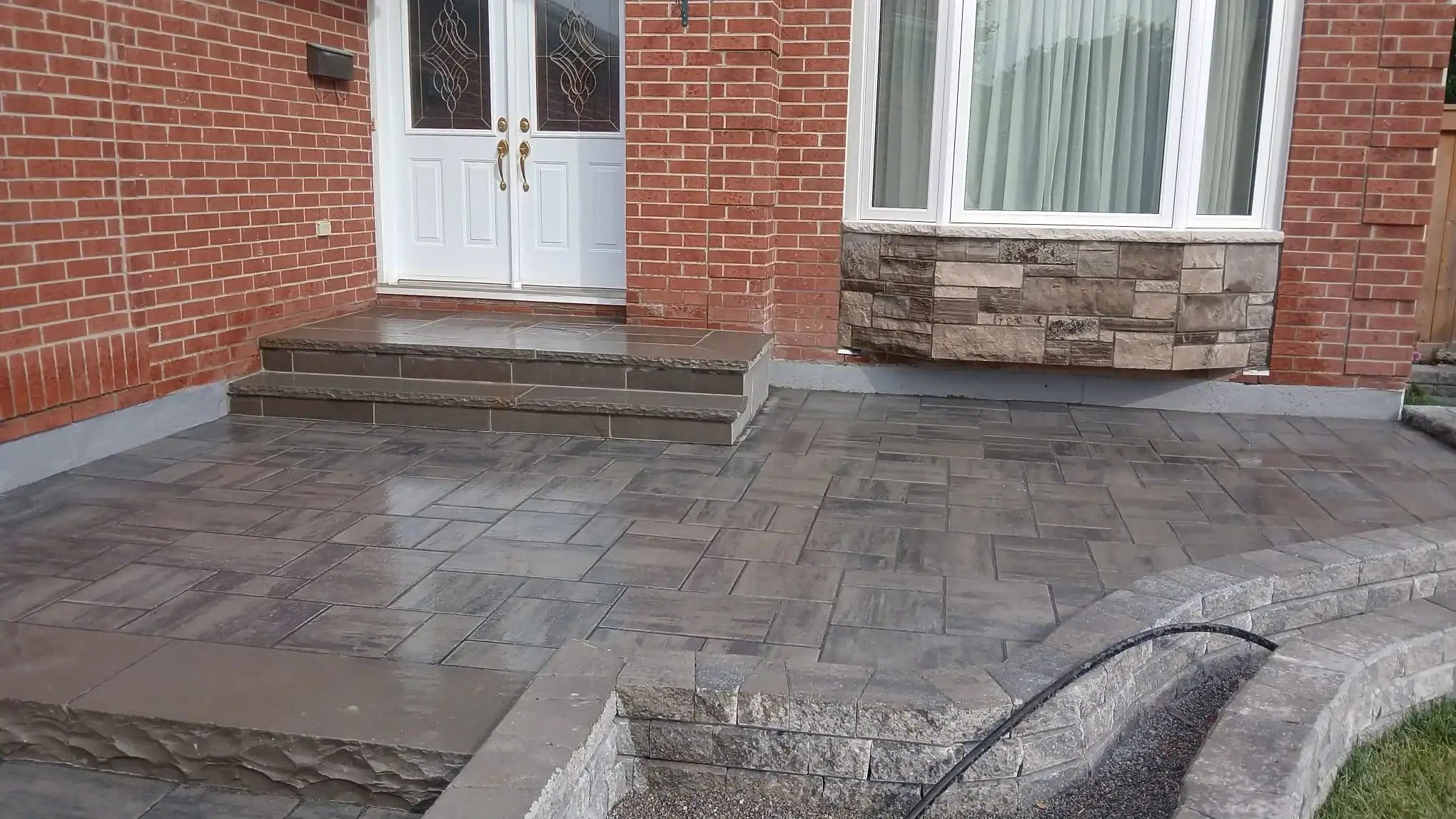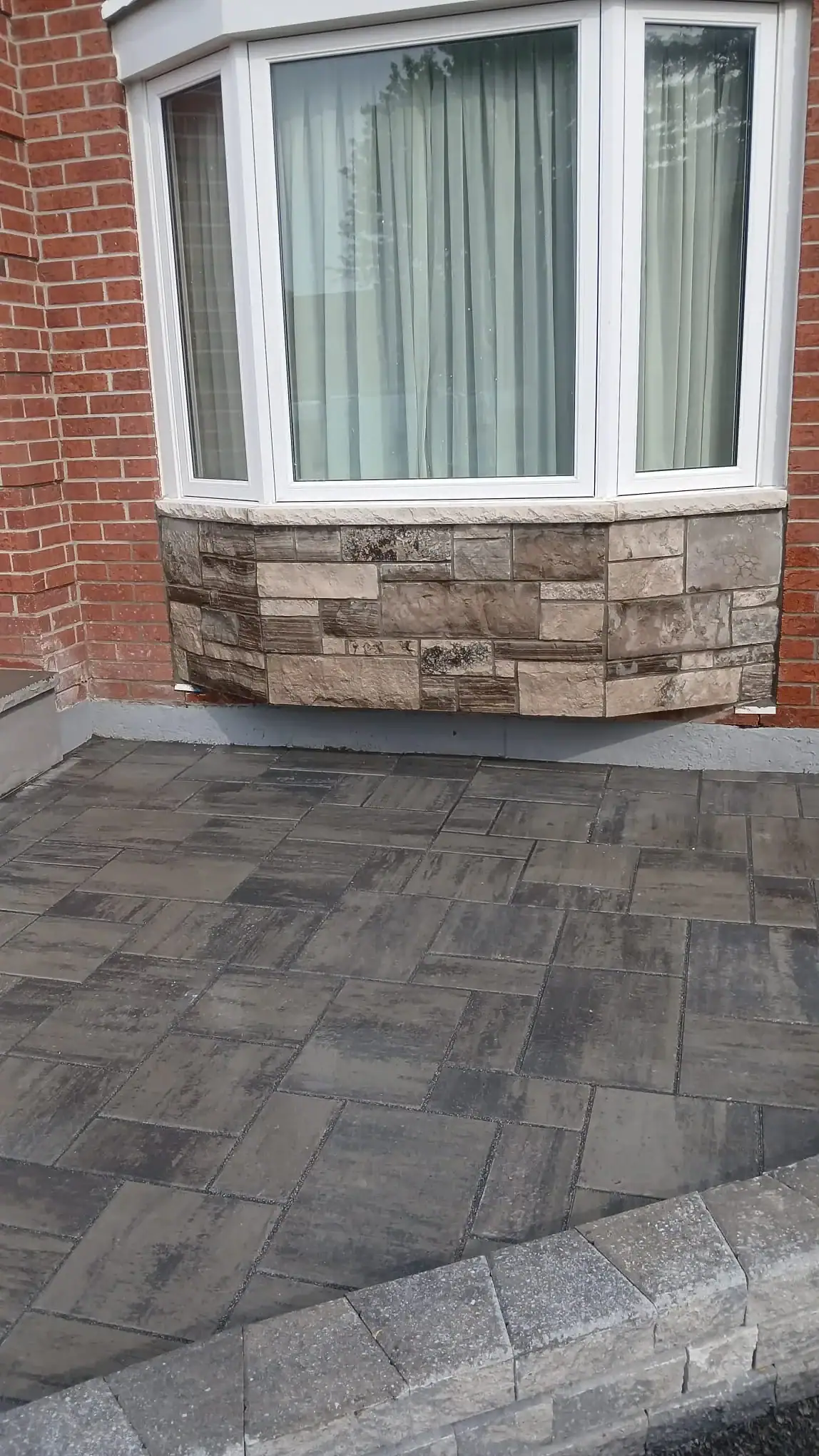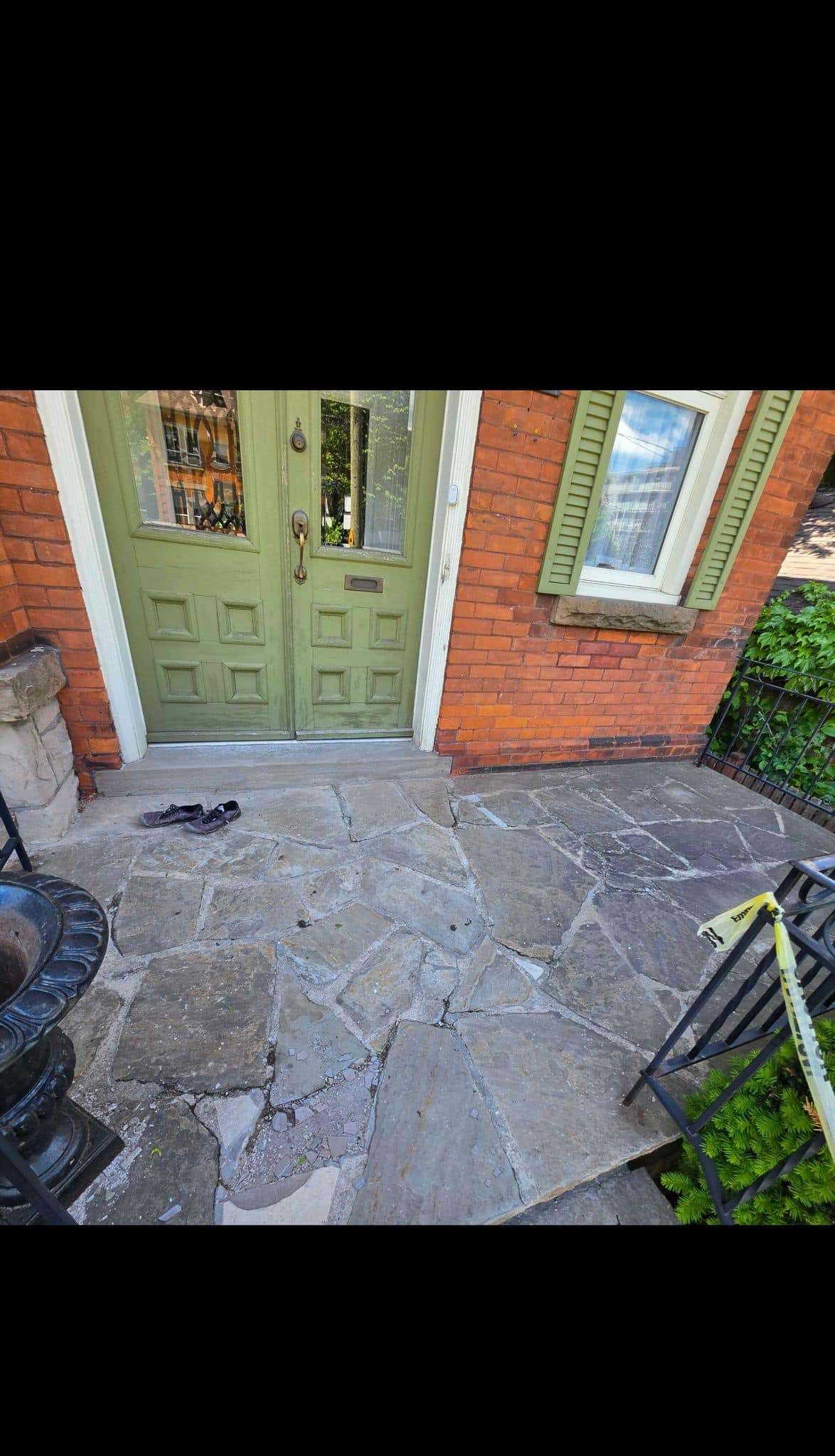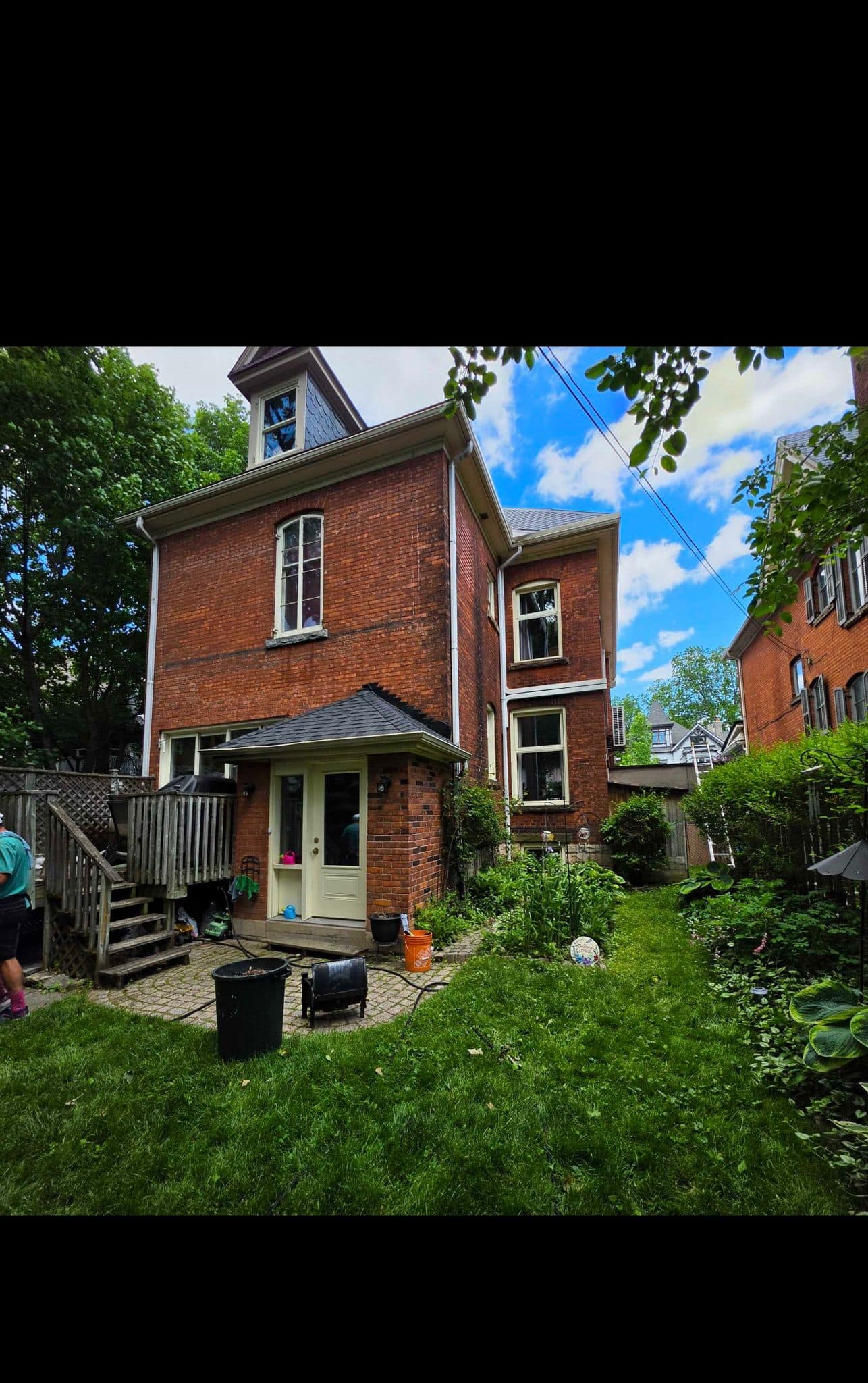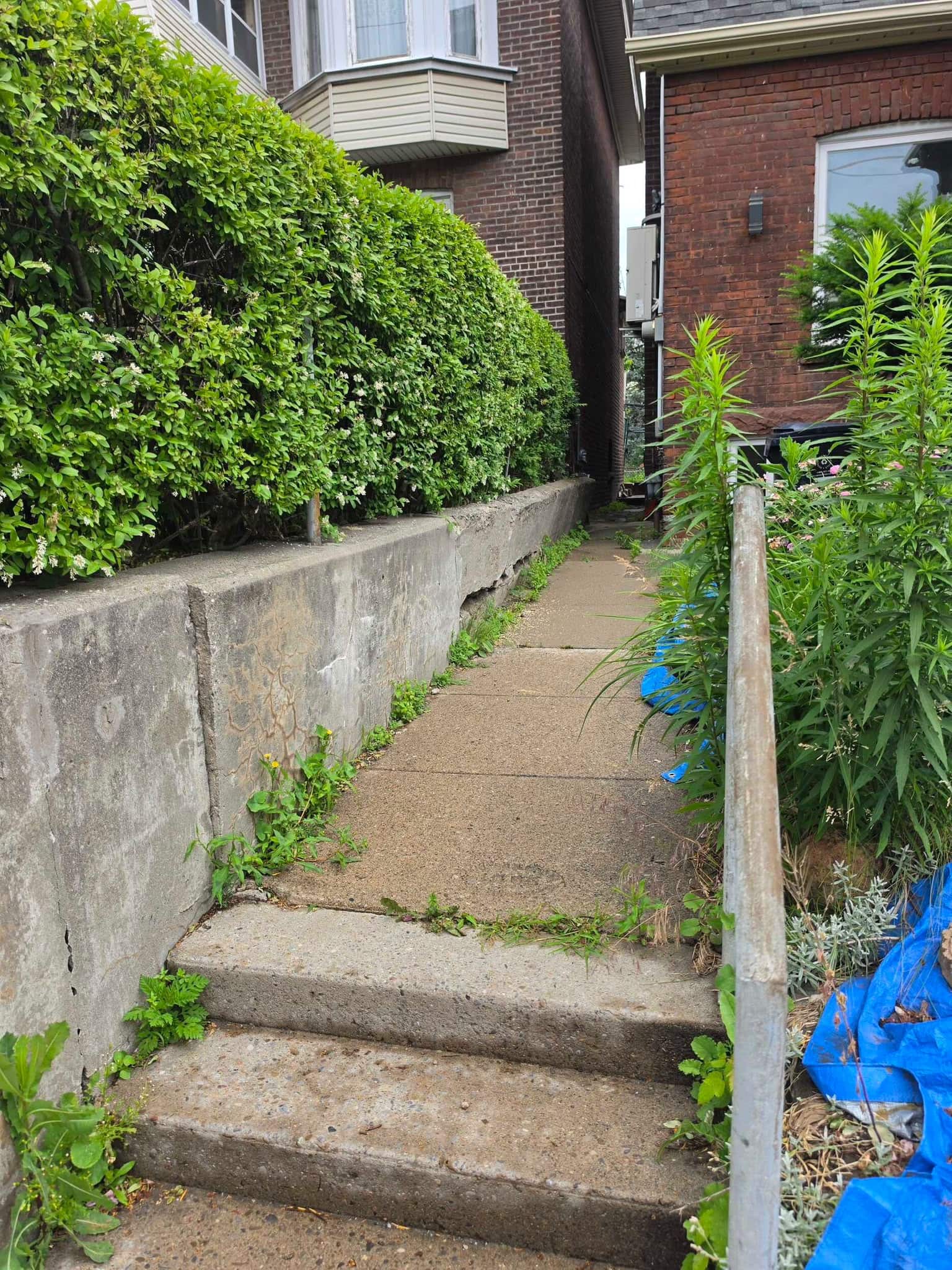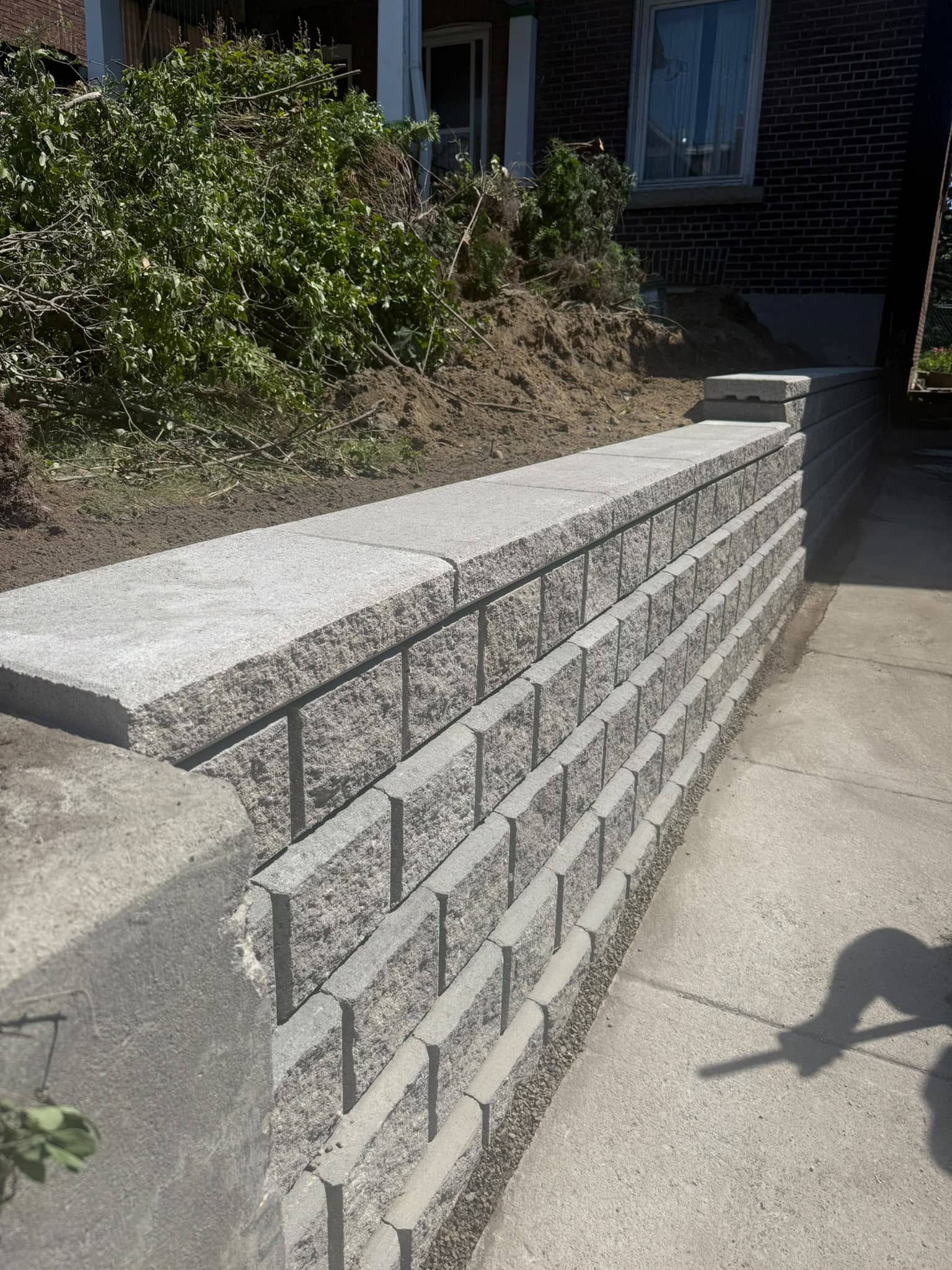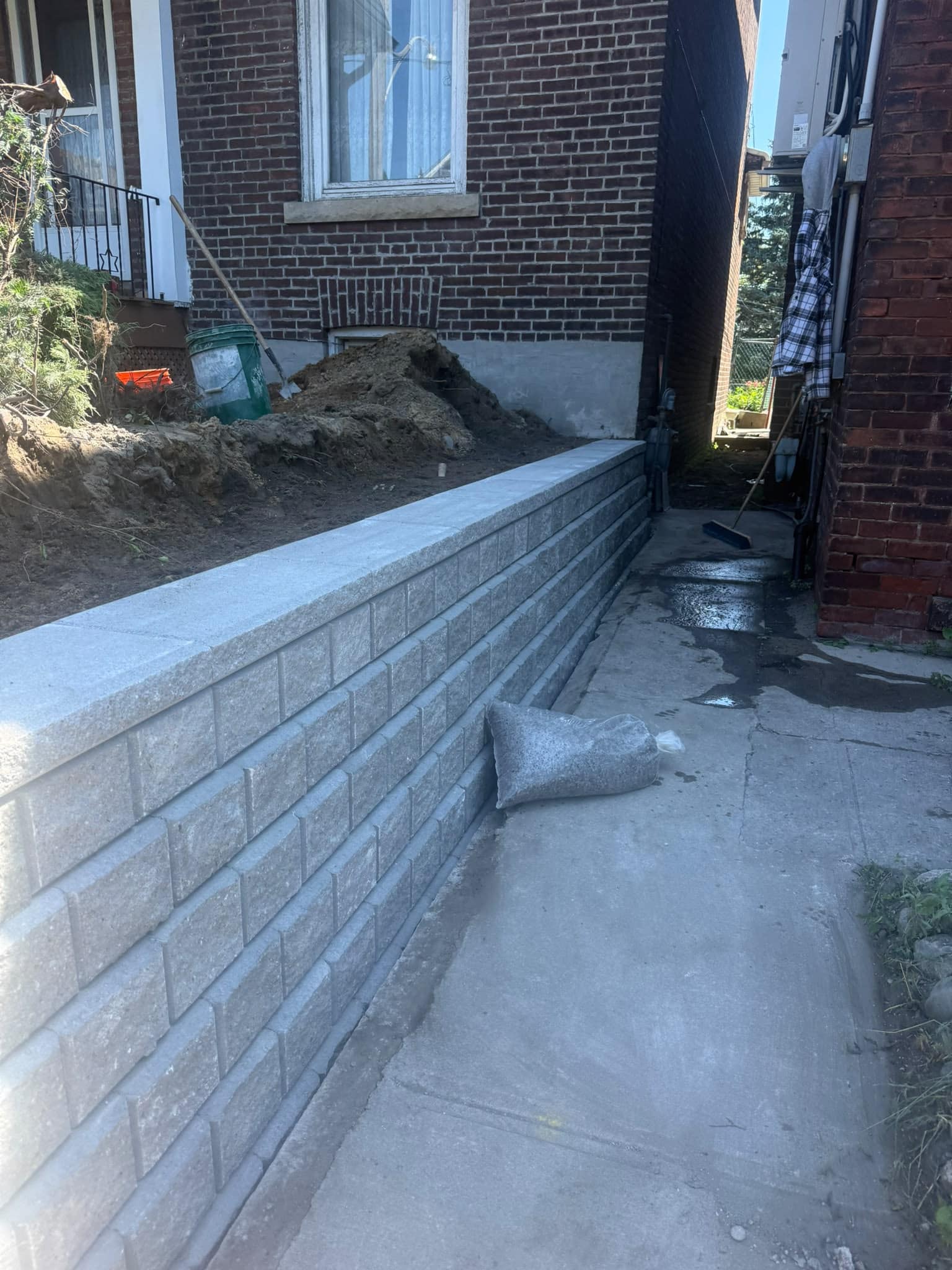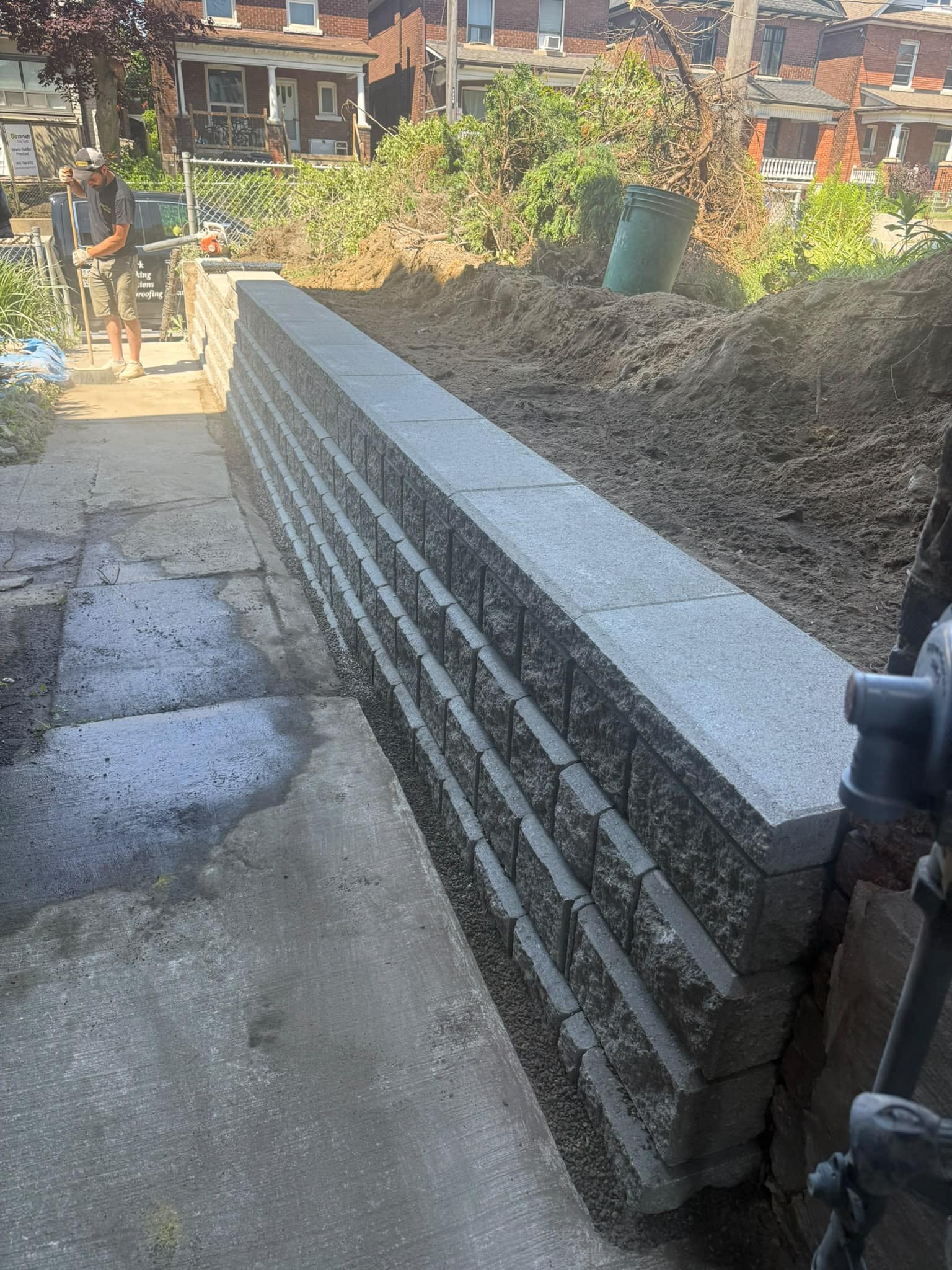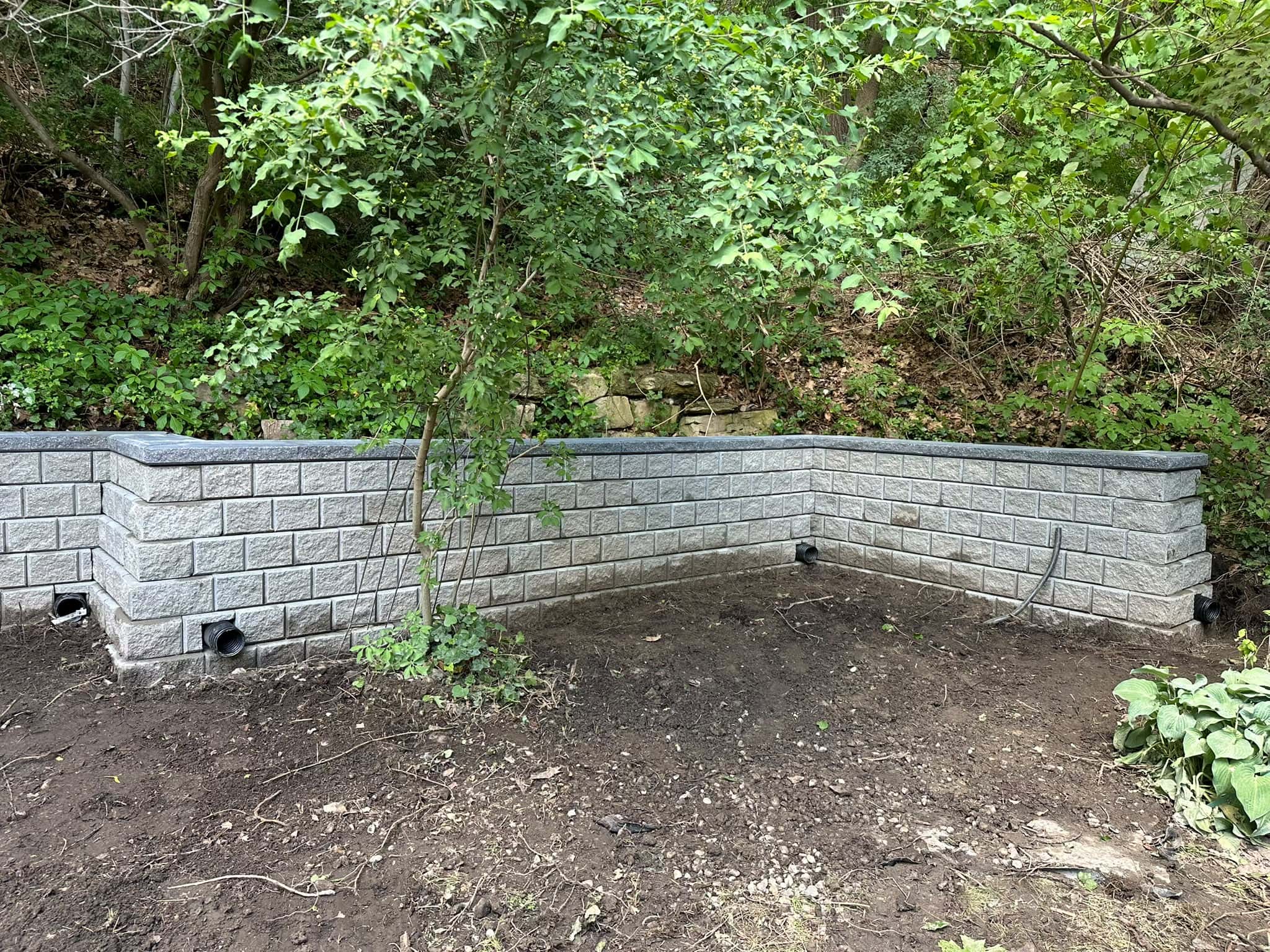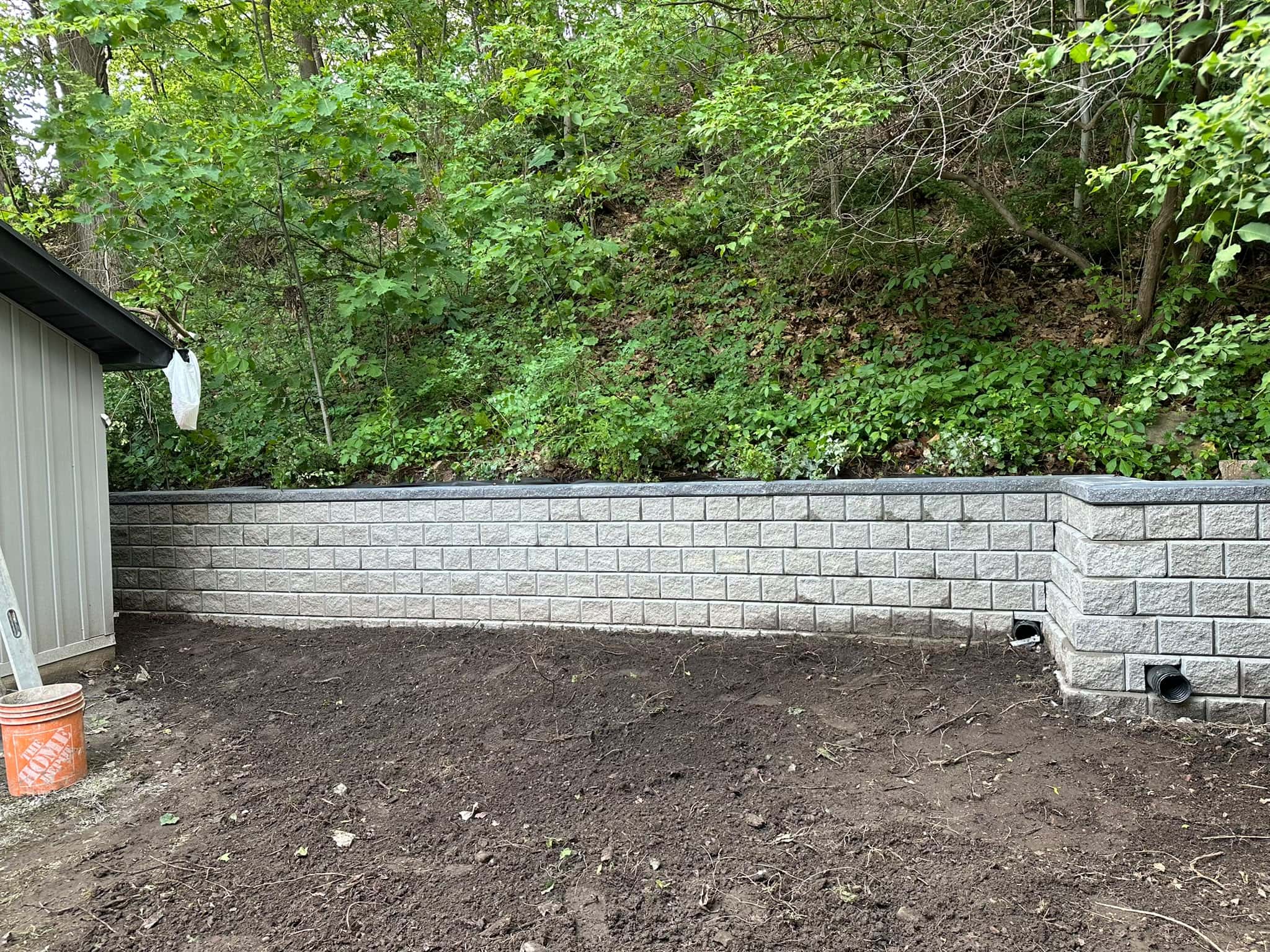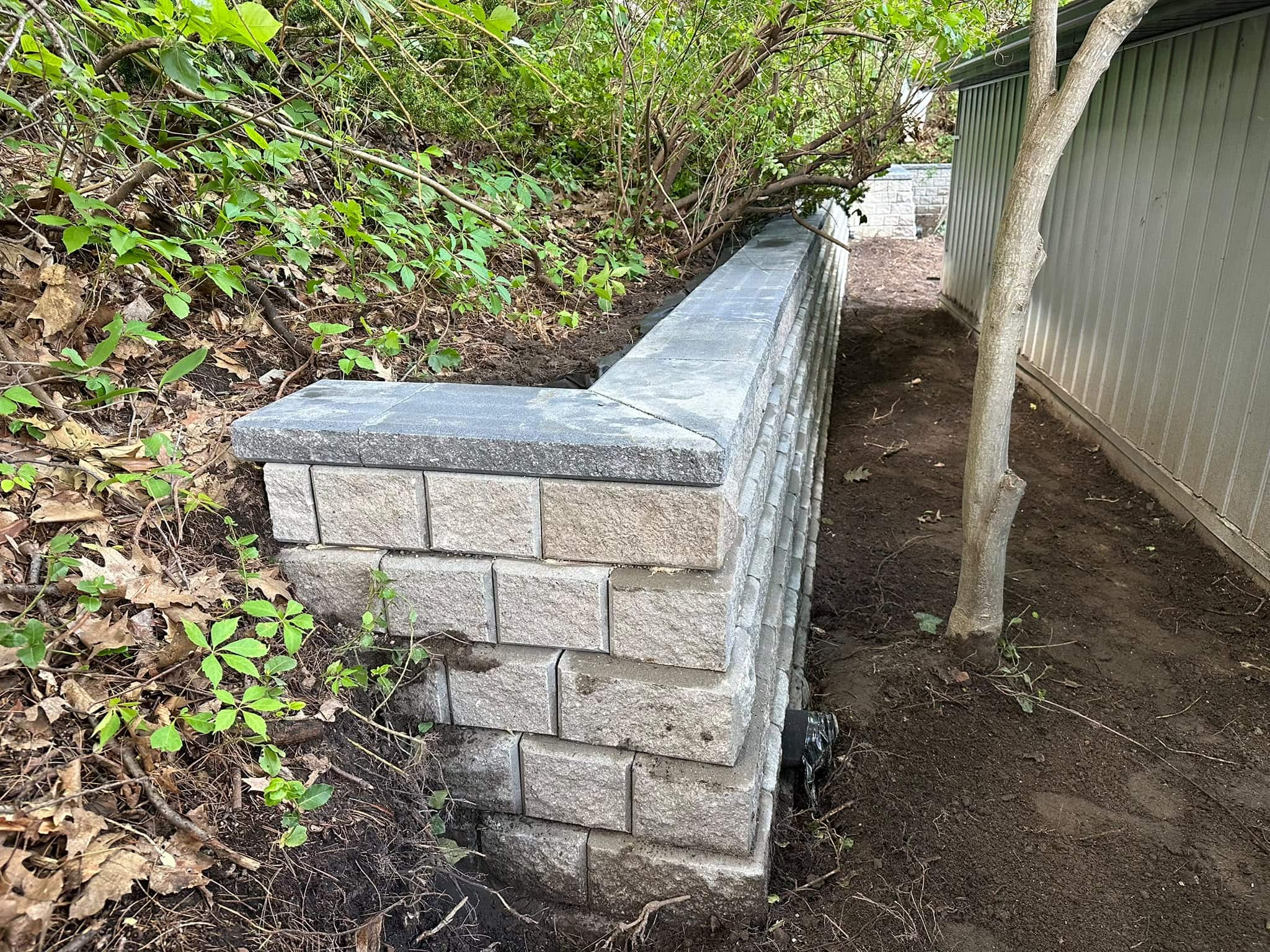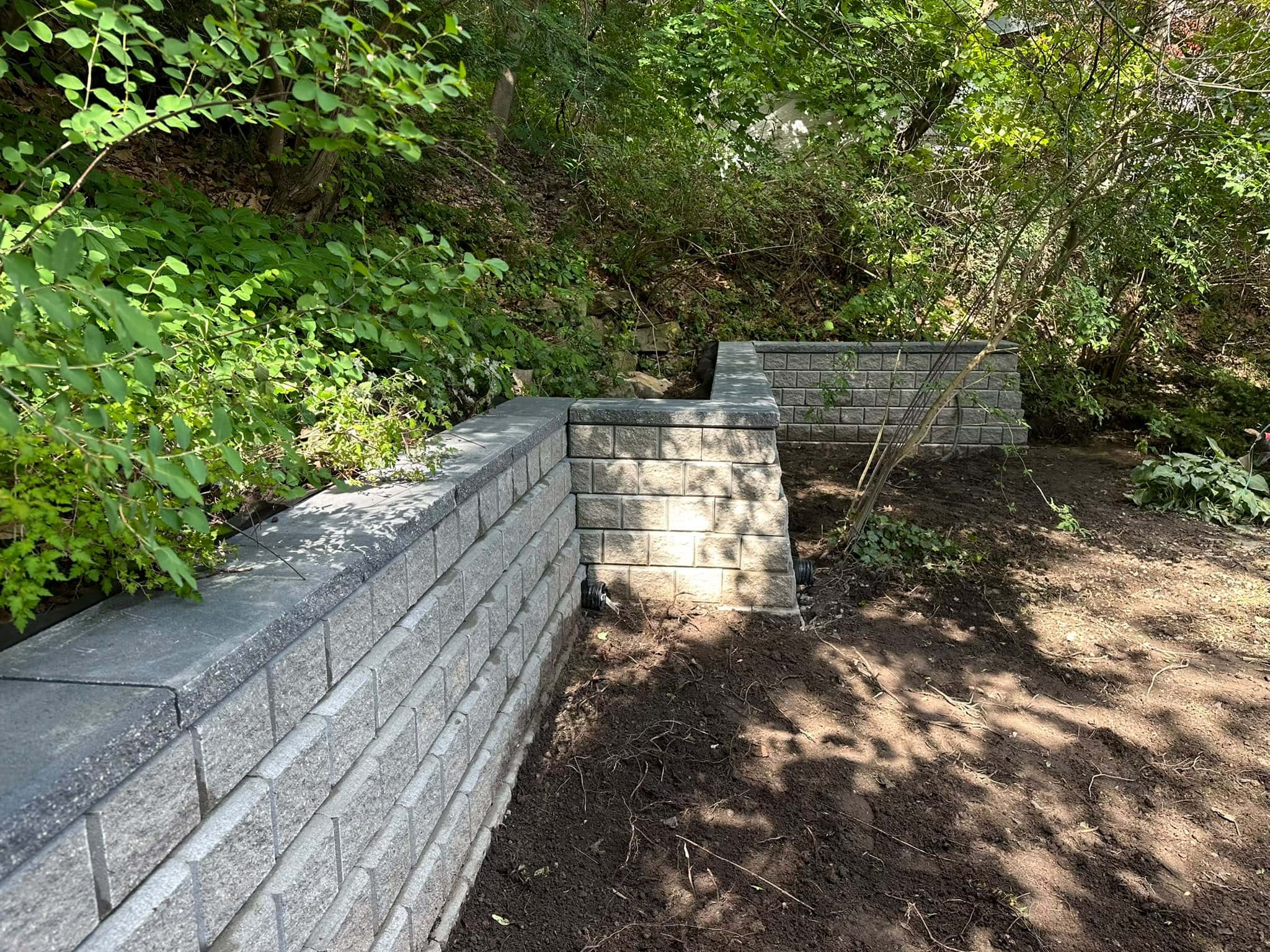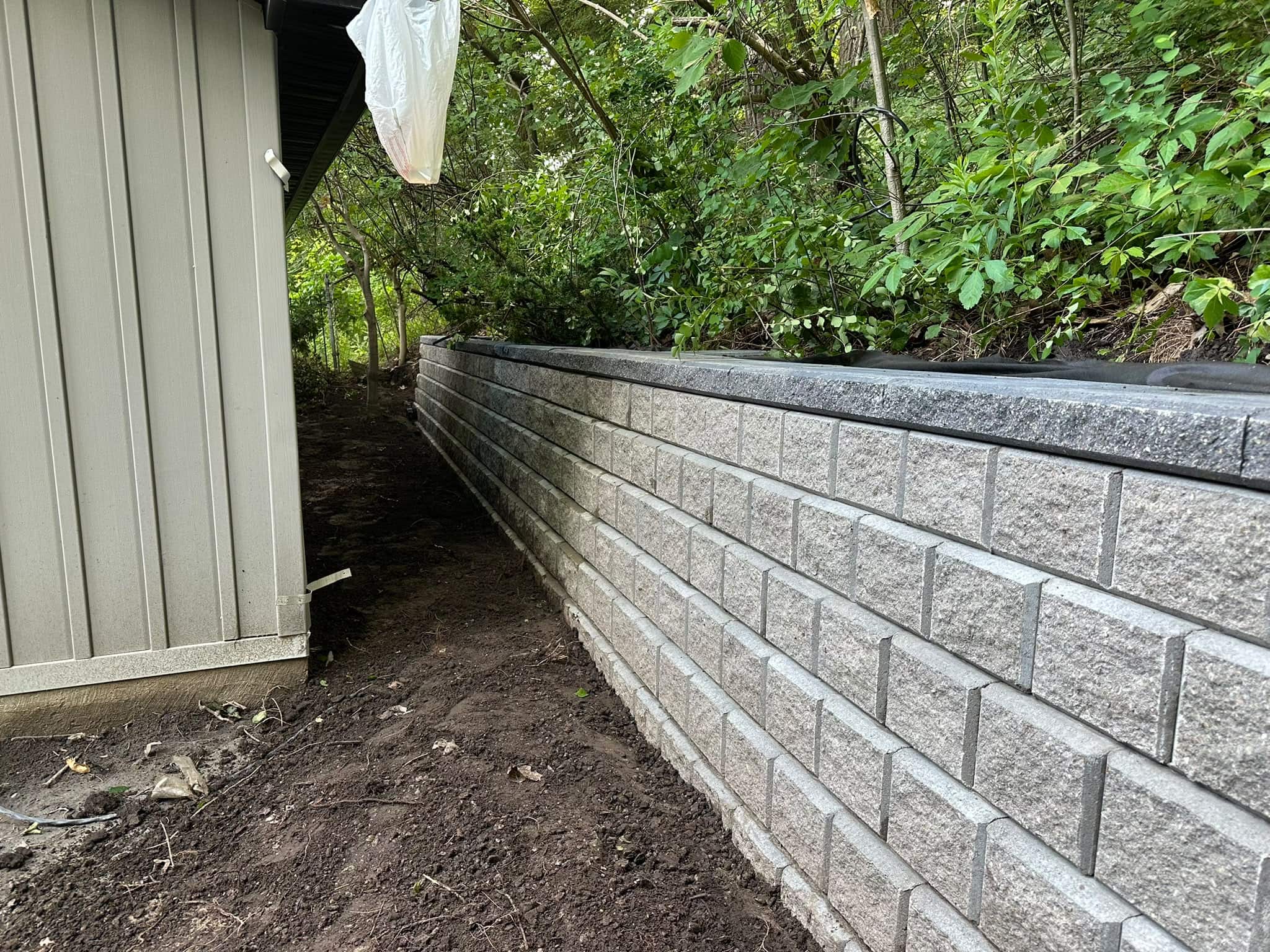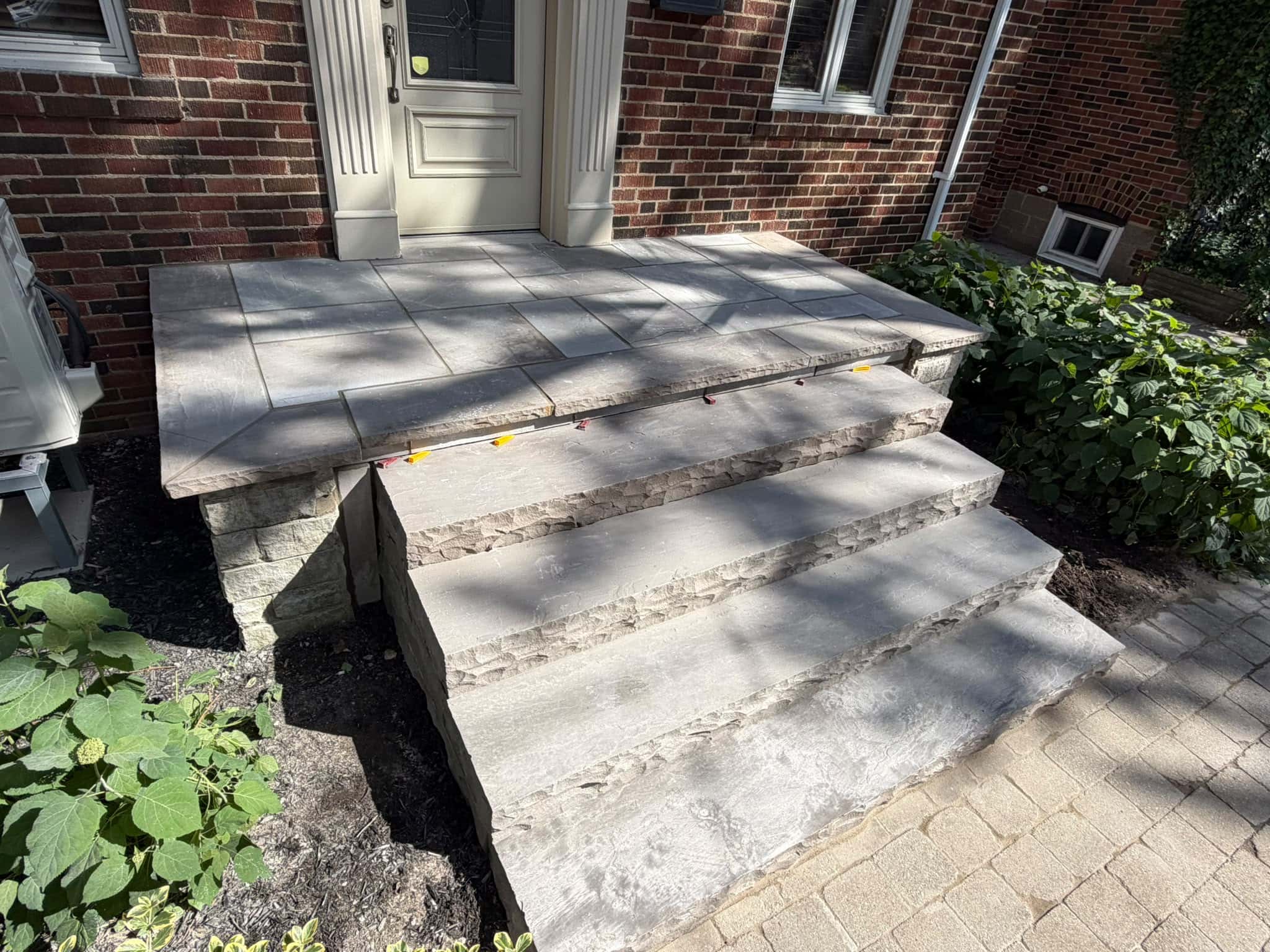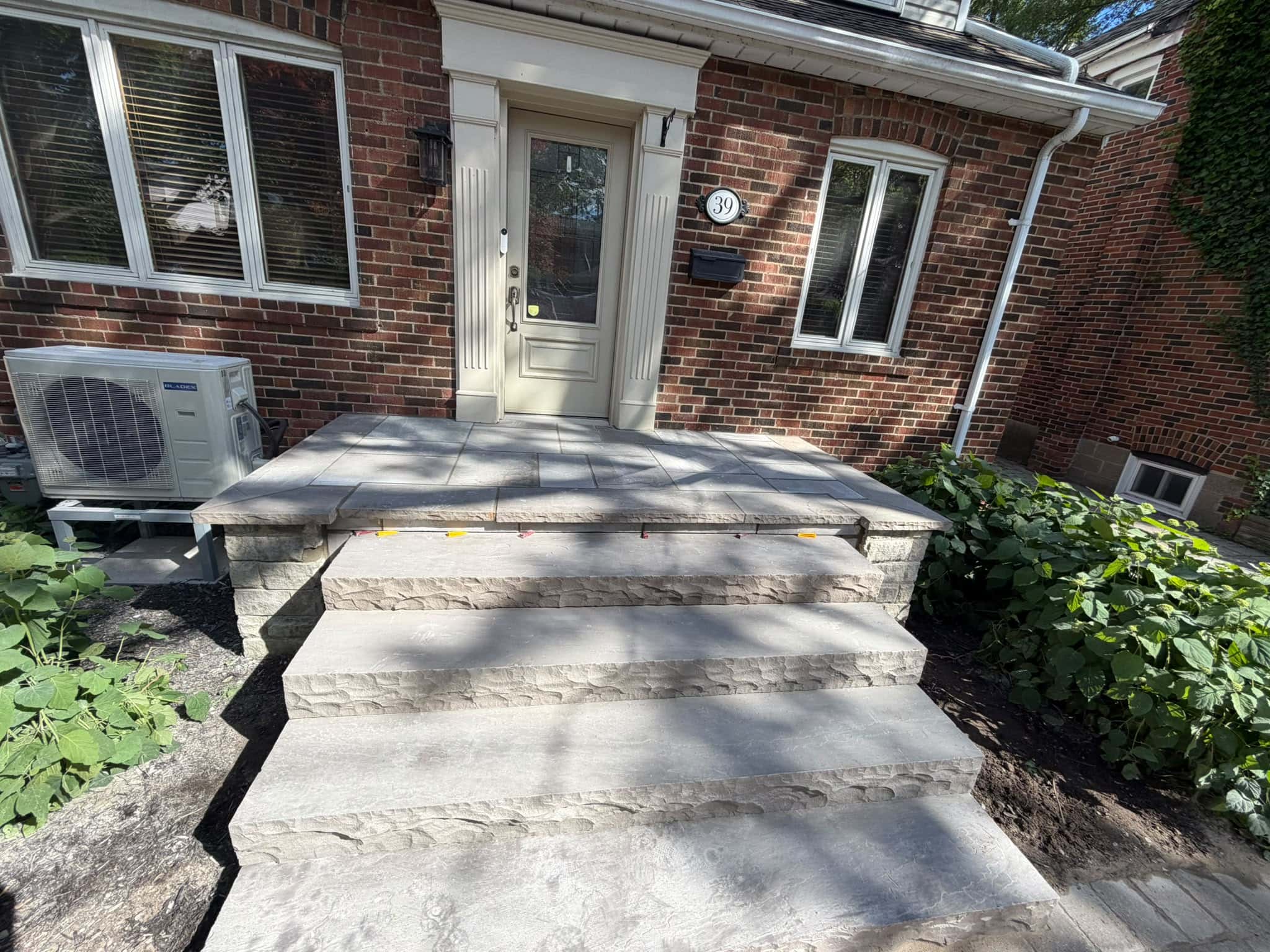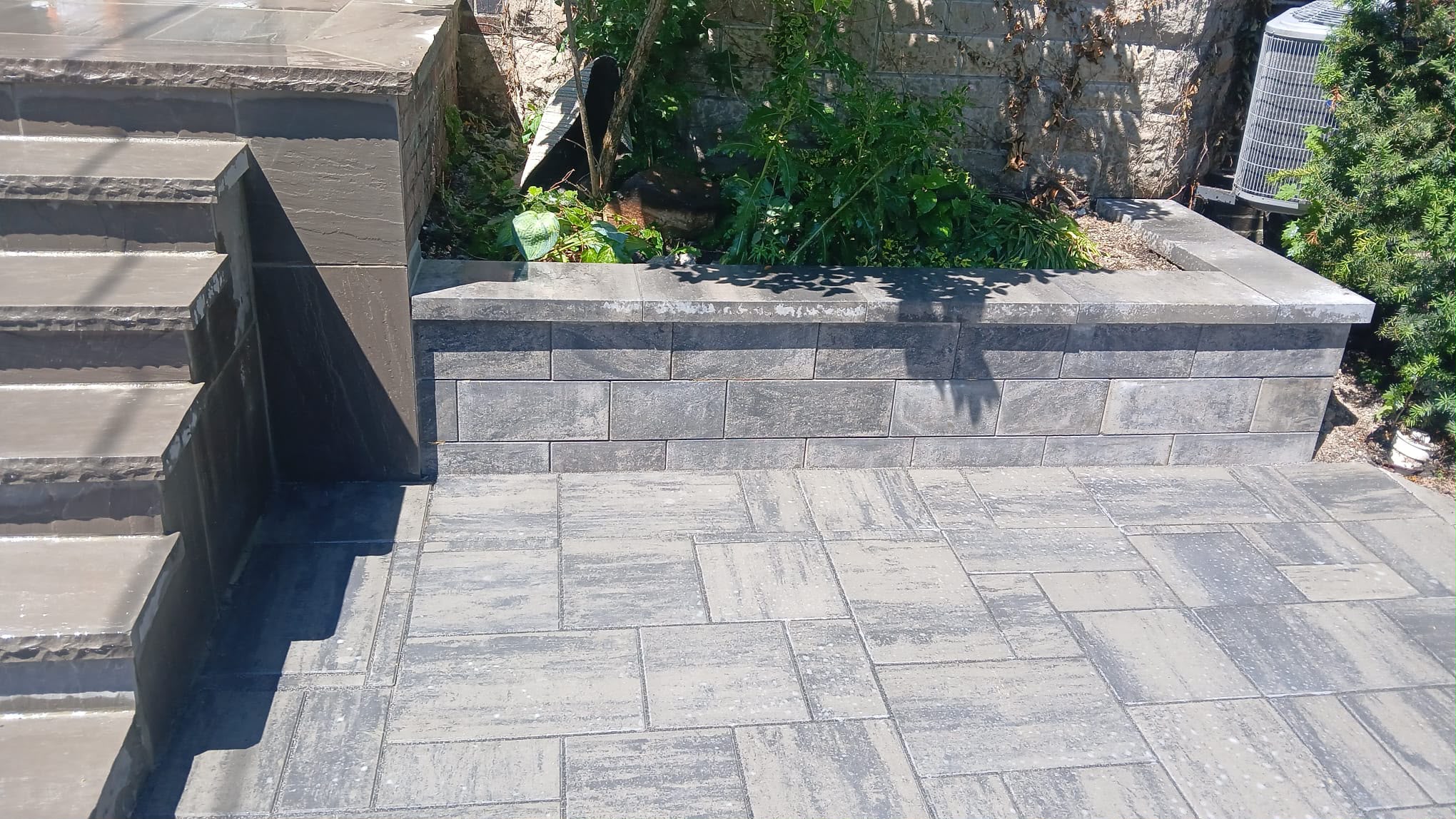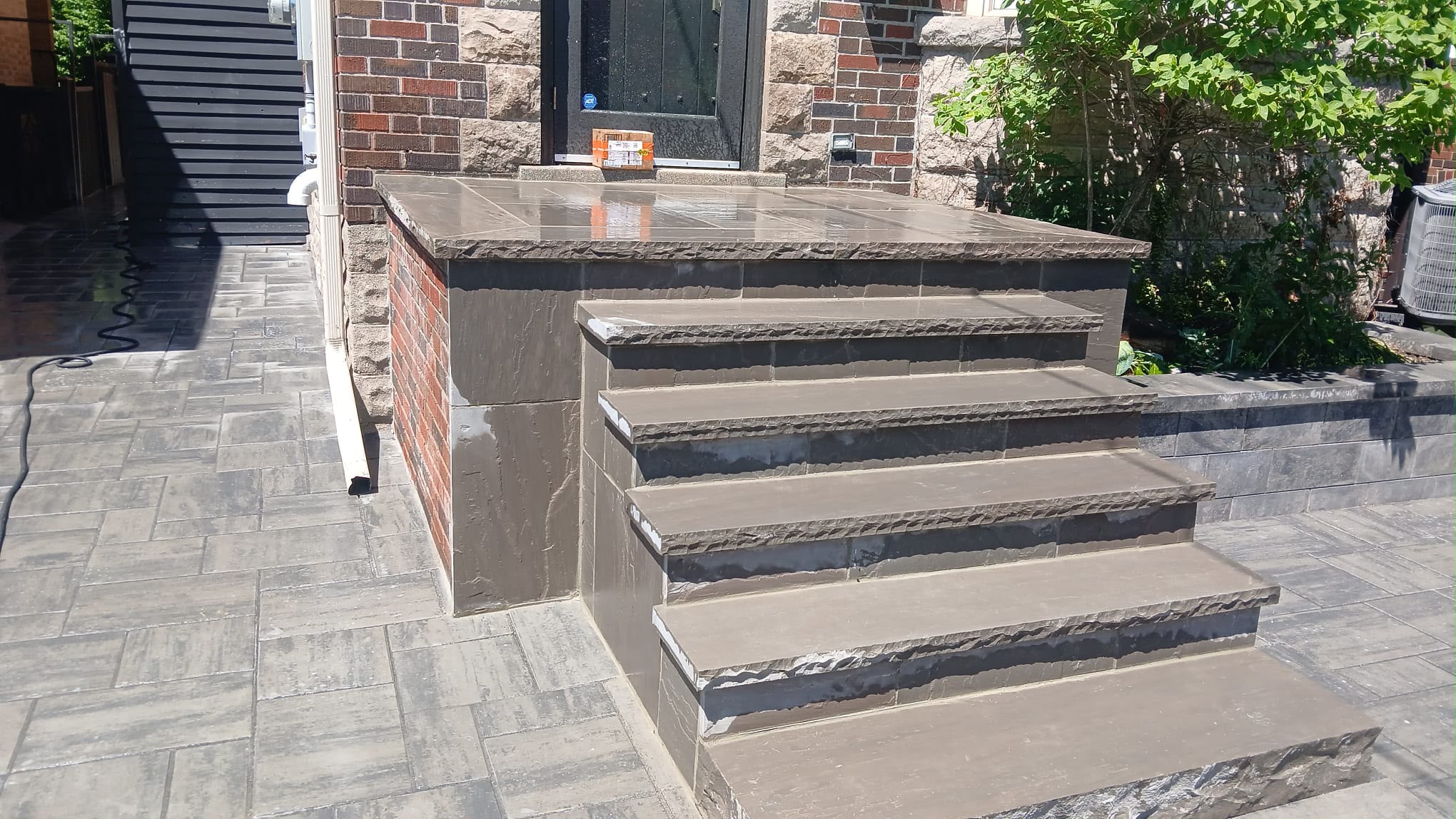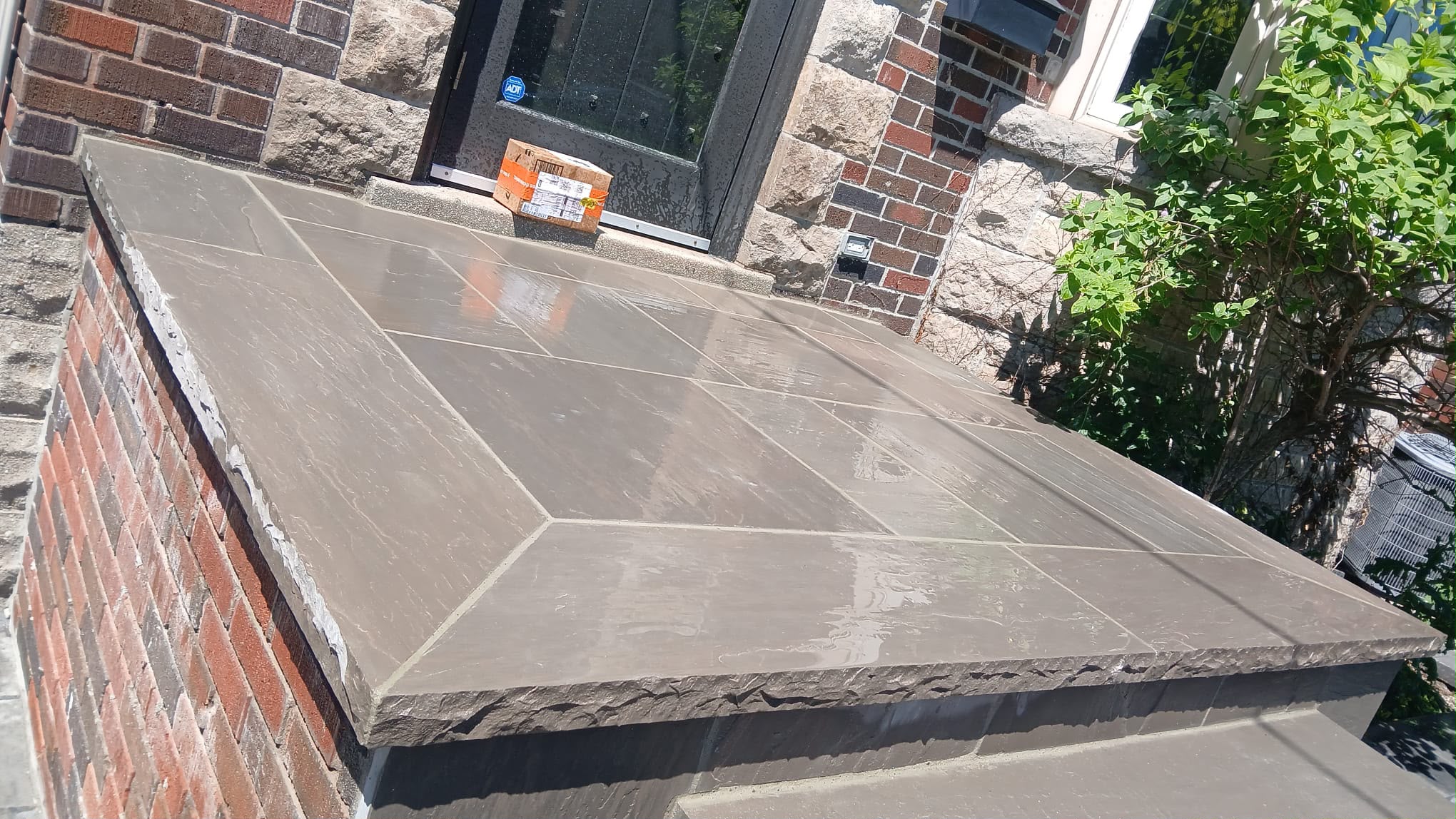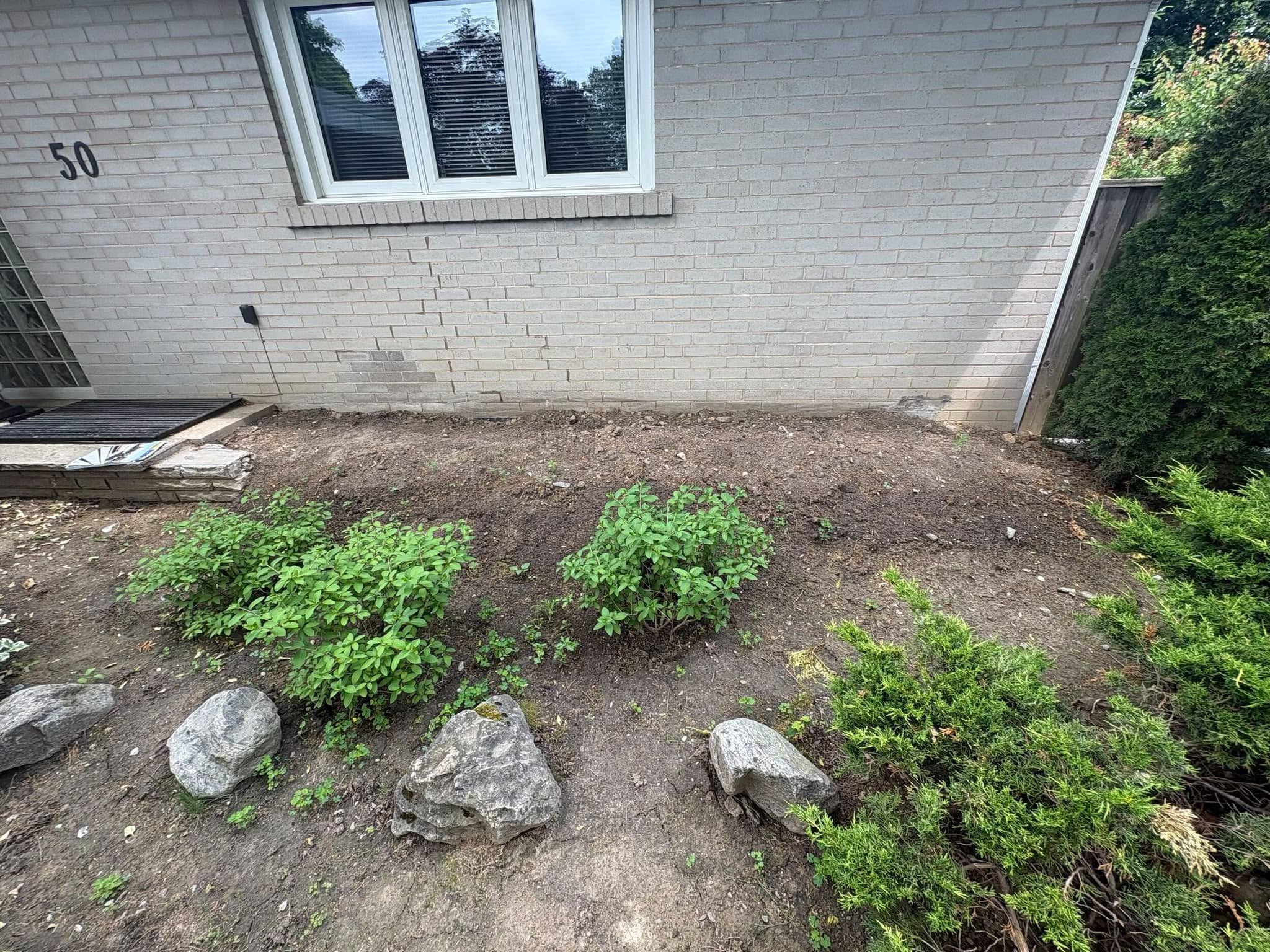

Cracks in stone veneer should be handled by first identifying whether the crack is cosmetic, moisture-related, installation-related, or a sign of movement behind the veneer. Some small hairline cracks in mortar joints may be minor, but cracks that widen, return after repair, let water in, or appear with loose stone should be taken more seriously.
For Toronto and GTA homeowners, stone veneer is exposed to rain, snow, ice, wind, splashback, and freeze-thaw cycles. Water can enter small cracks, freeze, expand, and slowly loosen the veneer or surrounding mortar. A small crack that seems harmless in summer may look worse after winter if moisture keeps getting behind the surface.
This guide explains how to handle cracks in your stone veneer, what warning signs to look for, what homeowners can safely check, when sealing is not enough, and when professional repair makes more sense.
What Stone Veneer Cracks Usually Mean
Stone veneer cracks can mean several different things depending on their location, shape, depth, and whether the stone is loose. A crack in a mortar joint may be a simple repair issue. A crack running through several stones may suggest movement, poor support, or moisture behind the veneer.
Stone veneer is a facing material. It gives the appearance of stone without being a full structural stone wall. Because it is installed over a backup surface, problems can develop in the veneer, mortar, bonding layer, base wall, or drainage details behind it.
This is why cracks should not be treated as one-size-fits-all problems. A small crack near a corner may have a different cause than a long stair-step crack, a vertical crack below a window, or a crack beside a downspout.
If you are comparing stone veneer systems or planning future veneer work, A&A Masonry’s veneer stone installation Toronto page explains how veneer stone can be used in interior and exterior spaces.
Start by Checking Whether the Crack Is Cosmetic or Active
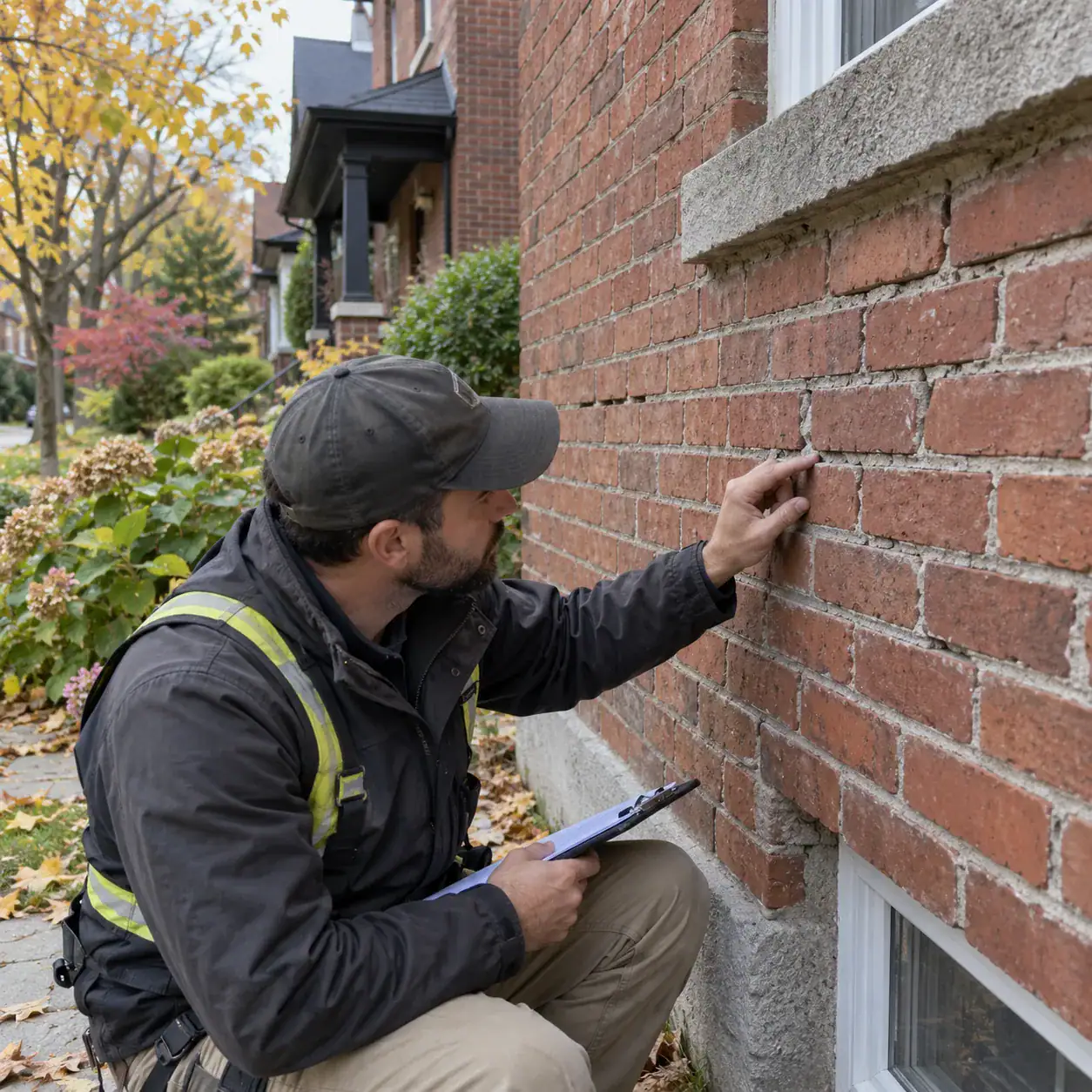
The first step is to decide whether the crack appears cosmetic or active. A cosmetic crack is usually small, stable, and limited to the surface mortar. An active crack changes over time, widens, leaks, spreads, or appears with movement in the stone.
Homeowners can start by taking clear photos of the crack from the same distance and angle. Take another photo after heavy rain, after winter, and a few months later. If the crack looks the same, it may be stable. If it grows, darkens, opens, or spreads into nearby stones, the problem may still be moving.
Look closely at the surrounding area. Is the stone still firmly attached? Is the mortar loose or sandy? Is there staining below the crack? Does the wall sound hollow when lightly tapped? Is the crack near a window, door, corner, step, or foundation area? These clues help show whether the issue is only at the surface or connected to a deeper cause.
Small cracks can still matter if water can enter. In Toronto weather, moisture and freezing can make even narrow openings worse over time.
Hairline Cracks in Mortar Joints
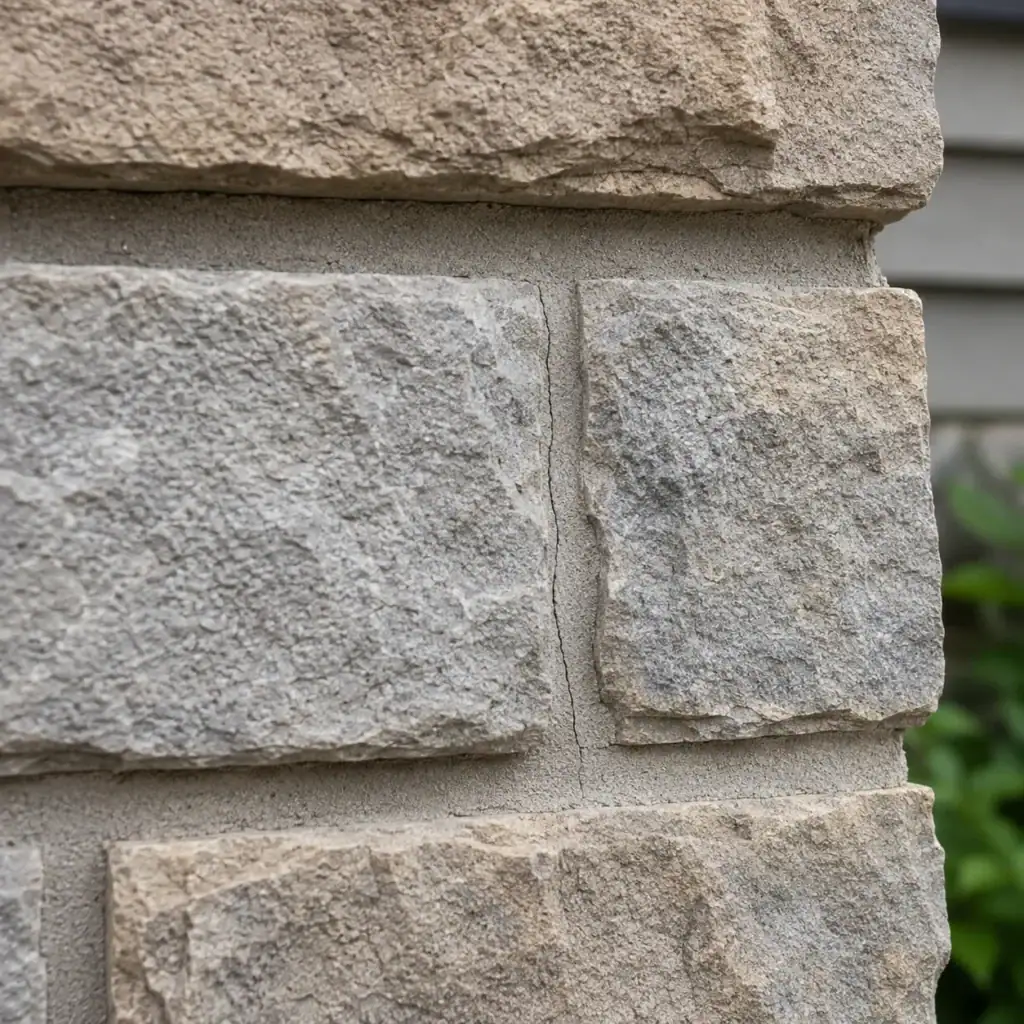
Hairline cracks in mortar joints are often the least serious type of stone veneer crack, but they should still be watched. These cracks may appear from normal aging, small movement, minor shrinkage, weather exposure, or previous repair work.
If the crack is very narrow, stable, and does not allow water to get behind the veneer, it may only need monitoring. If the mortar is crumbling, recessed, missing, or separating from the stone edges, repointing may be needed.
Do not simply smear new mortar over the face of the joint. Thin surface patches usually fail because they do not bond well to old, dusty, or loose mortar. Proper joint repair involves removing weak mortar to a suitable depth, cleaning the joint, and applying compatible new mortar.
If the crack is in a mortar joint and the veneer stones remain firm, this is usually more repairable than cracks that run through the stone units themselves.
Cracks Through the Stone Pieces
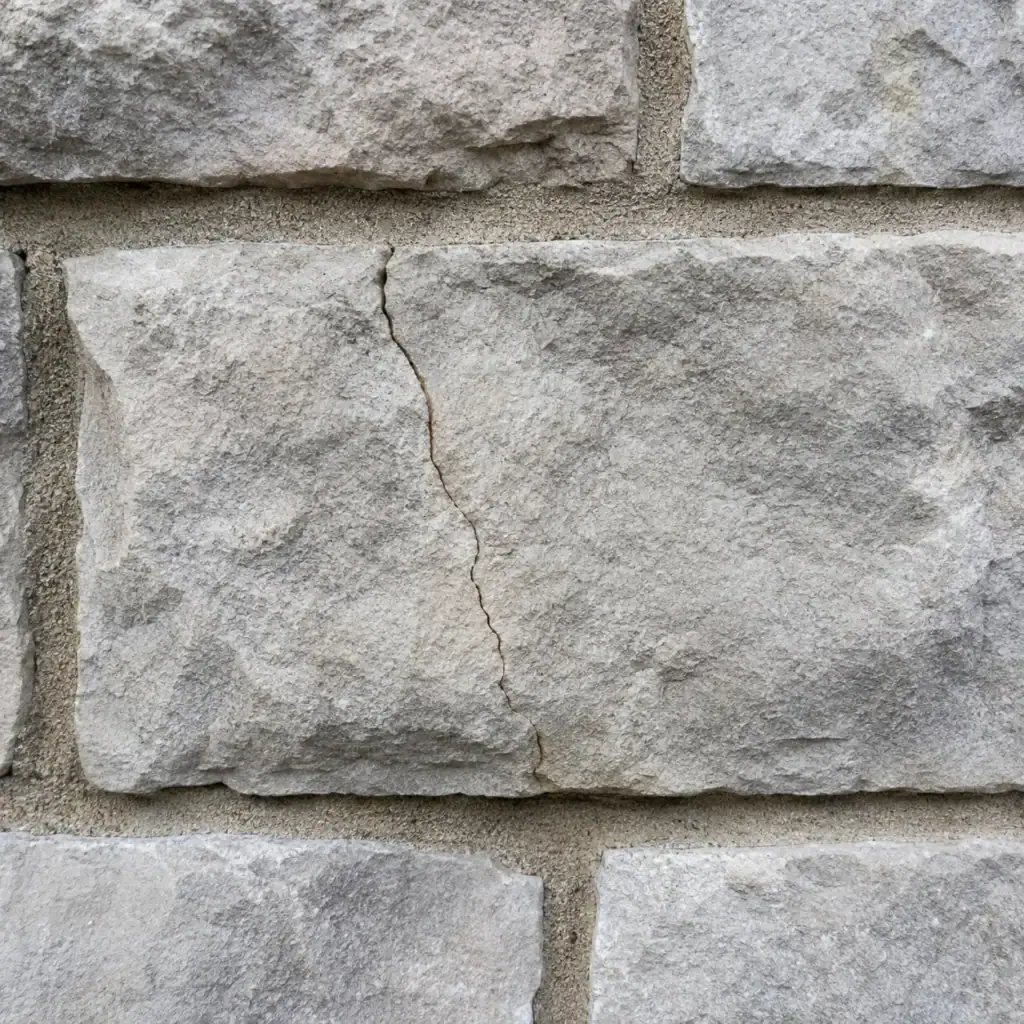
Cracks through the stone pieces are more serious than minor mortar cracks because they may show impact damage, stress, movement, moisture expansion, or poor installation support. A single cracked stone may be repairable or replaceable. Multiple cracked stones across the same area need closer review.
Stone veneer units can crack when water gets behind them, when the backing moves, when mortar does not support them properly, or when the stone is exposed to repeated freeze-thaw stress. Cracks may also happen around door openings, windows, corners, or areas where different materials meet.
If one stone is cracked but still firmly attached, the repair may involve removing and replacing that unit. If several stones are cracked or loose, the issue may involve the wall system behind the veneer.
A repair should match the original stone colour, shape, texture, joint size, and pattern as closely as possible. A mismatched replacement can stand out, especially on front facades, porch walls, columns, and visible garden walls.
Loose Stone Veneer Is a Warning Sign
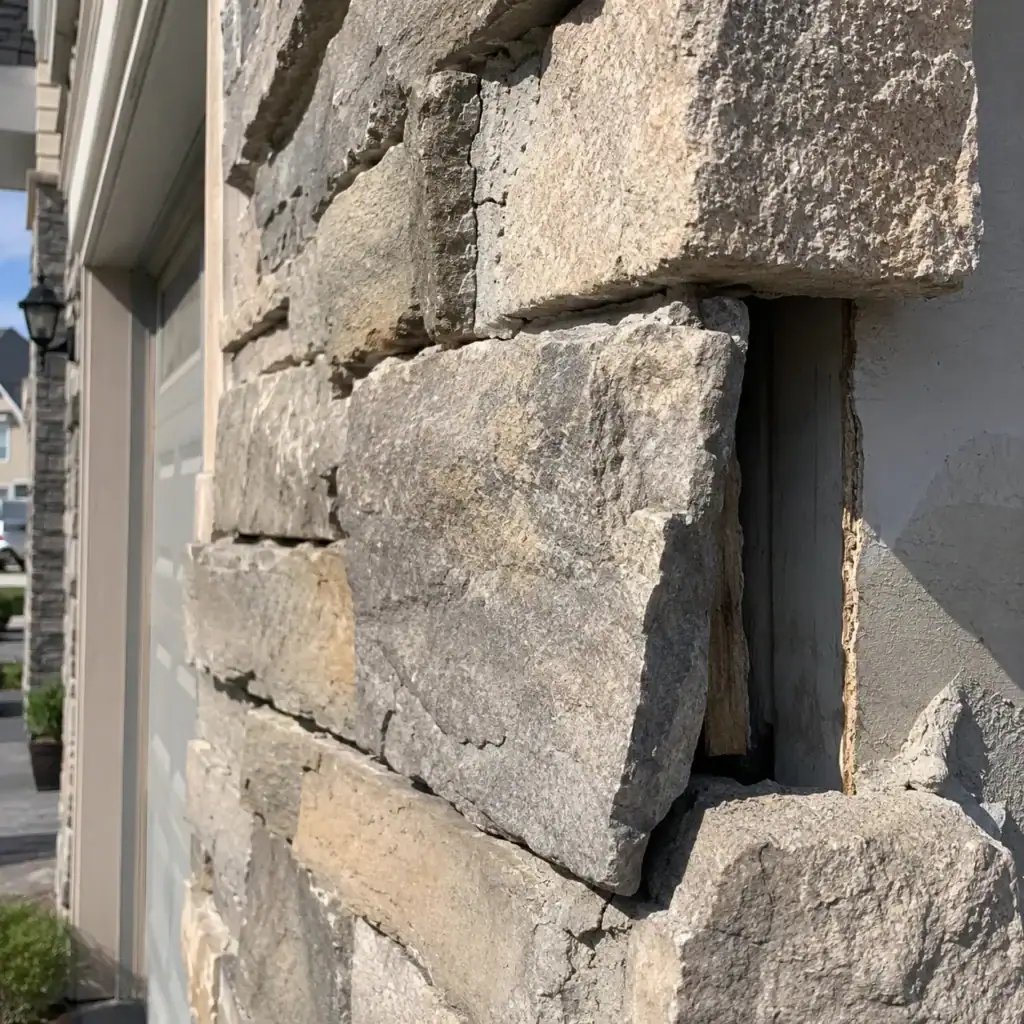
Loose stone veneer is a warning sign that should not be ignored. If the stone moves, sounds hollow, separates from the wall, or appears to be pulling away, the issue is more than a simple crack.
Loose veneer can develop when bonding fails, water gets behind the stone, the backing surface moves, mortar breaks down, or the installation did not allow moisture to drain and dry properly. Once one area starts loosening, nearby stones may also be affected.
Homeowners should not pull at loose stones or try to glue them back without understanding the cause. Adhesive-only fixes can trap moisture, fail again, or hide more serious damage. If the stone is above a walkway, entrance, driveway, or seating area, loose veneer may also create a safety concern.
Professional repair is usually the safer choice when veneer is loose, especially on higher walls, exterior columns, chimneys, retaining features, or areas near people walking below.
Water Stains Around Stone Veneer Cracks
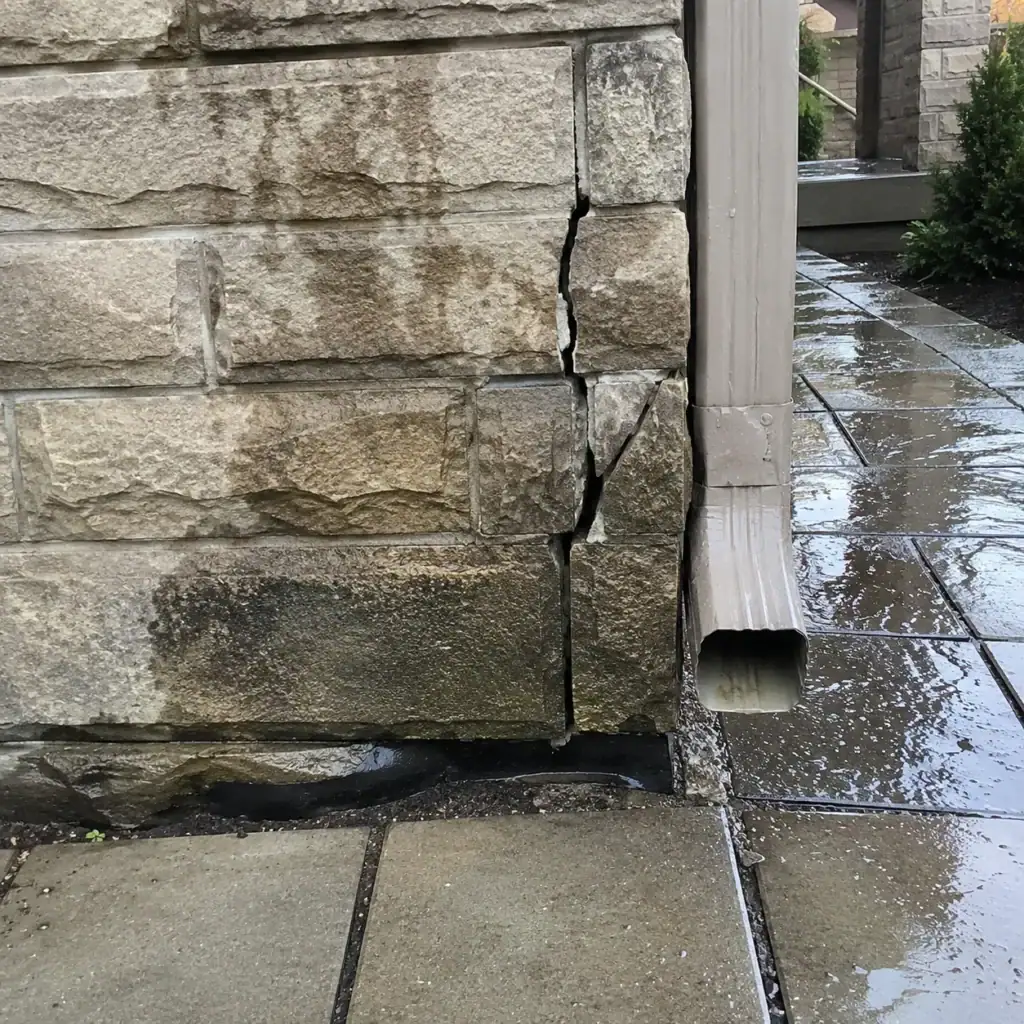
Water stains around cracks in stone veneer often indicate moisture moving through or behind the veneer. Staining may appear as dark streaks, white powder, green growth, rust marks, or damp patches that stay wet after rain.
The City of Toronto explains that managing rain and melted snow helps reduce water problems around properties. For stone veneer, this matters because water should not be repeatedly directed behind or against masonry surfaces.
Check whether the crack is below a windowsill, beside a downspout, under a roof edge, near a planter, or close to a walkway that splashes rain against the wall. If water keeps reaching the same area, a mortar patch may not last.
For homes with recurring moisture issues near masonry, A&A Masonry’s waterproofing Toronto page is a helpful resource for understanding exterior water entry and foundation moisture concerns.
Efflorescence on Stone Veneer
Efflorescence is a white powdery deposit that can appear when moisture moves through masonry and brings salts to the surface. On stone veneer, efflorescence may show that water is entering through cracks, joints, caps, or nearby drainage problems.
Light efflorescence can sometimes be brushed off dry with a soft brush. However, repeated efflorescence should not be treated as only a cleaning problem. It usually means moisture is moving through the system.
Do not seal over efflorescence without understanding the water source. Sealing too soon can trap moisture and make the issue worse. The better approach is to find the moisture path, repair cracks or joints, improve drainage, allow drying, then consider sealing if appropriate.
Efflorescence is especially important before winter because moisture inside masonry can freeze and expand, worsening cracks or separations.
Why Toronto Freeze-Thaw Cycles Make Cracks Worse
Toronto’s freeze-thaw cycles can worsen cracks in stone veneer because water expands when it freezes. If water enters a small crack, open joint, or gap behind the veneer, freezing temperatures can slowly push the materials apart.
This can lead to larger cracks, loose stone, failed mortar, staining, and water entry behind the wall. South-facing walls may go through repeated melting and freezing as the sun warms the surface during the day and temperatures drop at night. North-facing walls may stay damp longer because they receive less direct sun.
Veneer near steps, lower walls, garden beds, driveway edges, and downspouts can be exposed to extra moisture from splashback and melting snow. Salt exposure can also affect nearby concrete, mortar, and masonry surfaces.
For Toronto homeowners, the best time to address cracks is before winter or after the spring thaw reveals what has changed. Waiting through another season can make a small repair more complicated.
Cracks Near Windows, Doors, and Corners
Cracks near windows, doors, and corners should be reviewed carefully because these areas often experience movement, water exposure, and material transitions. Openings in a wall create natural stress points, and water can collect around sills, trim, flashing, and joints.
A small crack near a window may be caused by mortar shrinkage or veneer movement. But a widening crack, repeated leaks, or a crack that follows the edge of an opening may point to water management issues, backing movement, or structural concerns.
Look for staining below the sill, gaps around trim, cracked caulking, loose stones, or dark damp areas after rain. If several cracks appear around the same window or door, the issue may not be limited to the veneer surface.
Repair may involve more than filling the crack. The source of water and movement should be understood first.
Cracks Near Garden Walls, Steps, and Foundations
Cracks near garden walls, steps, and foundations often have a moisture or movement connection. Soil, mulch, planters, steps, and hard surfaces can keep stone veneer damp or push water toward the wall.
The veneer near the grade should be checked carefully. Soil should not sit too high against the veneer or the main wall. Garden beds can hold moisture against masonry. Steps or patios that slope toward the wall can direct water into cracks. Foundation movement can also affect veneer if the base wall shifts.
The City of Toronto’s guidance on how homeowners can help manage stormwater is useful for understanding why water movement around hard surfaces and landscaped areas matters.
If cracks are close to the foundation or basement moisture is present, the repair should include a drainage review, not just veneer patching.
Should You Fill Stone Veneer Cracks Yourself?
You may be able to monitor or lightly maintain small cosmetic cracks yourself, but filling cracks in stone veneer is risky when the cause is unknown. The wrong filler, sealant, or mortar can trap moisture, mismatch the wall, or fail after winter.
DIY crack filling may be reasonable only when the crack is very small, stable, dry, and limited to a non-structural mortar joint. Even then, the product must be suitable for exterior masonry, and the repair should not block drainage or drying.
Do not use random caulking, construction adhesive, interior filler, concrete patch, or waterproof coating on stone veneer without knowing how it will behave outdoors. Many quick products look good for a short time but separate, darken, crack, or trap moisture.
If the crack is wide, growing, wet, stained, near an opening, or connected to loose stone, professional review is the better choice.
When Repointing Makes Sense
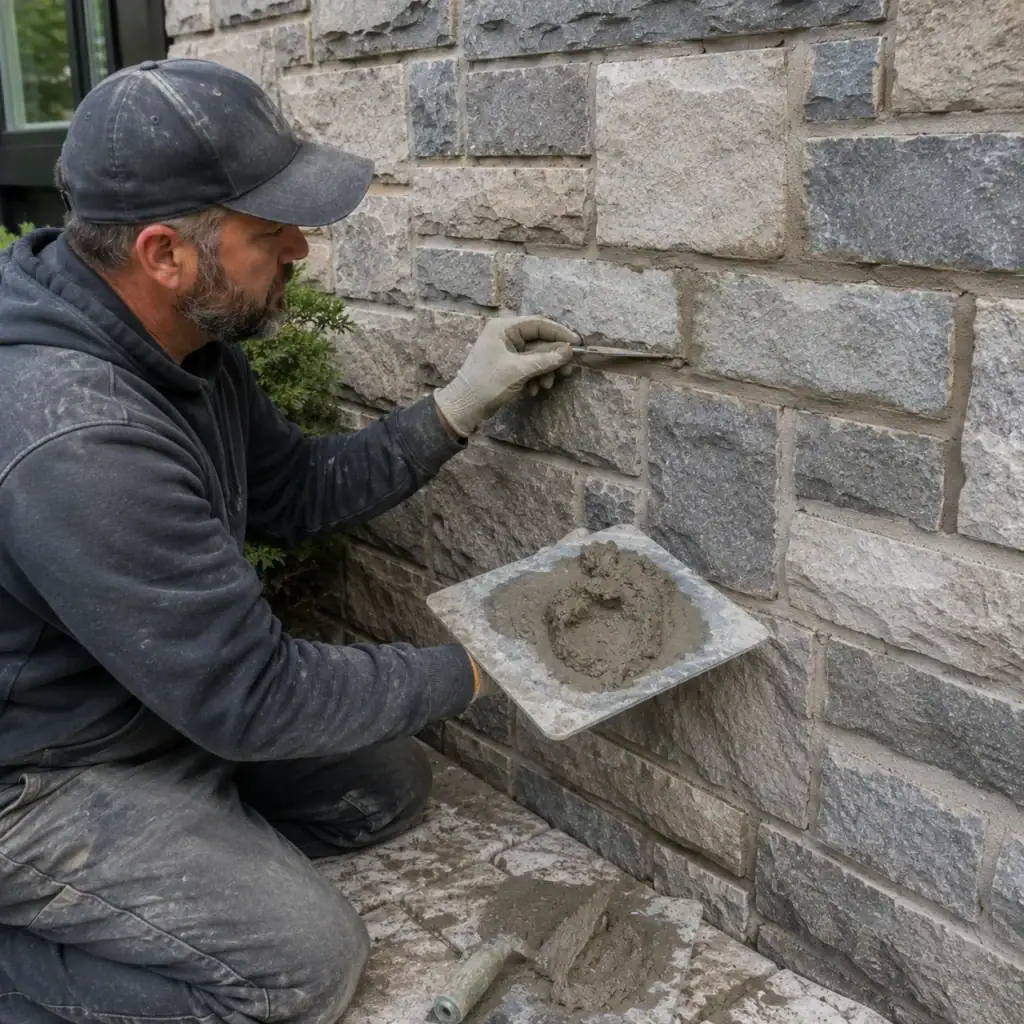
Repointing makes sense when the crack is in the mortar joint and the stone veneer units are still secure. Repointing removes damaged mortar and replaces it with compatible new mortar that supports the veneer and helps shed water.
This is different from smearing mortar over the surface. Proper repointing provides the new mortar with sufficient depth to bond and perform. The joint profile should also be finished so that it does not hold water.
Mortar matching matters. The new mortar should suit the existing veneer, colour, texture, exposure, and surrounding joints. A repair that is too hard, too smooth, too dark, or too light can stand out and may not perform well.
If mortar joints are cracked or open across several masonry areas, A&A Masonry’s tuckpointing services in Toronto page explains why joint preparation and material compatibility matter.
When Stone Replacement Makes Sense
Stone replacement makes sense when individual veneer stones are cracked through, broken, loose, badly stained, or too damaged to repair cleanly. Replacing one or several stones can restore both appearance and function when the surrounding area is still sound.
The replacement should be selected carefully. Stone veneer varies in colour, texture, thickness, edge shape, and pattern. A replacement that is close in colour but wrong in texture or size can still stand out.
Replacement should also include checking the backing area. If a stone cracked because water got behind it, the replacement may fail if the moisture path remains. If several stones are loose, the repair may need to address a larger section rather than one unit.
A&A Masonry’s blog on stone veneer types can help homeowners understand how different veneer materials and looks compare.
When Sealing Helps and When It Does Not
Sealing may help stone veneer after cracks are repaired, the surface is clean, and the wall is dry. A breathable masonry sealer or water repellent can reduce water absorption on suitable stone veneer, but it is not a fix for active damage.
Sealing does not repair open joints, loose stone, failed bonding, foundation movement, leaking windows, poor flashing, or drainage problems. If water is getting behind the veneer, a sealer on the face may not solve the issue.
Breathability matters. Stone veneer and mortar may need to release moisture vapour. A non-breathable coating can trap water behind the surface and contribute to freeze-thaw damage.
Before sealing, test a small area. Some products can darken stone, change the finish, leave shine, or create uneven colour. A&A Masonry’s blog on masonry sealers explains when sealers can help and when they can hurt.
Cleaning Cracked Stone Veneer Before Repair
Cleaning cracked stone veneer before repair should be gentle and controlled. Dirt, algae, efflorescence, and loose mortar should be removed carefully so the repair can bond properly, but aggressive cleaning can worsen the damage.
Avoid high-pressure washing on cracked or loose veneer. Pressure can force water behind the stone, widen joints, loosen weak areas, and cause future freeze-thaw problems. Soft brushing, gentle rinsing, and masonry-safe cleaners may be more appropriate depending on the surface.
Do not clean with strong acids or random household chemicals. Some cleaners can stain stone, damage mortar, or react with minerals in the veneer. The cleaning method should match the stone type and the wall’s condition.
Cleaning should prepare the repair area, not hide the damage or force water deeper into the wall.
What Happens If Stone Veneer Cracks Are Ignored?
If cracks in stone veneer are ignored, water can enter the wall system, worsening damage over time. The crack may widen, mortar may loosen, stones may detach, stains may spread, and freeze-thaw damage may break down nearby areas.
The risk depends on location and moisture exposure. A small crack under a covered porch may remain stable for a long time. A similar crack below a leaking sill or beside a downspout may worsen quickly. Cracks near steps, grade, chimneys, and outdoor walls often need closer attention because they are exposed to more water.
Ignoring cracks can also make repair matching harder later. If several stones become damaged or fall away, the repair may require a larger section and more careful blending.
Small cracks do not always mean major trouble, but they should not be forgotten. Tracking them helps homeowners act before a cosmetic issue becomes a water-entry problem.
Permits, Code, and Larger Veneer Repairs
Permits and code questions may matter when stone veneer cracks are connected to larger wall repairs, structural changes, openings, foundations, chimneys, retaining walls, or exterior alterations. A small mortar repair is different from rebuilding a wall section or changing the building exterior.
The City of Toronto provides information about building permits. Ontario’s official Building Code page is also the preferred provincial reference for building requirements.
For homeowners, the practical rule is simple: if the repair affects structure, openings, support, foundations, major exterior wall areas, or attached features, check official guidance before starting work.
What Homeowners Can Safely Check
Homeowners can safely inspect cracks in stone veneer from ground level and document any changes before deciding on a repair. This helps separate small surface concerns from signs that need professional review.
- Take photos: Photograph cracks from the same angle over time.
- Check after rain: Look for darkening, staining, or water entry near the crack.
- Look for loose stone: Do not pull at it, but note any movement or gaps.
- Check mortar joints: Look for missing, sandy, recessed, or cracked mortar.
- Look for efflorescence: White powder can point to moisture movement.
- Watch nearby drainage: Check downspouts, grading, walkways, steps, and garden beds.
- Check related areas: Look near windows, doors, corners, foundations, and rooflines.
- Avoid quick coatings: Do not seal over cracks until the cause is understood.
These checks are useful, but high walls, loose veneer, water entry, and recurring cracks should be assessed professionally.
Quick Guide: How to Handle Cracks in Stone Veneer
A quick guide can help homeowners decide the next step.
- Monitor very small, dry, stable hairline cracks in low-risk areas.
- Repoint when mortar joints are cracked, open, or crumbling, but the stone is secure.
- Replace stone when individual veneer pieces are cracked through, broken, or loose.
- Review drainage when cracks appear near grade, steps, downspouts, or garden beds.
- Do not seal yet if the veneer is wet, cracked, loose, stained, or showing efflorescence.
- Check the backing if several stones are loose or cracks return after repair.
- Act sooner before winter if water can enter the crack.
- Get professional help when cracks are widening, leaking, high up, or connected to movement.
The right repair depends on whether the issue is cosmetic, water-related, or connected to movement behind the veneer.
When Professional Help Makes More Sense
Professional help makes more sense when stone veneer cracks are wide, growing, wet, stained, high up, connected to loose stone, or returning after previous repair. These signs often mean the visible crack is only part of the problem.
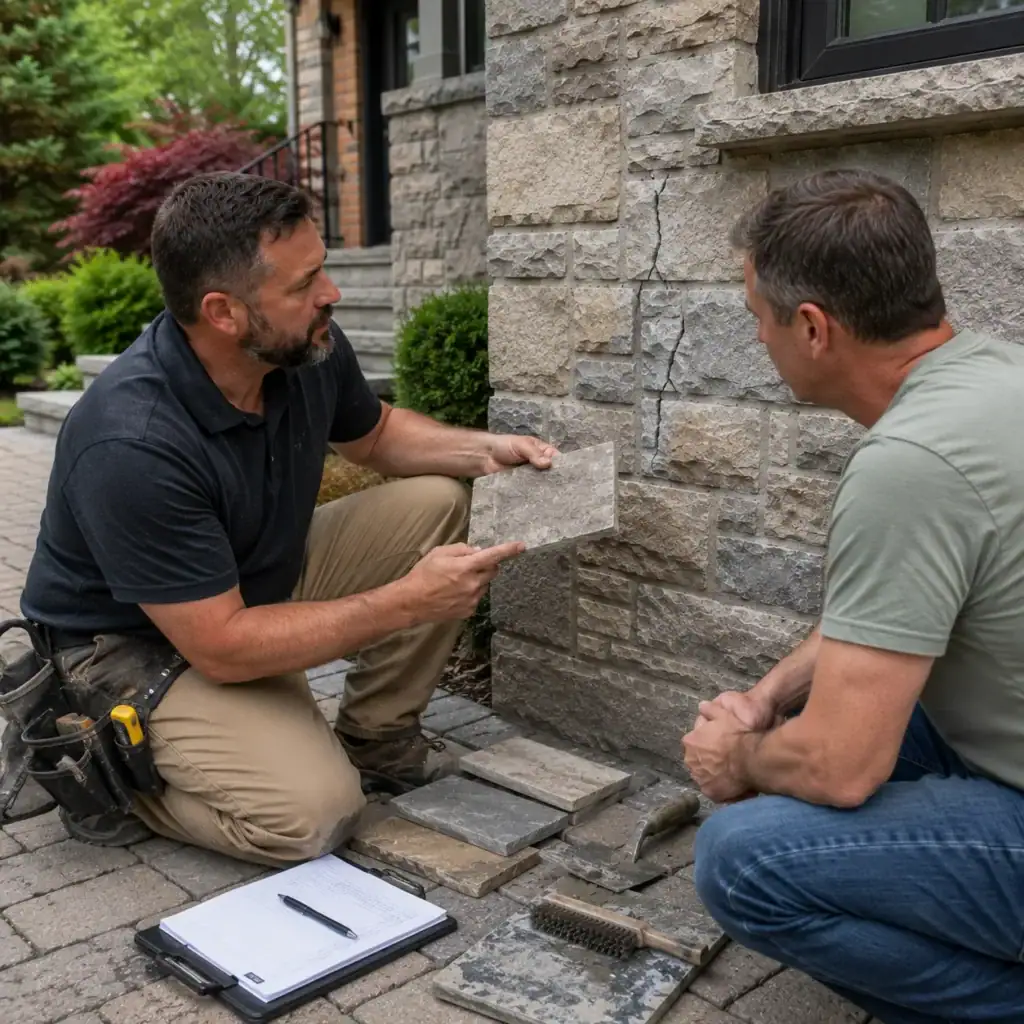
A professional mason can assess the veneer, mortar joints, backing surface, drainage, moisture path, stone condition, and whether repair or replacement is more appropriate. They can also match stone and mortar more carefully so the repair blends with the existing wall.
For broader stonework and exterior repair planning, A&A Masonry’s stone masonry Toronto page explains related stone masonry services, and the masonry services in Toronto page outlines related services such as veneer stone installation, tuckpointing, waterproofing, brick repair, stone masonry, chimney repair, and exterior restoration.
Final Thoughts on Handling Cracks in Your Stone Veneer
Cracks in stone veneer should be handled carefully because the best repair depends on the cause. A small hairline mortar crack may only need monitoring or repointing. A cracked stone may need replacement. A loose or wet area may point to water behind the veneer, drainage issues, or movement in the wall system.
For Toronto and GTA homeowners, moisture and freeze-thaw cycles make early attention important. Water that enters cracks can freeze, expand, and loosen stone or mortar over time. Sealing may help only after the veneer is repaired, dry, clean, and suitable for a breathable product.
The safest approach is to document the crack, check for moisture and movement, avoid quick surface fixes, and repair the cause before covering the symptom. When the crack is active, wet, widening, or connected to loose stone, professional review can help prevent a small veneer issue from becoming a larger masonry repair.