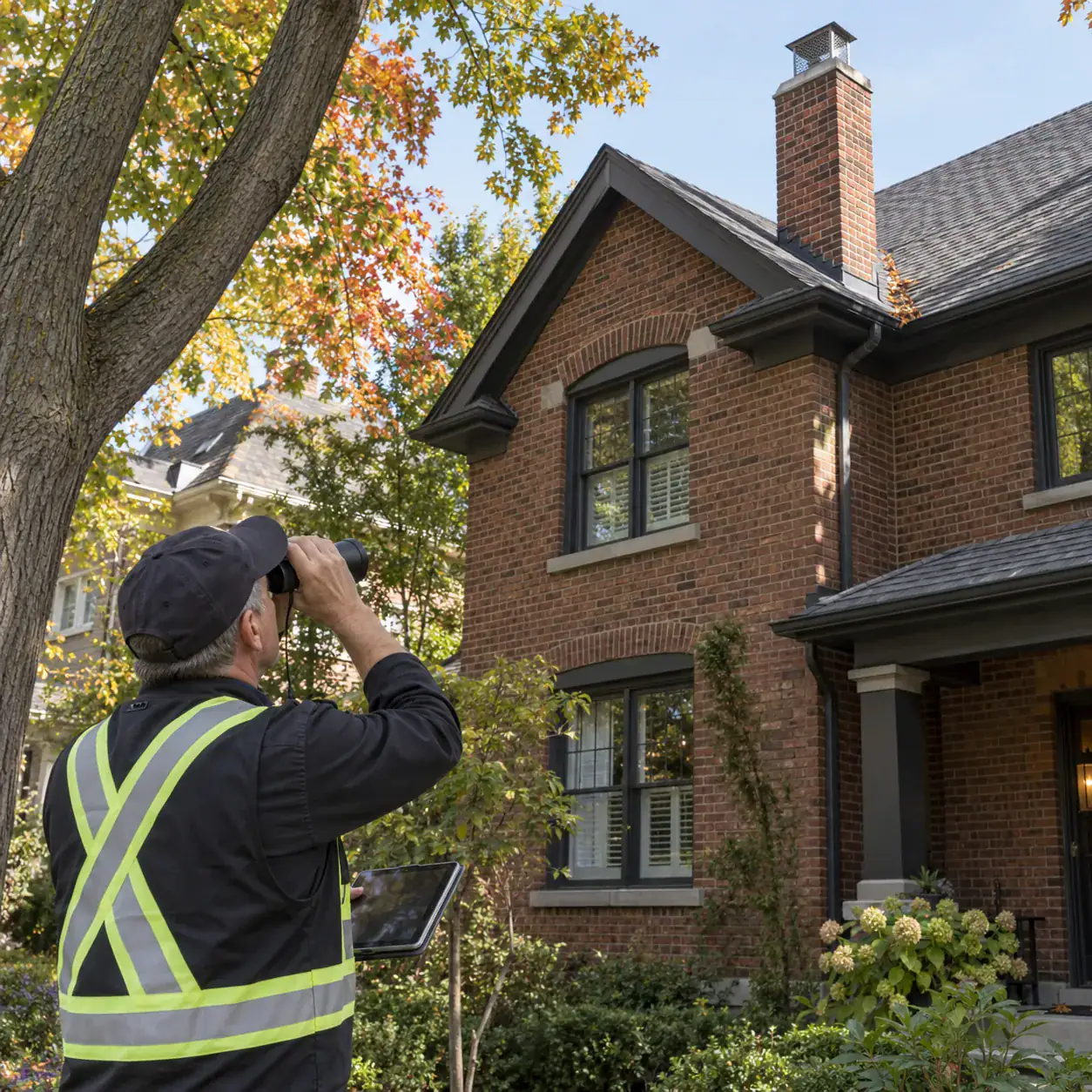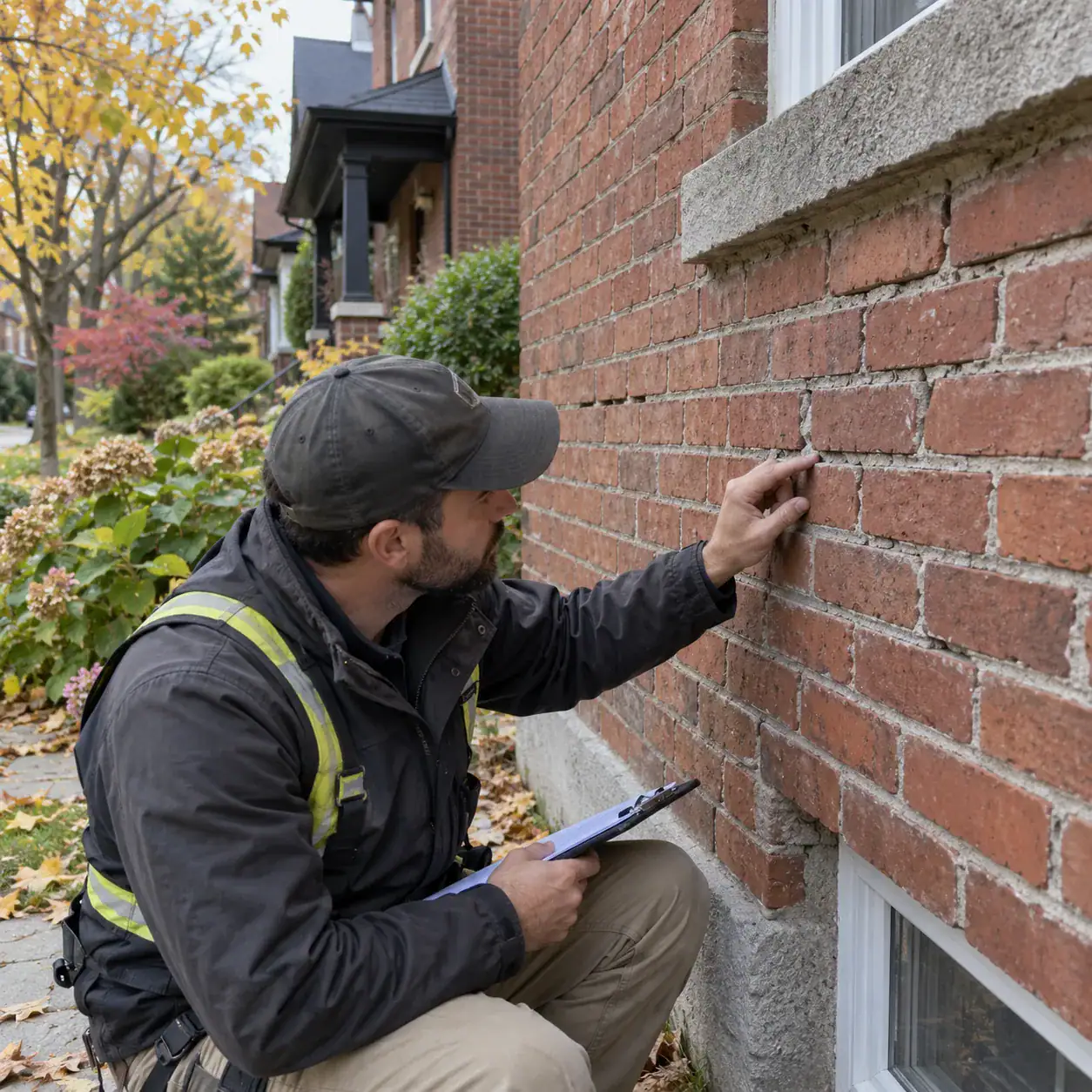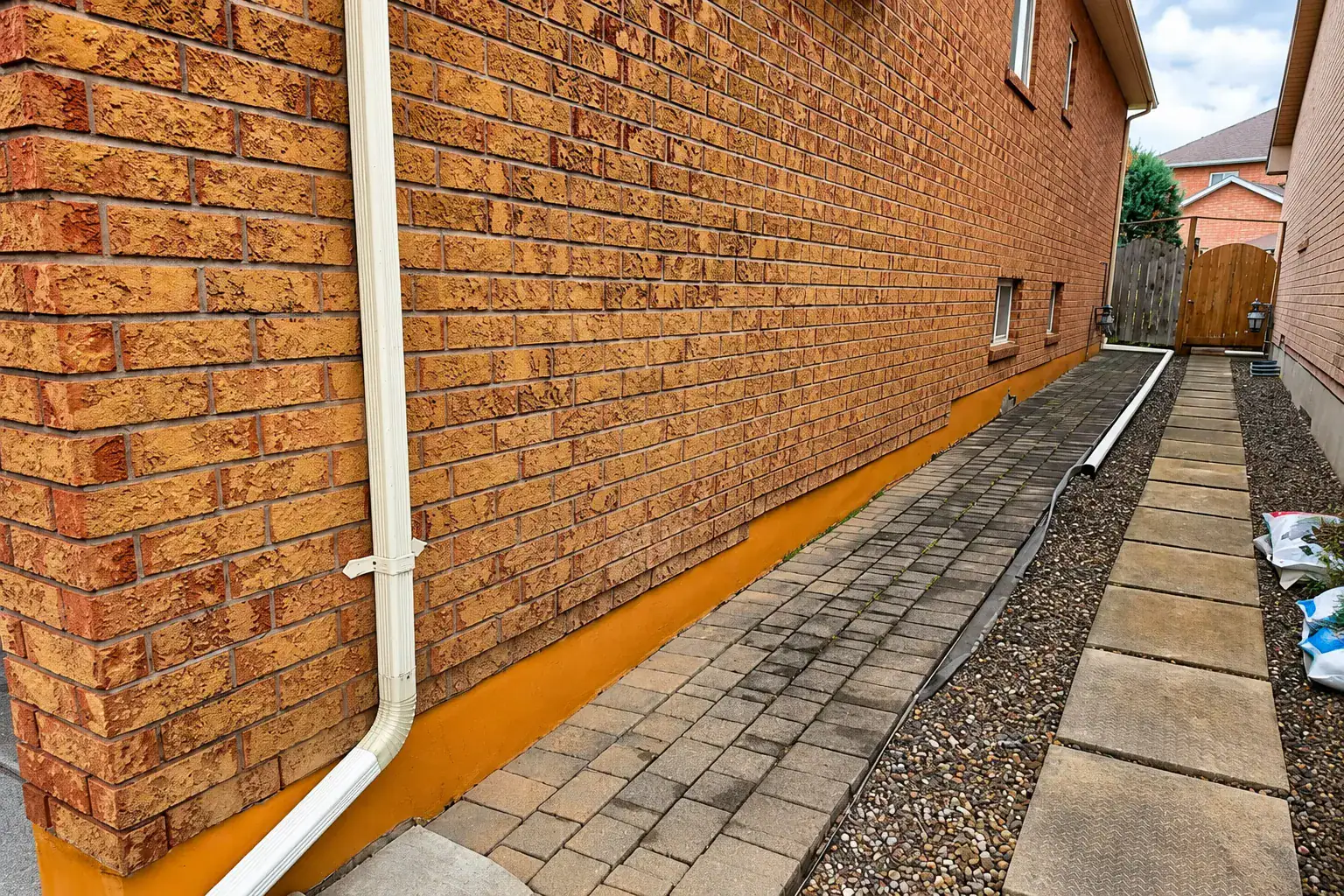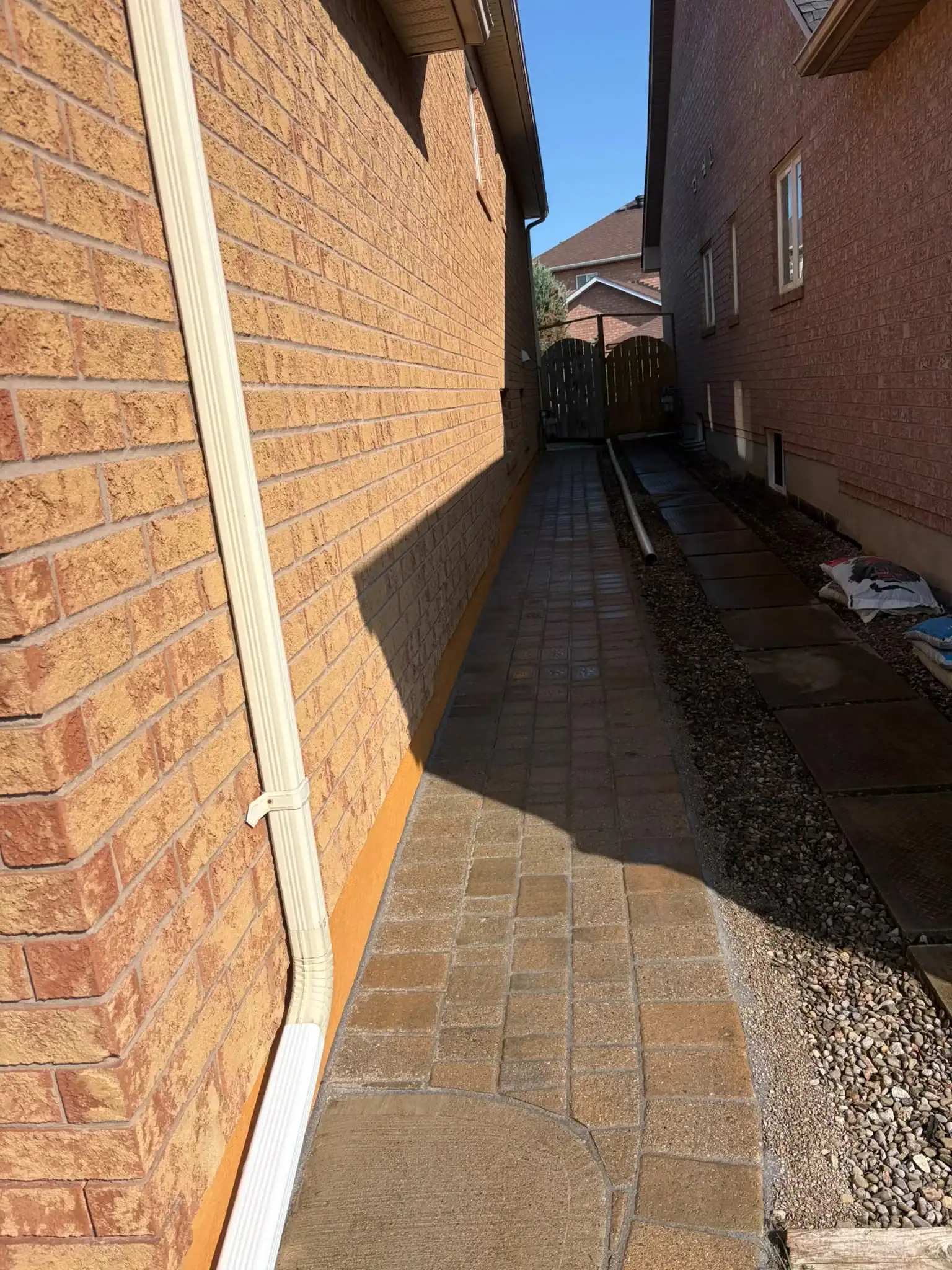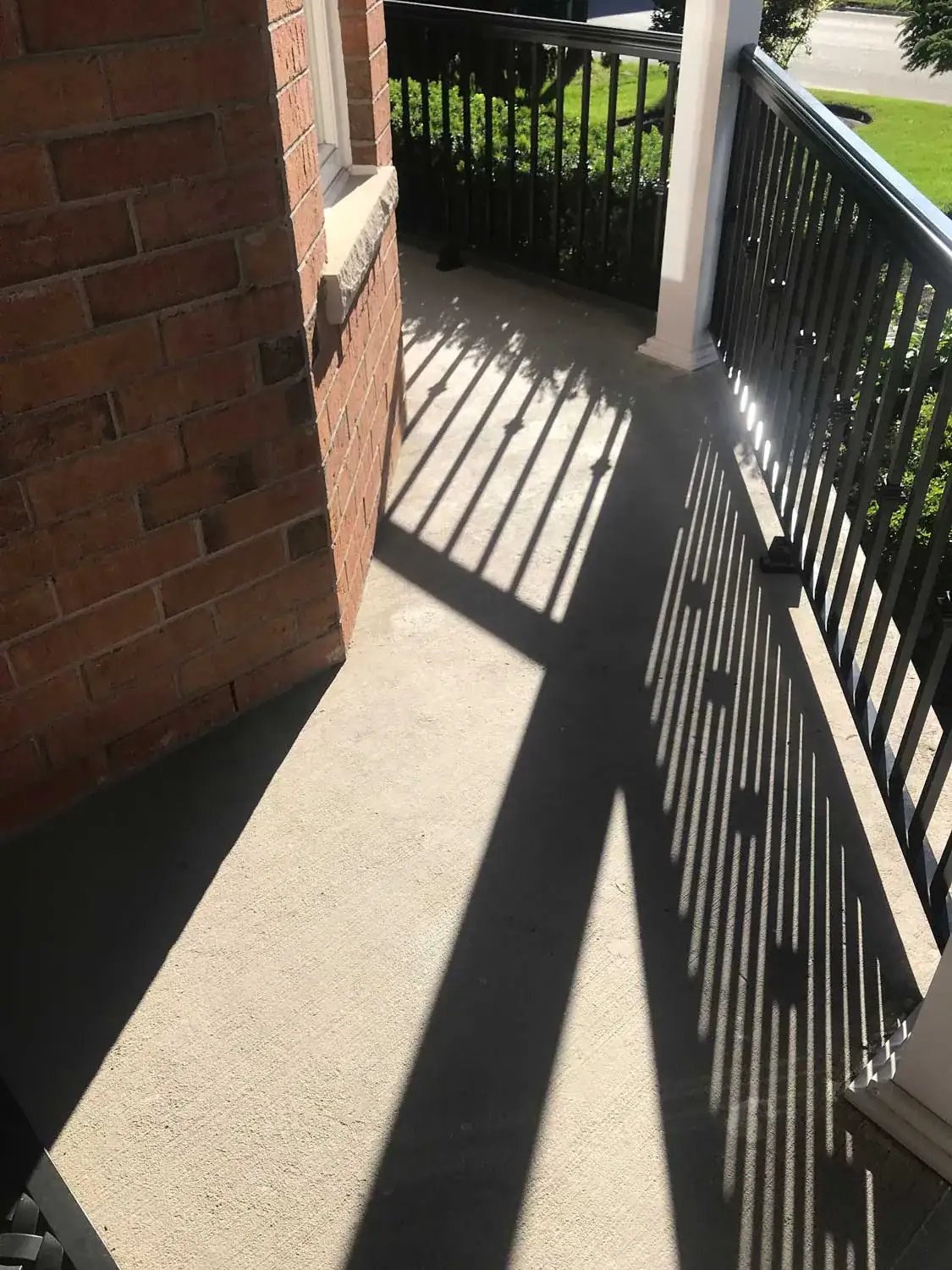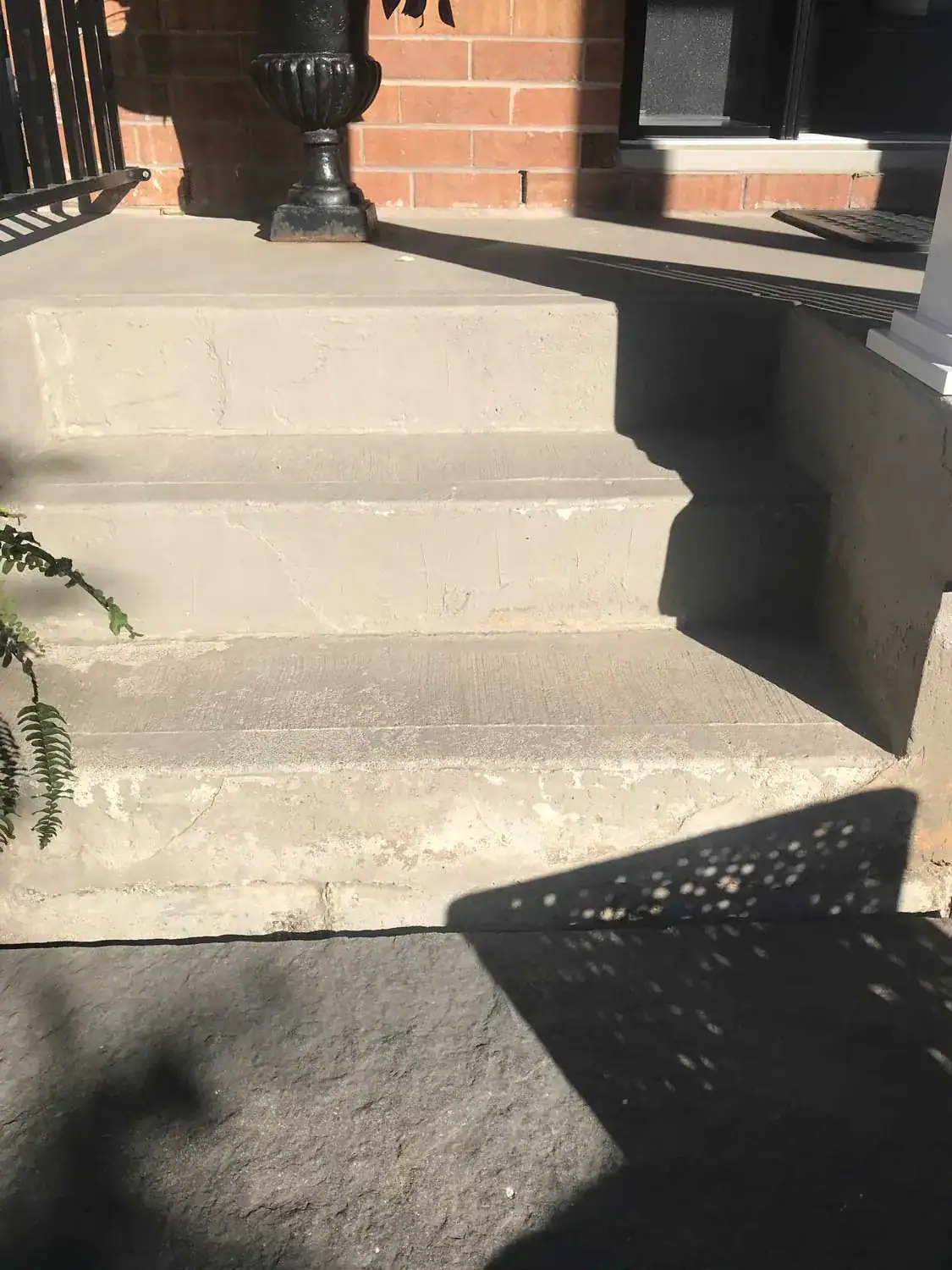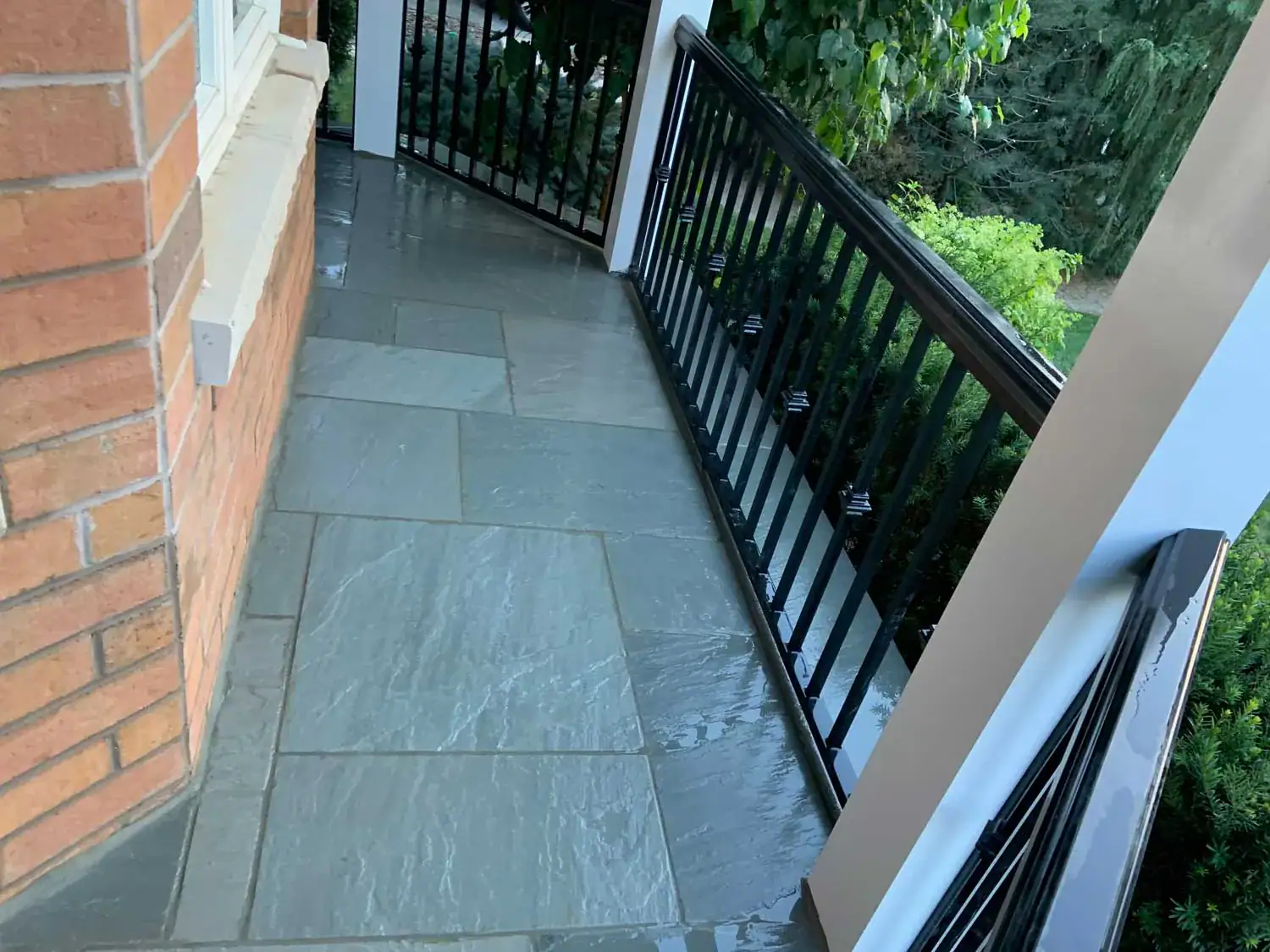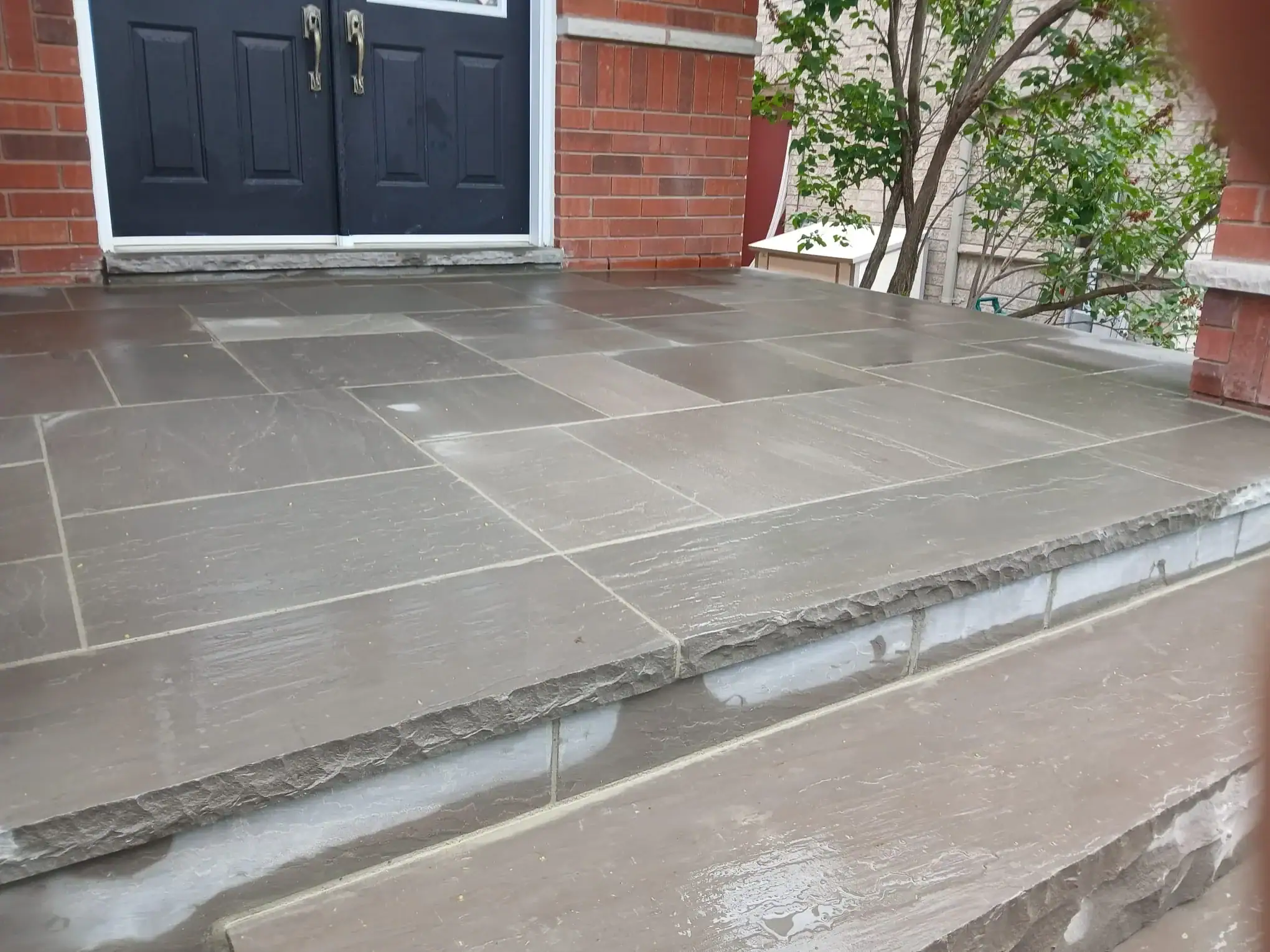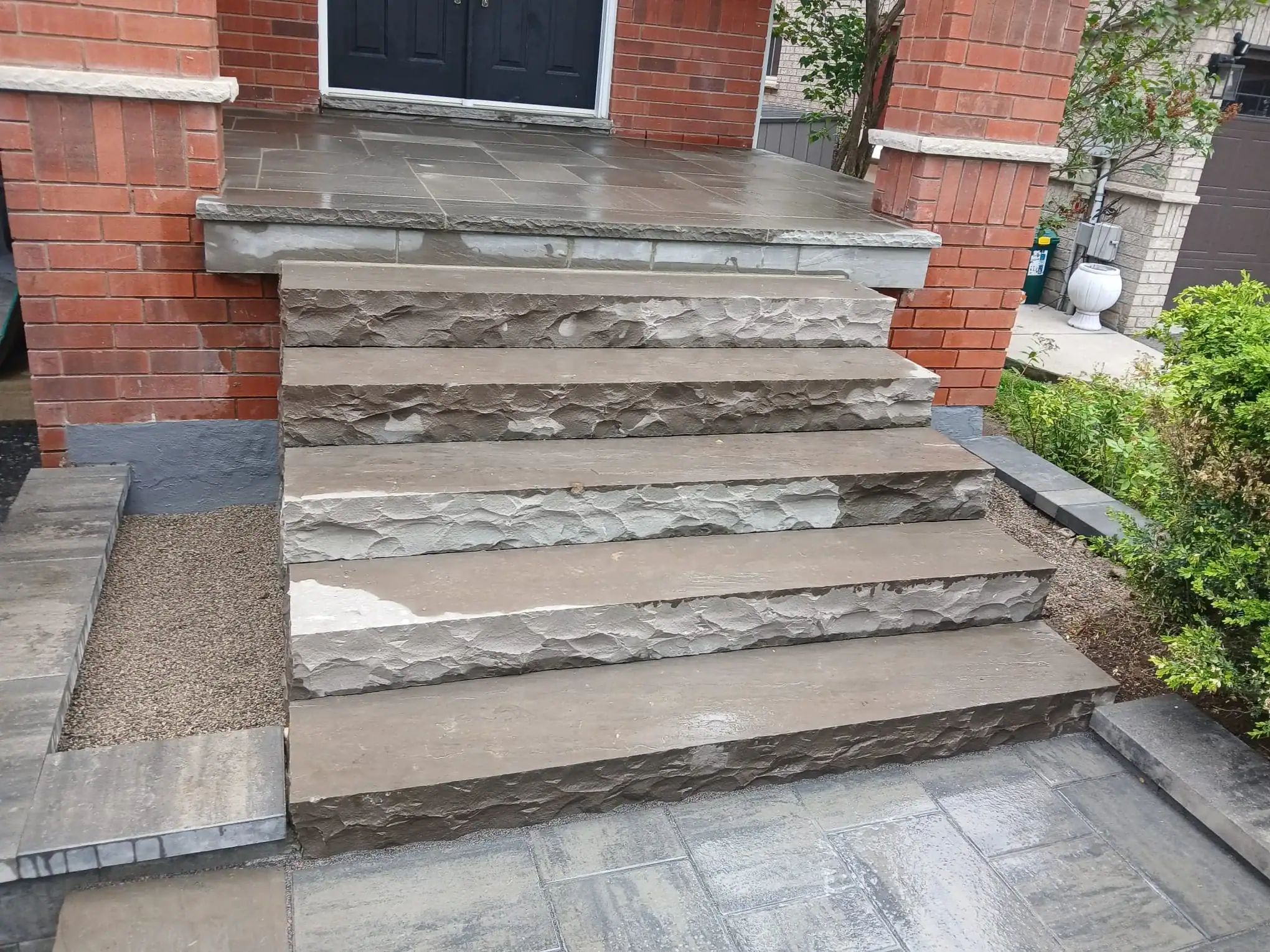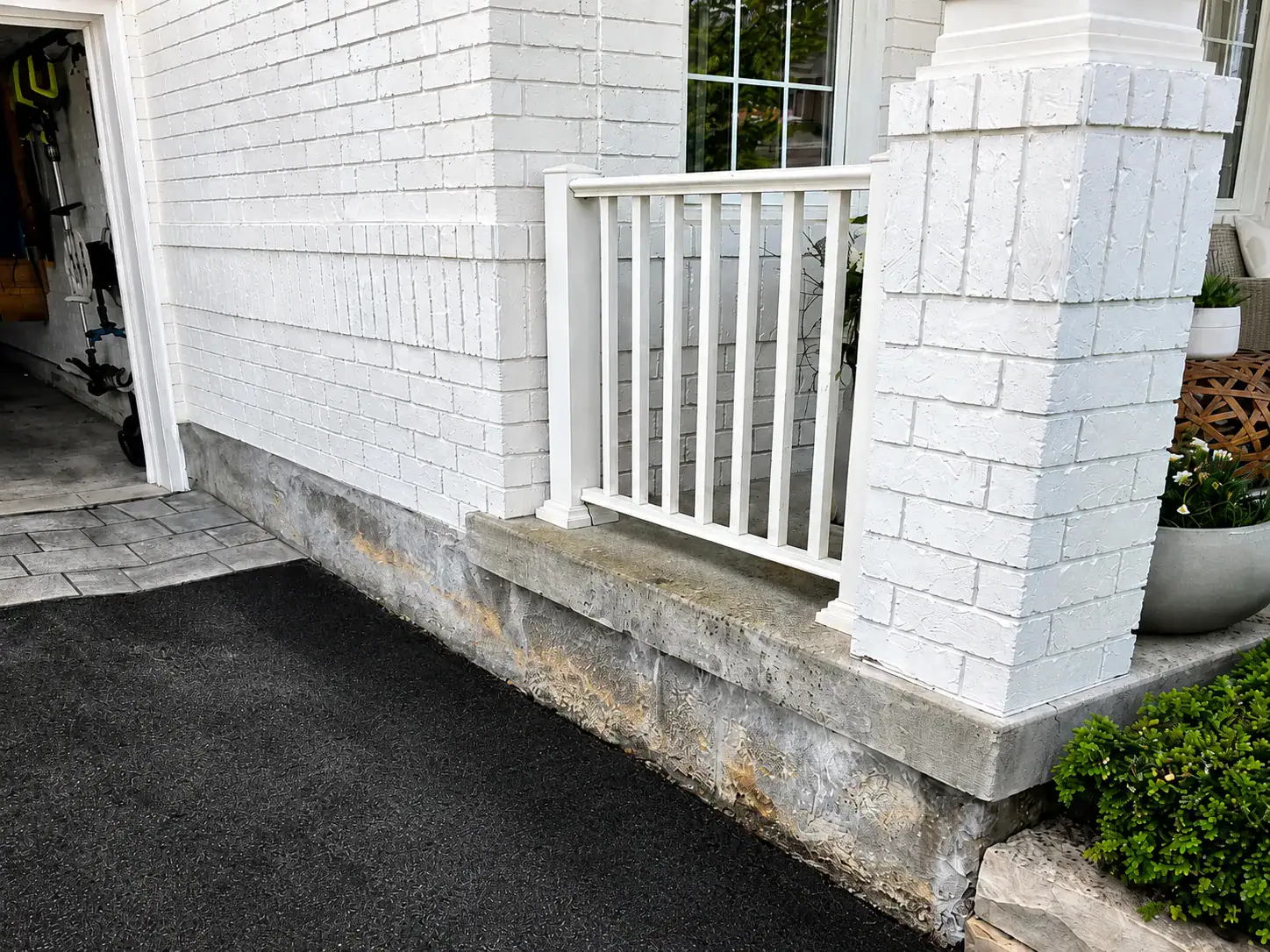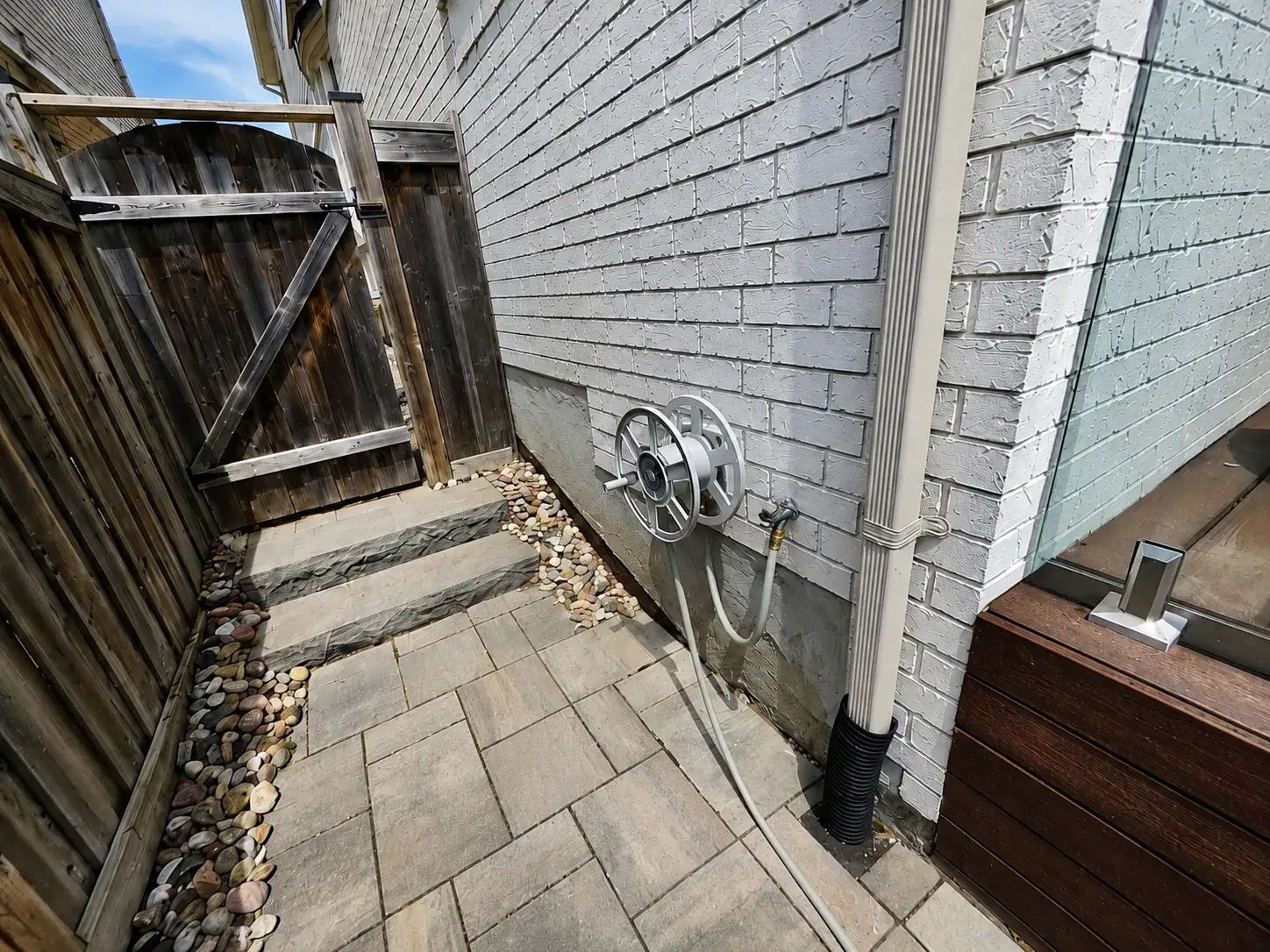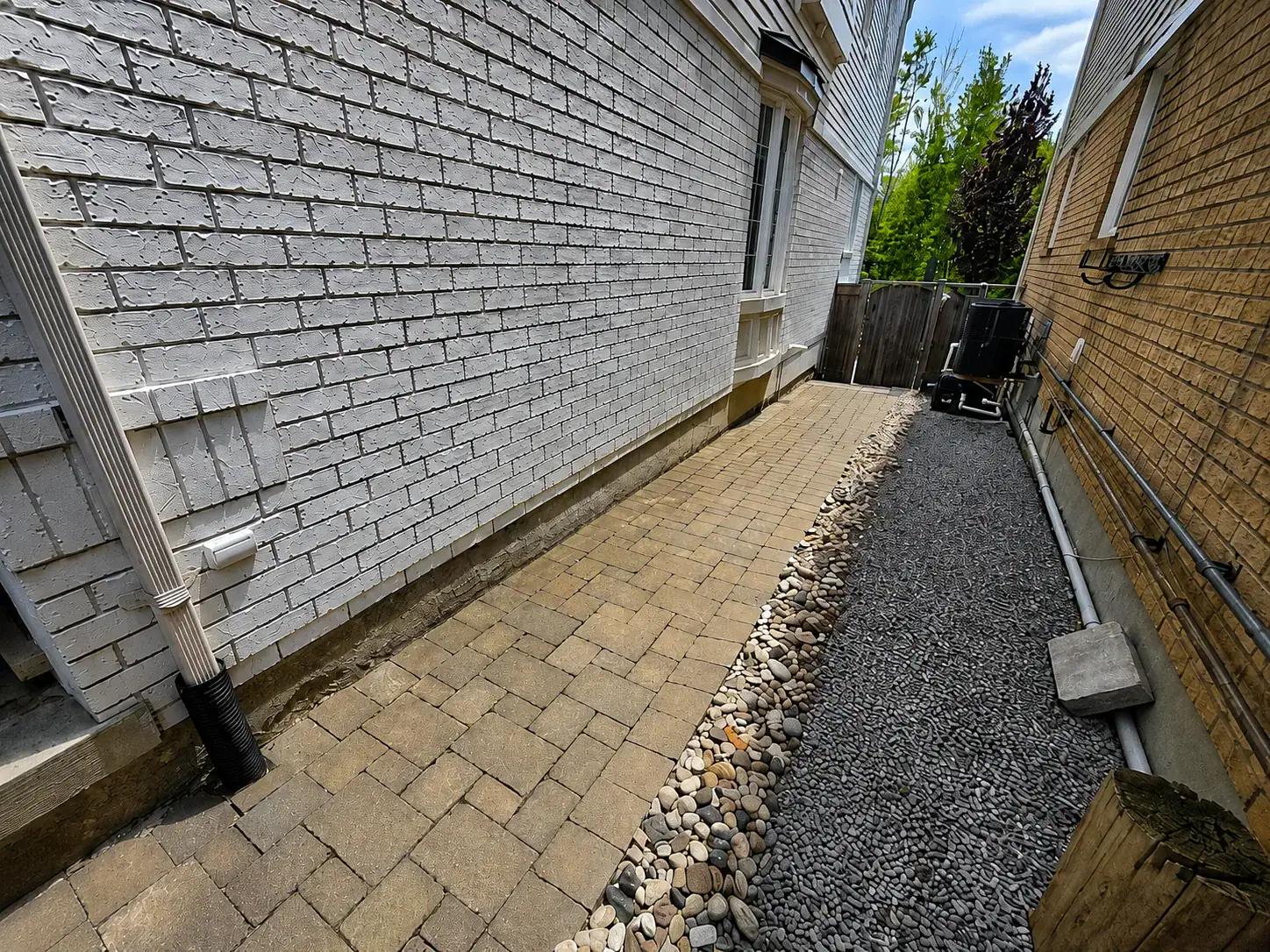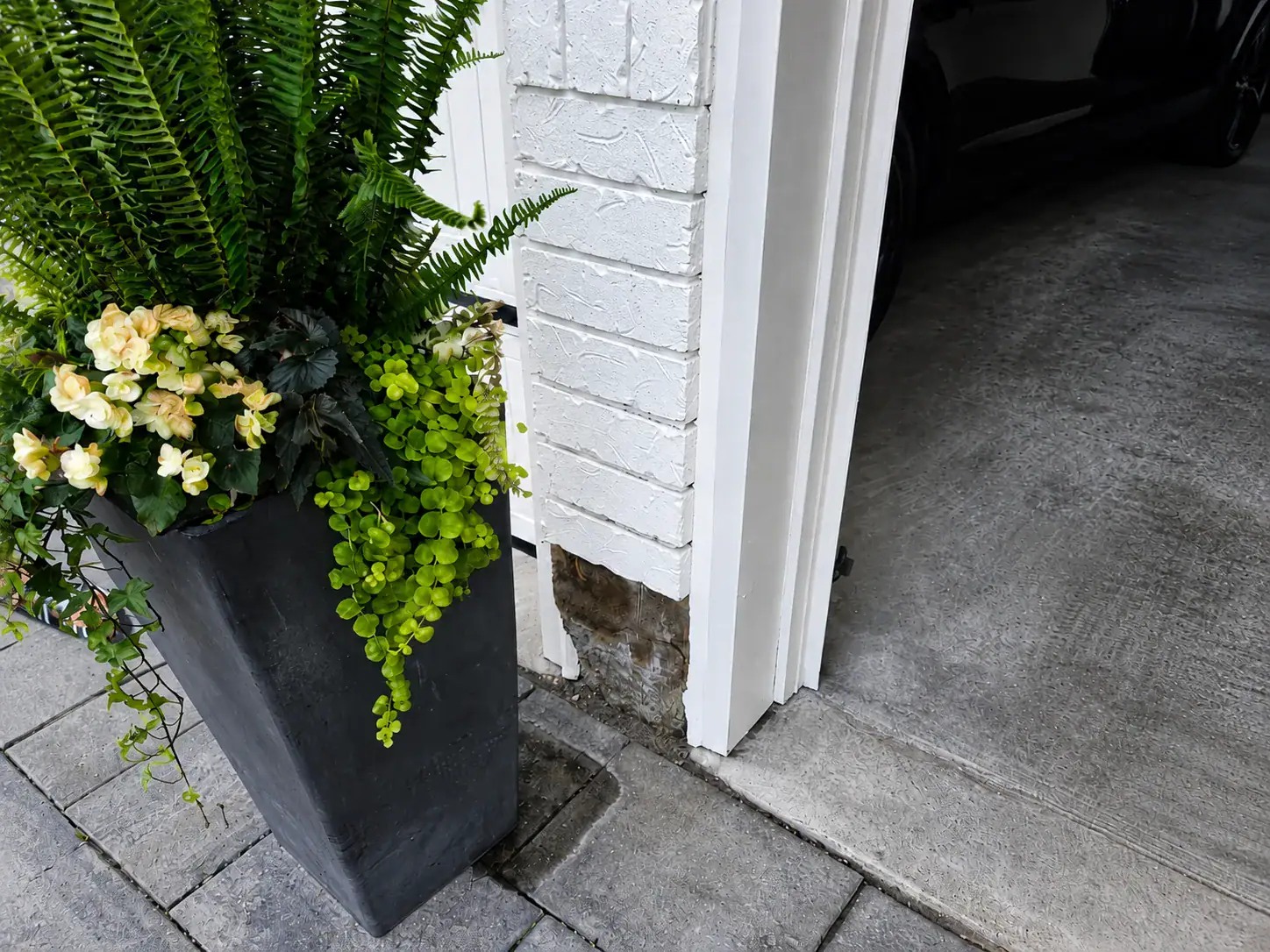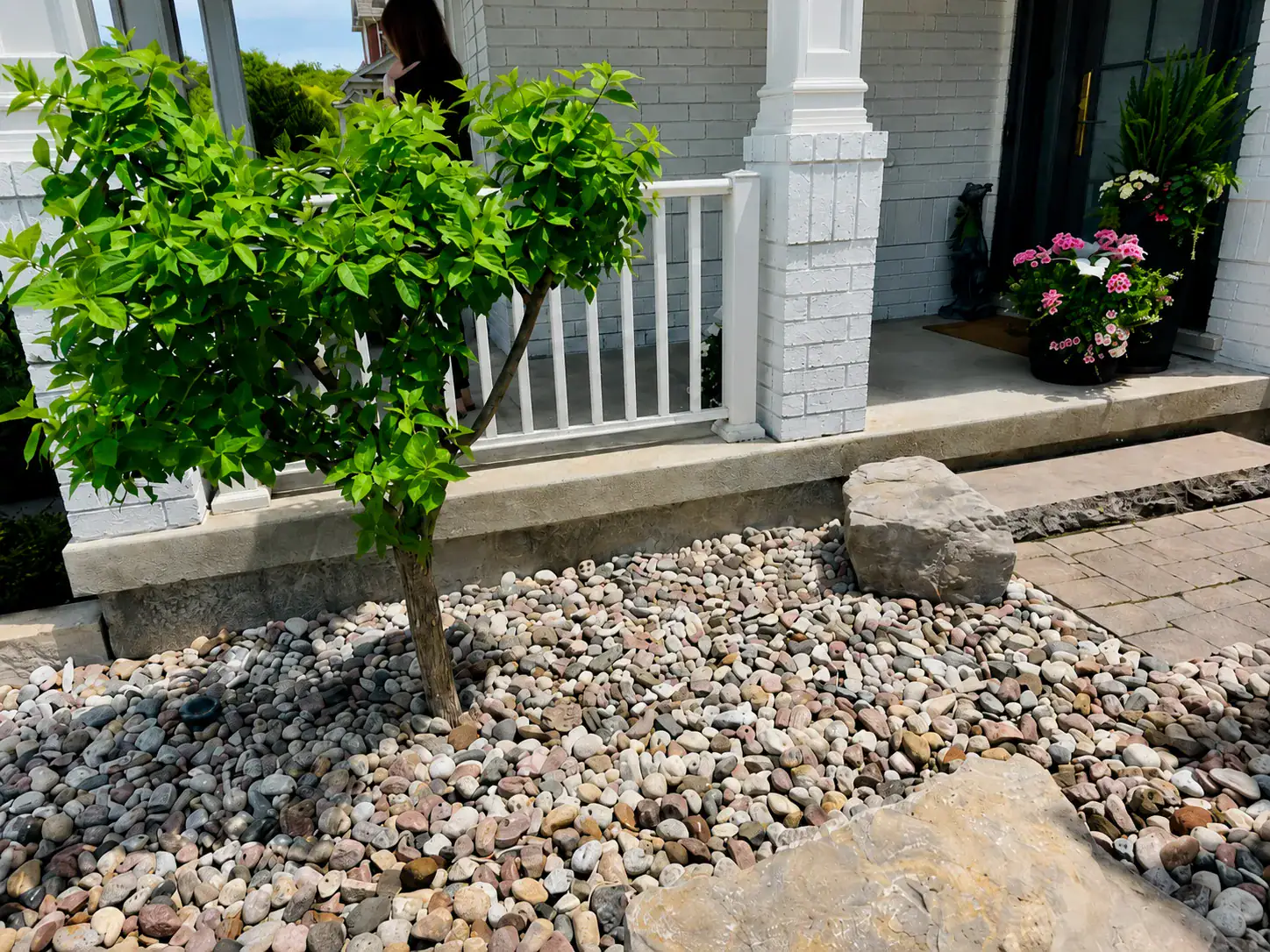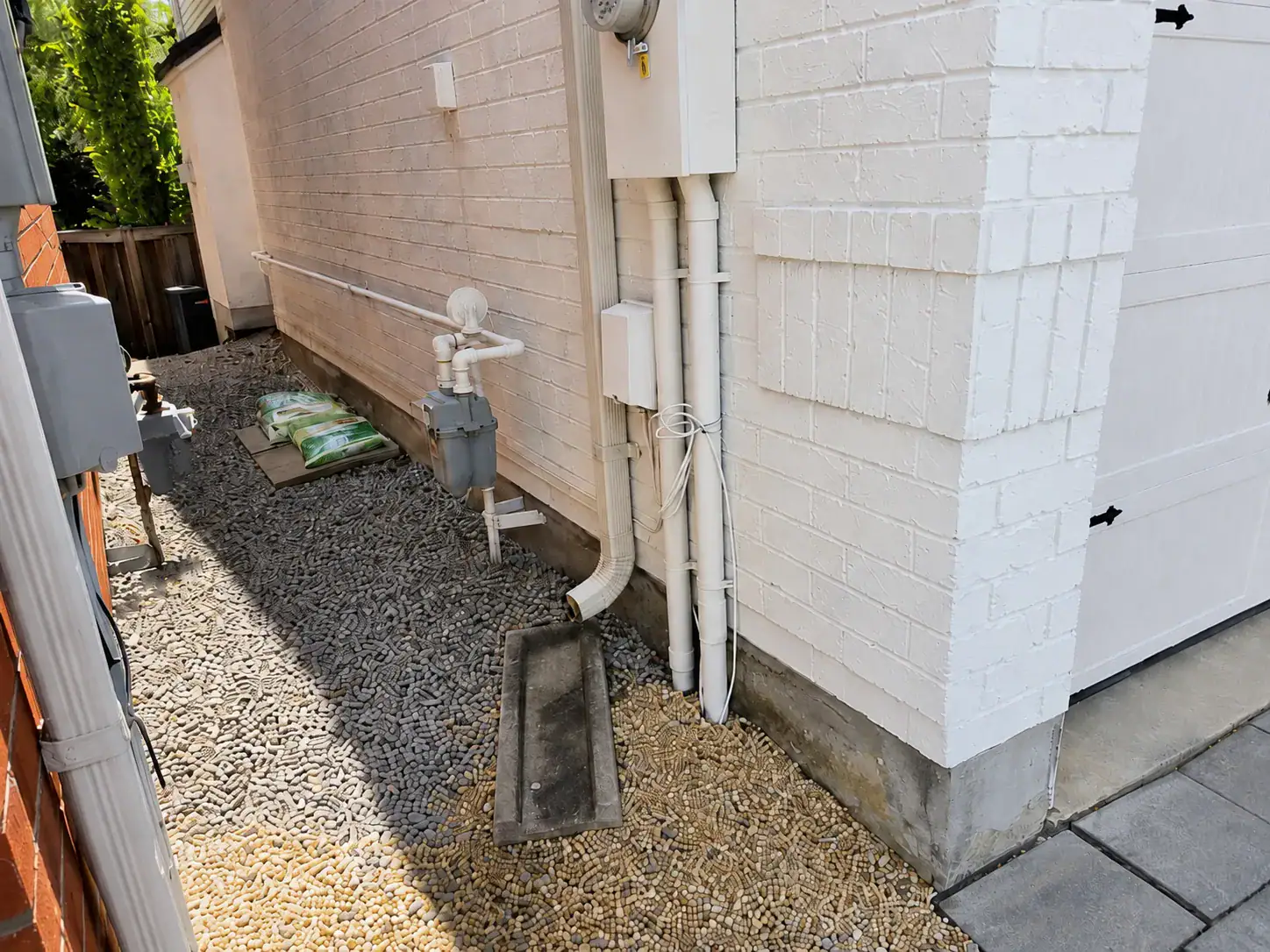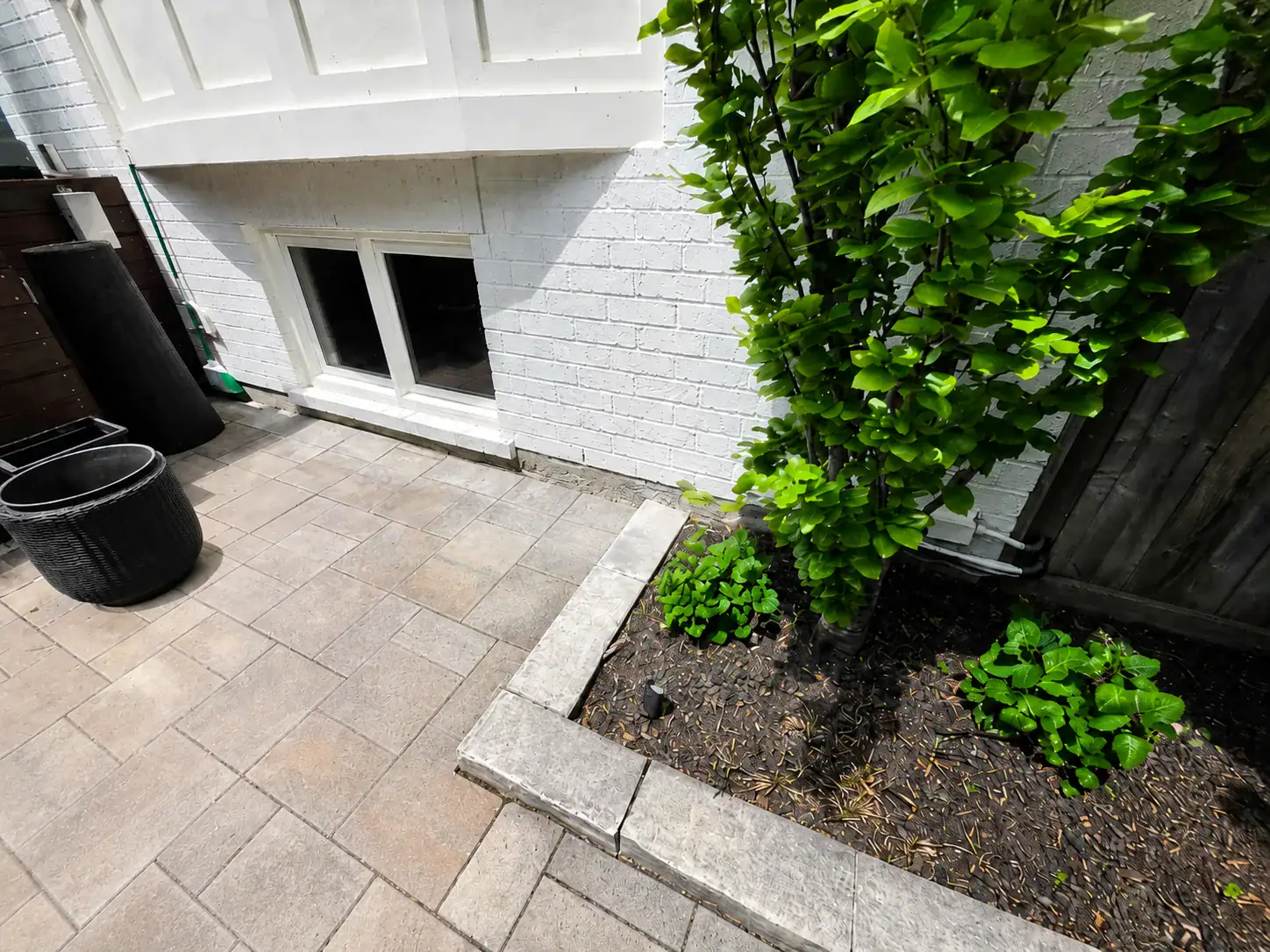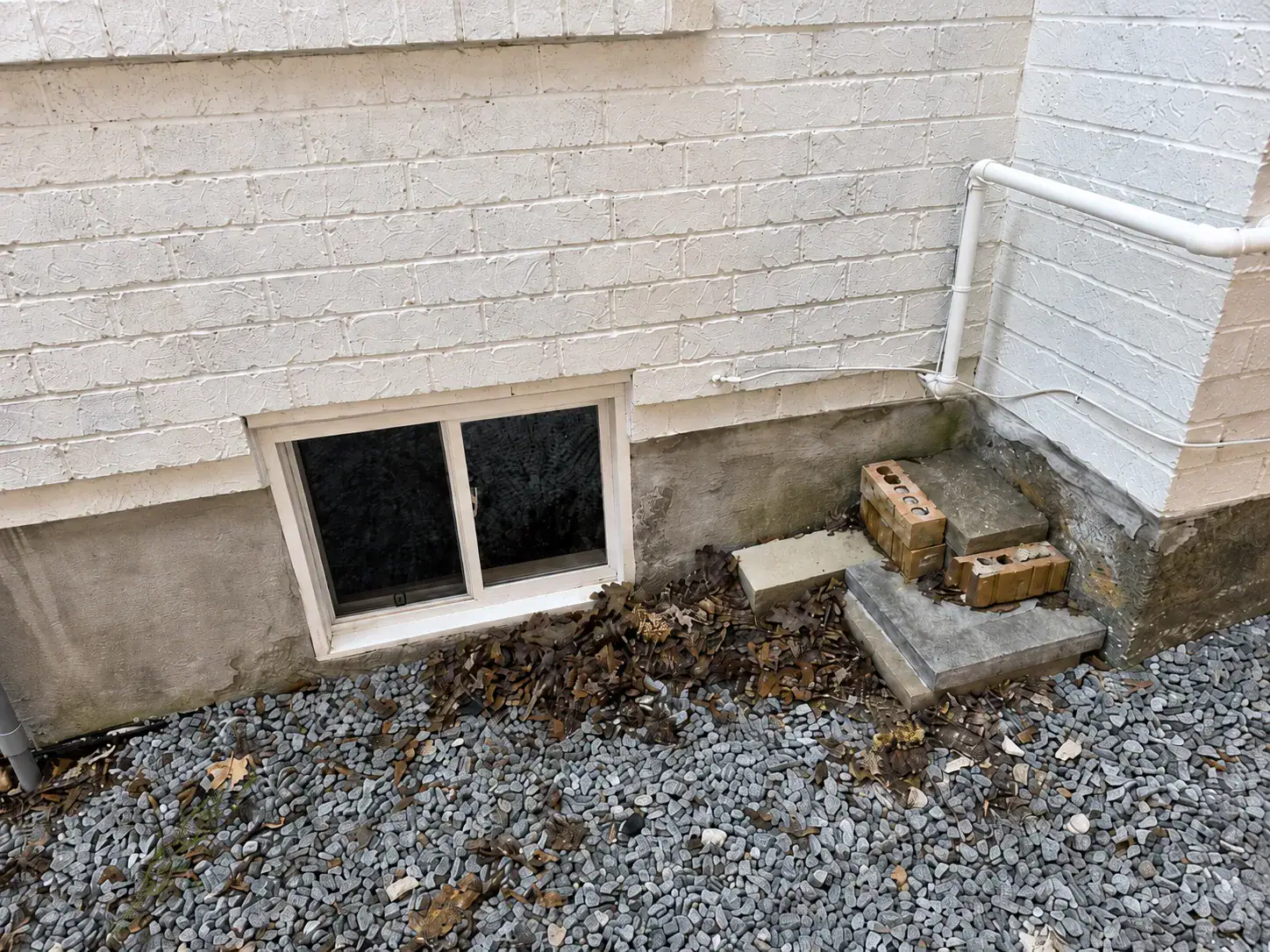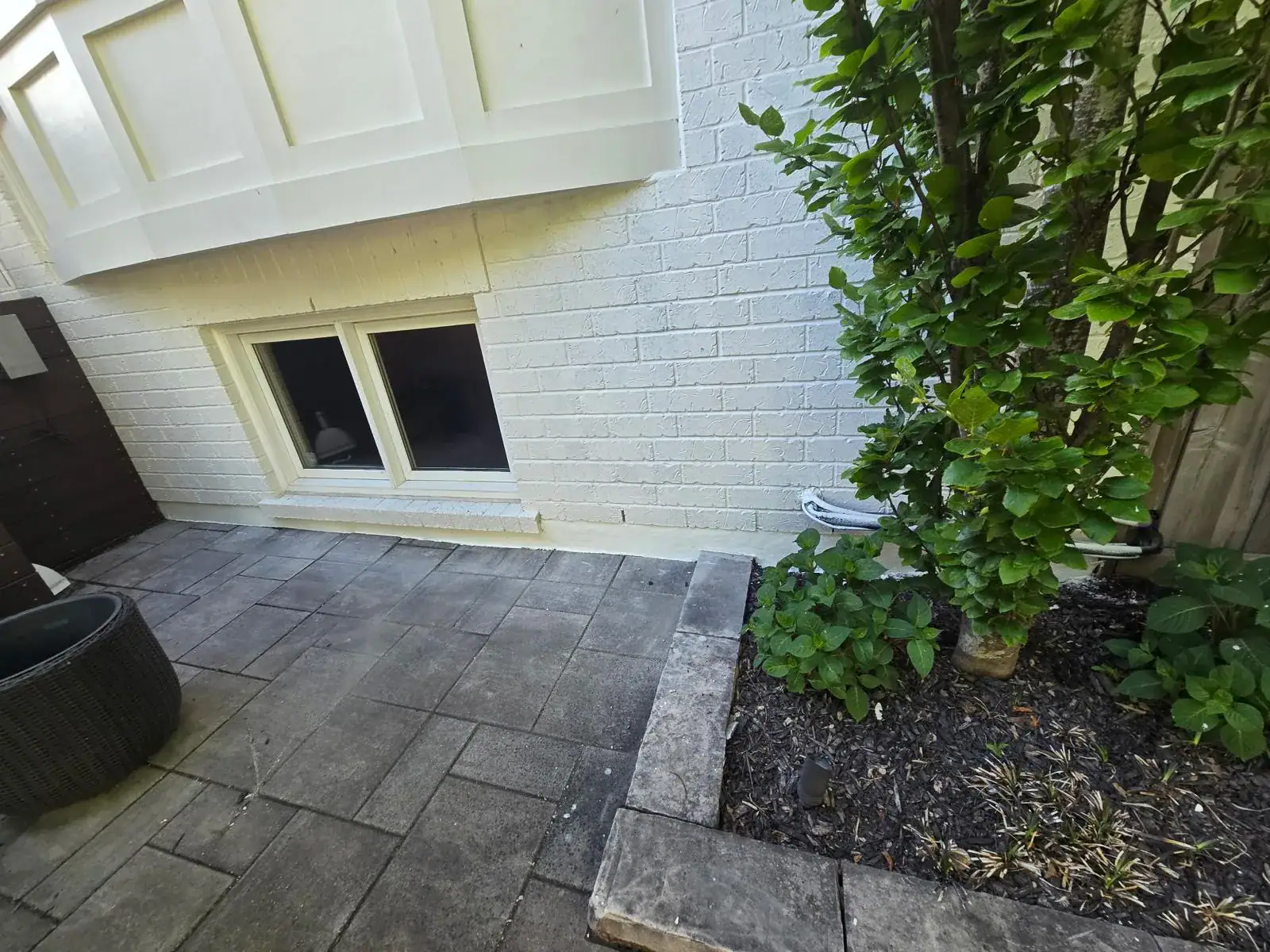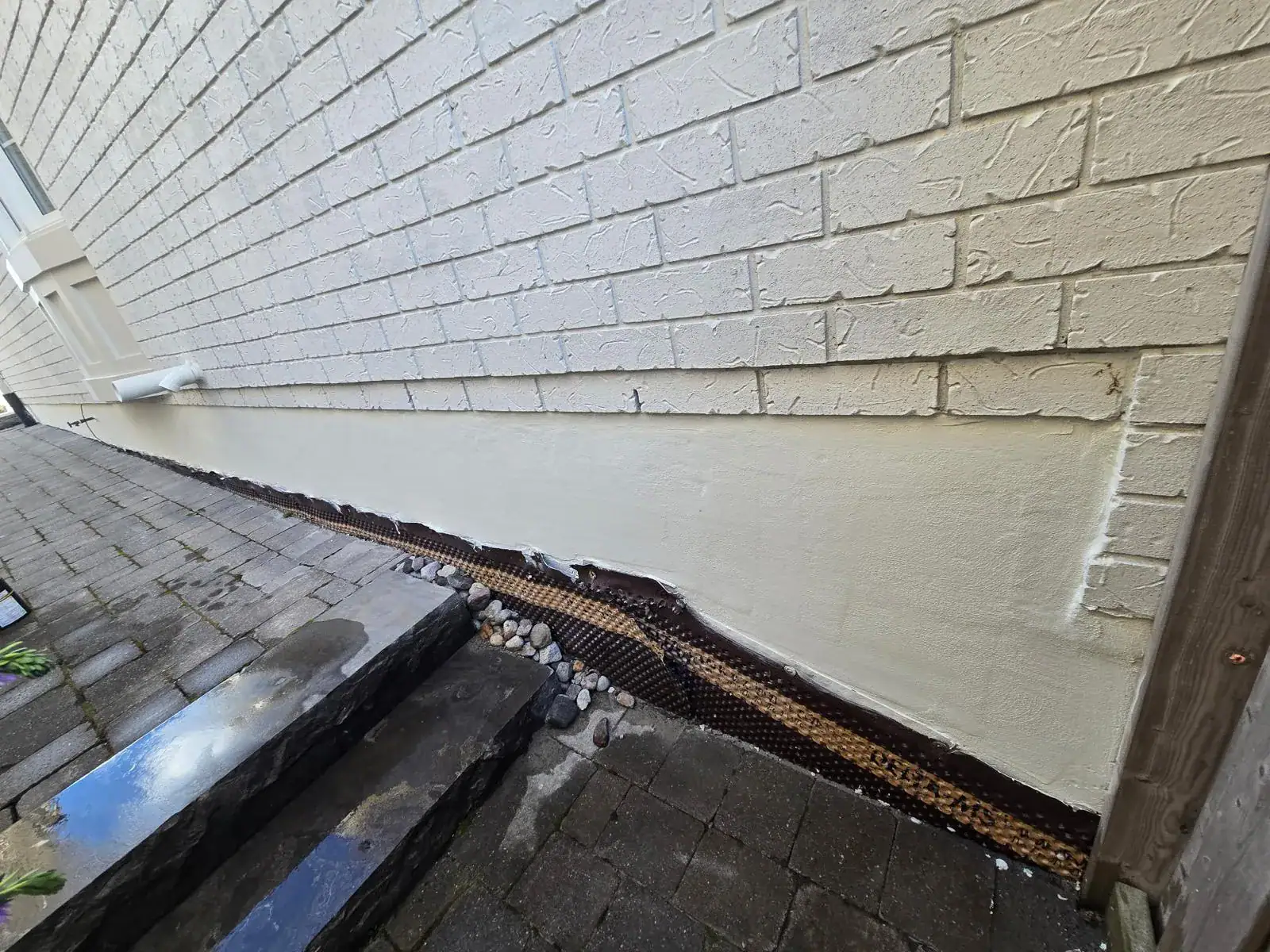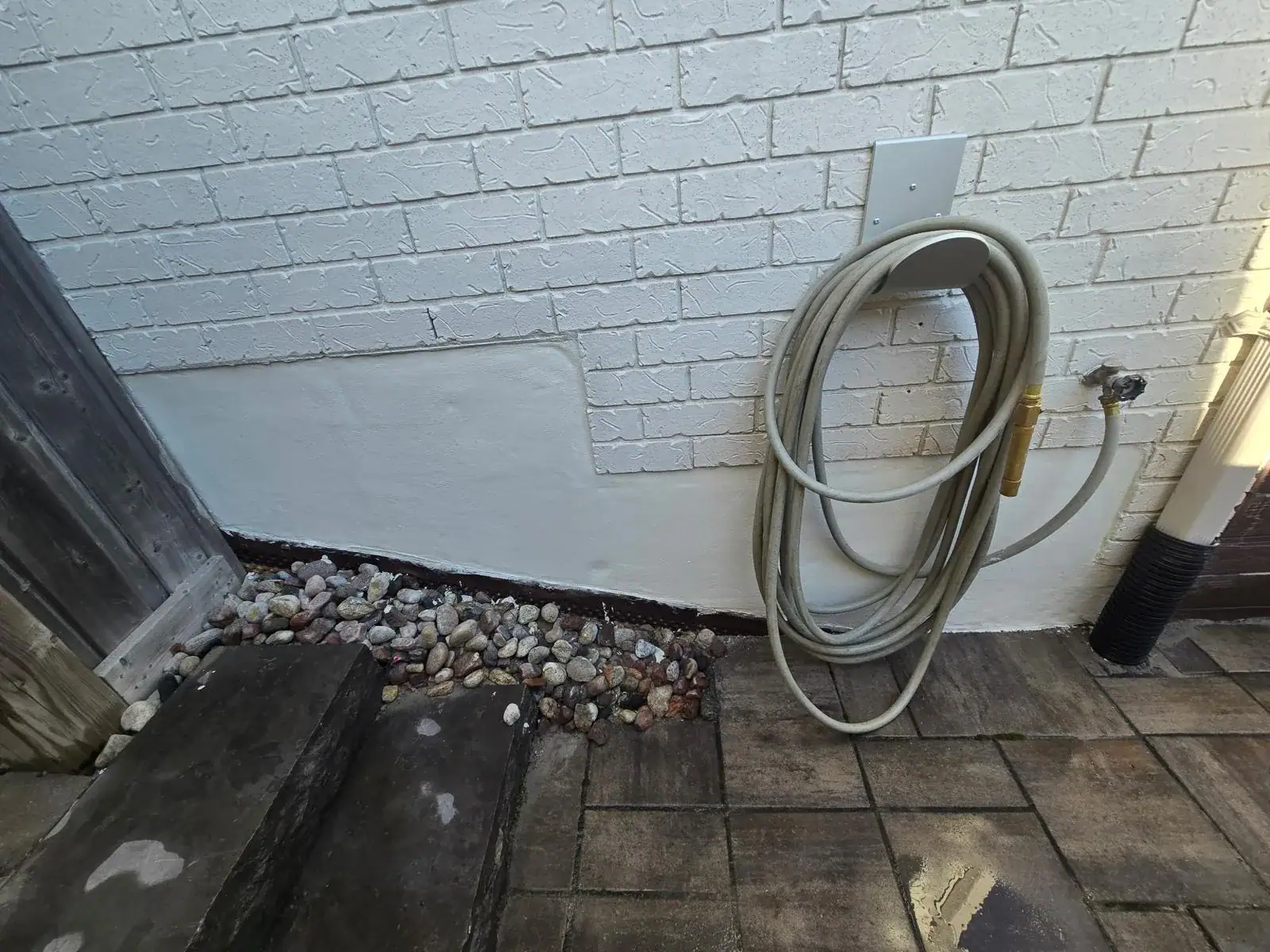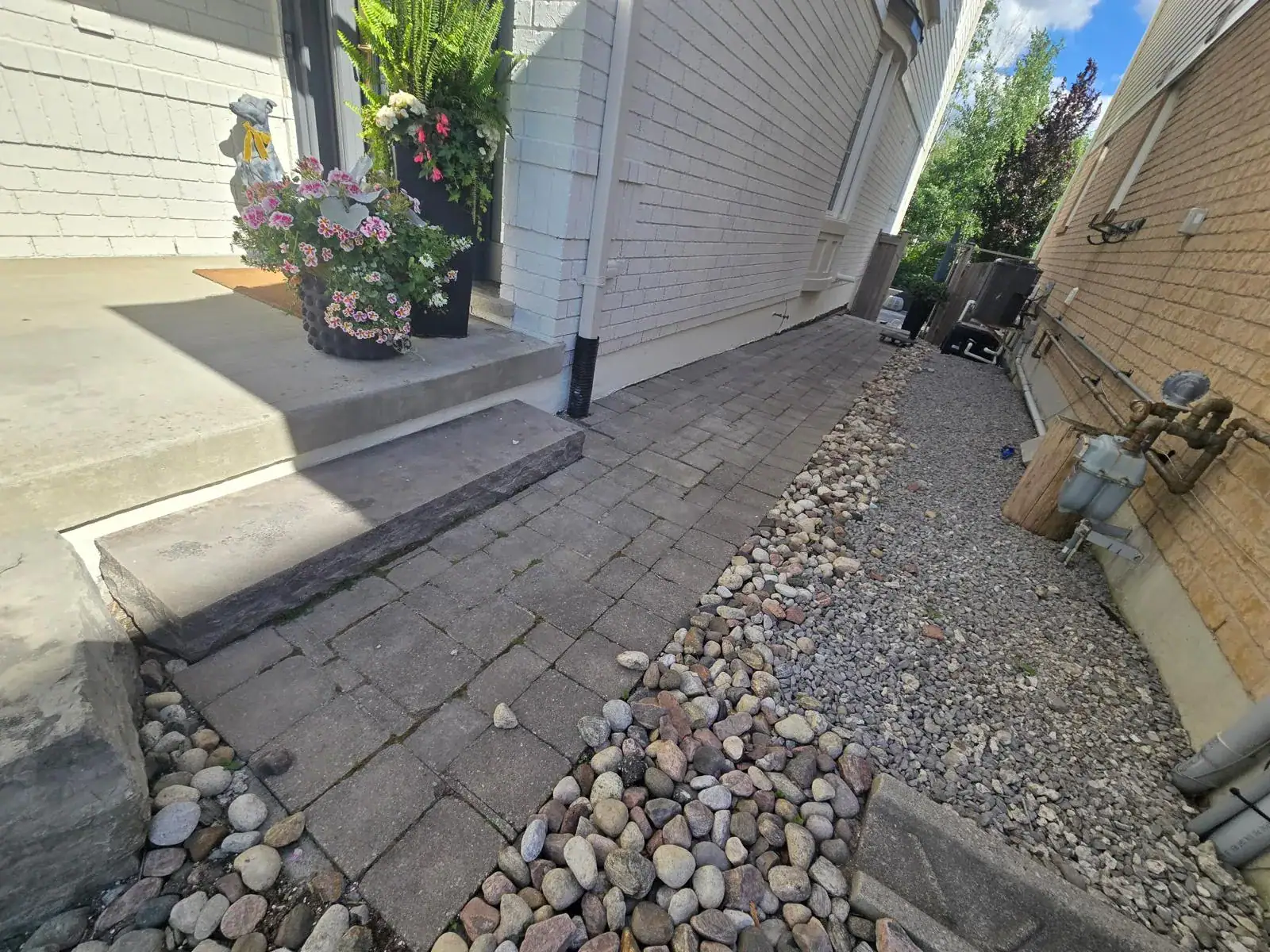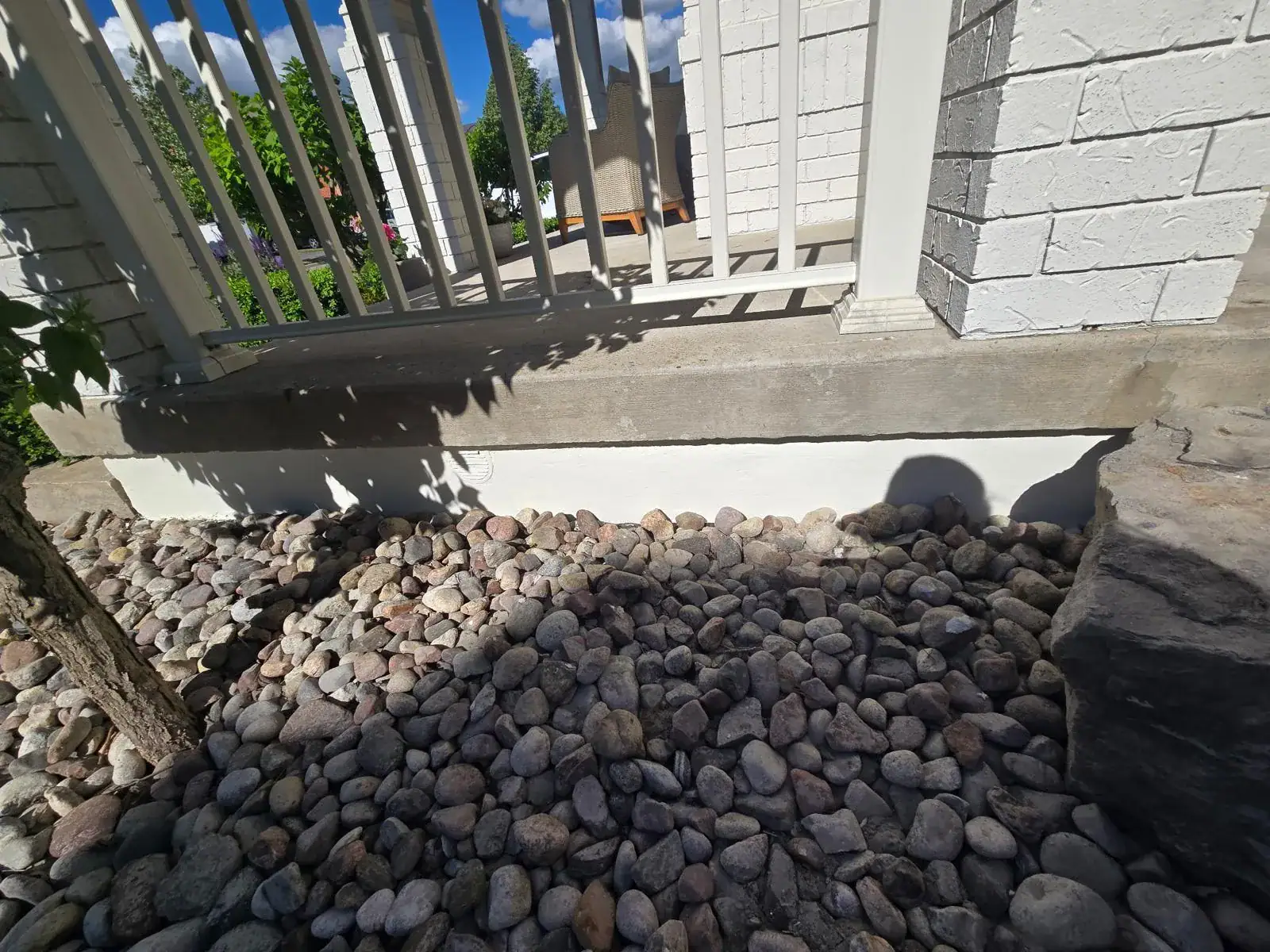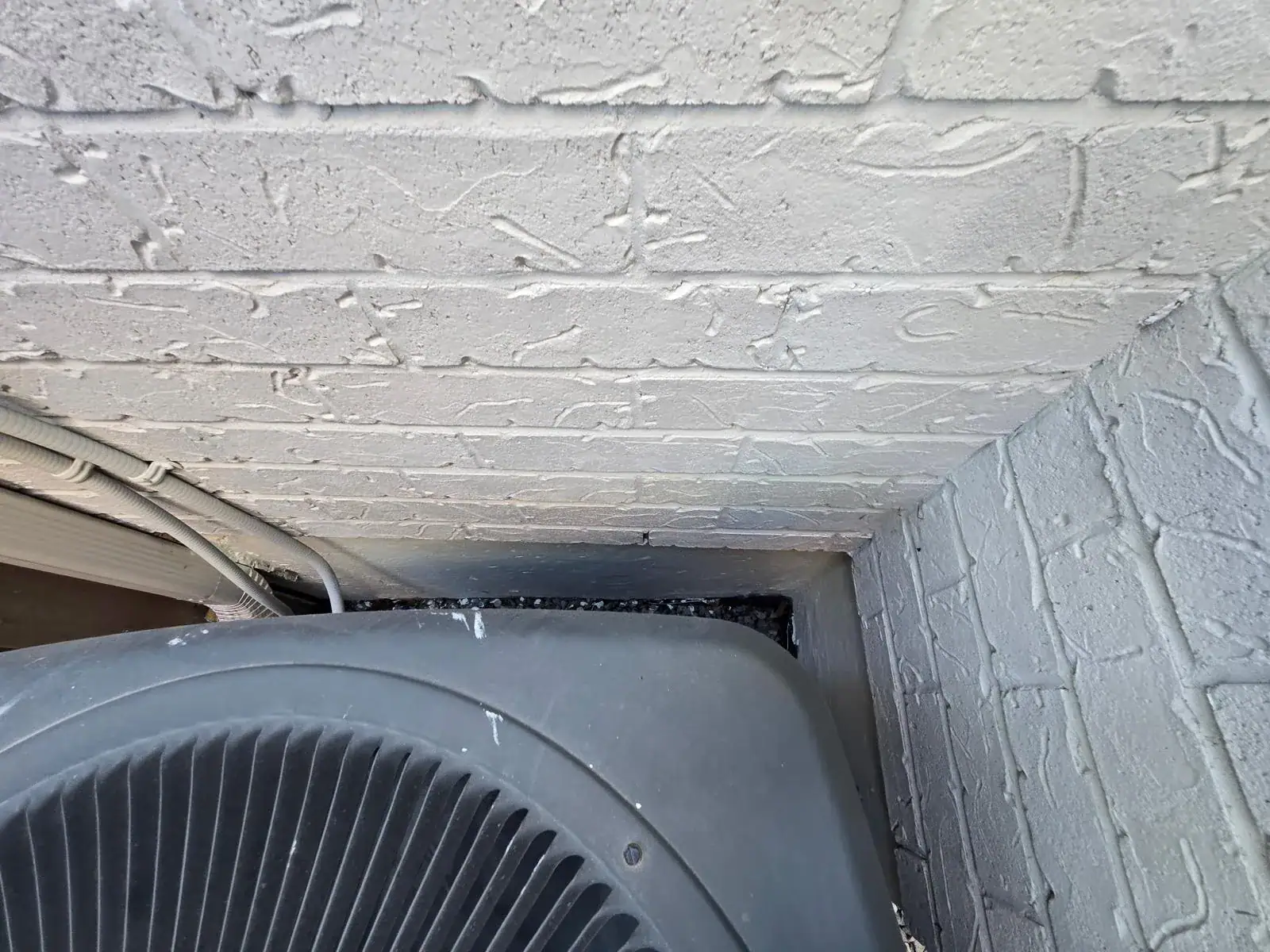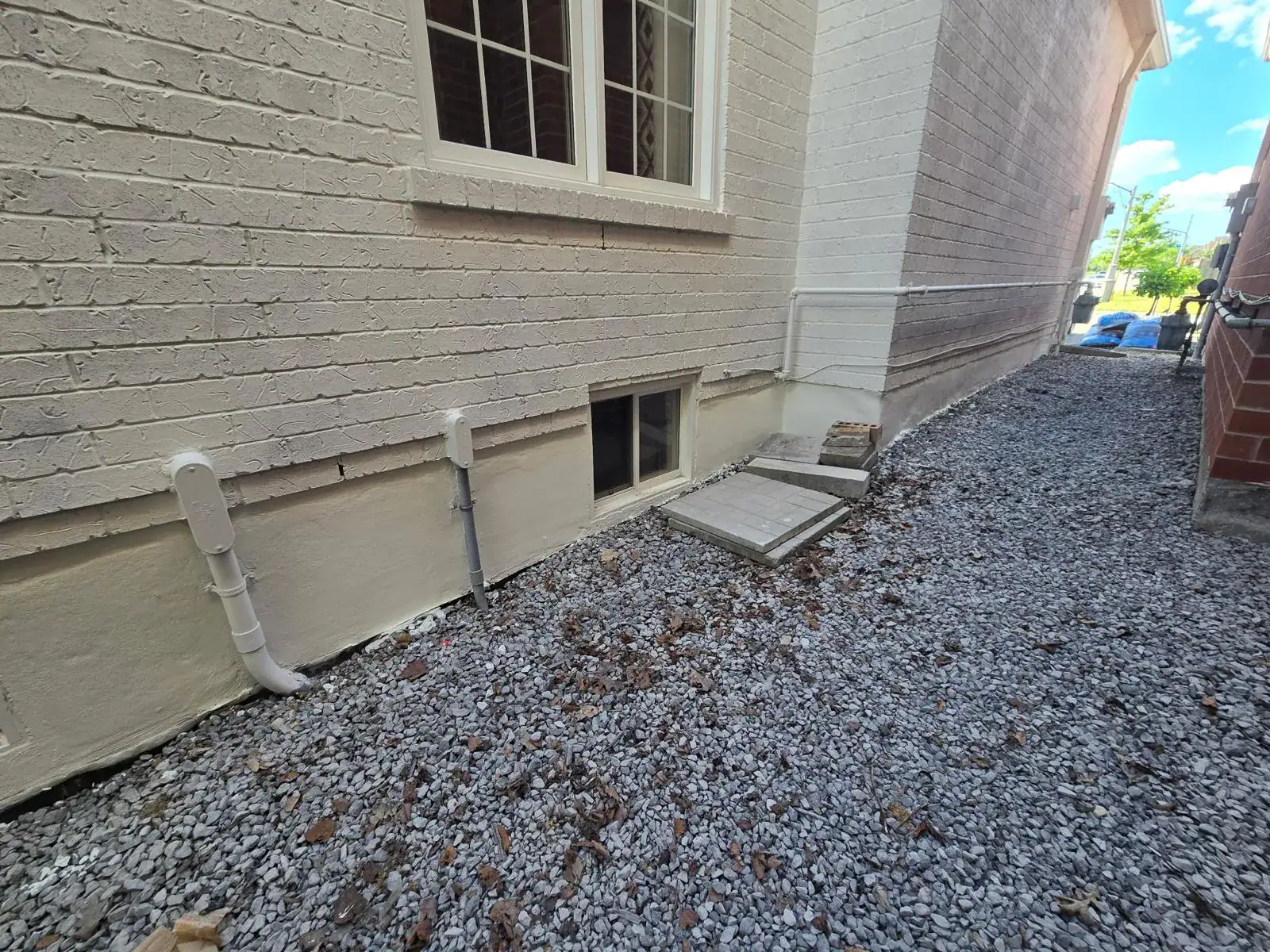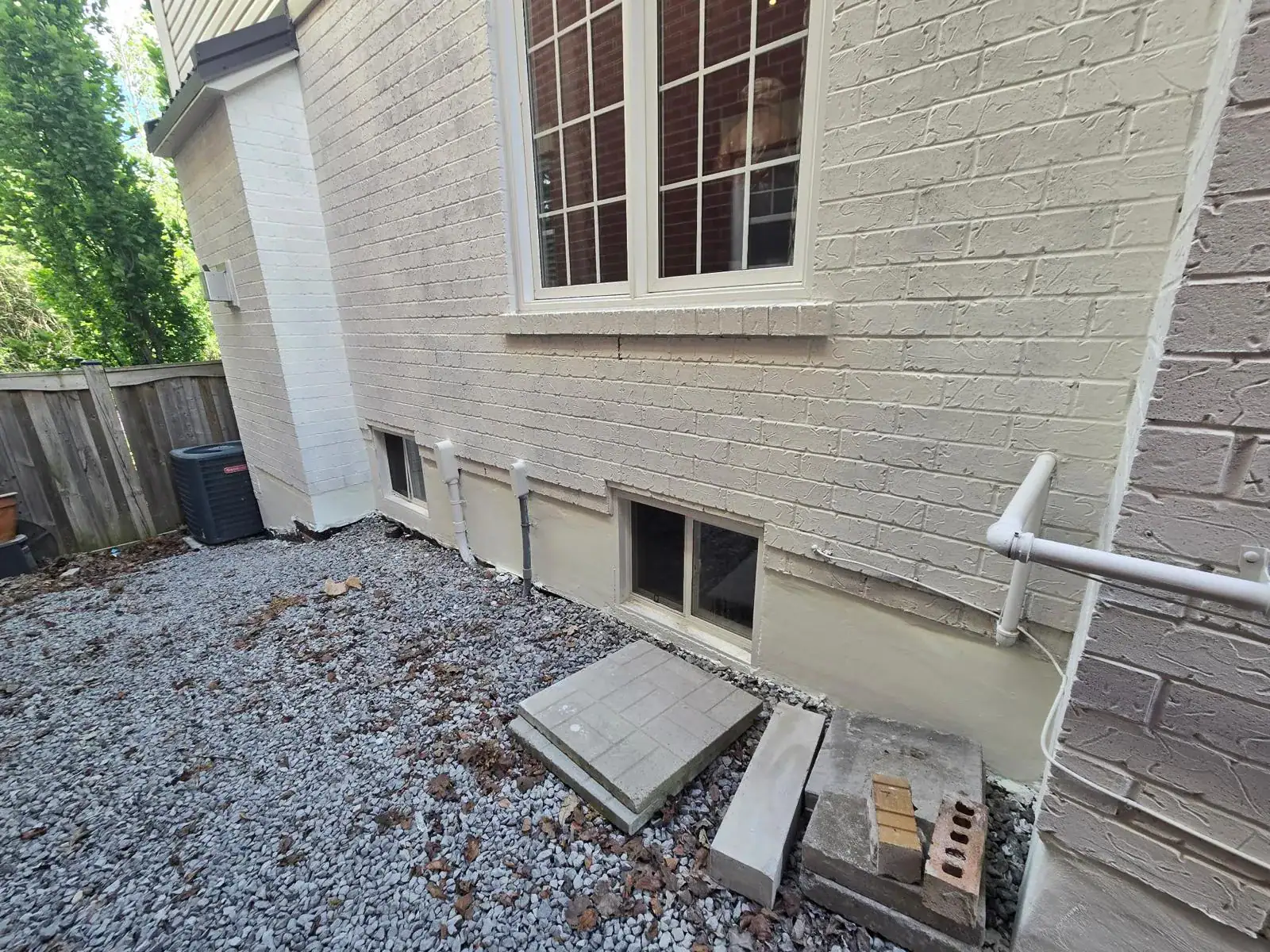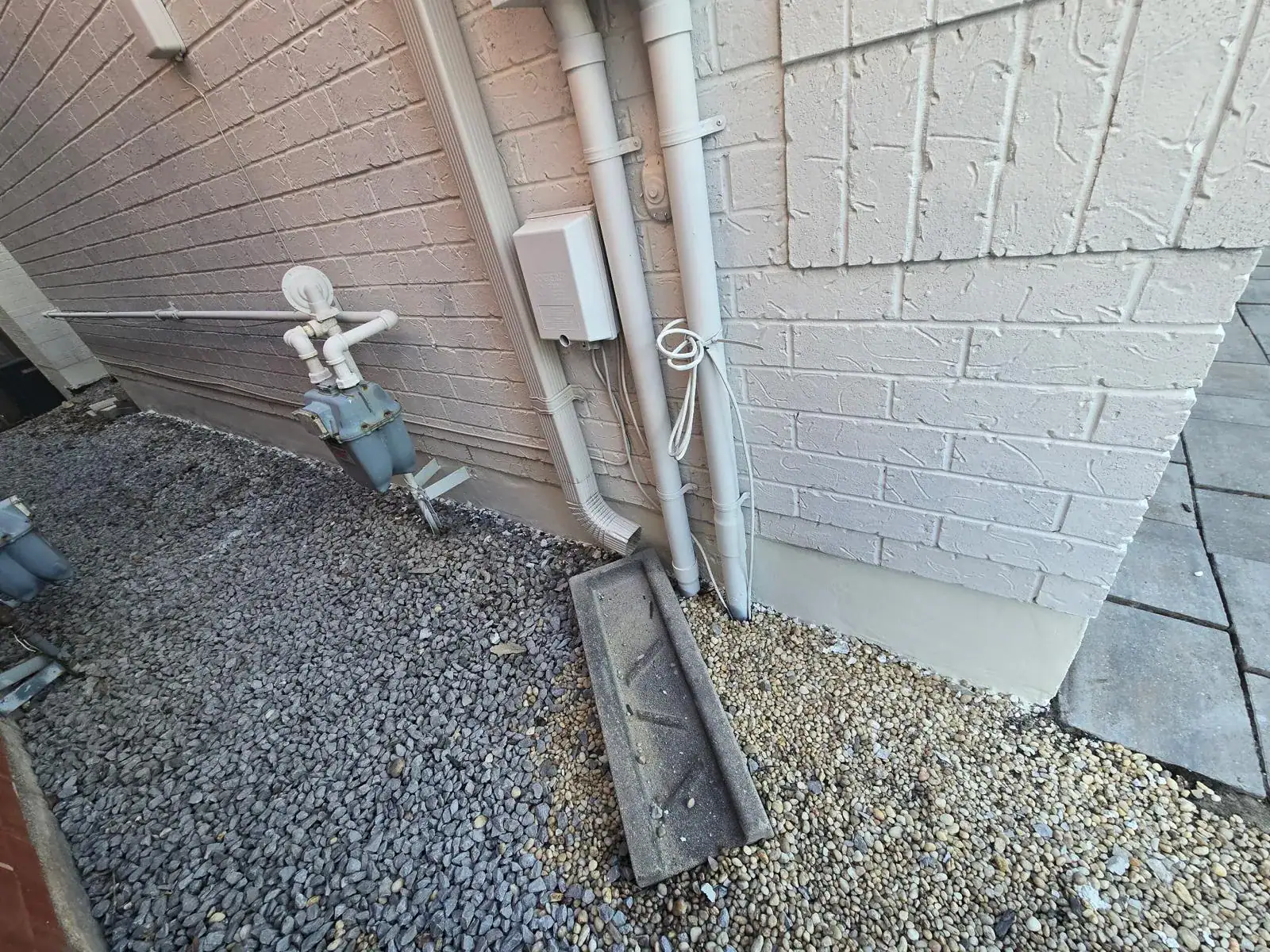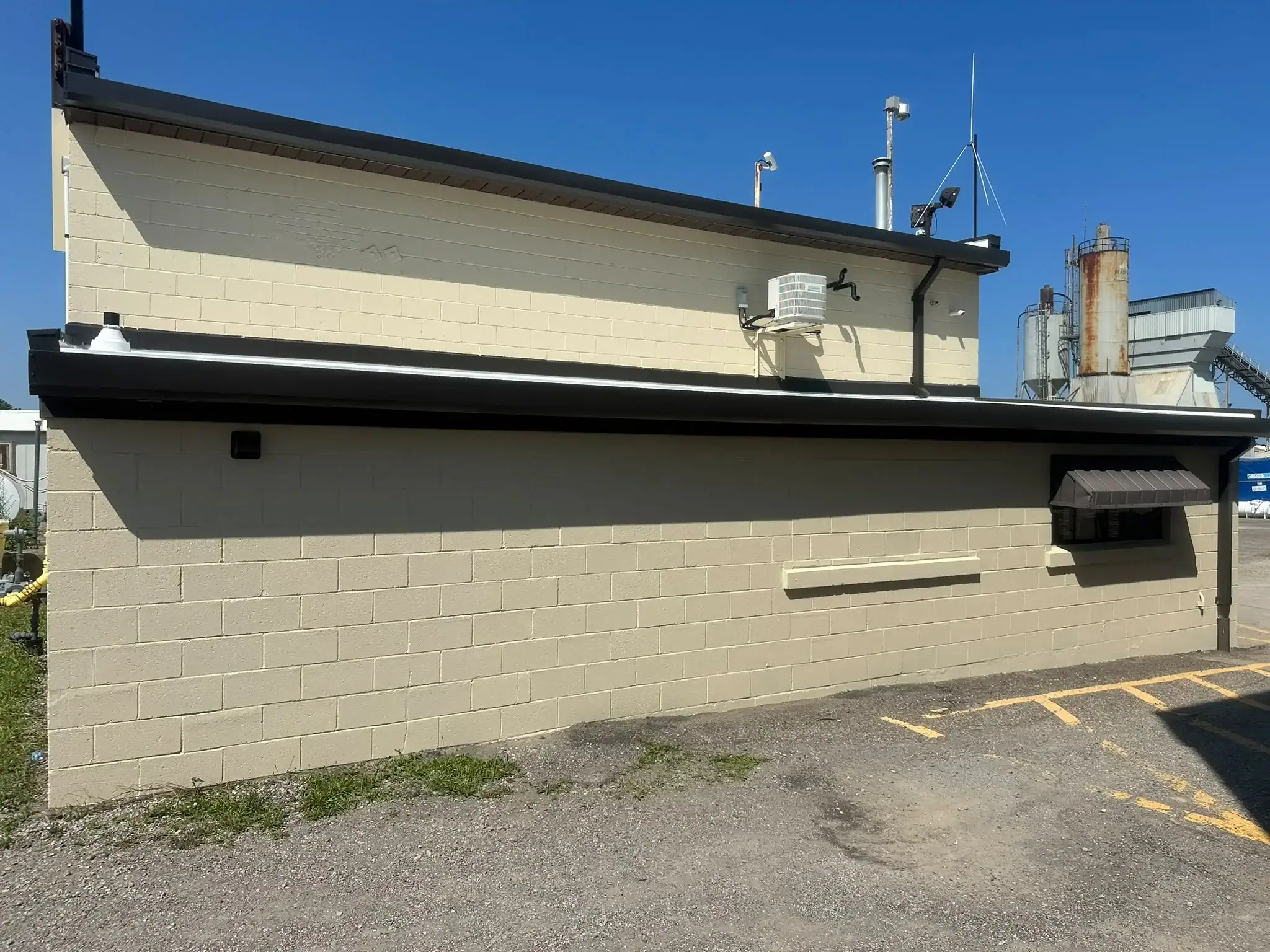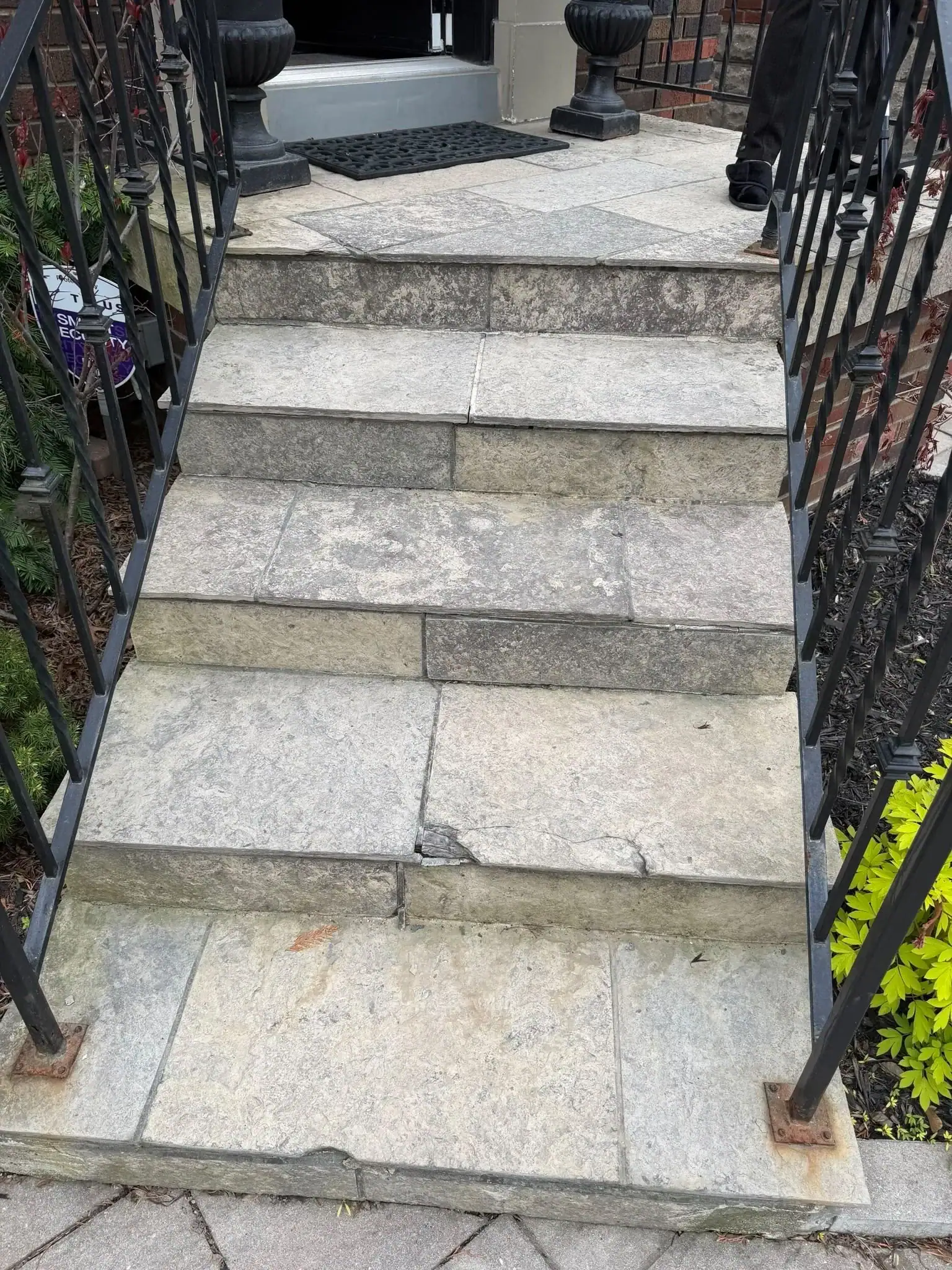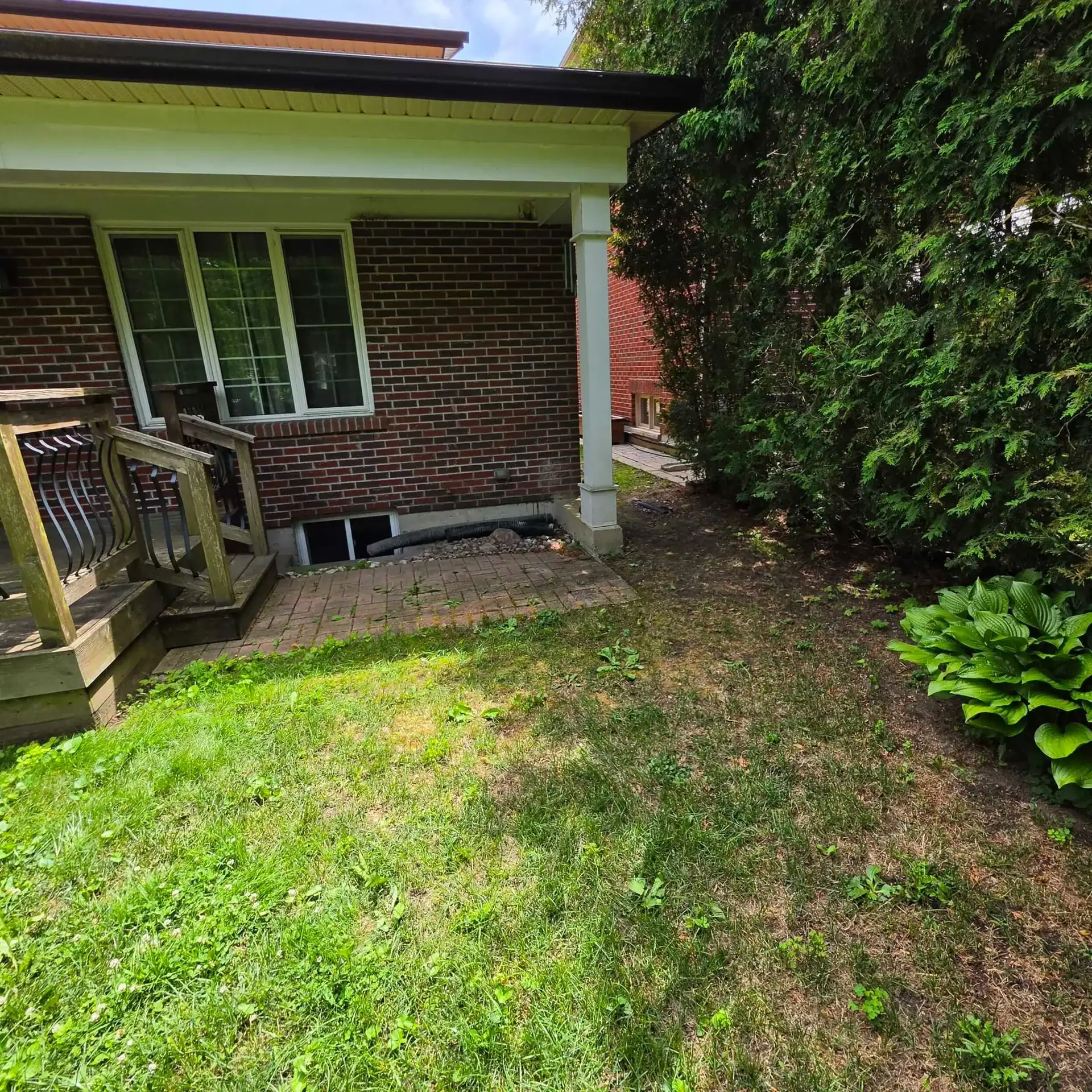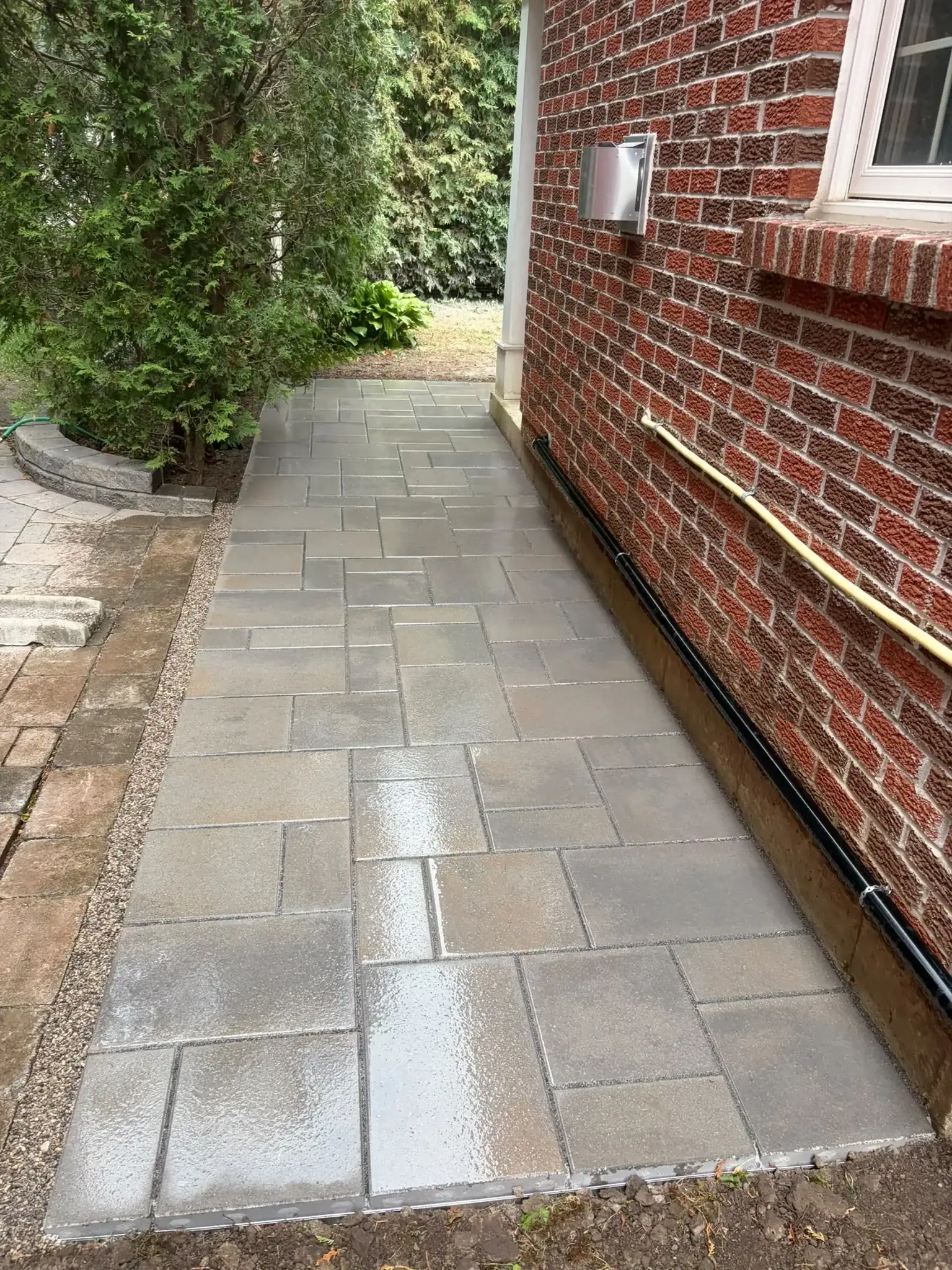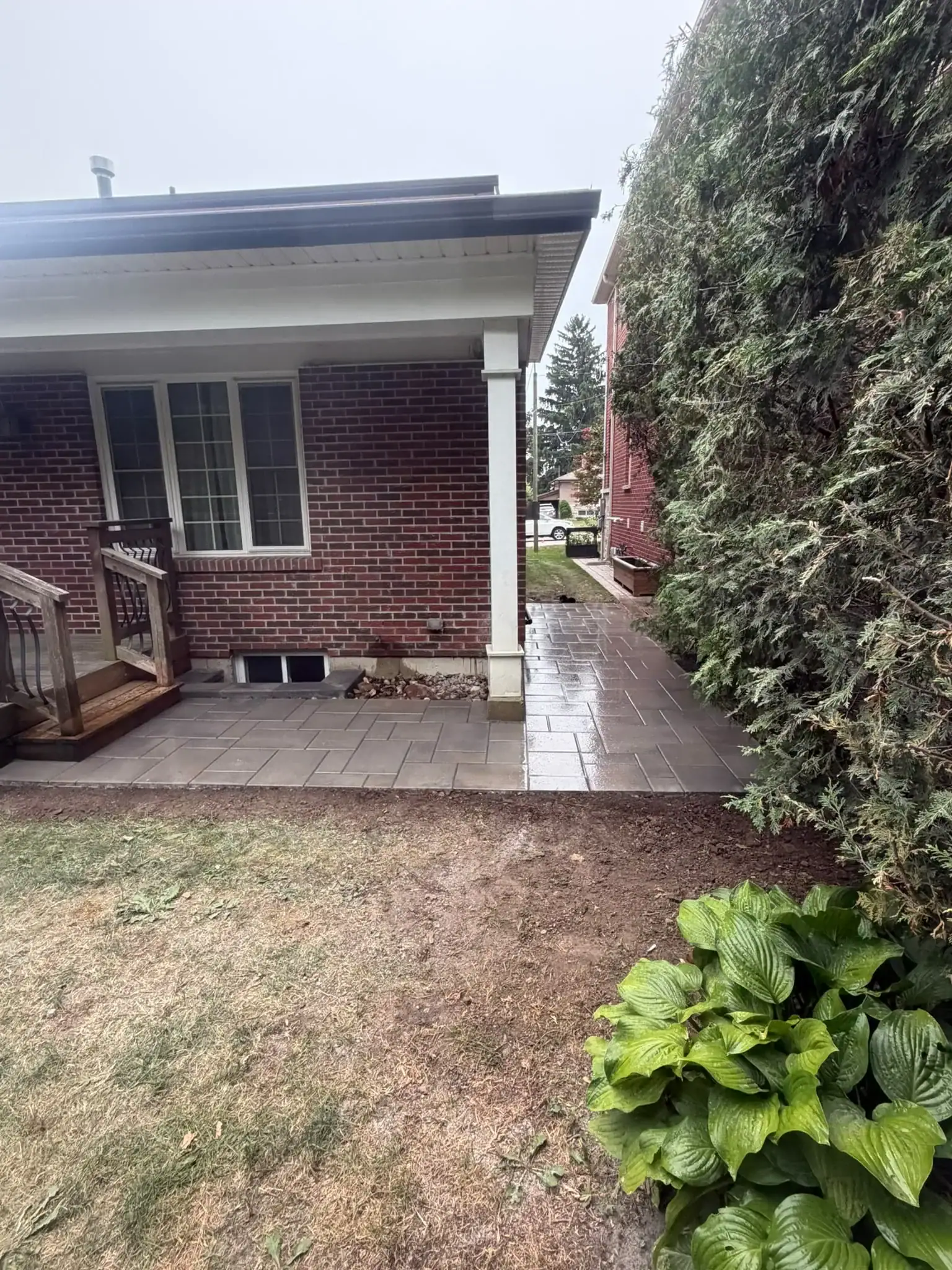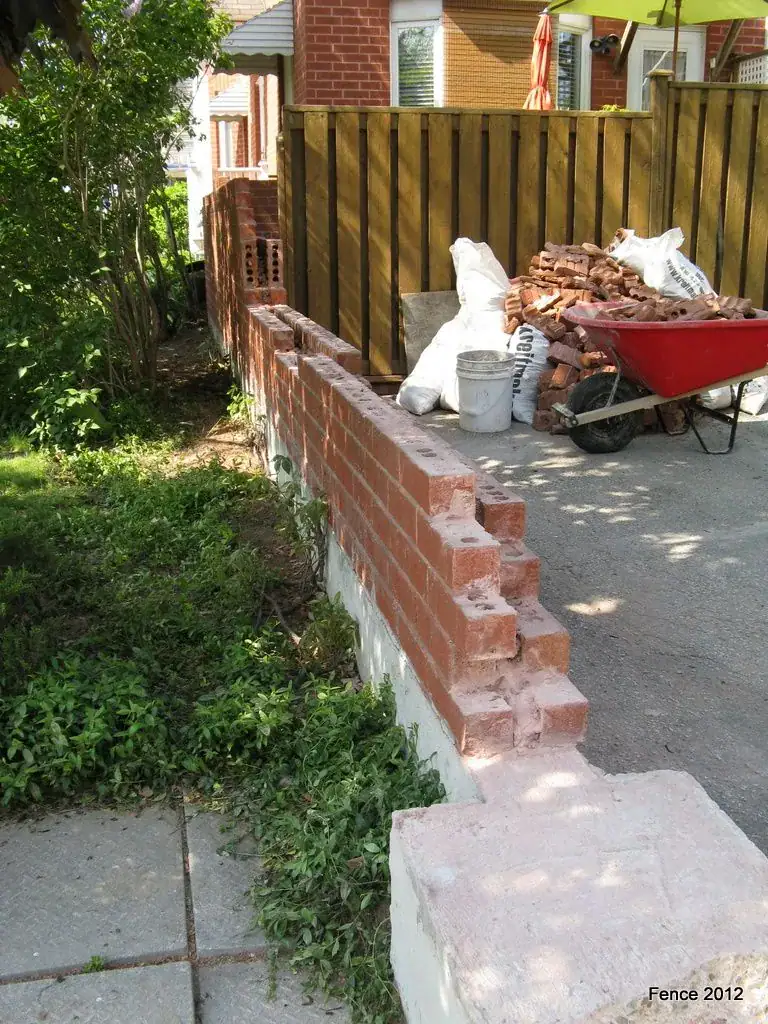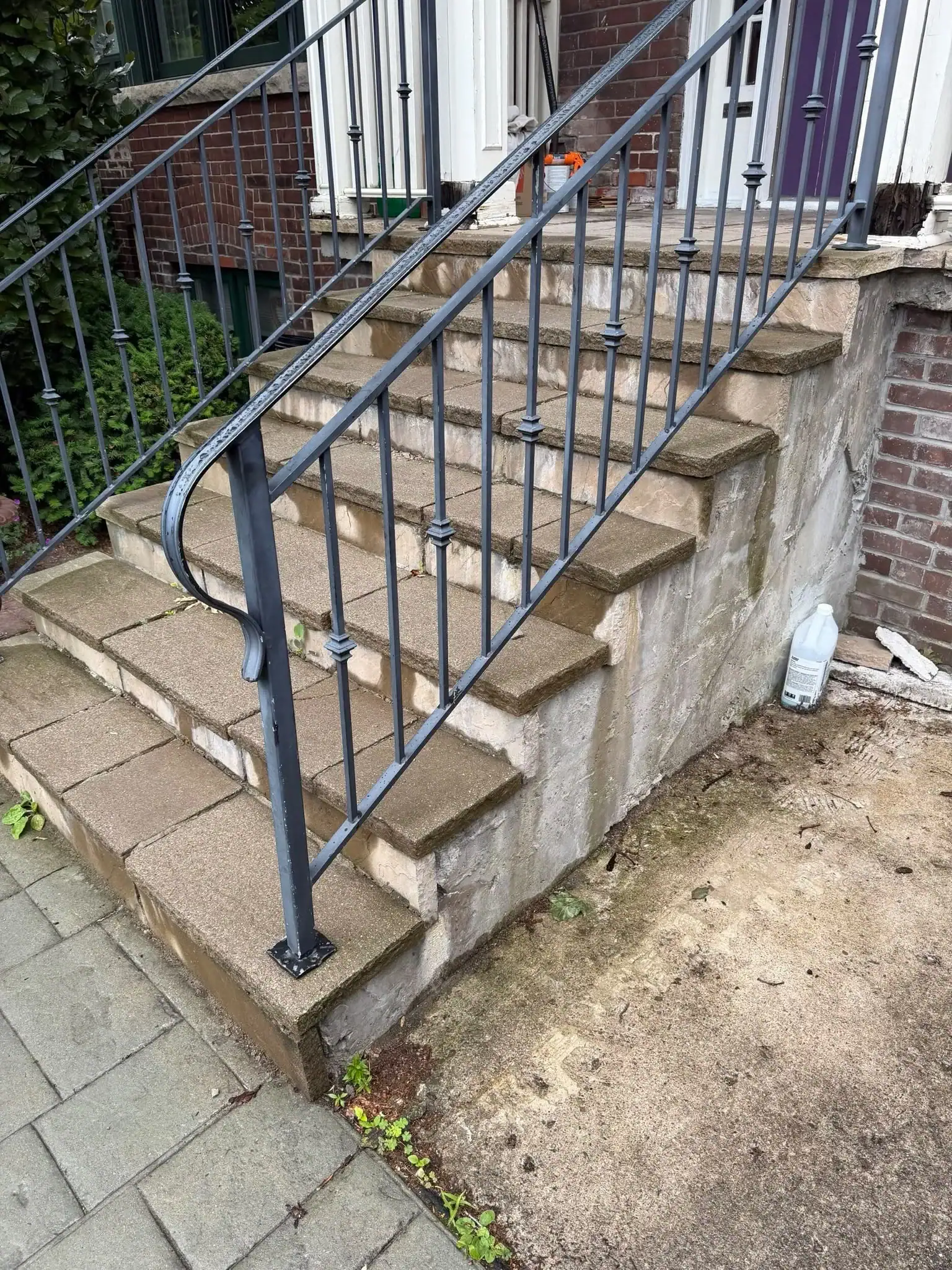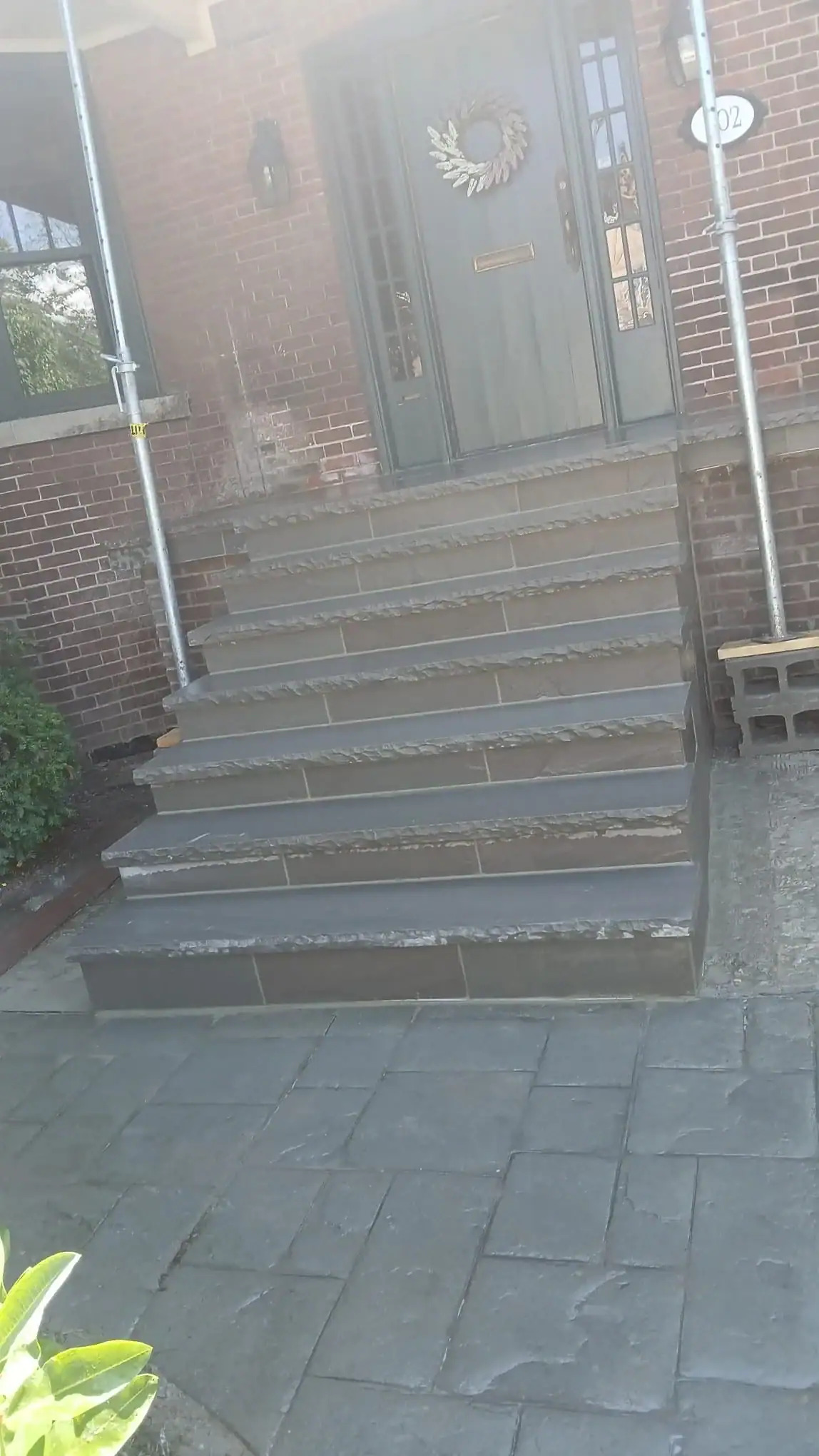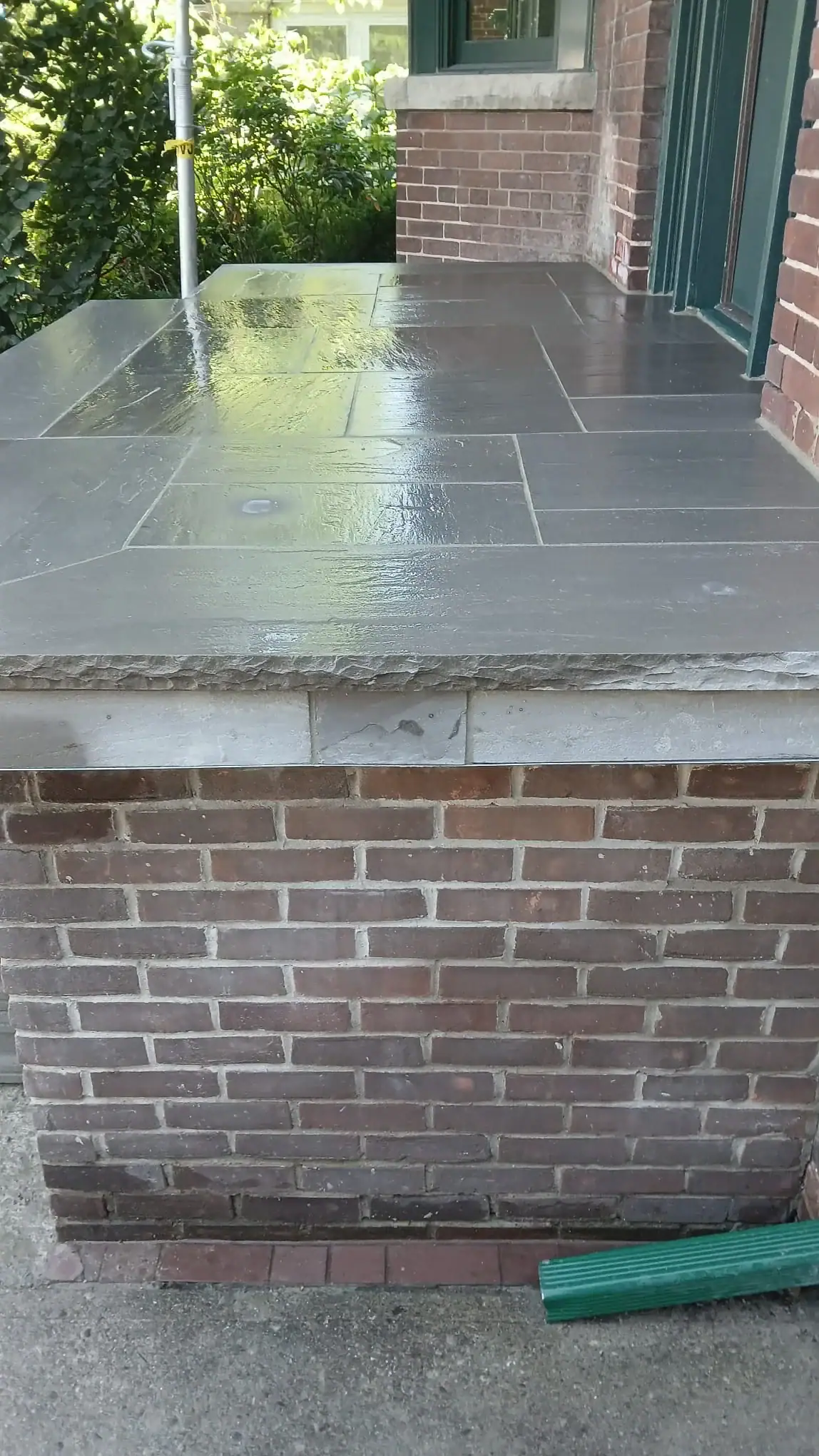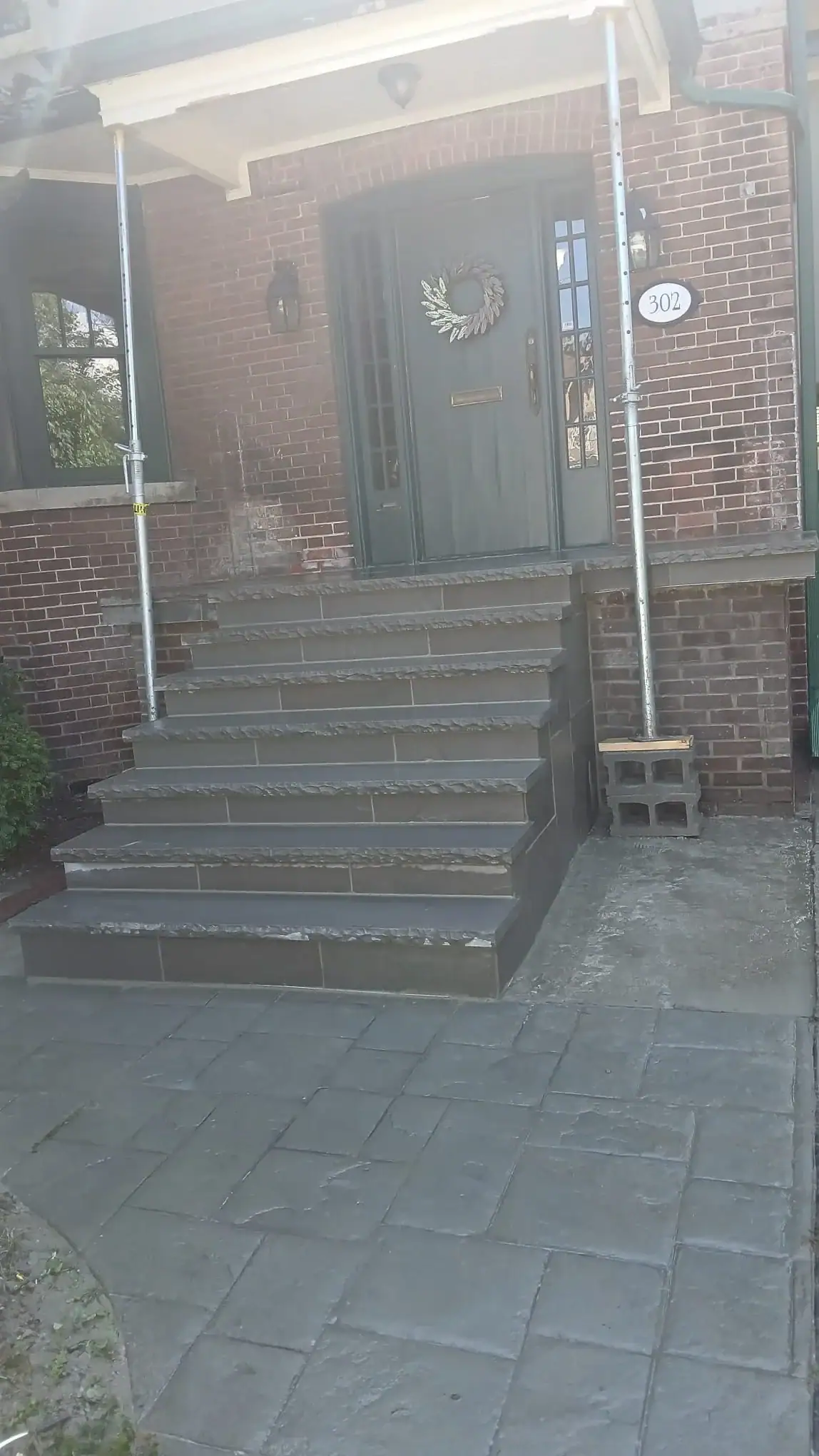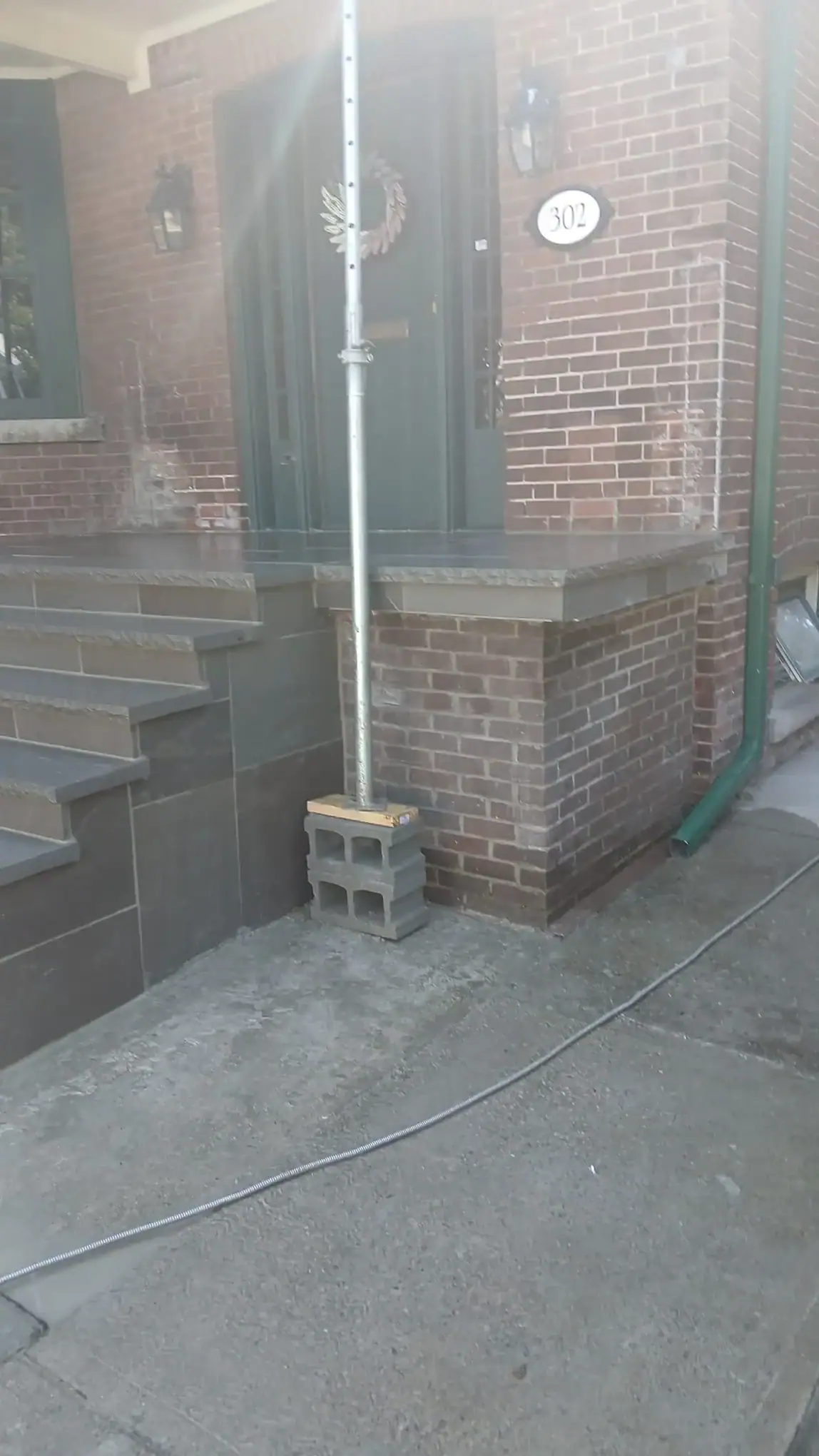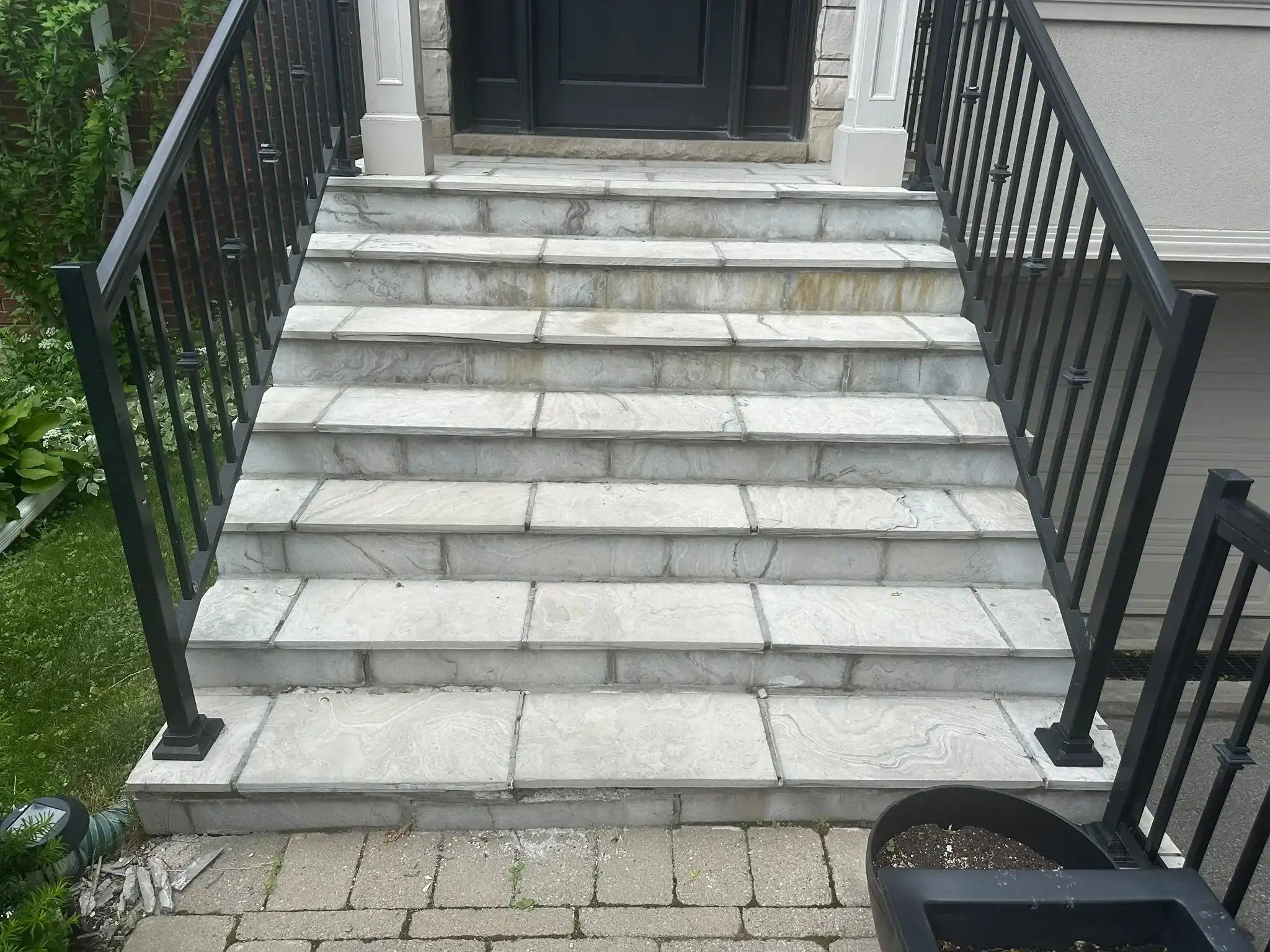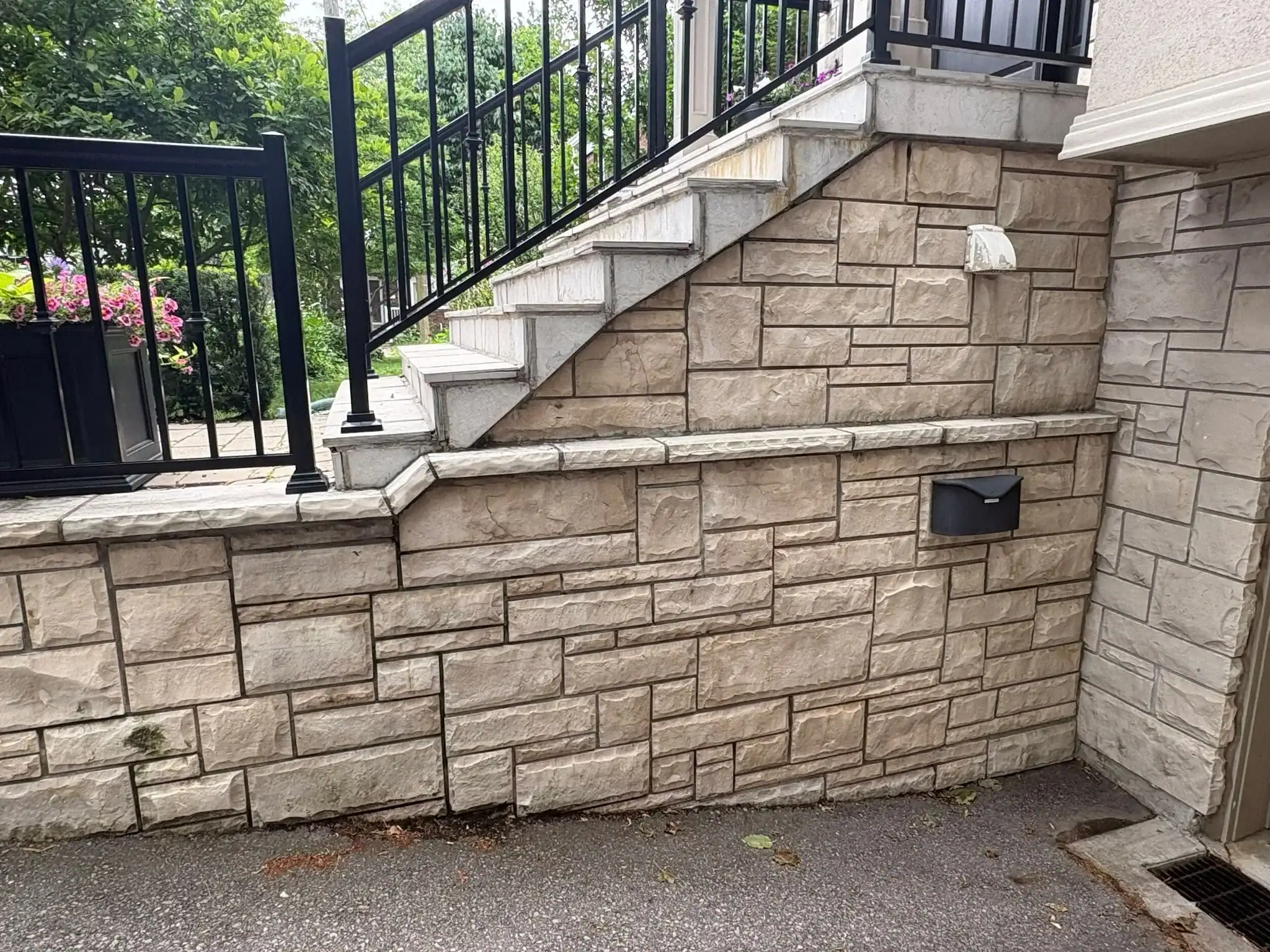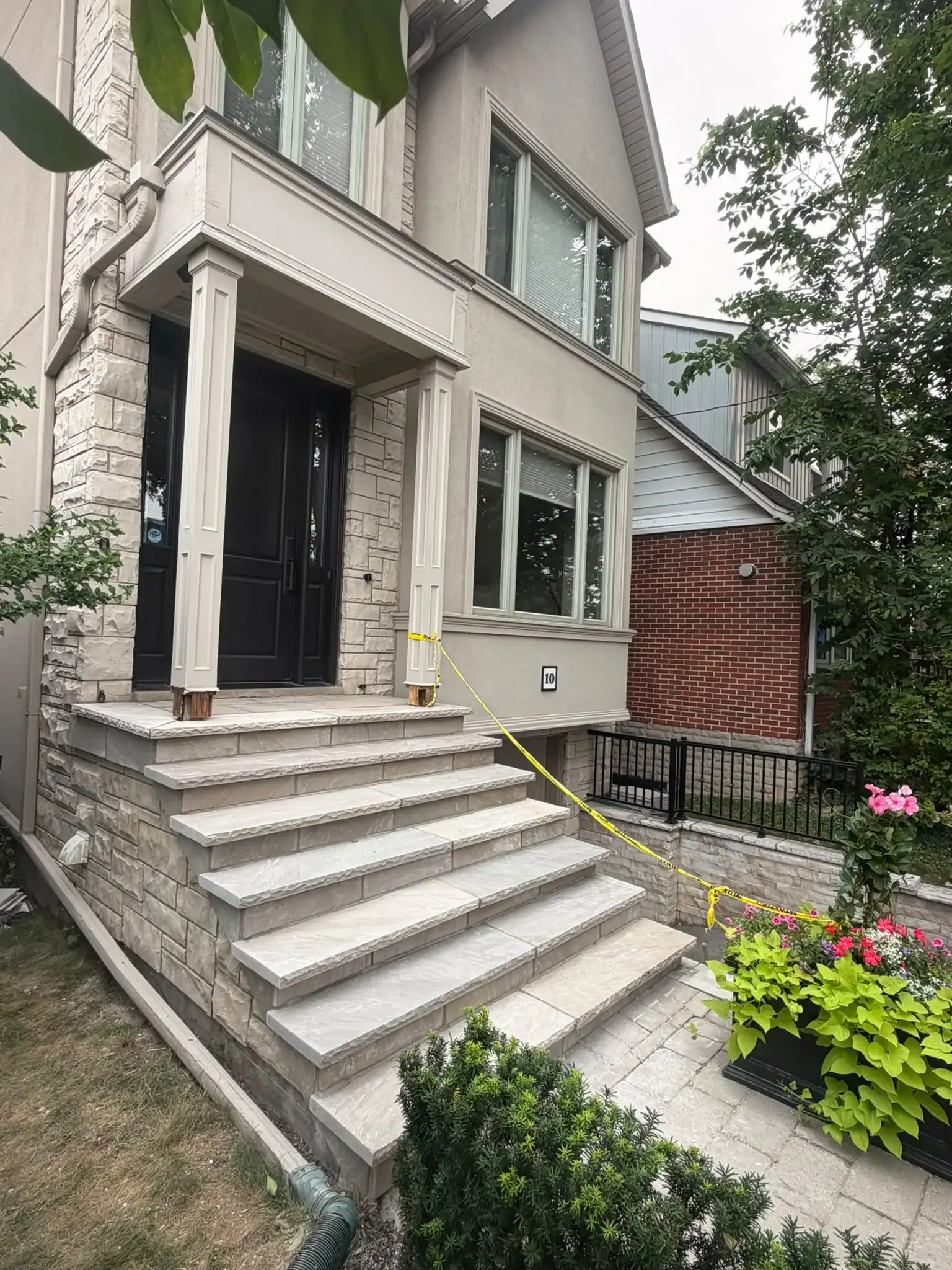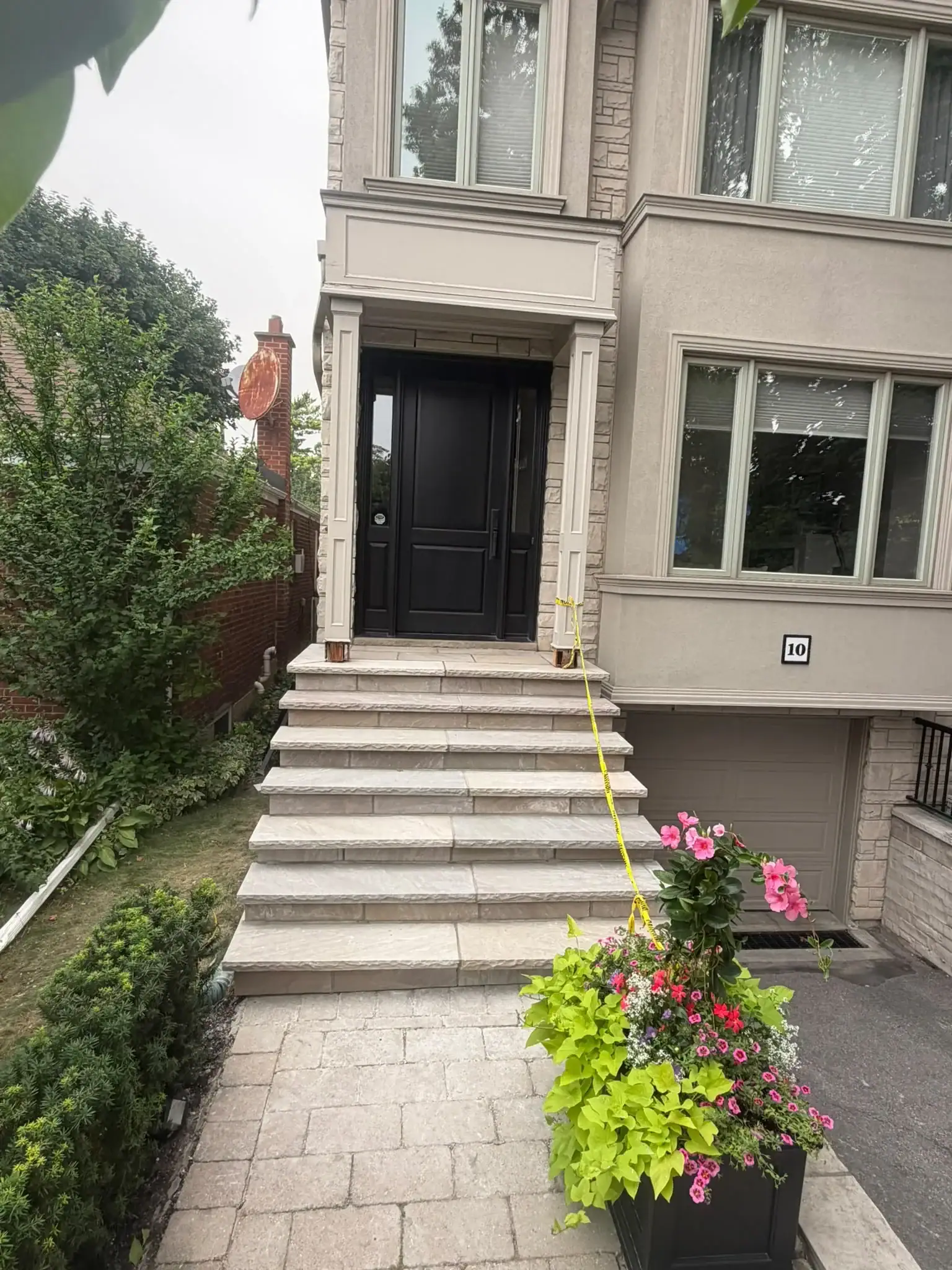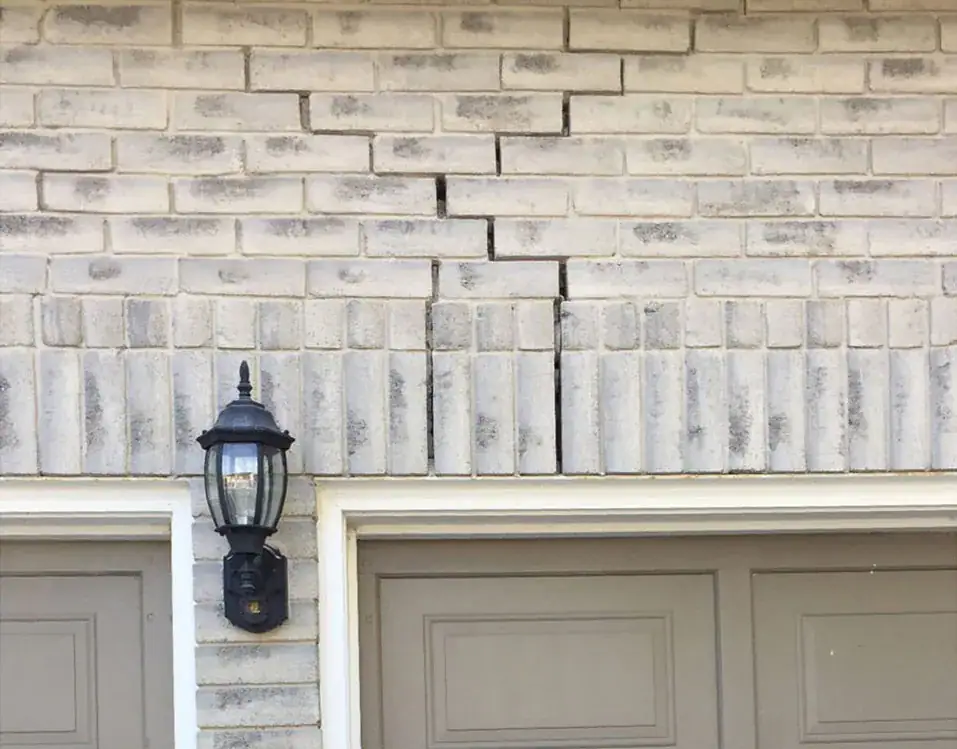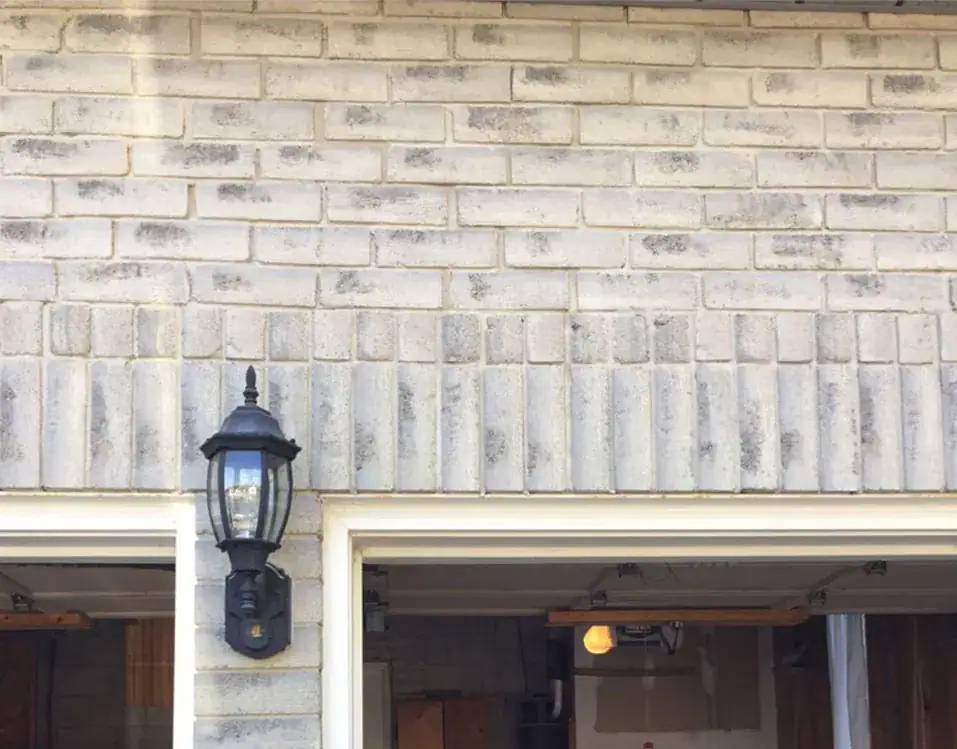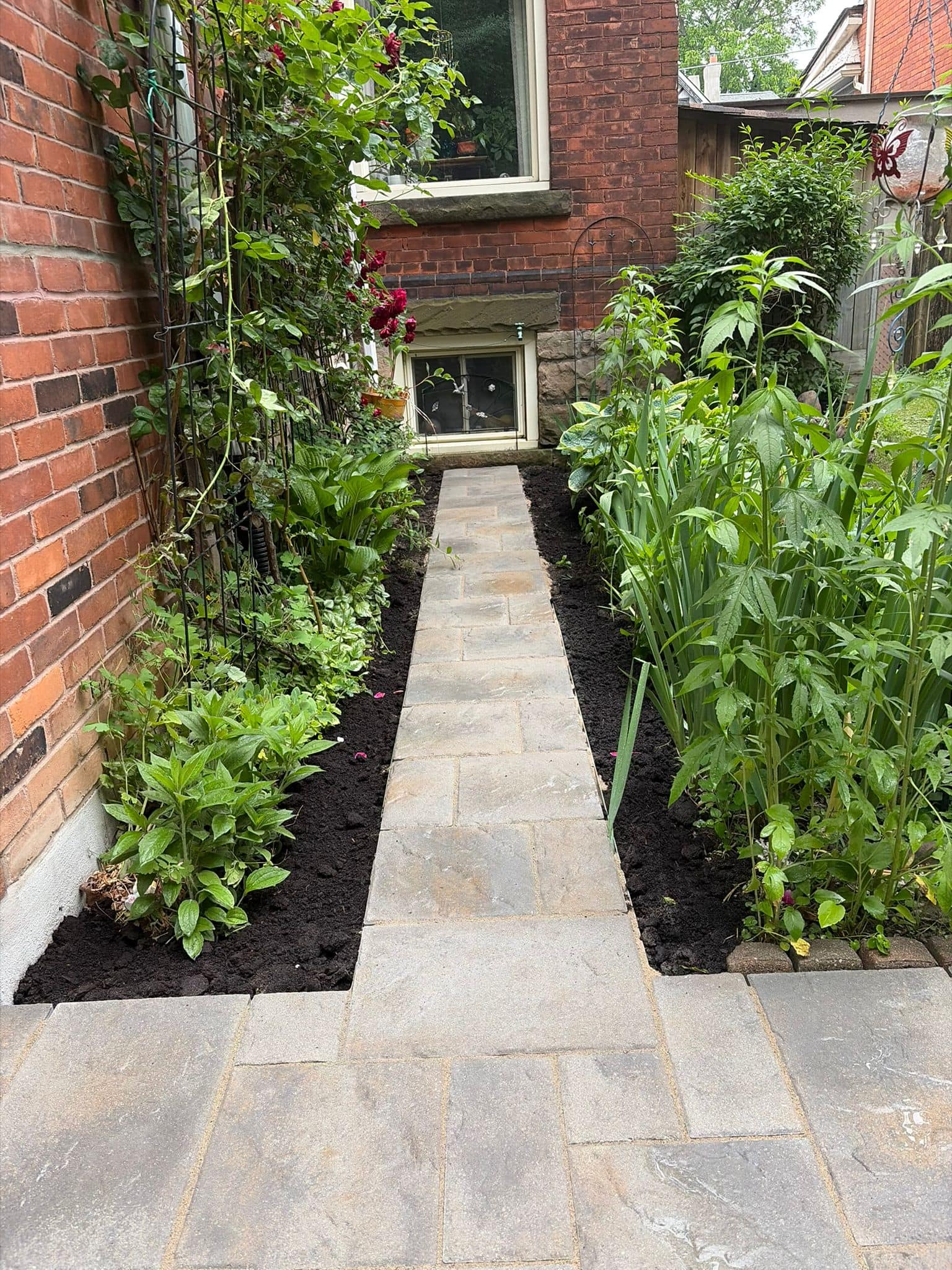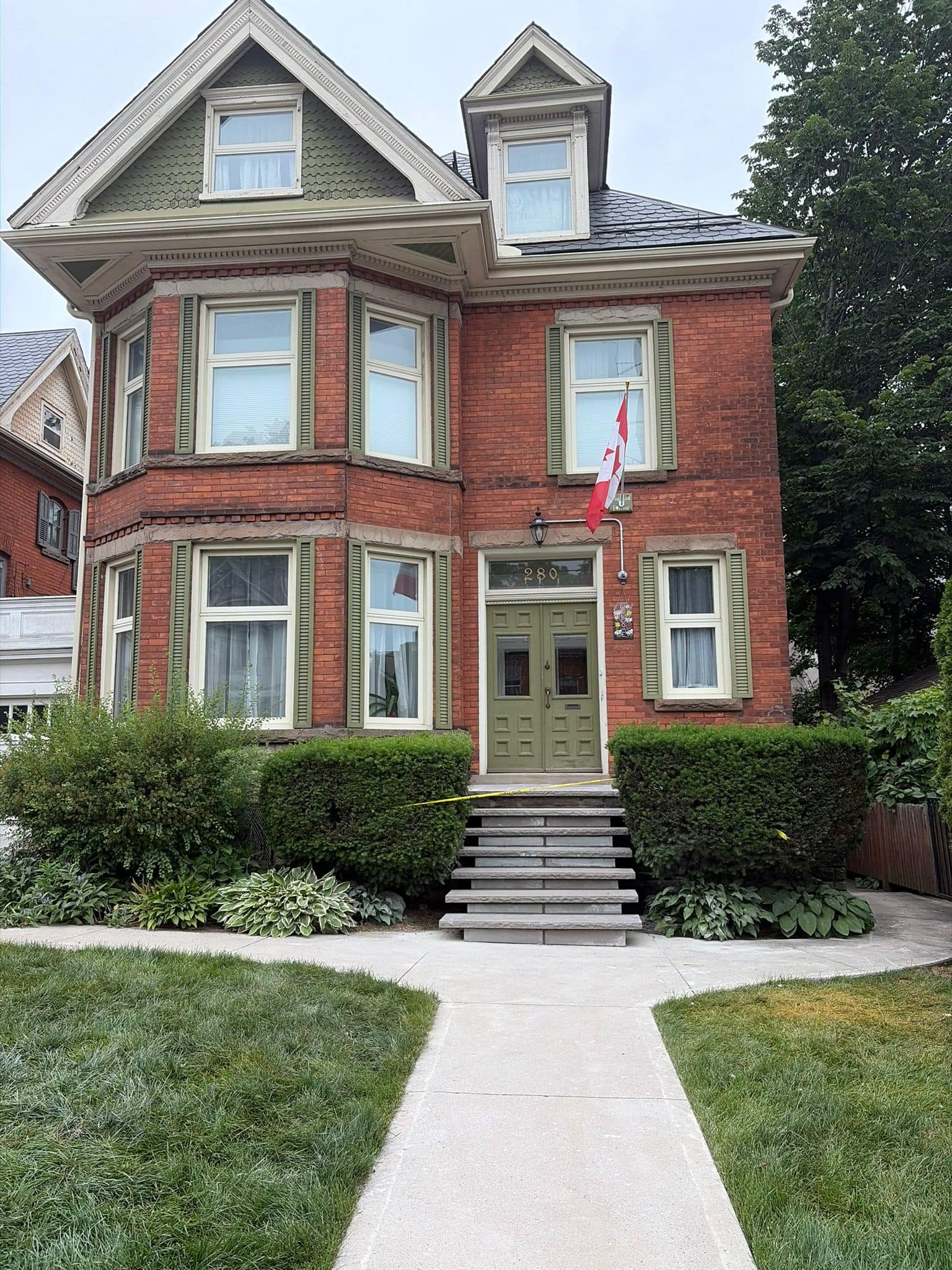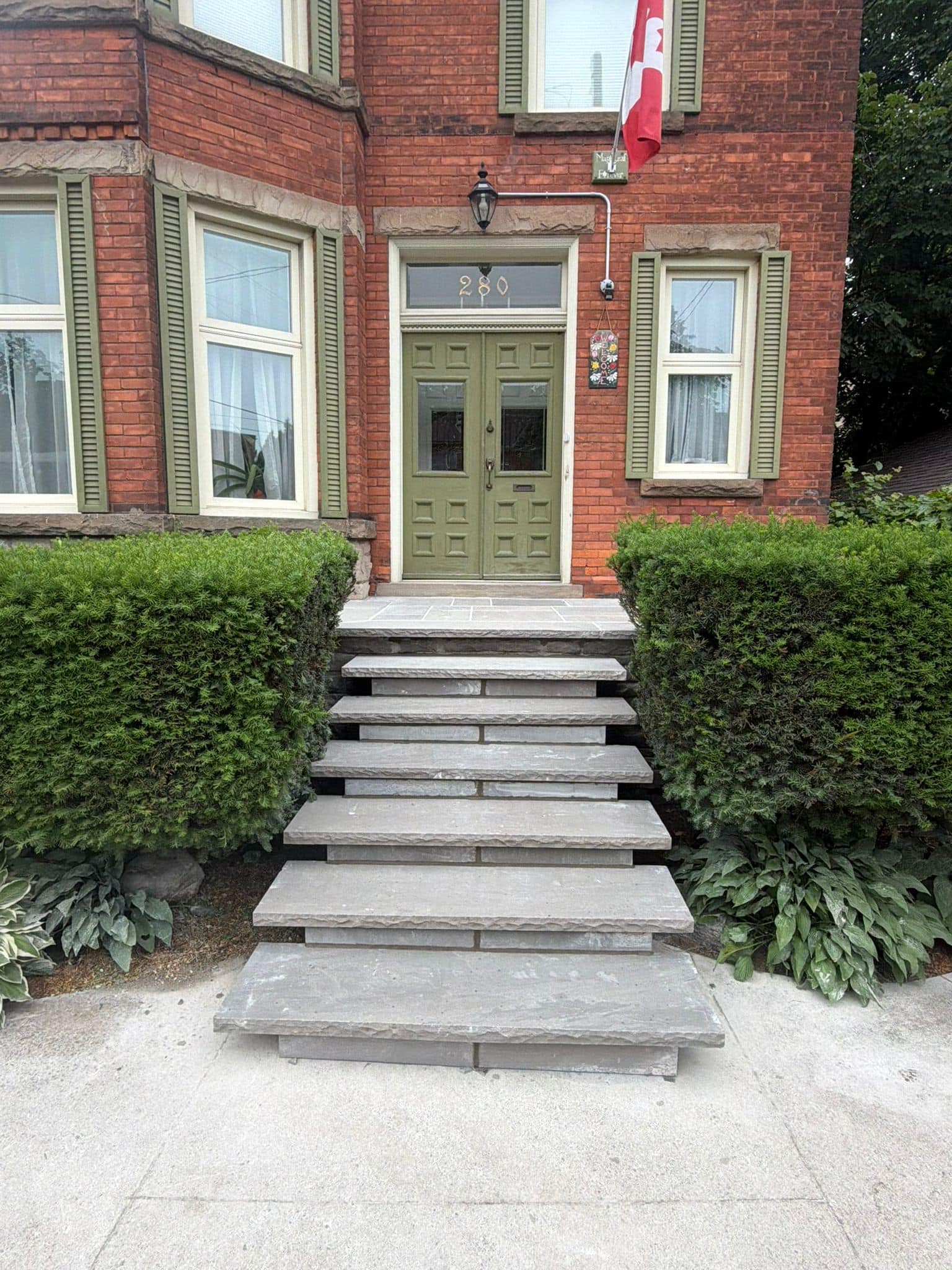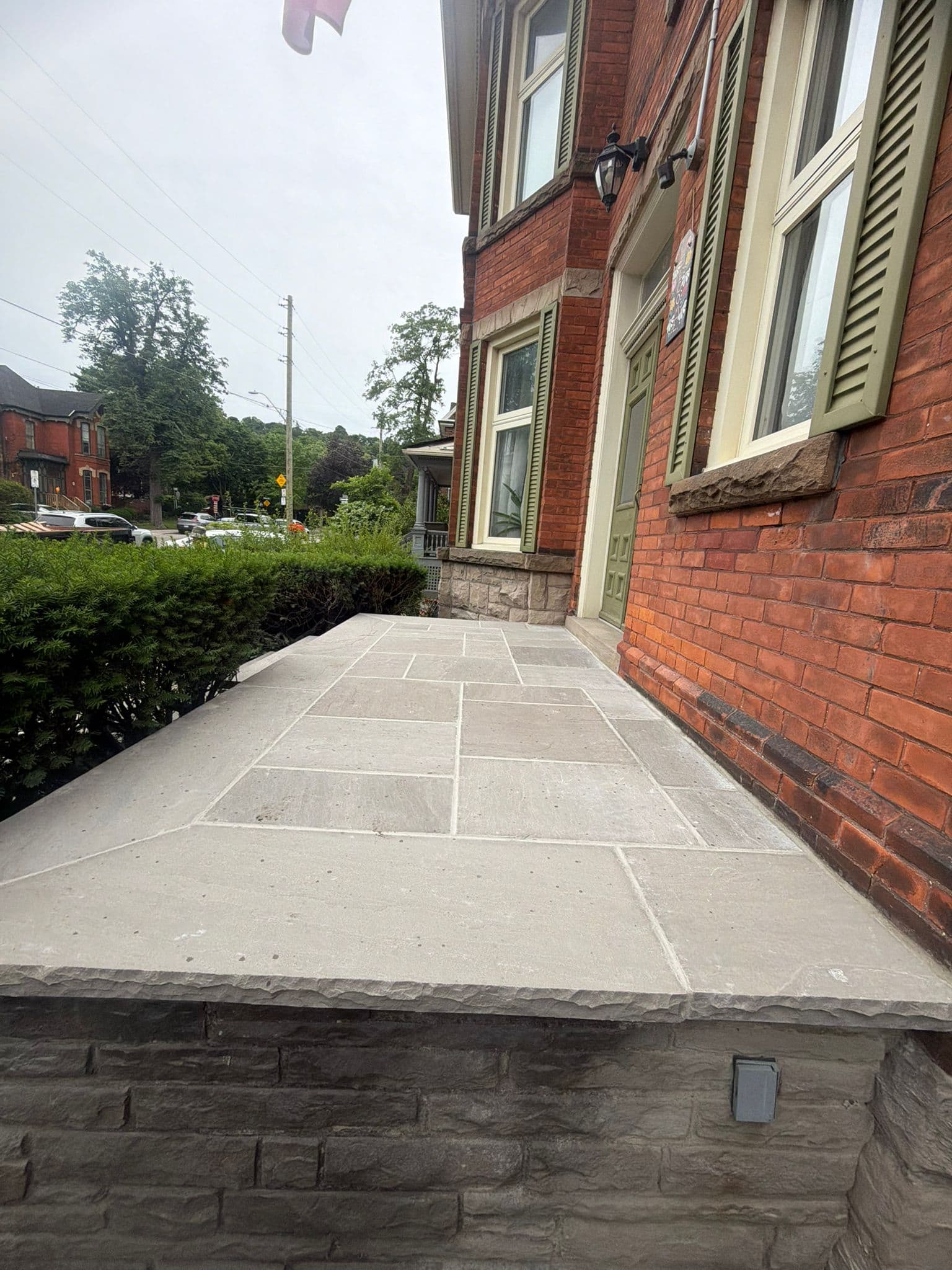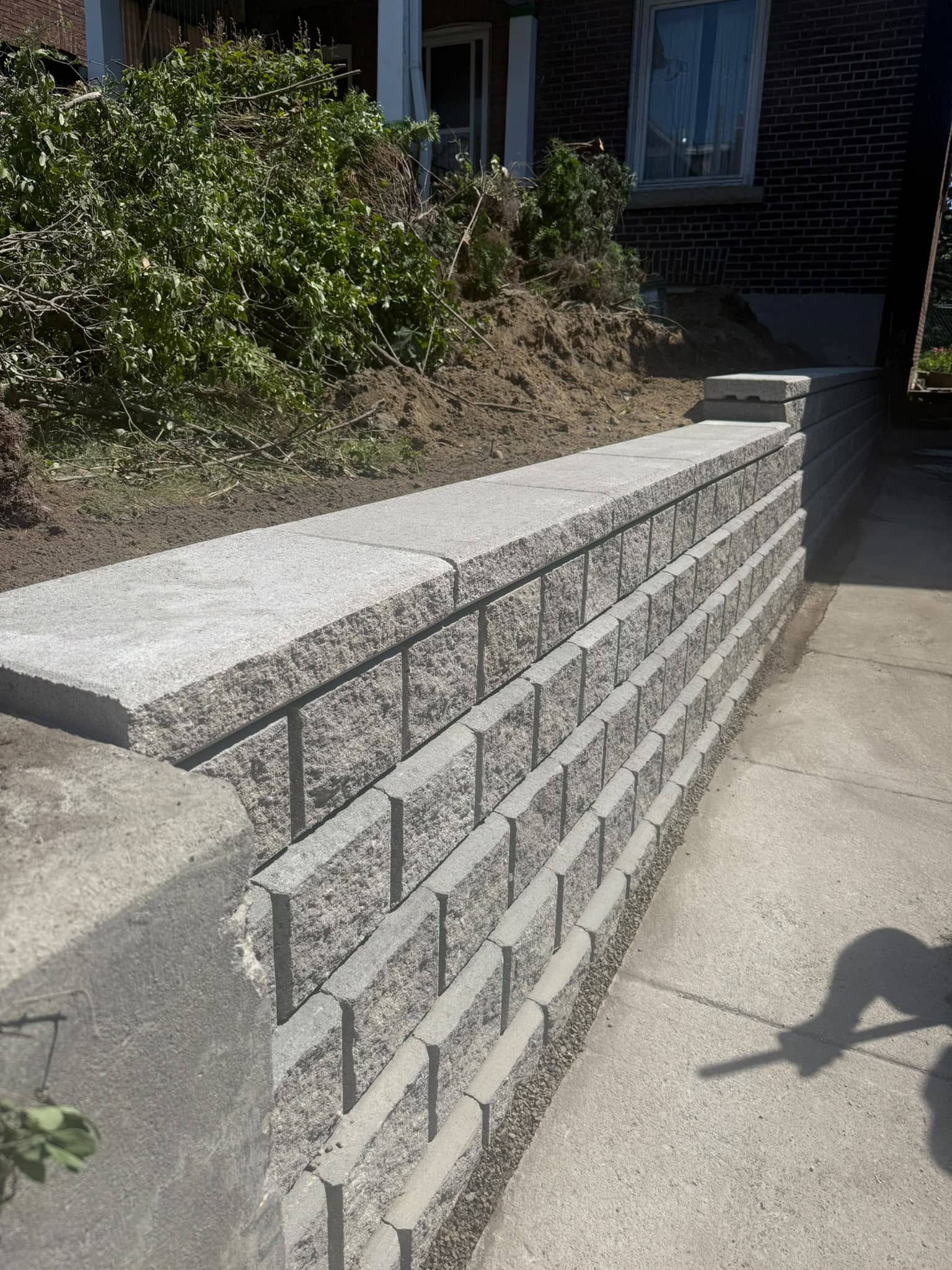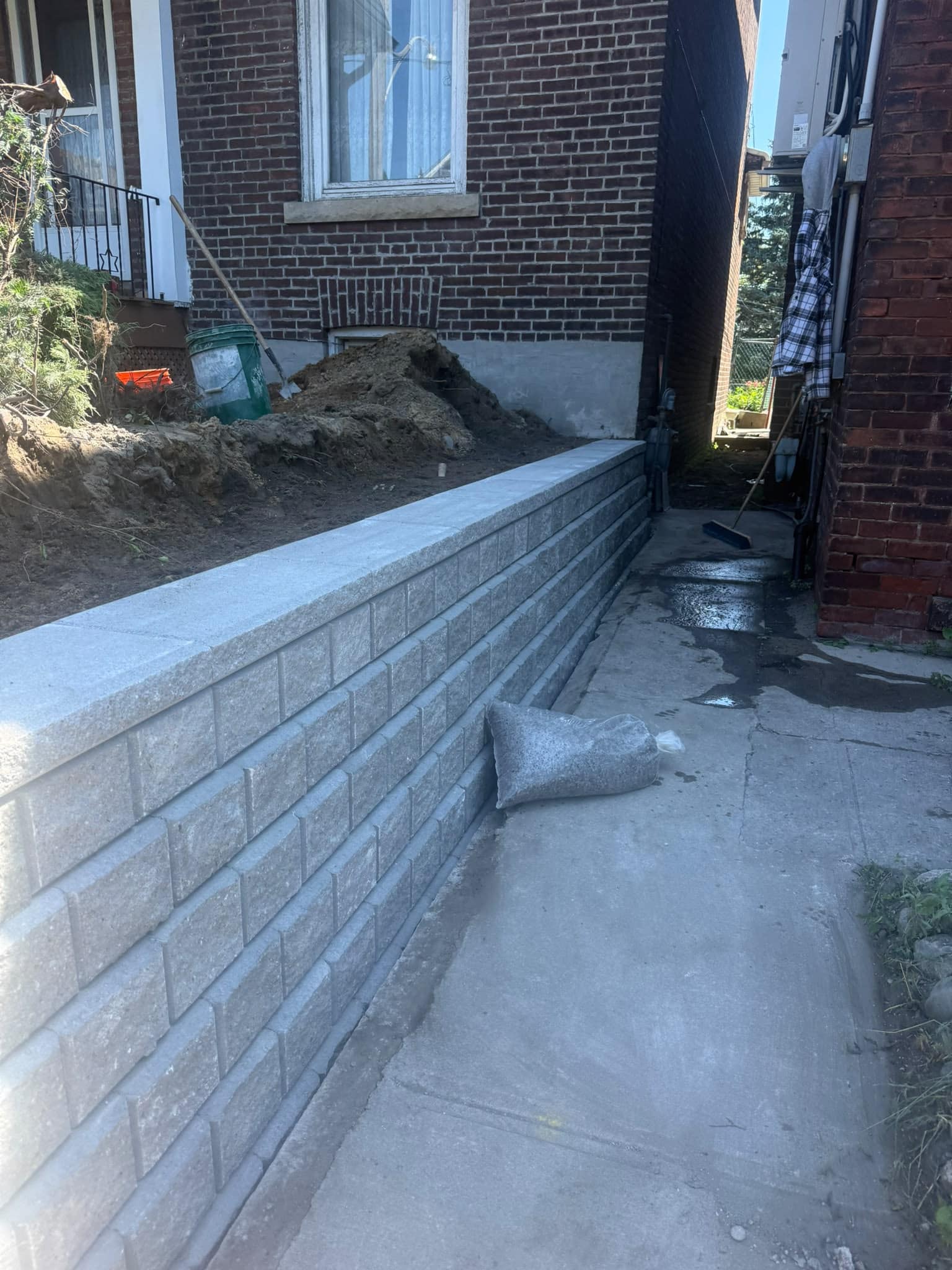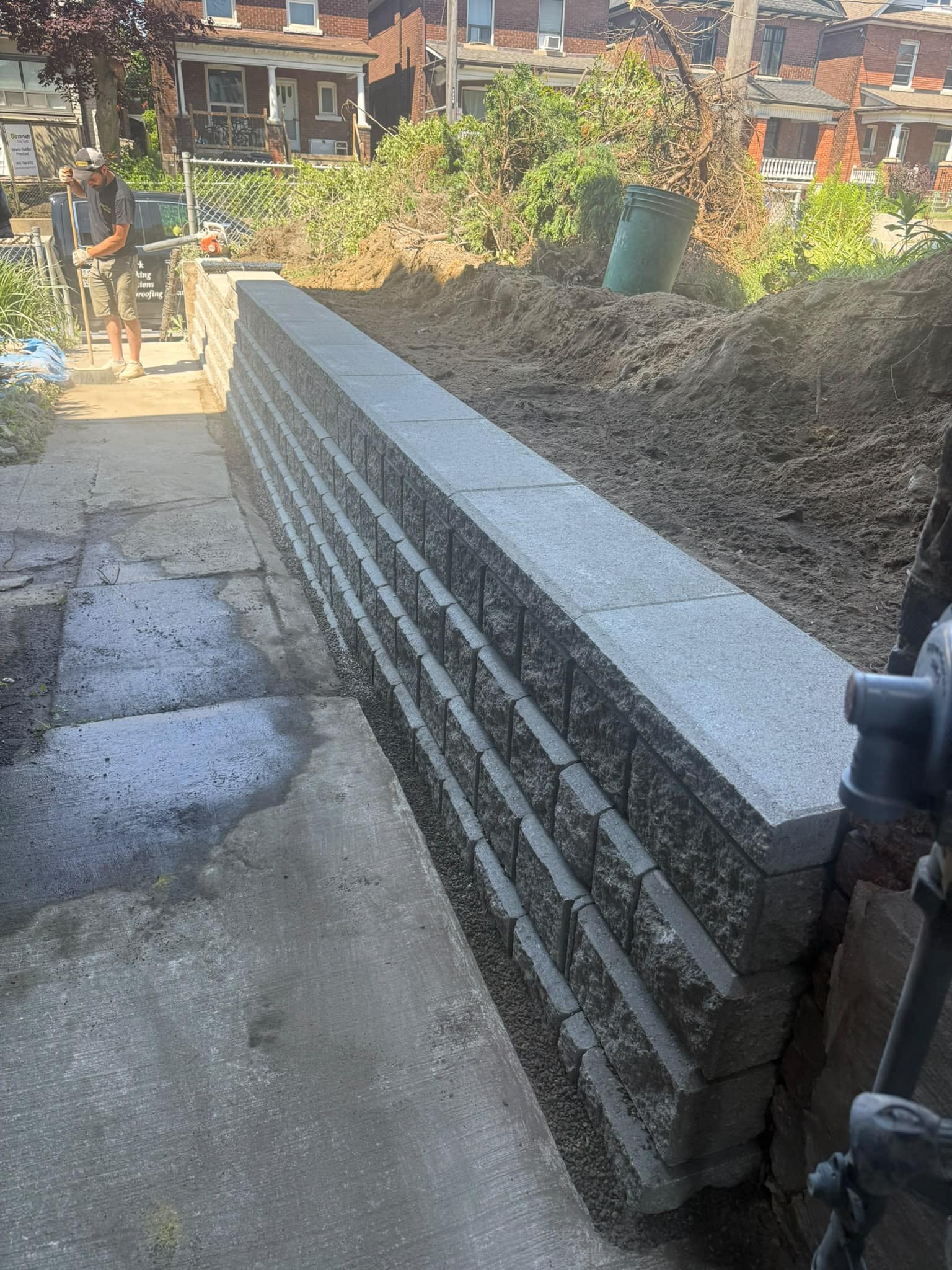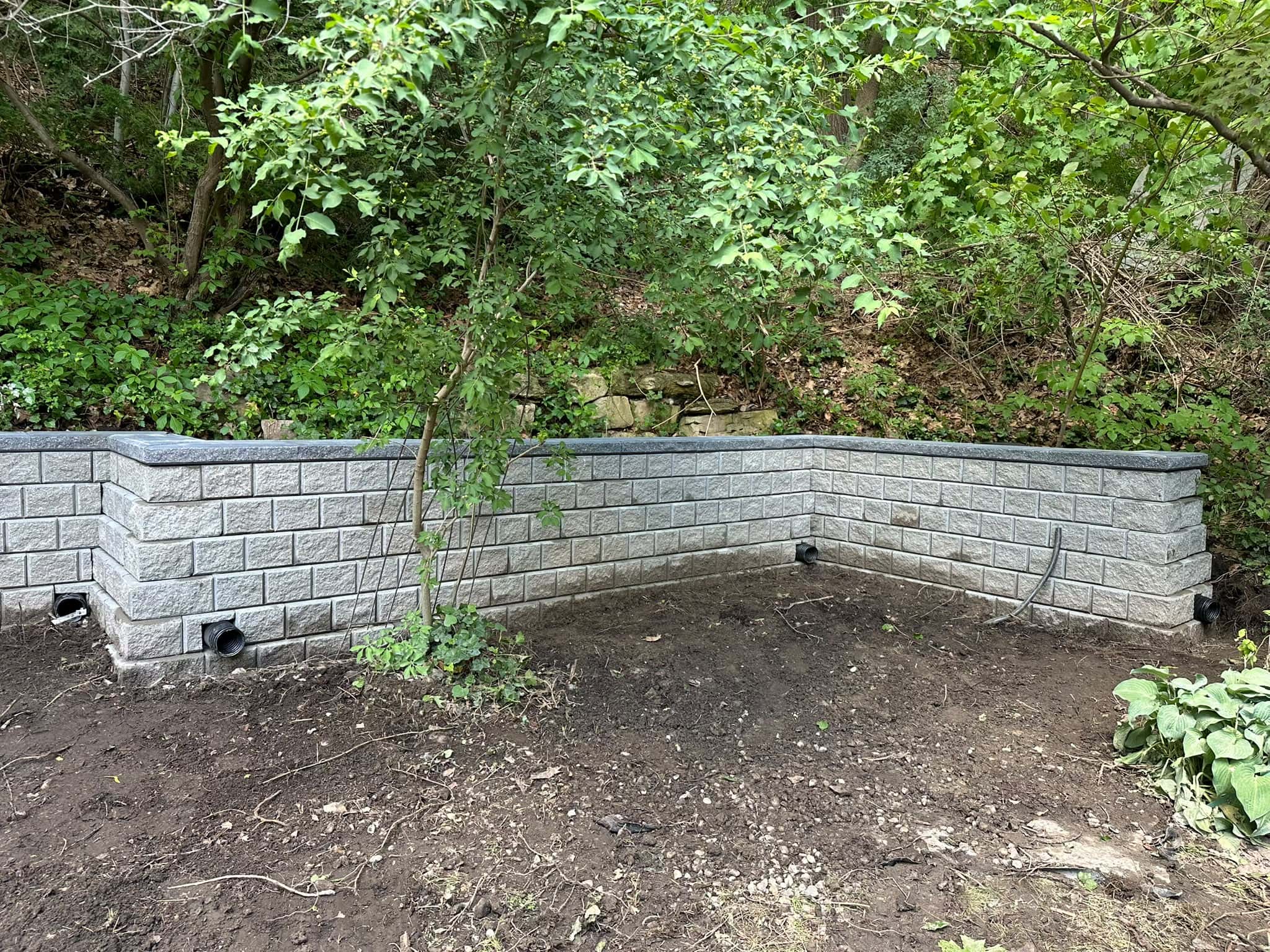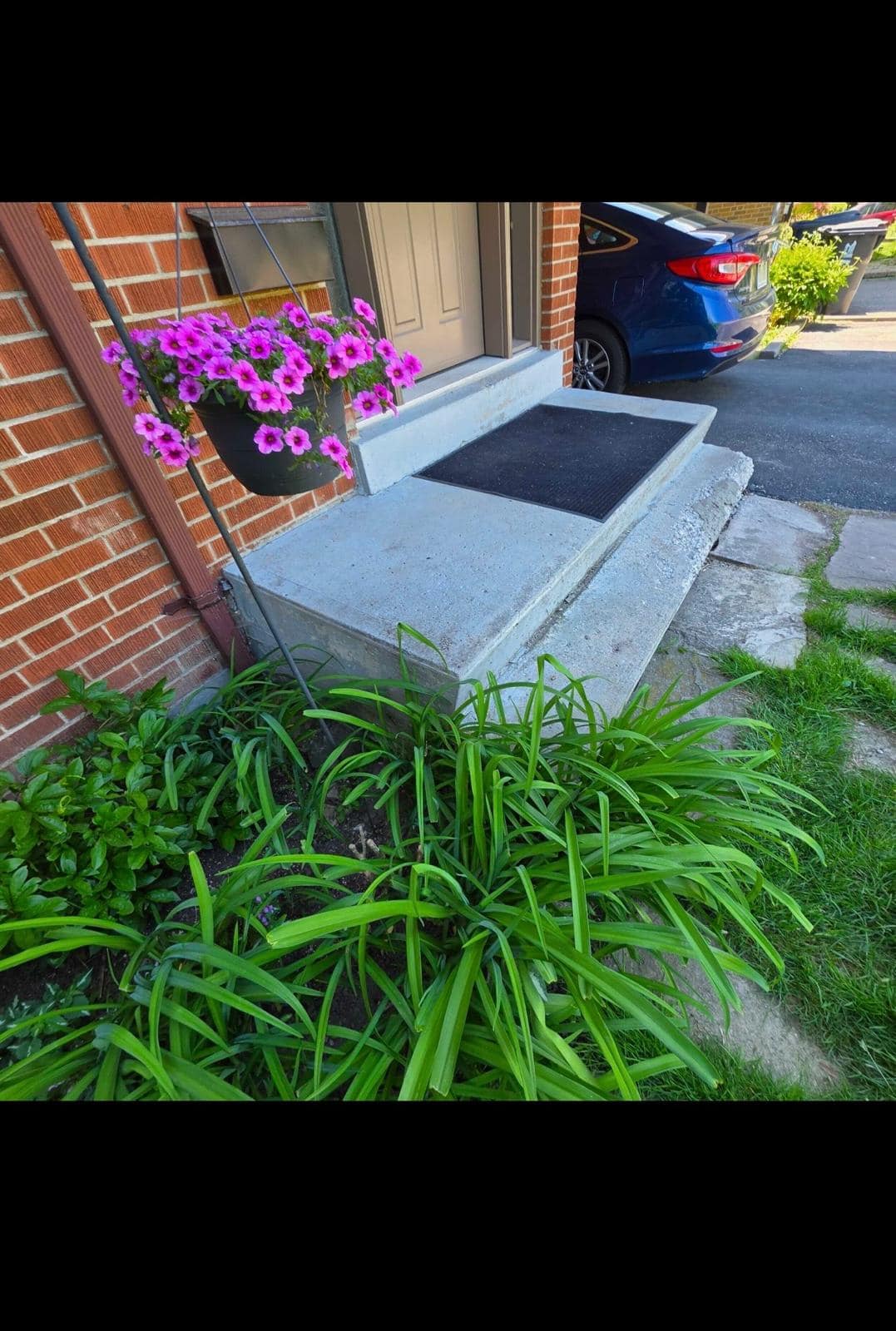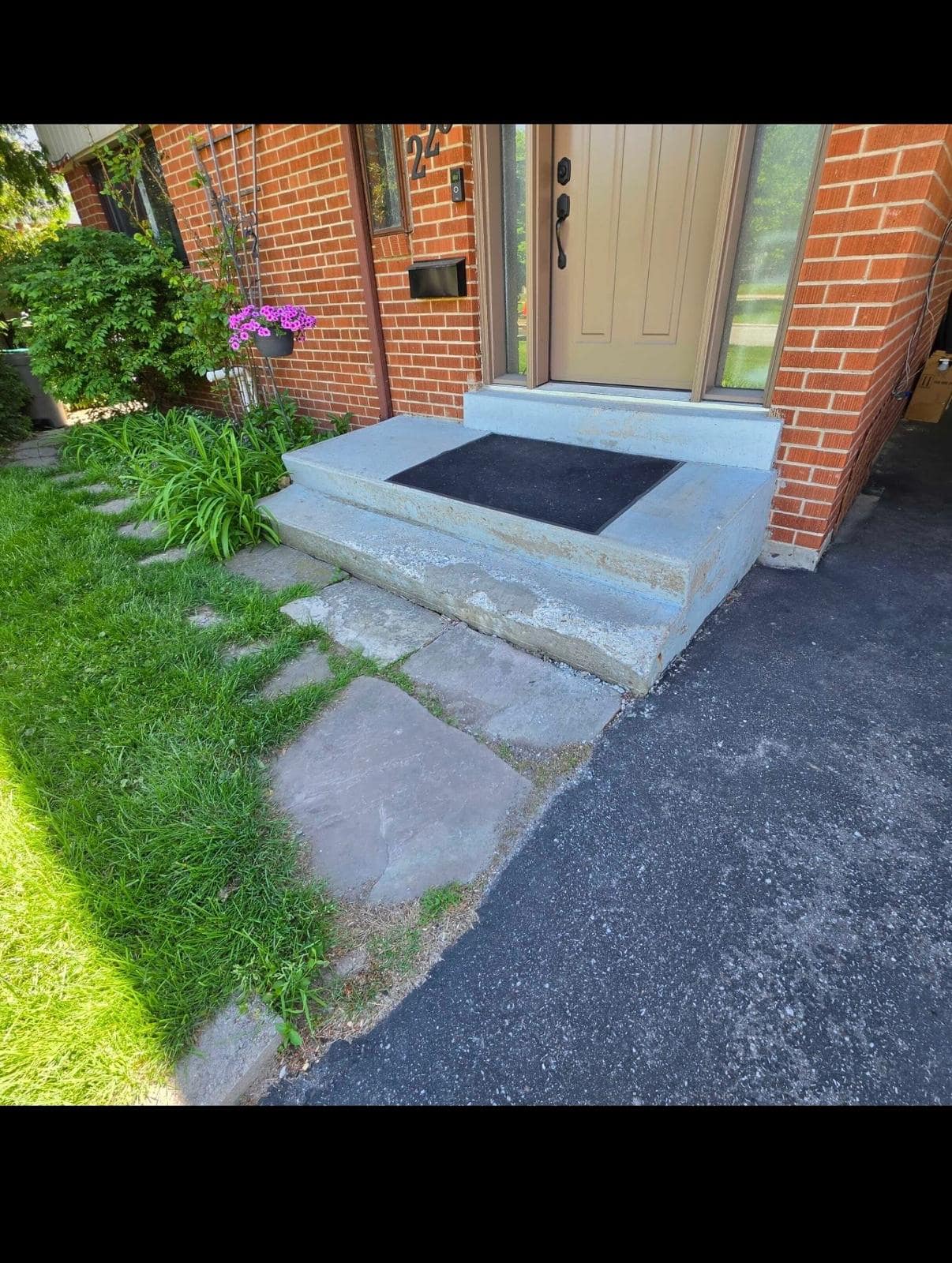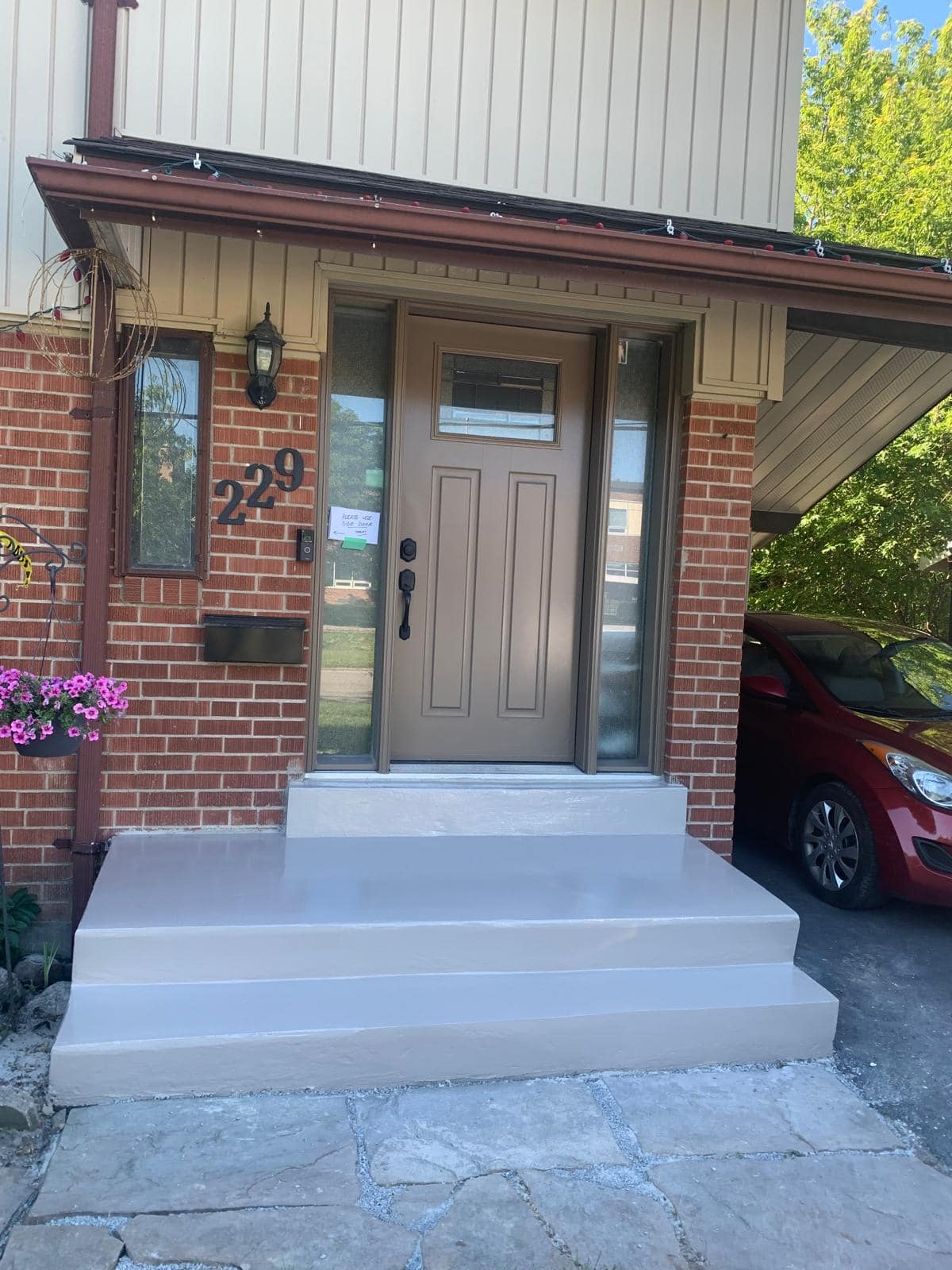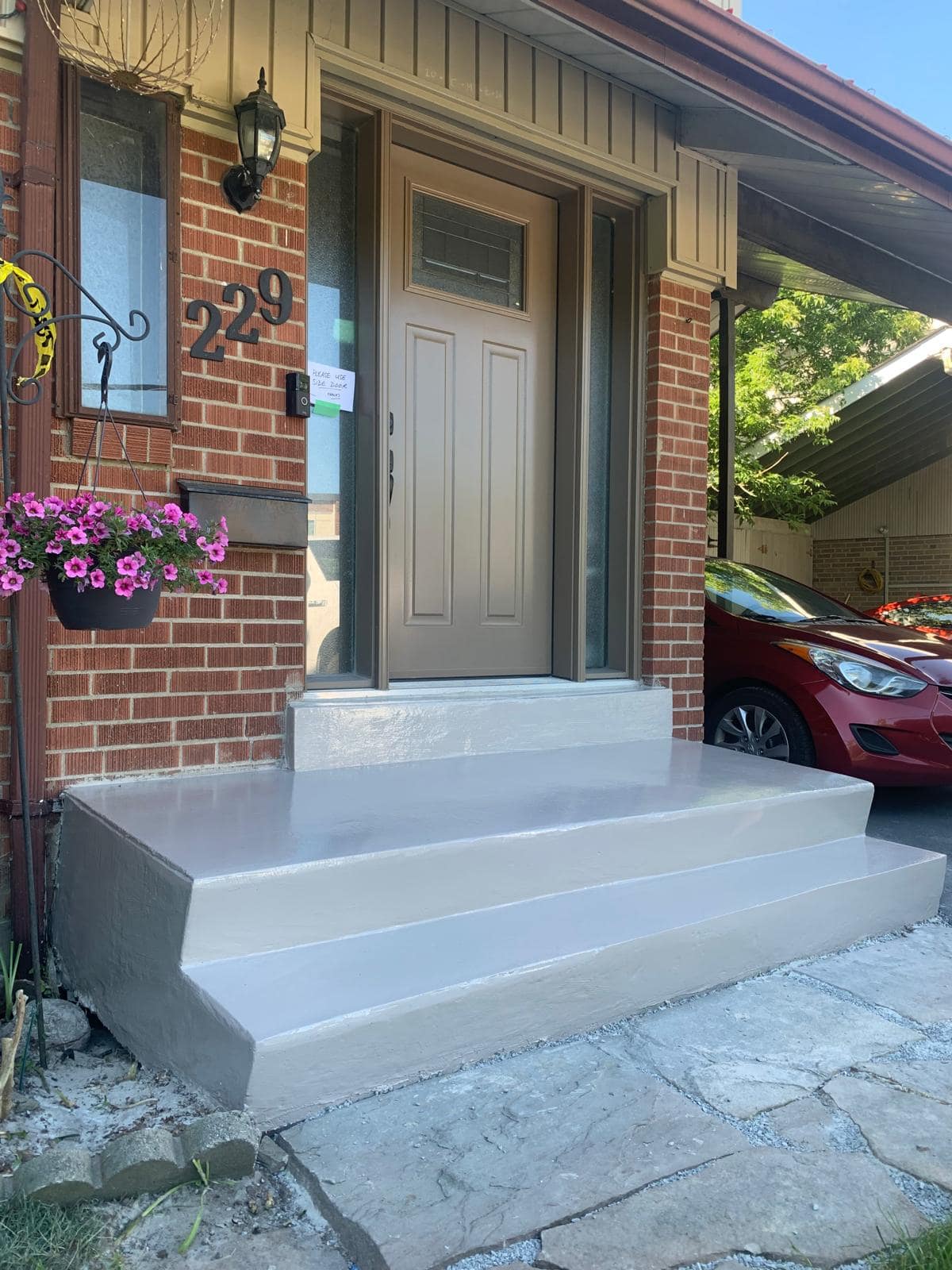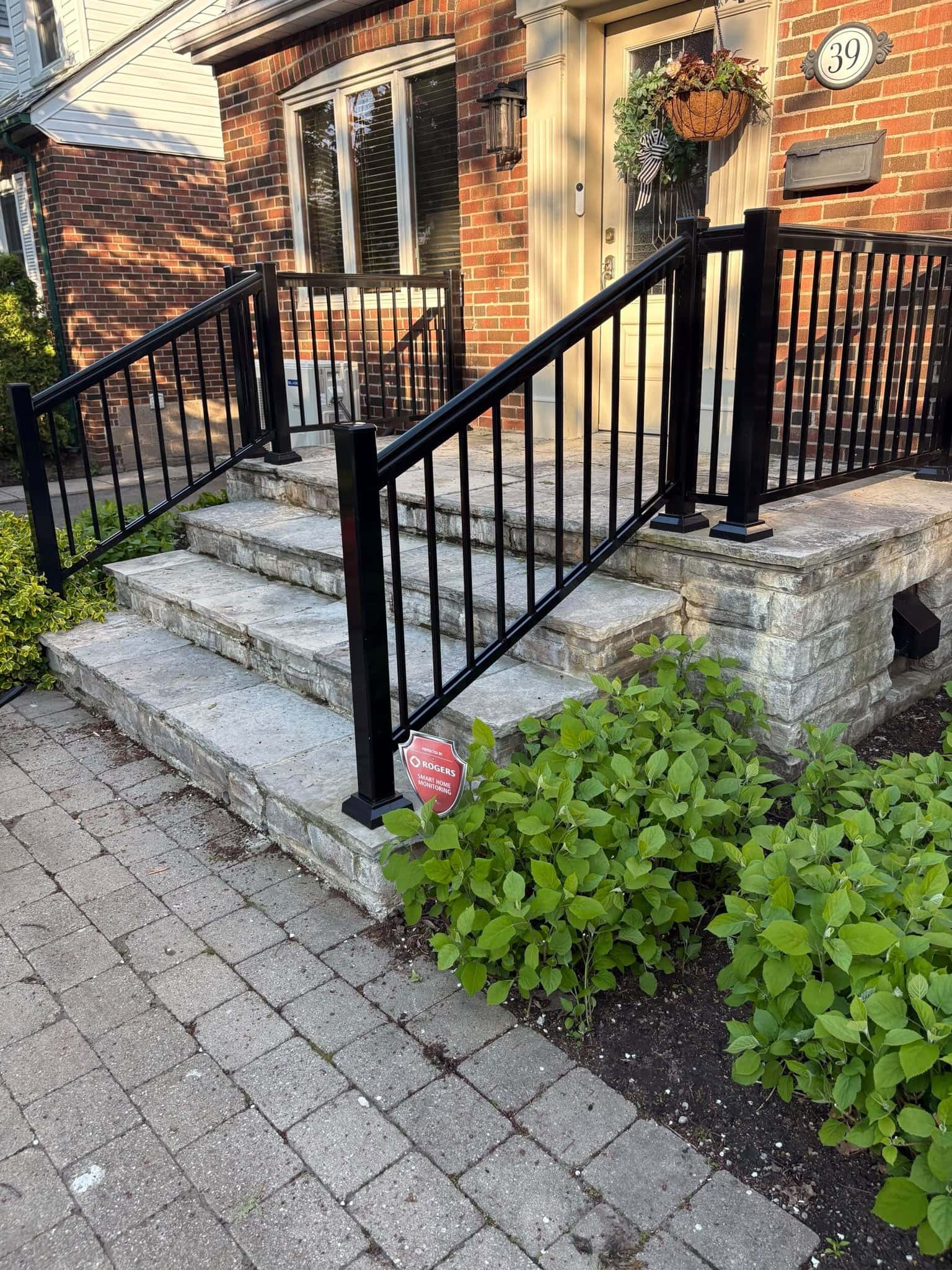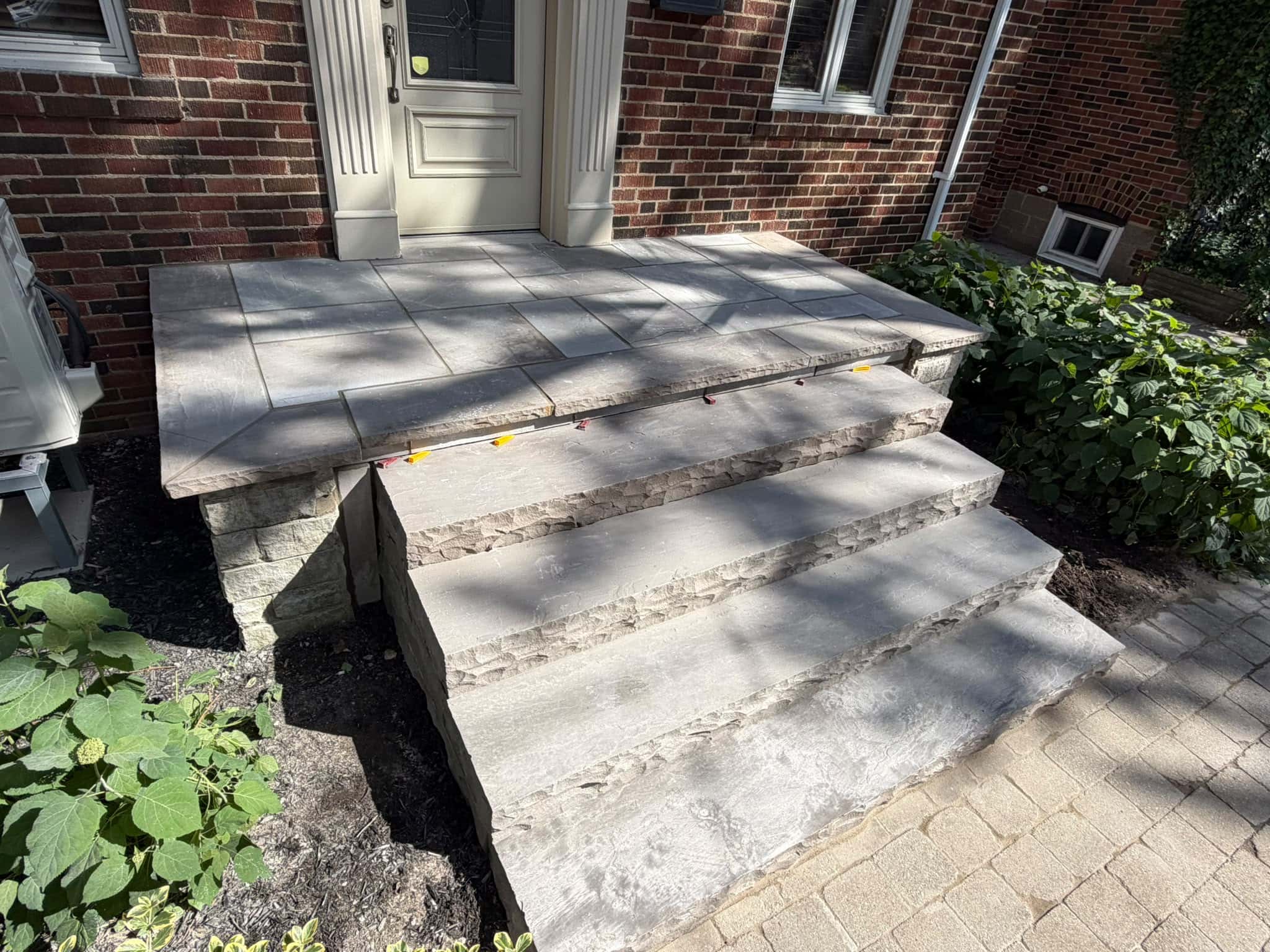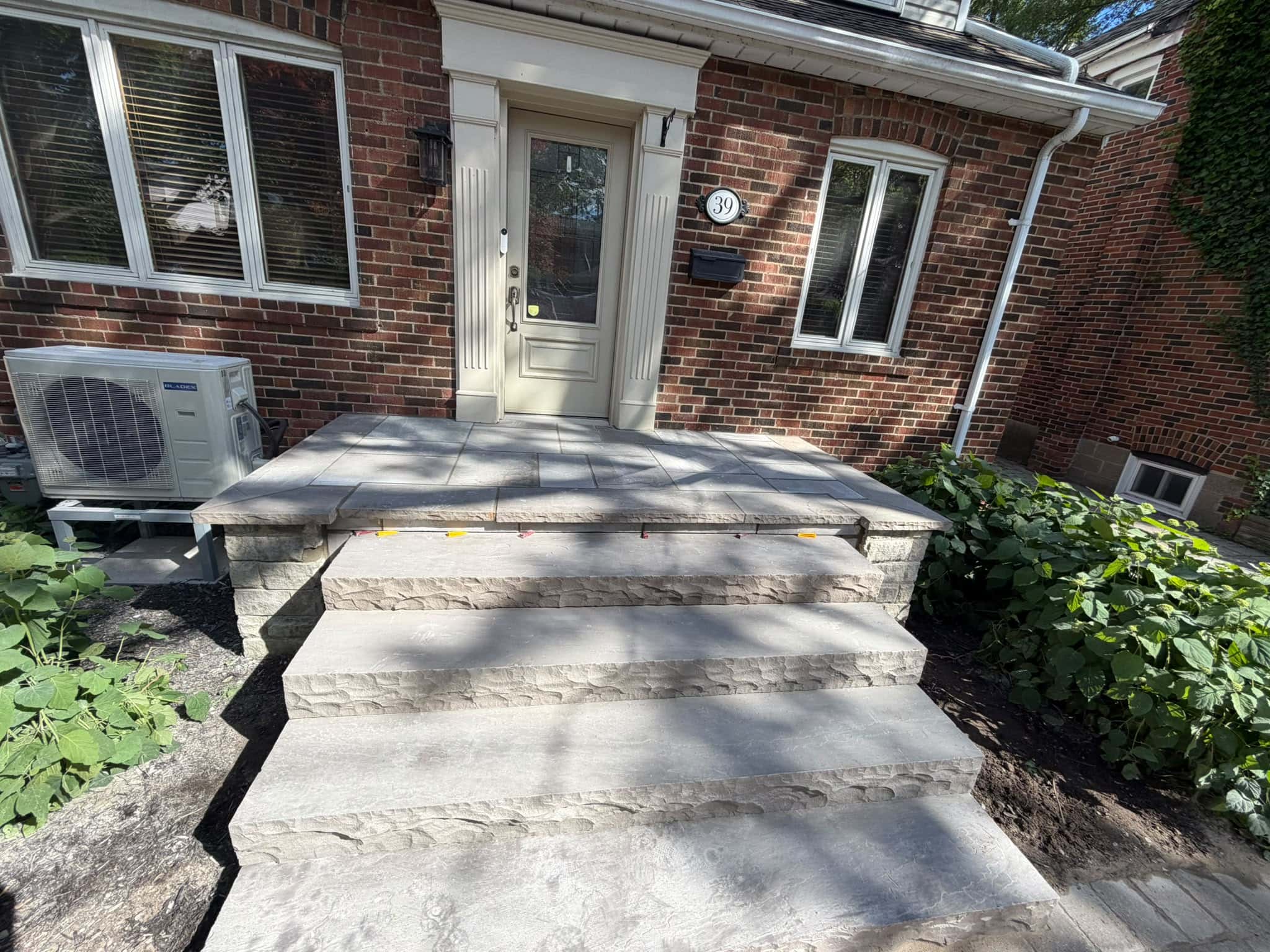
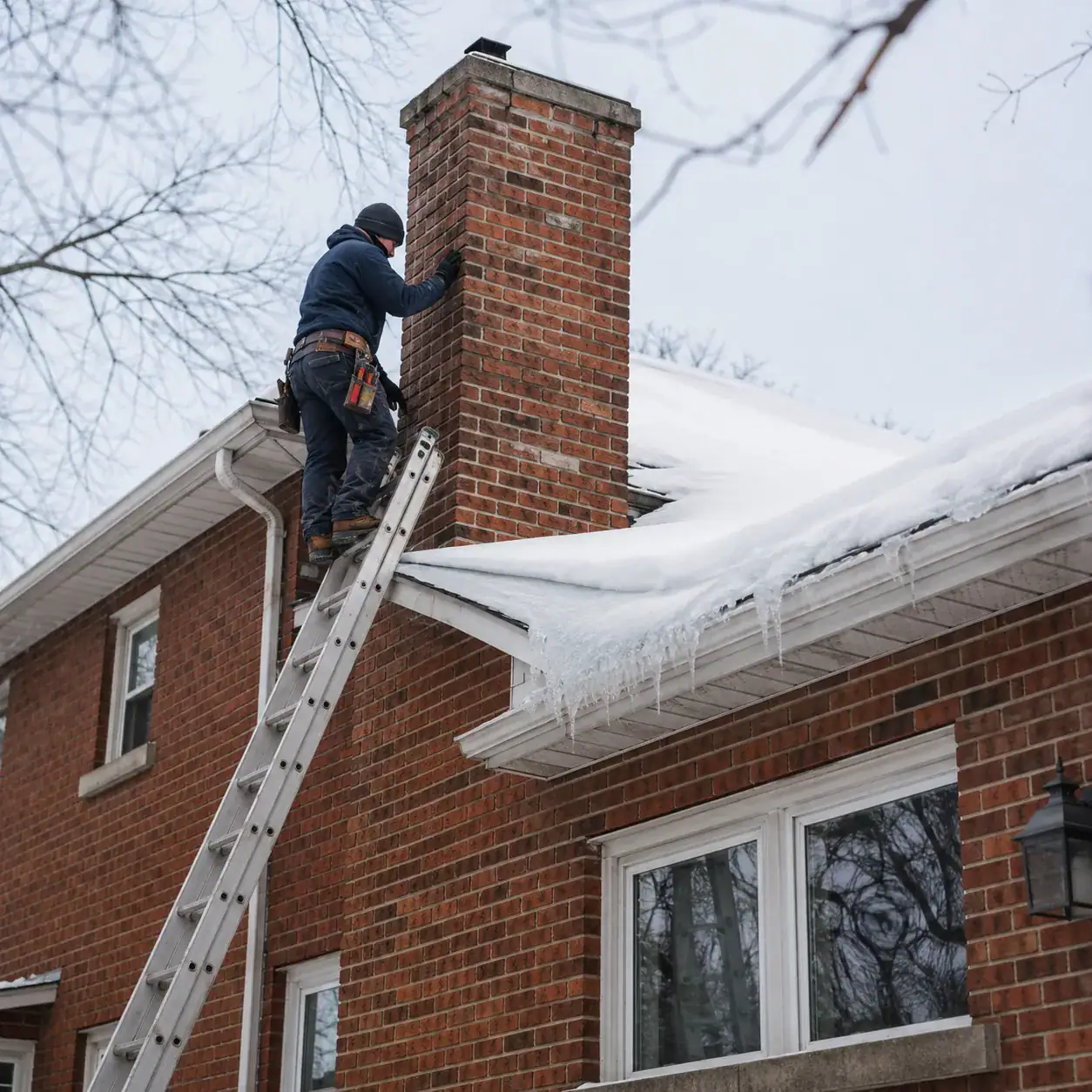
Preventing ice dams with proper masonry work means protecting the areas where roofs, chimneys, brick walls, parapets, flashing, and exterior masonry meet. Ice dams are usually connected to roof heat loss, snowmelt, freezing edges, and drainage problems, but masonry can play an important supporting role. Damaged chimneys, open mortar joints, cracked crowns, poor flashing details, and roof-to-wall gaps can all make winter water problems worse.
For Toronto and GTA homeowners, ice dams are a seasonal concern because winter weather often moves between snow, thaw, rain, refreeze, and deep cold. When melted snow cannot drain properly, water may back up under roofing materials, freeze at edges, or find weak points around chimneys and masonry walls.
This guide explains how masonry work can help reduce ice dam-related damage, what areas homeowners should check before winter, and when roof, insulation, ventilation, or masonry professionals may need to be involved together.
What Is an Ice Dam?
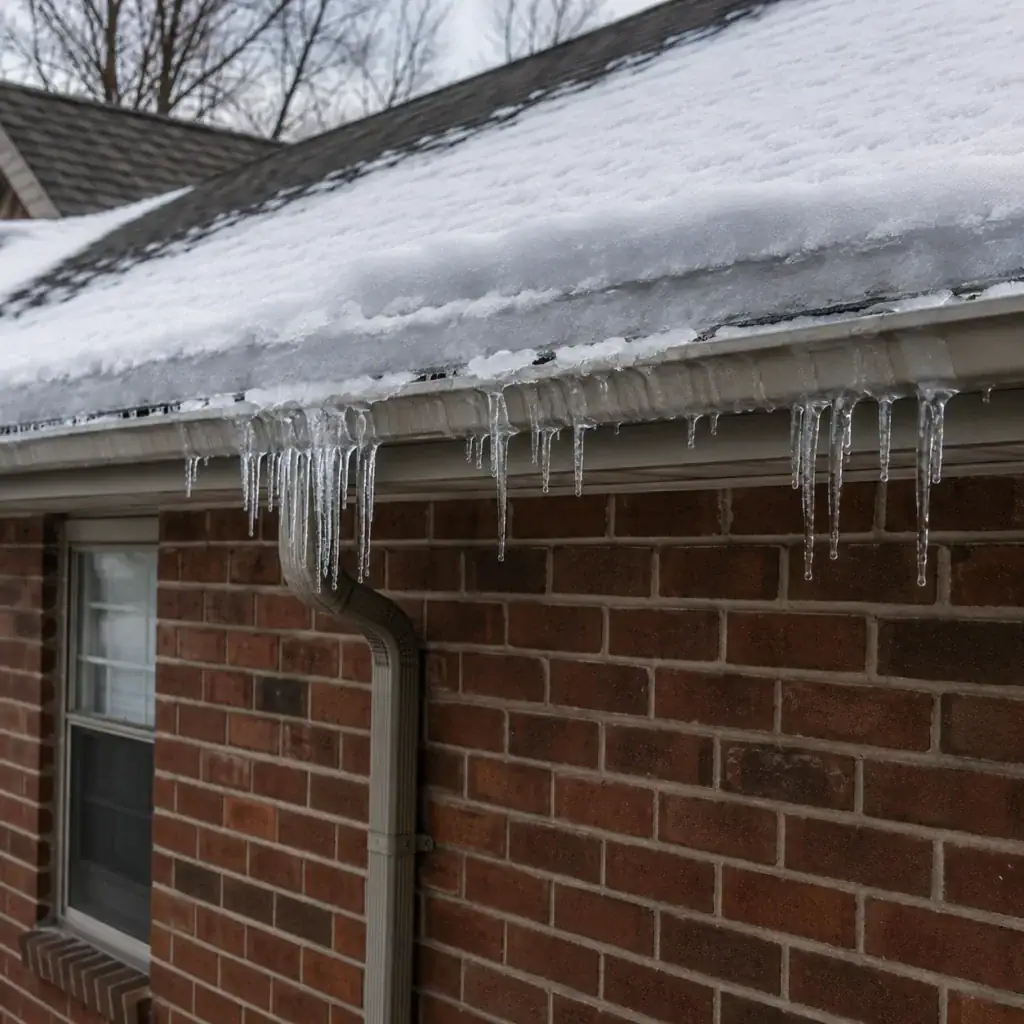
An ice dam is a ridge of ice that forms when snow melts on a warmer part of the roof and refreezes near a colder roof edge or drainage point. As more snow melts, water can collect behind the ice and move into weak areas of the roof or wall system.
Ice dams are not caused by masonry alone. They usually involve roof temperature differences, attic heat loss, ventilation issues, insulation problems, roof slope, gutter conditions, snow buildup, and weather changes. However, masonry becomes important when water reaches chimneys, parapets, brick walls, roof-wall intersections, and flashing areas.
If the masonry is already cracked or open, water has more places to enter. If chimney flashing is damaged, water can travel where the roof and chimney meet. If brickwork near a roofline has failed mortar, melting snow can soak into the wall and freeze again.
The goal of proper masonry work is not to solve every roof issue, but to make the masonry areas strong, sealed correctly, and able to shed water instead of absorbing it.
Why Ice Dams Matter for Toronto Homes
Ice dams matter for Toronto homes because winter conditions often create repeated melting and freezing. A roof may receive sun during the day, then freeze again at night. Snow may melt during a mild spell, then refreeze during a cold snap. This movement can expose weak masonry details quickly.
Older Toronto homes can be more vulnerable because many have aging brick chimneys, older mortar, roofline masonry, parapets, additions, dormers, and roof-to-wall junctions that have been repaired over many years. A small opening near a chimney or wall may not leak during light rain, but it can leak when ice and backed-up meltwater sit against it for hours.
The City of Toronto’s winter safety guidance is a useful reminder that snow and ice create risks around homes and properties. For masonry, the same idea applies: winter conditions make small exterior weaknesses more serious.
Preventing ice dam damage often means looking at the home as a full system, including the roof, attic, insulation, ventilation, gutters, flashing, and masonry.
How Masonry Work Helps Prevent Ice Dam Damage
Masonry work helps prevent ice dam damage by closing water-entry points, restoring damaged joints, repairing chimney tops, improving caps and crowns, and strengthening roofline masonry before winter water can enter.
When masonry is in good condition, it is better able to shed water and resist freeze-thaw damage. When masonry is cracked, open, or poorly capped, water can soak in. If that water freezes, it can expand and worsen the damage.
Important masonry areas include:
- Chimneys: Caps, crowns, mortar joints, flashing interfaces, and upper brickwork.
- Parapets: Coping stones, caps, open joints, and exposed roofline brick.
- Roof-to-wall junctions: Areas where a roof meets brick, stone, or block walls.
- Dormer and addition walls: Small masonry walls near roof planes and valleys.
- Upper brick walls: Mortar joints exposed to wind-driven snow and meltwater.
- Exterior wall penetrations: Areas around vents, sills, and openings near rooflines.
If these areas are maintained properly, winter water has fewer paths into the building.
Chimneys Are a Major Ice Dam Weak Point
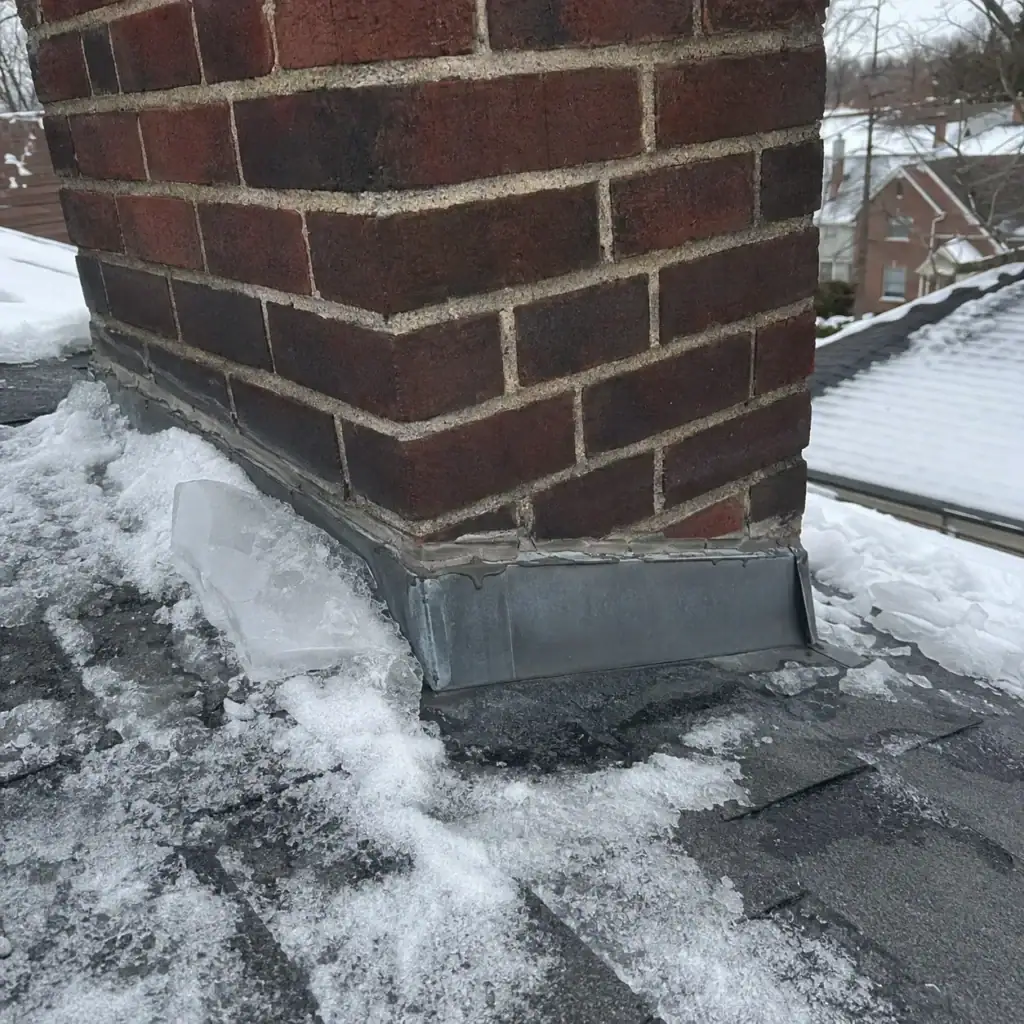
Chimneys are one of the most common masonry weak points during ice dam season because they interrupt the roof surface. Snow, ice, and meltwater can collect around the base of a chimney, and flashing must work correctly to keep water out.
A chimney also sits above the roofline, so it is exposed to weather from every side. Cracked crowns, missing caps, open mortar joints, spalling brick, and damaged flashing areas can all let water enter. If ice forms around the chimney base, water may sit against the masonry longer than it would during a normal rainstorm.
Proper chimney masonry work may include tuckpointing open joints, replacing spalling brick, repairing the crown, installing or replacing the cap, and checking the masonry near the flashing line. Flashing itself is often a roofing or sheet-metal detail, but masonry and flashing need to work together.
If your chimney shows cracks, missing mortar, water stains, or loose brick before winter, A&A Masonry’s chimney repair Toronto page explains common chimney masonry repair concerns.
Chimney Crowns and Caps Help Shed Water
Chimney crowns and caps help shed water away from the top of the chimney. This matters during ice dam season because any moisture that enters the chimney top can freeze, expand, and damage brick or mortar.
A chimney crown should be sound, sloped, and able to direct water away from the flue and chimney walls. A cracked or flat crown can hold water. Once that water freezes, cracks can widen. A missing or damaged cap can allow snow, rain, animals, debris, and moisture into the flue area.
A cap does not prevent ice dams on the roof, but it helps protect the chimney from water entering from above. In winter, that protection is important because snow and freezing rain can repeatedly affect the chimney top.
A&A Masonry’s blog on chimney cap options explains how caps help protect chimneys from rain, snow, animals, birds, and debris.
Open Mortar Joints Let Meltwater In
Open mortar joints let meltwater enter brick, stone, or block masonry. During ice dam season, water may sit against roofline masonry longer than usual. If the mortar is cracked, missing, or recessed, water can soak in and freeze.
Mortar joints are often the first part of a masonry wall to fail. They weather over time and may break down from age, moisture, freeze-thaw cycles, wrong mortar, or poor previous repairs. Once the joints are open, the surrounding brick or stone becomes more vulnerable.
Tuckpointing helps by removing failed mortar and replacing it with compatible new mortar. This closes open joints and helps the wall shed water more effectively. It is especially important around chimneys, parapets, upper walls, and roofline areas.
For more detail, A&A Masonry’s tuckpointing services in Toronto page explains how proper mortar repair helps protect masonry from moisture and winter damage.
Roof-to-Wall Masonry Junctions Need Extra Attention
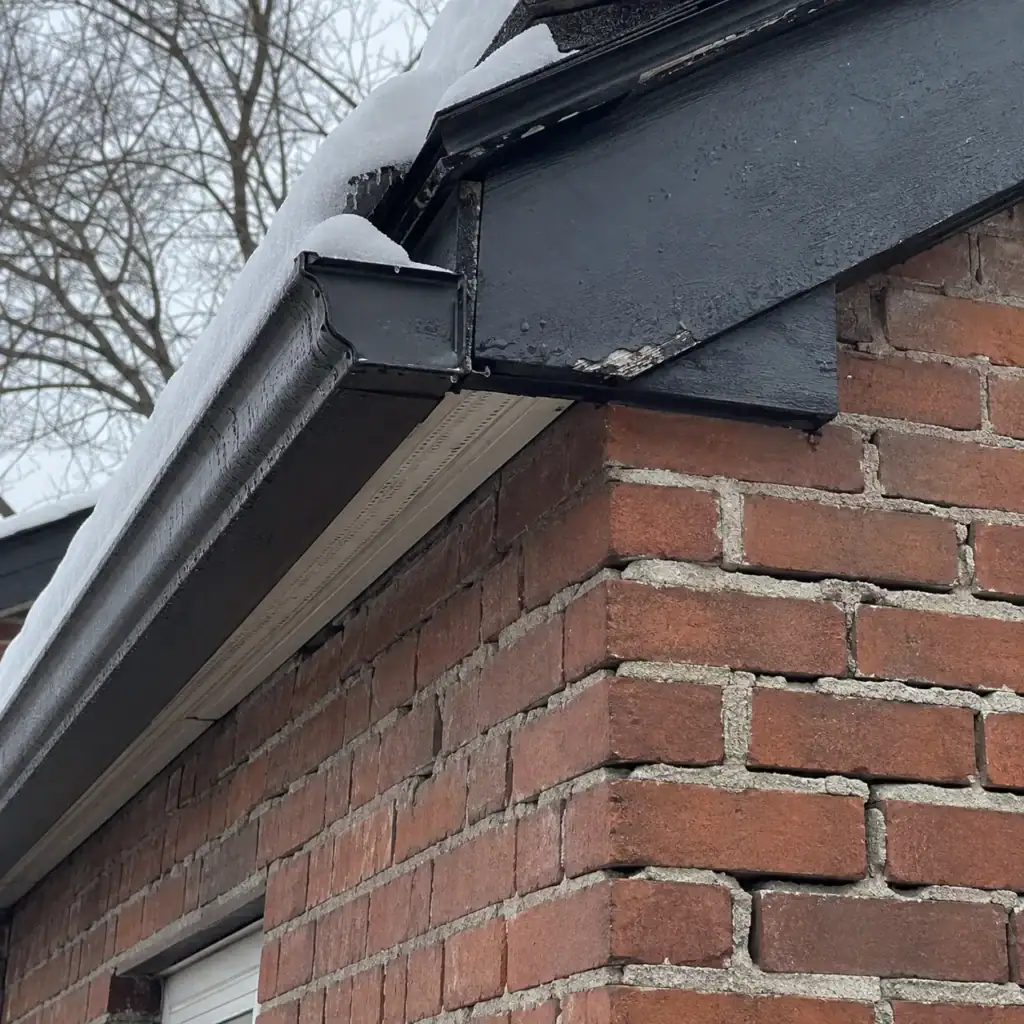
Roof-to-wall masonry junctions need extra attention because they are places where snow, water, roofing, flashing, and masonry meet. When a sloped roof meets a brick wall, stone wall, chimney, or addition, water must be directed away carefully.
These junctions can be vulnerable when flashing is damaged, mortar joints are open, the wall is cracked, or previous repairs were patched poorly. During an ice dam, backed-up meltwater can press against these weak points and enter behind the surface.
Masonry repair around roof-to-wall junctions may include repointing, brick repair, stone repair, sealant review, cap repair, or correcting gaps where water can enter. Roofing professionals may also be needed to assess flashing, shingles, underlayment, and roof drainage.
A&A Masonry’s blog on roof-to-wall masonry junction problems is a helpful related resource for understanding why these areas often need careful inspection.
Parapet Walls and Coping Stones
Parapet walls and coping stones can be vulnerable to ice dam-related damage because they sit at the roof edge or above the roofline. They are common on some older homes, additions, row houses, flat-roof sections, and commercial-style residential properties.
A parapet wall needs proper top protection. Coping stones or caps should shed water away from the wall. If caps are cracked, loose, flat, or poorly sealed, water can enter from the top and move down through the masonry.
Ice and snow can sit against parapets for long periods. If mortar joints are open or coping details are failing, freeze-thaw cycles can loosen brick, crack mortar, and create interior water stains.
Parapet repair may include repointing, brick replacement, coping repair, cap replacement, and review of roof flashing details. Because parapets are connected to roof systems, both masonry and roofing conditions may need review.
Spalling Brick Near Rooflines
Spalling brick near rooflines can be a sign that water is entering and freezing in the masonry. Spalling happens when the face of the brick flakes, chips, or breaks away. Once the face is damaged, the brick can absorb more water and deteriorate faster.
Roofline spalling may be caused by failed mortar joints, poor flashing, missing caps, leaking gutters, ice buildup, or repeated snowmelt exposure. If the damage is only repaired cosmetically without solving the water source, it can return.
Spalled bricks should be reviewed before winter when possible. Replacement may be needed if the brick is badly damaged. The surrounding joints, caps, and water paths should also be checked.
A&A Masonry’s brick repair Toronto page explains repair concerns for cracked, spalling, and weather-damaged brickwork.
Flashing and Masonry Must Work Together
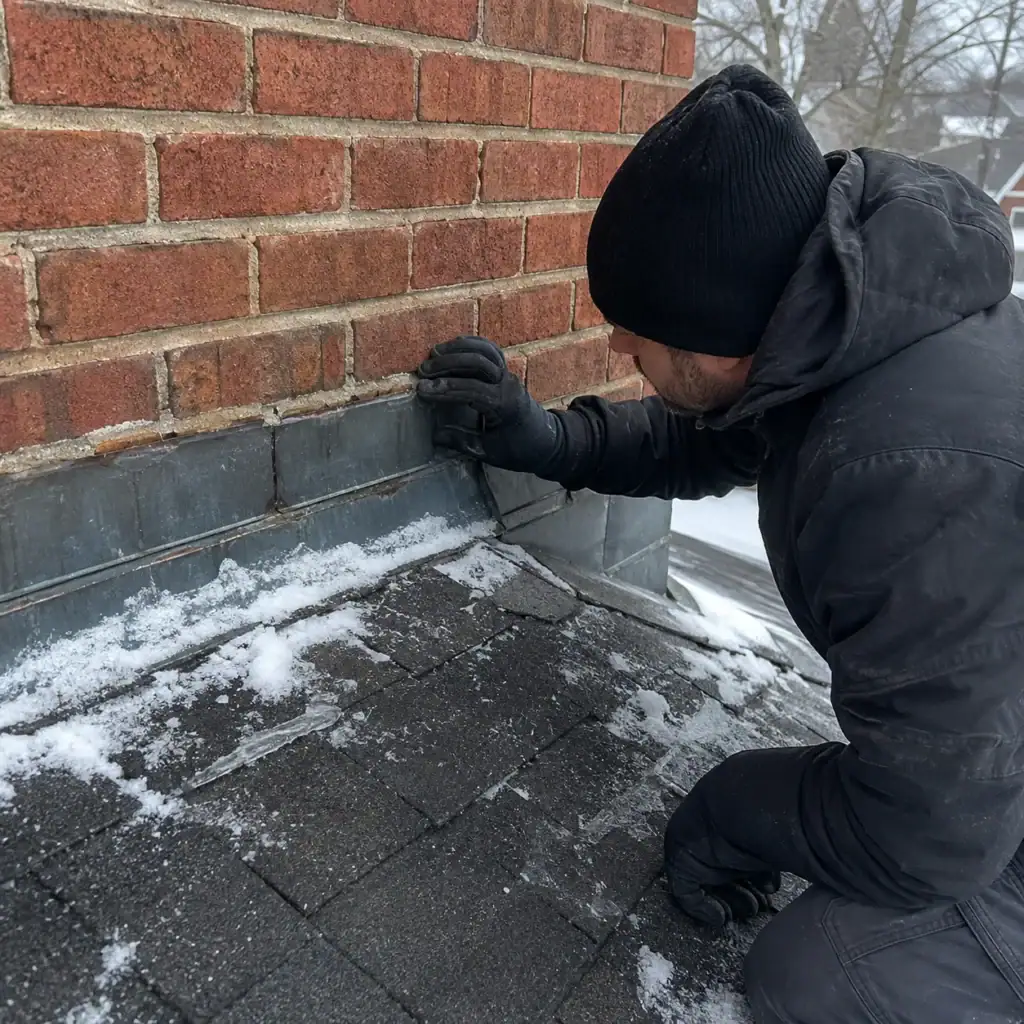
Flashing and masonry must work together because flashing directs water away from joints where the roof meets vertical surfaces. Masonry can be in good condition, but if flashing is poorly installed or damaged, water may still enter. The opposite is also true: good flashing may not protect the wall if mortar joints above it are open.
Common flashing-related problem areas include chimney bases, sidewalls, roof valleys near masonry, parapet walls, dormers, and additions. During ice dam conditions, water may move in unusual directions or sit against flashing longer than normal.
Homeowners should not assume that every roofline leak is only a roofing problem or only a masonry problem. These areas often require both types of review. A roofer may handle flashing and roof surfaces, while a mason repairs brick, mortar, stone, crowns, caps, and wall surfaces.
The best repair identifies where water is entering, then addresses both the roof detail and the masonry condition.
Attic Heat Loss Still Needs to Be Addressed
Attic heat loss still needs to be addressed because masonry repair alone cannot prevent every ice dam. Ice dams often form when heat from inside the home warms the roof deck, melting snow from below. That water then refreezes near colder roof edges.
Insulation, air sealing, ventilation, roof design, and attic conditions are usually part of the larger ice dam solution. Masonry work protects vulnerable masonry entry points, but it does not replace attic or roofing improvements.
If ice dams happen repeatedly, homeowners should consider a full building review. A qualified roofing, insulation, or building professional may need to assess roof ventilation, attic air leaks, insulation levels, and gutter performance.
Masonry repairs are still important because even after roof and attic improvements, chimneys, parapets, and roof-to-wall junctions must be able to resist water.
Gutters, Downspouts, and Masonry Damage
Gutters and downspouts affect masonry because they control where roof water goes. If gutters are clogged, loose, undersized, or frozen, water can overflow onto brick walls, steps, foundation areas, and lower masonry.
During winter, ice-filled gutters can contribute to water backing up at roof edges. When that water spills over, it may soak brick below, freeze on steps, or collect near the foundation. Downspouts that discharge too close to the house can add even more water around masonry.
The City of Toronto’s guidance on managing rain and melted snow is useful for understanding why roof runoff and snowmelt should be managed around the property.
For masonry, proper water management means keeping gutters clear, directing downspouts away from walls and foundations, and avoiding snow piles that melt against brick or concrete.
Winter Water Can Affect Foundations Too
Winter water can affect foundations when snowmelt, roof runoff, blocked gutters, or ice dam overflow sends water down exterior walls. If water collects near the foundation, basement moisture problems can become more likely.
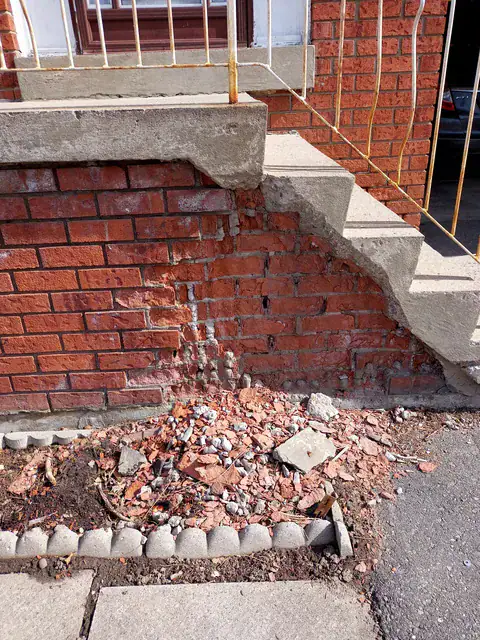
Brickwork, stone veneer, parging, concrete steps, window wells, and foundation-adjacent masonry can all be affected by repeated wetting and freezing. Water that enters cracks or open joints can expand when it freezes, creating more damage.
If ice dams are causing water to spill down walls or collect near the foundation, the response should include both roof-level prevention and ground-level drainage review.
A&A Masonry’s waterproofing Toronto page is a helpful internal resource when masonry damage is connected to foundation moisture or exterior water-entry concerns.
How Masonry Sealers Fit Into Ice Dam Prevention
Masonry sealers can help in limited situations, but they are not a primary ice dam solution. A breathable water repellent may reduce water absorption on suitable, repaired, clean, and dry masonry. It does not fix open mortar joints, cracked crowns, poor flashing, roof heat loss, or active leaks.
Using the wrong coating can make moisture problems worse. Non-breathable coatings may trap water inside masonry. In freeze-thaw conditions, trapped moisture can lead to spalling, peeling, staining, and cracking.
The correct order is repair first, correct water sources, allow drying, then consider a suitable breathable product if the masonry needs additional water resistance. Sealing over damage is not winter-proofing.
A&A Masonry’s blog on masonry sealers explains when sealers may help and when they should be avoided.
Warning Signs of Ice Dam-Related Masonry Problems
Warning signs of ice dam-related masonry problems often appear near rooflines, chimneys, upper walls, and interior ceilings or walls. Homeowners should watch for changes during winter and after the spring thaw.
- Water stains near chimneys: Stains may point to flashing, crown, cap, or mortar problems.
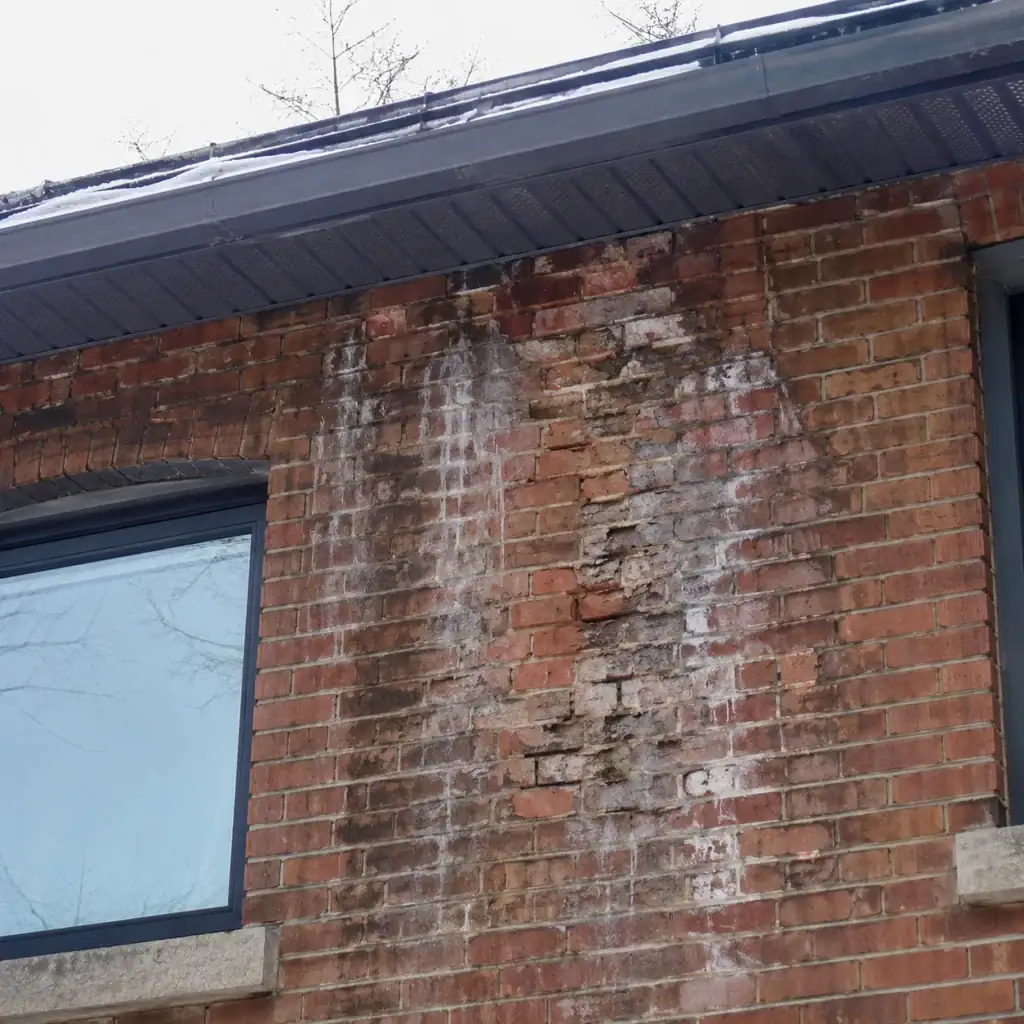
- Spalling brick near the roofline: Brick faces may break down from repeated moisture and freezing.
- Open mortar joints: Gaps near upper walls or chimneys can let meltwater in.
- Cracked chimney crown: Water can enter from the top and freeze inside cracks.
- Loose coping stones: Parapet caps may allow water into wall tops.
- Ice forming below roof edges: Overflowing water may soak lower masonry.
- White staining: Efflorescence can indicate moisture moving through masonry.
- Repeated leaks after snow: Leaks that appear after thawing snow may differ from regular rain leaks.
These signs do not always prove an ice dam is the only cause, but they show that winter water is reaching areas that need review.
What Homeowners Can Do Before Winter
Homeowners can reduce ice dam-related masonry damage by checking vulnerable areas before snow arrives. Many useful steps are visual and maintenance-focused.
- Look at chimneys from the ground for missing caps, cracked crowns, and open mortar joints.
- Check roof-to-wall junctions for visible gaps, missing mortar, or staining.
- Clear leaves and debris from gutters where safe to do so.
- Make sure downspouts discharge away from masonry and foundations.
- Look for spalling brick near rooflines, parapets, and chimney tops.
- Check attic or ceiling areas for old water stains near chimneys or exterior walls.
- Photograph problem areas before winter so changes can be tracked.
- Plan tuckpointing, brick repair, or chimney repair before freezing weather when possible.
Homeowners should avoid climbing onto icy roofs or trying to chip ice from masonry or roof edges. That can damage materials and create safety risks.
What Not to Do During an Ice Dam
During an ice dam, quick fixes can cause more damage. Homeowners should avoid aggressive methods that harm roofing, flashing, gutters, or masonry.
- Do not chip ice aggressively: Tools can damage shingles, flashing, gutters, brick, and mortar.
- Do not pour hot water repeatedly onto masonry: Sudden temperature changes and refreezing can worsen problems.
- Do not seal wet masonry: Trapping moisture before freezing weather can cause damage.
- Do not ignore active leaks: Water near chimneys, walls, and ceilings needs prompt review.
- Do not assume it is only a roof issue: Chimney masonry, flashing, and mortar may also be involved.
- Do not climb onto icy roofs: Winter roof work can be dangerous without proper equipment.
If water is entering the home, the immediate priority is safety and limiting interior damage. After that, the roof, attic, flashing, and masonry should be reviewed to find the source.
Permits, Code, and Larger Repairs
Permits and code questions may matter when ice dam damage leads to chimney reconstruction, structural repair, roofline masonry rebuilding, fireplace changes, retaining wall work, or major exterior alterations. Small maintenance repairs are different from rebuilding or changing parts of the home.
The City of Toronto’s building permit information is a useful starting point for homeowners planning larger repairs. Ontario’s official Building Code page is also the preferred provincial reference for building requirements.
If chimney damage affects a fireplace or fuel-burning appliance, venting safety should also be considered. Ontario’s carbon monoxide safety page is a useful public reference for understanding why fuel-burning systems must vent properly.
The practical rule is this: if work affects structure, chimneys, fireplaces, venting, roofline masonry, building openings, or major exterior wall areas, check official guidance and involve the right qualified professionals.
Quick Guide: Masonry Work That Helps Reduce Ice Dam Damage
A quick guide can help homeowners prioritize masonry work before winter.
- Repair chimney crowns if cracks or flat areas are holding water.
- Install or replace chimney caps to reduce snow, rain, debris, and animal entry.
- Tuckpoint open mortar joints around chimneys, parapets, and roofline walls.
- Replace spalling brick before winter moisture worsens the damage.
- Check roof-to-wall junctions for gaps, staining, and masonry deterioration.
- Repair parapet caps and coping stones so water sheds away from wall tops.
- Improve drainage so roof runoff and snowmelt move away from masonry and foundations.
- Use breathable sealers carefully only after masonry is repaired, clean, and dry.
The best results come from combining masonry repair with proper roof, flashing, gutter, attic, and drainage planning.
When Professional Help Makes More Sense
Professional help makes more sense when ice dams are recurring, leaks appear near chimneys or masonry walls, brick is spalling near the roofline, mortar joints are open, crowns are cracked, or parapet caps are loose. These problems often involve more than one trade.
A mason can assess chimneys, brickwork, mortar joints, stonework, parapets, crowns, caps, and masonry water damage. A roofer may need to review shingles, flashing, gutters, valleys, and underlayment. An insulation or building professional may need to review attic heat loss and ventilation if ice dams keep returning.
For masonry-specific planning, A&A Masonry’s masonry services in Toronto page outlines related services such as chimney repair, tuckpointing, brick repair, waterproofing, stone masonry, concrete repairs, retaining walls, and exterior restoration.
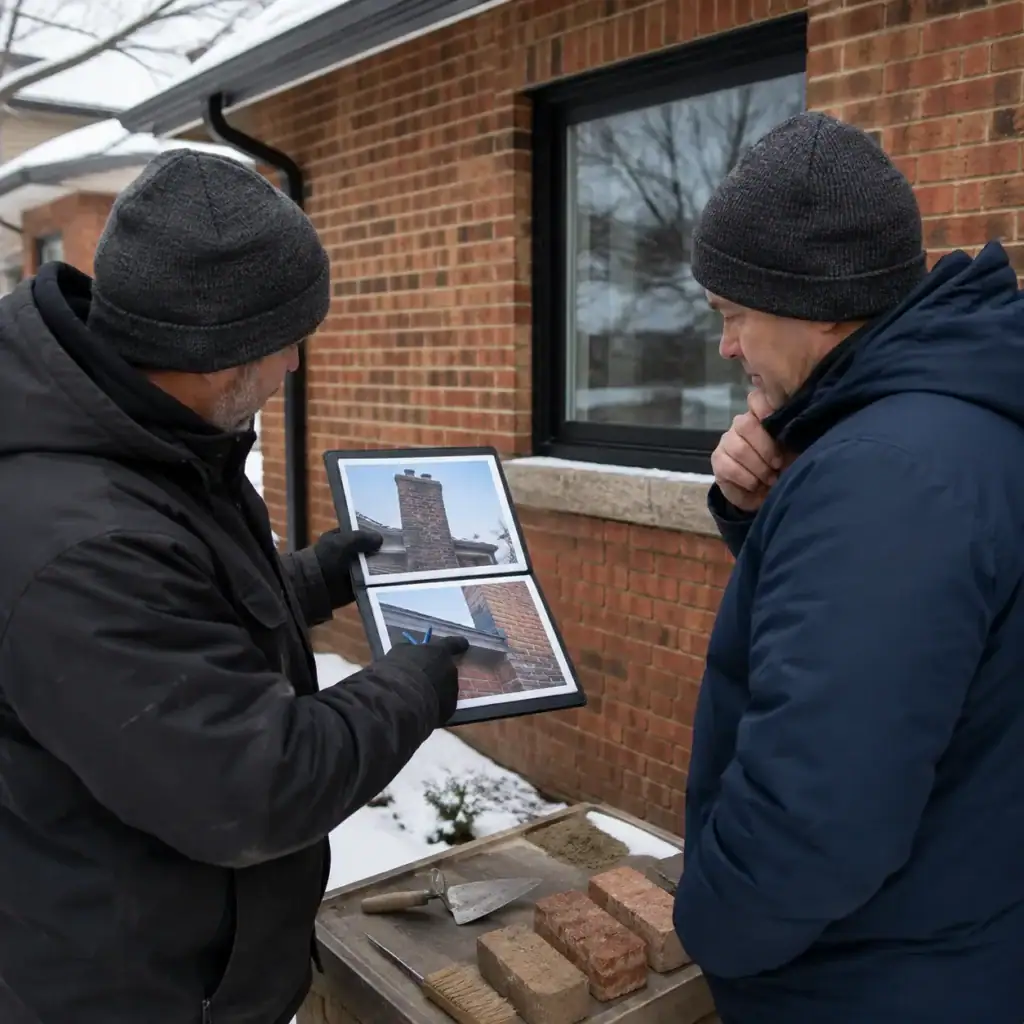
Final Thoughts on Preventing Ice Dams with Proper Masonry Work
Preventing ice dams with proper masonry work is about protecting the weak points where winter water can enter. Masonry does not replace roof insulation, attic ventilation, gutter care, or flashing repair, but it plays an important role around chimneys, roof-to-wall junctions, parapets, brick walls, and exterior water paths.
For Toronto and GTA homeowners, the most important masonry steps are repairing open mortar joints, fixing cracked chimney crowns, installing proper caps, replacing spalling brick, checking parapets, and improving drainage around the home. These repairs help reduce the damage that ice dams and winter meltwater can cause.
The best approach is to inspect before winter, handle masonry repairs early, avoid sealing over wet damage, and work with the right professionals when the issue involves roofing, flashing, venting, or attic heat loss. When the full system works together, the home is better protected from winter water damage.