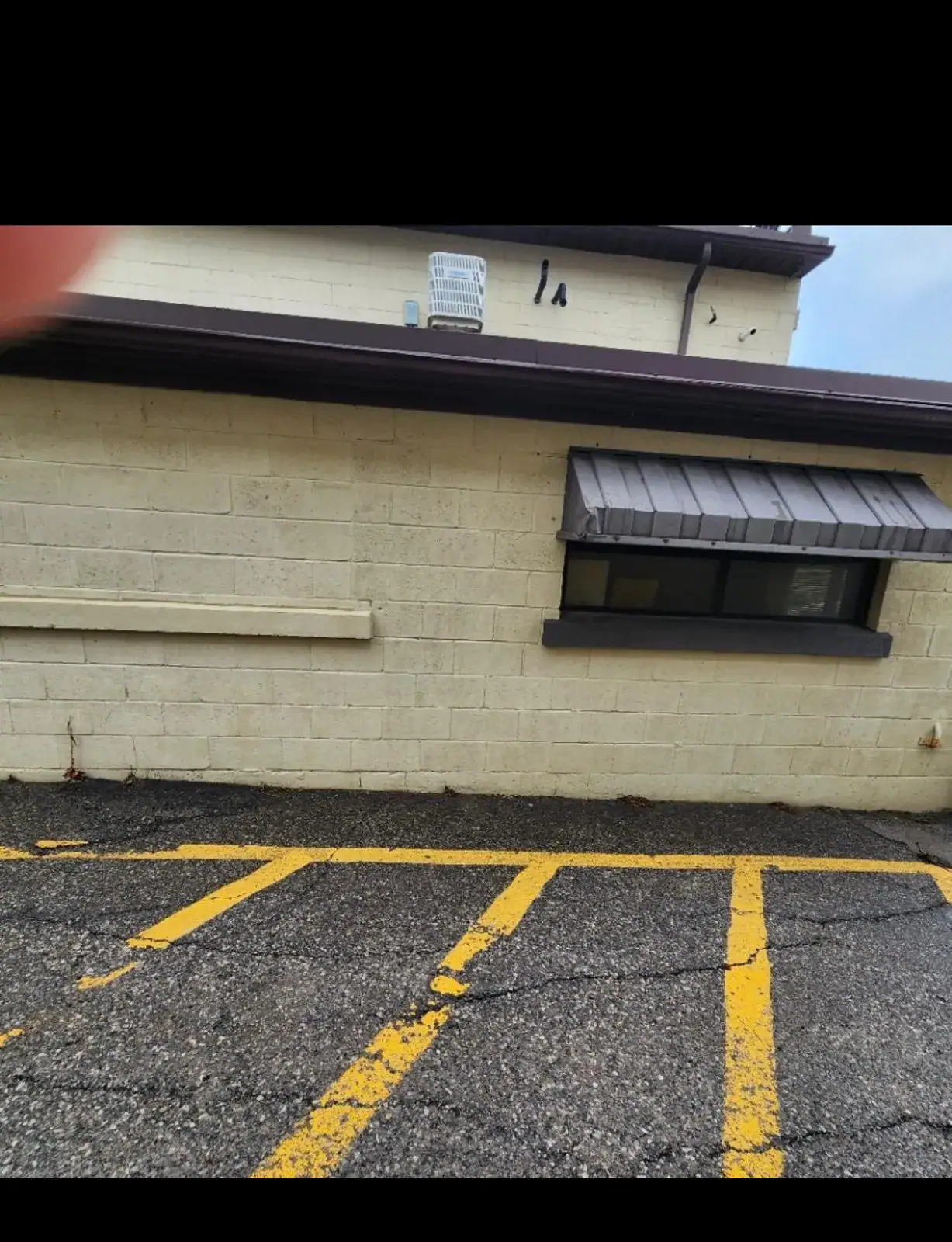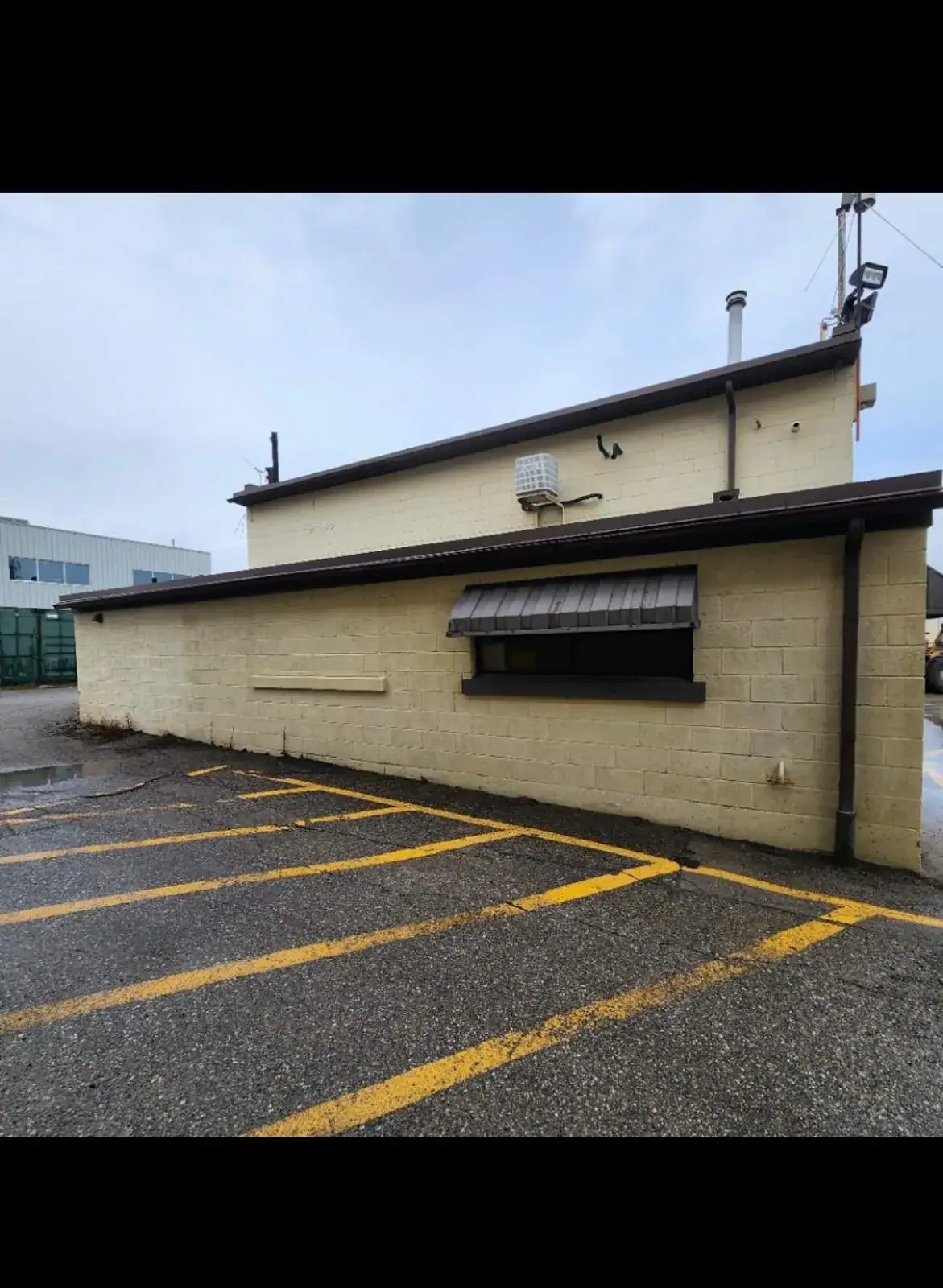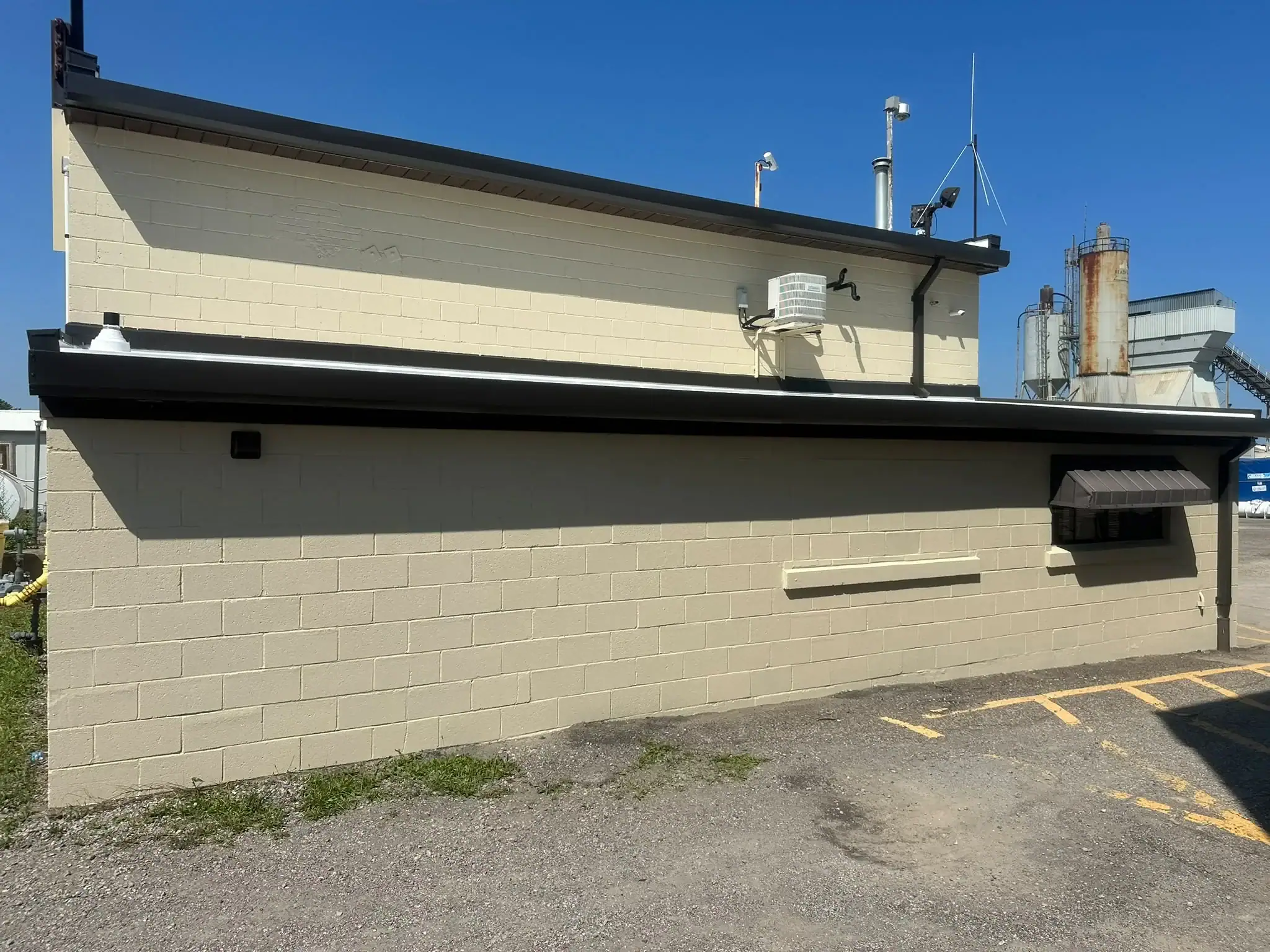
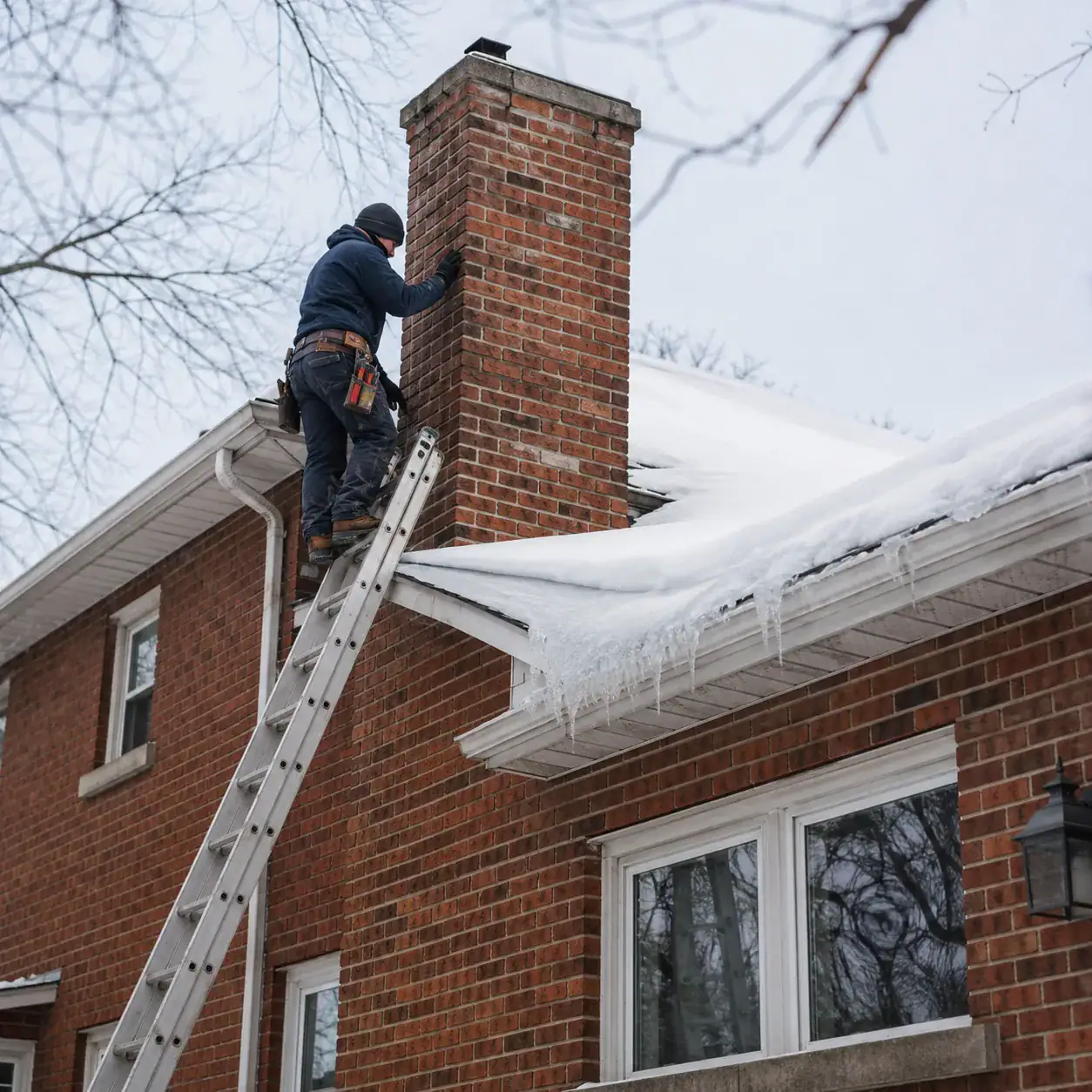
Preventing ice-dam-related damage requires looking at the roof, attic and exterior walls as one connected system. Ice dams usually form because snow melts on a warmer part of the roof and refreezes near a colder roof edge. Attic air leakage, insulation, roof design, snow conditions and drainage can all contribute.
Masonry does not usually cause the ice dam itself, but damaged chimneys, open mortar joints, cracked crowns, failed roof-to-wall details and deteriorated parapets can give backed-up meltwater additional places to enter.
For Toronto and GTA homeowners, winter weather regularly moves between snow, thaw, rain, refreeze and deep cold. When meltwater cannot drain properly, it may back up beneath roofing materials or sit against chimneys and masonry walls longer than it would during ordinary rain.
If recurring ice dams are affecting shingles, roof edges, gutters or flashing, A&A Masonry’s roofing services can help assess the roof-level conditions while masonry repairs address damaged chimneys, parapets and adjoining walls.
Quick answer: The primary way to reduce recurring ice dams is usually to address heat loss and roof conditions, including attic air leakage, insulation and appropriate roof detailing. Masonry repair helps by closing damaged joints and protecting chimneys, parapets and roof-to-wall areas from the water that ice dams can force against them.
What Is an Ice Dam?
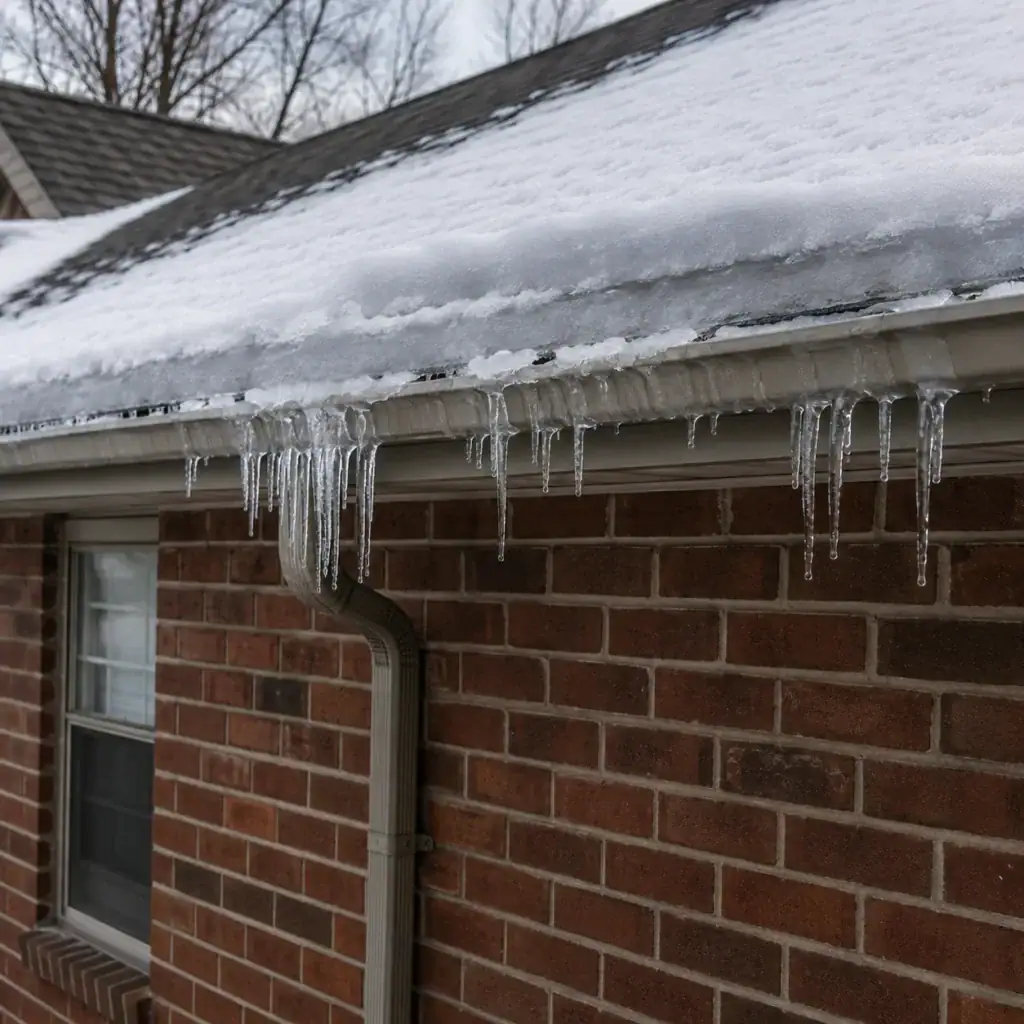
An ice dam is a ridge or mass of ice that forms near a roof edge when melted snow runs down a roof and refreezes in a colder area.
As additional snow melts, water can collect behind the ice. That backed-up water may move beneath shingles or reach vulnerable flashing, roof-wall intersections, chimneys and exterior walls.
Ice dams are not primarily masonry problems. They are commonly associated with differences in roof temperature caused by attic heat loss, air leakage, insulation conditions, roof geometry and winter weather.
Natural Resources Canada identifies air sealing and insulation as important parts of controlling recurring ice damming because a cooler roof is less likely to melt snow unevenly.
Why Ice Dams Matter for Toronto Homes
Toronto winter conditions regularly create melting and refreezing cycles.
A roof may warm during the day and freeze again overnight. Deep snow can insulate parts of the roof, while heat escaping from the home can warm the roof deck beneath the snow.
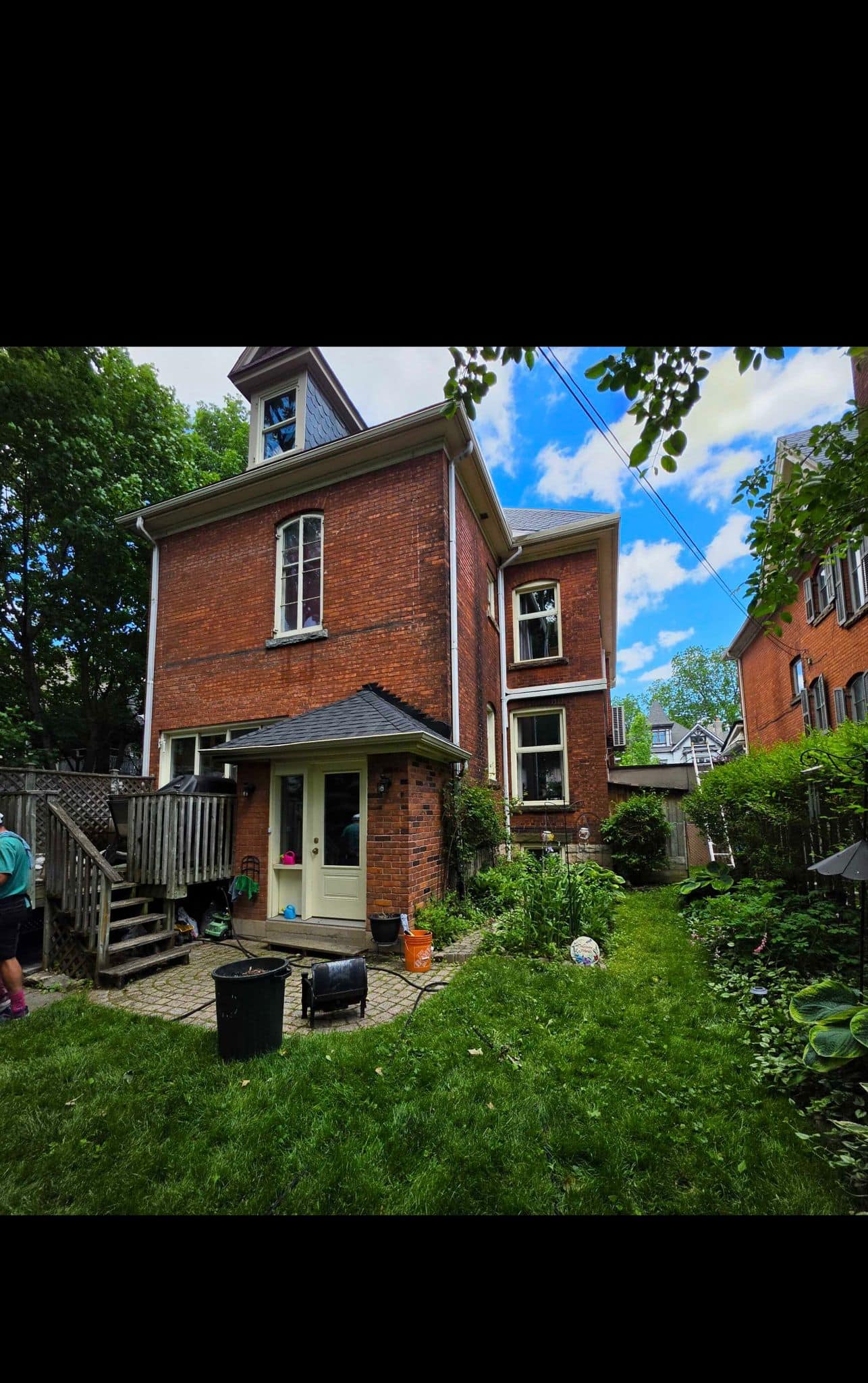
Older homes may have additional vulnerable areas such as aging chimneys, older mortar, additions, dormers, parapets and roof-to-wall junctions that have been repaired at different times.
A small roofline opening that causes no obvious problem during ordinary rain may leak when backed-up meltwater remains against it for an extended period.
What Actually Helps Prevent Ice Dams?
Recurring ice dams should be treated primarily as a roof and building-envelope problem.
Depending on the home, prevention may involve reviewing:
- Attic air leakage
- Insulation levels
- Roof ventilation where appropriate
- Roof geometry and valleys
- Roof underlayment and ice-protection membranes
- Gutters and roof drainage
- Snow accumulation
Masonry repair does not replace those improvements. Its role is to protect masonry areas that are exposed when winter water reaches chimneys, walls, parapets and roof-to-wall junctions.
How Masonry Work Helps Reduce Ice-Dam-Related Damage
Masonry repair helps reduce damage by repairing water-entry points before winter meltwater reaches them.
Important masonry areas include:
- Chimneys: Crowns, caps, mortar joints, brick and flashing interfaces.
- Parapets: Coping stones, caps, mortar and exposed upper brickwork.
- Roof-to-wall junctions: Areas where sloped roofs meet brick, block or stone walls.
- Dormer and addition walls: Masonry located beside roof planes and valleys.
- Upper brick walls: Mortar and brick exposed to wind-driven snow and backed-up meltwater.
- Wall penetrations: Exterior openings and transitions near the roofline.
The goal is to keep these areas properly repaired, detailed and able to shed or drain water rather than allowing winter moisture to remain inside damaged masonry.
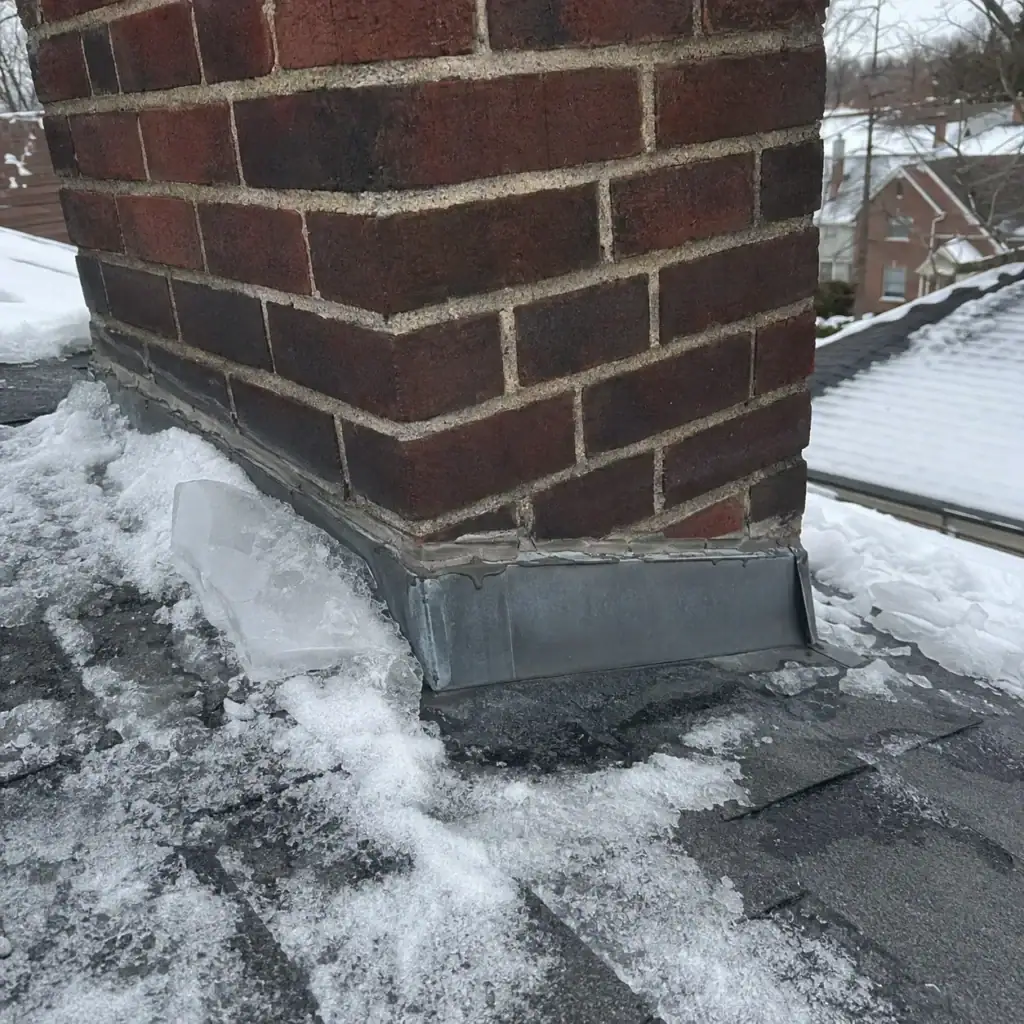
Chimneys Are a Major Winter Weak Point
Chimneys interrupt the roof surface and are exposed to weather from every side.
Snow, ice and meltwater can collect near the base of a chimney, where roofing and flashing meet the masonry.
Potential chimney problems include:
- Cracked crowns
- Missing or damaged caps
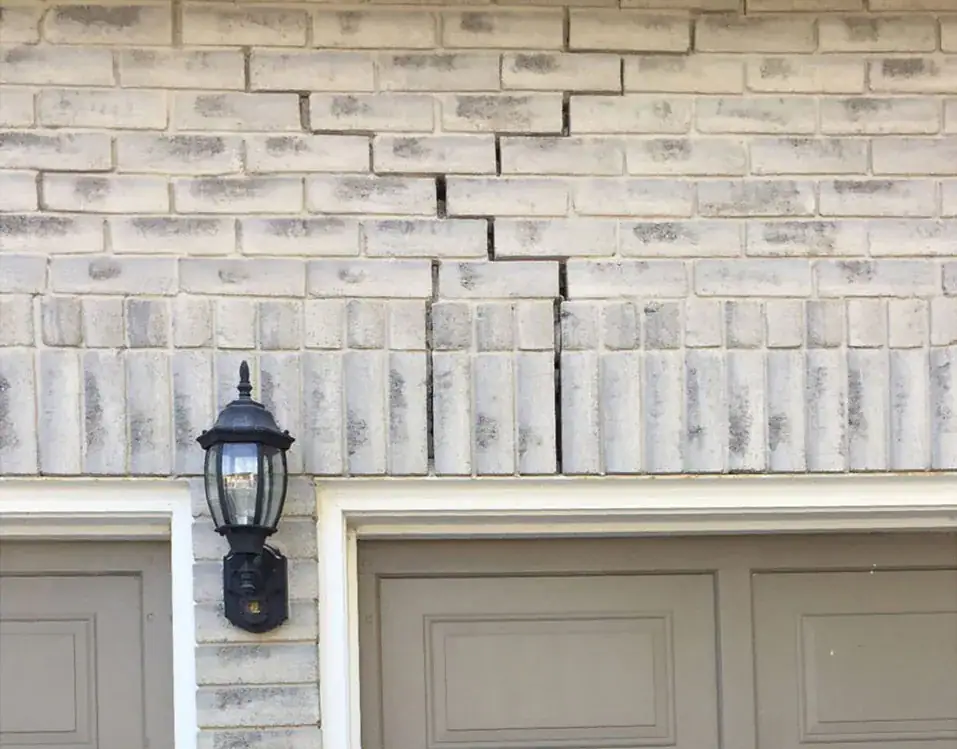
- Open mortar joints
- Spalling brick
- Damaged flashing
- Loose or deteriorated masonry
Proper chimney masonry work may include repointing failed joints, replacing deteriorated brick, repairing the crown and addressing cap problems. Flashing and roof surfaces may also require roofing work.
If your chimney shows cracks, missing mortar, water staining or loose brick before winter, A&A Masonry’s chimney repair services explain common repair options.
Chimney Crowns and Caps Help Manage Water
A chimney crown helps shed water away from the top masonry surface. A cap helps reduce direct rain, snow, debris and animal entry through the flue opening.
A cracked crown can allow moisture into the brick and mortar beneath it. A missing or damaged cap can leave the flue area more exposed.
Neither component prevents an ice dam from forming on the roof.
Their role is to protect the chimney itself from additional water exposure.
A&A Masonry’s guide to chimney cap options explains the different ways caps can protect chimney openings.
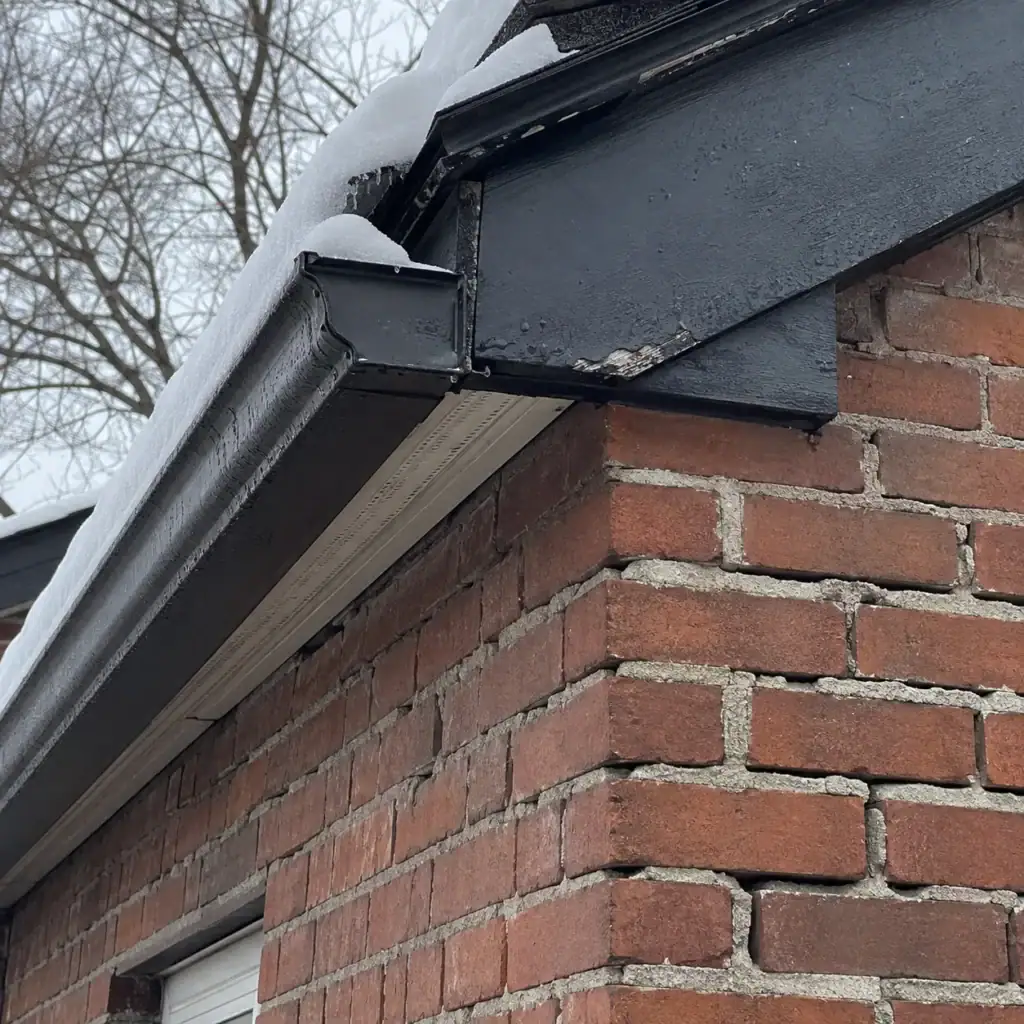
Open Mortar Joints Give Meltwater More Places to Enter
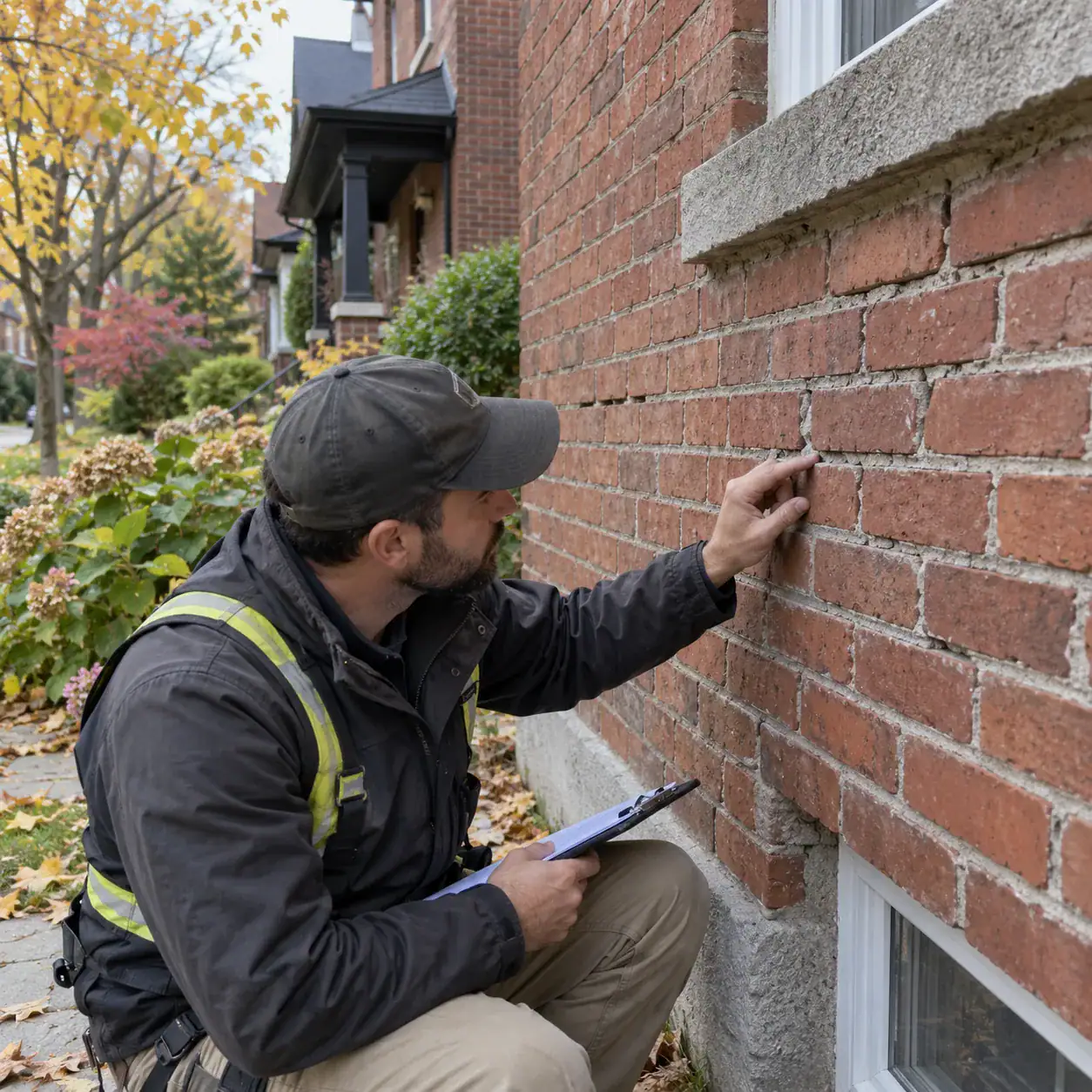
Cracked, missing or deeply recessed mortar leaves masonry more exposed to water.
During winter, backed-up meltwater or wind-driven snow may remain against roofline masonry longer than ordinary rainfall.
Once water enters deteriorated joints and freezes, repeated freeze-thaw cycles can contribute to additional mortar and brick deterioration.
For the mortar-joint repair commonly called tuckpointing, deteriorated mortar is removed and replaced with compatible new material.
A&A Masonry’s tuckpointing services page explains how failed mortar joints can be repaired on brick walls and chimneys.
Roof-to-Wall Masonry Junctions Need Extra Attention
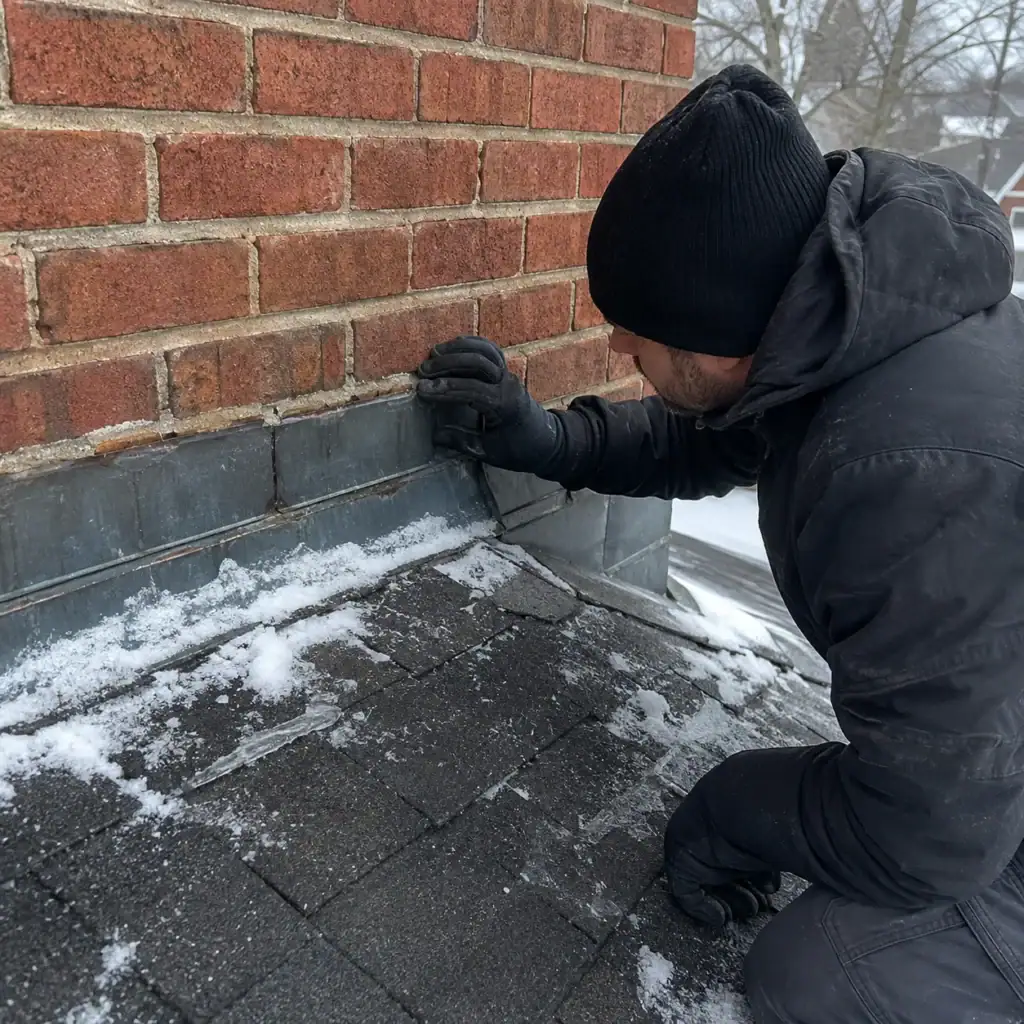
Roof-to-wall junctions bring together roofing, flashing and vertical masonry.
When a sloped roof meets a brick wall, chimney, stone wall or addition, water needs a reliable path away from the intersection.
Problems may develop when:
- Flashing is loose or damaged
- Mortar joints are open
- Brick is cracked or spalling
- Sealant has failed where sealant is part of the detail
- Previous repairs have deteriorated
During ice-dam conditions, backed-up water may reach areas that do not normally see prolonged water exposure.
A roofer may need to assess shingles, flashing, underlayment and roof drainage, while a mason addresses deteriorated brick, stone or mortar.
See A&A Masonry’s guide to roof-to-wall masonry junction problems for more detail.
Parapet Walls and Coping Stones
Parapet walls sit at or above the roofline and can remain exposed to snow, ice and standing moisture for extended periods.
The top of a parapet should be detailed so water sheds away rather than soaking into the wall.
Problems may occur when coping stones or caps are:
- Cracked
- Loose
- Poorly joined
- No longer shedding water properly
If mortar joints or coping details are failing, repeated freezing and thawing can worsen cracking, loosen masonry and contribute to interior staining.
Because parapets interface directly with roofing, both the roof details and masonry condition may need review.
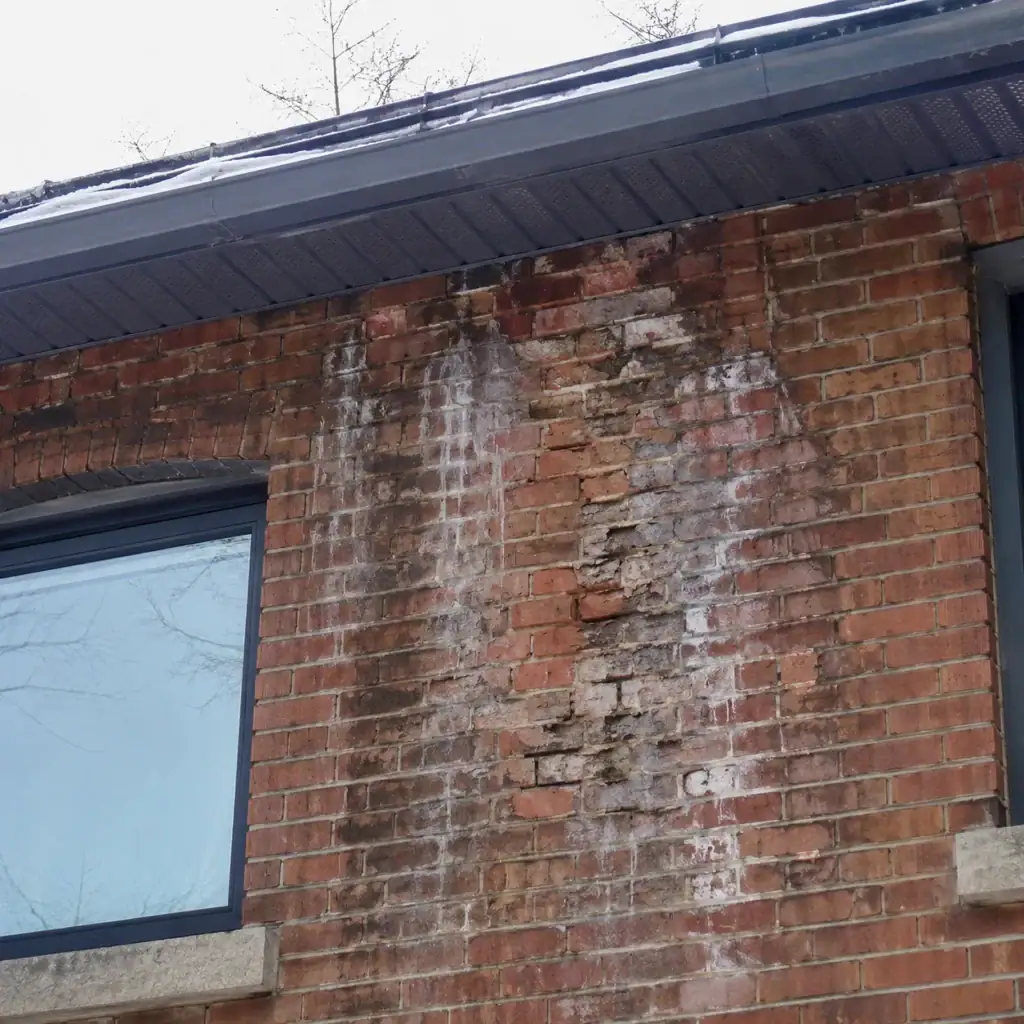
Spalling Brick Near Rooflines
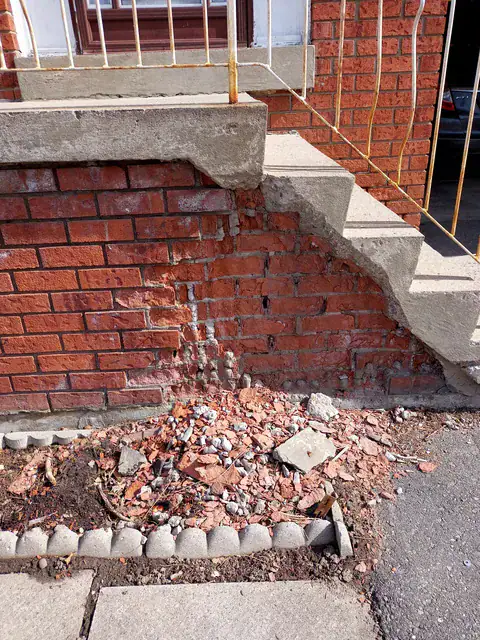
Spalling brick occurs when the face of a brick flakes, cracks or breaks away.
Near rooflines, repeated wetting and freezing can contribute to this deterioration when water is entering through open joints, failed caps, flashing problems or other weak points.
If only the damaged brick face is patched while the water source remains, deterioration can return.
Badly damaged individual units may need replacement, while the surrounding mortar, flashing and drainage conditions should also be checked.
A&A Masonry’s brick repair services page explains repair options for cracked and spalling masonry.
Flashing and Masonry Must Work Together
Flashing directs water away from vulnerable roof transitions and intersections.
Good masonry cannot compensate for failed flashing, and good flashing may not fully protect a wall when the masonry above it has open joints or significant deterioration.
Potential problem areas include:
- Chimney bases
- Sidewalls
- Roof valleys beside masonry
- Parapets
- Dormers
- Additions
Do not assume every roofline leak is only a roofing problem or only a masonry problem. Identifying the actual water path should come before selecting the repair.
Attic Heat Loss Still Needs to Be Addressed
Masonry repair alone cannot stop recurring ice dams caused by heat escaping into the roof assembly.
Warm air leaking into the attic can heat roof sheathing and melt snow from below. The water then moves toward colder roof edges and may refreeze.
If ice dams repeatedly return, homeowners should consider professional review of:
- Attic air leakage
- Insulation
- Roof ventilation where appropriate
- Roof design
- Underlayment
- Snow accumulation
Natural Resources Canada identifies air sealing and insulation as key measures for reducing this type of ice damming.
Gutters and Downspouts Affect Winter Drainage
Gutters are not necessarily the root cause of an ice dam, but blocked, frozen or damaged gutters can make winter drainage problems worse.
Water overflowing from roof edges may soak:
- Brick walls
- Concrete steps
- Foundation areas
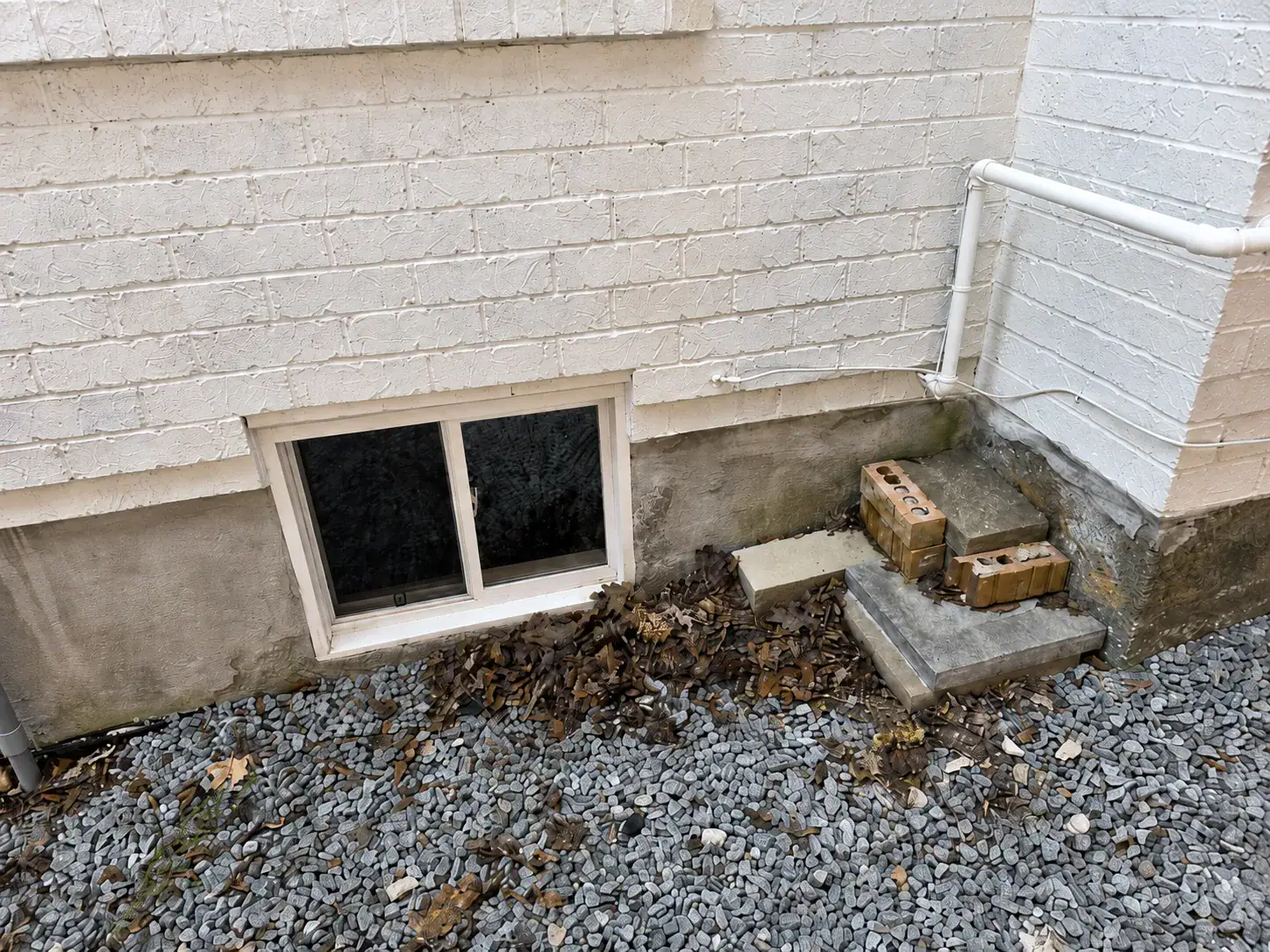
- Window wells
- Other exterior masonry
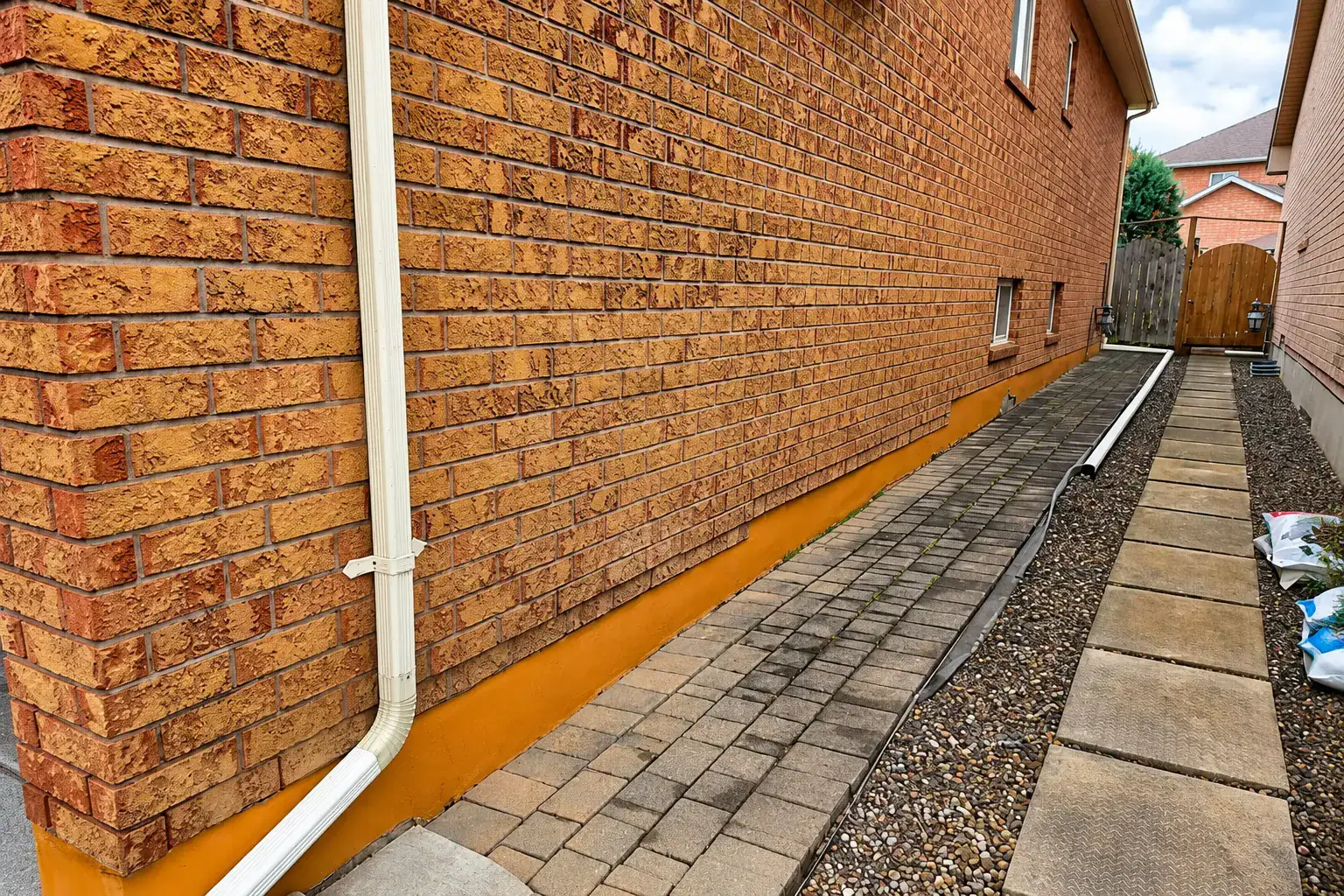
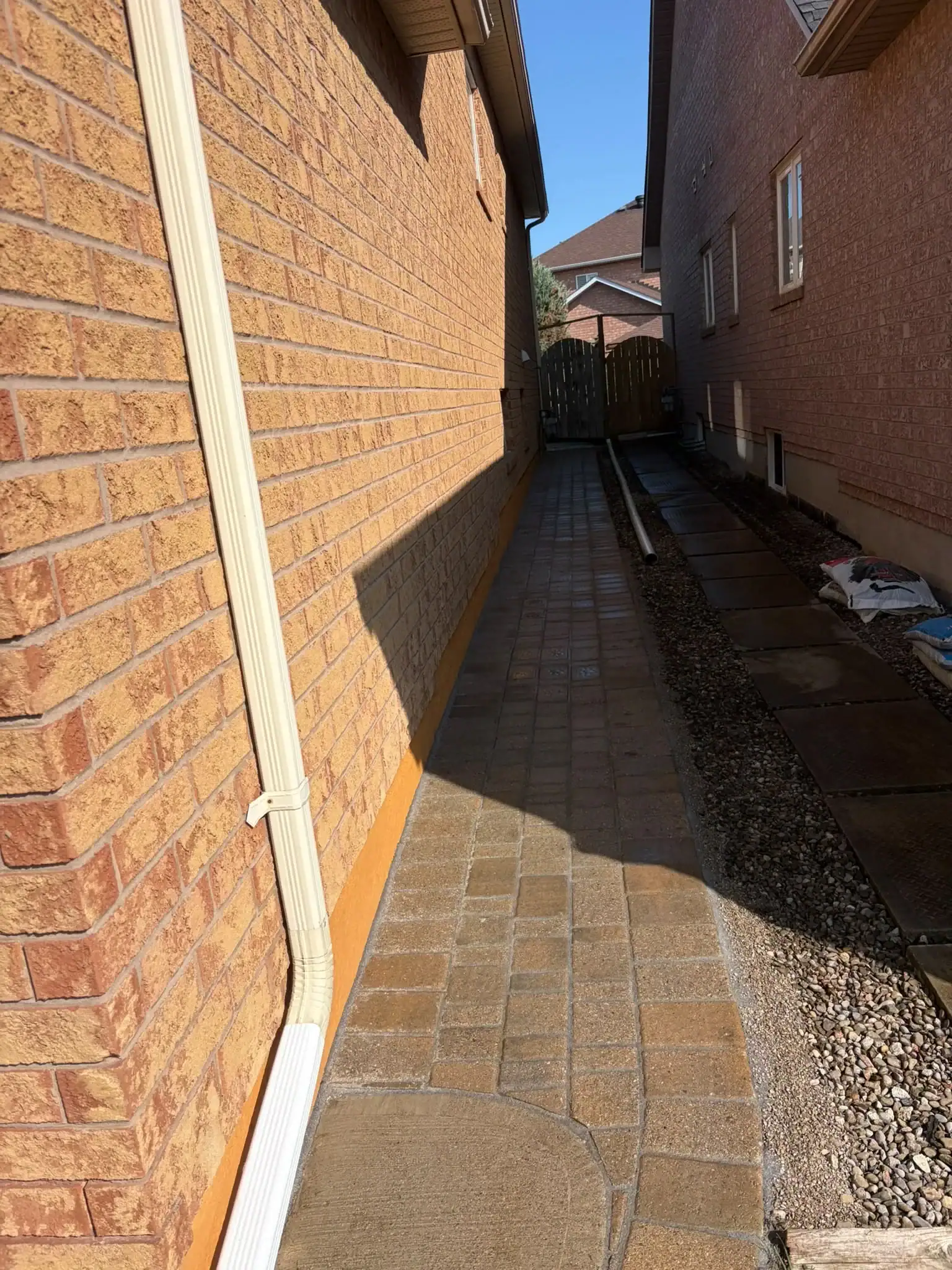
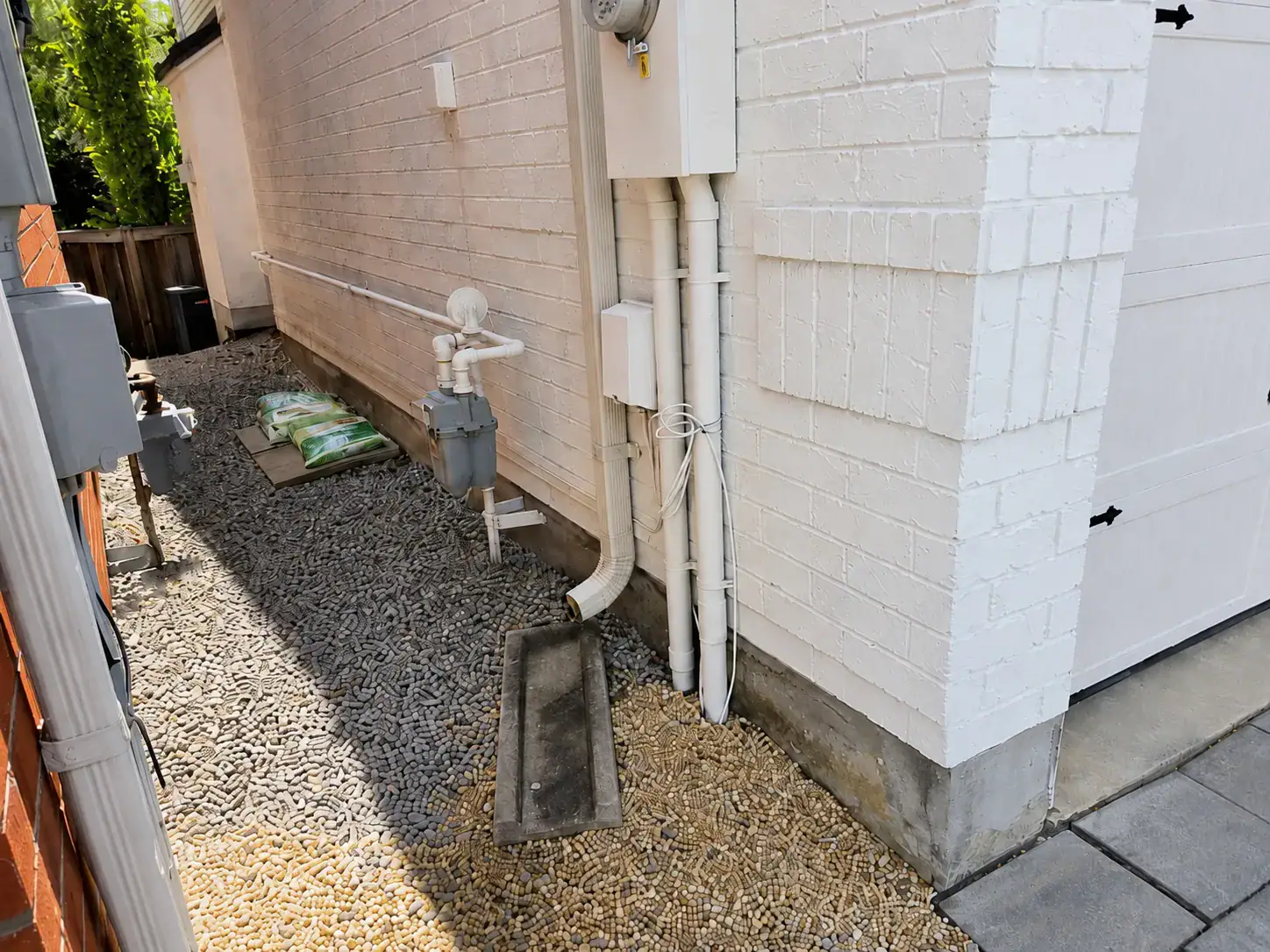
Downspouts should also carry meltwater away from walls and foundations rather than discharging directly beside the building.
Winter Roof Water Can Reach the Foundation
Snowmelt and roof runoff can eventually become a ground-level moisture problem.
If water spills from roof edges and collects beside the home, foundation and basement moisture risks can increase.
Look for:
- Ponding beside the foundation
- Short downspout extensions
- Snow piled against exterior walls
- Foundation cracks
- Deteriorated parging
- Water entering basement areas
If roof runoff is contributing to foundation moisture, A&A Masonry’s foundation waterproofing page explains common exterior water-management options.
How Masonry Sealers Fit Into Winter Protection
Masonry sealers can help in limited situations, but they are not an ice-dam solution.
A suitable breathable water repellent may reduce absorption on some repaired masonry surfaces, but it will not fix:
- Failed mortar
- Cracked crowns
- Roof heat loss
- Failed flashing
- Active leaks
Unsuitable coatings can interfere with drying and trap moisture.
The appropriate order is to identify the water source, repair damaged masonry, allow suitable drying and then determine whether a compatible water-repellent treatment is useful.
A&A Masonry’s guide to masonry sealers explains when these products may and may not be appropriate.
Warning Signs of Ice-Dam-Related Masonry Problems
- Water stains near chimneys: These may involve flashing, crowns, caps or mortar.
- Spalling brick near the roofline: Repeated wetting and freezing may be contributing to deterioration.
- Open mortar joints: Missing or recessed mortar creates additional water-entry paths.
- Cracked chimney crowns: Water may enter through damaged top surfaces.
- Loose coping stones: Failed parapet caps can expose wall tops.
- Water overflowing below roof edges: This can soak lower masonry and foundation areas.
- White staining: Efflorescence can indicate moisture moving through masonry.
- Leaks after snowmelt: Winter leaks may follow different paths from ordinary rain.
These signs do not prove that an ice dam is the only cause. They show that winter moisture is reaching areas that should be reviewed.
What Homeowners Can Check Before Winter
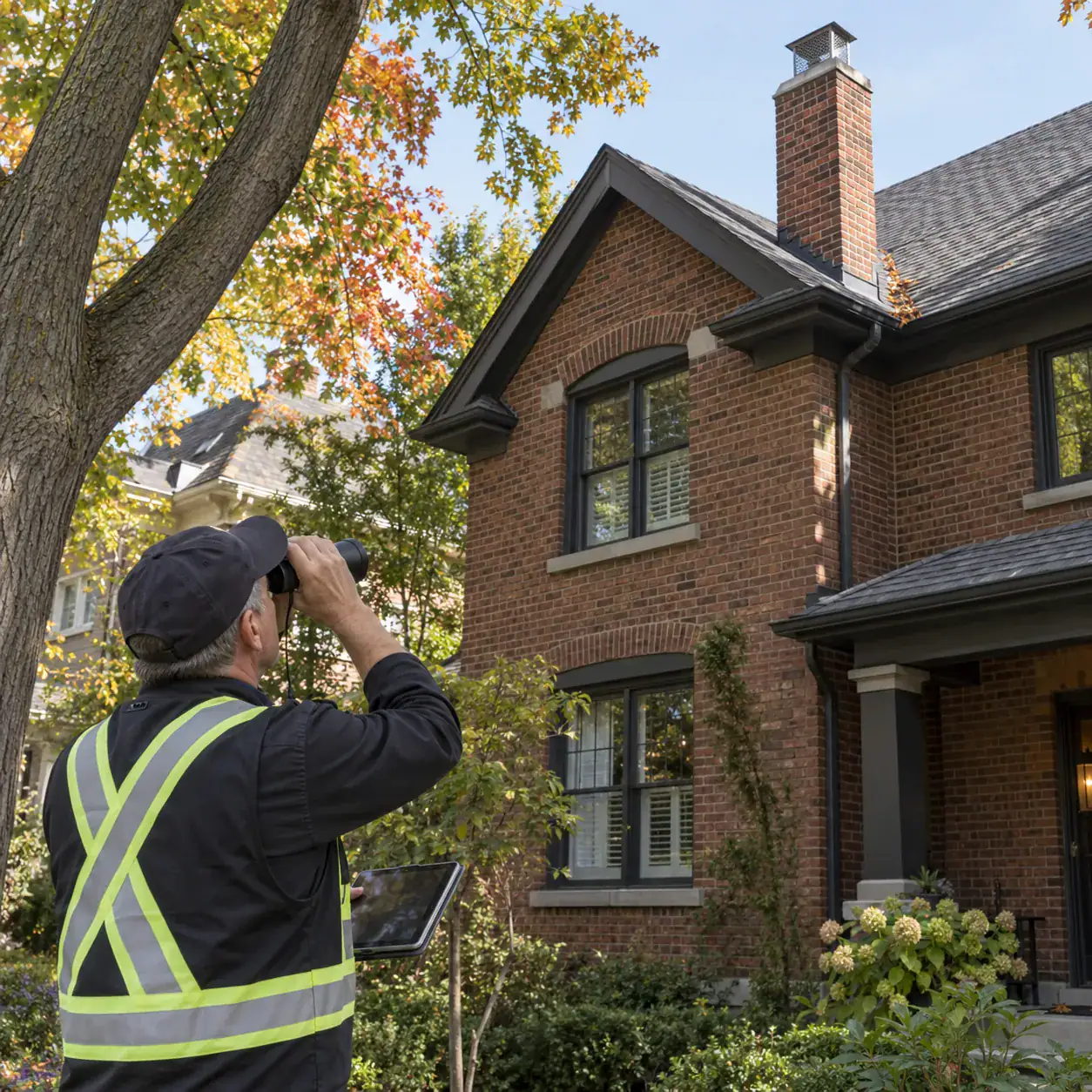
- Look at chimneys from the ground for cracked crowns, missing caps and deteriorated mortar.
- Check visible roof-to-wall junctions for staining or gaps.
- Clear gutters where it is safe to do so.
- Make sure downspouts move water away from walls and foundations.
- Watch for spalling brick near rooflines and chimney tops.
- Check ceilings and attic areas for old water staining.
- Photograph problem areas so changes can be compared later.
- Complete appropriate chimney, mortar or brick repairs before prolonged freezing conditions when possible.
Do not climb onto an icy roof simply to inspect an ice dam.
What Not to Do During an Ice Dam
- Do not aggressively chip ice: Picks, axes and similar tools can damage shingles, flashing, gutters and masonry.
- Do not repeatedly pour hot water onto the area: Refreezing can create additional ice and rapid temperature changes can affect exterior materials.
- Do not coat wet masonry: Trapping moisture can worsen freeze-thaw deterioration.
- Do not ignore an active leak: Interior water entry should be addressed promptly.
- Do not assume masonry is the root cause: Roofing, attic heat loss and flashing may be involved.
- Do not climb onto an icy roof: Winter roof surfaces can be extremely hazardous.
If water is entering the home, prioritize personal safety and limiting interior damage. The roof, attic, flashing and masonry can then be assessed to determine the source.
Permits, Code and Larger Repairs
Permit or code questions may become relevant when winter damage leads to major chimney rebuilding, structural repairs, roof reconstruction, fireplace or venting changes, or substantial exterior wall alterations.
Small maintenance repairs are different from rebuilding or structurally altering part of the property.
If chimney damage affects a fireplace or fuel-burning appliance, appropriate venting and carbon-monoxide safety should also be considered.
Quick Guide: Which Professional May Need to Help?
- Recurring roof-edge ice dams: Roofing, insulation or building-envelope professional.
- Attic heat loss or air leakage: Insulation or energy/building-envelope professional.
- Damaged shingles or roof underlayment: Roofing professional.
- Flashing problems: Roofing or appropriately qualified exterior contractor depending on the detail.
- Cracked chimney crown or damaged cap: Masonry/chimney repair professional.
- Open chimney or wall mortar: Masonry contractor.
- Spalling brick: Masonry contractor.
- Parapet or coping deterioration: Masonry and roofing review may both be appropriate.
- Foundation water after snowmelt: Waterproofing and drainage assessment.
When Professional Help Makes More Sense
Professional assessment is appropriate when ice dams keep returning, water enters the home, brick is deteriorating near the roofline, chimney mortar is failing, crowns are cracked or parapet caps are loose.
A mason can assess brick, mortar, chimneys, crowns, caps, parapets and masonry water damage.
A roofer can review shingles, valleys, roof-edge details, underlayment, flashing and drainage.
An insulation or building-envelope professional may need to assess attic air leakage, insulation and other conditions if roof heat loss is contributing to recurring ice dams.
For broader exterior repair planning, A&A Masonry’s Toronto masonry services page outlines chimney repair, tuckpointing, brick repair, waterproofing, stone masonry and related exterior services.
Final Thoughts on Preventing Ice Dams with Proper Masonry Work
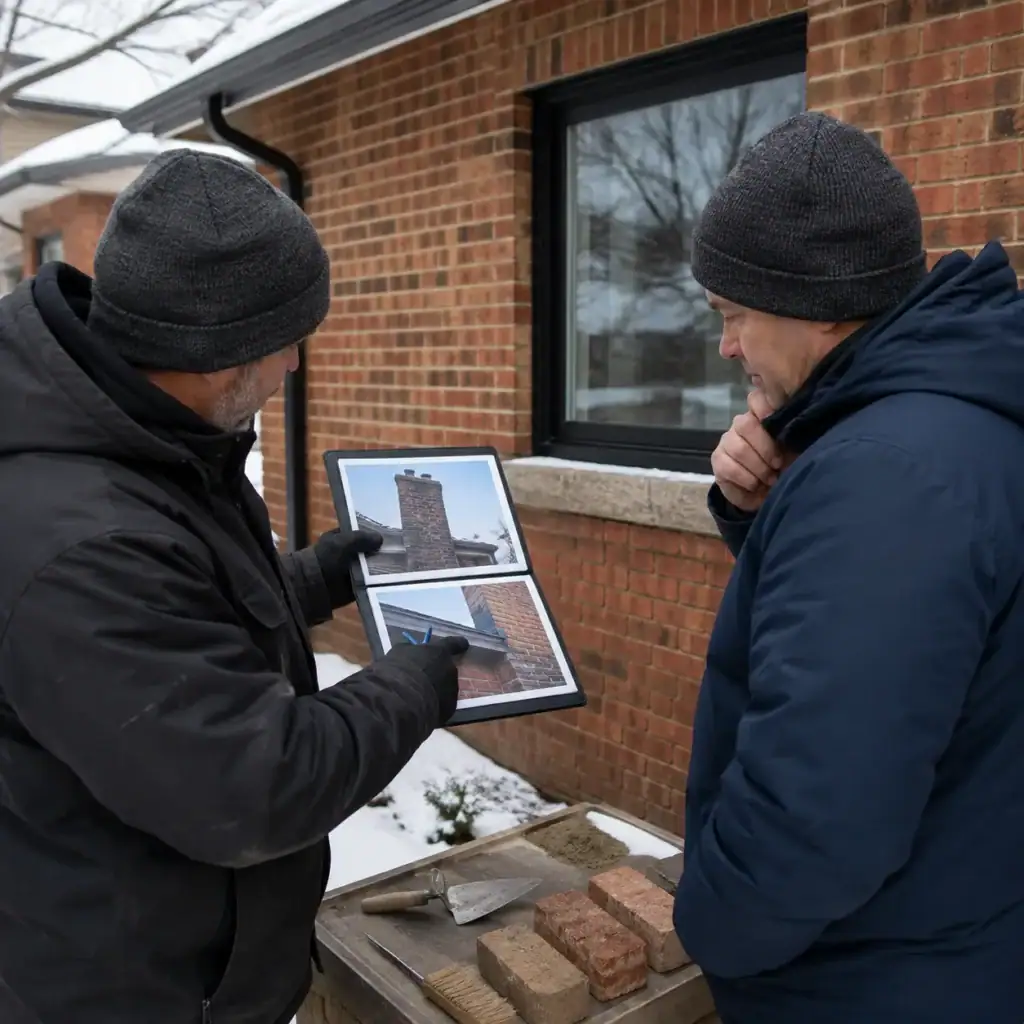
Masonry repair can reduce the damage caused when winter meltwater reaches chimneys, parapets, brick walls and roof-to-wall junctions, but it should not be treated as the primary solution for recurring roof ice dams.
The first priority is understanding why the roof is melting snow unevenly and whether attic heat loss, air leakage, insulation, roof design or roofing details need attention.
At the same time, cracked mortar, damaged chimney crowns, spalling brick, failed parapet details and other masonry weaknesses should be repaired so backed-up winter water has fewer opportunities to enter the building.
Recurring Ice Dams or Winter Roofline Leaks?
Ice dams are usually connected to heat loss, roof conditions and snowmelt, but the resulting water can also expose problems around flashing, chimneys, parapets and roofline masonry.
A&A Masonry can review the exterior roof and masonry areas involved and help determine whether roofing, chimney repair, mortar repair or another exterior service should be part of the solution.