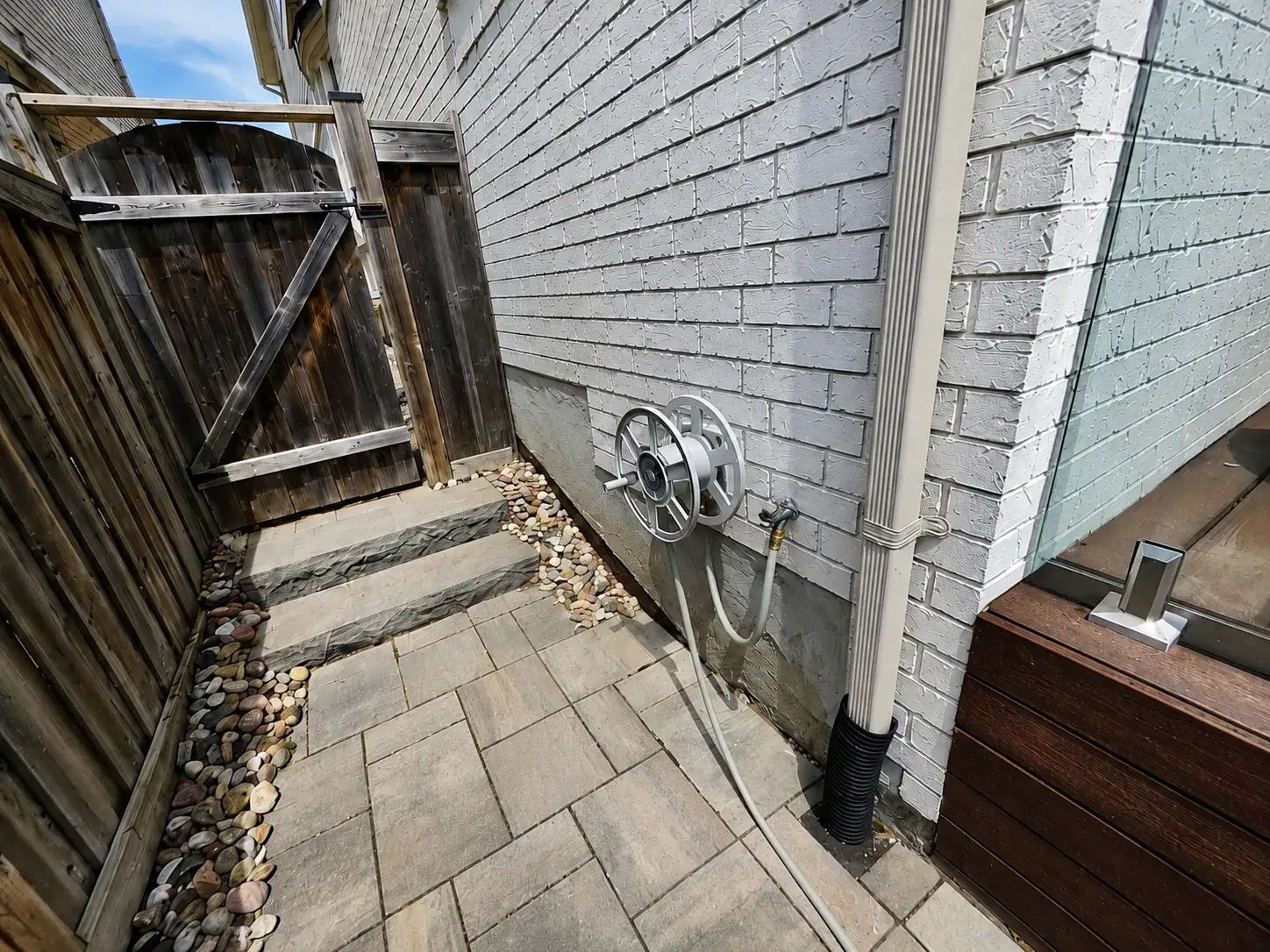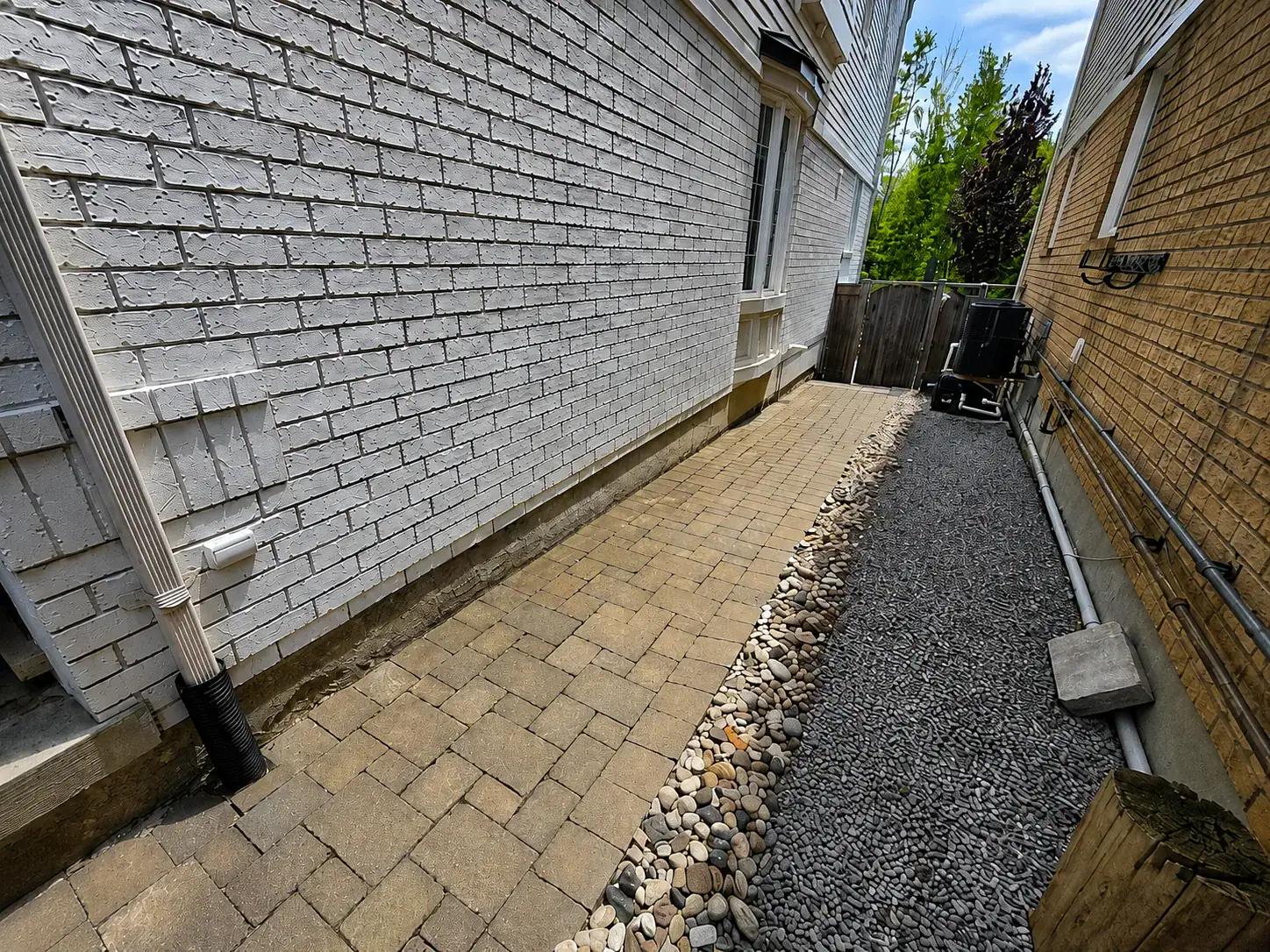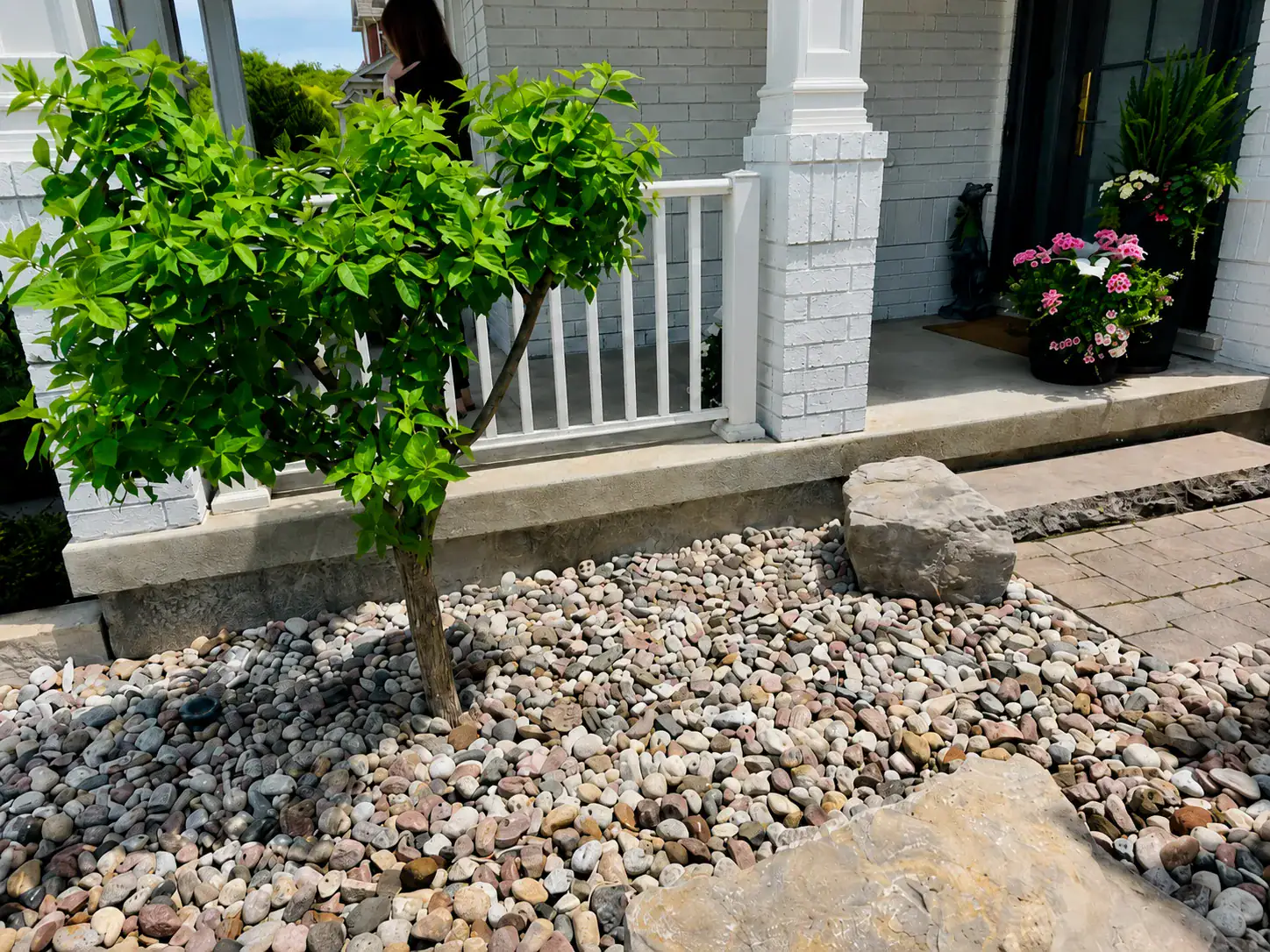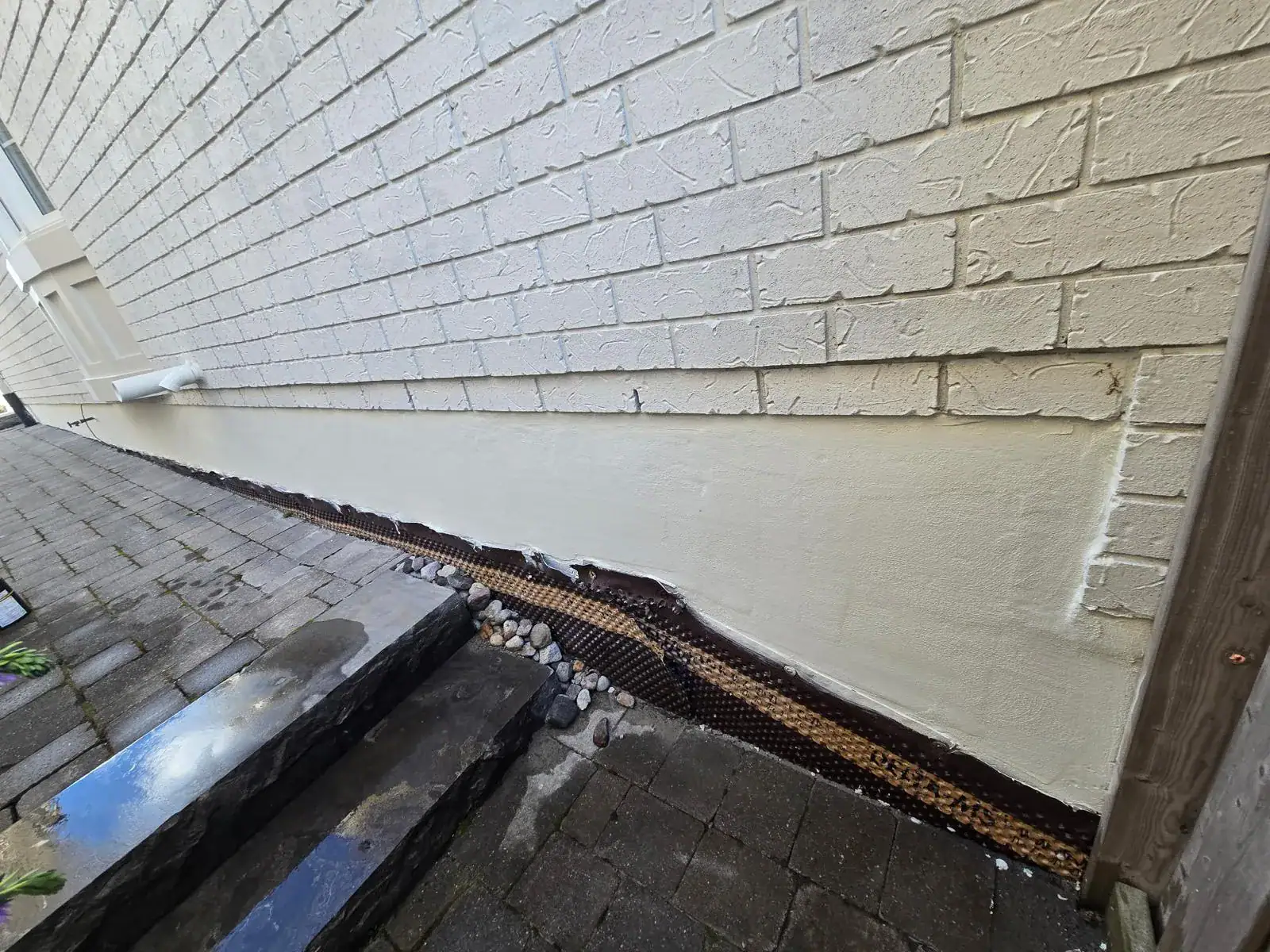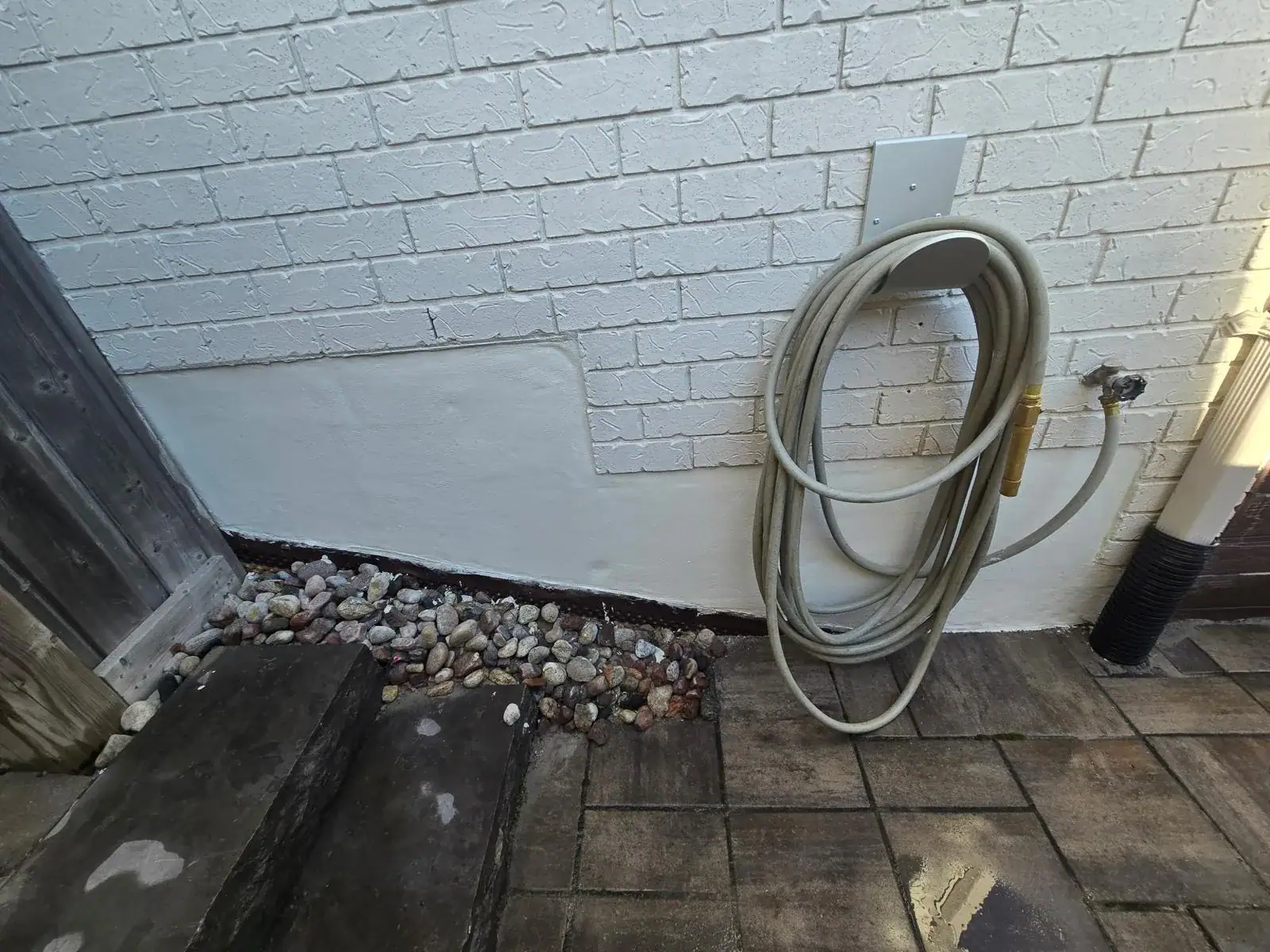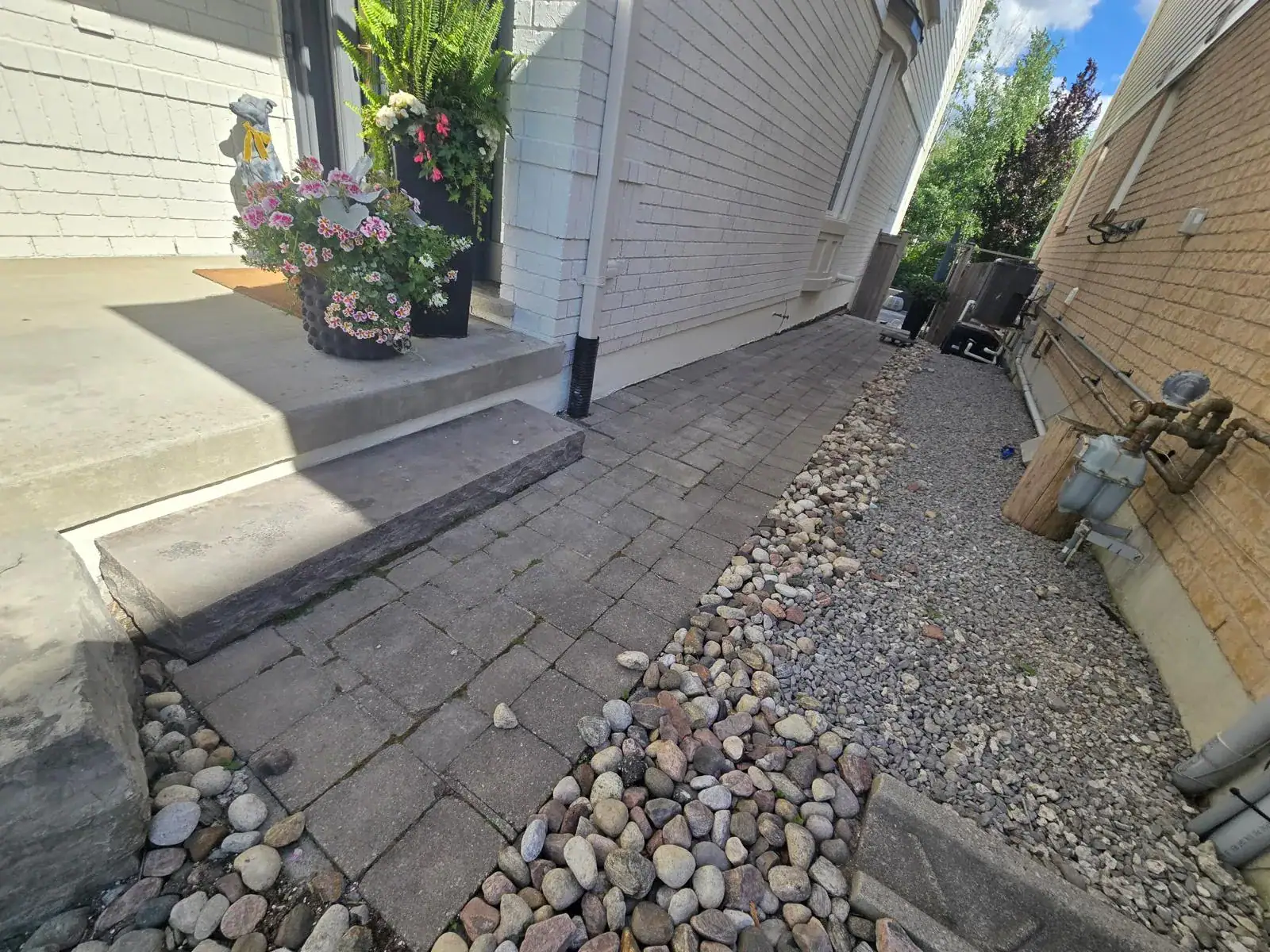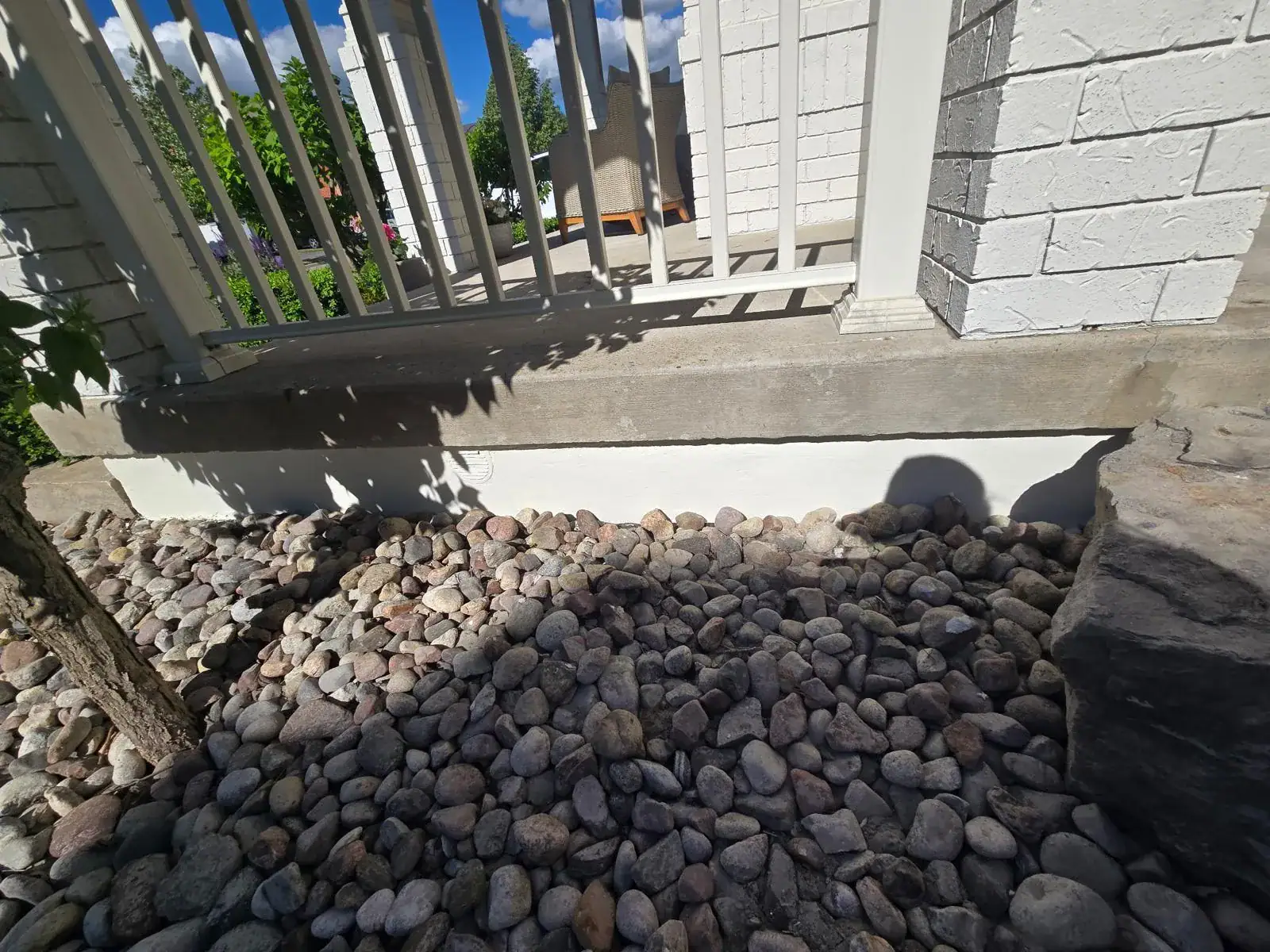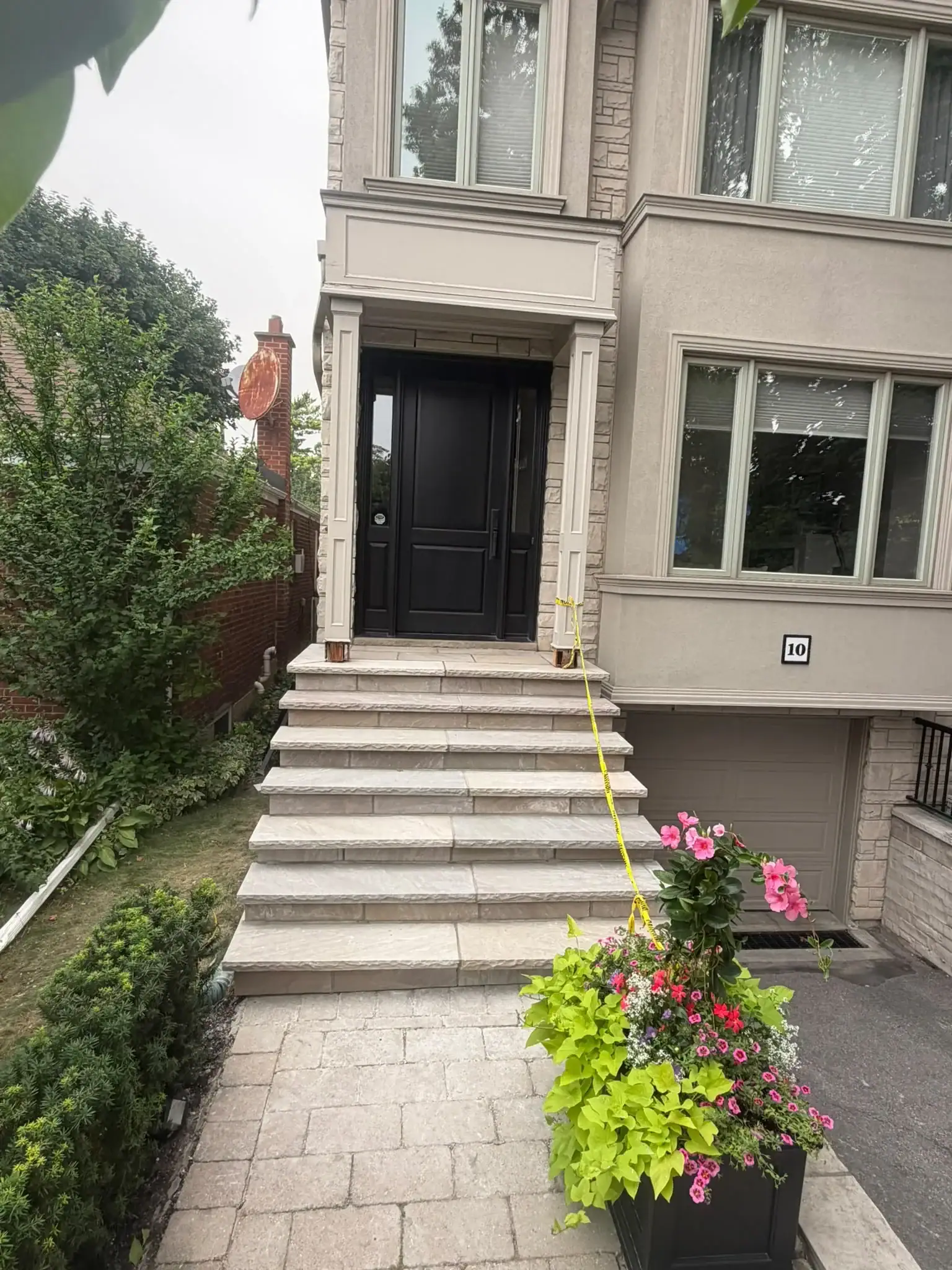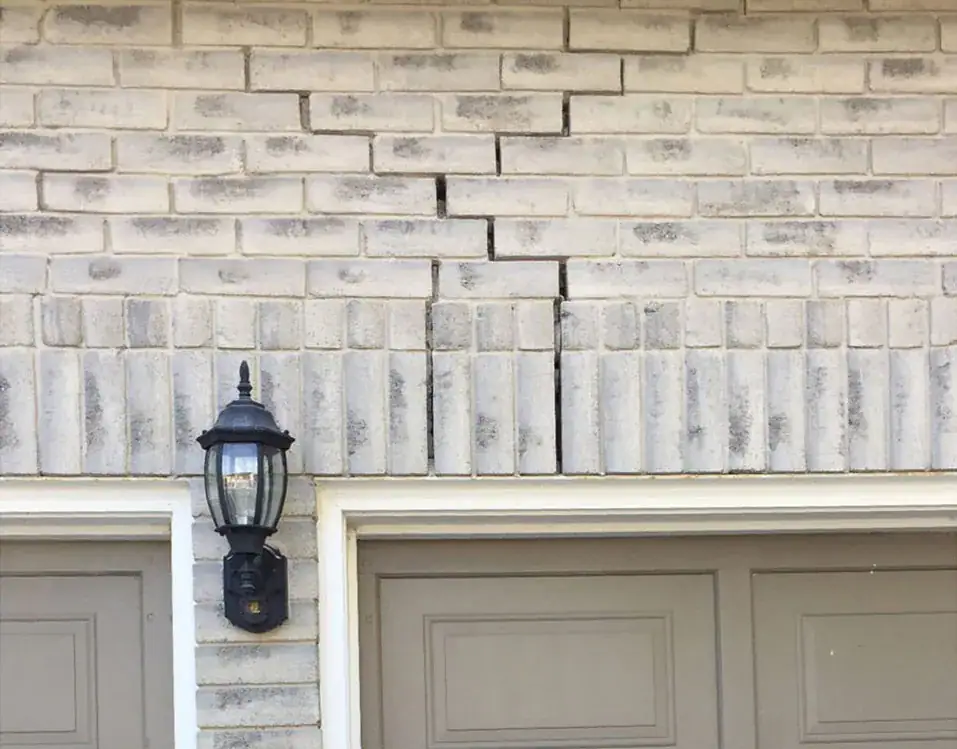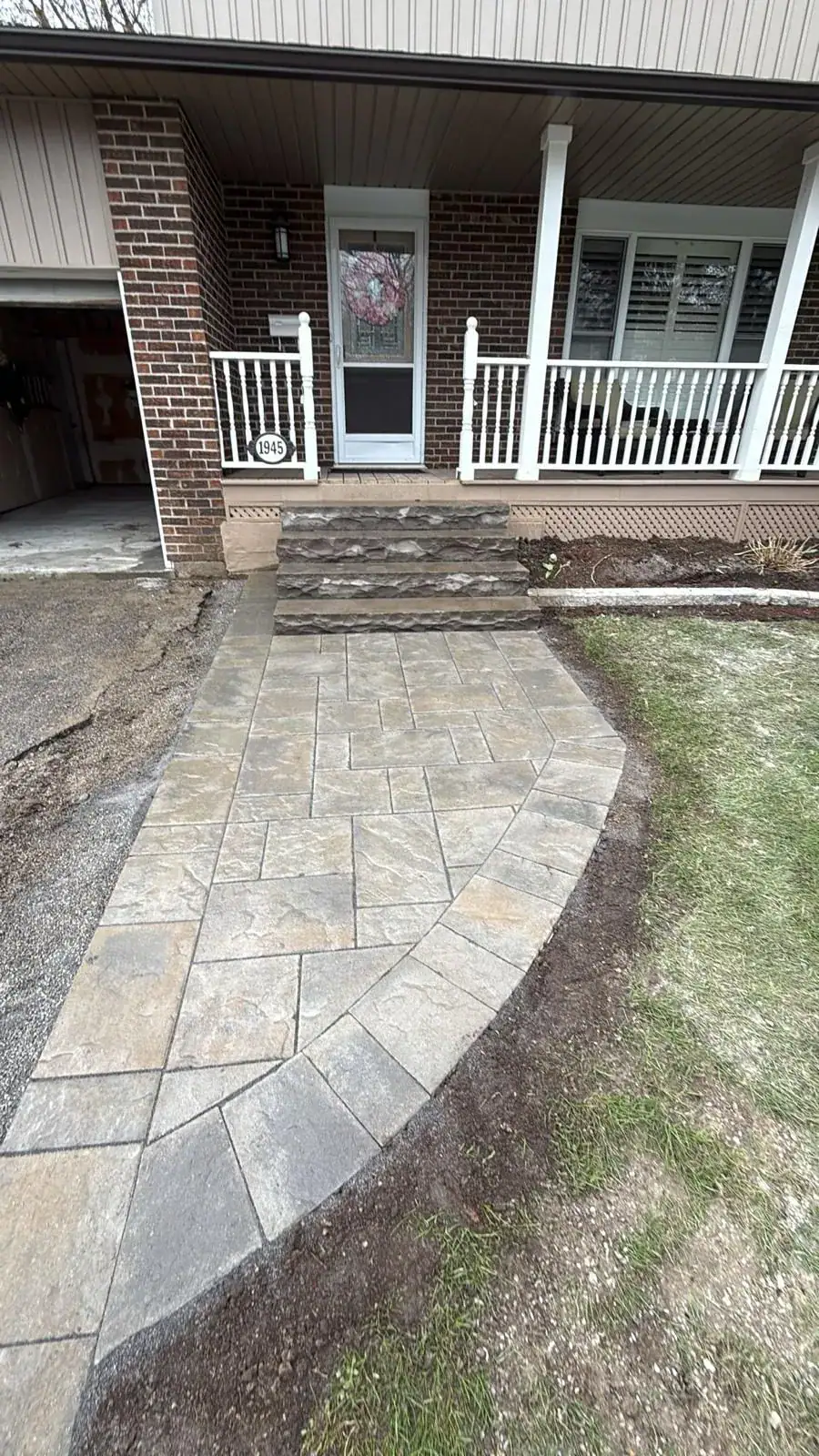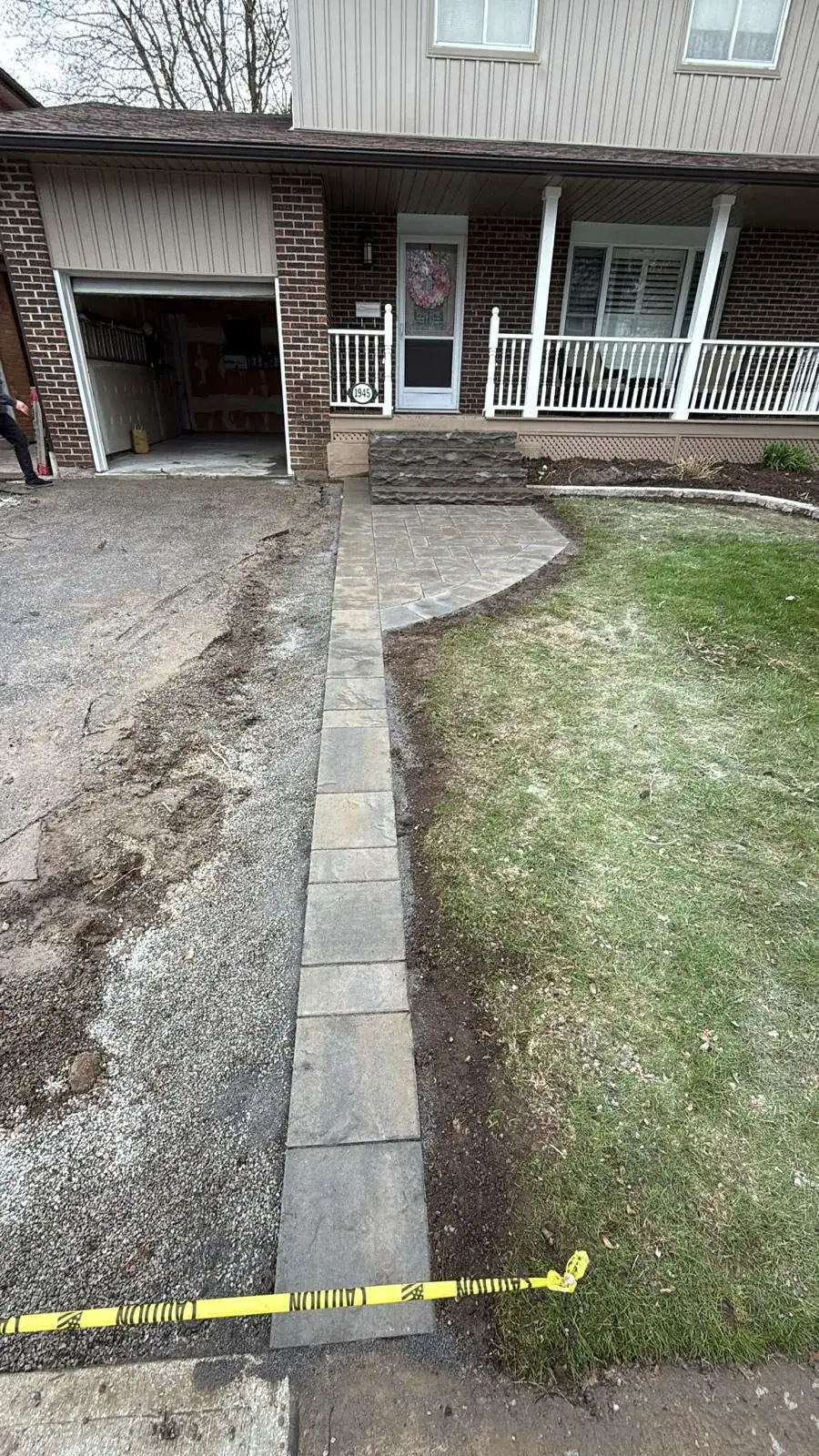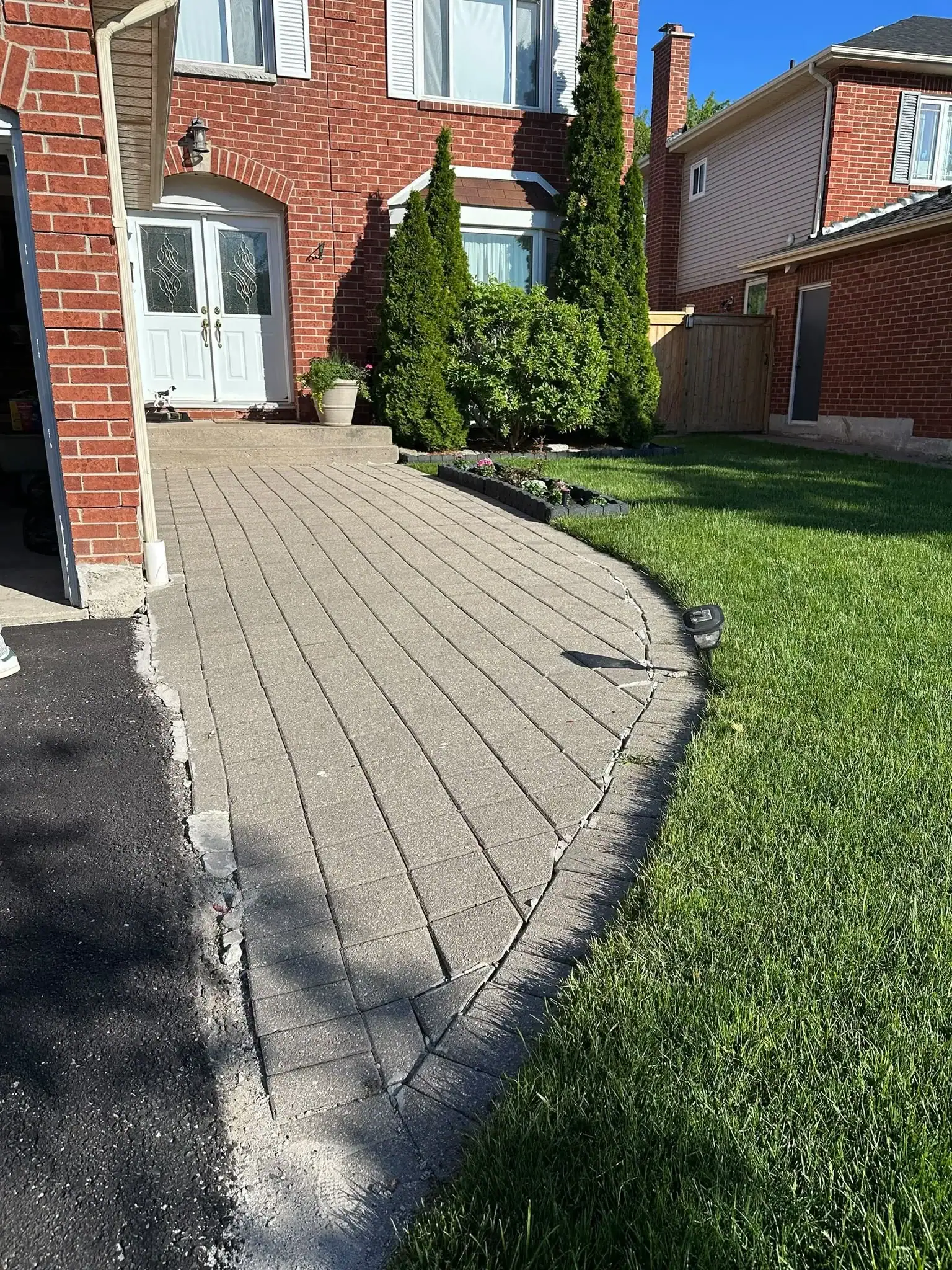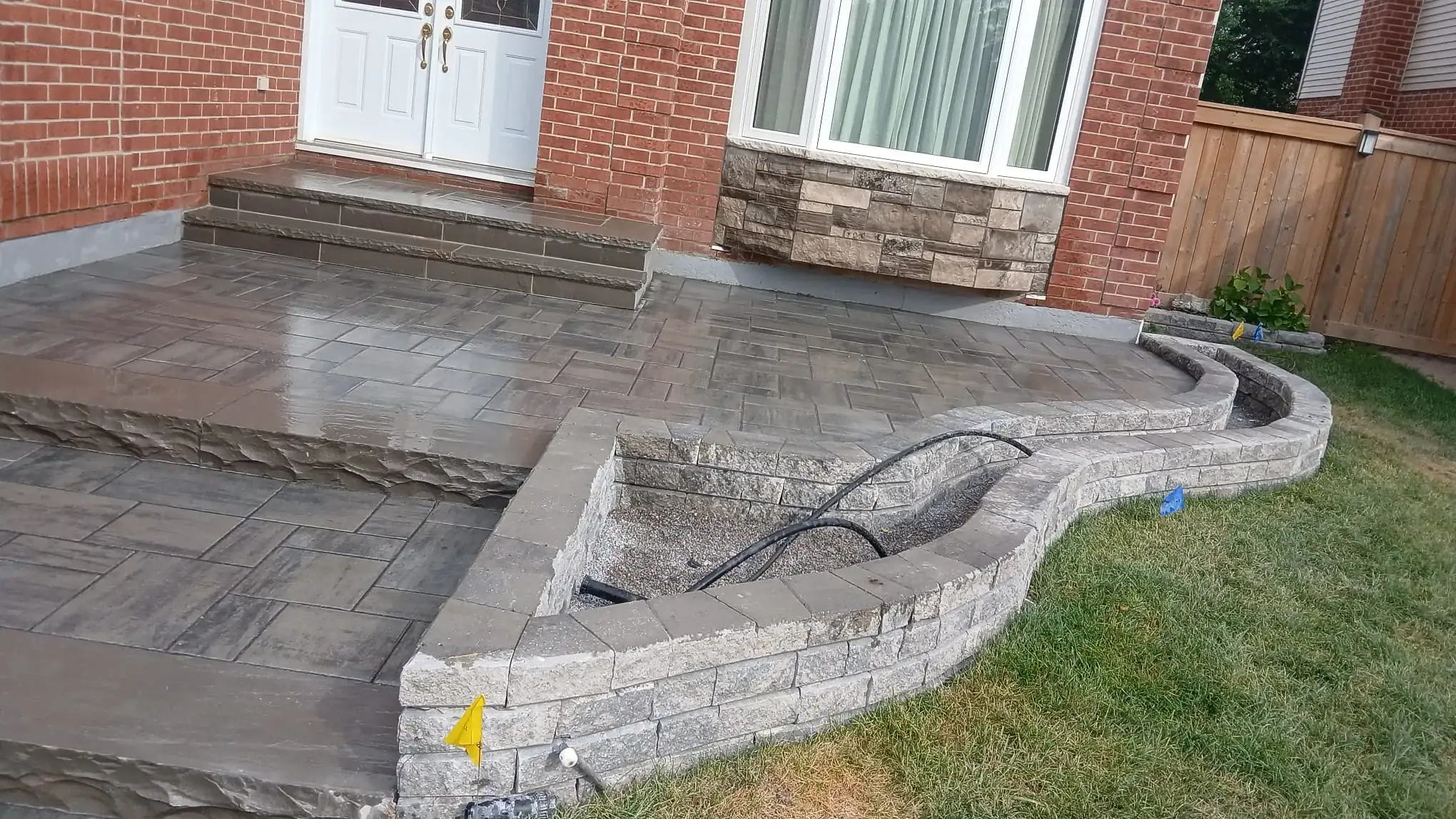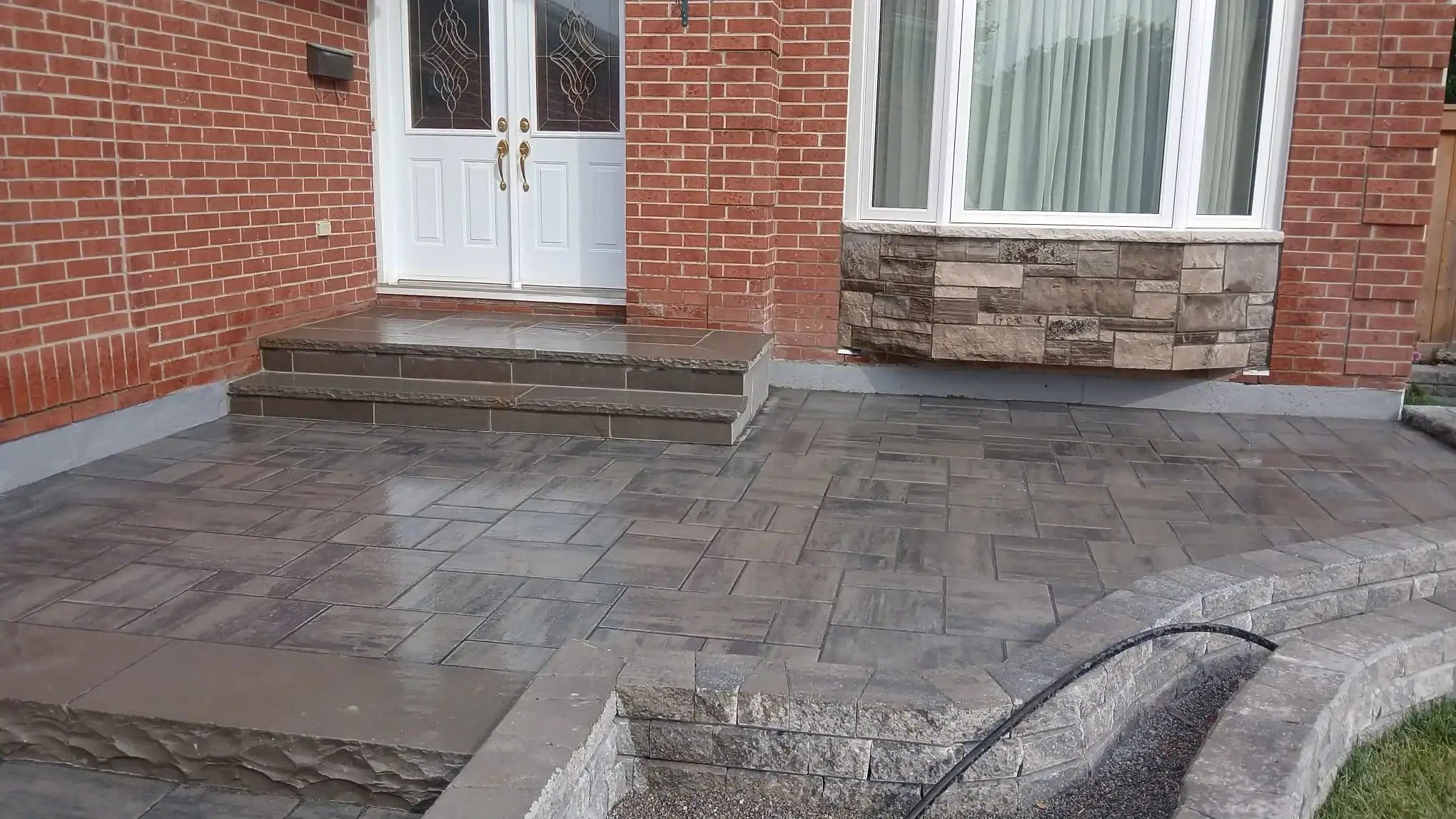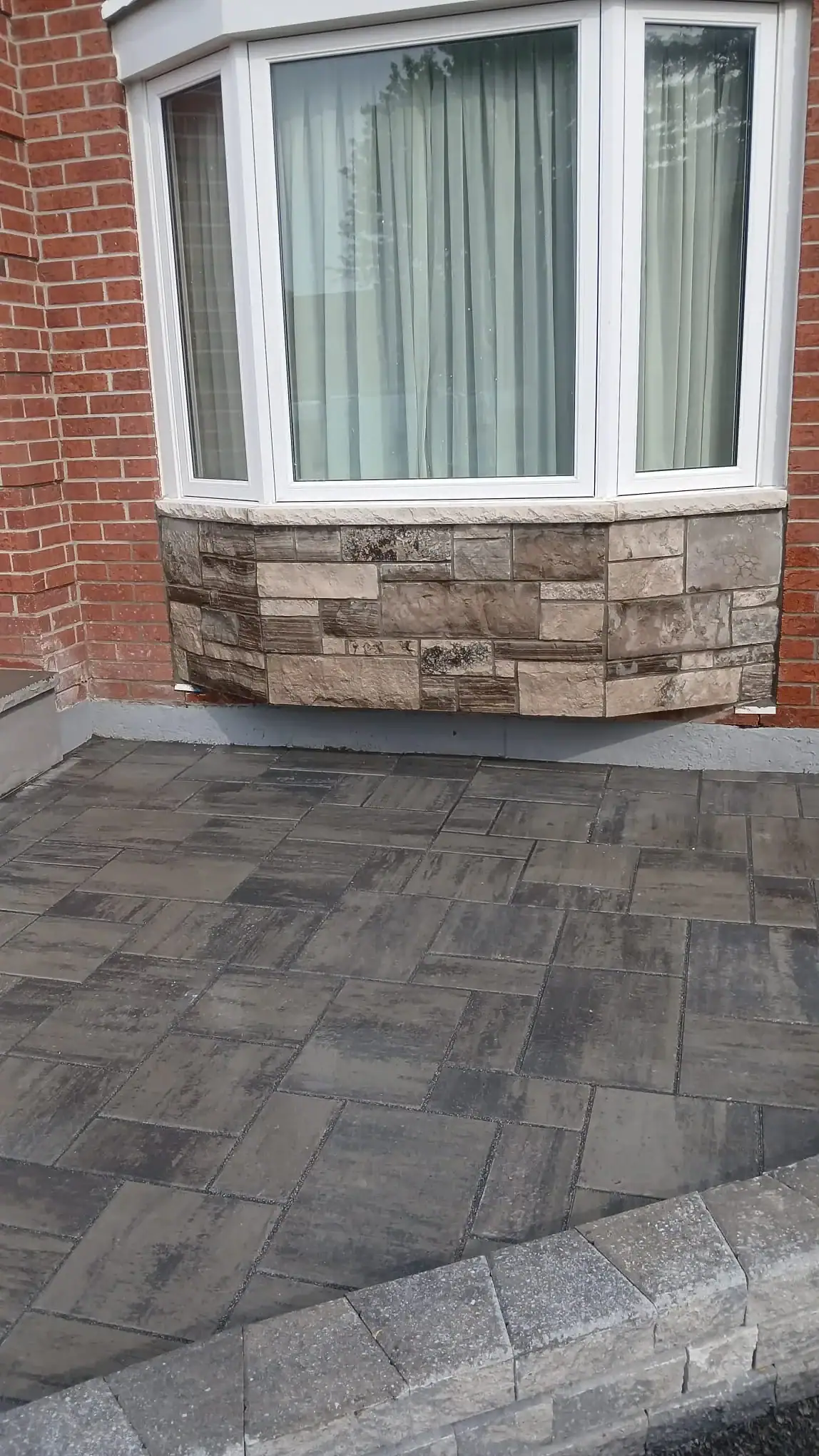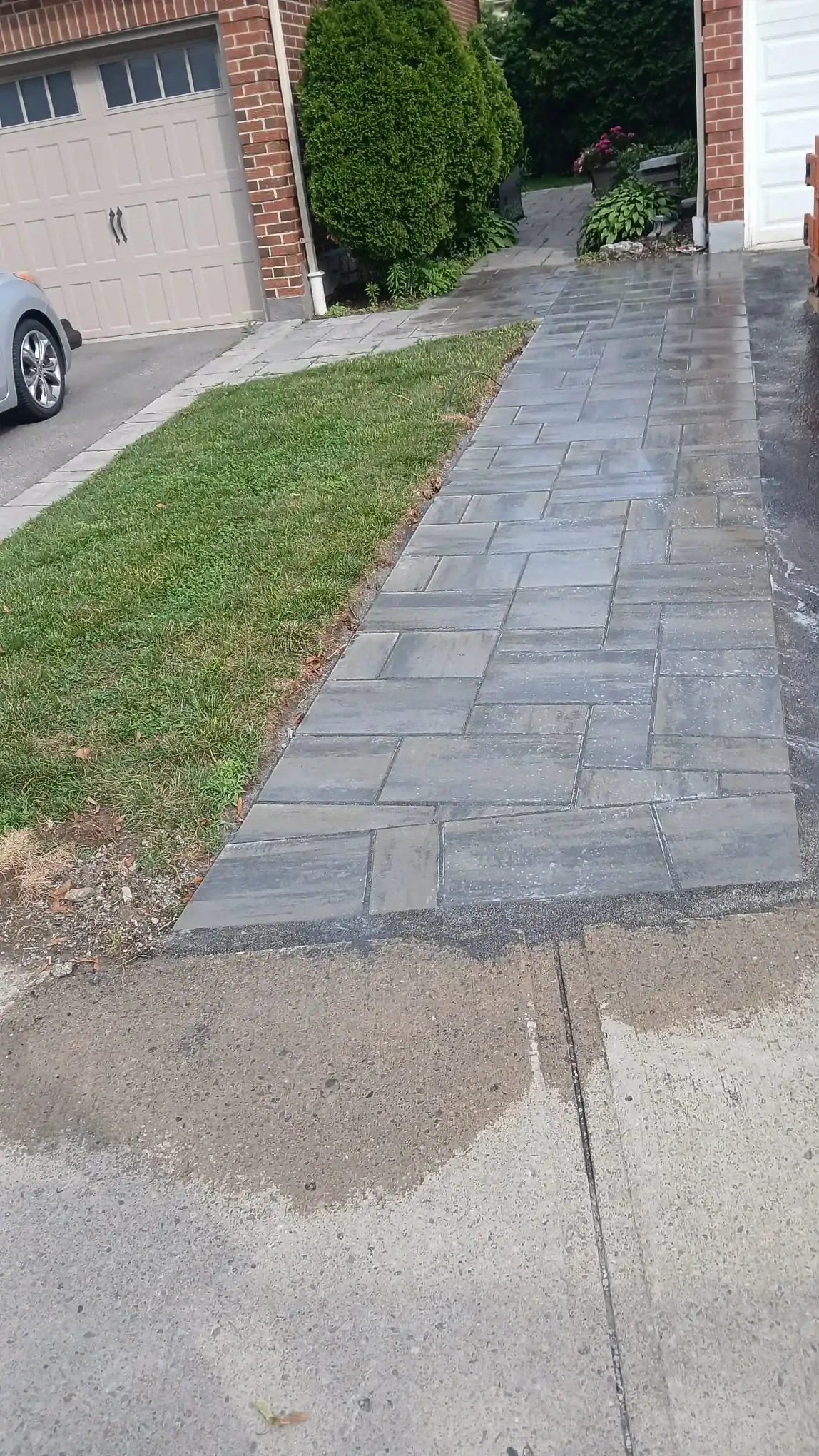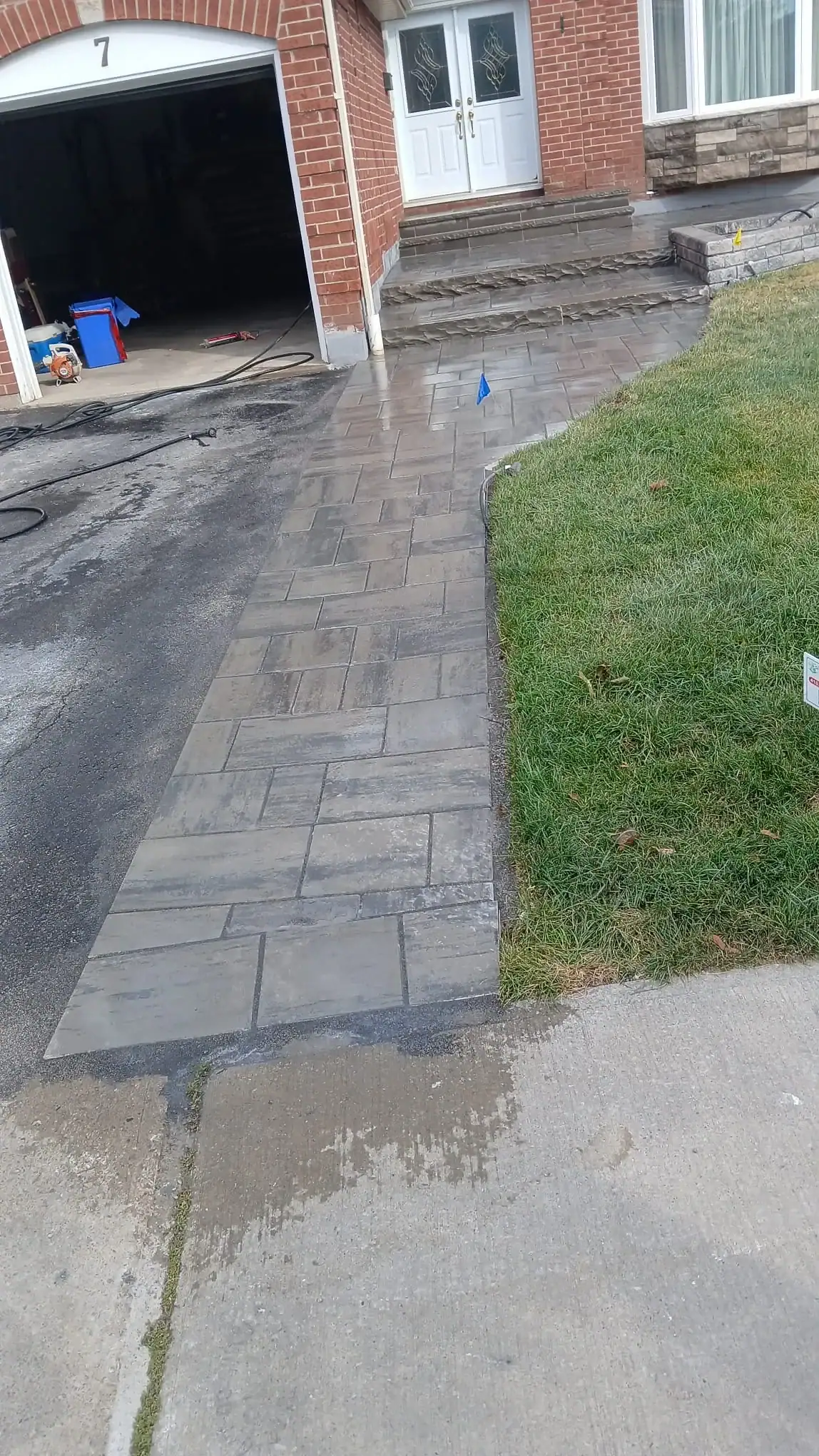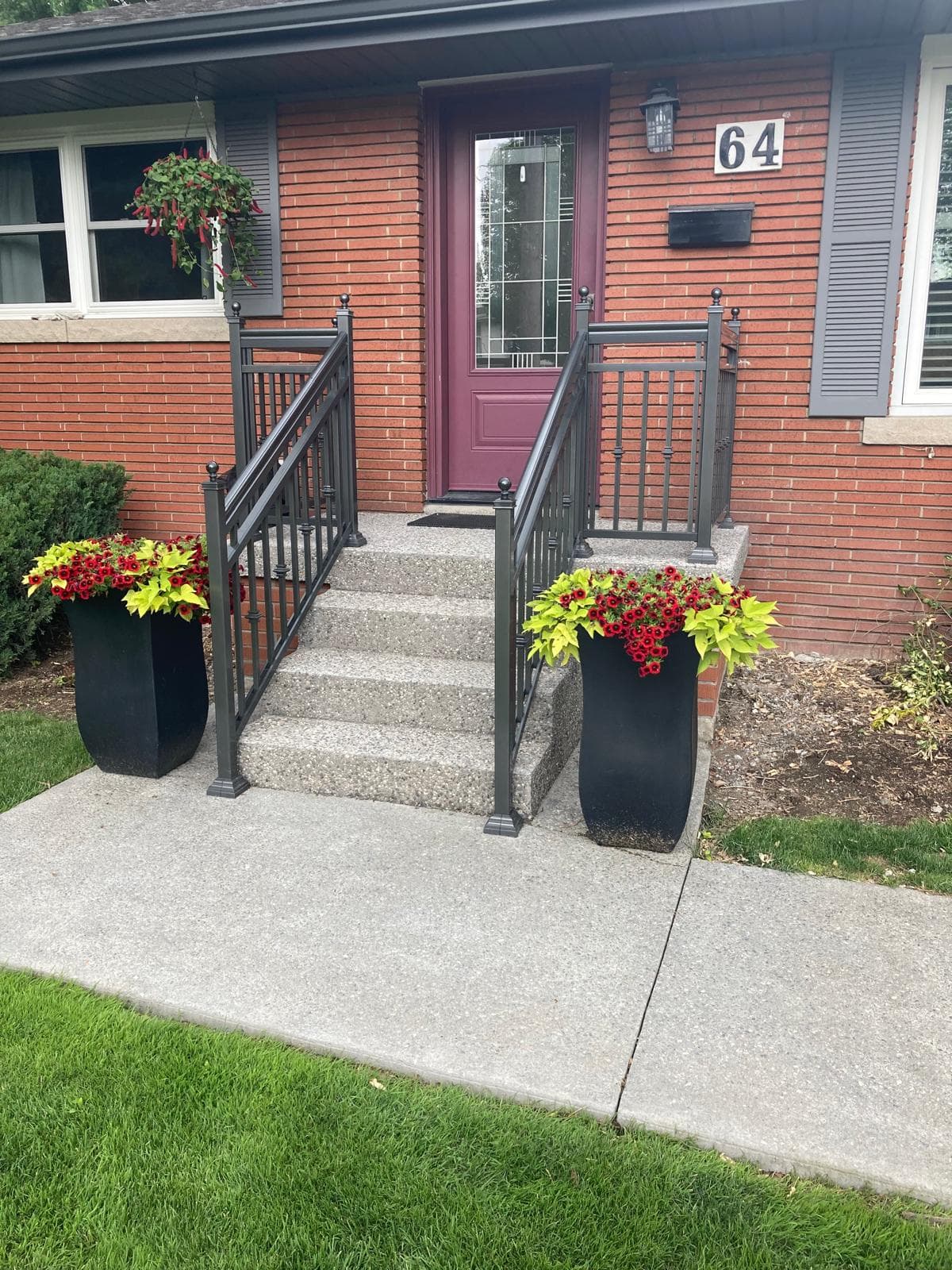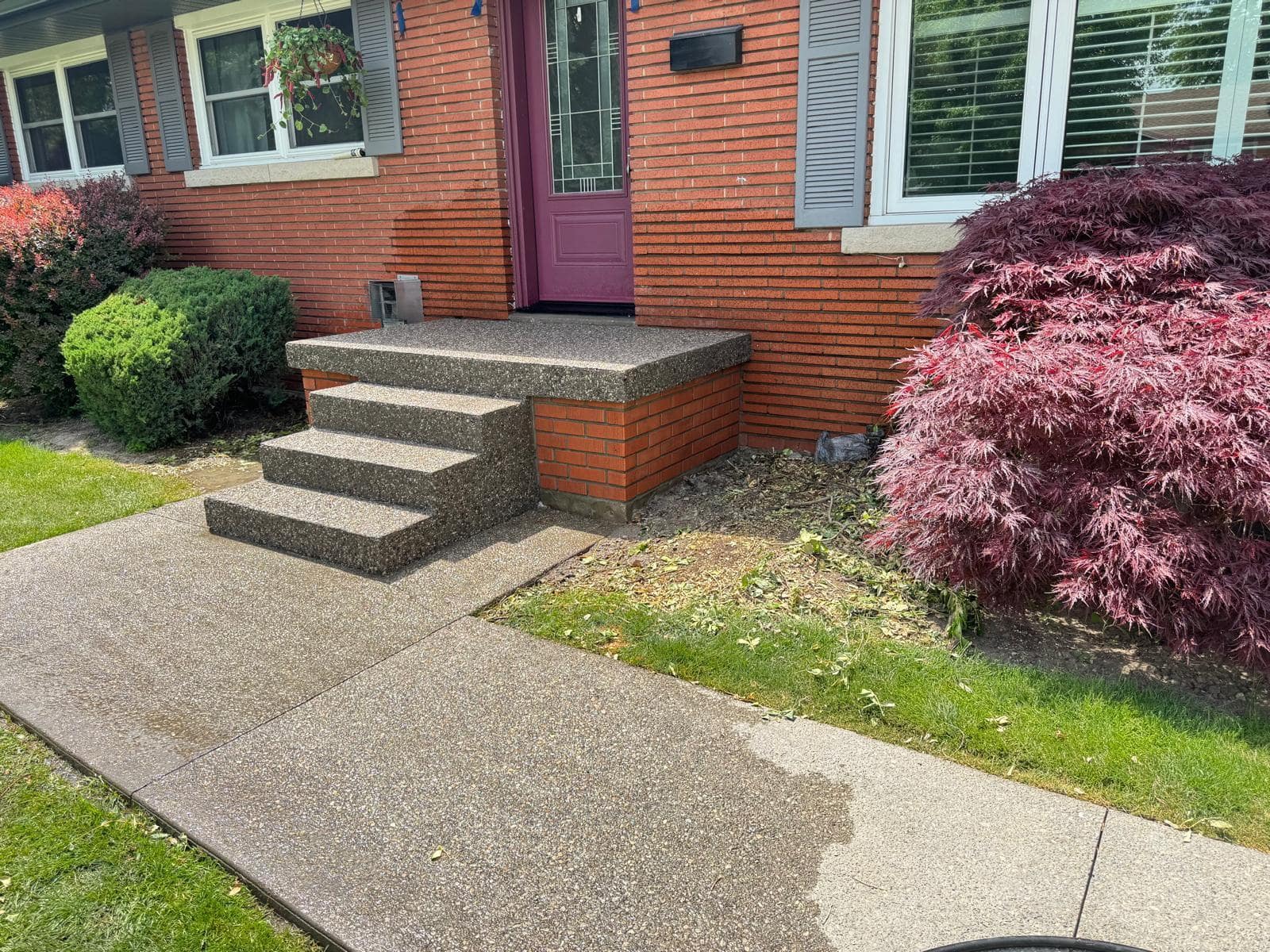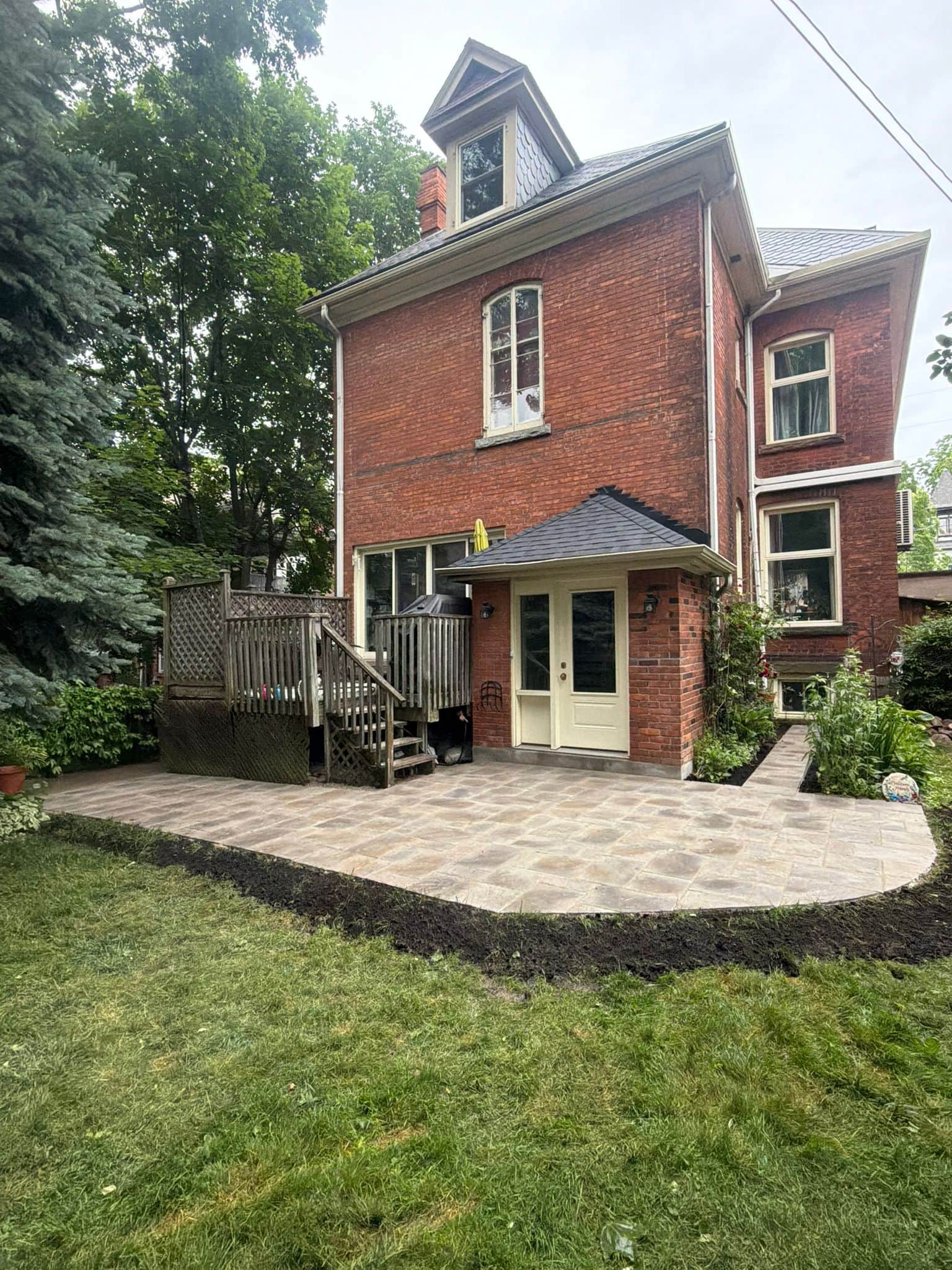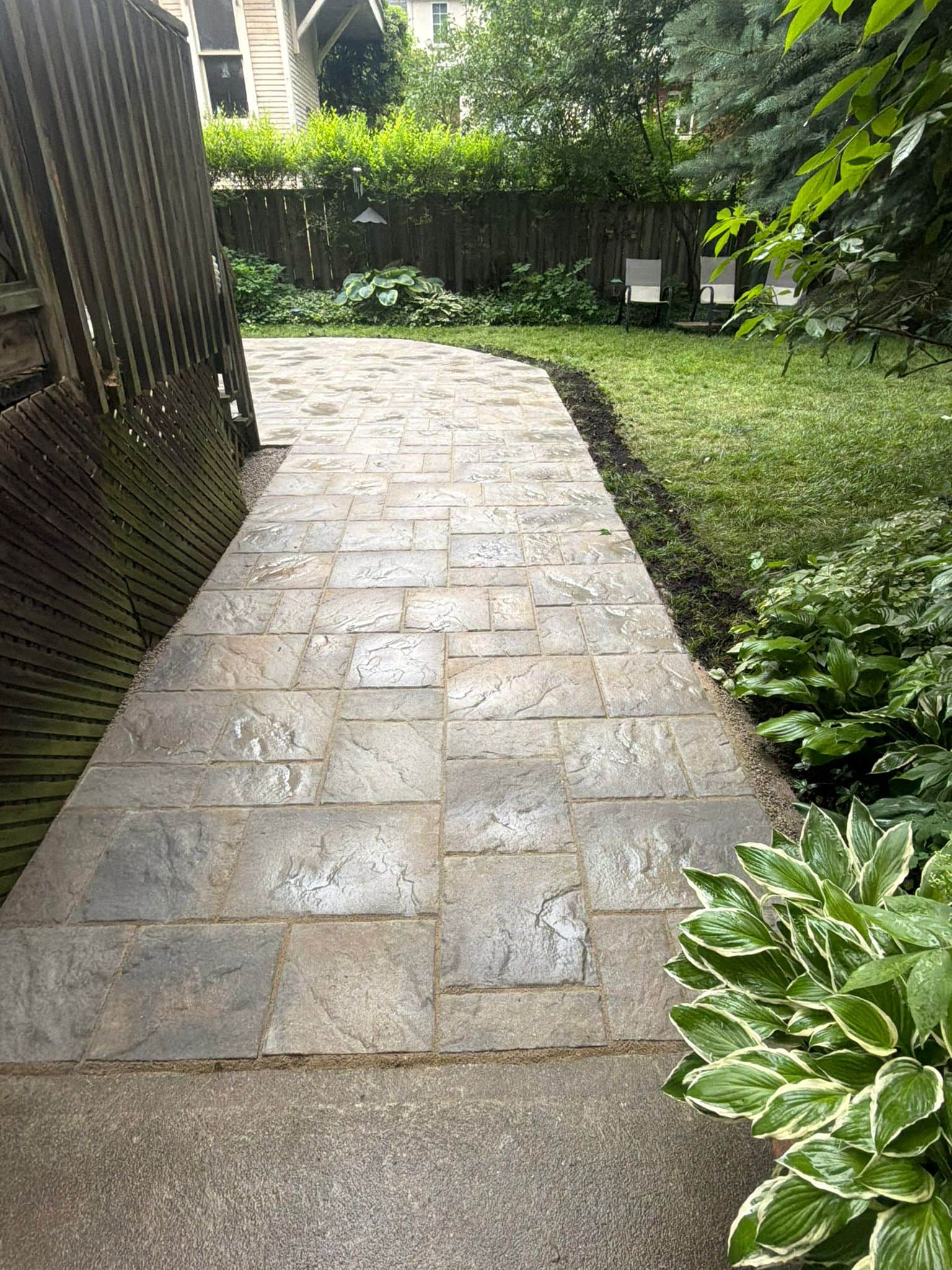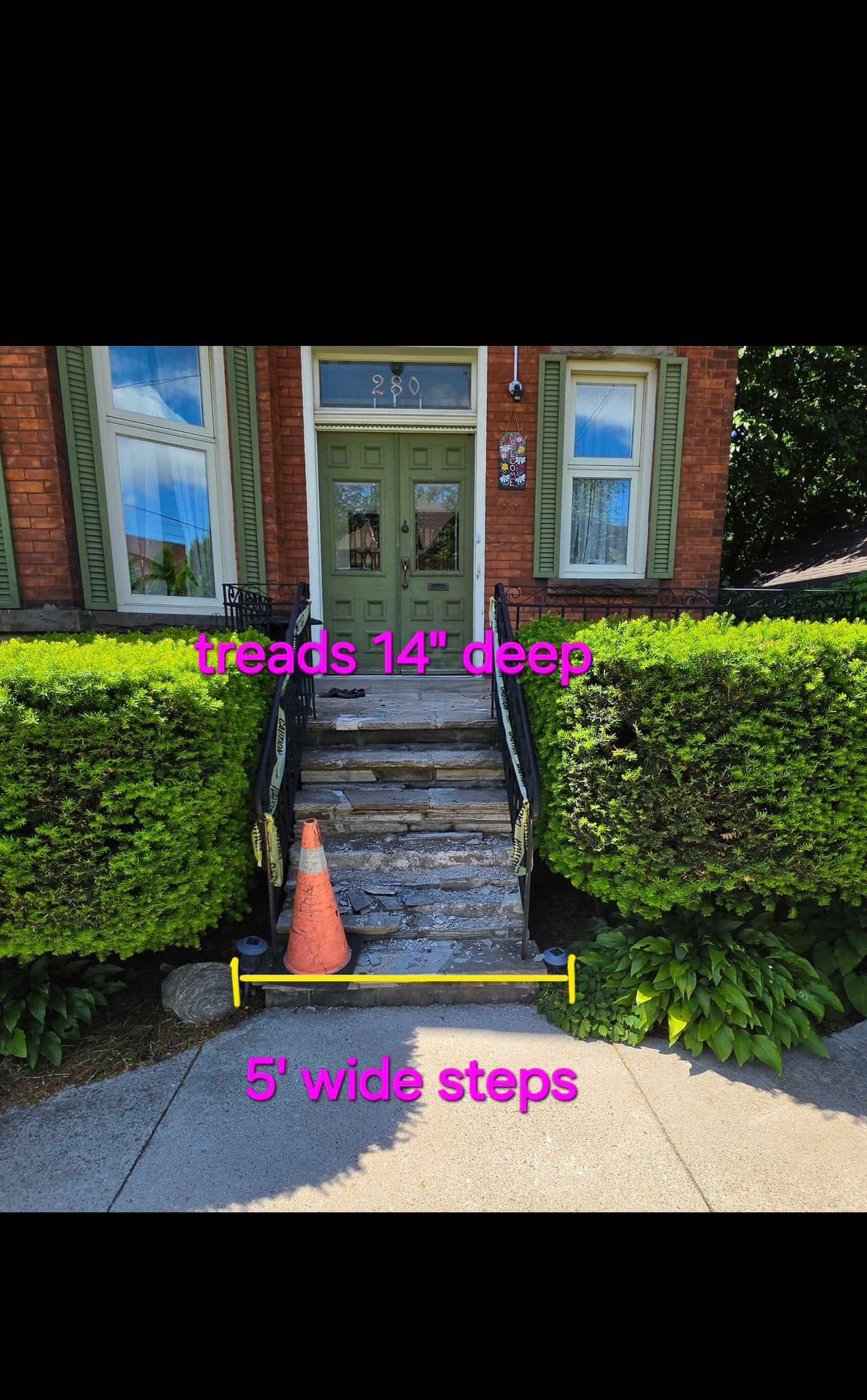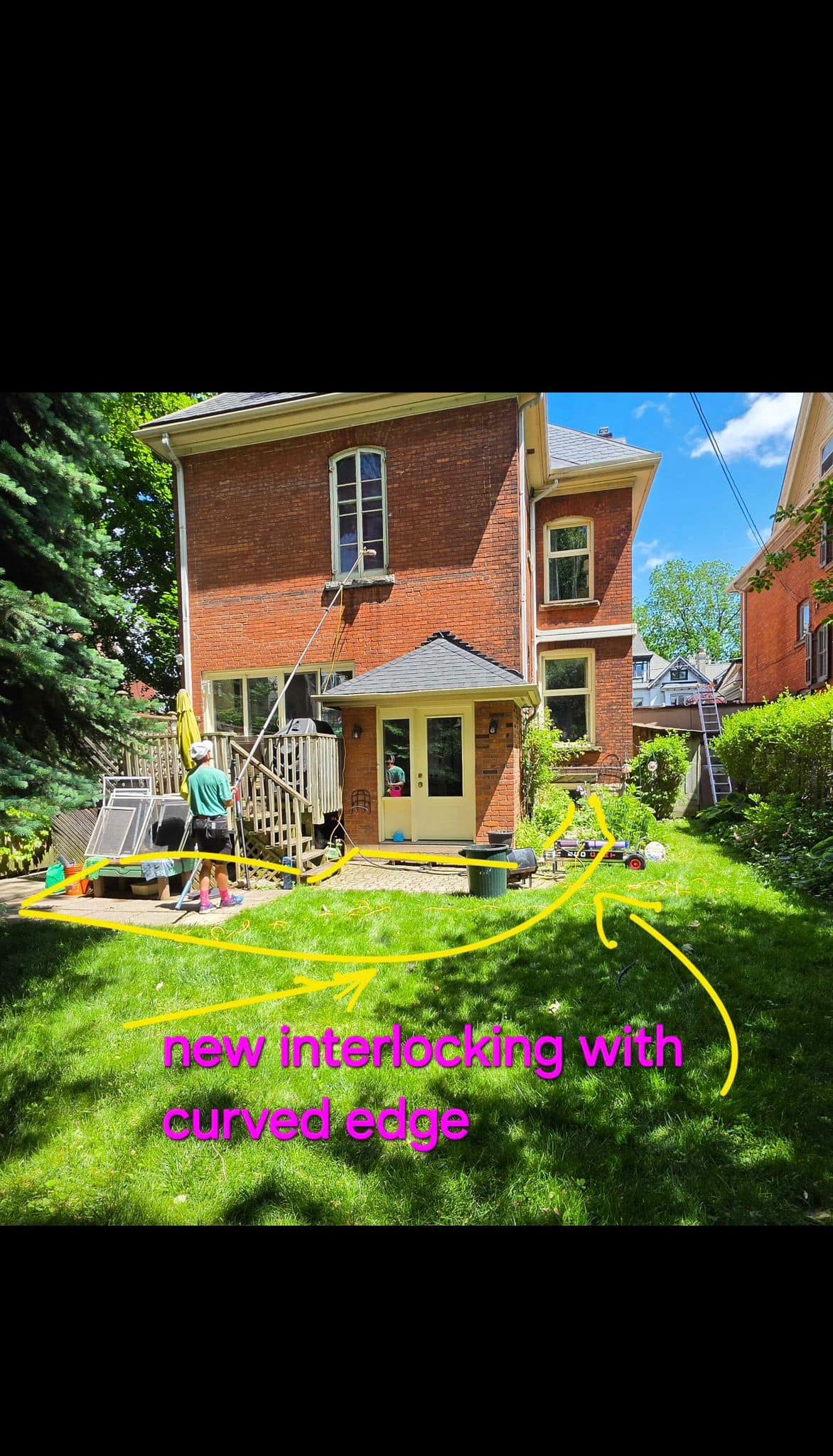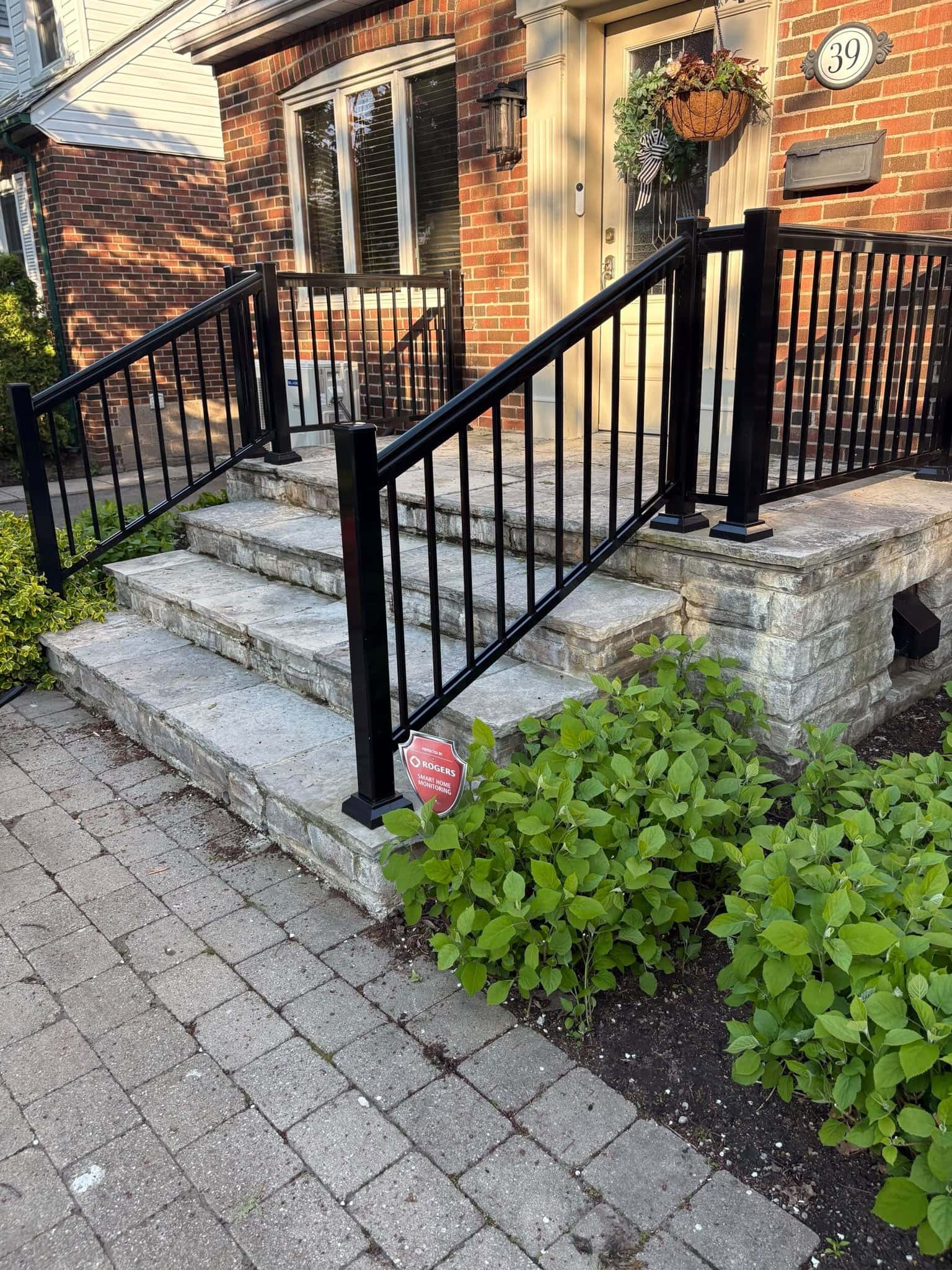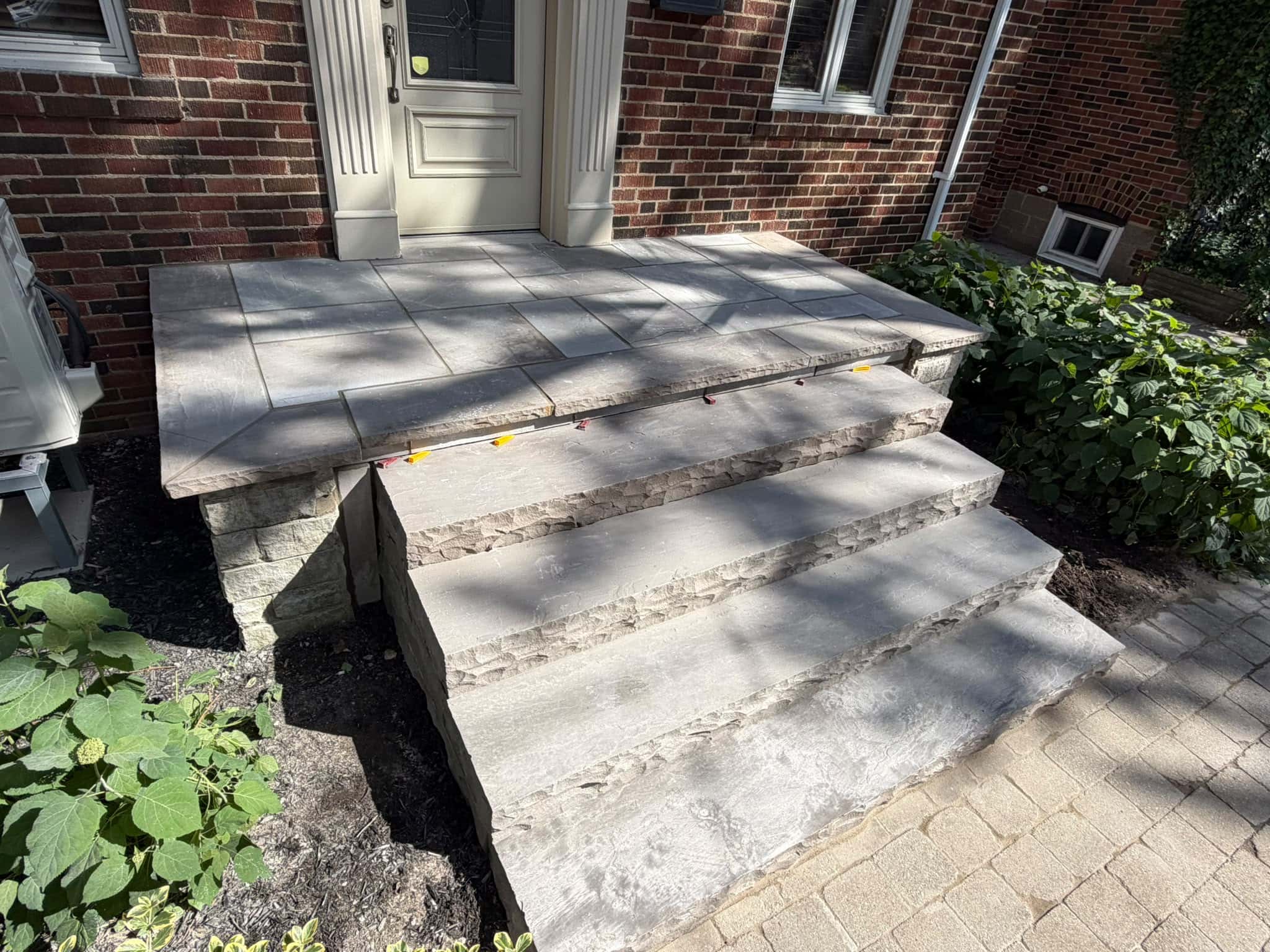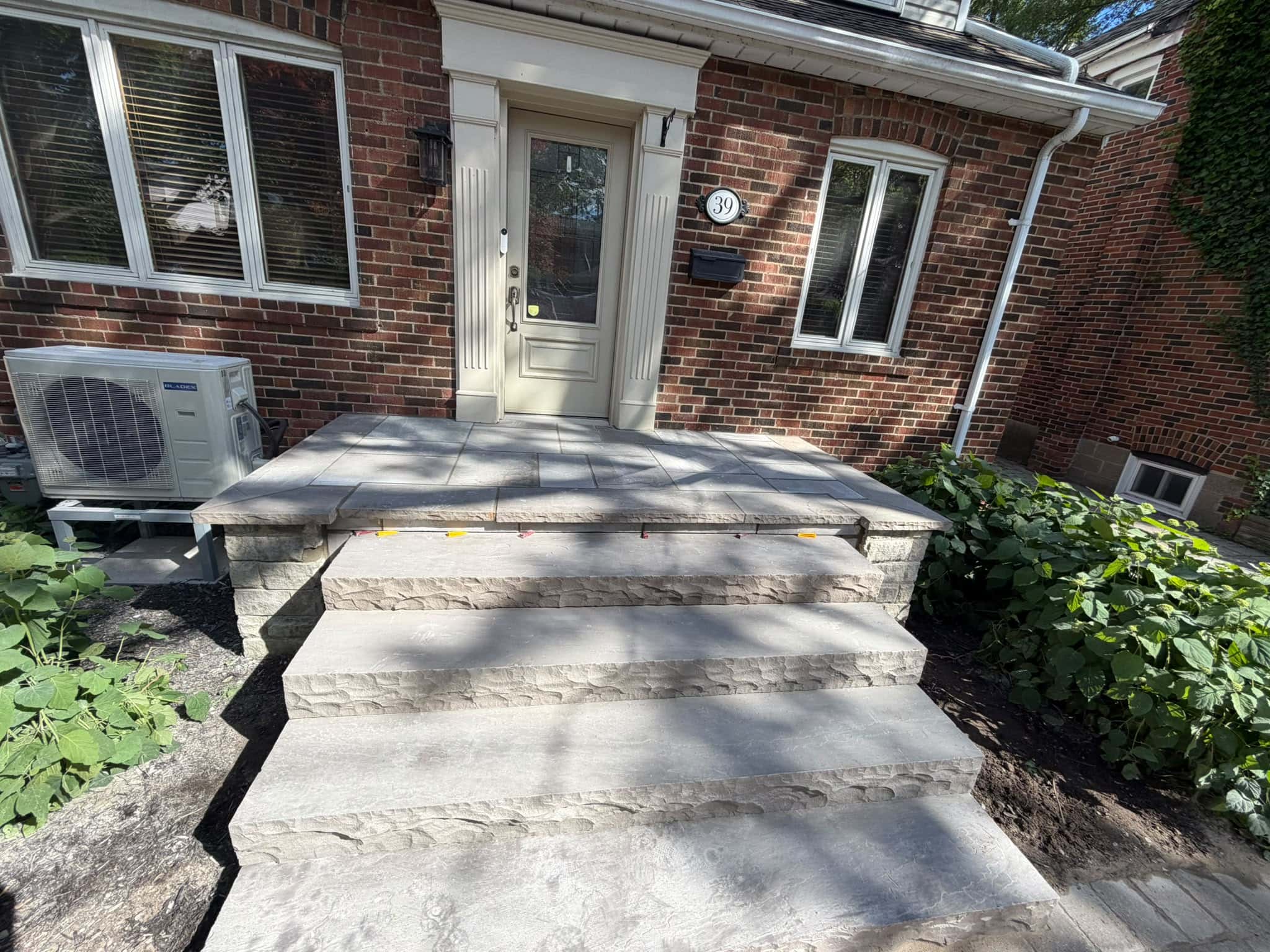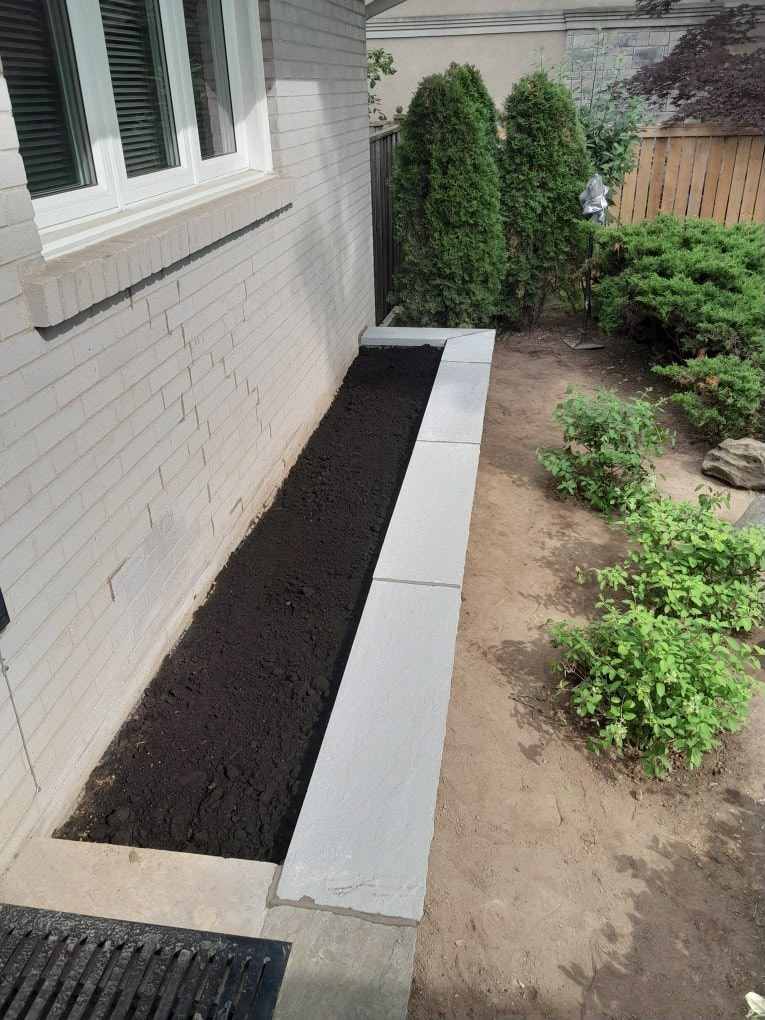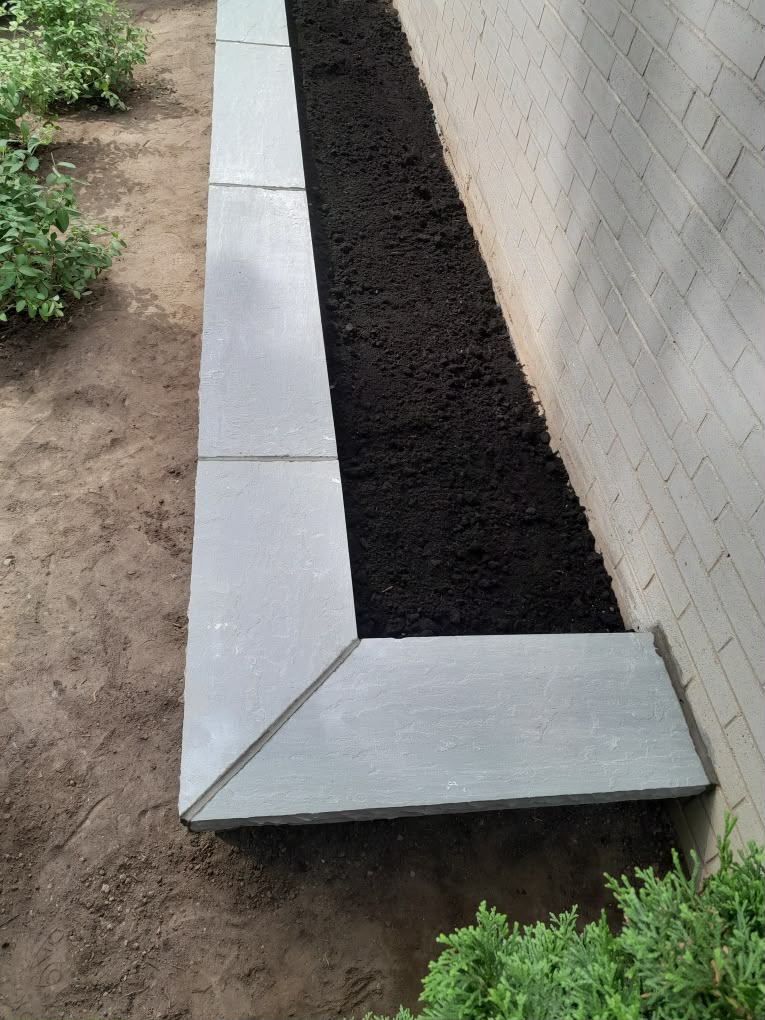

Masonry around pools can make an outdoor space feel more finished, more durable, and more inviting, but a pool area is not just another patio. It is one of the few places in a residential landscape where appearance and safety have to work together every day. Materials that look beautiful in a dry backyard corner may not perform the same way when exposed to splashing water, wet feet, pool chemicals, summer heat, and repeated freeze-thaw cycles.
That is why homeowners should think carefully before choosing masonry materials or design details near a pool. Coping, decking, walkways, walls, steps, and drainage zones all need to function well under wet conditions. If the wrong material is chosen, or if the layout ignores drainage, edge stability, or surface comfort, the result can be less durable and less safe than it looks.
For Toronto and GTA homeowners, this matters even more because poolside masonry must perform under summer use and then withstand winter weather when the pool is no longer the focus. In this guide, you will learn how to think about masonry around pools from both a safety and style perspective, which materials and layouts tend to make more sense, what warning signs to watch for, and how to avoid design choices that look good at first but create maintenance or usability problems later.
Why Poolside Masonry Needs a Different Mindset
Masonry around a pool does more than create visual structure. It shapes how people enter, move around, and use the space. Wet traffic patterns, children running barefoot, splash-outs, and the constant presence of water all change what counts as a good surface.
That means poolside masonry should not be judged only by colour or style. It should also be judged by how it handles moisture, how stable it feels underfoot, how hot it gets in the sun, how easy it is to maintain, and how well it fits the surrounding layout. A beautiful surface that becomes slippery, shifts at the edges, or directs water poorly is not really a successful pool design.
This is where masonry around pools differs from that of a standard backyard patio. The same material may still work, but the performance standards should be higher.
What Safety Means Around a Pool
When homeowners hear “pool safety,” they often think first about fencing, gates, and supervision. Those are important, but the masonry itself also affects safety in several ways. The pool surround influences traction, drainage, trip risk, edge clarity, comfort underfoot, and how well the space holds up over time.
Toronto’s pool enclosure guidance makes clear that outdoor pools cannot be constructed or filled without a compliant fence or enclosure permit, reinforcing a broader point: pool areas are regulated safety spaces, not just decorative landscape features. City of Toronto Pool Fence Enclosures
From a masonry standpoint, the main safety priorities usually include:
- surfaces that stay stable under regular wet use
- good drainage so water does not pool where people walk
- edges, steps, and transitions that are easy to read visually
- materials that are comfortable enough for barefoot use
- layouts that do not create hidden trip points or awkward level changes
These are design issues, but they are also safety issues.
Why Drainage Matters So Much Around Pools
Drainage is one of the most overlooked parts of poolside masonry. Water is always present around a pool, but that does not mean it should sit on the surface or run toward the house. Splash-out, rainfall, cleaning water, and pool draining all need a plan.
The City of Toronto’s guidance on draining pools and spas explains that pool water must be handled properly and should not be discharged in a way that overwhelms the system or flows onto neighbouring properties. Toronto also notes that water around the house should be managed so that it is properly absorbed on-site or discharged, depending on the water type and system. City of Toronto: How to Drain a Pool, Hot Tub or Spa City of Toronto: Managing Water Around the House
For masonry, the practical takeaway is simple: a poolside surface should help move water away from the pool edge, the home, and areas where it can sit, freeze, or undermine the base. If the drainage path is wrong, even a well-built surface can become harder to maintain and less safe to use.
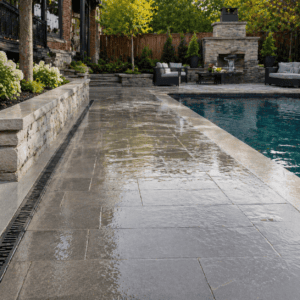
Best Masonry Areas Around a Pool to Think Through Carefully
Not every part of the pool surround has the same job. Breaking the space down into areas makes the decision-making process easier.
- Pool coping: the material and finish around the pool edge affect comfort, grip, and the visual outline of the water
- Decking and lounging areas: these need to balance appearance, comfort, and drainage across larger surfaces
- Walkways: these should provide stable movement between the pool, house, and backyard zones
- Steps and transitions: these need clear edges and safe footing when wet
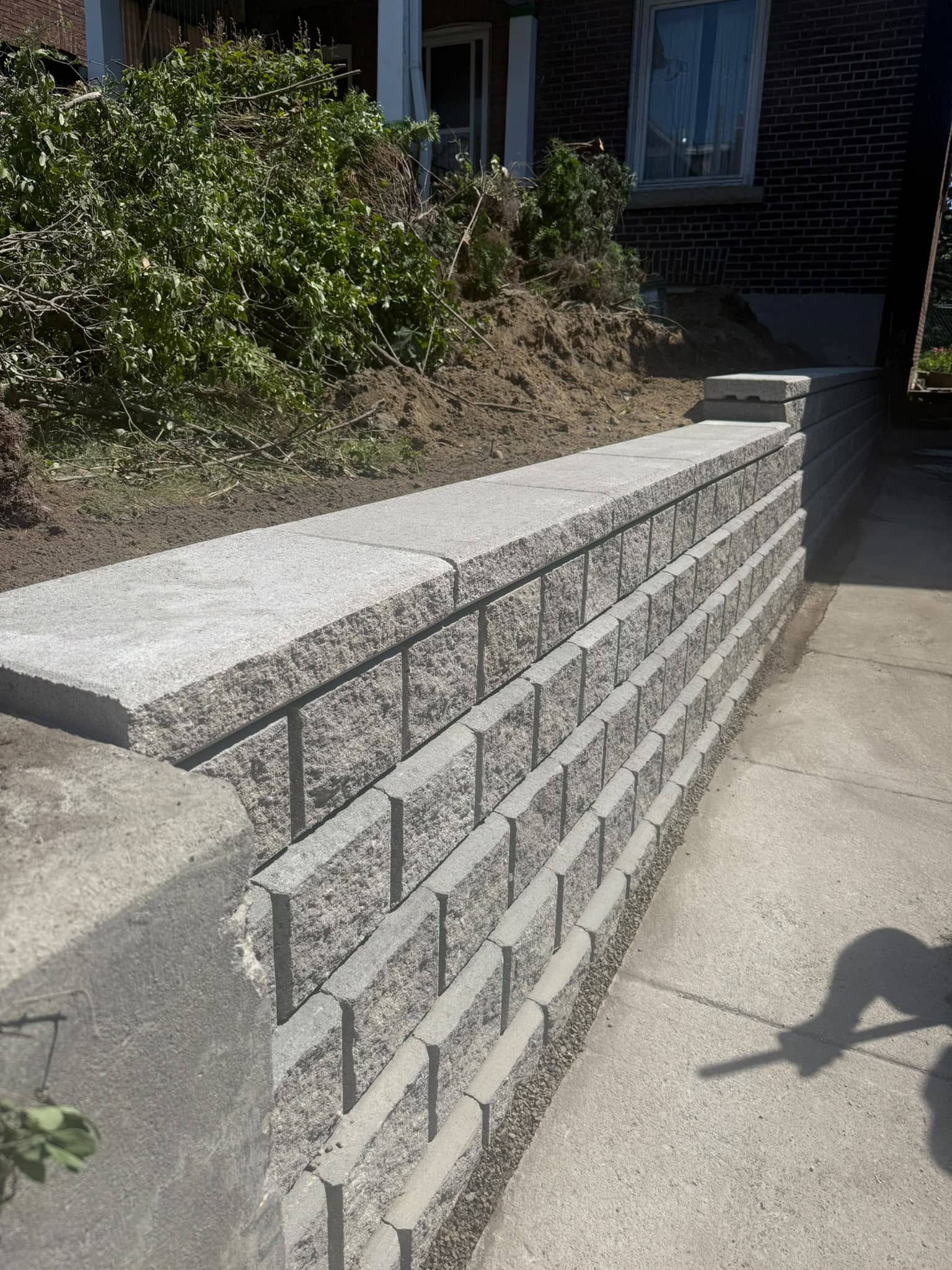
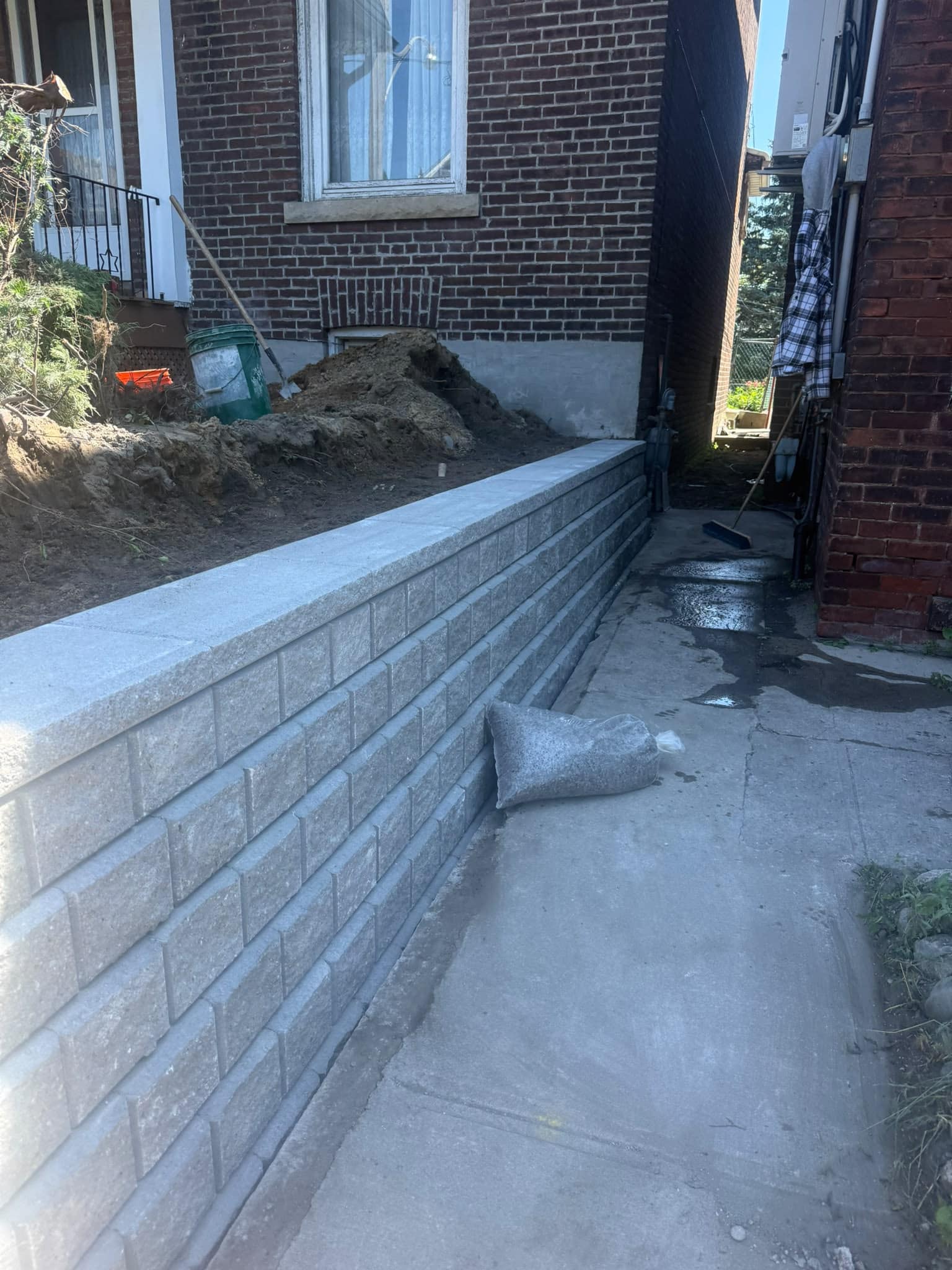
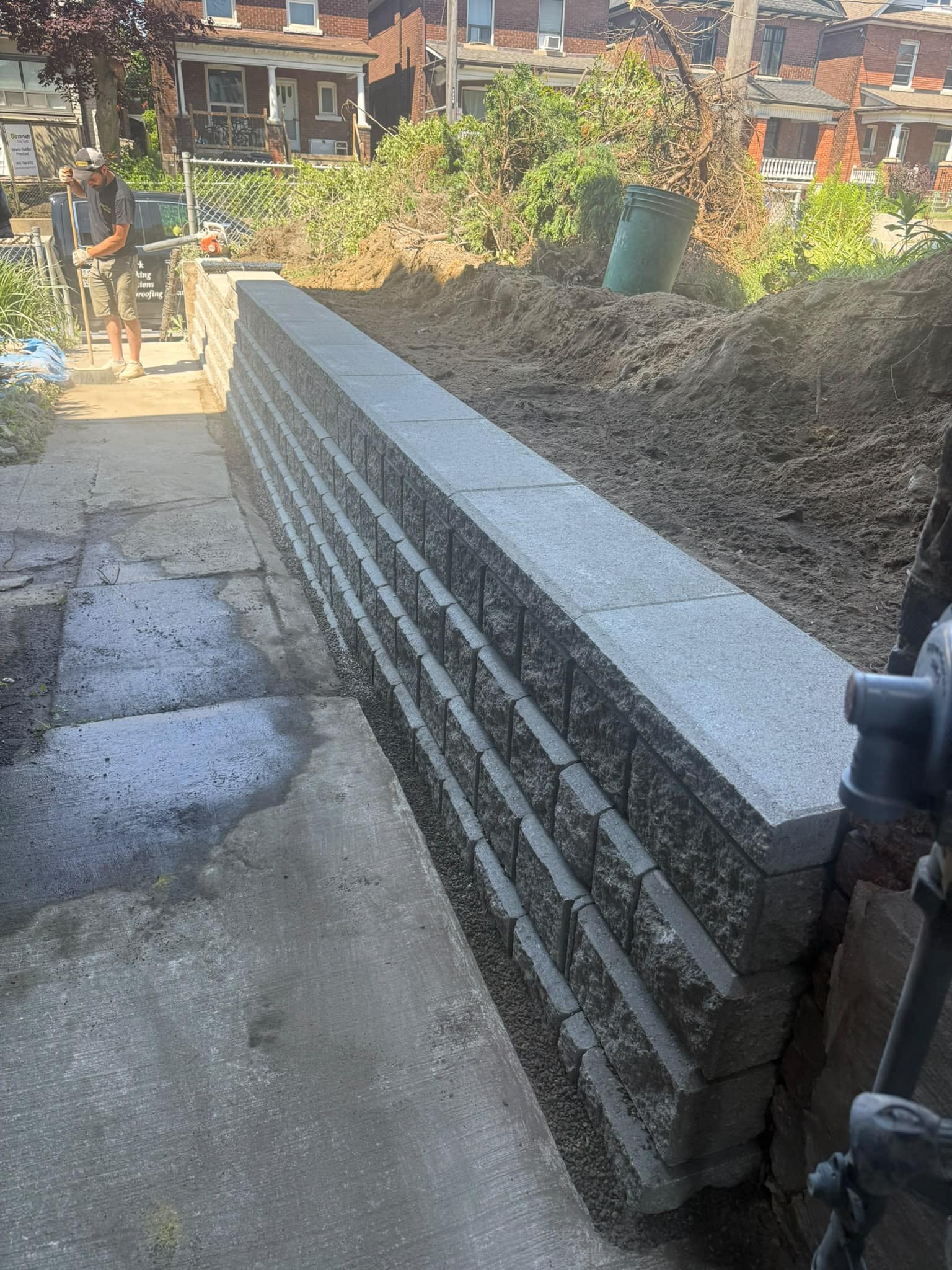
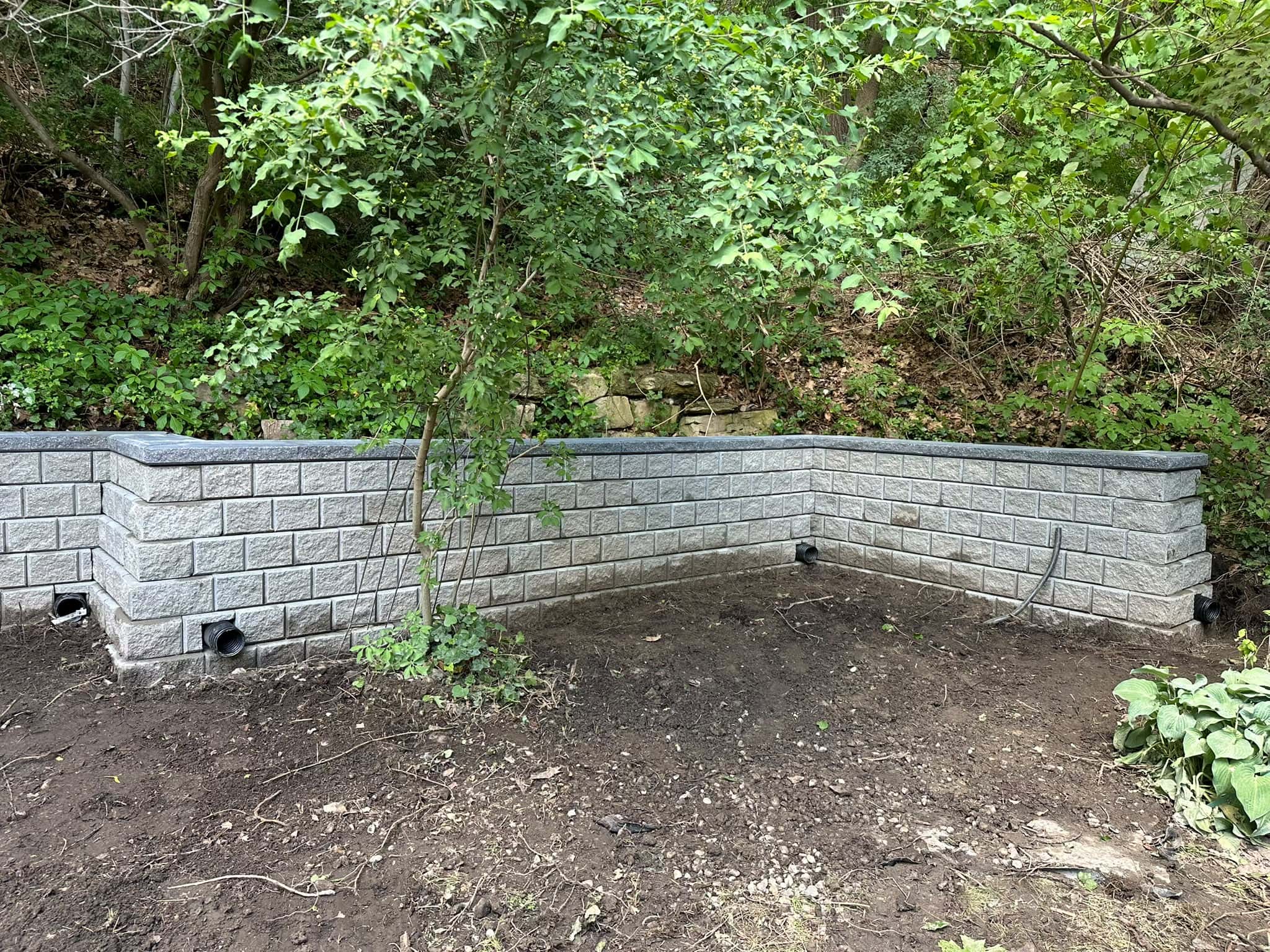
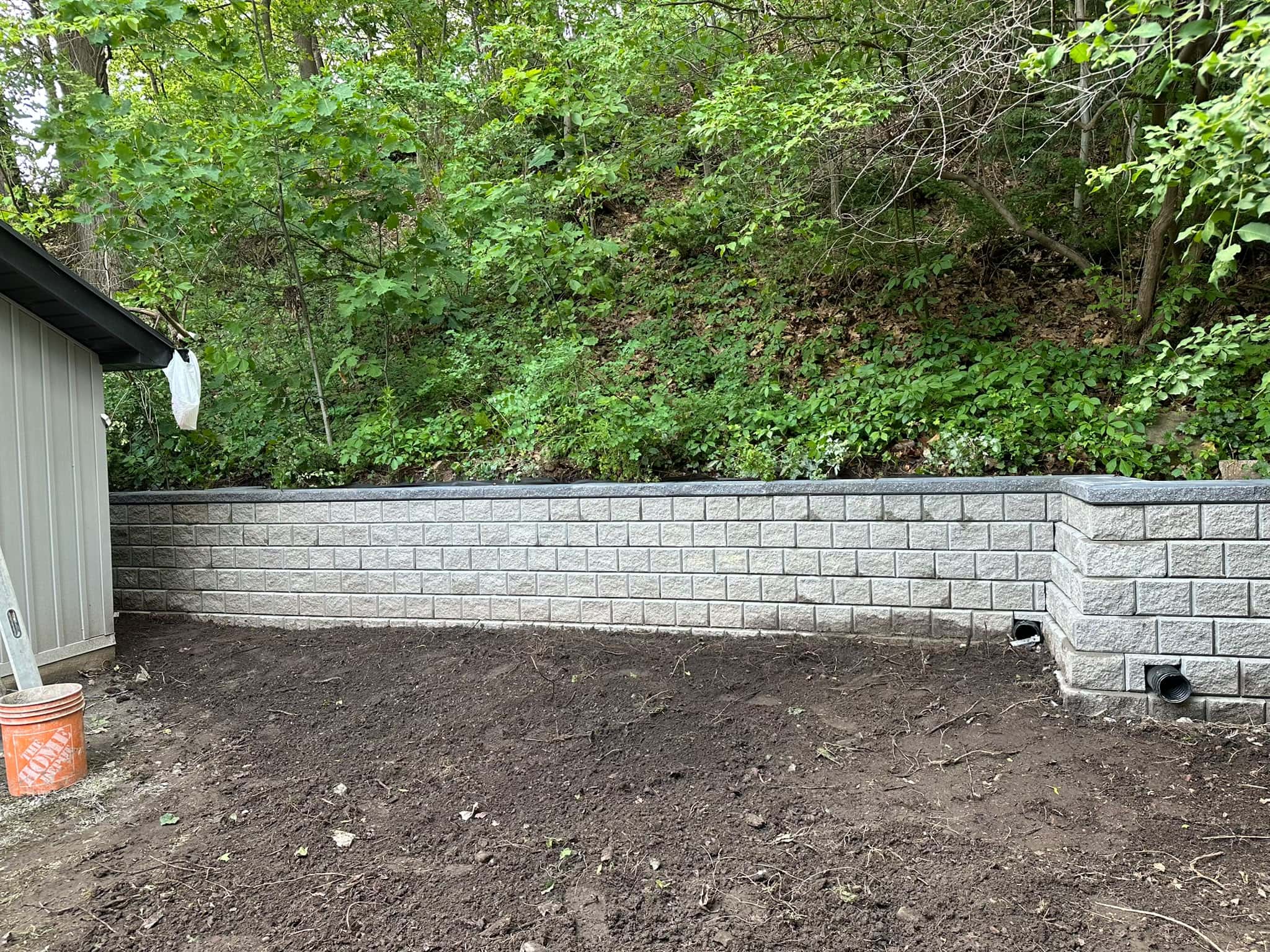
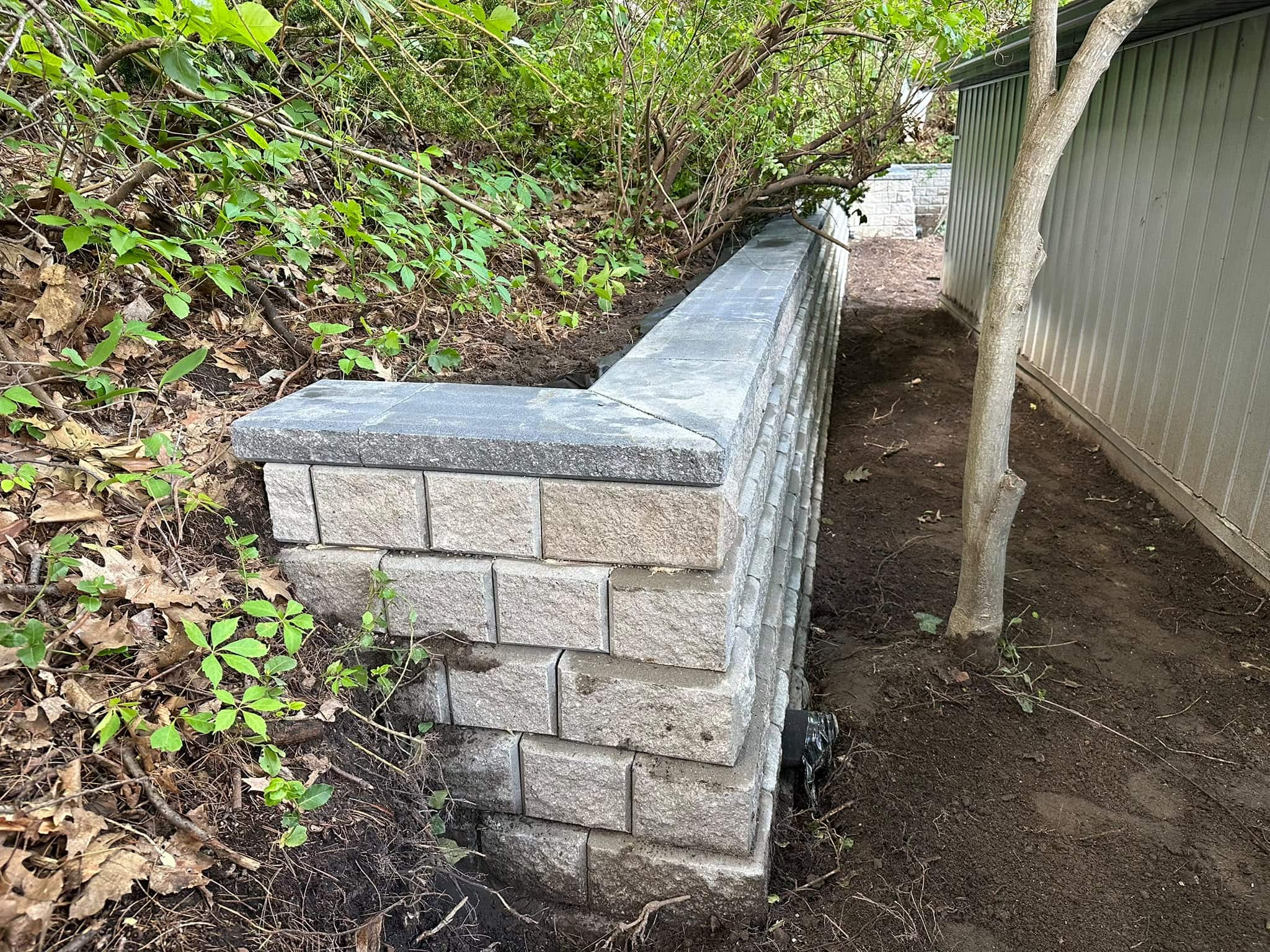
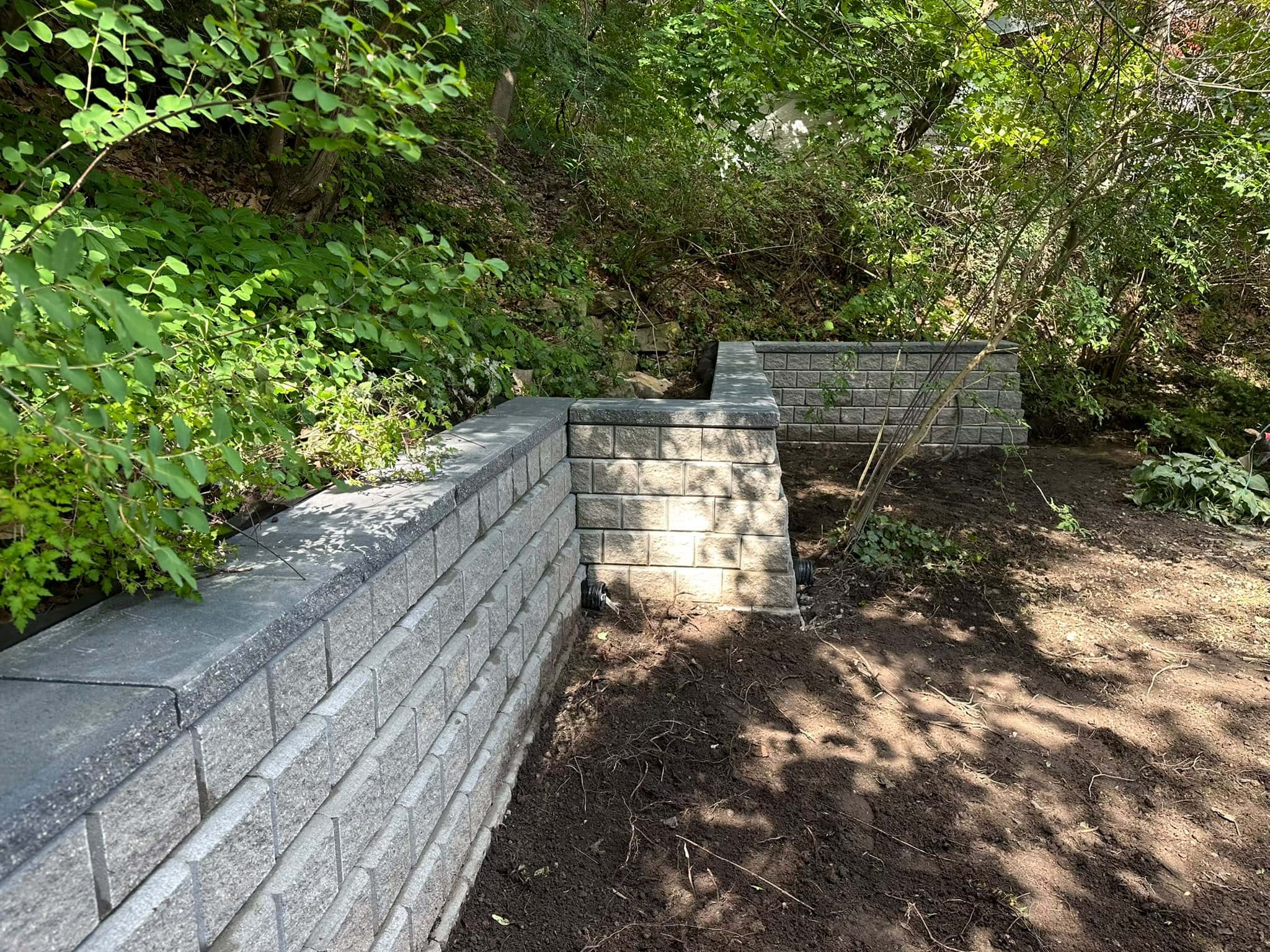
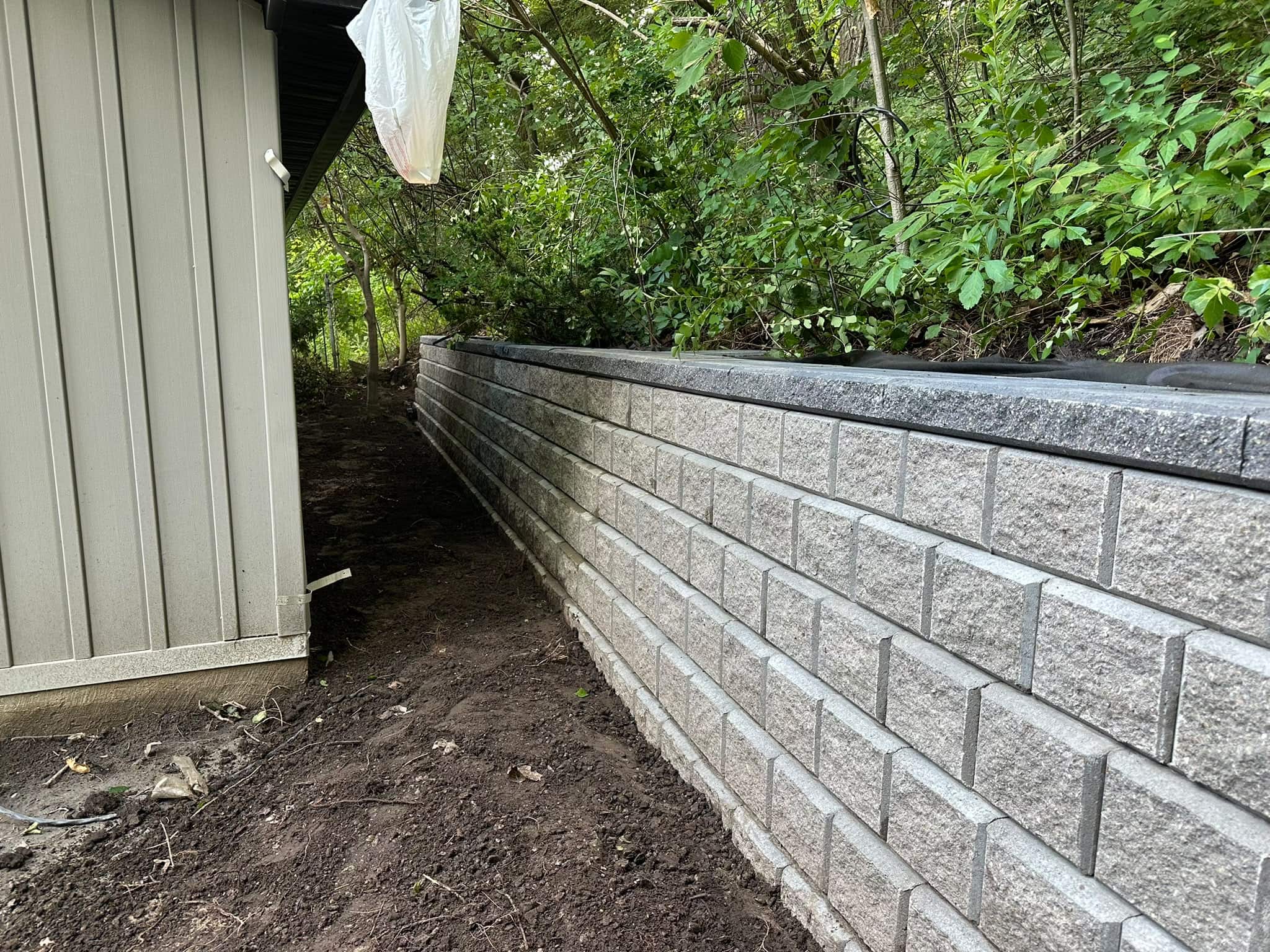
- Retaining or garden walls: these shape the pool area visually, but also need drainage planning if grade changes are involved
- Service or equipment-side surfaces: these should be practical, stable, and easy to maintain rather than purely decorative
That is why “pool masonry” is not really one choice. A homeowner may use one material for coping, another for the broader deck, and another for connecting pathways, depending on style, heat, texture, and performance needs.
Materials That Often Make Sense Around Pools
There is no single perfect poolside masonry material for every home, but some categories tend to work better depending on the design goal.
Common choices include:
- Concrete pavers: often chosen for flexible layouts, large deck areas, and coordinated outdoor design
- Natural stone: often chosen for premium appearance, texture, and a more custom or upscale look
- Concrete or stone coping pieces: often used at the pool edge where a cleaner transition is needed
- Flagstone-style surfaces: sometimes chosen for a more natural landscape look, where the design supports it
For homeowners comparing pool-edge materials more directly, this published blog on concrete or stone pool edging is especially relevant because it focuses on the edge detail where comfort, appearance, and durability meet.
If the broader space is being built more like a patio environment, pages such as interlocking patio Toronto, paver walkway interlocking Toronto, and concrete paving stone installation Toronto also become useful supporting references.
How to Think About Style Without Ignoring Safety
Style matters around a pool because it is usually one of the most visible and most-used outdoor spaces on the property. The masonry helps define whether the area feels modern, classic, natural, resort-like, or more architectural. But the style choice should support the way the pool is used, not work against it.
A sleek modern surface may look great, but if it creates harsh glare, excessive heat, or awkward transitions, it may not be the best fit. A rustic natural stone layout may feel beautiful, but if the joints or edges create trip-prone movement zones, it may need a more controlled design approach. This is where strong poolside design is really about balance.
One helpful way to decide is to ask: do I want the pool surround to blend into the overall backyard hardscape, or do I want the pool edge itself to stand out? The answer often shapes whether the masonry should feel more subtle and continuous or more framed and architectural.
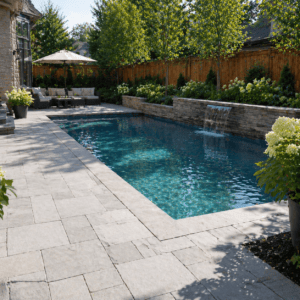
Common Mistakes in Poolside Masonry Design
Some pool masonry problems do not come from bad materials. They come from bad assumptions.
Common mistakes include:
- choosing a material mainly for appearance without thinking about wet use
- ignoring the drainage and slope around the pool surround
- creating abrupt changes in level or finish where people walk barefoot
- using surfaces that become uncomfortably hot in the strong sun
- treating the pool area like a standard patio instead of a water-exposed zone
- underestimating how winter affects saturated poolside masonry in Toronto
Another common mistake is assuming that all surface issues are only cosmetic. If the masonry around a pool repeatedly stains, shifts, or stays wet for too long, the real issue may involve base movement or water handling rather than the visible surface alone. That is where our blog on the importance of proper drainage around masonry comes in.
What to Check in an Existing Poolside Masonry Area
If the pool area already exists, a good review starts with condition, not replacement ideas.
Look for:
- loose coping or unstable edge pieces
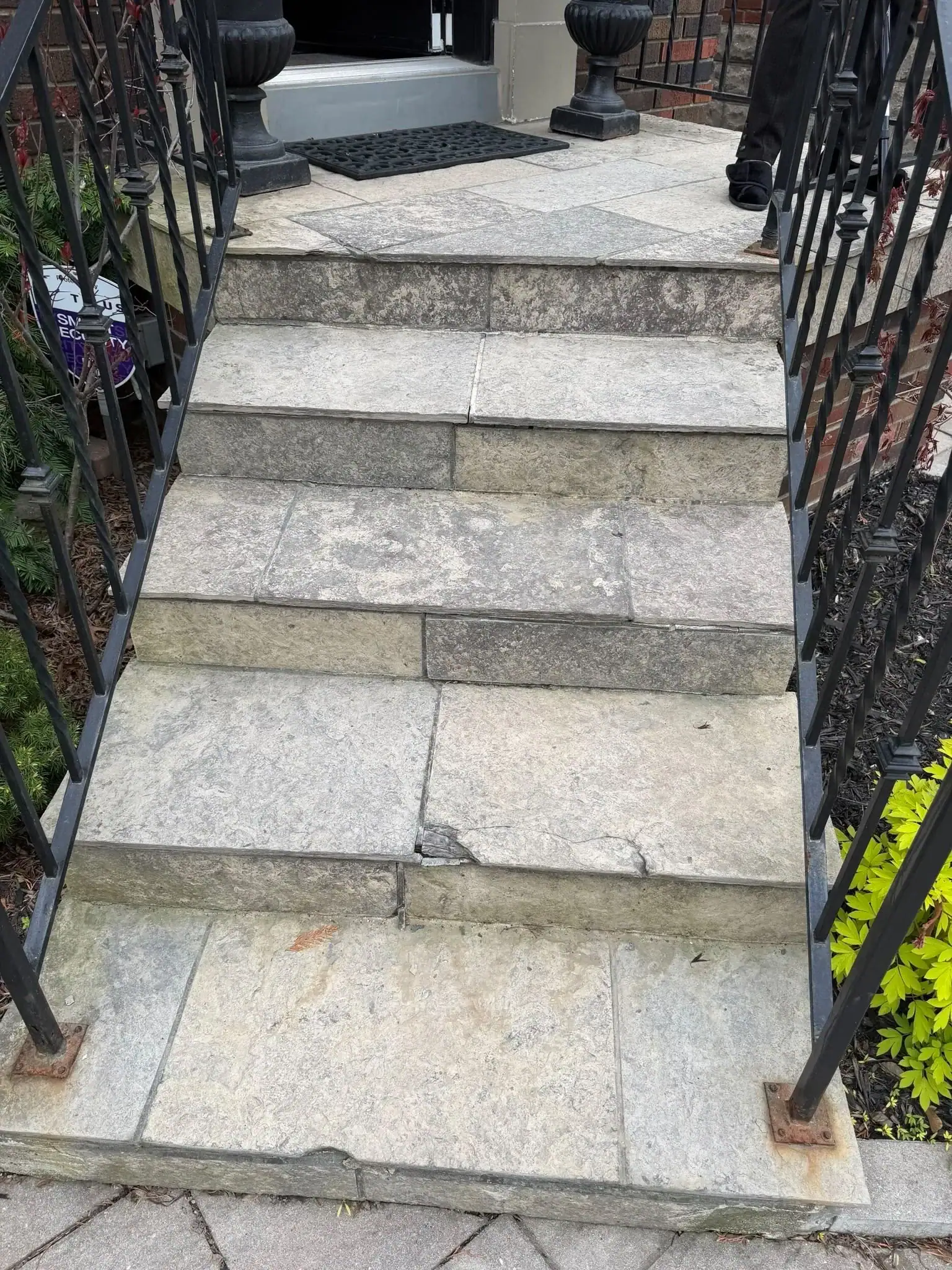
- settled or uneven pavers near walking paths
- standing water after rain or cleaning
- joint loss, movement, or open gaps
- surface wear that seems worse near splash zones
- masonry surfaces that feel unsafe or awkward under wet barefoot use
- drainage paths that lead water toward the home or foundation
If the condition problem seems more general across the hardscape, it may help to compare it with our published post on brick vs concrete pavers: best uses, especially if you are deciding whether the broader surface should stay as-is or be reworked with a different material strategy.
When Professional Help Makes More Sense
Professional help makes more sense when the issue goes beyond decoration and starts involving performance, drainage, or safety. Around pools, that threshold comes sooner than many homeowners expect because wet-use environments are less forgiving than dry patios.
That usually includes cases where:
- coping pieces are loose or unstable
- the deck or walkway has shifted and now feels unsafe
- drainage is poor, or water is moving toward the home
- retaining walls or raised poolside elements show movement
- the poolside layout needs to coordinate with fencing, access, or permit-related considerations
- the design goal is more custom than a simple material swap
Toronto’s pool enclosure process is also a reminder that pool projects often involve more regulation than homeowners first expect. If the project affects fencing, enclosure planning, or other regulated parts of the pool area, it is worth reviewing the permit guidance first rather than assuming the masonry work stands alone. Toronto pool fence enclosure guidance
Quick Decision Guide: Style First, Safety First, or Both?
Lean style-first only if:
- the material still handles wet use comfortably and safely
- the layout already has good drainage and stable walking zones
- the pool area is mostly a visual refresh rather than a performance correction
Lean safety-first if:
- the existing area feels slippery, unstable, or awkward when wet
- coping, steps, or transitions are the main concern
- drainage is poor, or movement is already visible
Lean both style and safety together if:
- the pool surround is being redesigned or upgraded as part of a bigger outdoor project
- you want the space to feel more finished, but also perform better over time
- the current materials are not giving you either the look or the function you want
If you are unsure, that usually means the next right step is to define the main problem first. Is it the look, the comfort, the drainage, or the safety? The answer often tells you where the masonry plan should begin.
Final Thoughts
Masonry around pools works best when safety and style are treated as one conversation, not two separate ones. The best poolside surfaces are not only attractive. They also feel stable, drain properly, support barefoot use, and fit the way the space is actually used.
For Toronto homeowners, that usually means choosing materials and layouts that look good in summer but still make sense after rain, during regular maintenance, and through winter weather. Poolside masonry should make the backyard feel better, not harder to live with.
If there is one clear takeaway, it is this: around a pool, the most attractive masonry choice is not always the best one. The best one is the material and layout that still looks good after water, weather, and real use testing.